France, October 2025
(Part 1/2)

Priory of Saint-Cosme, La Riche (Department of
Indre-et-Loire)
It was founded at the end of the 11th century for a community of
religious clerics called the Canons Regular of St. Augustine. The famous French
poet Pierre de Ronsard served as its prior from 1565 until his death in 1585.
Heavily damaged during the Allied bombings of 1944, the priory was partially
restored between 2009 and 2013. It is located in La Riche, a small town next to
Tours.
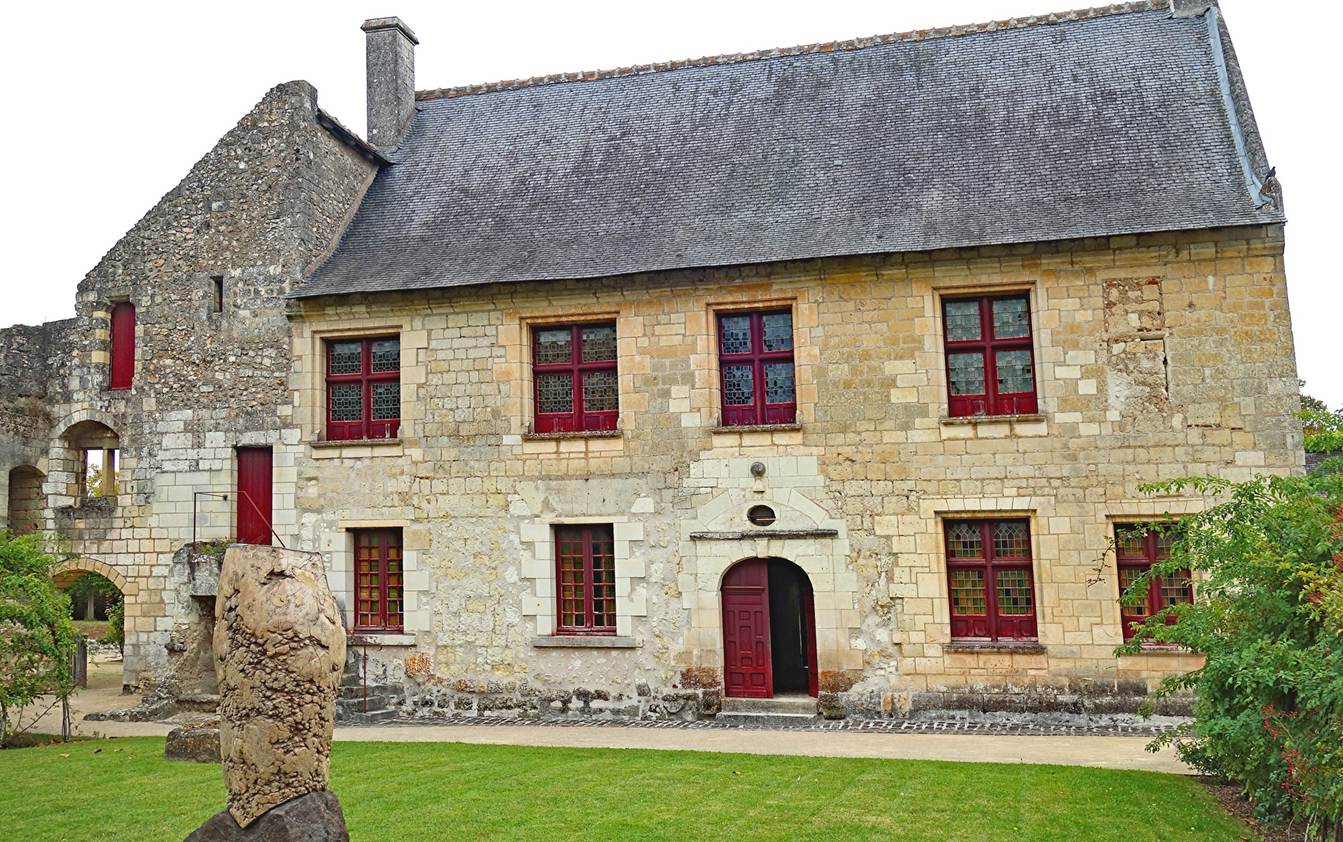
Prior's residence, which was Ronsard's house at the end of his
life.
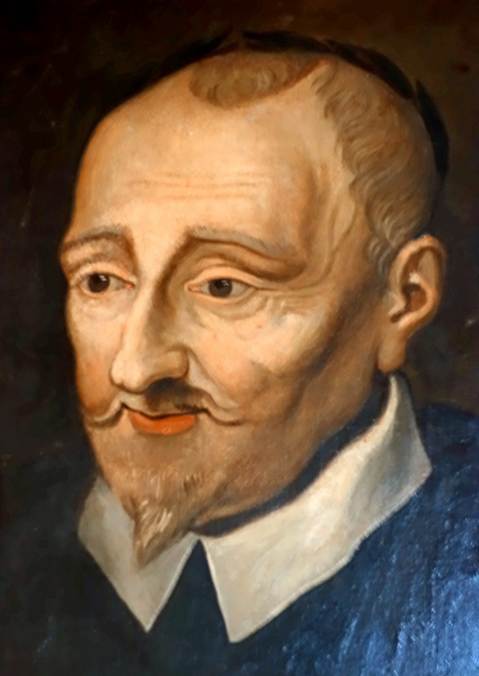
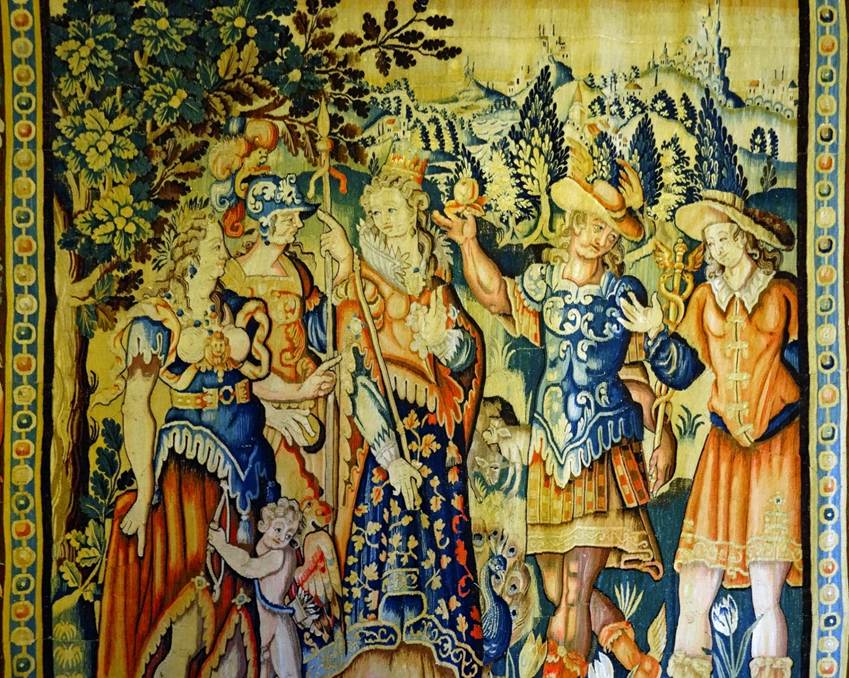
Portrait of Ronsard by an unknown artist (left) and tapestry
(right) displayed in the prior's residence.
|
|
|
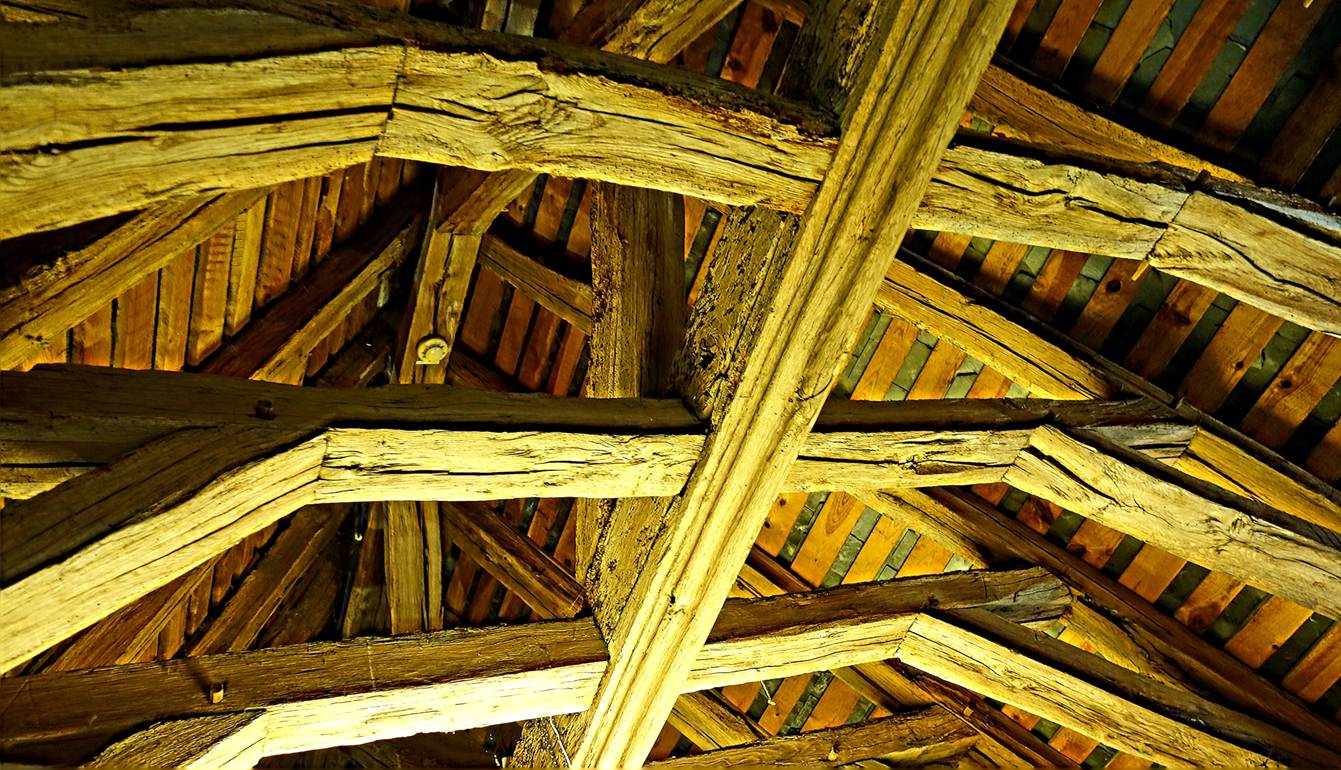
Timber roof truss in the prior's residence.
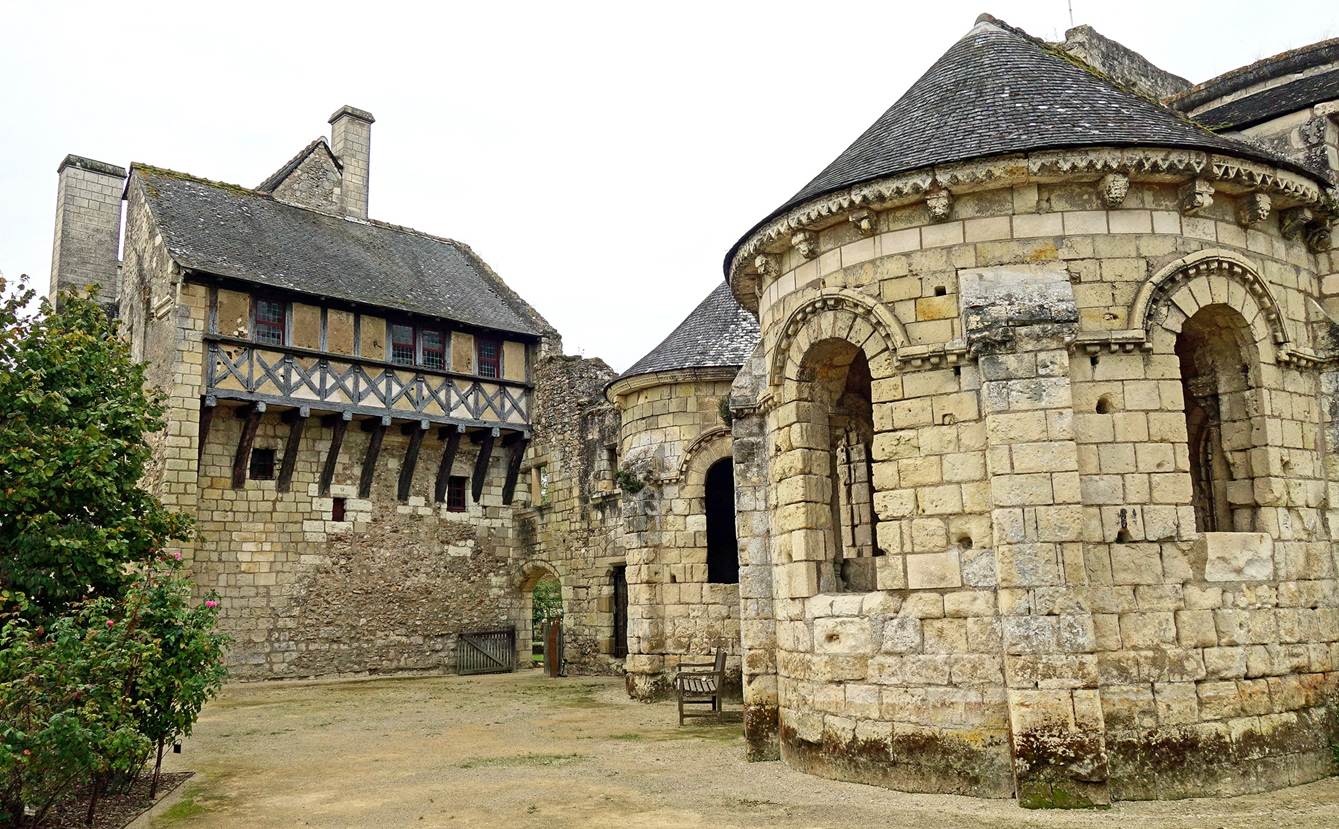
Side facade of the prior's residence and apse of the priory
church.
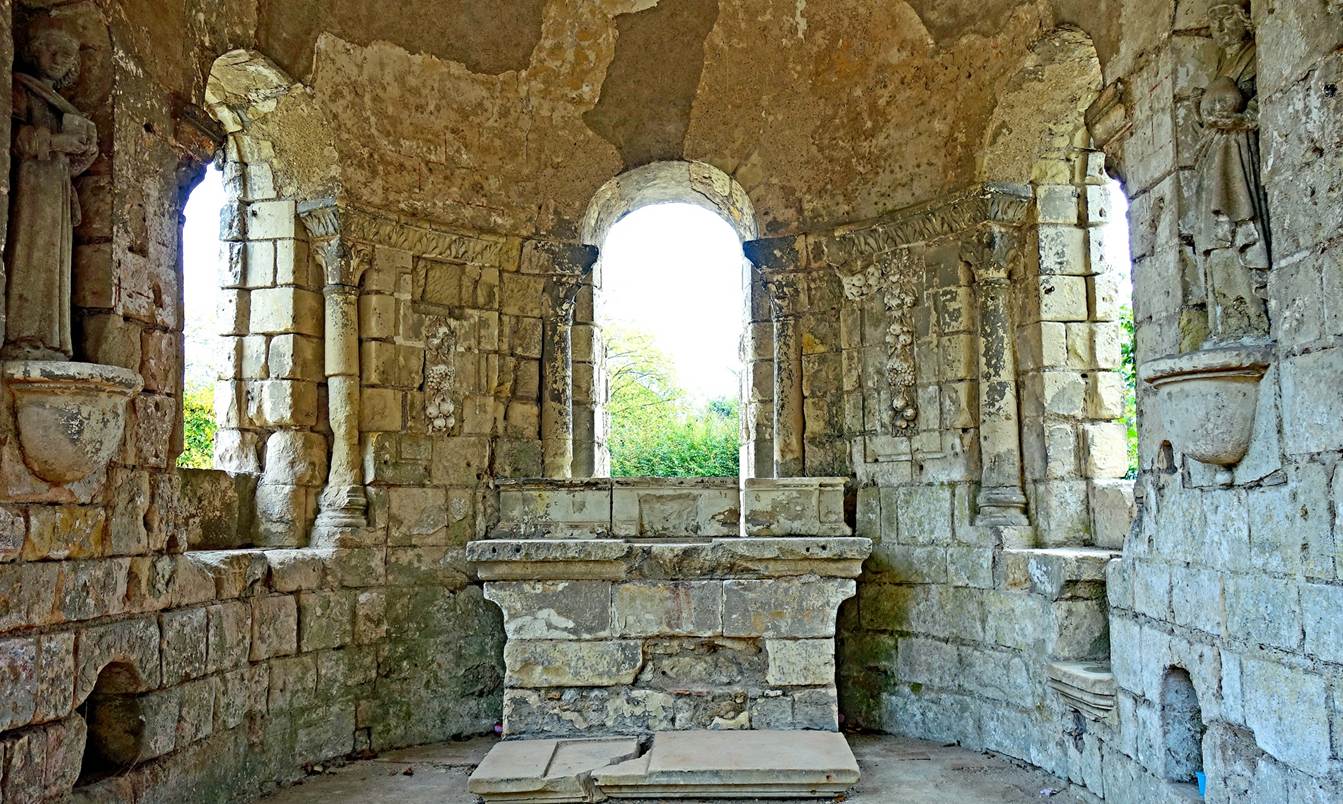
Inside the partially restored apse of the priory church.
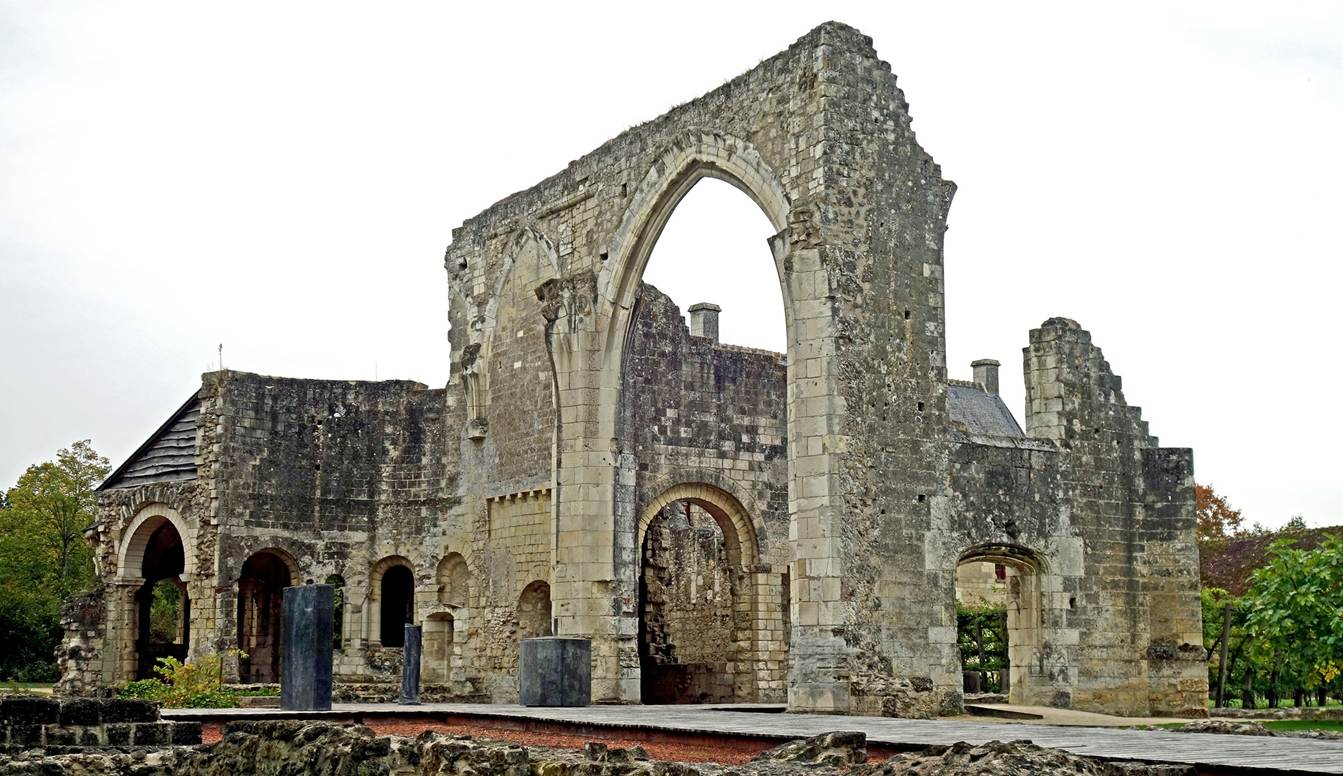
Ruins of the priory church. Ronsard's remains were found during an
excavation in 1932 and reburied here.
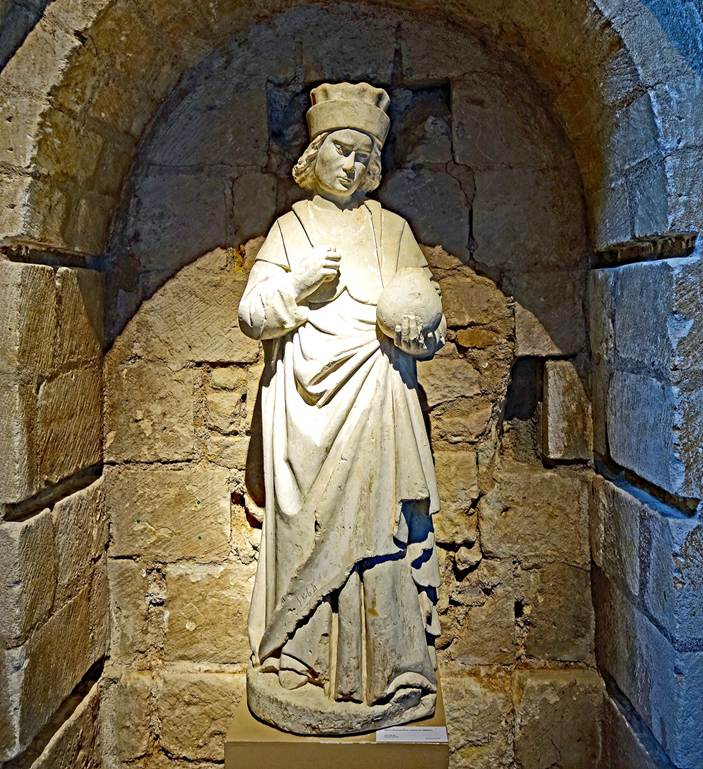
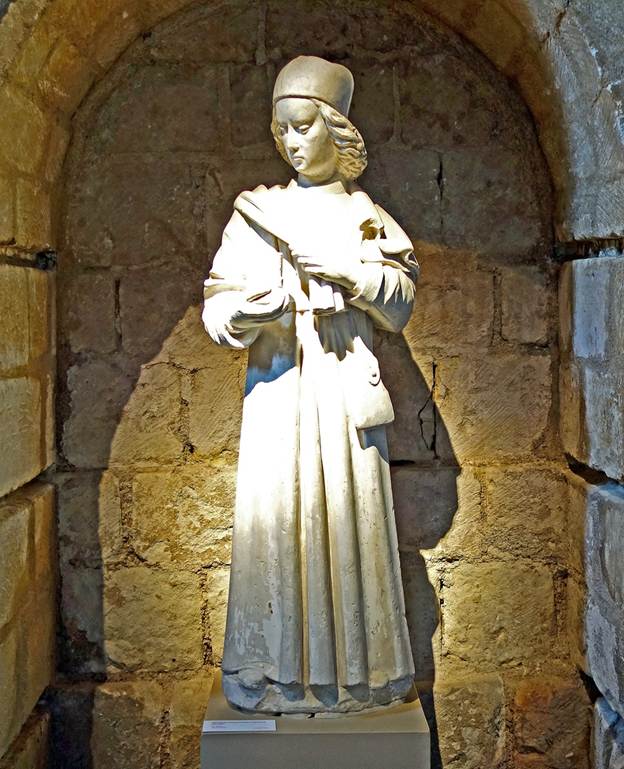
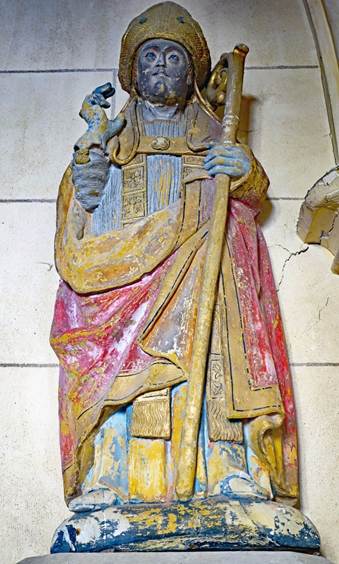
Limestone statues dating from the 15th century standing in niches
of the restored canons' refectory. They represent Saint Cosme holding the
doctor's urinal (left) and Saint Damien holding the surgeon's ointment box.
|
|
|
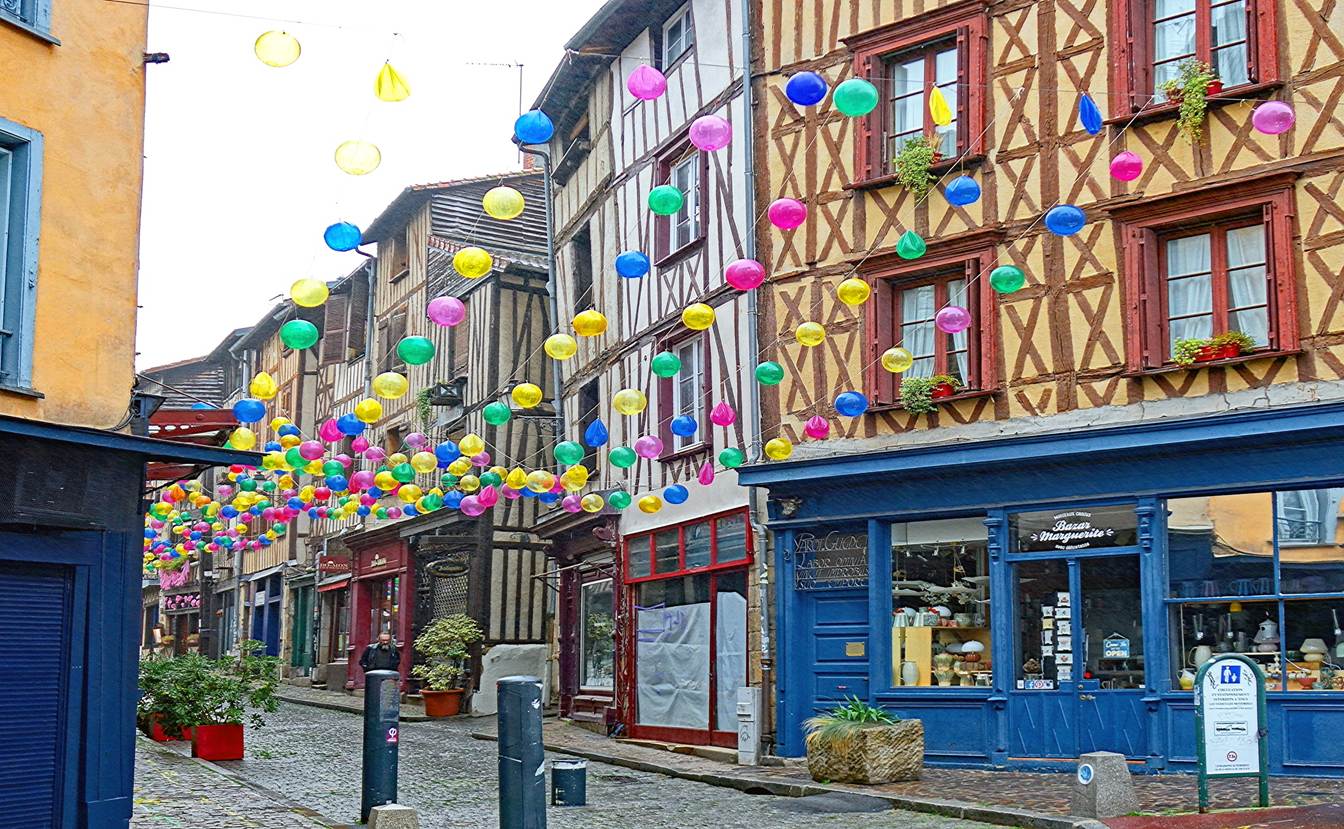
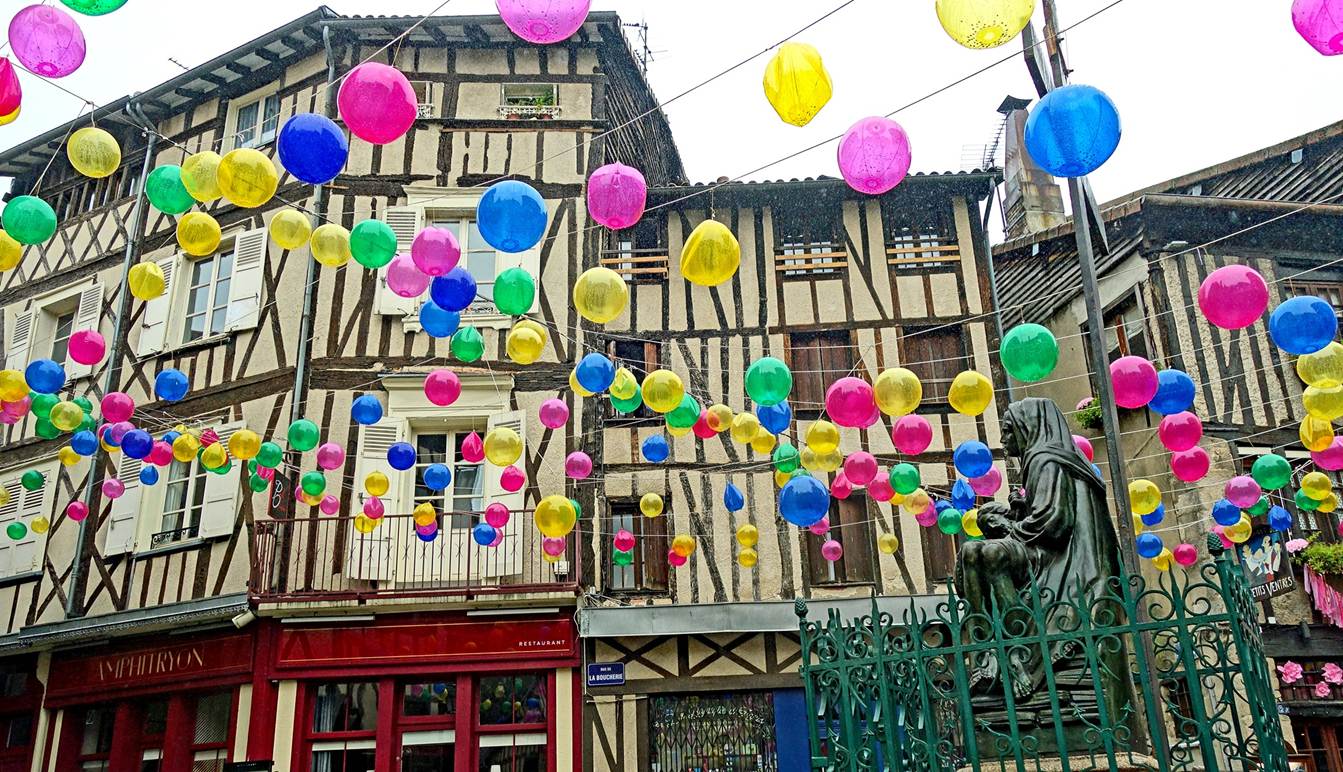
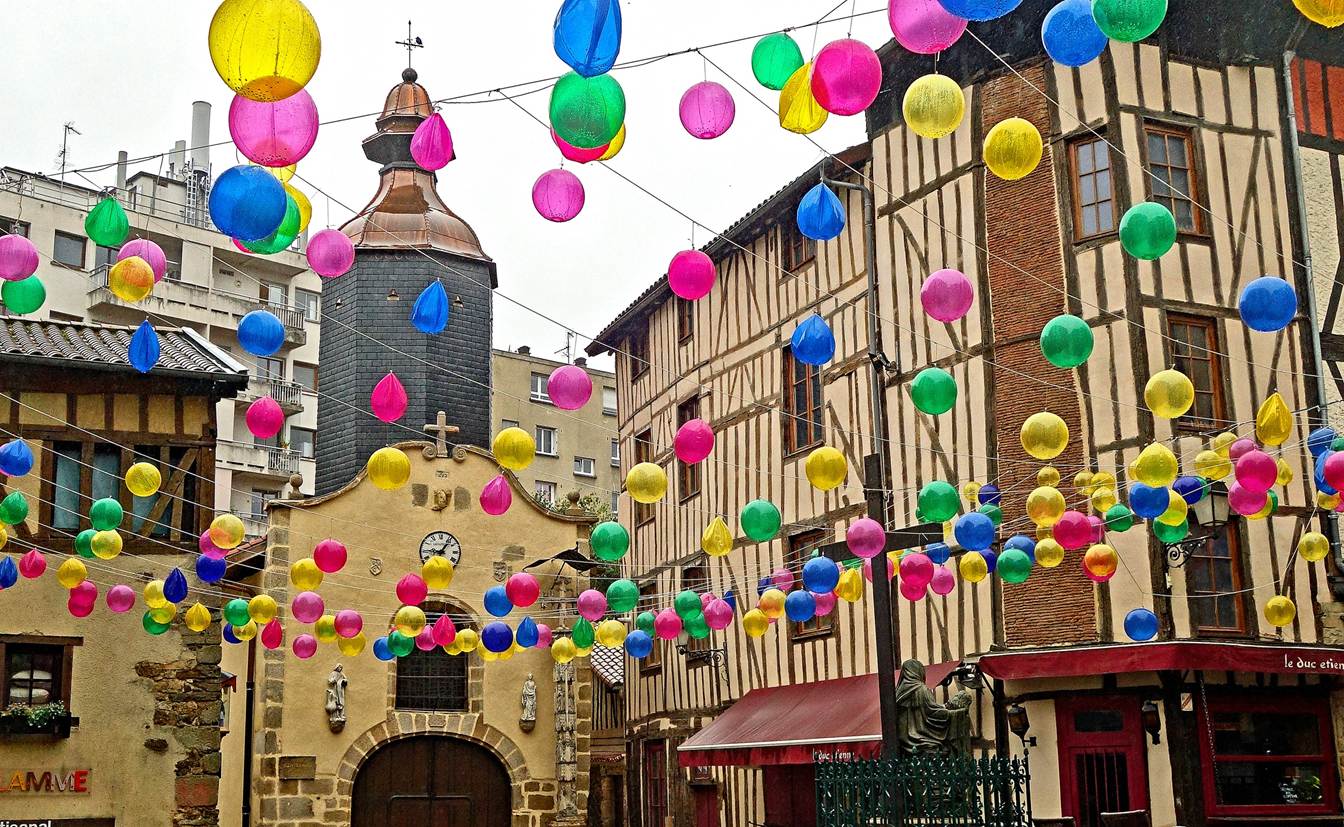
Limoges (Department of Haute Vienne)
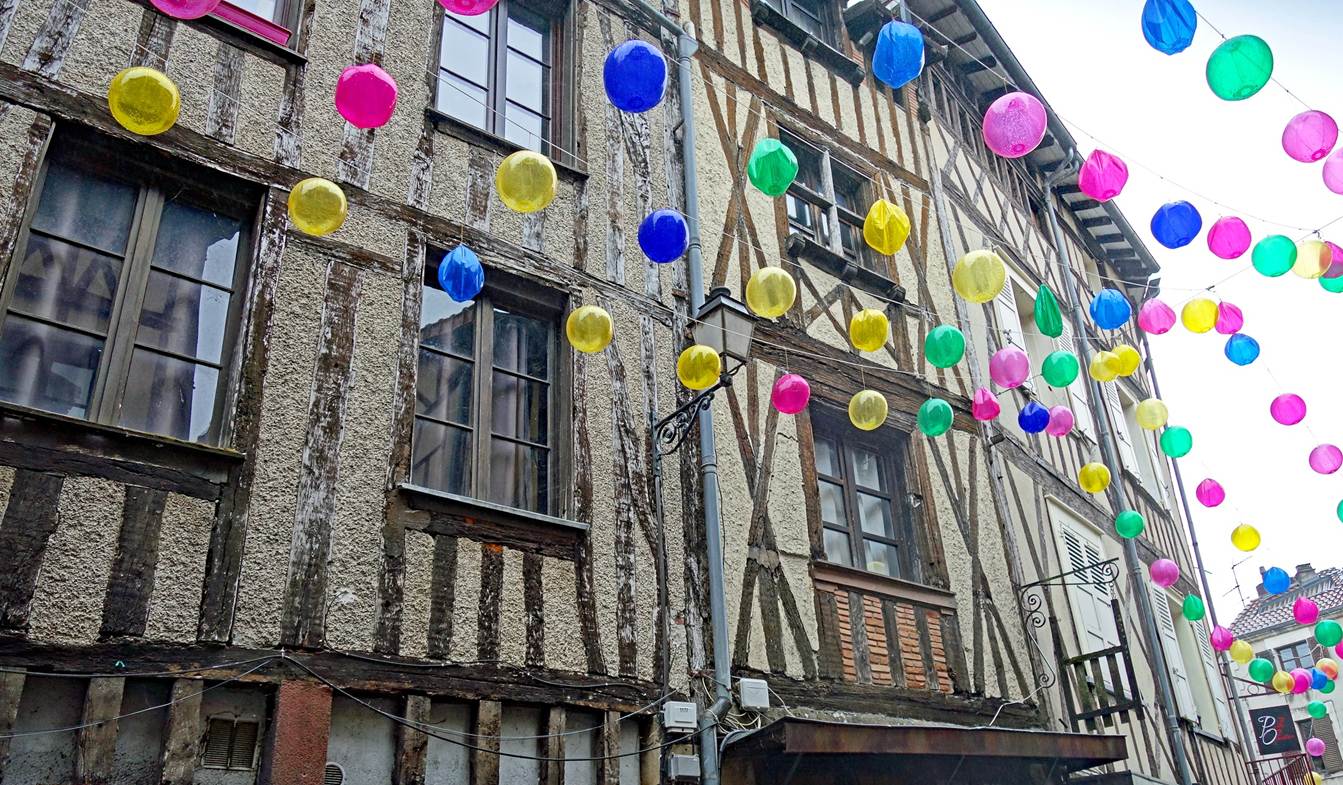
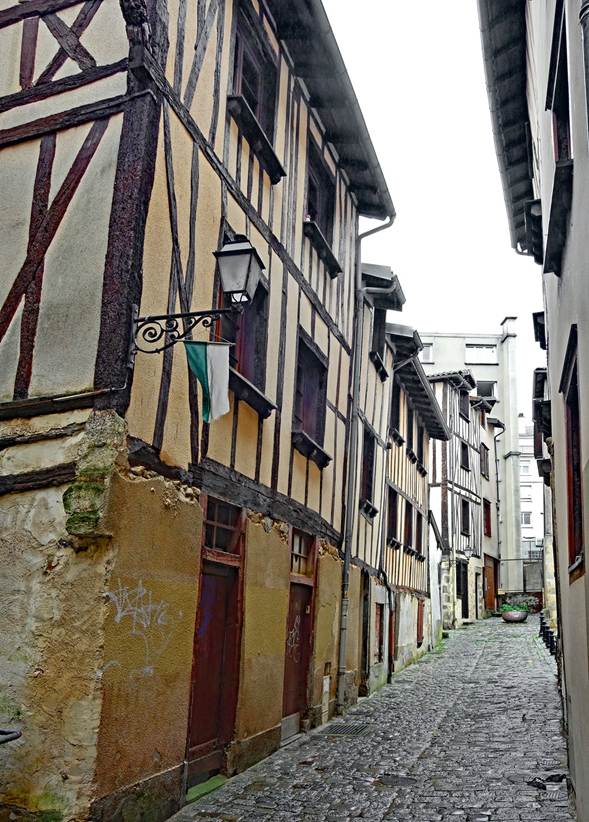
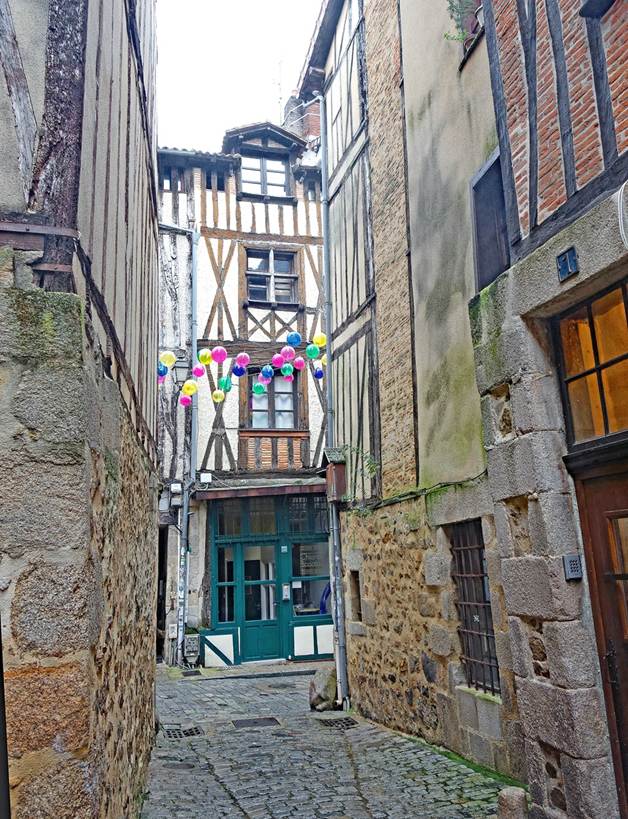
Traditional half-timbered houses in the old part of Limoges (Rue
de la Boucherie and around). The area owes its name to the butcher shops that
once existed here.
|
|
|
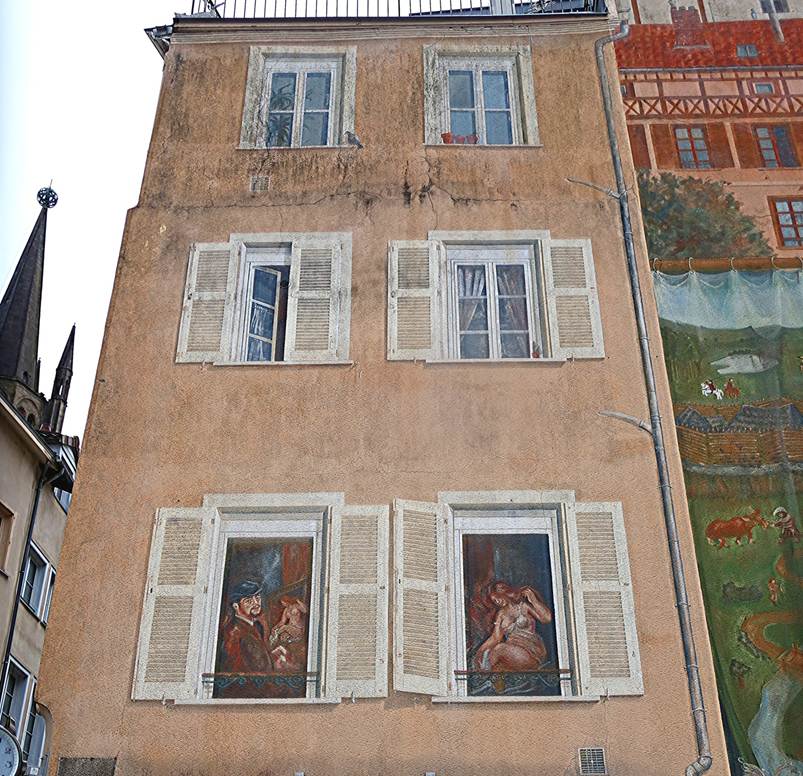
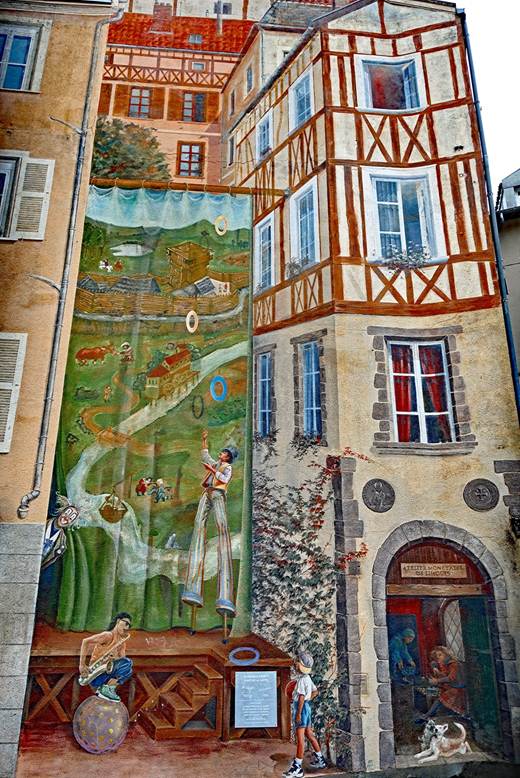
Mural called ″La Fresqque Cobaty″, Place de La Motte.
(Note the good three-dimensional rendering of the flat mural in the right
photo.)
|
|
|
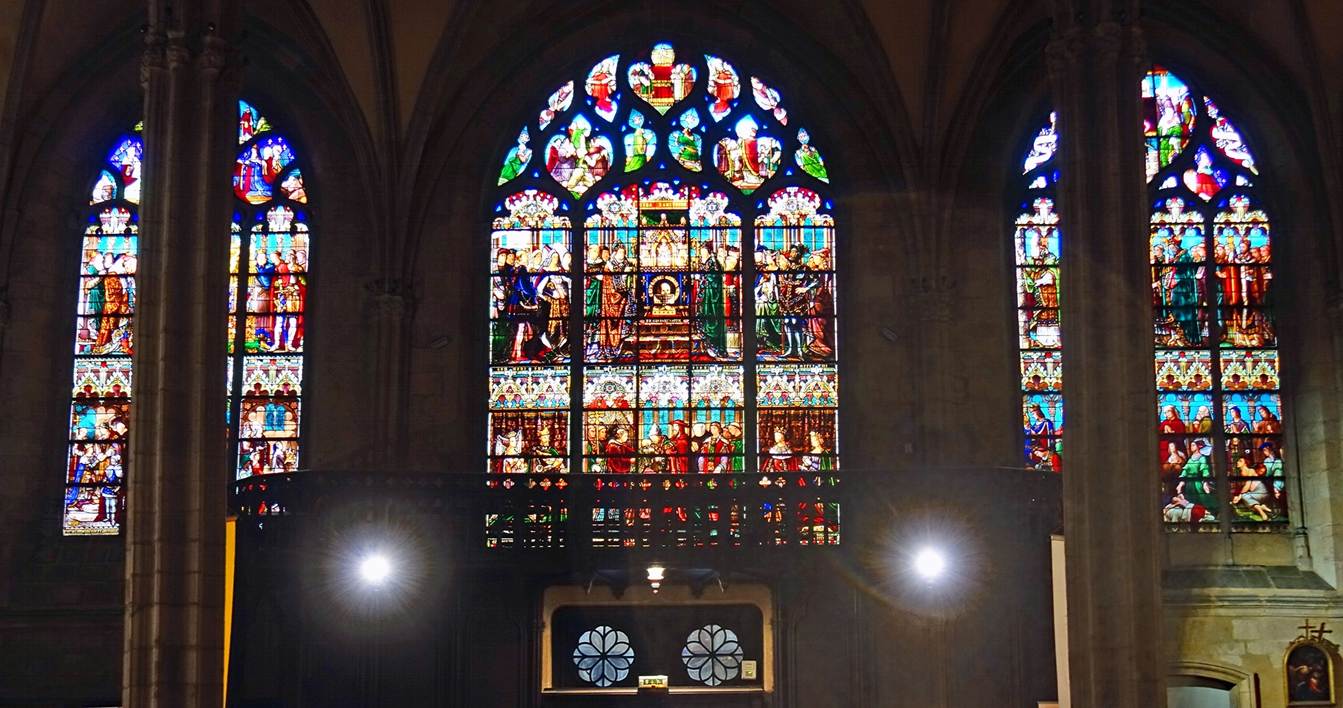
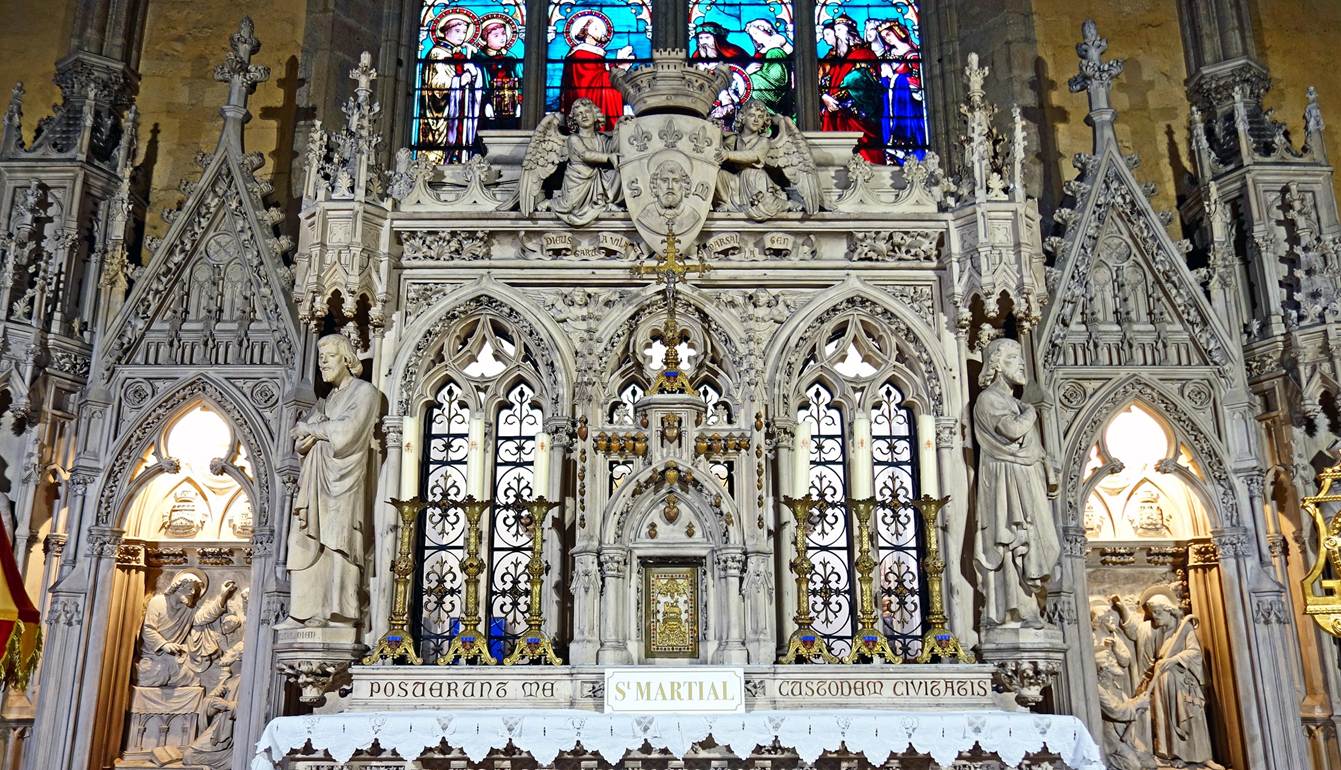
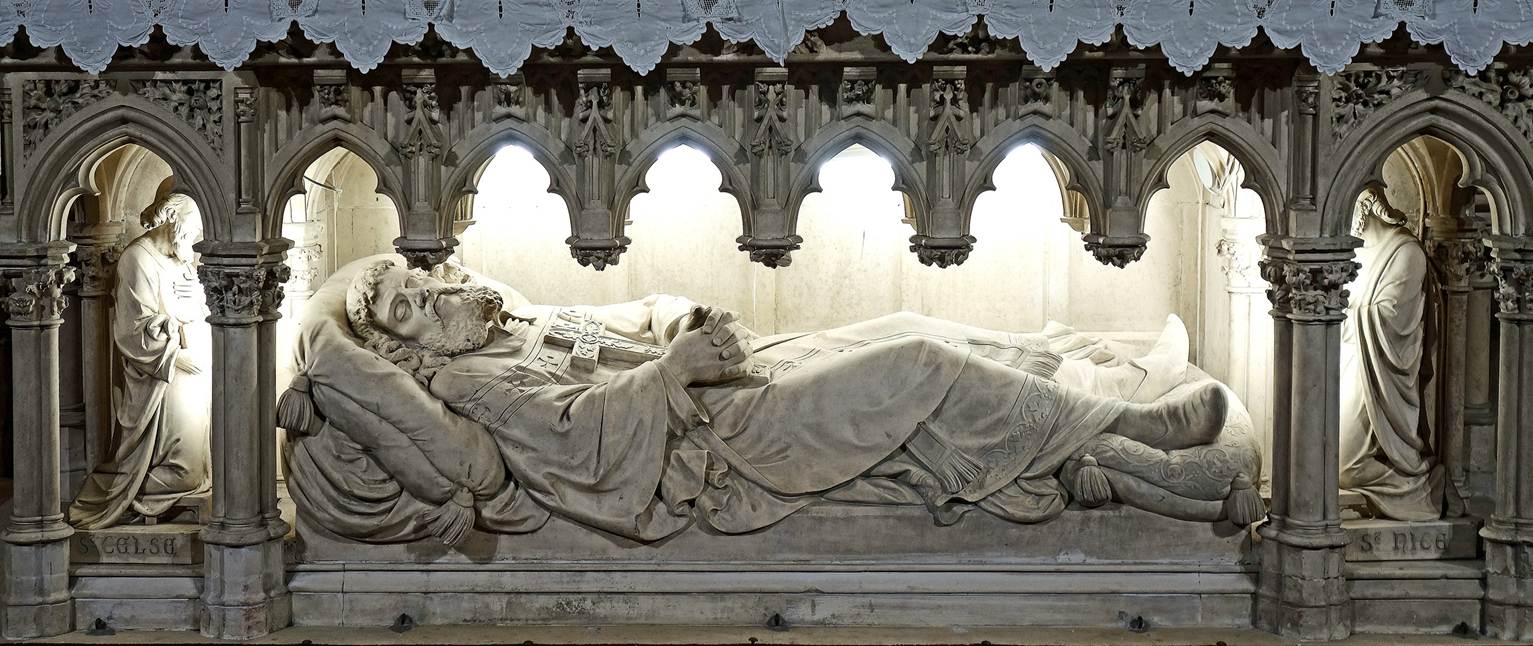
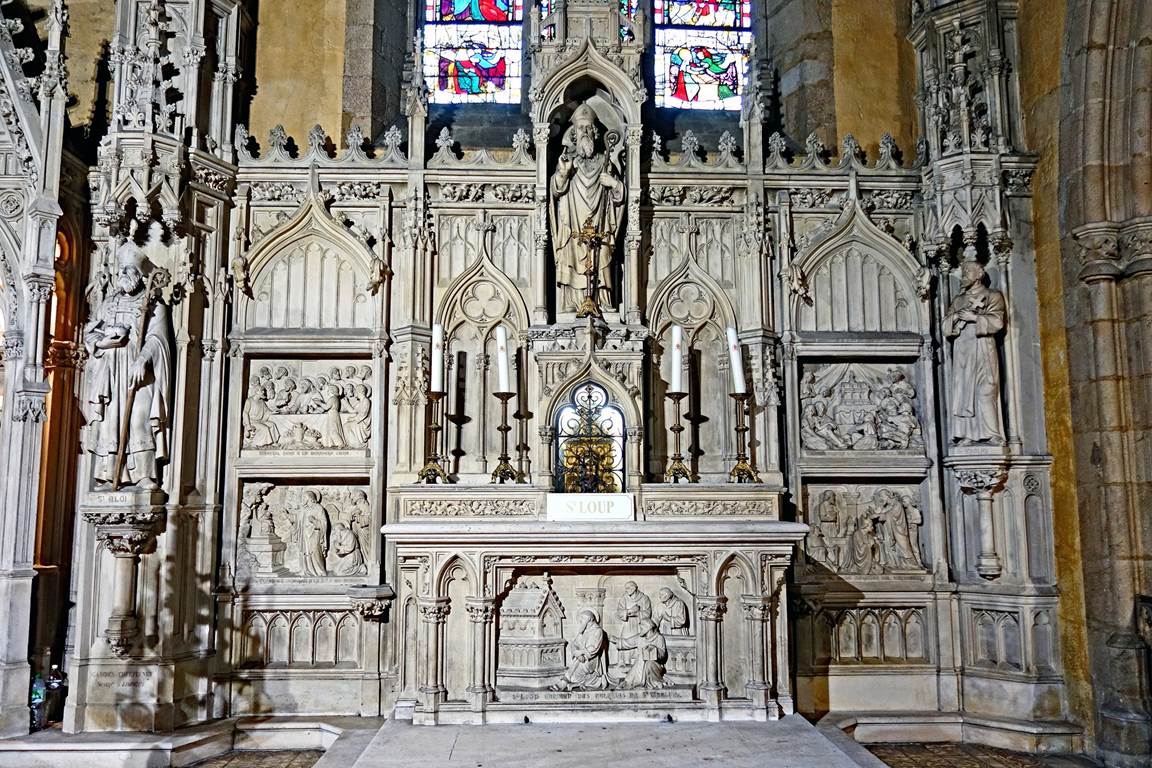
Church of Saint-Michel-des-Lions. Built in granite during the
14th-16th centuries on a high spot of the city, this church is dedicated to
Saint Martial, the first bishop of Limoges, and Saint Loup, his successor. It
houses their remains in two distinct altarpieces.
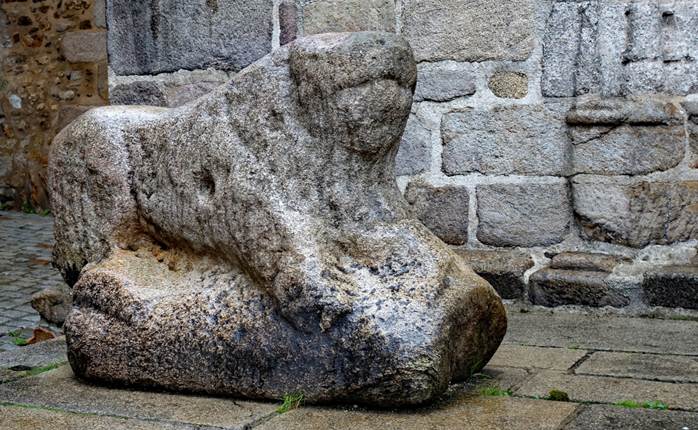
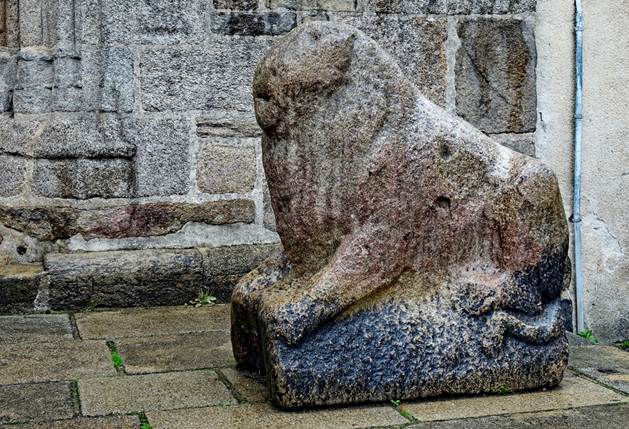
- The two Gallo-Roman granite lions (predating the church) that
stand guard at the entrance to the church.
|
|
|
- Vaulted ceiling of the nave.
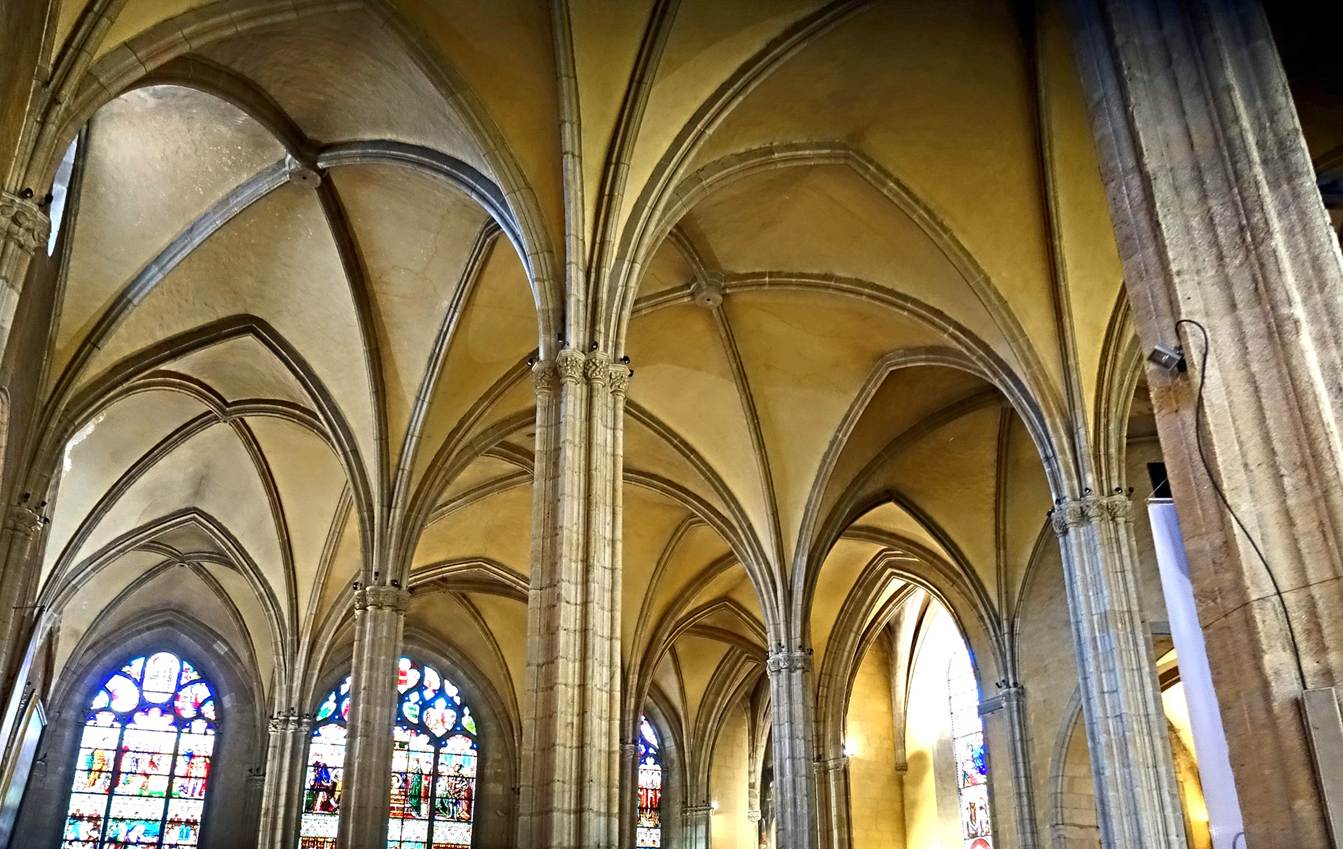
- Stained glass windows at the back of the church.
Altarpiece dedicated to Saint Martial.
Gisant (reclining figure) of Saint Martial above his grave, at the
base of the altarpiece.
Altarpiece dedicated to Saint Loup.
Chateau de Hautefort (Department of Dordogne)
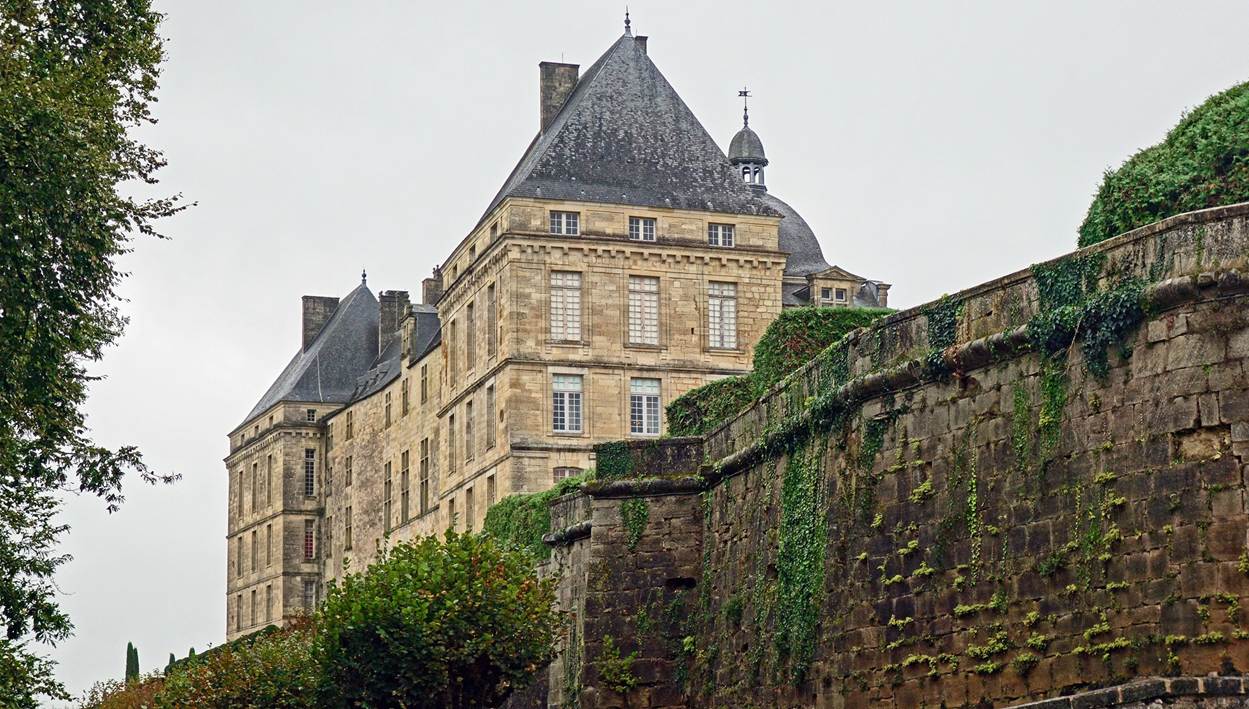
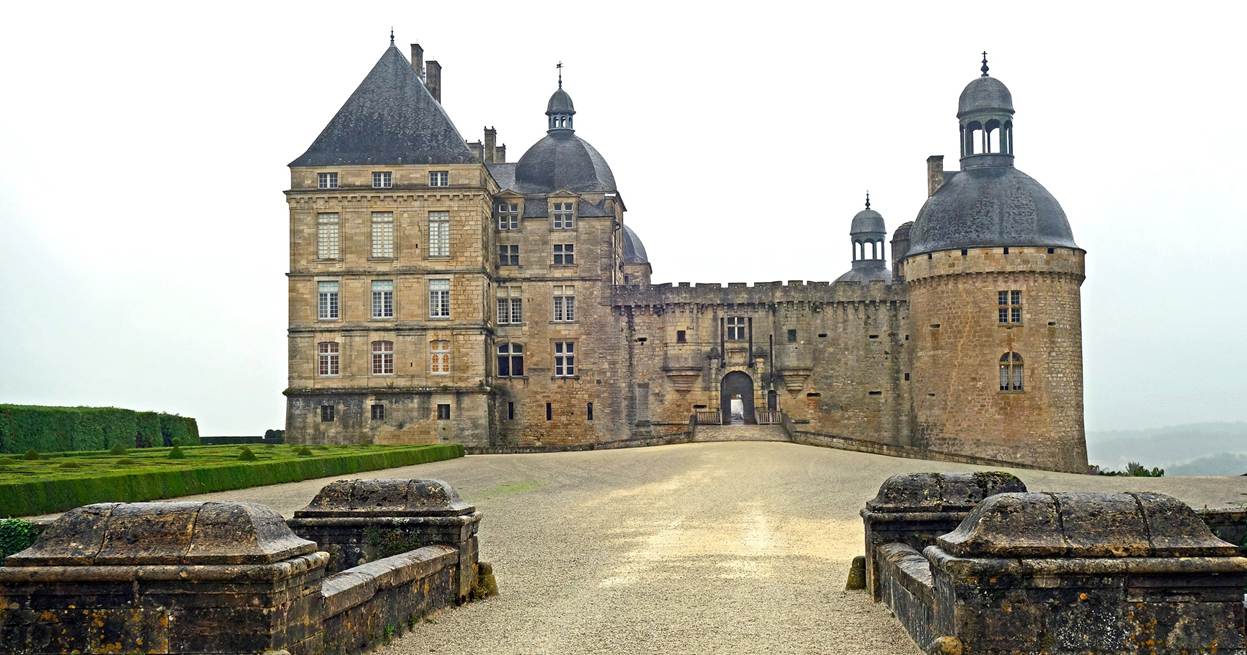
This chateau sits on a ridge above the small village of Hautefort.
It was built between the end of the 16th century and the end of the 17th
century on the site of a previous fortified castle. In the 17th century, its
owner, the skillful marquis Jacques-Francois de
Hautefort, a powerful lord, compensated for the luxury of his castle by
establishing the Ans foundries, 15km from the chateau. These foundries supplied
cannons to Louis XIV's royal navy, which, once made, were transported by land,
river, and sea to the arsenals of Rochefort. Early in the 20th century, the
castle was in an advanced state of disrepair. It was then restored by the baron
and baroness de Bastard. In 1968, the interior of the central building was
destroyed by fire and was restored again.
North facade of the castle.
Main entrance (west side) of the castle.
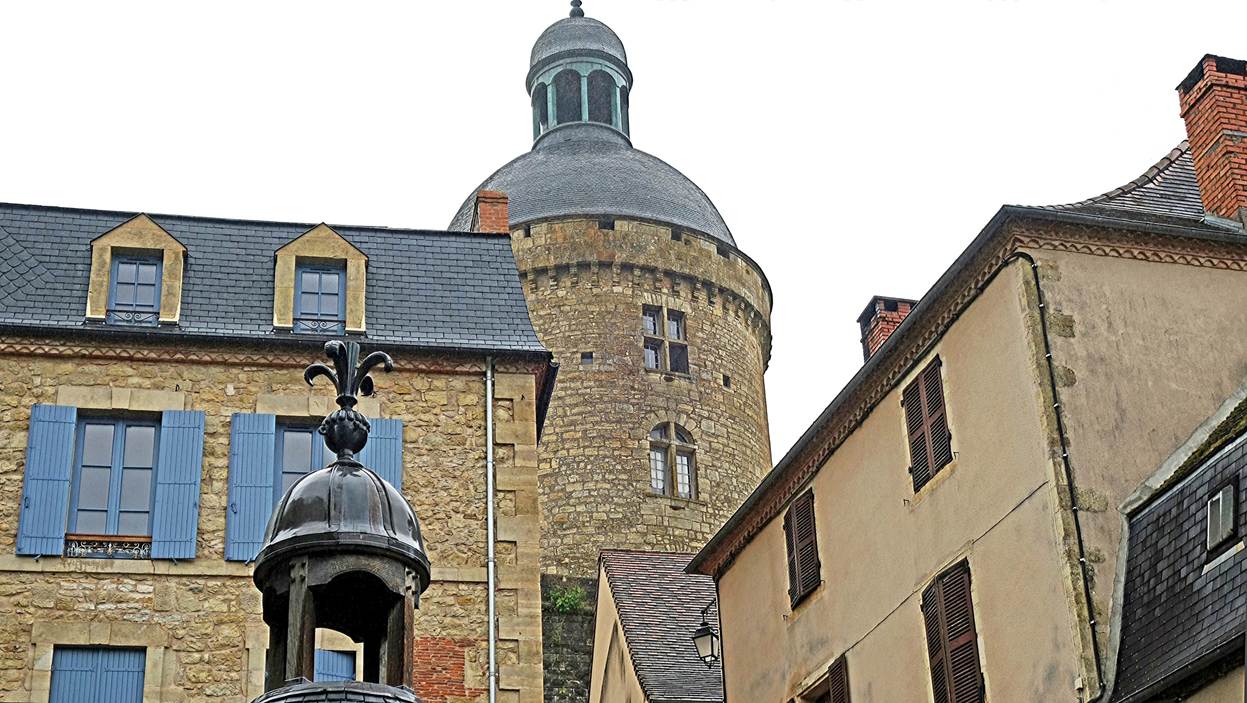
View of the south-west tower of the castle from the Hautefort
village.
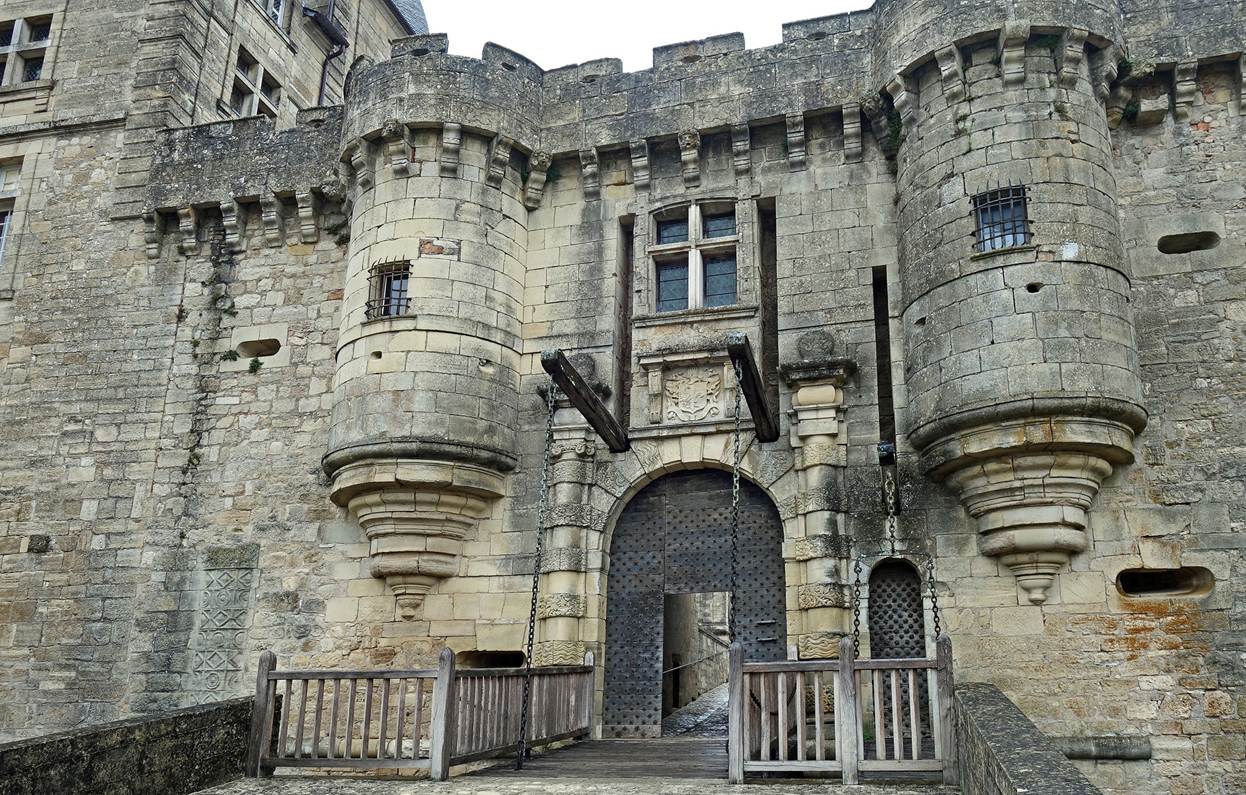
Entrance gate to the castle.
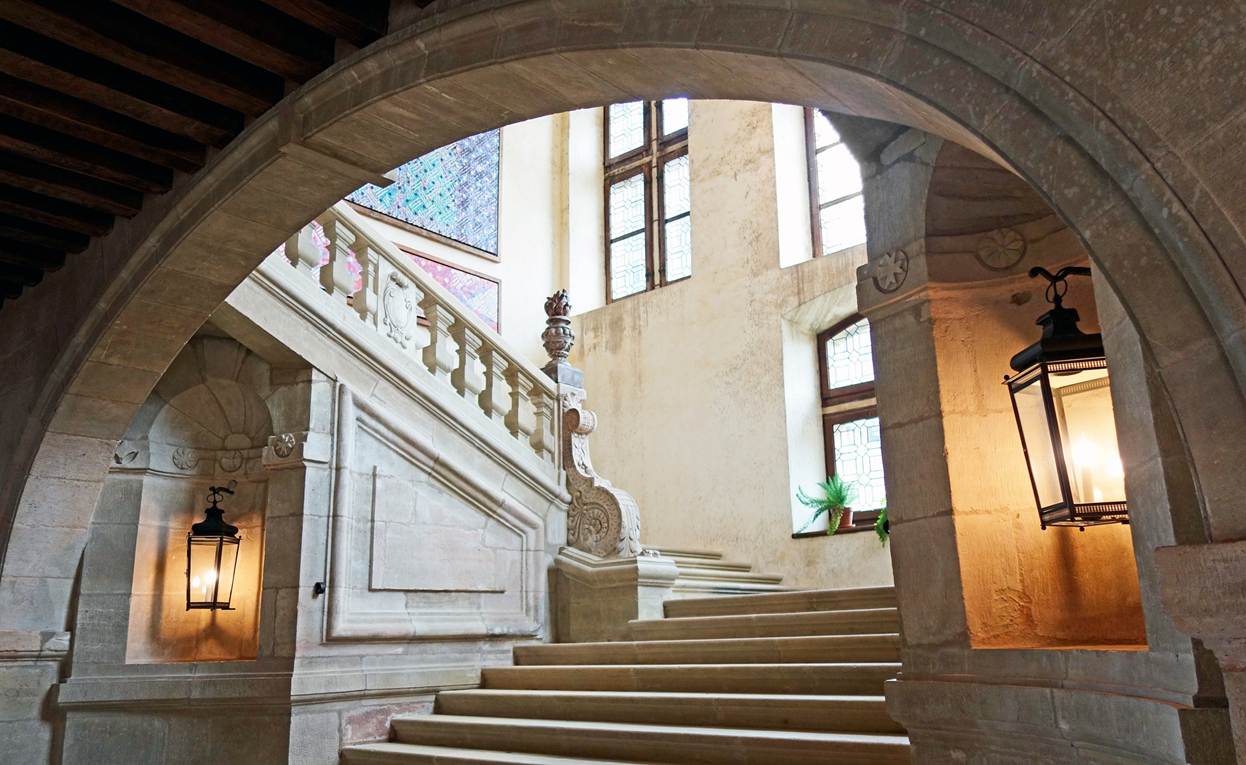
Main staircase.
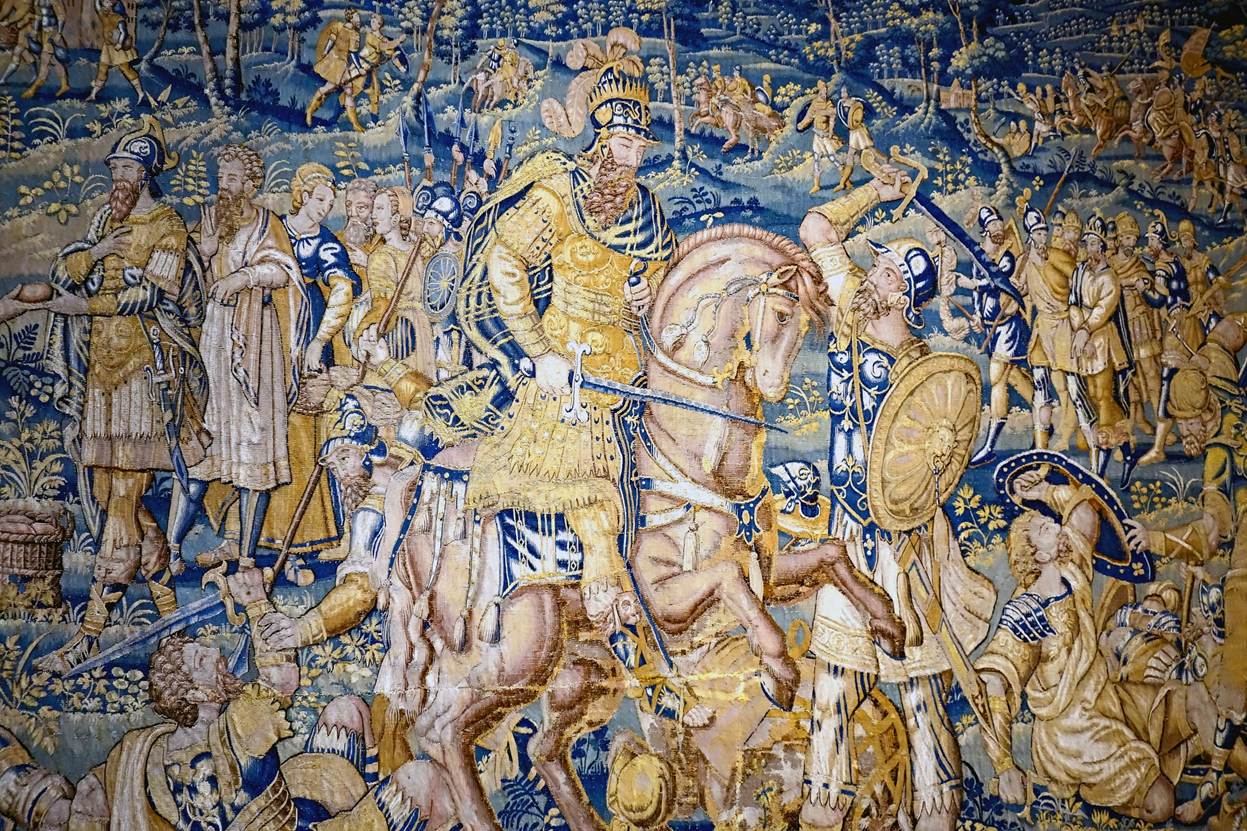
Flemish tapestry (16th century) entitled ″Battle of the four
Kings″. The central character on horseback is in a fight with a foot
soldier, while armies clash in the background.
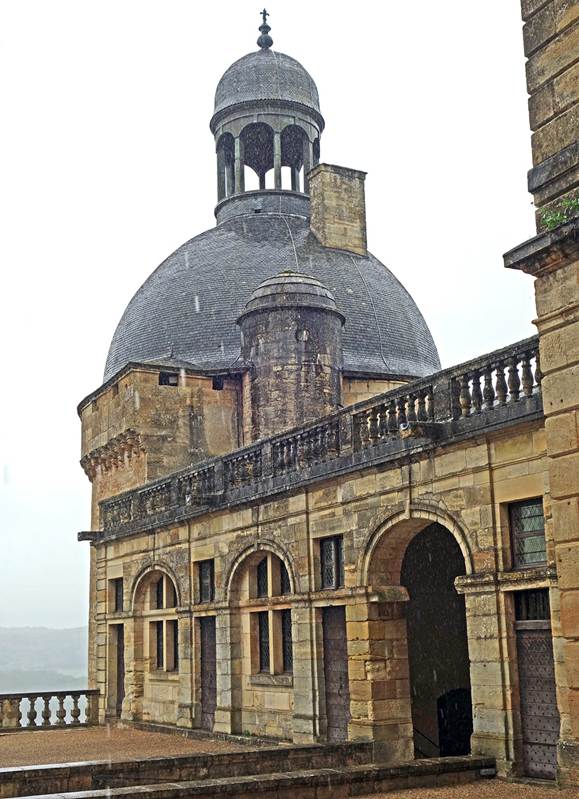
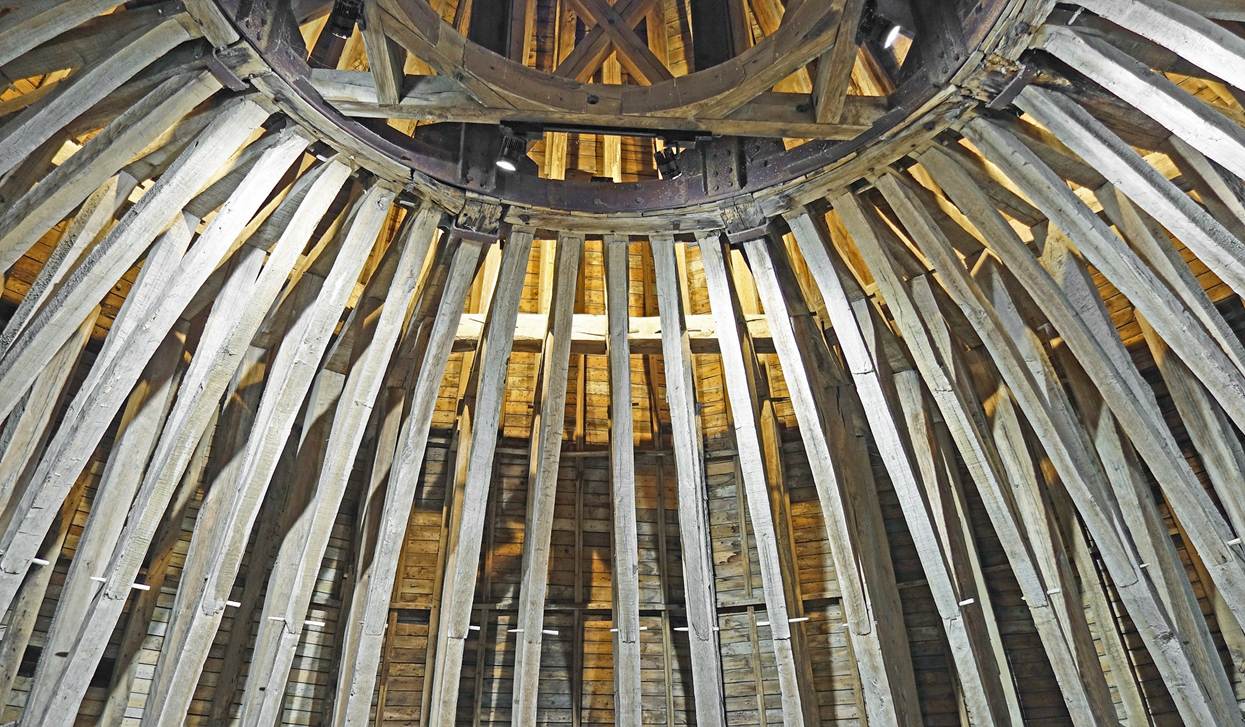
Left: South-west tower. Right: Part of the 17th-century wooden
frame the tower's slate roof.
|
|
|
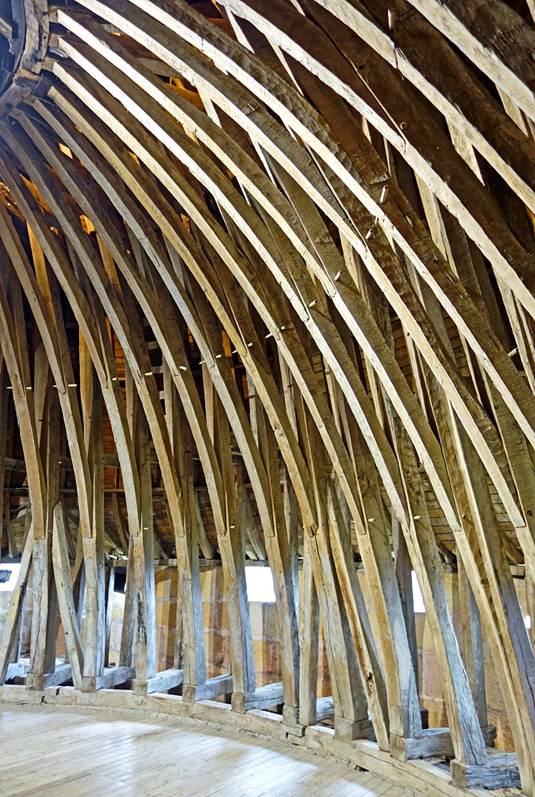
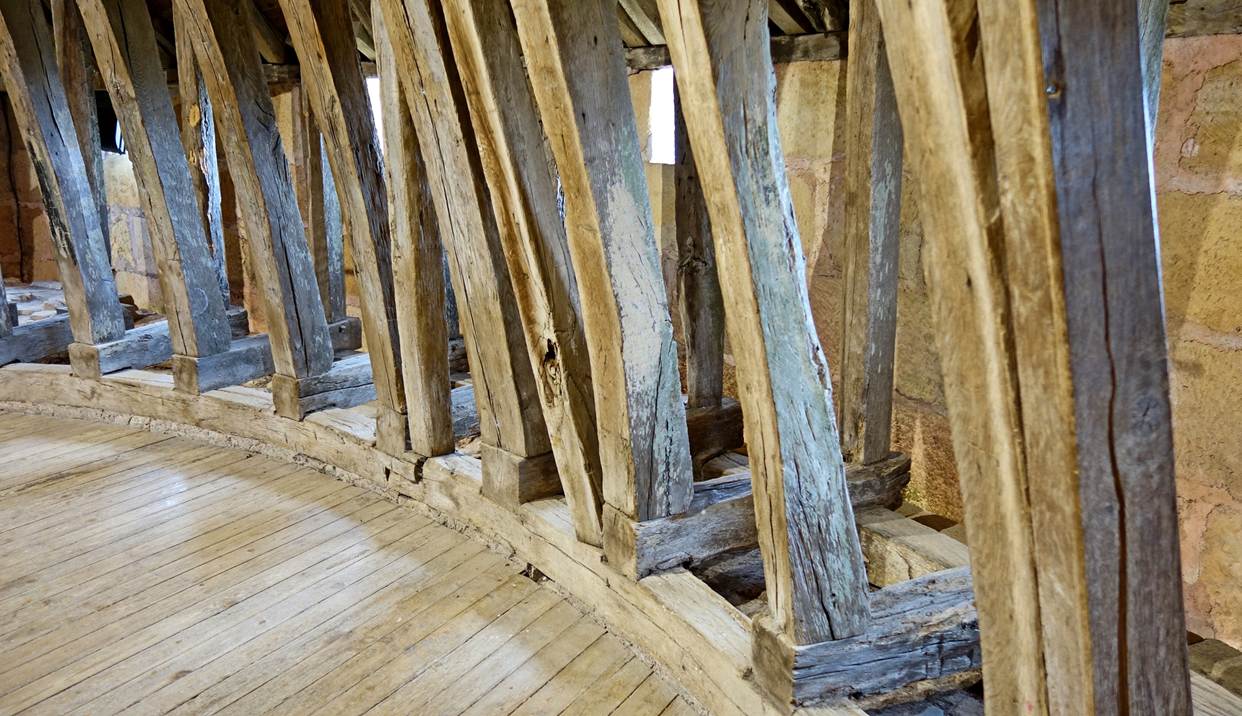
Two more views of the wooden frame supporting the roof of the
south-west tower.
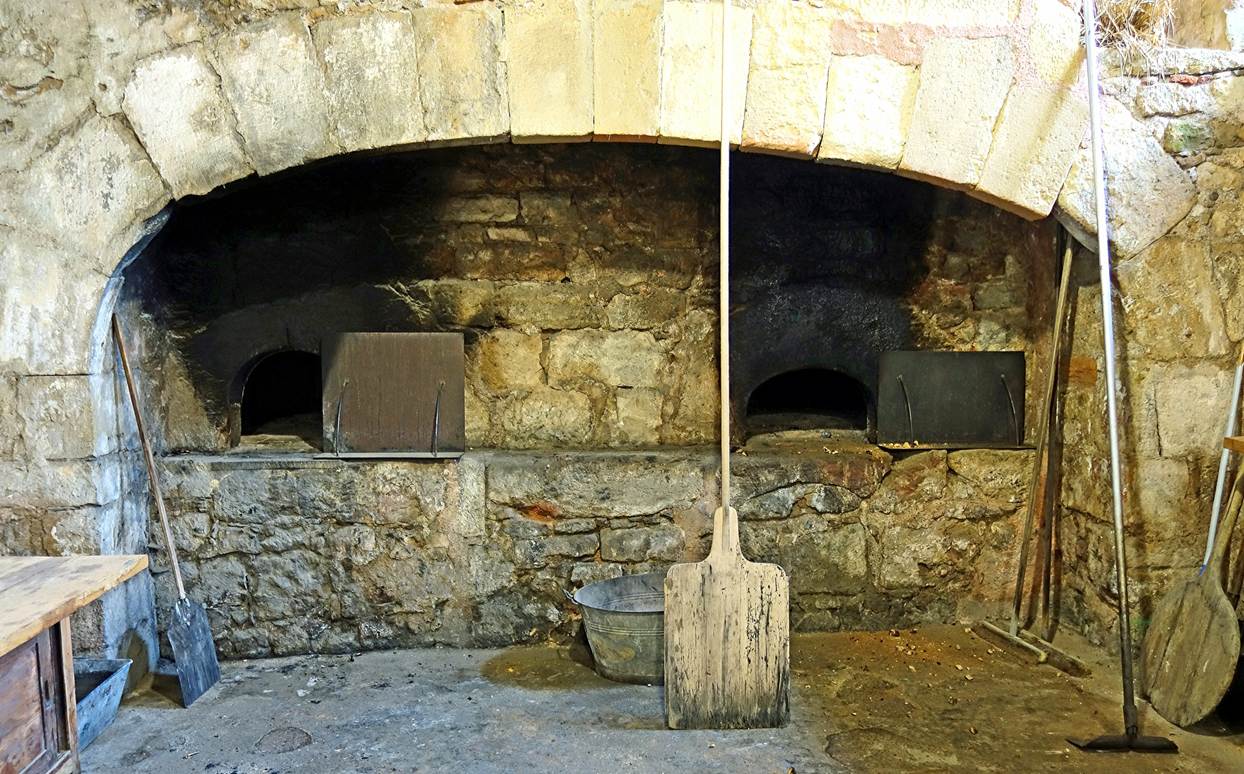
Bread oven. Located in the basement of the castle, it was (and
still is) accessible by the inhabitants of Hautefort to bake their bread.
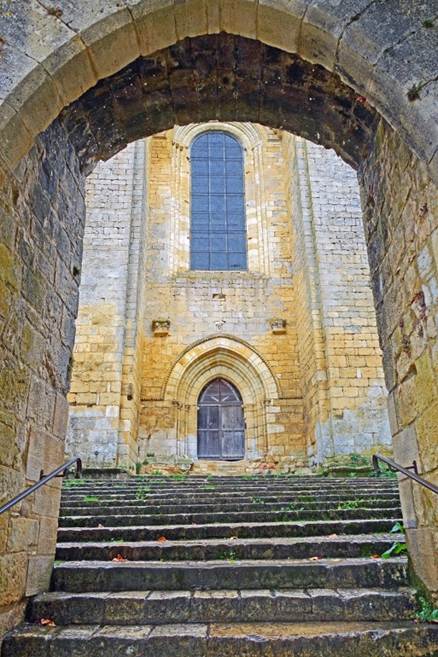
Abbey of Saint-Amand-de-Coly (Department of Dordogne)
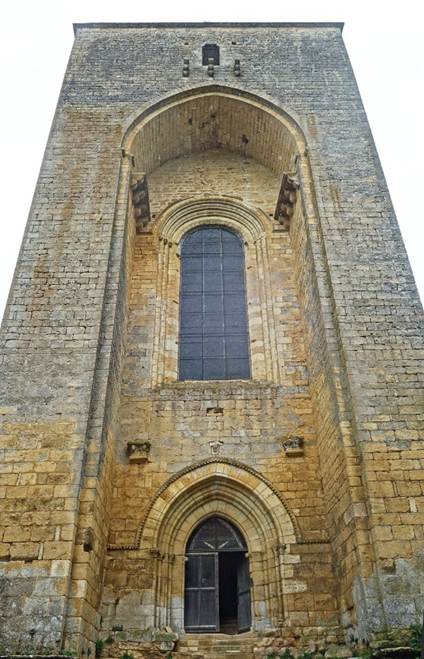
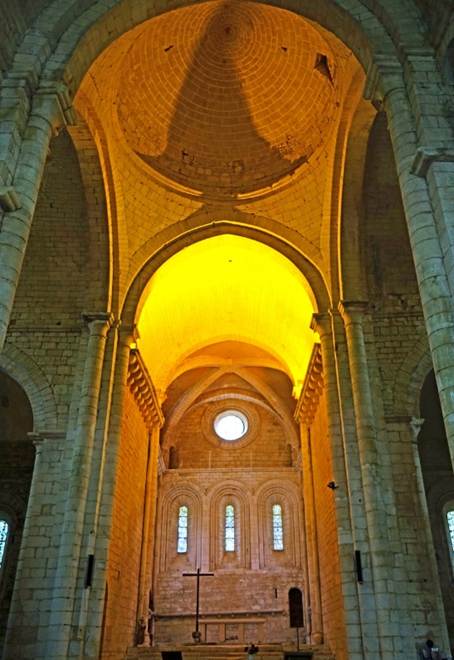
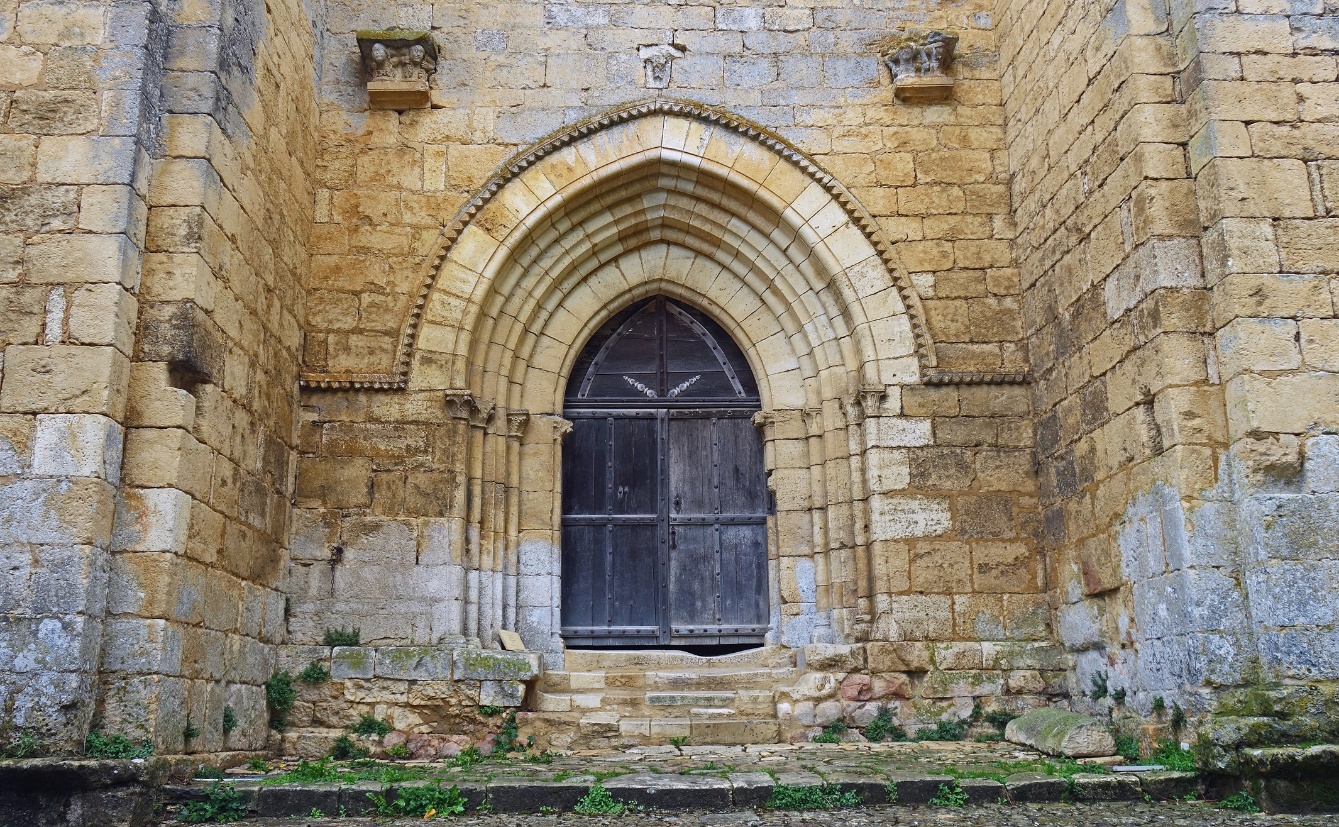
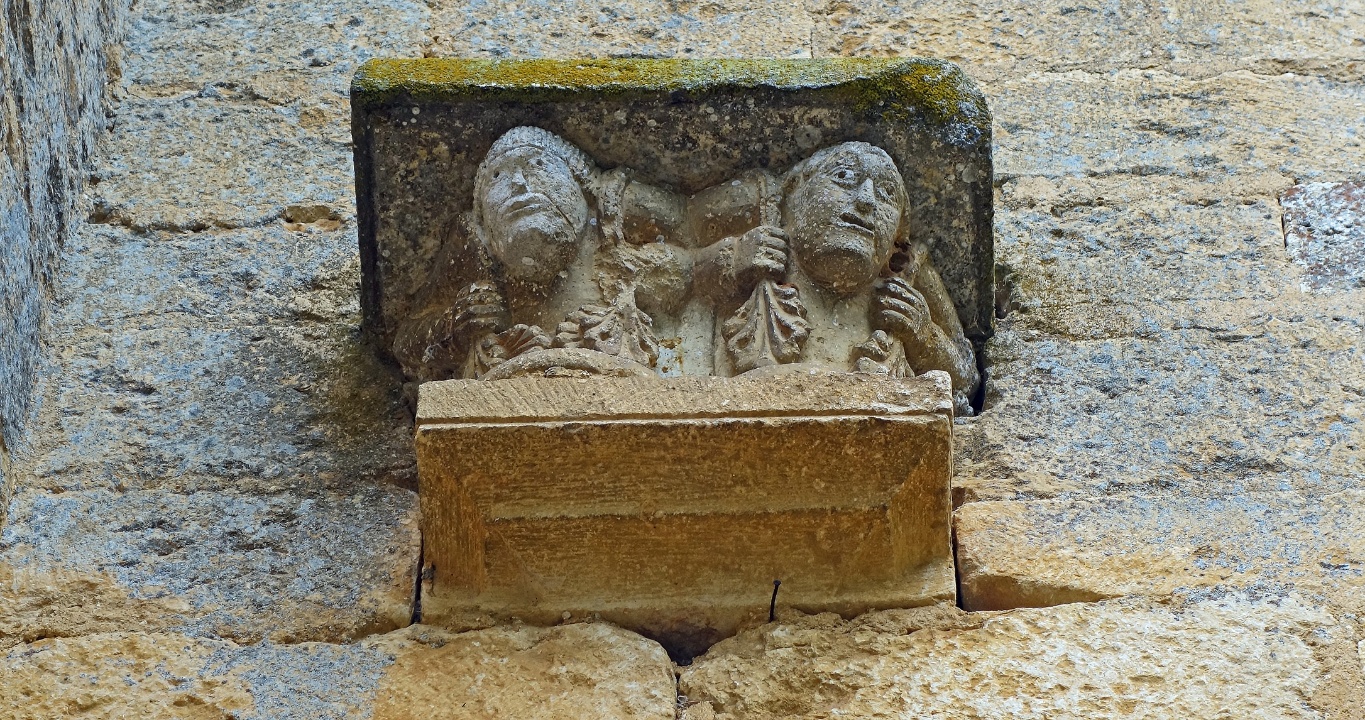
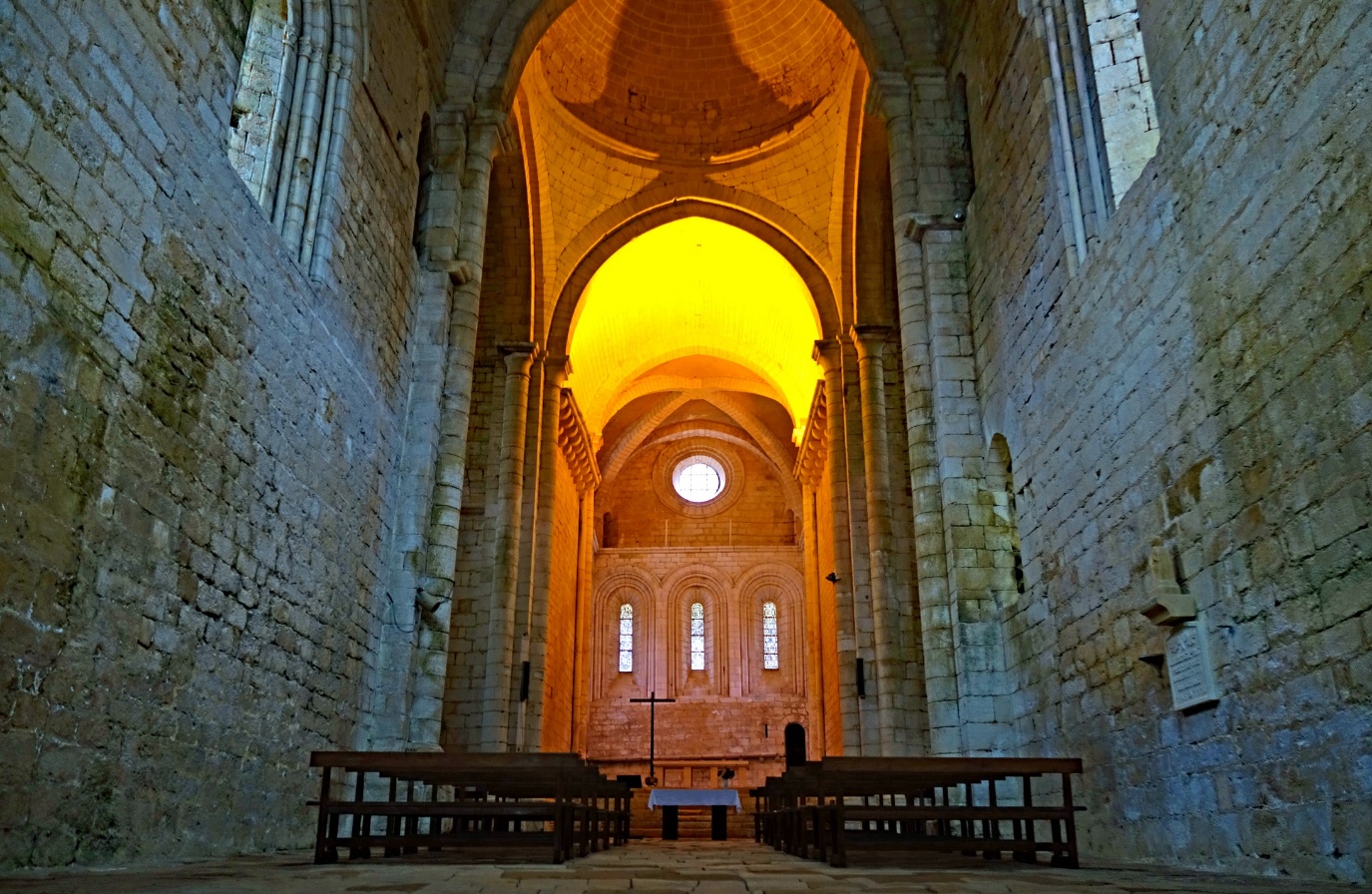
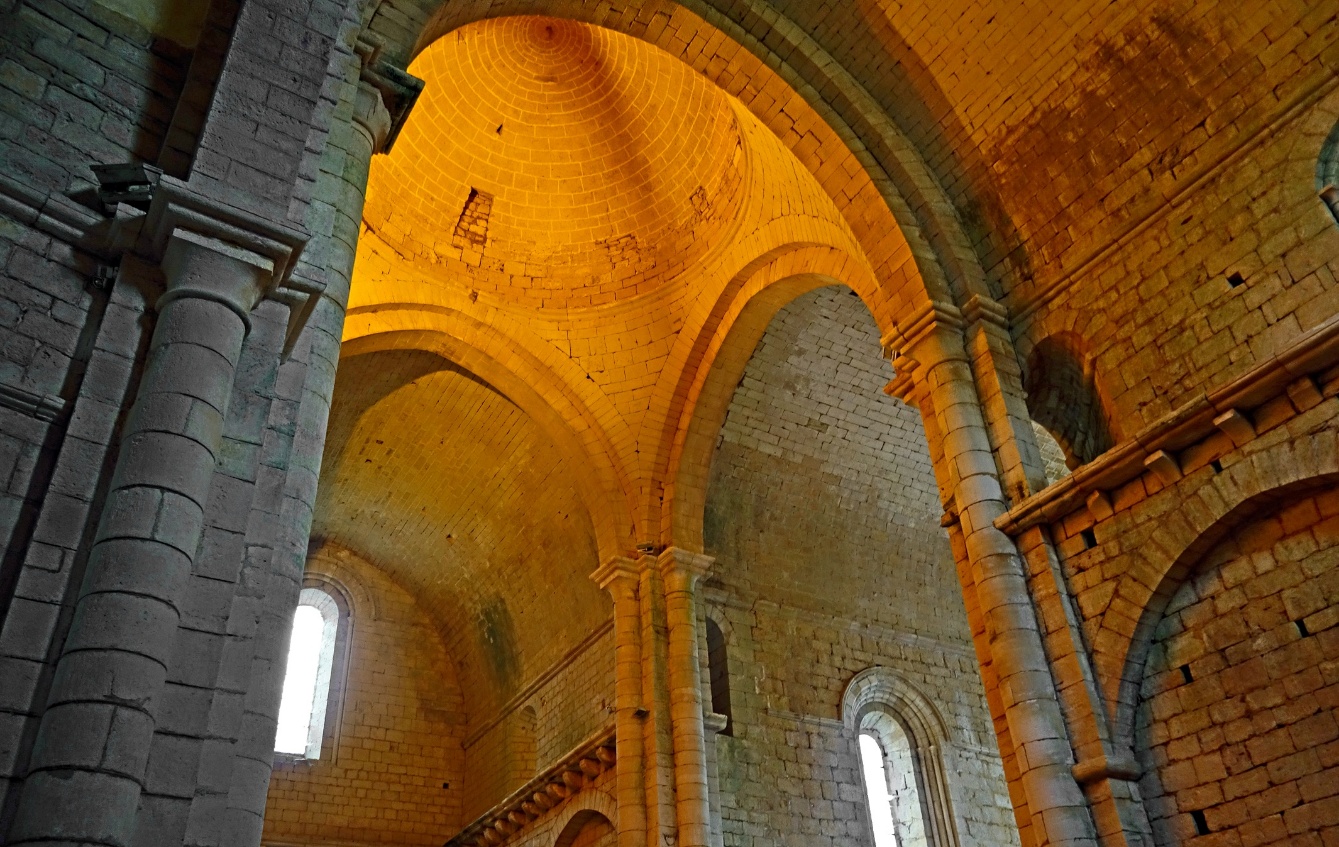
This ancient abbey was mentioned in 1048 in a document now
preserved in the Vatican library. Its complex history spans the Hundred Years'
War in the 14th-15th centuries and the French Wars of Religion in the 16th
century. All that remains today is the imposing abbey church, 30 meters high,
dating from the 12th century and restored multiple times since.
|
|
|
|
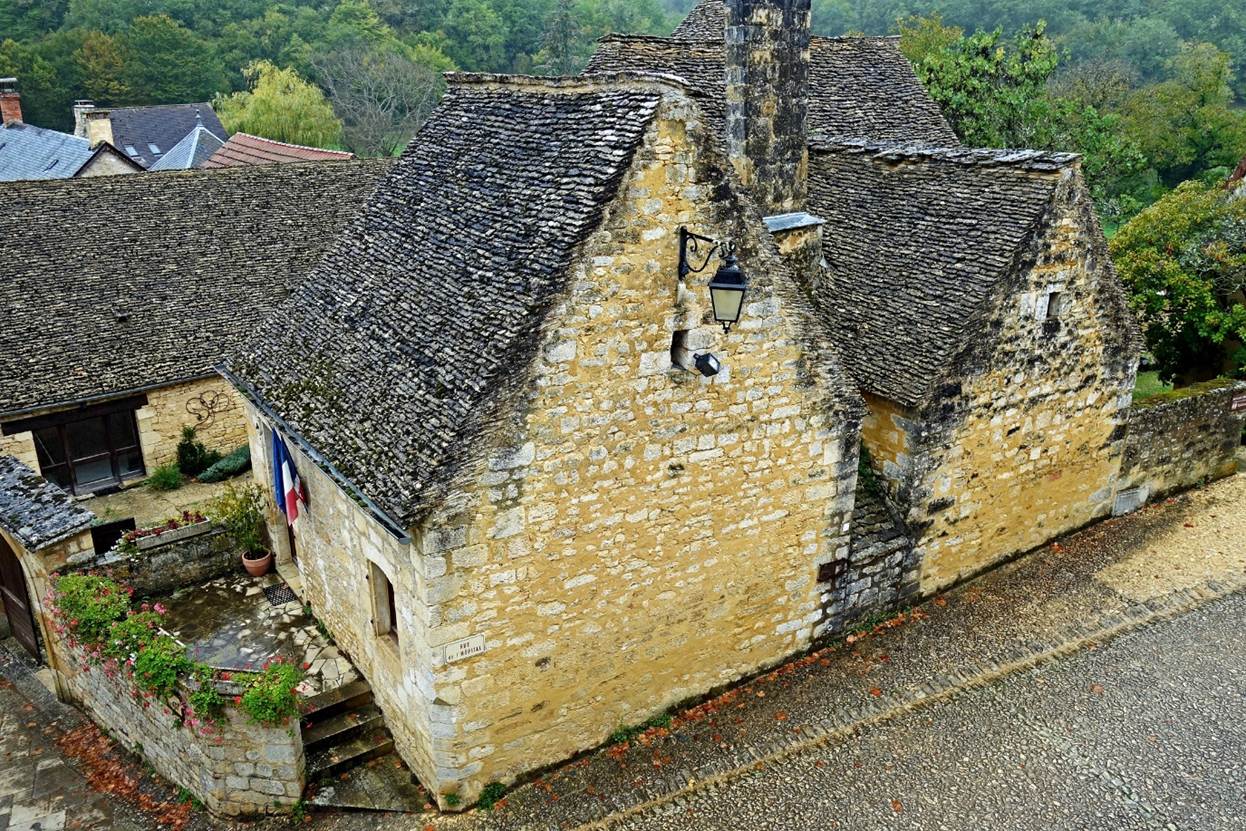
Traditional houses of the village of Saint-Amand-de-Coly, seen
from the abbey church. The roofs, which are made of ″lauzes″ (small
rustic stone slabs), are typical of Perigord.
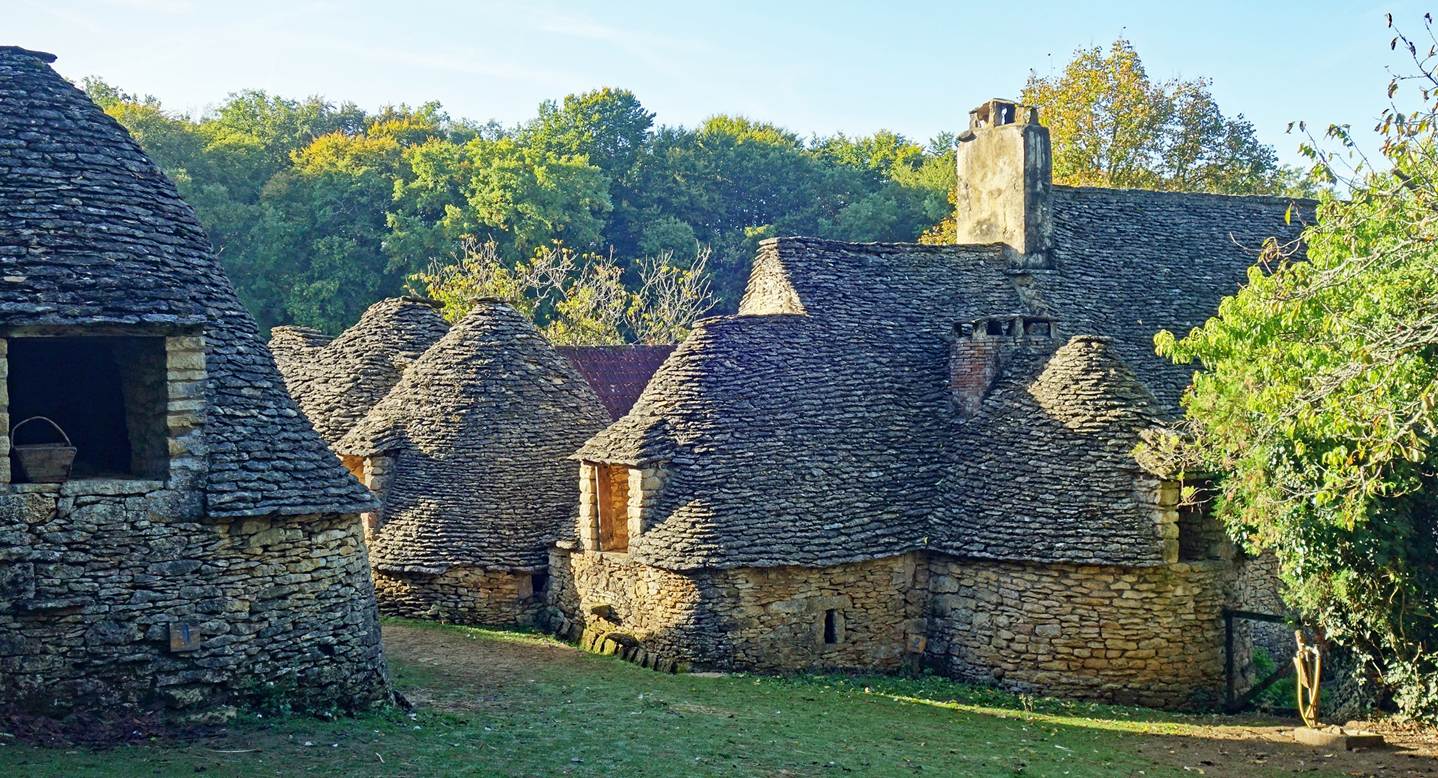
Cabanes du Breuil (Department of Dordogne)
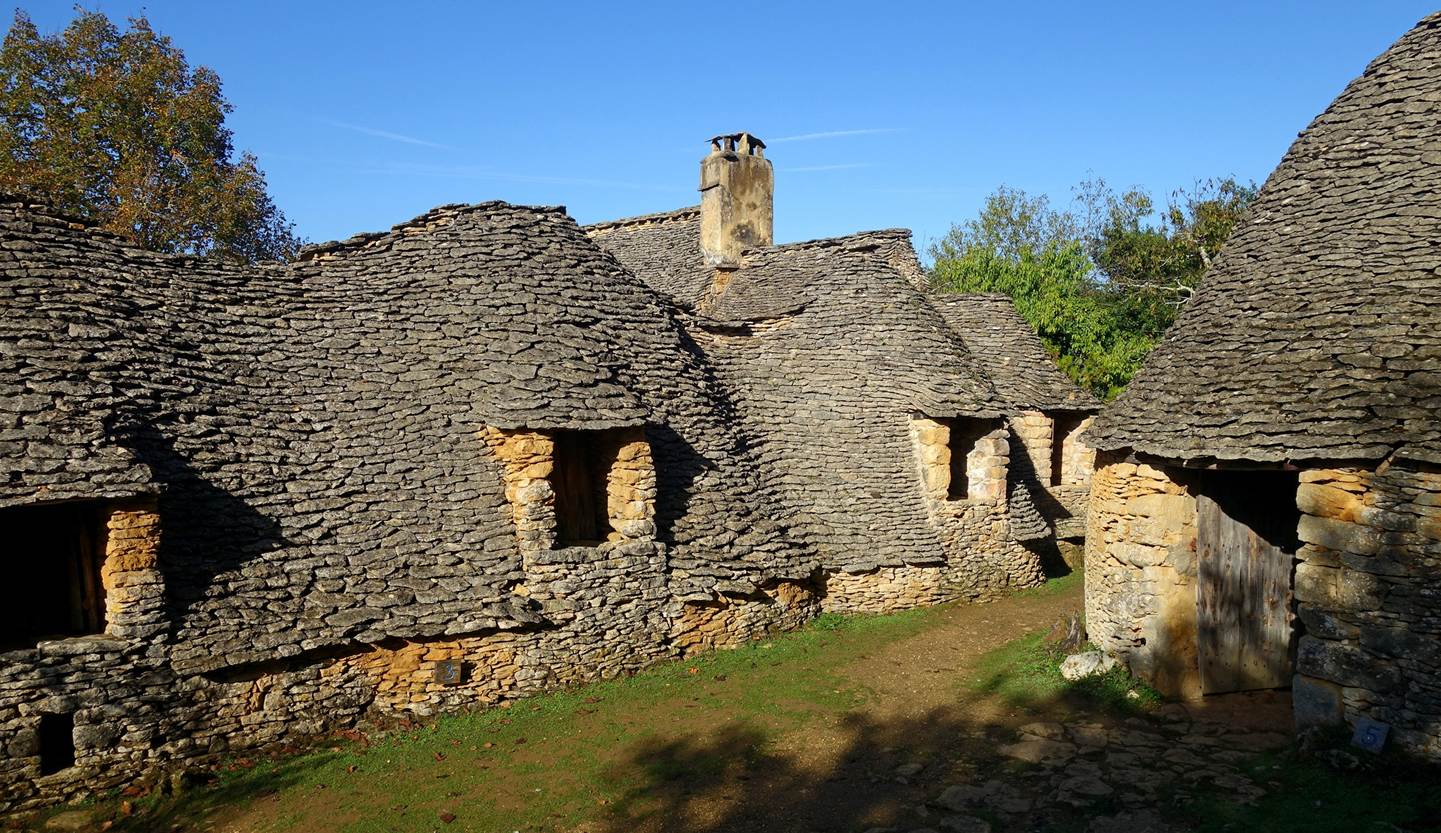
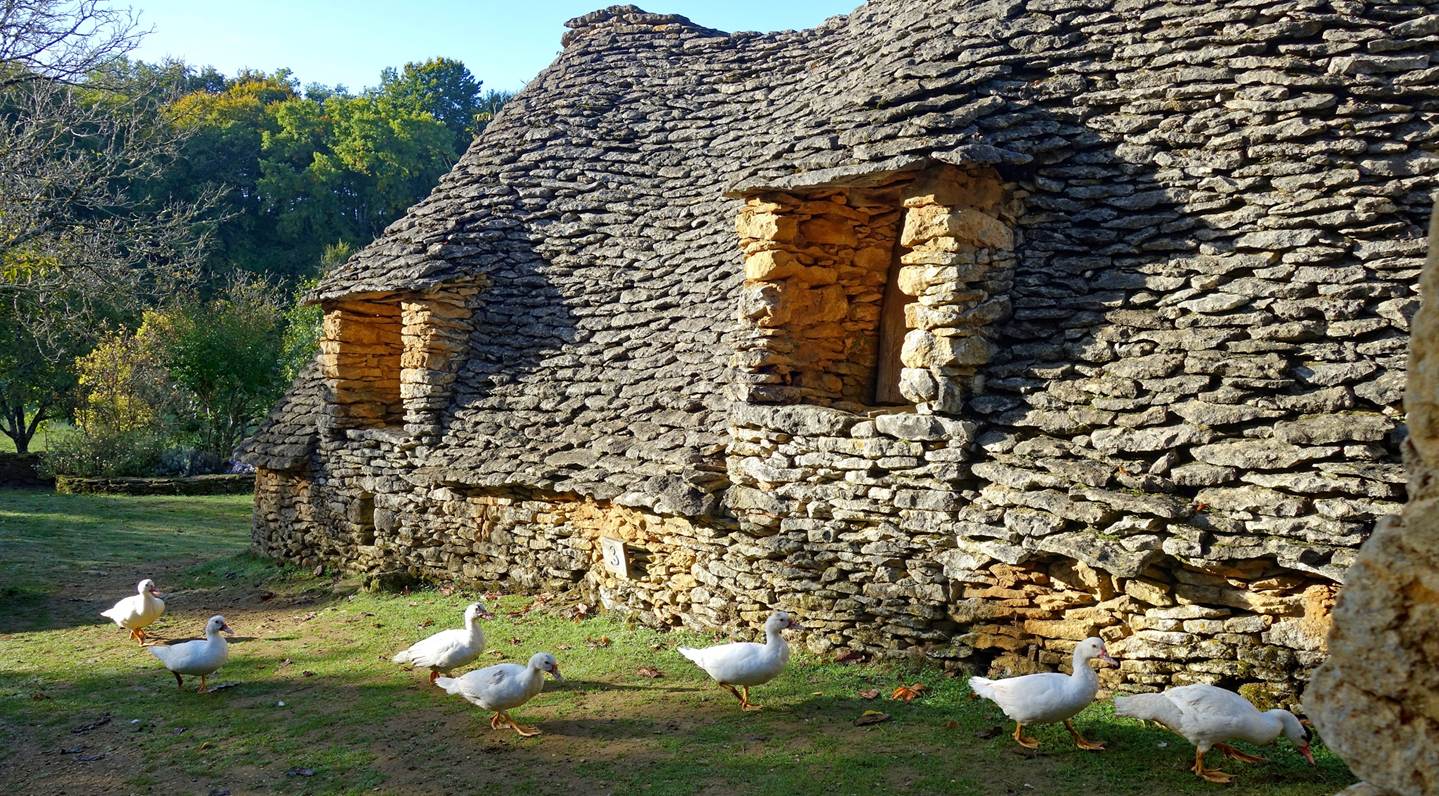
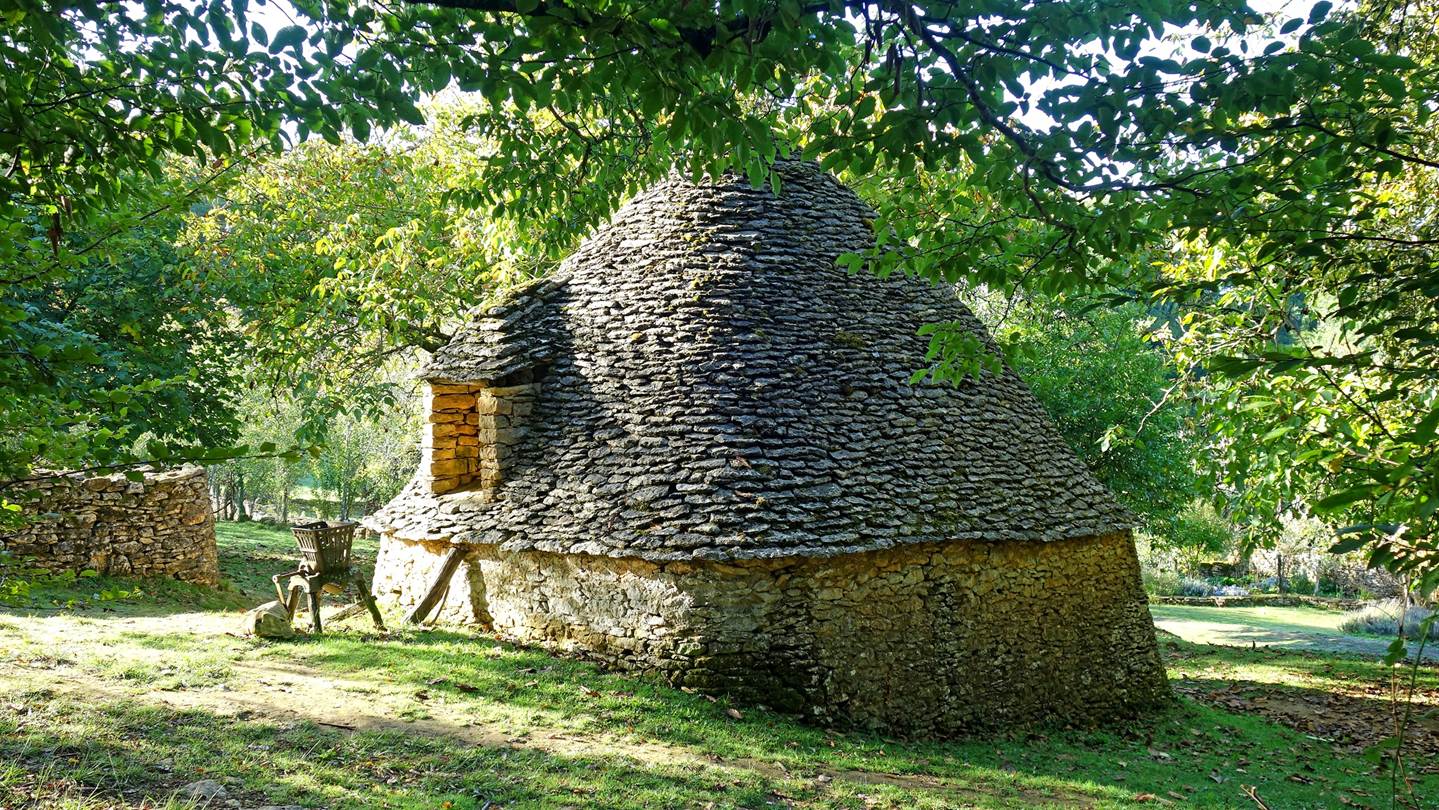
This is a group of old bories (dry stone huts) made with ″lauzes″
(see comment of previous photo) without any added binders. The first written
record of the Cabanes du Breuil dates back to 1449, when they were property of
the Benedectine monks of nearby Sarlat-la-caneda.
Chateau de Puymartin (Department of Dordogne)
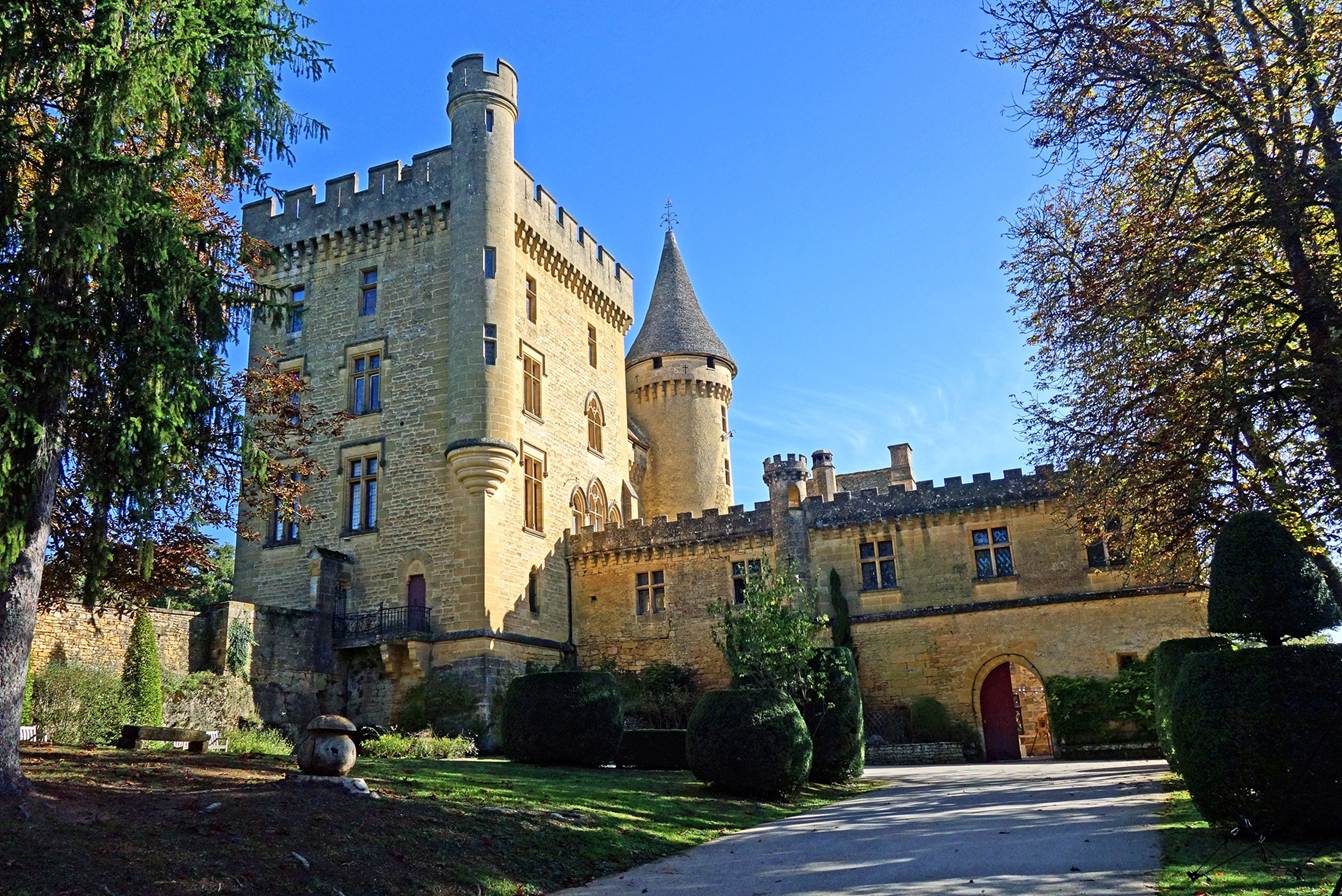
This castle was built in the 13th century, captured and partially
destroyed during the Hundred Years' War, and restored in the 15th and 19th
centuries. It now combines remains from the primitive castle with restorations
and additions made later.
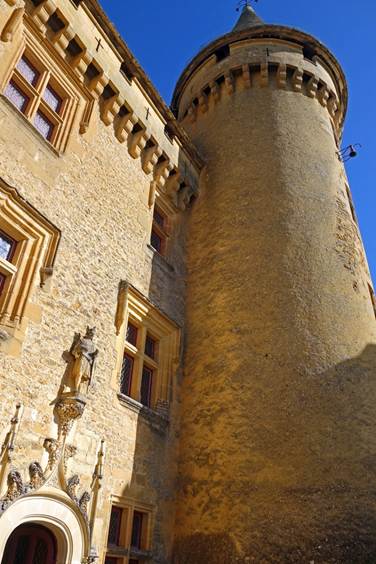
Views from the exterior of the castle.
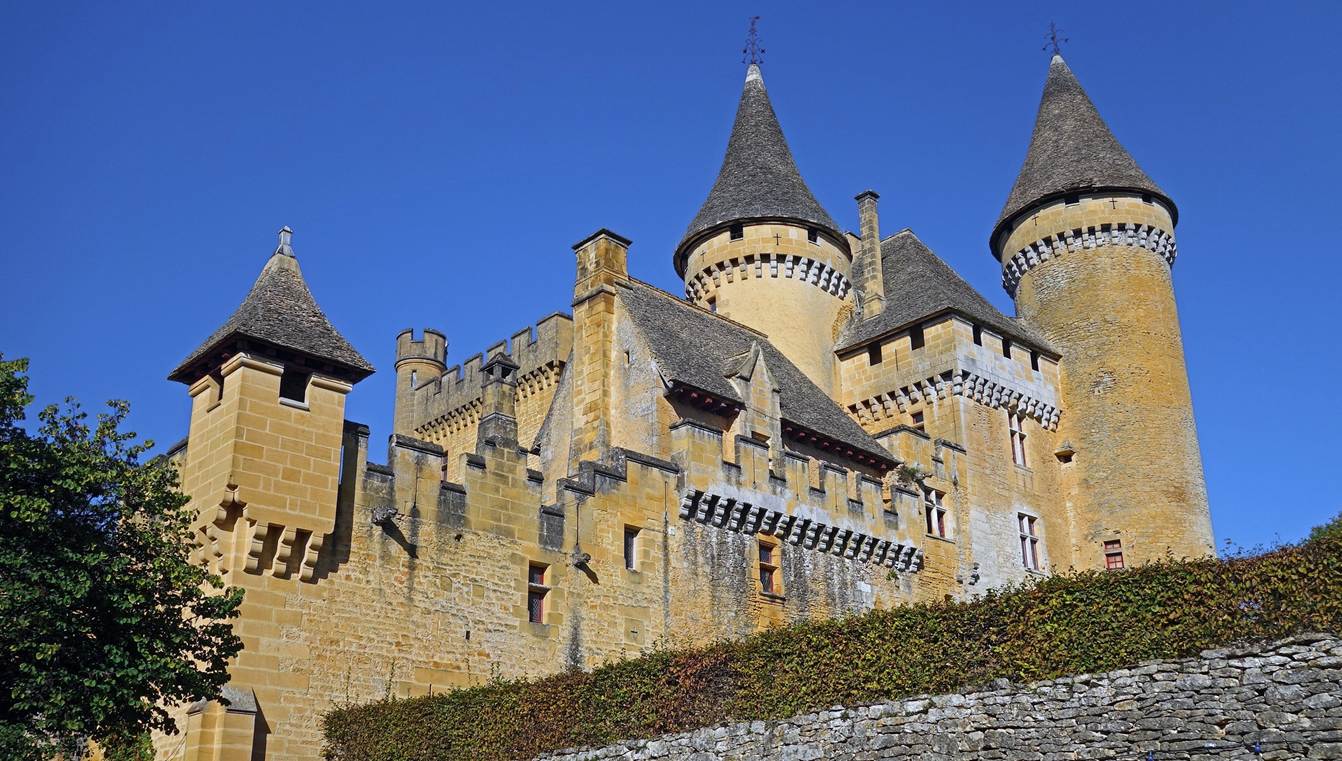
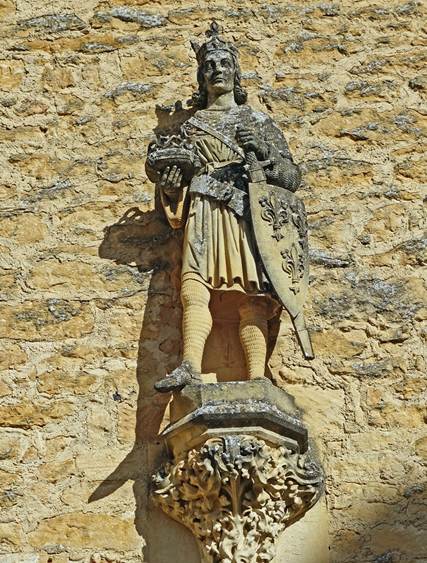
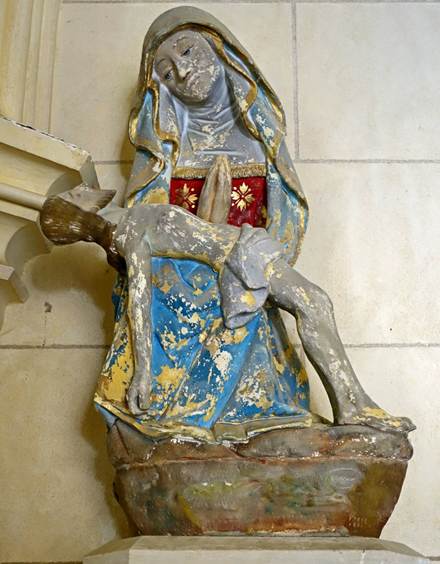
From left to right:
- Partial view from the Saint-Louis courtyard, the entrance
courtyard of the castle.
- Closeup of the statue of Saint Louis overlooking the courtyard.
- Two polychrome stone statues: a 15th-century Pieta and a
16th-century representation of Saint Sacerdos.
|
|
|
|
|
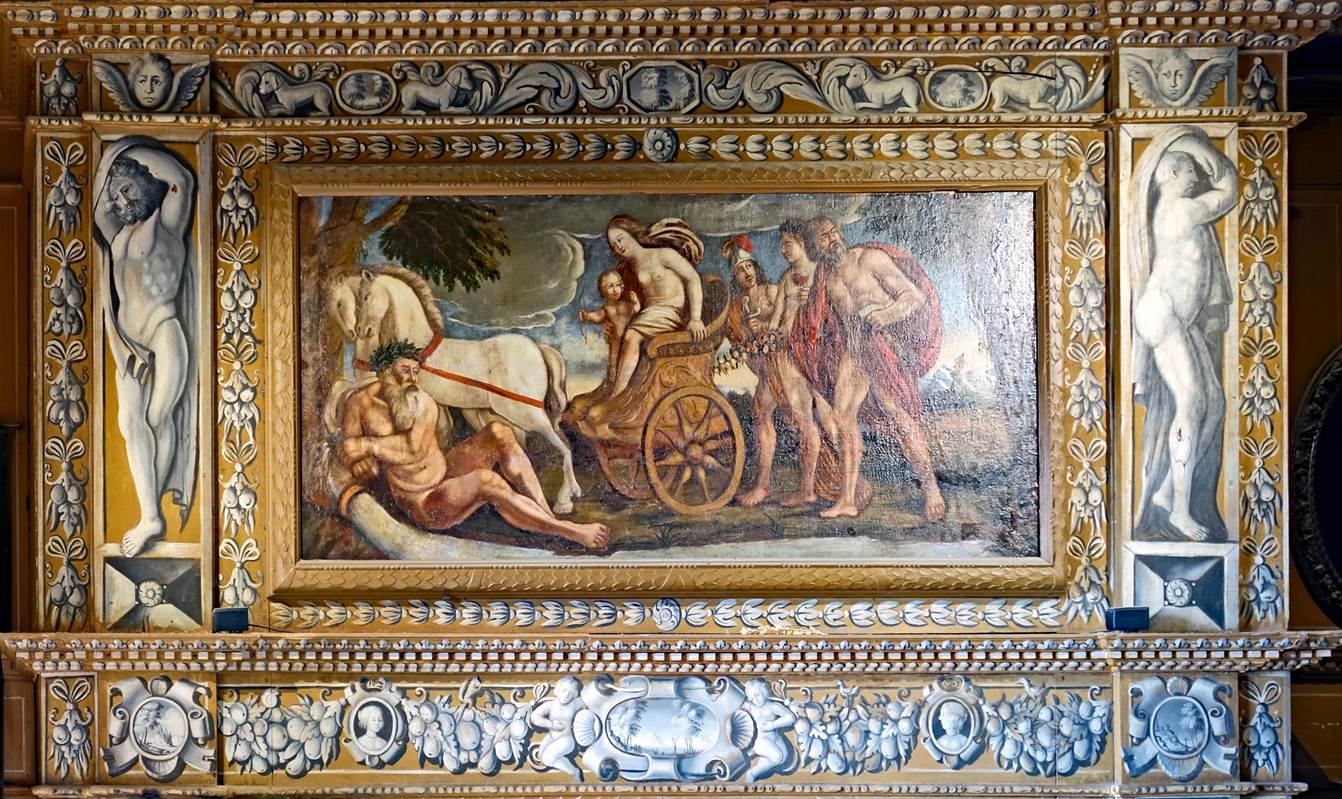
Painting above the fireplace of the castle's ″large room″.
It depicts Aphrodite in a chariot with Eros, followed by three of her most
famous lovers. The reclining old man is Chronos. This painting symbolizes the
passing of love with time.
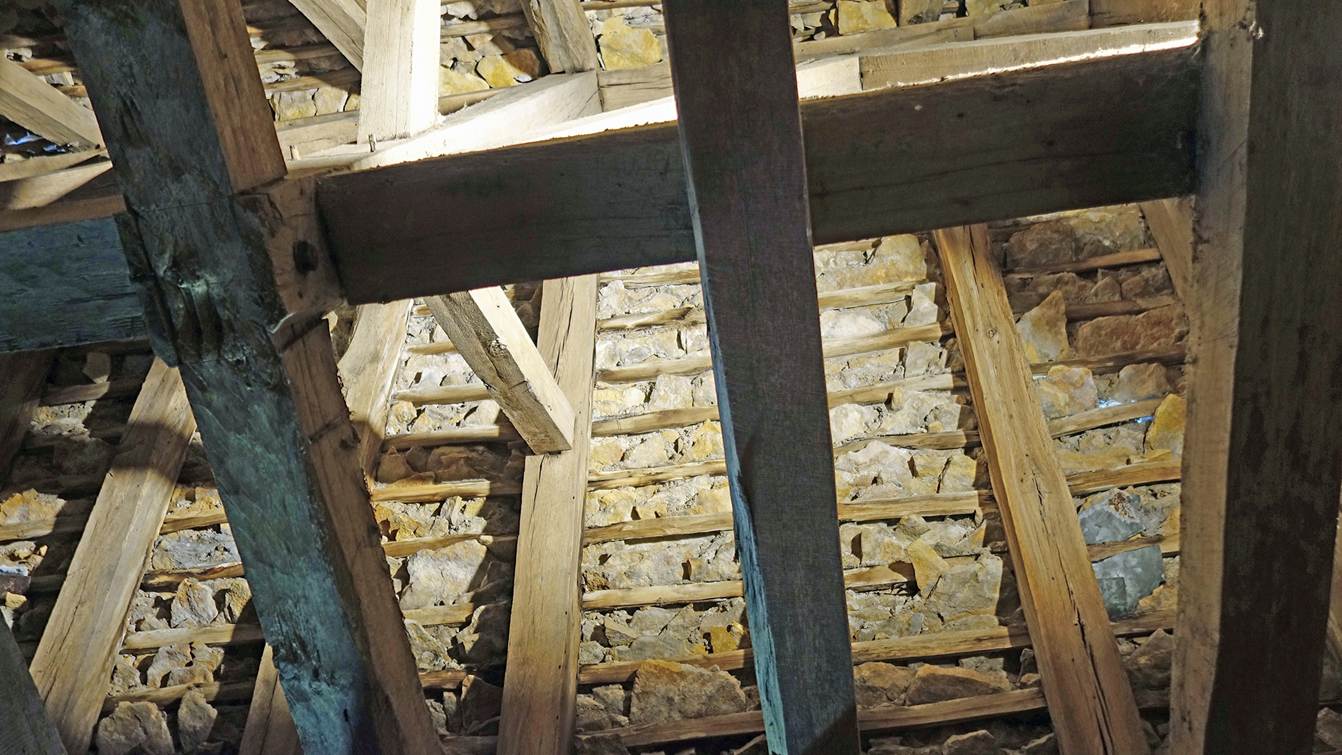
Portion of the timber truss supporting the heavy roof made of ″lauzes″.
Sarlat-la-Caneda (Department of Dordogne)
Commonly known as Sarlat, this town is famous for its old center,
made up of narrow streets and small squares lined with buildings dating from
the 13th-16th centuries (medieval and early Renaissance periods).
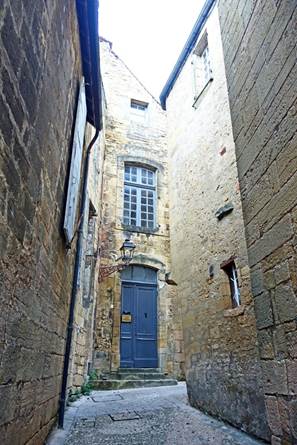
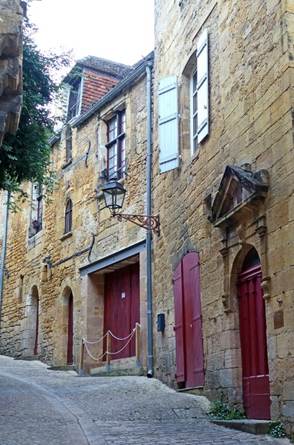
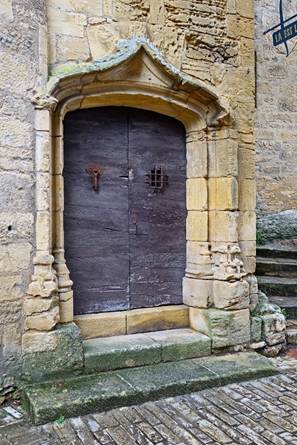
In the streets of old Sarlat.
|
|
|
|
|
|
The castle-like Gisson manor overlooking the Place du
Marche-aux-Oies.
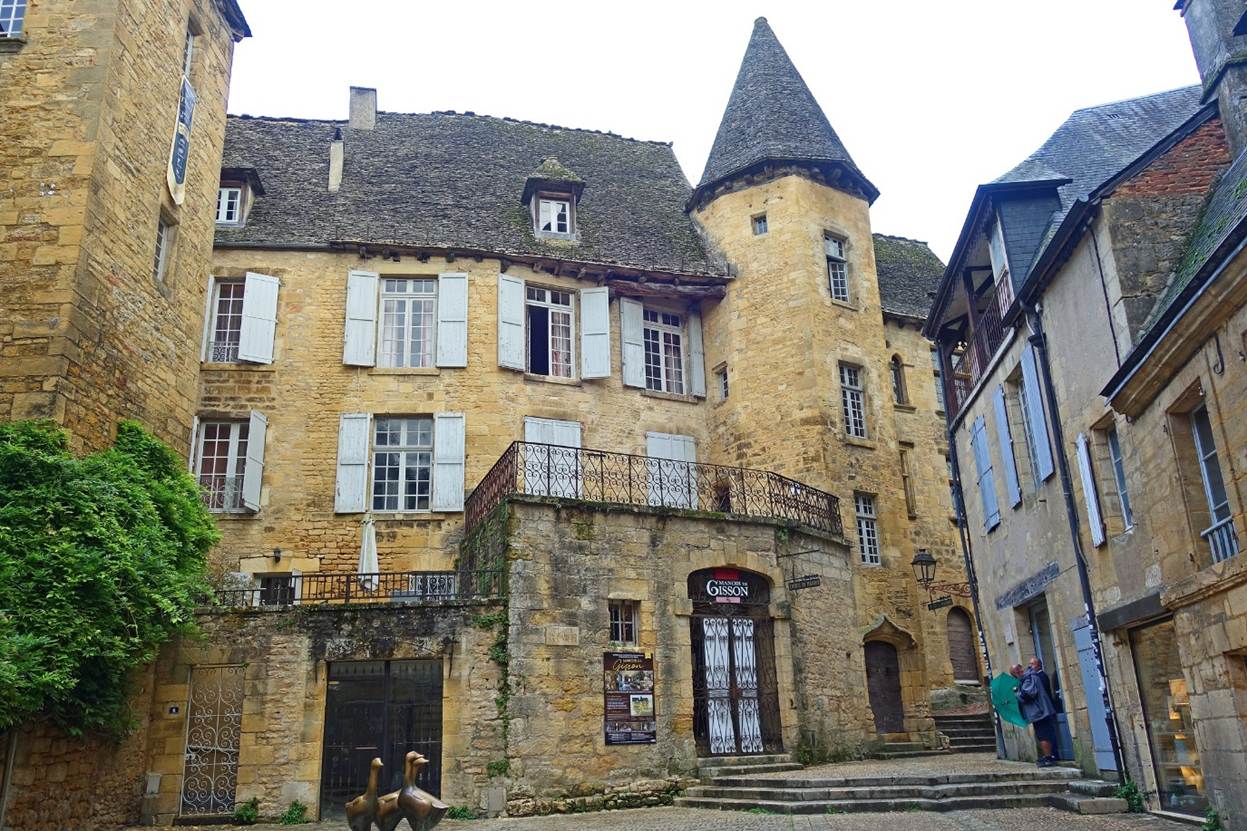
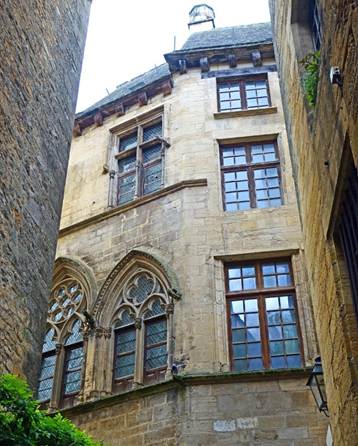
Buildings bordering the Cour des Chanoines.
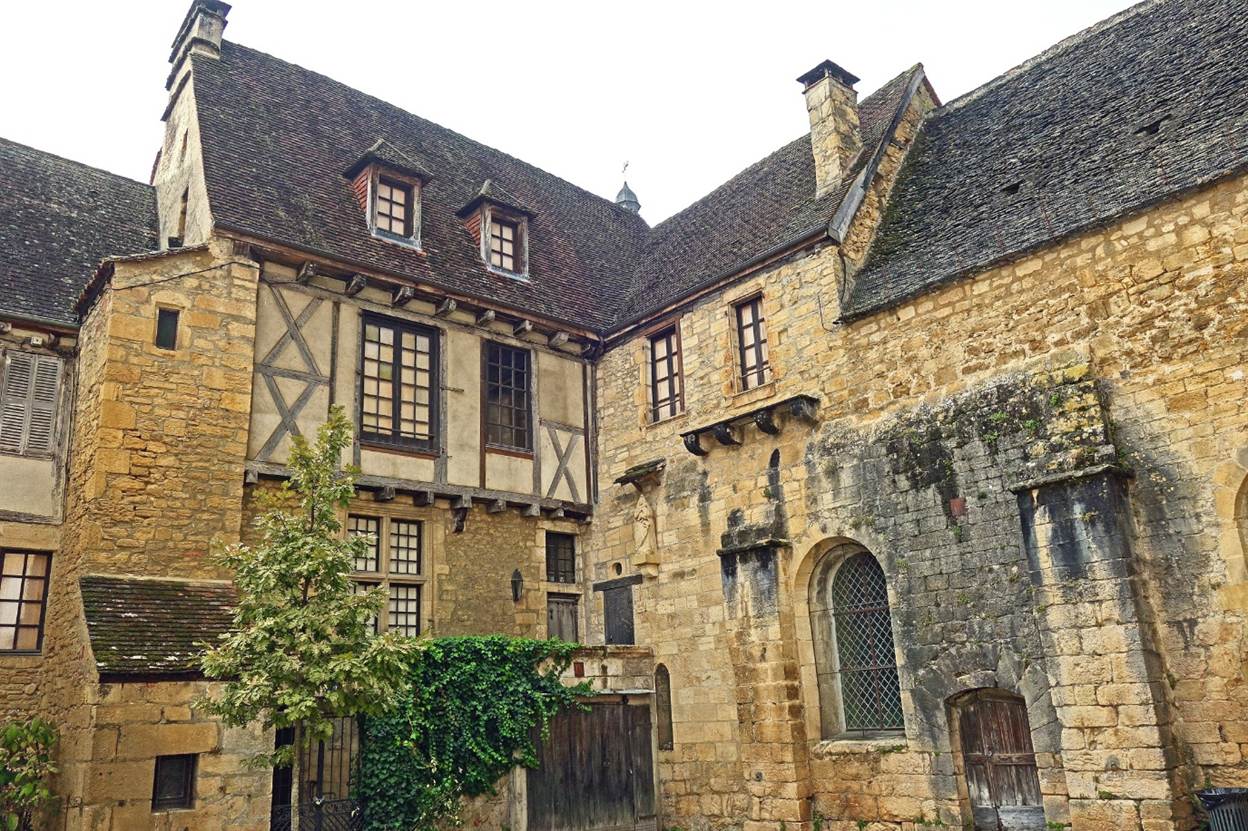
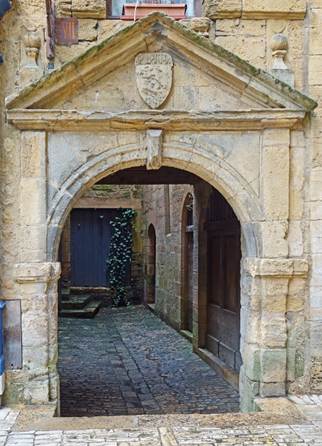
House of La Boetie, built by Antoine de la Boetie between 1520 and
1525. His more famous son, Etienne de la Boetie (1530-1563), who was born in
this house, became a jurist, a writer, and a poet. He is famous for his ″Discourse
on Voluntary Servitude″, a text that challenges the legitimacy of rulers,
which he wrote at age 18 when he was a law student at the University of
Orleans. He became a close friend of Montaigne.
|
|
|
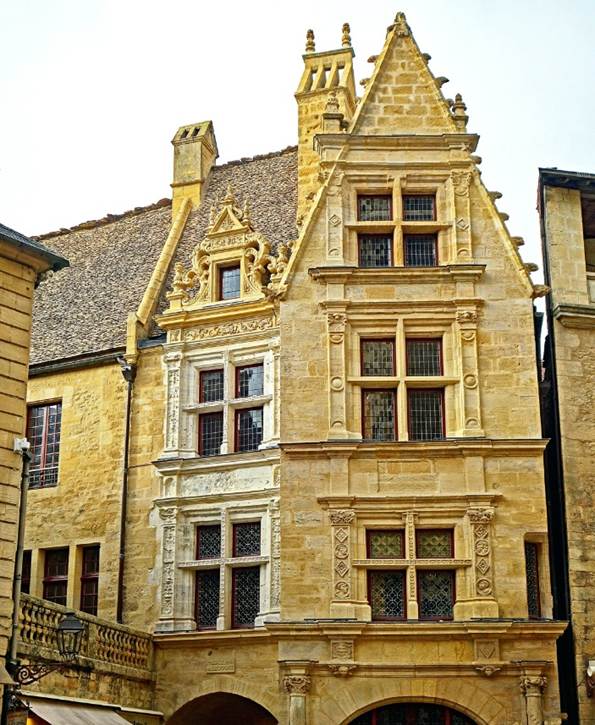
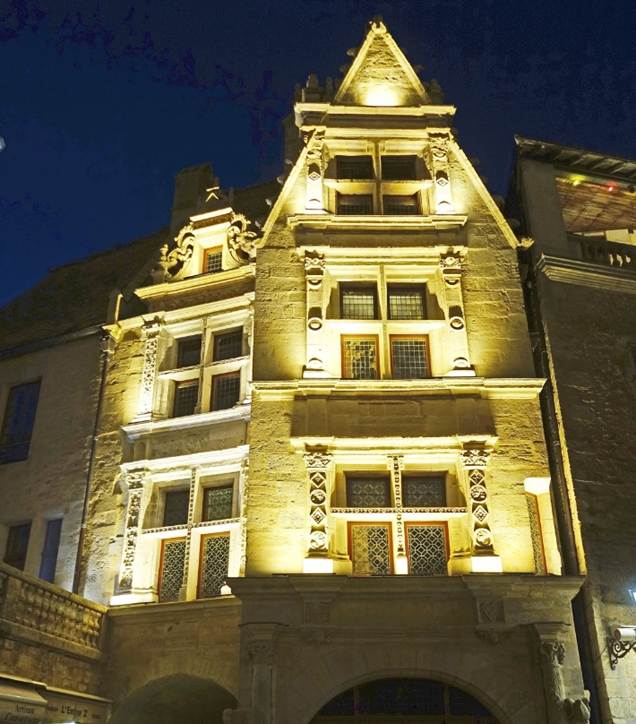
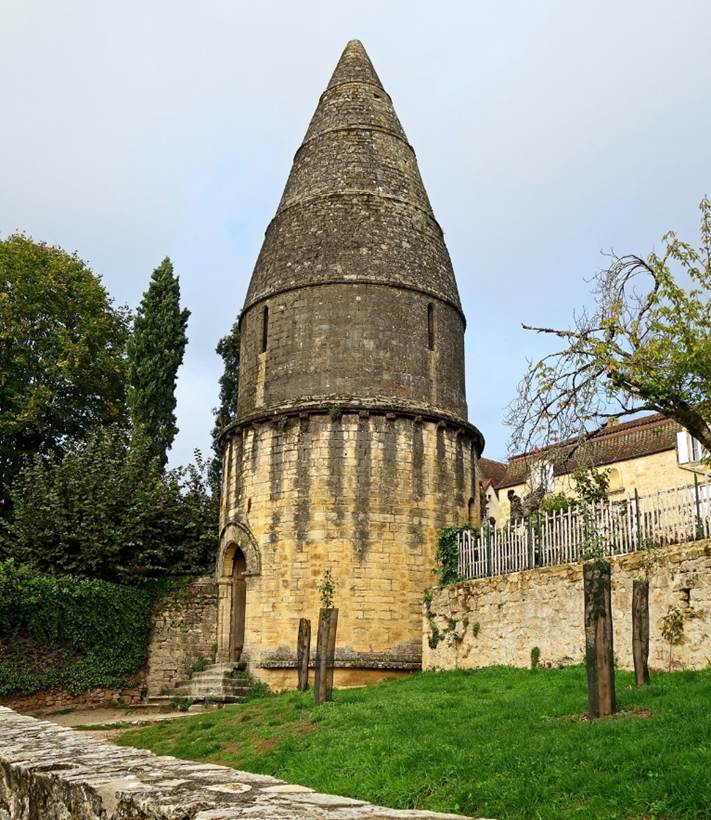
The enigmatic Lanterne des Morts (Lantern of the Dead) of Sarlat.
Its origin and purpose are unclear.
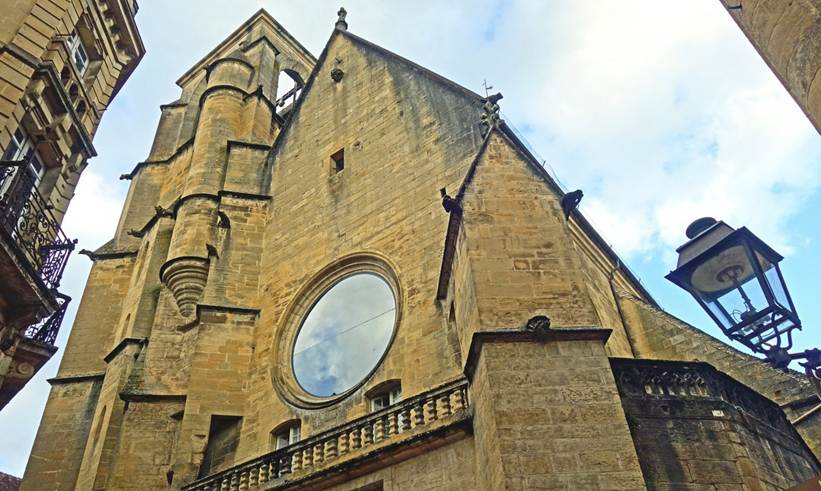
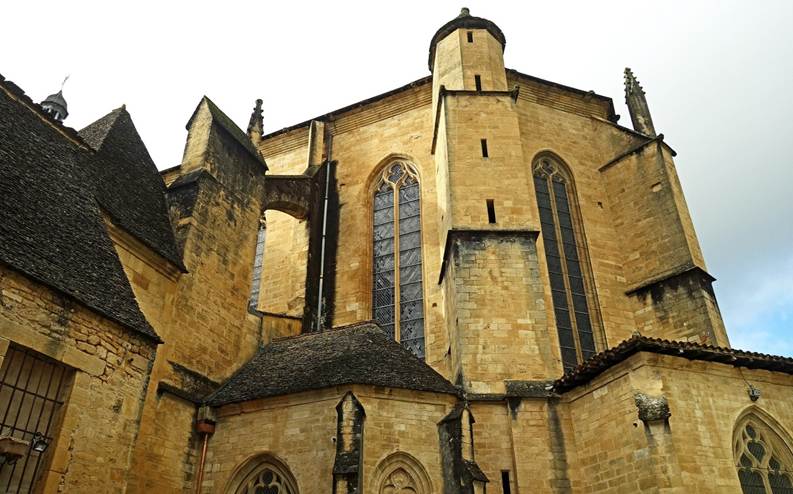
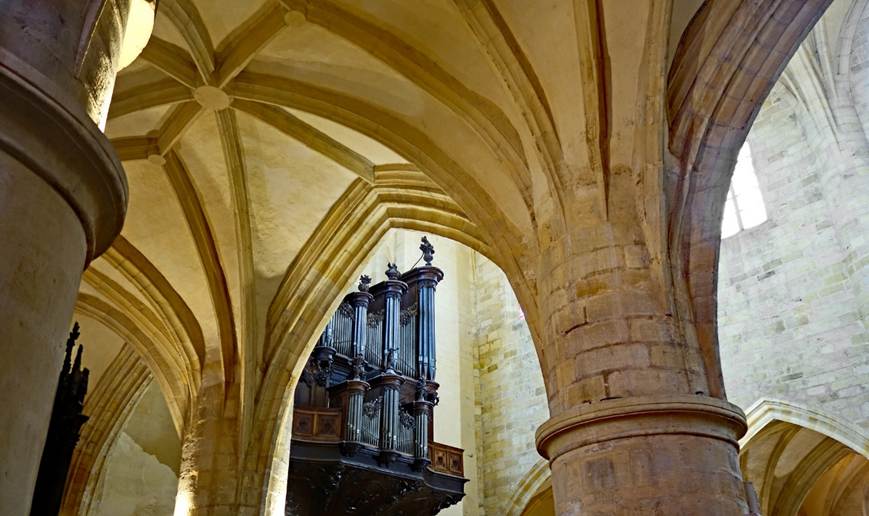
Exterior and interior of the Saint-Sacerdos cathedral built in the
16th-17th centuries on the site of a former abbey church.
|
|
|
|
|
|
|
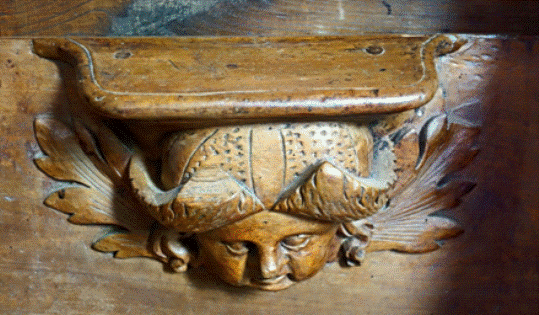
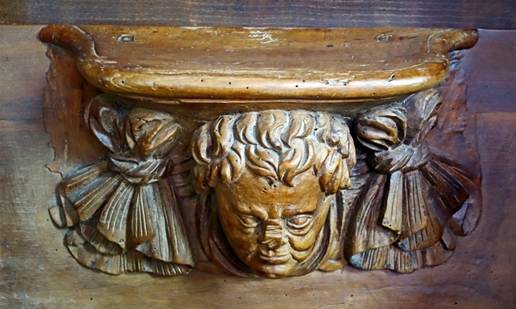
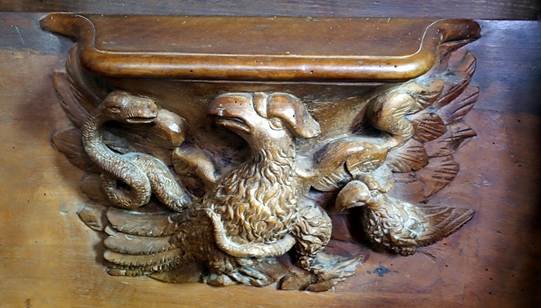
Narrow carved wooden seats called ″misericordes″ in
the choir stalls of the Saint-Sacerdos cathedral. Clergy members who seat on
them during services appear to be standing.
|
|
|
|
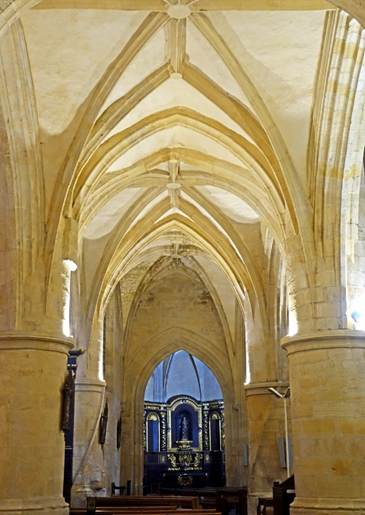
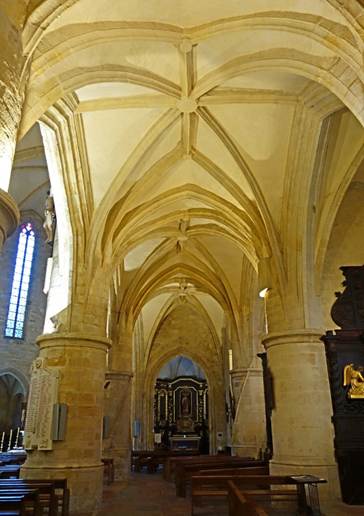
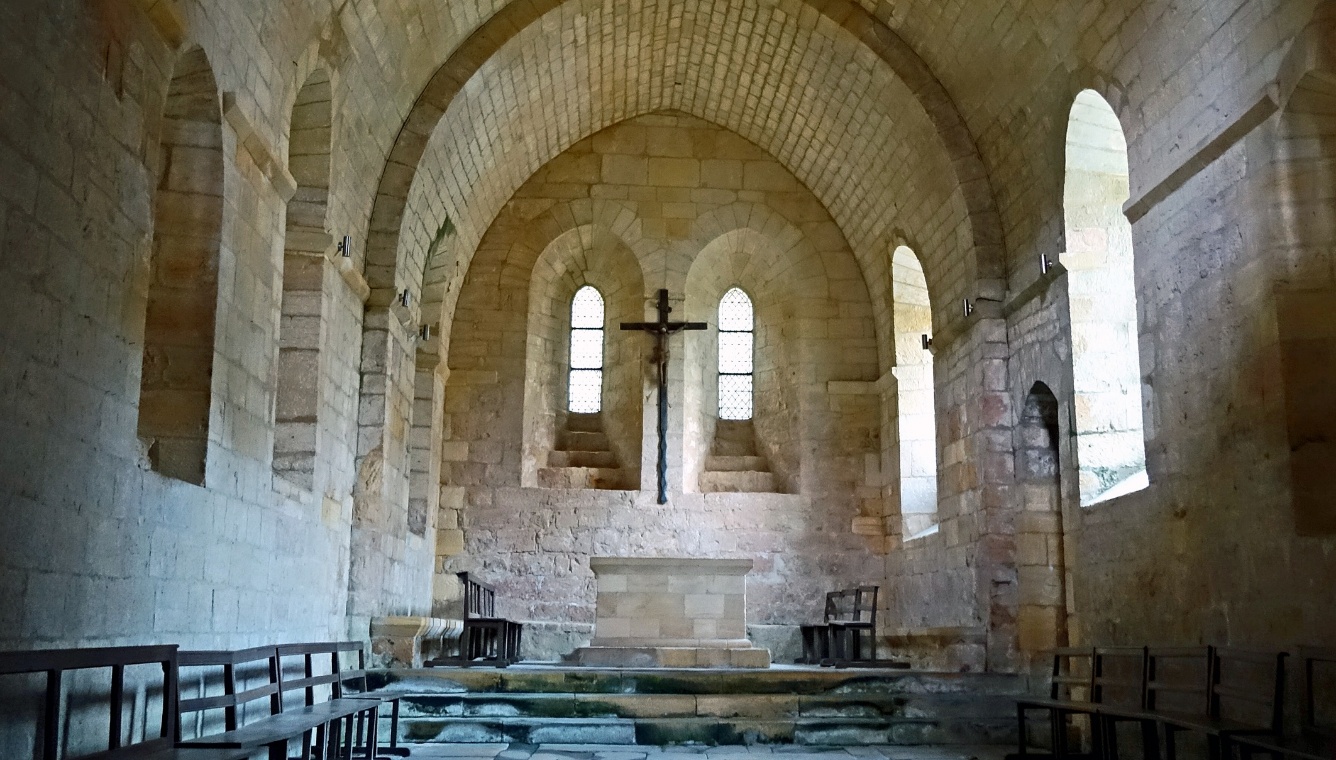
Interior of the Chapel of Saint Benoit, also called Chapel of the
Blue Penitents. Probably dating from the 12th century, it is considered the
oldest religious building still existing in Sarlat. It was restored in 1968.
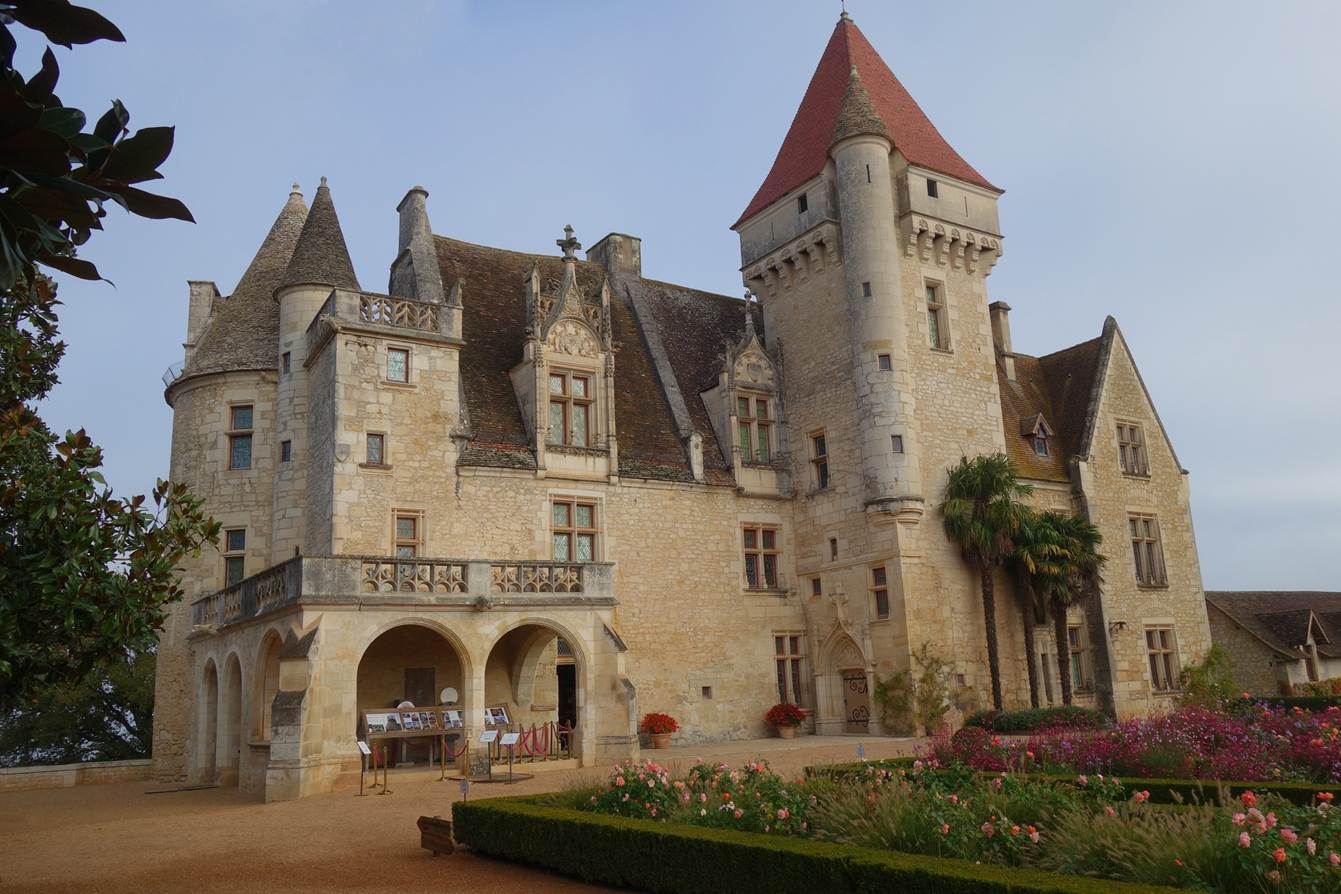
Chateau des Milandes (Department of Dordogne)
Located in the commune of Castelnaud-la-Chapelle, this castle is
located 11km southwest of the old center of Sarlat. Built in the late 15th
century, it has been transformed and restored several times. It was the
residence of Josephine Baker in the mid-20th century.
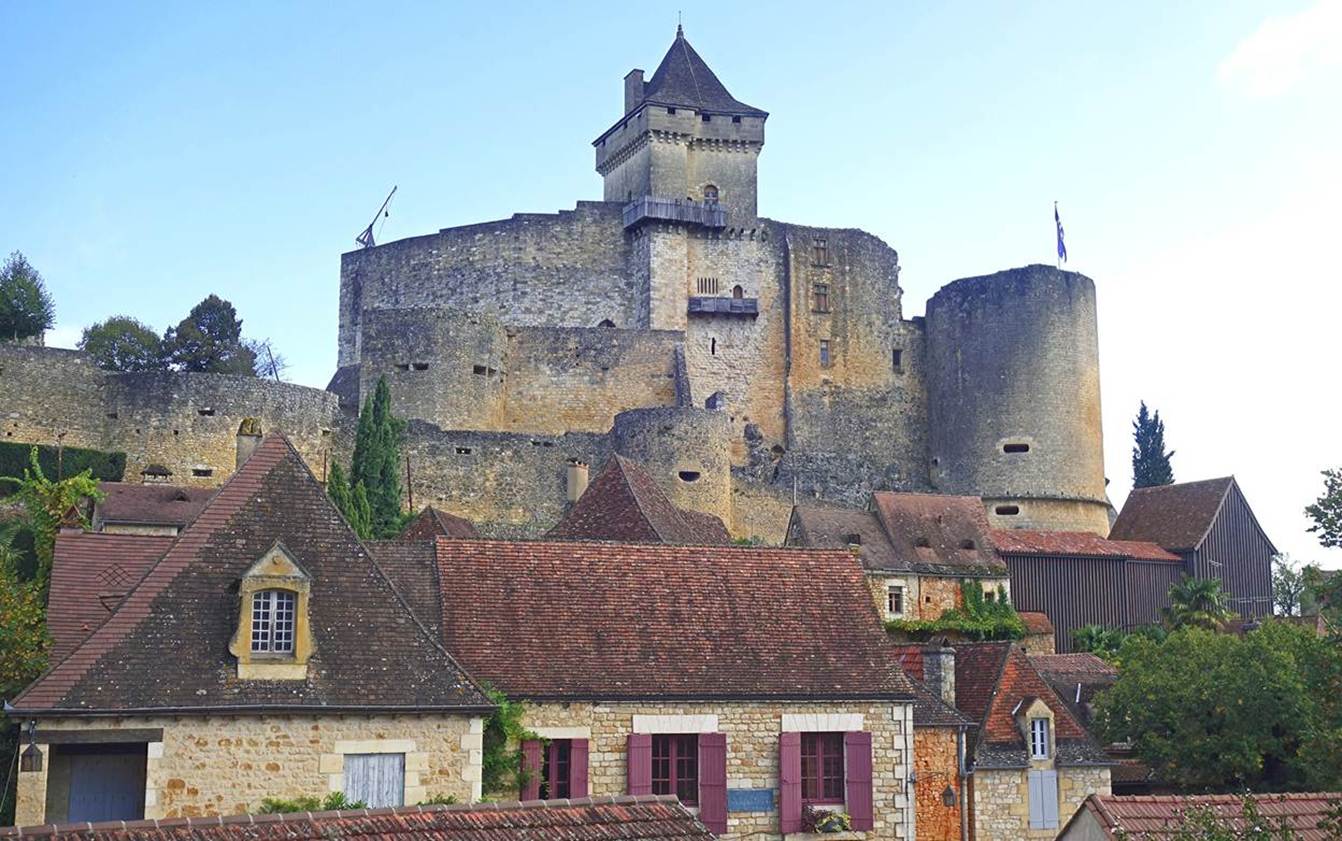
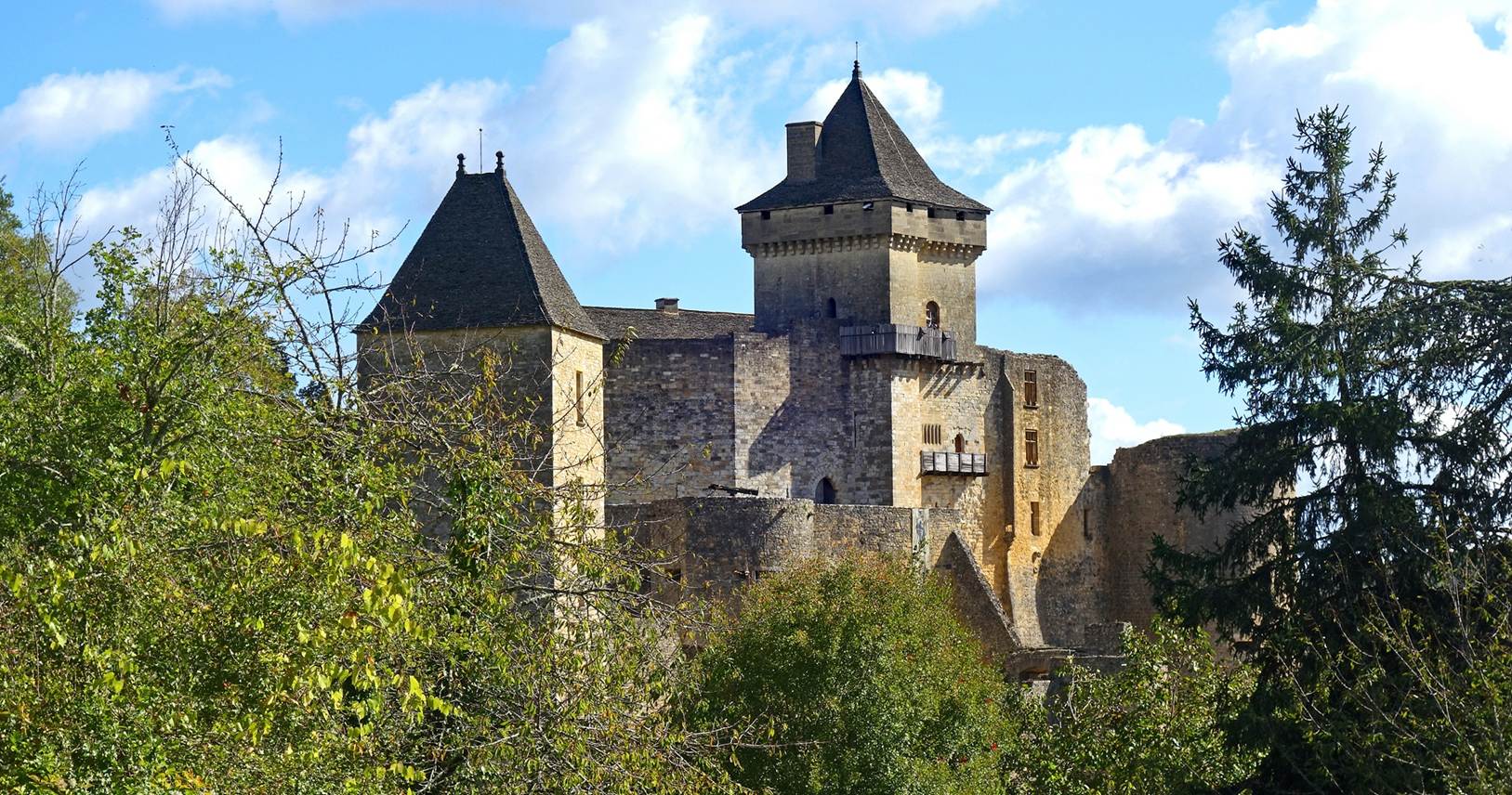
Chateau de Castelnaud, Castelnaud-la-Chapelle
(Department of Dordogne)
Located 10km southwest of Sarlat on the left bank of the Dordogne,
this monumental castle is a typical medieval fortress. Built on a rocky spur,
it overlooks the Dordogne river on one side and the village of Castelnaud-la-Chapelle on the other. The original
castle, built at the end of the 11th century, was destroyed in 1215 during the
Albigensian Crusade (1209-1229), also known as the Cathar Crusade. A new castle
was built during the 13th century. In 1337, when the Hundred Years's War breaks
out between France and England, the lord of Castelnaud sided with the English,
while the lord of Beynac, on the opposite side of the Dordogne, supported the
French. Throughout the war, the castle of Castelnaud changed sides eleven
times. In 1442, after a three-week siege, it returned to France for good. It
was abandoned during the French Revolution (late 18th century). It served as a
quarry for a time in the 19th century. It was carefully restored between 1966
and 2012.
View of the castle from the village of Castelnaud-la-Chapelle.
Another view of the castle.
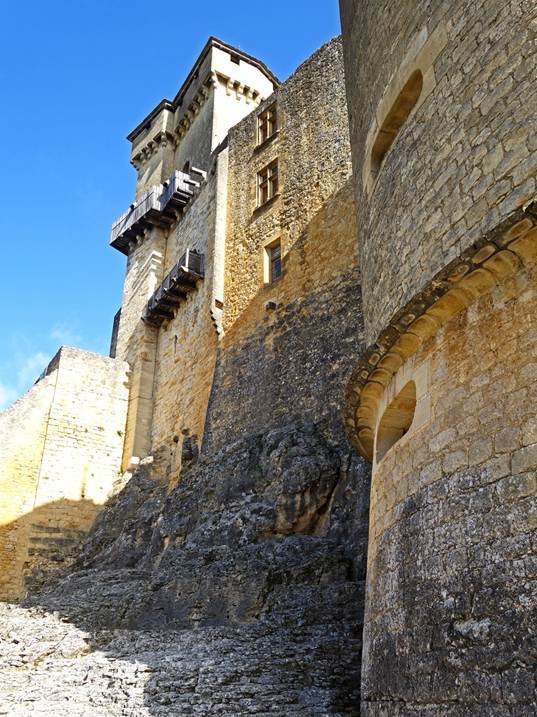
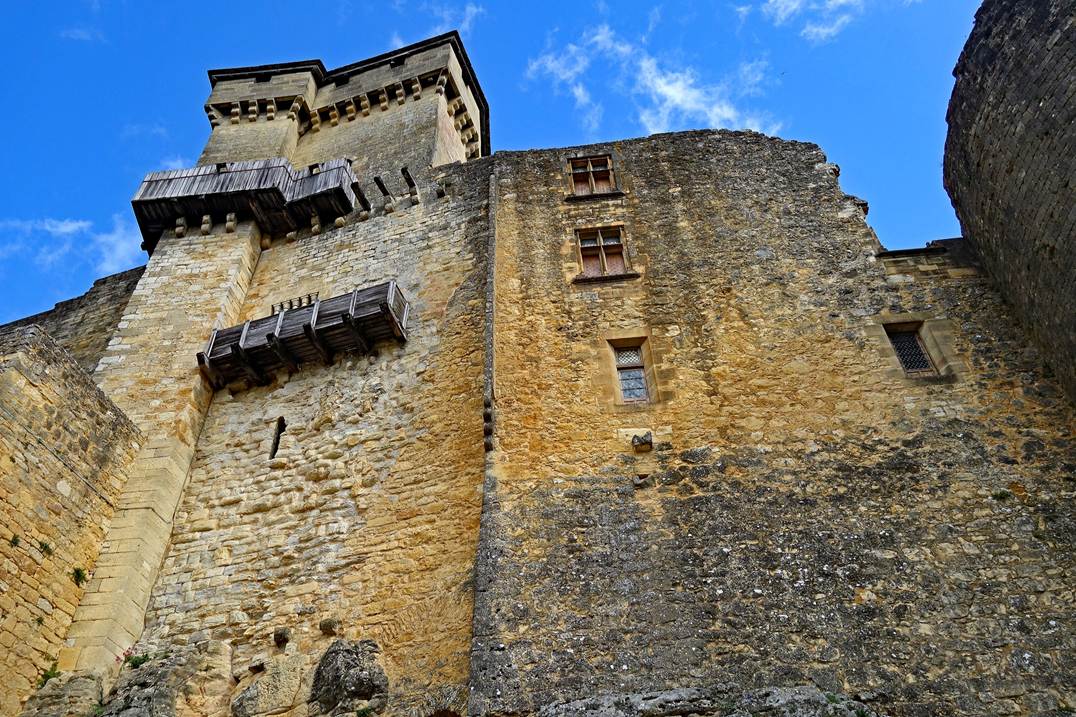
Castle wall (facing the village) seen from the ramp giving access
to its entrance.
|
|
|
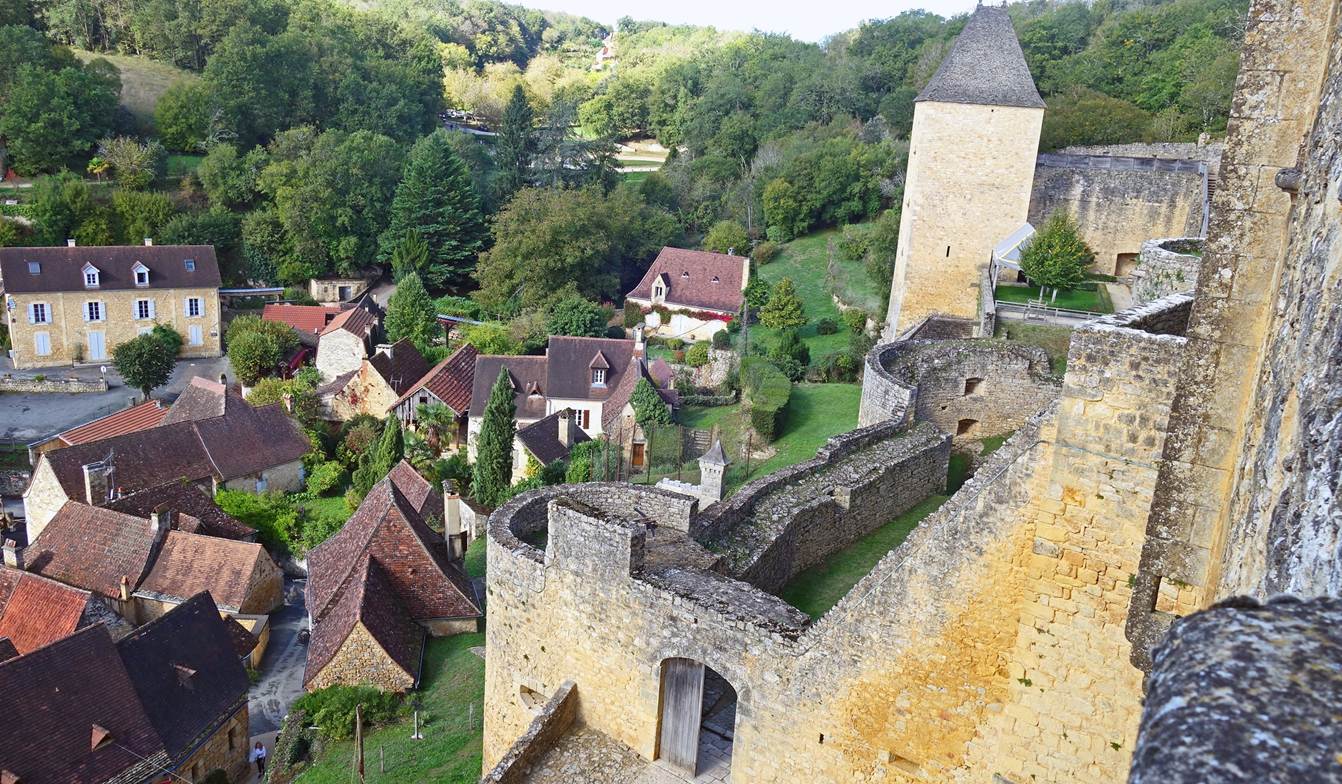
Fortification walls and part of the village seen from the upper
part of the castle.
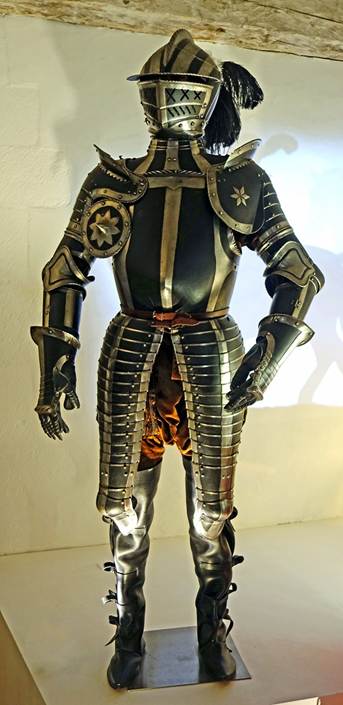
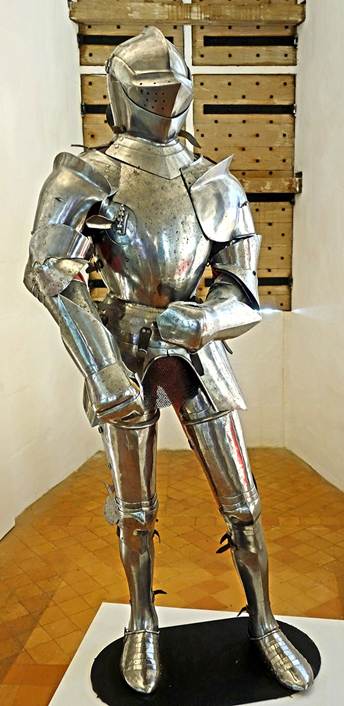
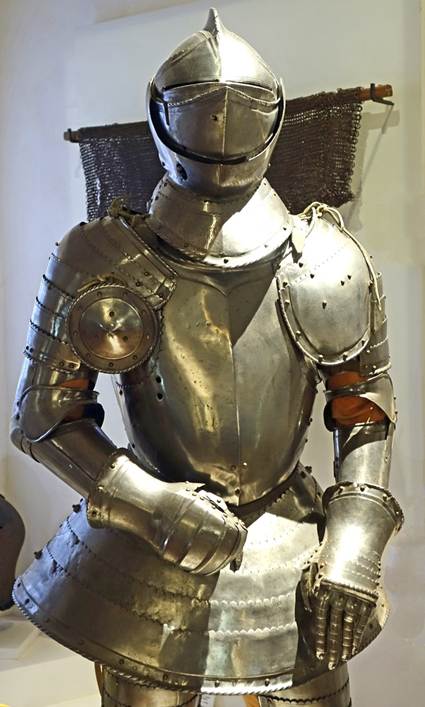
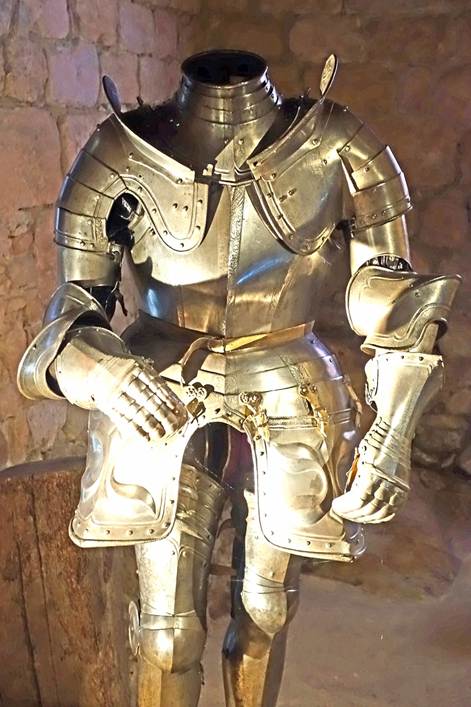
Medieval armors on display in the castle.
|
|
|
|
|
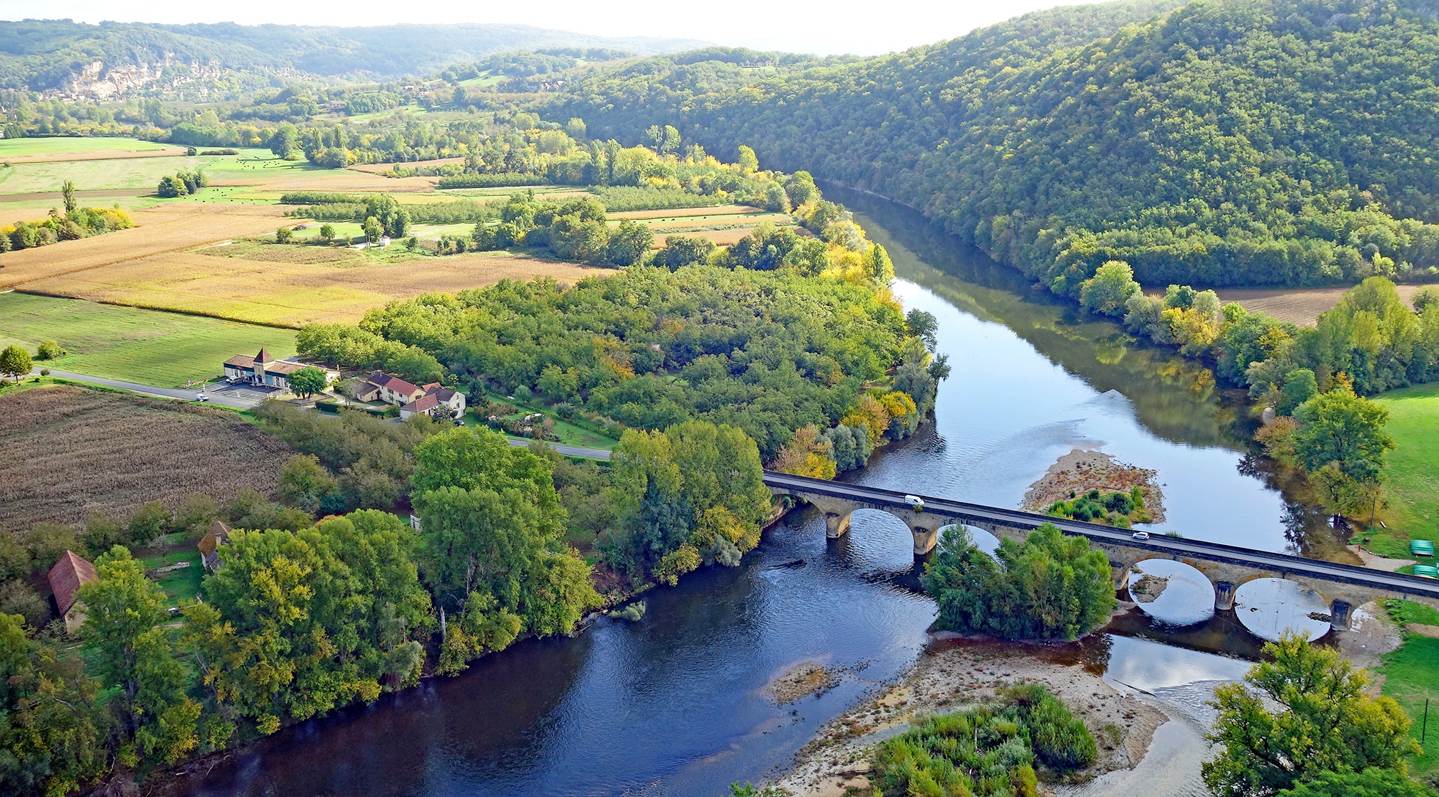
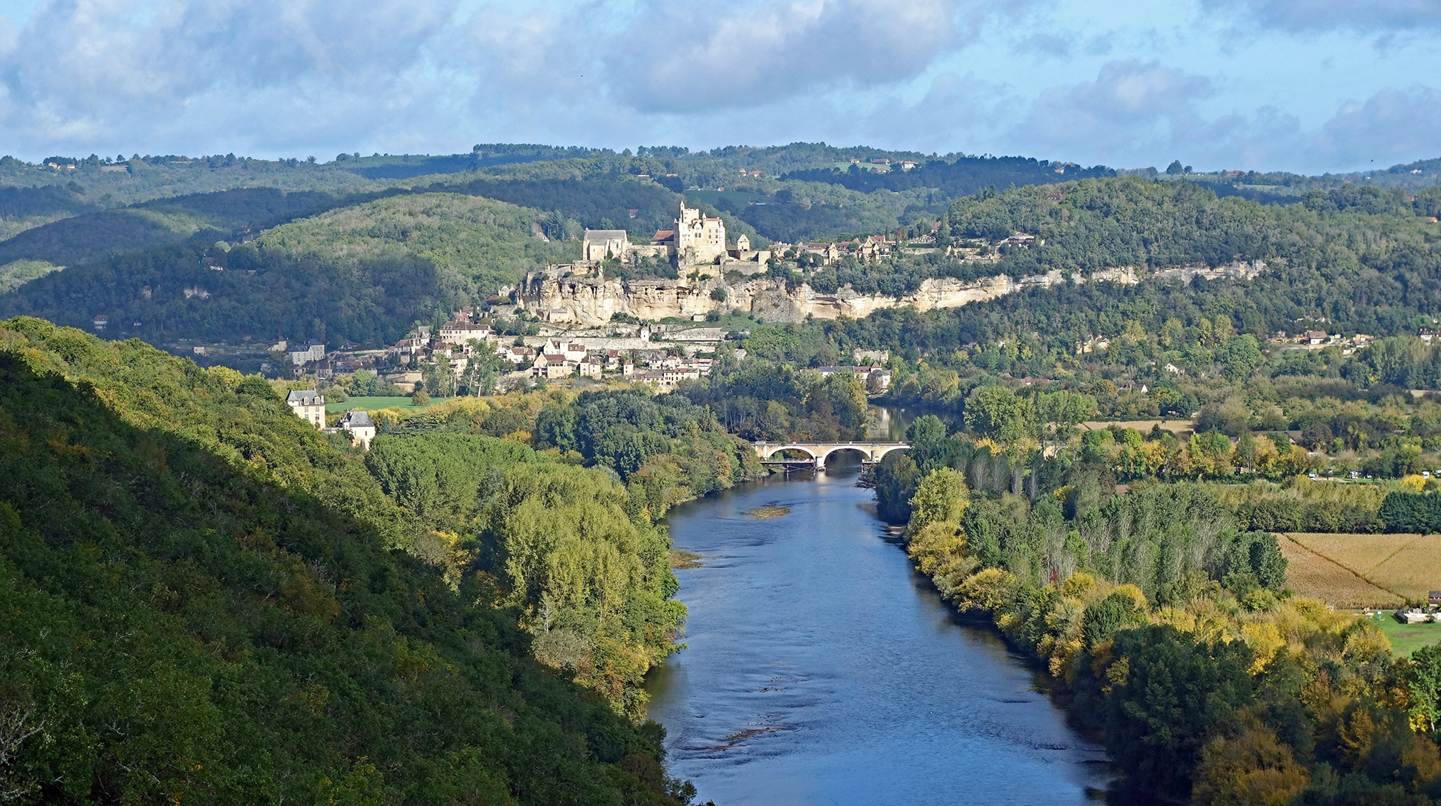
Views over the Dordogne from the castle. The second photo below
shows the castle of Beynac (located on the opposite side of the Dordogne) in
the background.
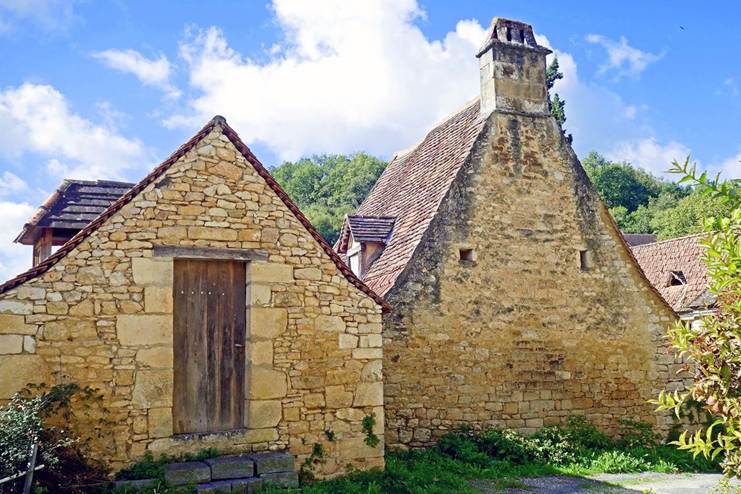
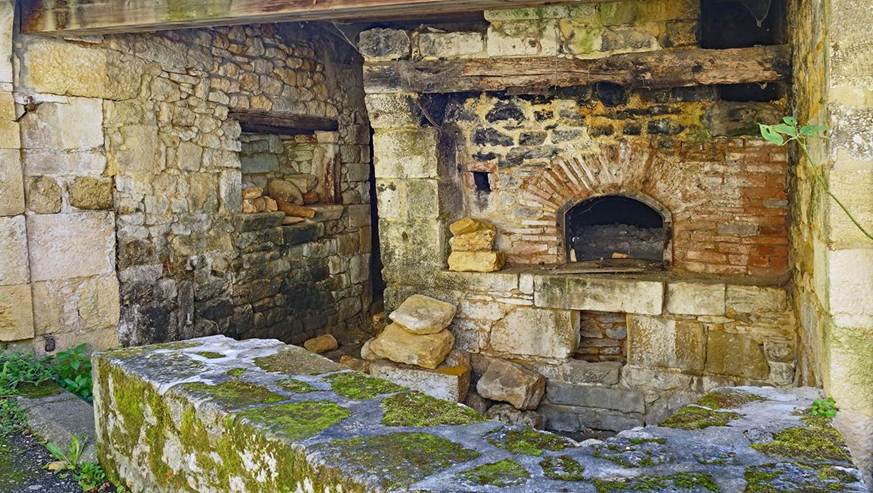
Traditional houses and bread oven in Castelnaud-la-Chapelle.
|
|
|
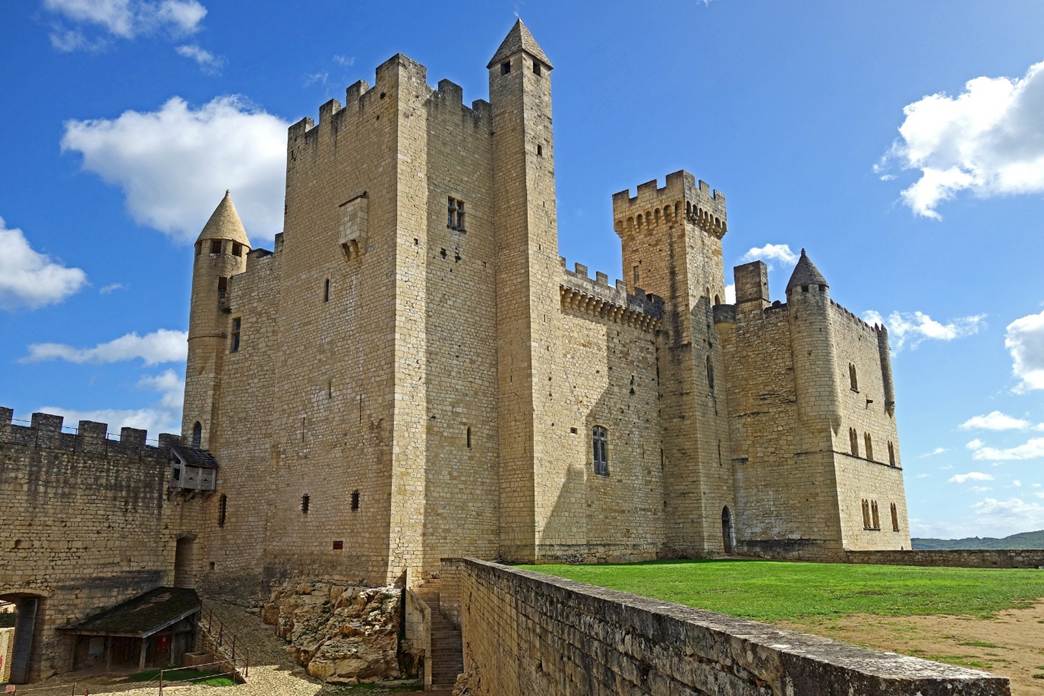
Chateau de Beynac, Beynac-et-Cazenac (Department of
Dordogne)
This fortified castle is located 8km southwest of Sarlat in the
village of Beynac-et-Cazenac on the right bank of the Dordogne. It was built in
the 12th century by the barons of Beynac on top of a limestone cliff
overlooking the Dordogne valley. During the Hundred Years' War, it was one of
the French strongholds in the region.
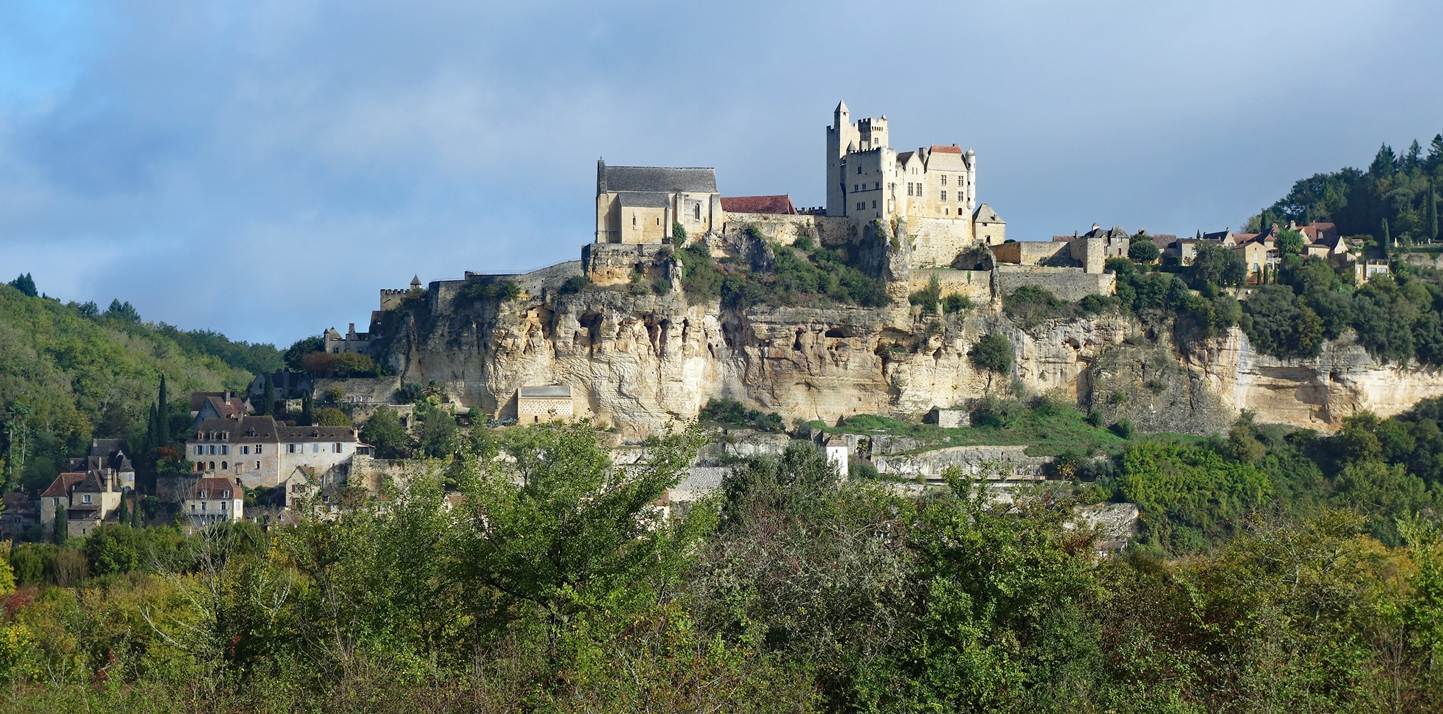
View of the castle. It sits on a small plateau above the village
of Beynac-et-Cazenac.
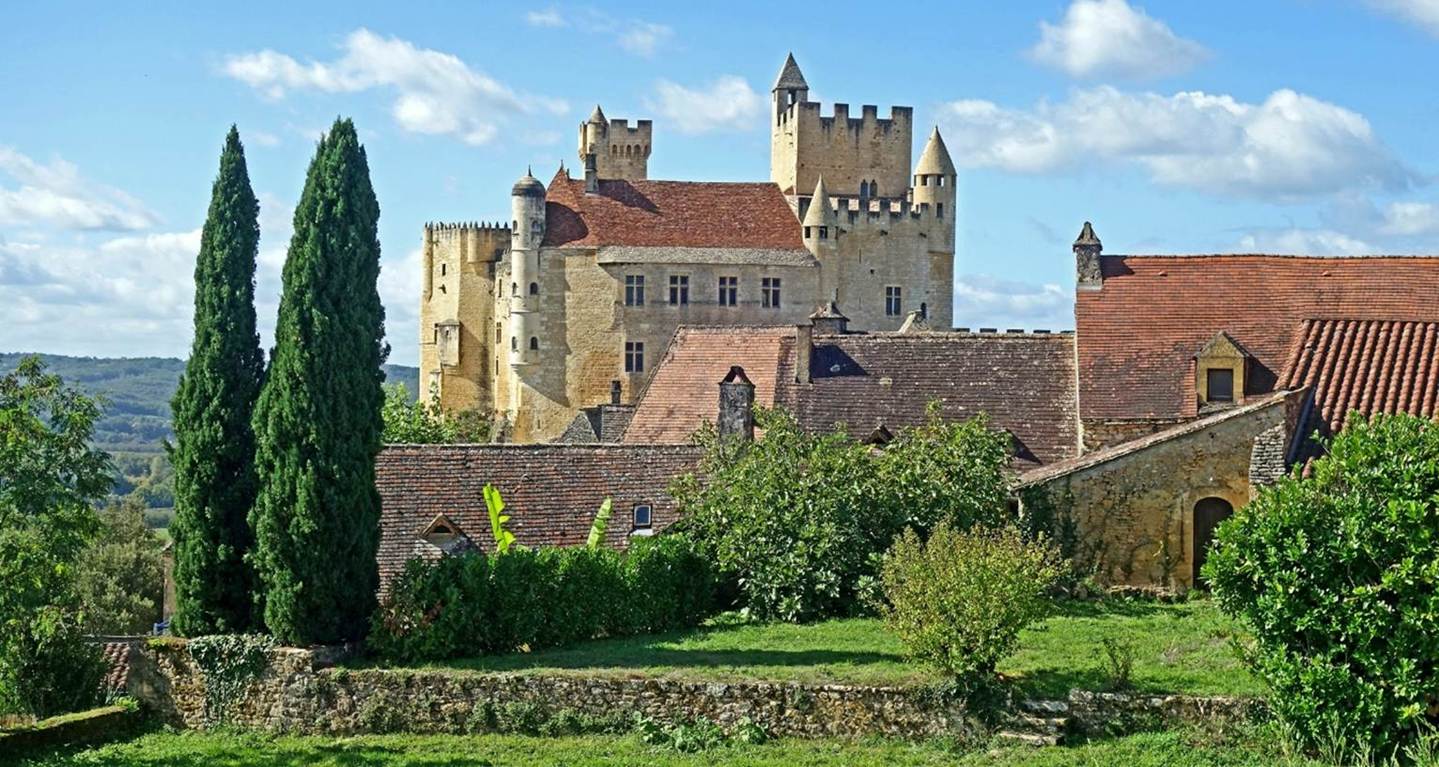
View of the castle from the opposite side.
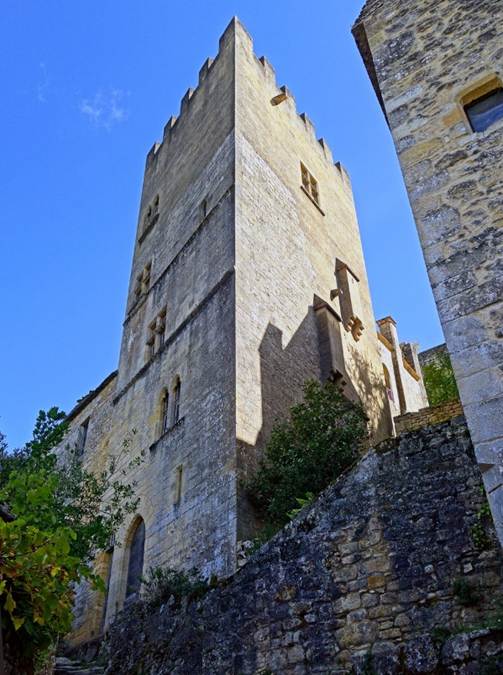
Left: Square Romanesque keep, the oldest part of the castle.
Right: Residential part of thee castle.
|
|
|
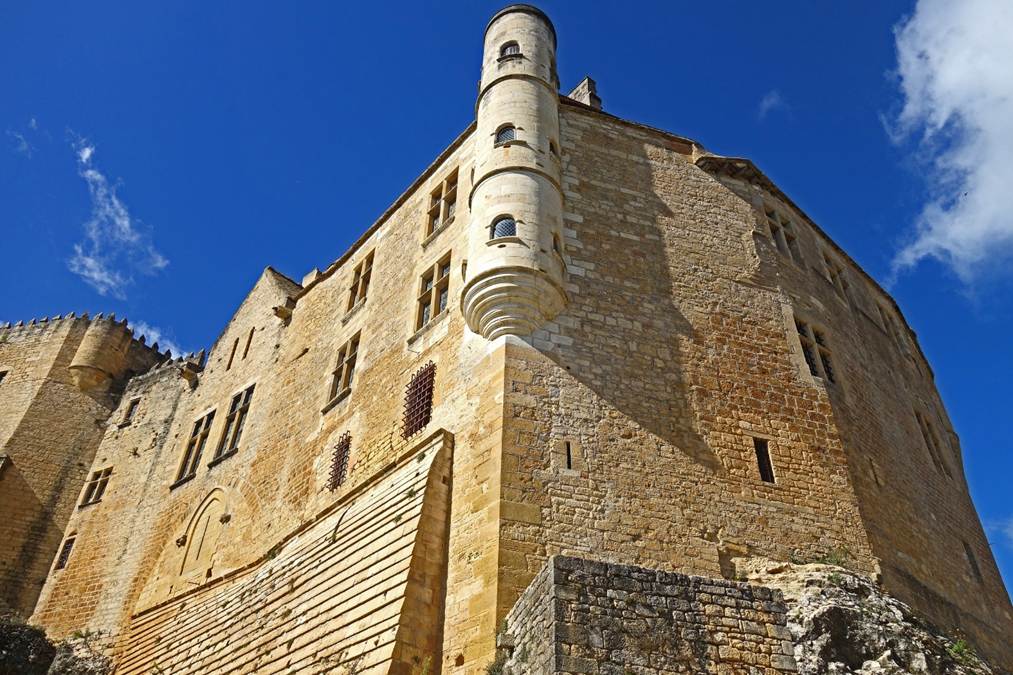
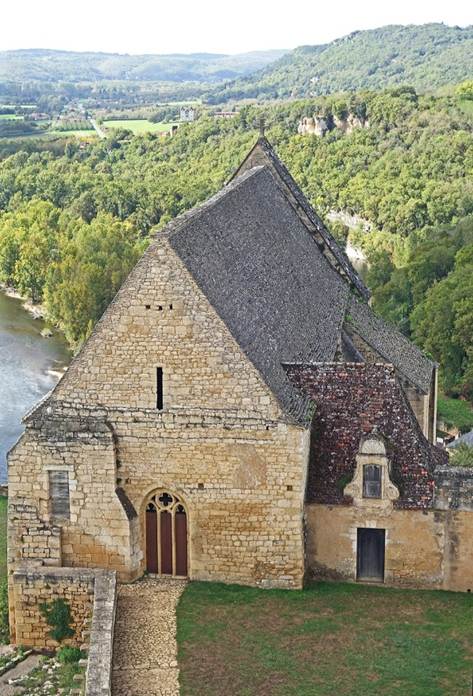
Left: Another view of the castle. Right: The castle's chapel.
|
|
|
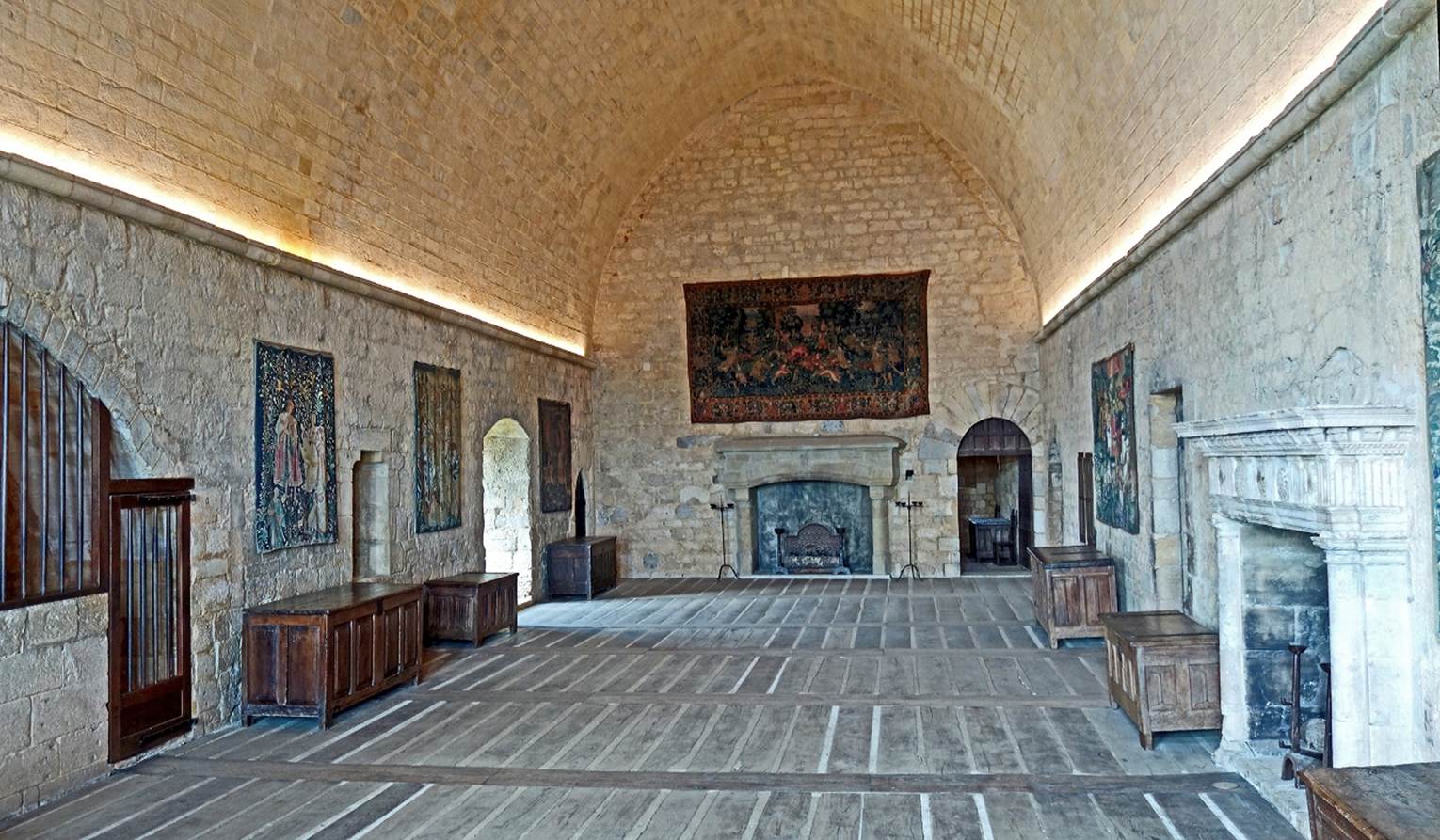
The ″Salle des Etats du Perigord″ (″Hall of the
Estates of Perigord″), inside the castle, where the four barons of
Perigord (Bourdelle, Biron, Beynac, and Mareuil) used to meet. It is said that
a strong rivalry reigned among them, each considering himself the most
important.
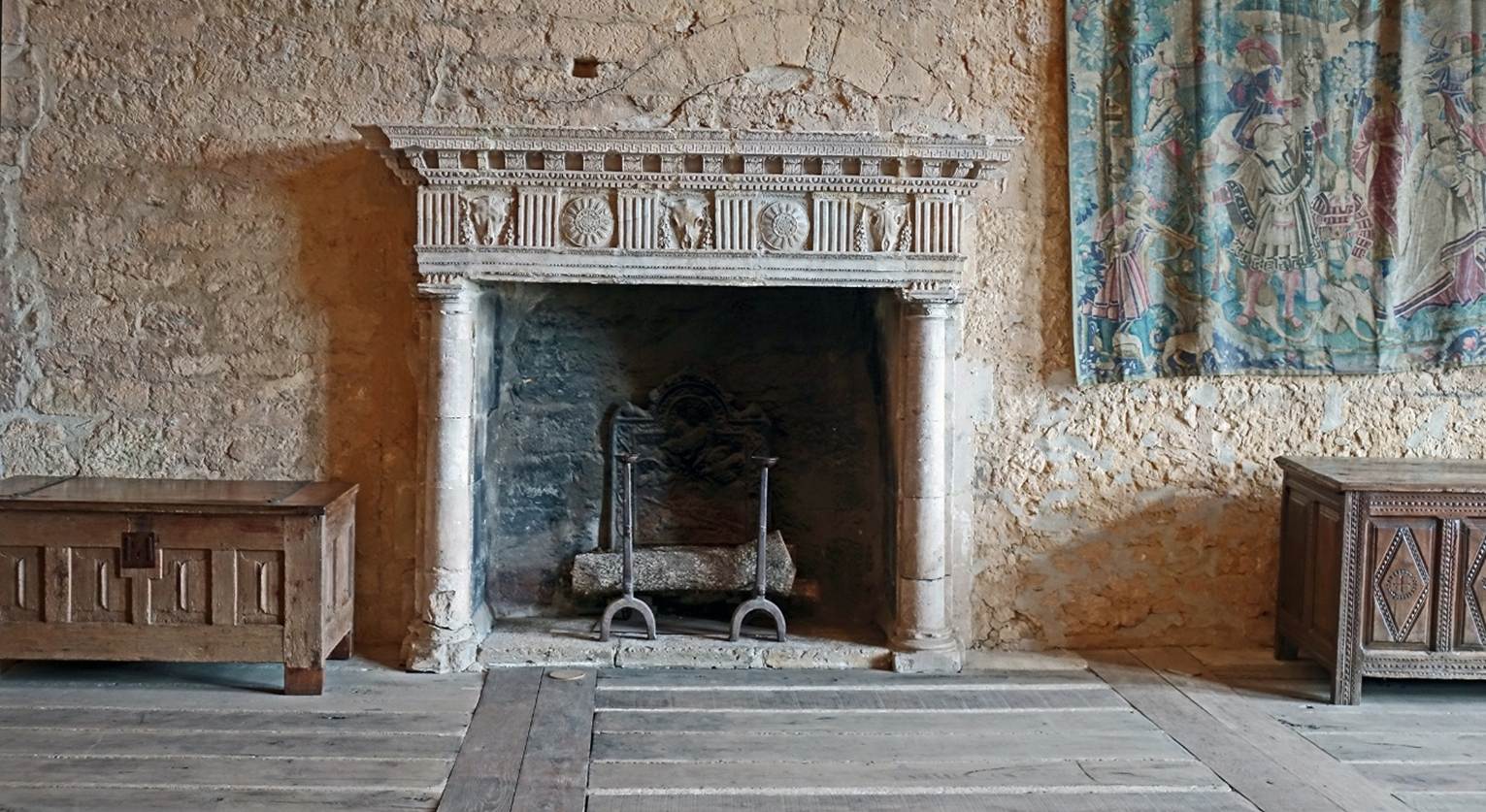
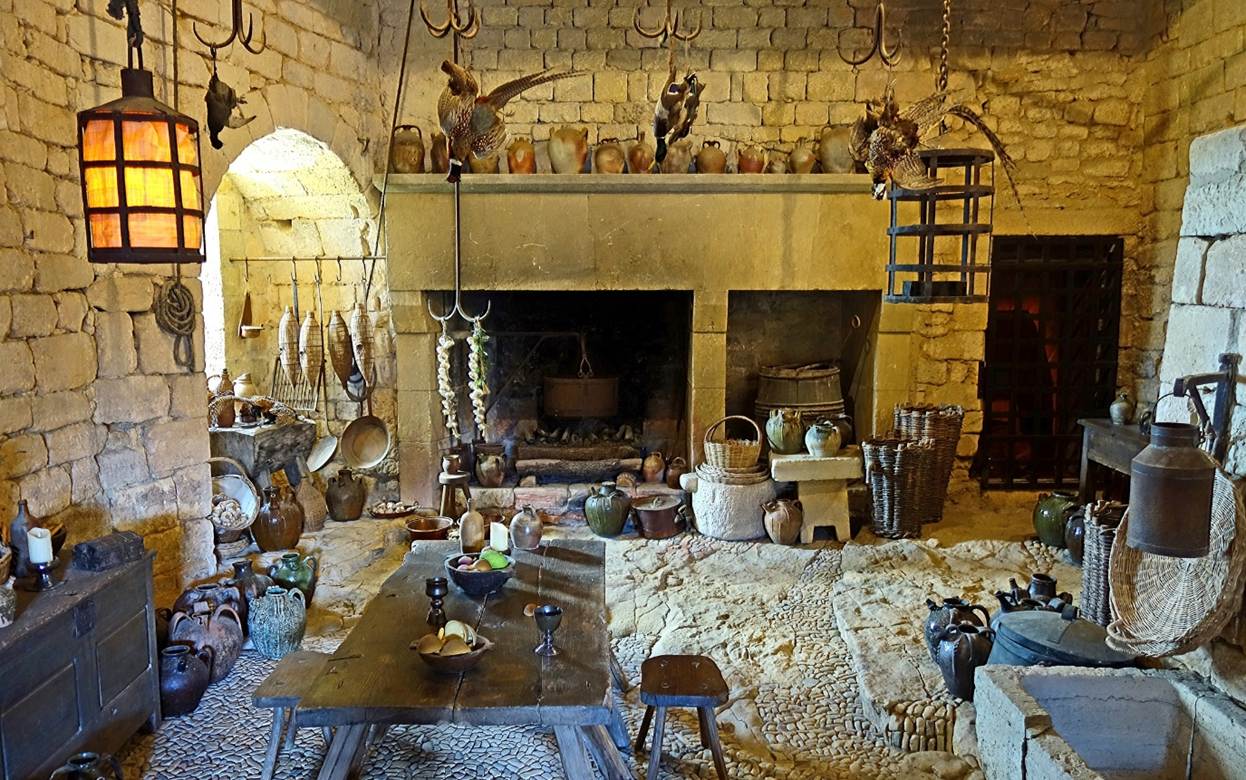
The castle's kitchen dating from the 13th century.
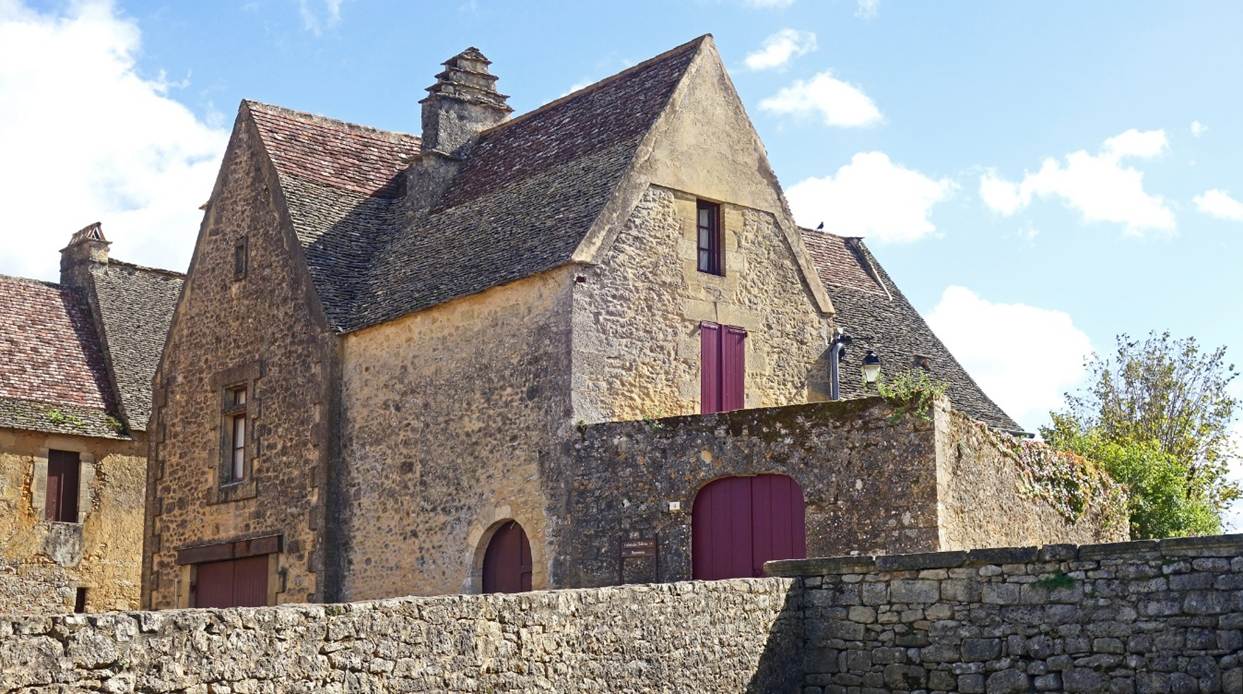
Traditional houses in the village of Beynac-et-Cazenac.
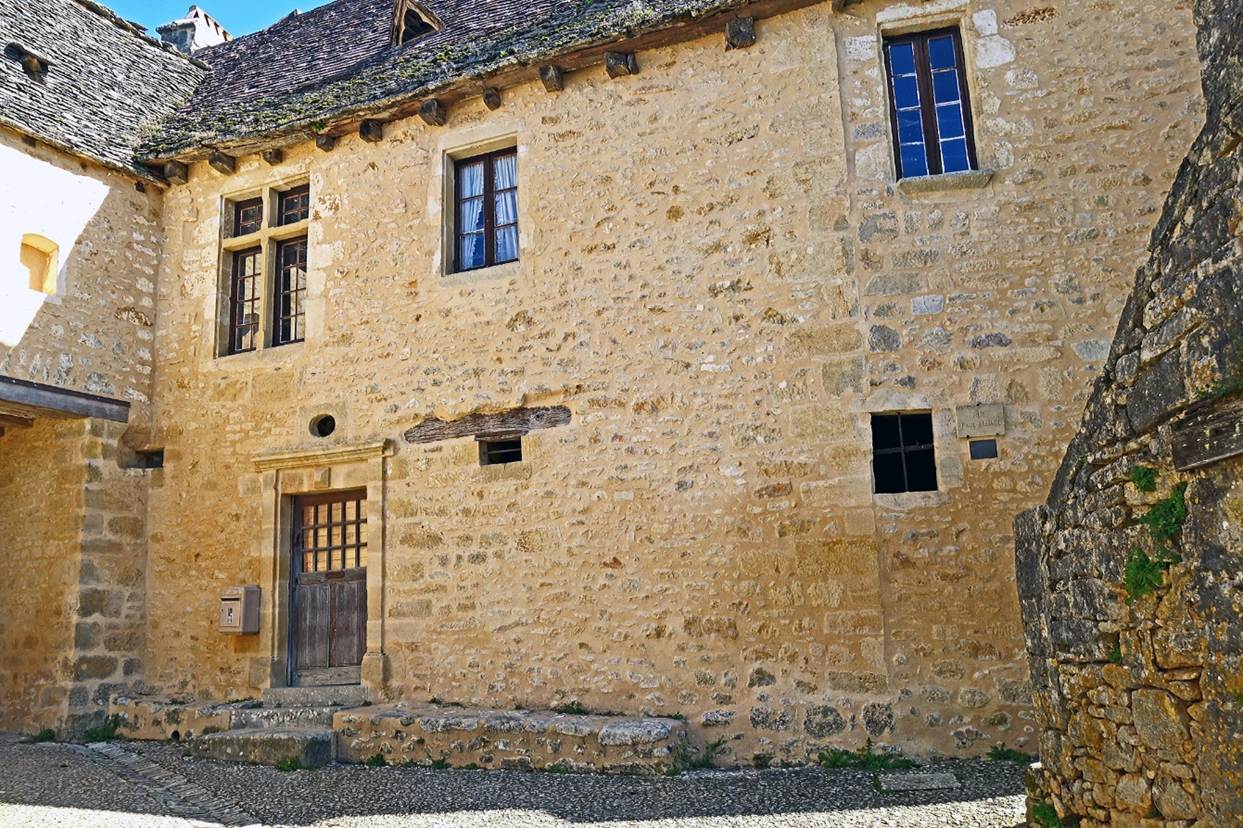
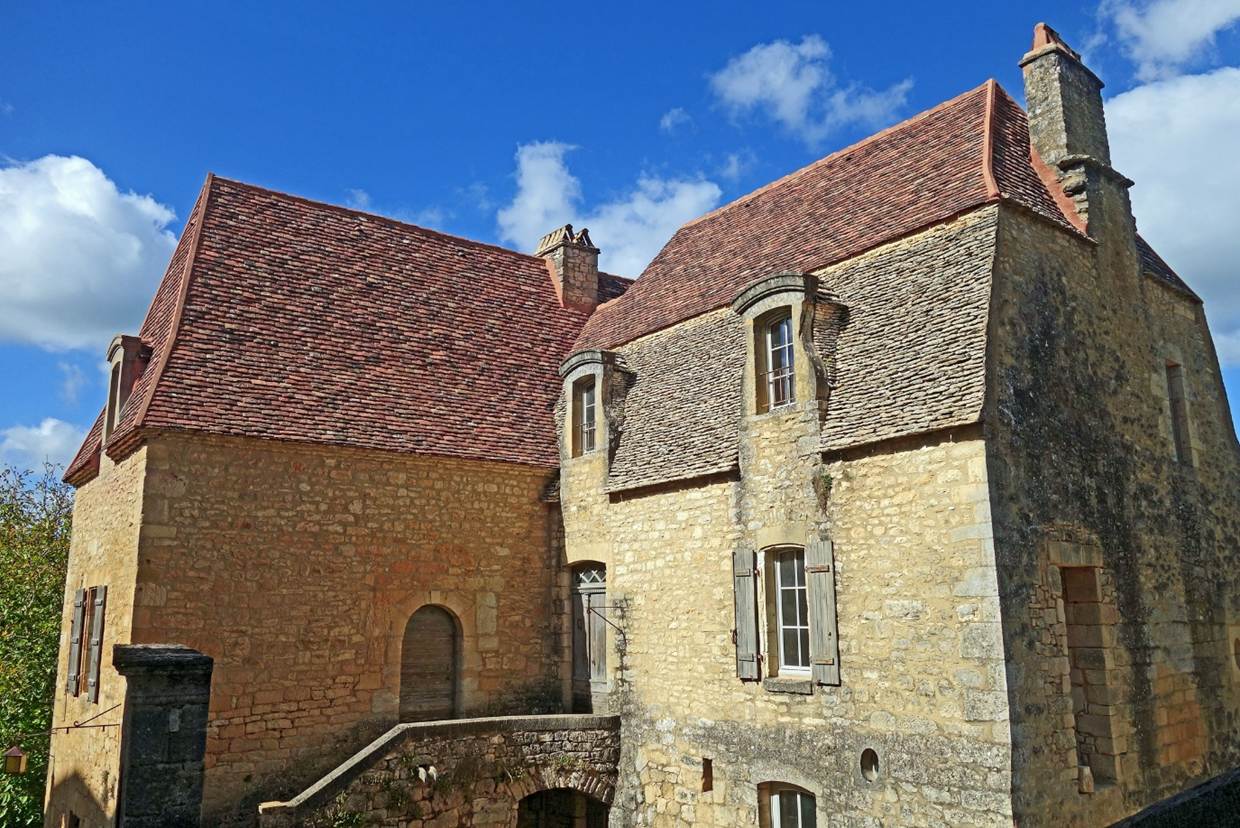
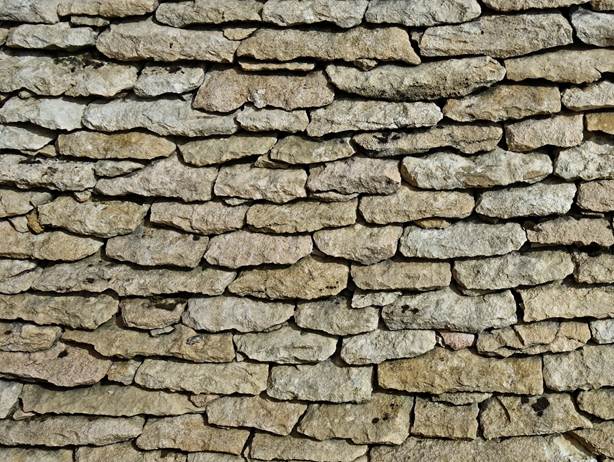
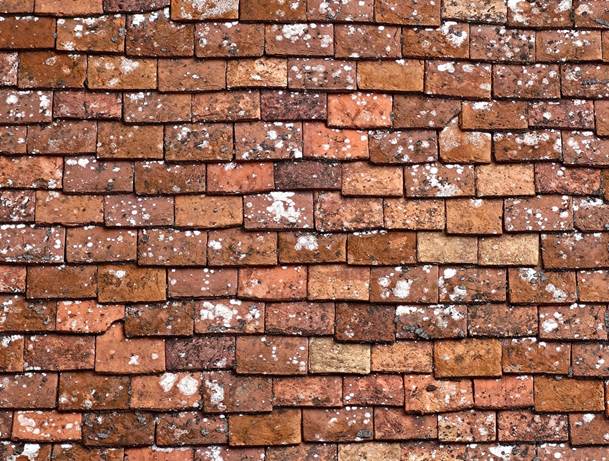
Traditional roofs of Perigord.
|
|
|
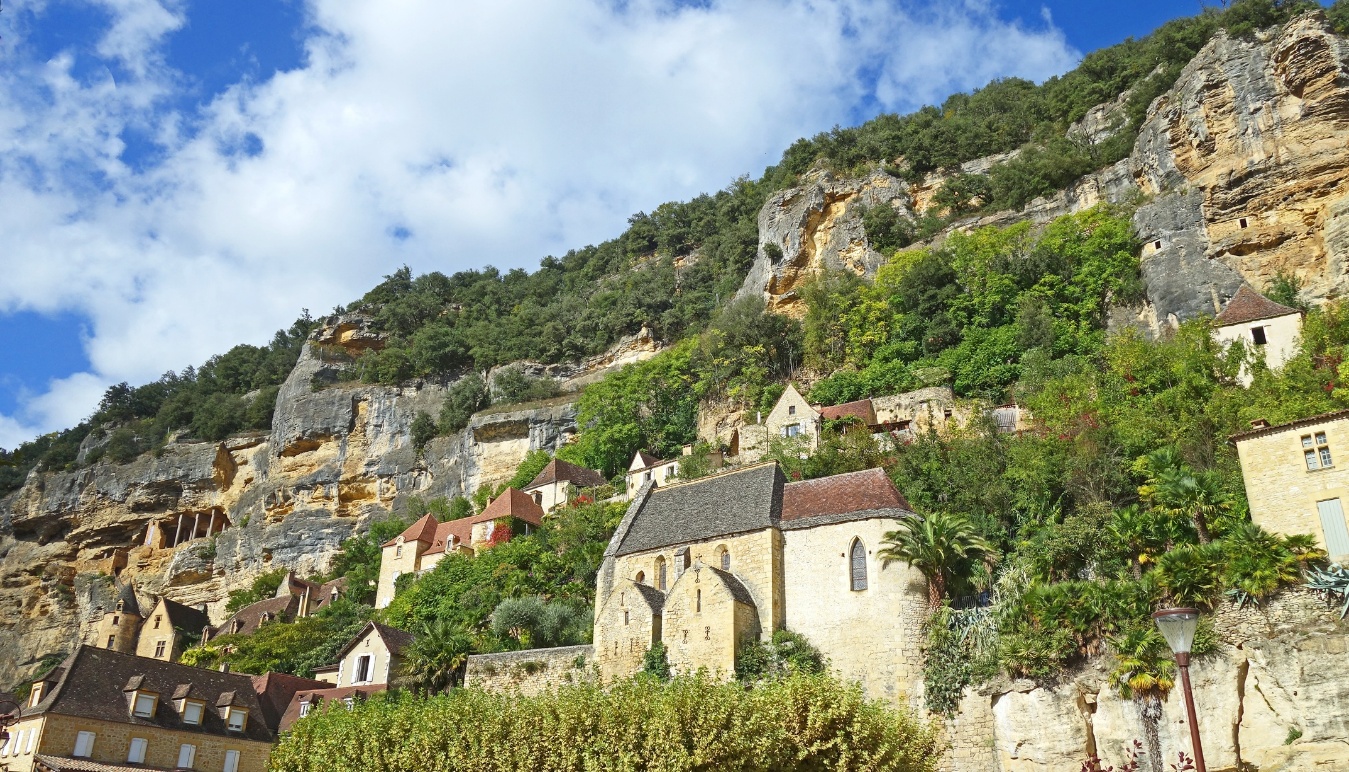
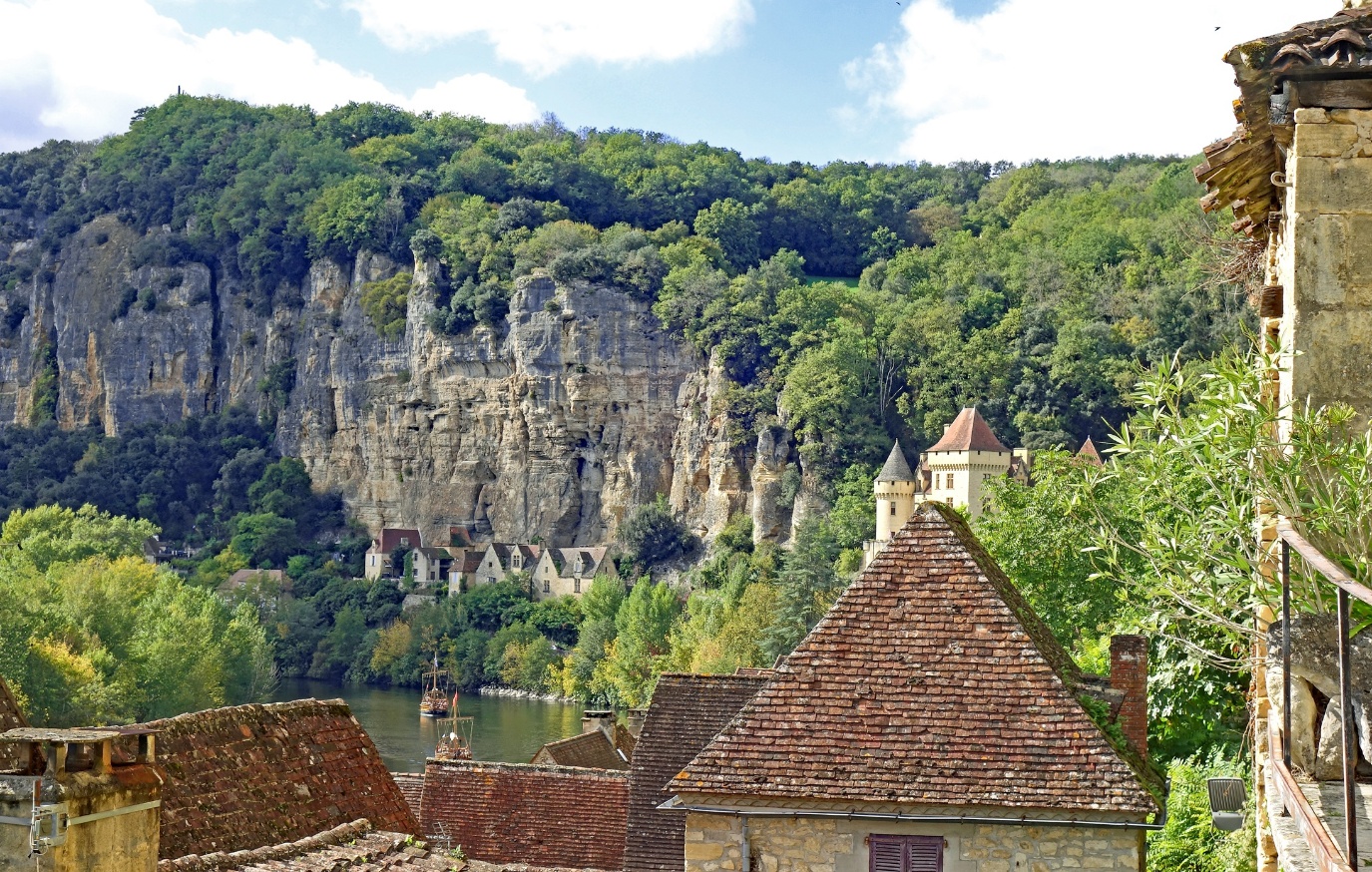
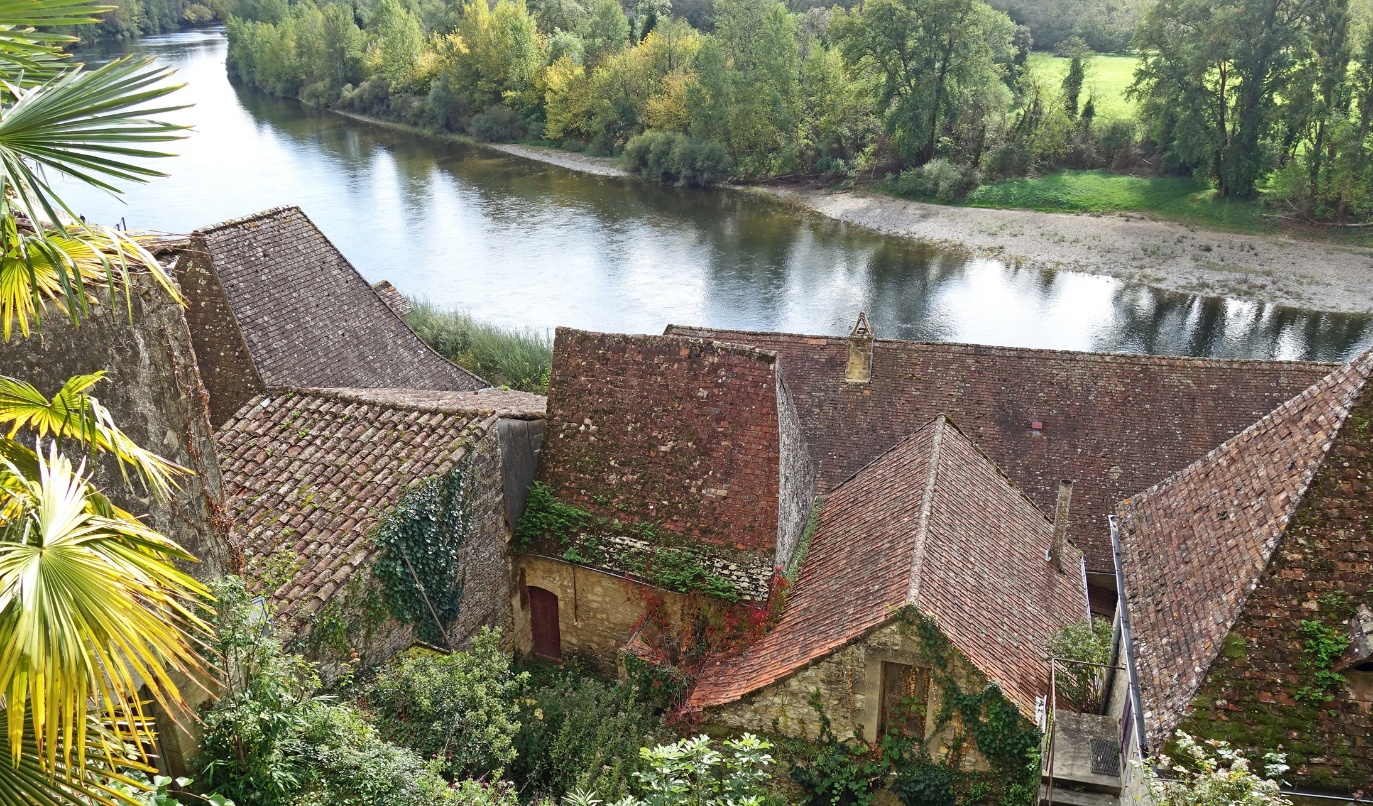
La
Roque-Gageac
(Department of Dordogne)
Located 8km south of Sarlat, this village is built against a
limestone cliff on a narrow strip of land next to the Dordogne.
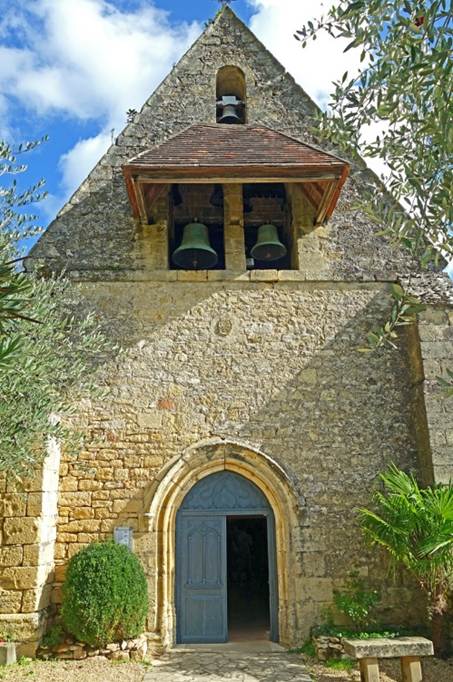
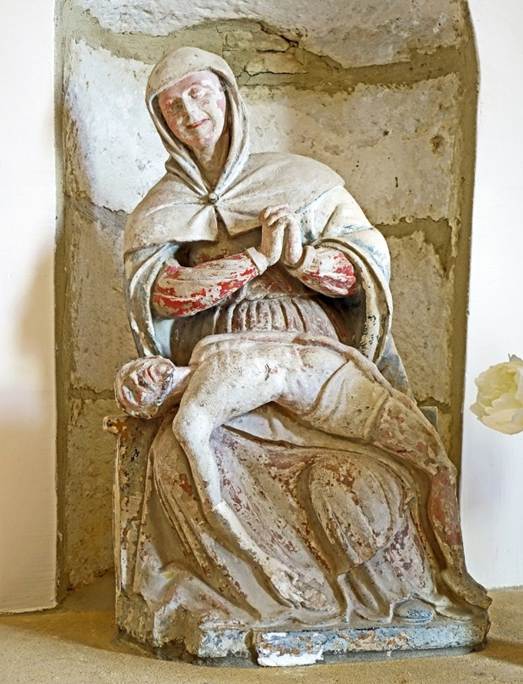
Chapel dedicated to Saint-Donat, built in 1330. Left: Facade with
a built-in bell tower. Right: Statue of the Pieta in the chapel.
|
|
|
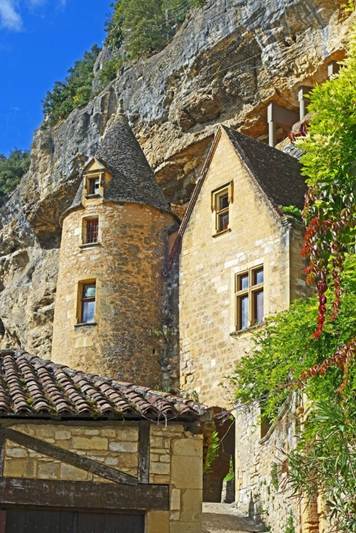
The manor of Tarde built in the 16th century over a gate of the
village. It is named after the family of the Canon Jean Tarde (1561-1636). Jean
Tarde got interested in astronomy after meeting Galileo during a trip to Rome
in 1614 and built a small observatory at La Roque-Gageac.
|
|
|
|
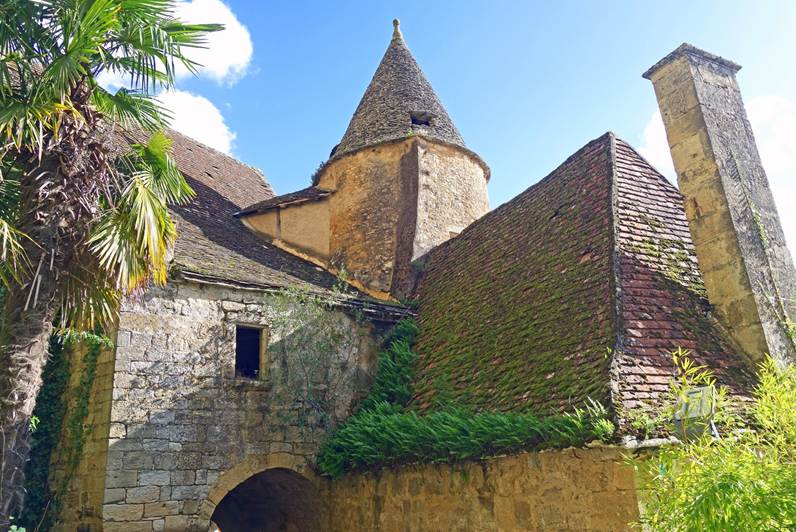
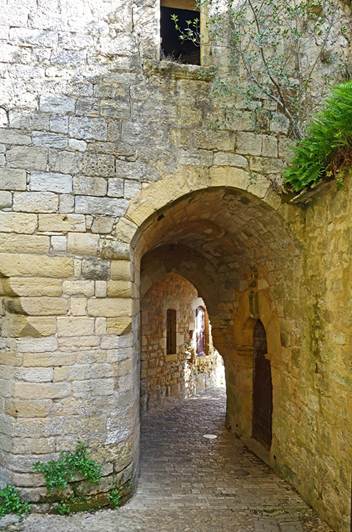
Rodez (Department of Aveyron)
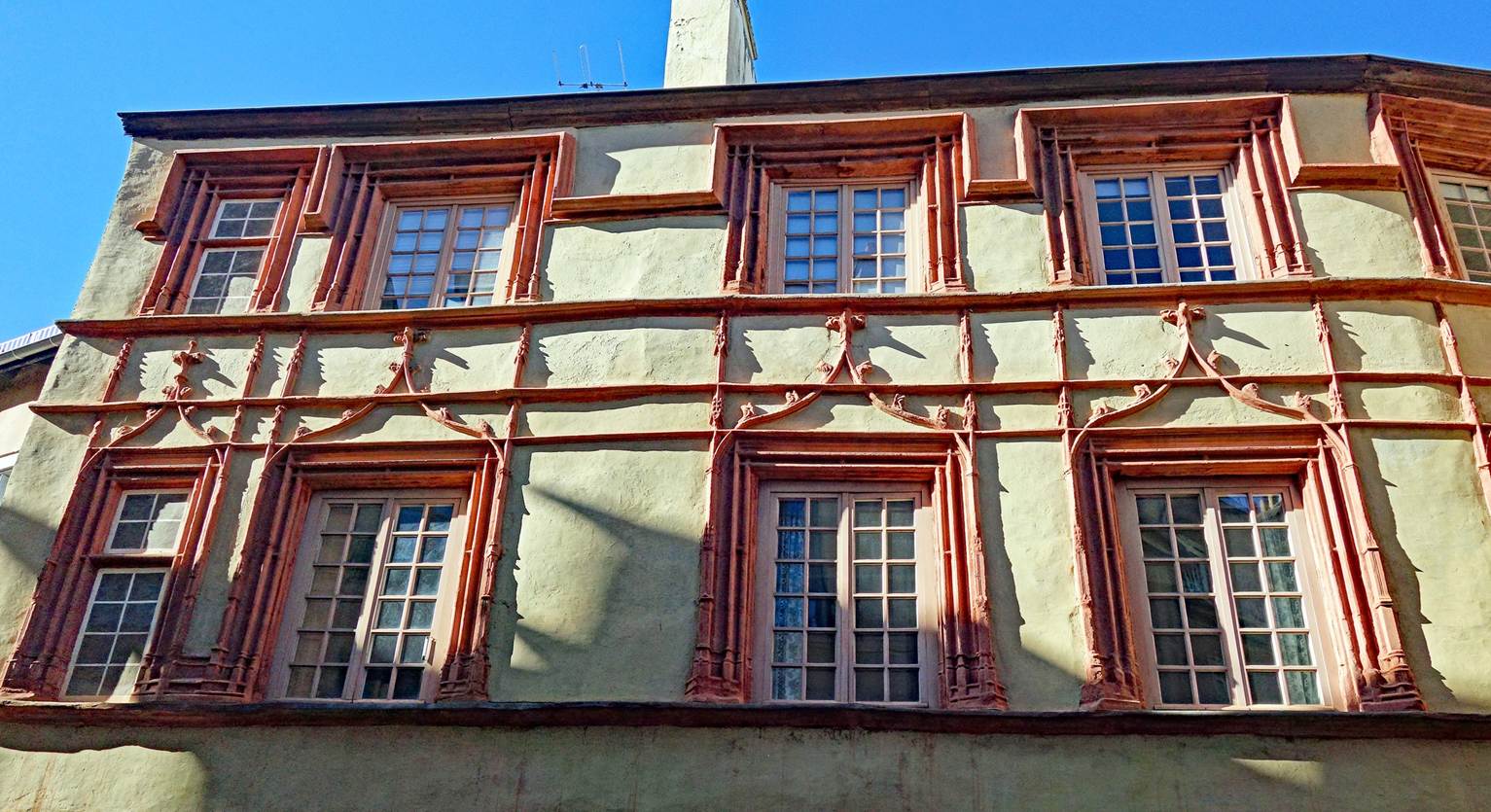
House facades (15th and 16th centuries) in the historic center of
the city.
|
|
|
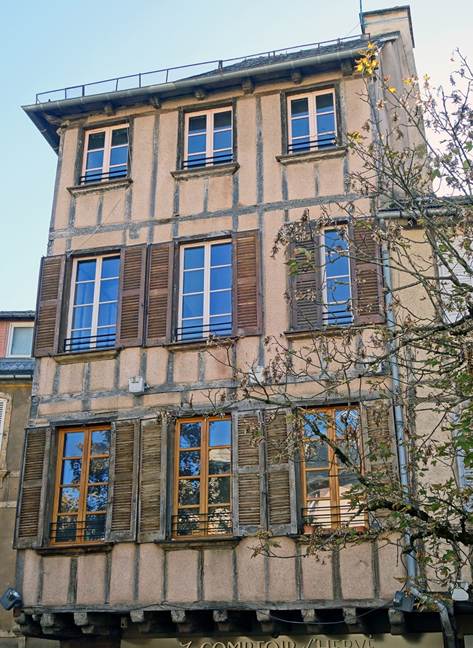
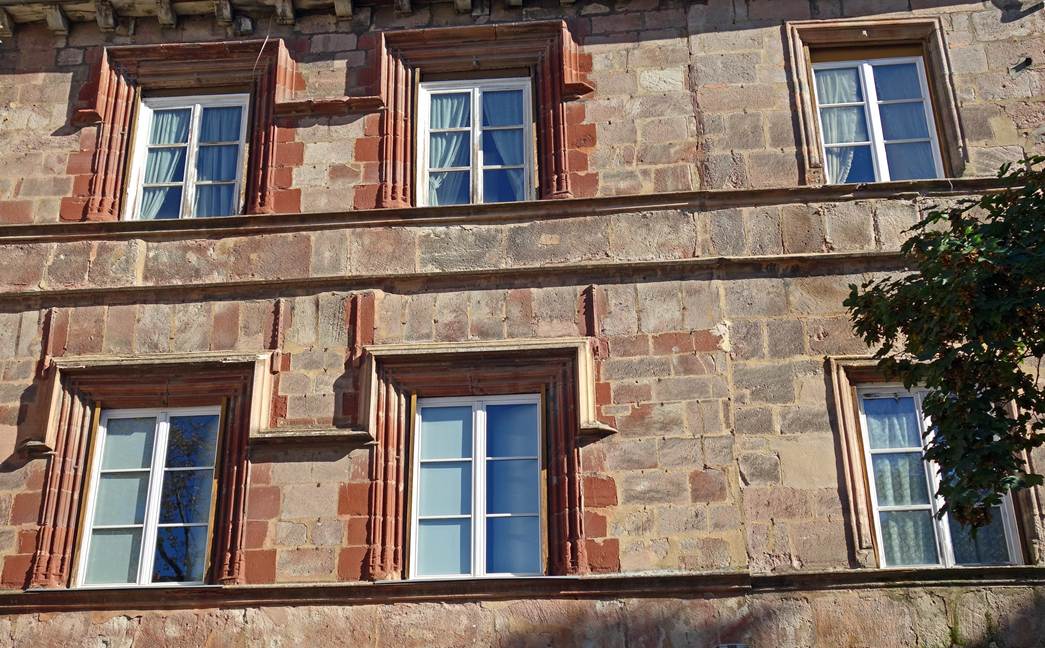
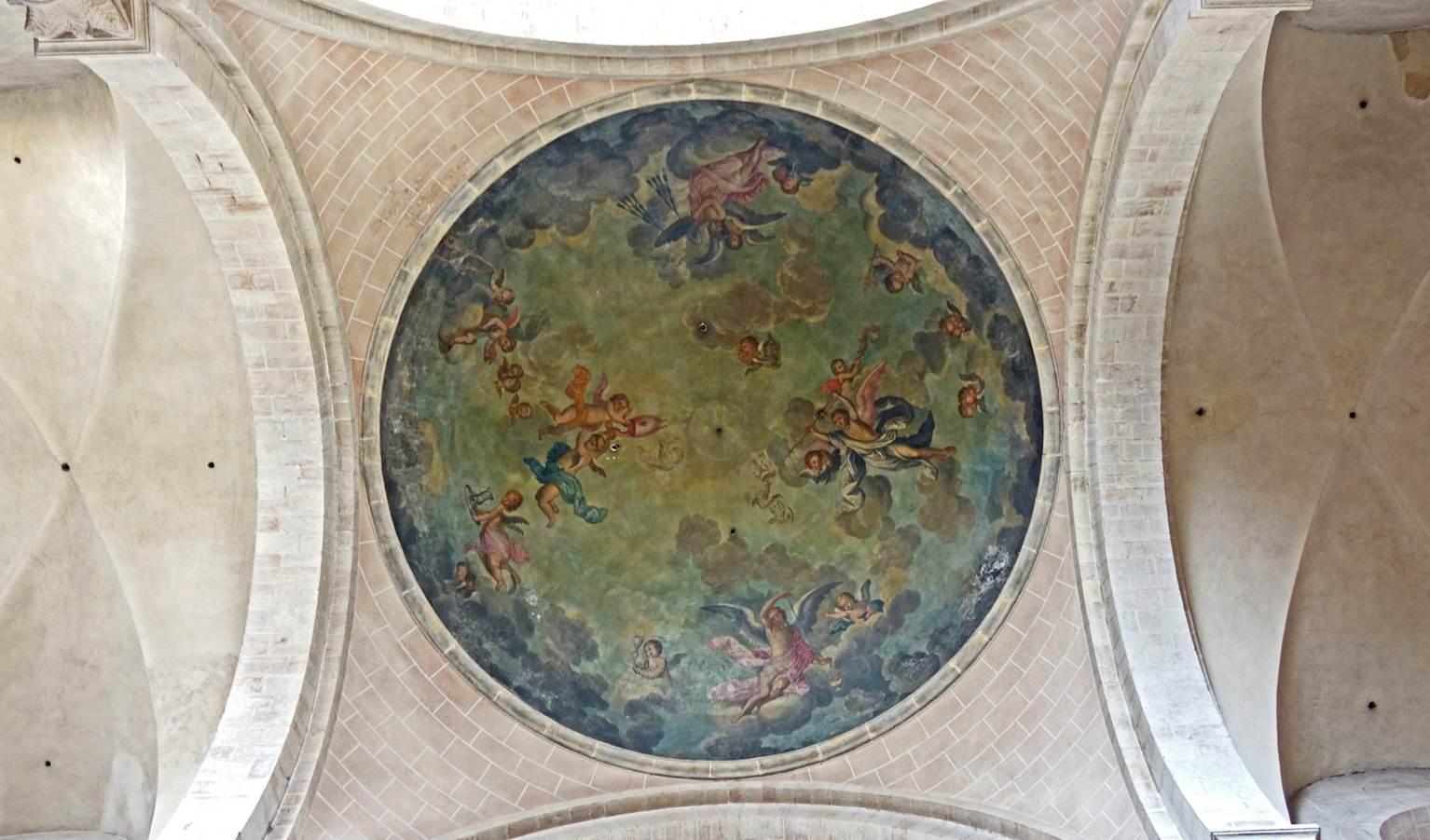
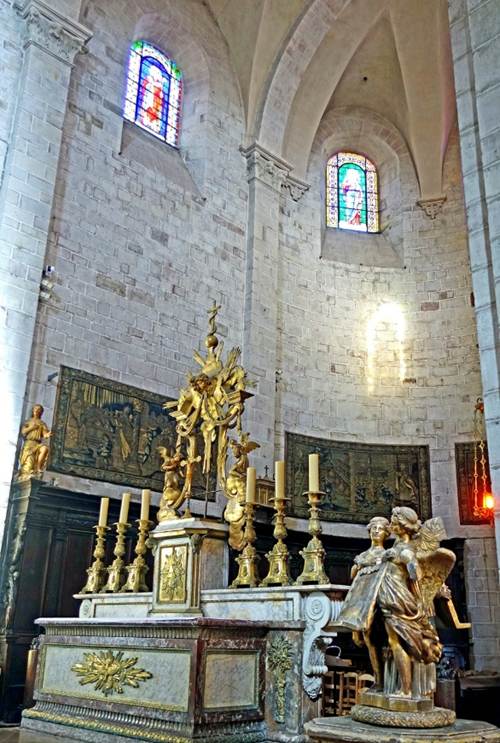
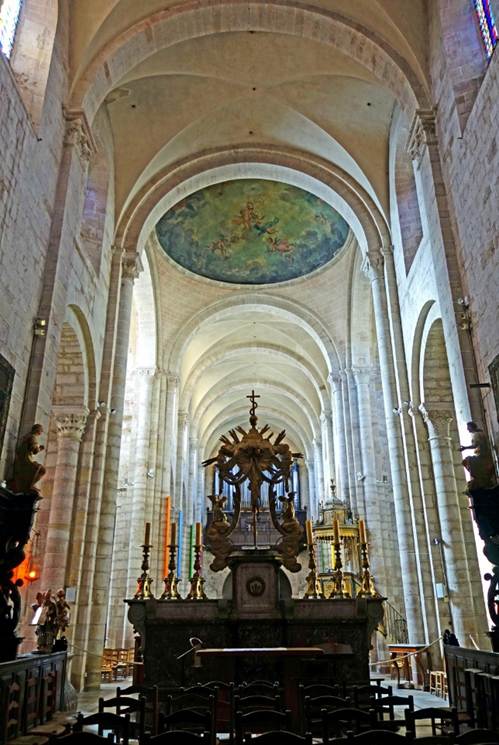
Church of Saint Amans. This church was built in the 18th century
on the site of a previous 12th-century church, which had itself been built on
the site of the tomb of Saint Amans (5th century), the first bishop of Rodez.
- Fresco on the ceiling of the nave.
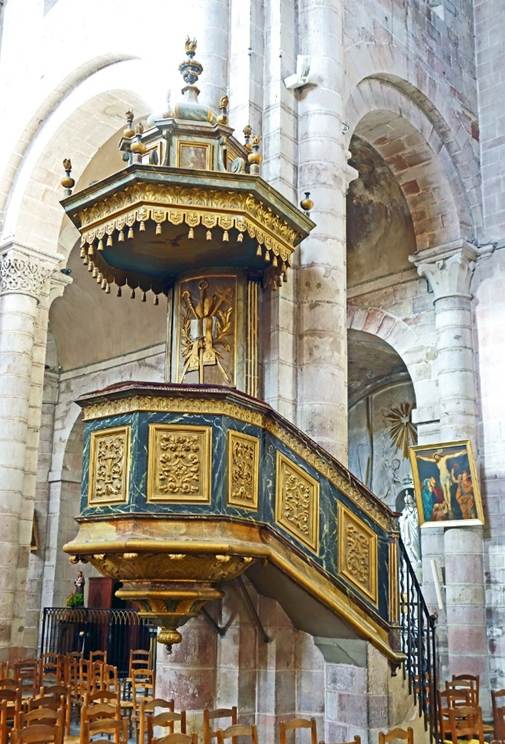
- Left: Choir adorned with tapestries dating from the 16th
century. Center: Nave. Right: Pulpit.
|
|
|
|
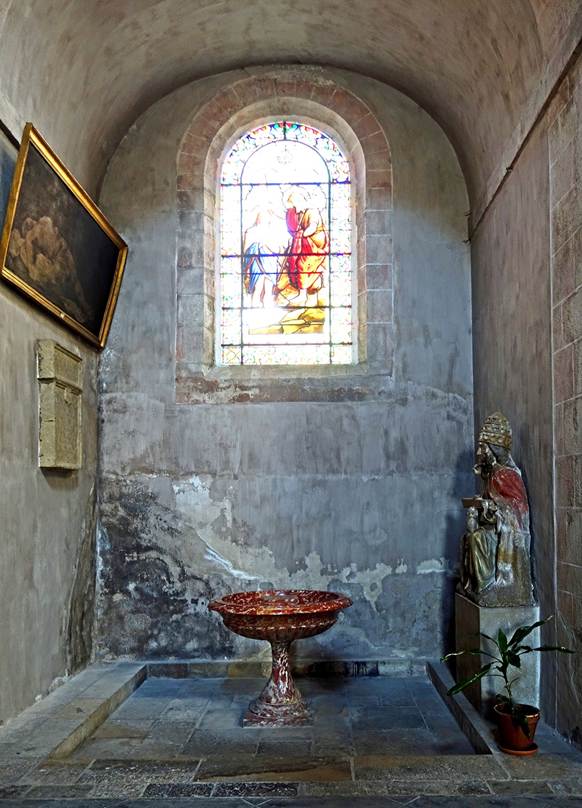
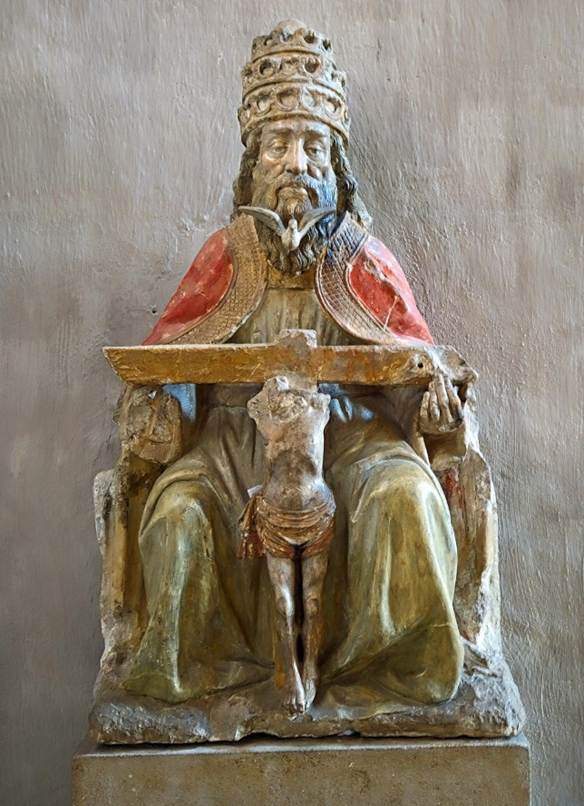
- Left: Baptistery. Right: Statue of the ″Throne of Mercy″
in the baptistery; it is an unusual representation of the Holy Trinity, with
the Father holding the crucified Son and the Holy Spirit depicted as a dove in
the Father's beard.
|
|
|
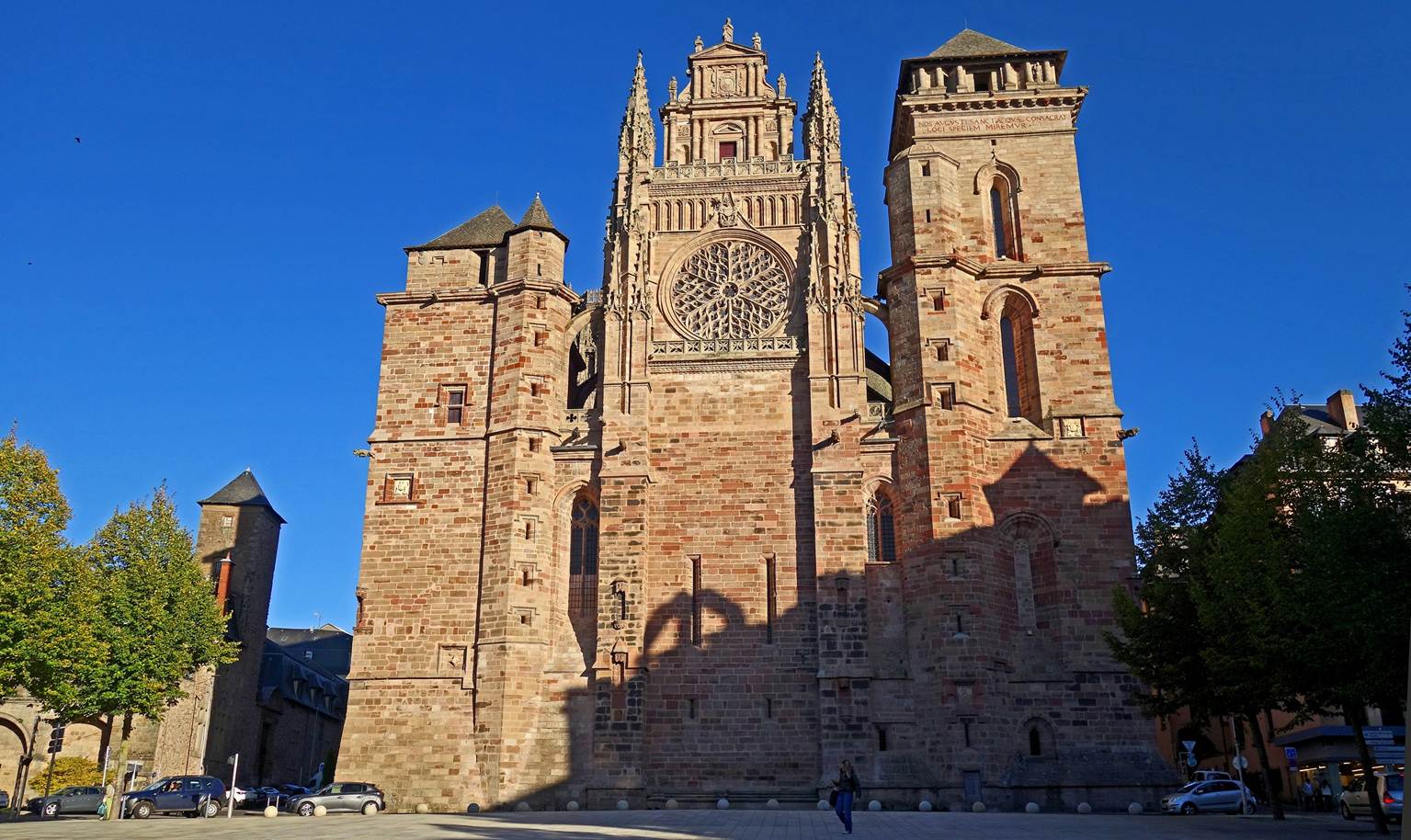
Cathedral Notre Dame of Rodez. Its construction
started in the late 13th century to replace a previous church that had
collapsed. As the Black Death and the Hundred Years' War caused long delays, it
was only completed in the early 16th century. For previous photos of this
cathedral taken in 2022, click here.
The photos below complement them.
- Western facade of the cathedral, overlooking the Place d'Armes.
It is built as a fortress wall. Unlike other traditional cathedrals, it has no
entrance door.
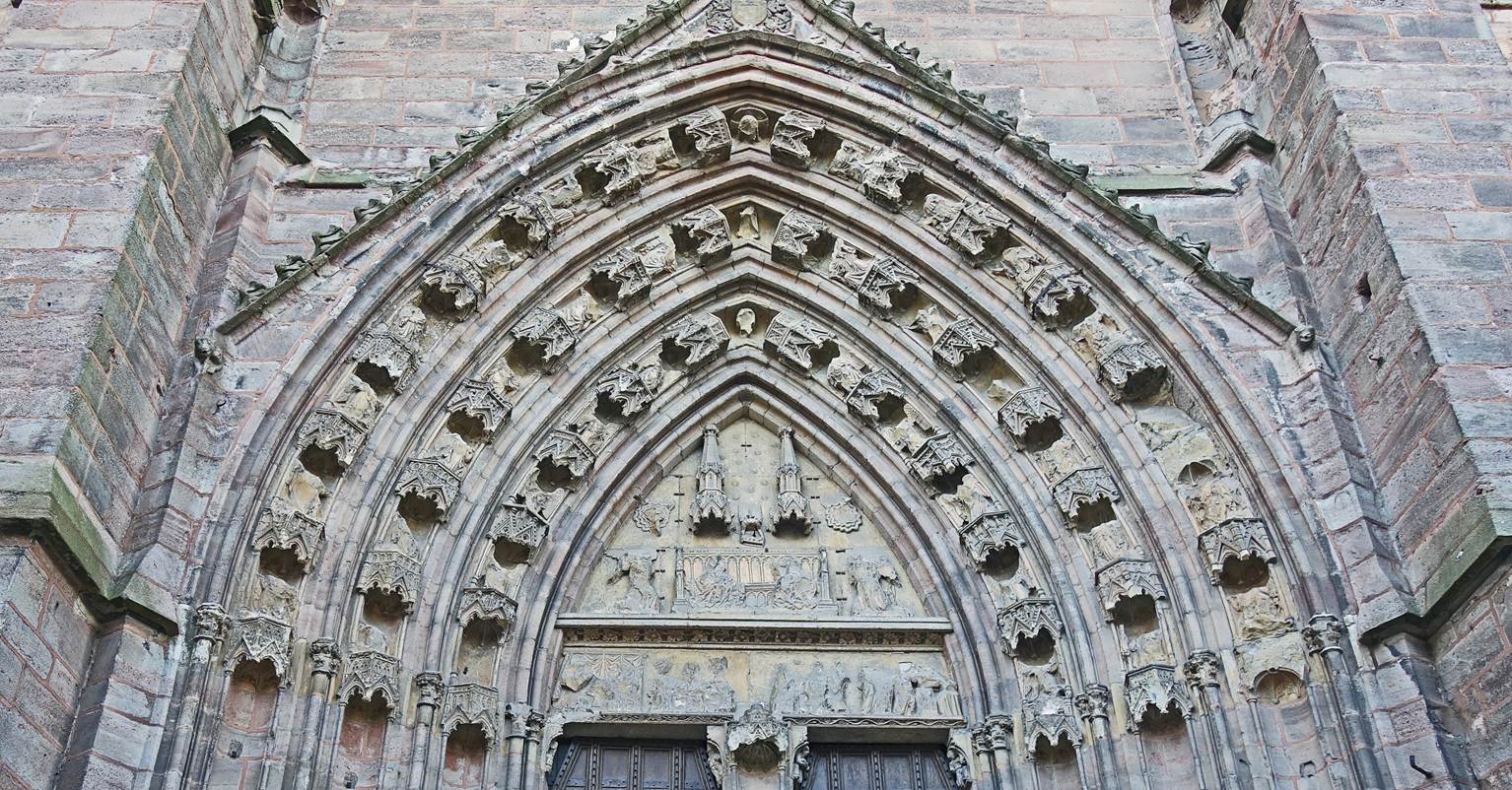
- Tympanum of the portal of the transept's north arm. Most of the statues
have been damaged during the Wars of Religion.
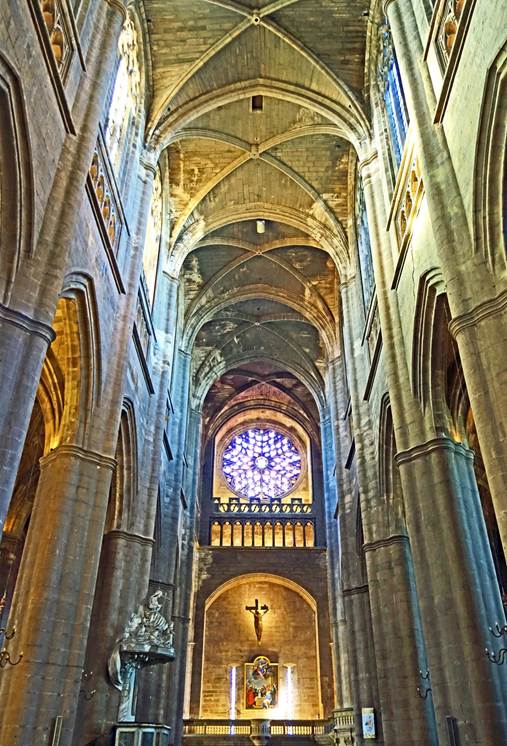
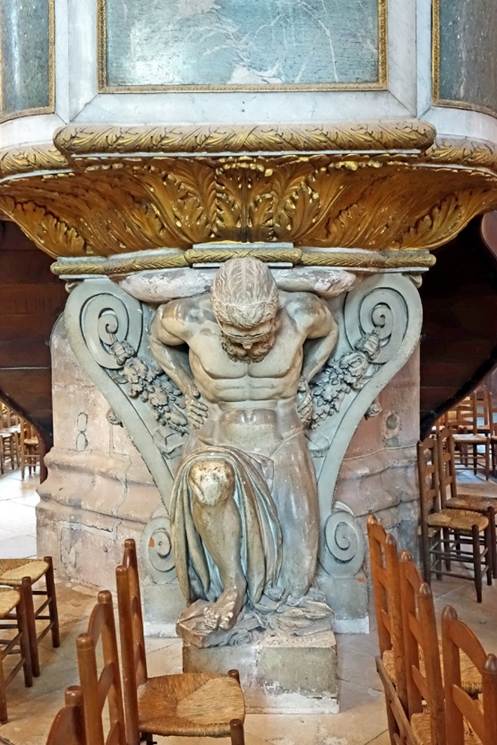
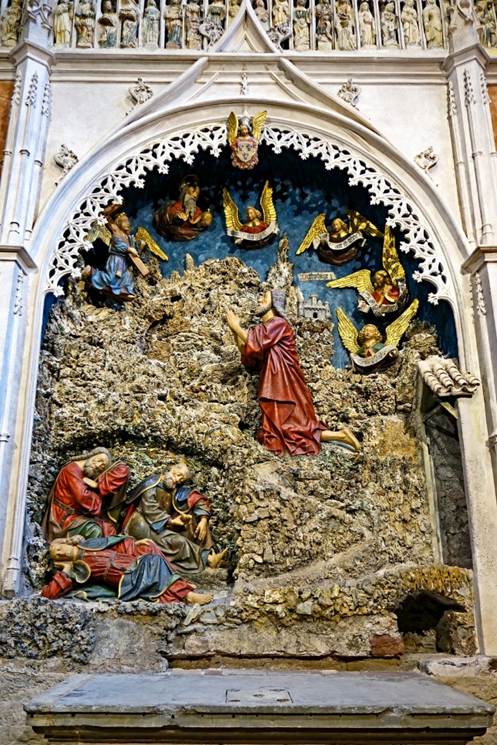
- Left: View of the nave toward the west (as the cathedral has no
entrance door on its western facade, two altars face each other at the two ends
of the nave). Center: Marble sculpture supporting the pulpit. Right: Retable
depicting Jesus praying in the Garden of Olives while his closest disciples
fall asleep.
|
|
|
|
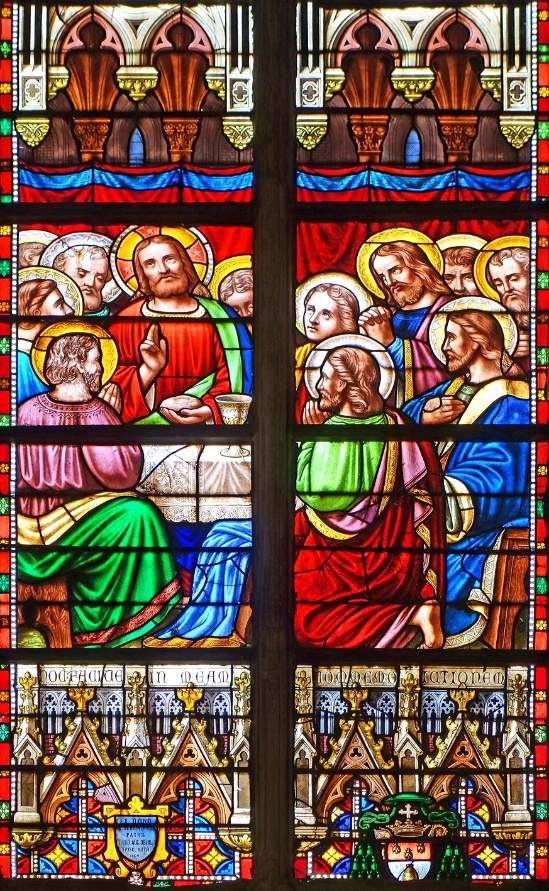
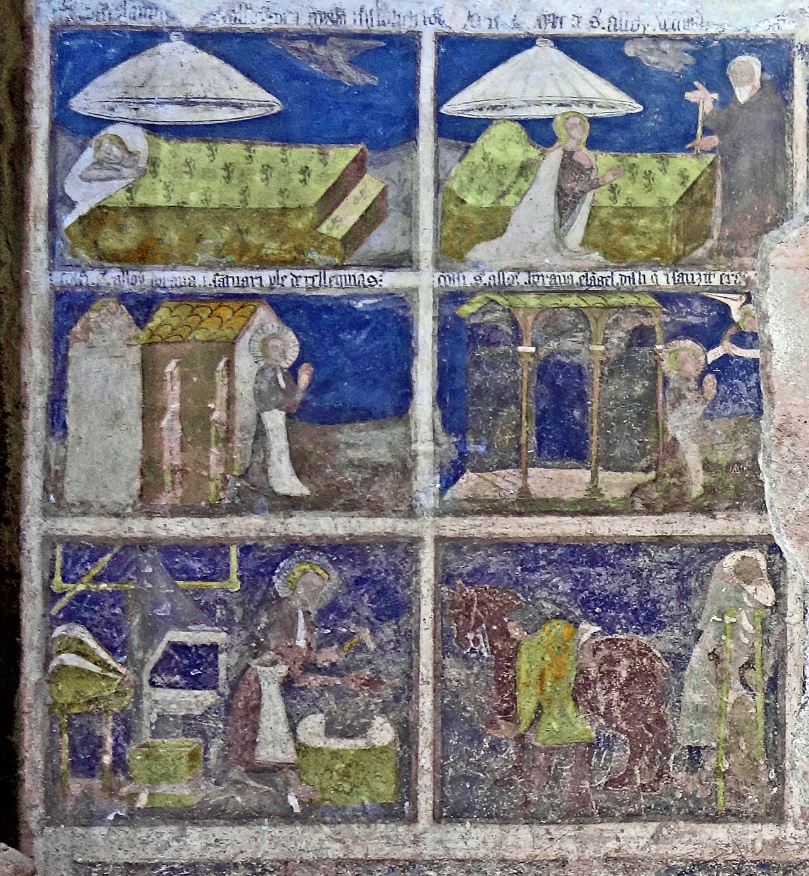
- Left: Stained glass. Right: Portion of an ancient fresco of the
life of Saint Eloi, discovered in 1978.
|
|
|
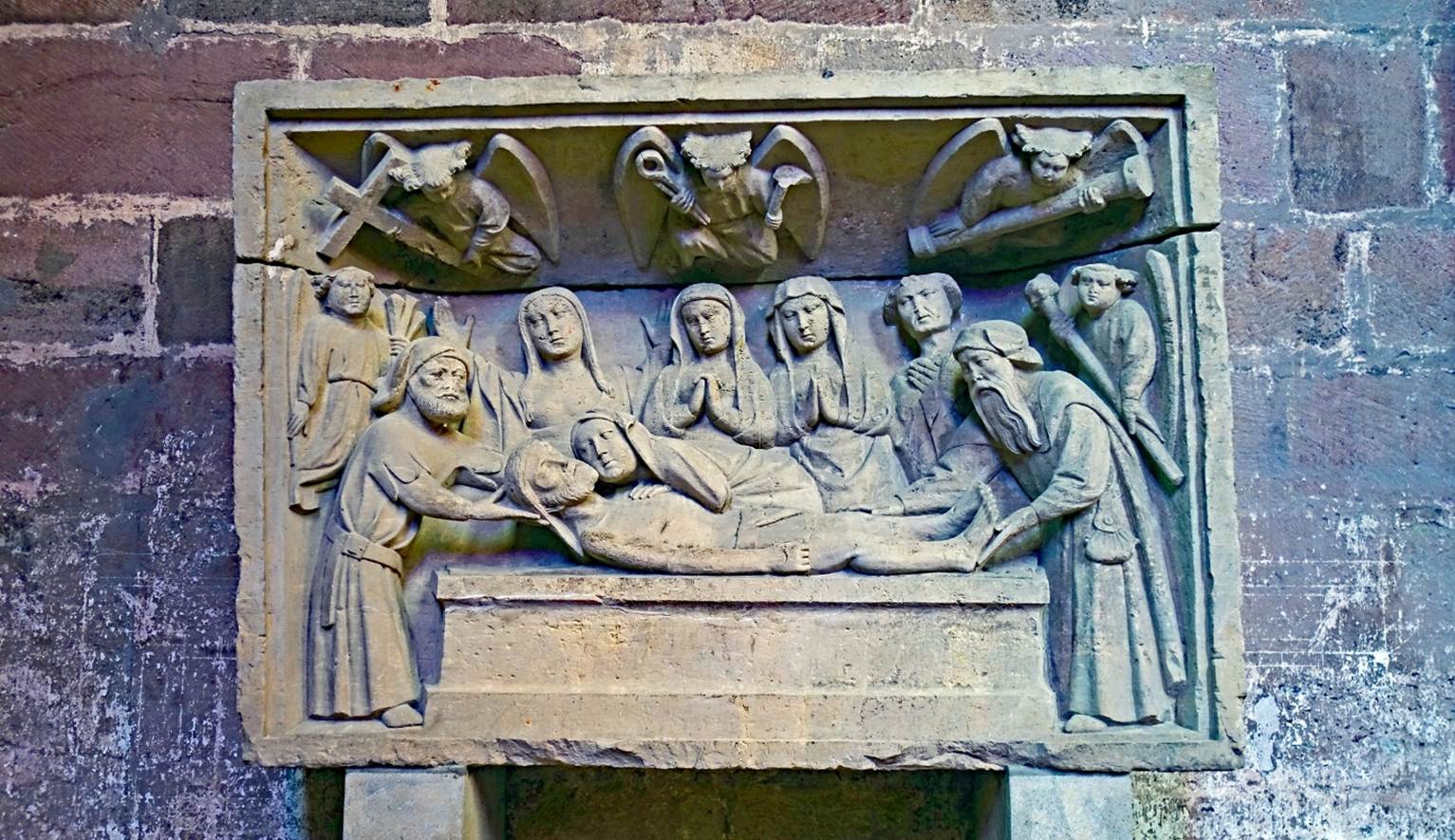
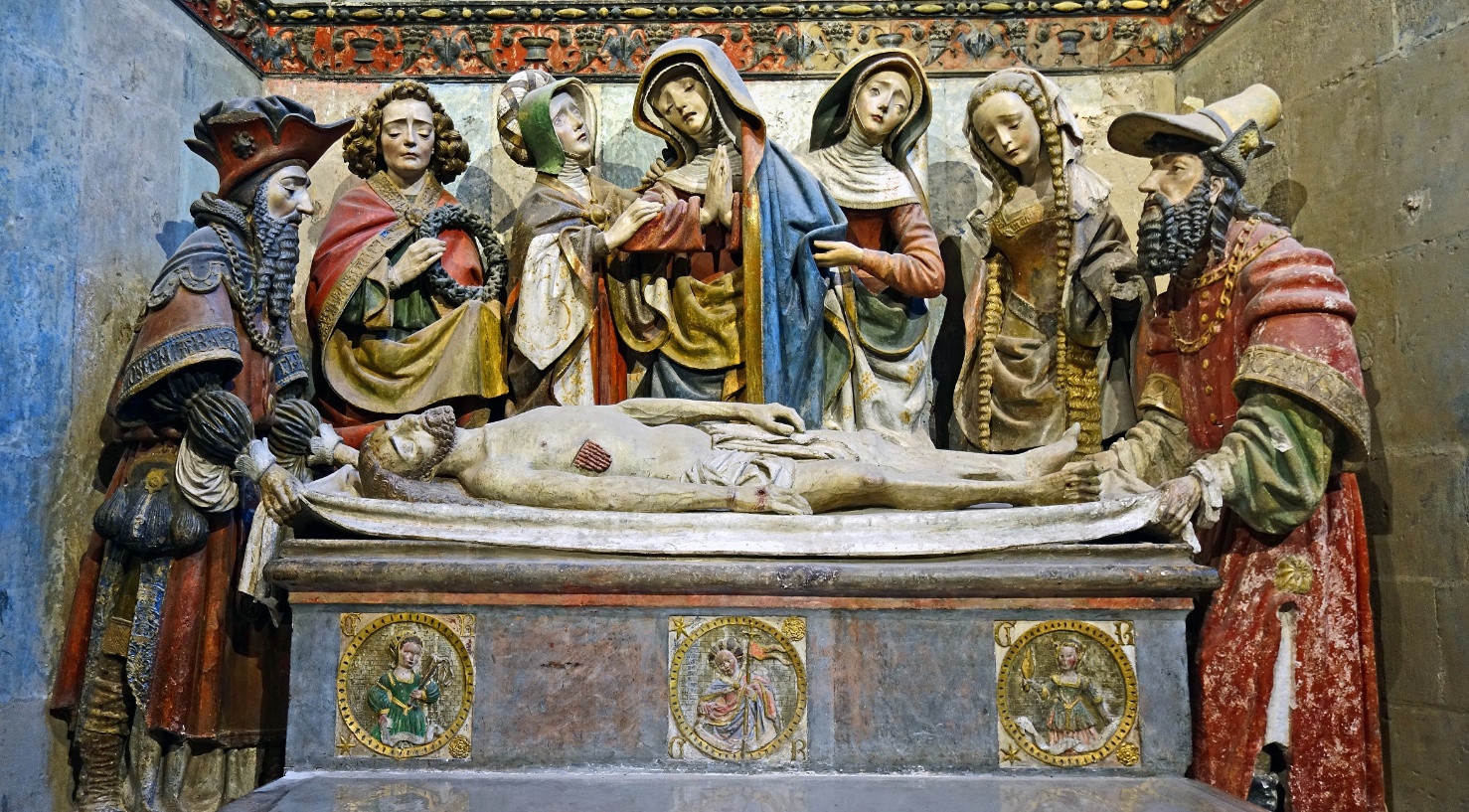
- Stone carving depicting the Entombment
of Christ.
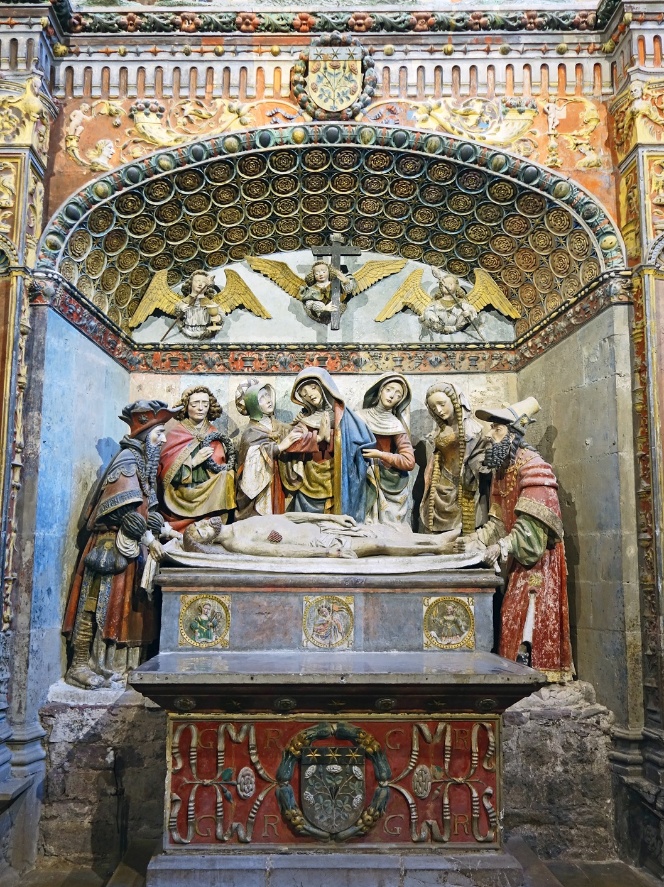
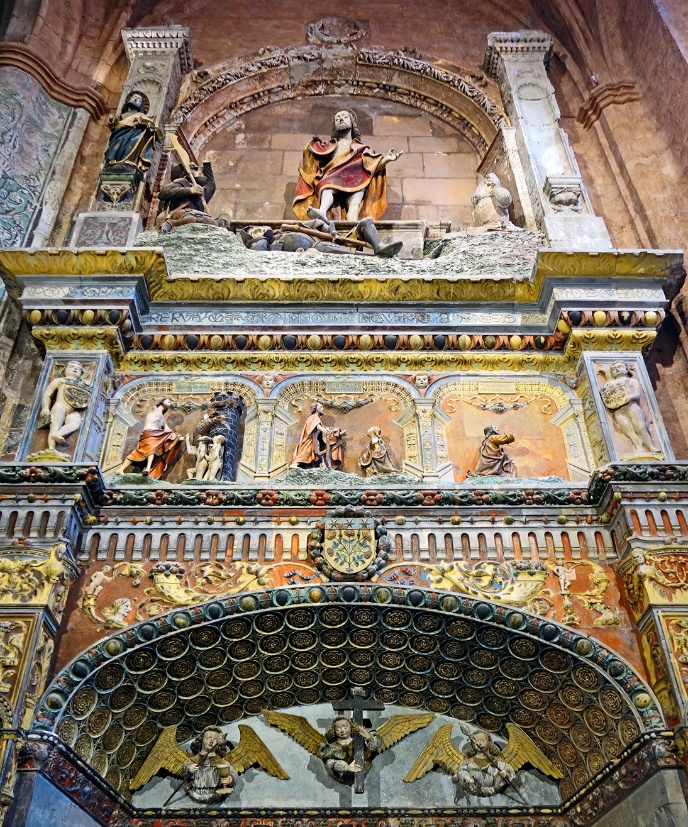
- Magnificent retable representing the Entombment and the
Resurrection of Christ, located in the chapel of the
Holy Sepulcher. Designed by Gaillard Roux, canon of the cathedral from 1497
to 1534, this retable was created around 1520.
|
|
|
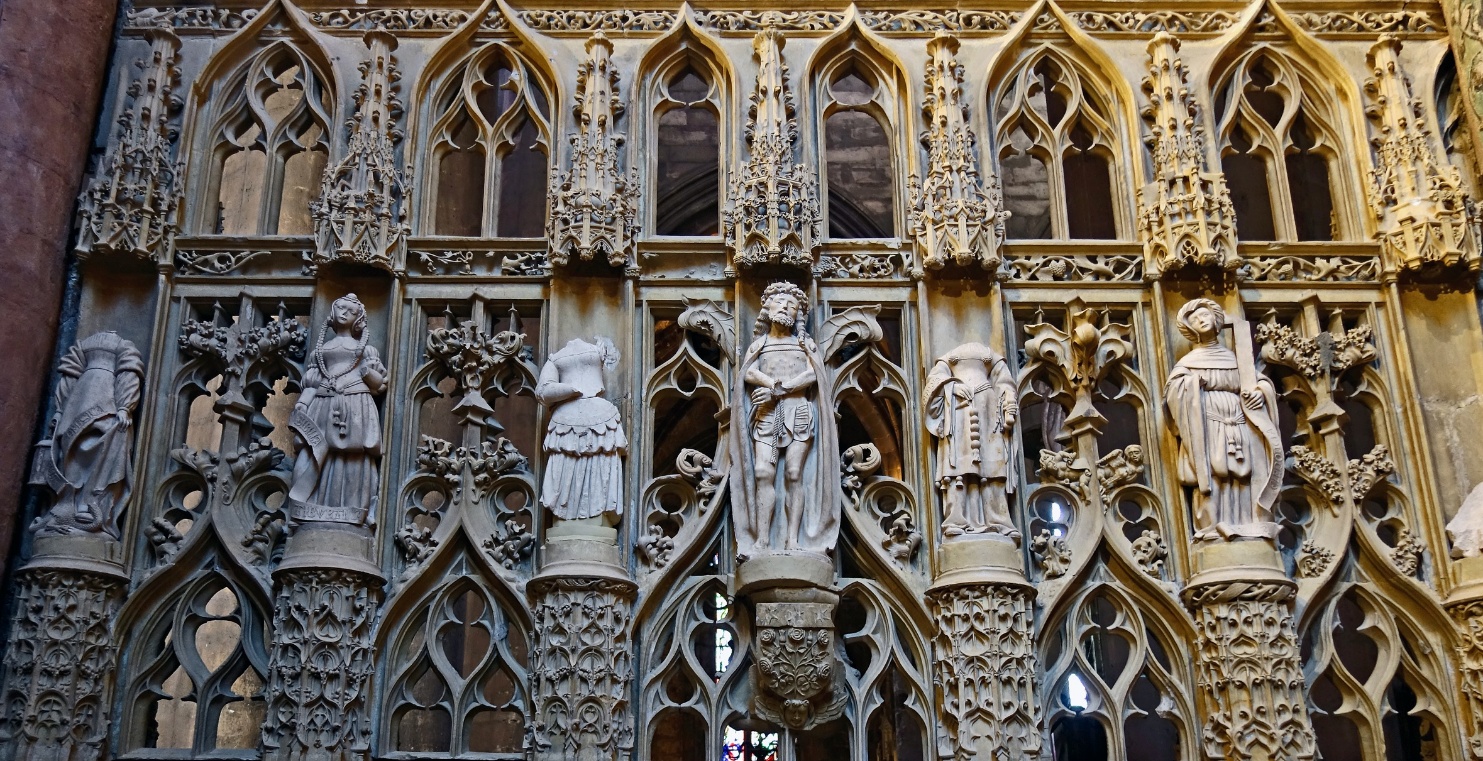
- Finely carved stone fence separating the chapel of the Holy
Sepulcher from the nave of the cathedral.
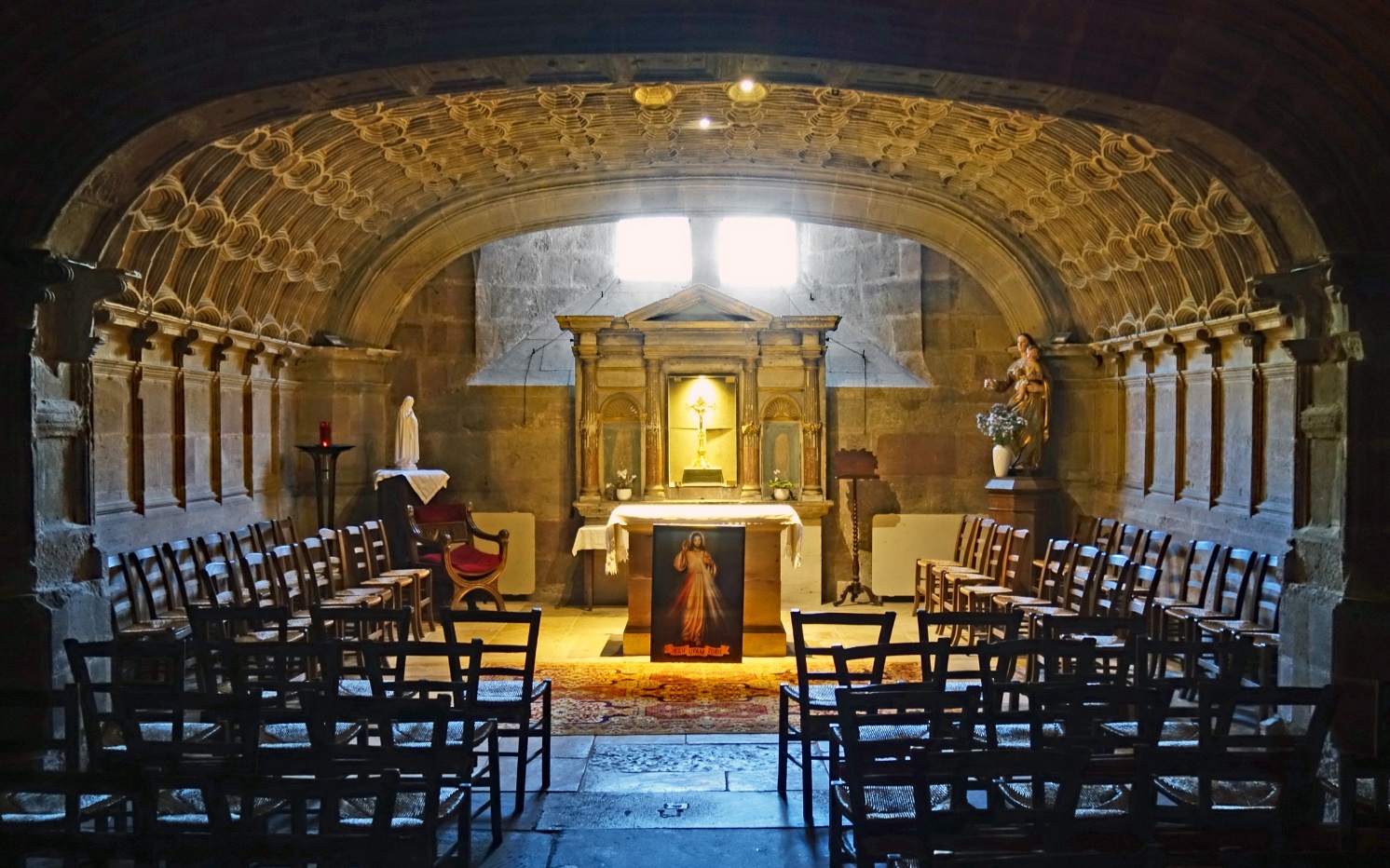
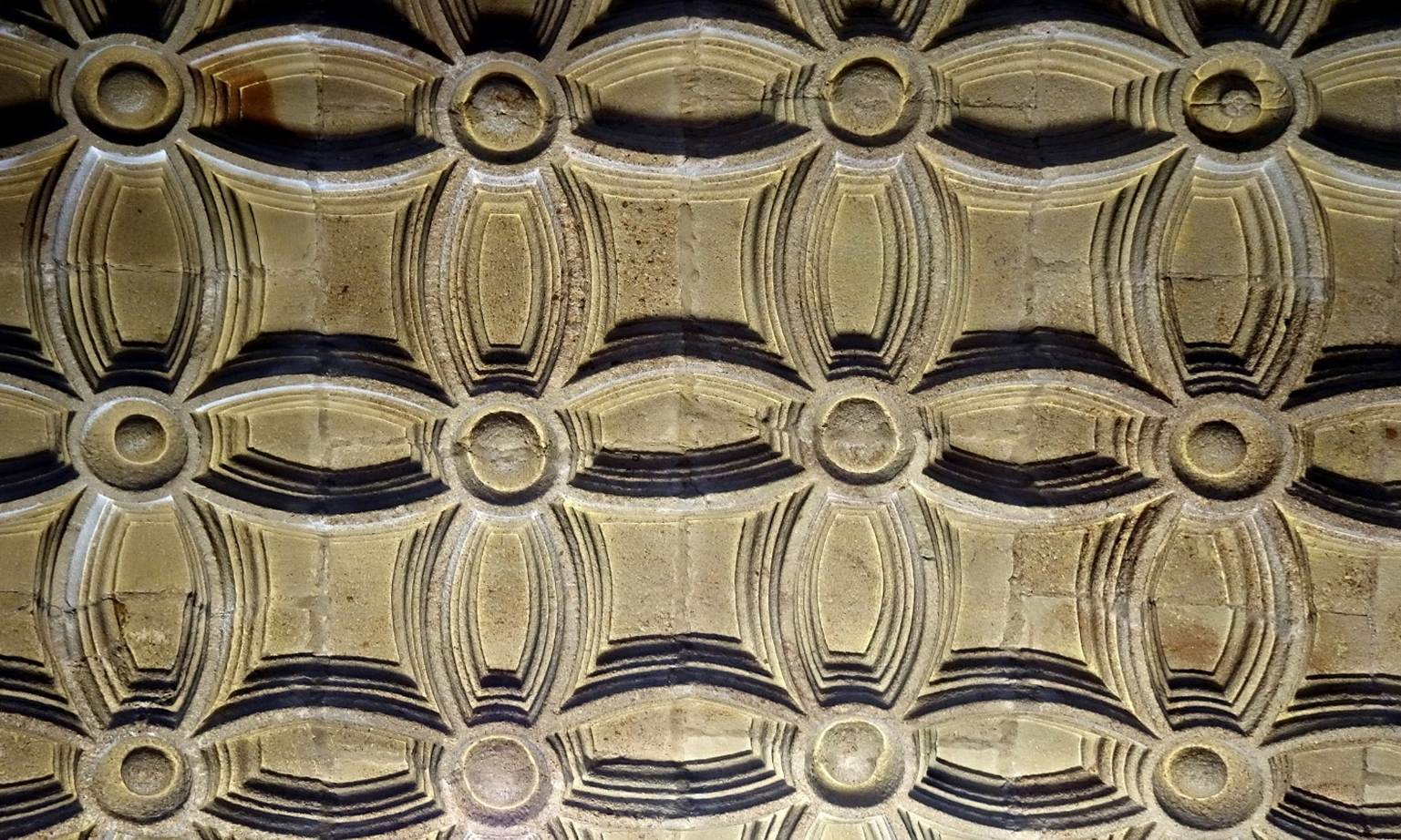
- Chapel of the Blessed Sacrament,
built in the second half of the 16th century at the base of the cathedral's
northwest tower. It is distinguished by its vaulted coffered ceiling.
- Closeup of the coffered ceiling of the chapel of the Blessed
Sacrament.

Back to
main France page | Back to my
mountaineering/trekking/travel webpage