Aomori City and Shimokita
Peninsula,
Aomori Prefecture, Northern Honshu,
Japan (May-June 2025)

Back to main Japan May-June 2025 page
Located in the far north of Honshu, the city of Aomori (pop. 260,000) is
the capital of the namesake prefecture of Japan. At the beginning of the Edo
period, in the early 17th century, it was still a small port settlement. Thanks
to its position between the western and eastern halves of northern Honshu, two
regions traditionally hostile to each other, it was chosen in 1871 (a few years
after the Meiji restoration) as the capital of the newly formed prefecture, instead of the then larger towns of Hachinohe (to the east) and Hirosaki (to the west). Aomori City was largely destroyed
during an aerial bombardment on the night of July 28-29, 1945. It recovered and
it is today a vibrant city.
In contrast,
the Shimokita Peninsula located northeast of Aomori
City is a remote, sparsely populated region known for its harsh climate.
To see the locations of the places pictured below, click here. (A Google map with red markers will
open in a new tab.)
Around the Aomori City station.
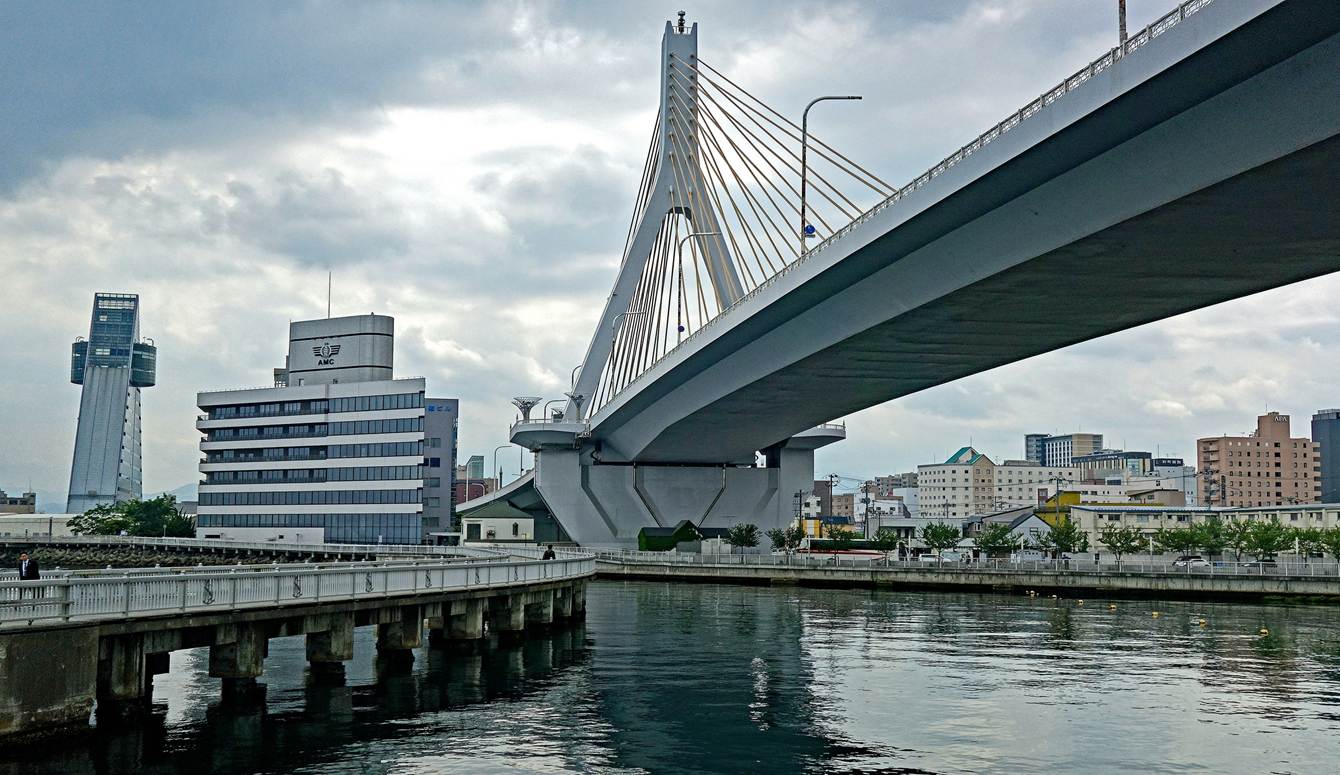
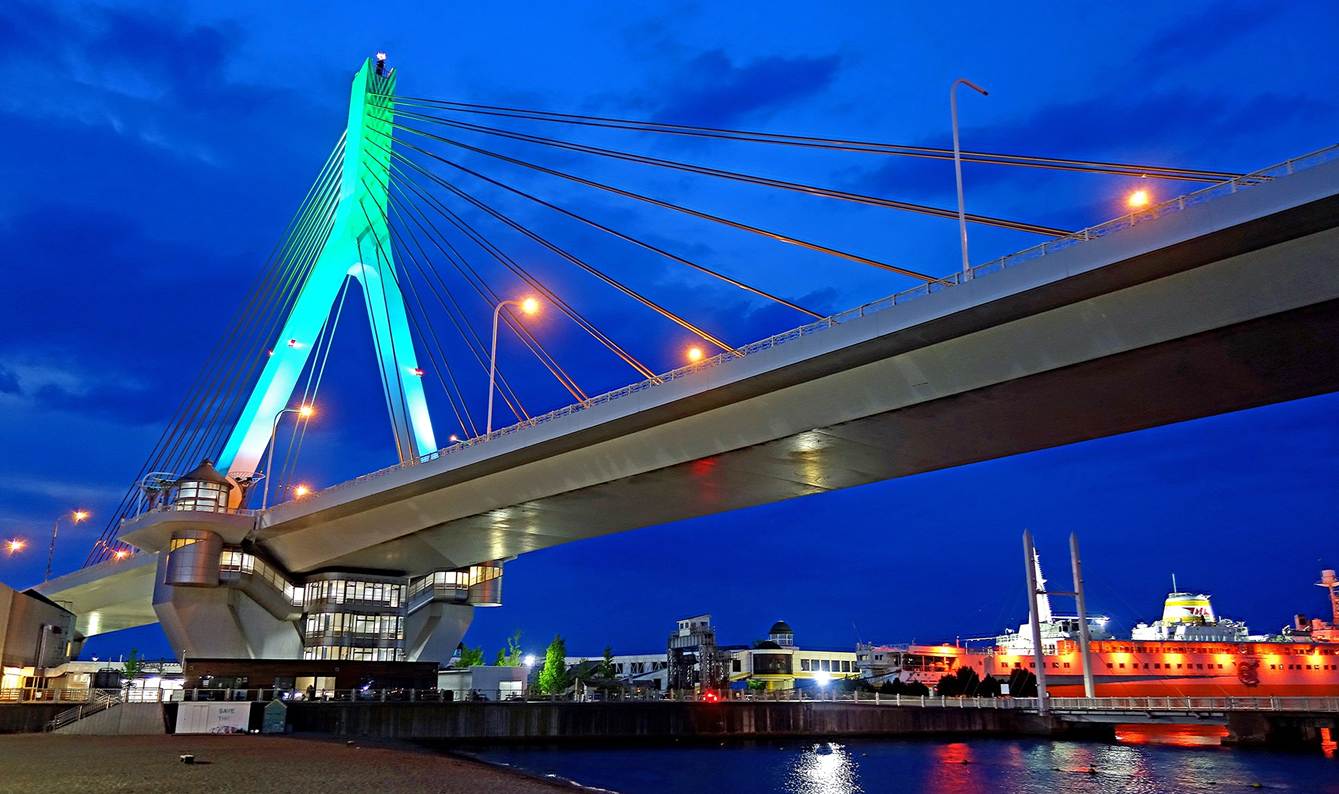
Partial views of the elegant 1219m-long
Aomori Bay bridge in daylight and illuminated at night.
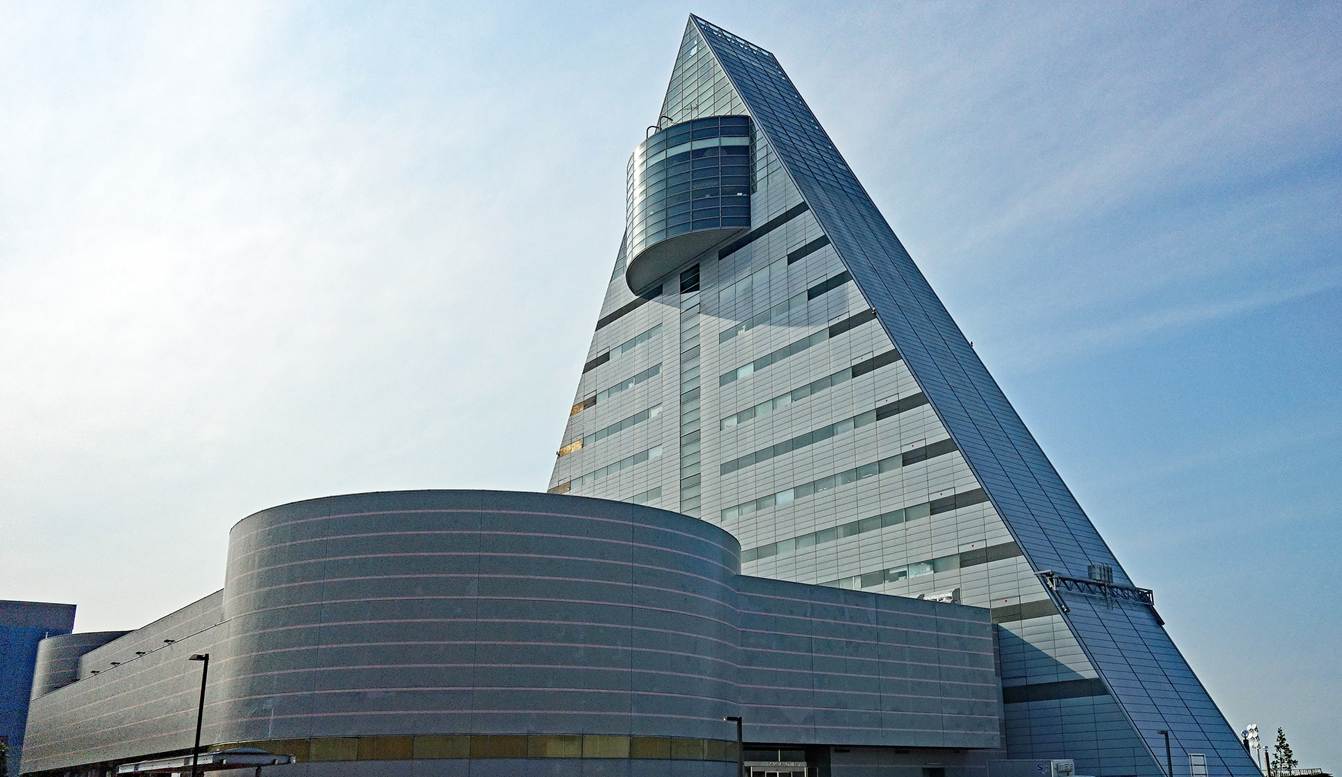
The 76m-high triangular ASPAM building,
an iconic landmark in downtown Aomori, which overlooks Aomori Bay. Completed in
1986, it was designed to resemble the initial ″A″ in the city's
name.
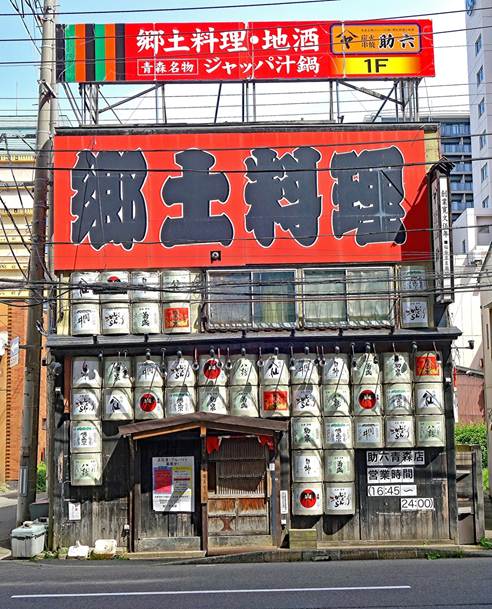
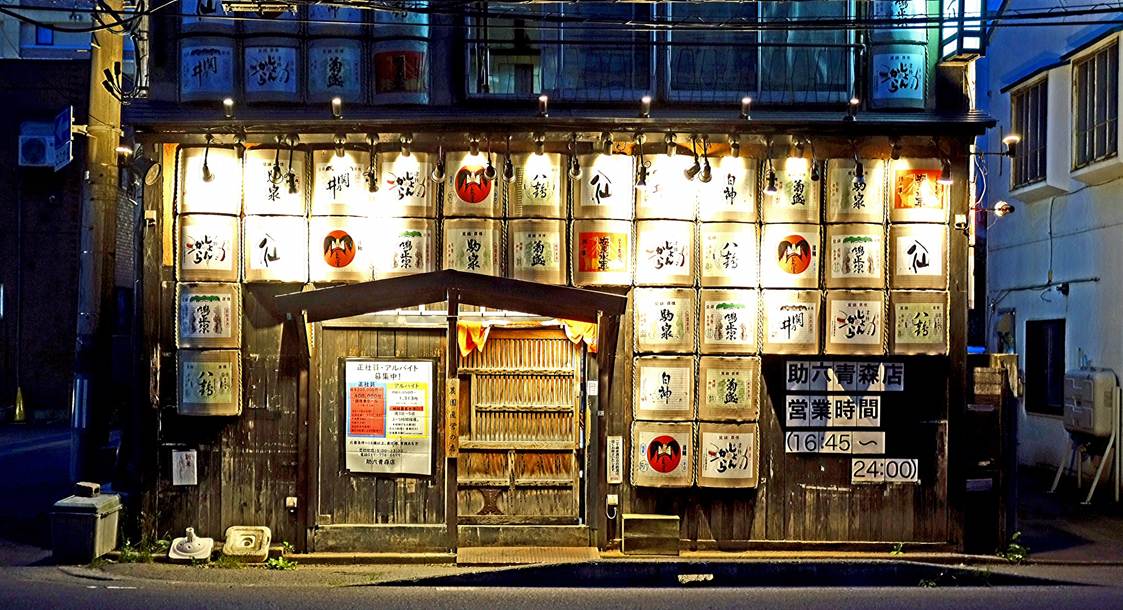
Facade of the Sukeroku
izakaya, located on a small street near the Aomori train station. Sukeroku (助六) is the name of
both a dandy character in a famous kabuki play and a
well-known combination of two types of sushi often used in beto
boxes. The name of this izakaya is likely a pun on this dual association.
|
|
|
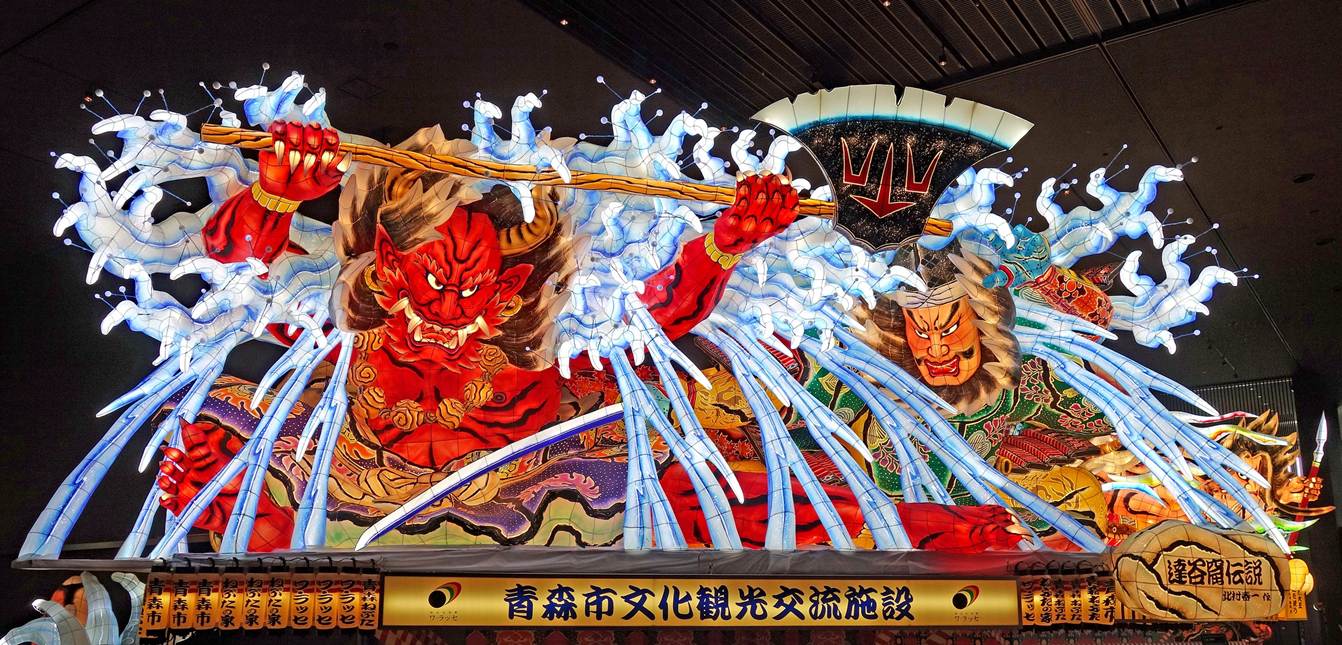
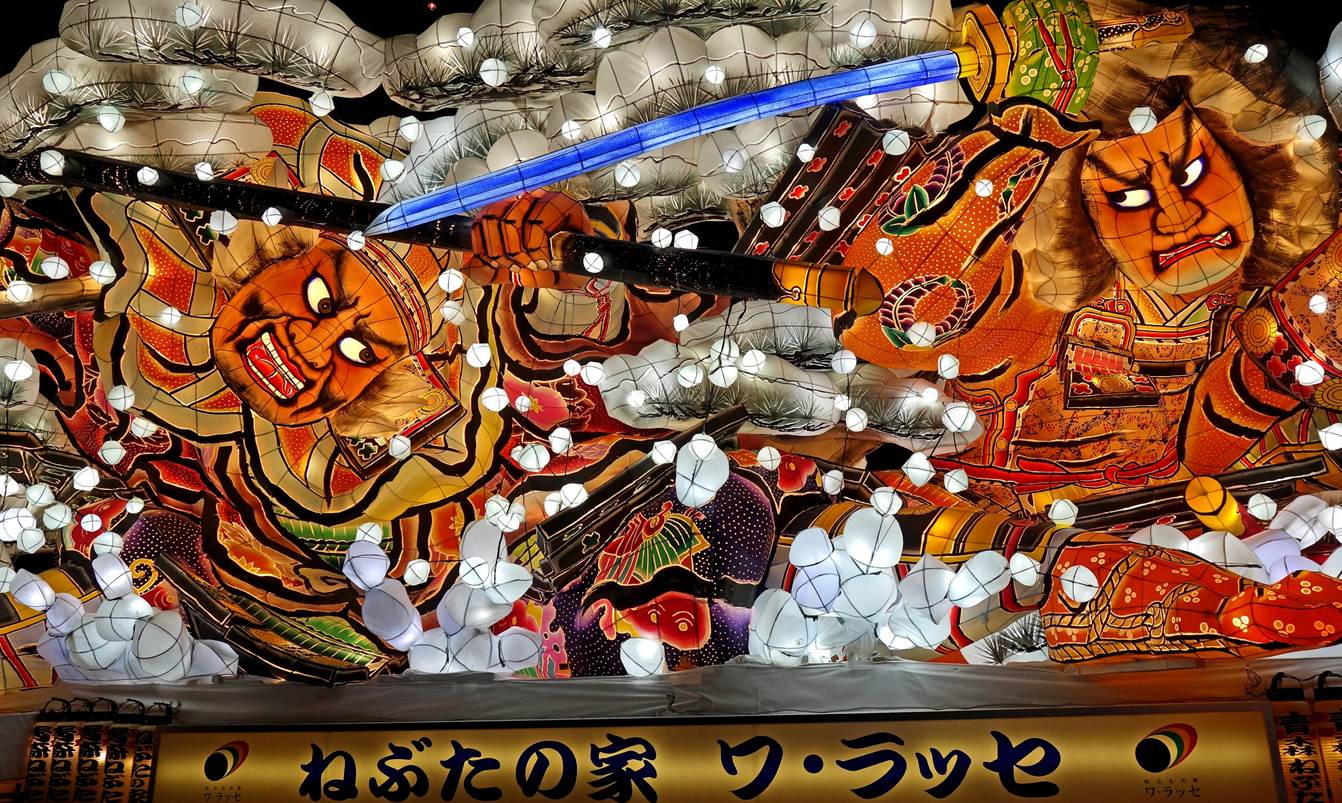
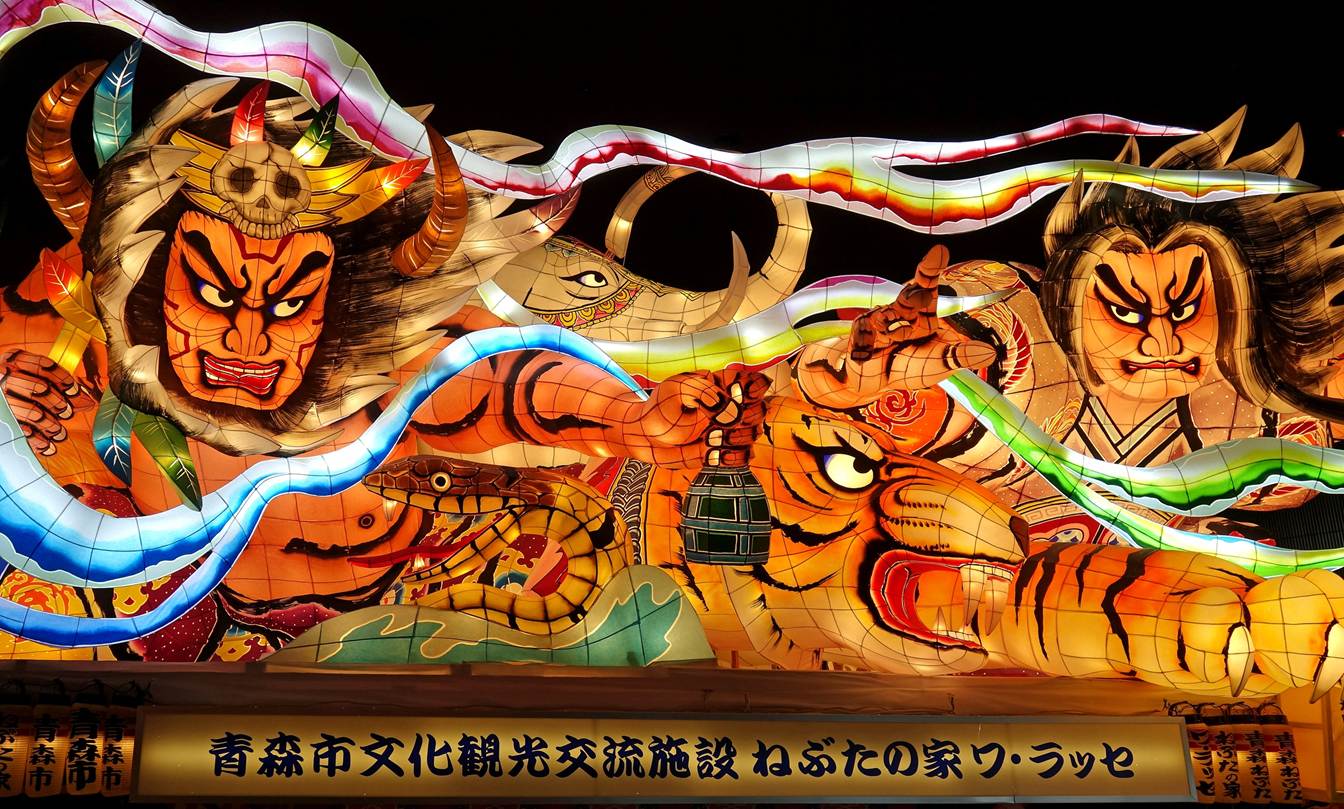
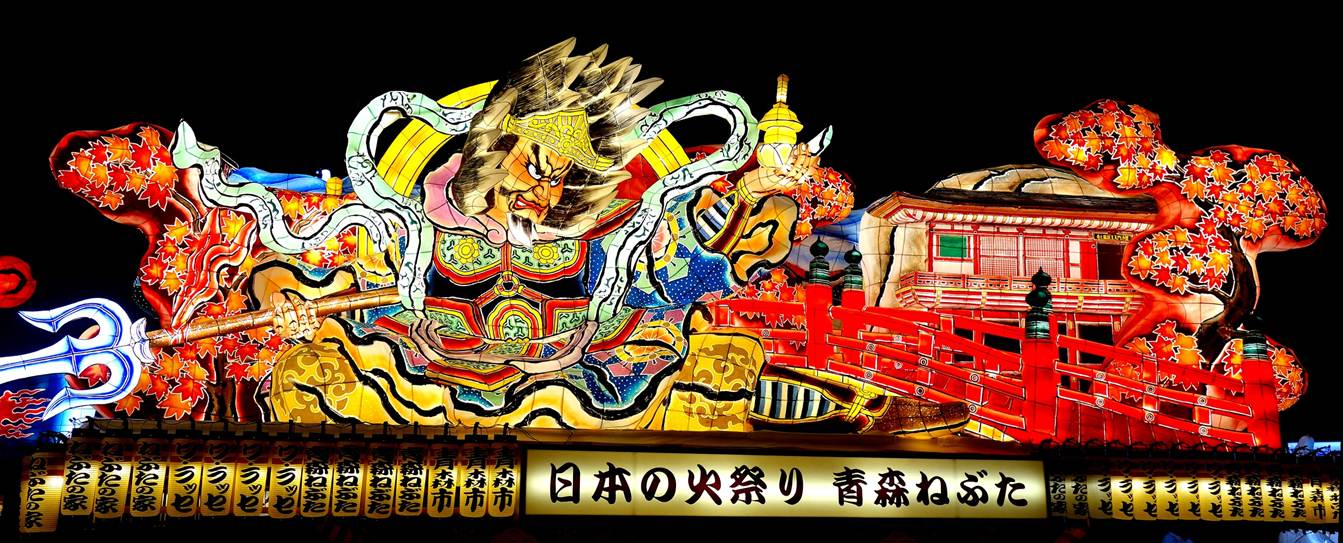
Nebuta Warasse.
Every year, from August 2nd to 7th, the
city of Aomori holds a festival called Nebuta
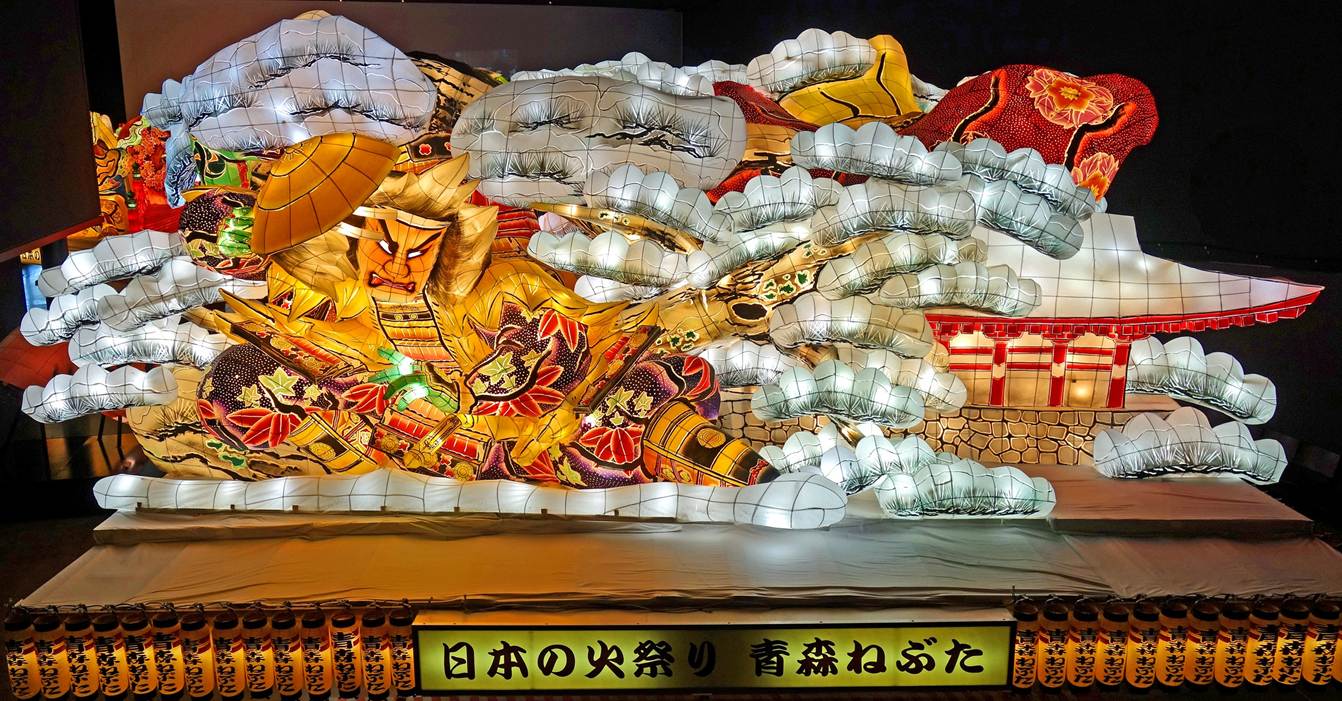
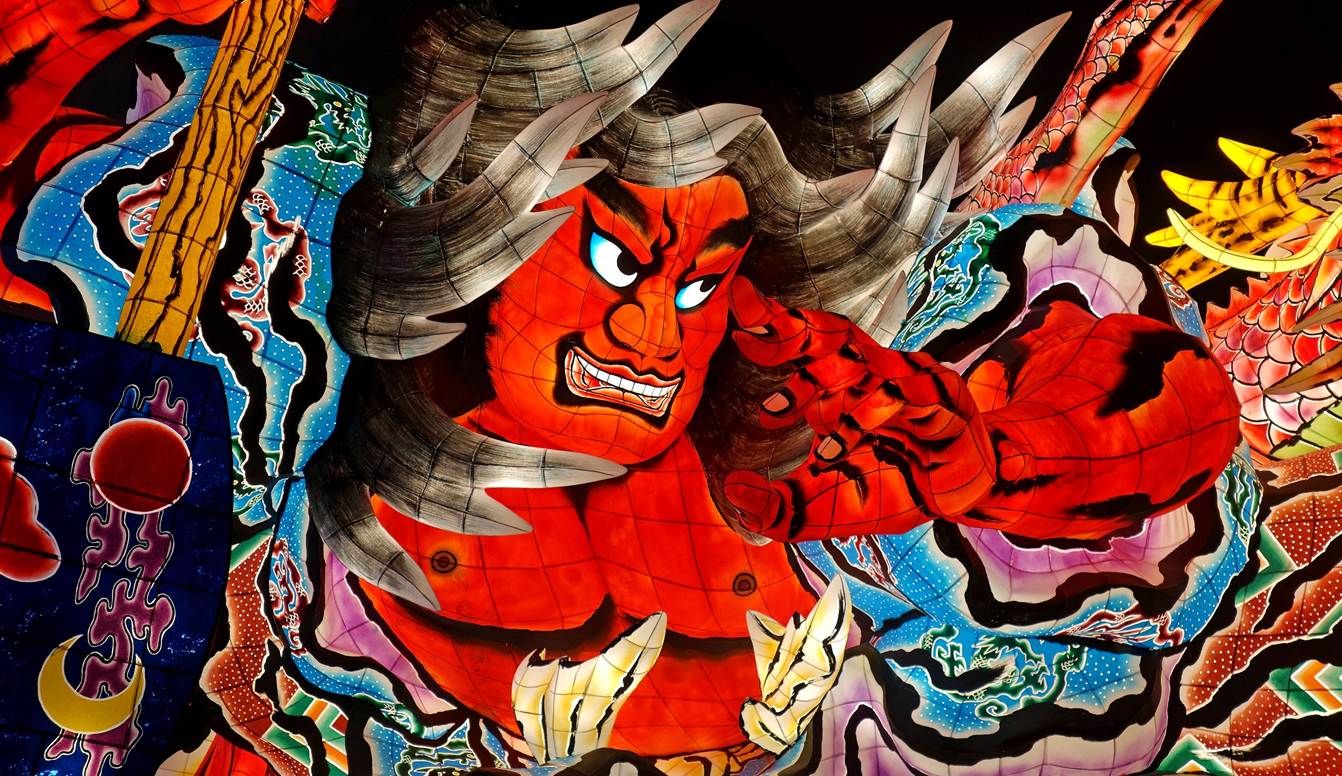
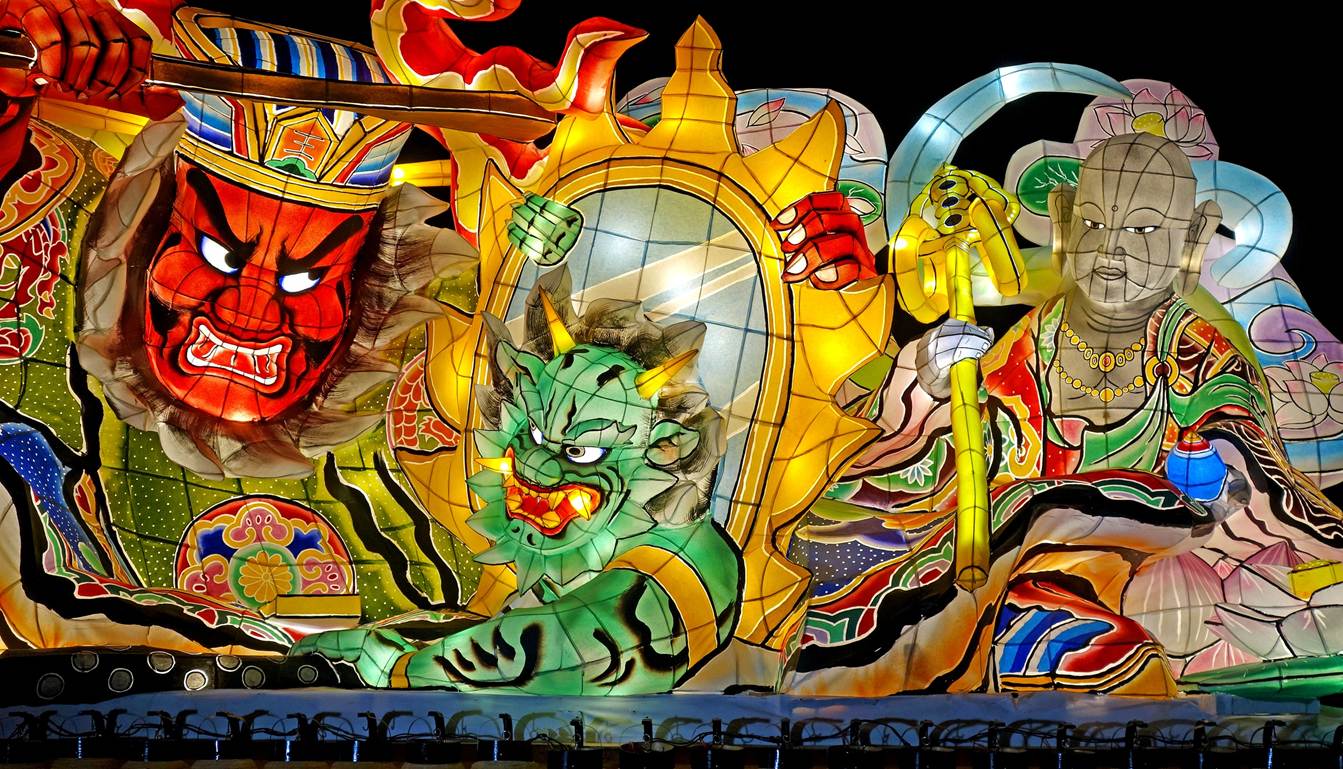
Matsuri, famous for its parade of huge internally lit floats. The Nebuta Warasse is a museum
dedicated to this festival. Floats and other symbols built for previous parades
are exposed in its vast, dark hall, where musical recordings attempt to
recreate the festival atmosphere. This museum is located on the waterfront near
the Aomori Bay bridge.
The floats represent scenes featuring
gods, demons, legendary figures, and kabuki characters, primarily from Japanese
culture. They are built with amazing craftmanship using painted washi paper
laid over a three-dimensional metallic wireframe. Each float measures up to 9m
in length and 5m in height. The floats are illuminated from within.
The following photos show floats and
portions of floats.
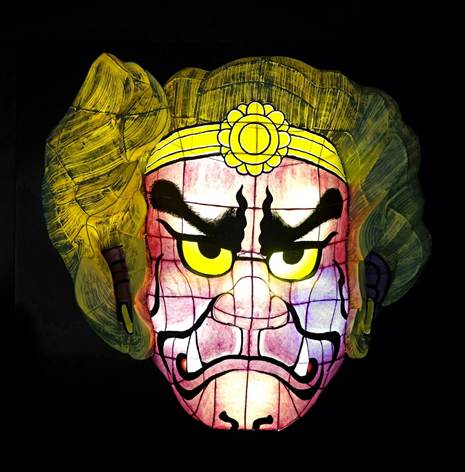
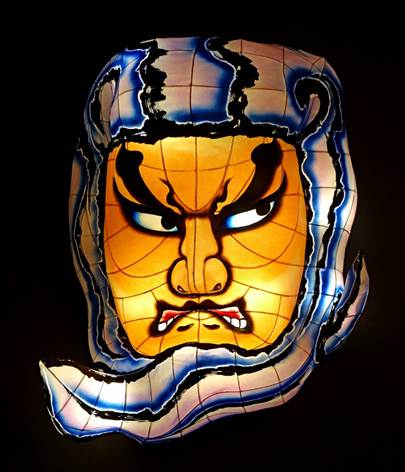
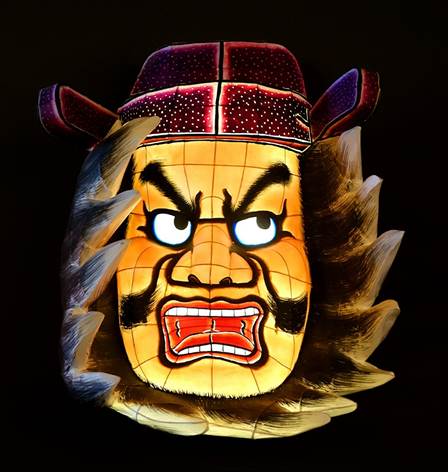
Masks of three Nebuta
Matsuri characters.
|
|
|
|
Seiryuji.
This Shingon
Buddhist temple, founded in 1982, is located 5.7km east of the Aomori station
on a wooded hillside. It is the home of the tallest bronze statue of a seated
Buddha in Japan.
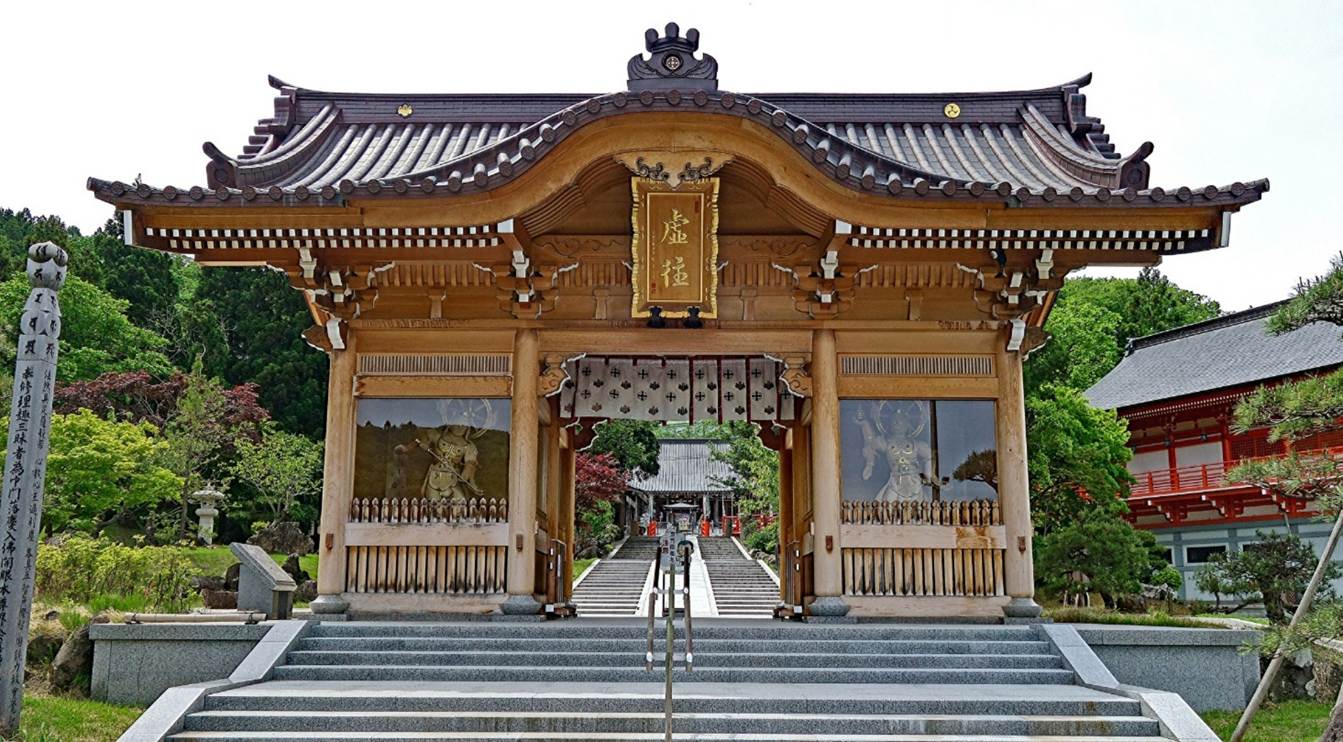
The Chumon.
It is the entrance gate to the temple complex. The vermillion building,
partially visible on the right of the photo, is the Daishido.
It enshrines Kobo Daishi, the founder of Shingon
Buddhism. The Kondo (main hall) is partially visible in the background through
the gate's opening.
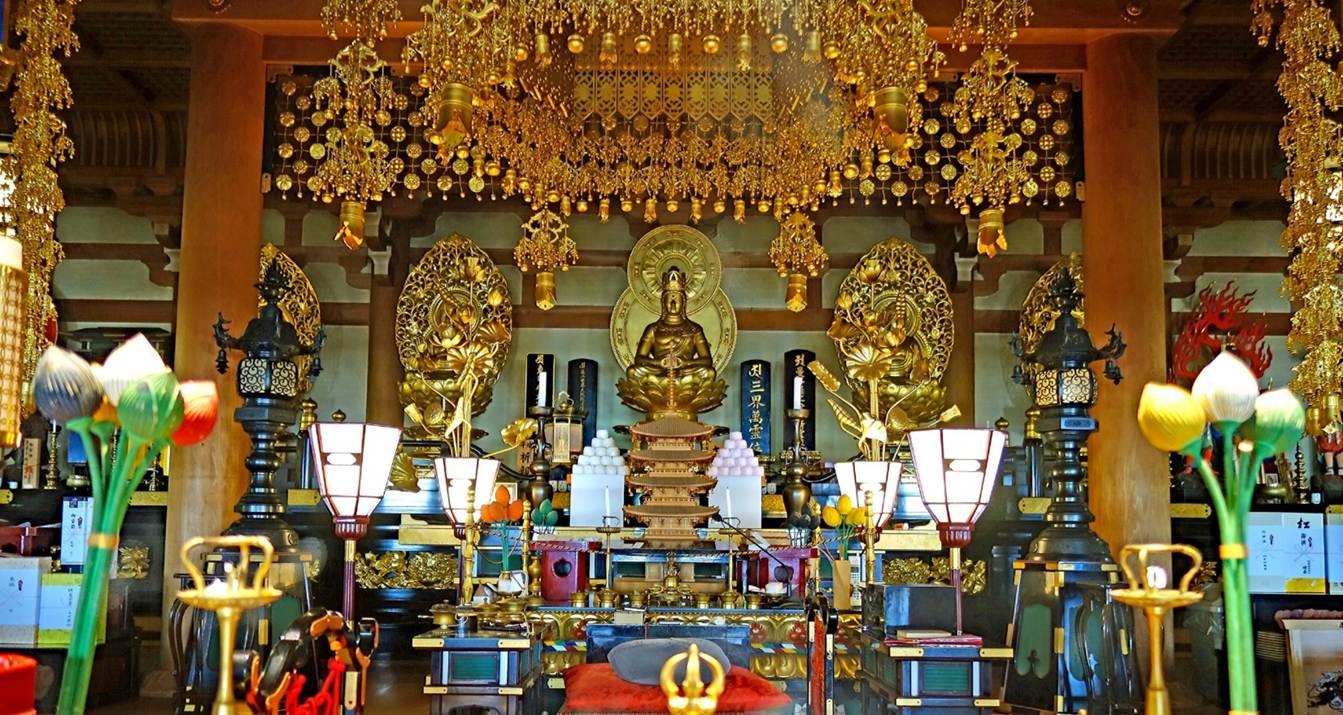
Altar in the Kondo (金堂, which means ″golden hall″).
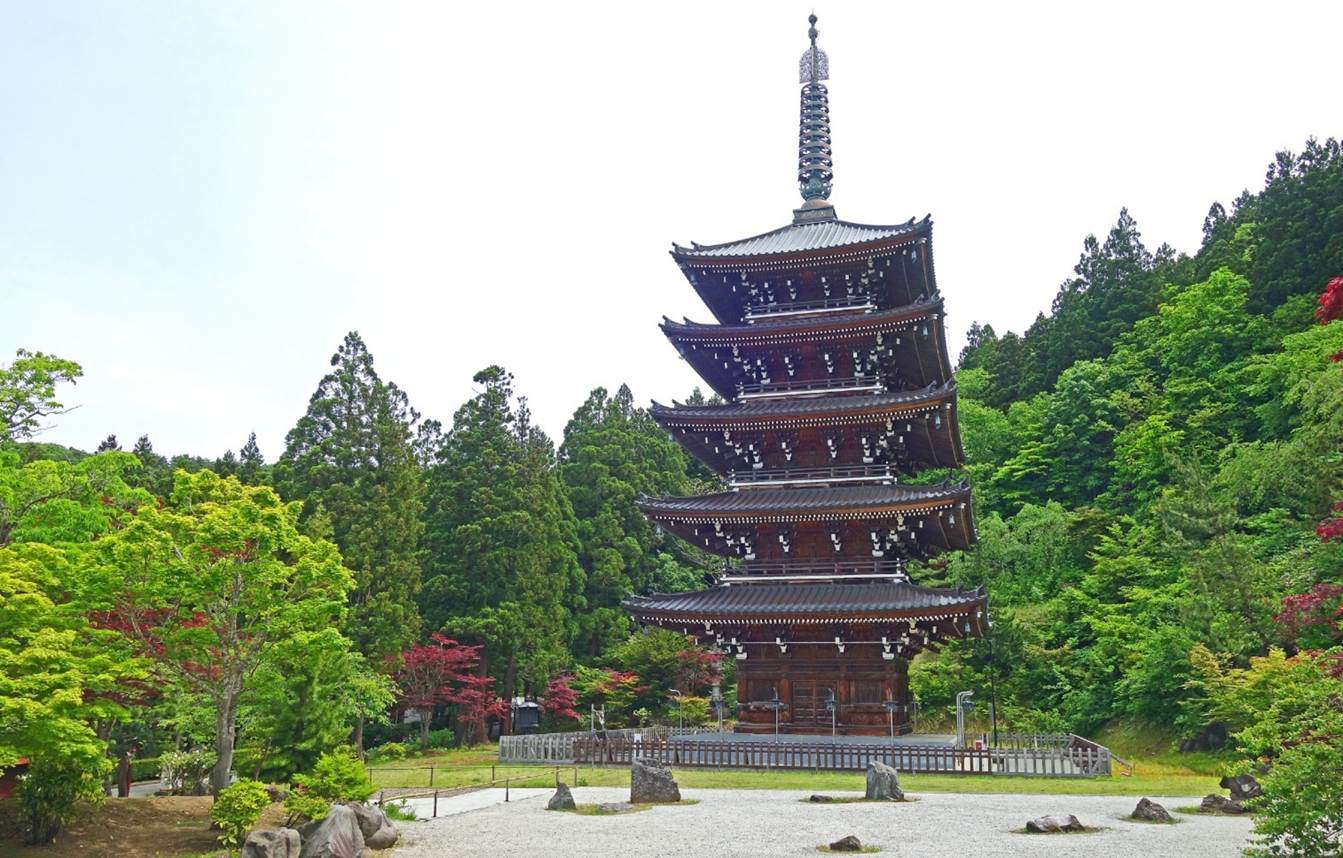
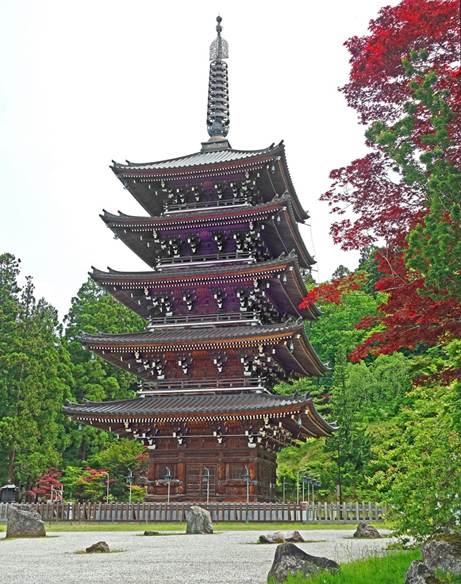
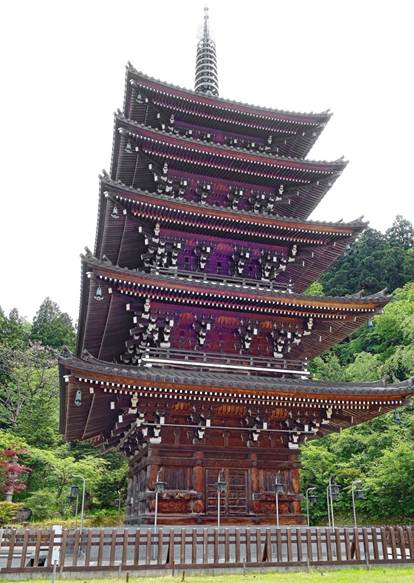
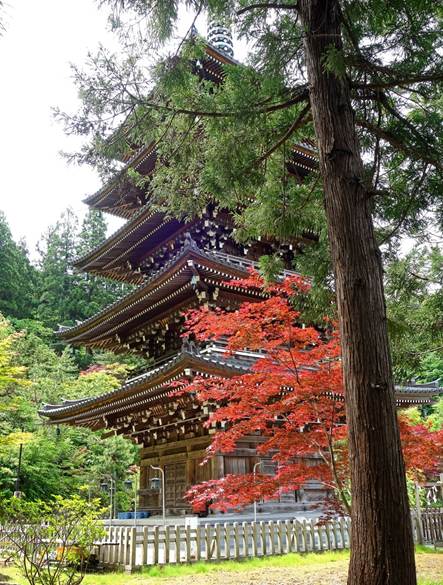
View of the five-story pagoda from the Kondo. At 39.5m, it is the fourth
tallest in Japan. Its five stories refer to the five elements in Buddhist
cosmology: earth, water, fire. wind, and sky.
Other views of the pagoda.
|
|
|
|
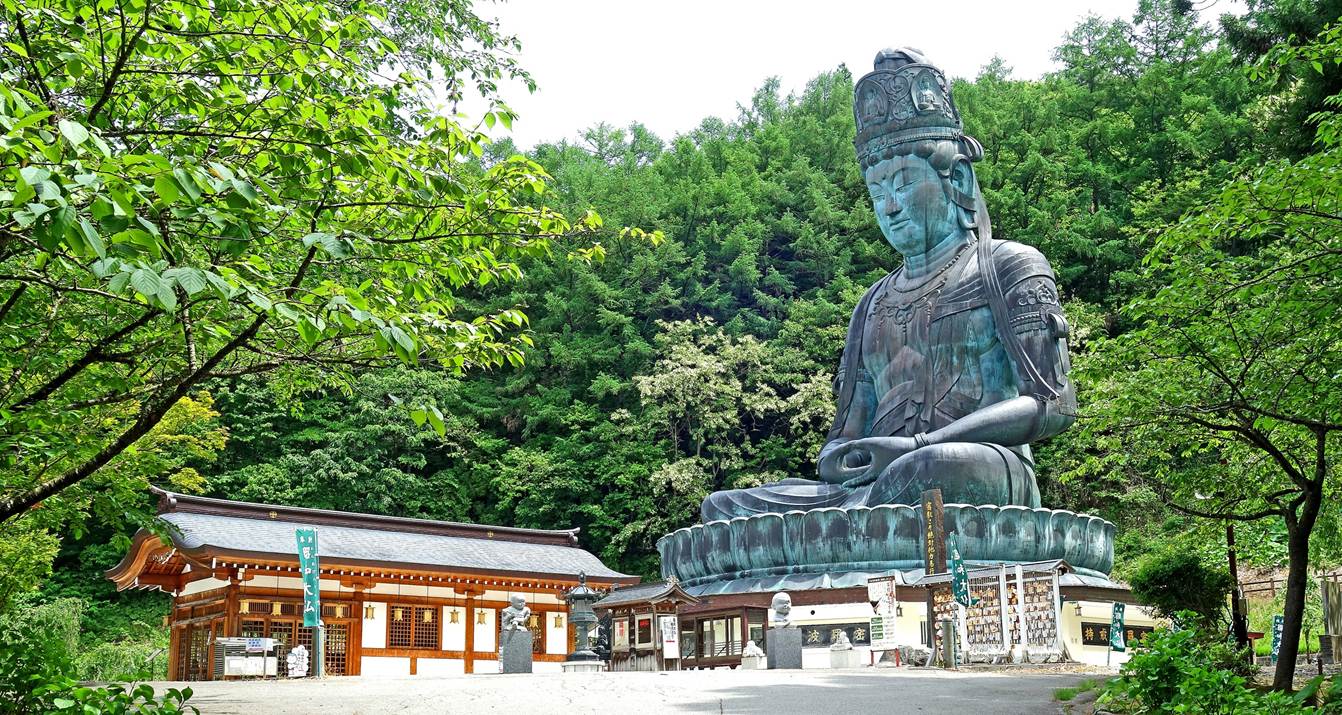
The Showa Daibutsu (Daibutsu
means Great Buddha). It stands at the eastern end of the temple complex. With a
height of 21 meters, it is the tallest bronze statue of a seated Buddha in
Japan. It represents Dainichi Nyorai, the supreme
deity in Shingon Buddhism.
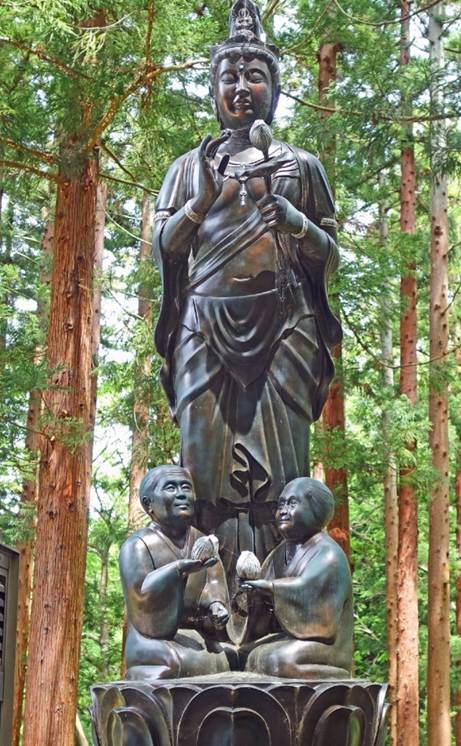
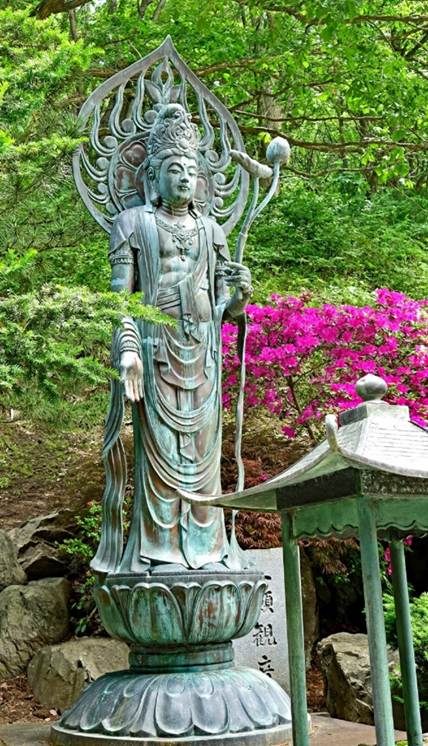
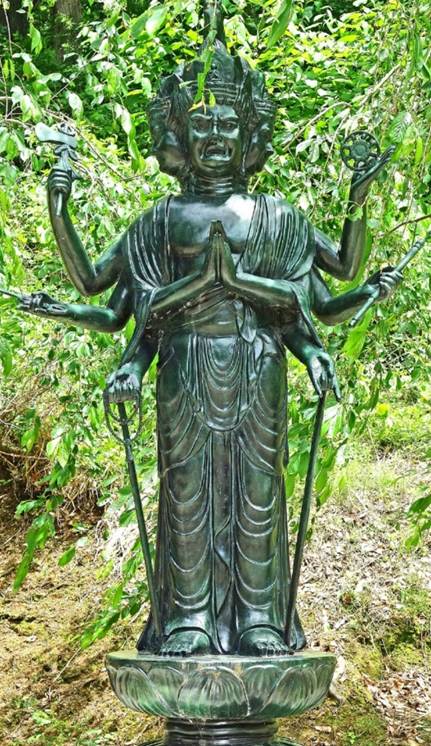
Statues representing three manifestations of Kannon, standing along
walkways of the temple.
|
|
|
|
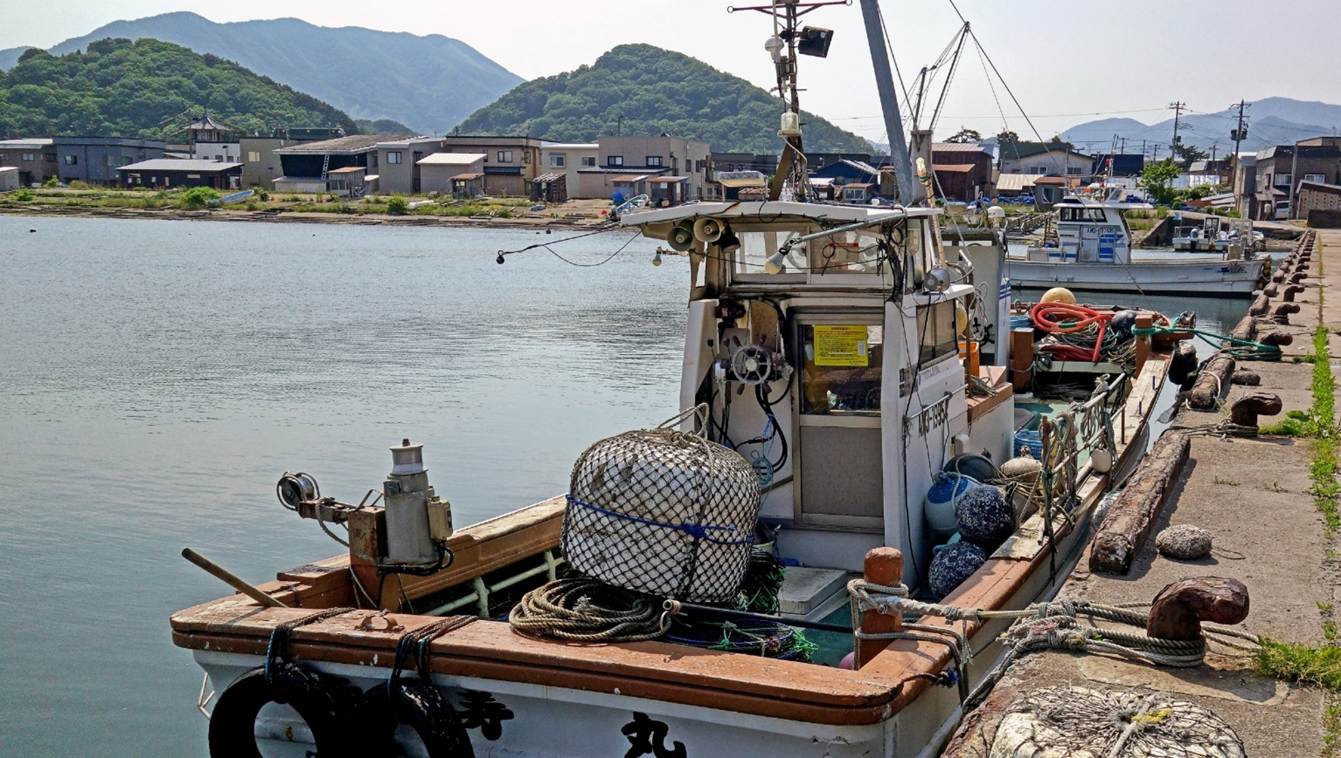
Nonai.
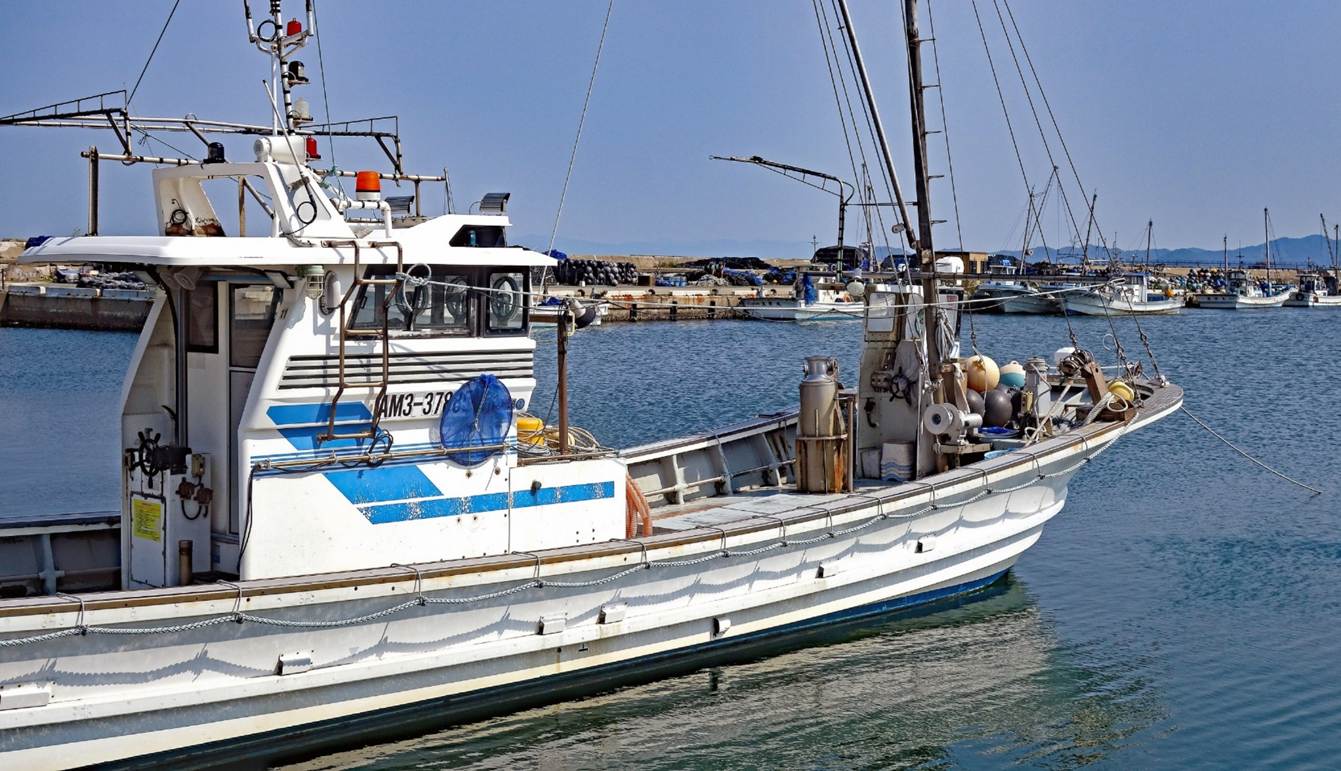
Located 7.5km east of
the Aomori station, Nonai is a small fishing port on Aomori Bay.
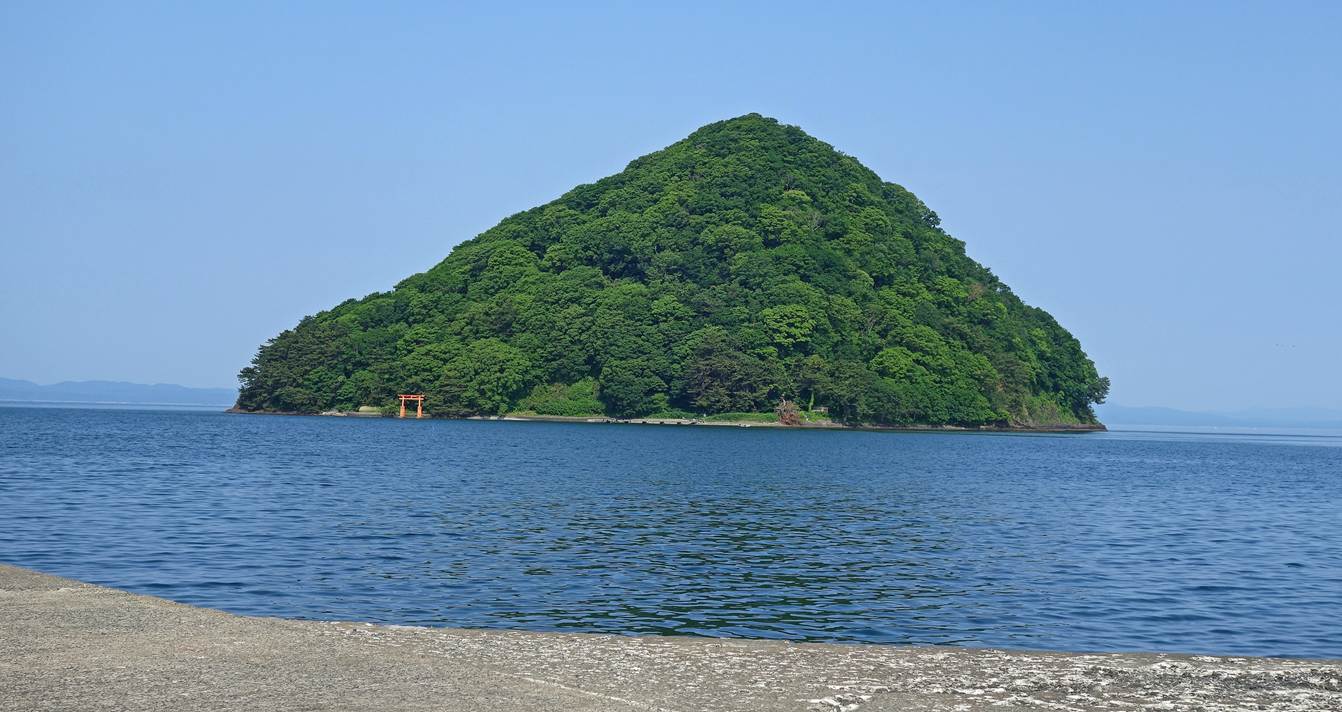
Yunoshima.
This small, uninhabited
conical island (roughly 400m in diameter) is located in Aomori Bay, just 800m
from the Asamushi-Onsen waterfront, 13km northeast of
Aomori City. From the torii a path leads to a small shrine dedicated to the
popular Benzaiten, the only goddess among the Seven Lucky Gods of Japan.
Mutsu, Shimokita
Peninsula.
This peninsula forms
the northernmost tip of Honshu. Shaped like an axe, it is a rugged expanse of
land, with Mount Osorezan (恐山, meaning ″Mountain of Fear″) rising from the middle
of the axe head. Due to its harsh climate, it is subject to widespread closures
during long winter months. Unsurprisingly, it is sparsely populated. Its main
town, Mutsu (population 53,800), located where the handle and the head of the
axe meet, is not particularly noteworthy, but makes a good base for visiting
the peninsula.
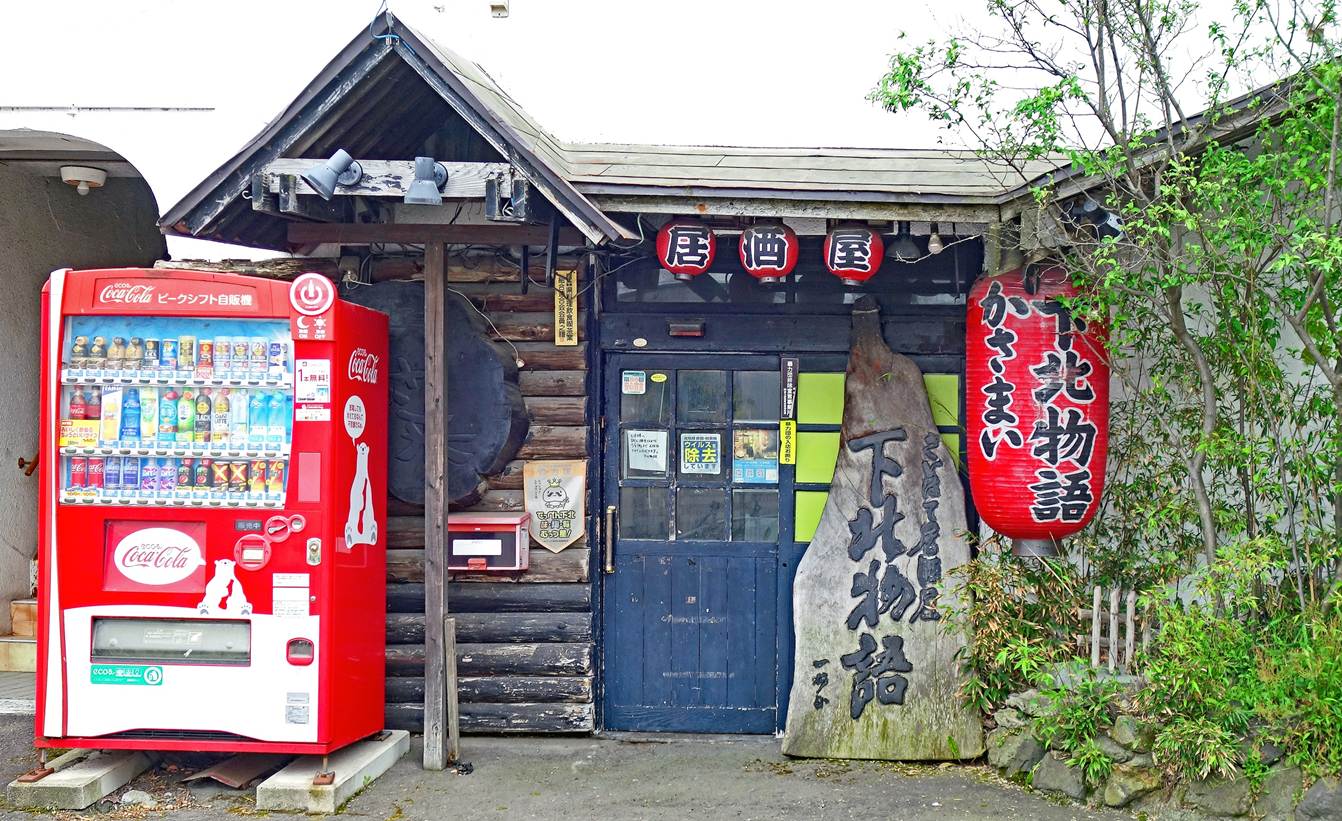
Facade of a small
Izakaya located close to the entrance of Tanabu
jinja, the main Shinto shrine in Mutsu. Its name, ″Shimokita
Monogatari″ (下北物語), means "The Tale
of Shimokita",
Osorezan Bodaiji.
This Buddhist temple,
one of Japan's most sacred sites, is located next to the lake Usori, the caldera lake of a massive volcano that erupted
over 10,000 years ago. The remains of the volcano's rim consist of eight peaks
surrounding the temple, the highest reaching 878m. The area is still dotted
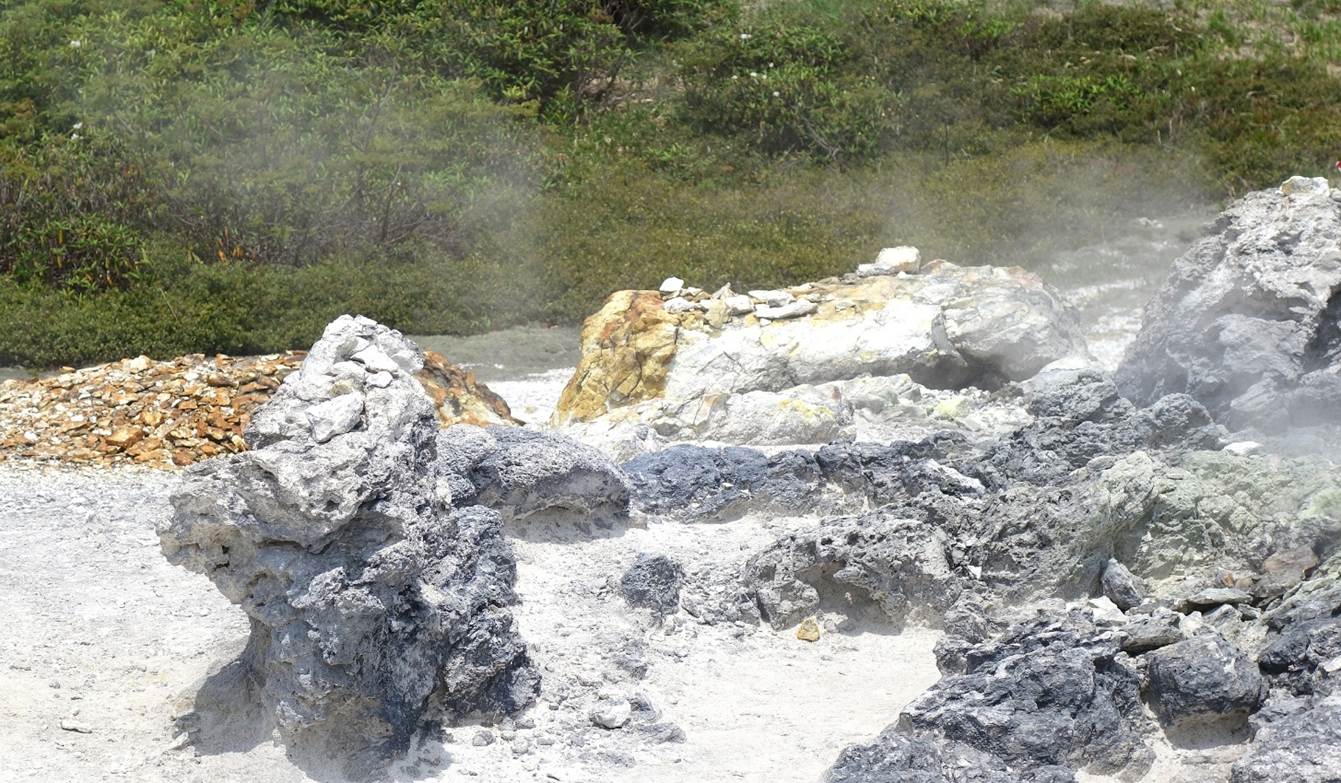
with numerous fumaroles emitting volcanic gases, a sign that the volcano is
still active. Only legend can explain why the inhospitable caldera of an
ancient volcano was chosen to build a temple.
Osorezan Bodaiji is believed to
have been founded in the 9th century by the Tendai Buddhist priest Ennin, who
established several temples across Japan. According to legend, Ennin chose this
location after noticing that the local landscape, with its lake, ponds, rivers,
and eight peaks, matched exactly that of a sacred mountain he had seen in a
mysterious dream. The temple was abandoned in the mid-15th century, but a Soto
Zen Buddhist priest restored it around 1530. Despite having been affiliated
with the Soto sect of Zen Buddhism ever since, the temple is home to a unique
blend of Buddhist and local folk practices related to the spiritual connection
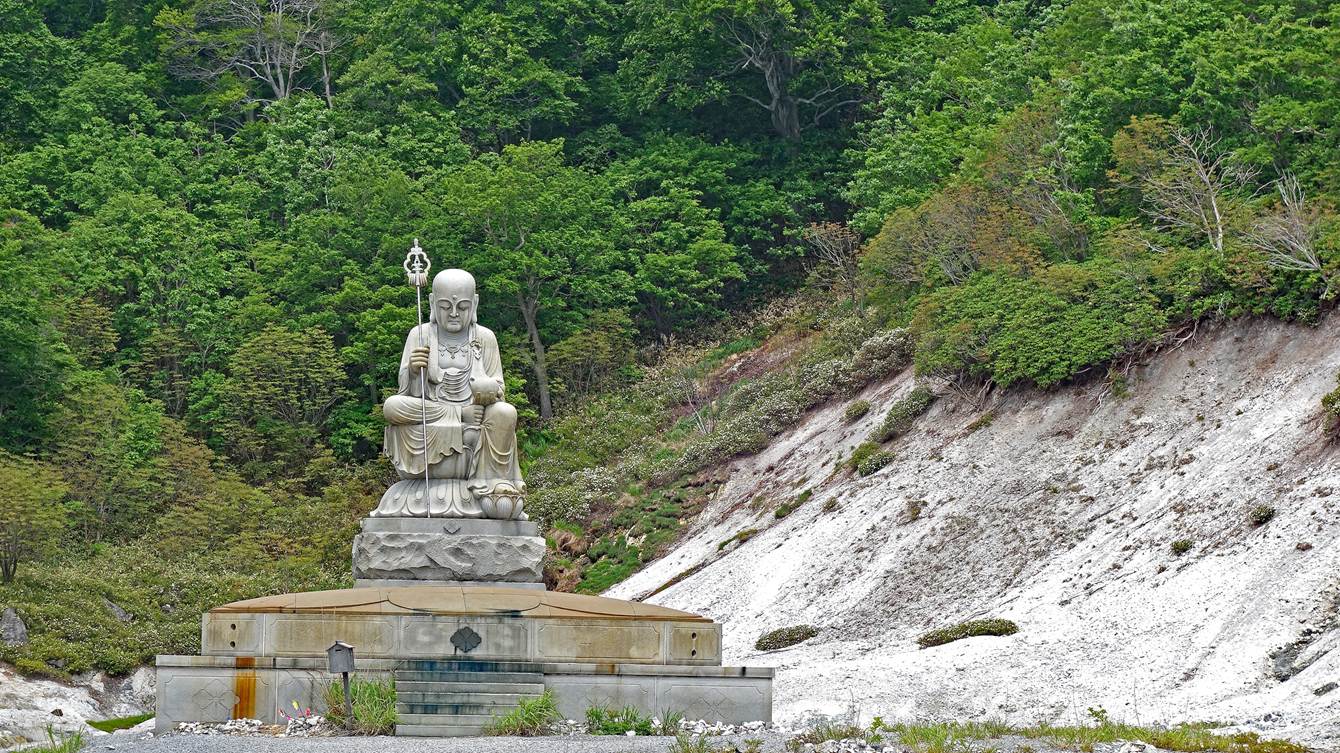
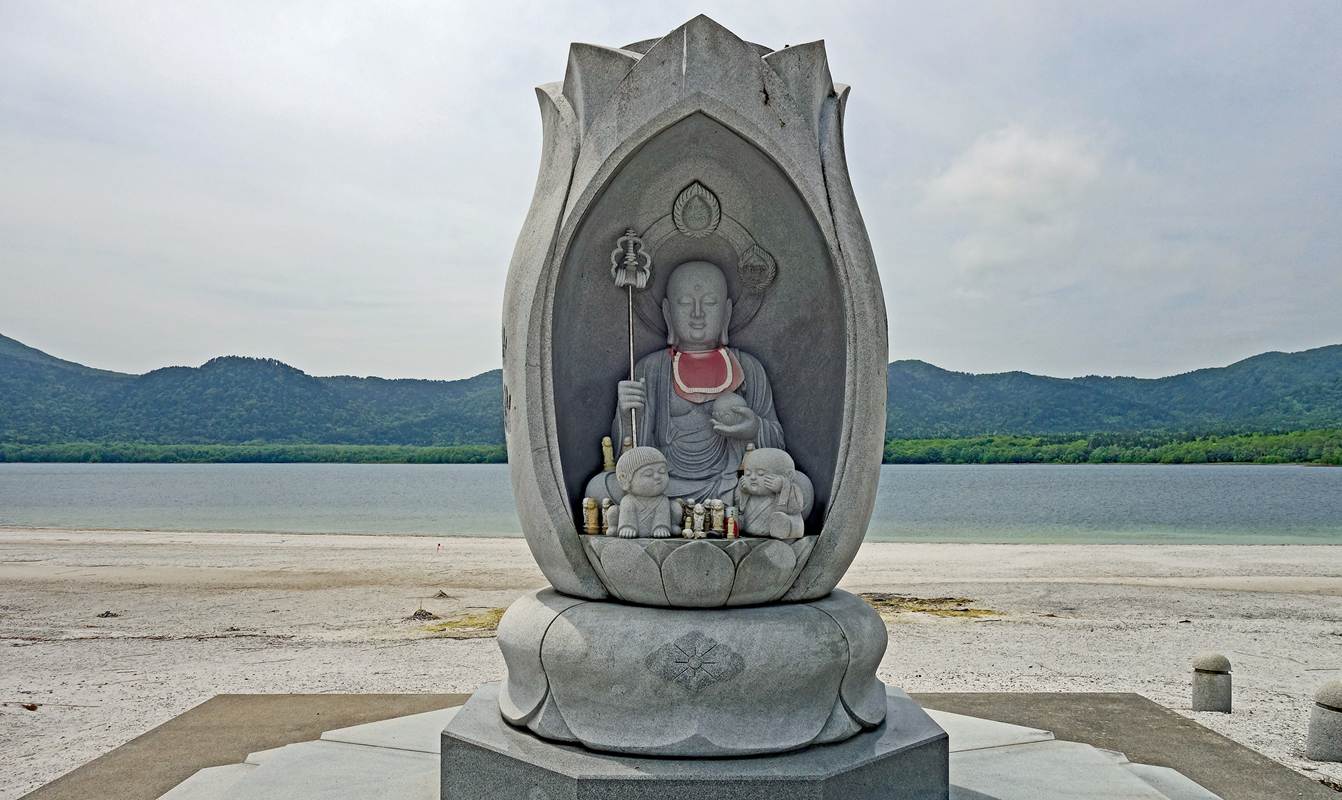
between the living and the dead. Its principal deity is Jizo Bosatsu, who embodies compassion and wisdom, striving to
guide living beings toward enlightenment. He is also famous for helping
children who died prematurely reach the afterlife, despite having no
accumulated karma.
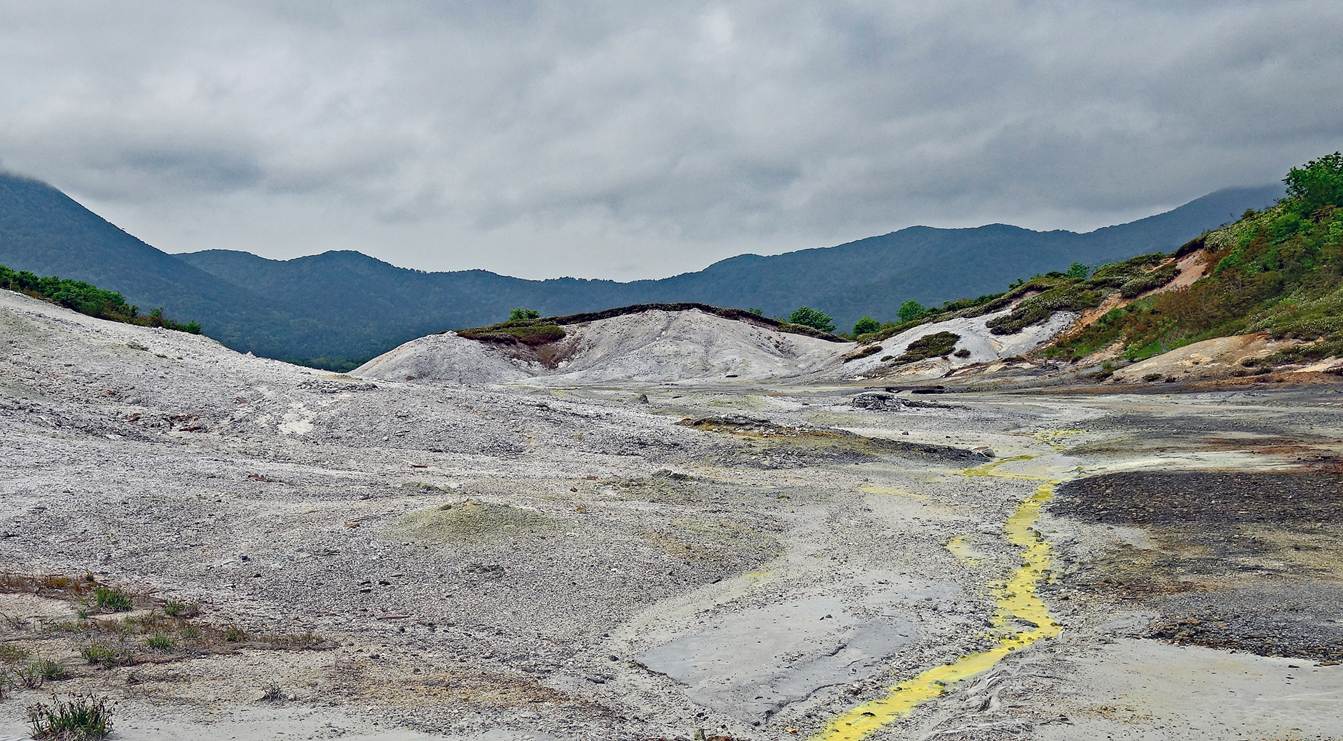
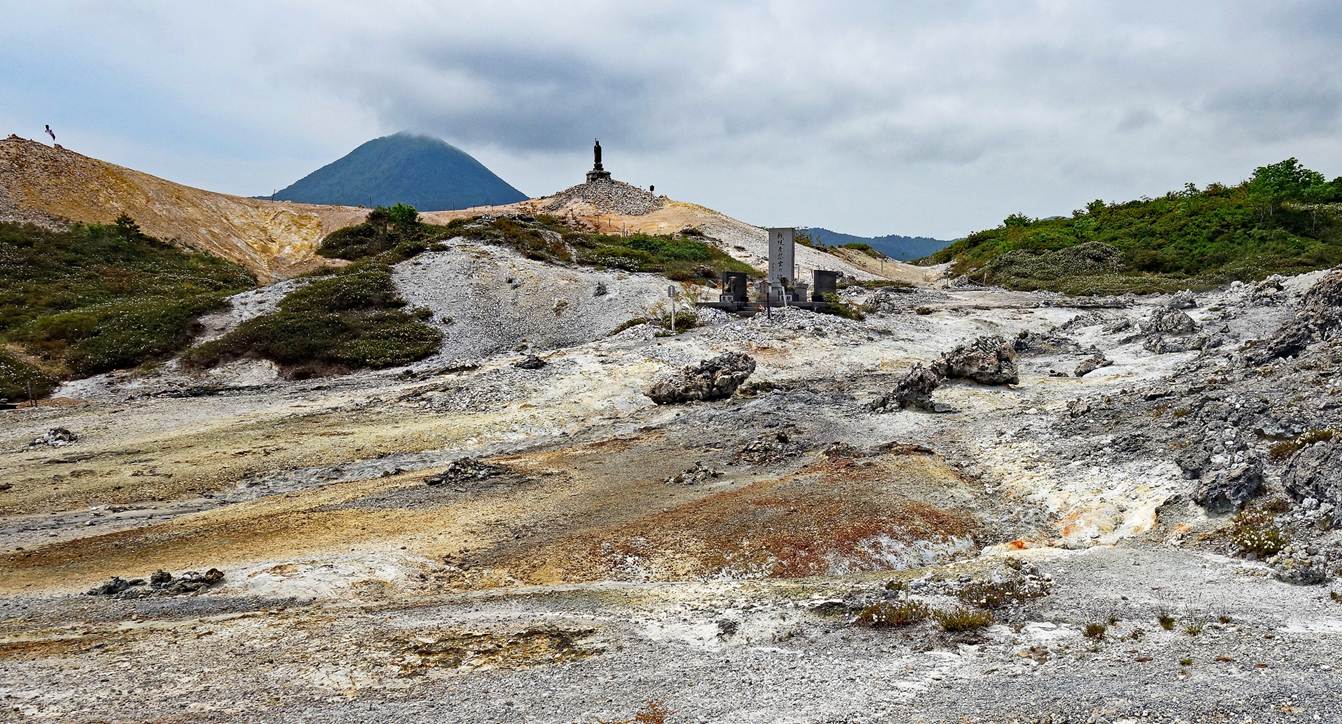
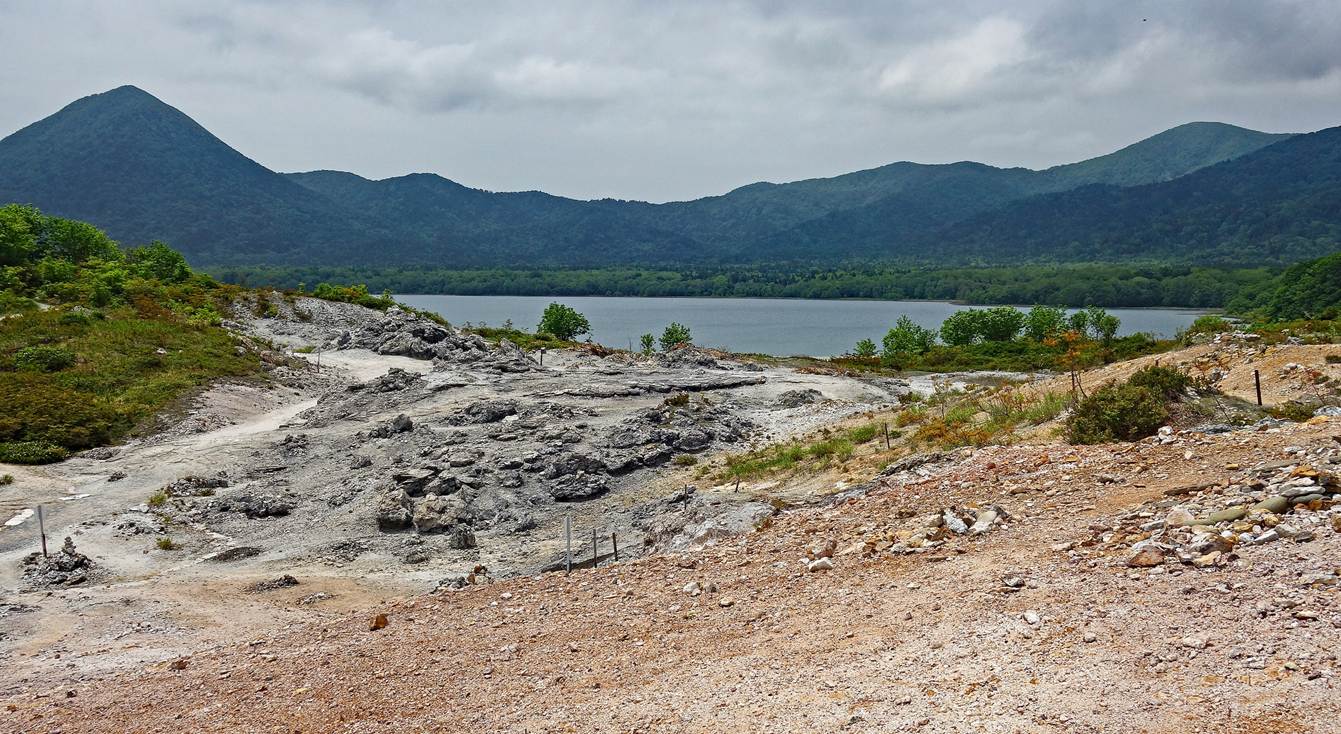
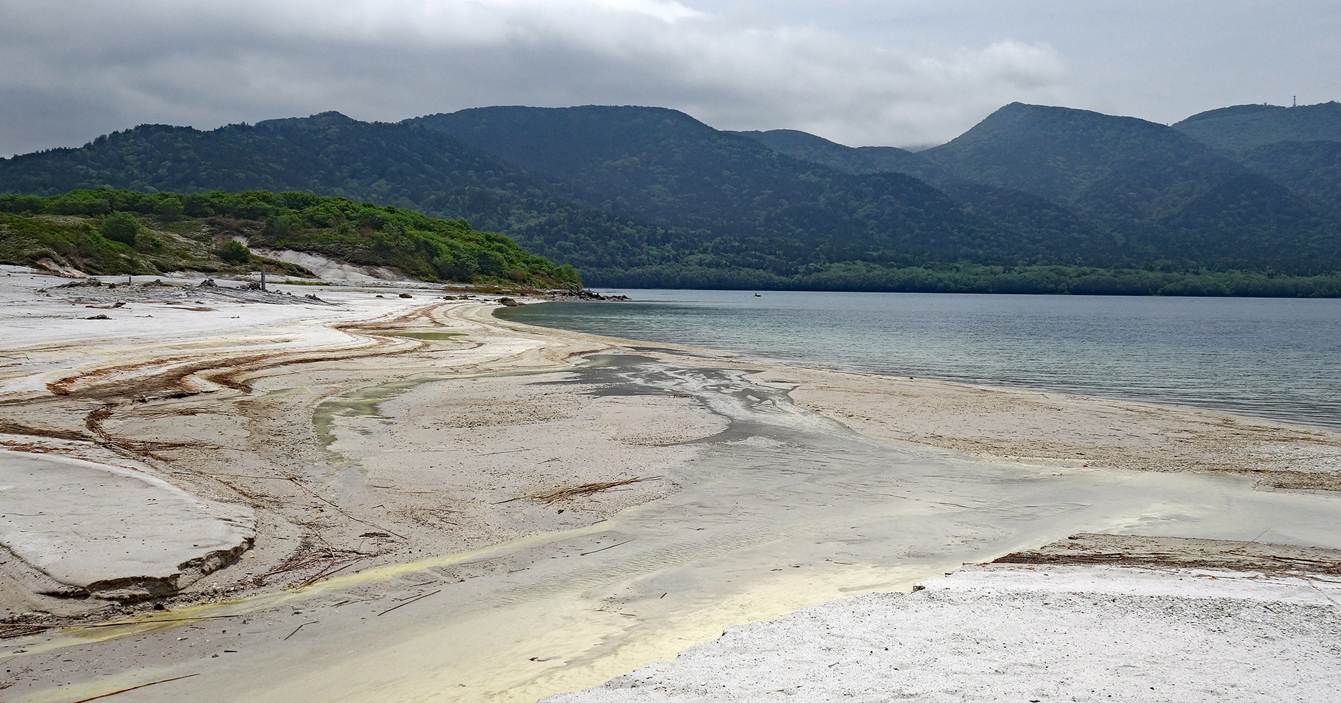
The temple's vast
grounds are barren and gray, with large yellowish and reddish traces of sulfur.
A smell of sulfur dioxide also hangs in the air and the turquoise waters of the
lake Usori are highly acidic. Nested among verdant
peaks, the place looks more like the entrance to hell than a gateway to heaven.
But this makes the temple even more special, fascinating, and uniquely
interesting.
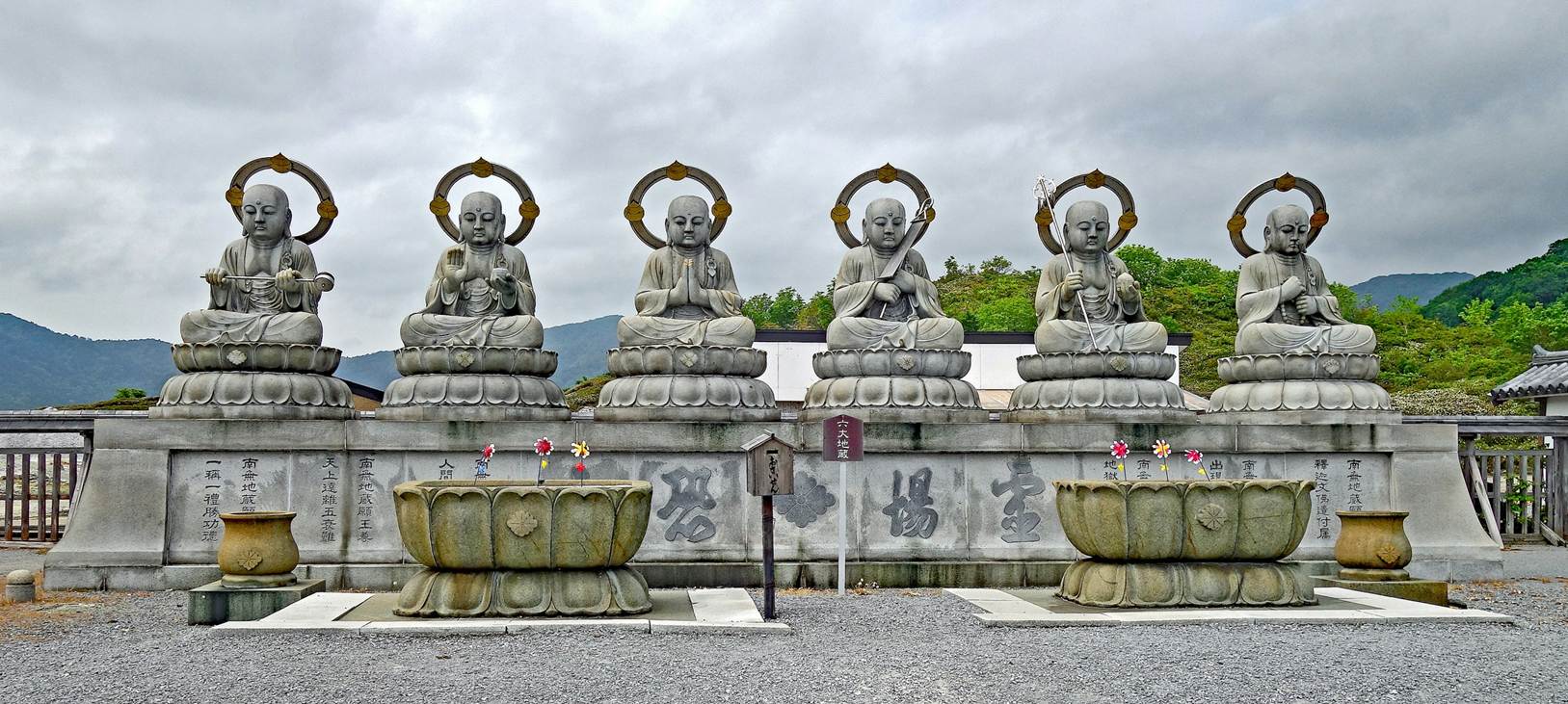
Six Jizo statues
collectively called Rokudai-Jizo, near the entrance
gate of the temple.
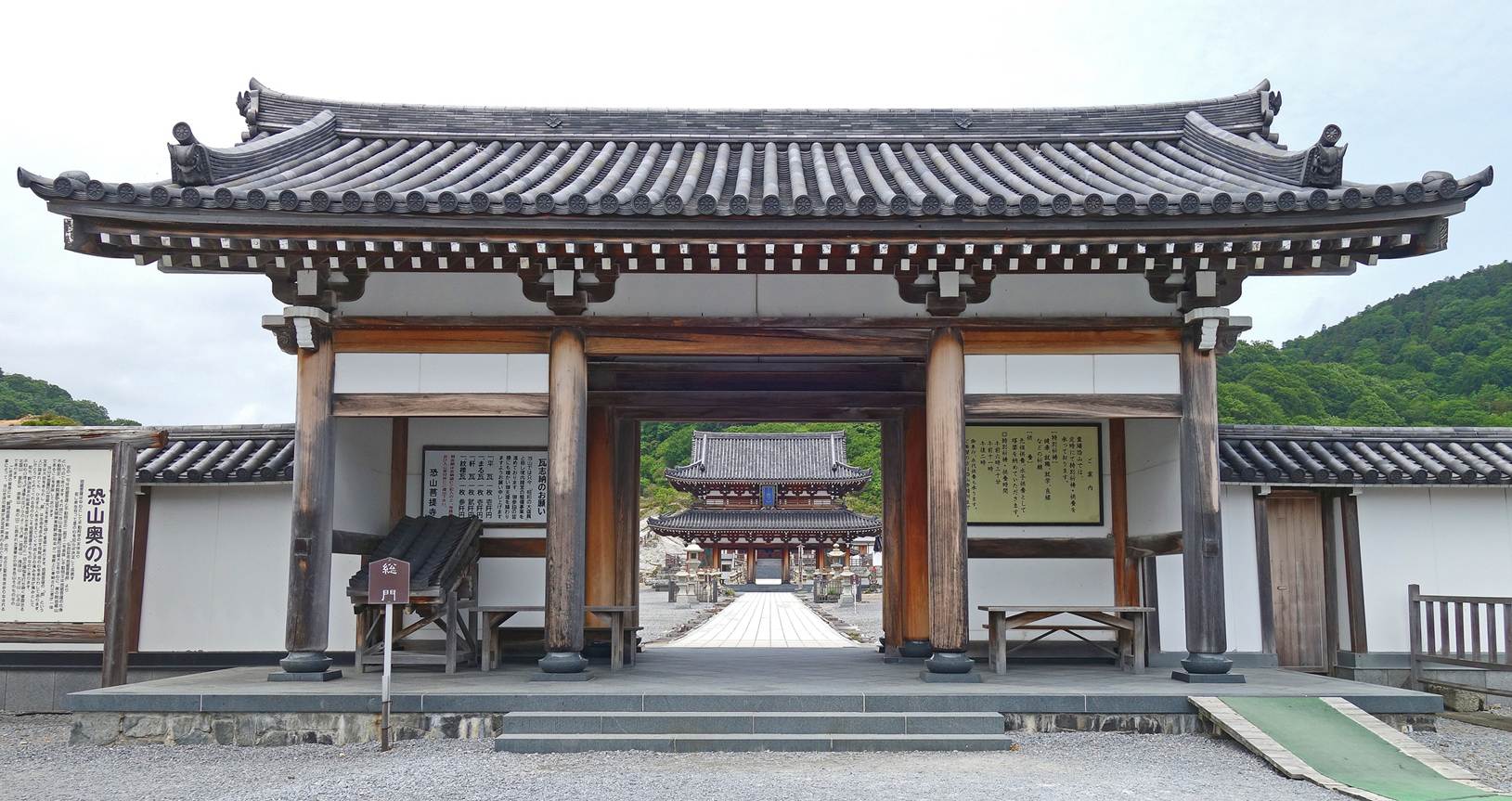
The Somon,
the first gate to the temple's grounds. The Sanmon
(next gate) and the Jizoden (main hall) are visible
in the background.
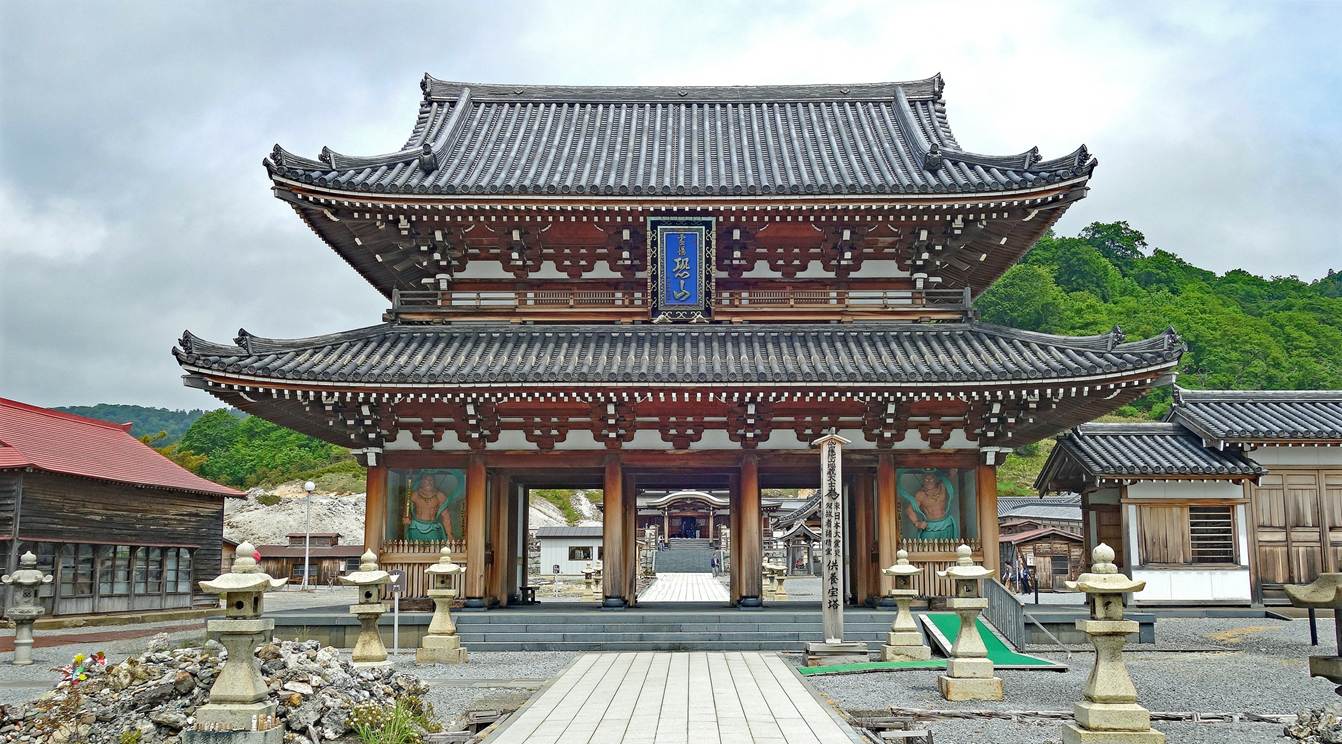
The Sanmon.
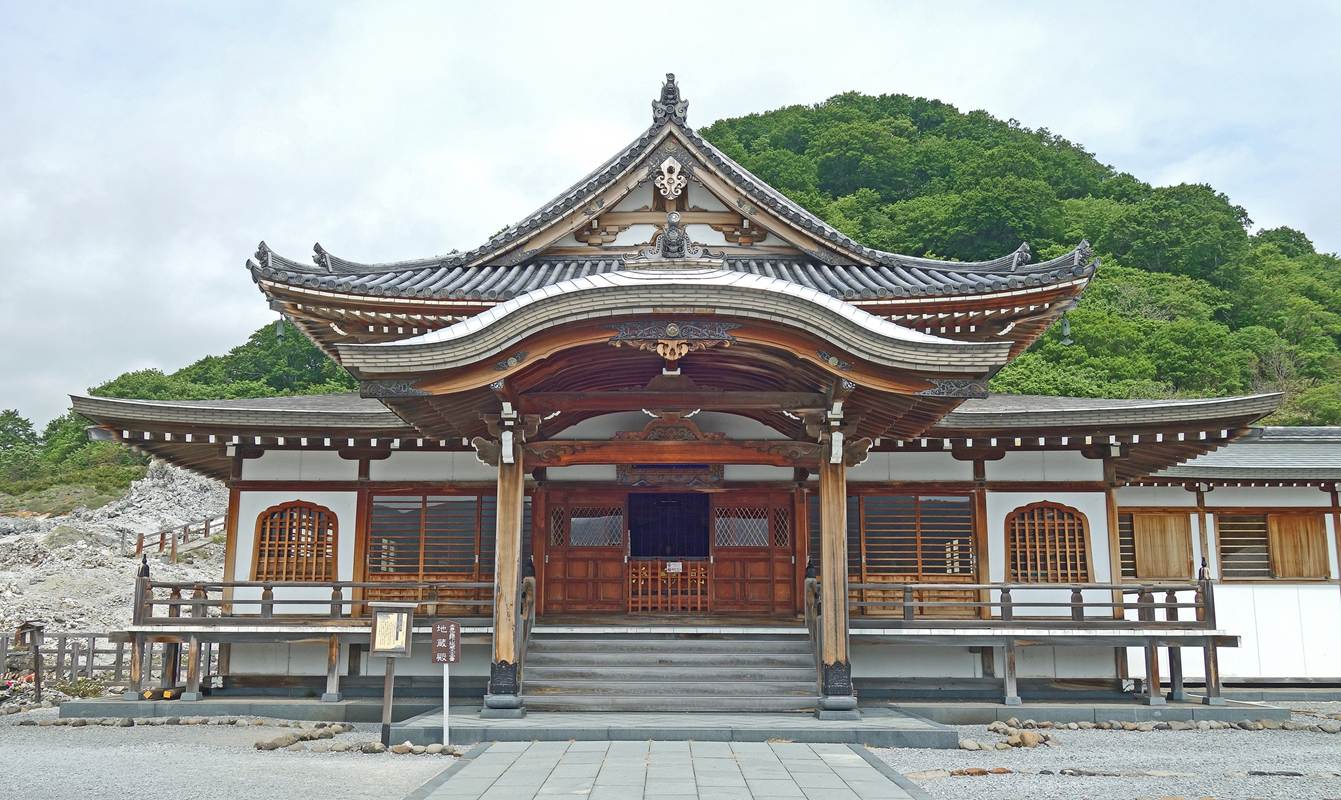
The Jizoden, in which Jizo Bosatsu
is enshrined.
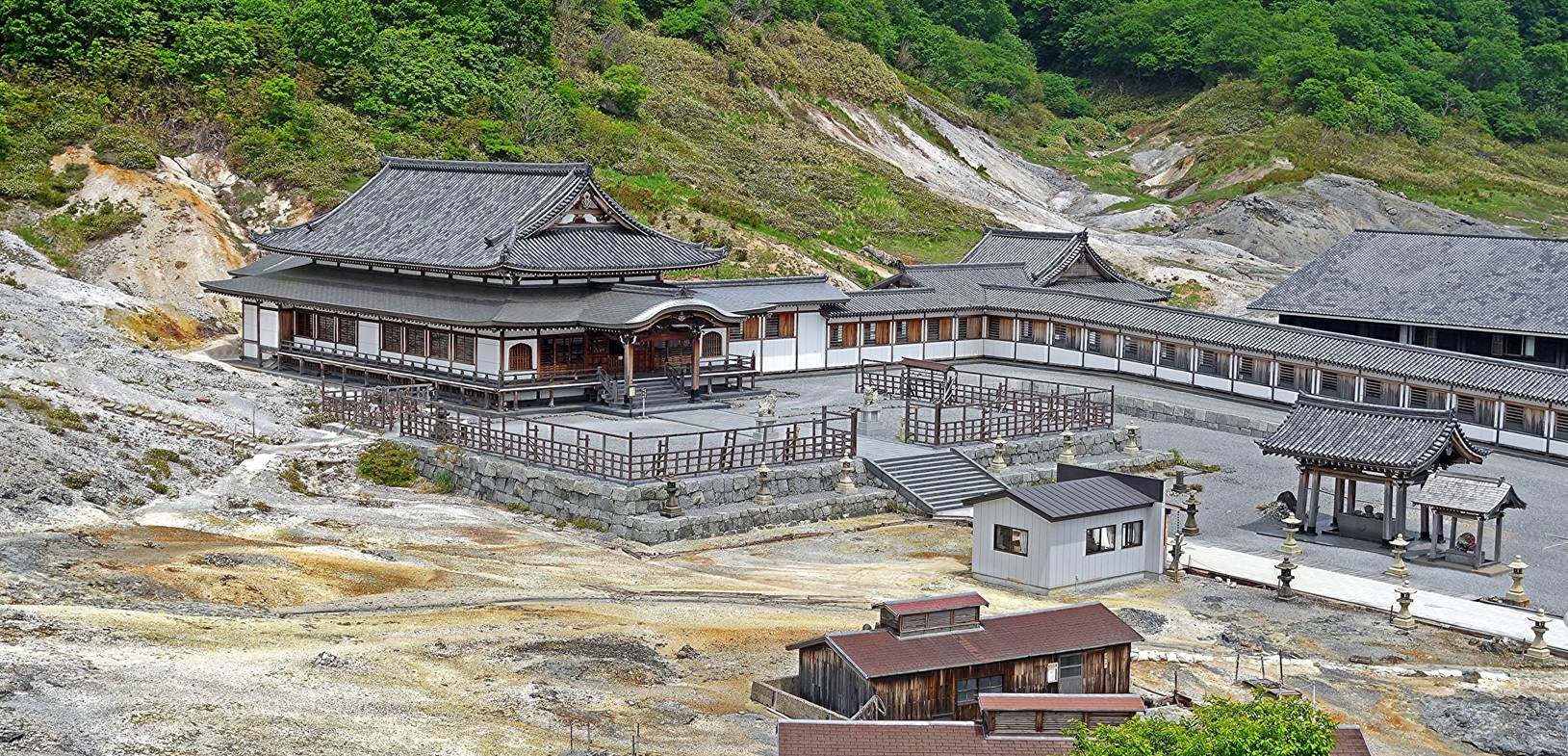
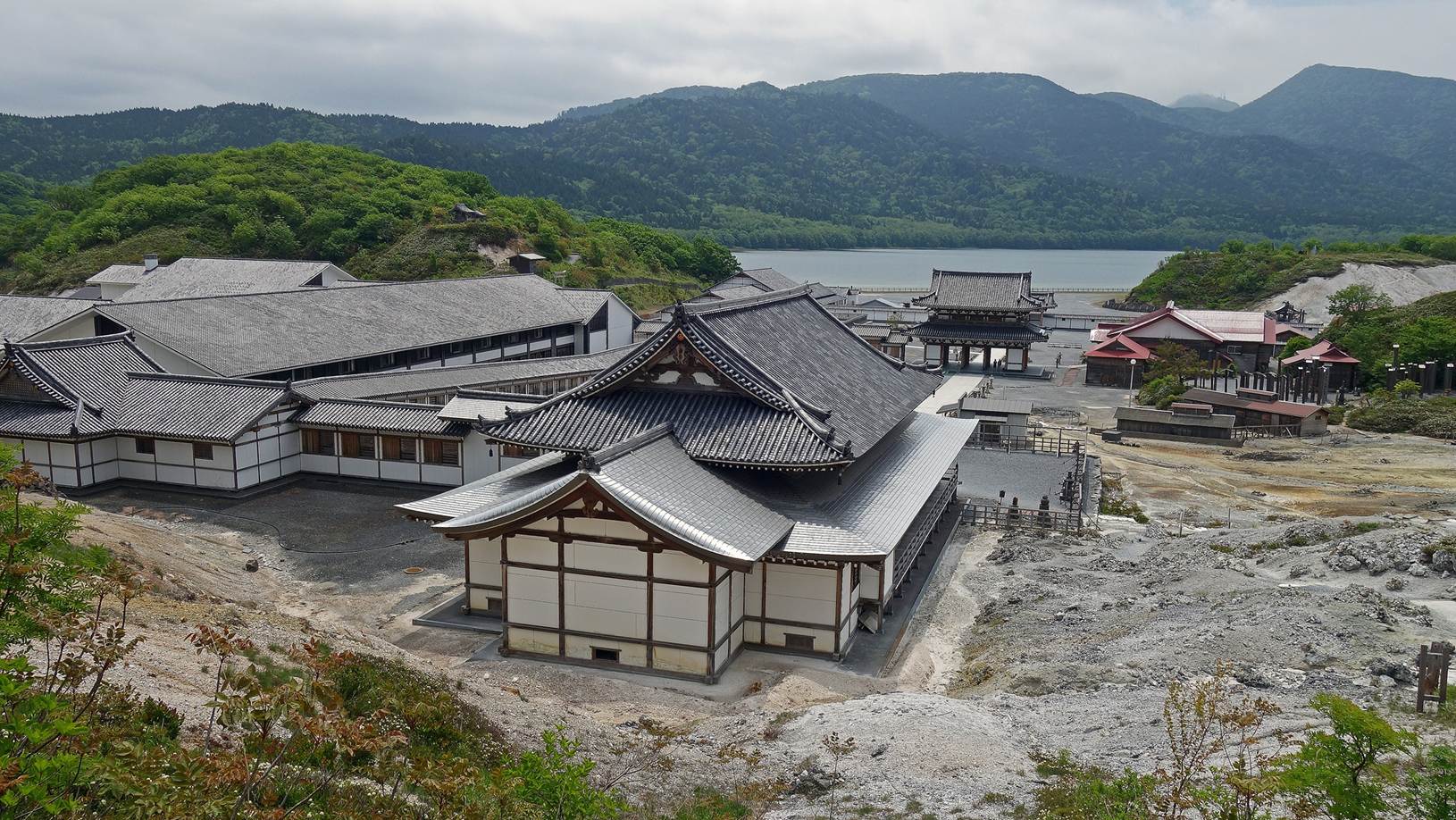
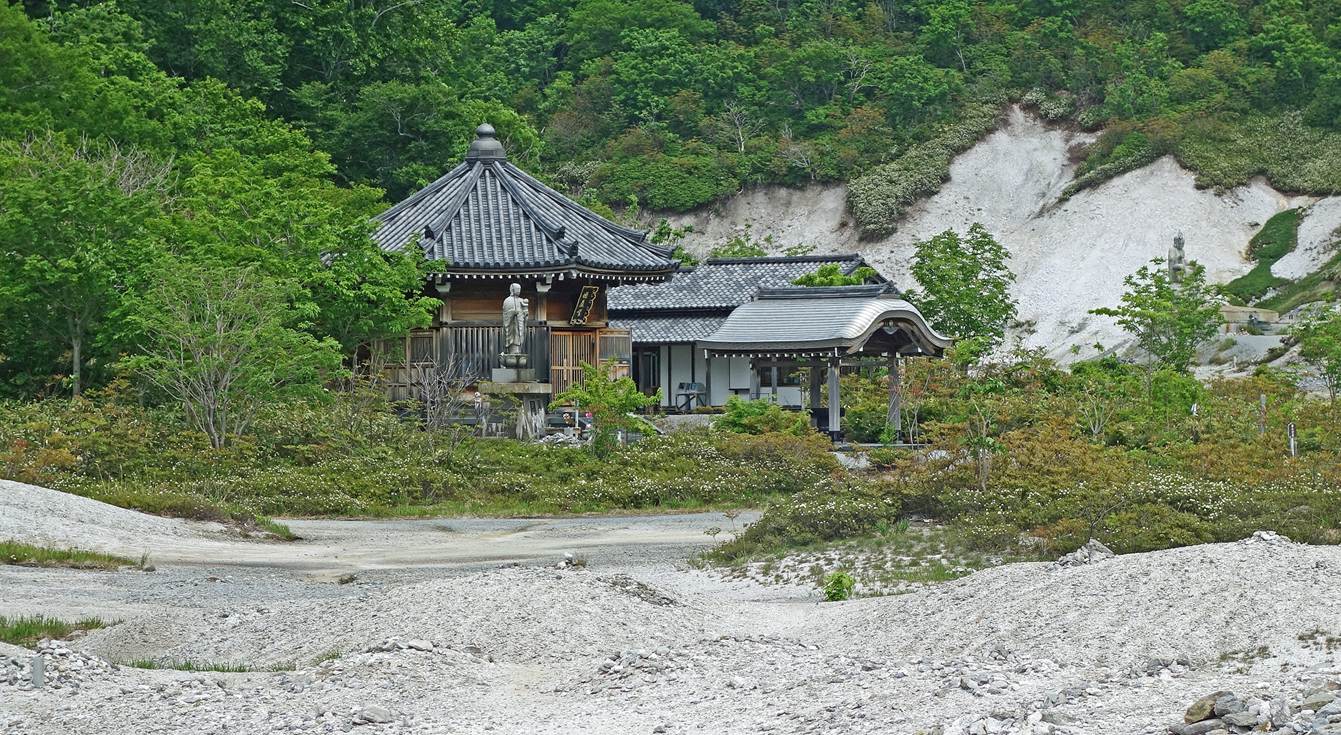
View of the Jizoden and other temple structures
from a small hill. (Note: The small covered structure to the right of the
walkway leading to the Jizoden, at the bottom right
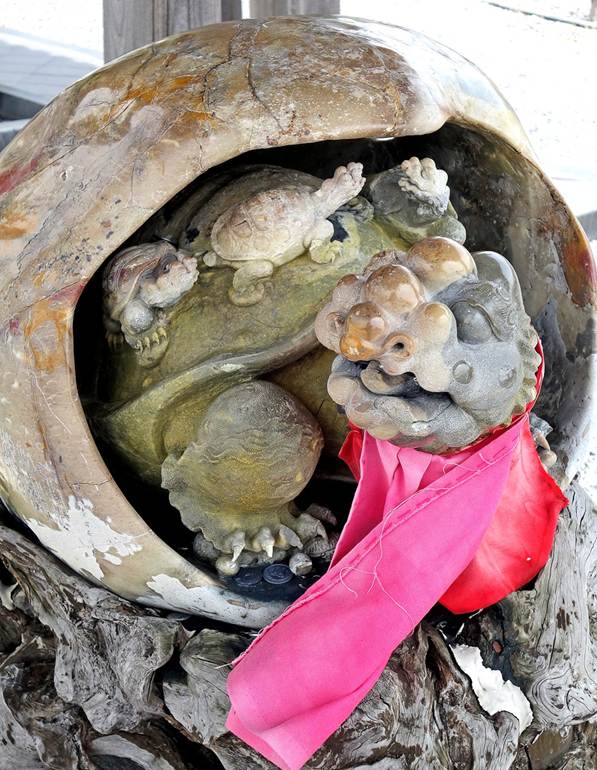
of the picture, houses an unusual statue of a mother turtle with her babies.
Photos of this sculpture are shown below.)
Another view of the temple, with the lake Usori
in the background.
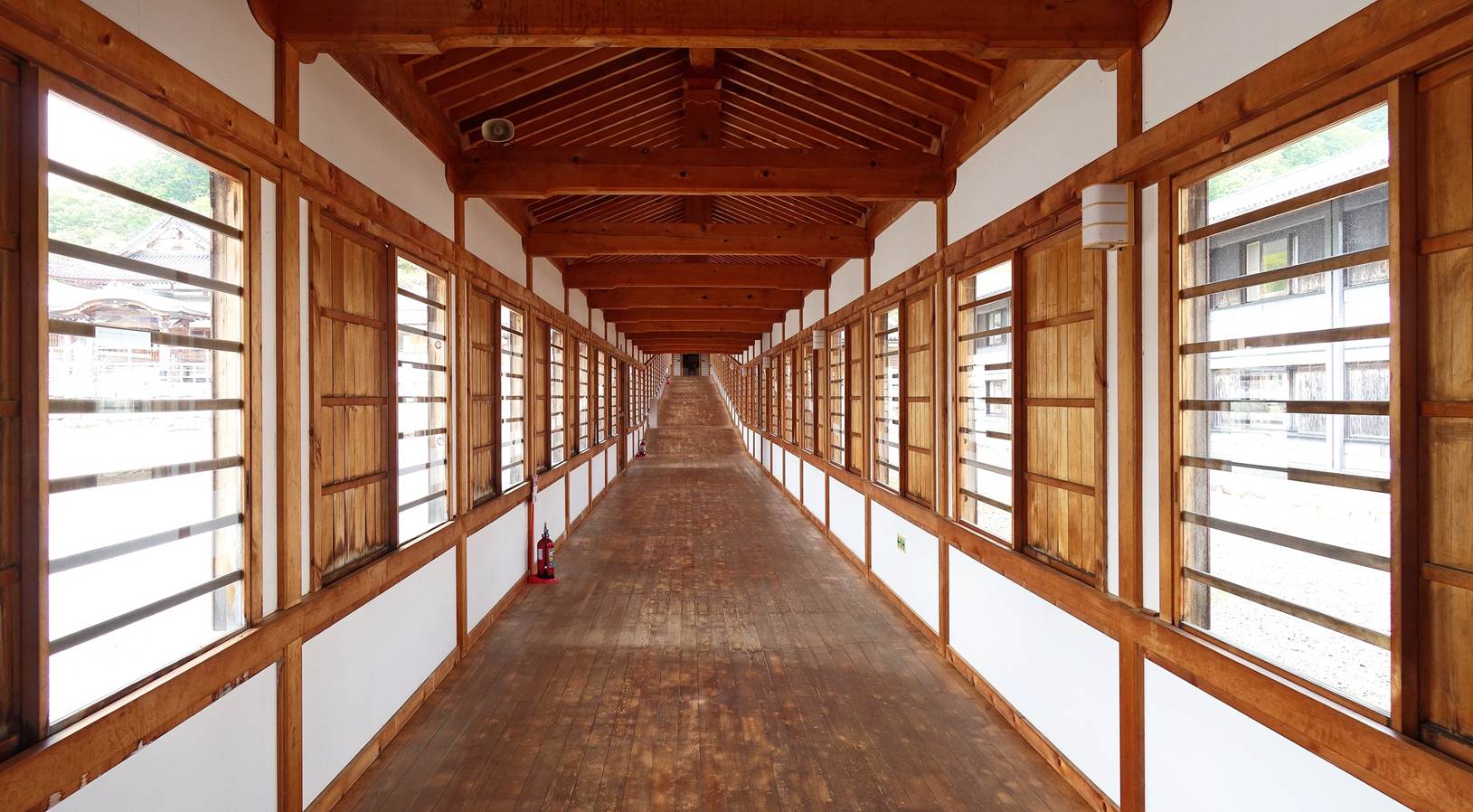
Long corridor inside the temple.
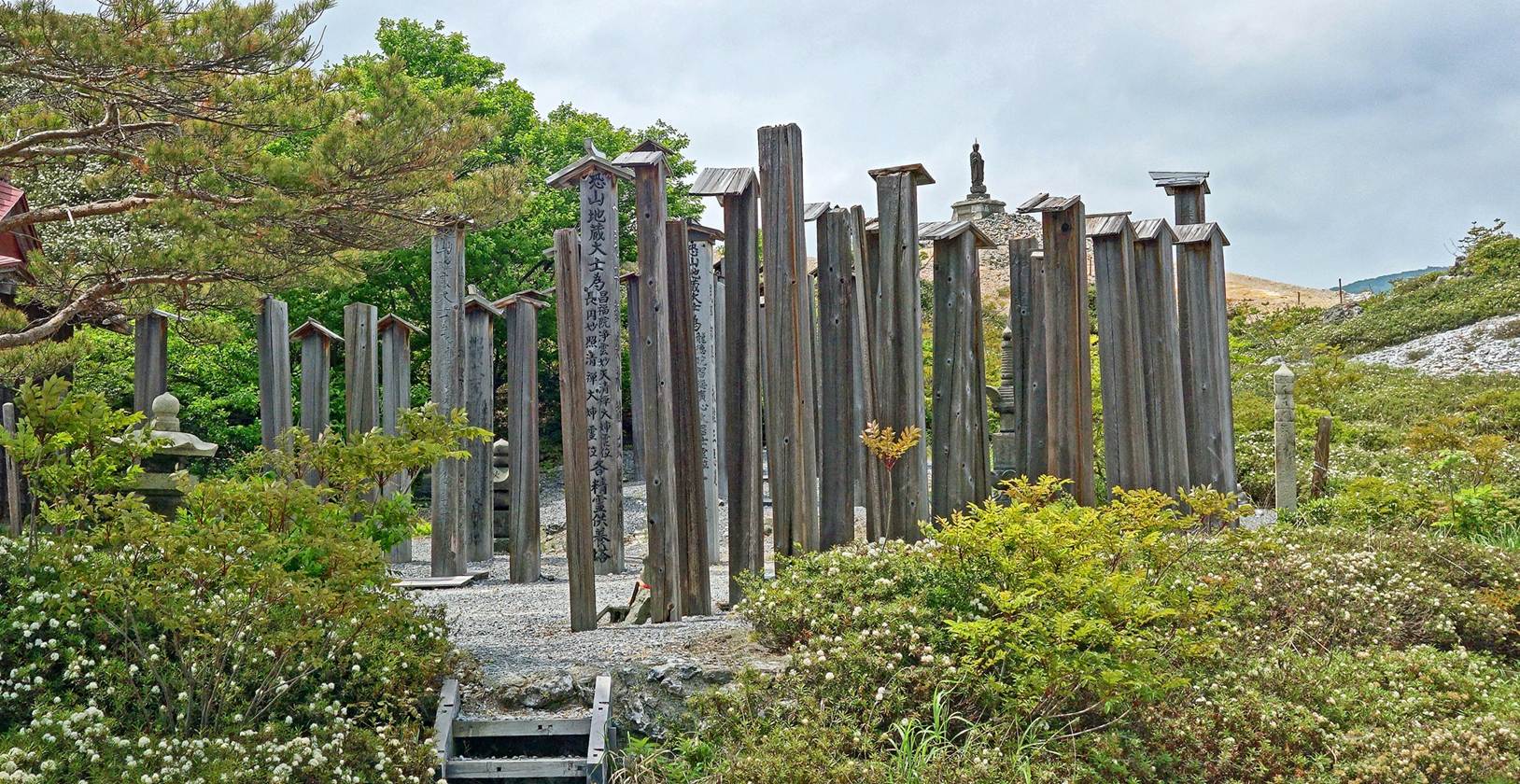
Group of tall wooden sotobas (about 3m-high)
standing to the left of the long walkway leading to the Jizoden.
They commemorate deceased people. (The word ″sotoba″
derives from the Sanskrit word ″stupa″,)
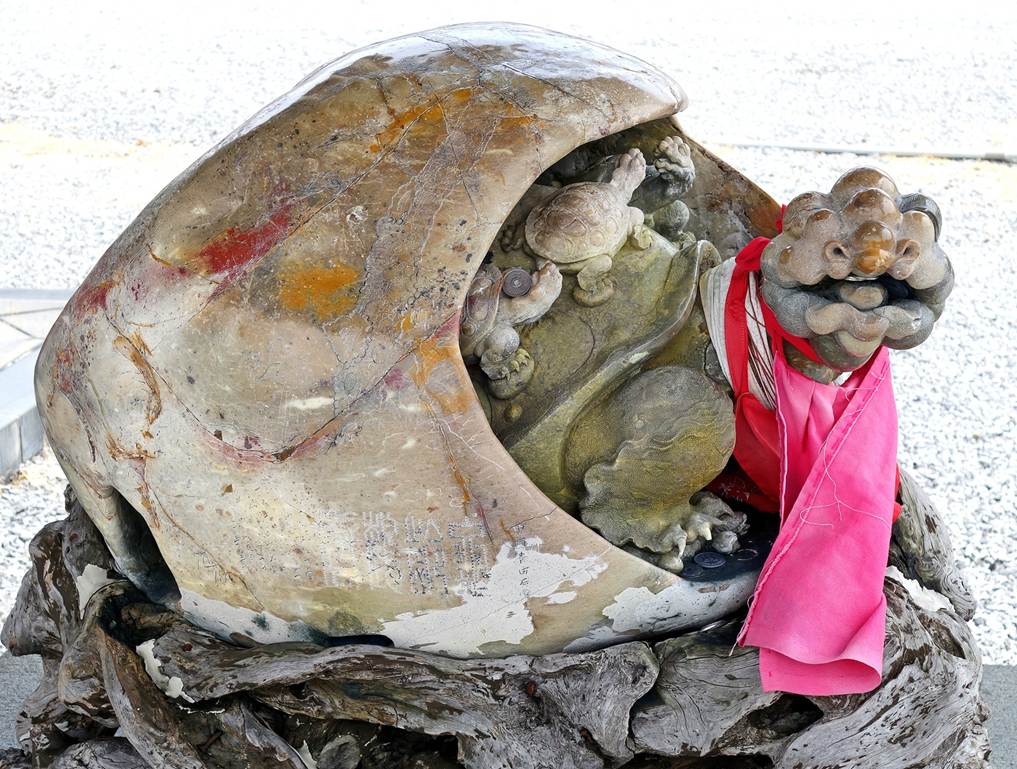
Large shell containing a sculpture of a turtle with baby turtles climbing
her carapace. It is located just before reaching the water purification
pavilion (the chozuya) on the right side of the
walkway leading to the Jizoden. This unusual
assemblage may symbolize virtues, like patience and protection, associated with
Jizo
Bosatsu.
|
|
|
Views of the temple's grounds around the main buildings.
One of the many fumaroles near the temple's buildings.
Lake Usori seen from the temple's grounds.
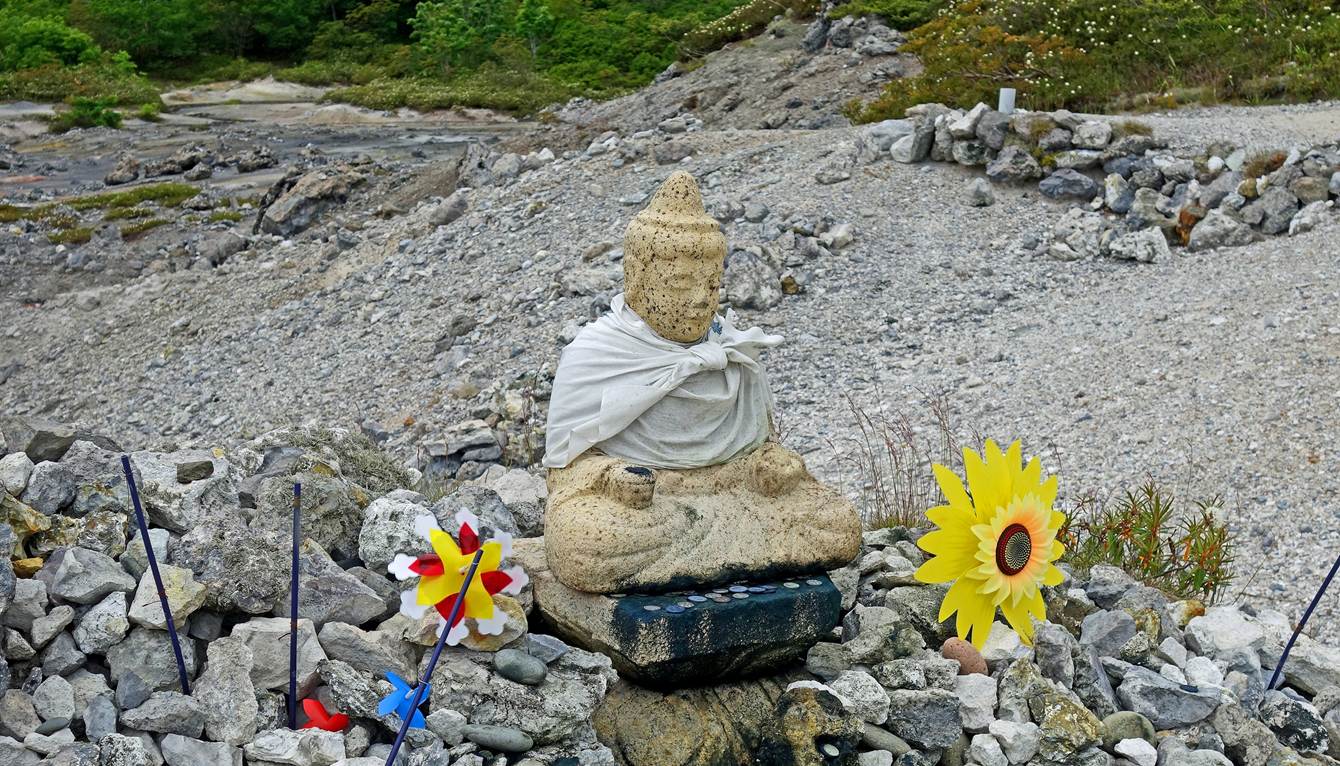
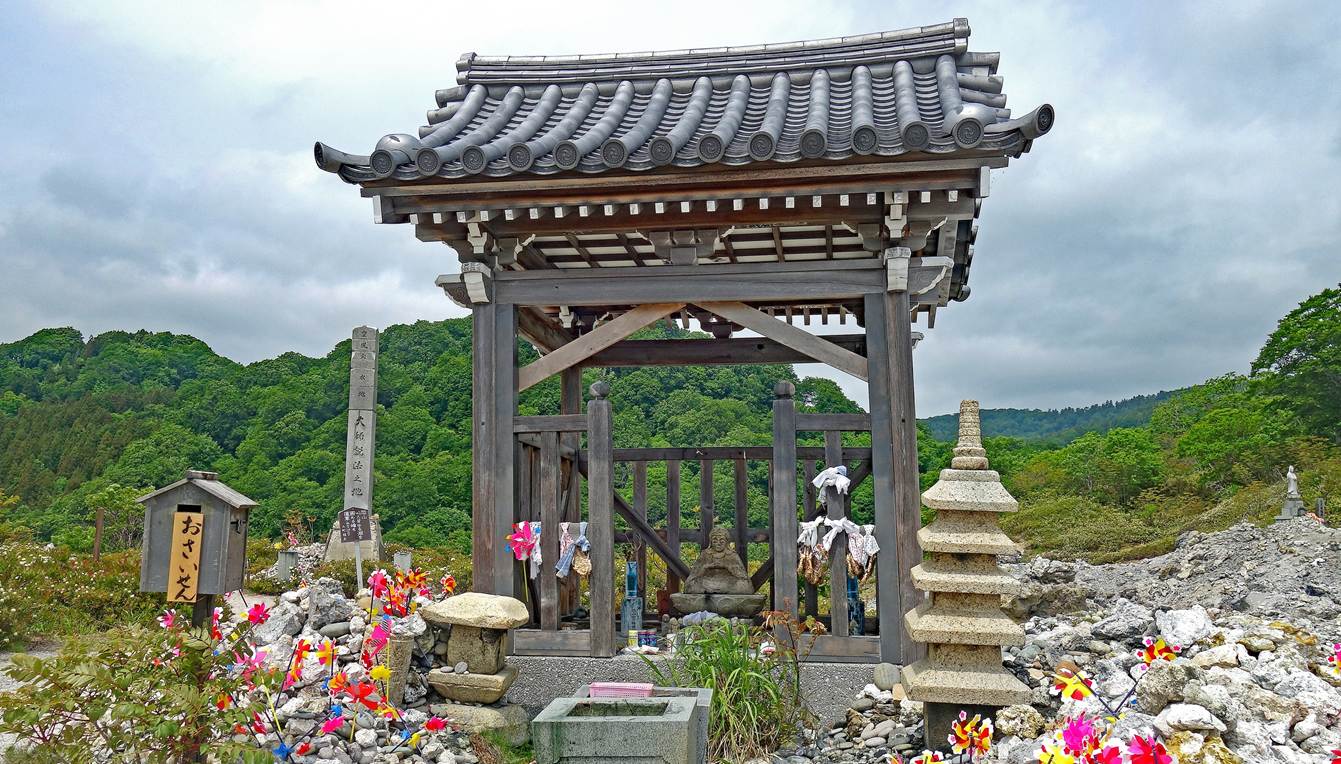
Other Buddhist statues and shrines scattered in the temple's grounds.
Colored toy windmills are offerings brought by visitors.
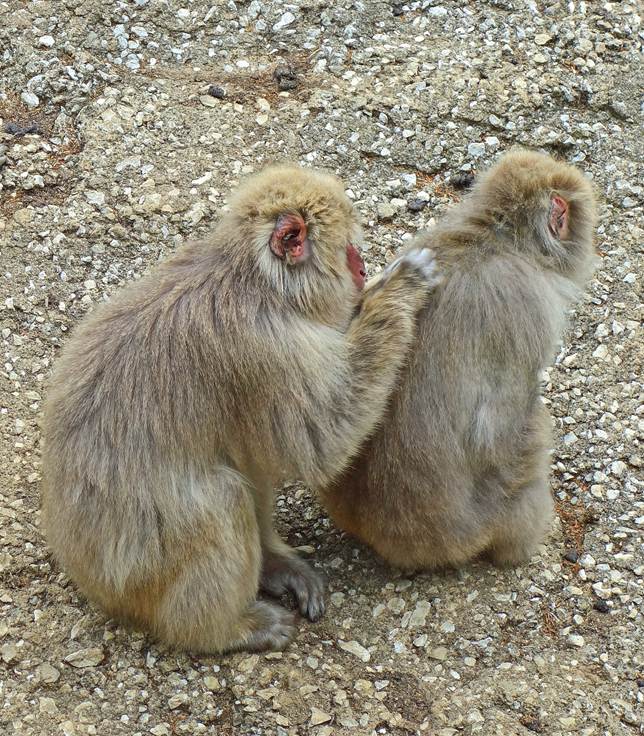
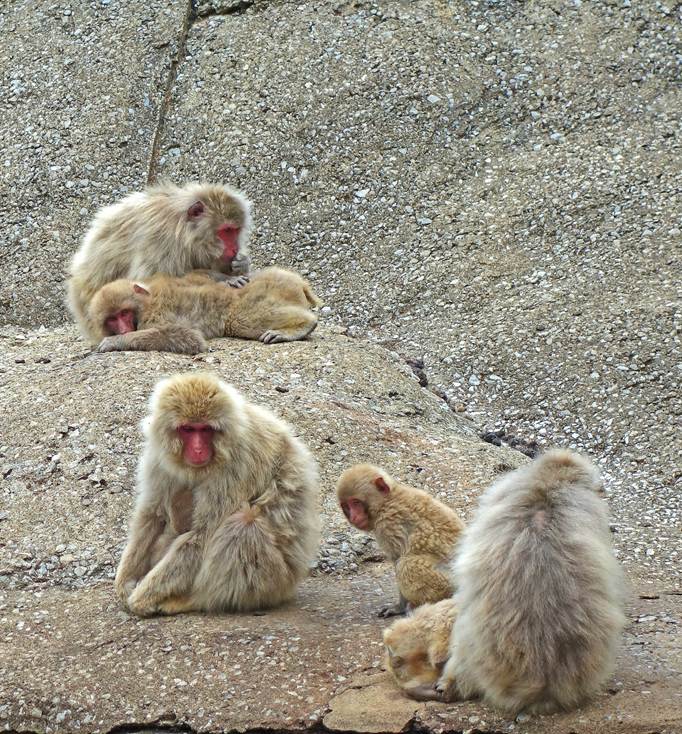
Japanese
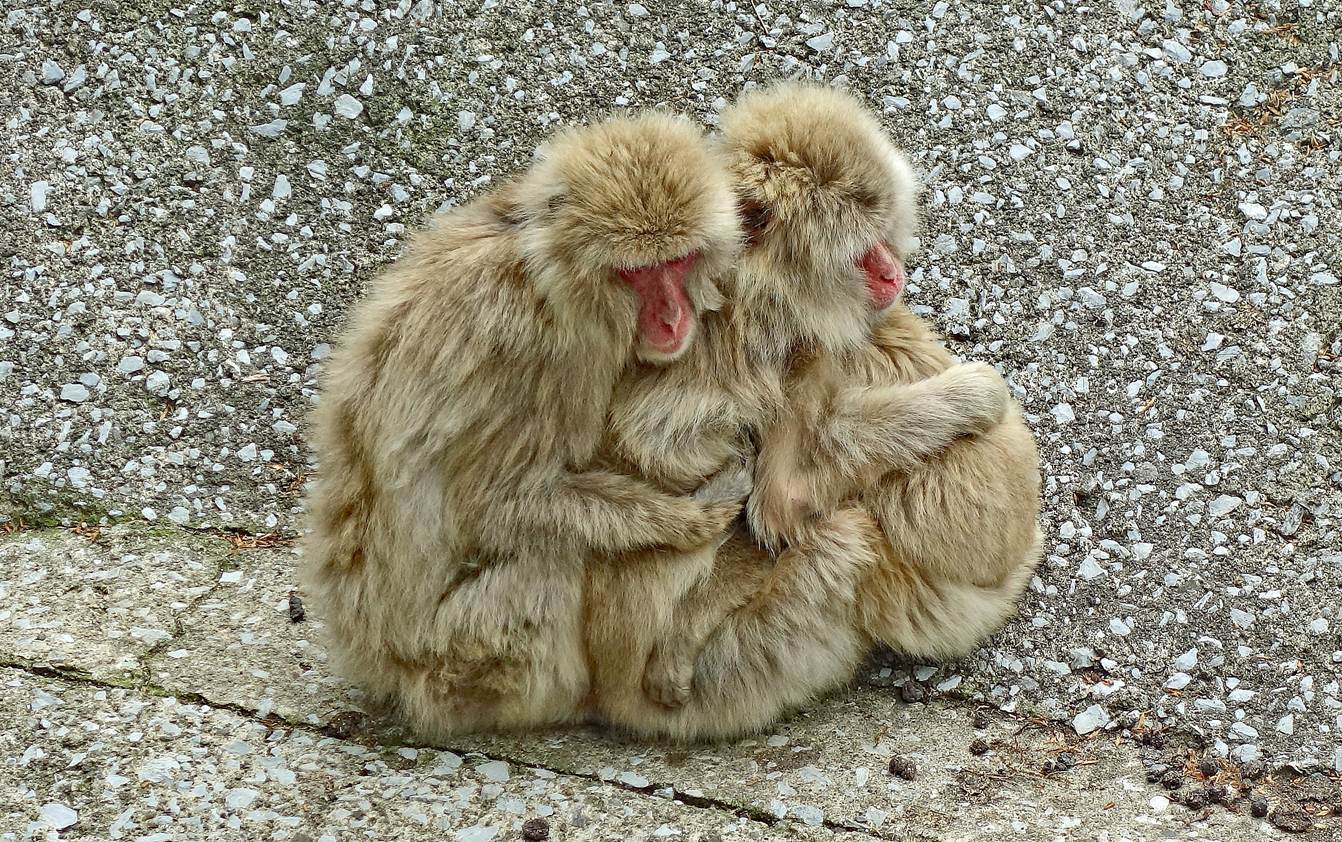
macaques.
The Shimokita peninsula is the northernmost
habitat of Japanese macaques (also known as snow monkeys). Unfortunately, the
continuous expansion of farmland and grazeland threatens this habitat. The
photos below were taken in the Wakinosawa Wild Monkey
Park, which was established as a protected area in the southwestern corner of
the Shimokita peninsula.
|
|
|