Hirosaki and surroundings,
Aomori Prefecture, Northern Honshu,
Japan (May-June 2025)

Back to main Japan May-June 2025 page
Hirosaki is
the former seat of the heads of the Tsugaru clan, who consolidated their
position as local daimyo after the battle of Sekigahara in 1600 and ruled the
western part of present-day Aomori Prefecture throughout the Edo period
(1603-1868). The city grew up around Hirosaki-koen, a vast park where the
Hirosaki castle is located.
This page
shows pictures of Hirosaki, Kudoji and Iwakiyama jinja (respectively, a
Buddhist temple and a Shinto shrine, both located west of Hirosaki), and
Kuroishi (a small town northwest of Hirosaki).
To see the
locations of the places pictured below, click here. (A Google map with red markers will open in a new tab.)
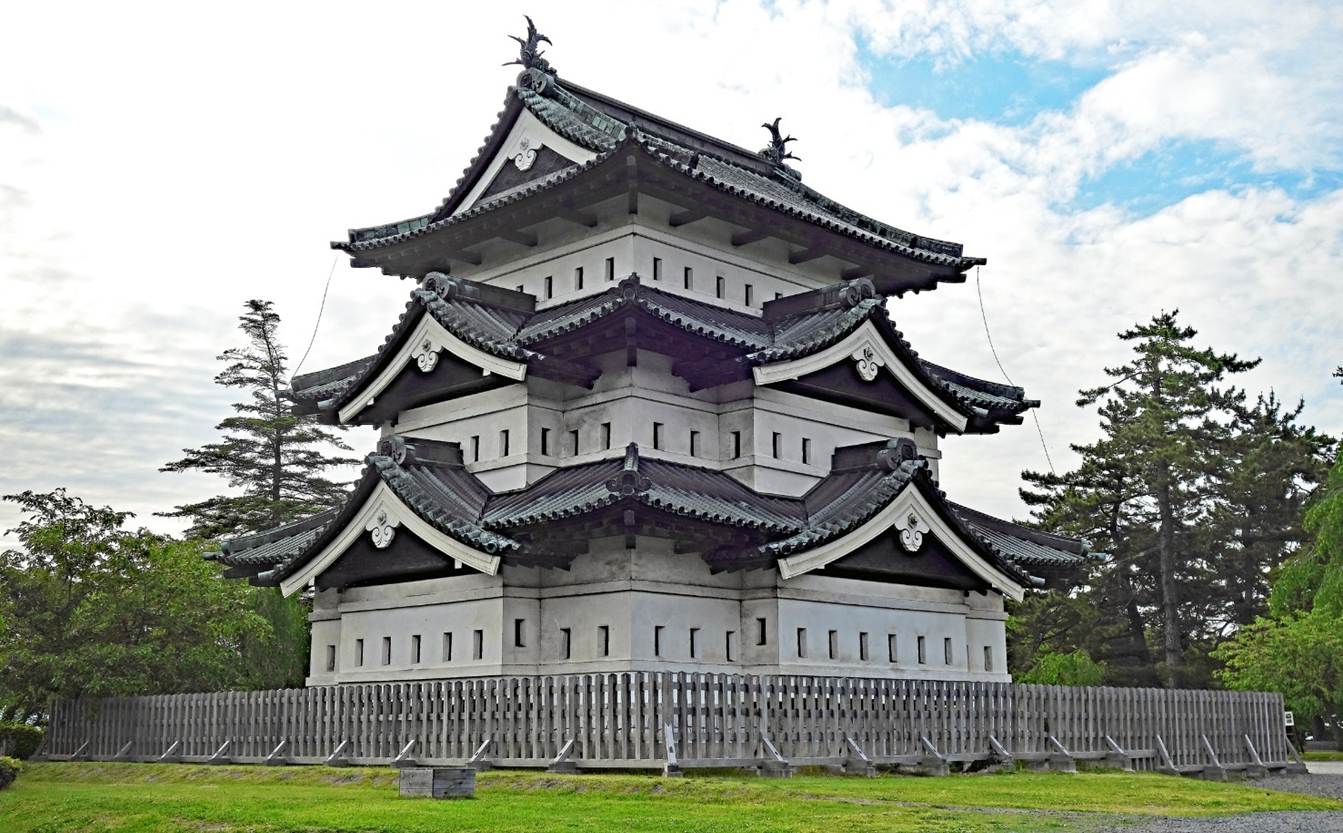
Hirosaki castle.
The original five-story keep of the
Hirosaki castle was built in 1611. But it was destroyed by fire just 16 years
later, struck by lightning. It was rebuilt much later, in 1810, as a smaller
three-story keep, which survived the Meiji restoration and is thus one of the
12 castle keeps in Japan not to have been rebuilt in modern time.
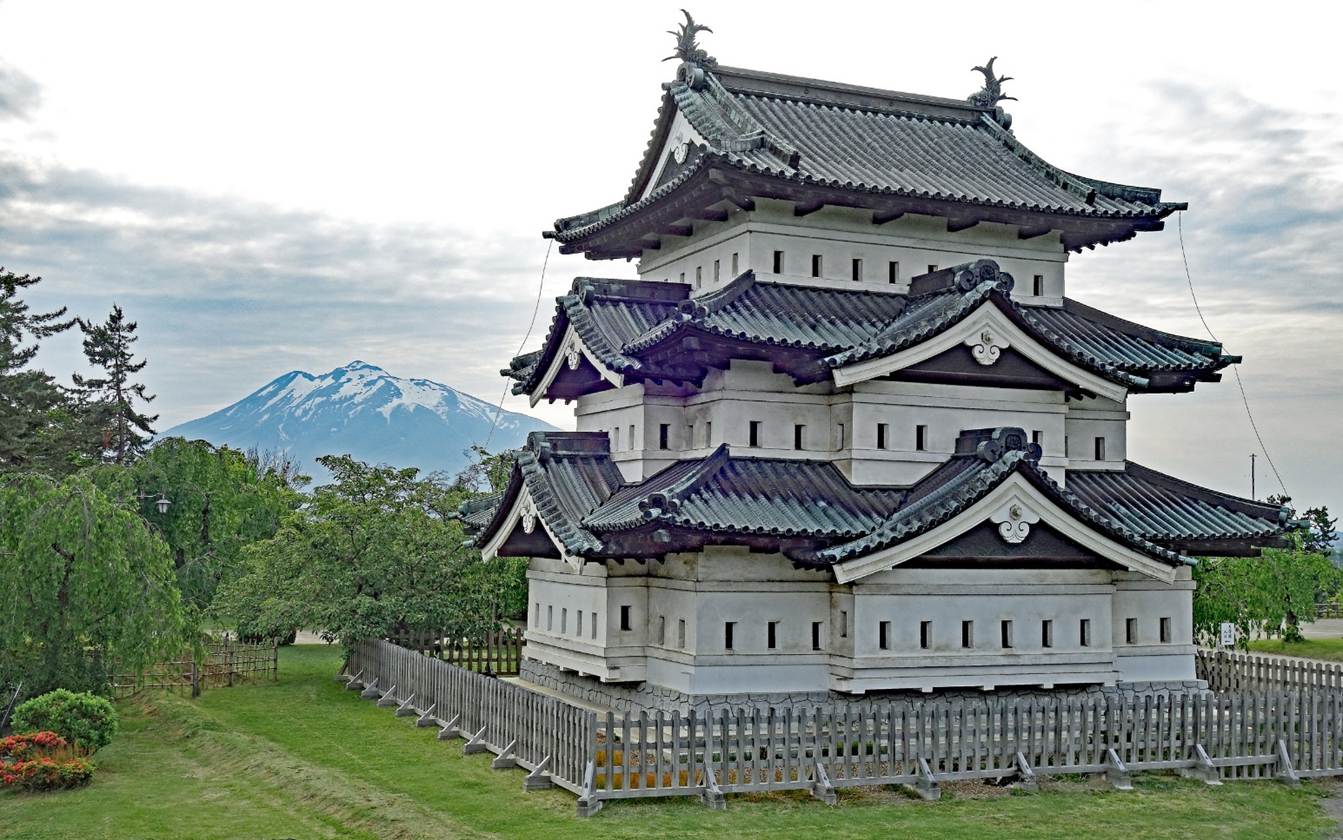
[Work to renovate the keep's foundations,
which began in 2023, is expected to last until 2028. To access these
foundations, the keep was moved roughly 70m and installed on a temporary base. In
the two photos below, it is therefore not exactly in its original location.]
Another view
of the castle keep, with Mount Iwaki in the background. Located west of
Hirasaki, Mount Iwaki (1625m) is the highest mountain in the Aomori prefecture.
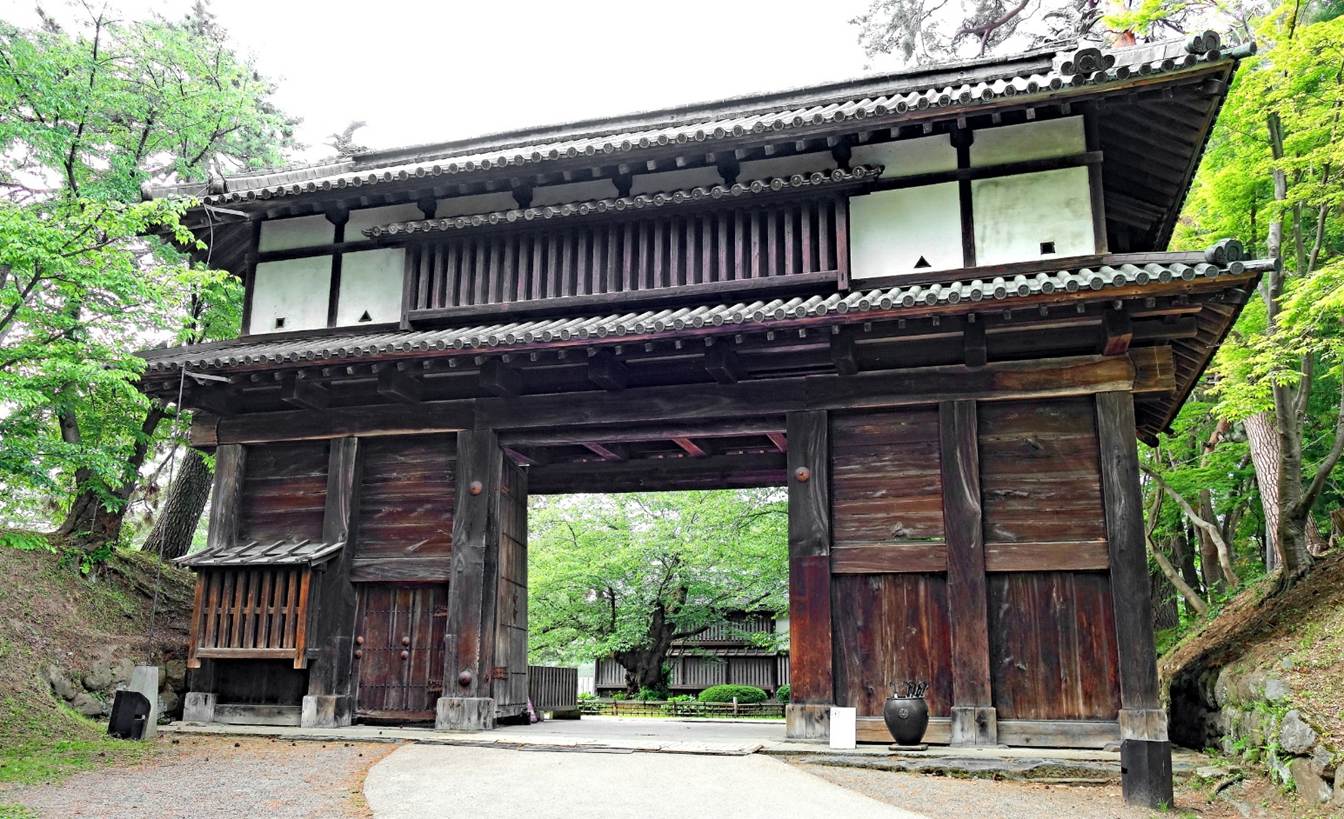
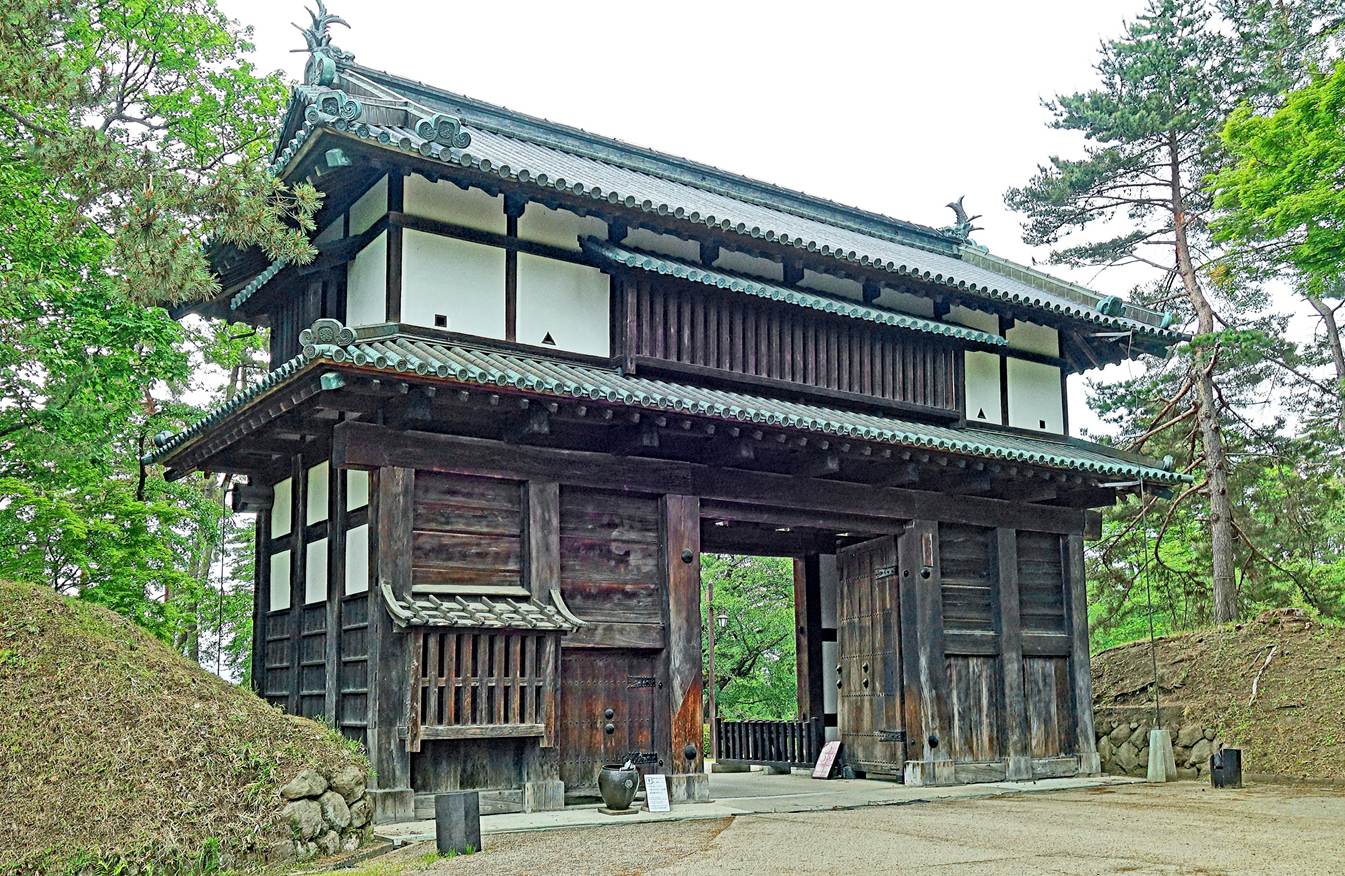
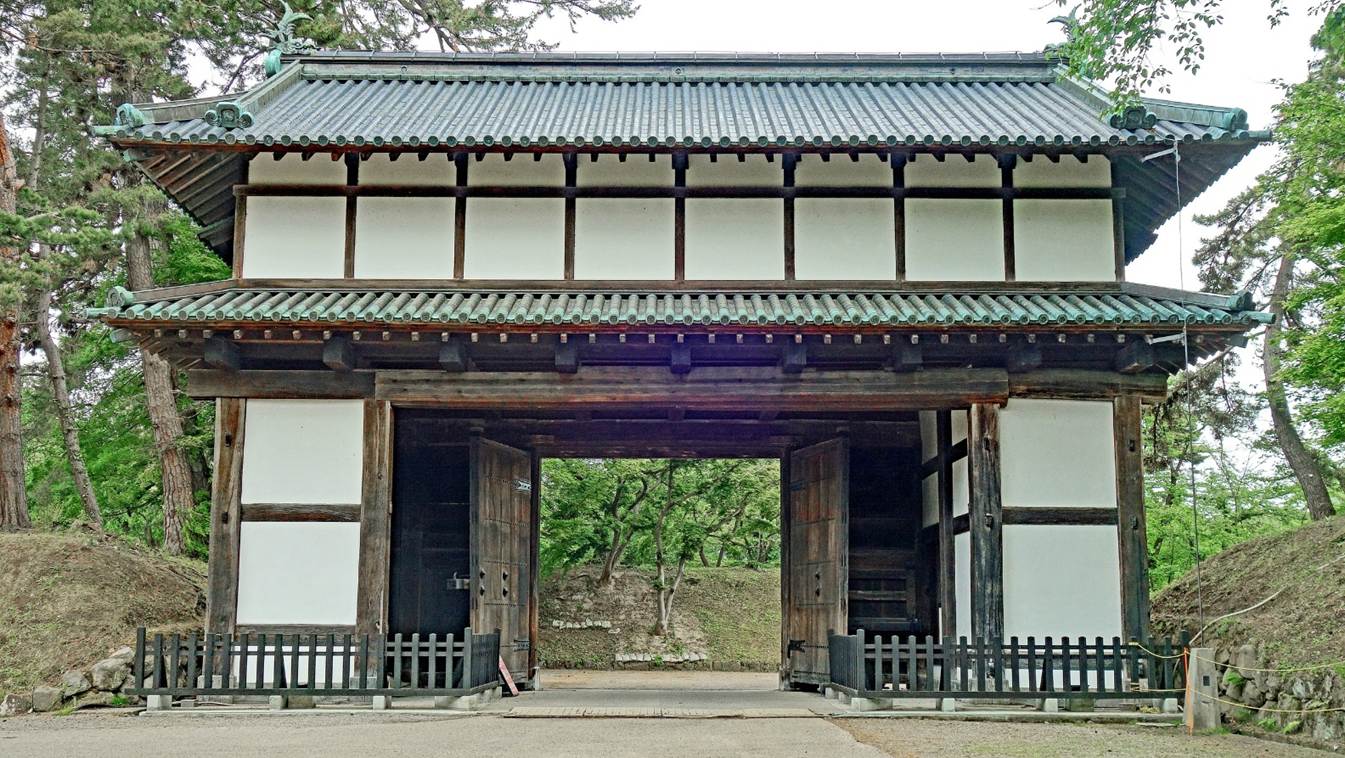
Castle gates.
Five castle
gates, including the following three, are also original structures. They were
guarding the accesses to the castle.
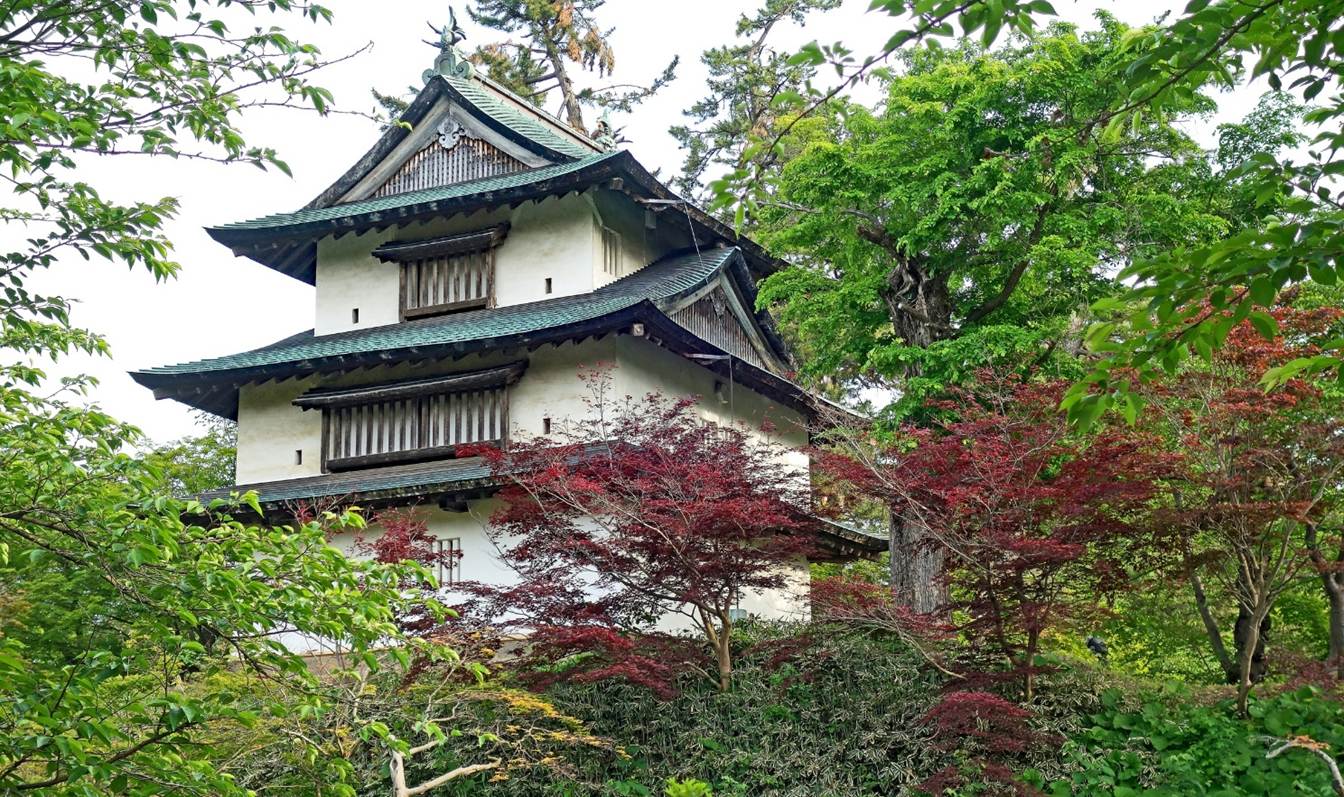
Castle turrets (yagura).
Three turrets
in Hirosaki-koen are also original structures that
protected the castle. This is one of them.
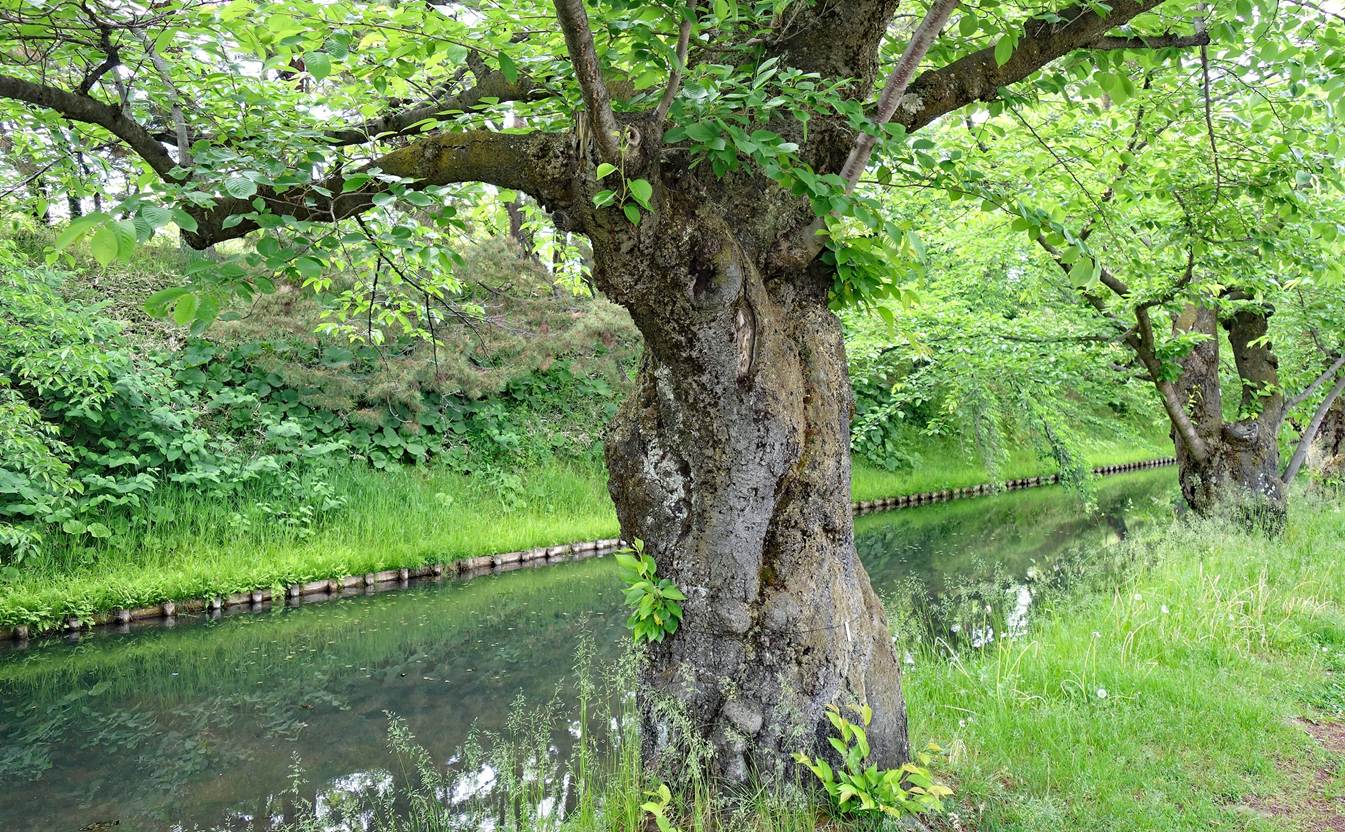
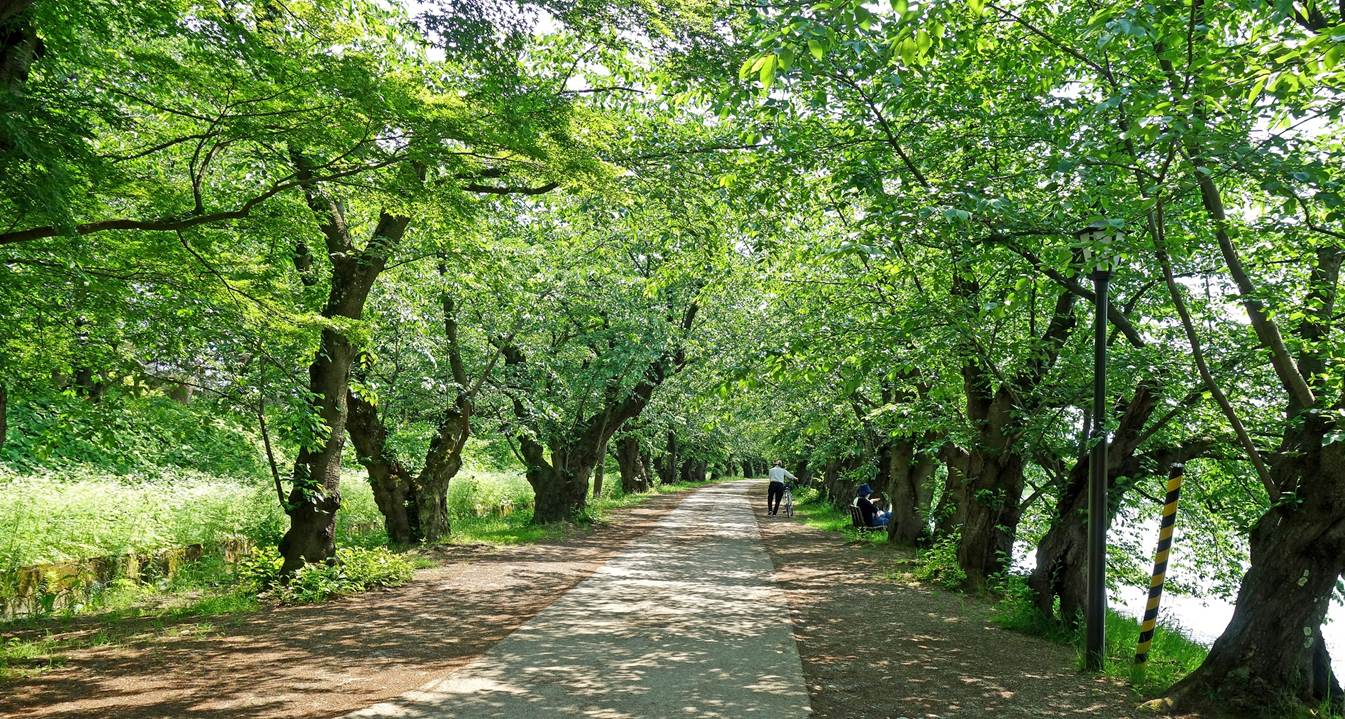
Cherry trees in Hirosaki-koen.
Hirosaki-koen
is also famous for its thousands of cherry trees lining three consecutive moats
surrounding the castle.
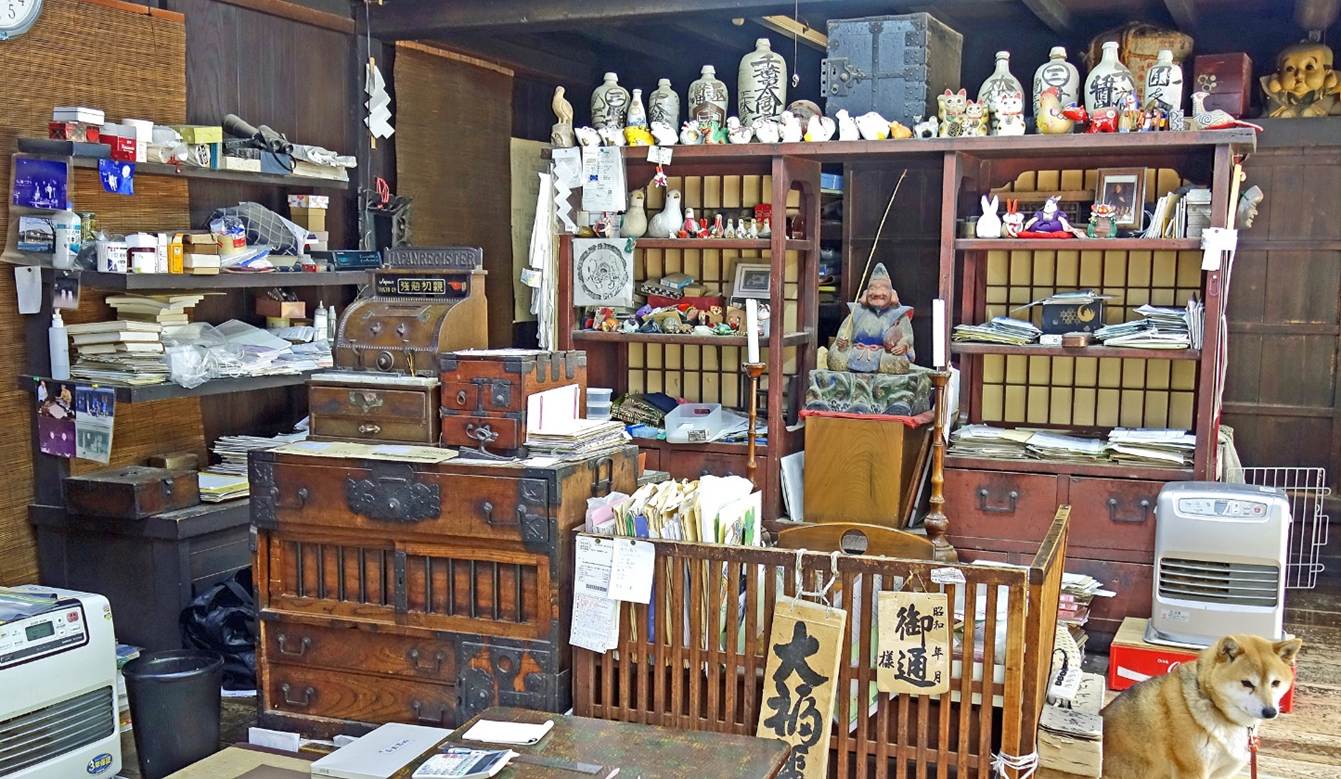
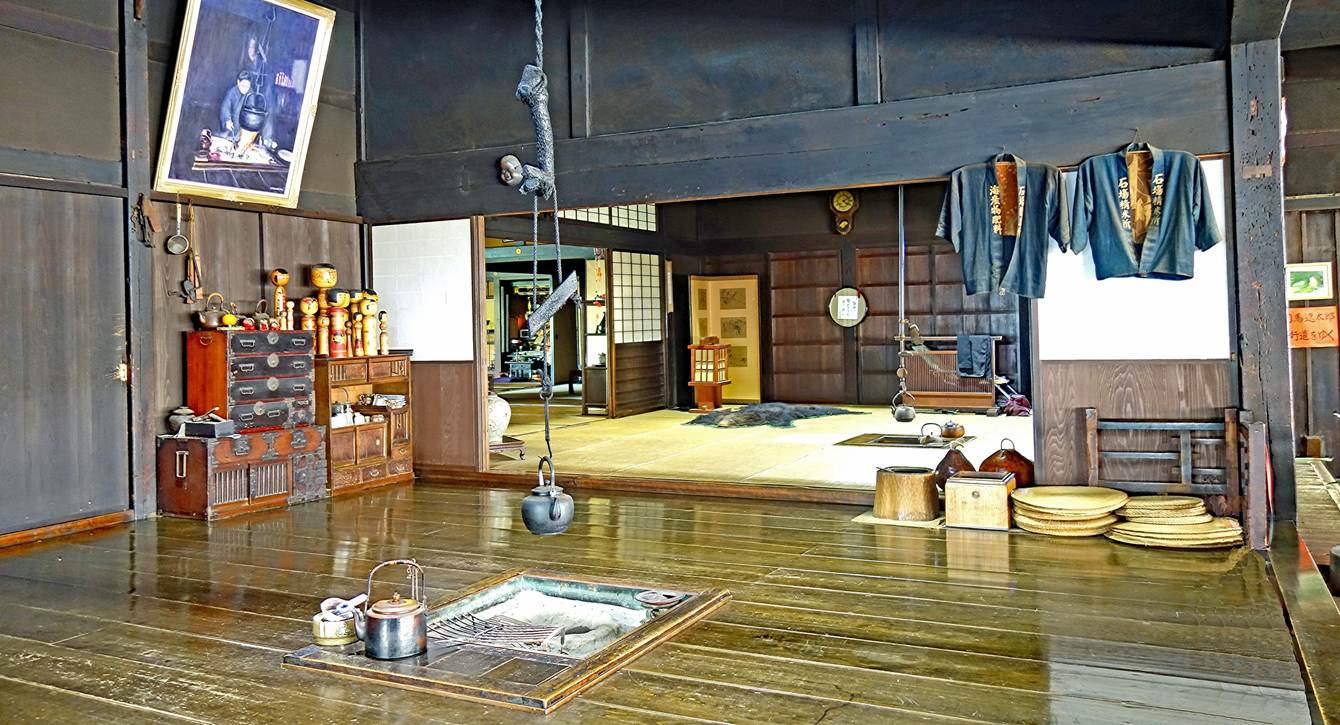
Ishiba family residence.
Located just
north of Hirosaki-koen, this residence was built around the middle of the Edo
period. Since then, it has belonged to a family of merchants selling household
goods, and it remains so today.
Interior of
the shop. A little messy, but the dog is friendly.
Interior of the residence. It has not
changed much since the Edo period and retains its traditional irori (sunken
hearths).
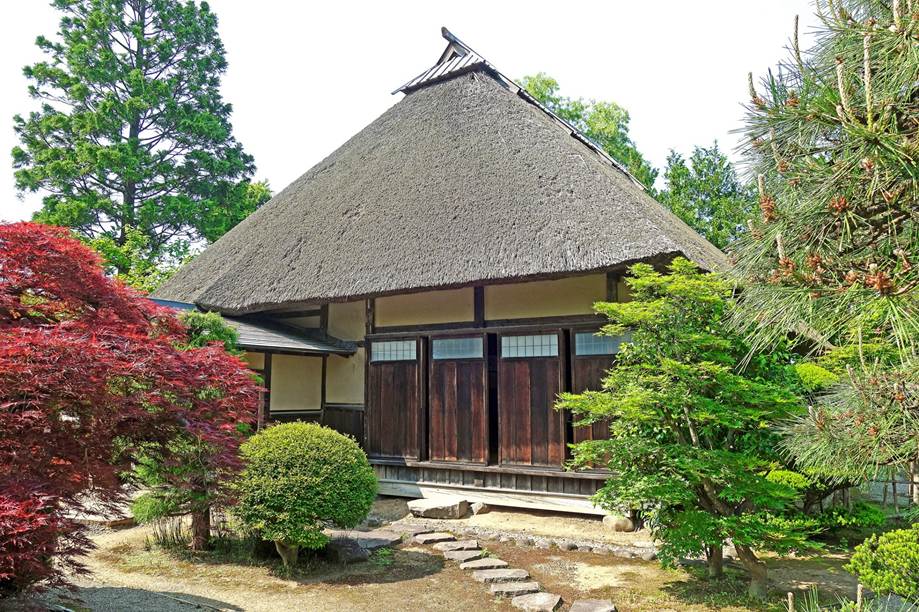
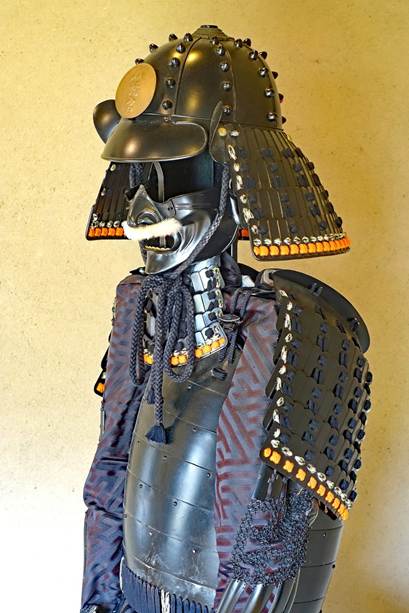
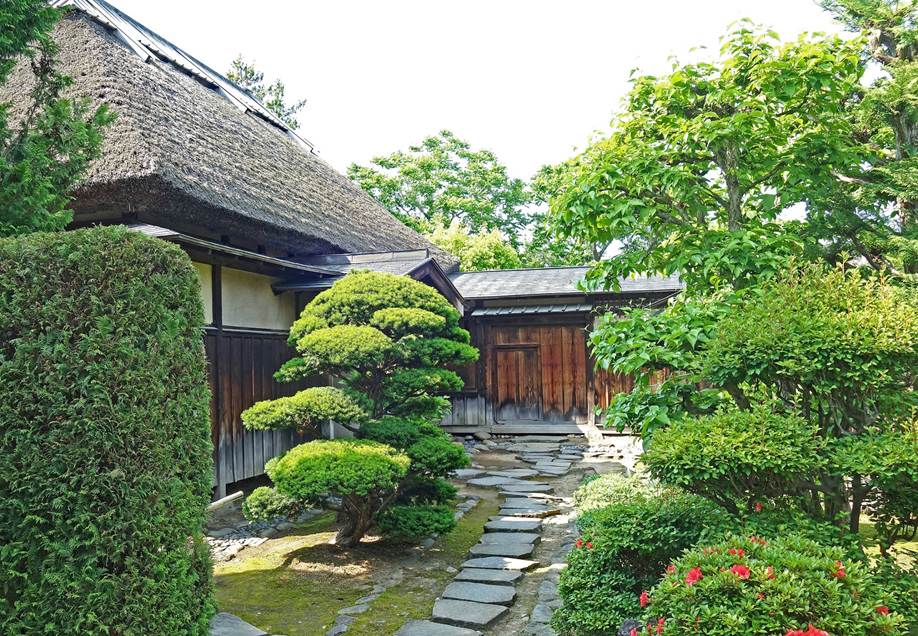
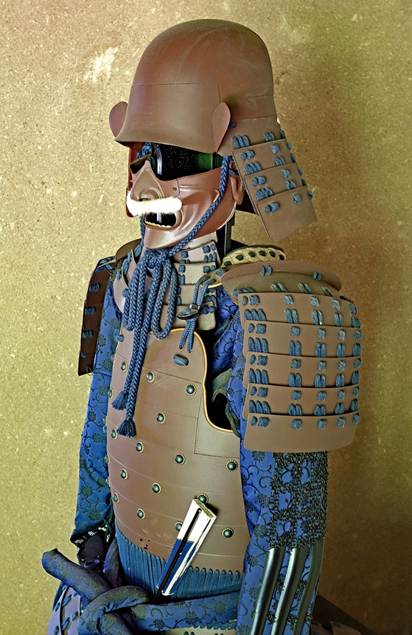
Former samurai residences.
These
residences are located a little further north of the Ishiba family residence.
Left: Umeda
house. Right: Armor in the Sasamori house.
|
|
|
Left: Iwata
house. Right: Armor in the Iwata house.
|
|
|
Fujita Kinen Teien (藤田記念庭園).
In 1919, Fujita Kenichi (1873-1946), a
prosperous businessman from Hirosaki, built his Western-style villa with a
large Japanese-style garden just southwest of Hirosaki-koen. The city of
Hirosaki acquired this property in 1989, restored it, called it ″Fujita
Kinen Teien″, and opened it to the public in 1991. Its garden extends
over two levels separated by a 13m-high cliff.
Stone pagoda in the upper part of the
garden.
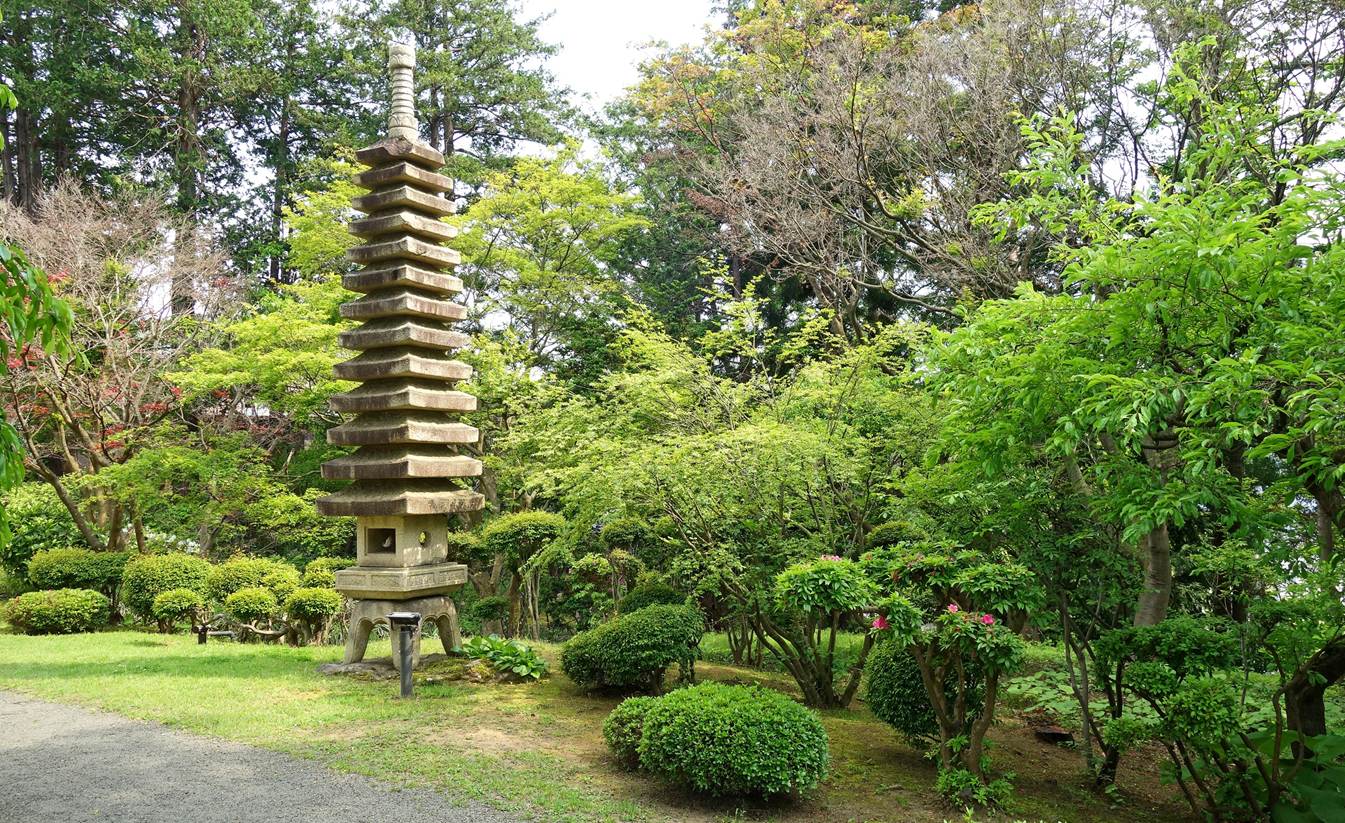
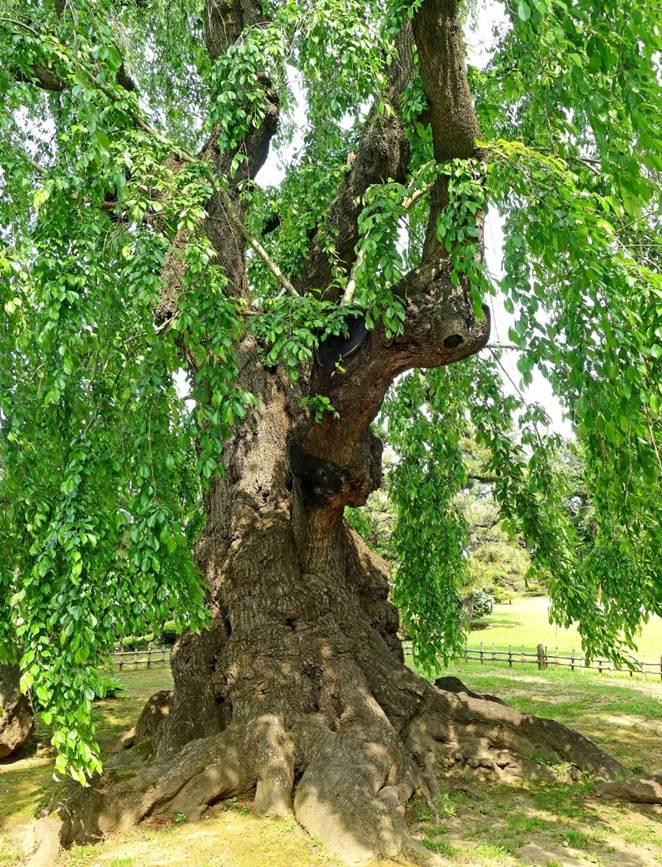
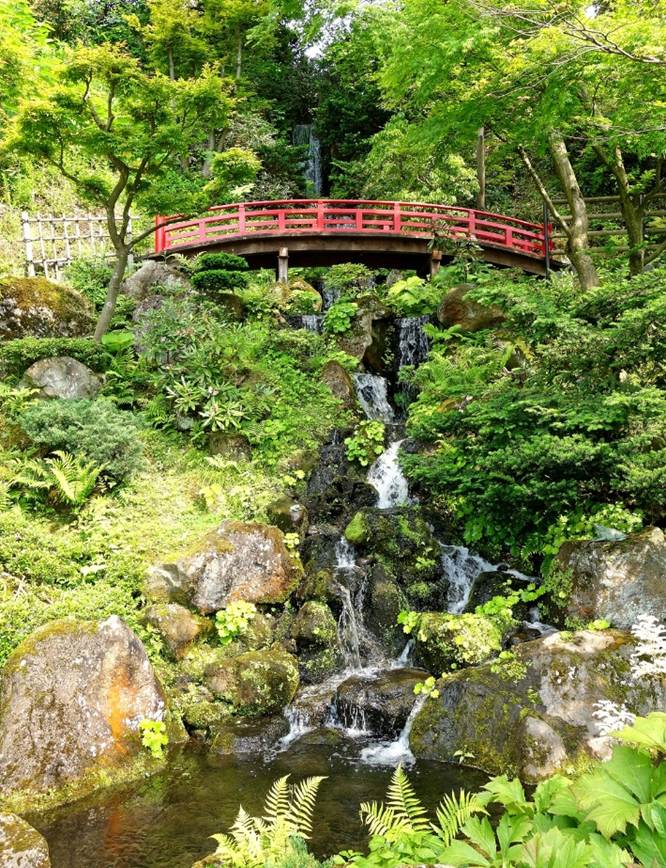
Left: Old
cherry tree in the lower part of the garden. Right: Waterfall between the upper
and lower parts of the garden.
|
|
|
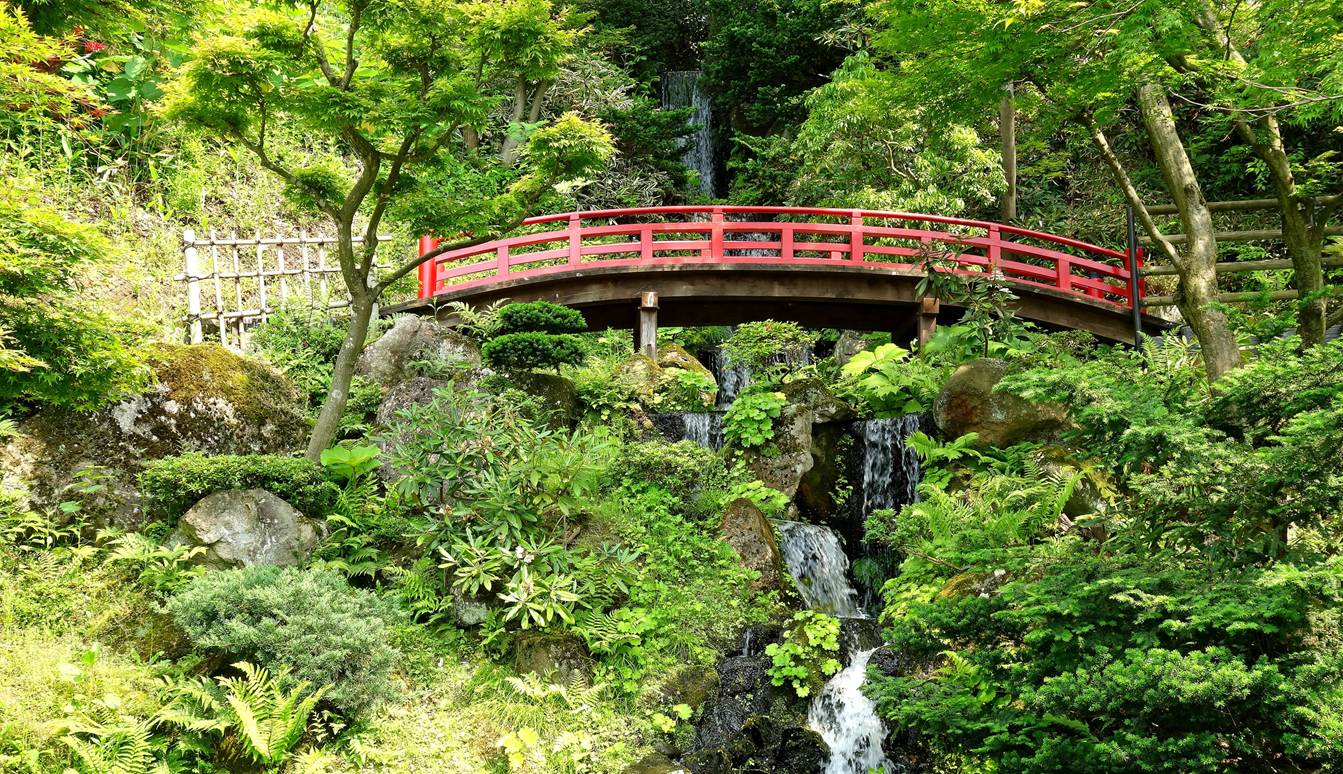
Other view of
the waterfall and the red bridge that crosses it.
Saishoin.
Located on a small hill about 1km south
of Hirosaki-koen, this Buddhist temple of the Shingon school was built in the
17th century. It is known for its five-story pagoda.
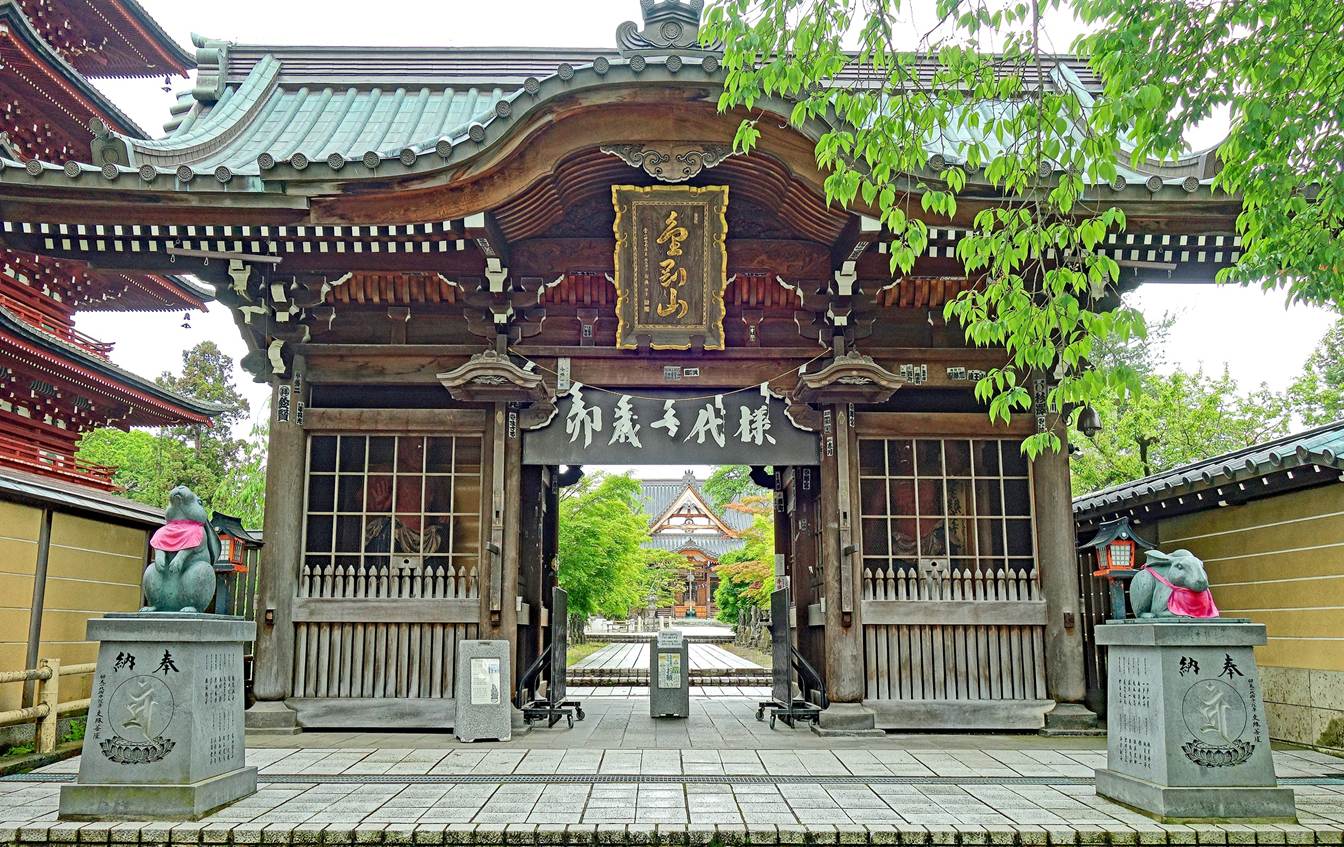
Entrance gate (Niomon) of the temple.
The pagoda is partially visible on the left of the photo. The two Nio statues
housed in both sides of the gate are the oldest in Aomori Prefecture.
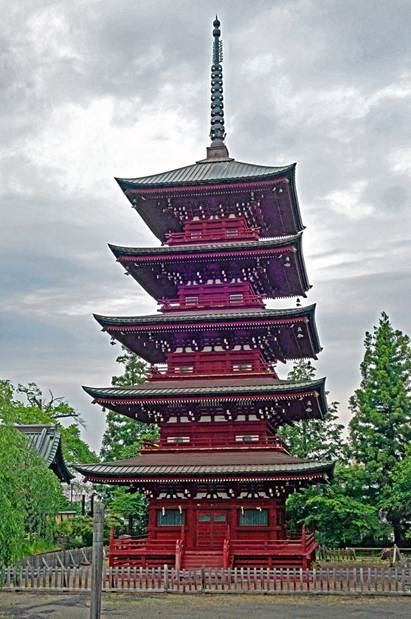
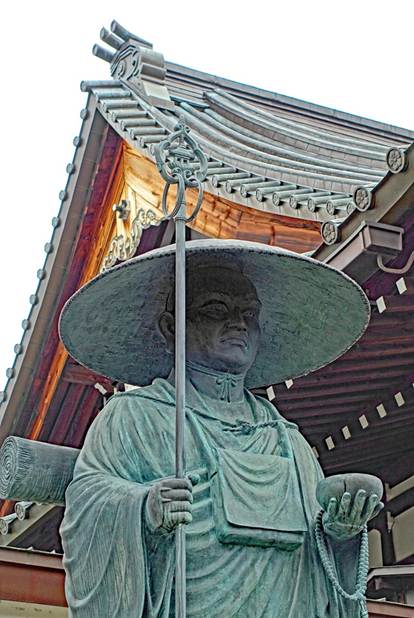
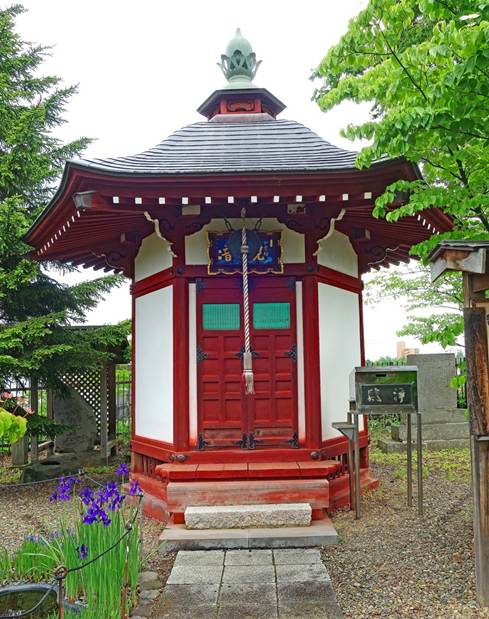
- Left: 31.2m-high pagoda of Saishoin.
It was built as a memorial to all those who died in the wars between the Nanbu
and Oura (later Tsugaru) clans that led to the establishment of the Tsugaru
region. Planned by the third Tsugaru lord Nobuyoshi (1619-1655), its
construction was completed in 1667 under the reign of the fourth Tsugaru lord
Nobumasa (1646-1710).
- Center: Statue of Kubai, posthumously
called Kobo-Daishi, the founder of the Shingon
school of Buddhism.
- Right: Small hexagonal hall, called
the Rokkakudo. A statue of Nyoirin Kannon, a manifestation of the bodhisattva
Kannon (the Japanese goddess of mercy) is enshrined in it.
|
|
|
|
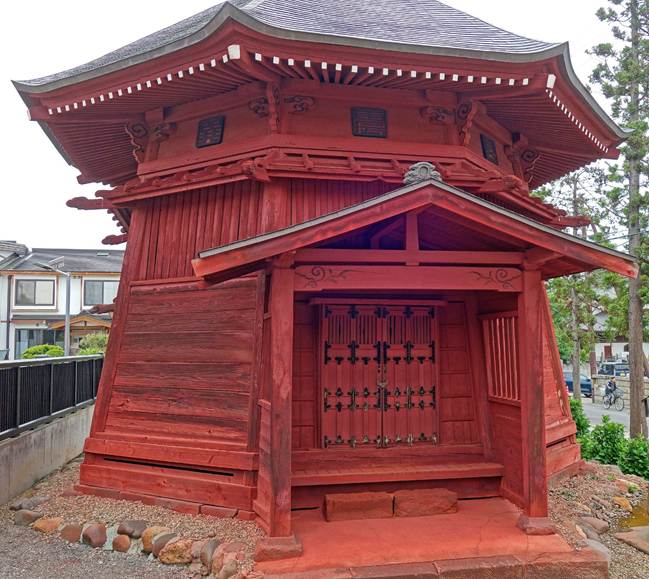
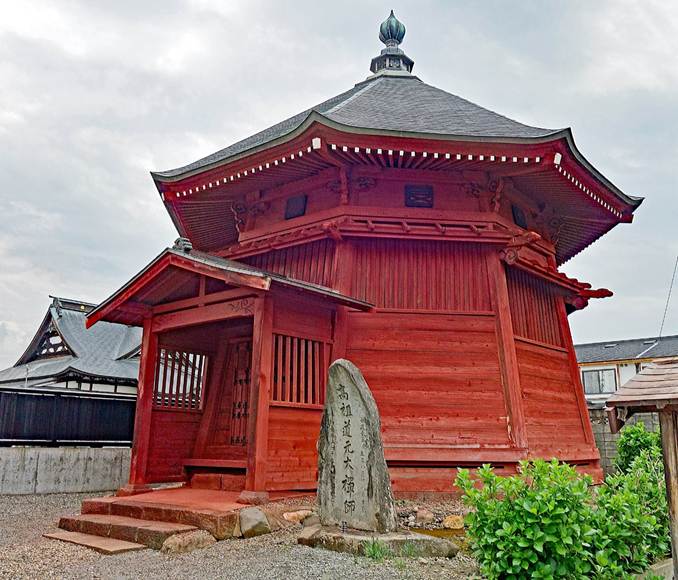
Sazaedo (六角堂, spiral hall).
This eye-catching octagonal vermilion
building stands at the eastern end of the Zenringai
district, a long street lined with 33 Zen Buddhist temples, all of the Soto
school. It was built in 1839 by a wealthy merchant, Nakata Kahei, to
commemorate people who died during the devastating Tenmei (1782-1788) and Tenpo
(1833-1837) famines. Its interior includes a straight staircase and a spiral
staircase, which makes only one and a half turns to reach the top. The entrance
is adorned with a statue of Kannon. Overall, this Sazaedo looks like a
simplified imitation of the earlier Sazaedo at Aizu-Wakanatsu (see here).
|
|
|
Choshoji.
Most of the temples in the Zenringai
district do not look special (except perhaps for Zen Buddhist practitioners).
But Choshoji at the western end of the district, about 1.5km southwest of the
castle, is quite remarkable. It was founded in 1528 in the port city of
Ajigasawa on the Sea of Japan, 28km northwest of Hirosaki. It was moved to its
current location in 1610 to coincide with the construction of the Hirosaki
castle. It then served as the family temple of the Tsugaru clan.
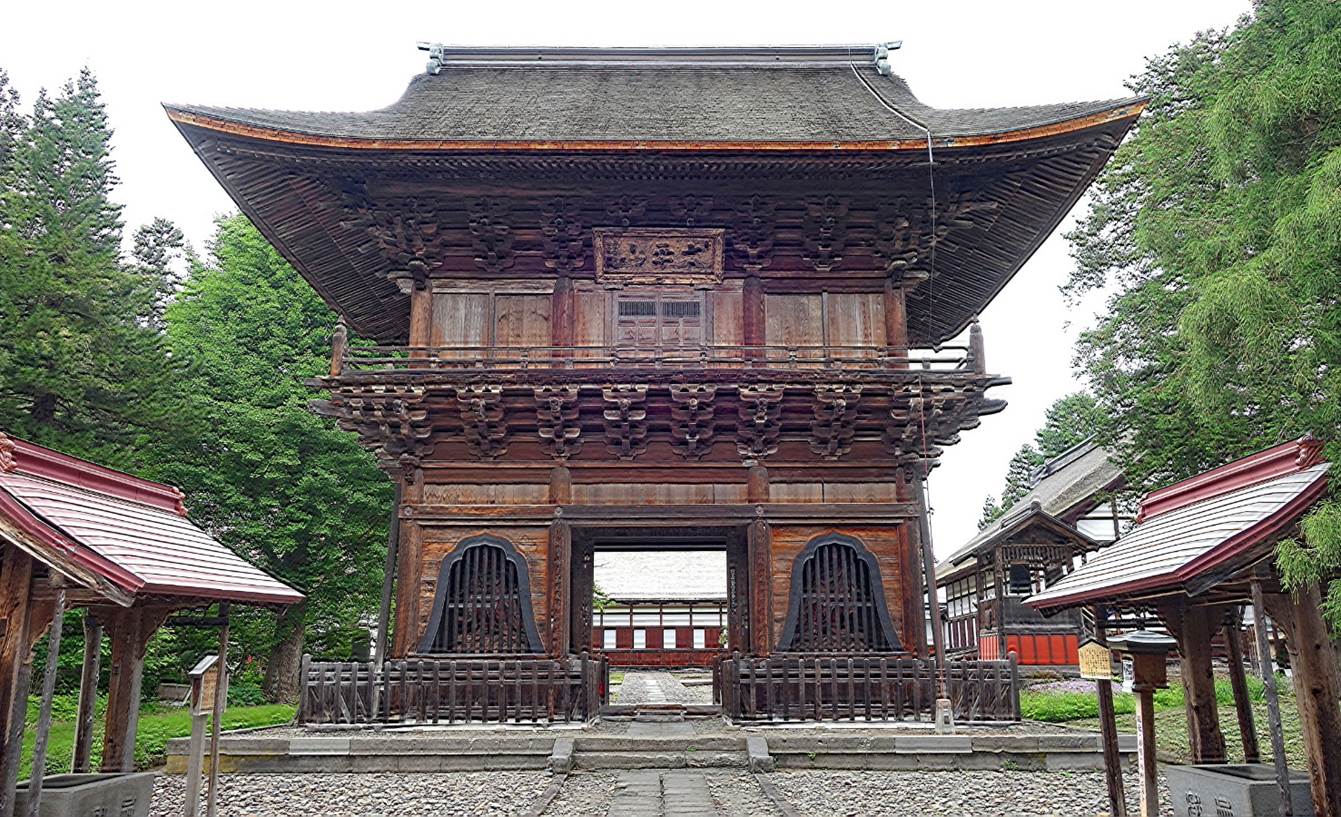
The Sanmon,
the main entrance gate into the temple's grounds. It is an imposing 16m-high
wooden structure built in 1629. The main hall (hondo) is partially visible
through the opening of the gate. The priests' quarters are partially visible on
the right of the photo, behind the bell tower (a smaller structure with a red
base).
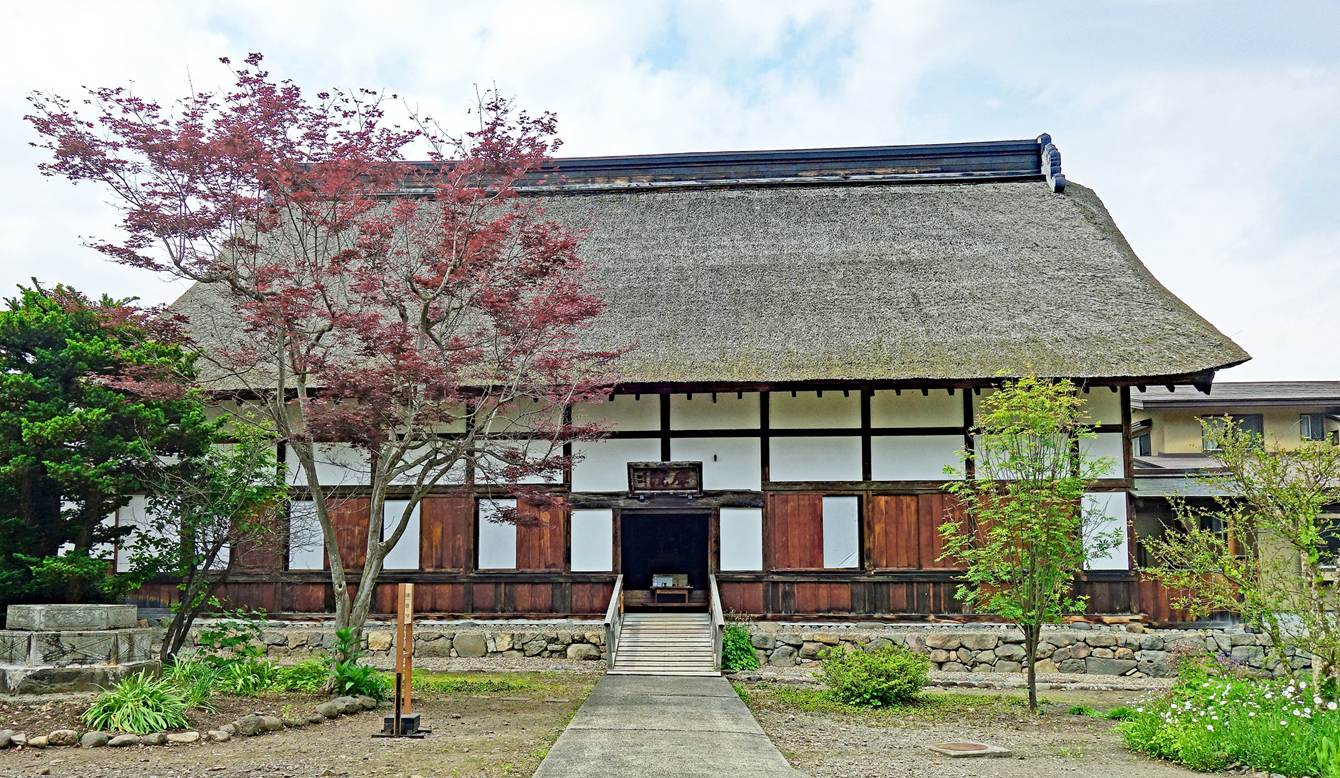
The priests'
quarters, a thatched-roof building that also includes the temple's kitchen.
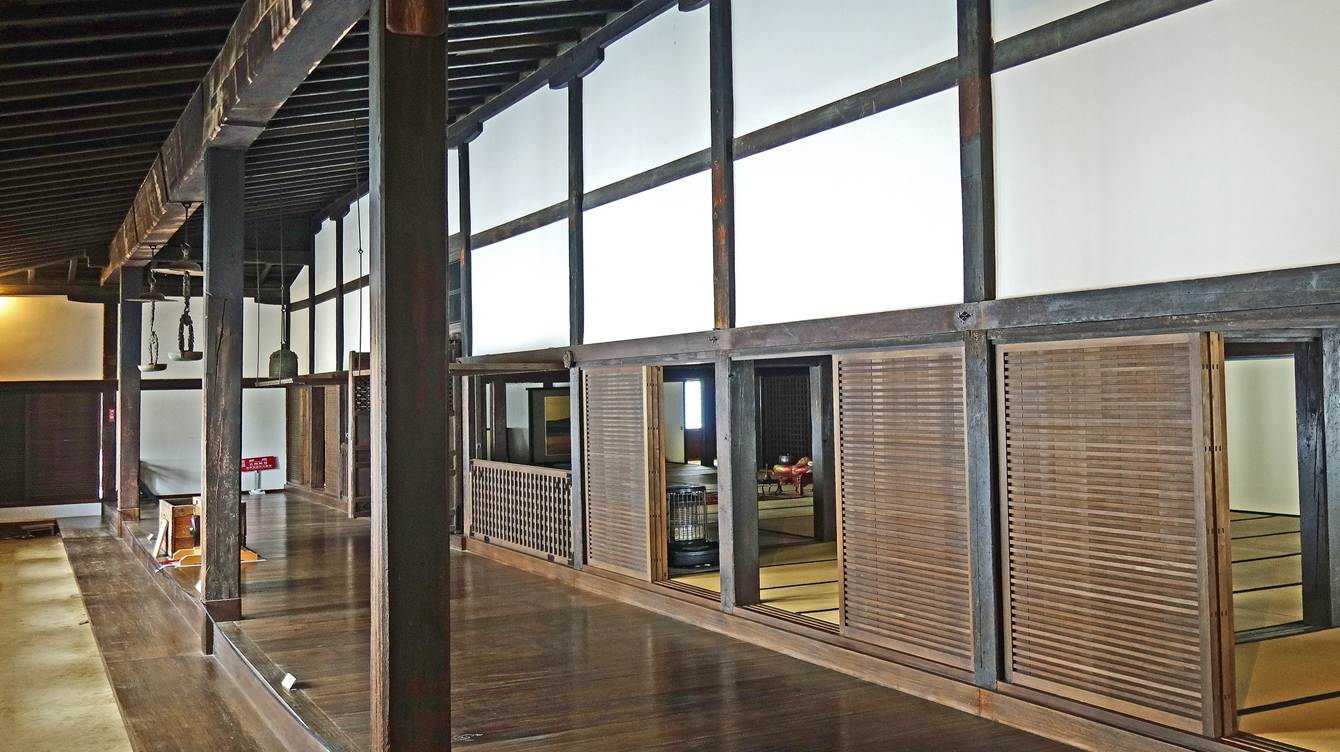
The hondo is
a large rectangular structure, approximatively 25m long and 19m wide. Its
interior (pictured below) consists of a series of eight rooms opening into a
single, straight corridor.
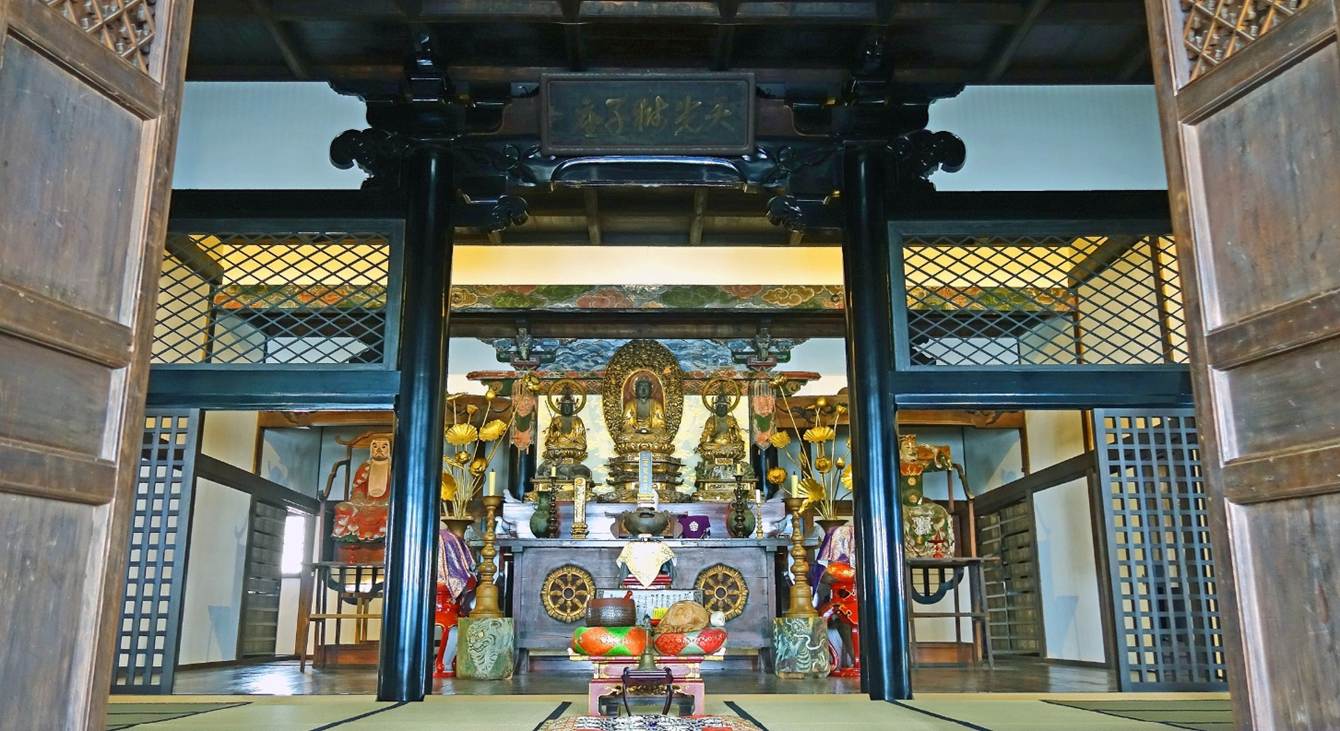
Altar in the
hondo.
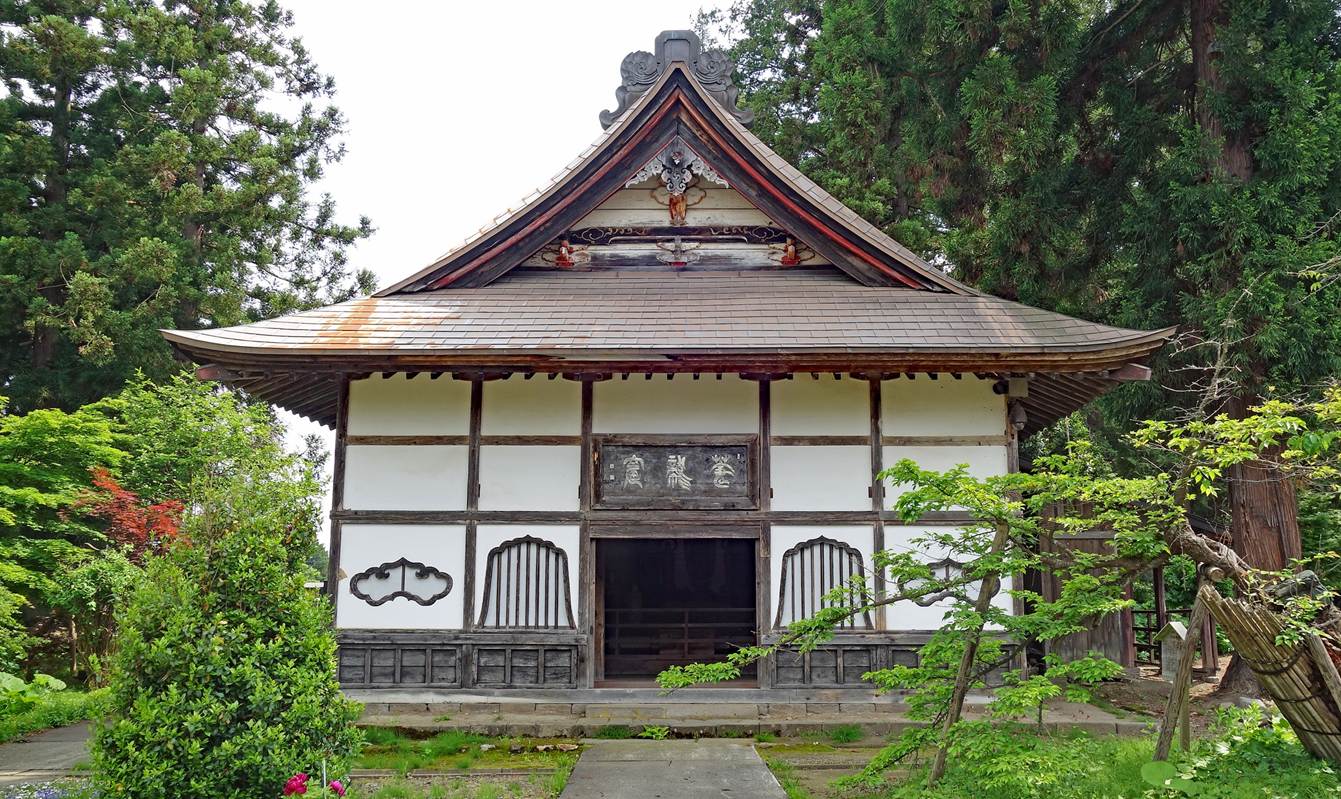
This much
smaller building, opposite to the priests' quarters, has a mysterious sign
above its door, 蒼龍窟. It reads ″Soryukutsu″, which translates to ″Cave of the blue dragon″. It was very
tempting to see what was inside.
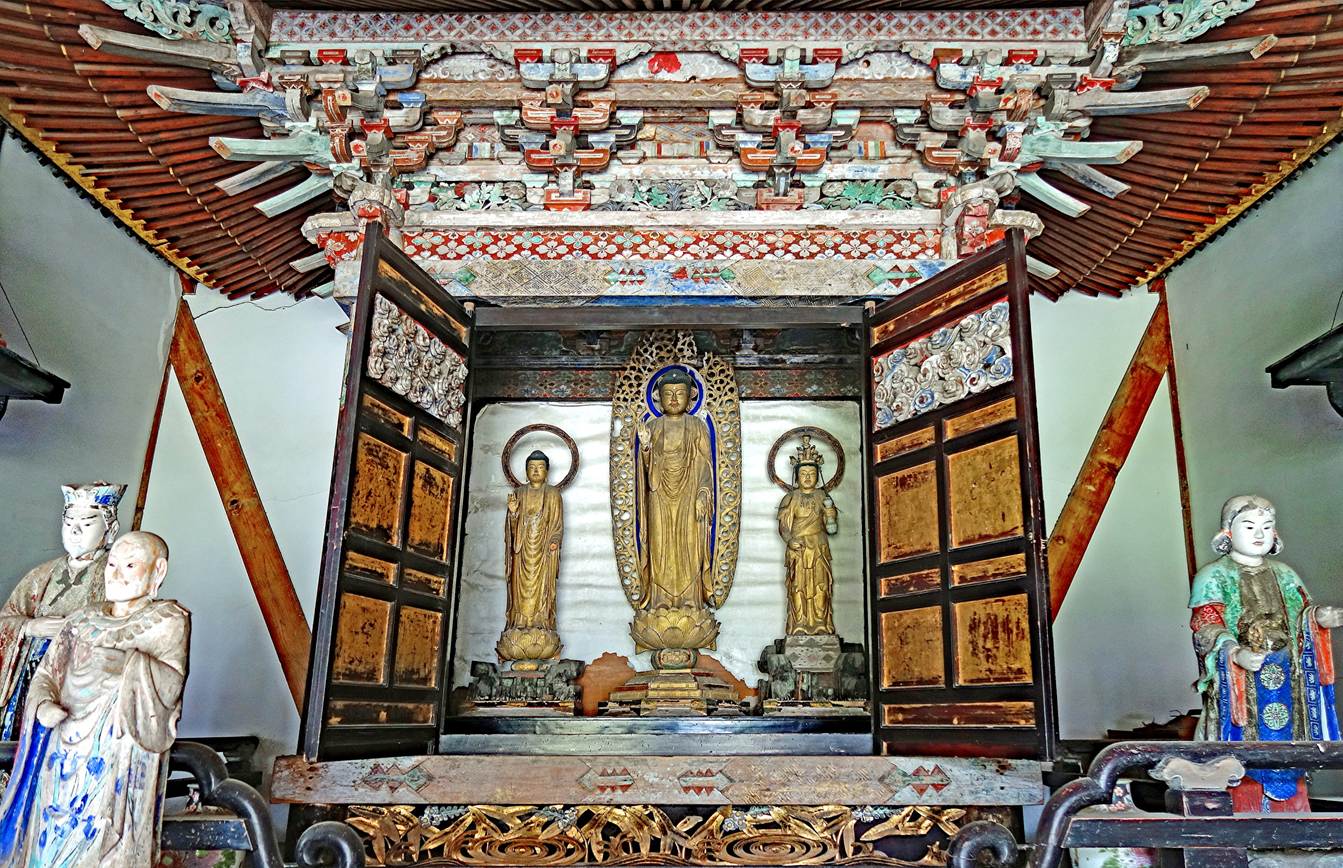
Three
pictures of the interior of the Soryukutsu:
- Three
wooden Buddhist statues framed by a beautifully decorated single-bay wooden
altar topped with a wide roof. The three statues, collectively called a
sanzonbutsu (三尊仏, meaning ″three Buddha statues″), represent Amida Nyorai, Yakushi Nyorai, and Eleven-Headed Kannon (from
left to right). They are believed to have been made during the Momoyama period
(1573-1603).
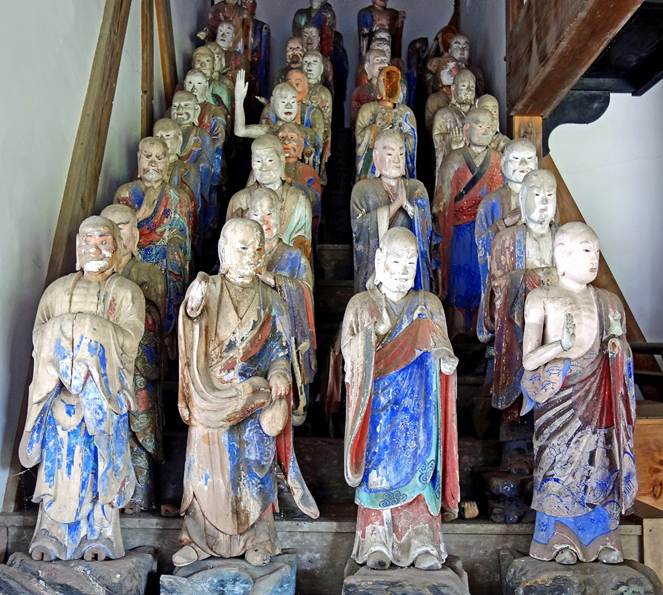
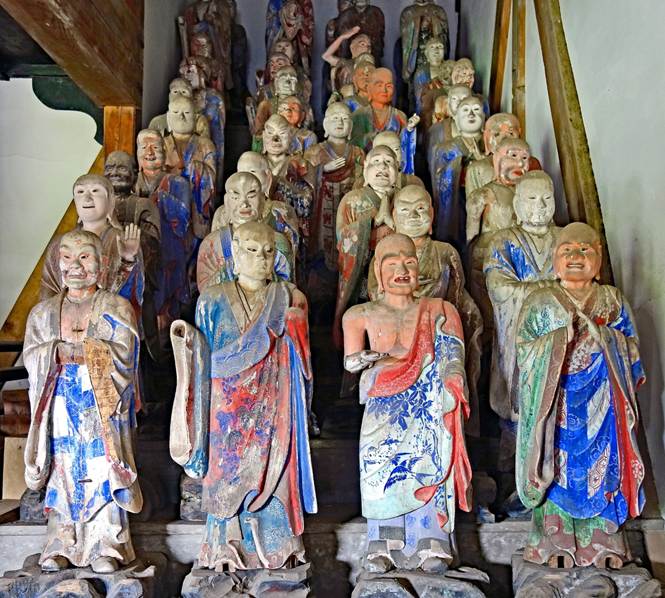
- About 100
statues representing a subset of the 500 rakans (a group of early disciples of
the Buddha who have attained enlightenment) divided
in two equal groups on the left and right sides of the sanzonbutsu.
|
|
|
- Six of
eighteen statues standing on two shelves against the side walls and
representing the 18 arhats. Like the 500 rakans, they are early enlightened
disciples of the Buddha. But, according to Buddhist tradition, they chose to
wait on earth to protect the Buddha's teachings until the coming of the future
Buddha.
|
|
|
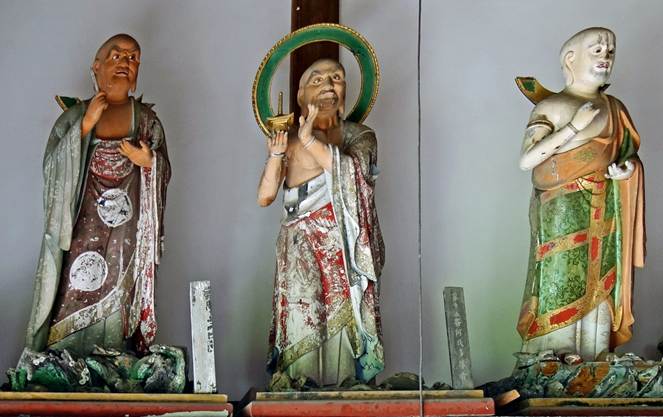
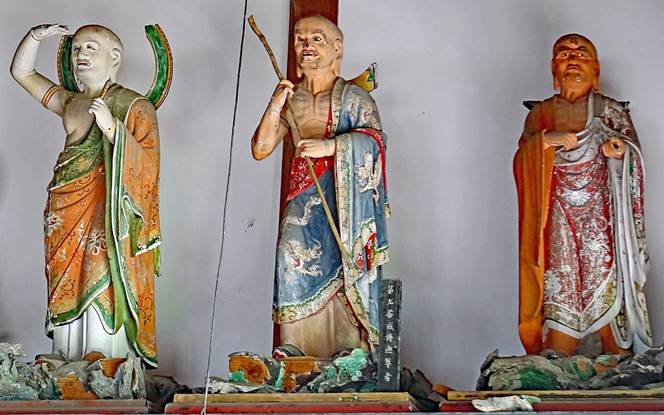
The statues
in the Soryukutsu, as well as the altar framing the sanzonbutsu, were
originally housed in what is now Iwakiyama jinja, a Shinto shrine located at
the foot of Mount Iwaki (see the ″Iwakiyama jinja″ section below).
The three statues of the sanzonbutsu were donated in 1610 by Tsugaru Nobuhira,
the second Tsugaru lord, and were then associated with the three distinct peaks
of Mount Iwaki. The altar was added later, in 1638, by Tsugaru Nobuyoshi, the third
Tsugaru lord. In 1868, following the Shinbutsu Bunri edict
(the law separating Shinto and Buddhism), they were moved to Choshoji and
installed in the pre-existing Soryukutsu. Unfortunately, this building was too
small. It could only accommodate 100 rakans; so, the remaining 400 rakans were
stored elsewhere. Furthermore, the altar was too deep to fit in, so its back
wall had to be cut away (as can be noticed in a photo above). But none of this
eventful history explains the building's name, ″Cave of the blue dragon″,
which remains mysterious.
Kudoji.
Located at the foot of Mount Kudoji,
8km southwest of the Hirosaki castle, Kudoji is a temple of the Chisan school
of Shingon Buddhism. It is believed to have been founded around 800 and
relocated here in the 12th century, where it was rebuilt in 1626. Its main
deities are Kannon and Fudo-myo-o, two important deities in Japanese Buddhism.
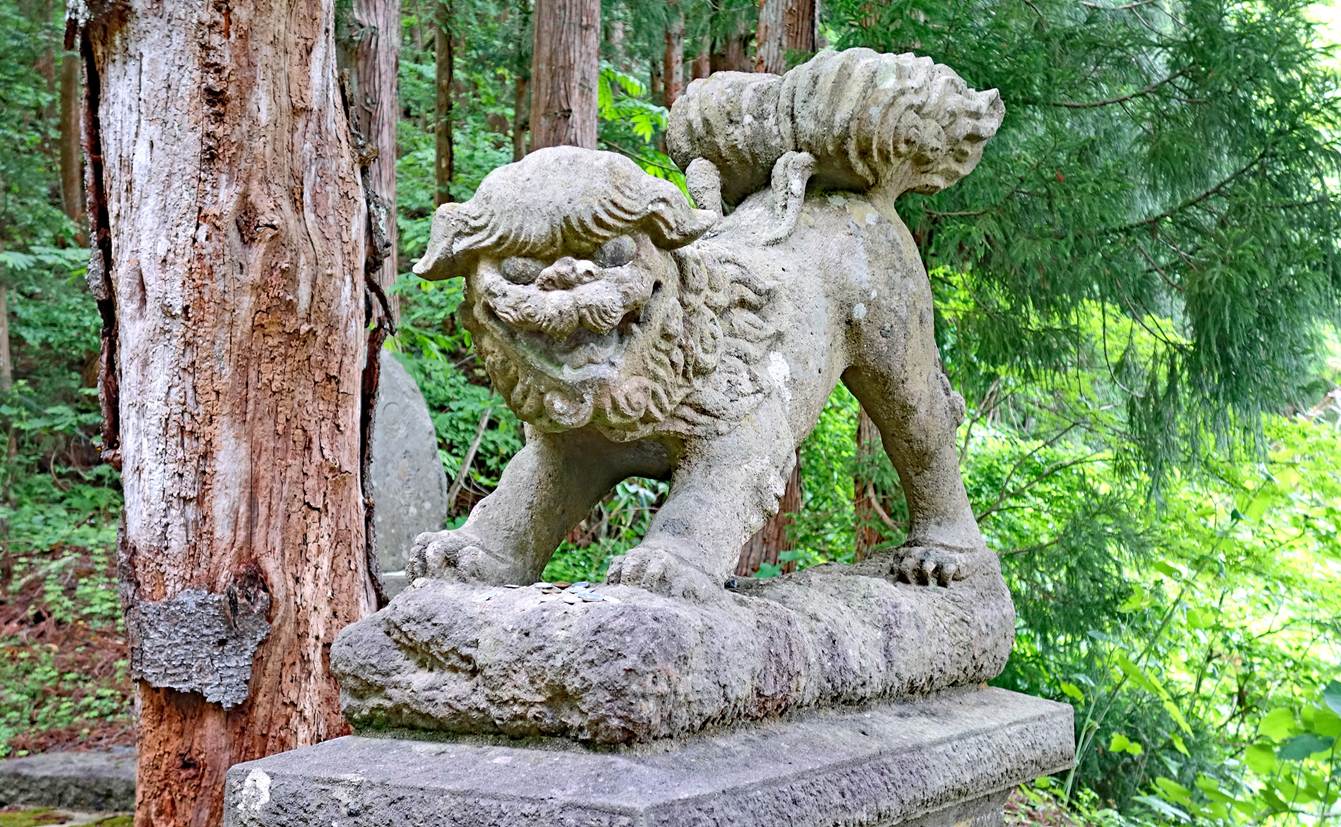
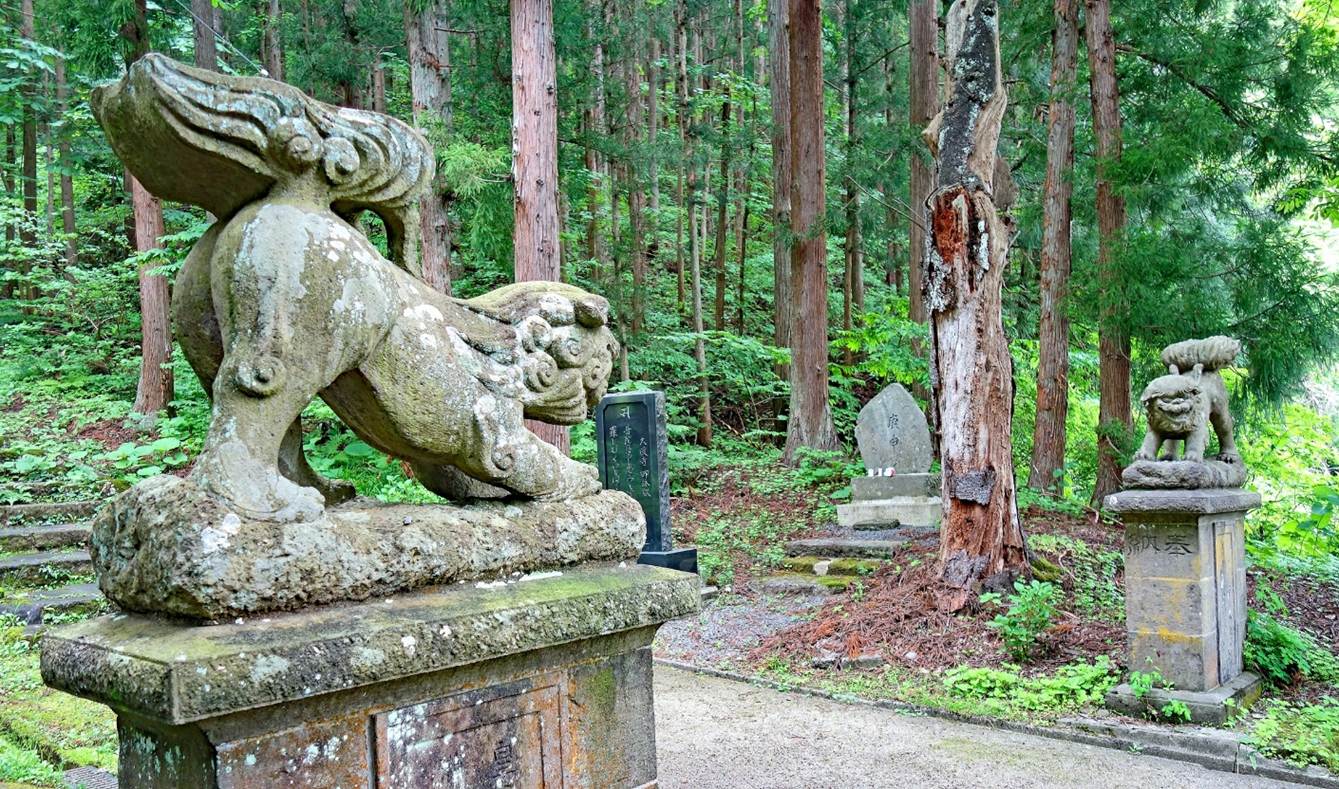
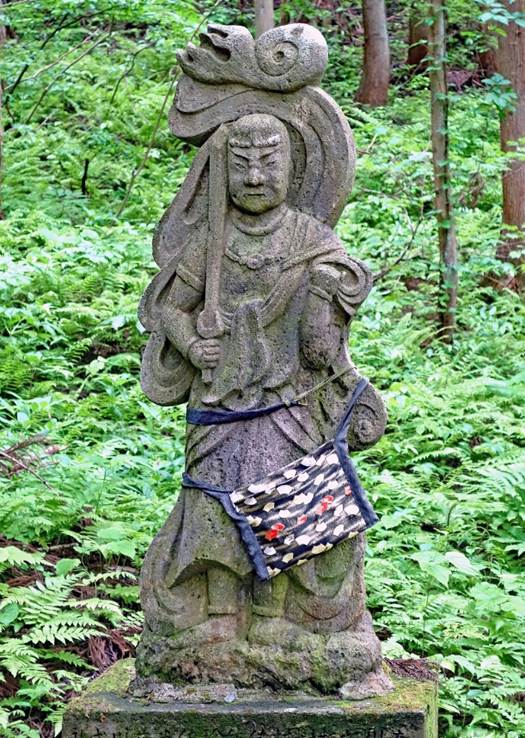
Stone statues of lion-dog guardians at
the base of the long stone stairway leading to the temple buildings.
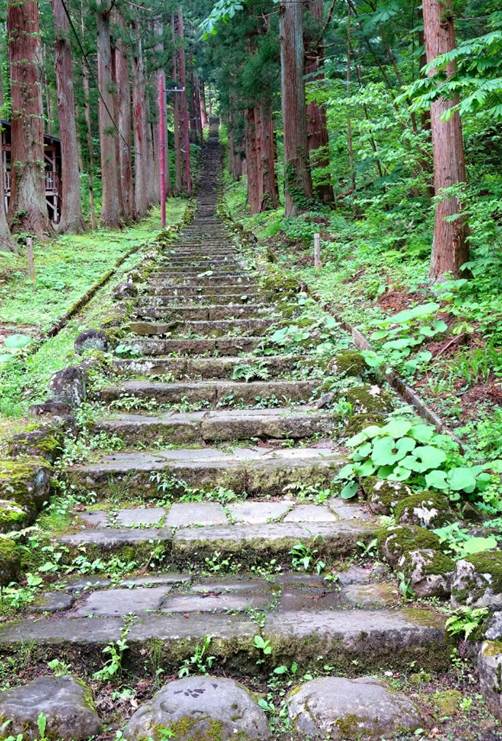
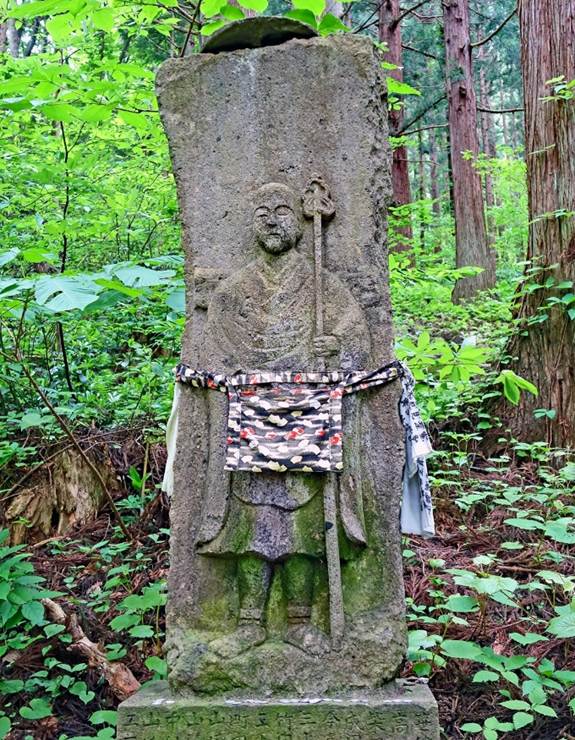
Left: The
stone stairway seen from its base. Center: Stela with a carving representing
Kobo-Daishi, the founder of Shingon Buddhism. Right: Stela with a carving
representing Fudo-myo-o. These two stelae stand midway up the stairway.
|
|
|
|
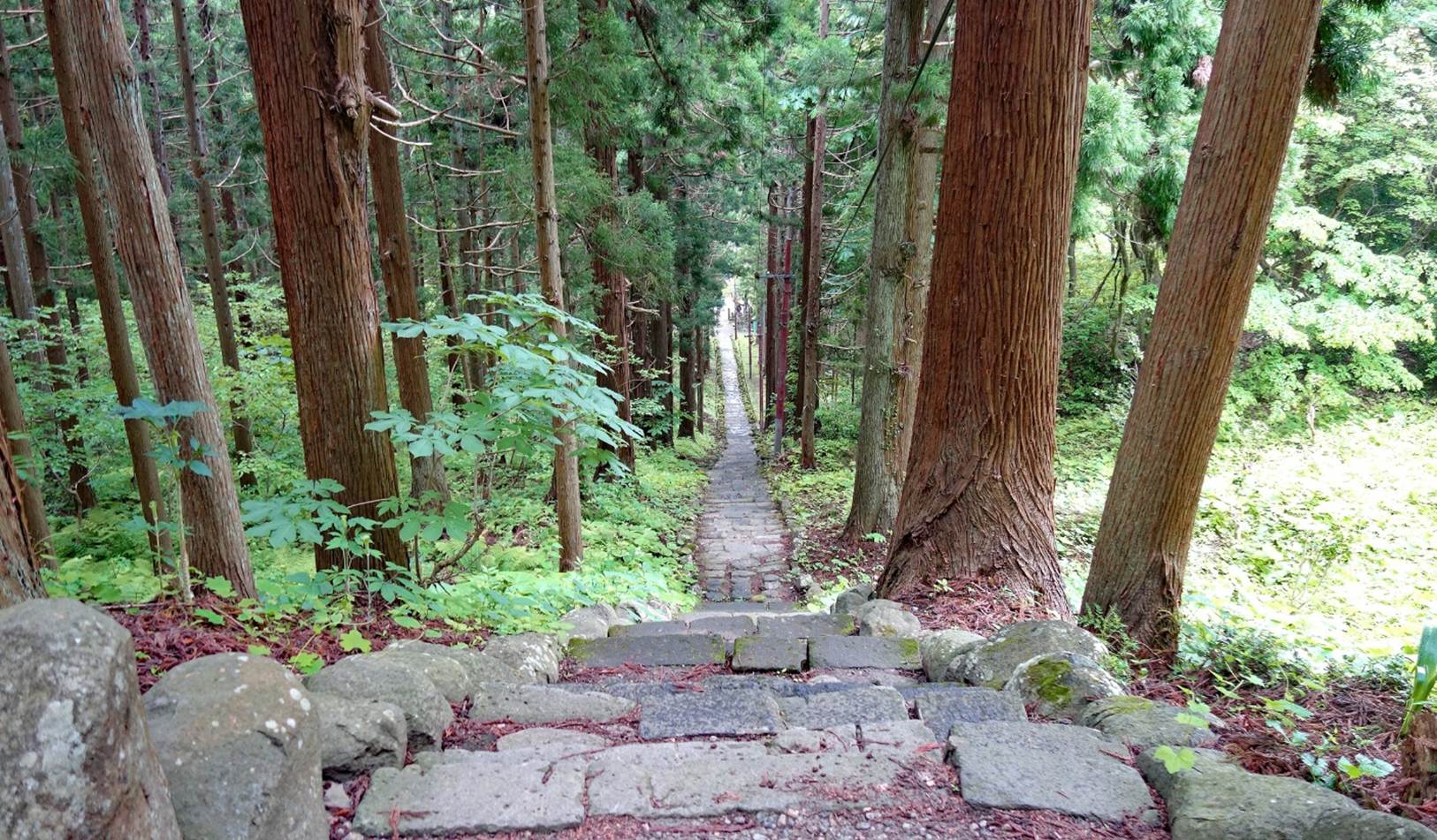
The stairway
seen from the top.
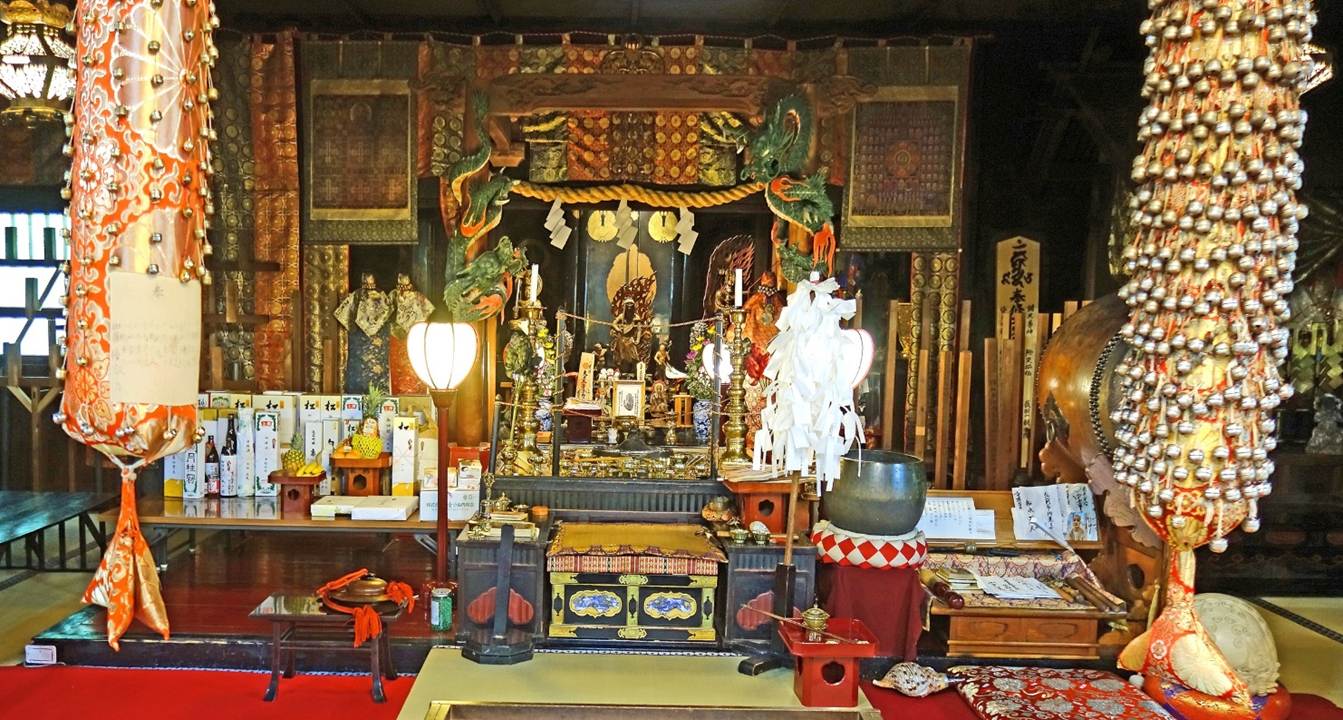
Altar in the
temple's Hondo. It is unusually cluttered with wooden tablets, decorative
curtains, and multiple other objects. The statue in the background, in the
center of the photo, represents Fudo-myo-o flanked with his two attendants
(barely visible) at his sides.
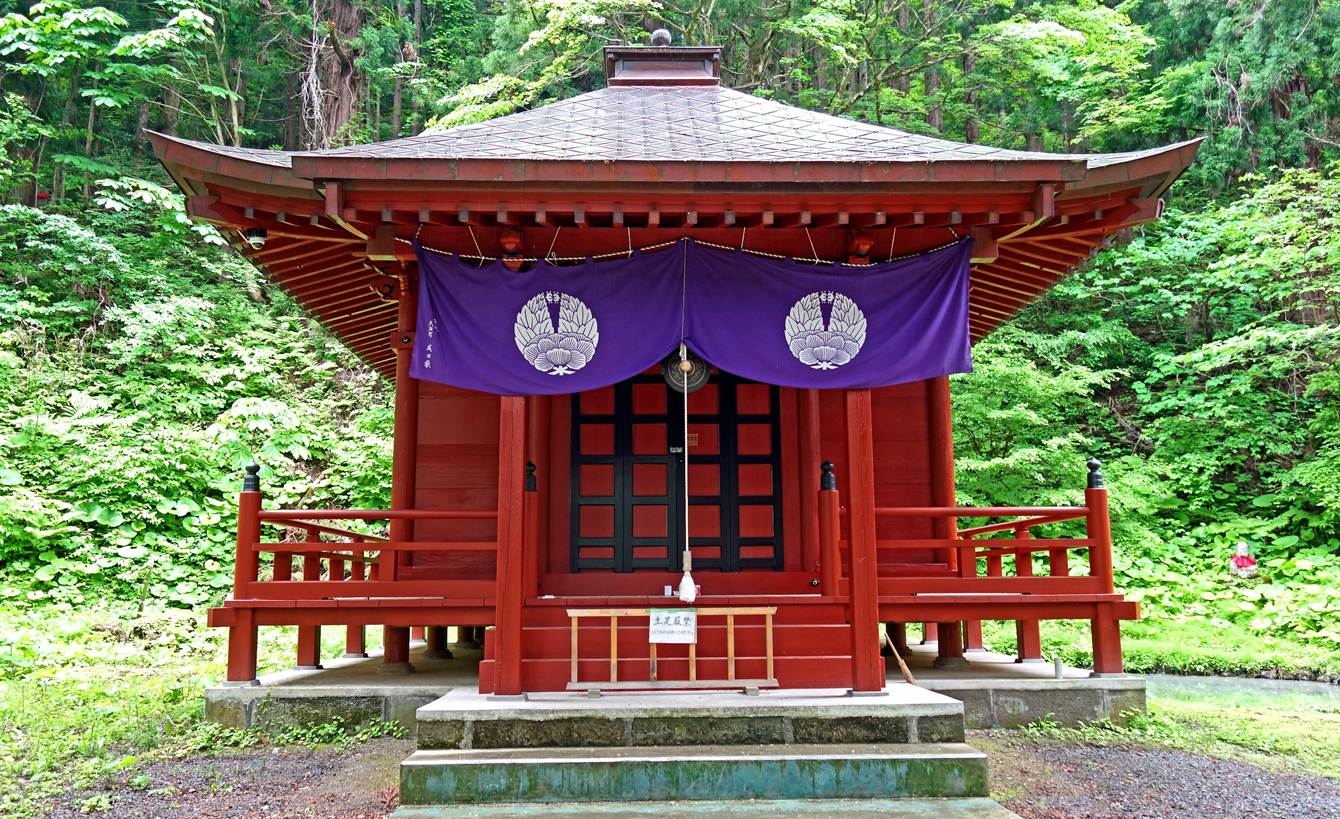
The Kannondo,
a small hall dedicated to Kannon.
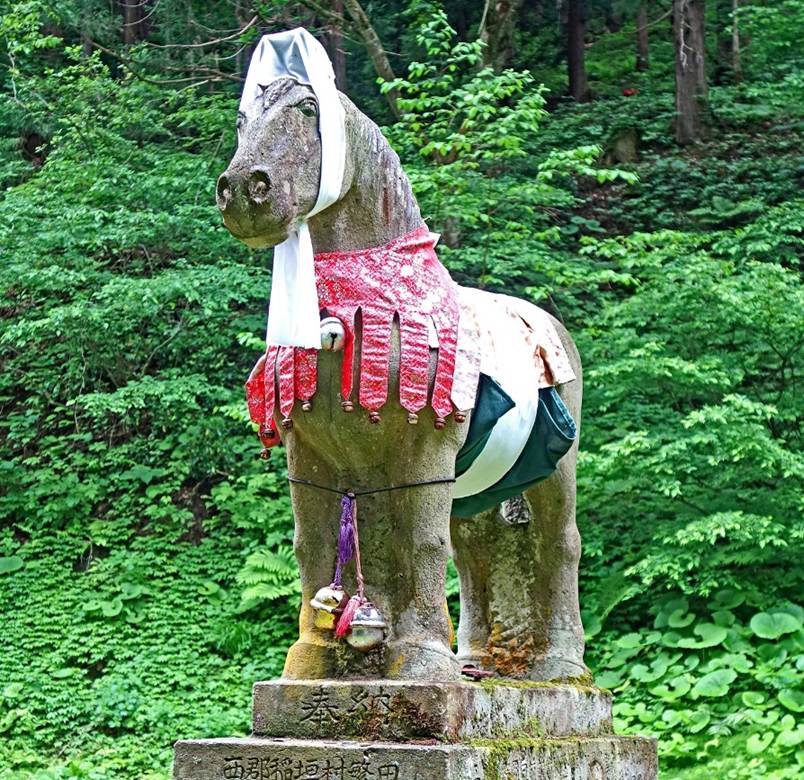
Left:
Dressed-up horse statue, next to the Kannondo. Right: Close-up of one of the
tablets in the Kannon sekizo-gun (see next two photos).
|
|
|
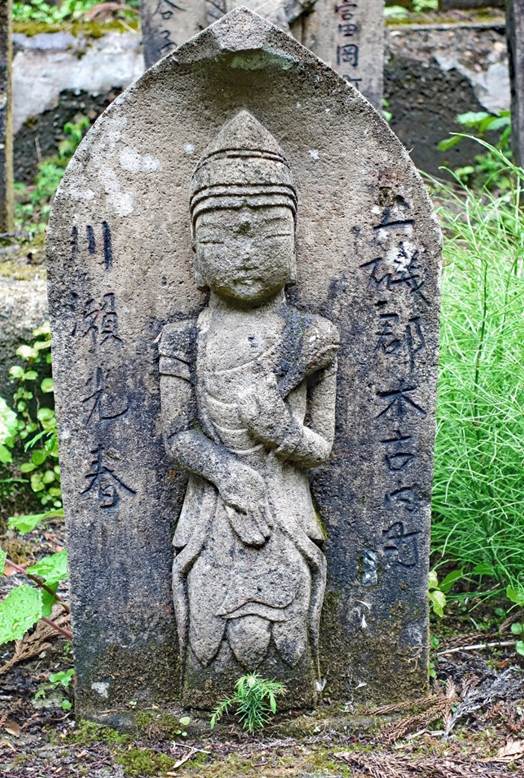
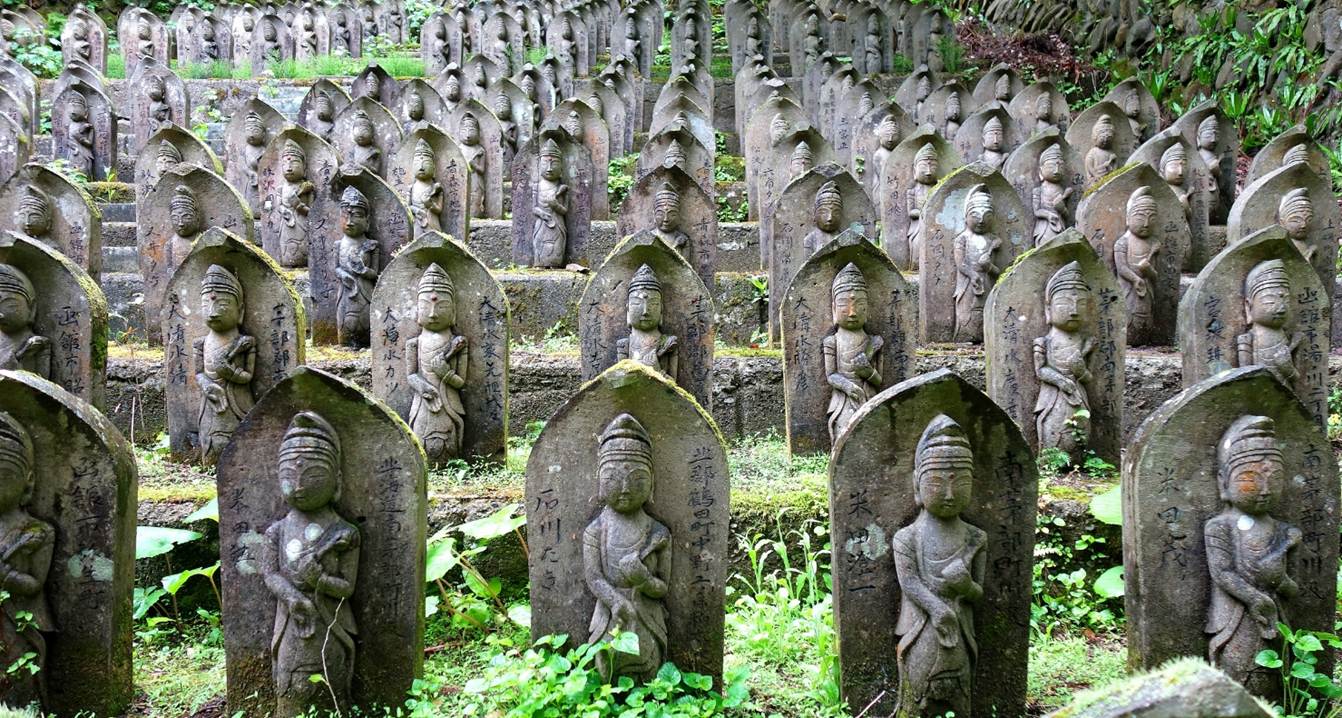
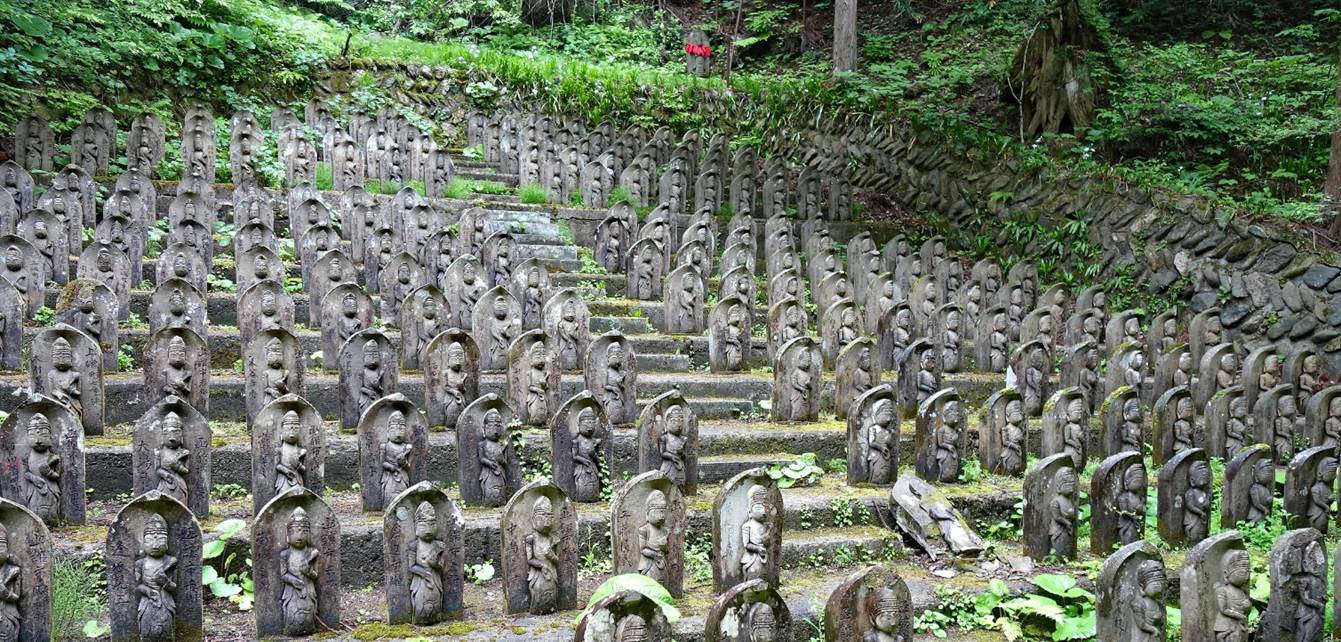
Field covered with more than a hundred similar stone tablets, called the
Kannon sekizo-gun (観音石像群, meaning ″group of stone statues of Kannon″). All the
tablets feature the same engraving of Kannon, but each bears a distinct
inscription, at least some mentioning the names of Japanese cities. The field
appears to be a memorial, perhaps dedicated to those who died in past wars or
famines in various parts of Japan.
Iwakiyama jinja
Iwakiyama jinja is a
Shinto shrine located at the foot of Mount Iwaki, on its southeastern side,
11km west of central Hirosaki. Many centuries ago, Mount Iwaki was already a
place of religious practice for the local Emishi tribes. Later, in 1091, a
Shingon Buddhist temple, Hyakutakuji, was founded there. Its main deities, Amida Nyorai, Yakushi Nyorai, and Kannon,
were associated with the three distinct peaks of Mount Iwaki. As the syncretism of Shinto and Buddhism,
known as Shinbutsu Shugo, dominated Japanese religious practices for centuries,
this temple became used both as a Buddhist temple and a Shinto shrine.
In 1868, following the Shinbutsu Bunri edict, the Hyakutakuji
temple/shrine was officially designated
a national Shinto shrine named Iwakiyama jinja. Explicit references to Buddhism
were removed, some being transferred to Choshoji in Hirosaki (see the ″Choshoji″
section above). Nevertheless, the shrine still includes some Buddhist-style
structures, such as the Romon. Several kami are enshrined at Iwakiyama jinja.
The main one, Okuninushi (大国主), is
associated with healing, protective magic, and good relationships.
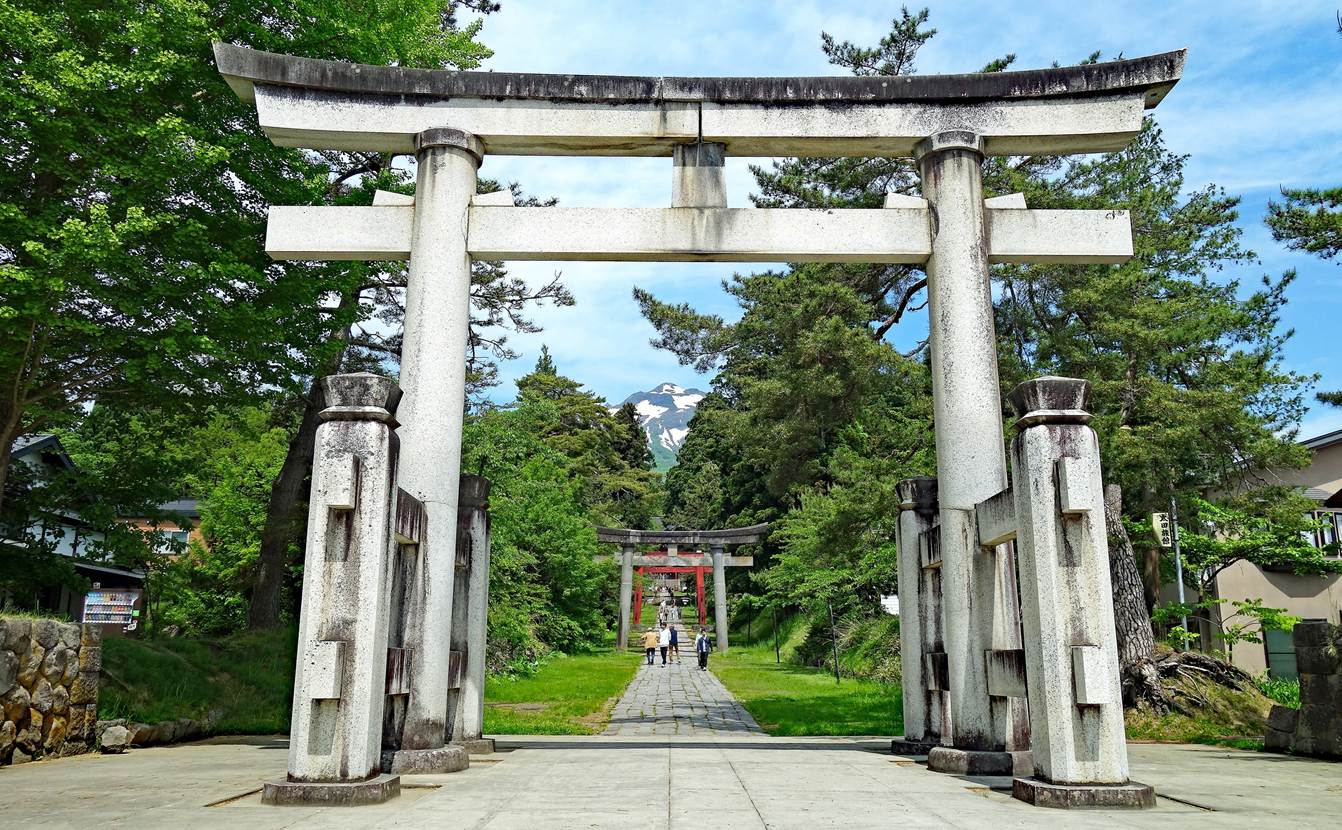
View from the entrance
to the shrine complex, with Mount Iwaki in the background.
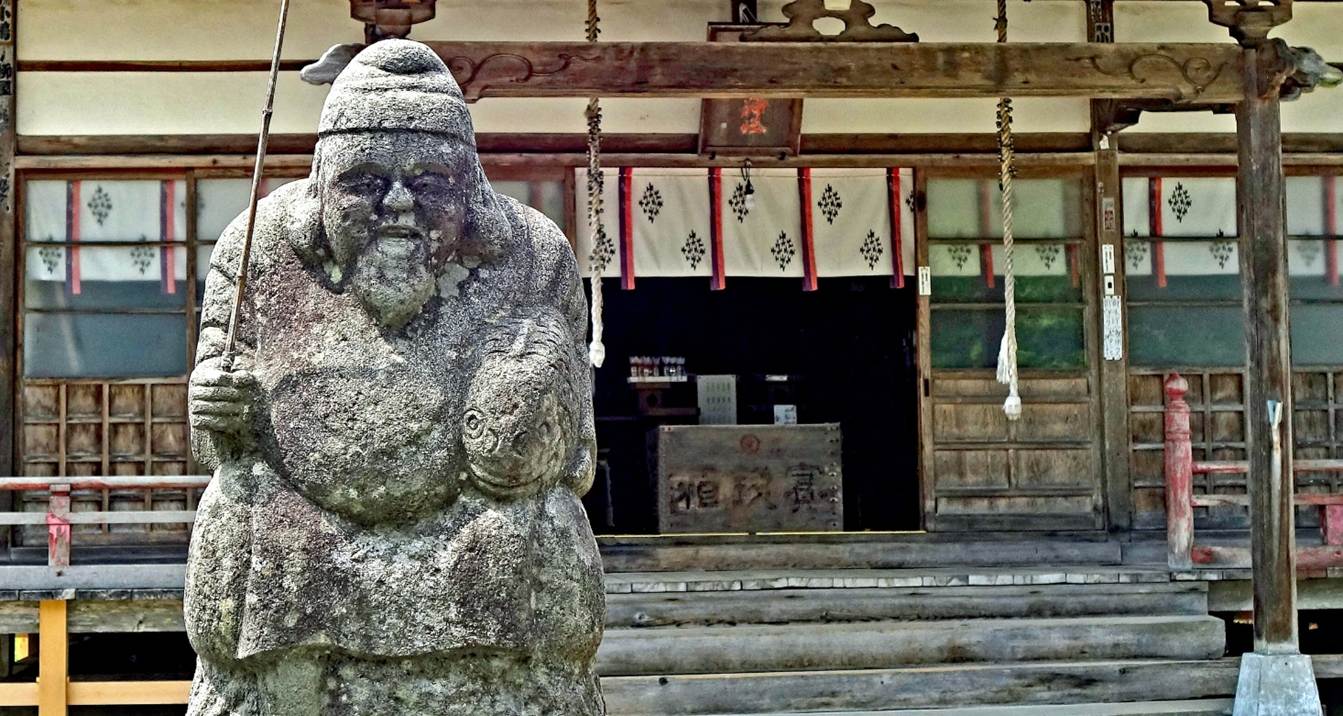
Statue of Ebisu in
front of the small Okufuji Izumo shrine, located to the left of the long
walkway leading to the main buildings of Iwakiyama jinja, just past the second
torii. Ebisu is the Japanese god of luck and prosperity, and the patron of
fishermen (note that he holds a fish in his left hand). He is original to
Japan, without any Buddhist or Taoist influence.
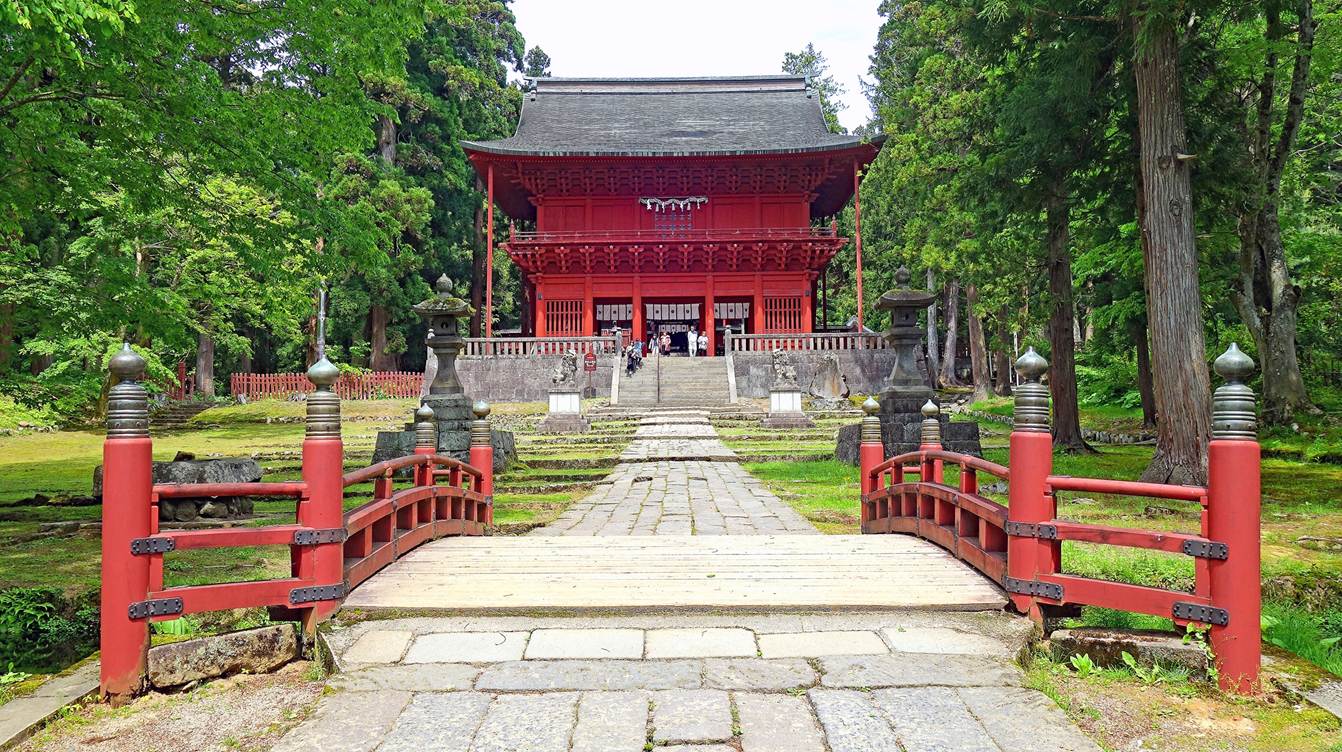
The Romon, a massive
two-story vermilion gate, through which one passes before reaching the main
part of the Iwakiyama jinja. Built in 1628 at the beginning of the Edo period,
its style is a reminder of the shrine's Buddhist past.
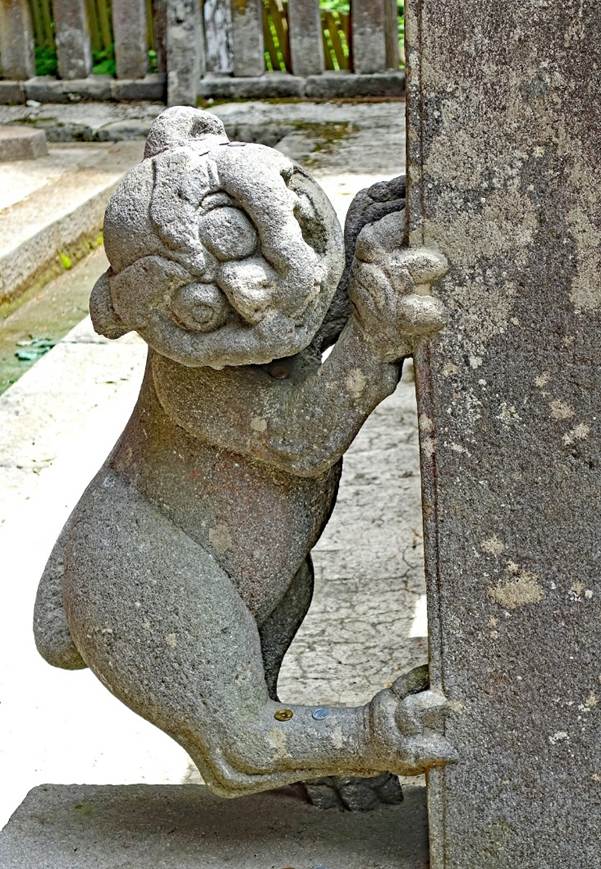
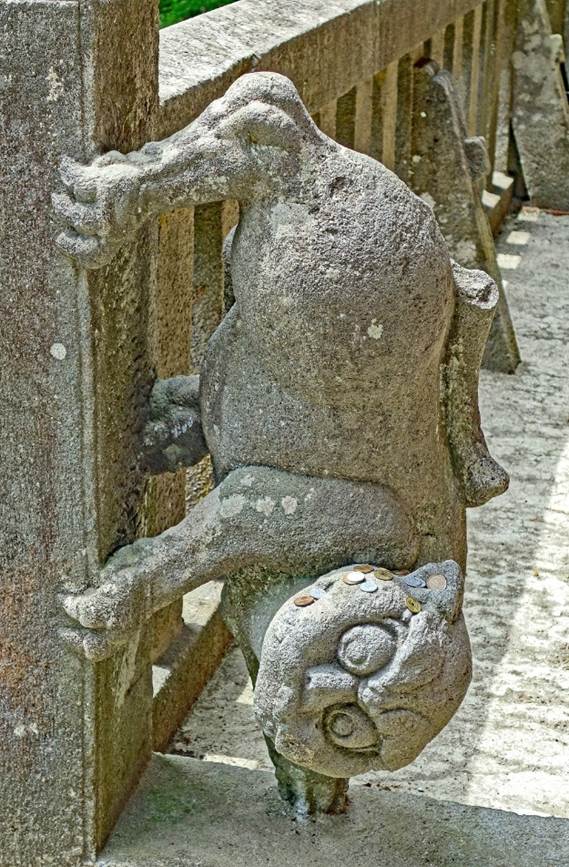
Statues called Tamagaki
Komainu (玉垣狛犬). They represent lion-dog guardians
clinging to the two pillars of the stone fence surrounding the Romon. One is
said to bring financial luck and the other good relationships.
|
|
|
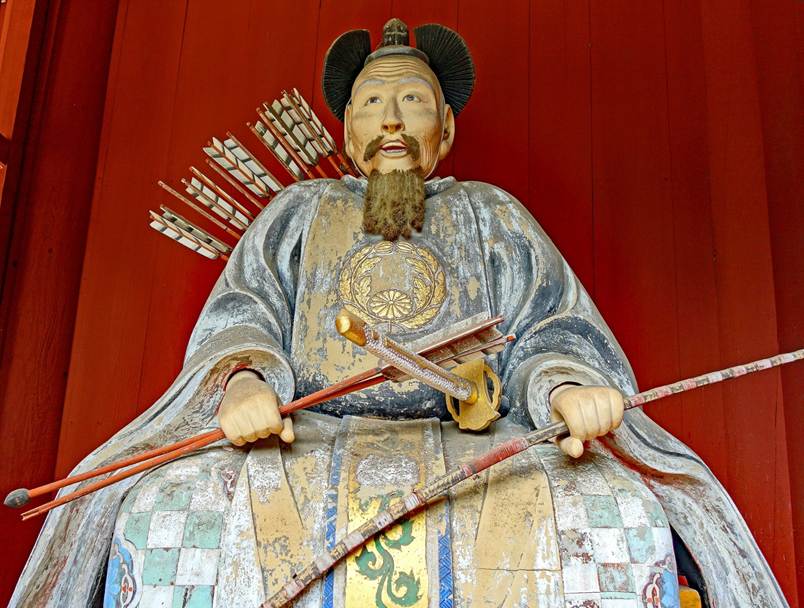
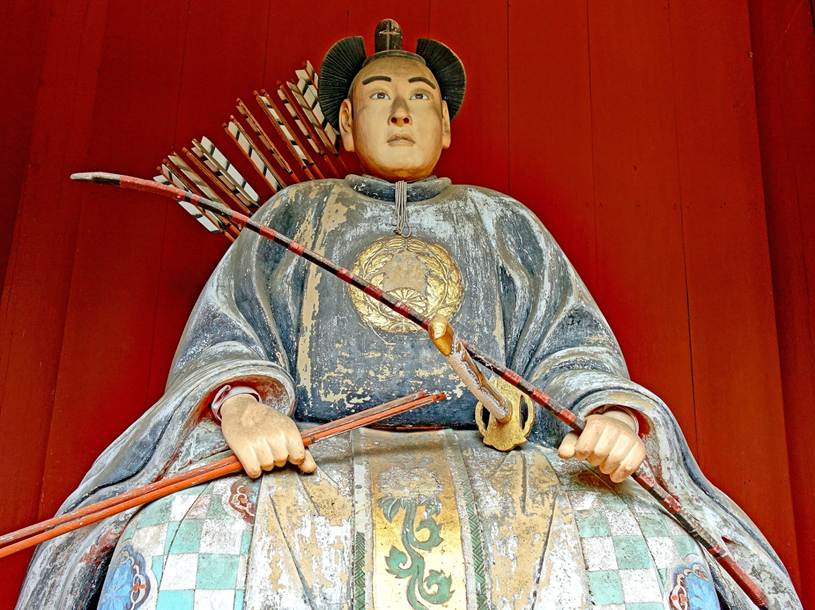
Gatekeepers housed
inside the Romon to prevent evil spirits from entering.
|
|
|
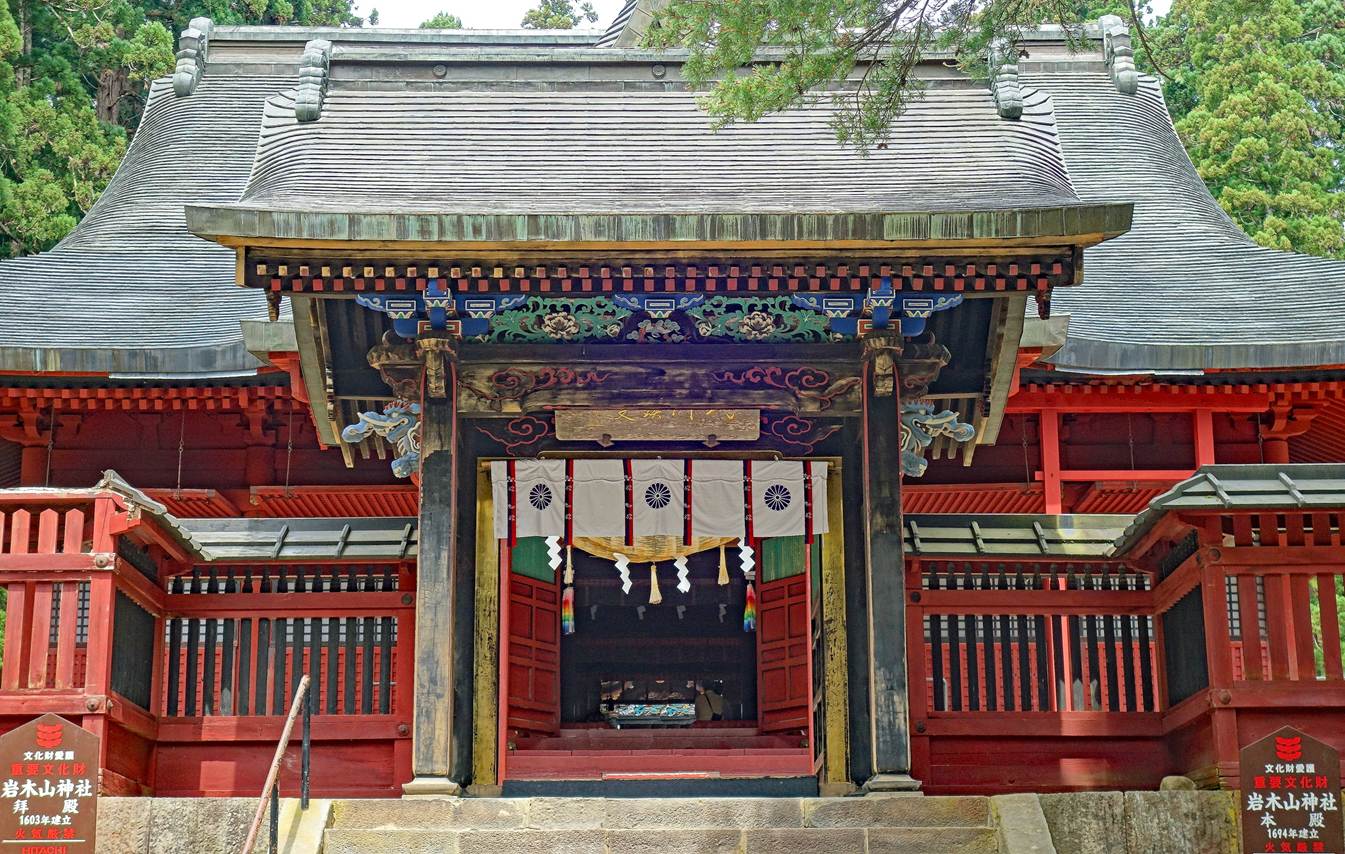
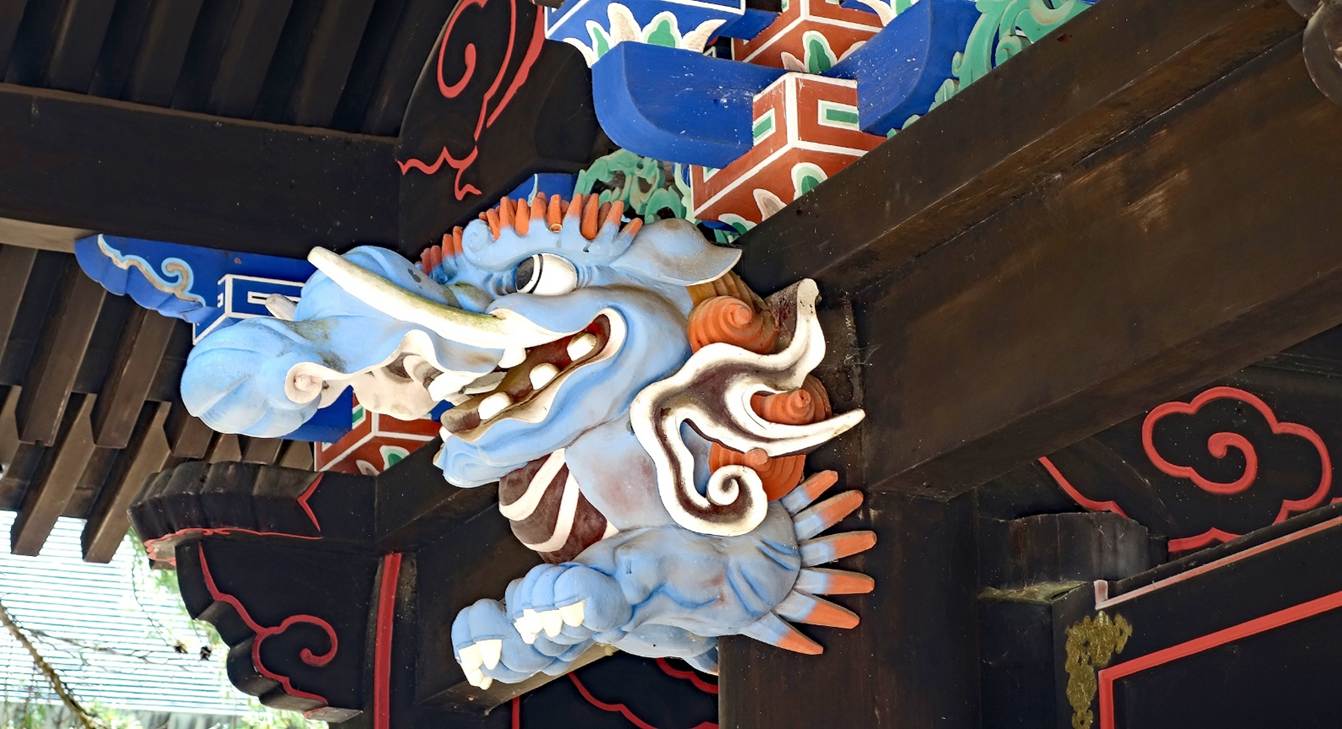
Entrance gate to the
shrine's haiden (worship hall). The decorations beneath its roof combine
complex shapes and vibrant colors that are reminiscent of the Momoyama period
(1573-1603). The second photo below is a close-up of one of the two similar
protruding painted sculptures.
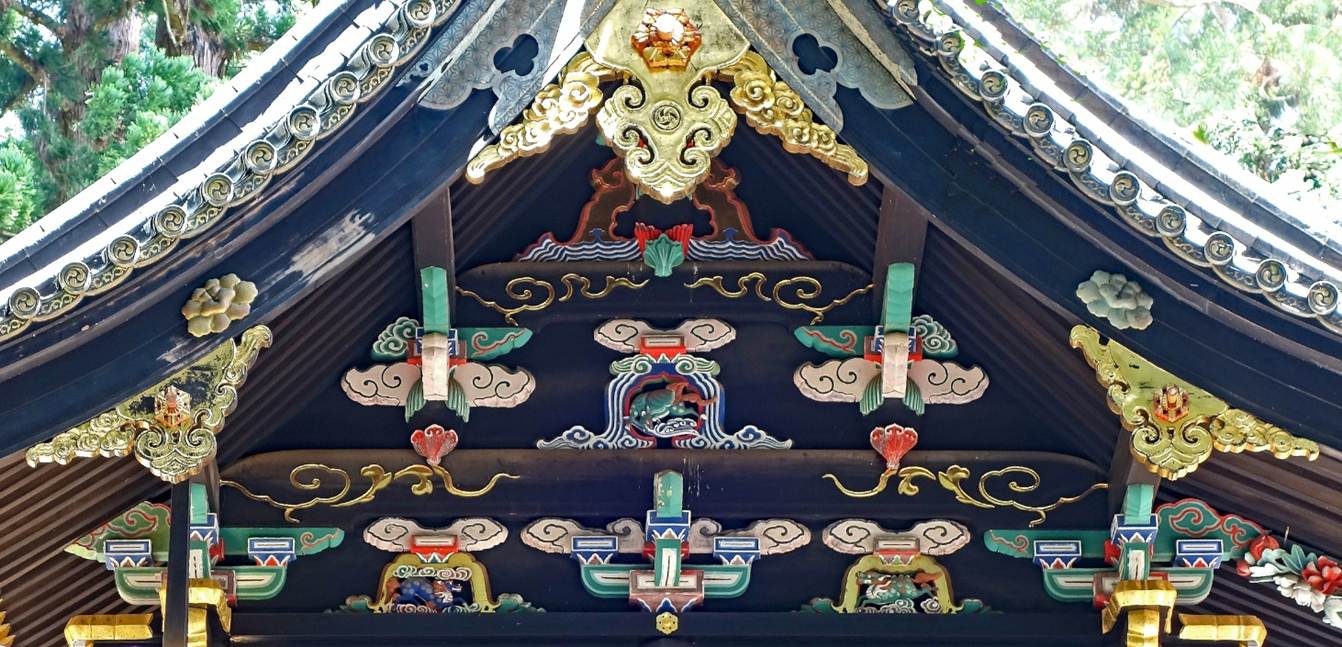
Decorated gable wall of
the Honden, the hall where the kami reside.
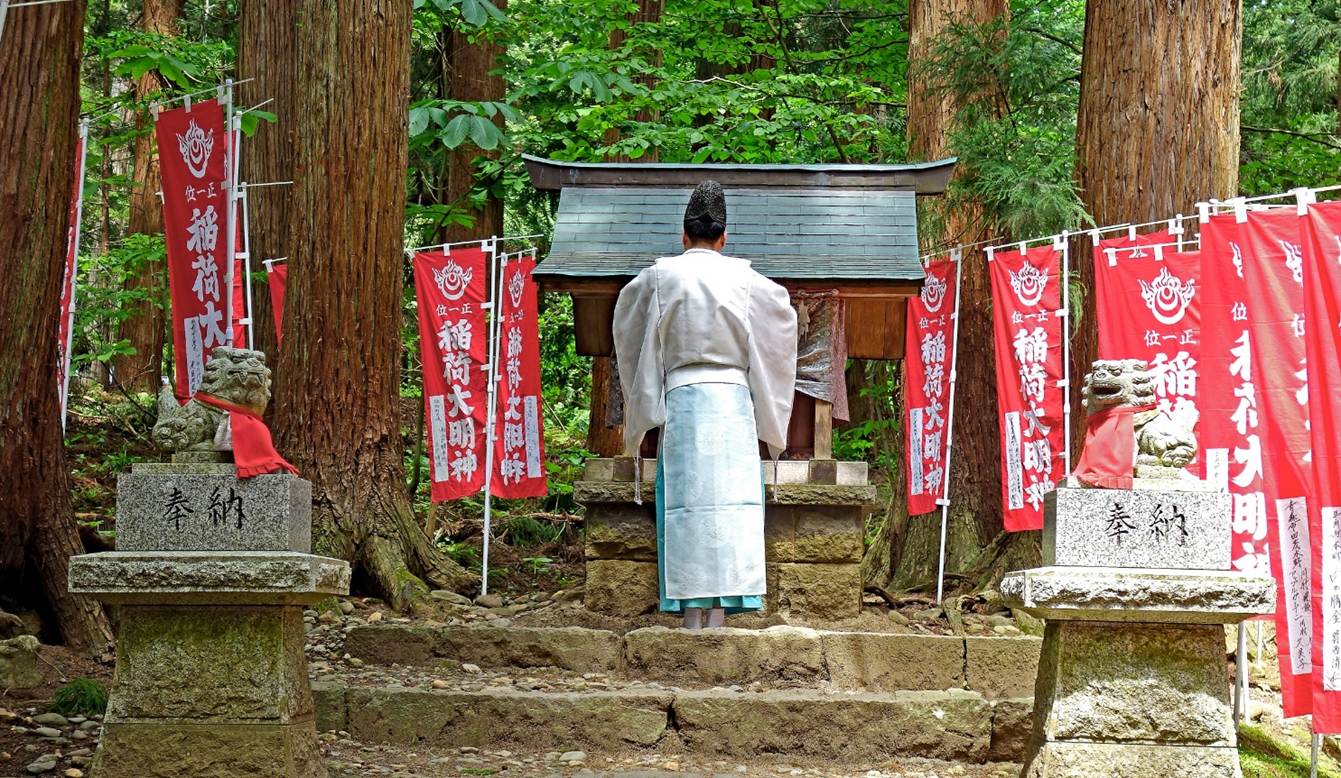
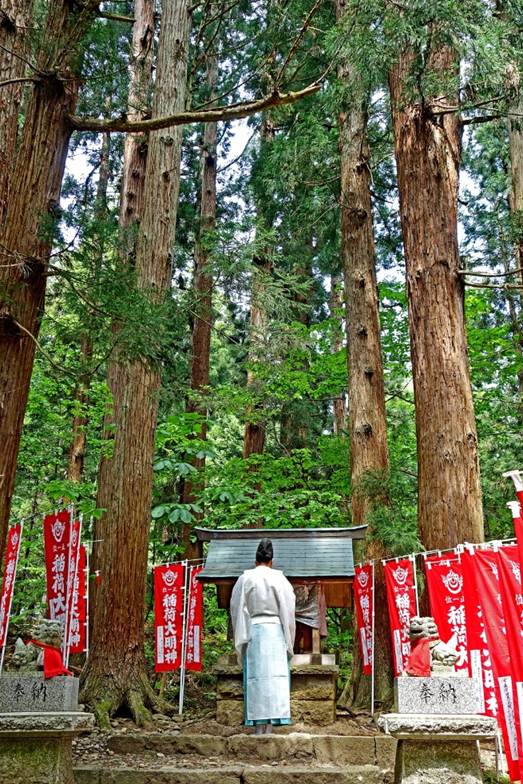
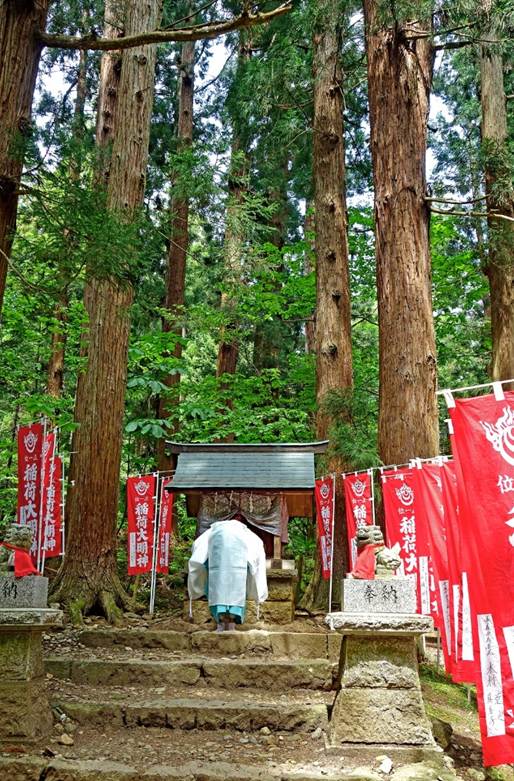
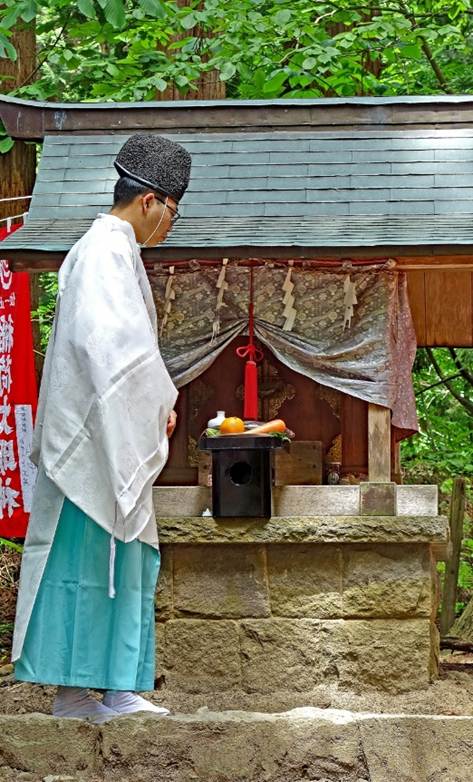
Shinto priest
performing rituals, next to the haiden.
|
|
|
|
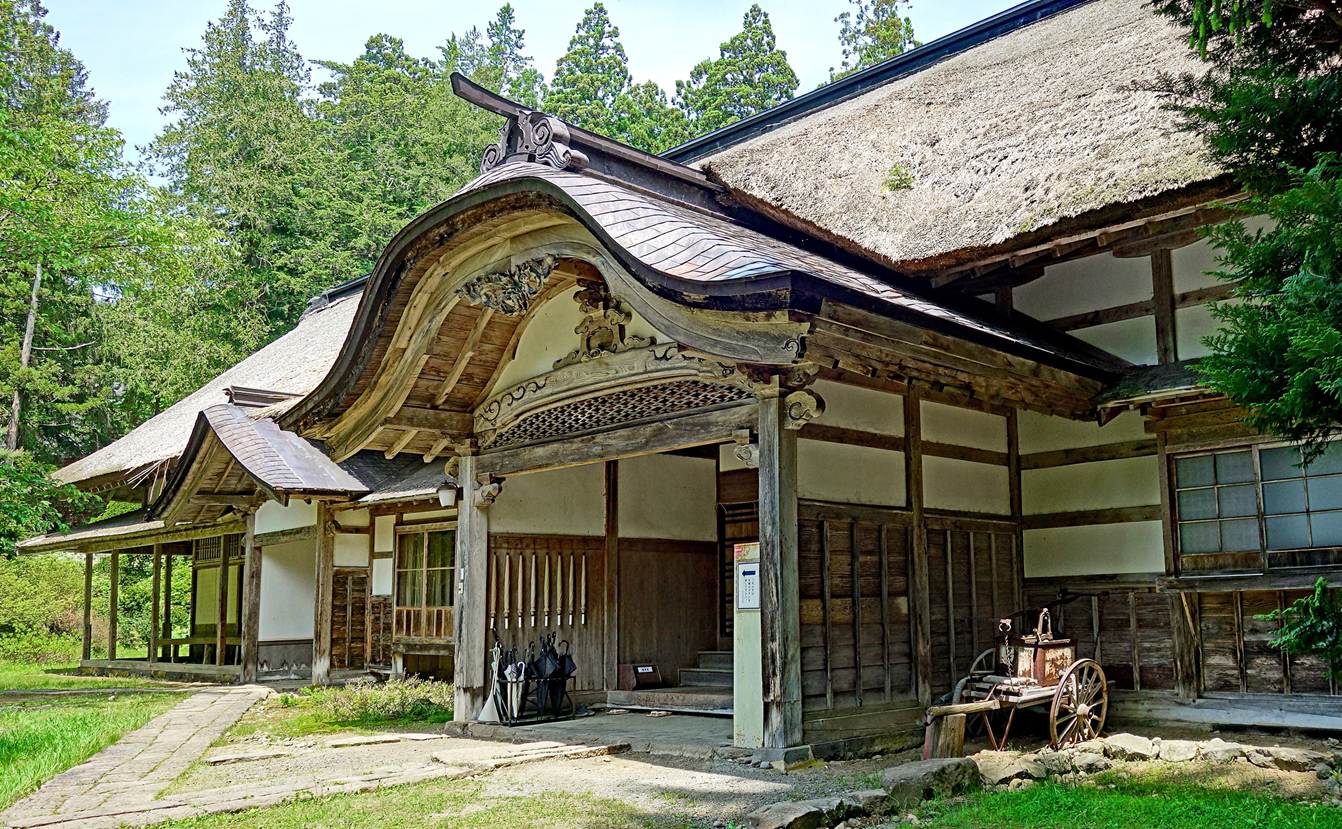
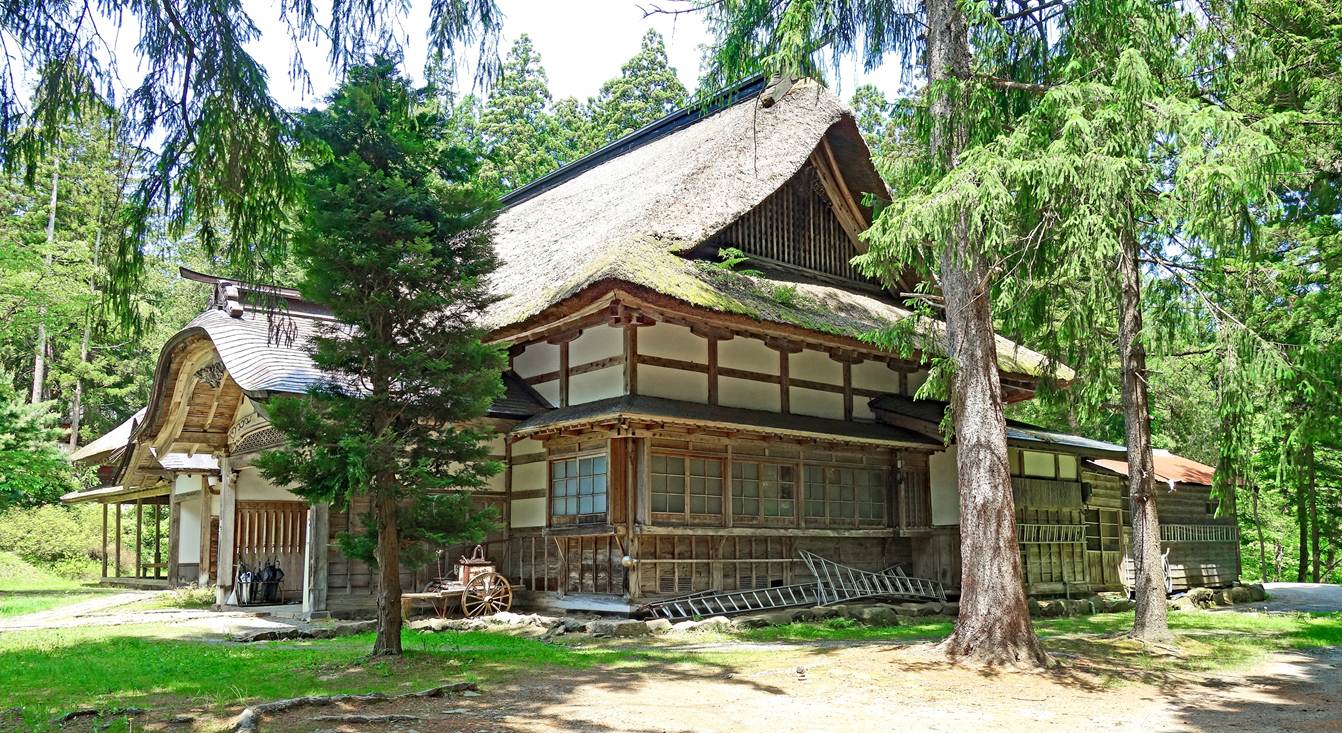
Old building serving as
the priests' quarters.
Gumonji.
This small Shingon
Buddhist temple is located a short walk east of Iwakiyama jinja. It was founded
in 1625. Its main hall was rebuilt in 1893 and again in 1957.
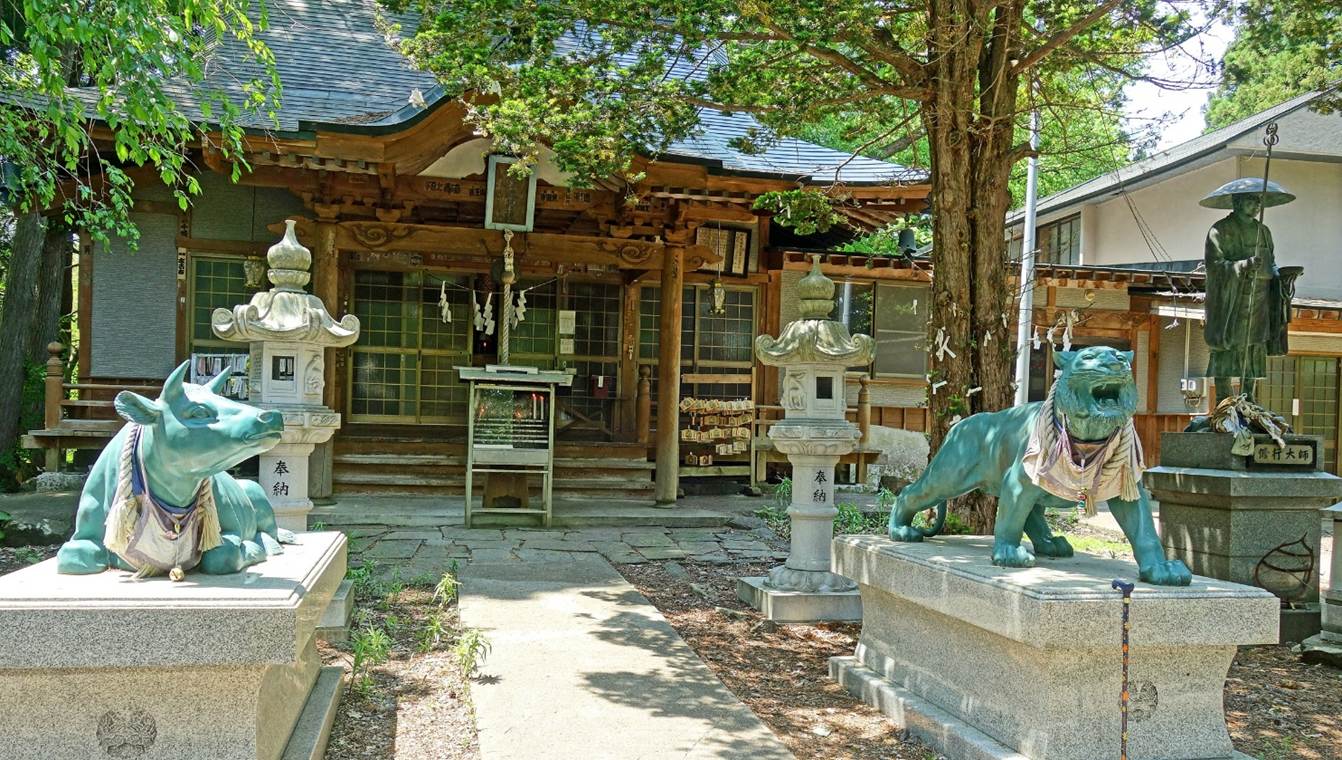
View of the main hall,
with statues of an ox and a tiger in front. The other statue on the right of
the photo is that of Kobo-Daishi.
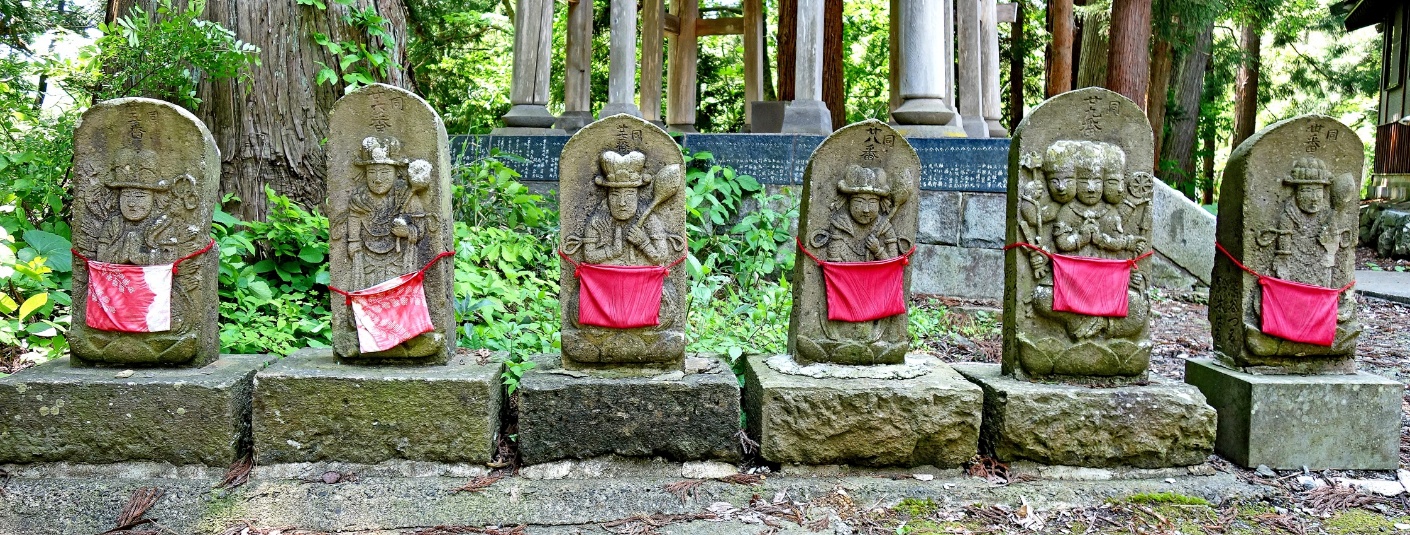
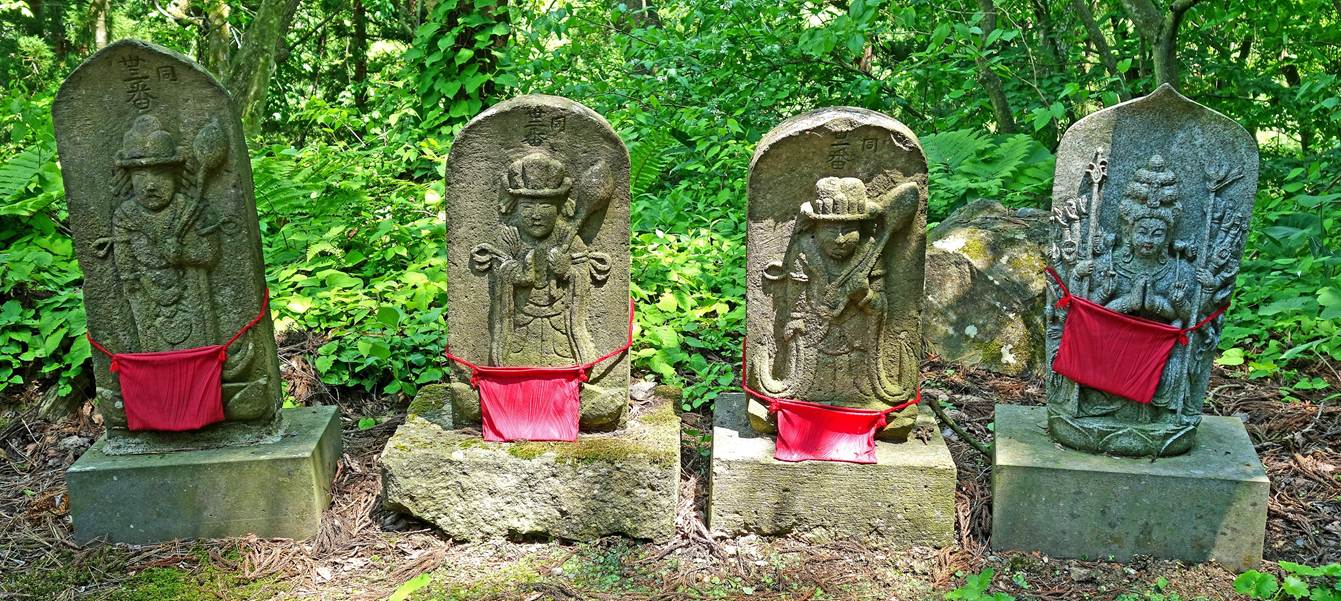
Rows of carved stone
stelae within the precinct.
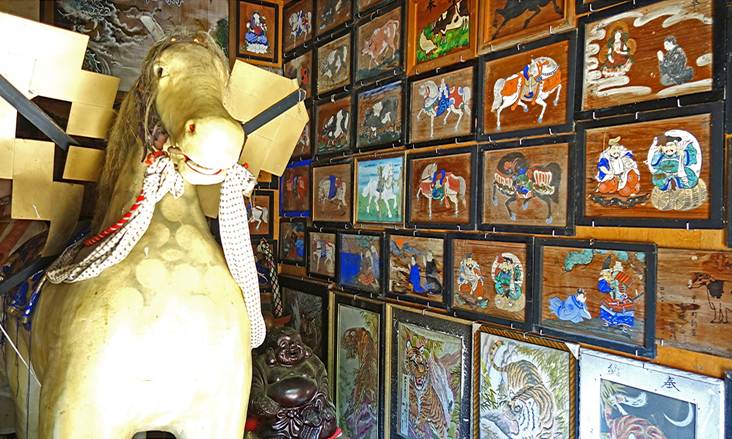
A quite unusual sight
in this temple is a small hall called the Ema Hall. Inside, its back wall and
two side walls are completely covered with painted wooden plaques. Its interior
is mostly occupied by a large horse statue. There are also small horse statues
on the ground on both sides of the large one. What does this hall stand for?
Today, in most Buddhist
temples and Shinto shrines throughout Japan, ema are small wooden plaques on
which worshippers wrote prayers or wishes. But the term ″ema″ is
the pronunciation of 絵馬, in which 絵 means ″picture″ and 馬 means ″horse″. In fact, in
ancient times, to obtain divine favors, people were donating horses to temples.
They considered these horses as the bearers of their requests. To reduce the
cost of this practice, wooden plaques featuring painted horses were later
offered, instead of actual horses. Then, over time, the plaques became smaller
and smaller, and the painted horses were replaced with short written prayers or
wishes and occasional simple drawings.
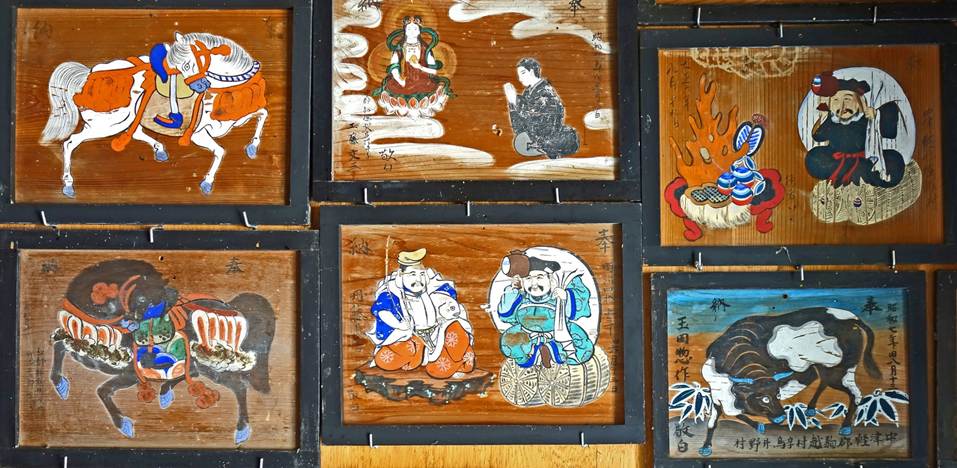
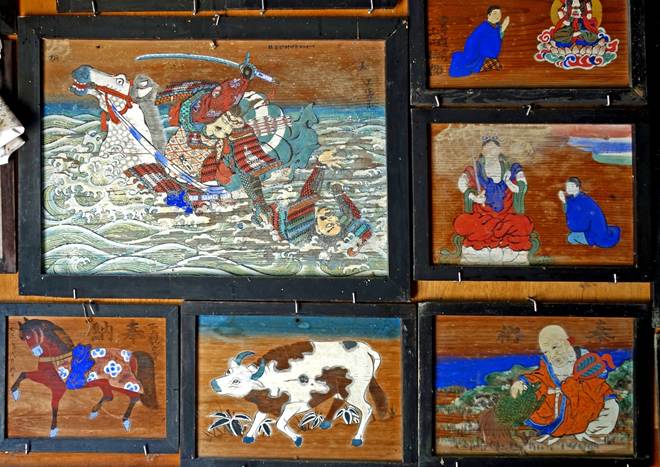
The Ema Hall in Gumonji is a repository
of former painted wooden votive plaques. Most date from the early 20th century.
Many have horses painted on them.
The two pictures below
show the left and right sides of the Ema Hall.
|
|
|
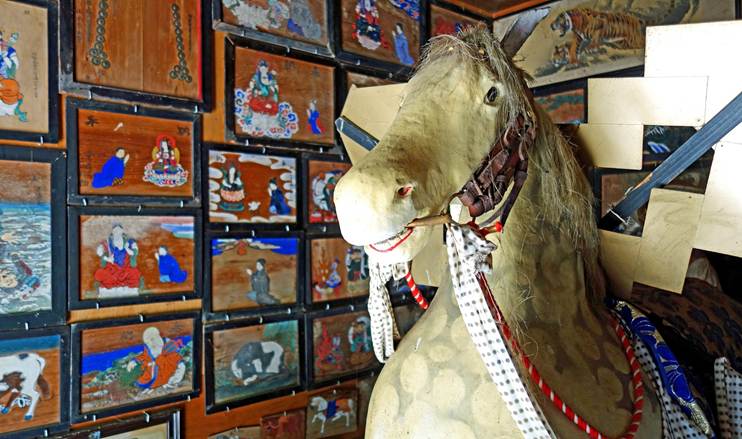
Close-ups of some
votive plaques.
|
|
|
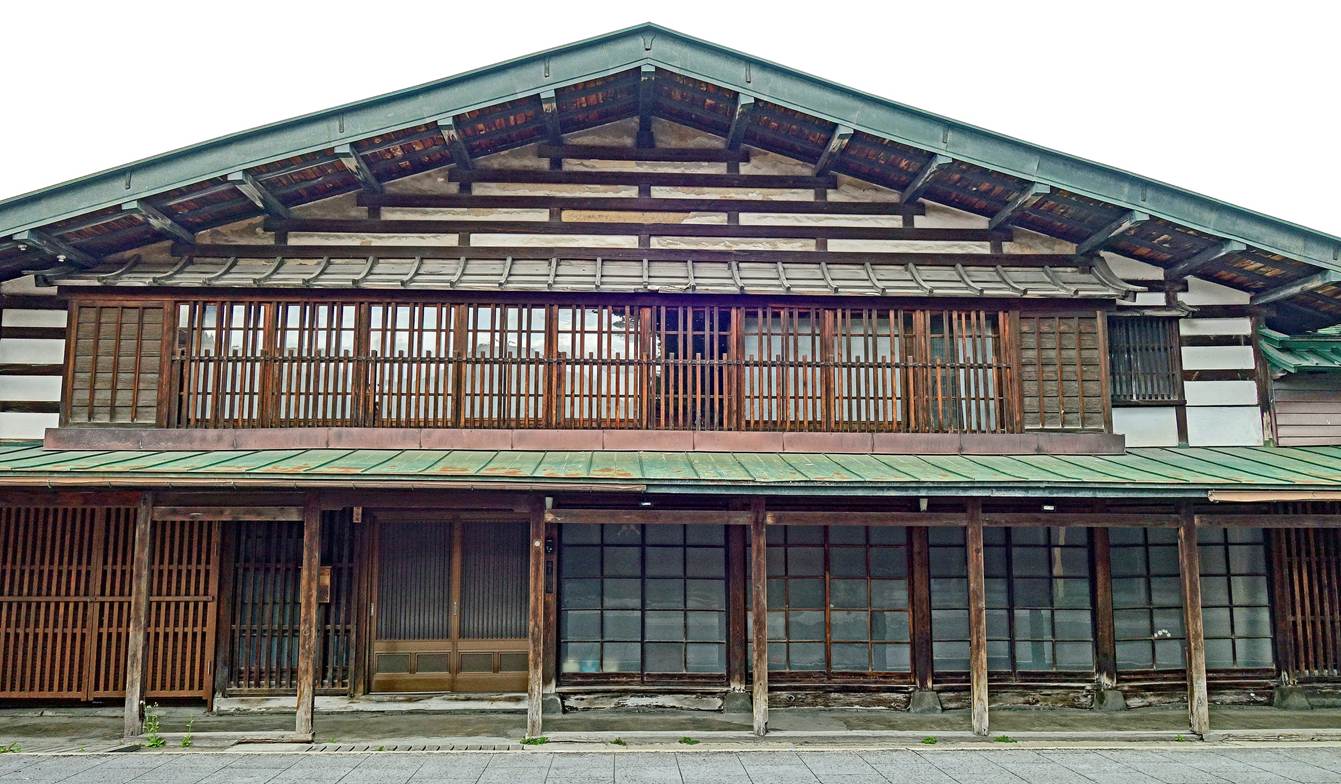
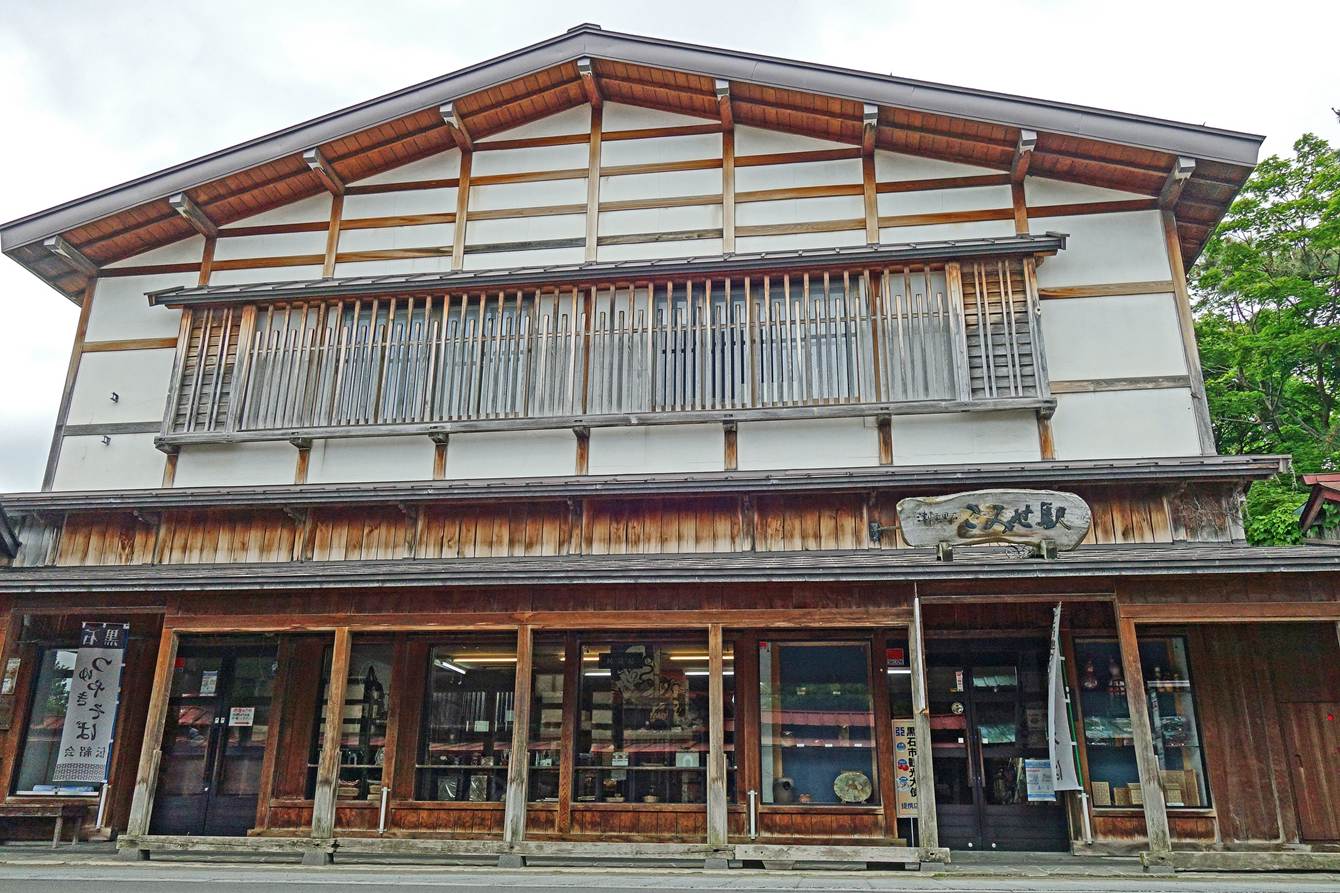
Kuroishi.
Located about 12km
northeast of central Hirosaki, the small town of Kuroishi is best known for a
160m section of the Nakamachi street, called Nakamachi
Komise. This section is lined on both sides with well-preserved Edo-period
wooden houses, the eaves of which form continuous covered walkways, called ″komise″
(小見世), providing protection
from heavy snowfalls in winter and the sun in summer. Most of these houses were
once breweries, rice merchant houses, kimono stores, and more. Some (mainly
breweries) still operate today, while others have been remodeled for new commercial
activities.
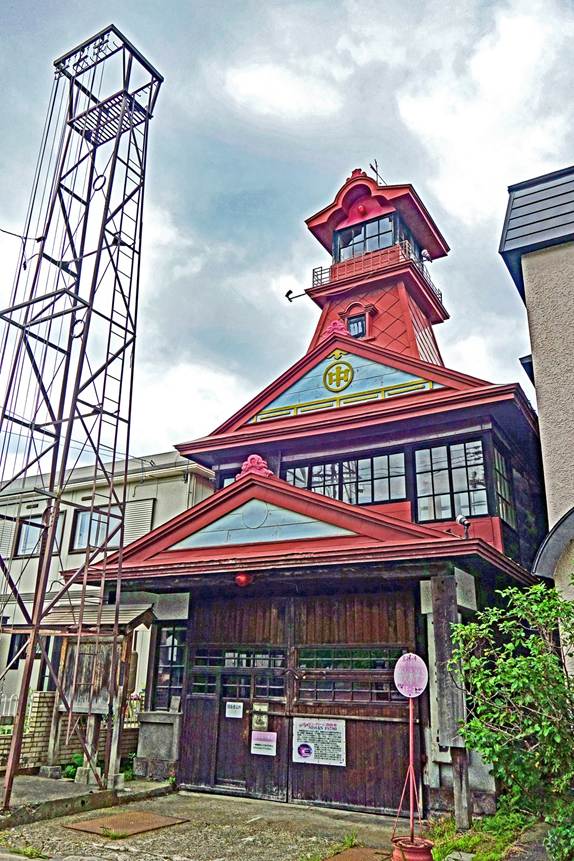
Former fire station
near Nakamachi Komise street.
View of a portion of Nakamachi Komise.
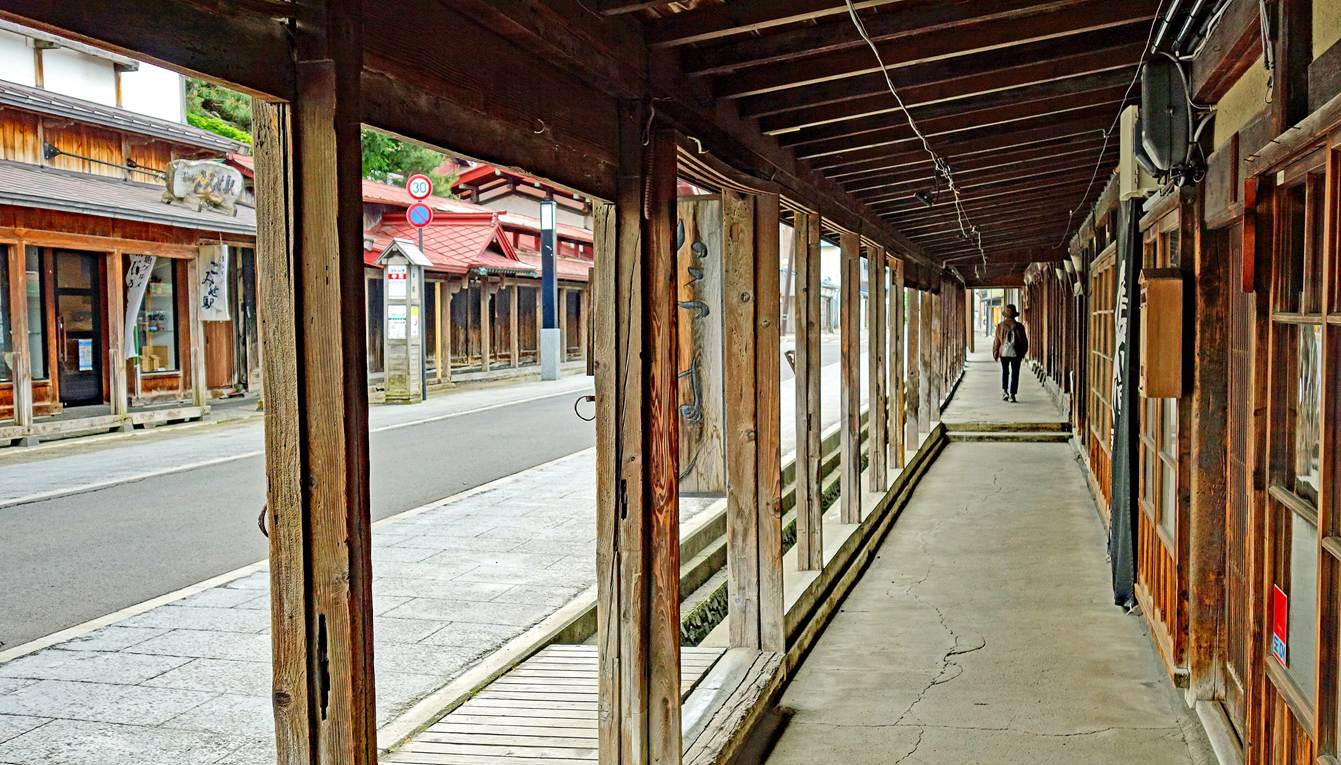
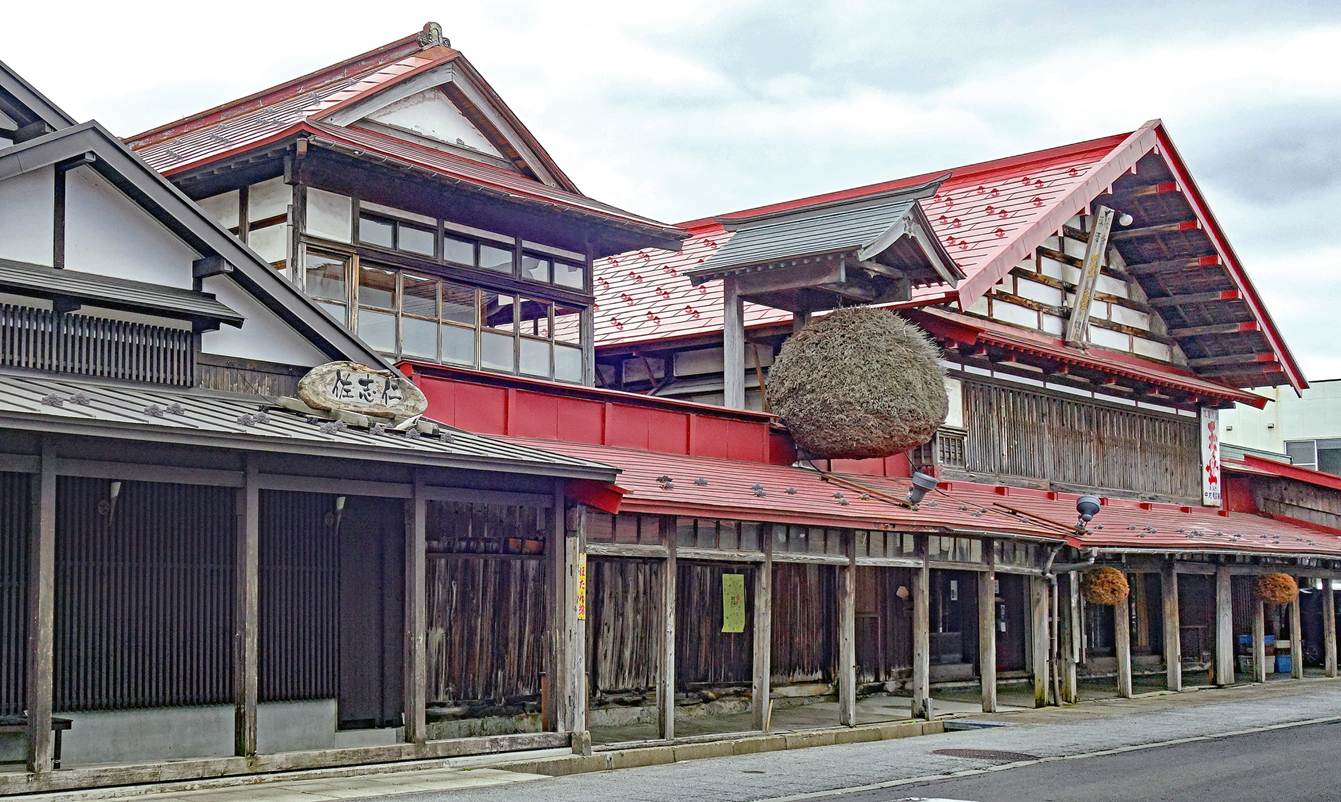
The following 7 photos show various houses along Nakamachi Komise (in no
specific order).
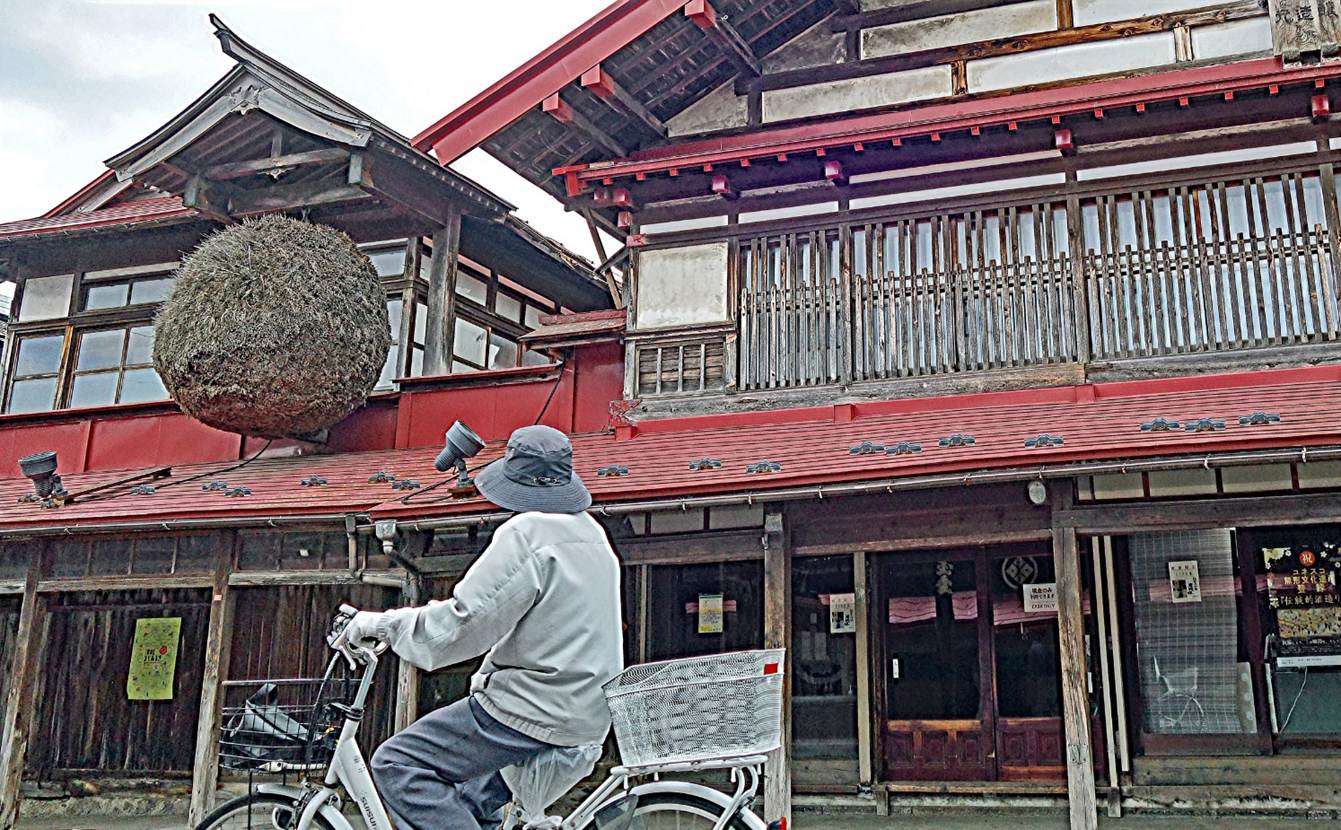
Nakamura Kamekichi sake brewery. Its sugidama (balls made of branches of
cedar trees) is 2.1m in diameter and weighs 1.5t.
Bicycle passing in front of the Nakamura Kamekichi sake brewery.
Narumi Family brewery.
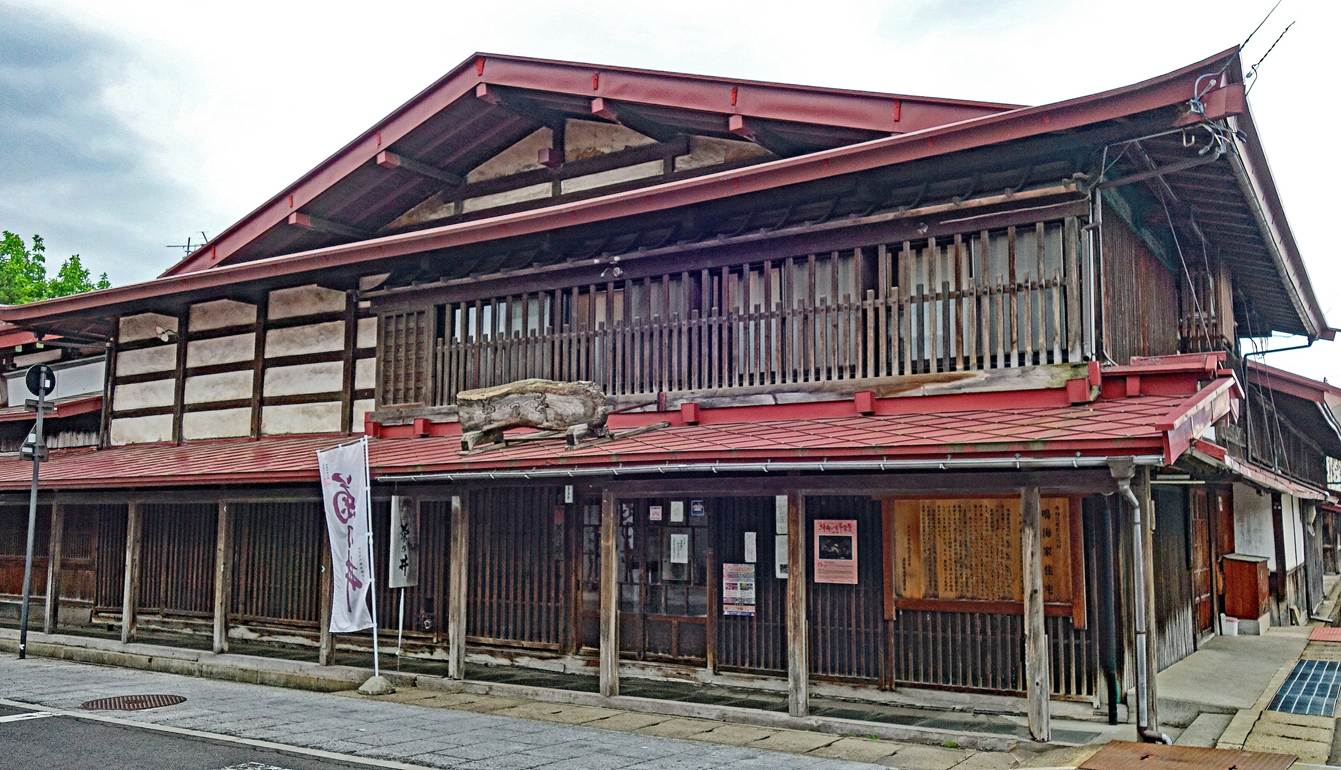
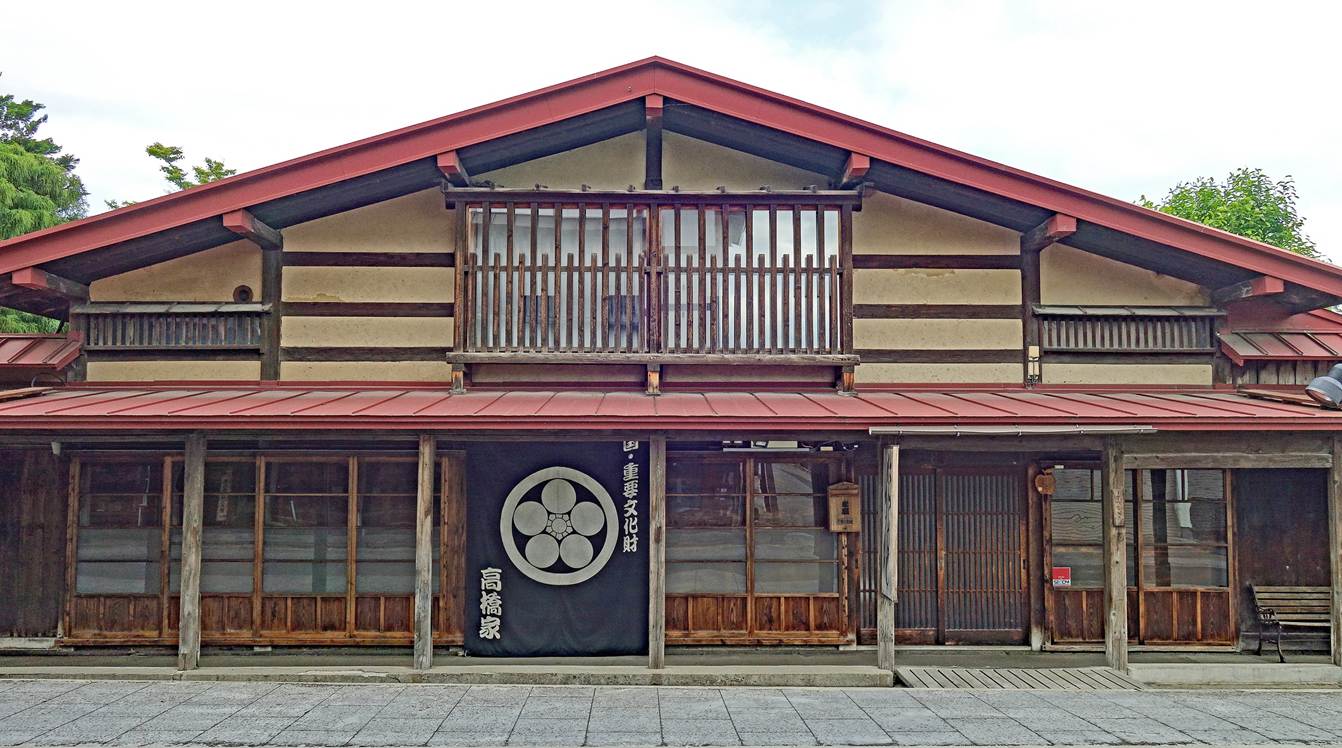
Takahashi house, a former rice merchant store.
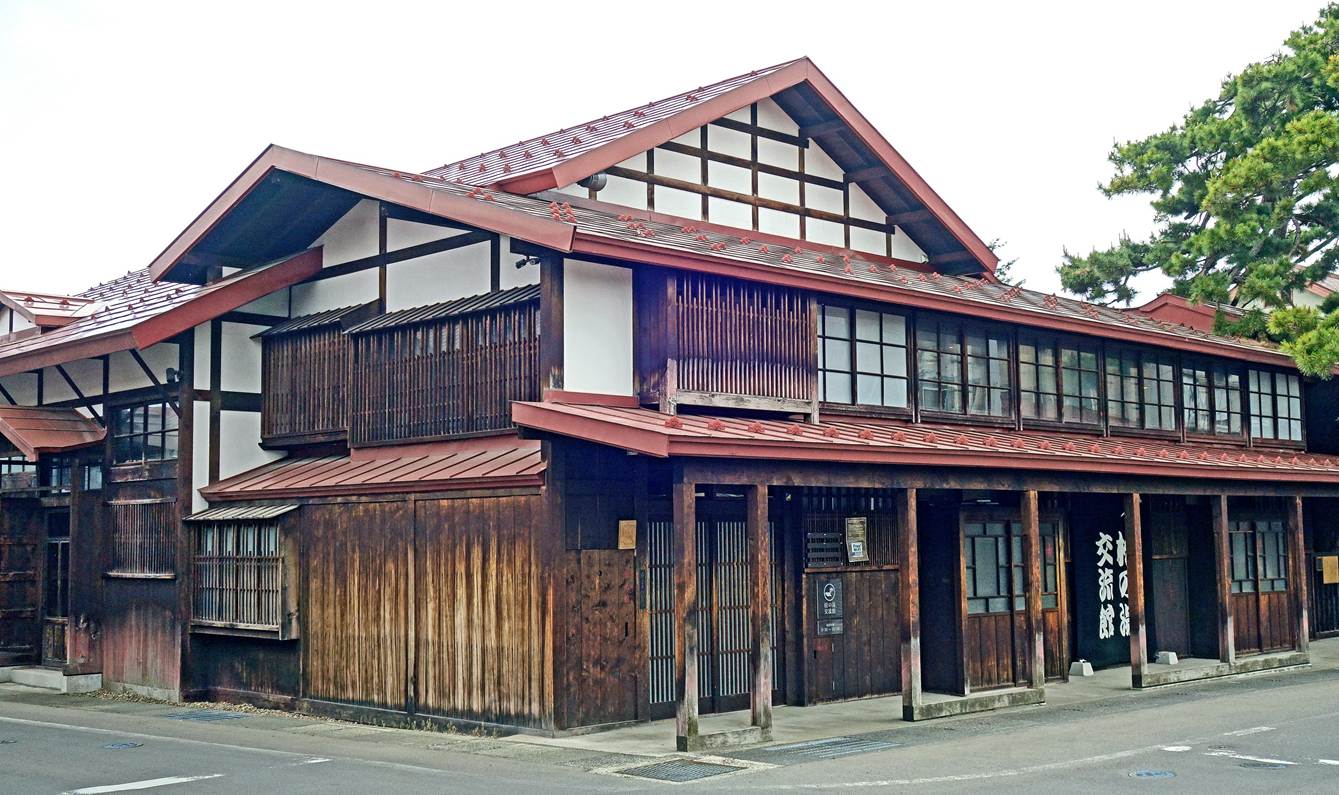
Former bathhouse known as Matsu-no-yu, now a kind of community center.
Other houses.