Mexico: Mexico
City (December 2025) 
This page shows photos I took on a
four-day tripto Mexico City in early December 2025. To see the locations of the
places pictured below, click here. (A Google
map with colored markers will open in a new tab.)
Although have visited Mexico City
several times before, I had rarely taken photos there. However, to see some old
pictures I took in 1967 and 1970, click here.
Centro Historico [Purple markers in Google
map]
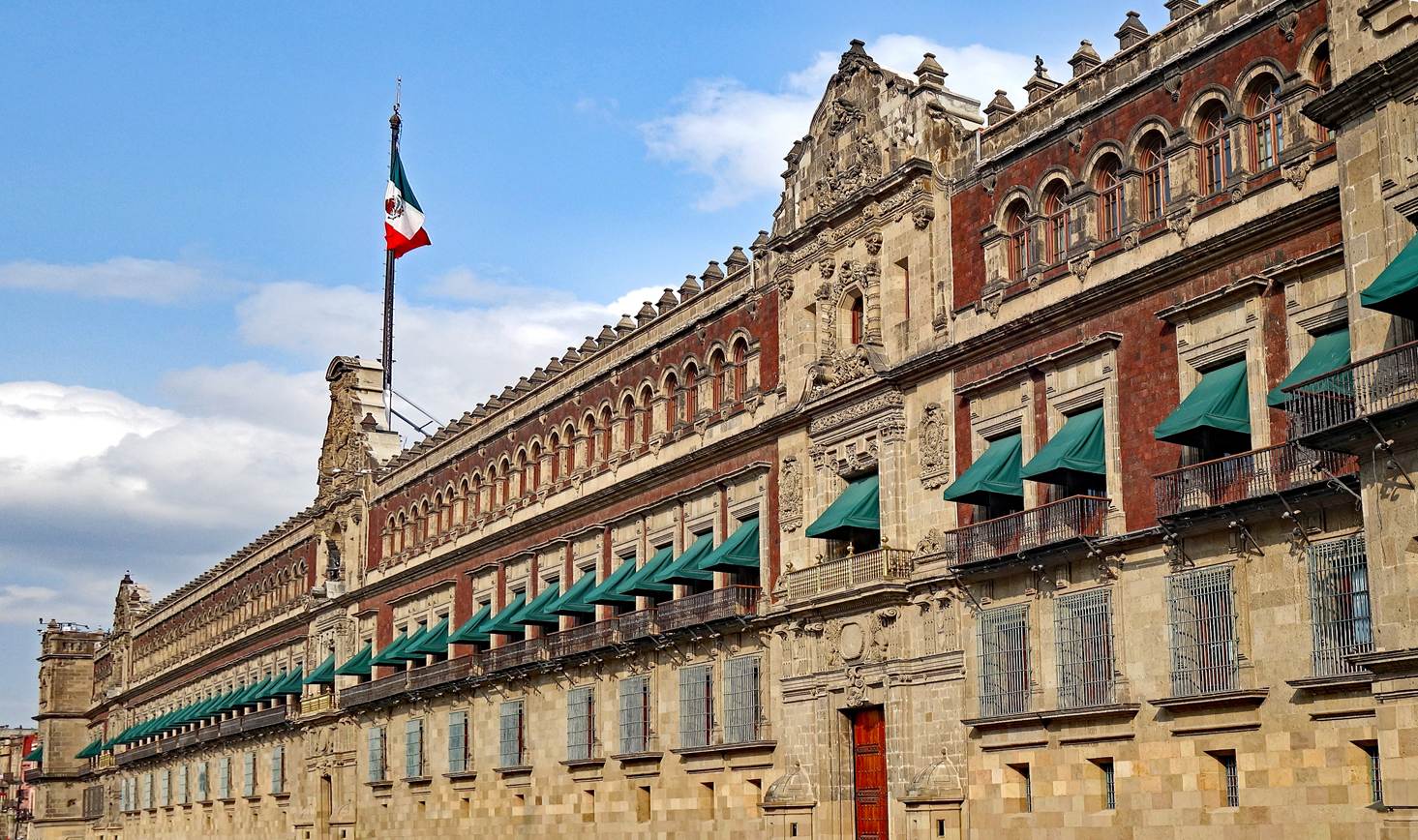
- Palacio Nacional. Originally built by
Cortes in 1562, on the site of the former palace of Aztec emperor Moctezuma, it
was extended multiple times later (most recently in 1927). Its facade,
approximately 200m-long (shown in the photo), runs along the entire eastern
side of the Plaza de la Constitucion, better known as the Zocalo, Mexico City's
central square.
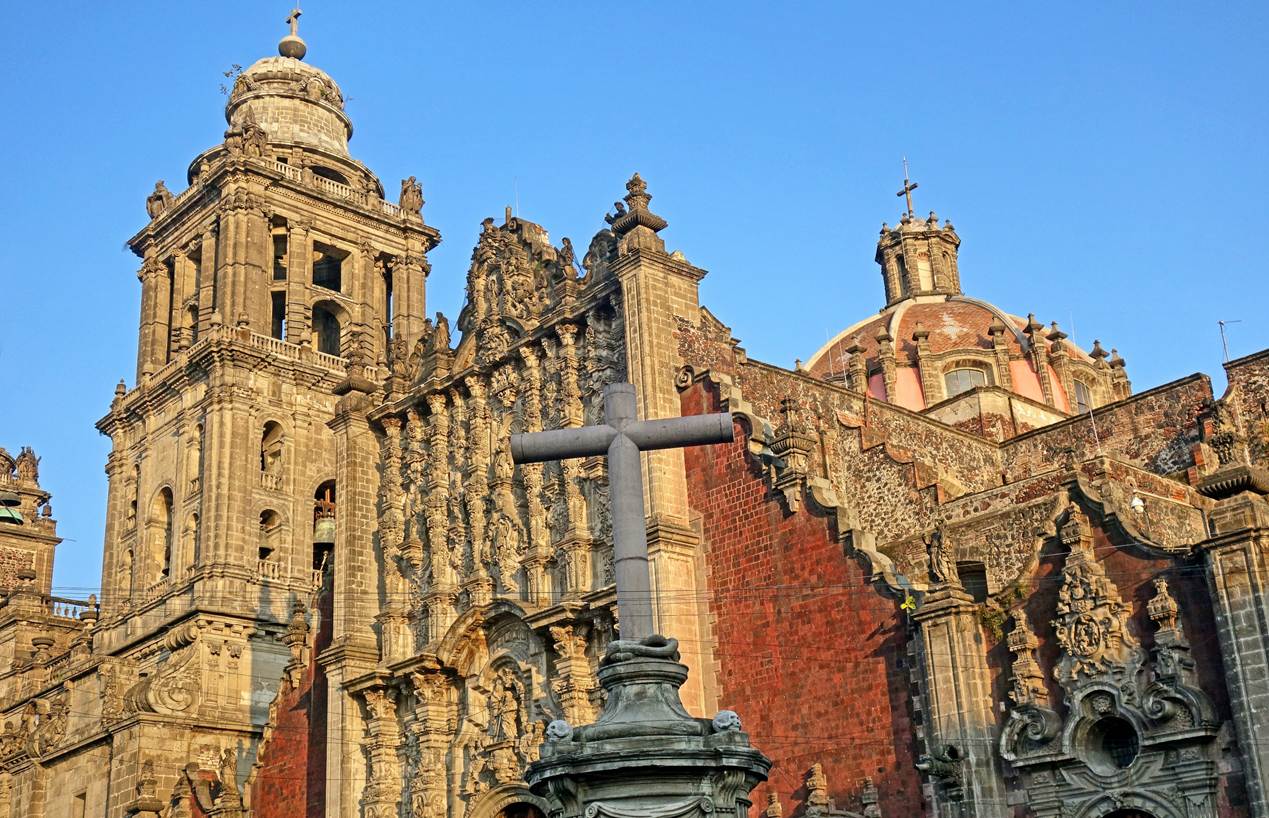
- Catedral Metropolitana. Located on the
north side of the Zocalo, it is the largest church in Latin America. Its
construction, which began in 1573, continued until the early 19th century, with
the completion of its towers in 1813. Consequently, the current building
exhibits a variety of architectural styles.
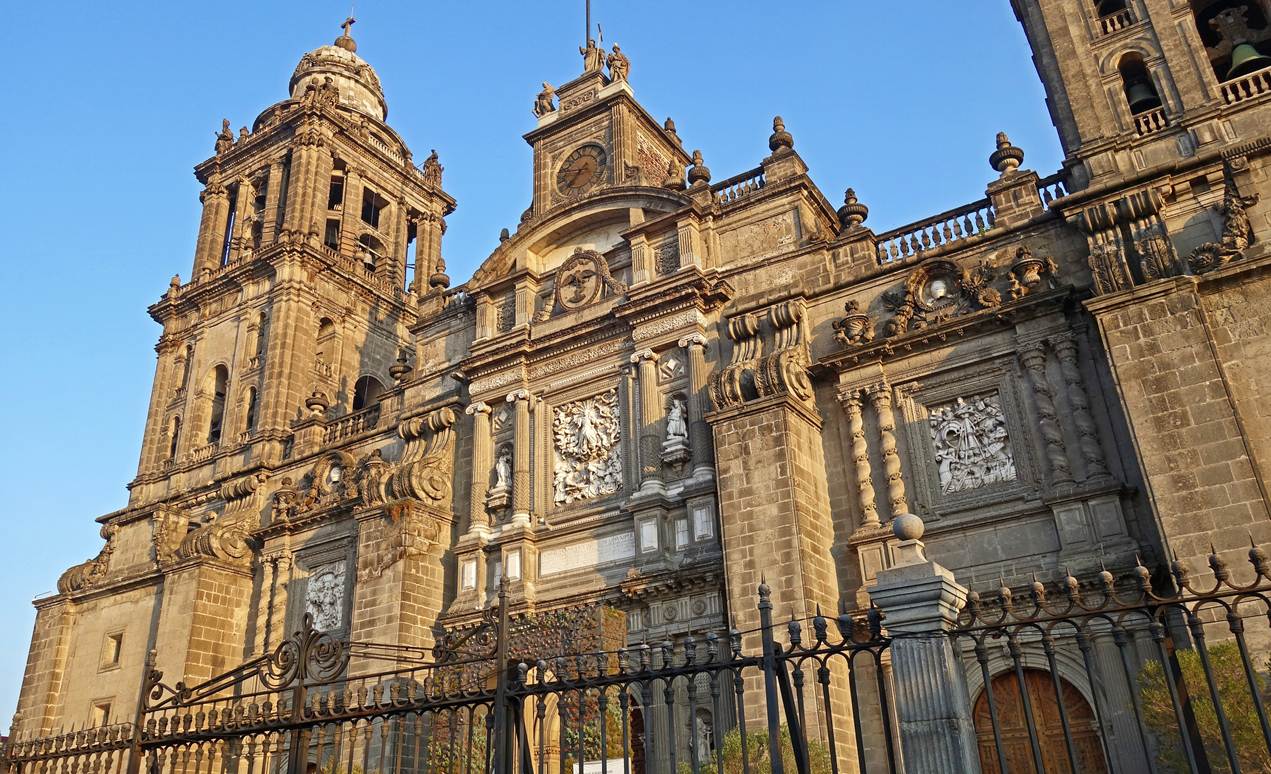
The two photos below show the south
facade of the cathedral, which faces the Zocalo. Behind the cross, the first
photo also shows the Sagrario Metropolitano, a smaller church attached to the
cathedral.
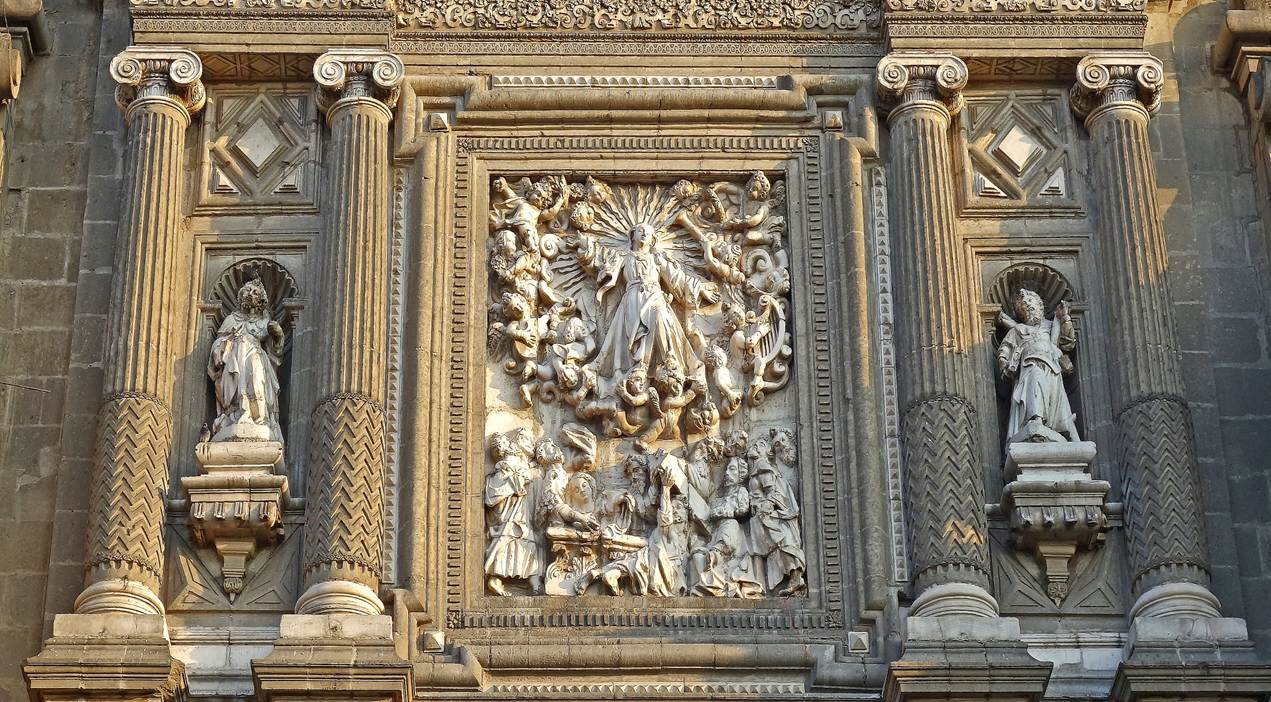
Close-up of the sculpted panel above the
main entrance of the cathedral. It depicts the Assumption of the Virgin Mary,
surrounded by angels, above men and women gathered around an open coffin.
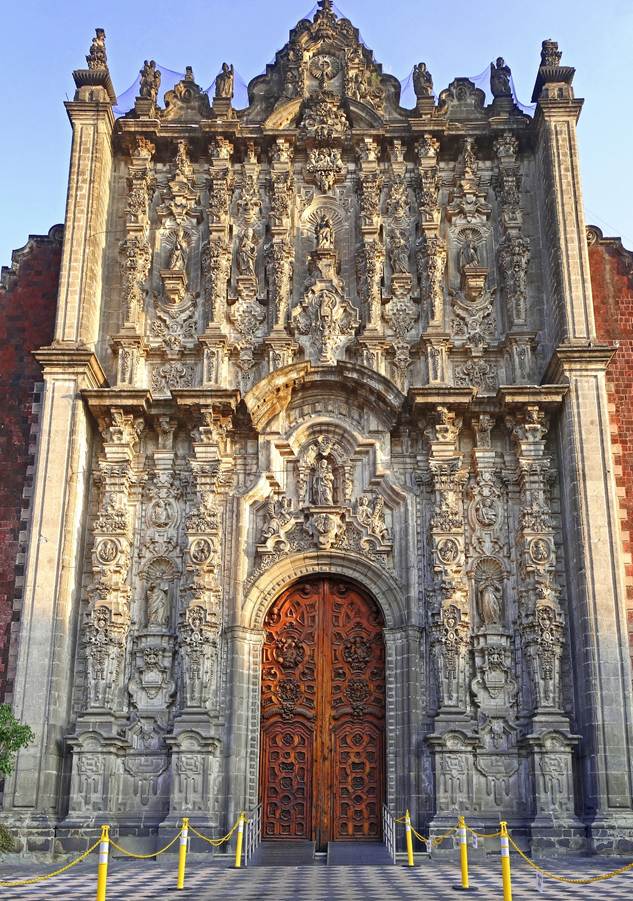
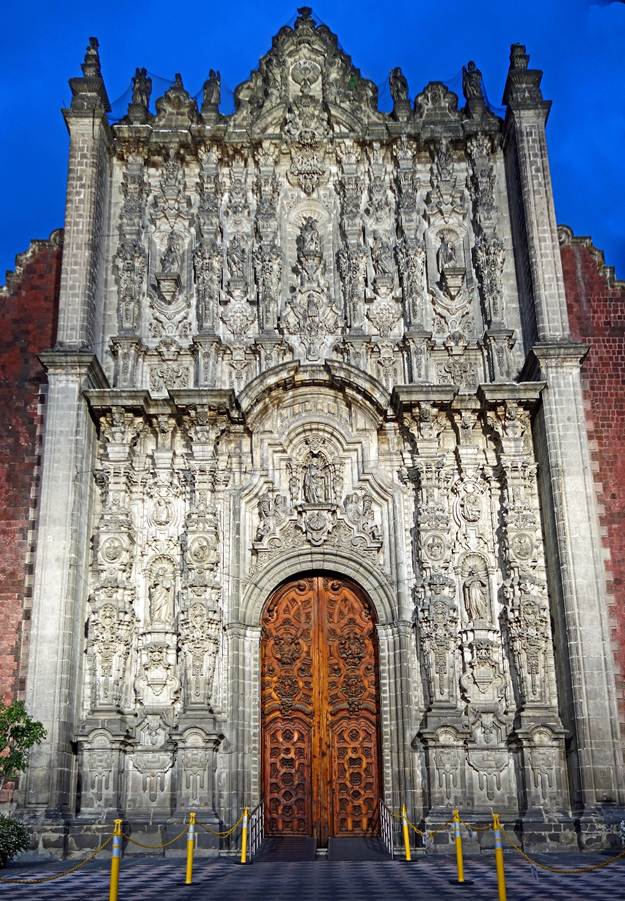
Two photos of the facade of the Sagrario
Metropolitano, one taken in broad daylight (on the left) and the other
illuminated by spotlights at dusk (on the right).
|
|
|
Altar del Perdon (Altar of Forgiveness)
standing at the front of the central nave.
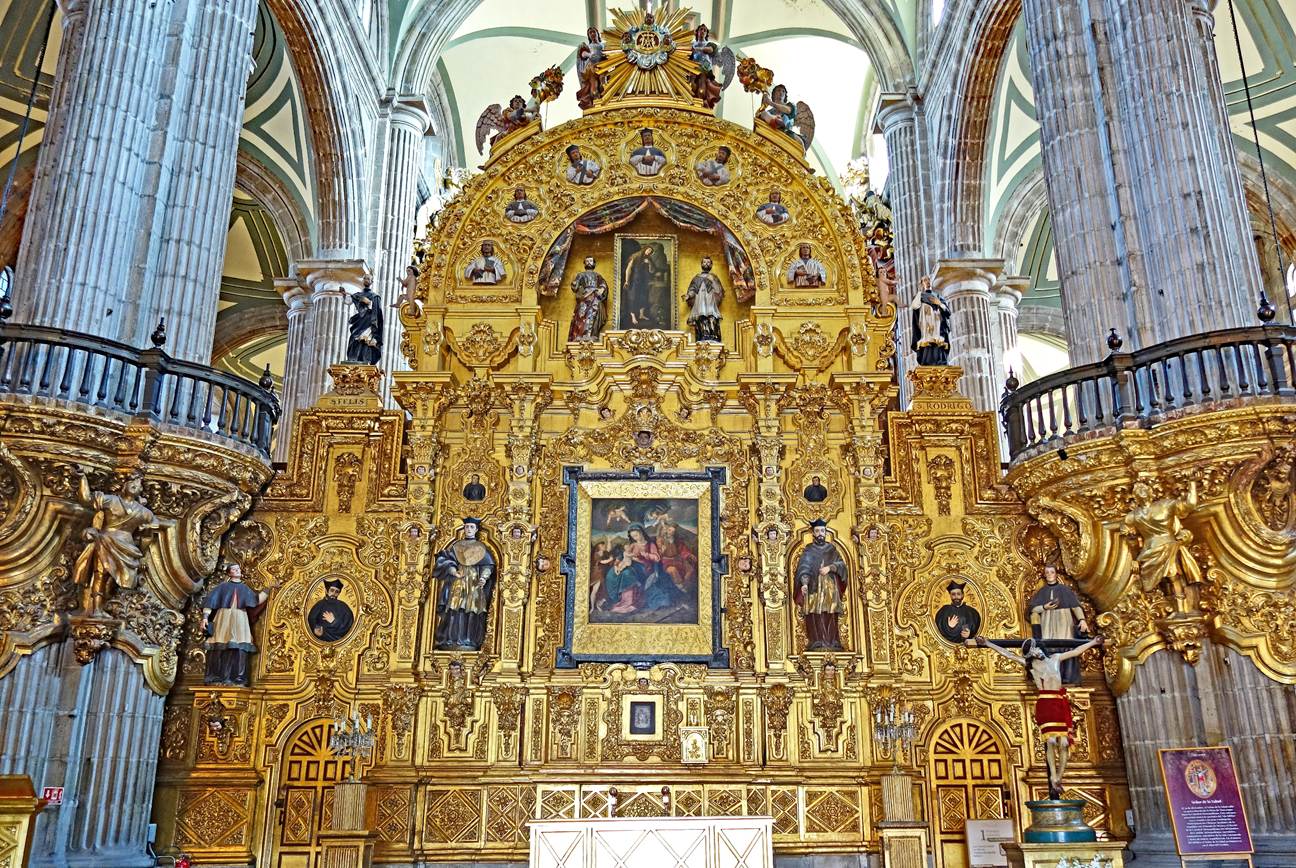
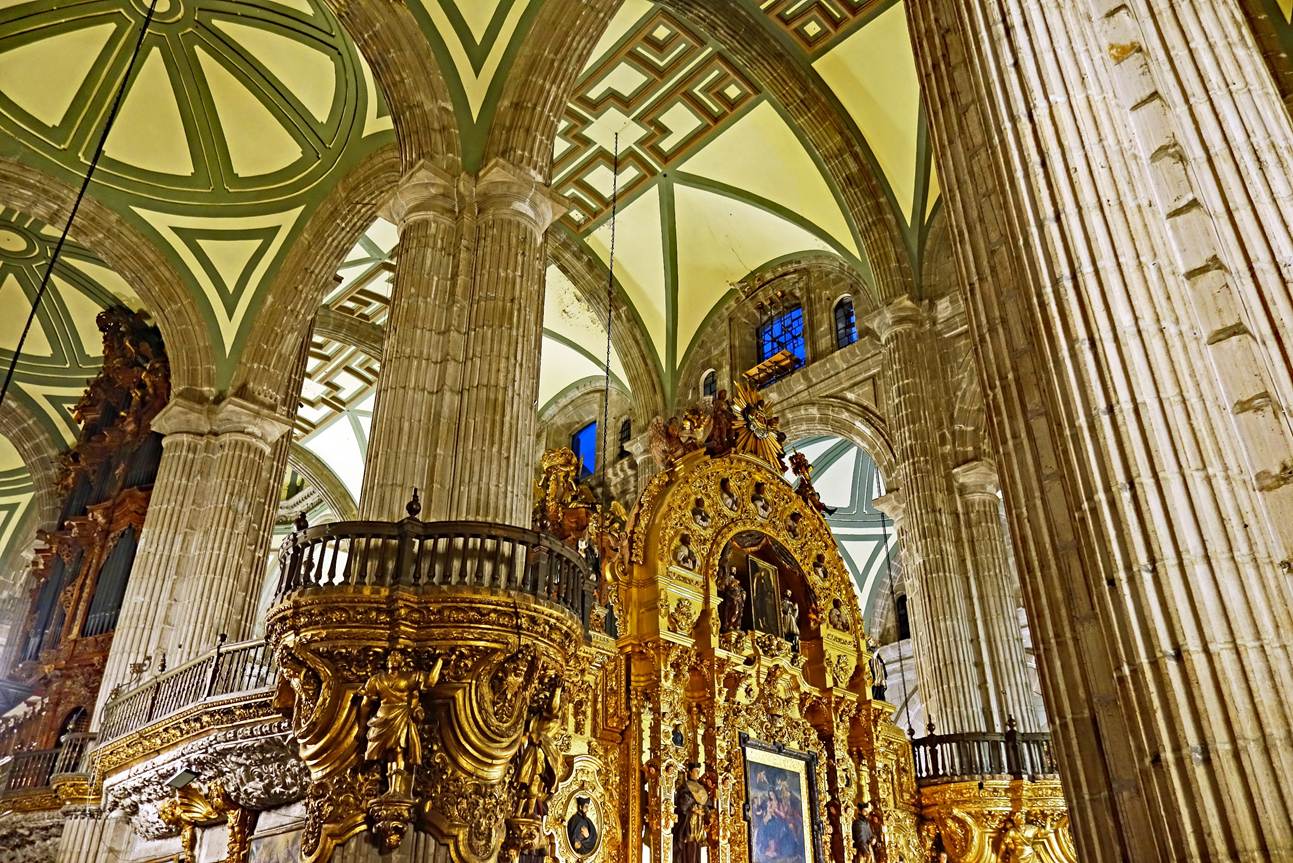
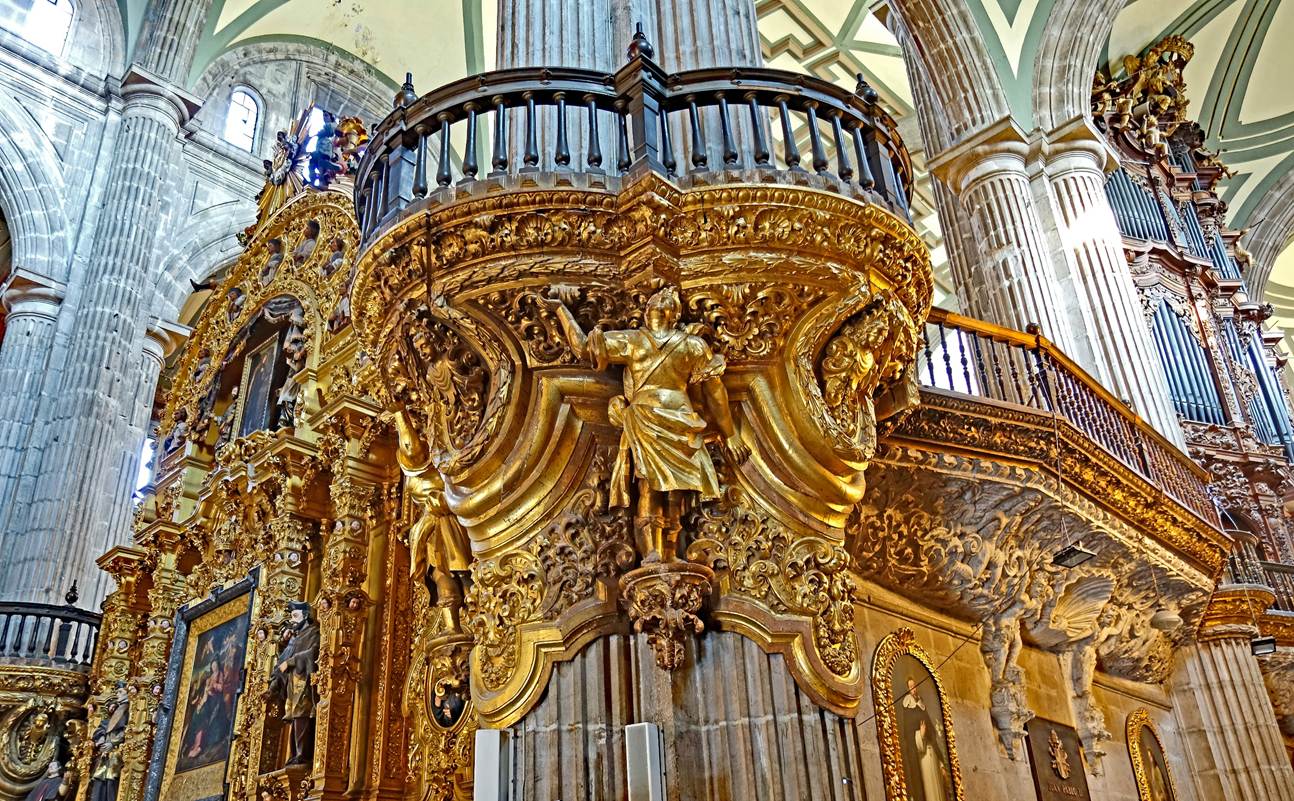
Interior views of the cathedral, with
its monumental columns, high vaults, and gilded Baroque ornaments.
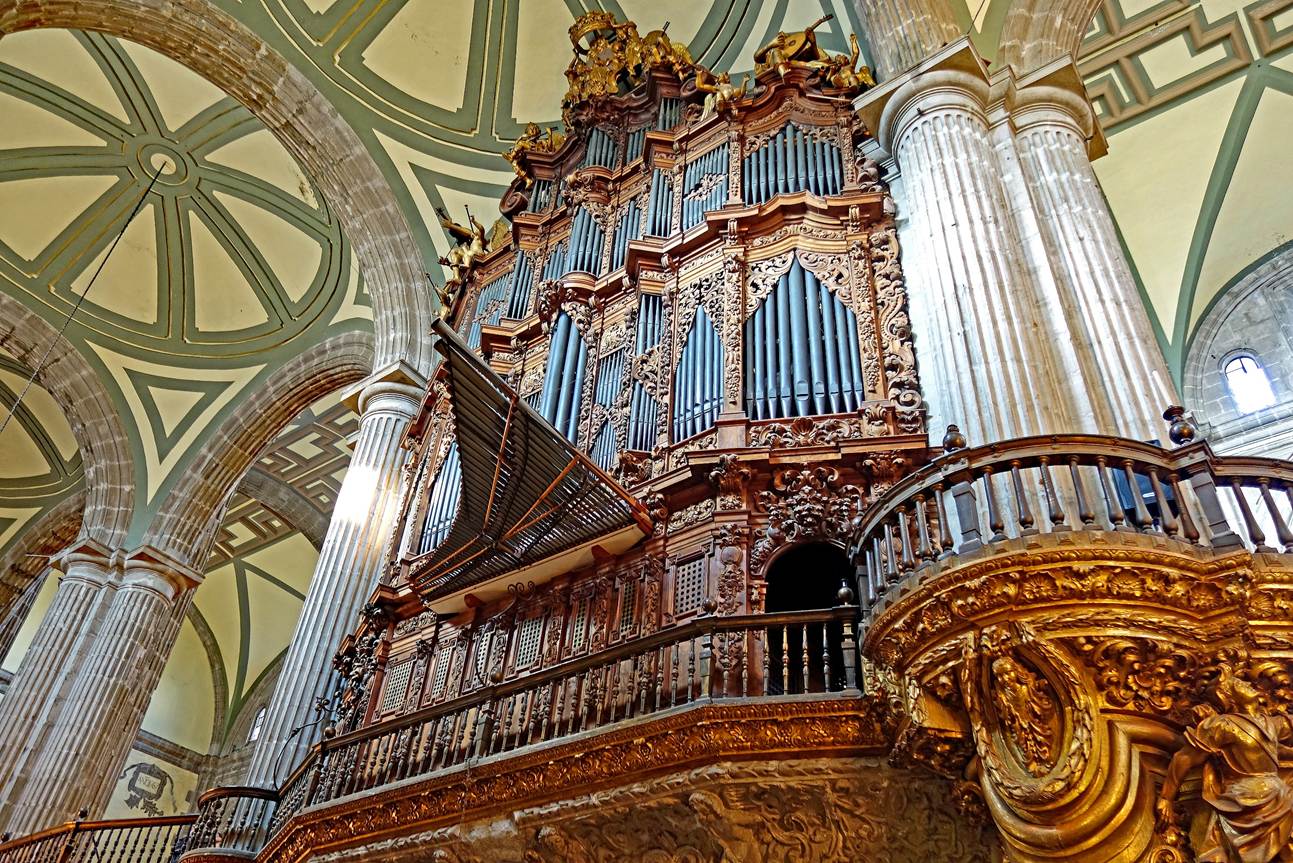
The cathedral has two similar organs
built in the 1730s. Located between the columns that bound the choir, they are
15m high, 9m wide, and 2.8m deep. The photo below shows the organ above the
eastern aisle.
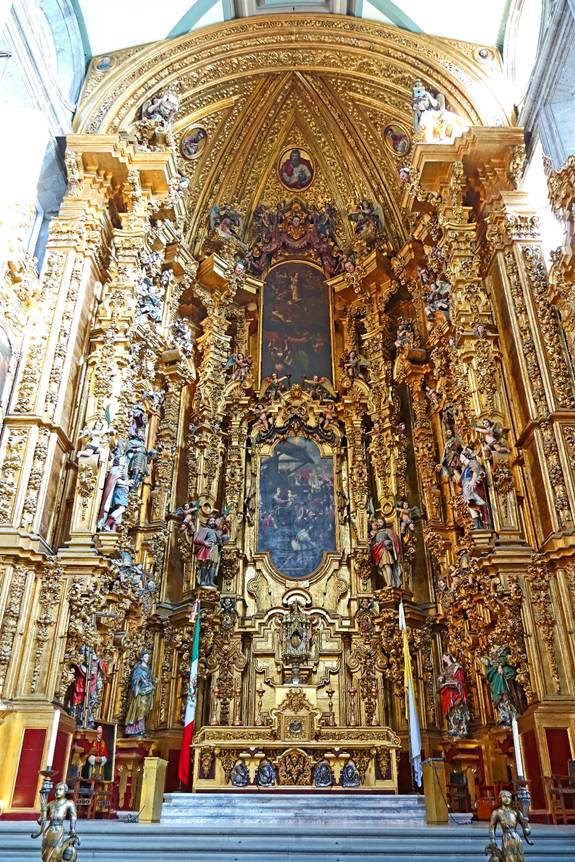
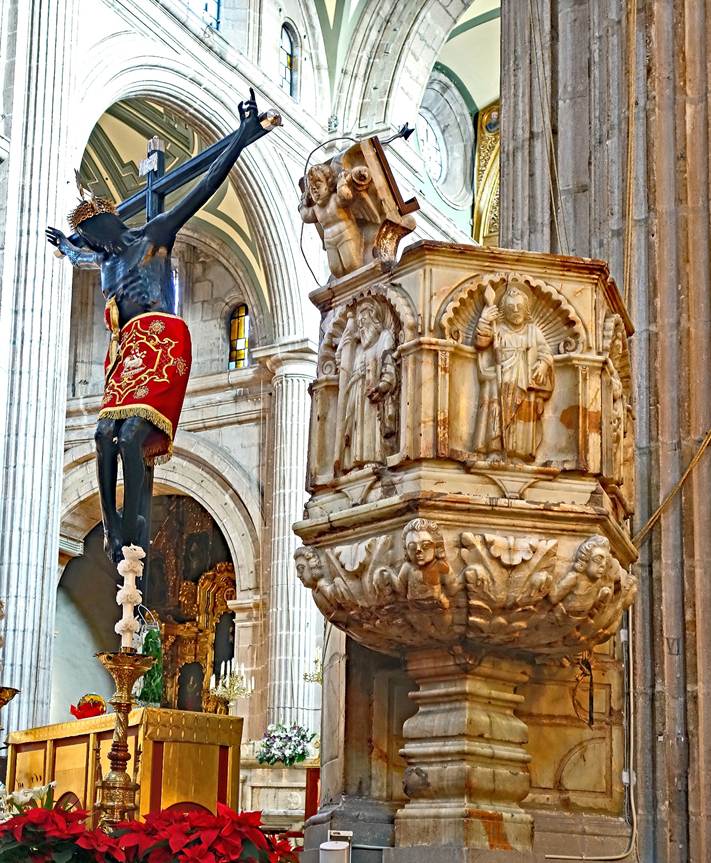
On the left: the Altar de los Reyes
(Altar of the Kings), the main altar of the cathedral. Created between 1718 and
1737, it is 25m high and 13m wide. It is adorned with 12 sculptures of
canonized kings and queens. On the right: an 18th-century sculpture of a black
crucifix, the work of indigenous artisans, next to a marble pulpit decorated
with bas-reliefs of saints.
|
|
|
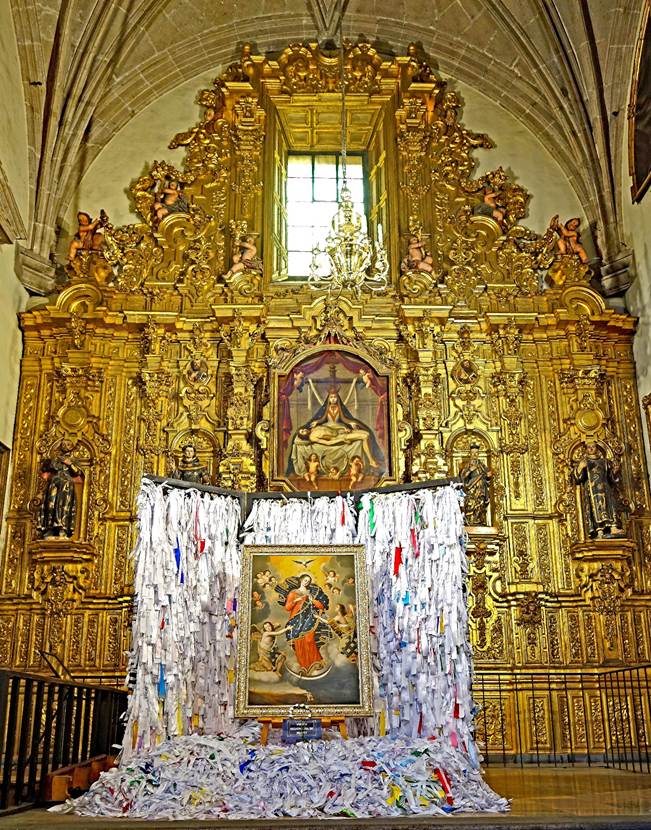
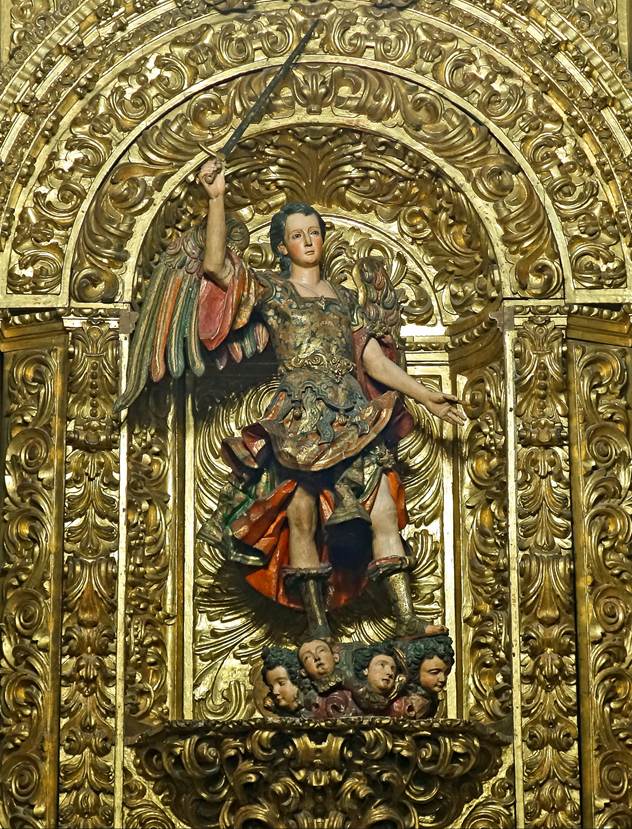
On the left: The Capilla de Nuestra Senora de las
Angustias de Granada (Chapel of Our Lady of Sorrows of Granada). This is the
first chapel in the east aisle of the cathedral, beneath its east tower.
Numerous votive ribbons, on which the faithful have written their wishes, hang
in front of the retable. On the right: Statue of Saint Michael the Archangel in
the retable of the Capilla de los Angeles, the first chapel in the west aisle,
beneath the west tower.
|
|
|
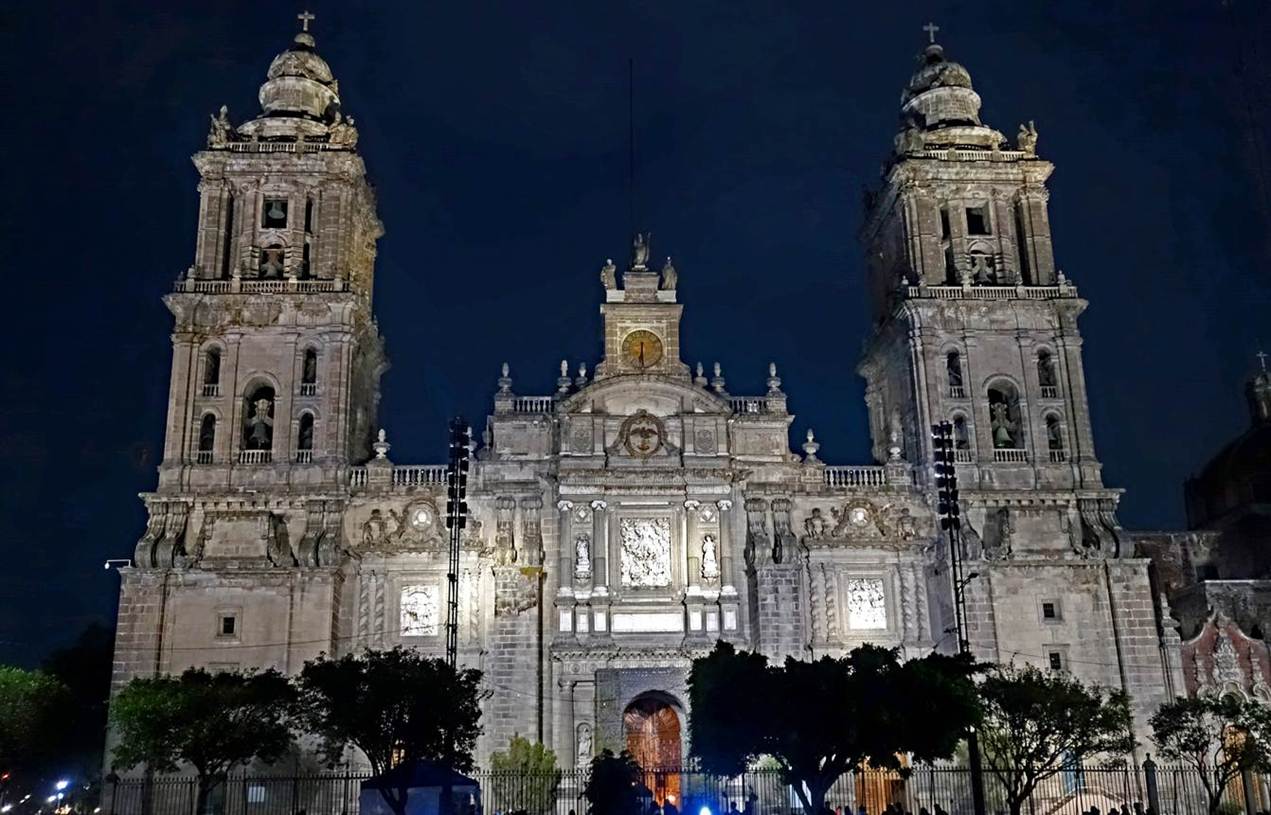
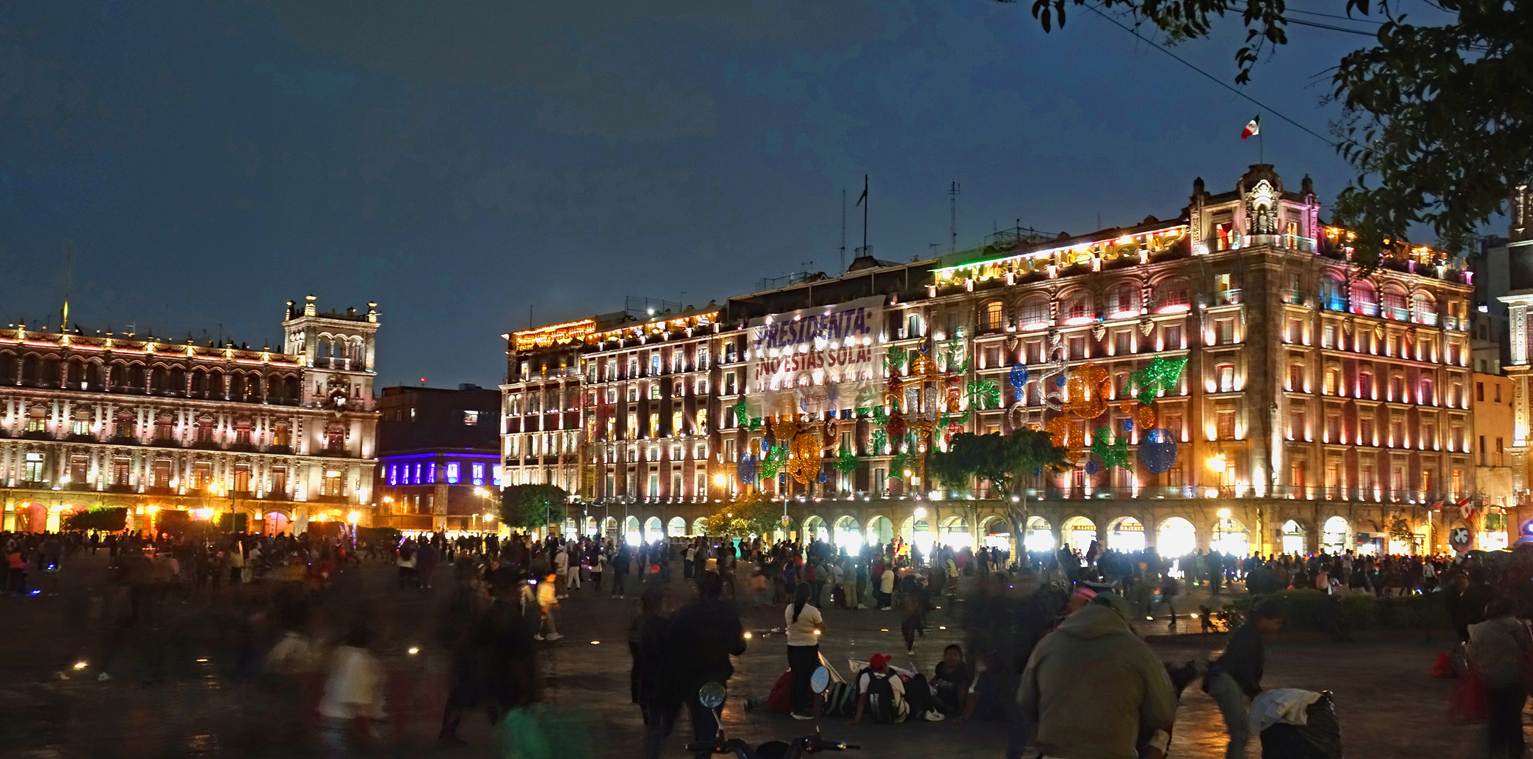
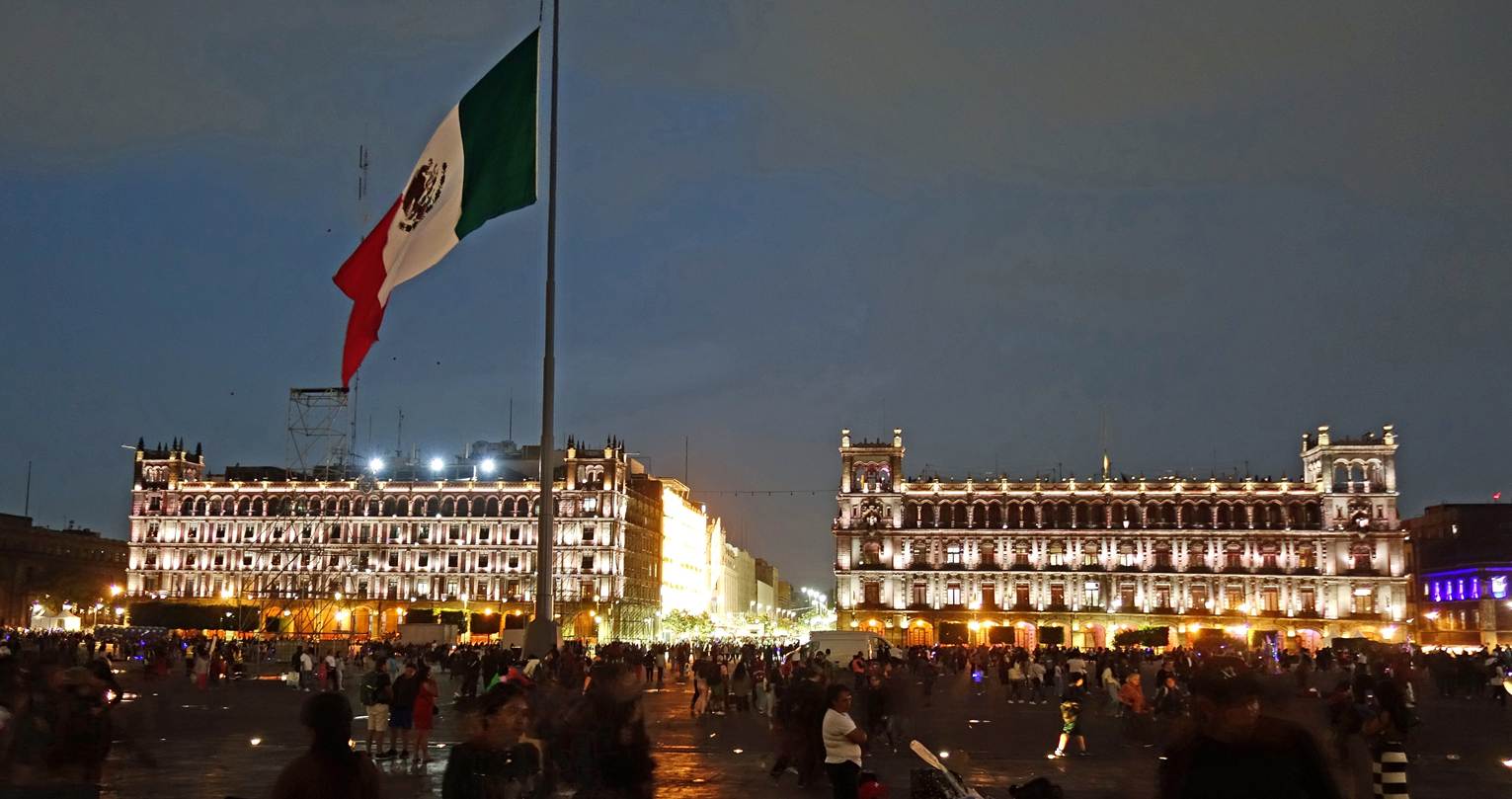
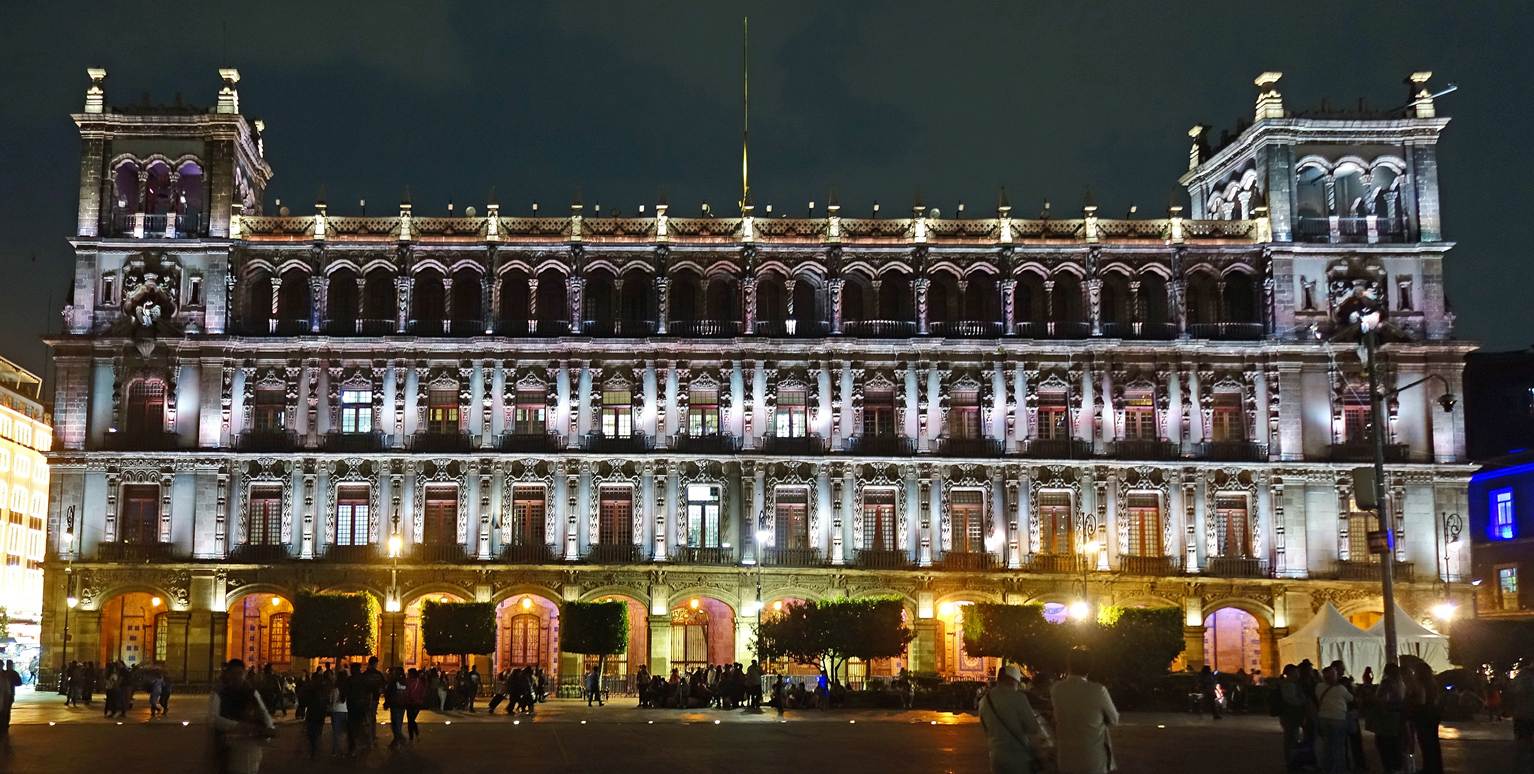
- Views
around the Zocalo at night.
Catedral Metropolitana, on the north side.
View looking towarda the southwest corner of the
Zocalo.
Views of the south side of the Zocalo.
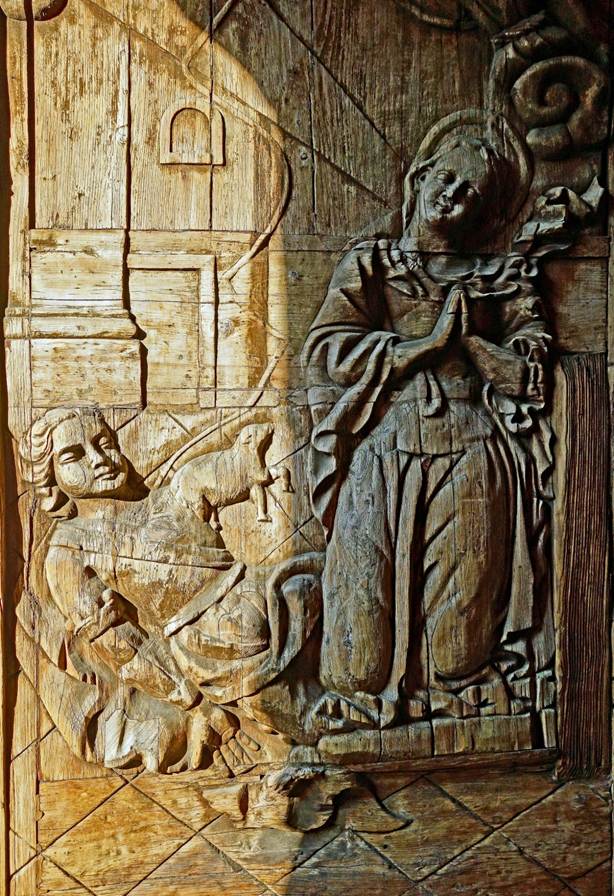
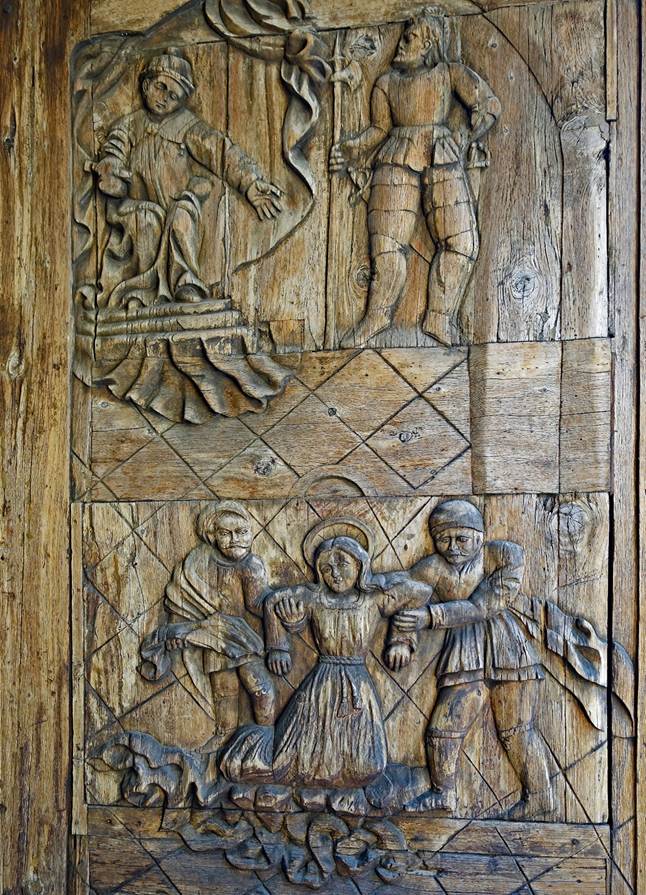
- Templo de Santa Ines Martir. Built in the
18th century, this church initially belonged to convent of the Order of the
Immaculate Conception. While its interior is not very remarkable, it boasts
some of the most beautifully carved wooden doors in Mexico City's historic
center.
Interior of the church.
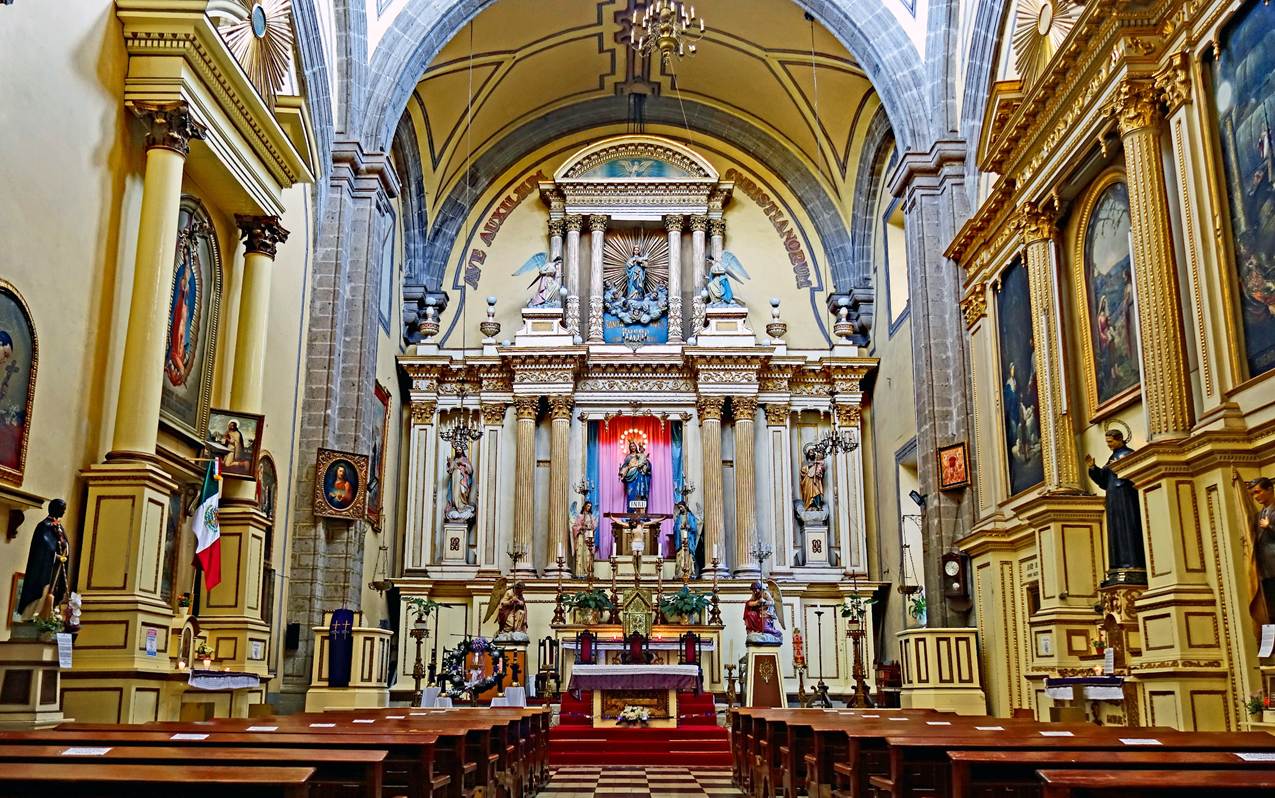
Two of its carved wooden doors.
|
|
|
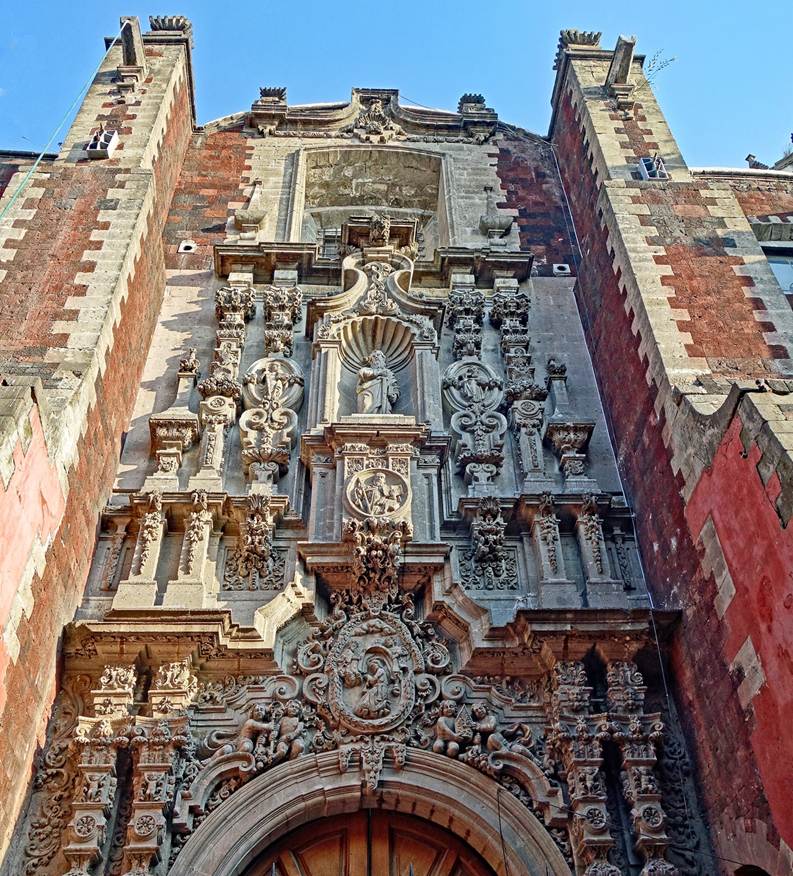
- Highly decorated Baroque facade
(mid-18th century) of the Templo de la Santisima Trinidad (Church of the Holy
Trinity). Unfortunately, at the time of my visit, the church was undergoing
restoration and its interior was not accessible.
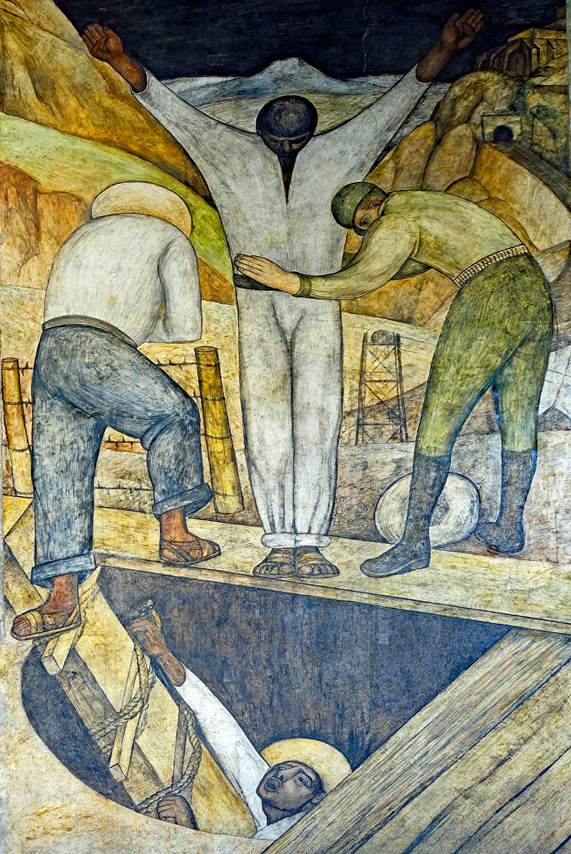
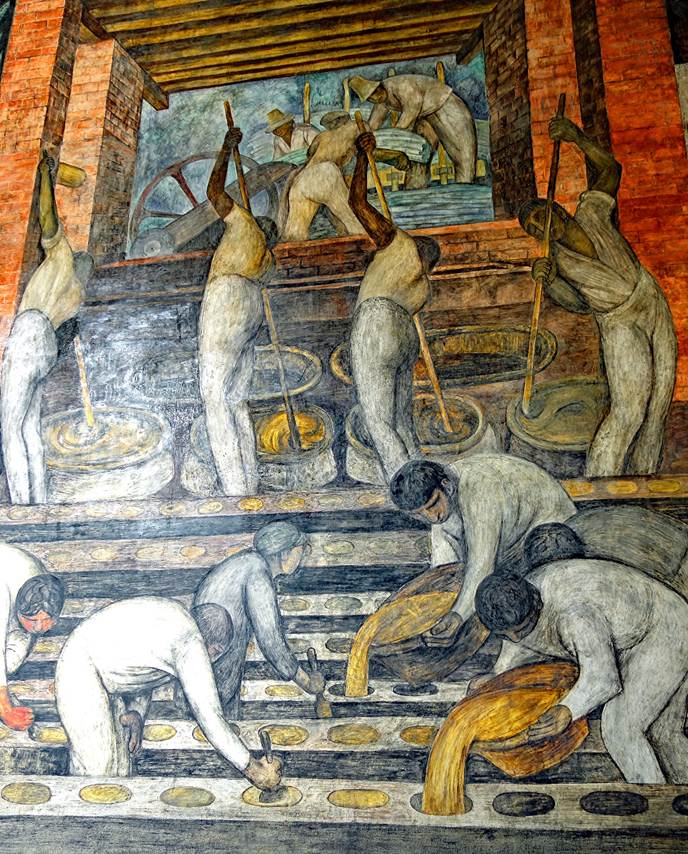
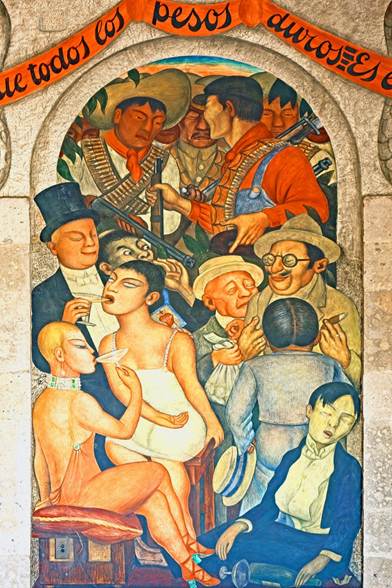
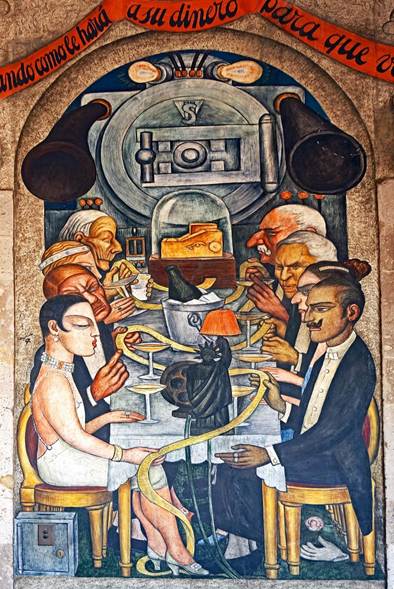
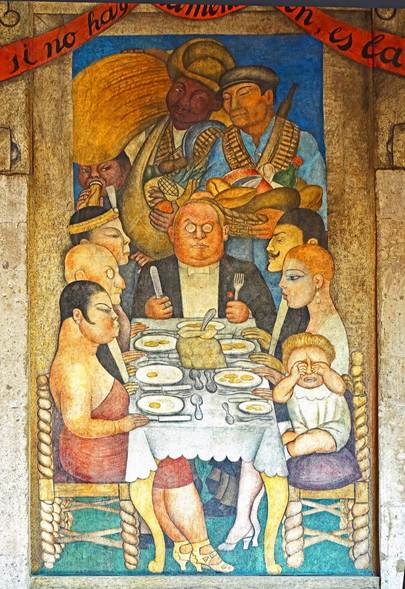
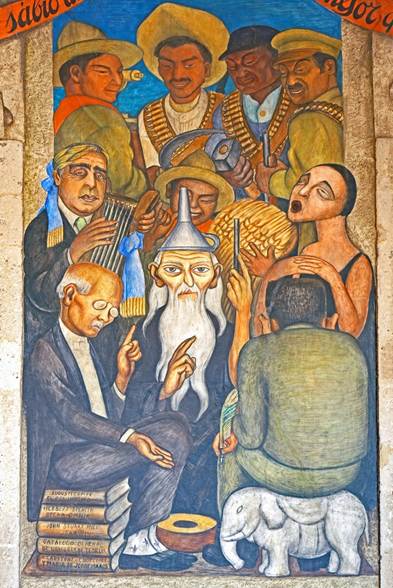
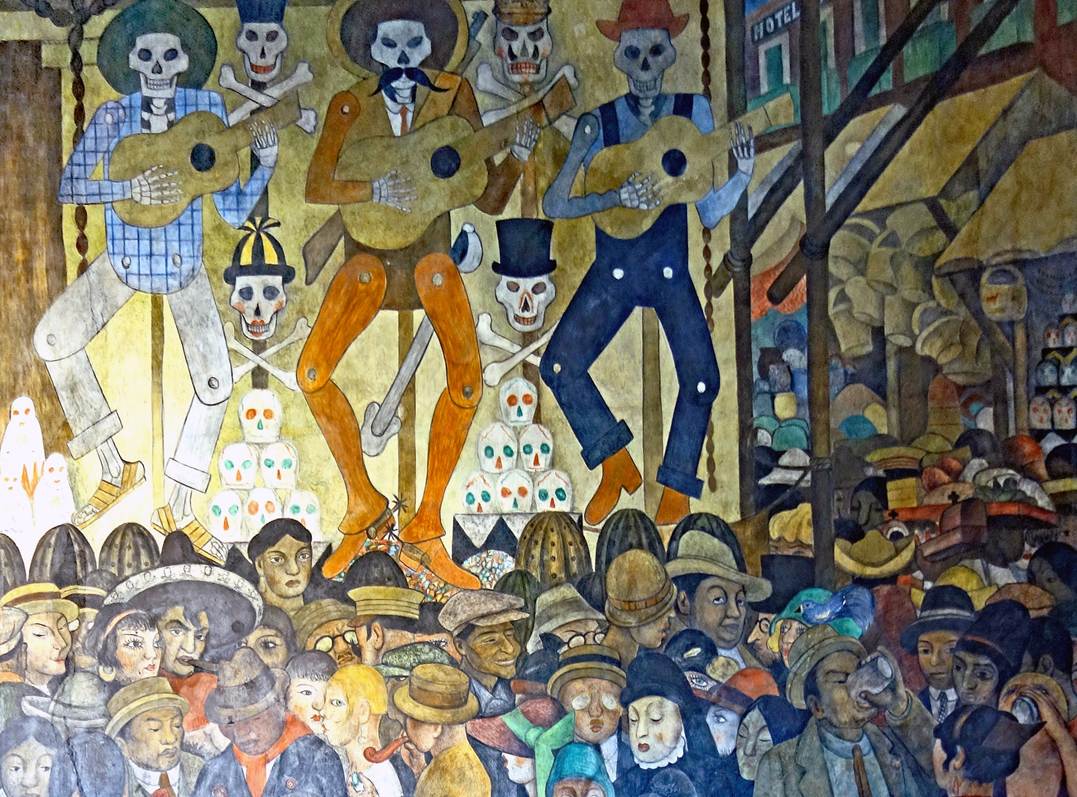
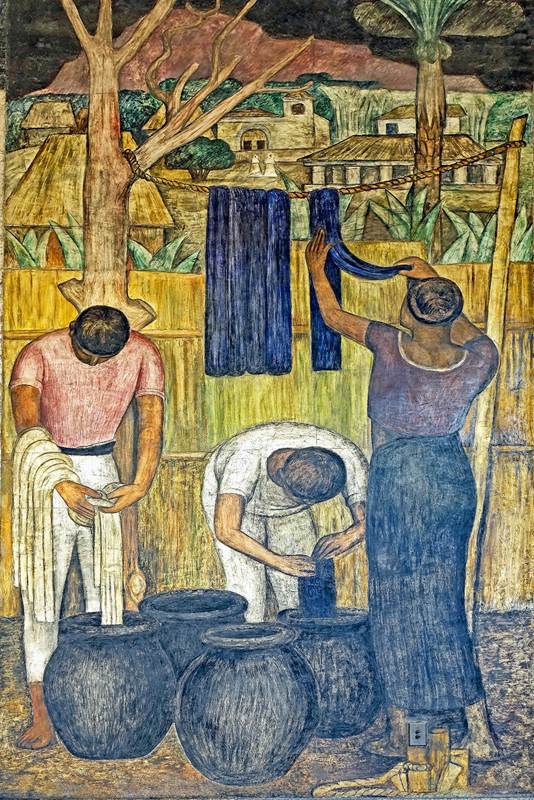
- Museo Vivo del Muralismo (Living Museum
of Muralism). Housed on several floors of the large building of the Ministry of
Public Education, this superb museum features over 3,000sq.m. of murals by
renown artists, including Diego Rivera. The following photos show a few of
these works.
On the left: Salida de la mina (Leaving
the mine), Diego Rivera, 1923. On the right: El trapiche (The sugar mill),
Diego Rivera, 1923.
|
|
|
From left to right: La orgia (The orgy),
Banquete de Wall Street (Wall Street banquet), La cena del capitalism (The
capitalist dinner), Los sabios (The wise), 1928.
|
|
|
|
|
On the left: Dia de Muertos (Day of the
Dead), Diego Rivera, 1923-24. On the right: Los tintoreros (The dyers), Diego
Rivera, 1923.
|
|
|
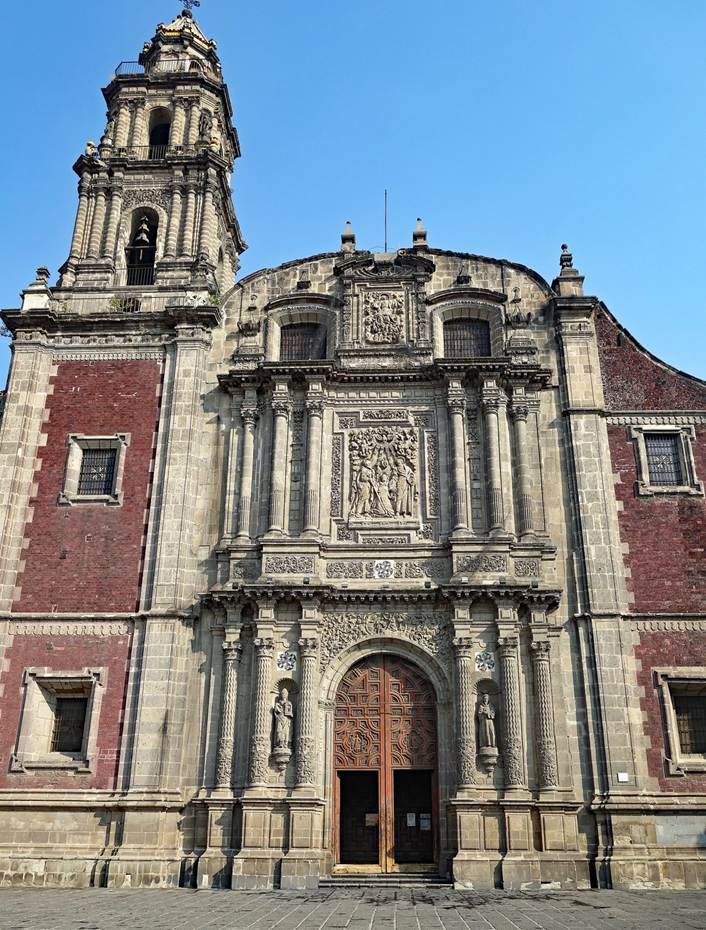
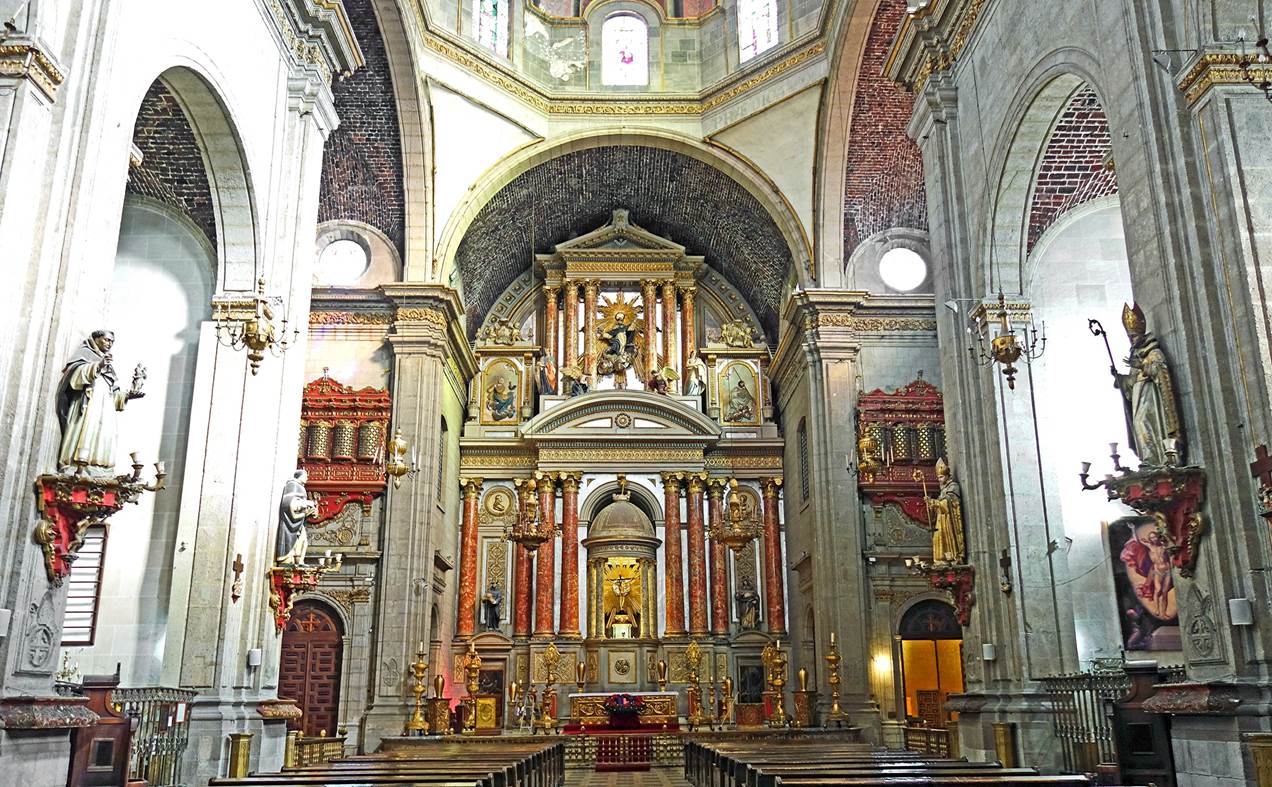
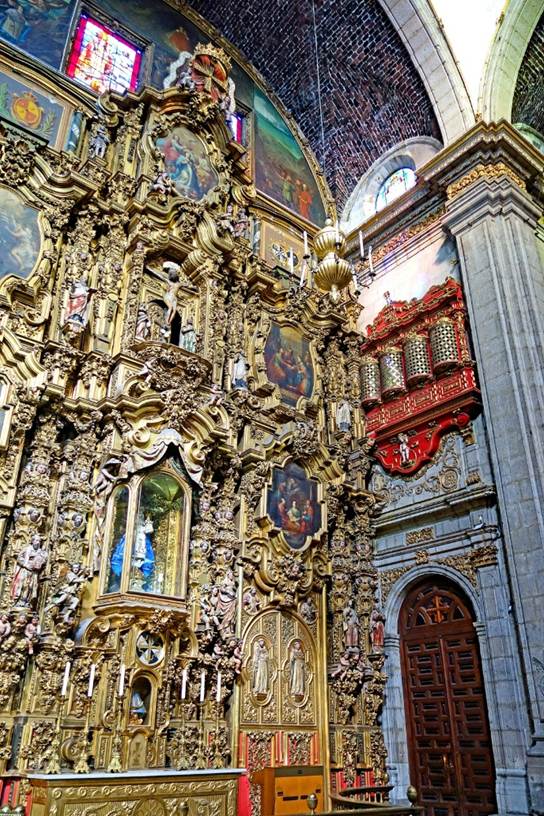
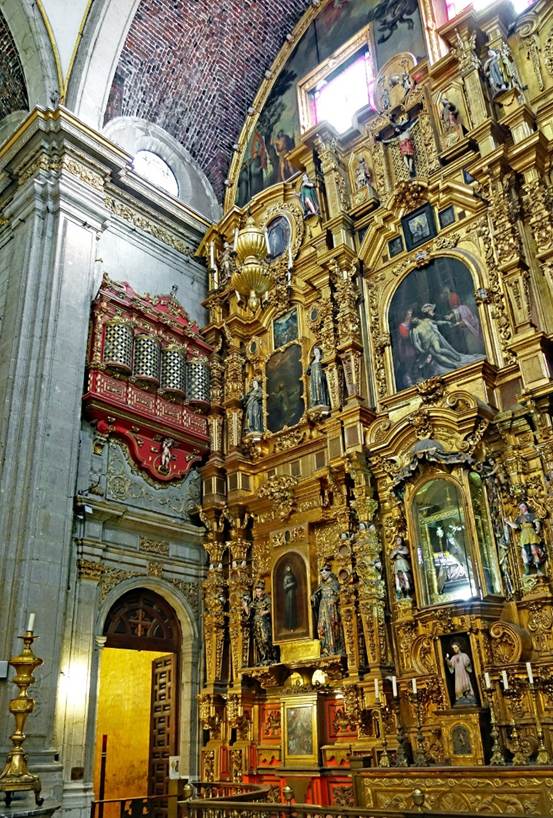
- Iglesia de Santo Domingo. This
18th-century church is the remnant of a once important Dominican convent. It
houses the tombs of both Pedro de Moctezuma, one of the sons of Moctezuma II,
and the conquistador Franciso Vazquez de Coronado.
South facade.
Main altarpiece.
Left and right retables at the ends of
the transept.
|
|
|
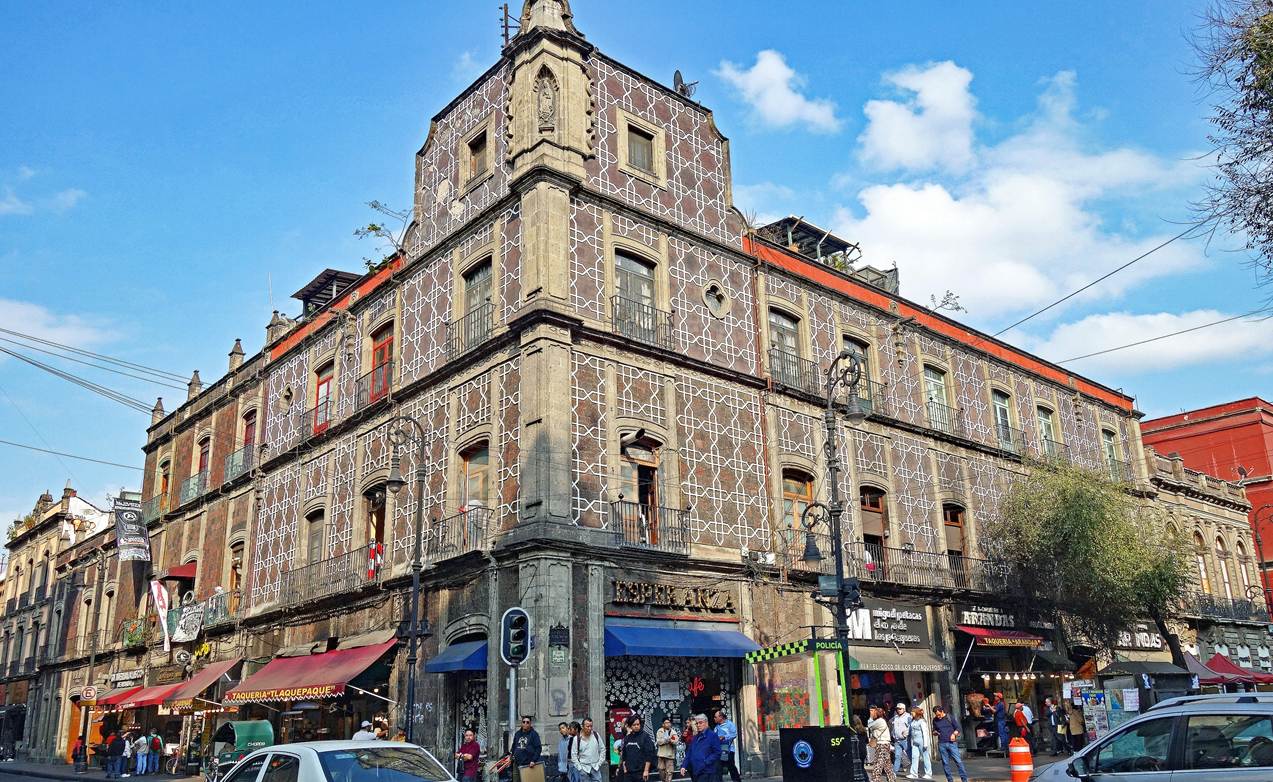
- Former residence of Jose Maria
Bocanegra (1787-1862), a Mexican politician. Bocanegra was briefly interim
president of Mexico in December 1829, during a coup attempt against President
Vicente Guerrero, who led his troop against the insurrection. Bocanegra later
held several ministerial positions. This 18th-century residence stands at the
northeast corner of the Cinco de Mayo and Isabel La Catolica streets.
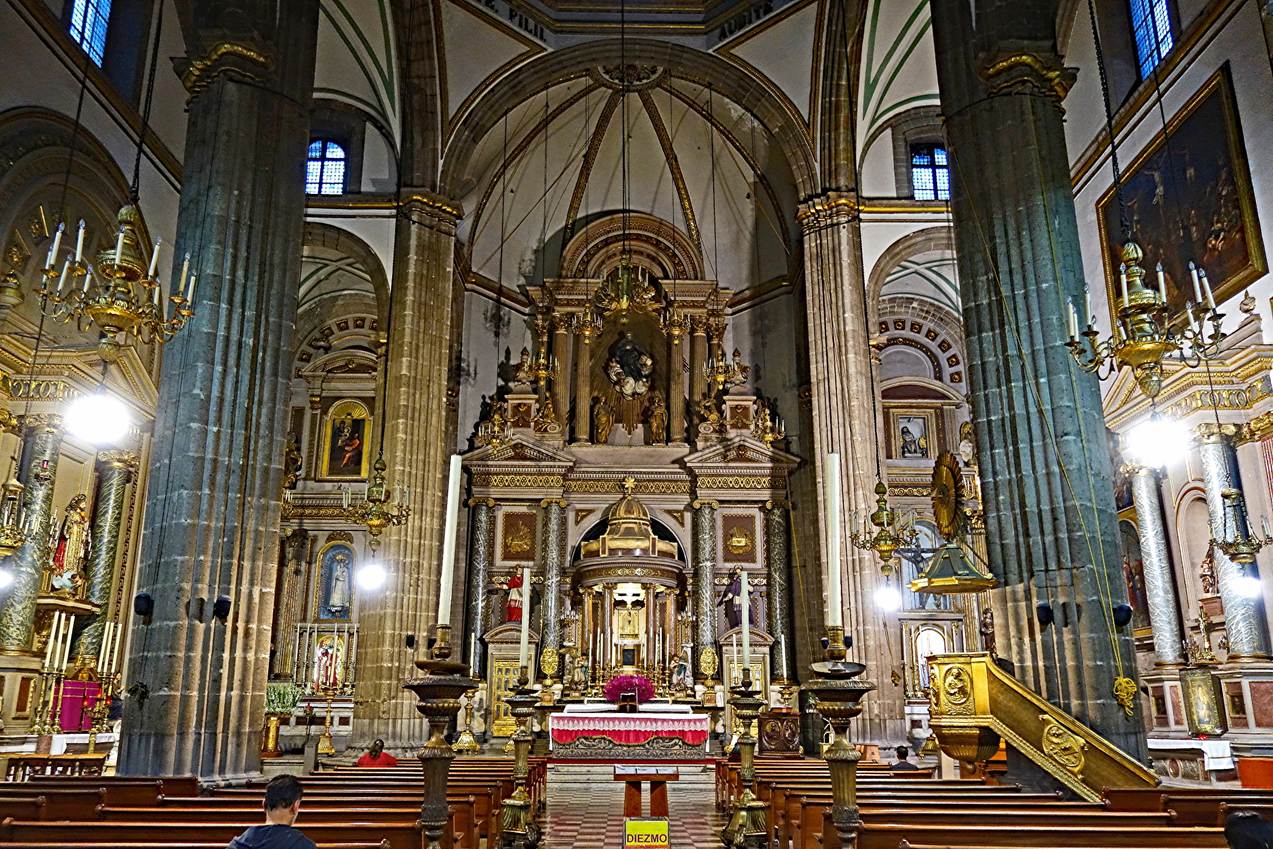
- Templo de San Felipe Neri ″La
Professa″. Established by Jesuit priests in the 16th century, it was
largely destroyed by floods in 1629 and was rebuilt in 1720. It is considered
an important transitional work between the restrained Baroque style of the 17th
century and the richly ornamented Baroque style of the 18th century in Mexico.
Nave and altar.
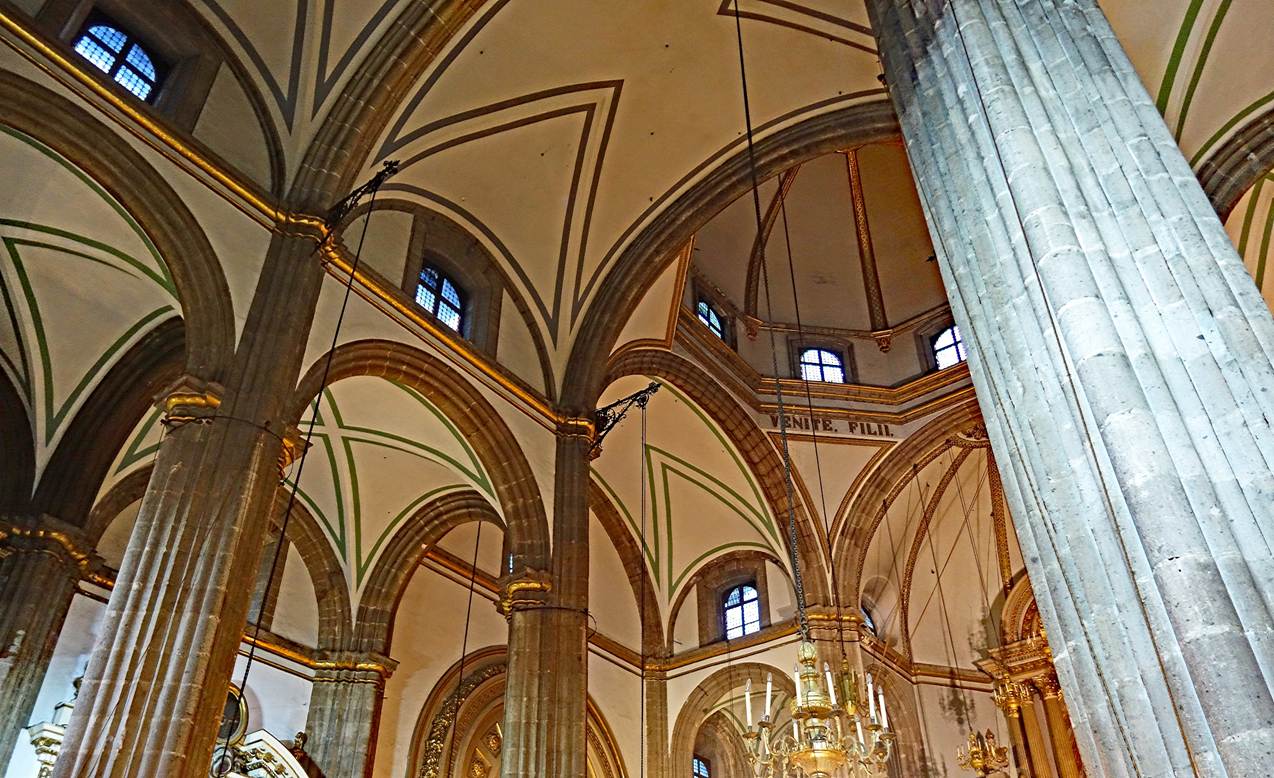
Columns and vaults in
the nave.
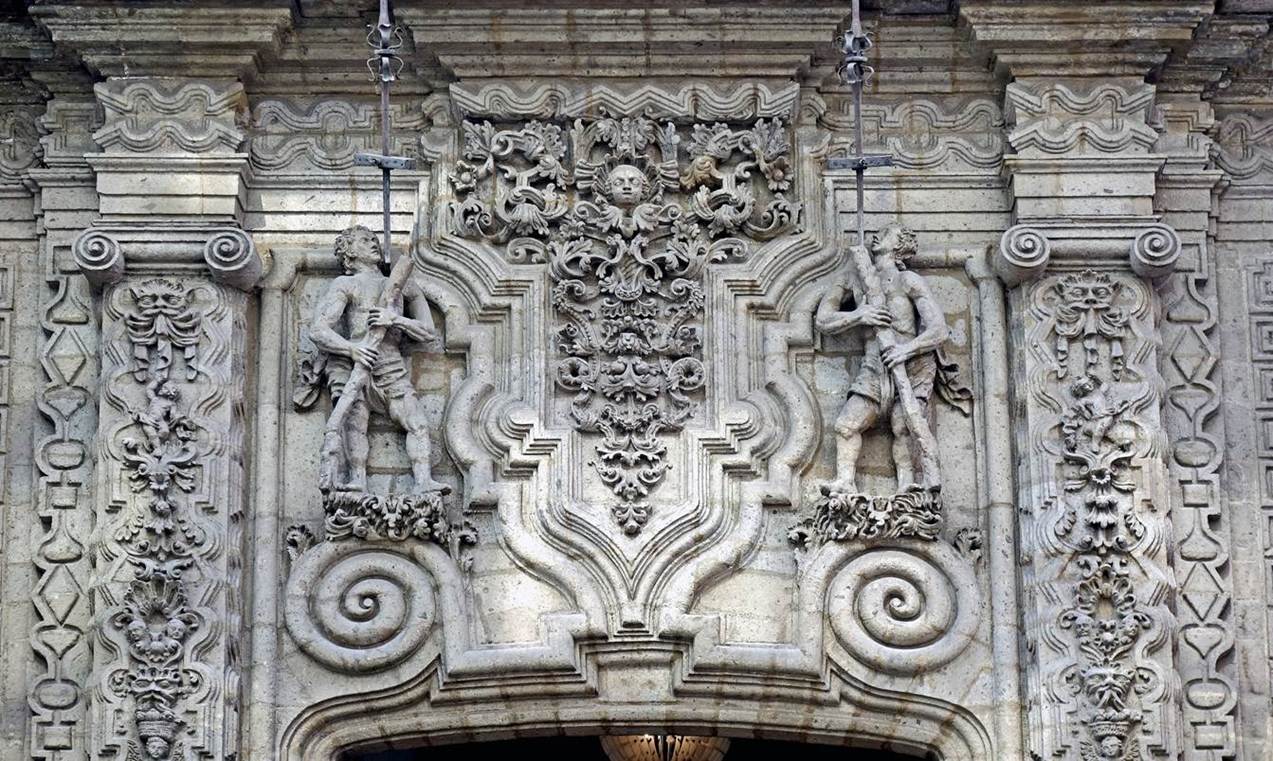
- Part of the ornate facade of the
18th-century Palacio de Iturbide. Originally the residence of the Counts of
Valparaiso, this palace became the home of Agustin de Iturbide in the early
19th century. A hero of Mexican independence, Agustin was proclaimed emperor in
1822, but he abdicated less than a year later when Mexico became a republic.
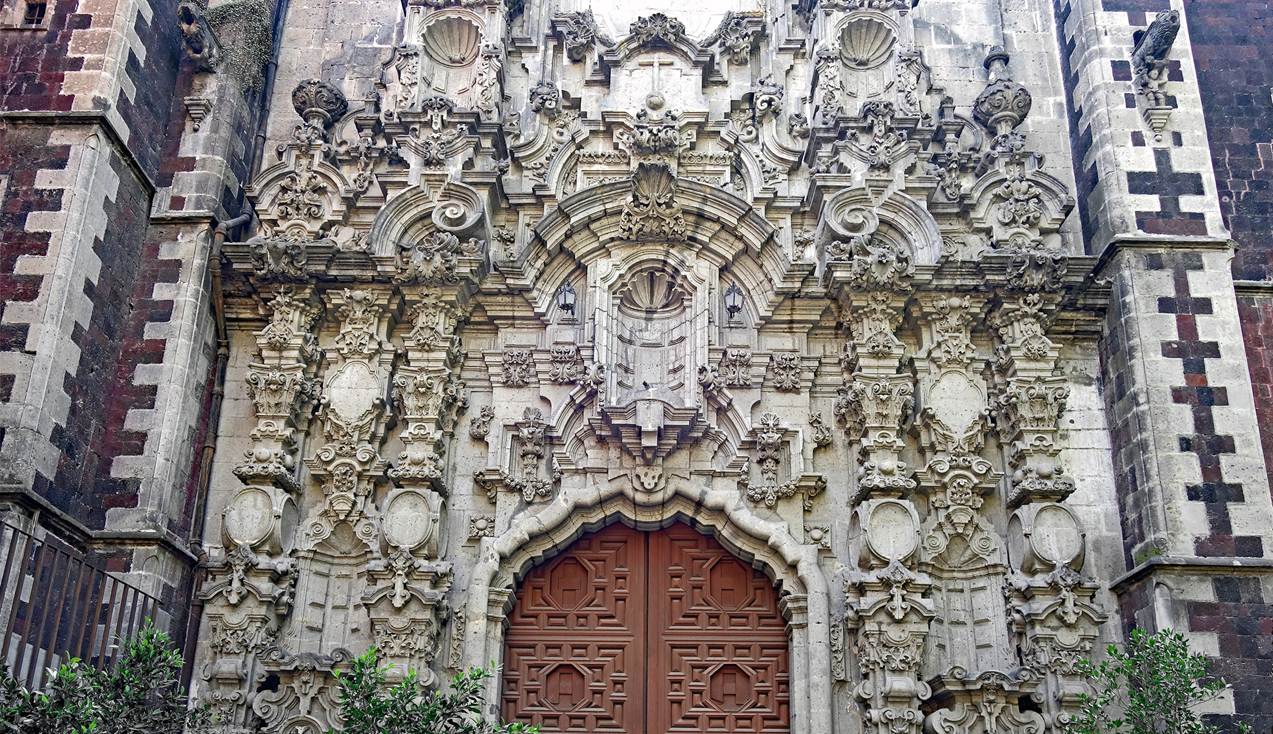
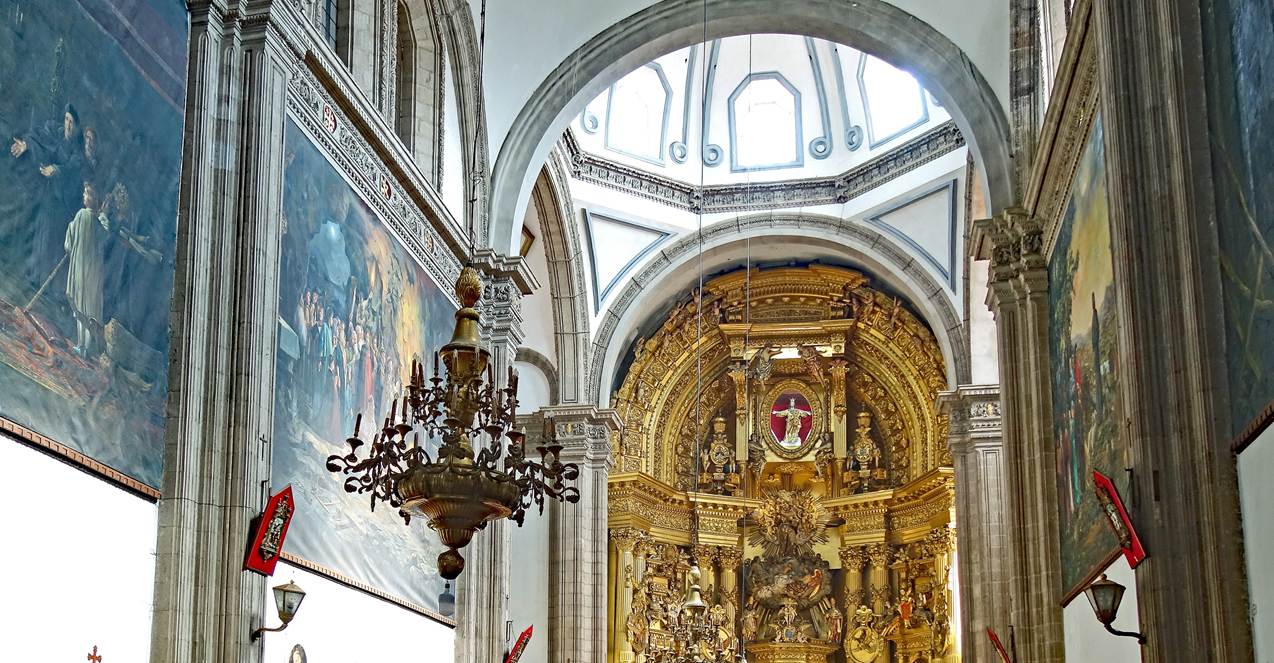
- Templo de San Francisco. This church
is a remnant of the first Franciscan monastery founded in Mexico at the
beginning of the 16th century. It was extensively restored in the mid-20th
century.
Richly sculpted facade (18th century) of
the church.
Nave and apse of the church, with large
paintings on the side walls.
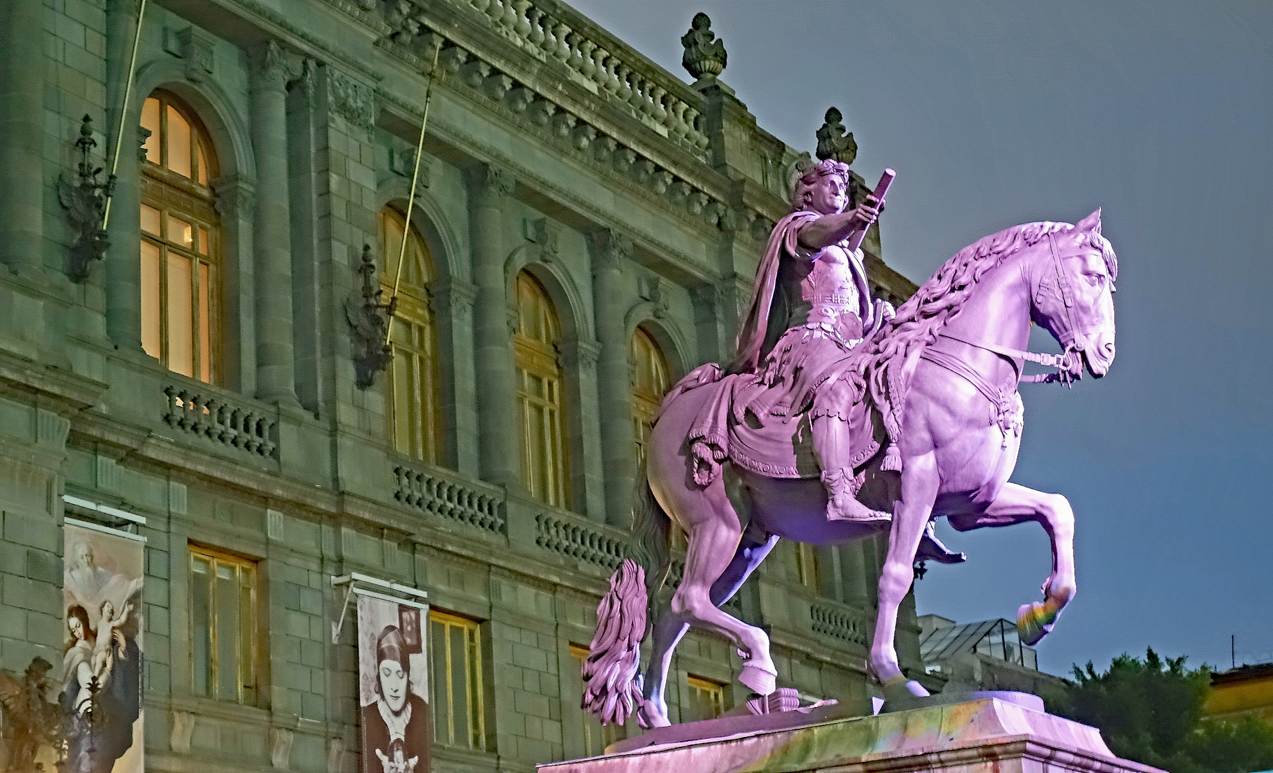
- Equestrian statue of Charles IV of
Spain, commonly called ″El Caballito″ (the ″Little Horse″)
on Plaza Manuel Tolsa, in front of the National Museum of Art. It was cast by
Manuel Tolsa in the late 18th century and early 19th century. A plaque states
that it is conserved as a monument of art, not as a celebration of the king.
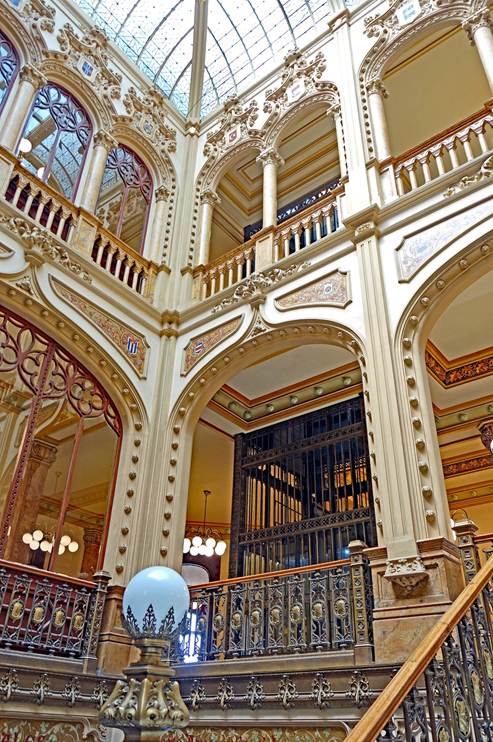
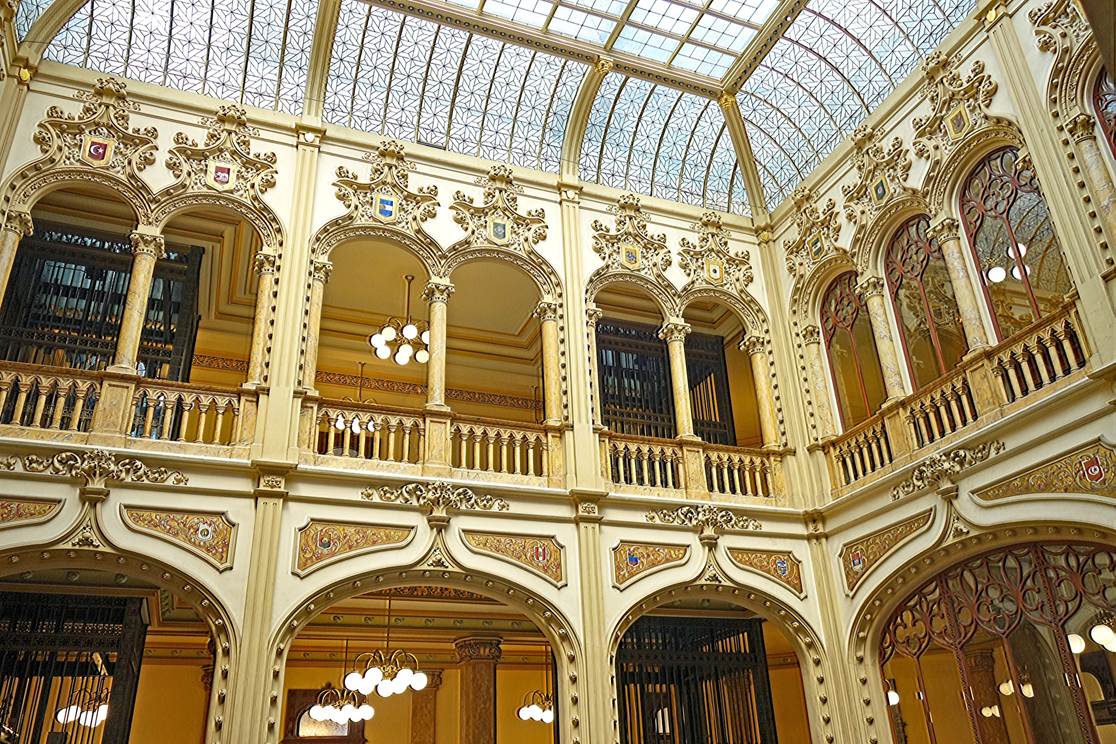
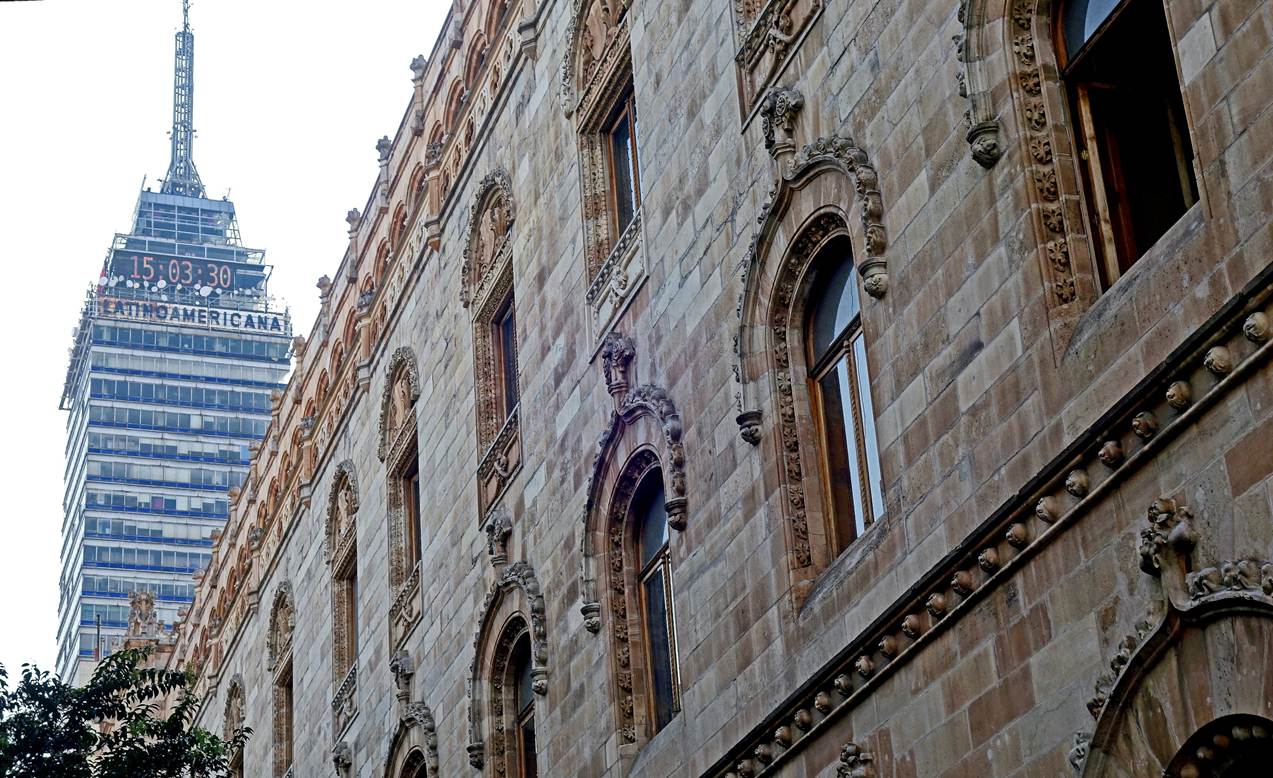
- Palacio Postal. This pretty
Italian-style palace built in the early 20th-century is the central post office
of Mexico City.
Interior of the building.
|
|
|
Rear stone facade of the Palacio postal,
with the overlooking Latino Americana tower in the background.
- Museo Mural Diego Rivera. Located next
to the Alameda Central park, on its west side, this museum was built in 1986 to
house a single, large mural (15m long) painted in 1947 Diego Rivera and titled ″Sueno
de una Tarde Dominical en la Alameda Central″ (″Dream of a Sunday
Afternoon in the Alameda Central″). The mural was moved here after its
original location was severely damaged by the 1985 earthquake. It depicts many
famous Mexican figures, from the colonial era onward, as well as ordinary
people, strolling through the Alameda Central park. The three photos below show
slightly overlapping sections that cover the entire mural.
Left section:
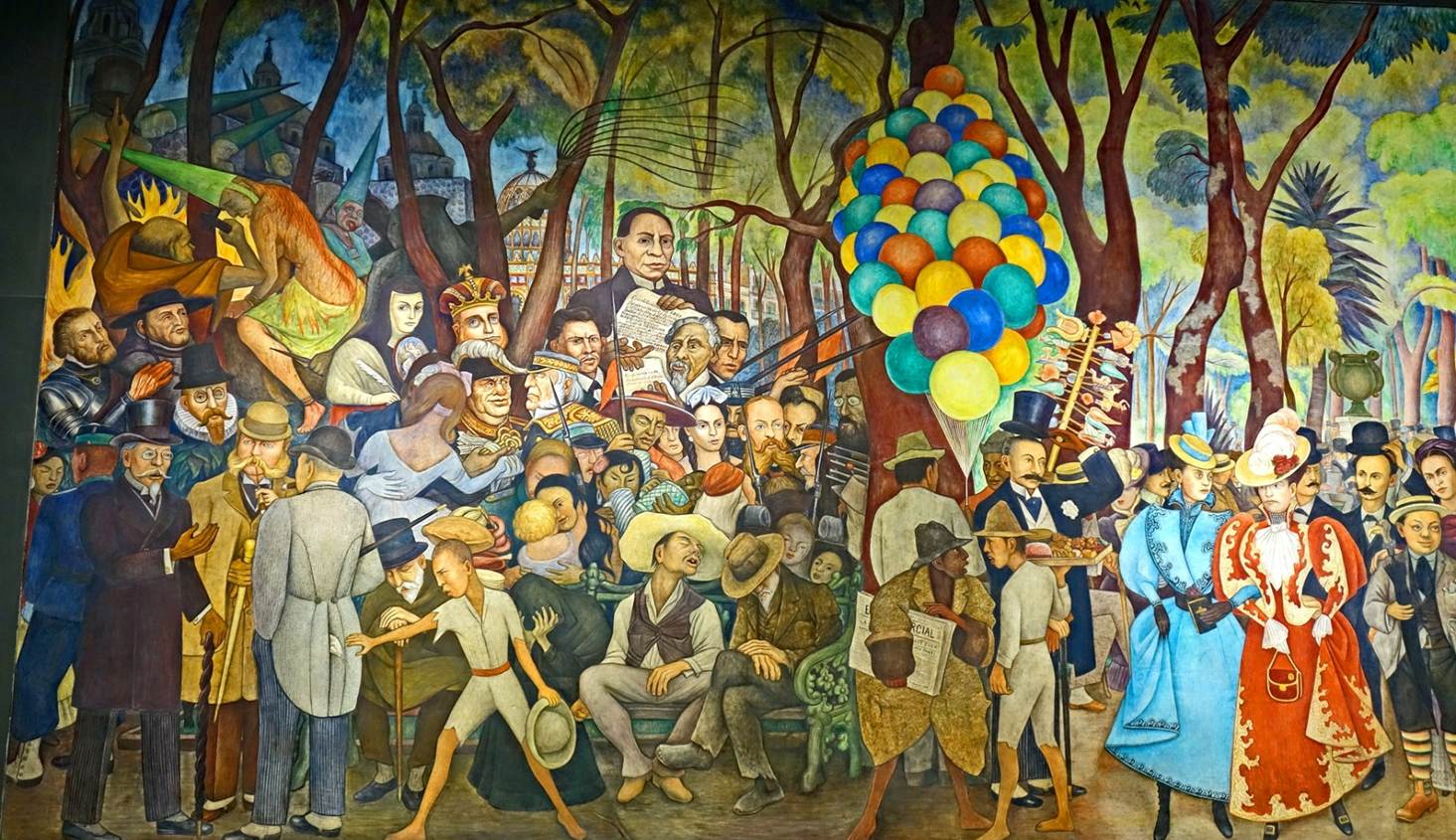
. Hernan Cortes (the figure on the far left, wearing
armor, with blood-covered hands).
. Dona Mariana Violante de Carbajal (wearing a
pointed green hat), a Jewish woman who was burned at the stake after being
accused of heresy.
. A young thief (bottom, center-left of the photo).
. Benito Juarez (the towering figure near the
center), President of Mexico (1857-1872), who fought against the Catholic
church, the French invasion, and Maximilian.
. Maximilian de Habsburg (the character with the
brown beard located below Benito Juarez, to his right).
Middle section:
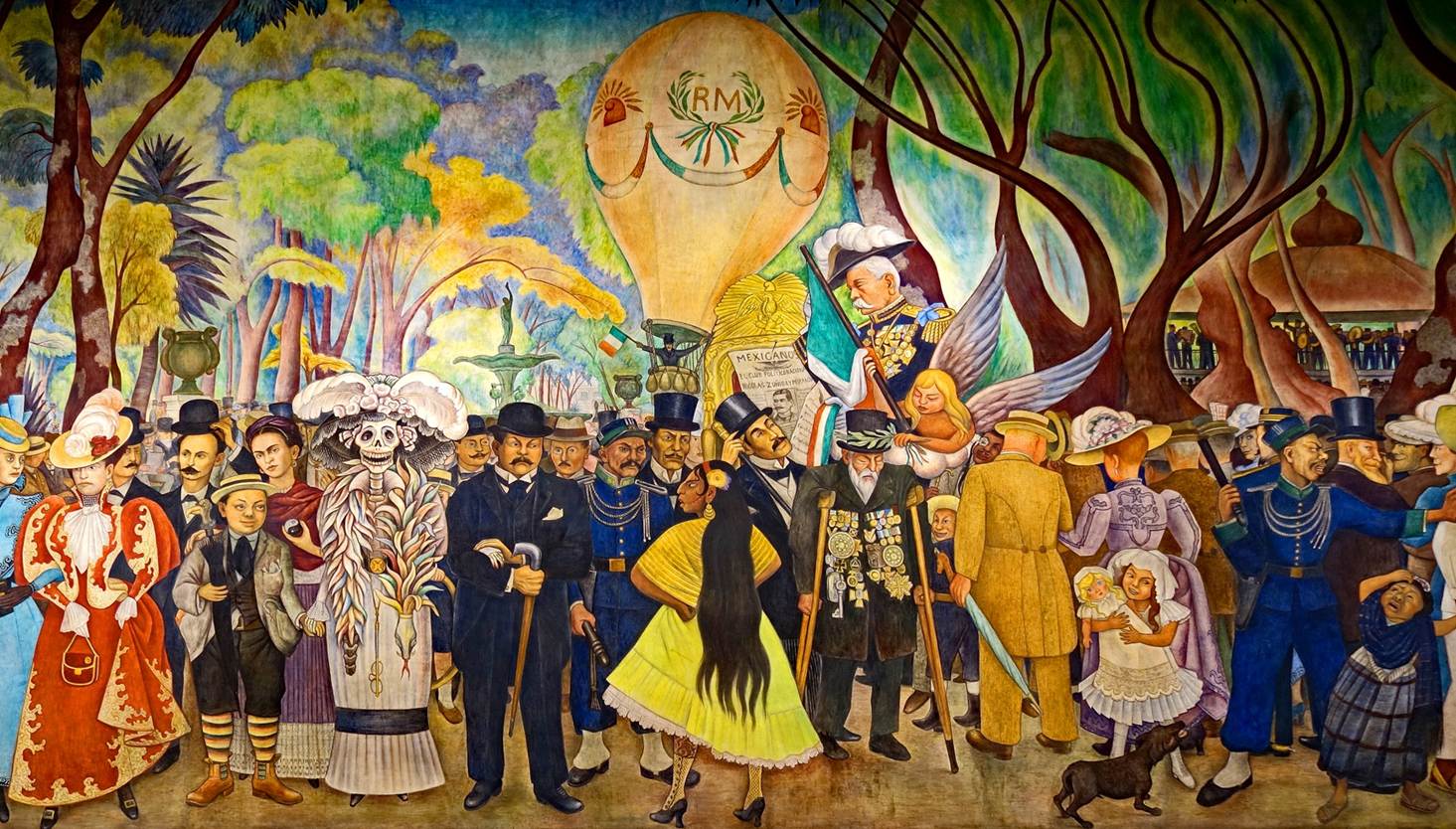
. Diego Rivera as a child (to the right of the lady
dressed in red), hand in hand with La Calavera Catrina (The Elegant Skull), which
symbolizes that death is equal for all, rich or poor.
. Frida Kahlo, just behind Diego Rivera and La
Calavera Catrina, holding the yin-yang Chinese symbol, which illustrates the
relation between Diego and Frida.
. Second lieutenant Luis ″Lobo″
Guerrero, the character adorned with many medals and walking with crutches. A
popular hero during the American invasion, he became nicknamed ″General
Medals″.
. Porfirio Diaz, towering above Luis ″Lobo″
Guerrero. He ruled Mexico for more than 30 years until 1911.
Right section:
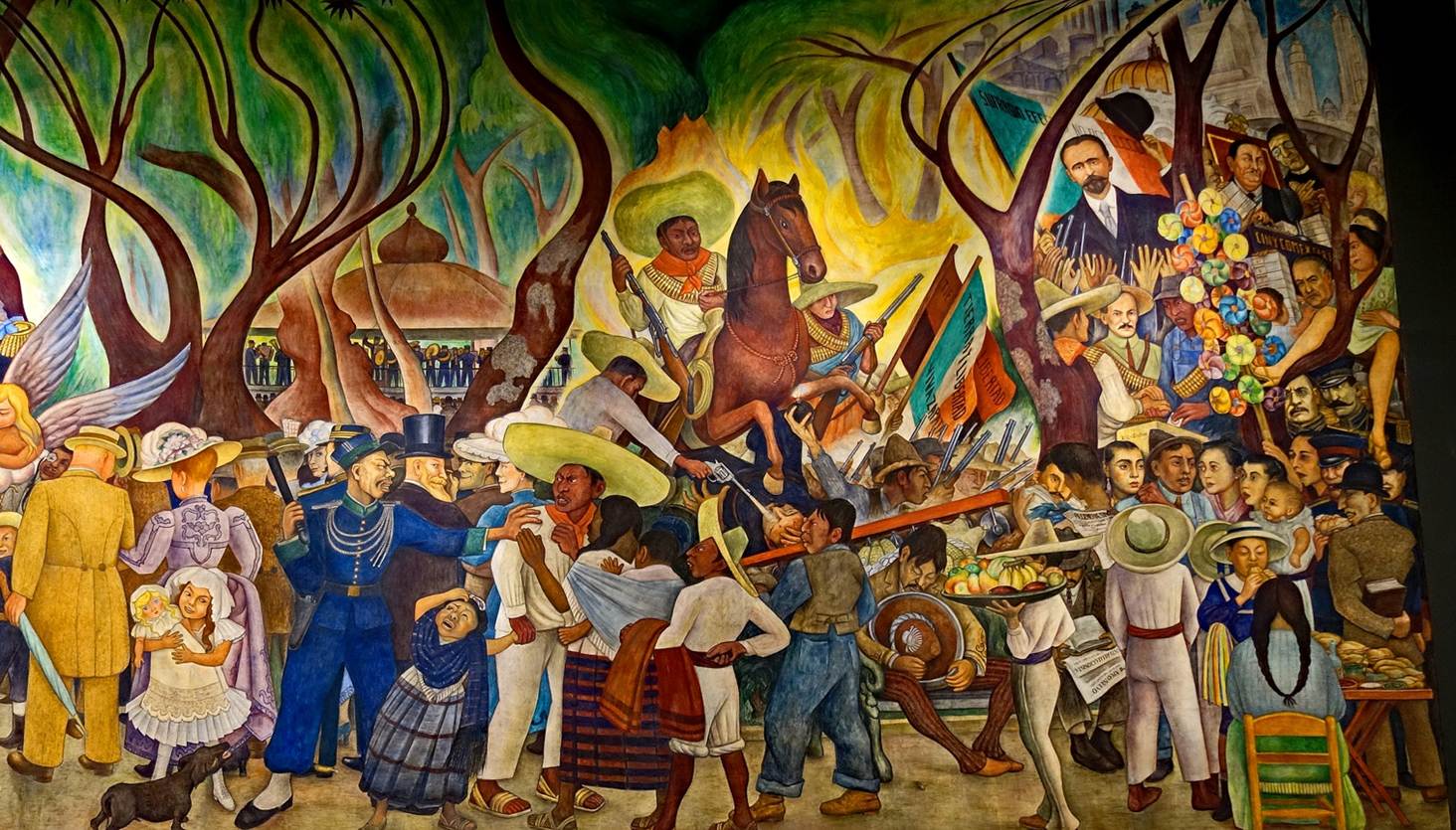
. Gendarme in blue uniform (left of the photo)
pushing back peasants, so that ″decent people″ are not disturbed.
. Zapatista riding a horse, a follower of Emiliano
Zapata Salazar, a leading figure of the Mexican Revolution of 1910-1920.
Neighborhoods north of the Centro Historico [Blue markers in Google
map]
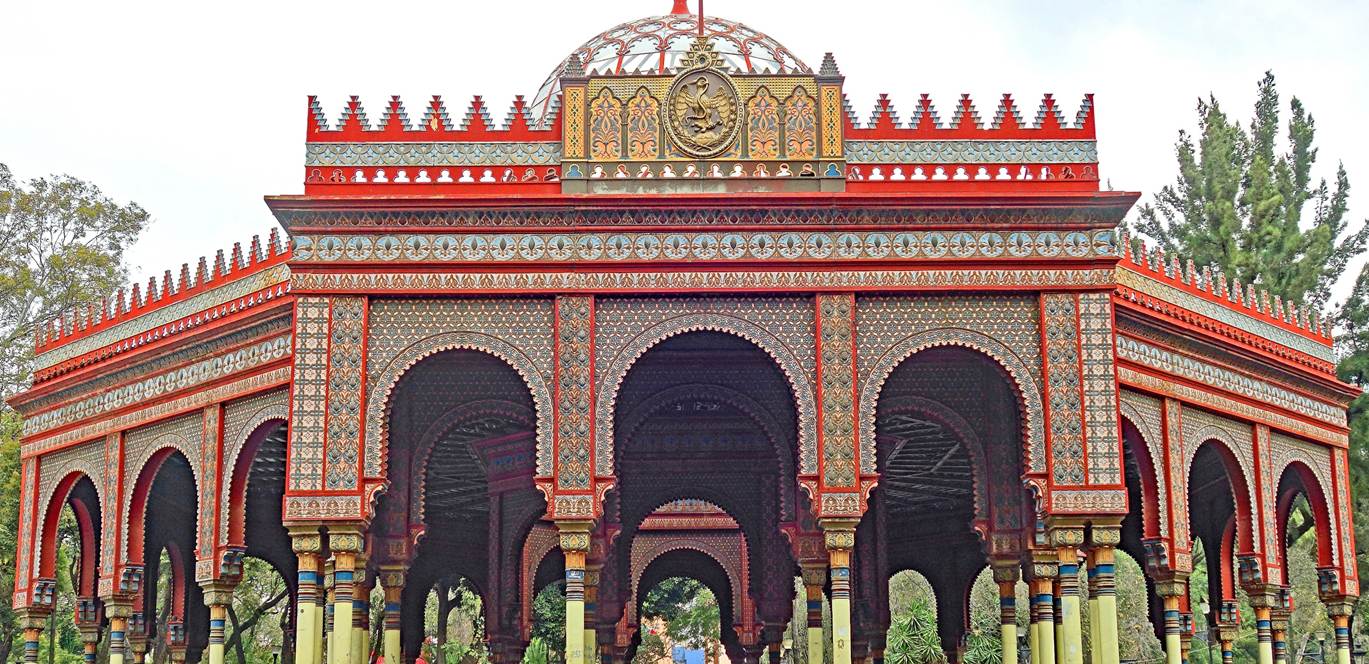
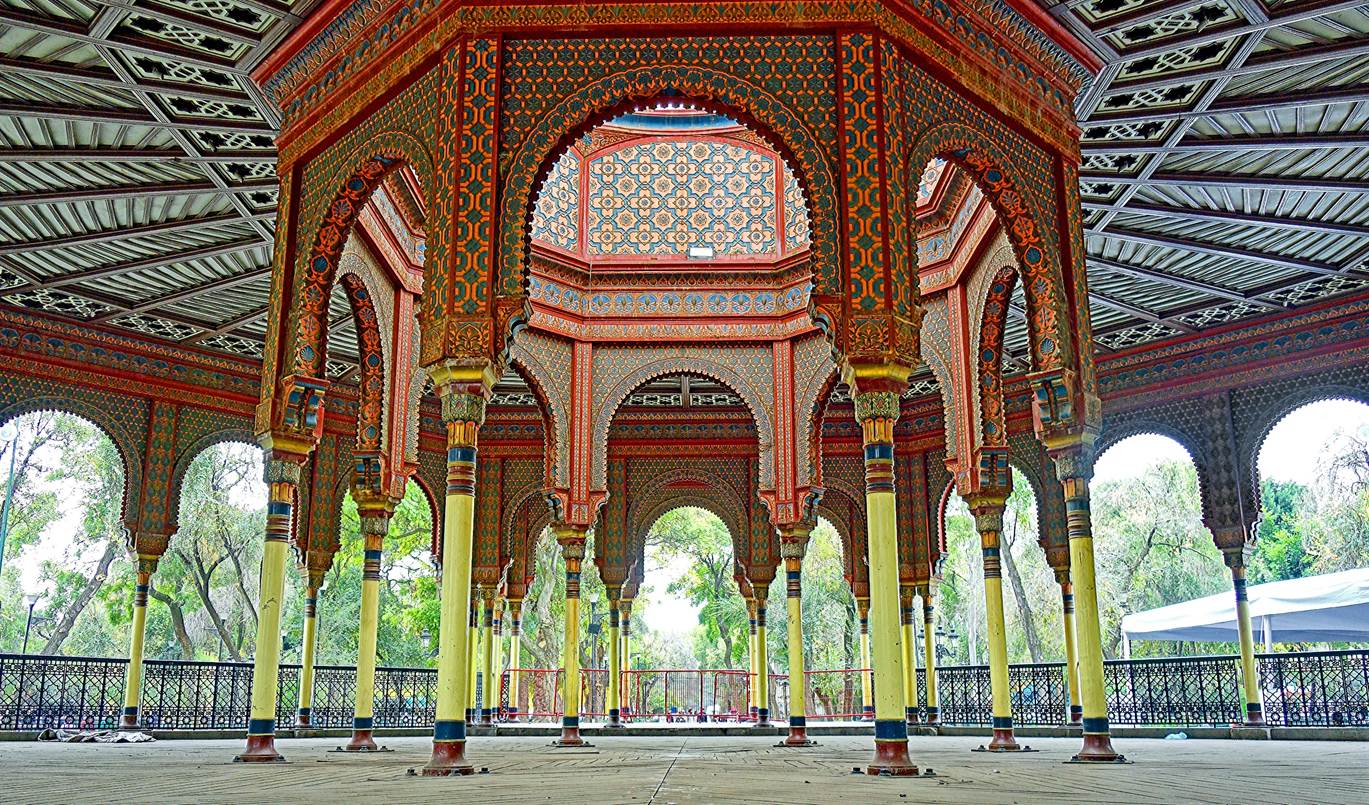
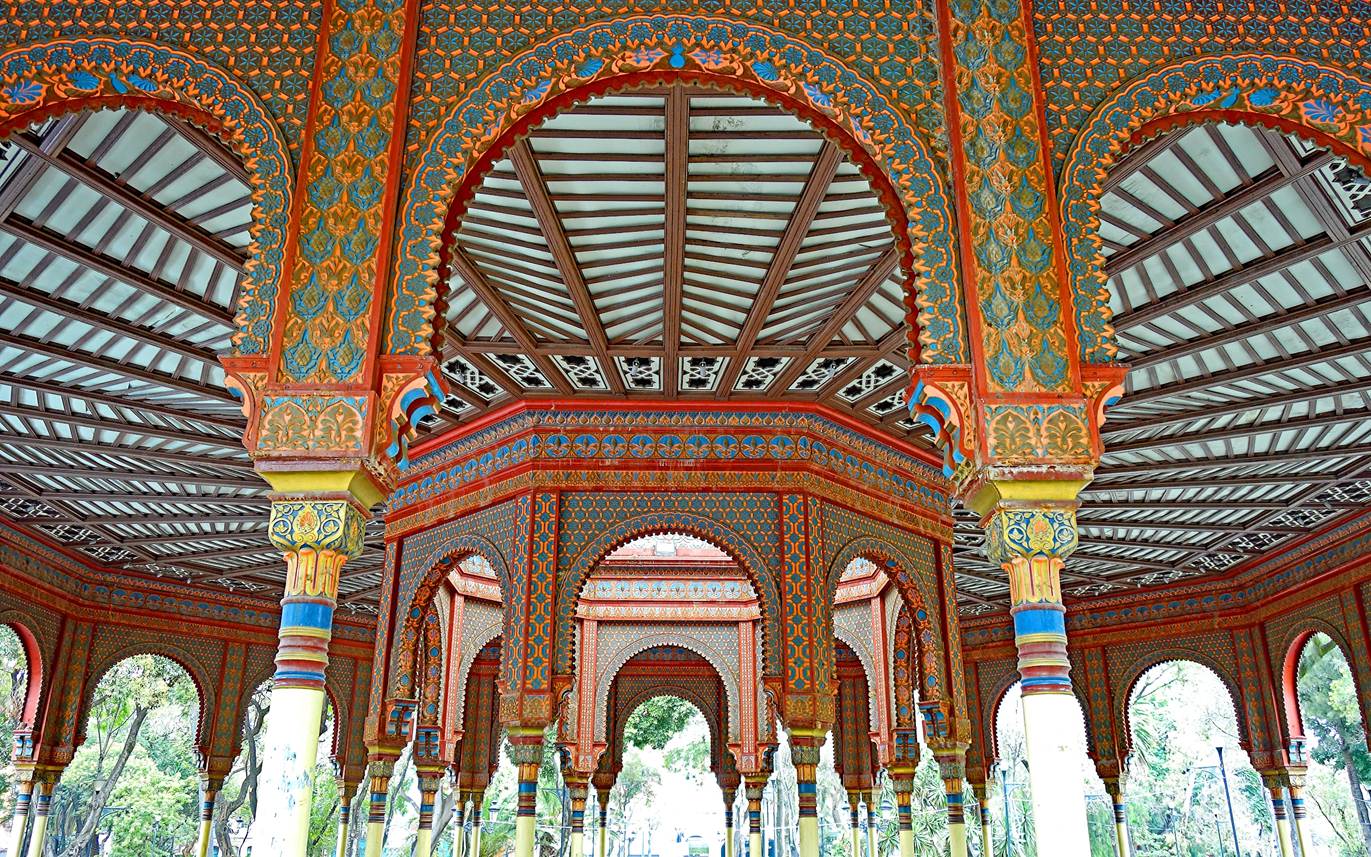
- Kiosko Morisco. Designed in a Moorish
architectural style, this large kiosk is made of wrought-iron panels that can
be dismantled and moved as needed. It was first built to serve as the Mexican
Pavilion at the 1884 World's Fair in New Orleans and was later used for the
Saint Louis Exposition of 1902. It was eventually moved to its current location
in Mexico City.
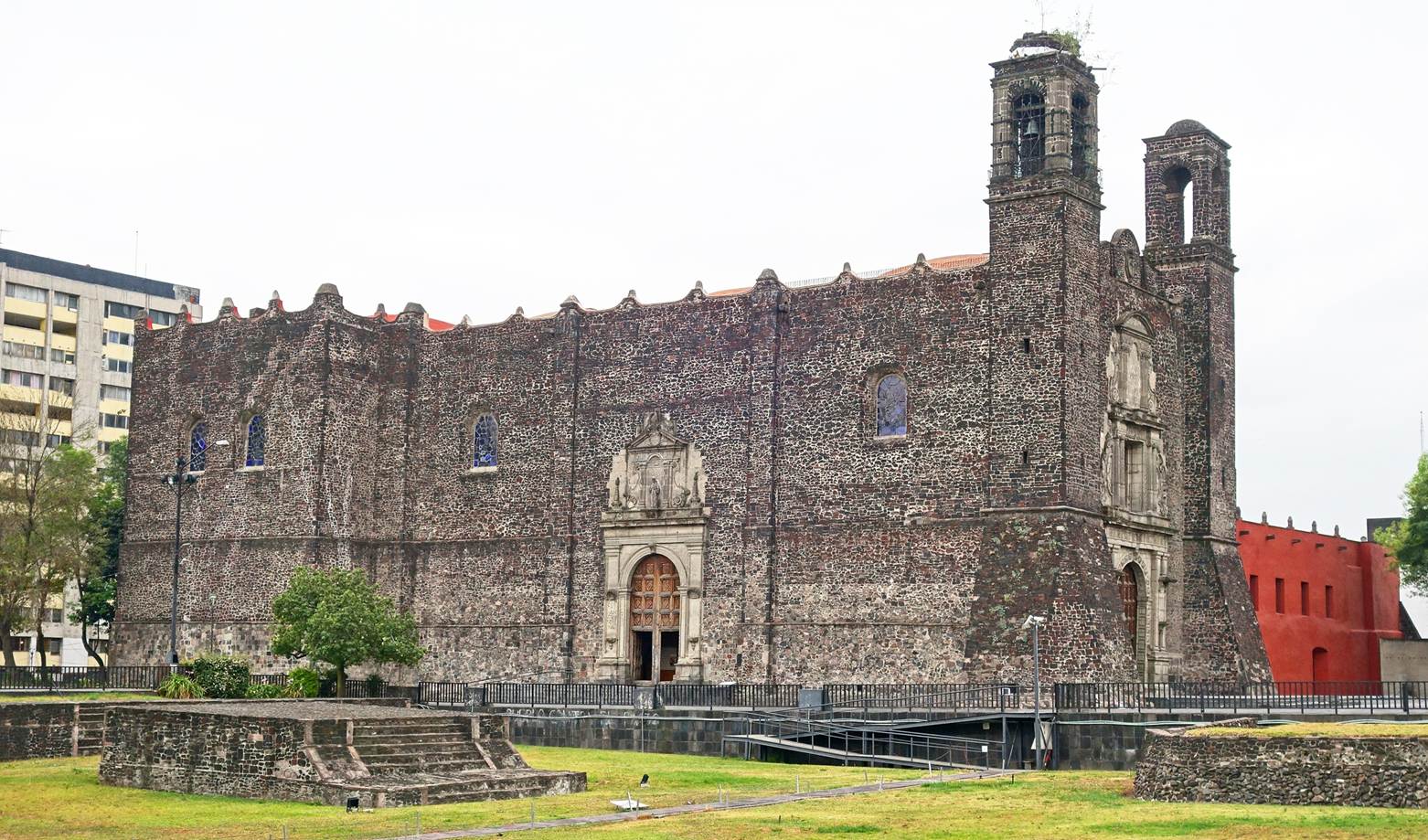
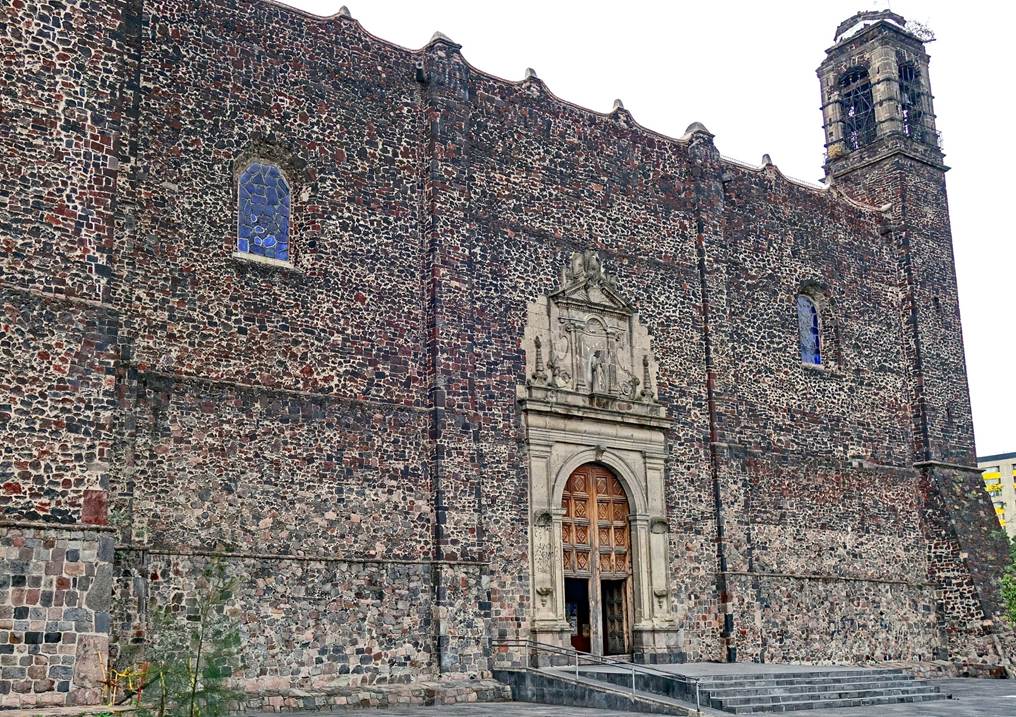
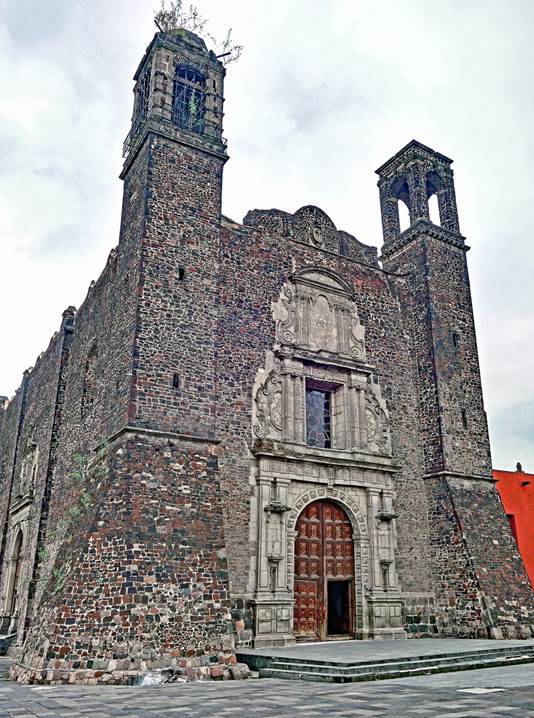
- Templo de Santiago Tlatelolco. This
massive, austere-looking church is located in the so-called Plaza de las Tres
Culturas, a name symbolizing the ″fusion″ of the pre-Hispanic,
Hispanic, and modern cultures. It was built in the early 17th century using
stones taken from the ancient Aztec temples of Tlatelolco, located on the same
site.
|
|
|
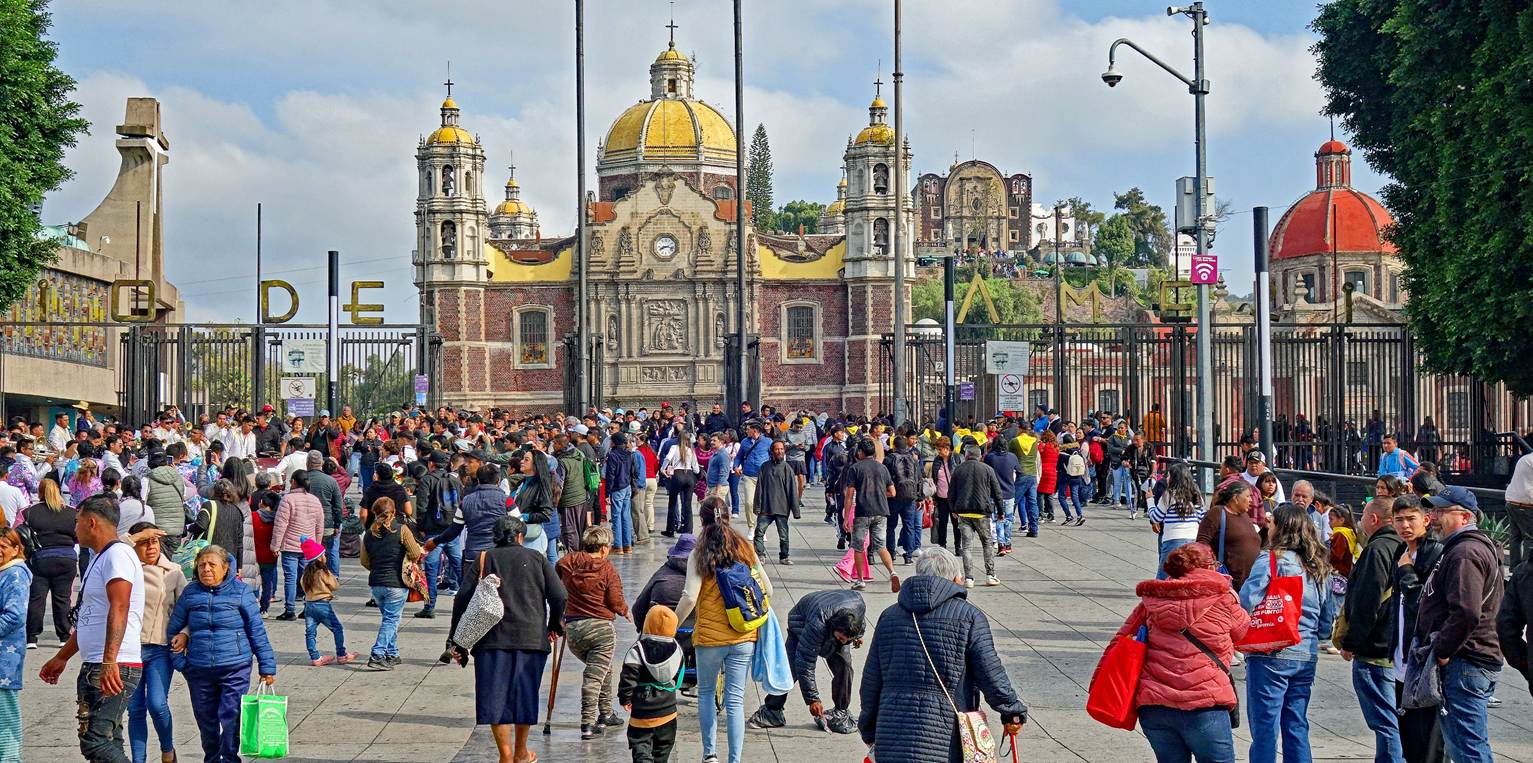
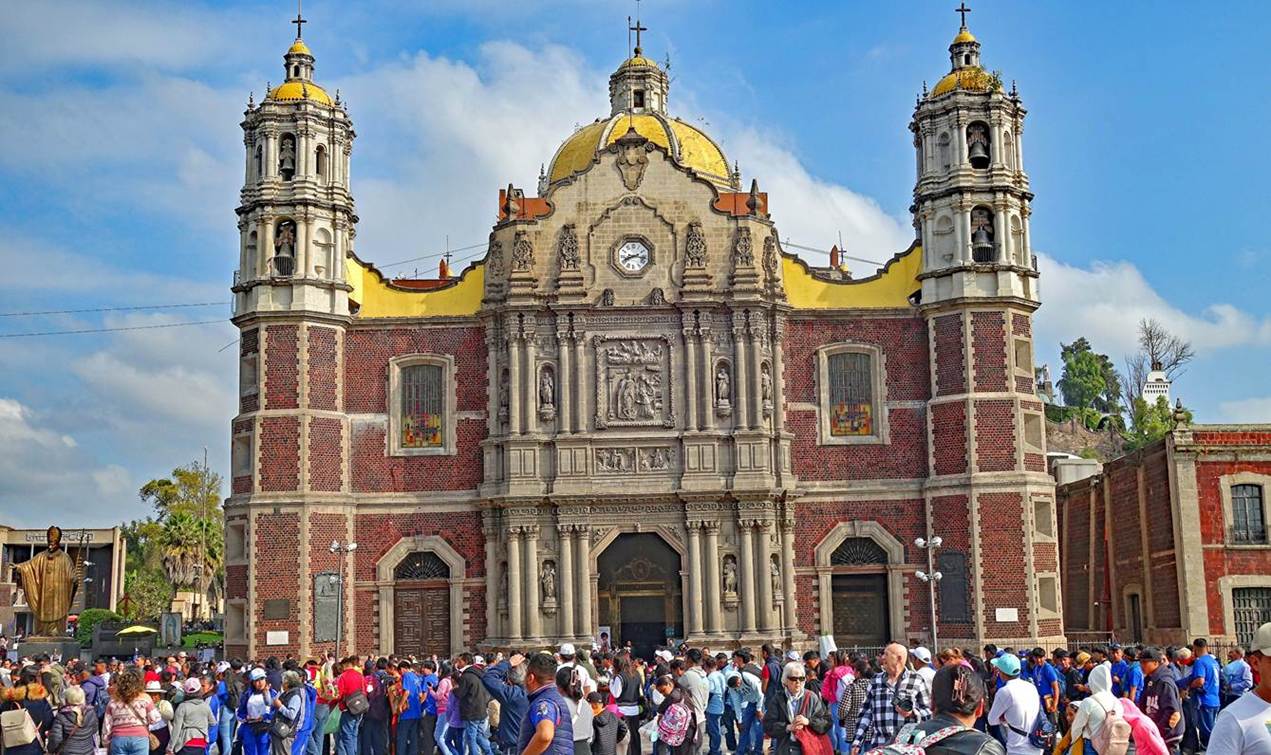
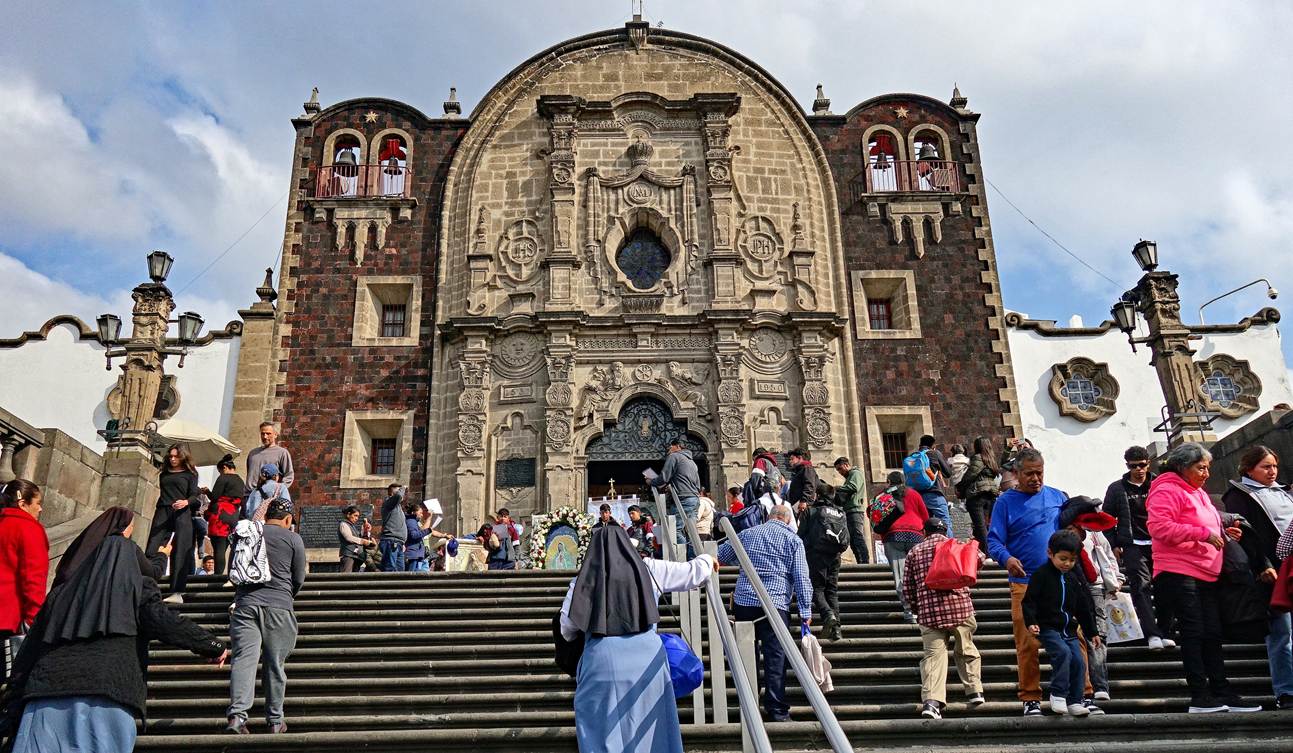
- Basilica de Nuestra Senora
de Guadalupe. This large complex of buildings, located at the foot and on the
slopes of a hill, Cerro del Tepeyac, is the most
important religious site in Mexico. Every year it attracts millions of visitors
from all over Latin America. The crowds are particularly large in early
December, as December 12th is the feast day celebrating the apparition of the
Virgin Mary to Saint Juan Diego, an Aztec peasant, in 1531, on Cerro del
Tepeyac.
Entrance of the religious
site. The old basilica (also called Templo Expiatorio), the building with the
yellow domes, stands in the middle of the photo. The located on the hill (at
the center-right of the photo) is the Capilla del Cerrito.
Close-up view of the Templo Expiatorio. It was built between 1695 and 1709
to replace earlier buildings that had become too small to accommodate the
growing number of pilgrims. The structure leans slightly toward the left due to
its sinking into the soft ground.
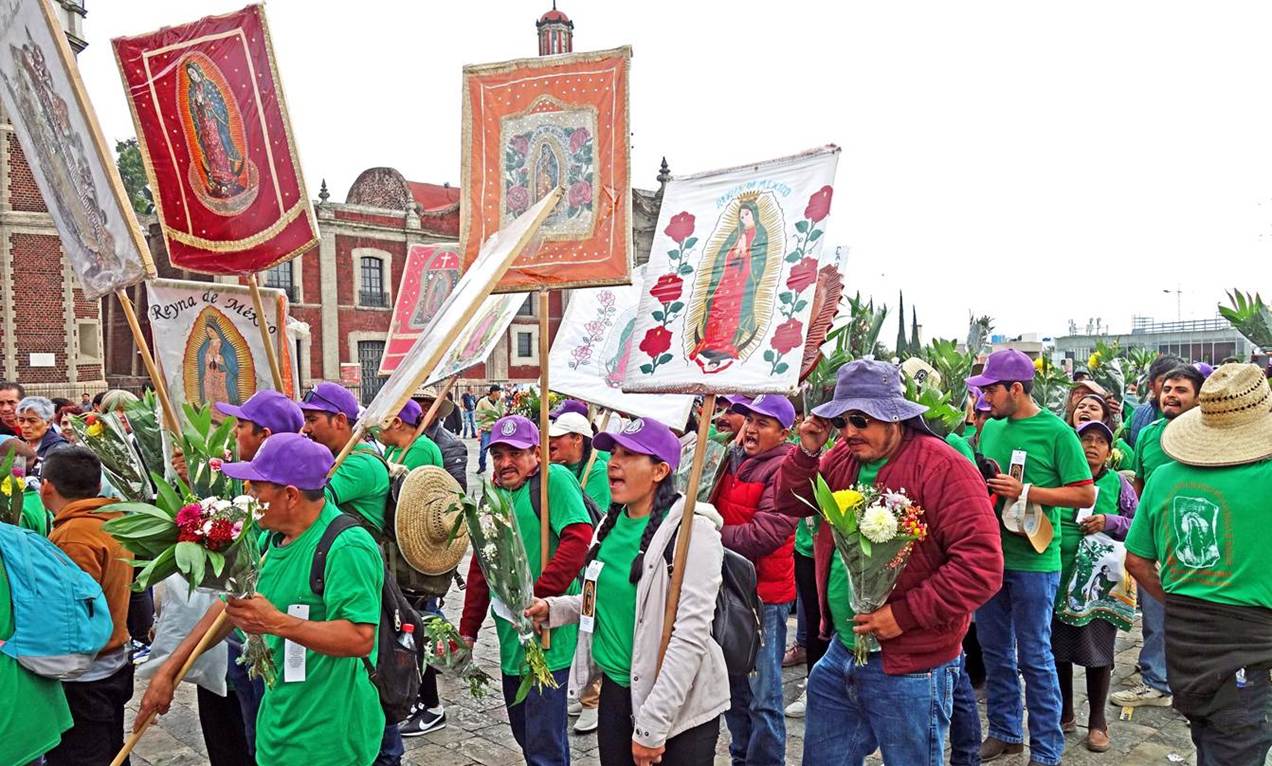
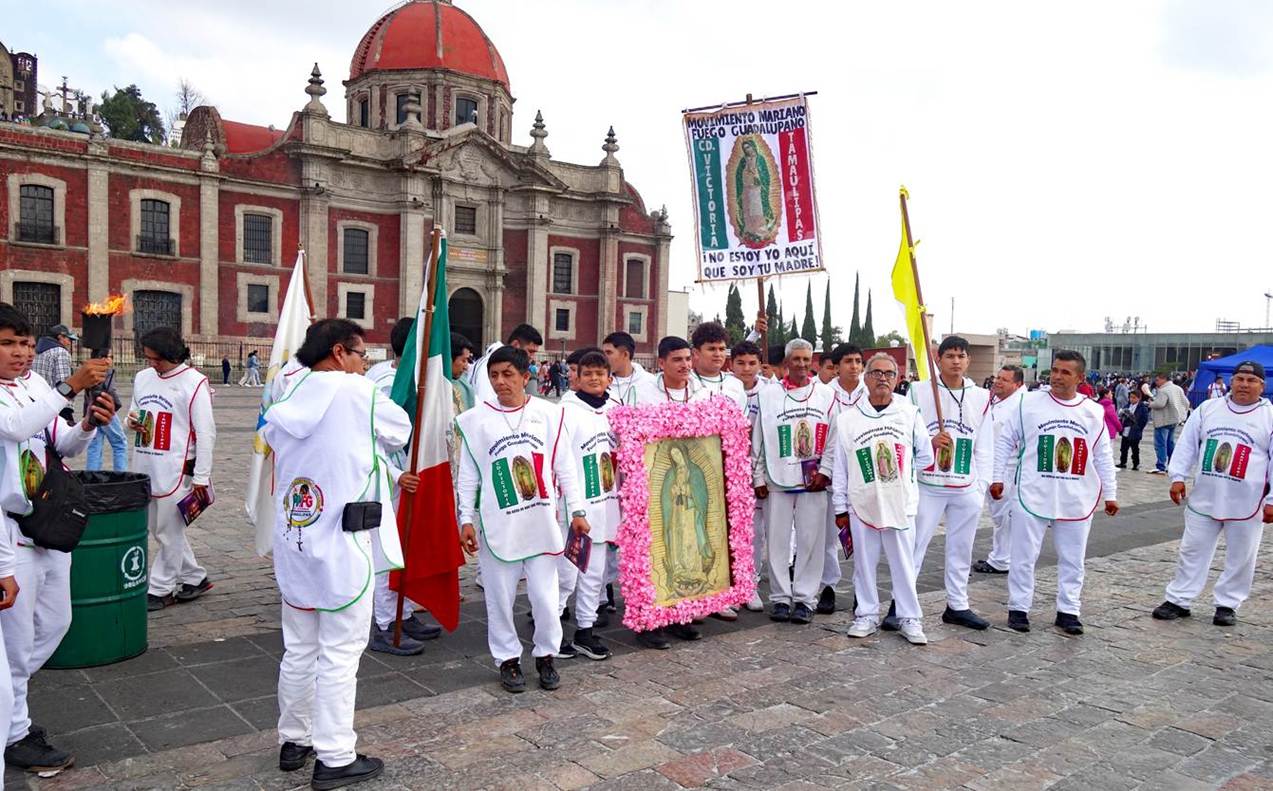
Groups of pilgrims from different
regions of Mexico in the plaza (Plaza Mariana) in front of the Templo
Expiatorio.
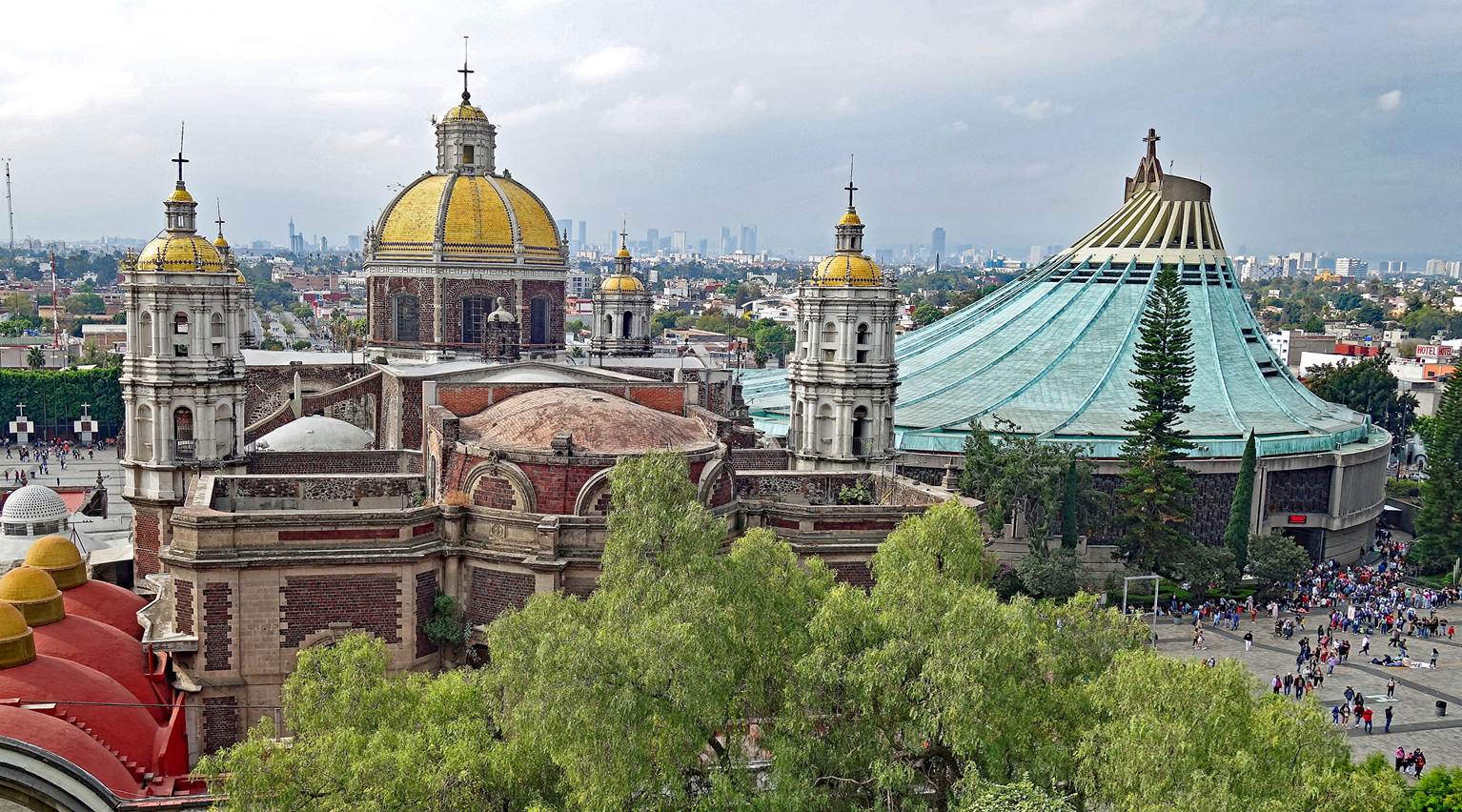
View from the mirador below the Capilla
del Cerrito, with the Templo Expiatorio on the left and the modern basilica
(built in 1976) on the right.
Last flight of stairs leading to the
Capilla del Cerrito.
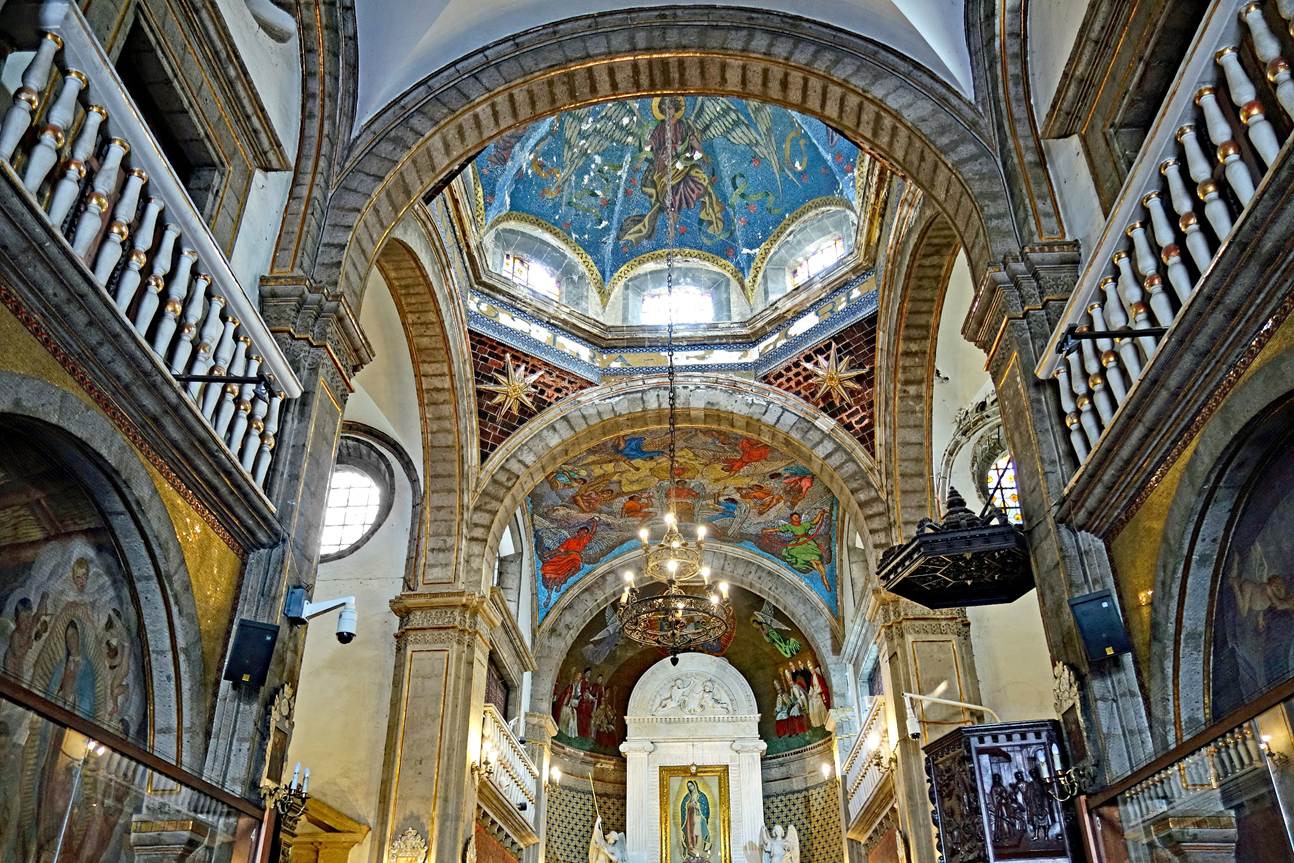
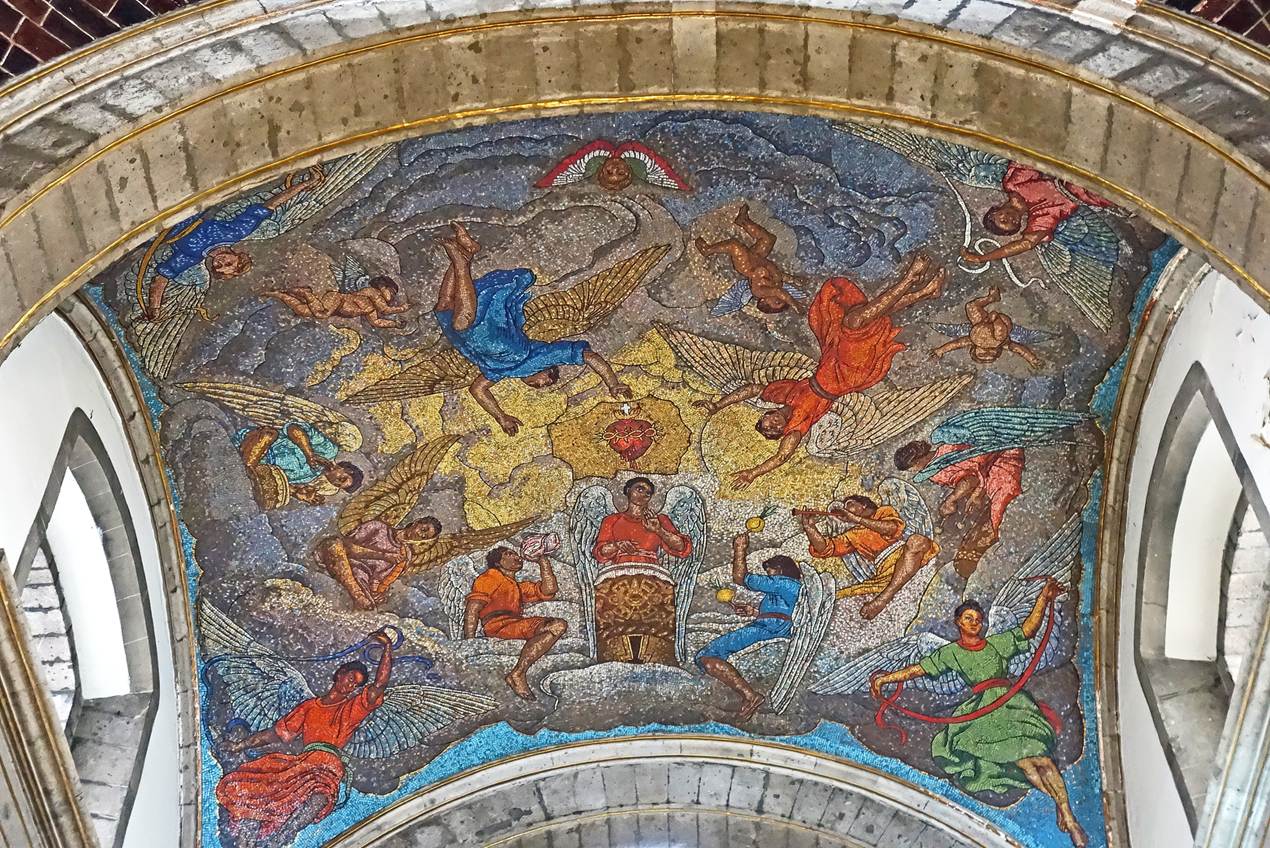
Nave and ceiling of the Capilla del
Cerrito.
Capilla del Pocito. This pretty chapel
built in the 18th century is located at the foot of the hill, on the east site
of the religious site.
|
|
|
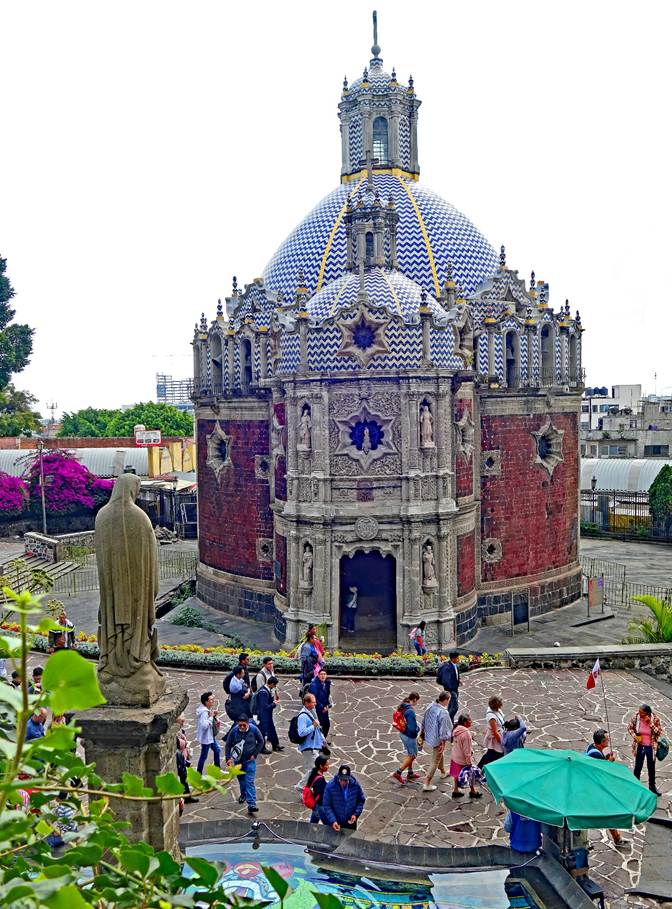
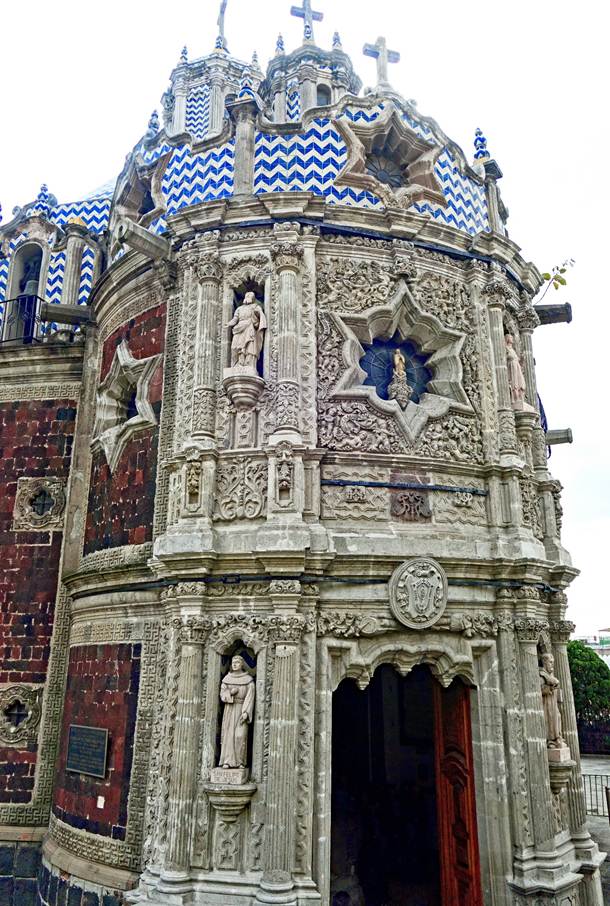
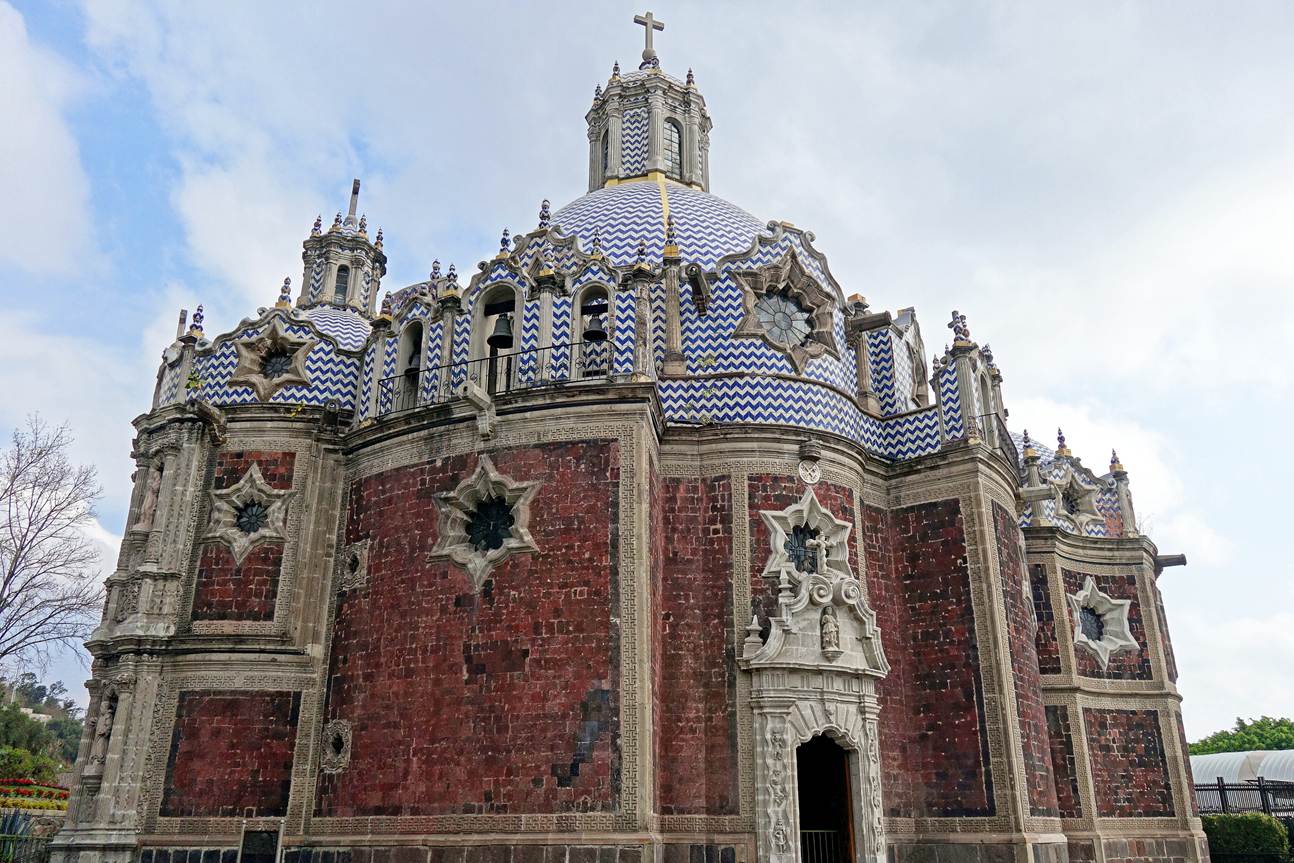
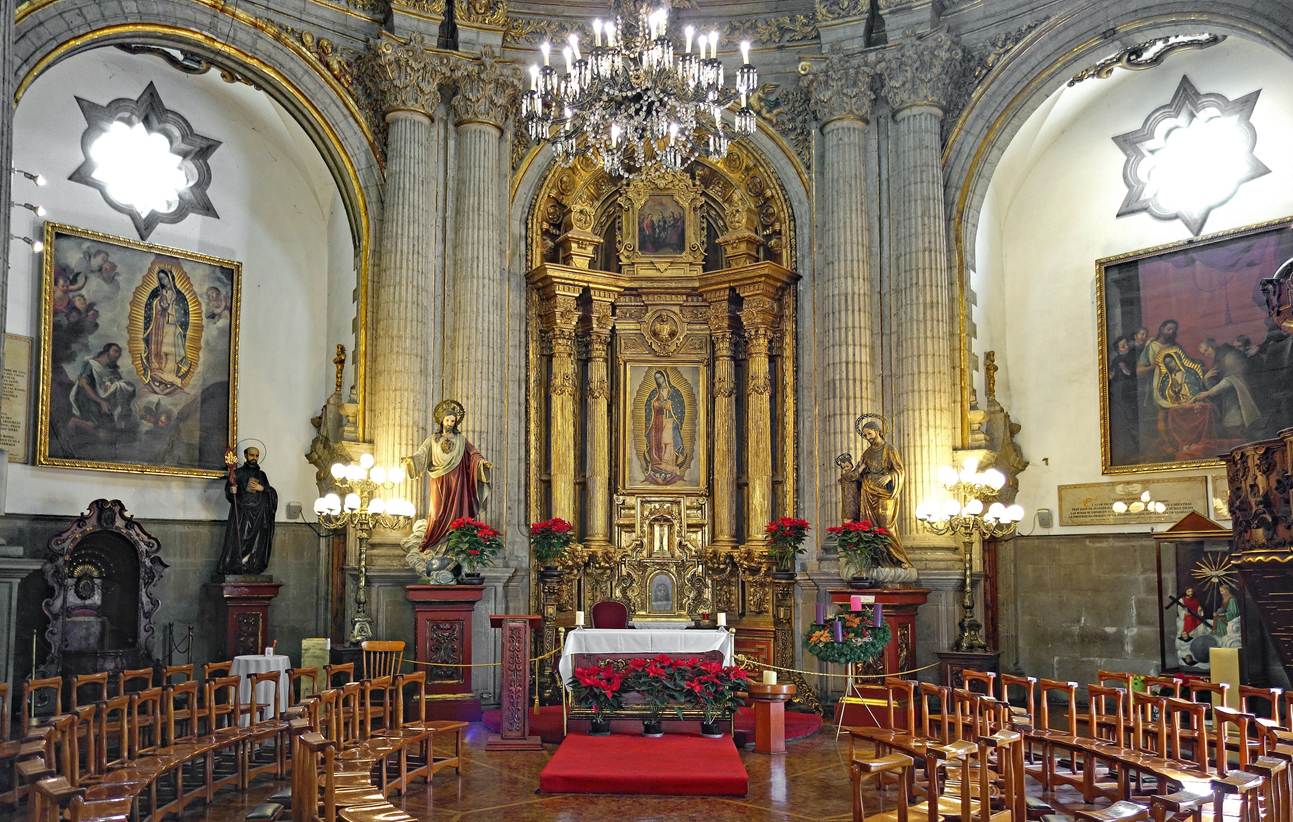
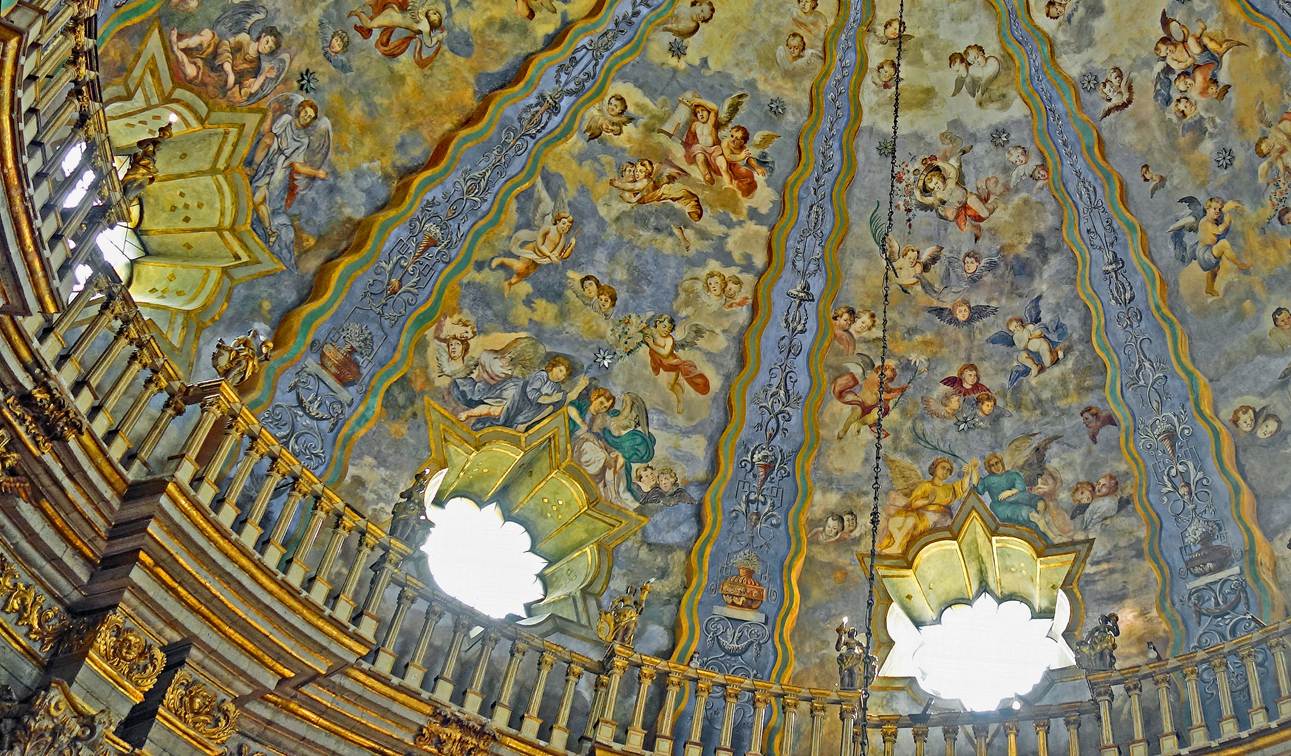
Interior of the Capilla del Pocito and its
decorated ceiling.
Roma Norte and Chapultepec [Green markers in Google
map]
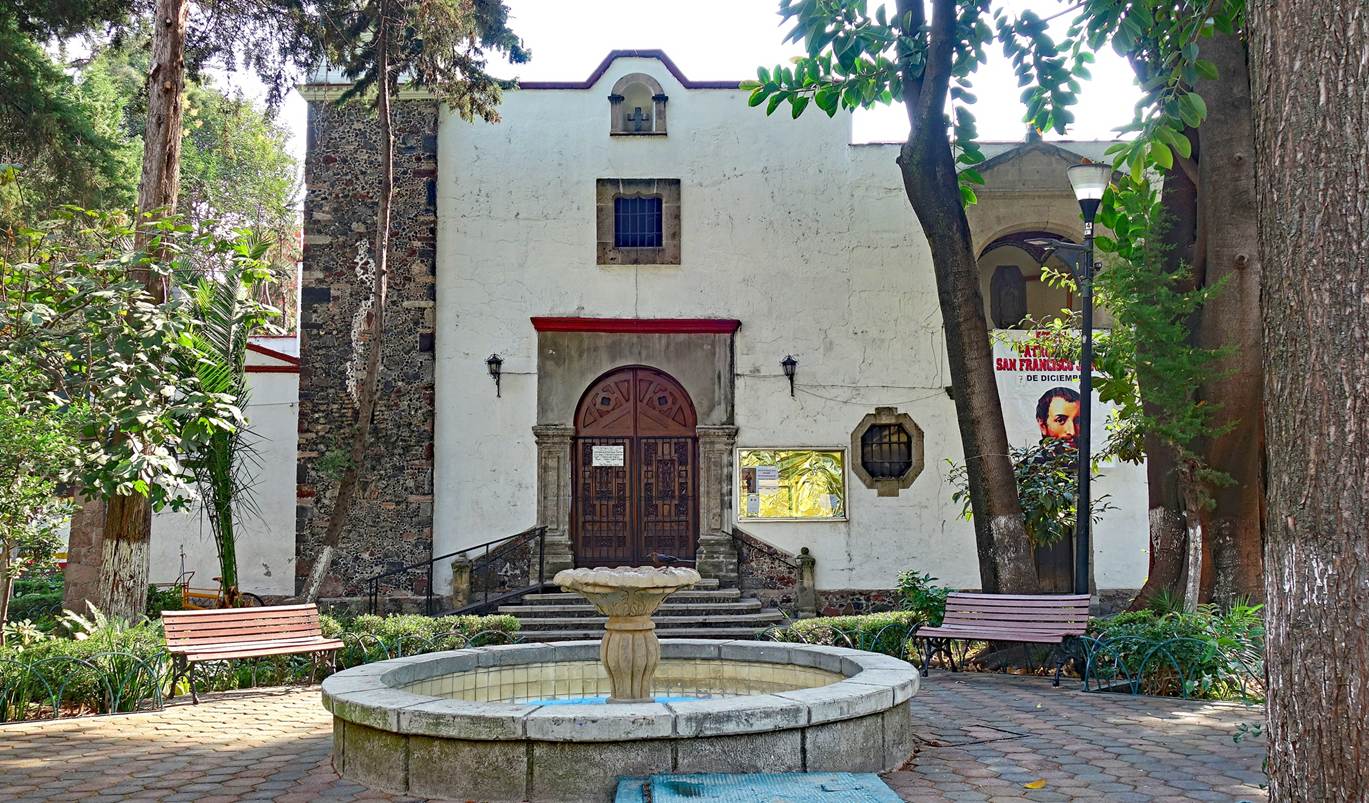
- Capilla de San Francisco Javier de la
Romita, on the small Plaza de Romita in the Roma Norte neighborhood.
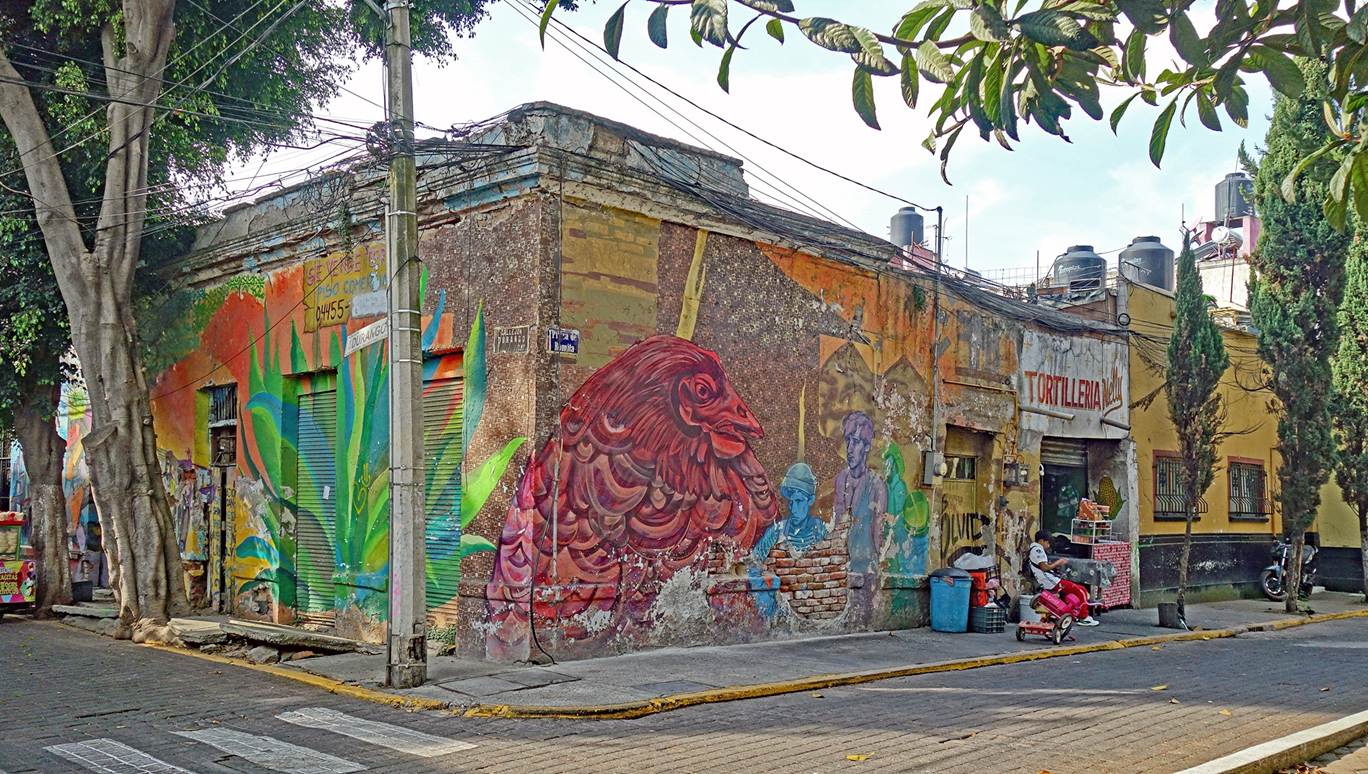
Murals and tortilleria on Plaza de
Romita.
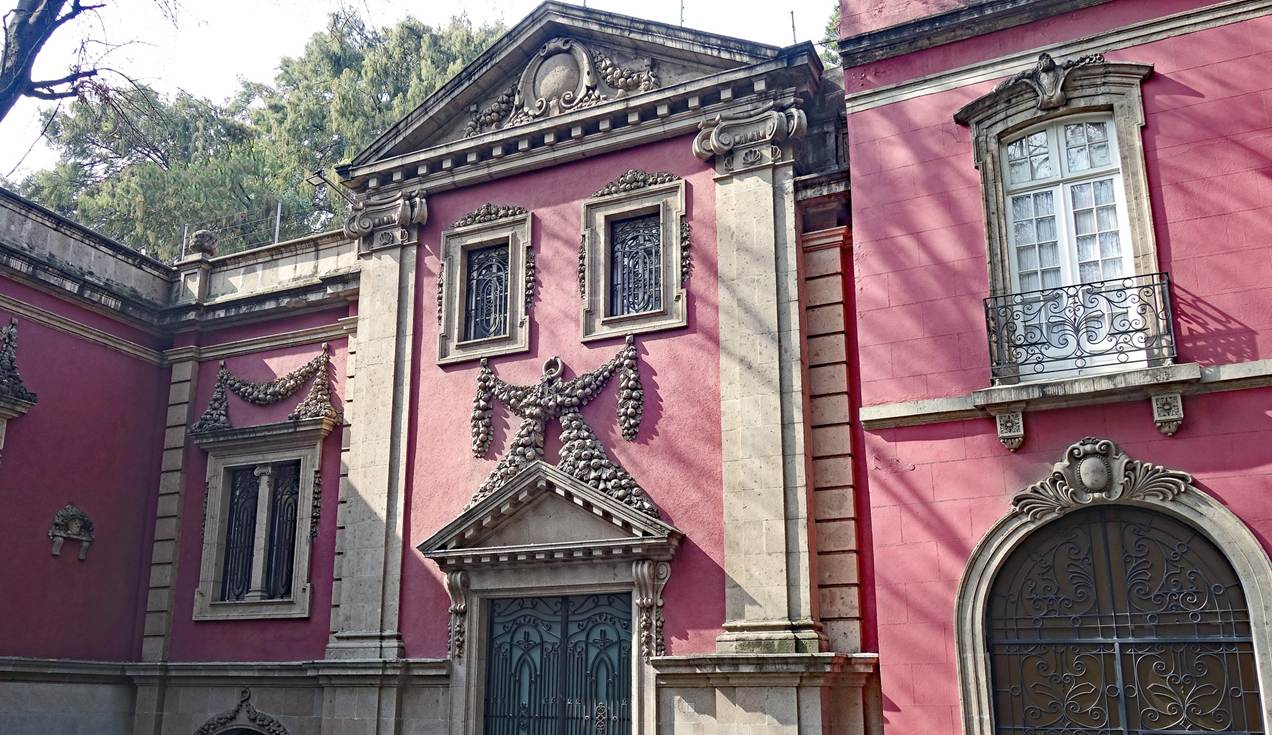
- Early-20th century house, with a
distinctive pink facade, ornate stone carvings, and intricate ironwork, at the
southwest corner of the Plaza Rio de Janeiro.
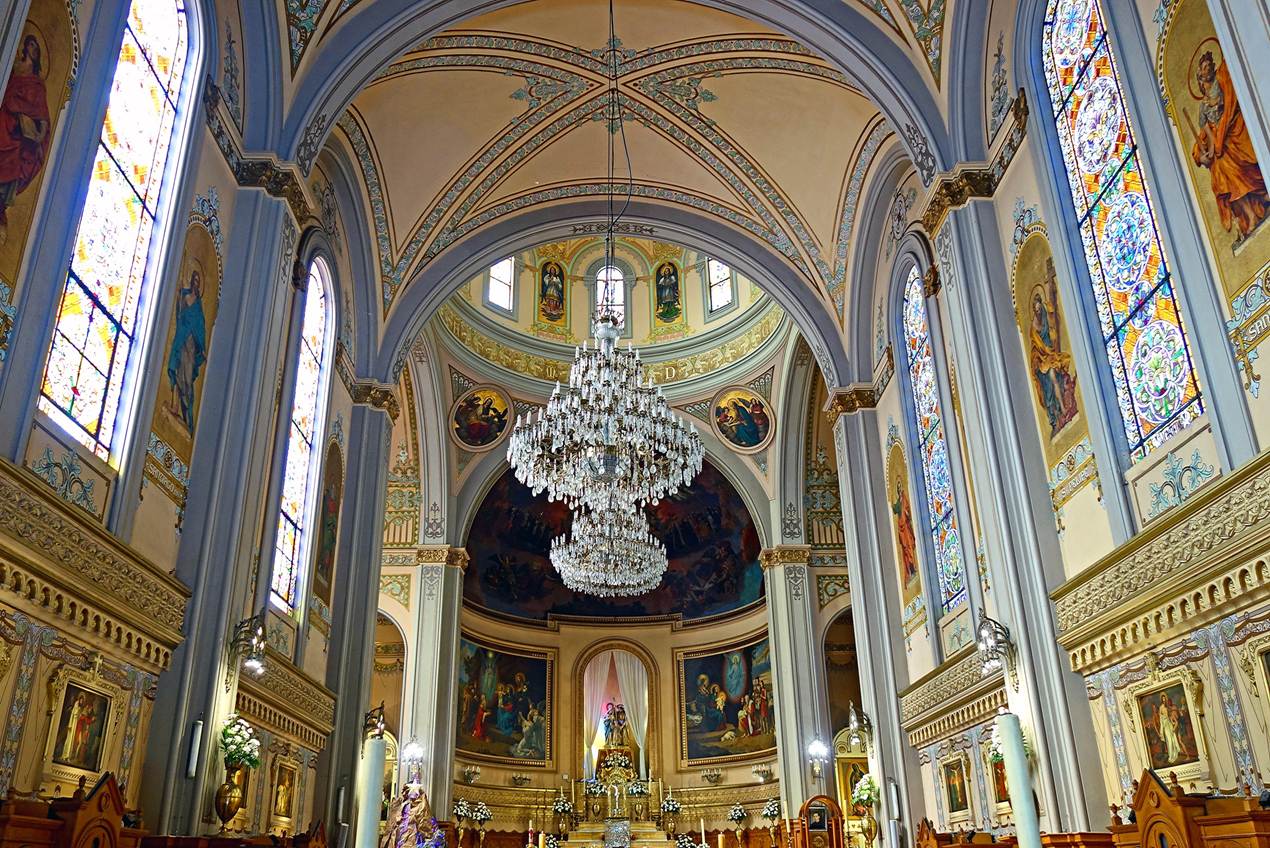
- Parroquia de la Sagrada Familia
(Parish of the Holy Family) built between 1910 and 1925.
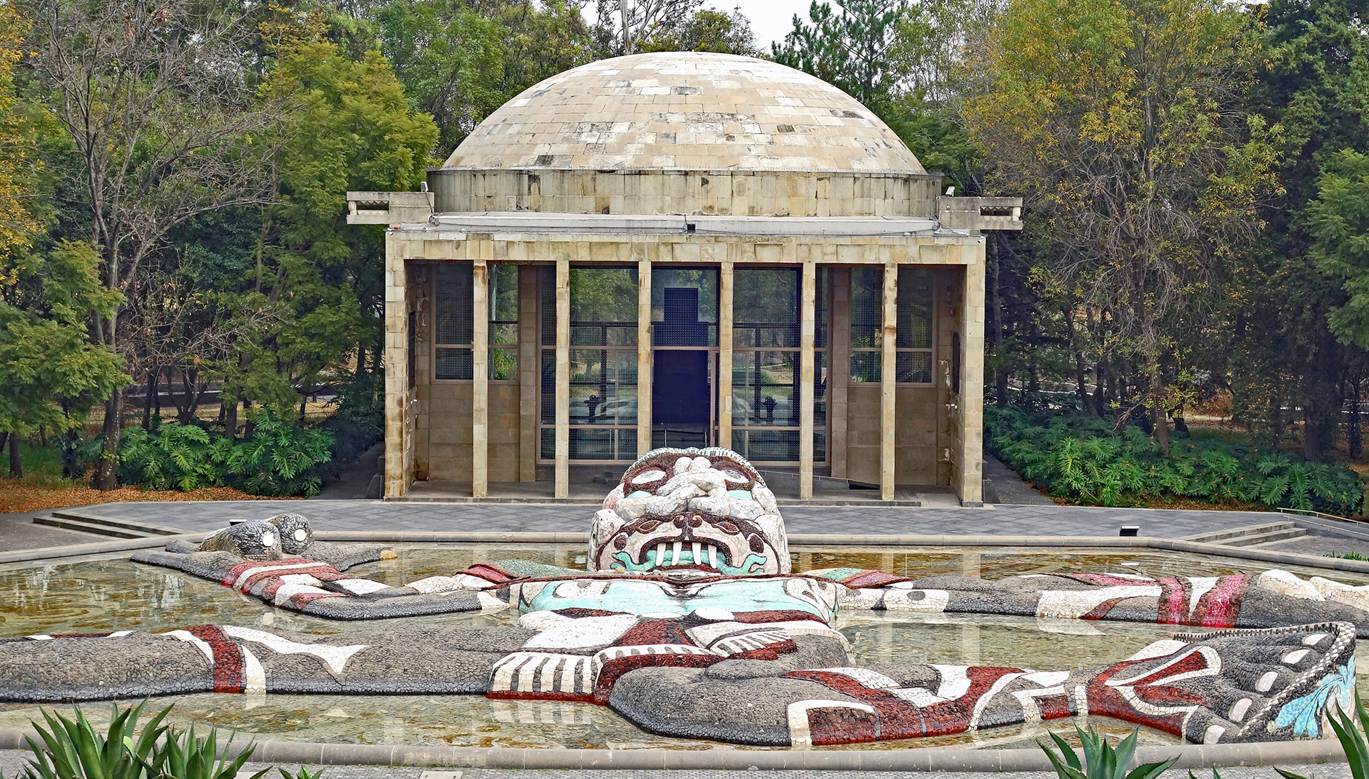
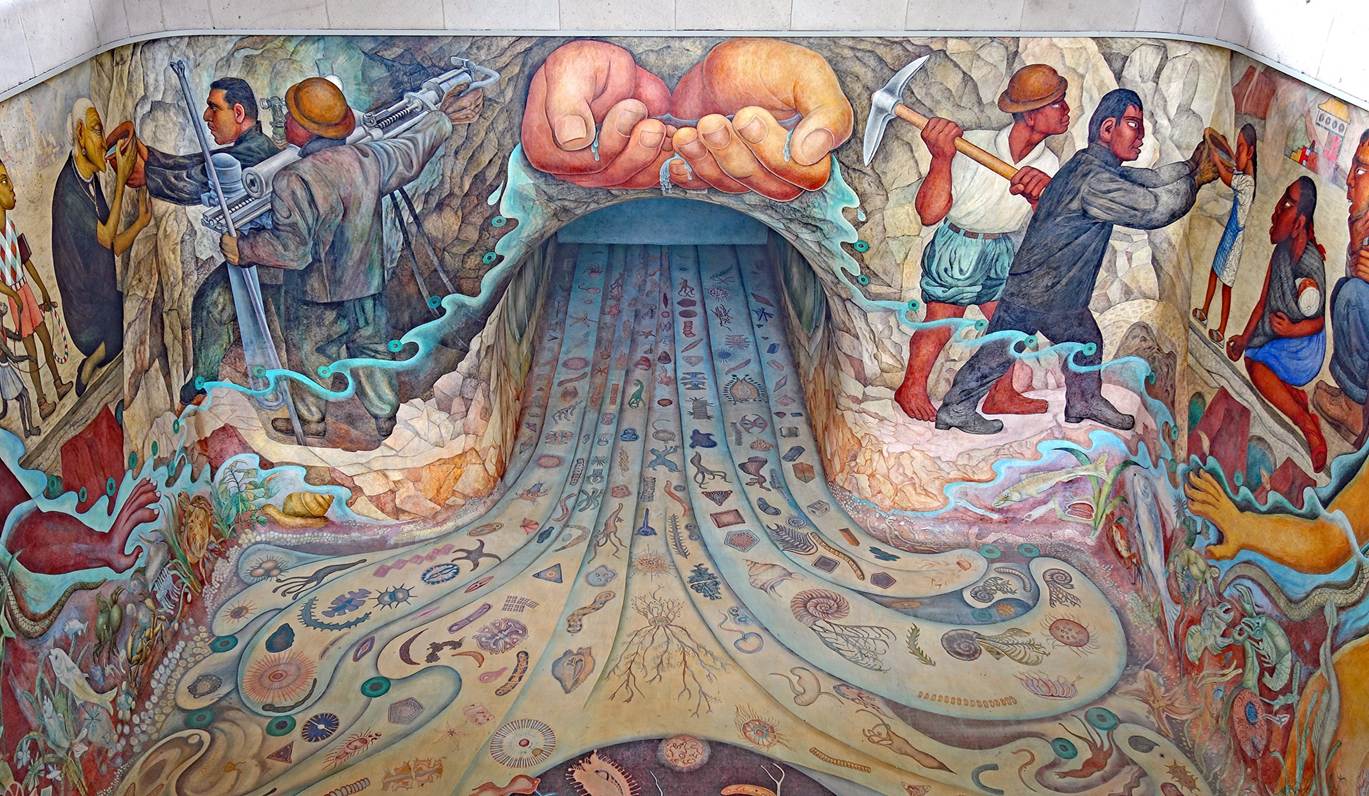
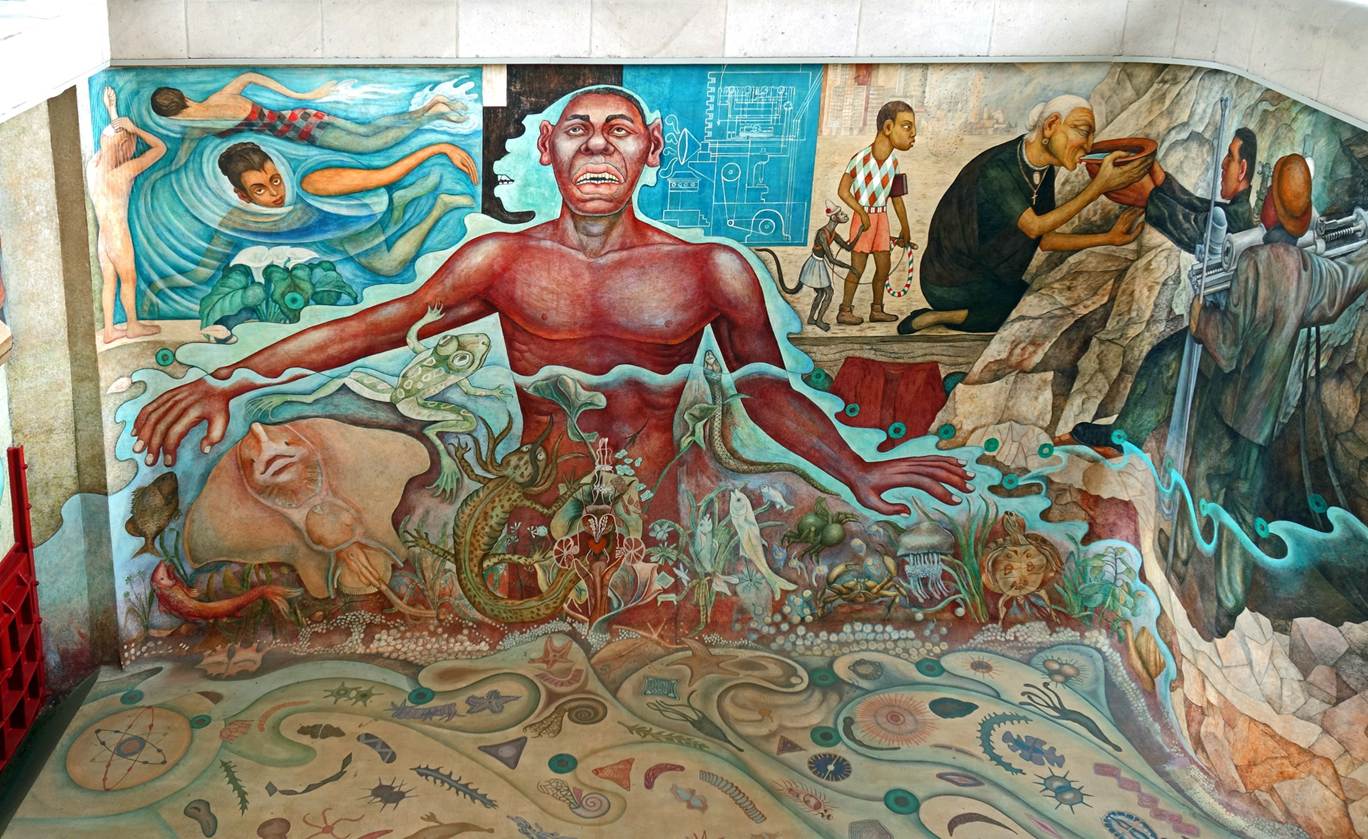
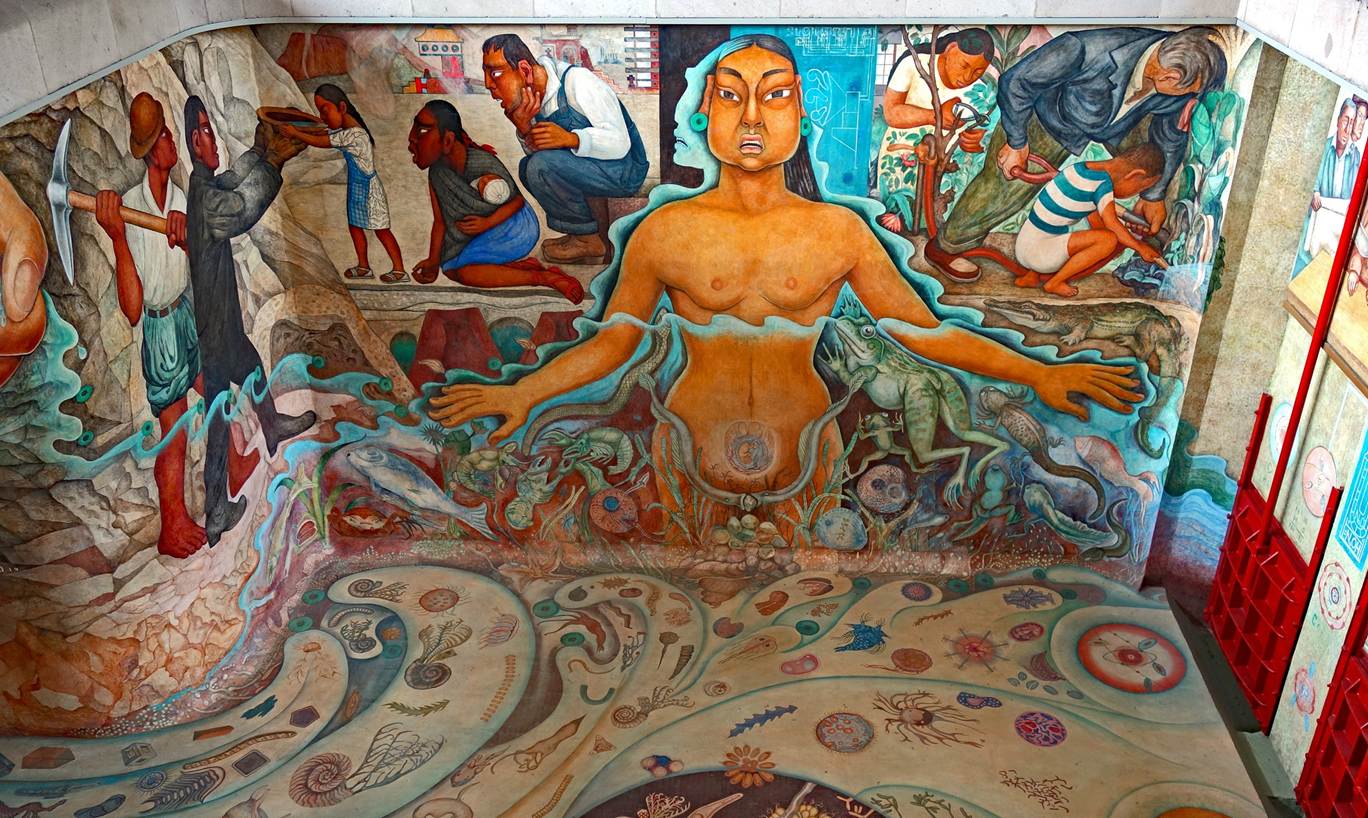
- Museo del Carcamo de Dolores. This
small museum, located in Chapultepec Forest, is a former pumping station built
in the mid-20th century to supply water to northwestern Mexico City. The walls
and floor of the station's tank were painted with frescoes created by Diego
Rivera on the theme ″Water, Origin of Life″. Despite laboratory
tests conducted on the paint to verify its durability, the artwork
deteriorated. In the 1990s, the water was diverted, the murals were restored,
and the building reopened as a museum in 2002.
View of the former pumping station. In
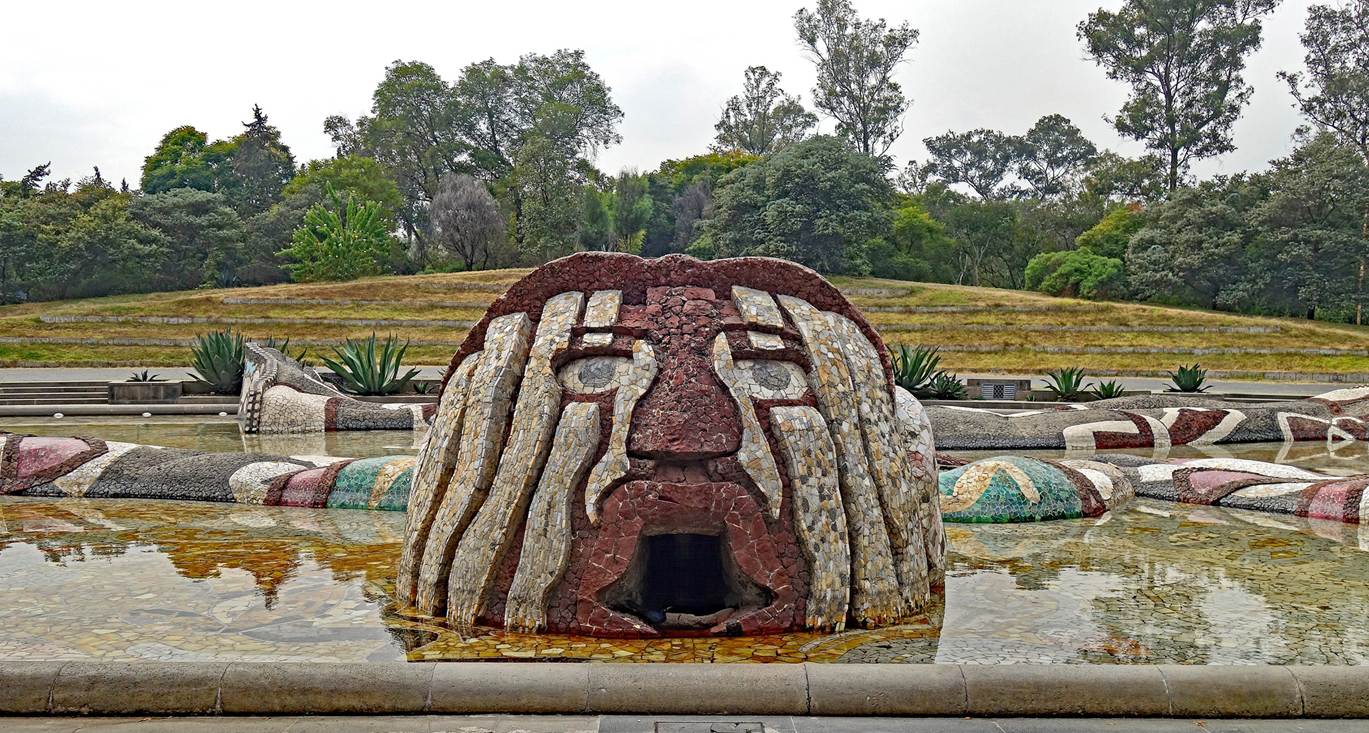
front of the station is a reflecting pool adorned with sculptures representing
the god Tlaloc, the Aztec god of rain, water, and fertility, and Quetzalcoatl.
The sculpture of Tlaloc has two faces, one looking toward the sky (photo
below), the other toward the pumping station (next photo).
Face of Tlaloc looking toward the water
station.
Murals in the (now empty) water tank of
the pumping station.
San Angel and Coyoacan [Red markers in Google
map]
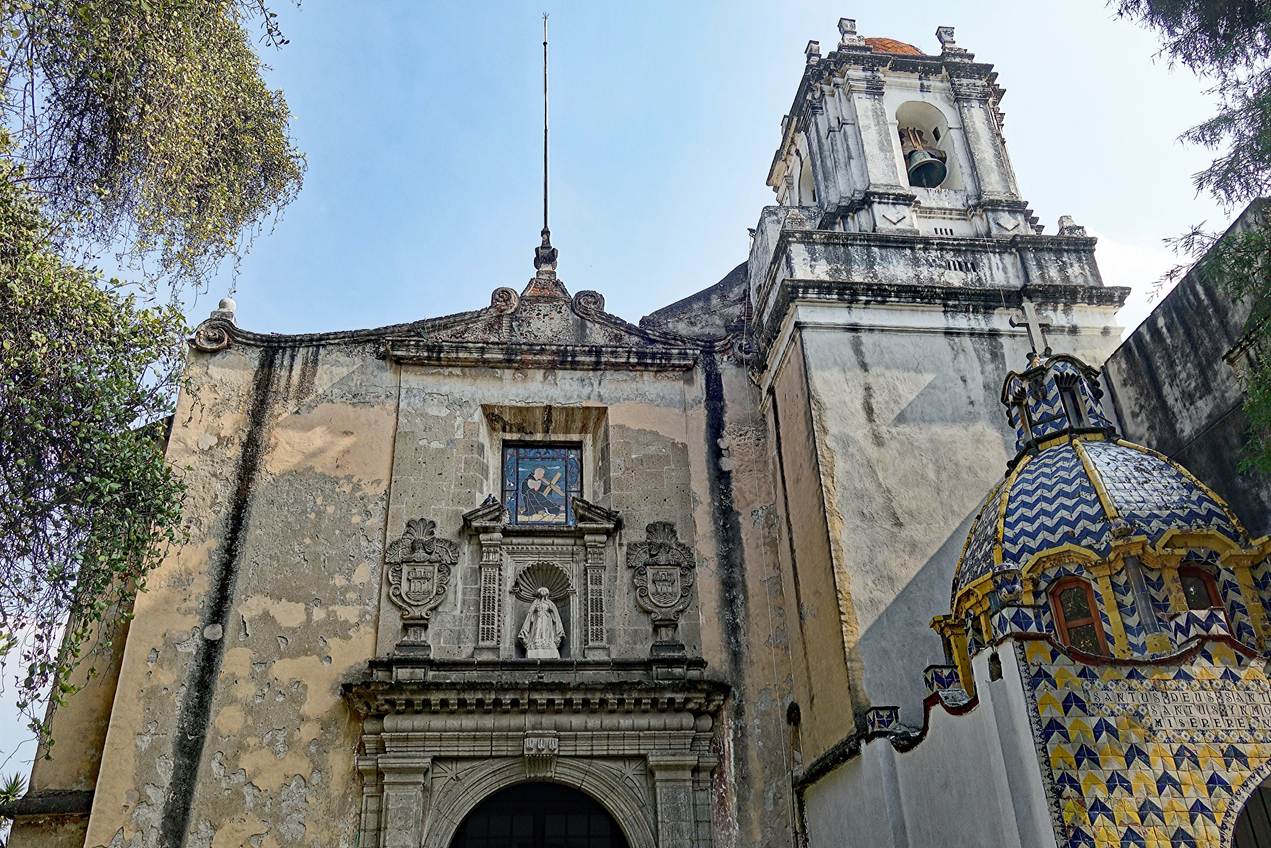
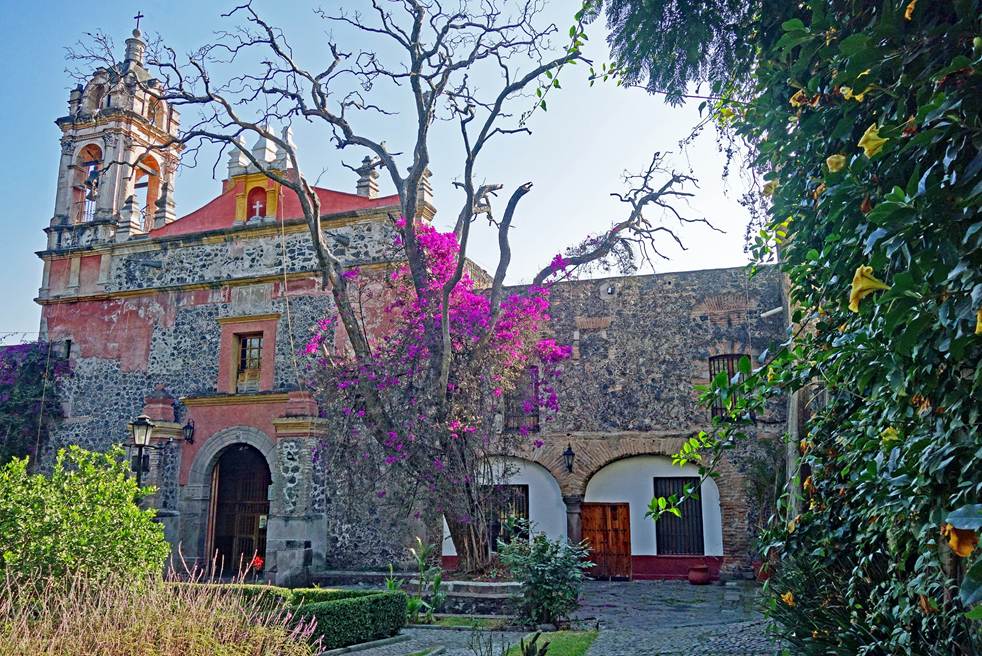
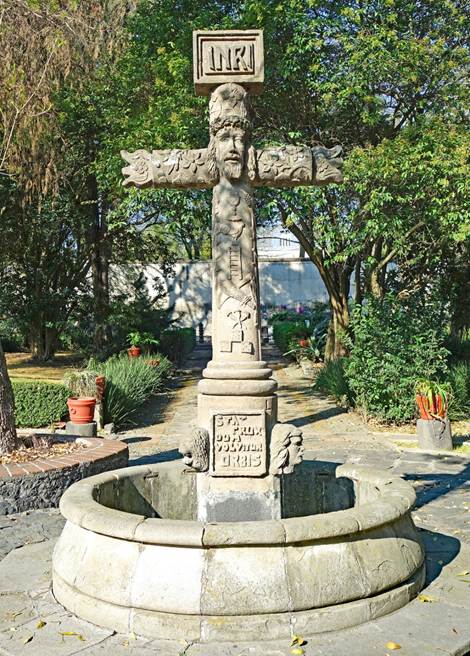
- Templo de San Jacinto, San Angel.
Built in the 16th century by the Dominican Order, it is one of the oldest
churches in Mexico City.
On the left: the church facade viewed
from the atrium. On the right: a carved stone cross standing in the center of
the atrium.
|
|
|
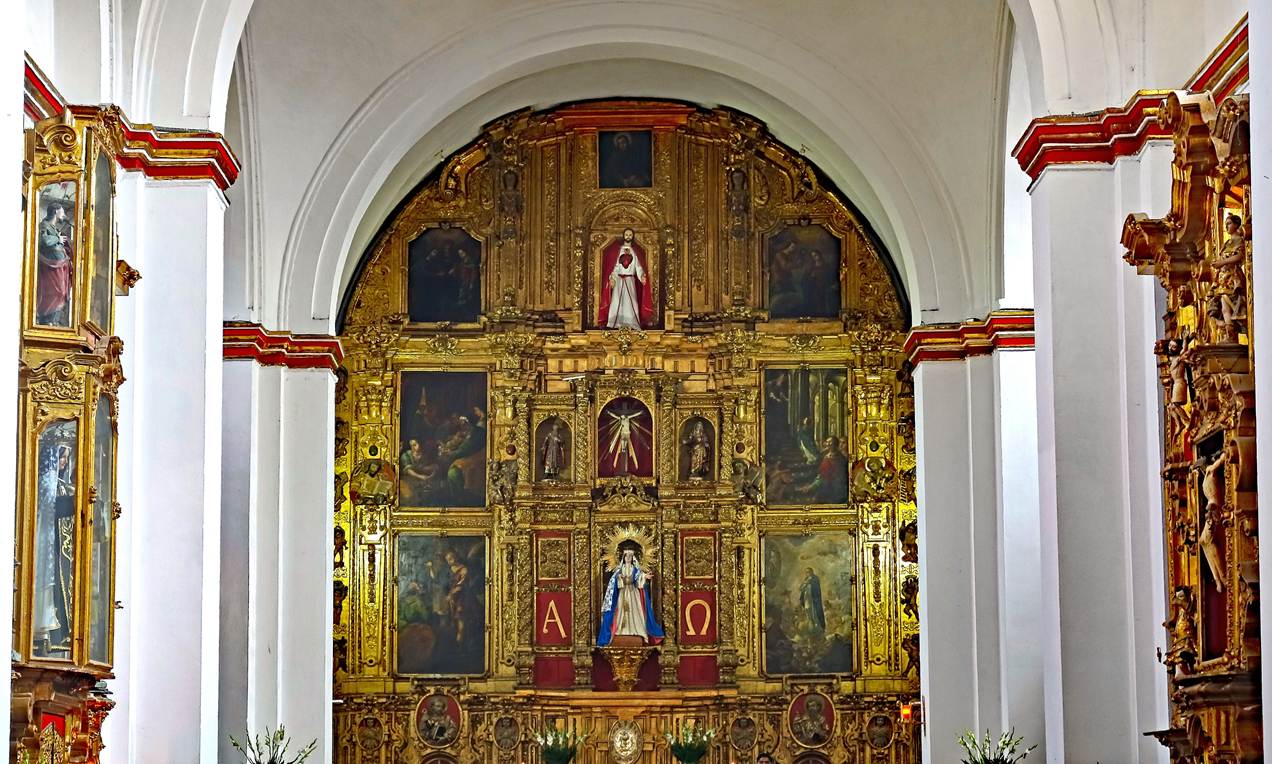
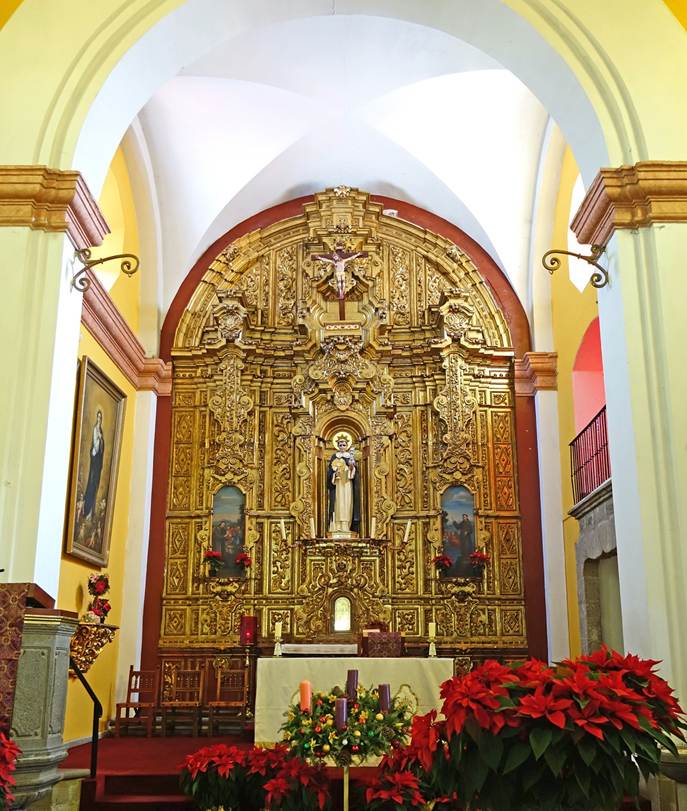
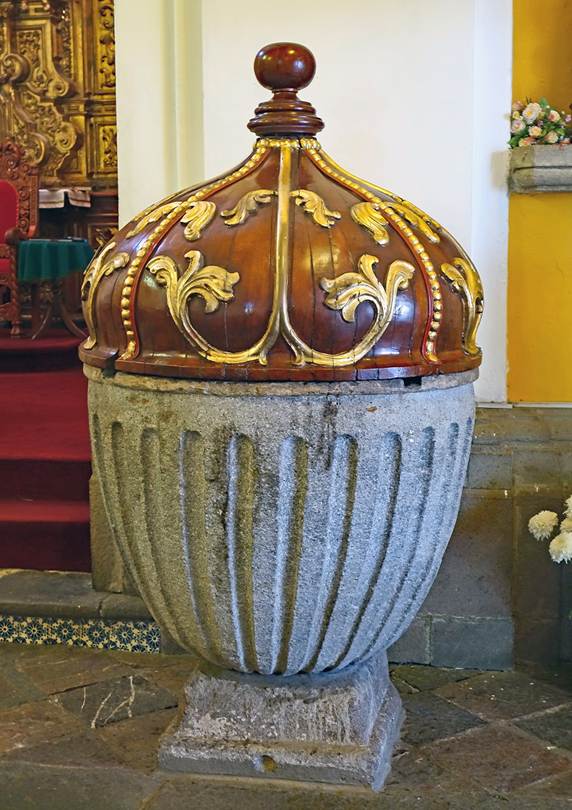
Gilded retable (left photo) and
baptismal font (right photo) in the church.
|
|
|
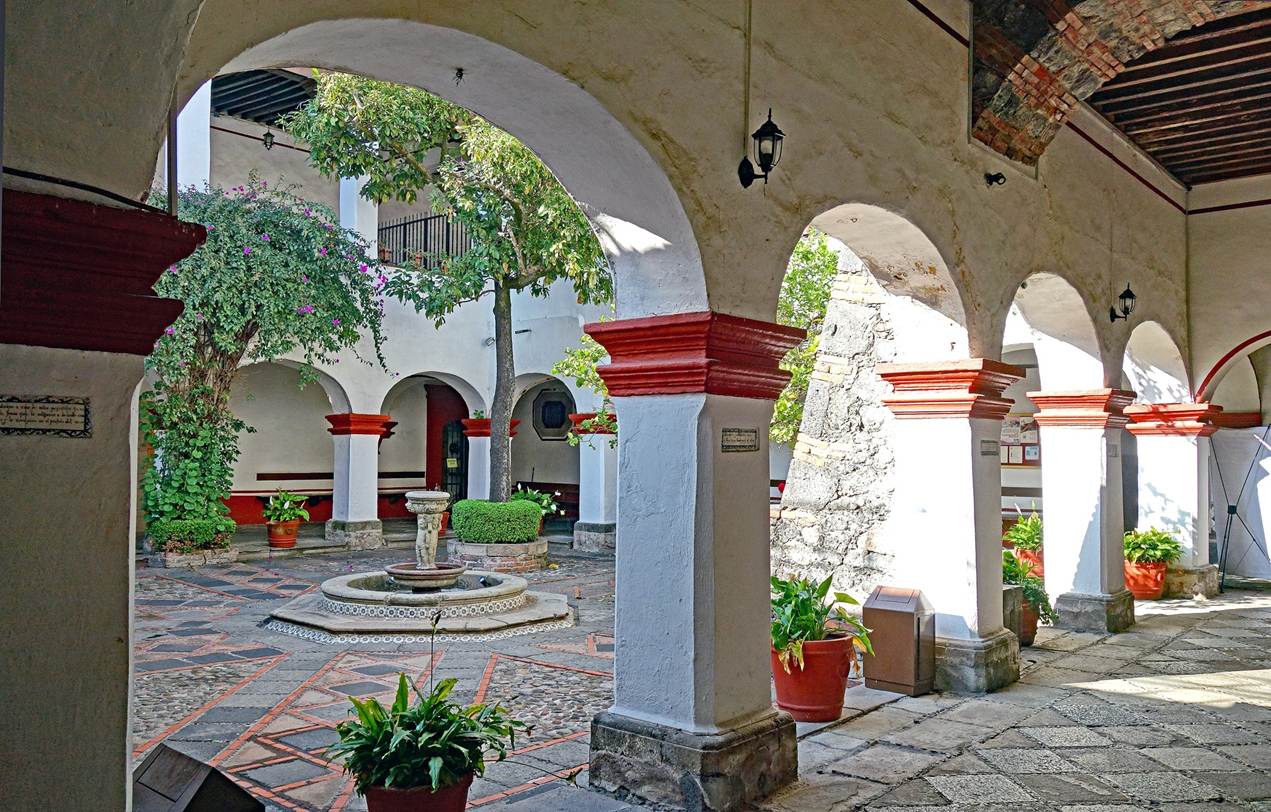
Cloister around a courtyard on the right
side of the church.
- Museo del Carmen, San Angel. It is
housed in a former convent founded in 1615 by a Carmelite Order. The church of
the convent is still in use, but the rest of the convent has been turned into a
museum featuring magnificent sacred art.
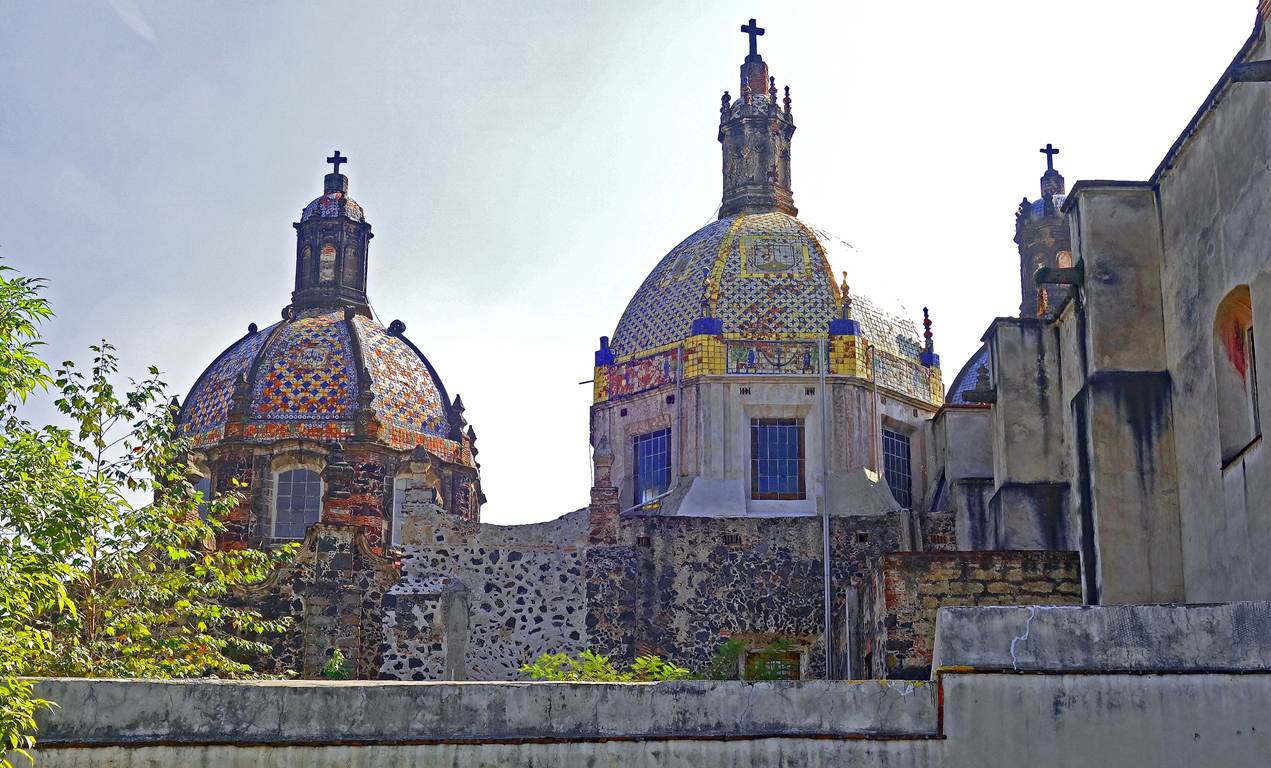
Two of the three tiled domes of the
former convent.
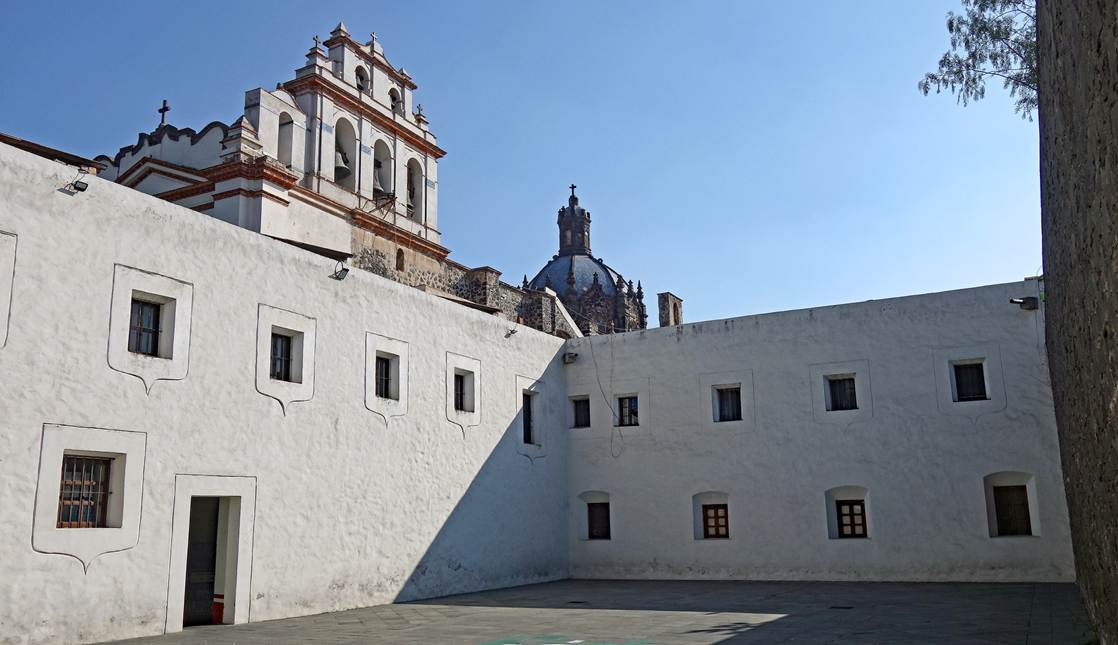
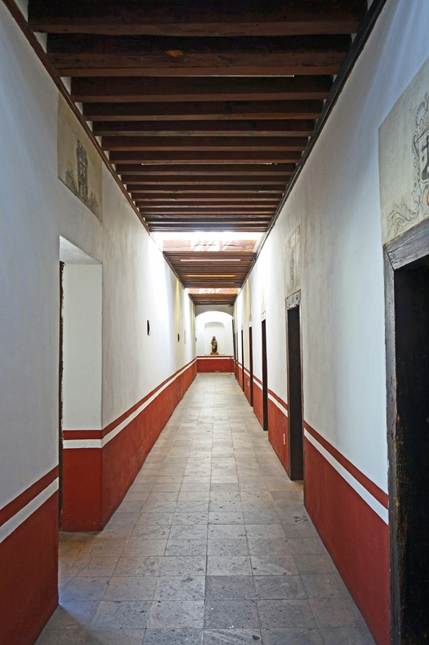
On the left: the austere inner courtyard
of the former convent, surrounded by the buildings housing the private cells of
nuns and friars. On the right: one of the corridors inside the buildings,
providing access to the cells.
|
|
|
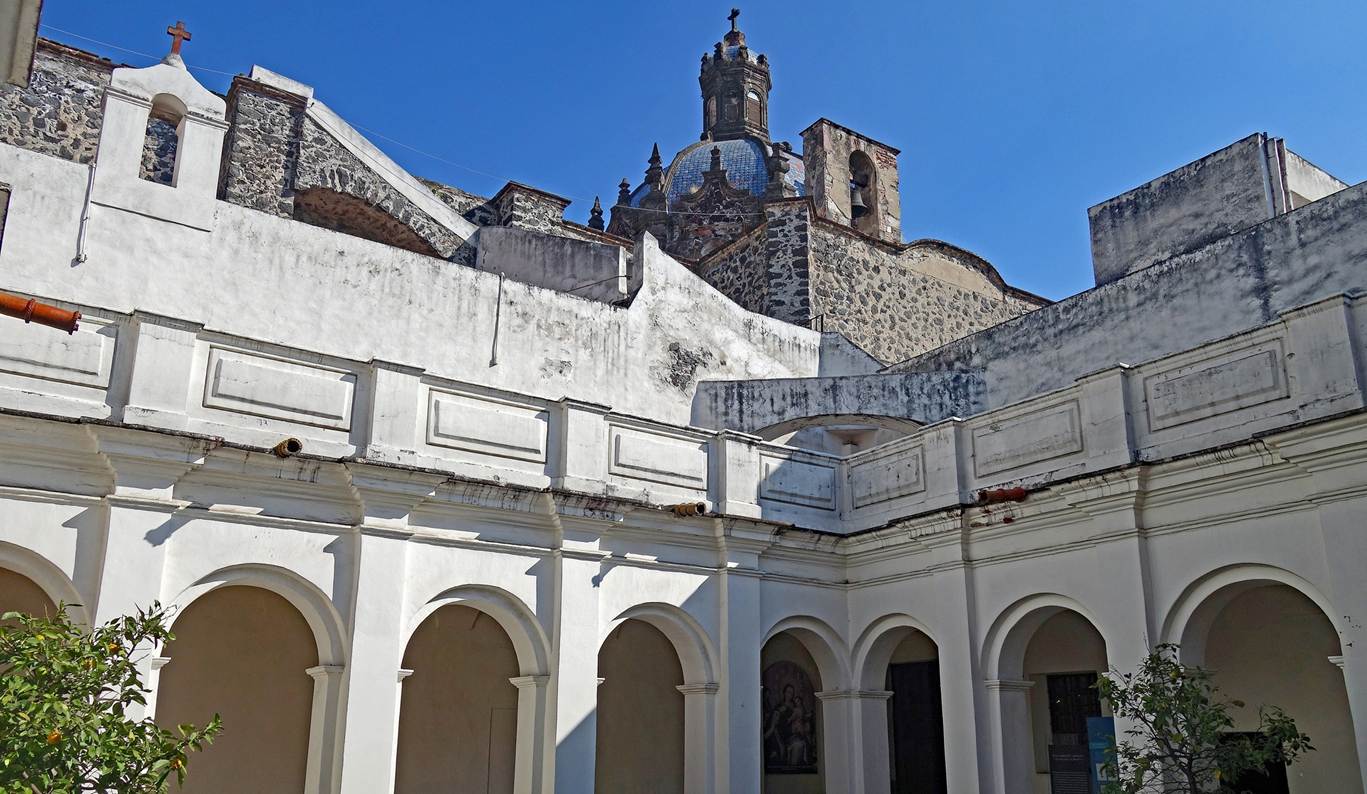
Partial view of the cloister next to the
church.
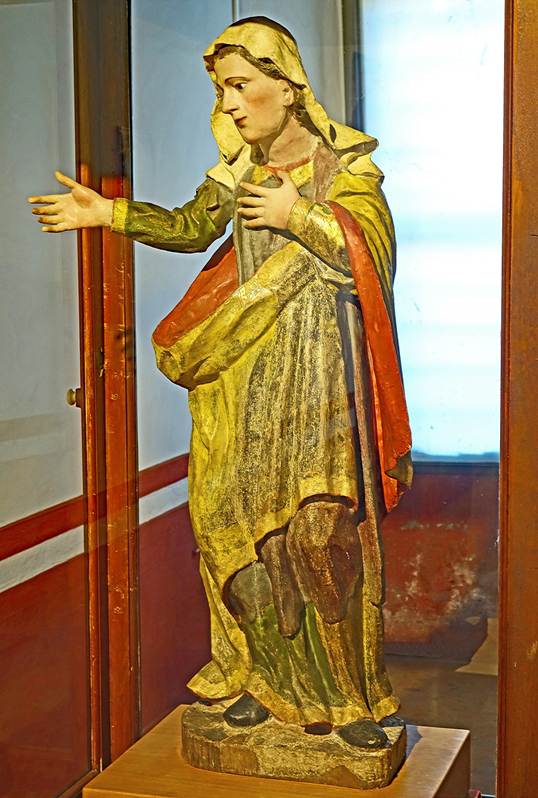
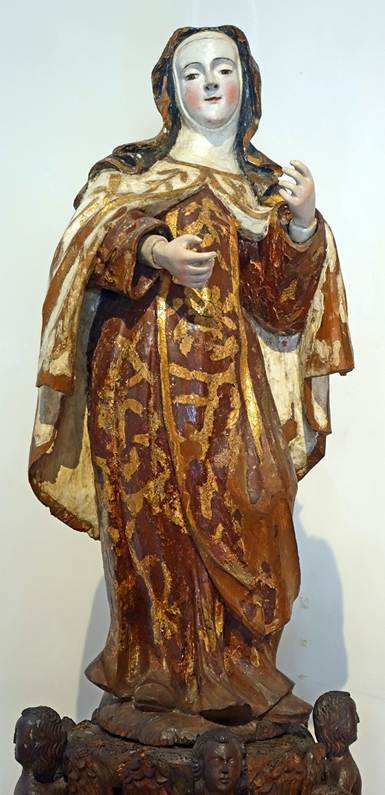
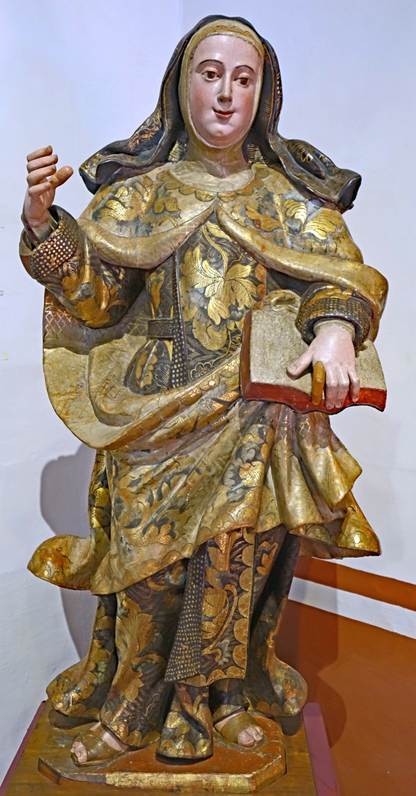
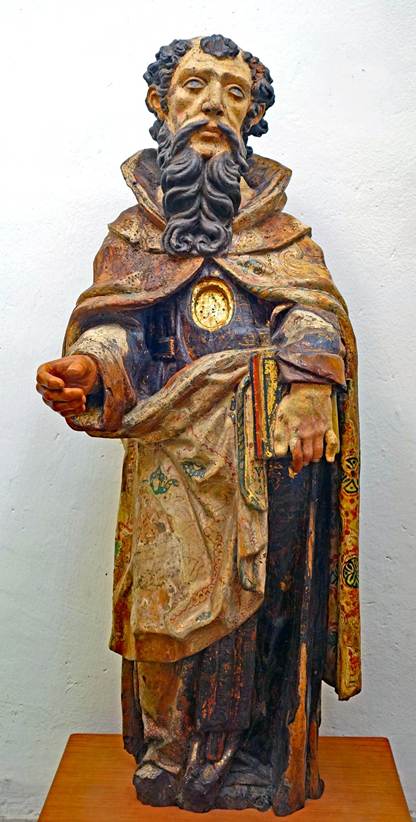
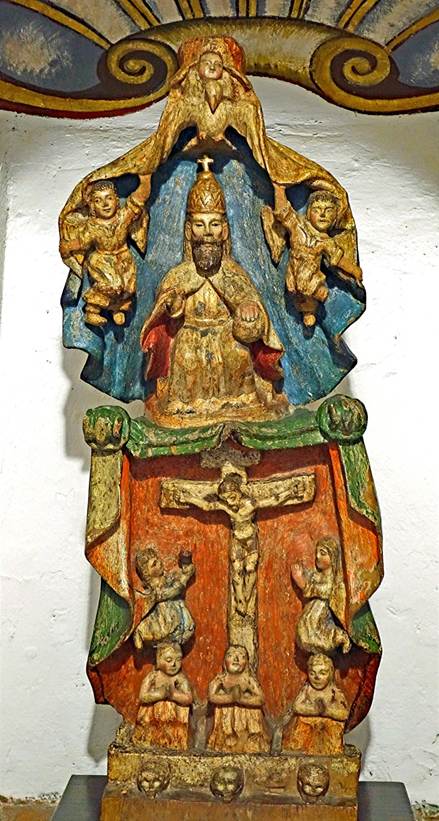
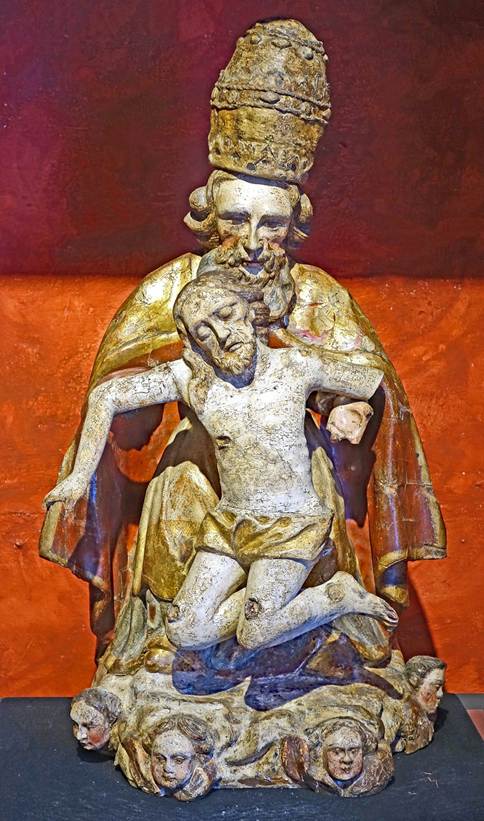
Some of the statues exposed in the
museum.
|
|
|
|
|
|
|
|
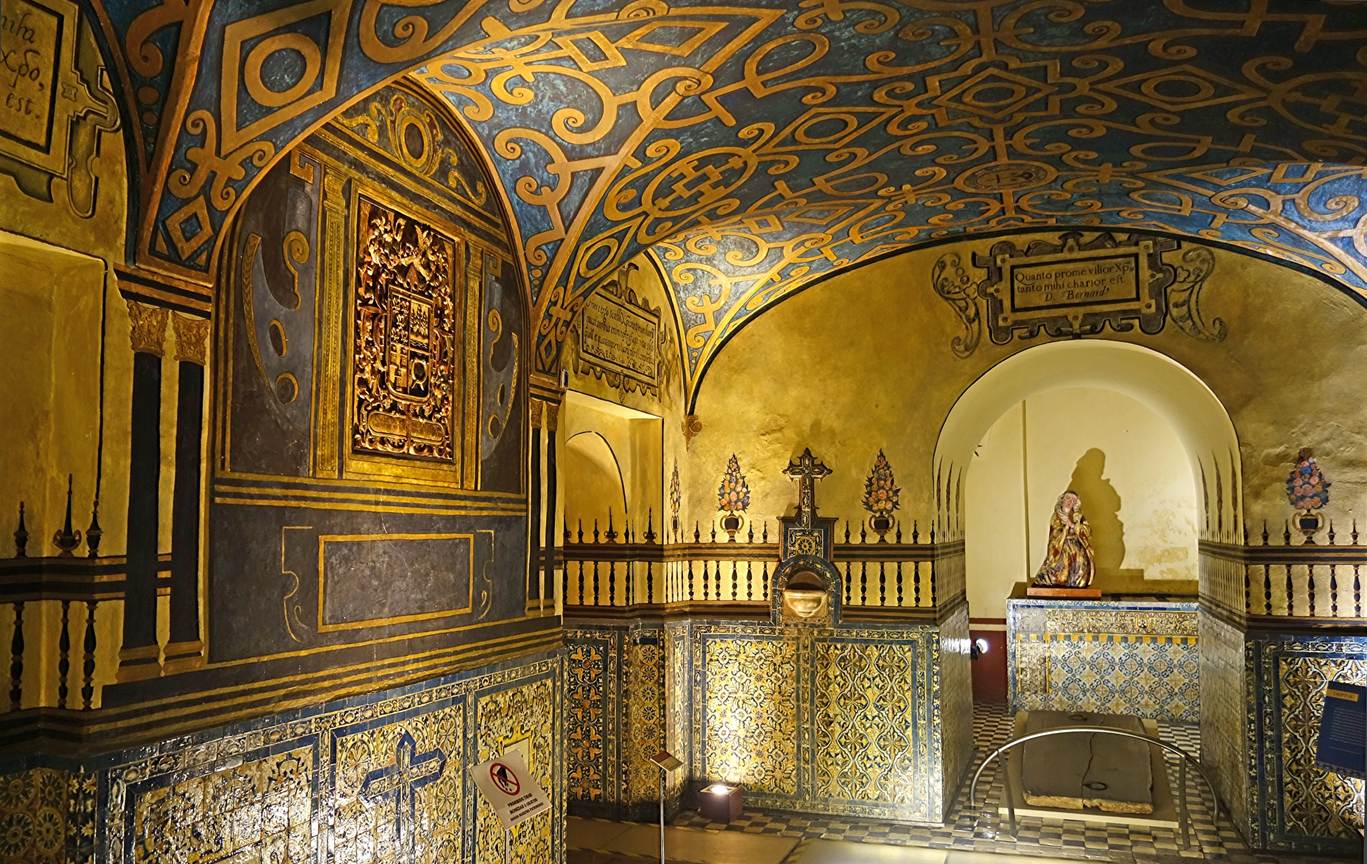
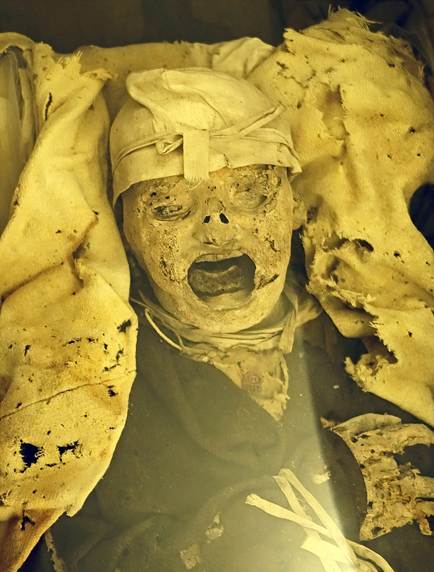
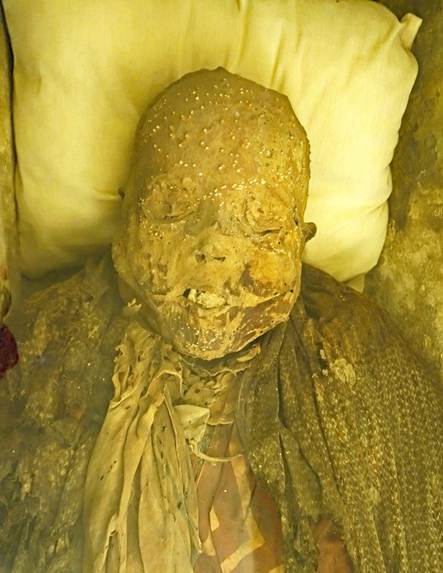
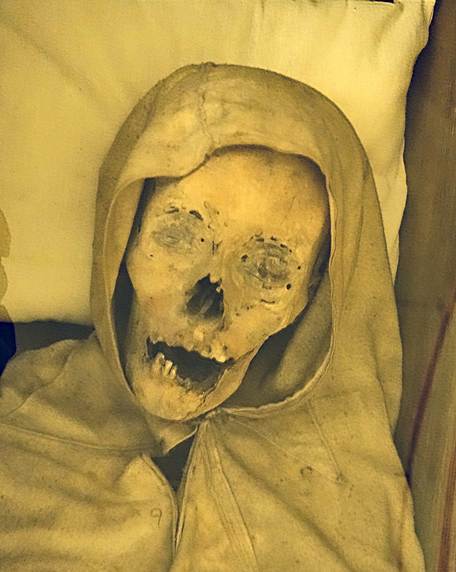
In the crypt of the convent. It is home
to a dozen mummies.
|
|
|
|
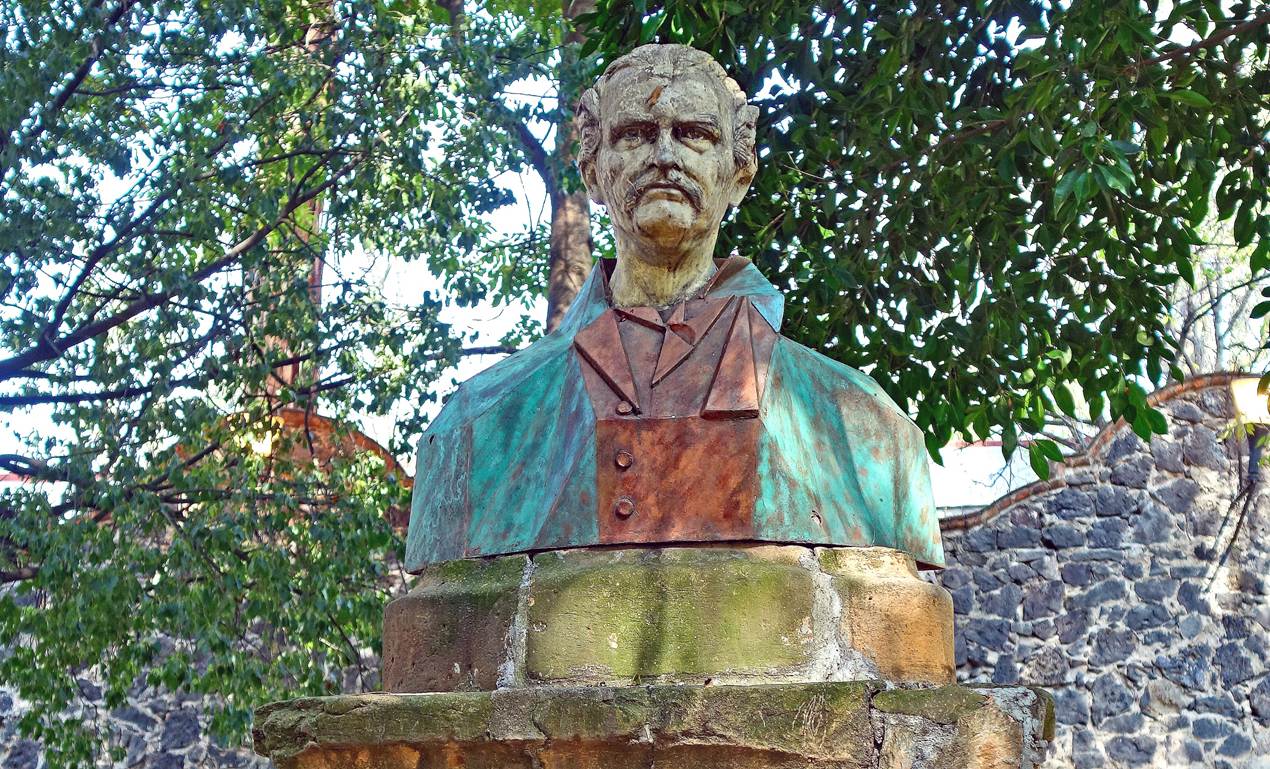
- Bust of Francisco Sosa (1848-1925) in
Coyoacan. Francisco Sosa was a Mexican writer, poet, historian, and journalist.
He died in poverty in Coyoacan, where the main street now bears his name.
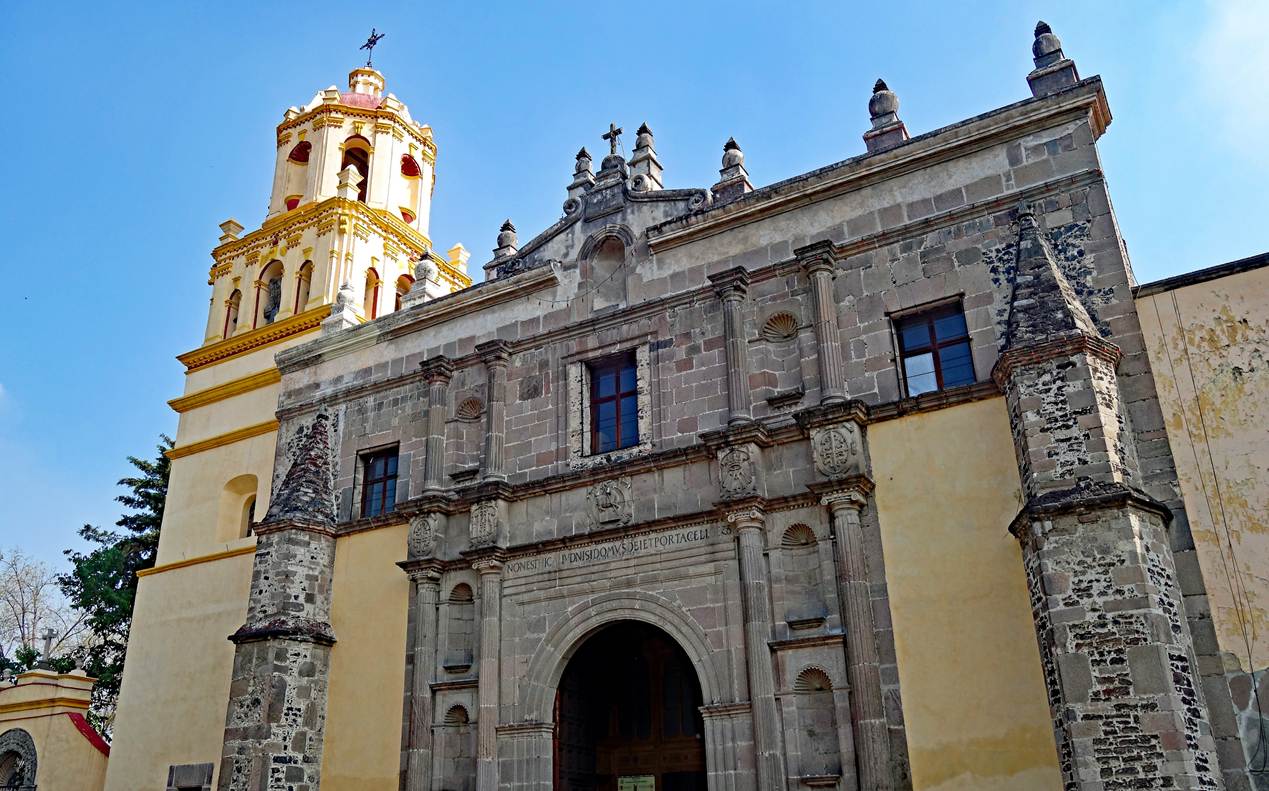
- Parroquia San Juan Bautista, Coyoacan.
Originally built in the 16th century, the church was rebuilt in 1804 and
remodeled between 1926 and 1947.
Facade of the church seen from Plaza
Coyoacan.
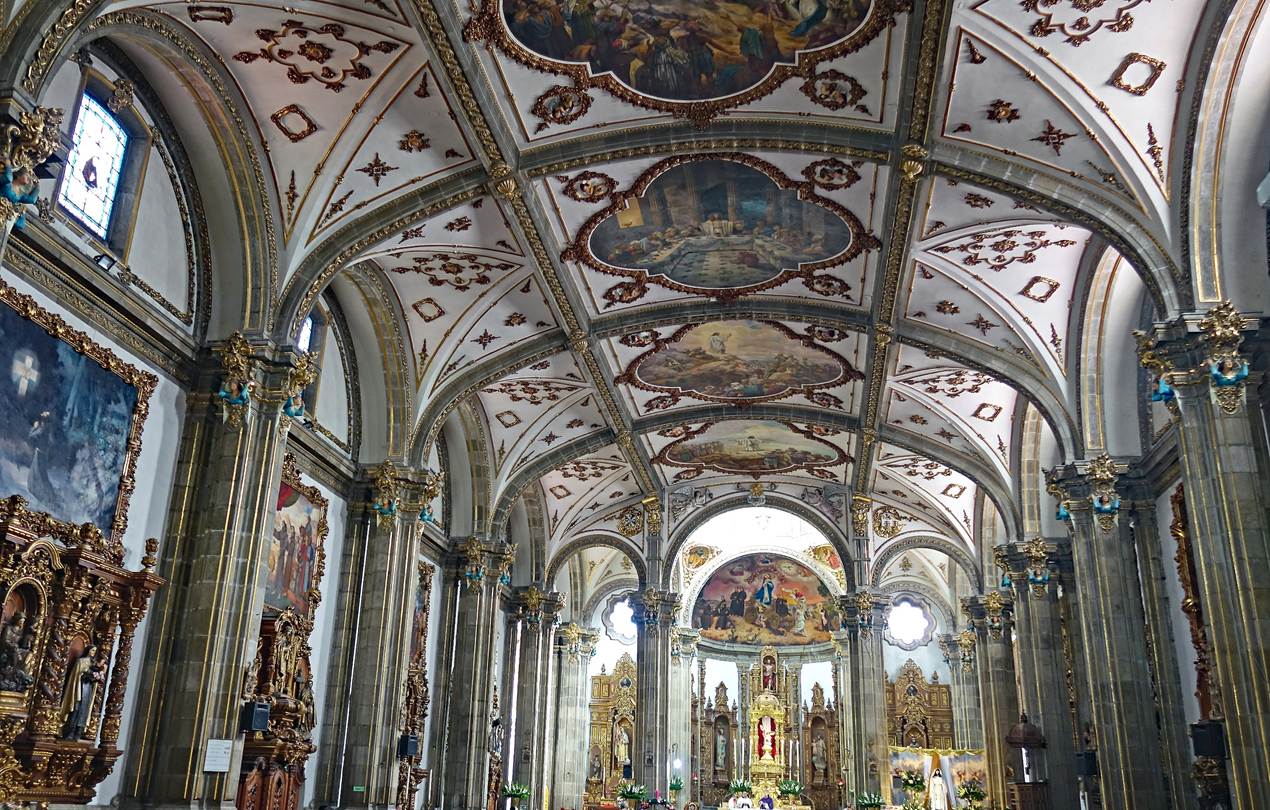
Richly decorated nave with various
scenes painted on the vaulted ceiling and on the side walls.
Transept and apse.
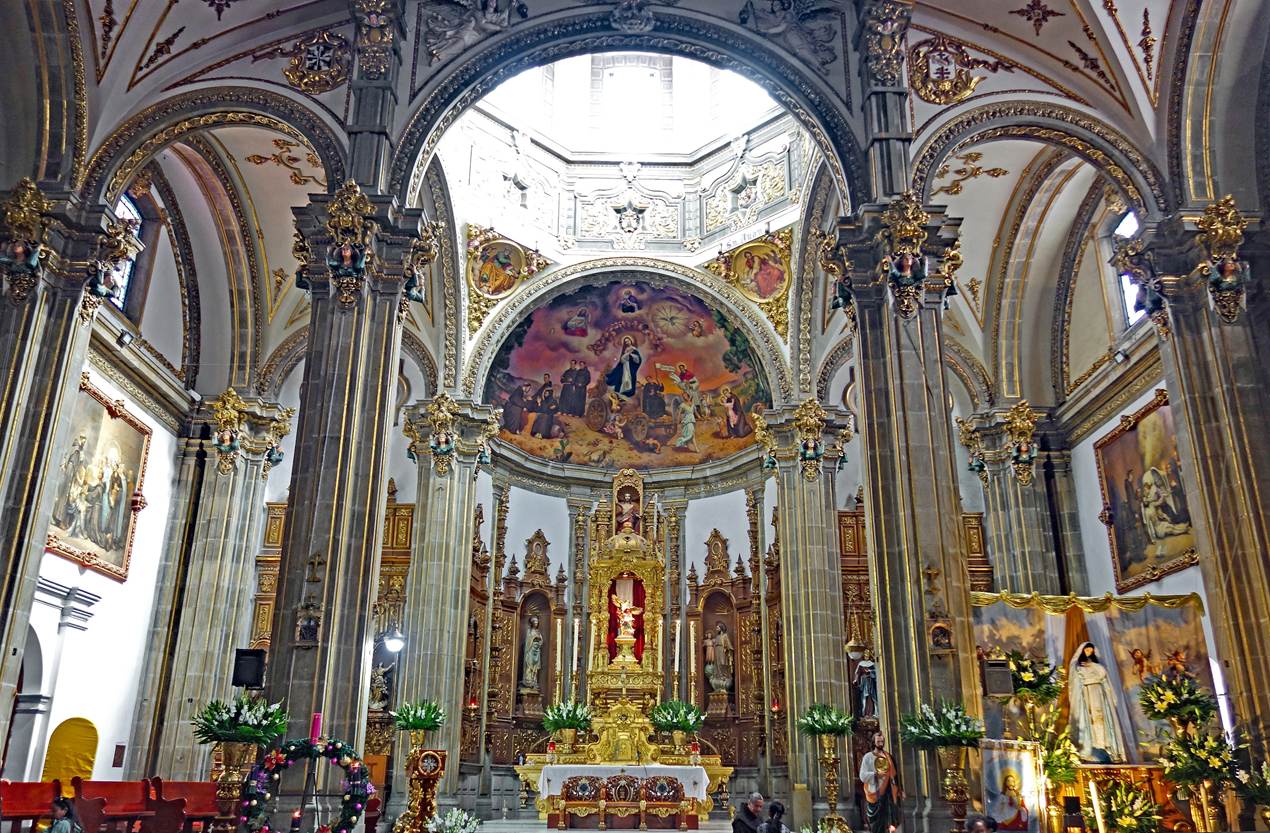
- Capilla de la Conchita (Chapel of the
Immaculate Conception). Built in 1525 on top of a Toltec ceremonial and burial
site, it is one of the oldest churches in continuous use in Mexico.
On the left: finely sculpted facade in the
Mudejar style (a blend of Islamic and European styles) dating from the 17th
century. On the right: gilded wooden retable.
|
|
|
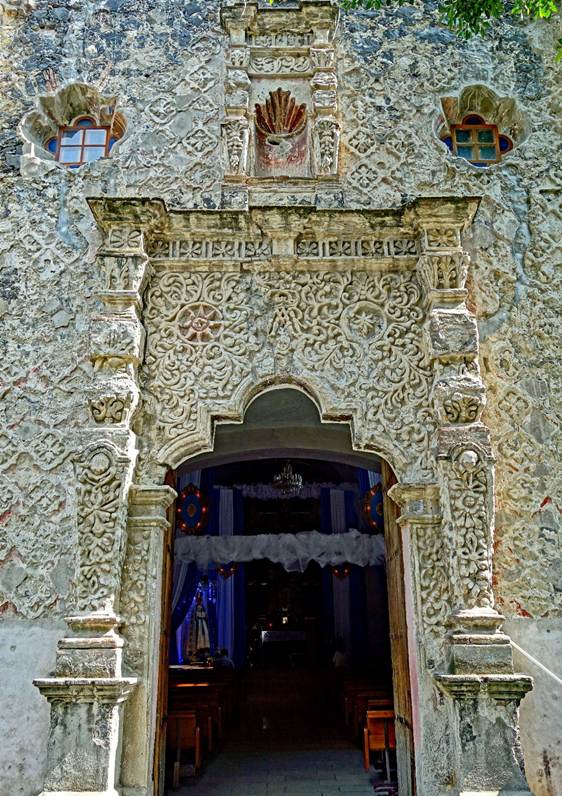
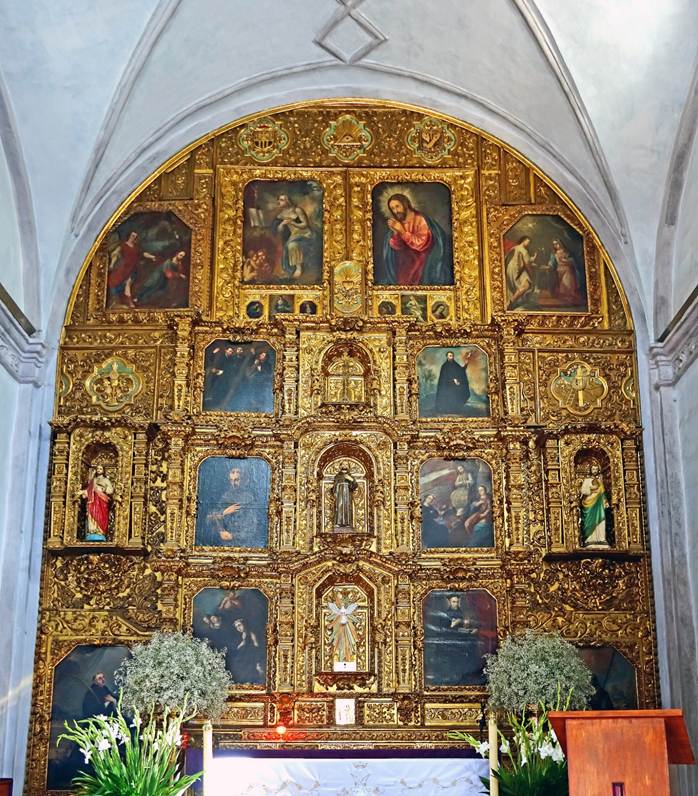
- Capilla de San Diego Churubusco. This
chapel is part of the former Convent of Churubusco, famous for its role during
the Mexican-American War. In 1847, during the Battle of Churubusco, a Mexican battalion, composed of
deserters from the American Army and European immigrants (many Irish), the San
Patricio Battalion, fiercely defended the monastery, whose walls still bear the
marks of bullet from that battle.
Facade and retable of the chapel.