[November 2016, April 2017, and March 2016]

Kaohsiung
City is one of Taiwan's six ″special municipalities″. This
administrative entity covers a vast geographical area stretching from its
coastal urban core to rural areas located inland in southern Taiwan. With a
population of 2.7 million people, it is the third most populous city in Taiwan,
after Taipei and Taichung. With Keelung in the north, these are Taiwan's two
main ports. This page and the next one (2/2)
show photos that I took during three visits to Kaohsiung City, in November 2016,
April 2017, and March 2016. Most of these photos were taken in urban areas of
Kaohsiung. Others are from more rural areas of the municipality: the small
towns of Qishan and Meinong, roughly 35 to 40km northeast of the city's urban
center, and the Fo Guang Shan monastery, 20km inland.
In
both pages, every consecutive sequence of photos taken during the same trip is
labeled by the date of the trip at the very end of the sequence. To see the
locations of the places pictured in the photos, click here. A
Google map with markers will then open in a new tab. The red markers point to
places featured in this page, while blue markers are for places in the next
page.
General
views of the coastal center of Kaohsiung:
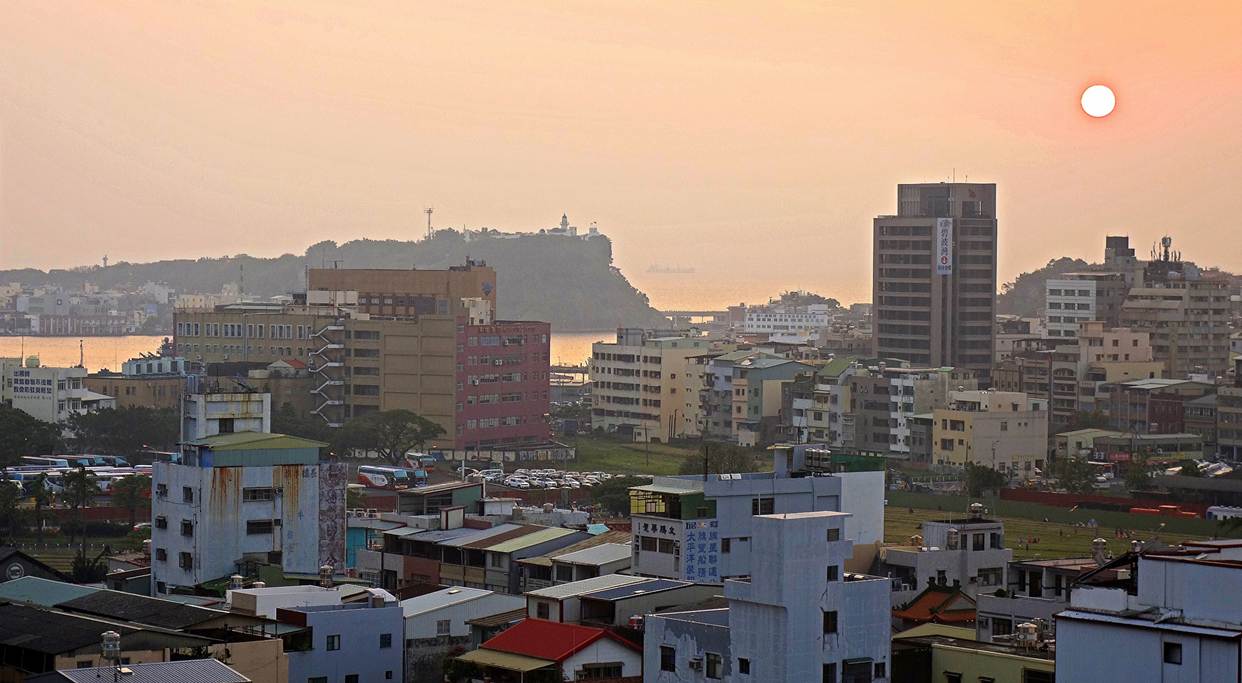
View at sunset. Cijin island is visible in the
background, with the lighthouse marking the entrance to the inner port of
Kaohsiung standing at its northern tip.
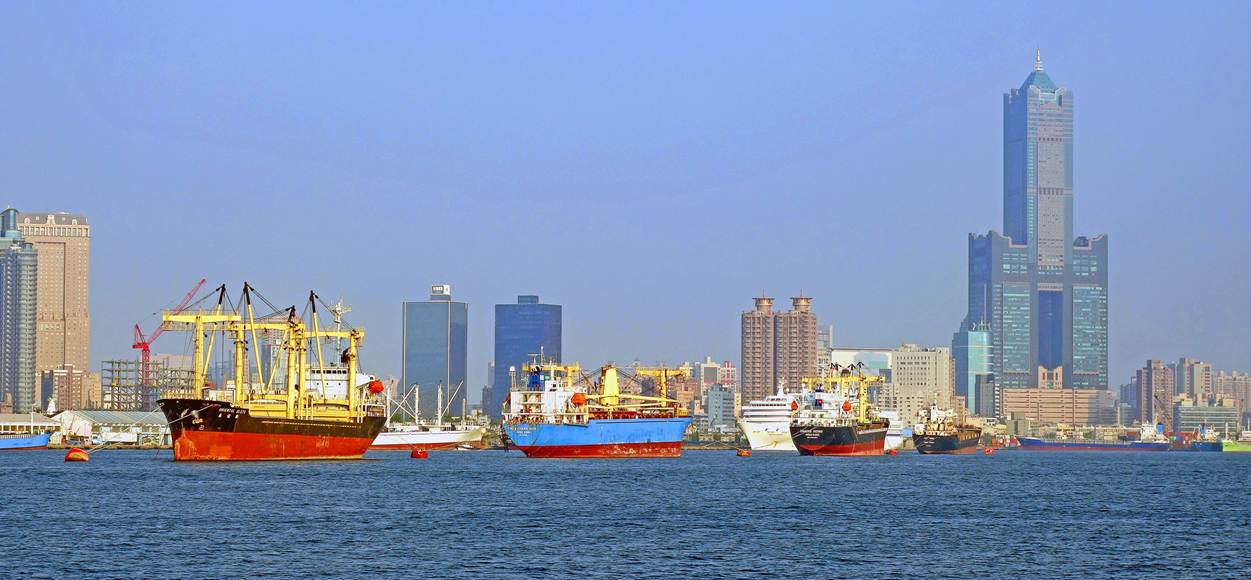
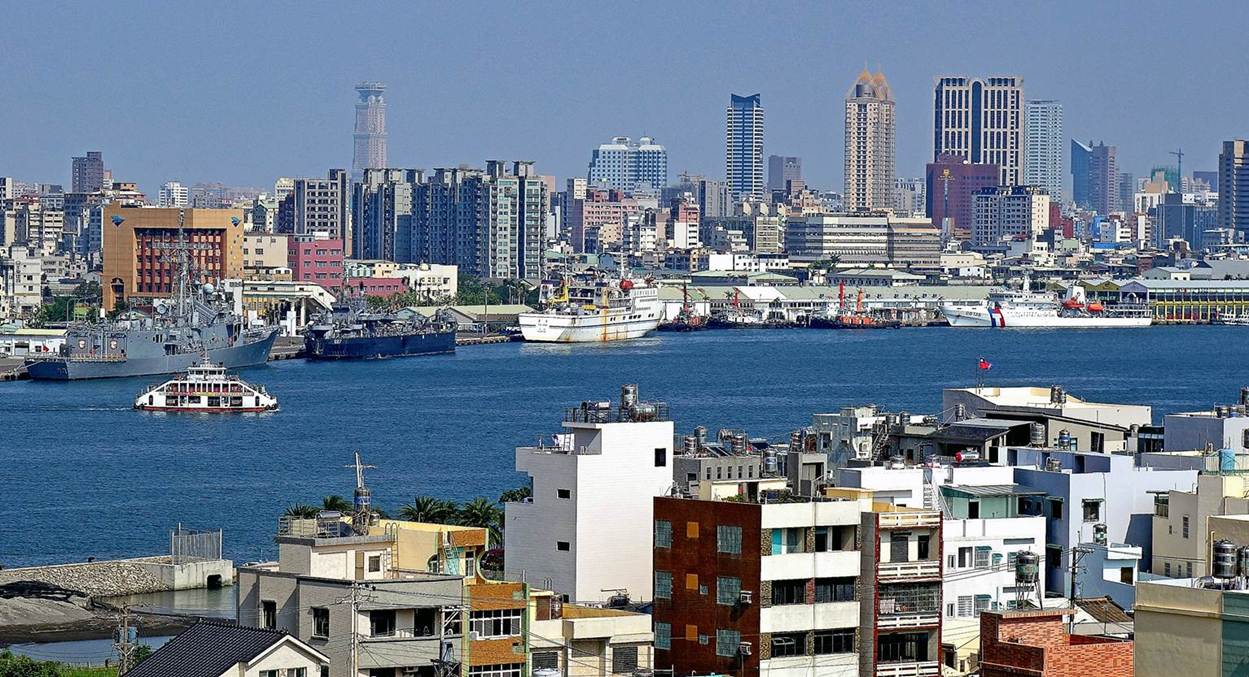
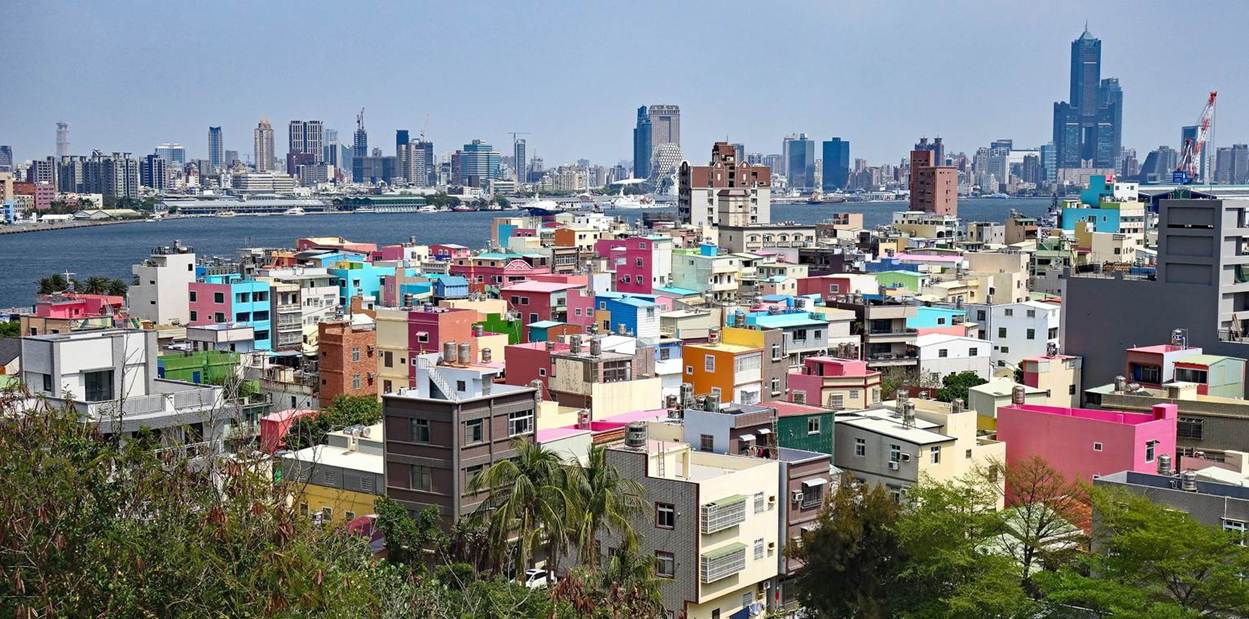
Kaohsiung's skyline seen from Cijin island. The
tall building on the right in the first and third photos below is the
347.5m-high 85 Sky Tower, the second tallest building in Taiwan after Taipei
101.
[November
2016]
[March 2026]
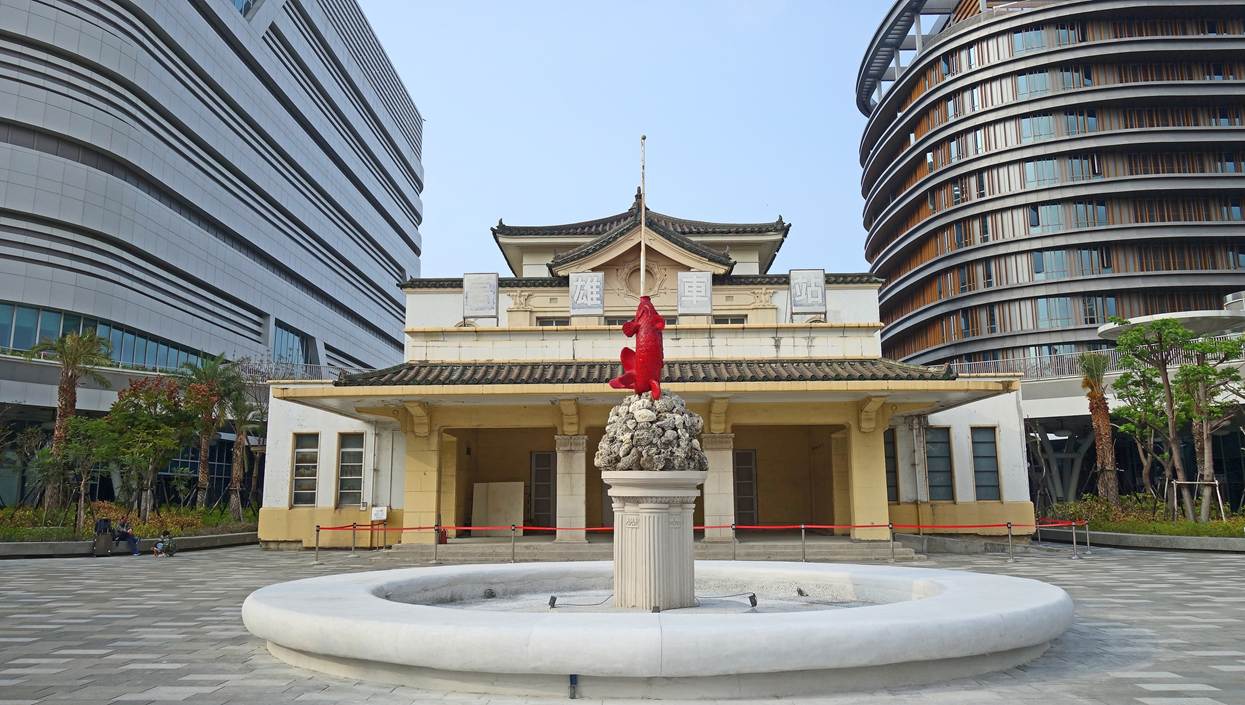
The old and
new Kaohsiung train stations:
The small building in the center of the photo is the old station, built
in 1941 during the Japanese colonial period. In 2002, it was relocated to clear
the space needed for the construction of the new station, situated underground
beneath the two new large buildings visible in the photo. The old building was
reinstalled at its original location in 2021.
[March 2026]
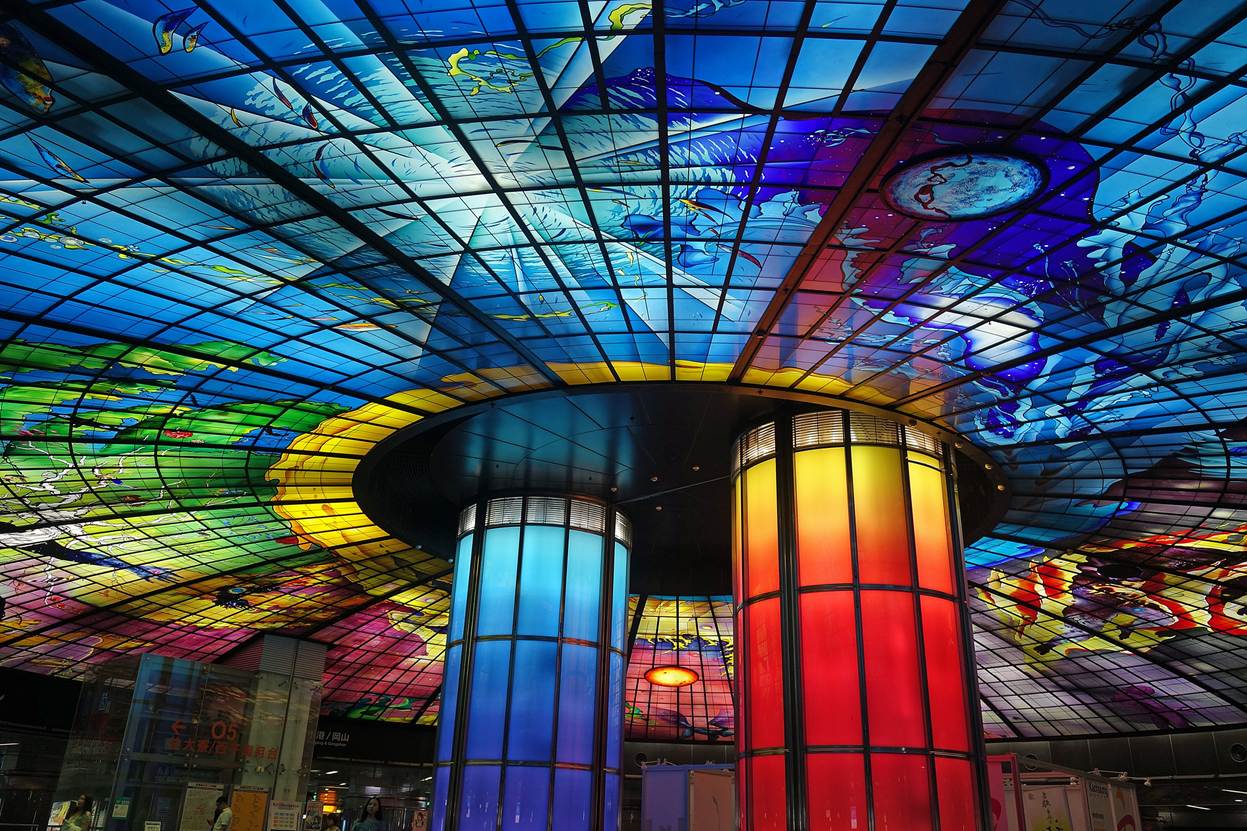
Dome of
Light (光之穹頂), the
Formosa Boulevard station of the Kaohsiung MRT (Mass Rapid Transit):
It is 30m in diameter and is made up of 4500 glass panels covering an
area of 660sq.m. It took 4.5 years to complete and opened in 2008.
[November 2016]
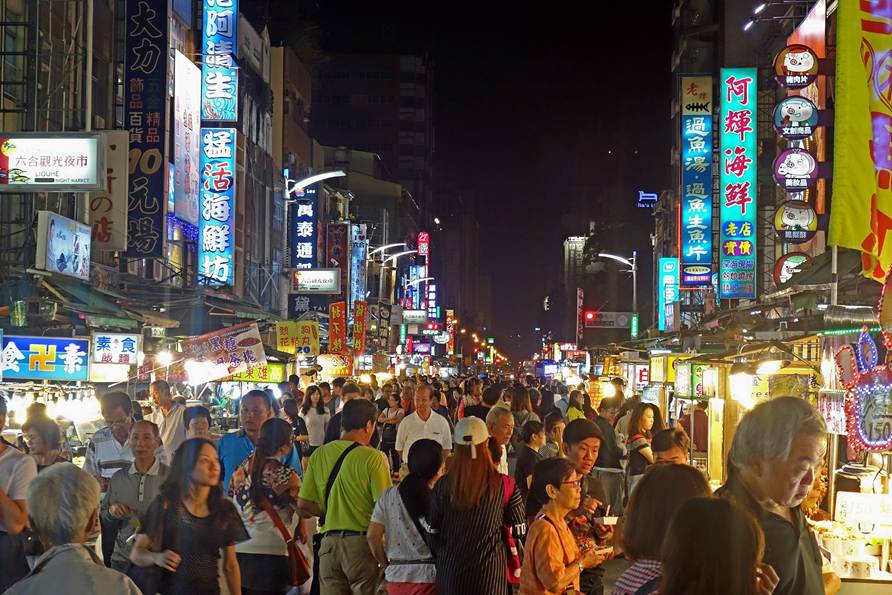
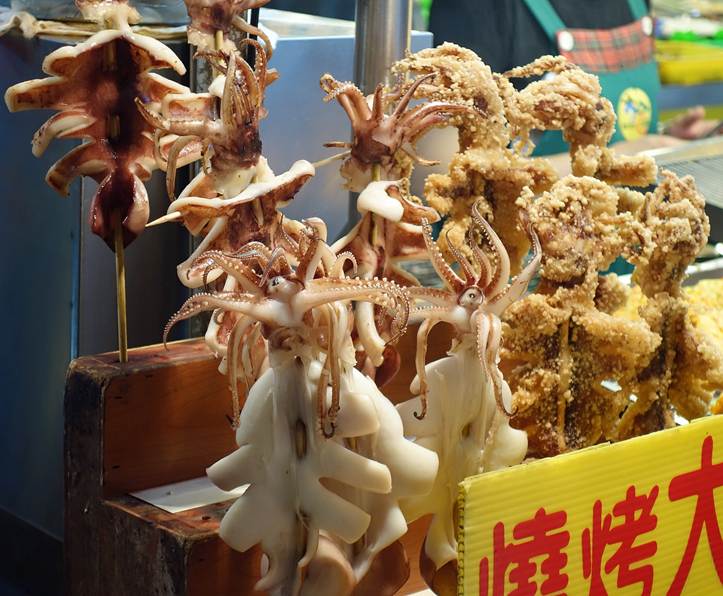
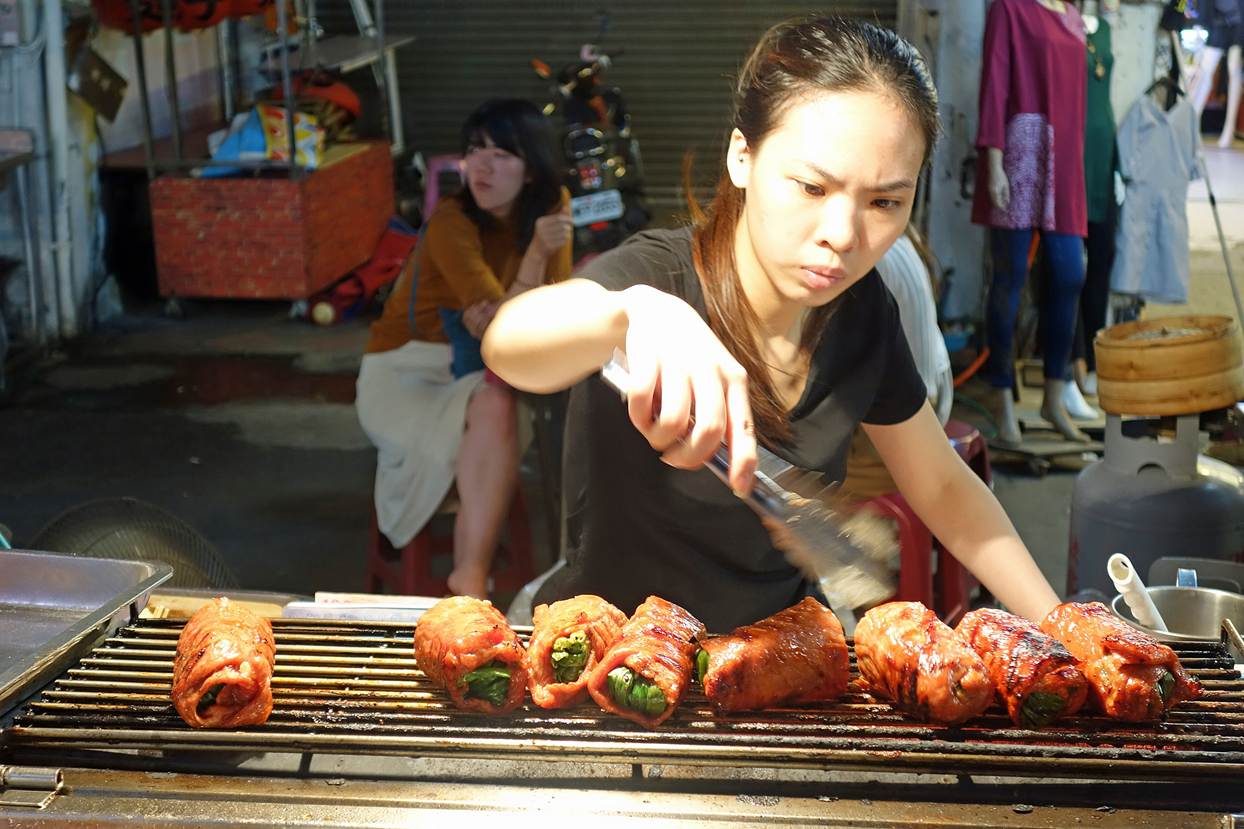
In one of
the multiple night markets of central Kaohsiung:
|
|
|
[November 2016]
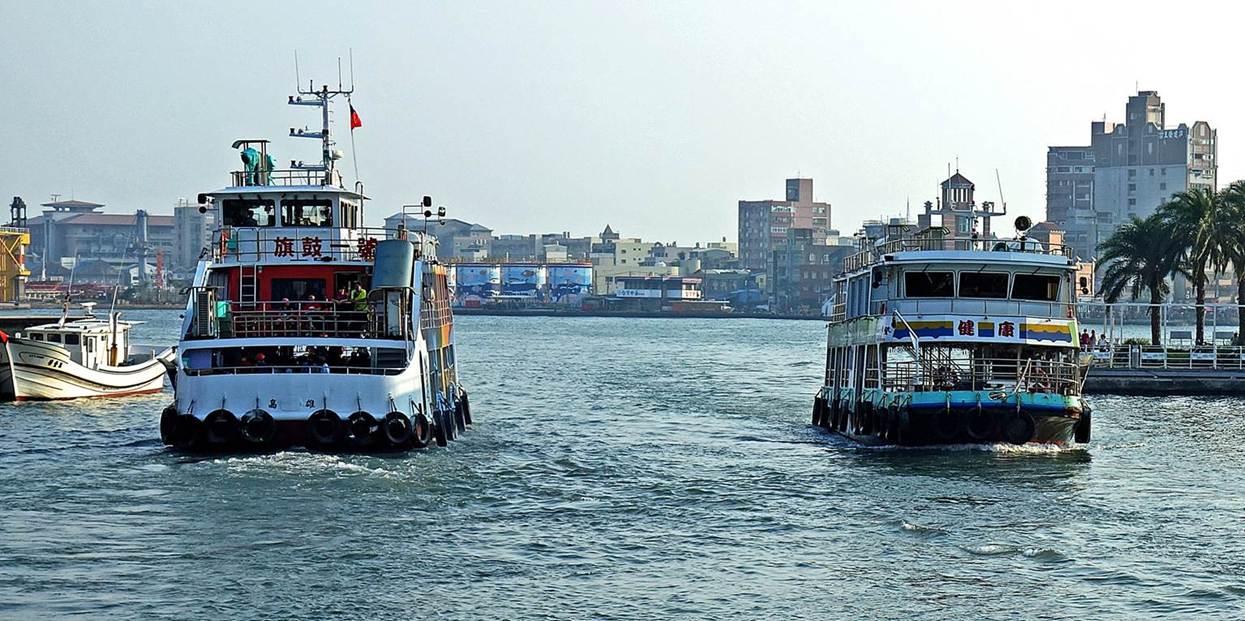
At the Gushan ferry pier (鼓山輪渡站):
Built along a water canal
at the entrance of the inner Kaohsiung's harbor, it is the place to board
ferries connecting the main land to Cijing island (旗津區).
Ferry traffic between the main land and Cijin
island (visible in the background).
[November 2016]
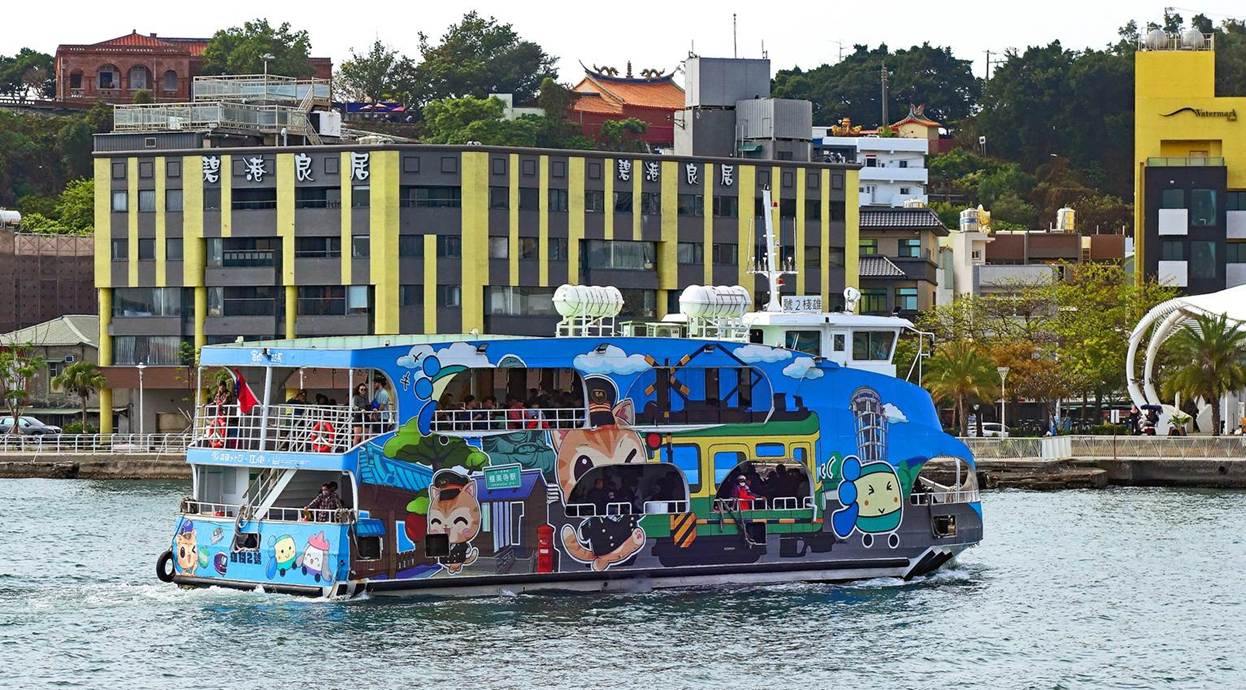
Decorated ferry in the water canal bordering the ferry pier. The red-brick
building at the top-left corner of the photo is the old British consulate built
in 1865. The other red building at the center-top of the photo is the Sizihwan temple of the Eighteen Lords (西子灣靈興殿十八王公廟). Both the former consulate and the temple stand on top of a hill west
of the ferry pier.
[March 2026]
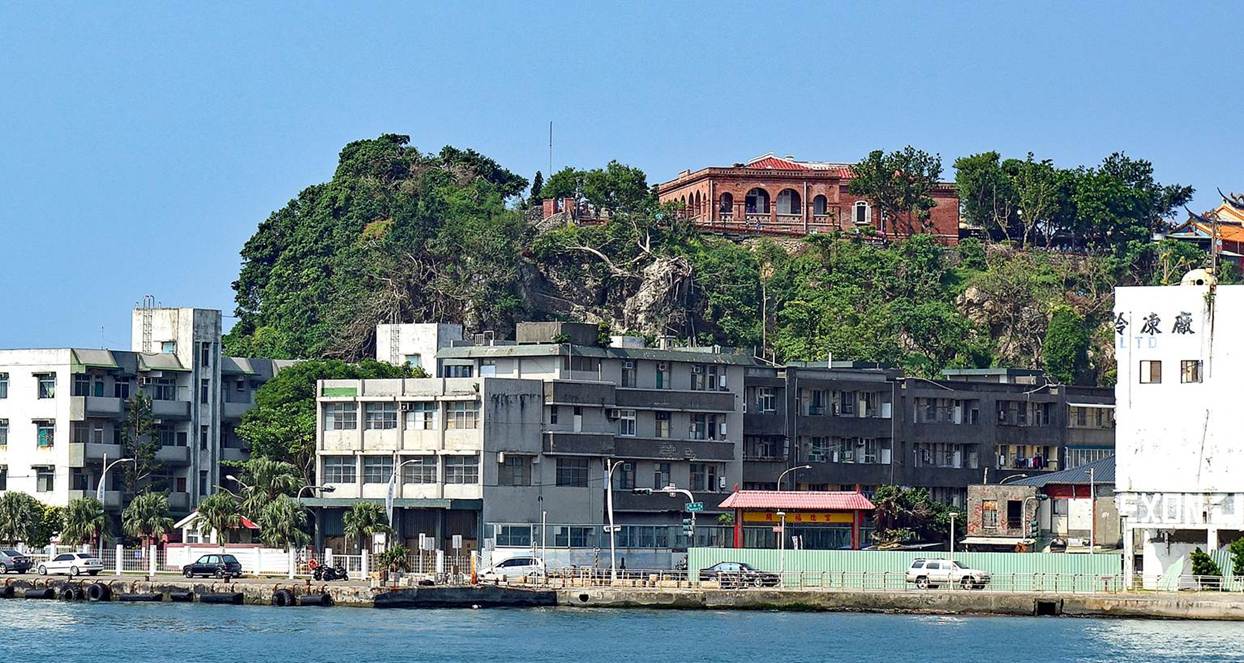
Another view of the old British consulate from the ferry pier.
[November 2016]
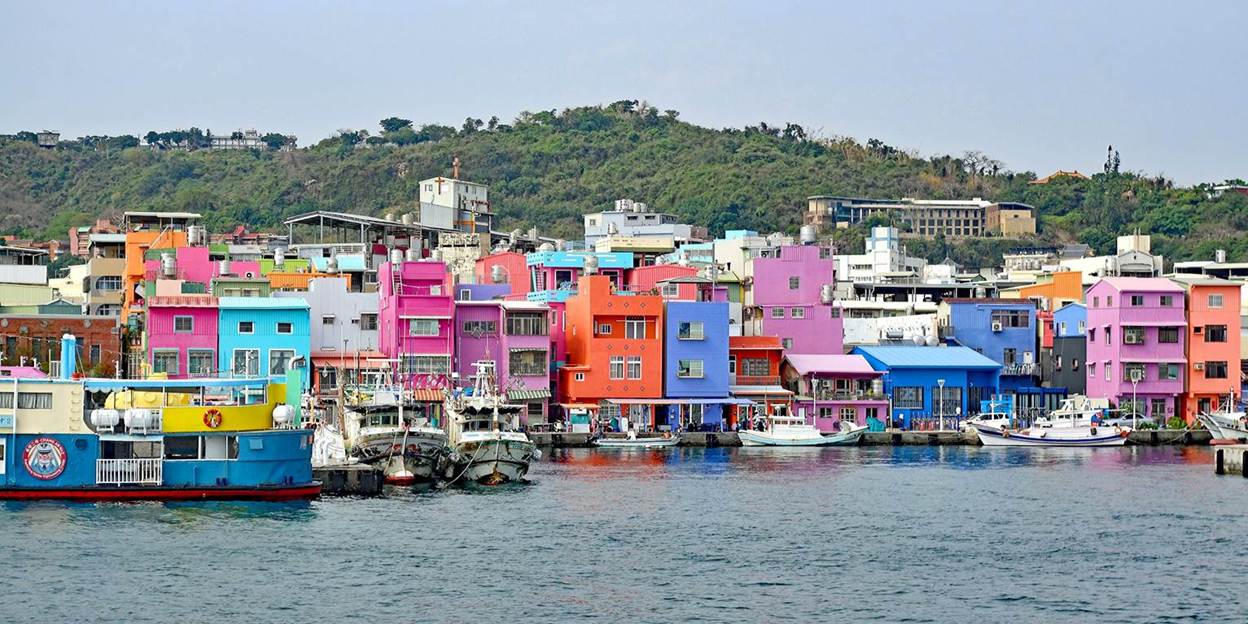
Colorful houses next to the ferry pier.
[March 2026]
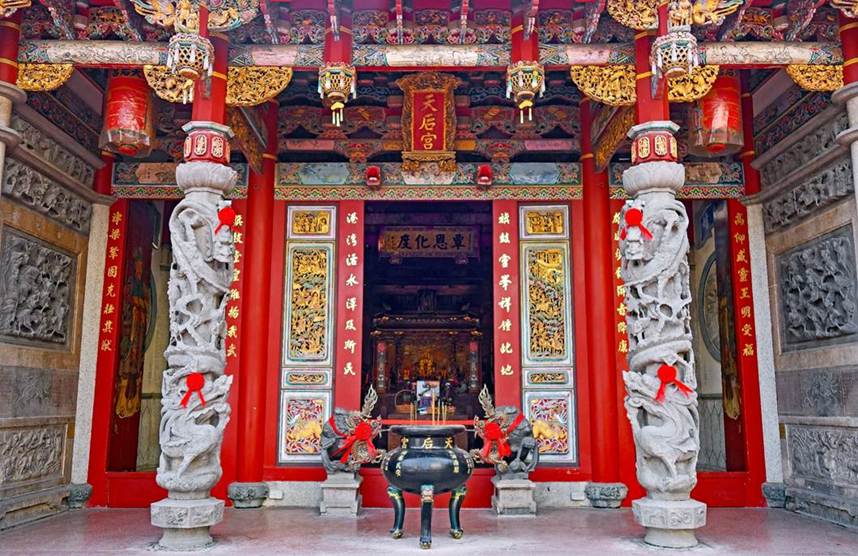
Cijin Tianhou temple (旗津天后宮):
Originally built in 1673, this temple was the earliest temple to worship
the Sea Goddess Matsu (媽祖) in the Kaohsiung area. It was rebuilt and remodeled several times,
while trying to preserve its ancient appearance. The last restoration lasted 3
years and was completed in 2020.
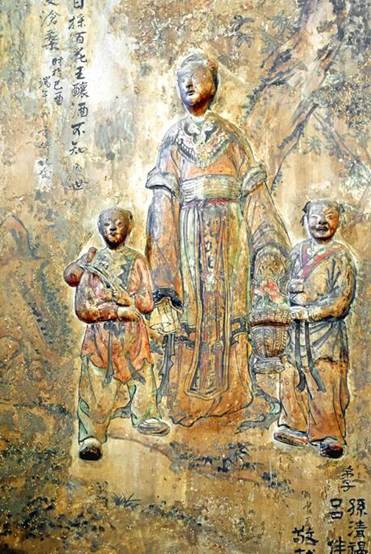
Left: Entrance of the temple. Right: Stone bas-relief in the temple.
|
|
|
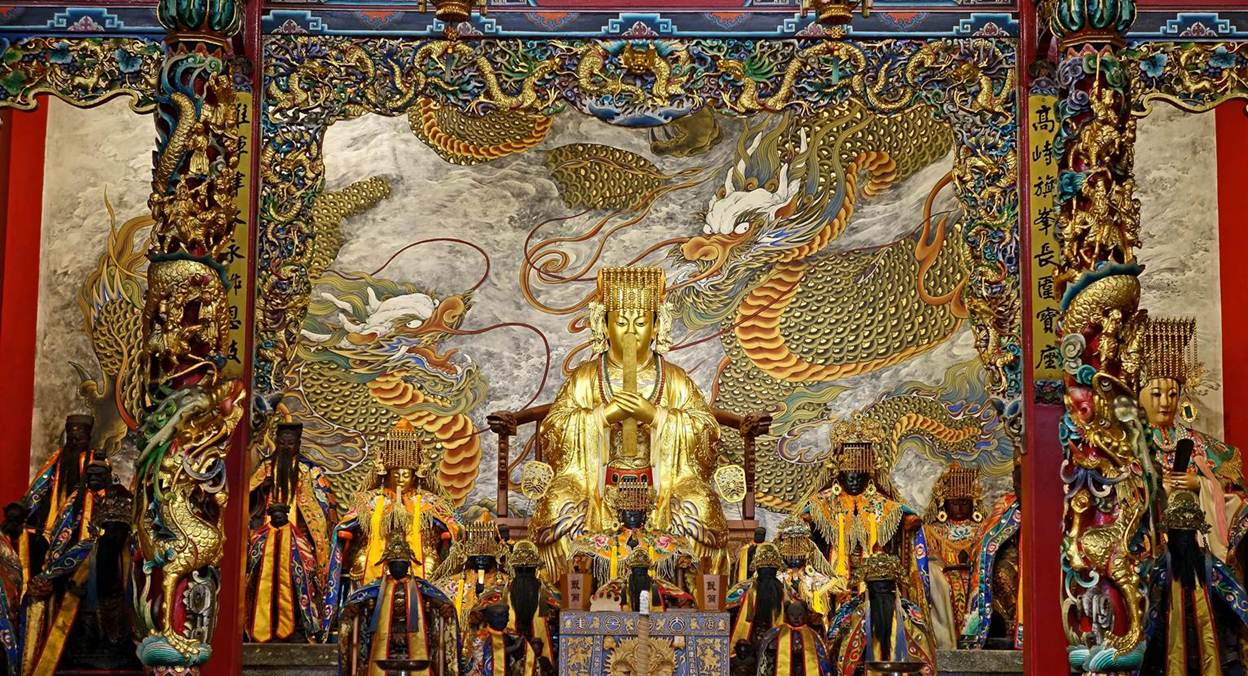
Main altar, with Matsu at the center.
[March 2026]
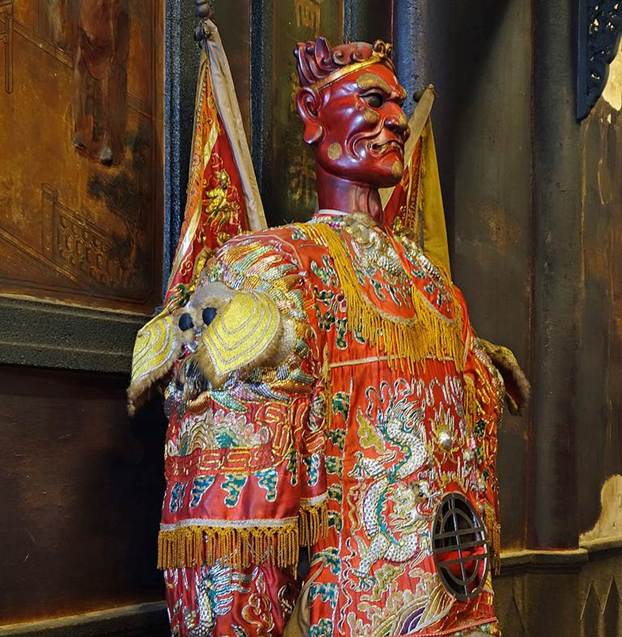
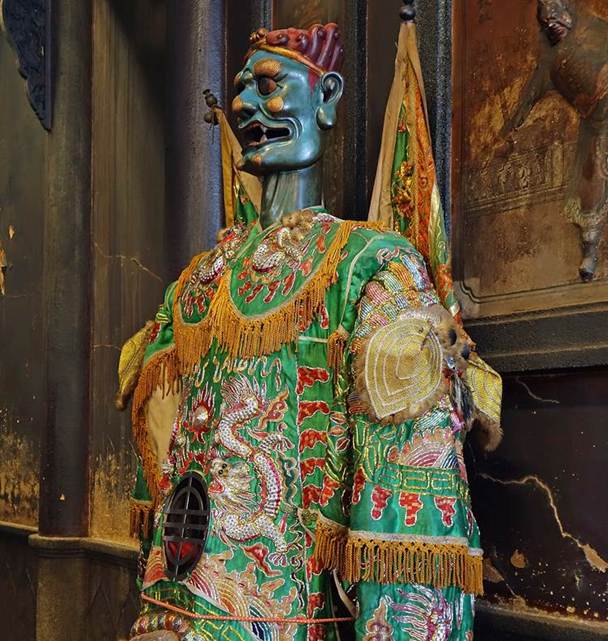
Guard statues.
|
|
|
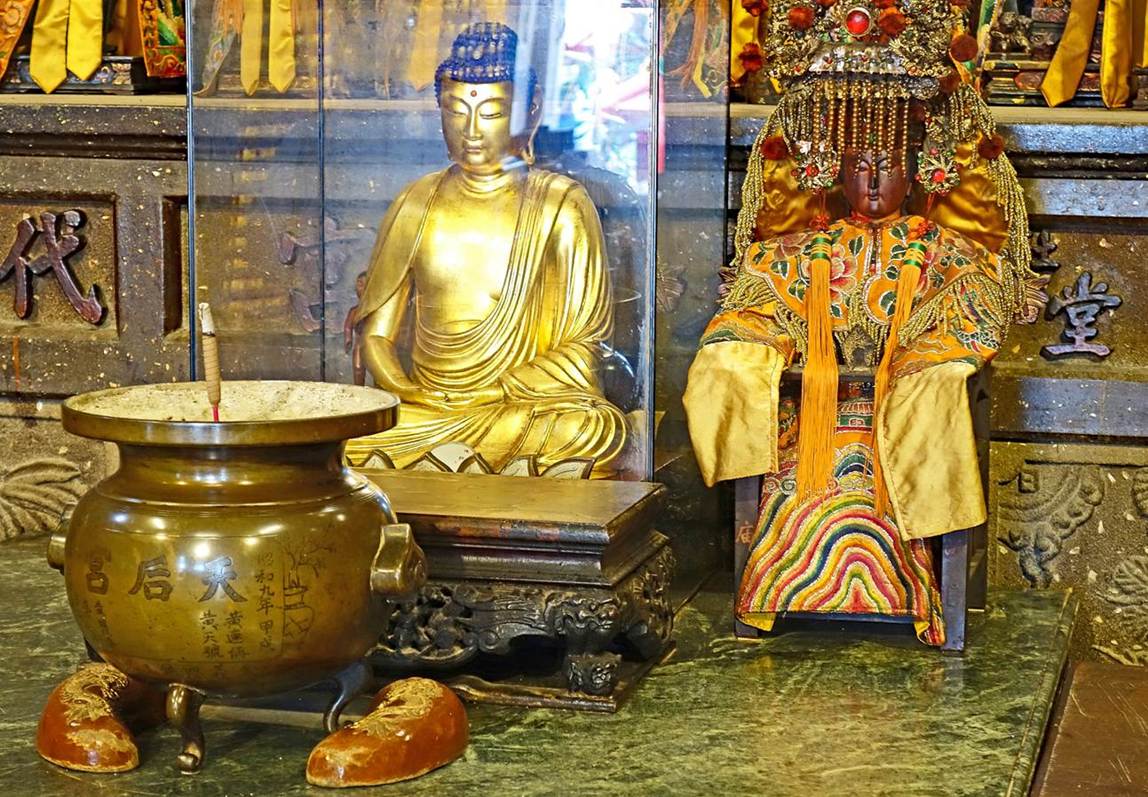
Matsu (right) sitting beside a golden statue Buddha enclosed in a
glass case, behind an incense burner.
[November 2016]
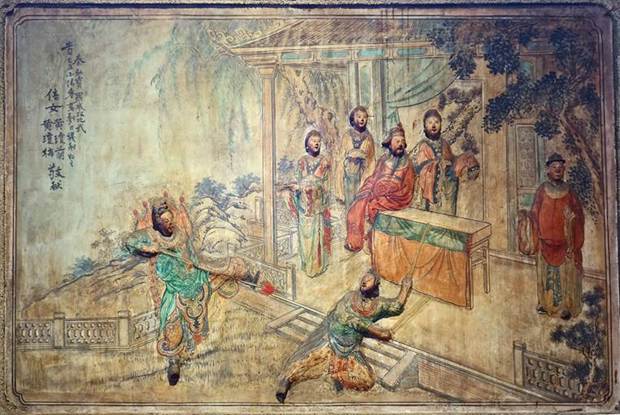
Polychrome bas-relief depicting legendary scenes.
|
|
|
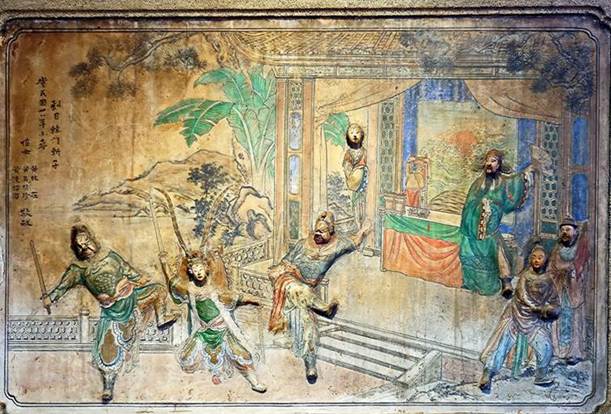
[March 2026]
Left: Joss paper burner shaped as a pagoda outside the temple. Center and
right: Two of the bas-relief panels decorating the paper burner.
|
|
|
|
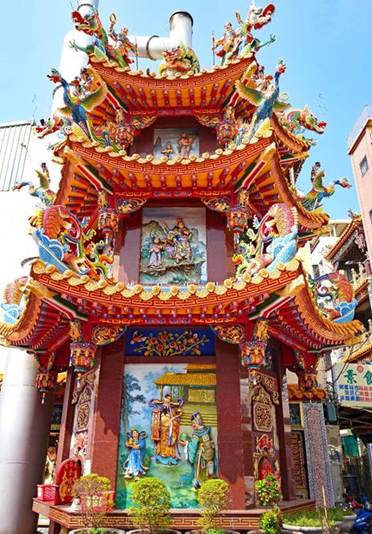
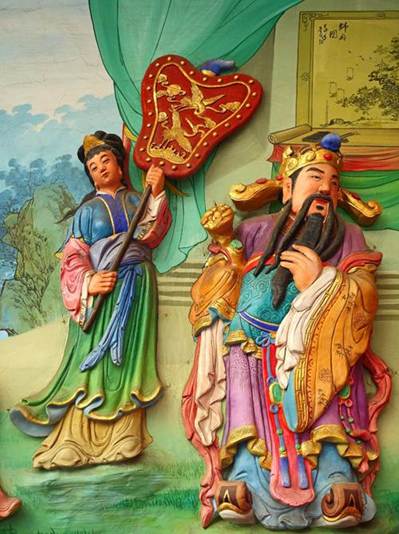
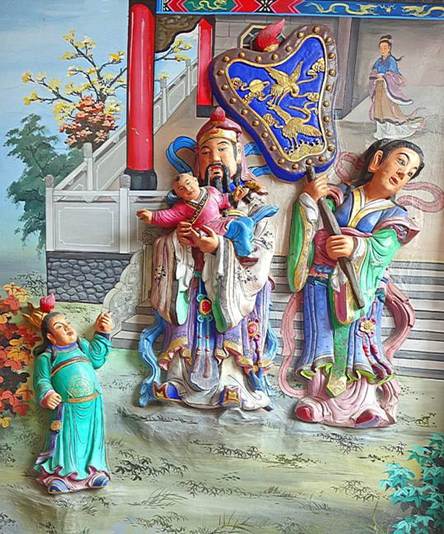
[Left: November 2016] [Center and right: March 2026]
Cijin Tiensheng temple (旗津天聖宮):
The main deity worshiped in this temple is Mazu, under her honorific
title ″The Holy Mother of the Heavens″ (天上聖母,Tiensheng Shengmu).
Several other deities are also worshiped in the temple, including Zhongtan Marshal (中壇元帥), a general protecting the Holy Mother. The temple was constructed in
1989.
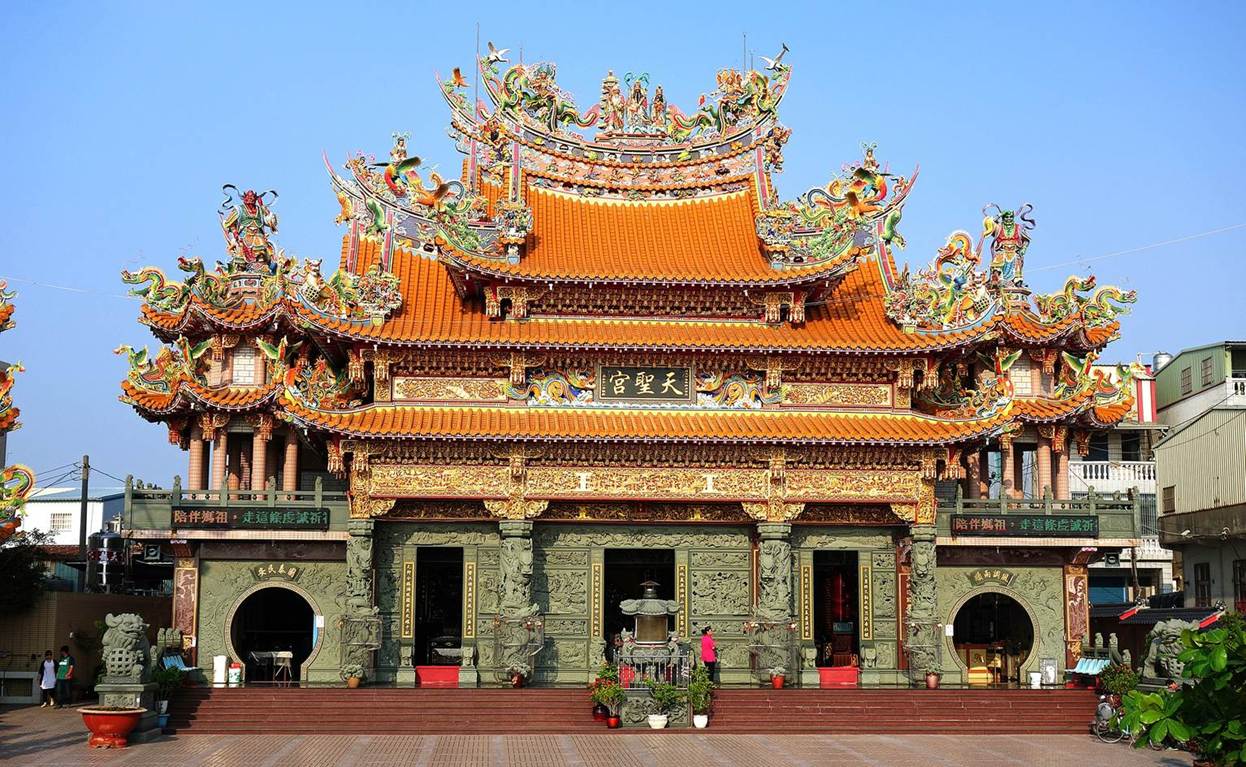
[November 2016]
Flat fishing
boat made of bended plastic pipes, on Cijin Island:
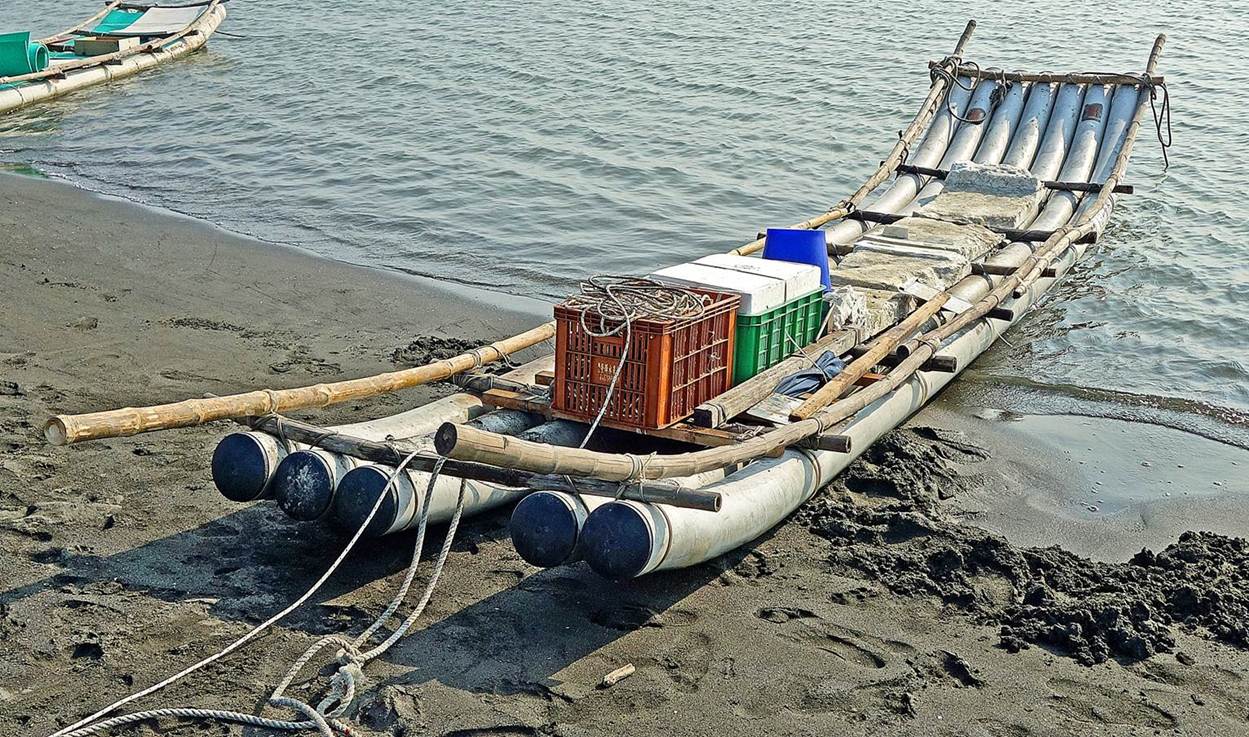
[November 2016]
Kaitai Fude temple
(哨船頭開臺福德宮):
This temple has a long history dating back to 1551, when new Chinese
immigrants settled at this site and worshipped a stone that looked like the
Earth God Fude Zhengshen (also known as the God of
Fortune). A temple was built later, but rebuilt several times, most recently in
1933 and 1975, and renovated between 2018 and 2021. The main deity worshipped
here is Fude Zhengshen, a major figure in Chinese
folk religion.
Left: Facade of the temple's main prayer hall. Right: Ceiling decoration
in the hall.
|
|
|
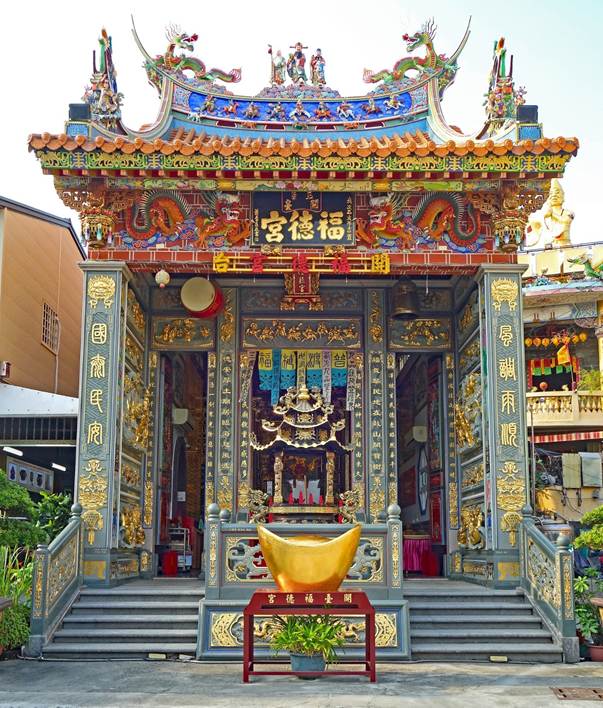
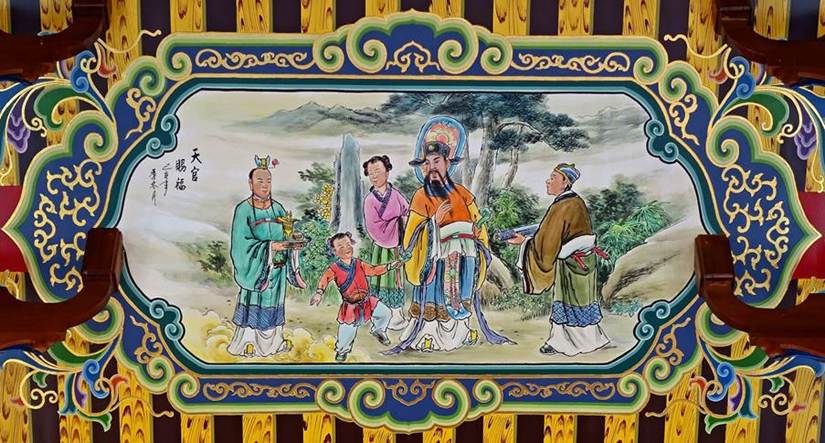
[March 2026]
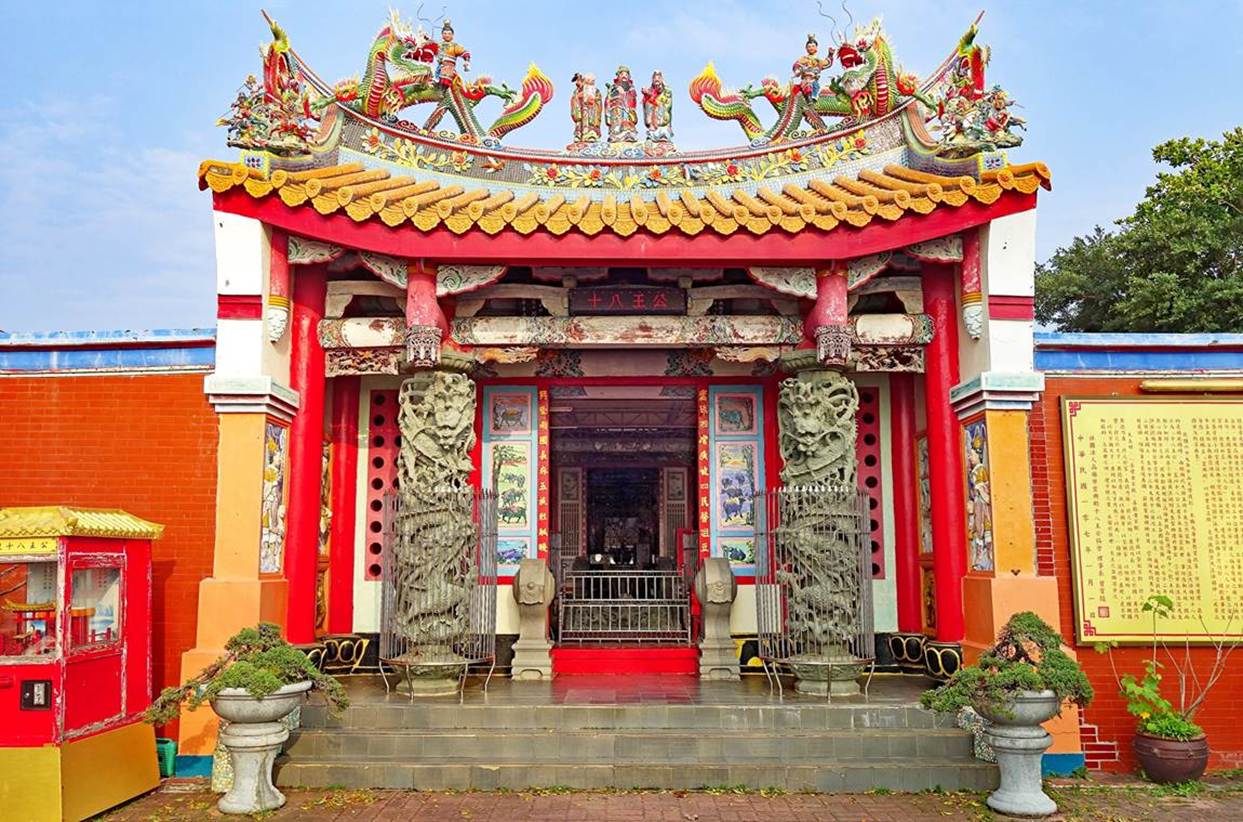
Sizihwan temple of
the Eighteen Lords (西子灣靈興殿十八王公廟):
The history of this temple (also called Linxing temple) dates back to 1684.
According to the legend, a fishing boat sank in a nearby bay. Its 18 sailors
escaped, but were mistaken for pirates by county officials and massacred.
Because of the unjust death, local residents give them a proper burial and
built an ancestral hall to enshrine their spirits. In 1983, due to the
expansion of the National Sun Yat-sen University, this hall was rebuilt next to
the old British consulate and given its current name. The 18 sailors, now
called ″lords″, are enshrined in this temple, along with other
deities, including Ksitigarbha Bodhisattva and
Fude Zhenshen.
Facade of the temple.
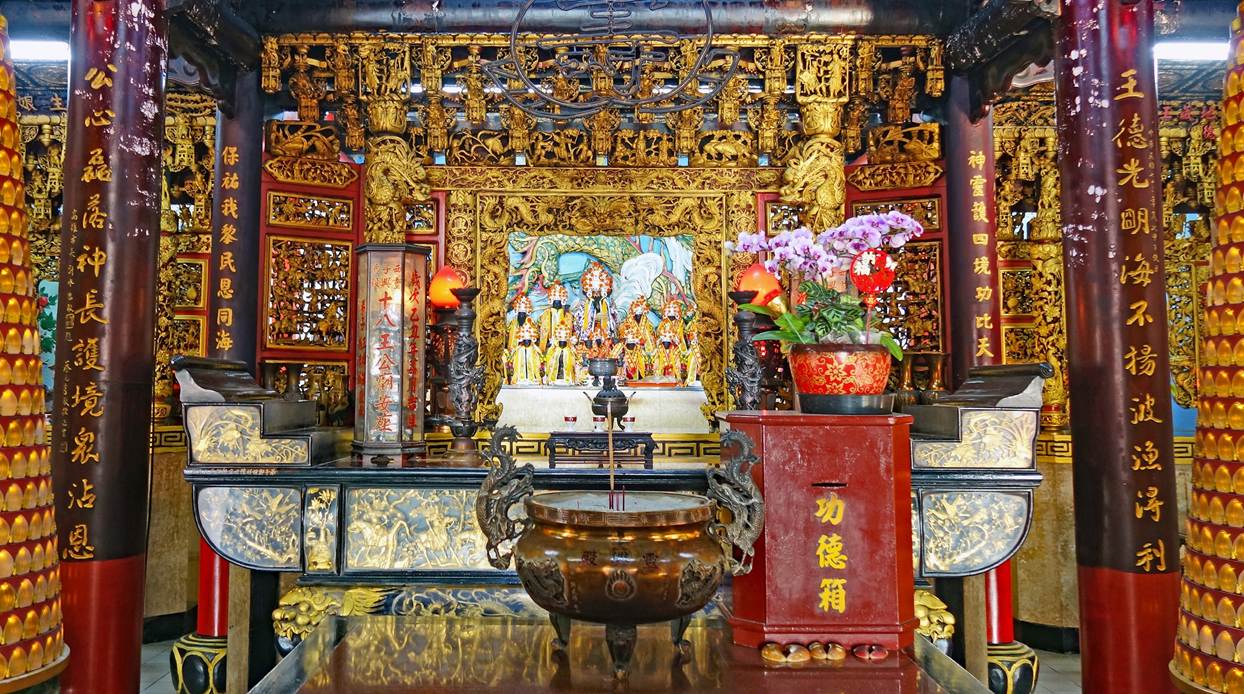
Main altar.
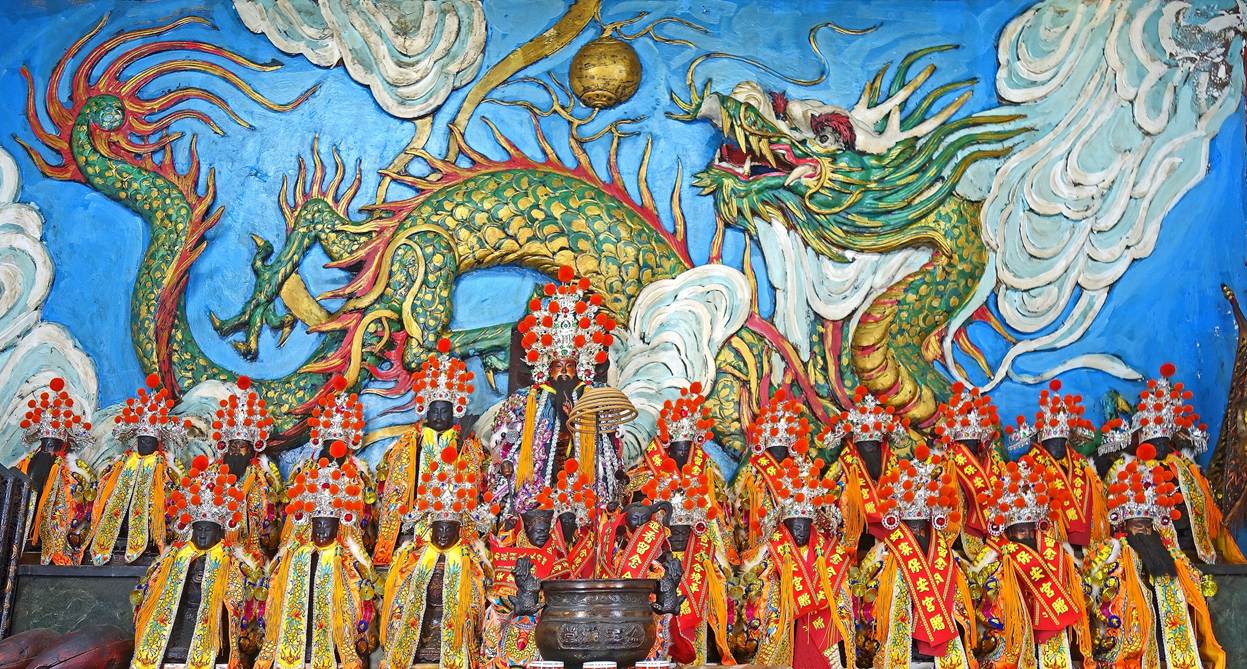
Another altar.
Part of a finely carved and gilded wooden panel in the temple.
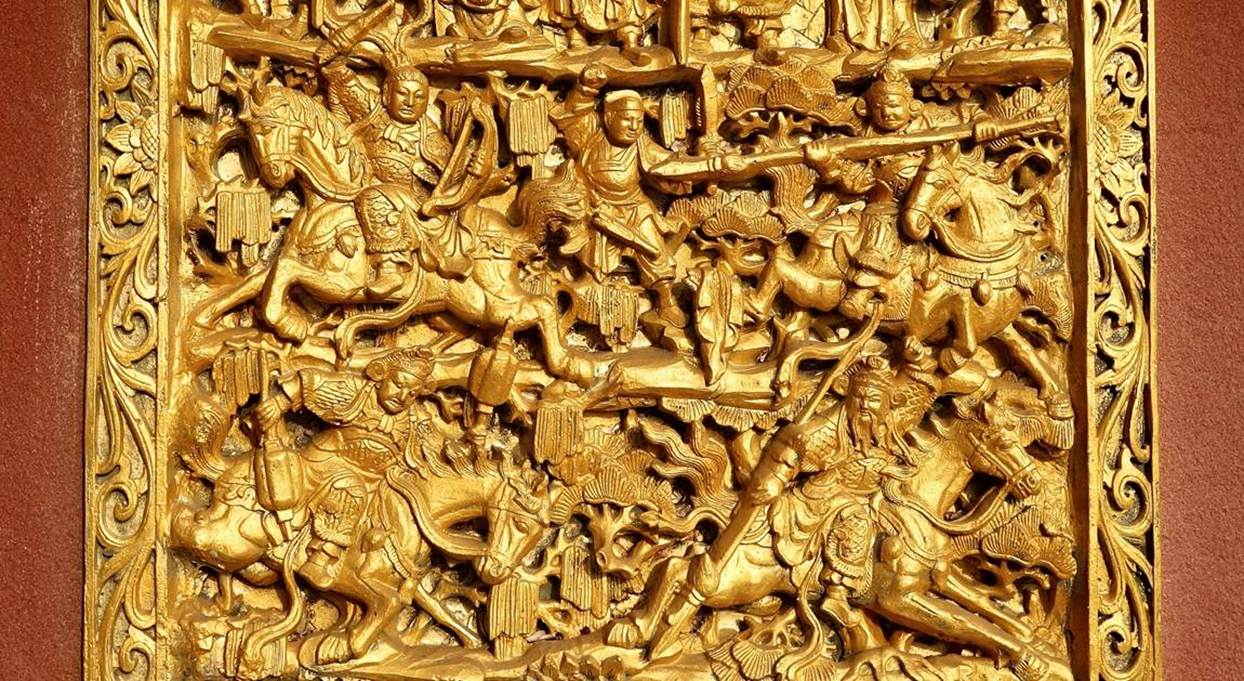
[March 2026]
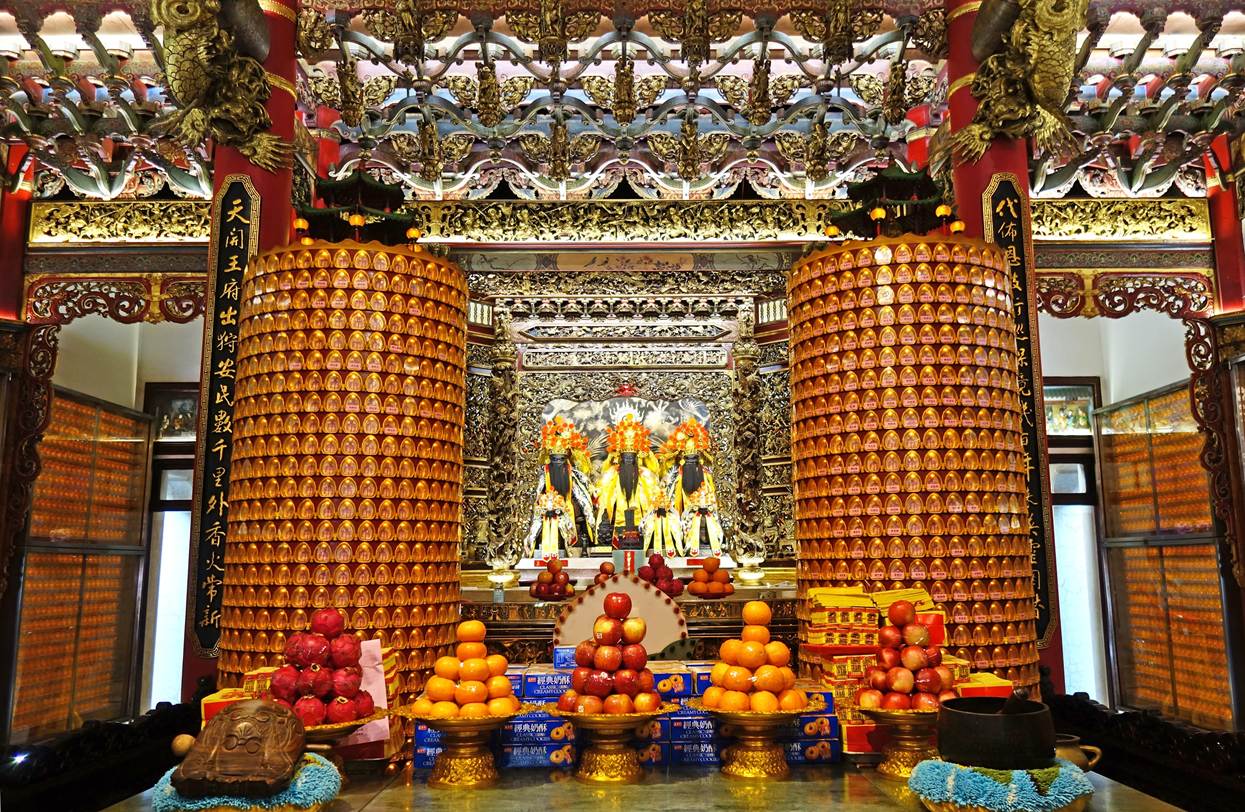
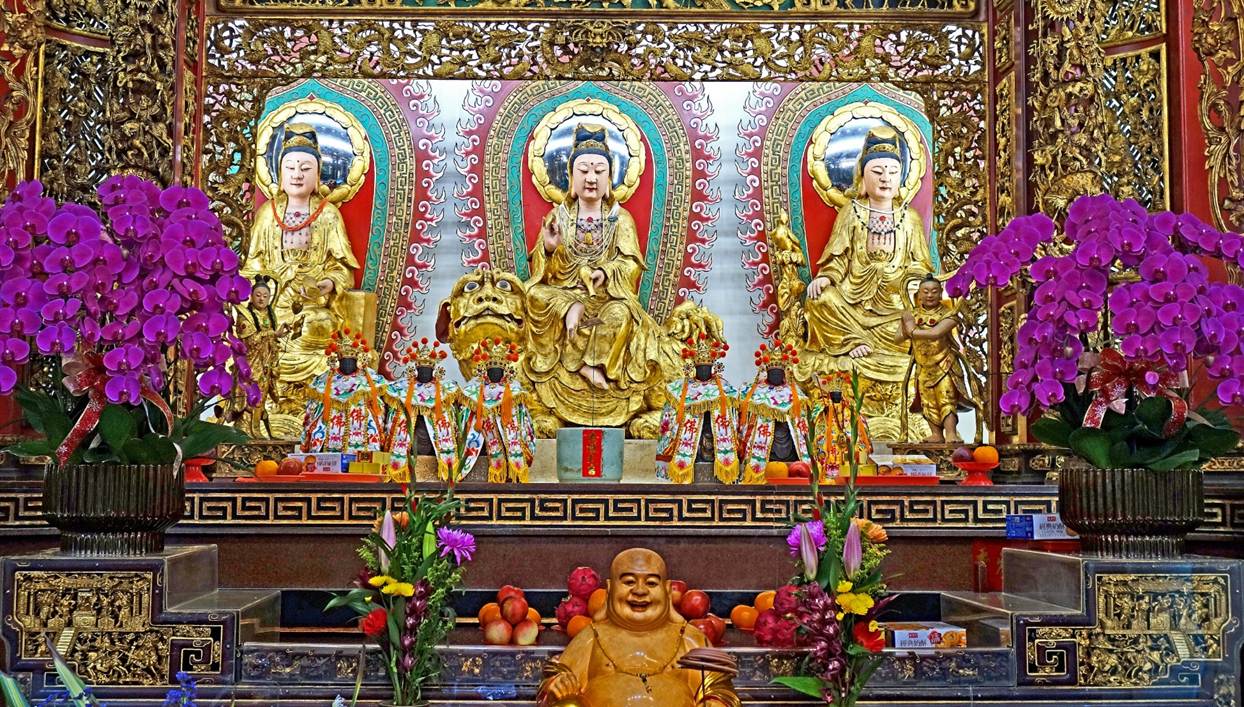
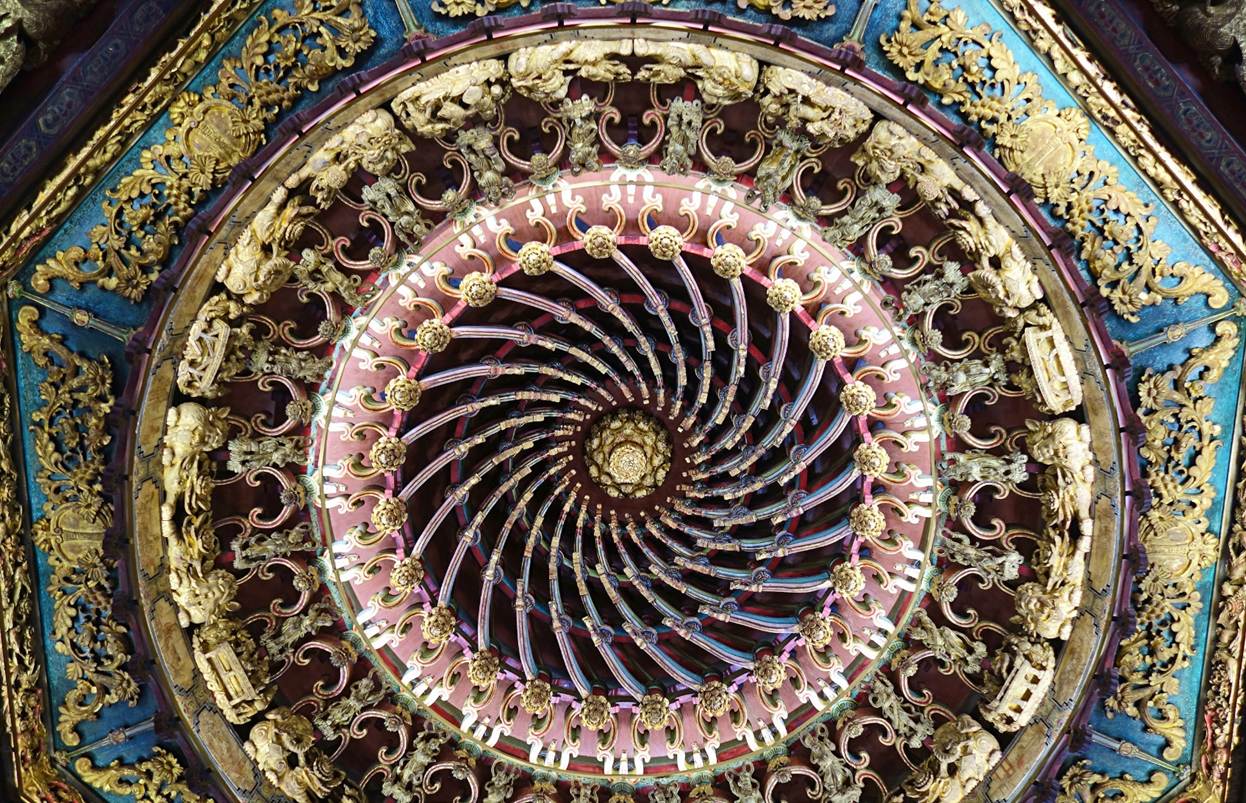
Hamasen Daitian temple (哈瑪星代天宮):
Built in 1951, this
temple combines Taoist and Buddhist worship halls. The entire temple was
renovated between 2019 and 2024.
Archway to the temple.
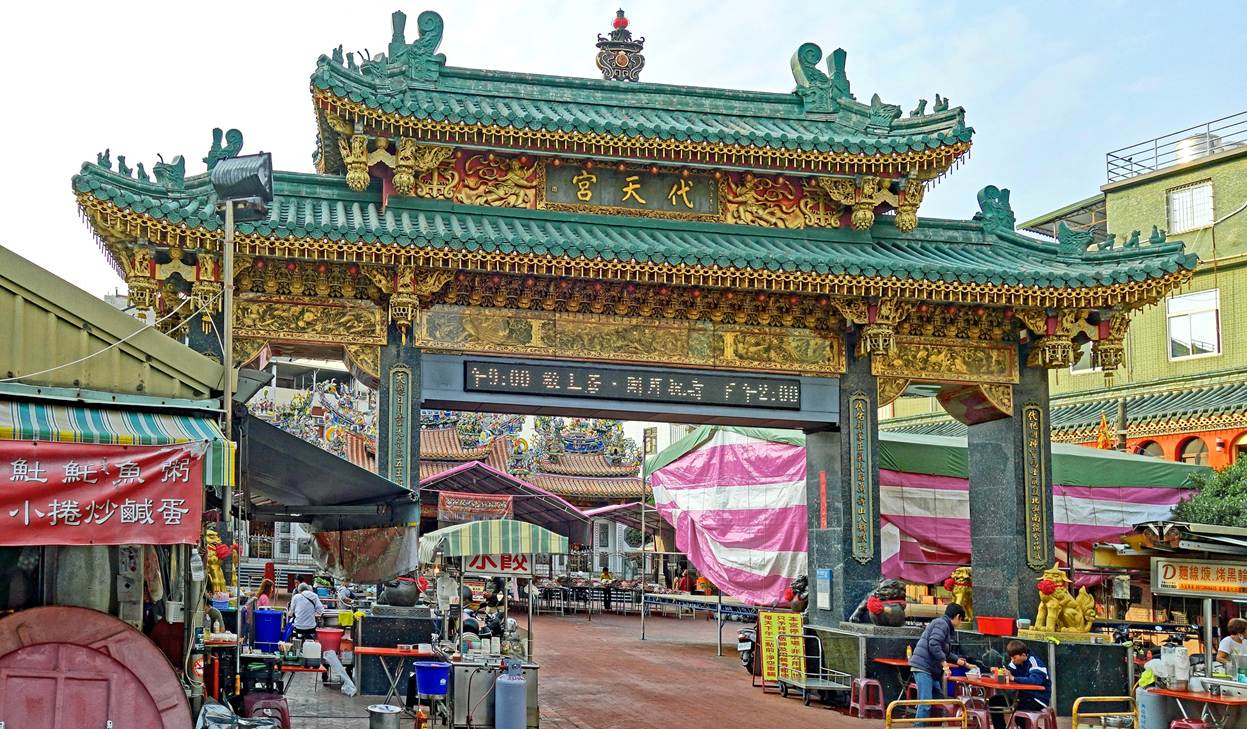
Taoist altar. The main deities are the Five Heavenly Lords (五府千歲, Wufu Qiansui).
Buddhist altar, with three representations of Guanyin Bodhisattva.
Beautifully decorated ceiling.
[March 2026]
Yancheng
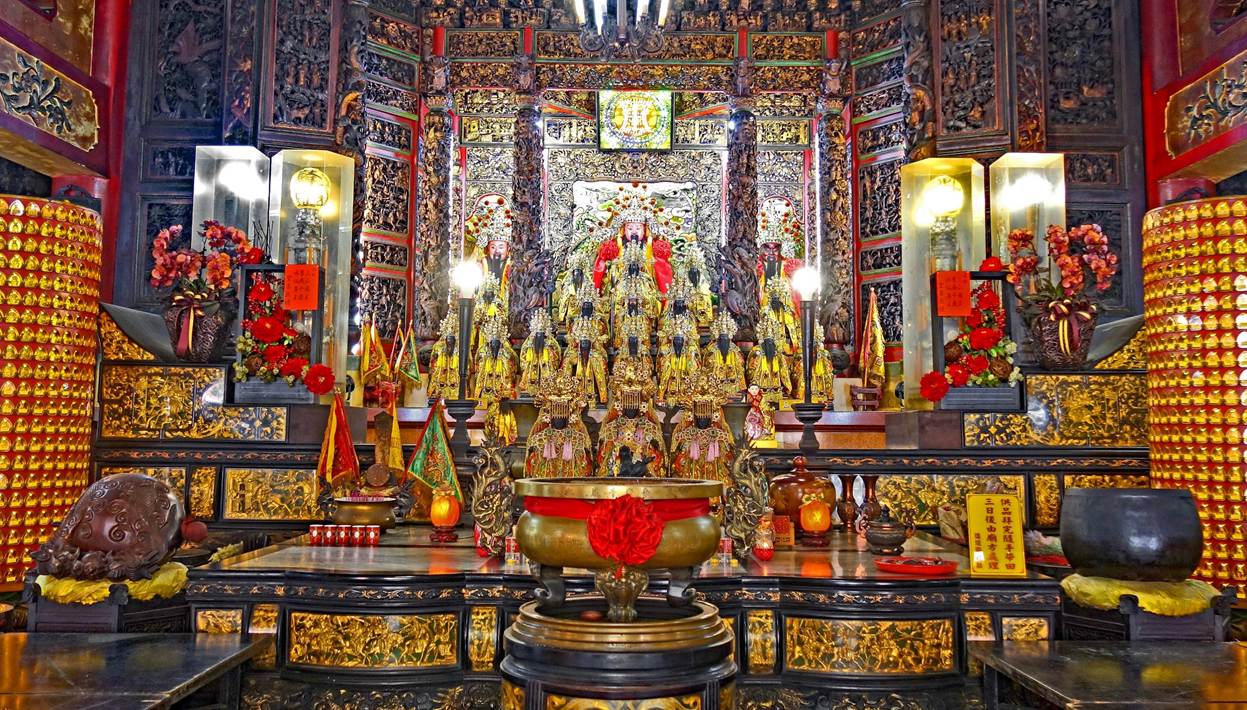
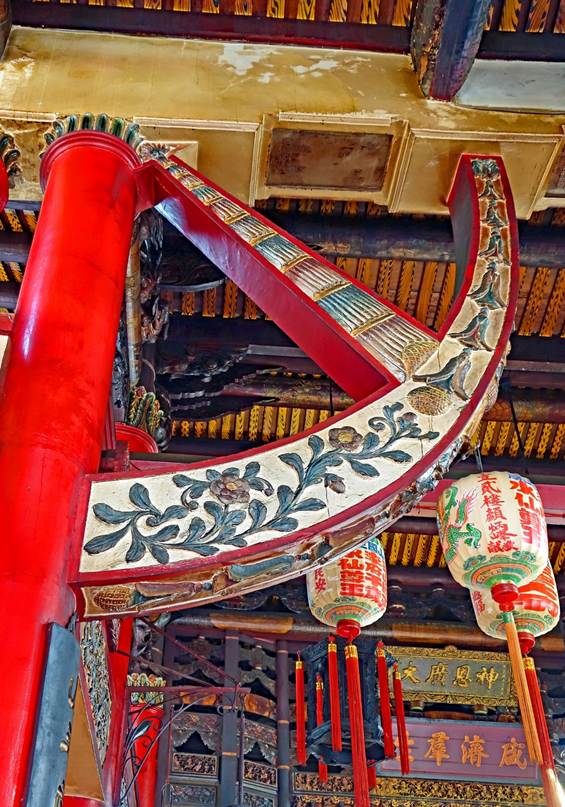
Sanshan Guowang temple (鹽埕三山國王廟):
This temple was first built in 1760 by Hakka immigrants during the reign
of Emperor Qianlong. It was reconstructed and renovated several times. The main
deities worshipped here are three mountain deities of the Yangcheng district of
Kaohsiung City: Jinshan, Mingshan, and Dushan. Other
deities include Li Fu Qiansuii, Shuixian Zunwang, and Guanyin. Following an ancient legend, this
temple shares with two other temples the custom of rotating the worship of the
Sun God (太阳星君): the Yanchengpu Soushan
temple (鹽埕埔壽山宮) and the Qianjin Wanxing temple (前金萬興宮), both of which are
featured further down on this page.
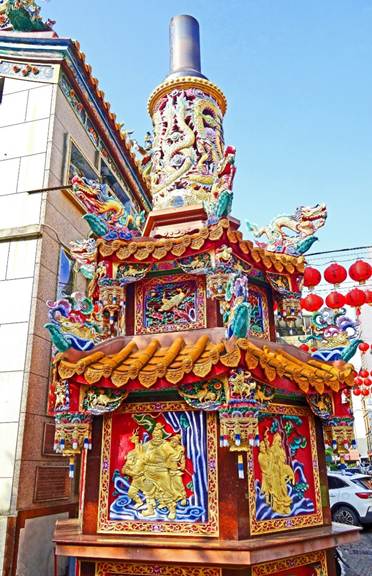
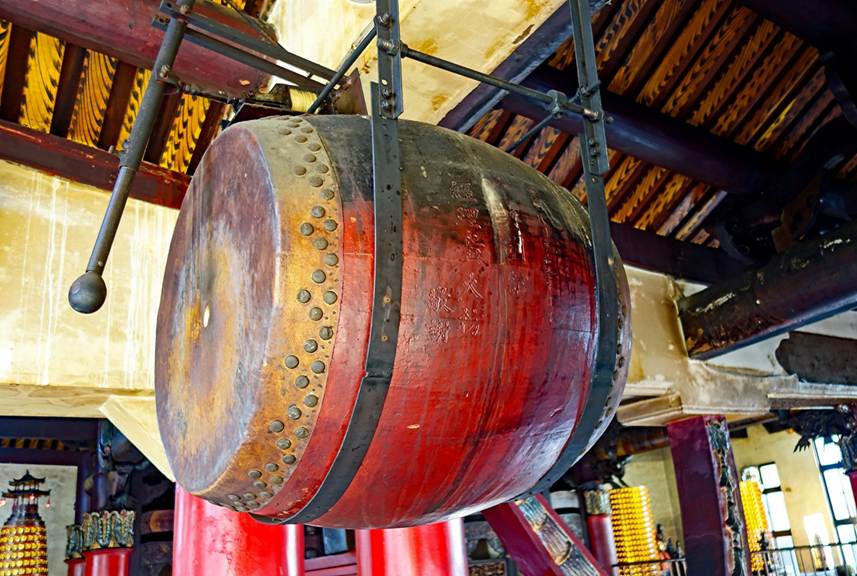
Left: Joss paper burner of the temple. Right: Barrel-shaped ceremonial
drum with two drumheads (called a tanggu) in the
temple.
|
|
|
Main altar.
|
|
|
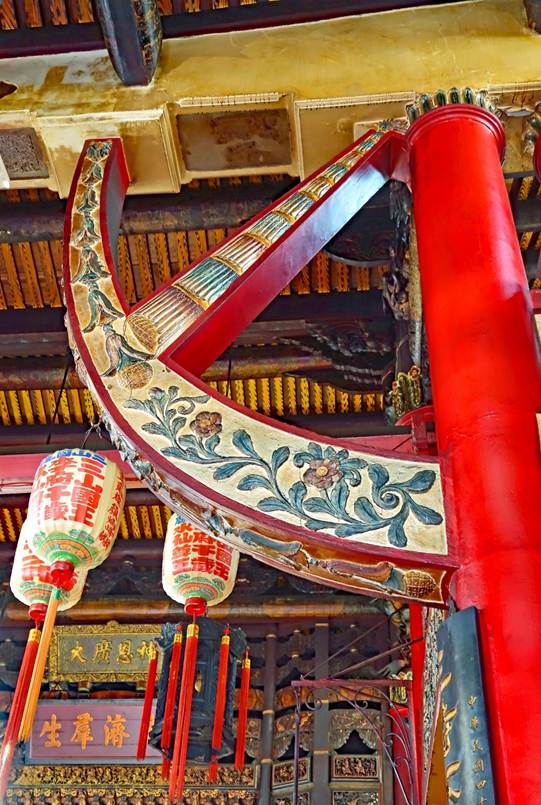
[March 2026]
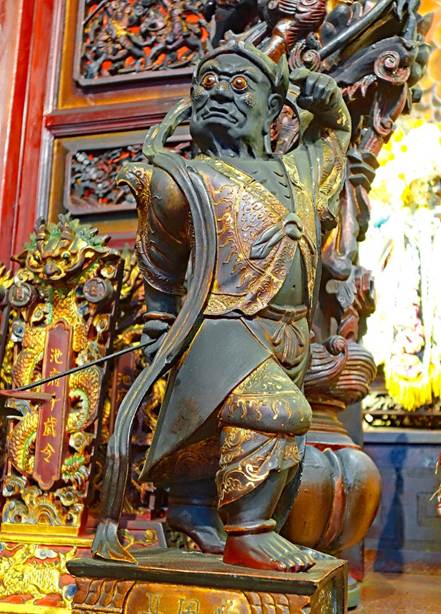
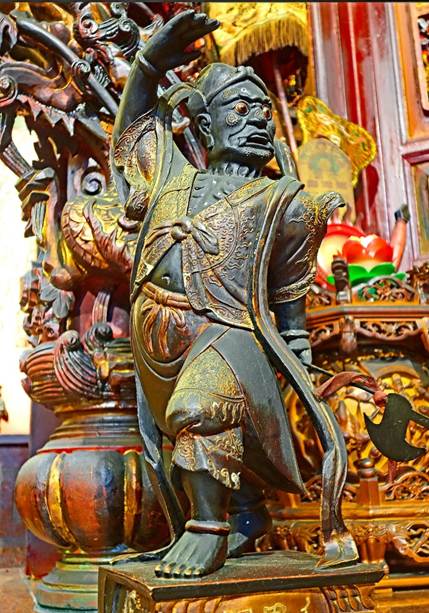
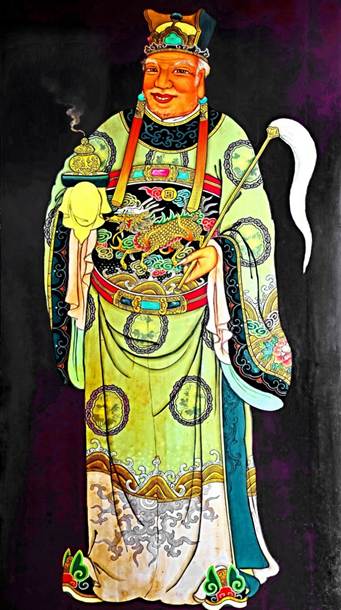
Yancheng Shaduo temple (鹽埕沙多宮):
This temple is
dedicated to the Five Heavenly Lords, but many other deities are also
worshipped here.
Worship halls and
altars.
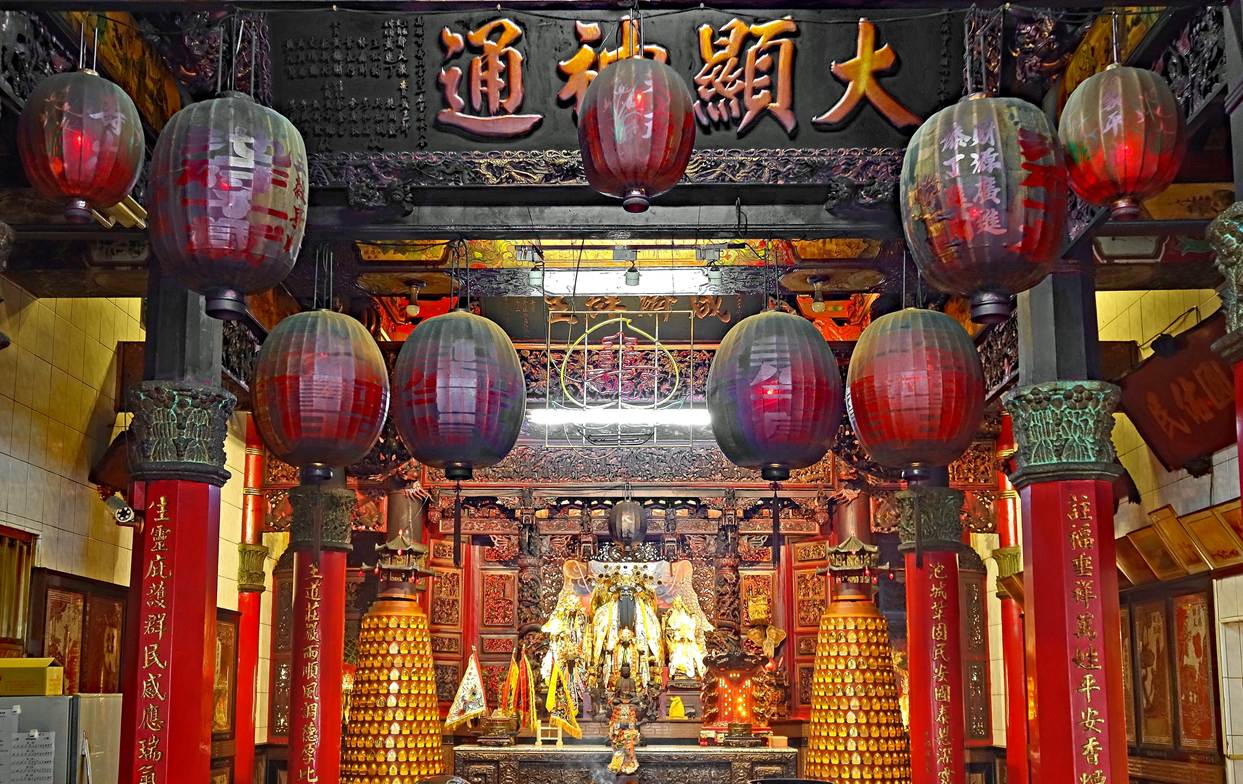
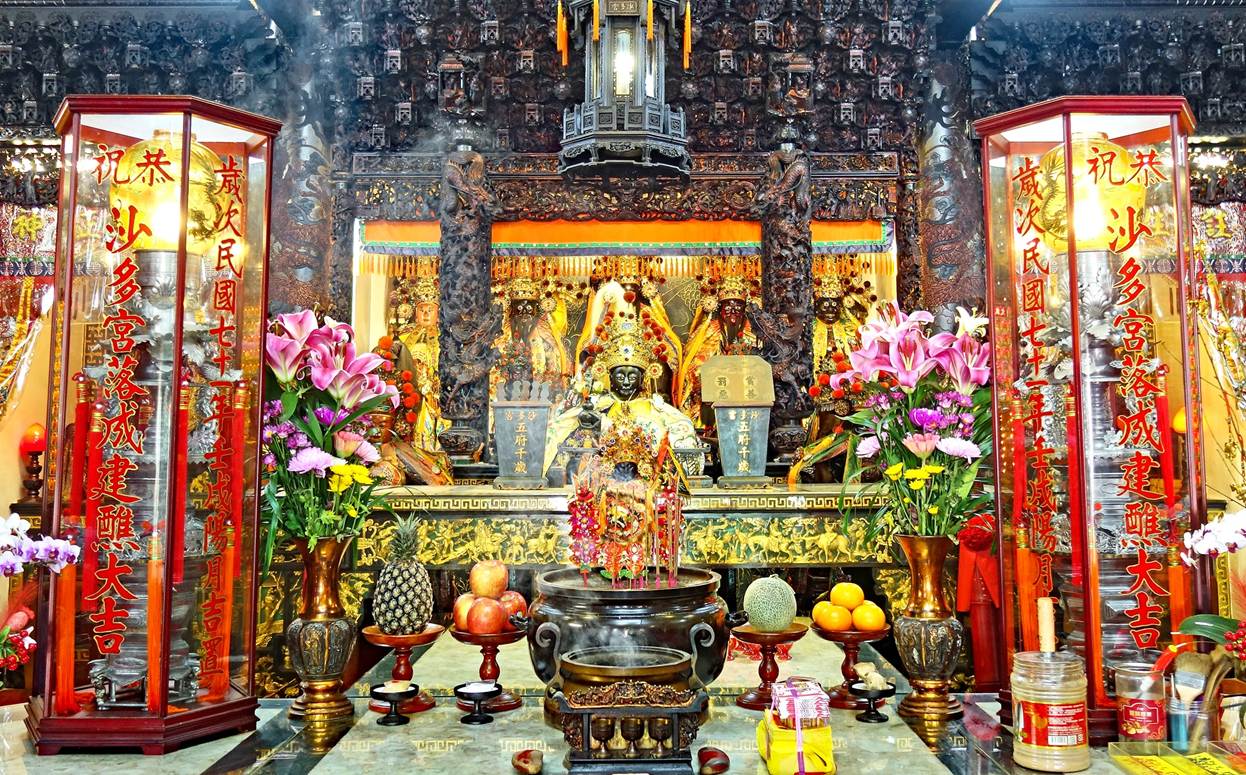
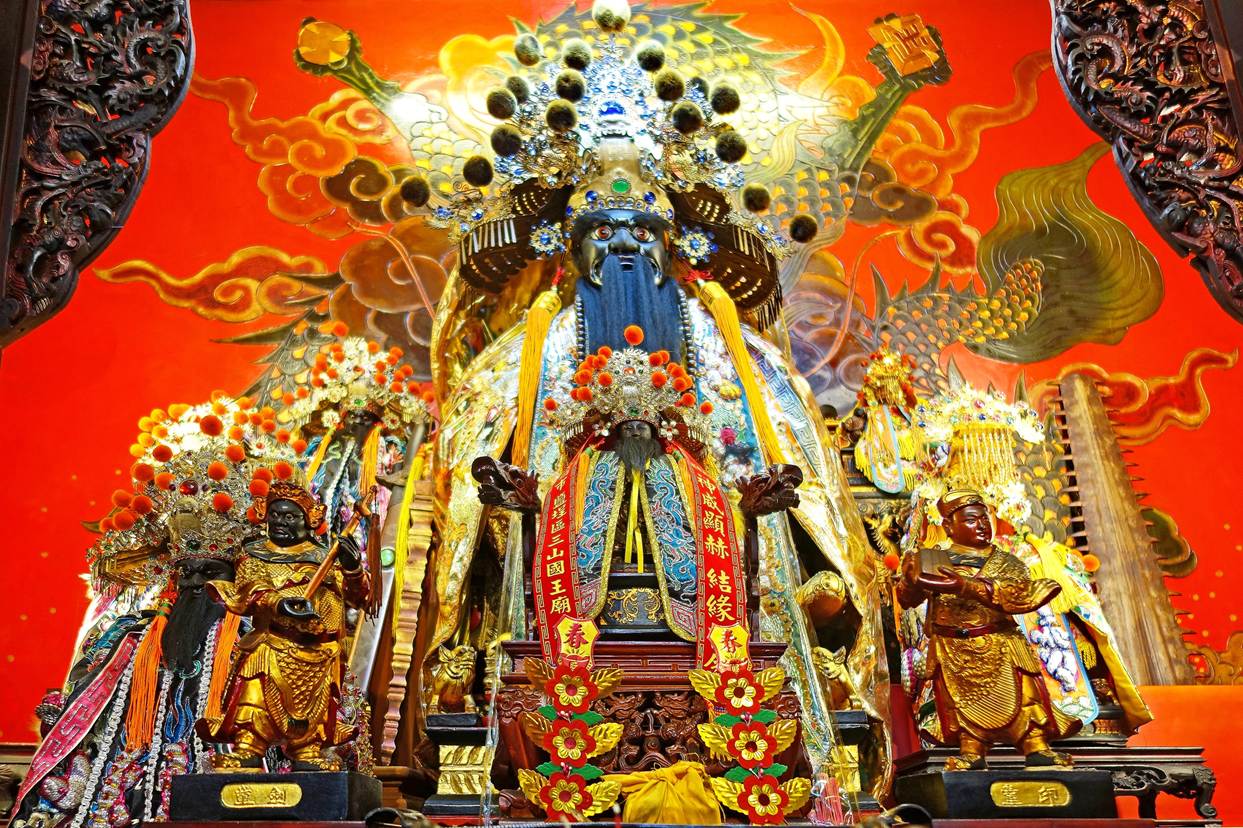
Left and center:
Guardians standing on the sides of an altar. Right: Painting on a door
representing a Chinese historical figure, clad in traditional robes, holding a
smoking incense burner in his right hand and a ceremonial staff in his left.
|
|
|
|
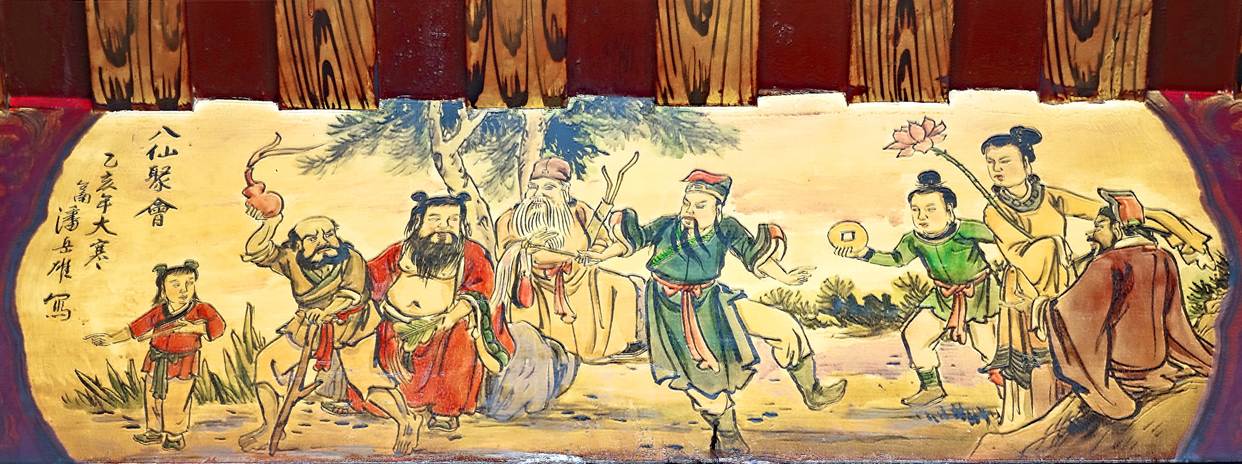
Ceiling decoration in a
hall. Part of the inscription located on the left translates as ″Fairy
party″. The painting appears to depict enchantment, prosperity, and
longevity, three popular themes in Chinese folklore.
Amazingly detailed
model of a royal ship used for ceremonies and festivals, housed in a separate
room of the temple.
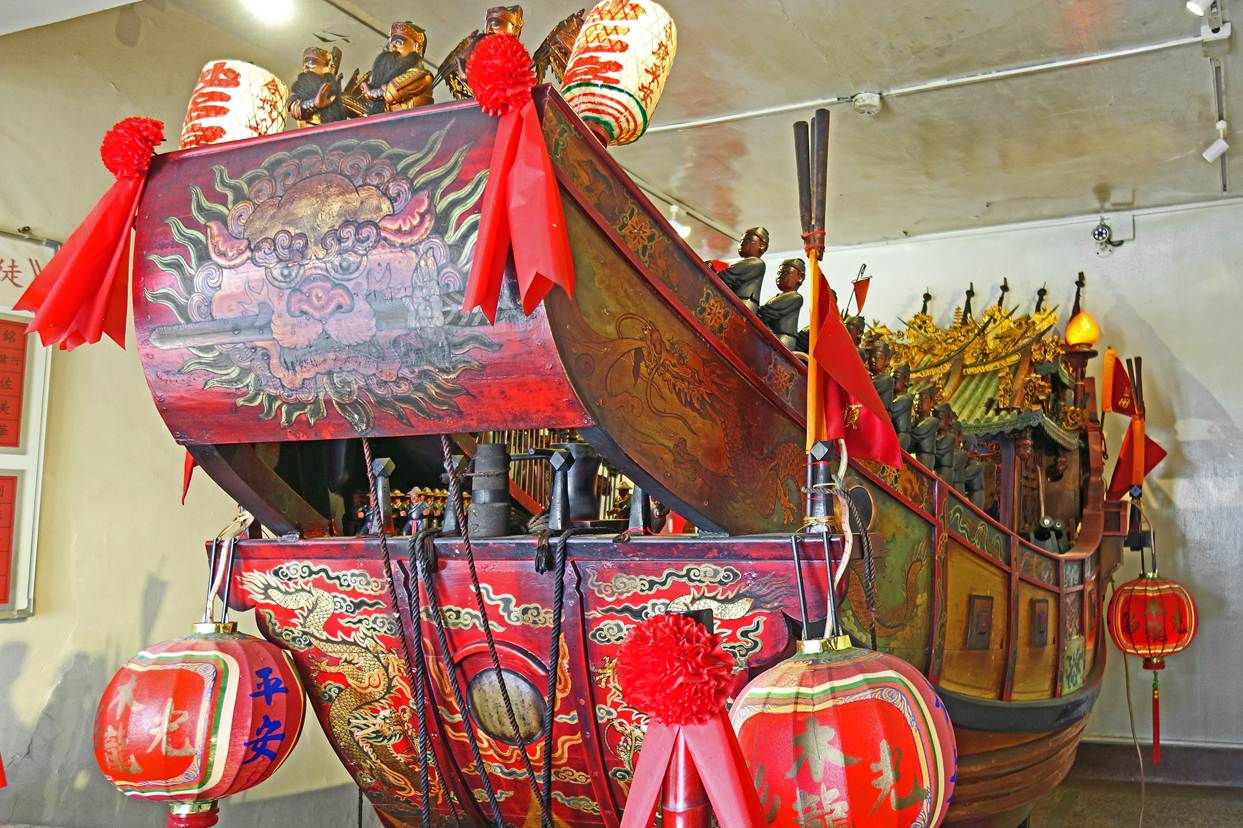
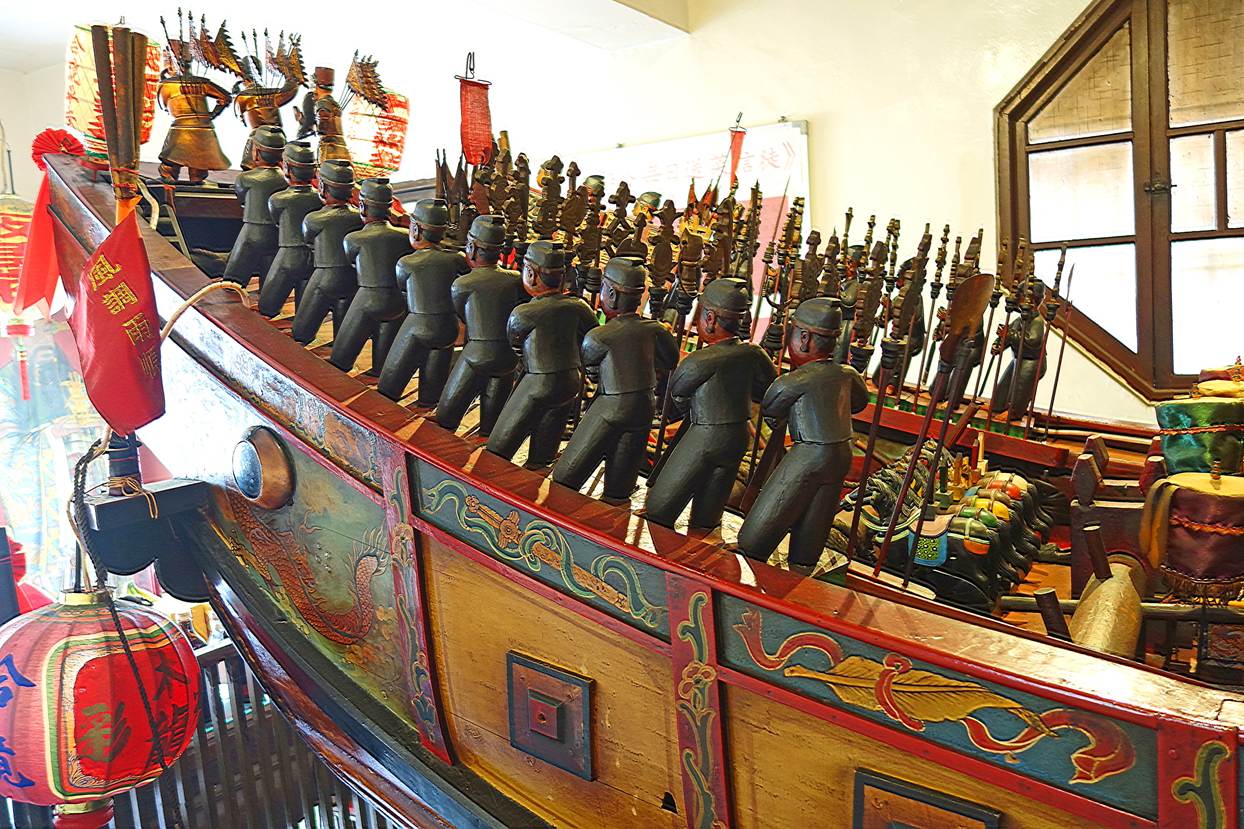
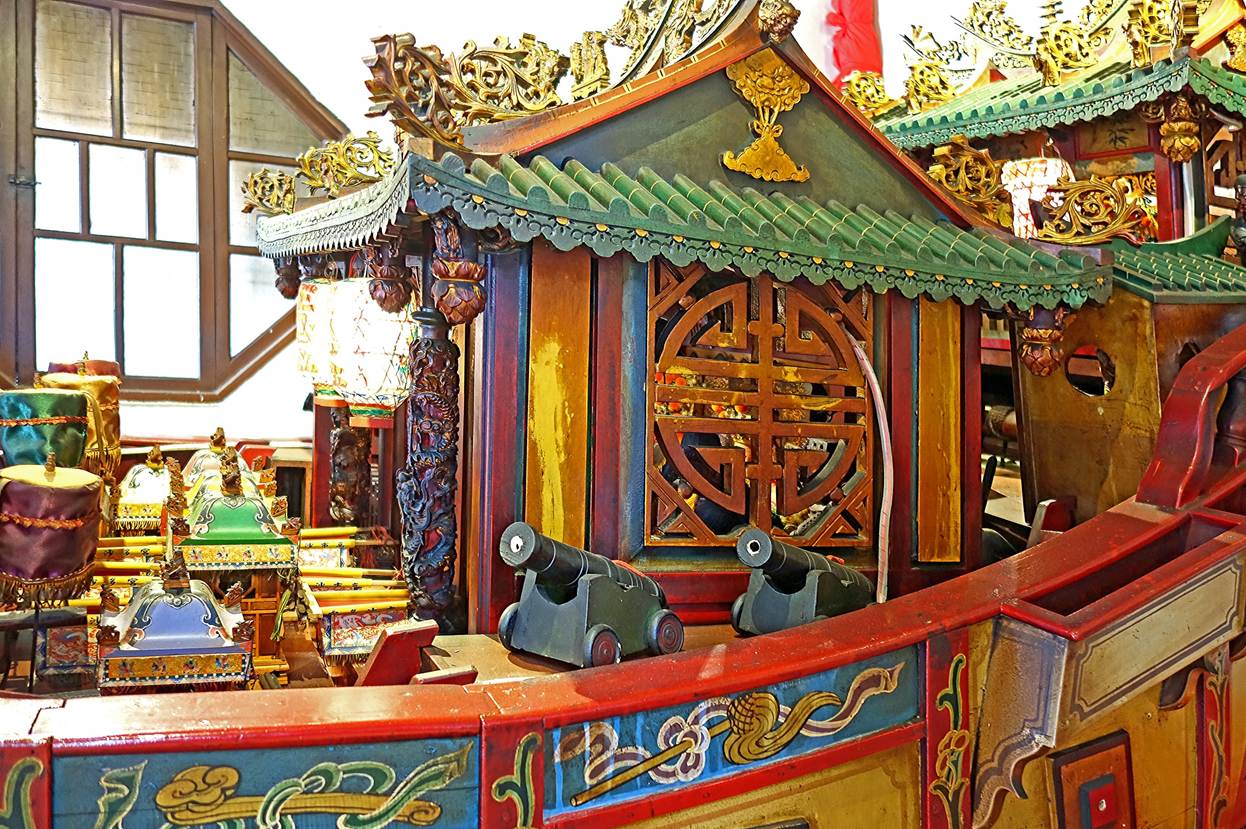
[March 2026]
Xiahai City God temple (高雄霞海城隍廟):
This temple was built
at its current location in 1936 and rebuilt in 1965 to its present appearance.
Like in other City God temples in Taiwan, its main god, the City God (also
called Chenghuang), is a responsible for recording
and reporting human good and evil deeds, judging the souls of the dead,
and transferring spirits.
Main worship hall.
|
|
|
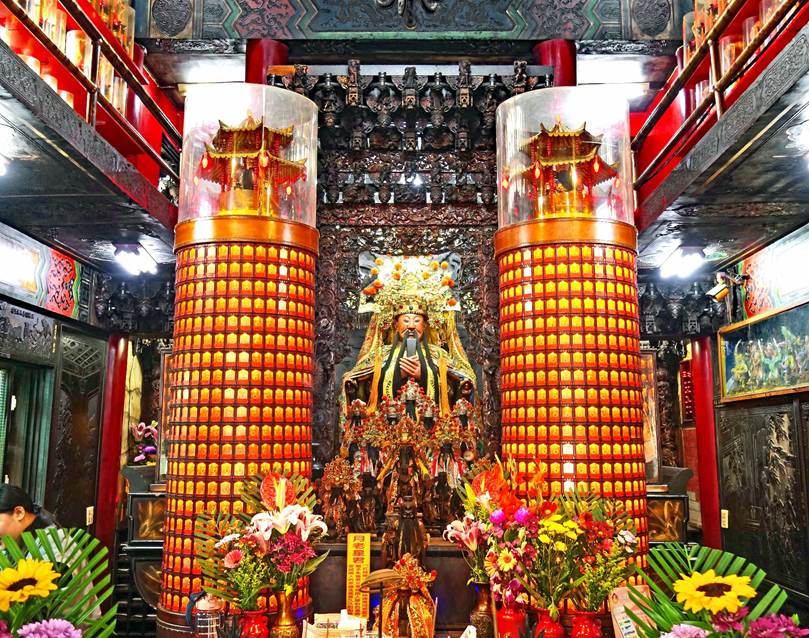
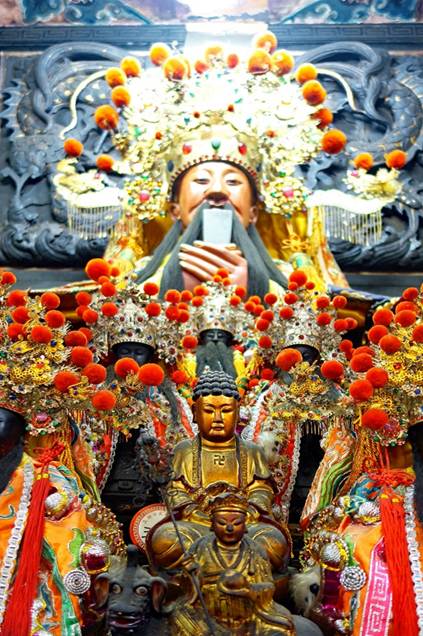
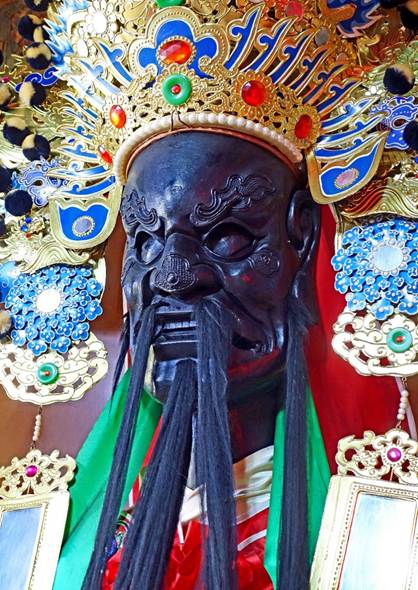
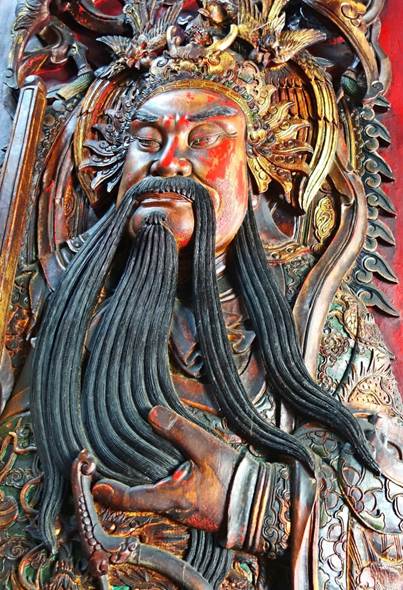
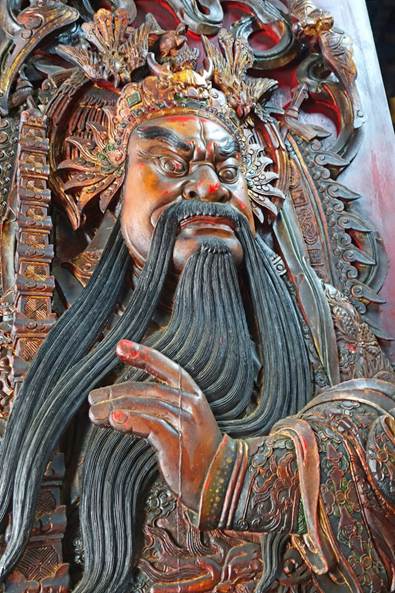
Left: One of the six
generals of the City God. Center and right: Wood carvings on doors, probably
representing other generals.
|
|
|
|
[March 2026]
Yanchengpu Soushan temple (鹽埕埔壽山宮):
This temple is
dedicated to the deity Chi Fu Qiansui (池府千岁, which literally means ″Lord Chi, the Venerable King″). Chi Fu Qiansui is a
deified general, known as Chi Mengbiao during his
lifetime, who helped found the Tang Dynasty. The temple was built in 1955 and
rebuilt in 1980. As already mentioned above, it rotates the worship of the Sun God with two other local temples: the
Yancheng Sanshan Guowang
temple (see above) and the Qianjing Wanxing temple (see below).
Facade of the temple at
night.
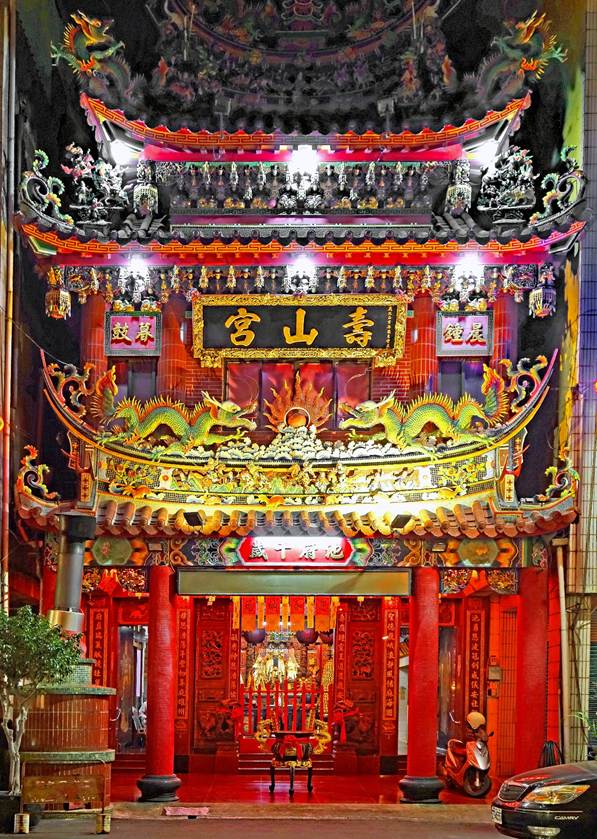
[March 2026]
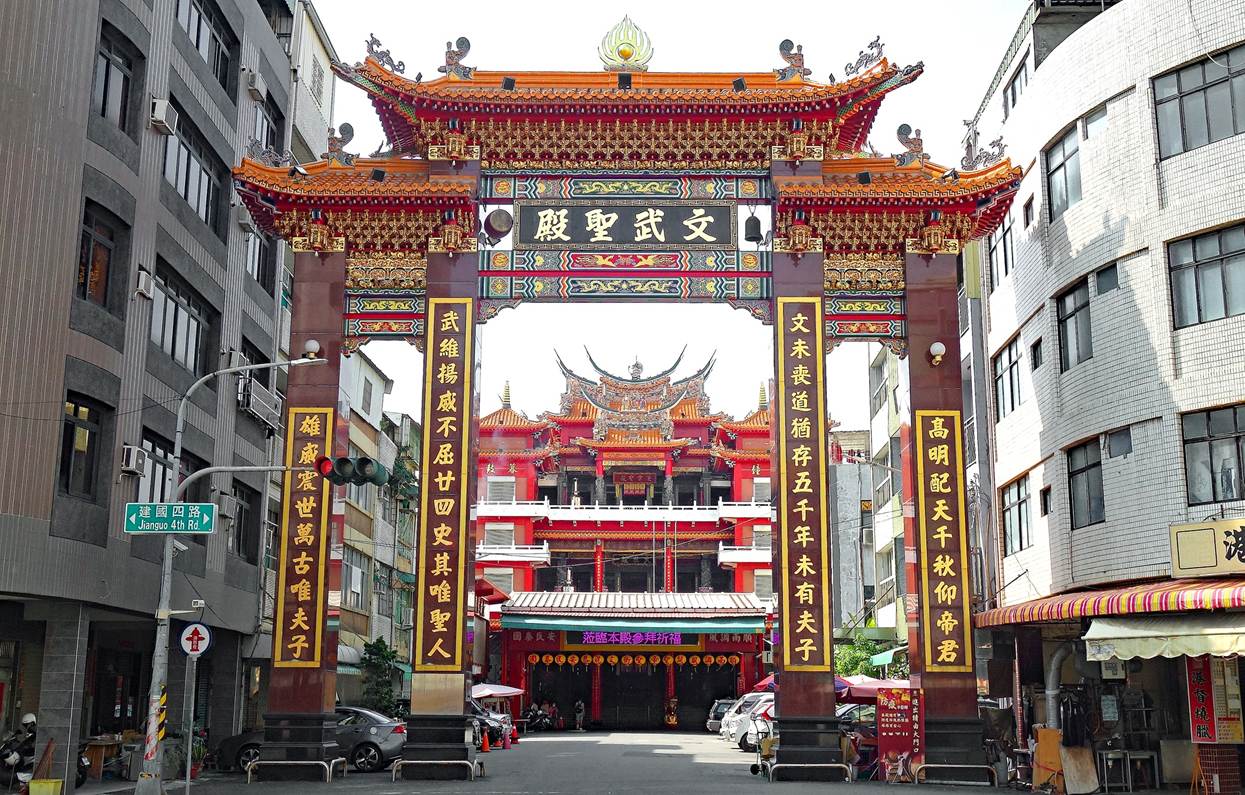
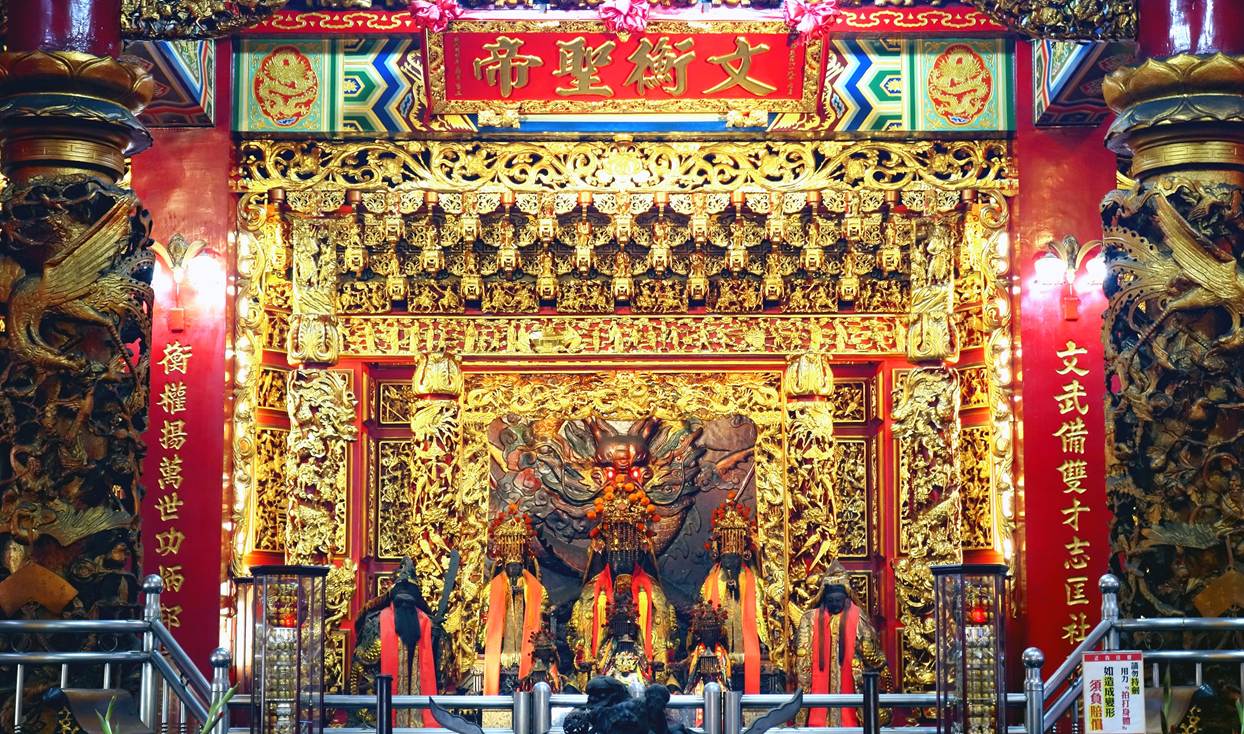
Wenwu temple (文武聖殿):
This temple is
dedicated to Wenchang, the God of Literature, and Guandi,
the God of War and Martial Arts. The term ″wenwu″
(文武) means ″literature″
(wen) and ″martial arts″ (wu).
Archway of Literature
and Martial Arts leading to the temple.
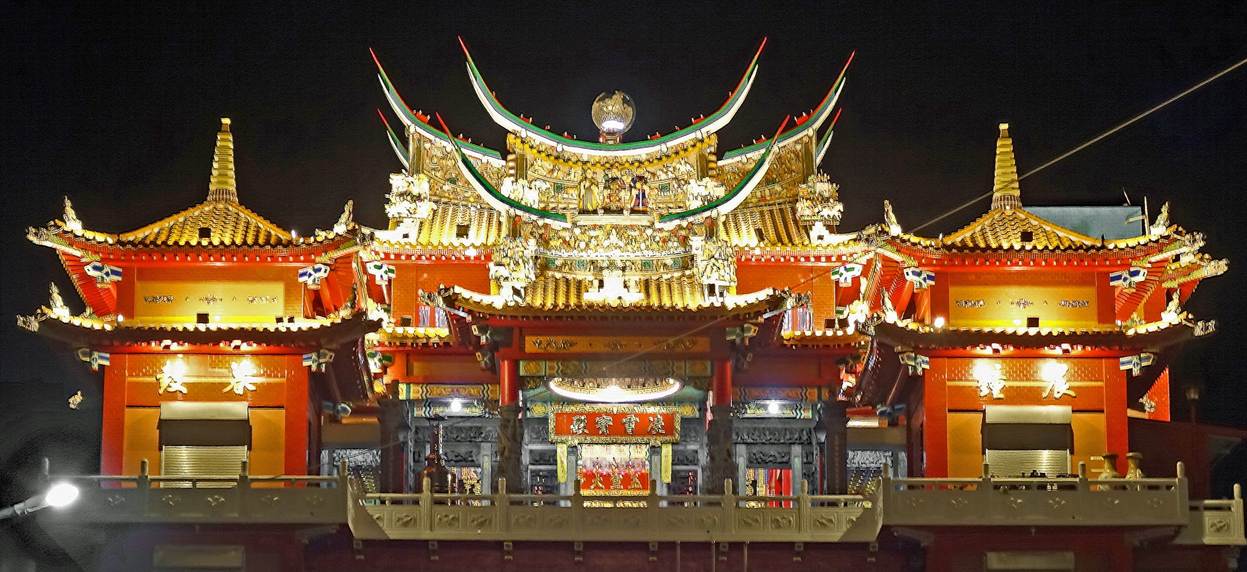
Upper part of the
temple seen at night.
Interior of the main
hall of the temple.
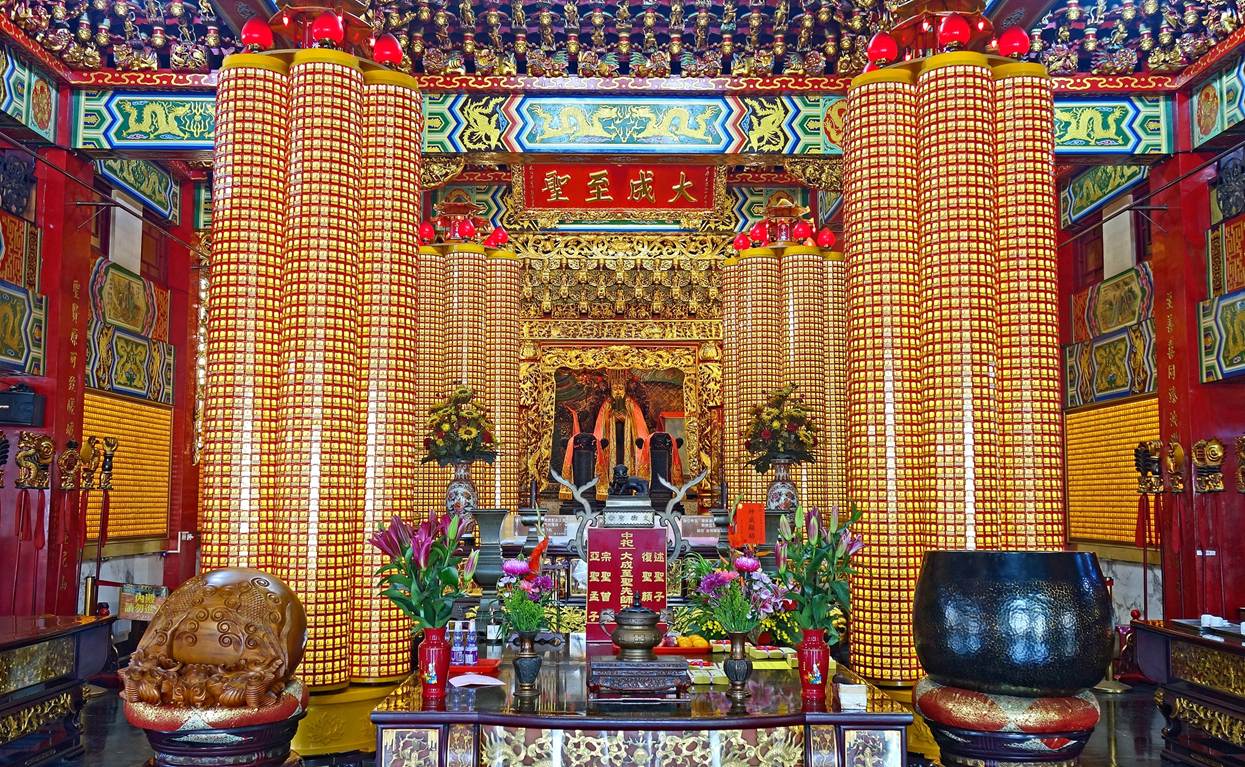
Altar featuring the
statue of Wenchang in the center.
[March 2026]
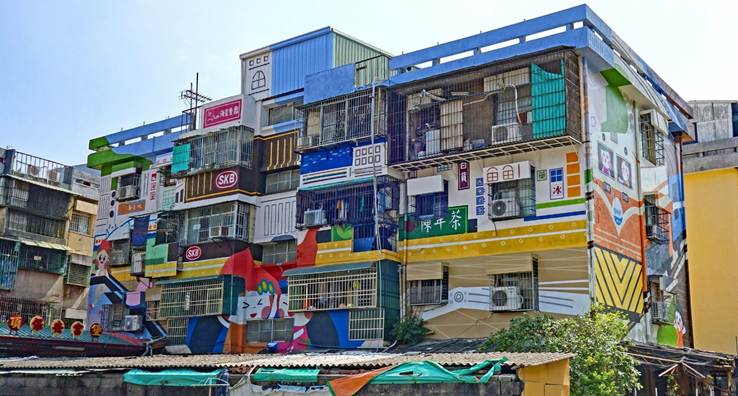
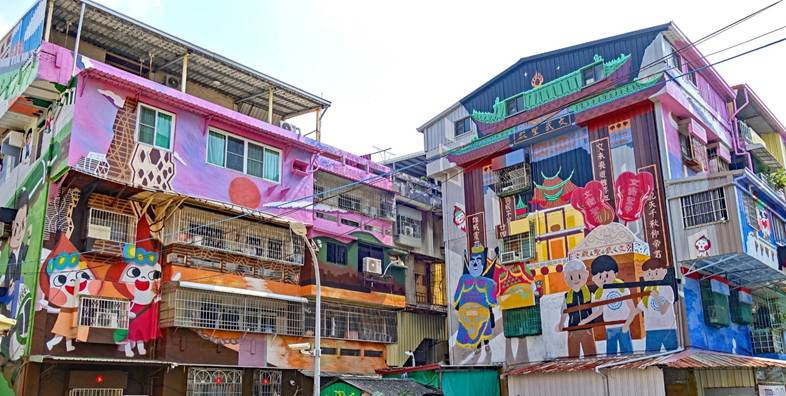
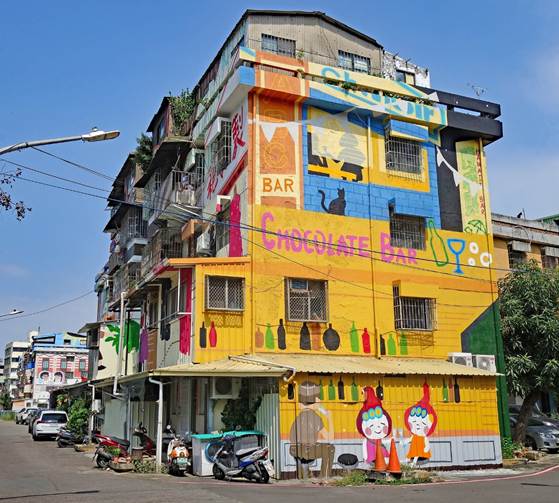
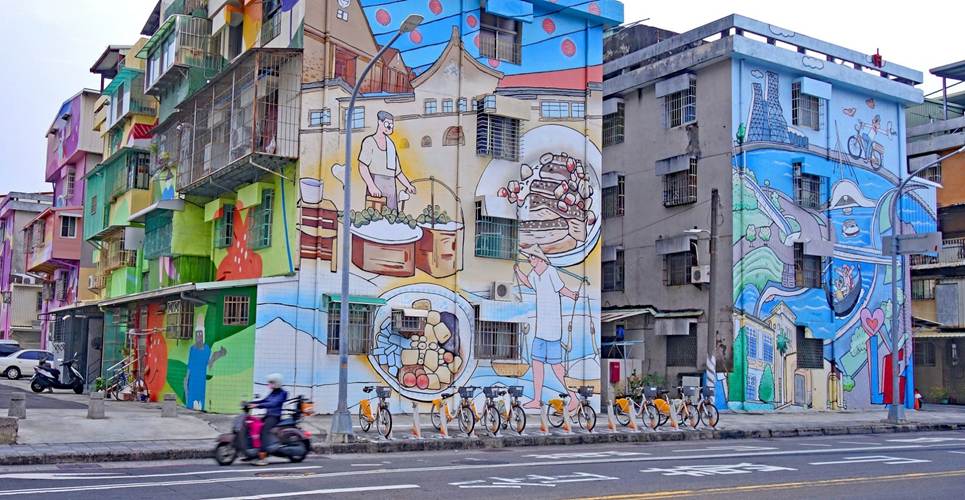
Painted
buildings of Lane 7, Beiduan Street (close to Wenwu
temple):
As I was strolling near the Wenwu temple, I passed by these buildings,
which had been painted relatively recently (less than 2 years ago). Although
another district of Kaohsiung, the WeiWu Mi Mi Village (衛武迷迷村), is better known for its painted buildings, I personally found this
site to be more authentic and interesting.
|
|
|
|
|
|
[March 2026]
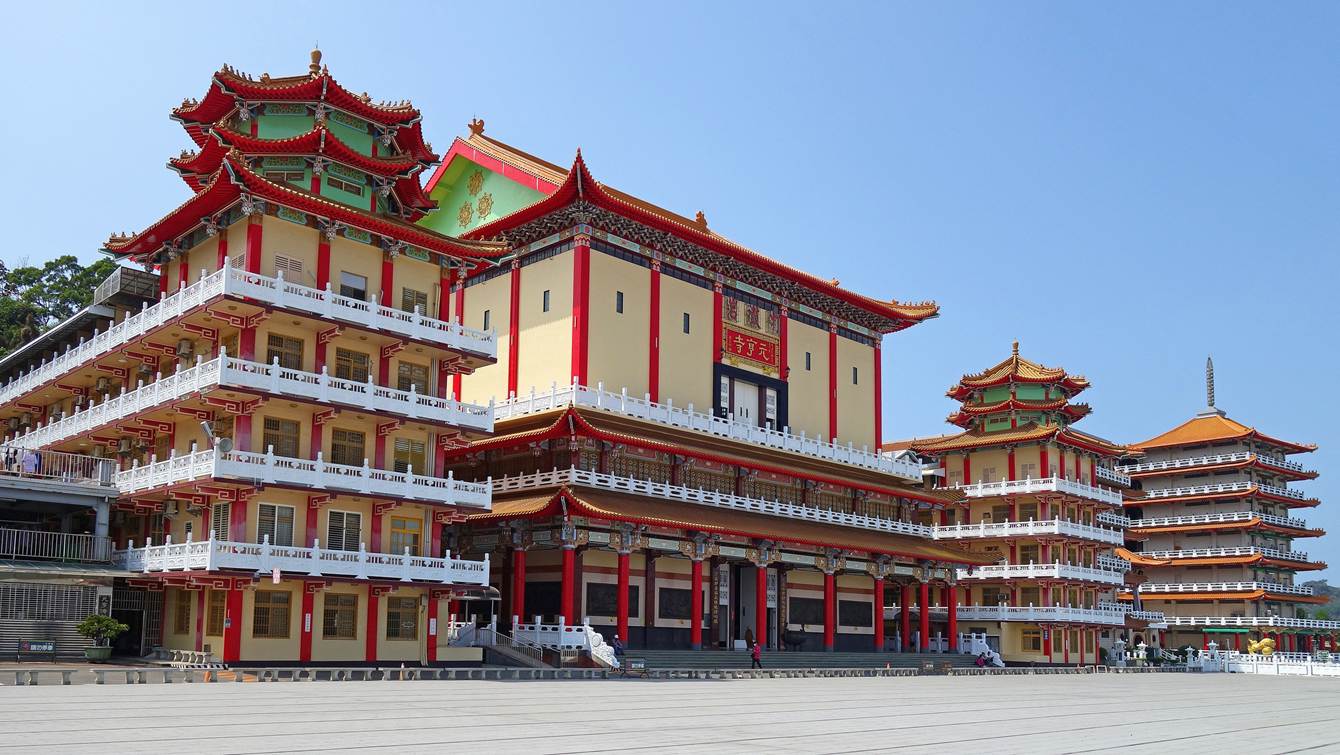
Yuanheng temple (打鼓岩元亨寺):
This temple was founded
in 1743 by the Fujianese monk Jingyuan. It was destroyed by fire in 1891 and
reconstructed at its present site at the foot of the Soushan
Mountain (壽山). I underwent another
reconstruction in 1826. A more recent, major campaign of reconstruction and
expansion began in 1973 and continued well into the 1980s.
Four of the temple's
main buildings. The Hall of Ten Thousand Buddhas stands at the center of the
photo, flanked by dwellings on its two sides. The rightmost building is the
Columbarium Pagoda, a structure designed to house funerary urns holding
cremated remains of deceased practitioners.
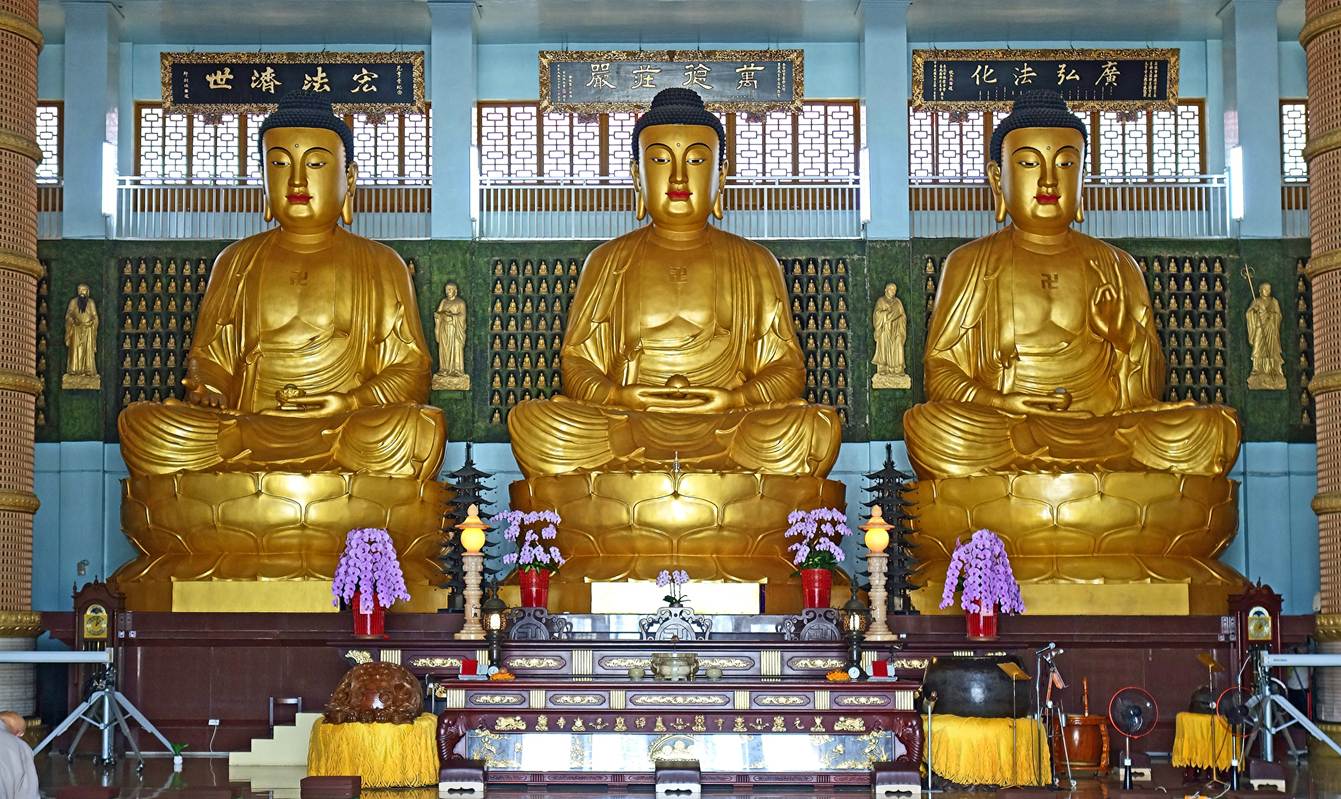
Statues in the Hall of
Ten Thousand Buddhas. They represent 3 manifestations of the Buddha. Each
statue is cast in copper, stands nearly 8 meters tall, and weighs 14 tons.
[March 2026]
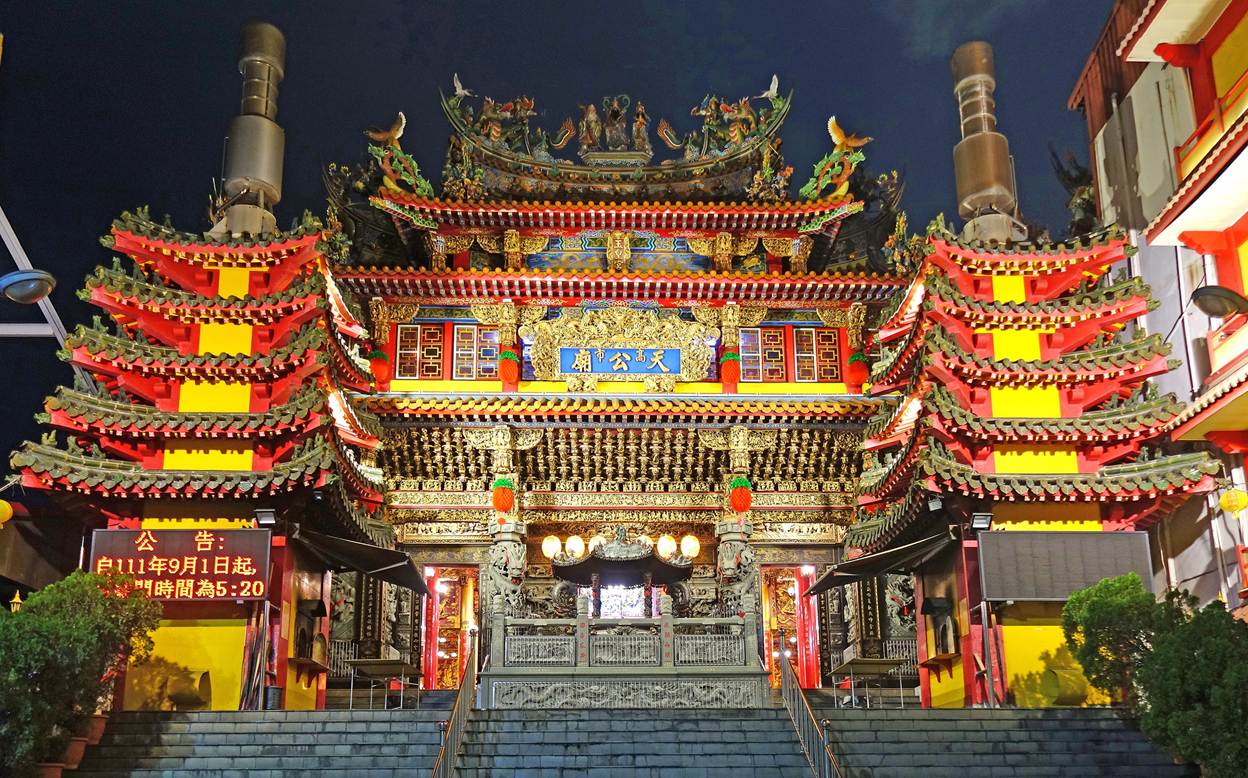
Kaohsiung Jade Emperor temple (高雄玉皇宮):
This temple was
constructed in the mid-1970s. However, its history started in 1920, when a
Kaohsiung resident acquired a Jade Emperor tablet and enshrined it in his
residence. While Kaohsiung suffered heavy casualties during World War II due to
Allied bombing, his residence remained intact. Thinking that this was due to
the protection of the Jade Emperor, believers flocked to the residence to
venerate the tablet. Subsequently, a committee was formed to acquire land and
build a proper temple. The result is truly impressive.
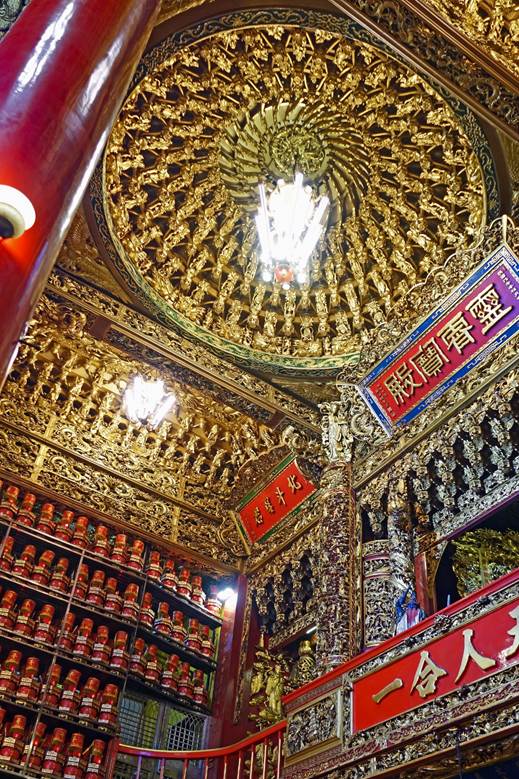
Left: Facade of the
temple seen at night. Right: Portion of the highly decorated interior and
ceiling of the temple.
|
|
|
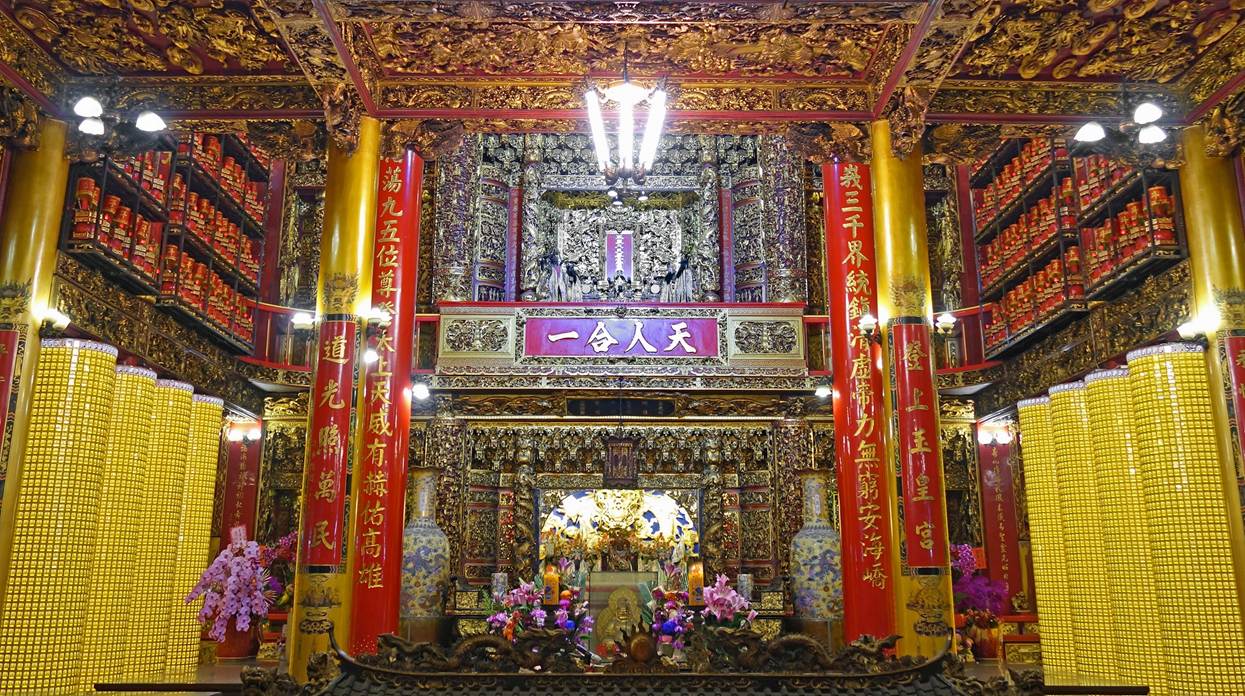
Main worship hall. The
characters on the tablet above the altar (一合人天) roughly mean ″Harmony
of Man and Heaven″.
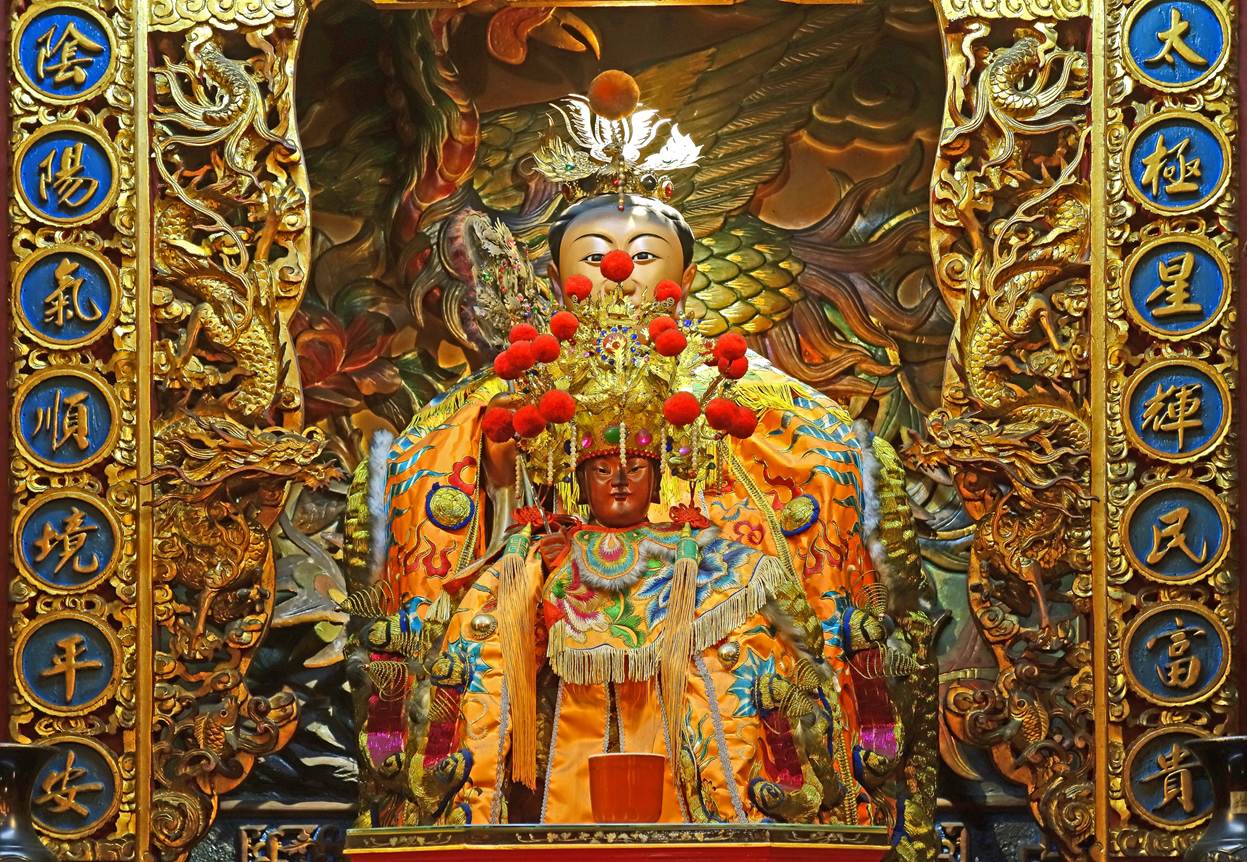
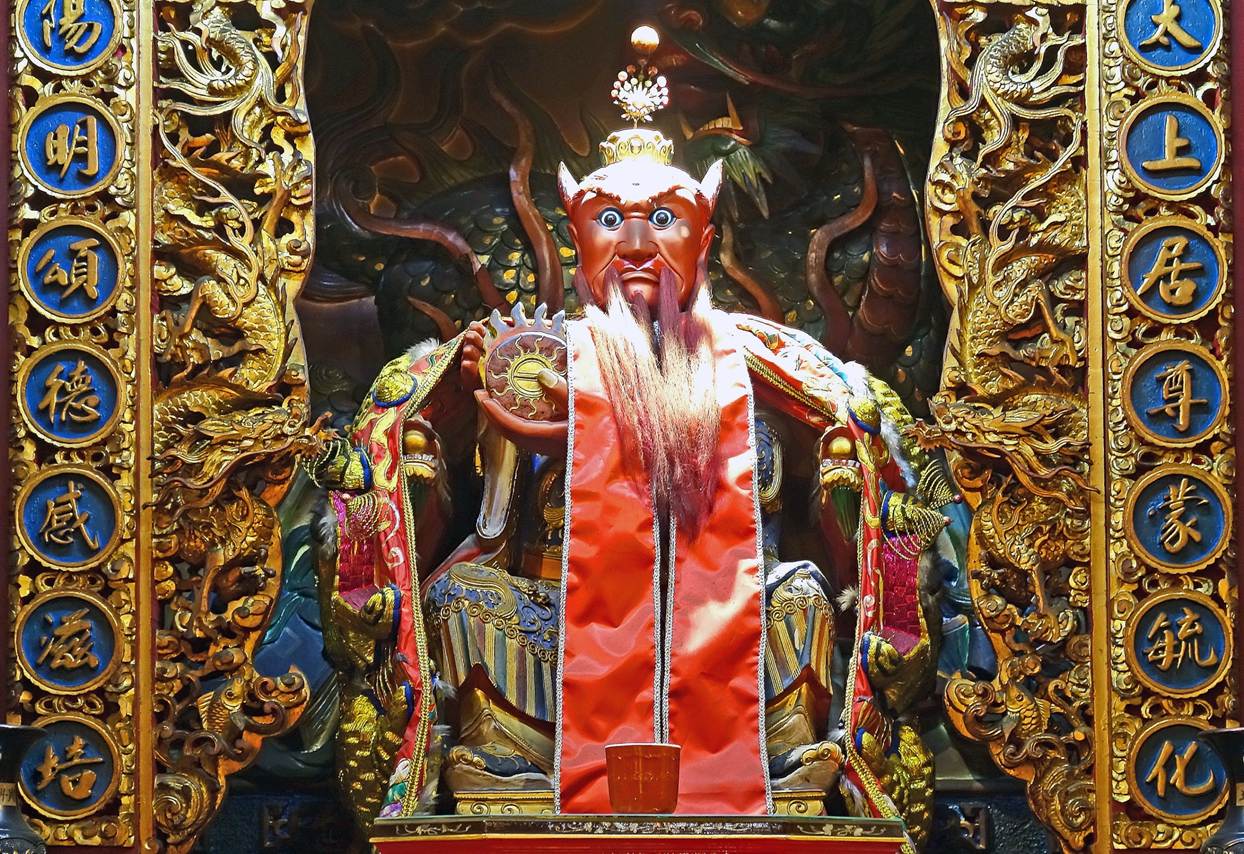
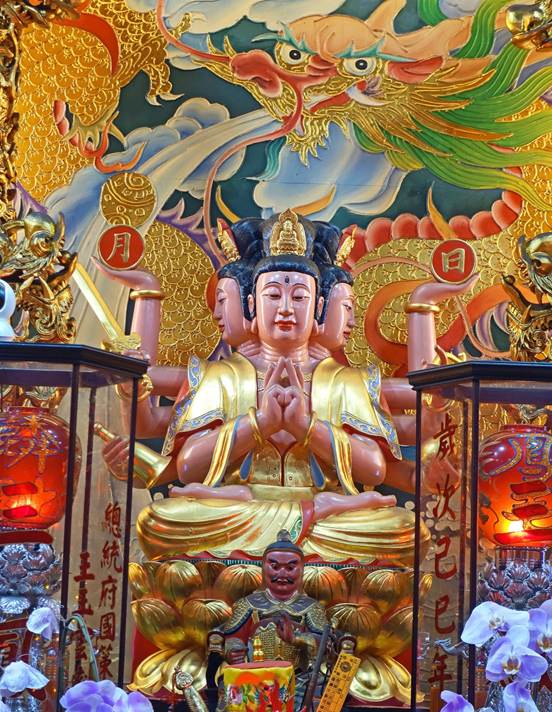
Statues of some other
deities worshiped in the temple:
- The Moon Goddess (太阴星君).
- The Sun God (太陽星君).
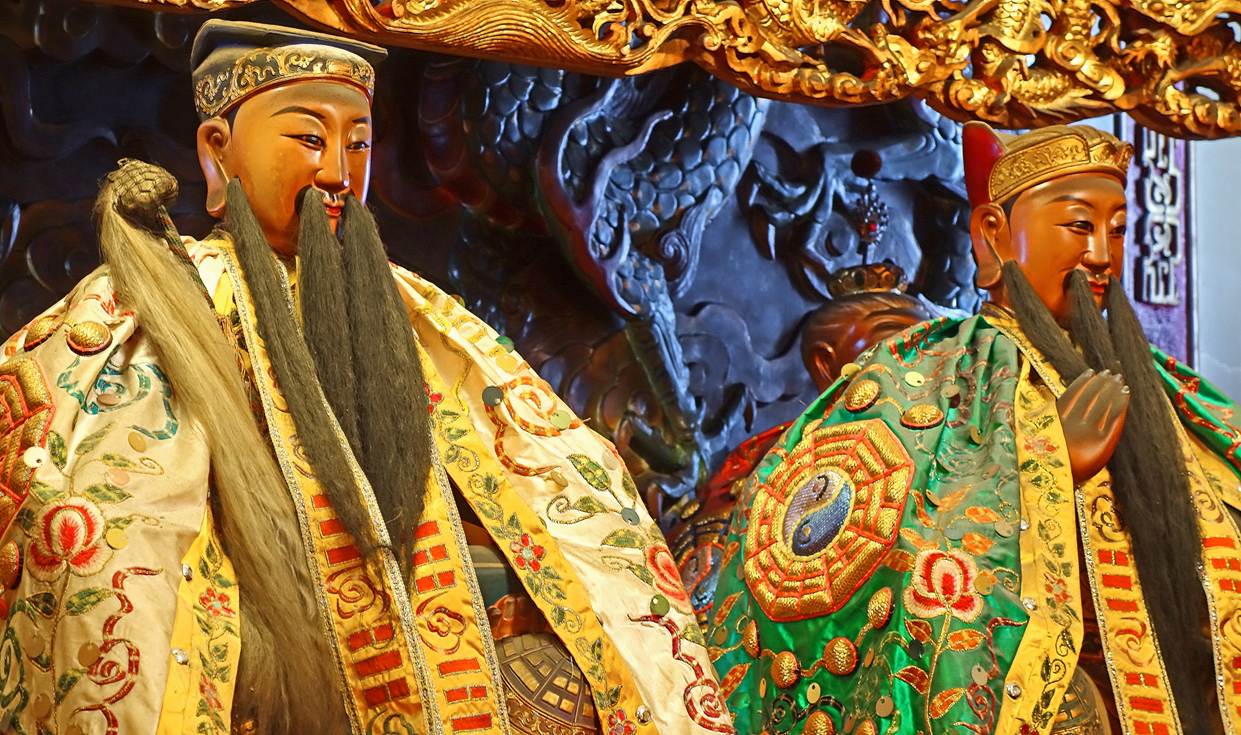
[March 2026]
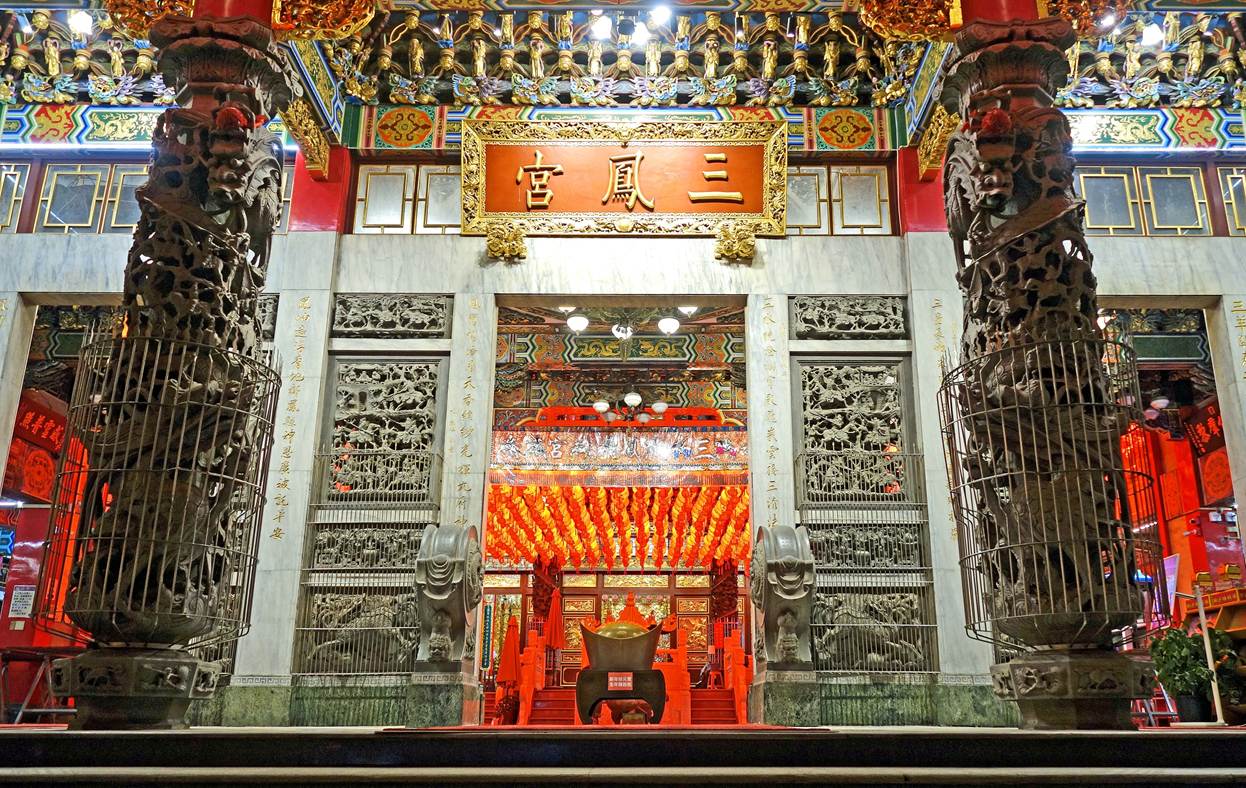
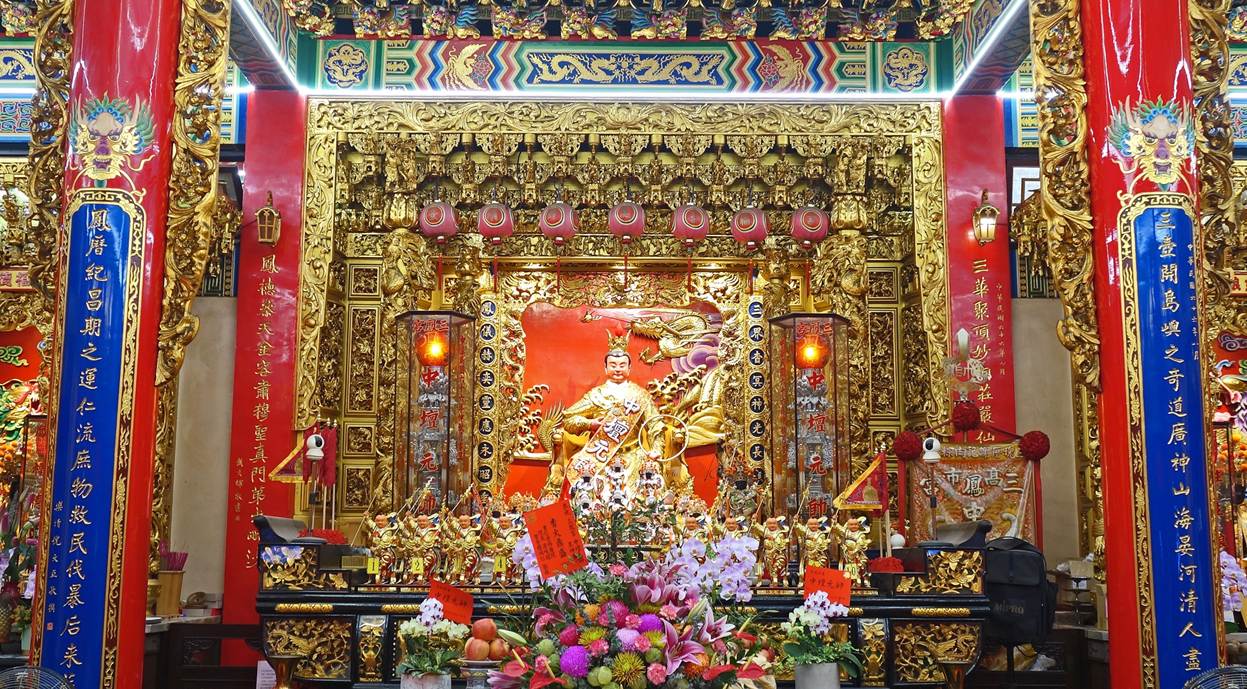
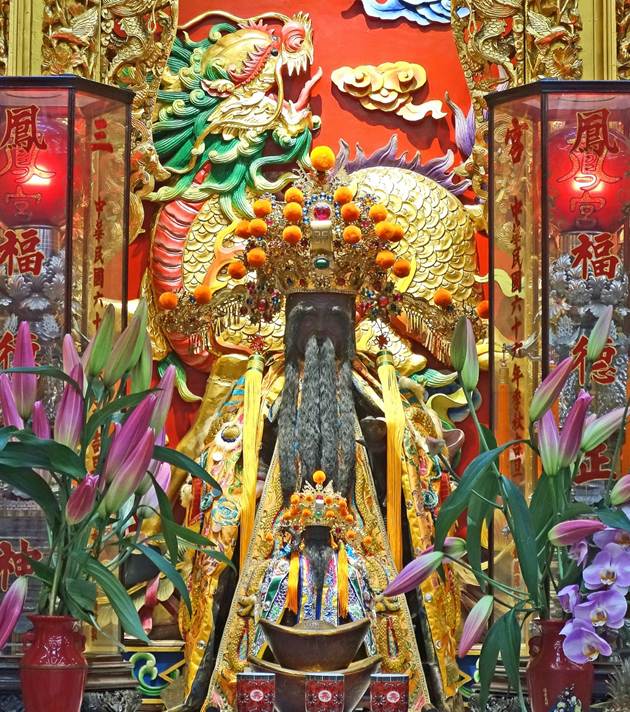
Sanfeng temple (高雄三鳳宮).
This temple is
dedicated to Li Nezha (李哪吒), a highly revered guardian deity of the Tao (the source of all existence in
Taoism). He also bears the title of ″Marshal of the Central Altar″
(中壇元帥) and commands the celestial and mortal armies of the Five Camps. Upon its founding in
1673, the temple consisted merely of a pavilion erected at a different
location. In 1971, it was relocated, and a new, much larger structure was built
at its current location. Today, it stands as the largest temple dedicated to
Nezha in Taiwan. A large number of other deities, including Buddhist figures,
are also venerated there.
Entrance to the temple.
The three characters appearing on the plaque above the door (宮鳳三) constitute the Chinese name of the
temple in left-to-right order, hence forming three columns that are
traditionally read from right-to-left.
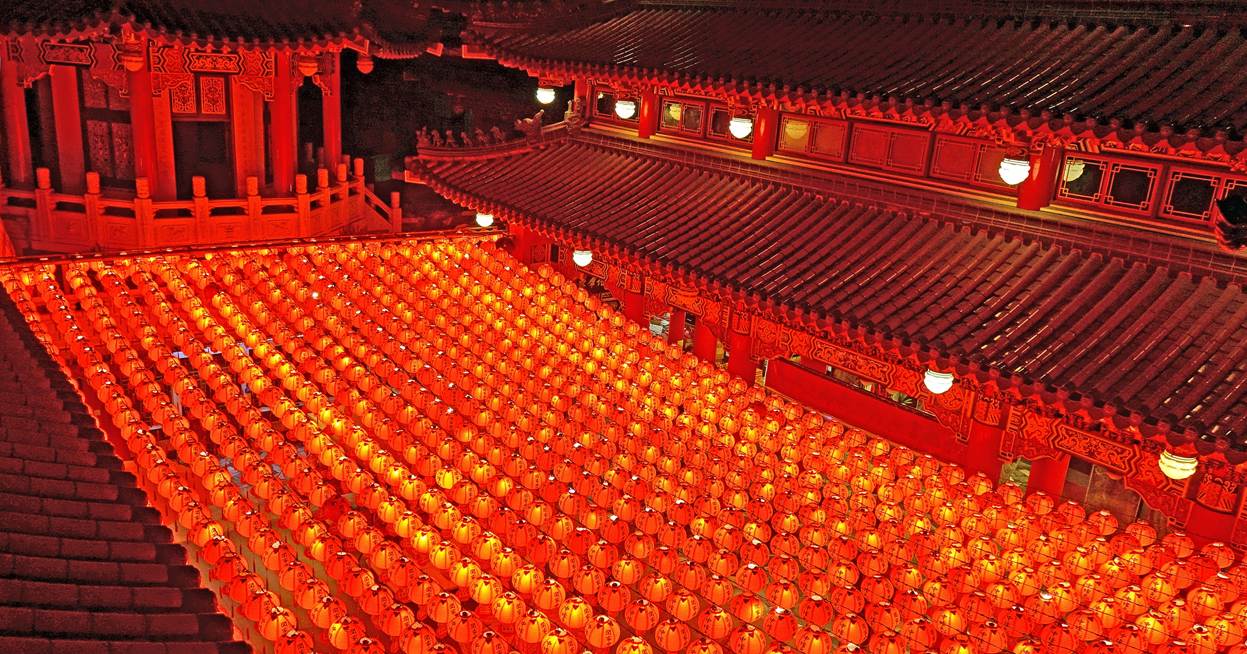
Canopy of lanterns in
the courtyard viewed from above. Inscribed on each lantern are the name of the
temple on one side and the name of a person (probably a benefactor) on the
other.
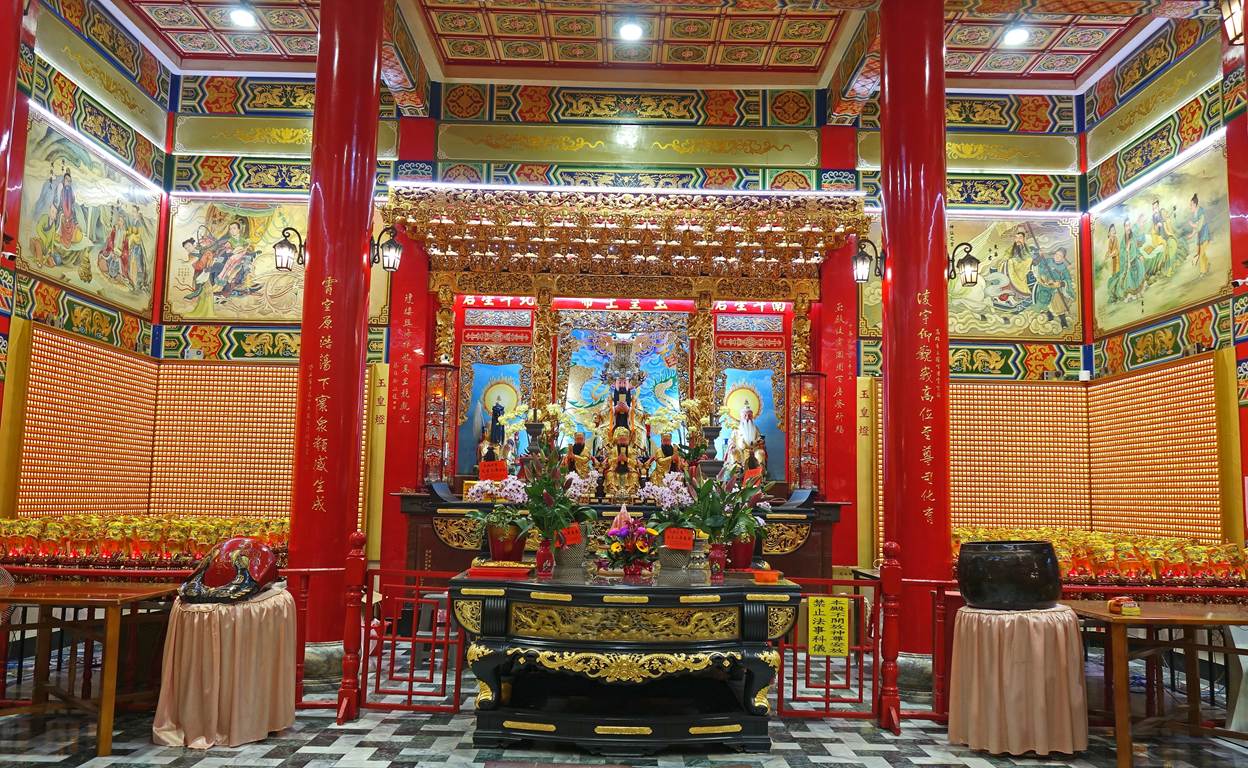
Altar dedicated to
Nezha.
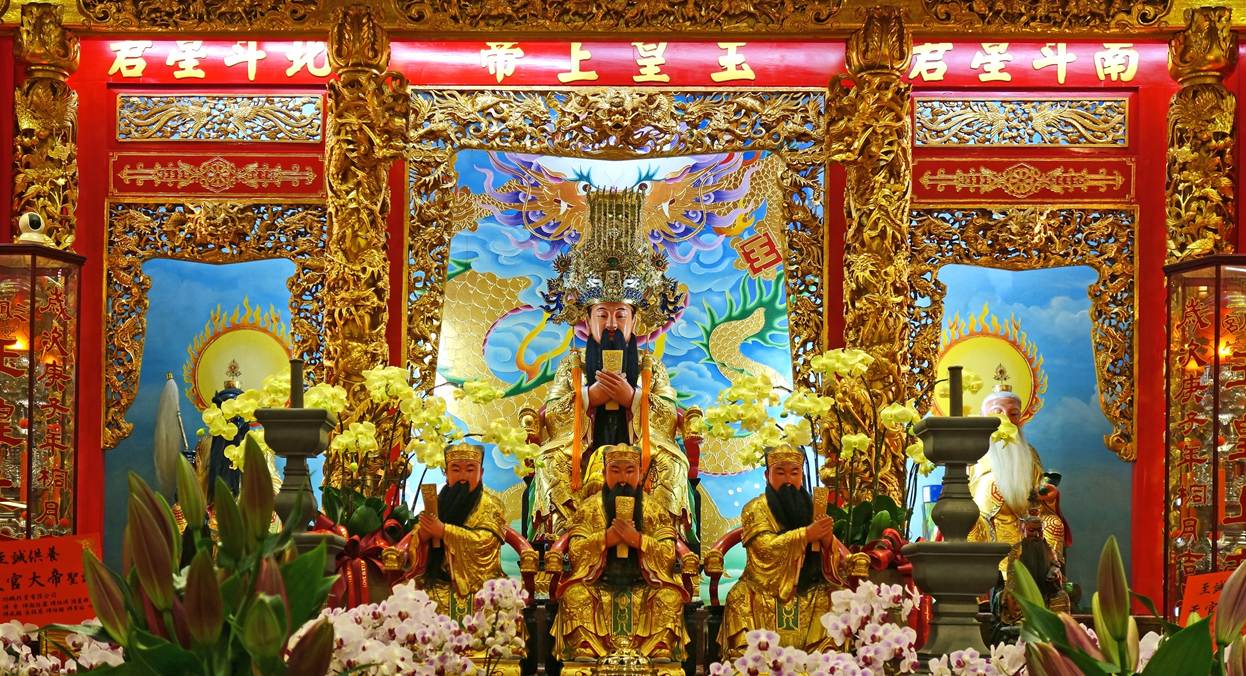
Hall and altar
dedicated to the Jade Emperor.
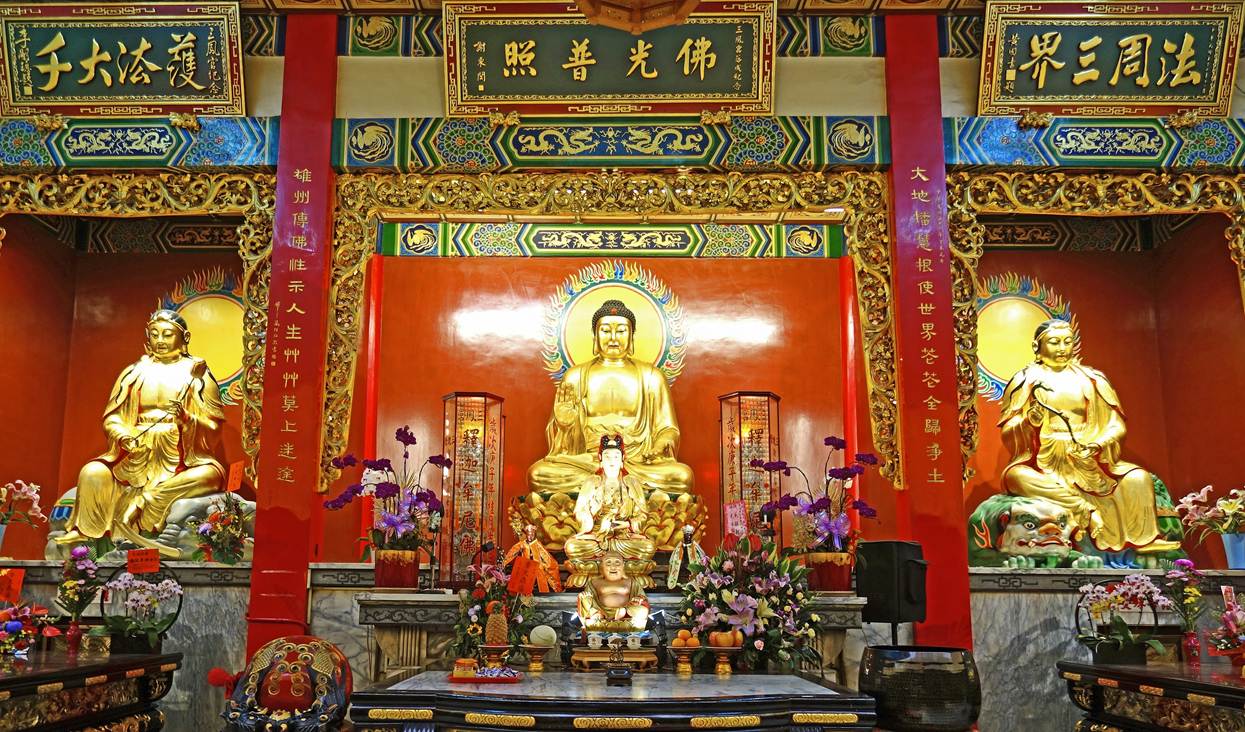
Buddhist altar.
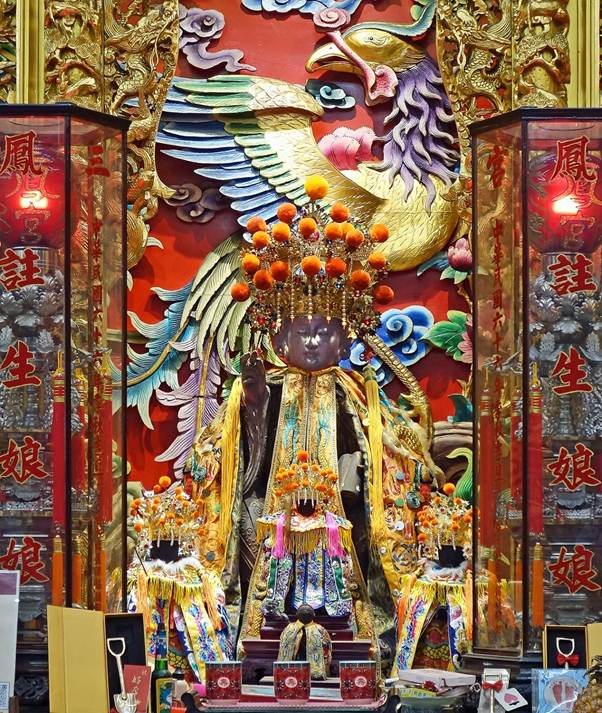
Smaller altars
featuring other deities, notably Zhu Sheng Niang Niang
(注生娘娘), the folk deity of
fertility, pregnancy, and safe childbirth (left photo), and Doumu
Yuanjun (斗姆元君), the Mother of the Big Dipper (center photo).
|
|
|
|
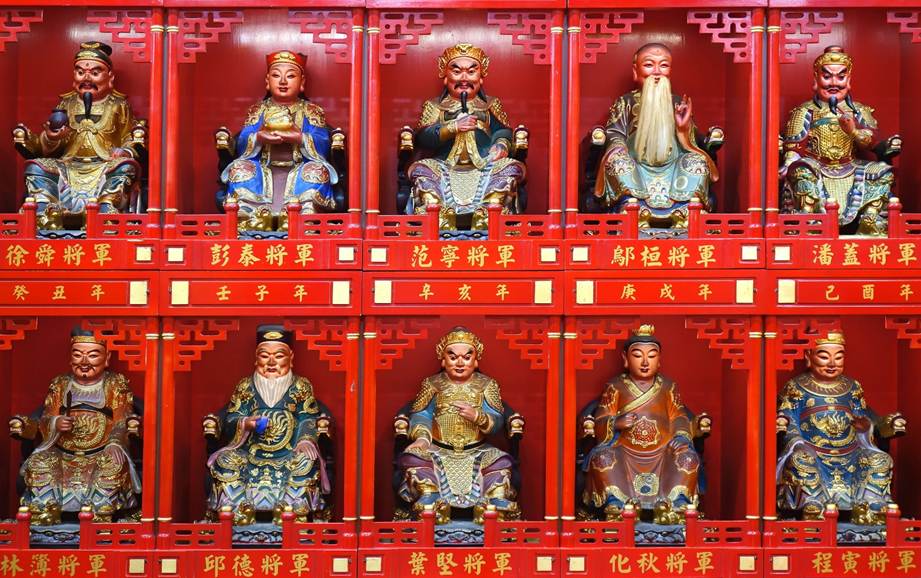
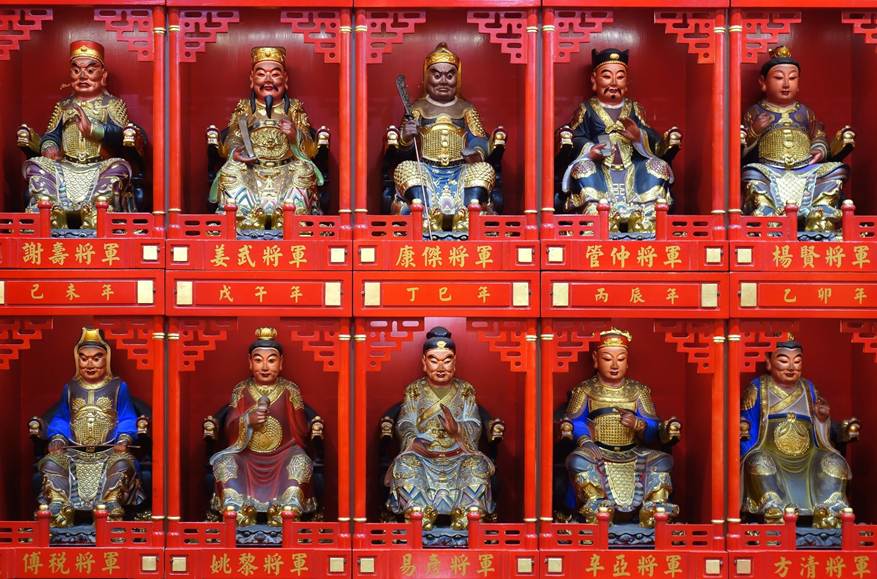
Large collection of
enshrined generals.
|
|
|
Statues of the Eighteen
Arhats (十八羅漢). The Arhats are
original disciples of Gautama Buddha who attained the ultimate stage of
enlightenment, but who, rather than liberating themselves from of earthly
desires, chose to remain on Earth to protect the Buddhist teachings while
awaiting the coming of Maitreya, the prophesied future Buddha.
|
|
|
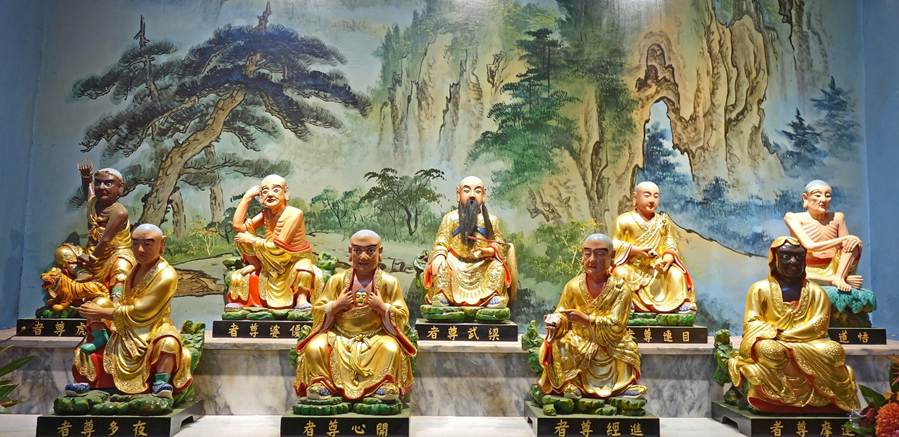
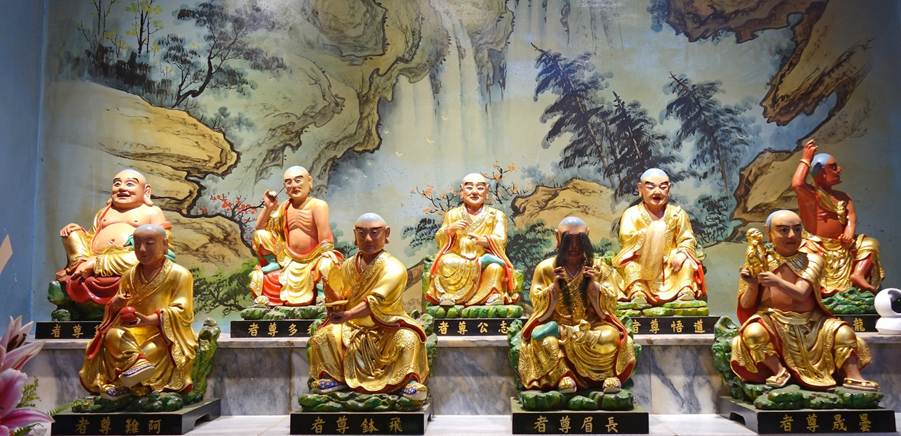
[March 2026]
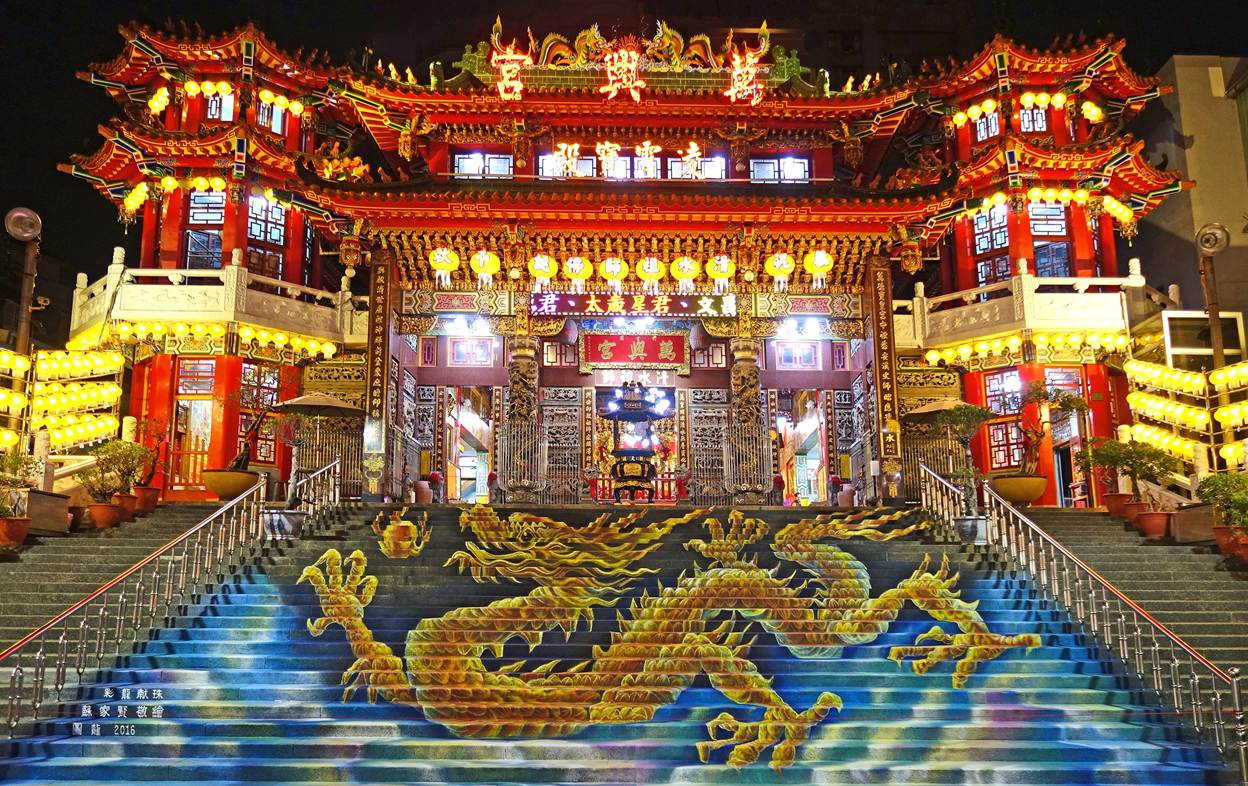
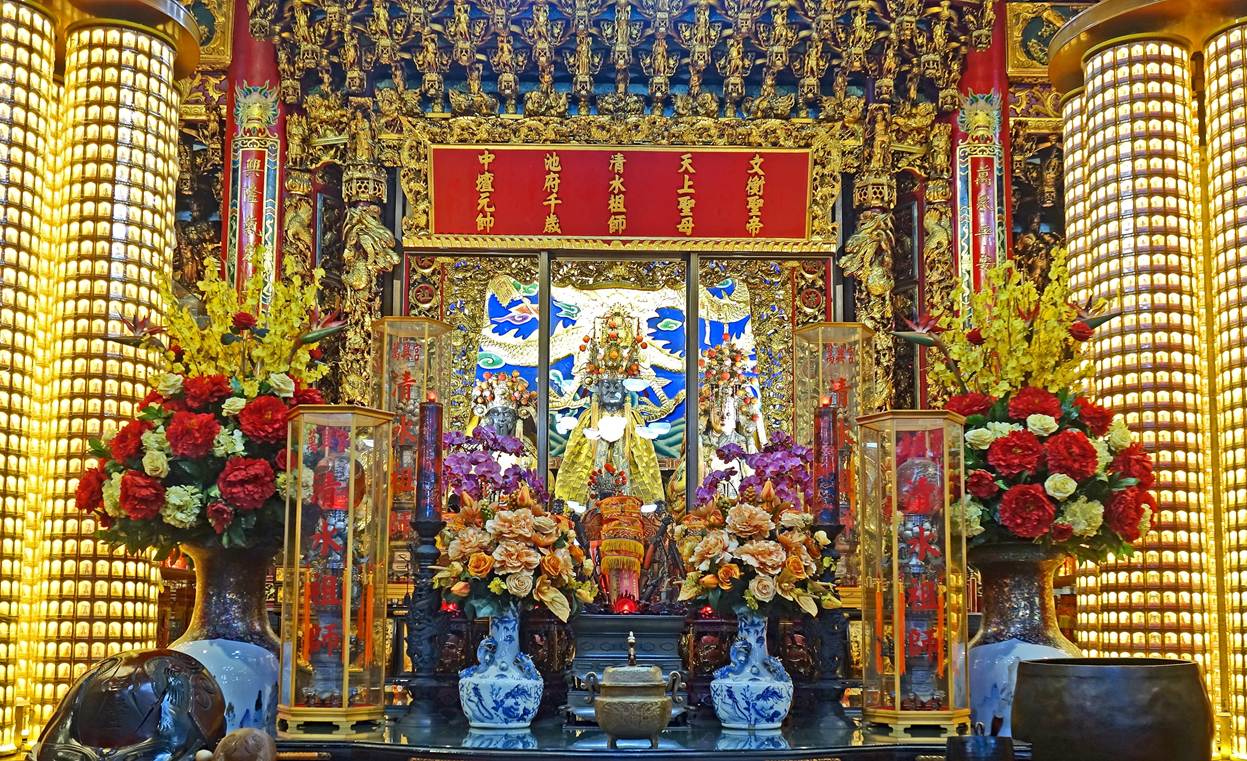
Qianjin Wanxing temple (前金萬興宮):
The temple was originally
built in 1747. In 1973 it was completely rebuilt in 1973 and renovated again in
2024. It is dedicated to Master Qingshui (清水祖師).
Born in the Anxi county
of the Fujian province of China, Master Qingshui
(1047-1101) was a Buddhist monk who became a local hero for saving the
population from starvation during a drought. After his death, he was deified in
the local folk religion. His cult was later brought to Taiwan by immigrants
from the Anxi county. Several temples in Taiwan are dedicated to him. As
usual, the temple venerates a number of other secondary deities. As previously
mentioned, it rotates the worship of
the Sun God (太阳星君) with two other local temples: the Yancheng Sanshan
Guowang temple and the Yanchengpu
Soushan temple (鹽埕埔壽山宮).
Staircase adorned with
a painted dragon and facade of the temple, seen at night.
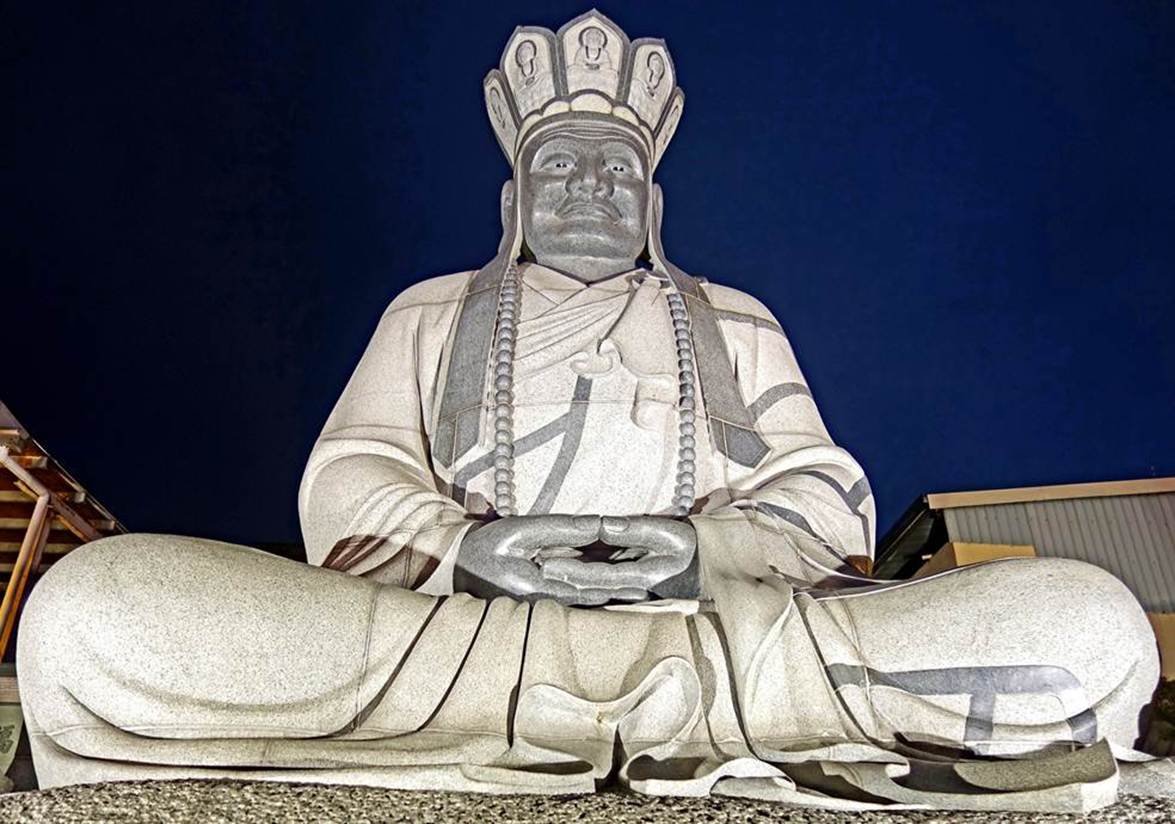
Six-meter-tall statue of Qingshi Zhushiye, seated in a Buddha-like posture on the roof of a
smaller building next to the main building.
Main altar featuring Qingshi Zhushiye in the
center and other deities on the sides.
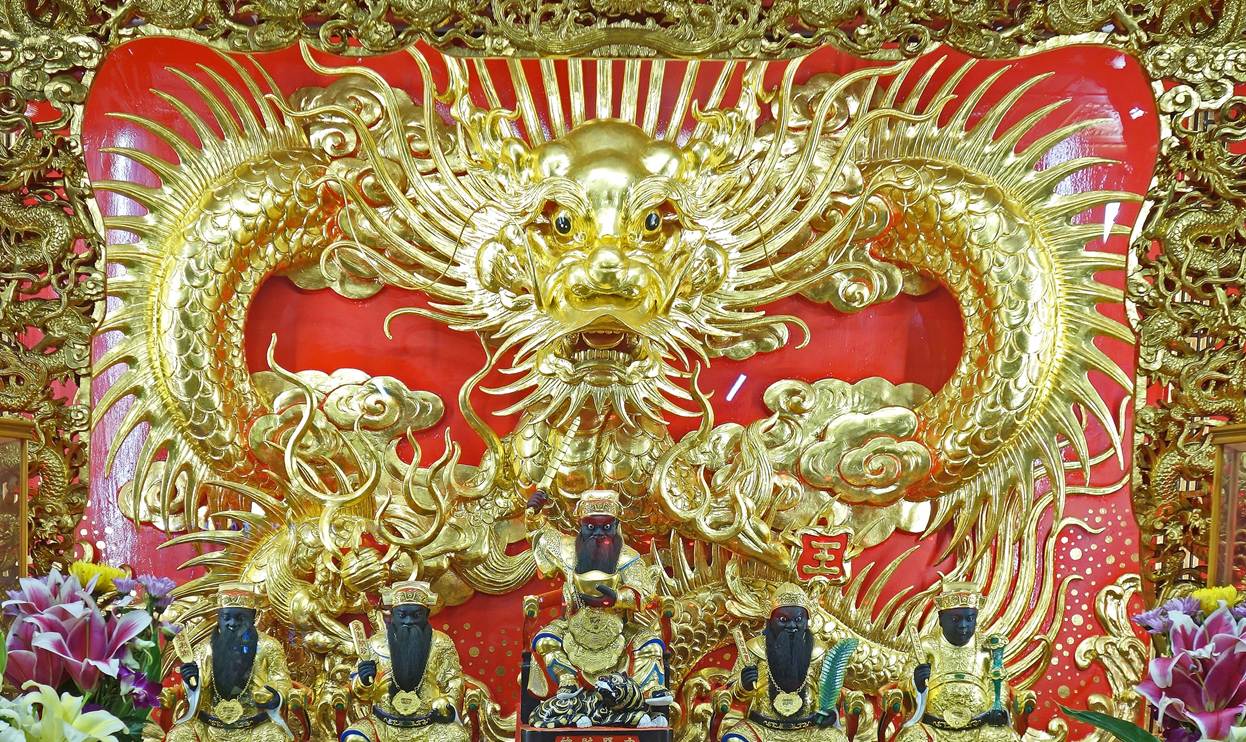
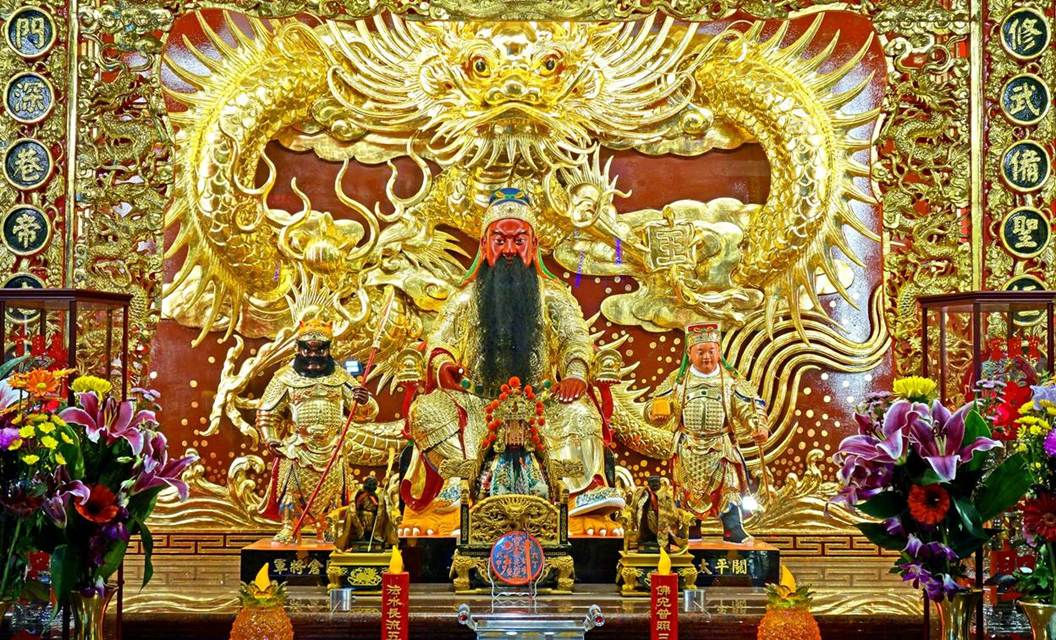
Altar in the Hall of the Five Gods of Wealth, with a magnificent golden
dragon in the background. The god at the center is Zhao Gongming
(趙公明). Together the five gods symbolize wealth gathered from all directions
(East, South, West, North, and Center).
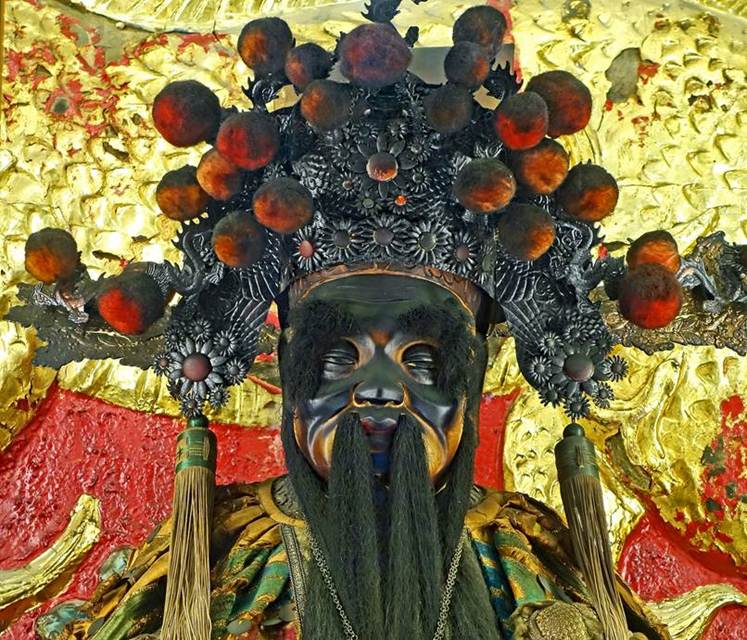
Other deities in the temple.
|
|
|
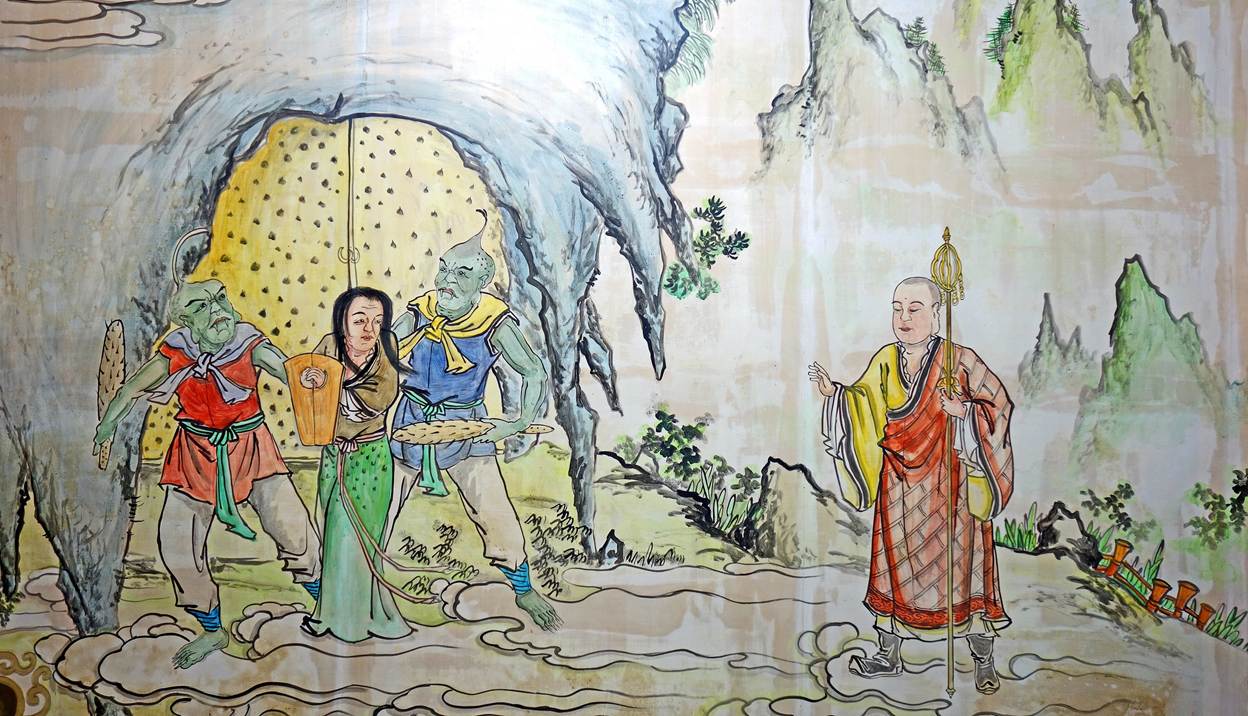
Painting on a wall of the temple. It may have been inspired by a scene
from the 16th-century Chinese novel ″Journey to the West″, in which
the Buddhist monk Xuanzang encounters demons who have captured a woman.
[March 2026]
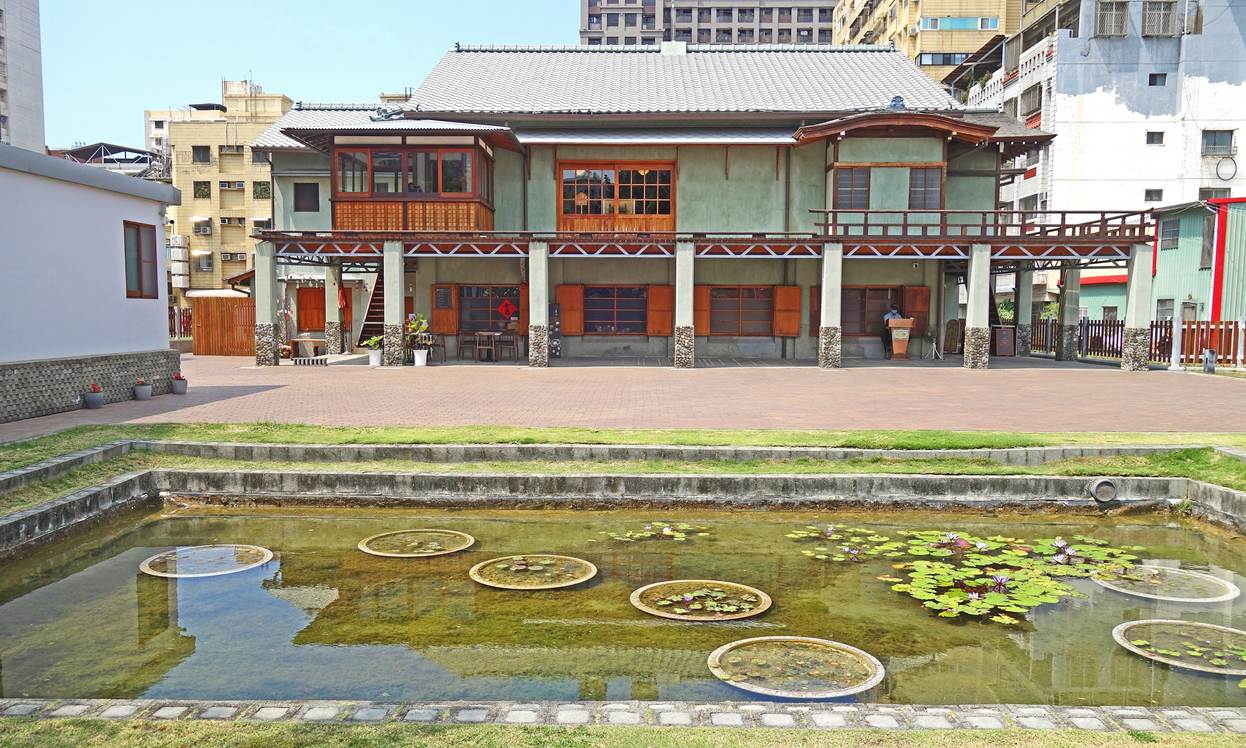
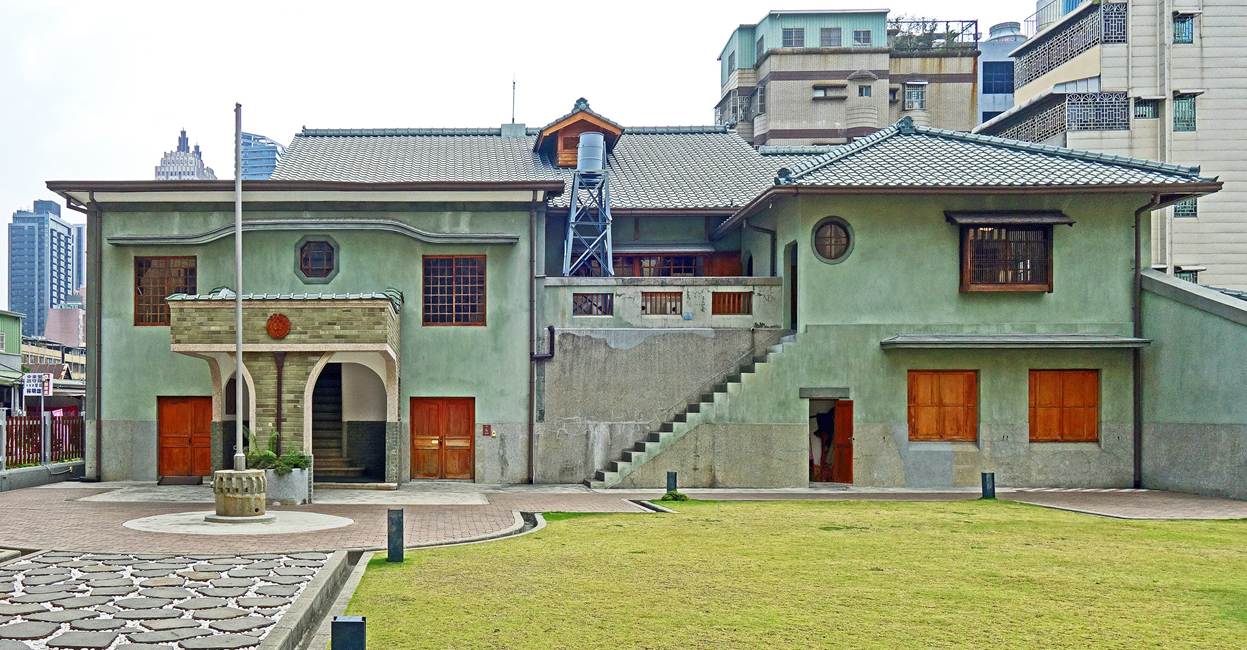
Shoyoen (逍遙園):
This house was built in
1940 to serve as a winter residence of Otani Kozui,
the 22nd abbot of the Nishi Hongwanji Buddhist temple in Kyoto. Restored
between 2017 and 2020, it offers an elegant blend of Japanese and Western
architectural styles. Its visit sheds light on the little-known, but unusual,
life of its part-time resident. Before becoming a prominent abbot, Otani Kozui (1876-1948) was an explorer. In the early 1900s he
led the first expeditions to Buddhist sites in the Taklamakan Desert to study
the transmission of Buddhism into China. He became a member of the Royal
Geographical Society and authored several books. In all likelihood, he also
served as a spy for the Japanese Empire.
The two facades of the Shoyoen, with their distinctive light olive-green walls.
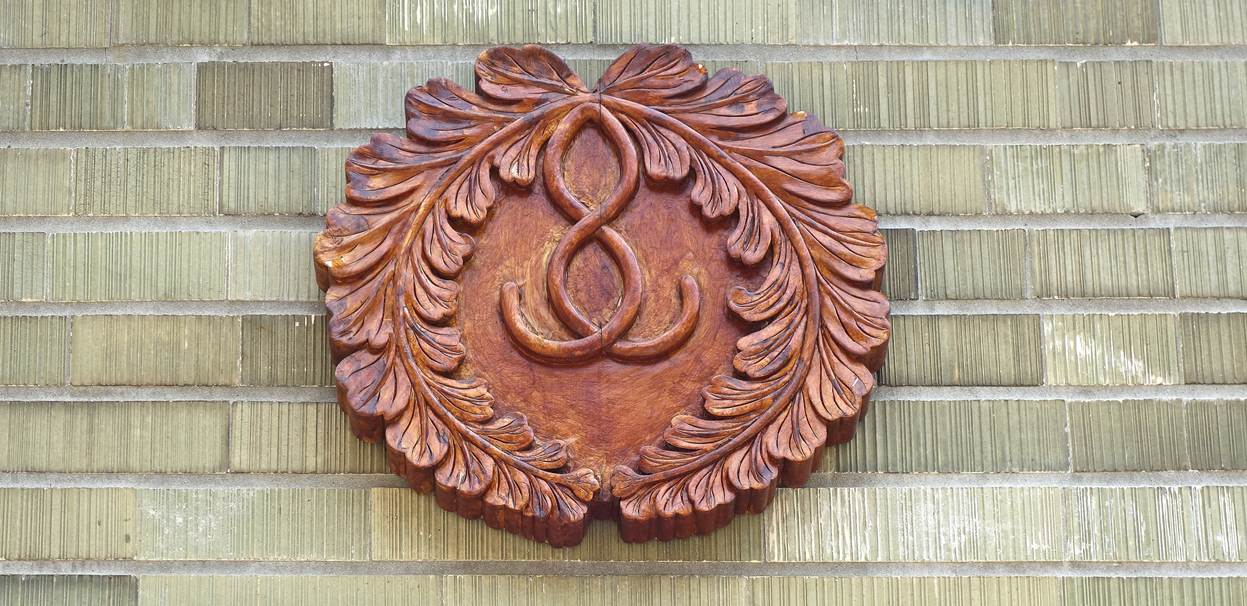
Mon (emblem of a
Japanese clan) of the Otani family. It is visible on the entrance porch in the
photo above.
[March 2026]
Kaohsiung Guandi
temple (高雄關帝廟):
The main deity of this
temple is Guangong (″Lord Guan″),
also known as Guandi (″Emperor Guan″), a
deified Chinese general named Guanyu who lived in the late 2nd and early 3rd
centuries. He was later deified as Guangong/Guandi for his integrity and loyalty. He is worshiped
as a god of war, wealth, and loyalty in Taoism, Confucianism, and Chinese
Buddhism. The founding date of the temple is unknown. The current structure is
the result of a full reconstruction in the late 20th and early 21th centuries.
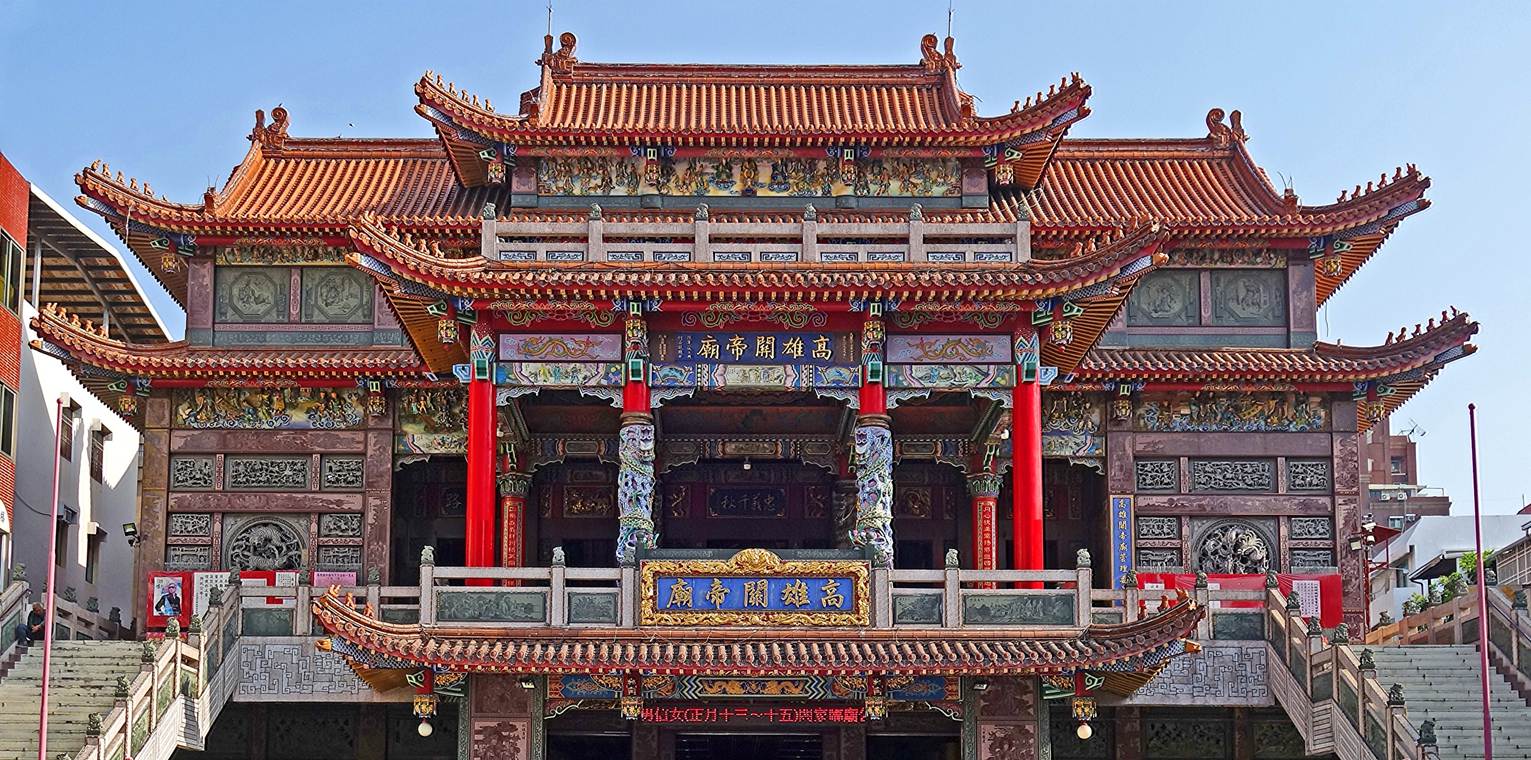
Facade of the temple.
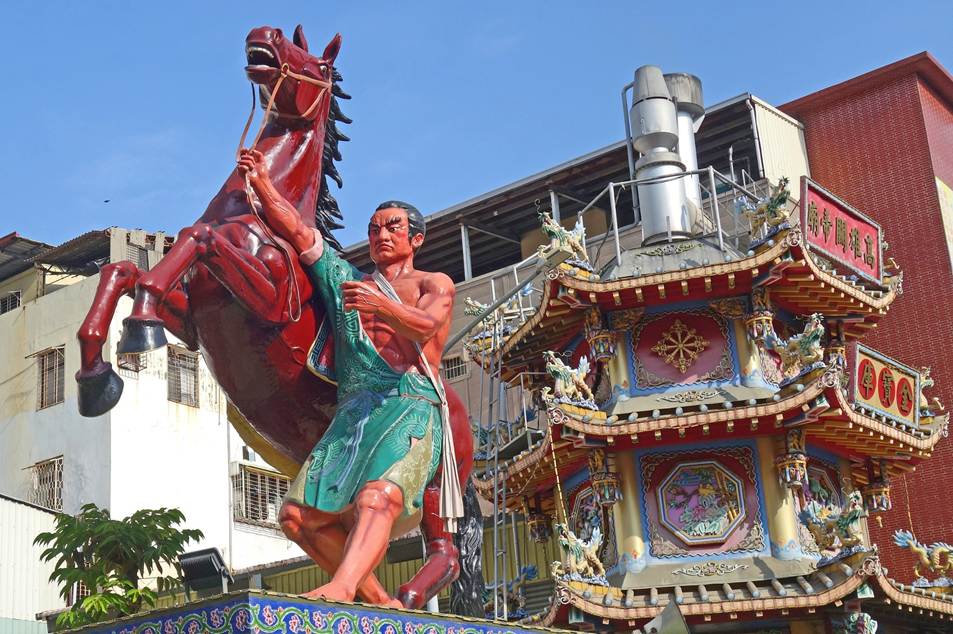
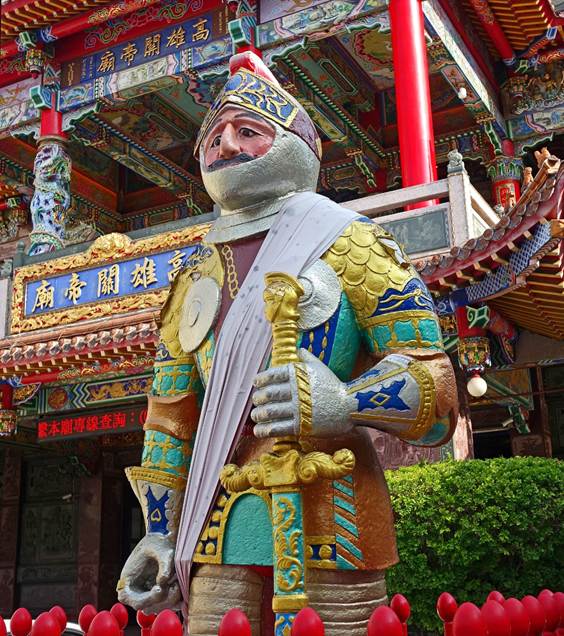
Statues in front of the
temple. Left: Guanyu with his mount, Red Hare (Chi Tu). Right: One of the two ″Roman
warrior″ guardians of the temple, an unusual sight in Taiwan.
|
|
|
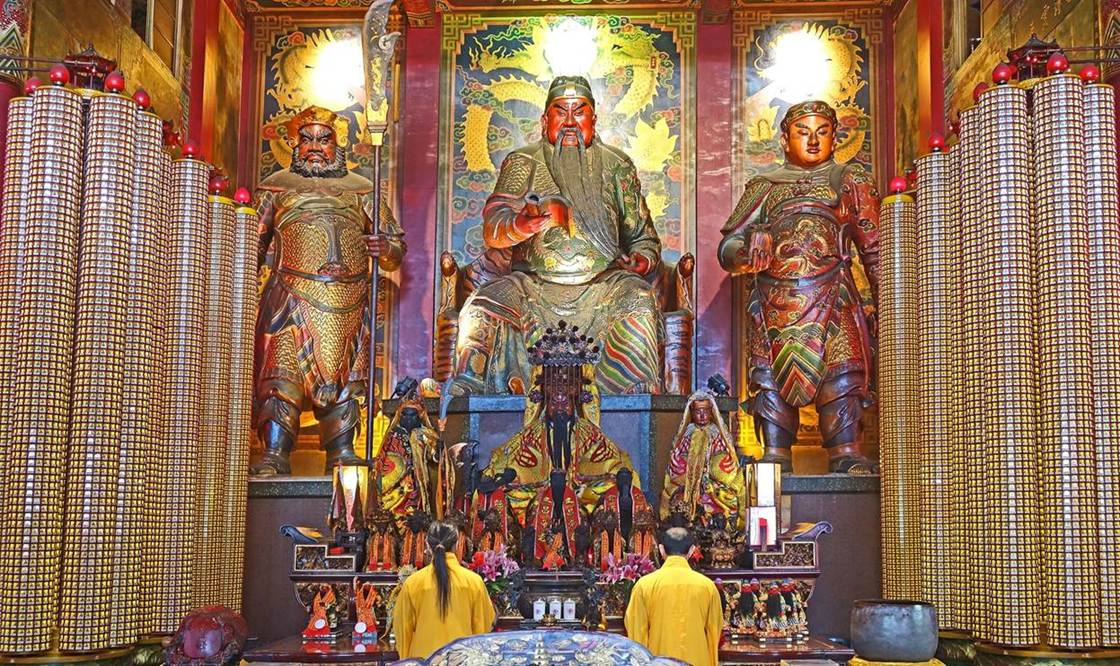
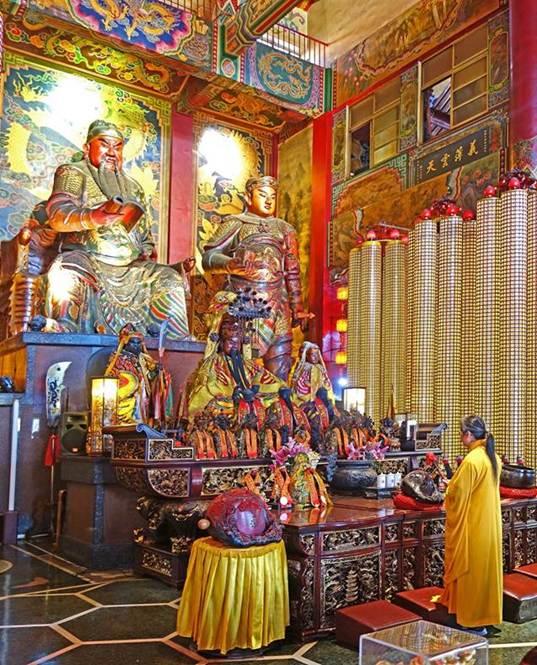
Main hall. The tallest
statue, in the center of the photo on the left, is that of Guandi.
|
|
|
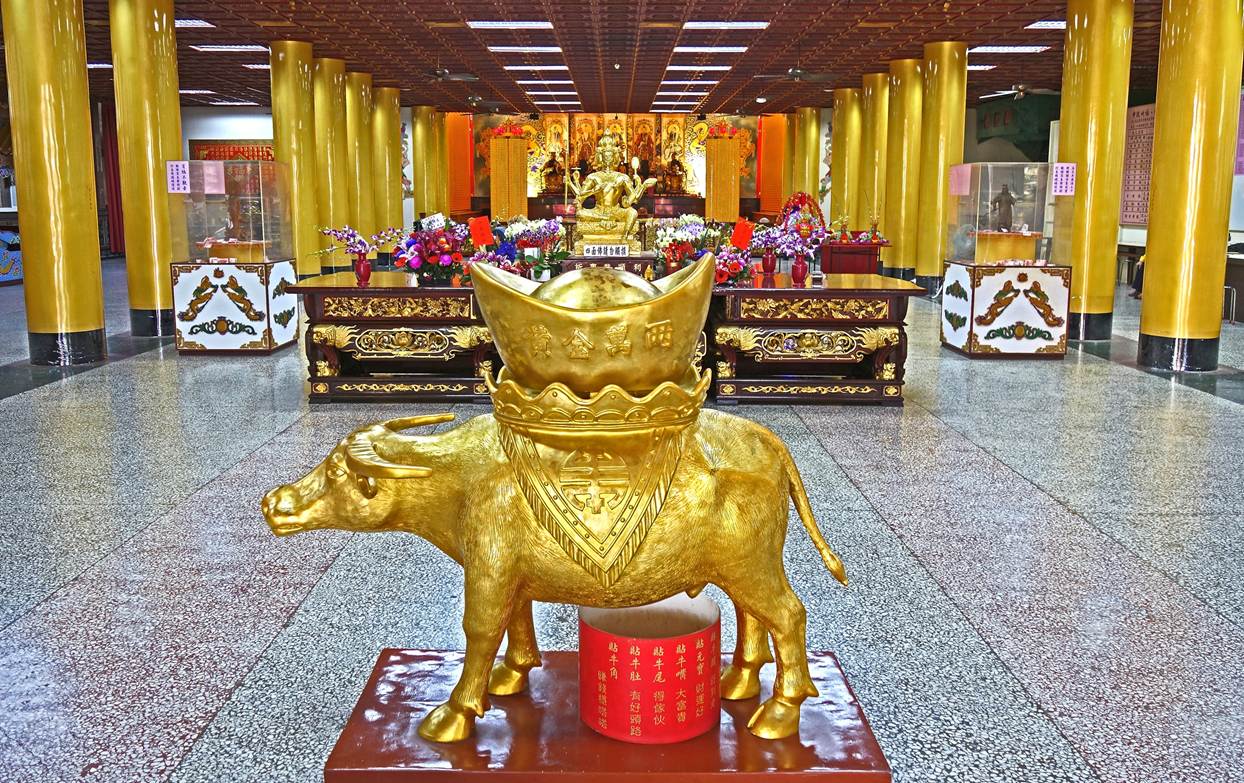
God of Wealth Hall,
with the Golden Ox in the forefront, the Four-Faced Buddha behind it (worshiped
for career, marriage, wealth, and health), and the altar of the Five Gods of
Wealth (in the background.
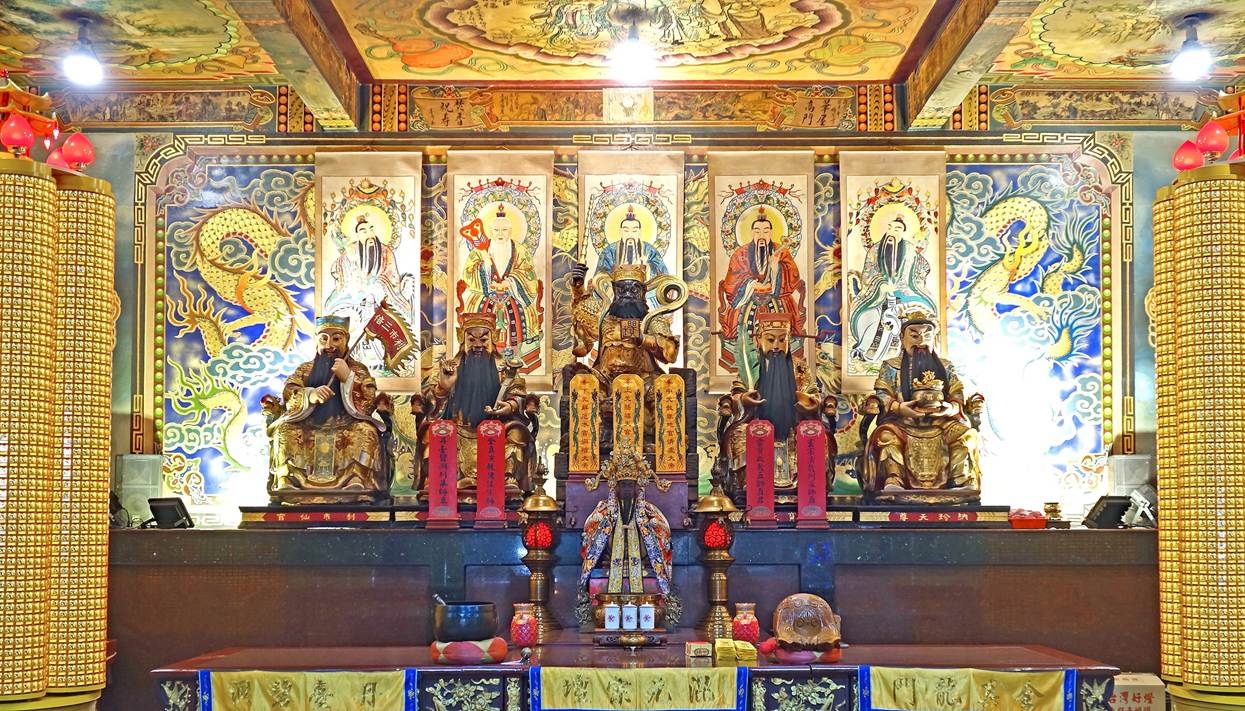
A better view of the
altar of the Five Gods of Wealth (East,
South, West, North, and Center).
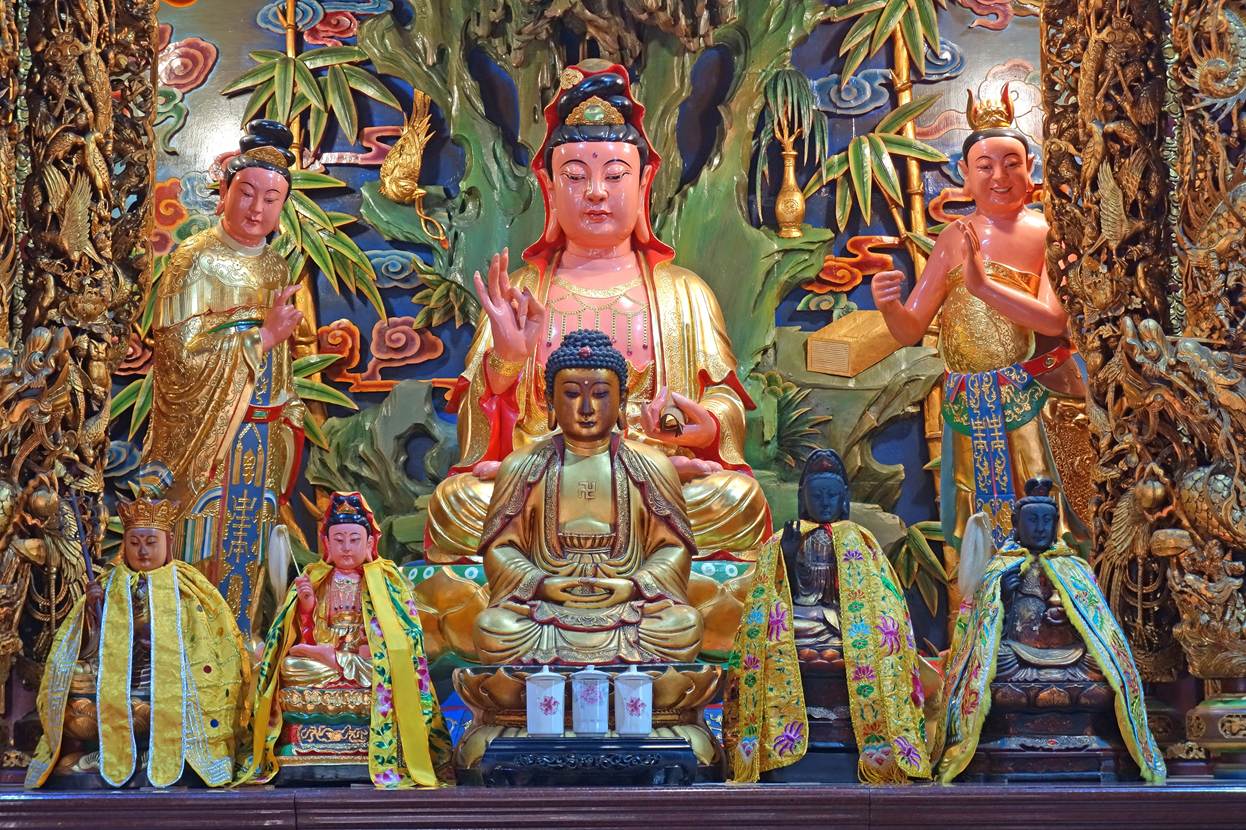
Altar in the Yuantong Hall, a hall dedicated to Guanyin (the Bodhisattva
of Compassion). The large statue represents Guanyin.
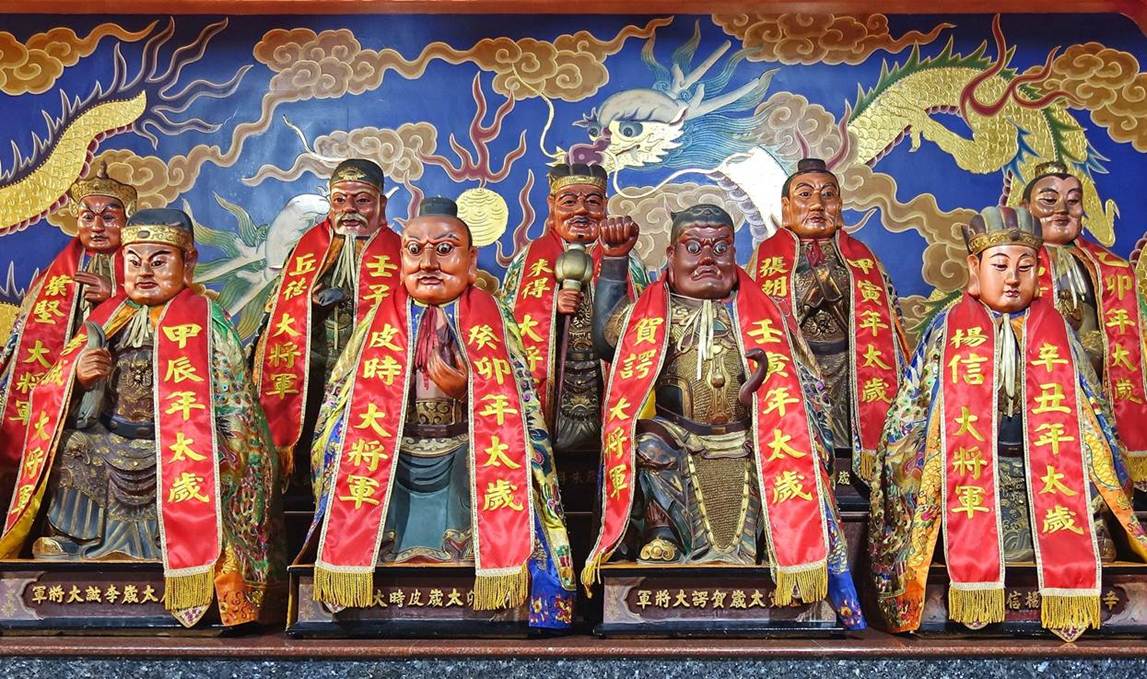
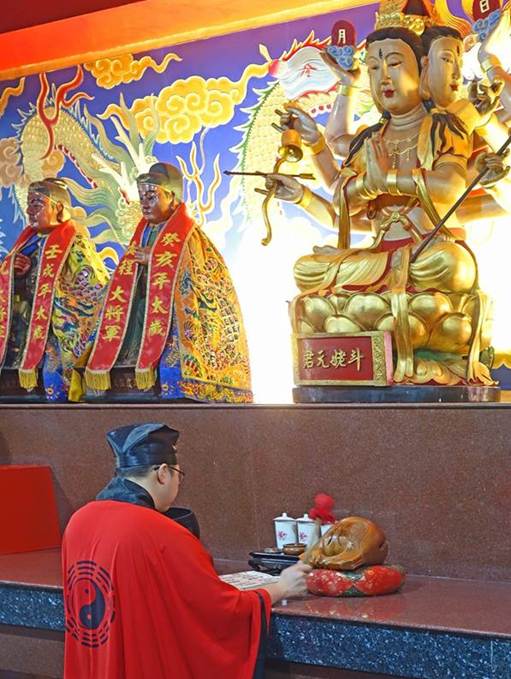
Yuan Chen Hall (元辰殿). It is dedicated to
the worship of Doumu Yuanjun (斗姆元君), the Mother of the Big Dipper, and the sixty Tai Sui (太岁), deities who take turns to govern human fortune and misfortune. Left: Some
of the Tai Sui. Right: Priest praying before the statue of Doumu
Yuanjun, in the center of the long hall.
|
|
|
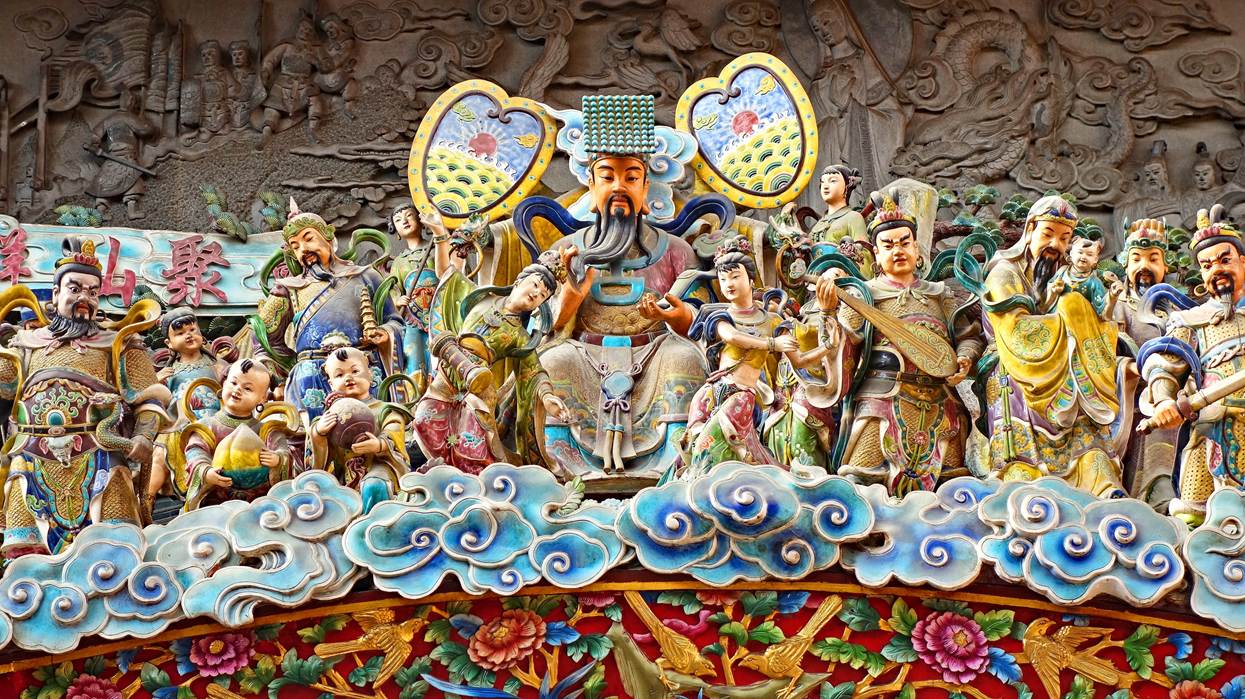
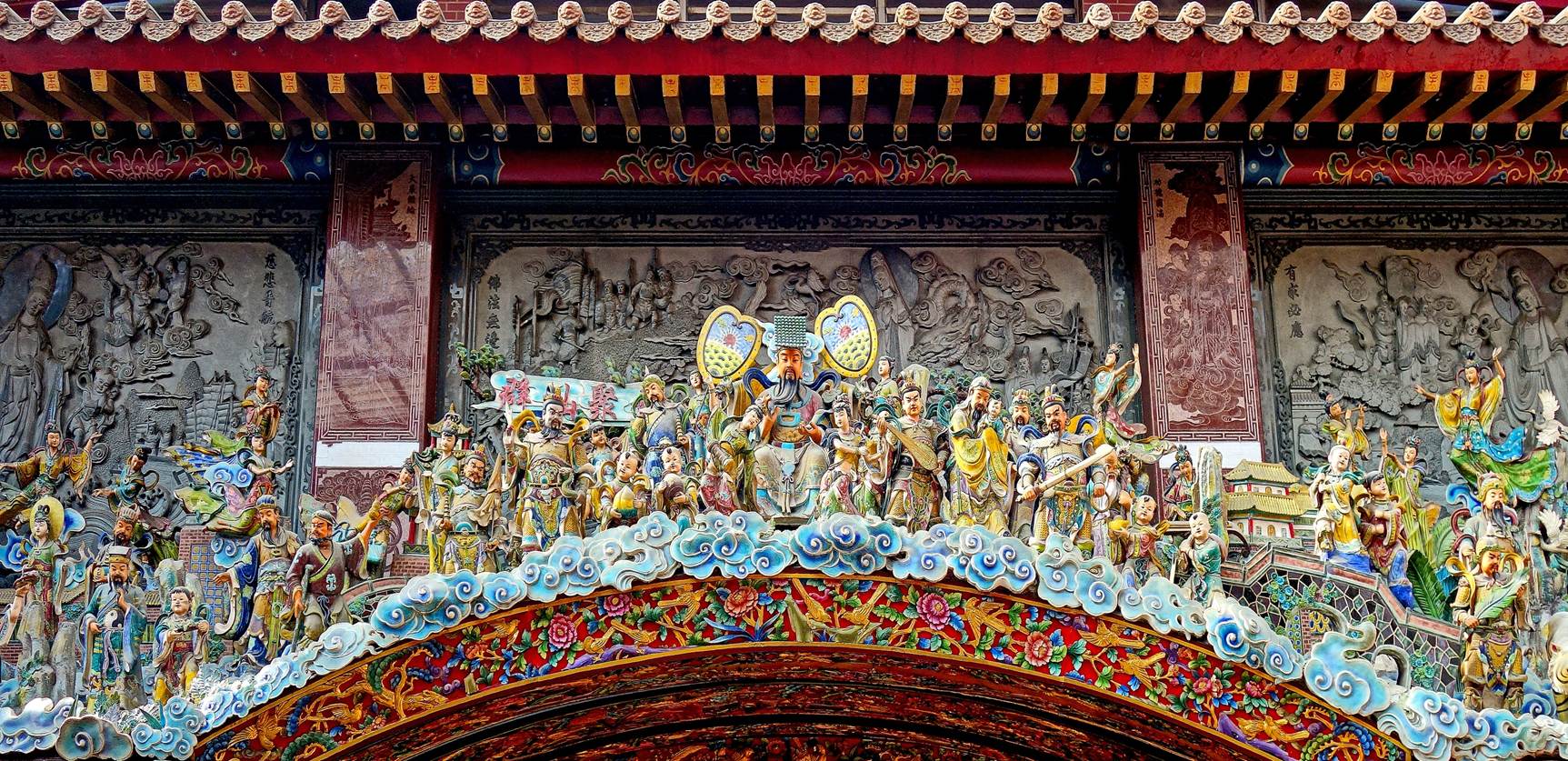
The temple is adorned
with a magnificent frieze of figures. The first photo below shows a small
central section of it. The following photo shows a longer section. But the
complete frieze is much longer.
[March 2026]
Painted
building on Jianjun Road. Next to Weiwuying MRT
station:
This mural, which represents shelves of books with a wardrobe in the
middle, covers the entire facade of the building.
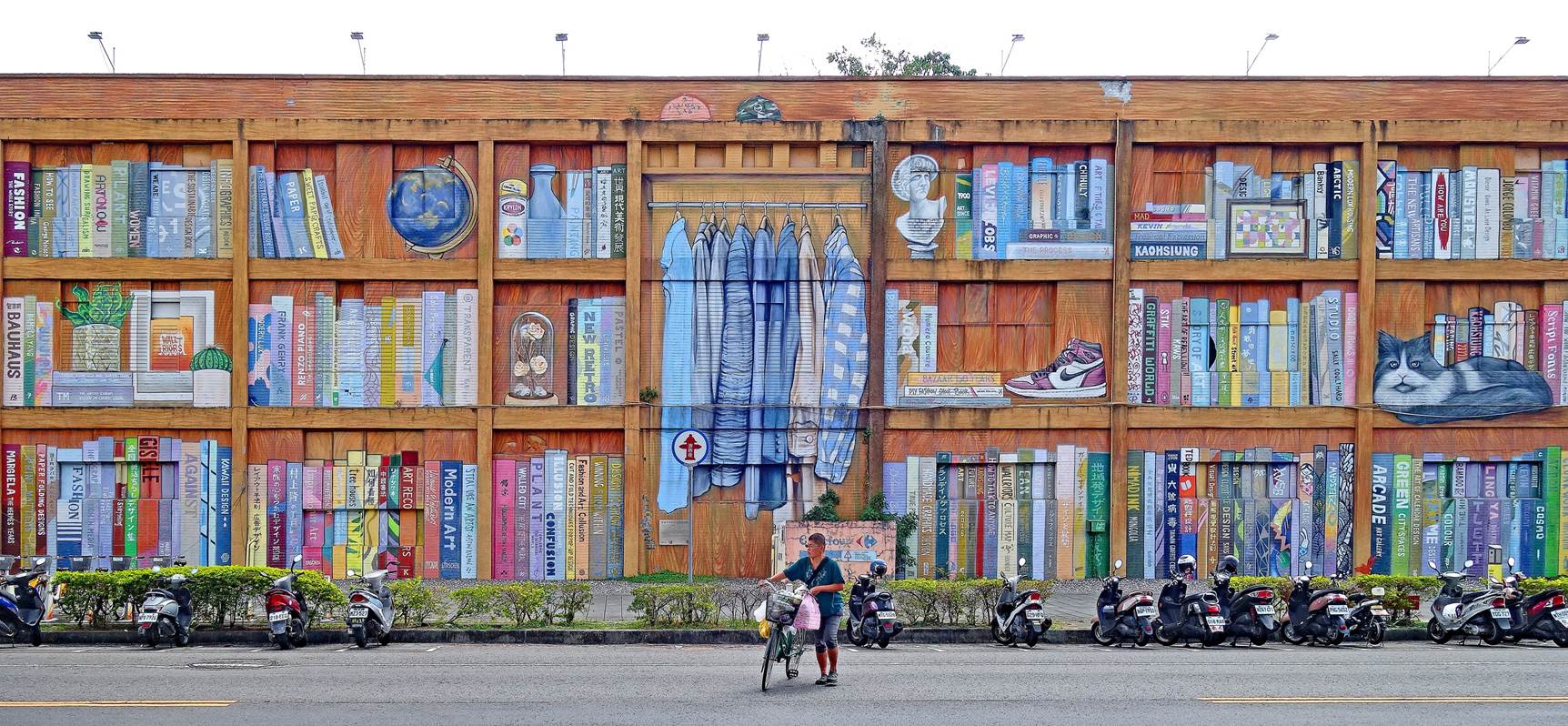
[March 2026]
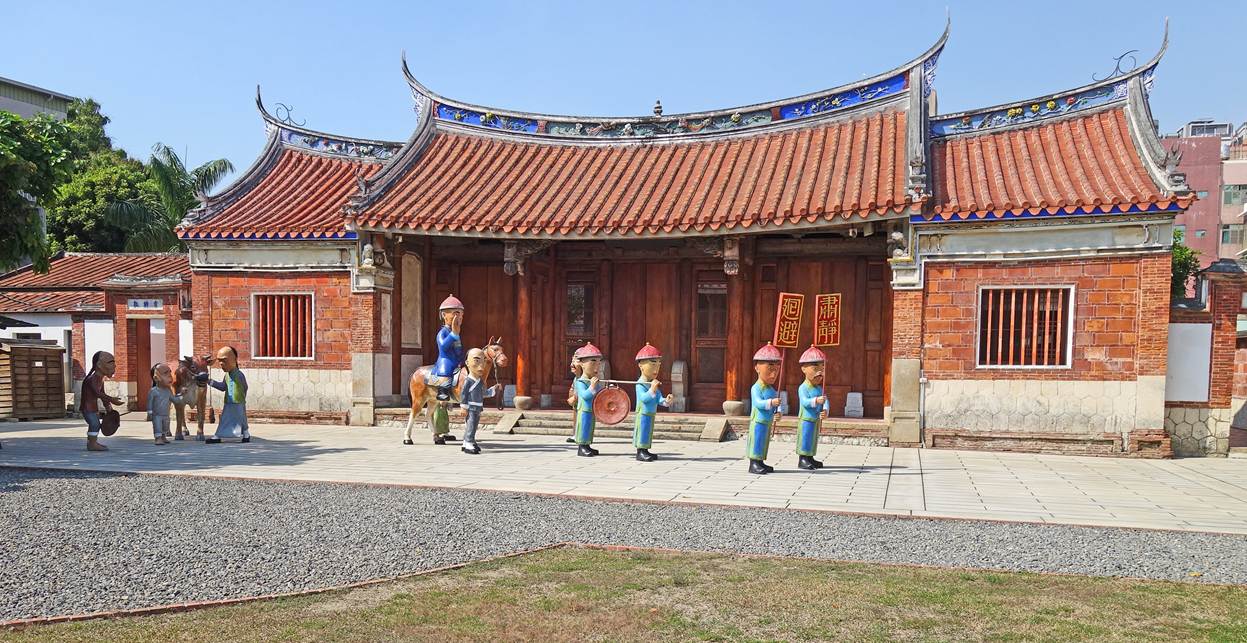
Fongyi Academy (鳳儀書院):
This is the largest
preserved academy of Confucian studies in Taiwan. Built in 1814 and was
restored in the early 2000s. It features a combination of Confucian and Taoist
elements. Its overall style is rather simple, with few paintings and
decorations, creating an atmosphere conducive to learning.
Main gate of the
academy. The statues illustrate the visit of a local magistrate to the academy.
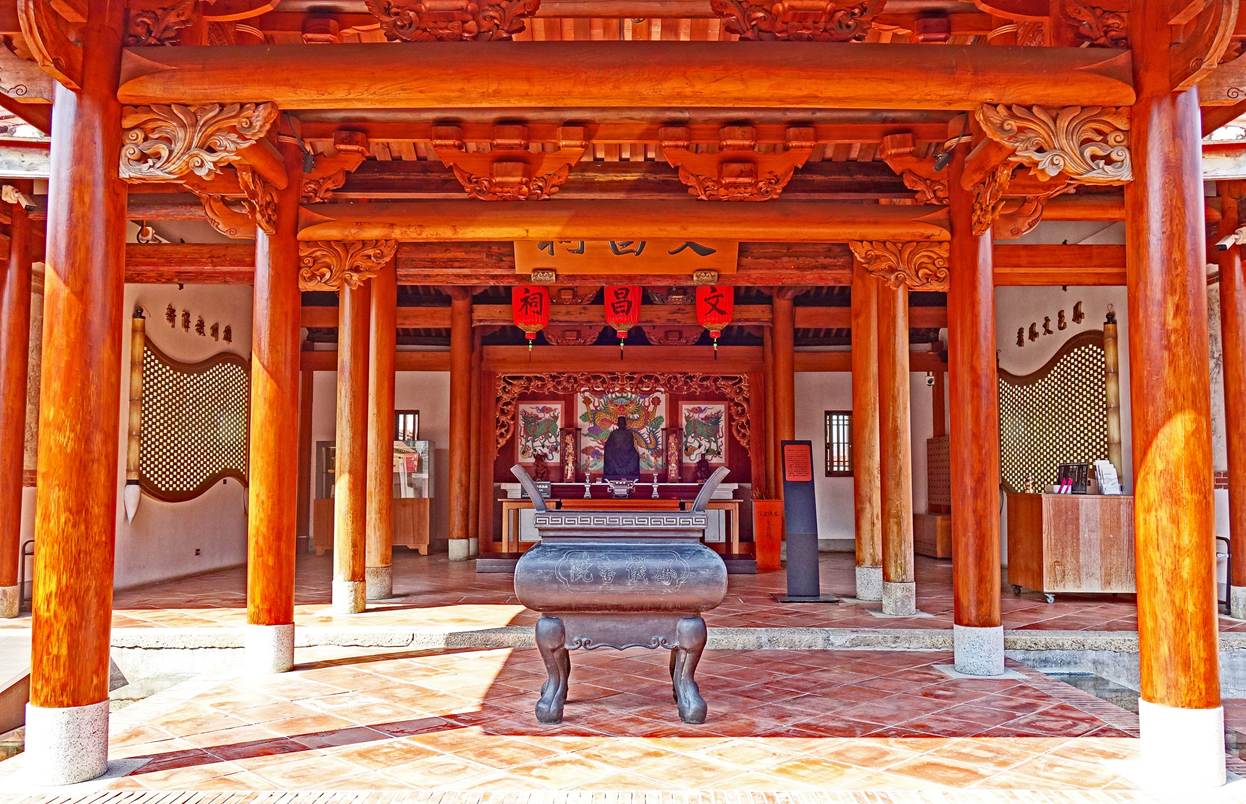
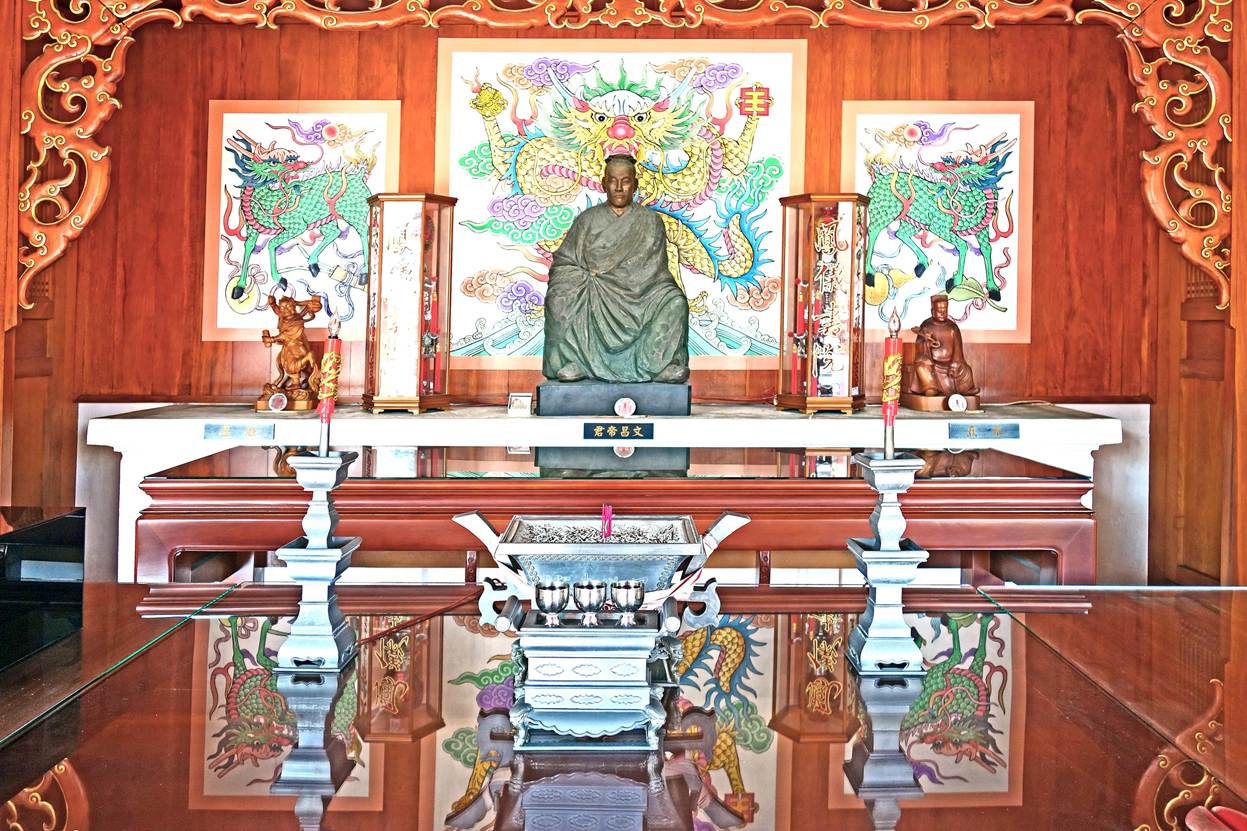
Worship hall of the
academy, with a statue of Wenchang Wang (文昌王), the Taoist God of
Culture and Literature in the background. Most likely, he was worshipped by
students for success in examinations.
[March 2026]
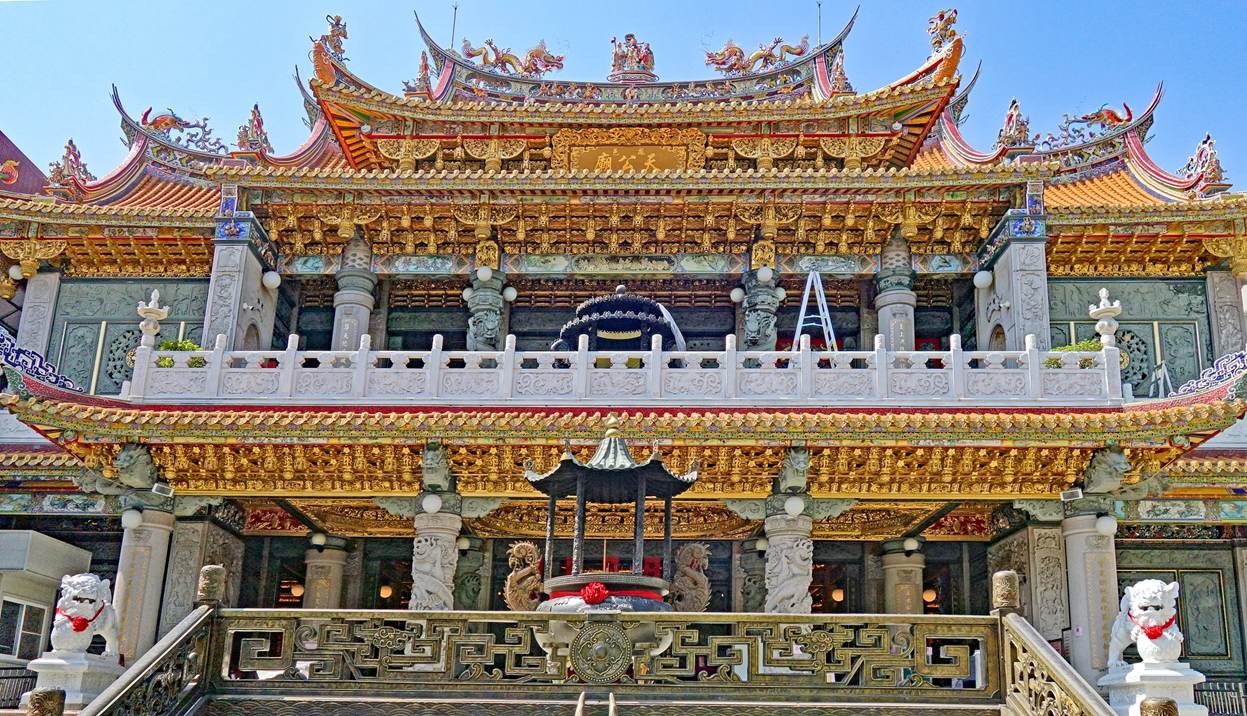
Fengshan Tiangong temple (鳳山天公廟):
This temple was founded
in 1798, but the current structure was built between 2004 and 2012. Many
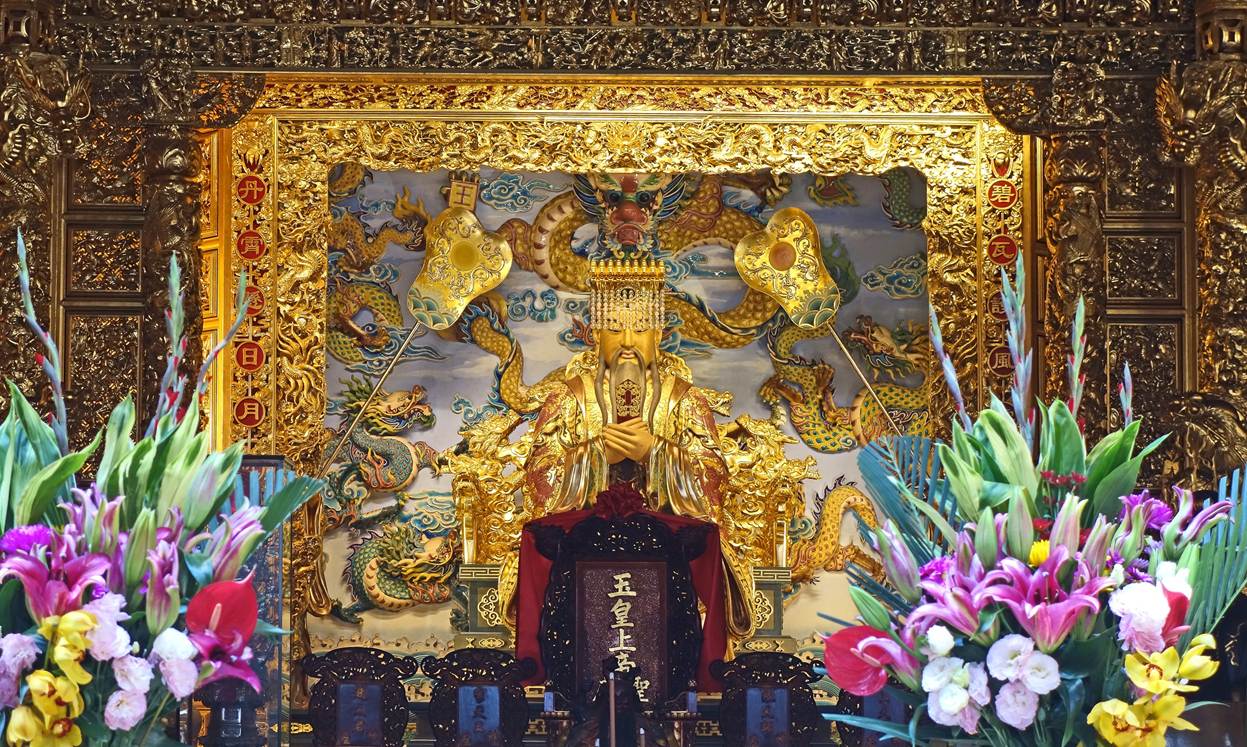
deities are worshipped in it, but the Jade Emperor (玉皇上帝), an important deity
in Taoist mythology, is the main one.
Facade of the temple.
Altar of the Jade
Emperor.
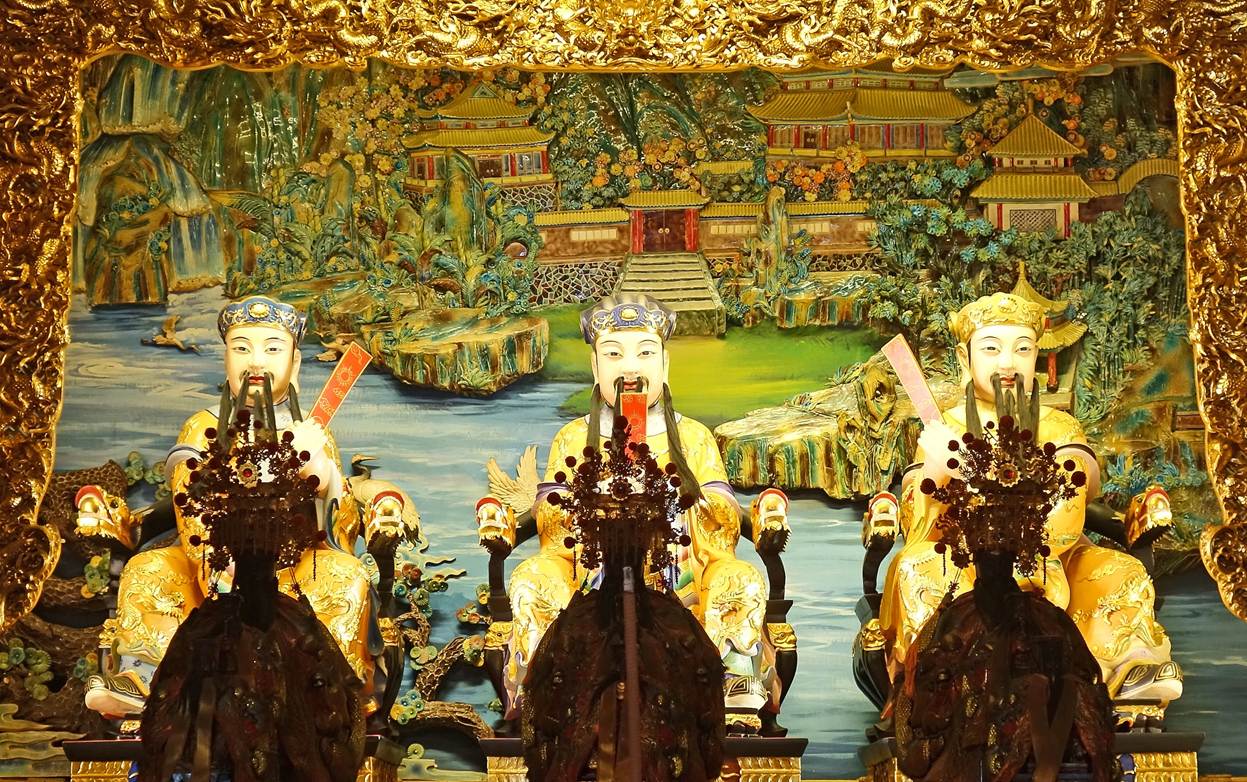
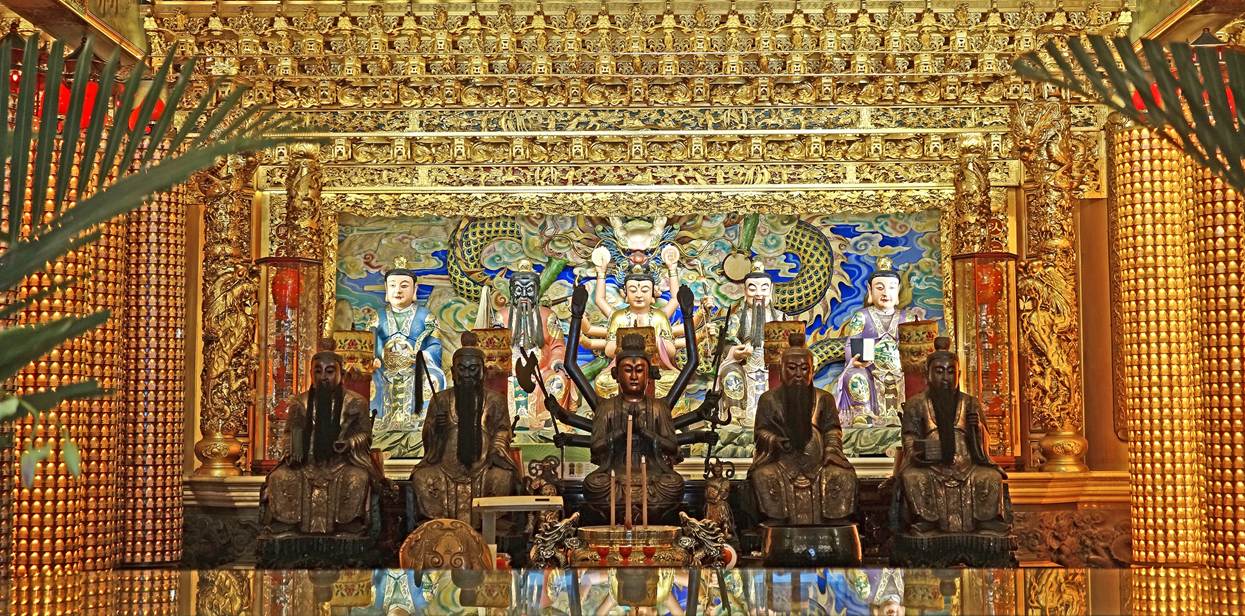
The Sanguan
Dadi (三官大帝) altar.The statues represent the deities who preside
over the three domains of Heaven, Earth, and Water.
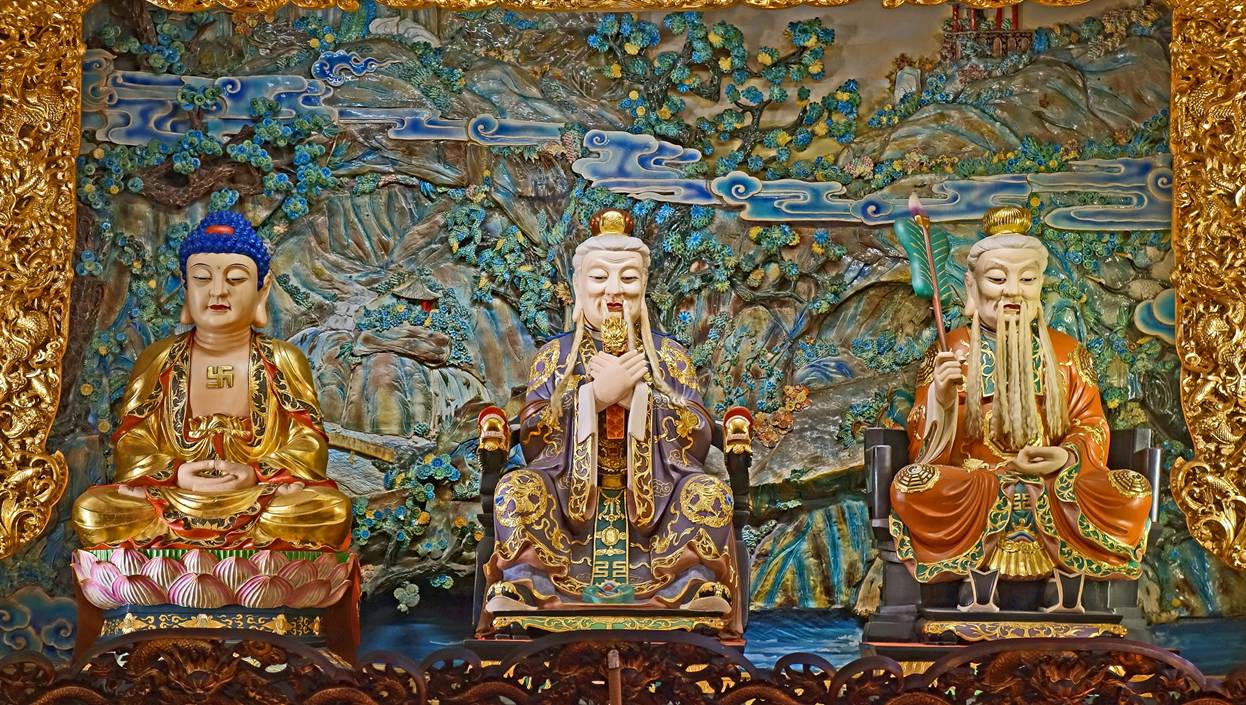
The Three Teachings altar.
The three statues represent, from left to right: Siddhartha Gautama (the
Buddha), Confucius, and Laozi (老子, a philosopher of
ancient China, widely recognized as the founder of Taoist school of thought).
The altar symbolizes the harmonious fusion of Buddhism, Confucianism, and
Taoism.
The Five Stars of the
Dipper altar, with Doumu Yuanjun (斗姆元君), the Mother of the Big Dipper at the center.
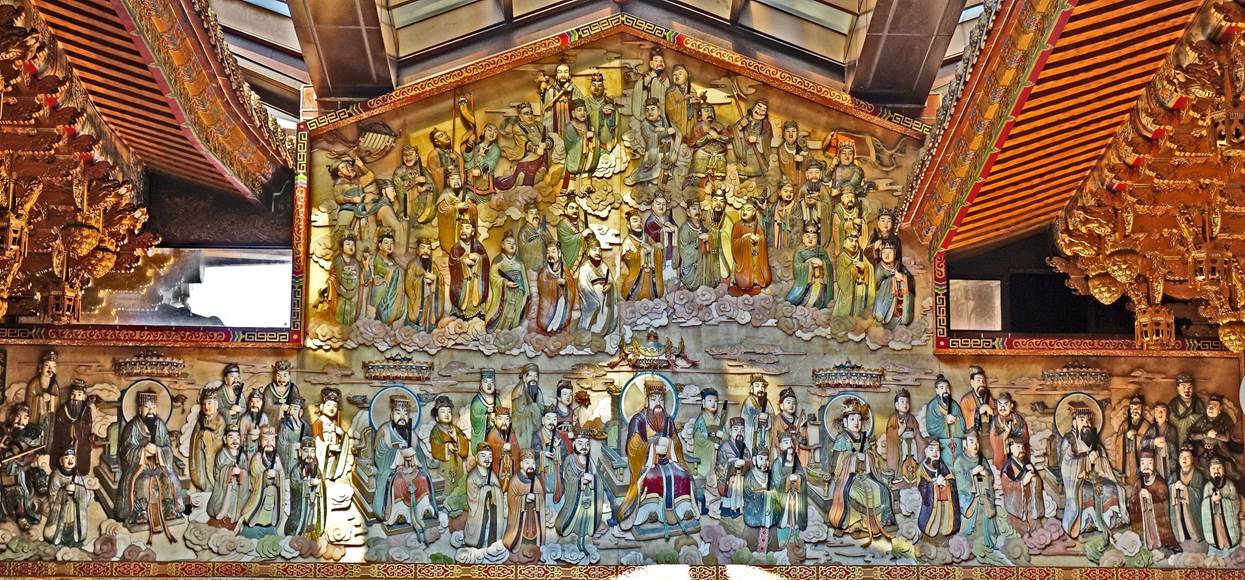
Impressive wall
sculpture depicting numerous Taoist figures.
Two highly decorated
ceilings in the temple.
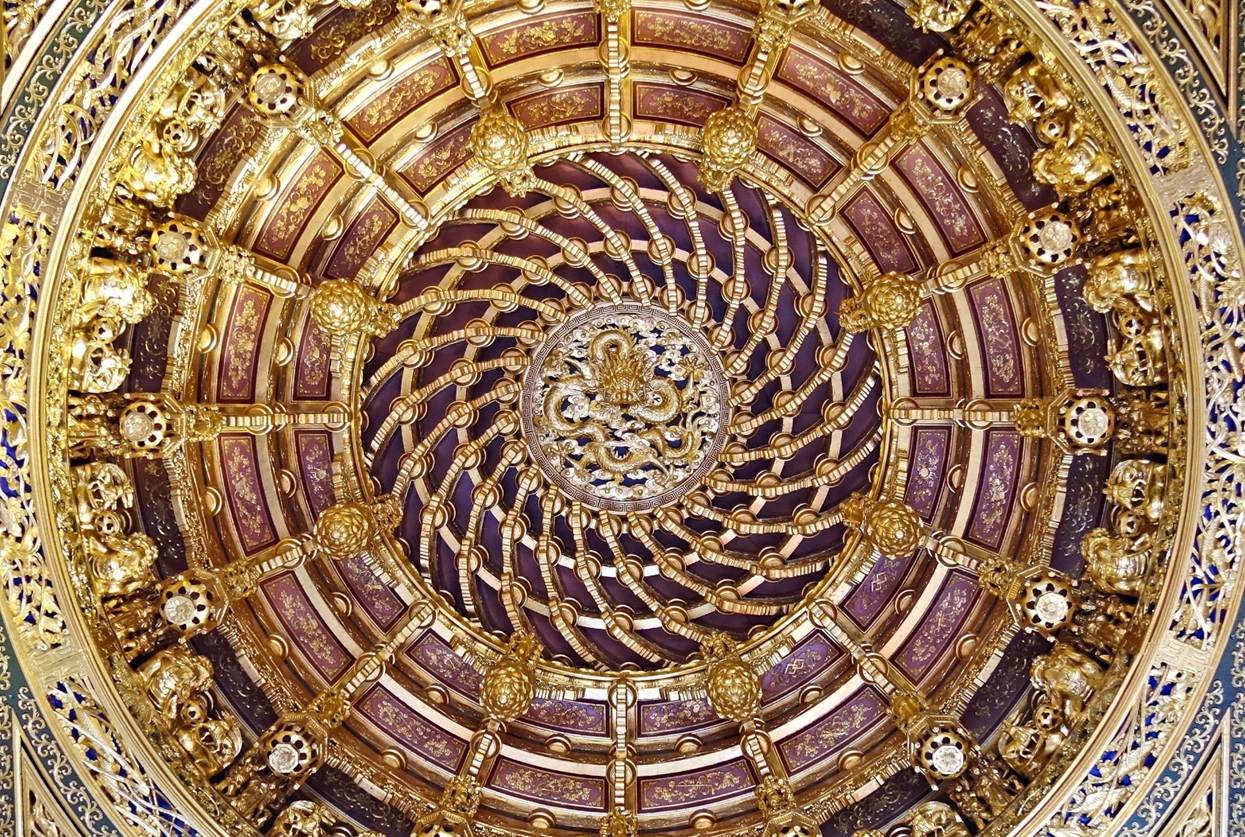
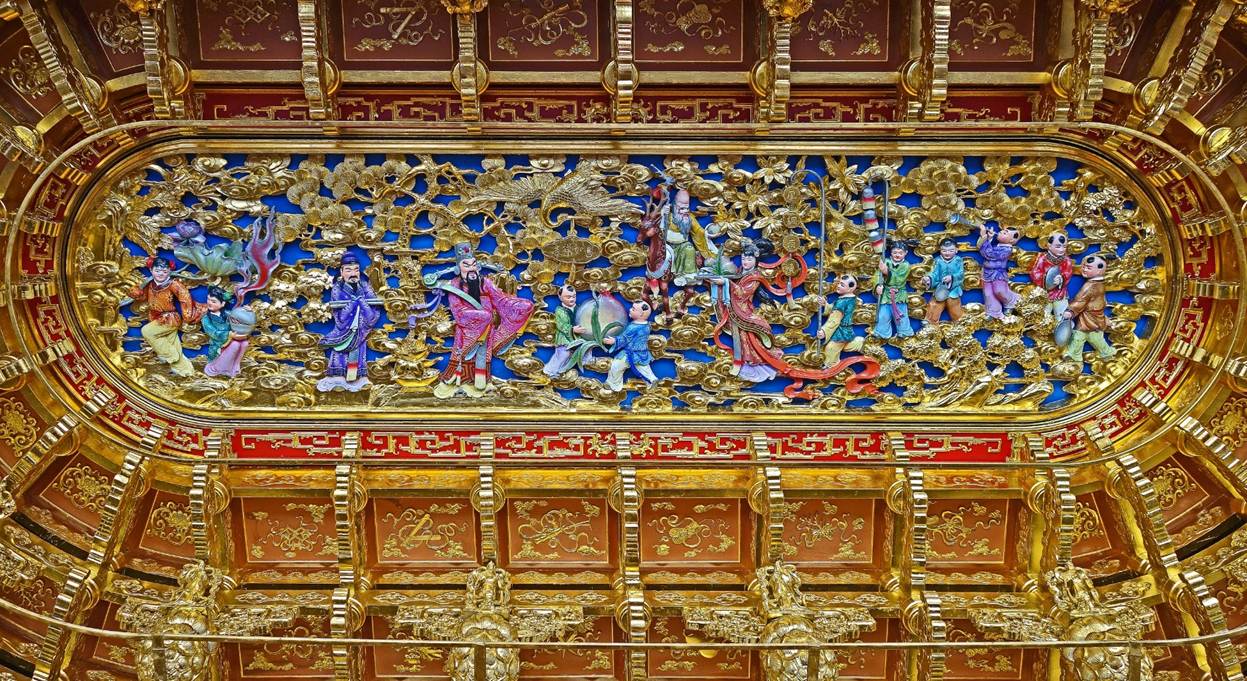
[March 2026]
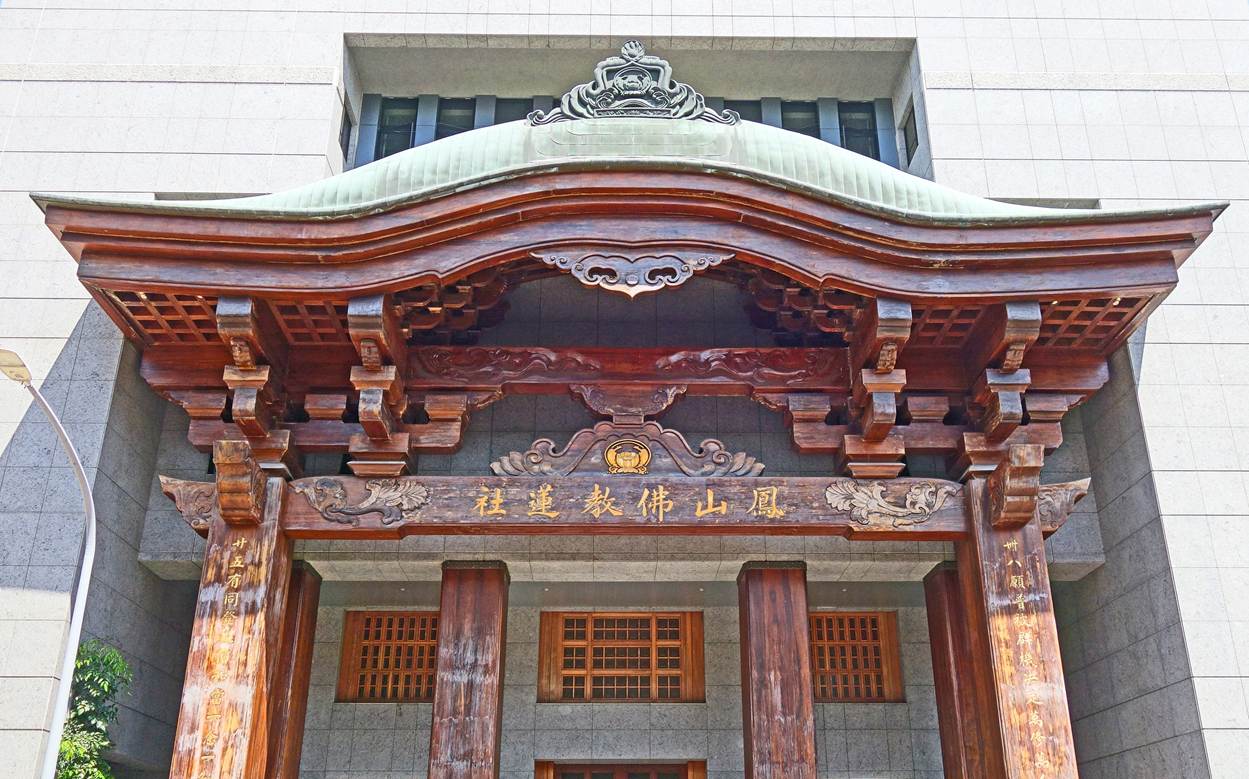
Fengshan Buddhist Lotus Society temple (財團法人鳳山佛教蓮社):
This temple was founded
in 1953 and later expanded and renovated. I had not planned to visit it, but as
I was walking toward the Fengshan Longshan
temple (see below), I passed in front of it and I briefly went inside. It
was extremely quiet and felt a bit strange.
Main worship hall with
an unusual statue of a muscular Maitreya Buddha (Future Buddha) in Lotus
position.
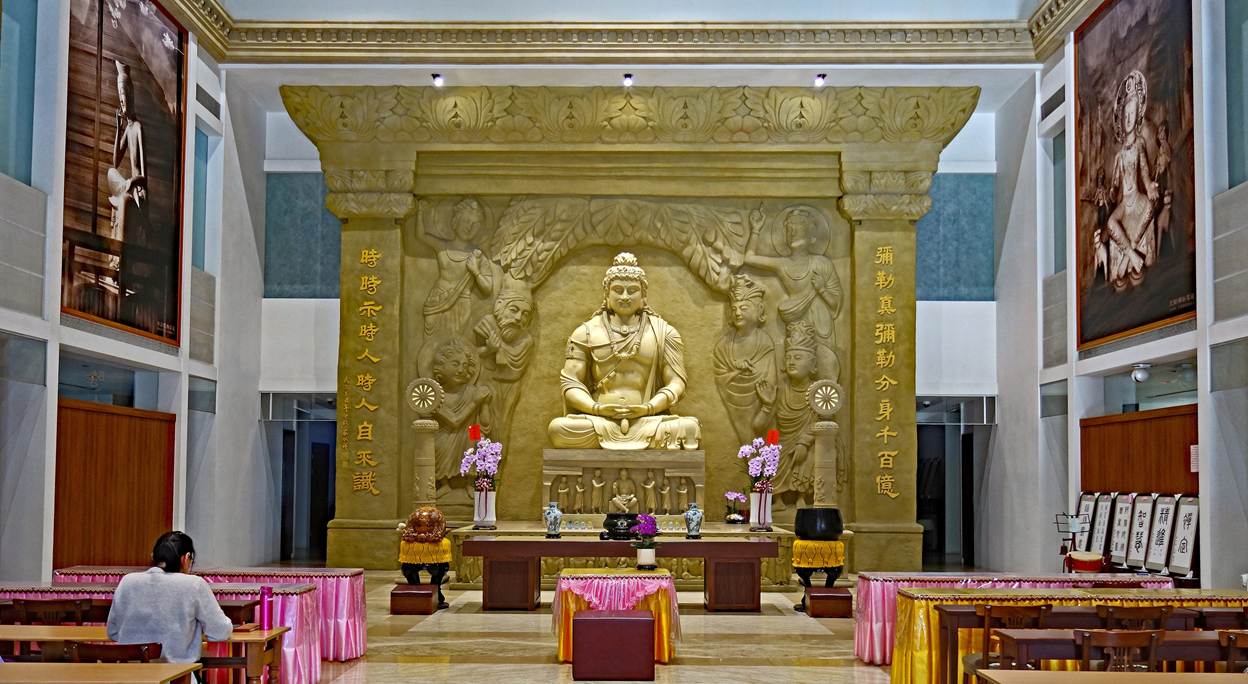
[March 2026]
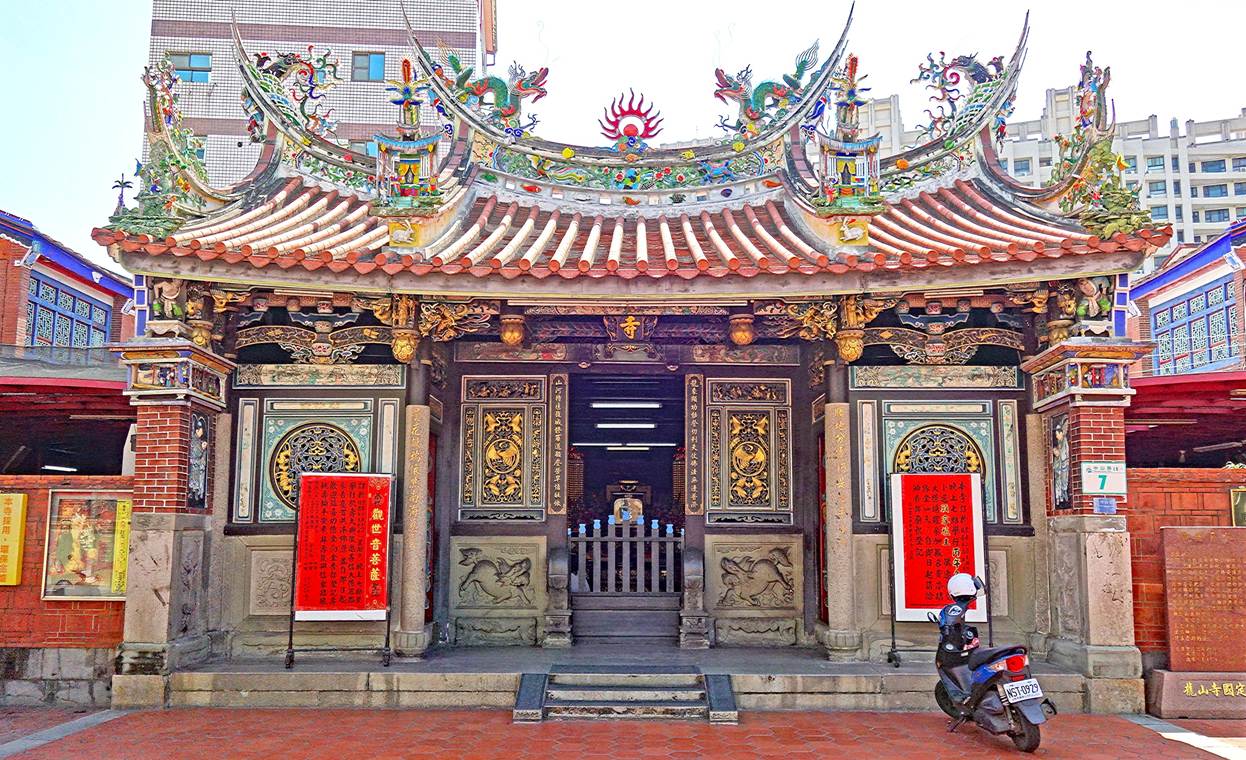
Fengshan Longshan temple (鳳山龍山寺):
Founded around 1765, this temple his is one of the five remaining
Longshan temples in Taiwan dating back to the Qing dynasty. It is the
southernmost one. All of them were founded by early Hokkien
immigrants from the Quanzhou region in the Fujian province and named after
their ancestral temple on the Dragon (龍) Mountain (山). They are
Buddhist temples dedicated to Guanyin (觀音菩薩), the highly popular bodhisattva of infinite compassion in Chinese
Buddhism. But, over time, the worship of other Buddhist and Taoist deities was
added to these temples.
Facade of the Fengshan Longshan temple.
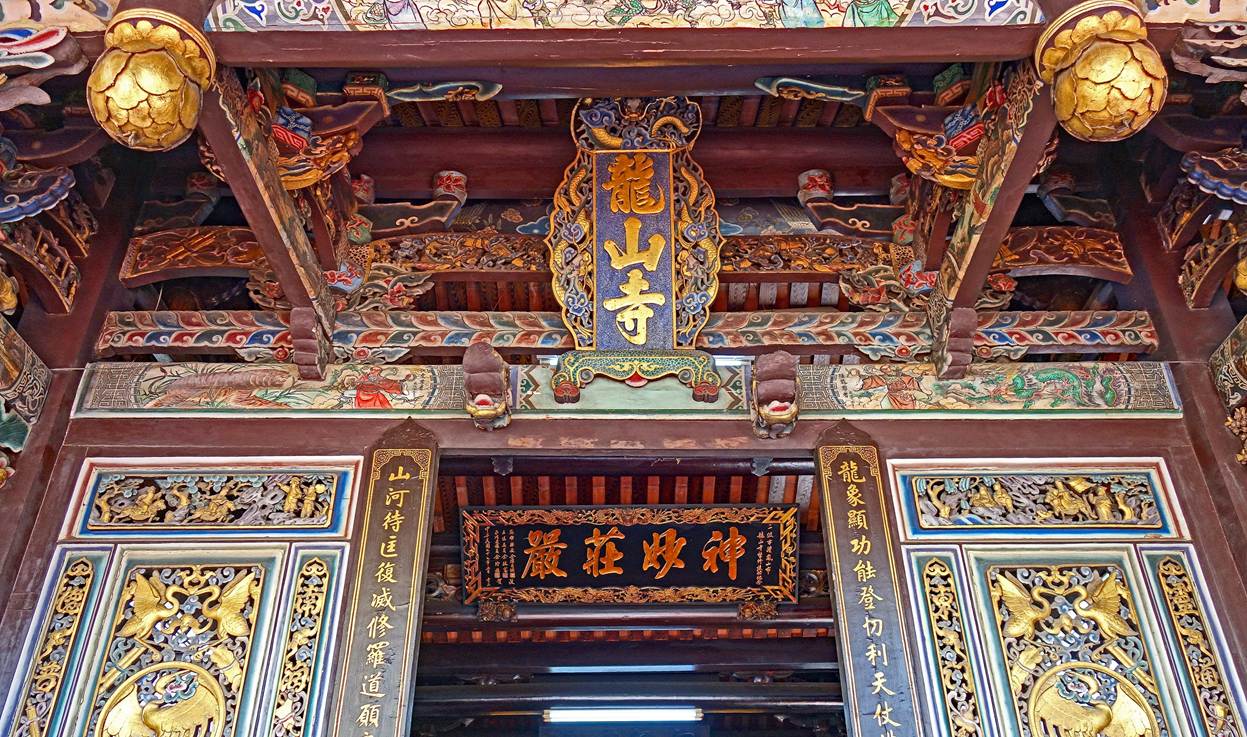
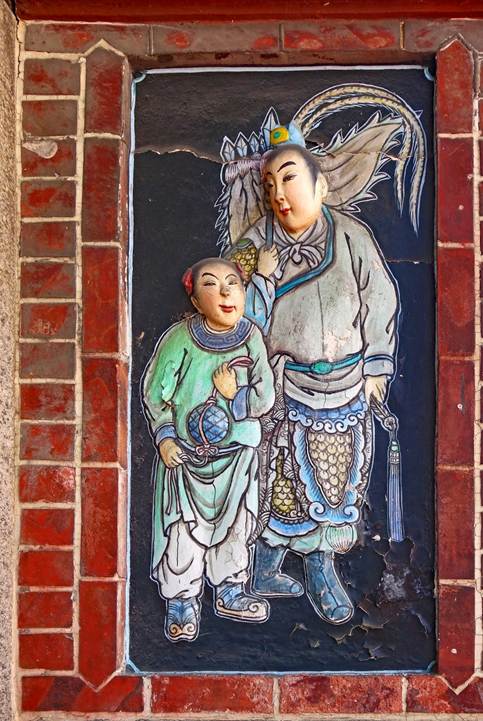
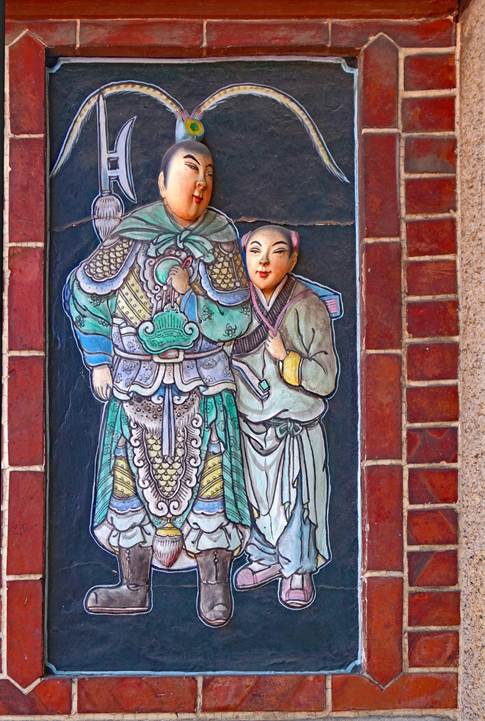
Panels decorating the two side walls in the entrance if the temple. They
are barely visible in the first photo above.
|
|
|
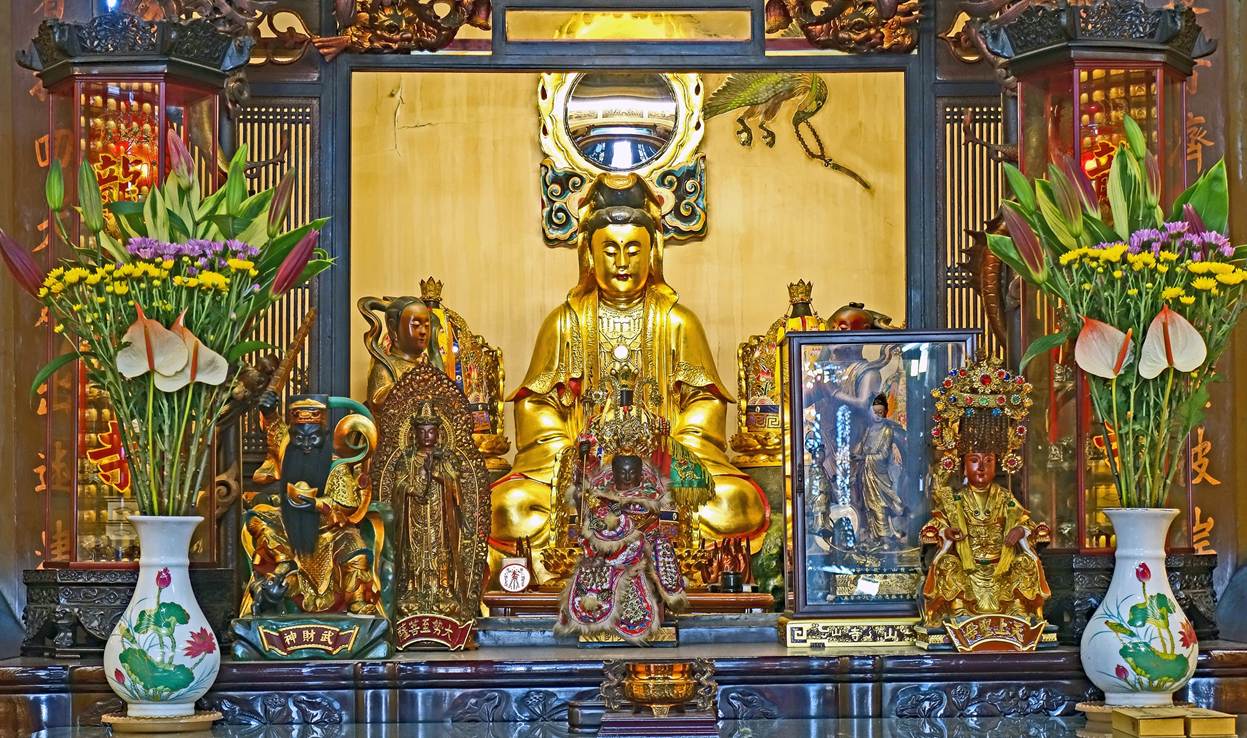
Main altar of the temple, with a golden statue of Guanyin in the center,
surrounded by secondary deities, like the Taoist God of Wealth (财神).
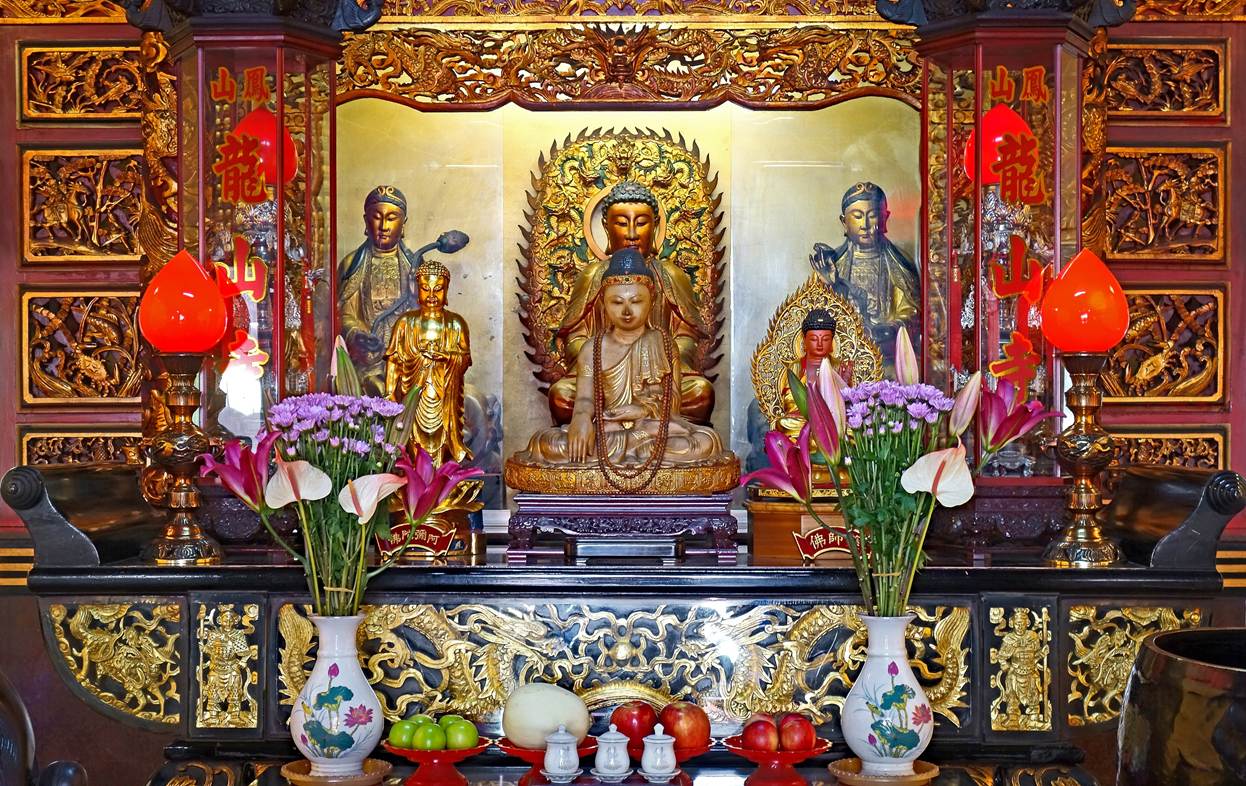
Another altar with Buddhist deities in the hall of the Three Treasures (三宝佛殿).
[March 2026]