[June 2009, April 2017, and March 2026]

THIS PAGE IS
STILL A WORK IN PROGRESS
Tainan is the oldest city in Taiwan. For more than 200 years, it was the
capital of the island, from the Dutch rule (1624-1662) until the end of the
Qing Dynasty rule in 1887. It is known across Taiwan as a city of culture, with
narrow streets, historic monuments, and many temples. Today, outside its
historical core, it is also a vibrant modern city
This page shows photos I took during three visits to Tainan, in June
2009, April 2017, and March 2026. Every consecutive sequence of photos taken
during the same trip is labeled by the date of the trip at the very end of the
sequence. To see the locations of the places pictured in these photos, click here. A Google map with markers will then open in a new tab.
Note: The City of Tainan is located in the south of Tainan Municipality,
one of Taiwan's six ″special municipalities″. This administrative
entity covers a vast geographical area extending far to the north of the city,
where it borders the Chiayi County. In March 2025, during a visit to the city
of Chiayi, I visited two temples situated in the northernmost district of Tainan
Municipality, the Baihe Daxian temple and the
Huoshan Biyun temple. Photos of these temples are not included below. Instead, they appear on
my webpage dedicated to Chiayi.
Old images of Anping:
Anping is the northwest
coastal district of the city of Tainan. It was established in 1624 as a Dutch
trading hub called Fort Zeelandia. After it was
captured by Koxinga (see below) in 1662, it was an important port during the
Qing dynasty until 1895, when it fell under Japanese rule.
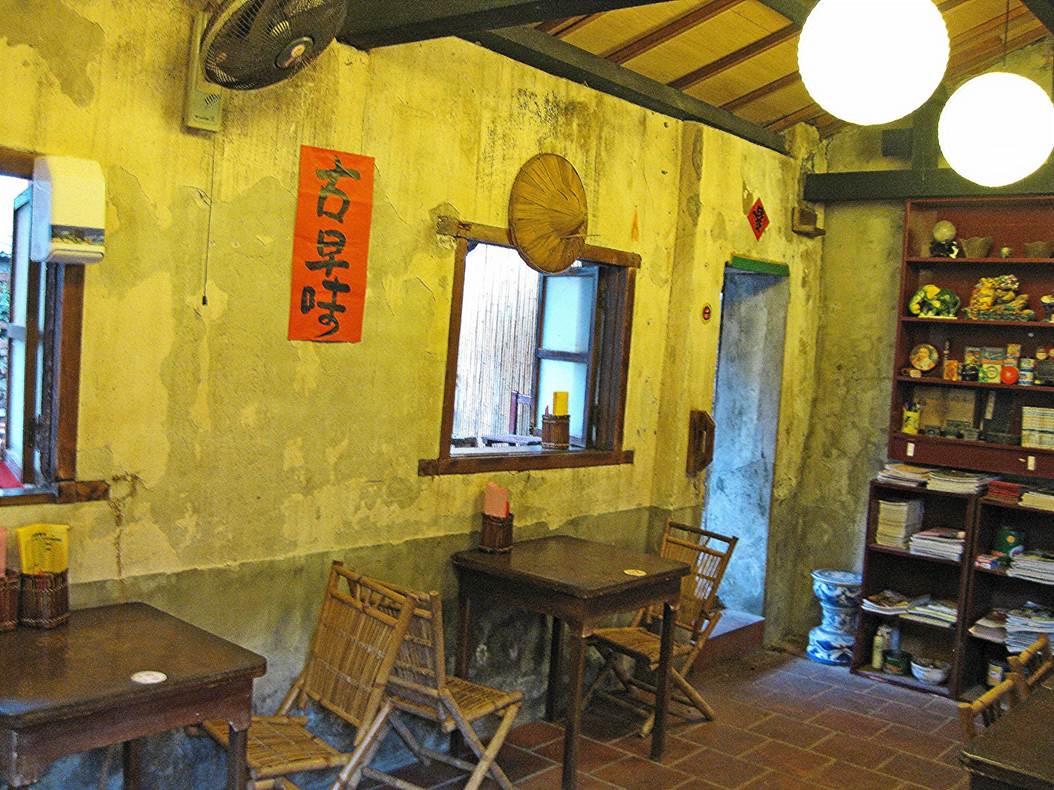
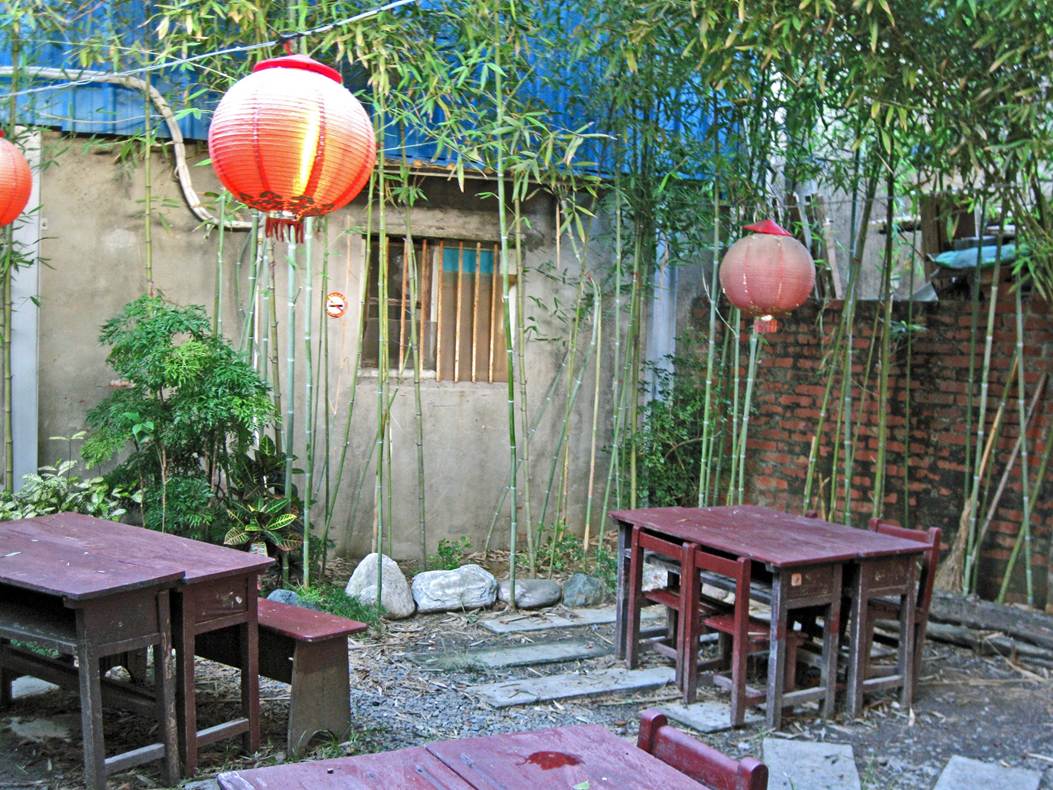
Small atmospheric
restaurant with a courtyard.
|
|
|
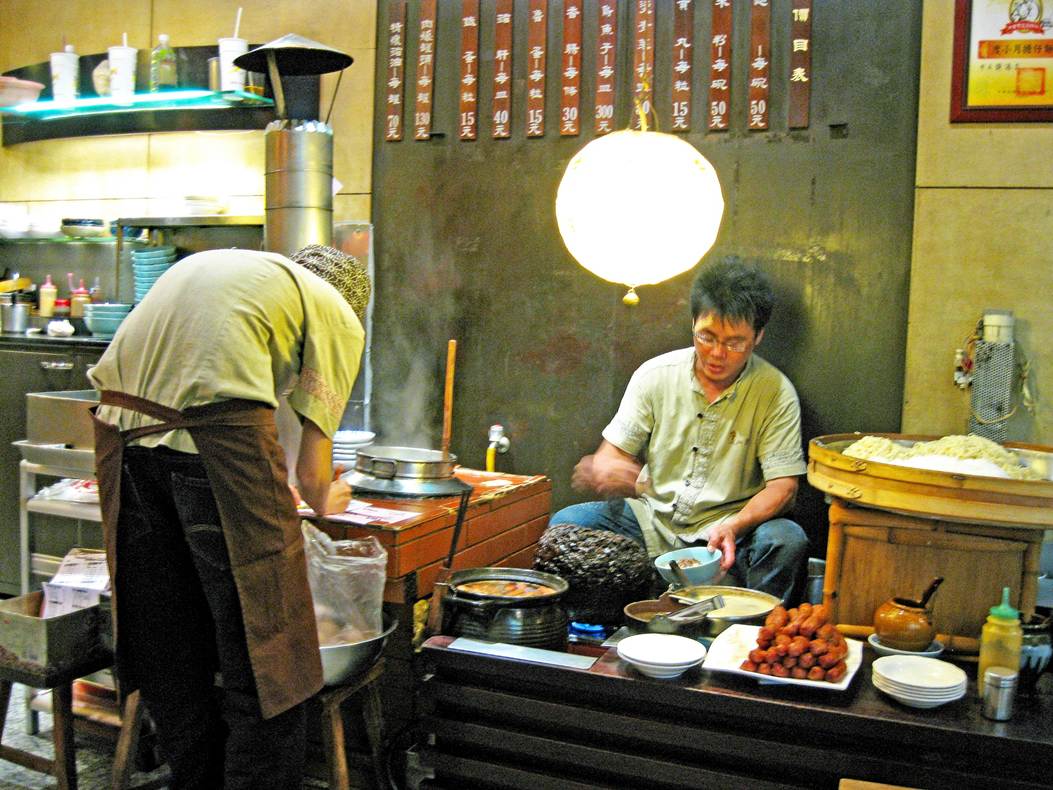
Kitchen serving
traditional soup with sausage.
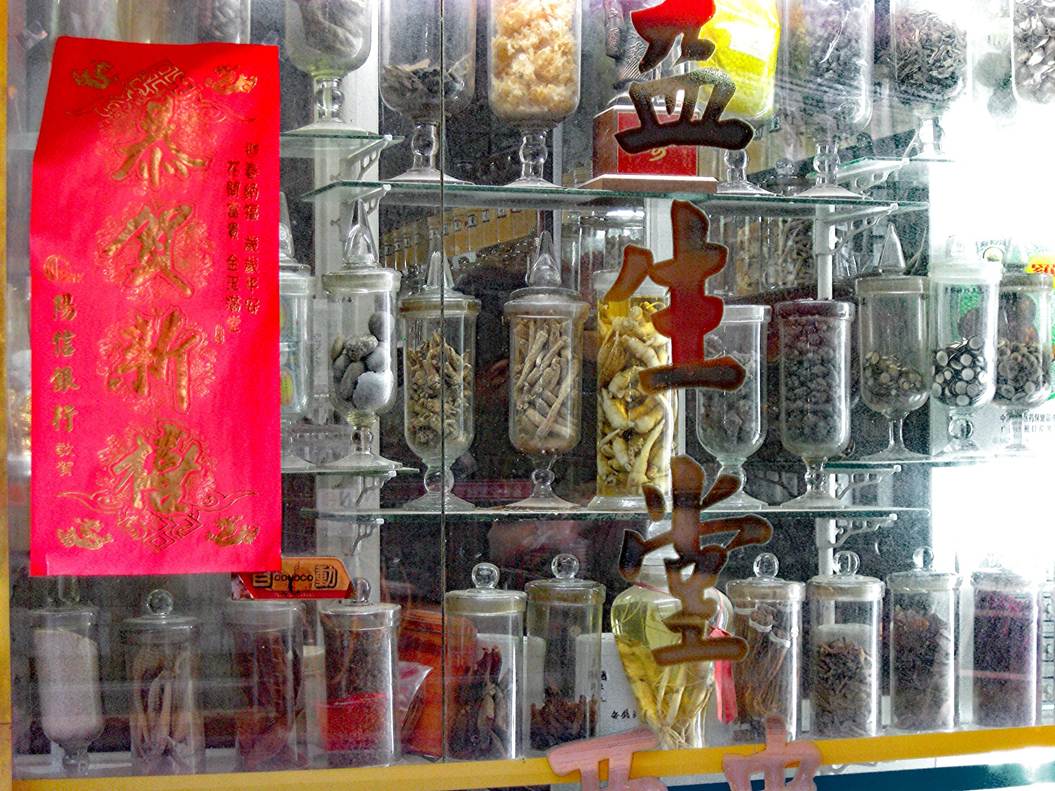
Glass jars containing
desiccated plants, roots, and flowers, in a traditional Chinese pharmacy.
[June 2009]
Anping Kaitai Tianhou temple (安平開台天后宮):
This Taoist temple is
mainly dedicated to Mazu, the goddess of the sea, the patroness and protector
of sailors and fishermen, honorifically referred to as the Heavenly Mother or
Empress (天后, ″tian hou″). It was originally
built in 1668 by early Chinese settlers. Demolished during the Japanese era,
reconstructed from 1962 to 1966, and partially destroyed by fire in 1990, it
was rebuilt again in 1994. With the Tainan Grand Mazu temple (臺南大天后宮) and the Kaiji Tianhou temple (開基天后宮), it is one of the
three earliest Mazu temples in Taiwan, among the hundreds that dot the island
today.
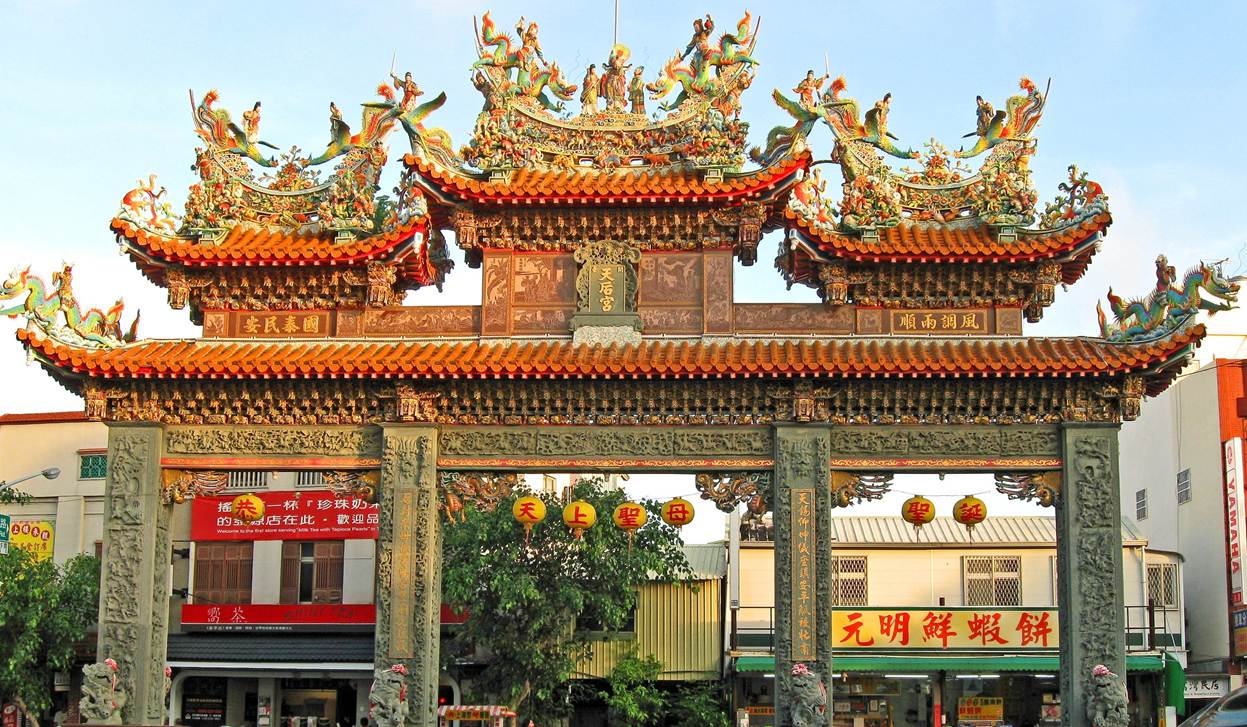
Massive archway leading
to the temple.
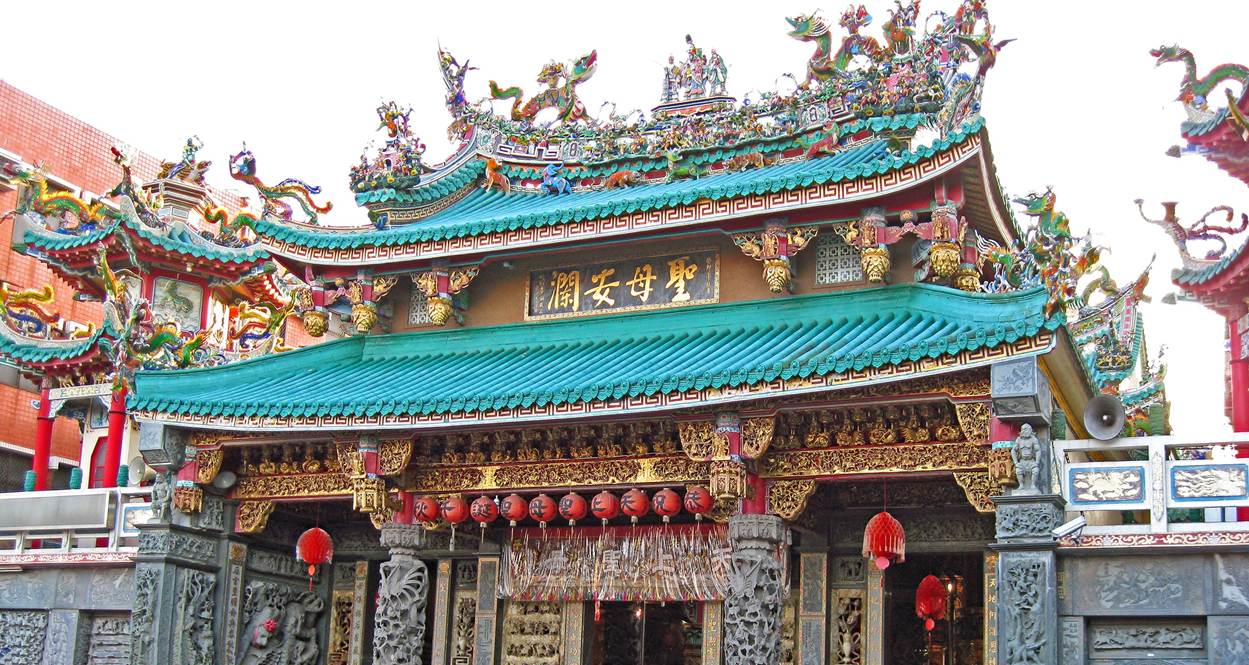
Entrance of the temple.
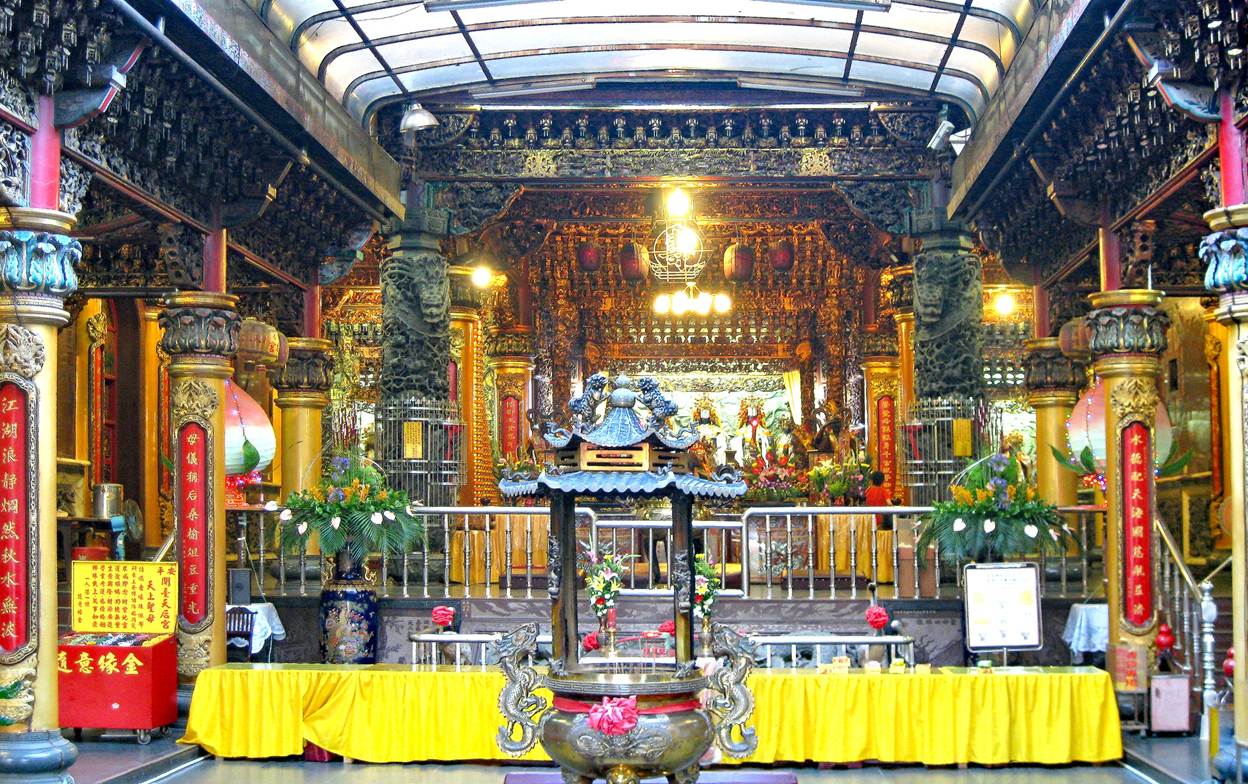
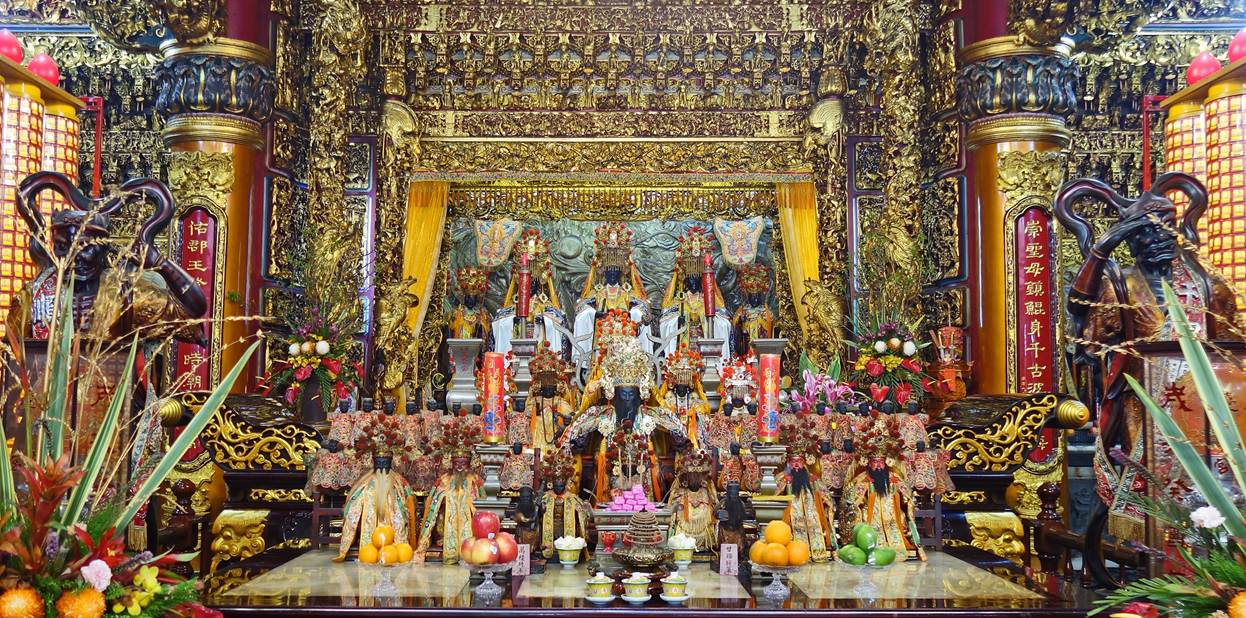
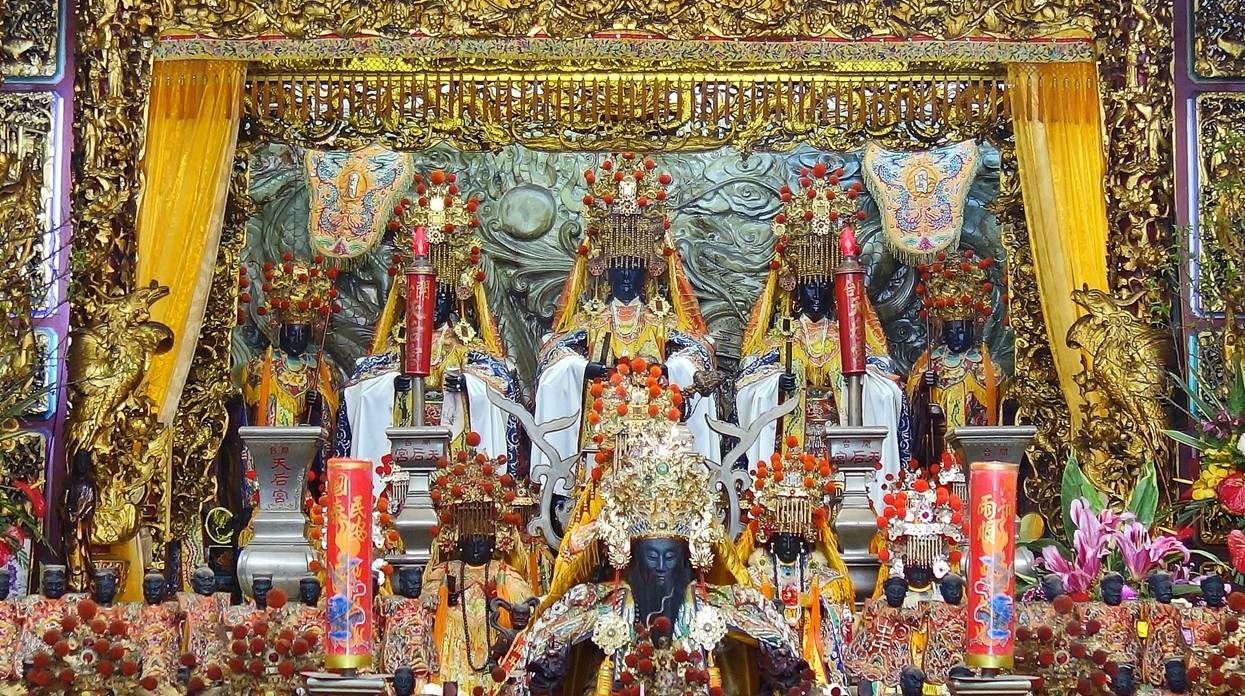
Main hall (three photos
below) dedicated to Mazu and the Prince of Yanping (延平郡王), the honorific title
of Koxinga, the military leader who defeated the Dutch.
[June 2009]
[March 2026]
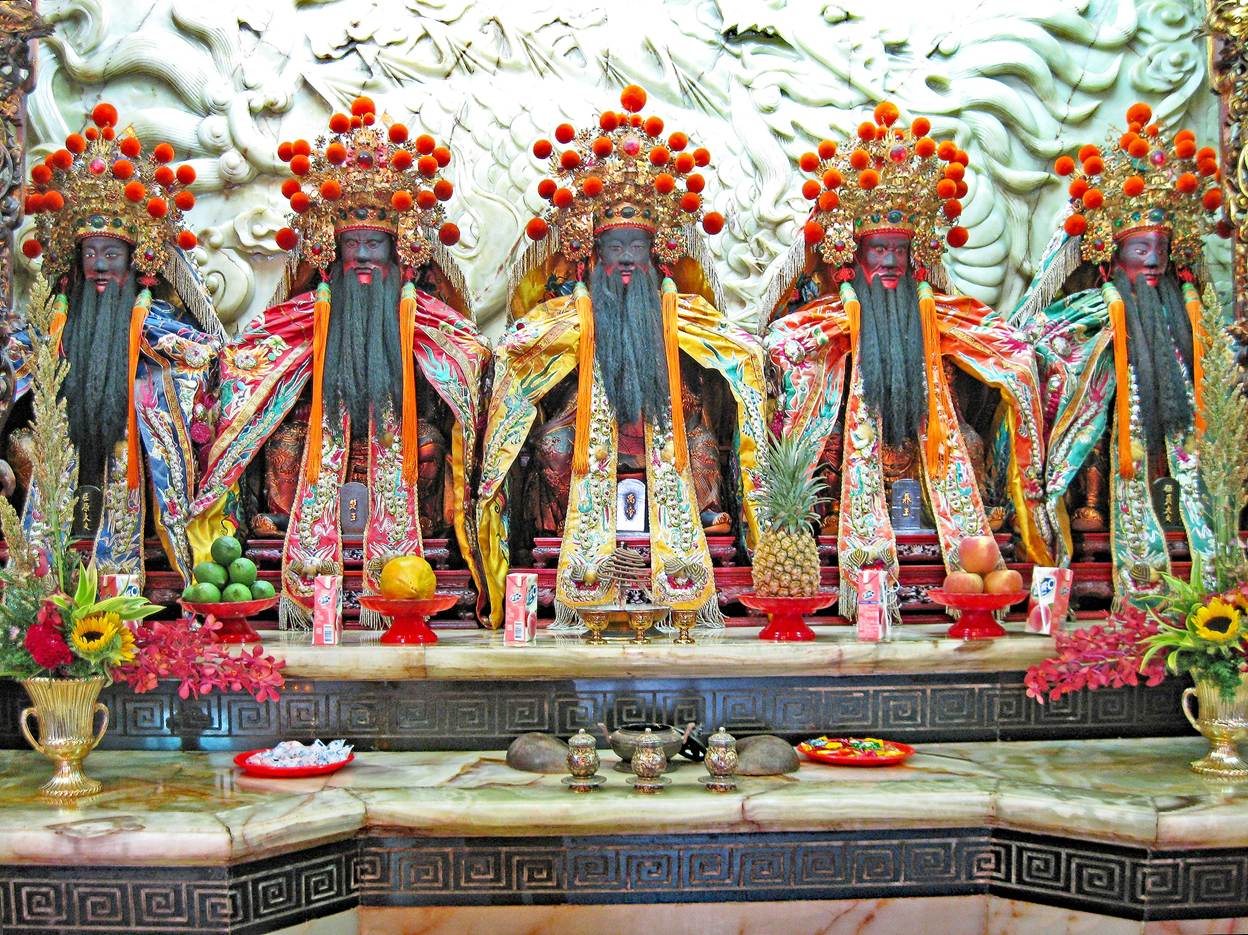
The Five Water Immortal
Kings (水仙尊王).
[June 2009]
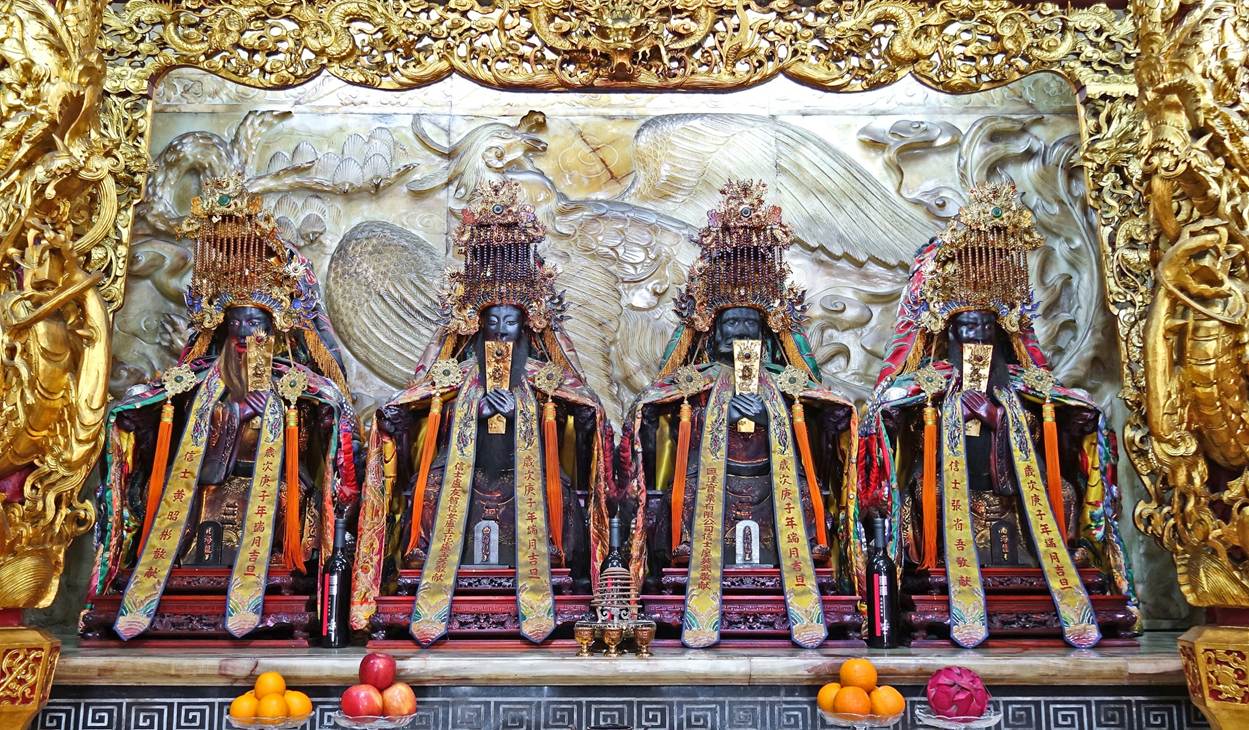
The Dragon Kings of the
Four Seas (四海龙王).
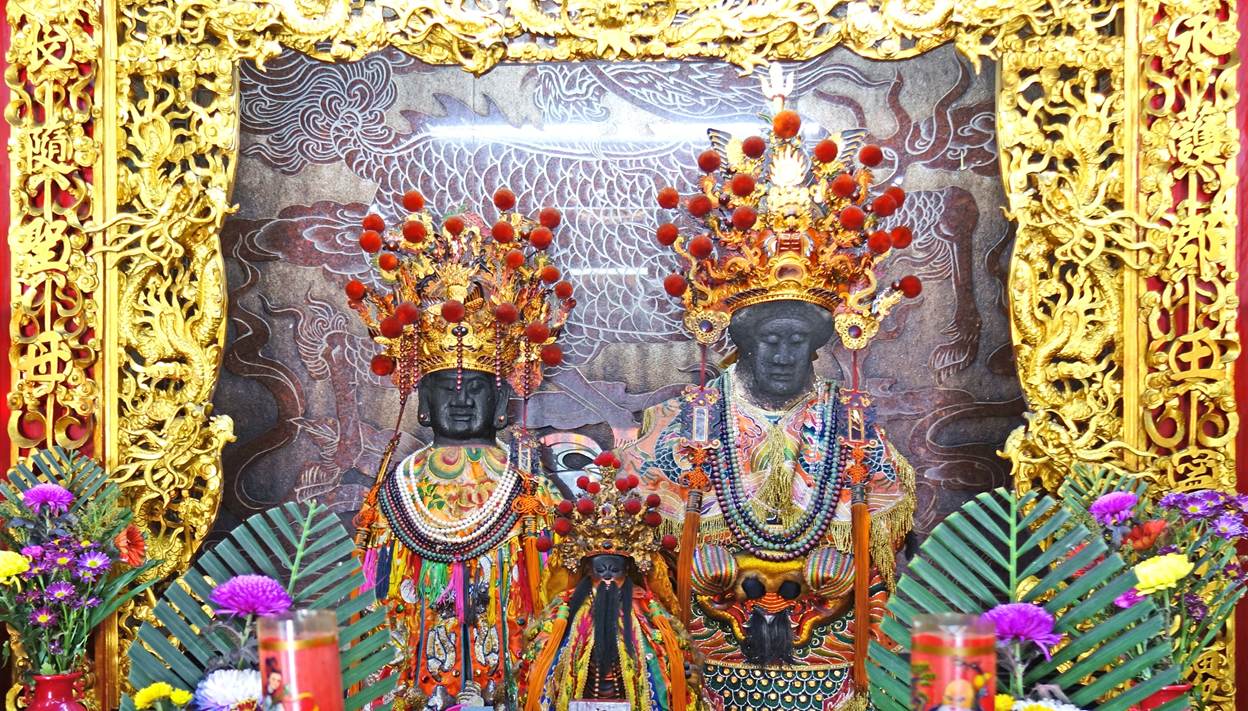
Altar featuring two
somewhat mysterious half-body statues cut in stone, believed to represent
generals related to Wenchang Dijun (文昌帝君), the Taoist deity of
culture and literature. Students pray to these generals before exams.
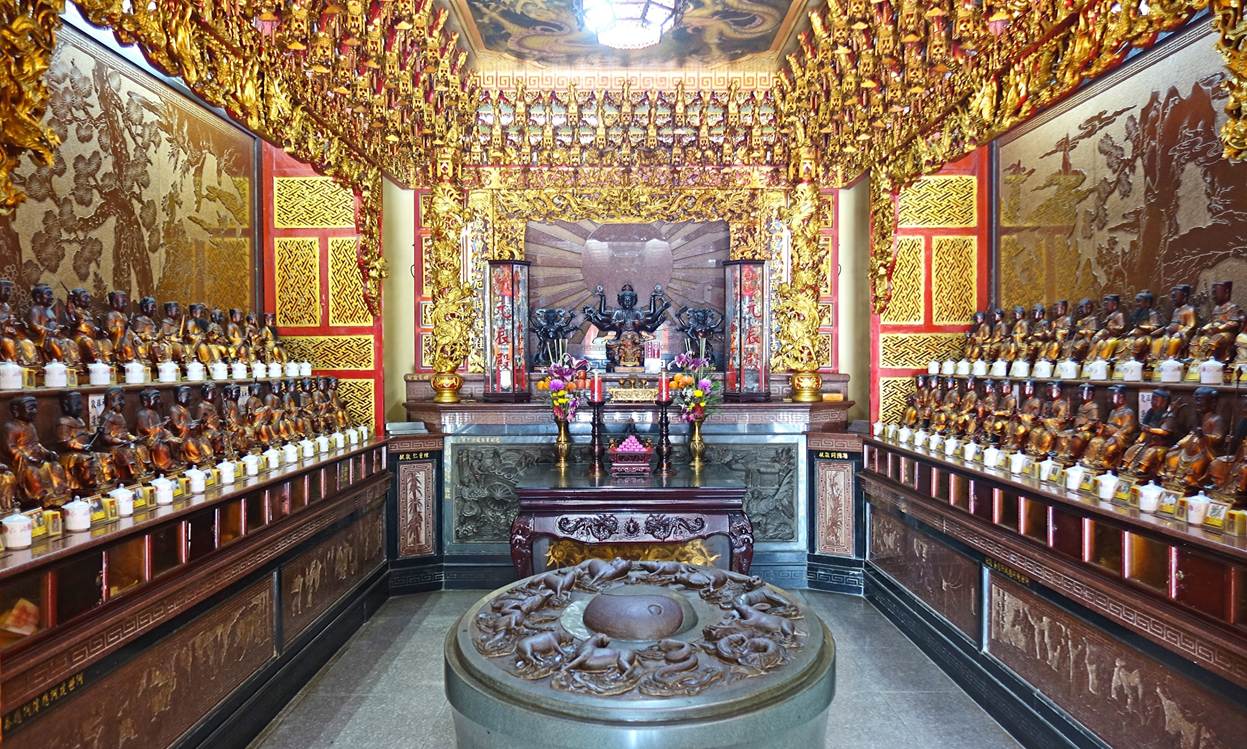
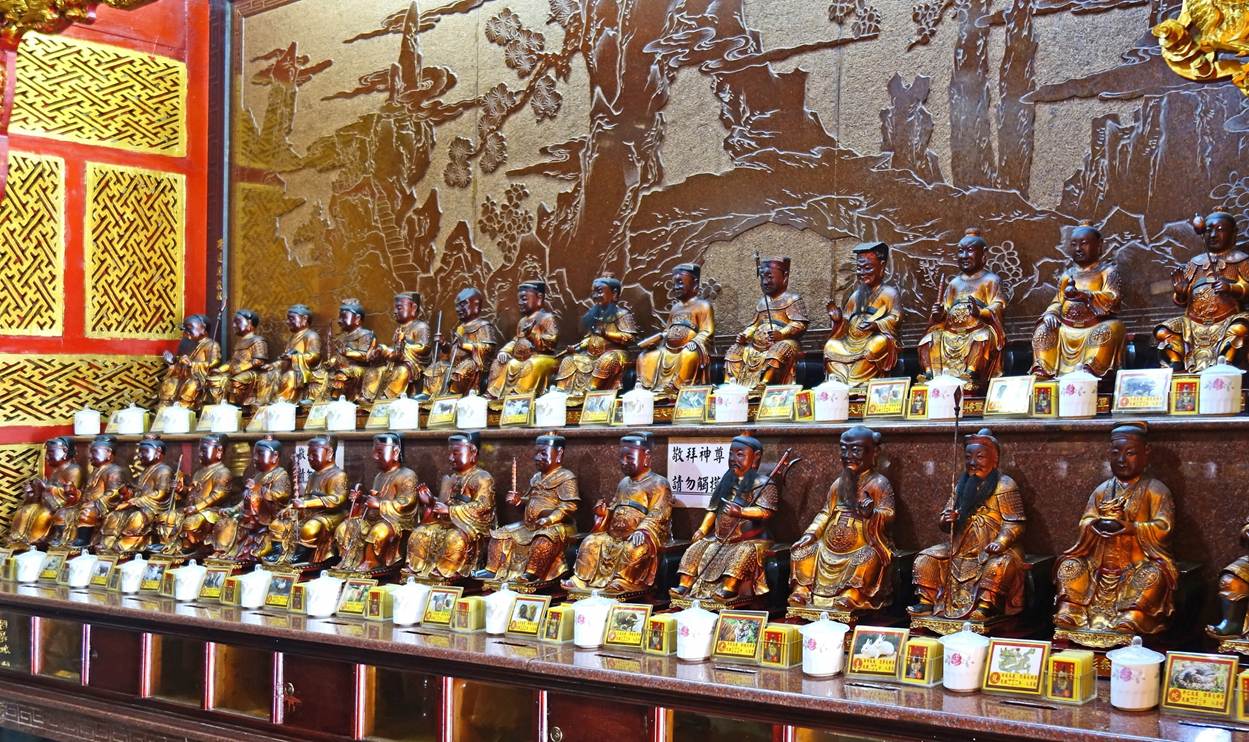
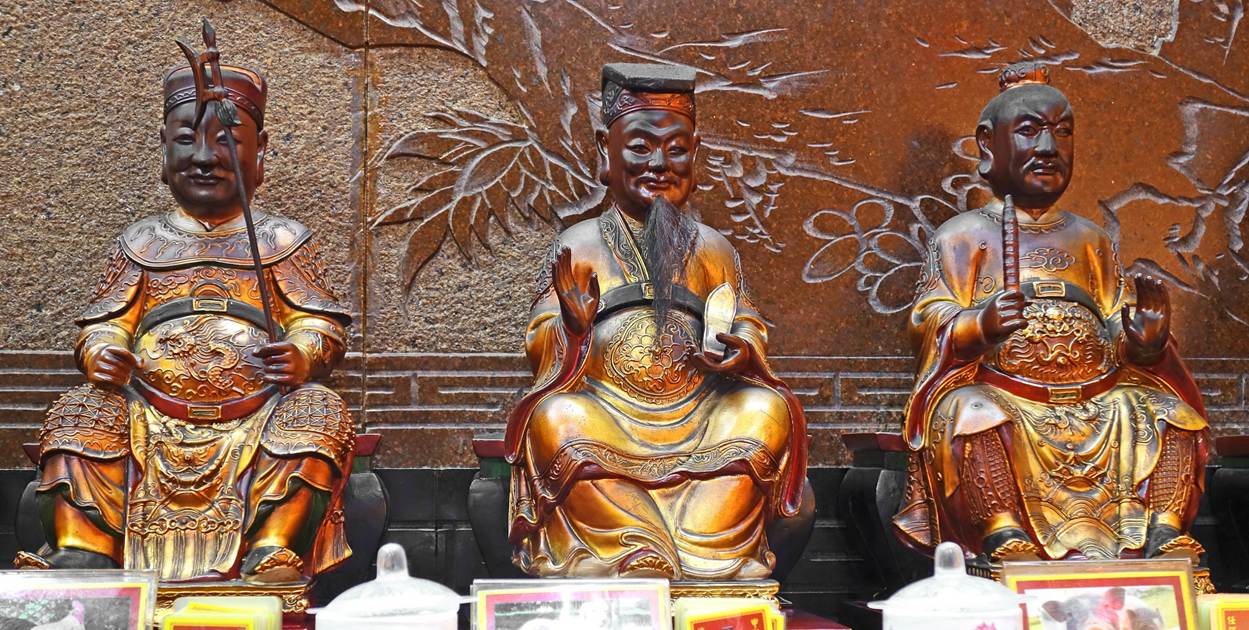
Interior of the Tai Sui
(太岁) hall. The sixty statues lined on both sides of the hall
represent the Tai Sui generals, who take turn to govern human fortune and
misfortune in 60-year cycles. The altar in the back of the room is dedicated to
Doumu Yuanjun (斗姆元君), the Mother of the Big Dipper. She is
the superior authority over the Tai Sui generals. People worship Doumu Yuanjun and the Tai Sui generals to bring luck and avoid misfortune.
[March 2026]
Sanjiao Zhengang Haian temple (三郊鎮港海安宮):
This temple was first built in the 18th
century (the exact date is uncertain). During World War II it was bombed by the
Allied Forces and severely damaged. It was rebuilt in 1947 and again in the
1970s. It is primarily dedicated to the Taoist goddess Mazu.
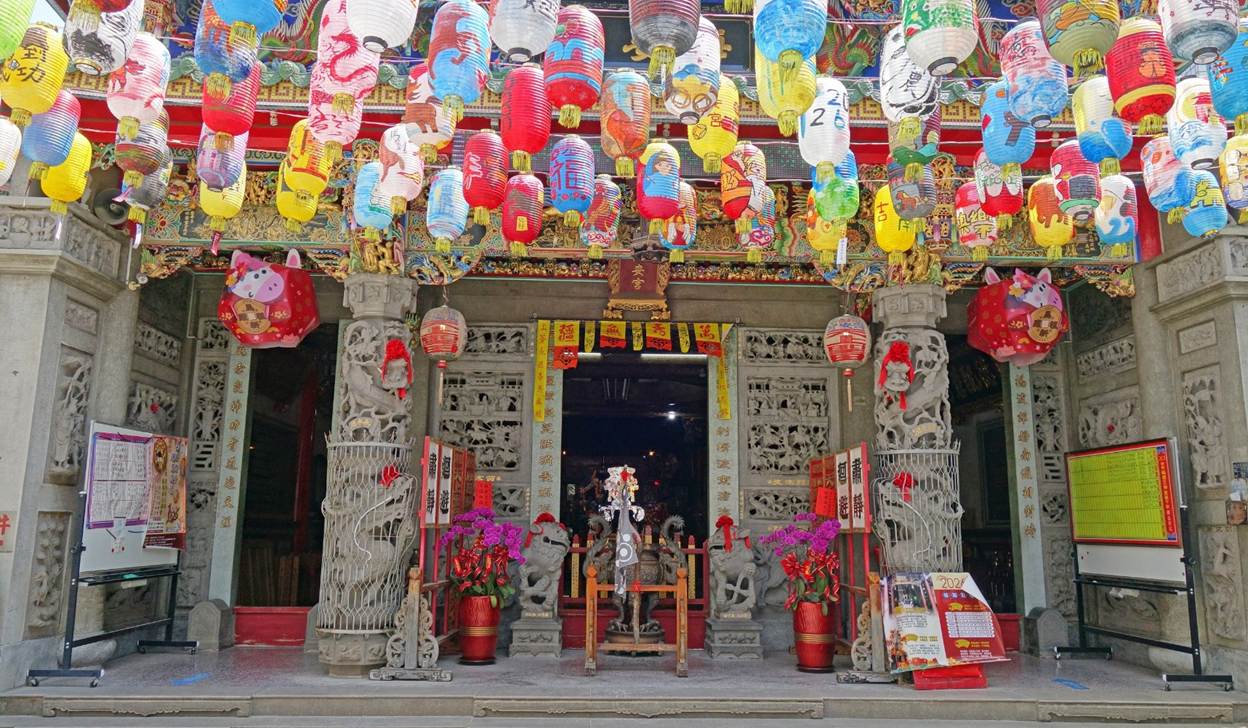
Entrance of the temple.
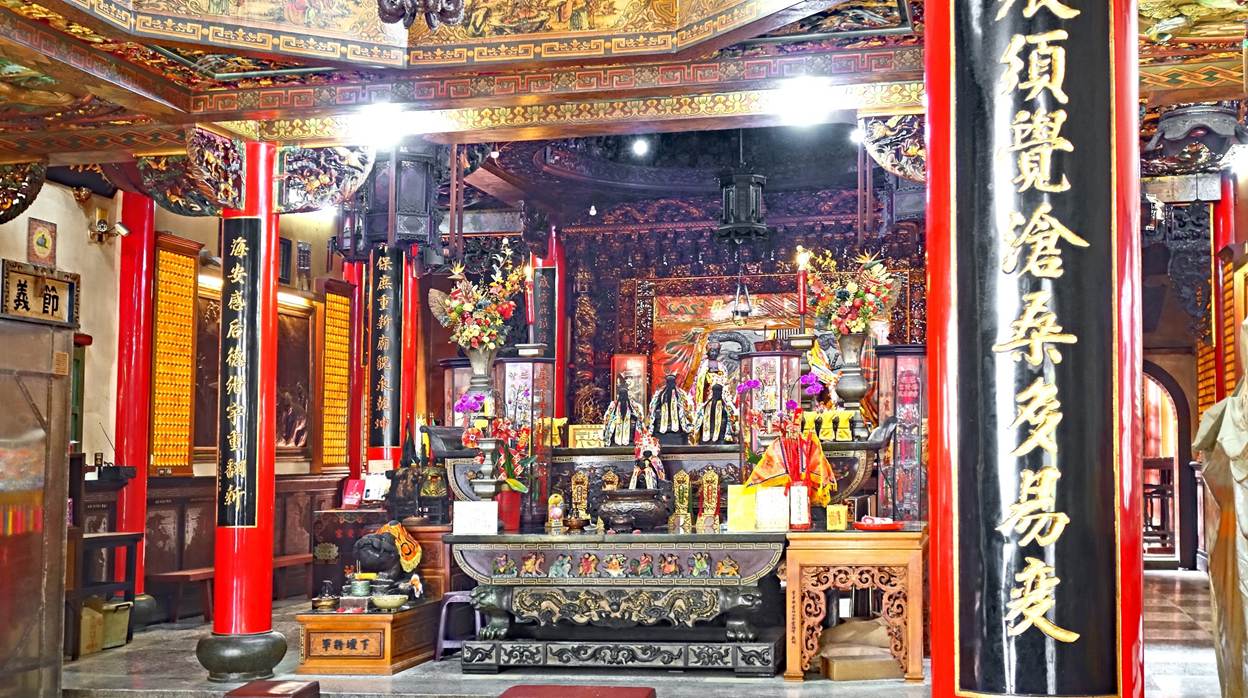
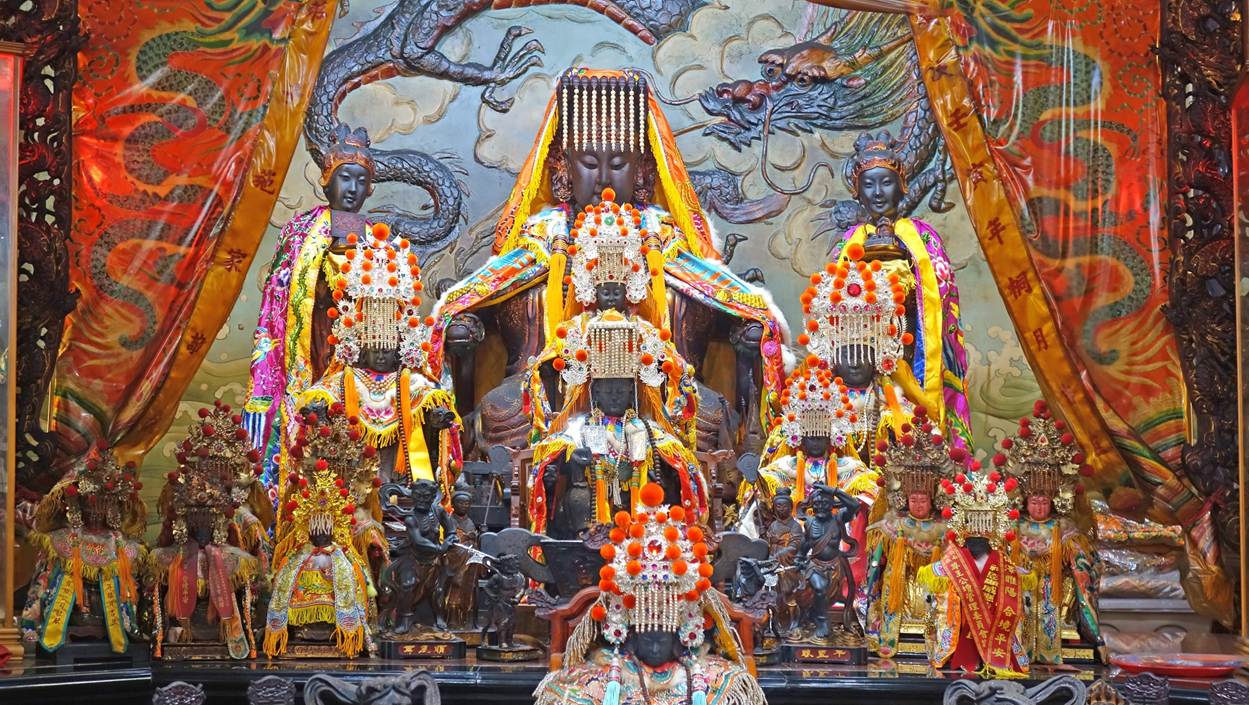
Main hall dedicated to Mazu.
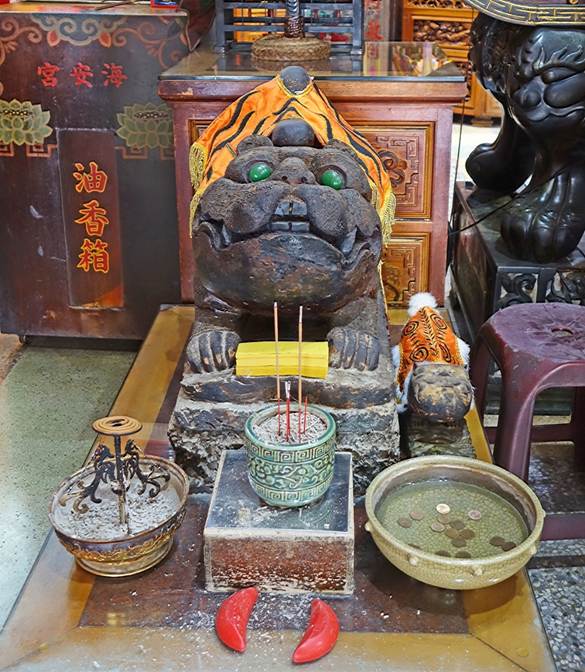
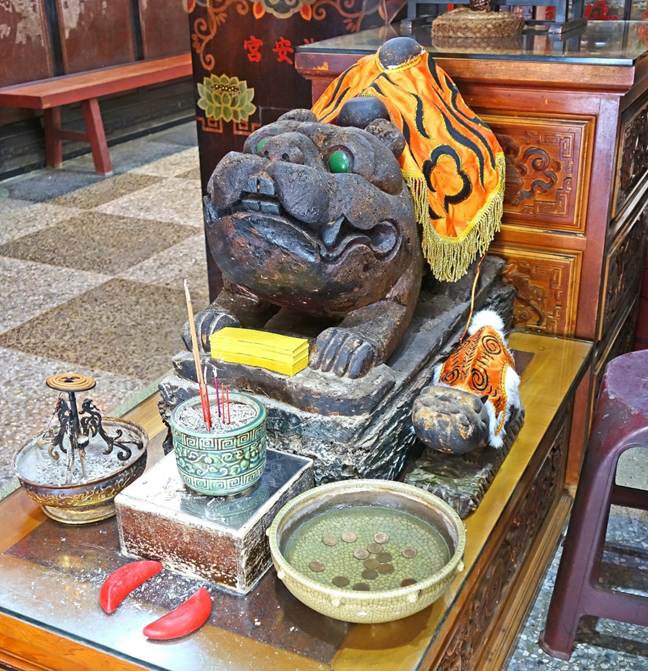
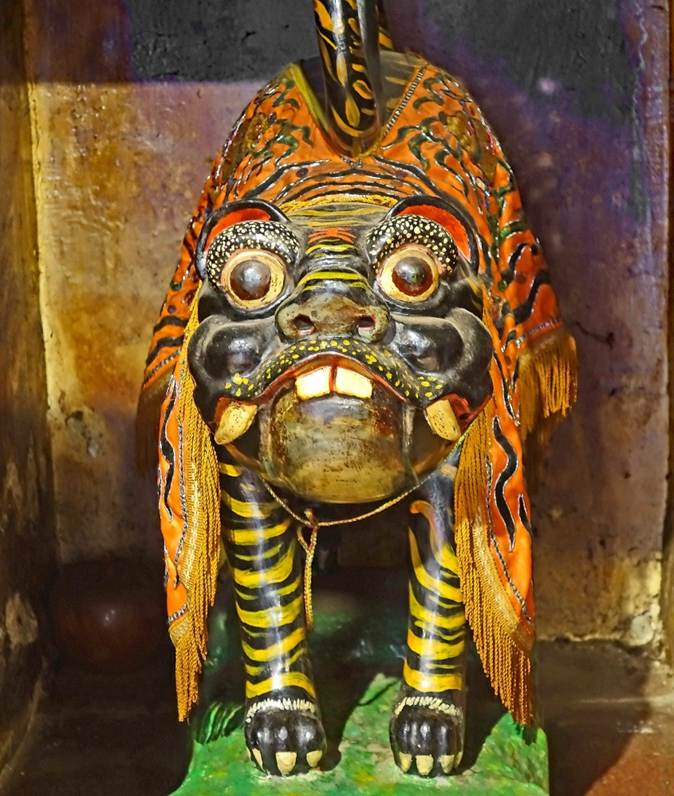
Statue
of Hu Ye (虎爺), the Tiger deity,
revered as a protective and benevolent guardian.
|
|
|
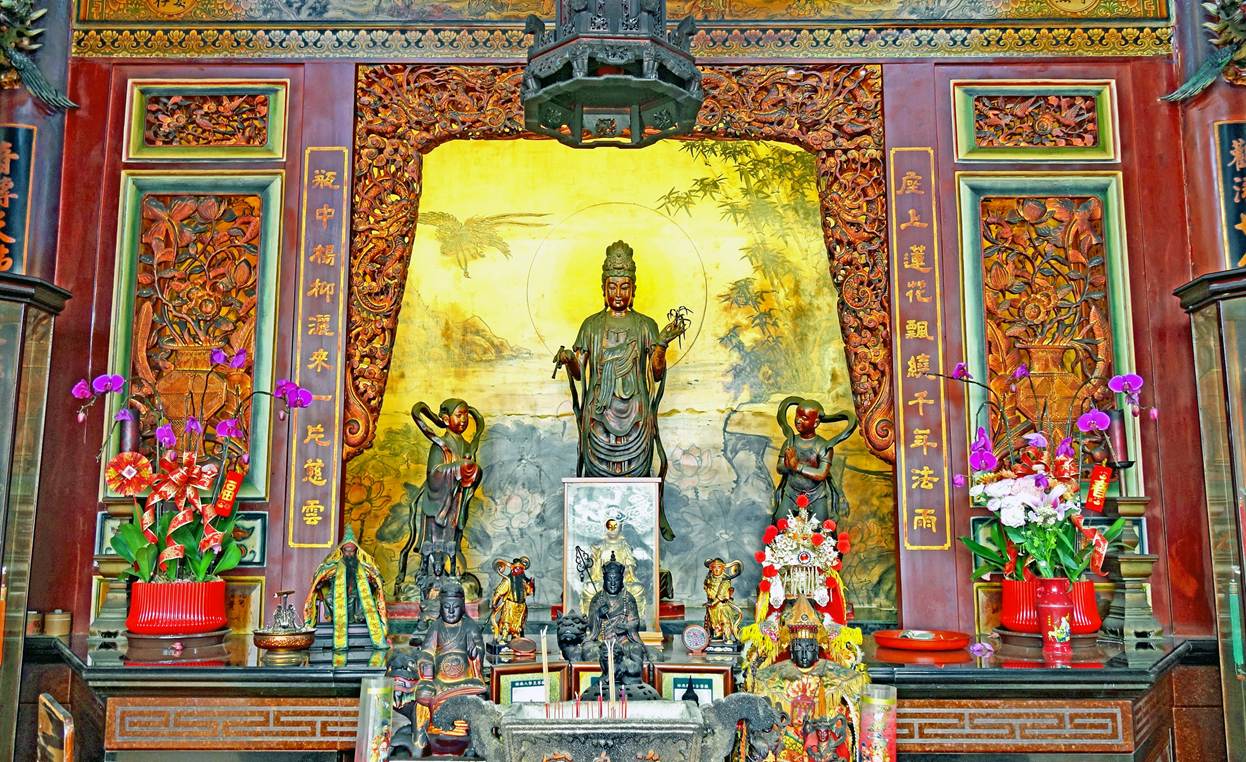
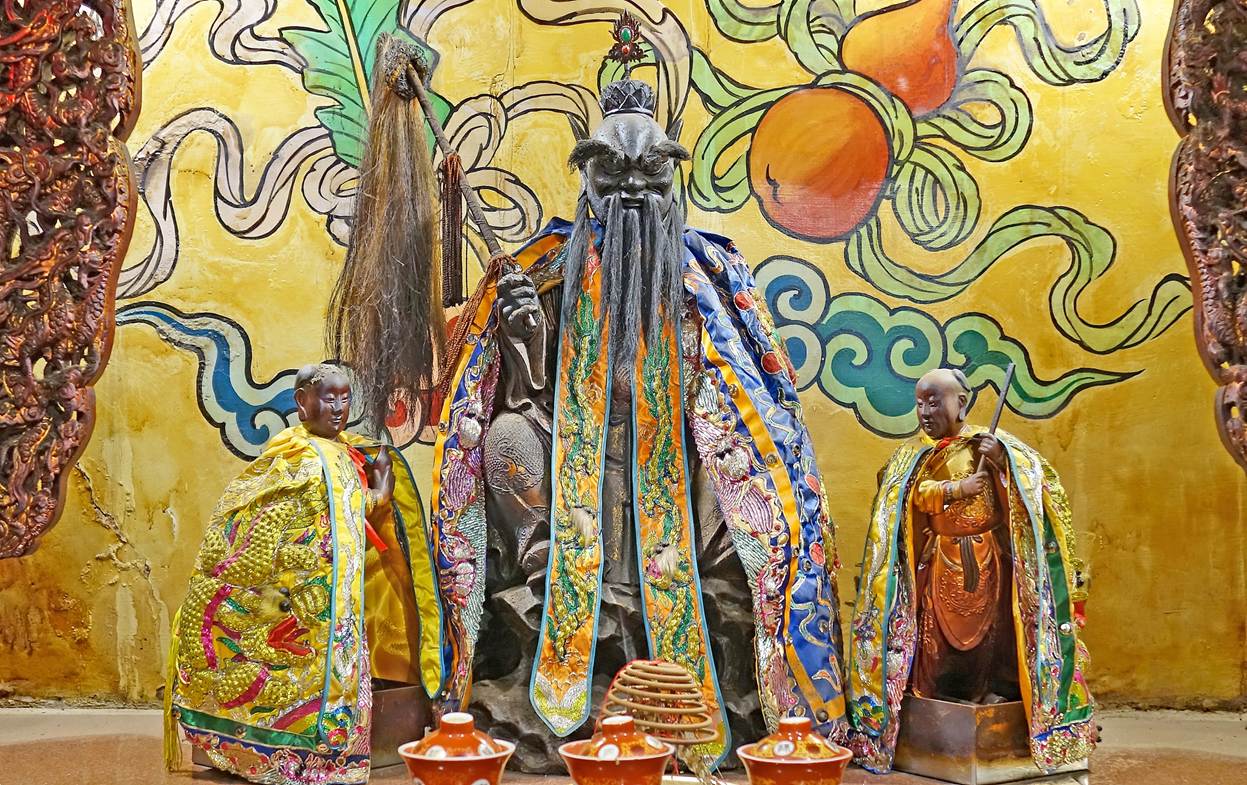
Altar dedicated to Guanyin, the
Buddhist bodhisattva of compassion. She is flanked with her two
attendants: Longnu (龍女) on the left and Shancai (善財童子) on the right.
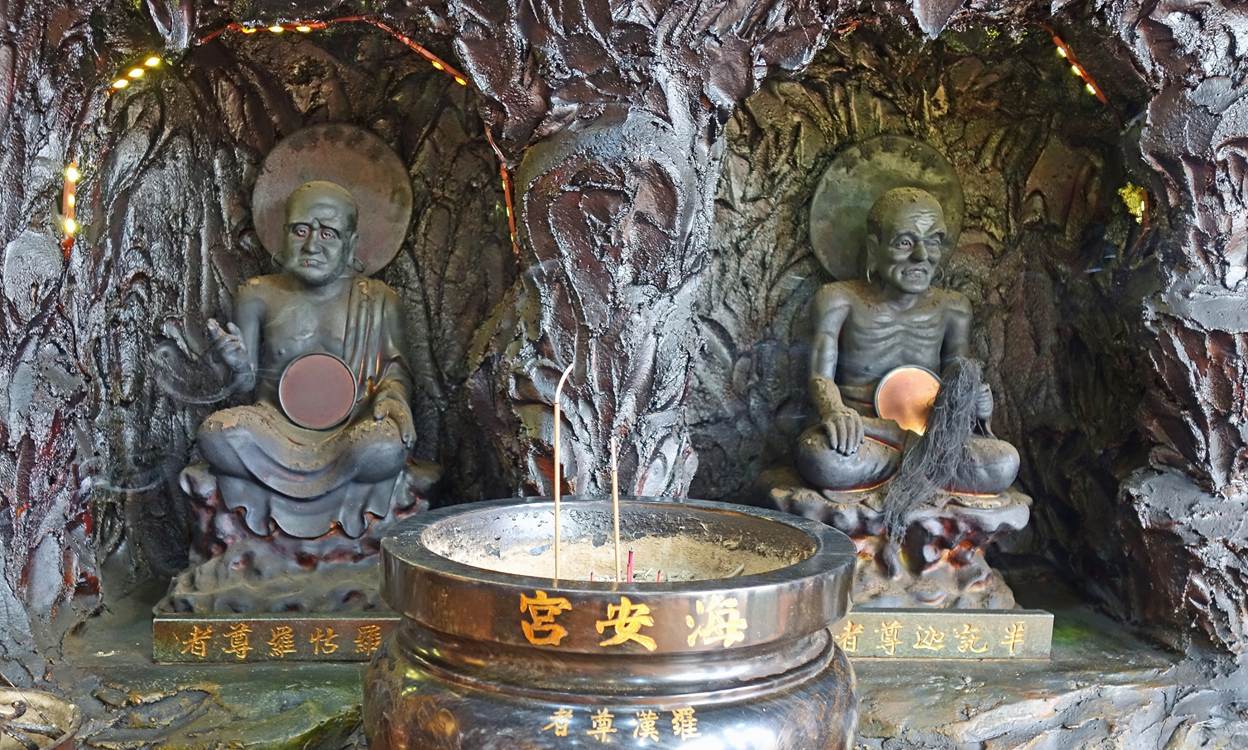
Statues of two arhats, disciples of
Siddhartha Gautama appointed to remain in the world to protect his teachings
until the arrival of Maitreya, the future Buddha.
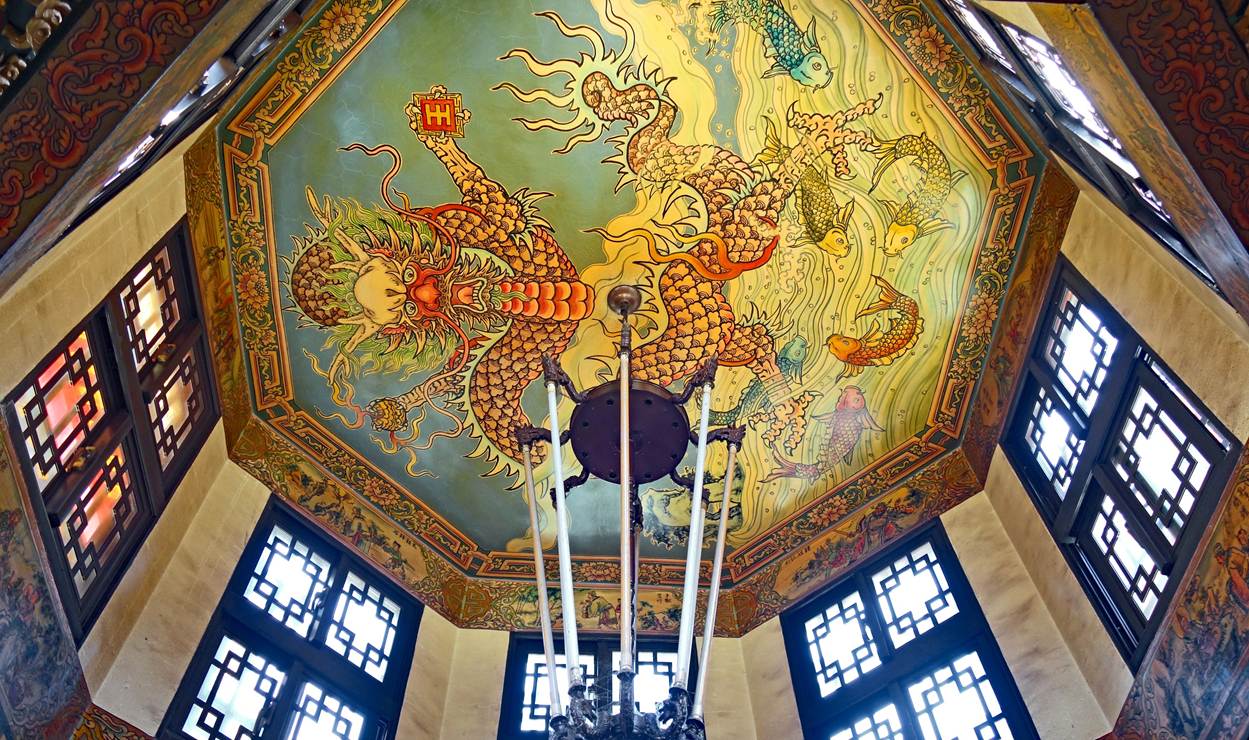
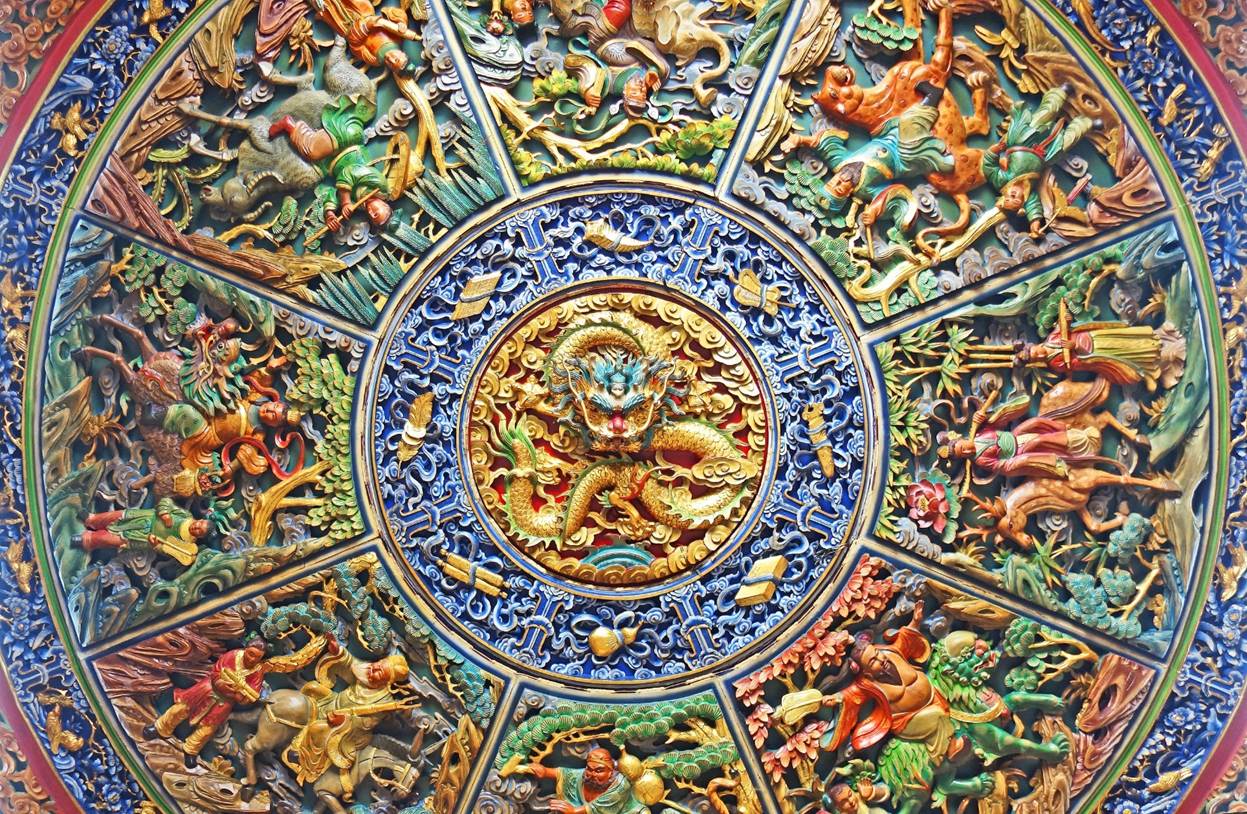
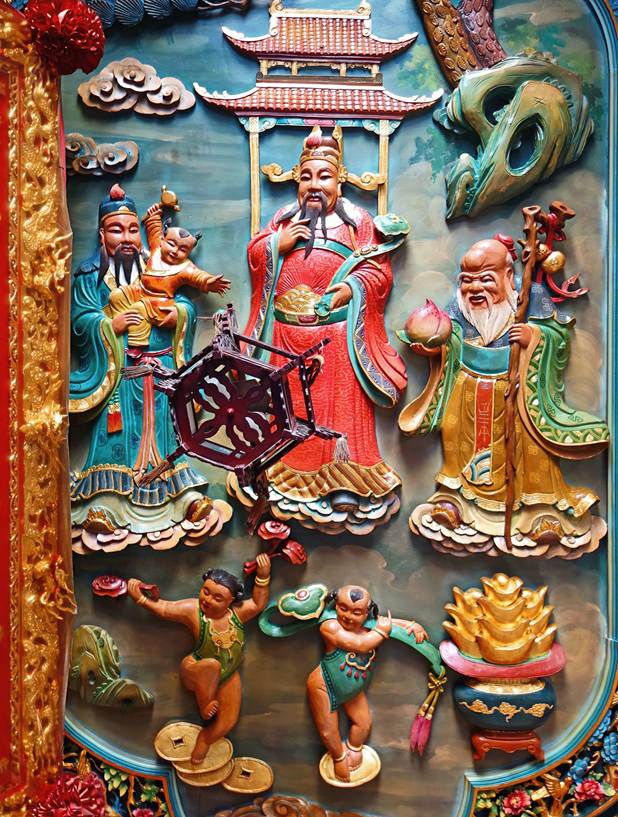
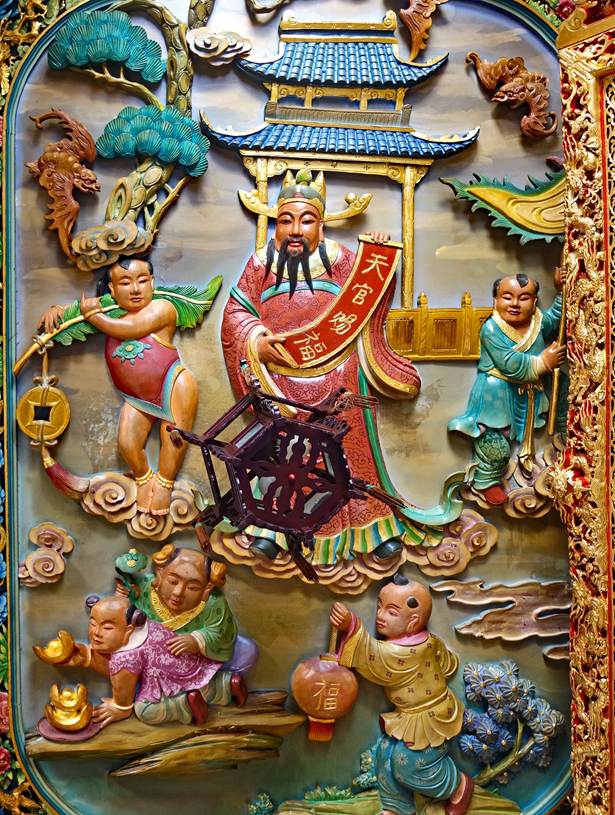
Decorated ceilings in the temple.
|
|
|
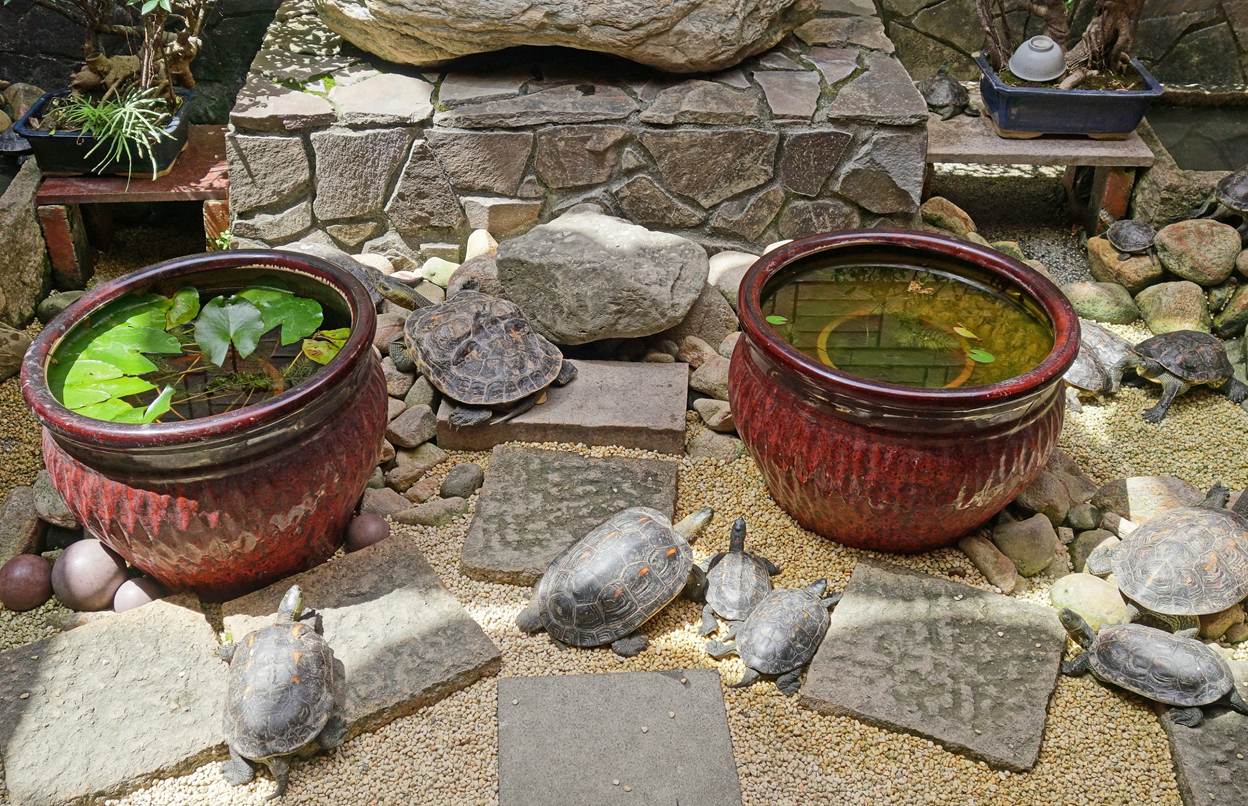
Turtles wandering in the temple.
[March 2026]
Shennong street (神農街):
This street is considered
one of the most traditional in Tainan. During the Qing Dynasty, it was the main
merchant entrance to a busy river port area, which has disappeared in the early
20th century. Today it is a colorful bric-a-brac alley lined with old buildings
and colorful lanterns.
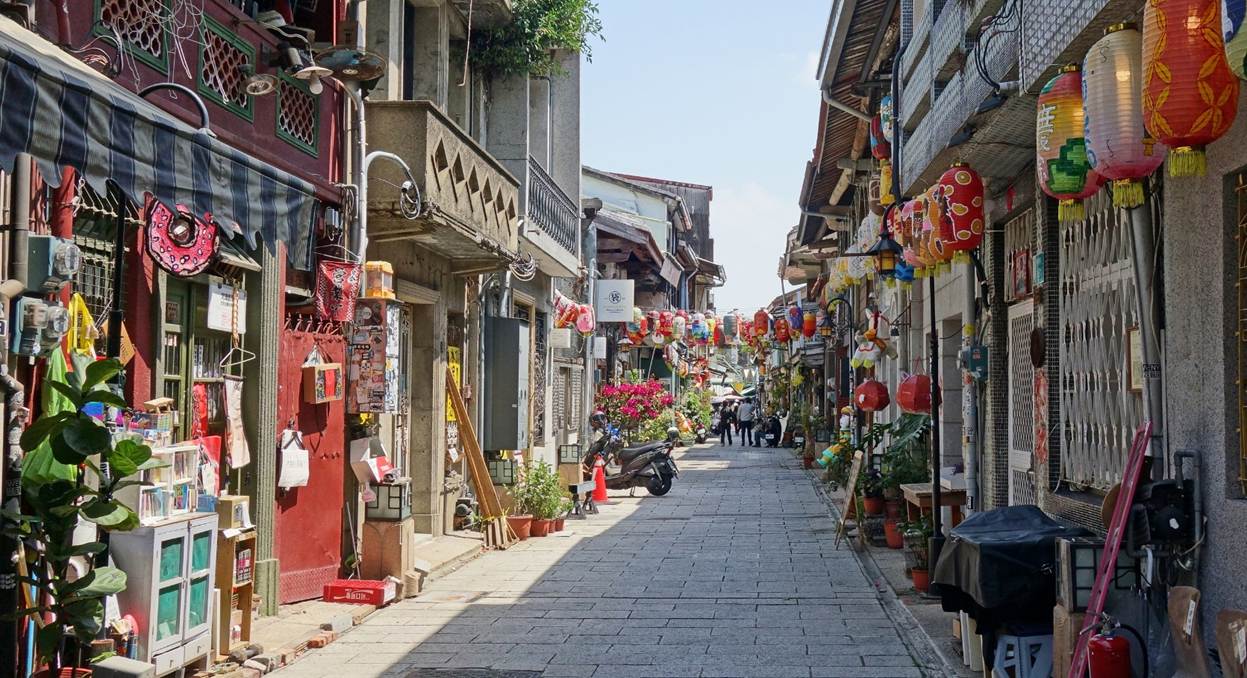
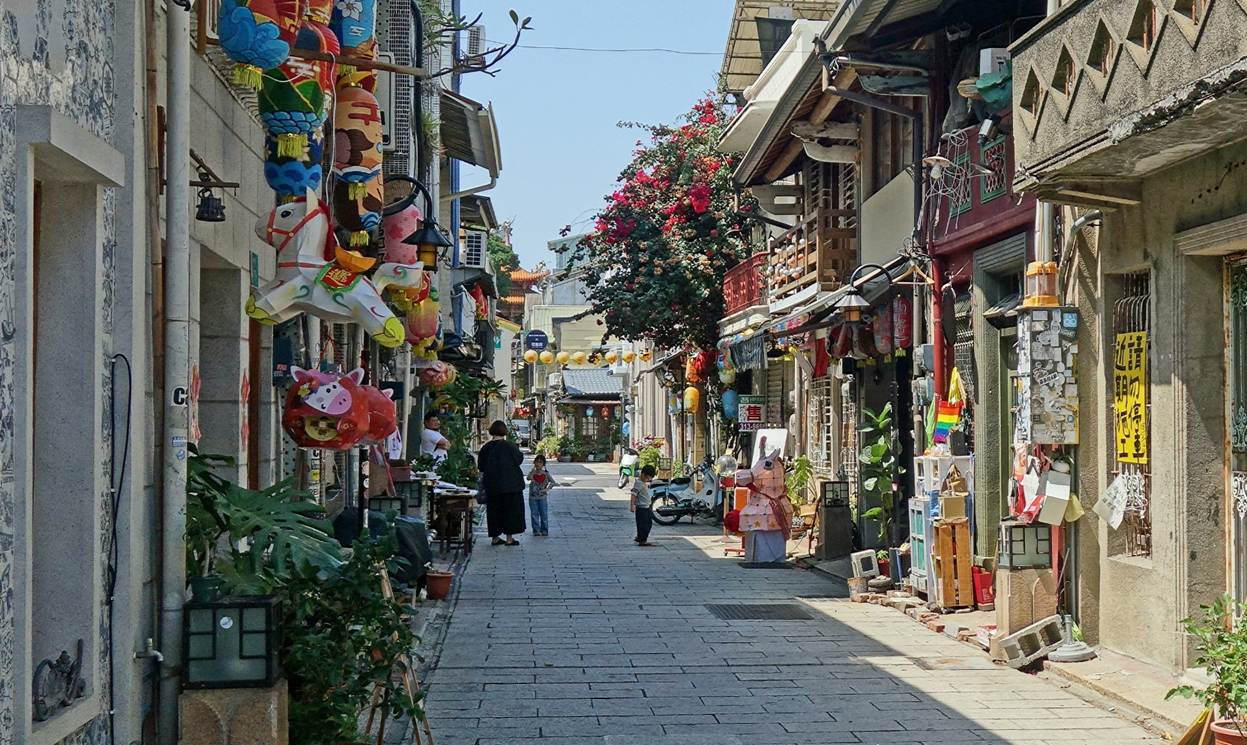
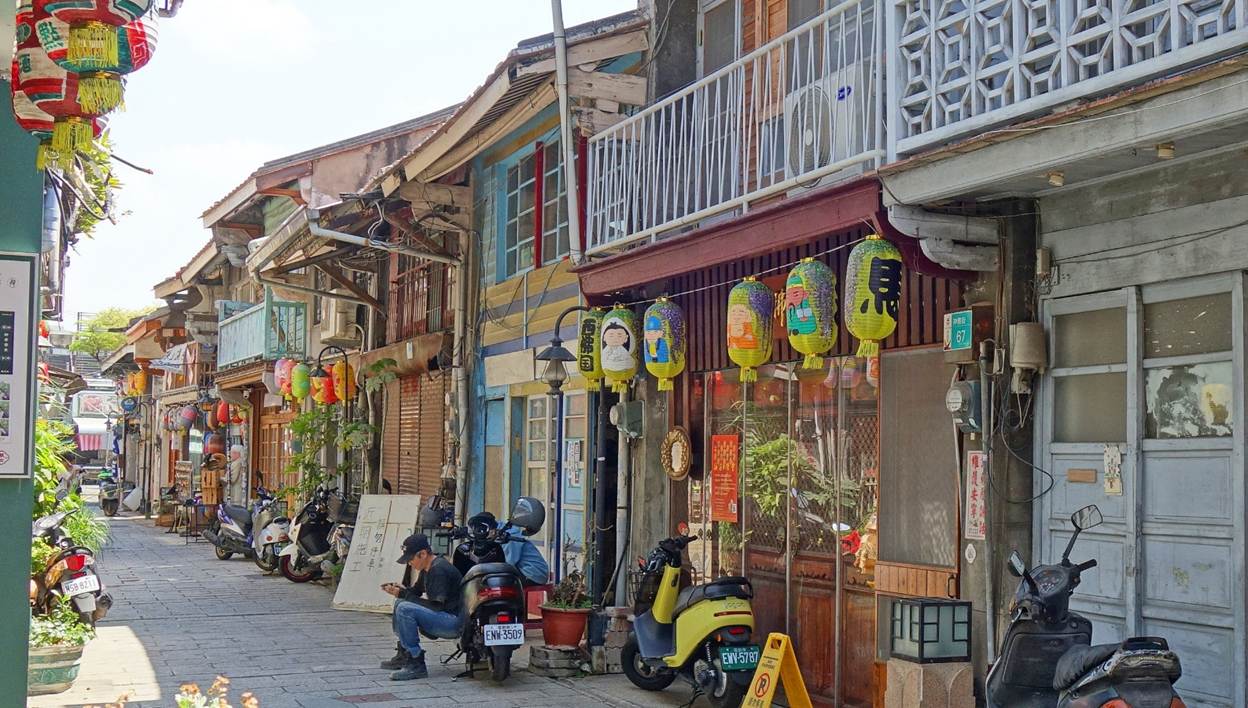
[March 2026]
Jinhua temple (金華府):
Located in the Shennong Street, this small temple has the size of a house
in the street. Perhaps for that reason, it is one of the few temples featuring
the character 府 "Fǔ" (meaning residence) in its name, instead of
廟 ″miao″ or 寺 ″si″ (both meaning temple), or 宮 (meaning ″palace″). Originally built in
1830 on the other side of the street by members of a local family named Xu (许), it was moved to its
current location in 1913 and renovated several times since, the last time in
2010. Its current appearance dates mostly from 1946.
It is dedicated to Guan
Sheng Di Jun (關聖帝君), the deified military
general named Guan Yu (關羽) (circa 160-220),
renowned for his loyalty, righteousness, and martial valor. A source of
confusion is that this general has received several honorific names after
deification, including Guan Di (關帝), Guan Gong (關公), and Guan Sheng Di Jun (關聖帝君), used by different
temples. All these names refer to the same god, the God of War. The specific
name used in a temple may have been the choice its founders.
Left: Front section of
the interior of the temple with its incense burner. Right: Back section with
the altar dedicated to Guan Sheng Di Jun.
|
|
|
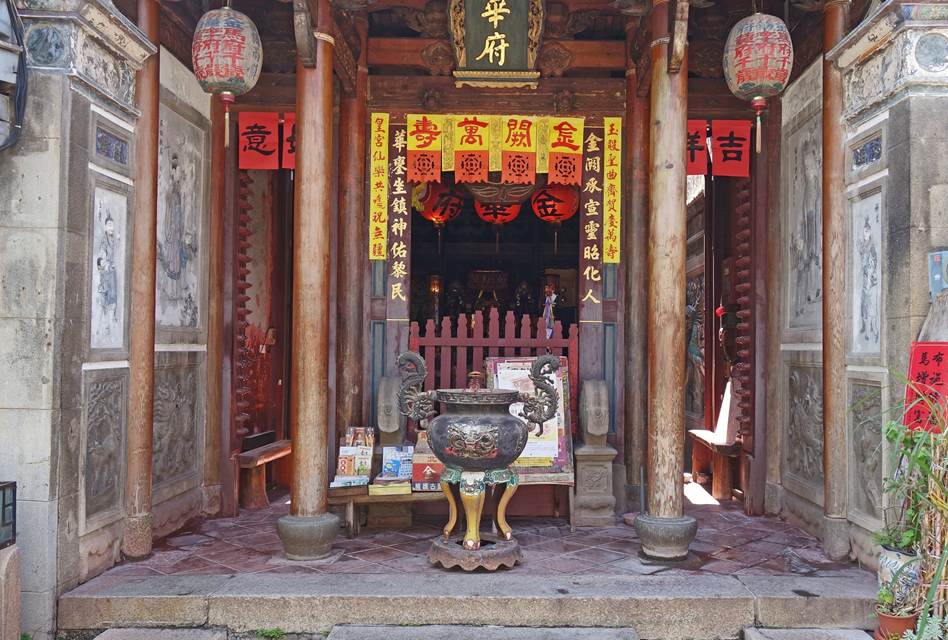
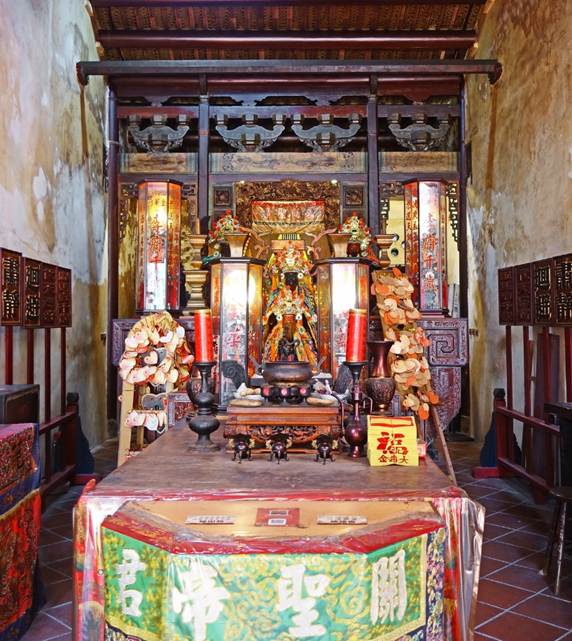
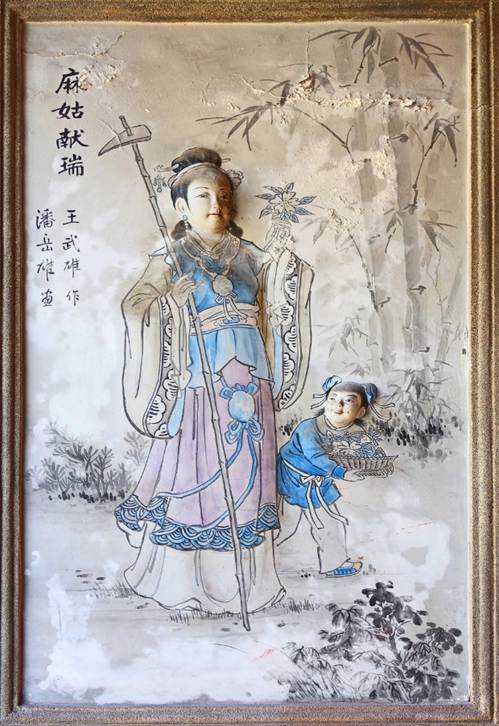
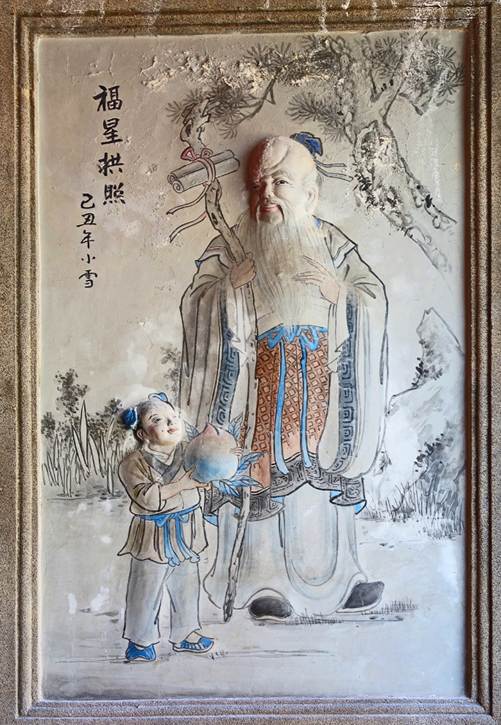
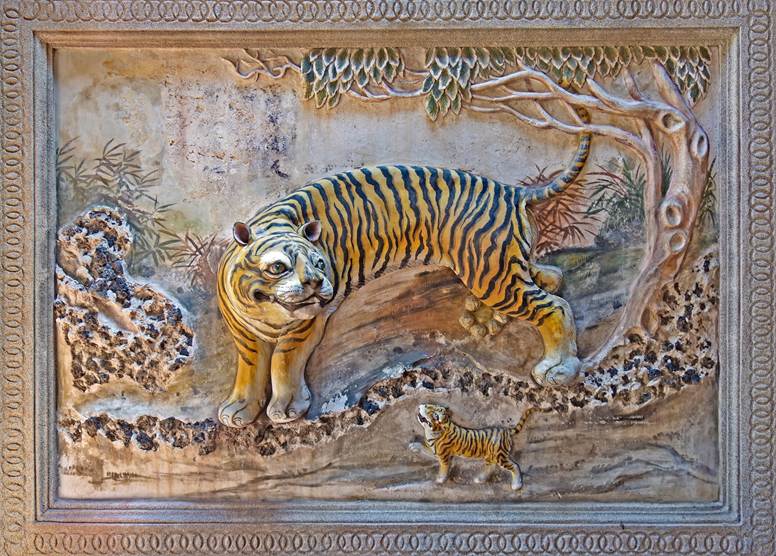
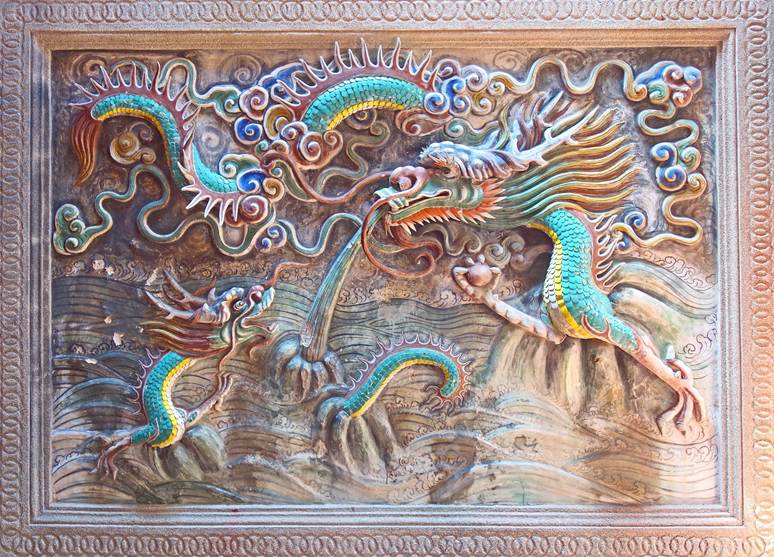
Pairs of murals facing
each other on the side walls of the temple.
|
|
|
|
|
|
[March 2026]
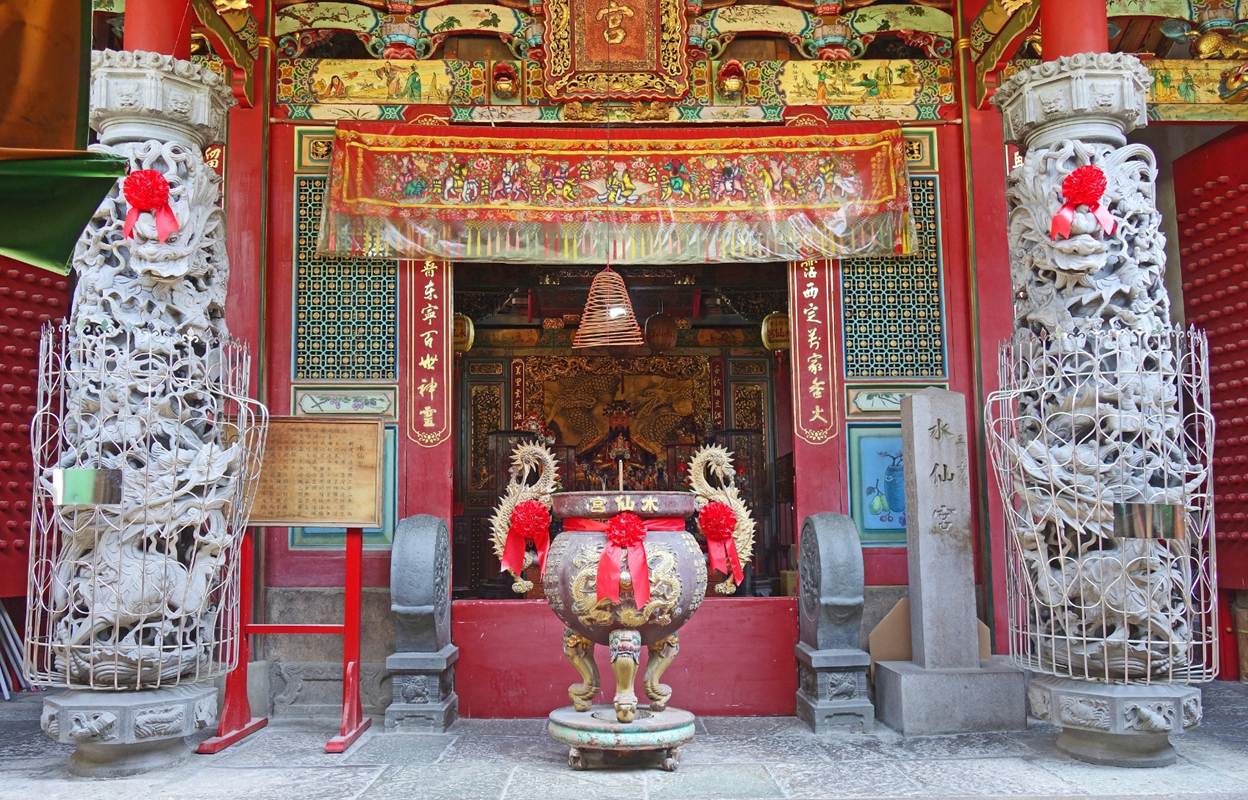
Tainan Shuixian temple
(水仙宮廟):
The name Shuixian (水仙) of this temple refers
to Shuixian Zunwang (水仙尊王), a group of five Immortal Kings
of the Waters, collectively worshiped as a guardian deity presiding over bodies
of water and ensuring safe navigation. Originally built in 1715, the
temple saw two of its three halls, including the main one, severely damaged by
bombing during World War II. These two halls were subsequently razed to make
way for the construction of air-raid shelters. The old statues of the five Water
Immortals, originally enshrined in the main hall, were transferred to the Grand
Mazu temple, which was managed by the same merchant guilds (郊, ″Jiao″). The
surviving hall was renovated in 1985, but the five old statues still remain in
the Grand Mazu temple (see below).
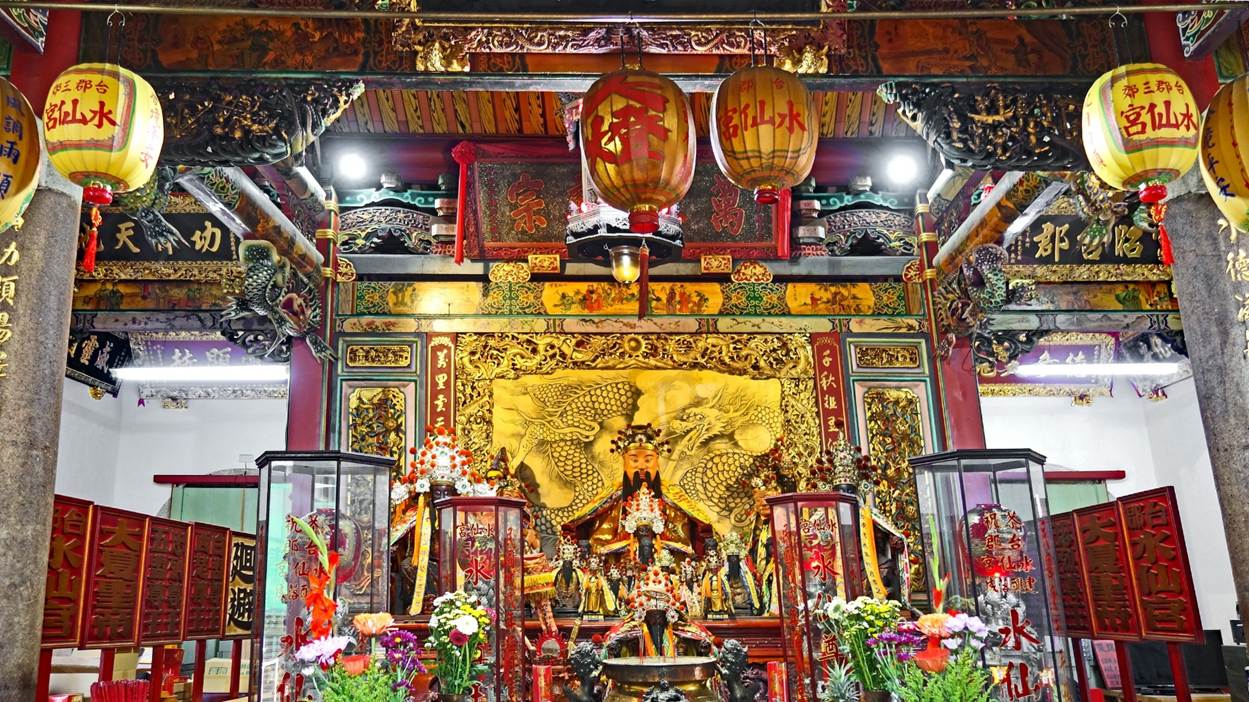
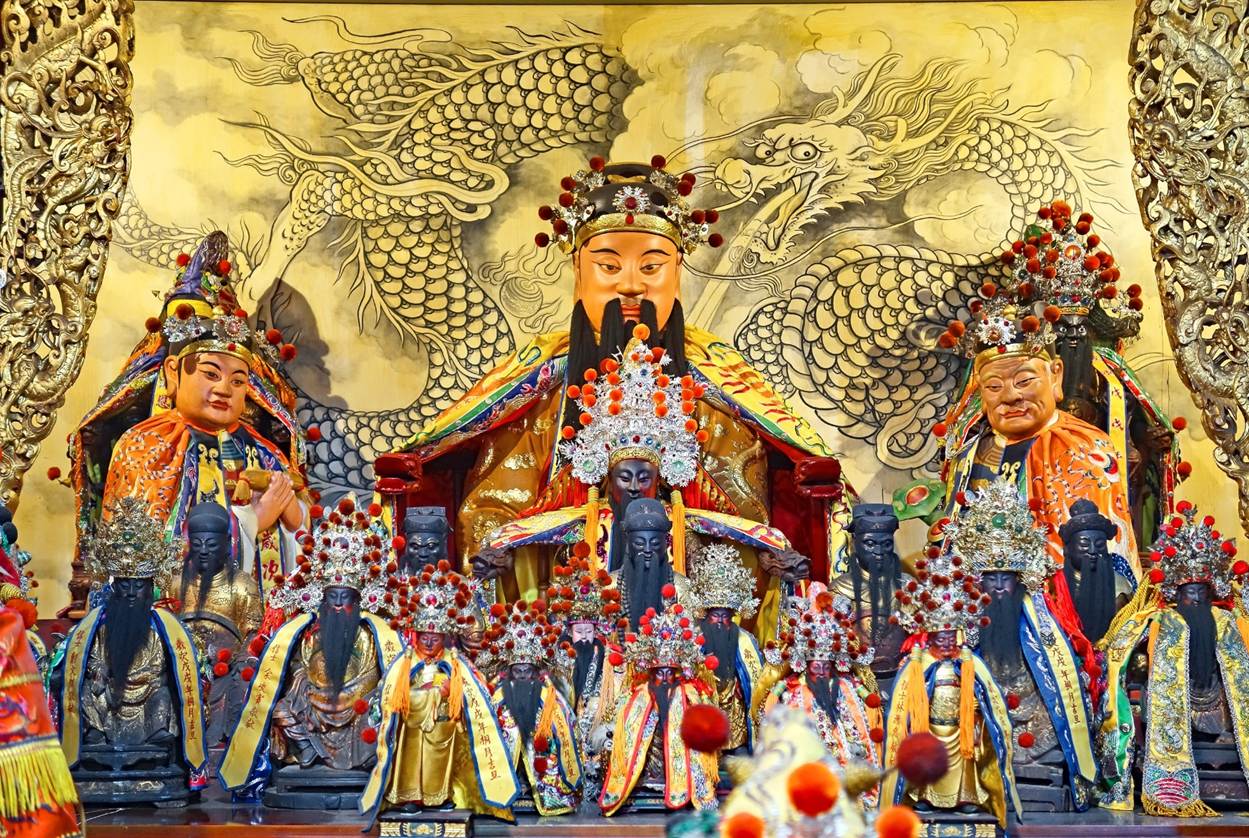
Altar in the temple.
[March 2026]
Tainan Grand Mazu temple (臺南大天后宮):
The two characters 天后 (″tian hou″)
appearing in the Chinese name of this temple signify ″Heavenly Empress″,
one of the honorary titles of Mazu, the Taoist goddess of the sea and the
patroness of sailors and fishermen. The temple building was erected in
1664, not as a temple, but rather as the residence of the Ming Prince of Ningjing
(寧靖王), who had sought refuge in Taiwan when the Manchurians sized power
in China and founded the Qing dynasty. When Qing forces conquered Taiwan in
1683, the prince took his own life. In 1684, the building was converted into a
temple dedicated to Mazu, one of the very first among the hundreds of temples
devoted to Mazu that dot Taiwan today. The temple has undergone multiple
restorations, notably in 1818 (following a fire), in 1946 (after a major
earthquake), and in 2004.
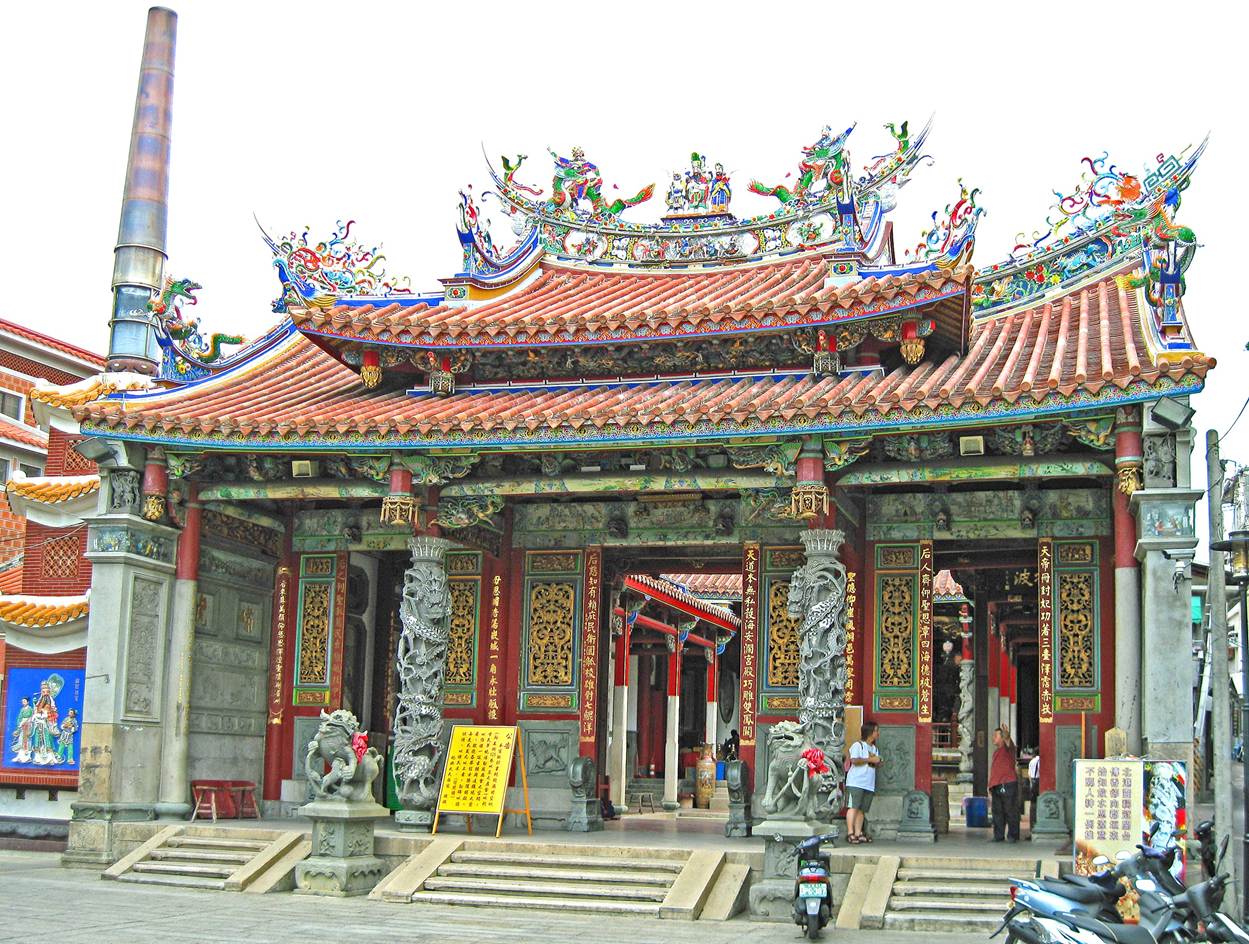
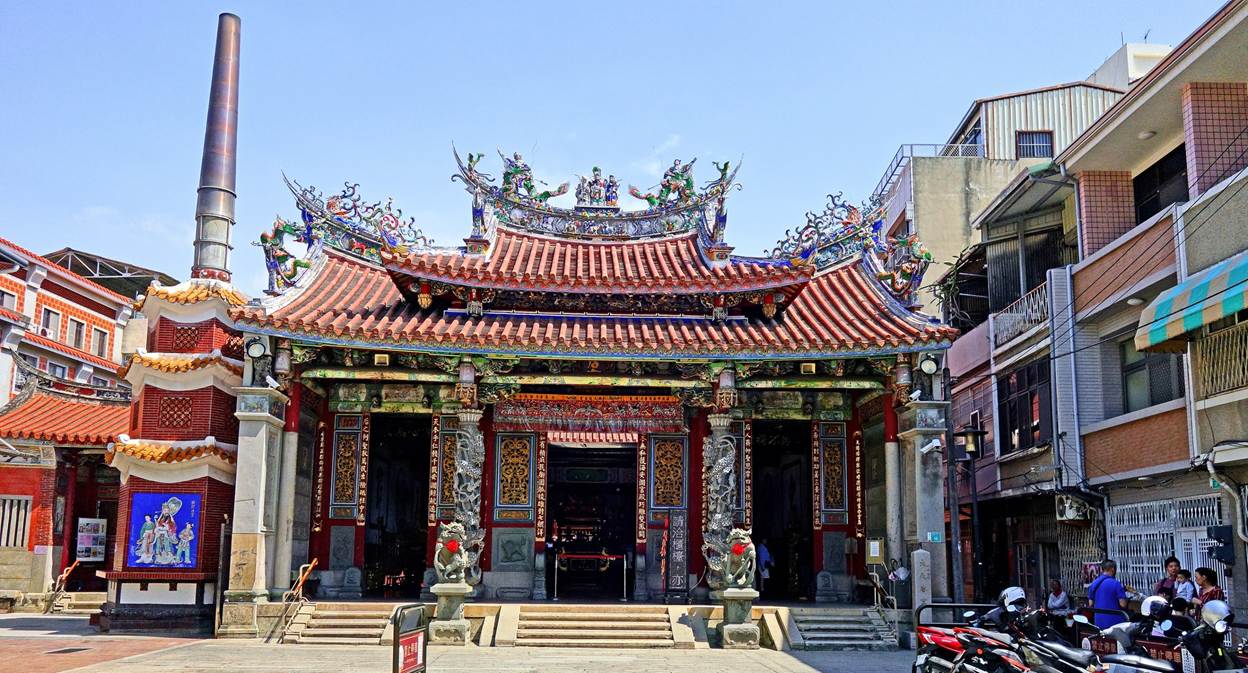
Main entrance of the
temple.
[June 2009]
[March 2026]
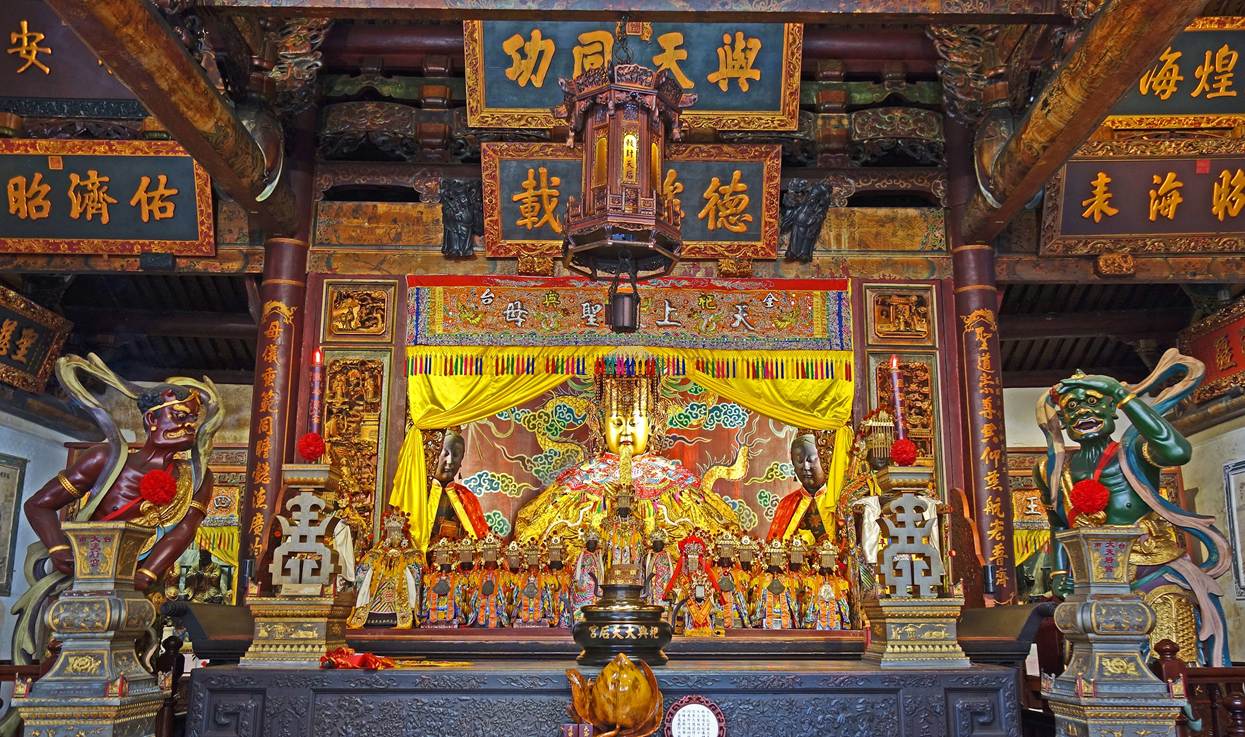
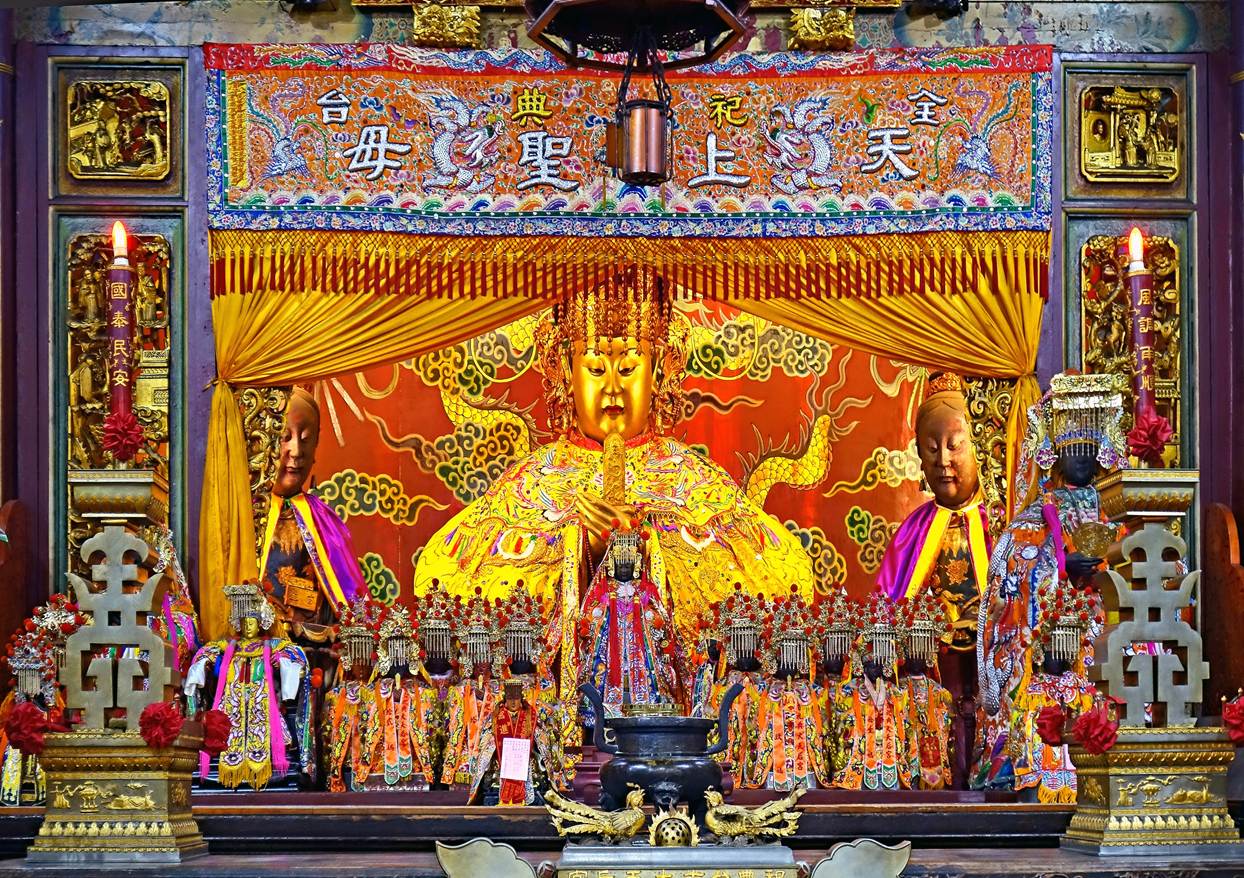
Altar dedicated to Mazu
in the main hall.
[March 2026]
[April 2017]
Altar dedicated to Shuixian Zunwang (水仙尊王), a group of five Water Immortals, collectively worshiped as a guardian
deity of the seas. It is located in the main hall, to one side of the Mazu
altar. It is said that these statues were moved from the Shuixian temple during World
War II (see above).
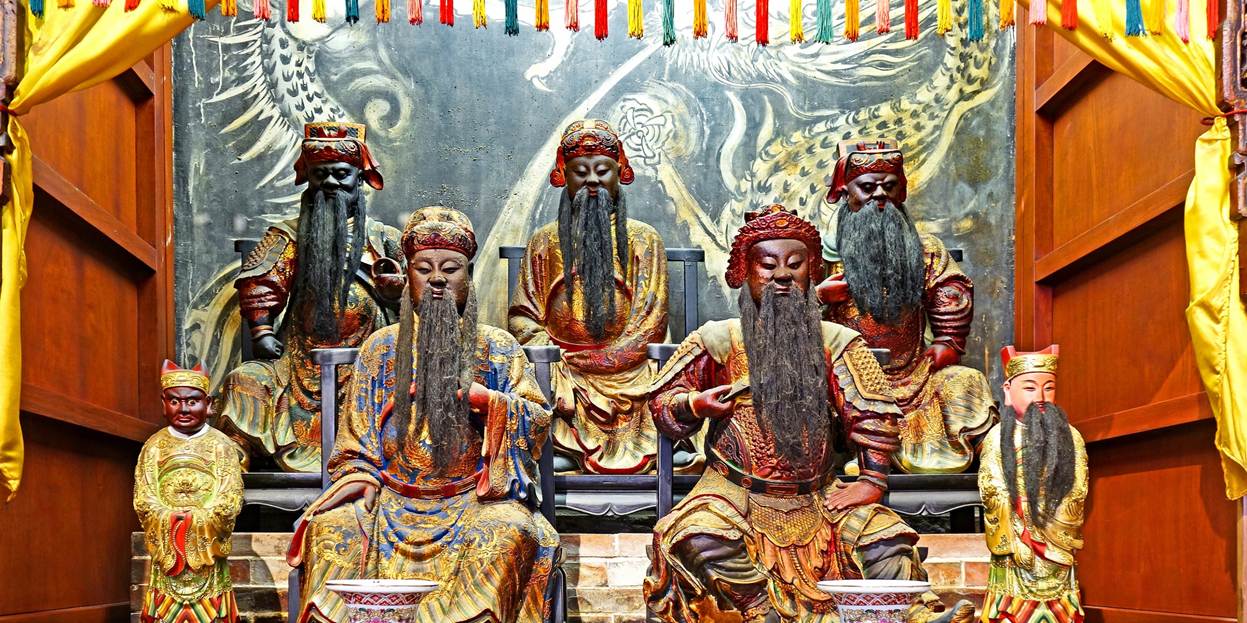
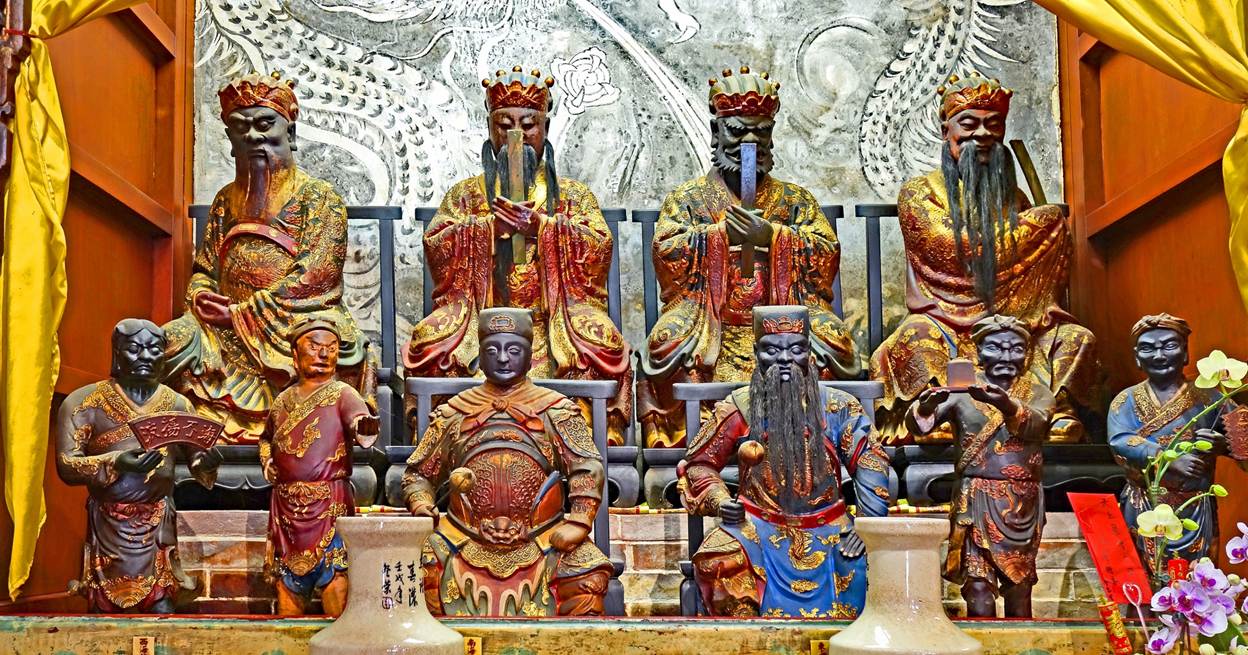
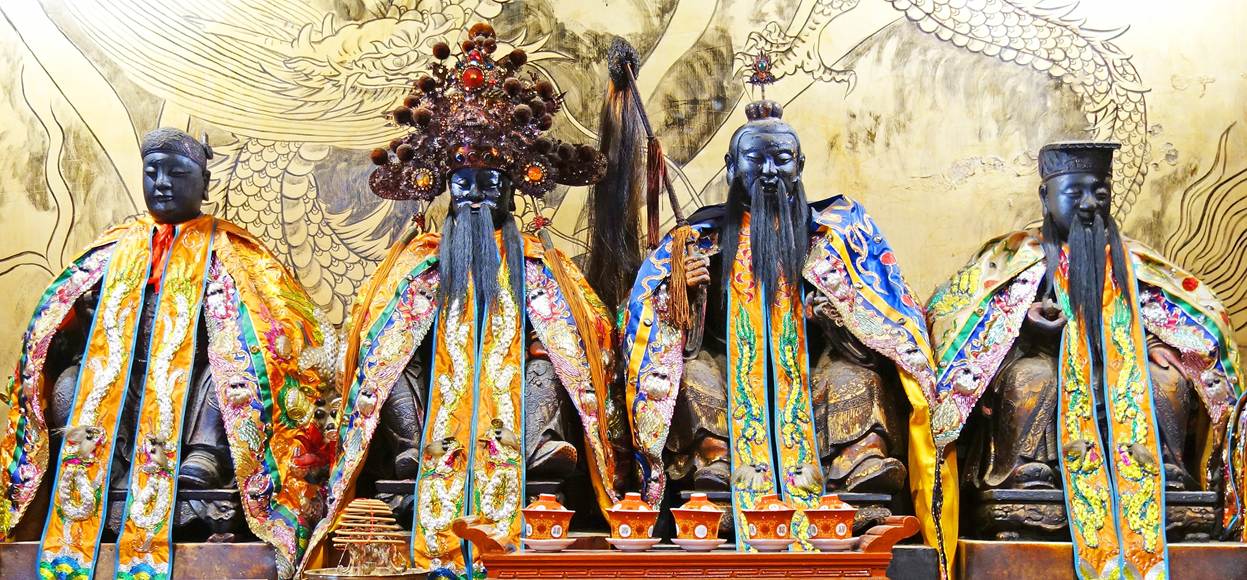
Altar of the Dragon
Kings of the Four Seas (四海龍王). It is also located in the main hall, to the other side to the Mazu altar.
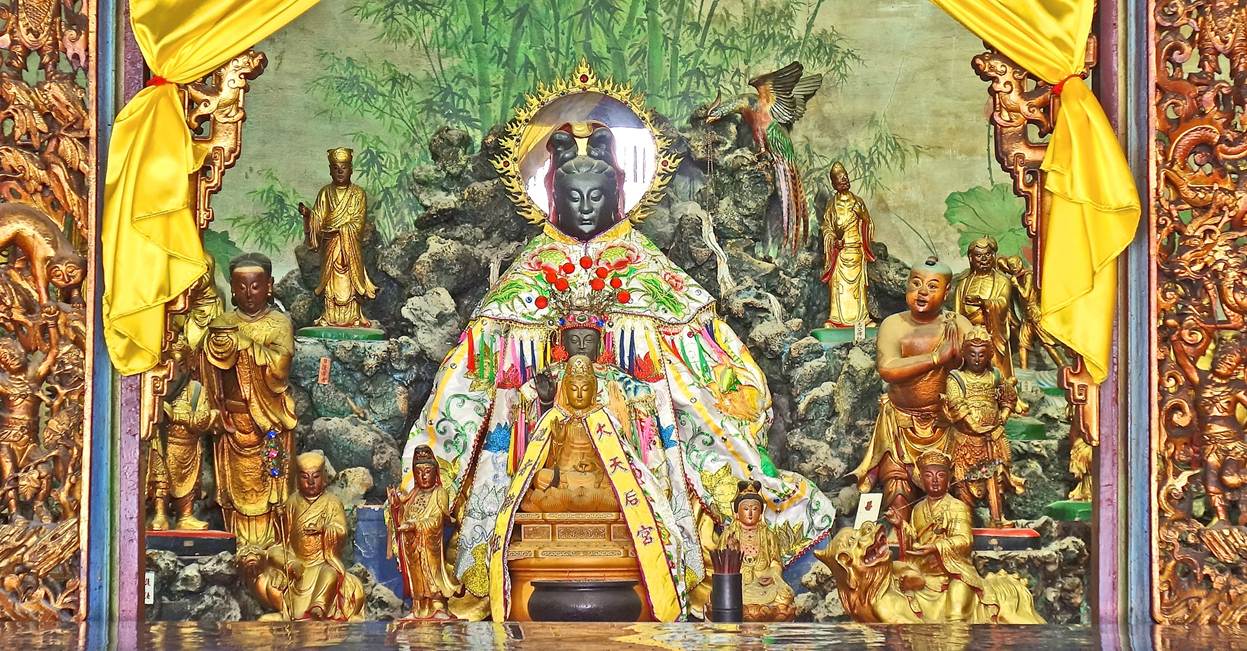
Altar dedicated to
Guanyin.
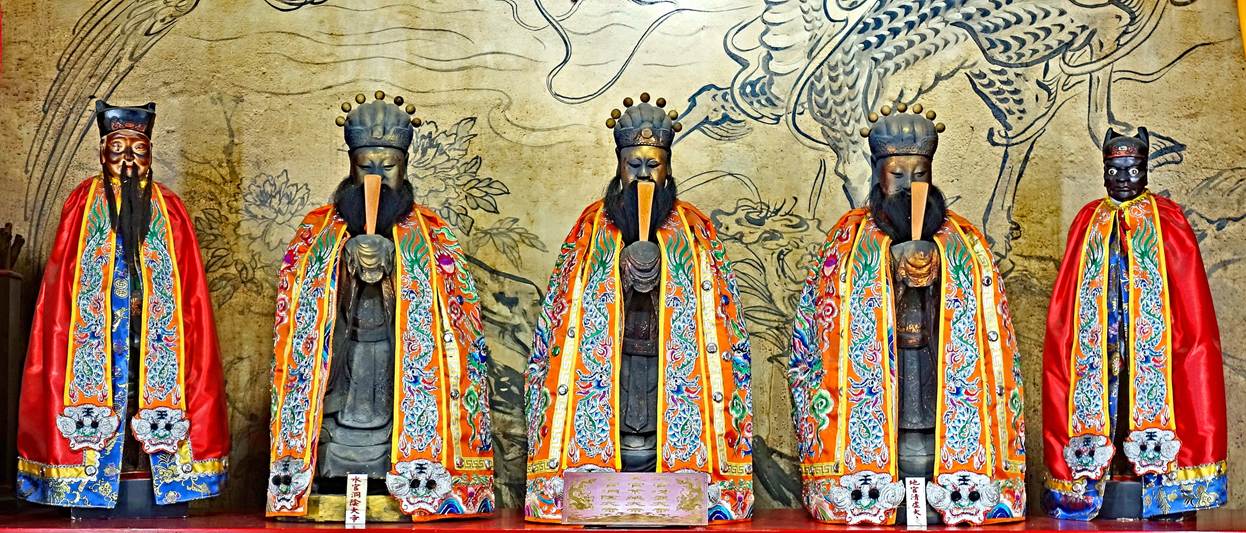
Altar of the Great
Emperors of the Three Realms (三界大帝). The three statues in
the center are, from left to right, the Emperors of the Seas (who wards off
misfortunes), the Skies (who bestows blessings), and the Earth (who absolves
sins). They are also called the Three Great Officials (三官大帝).
[March 2026]
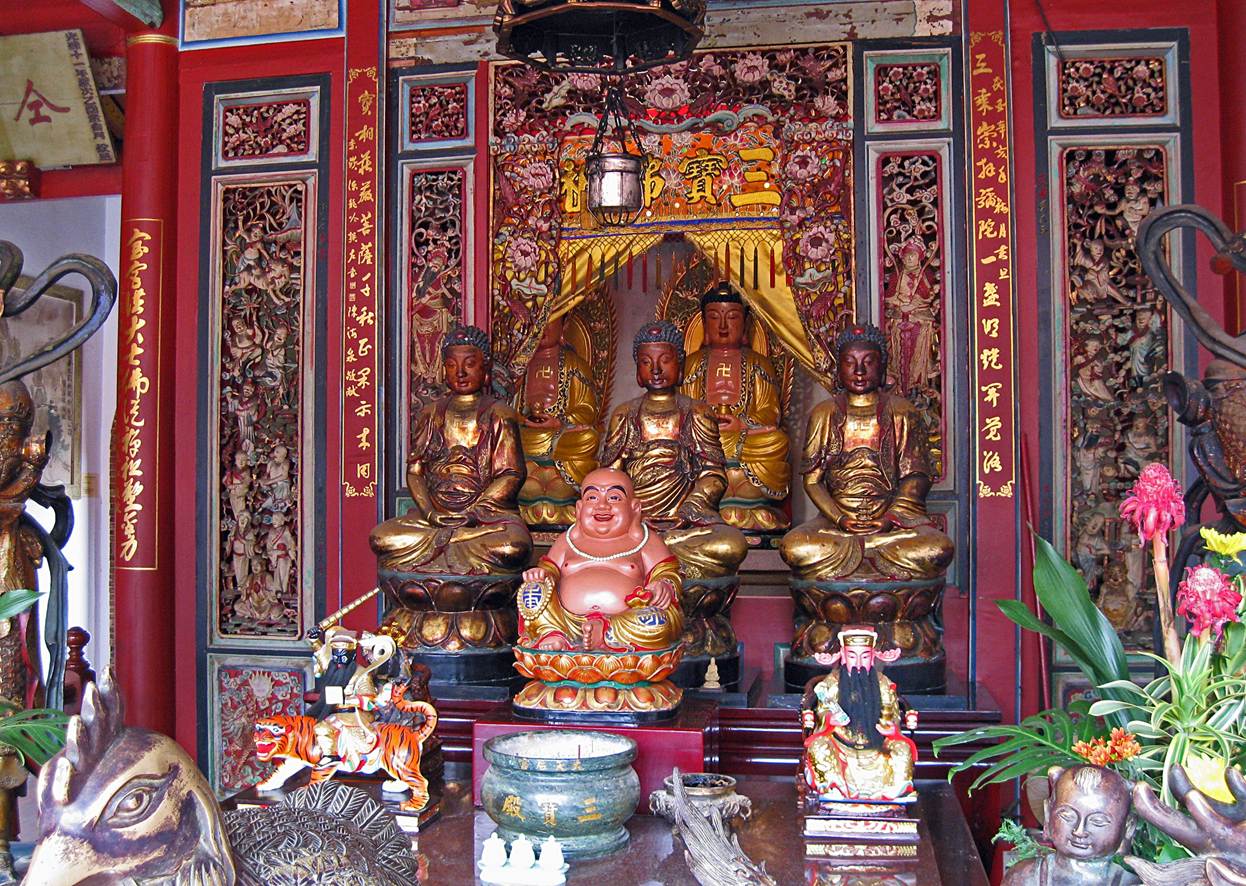
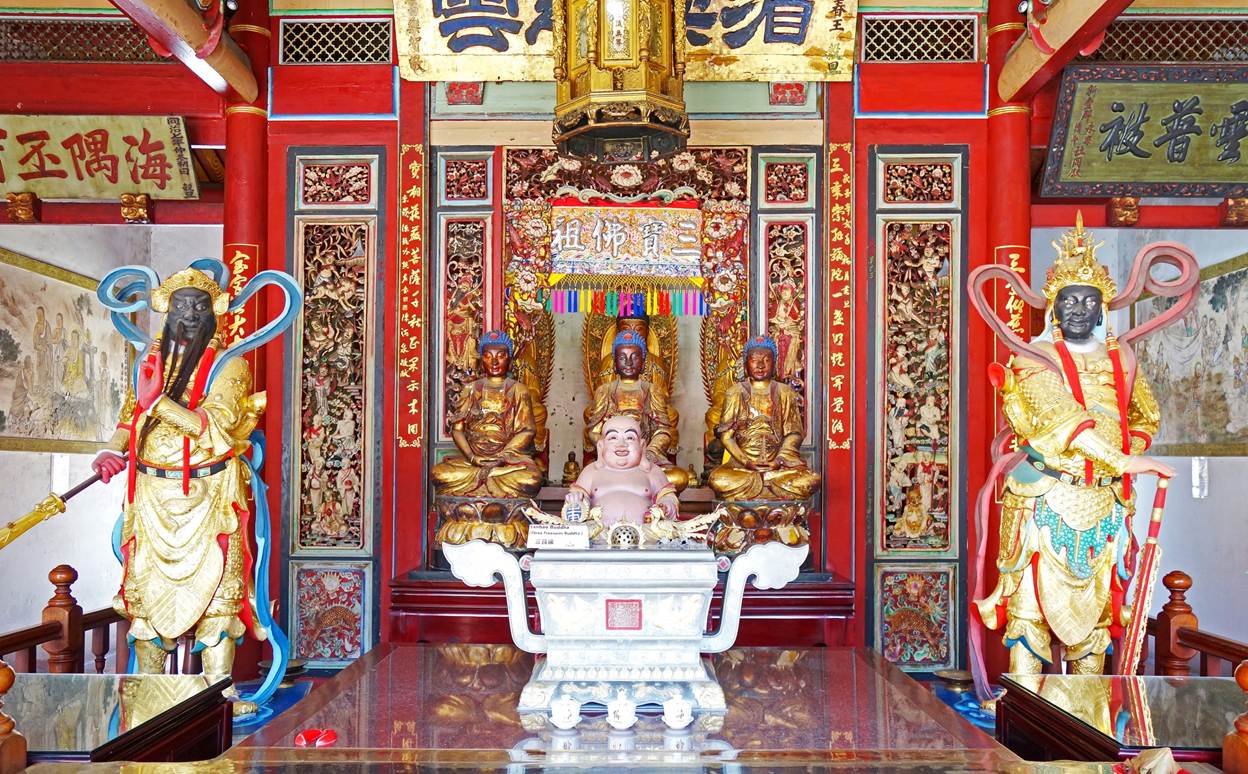
Buddhist statues in a
hall added to the temple in the 1970s.The statue of the fat laughing Buddha is
a representation of Maitreya Buddha, the Future Buddha. The three gilded
statues behind it represent three manifestations of Buddha.
[June 2009]
[March 2026]
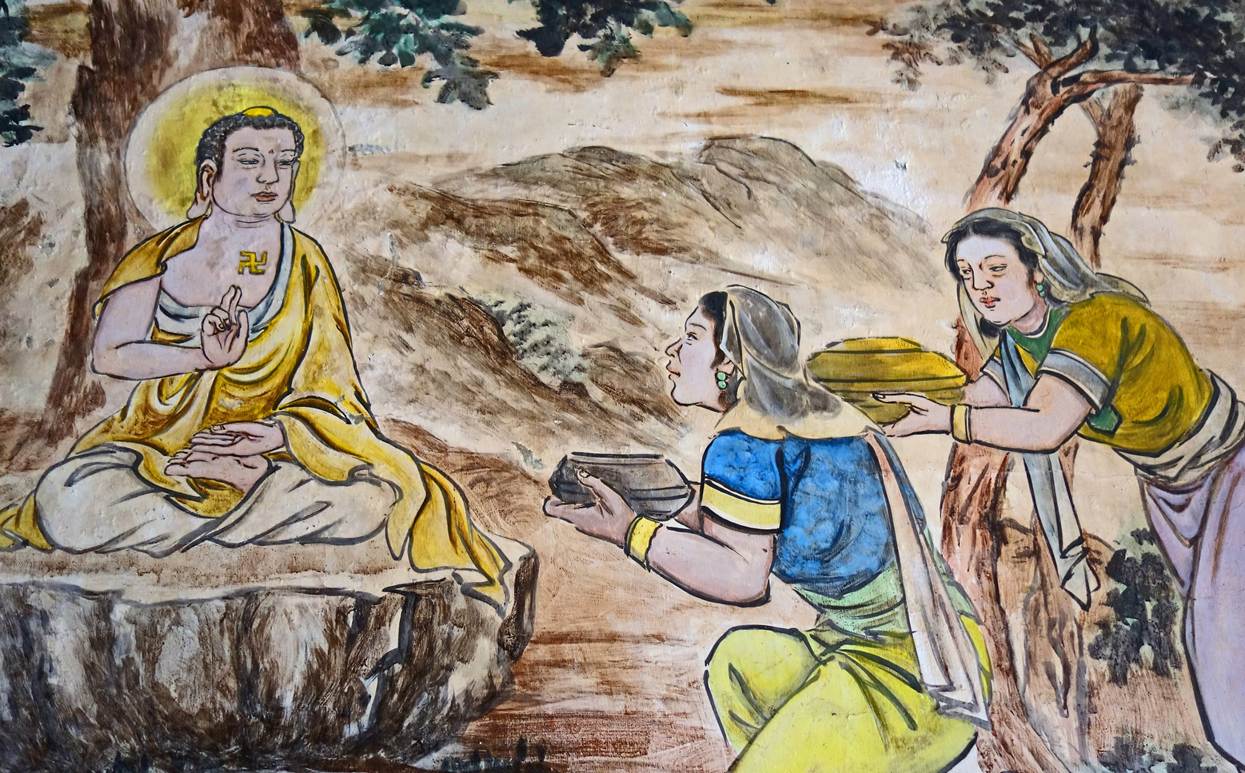
Portion of a mural in
the same hall.
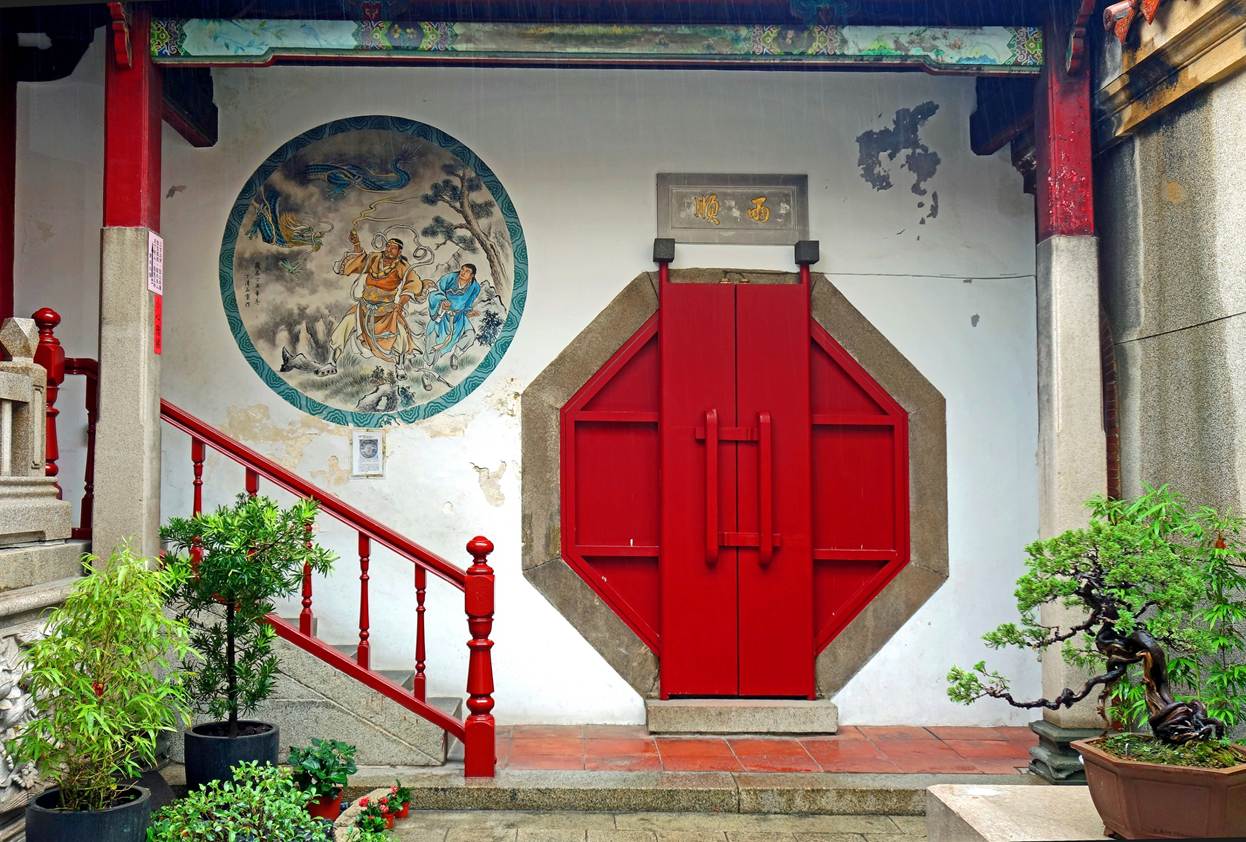
Red bagua gate and wall
fresco in the temple.
[April 2017]
Tainan Official Martial temple (臺灣祀典武廟):
This temple is
primarily dedicated to the God of War Guandi (關帝), the deified general
Guan Yu (關羽), who lived around
160-220. Built by Koxinga's eldest son, it was established around 1665. It
underwent major renovations in 1690, 1841, and 1991-1995.
Main worship hall in
the first courtyard.
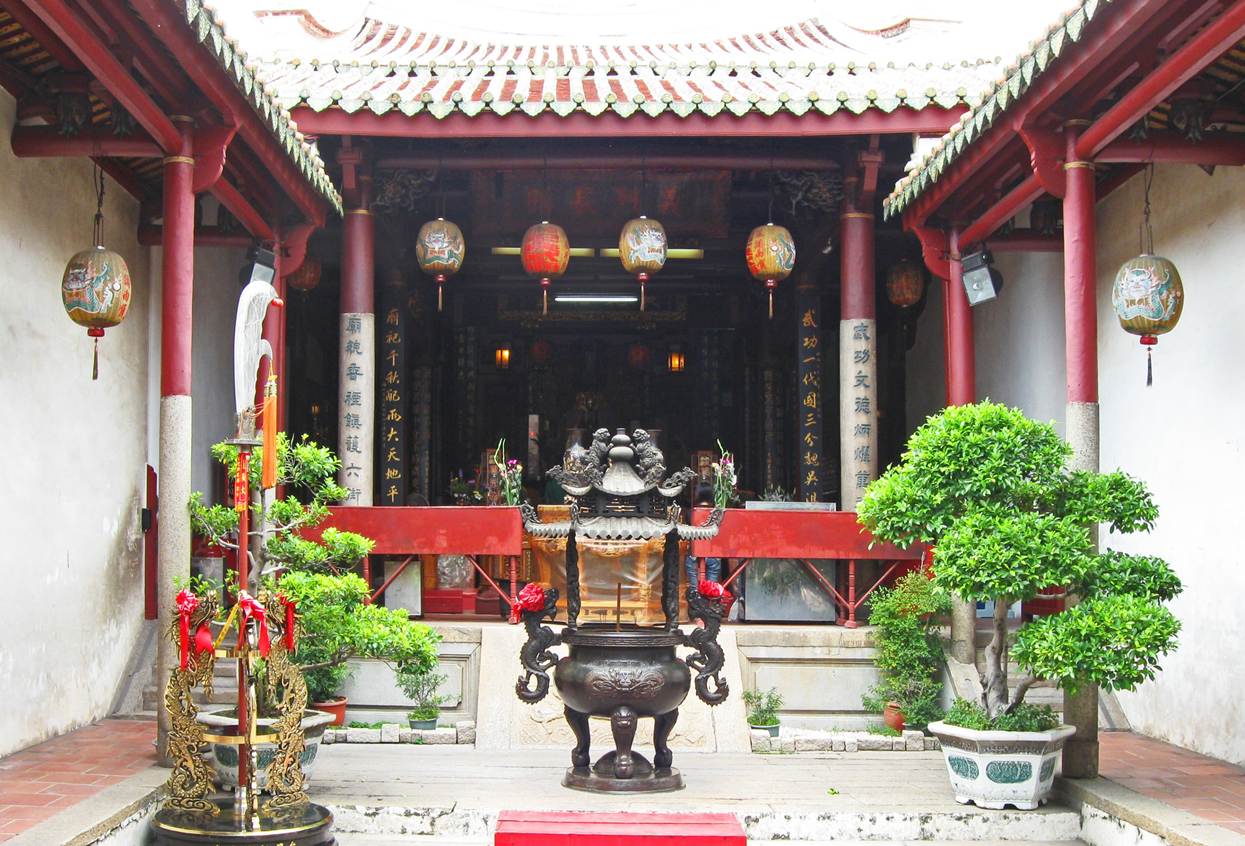
[June 2009]
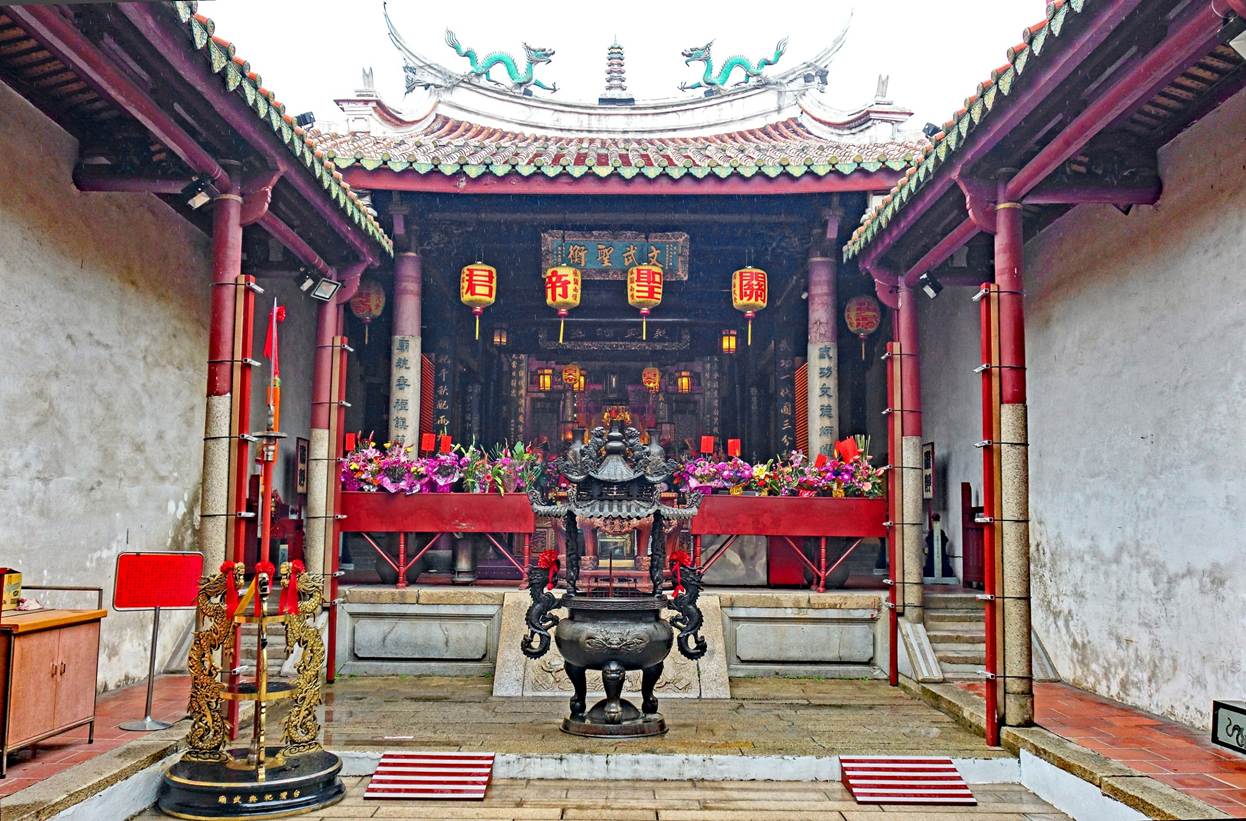
[April 2017]
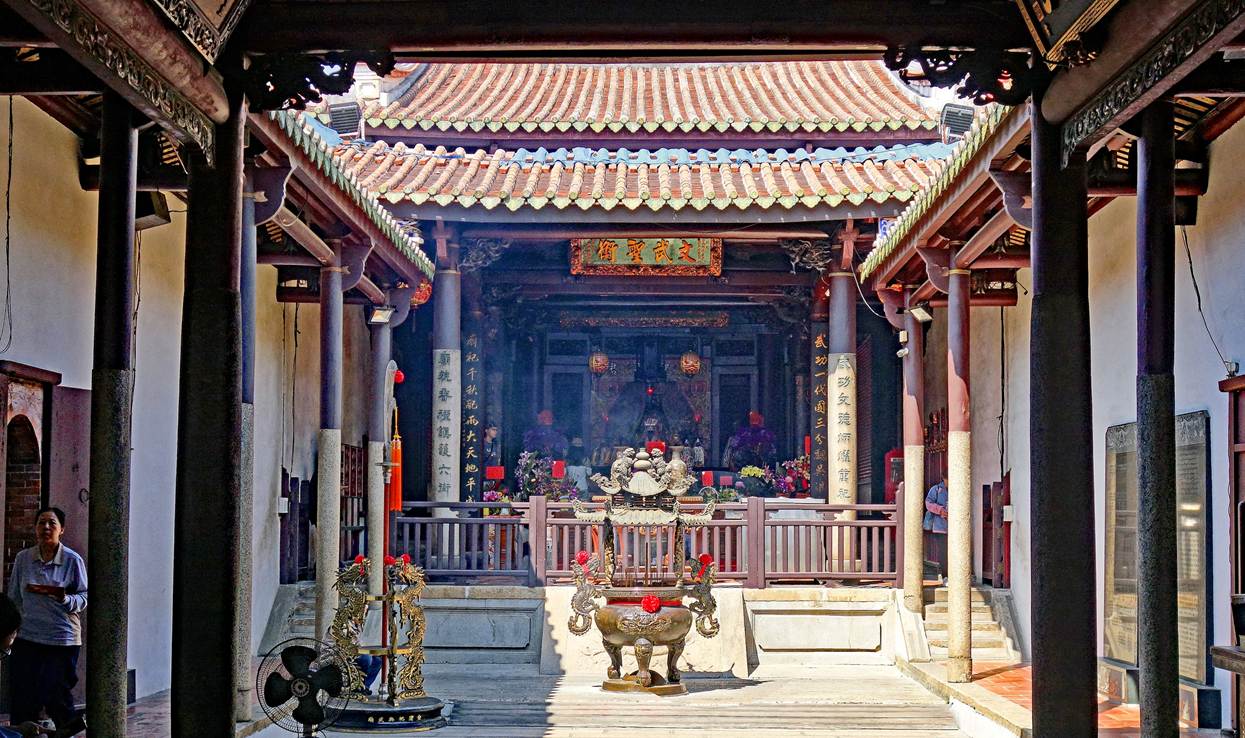
[March 2026]
Interior of the main
hall, which houses a seated statue of Guandi at the
back.
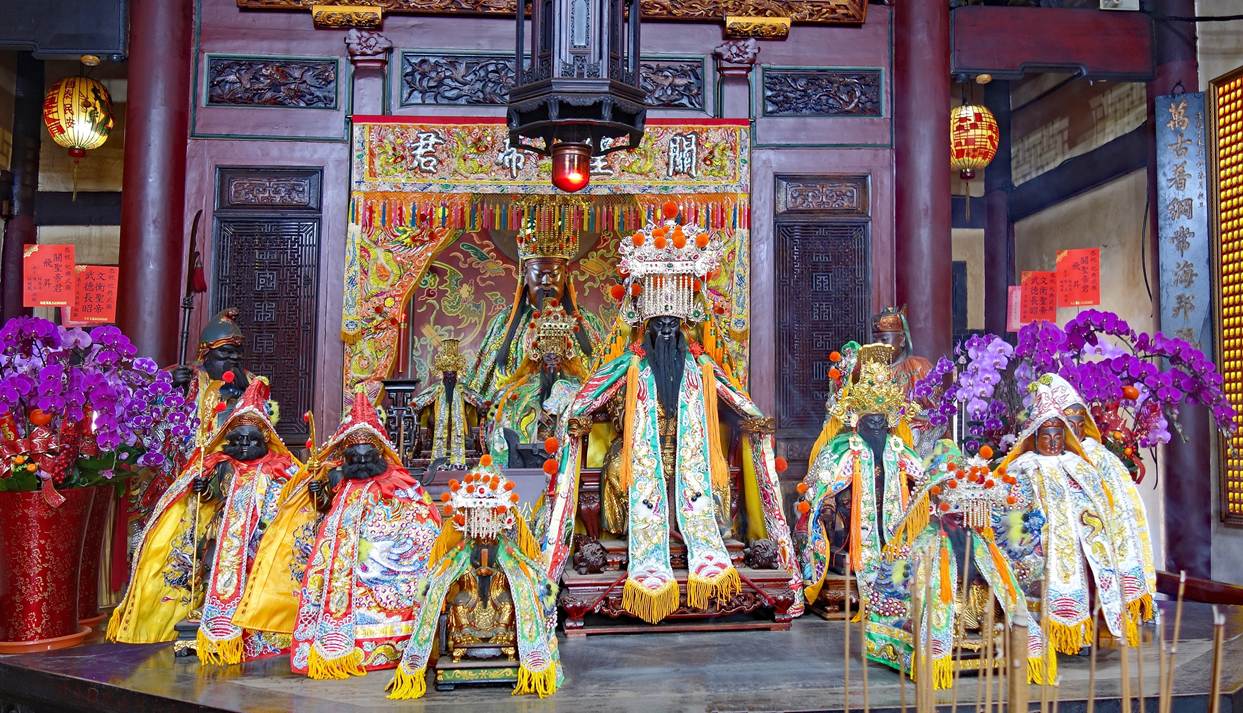
[March 2026]
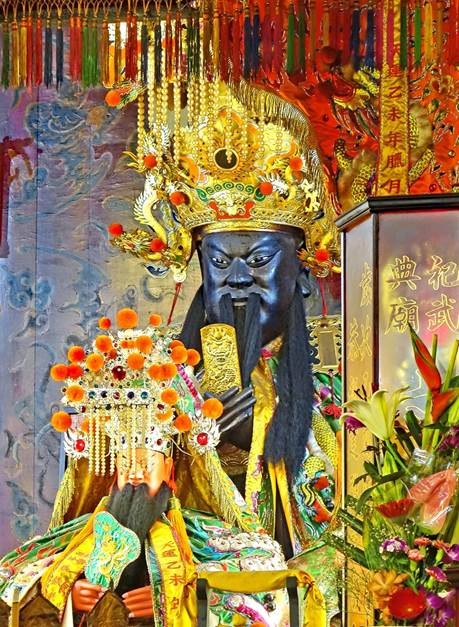
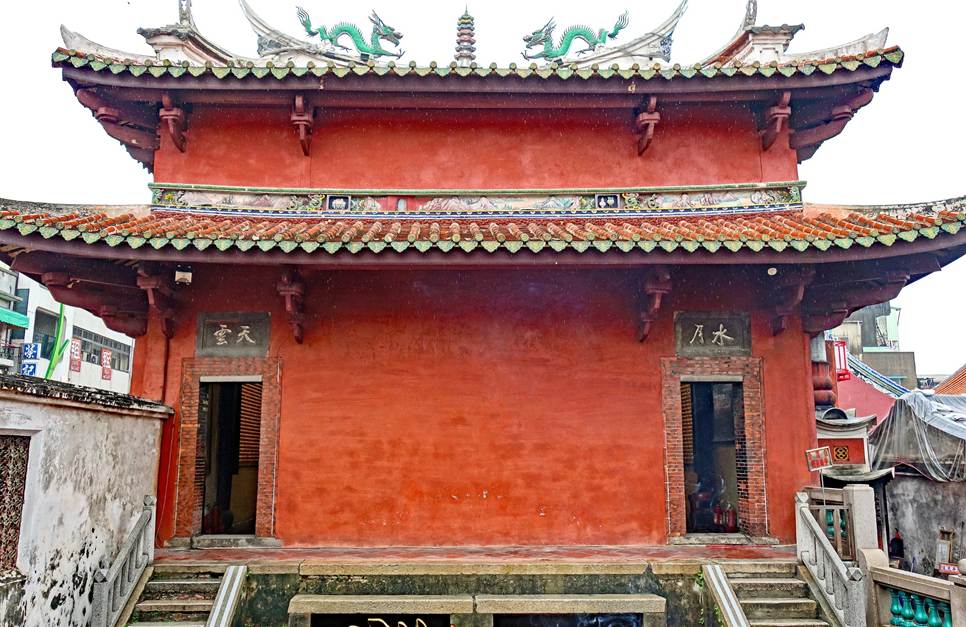
Left: Close-up of the
statue of Guandi. Right: Back wall of the main hall.
|
|
|
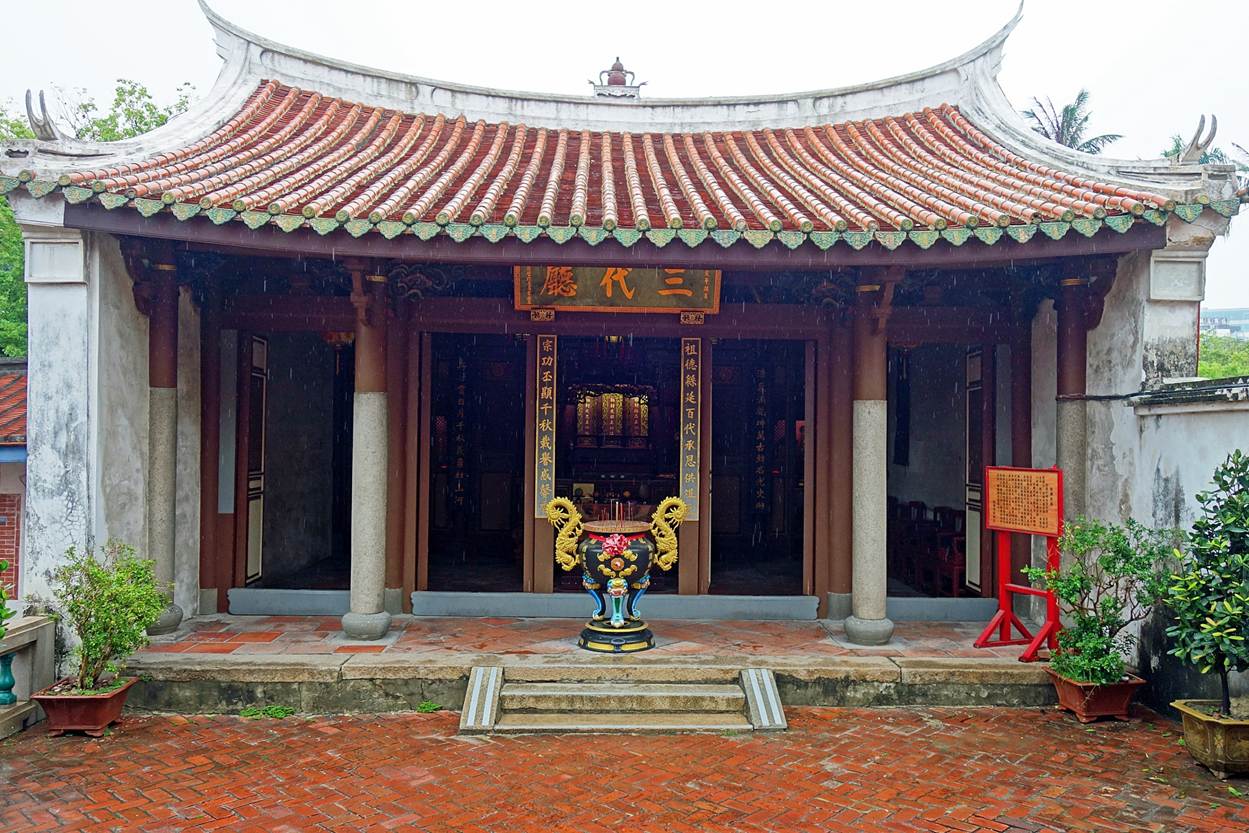
Hall of Three Generations situated behind the main hall in the second
courtyard of the temple. It houses the ancestral spirit tablets of General Guan
Yu's father, grandfather, and great grandfather.
[April 2017]
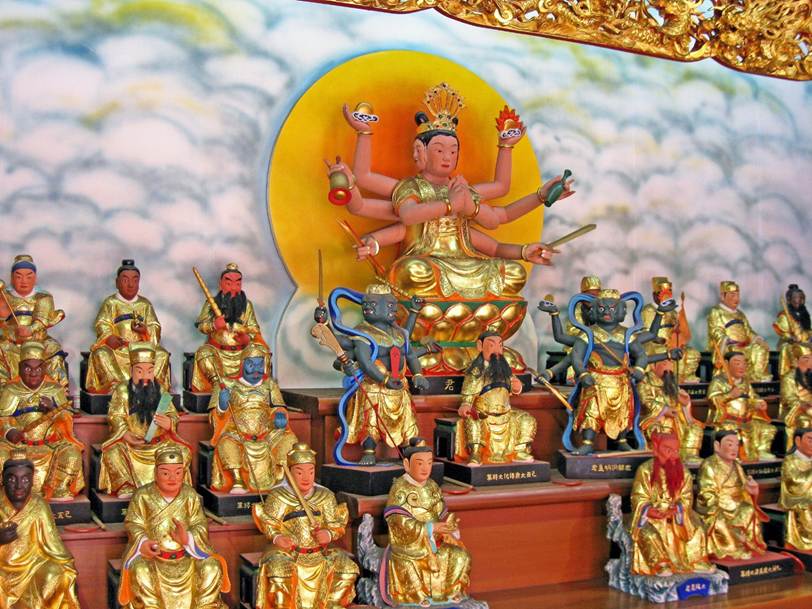
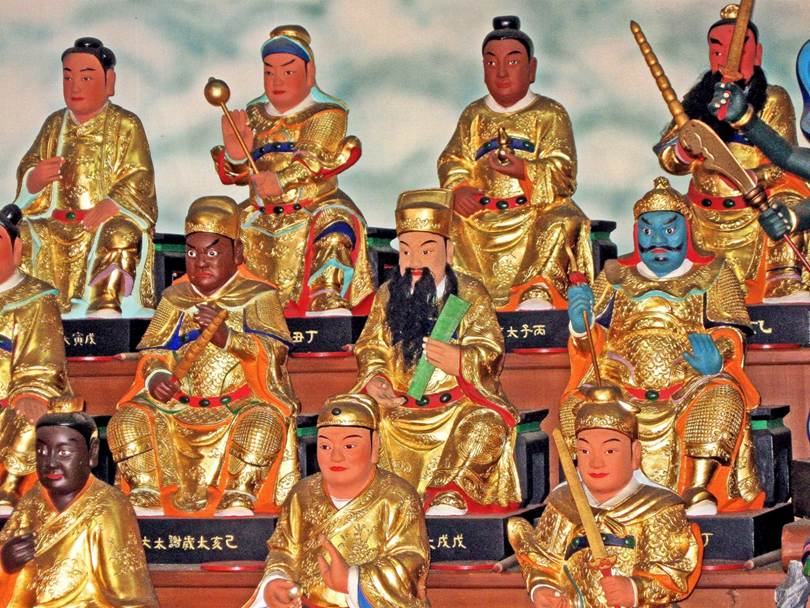
In the Tai Sui hall. The Tai Sui is a group of sixty deified
generals who take turns to govern human fortune and misfortune on 60-year
cycles, under the authority of Doumu Yuanjun (斗姆元君), the Mother of the Big Dipper.
|
|
|
[June 2009]
Kaiji Tianhou temple (開基天后宮):
Built in 1662 by
Koxinga after he captured Fort Zeelanda, this temple
is one of the three temples in Tainan that lay claim to the title of Taiwan's
oldest Mazu temple in Taiwan. (The two characters 開基 in its name mean ″to initiate″.)
It enshrines a Mazu statue said to have been carved in 1640 and brought by
Koxinga. During the Qing dynasty the temple was renovated and expanded with the
addition of new hall dedicated to Guanyin. Rebuilt in 1926, then damaged by
Allied air raids in World War II, the temple was rebuilt once again in 1948 and
underwent renovations in 1972 and 2019.
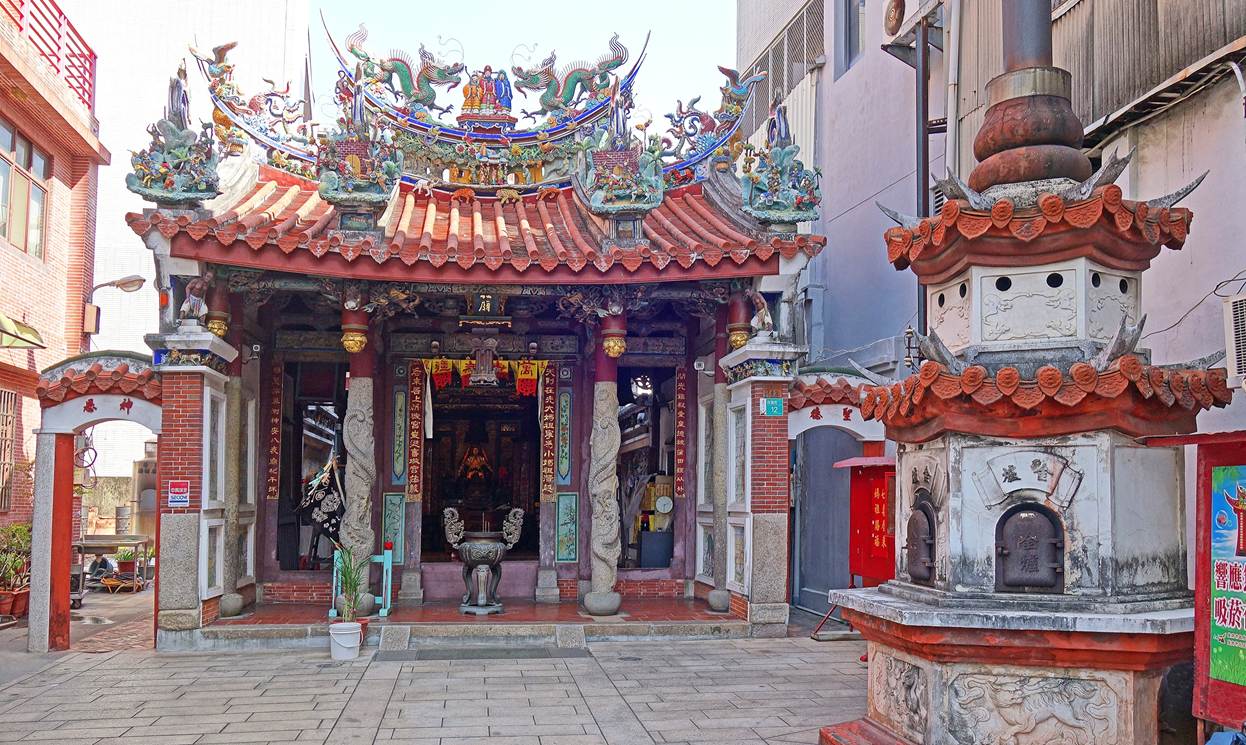
Entrance of the temple
and joss paper burner on the right.
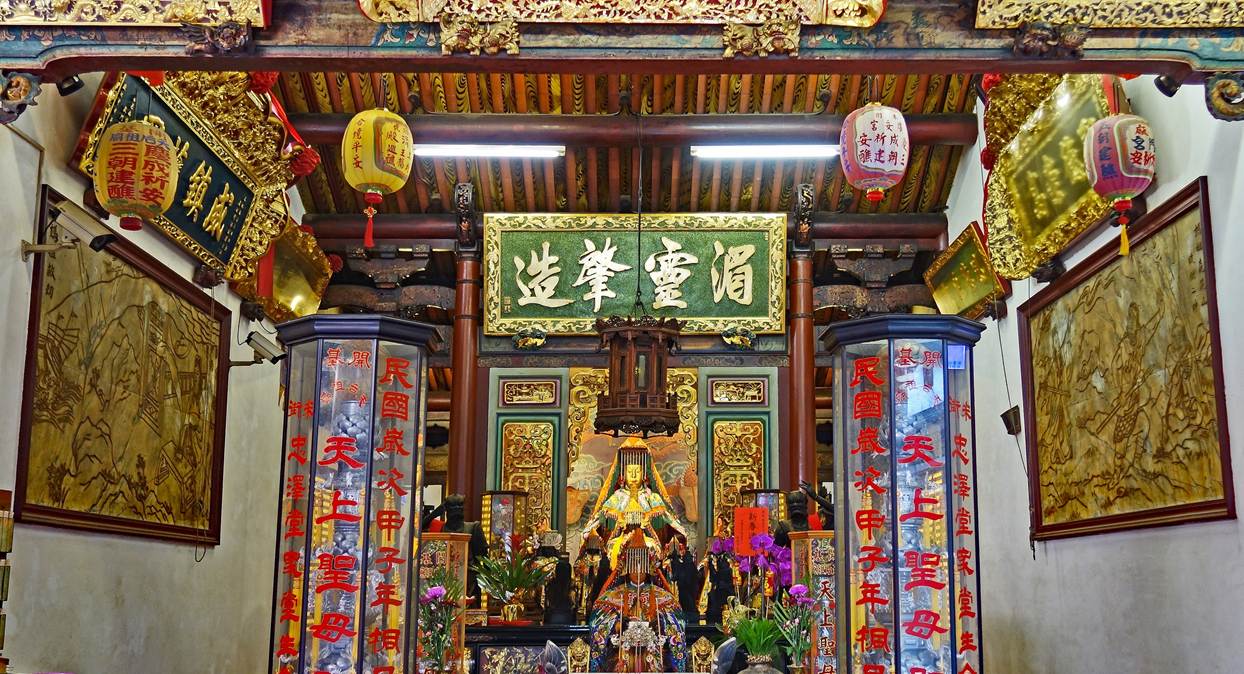
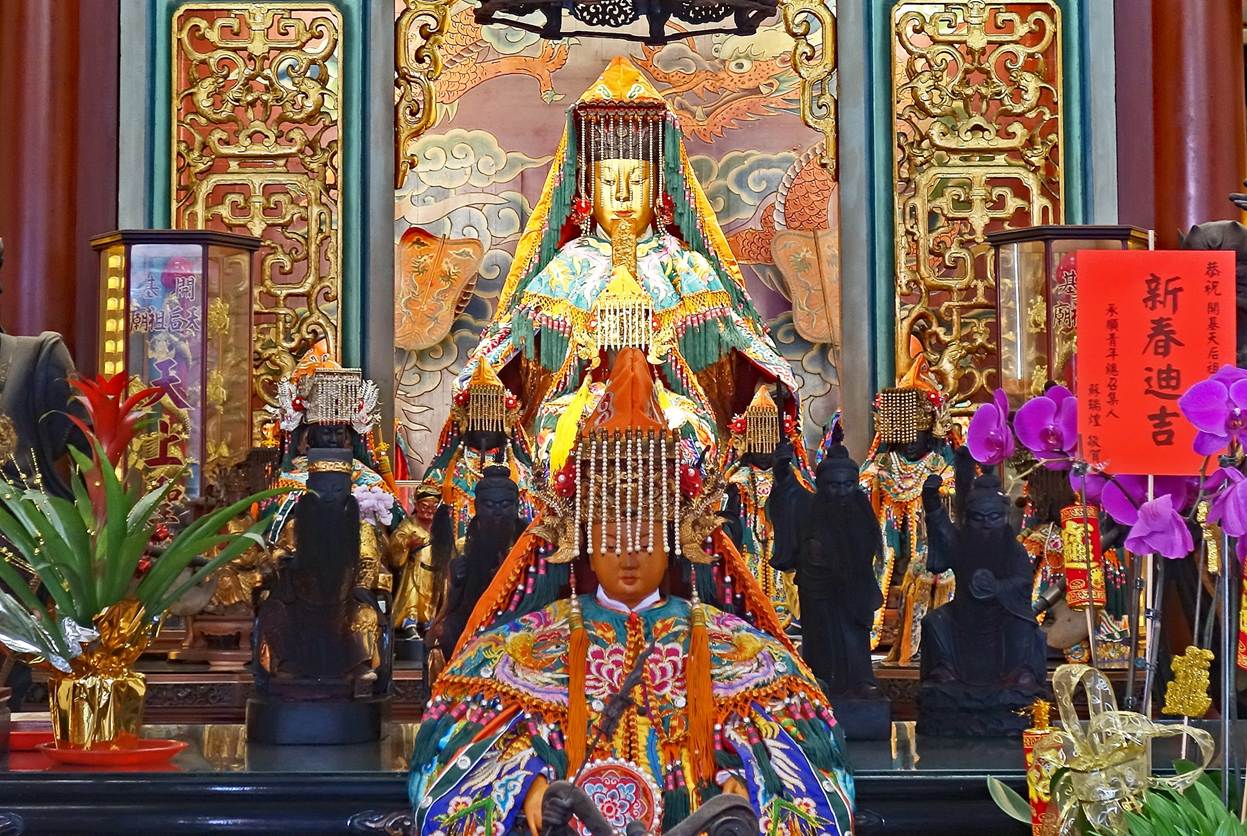
First hall dedicated to
Mazu.
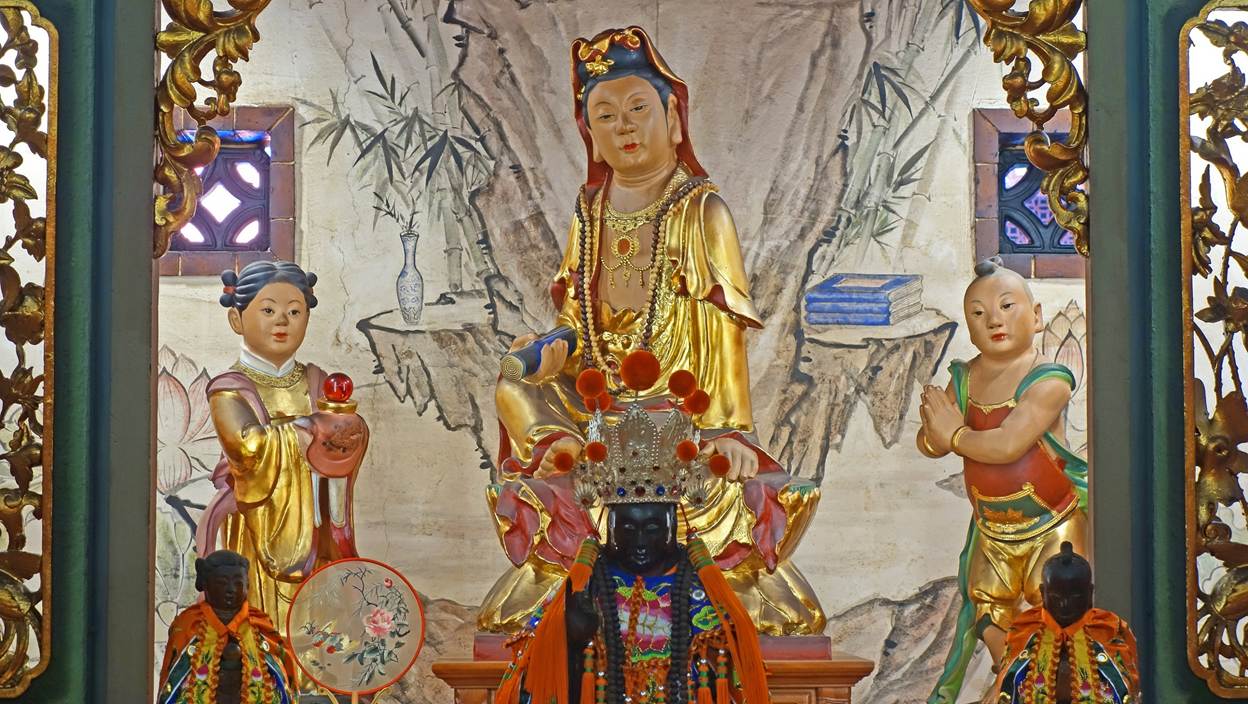
Statue of Guanyin
Bodhisattva in the rear hall of the temple. It is said to have been sculpted in
1777.
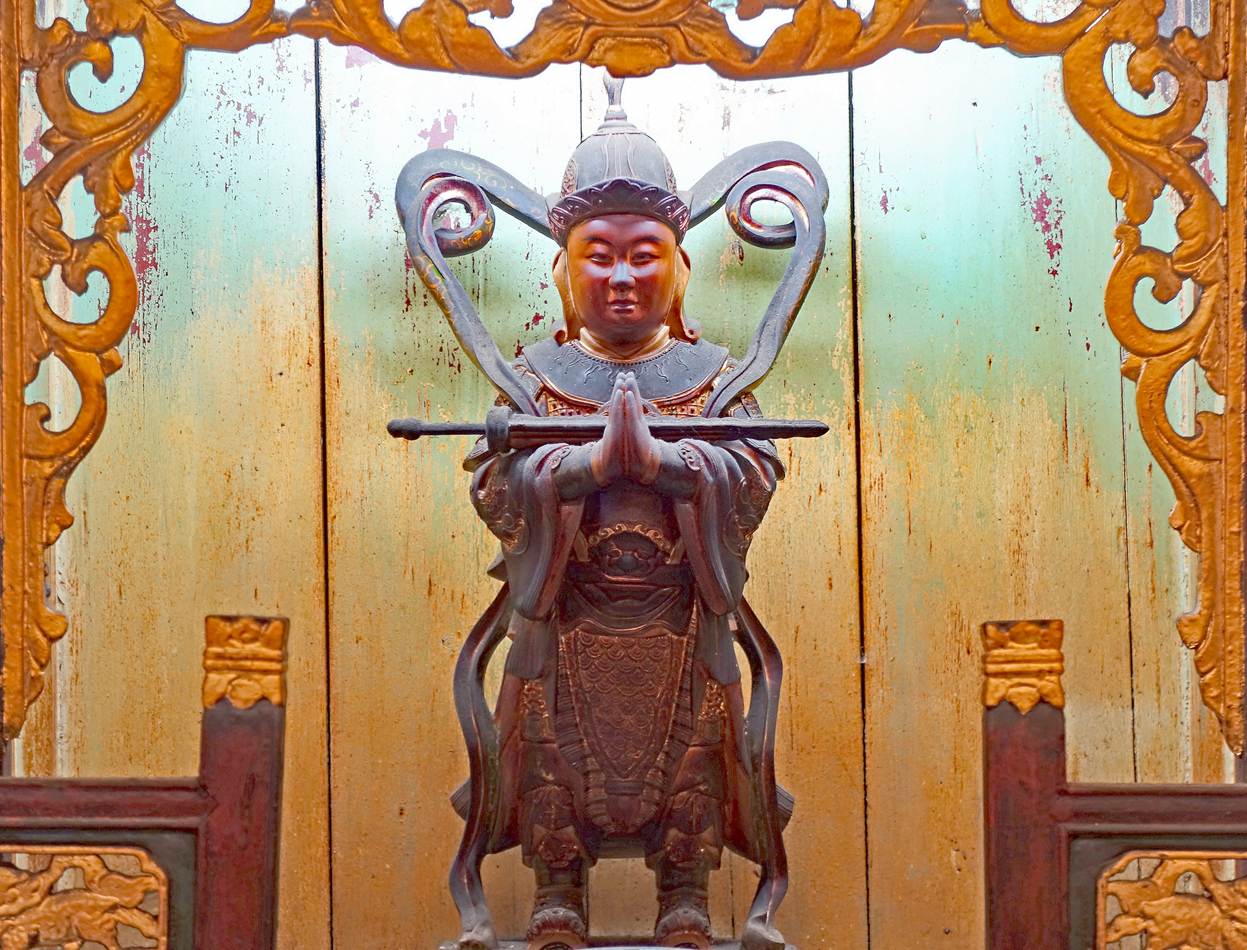
Statue of Weituo (韋馱), a protector of the
Dharma and guardian of Guanyin, located in a niche adjacent to the statue of
Guanyin. Here, he is depicted as a young warrior clad in armor, with his palms
joint together at chest level, holding a staff-like weapon between his elbows,
one of his customary postures.
[March 2026]
Kaiyuan temple (開元寺):
In 1680 Koxinga's
eldest son Zheng Jing (鄭經) built a residence for
his mother, which was converted in 1690 into a Buddhist temple (maybe the first
in Taiwan) by the then Qing general of Taiwan). Over time, the temple was
expanded and received different names. One of these names, Kaiyuan, became the
definitive one in 1869. After 1970 it underwent renovations every 20 to 30
years. The temple has three halls, two of them (Mahavira and Maitreya halls)
and pictured below.
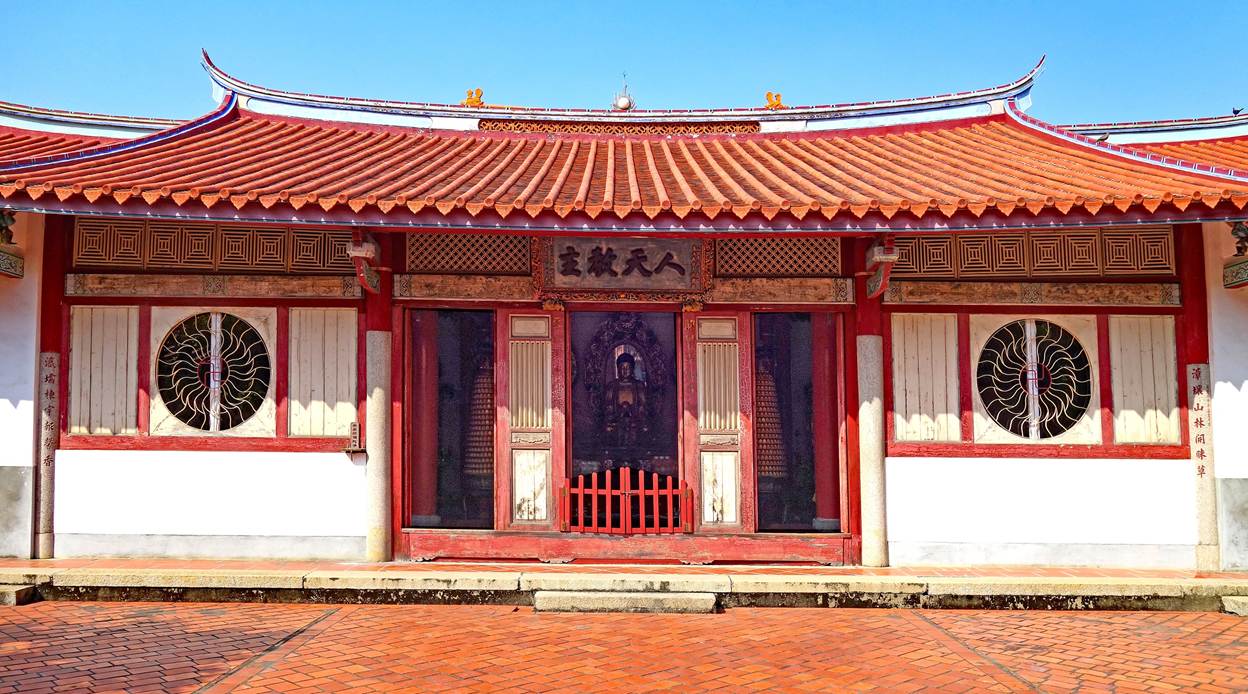
Facade of the Mahavira
hall.
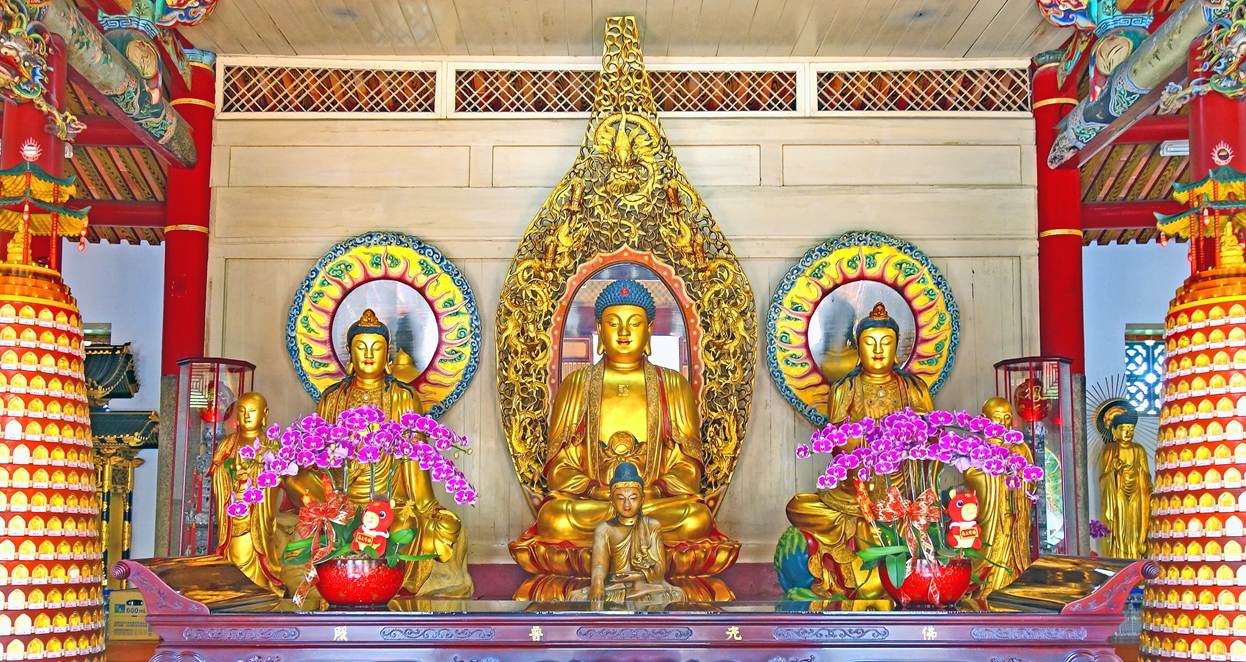
Statues representing
three manifestations of Buddha in of the Mahavira hall.
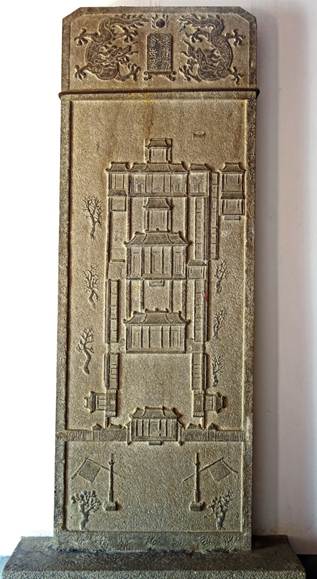
Left: Entrance of the Maitreya hall. Right: Stone stele in the hall. Titled
"Map of Haihui Temple in the Eastern Seas",
it is believed to have been carved in 1777, the 42nd year of the Qianlong
Emperor's reign, when Hahui (海会) was the name of the
temple. It likely represents a map of the temple at this time.
|
|
|
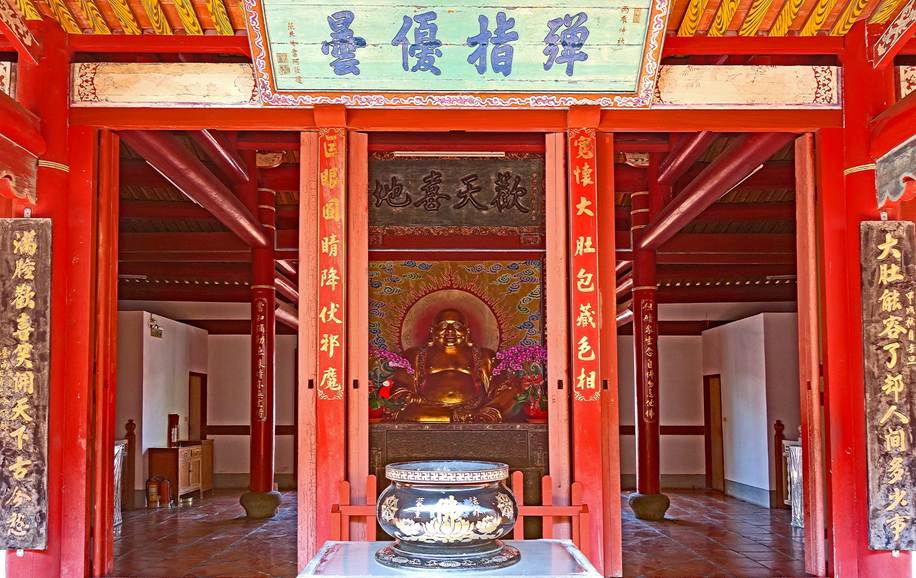
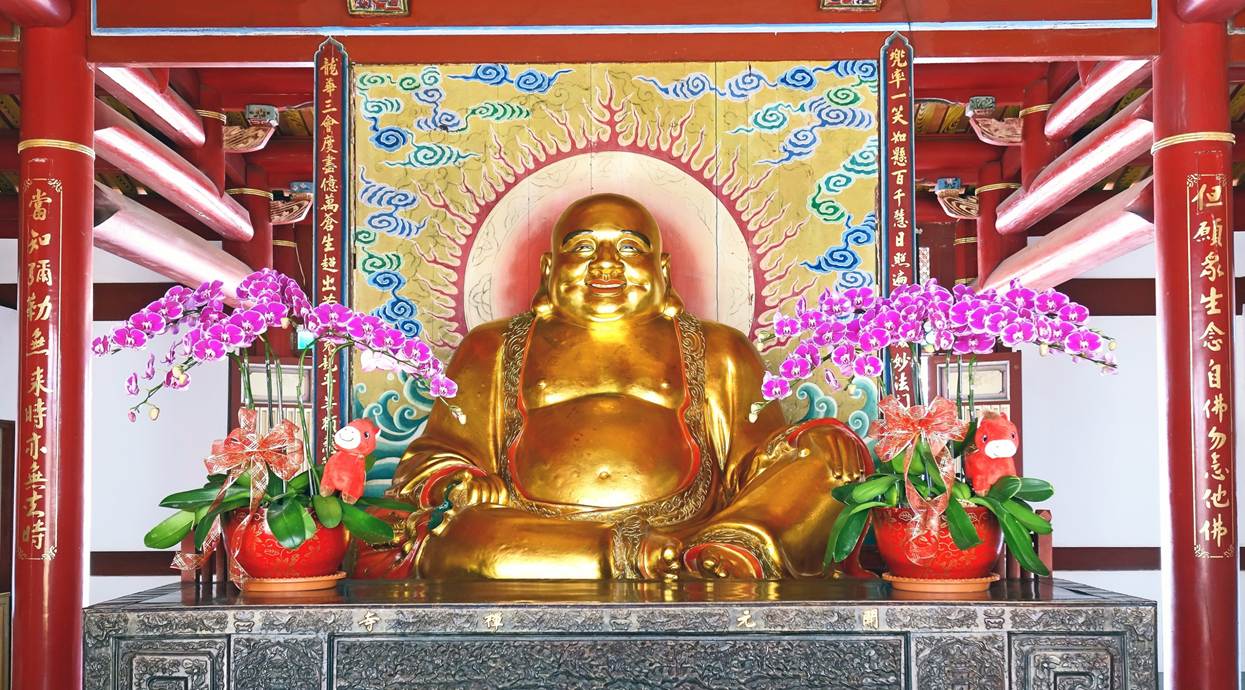
Statue of Maitreya
Buddha (Future Buddha) in the hall.
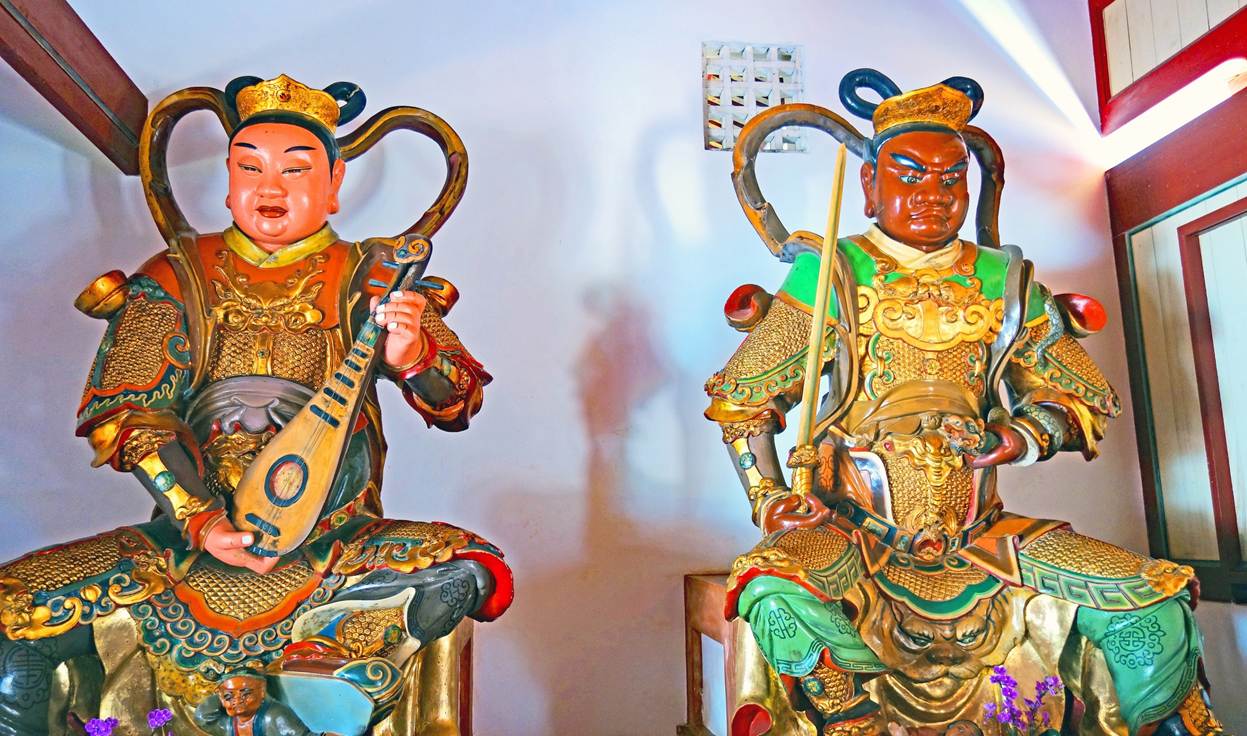
Statues of the Four
Heavenly Kings located in the Maitreya hall, each
guarding one of the cardinal directions. Partially visible at the bottom of the
photos are demons being trampled by the kings.
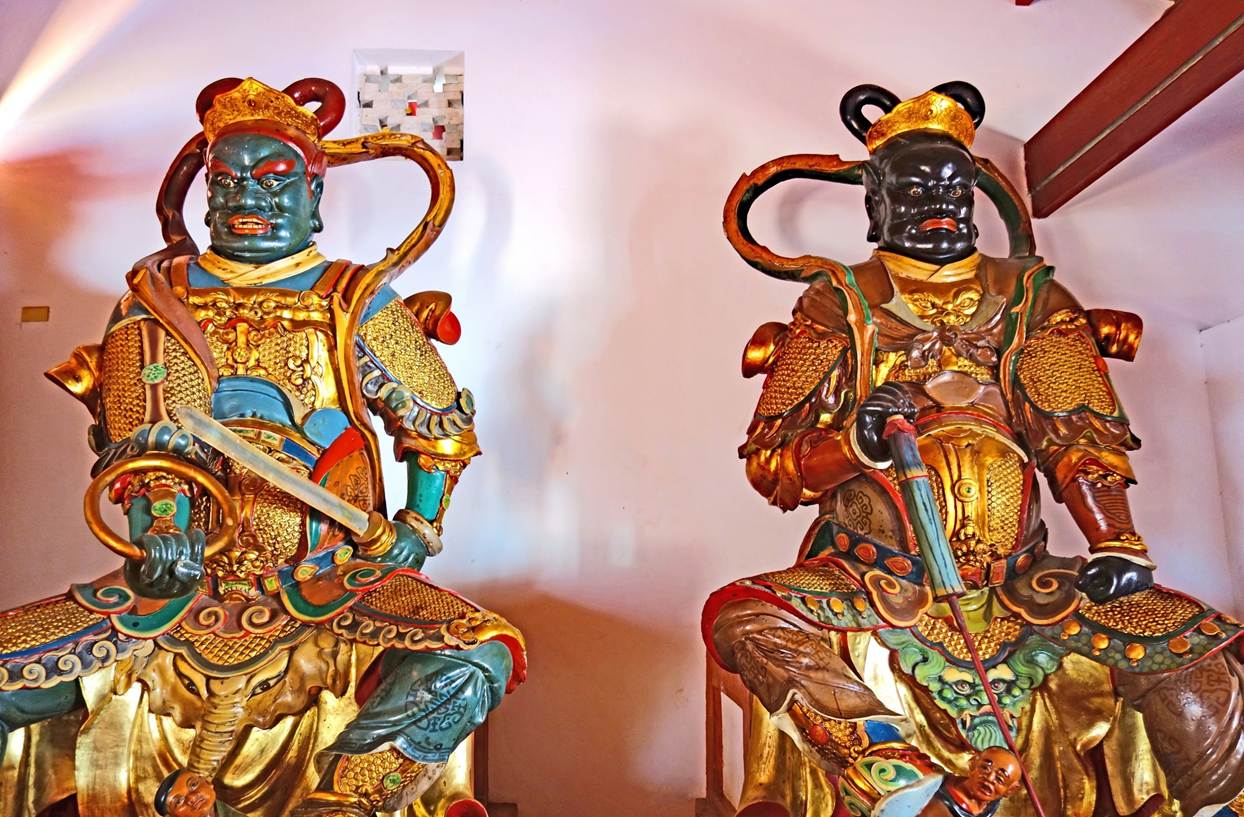
[March 2026]
Magistrate residence (臺南知事官邸):
Completed in 1900
during the Japanese era, this building first served as the residence of the
Tainan County magistrate. In 1920, when the county was reorganized into a
prefecture, it became the prefectural governor's residence. Later it was used
as a guesthouse, used most notably by Crown Prince Hirohito, the future Emperor
Showa. It was renovated in 2010.
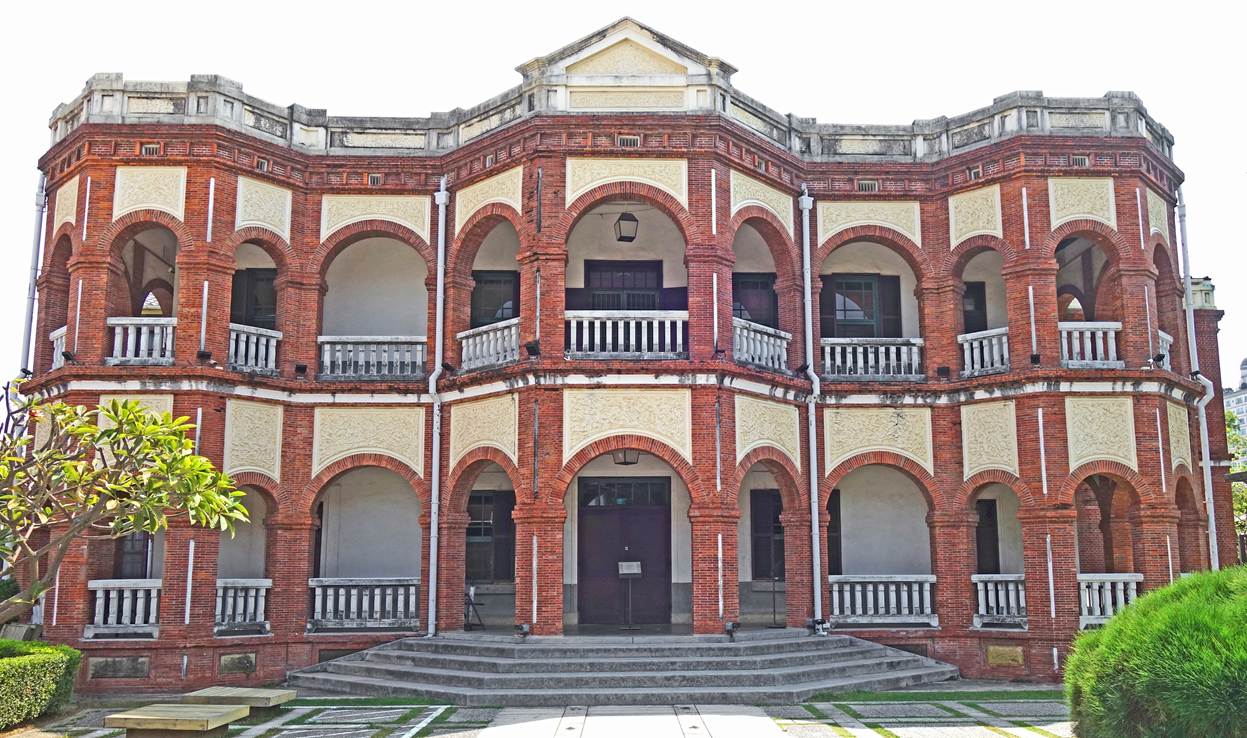
[March 2026]
Chihkan Tower (赤崁樓):
Chikhan Tower is the name
given to a former temple built in 1875 on the site previously occupied by Fort Provintia built in 1653 during the Dutch colonization of
Taiwan (then called Formosa). The fort was captured by Koxinga in 1661 (before
his capture of Fort Zeelandia in 1662) and
subsequently abandoned. A religious and educational complex was built around
1875 on this site, but few vestiges of it remain today. The best-preserved
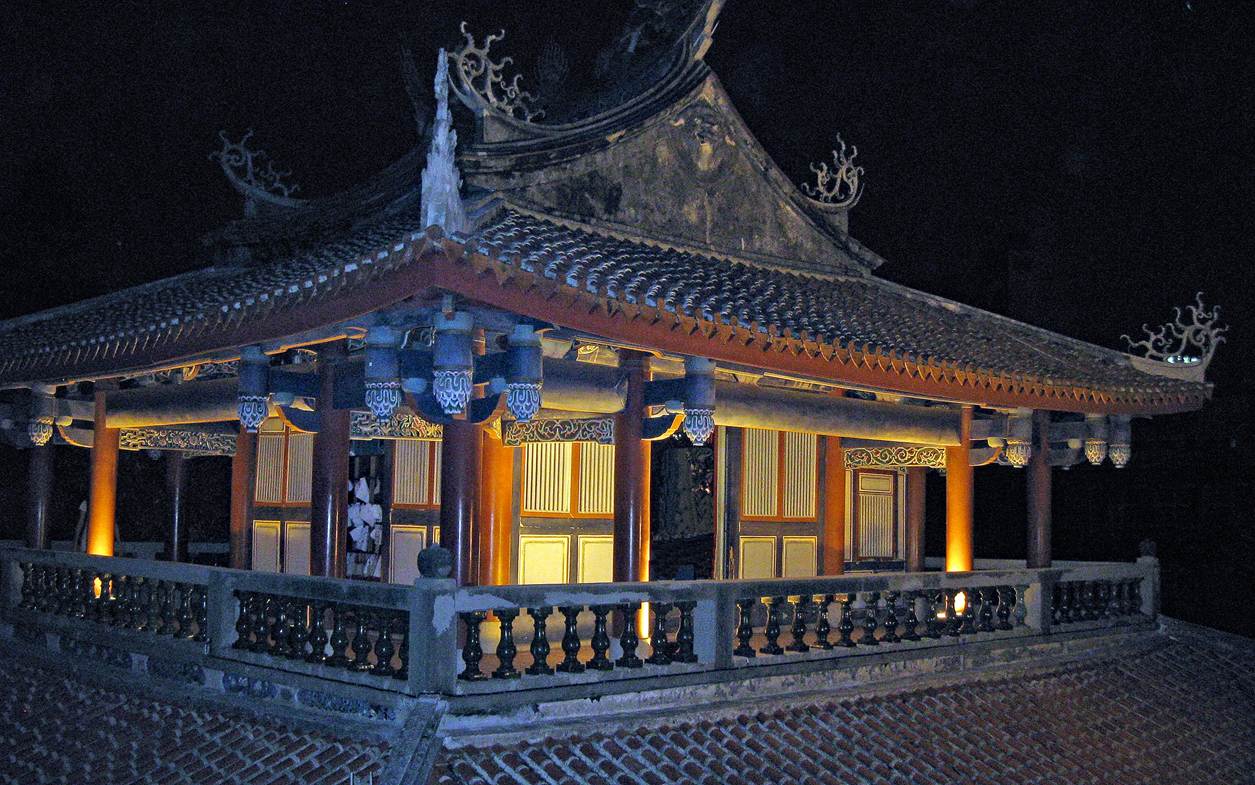
remnant, the Chikhan Tower, is a small, but pretty
temple pavilion that now houses a museum.
View of the pavilion at
night.
Row of ″bixi″ (贔屭) near the pavilion. A ″bixi″ is a mythic creature depicted as a
dragon-headed turtle, known for carrying heavy loads. These ″bixi″ were commissioned by Qing Emperor Qianlong
(1711-1799) and created in 1788 to commemorate the suppression of the Lin
Shuangwen rebellion. Here they carry imperial steles.
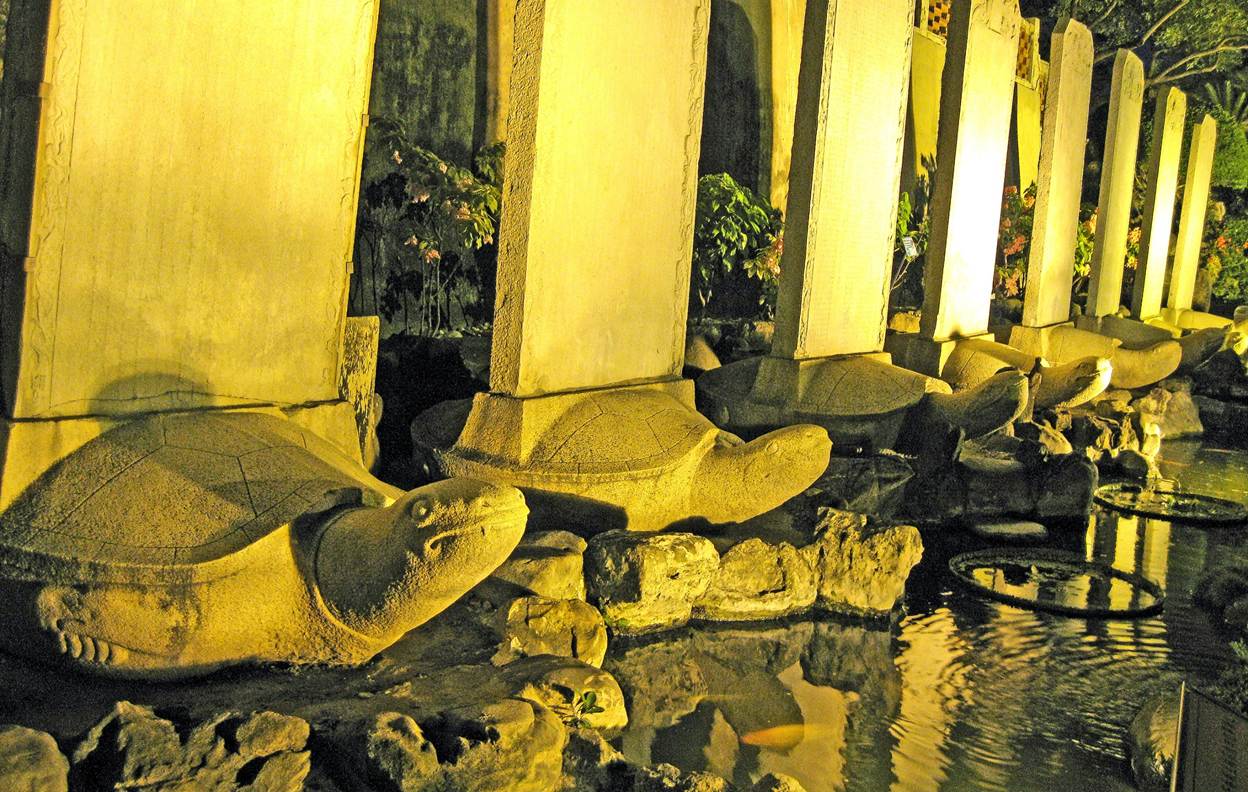
[June 2009]
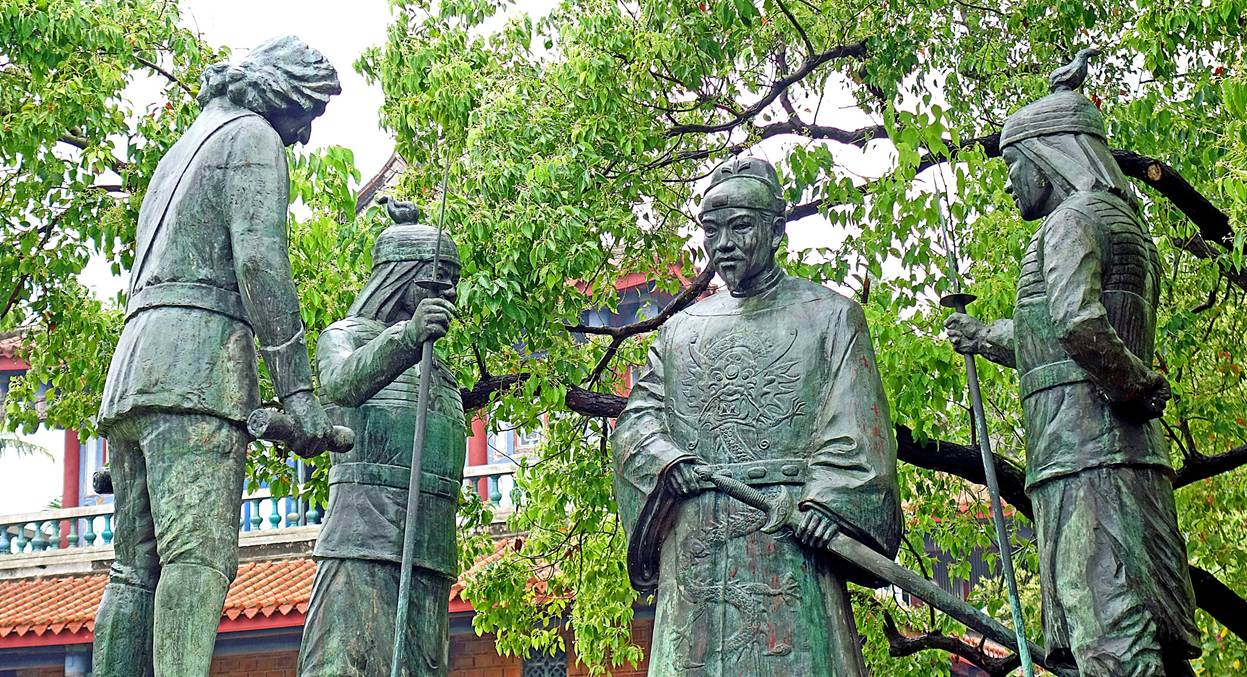
Statues in the park
adjoining Chihkan Tower. They symbolize the Dutch
surrender, with the Dutch commander on the left and Koxinga in the
center.
[April 2017]
Beiji temple (臺南北極殿):
This temple was established during the
Kingdom of Tungning (1661-1683), a 22-year era when
Ming-loyalists were running Taiwan. It is believed that part of its building
was formerly a Chinese medicine clinic during the Dutch period. The temple was
dedicated to Xuantian Shangdi (玄天上帝), an important Taoist deity during the
Ming dynasty, venerated as the Supreme God (上帝) of the Mysterious
Heaven
(玄), a name that designates the North.
When the Qing dynasty took control of Taiwan in 1684, the worship of Xuantian Shangdi was strongly
discouraged. Instead, the cults of Mazu and Guandi
were actively favored. Consequently, and for many years extending into the
Japanese colonial era, the temple underwent numerous transformations, affecting
both its ritual practices and its physical structures. Nevertheless, although
its current appearance, as seen from the street, dates back only to 1971, Xuantian Shangdi is still its principal deity today.
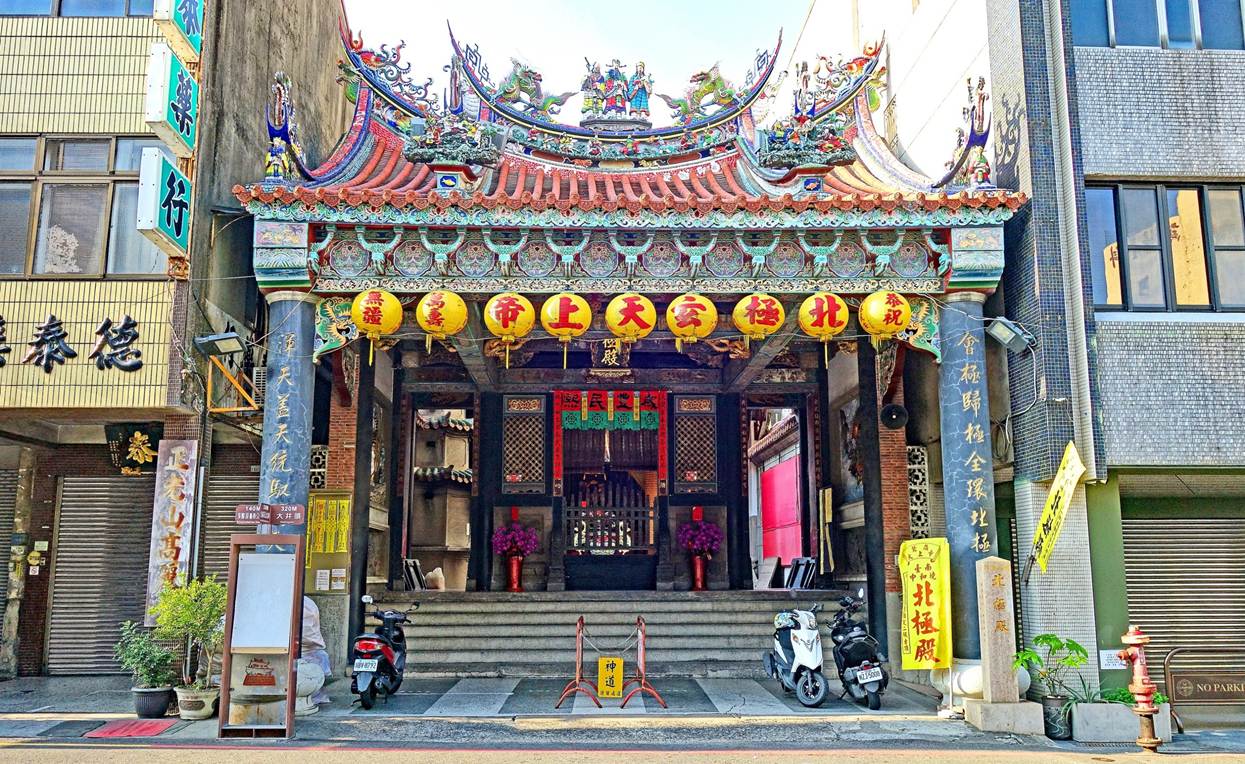
Facade of the temple, coined between
two modern buildings.
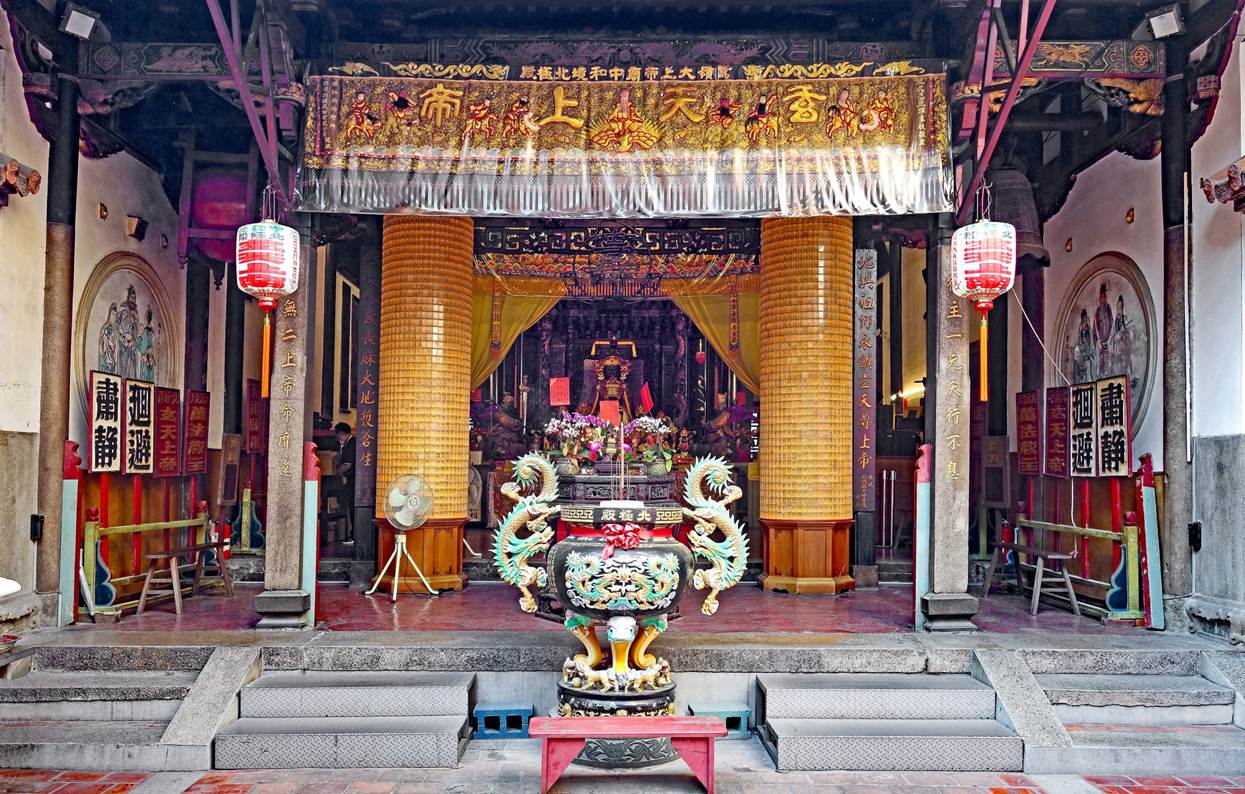
View of the main hall
from the first courtyard.
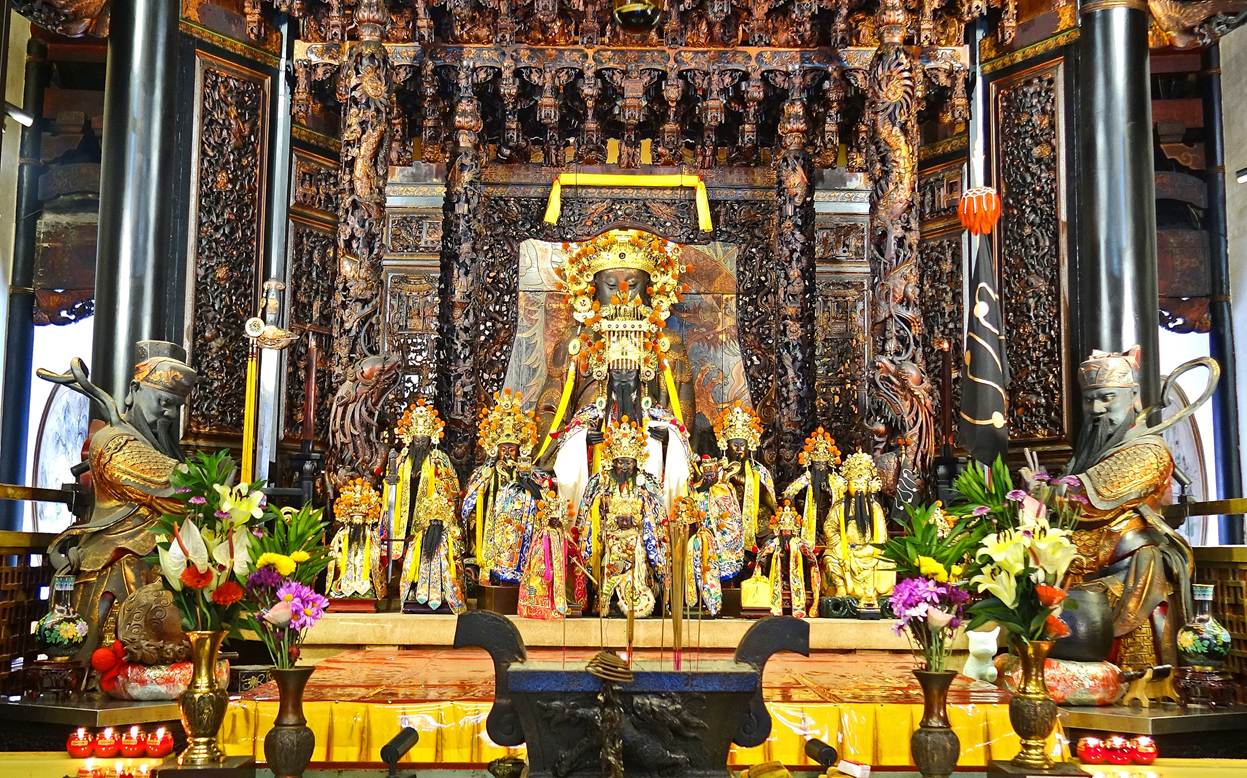
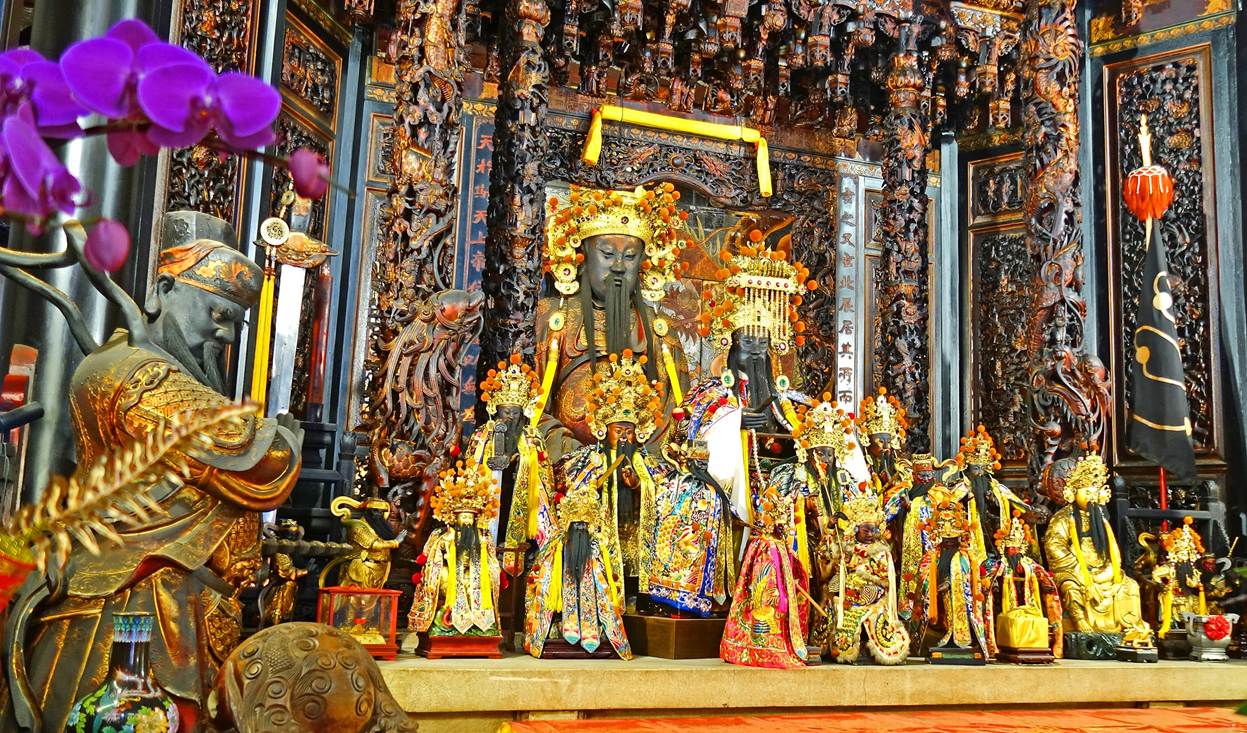
Altar featuring Xuantian Shangdi, the Taoist deity who governs the North.
In Taoism, the North corresponds to water in the Five Elements. So, Xuantian Shangdi is also venerated as a sea god. Because
North corresponds to black in the Five Colors 五色 (wu se), the pillars of the hall are painted
in black, instead of the typical red found in most other temples. The use of
black and brown as the main background creates a particularly solemn
atmosphere.
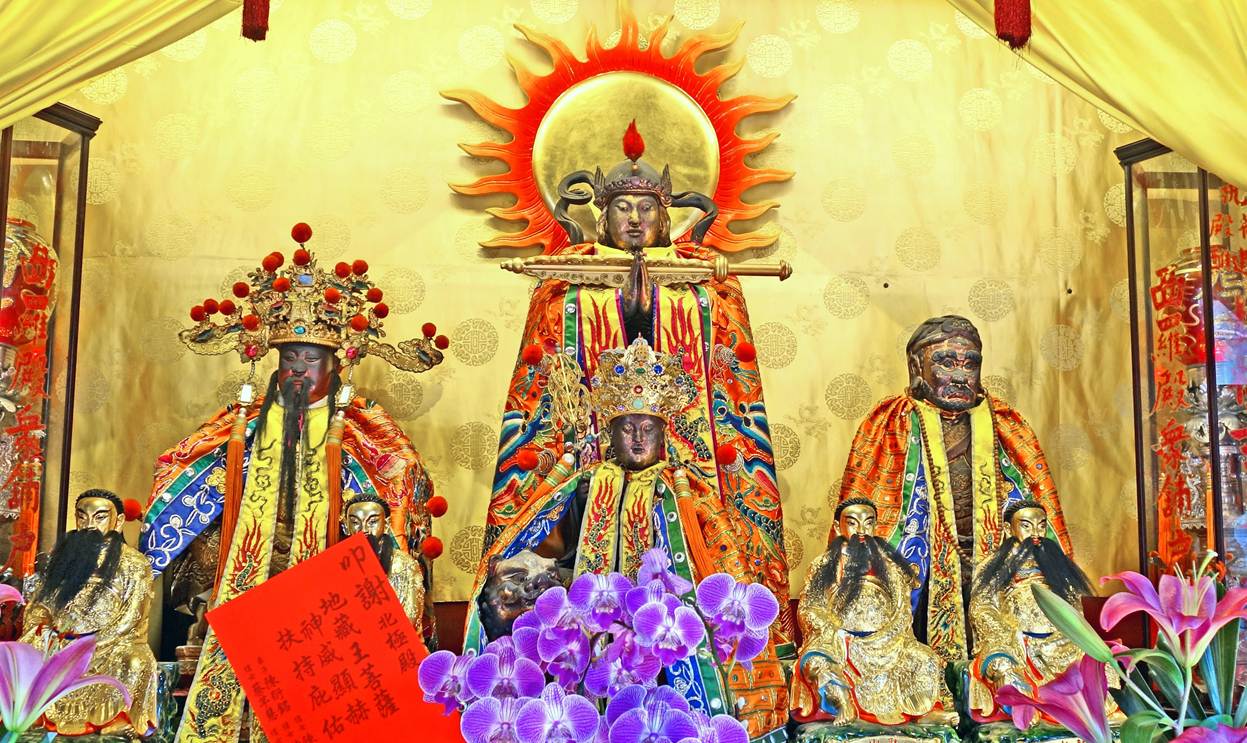
Altar mainly dedicated
to Skanda Bodhisattva, the Darma protector, in the rear hall. Skanda is another
name given to Weituo (韋馱).
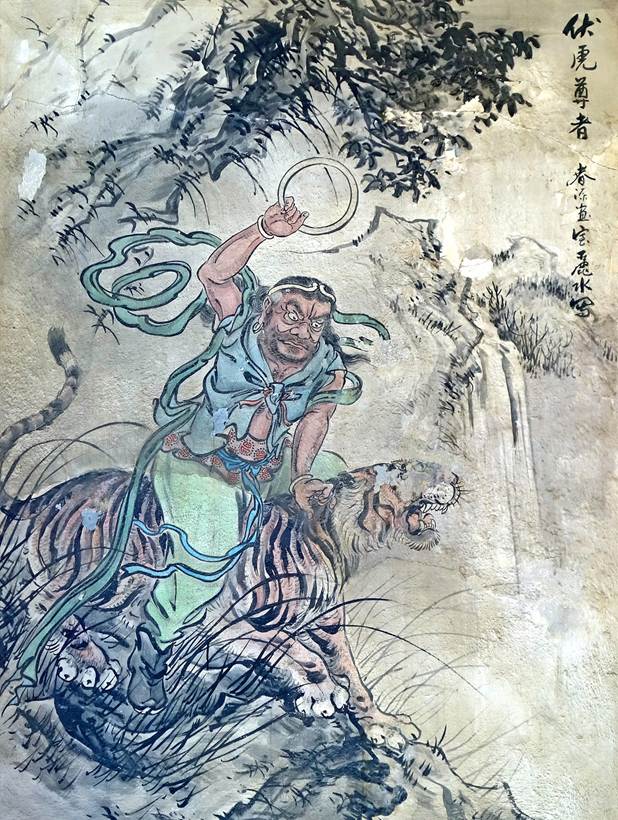
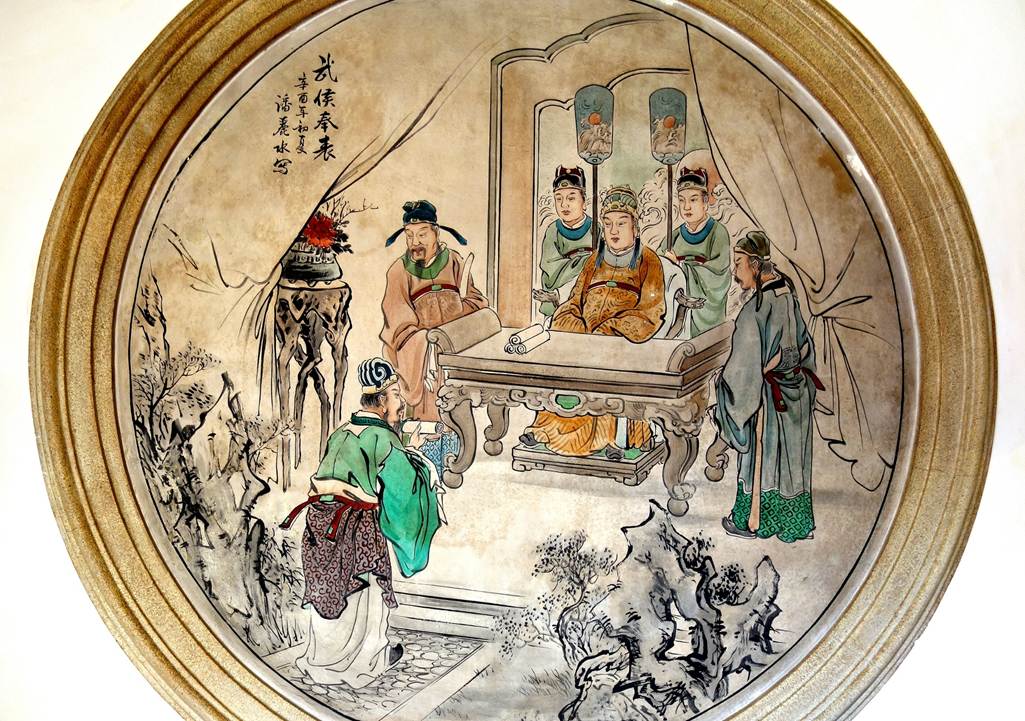
Mural paintings by Pan Lishui (1914-1995), a renowned Taiwanese traditional
painter, best known for his meticulous temple art work.
|
|
|
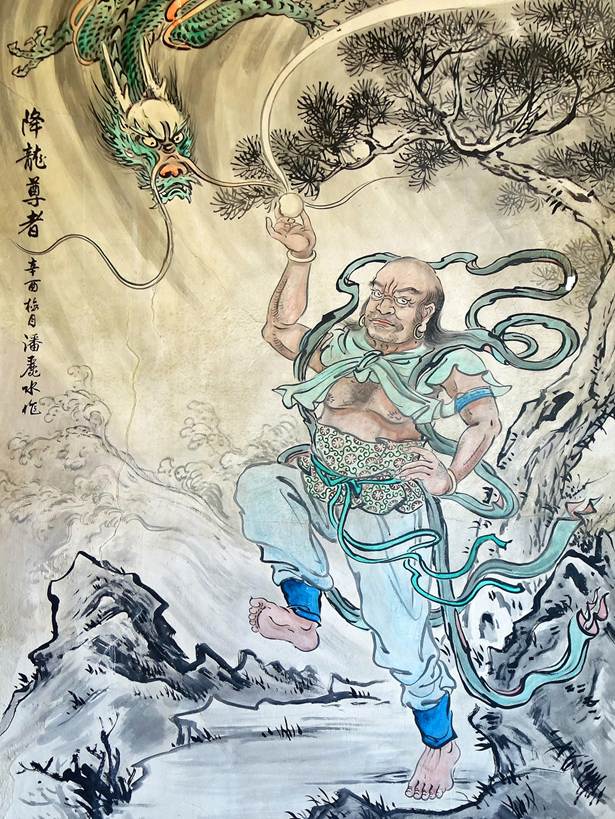
Another wall painting
in the temple.
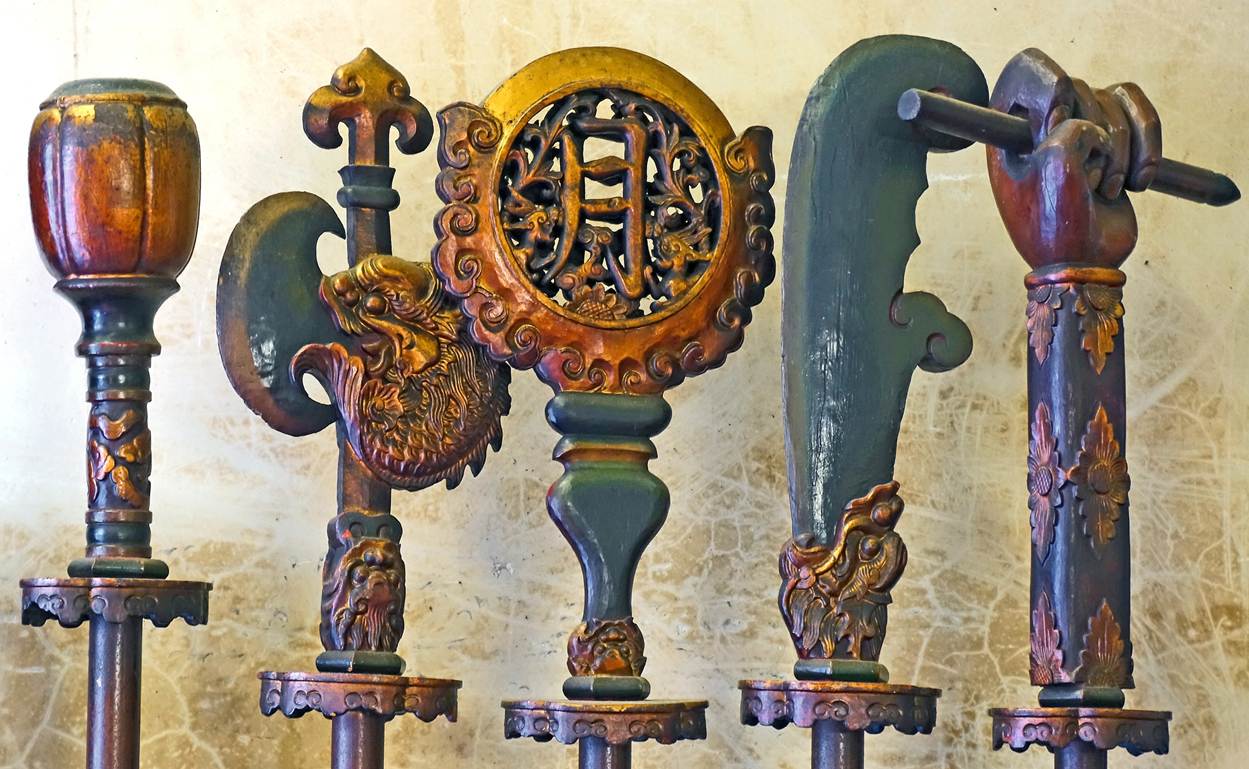
Ceremonial wooden
representations of Chinese weapons.
[March 2026]
Tiantan Tiangong temple (臺灣首廟天壇(天公廟)):
This temple is
primarily dedicated to the Jade Emperor, the supreme deity of Taoism, the Lord
of the Heaven ( 天公, ″Tiangong″), who rules the
Heavenly Court.
It was built in 1854 and renovated multiple times, but its appearance has
remained almost unchanged since its renovation of 1899. The last important
renovation was in 1996.
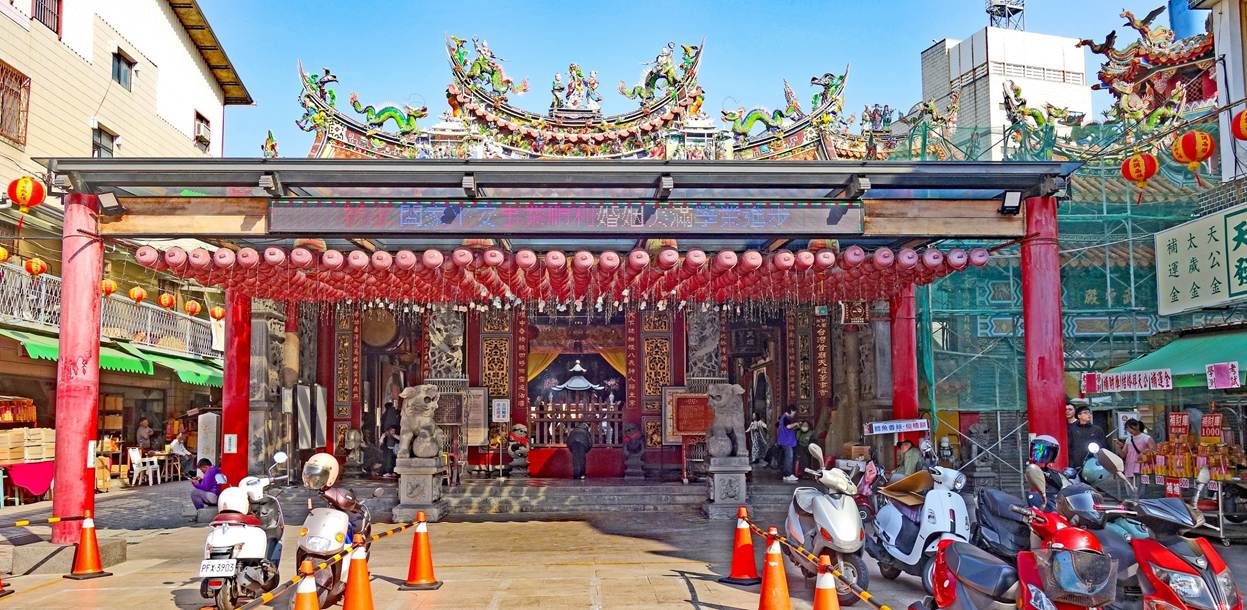
Entrance of the temple, seen from the
small square located in front.
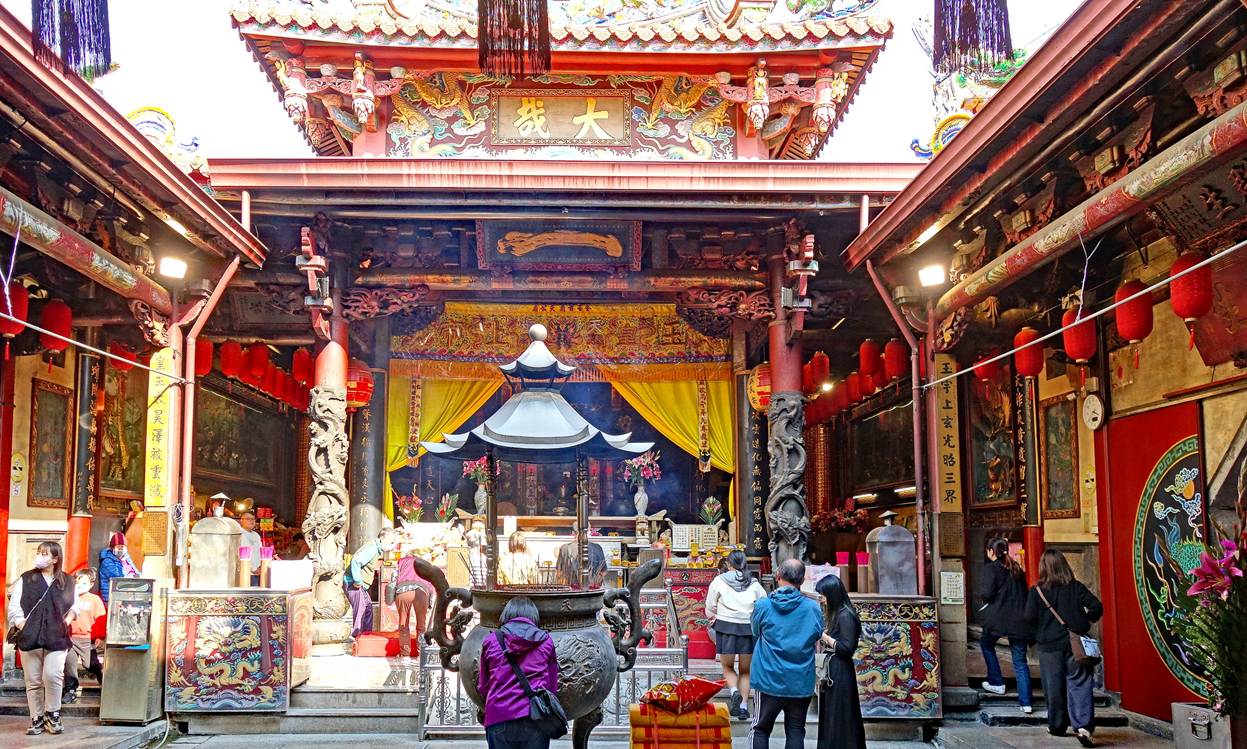
Worshippers in the
courtyard of the main hall dedicated to the Jade emperor. Visible in the photo
above the incense burner is a famous plaque bearing a single calligraphic
stroke meaning ″one″.
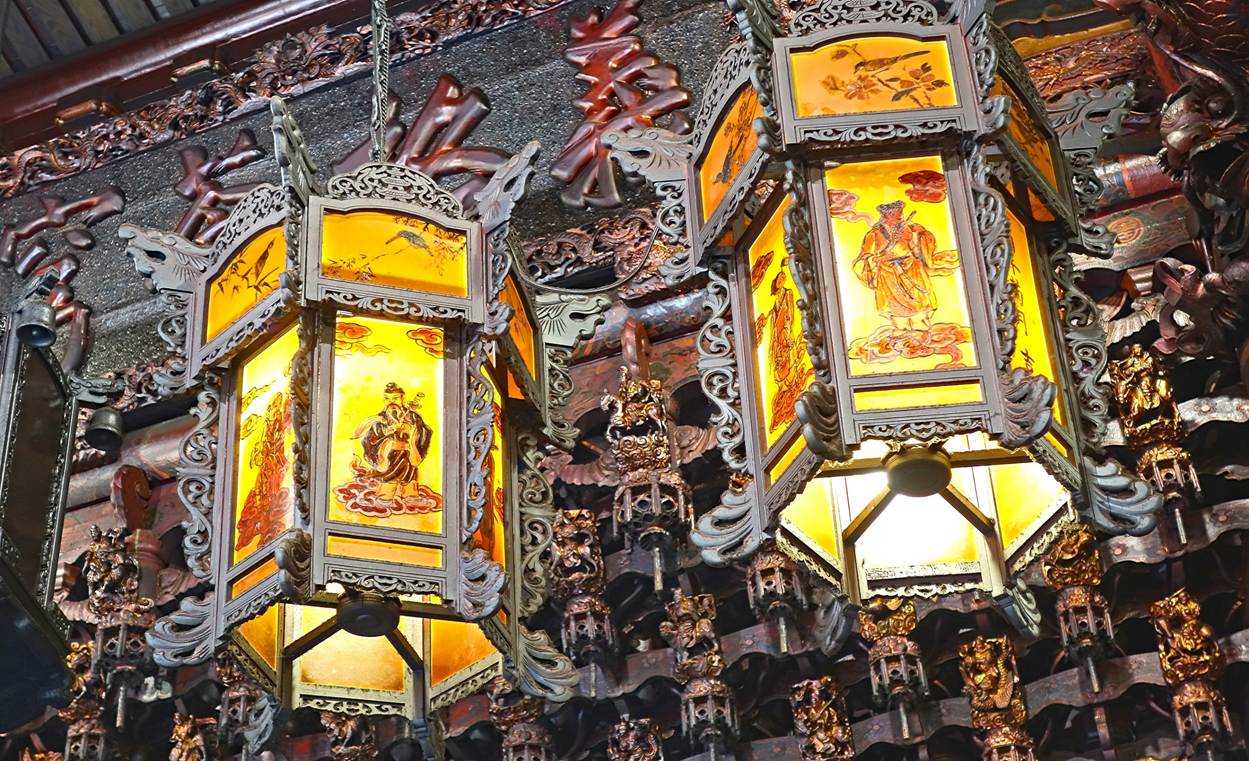
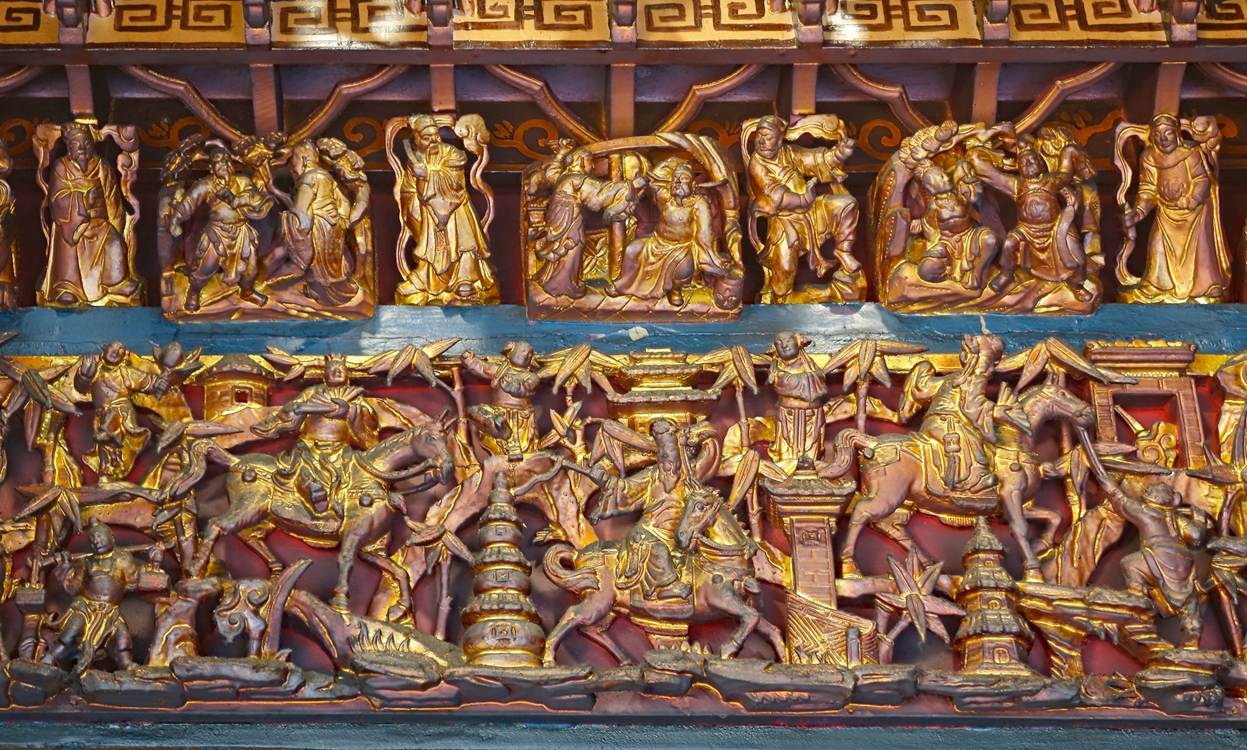
Lanterns and delicate
wood carvings in the main hall.
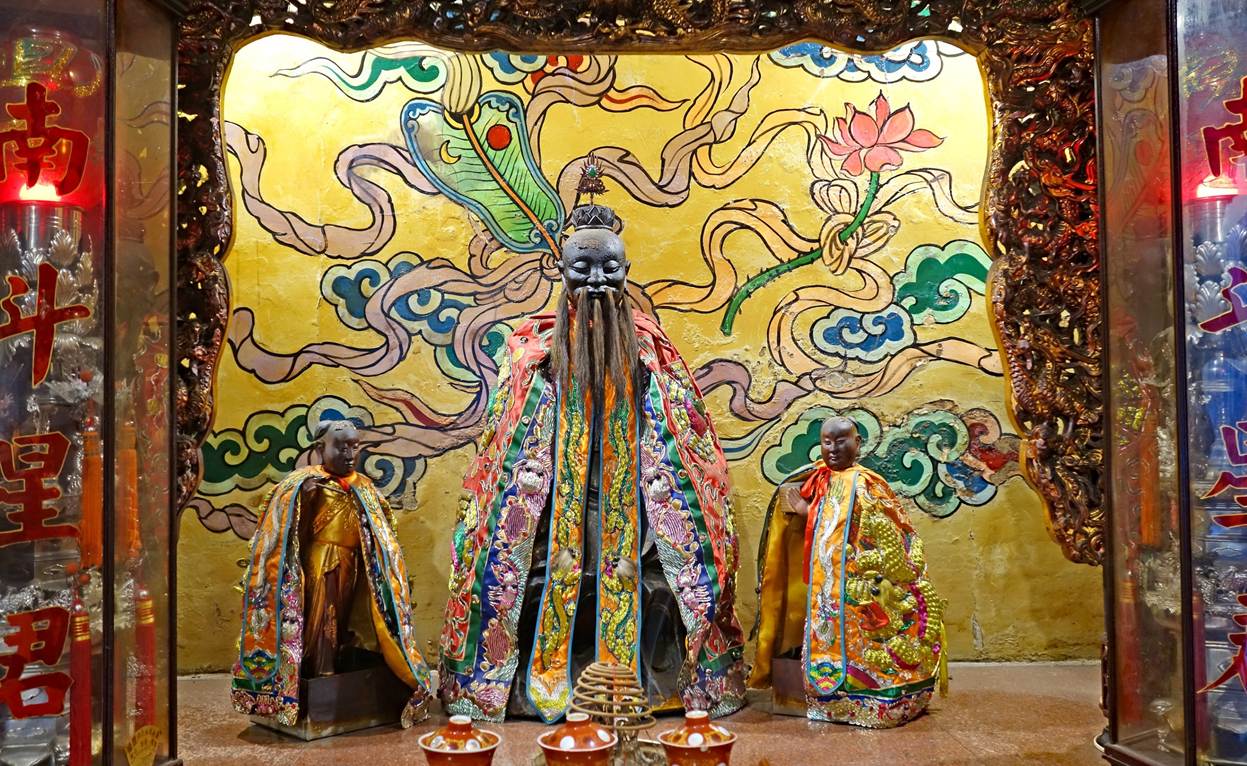
Altar of the lord of
the Southern Dipper (南斗星君). He oversees the six stars
of the Southern Dipper constellation, responsible for governing lifespan,
longevity, fortune, and status. He is a counterpart to the lord of the
Northern Dipper who manages death.
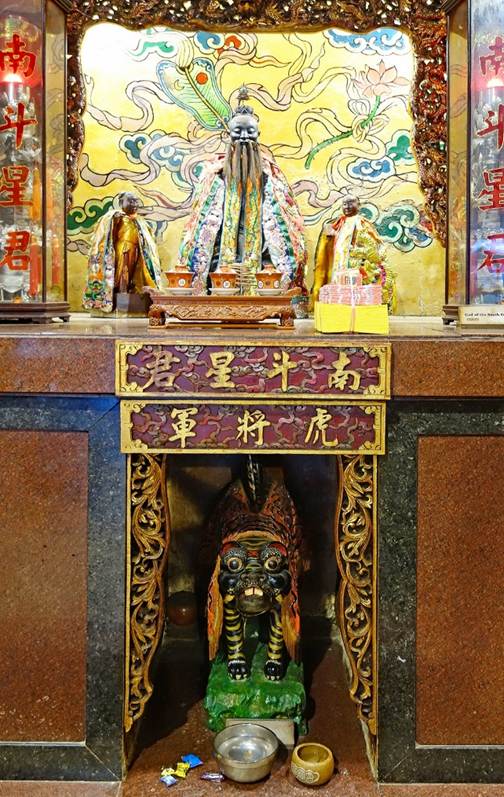
Left: Beneath the altar
of lord of the Southern Dipper, there is a niche housing the Tiger General Hu
Ye (虎爺將軍), a guardian deity.
Right: Close-up of the Tiger General.
|
|
|
Altar of the lord of
the Northern Dipper (北斗星君).
An unusual assembly of
deities. From left to right: the kitchen god (灶君), a key household
deity; Shennong, the lord of medicine (神農); Taiyi
Zhenren (太乙真人), one of the Twelve
Golden Immortals of the Kunlun Mountains; and the lord of the Western Dipper (西斗星君).
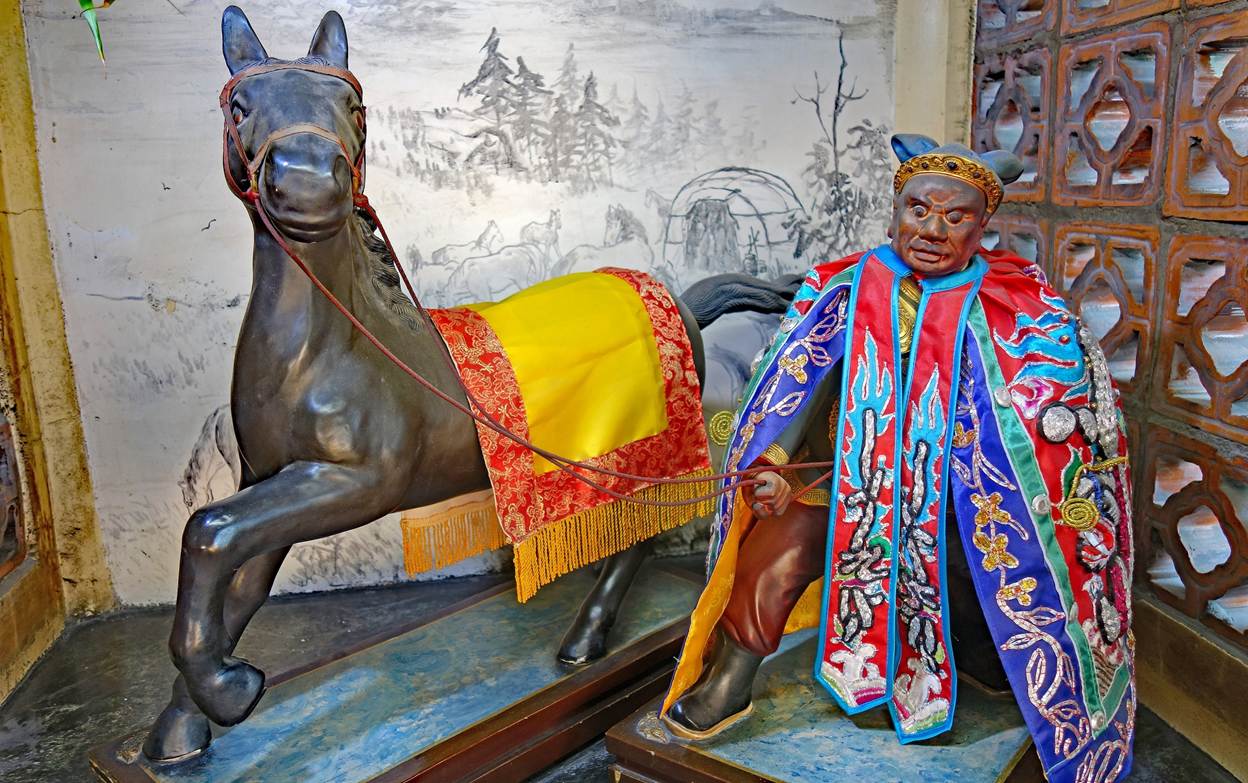
Ma She
Ye (馬使爺), the
deity recognized as the faithful groom of the Red Hare horse (赤兔马, ″Chi
Tu Ma″), Guandi's legendary steed.
[March 2026]
Taiwan Prefectural City God temple (臺灣府城隍廟):
A City God is a kind of
divine magistrate who protects the city, assists human officials to make
decisions, records the merits and faults of the city's inhabitants when they
die, and decides the kind of afterlife they deserve. There are about 100
City God temples in Taiwan. This temple was founded in 1669, during the Ming
dynasty, making it the earliest City Gog temple in Taiwan. Originally there was
a large courtyard in front of the temple. But, in the 20th century, urban development
and street widening led to its reconstruction, resulting in 1999 in the temple
we see today.
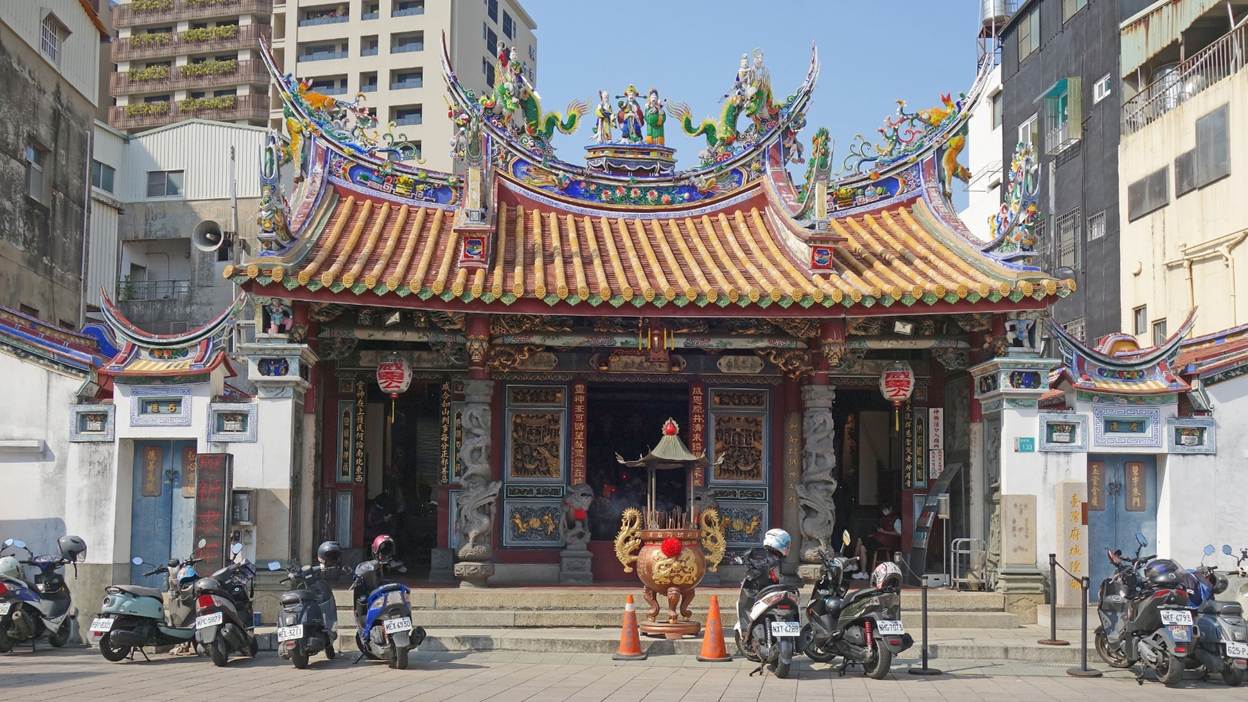
Facade of the temple.
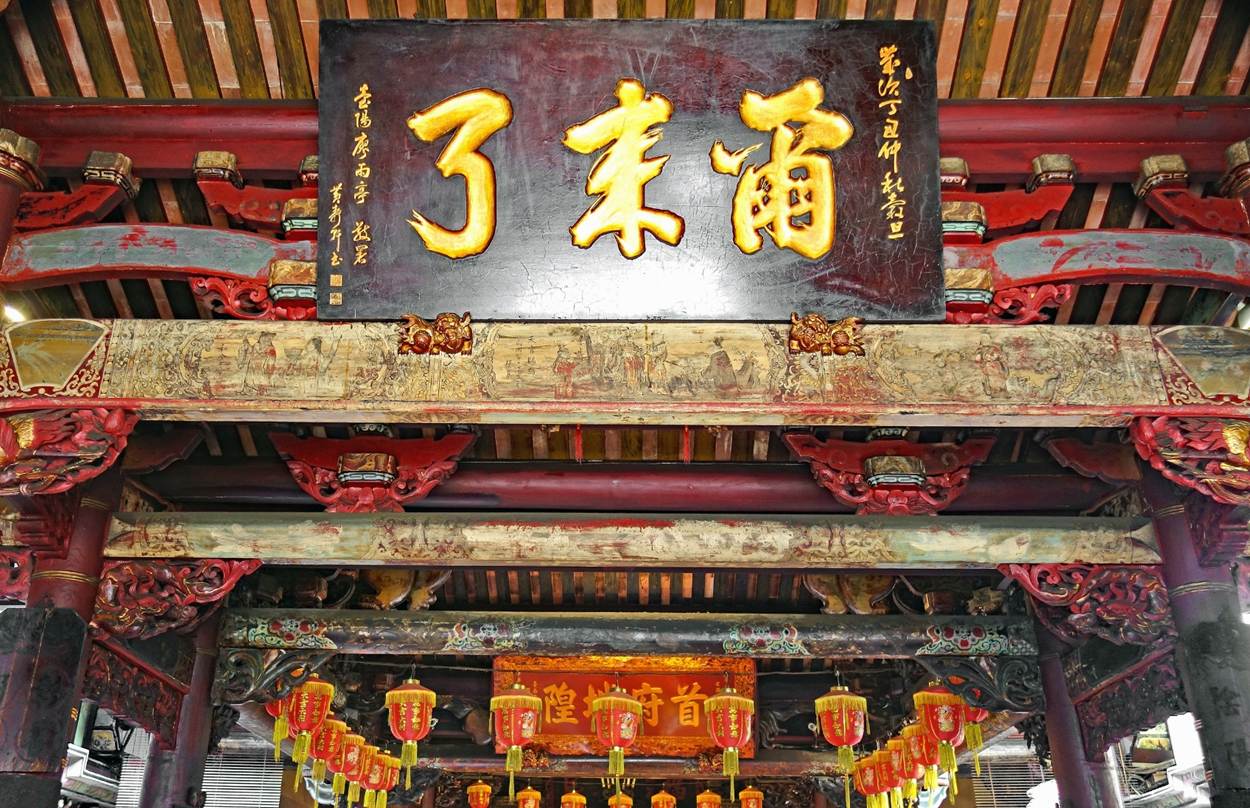
Plaque situated in the
entrance, bearing the characters 尔来了 (from right to left), meaning ″Here
you are″. It serves as a reminder, tinged with humor, of the god's
ultimate role, judging the souls of the deceased.
[March 2026]
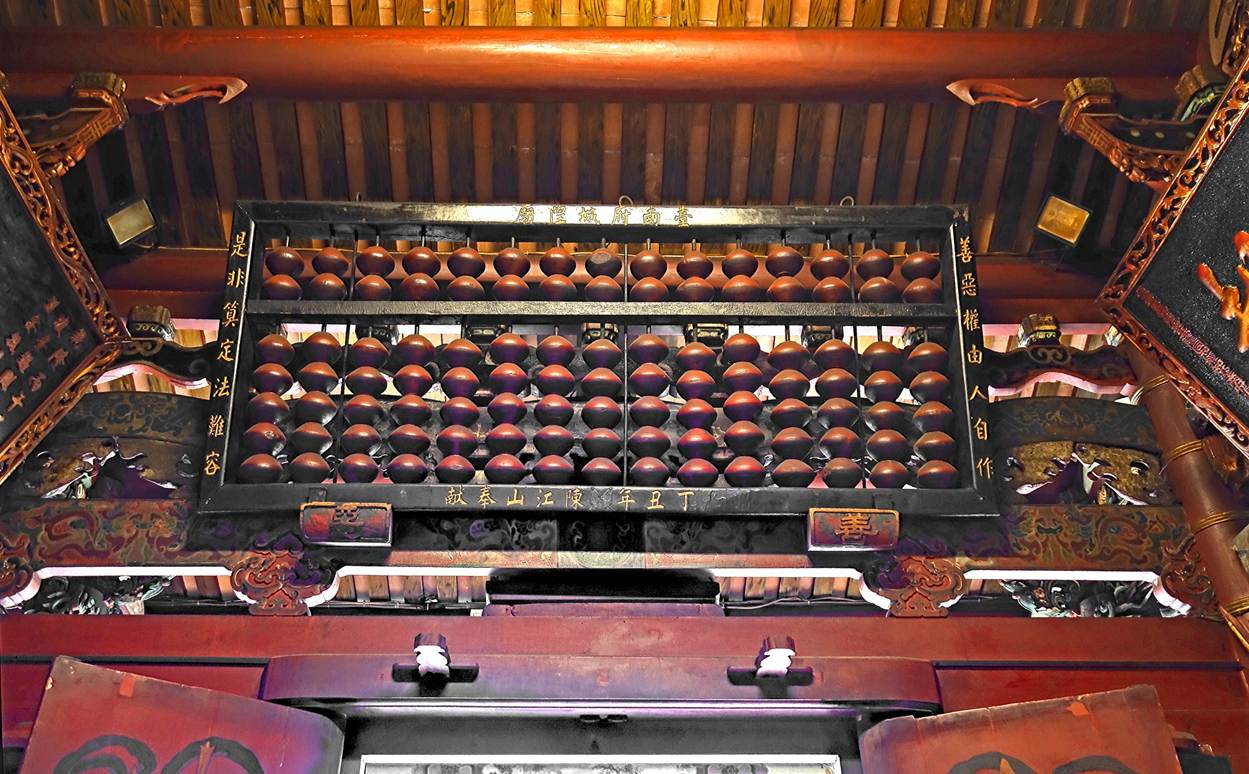
Large abacus hanging
above the temple′s entrance (on the interior side), which further underscores
that all good and bad deeds of a person will are tallied until his/her death.
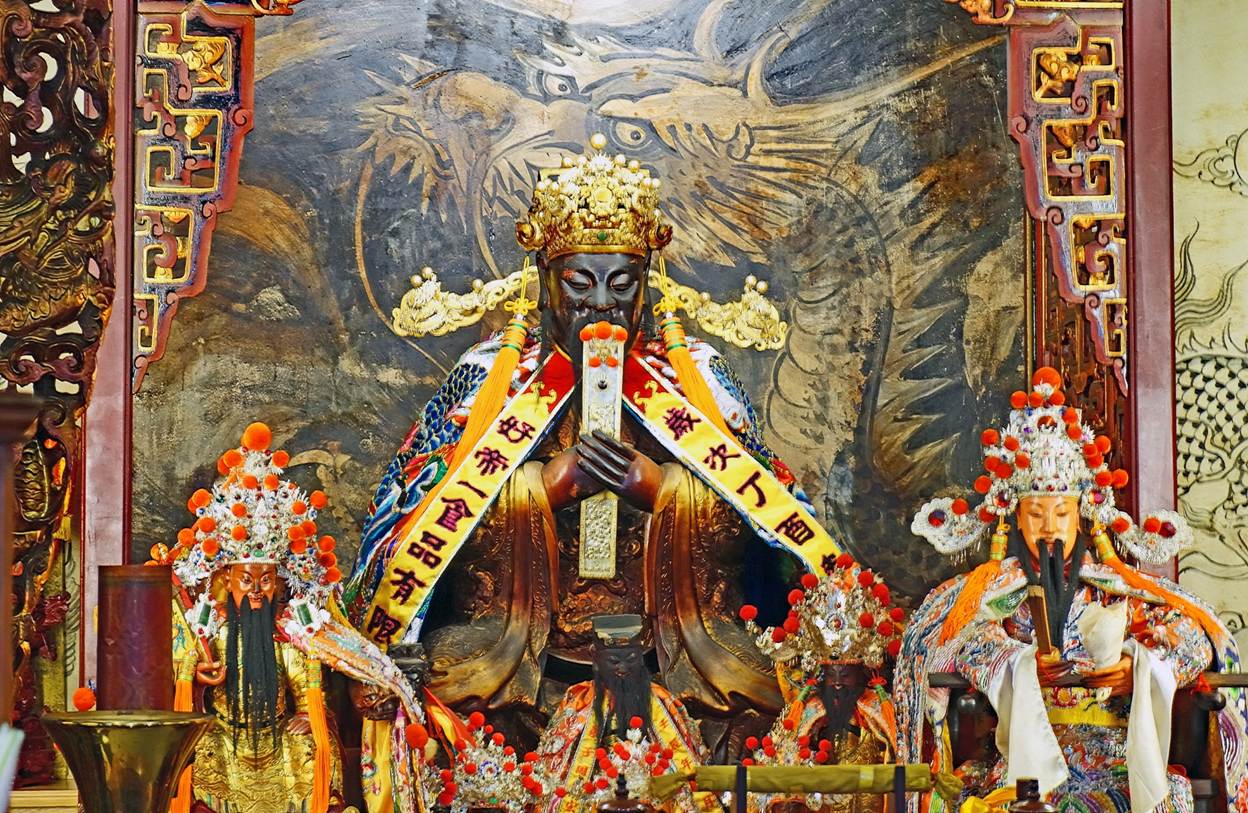
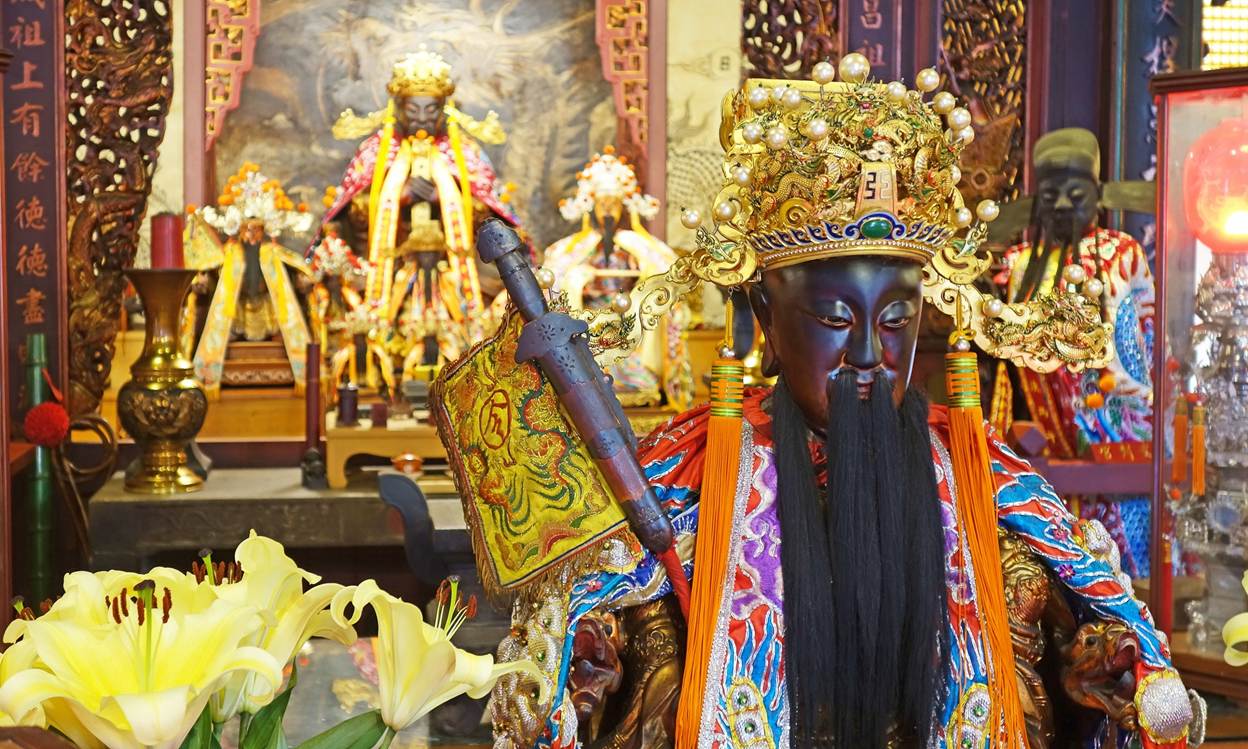
Main altar of the
temple dedicated to the City God, housing an old clay statue of the god created
during the Ming dynasty. The statue originally wore a silver crown, which was
later replaced with a gold one to reduce its weight and, therefore, better protect
the statue. In 2012, the gold crown was replaced by a much lighter paper one,
to further alleviate the strain on the neck of the statue. The City God is
surrounded by civil and military officials and judges, who serve as his
assistants.
[April 2017]
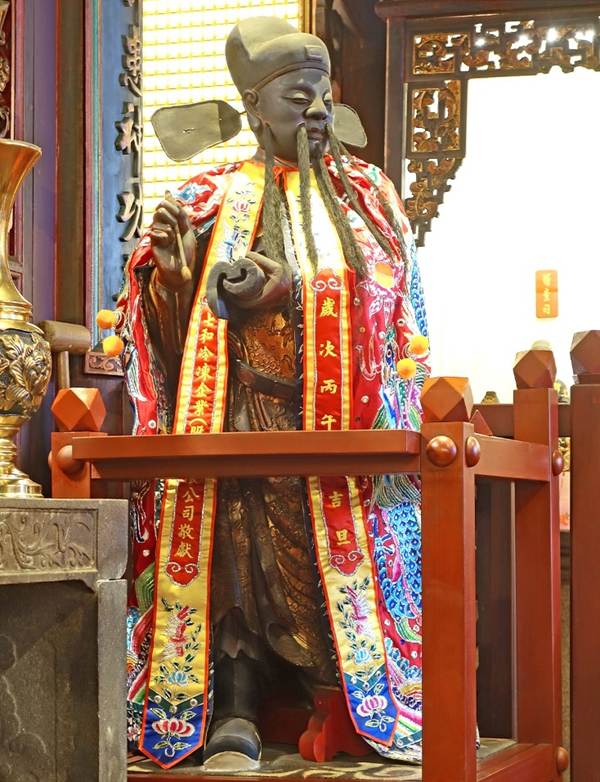
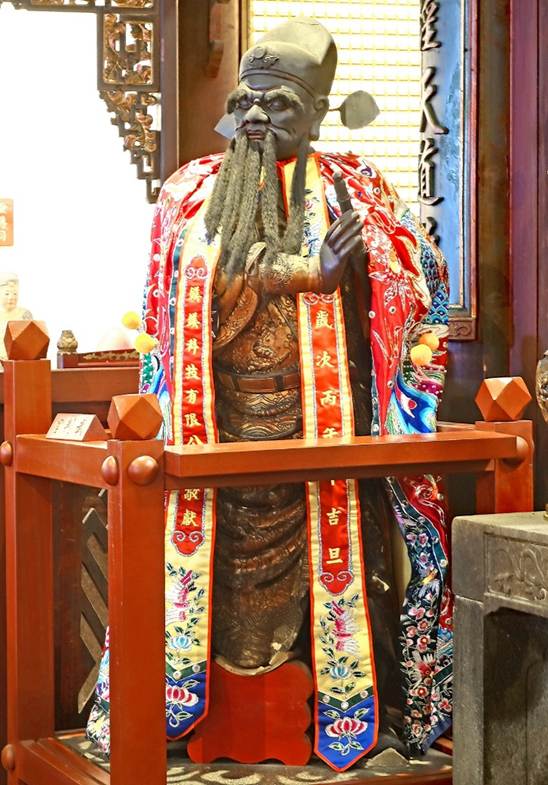
Two particularly
important officials assisting the City God are the Clerk and Executioner of the
Underworld. They stand before the altar, one on either side:
- Left photo: The Clerk
of the Underworld stands to the right of the altar. He holds a brush and a
thick scroll of paper to record the good and bad deeds of all people. (He is
also partially visible at the far right of the previous photo.)
- Right photo: The
Executioner of the Underworld stands to the left of the altar. He holds a
staff. He is tasked with carrying out the verdicts handed down by the City God.
|
|
|
[March 2026]
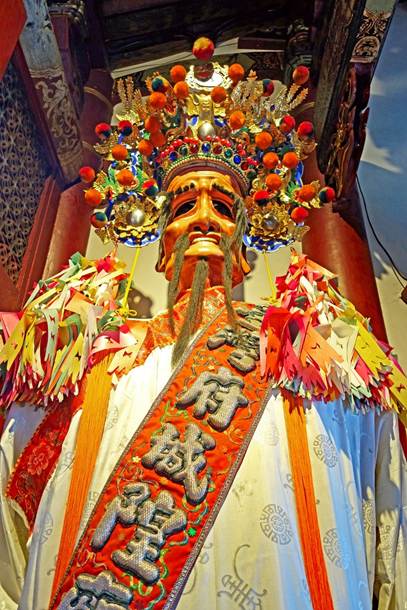
A few of the statues of
deified generals standing in the temple.
|
|
|
|
|
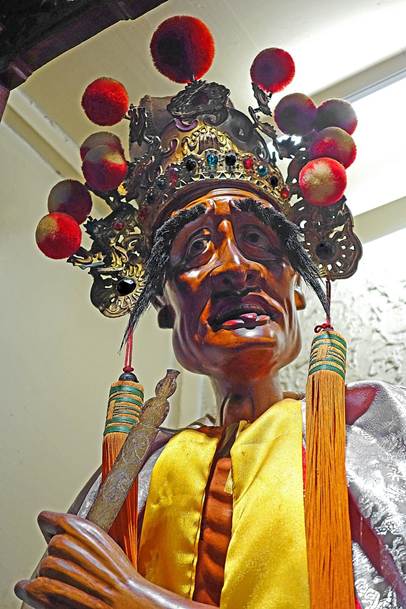
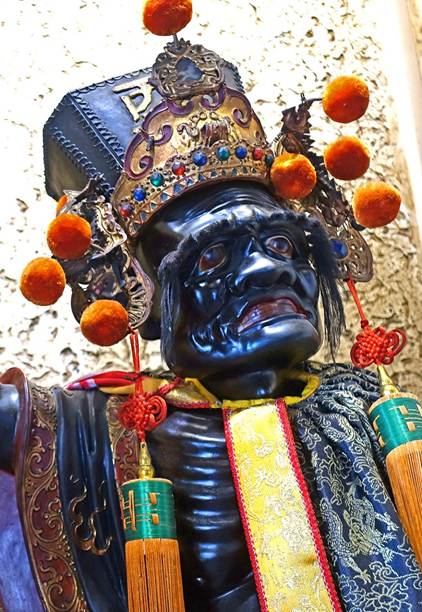
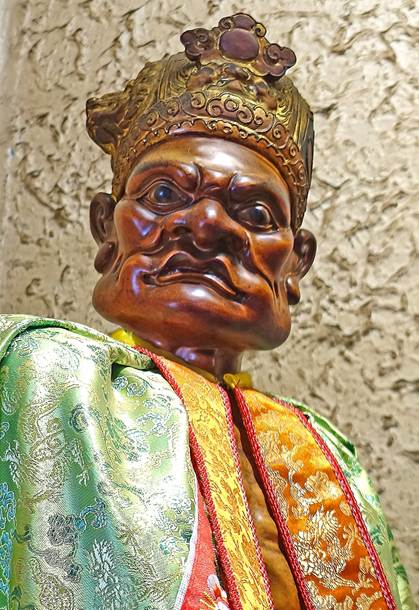
[Two photos on the left: April 2017]
[Two photos on the right: March 2026]
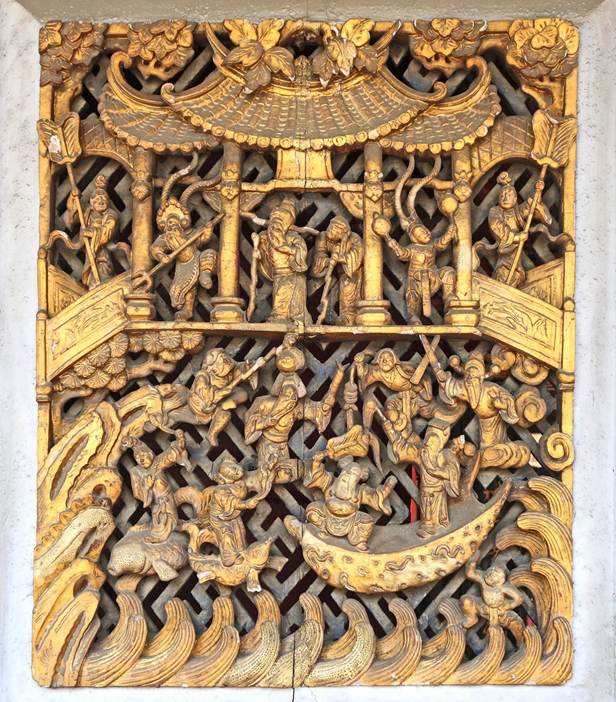
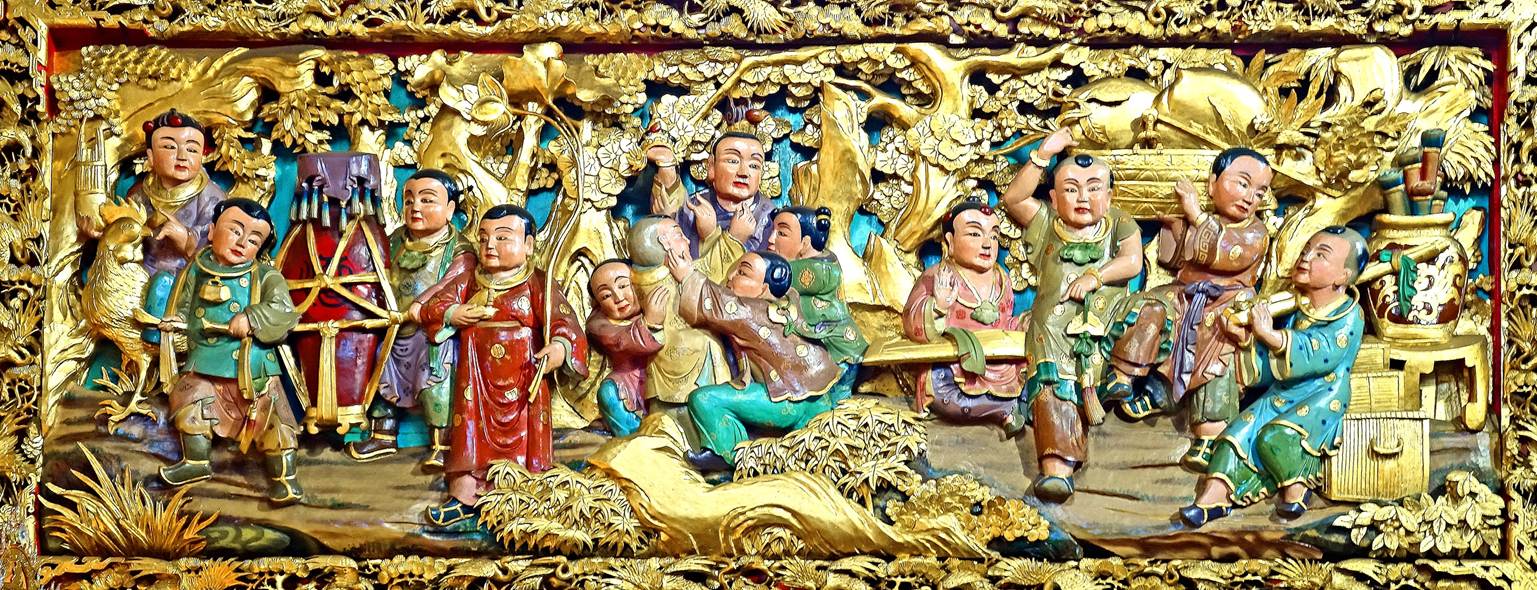
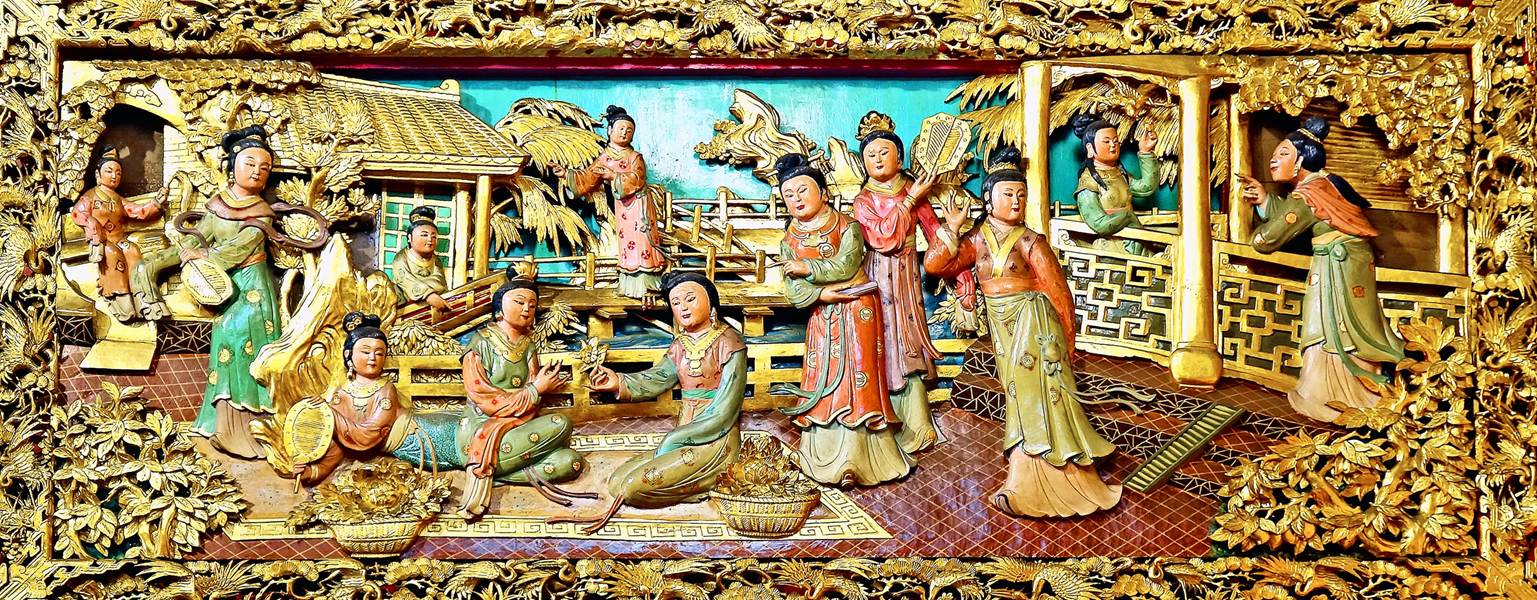
Carved wooden panels
representing, from left to right:
- The Eight Immortals
Crossing the Sea, a popular Taoist myth in which eight Immortals use a magical
instrument to cross the East Sea rather than a boat,
- The Flooding of
Jinshan Temple (水漫金山), a famous episode
from the Chinese legend ″The Legend of the White Snake″.
They were carved in 1933.
The artist is unknown.
|
|
|
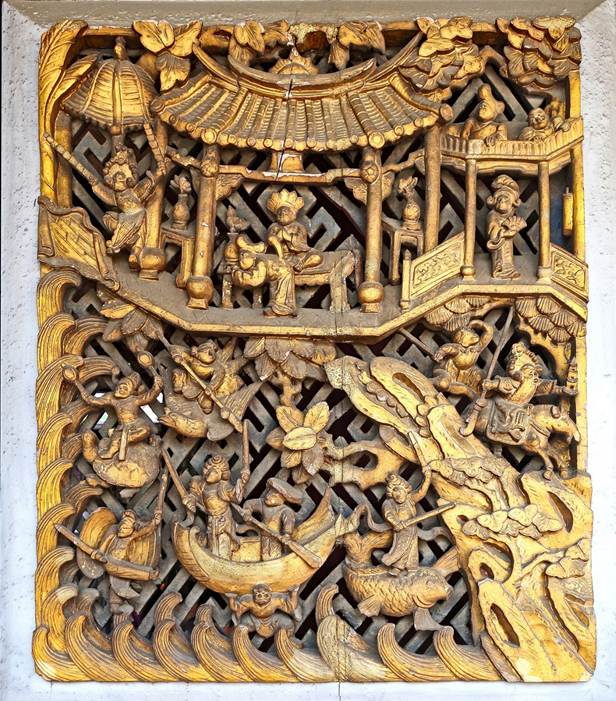
[March 2026]
Dongyue temple (臺南東嶽殿 (嶽帝廟)):
Originally built at
its current location in 1673, this temple underwent many restorations. In 1979
the widening of the street in front of the temple led to the demolition of its
original gate and its replacement by the gate of the first hall.
The temple is primarily
dedicated to the Great Emperor of Mount Tai (泰山大帝), the ruler of the underworld, who
governs the souls of the deceased. It is believed that, after death, a person
is first sent to the City God for review, and then to the Dongyue
Emperor for a second review. One of his roles is to rescue the souls of the ″unjustly
dead″ (ranging from babies to unmarried men and women). Not surprisingly,
the Dongyue temple also enshrines Ksitigarbha
Bodhisattva (known as Jizo in Japan), who also assists the souls of the
deceased, especially babies. People go there to pray for the deceased and,
sometimes, to participate in rituals aimed at communicating with them.
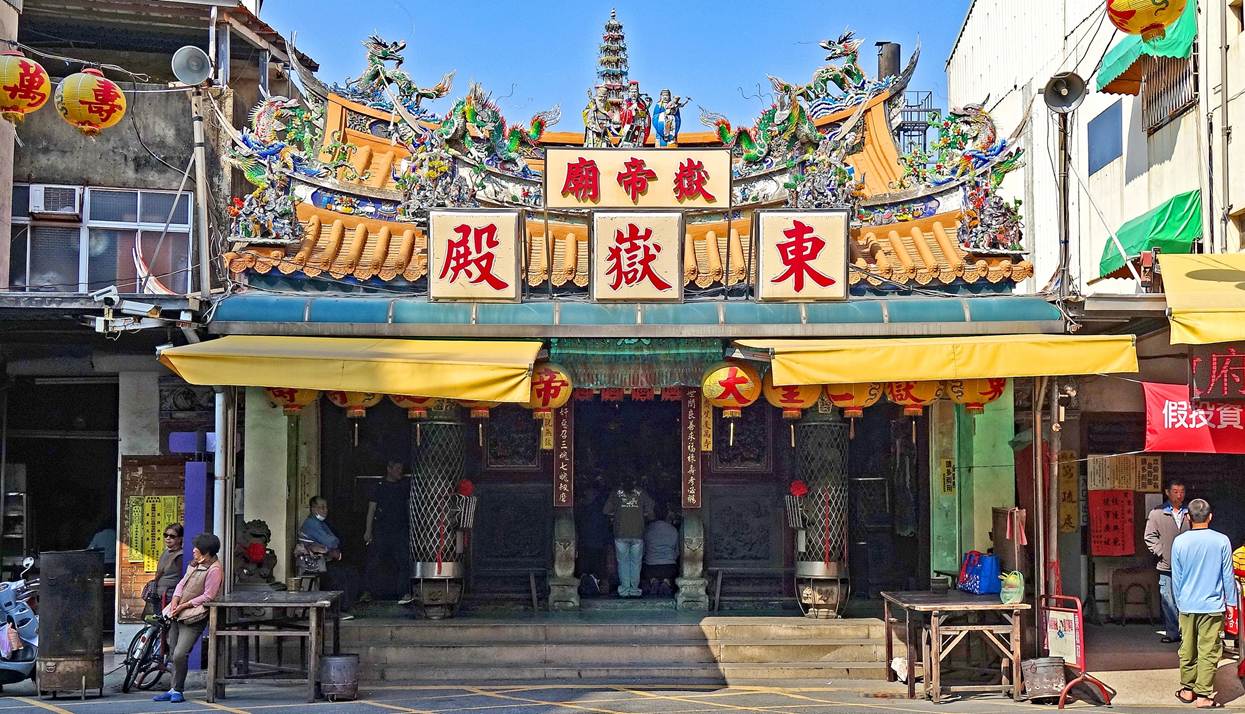
Entrance of the temple,
leading directly into the first hall (since 1979).
[March 2026]
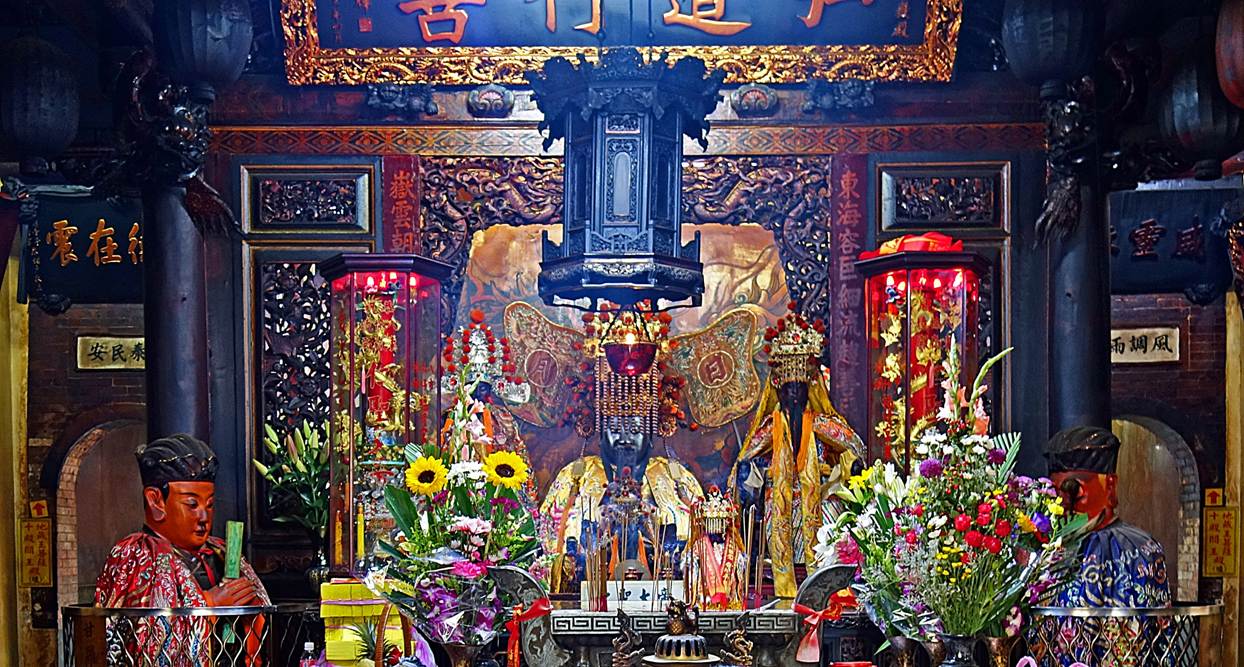
Altar located in the
first hall, dedicated to the Great Emperor of Mount Tai.
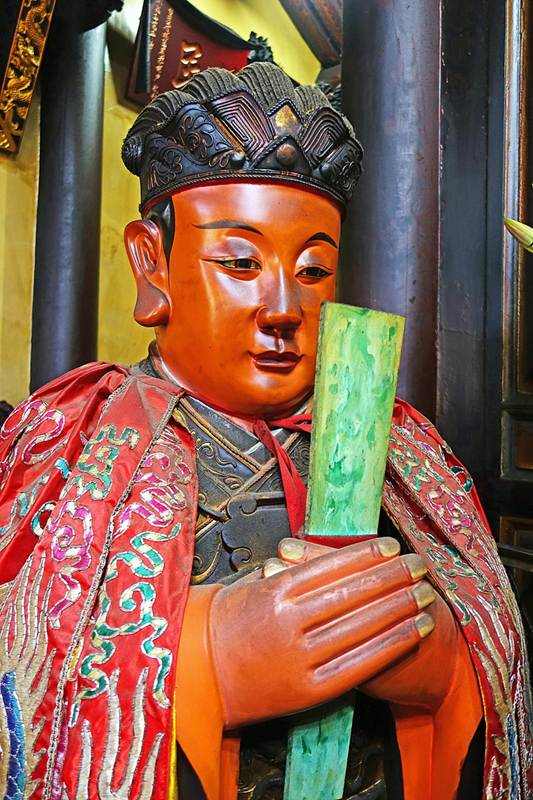
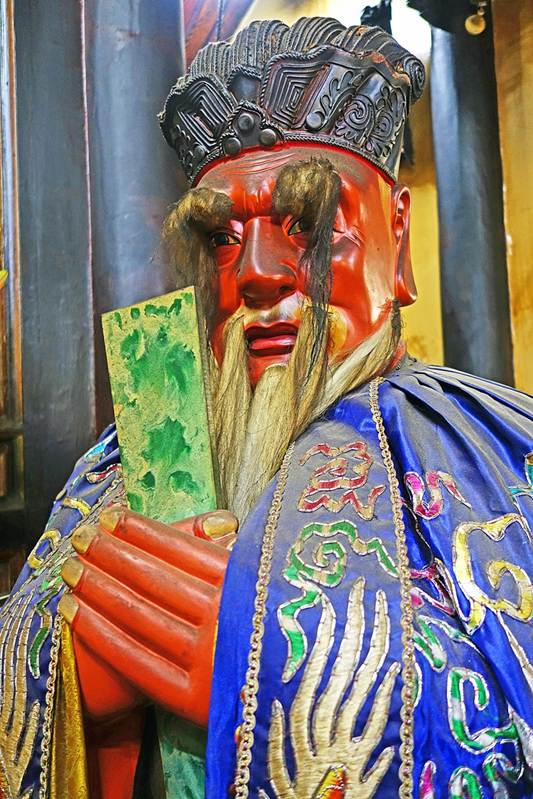
Closeups of the two attendants
(partially visible in the photo above) on either side of the altar.
|
|
|
Altar dedicated to the
Great Emperor of Fengdu (酆都大帝), another ruler of the
underworld in Taoist belief. While Mount Tai (泰山) is located in the
Shandong Province of eastern China, Fengdu is a ghost city located on Mount Luofeng (罗酆山) in northern China.
So, the two deities may have evolved separately and brought by different groups
of immigrants. They may manage distinct underworld realms related to their
respective origins. However, given the name of the temple and the placement of
his altar in the front hall, the Great Emperor of Mount Tai is likely the most
prominent deity in this temple.
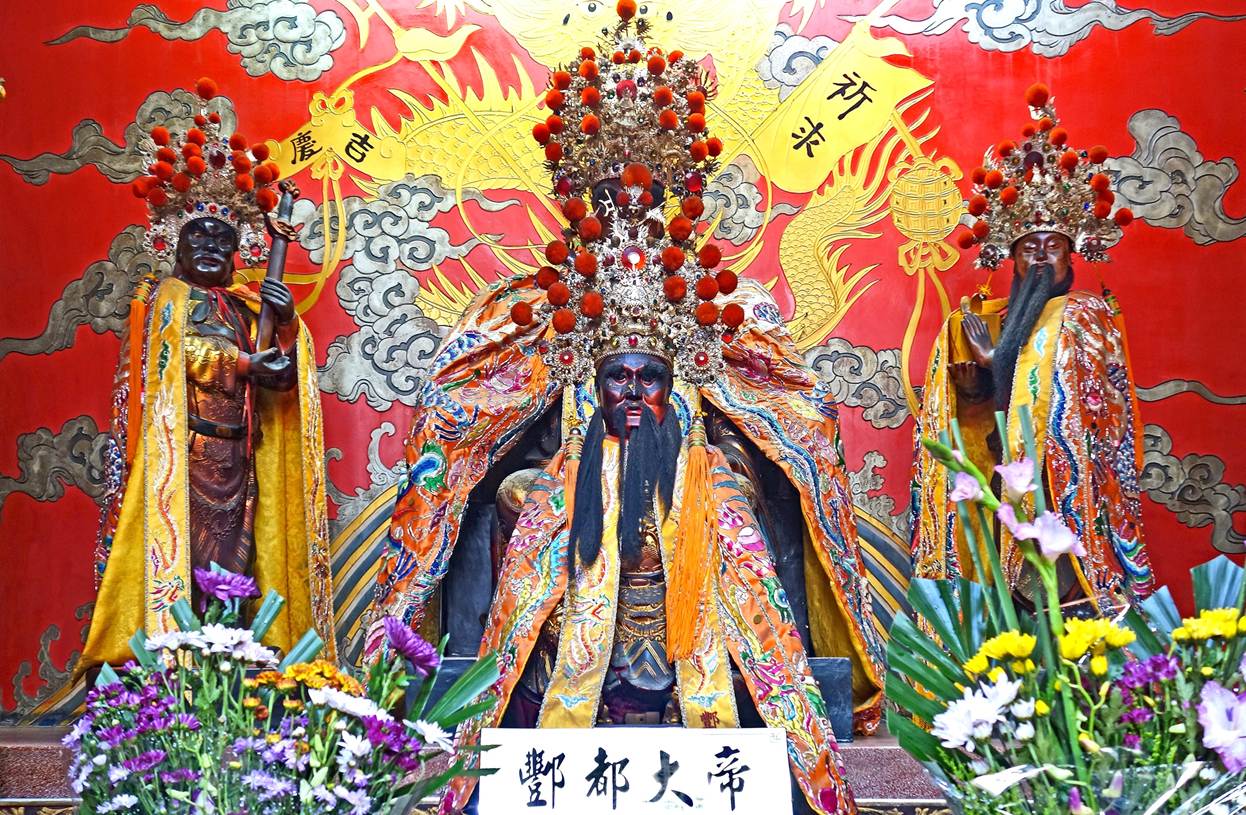
[April 2017]
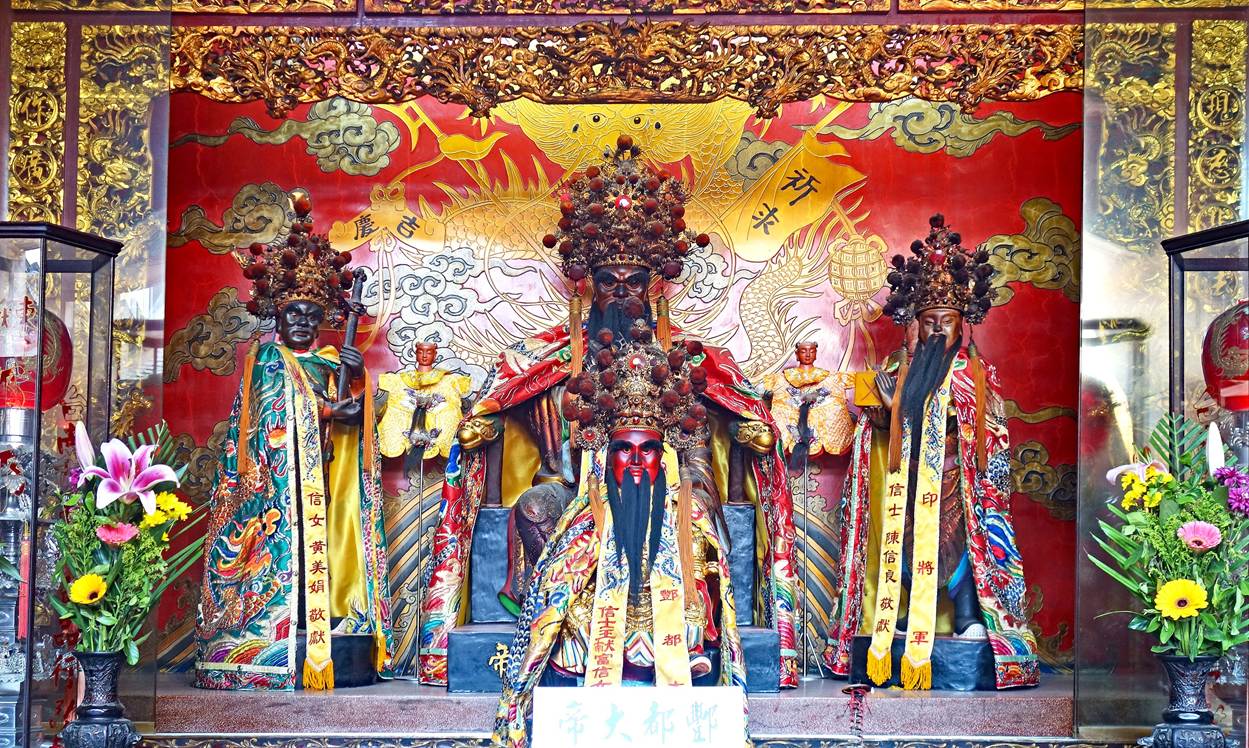
Photo of the same altar
taken in March 2026. The deities are dressed differently.
[March 2026]
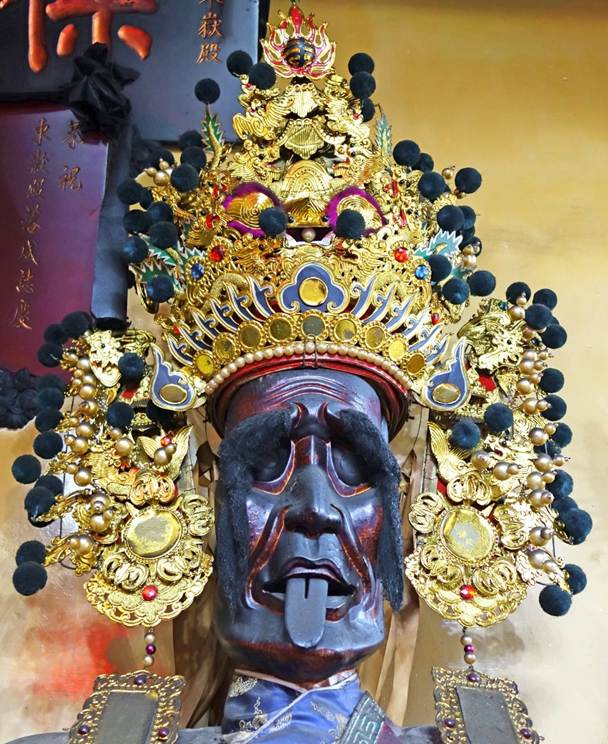
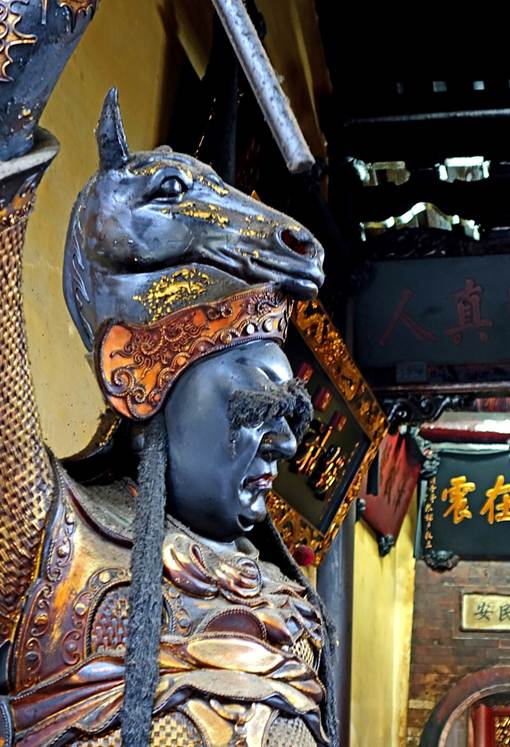
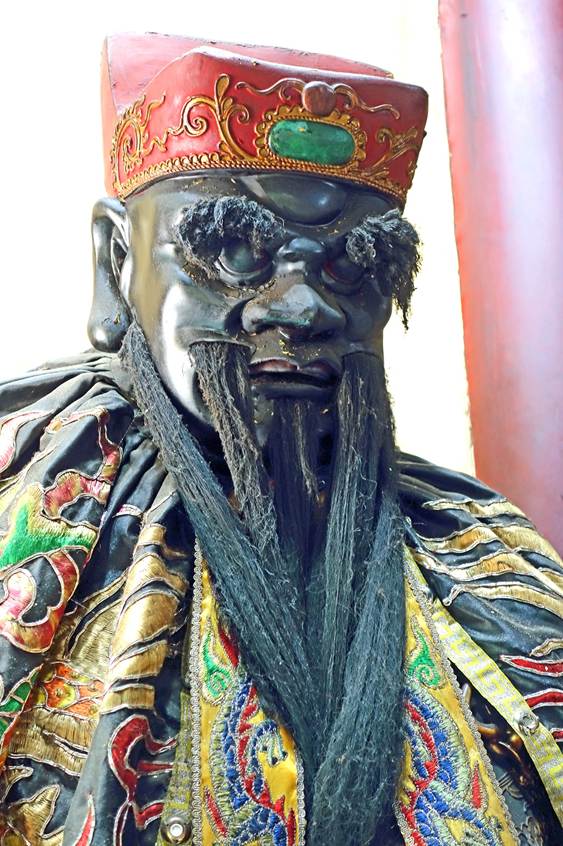
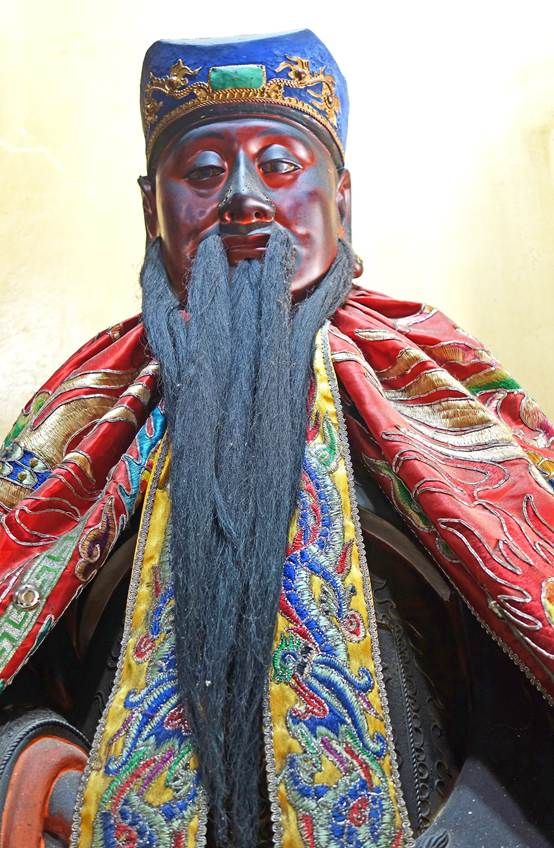
Other deities scattered
throughout the temple.
|
|
|
[April 2017]
|
|
|
[March 2026]
Tainan Confucius temple (臺南孔廟):
Originally built in 1665, during the
Kingdom of Tungning (1661-1683), this Confucius
temple is the oldest in Taiwan. Its history, however, has been very complex.
Over time, it underwent numerous episodes which parts ofittemple
were destroyed or abandoned, new components were constructed, or structures
were renovated. At the end of World War II, the temple had fallen in a state of
severe disrepair. A lengthy process of renovations and reconstructions,
beginning in the early 1950s and extending until the late 1980s, resulted in
the temple as it stands today.
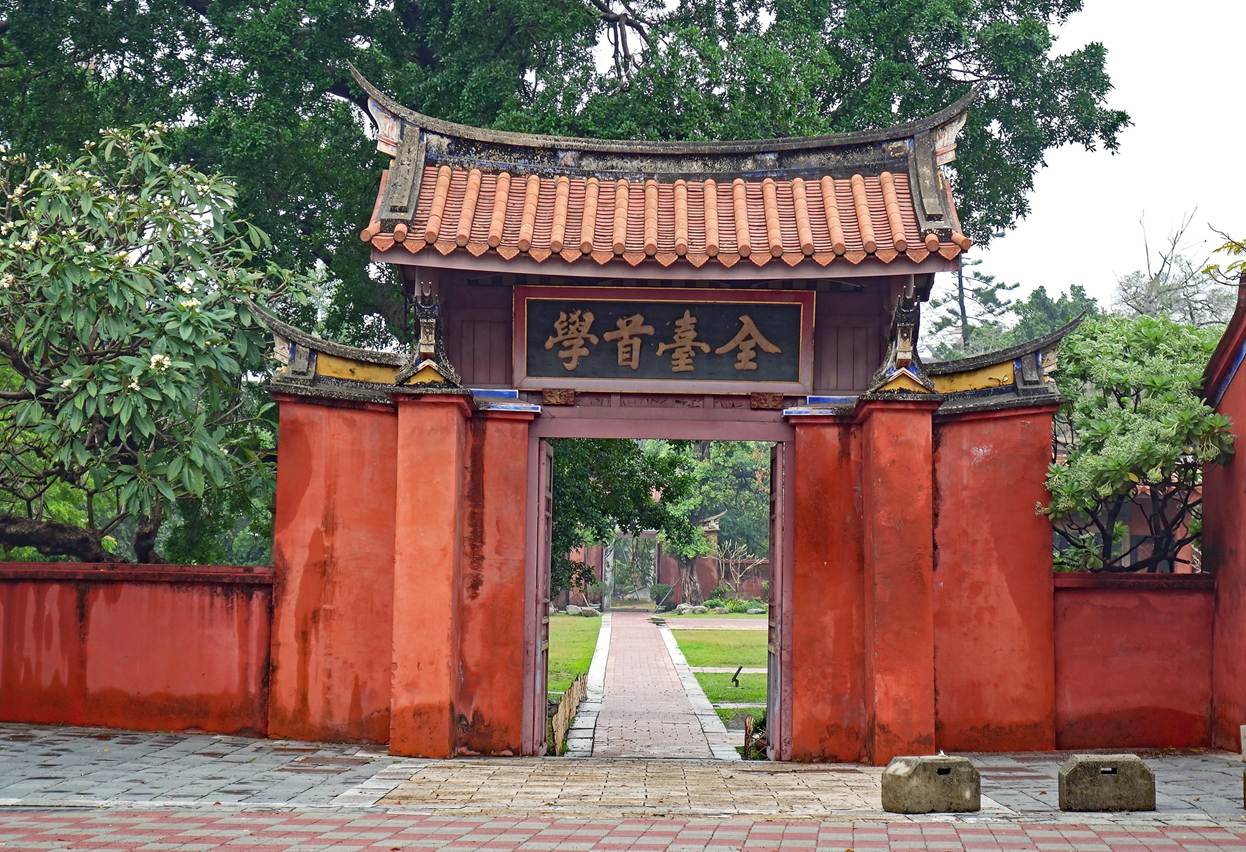
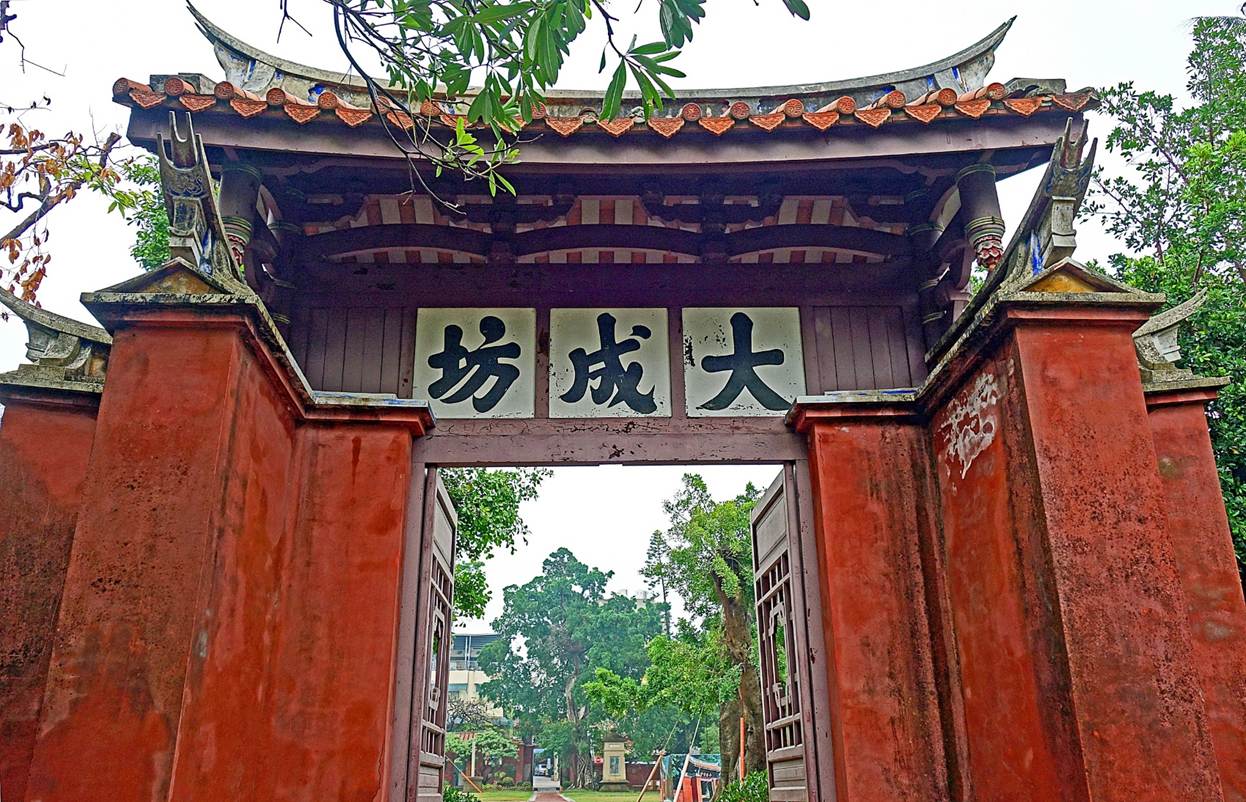
East entrance gate to the temple's
walled compound.
West entrance gate to
the temple's compound.
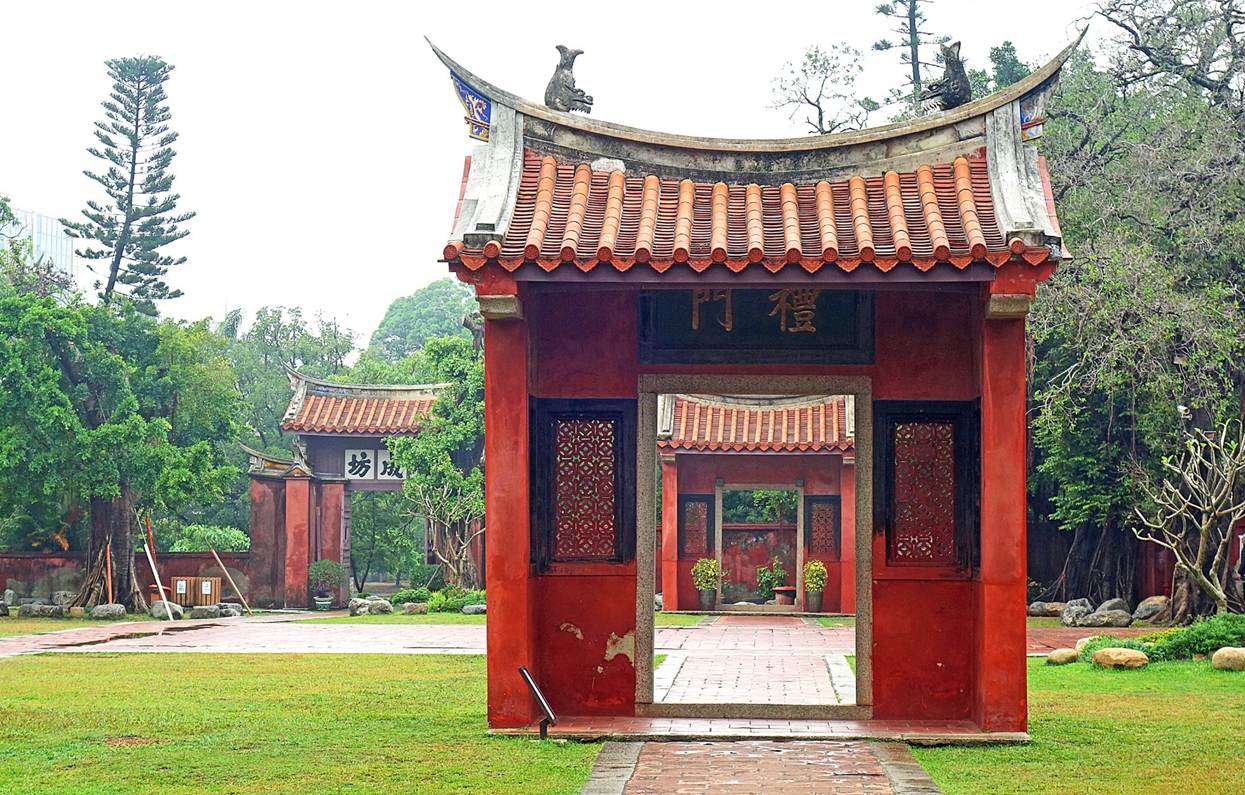
The Gate of Rites (禮門) and, behind it, the
Path of Righteousness (義路), inside the temple
compound,
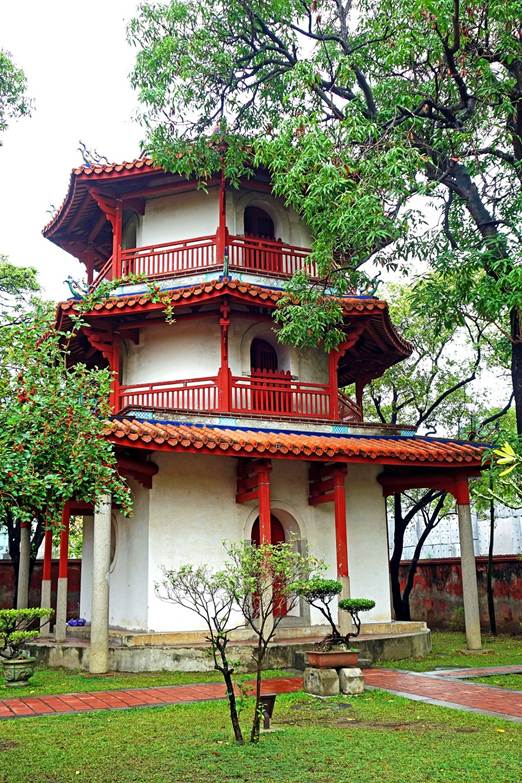
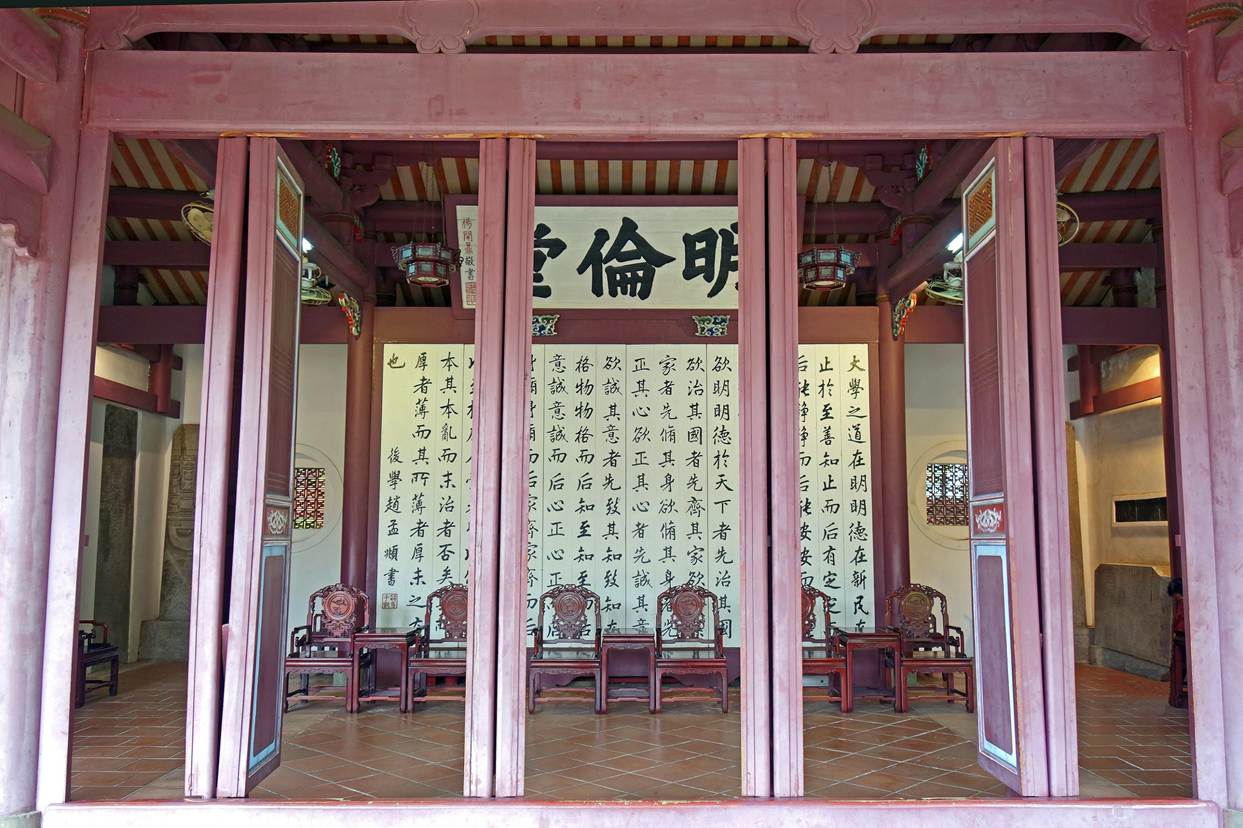
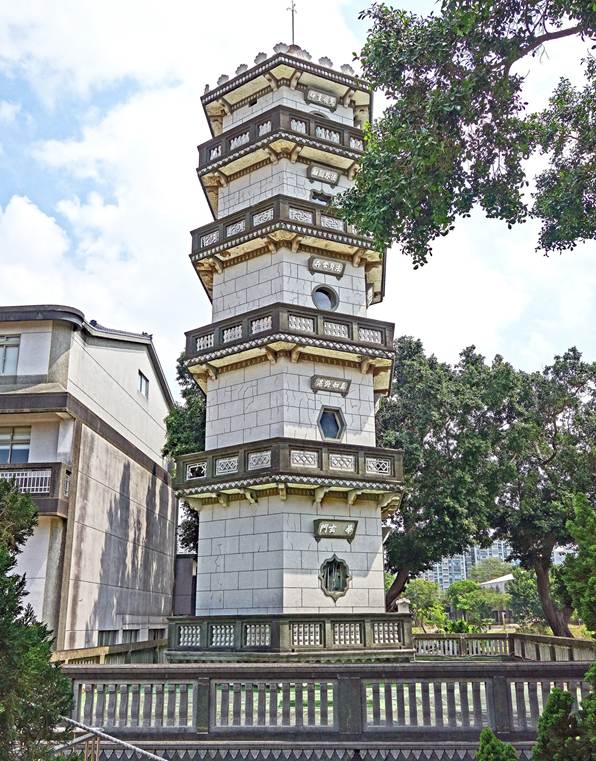
Left: Hall of
Edification (明倫堂), the site of the
first official school in Taiwan. Right: Wenchang pavilion (文昌閣) standing on the right
of the hall of Edification Hall. This pavilion is dedicated
to Wenchang Dijun (文昌帝君), the God of
Literature and Education. Its first story is square, the second is round, and
the third is octagonal.
|
|
|
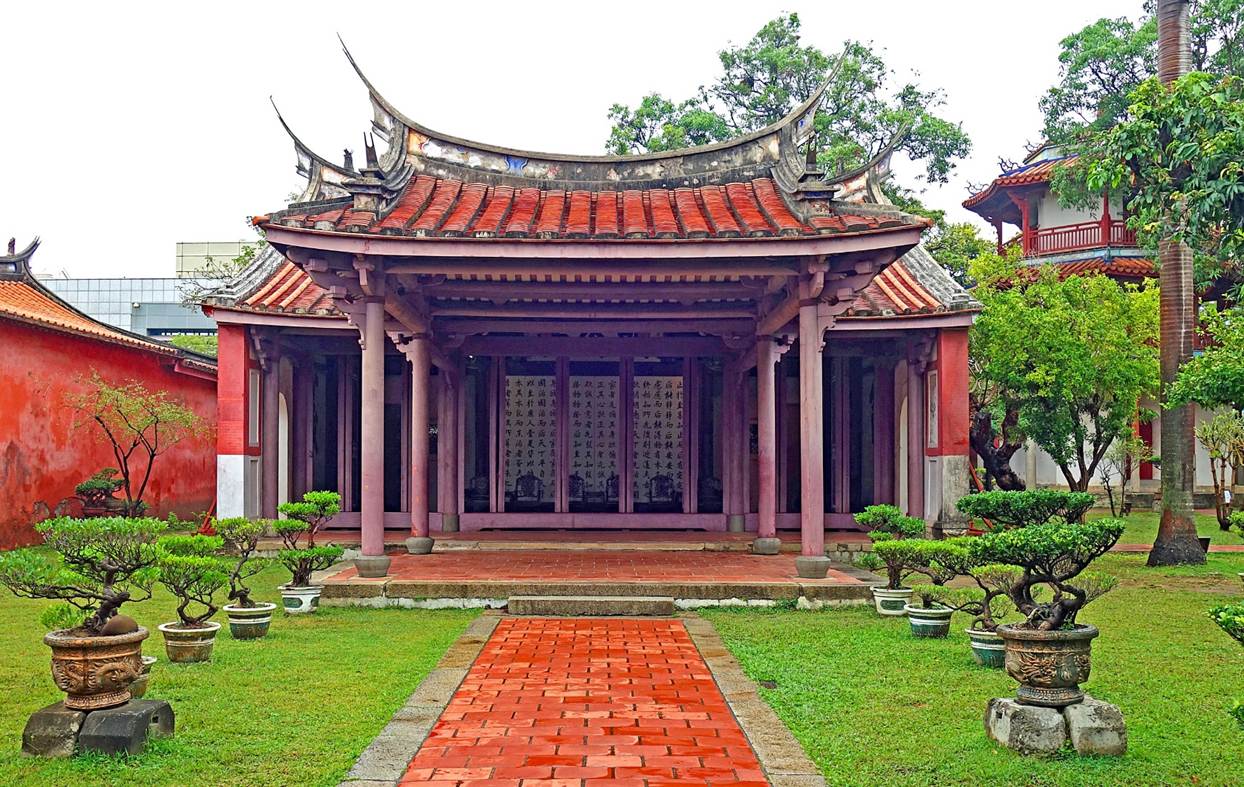
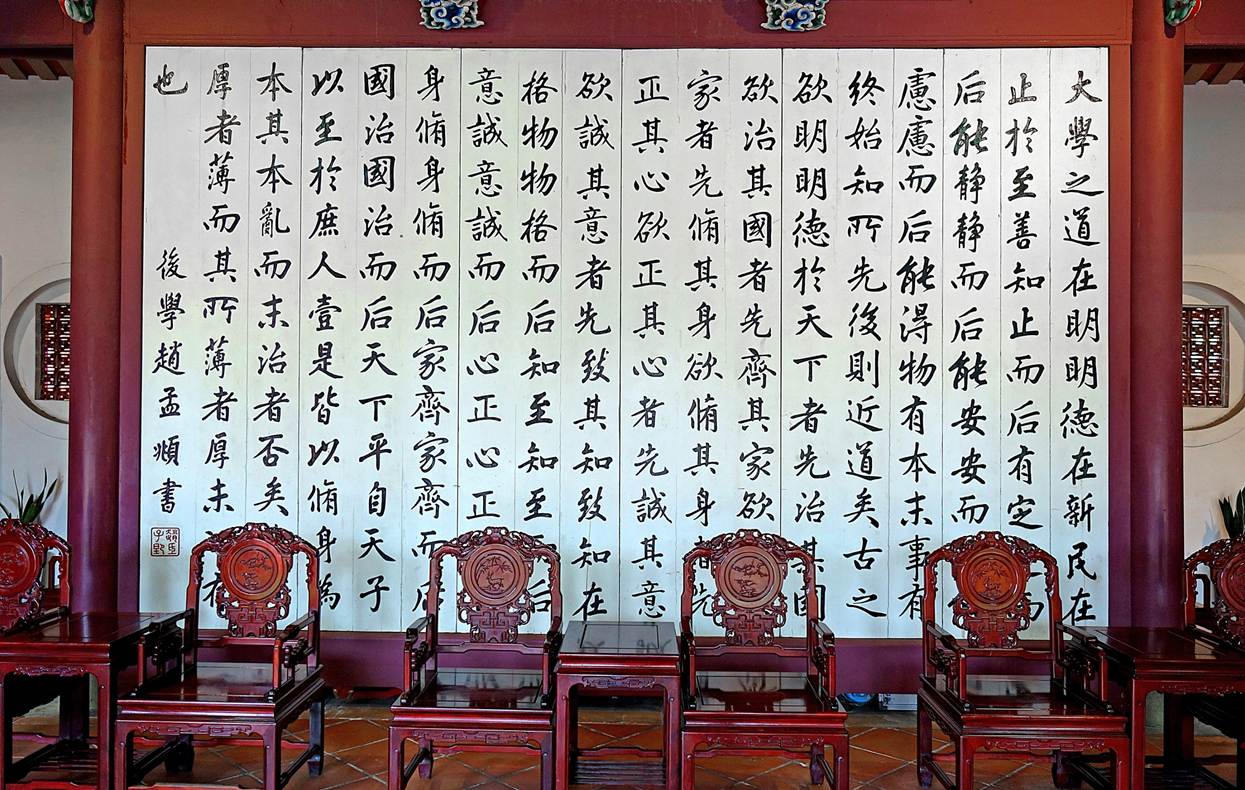
The hall of Edification
houses a large mural reproducing a text drawn from ″The Great Learning″
(大學), one of the four
foundational books of Confucianism.
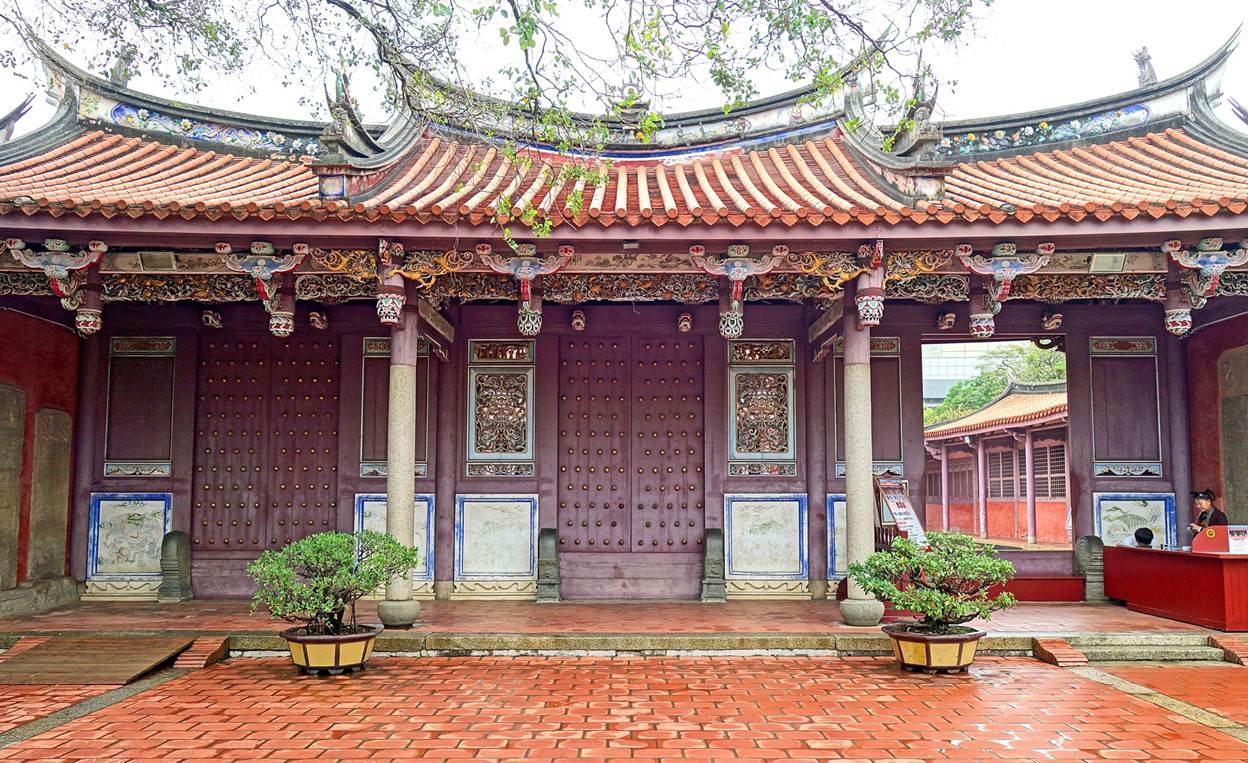
View of the Daheng gate (大成門), which opens into the
courtyard of the Dacheng hall (大成殿), Dacheng (大成) means ″Great Accomplishment'.
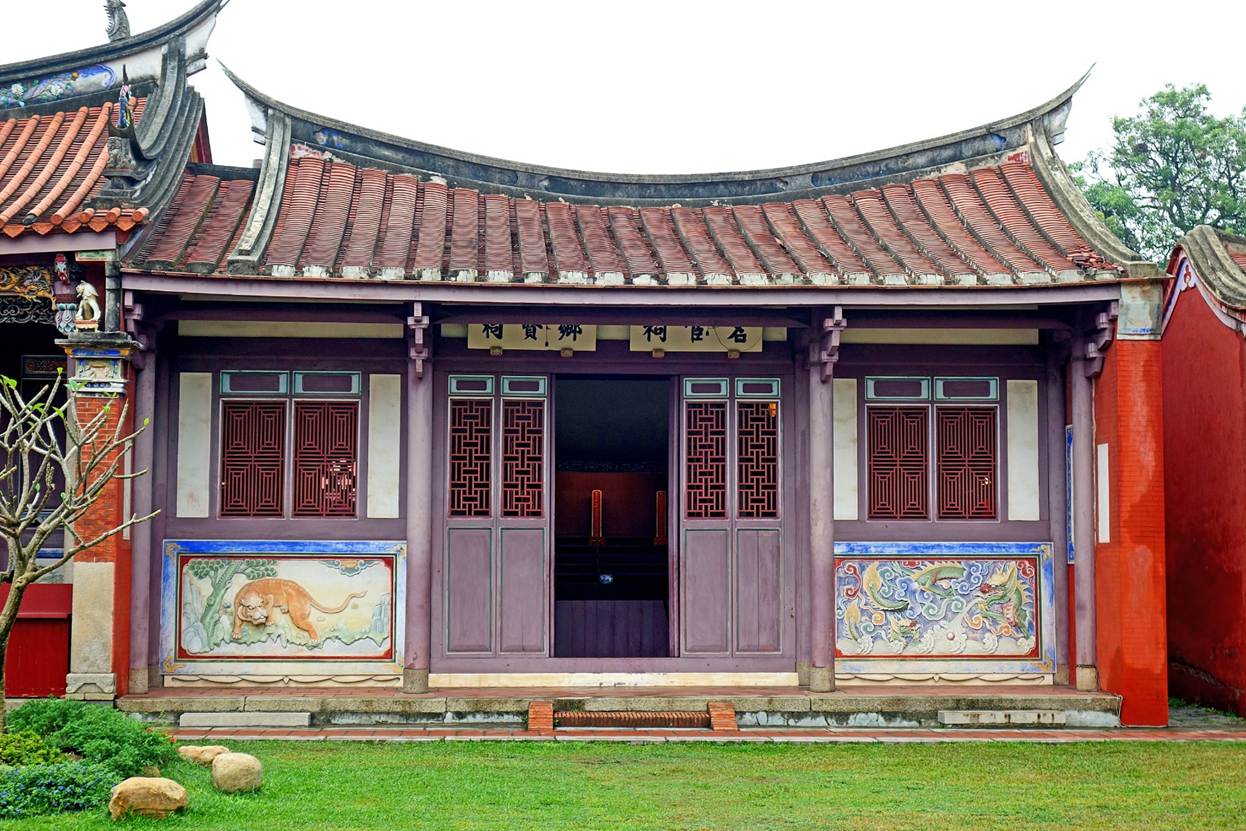
Shrine adjoining the
right wall of the Dacheng Gate. It houses the spirit
tablets of distinguished officials and respected scholars.
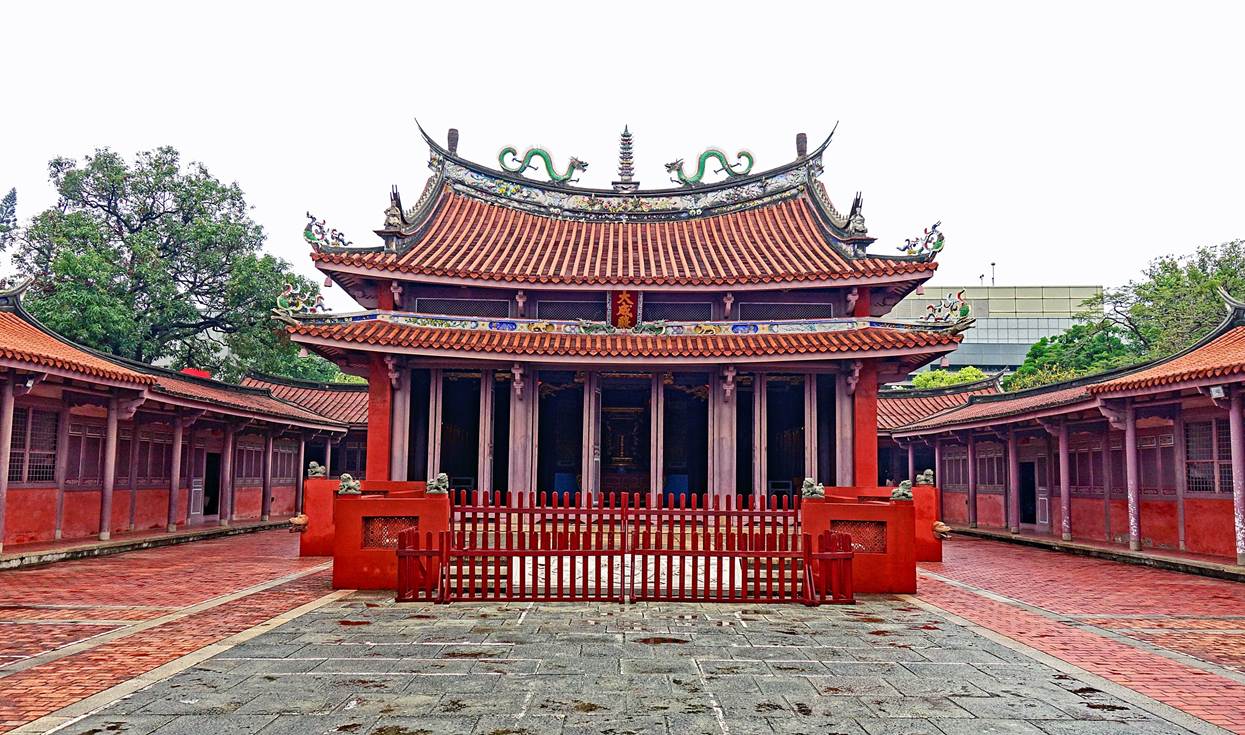
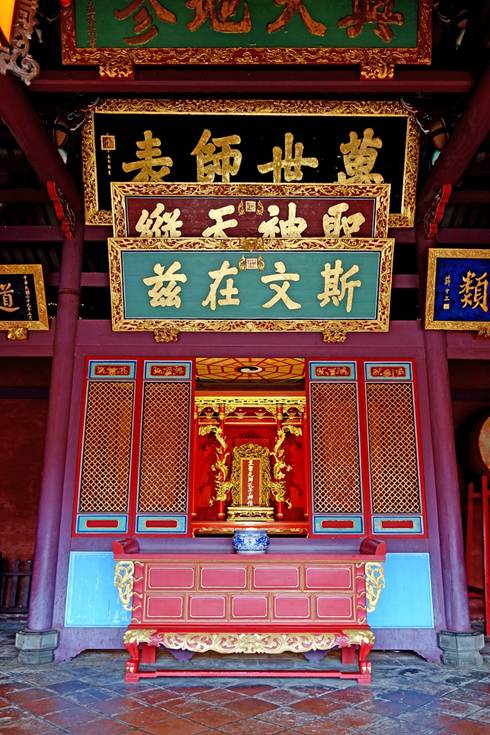
Left: The Dacheng hall (大成殿), the main building of
the temple, in the middle of the courtyard. Right: Altar housing the Confucius
spirit tablet, which embodies his teachings, inside the Dacheng
hall. It also contains many tablets given by Qing dynasty emperors and
presidents of the Republic of China (Taiwan).
|
|
|
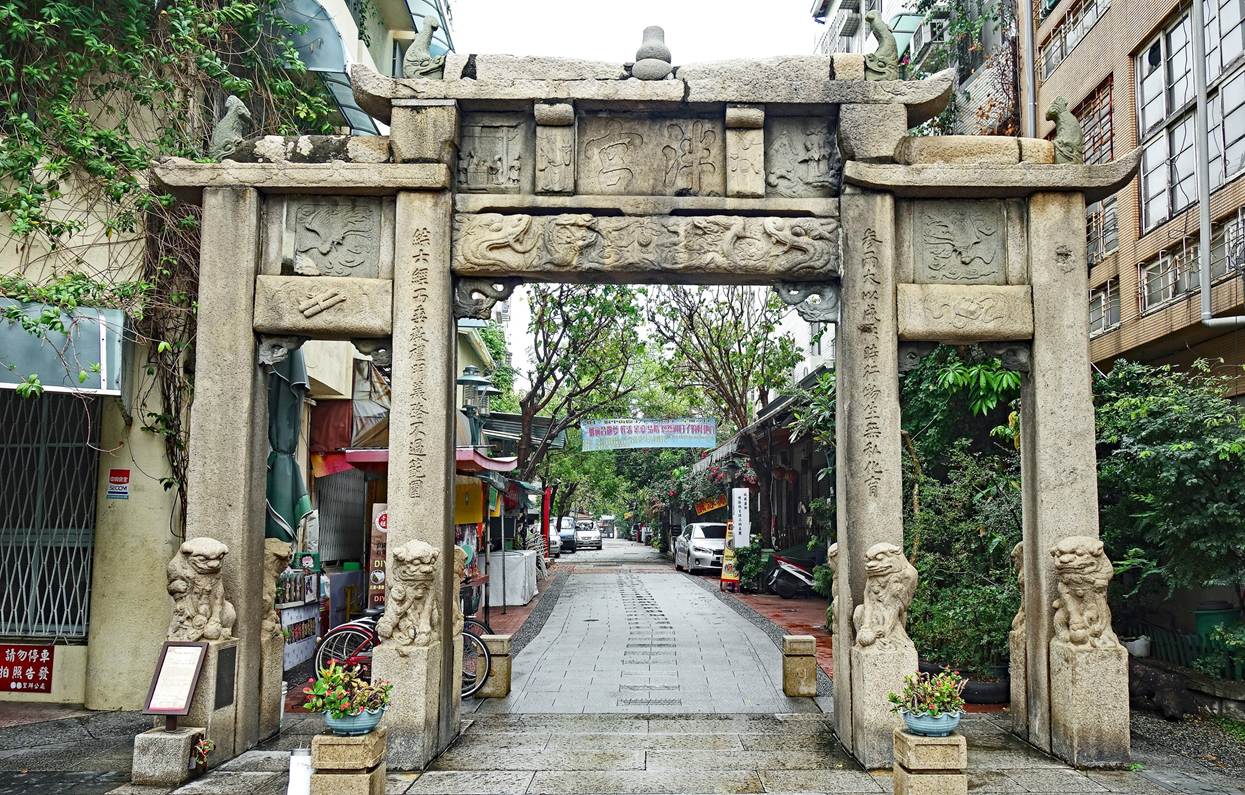
Pan Gong stone archway
(泮宮石坊) facing the East
entrance gate to the Confucius temple across Namen Road. Built in 1777 during
the reign of the Qianlong Emperor, this arch used to be the main entrance to
the temple. It was separated from the temple during the Japanese period to
construct the Nanmen Road.
[April 2017]
Lady Linshui temple (開基臨水夫人媽廟):
This temple was founded
in 1736, but its current appearance dates back to 1983. Its principal deity is
Lady Linshui, also known as Chen Jinggu (陈靖姑), is a prominent
Taoist goddess regarded as the protectress of women, pregnancy, and children.
She is the deified version of an eighth-century priestess, renowned for her
ability to combat evil spirits.
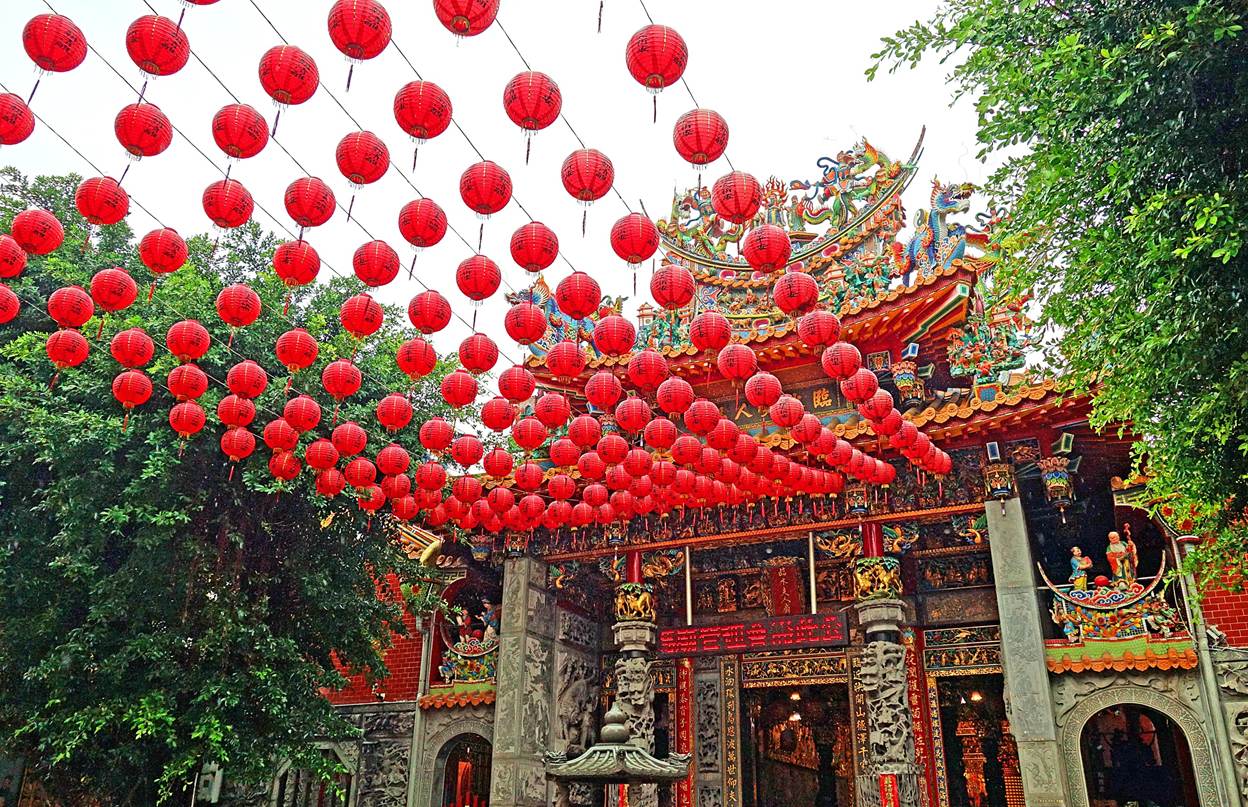
Entrance of
the temple decorated with a canopy of red lanterns.
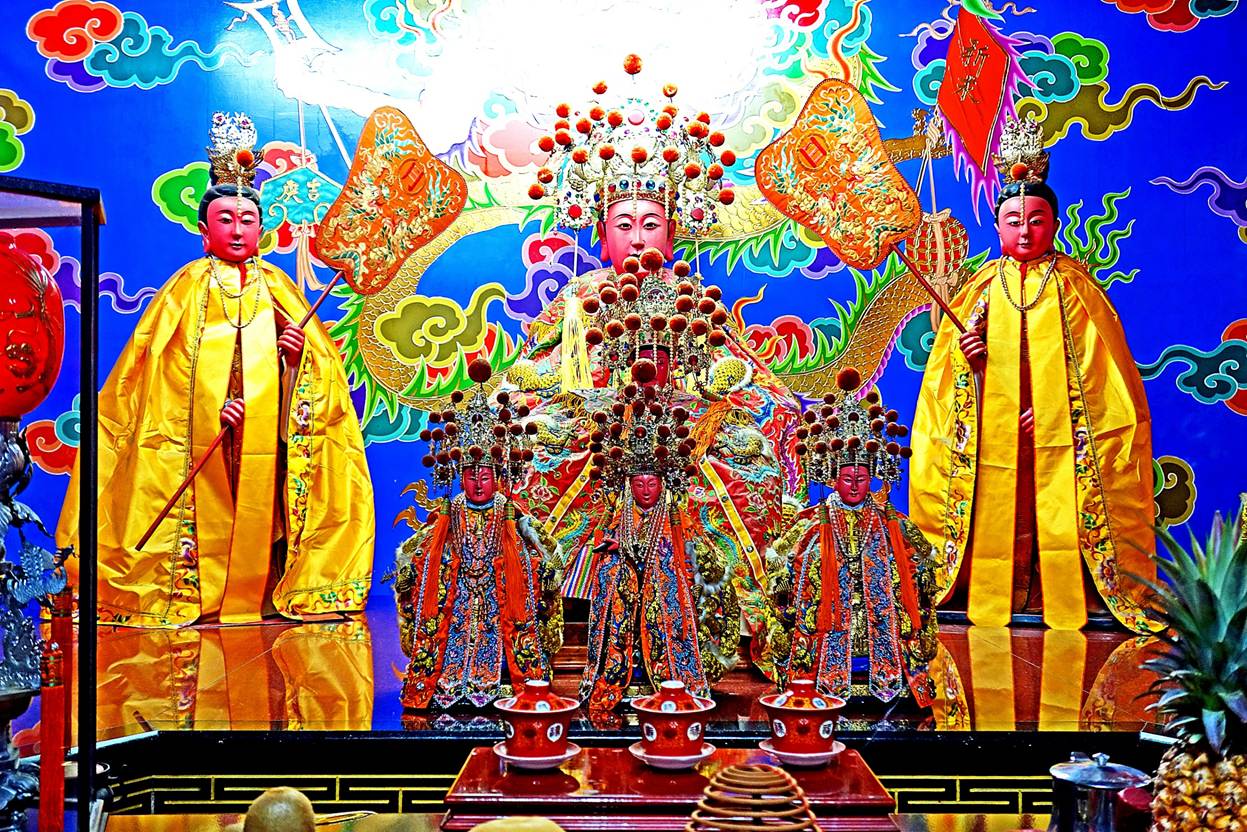
Altar
dedicated to Lady Linshui in the main hall.
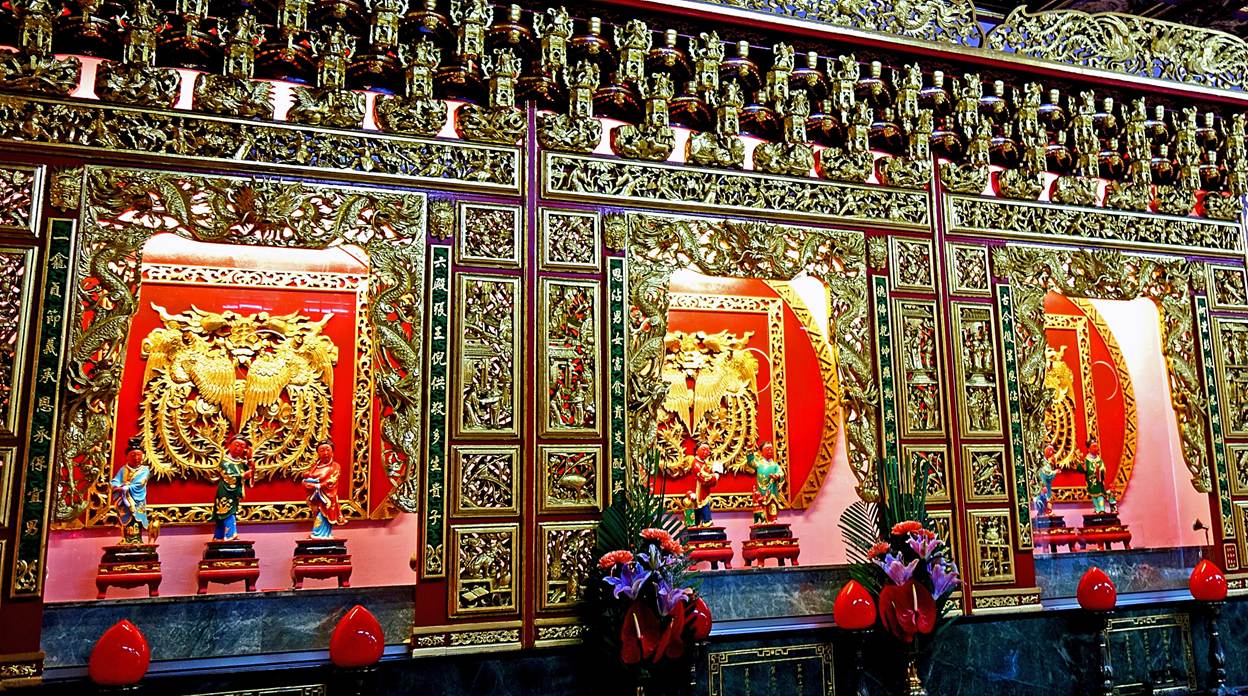
Lady Linshui is
aided by 36 assistants, three for each month of the year, who are represented
by statuettes displayed in glass boxes along side walls of the temple.
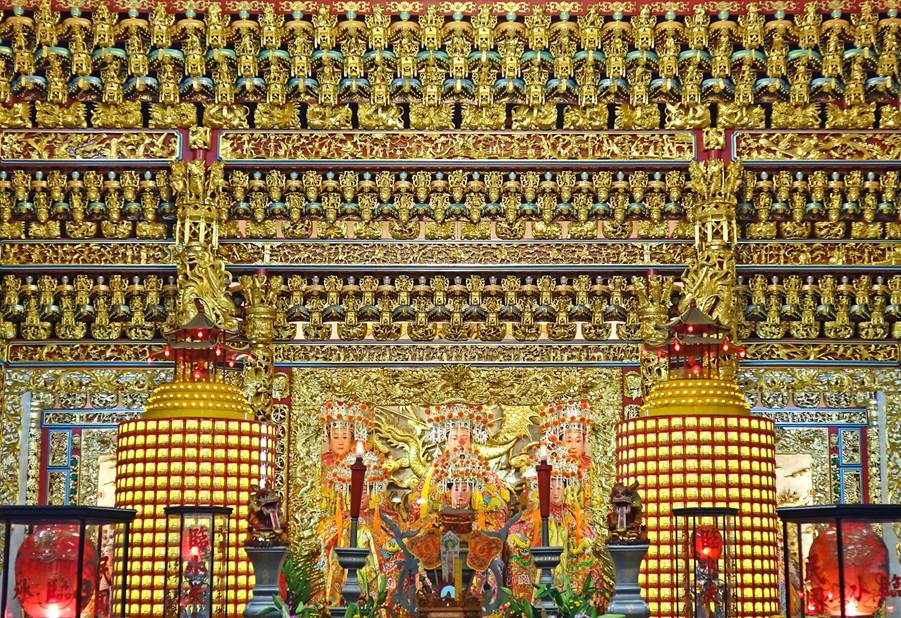
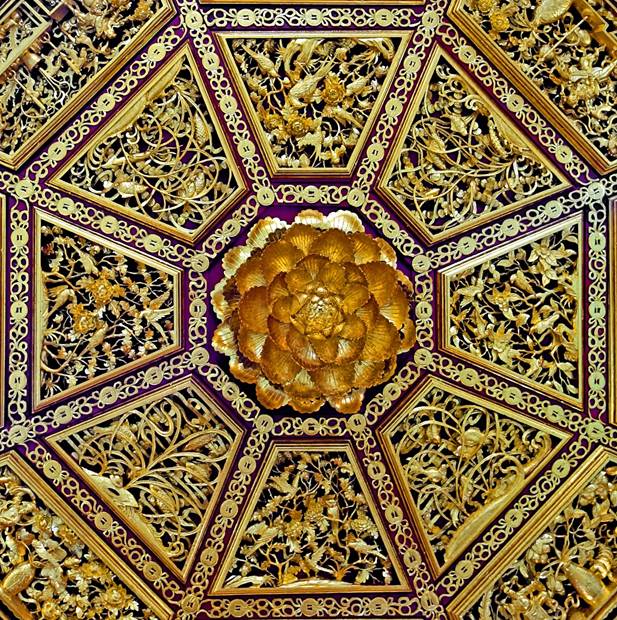
Left:
Lavish golden decorations in the main hall. Right: Ceiling of exquisite
cradtmanship.
|
|
|
[April 2017]
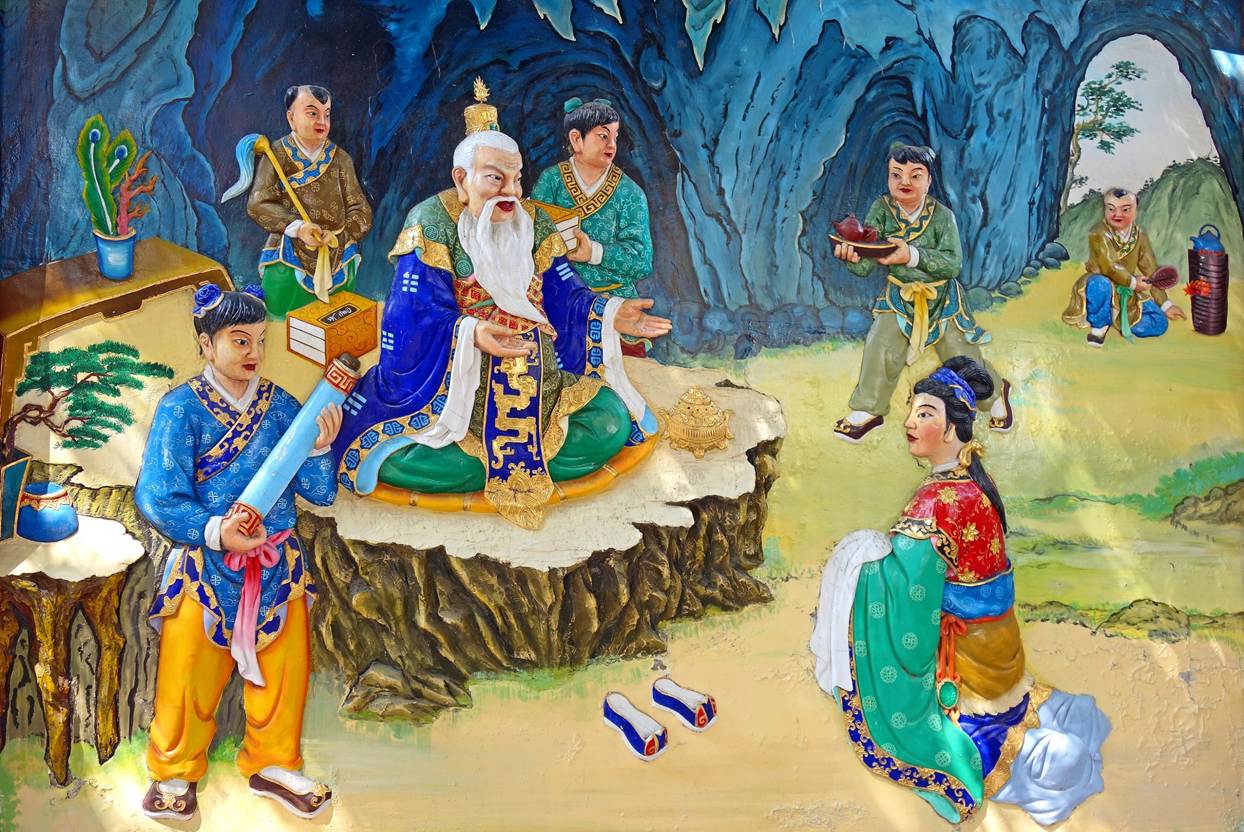
Frescoes
in the temple..
[March 2026]
|
|
|
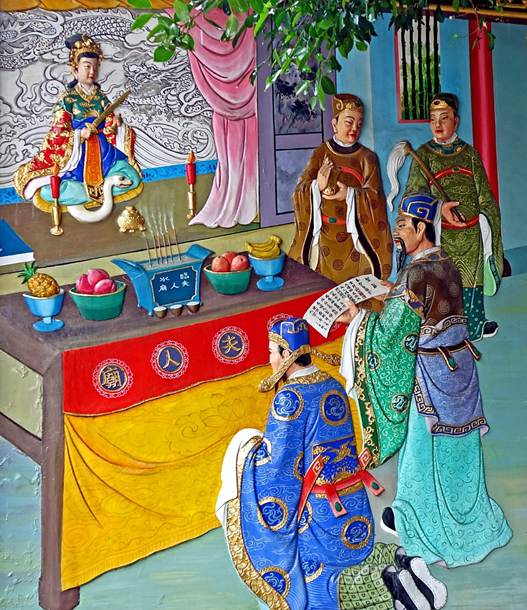
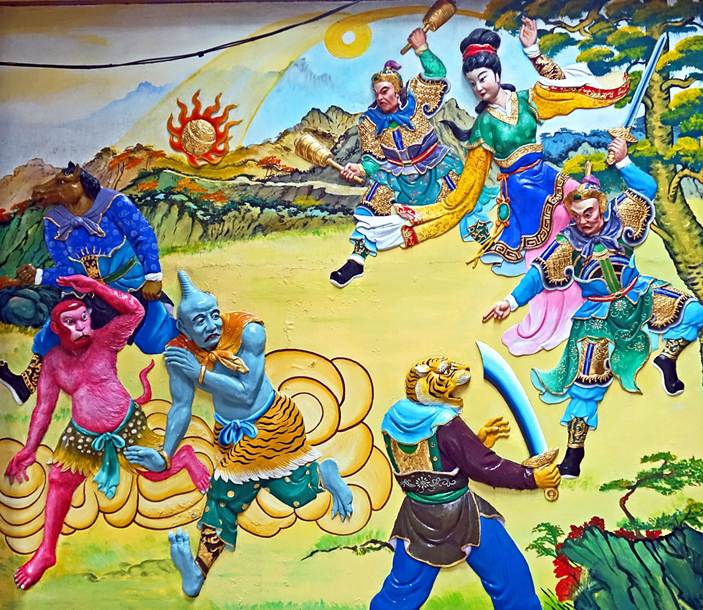
[April 2017]
[March 2026]
Koxinga Shrine (延平郡王祠):
This memorial shrine is
dedicated to Zheng Chenggong (鄭成功) (1624-1662),
better known by his honorific name Koxinga (國姓爺). Born in Japan to a
Japanese woman and a Chinese pirate, Koxinga was a Ming loyalist who
defeated the Dutch colonists and forced their surrender on February 1, 1661,
ending 36 years of Dutch rule on Taiwan. On that same day, he established a Ming-loyalist
dynasty, known as the Kingdom of Tungning, which
resisted the conquest of the island by the Qing dynasty until September 1683.
Koxinga died of malaria on June 23, 1662. He is also remembered as the Prince
of Yanping (延平郡王), a title bestowed to
him by the last Ming emperor.
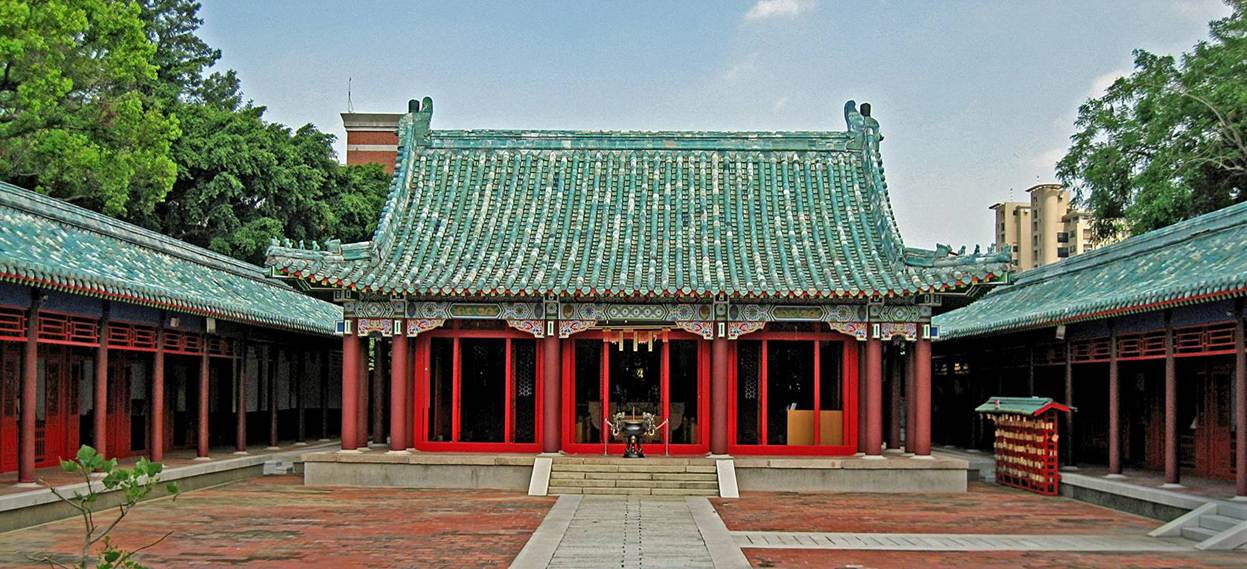
The shrine was built in
1663 by Zheng Jing (鄭經), the son of Koxinga.
It is distinguished by its bright turquoise roof tiles.
Main hall in the
shrine, flanked by two side halls. The main hall is where Koxinga is enshrined.
The side halls house spirit tablets of military and civil officials who died in
Koxinga's wars.
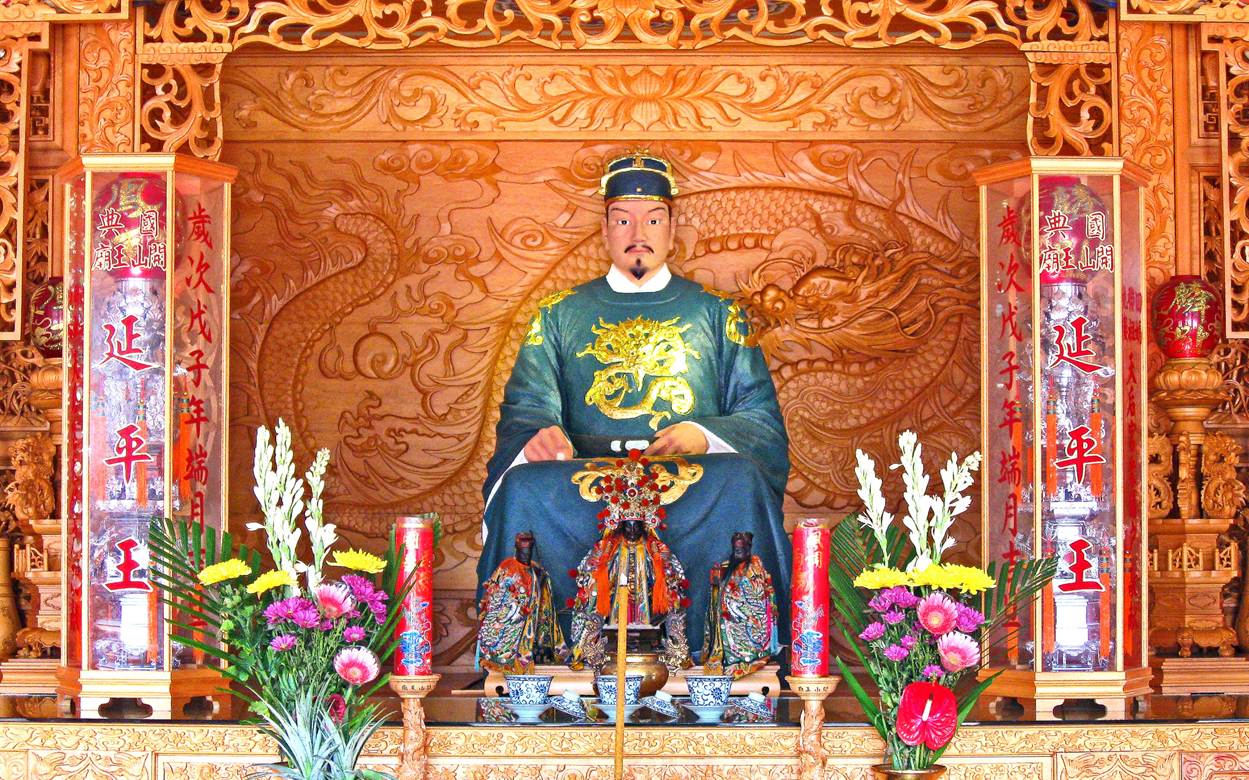
Seated statue of
Koxinga in the main hall.
[June 2009]
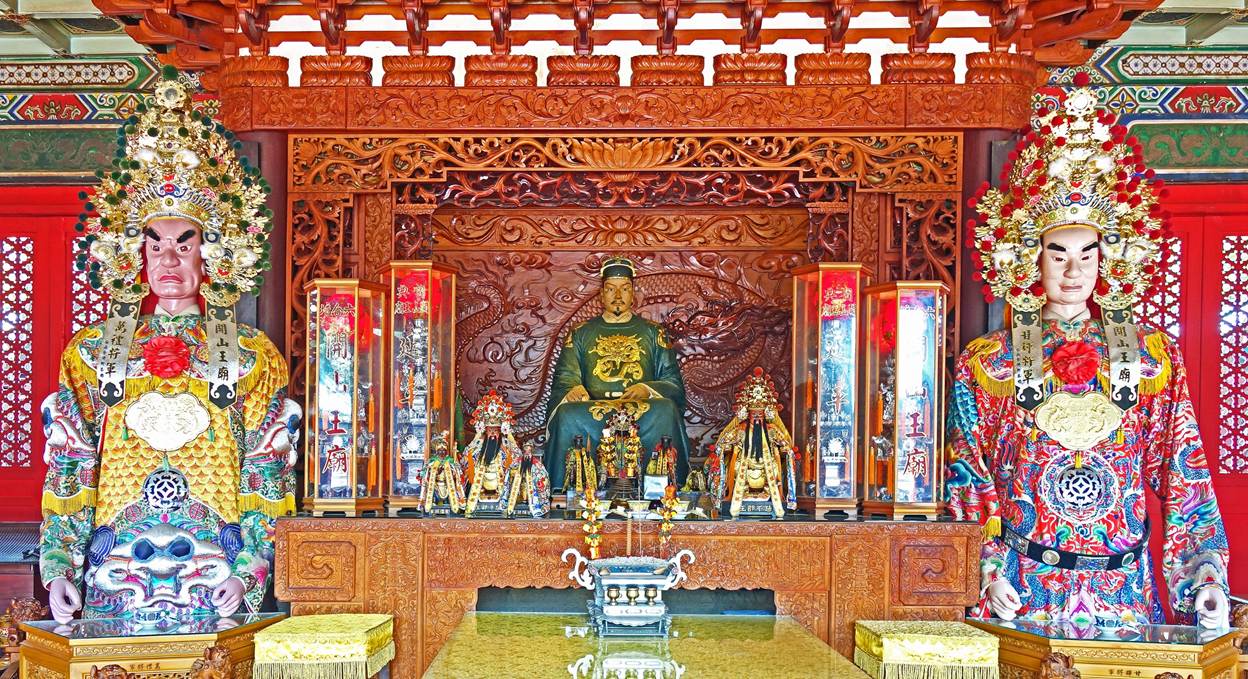
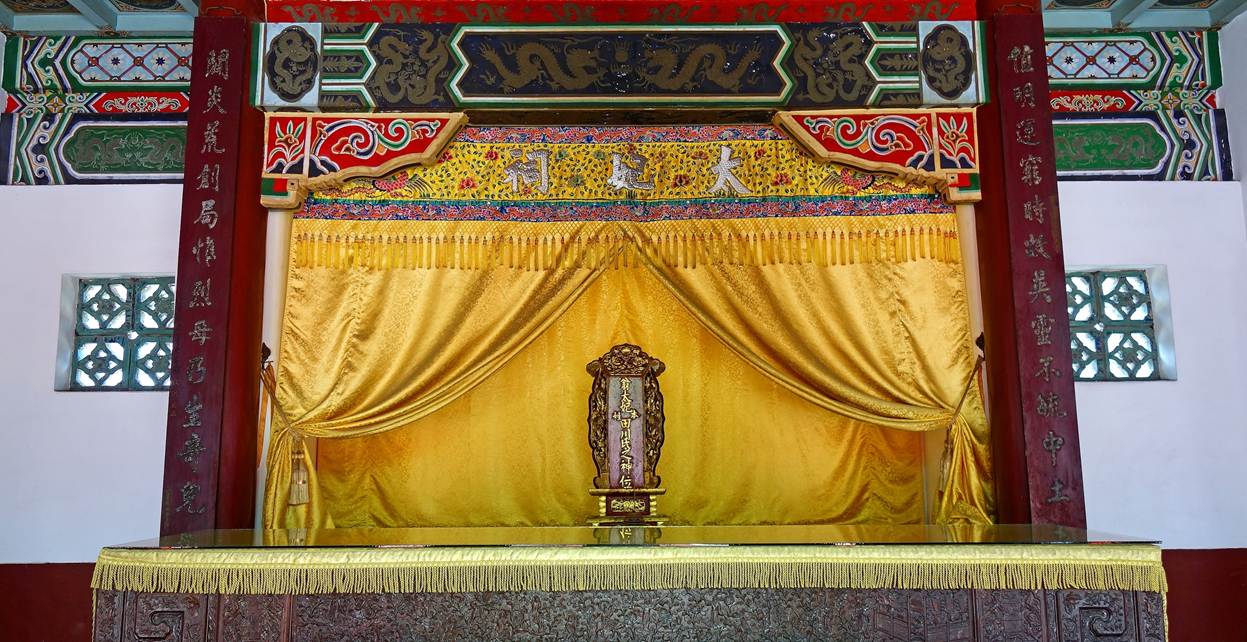
Hall of the Holy Mother
(聖母廳) in the back of the
complex, behind the main hall. It is dedicated to Tagawa Matsu, the mother of
Koxinga.
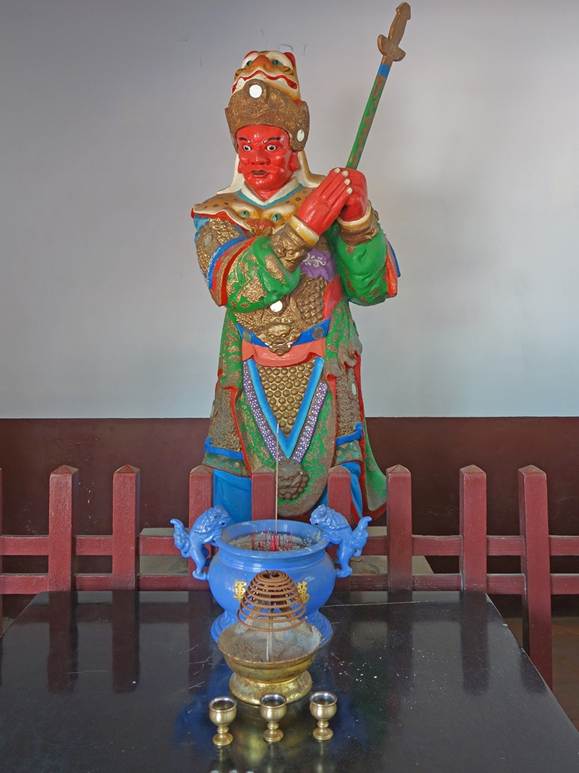
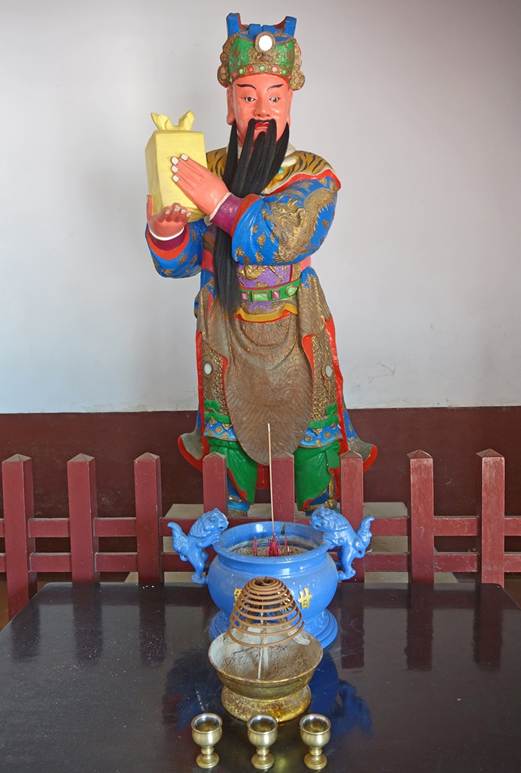
Statues of General
Zhang Wanli (张万礼将军) and General Gan Hui (甘辉将军), housed in small shrines
situated to the right and the left of the entrance of the complex,
respectively. These two Koxinga's generals died in China fighting against the
Qing dynasty.
|
|
|
[March 2026]
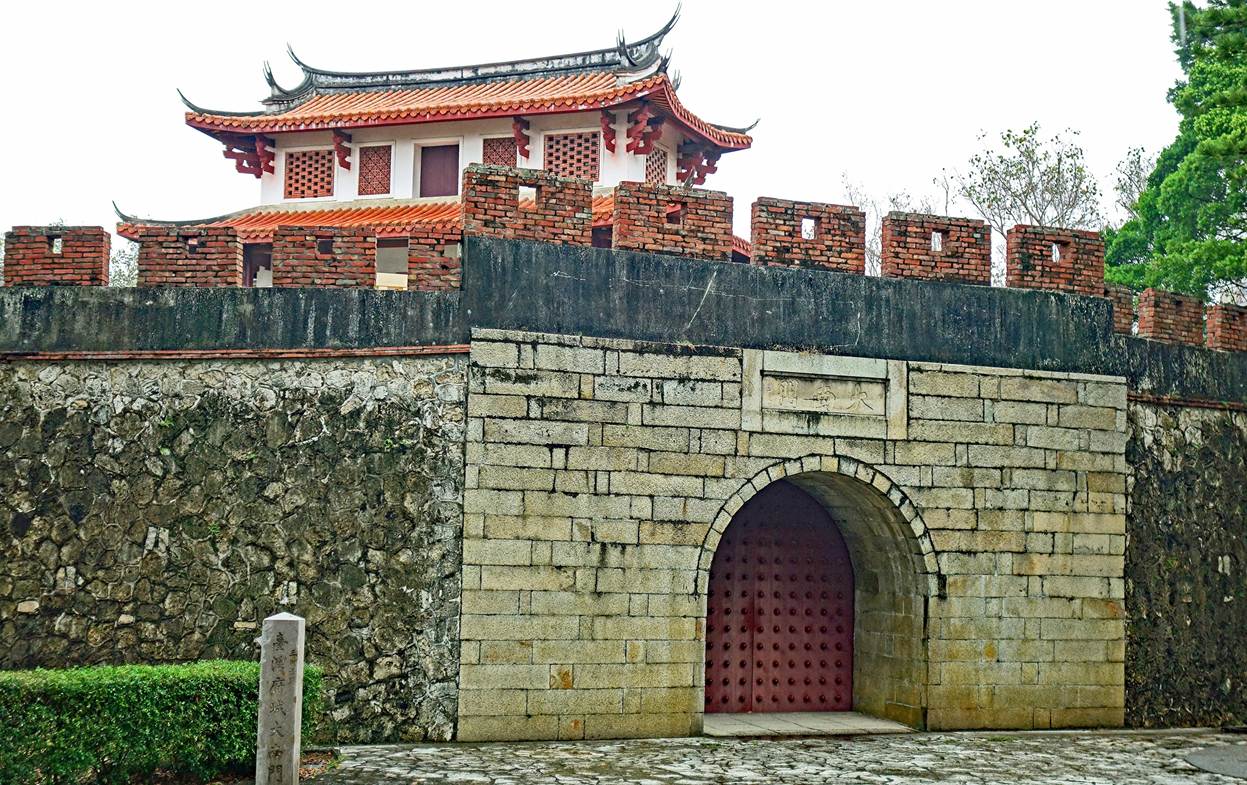
Great South Gate (大南門(寧南門)):
Originally built as a wooden
palisade in 1725, this gate (along with the rest of the city's fortification
walls) was rebuilt in 1788 into a two-story stone and brick gate tower.
Following the Japanese era and World War II, the gate was in a state of
disrepair. It was reconstructed in 1977 according to its original appearance.
[April 2017]
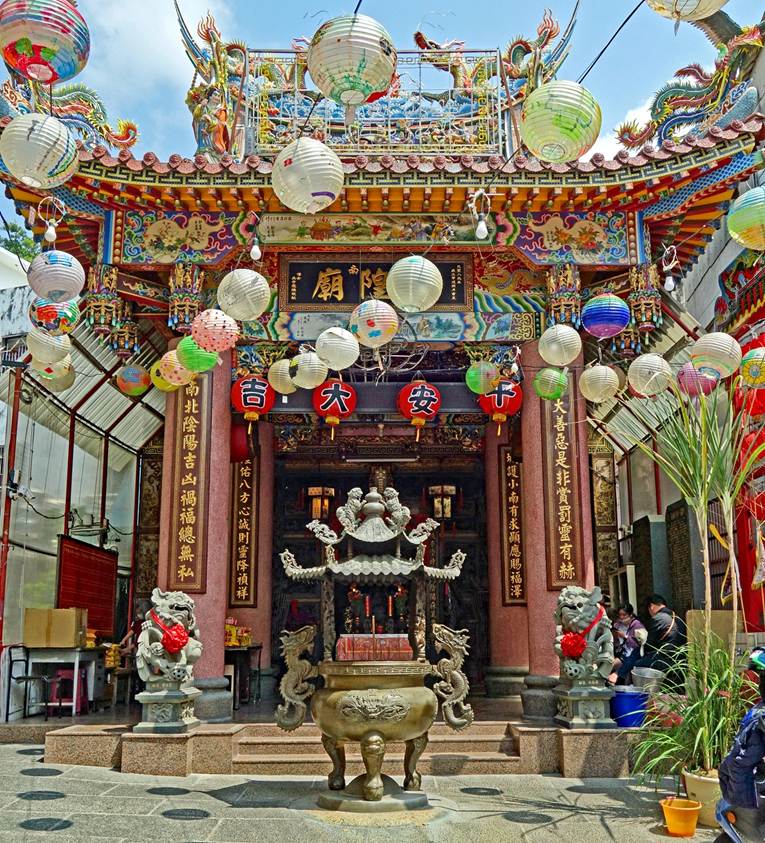
Xiaonan City God temple (小南城隍廟):
A City God temple in
Tainan, the Taiwan Prefectural City God temple (臺灣府城隍廟), has already been
featured on this webpage. The temple pictured below, the Xiaonan
City God temple, is another City God temple. How can there be two City God
temples in the same city?
In Taiwan, every City
God temple holds a rank that corresponds, roughly speaking, to an
administrative hierarchy dating back to the Ming dynasty, even if the temple
itself was built later. The rank of a temple determines the status and
responsibilities of its City God. In this instance, while the Taiwan
Prefectural City God temple is a temple of Prefectural rank, the Xiaonan City God temple occupies a lower rank, at the
County/Town-level. Its god serves a more circumscribed community, and his
function is said to lean more toward protection and investigation than toward
judgement.
This temple was built
during the reign of Emperor Tongzhi (同治) (1862-1875) of the
Qing dynasty. Due to street widening work, it was demolished in 1983 and
subsequently reconstructed at its current location in 1994. The original
statues of the deities were transferred from the old temple to the new one. Its
primary god is Zhu Yigui (朱一贵), the deified leader
of the first major peasant uprising against the Qing government. Zhu Yigui was eventually
captured, taken to Beijing, and executed by lingchi (凌遲), ″death by
thousand cuts″.
The temple is modest in
size and consists of two halls: the main hall is dedicated to Zhu Yigui and the
rear hall to Mazu.
Facade of the temple.
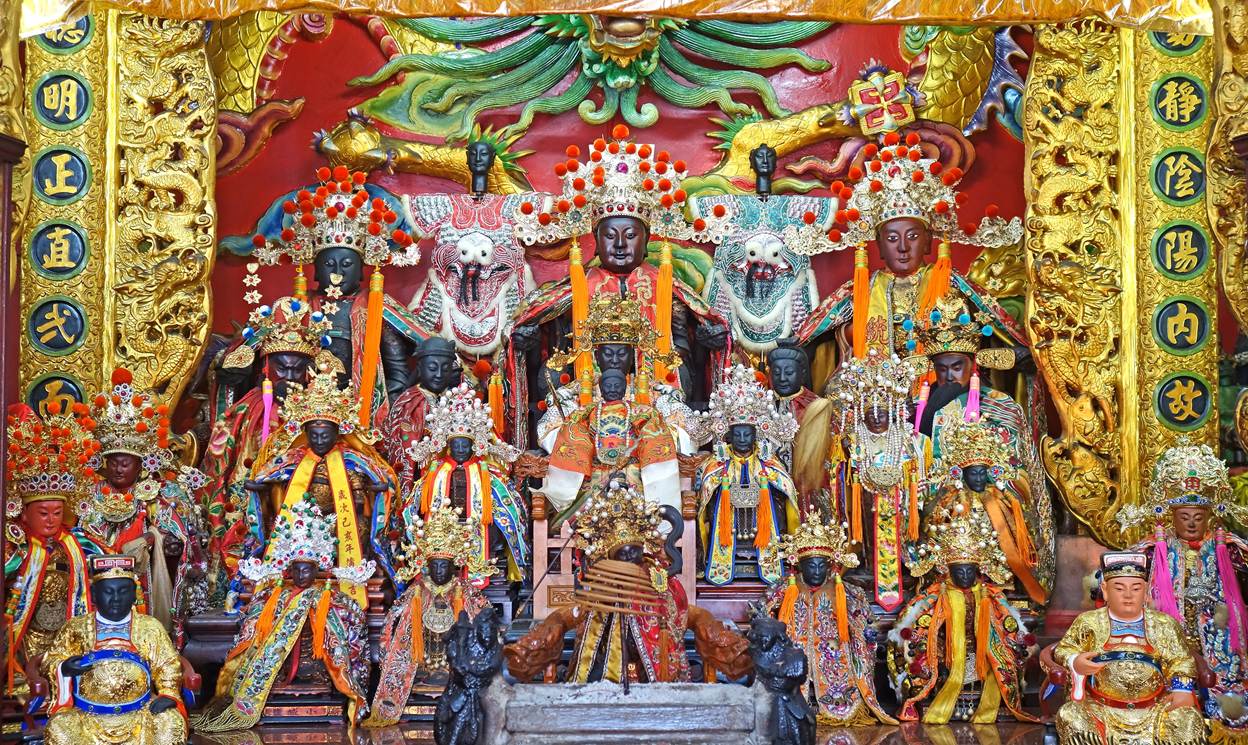
Altar dedicated to Zhu
Yigui, the second City God of Tainan. His statue stands in the middle of the
last row.
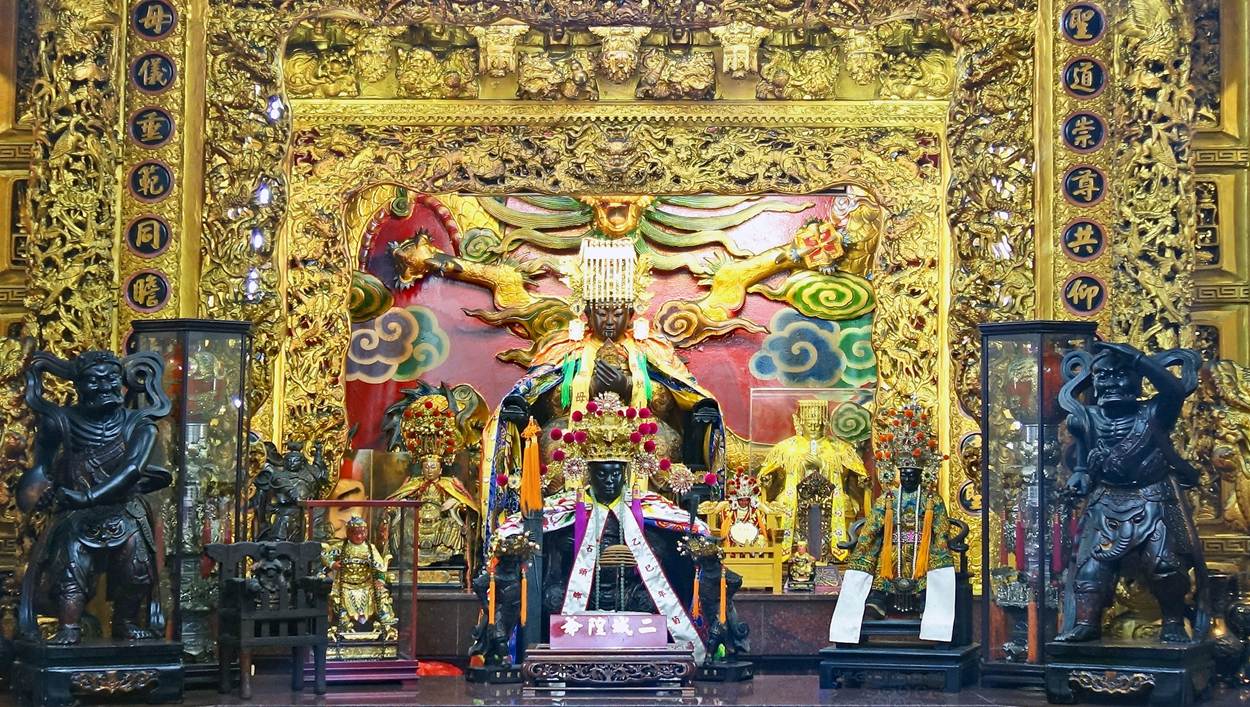
Altar dedicated to Mazu
in the rear hall.
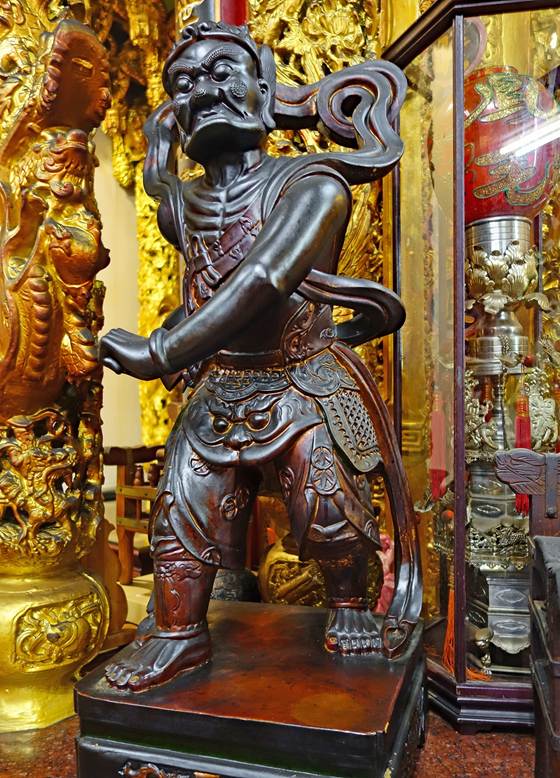
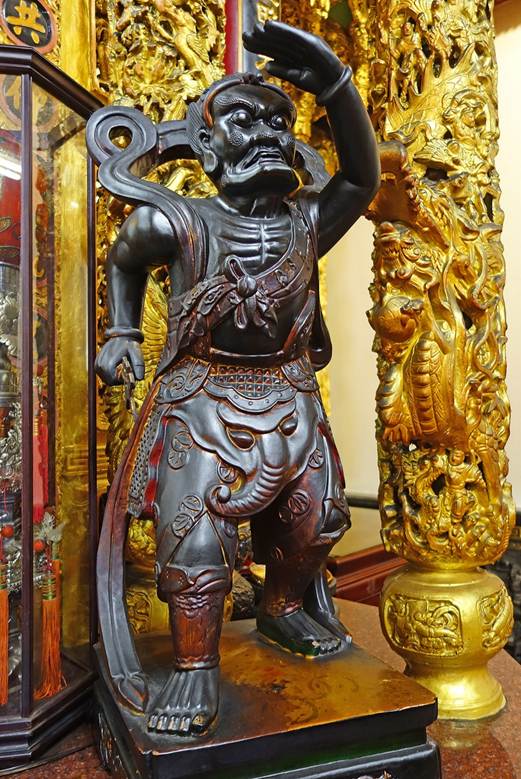
Closeups
of the two guardian deities protecting the altar of Mazu.
|
|
|
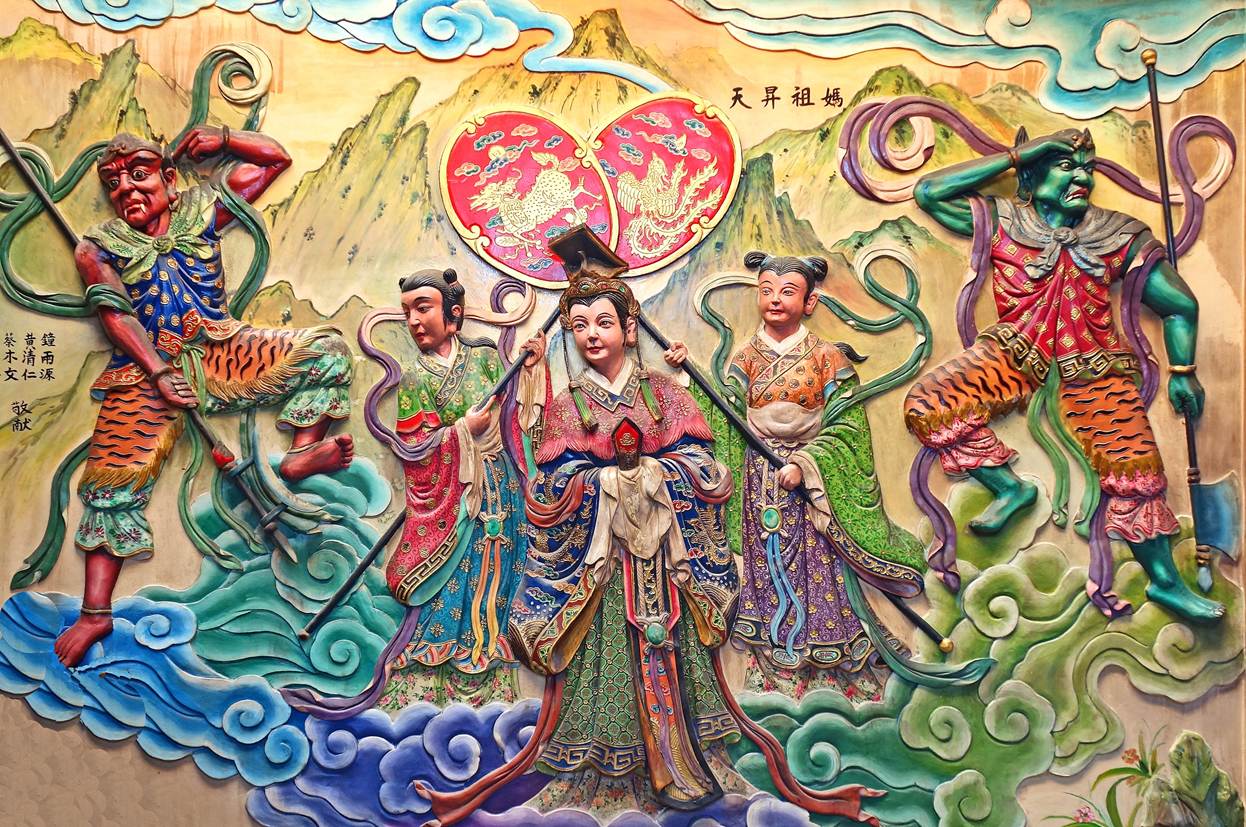
Mural fresco in the
rear hall. It represents Mazu (central figure) flanked by her two guardians.
The green guardian is Qianliyan (千里眼), who can see very far
away. The red guardian is Shunfeng'er (順風耳), who can hear sounds
from very far away.
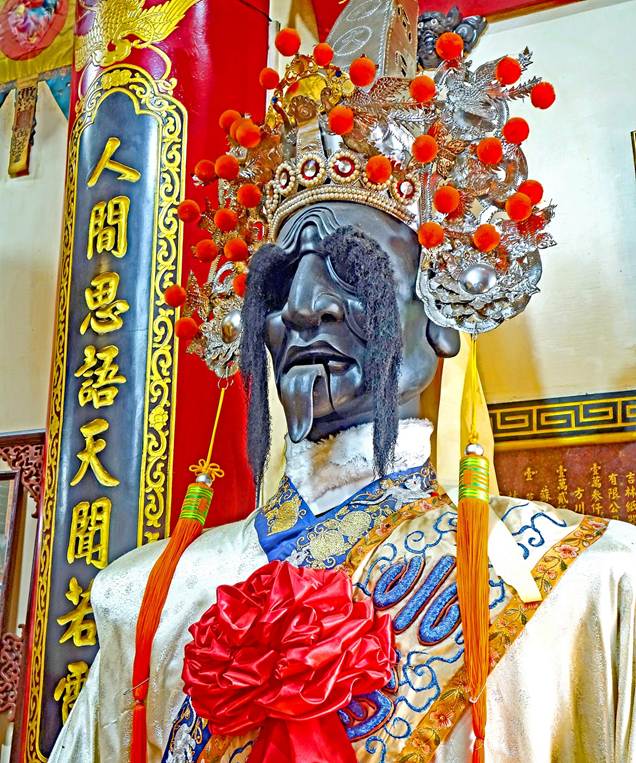
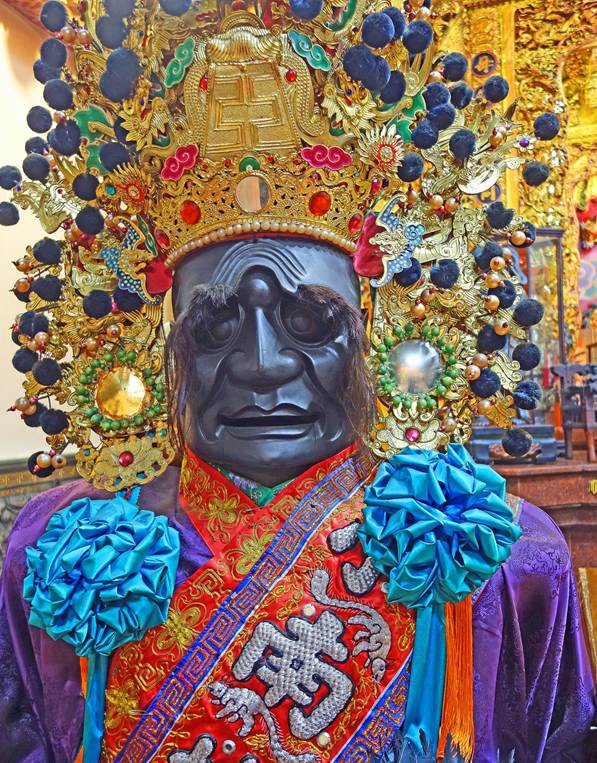
Other guardian deities
in the temple.
|
|
|
[March 2026]
Fahua temple (法華寺):
The site of this temple
was previously that of the residence of Li Maochun (李茂春), a Ming-loyalist scholar
known for his generous nature. Following his death, this residence was
converted into a temple, the Fahua temple, in 1684.
Throughout its history, the temple structures were damaged, rebuilt, expanded,
and restored many times. Almost entirely destroyed during World War II, it was
reconstructed in 1959. Although primarily a Buddhist temple, it embodies the Chinese
tradition of merging religious faiths. Consequently, it houses not only
Buddhist figures, but also Taoist and folk deities, such as Guan Yu and the God
of Fire, Zhuron.
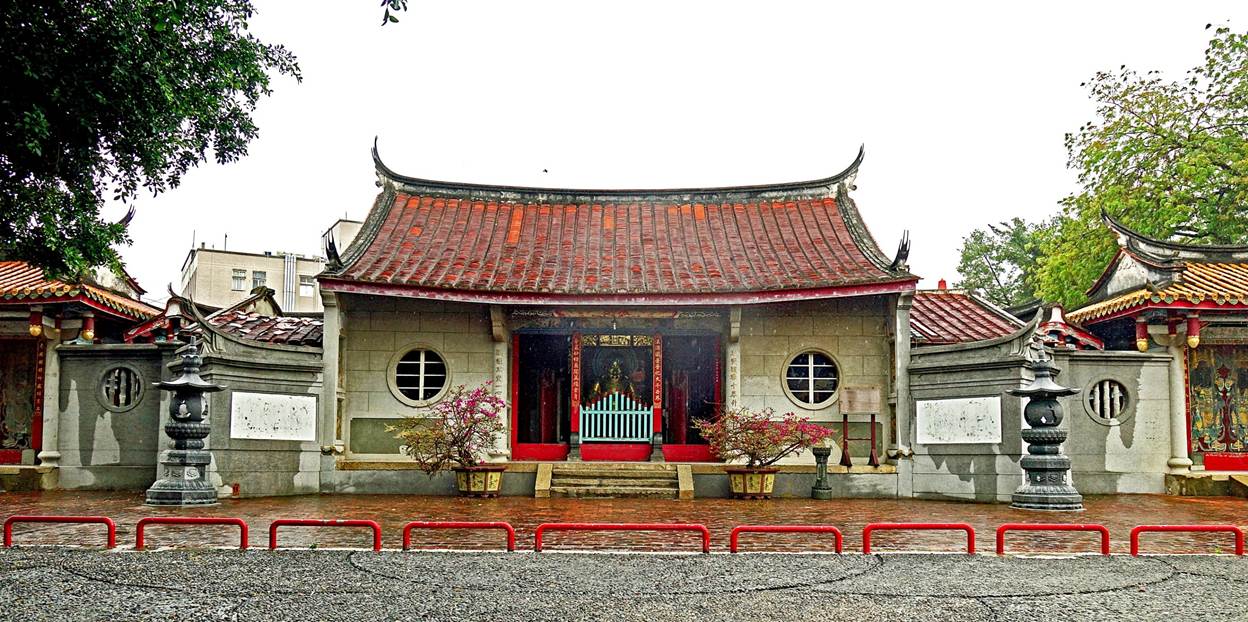
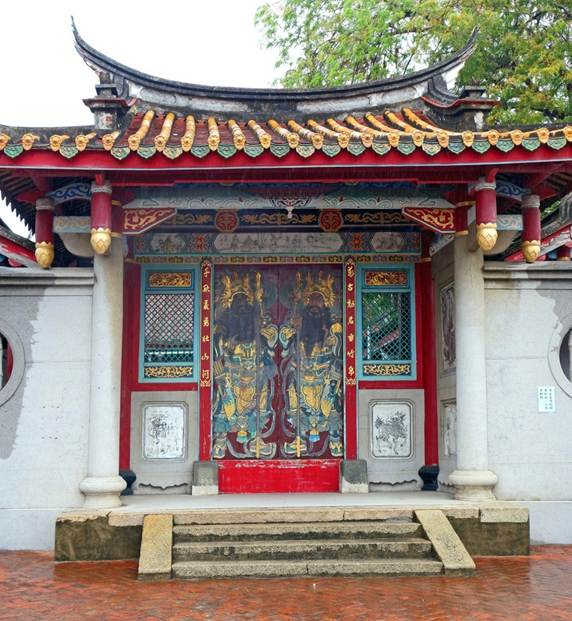
Left: Facade of the
temple. Right: Entrance to the temple complex, located on the right side of the
facade; it is adorned with a pair of divine guardians, known as menschen (門神, meaning ″Door Gods″), who ward off evil
spirits.
|
|
|
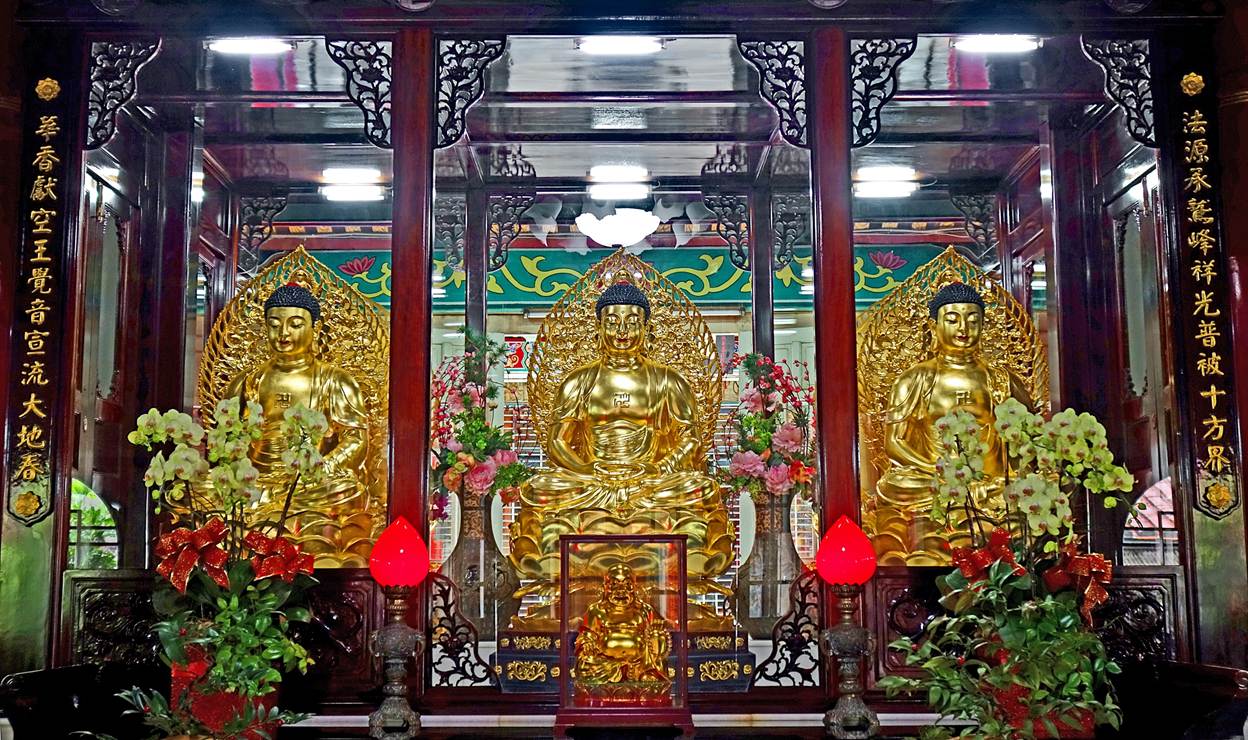
Statues of three
manifestations of Buddha, known as the Three Jewels Buddha, in the main hall,
the Mahavira hall.
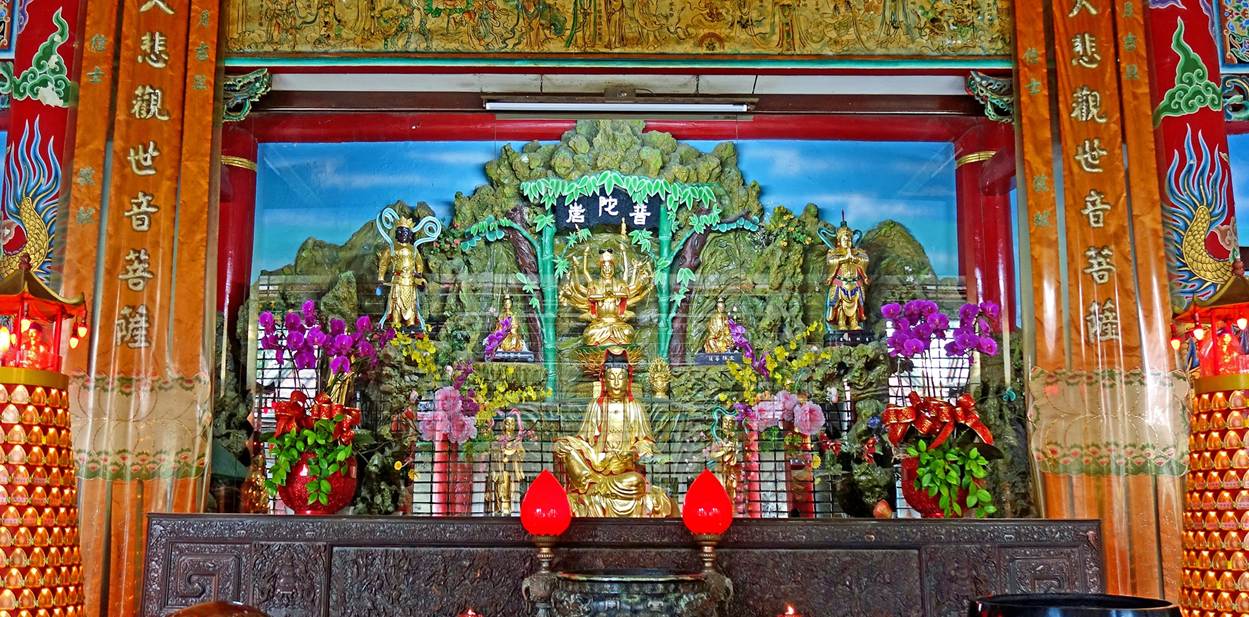
- Left: Altar dedicated
to Guanyin. At its center, it features two representations of Guanyin: one is a
seated statue of Guanyin in a meditative pose and, above it, the other is a
multi-armed statue symbolizing her ability to assist all suffering beings.
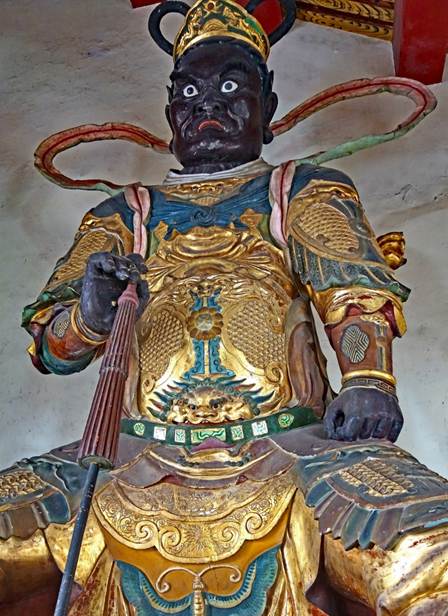
- Right: Statue of Duowen (多聞天王), one of the Four
Heavenly Kings (四大天王), the guardian deities
who protect the Buddhist teachings (Dharma) over the four cardinal directions. Duowen is the Heavenly King of the North, known as Vaisravaṇa in Sanskrit and Tamonten
in Japan.
|
|
|
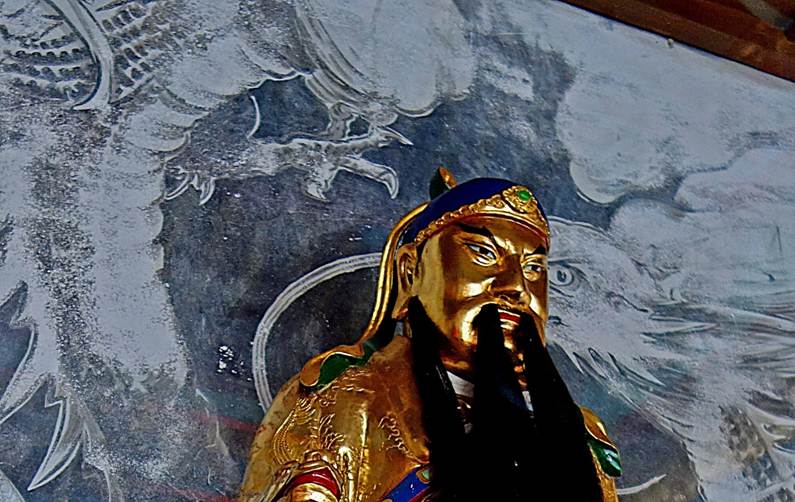
- Left: Statue of
Guanyu (关羽), in the Guanyu hall.
He was a renowned Chinese general who lived in the late 2nd and early 3rd
centuries. Celebrated for his moral values, particularly righteousness and
loyalty, he was deified after his death under the names Guandi (关帝) and Guangong (关公). Many Taoist temples in
Taiwan are dedicated to him as the God of War. However, he is also regarded as
a sage and is venerated in some Buddhist and Confucian temples for his moral
qualities, rather than for his martial prowess.
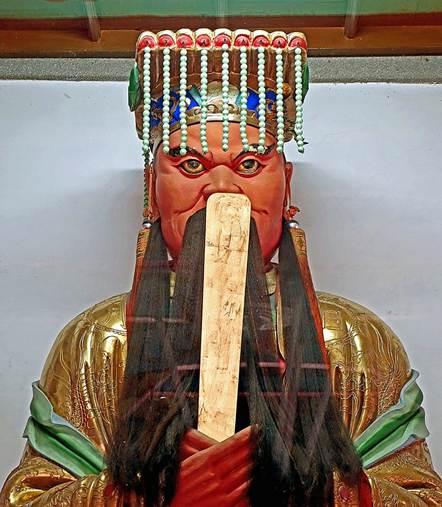
- Center: Zhurong (祝融), the God of Fire. He
is associated with the cardinal direction of the South, earning him the
honorary title of Great Emperor of Antarctica (南極大帝). He is a prominent
Taoist deity, notably associated with longevity.
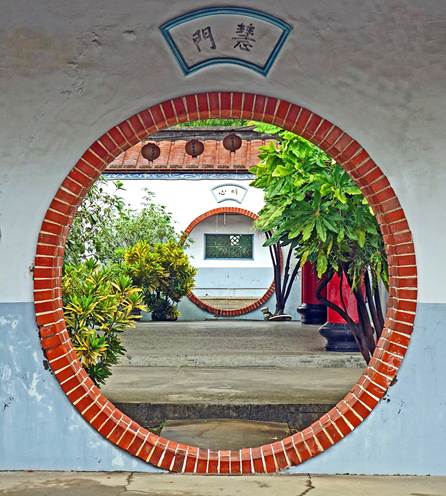
- Right: Alignment of
moon gates between courtyards.
|
|
|
|
[April 2017]
Temple of the Five
Concubines (五妃廟):
This small temple was established in 1683. It is dedicated to the five
concubines of Ming Prince of Ningjing (寧靖王). [See the section above devoted to the Tainan Grand Mazu
temple.] When Qing forces
conquered Taiwan in 1683, this prince took his own life, though not before
witnessing the suicides of his five concubines, so that he could provide them a
worthy burial next to this temple.
- Entrance to the temple.
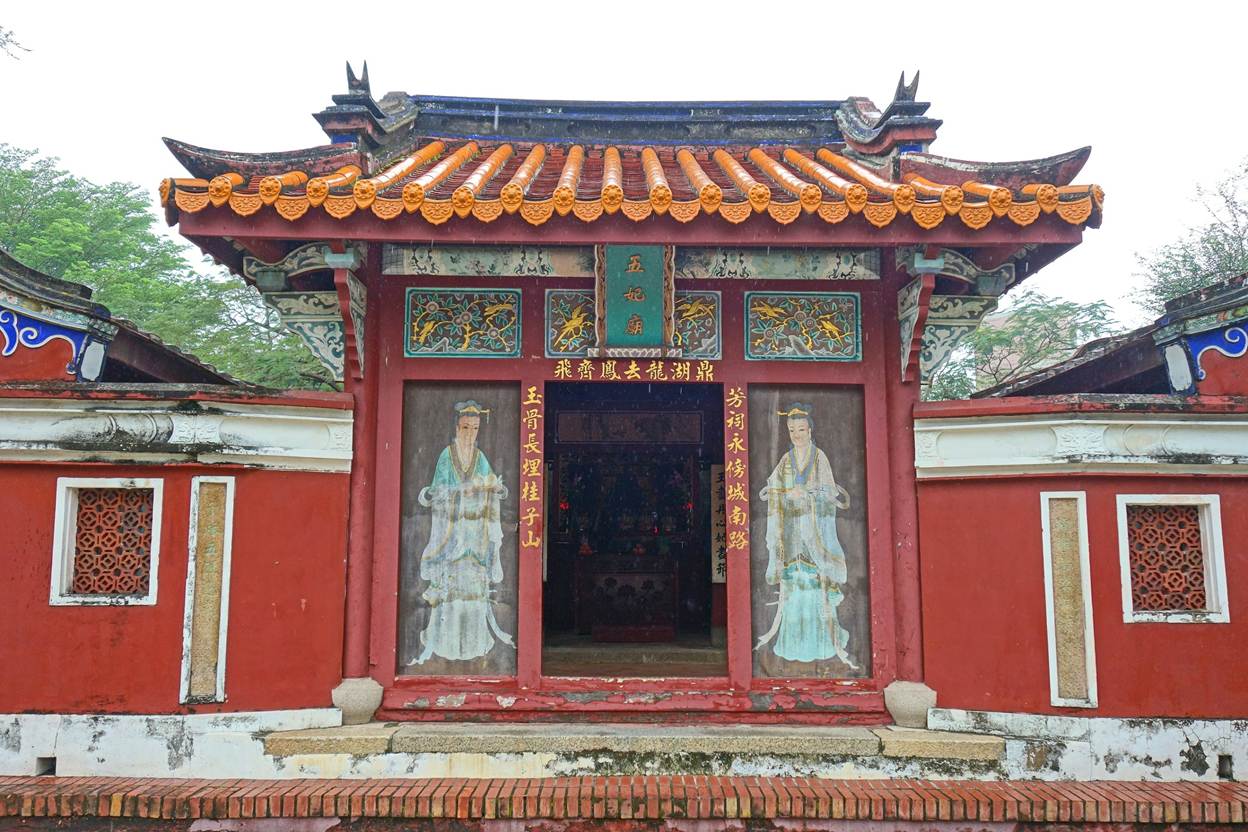
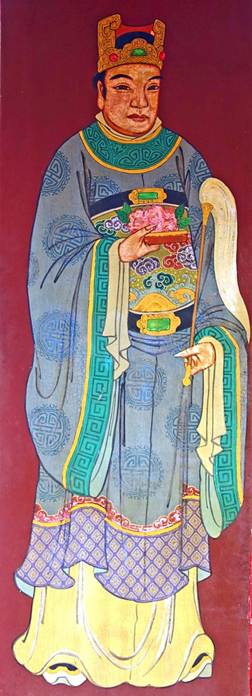
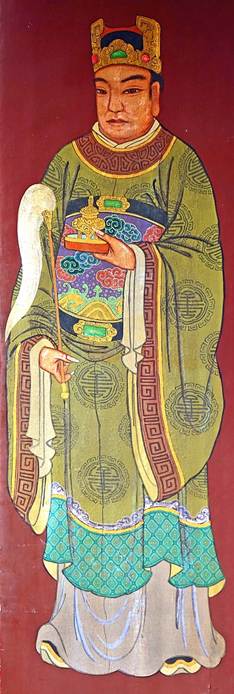
Left and right:
Paintings adorning the entrance doors of the temple. Center: Interior of the
temple. Its altar features statues of the five concubines.
|
|
|
|
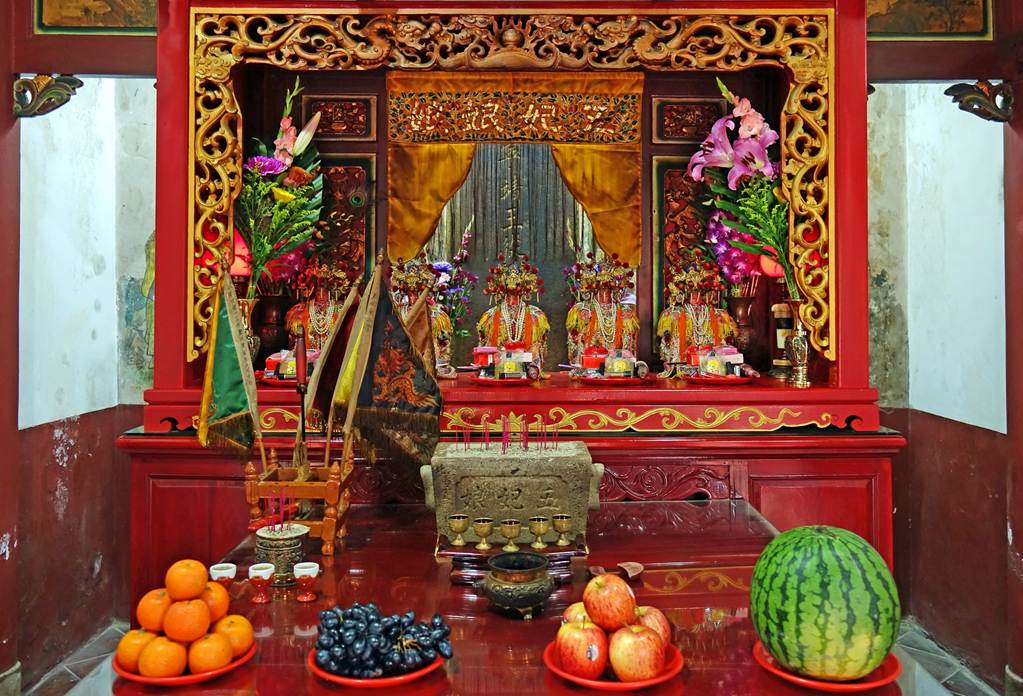
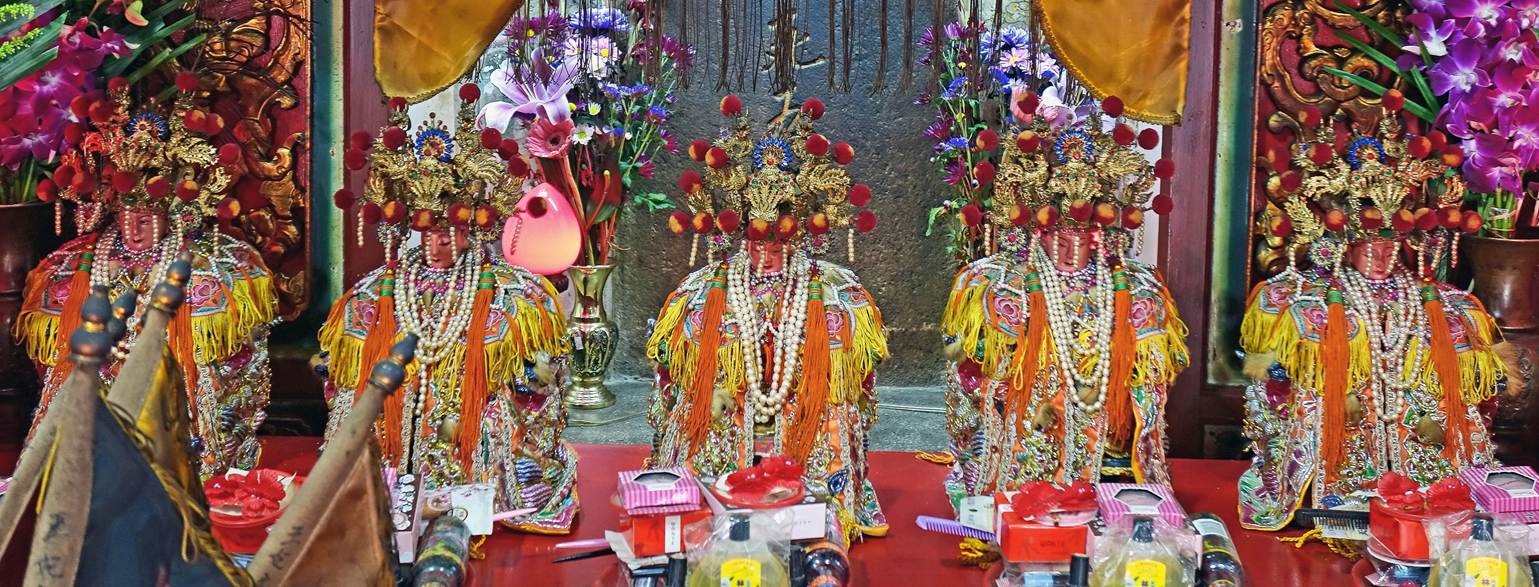
Closeup on the statues of
the five concubines.
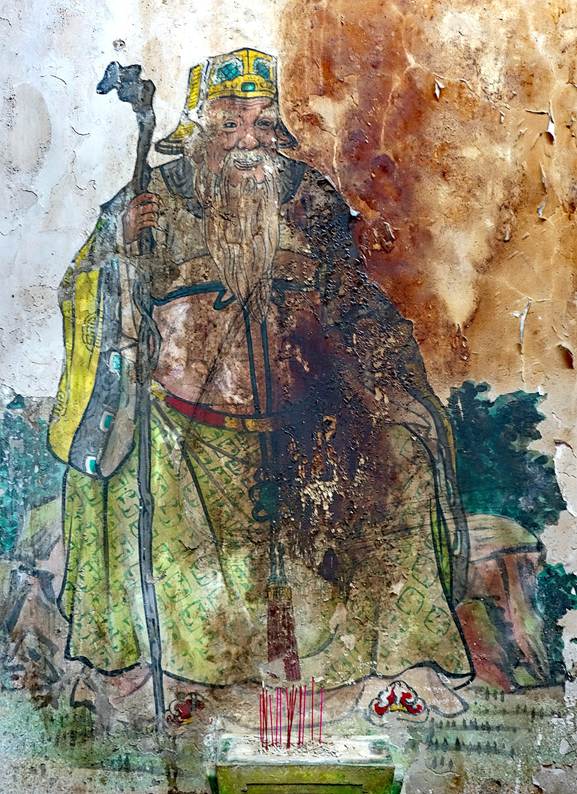
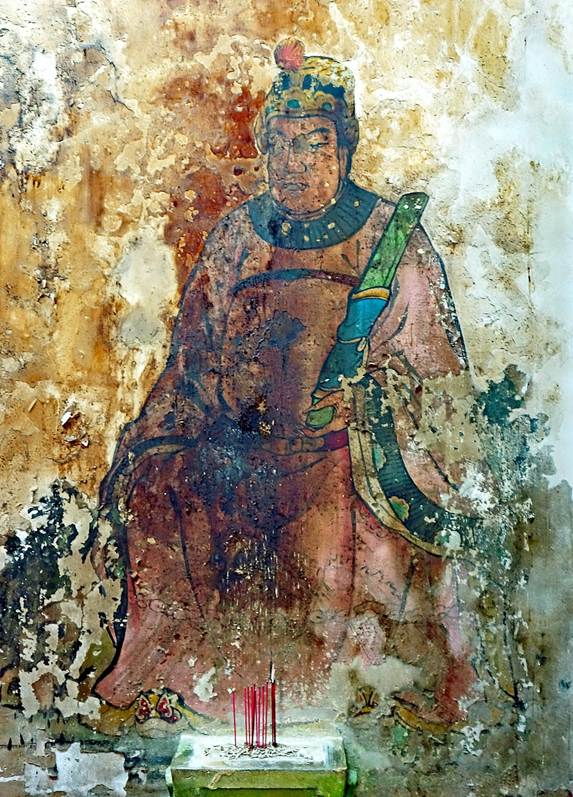
Washed-out paintings on
the back wall of the temple, behind the altar.
|
|
|
[April 2017]
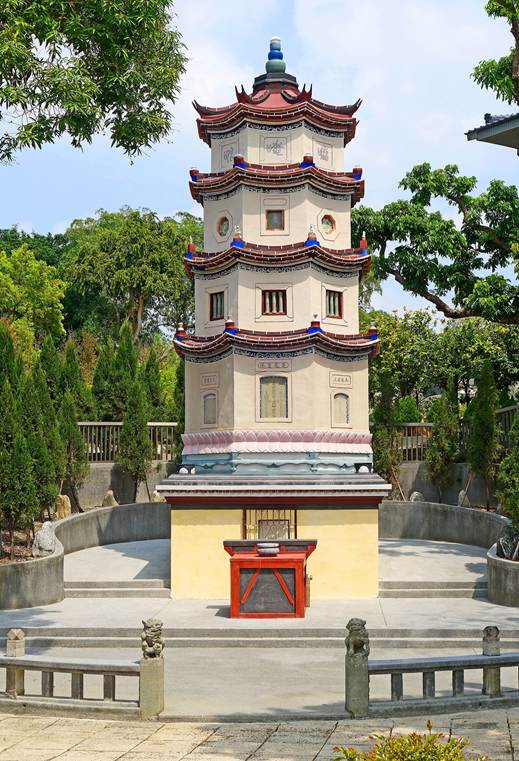
Zhuxi temple (竹溪寺):
Founded in the second
half of the 17th century, this temple is considered one of the oldest Buddhist temples
in Taiwan. However, it does not look like it. Indeed, most of the structures
visible today are modern-style constructions erected between 2017 and 2024. Its
only remaining historical structures are the Old Mountain Gate and two pagodas
(pictured below).
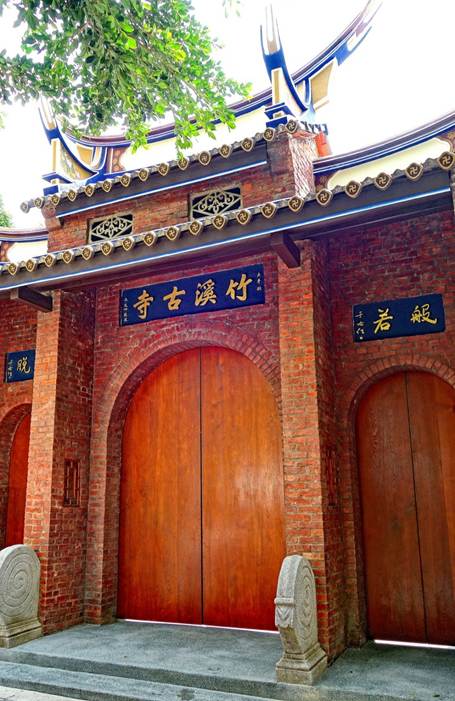
Views of the Old
Mountain gate (之旧山门) of the temple, seen
from outside the temple complex (left) and from inside (right).
|
|
|
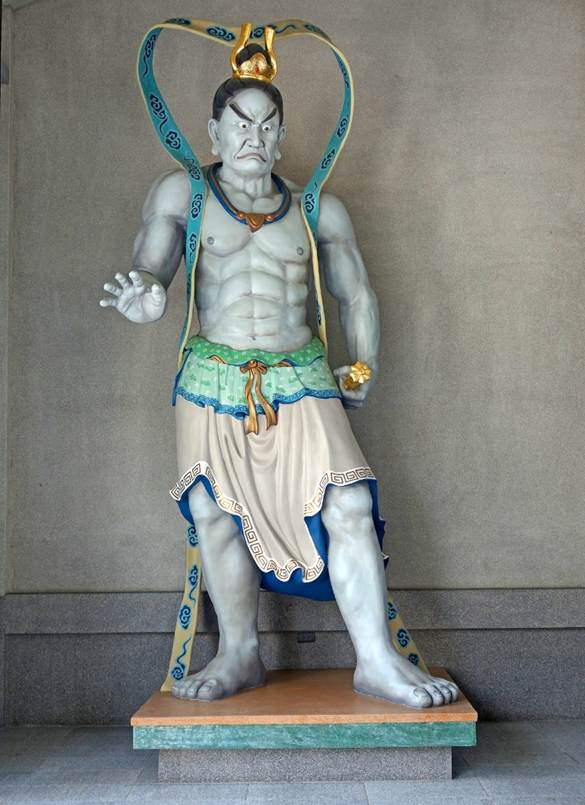
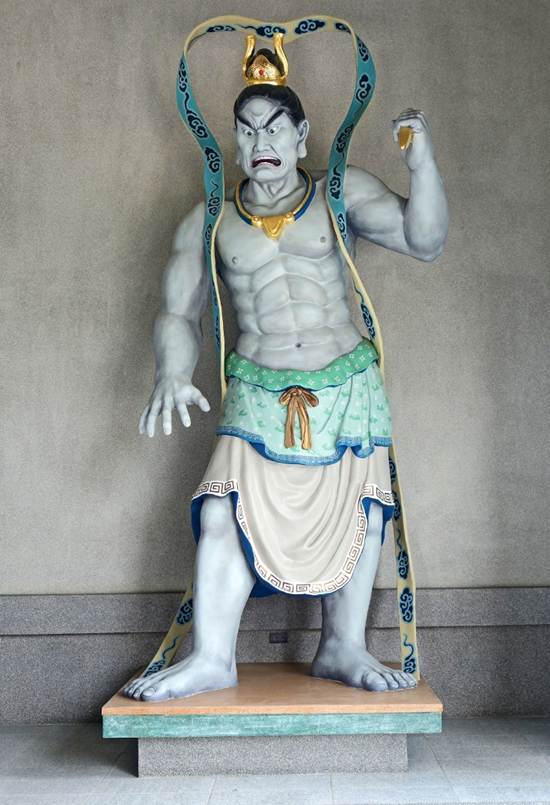
General Heng (哼将军) on the left and
General Ha (哈将军) on the right. They are
wrathful guardians standing in the first modern entrance gate of the temple
complex. The one on the right has his mouth open to utter the sound ″ha″,
mimicking the first sound produced by a human at birth. The one on the left has
his mouth closed, symbolizing the sound ″Hum″, the final sound
uttered by dying human. Together these two sounds symbolize the beginning and
the end of all things. The two generals, Hen and Ha, are the equivalent of the
pair of Nyo guarding Japanese Buddhist temples.
|
|
|
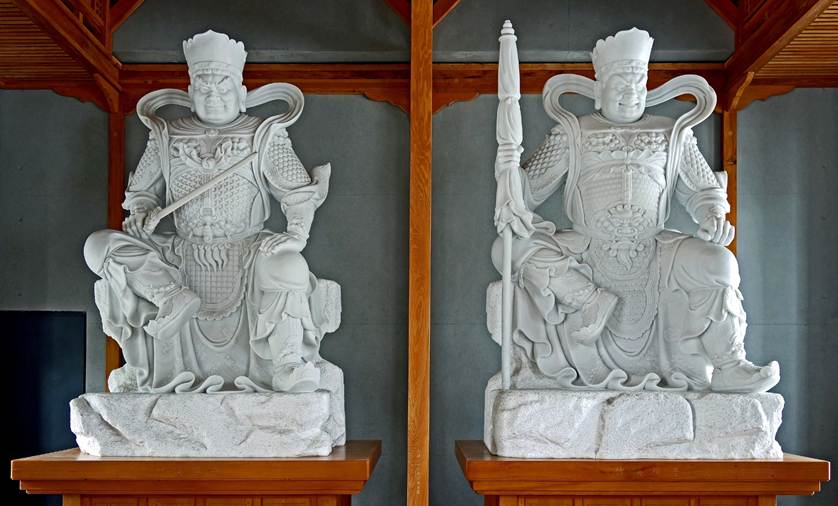
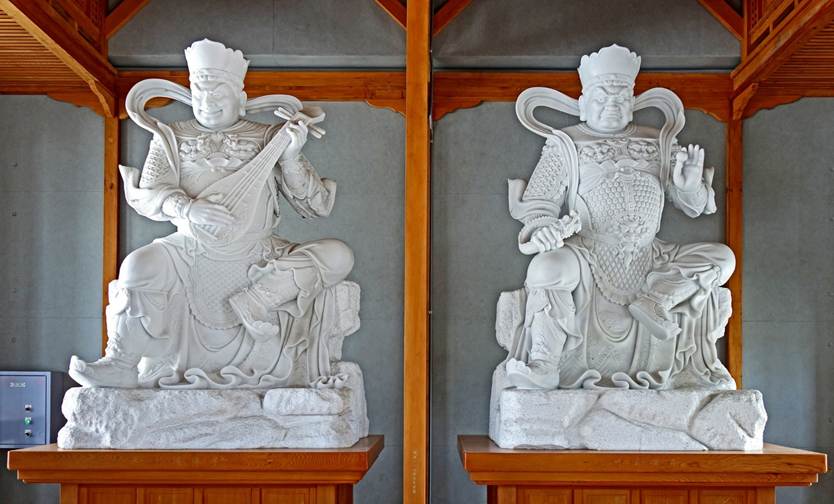
Statues of the Four
Heavenly Kings (四大天王), the guardian deities
who protect the Buddhist teachings over the four cardinal directions. They are
located in the second gate that opens into the core of the temple. From left to
right, they represent: Zengzhang (增長天王), for the south; Duowen (多聞天王), for the north; Chiguo (持國天王), for the east; and Guangmu (廣目天王), for the west.
|
|
|
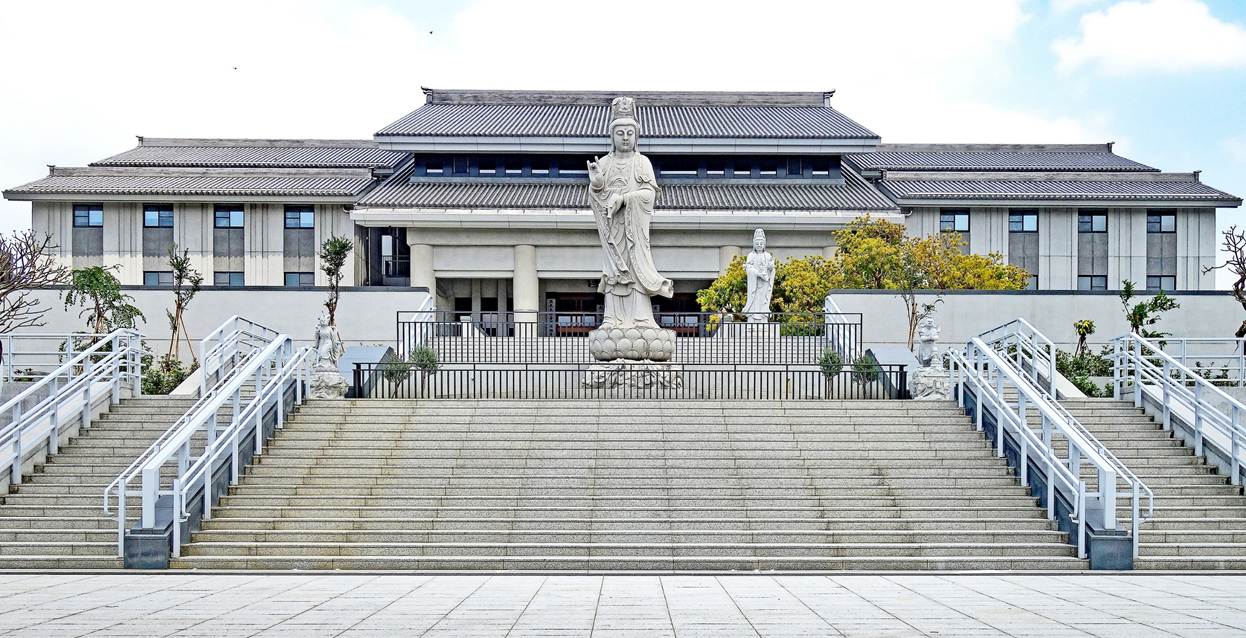
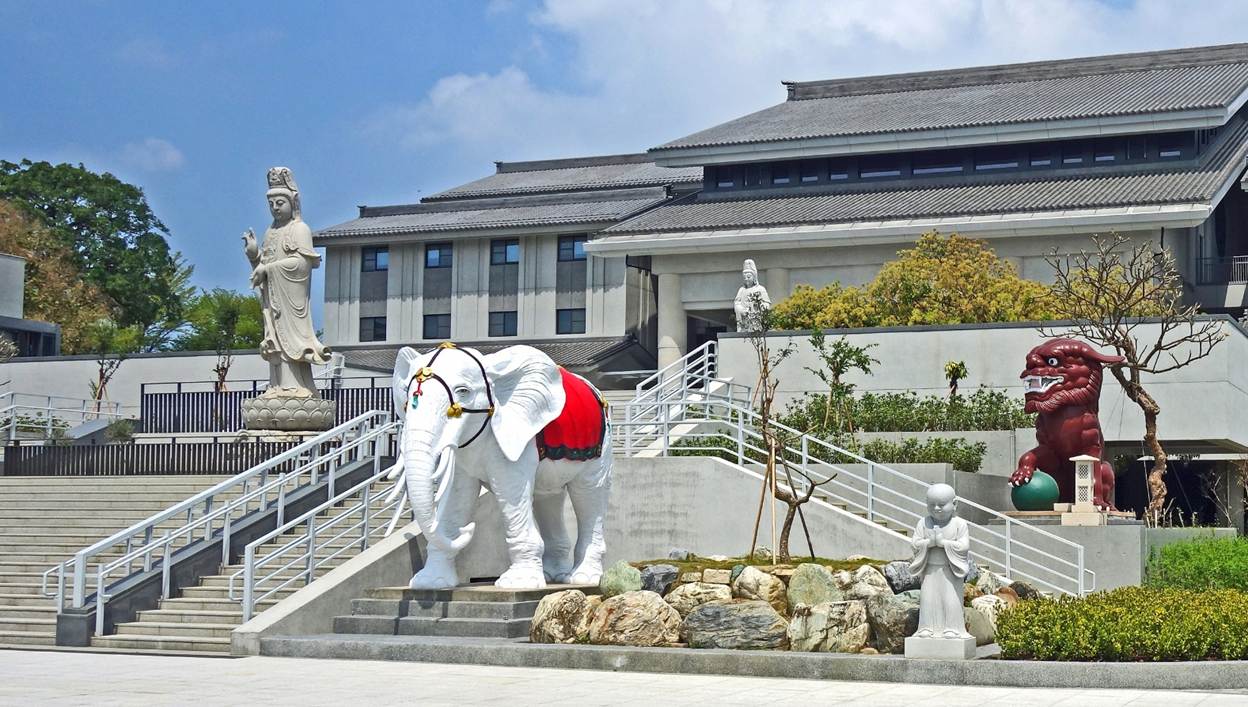
The temple's main
building seen from the gate housing the Heavenly Kings. A tall statue of
Guanyin stands halfway up the staircase. Two statues of elephants flank the
staircase (only one is visible in the second photo below), symbolizing power,
stability, and wisdom.
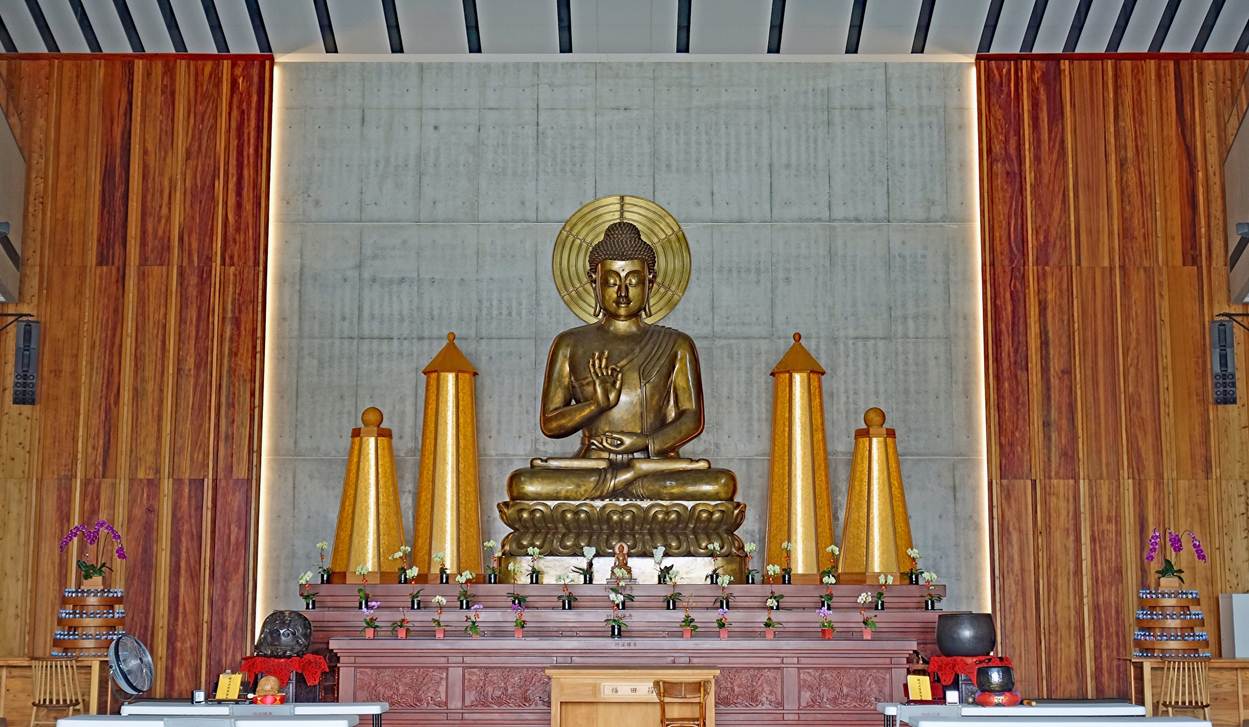
Statue of Buddha in the
main hall.
The two pagodas of the
temple.
|
|
|
[March 2026]