Taiwan: Hsinchu City and Around
[March 2025]
[Source: https://en.wikipedia.org/wiki/Taiwan_Area
]
This page presents photos
from a March 2025 trip to Hsinchu City, a major city midway between Taipei and
Taichung, and two other places, Xinpu township and Beipu village, both located
in the Hsinchu county.
Hsinchu City (新竹市)
Changhe temple (新竹長和宮) and
Shuixian temple (水仙宮):
These two temples form a
rare twin-temple ensemble in Taiwan. The Changhe temple, primarily dedicated to
Mazu, was built first in 1742 on an important market street (Beimen Old
Street), where it served as a worship and meeting place for shop owners,
traders, and sailors. By the mid-19th century, as Hsinchu had grown into a
major trade center with the Fujian province of China, this temple became too
small to adequately serve the needs of all its worshipers.
So, in 1863, the Shuixian
temple, a temple of similar design, was built to the right of the Changhe
temple, adjacent and parallel to it. Its name refers to Shuixian Zunwang (水仙尊王), a group of five
deities known as the Venerable Kings of the Water Immortals, collectively
worshiped as guardian deities ensuring the safety of navigation and
transportation over bodies of water (seas and rivers). The chief deity and
emblematic figure of this group is Yu the Great (夏禹), the legendary founder of the Xia Dynasty, known for taming the Great
Flood of China (circa 2200-2000BCE). As the Shuixian Zunwang
group had previously
been enshrined in the rear hall of the Changhe temple, its worship was simply
transferred to the new Shuixian temple. Subsequently, however, the rear hall of
the Changhe temple was converted to enshrine Guanyin Bodhisattva (觀音菩薩).
Since then, this
twin-temple ensemble has been rebuilt and remodeled several times. The two
temples share very similar adjacent facades and communicate directly with each
other. They create the impression of being a single temple with multiple
worship halls.
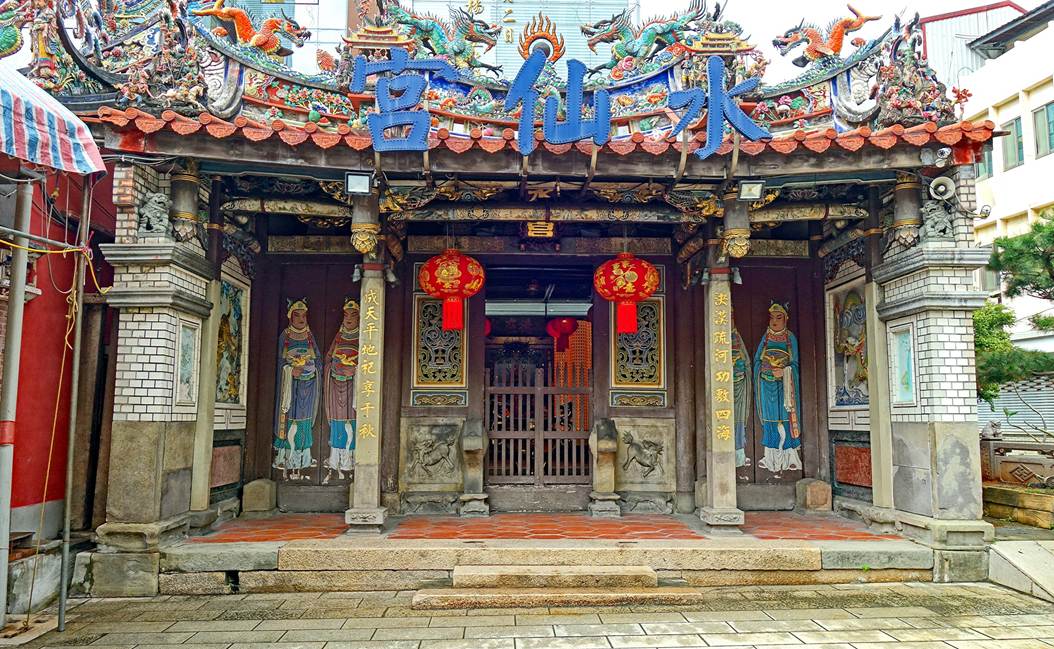
Facade of the Shuixian
temple (left) and painting on one of its a lateral door (right). The facade of
the Changhe temple is similar, but, during my visit, it was hidden by a
makeshift tent erected for a celebration (partially visible on the left side of
the left photo below).
|
|
|
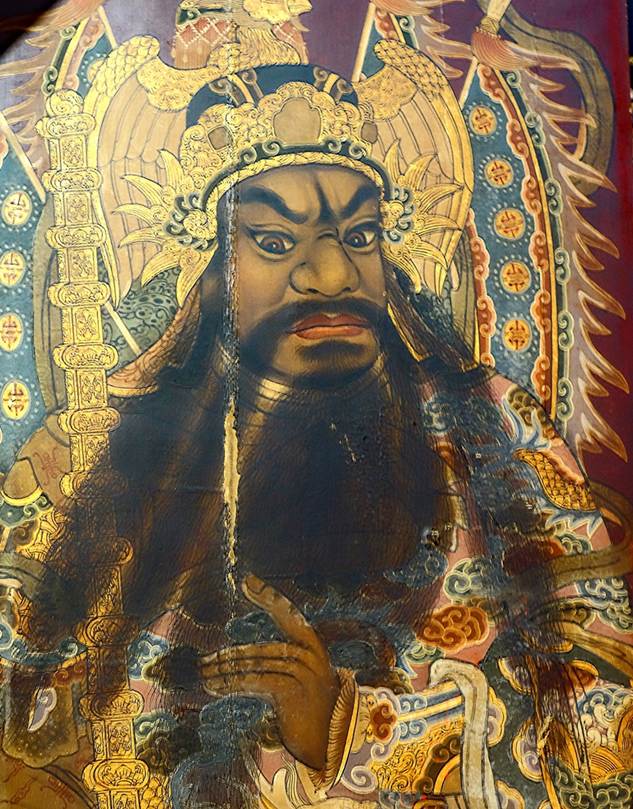
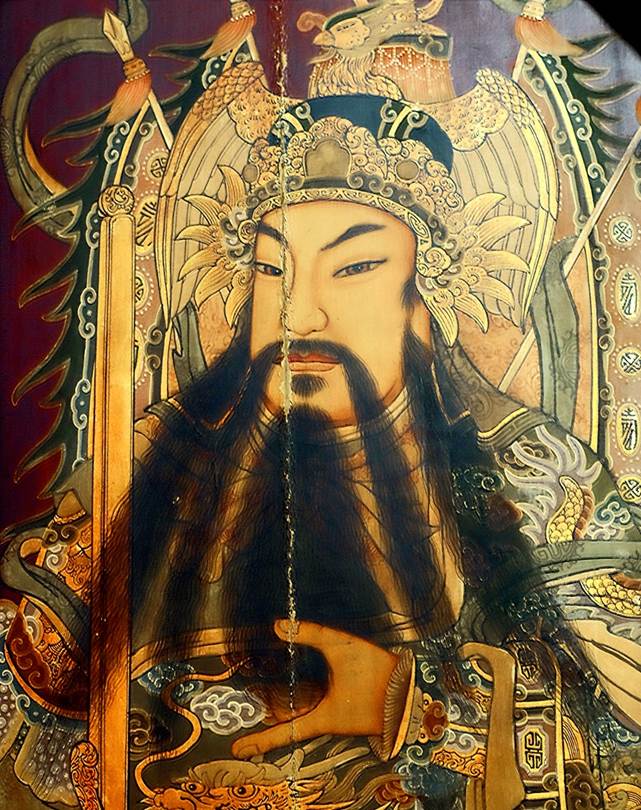
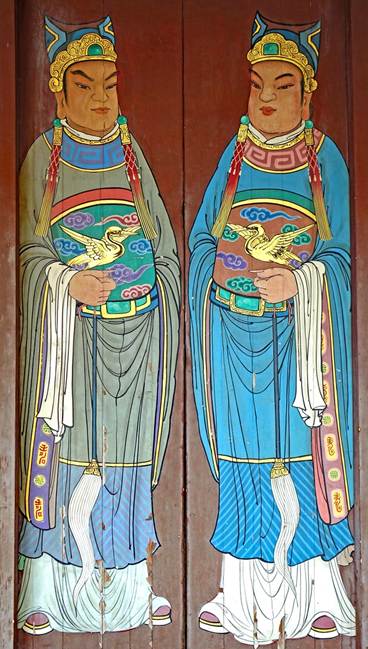
Paintings of protective
deities on doors (called menschen, 門神) of the Changhe temple.
|
|
|
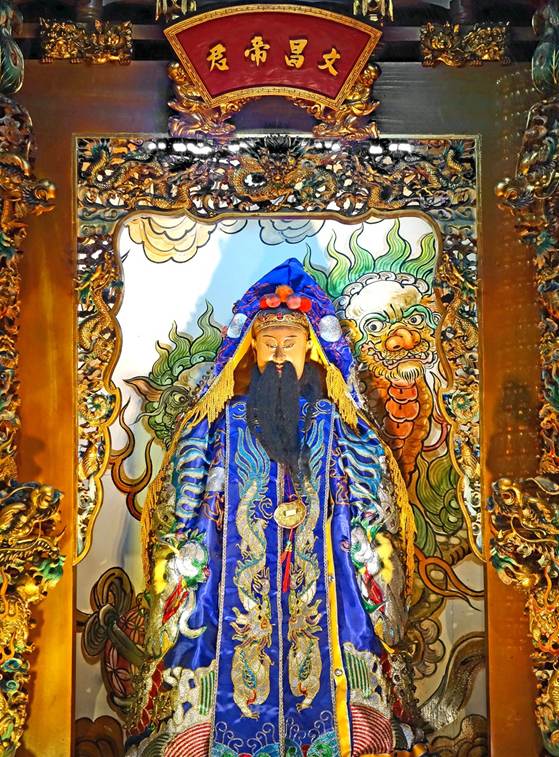
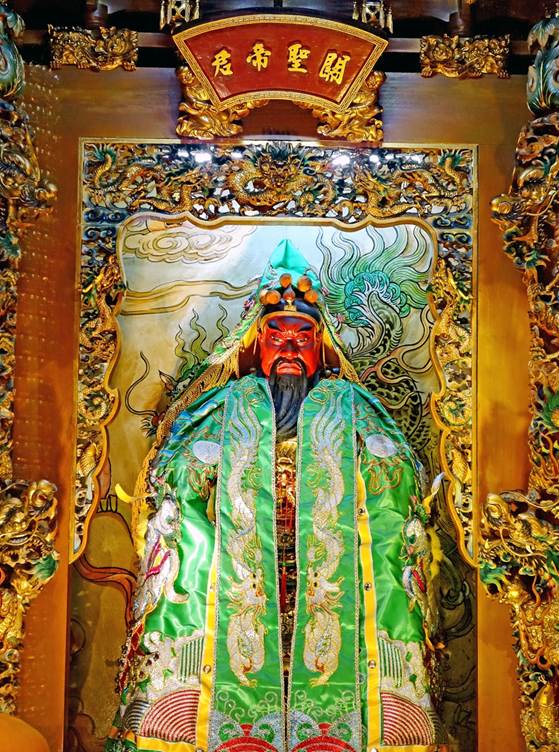
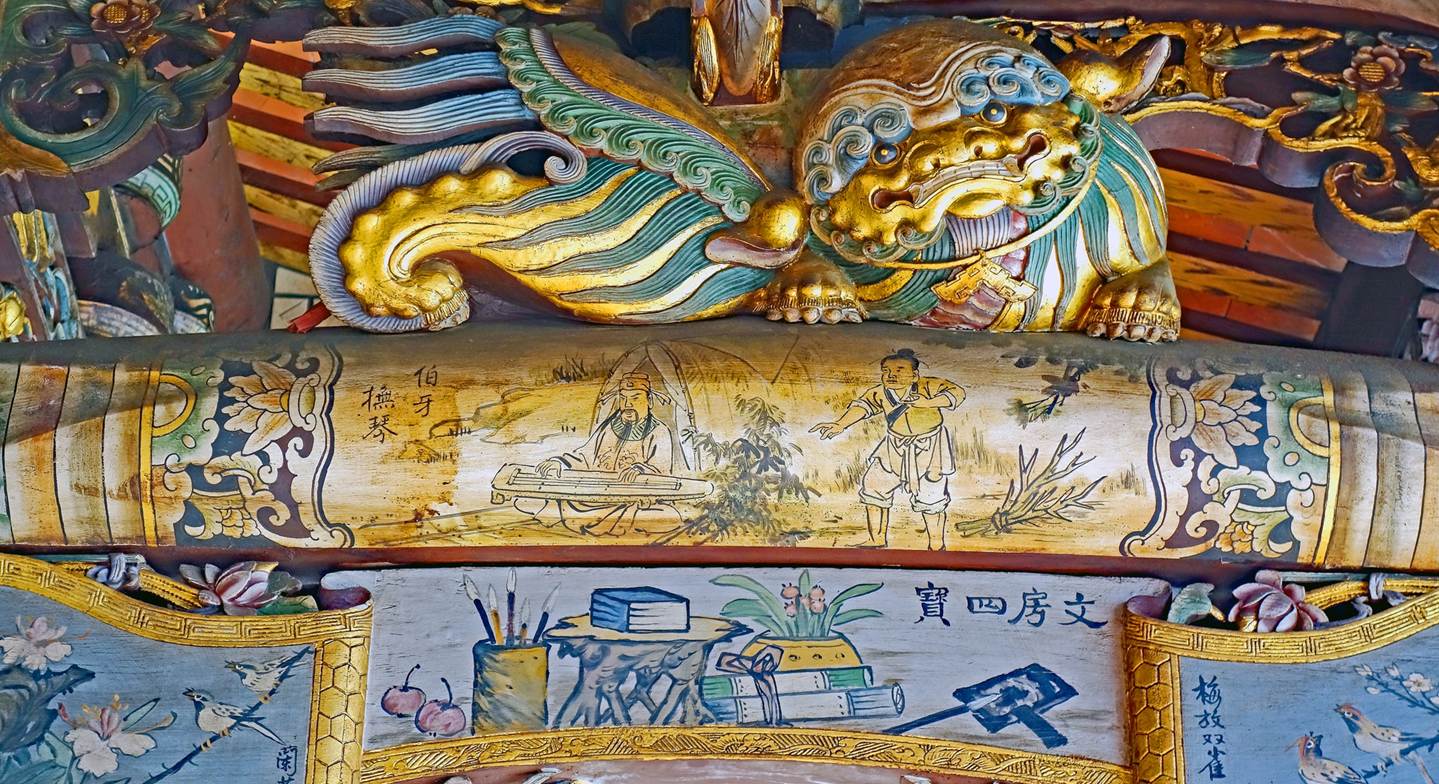
Decorations in the
Changhe temple.
Altar dedicated to Mazu.

Statues of Wenchang Dijun
(文昌帝君), the Taoist god of culture and
literature, on the left, and of Guandi (关帝), the god of war, on the right.
|
|
|
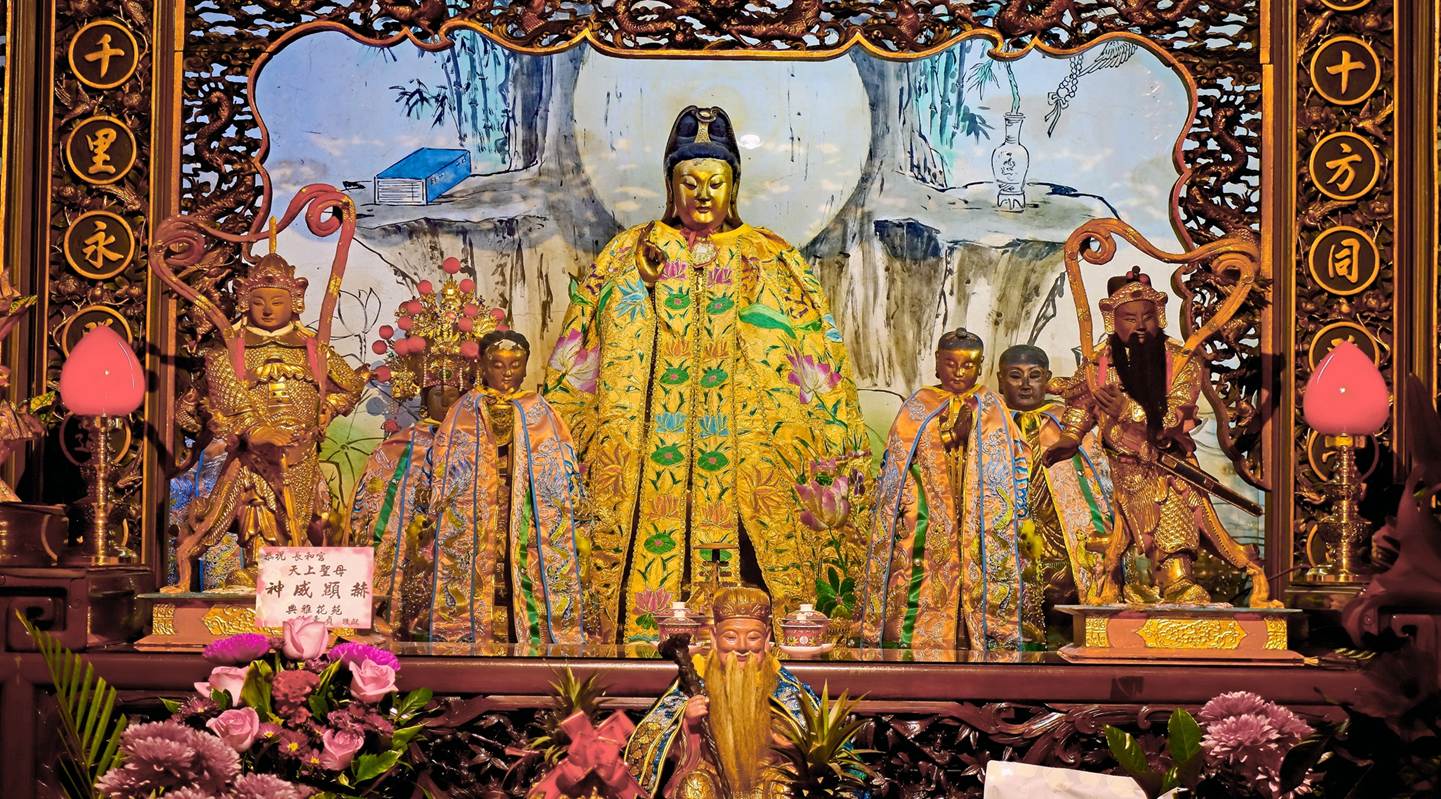
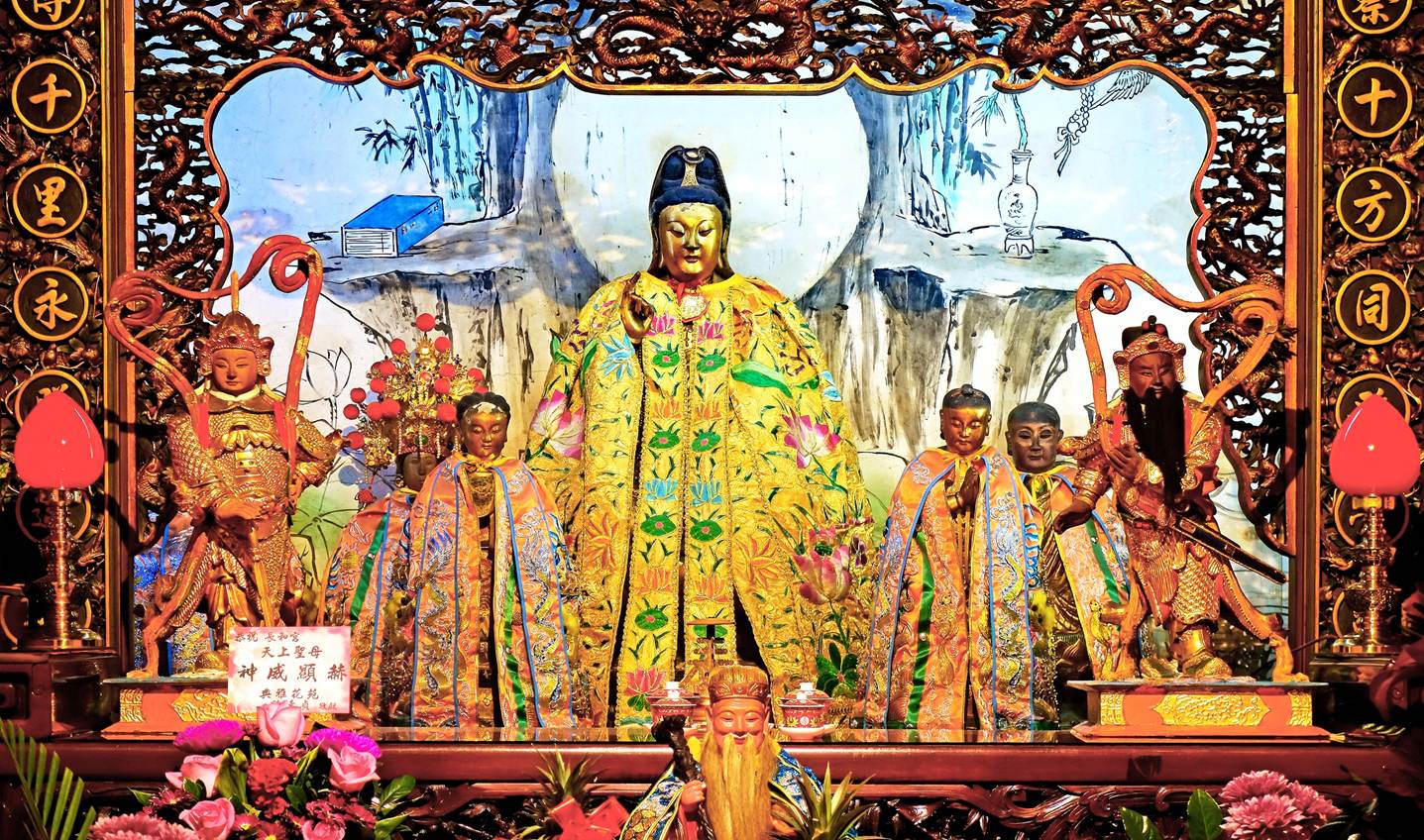
Altar dedicated to
Guanyin in the rear hall of the Changhe temple. The two large statues at the
far left and far right of the altar are Bodhisattva Weituo (韋馱菩薩) and Bodhisattva Qielan (关帝), respectively. They are customary
guardians of Guanyin and the Dharma. Bodhisattva Qielan and Guandi [see above] are the deified versions of the same historical figure (the legendary
Chinese general Guan Yu), seen through different religious lenses.
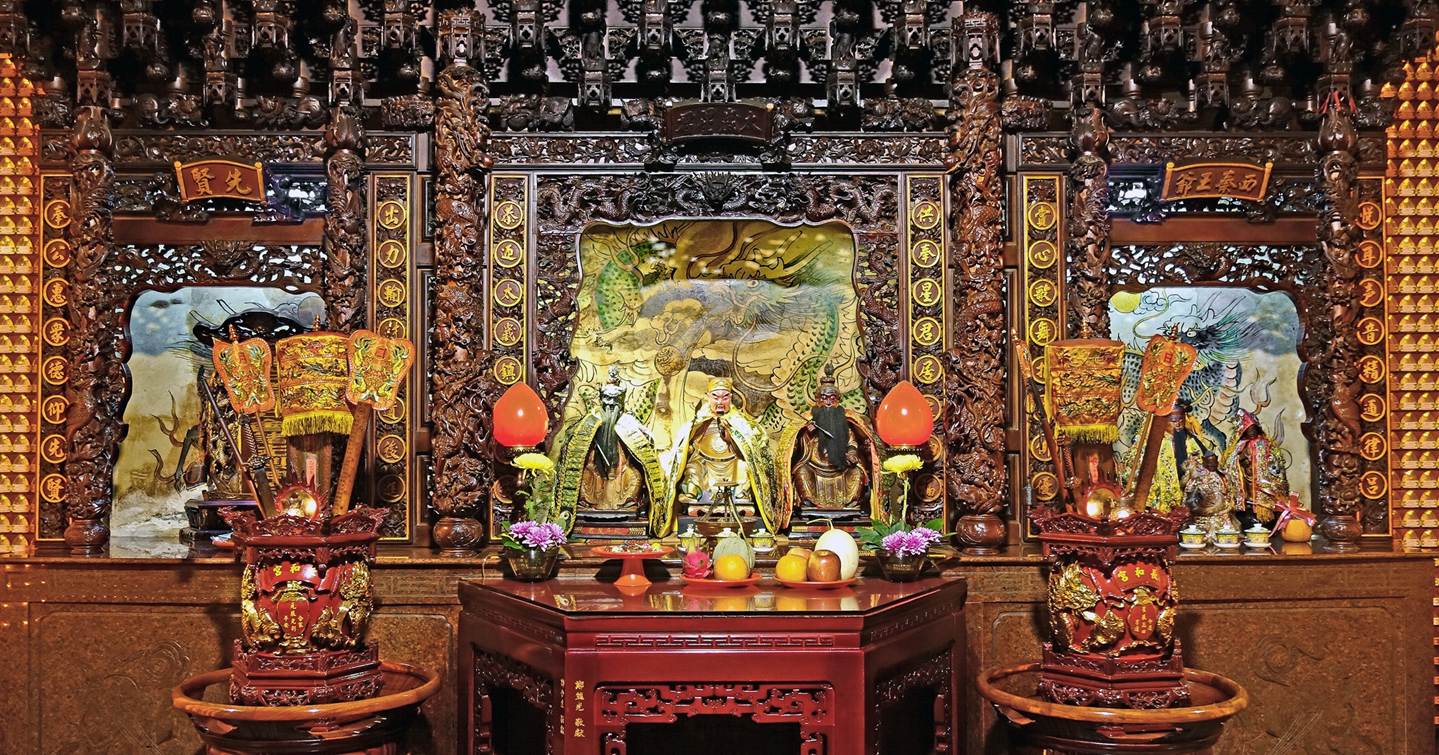
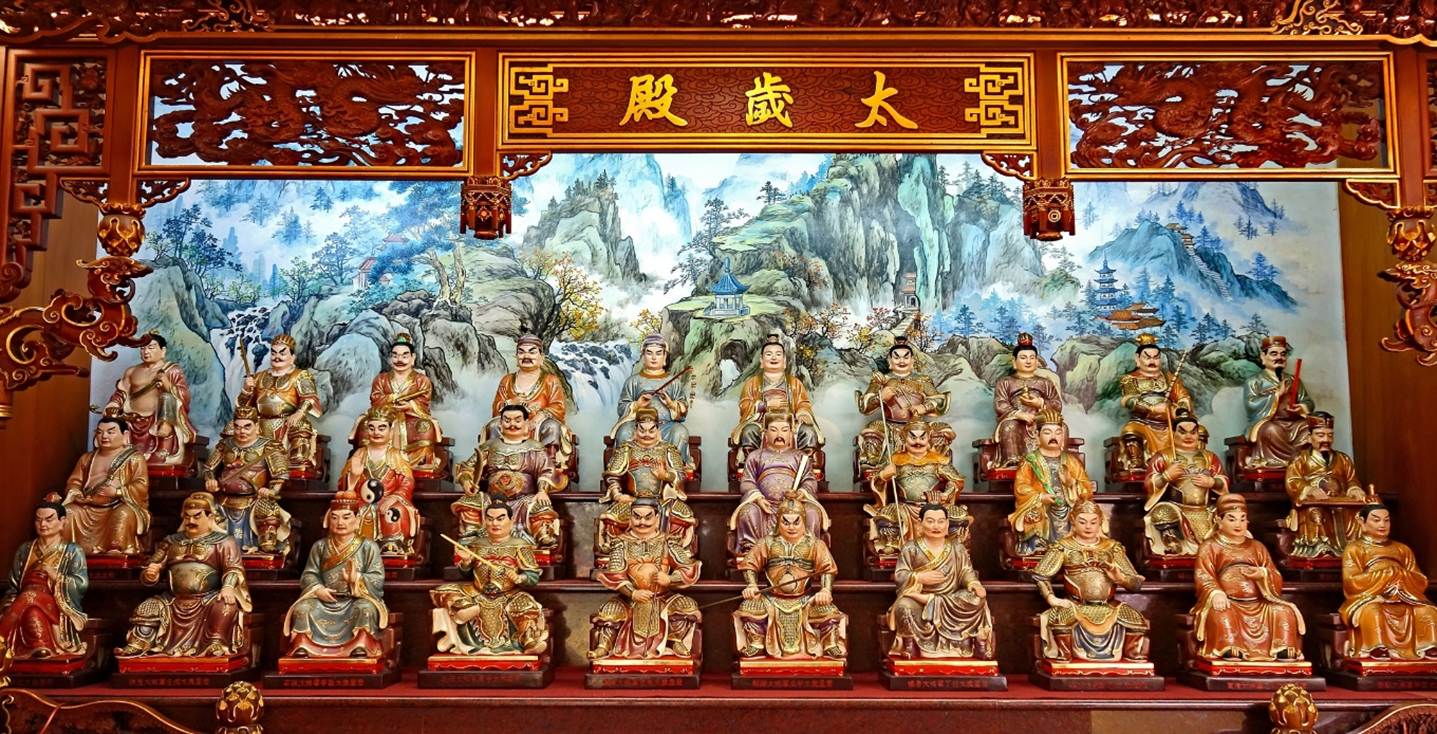
Altar in the Tai Sui hall of the Changhe temple. The
Tai Sui is a group of 60 deified generals who govern, in rotation, the fortunes
and misfortunes of human beings during every cycle of 60 years. The figure in
the center is the general currently in charge. He is flanked by the Lord of the
Northern Dipper (北斗星君), on his right, and the Lord of the Southern Dipper
(南斗星君), on his left.
Entrance
to the main worship hall of the Shuixian
temple.
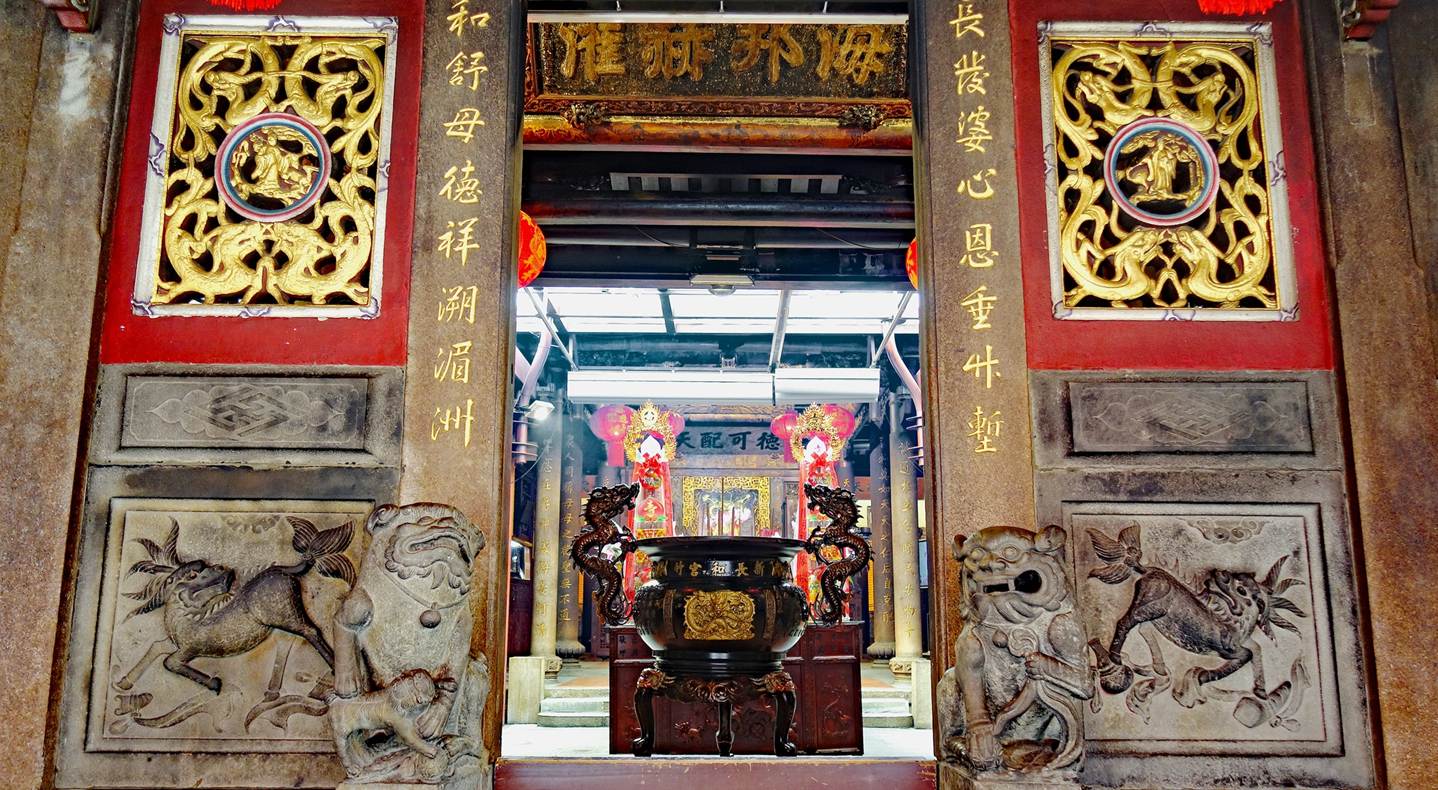
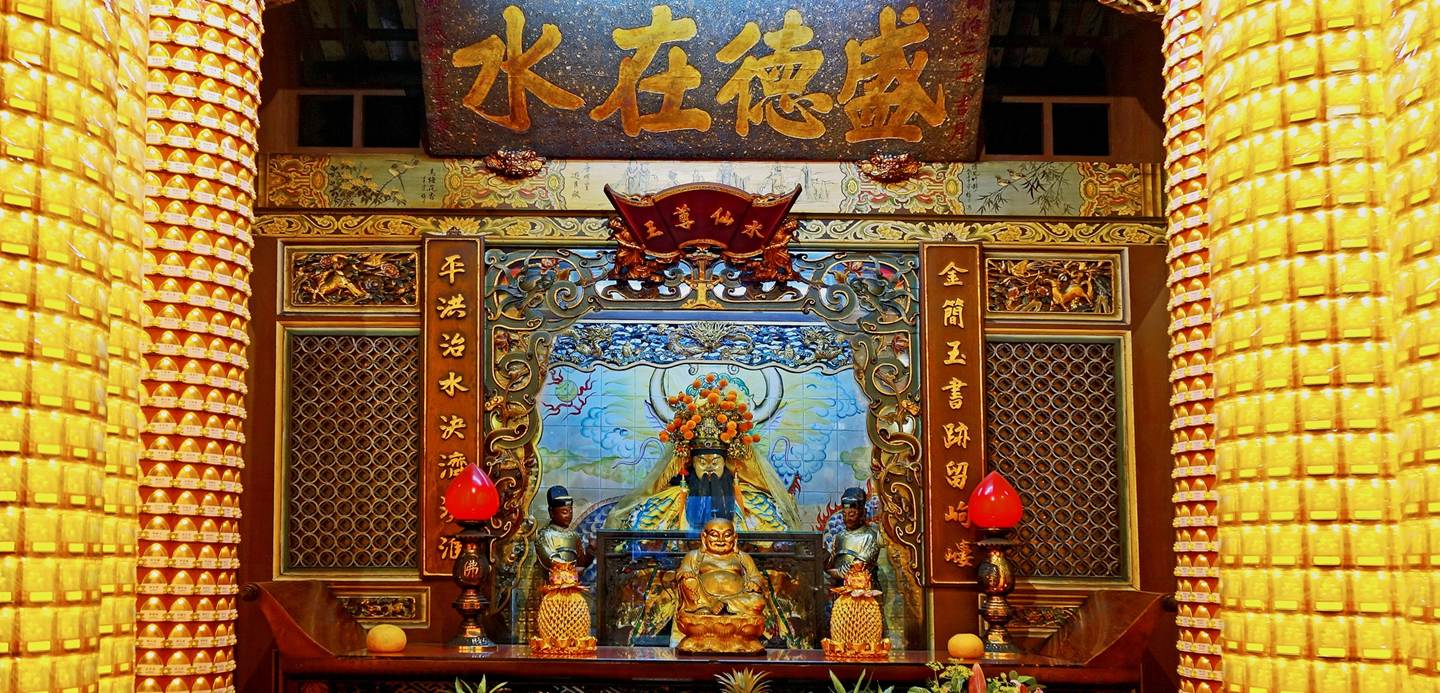
Altar dedicated to the five
Immortal Kings of the Waters Shuixian Zunwang (水仙尊王). The main statue depicts Yu
the Great, the chief deity of this group. In front of it, there is a statue of
the laughing Buddha, Maitreya Buddha (the prophesied future Buddha).
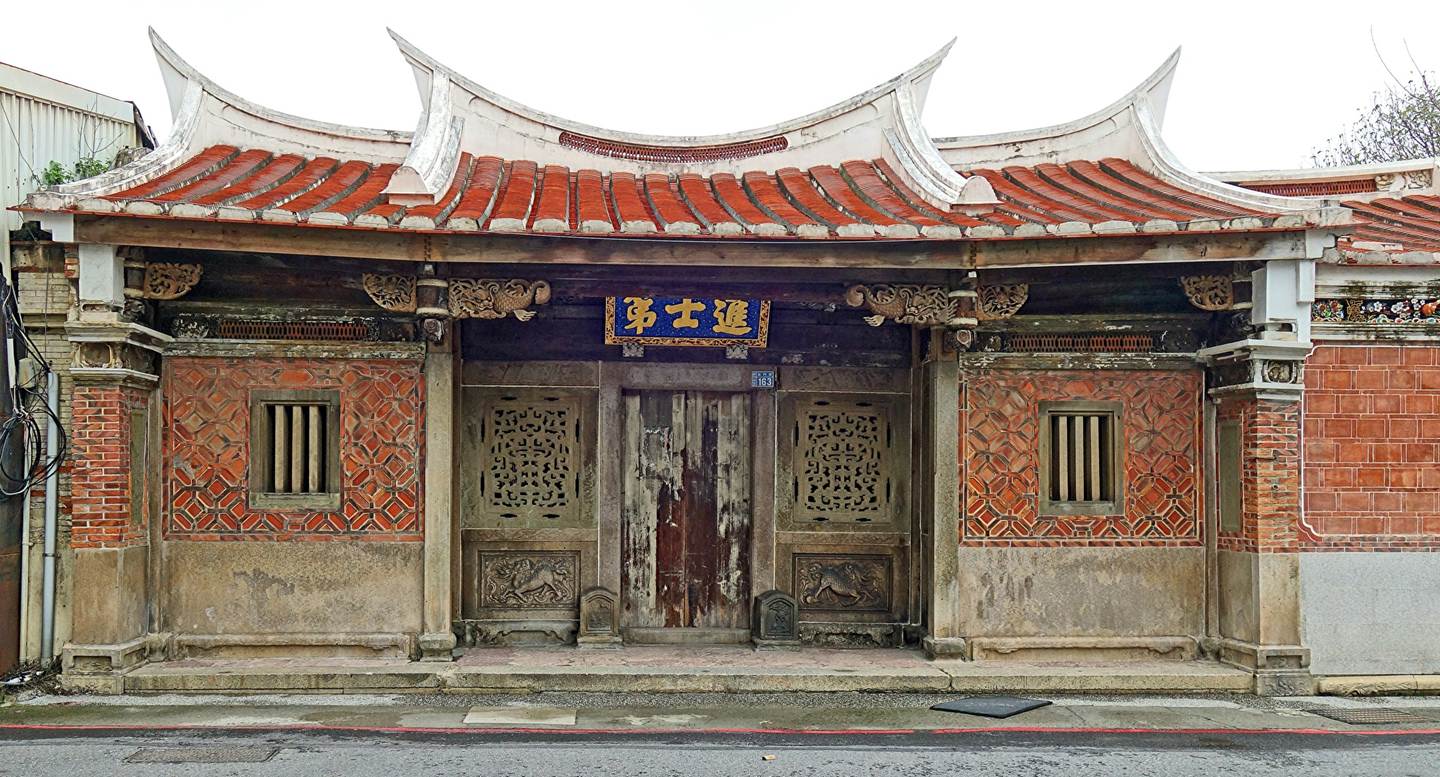
Historic Jinshi house (進士第):
The area around the
Changhe and Shuixian temples is dotted with crumbling Qing Dynasty buildings.
One of them, the Jinshi house, is relatively well preserved. It is the former
residence of Zheng Yongxi (鄭用錫) (1788-1858), the second son of a
wealthy businessman named Zheng Chonhe. In 1823 Yongxi was the first resident
of Taiwan to receive the Jinshi (進士), the highest degree of the Chinese
imperial examination, hence the name of the house. He then became a politician
of the Qing Dynasty.
Facade of the house.
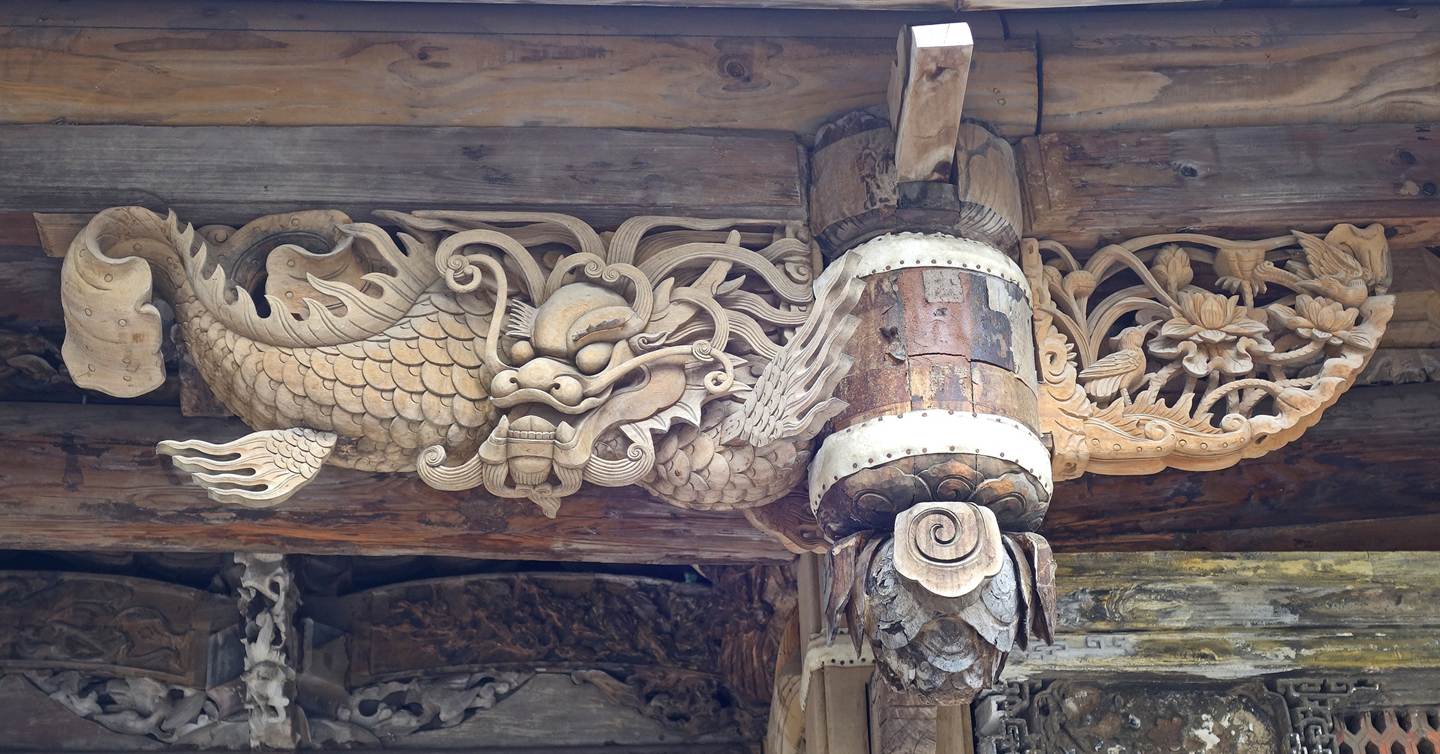
Wood carving under the
eaves.
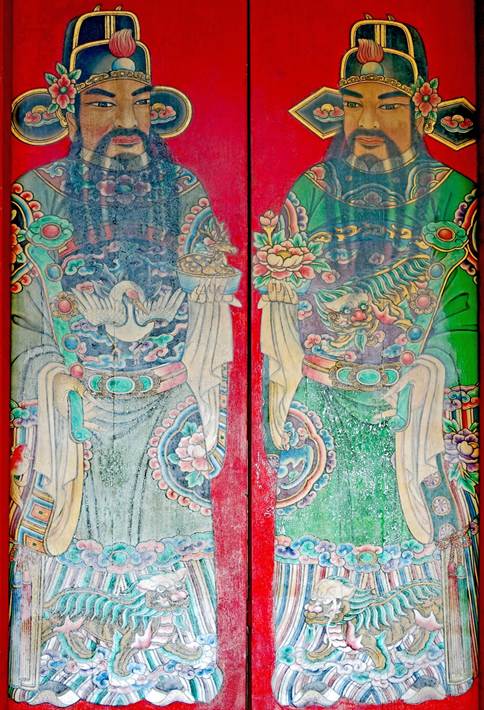
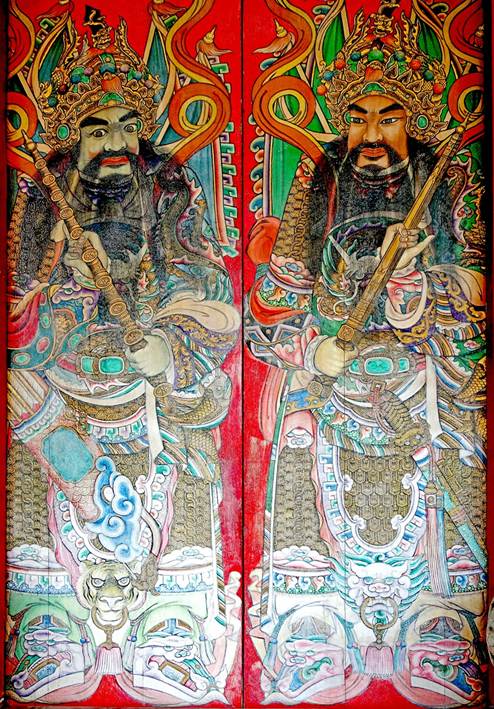
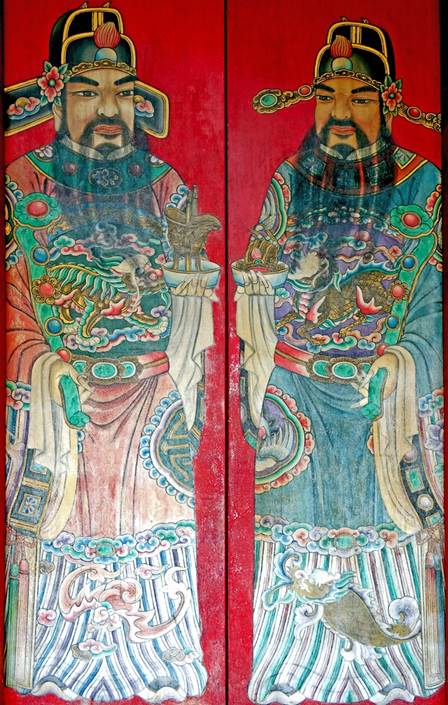
Paintings on the doors
(menschen) of the Zheng family temple, located next to the Jinshi house.
|
|
|
|
Hsinchu City God temple (新竹都城隍廟):
A
City God is a kind of supernatural magistrate who protects the city, helps its
human officials to make the right decisions, weighs the moral character of the
city's inhabitants when they die, and decides the kind of afterlife they
deserve. Of the many (around 100) City God temples in Taiwan, this one is
considered one of the most important. Its initial construction dates back to
1747, but most of its current structures date from the restoration of 1924. It
consists of several halls dedicated to the City God and various other Taoist
and Buddhist deities. Surrounded by the Hsinchu's largest night market, the
temple attracts a continuous flow of worshippers and visitors.
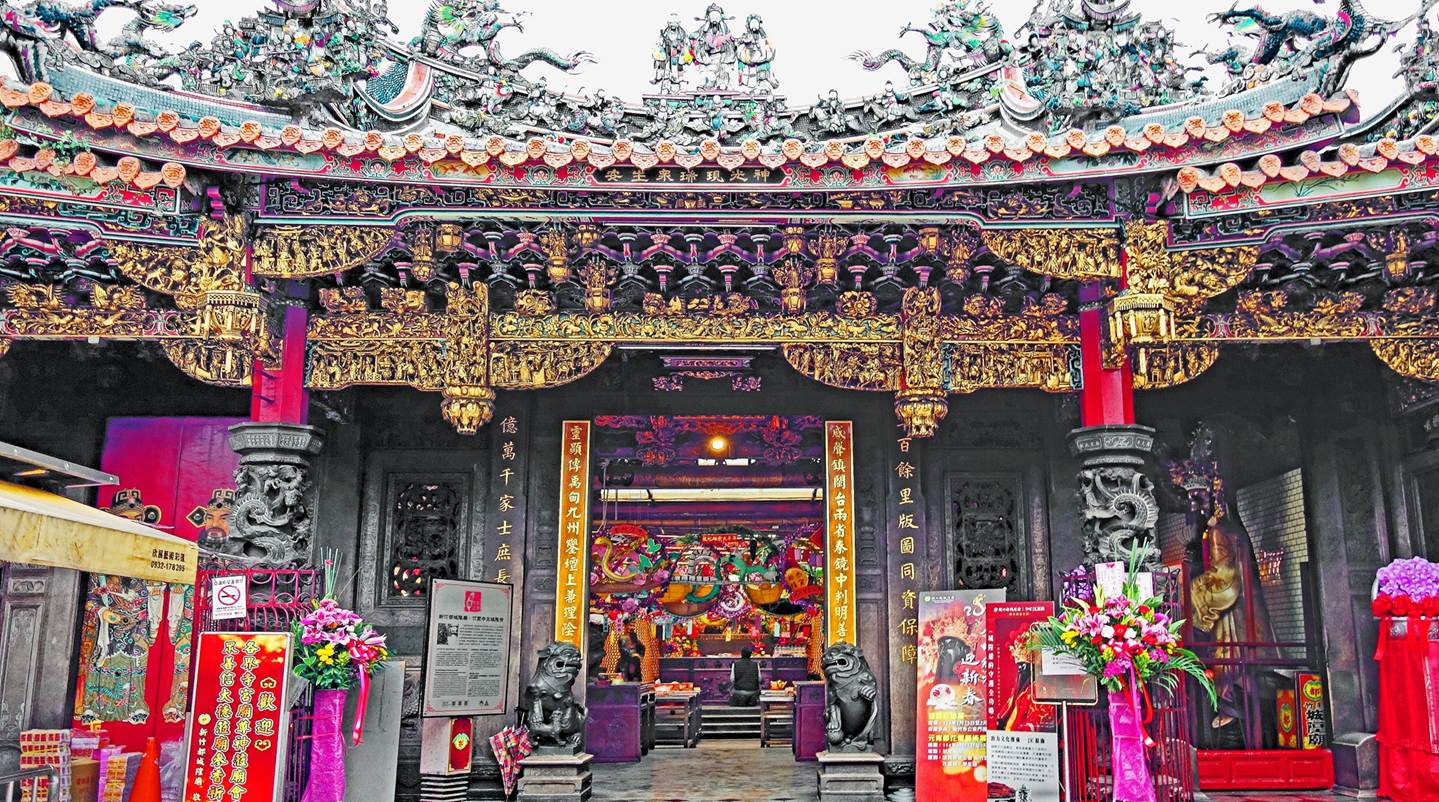
Entrance of the temple.
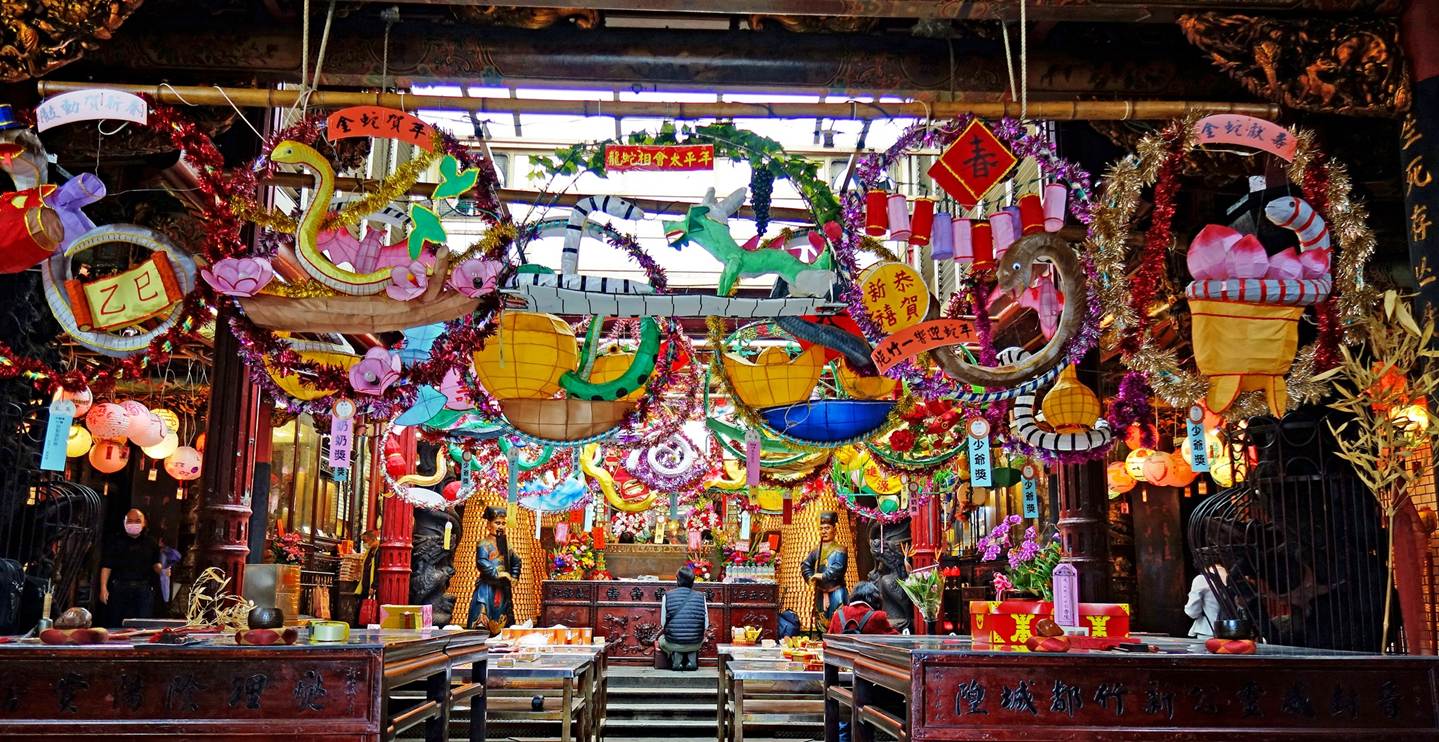
In the main worship hall
of the temple.
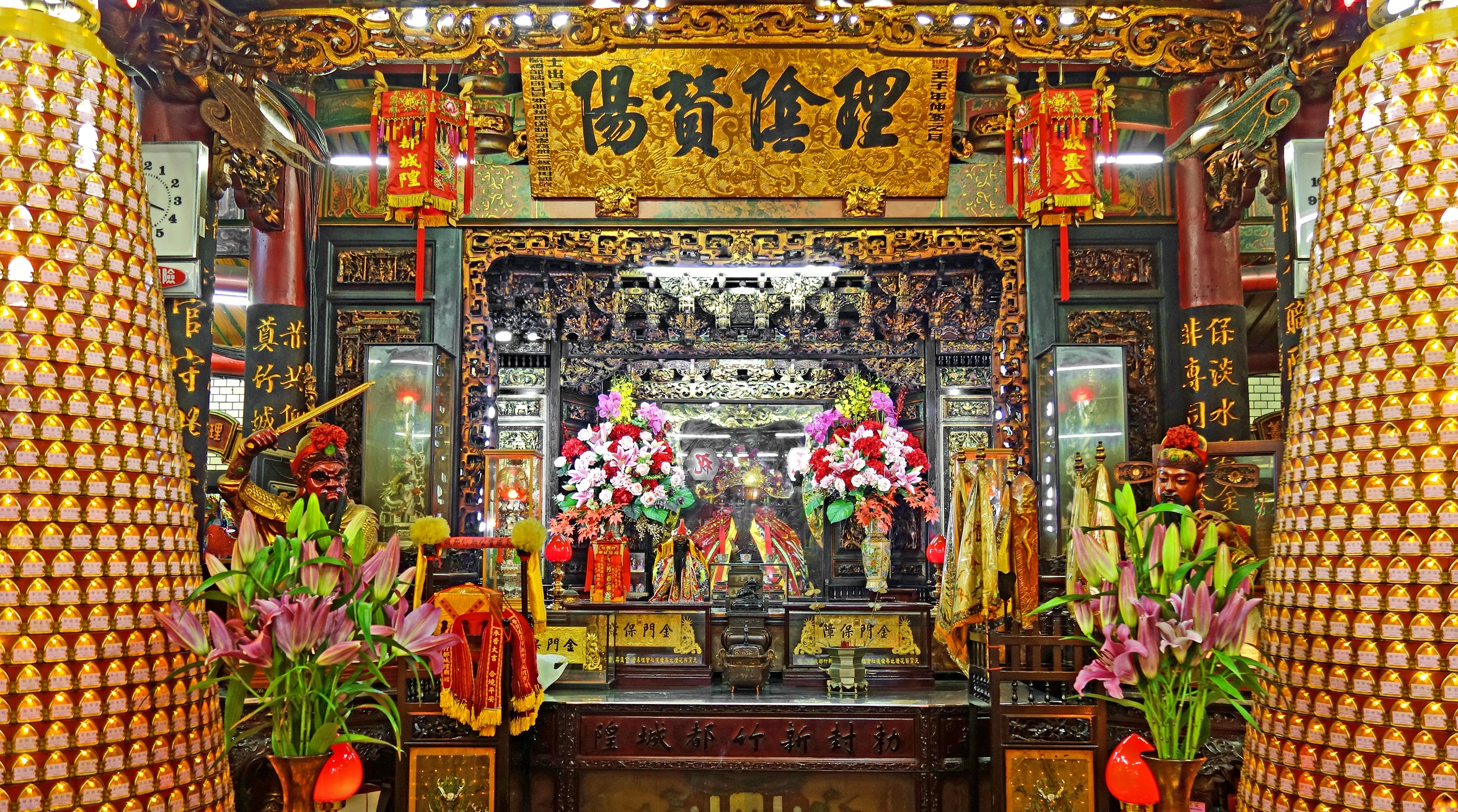
Altar dedicated to the
City God. The plaque above the altar reads ″燮理陰陽″, which translates to ″Harmonizing
Yin and Yang″.
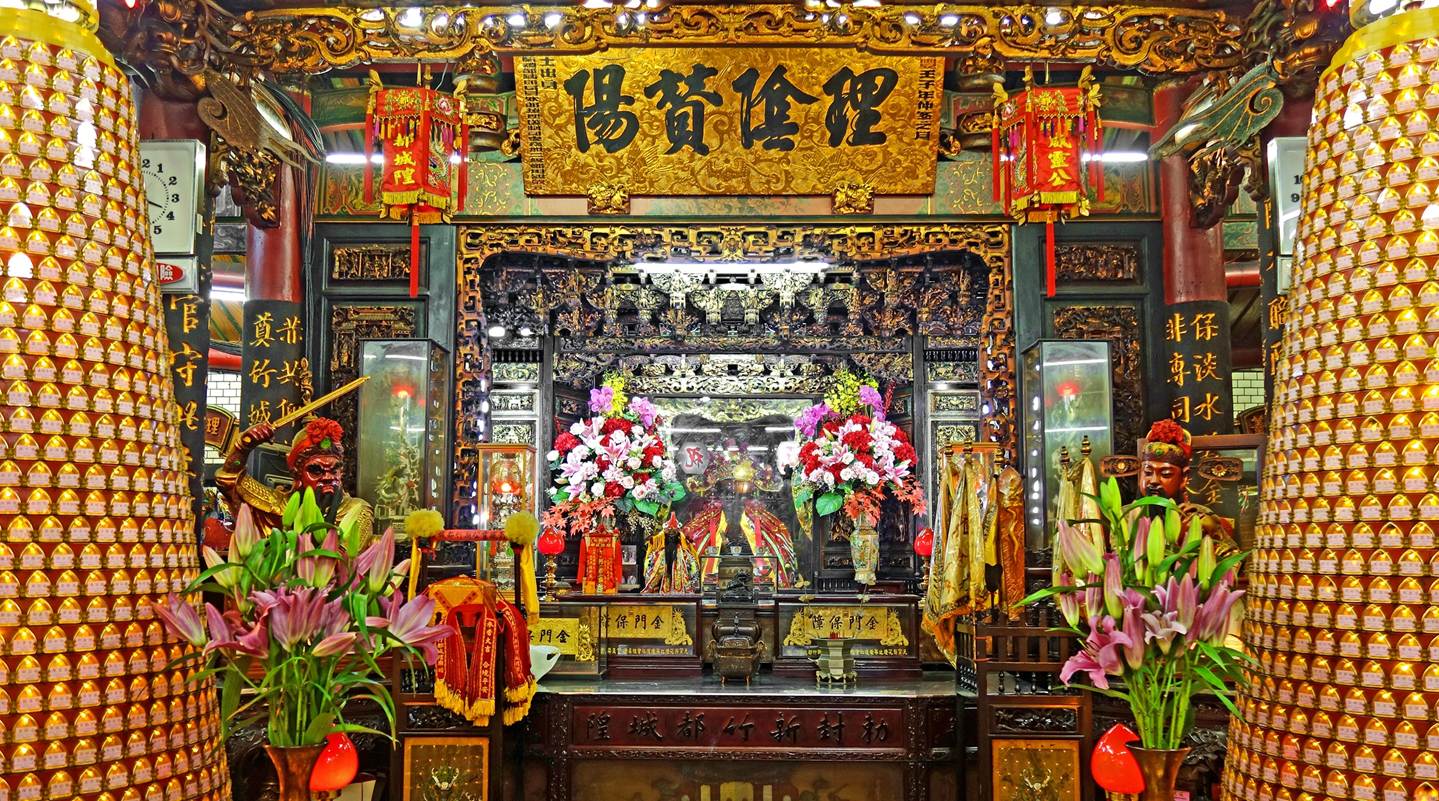
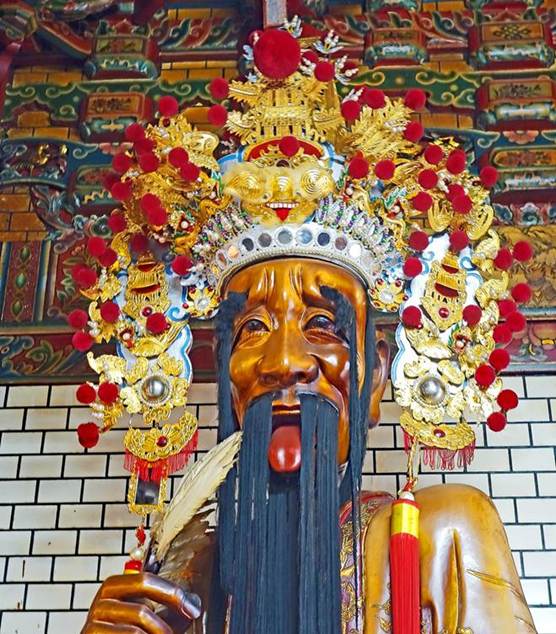
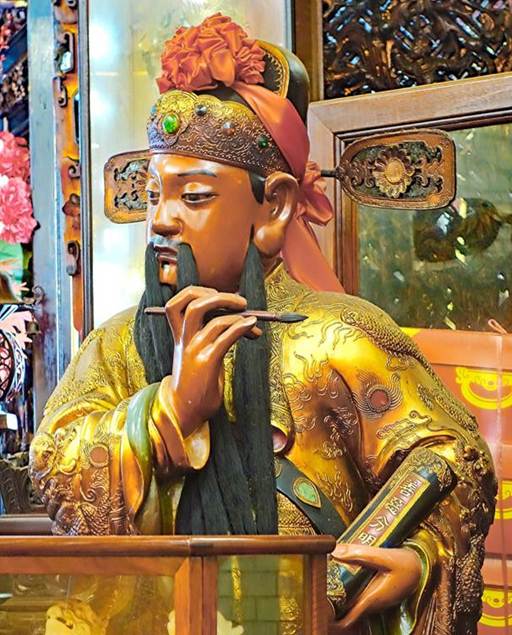
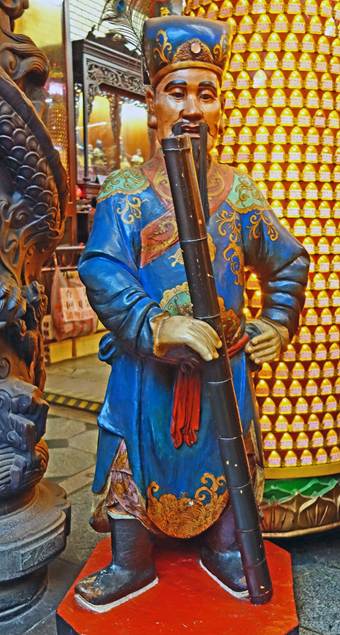
Some of the statues in
the hall:
- Left: The Clerk of the
Underworld (who stands barely visible on the right of the above photo). He
holds a brush and a ledger to record the good and bad deeds of all the people
under the jurisdiction of the City God.
- Center: Statue
representing a Herald (報馬仔), who announces the City God's arrival
and clears the path of bad luck during street procession of the City God.
- Right: Statue of
General Xie (謝將軍), a guardian deity of the temple, who
is also responsible for guiding the souls of the good-hearted people to
paradise.
|
|
|
|
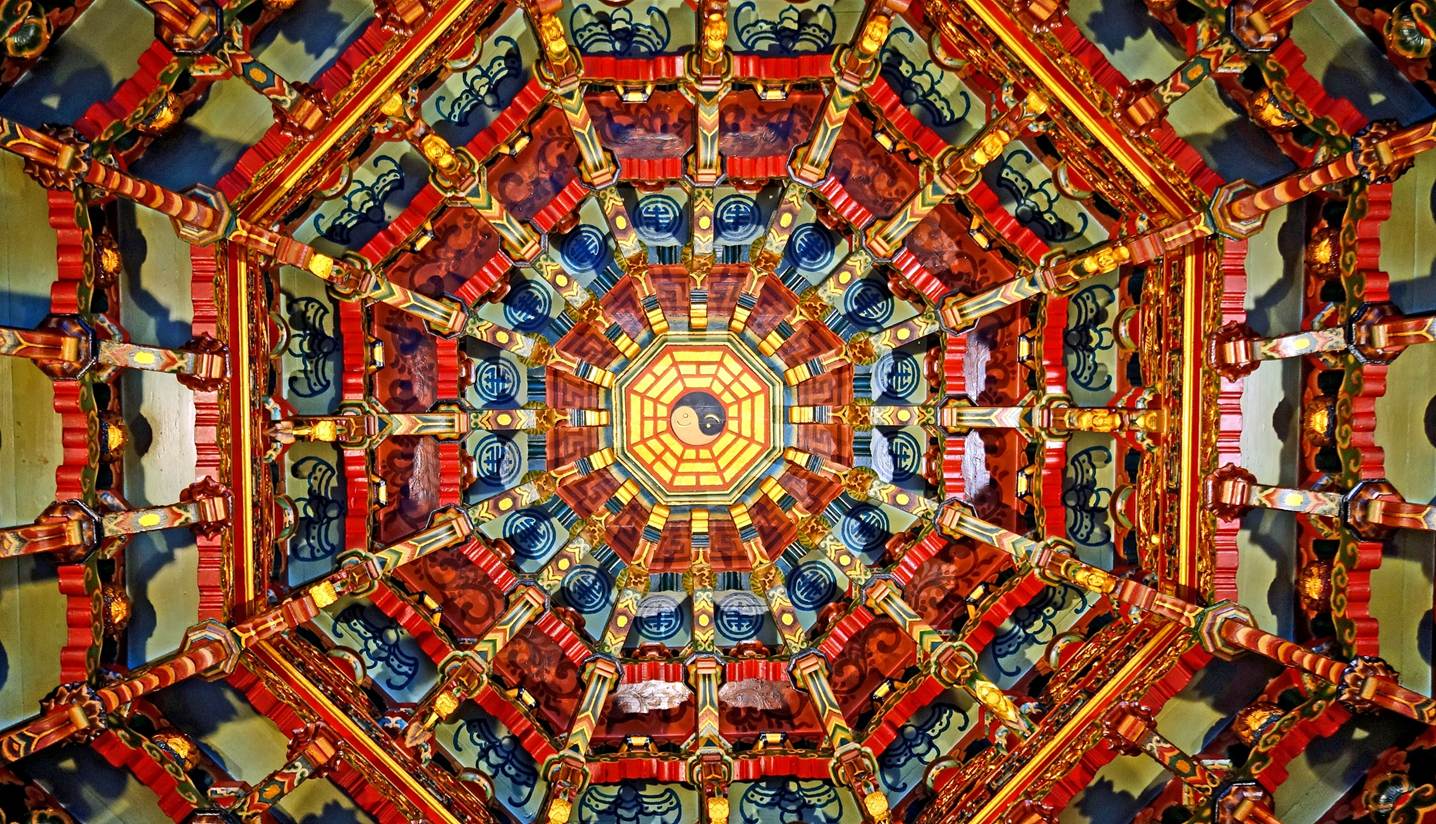
Ceiling in the hall. It
features two representations of yin and yang at its center: the usual circular
symbol is surrounded by the bagua (八卦), which consists of eight
trigrams, each made of a distinct combination of yin (broken lines) and
yang (solid lines).
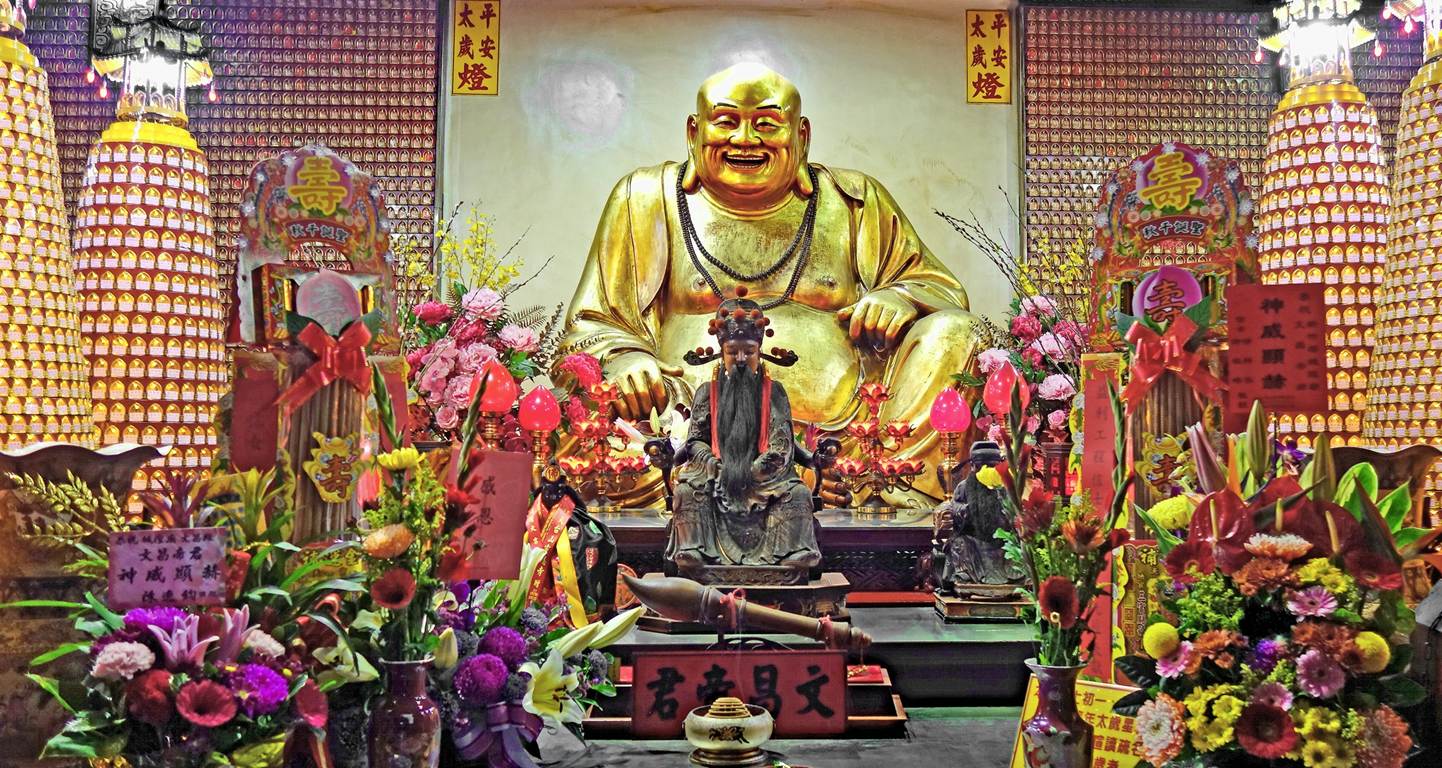
Hall with a large, golden
laughing Buddha statue (a depiction of Maitreya Buddha) dominating the
background. Enshrined in the center foreground, there is a statue of Wenchang
Dijun, the god of culture and literature, with a stylized Wenchang brush in front
of it.
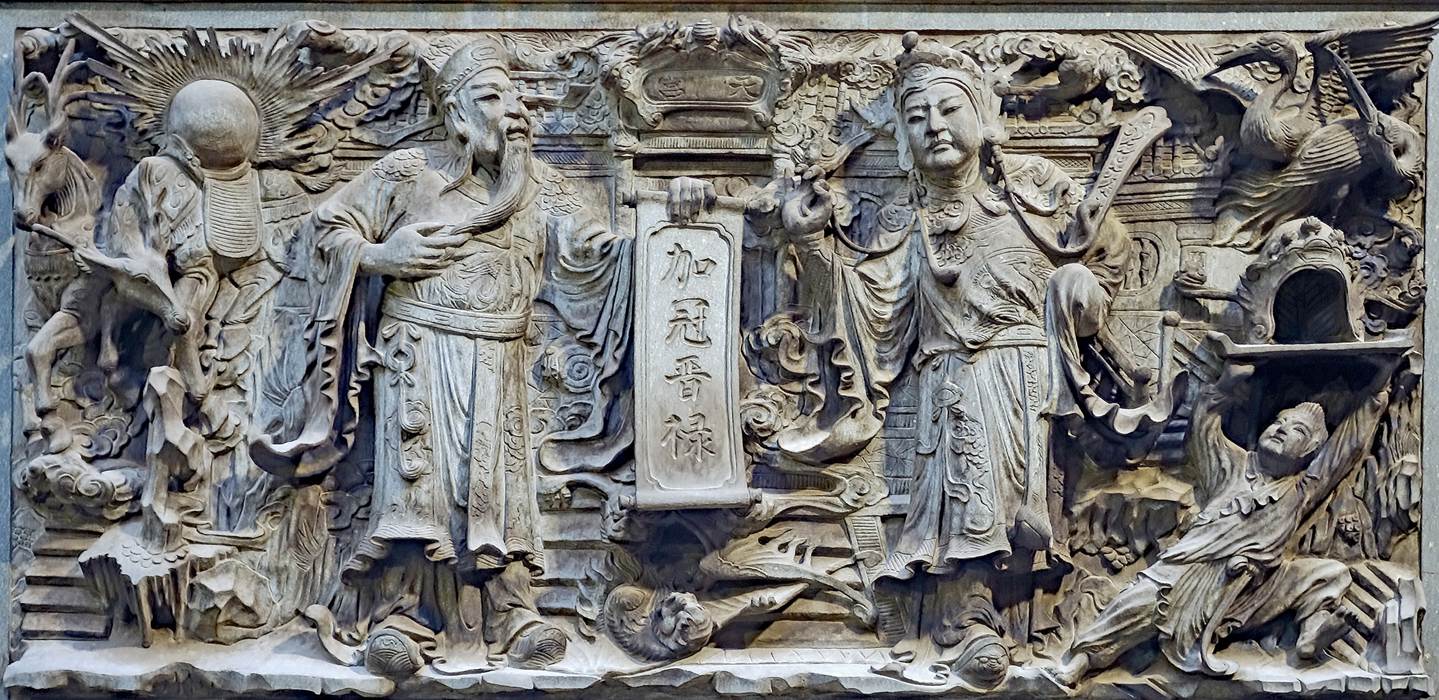
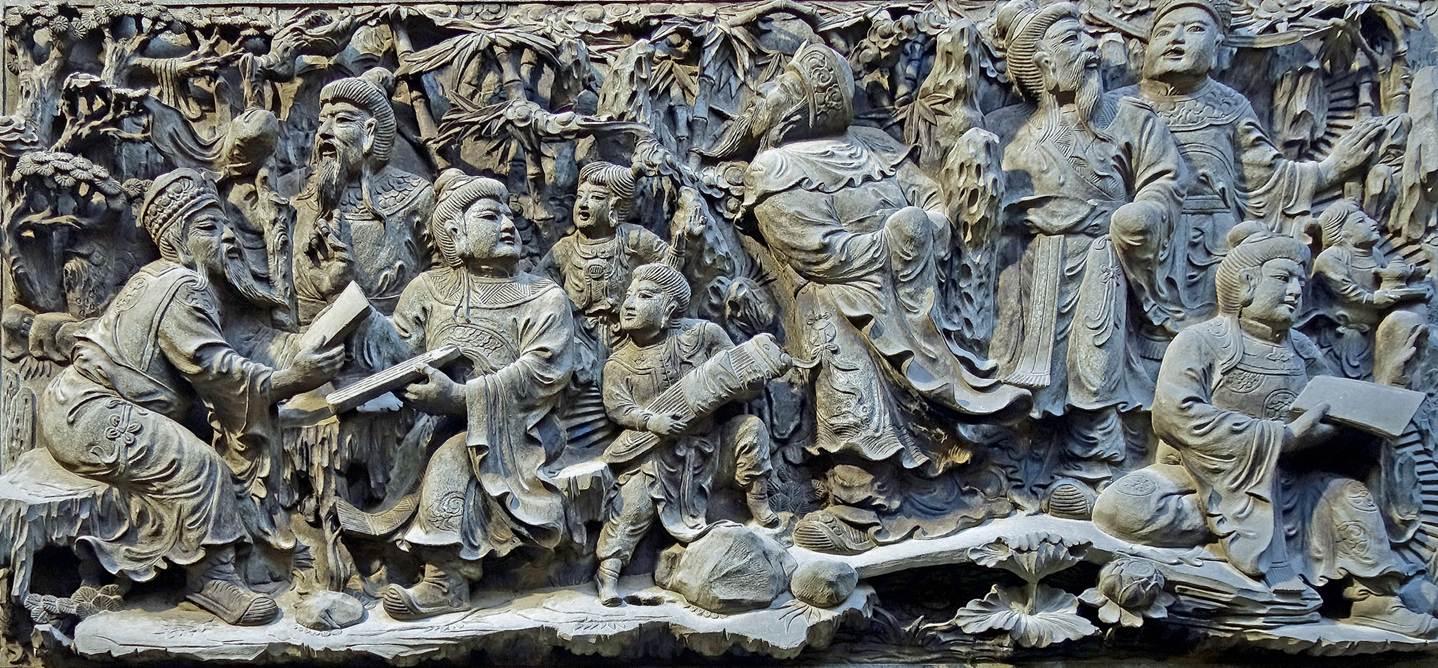
Carved stone panels
adorning the walls of the temple.
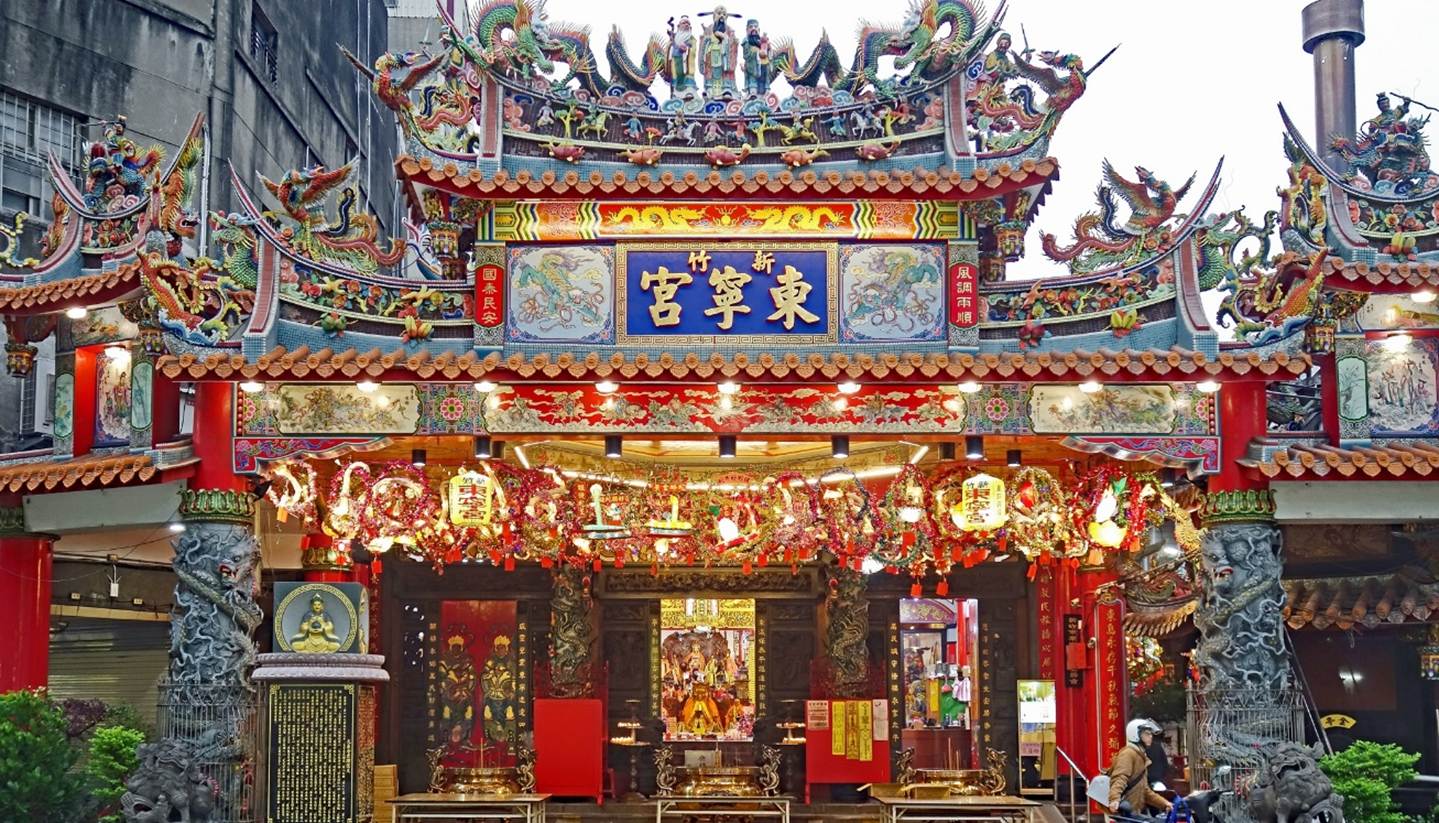
Dongning temple (新竹東寧宮):
This temple is primarily
a Buddhist temple with Ksitigarbha Bodhisattva as its principal deity. It also
enshrines other deities, both Buddhist and Taoist. The temple was founded in
1821, but its current buildings date from 1954.
Facade of the temple.
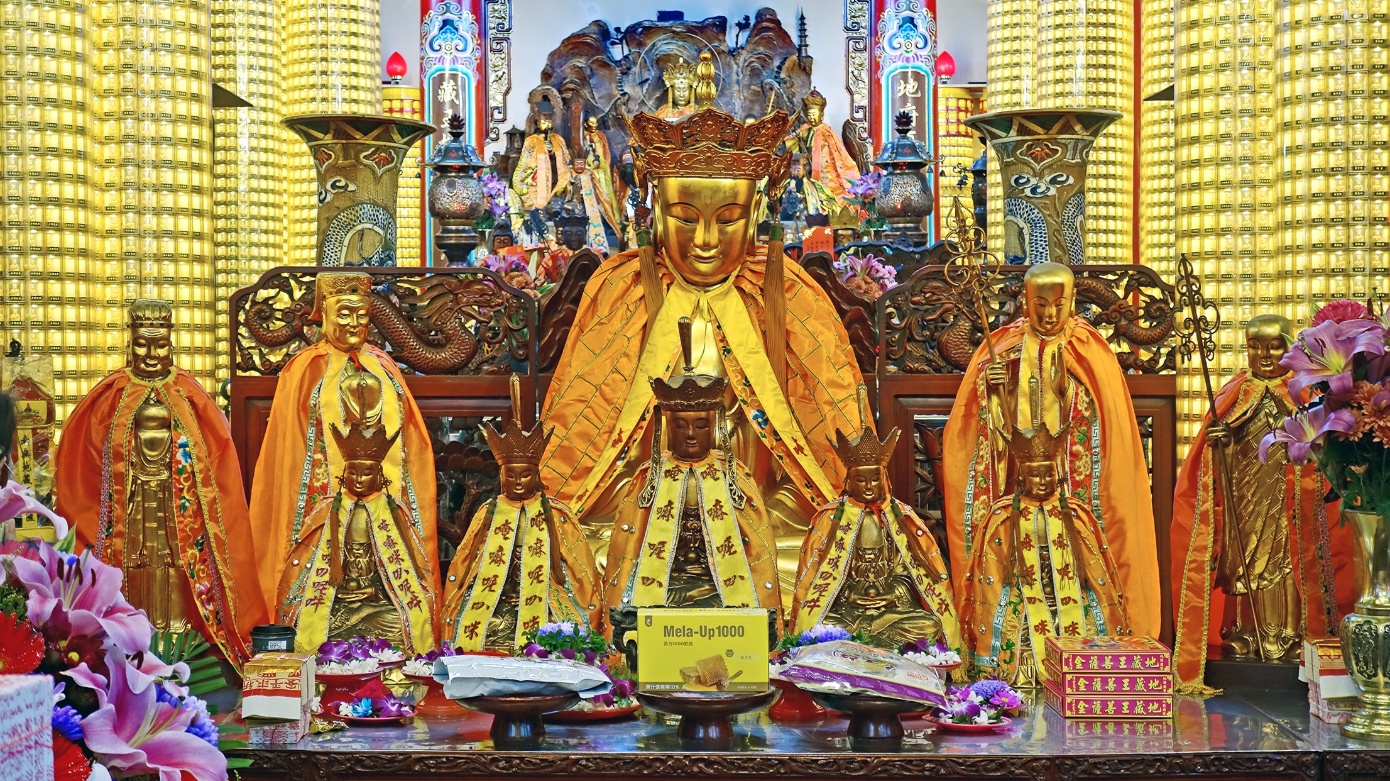
Altars dedicated to
Ksitigarbha Bodhisattva.
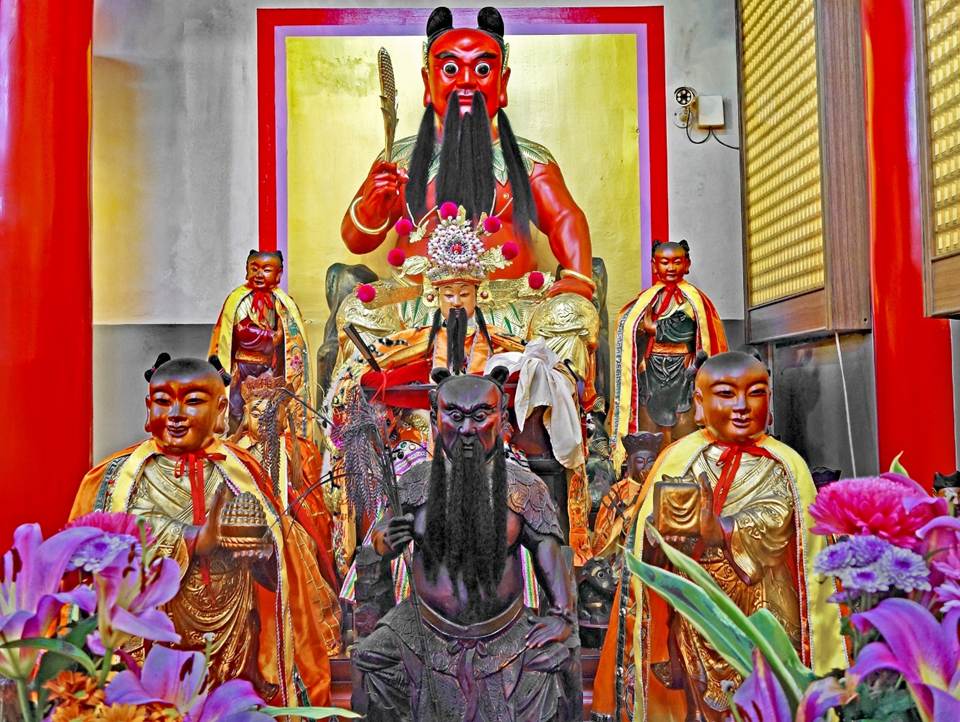
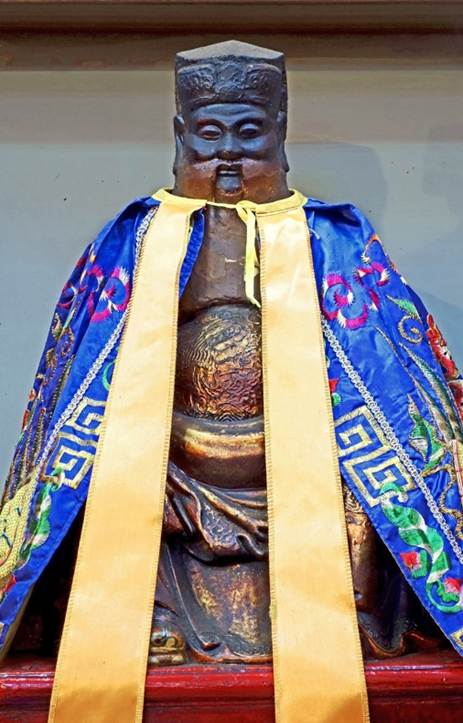
- Left: Altar dedicated
to Shennong Dadi (神農大帝), also known as the ″Divine
Farmer″ (神農), revered as the legendary deity credited for inventing and teaching
agriculture, the use of farming tools, and herbal medicine. As the patron of
farmers, he is often represented with a rustic appearance, with two small horns
on his head, sometimes dressed in leaves, holding stalks of grains symbolizing
his role as the provider of food.
- Right: Statue depicting
Tudigong (土地公), also known as
Fude Zhengshen (福德正神), the god of Earth and merit He ensures
local peace, prosperity, and protection of the community.
|
|
|
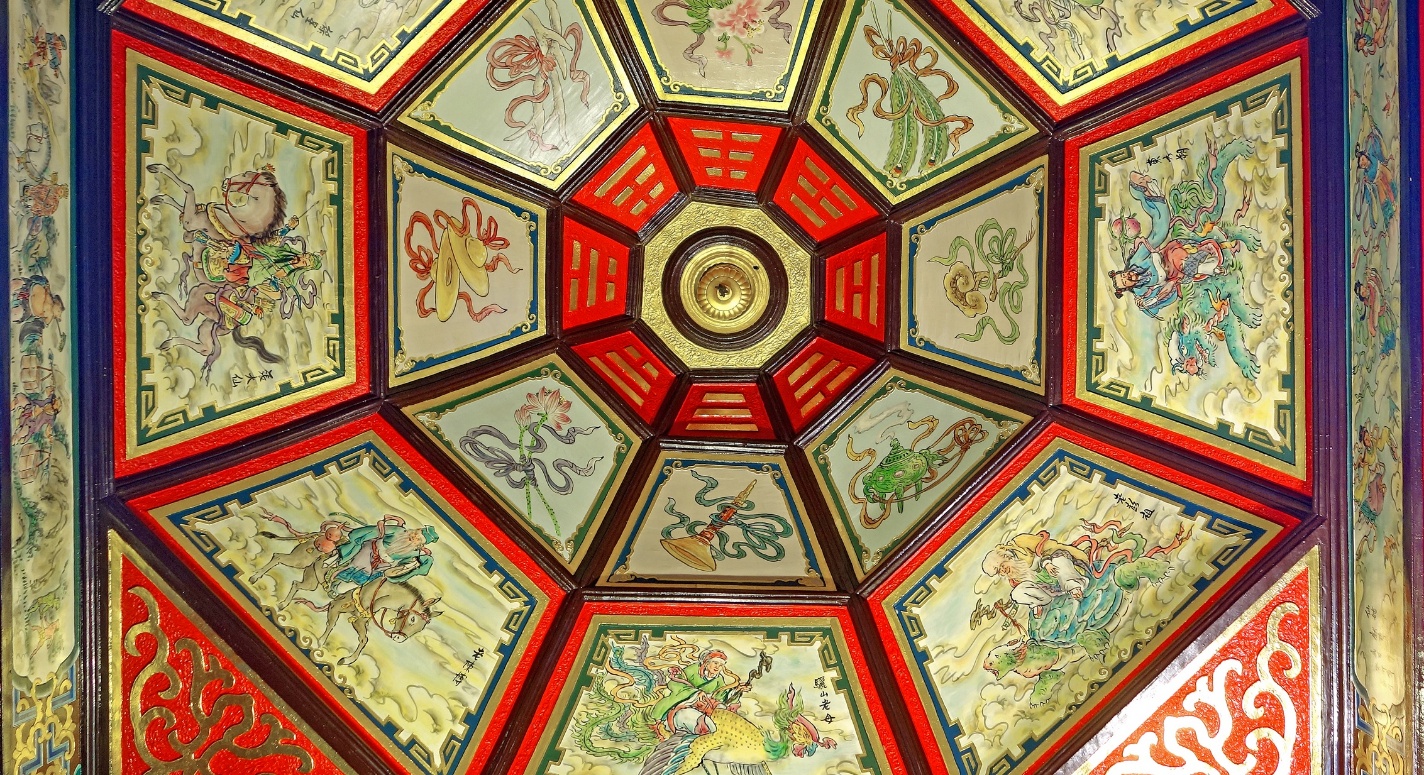
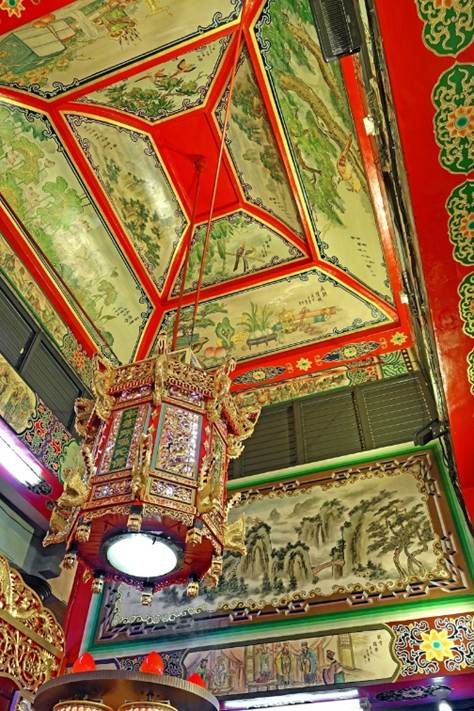
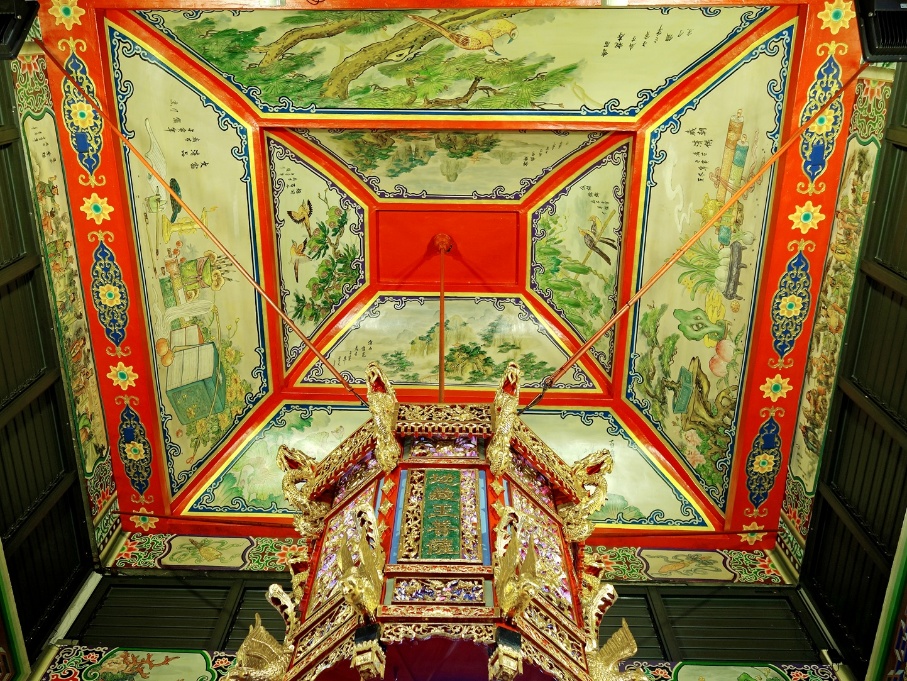
Ceilings in the temple.
|
|
|
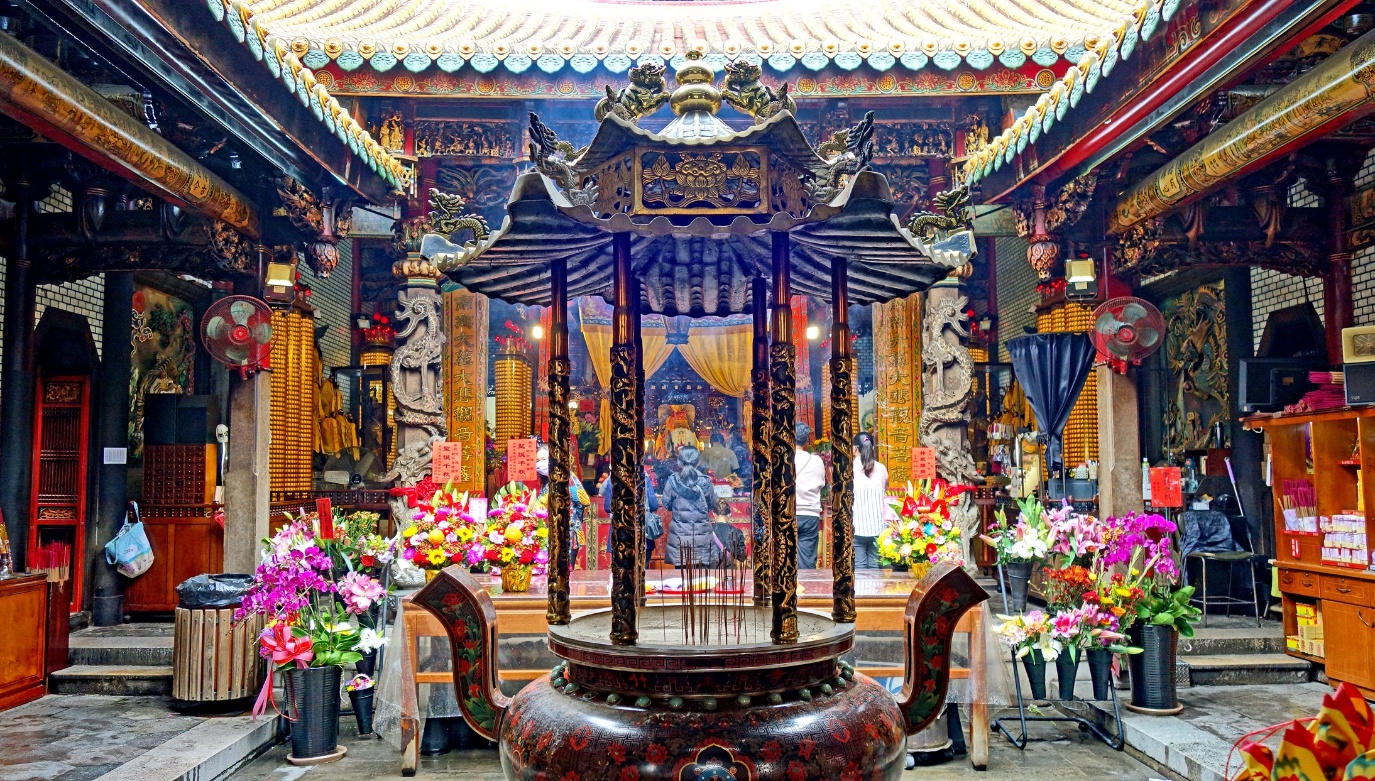
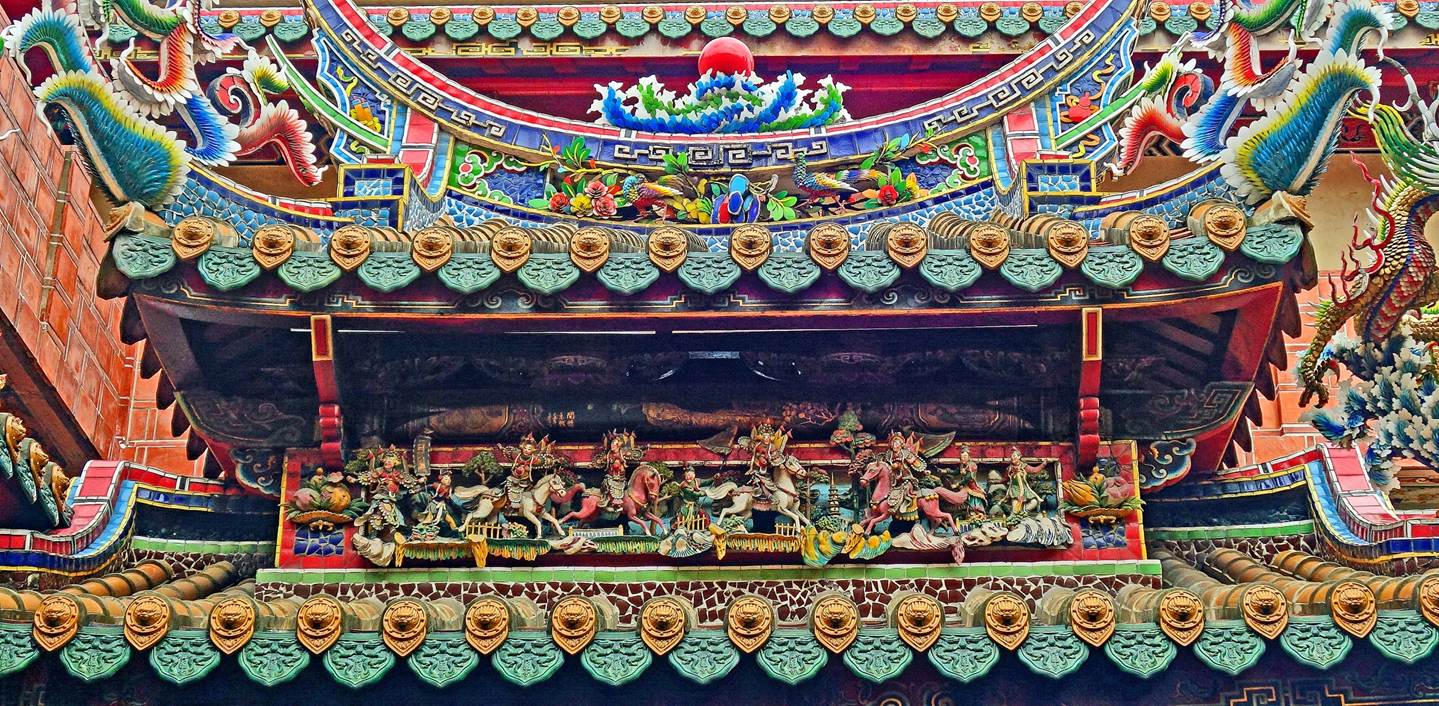
Jhulien temple (新竹竹蓮寺):
This popular Buddhist
temple is primarily dedicated to Bodhisattva Guanyin. It dates back to 1781,
but has undergone several restorations since then. The most recent major
restoration occurred in 1958. Another important restoration was completed in
2011.
Views of parts of the
temple's highly decorated roof.
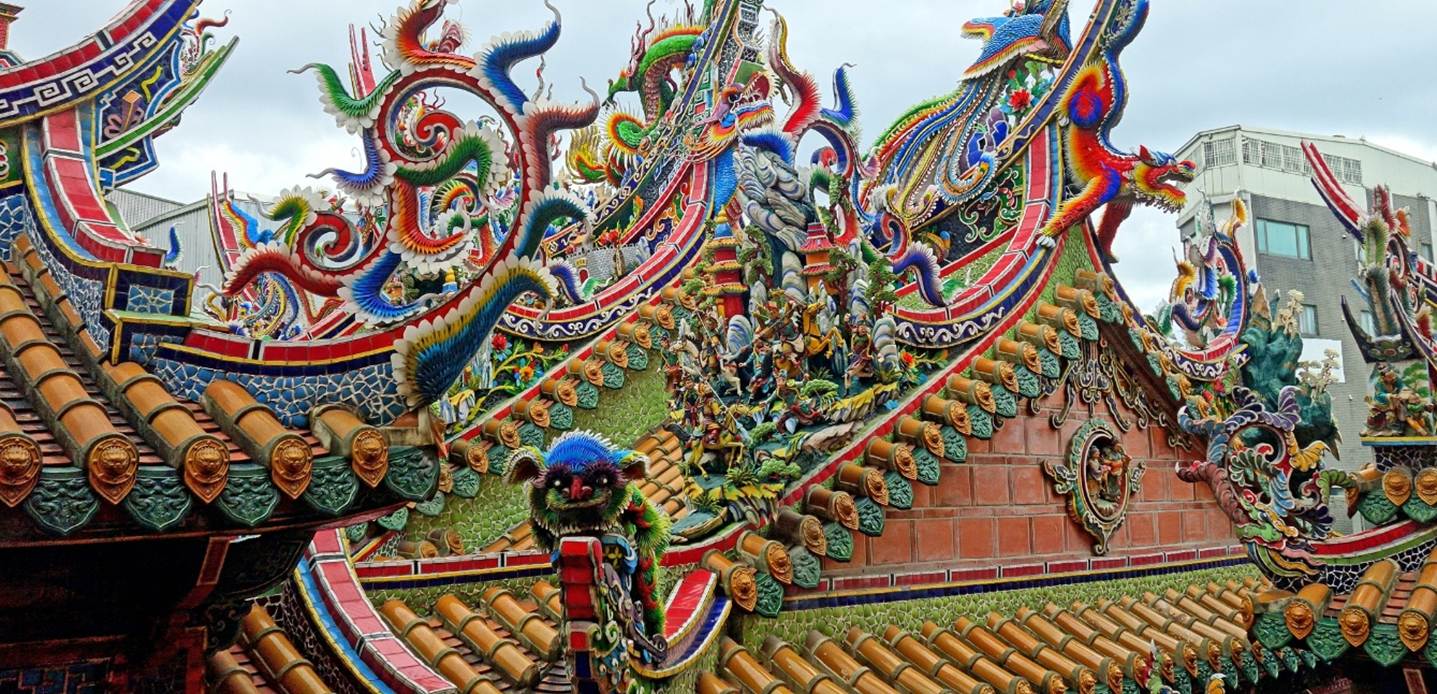
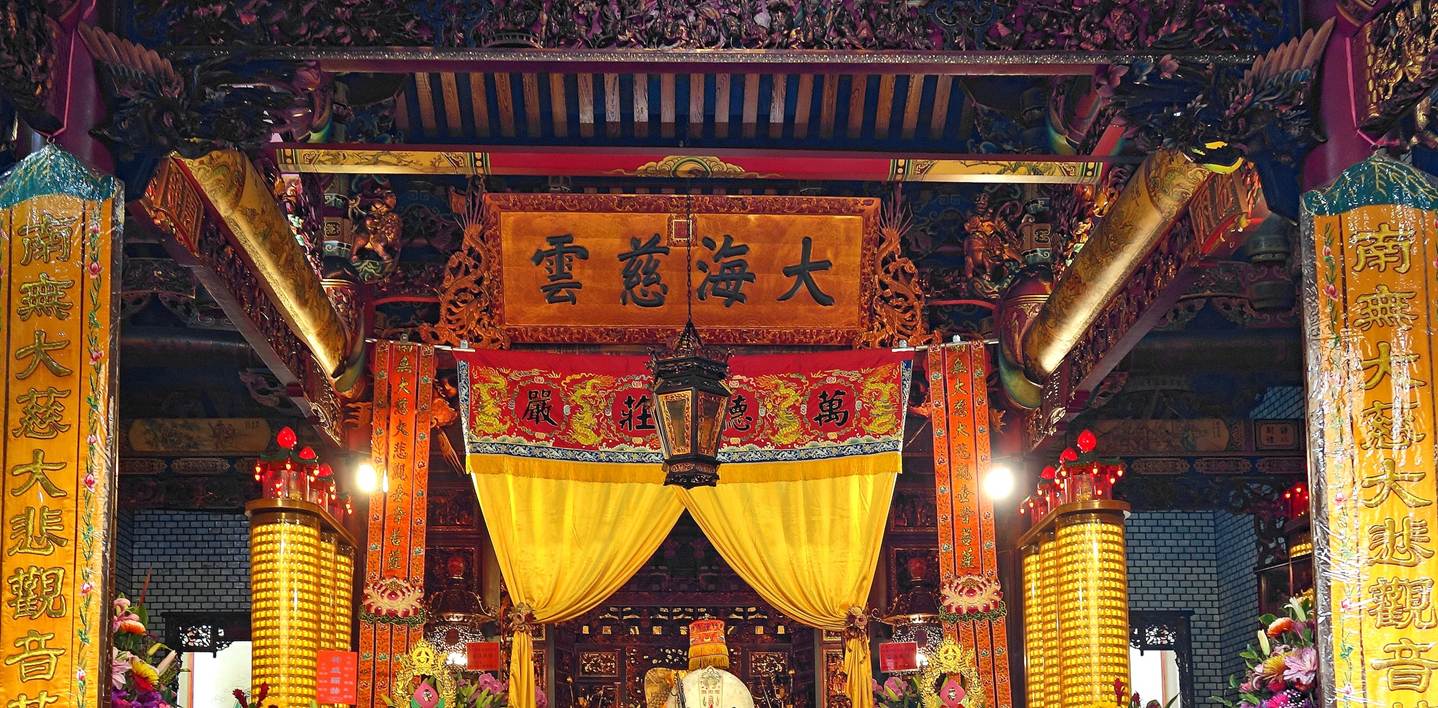
Courtyard of the temple,
with the main altar dedicated to Guanyin in the rear.
Main altar dedicated to
Guanyin.
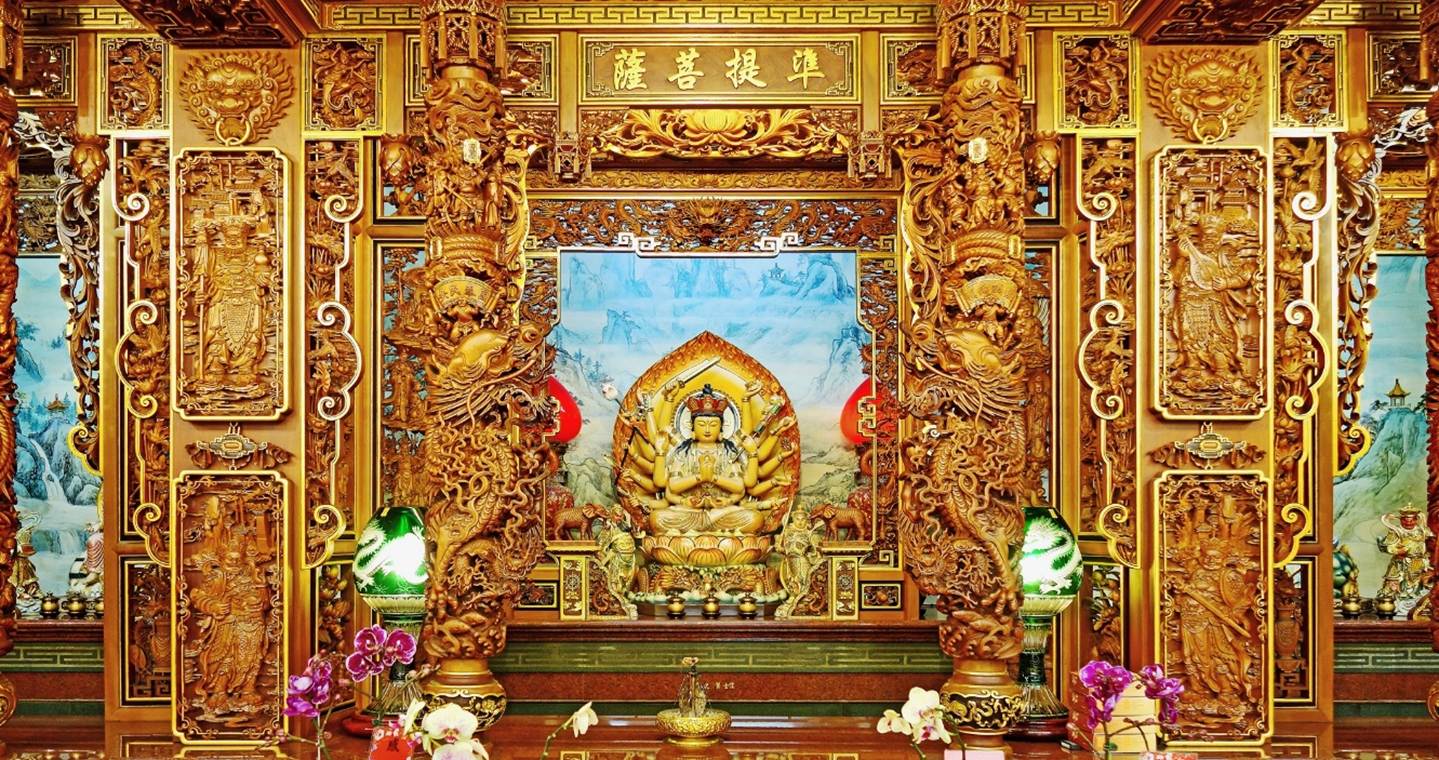
Altar dedicated to
Bodhisattva Cundi (準提菩薩), considered in East Asian Buddhism to
be a powerful manifestation of Guanyin, called Eighteen-Armed Guanyin. But in
Indian Buddhism they are two distinct figures.
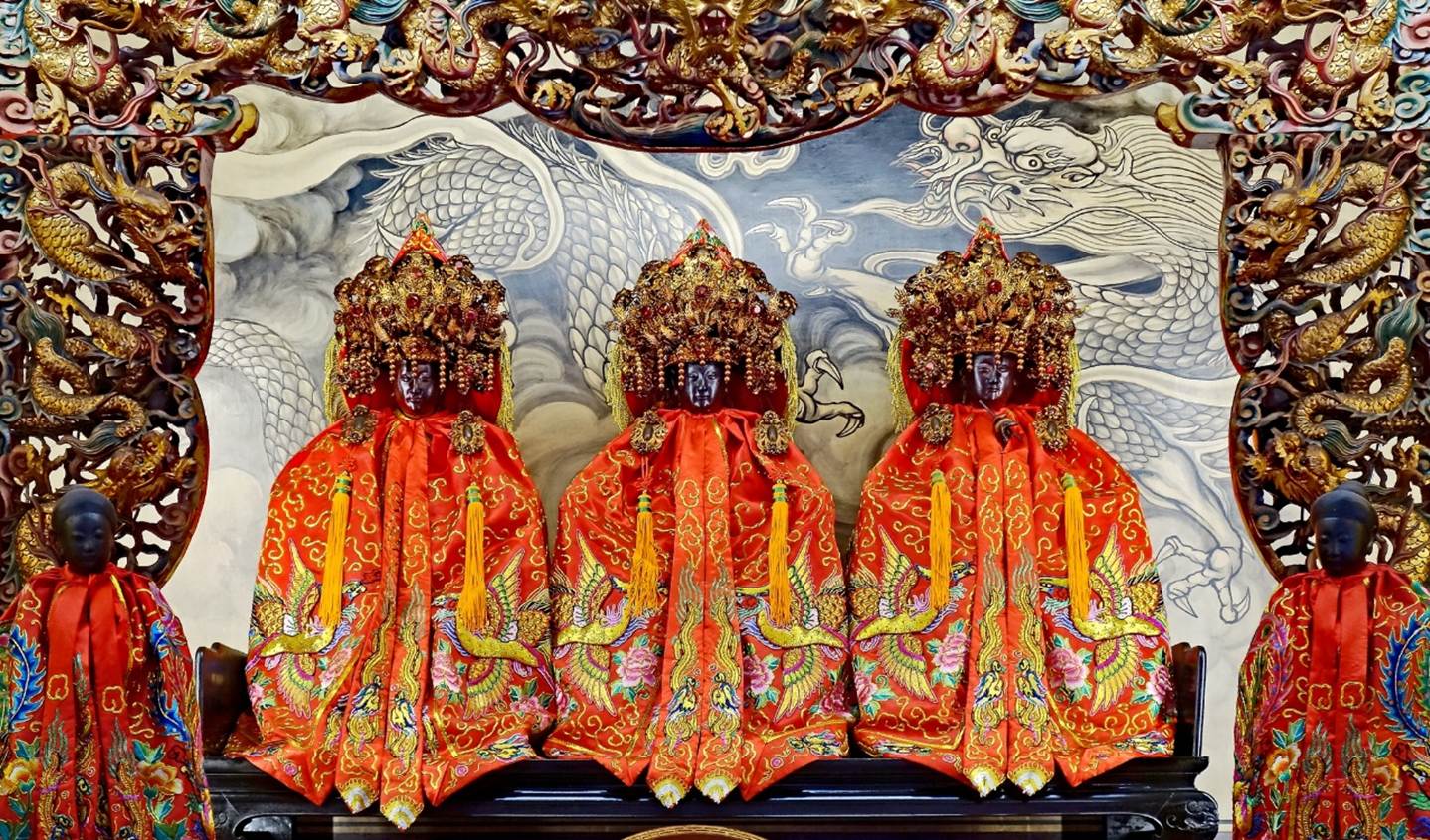
Altar dedicated to
Zhusheng Niangniang (註生娘娘), the goddess of fertility and
childbirth. According to traditional legends, she unites three sisters
representing different stages of child-rearing into a single divine figure,
hence the presence of three statues in the altar.
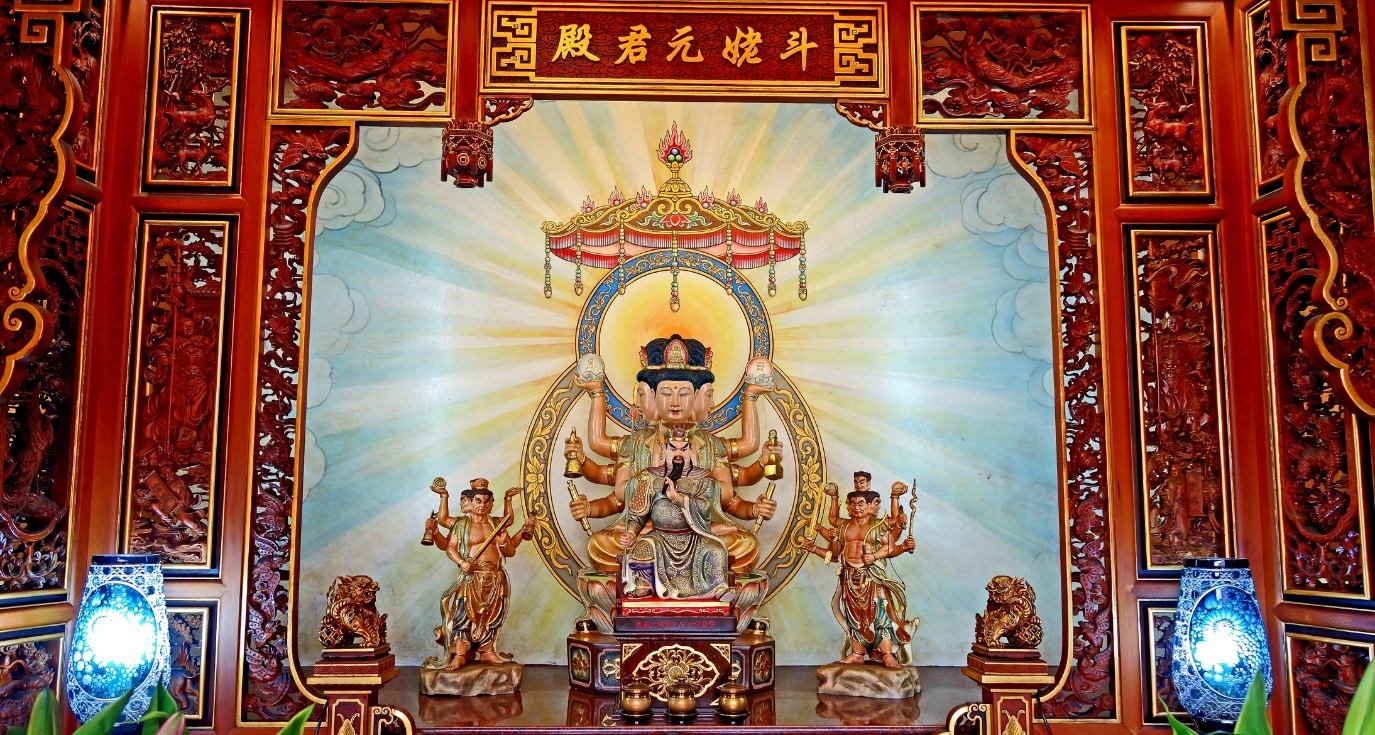
Altar of multi-faced,
multi-armed Doumu Yuanjun (斗姆元君), the Mother of the Big Dipper and the
tutelary authority over a group of 60 generals known as the Tai
Sui (see the next two photos). During every successive 60-year cycle, these generals are believed to
govern, in rotation, the fortunes and misfortunes of human beings. The
statue of the general currently in charge is temporarily removed from its usual
spot and placed before Doumu Yuanjun (as can be seen in the photo
below, as well as by the empty seat in the following photo).
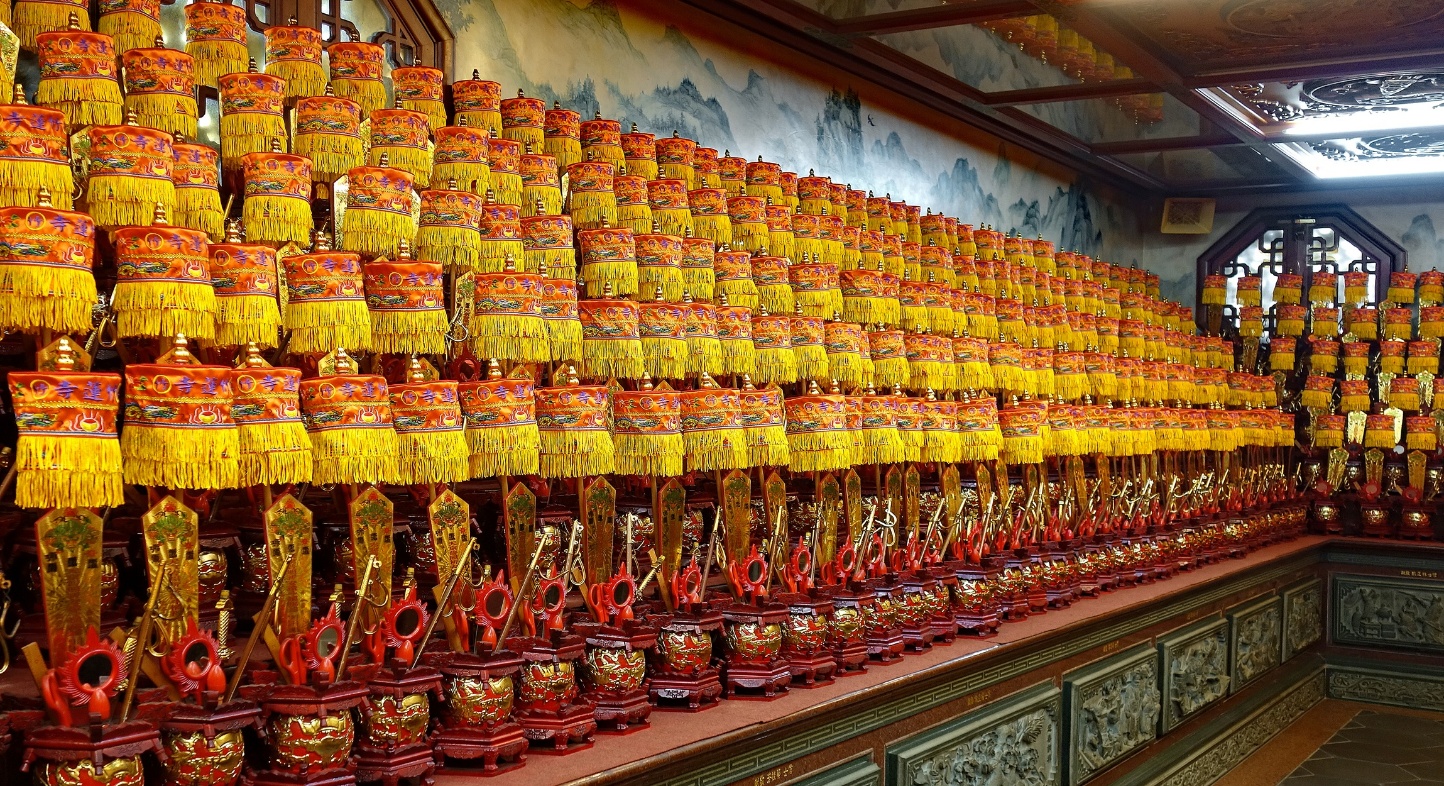
Blessing Lamps (光明燈), likely stored in preparation of an
upcoming blessing ceremony. Devotees will sponsor the lamps in their own names
or on behalf of their families in order to benefit from the protection of the
Buddha and the Bodhisattvas.
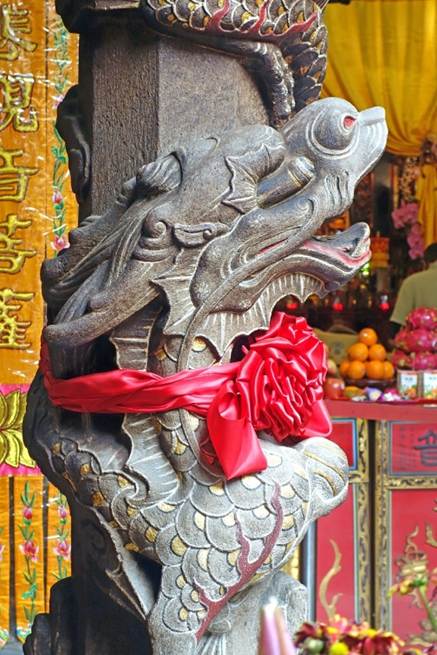
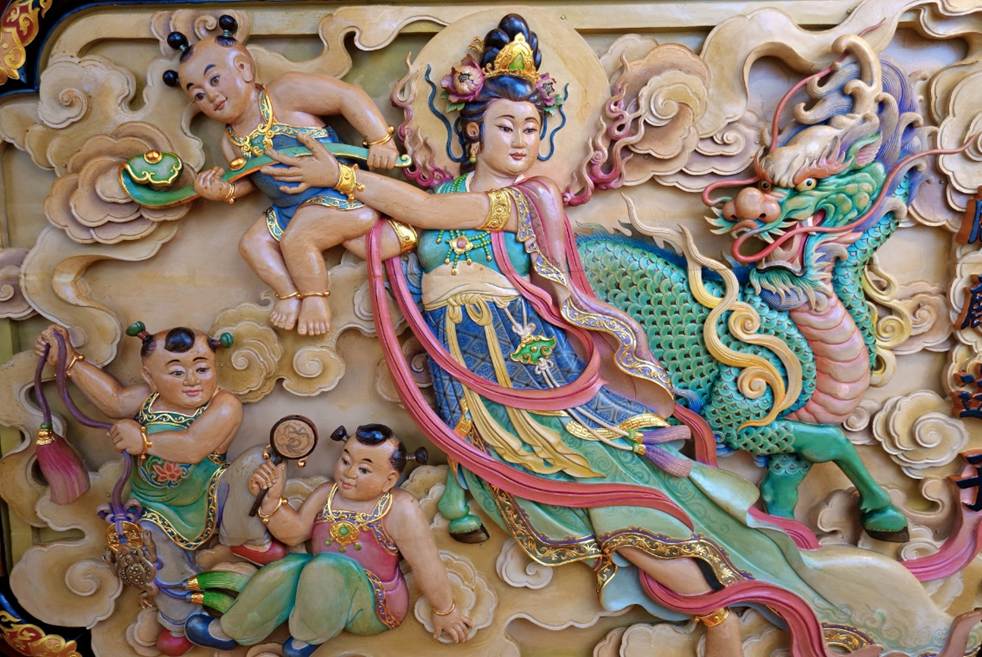
Left: Section of a carved
stone pillar in the main worship hall of the temple. Right: Relief panel on a
temple's wall.
|
|
|
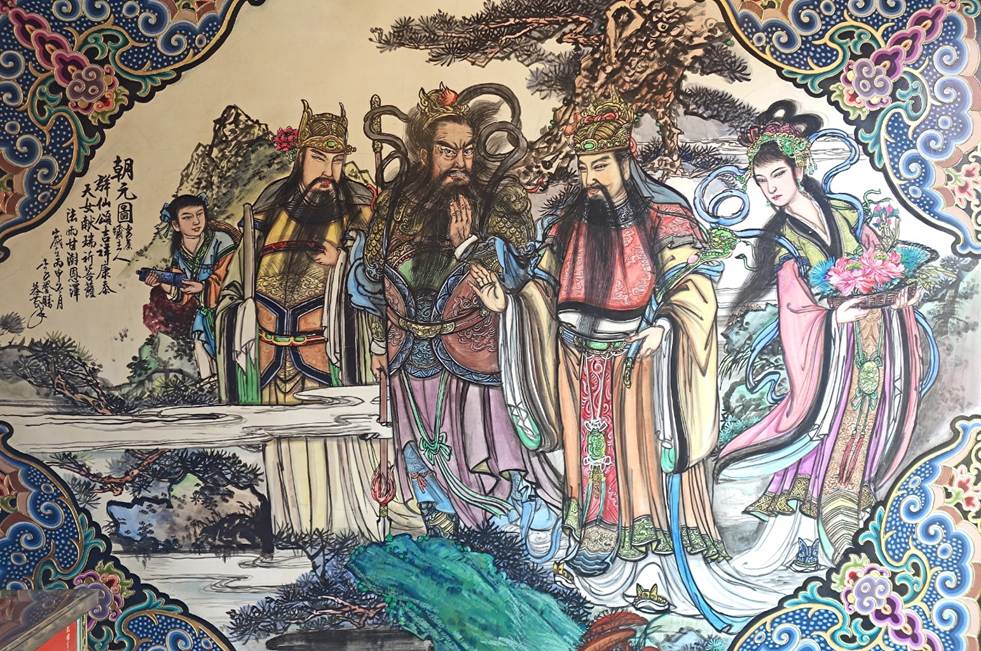
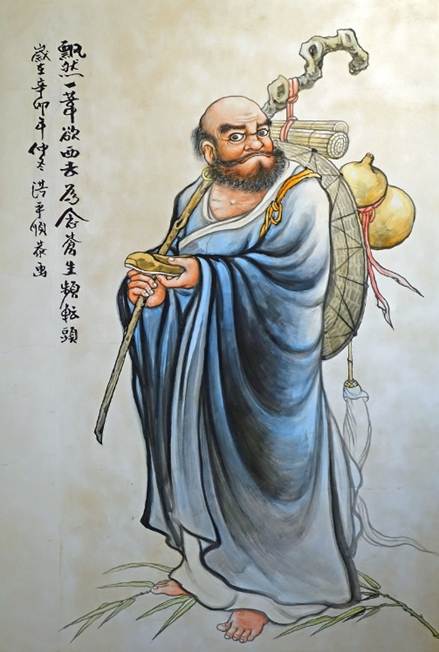
Mural paintings in the
temple. The painting on the left depicts Bodhidharma, the Buddhist monk who
founded Zen Buddhism around the 5th and 6th centuries.
|
|
|
Hsinchu Confucius temple (新竹市孔廟):
This elegant temple is a
true survivor. It was originally built in 1817 during the Qing Dynasty, near
the Hsinchu City God temple (see above). During the Japanese occupation
(1895-1945), it served as a barracks and a public school. After Taiwan's return
to the Republic of China in 1945, the Chinese National Army stationed there for
a time. It is said that the altar in its Dacheng Hall (see below) even served
as a ping-pong table. In the 1950s, the City God and Confucius temples were
surrounded by a market. To allow for the extension of this market, demolition
of the Confucius temple was considered, but protests from local residents saved
its two main structures. With funds raised from market vendors in exchange to
leases of the temple land, the Dacheng Gate and Hall (see below) were moved in
1958 to their current location, a quiet place next to a park. This new site
probably better fits the Confucian spirit than the former noisy market area.
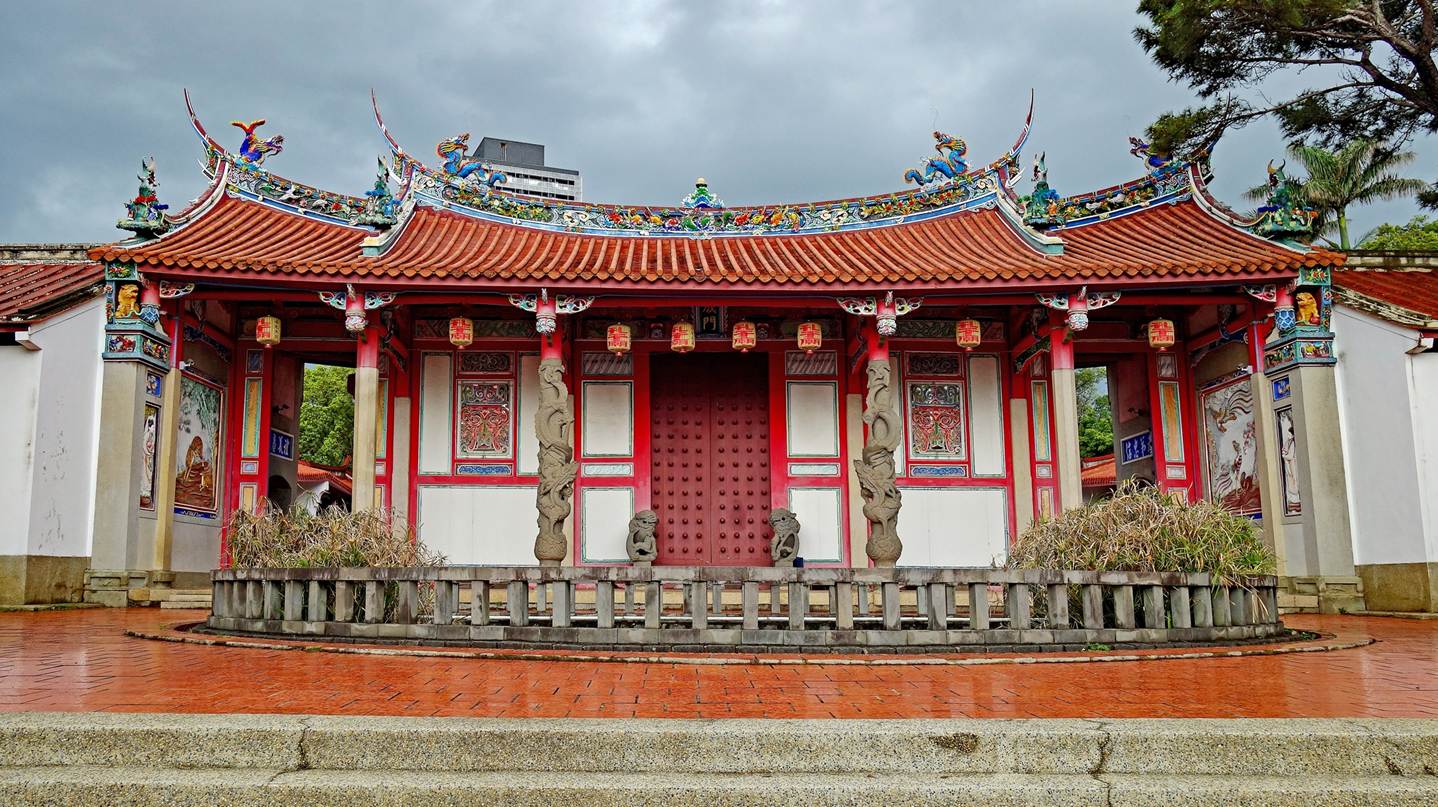
The Dacheng Gate (欞星門).
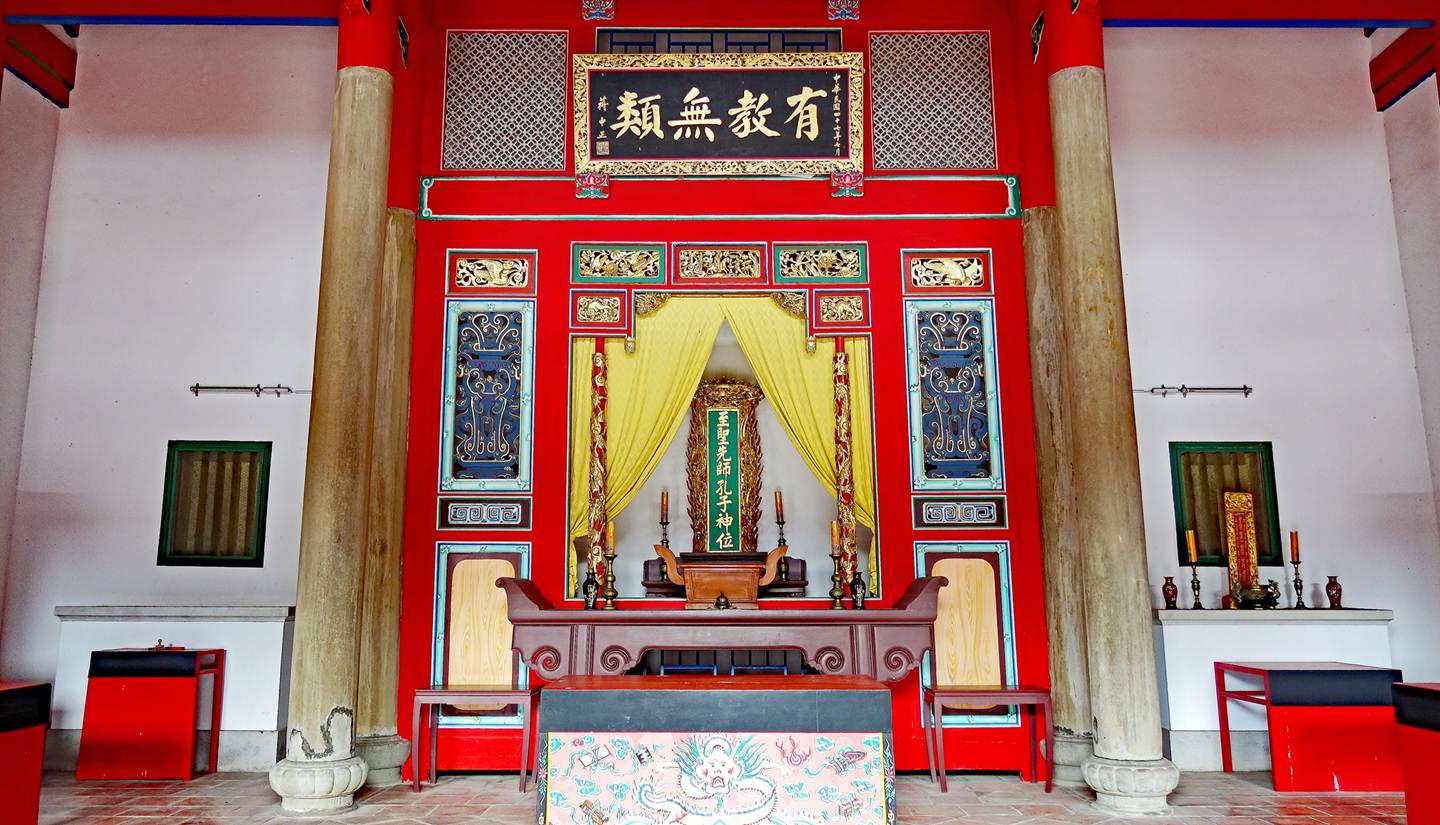
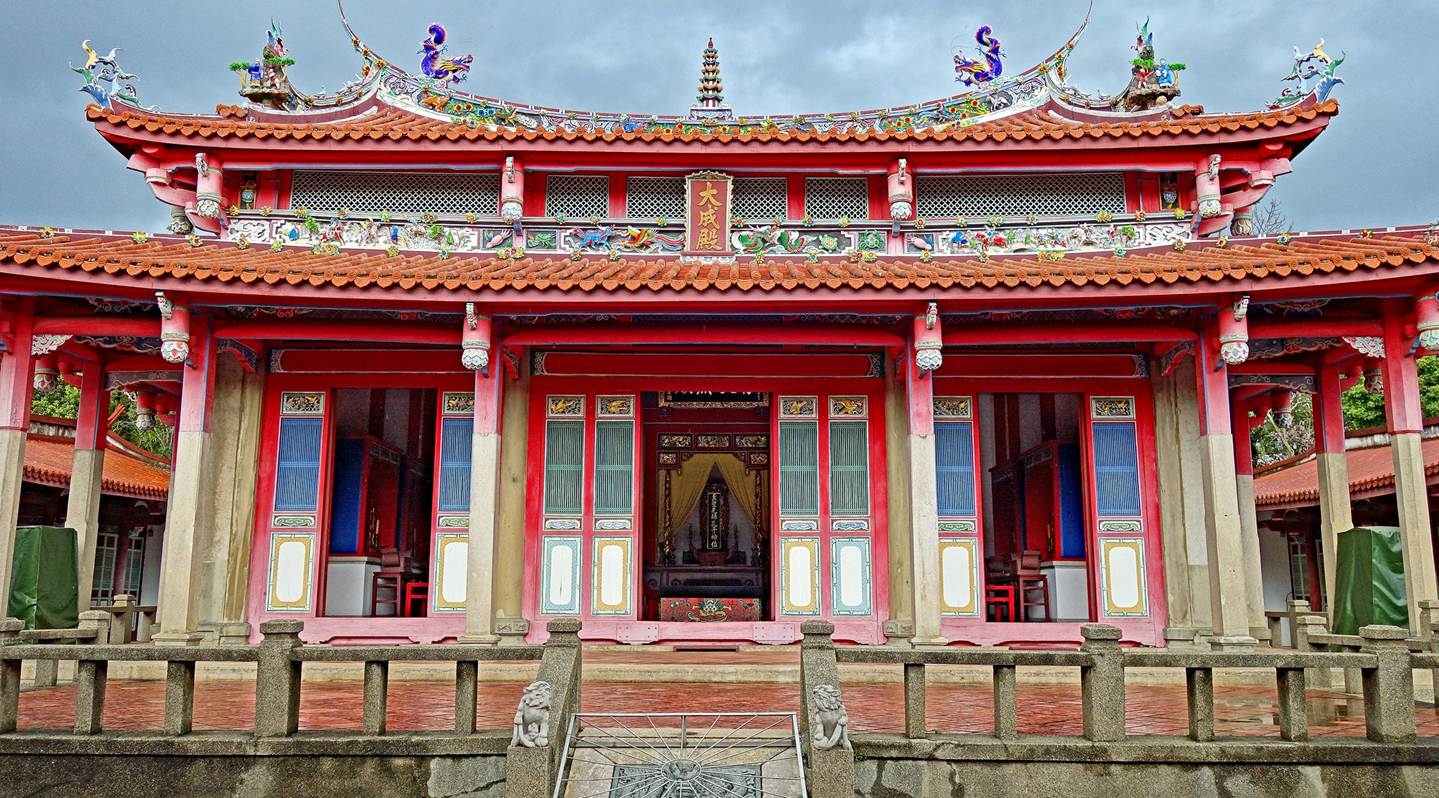
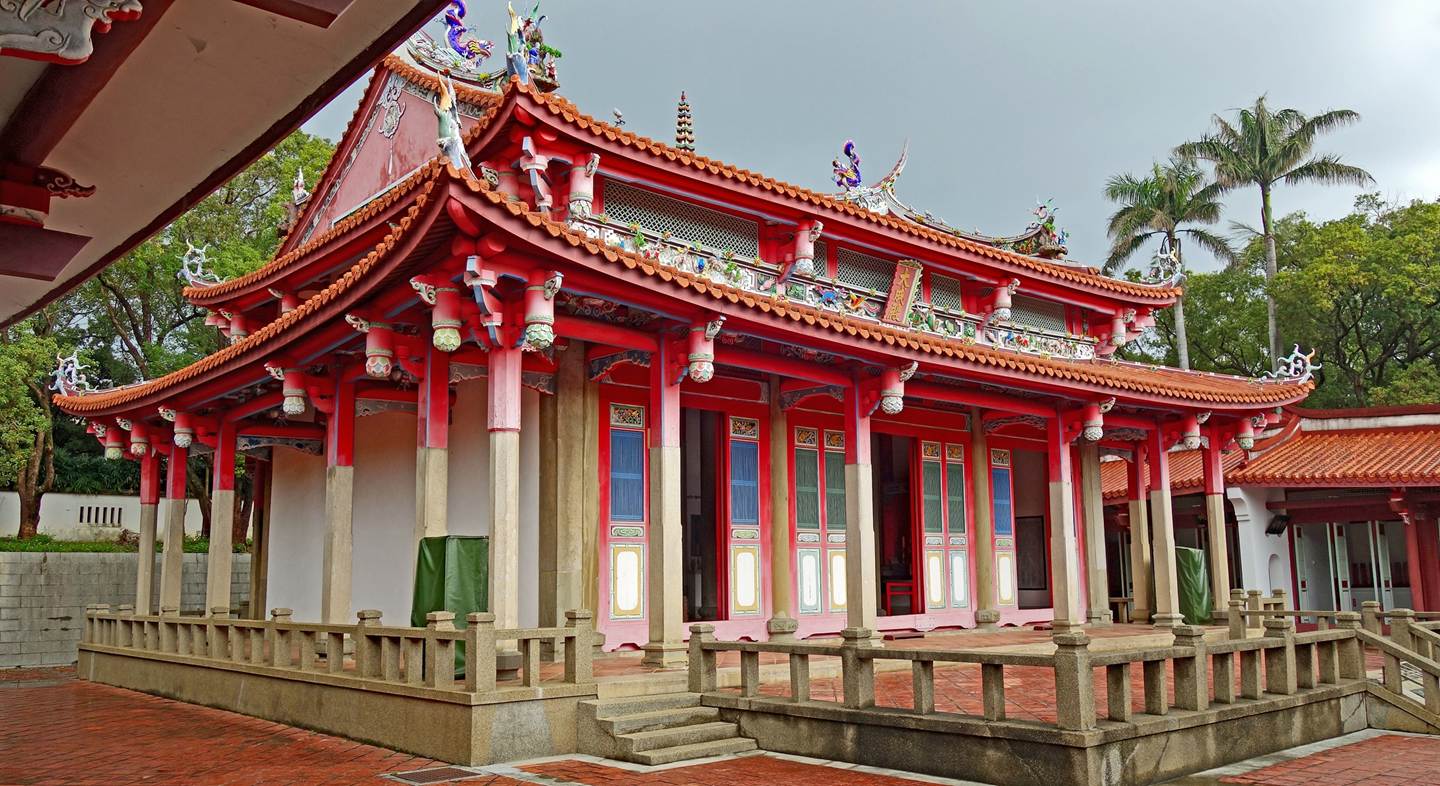
The Dacheng Hall (大成殿, meaning ″Hall of Great
Achievement″).
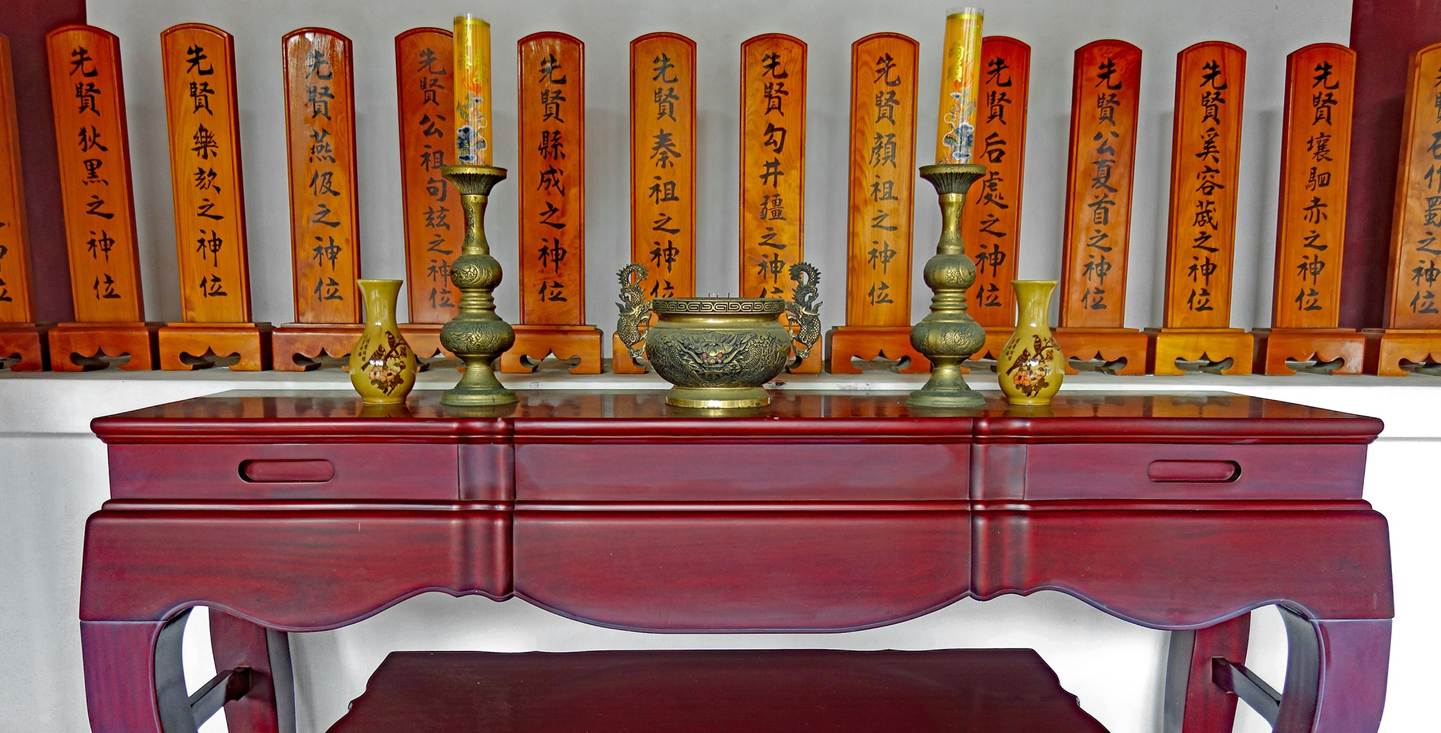
Spirit tablets inside the
Dacheng Hall. The main one is the tablet of Confucius, which embodies his
teachings. The other ones are tablets of his main disciples and of eminent
Confucian figures.
Putian temple (新竹市普天宮):
Located south of downtown
Hsinchu, about 2.5km from the Hsinchu train station, this somewhat bizarre
temple was built in the early 1970s. It is primarily dedicated to Guangong (关公), also known as Guandi (关帝), the deified historical Chinese
general Guan Yu (关羽) (c. 160-220) renowned for his moral
virtues (particularly, courage, loyalty and righteousness) and his martial
prowess. He is often considered the Taoist god of war, though specifically as a
sage of war. Due to his moral qualities, he is also venerated as a powerful
protector in both Taoism and Buddhism, and is sometimes associated with
Confucius, as well as with Wenchang Dijun (文昌帝君), the god of culture and
literature. As usual, several other deities are also worshipped in the
temple.
Dominated by a colossal
statue of Guangong, the temple's multi-story main building houses not only
worship halls but also a sort of vast, disused museum displaying numerous
artifacts, most of which are covered in dust. Some are remarkably beautiful and
appear authentic, while others resemble shoddy copies. Other sections of the
main temple building are clearly abandoned and overgrown with weeds. Moreover,
this building is surrounded by what appears to be a poorly maintained park,
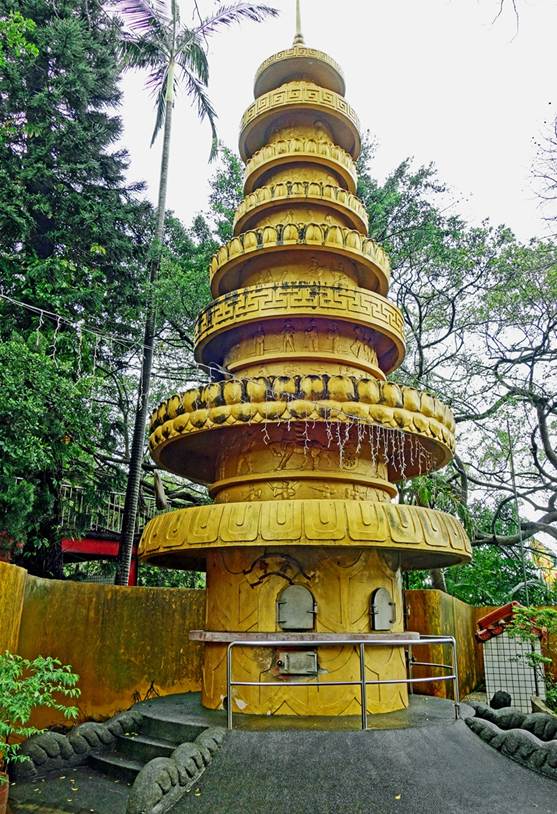
populated with crumbling statues. Even the sight of the golden pagoda-shaped
ghost money burner near the entrance is unusual. Nevertheless, the temple
attracts a continuous flow of worshippers.
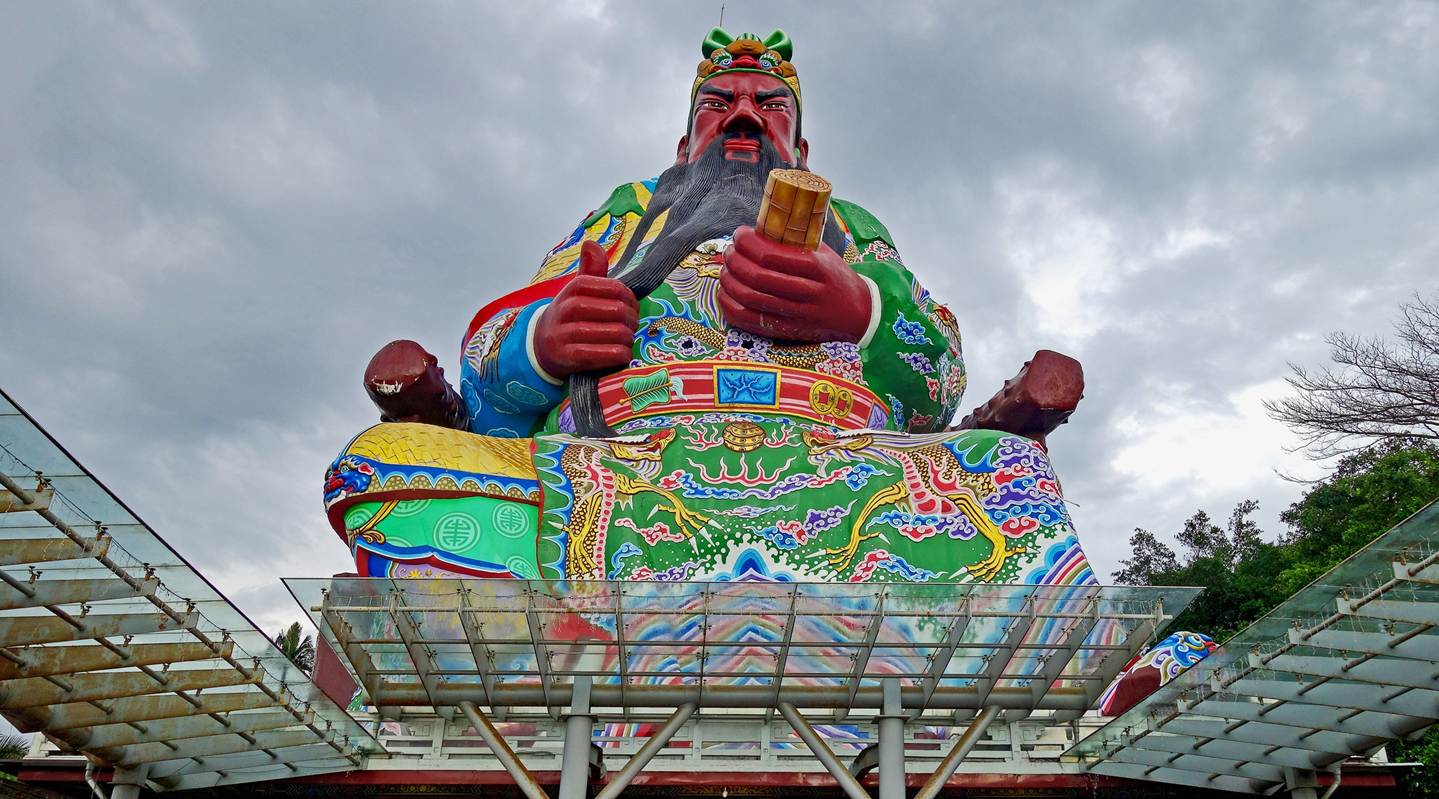
Massive 36m-high seated
statue of Guangong on the roof of the temple's main building.
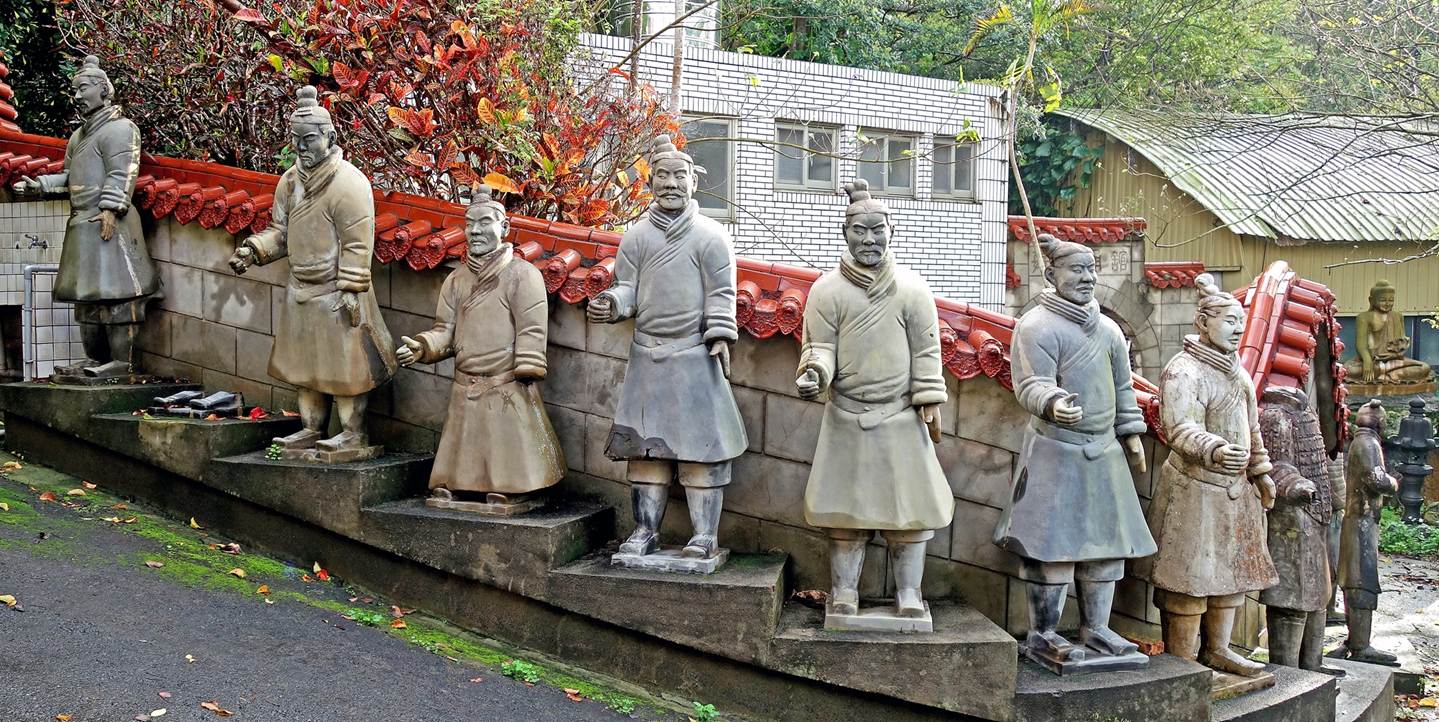
Statues in the park,
below the temple's main building. They face the giant statue of Guangong. Like
him, they all have their right thumbs up. Do they suggest that the boss should
never be contradicted?
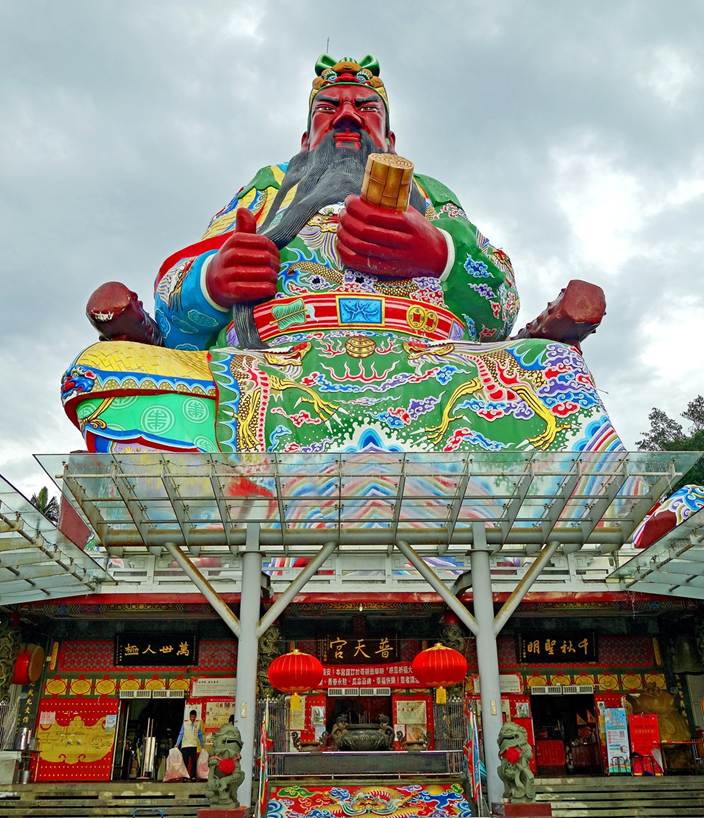
Left: Another view of the
statue of Guangong, here with one story of the building upon which it rests,
offering a better idea of the statue's size.
Right: Golden ghost money
burner in the temple compound.
|
|
|
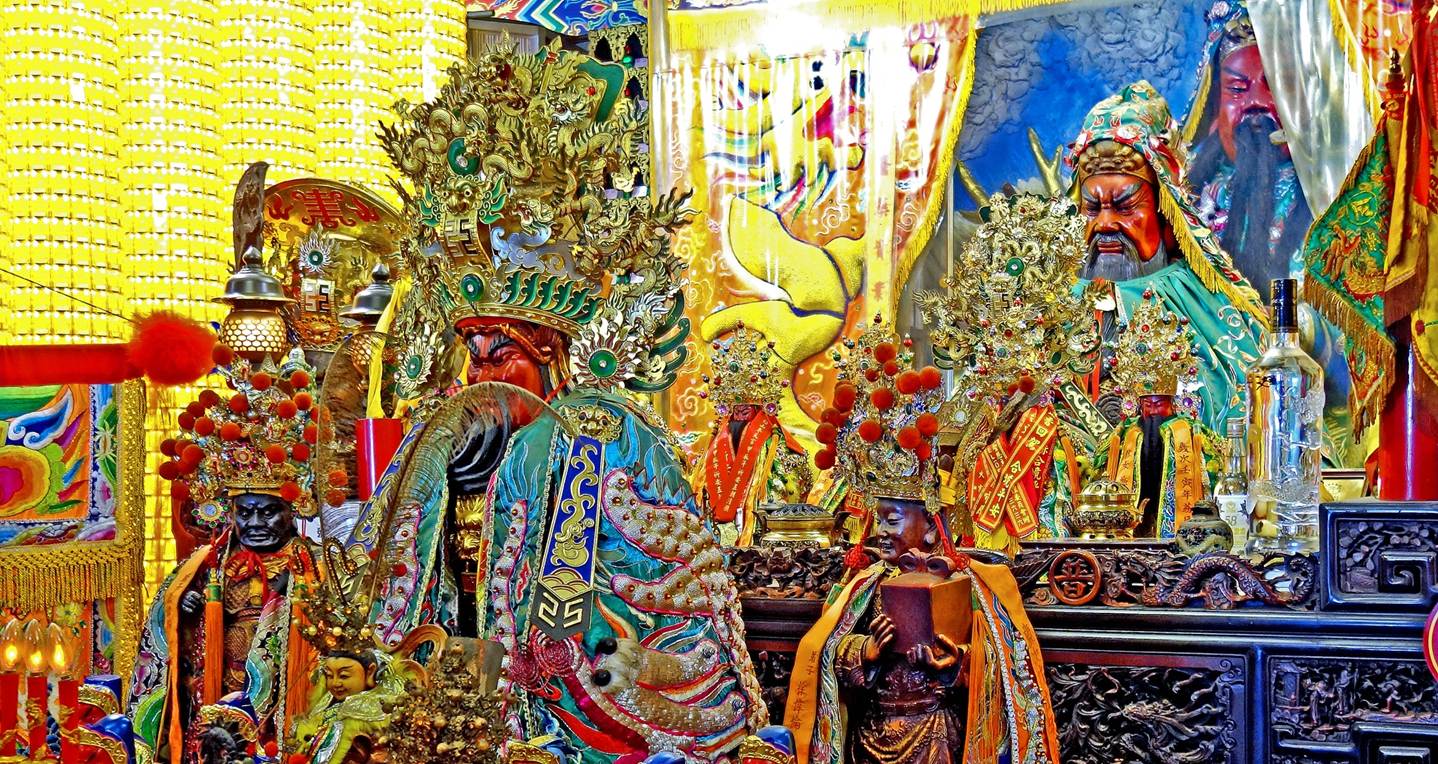
Altar in the main hall of
the temple, with a statue depicting Guangong on the right.
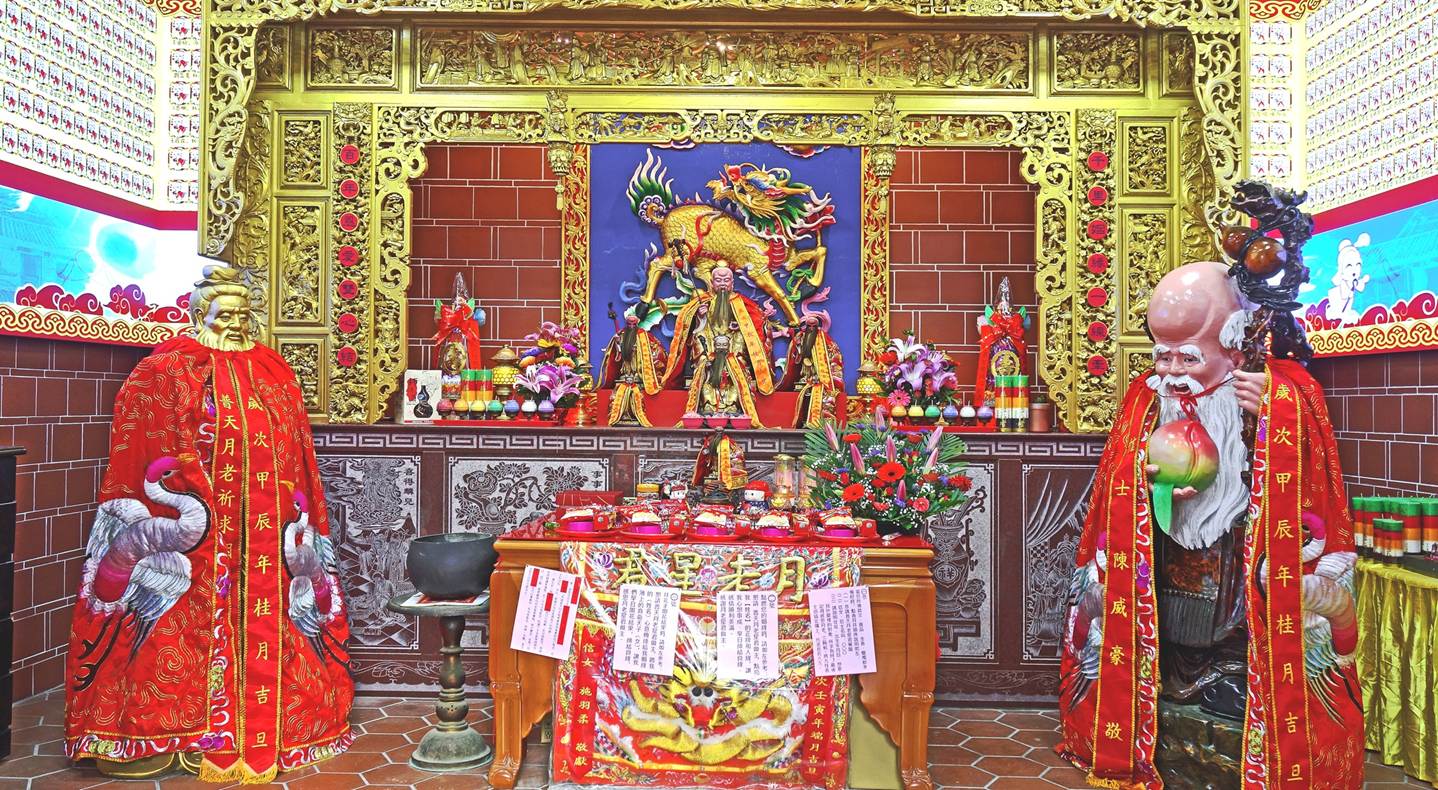
Hall dedicated to Yue
Lao (月下老人, meaning ″The Old Man Under the
Moon″). He is the mythical deity responsible for matchmaking. Originally
a folk deity, he was incorporated into the Taoist pantheon as the god of love
and matchmaking. He is believed to reside on the moon, where he holds the
"Book of Marriages" (姻緣簿), a registry of predestined partners,
ensuring that unions happen regardless of obstacles.
Both the main statue on
the altar in the back and as the large statue on the left of the photo (likely
a movable statue for ceremonies) depicts Yue Lao.
The other large statue on
the right represents Shouxing (寿星), a Taoist deity associated with long
life, holding a Peach of Immortality in his right hand.
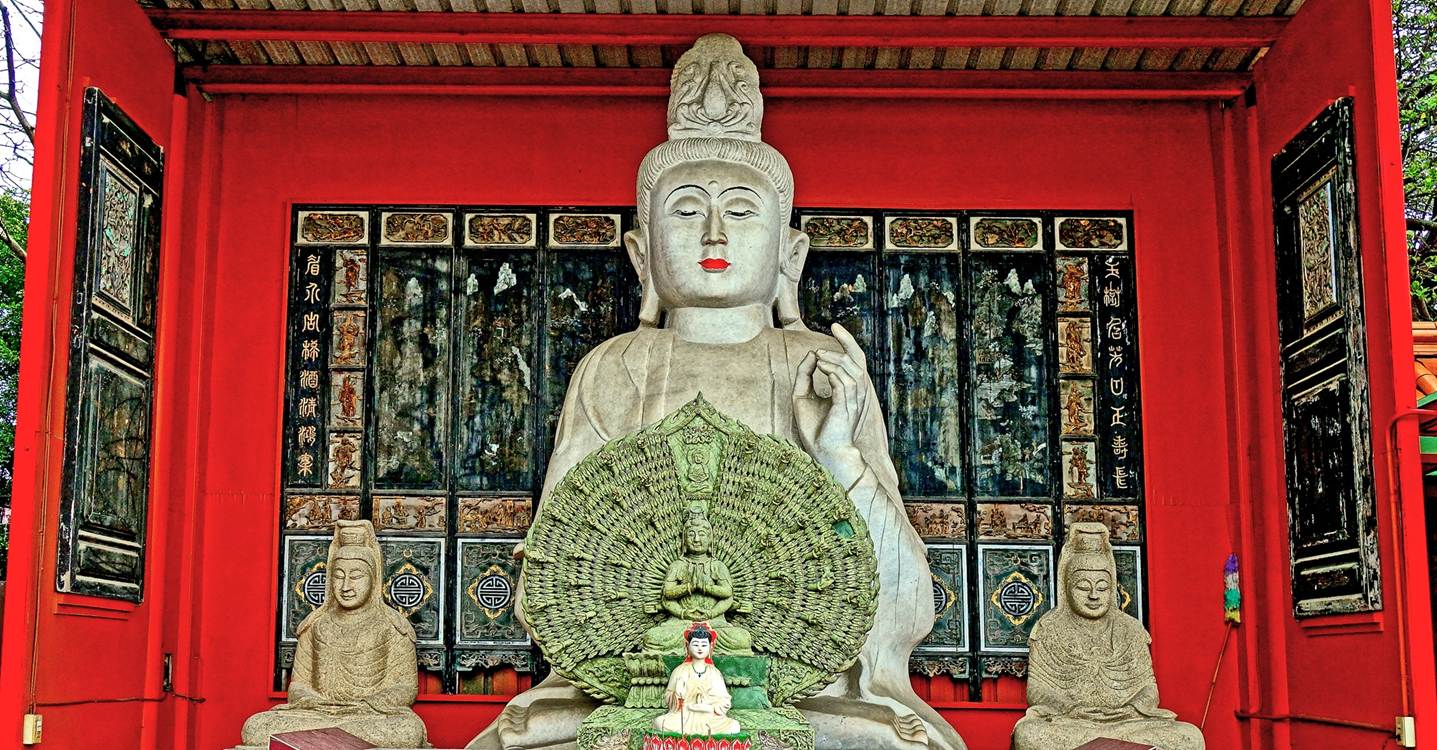
Separate shrine
specifically dedicated to Guanyin, outside the temple's main building.
Statues of deities likely
used in street parades in a small building.
|
|
|
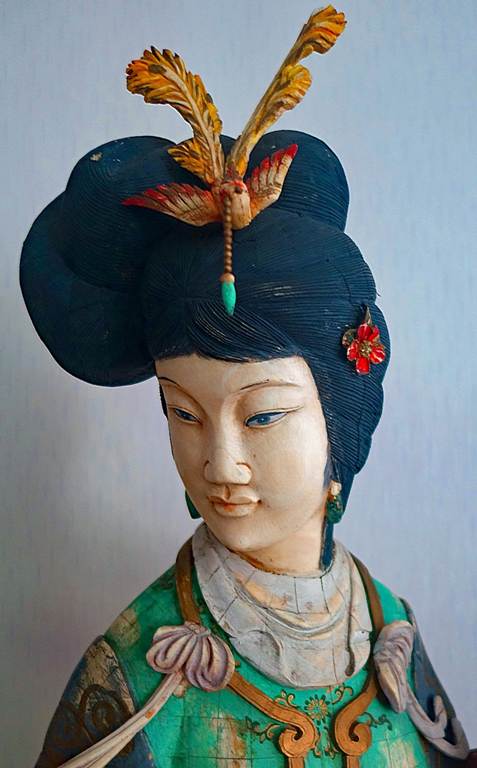
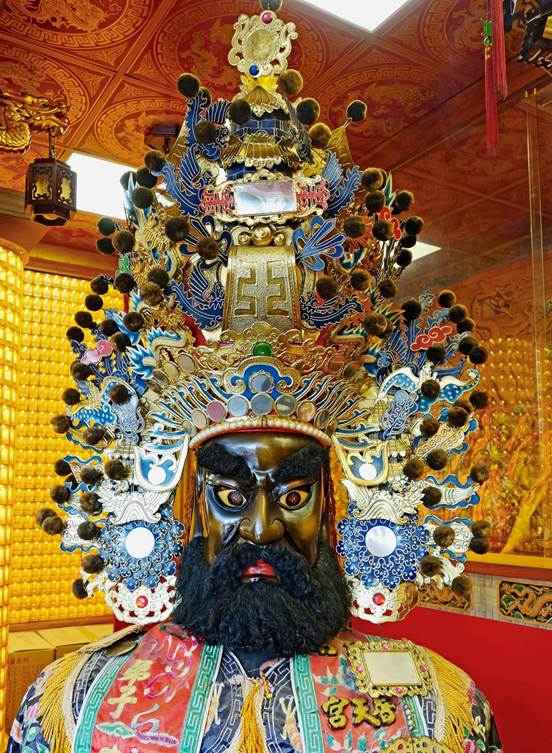
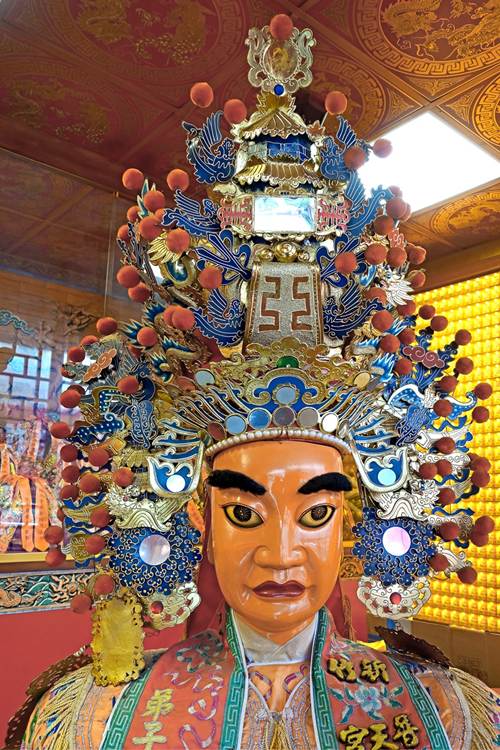
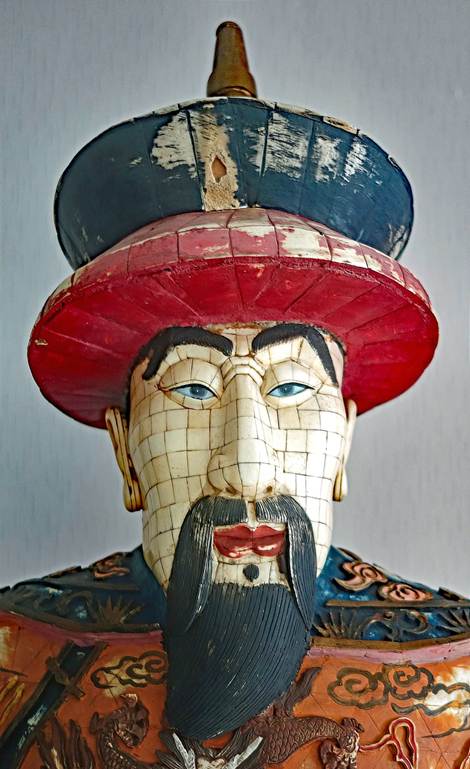
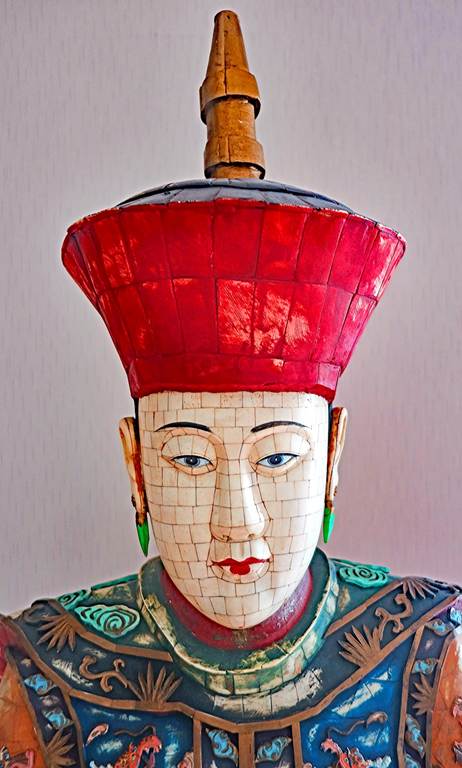
Heads of statues in the
temple's museum.
|
|
|
|
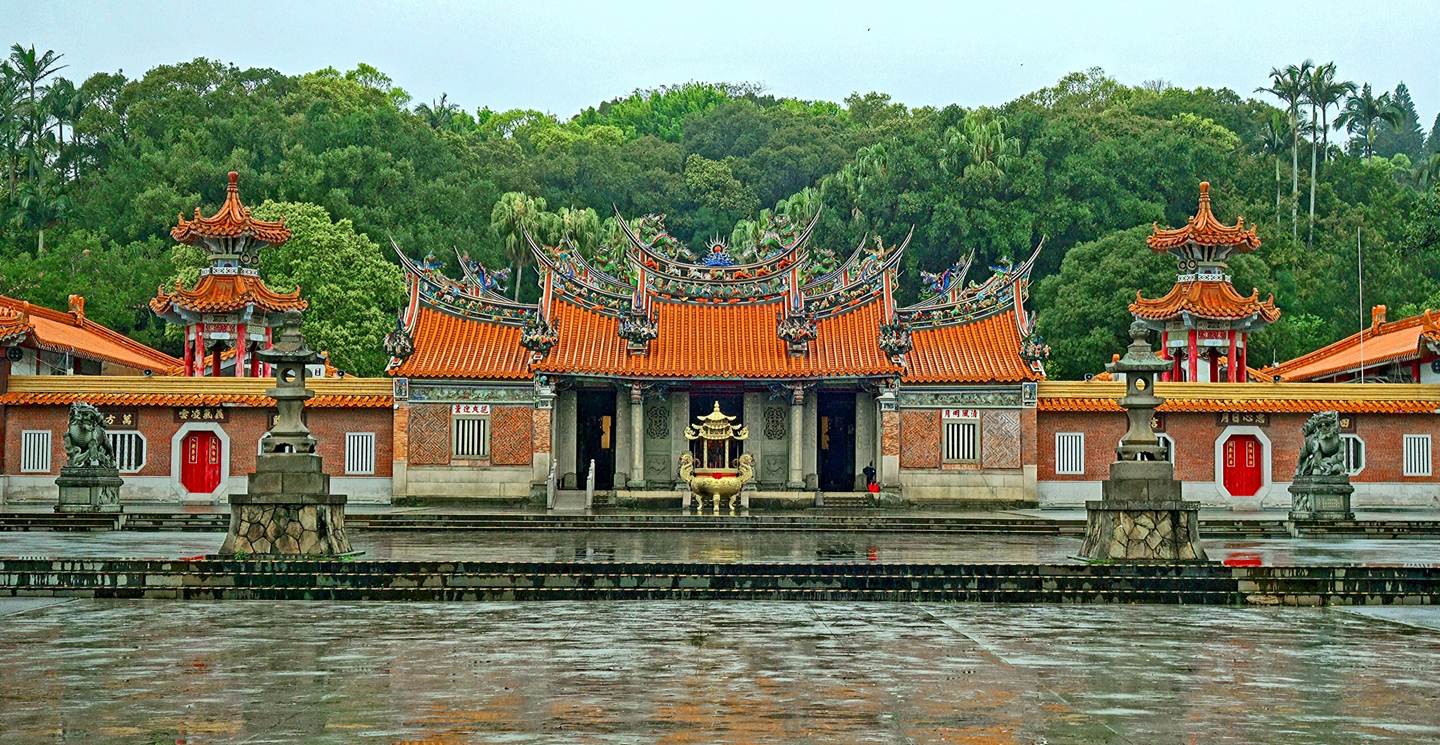
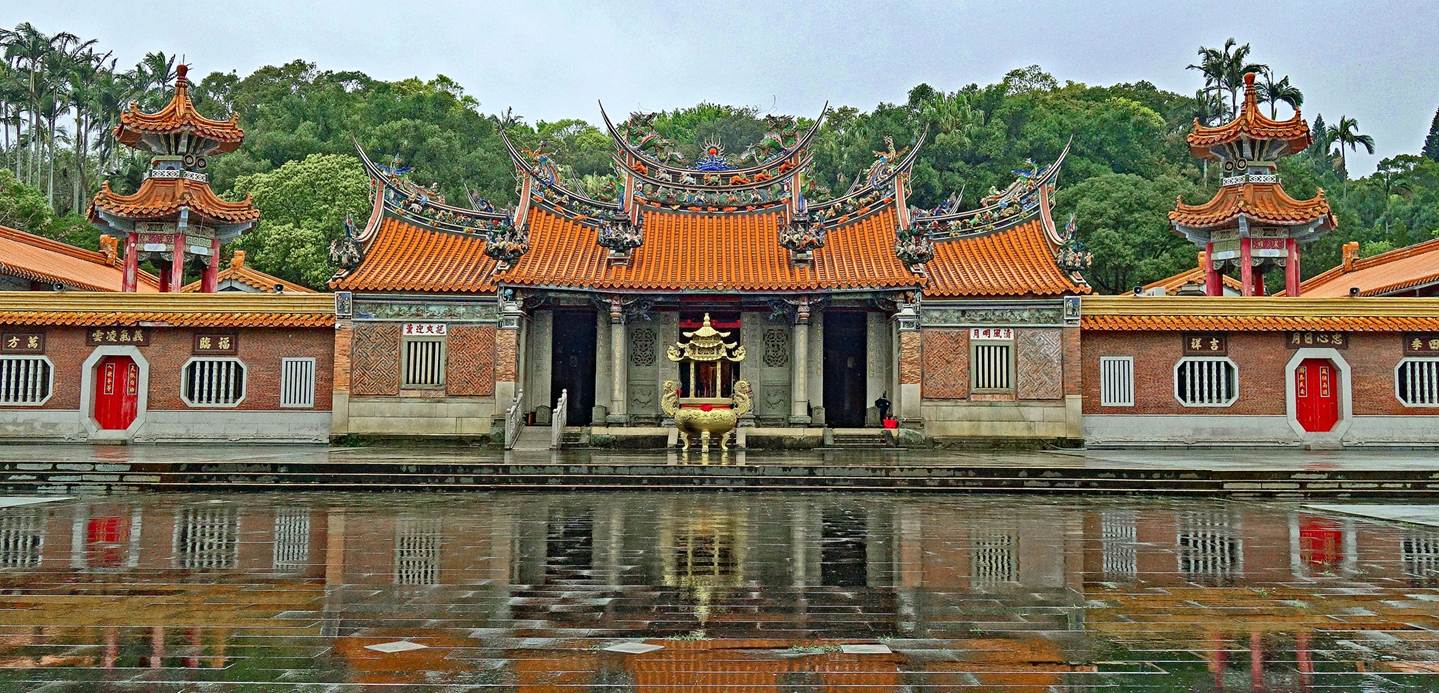
Xinpu
Baozhong Yimin temple (褒忠亭義民廟):
Located about 8km
northeast of downtown Hsinchu, in Xinpu township, this temple is a major center
for the preservation of the Hakka culture in Taiwan. The Hakka are a subgroup
of the Han Chinese family, originally from the northern Chinese provinces of
Henan and Shanxi. Hakka migration to Taiwan began in the 17th century. Today,
the Taiwanese who self-identify as Hakka make up just under 20% of the
population, but this percentage is much higher in the Hsinchu county. Over
time, the Taiwanese Hakka have maintained and developed a strong identity, with
their own dialects and culture.
The Baozhong Yimin temple
is mainly dedicated to the Hakka militiamen killed during the Lin Shuangwen
Rebellion of 1787-88. This rebellion, initially aimed at overthrowing the Qing
rule over the island, pitted two groups of Chinese immigrants in Taiwan against
each other. As the rebels threatened to invade their territory, the Hakka
assembled a volunteer militia to defend their land. They won the battle, but
some 200 of them perished. The bodies of the slain militiamen were buried together
at a place then named 褒忠
(pronounced ″baozhong″),
which translates to ″praise and loyalty″. The Baozhong Yimin temple
was built soon after in front of this grave. Yimin (義民) means ″righteous people″.
The original temple was destroyed in 1895 and a new temple, more or less the
one we can see today, was built on the same site in 1904. The Hakka come here
to venerate the Hakka warriors killed in several uprisings during the Qing era
and the Japanese occupation, symbolized in the temple by spirit tablets.
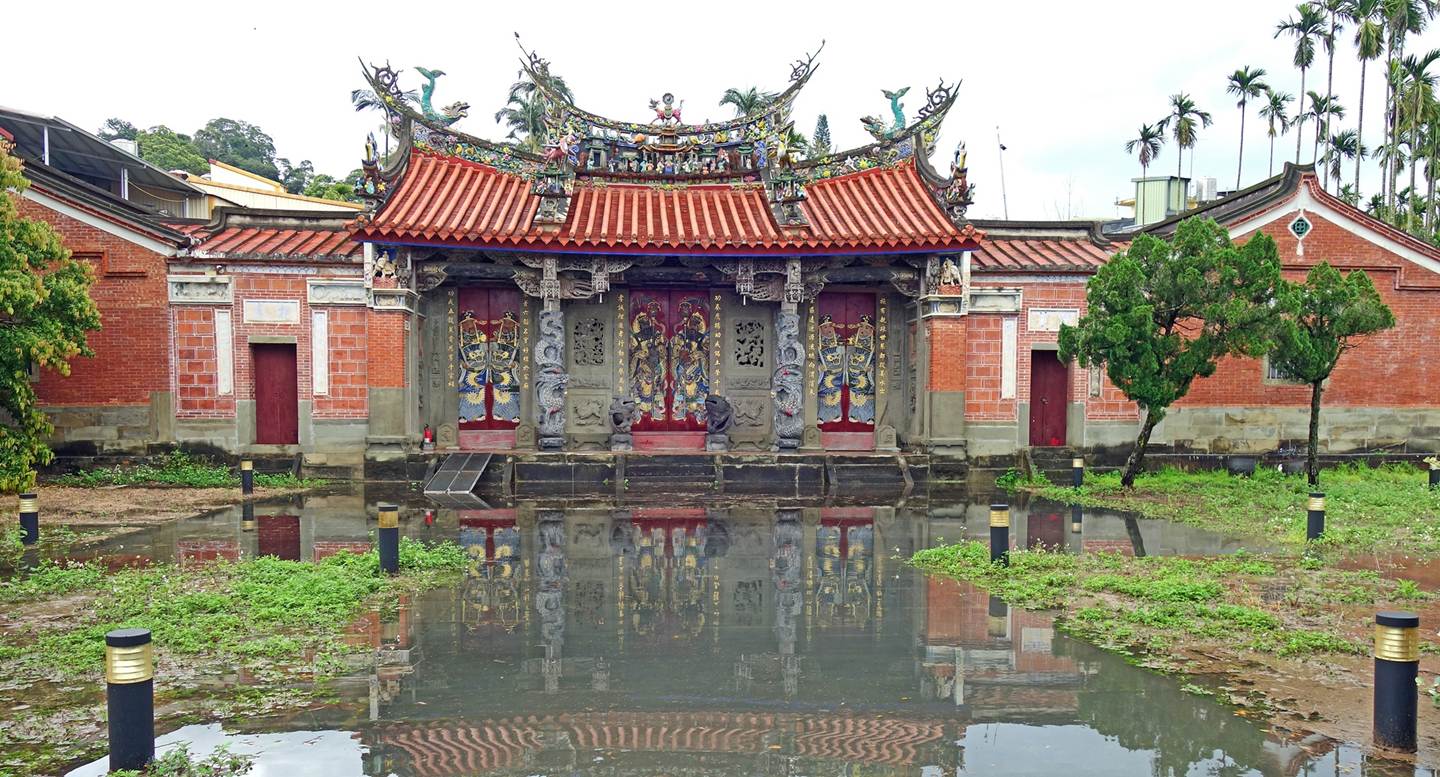
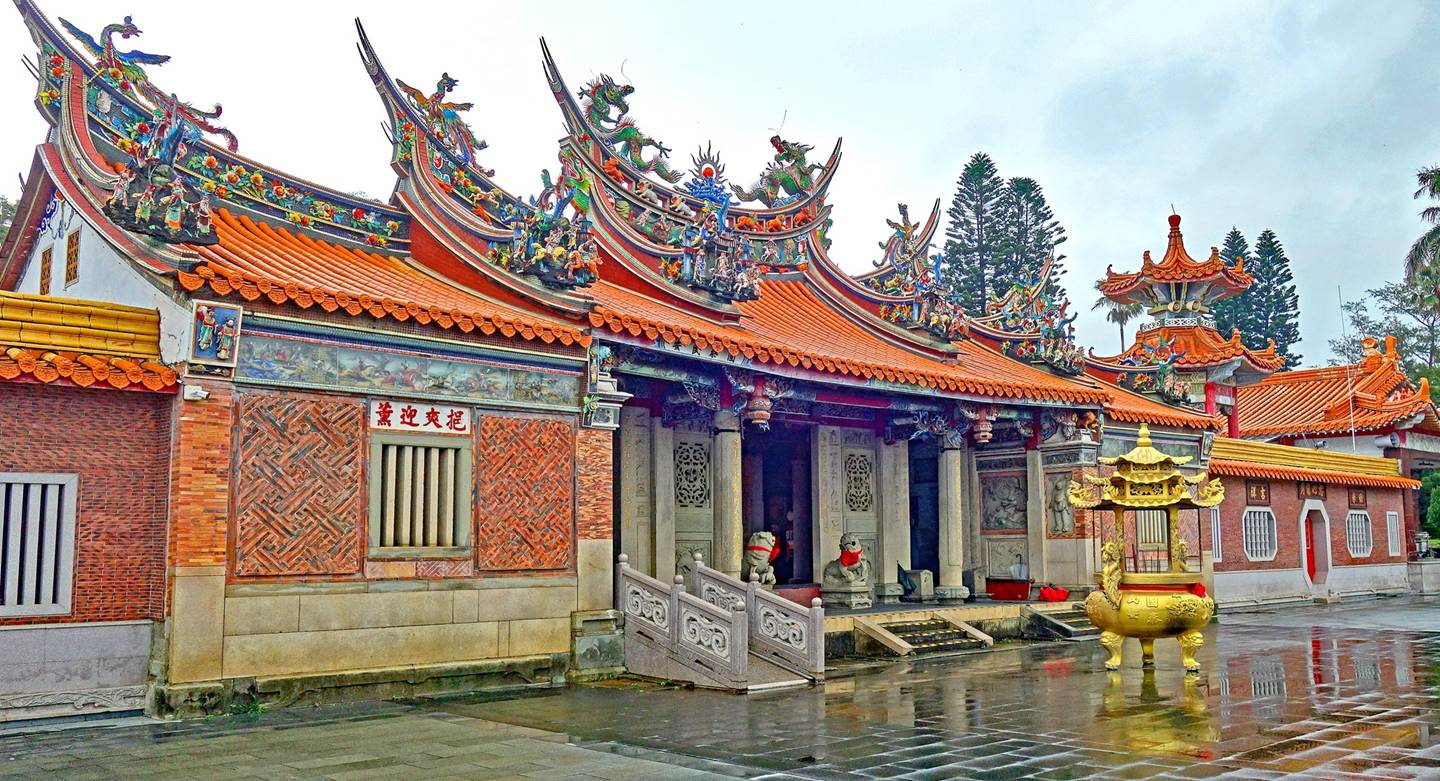
Facade of the temple.
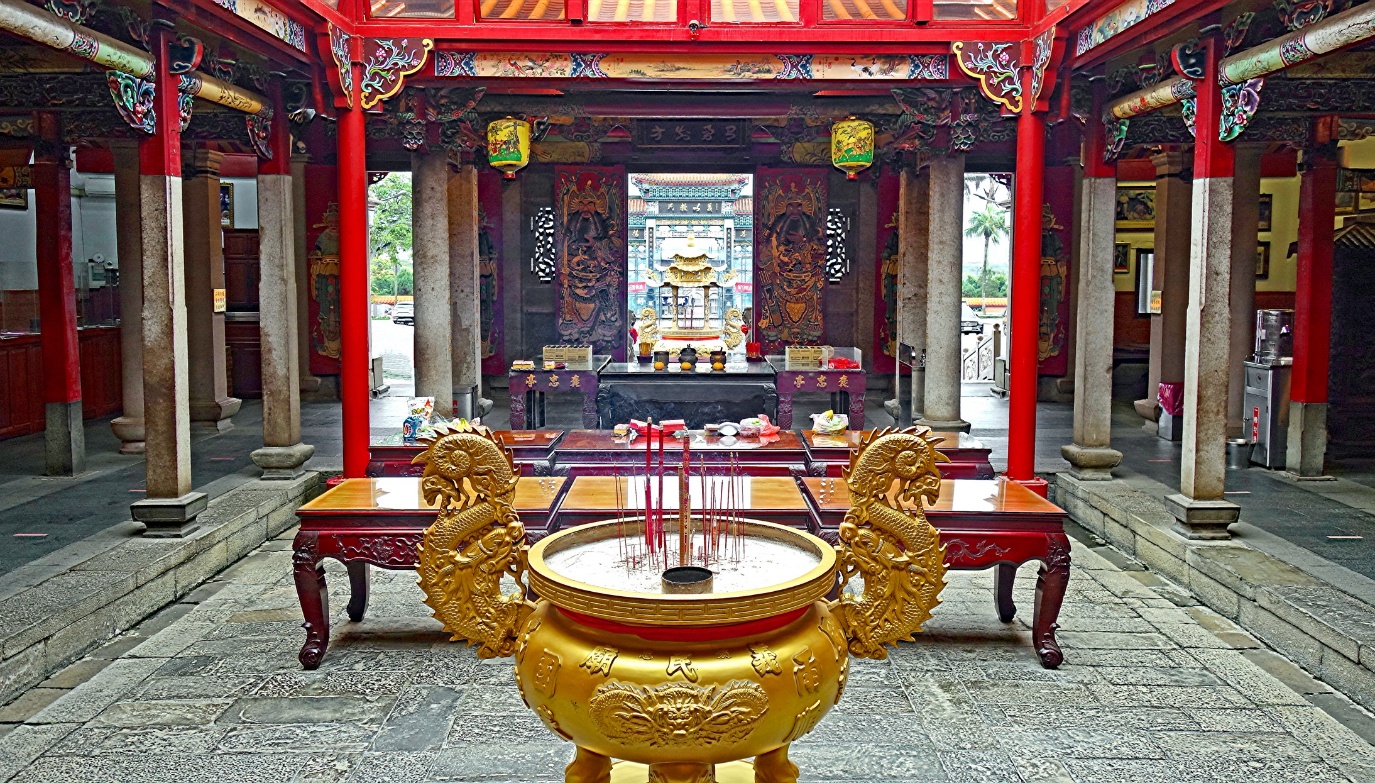
In the courtyard of the
entrance hall looking back toward the temple's gate barely visible at the
center of the photo.
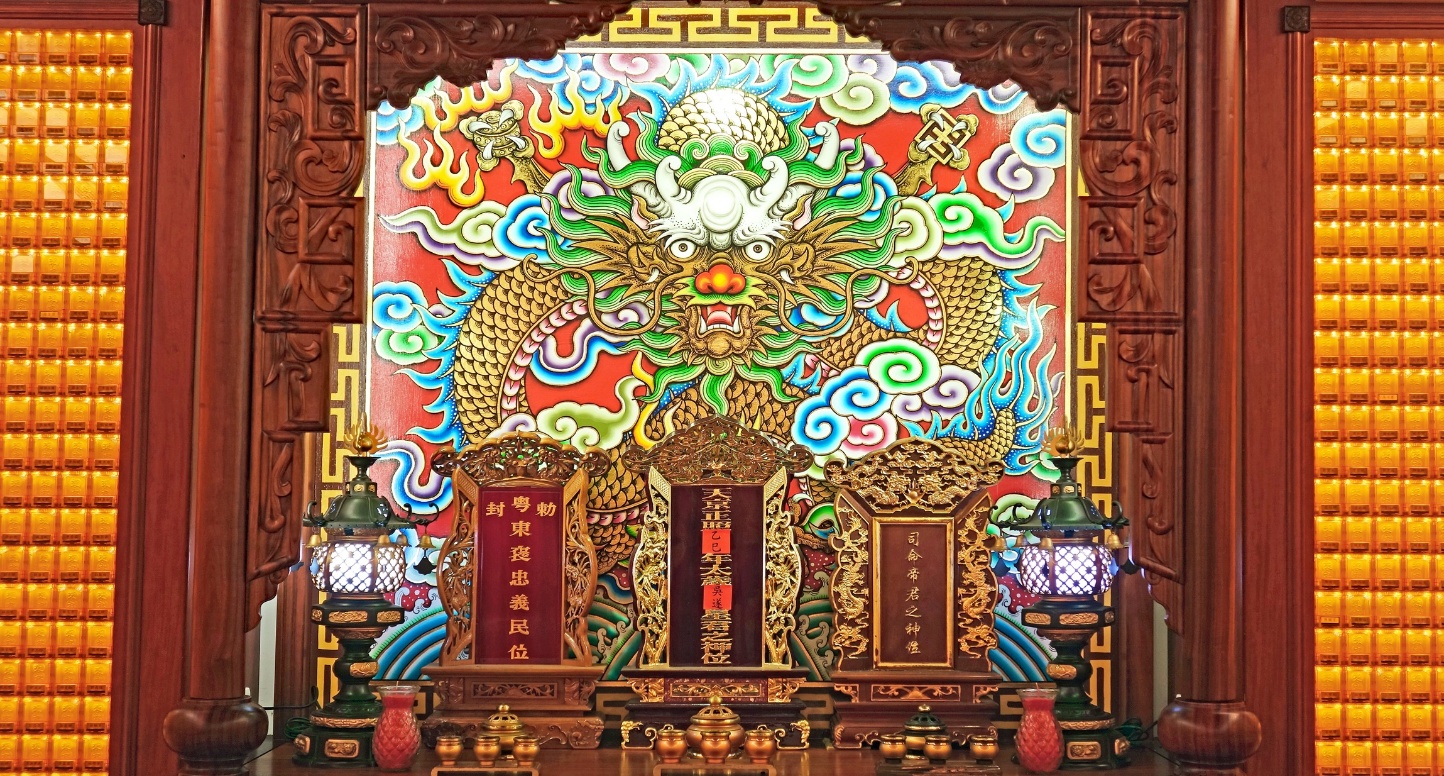
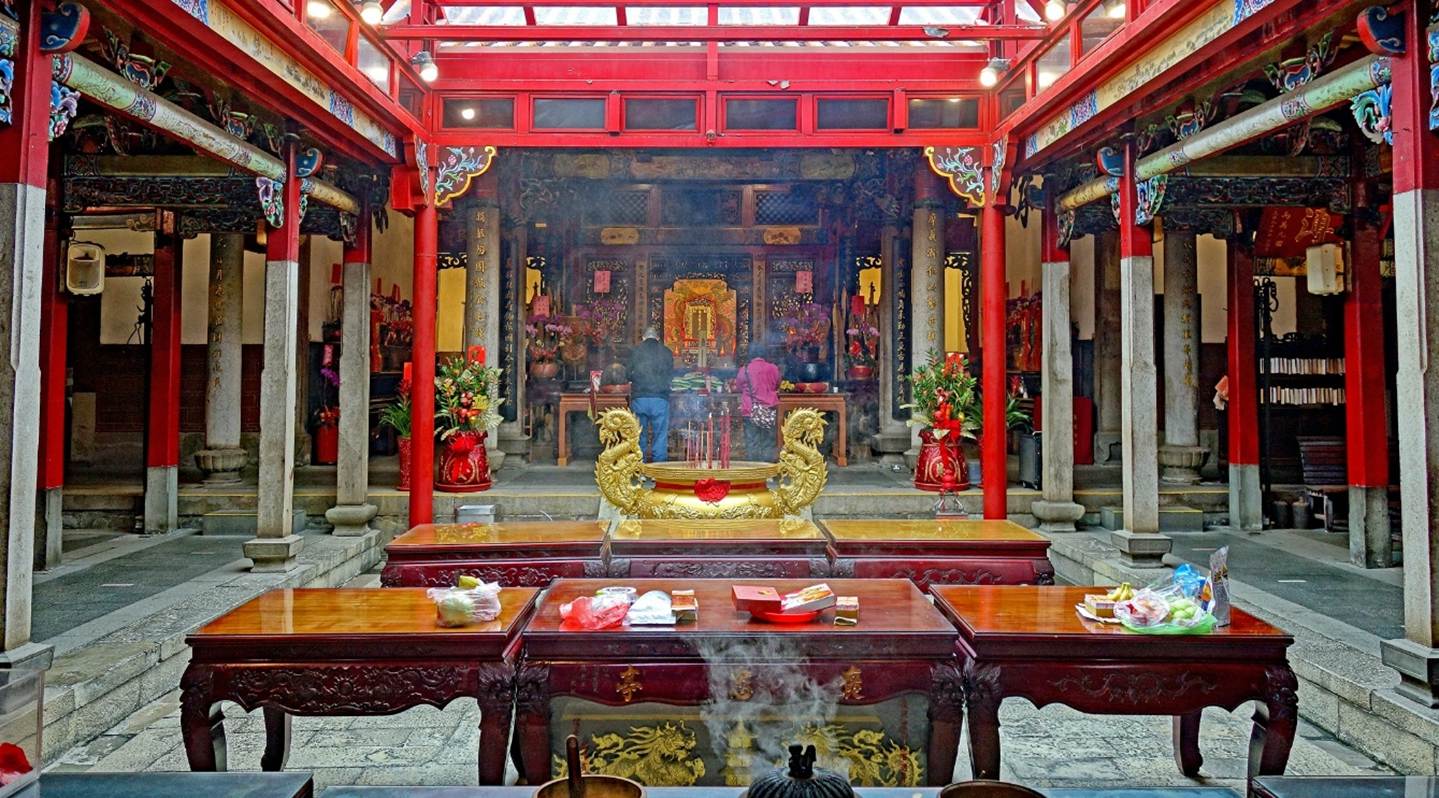
Still in the entrance
hall, now looking in the opposite direction toward the shrine where the Yimin
spirit tablet is displayed.
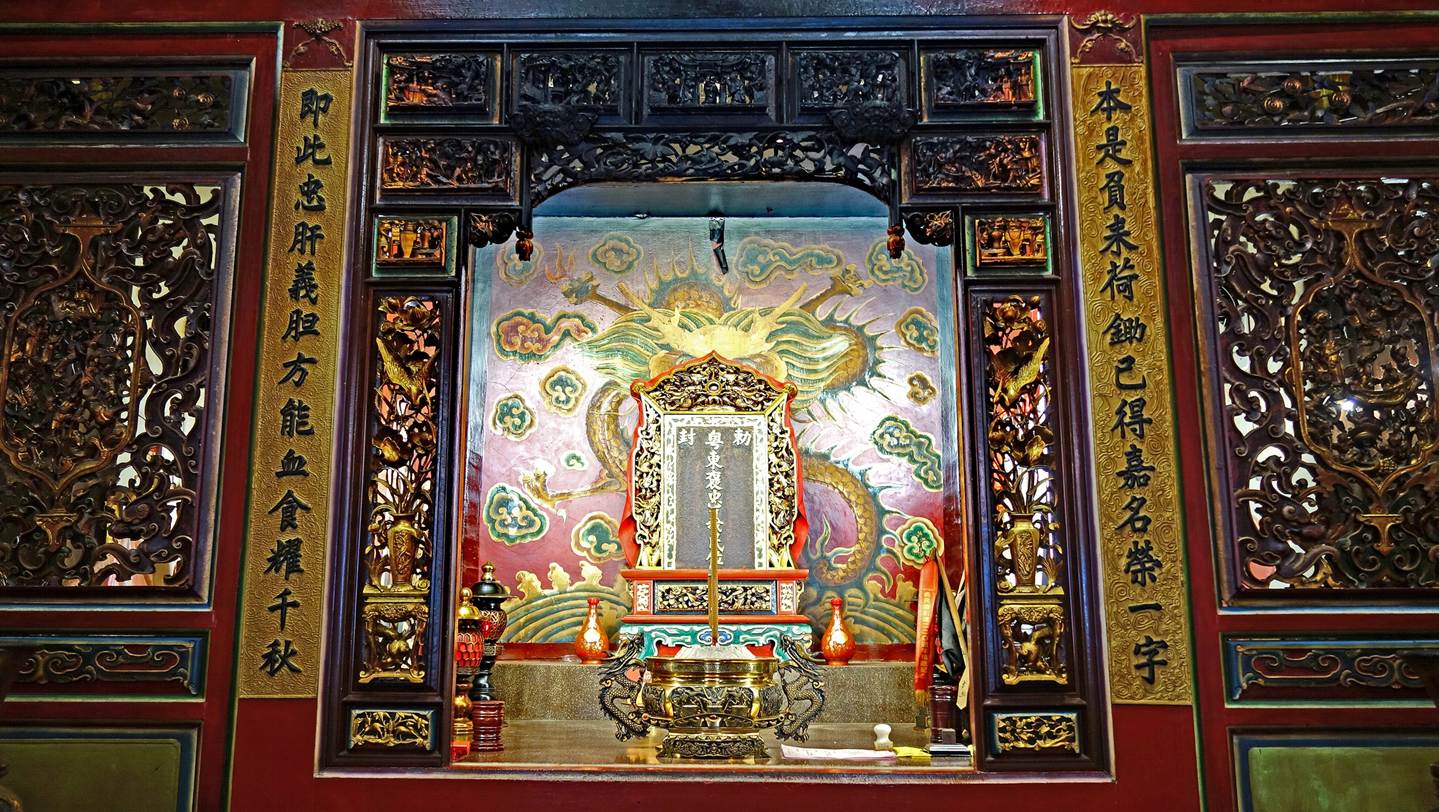
Closeup of the Yimin
spirit tablet.
Another shrine with
tablets in the temple.
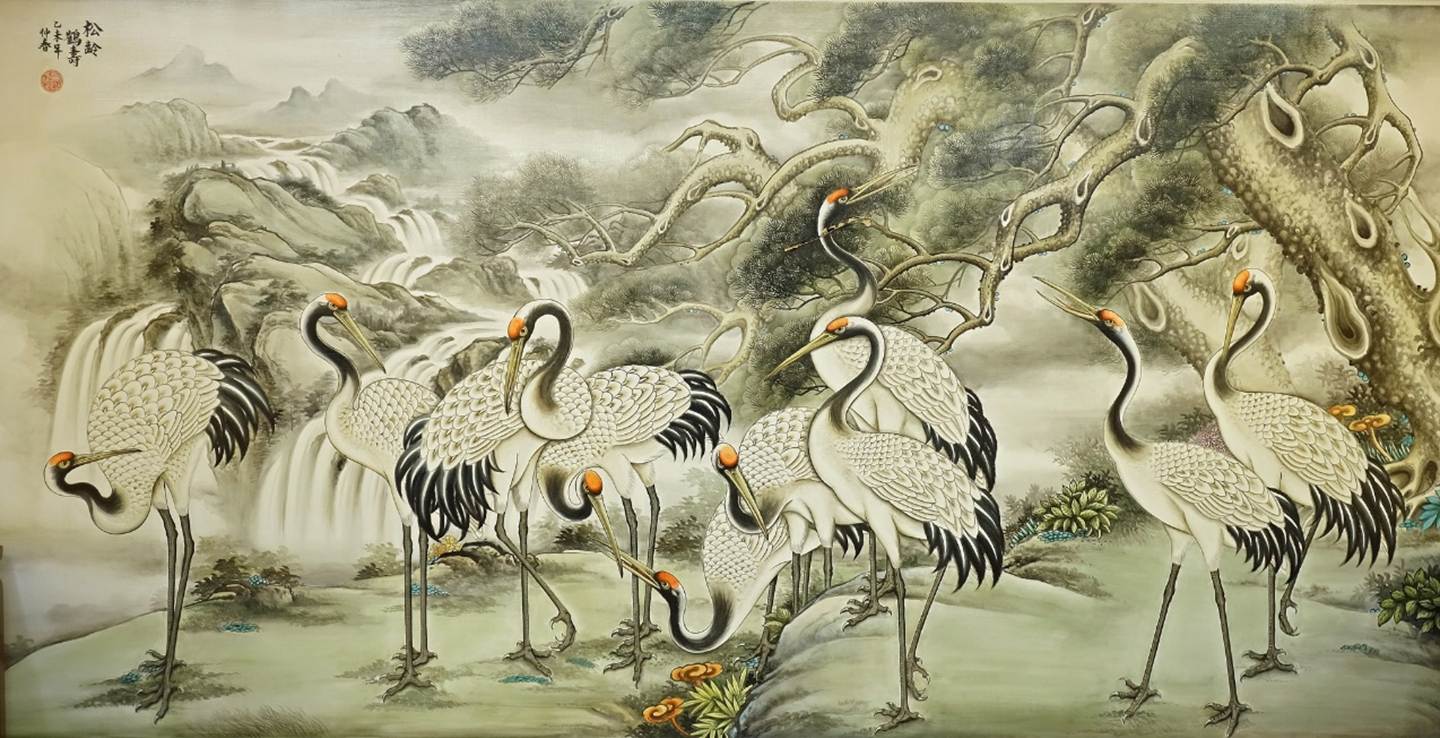
Beautiful mural in the
temple.
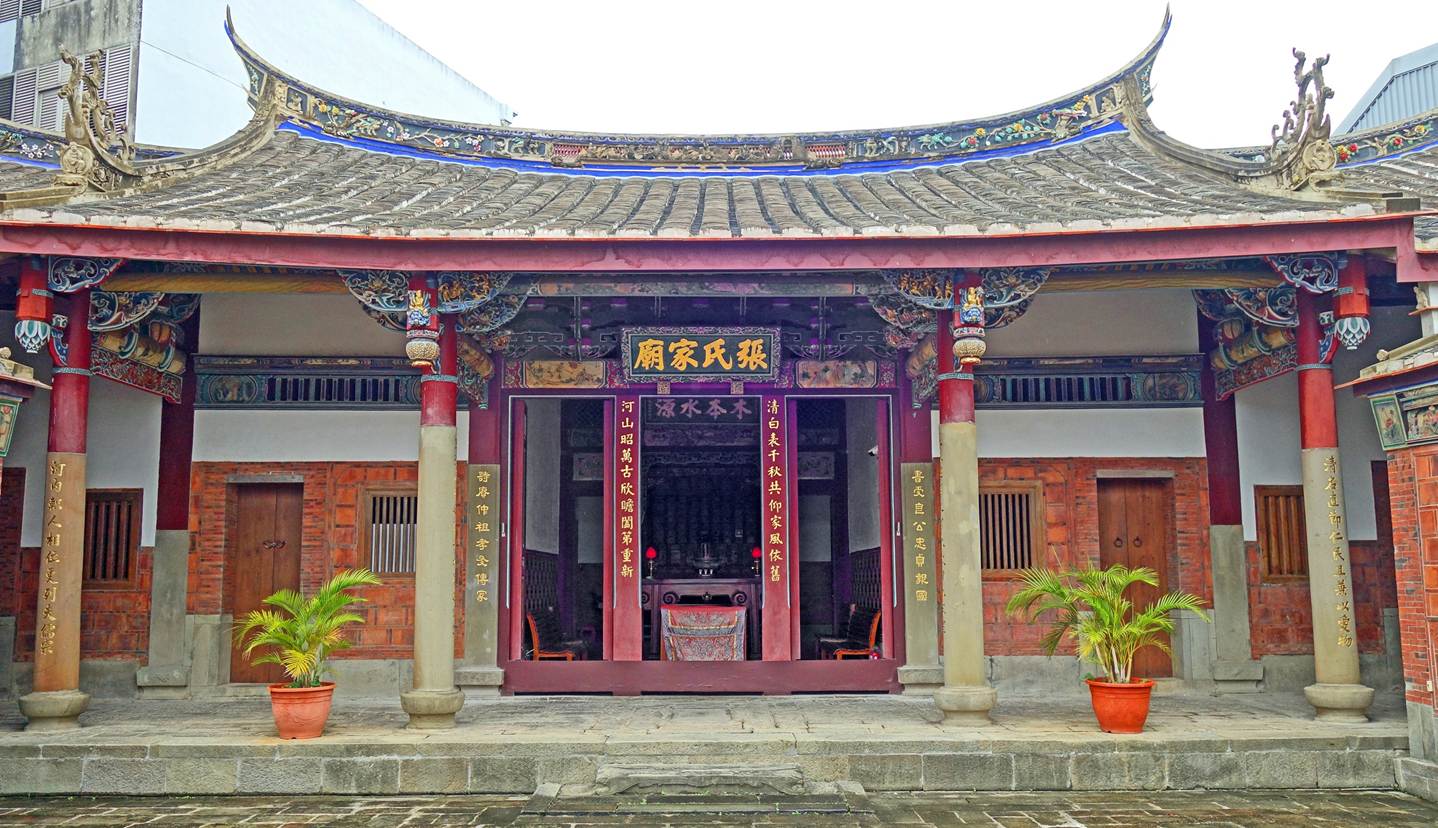
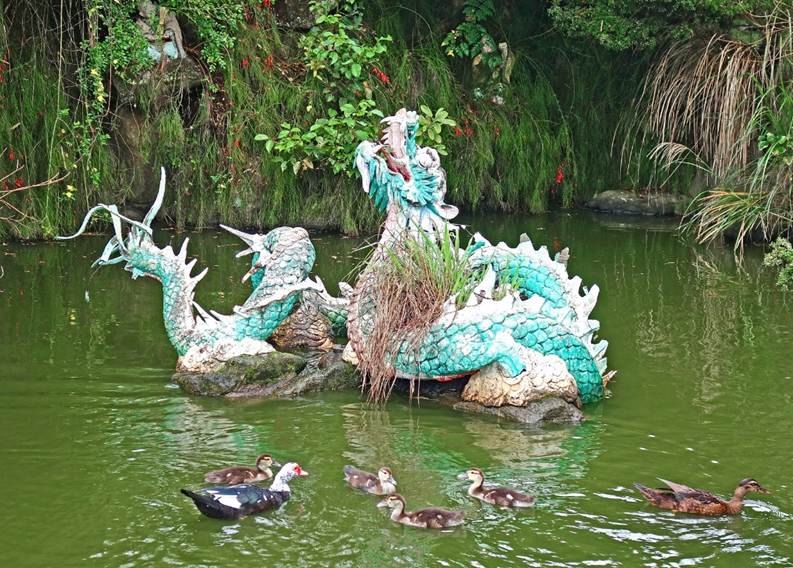
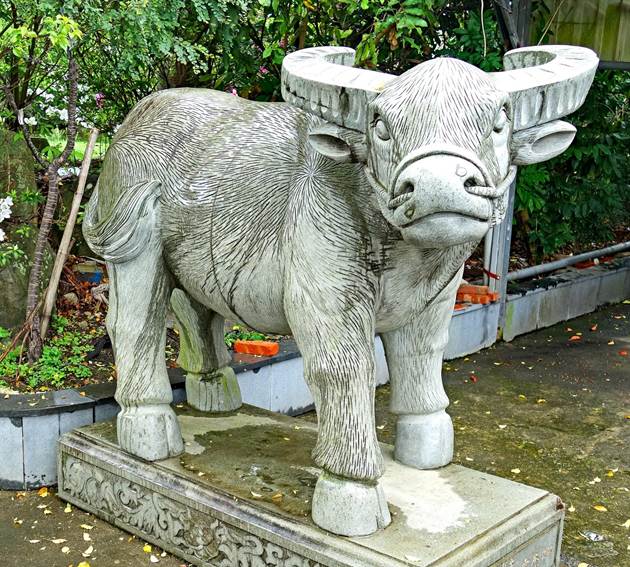
Statues of a dragon in a
pond and a buffalo, in a garden adjacent to the temple. The entire garden is a
little odd, as it feels out of step with the gravity of the temple.
|
|
|
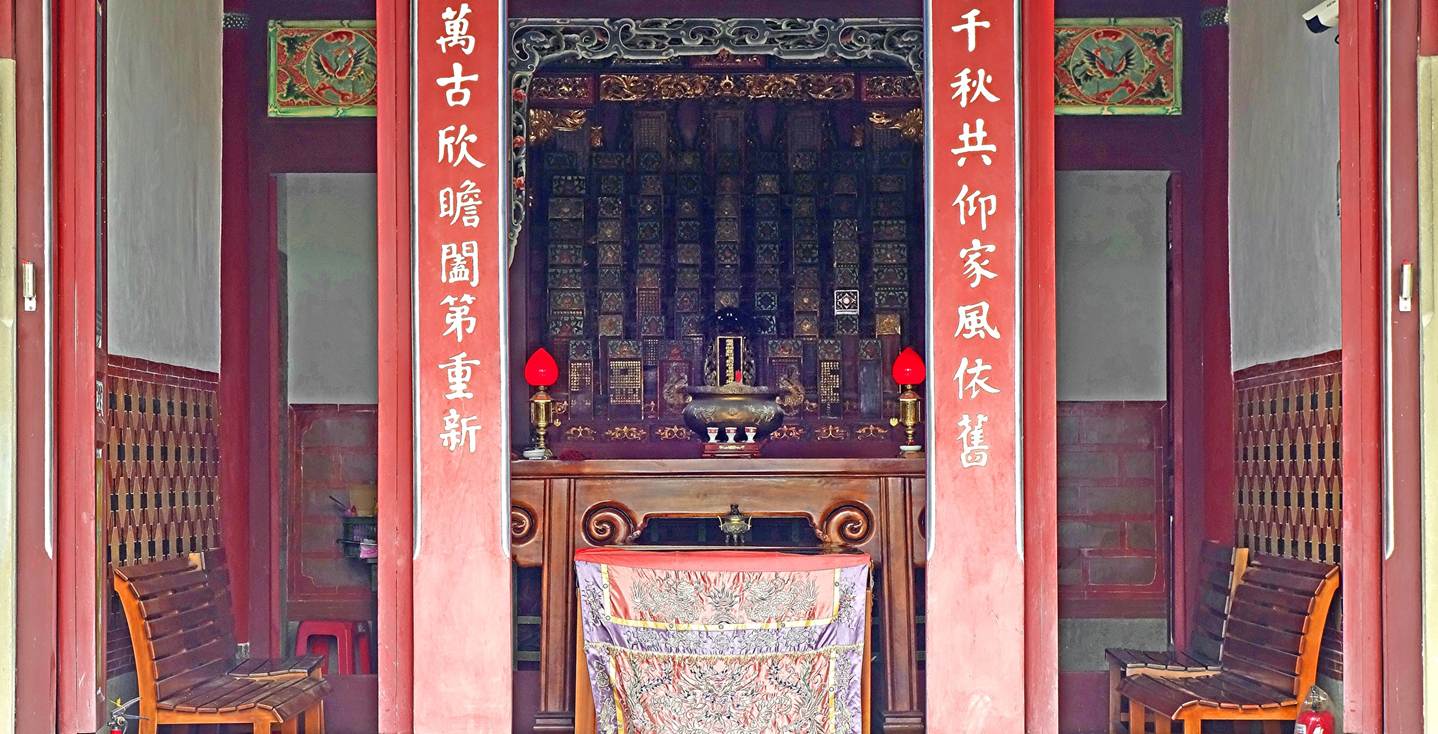
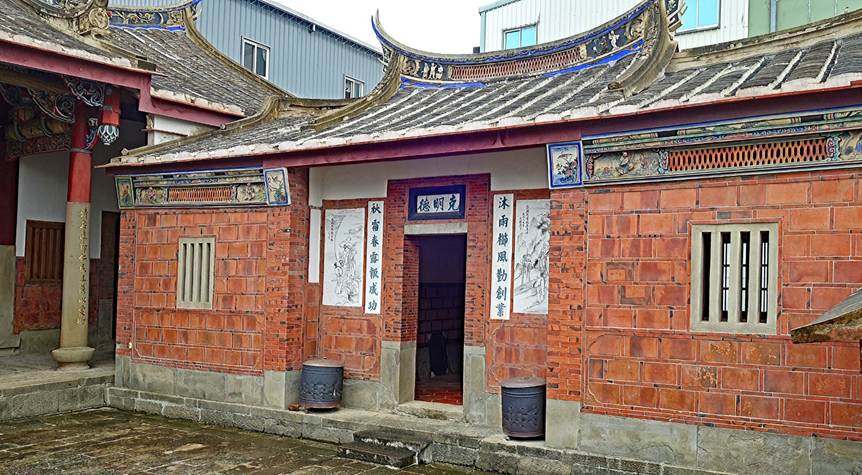
Family ancestral shrines in Xinpu
township:
The small historic center of the Xinpu
township (located about 4.5km east of the Baozhong Yimin temple) features an
unusual density of well-preserved ancestral shrines dating from the 19th
century (Qing dynasty). Each shrine is a small temple dedicated to the
ancestors of a particular family. It is a place where living members of that
family can venerate their ancestors, symbolized by spirit tablets. However,
these shrines are still private today and are often closed to visitors.
To see the precise locations of the
seven shrines pictured below, click here. (A Google map with purple markers
will open in a new tab.)
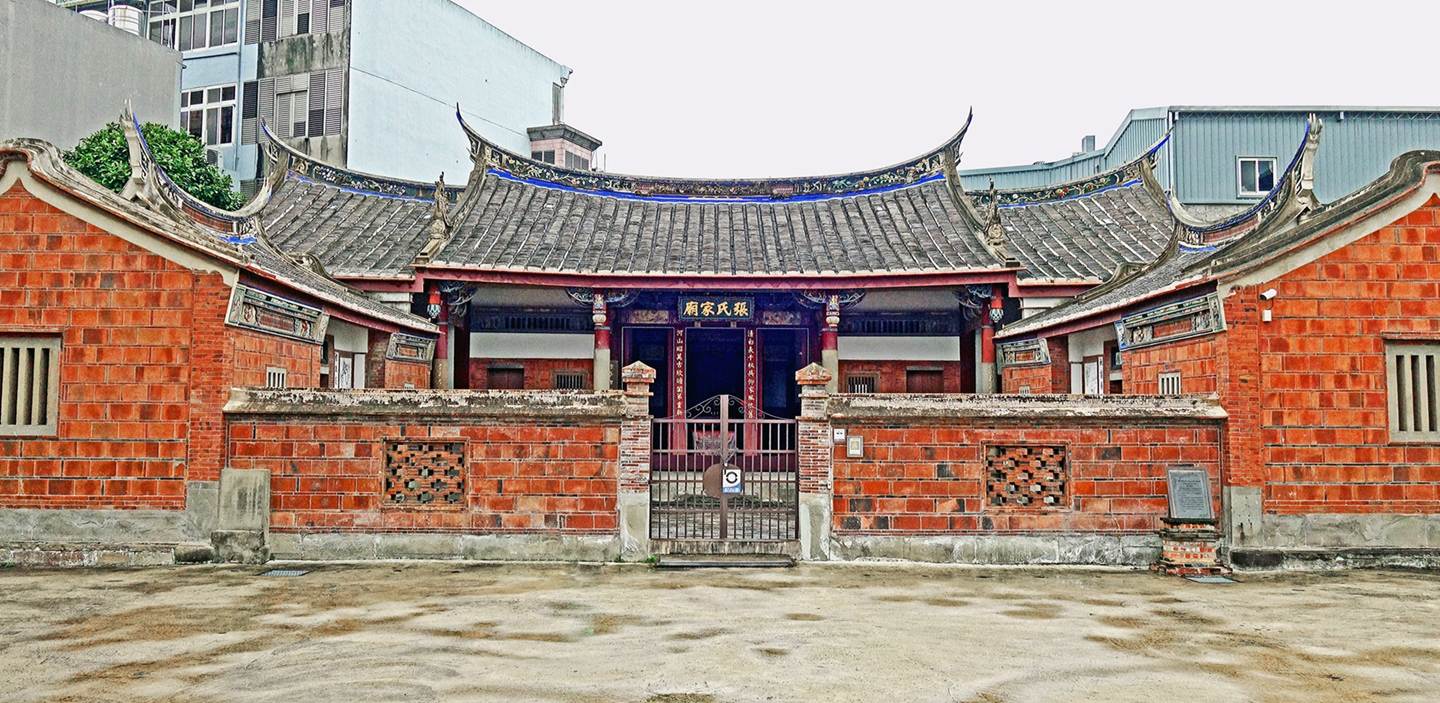
Shrine of the Zhang
family (新埔張氏家廟).
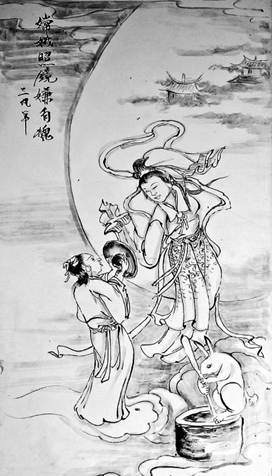
|
|
|
|
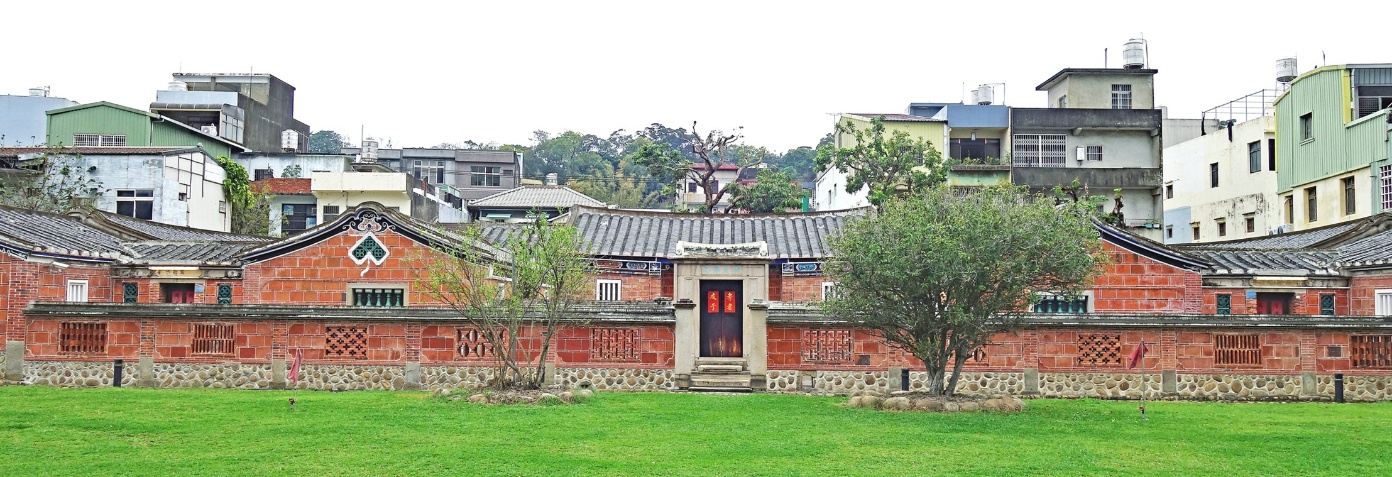
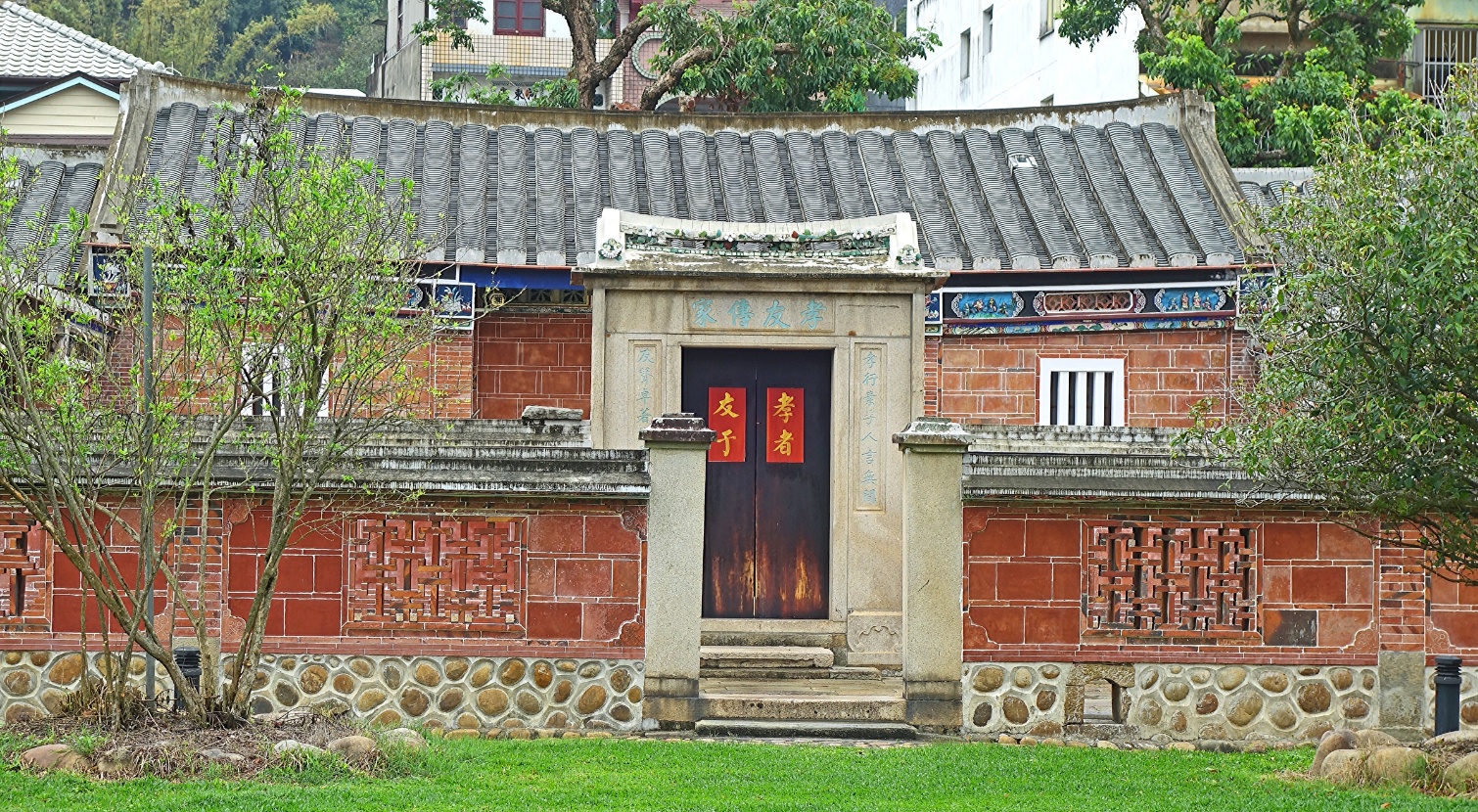
Shrine of the Liu family
(新埔劉家祠).
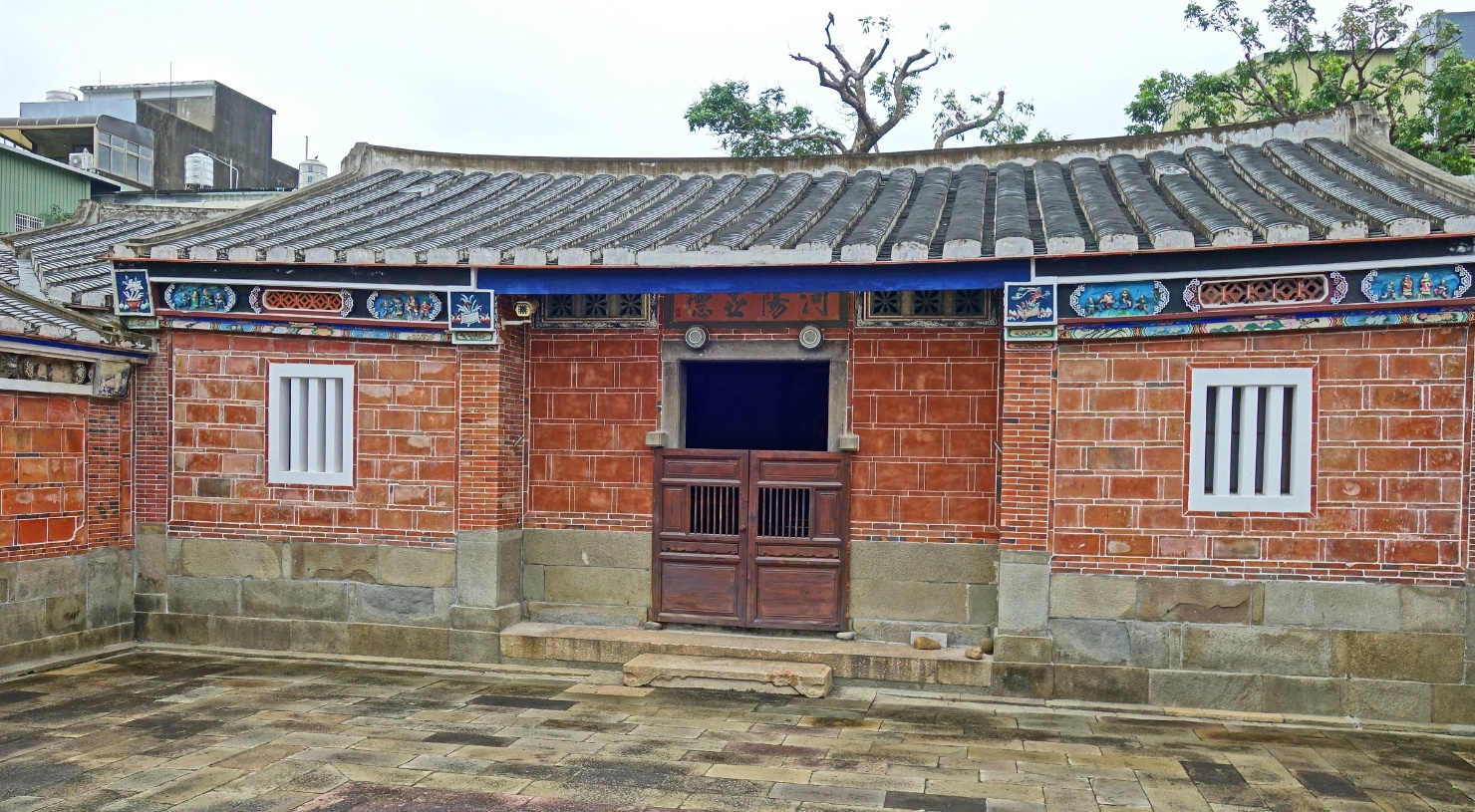
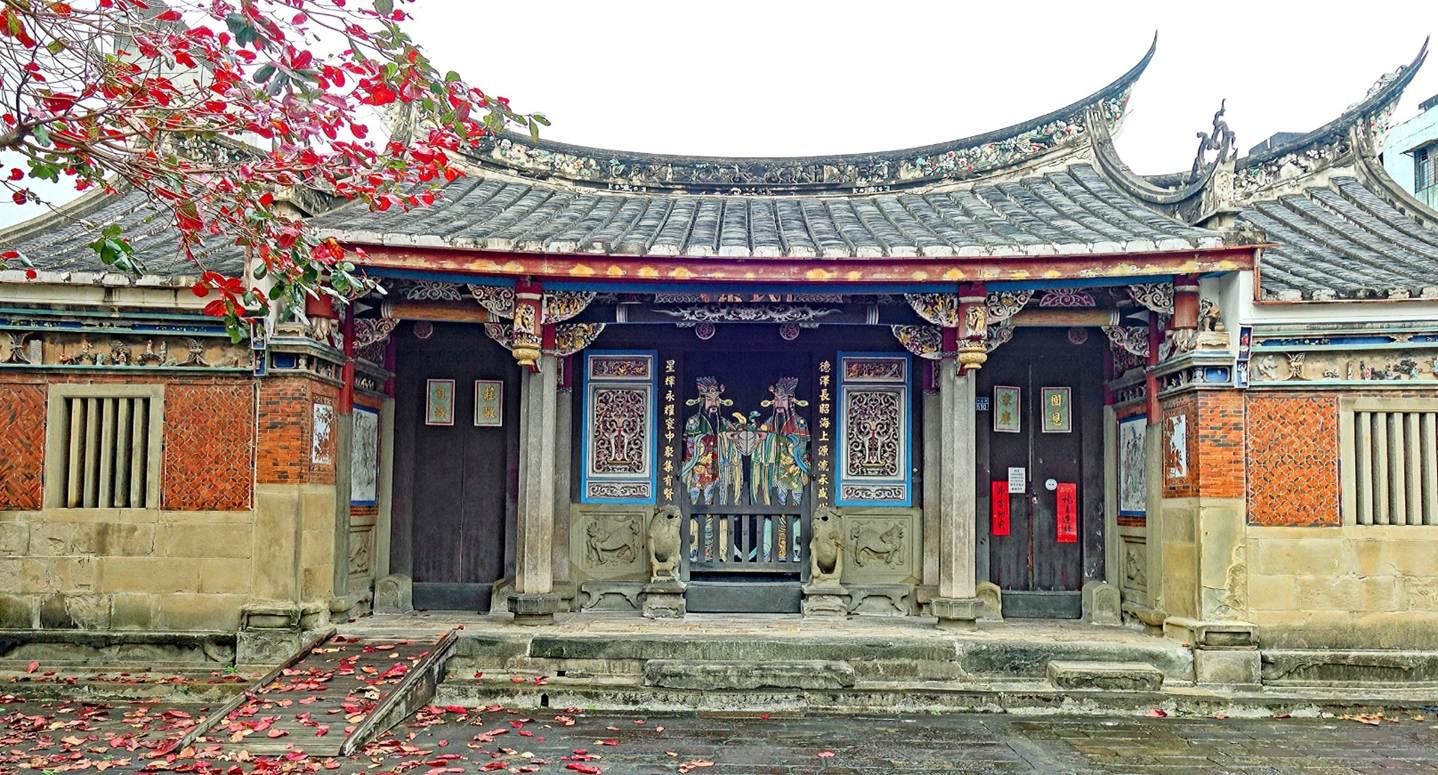
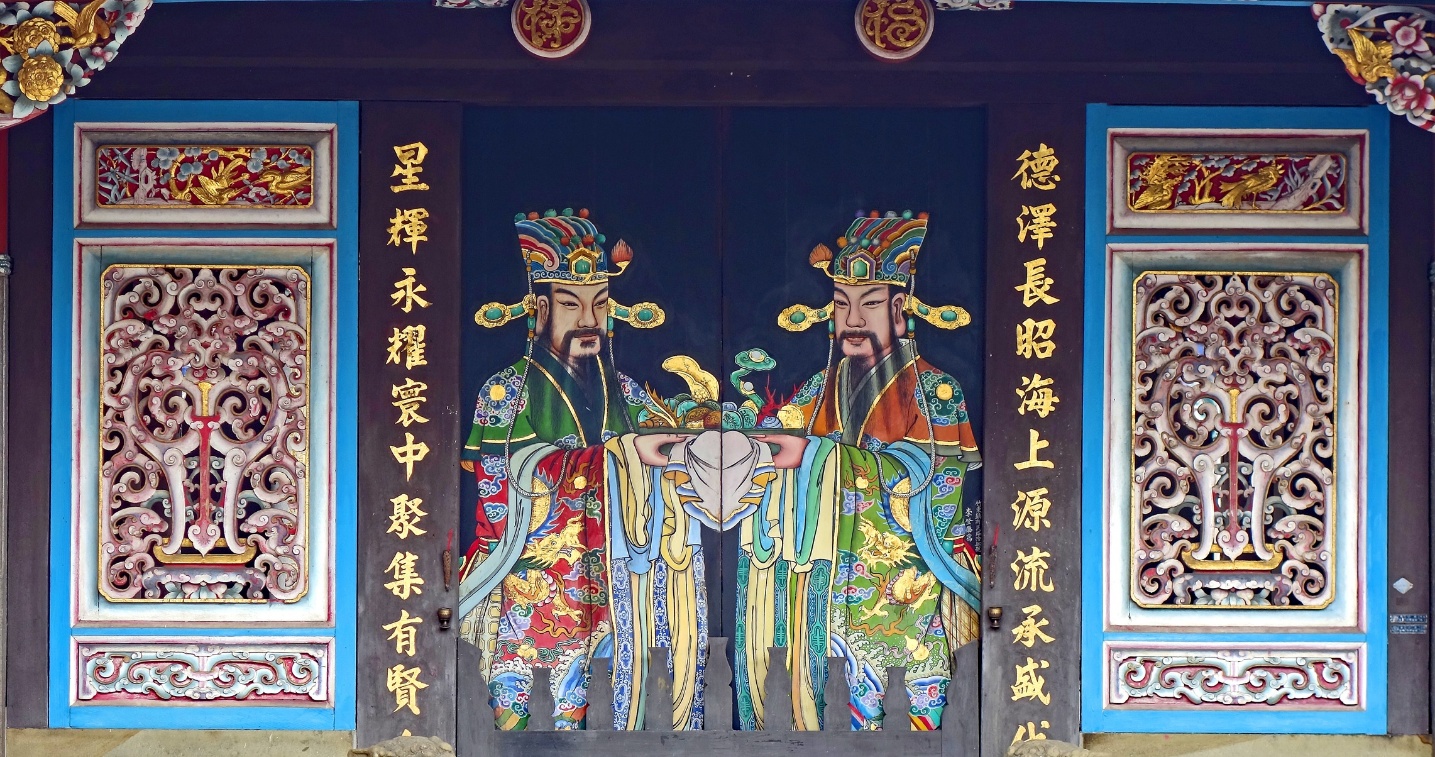
Shrine of the Pan family
(新埔潘屋).
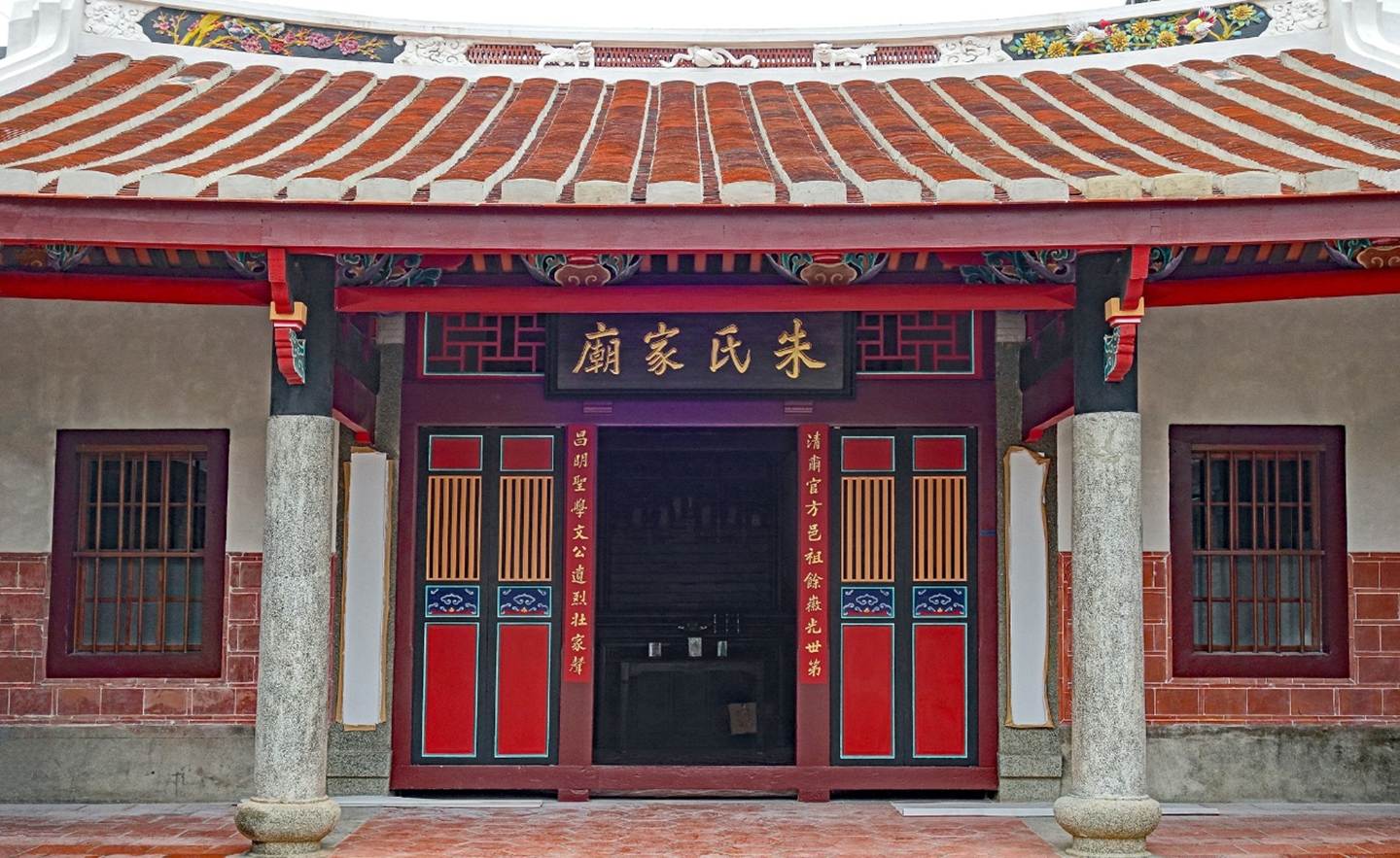
Shrine of the Chu family
(新埔朱氏家廟).
Shrine of the Chen family
(新埔陳氏宗祠).
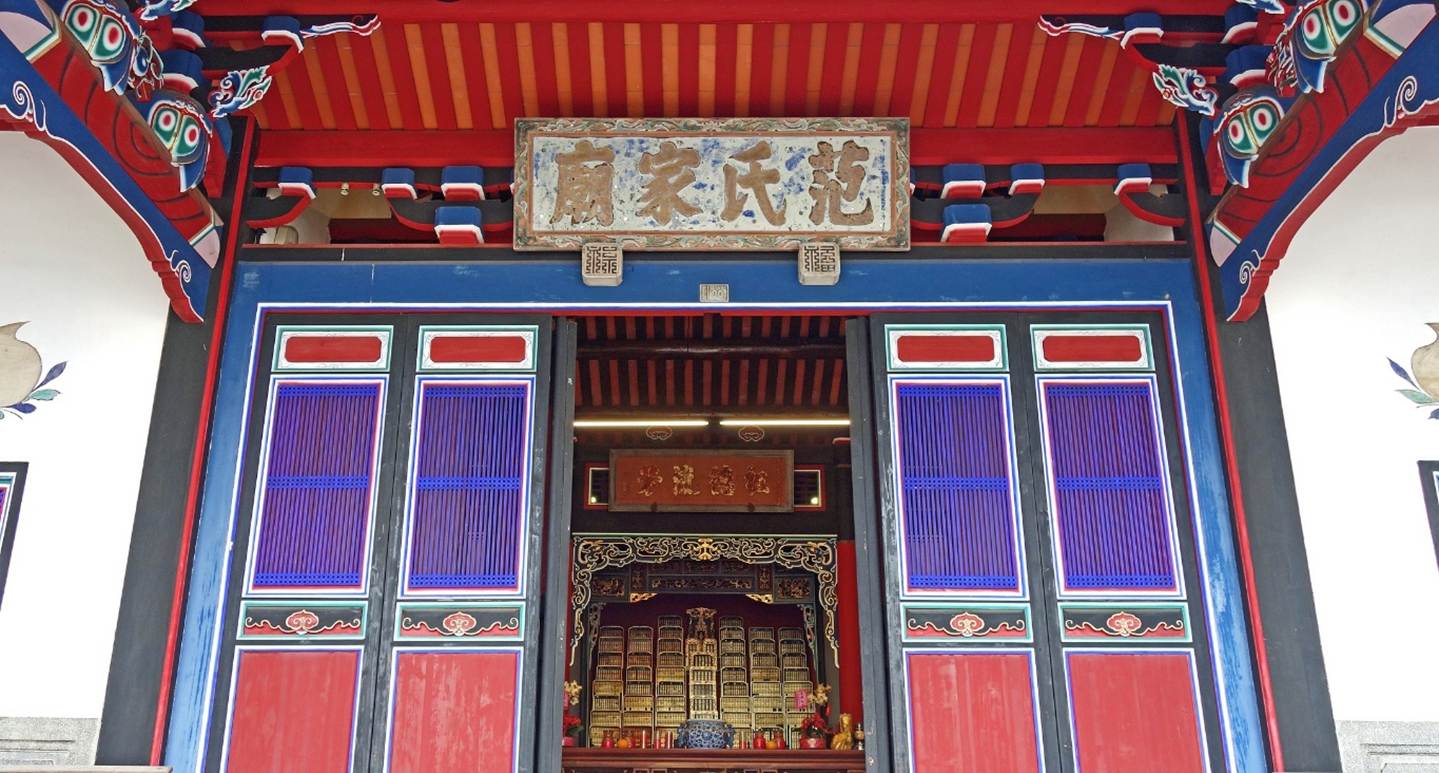
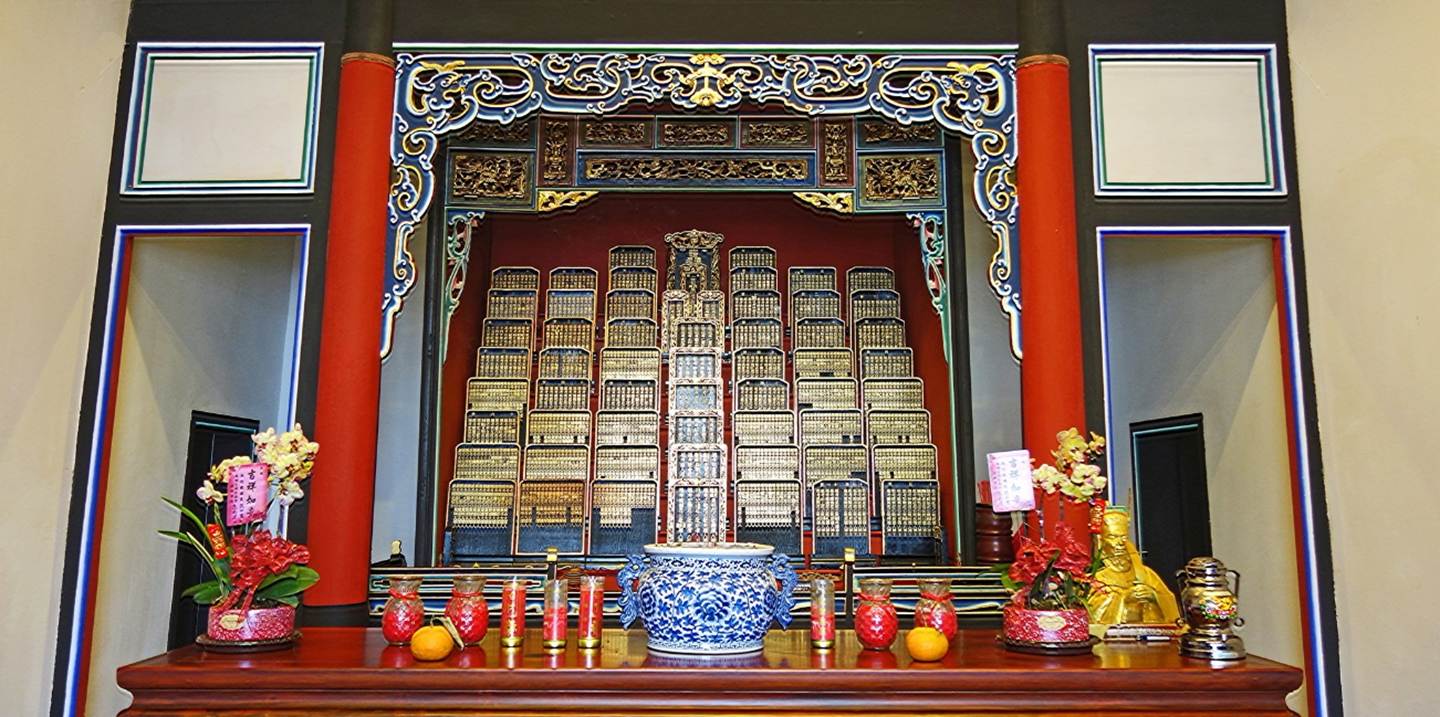
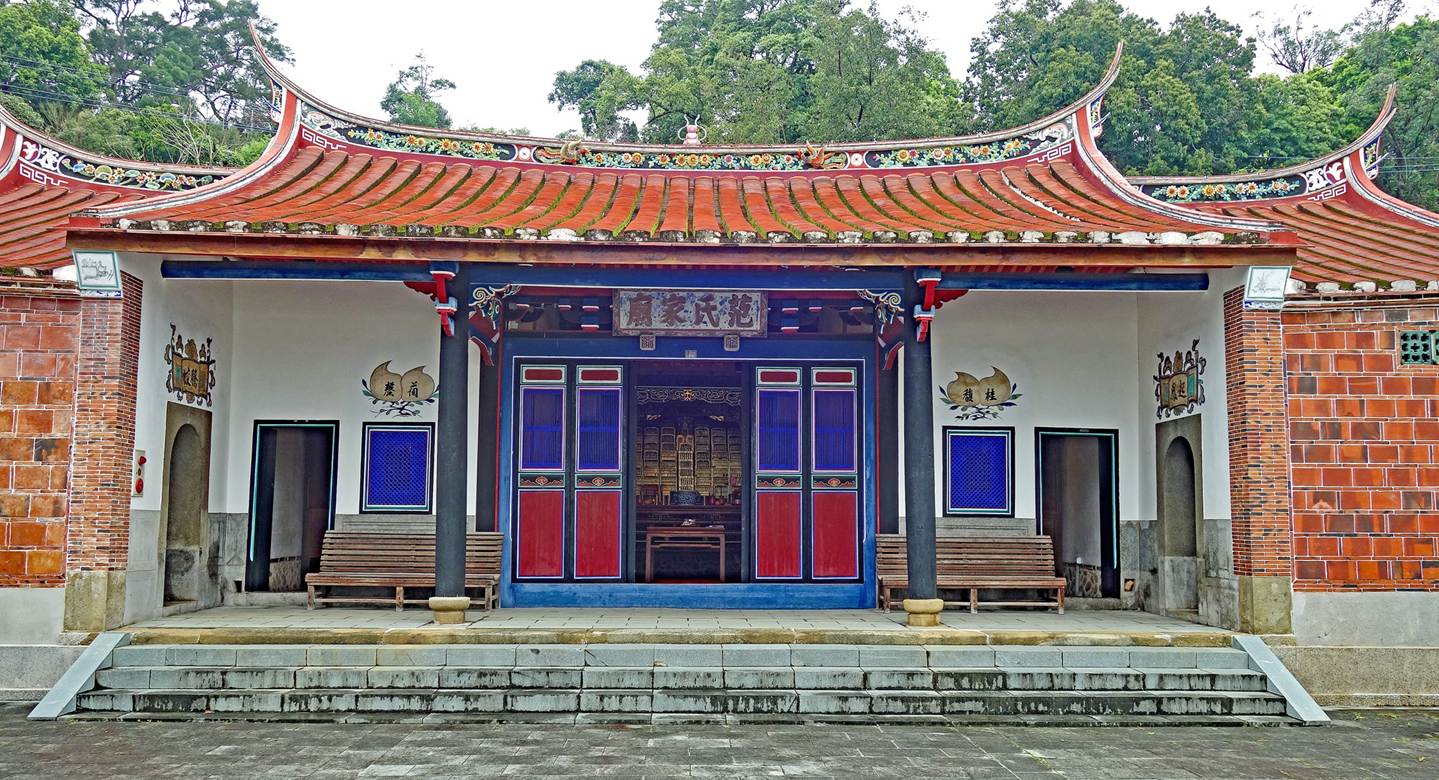
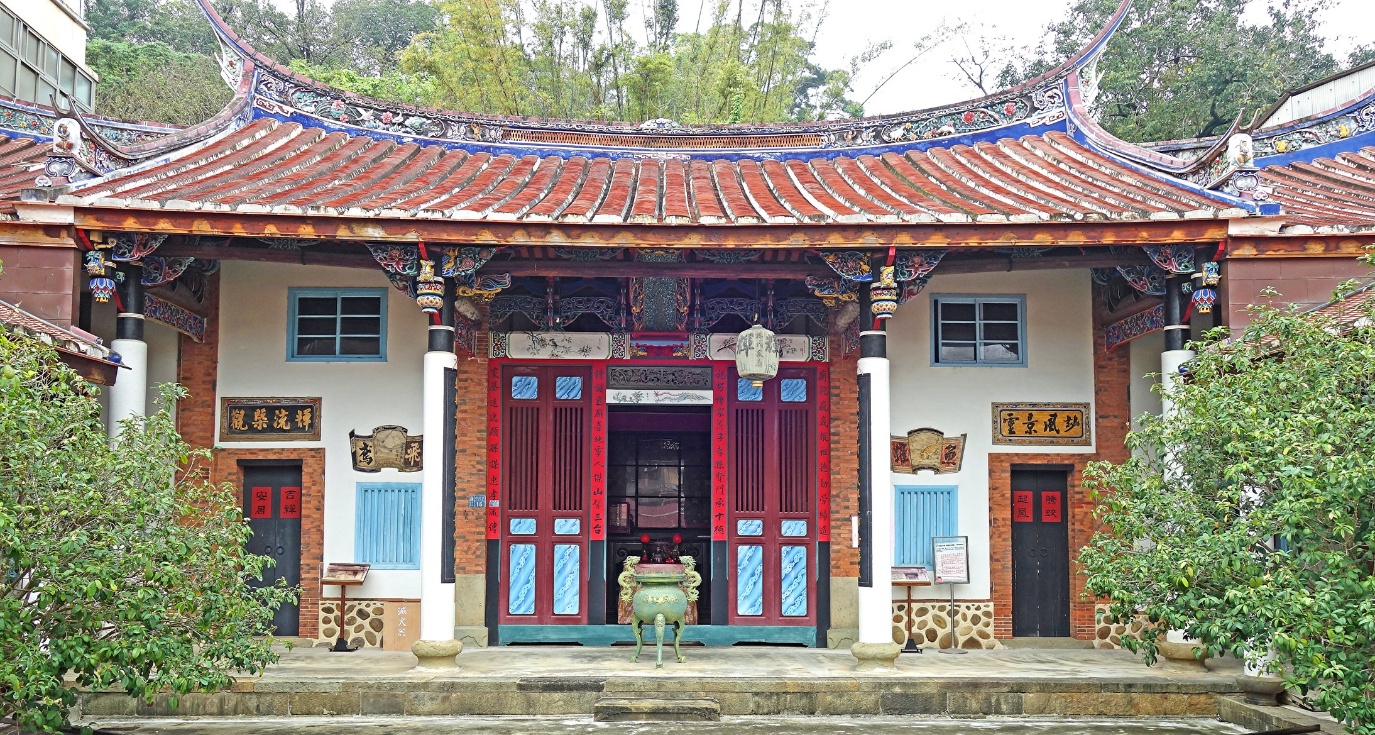
Shrine of the Fan family
(新埔范氏家廟).
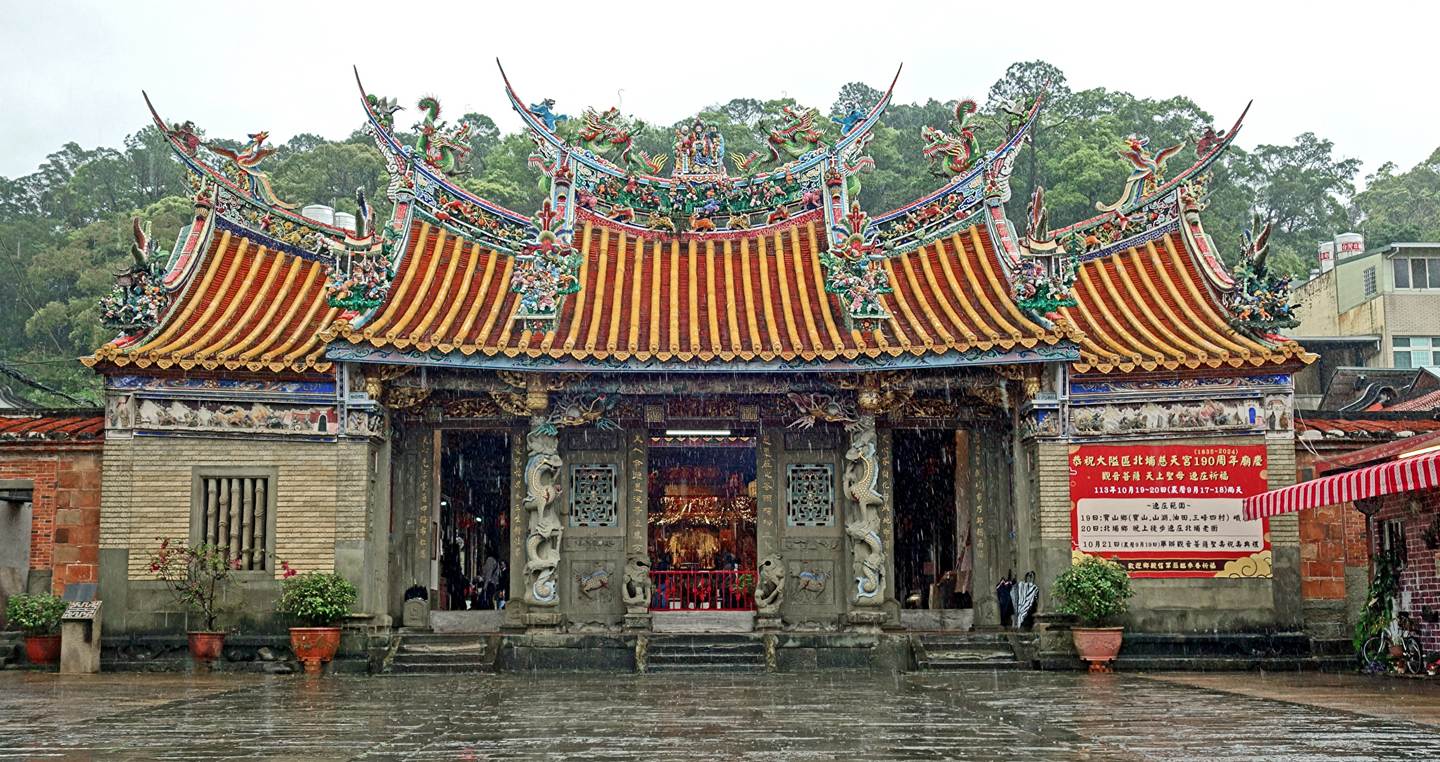
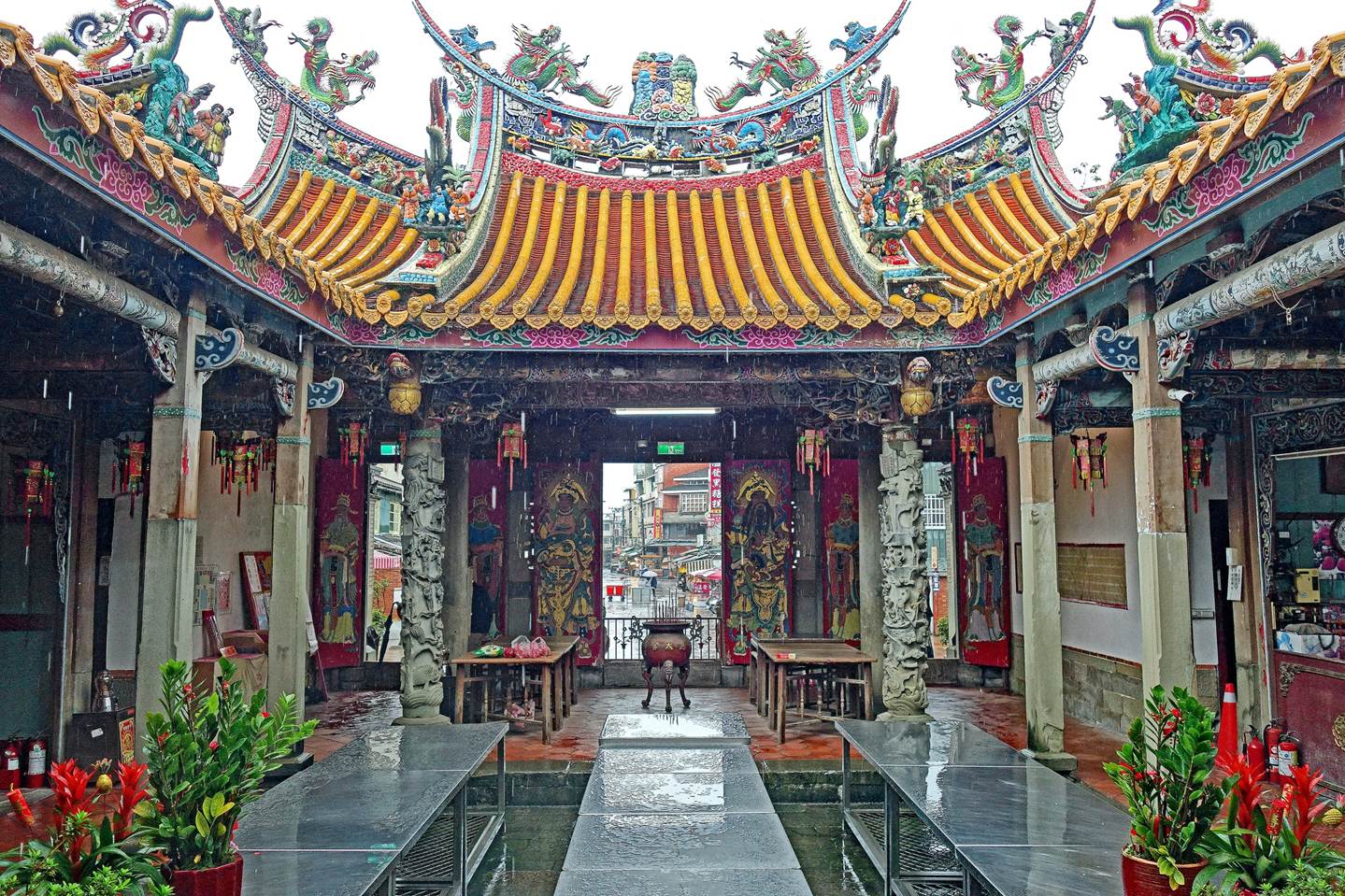
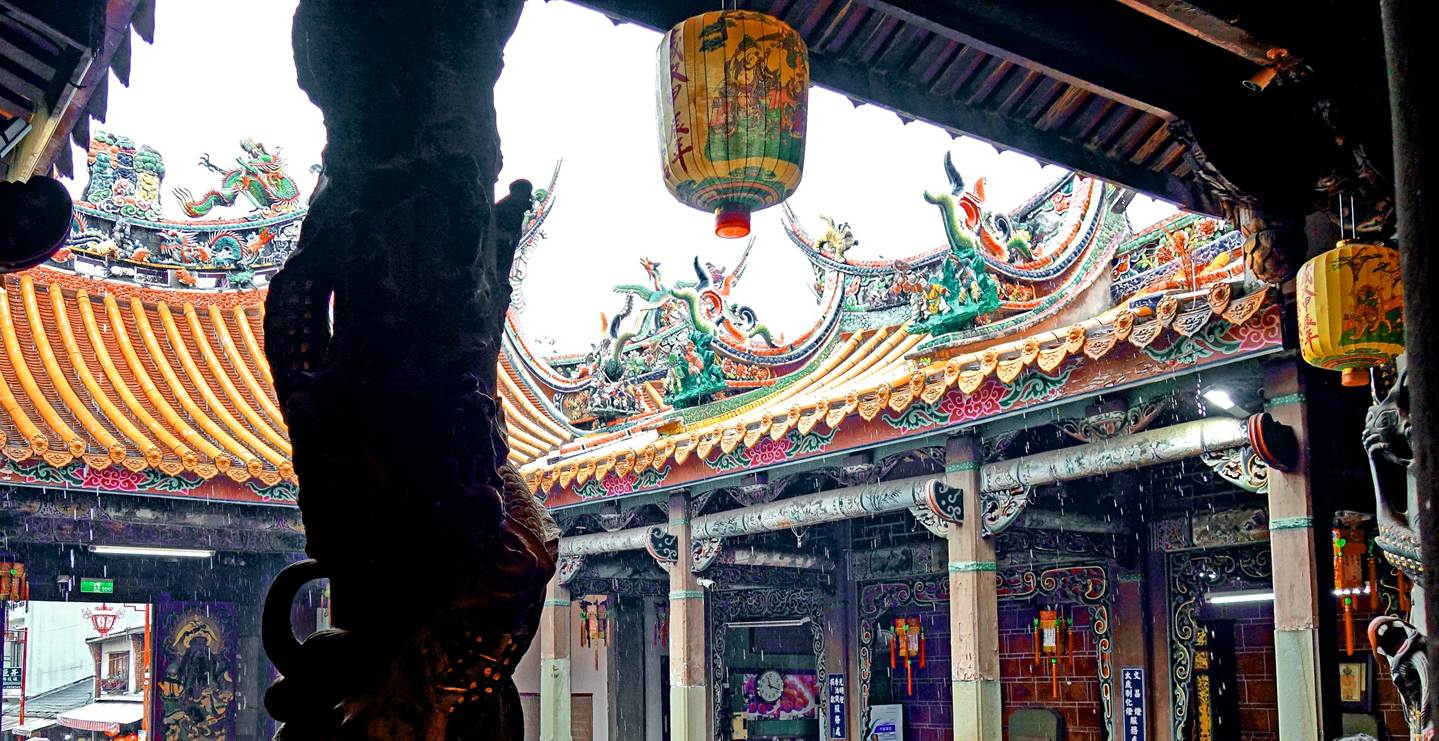
Shrine of the Lin family
(新埔林氏家廟).
Beipu
Located about 15km
southeast of downtown Hsinchu, the small town of Beipu is another center of
Hakka culture. It is the site of the 1907 Hoppo Uprising, the first instance of
an armed local uprising against the Japanese rule in Taiwan. The insurgents
were a group of Hakka from Hoppo (present-day Beipu) supported by local Saisiyat
aboriginal people. Japanese authorities killed more than 100 insurgents.
Citian temple (北埔慈天宮):
Built in the mid-19th
century, this temple is primarily dedicated to Guanyin.
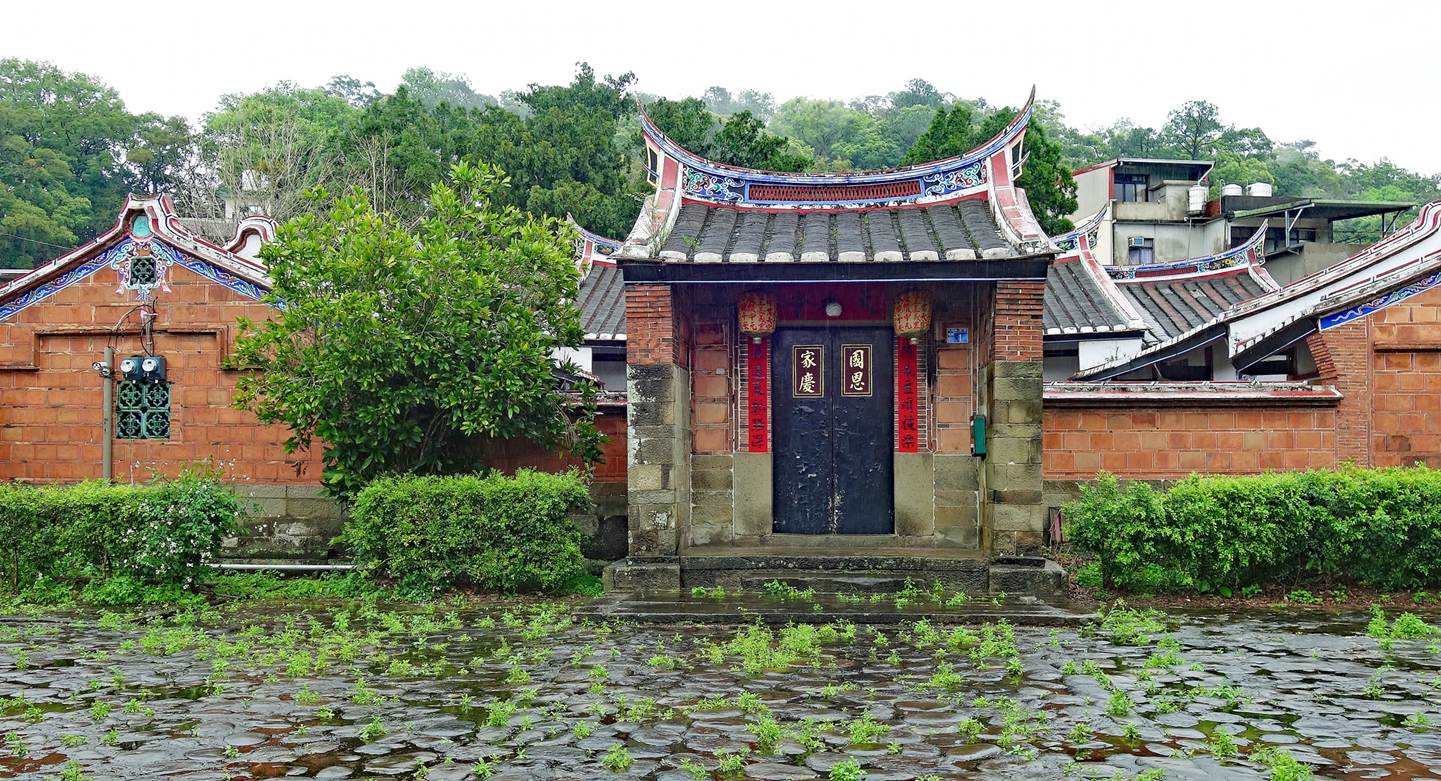
Facade of the temple.
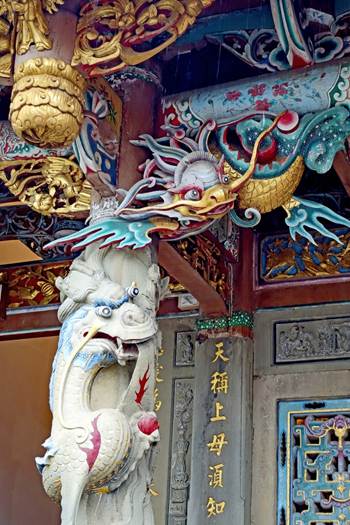
Main courtyard.
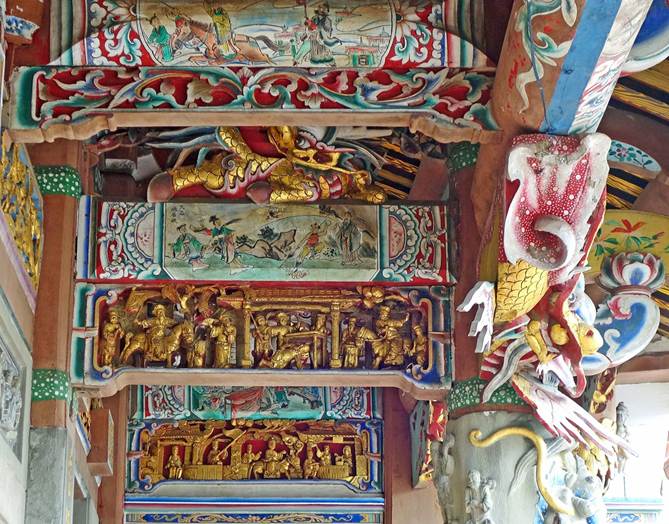
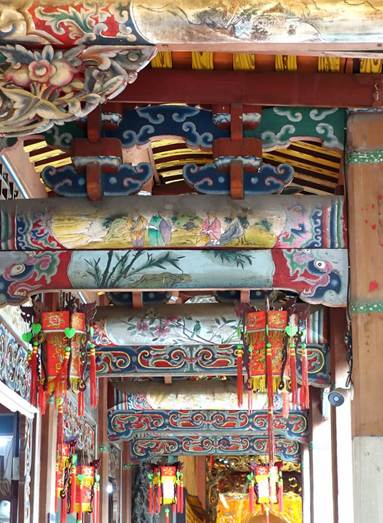
Altar dedicated to Guanyin.
Decorations in the
temple.
|
|
|
|
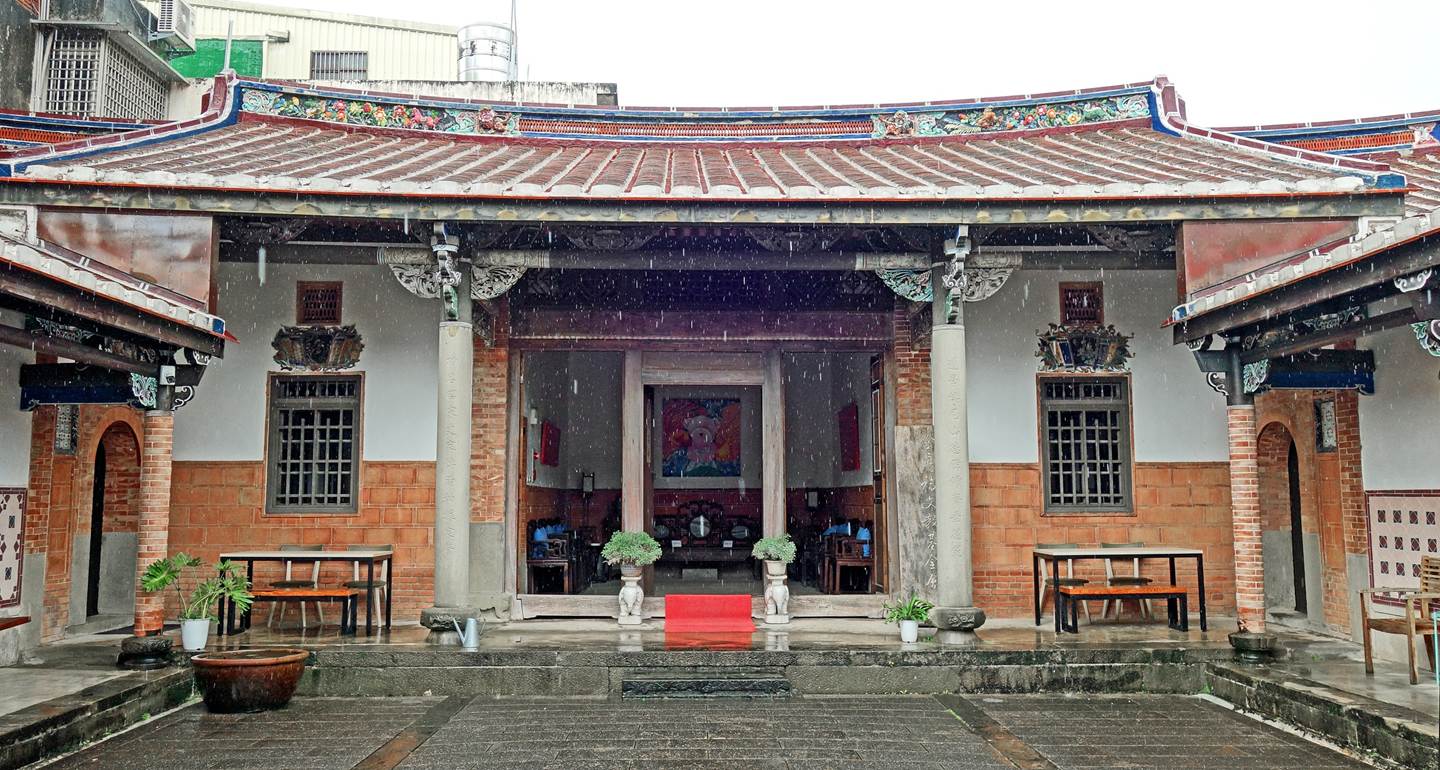
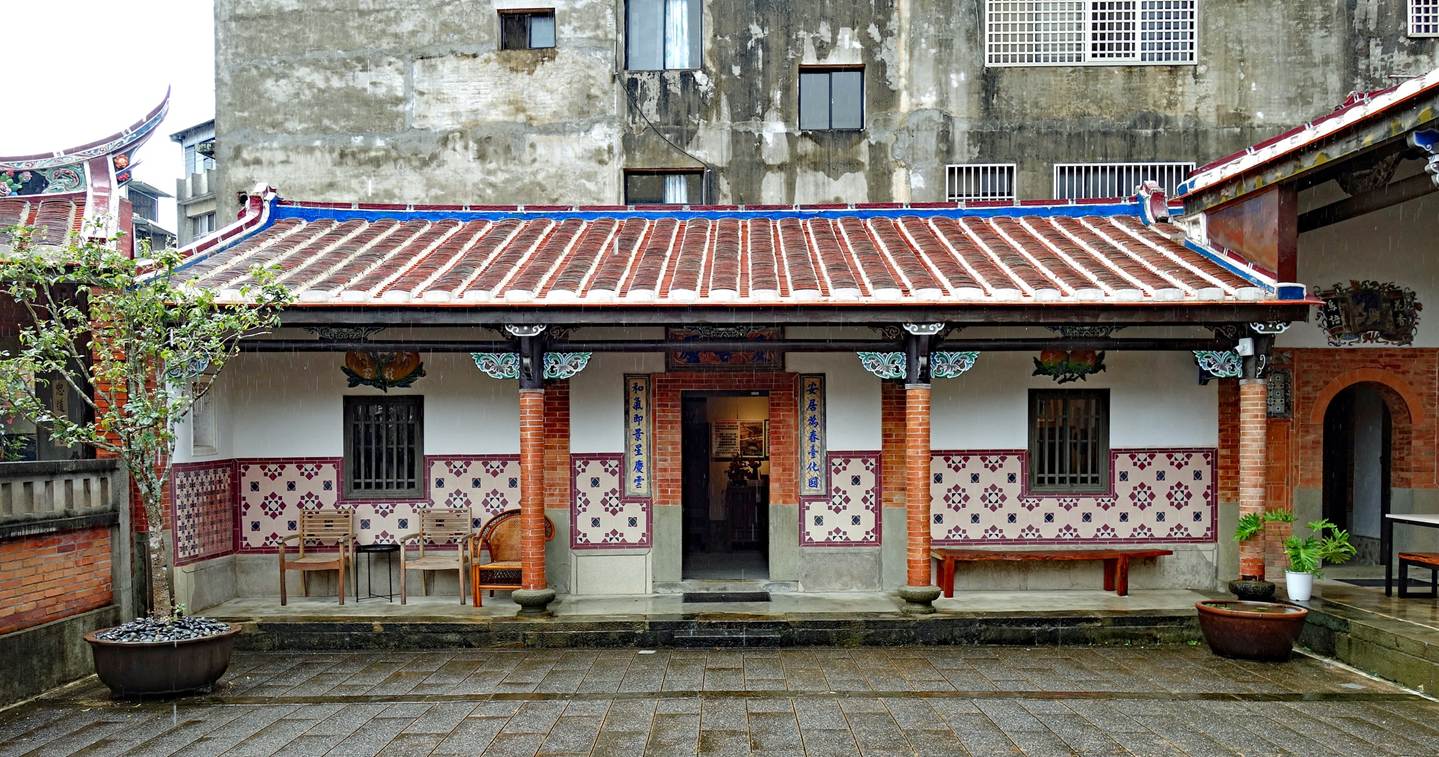
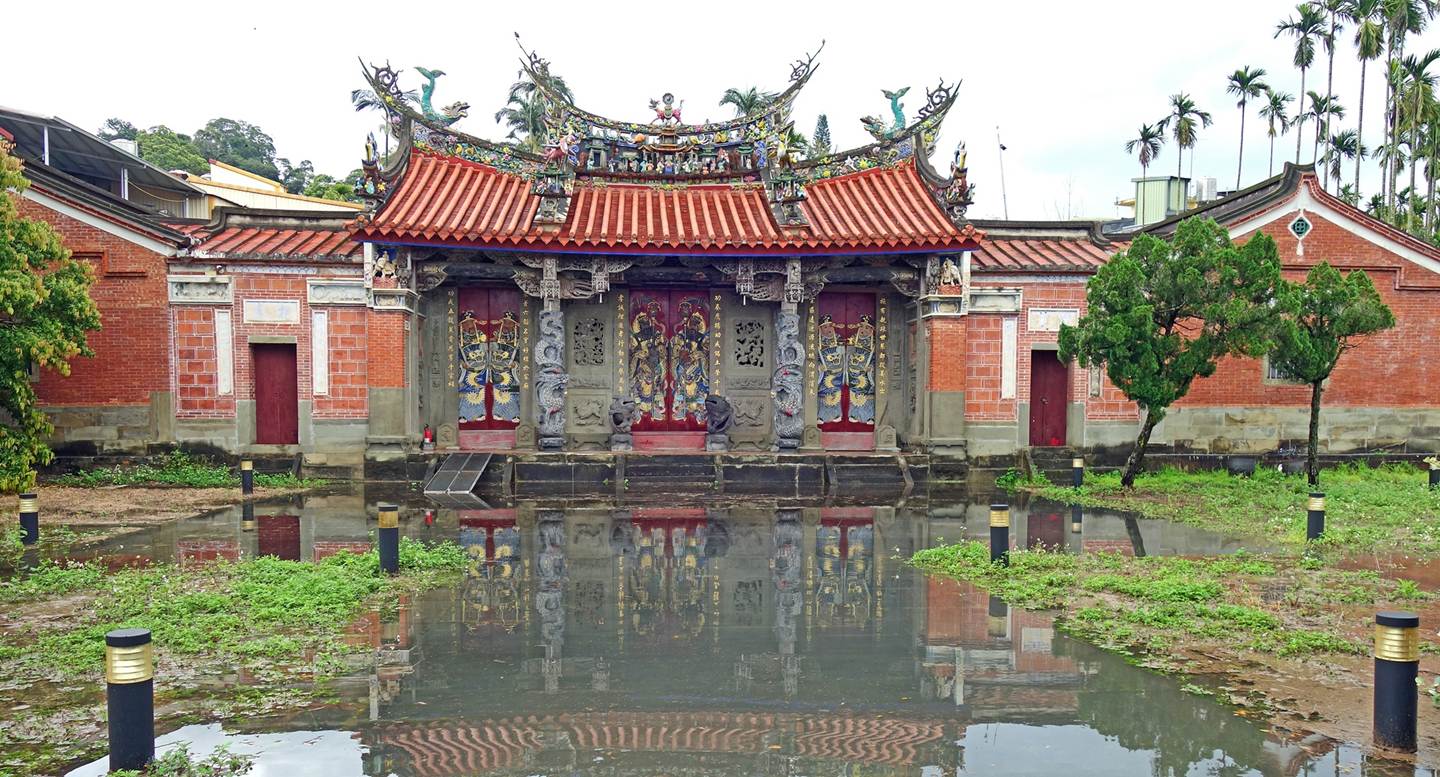
Tianshui Hall (北埔姜屋天水堂):
It was built around 1835
by Jiang Xiuluan, a 5th-rank official of the Qing
Dynasty and a landowner. Jiang Xiuluan was instrumental in the development of
the Jin Guang Fu company, a joint tea venture between Hakka and Hokkien people,
a rare example of cooperation between these two groups of Han settlers at the
time. The Tianshui Hall sits next to a building of this company dating from the
same period, known as the Jin Guang Fu Hall.

Zongshu Hall (忠恕堂):
This traditional
three-hall house was built in 1922 by the son of Zeng Xuexi, who was the first
resident of Beipu to pass the Chinese imperial examination. Renovated in the
early 2000s, it now houses a cultural foundation preserving Hakka culture.
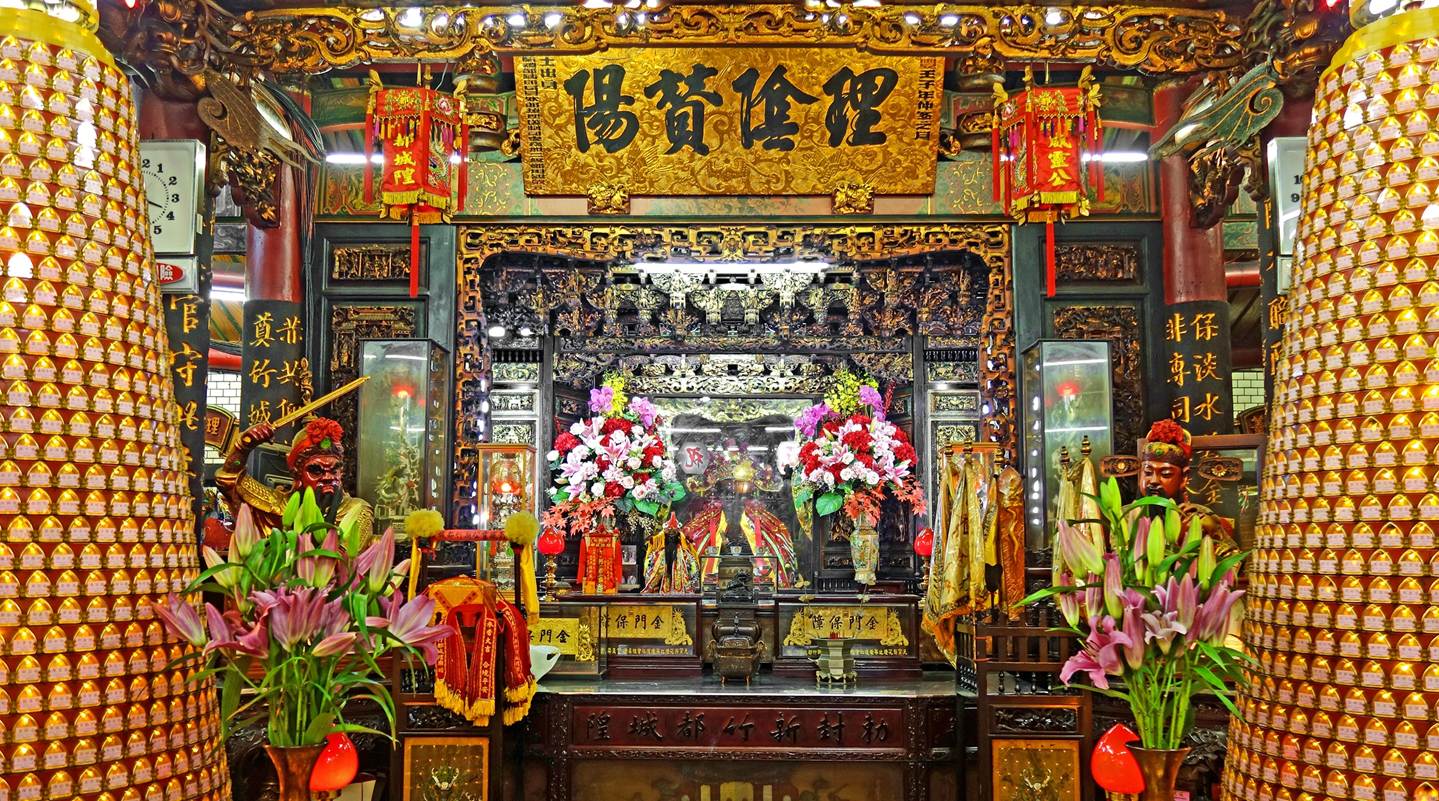
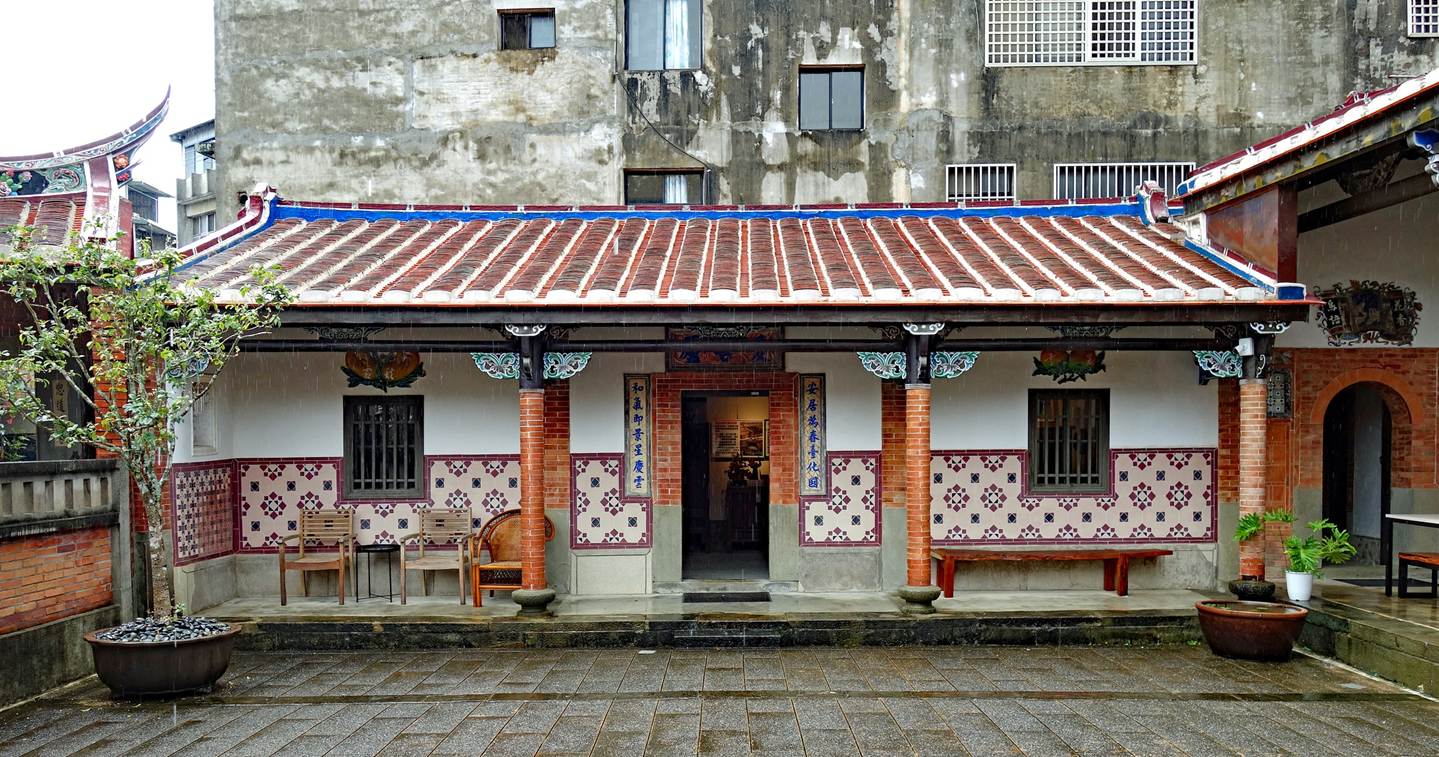
Jiang family temple (姜氏家廟):
The Jiang family were
wealthy Beipu tea merchants. They built this temple in 1924. During World War
II, it was requisitioned as a warehouse for the Japanese military and a machine
gun was installed on its roof. The temple was damaged again in the 1999
earthquake. Its most recent restoration dates from January 2016.