[November 2016, April 2017, and March 2026]

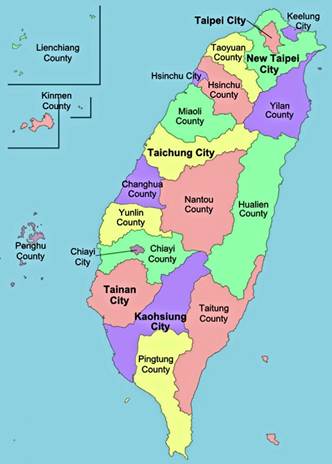
[Source: https://en.wikipedia.org/wiki/Taiwan_Area ]
This page complements
the first page (Part 1/2) of photos I took in the municipality of Kaohsiung. It features
on photos taken outside the urban core of Kaohsiung City, specifically in the
following locations:
- Around Lotus Pond (蓮池潭), on the northern edge
of Kaohsiung's urban center,
- Around Jinshi Lake (金獅湖), northeast of
Kaohsiung's urban center,
- In Qishan (旗山), the only town in the suburban Qishan
district (旗山區), approximately 35km northeast of
Kaohsiung's urban center.
- In Meinong (美濃), the only town in the suburban
Meinong District (美濃區), about 10km east of Qishan.
- At the Fo Guang Shan
Buddha museum (佛光山佛陀紀念館), 20km northeast of
Kaohsiung's urban center.
Around Lotus Pond (蓮池潭)
Lotus Pond is an artificial
lake created in 1951. Its shores concentrate a large
number of interesting sites.
Gates of the old city of Zuoying
(左營舊城):
During the Qing
Dynasty, this city (also known as the old city of Fengshan
County, 鳳山縣舊城) was the seat of the Fengshan County. Little remains of it except a few sections
of defensive walls and four large gates. When I visited the area in March 2016,
two of the surviving gates and most of the walls were being renovated and not
accessible.
The South Gate, also
called the Qiwen Gate (啟文門). The former defensive walls connected to this gate
were removed some years ago to create a traffic circle around the gate.
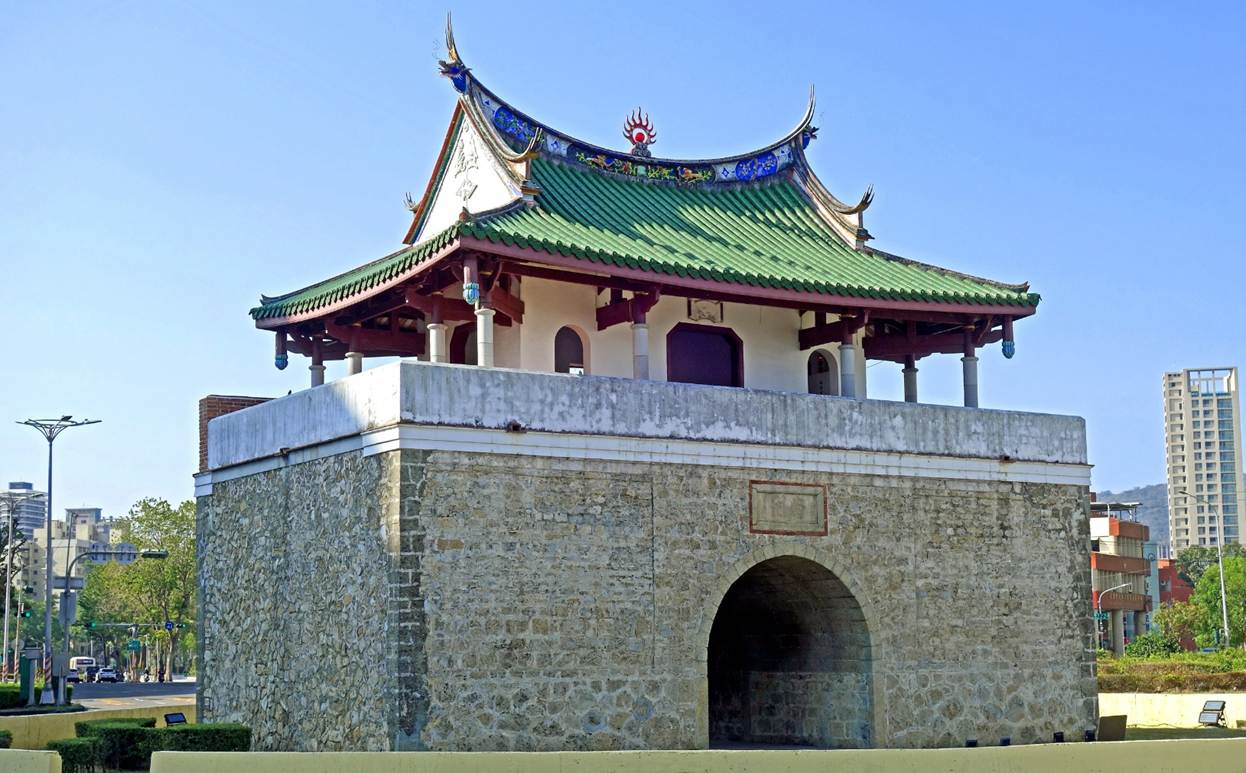
[March 2026]
The North Gate, also
called the Gongchen Gate (拱辰門).
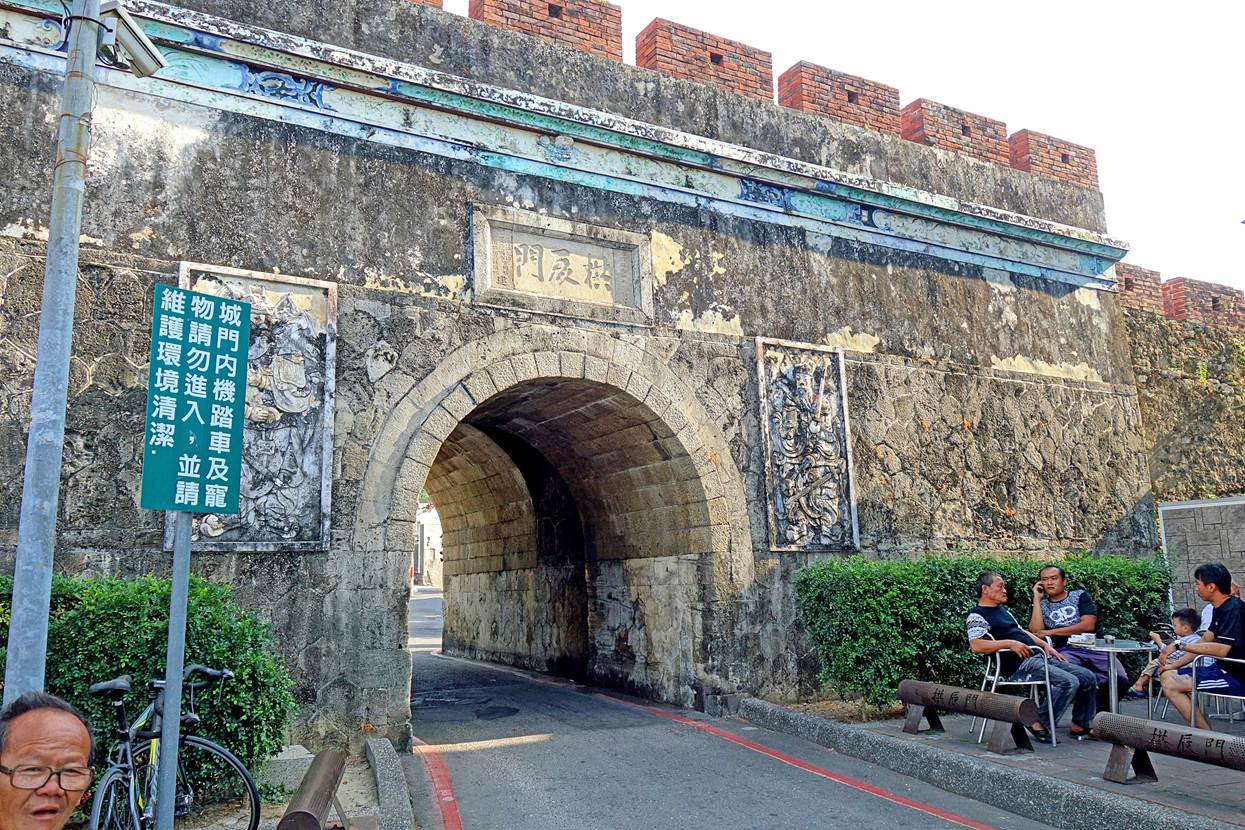
[April 2017]
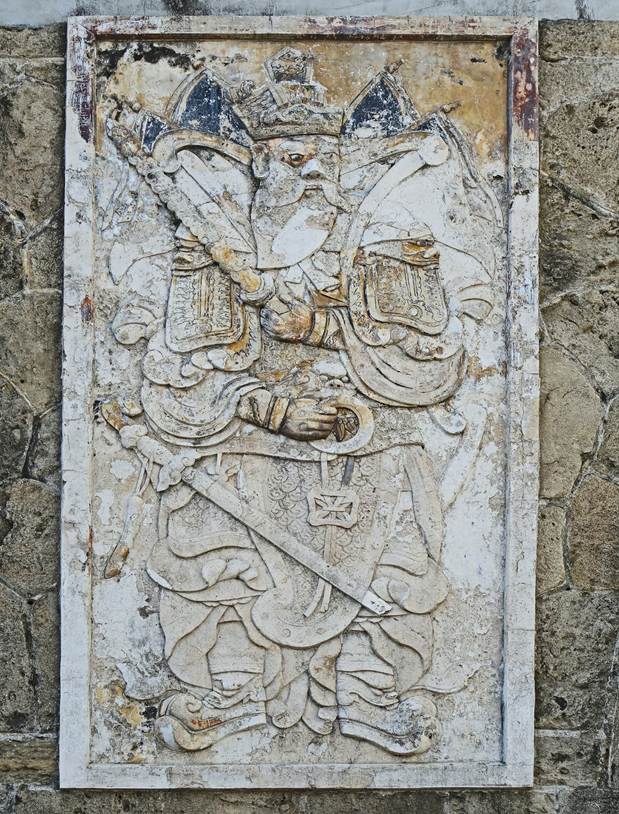
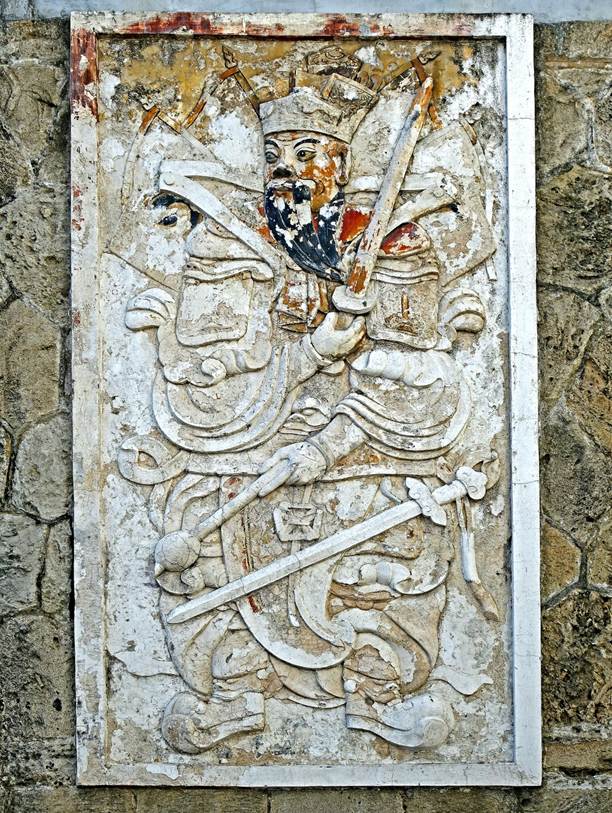
Close-ups on sculptures
(visible in the photo above on either side of the passageway). They represent
two door gods (门神), named Shenshu (神荼) and Yulu (鬱壘), who are believed to
ward off evil.
|
|
|
[March 2026]
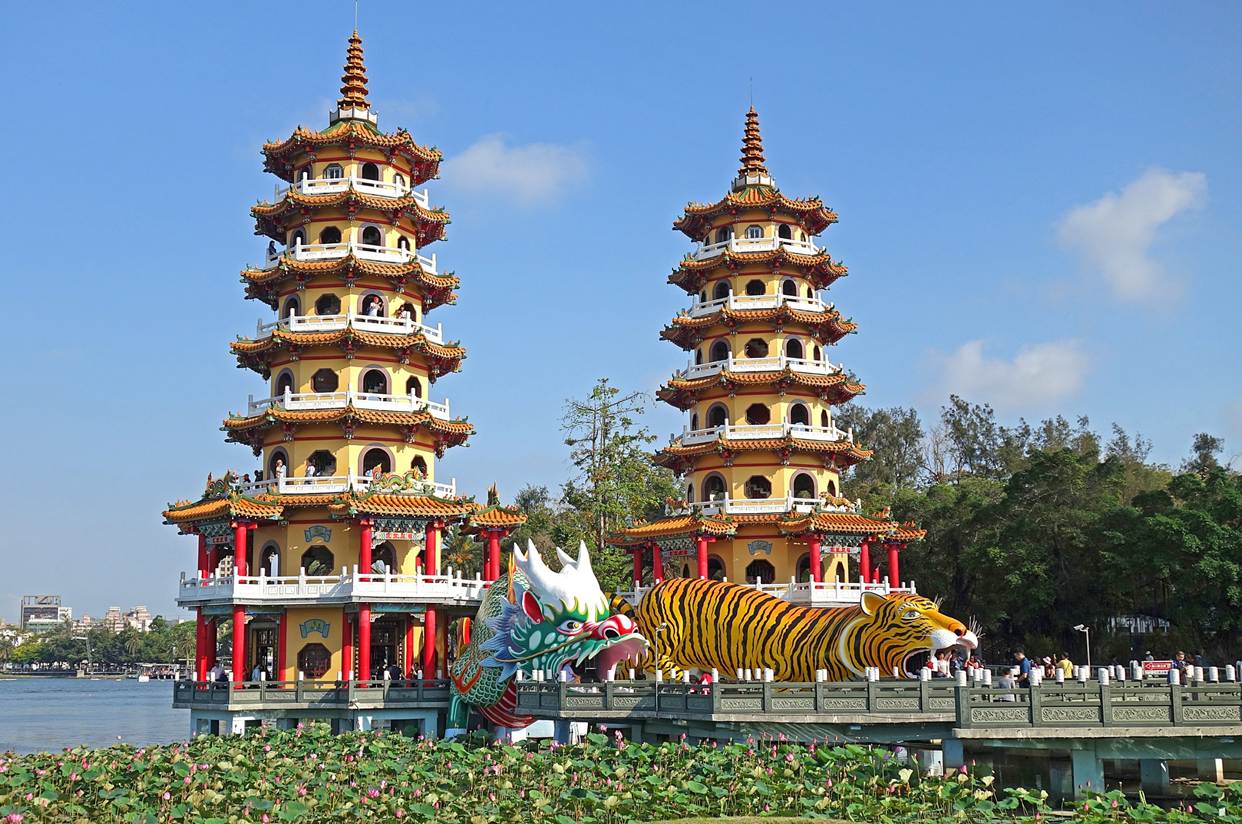
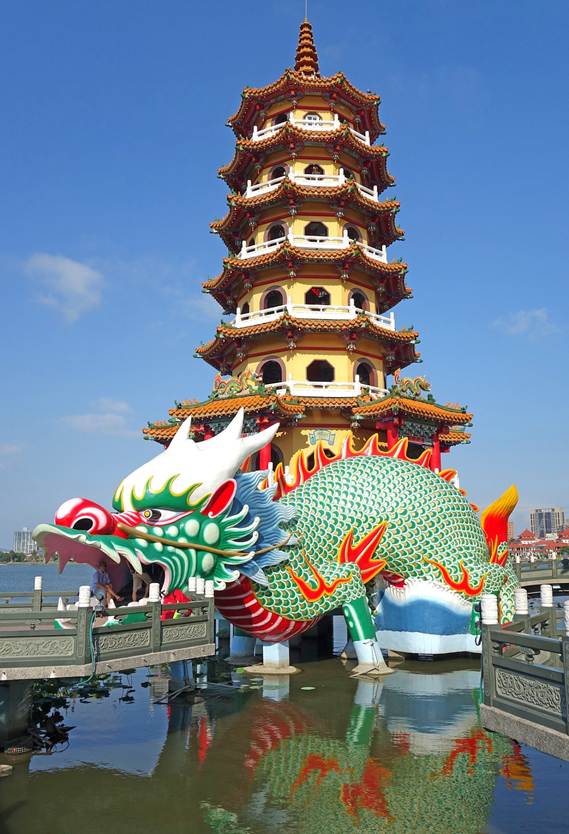
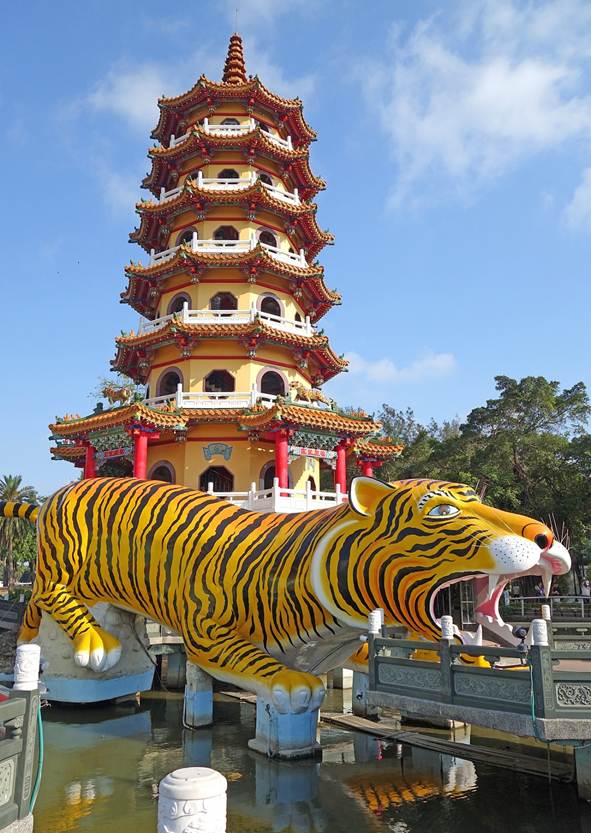
Dragon and Tiger Pagodas (龍虎塔):
Built in 1976, these two
pagodas stand on the southern shore of the Lotus pond and are connected to one
another. It is said that entering through the dragon′s mouth and exiting
through the tiger′s turns bad luck into good fortune. A long bridge made
of gray stone traces nine sharp turns to reach the pagodas. Walking along this
bridge is reputed to ward off evil spirits.
|
|
|
[April 2017]
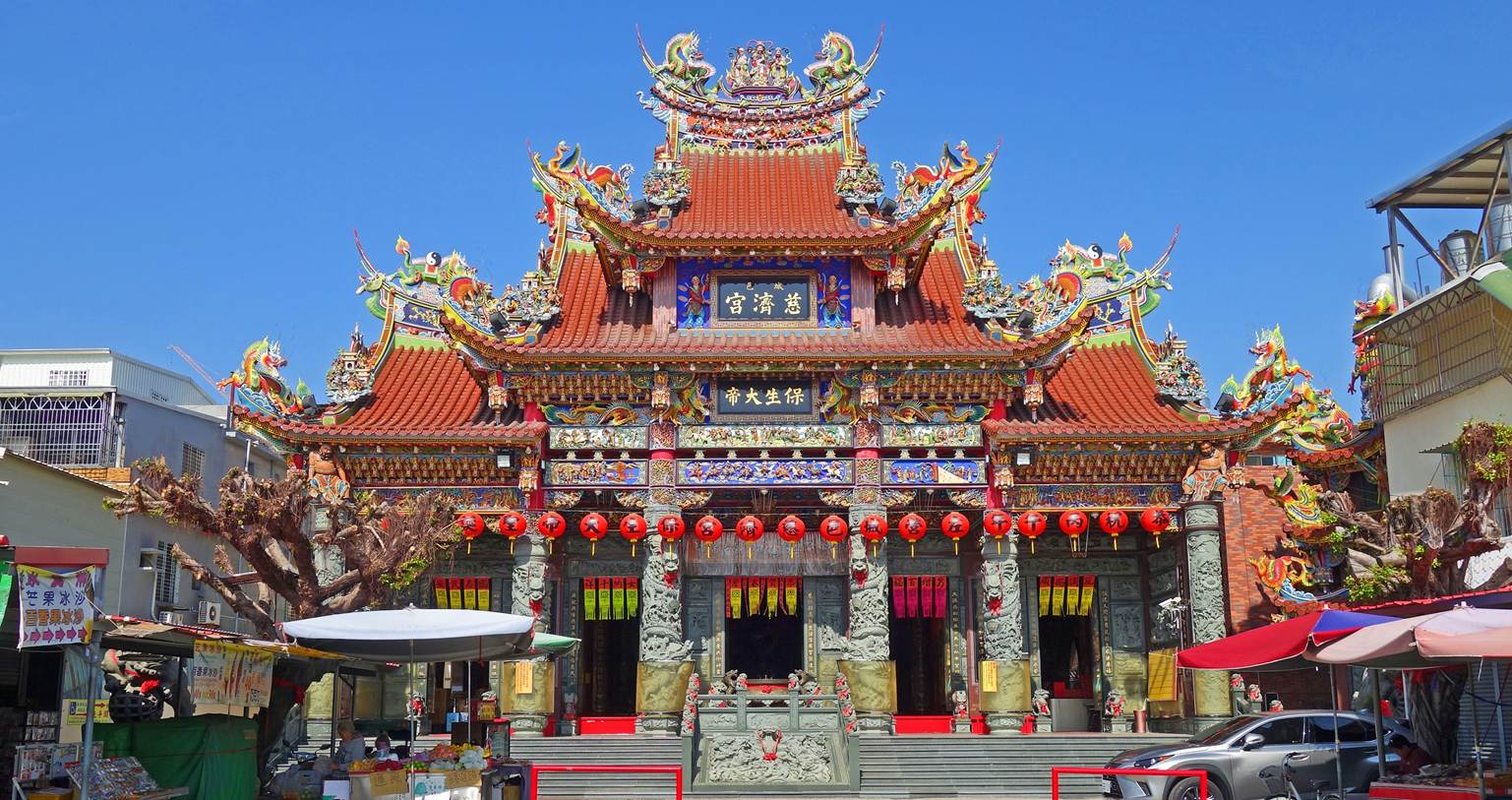
Chiji temple (左營城邑慈濟宮):
Also located on the southern
shore of the Lotus pond, this temple was originally located in the old city of Zuoying. It was reconstructed at its current location in
1962 and rebuilt again between 2004 and 2008. It is mainly dedicated to Baosheng Dadi (保生大帝), also known as Dadao
Gong, the folk God of Medicine, a deified physician and healer named Wu Tao
(979-1036CE) who lived in the Fujian province of China.
[March 2026]
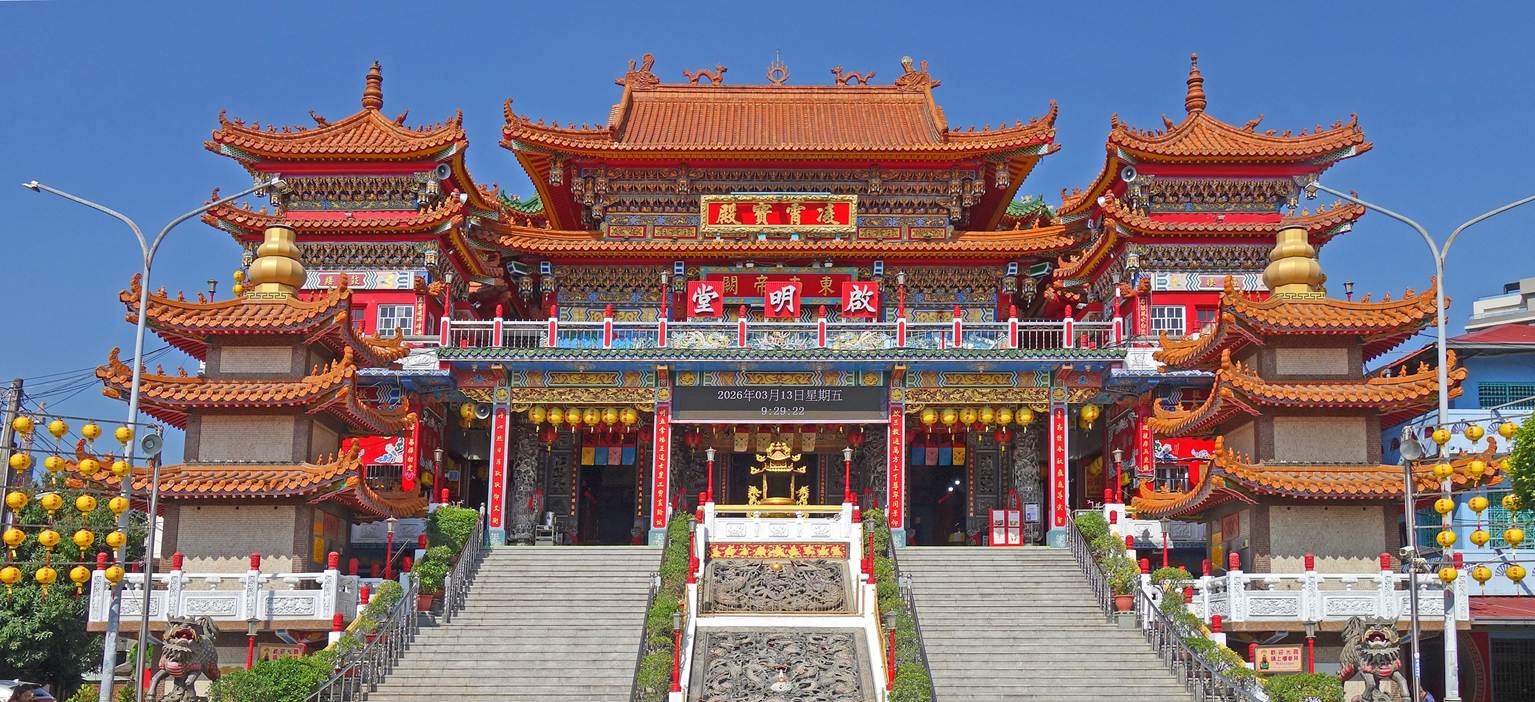
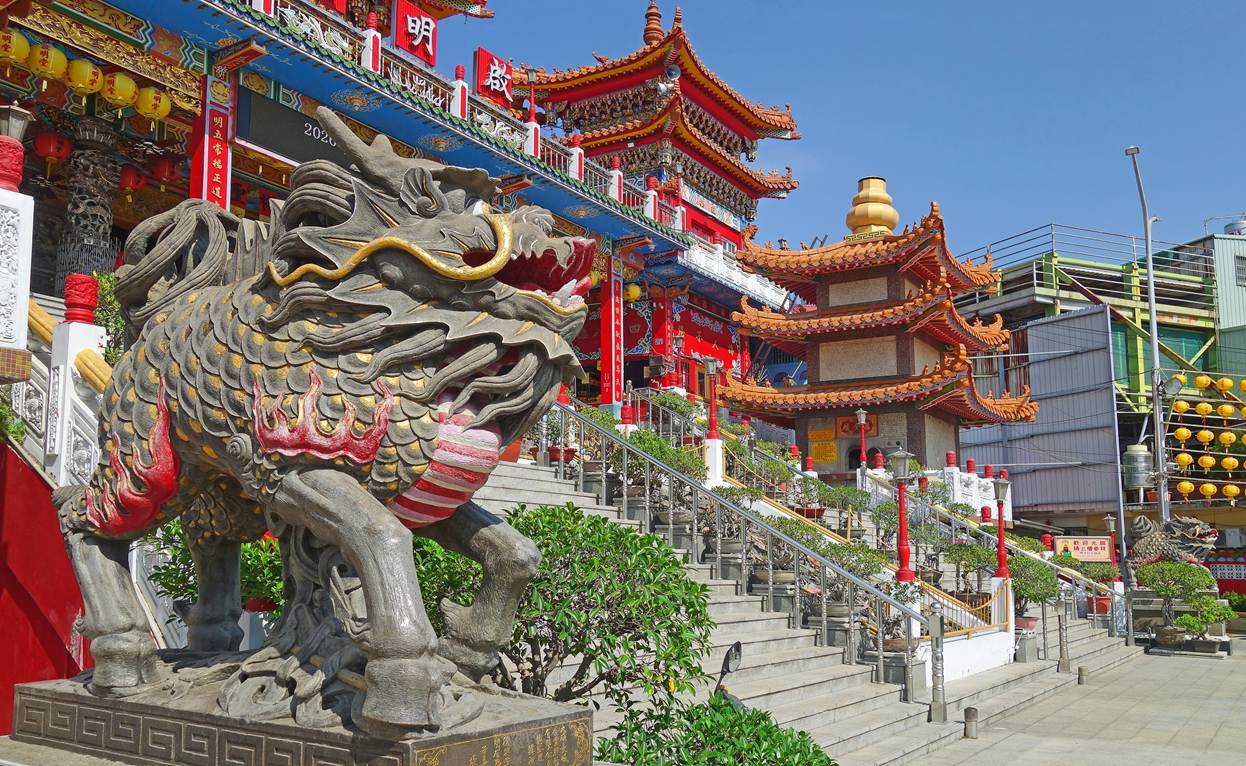
Zuoying Chiming temple (左營啟明堂):
This temple is
primarily dedicated to Confucius (the Sage of Literature) and Guan Yu (the Sage
of War), yet dozens of other deities, including Buddhist ones, are worshipped
here. Built at this location in the 1960s to replace a dilapidated Guandi temple located in the old city of Zuoying, it was reconstructed in several stages during the
early 1990s.
Both Guandi (关帝) and Guangong (关公) are the names referring
to the Taoist God of War, the deified version of a general named Guan Yu (关羽) during his lifetime.
Most temples dedicated to the God of War employ the names Guandi
or Guangong. This temple's use of the name Guan Yu
may aim to emphasize the general's renowned moral virtues (in particular,
righteousness and loyalty), rather than his martial skill prowess, thereby
firmly establishing a parallel with Confucius.
Facade of the temple.
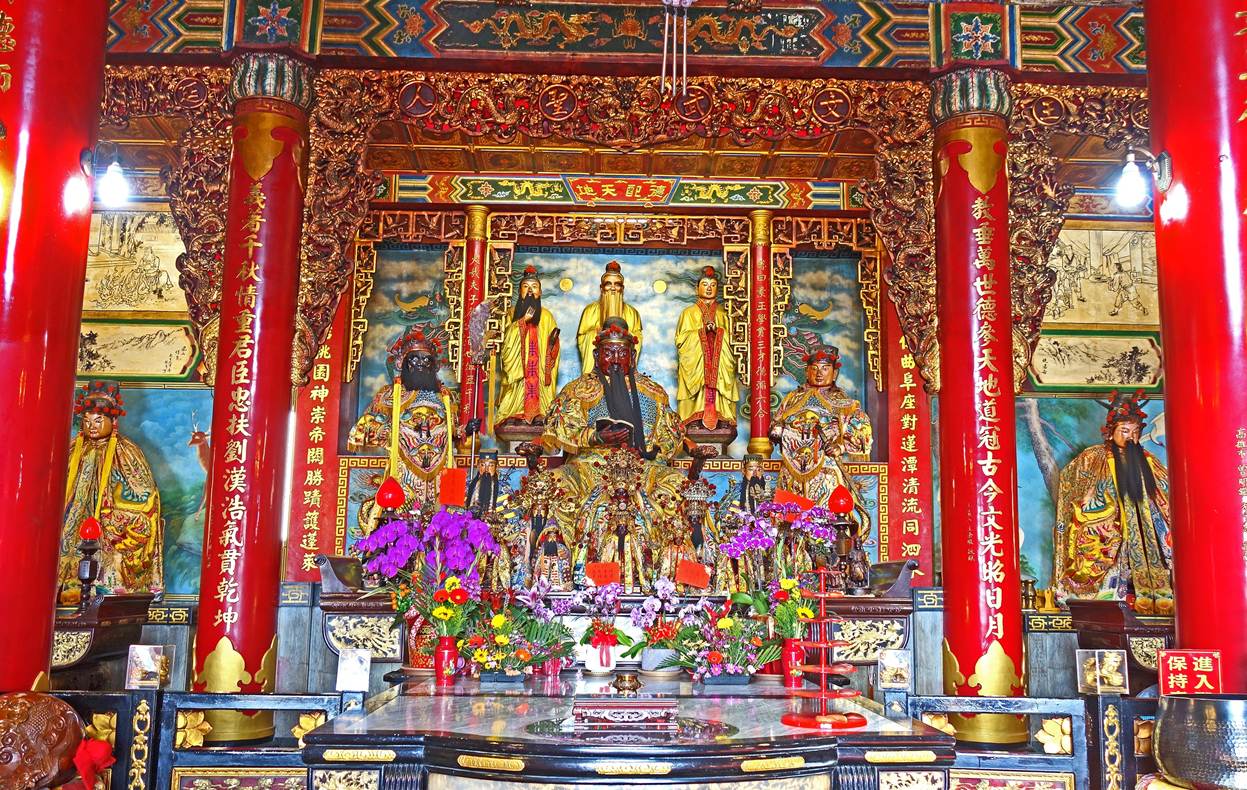
Altar in the main hall,
featuring Guan Yu in the center and Confucius behind him.
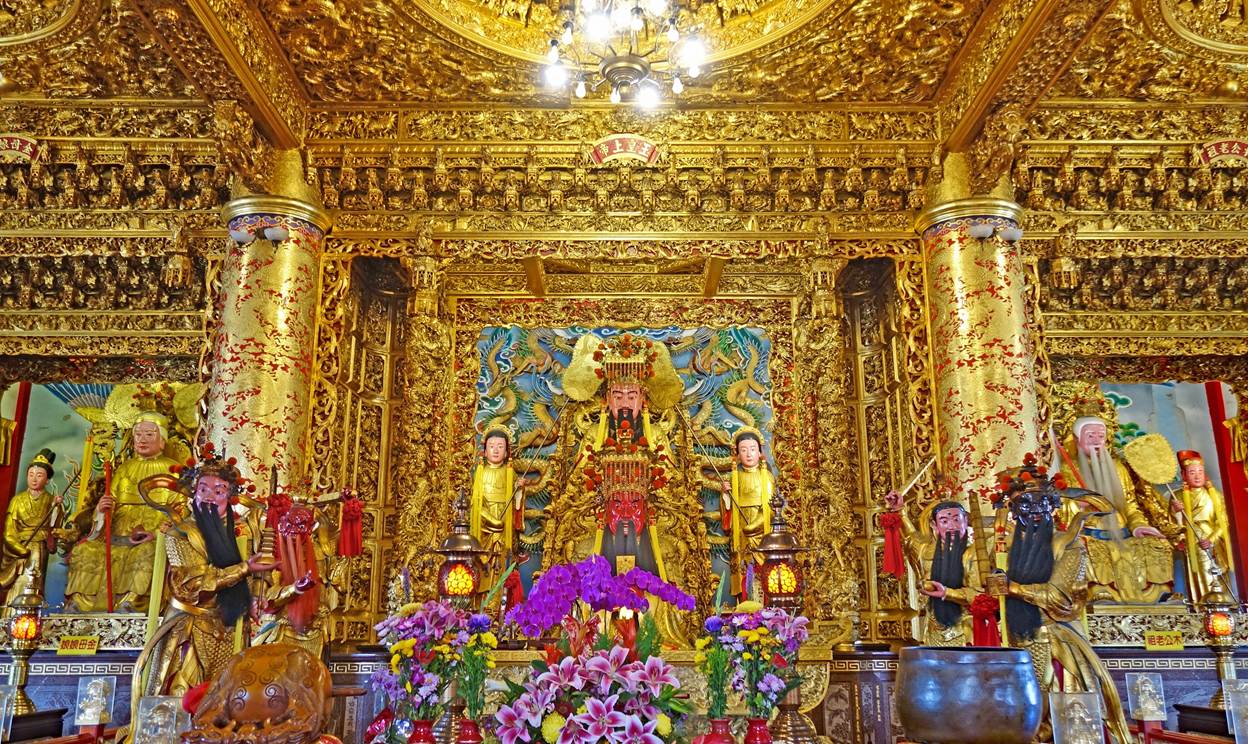
Altar featuring the Jade Emperor (玉皇上帝).
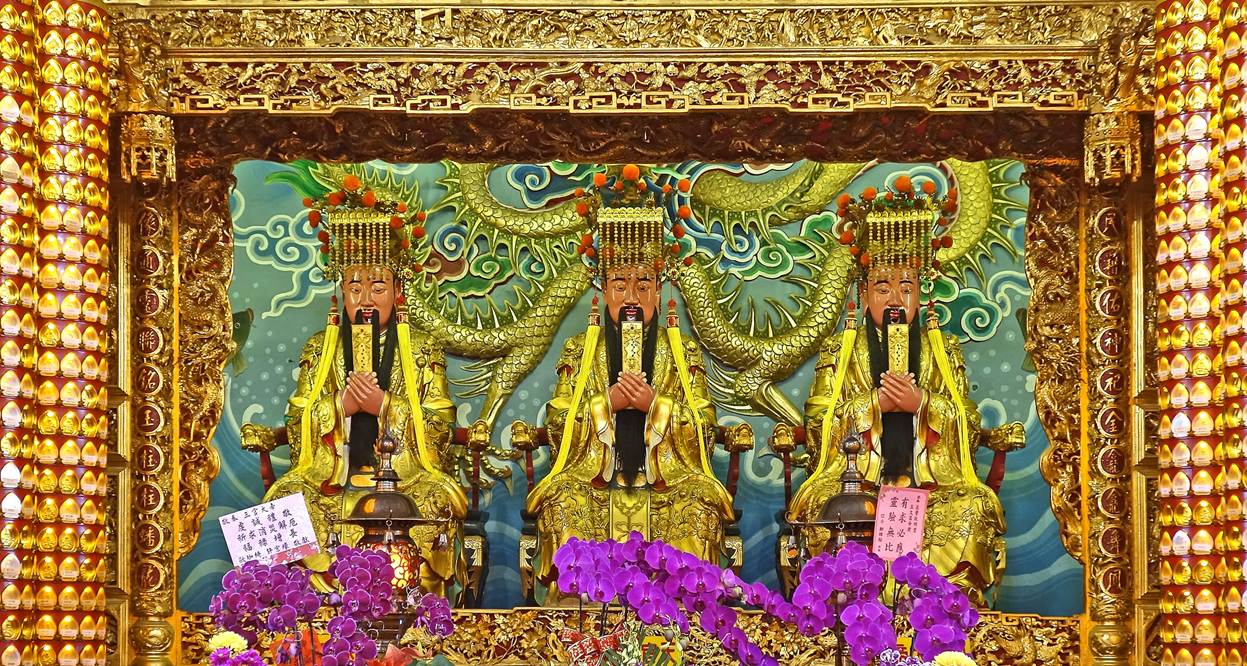
The Sanguan
Dadi (三官大帝) altar. The statues
represent the three Emperor-Officials,
who subordinate only to the Jade Emperor: the Heavenly Official (天官, ″Tianguan″), the Earthly Official (地官, ″Diguan″) and the Water Official (水官, ″Shuiguan).
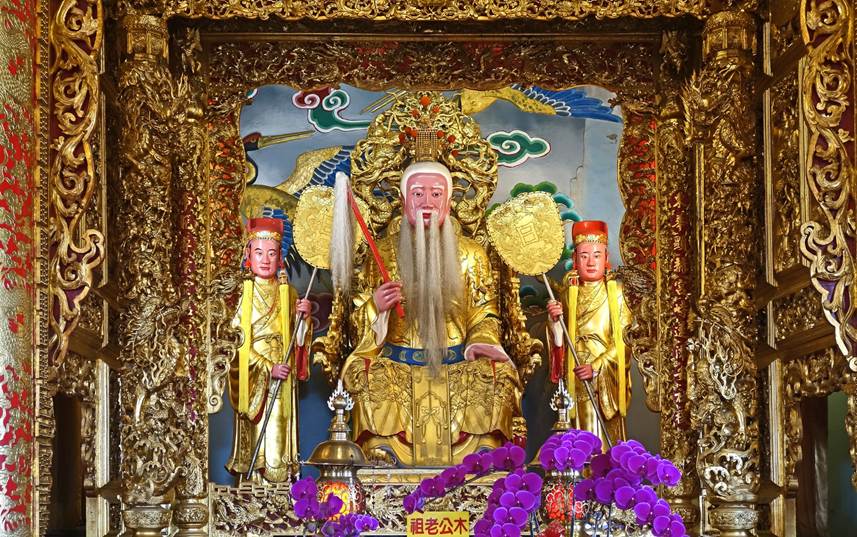
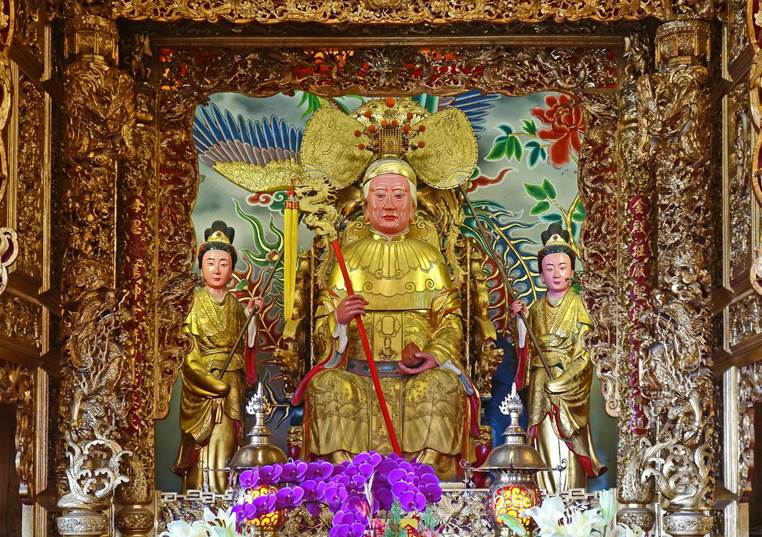
Altars
dedicated to Patriarch Mu Gong (木公老祖) on the left, and to the
Golden Mother (金母娘娘) on the right. Together, they represent
the ultimate cosmic balance of masculine and feminine energies: Mu Gong is the
embodiment of Yang, and the Golden Mother, that of Yin.
|
|
|
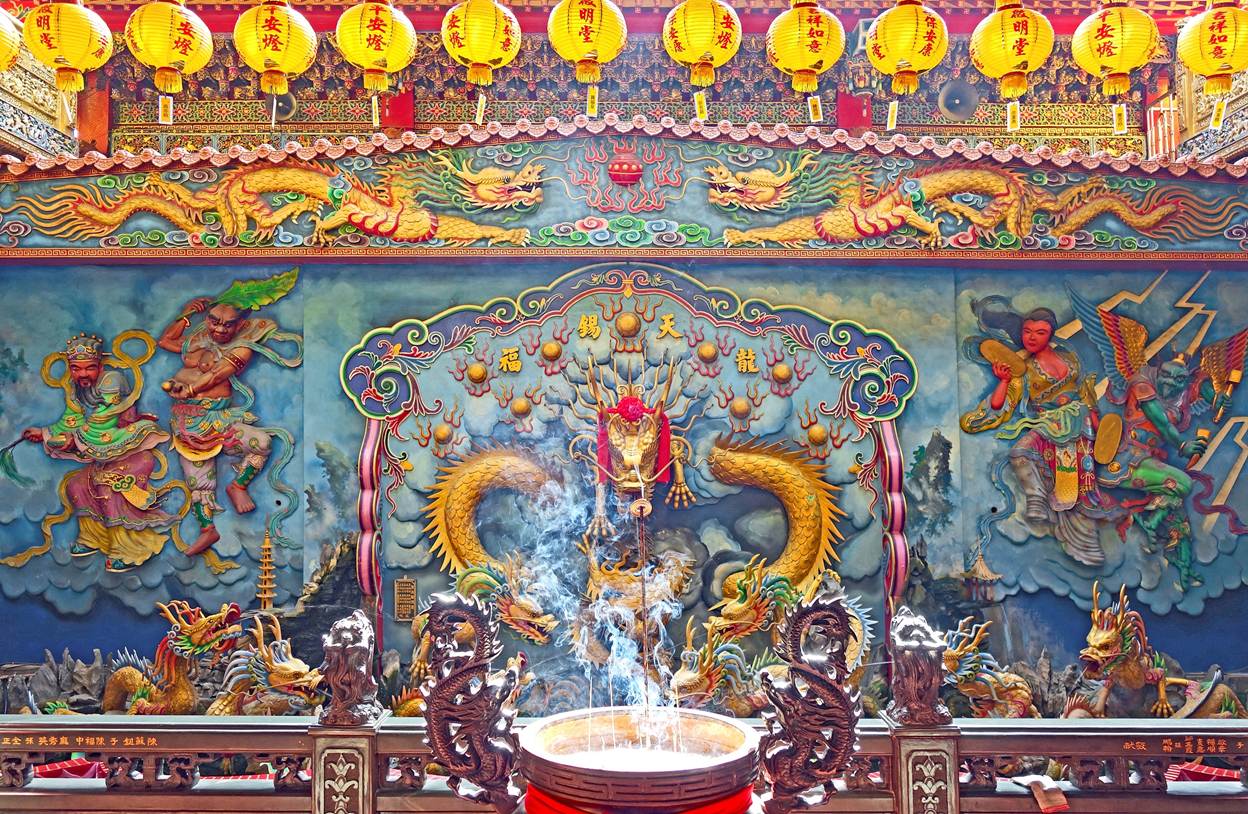
Fresco in the Fish Pond
Courtyard (中庭鱼池) of the temple.
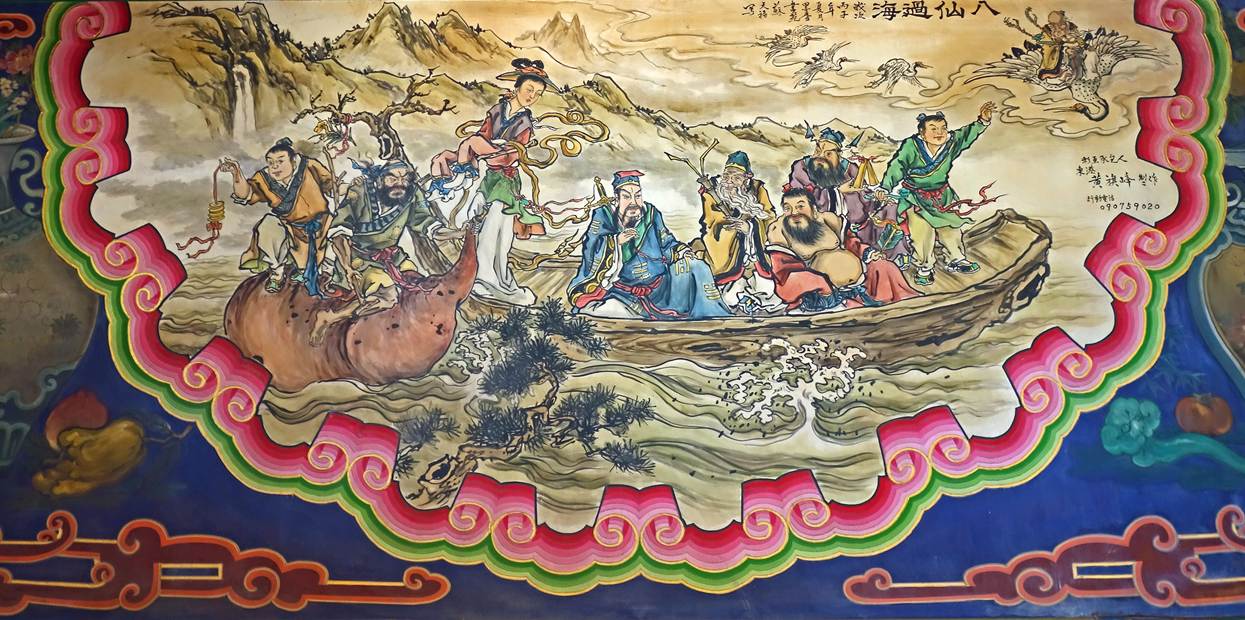
Painting in the temple.
[March 2026]
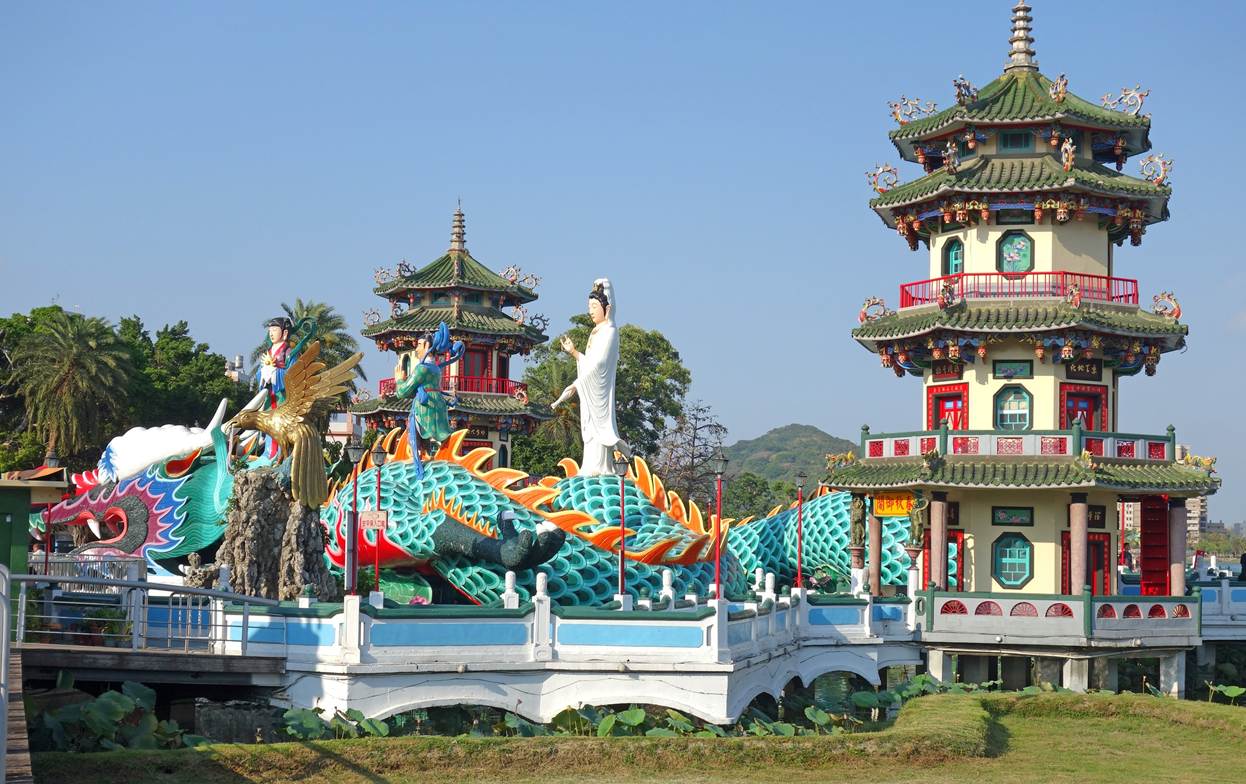
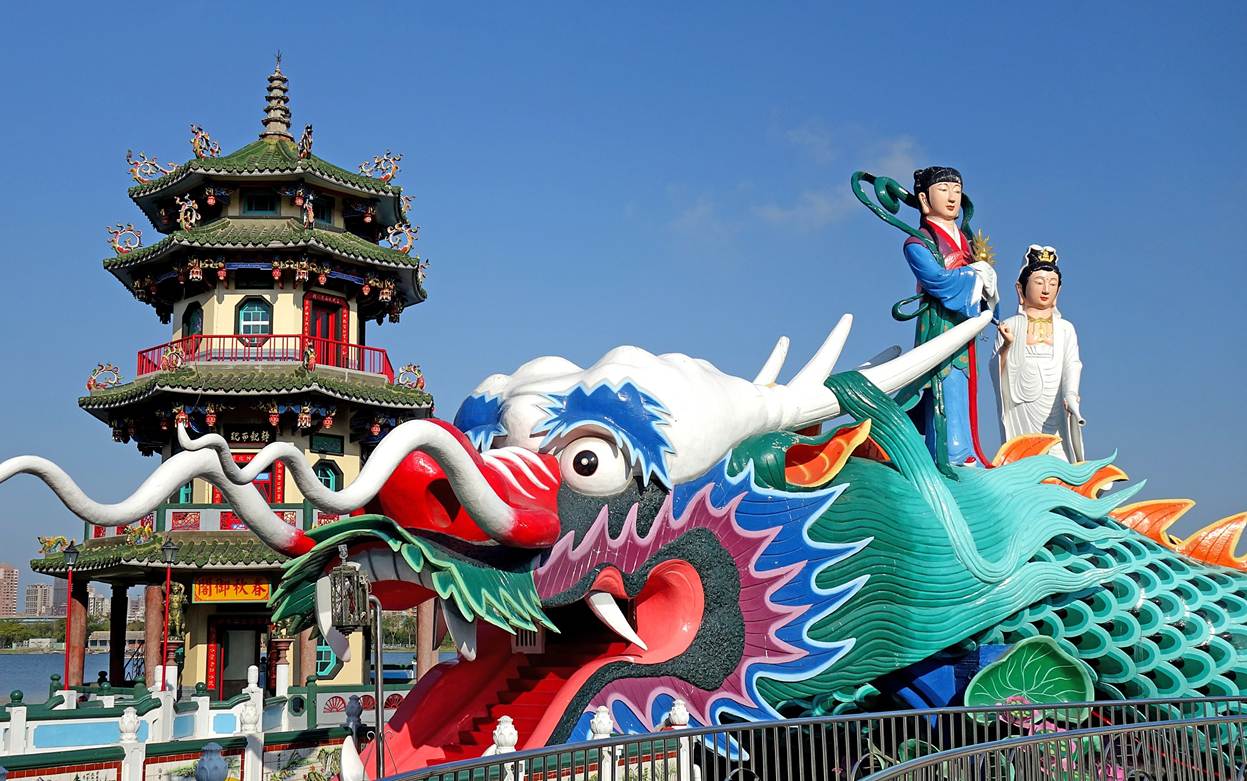
Spring and Autumn Pavilions (春秋閣):
This odd structure
faces the Zuoying Chiming temple featured above, to
which it belongs. Built on stilts upon the shallow waters of the Lotus pond, it
consists of two four-story, pagoda-shaped octagonal pavilions, dedicated
respectively to Confucius and Guan Yu. Standing between them are the statues of
three figures riding a dragon. The white statue depicts Guanyin. The entire
structure may serve to underscore the temple's message of wisdom and religious
inclusivity.
[April 2017]
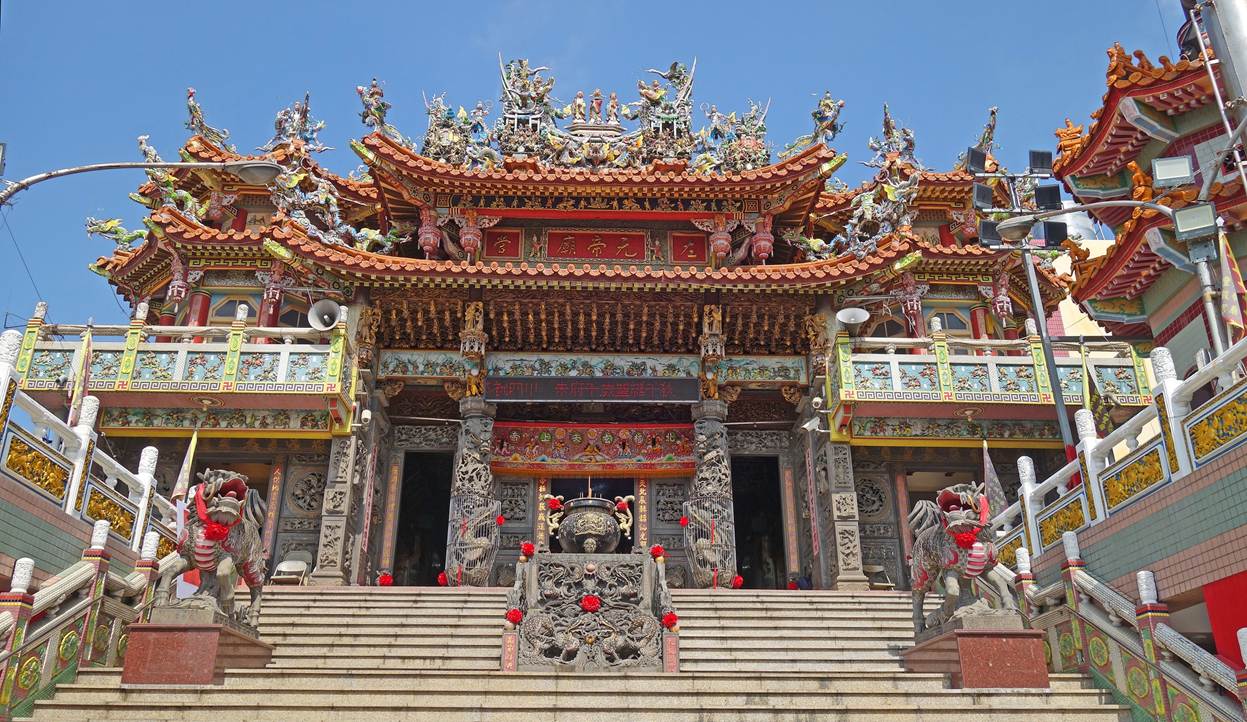
Zuoying Yuandi temple (左營元帝廟):
This temple was founded
in the late 17th century, but it has been reconstructed and renovated several
times since then. The current structure is for the most part a reconstruction
of the mid-1970s. The main Taoist deity worshipped there is Xuantian
Shangdi (玄天上帝), also known as the ″God
Emperor of the North Pole″ and the ″Supreme Emperor of the Dark
Heaven″, along with other deities, including the Buddhist deity Guanyin.
Facade of the temple.
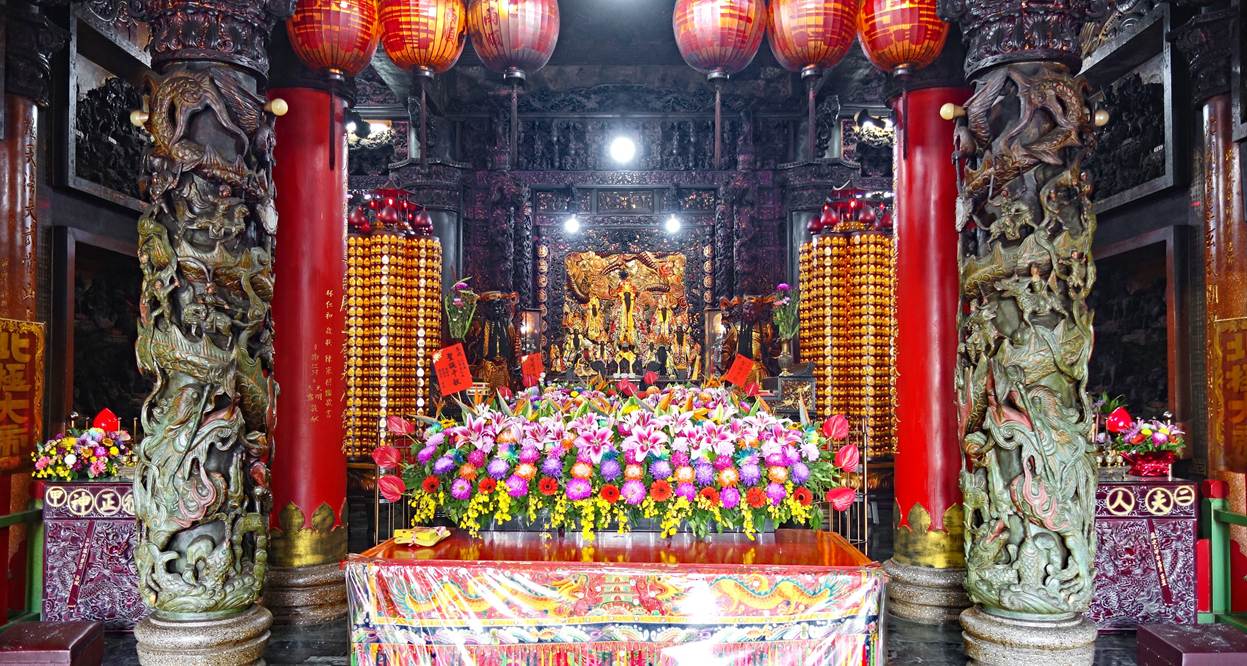
Altar of the main hall
with a statue of Xuantian Shangdi.
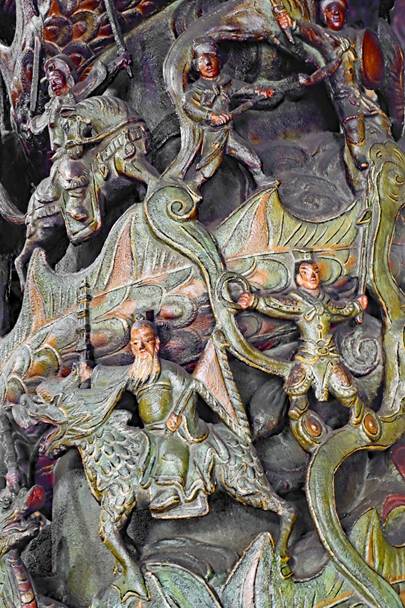
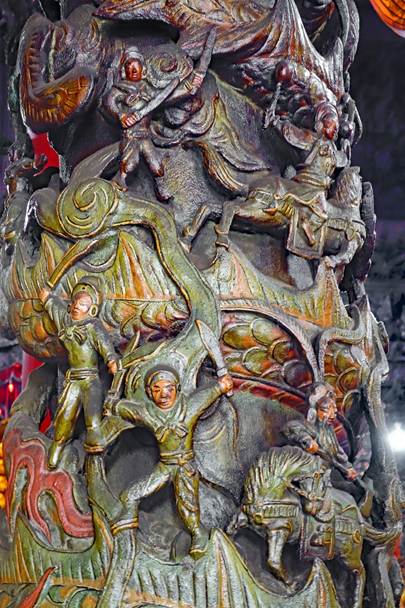
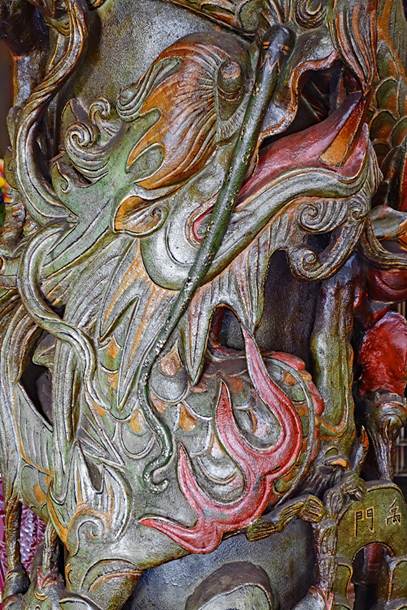
Details of the superbly
carved columns in the main hall.
|
|
|
|
[March 2026]
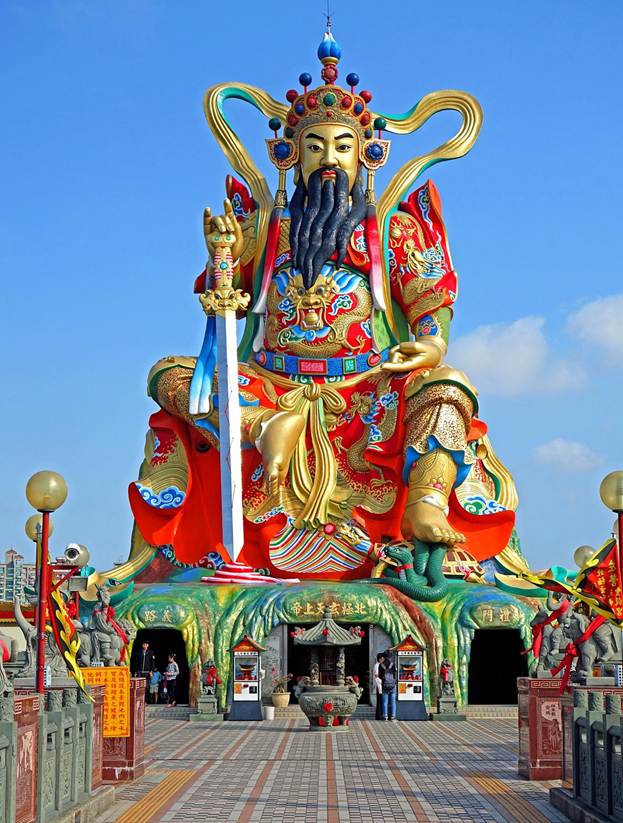
Beiji (″North Pole″) Pavilion (北极亭):
This pavilion is an
extension of the Zuoying Yuandi
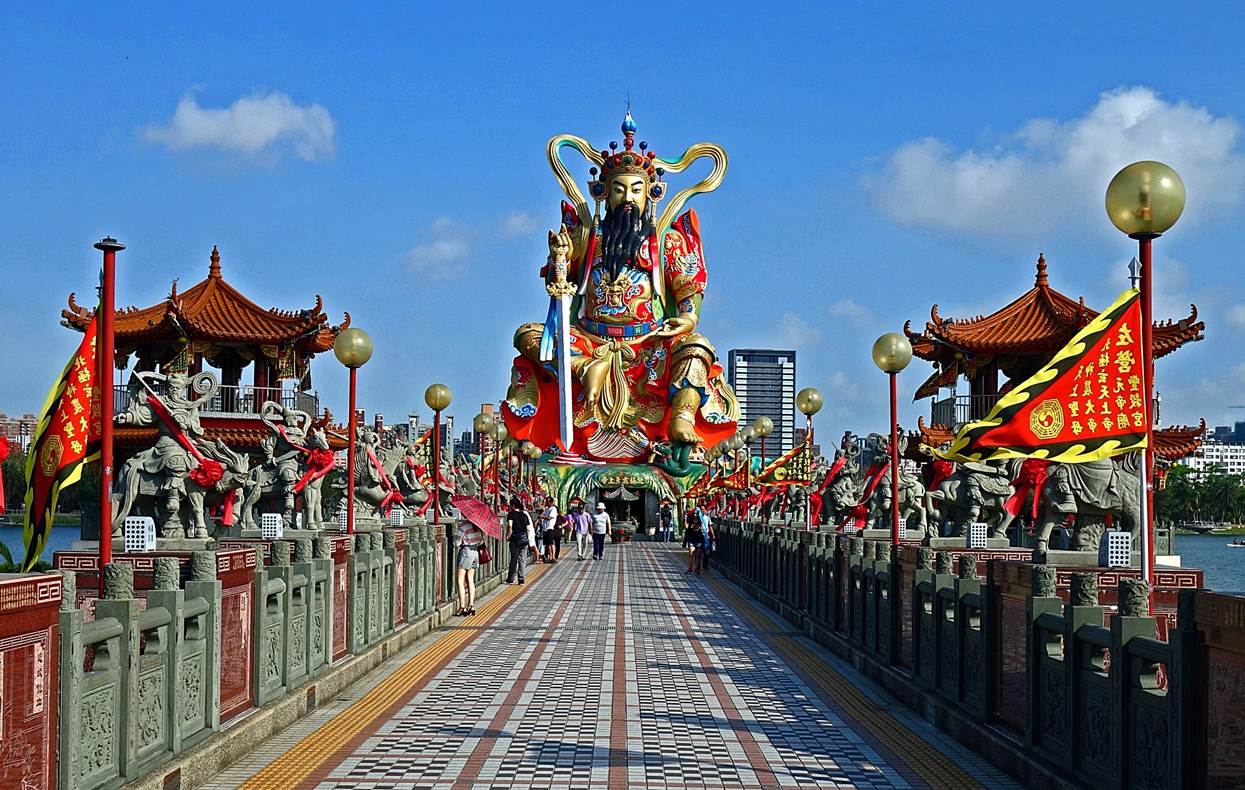
temple featured above. It is built on stilts upon the Lotus pond and is
accessed via a long, straight bridge lined with statues on both sides. Like the
temple, it is dedicated to Xuantian Shangdi (玄天上帝).
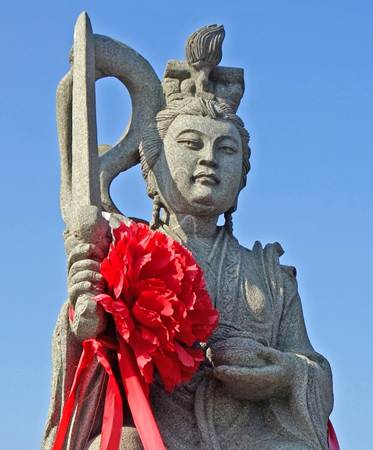
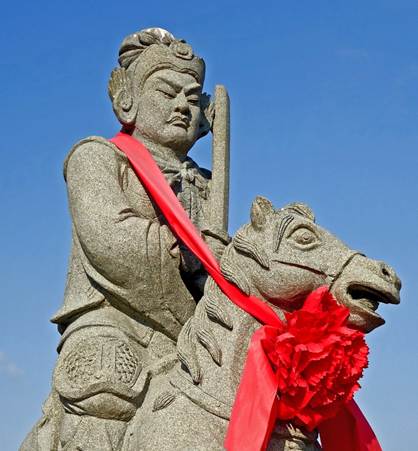
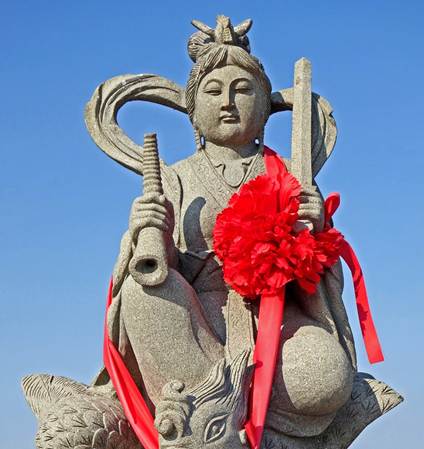
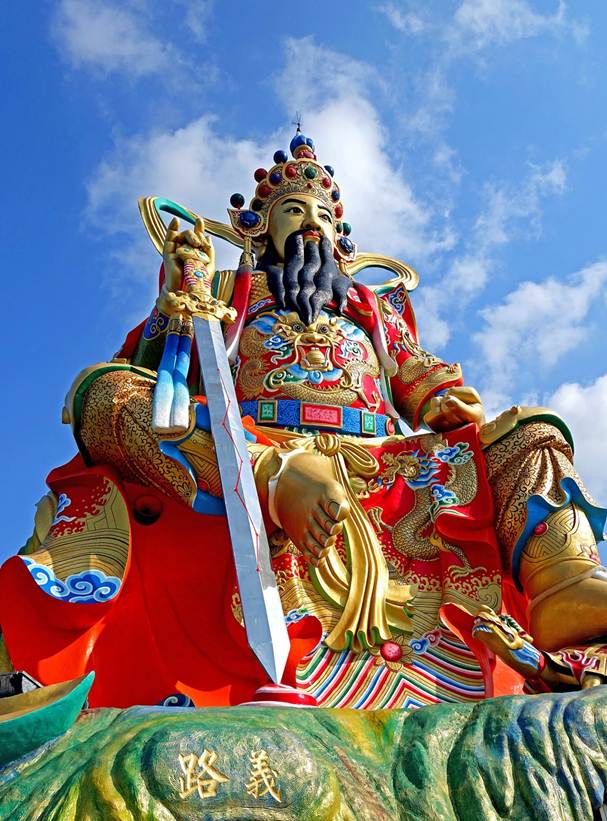
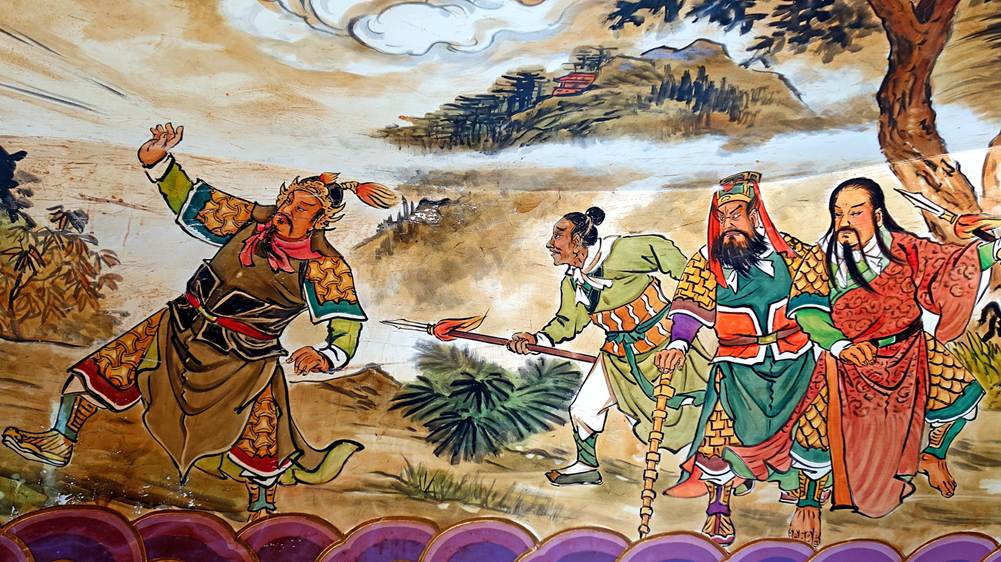
Photos of the bridge,
the pavilion, and the massive statue of Xuantian Shangdi seated above the pavilion. The railings on both
sides of the bridge are made of carved stone slabs, separated by statues of
guardians, probably generals and civil officials. The ensemble formed by the
pavilion and the statue of Xuantian Shangdi is 24m high above the lake. The sword in the god's
hand is 11.5m in length.
|
|
|
|
|
|
|
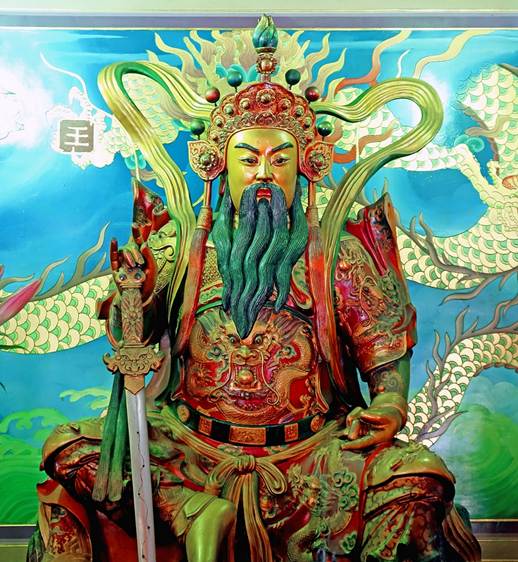
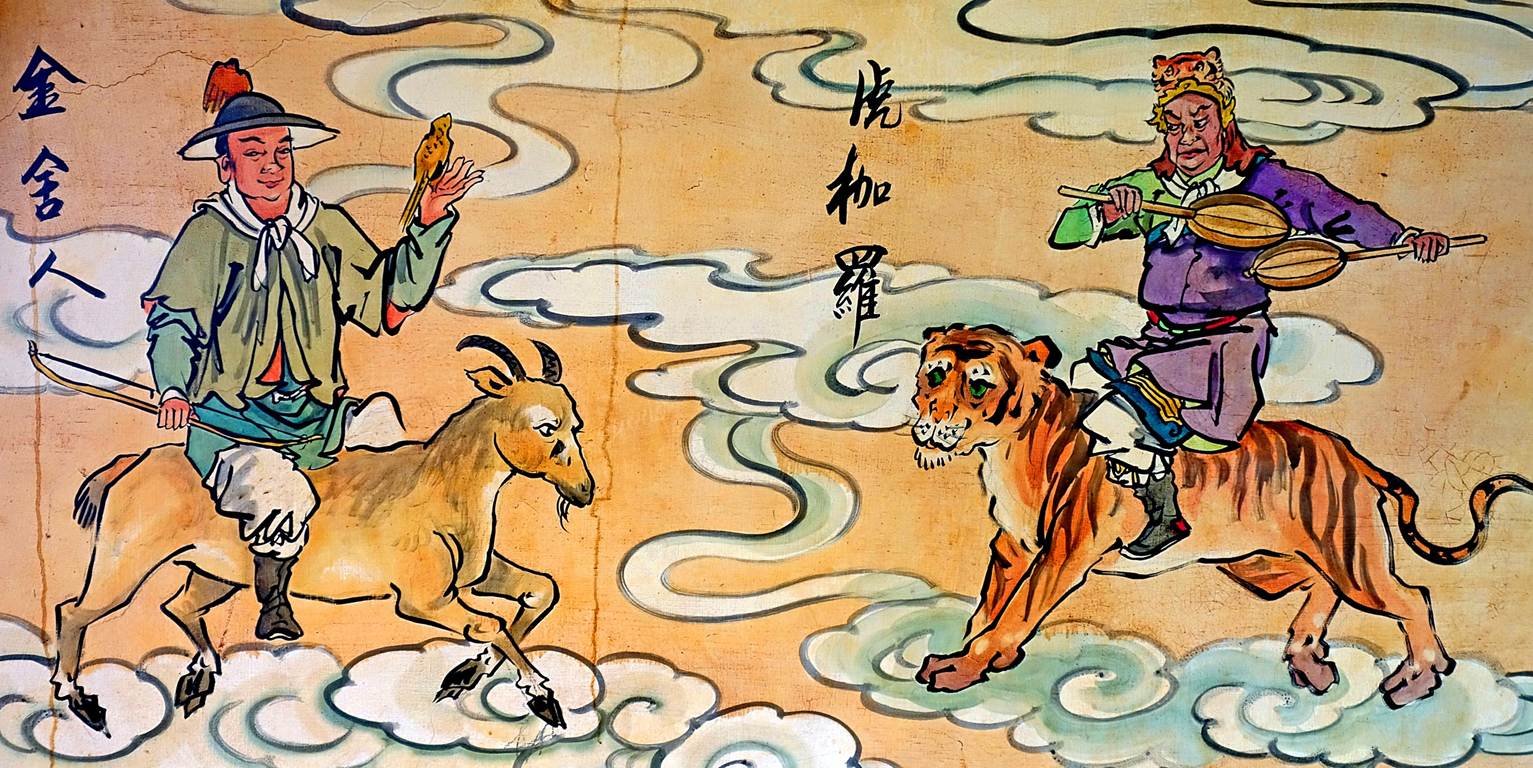
Inside the pavilion.
Left: Another statue of Xuantian Shangdi. Right and
below: Wall paintings.
|
|
|
[April 2017]
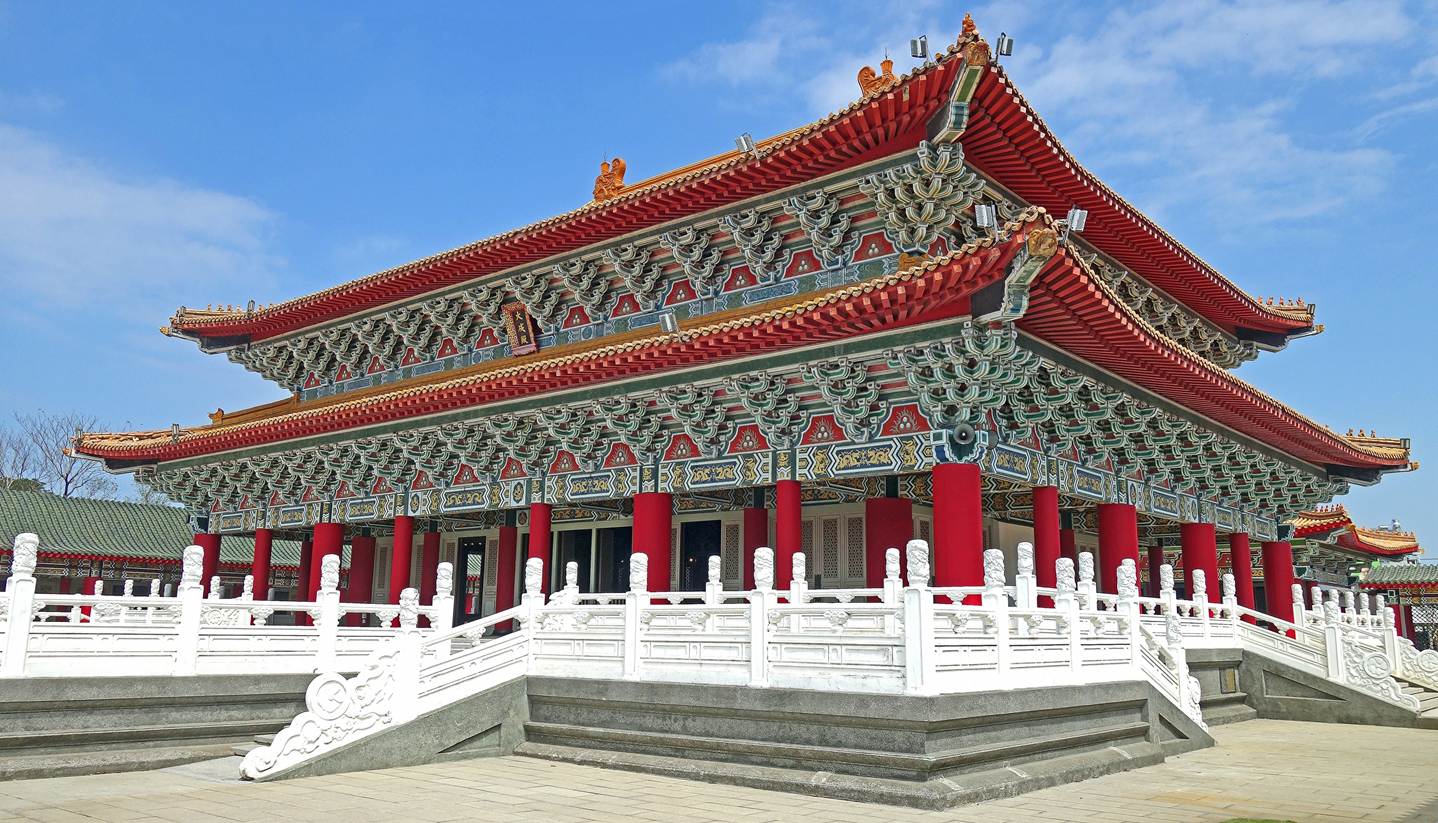
Kaohsiung City temple of Confucius (高雄左營孔子廟):
Located on the northern
shores of the Lotus pond, this temple was constructed between 1974 and 1976, in
the northern-China style of the Forbidden Palace in Beijing. It consists of
several large buildings.
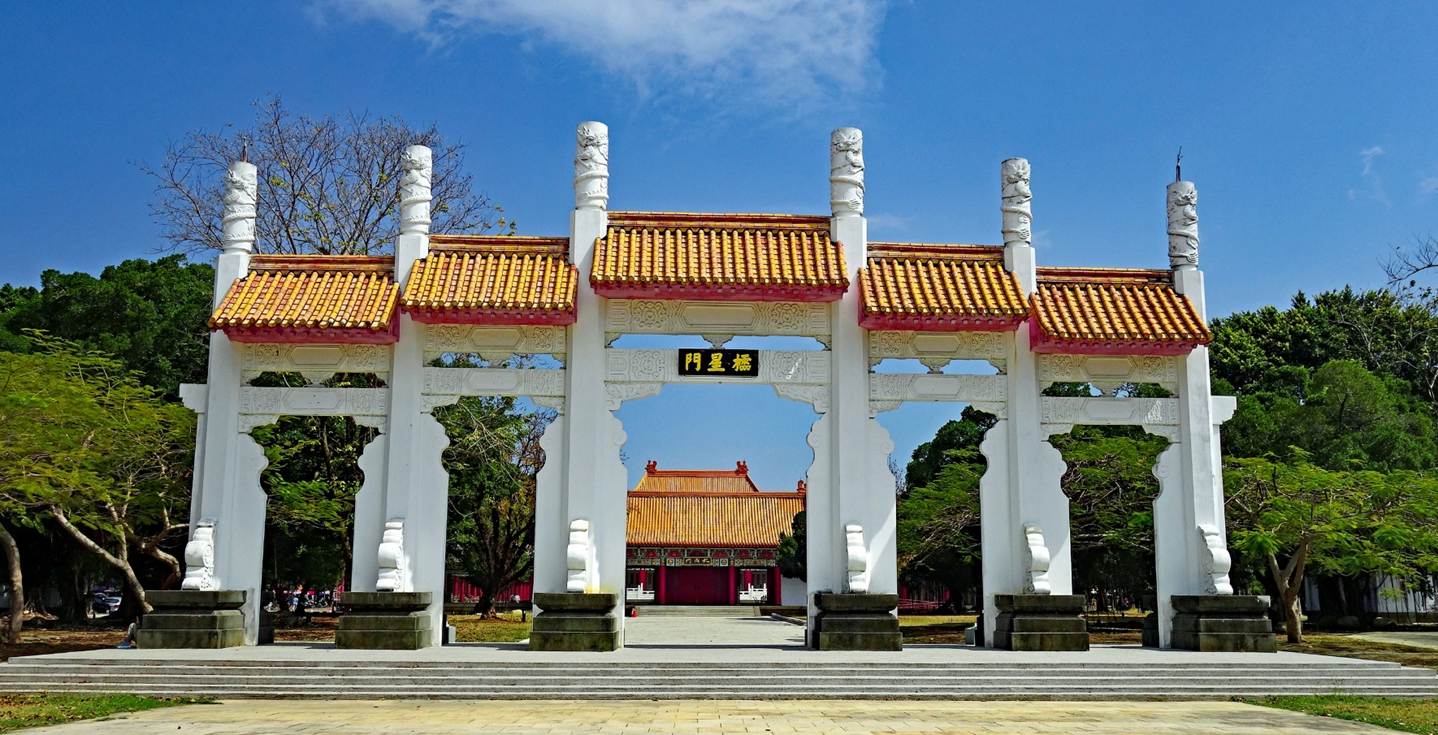
The Lingxing
Gate (欞星門), the entrance to the
temple, is a huge archway symbolizing access to a place of learning and
worship. The closest building partially visible behind the archway is the Dacheng Gate (大成門), which opens into the
main courtyard of the temple.
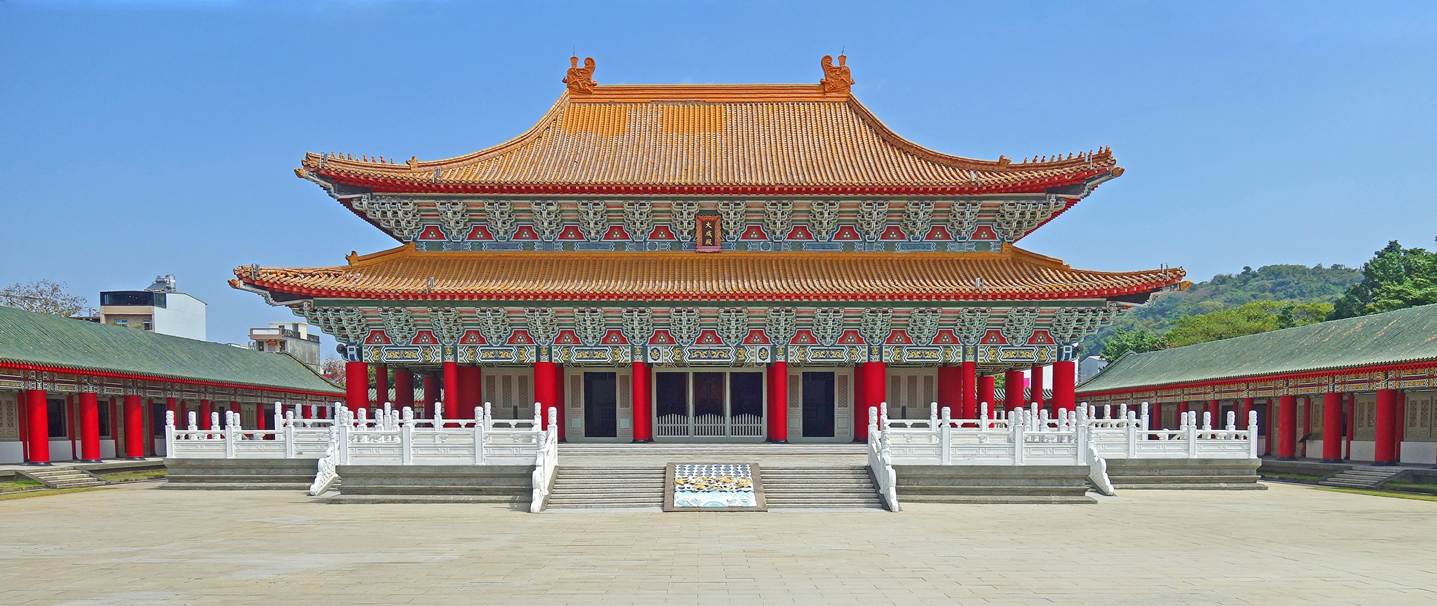
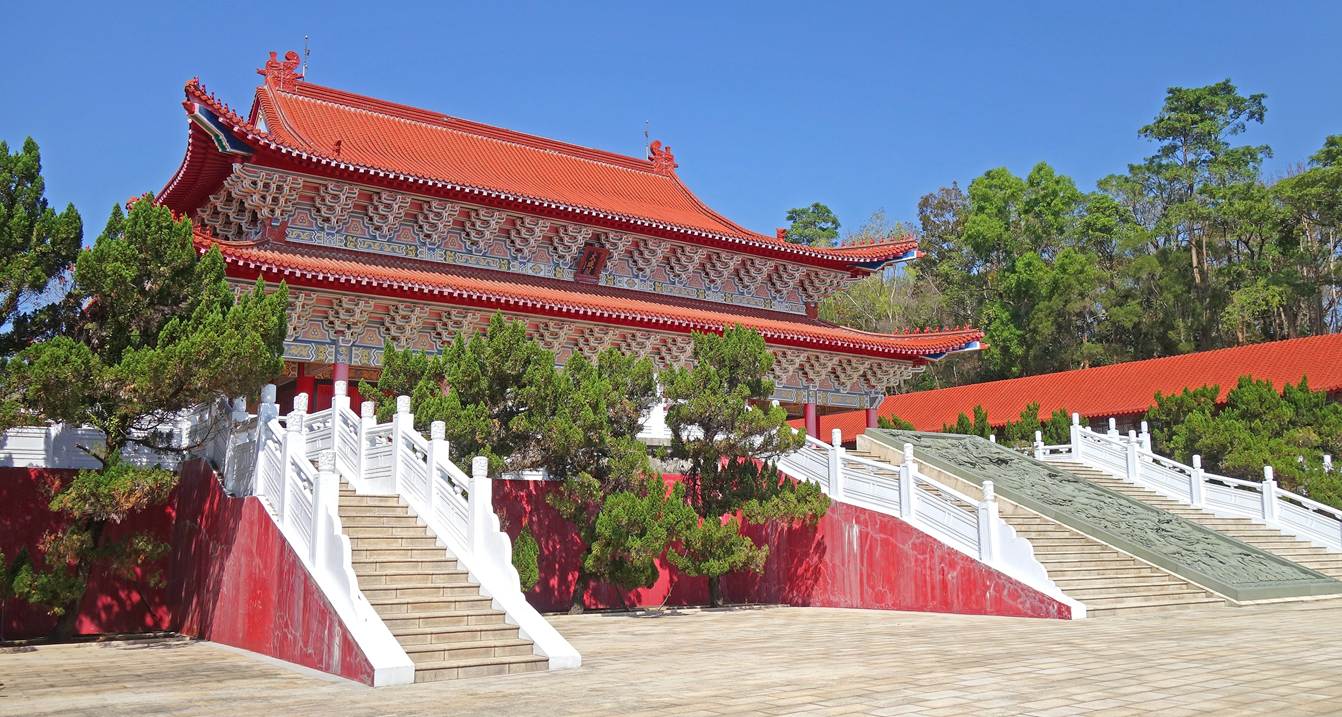
The Dacheng
hall (大成殿, ″Hall of Great
Achievement″), the temple's main hall, stands in the middle of a vast
courtyard surrounded by the Dacheng Gate, the East
and West halls on its two sides, and the Chongsheng
hall (not visible) in the back.
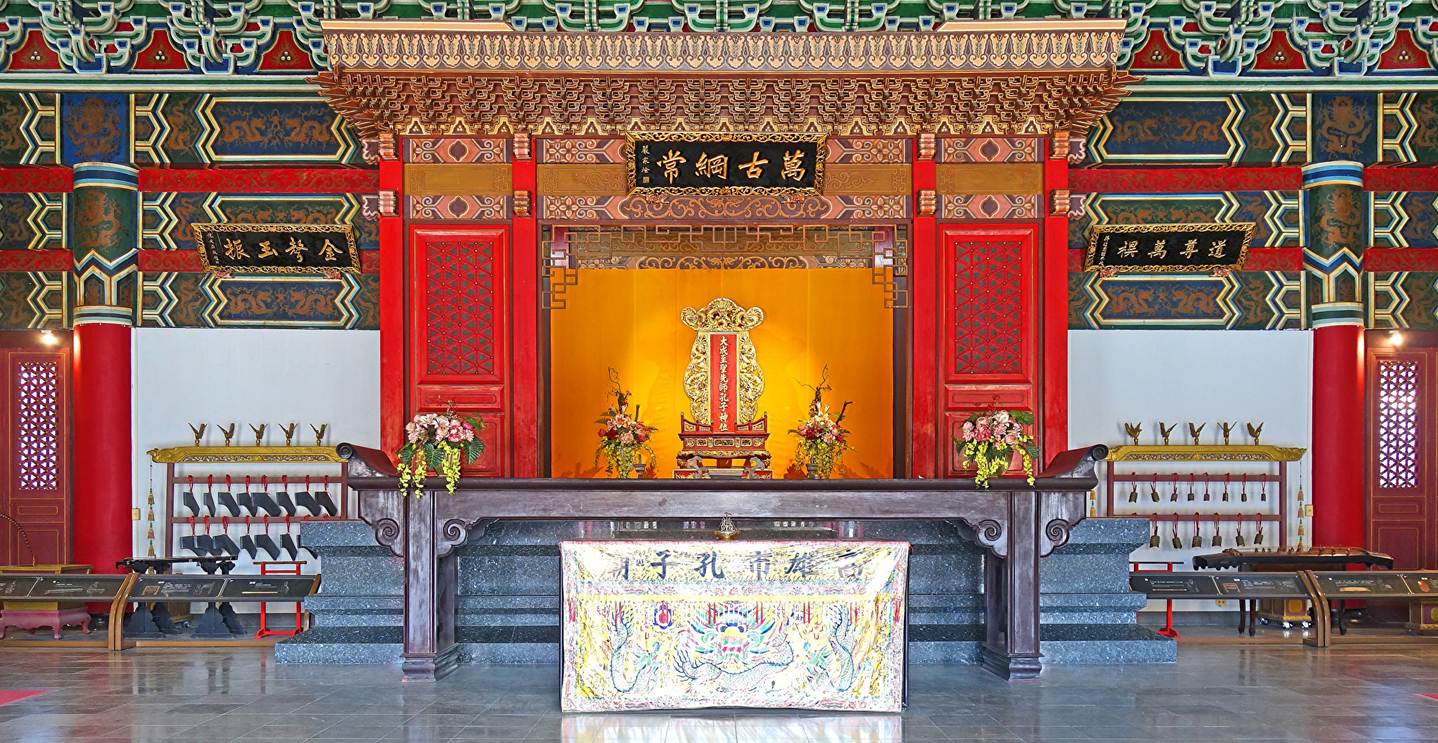
Shrine in the Dacheng hall housing the spirit tablet of Confucius, which
embodies his teachings.
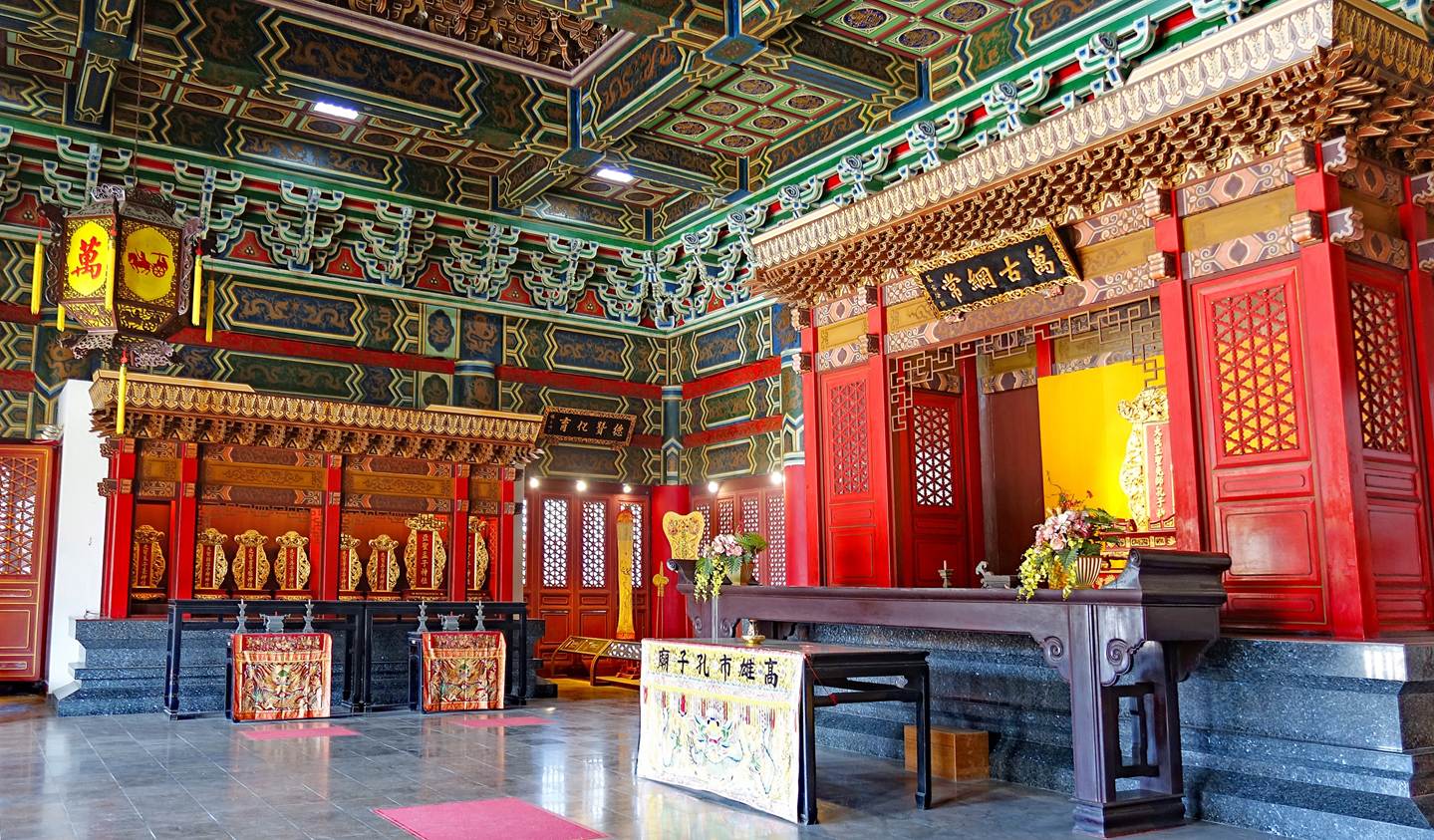
Side view of the
interior of the Dacheng hall. Two shrines on either
side of the hall (only one is visible in this photo) house other spirit
tablets: those of four main disciples of Confucius, known as the Four Sages (四配), and those of twelve
eminent figures in the Confucian tradition, referred to as the Twelve
Philosophers (十二哲). Eight tablets are
placed in each side shrine.
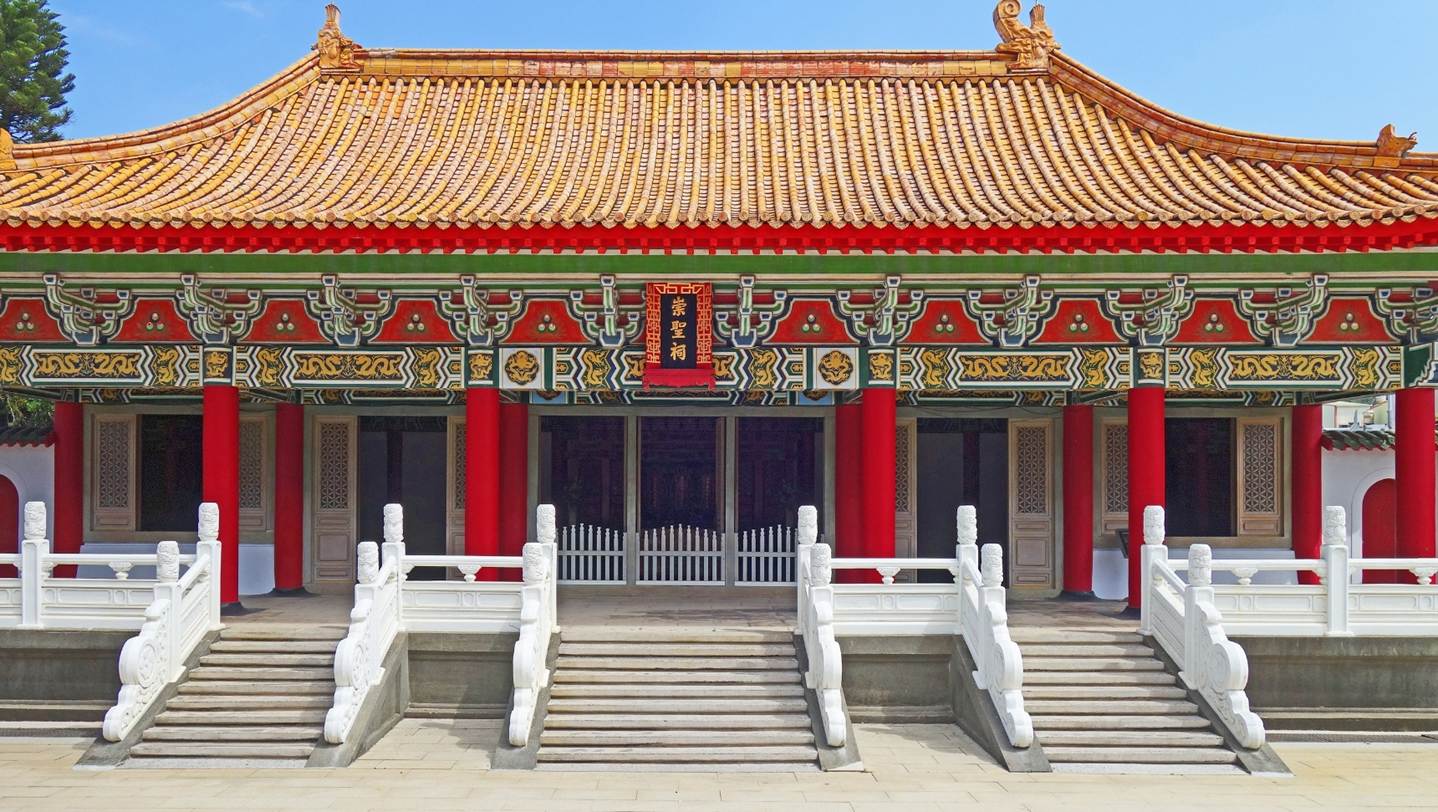
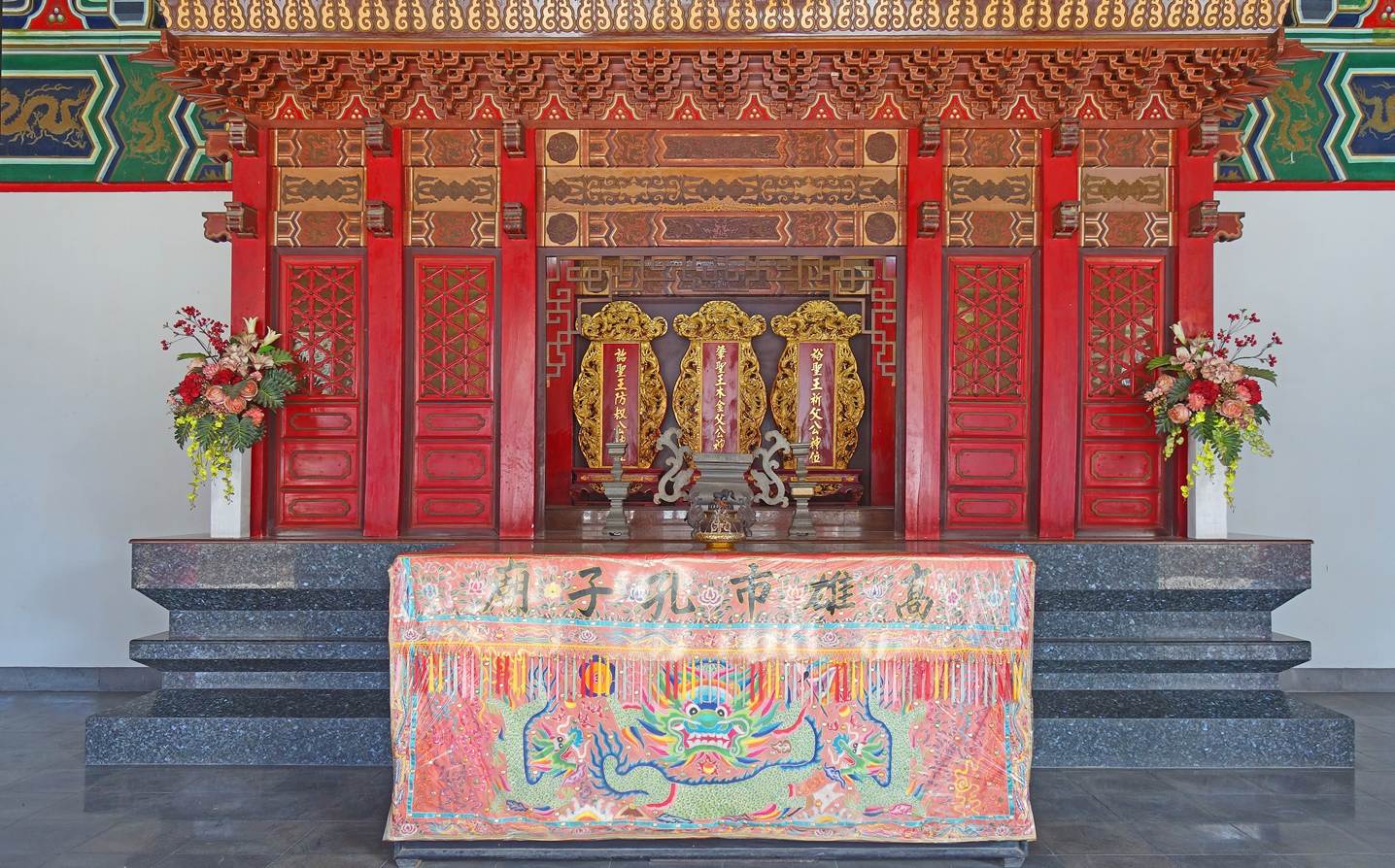
The Chongsheng
hall (崇聖殿). It is dedicated to
ancestors of Confucius, especially his father Shuliang
He, and to the fathers of the Four Sages and Twelve Philosophers.
Tablets in the Chongsheng hall.
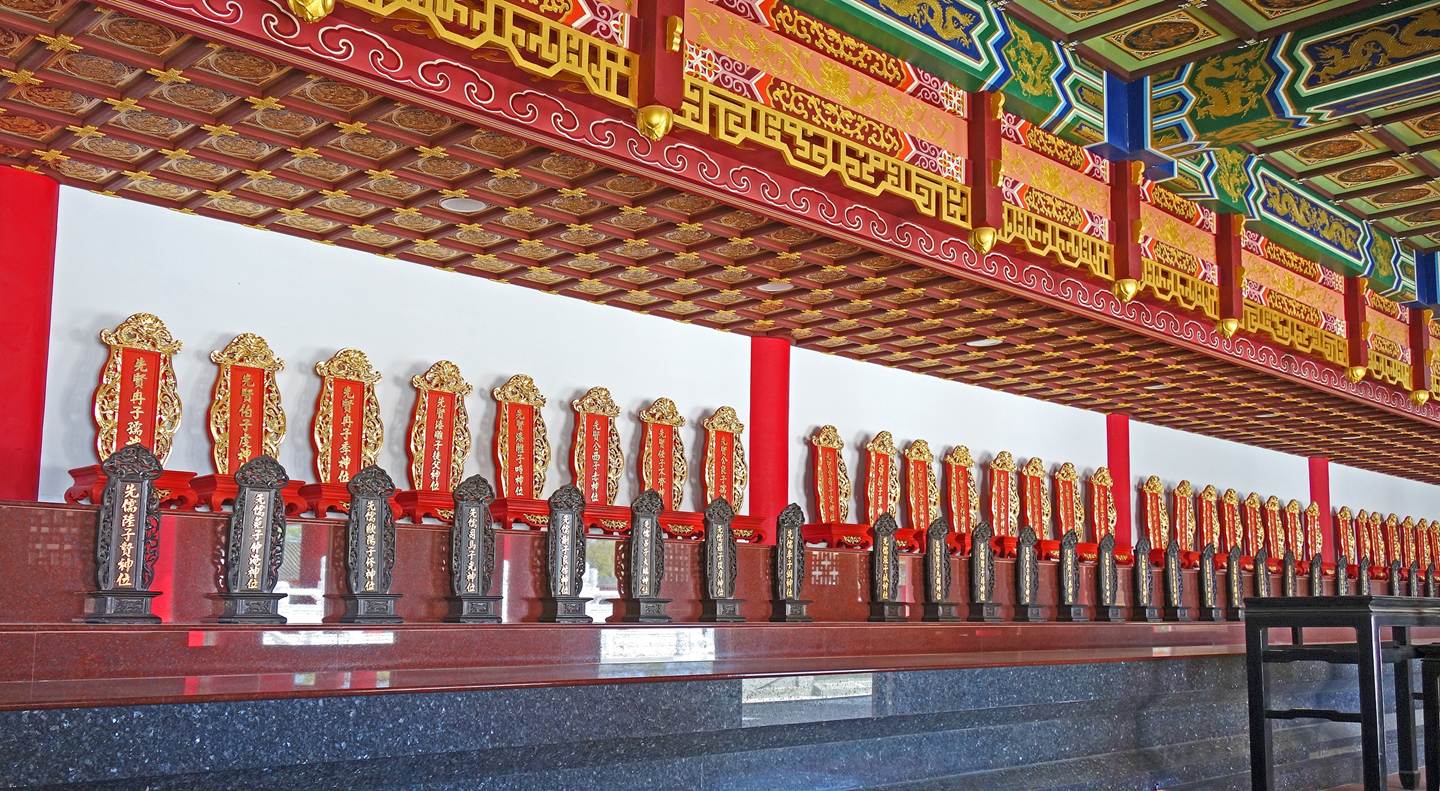
Tablets of other
Confucian sages and scholars in the East hall. The West hall features a similar arrangement.
[March 2026]
Zhouzai Qingshui Temple (洲仔清水宮):
This temple is located
on the eastern side of the Lotus pond, where it faces west, overlooking the
wasters of the pond. Originally built in 1885, it has undergone several
relocations and renovations. The more recent one was carried out in 1995-2000.
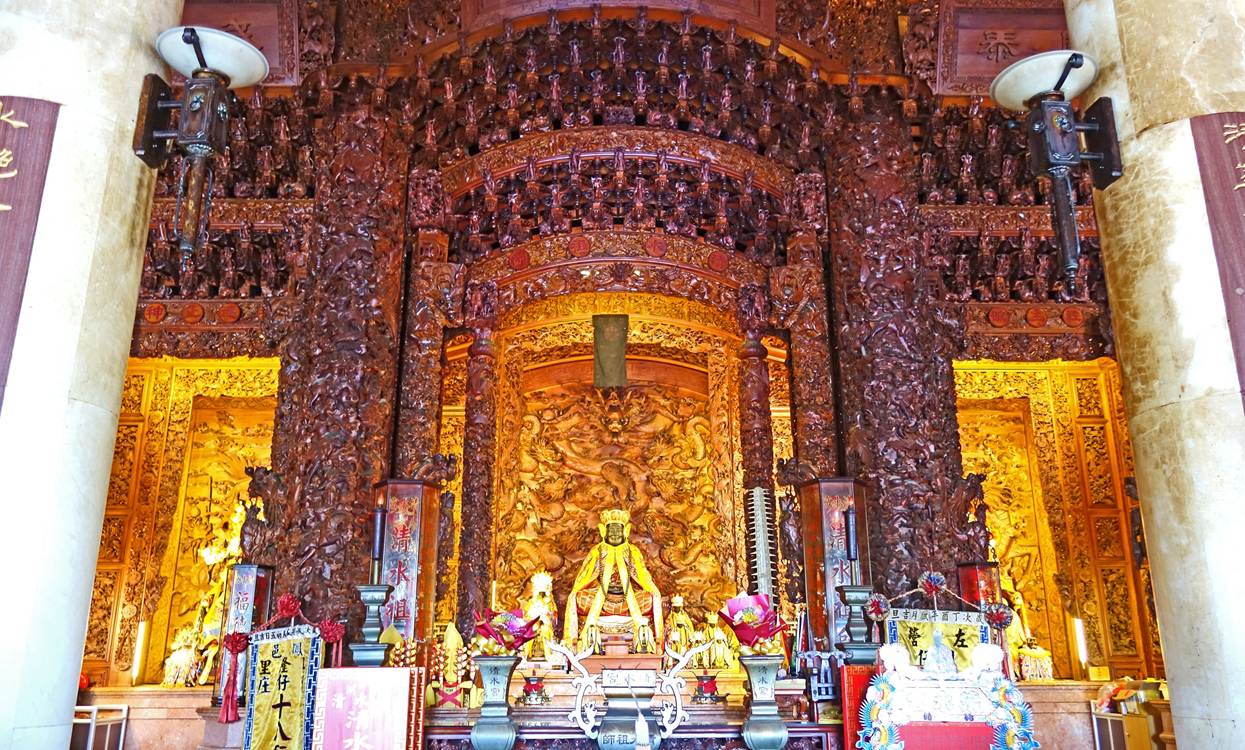
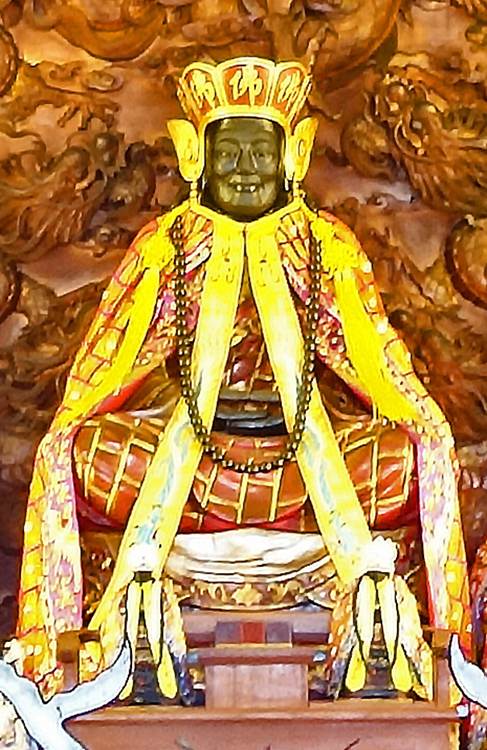
It is dedicated to
Master Qingshui (清水祖師). Born in the Anxi
county of the Fujian province of China, Master Qingshui
(1047-1101) was a Buddhist monk who became a local hero for saving the
population from starvation during a drought. After his death, he was deified in
the local folk religion. His cult was later brought to Taiwan by immigrants
from the Anxi county.
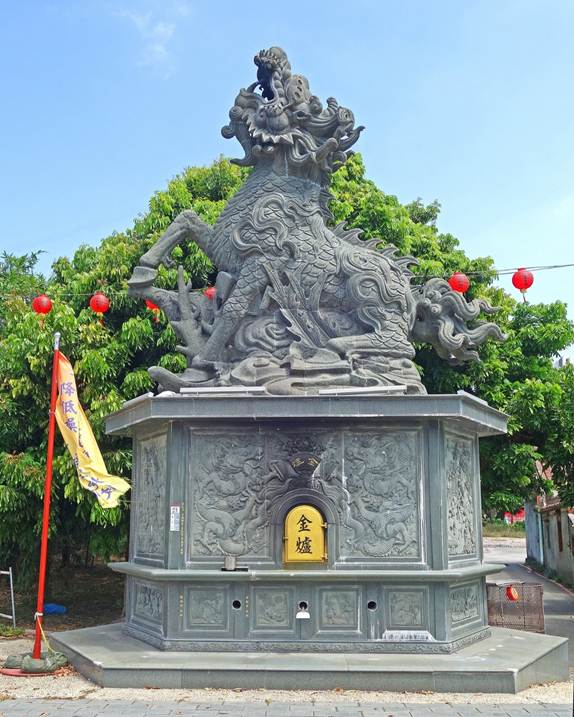
- Left: Joss paper
burner shaped as a qilin (an auspicious creature in
Chinese mythology) in the temple's front courtyard.
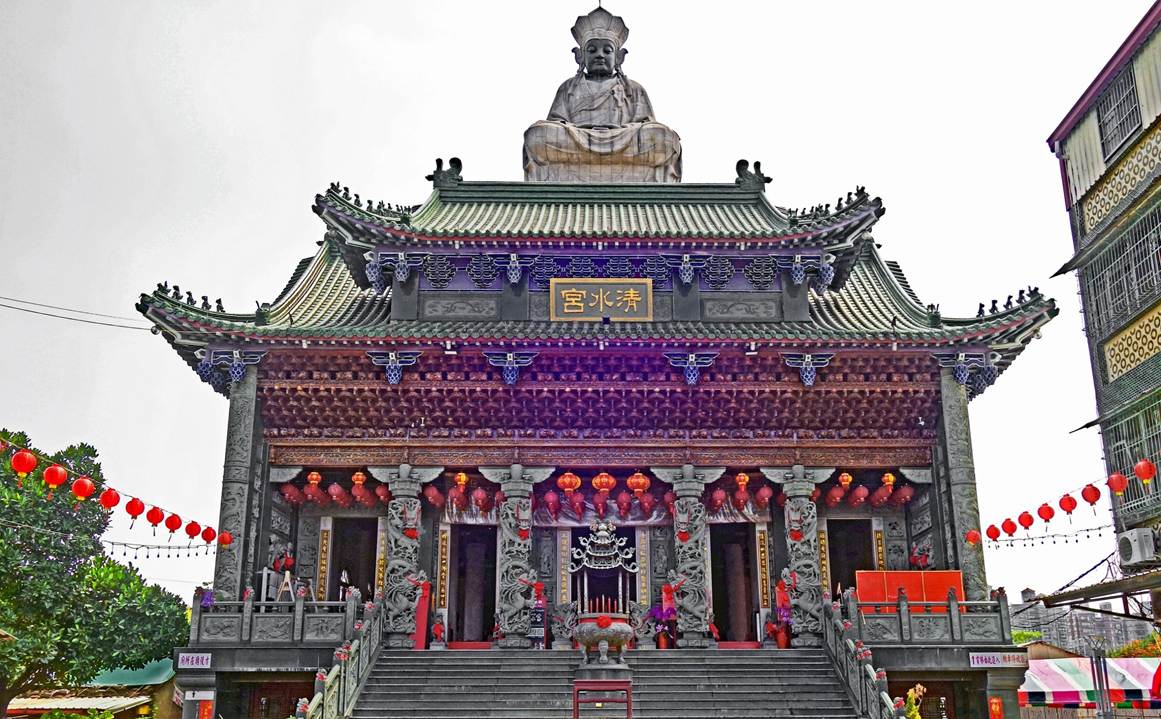
- Right: Facade of the
temple. A statue of Master Qingshui seats on the
temple's roof.
|
|
|
Altars in the main
hall. The middle one features Master Qingshui.
|
|
|
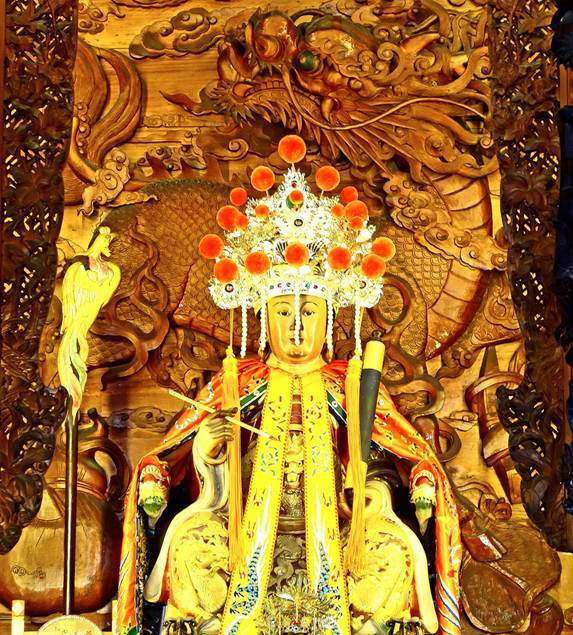
- Left: Statue of Zhusheng Niangniang (注生娘娘), a deity responsible
for fertility, pregnancy, safe delivery, and the protection of young
children. She holds a brush in her right hand and a rolled ledger in her
left, symbolizing that she keeps records of newborn children in each family
lineage.
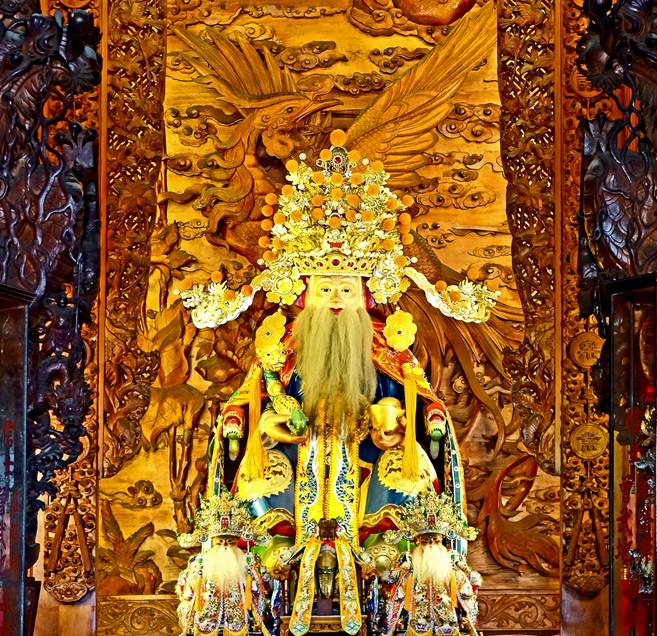
- Center: Statue of
Tudigong (土地公), also known as
Fude Zhengshen (福德正神), the God of Earth and
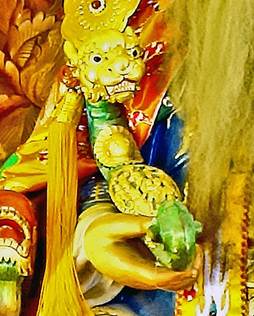
Merit, associated with agricultural abundance. In his left hand, he holds a ″yuanbao″ (元寶), a gold ingot used as
currency in imperial China, which symbolizes wealth and merit. In his right
hand, he holds a lion-headed Ruyi scepter (獅頭如意), which symbolizes authority and
protection over people's wishes (如意, ″ruyi″,
means ″as one wishes″).
- Right: Close-up of the lion-head Ruyi
scepter.
|
|
|
|
[March 2026]
Around Jinshi Lake (金獅湖)
The Jinshi
lake is located northeast of Kaohsiung's urban center. Photos of three temples are
shown below. Two of them stand on the shores of the lake. The third is located
a short distance southeast from the lake.
Kaohsiung Daode temple (高雄道德院):
This temple (also known
as the Kaohsiung Morality Academy) was constructed in 1960. It is mainly
dedicated to Lao Tzu (太上老君), the principal deity
and supreme lord of morality in Taoism. He is the deified form of Laozi (老子), the philosopher
regarded as the founder of Taoism. A number of other Taoist and Buddhist
deities are also worshiped here, including Xuantian
Shangdi (玄天上帝, the Emperor of the Dark Heaven), Guanyin, the
Southern Dipper Star Lord (南斗星君), and the Northern Star Dipper Lord (北斗星君). Confucius is also venerated at this
temple.
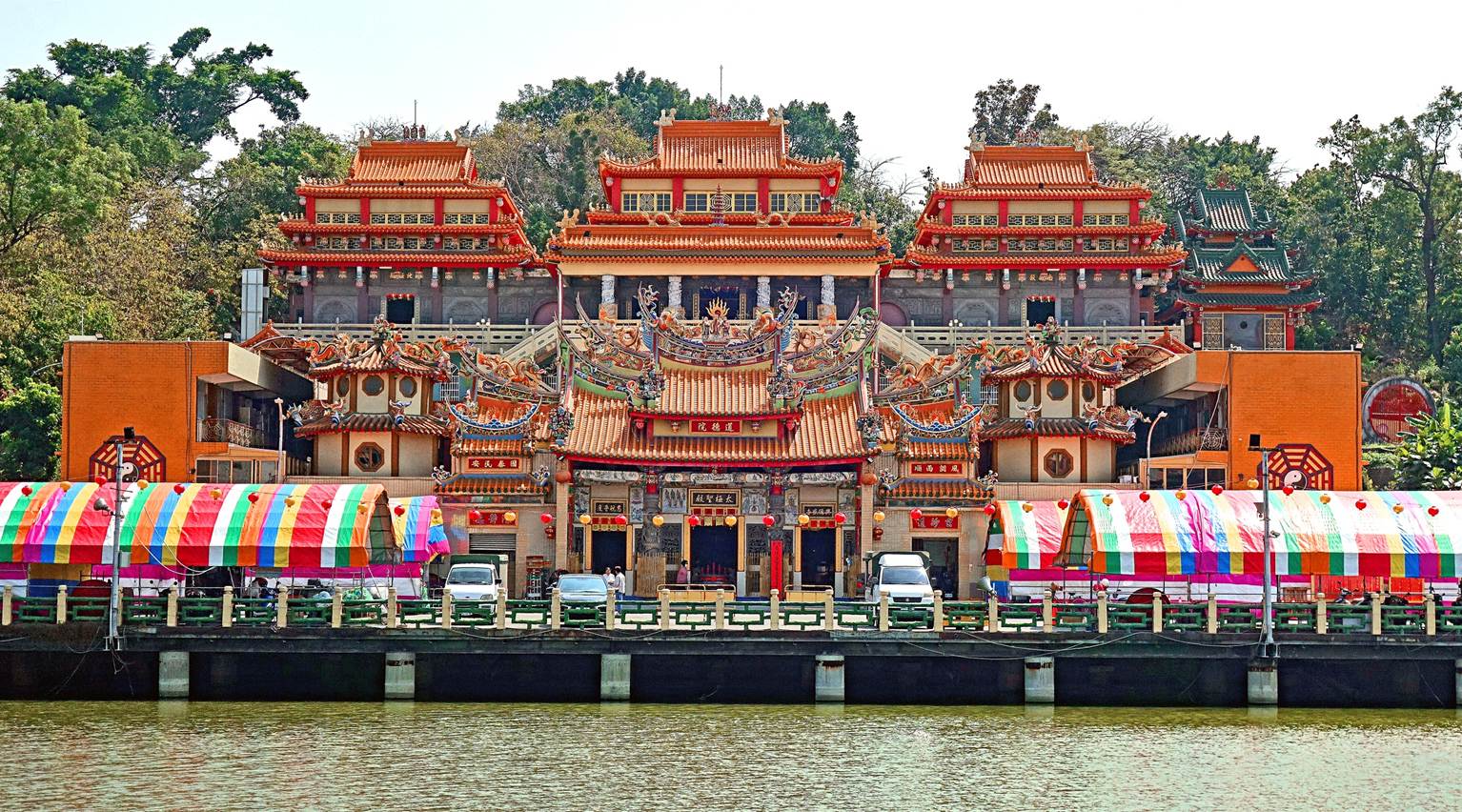
View of the facade of the temple above
the Jinshi lake.
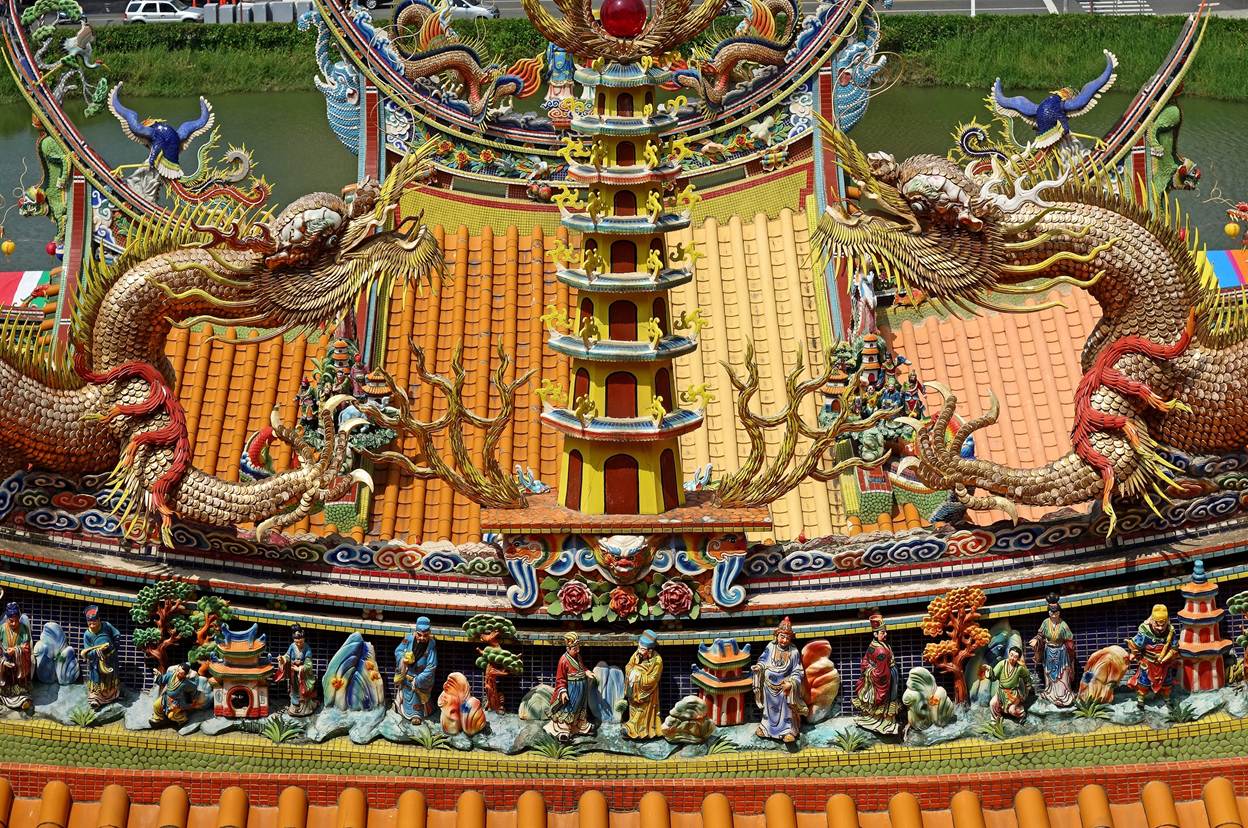
The central part of the temple's roof viewed from the top story of the
temple.
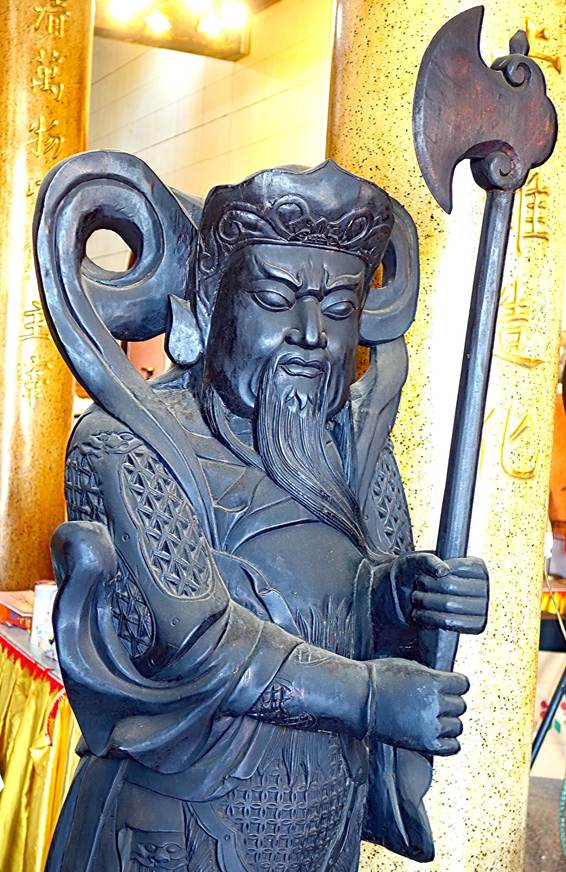
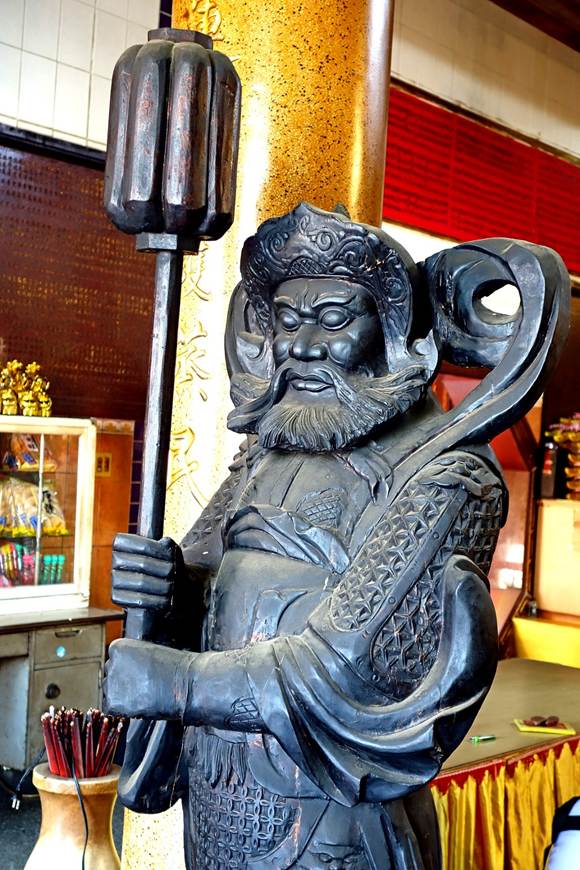
Statues of guardians of the temple.
|
|
|
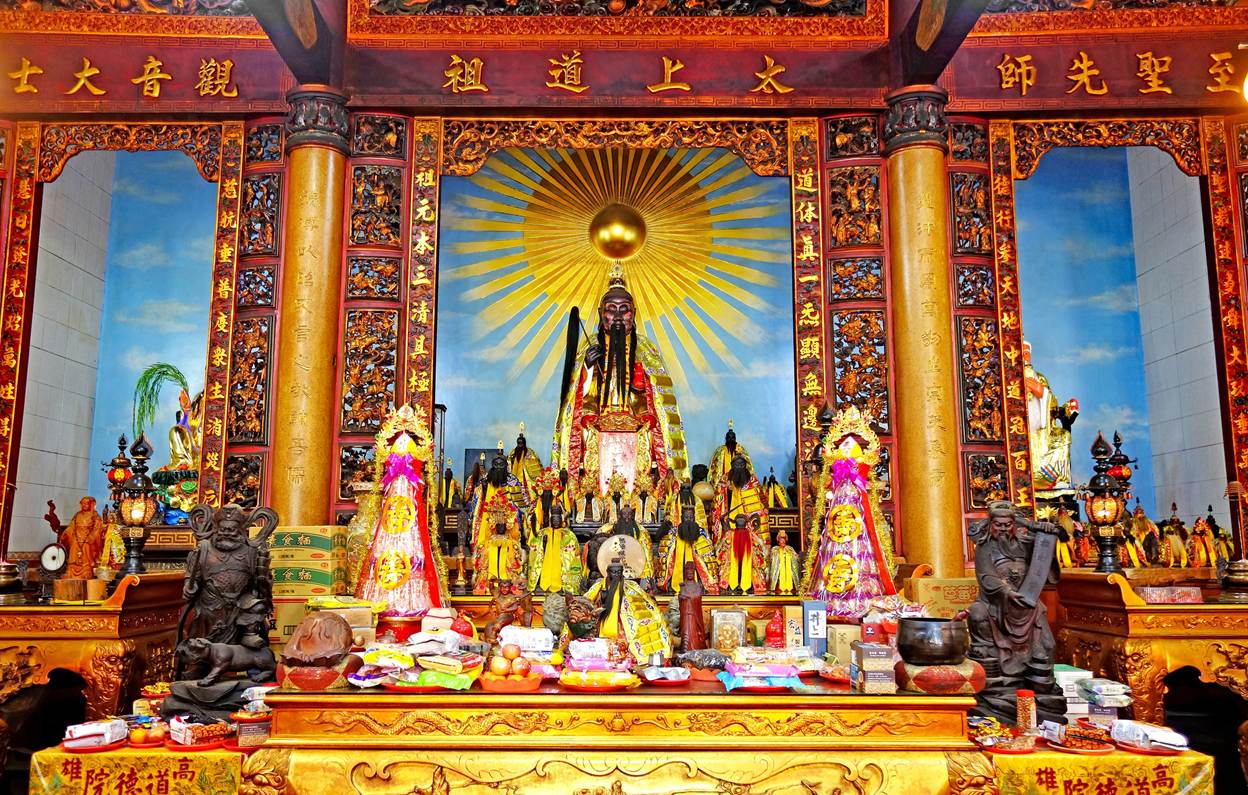
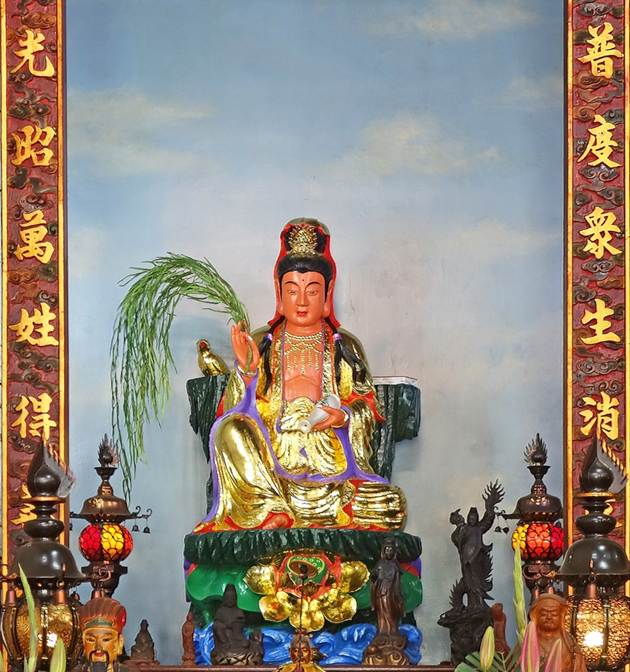
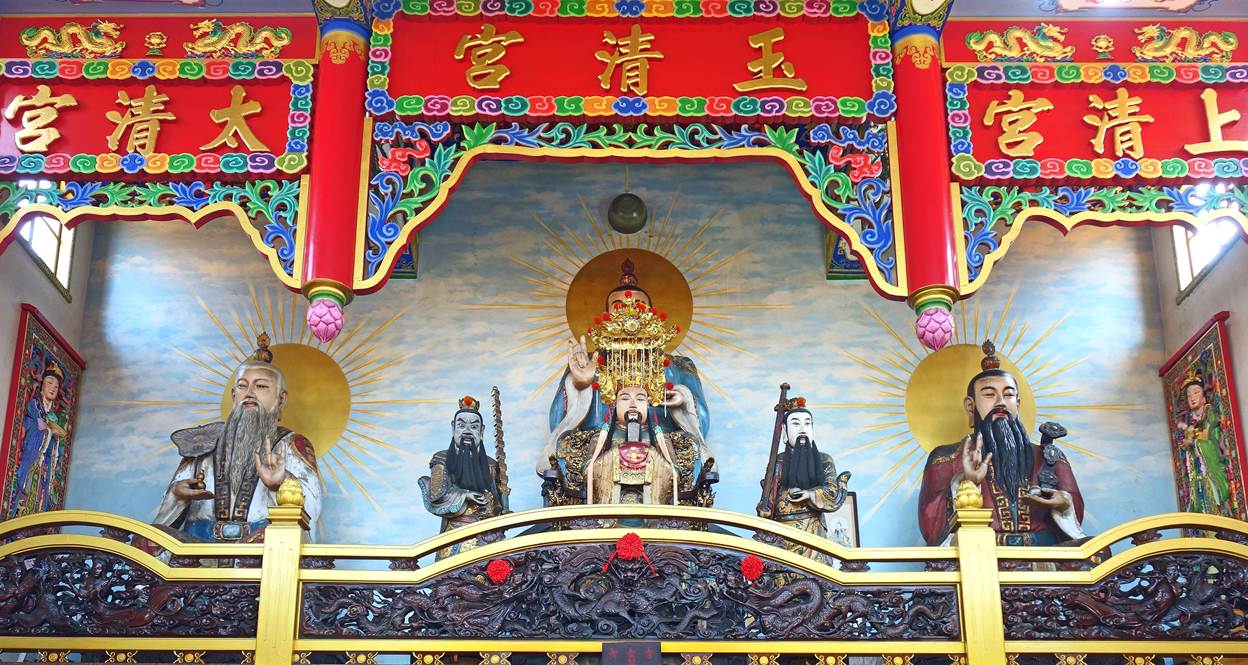
The grand altar in the temple's main hall. The statue of the Supreme Lord
Lao Tsu (太上道祖) stands in the central section. The section on the right features the
Most Holy Sage and Teacher (至聖先師), namely
Confucius. The section on the left is dedicated to Guanyin Bodhisattva (觀音大士).
|
|
|
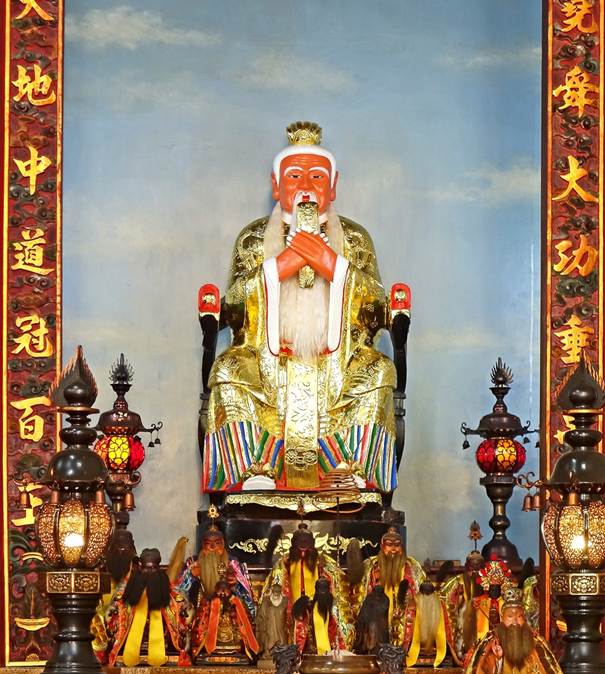
Altar dedicated to the founder of the temple, referred to as ″The
Patriarch″.
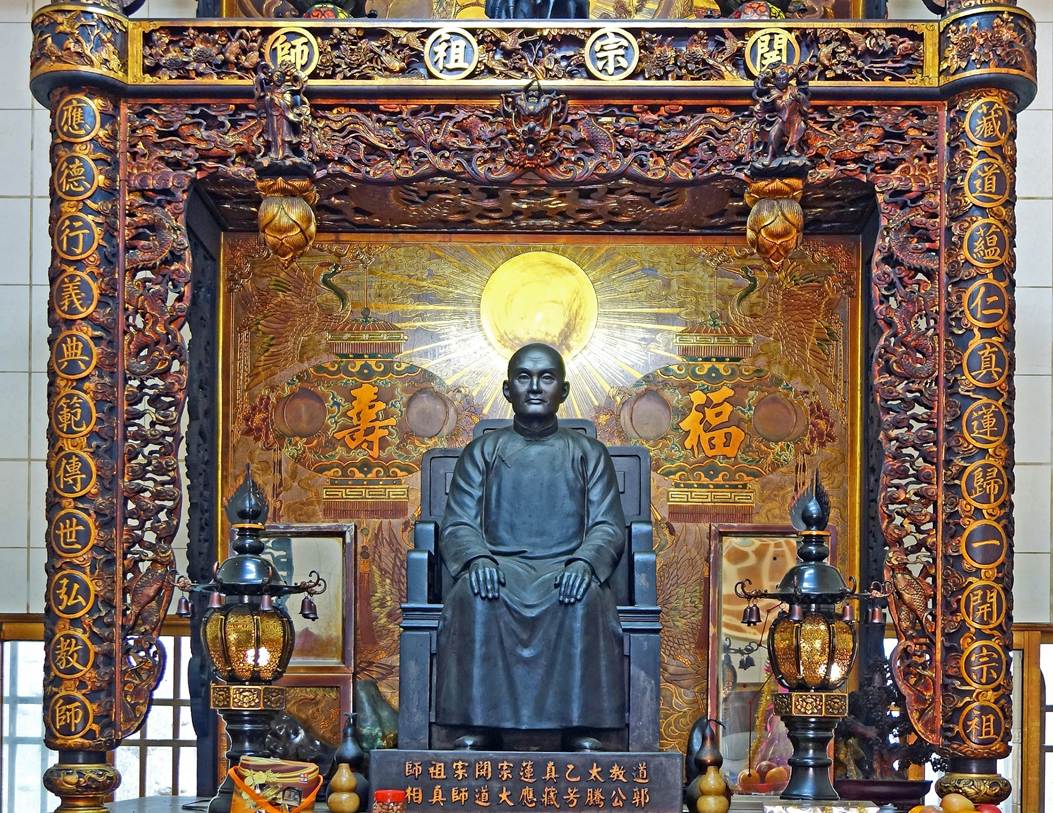
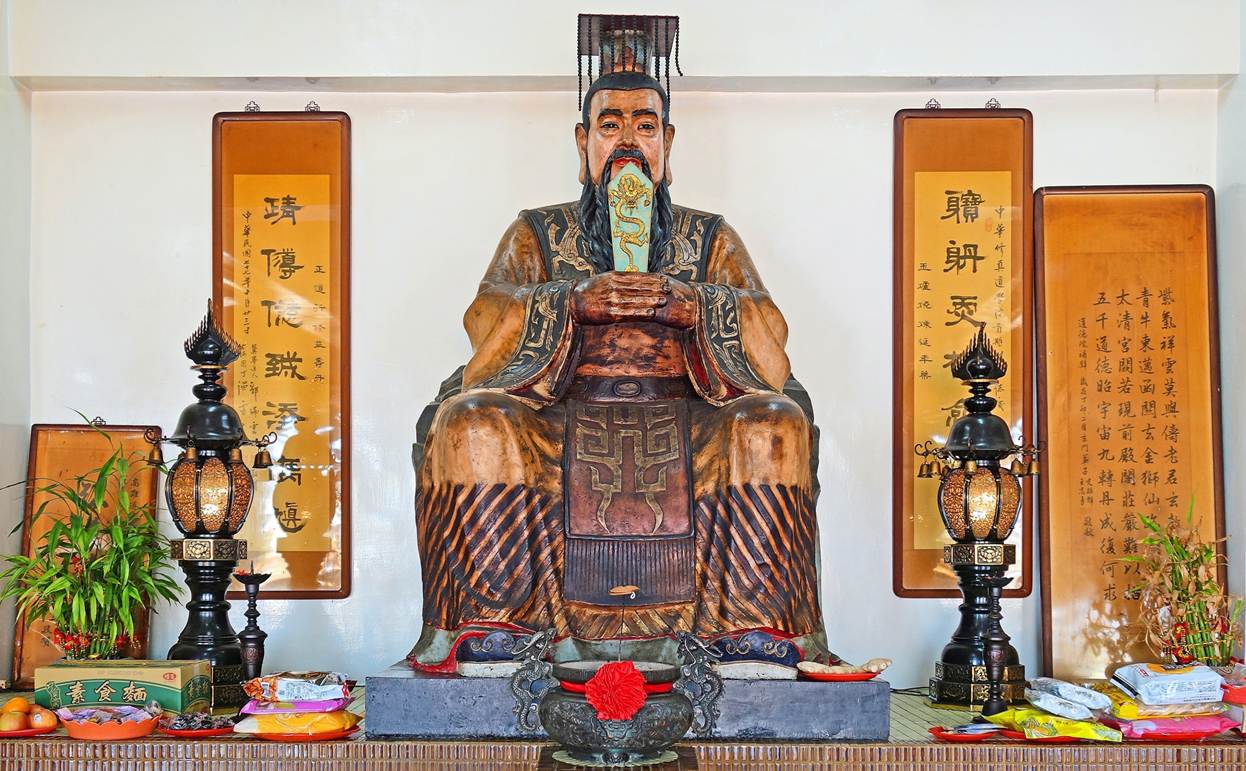
Other figures.
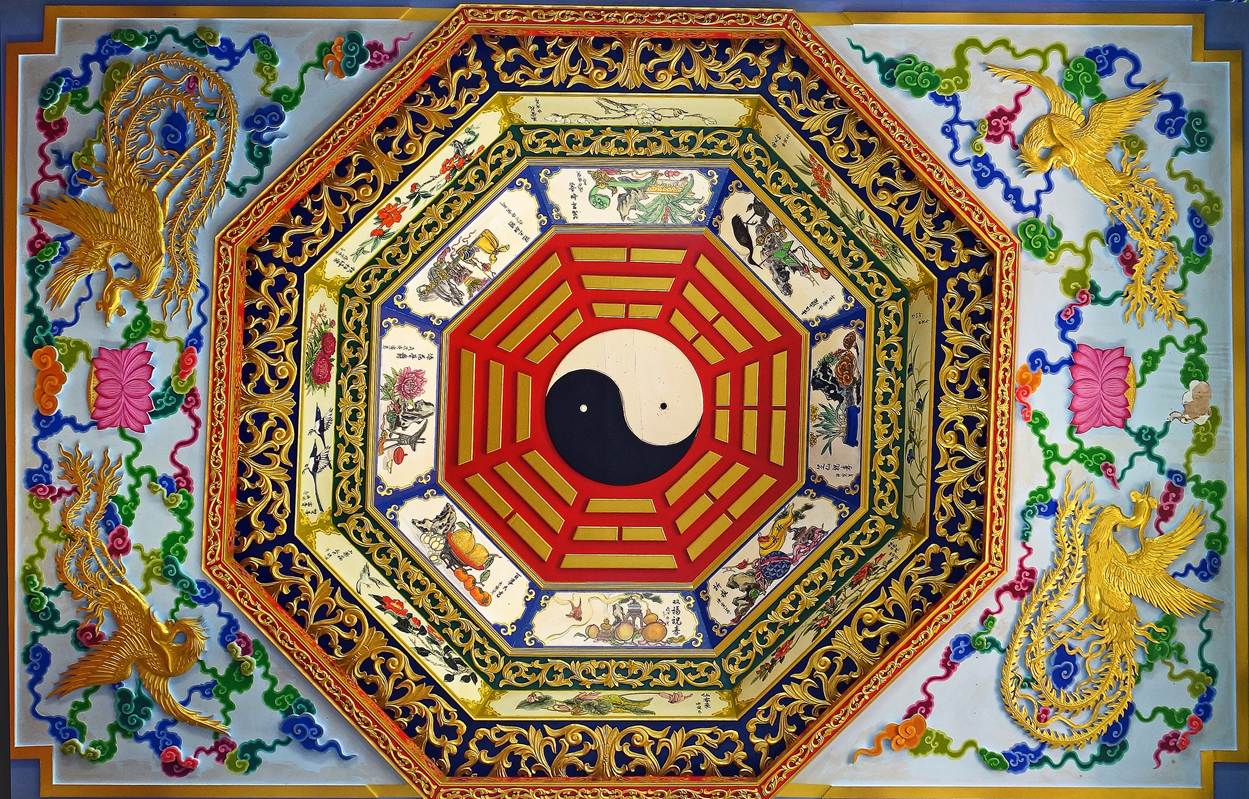
Ceiling with the usual Taoist yin and yang circular symbol at the center.
Here, this symbol is surrounded by another representation of yin and yang,
known as a bagua (八卦). It consists of eight trigrams, each made of a
distinct combination of yin (broken lines) and yang (solid lines).
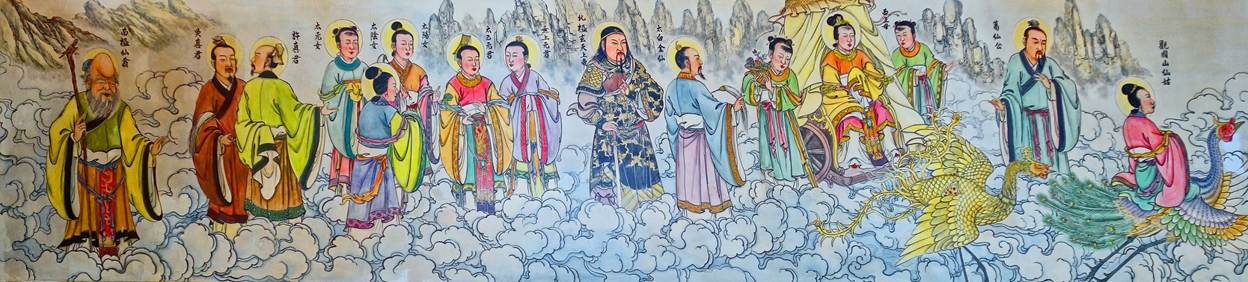
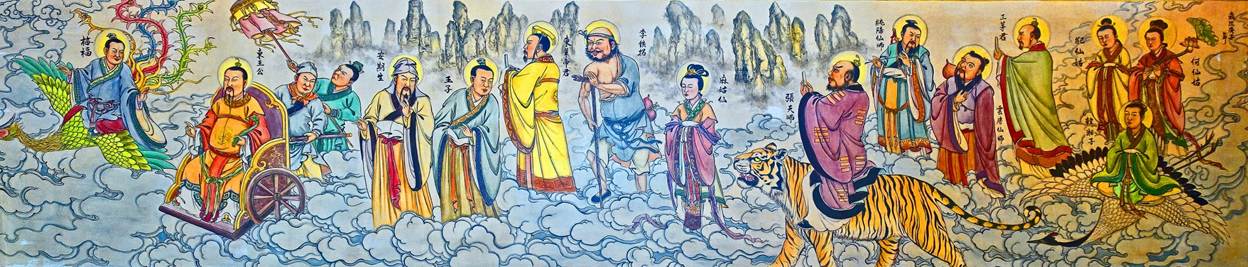
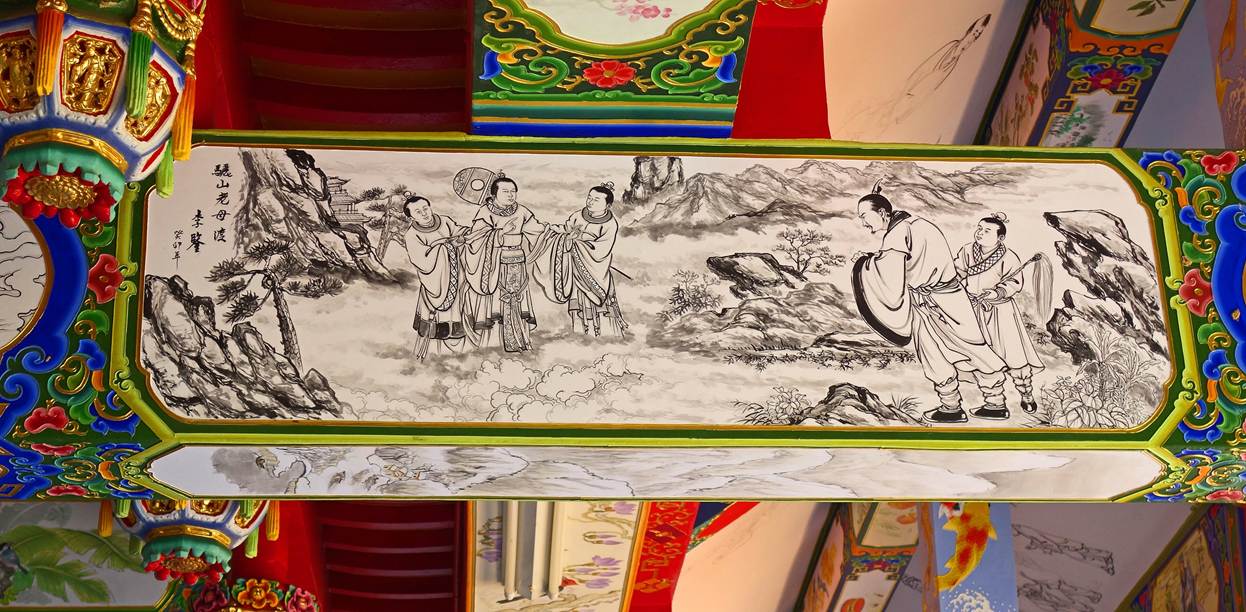
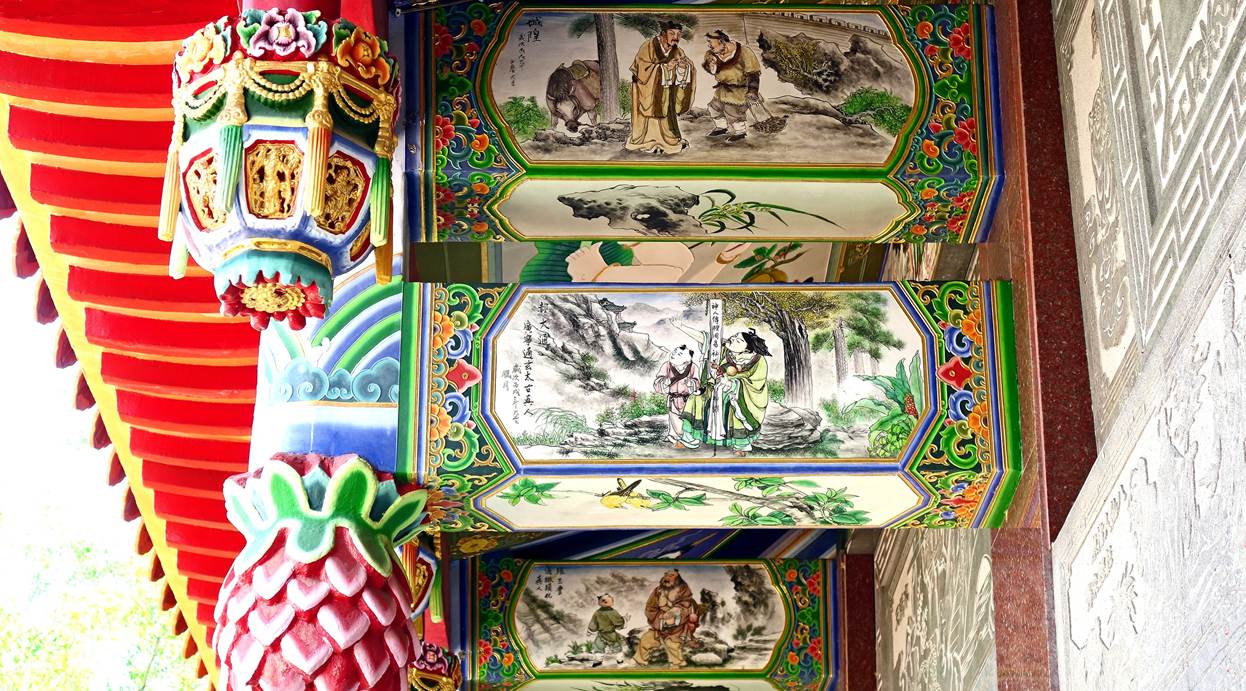
Some of the many decorations in the temple.
[March 2026]
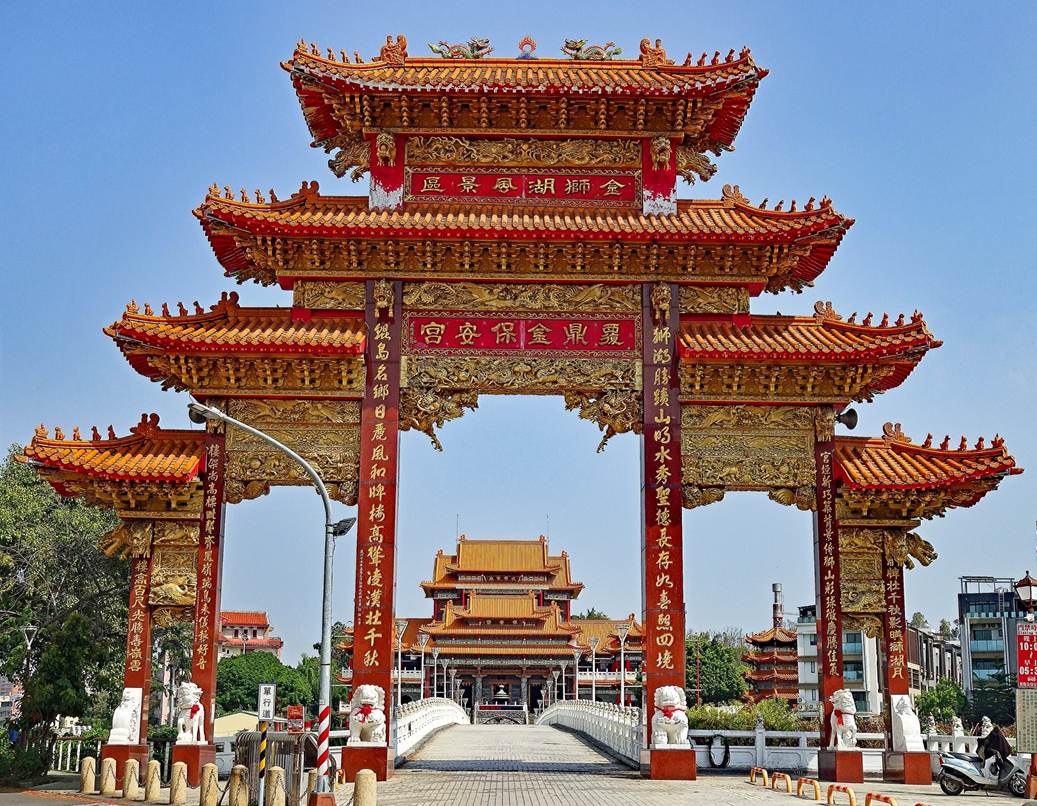
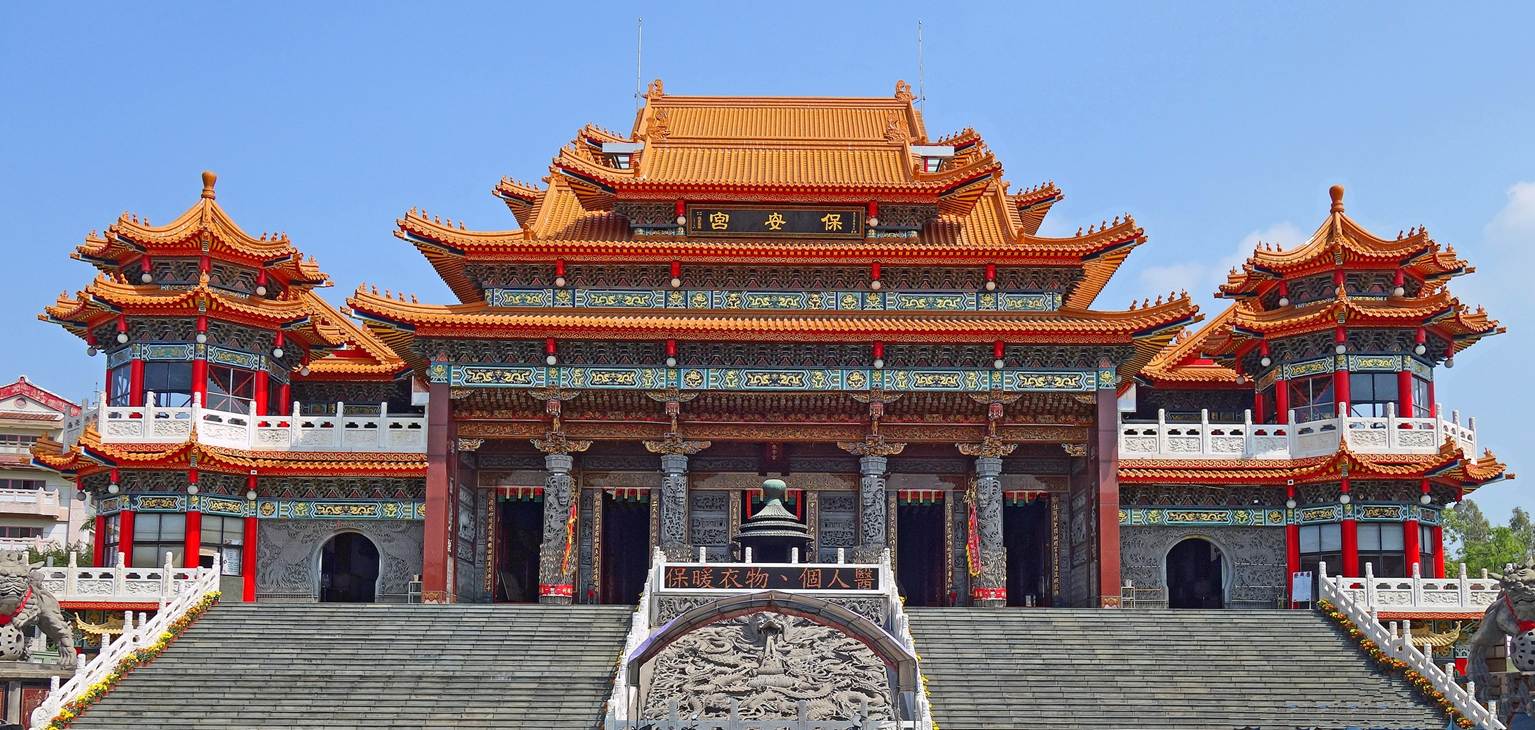
Fudingjin Baoan temple (高雄覆鼎金保安宮):
Originally built in
1883, this Taoist temple was relocated and reconstructed at its current location
in 1998. It is mainly dedicated to Li Nezha (李哪吒), also known as the
Third Prince (三太子) and the Marshal of
the Central Altar (中坛元帅).
Archway to a bridge
spanning the Jinshi lake, which leads to the temple.
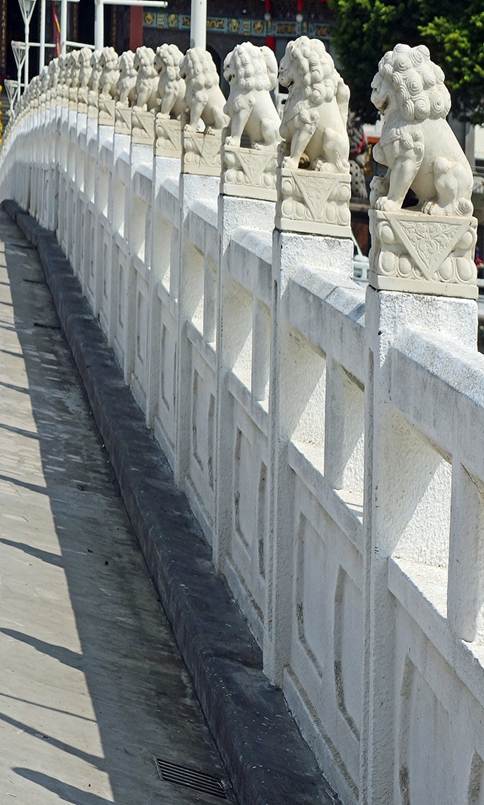
The railings of the bridge support two long rows of guardian lions.
|
|
|
Facade of the temple.
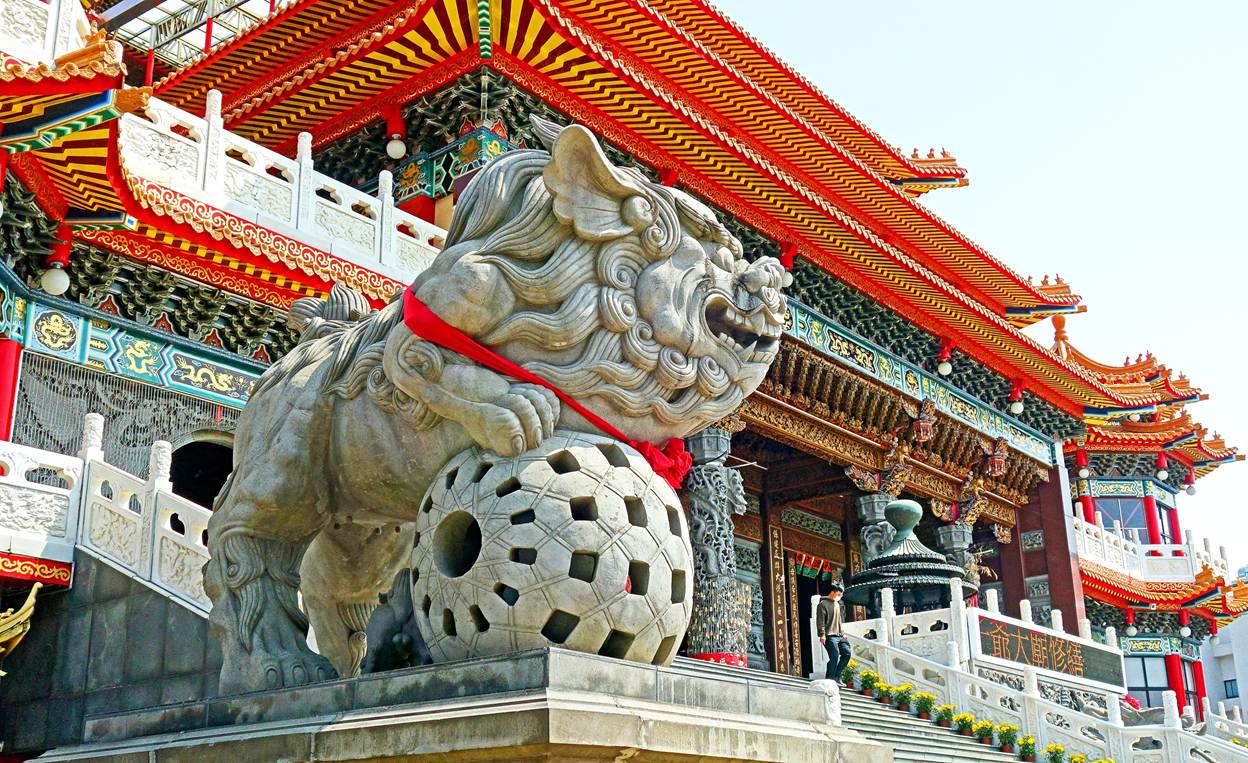
One of the two stone lions standing on a ball, warding off evil spirits
below the temple.
Altar of the main hall.
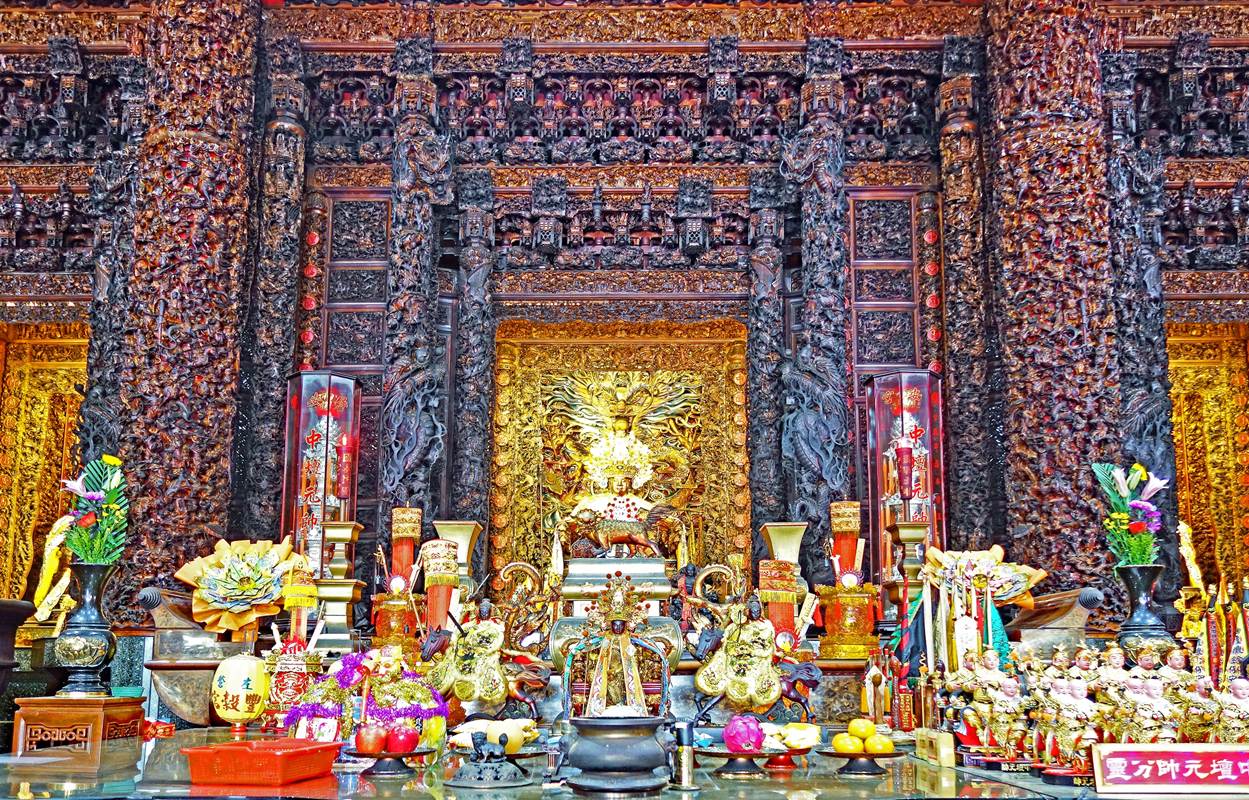
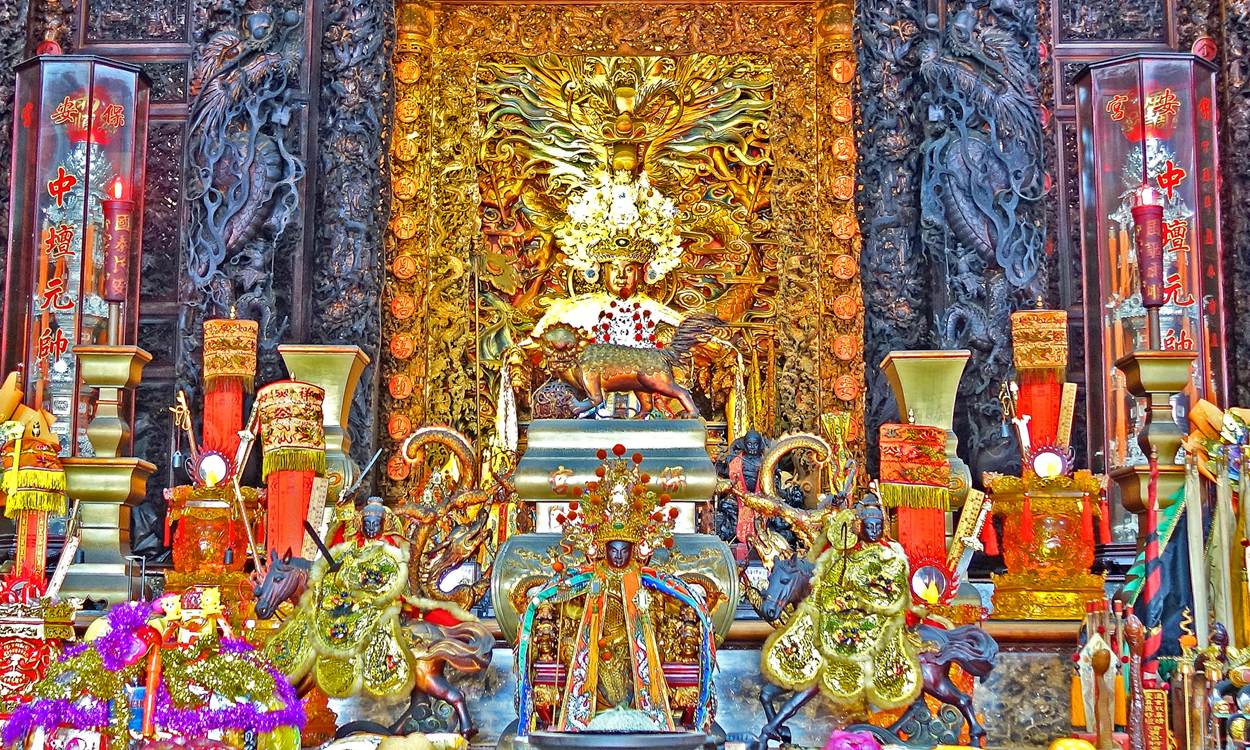
[March 2026]
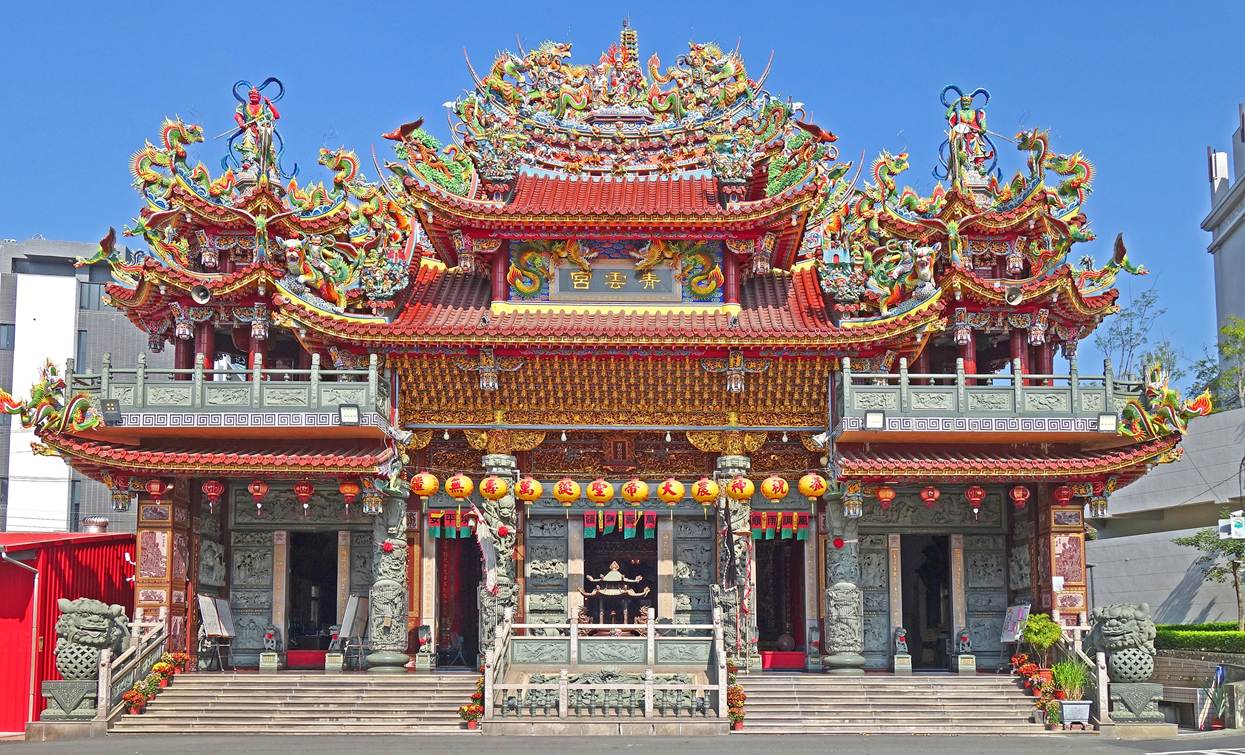
Niaosong Qibgyun temple (鳥松山仔腳青雲宮):
I had not planned to
visit this temple. But as I was strolling through its neighborhood, I happened
to pass by it and I decided to step inside, mostly because of its magnificent
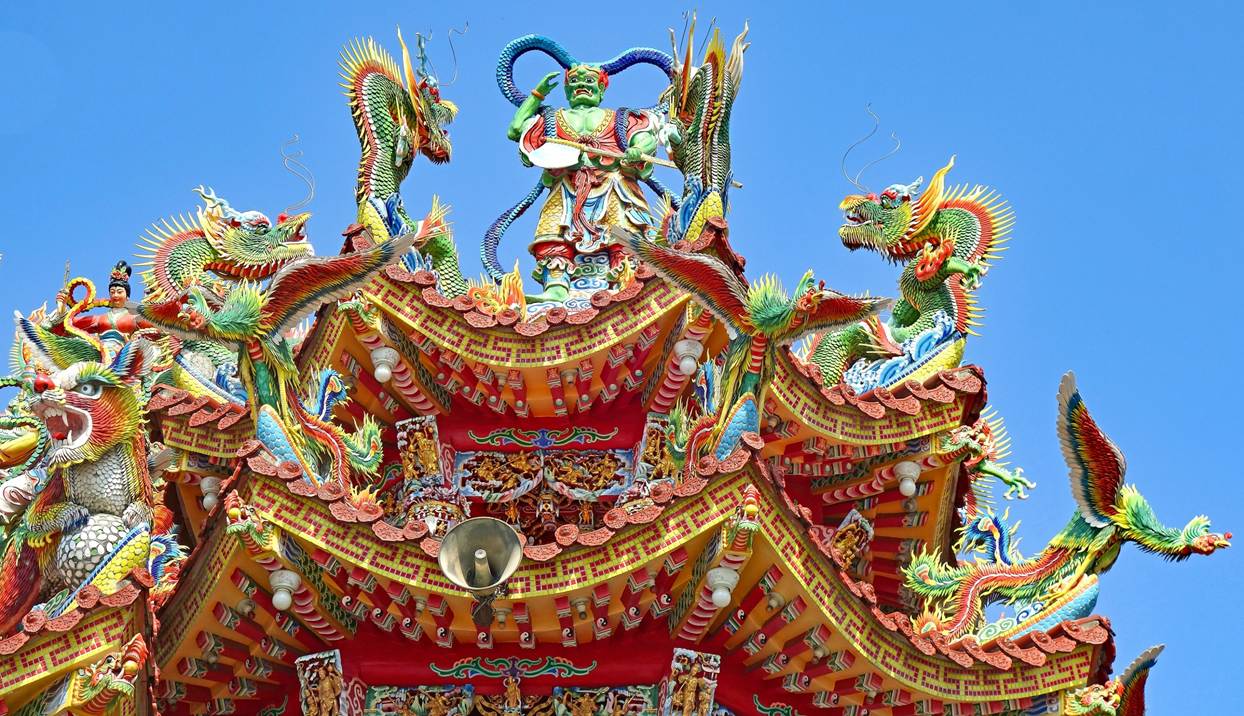
roof. From the outside, it looks like a Mazu (媽祖) temple, as statues of
her two customary guardians stand on either side of the roof: Shunfeng'er (順風耳), the red one on the
left, who can hear sounds from very far, and Qianliyan (千里眼), the green one on the
right, who can see very far. (They are more clearly visible in the two
photos that follows.) Since my visit, I learned that while the temple was
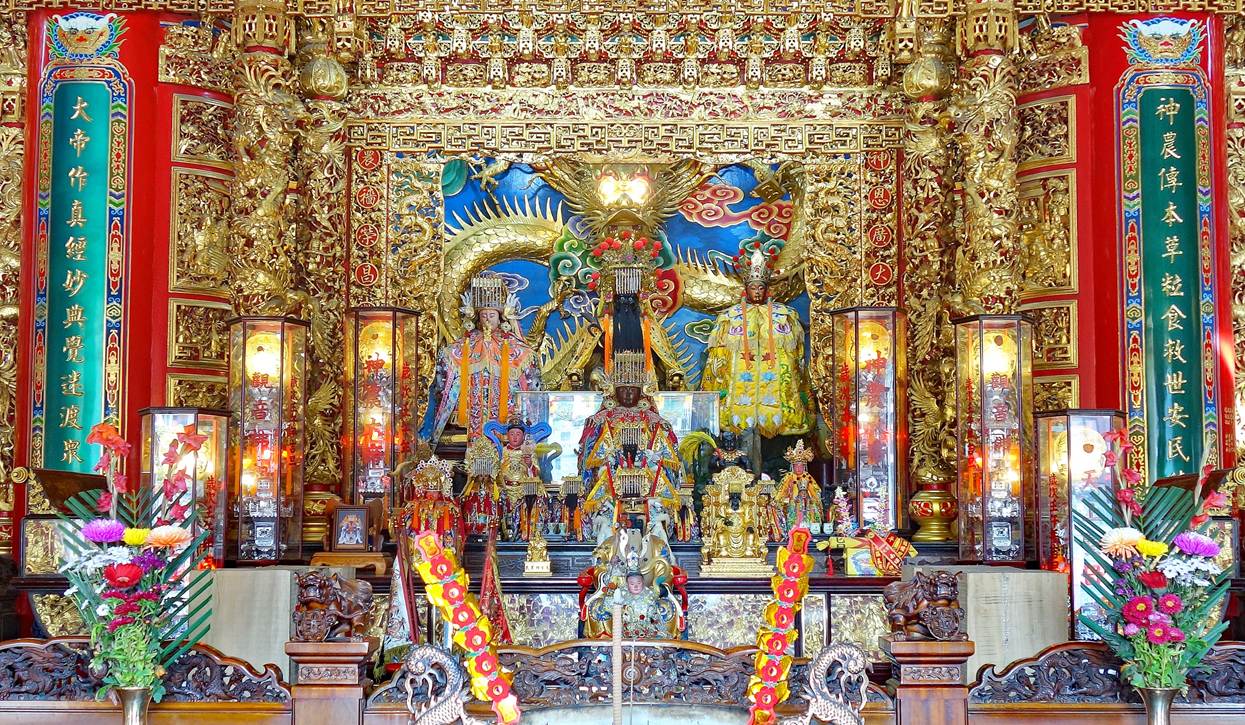
originally dedicated to Mazu, it is now, for some reason, mainly dedicated to Shennong Dadi (神農大帝), another important
Taoist deity. The two parts of his name, 神農 (Shennong)
and 大帝 (Dadi), respectively translate to ″god of agriculture″ and ″great emperor″. Legend has it that he
taught people medicine and farming, a contribution that earned him one of his
other titles, ″King of the Five Grains″ (五谷王).
Facade of the temple.
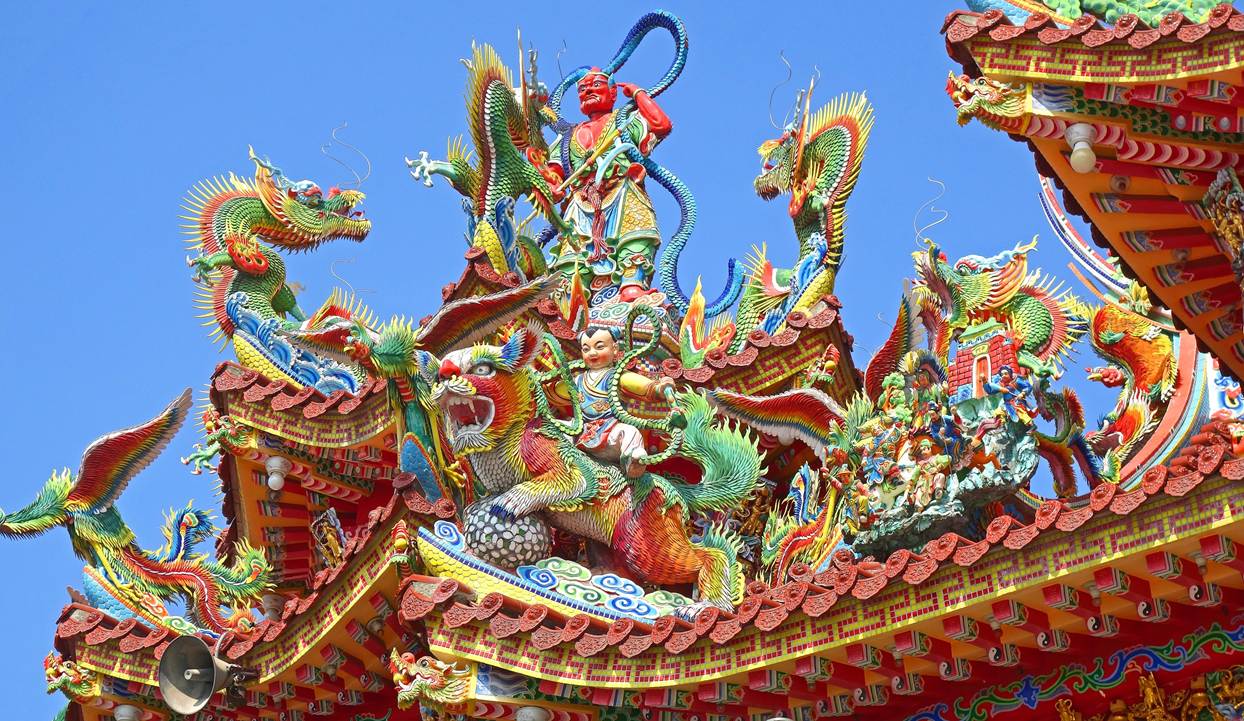
Colorful sculptures, called ″jiannian″
(剪黏, literally ″cut
and paste″), on the two sides of the roof. The craftsmen who create these
structures first use iron wire and plaster to sculpt the rough shape of the
figures they wish to create. Then, they glue pieces of colored ceramic pieces,
cut into specific shapes, onto the plaster surface to create a
three-dimensional, colorful relief.
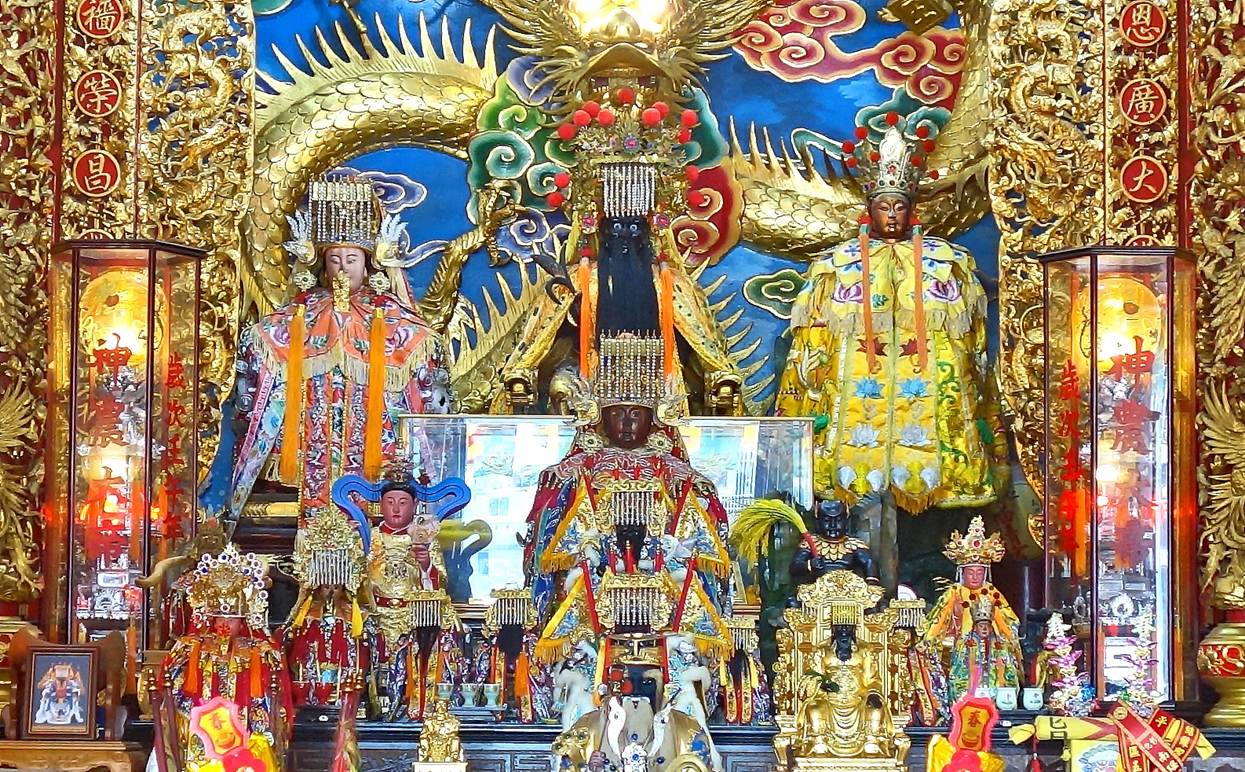
Main altar featuring
both Mazu and Shennon Dadi, among other deities.
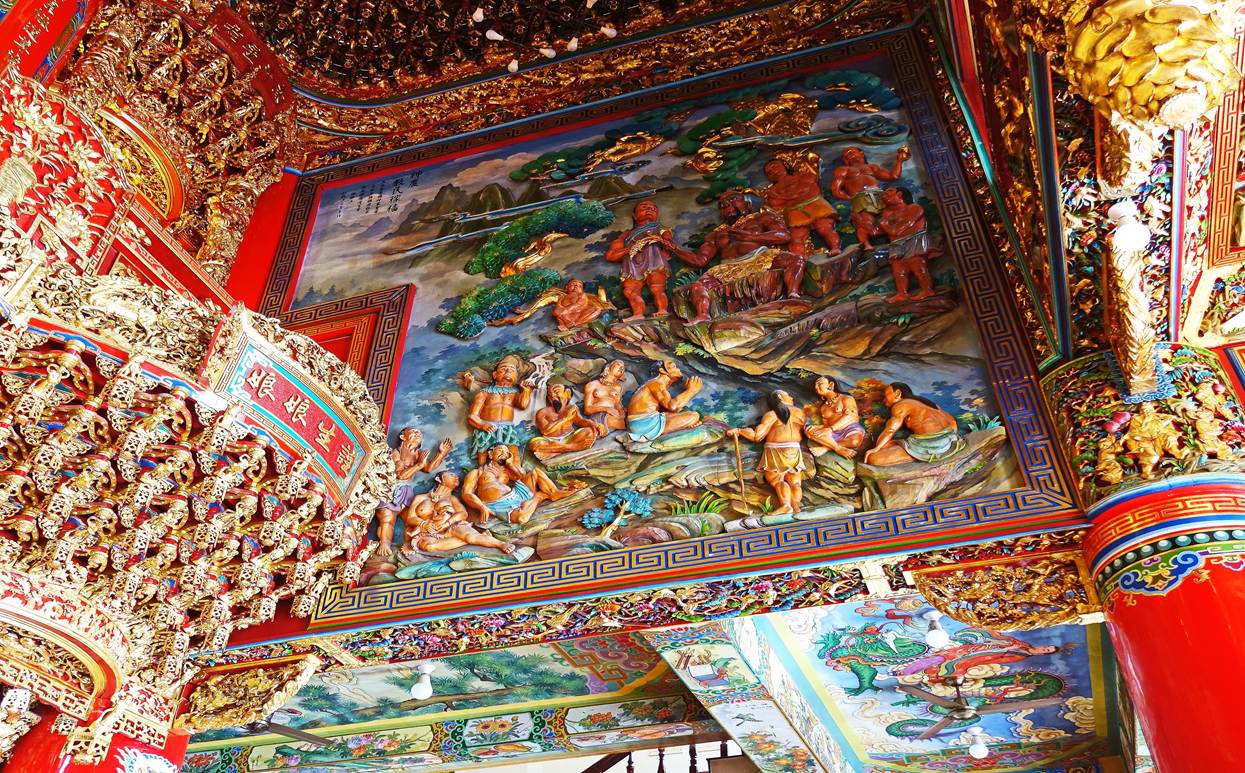
Bas-relief mural in the
main hall of the temple. The large seated figure holding stalks of grain in his
right hand is Shennong Dadi.
[March 2026]
Qishan (旗山)
Qishan is the only town in the suburban
Qishan district (旗山區) of the municipality of Kaohsiung
City. It is located some 35km northeast of Kaohsiung City's urban center.
During the Japanese colonial era, it was an important distribution center for
bananas and sugarcane.
Qishan Old
Street:
This is the main commercial street of Qishan. It is lined with
century-old houses, many of which are adorned with Baroque-style roof
pediments, and some with red-brick walls.
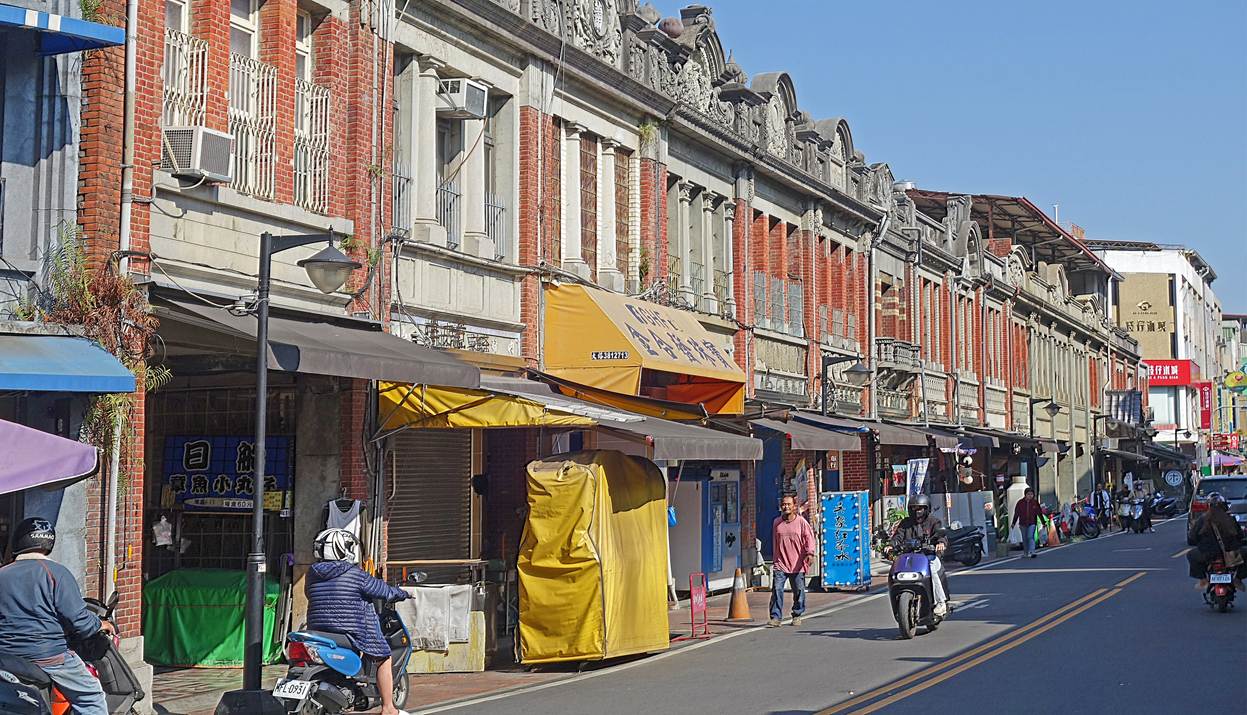
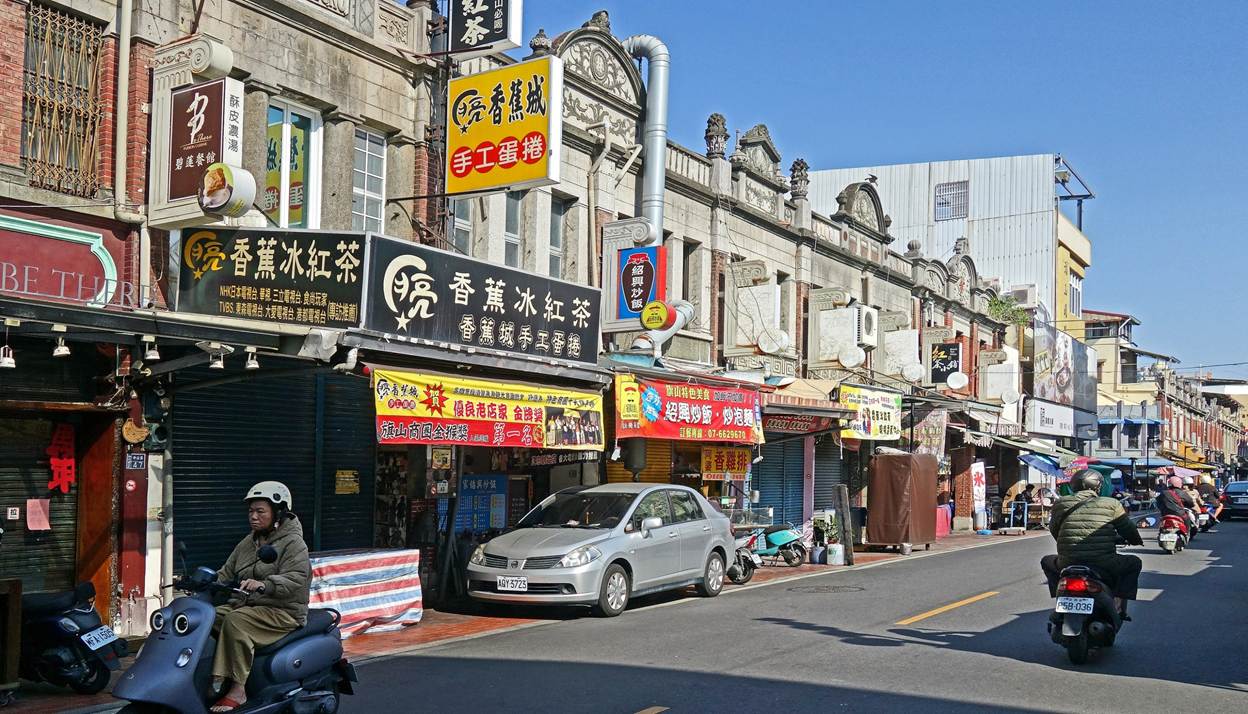
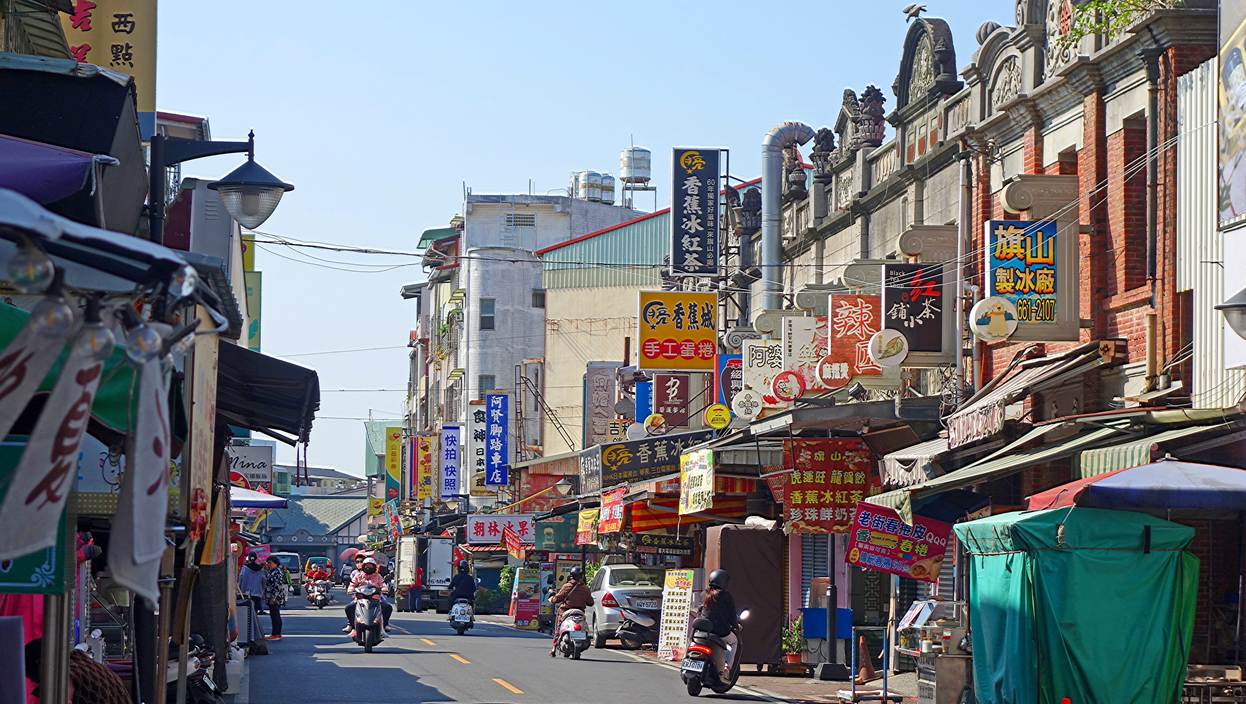
[March 2026]
Qishan Tianhou temple (旗山天后宮):
This classical Taoist temple dedicated to Mazu (妈祖), the Heavenly Holy Mother (天上圣母), was first built in 1824, largely renovated after World War II, and
renovated again several times since. The most recent renovation dates from
2011.
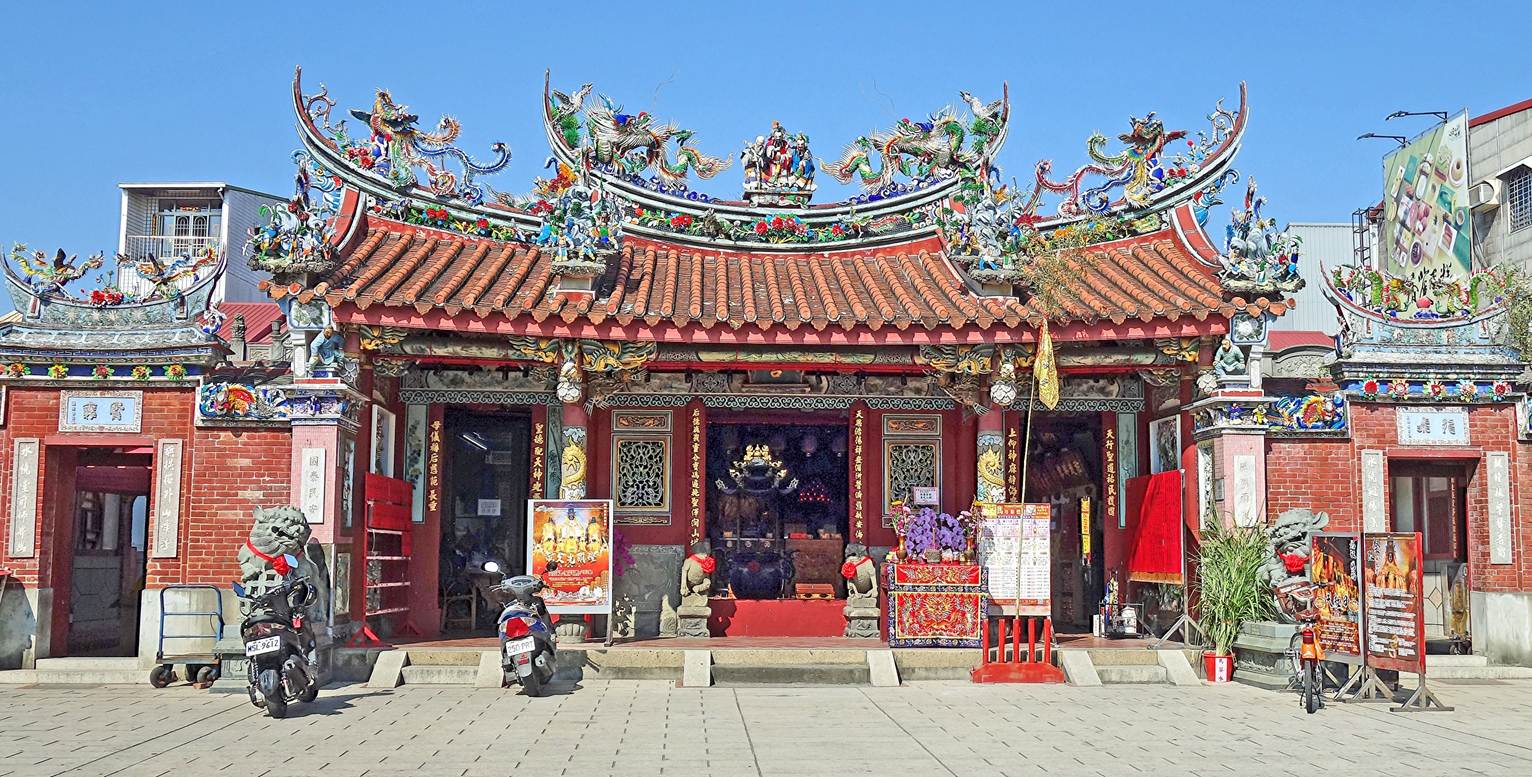
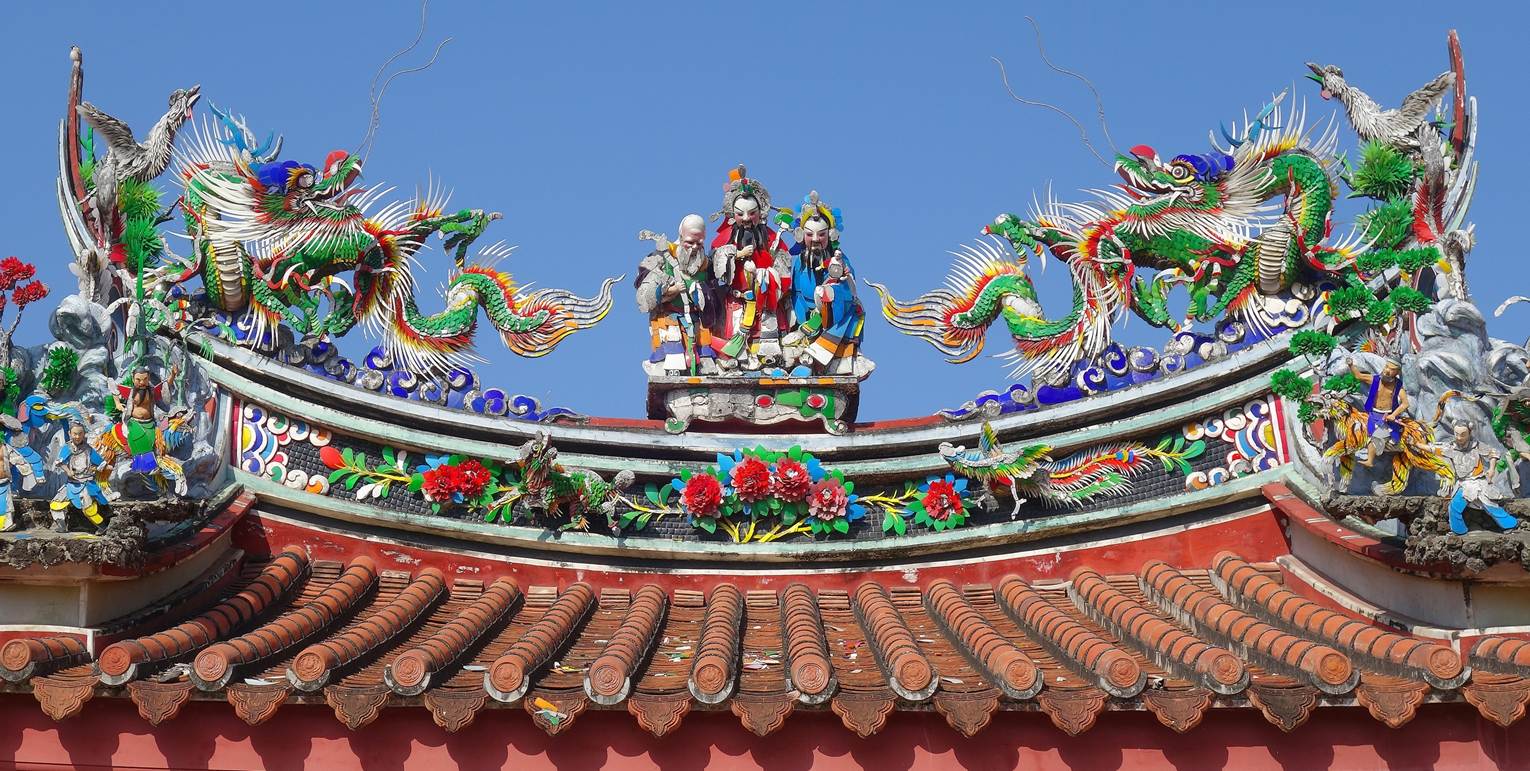
Central portion of the roof, adorned with the Sanxing
(三星), in the middle. The Sanxing (meaning ″three
stars″) represents three gods, from right to
left: the God of Fortune Fu (福星), the God of Prosperity Lu (祿星), and the God of Longevity Shou (壽星). Together they symbolize three attributes of a good life.
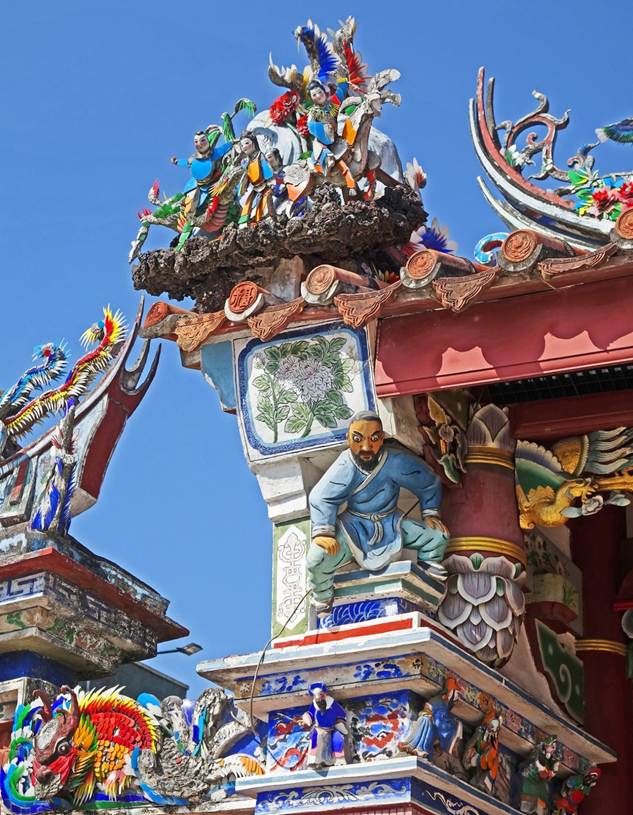
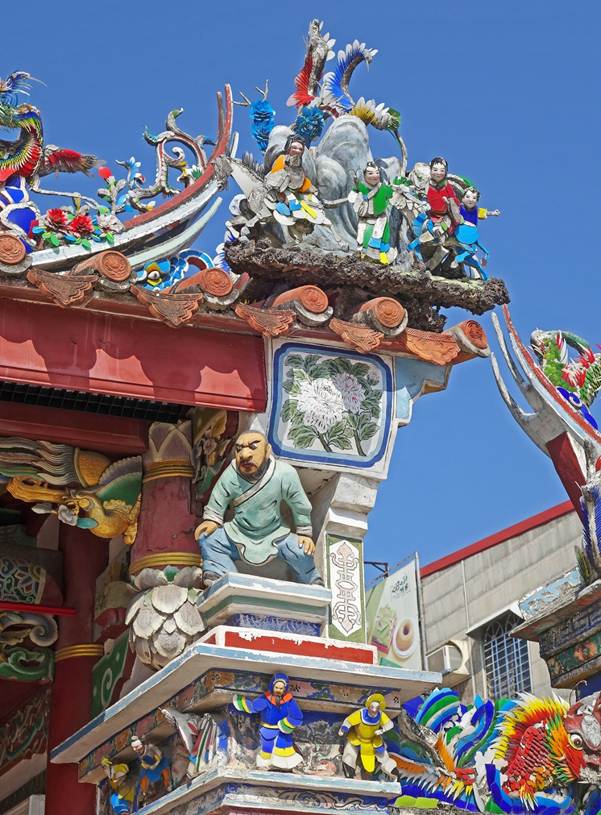
Close-ups of the capitals of the two main square pillars, adorned with
sculptures of figures that appear to support the roof on their backs.
|
|
|
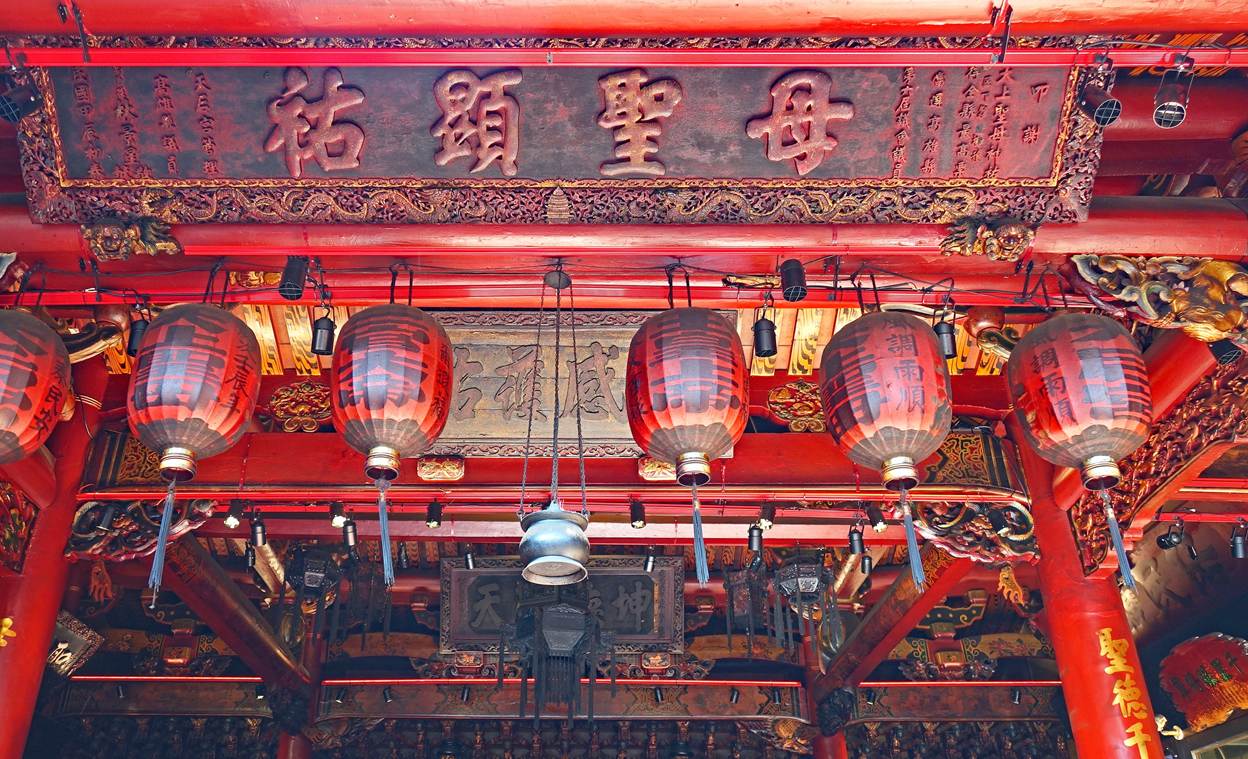
Lanterns hanging at the
entrance of the temple.
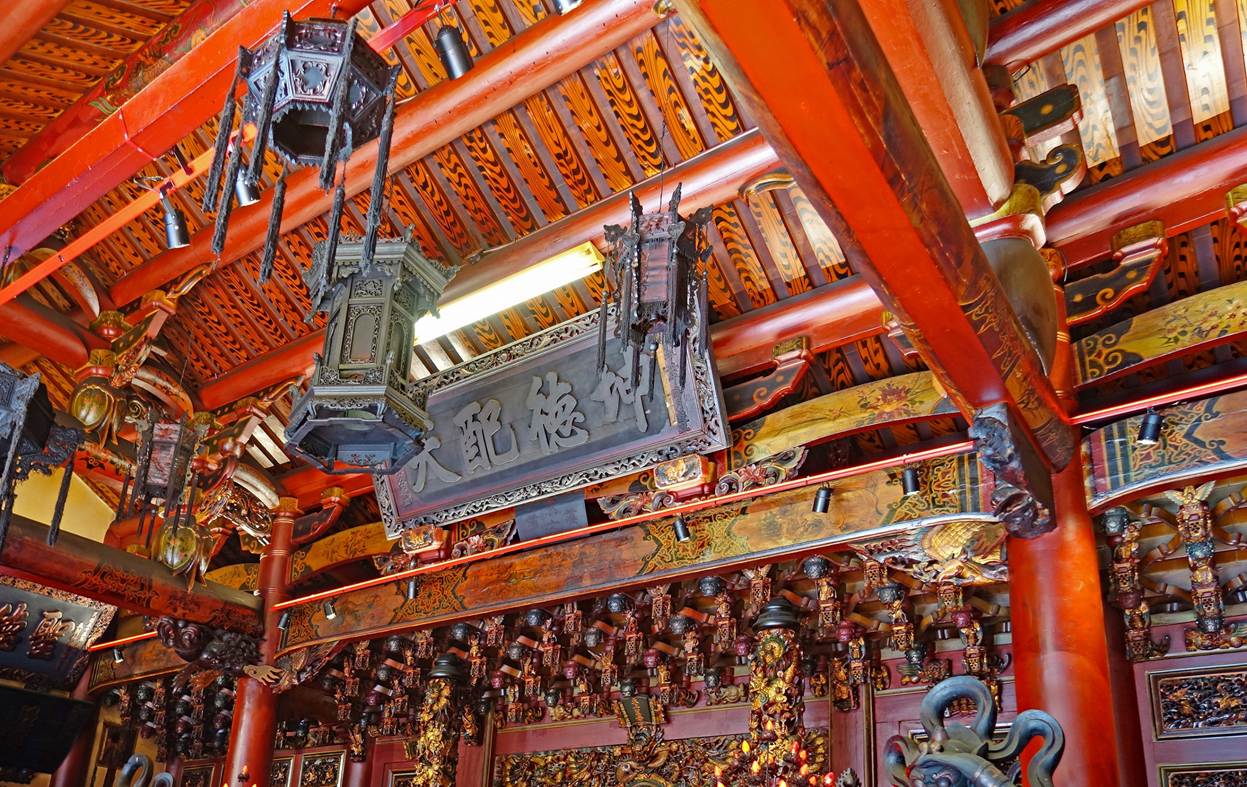
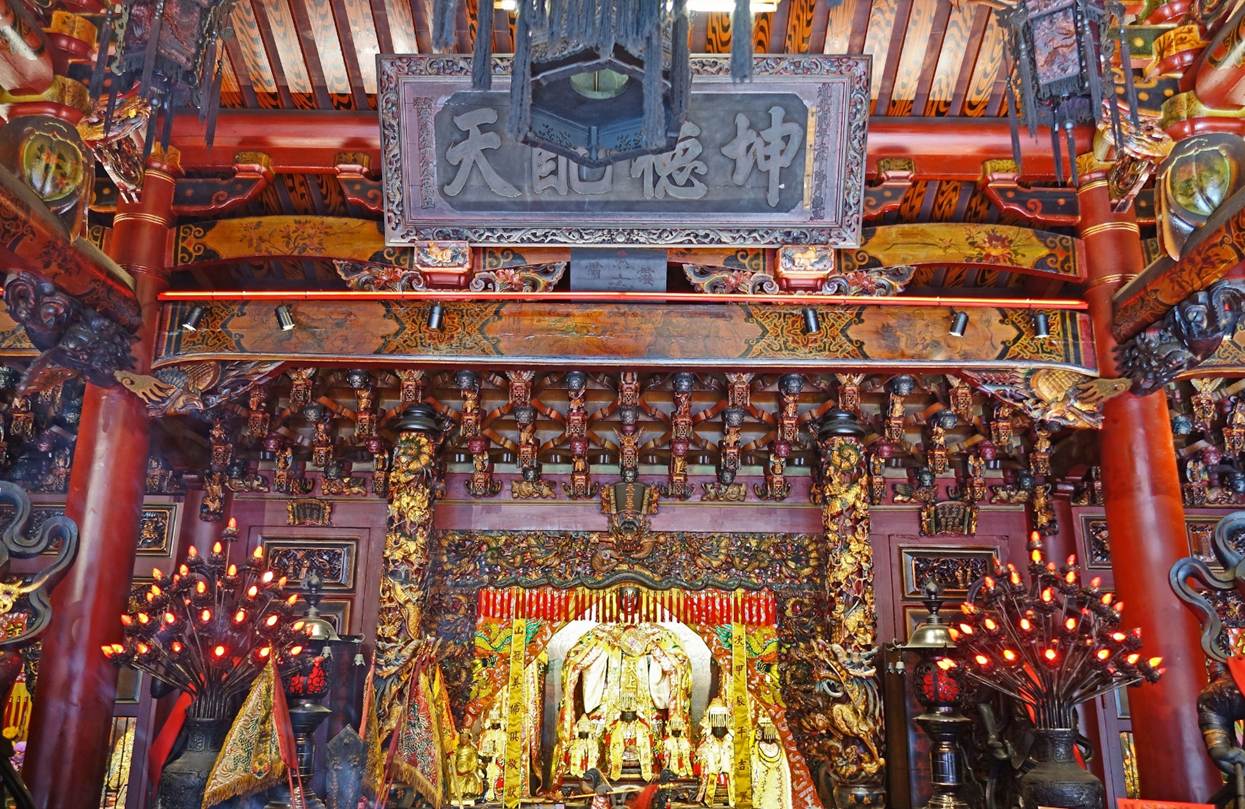
Main hall dedicated to
Mazu (the large statue in the altar).
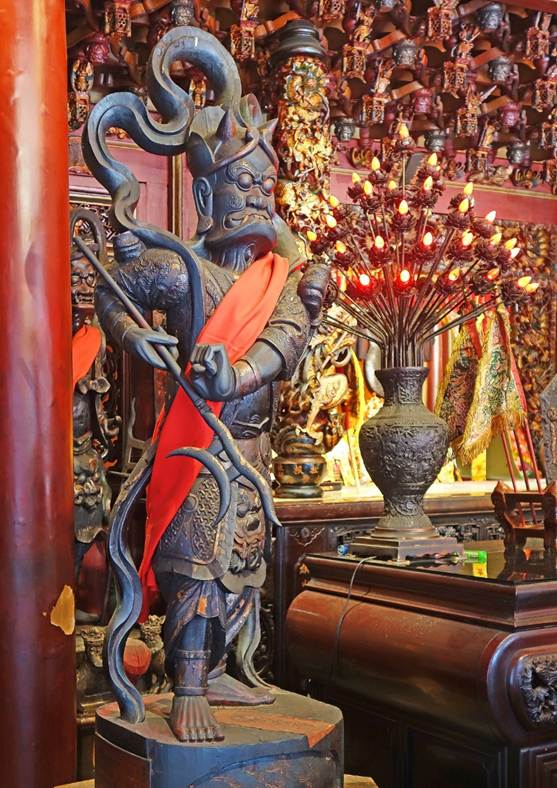
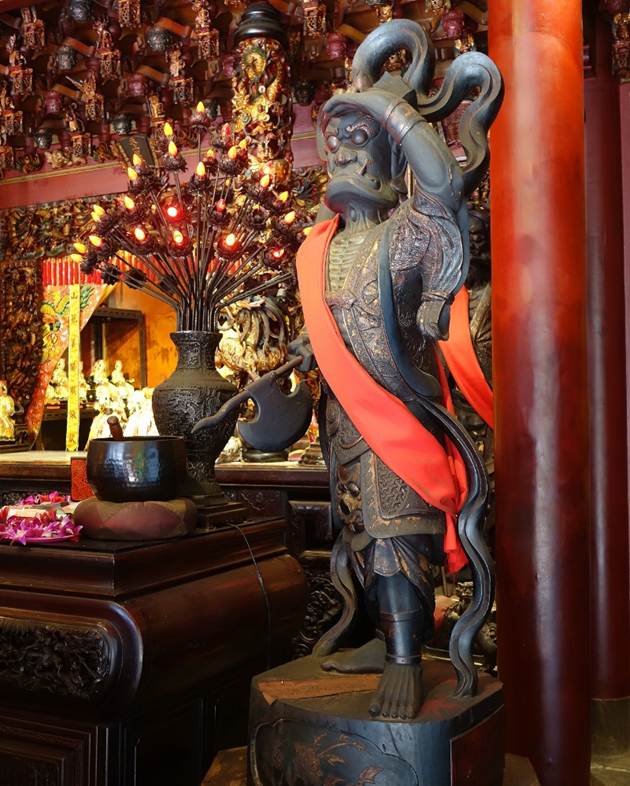
Statues of guardian
deities.
|
|
|
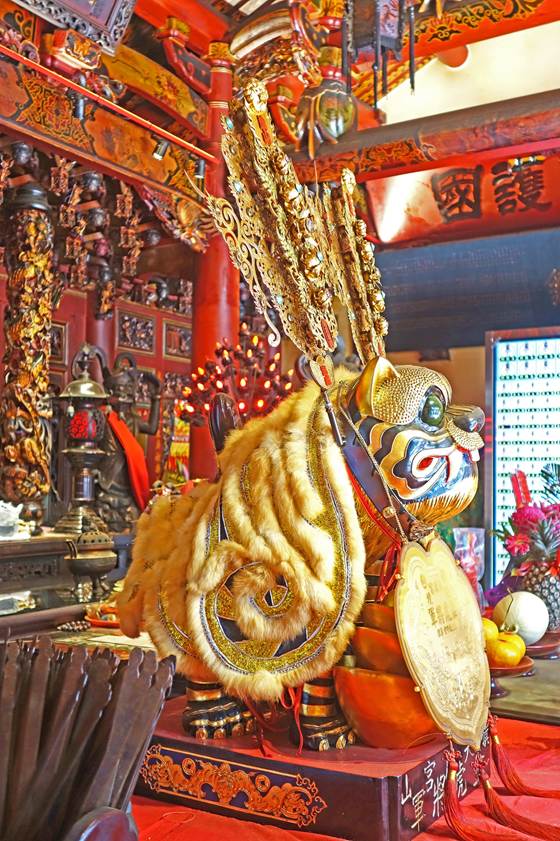
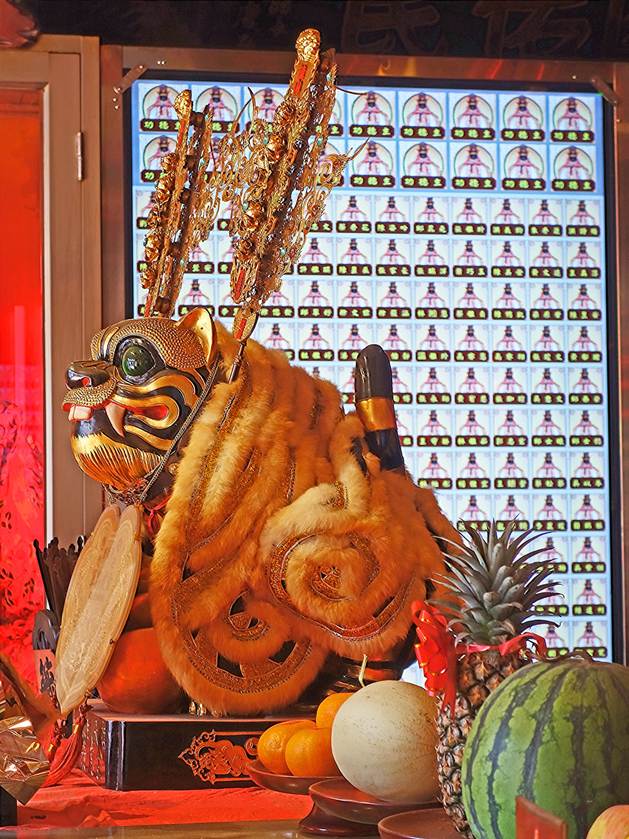
Statue of Hu Ye (虎爺), the Tiger deity,
revered as a protective and benevolent guardian.
|
|
|
[March 2026]
Kaohsiung
City Qishan Confucius temple (高雄市旗山孔子廟):
Despite being a small town, Qishan is home to an unexpectedly huge and
beautiful Confucius temple. In fact, it is the largest Confucius temple in
Taiwan. Its construction was completed in 1985. Its layout and
architectural style are very similar to those of the Kaohsiung City temple of
Confucius (高雄左營孔子廟) near the Lotus pond [see above]. Some rivalry may have
existed between them.
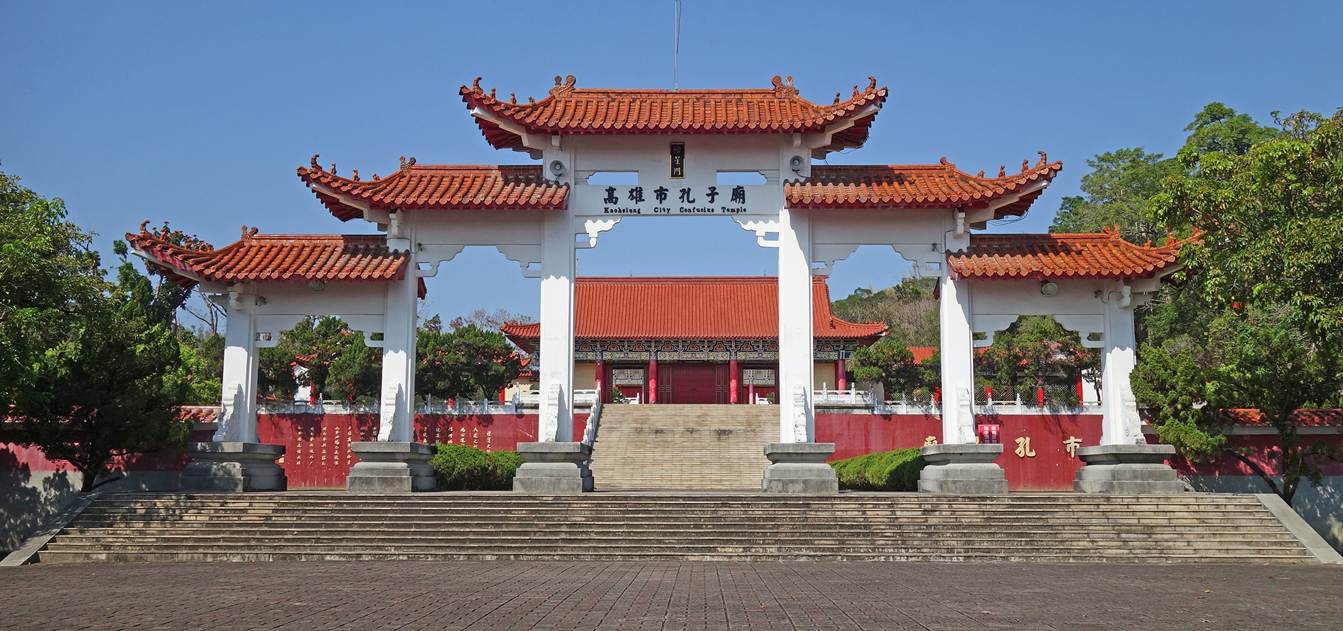
The Lingxing
Gate (欞星門).
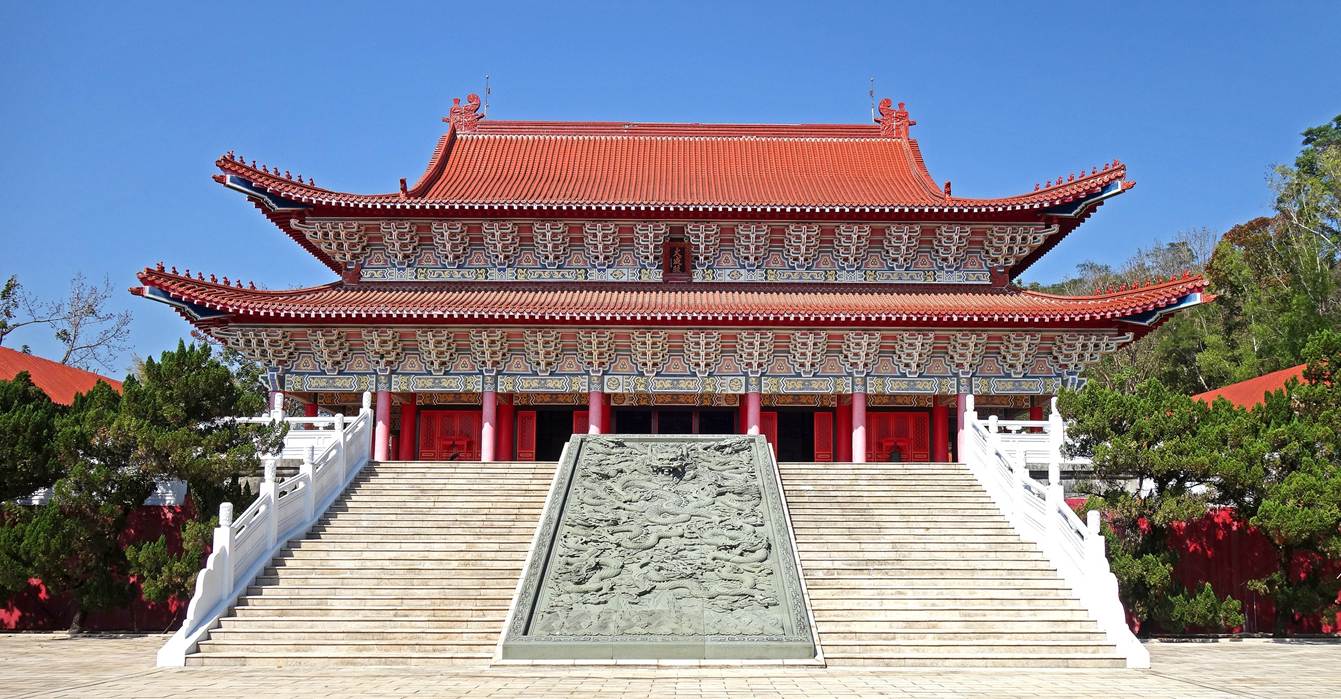
The Dacheng
hall (大成殿).
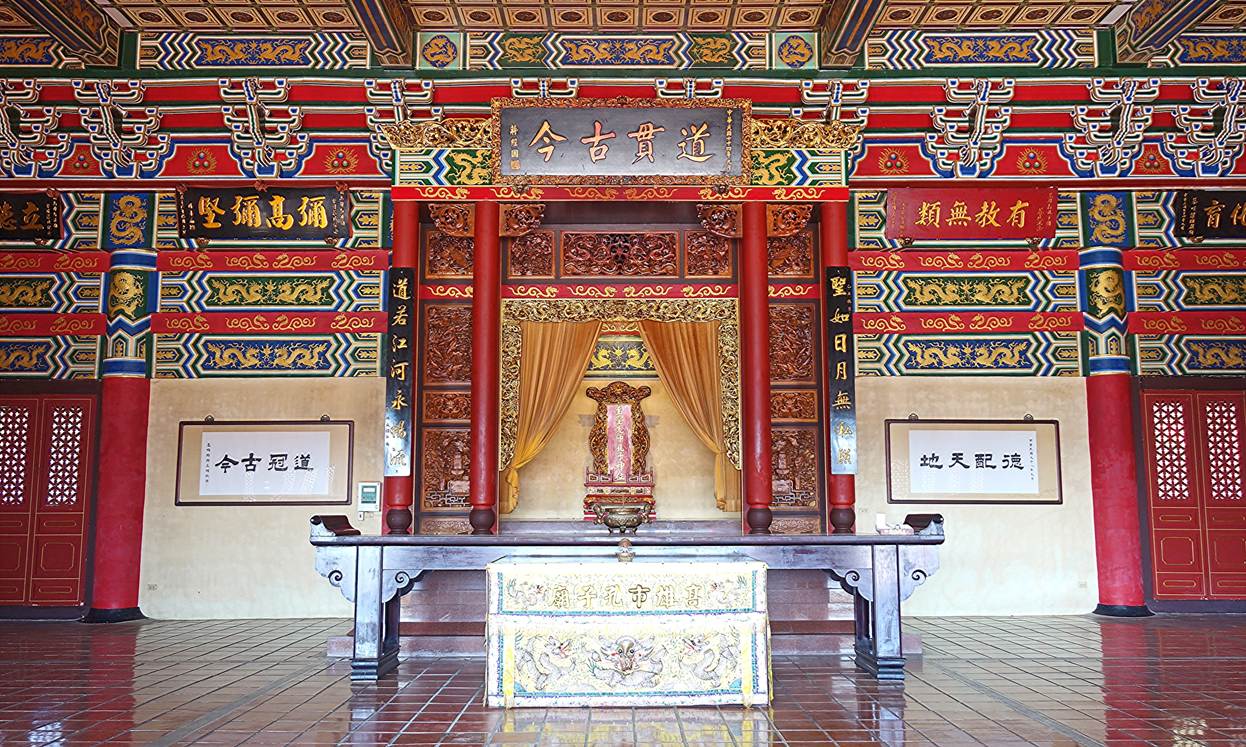
The Confucius tablet in the Dacheng Hall.
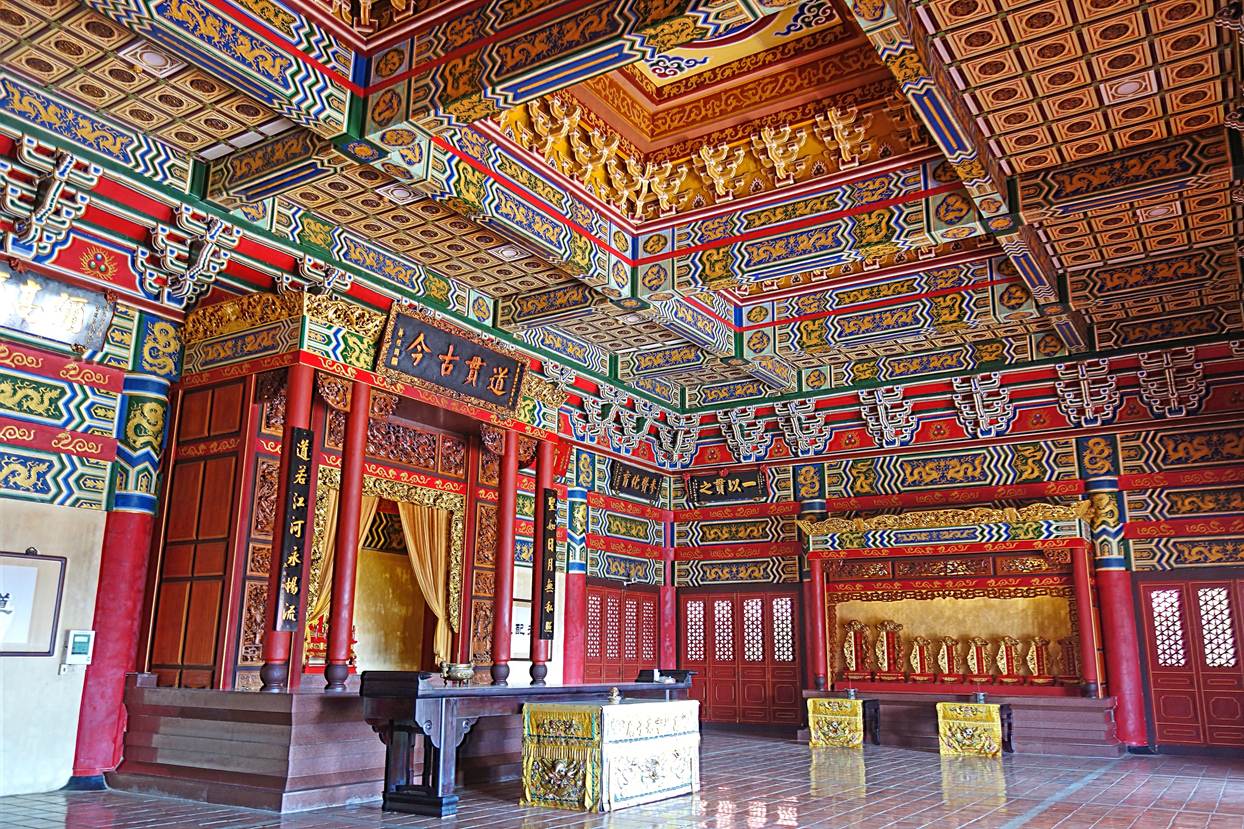
Another view of the interior of the Dacheng
hall showing two tablets of Four Sages (四配) and six tablets of the Twelve Philosophers (十二哲).
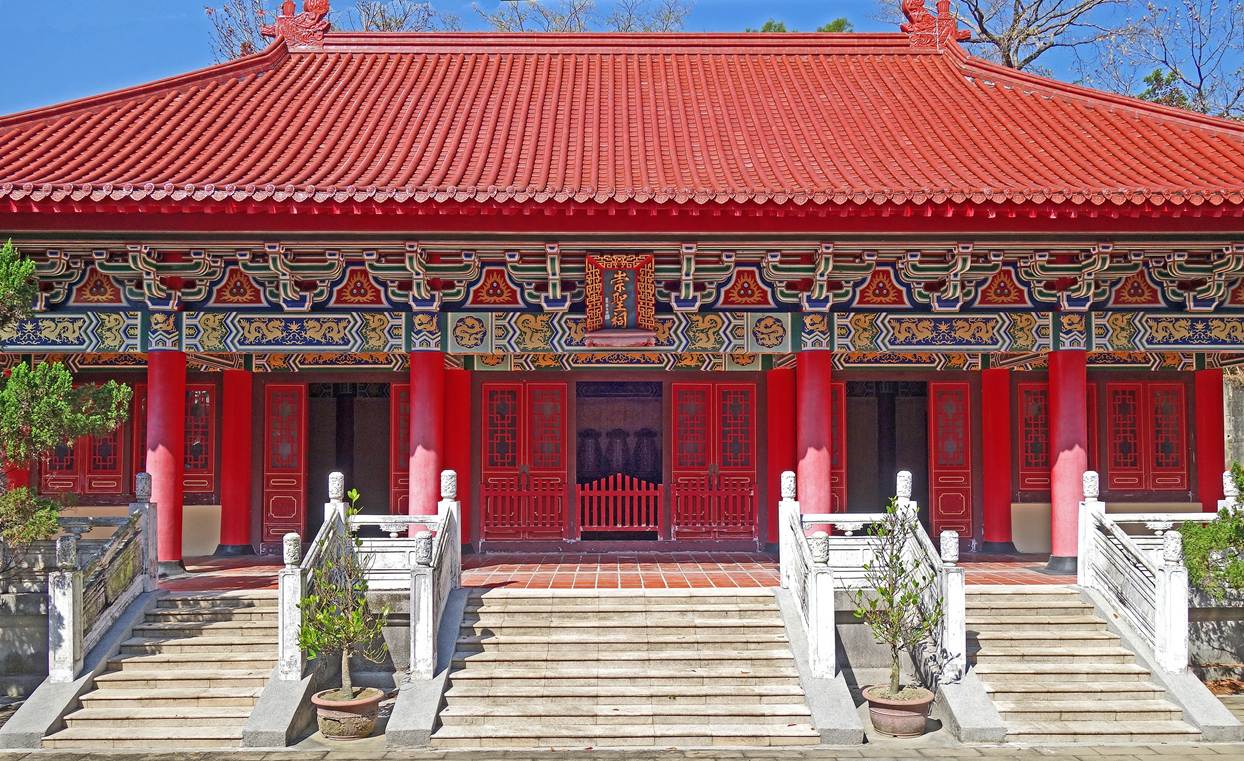
The Chongsheng
hall (崇聖殿)..
Tablets in the Chongsheng hall. (The hall is dedicated to ancestors
of Confucius, especially his father Shuliang He, and
to the fathers of the Four Sages and Twelve Philosophers.)
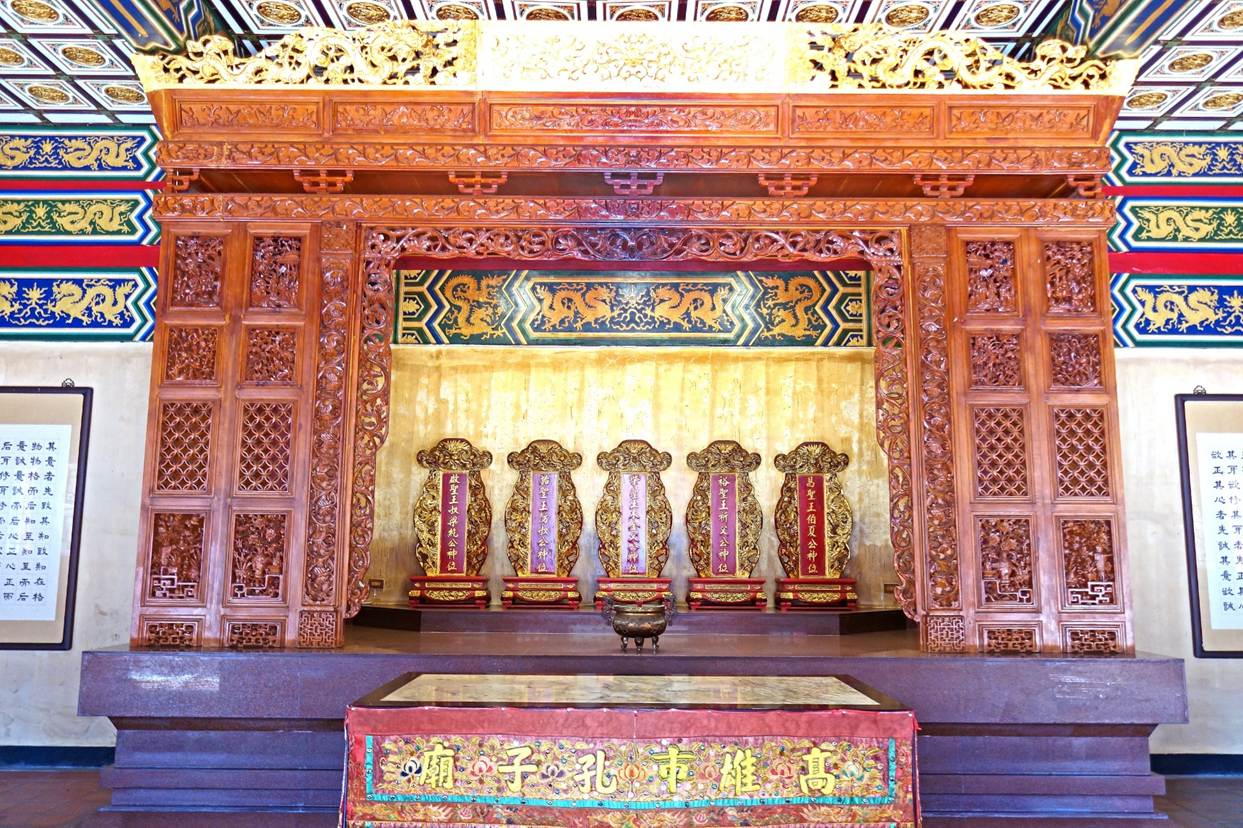
[March 2026]
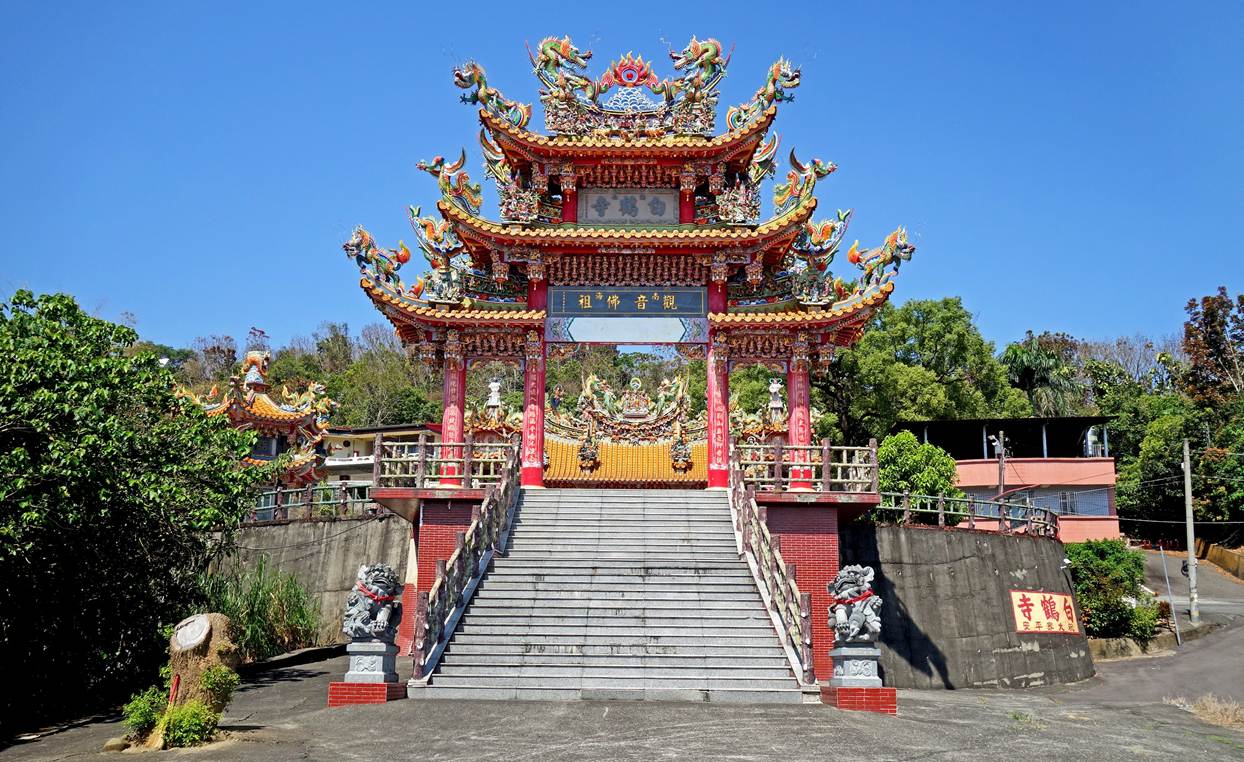
Qishan Baihe
(White Crane) temple (旗山白鶴寺):
This temple was founded in 1958 and has very likely been renovated
several times since then. It is dedicated to the Buddhist deity Guanyin (觀音), the Bodhisattva of Compassion and Mercy.
Massive archway at the top of a staircase leading to the temple.
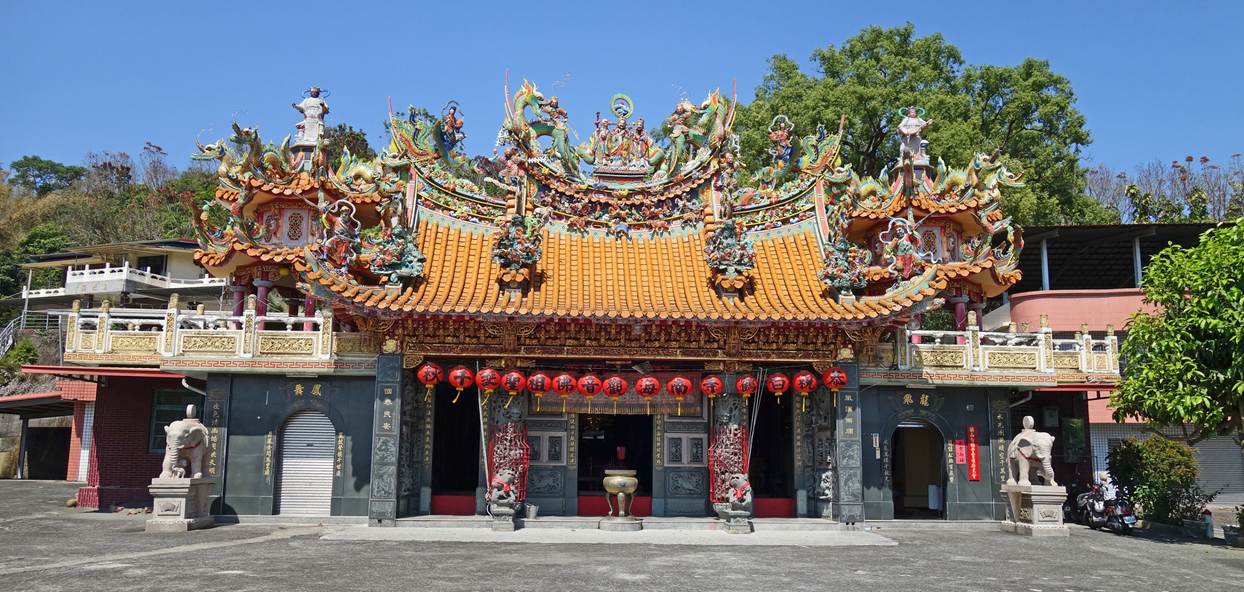
Facade of the temple.
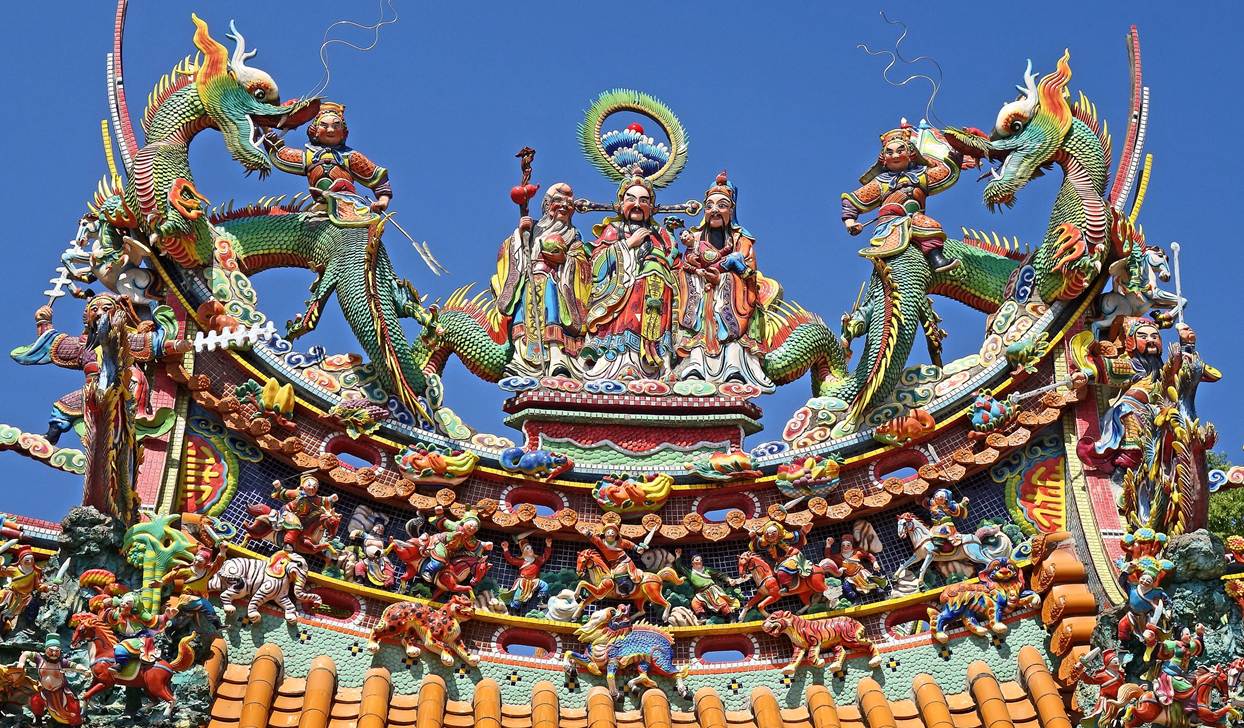
Close-up of the central
portion of the roof, adorned with the Sanxing (三星), in the middle.
Main altar featuring a
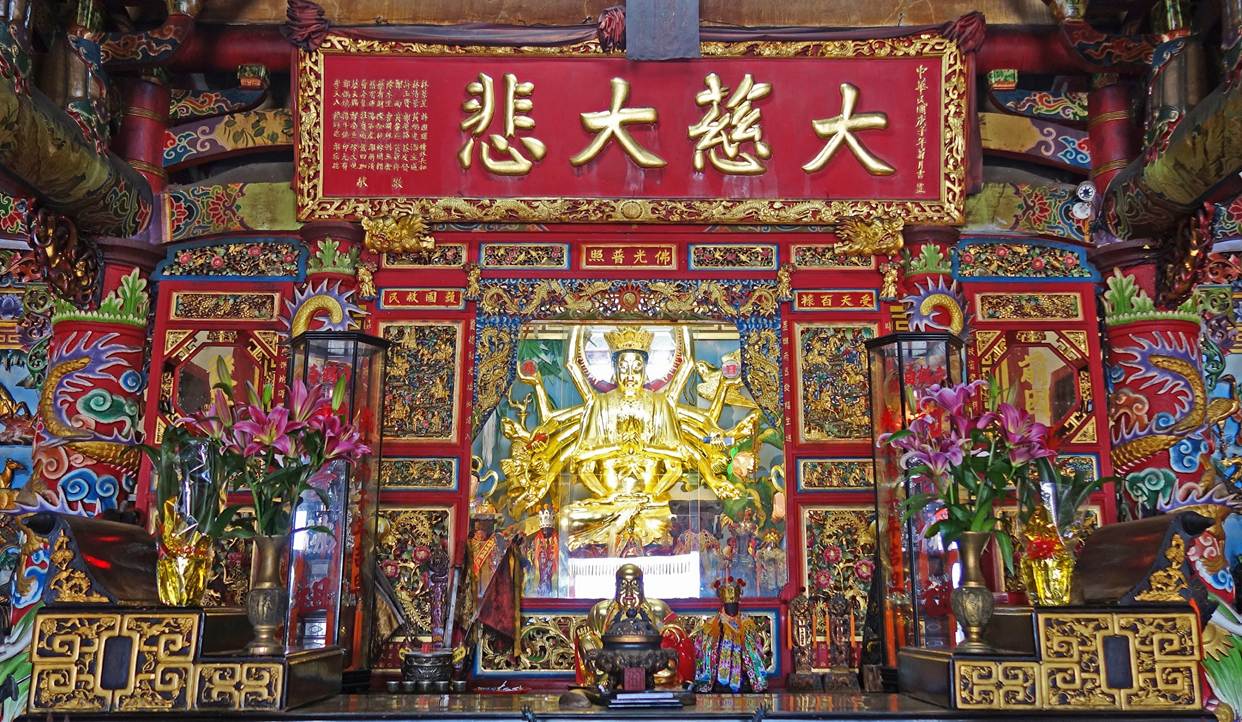
gilded statue of Guanyin. The statue has multiple arms, symbolizing Ganyin's ability to help many sentient beings. The
characters inscribed on the red tablet above the altar, which translate to ″Great
Compassion, Great Kindness″, underscore this message.
[March 2026]
Meinong (美濃)
Meinong is the only town in the
suburban Meinong District (美濃區) of the municipality of Kaohsiung
City. It is located about 10km east of Qishan. The area is a center of Hakka
culture. The Hakka are descendants of a group of nomadic peoples originating
from northern China, who migrated to southern China much later than other Han
Chinese settlers. So, they were forced to locate their settlements on less
fertile land. Consequently, they migrated later to Taiwan, where they also had
to occupy marginal lands. In Taiwan, they still keep a strong sense of
community and have their own dialect and culture.
Meinong Guangshan temple (美濃廣善堂):
This temple was founded in 1916. It was initially dedicated to Guan Yu (关羽). In 1933, another hall was constructed enshrining the Jade Emperor (玉皇上帝). New buildings were added after World War II. Today the temple is
dedicated to various deities, including the god of culture and literature
Wenchang Dijun (文昌帝君).
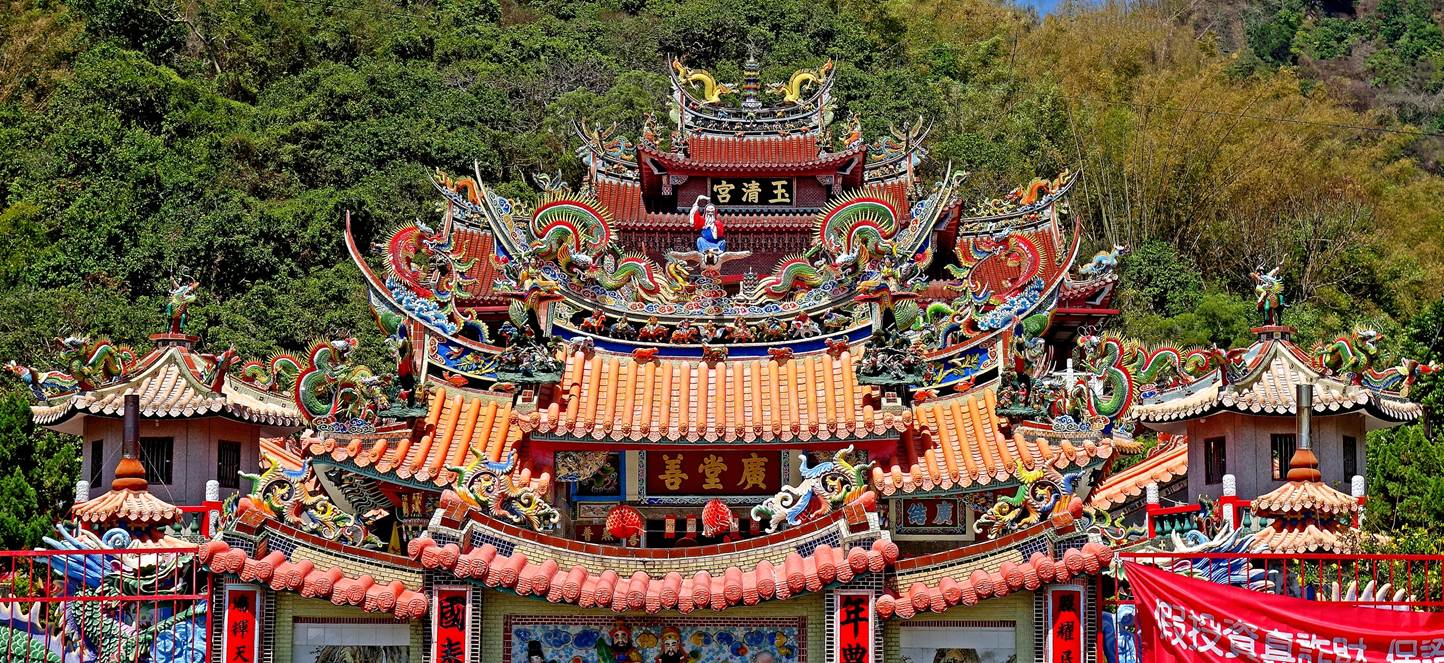
Built at the foot of a hillside, the temple consists of multiple
buildings added over the years. The resulting profile of its roofline is quite
complex.
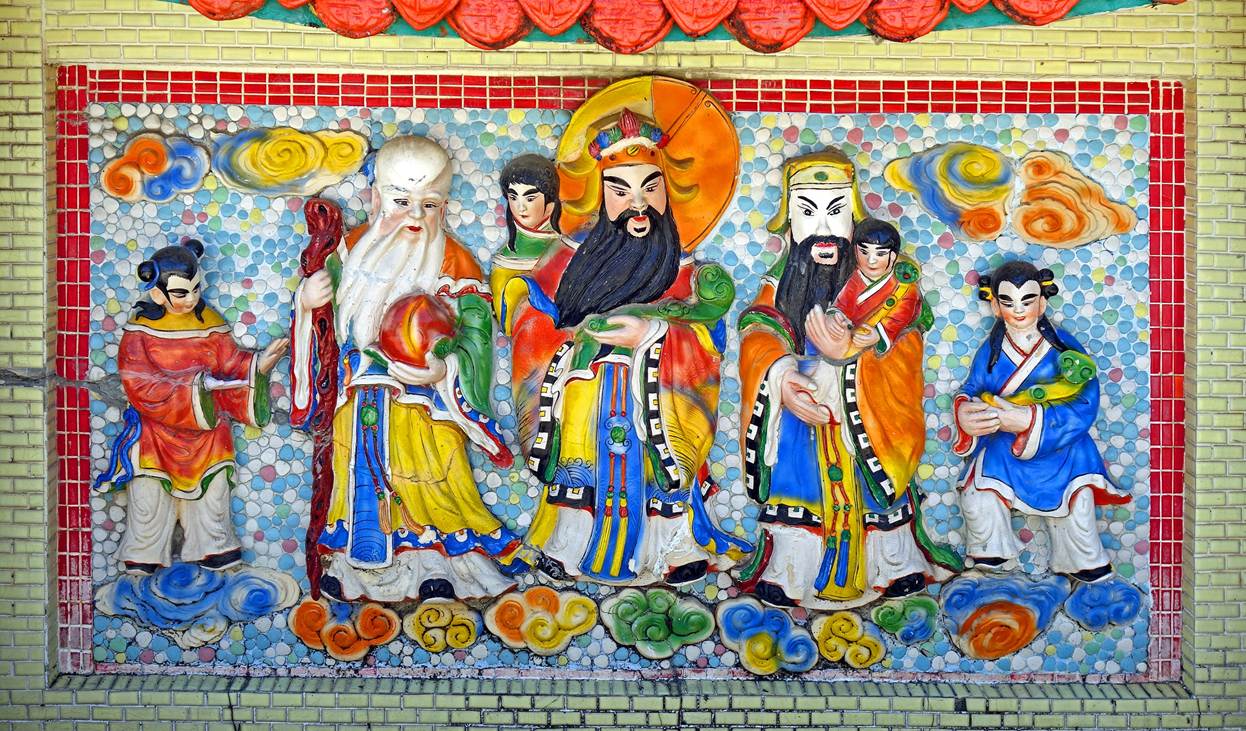
Mural depicting the Sanxing (三星) [see Qishan Tianhou temple
(above)].
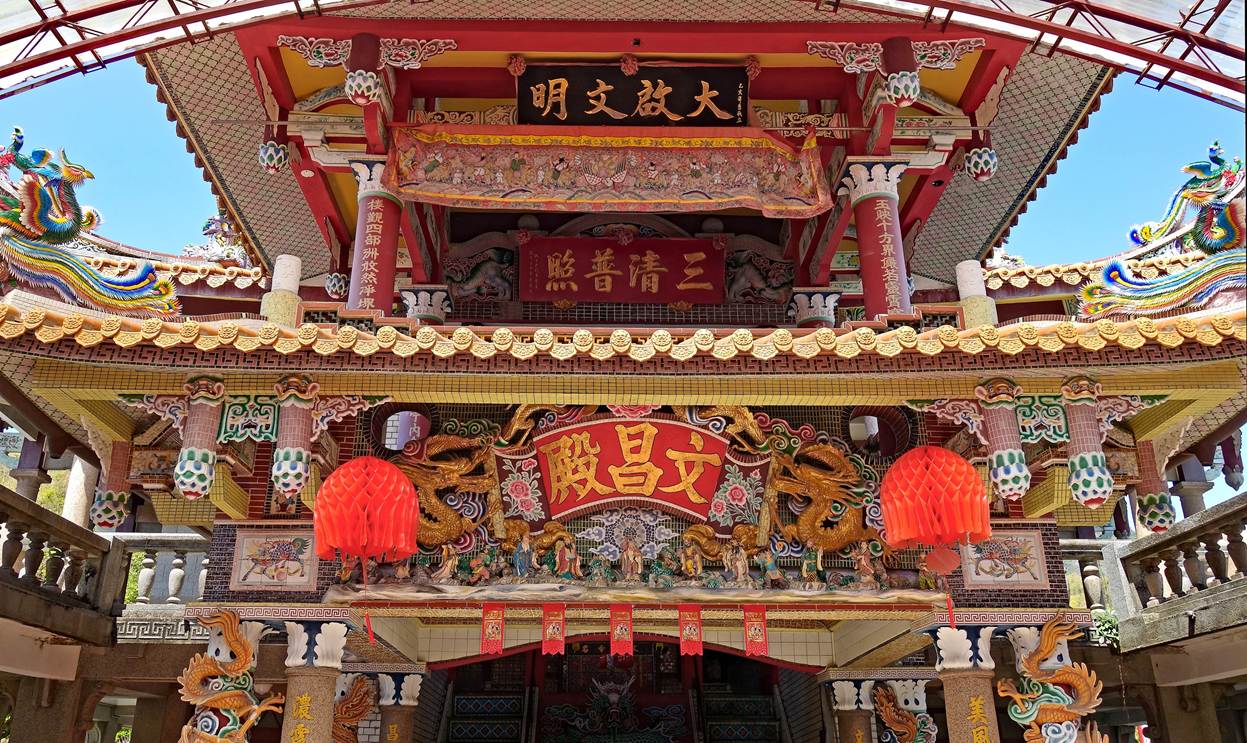
Entrance of the
temple's main hall.
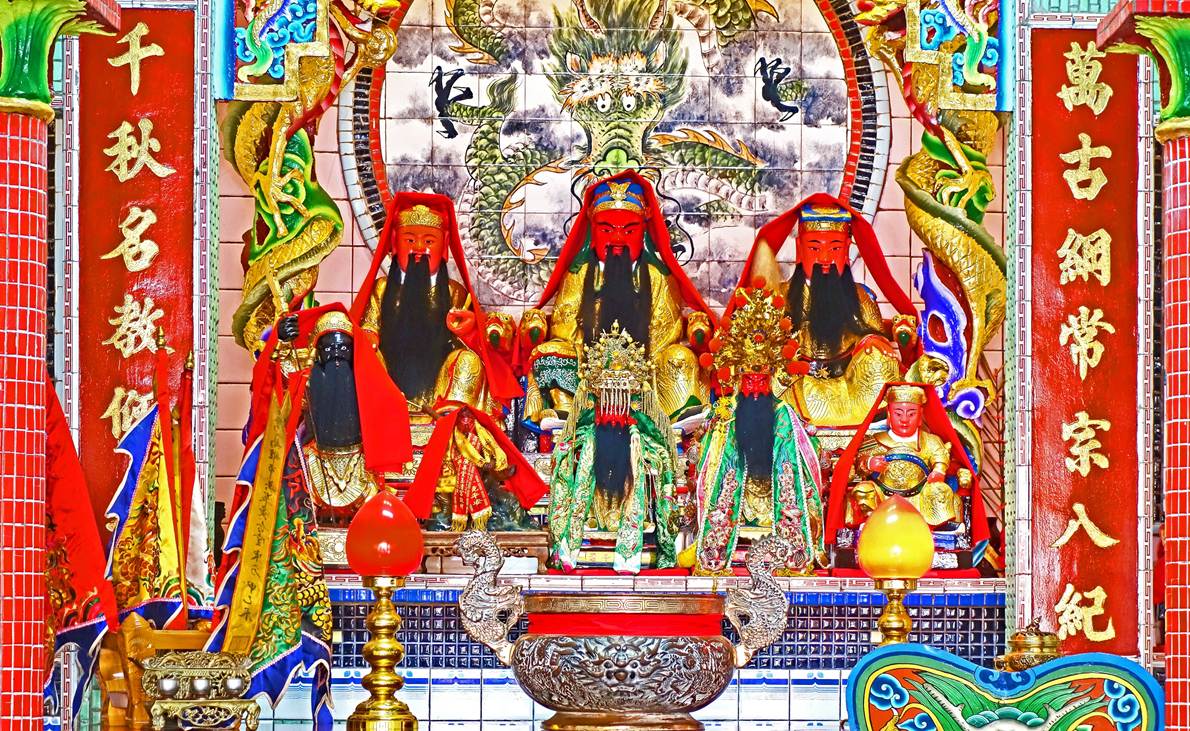
- Left photo: Altar
dedicated to Guan Yu. The three main statues may represent three versions of
Guan Yu, each associated with one of his moral values.
The smaller statue located at the far left depicts Zhou Cang (周倉), Guan Yu's commander.
The statue at the far right represents Guan Yu's son Guan Ping (关平). The inscription on
the right 萬古綱常崇人紀 underscores the
timeless importance of preserving virtue and ethical standards in human life.
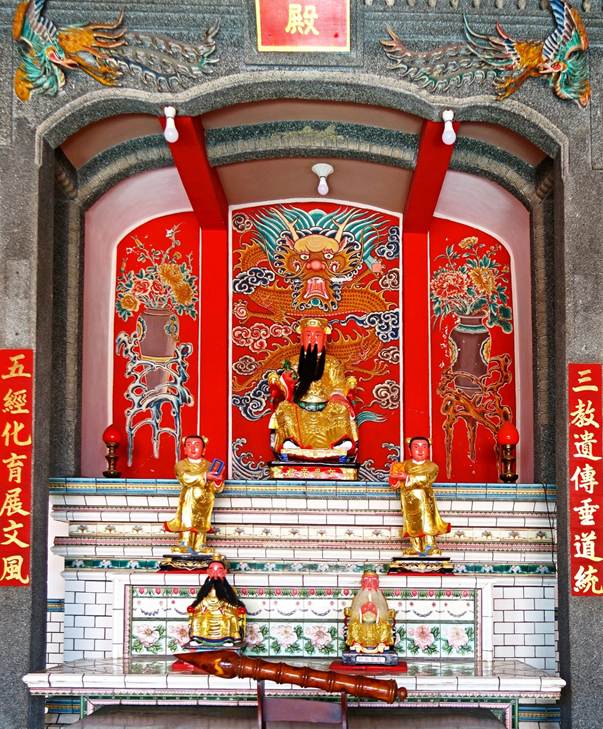
- Right photo: Altar
dedicated to Wenchang Dijun.
|
|
|
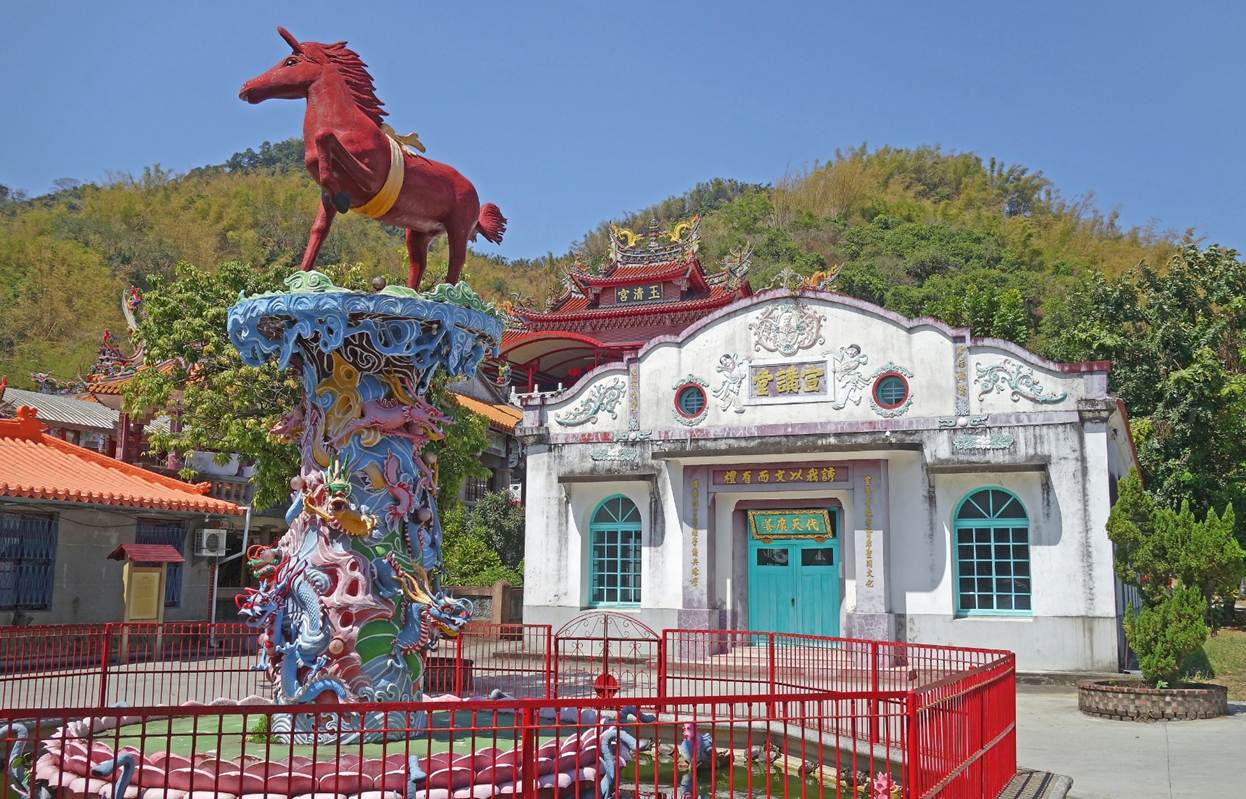
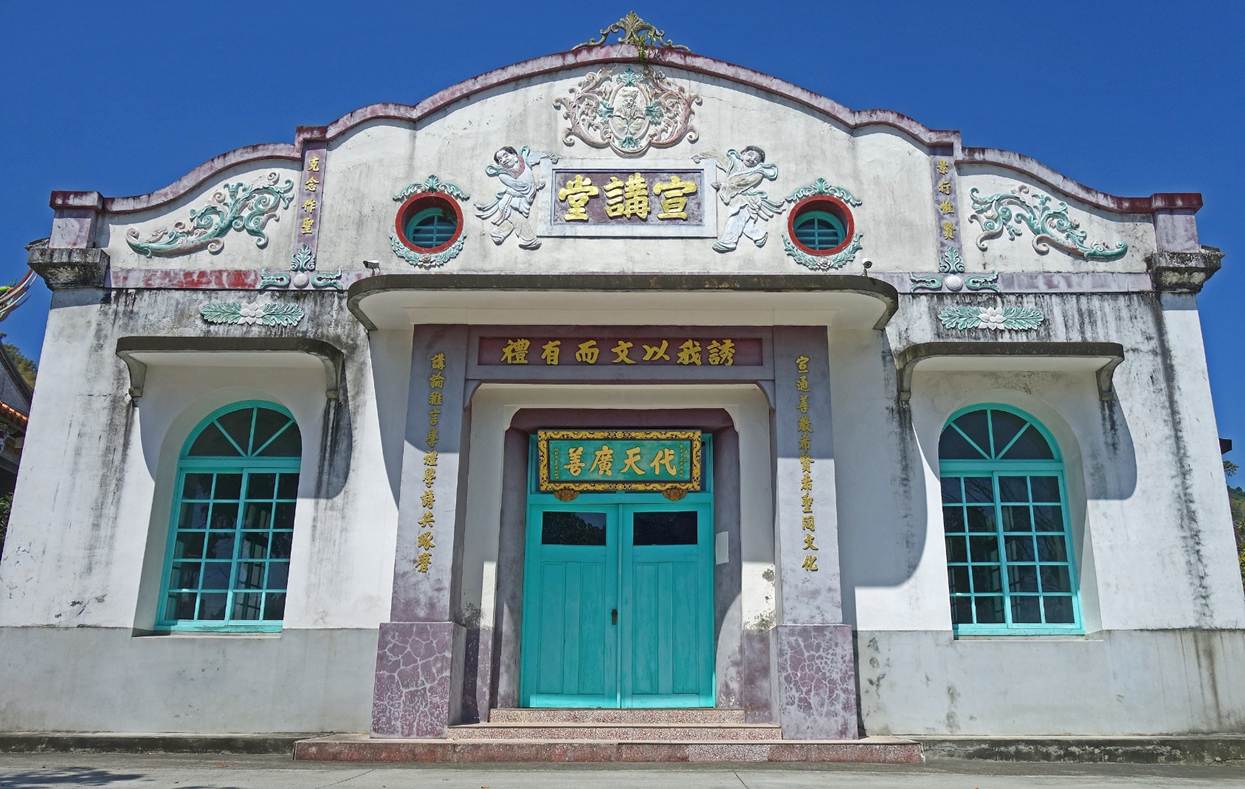
Lecture hall dating
back to the Japanese era, which has remained almost unchanged. The seven-character
plaque situated above the door translates as: ″Etiquette exists, and
literature guides me″.
[March 2026]
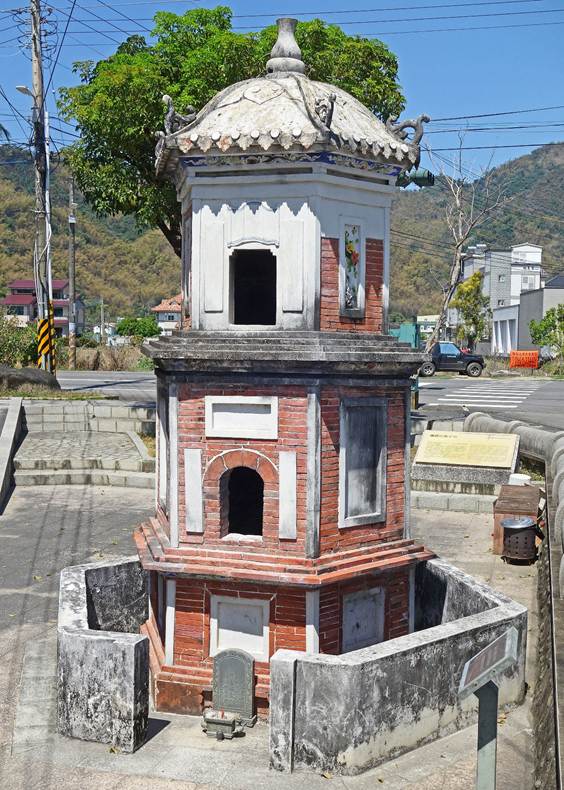
Meinong
Zhuang Jingziti (瀰濃庄敬字亭):
The term ″jingziti″ (敬字亭) means ″reverence-for-script pavilion″. It is the name for a
special-kind of paper-burning tower. It looks like the common joss paper
burners found at most Taiwanese temples, which are used to burn spirit money
for deities. But, here, its purpose is very different. According to Confucian thought, any paper bearing written
characters should be regarded as sacred and should not be discarded in a
disrespectful manner. A Jingziti is a kiln used to
burn such used paper in a solemn manner, thereby honoring the written word, the
culture it embodies, and the scholars who created it. The resulting ashes are
then collected and scattered into a river or another clean location. In
Taiwan, this ancient Chinese tradition used to be deeply rooted within the
Hakka community.
[March 2026]
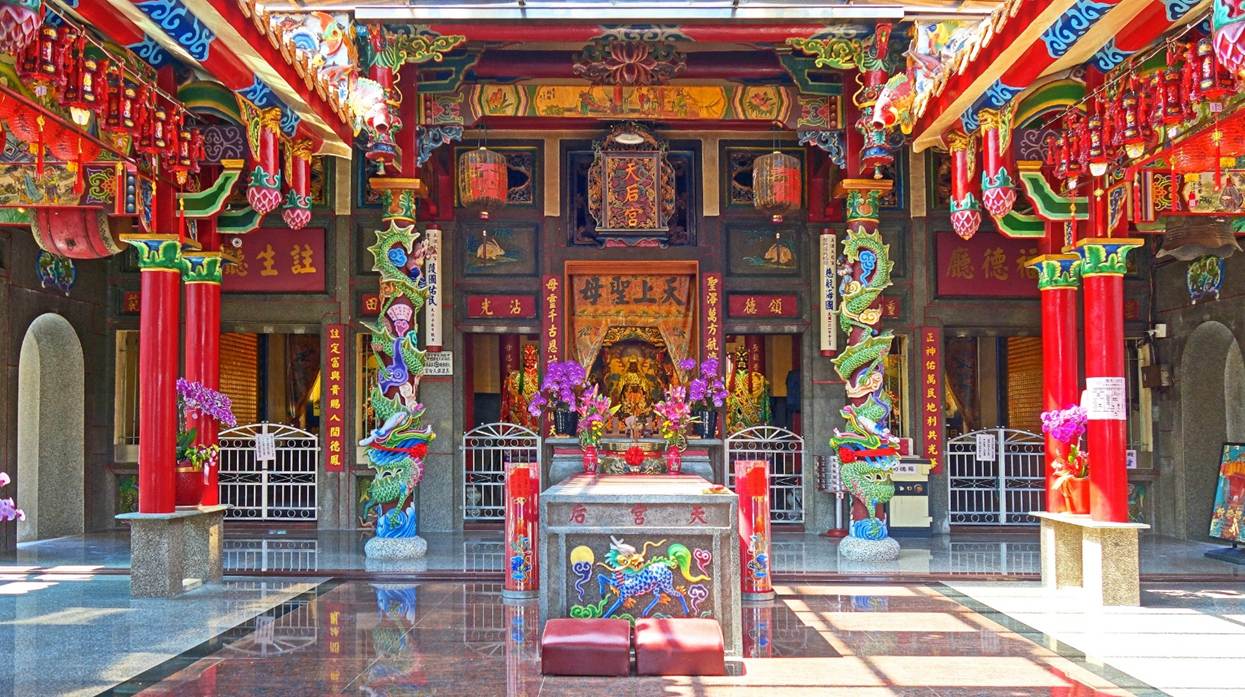
Meinong Tianhou temple (美濃天后宮):
This temple was founded in 1816. It enshrines the Taoist Heavenly Mother
Mazu (妈祖).
Main hall.
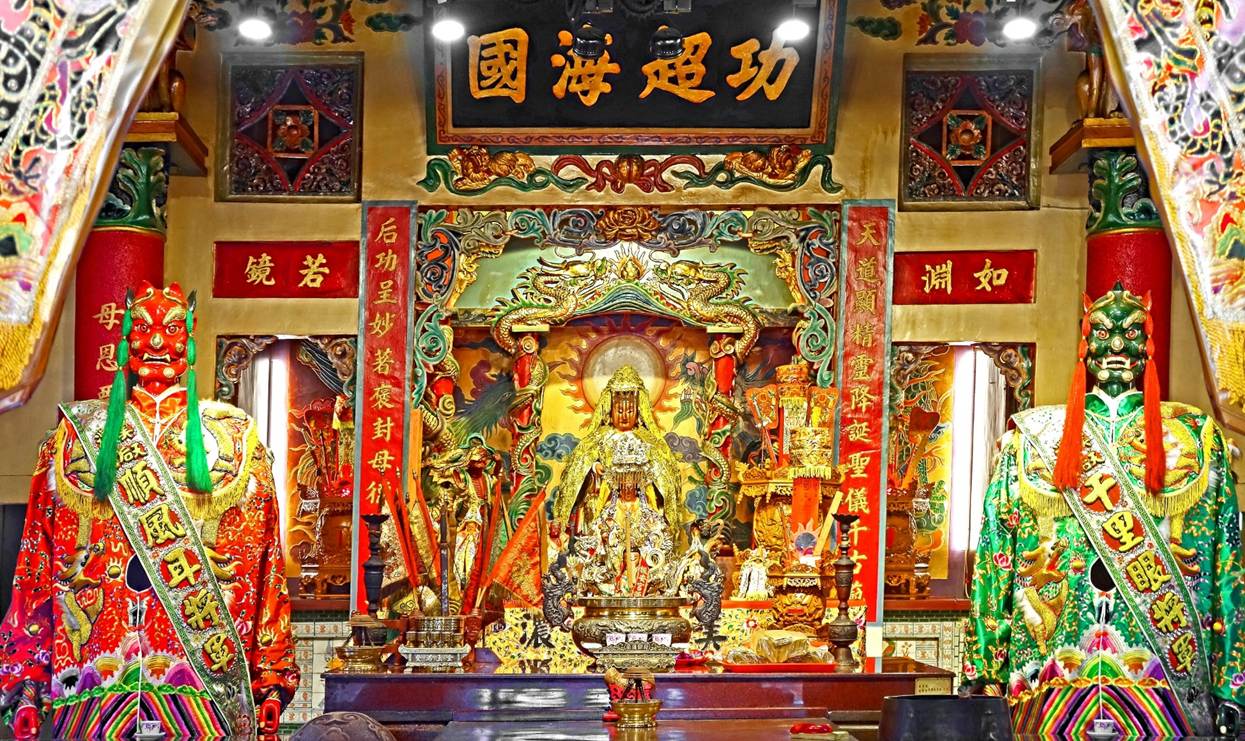
Close-up of the altar dedicated to Mazu, flanked by her two customary
guardians.
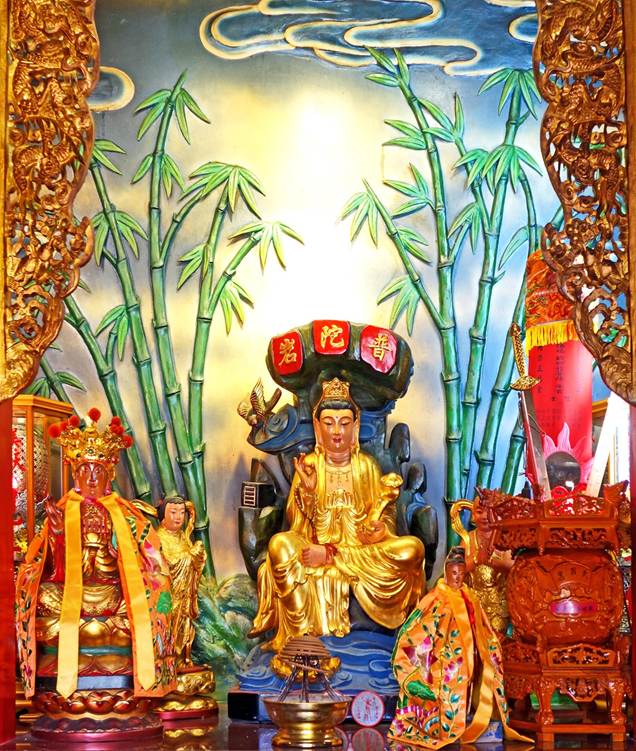
Altars featuring other deities (the one on the left is Guanyin)..
|
|
|
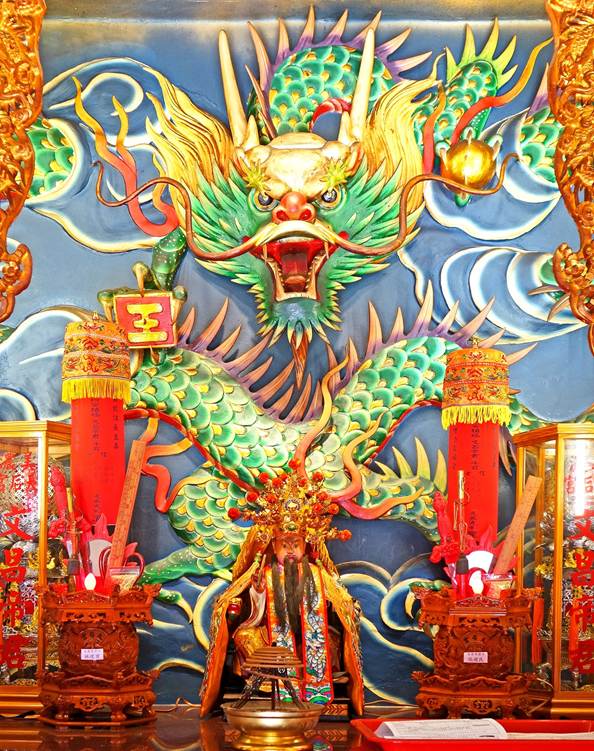
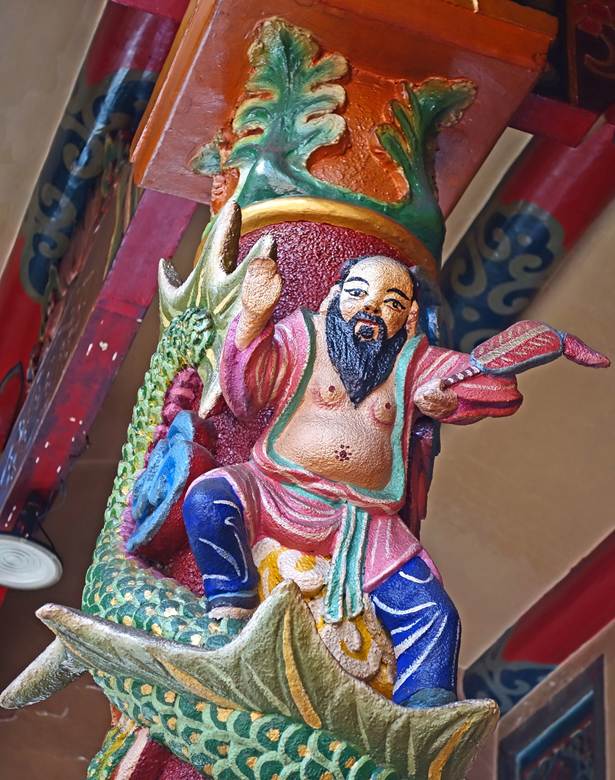
Decoration of the upper part of two circular pillars.
|
|
|
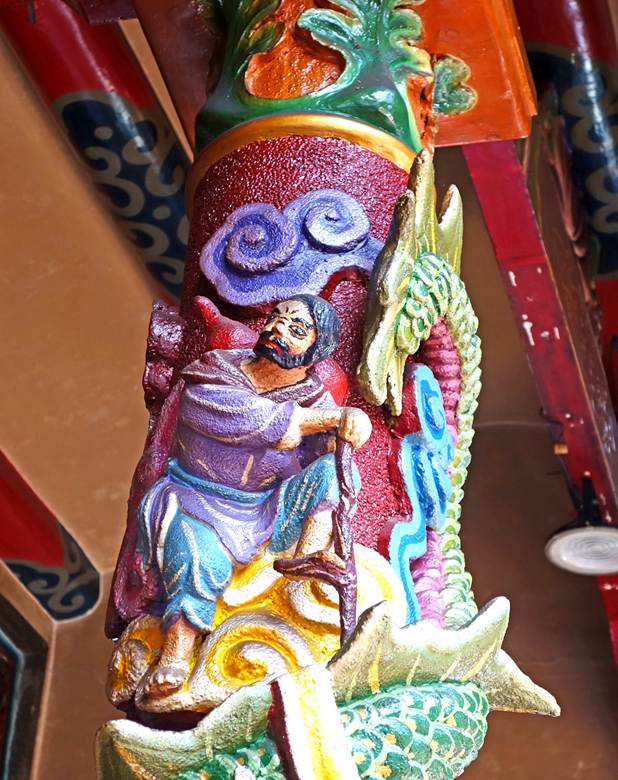
[March 2026]
Meinong Lin
Chunyu (林春雨) house:
This house was built by Lin Chunyu, the head of the local Lin family,
known as the ″Tobacco King″ of Meinong, during the Japanese
colonial era. It is located on Yong'an Road (永安路), commonly referred to as Meinong Old Street.
Entrance gate of the house compound.
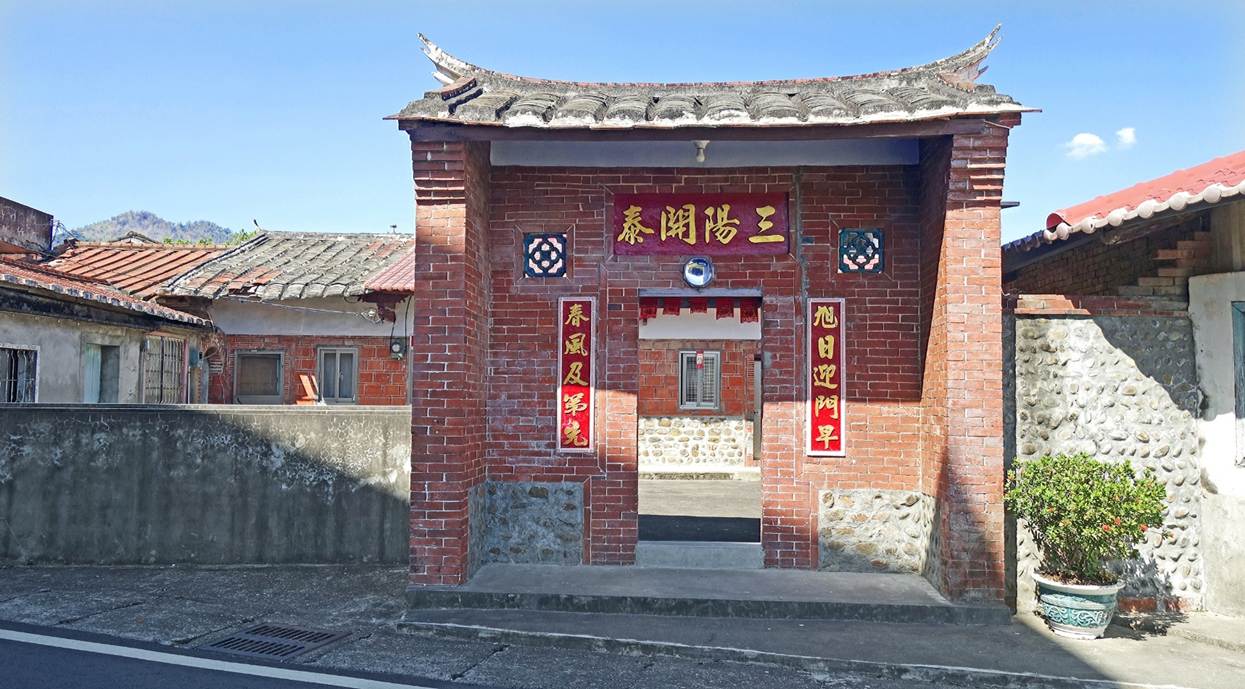
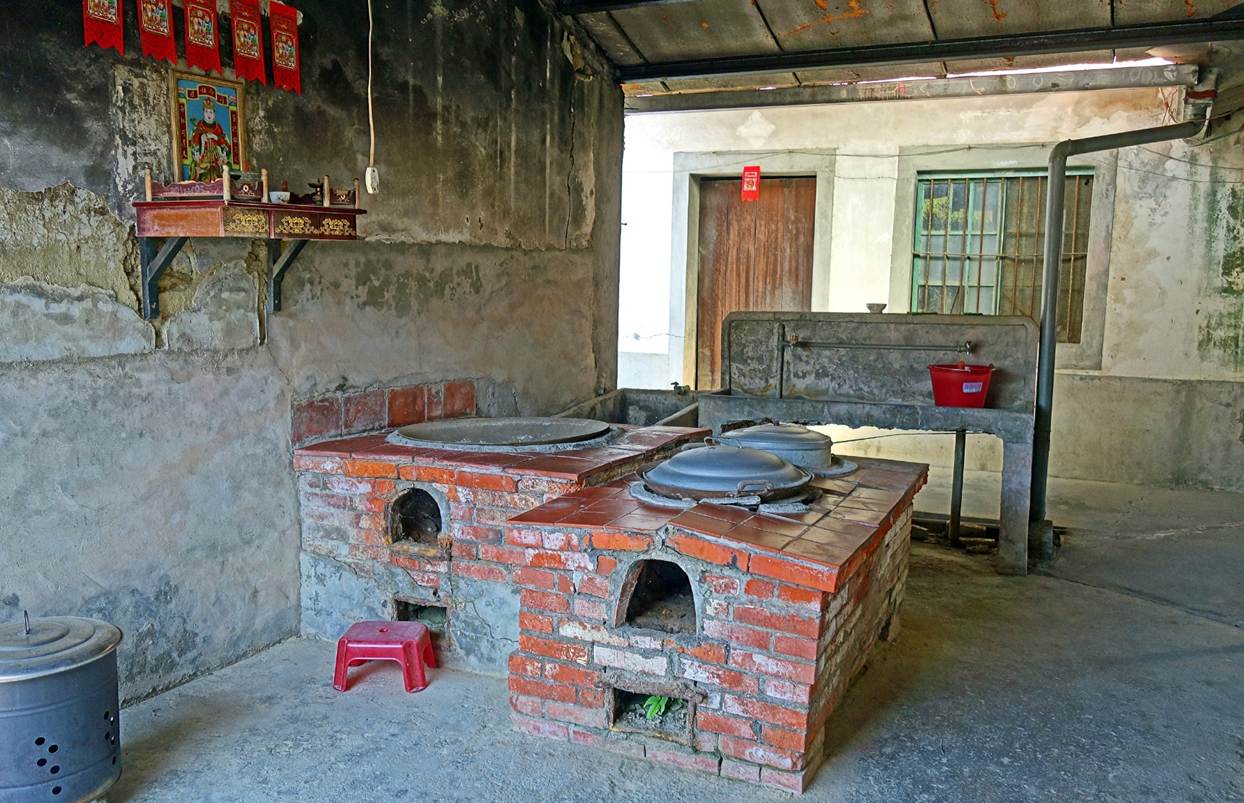
House's kitchen.
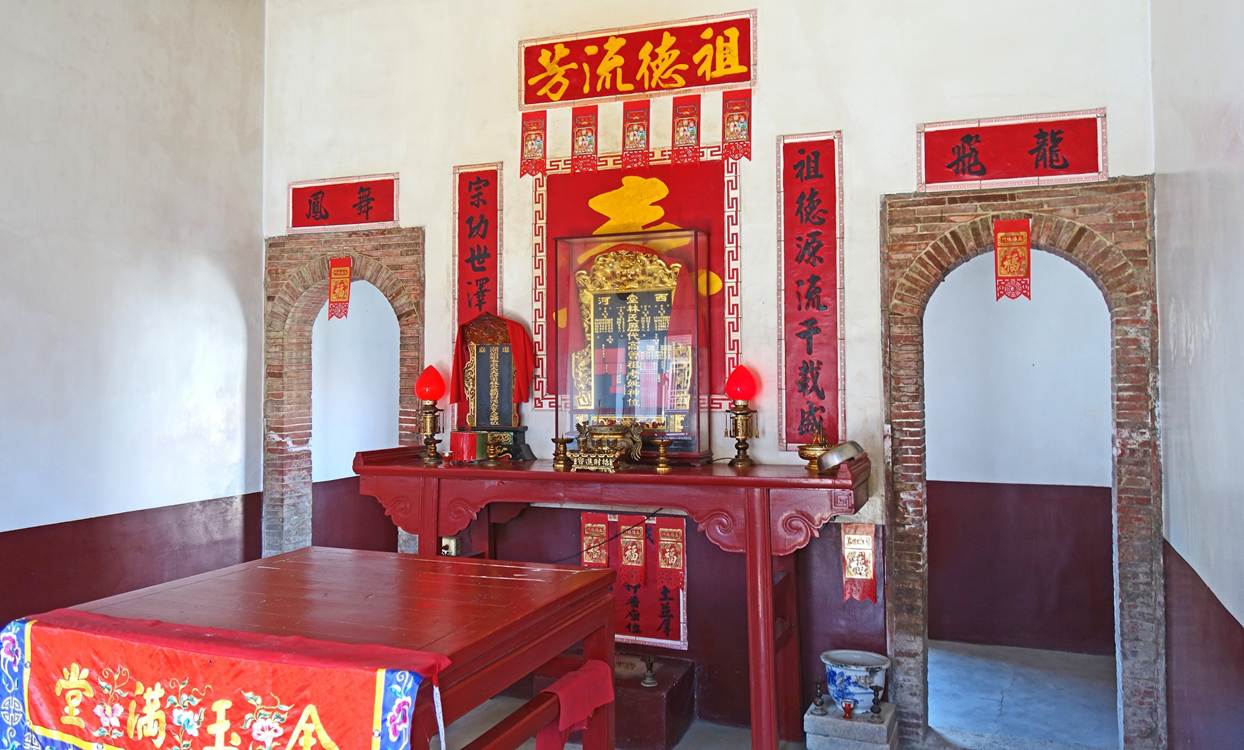
Ancestral shine in the house.
[March 2026]
Other
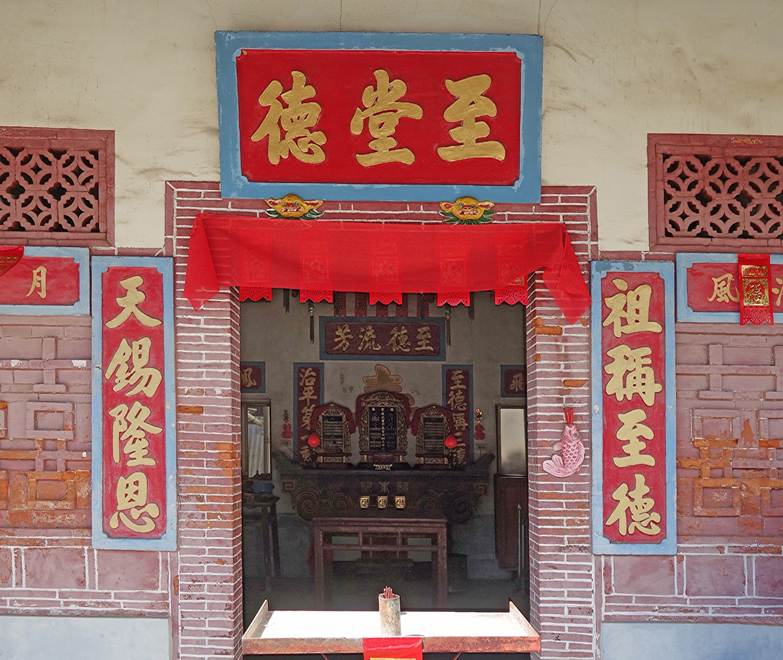
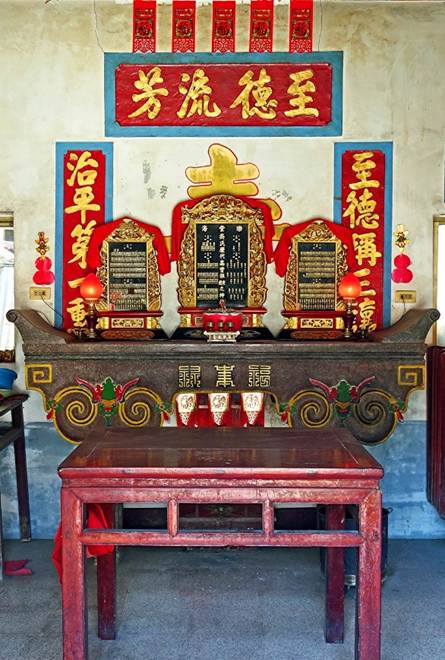
ancestral shrines in Meinong Old Street:
When I visited Meinong, several other ancestor shrines of Hakka families,
scattered along Meinong Old Street, were open. Here are some of them.
|
|
|
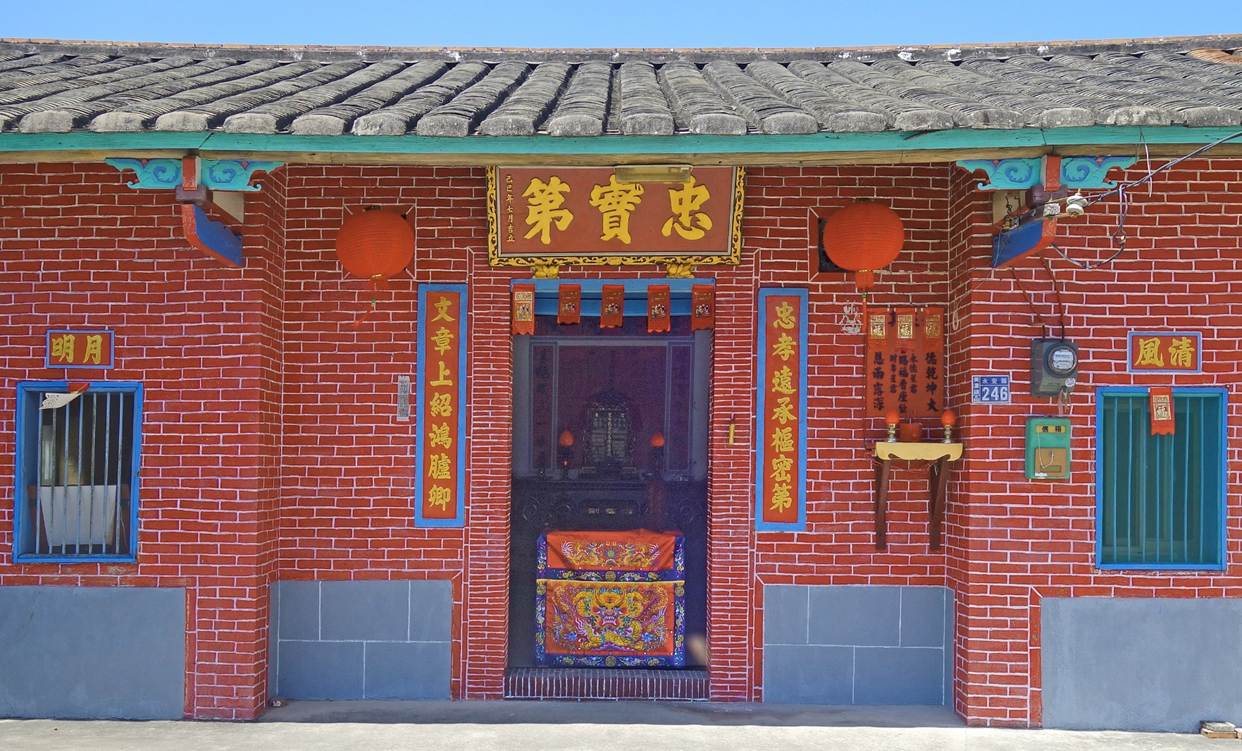
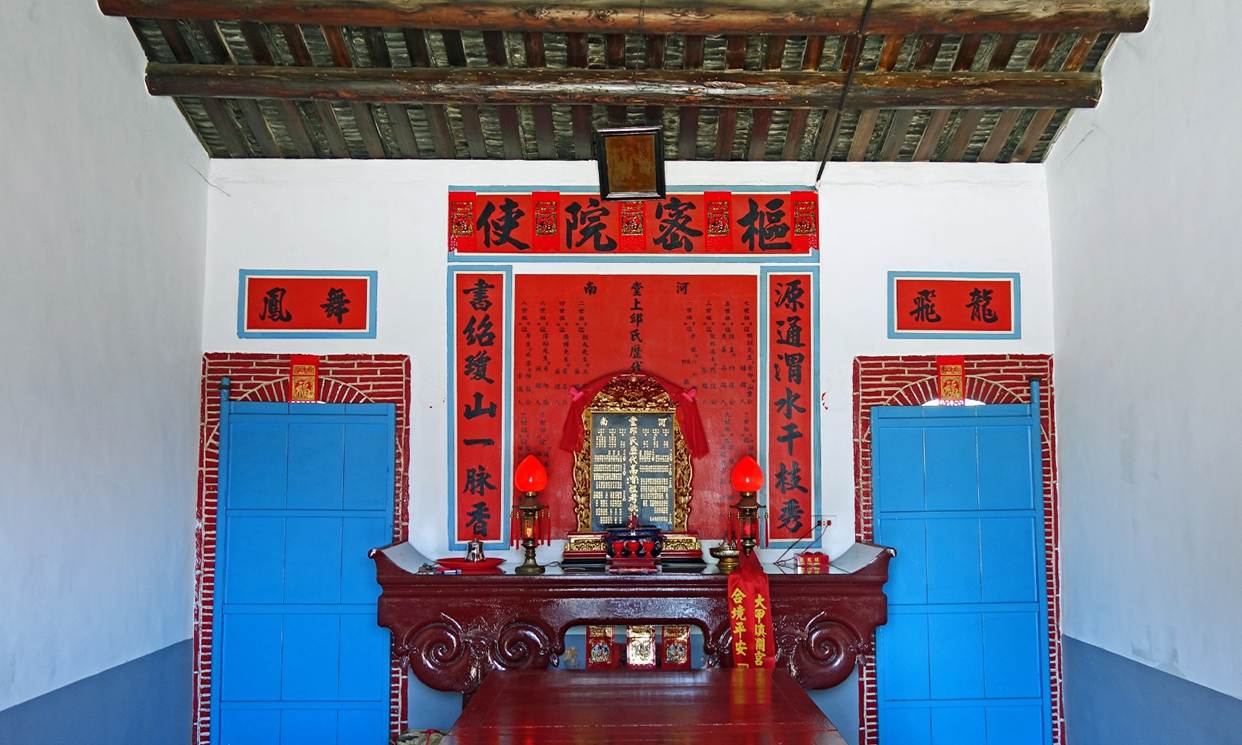
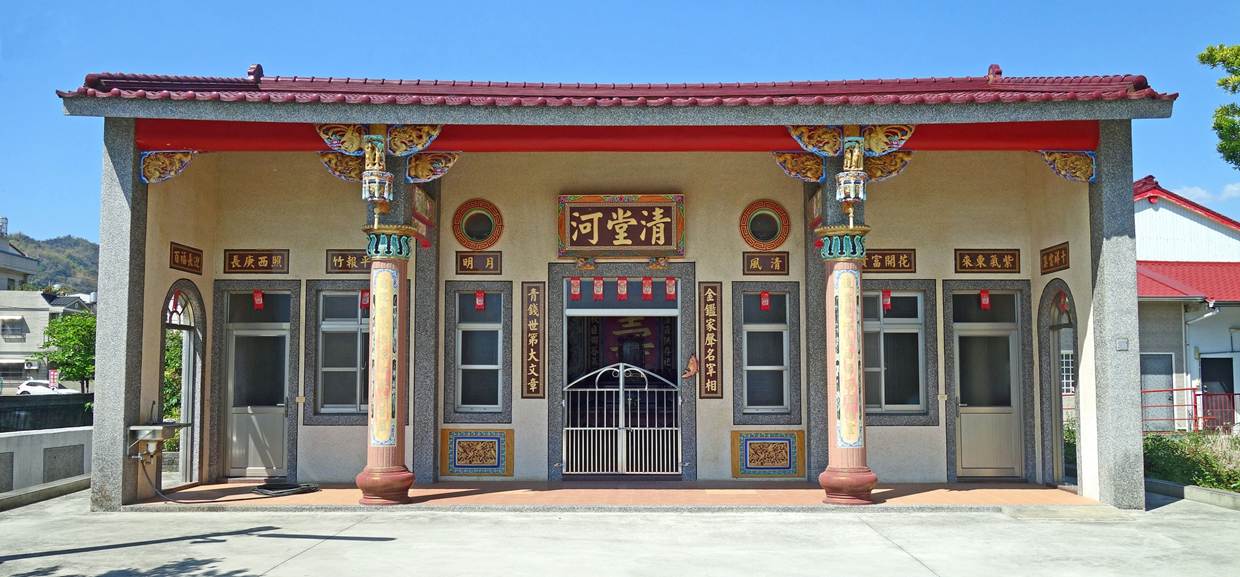
[March 2026]
Fo Guang Shan
Buddha museum (佛光山佛陀紀念館)
The Fo Guang Shan
Buddha Museum is located in the Dahu district
of the municipality of Kaohsiung City, some 20km northeast of Kaohsiung urban
center. Its construction started in 2008 and was completed in 2011. Covering a
large area, its overall layout is impressive and magnificent. However, the
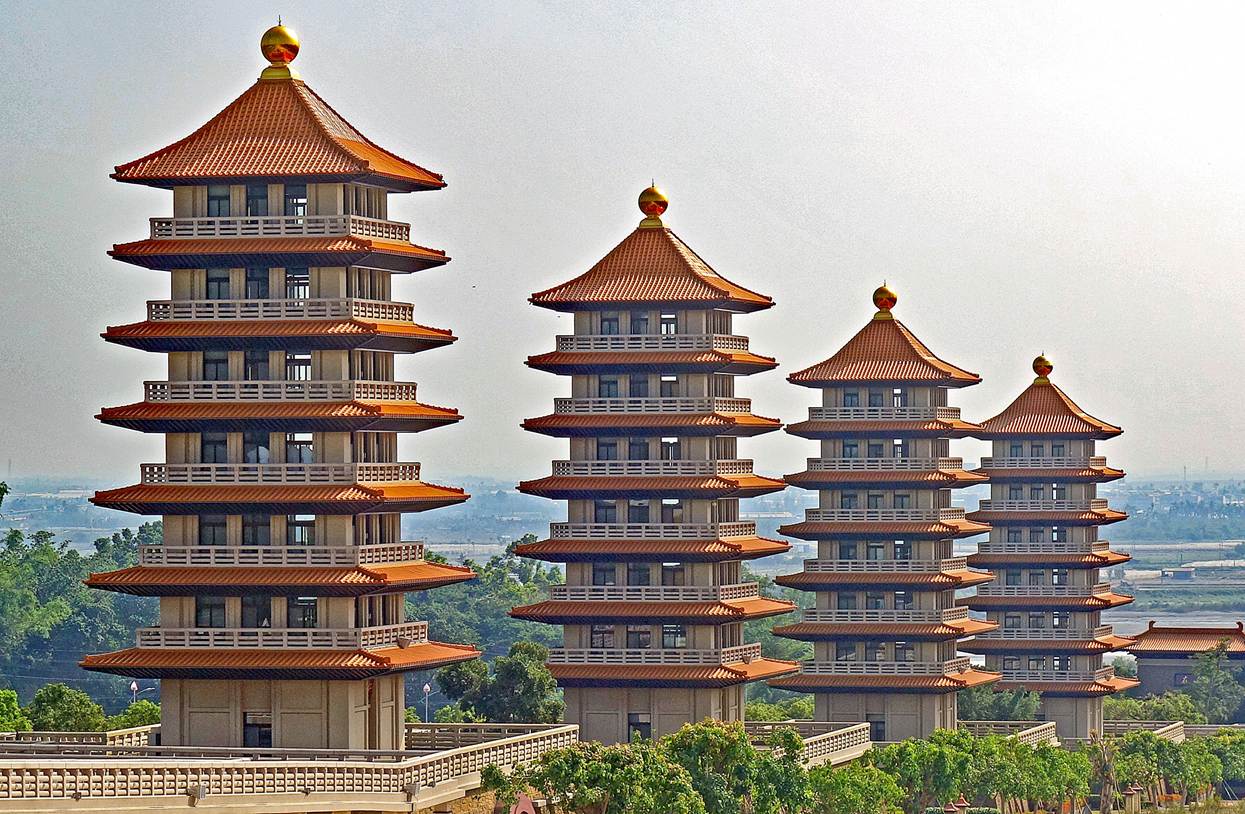
buildings themselves are less so. The eight pagodas flanking the Great Path to
the huge gilded Buddha statue in the back of the compound and the four
Indian-style white stupas at the corners of the Main Hall definitively lack the
elegance of older pagodas and stupas. In addition, the mercantile atmosphere
throughout most of the museum grounds (shops, restaurants, even a Starbucks,
and exhibitions) is distracting. Nevertheless, it is still worth visiting it.
Map of the museum (not
one of my photos!)
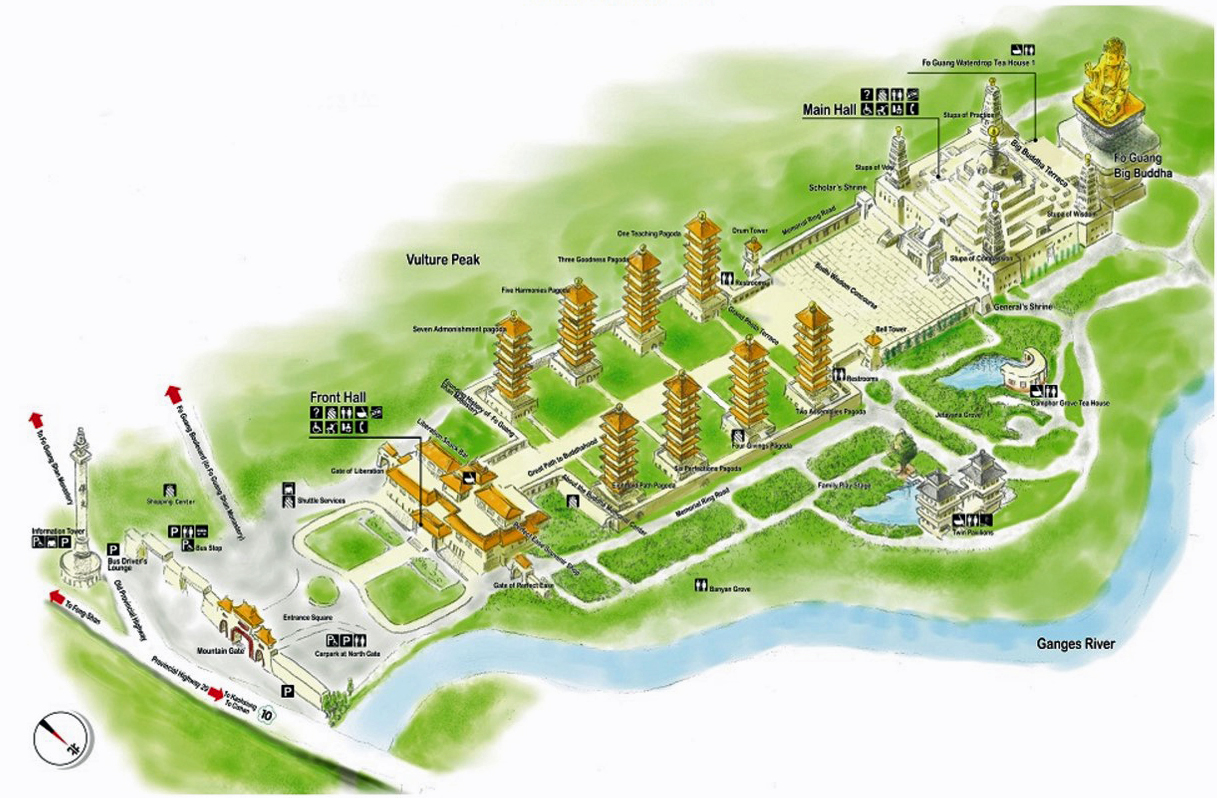
The large statue of
Buddha, standing behind the Main Hall.
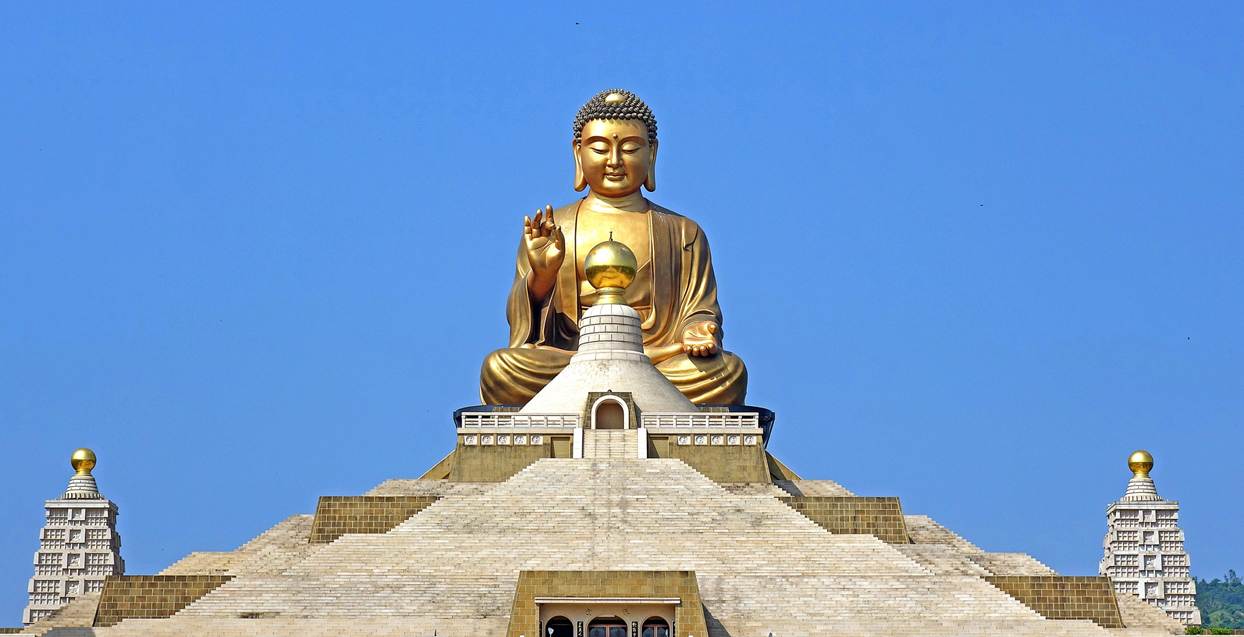
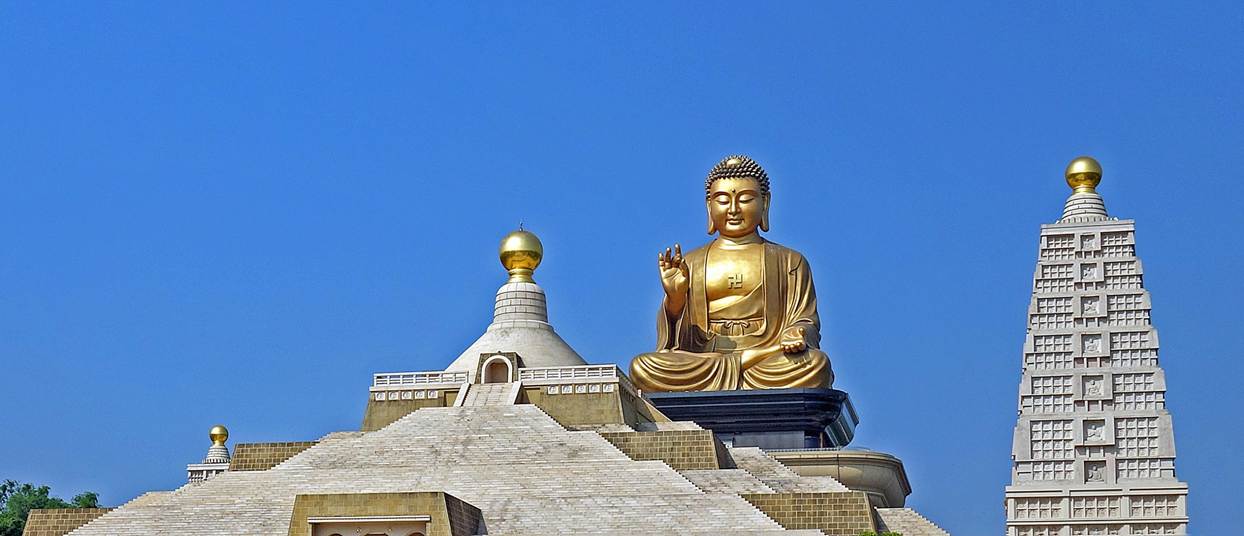
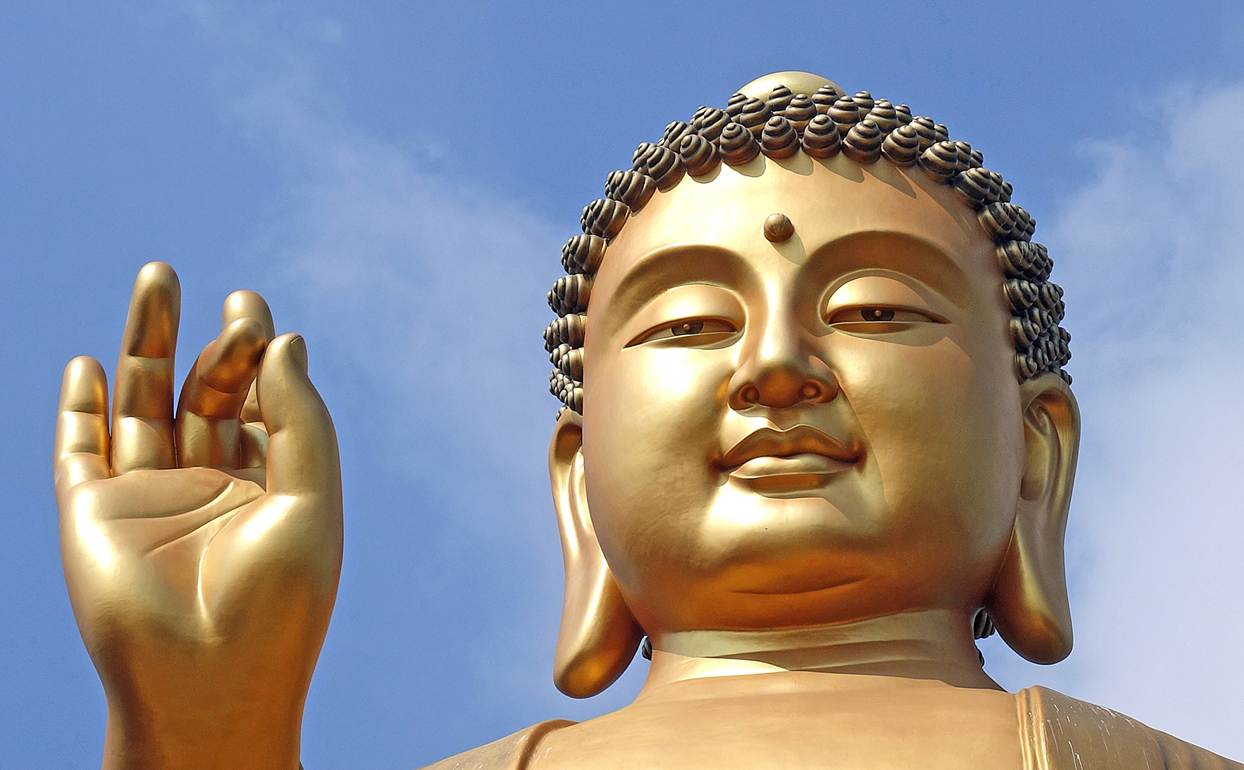
Row of pagodas lining one
side (the right one) of the path leading to the Main Hall.
[March 2016]