Taiwan: New Taipei City and Keelung
City
[March 2008 & 2009, November
2014, March 2025 & 2026]


[Source: https://en.wikipedia.org/wiki/Taiwan_Area
]
New Taipei City and
Keelung City are two administrative entities of Taiwan. New Taipei City is one
of Taiwan's six ″special municipality″. Located in northern Taiwan,
it covers a vast territory that entirely surrounds Taipei City. It combines
several urbanized areas with large forested and mountainous areas. Located northeast of Taipei City, Keelung City is a ″provincial
city″. Its territory, which is entirely bordered by New Taipei City (on
the south, west, and north) and the East China Sea (on the east) includes the
second largest port of Taiwan.
This page shows photo I took during several short
visits to these two ″cities″. Due to the odd shape of New Taipei City
and the relatively large number of photos I took in Tamsui, a town located
north of Taipei City, within New Taipei City, I have divided the photos of New
Taipei City into three sections: South and West, Tamsui, and North and East.
South and West of New Taipei City
Hongludi Nanshan Fude temple (烘爐地南山福德宮):
[March 2025]
This temple is located in
the Zonghe district of New Taipei City. It is dedicated to Tudigong (土地公), also known as Fude Zhengshen (福德正神), the Taoist god of Earth and merit. Originally a small temple established around 1900
for tea farmers, it was expanded in the 1970s into a large temple featuring a
giant outdoor statue of Tudigong (the largest in Taiwan). Unfortunately, during
my visit this statue was undergoing renovation and was surrounded by
scaffolding. So, I focused my camera on the colorful exterior murals of the
temple.
Some of the murals in the
temple.

[Mural
representing Xianlong Louhan (降龍羅漢, literally meaning ″Dragon-Taming
Arhat″) fighting a dragon with a holy alms bowl in his right hand. He is
one of the Eighteen Arhats in Chinese Buddhism. The mural symbolizes the
triumph of spiritual restraint over chaos and earthly desires.]

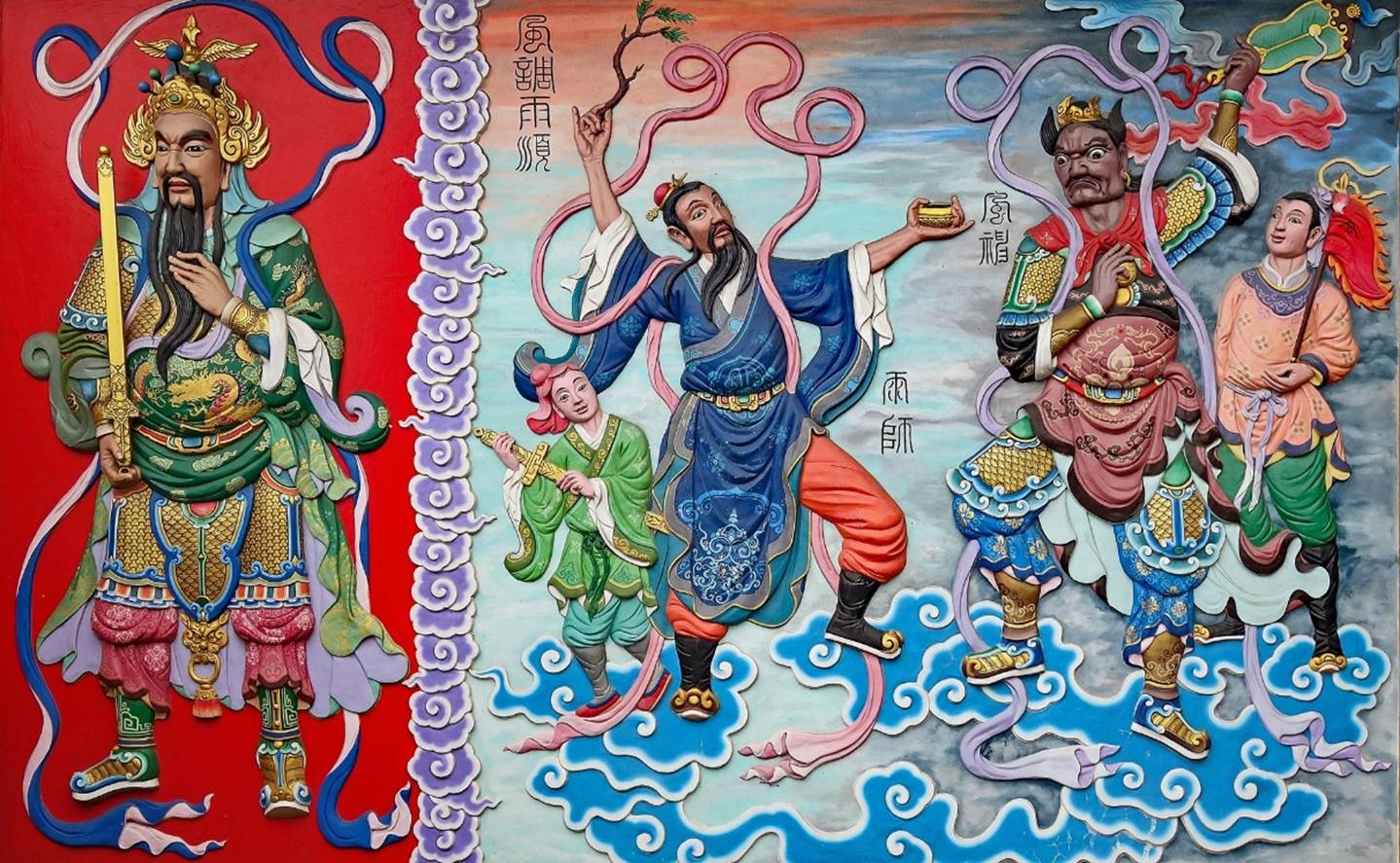
[In this
mural, the figure on the left is another depiction of Zhao Gongming. The
figures in the center and on the right are two deities symbolizing fair
weather. The one dressed in blue is the Master of Rain (雨师, ″yushi″) and the one on
the right is the Master of Wind (风伯, ″fengbo″).]

[Mural
illustrating the "Carp Leaping over the Dragon Gate" legend. It
features multiple carps struggling against a waterfall to reach the
"Dragon Gate" and transform into mighty dragons. It symbolizes the
ambition to overcome immense obstacles to achieve wealth, social status, or
academic success.]

[This mural
depicts Zhao Gongming (趙公明), the principal god of wealth, holding a golden cudgel and riding a black tiger.]

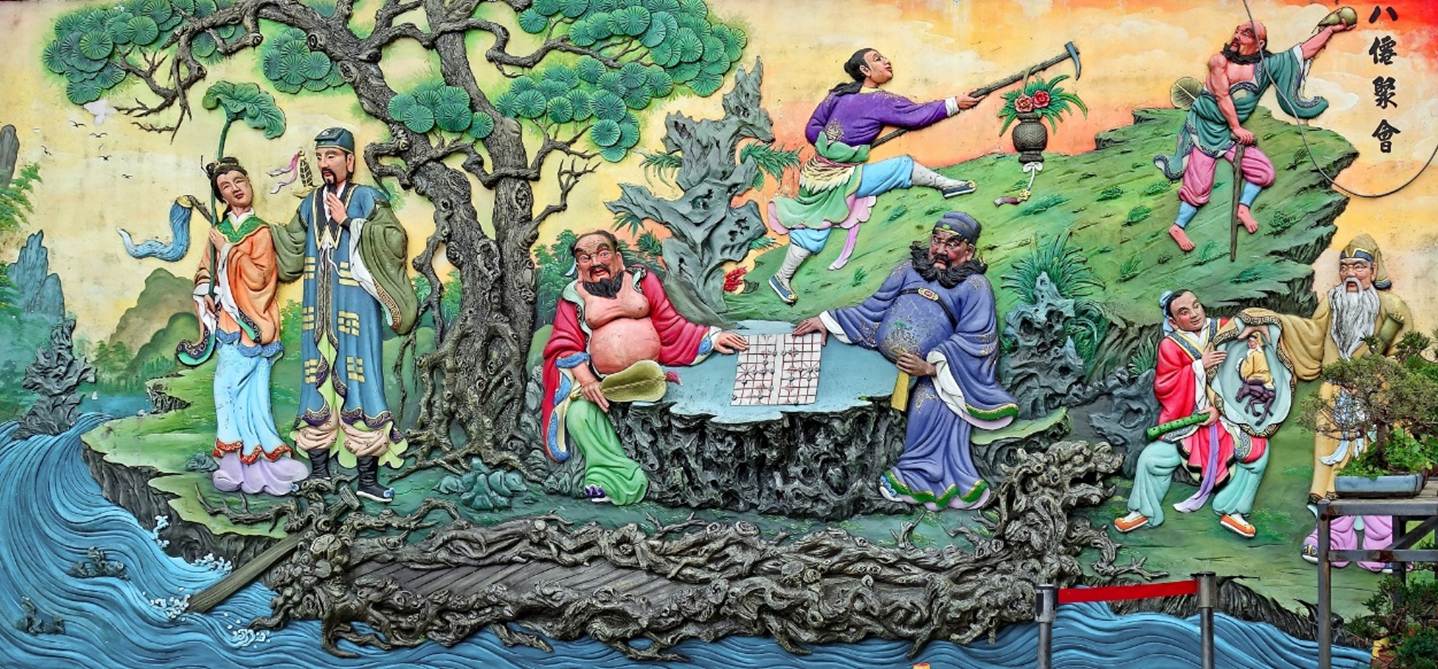
[Mural
depicting a scene featuring the Eight Taoist Immortals. They form the ultimate
group of mortals who have achieved divinity by following the ″Way″,
the fundamental principles of Taoism. Spanning all ages, genders and social
classes, they symbolize social harmony and the idea that the Tao is accessible
to everyone.]
|
|
|


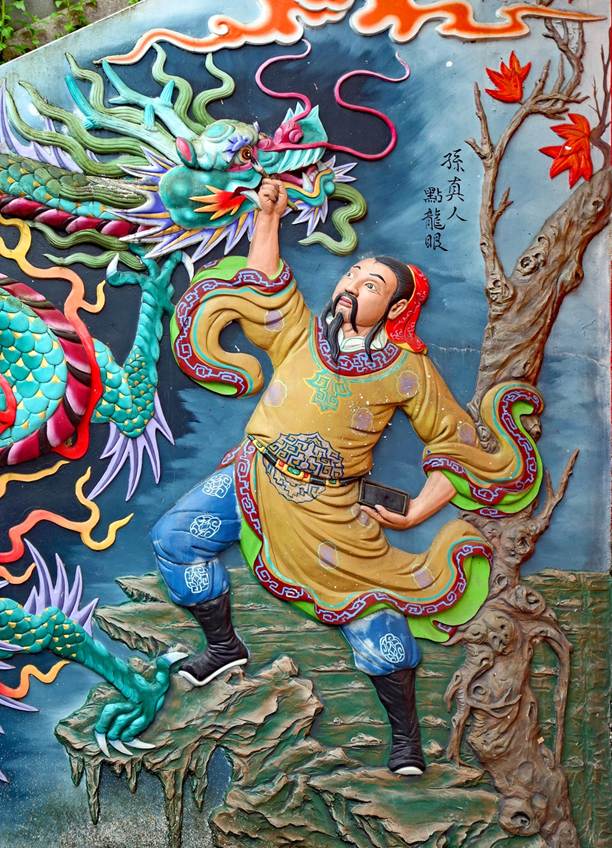
[Left: Mural
representing Shouxing (寿星), a Taoist deity associated with long
life, holding a Peach of Immortality in his left hand. Right: This mural
depicts the legend titled ″Immortal Sun heals the dragon’s eye″
(March 2025). The figure dressed in a yellow robe is Sun Simiao, known as the ″Medicine
King″ and revered as Immortal Sun. A divine dragon had sought his help to
treat an eye ailment causing excruciating pain. The mural shows Immortal Sun
treating the dragon’s eye with a needle, thereby restoring its sight.]
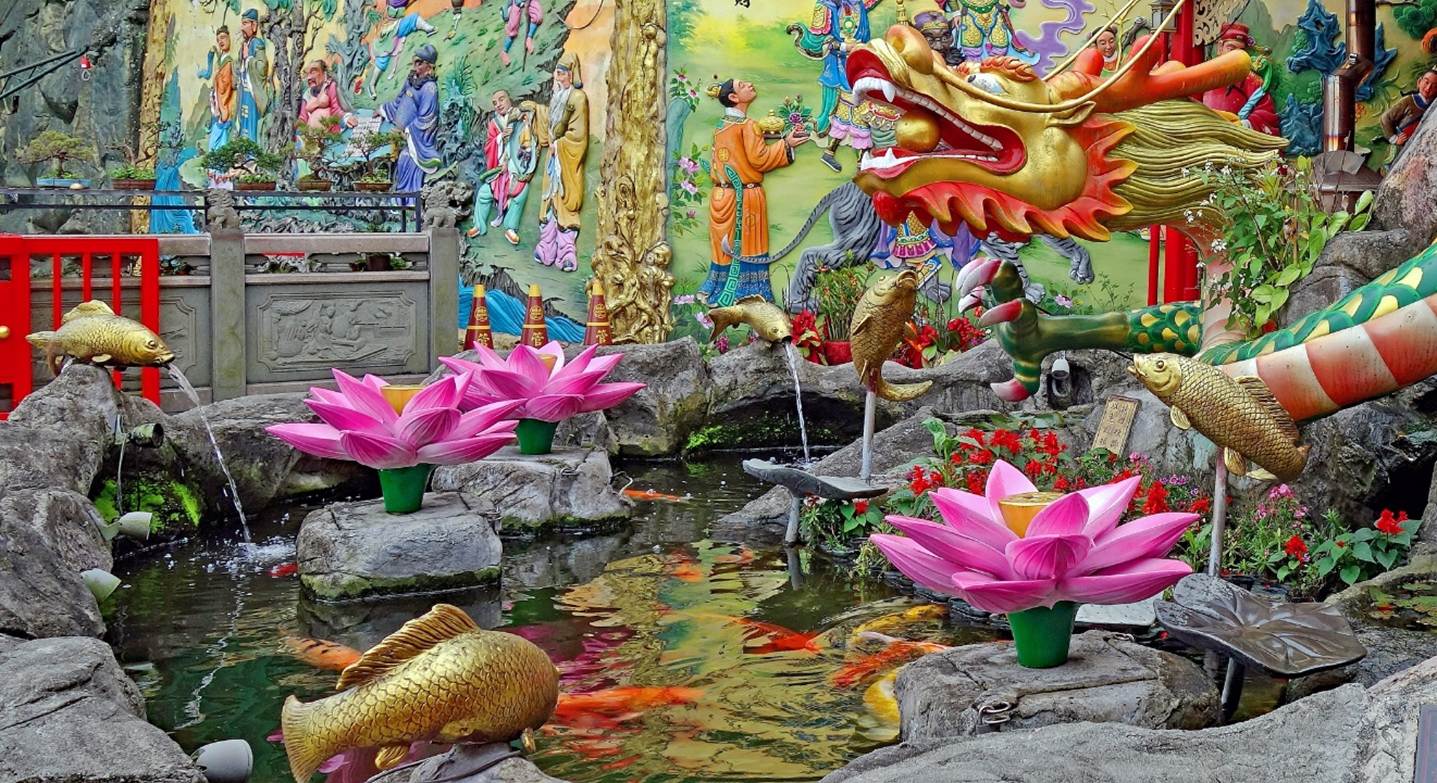
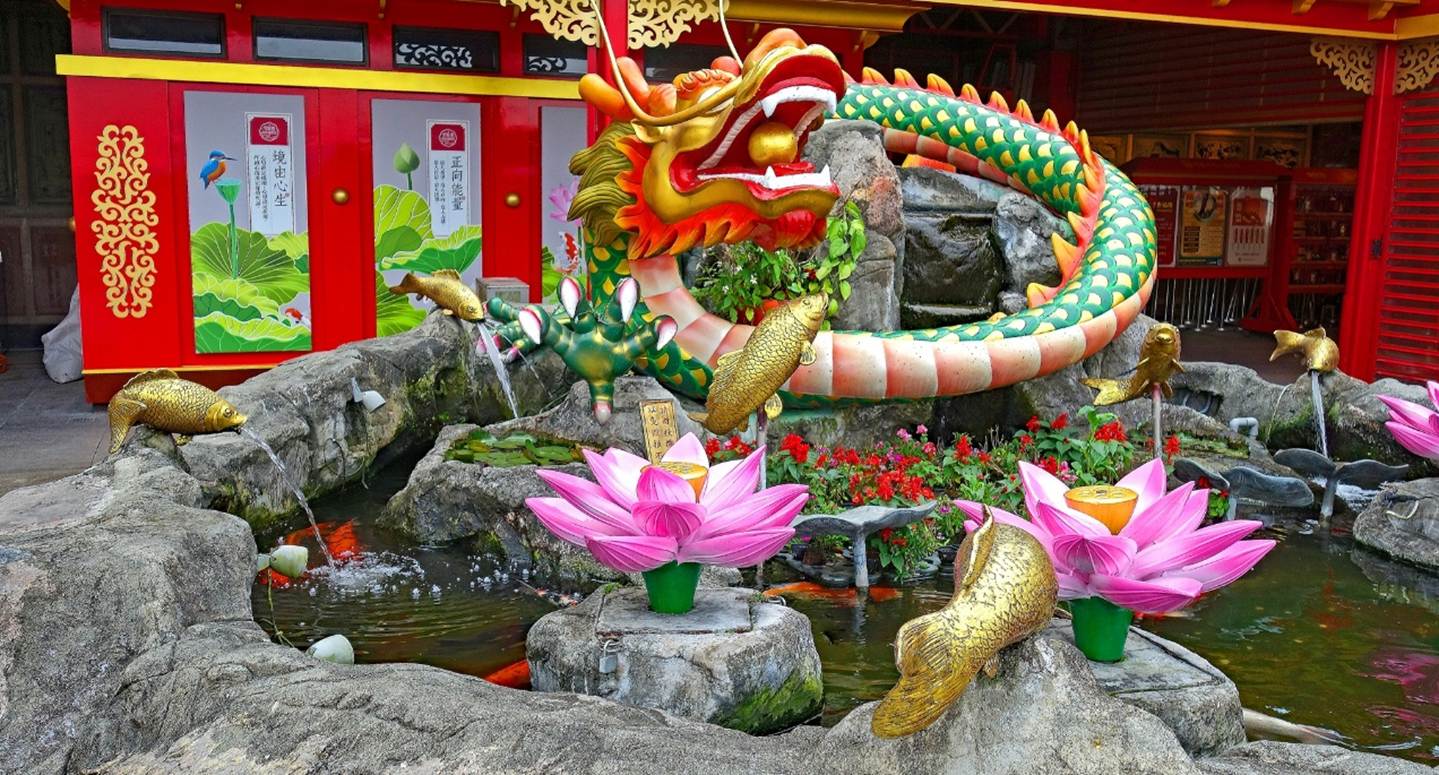
Fountain in the temple.


One of the many prayer
rooms in the temple.

Waterfalls in Manyueyuan
National Forest (滿月圓國家森林遊樂區):
[November 2014]
[

Sanxia Qingshui Zushi temple (三峽長福巖 清水祖師廟):
[November 2014]
Located in the Sanxia
district of New Taipei City, this Taoist temple was first built in 1769.
Successively destroyed by an earthquake in 1833, rebuilt in 1867, and burned
down in 1895 by the Japanese Army, it was restored after World War II. Its main
deity is Master Qingshui (清水祖師), whose name Qingshui (清水) means ″Clear Water″. Born
in the Anxi county of the Fujian province of China,
Master Qingshui (1047-1101) was a Buddhist monk who became a local
hero for saving the population from starvation during a drought. After his death,
he was deified in the local folk religion. His cult was later brought to Taiwan
by immigrants from the Anxi county.
Facade of the temple.

Main hall seen from the
courtyard.

|
|
|


Altar dedicated to Master
Qingshui.

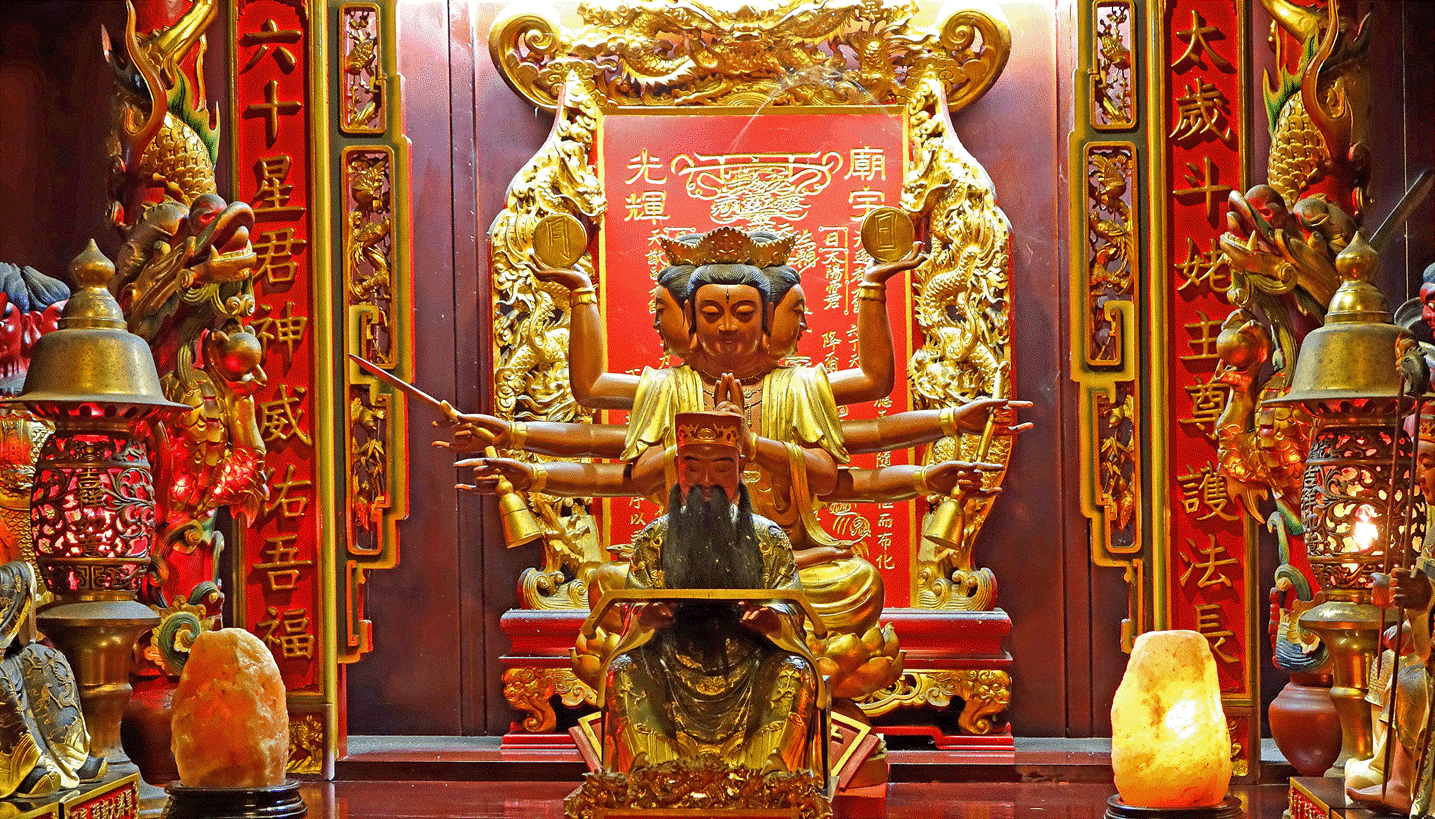
Multi-faced, multi-armed
statue of Doumu Yuanjun (斗姆元君), the Mother of the Big
Dipper and the tutelary authority over a group of 60 deified generals known as
the Tai Sui (太岁) generals. These generals are shown in the
two photos that follow. During every successive period of 60 years, they are
believed to govern, in rotation, the fortunes and misfortunes of human
beings. The statue of the general currently in charge is temporarily
removed from its usual spot and placed before Doumu Yuanjun.
|
|
|


Beautifully crafted
helicoidal ceiling in the temple.

Exterior views of the
temple.


Close-up of a portion of
the roof.

Guishan Lingyun temple (靈雲寺哲學廟):
[March 2025]
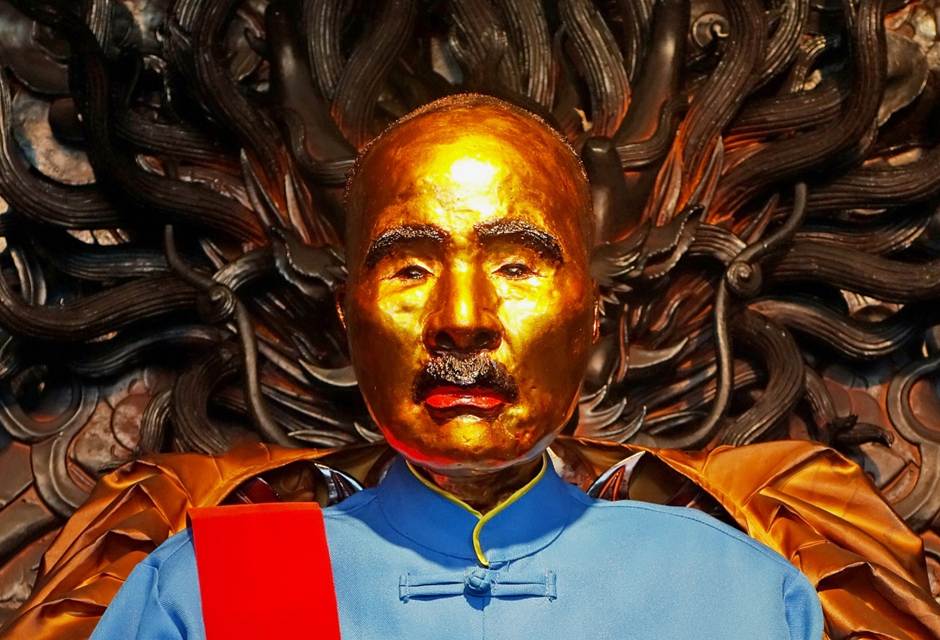
This temple is located in
the Guishan district of New Taipei City. It is a weird temple, which was
founded in 1991 by Xie Shide (谢石德) (1920-1998), a native of the Lugu
township in Nantou county (central Taiwan). Xie Shide founded
a sect that blended Buddhism, Taoism, Confucianism, and other religious
beliefs. Through his spiritual abilities, he attracted many followers. In his
later years, he adhered to an extreme diet aimed at purifying his body,
apparently to initiate his own mummification and preserve his spiritual power in
the afterlife. After his death, his mummified body was covered in gold leaf,
clothed in a robe, and installed in the temple in 2002, where he now sits
behind a protective glass case. The temple's main deity is Xuantian Shangdi (玄天上帝), the mythological Taoist deity known as the Supreme Emperor of the Dark
Heaven. The temple also houses many odd deity statues, some linked to the
creation of the world, such as the goddess Nuwa, who is said to have created
humanity.
View of the temple building
with a large statue of Xuantian Shangdi on its roof.

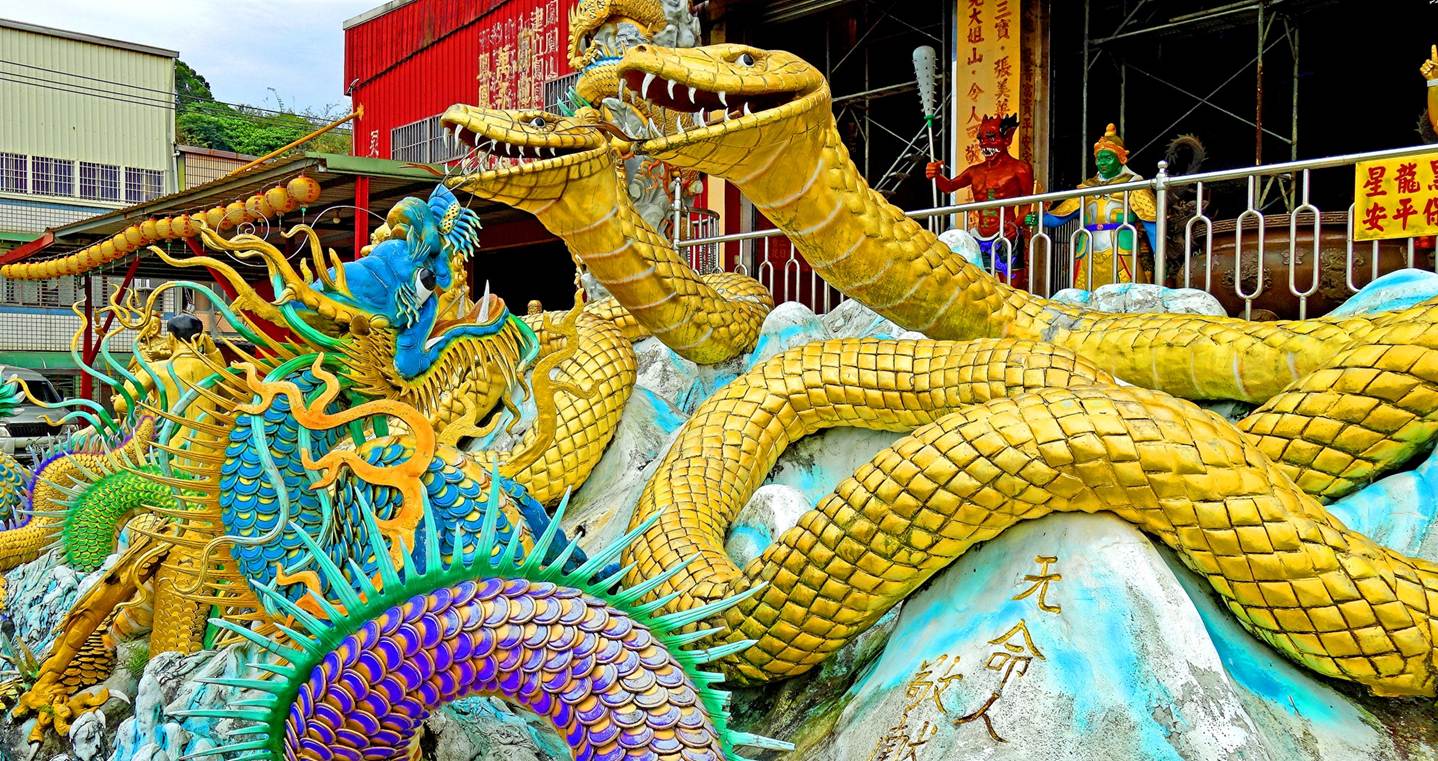
Giant statues of snakes
and dragon at the foot of the temple.

Robed mummified Xie Shide
in the temple.
|
|
|
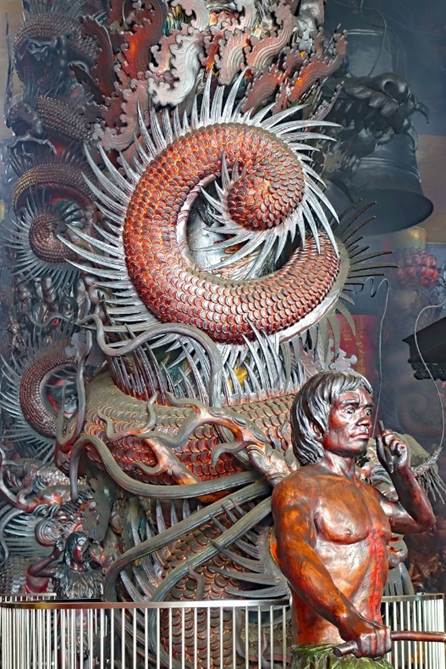
Giant dragons wrapping
tall columns. Note the smoke in the air.
|
|
|
|


Statues of Xuantian
Shangdi.
|
|
|
|

Cohort of deities at the
foot of the tall statue of Xuantian Shangdi.


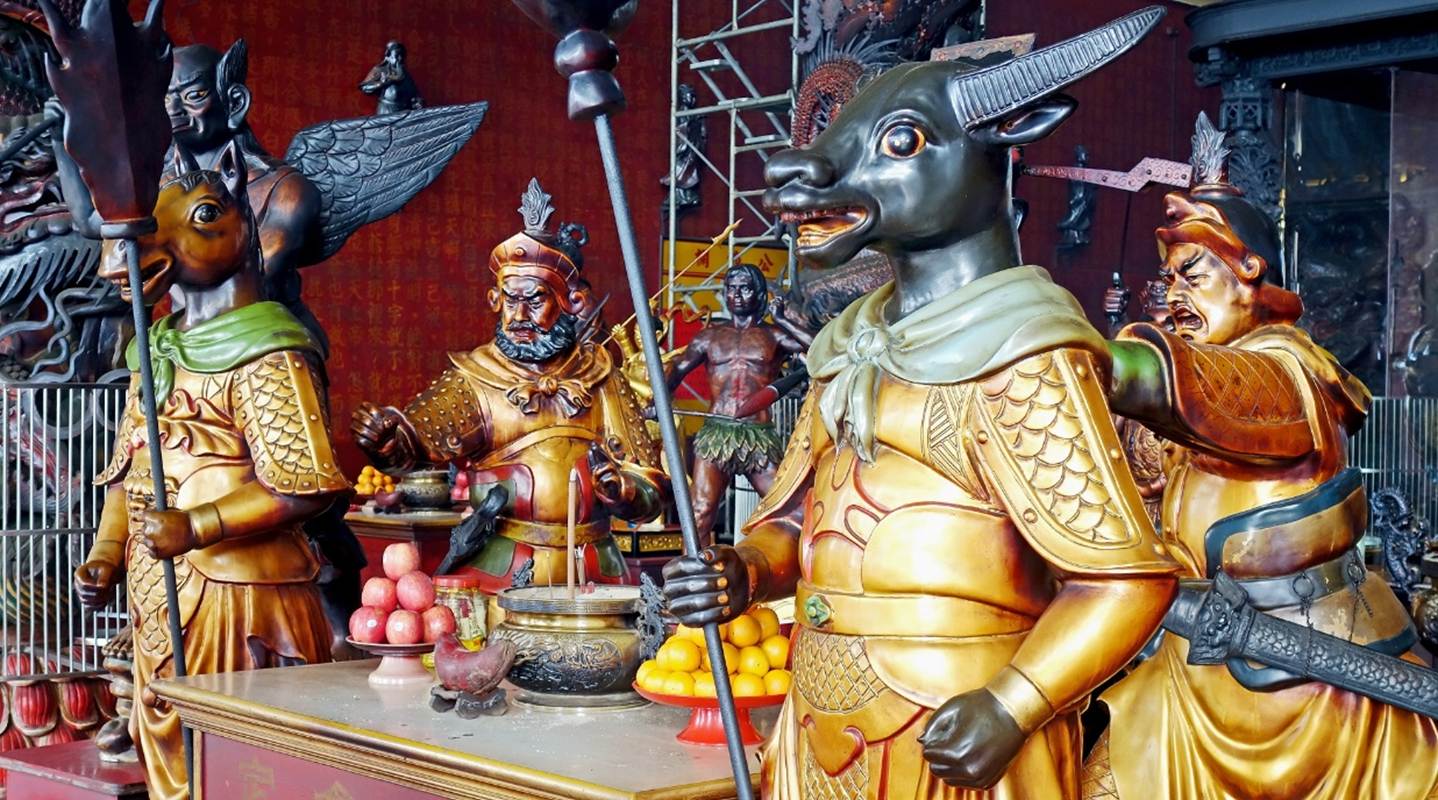
Odd statues of deities
scattered throughout the temple.
|
|
|
|


[The rightmost statue above represents
Chiang Kai-shek. A red inscription (barely visible in the photo) states that it
is the statue of a deity and should not be vandalized.]
|
|
|
|

|
|
|
|


Zhulinshan Guanyin temple
(竹林山观音寺):
[March 2025]
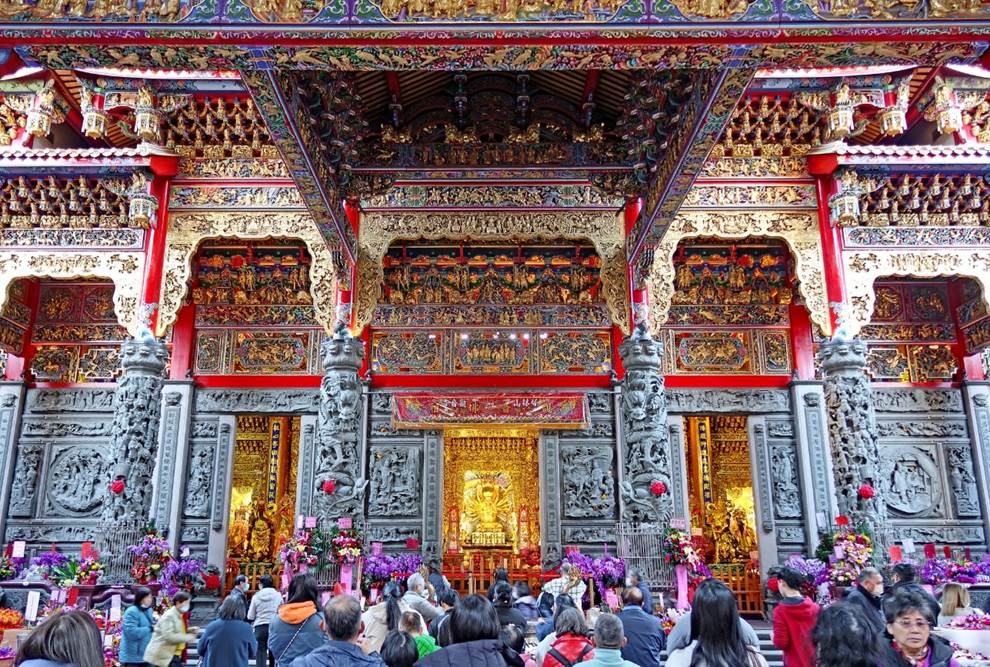
Located in the Linkou
district of New Taipei City, this grandiose temple dates back to the 18th
century, but the current buildings are largely the result of a reconstruction
carried out between 2000 and 2012. The temple today resembles a grand Chinese palace.
Its carved stone walls and pillars, decorated beams and lintels, and
magnificent ceilings are testament to exceptional craftmanship. Clearly,
nothing was denied to its main deity, the highly popular Guanyin Bodhisattva (觀音菩薩).
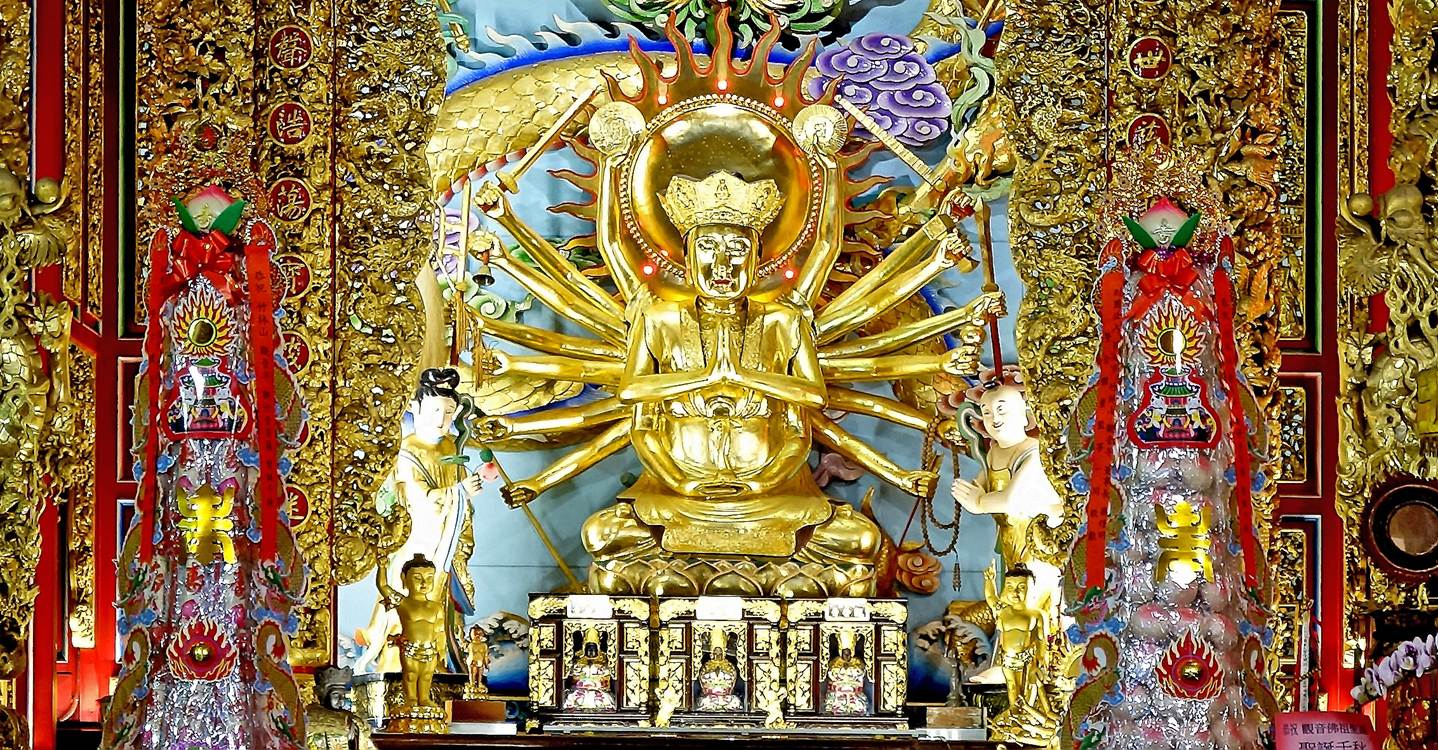
People praying to the
most important statue in the temple, a statue of Guanyin
with 18 arms. (Multi-armed representations of Guanyin are not uncommon. They
symbolize her power to alleviate the suffering of many people.)
 \
\
Closeup of the statue
of Guanyin. She is flanked by her two customary attendants: Longnu (龍女) on her right and Shancai (善財童子) on her left.

Altar dedicated to
Manjushri Bodhisattva (文殊菩薩, ″Wenshu Pusa″),
who embodies the supreme insight needed to perceive the profound truth of the
Dharma. He is depicted sitting on a green lion, a posture that symbolizes the
courage of wisdom.
|
|
|
Altar
of Guandi (關帝, ″Emperor
Guan″), the god of war, flanked with his
commander General Zho Cang (周倉) on his right and
his son Guan Ping (关平) on his left. Guandi is
the deified title of Guan Yu (关羽), a Chinese general
(c. 160-220) renowned for his moral virtues (particularly courage, loyalty and
righteousness) and his martial prowess. He is viewed as a
sage of war and a powerful protector, in Taoism, Buddhism
and Confucianism.
In Buddhism, he is often identified with the Bodhisattva Qielan (伽藍菩薩), a protector of the
Dharma and one of the two customary protectors of Guanyin [see Tamsui Longshan temple (below)].
|
|
|

Altar blending symbols
of Confucianism (the Confucius tablet), Taoism (the Wenchang brush, named after
Wenchang Dijun, the Taoist god of culture and literature), and Buddhism
(the statue of the Buddha).
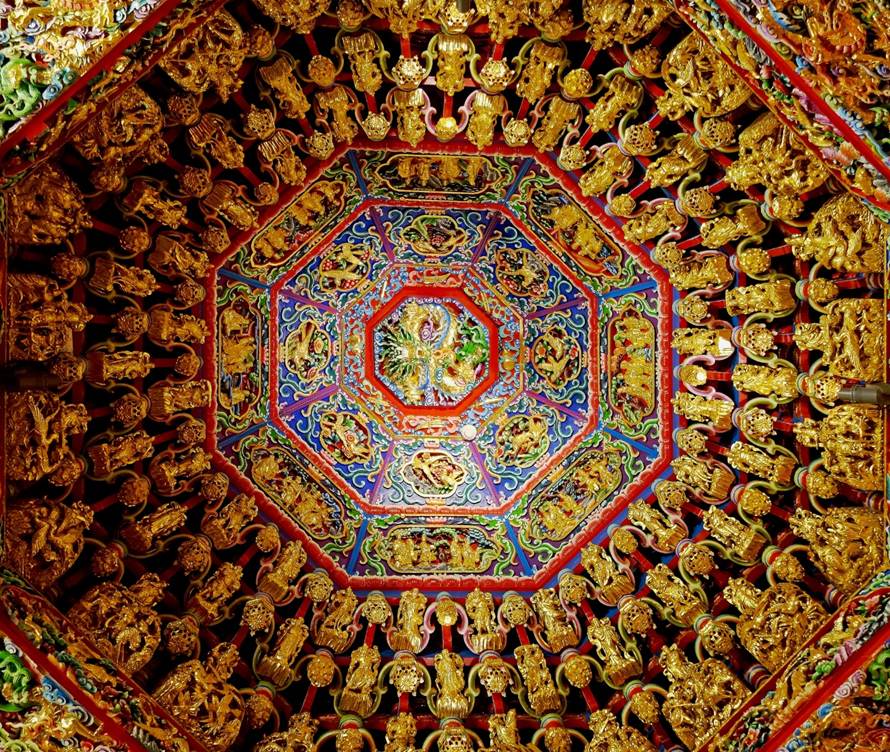
Two of the sumptuous
ceilings in the temple.
|
|
|

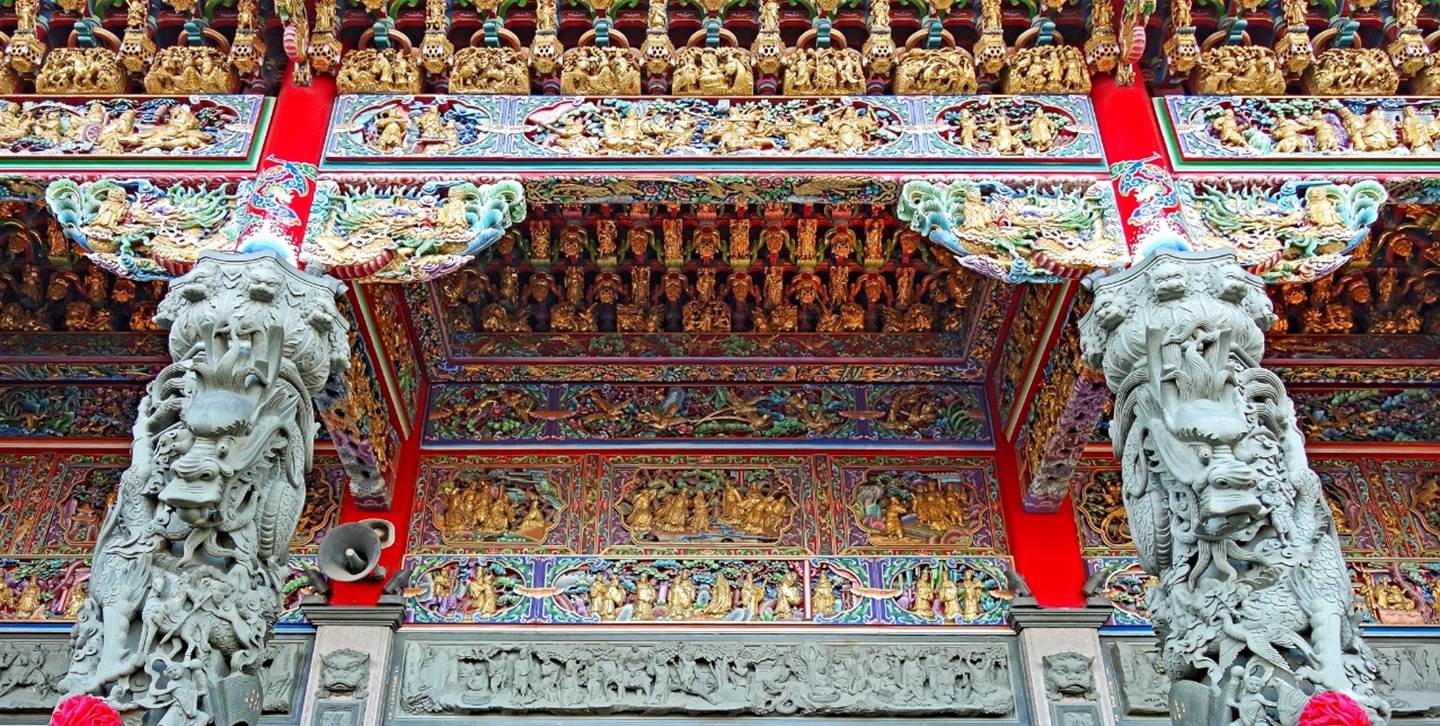
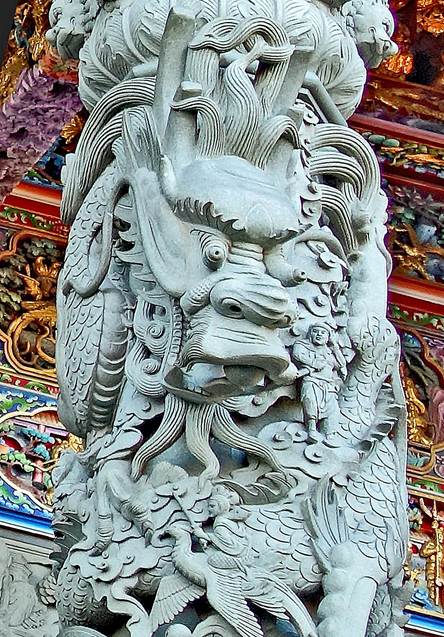
Finely carved stone
pillars and walls.
|
|
|

|
|
|
|

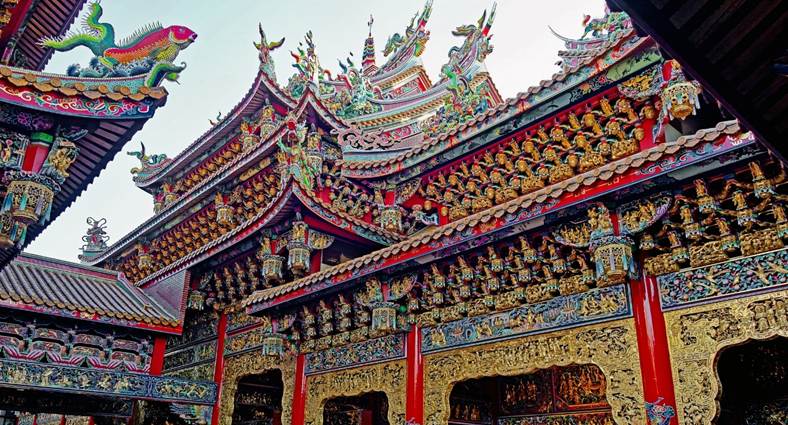
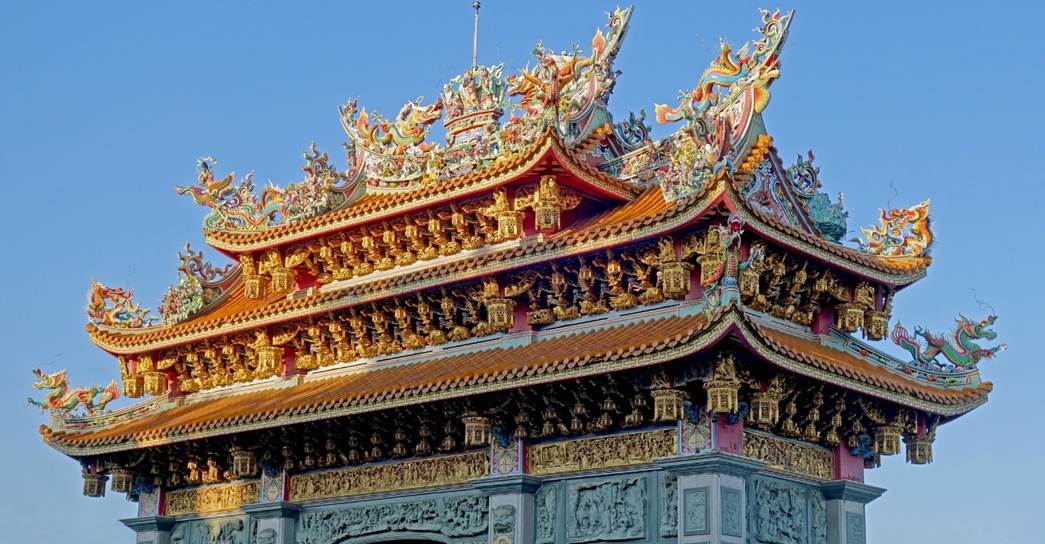
Various exterior
pictures of the temple.
|
|
|

|
|
|

[Ghost
money burner.]
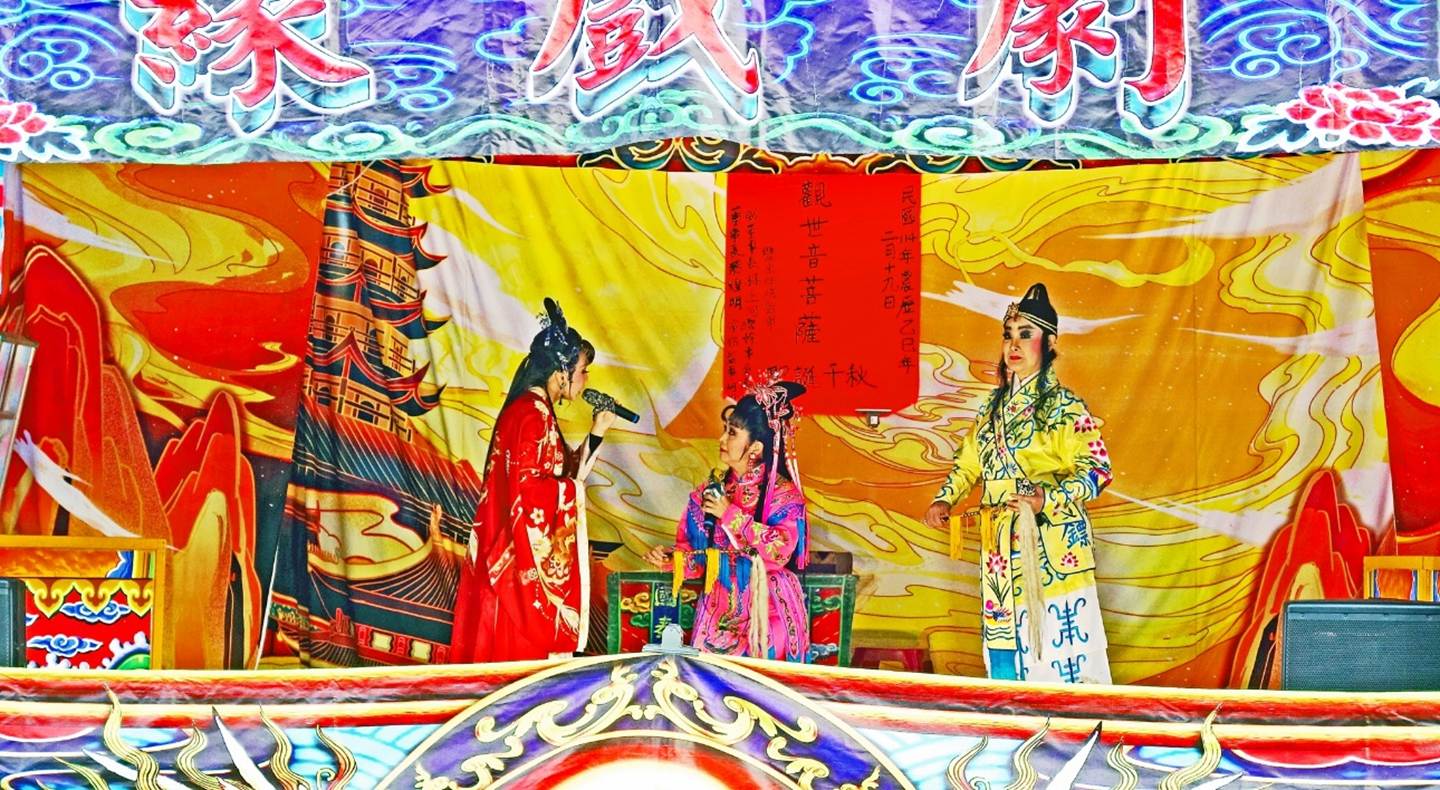
Taiwanese opera (歌仔戲, ″gezaixi″)
in front of the temple, a fairly common sight. The singers perform theatrical
pieces on a makeshift stage, the themes of which generally revolve around
historical legends and folktales.

Tamsui (淡水)
[March 2025]
Tamsui is a town located
in the northern part of New Taipei City, on the northeastern bank of the Tamsui
River estuary. It played an important role in the history of Taiwan, as
evidenced by the many historical buildings and temples that still stand today.
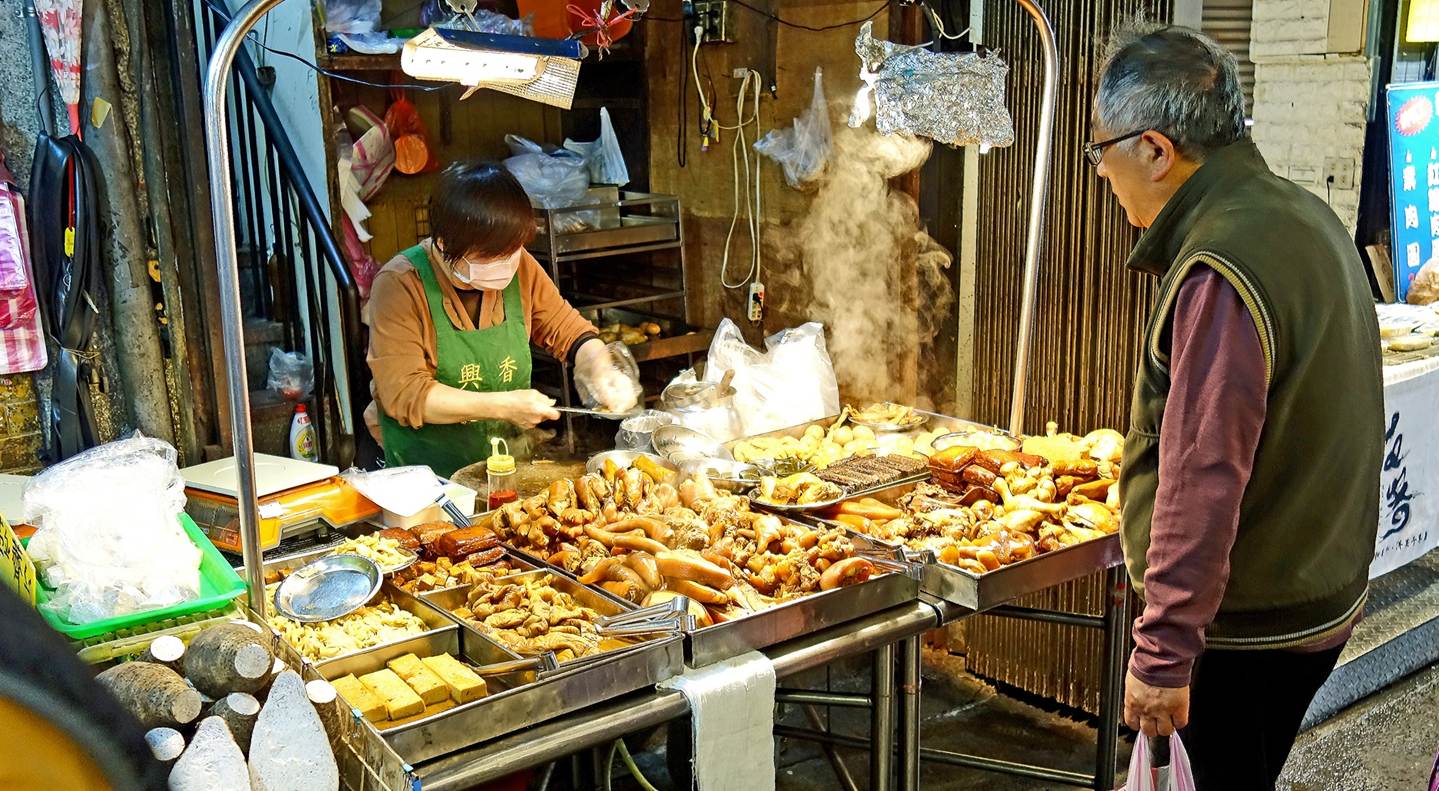
Market scenes in the old streets of Tamsui:

Tamsui Longshan temple (淡水龍山寺):
Built in 1858, this
temple is one of the five Longshan temples dating back to the Qing dynasty that
remain in Taiwan. All these five temples were founded by
early Hokkien immigrants from the Quanzhou region in the Fujian
province of China and were named after their ancestral temple on the Dragon
Mountain (龍山). They are Buddhist temples primarily dedicated to Guanyin (觀音). But, over time, the worship of other Buddhist
and Taoist deities was added to these temples.
The temple underwent
multiple renovations during the Qing dynasty, the Japanese occupation period,
and later. Nevertheless, it is believed to look very much like in 1858.
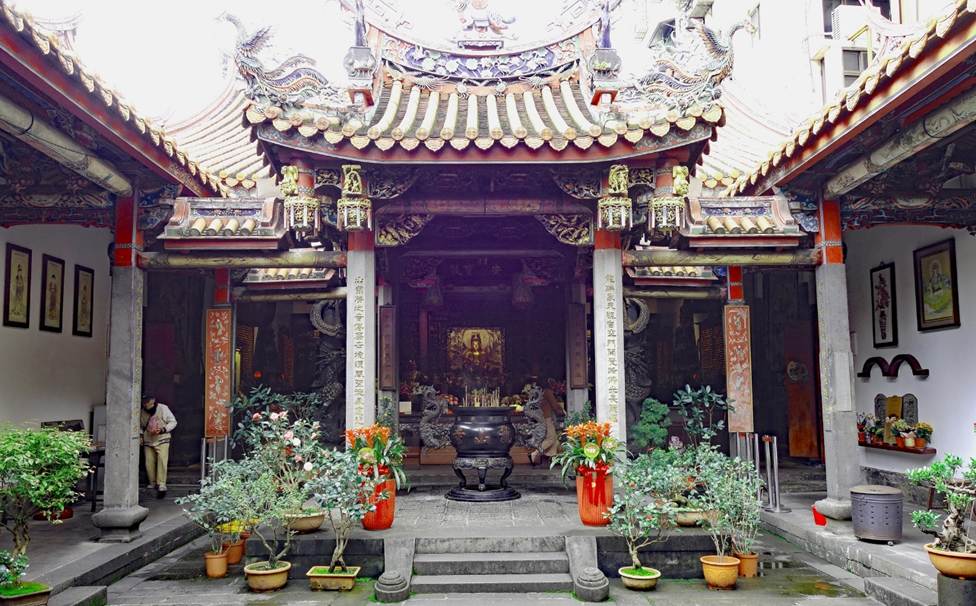
View of the entrance
courtyard, with the main prayer hall dedicated to Guanyin in the back.
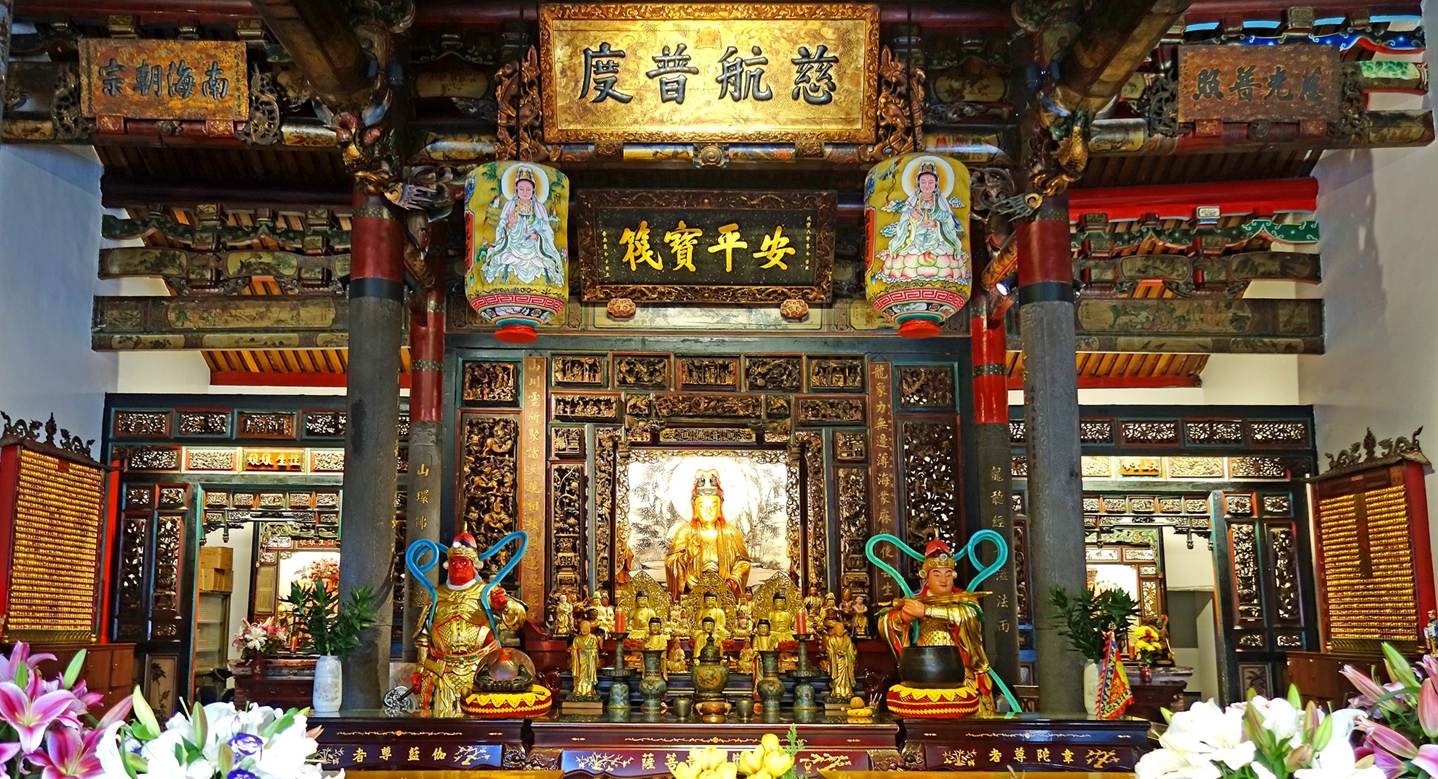
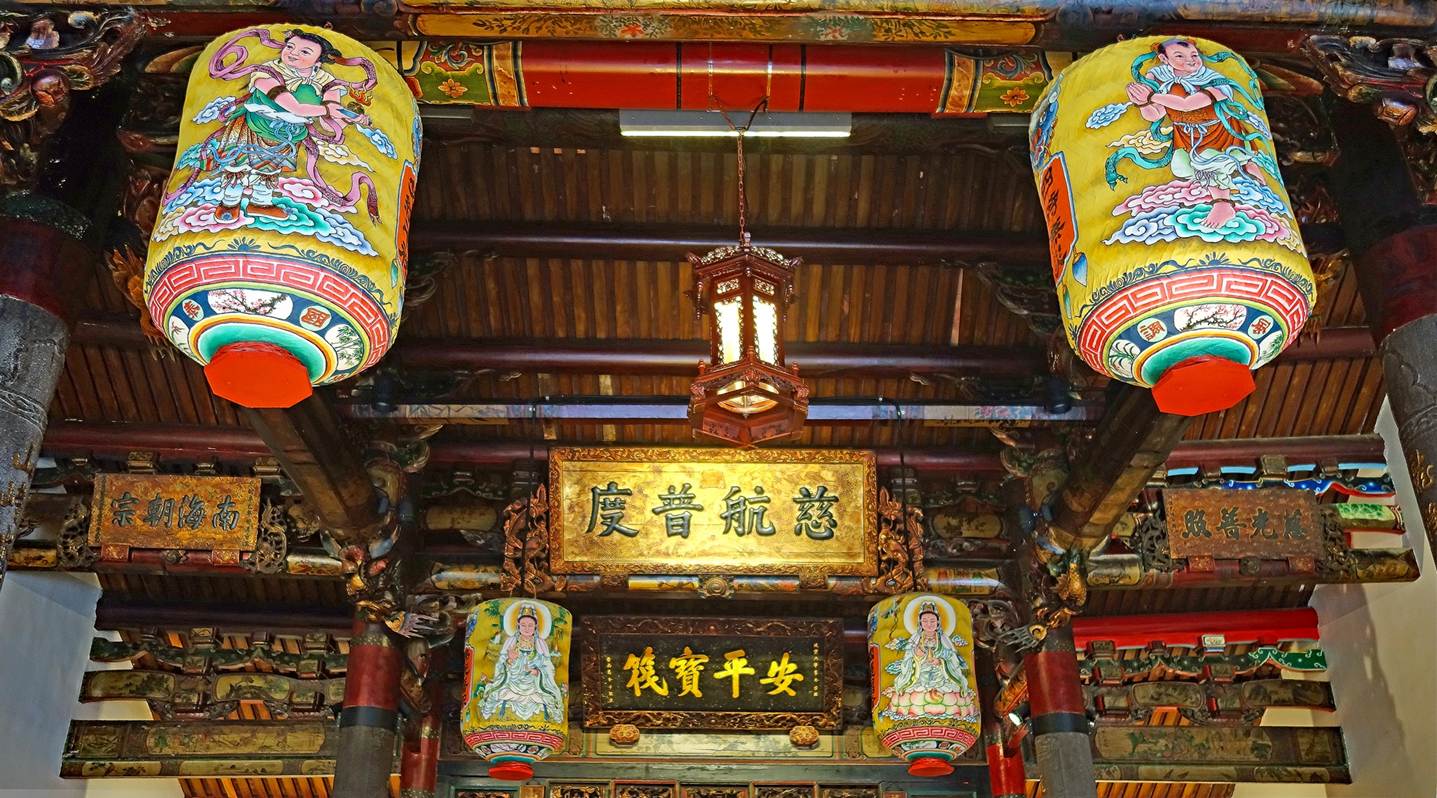
Interior of
the main prayer hall. During the Sino-French War in 1884, residents prayed
intensely to Guanyin for safety. After Tamsui successfully defended itself,
the Qing Guangxu Emperor bestows the large
gilded plaque hanging above the altar.
It reads 慈航普度, a metaphor in honor of Guanyin's role.

The two large statues
situated on either side of the altar represent Bodhisattva Qielan (伽藍菩薩) on the left and Bodhisattva
Weituo (韋馱菩薩) on the right. Both are clad in heavy
armors. They serve as protectors of the Dharma, the temple, and Guanyin. Bodhisattva Qielan is the deified version in
Buddhism of the historical General Guan Yu (关羽) [see Zhulinshan Guanyin temple (above)].
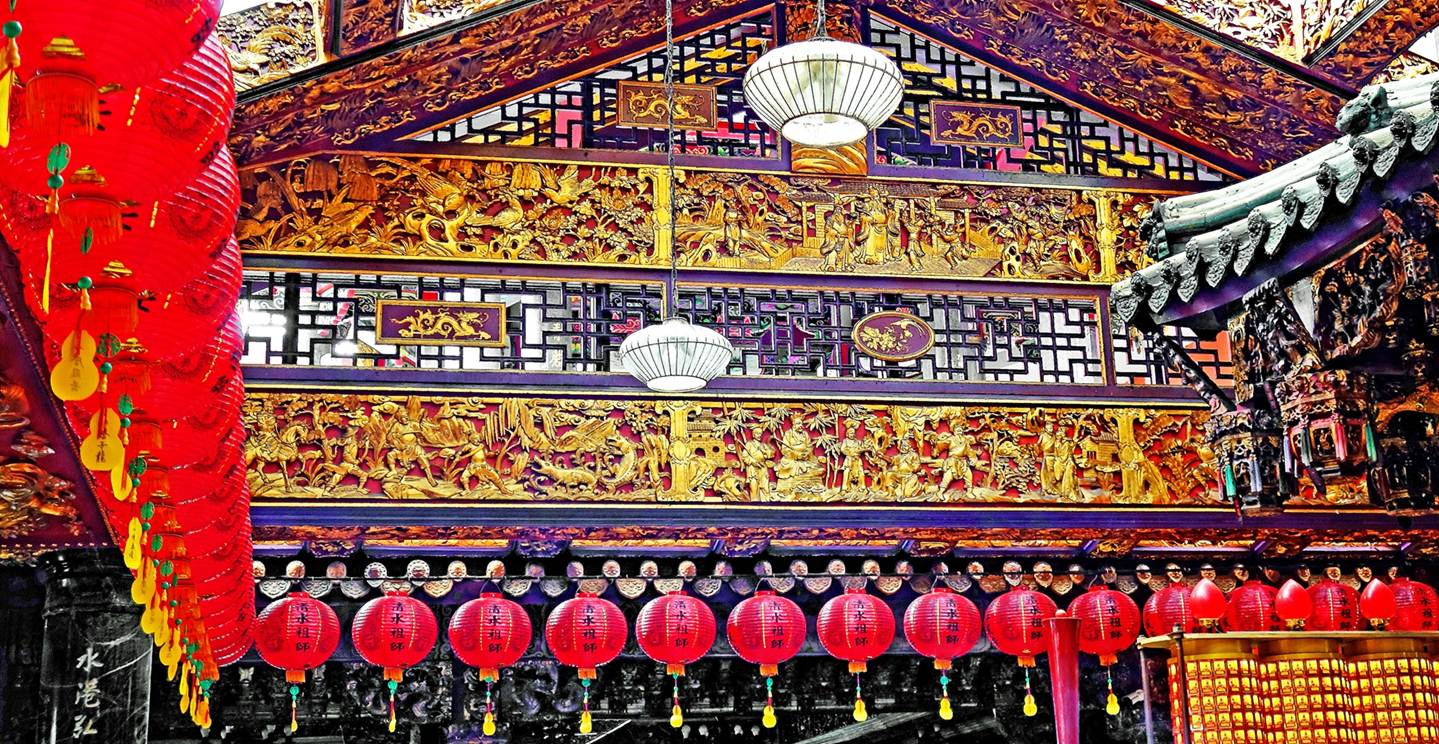
More lanterns and wall
paintings in the temple.

|
|
|
|
|


Tamsui Qingshui temple (淡水清水巖):
This temple was built in
1937. It is primarily dedicated to Master Qingshui (清水祖師), whose cult was brought to Taiwan by
immigrants from the Anxi county. [See Sanxia Qingshui Zushi temple (above).]
Entrance of the temple.
Statues of General Zhang (張將軍)
and General Huang (黃將軍) outside the
temple. They are two protecting deities of the temple.

Main altar dedicated to Master
Qingshui.
Closeup on the statues of
Master Qingshui. It is believed that his face was blackened by smoke
while he meditated in a cave. Another legend also recounts that his statues
drop their noses to warn people of an imminent disaster, so that they subsequently
have to be put back in place (see the middle statue in the back row).

Altar
dedicated to Wenchang Dijun (文昌帝君), the Taoist god of culture and
literature. He is flanked by his two attendants: Tianlong (天聾, meaning ″Heaven-Deaf″) and
Diya (地啞, meaning ″Earth-Mute″). The
dark, barely visible, statue in front of him depicts Kui Xing (魁星), a deity in Chinese mythology
associated with examinations and academic success. There is a carved wooden ″Wenchang
brush″ in front of this statue.
Altar dedicated to Xiqin
Wangye (西秦王爷), the Prince of Western Qin, worshipped
as the god of theater, music, and performing arts.

Altar dedicated to
Buddhist deities, including Kṣitigarbha and Guanyin.
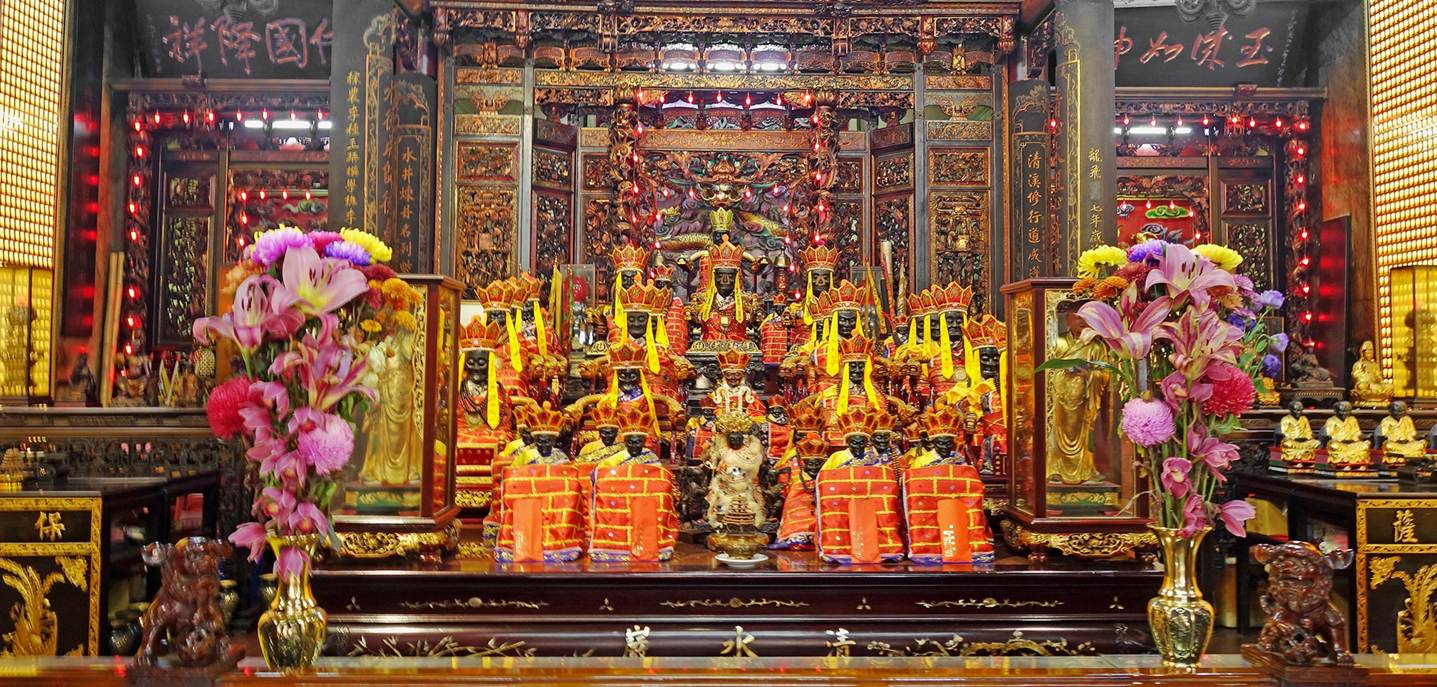
Tai Sui Hall (太岁) dedicated to Doumu Yuanjun (斗姆元君), the Mother of the Big
Dipper and the 60 Tai Sui generals, whom she supervises. [See Sanxia Qingshui Zushi (above).]
|
|
|

Decorations inside the
temple.

Tamsui Fuyou temple (淡水福佑宮):
Built in 1796, this
temple is the oldest in Tamsui. It was constructed by early Chinese settlers.
They dedicated the temple to Mazu (媽祖), the goddess of the sea, who protected
them during the crossing of the turbulent Taiwan Strait. It was renovated on several
occasions during the Qing dynasty, the Japanese colonial period, and later, but
its overall style has remained unchanged.
Statues of the two
customary guardians of Mazu: Shunfeng'er (順風耳), who can hear sounds from very far, on
the left,and Qianliyan (千里眼), who can see very far, on the right.
|
|
|

Altar dedicated to
Wenchang Dijun (文昌帝君), the god of culture and literature,
flanked by his two attendants, Tianlong and Diya.

The presence of the large
yuanbao (元寶), a boat-shaped gold ingots used as currency in imperial China, in front
of the altar, and the reference made to ″wealth″ in each of the
three plaques below the three statues, strongly suggest that this altar is
dedicated to deities of wealth. Its central statue very likely depicts the
chief god of wealth, Zhao Gongming (趙公明).
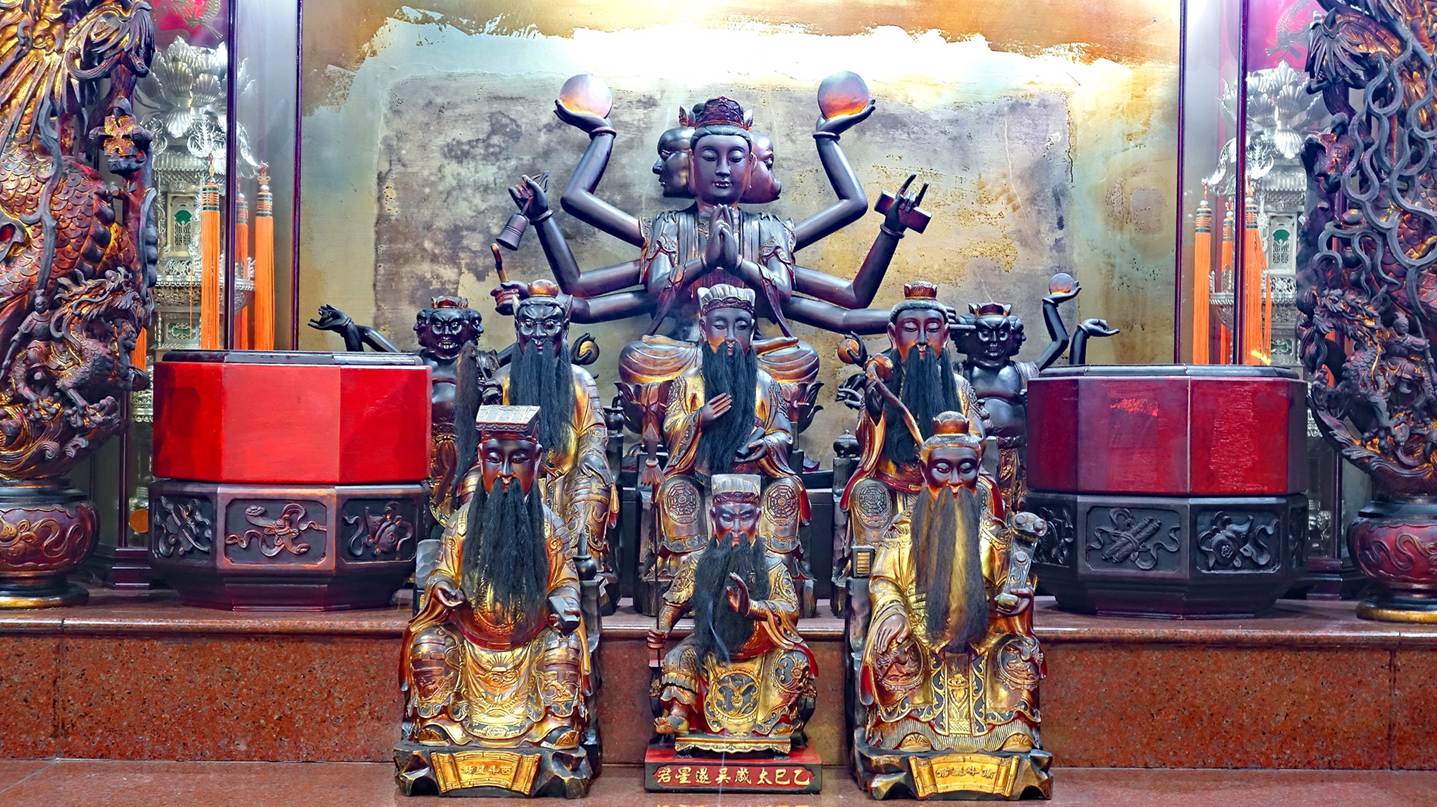
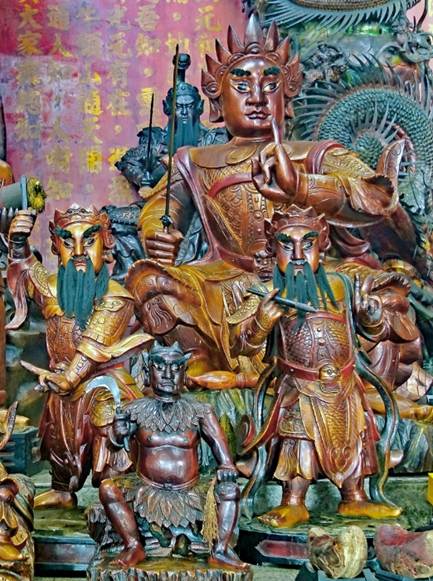
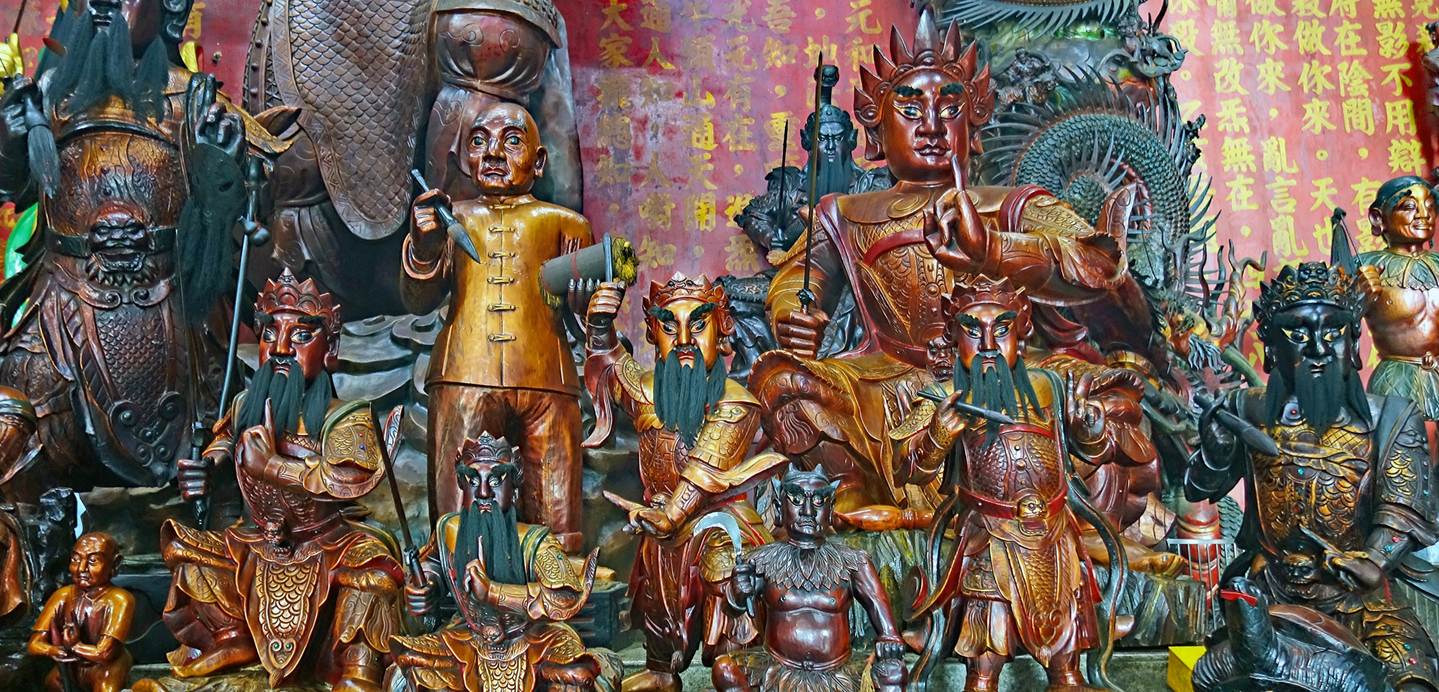
In the Tai Sui Hall (太岁) dedicated to multi-headed, multi-armed
Doumu Yuanjun (斗姆元君), the Mother of the Big Dipper,
and the 60 Tai Sui generals, whom she supervises (two following photos). [See Sanxia Qingshui Zushi (above).]

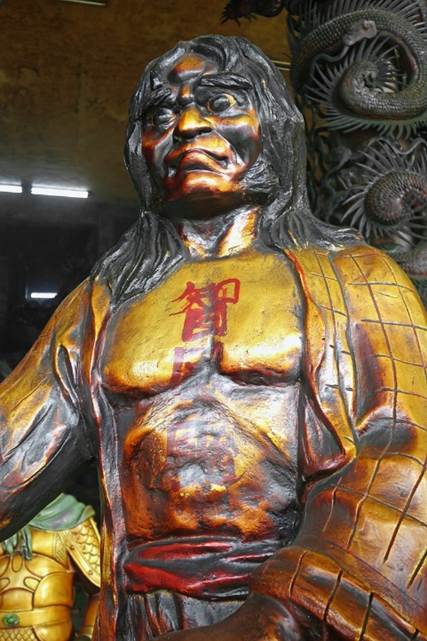

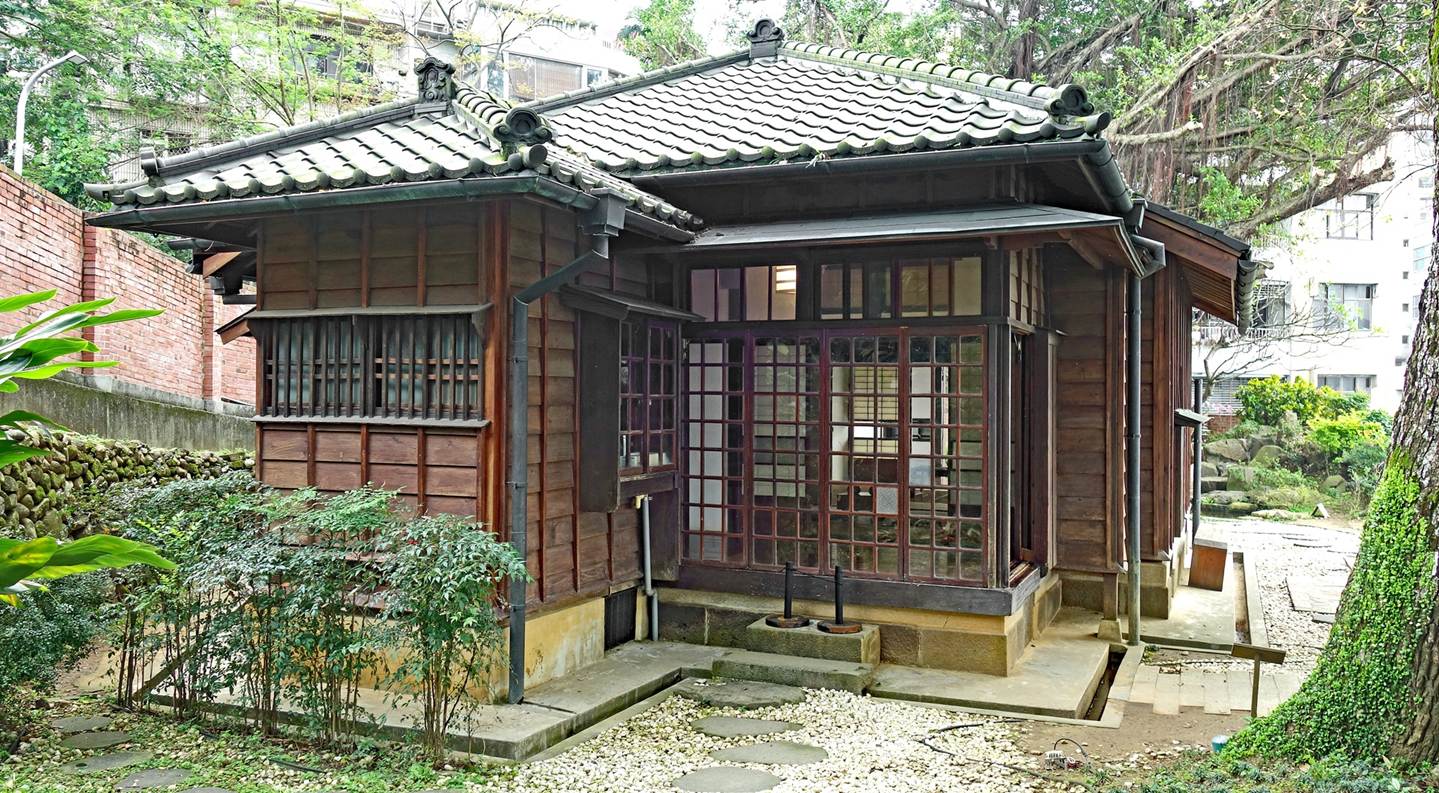
Former residence of Tada Eikichi (多田榮吉故居):
This residence was built
in the 1930s for Tada Eikichi, a Japanese entrepreneur and civil servant during
the Japanese occupation of Taiwan. The house is built with cypress wood.
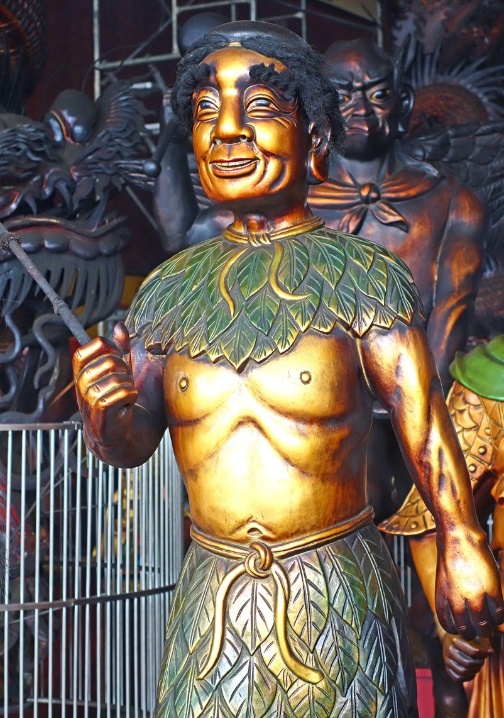

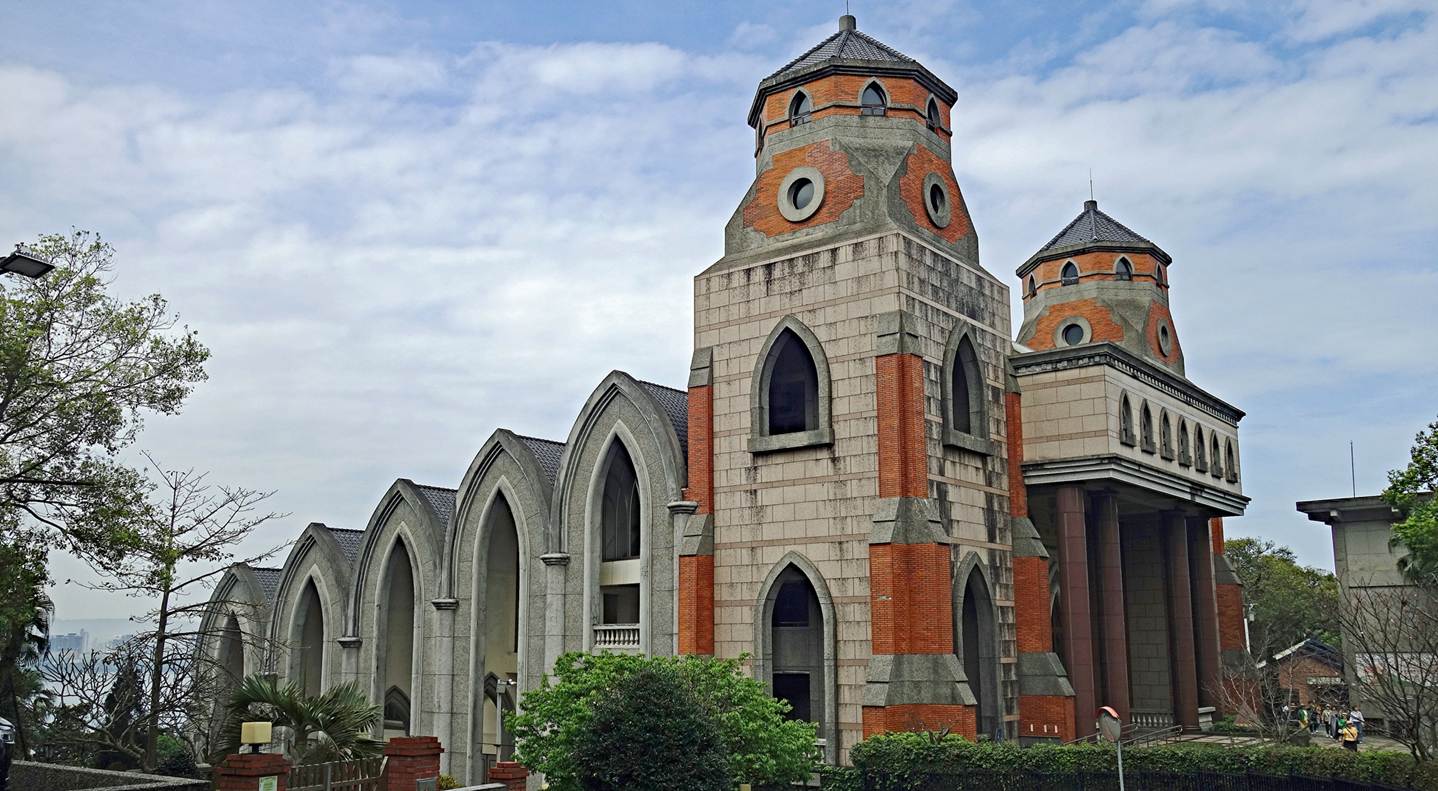
Aletheia University (真理大學):
This private university
was founded on 1872 by a missionary from the Presbyterian Church of Canada.
Massive church of the
university.
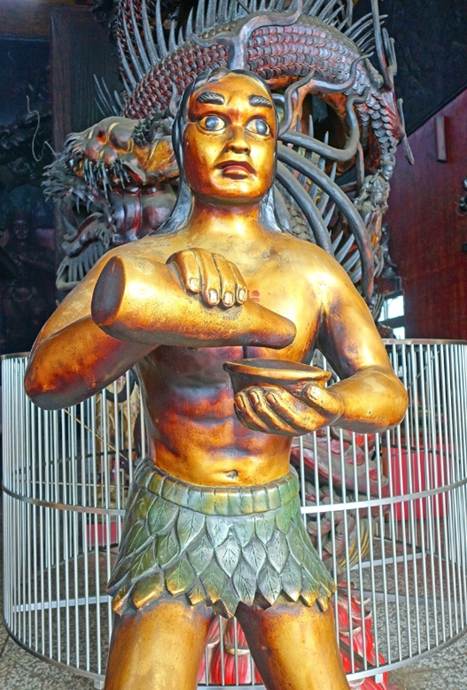
Tamsui customs wharf (淡水海關碼頭):
Tamsui port was once one
of Taiwan's main trading ports, especially between 1865 and 1905. It then lost
its importance due to the silting of the Tamsui river and the development of
the railway line between Taipei and Keelung.
Freshly renovated
19th-century customs or storage house. (The belltowers of the Aletheia
University's church are visible in the background.)

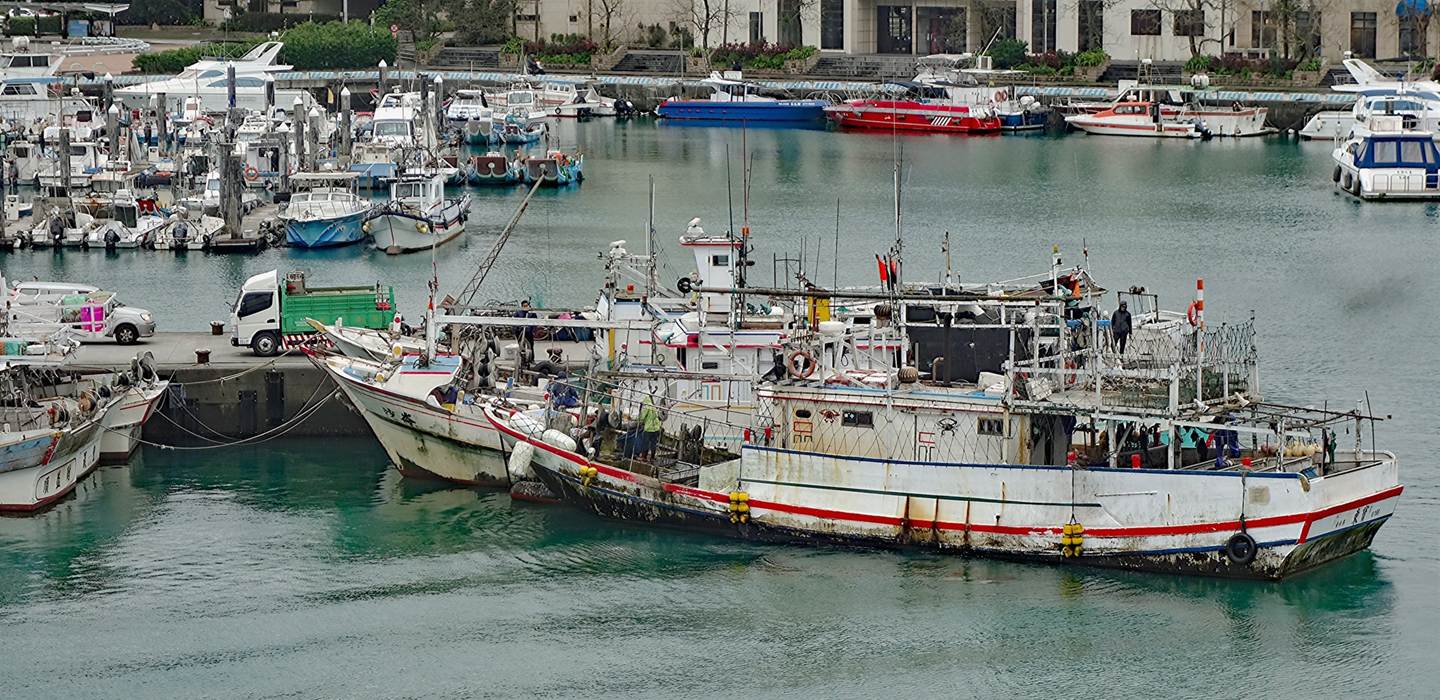
Fishing boats at the Tamsui
fisherman's wharf (淡水漁人碼頭):
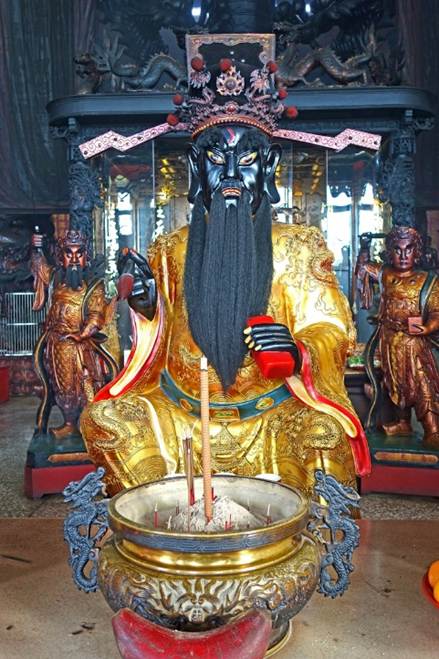
Hobe fort (滬尾礮臺):
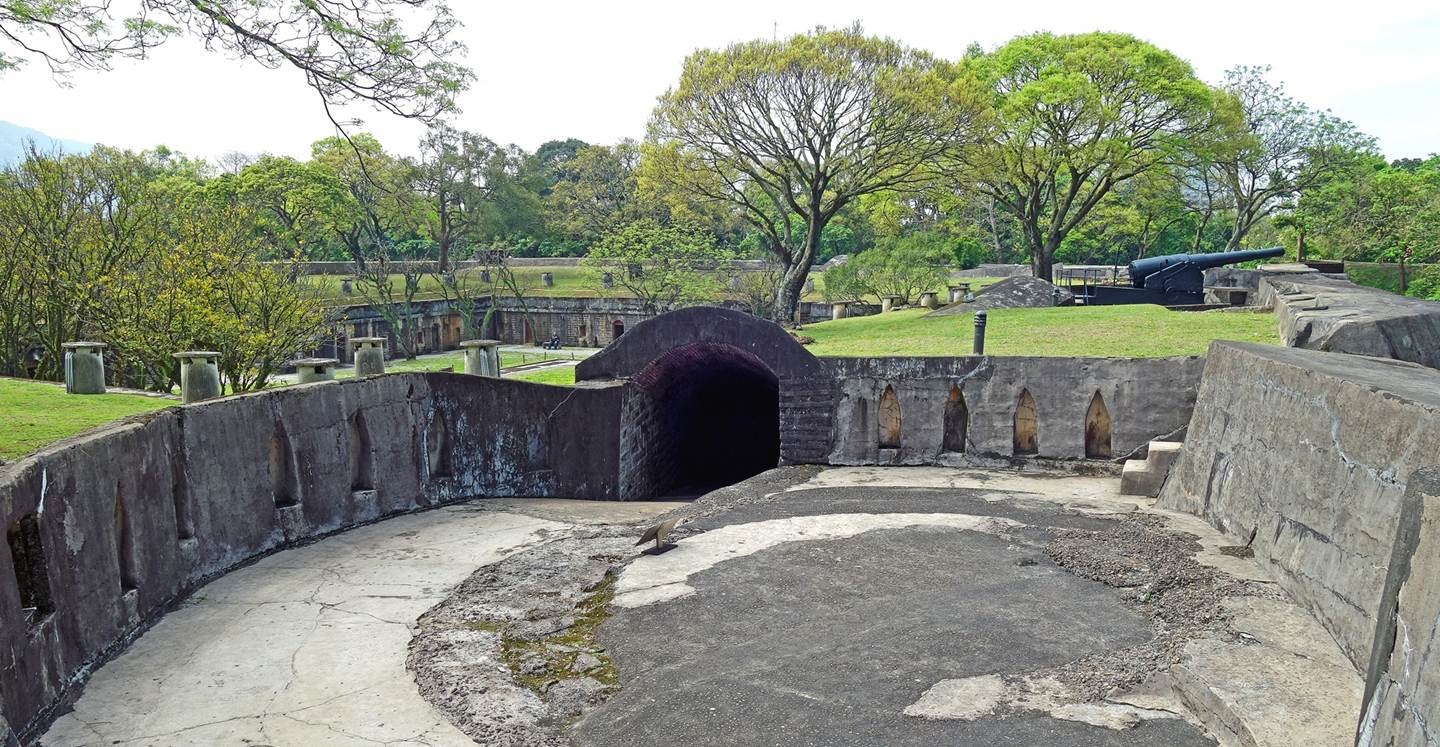
It was built in 1888
under the Qing dynasty to reinforce the coastline defense of Taiwan, following
attacks by French military during the Sino-French War of 1884-1885.



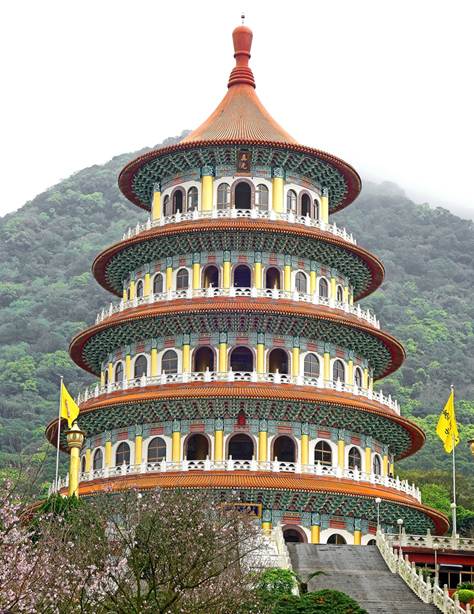
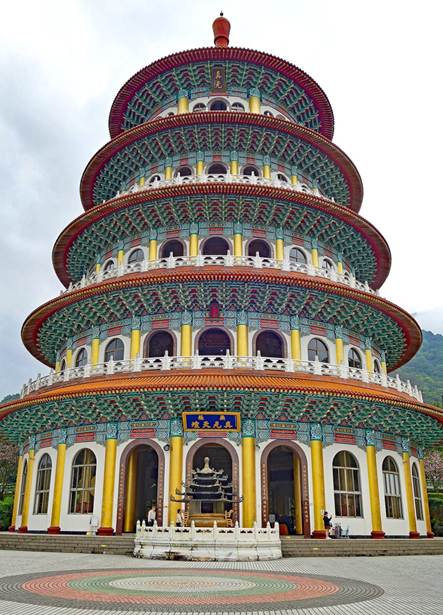
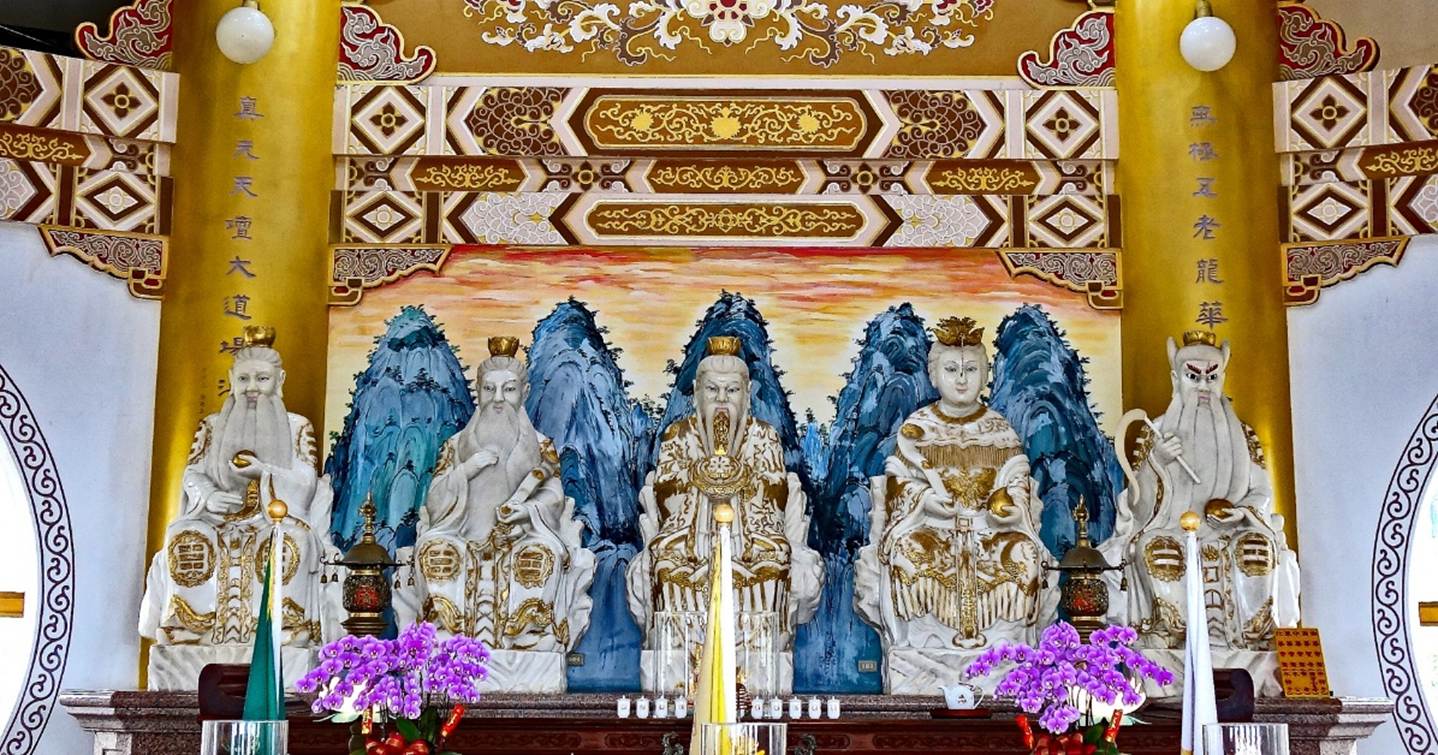
Wuji Tianyuan temple (無極天元宮):
Nestled in the hills east
of Tamsui, this temple is best known in Taiwan for its cherry blossoms in
March. But it also features an impressive five-tiered pagoda-like building,
known as the Altar of Heaven, completed in 1985, inspired from the Temple of Heaven
in Beijing.
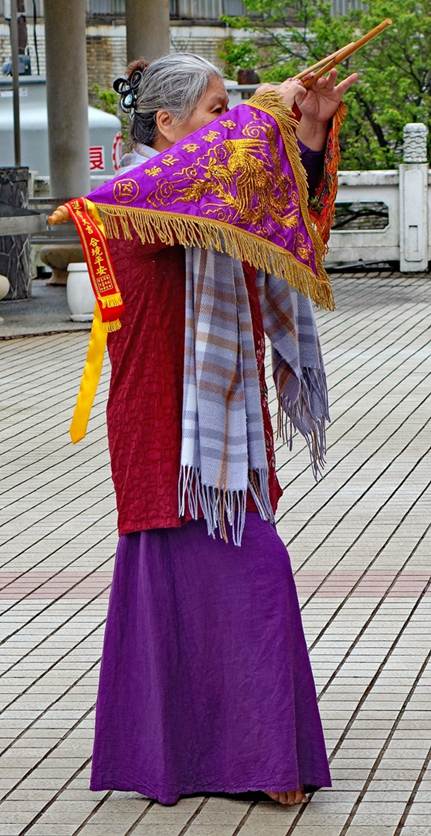
Woman performing ritual
steps upon entering the temple grounds.
|
|
|
|

Views of the Altar of
Heaven.
|
|
|
|


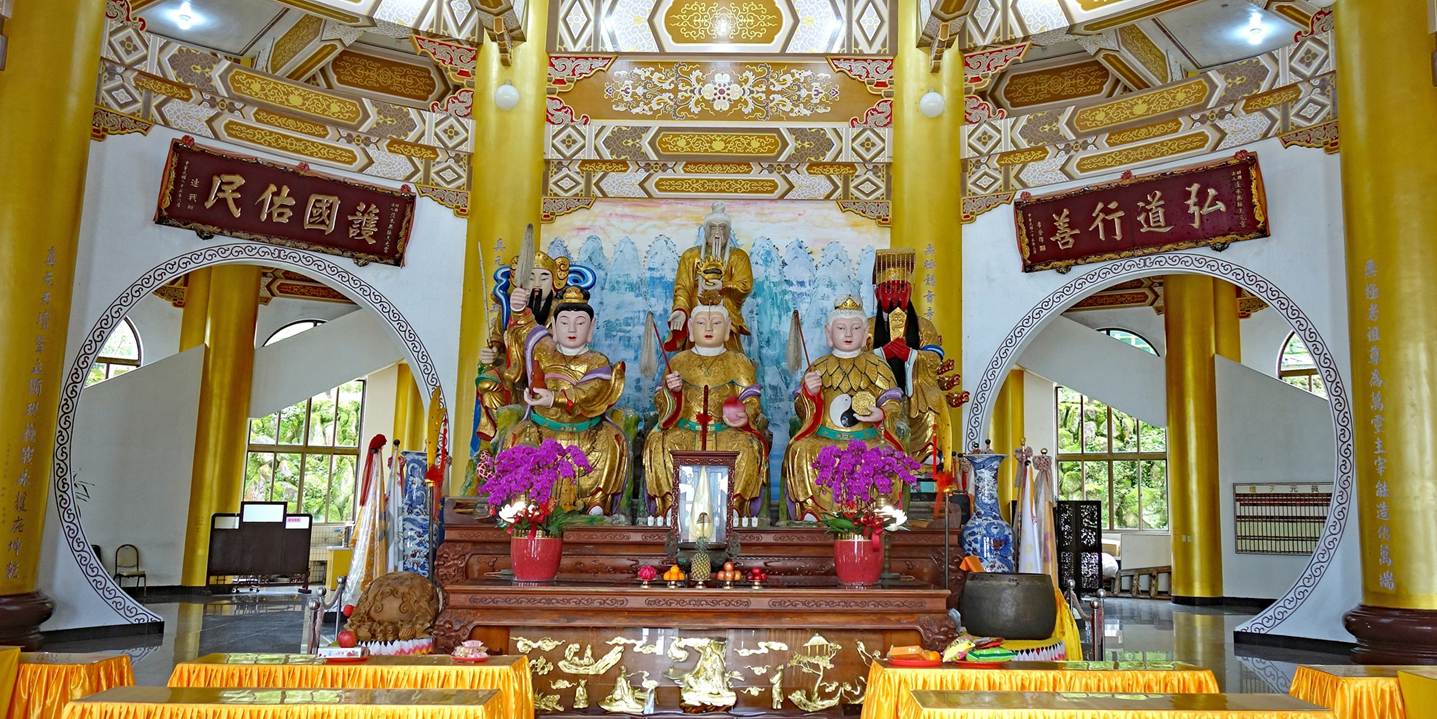
Each of the five floors
of the temple is a praying hall dedicated to a distinct group of deities.
The first floor houses an
odd blend of deities:
- In the back row, from
left to right: Xuantian Shangdi (玄天上帝), the Supreme Emperor of the Dark Heaven; Wuji Shengzu (無極聖祖), the Primordial Ancestor; and the Jade Emperor (玉皇上帝), the Supreme Ruler of Heaven.
- In the front row, from left to right: Jiutian Xuannu (九天玄女), the Mysterious Lady of the Nine Heavens; the Queen Mother of
the West (西王母); and Dimu Niangniang (地母娘娘), the Earth Mother goddess.
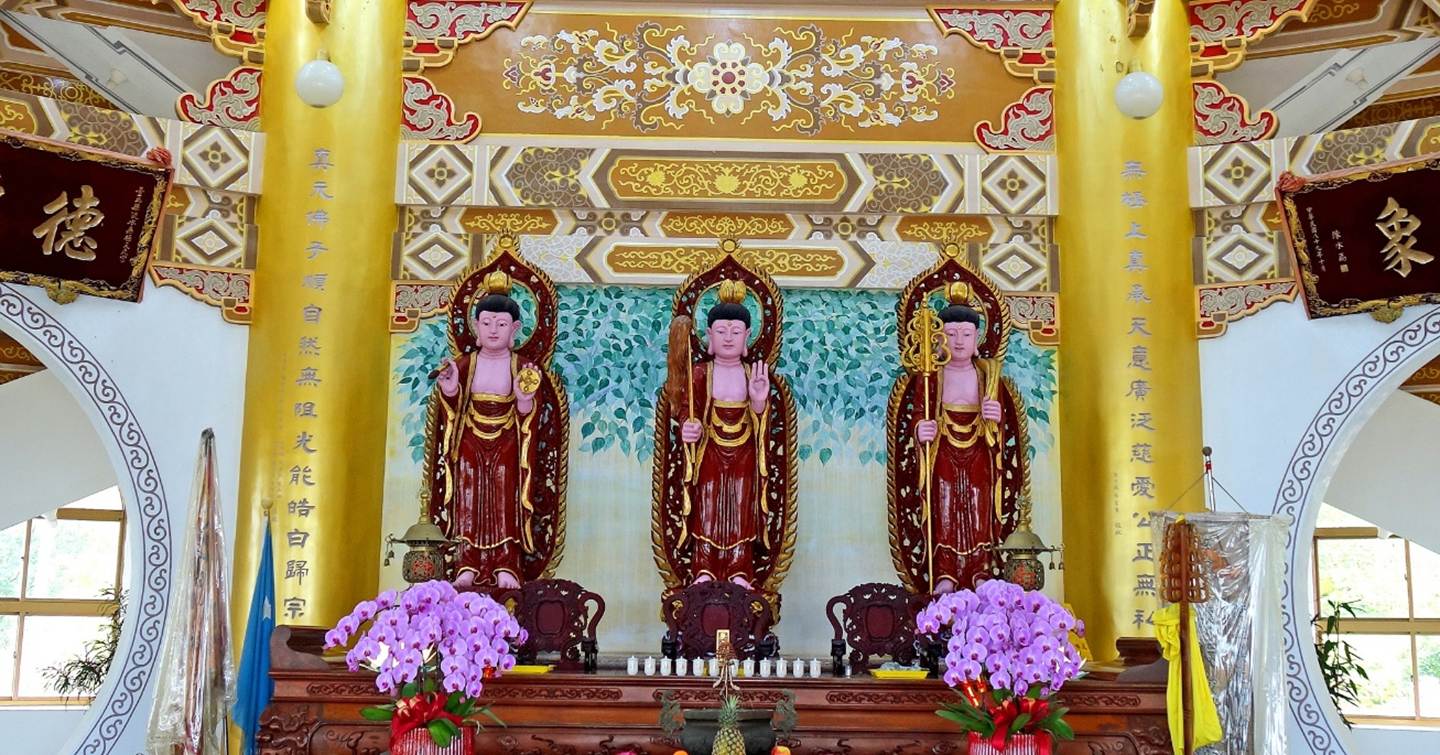
The second floor features
three statues symbolizing three manifestations of the Buddha, called the Three
Supreme Buddhas (無上三佛).
The third floor features
the Limitless Golden Light Supreme Jade Emperor (無極金光玉皇大天尊). He is the supreme ruler of Heaven,
the monarch of all deities, and the ultimate arbiter of the mortal realm.
On the fourth floor stand
five white marble statues depicting the Five Directions Five Elders (五方五老), the primordial deities in Taoist
mythology who govern the universe. They represent the Five Elements, the
cardinal directions, and the center.

On the Fifth floor stand
three white marble statues depicting The Three Pure Ones (三清道祖), who represent the supreme beginnings
of the universe, its primordial energy, and the pure manifestation of the Tao.
 .
.
North and East of New Taipei City
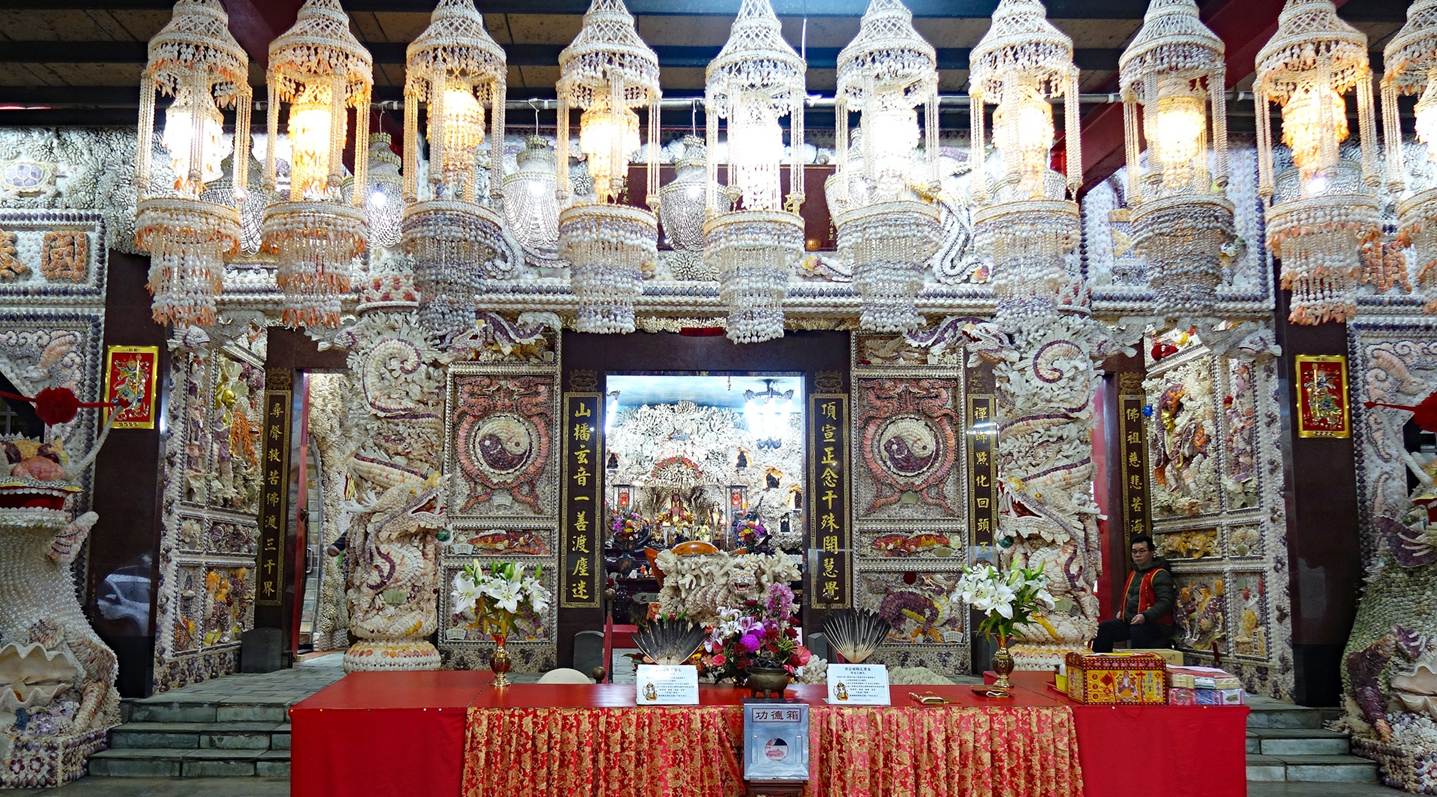
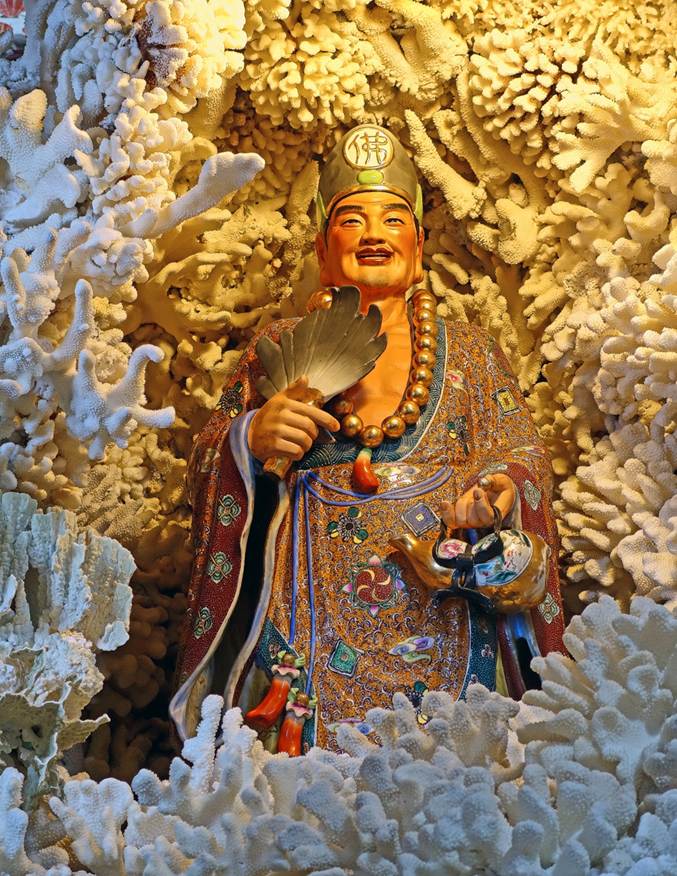
Fufudingshan temple (富福頂山寺):
[March 2025]
Located in the Sanzhi
district of New Taipei City, this temple, completed in 1996, is bordering on
the bizarre. Built largely within a man-made cave, its surfaces are entirely
covered and decorated with seashells and white coral. It is primarily dedicated
to the Chinese Buddhist monk Daoji (道濟) (1130-1209), popularly known as Ji
Gong (濟公, meaning ″Master Ji″) and Jidian (濟顛, meaning ″Crazy Ji″). This monk is said to have fought injustice and helped
the poor using supernatural powers acquired through Buddhist practice. He
is also known for his eccentric behavior: he consumed alcohol and meat,
contrary to Buddhist teachings. Could it be that the temple's strangeness is
intended to reflect the eccentricity of its patron god?
Entrance of the temple.

Main altar in the back of
the cave. The niches in the wall contain statues of the 18 Arhats, considered
the first disciples of the Buddha (only 9 are visible in the photo).
Closeup on the statues
placed on the altar. The main statue represents Ji Gong.

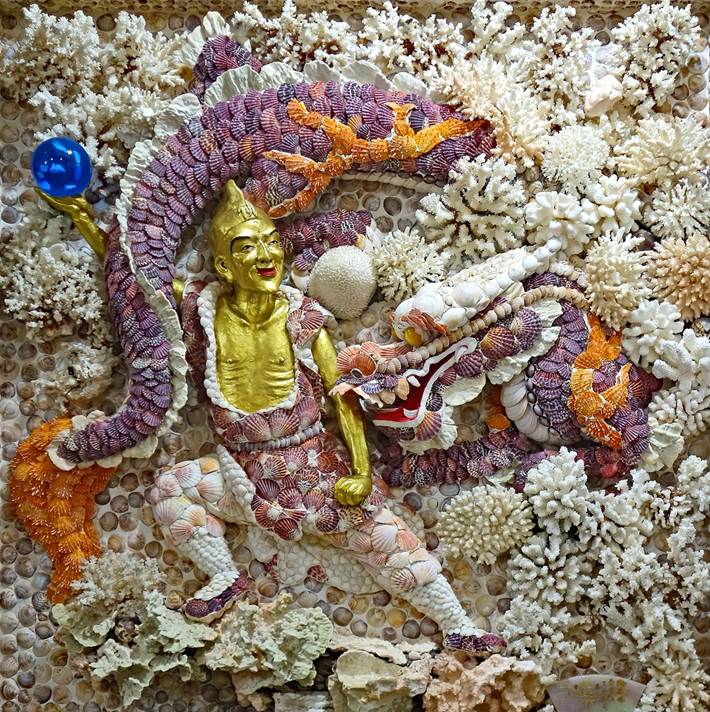
Close-ups of various
parts of the temple.
|
|
|

|
|
|

Shanhu Beike temple (台灣珊瑚貝殼廟(新廟)):
[March 2026]
This temple is a 2025
relocation of the previous Fufudingshan temple. Situated in the Shinmen district of New
Taipei City, only 3.5km north of the Fufudingshan temple, it is a large concrete building designed as an underwater dragon
palace, whose surfaces are almost entirely covered with sea shells and coral. It
is dedicated to the ″crazy″ Buddhist monk Daoji (道濟), better known as Master Ji.
Entrance of the temple,
flanked by two surging sea dragons.
|
|
|
|

Murals.
|
|
|

Pillar capital and roof.
|
|
|

Small portion of a
frieze.

Main altar with a statue
of Master Ji in the center.
Statue of Guanyin with
her two attendants.

Three of the 18 Arhats in
the temple.
|
|
|
|
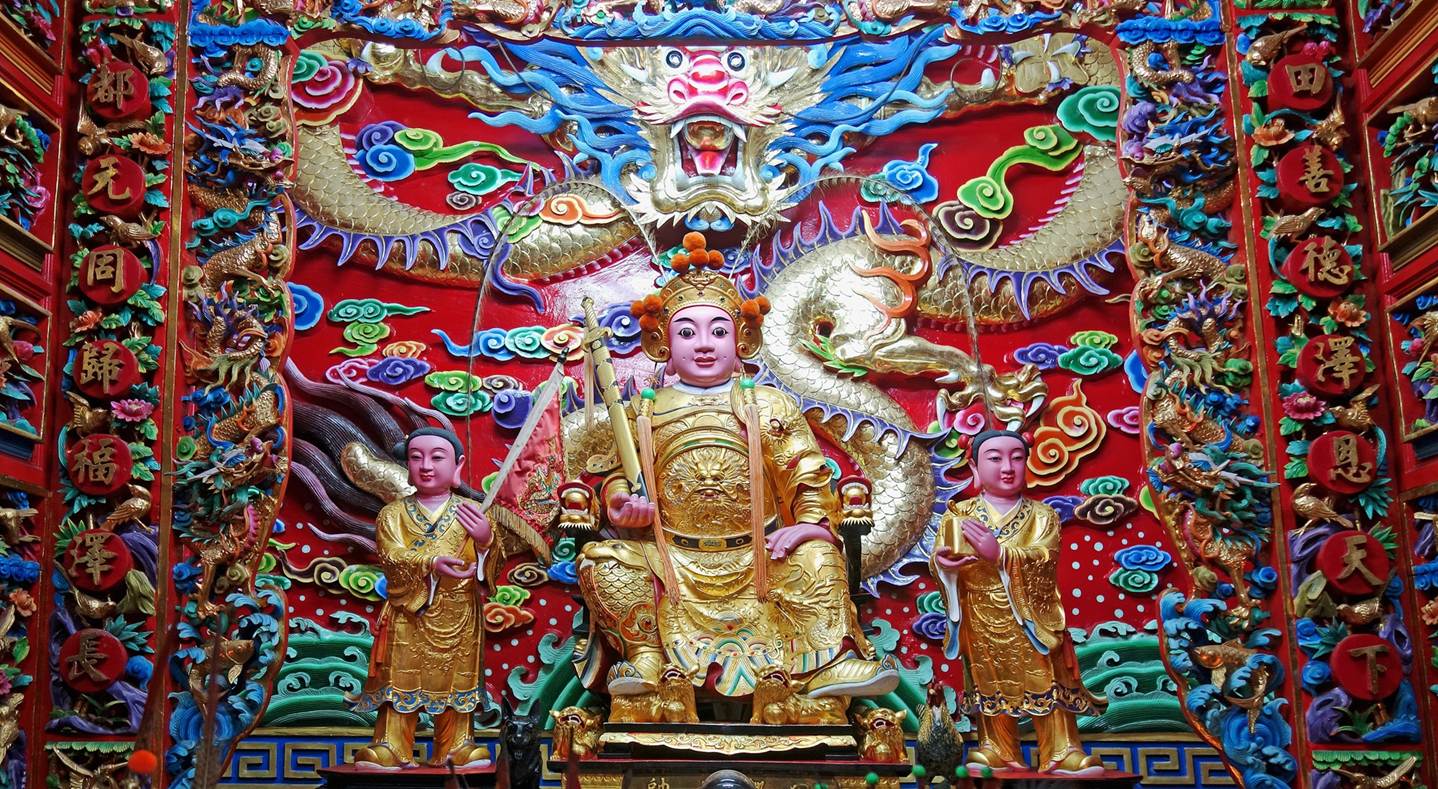

Laomei Green Reef (老梅綠石槽):
[March 2026]
Located in the Shinmen district
on Taiwan's north coast, this beautiful and uncommon volcanic reef is the
result of 200,000 years of marine erosion, dating back to the eruption of the
Tatun Volcanic Group (大屯火山群). More or less parallel trenches,
carved by erosion, are now covered in green algae.


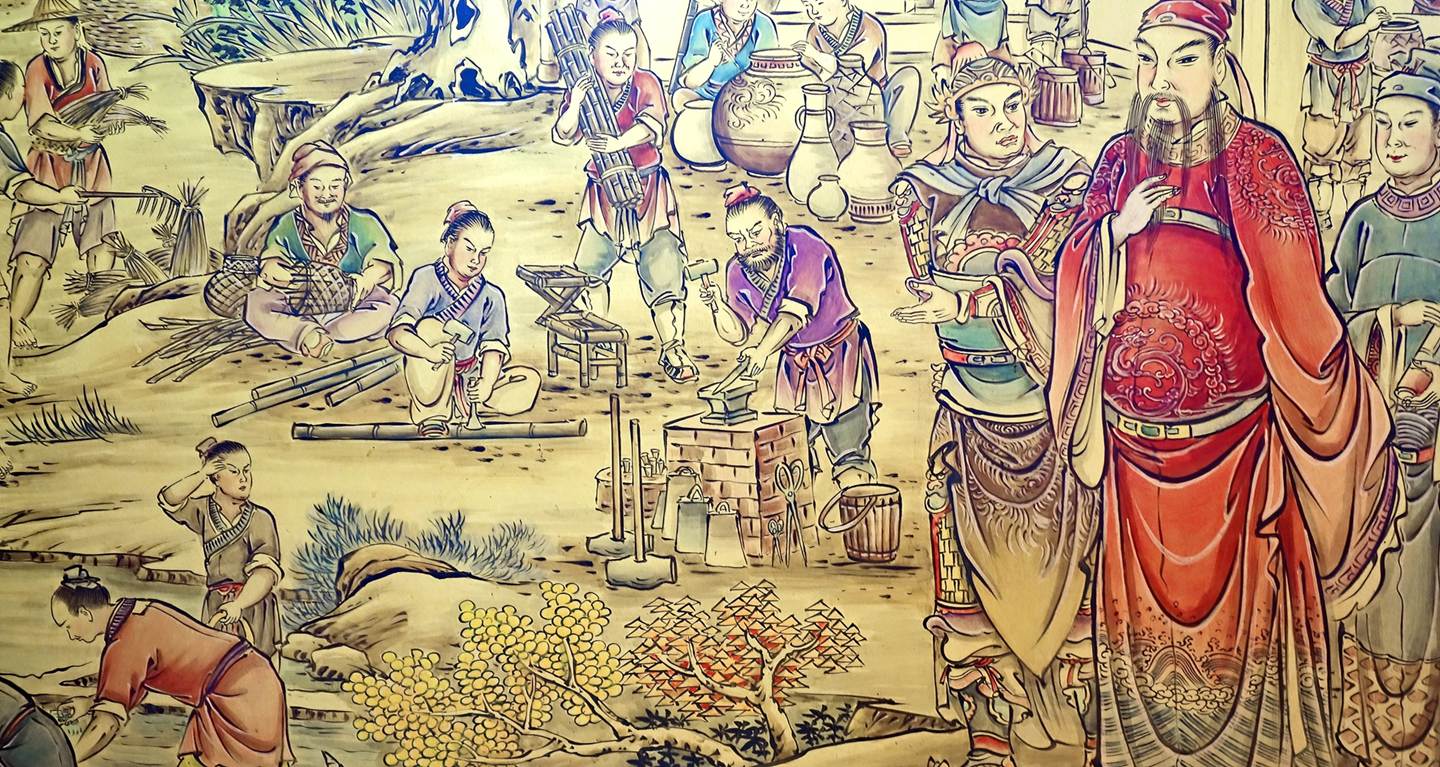
Old and New Qianhu Eighteen Lords
temples (乾華十八王公廟 and 乾華十八王公廟(新廟)):
[March 2026]
These two temples are
situated 2.5km apart, the newer one serving as the relocation of the older one.
They owe their origin from the following legend. During the Tongzhi period (1862-1874) of the Qing Dynasty, a
ship carrying seventeen merchants and their dog
was shipwrecked off the coast of Shimen Township. All the merchants
perished, but their dog survived. When local villagers provided a proper burial
for the merchants, the dog leaped into the grave and stayed there to be interred
alongside them. Moved by such devotion, the villagers placed offerings at the
gravesite, venerating the merchants and their dog as the ″Eighteen
Lords″. As rumors of miracles multiplied, the site gradually attracted
worshippers from further afield, ultimately leading to the construction of
these two temples.
The older temple is
located next to the coast. It did not appear to be well maintained when I
visited it, yet it was frequented by a large number of worshippers, perhaps due
to its ease of access. The newer temple is more impressive and located further
inland, on the northern slopes of the Tatun mountains.
Inside the older temple,
in a room dedicated to the dog deity. The wall panel illustrates the legend of
the ″Eighteen Lords″.
Central portion of the
facade of the new temple.

Statues of the dog deity,
standing outside the temple. The statue shown in the left photo is truly
colossal: it stands 33m tall. The much smaller statues depicted in the photo on
the right adorn the balustrade surrounding the temple forecourt. The same
statues, which also decorate the balustrade around the platform of the colossal
statue, are visible as tiny golden dots in the left photo above.
|
|
|

Statues of the Eighteen
Lords in the temple.
Altar dedicated to the
deified god.

Altar dedicated to the
Jade Emperor (玉皇), the supreme ruler of Heaven, and to Guanyin (觀音), the
Bodhisattva of Infinite Compassion and Mercy, referred to as the Goddess of
Mercy in Taoism.
Altar featuring several
deities associated with wealth and prosperity:
- The large statue with a
black face depicts Zhao Gongming (趙公明), the principal martial god of wealth.
He holds a cudgel in his right hand and rests his right foot upon a tiger he
has tamed.
- The other large statue
(on the right) represents Bi Gan (比干), the civil god of wealth (文財神). (While
Zhao Gongming embodies wealth acquired by entrepreneurial and
competitive means, Bi Gan represents wealth acquired through education, virtue,
and steady career progression.)
- The smaller statue on
the left represents Tudigong (土地公), also known as
Fude Zhengshen (福德正神), the god of Earth and merit. He is
revered for bringing agricultural abundance as well as good fortune to the
common people.

Sculpture garden of the Ju Ming Museum (朱銘美術館):
[March 2008]
Established in 1999 by sculptor Ju Ming, this
museum is the largest outdoor museum in Taiwan, covering about 11 hectares. In addition
to Ju Ming's own works, it contains works by his teachers, his son, and other
important artists. It was severely flooded in October 2024 due to Typhoon
Krathon, but was quickly restored afterwards.
Some of the statues in the museum.


Cape Yehliu (野柳):
[March 2008]
Left: Extremity of the
cape.
Right: Famous limestone
formation, known as the Yehliu Queen′s Head (野柳女王頭) in Cape Yehliu‛s Geological
Park.
|
|
|

Jinguashi (金瓜石):
[March 2009]
Located on a steep mountain
slope, the pretty small town of Jinguashi is known for its historic gold and
copper mines.

Jioufen (九份):
[March 2009]
Jioufen is another small
town, located near Jinguashi.
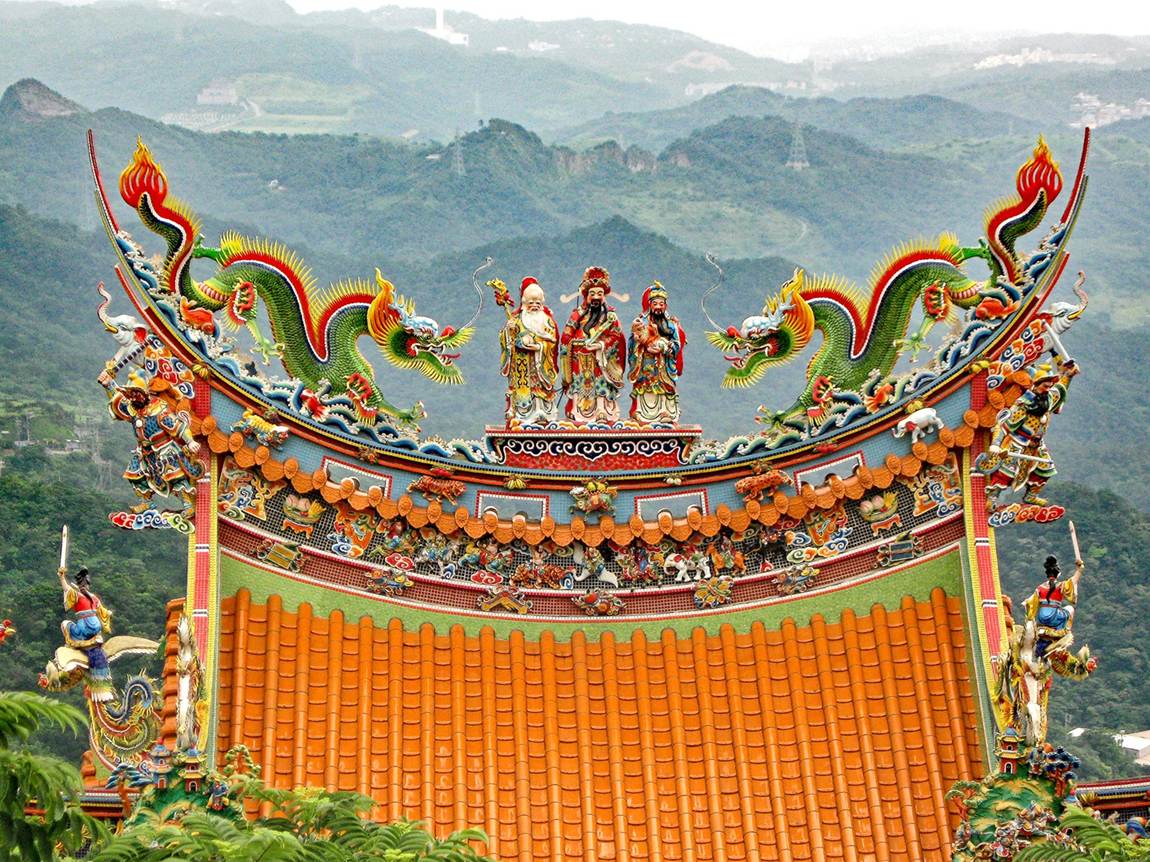
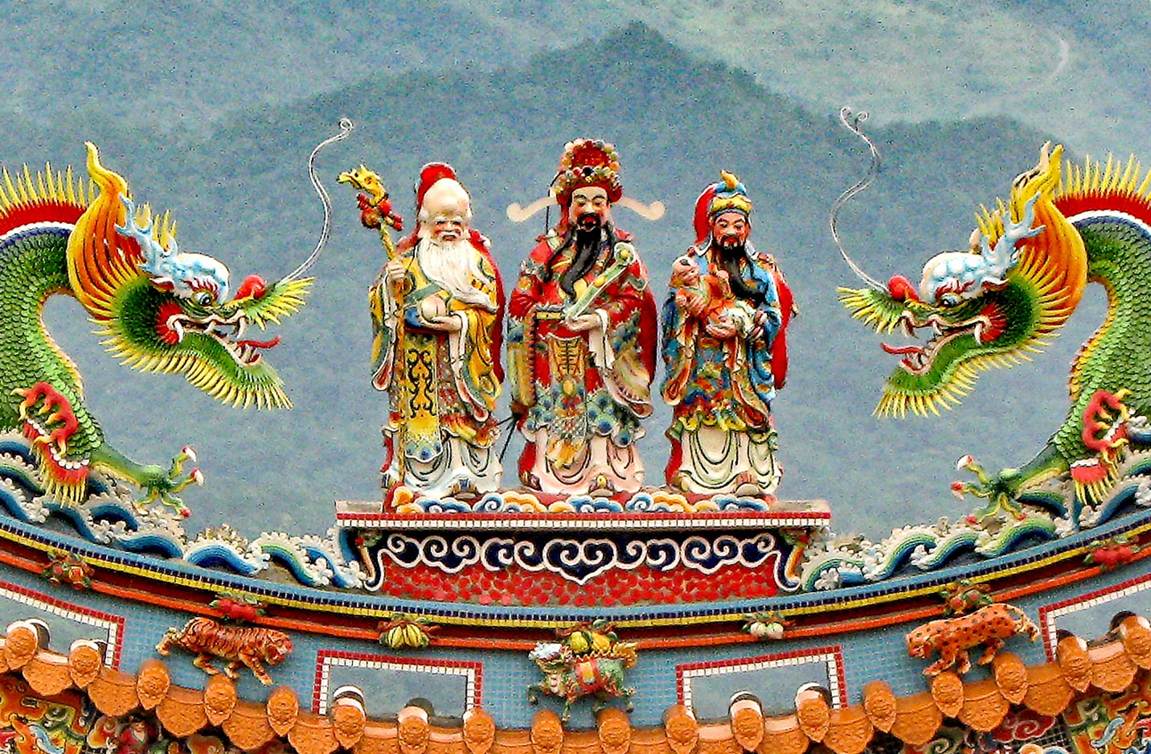
Roof of the Jioufen Xia
Hai City God temple. The three statues on the ridge of the roof represent, from
right to left: the god of fortune Fu (福星), the god of prosperity Lu (祿星), and the god of longevity Shou (壽星). Together, they are known as the
Sanxing (meaning ″three stars″) and symbolize three attributes of a
good life.
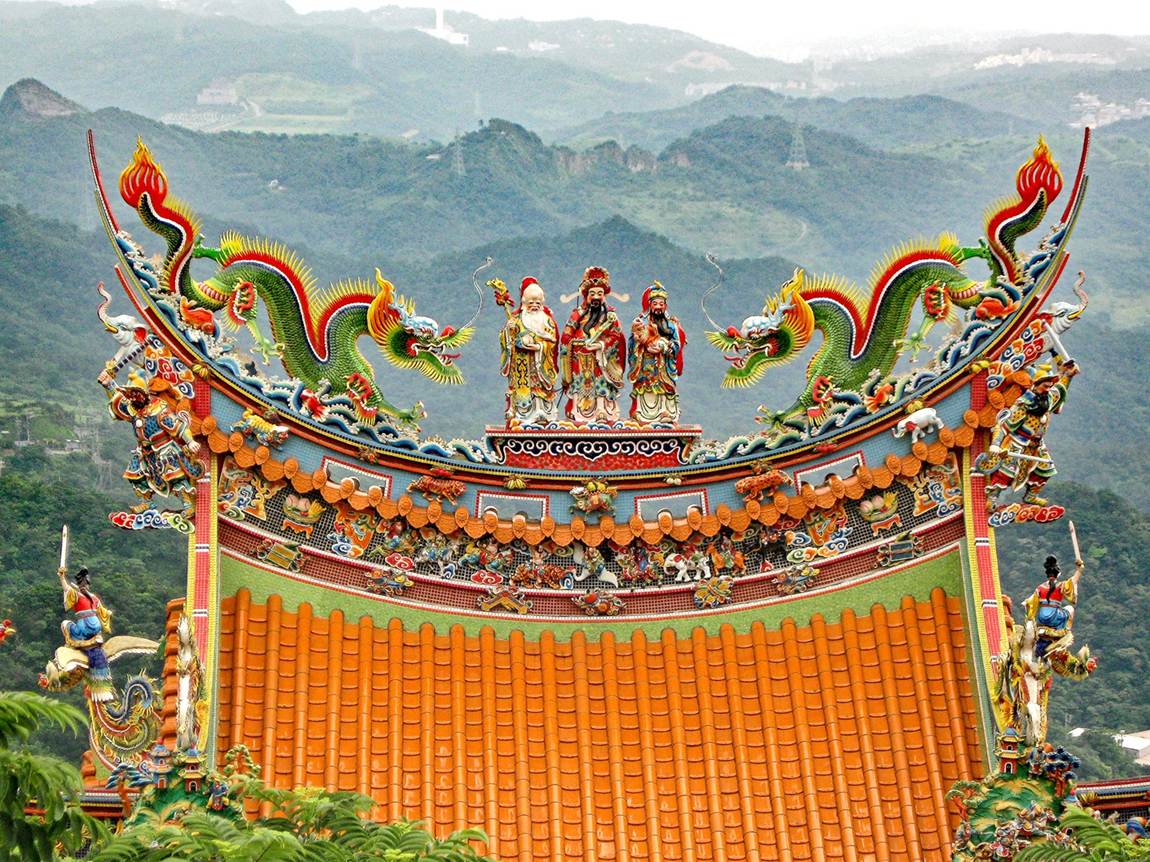

Statue in the Jioufen Xia
Hai City God temple. It depicts Yinyang
Si (阴阳司), regarded as the chief assistant to the City God.
His half-black, half-white face symbolizes his authority over both the world of
the living (Yang) and the world of the dead (Yin). This dual appearance
represents his role in making fair judgments by distinguishing between good and
evil.
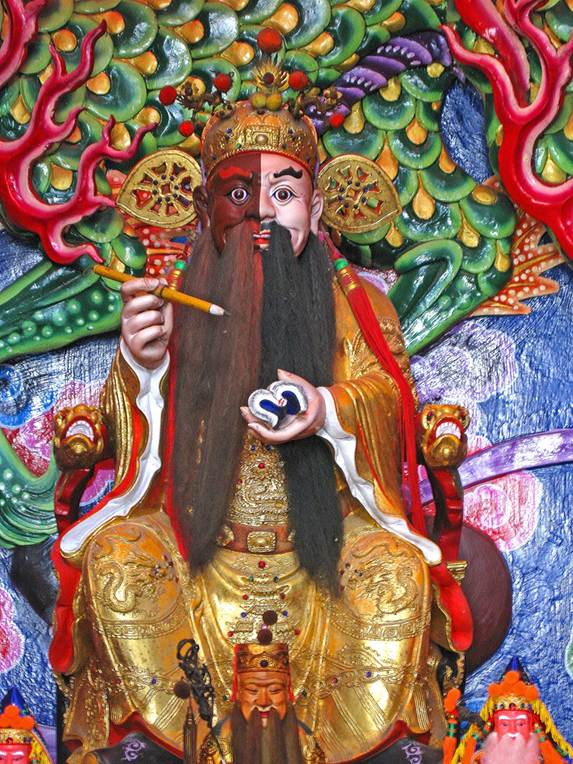
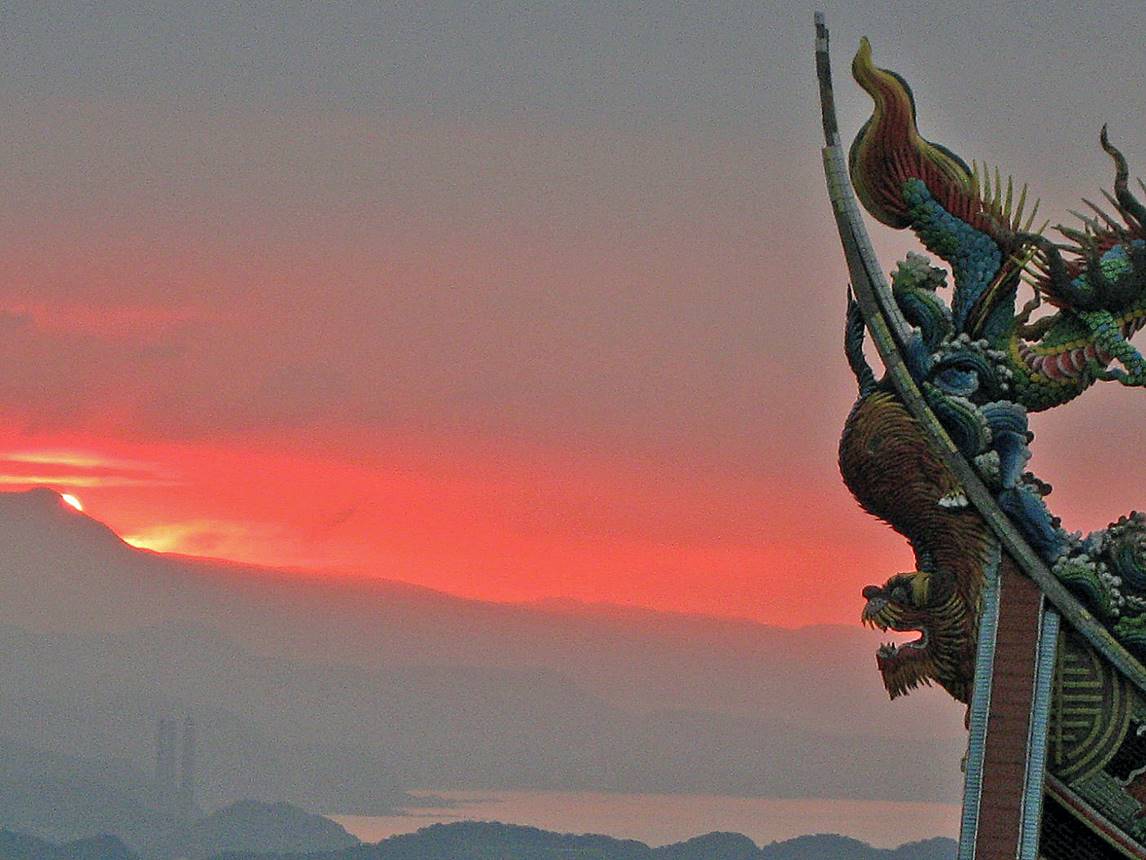
Views from Jioufen in the
late evening.

Keelung City (基隆市)
Port
of Keelung:
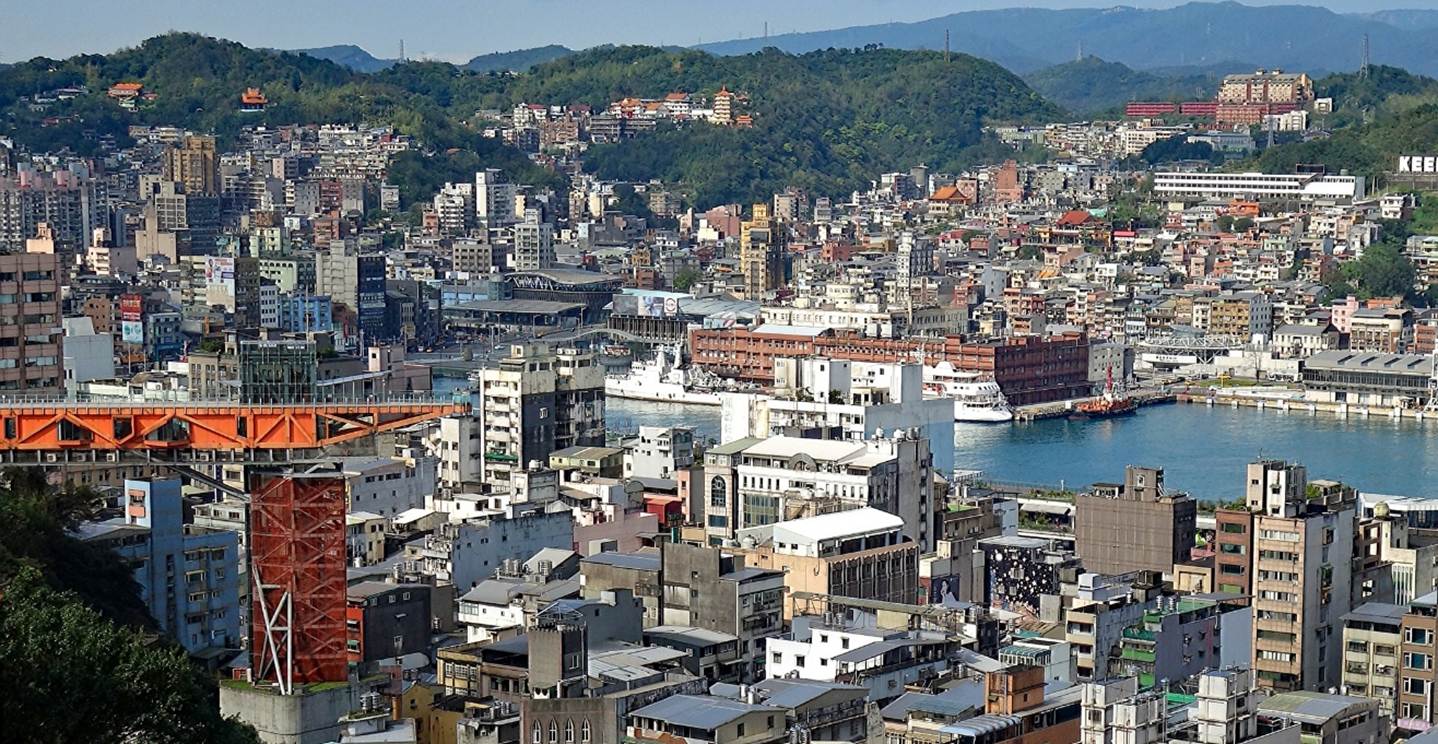
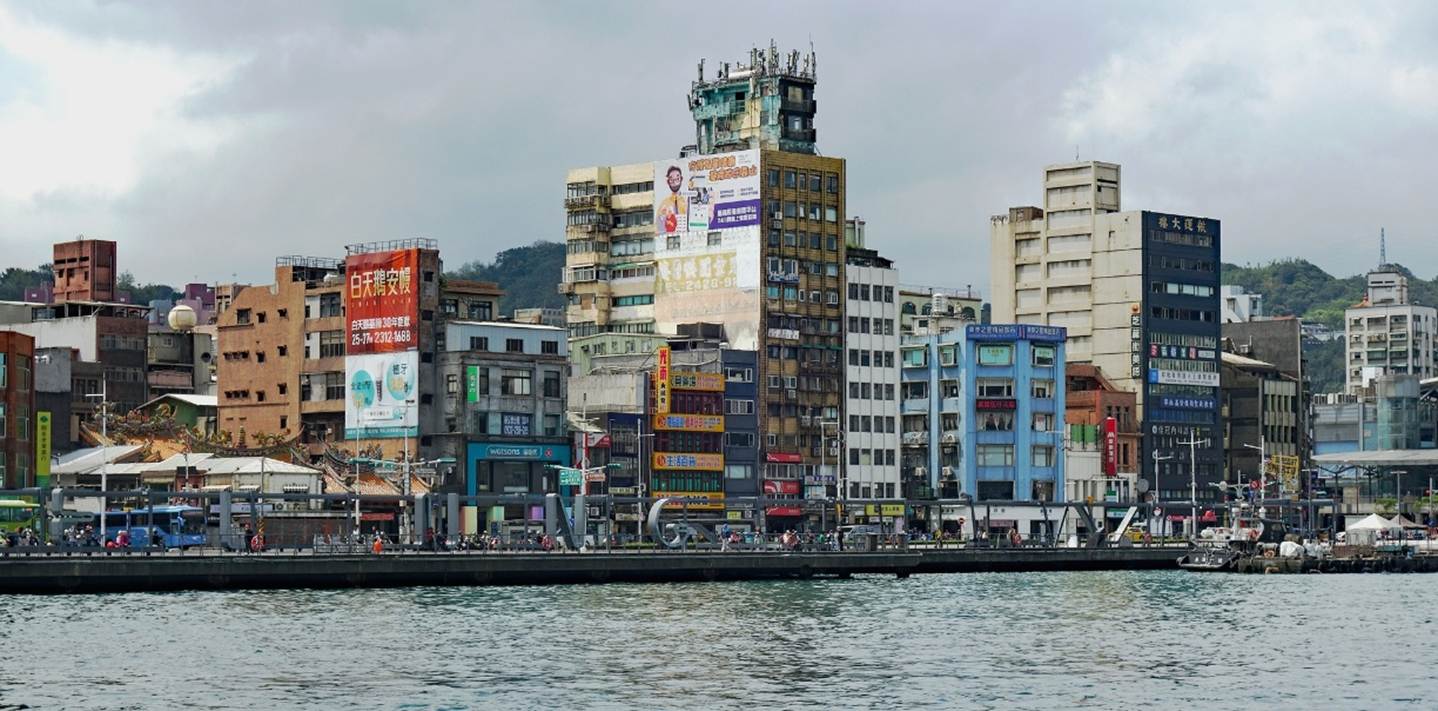
The port of Keelung forms
a waterway, 2km-long and 400m-wide, extending from its outlet in the northeast
to its inner extremity in the southwest. It also includes a shorter lateral
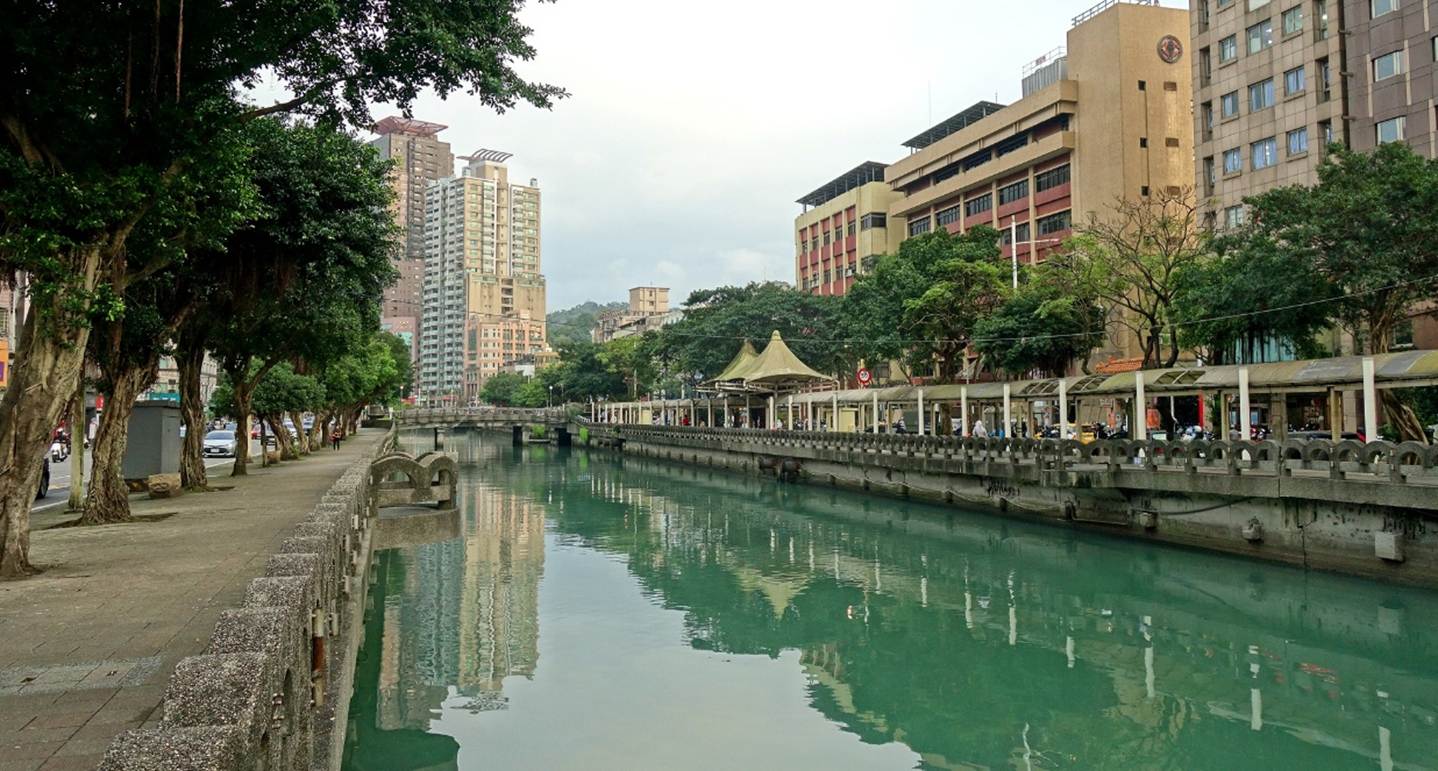
waterway branching off to the north. The two following photos show two parts of
the inner section of the port. The lateral waterway is visible in the second
photo below.

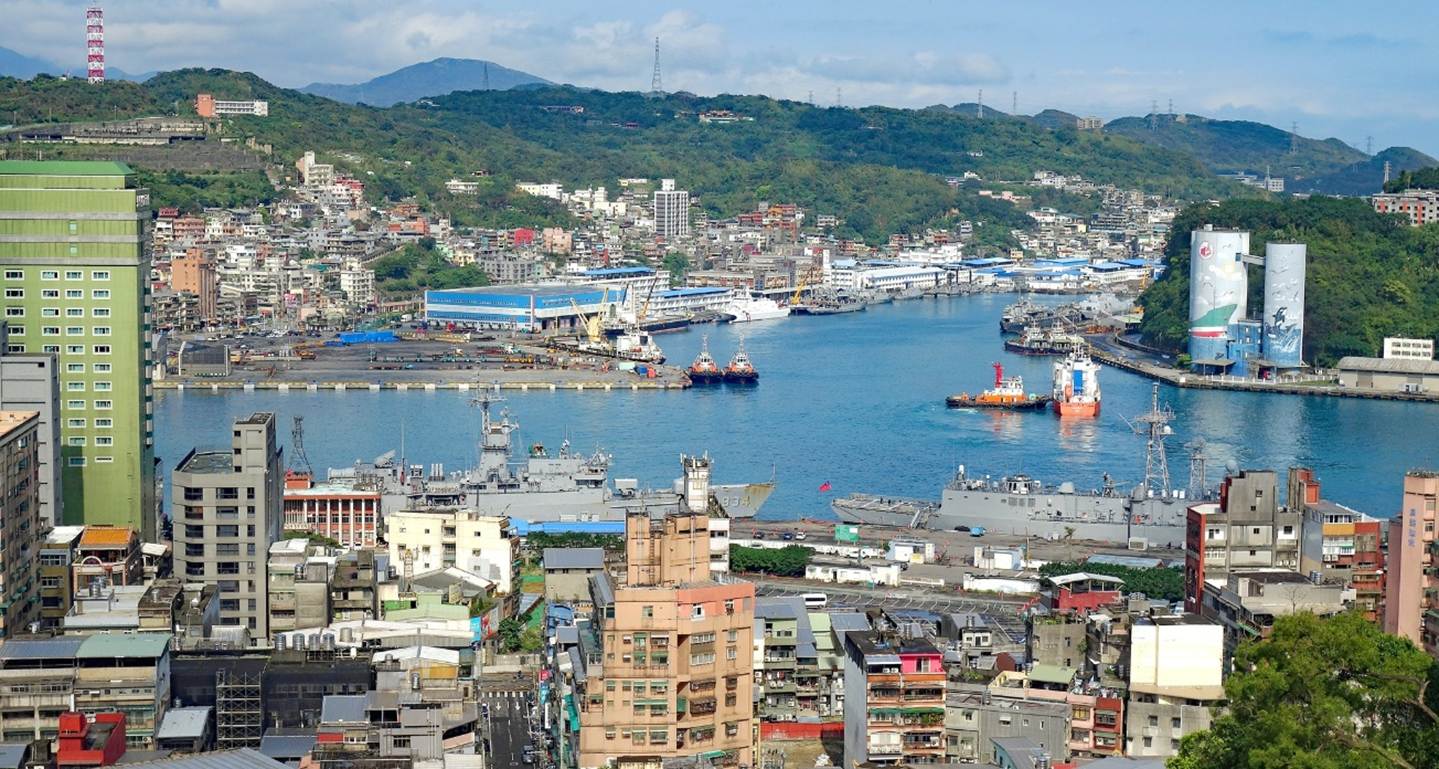
Central Keelung City:
Buildings in downtown
Keelung facing the southwest extremity of the port.

Dead-end canal connected to
the inner section of port.
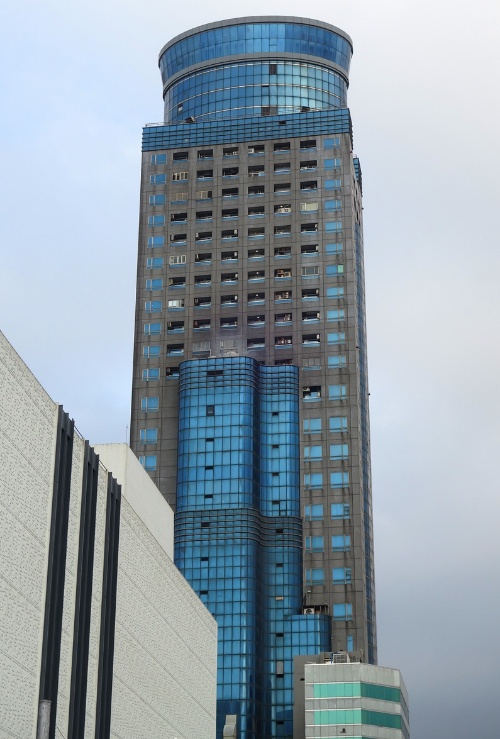
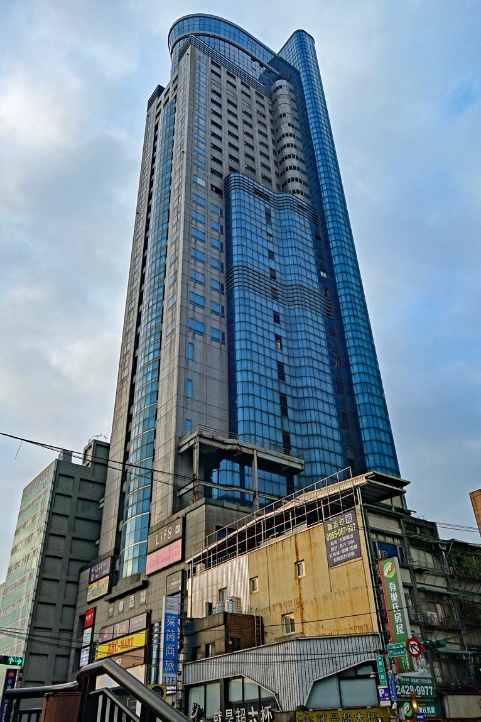
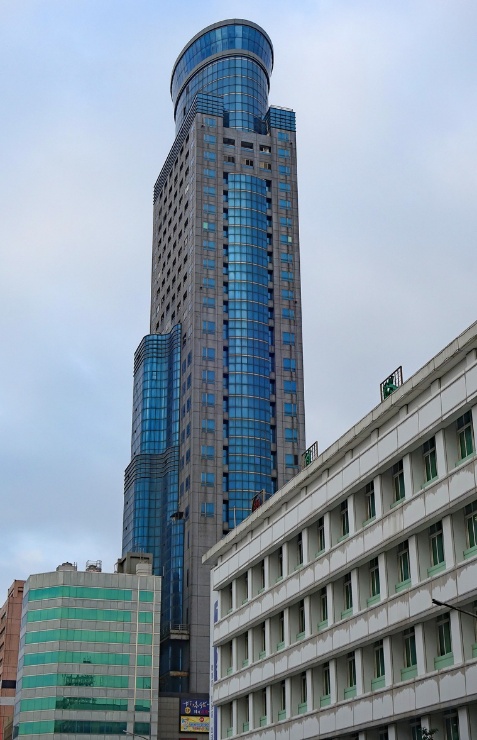
The 148m-high Lih-Rong An
Imperial Crown Tower, the highest building in Keelung City.
|
|
|
|


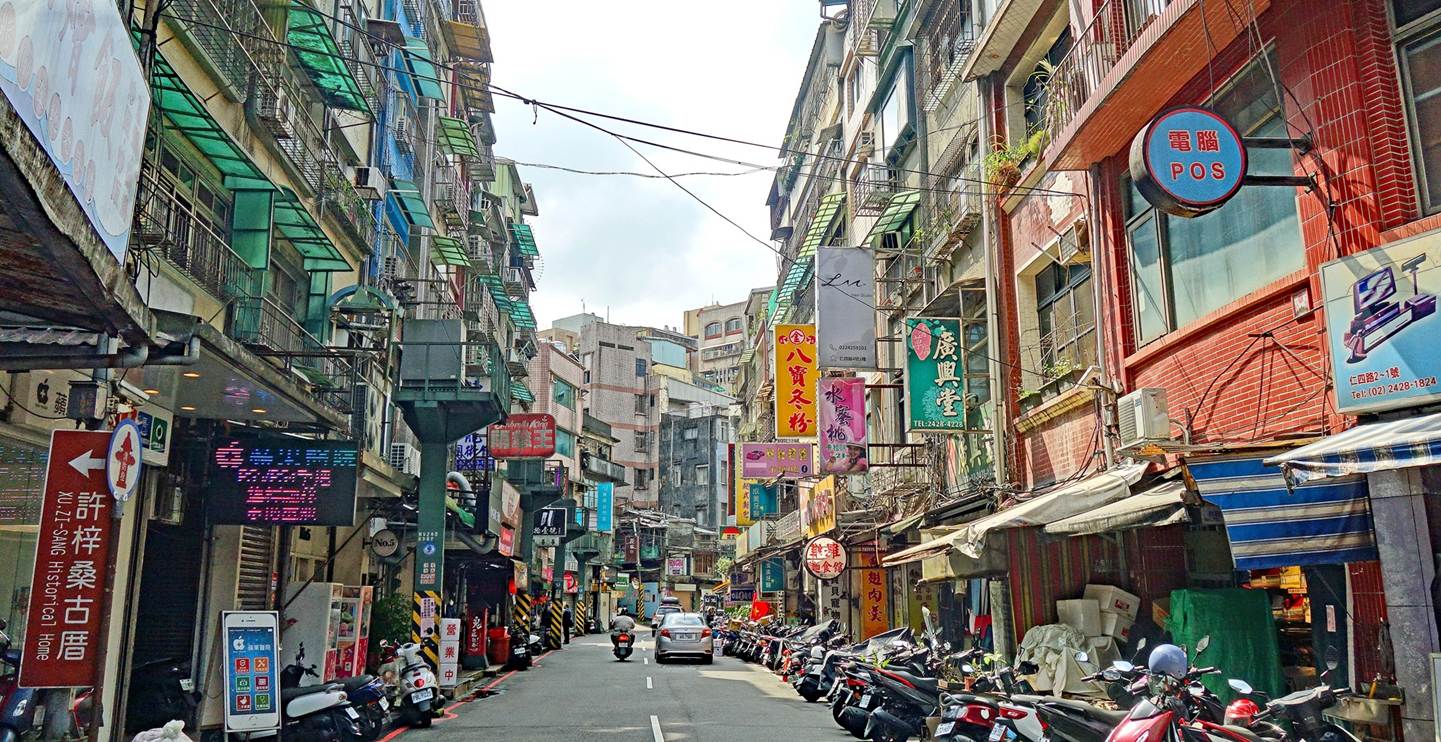
Shopping street.
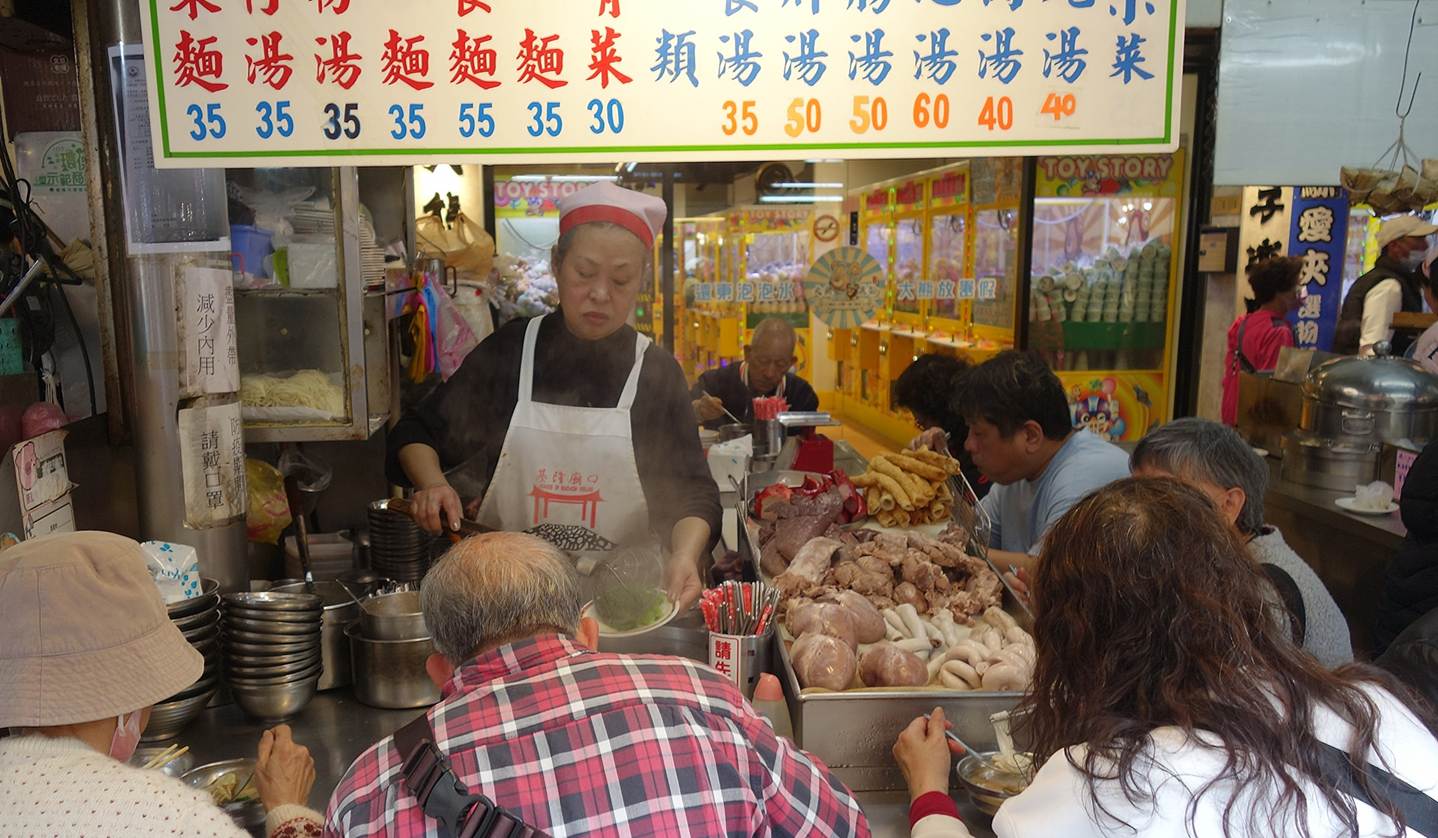
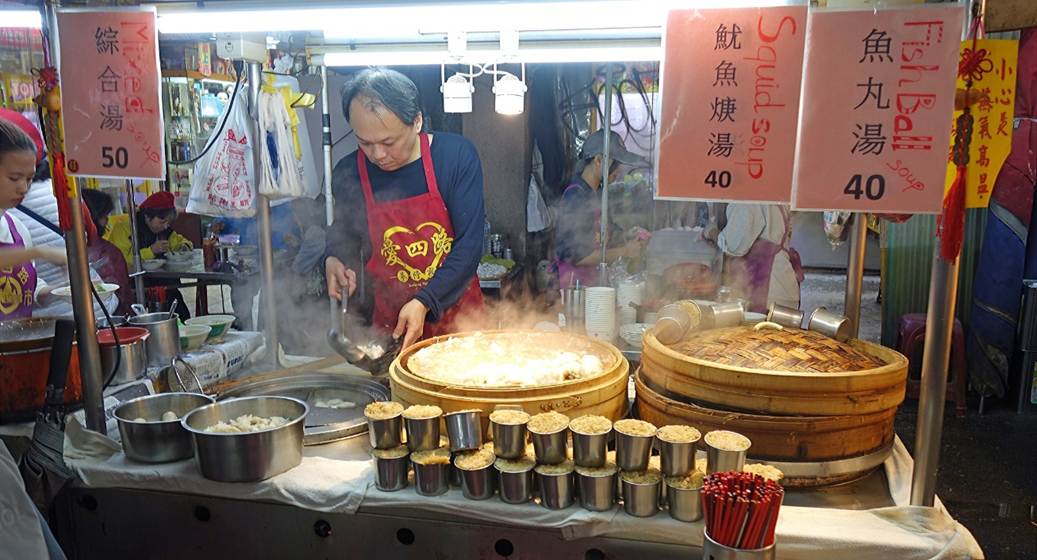
Scenes of the Miaoku
night market (基隆廟口夜市).

|
|
|

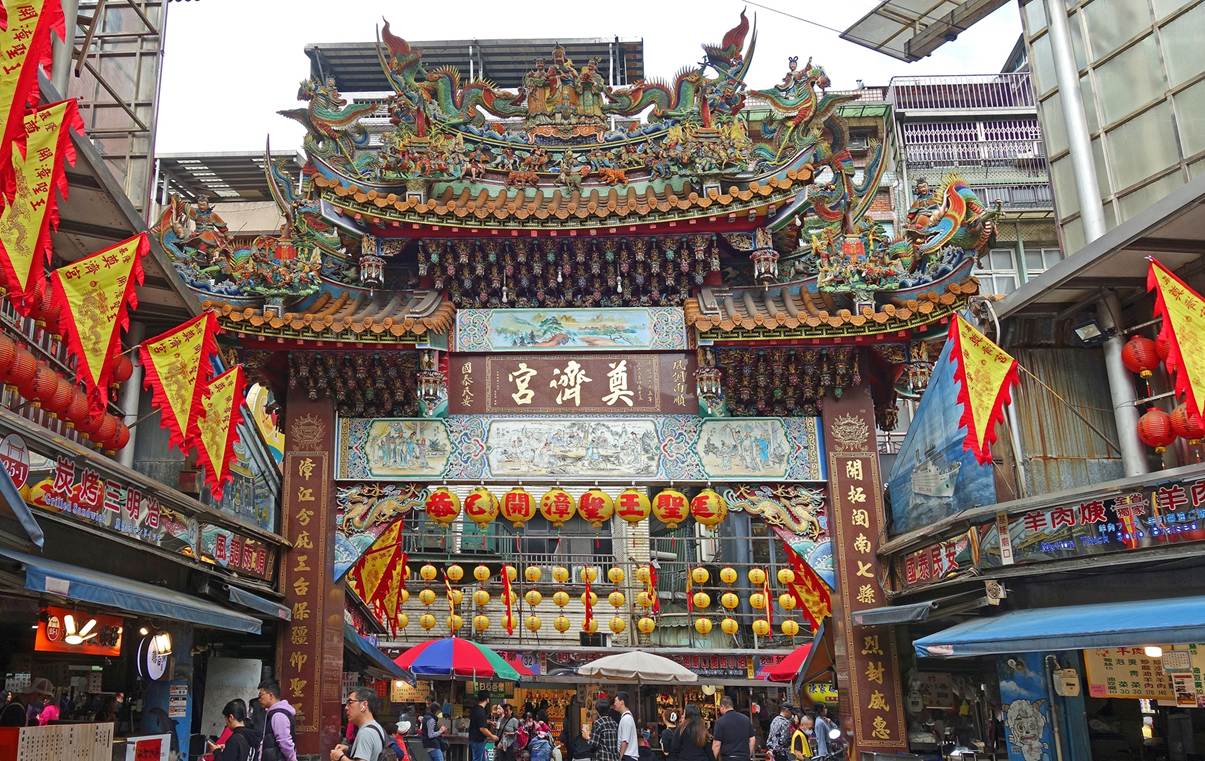
Dianji temple (奠濟宮):
Nestled in the heart of
the Miaoku night market, this Taoist temple was originally built in 1875 to
worship Kaizhang Sheng Wang (開漳聖王), the deified version of Chen Yuanguang (陳元光) (657-711), a highly revered seventh-century
Tang dynasty general and statesman who brought stability to the Zhangzhou
region in Fujian, China. The temple was damaged by ammunition explosions during
the Sino-French war of 1884-1885 and the subsequent Japanese takeover in 1895.
It was repaired in 1899, but it later fell back in disrepair. A renovation
completed in 1923 expanded the temple with a new main hall, which was destroyed
in 1940 by Allied bombing. Reconstruction started in 1957 and was completed in
1964. It underwent another renovation in the early 2000s.
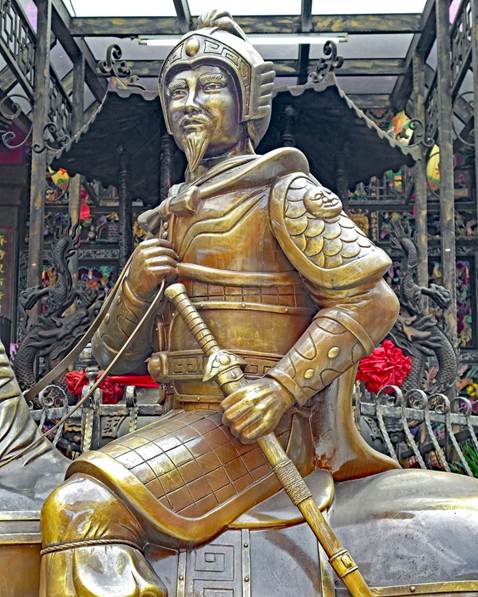
- Left: Archway marking
the entrance into the temple grounds from the Miaoku market.
- Right: Equestrian
statue of General Chen Yuanguang.
|
|
|

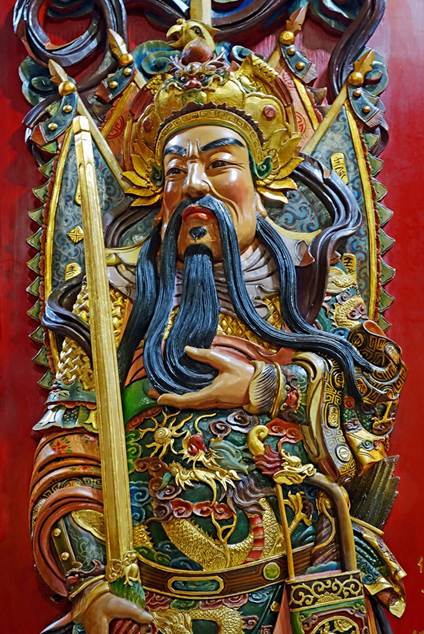
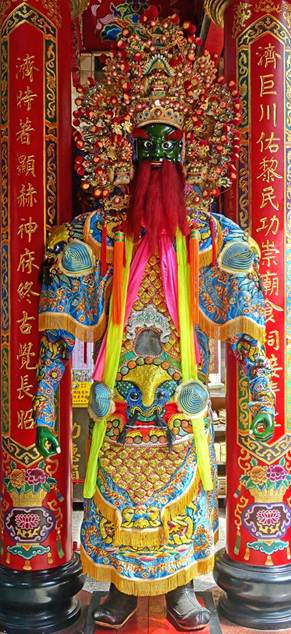
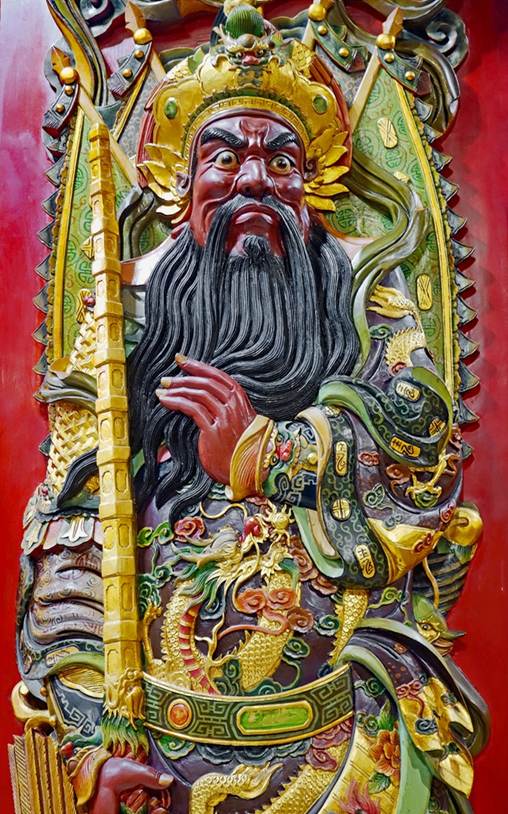
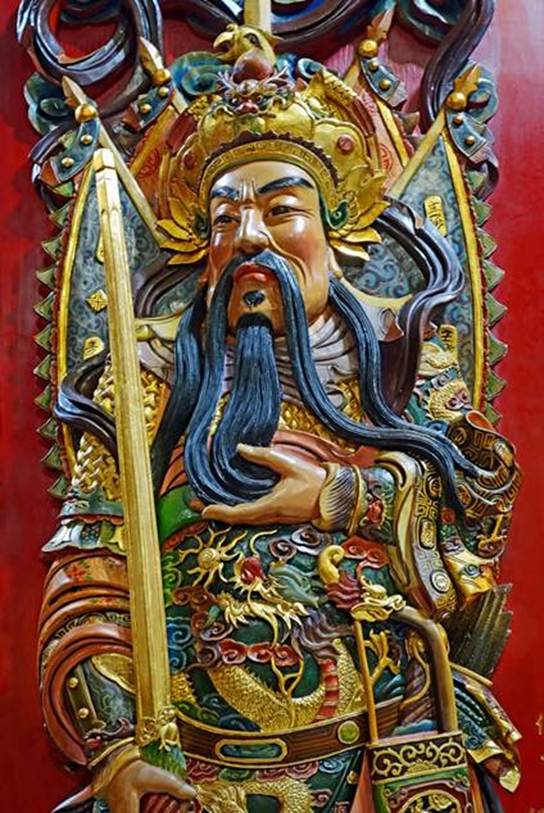
- Left two photos:
Carvings of deified generals (門神, ″door gods″) on doors of the temple. These generals are
believed to protect the temple against the intrusion of evil spirits.
- Right two photos:
Hollow effigies worn by individuals during street parades and temple festivals to
clear the path for the gods. They are called Shen Jiang (神將), meaning ″Divine General″.
Most of the time, they are stored in the temple, where they play a protecting
role like the door gods.
|
|
|
|
|


Large stone statue, carved in high relief, of a dragon protecting the
temple.

View of the main worship
hall, with the altar dedicated to Kaizhang Sheng Wang in the back. The signs
under the seven small statues in the foreground indicate that these statues
represent, from left to right:
- Tudigong (土地公), also known as
Fude Zhengshen (福德正神), the god of Earth and merit,
- Mazu (媽祖), also known as the Holy Mother of
Heaven (天上聖母),
- Guandi (关帝), the deified title of Guan Yu (关羽), a Chinese general (c. 160-220)
renowned for his moral virtues and martial prowess,
- Kaizhang Sheng Wang (開漳聖王),
- Yu the Great (大禹), the chief Water Immortal King, the
legendary tamer of the Great Flood of China,
- Marshal Tian Du (田都元帥), a highly revered patron deity of
music, theater, and the performing arts,
- Zhao Gongming (趙公明), the chief god among the Five-Way Gods
of Wealth (五路財神).

A closer view of the
altar dedicated to Kaizhang Sheng Wang.

Another view of the altar
dedicated to Kaizhang Sheng Wang, when many incense sticks are burning.

Altar dedicated to Marshal Tian Du (田都元帥), the Taoist god of music, theater, and the performing arts. He
is the deified version of a renowned court musician during the Tianbao era
(742-756) of the Tang Dynasty, named Lei Haiqing (雷海青).
Note: Both Xiqin
Wangye (西秦王爷) [see Tamsui Qingshui
temple (above)] and Marshal
Tian Du serve similar functions as patron deities of the performing arts. But
they have evolved from different sources, one as a prince who established a
music academy, the other as a master musician.


Altar dedicated to the
Honorable Water Immortal Kings (水仙尊王), a group of five deities worshipped as
water and sea deities. The two large statues (one on the altar, the other in front
of the altar) depict the leader of the five deities, Yu the Great (大禹).

Altar dedicated to
Tudigong (土地公), the god of Earth and merit.

Murals in the temple.

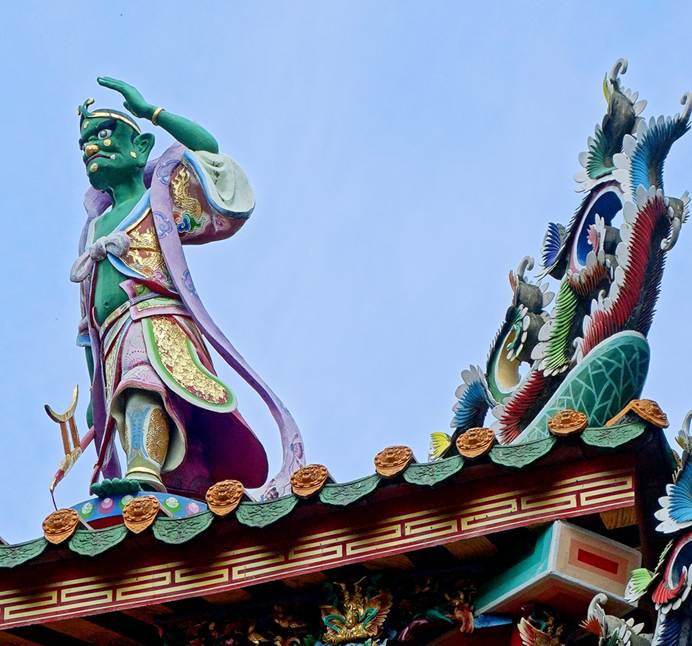
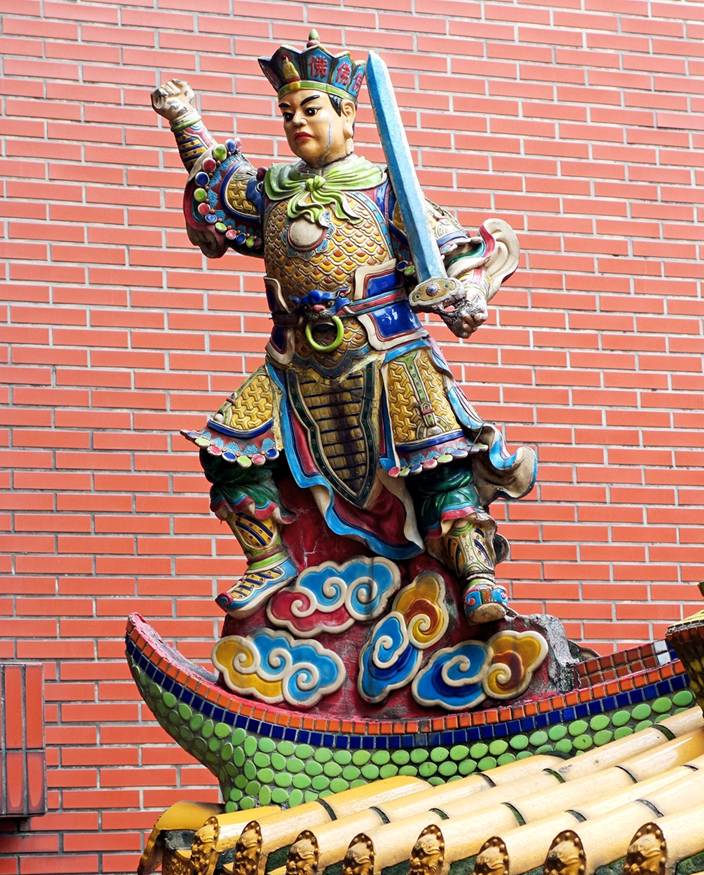
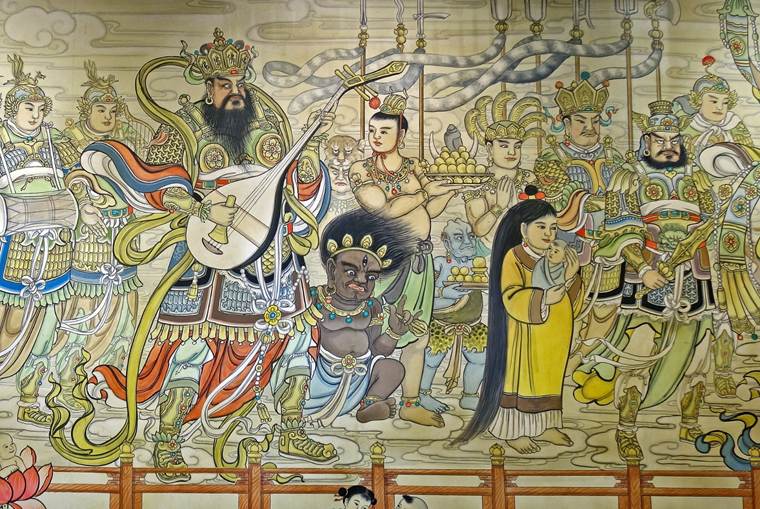
Statues on the roof of
the temple depicting two of the Four Heavenly Kings (四大天王), protectors of the temple. The one on
the left is 增長,
the guardian of the
south. The one on the right is 持國天, the gardian of the east.
|
|
|


Fo Guang Shan Jile temple (佛光山極樂寺):
The original temple, known
as the Guangzun temple, was founded in 1905 during the Japanese occupation
period. After being taken over by the Fo Guang Shan monastic order (founded in
1967 and based in Taiwan), it was rebuilt (and renamed) in 1991.
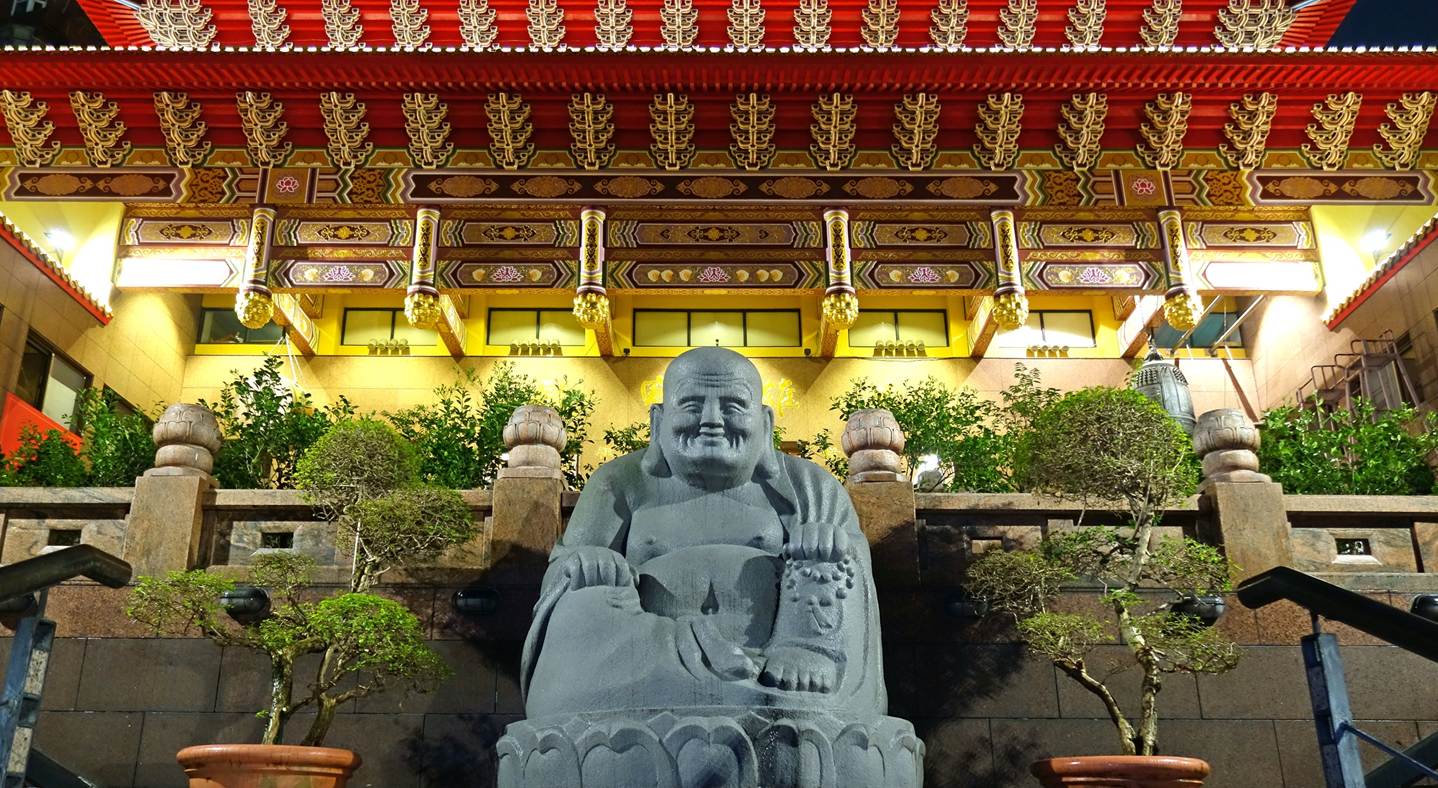
Stone statue at the
entrance of the temple. It depicts the Laughing Buddha, a representation of
Maitreya Buddha (the Future Buddha) that symbolizes happiness, contentment,
and abundance.

Statues of the Buddha and
two bodhisattvas, in the main hall.

Portions of large murals in
the main hall.
|
|
|


Badouzi Dutian temple (八斗子度天宮):
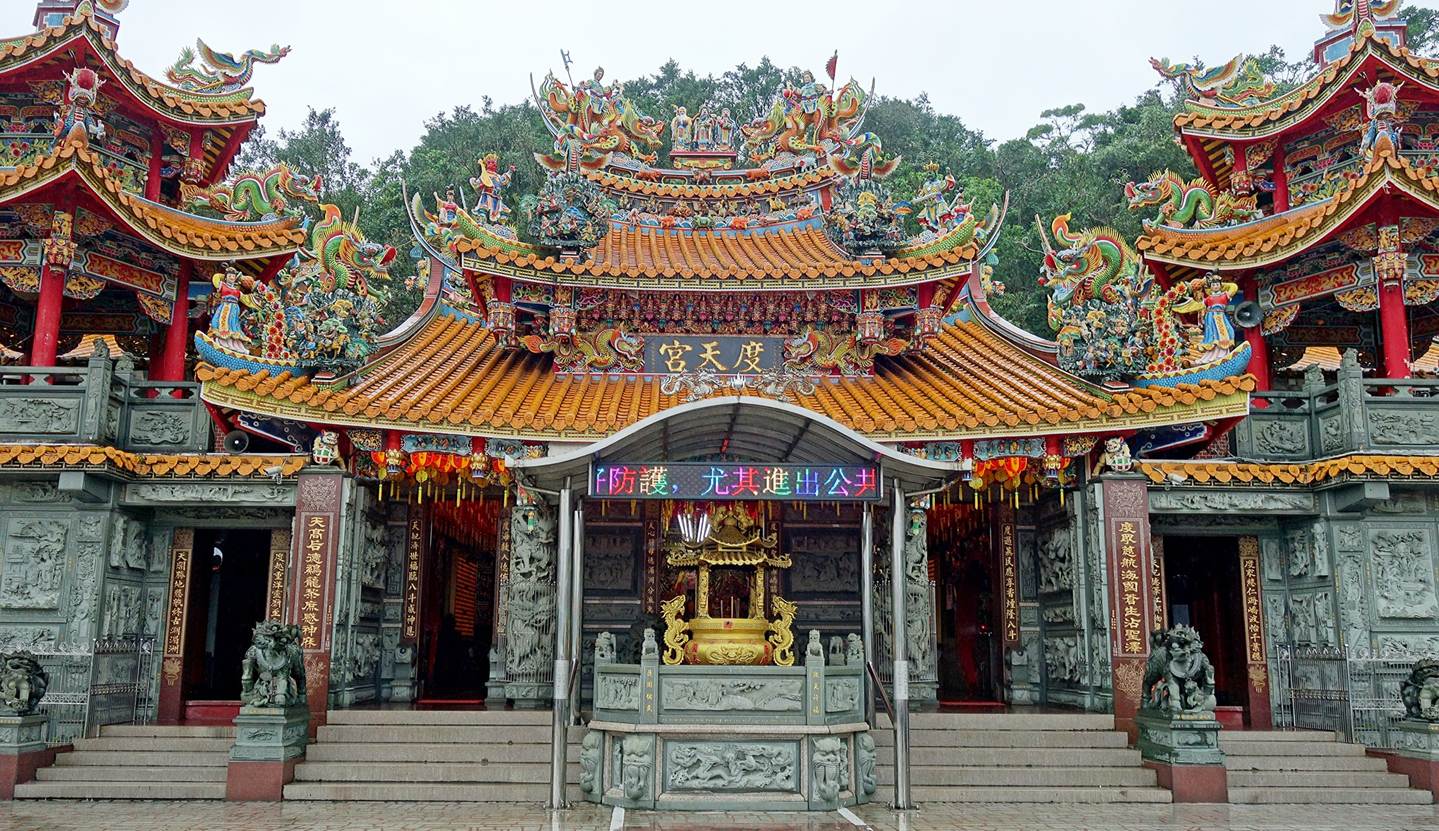
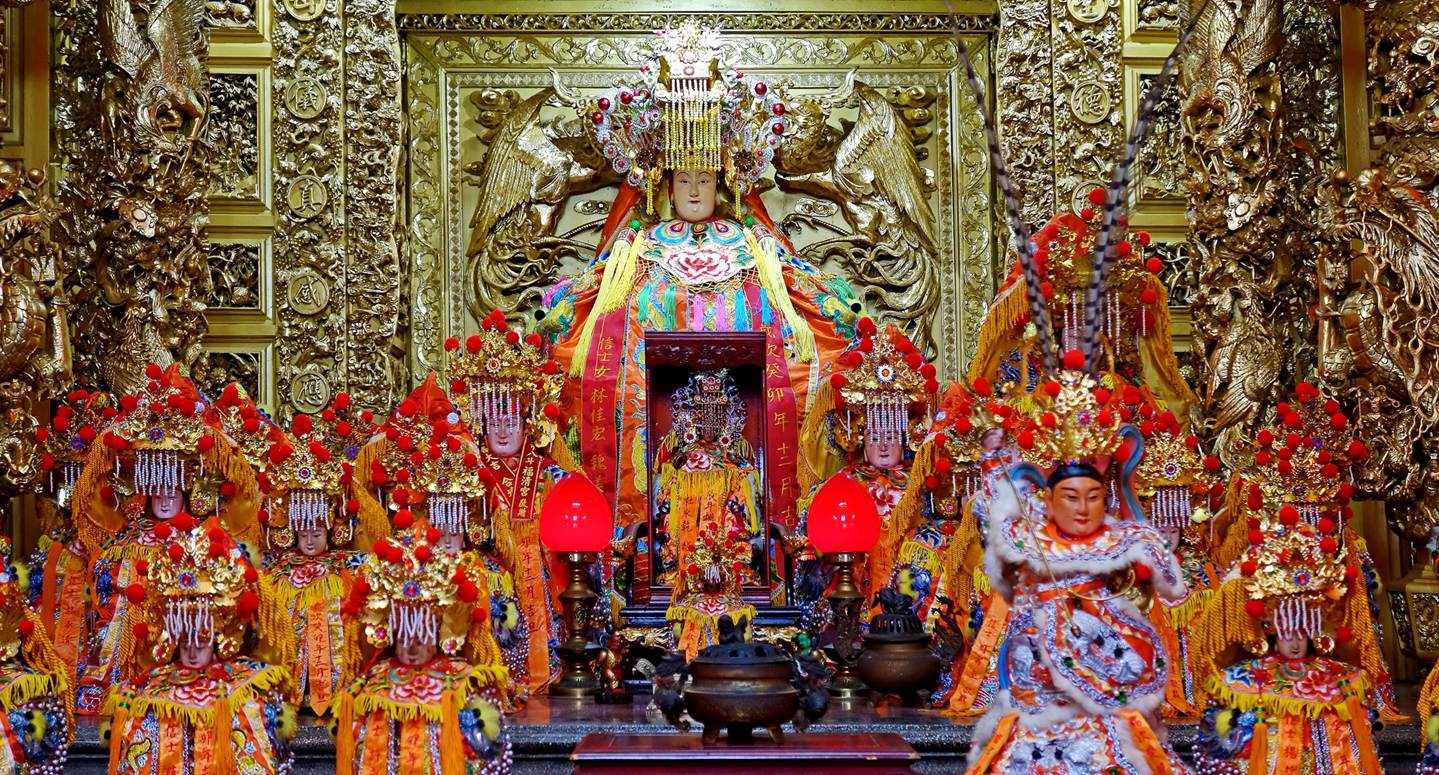
This temple is located
roughly 6km east of Central Keelung. Built on a hillside facing the Badouzi
fishing port, its main deity is Mazu (媽祖), the popular Taoist goddess of the sea and patron deity of sailors and
fishermen.
Facade of the temple.

Close-up of part of the
roof.

Altar dedicated to Mazu.

Altar
dedicated to Guan Sheng Di Jun (關聖帝君). More commonly called Guandi (关帝, ″Emperor
Guan″), he is the deified version of Guan Yu (关羽), a Chinese general (c. 160-220) renowned for his moral virtues
(particularly courage, loyalty and righteousness) and his martial
prowess. Guandi is often worshipped as the god of war, but also as a
powerful protector, in both Taoism and Buddhism. Regarded as a sage of war,
thanks to to his moral qualities, he is sometimes associated with
Confucius, as well as with Wenchang Dijun (文昌帝君), the god of culture and literature.

Altar dedicated to the
Water Immortal Kings (水仙尊王), a group of five deities worshipped as
water and sea deities. The large statue depicts the chief deity of the group,
Yu the Great (大禹).

Altar of the Lord of the
Northern Dipper (北斗星君), Beidou Xingjun, who governs human destiny, lifespan,
and death.

Return to main Taiwan page