[March 2026]

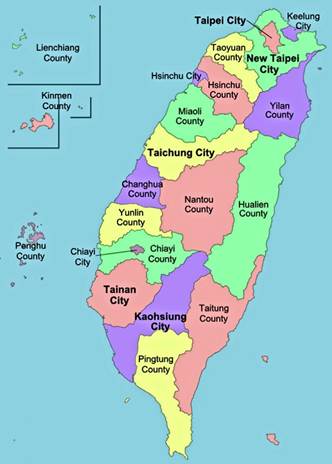
[Source: https://en.wikipedia.org/wiki/Taiwan_Area ]
Pingtung (屏東) is the largest town (approximative pop. 195,000) of the Pingtung County
(屏東縣), the administrative division of Taiwan located to the east of the
Kaohsiung municipality. Jiadong (佳冬) is a small town in the Pingtung County, situated about 30km south of
Pingtung City. This page presents photos I took in those two towns in March
2026.
Pingtung (屏東)
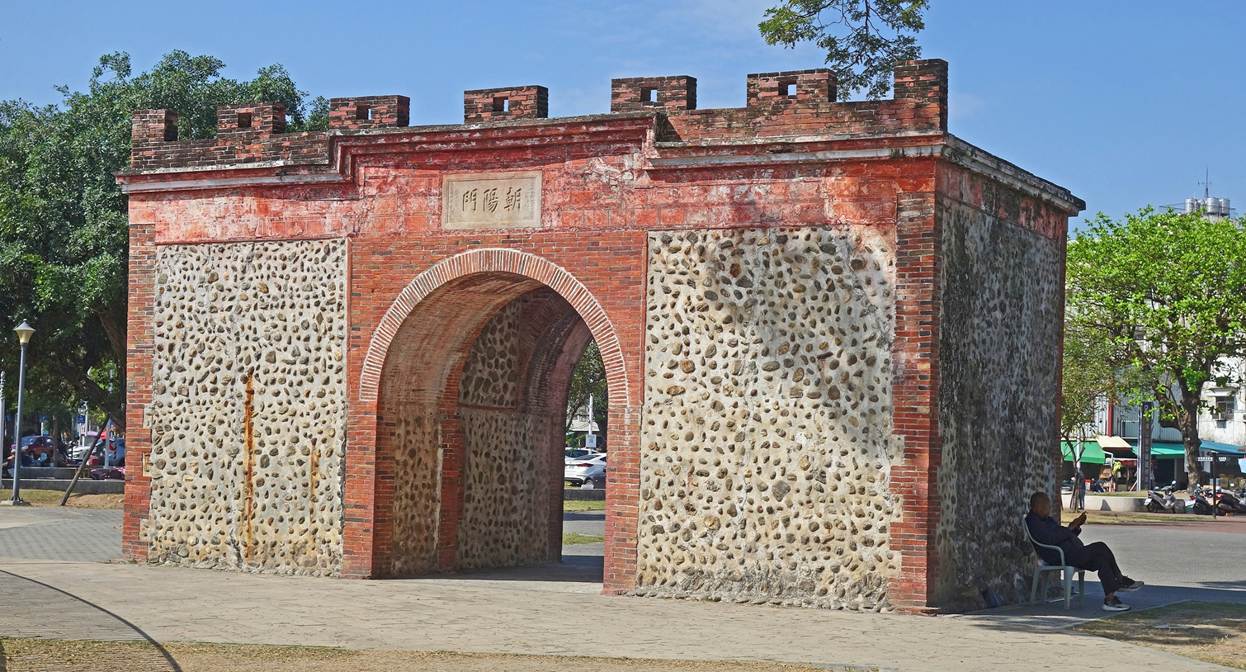
Ahou City East gate (阿猴城東門) and around:
This is the last
remaining gate from the former city called Ahou (阿猴), built during the
Qing Dynasty. The city of Ahou had four gates connected by defensive walls. But
urban remodeling during the Japanese colonial period led to their quasi-total
destruction, leaving only the East gate, which still stands at its original location.
It consists of a red-brick structure with walls made of cobblestones.
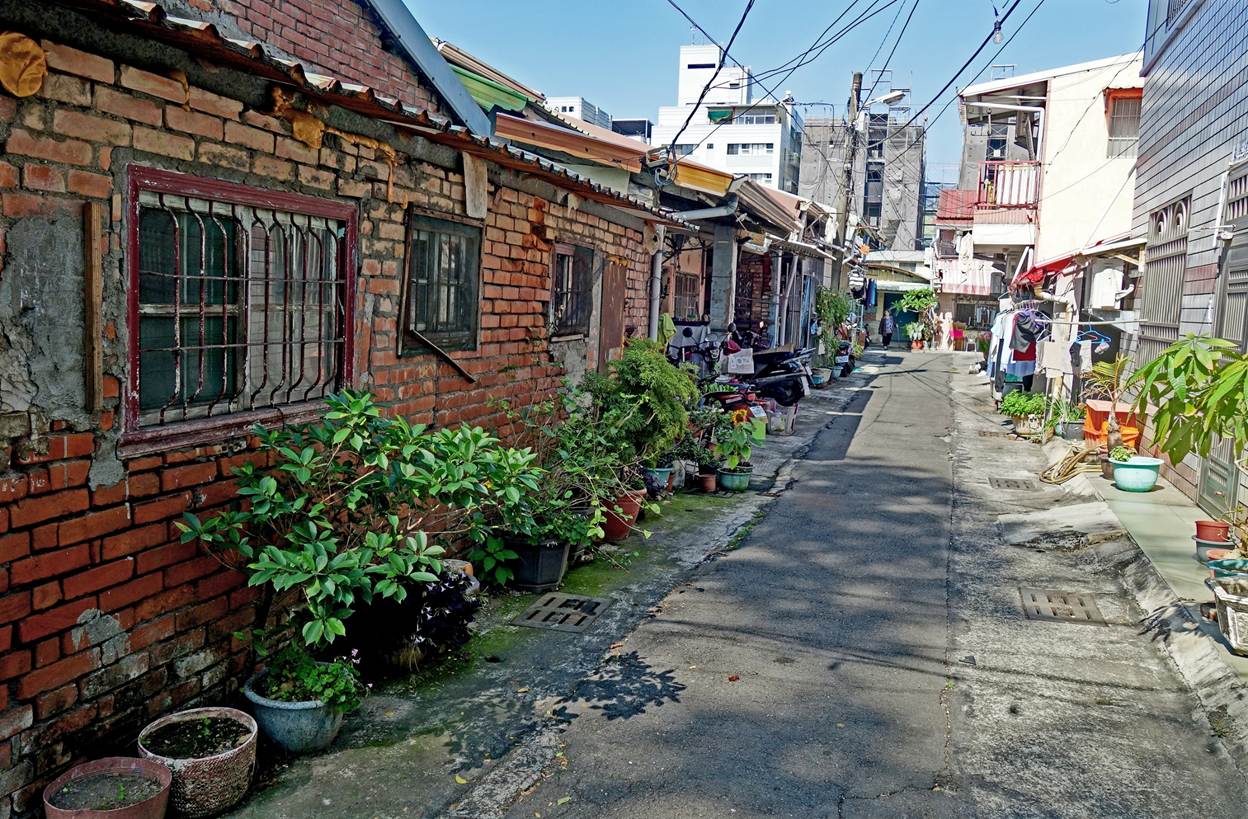
Although Pingtung is a
vibrant modern city, the area around the Ahou City East gate still features
charming quiet village-style streets.
Cifeng temple (屏東慈鳳宮):
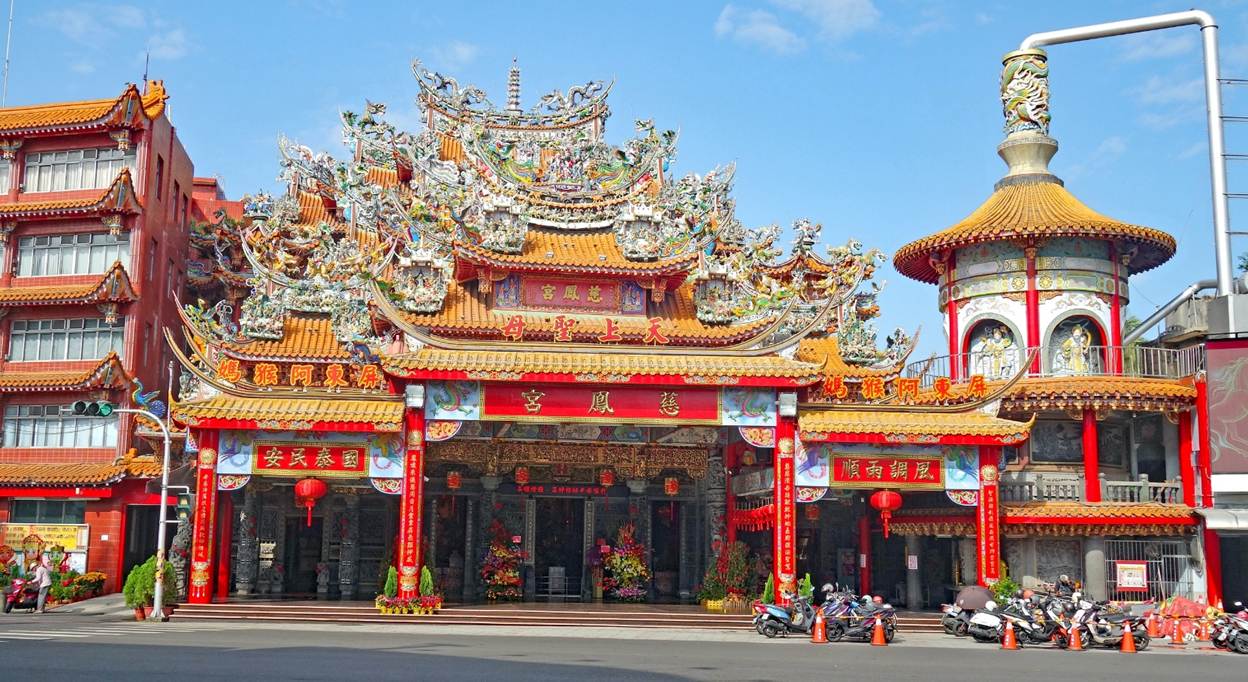
This temple was built
in 1717 when the city was called Ahou, with Mazu (媽祖), the Taoist goddess
of the sea, as its primary deity. So, the temple is also known as the Ahou Mazu
temple. It was reconstructed in 1825. Renovations and additions were made more
recently. In 1983, fire destroyed the front and rear halls. They were rebuilt
in 2002.
Facade of the temple.
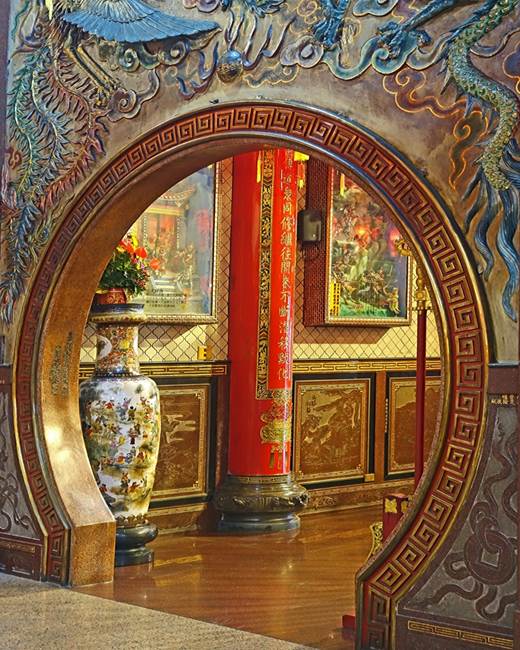
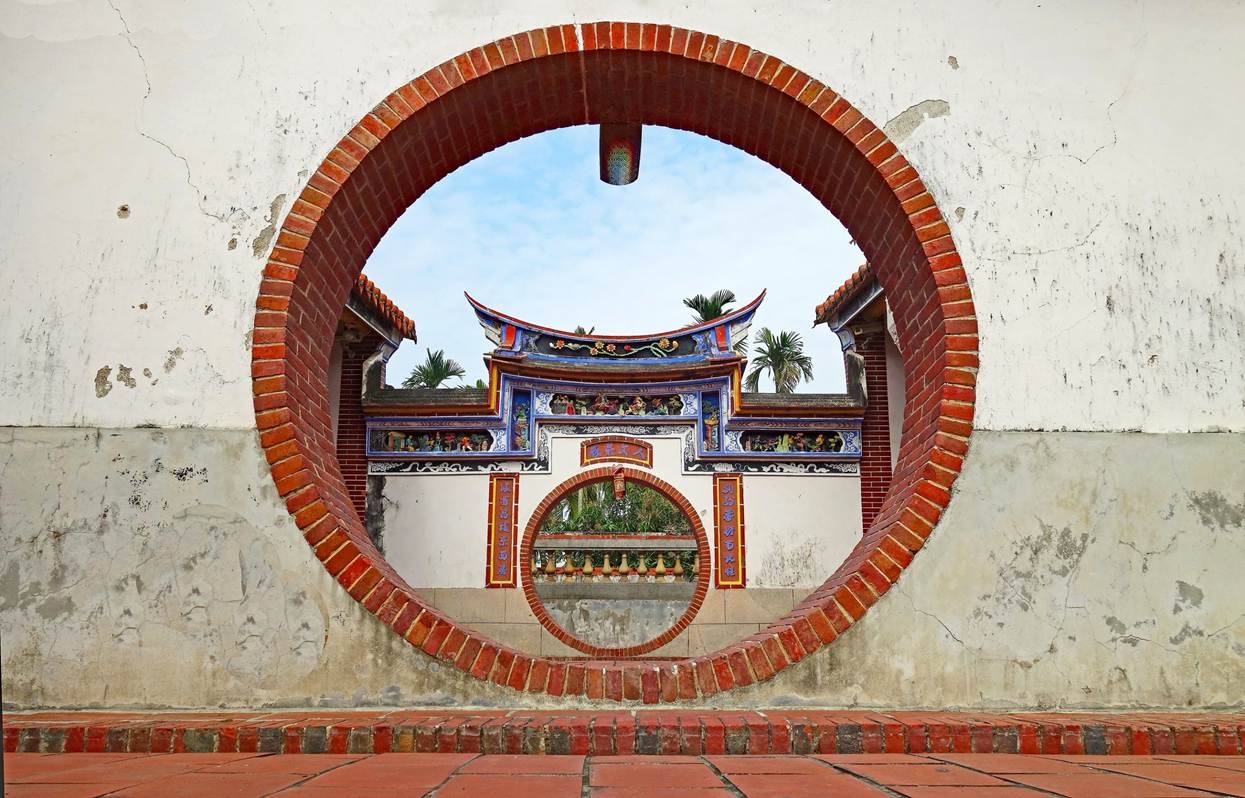
Moon gate and wall
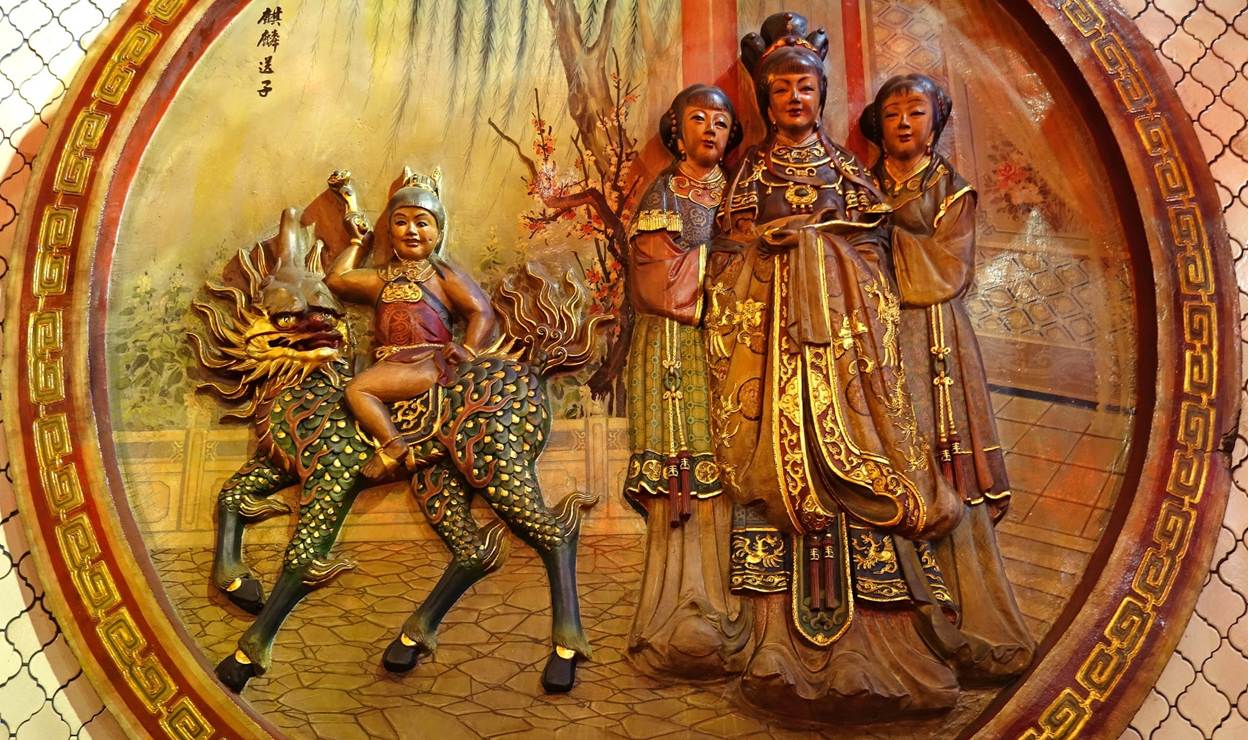
decoration inside the temple. The decoration in the third photo below is a wood
carving illustrating a popular Chinese tale about the blessing of fertility and
successful offspring.
|
|
|
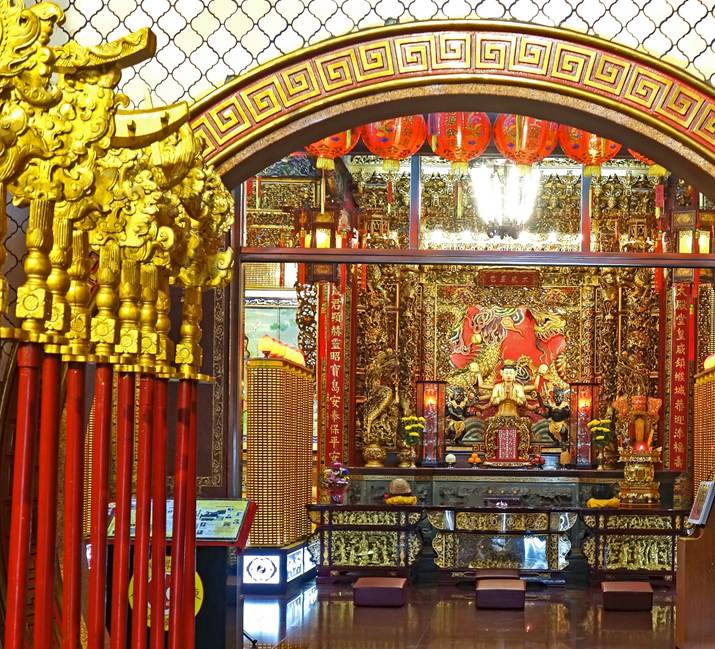
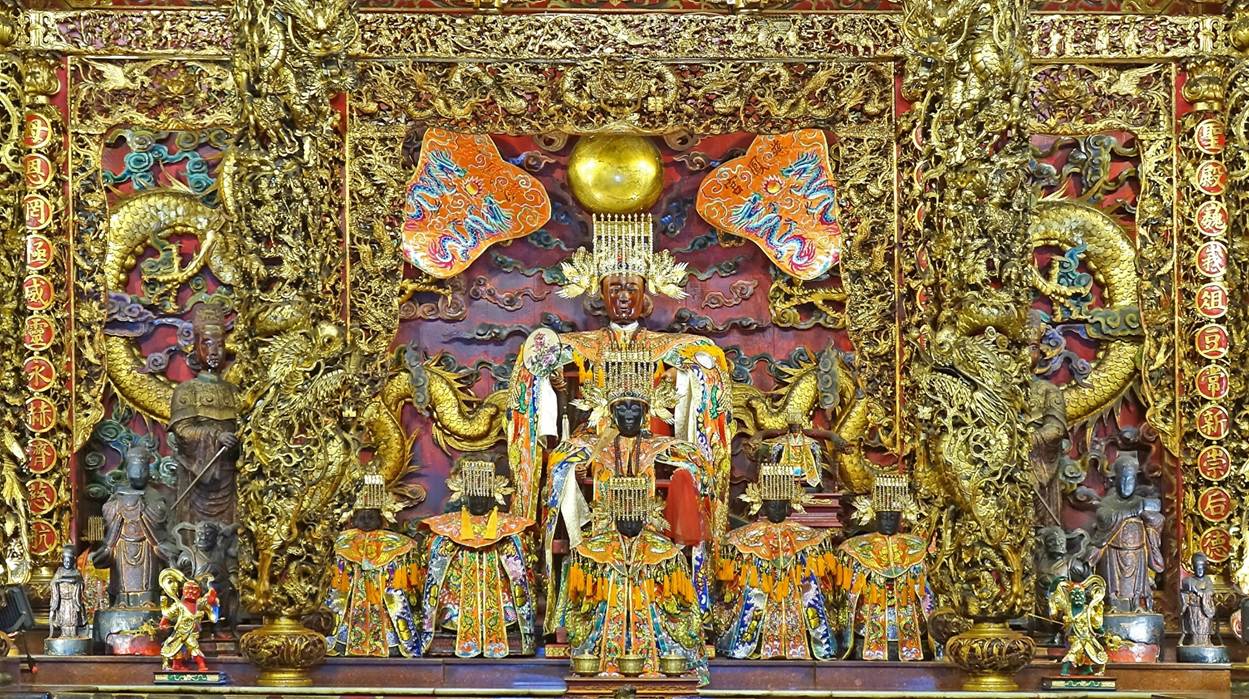
Main altar dedicated to
Mazu.
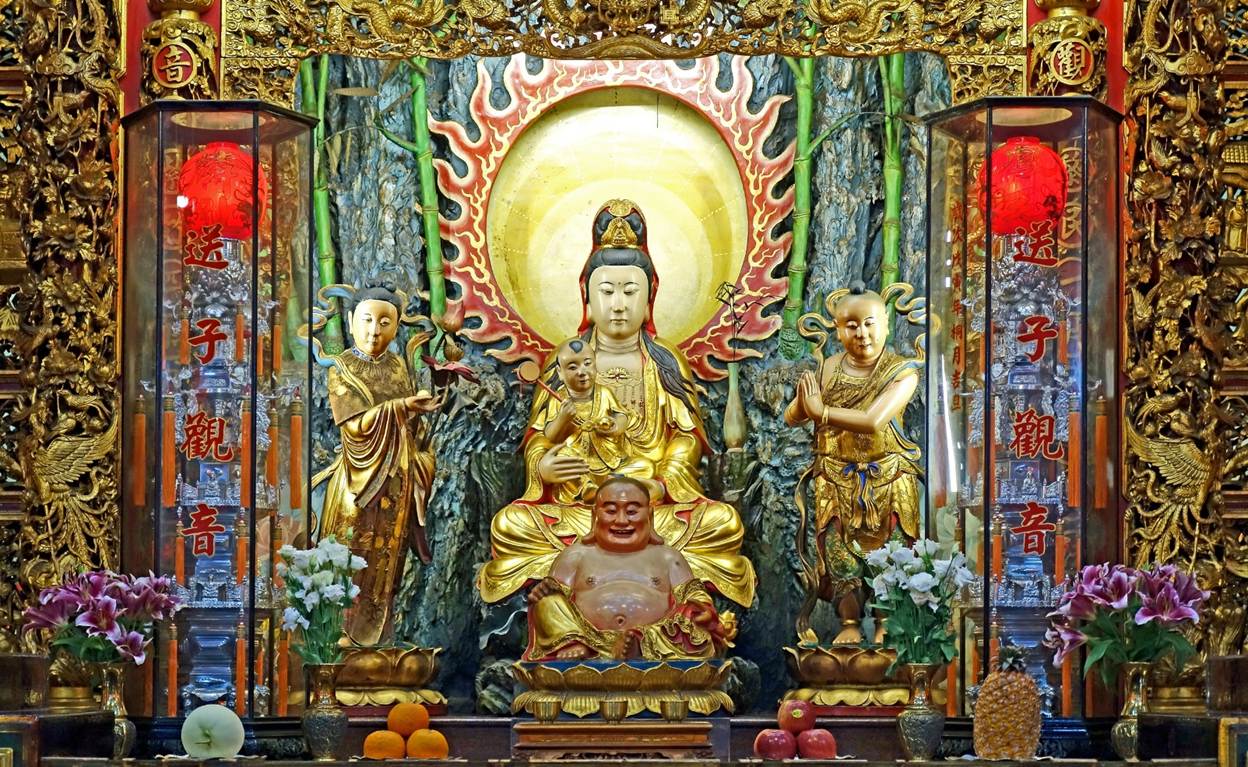
Altar dedicated to
Guanyin (觀音).
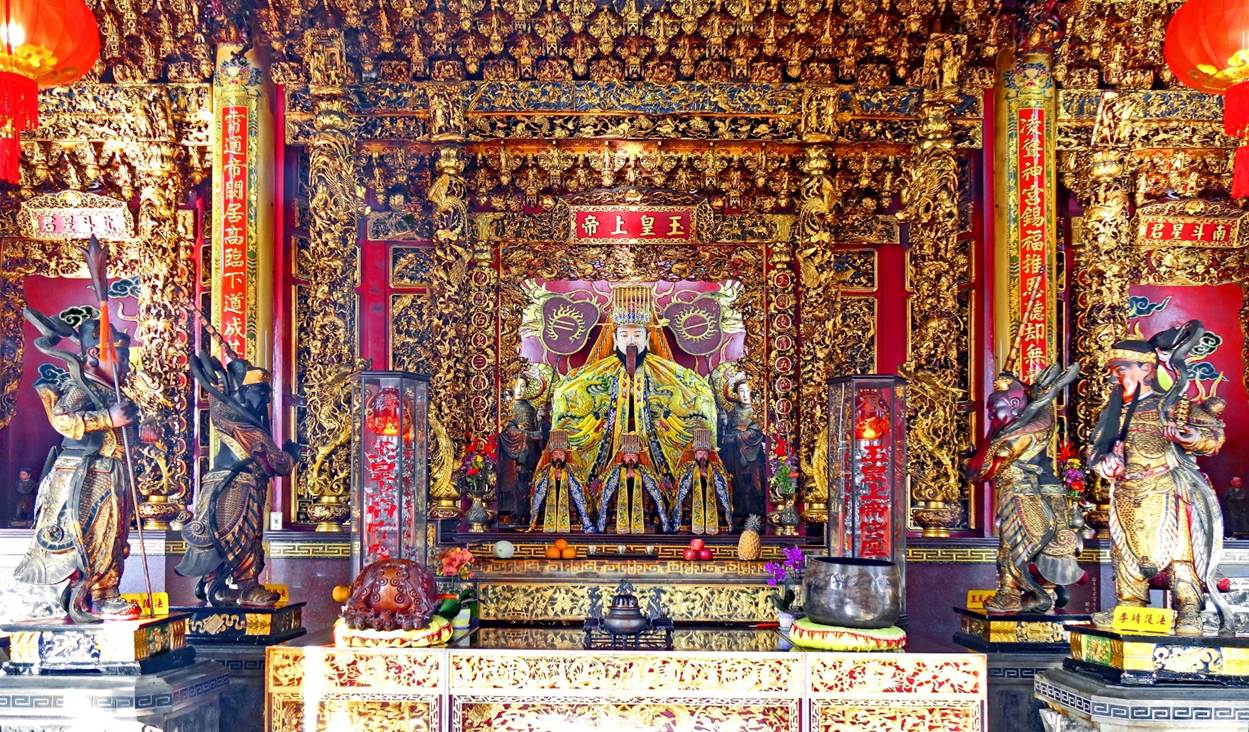
Altar dedicated to the
Jade Emperor (玉皇上帝).
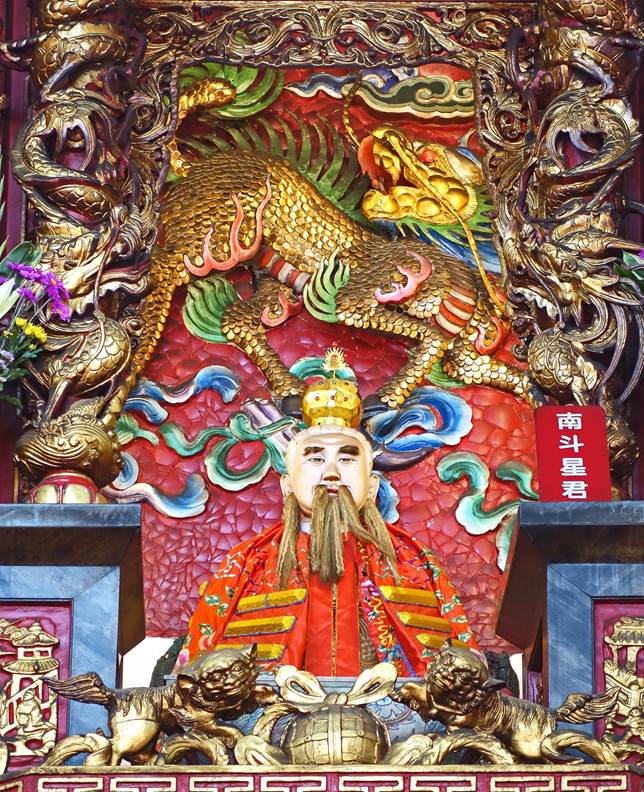
The Lord of the
Southern Dipper (南斗星君), on the left, and the
Lord of the Northern Dipper (北斗星君), on the right. They are respectively believed to govern life and death.
|
|
|
- Left: Tudigong (土地公), also known as
Fude Zhengshen (福德正神), the highly
approachable god of Earth and merit, often acting as a spiritual bridge between
people and higher-ranking deities.
- Right: The Venerable
Lord of the Realm (境主尊王, ″Jingzhu zunwang″), the local tutelary deity of
the temple's district (roughly speaking, a sort of divine mayor).
|
|
|
Hall of Light (光明殿). Believers sponsor
these lamps to have their names, birthdays, and specific requests to the
deities written on them.
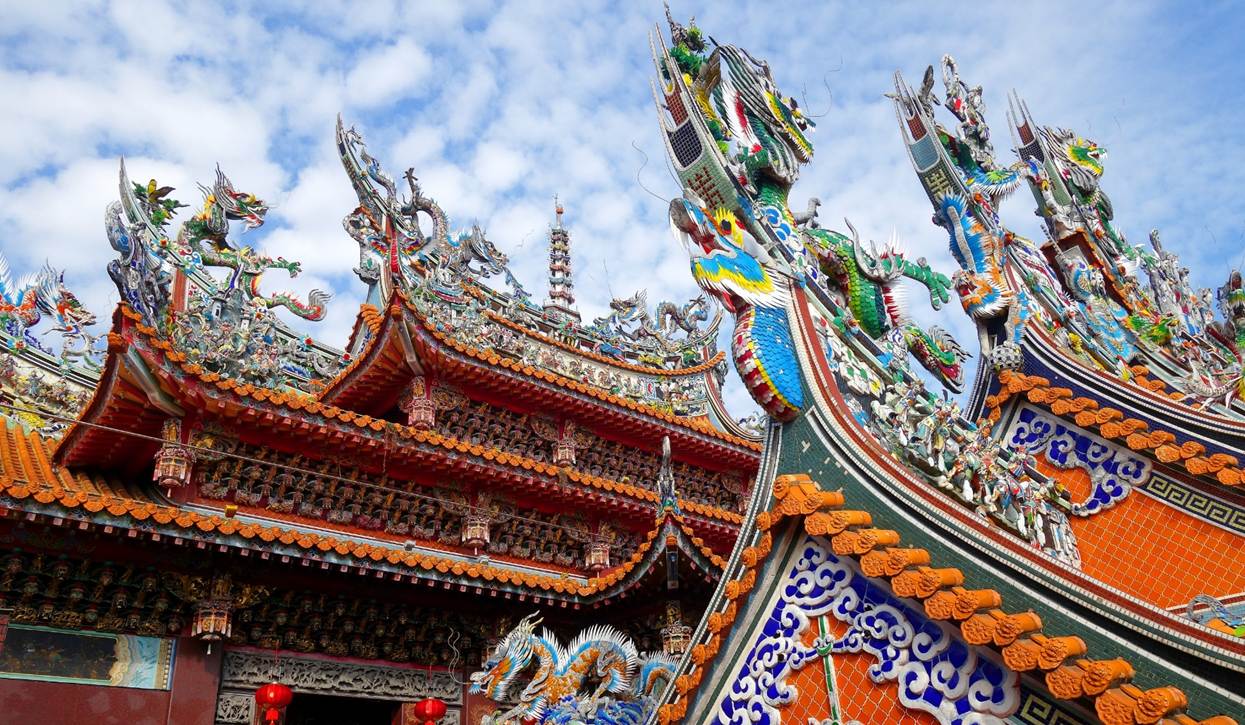
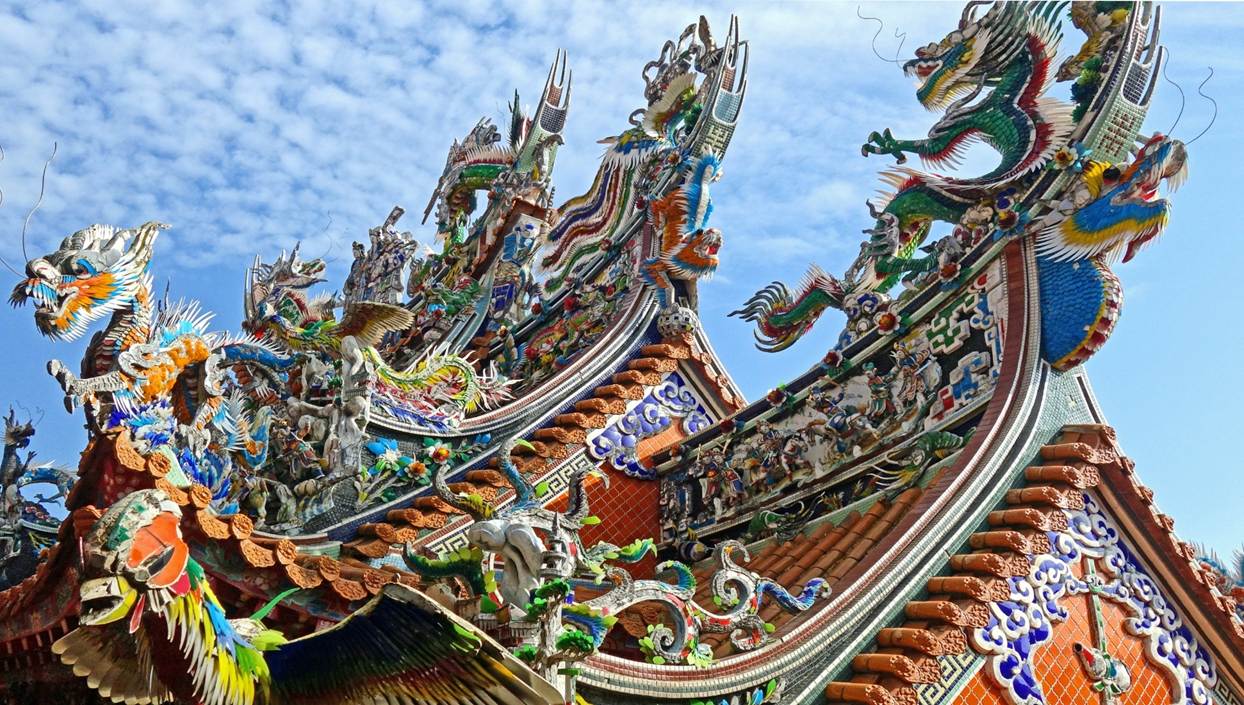
Portions of the roof of
the temple.
Pingtung Confucius Temple (屏東孔廟):
A Confucius Academy
(school) originally built in 1814 at a different location, was subsequently
relocated to the current location of this temple. Over time, the academy
buildings fell into disrepair. However, in 1979, they were fully restored and
repurposed to serve as a Confucius temple. Consequently, this temple has
smaller and less elaborate buildings than most other Confucius temples in
Taiwan. Nevertheless, their layout is similar, with a front hall, a rear hall,
and east and west halls, all in an enclosed courtyard (here the courtyard is
divided into two parts, connected by moon gates). Due to their smaller
dimensions, the contents of the halls are also slightly unusual. In particular,
the front hall, which fulfills a function similar to that of a classical
Dacheng hall, houses only four tablets (see below).
Gate of the temple
opening in the courtyard.
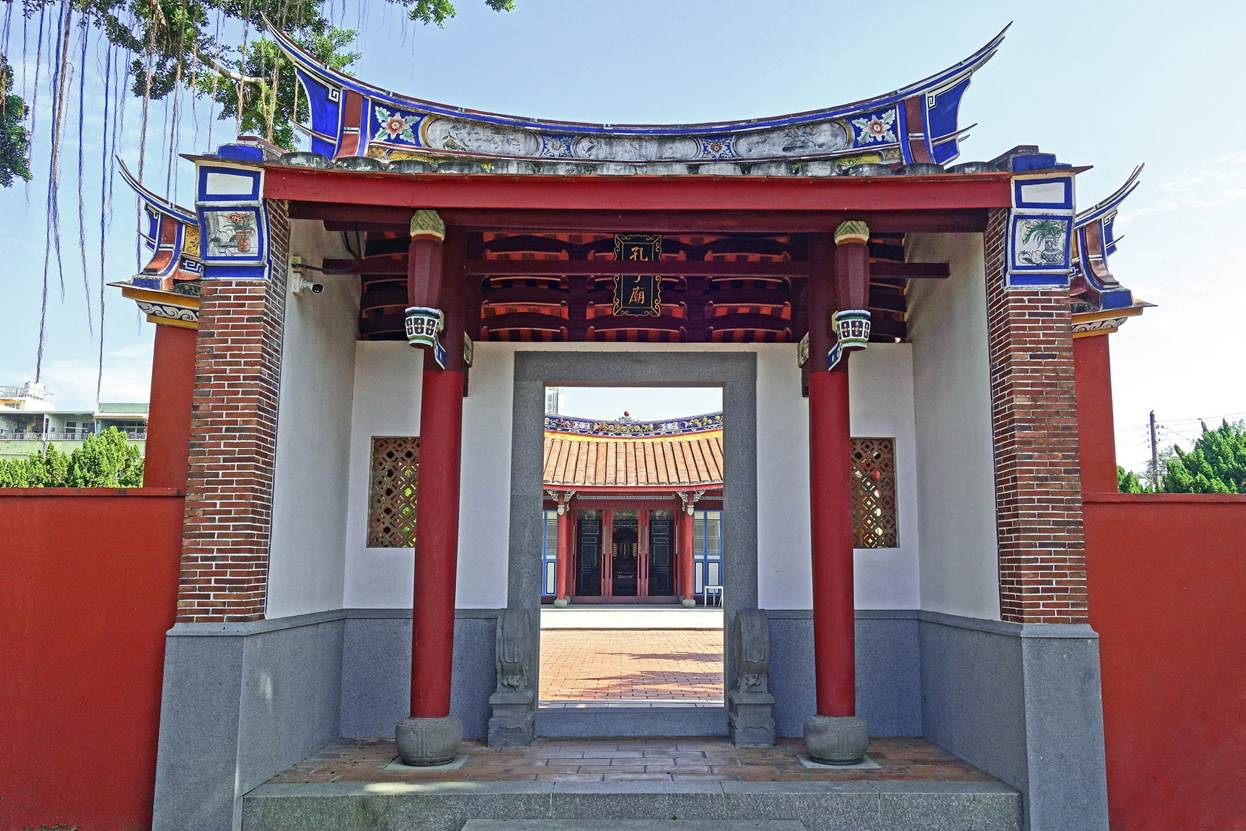
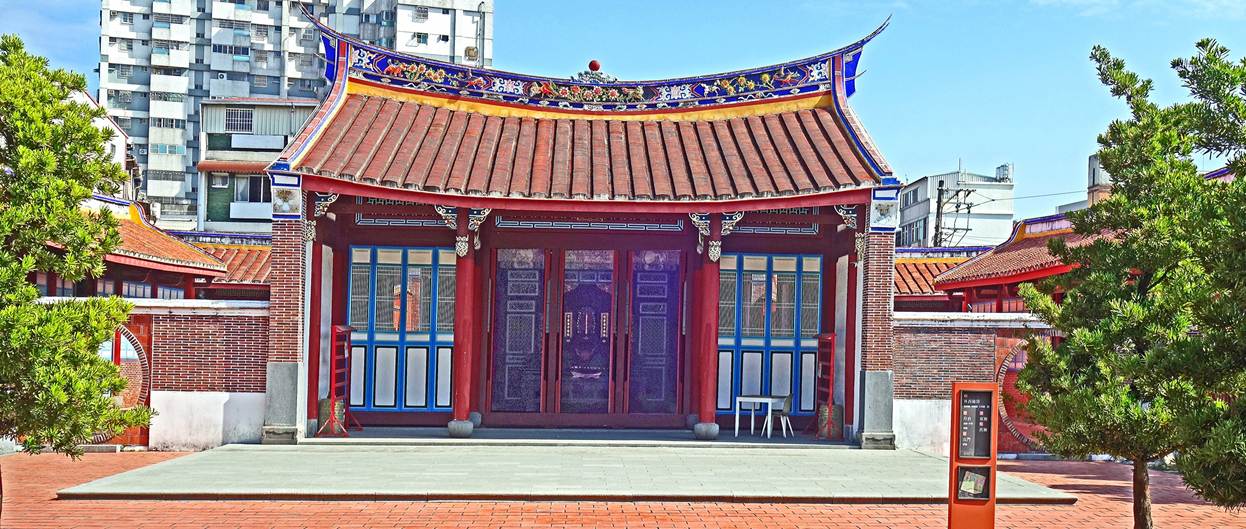
Front hall of the
temple, a much smaller structure than a classical Dacheng hall. Note the two
moon gates on either side of the hall. They give access to the other part of
the courtyard and the rear hall.
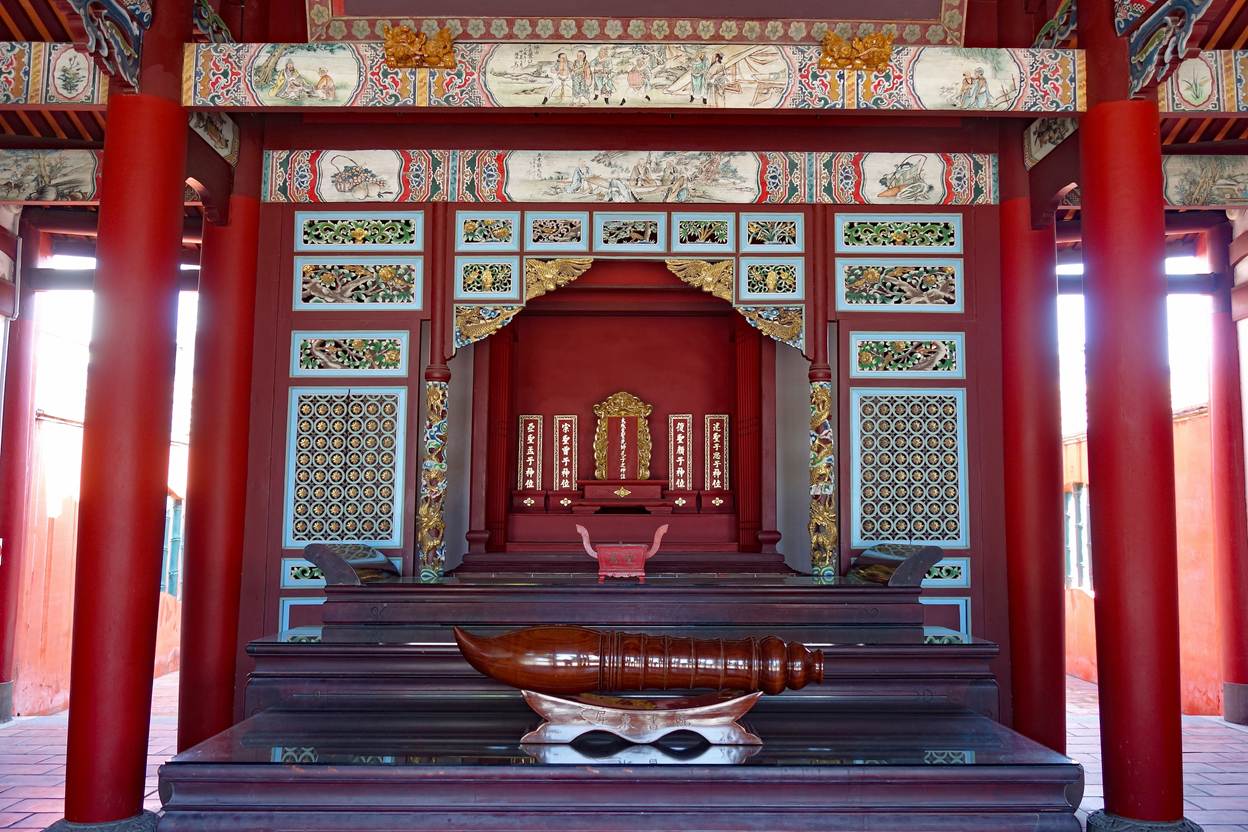
Inside the front hall
are the spirit tablets of Confucius and his four main disciples, the Four Sages
(四配). The tablets of the Twelve Philosophers (十二哲) are housed in the rear hall.
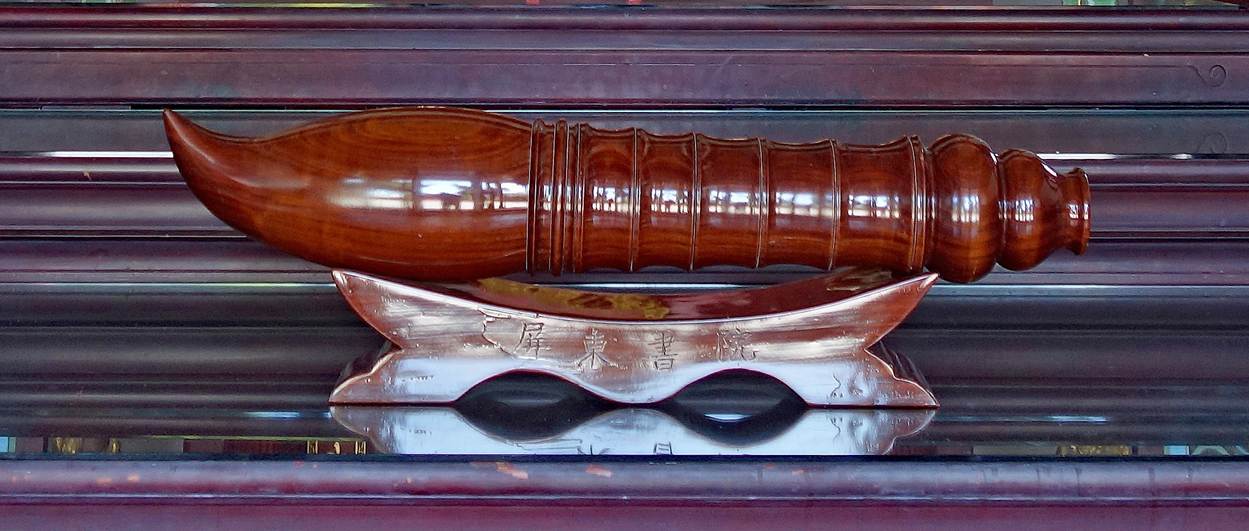
Close-up of the
Wenchang Pen (文昌笔) that sits on the
table facing the five spirit tablets. A symbol of intellectual excellence, this
pen is named after Wenchang Dijun (文昌帝君), the Taoist god of
culture and education. Its presence here serves as a fitting reminder of the
building's former vocation as an academy.
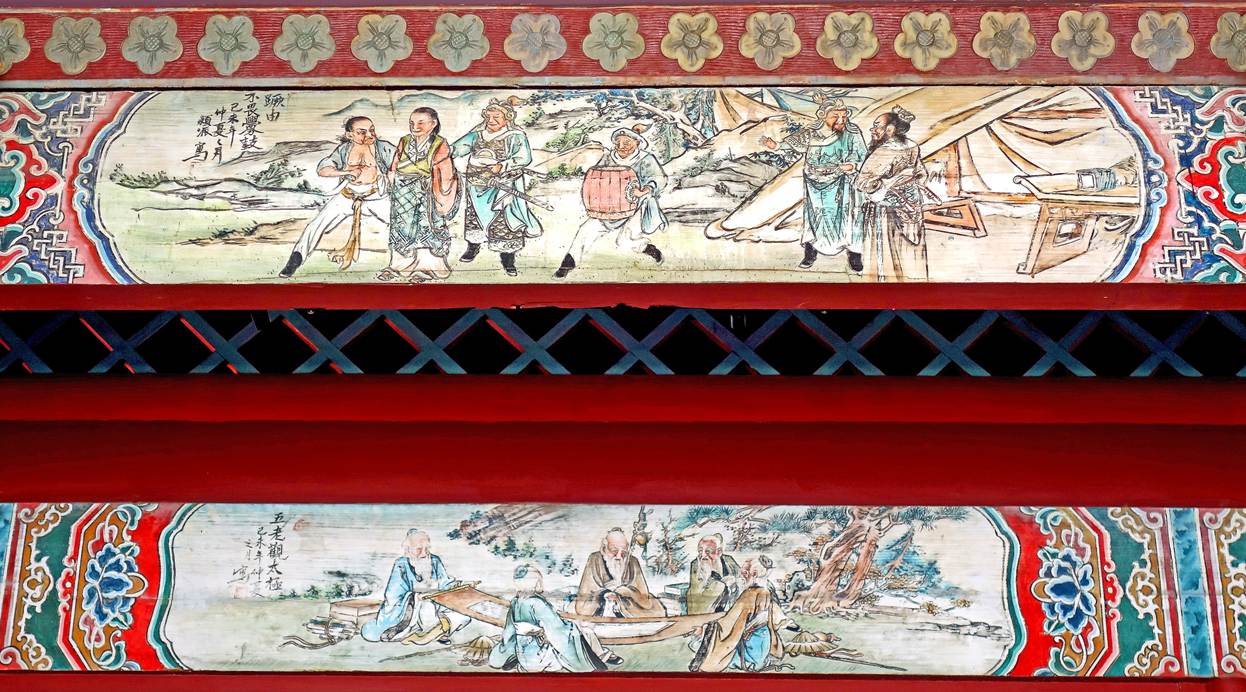
Decorations on beams of
the front hall.
Dongshan temple (東山寺):
Originally built in
1924, this temple is a Buddhist temple belonging to the Japanese Rinzai School
of Zen Buddhism. It enshrines Shakyamuni Buddha (born
Siddhartha Gautama), the historical founder of Buddhism.
Statue of Guanyin riding
an elephant, in the garden facing the temple. It conveys symbols of power,
stability, and wisdom.
|
|
|
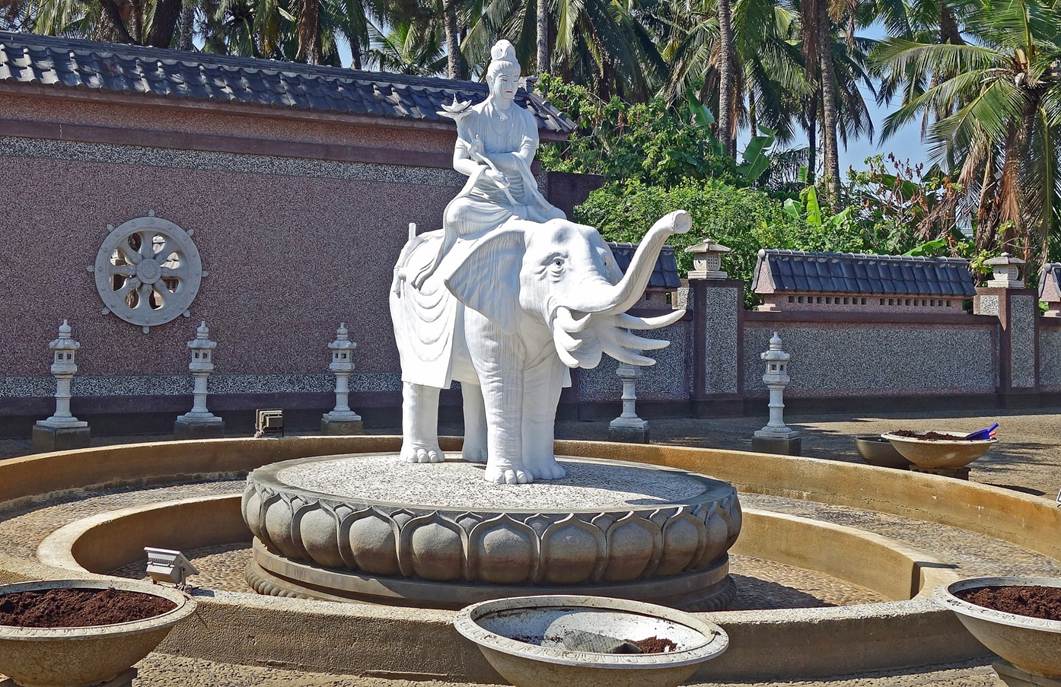
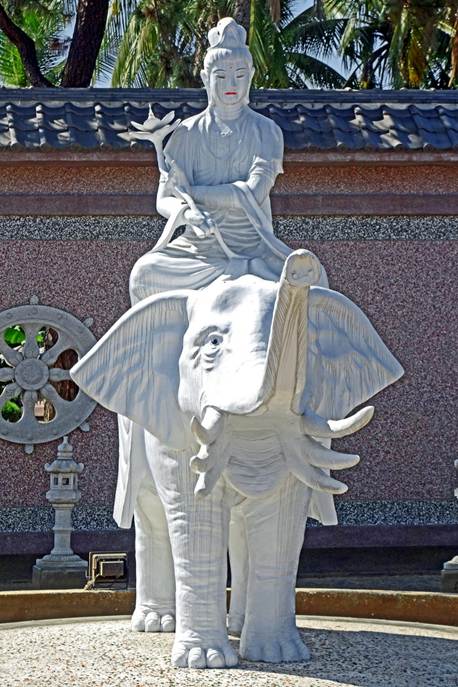
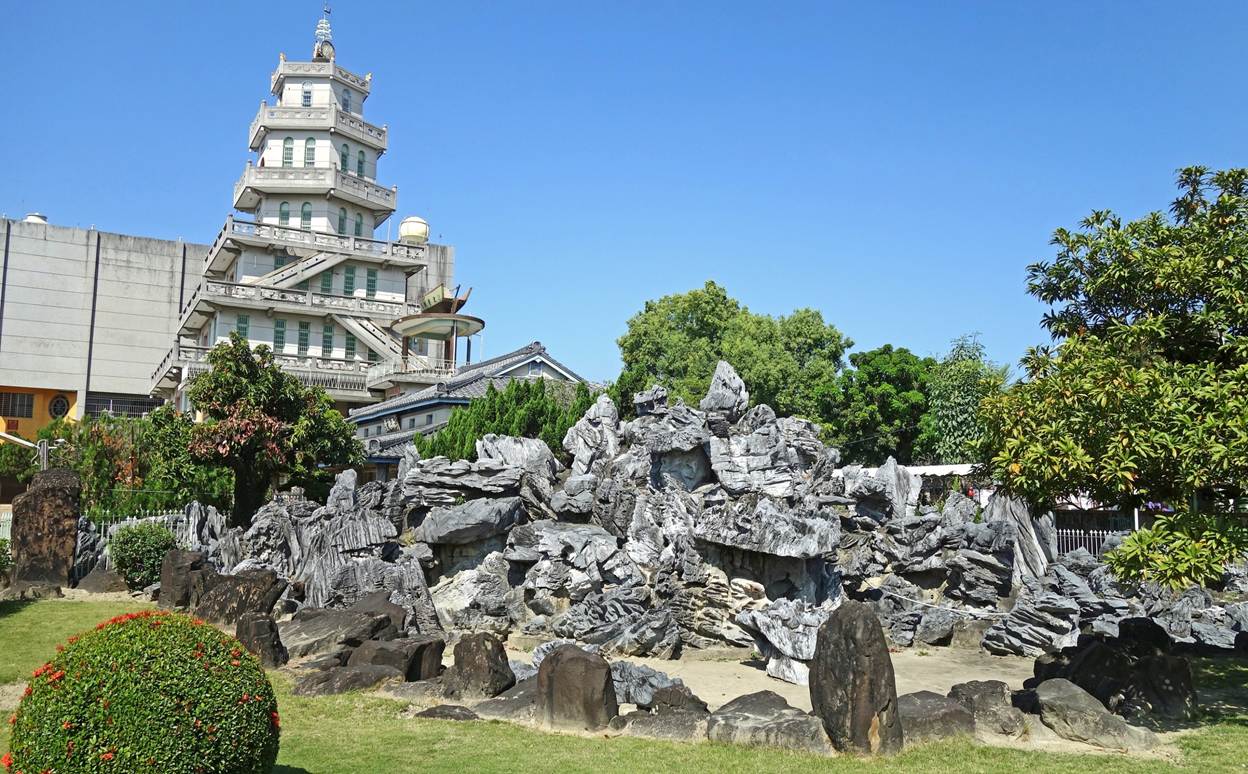
Seven-story pagoda, called the ″Anle
Pagoda
of the Ziyun Mountain″ (紫云山安乐塔), in the temple compound. It was built
in 1970.
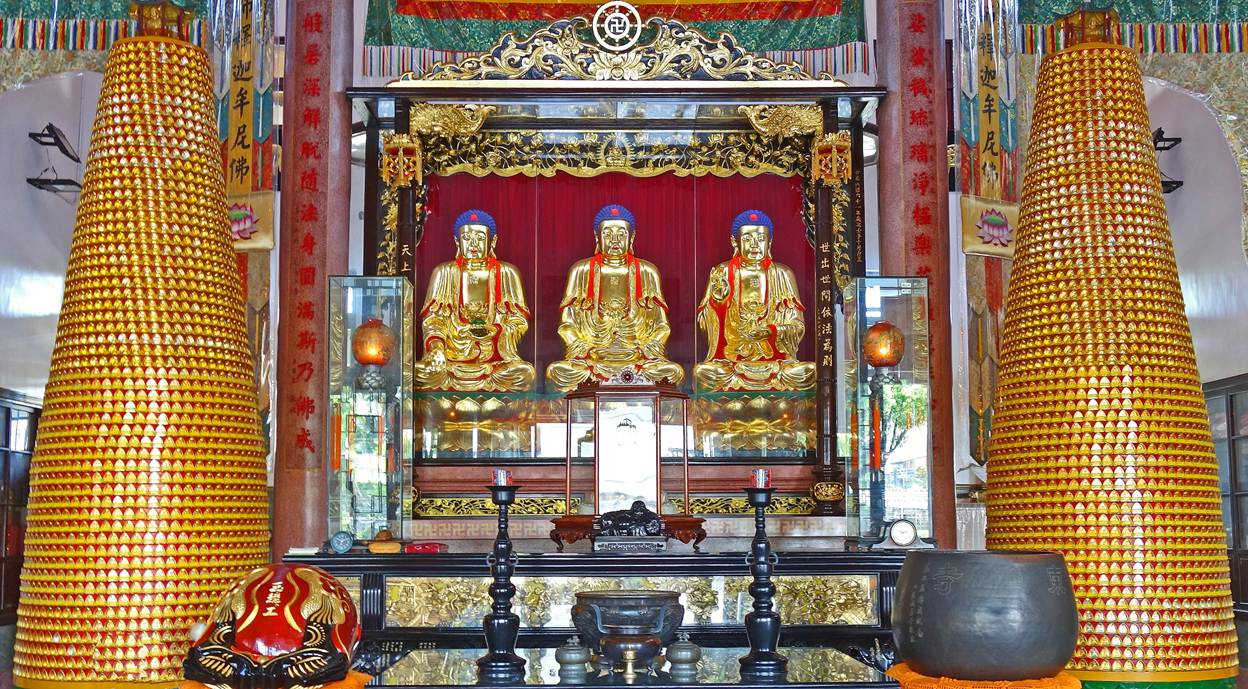
Altar in the main hall.
The three statues represent three manifestations of Buddha called ″The
Three Jewels″.
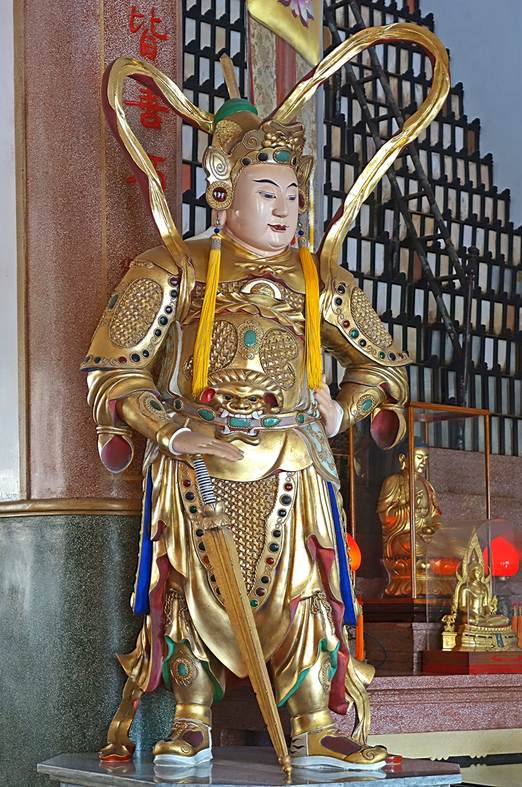
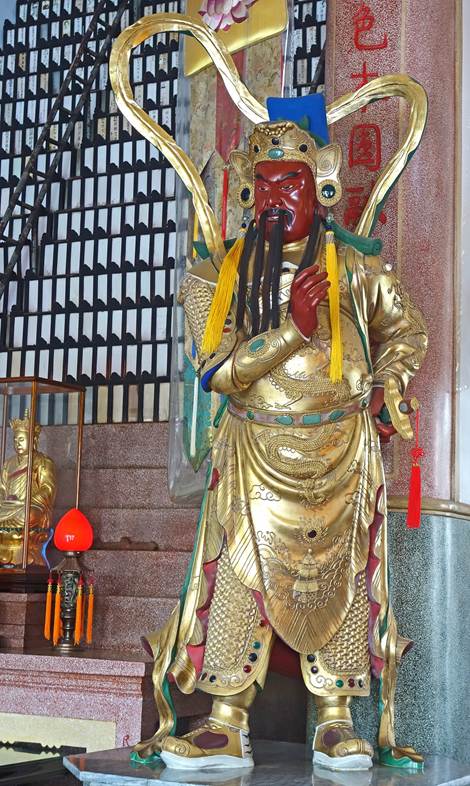
Protective deities of
the Dharma guarding the Buddhas. They represent the Bodhisattva Weituo (韋馱菩薩) on the left and the
Bodhisattva Qielan (关帝) on the right.
|
|
|
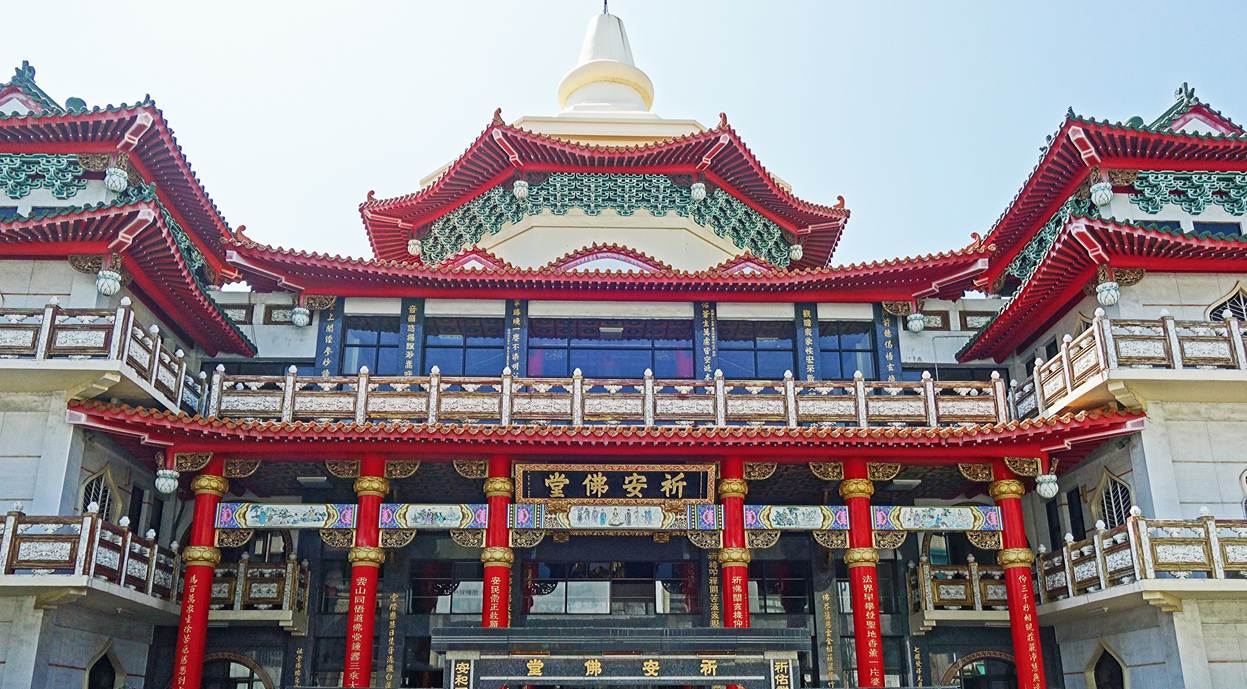
Qi'an
Buddhist temple (祈安佛堂):
Originally built in 1957, it is mainly dedicated to
Guanyin (觀音), the highly popular and much worshipped
bodhisattva of compassion, mercy, and kindness, often called the ″Goddess
of Mercy″.
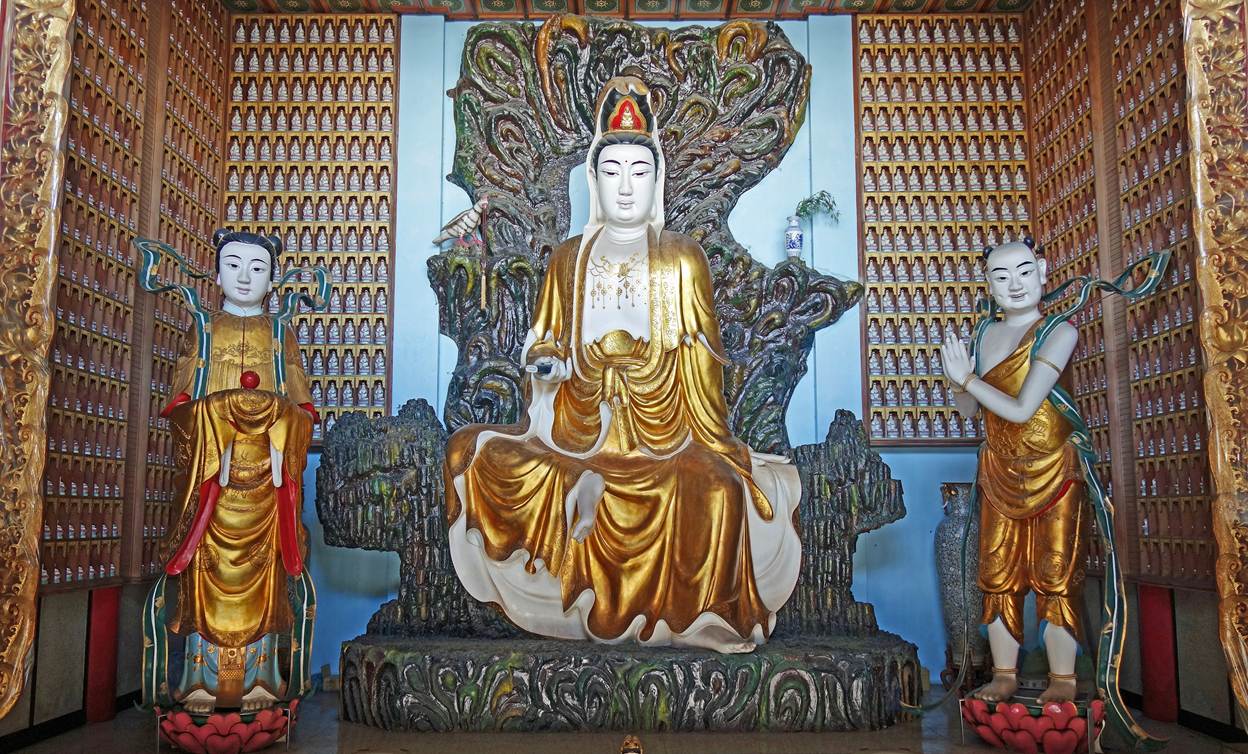
Statue of Guanyin with
her two attendants: Longnu (龍女) on the left and Shancai (善財童子) on the right.
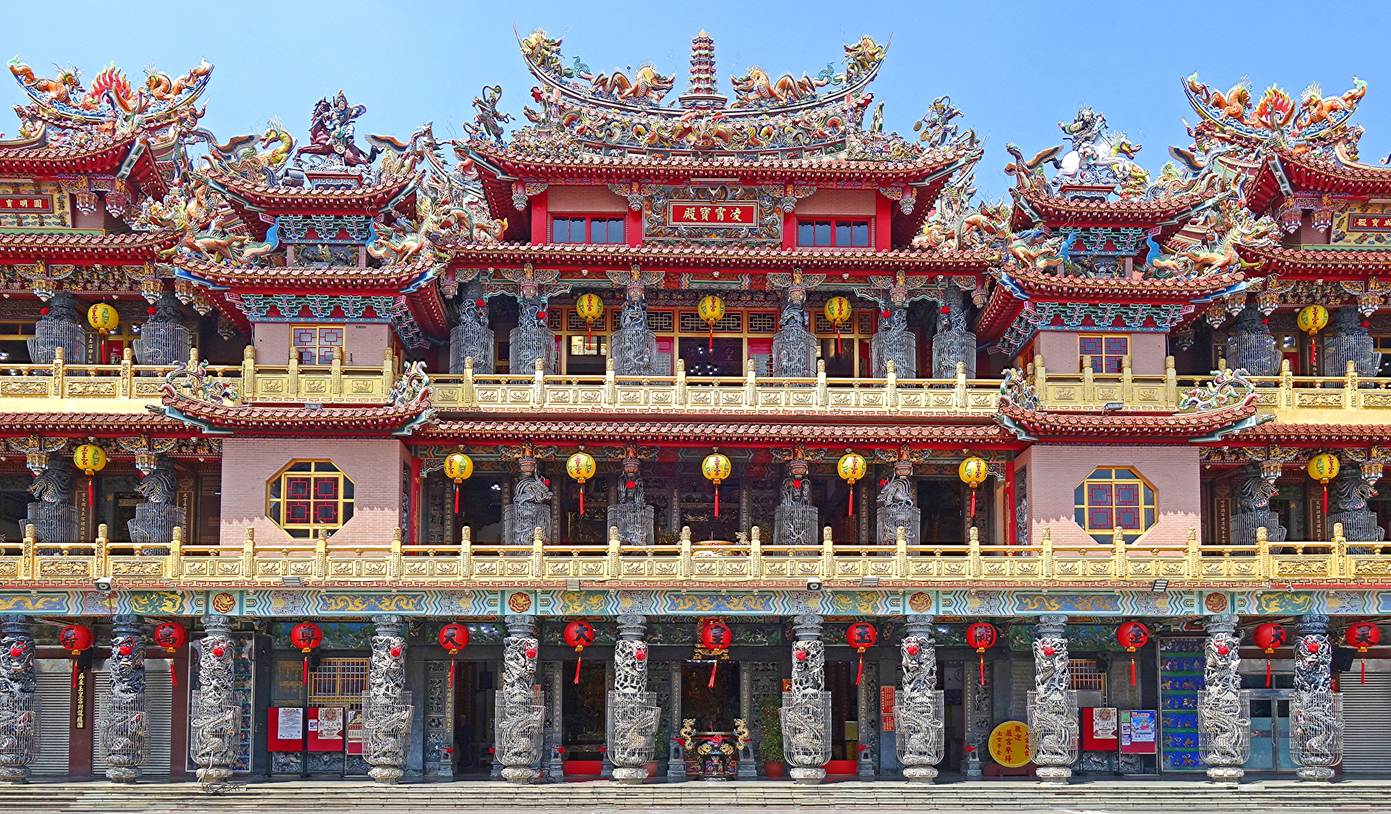
Jade Emperor temple (屏東 玉皇宮 (天公廟)):
This temple was first opened to the public in 1976.
New halls, added between 1993 and 1999, gave it the appearance it retains to
this day. It is a vast three-story temple housing seven major halls, which
enshrine a large number of deities. A striking feature of this temple is the
unusually high number of small, colorful statues of ″minor″
deities, positioned in front of the altars where the statues of the principal
deities stand.
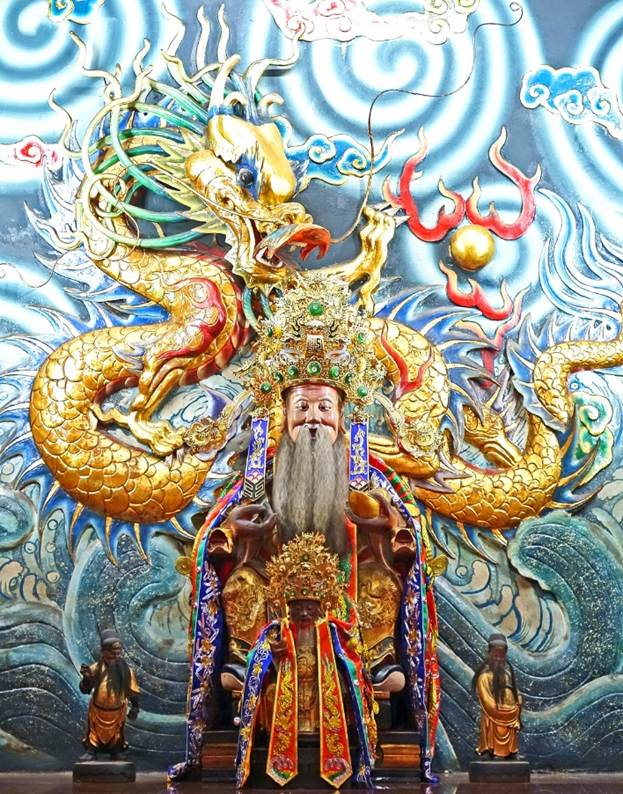
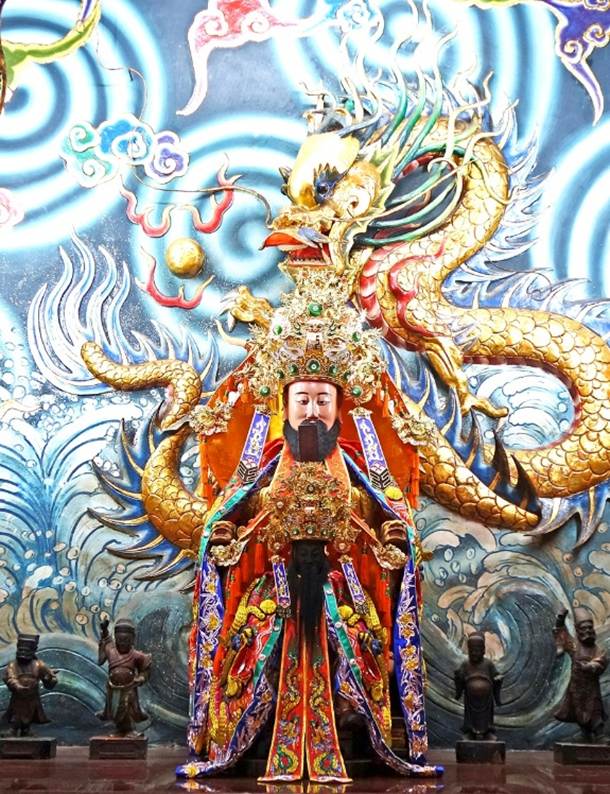
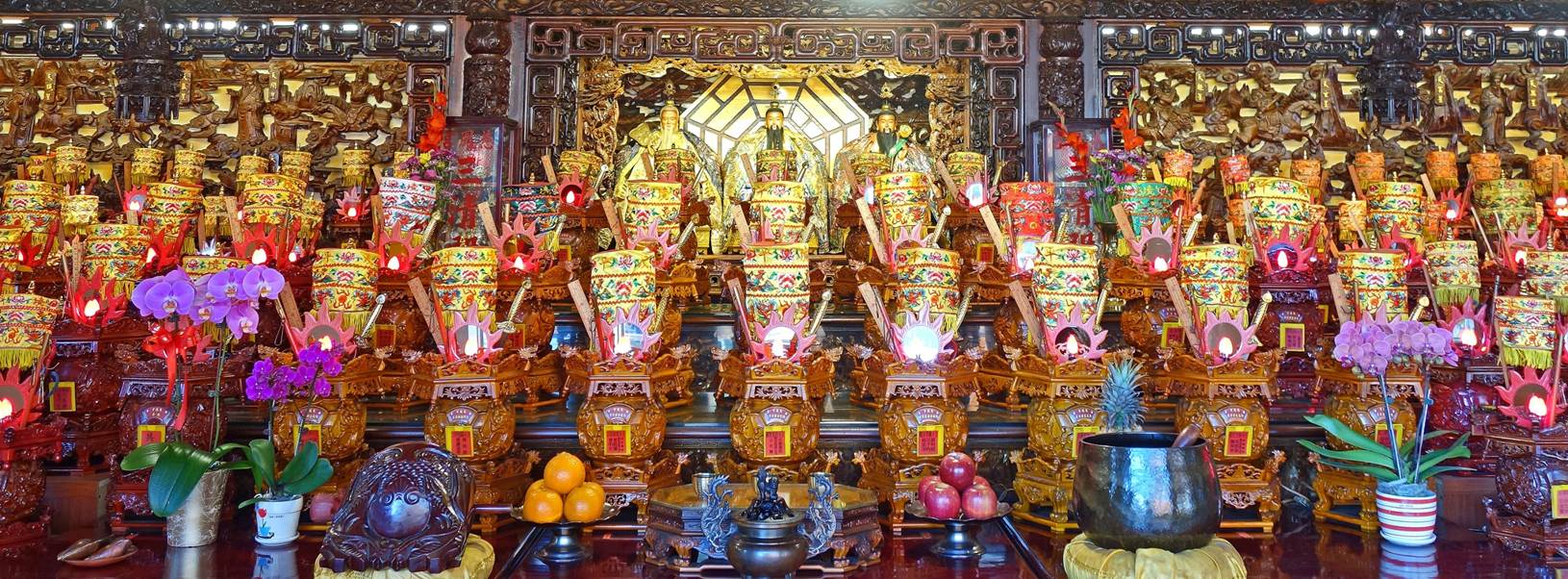
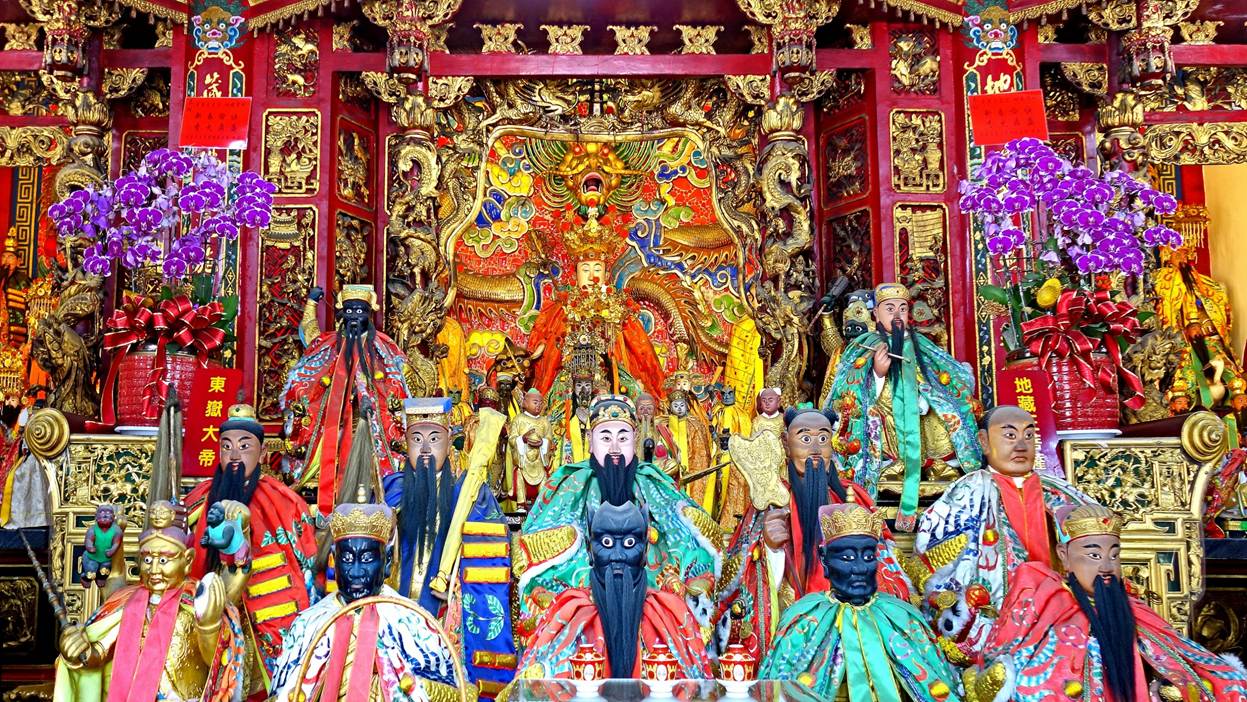
Altar of Yuanshi
Tianzun (元始天尊). He is the foremost among the "Three Pure Ones" (三清), the supreme
deities of Taoism. He is an integral part of the Tao and therefore the source
of all existence in the universe. The two smaller altars on either side of the
main altar are shown in the two photos that follow.
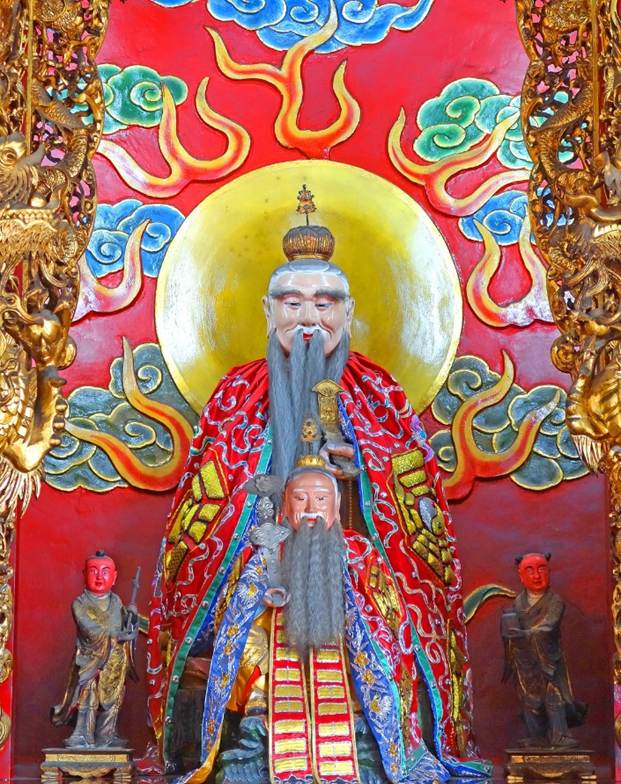
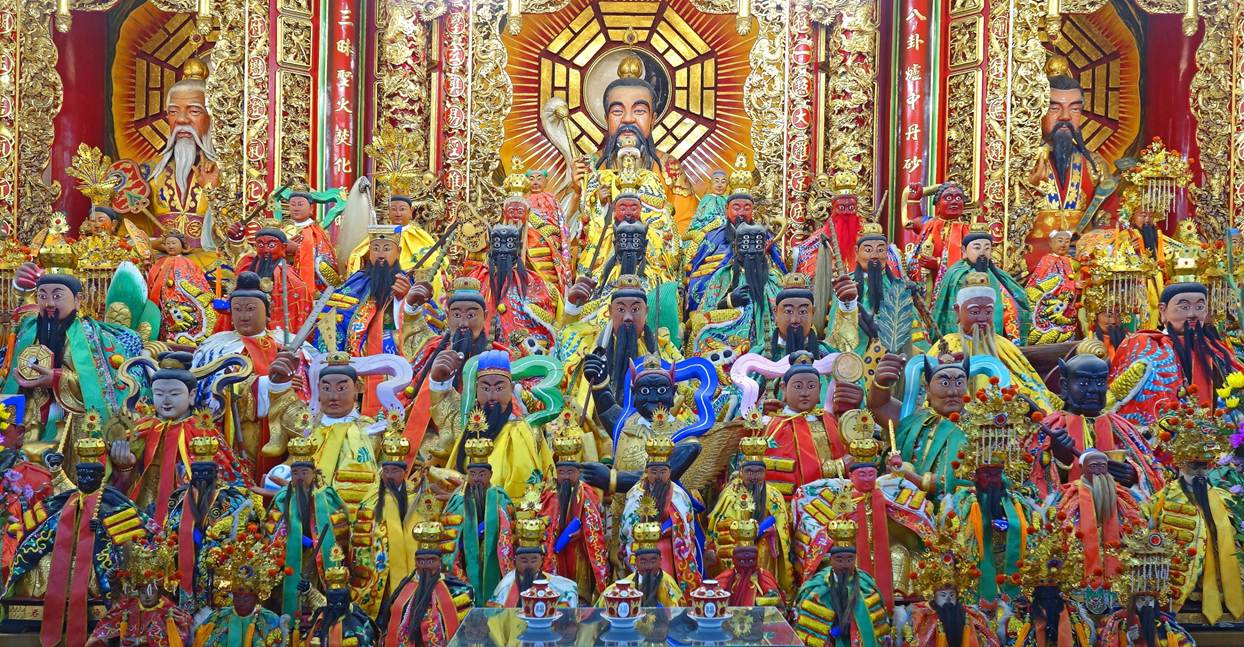
- Left: The statue
standing at the back represents Daode Tianzun (道德天尊), who holds the third
rank among the "Three Pure
Ones" (三清). He is the Supreme Lord of Morality. The other large statue, located in
the center-left of the same photo, is the goddess Nuwa (女媧娘娘). She is revered as
the Mother of the Earth and the ancestress of humanity.
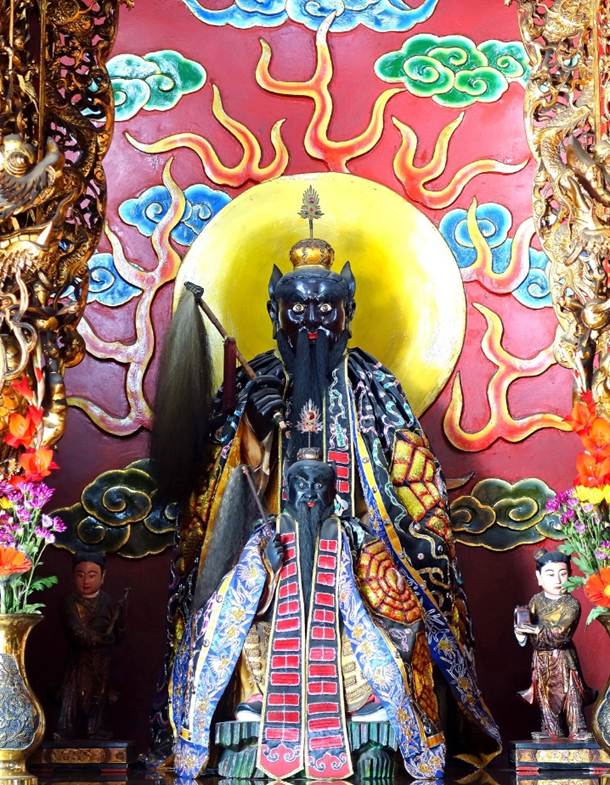
- Right: The statue at
the rear depicts Lingbao Tianzun (靈寶天尊), who holds the second
rank among the "Three Pure
Ones". He embodies the harmonious energy of the universe, the balance of
Yin and Yang, and the natural order. The other large statue, positioned
toward the center-right of the photo is Pangu (盤古), the Sacred Ancestor.
He is the most revered creator deity in Taoist
mythology. When the universe was still in chaos, he separated Heavens and
Earth. His body then transformed into all existing things.
|
|
|
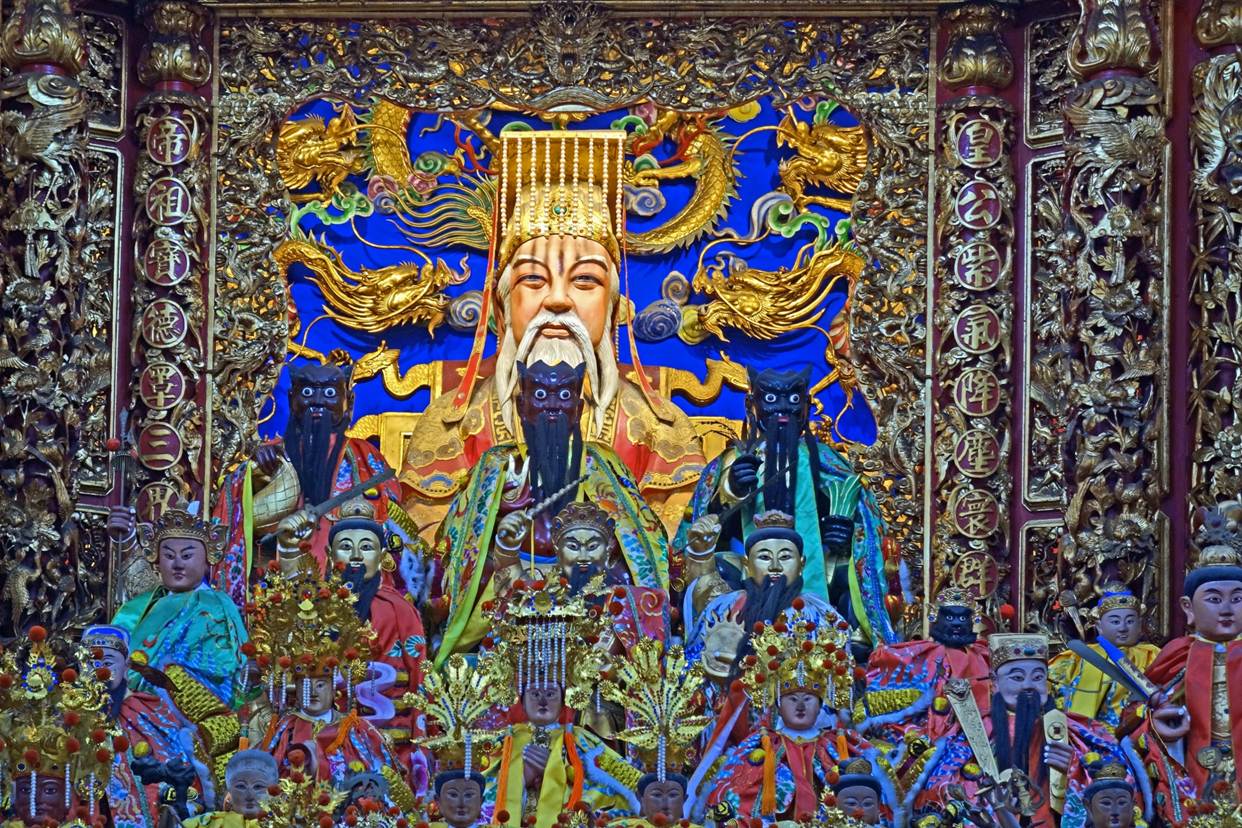
Altar of Ksitigarbha
Bodhisattva (地藏王菩薩), one of the ″Four
Great Bodhisattvas″ revered in both Tibetan and Chinese Buddhism. He is
often referred to as the ″Lord of the Underworld″, due to his vow
not to attain Buddhahood until he has liberated all beings trapped in hell
realms. He is known as Jizo in Japanese Buddhism.
Xuanyuan, the Yellow Emperor (軒轅黃帝), revered as the ″Progenitor of Chinese Civilization″.
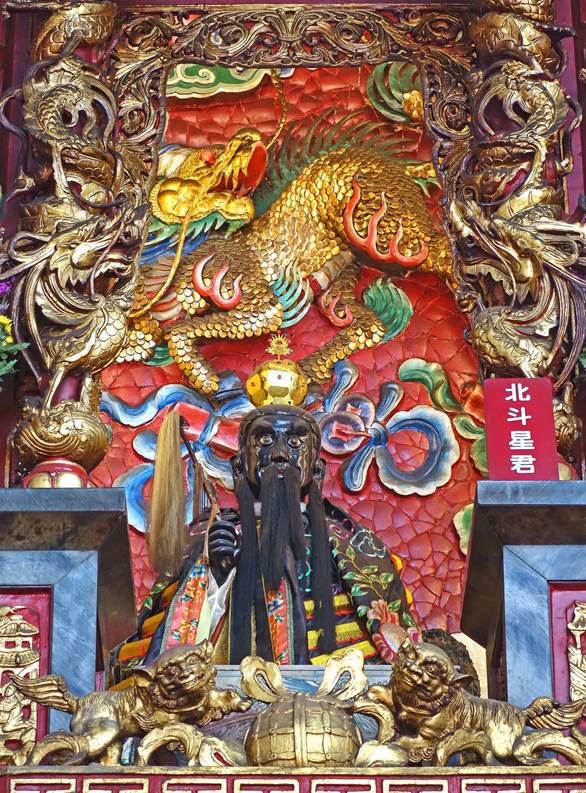
Left: The Lord of the
Southern Dipper (南斗星君). Right: The Lord of
the Northern Dipper (北斗星君). They respectively
govern life and death.
|
|
|
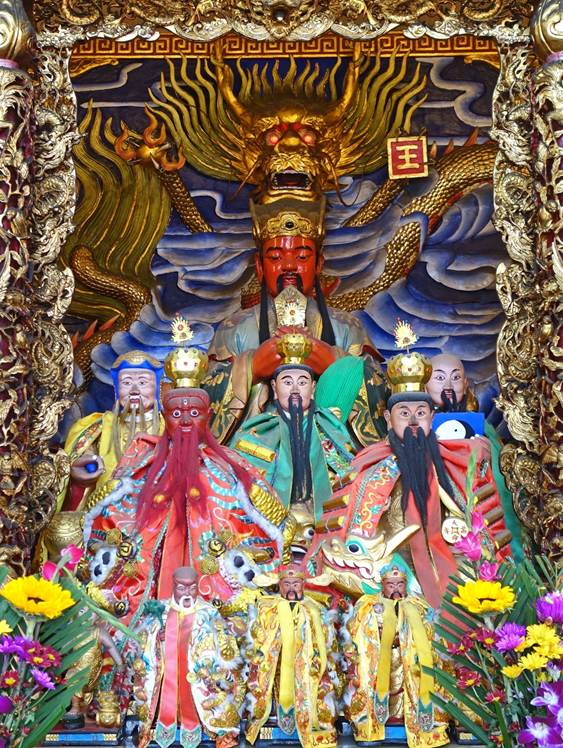
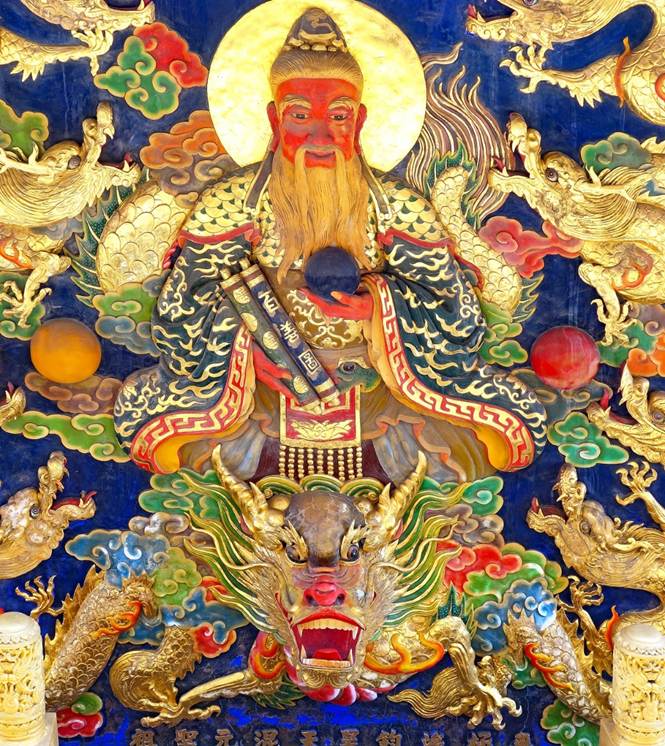
- Left: Altar of Zhu
Wen Gong (朱文公), the posthumous name
of Zhu Xi (朱熹) (1130-1200), also known
as Master Zhu. He is regarded as a great synthesizer of Confucian thoughts.
- Right: Hongjun Laozu
(鴻鈞老祖), a fictional supreme
deity portrayed in literature as the mentor of the "Three Pure Ones" (see above).
|
|
|
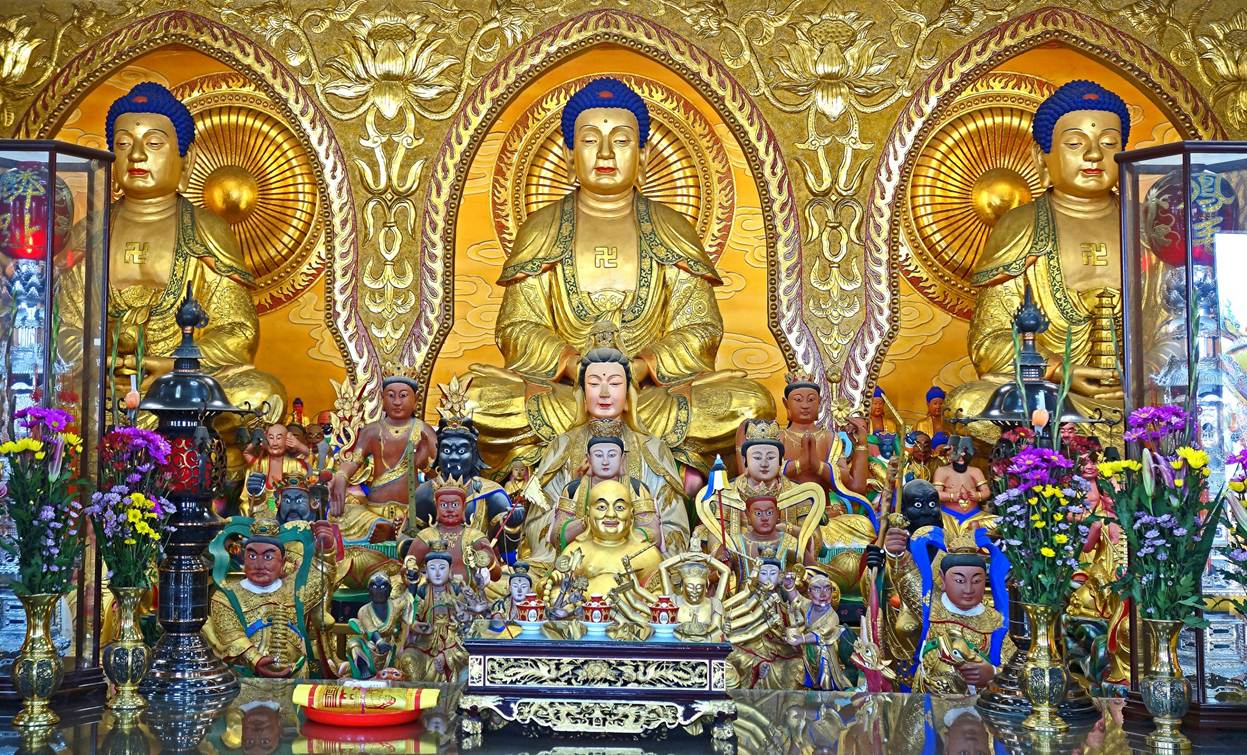
Altar featuring statues
of three classical manifestations of Buddha.
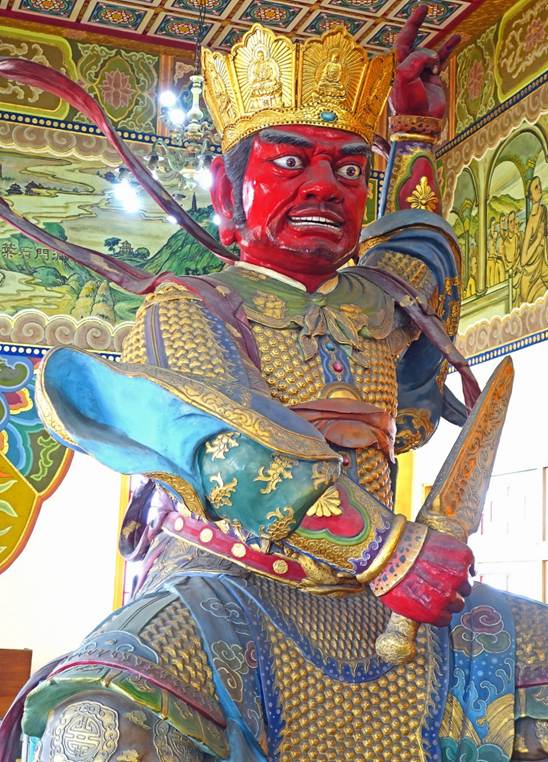
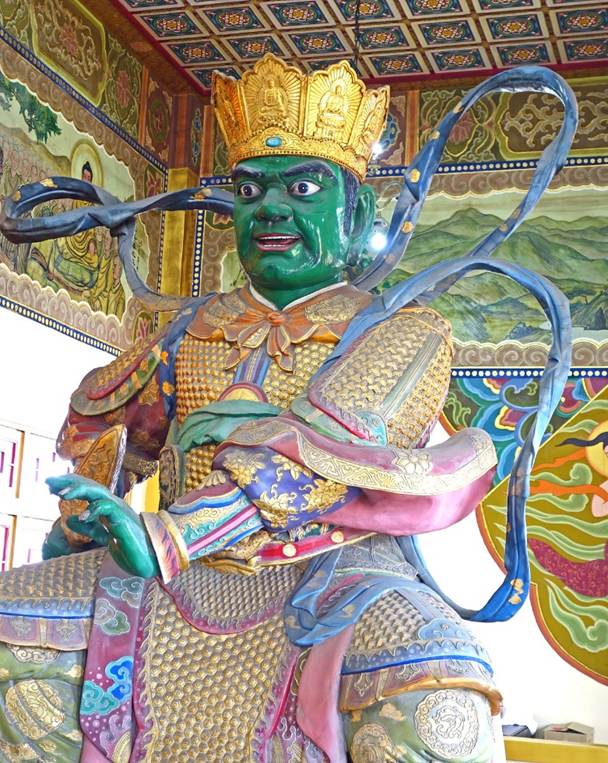
Statues of two of the four Heavenly
Kings (四大天王), protectors of the Dharma, on the
roof of the temple.
|
|
|
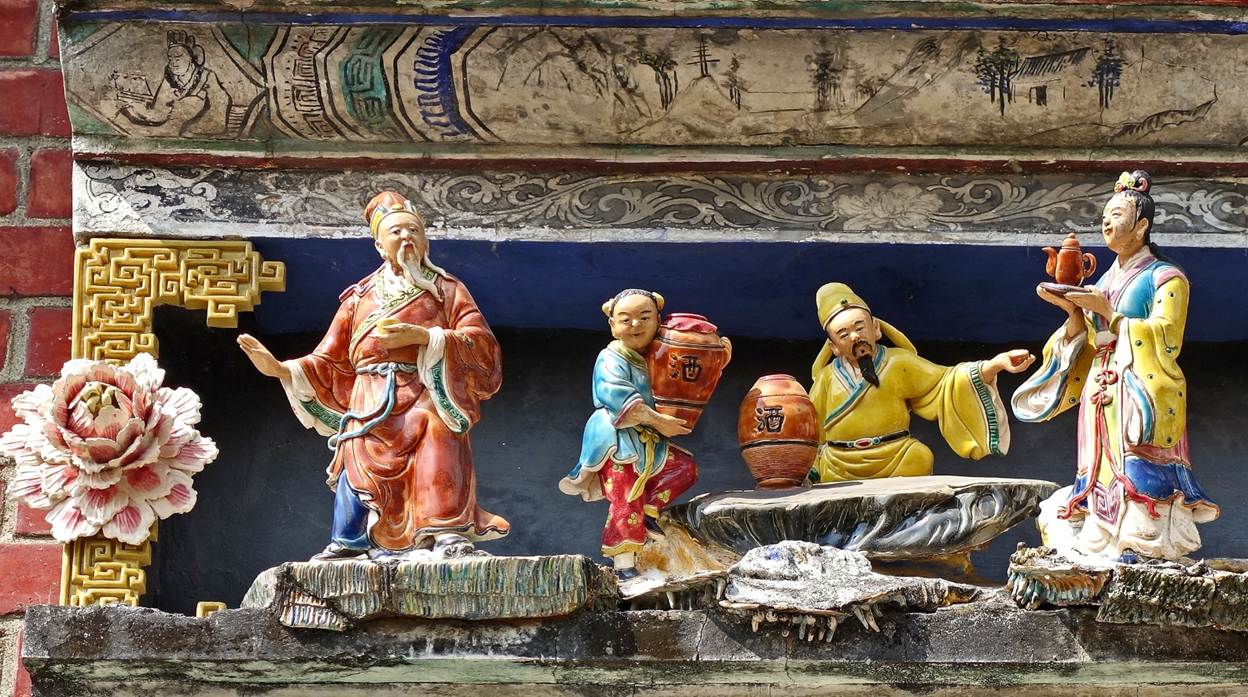
Fresco
depicting three deities in its center. From right to left, they are: the God of
Fortune, Fu (福星); the God of Prosperity, Lu (祿星); and
the God of Longevity, Shou (壽星). In this
temple, this triad is referred to as 財子壽 (Cai Zǐ Shou),
meaning ″Wealth, Sons, Longevity″. On other places, this same triad
is often called 三星 (Sānxīng), which means ″Three
Stars″. In both
cases, it symbolizes the ultimate blessings in Chinese culture: wealth, social
status, and long life.
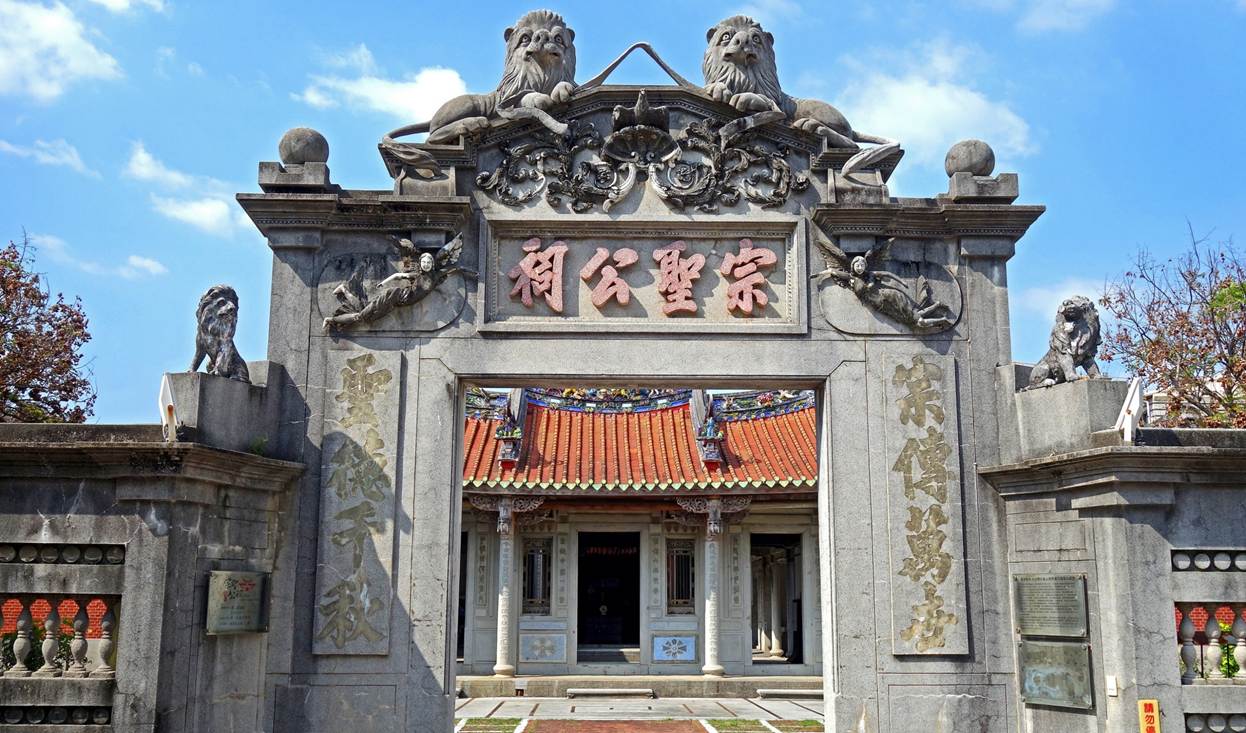
Zongshenggong
Ancestral temple (宗聖公祠):
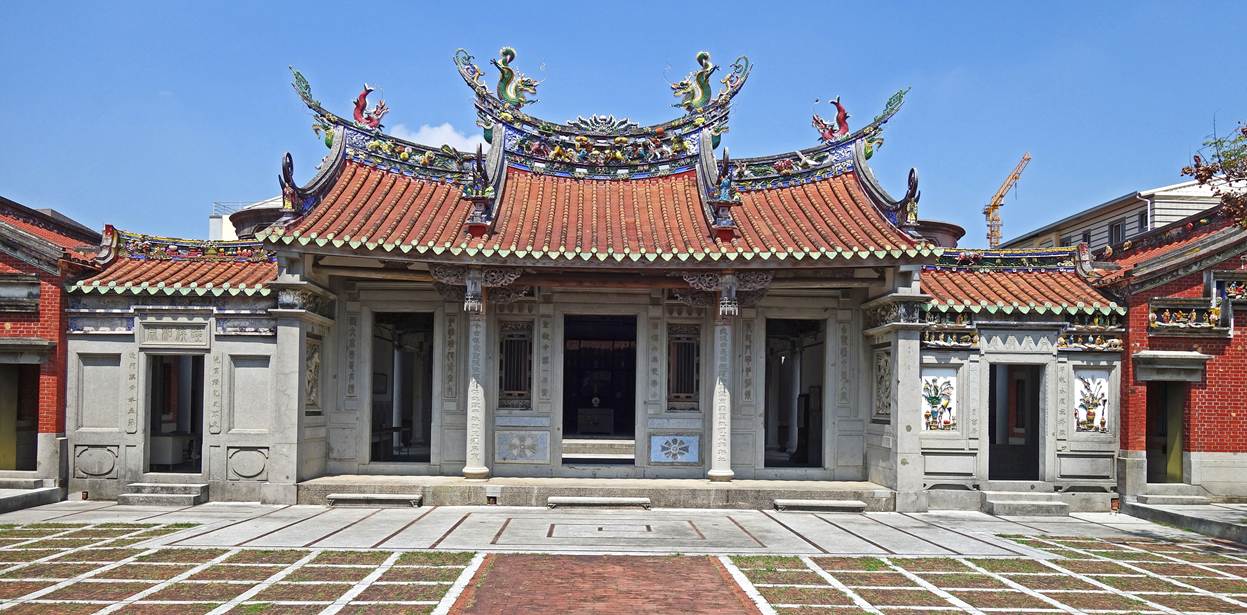
Built in 1929 and restored in 2013, this temple is
the ancestral temple of a wealthy Hakka family. It consists of two halls and
two wings, with the addition of two Western-style pavilions on an upper floor.
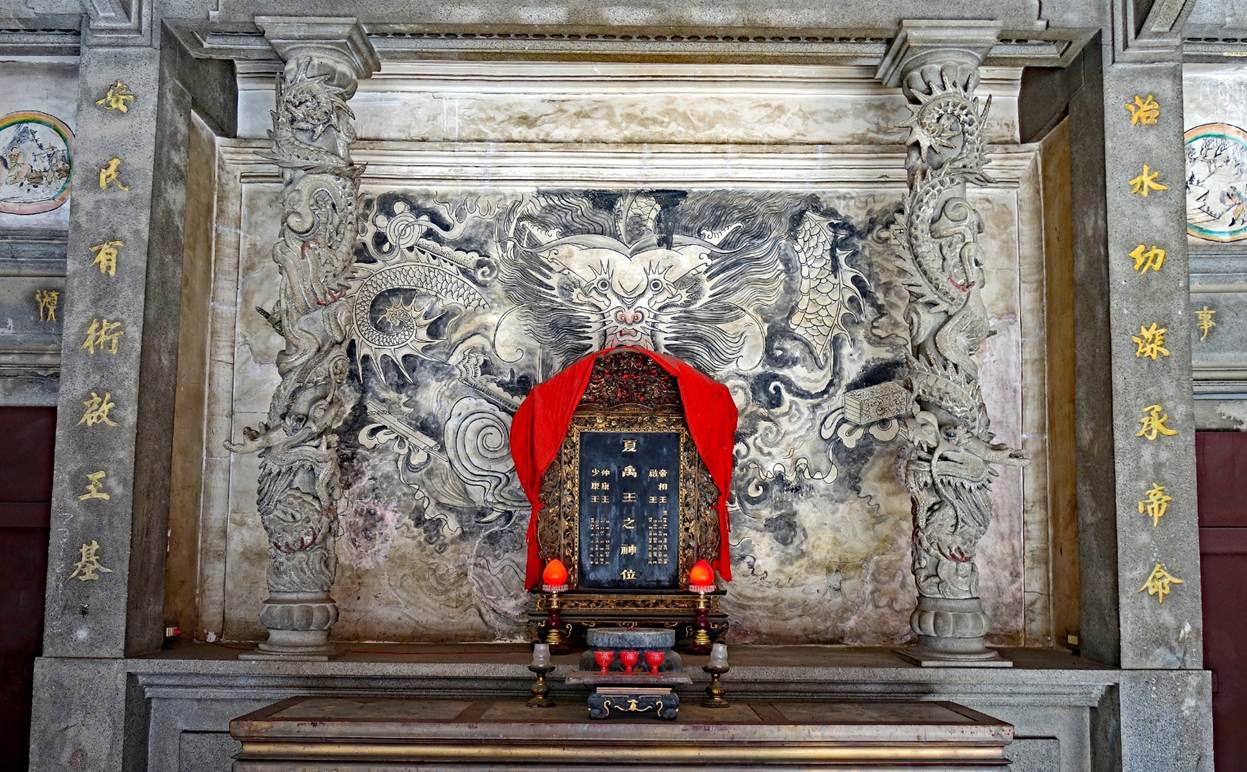
The entrance hall serves as a gathering place. The rear hall houses the shrine
where the main family spirit tablet is presented. An open area separates the
two halls, flanked on either side by shrines located at the center of the
wings. These shrines house additional spirit tablets and are accessed from the
open area.
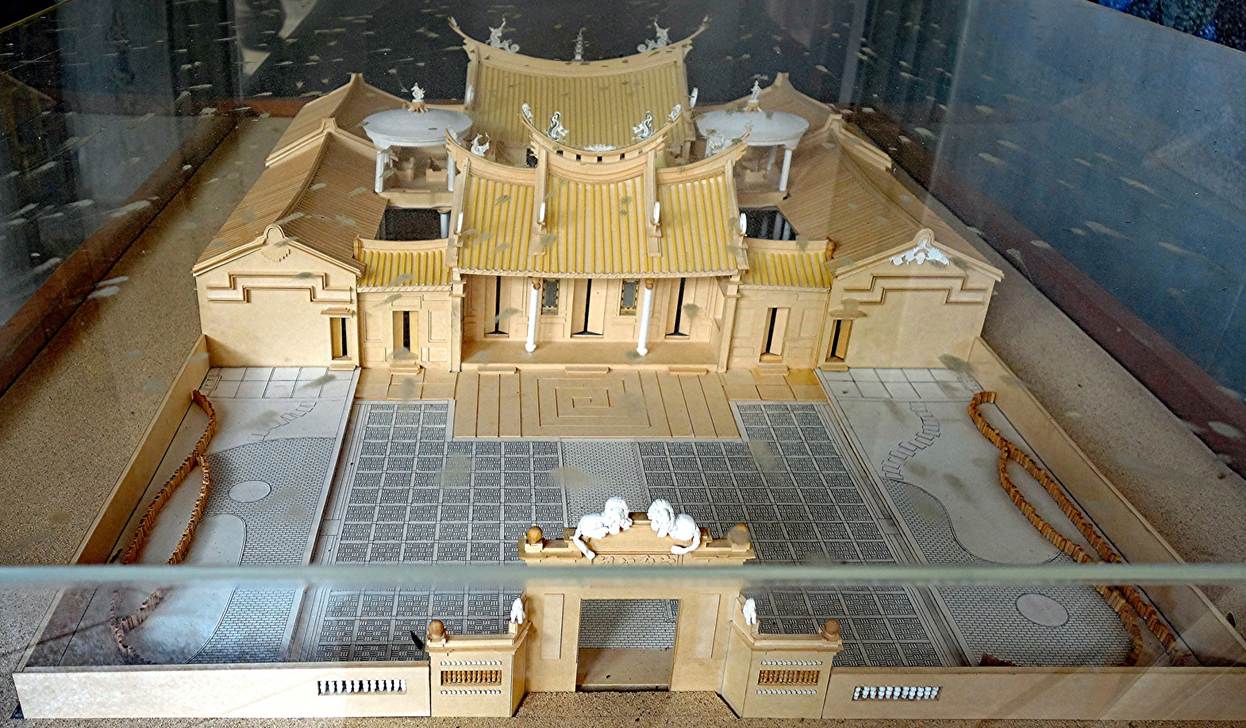
Scale
model of the temple.
Archway adorned with
sculptures of lions, the entrance to the temple.
Facade of the front
hall. The red-brick facades are those of the two wings.
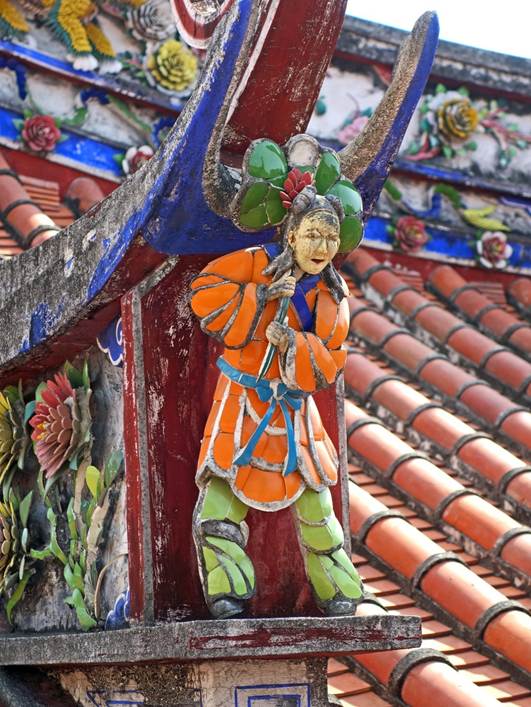
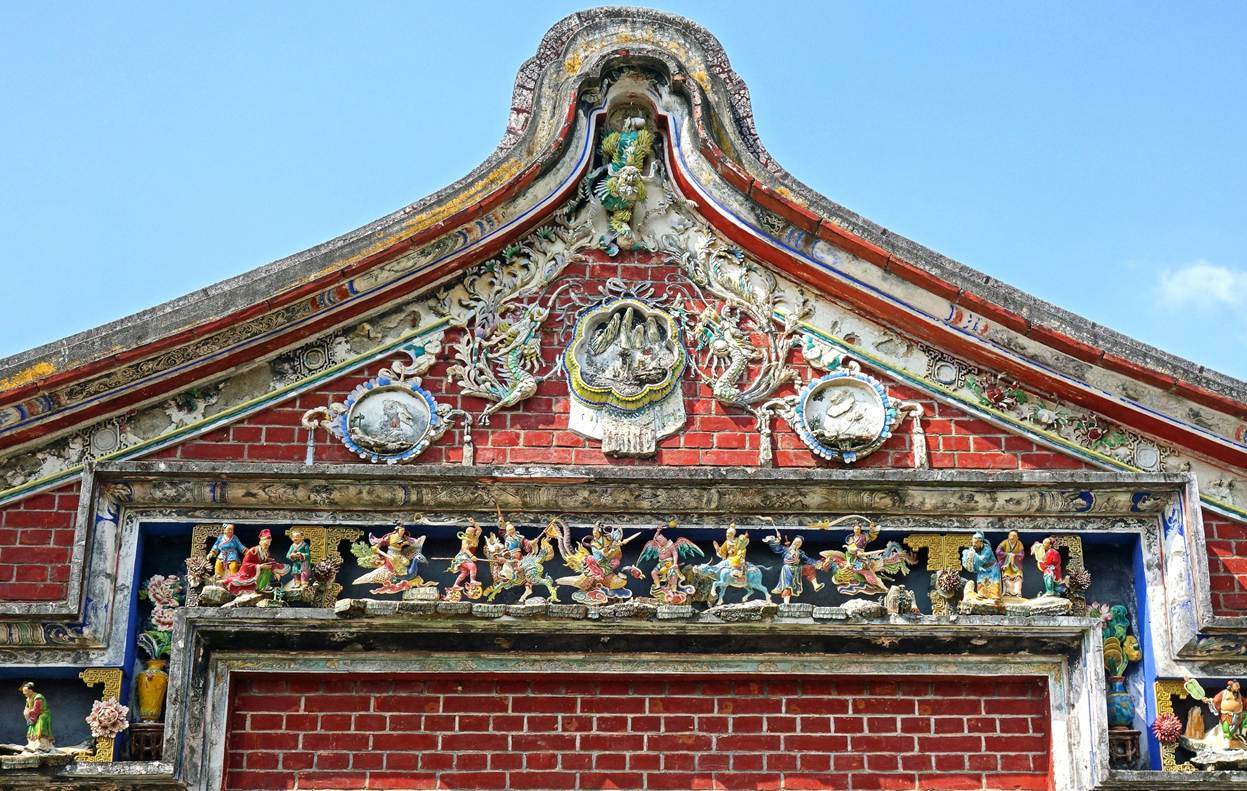
Pottery sculptures on
the facade of the right wing.
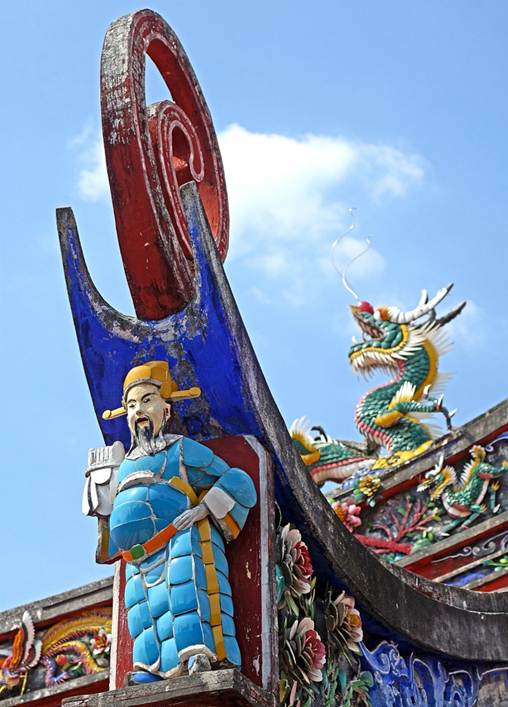
Decorations of the
roof.
|
|
|
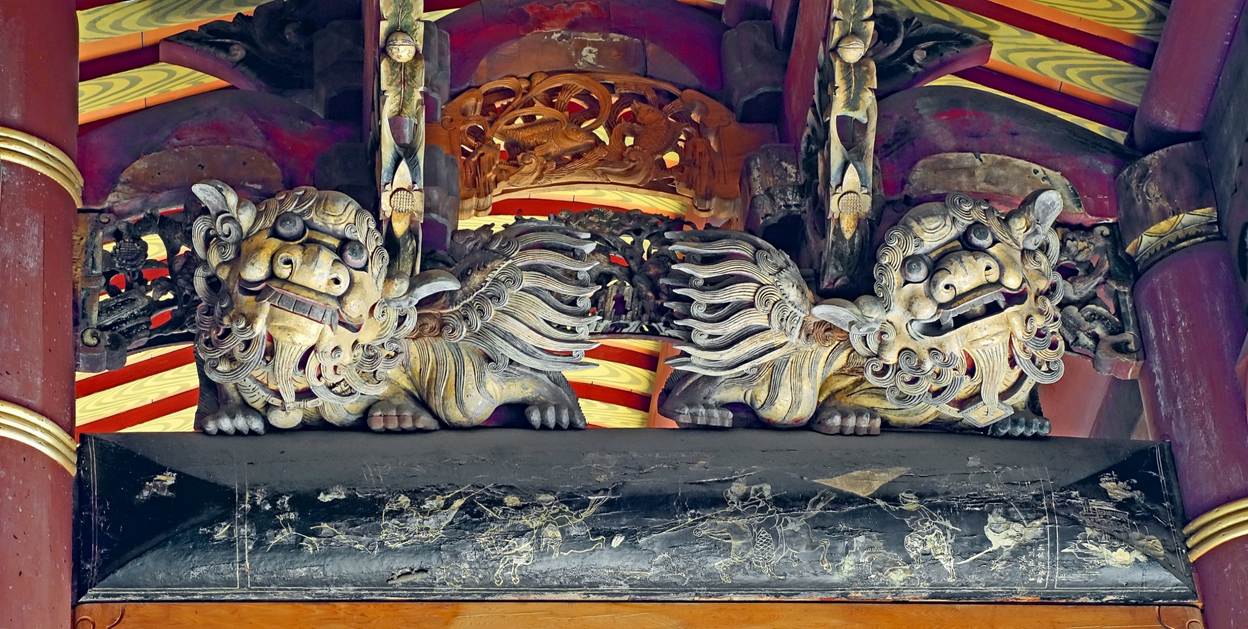
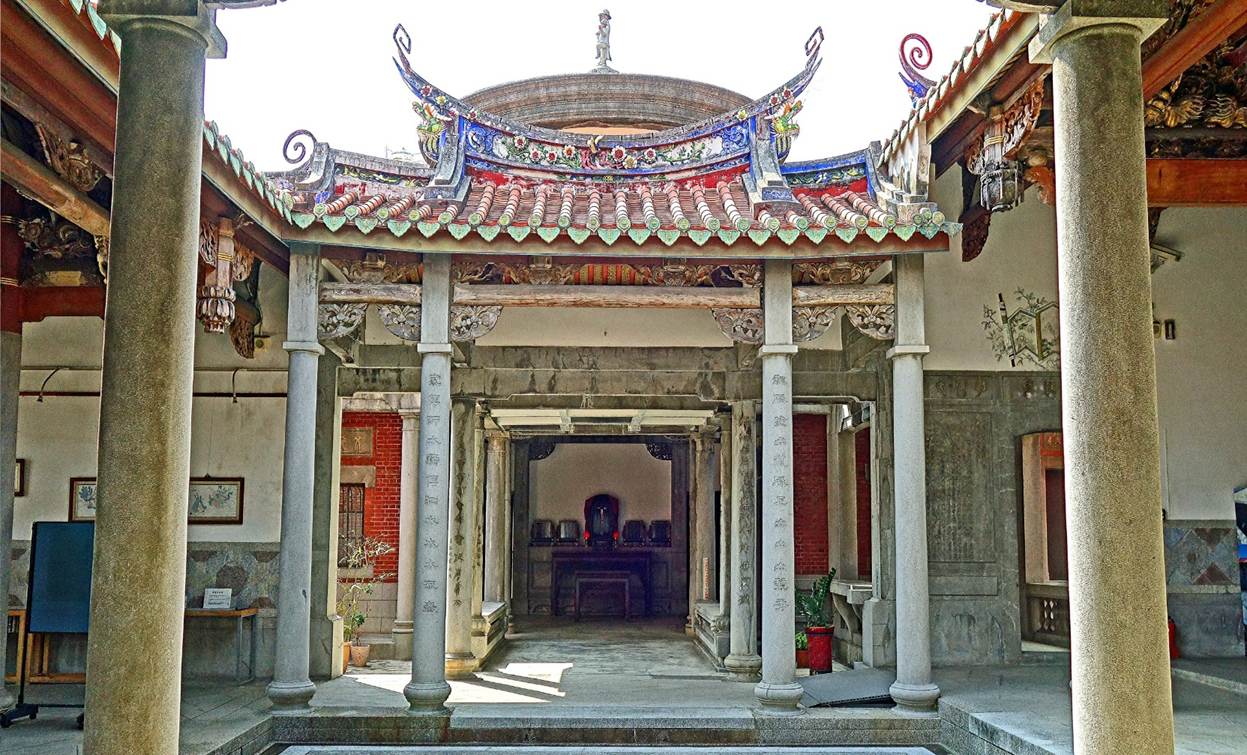
The rear hall seen from
the front hall.
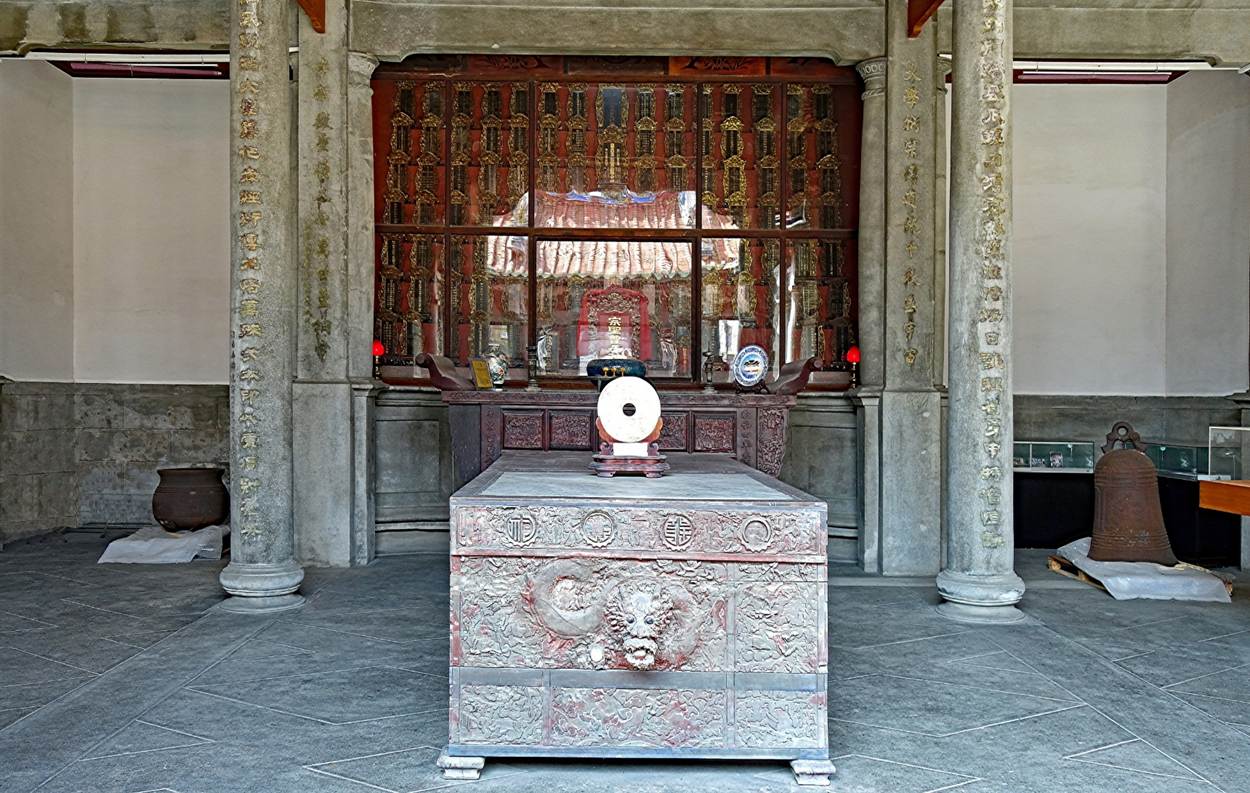
Shrine in the rear
hall.
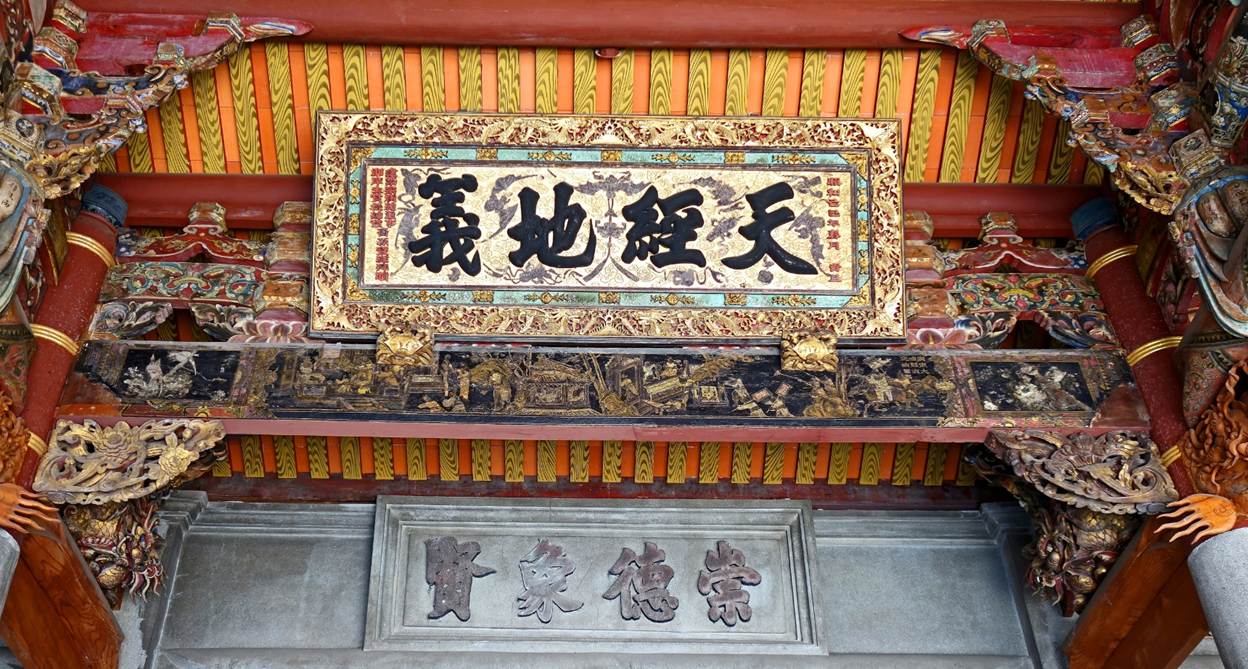
Plaques hanging in the
rear hall. The top one reads 義地經天, which translates to ″Righteousness
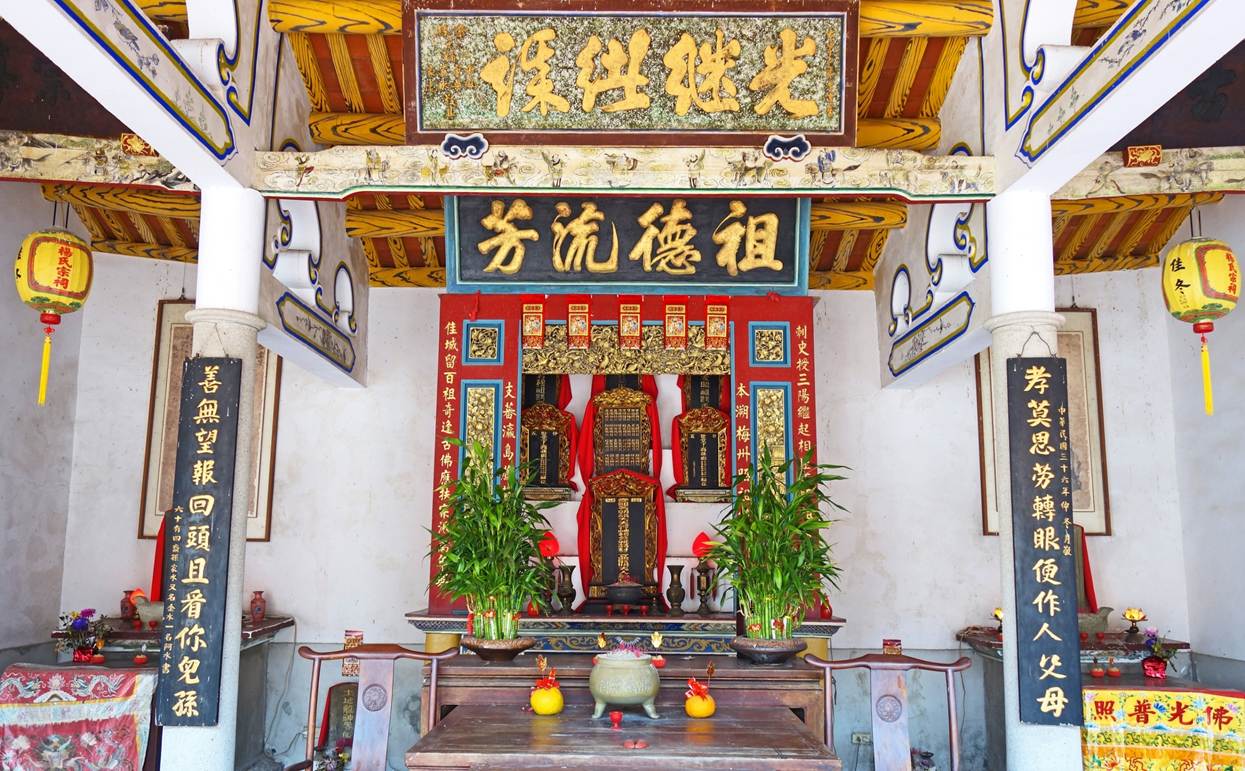
pervades the heavens″.
Ceiling decorations in
the rear hall.
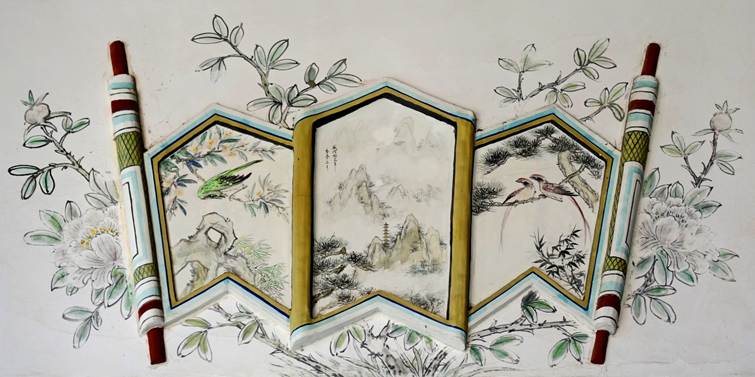
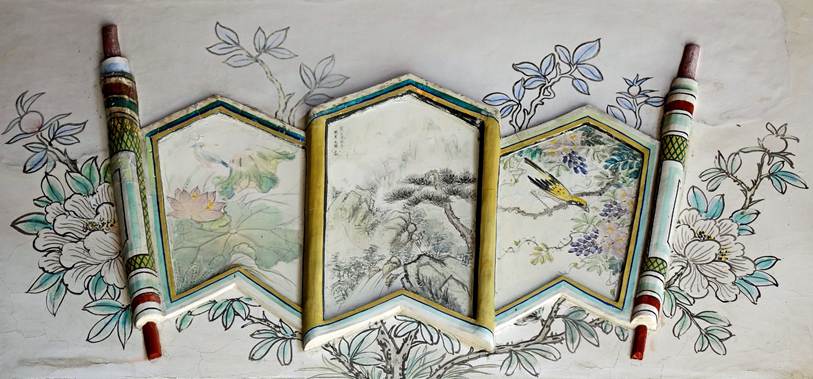
Decorations on the side
walls of the rear hall.
|
|
|
View of the shrine in
the left wing, seen from the open area between the front and rear halls. The
circular dome of the left pavilions is partially visible.
Spirit tablet in the
shrine in the right wing, also accessed from the central open area.
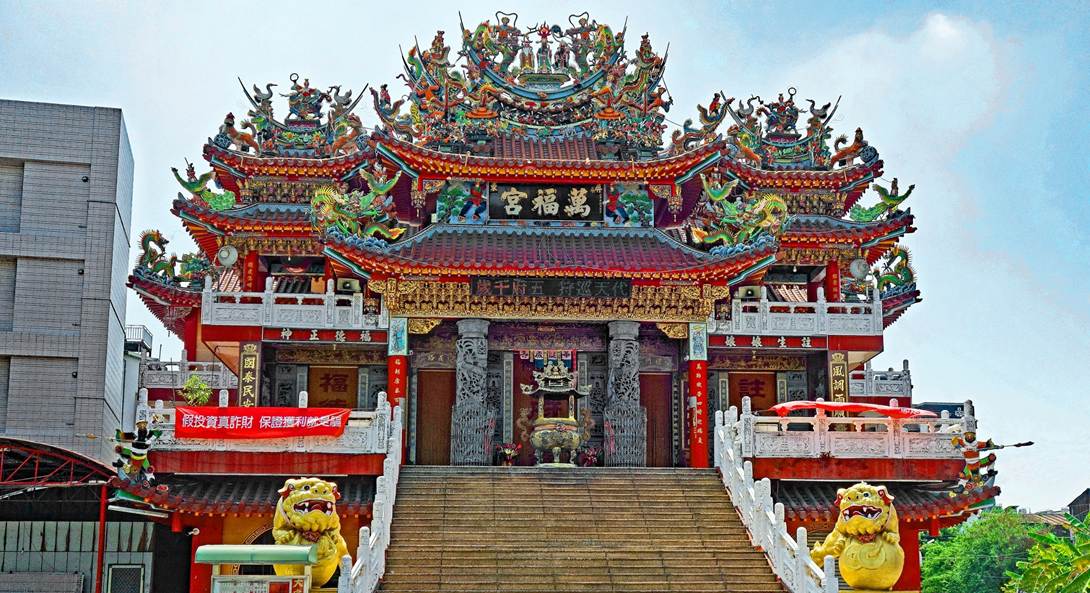
Wanfu
temple (屏東市一心里-萬福宮):
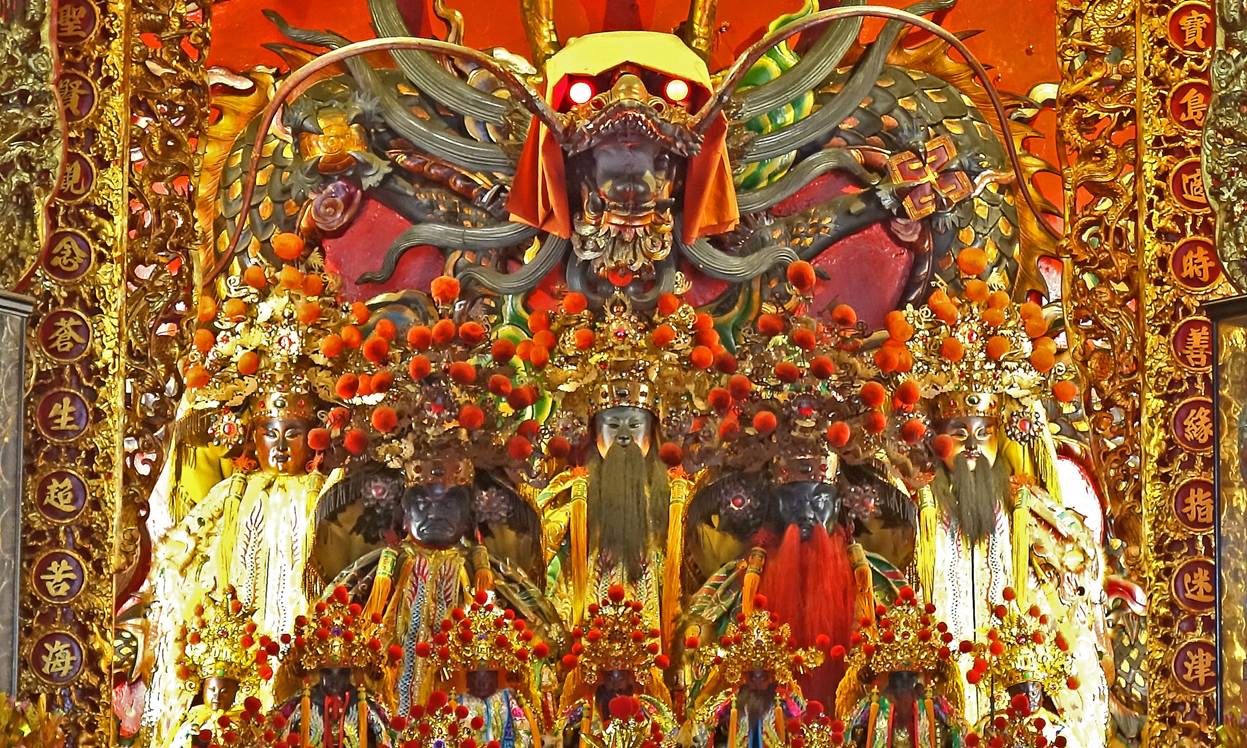
Founded in 1954, this
temple was reconstructed in 1987 and renovated in 2000. It was originally
dedicated to ″Bogong″ (伯公), the affectionate
name of the Earth god given by the Hakka people. Then other deities were
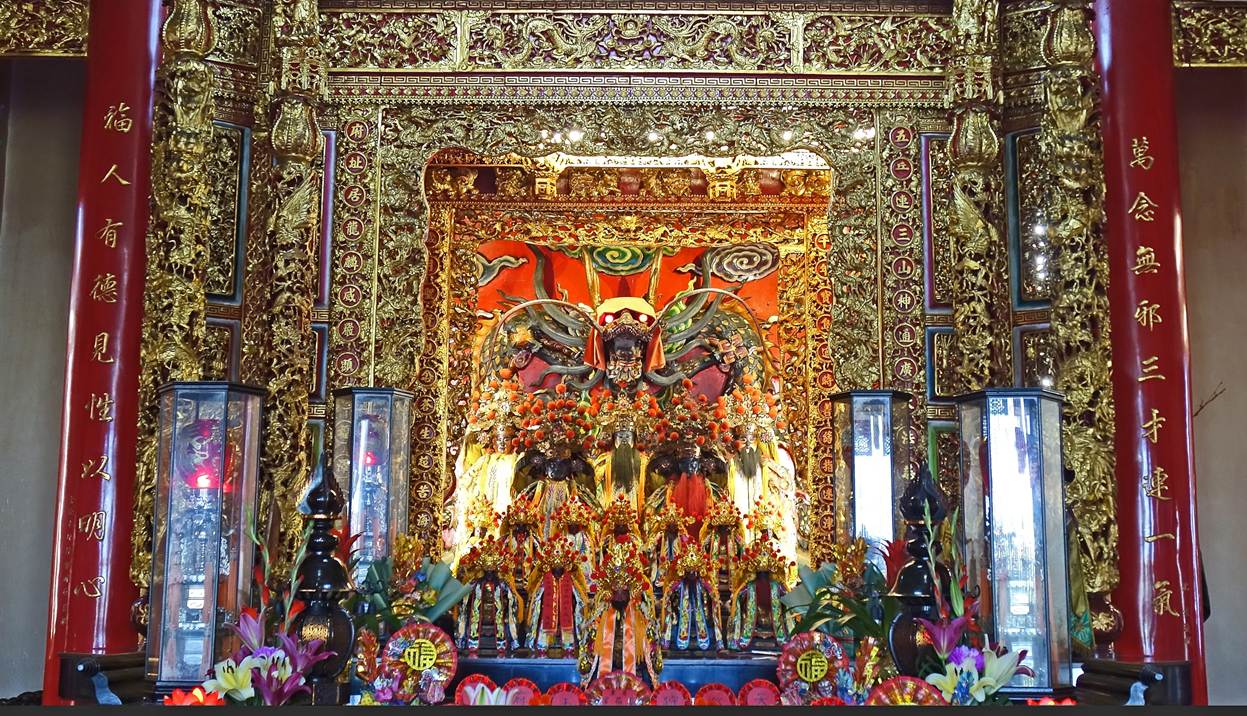
invited in the temple: Marshal Xie Fu (謝府元帥), a renowned general
named Xie (343-388) during the Eastern Jin Dynasty, who was deified as a
guardian deity, the
Heavenly Holy Mother Tiensheng Shengmu (天上聖母), better known as Mazu (媽祖), and Lord Chi Fu (池府王爺).
Lord Chi Fu is an interesting
character. He is the Second Lord of the Five
Lords of a Thousand Years (五府千歲), a group of high-ranking officials from the Tang
dynasty (618-907) who were deified after their deaths. Collectively, they are
protective deities worshipped to cure mysterious illnesses, ward off evil
spirits, and ensure safe travel. According to legend, Chi Fu sacrificed himself
by knowingly swallowing a poisonous pill in order to save lives. Due to the
effects of the pill, he is usually represented with bulging eyes and a
blackened face (see first
page on Kaohsiung).
Facade and joss paper
burner of the temple.
|
|
|
Main altar.
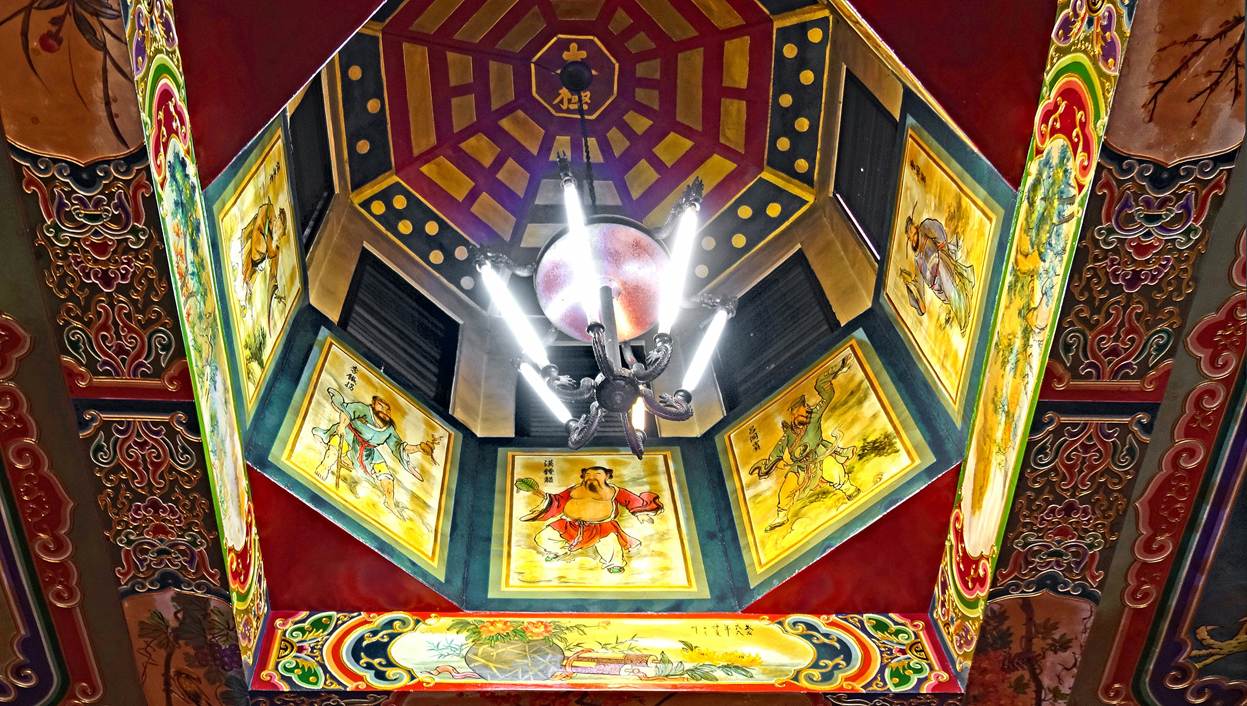
Octagonal dome-shaped
ceiling adorned at its center with a Ying and Yang trigram and, on its eight
side-panels, with traditional Chinese figures.
Pingtung
County Martyrs' Shrine (屏東縣忠烈祠):
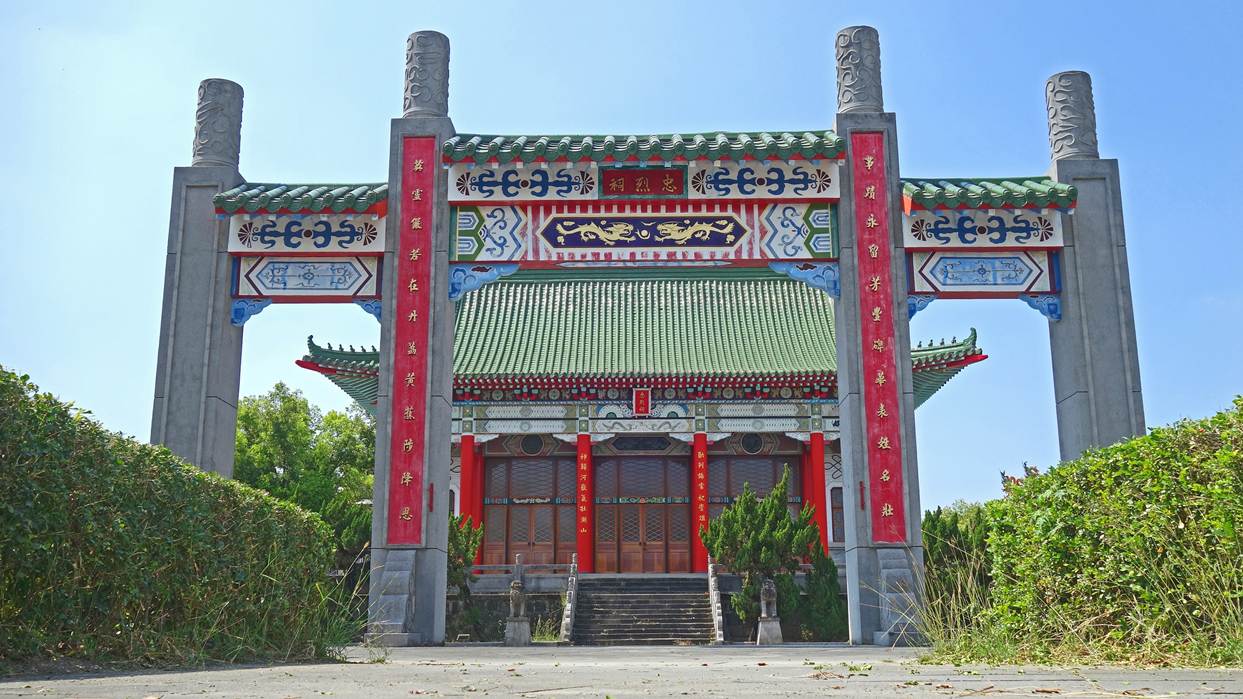
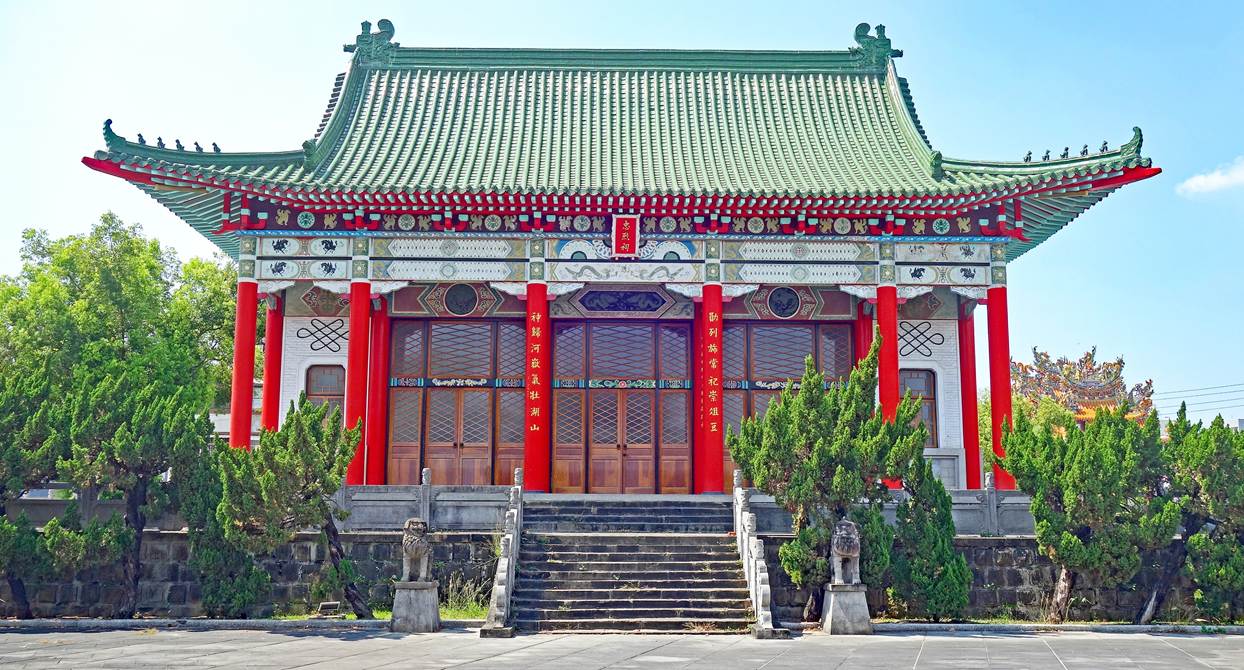
A Martyr's Shrine in Taiwan is a memorial site
dedicated to honoring those who sacrificed their lives for the Republic of
China (ROC), including soldiers of the 1911 Revolution, the Sino-Japanese War,
and the Chinese Civil War. It houses spirit tablets of persons killed during
these events. The most prominent such shrine is the National Martyr's Shrine in
Taipei. The one in Pingtung, built in 1967, is more modest.
Archway gate in front of the shrine.
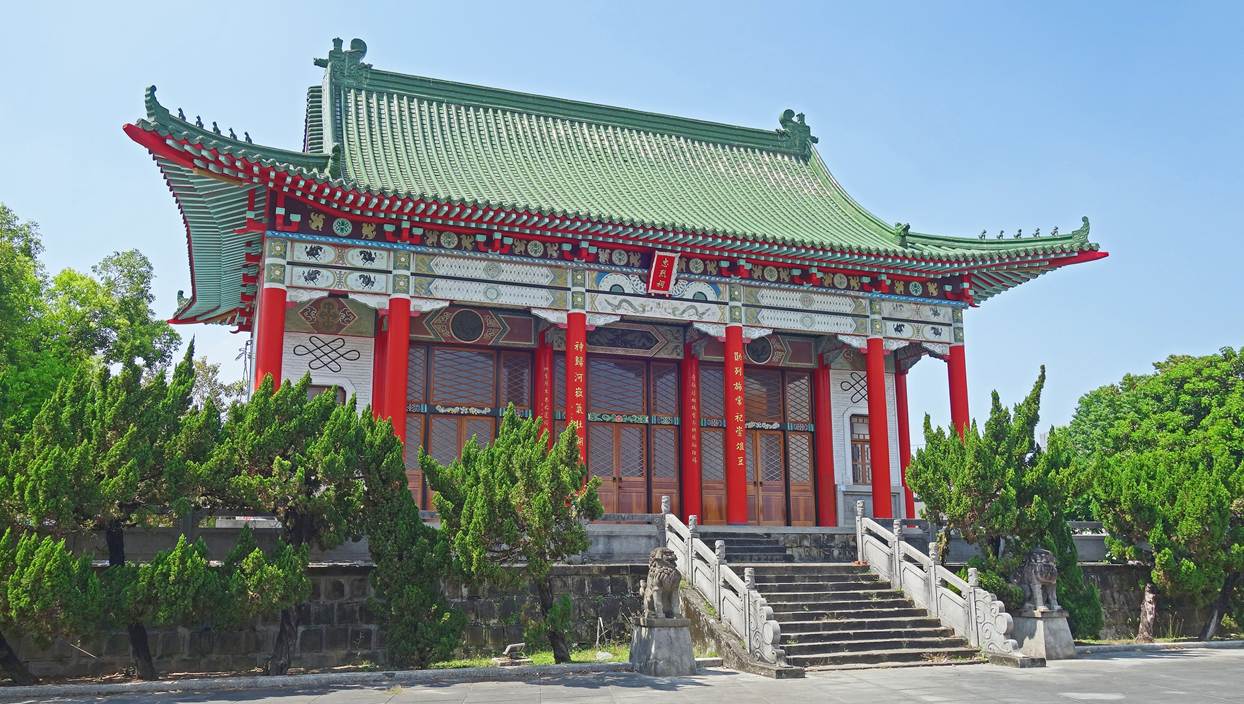
Exterior views of the
shrine's hall.
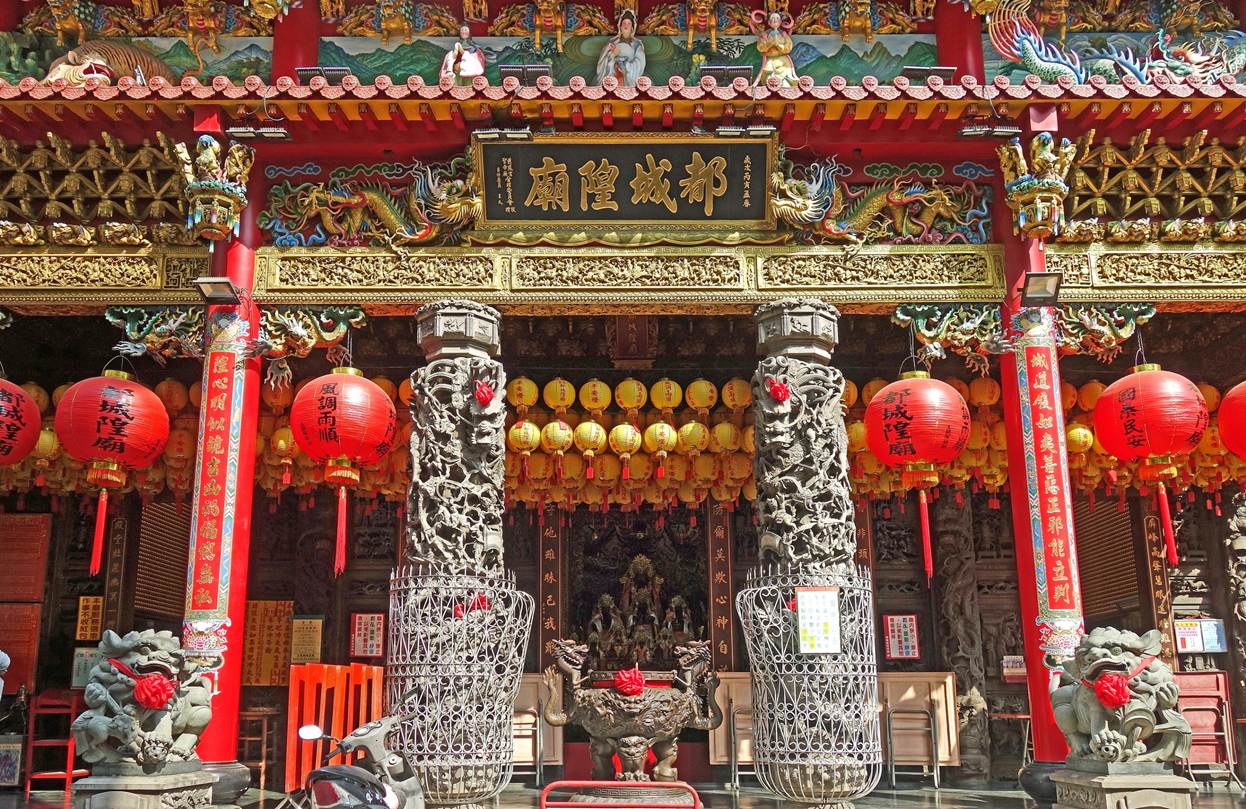
Pingtung
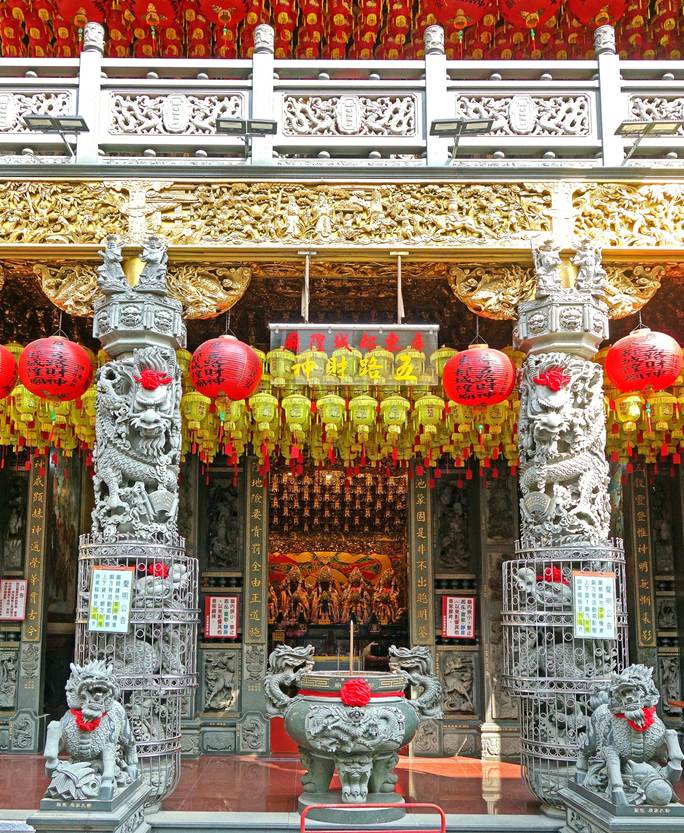
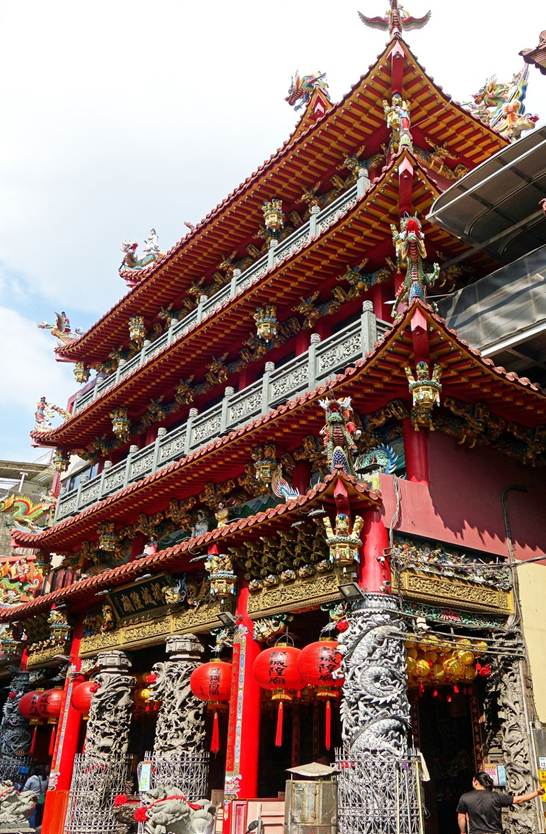
City God temple (屏東都城隍廟):
Originally built in 1964, this temple was
reconstructed in 1986. A new hall, the hall of the Five Gods of Wealth, was
added in 2006. The main deity is the City God (城隍, ″Chenghuang″). He is
regarded as a divine magistrate who protects the city, helps its human
officials to make the right decisions, weighs the moral character of the city's
inhabitants when they die, and decides the kind of afterlife they deserve.
Facade of the temple.
|
|
|
Main
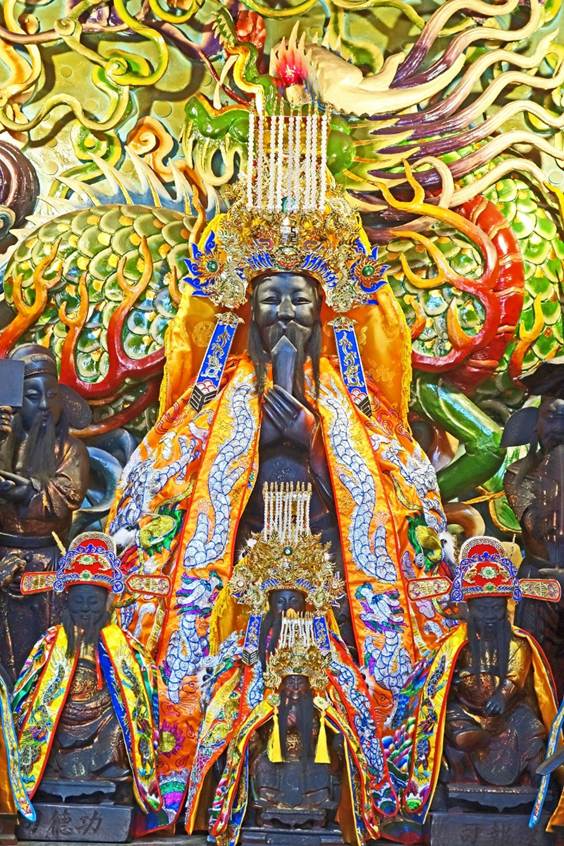
altar dedicated to the City God, surrounded by civil and military judges
assisting him.
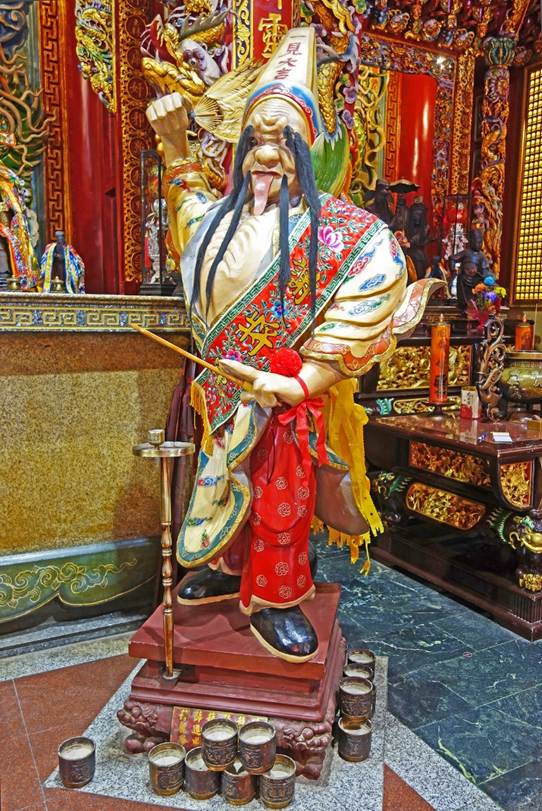
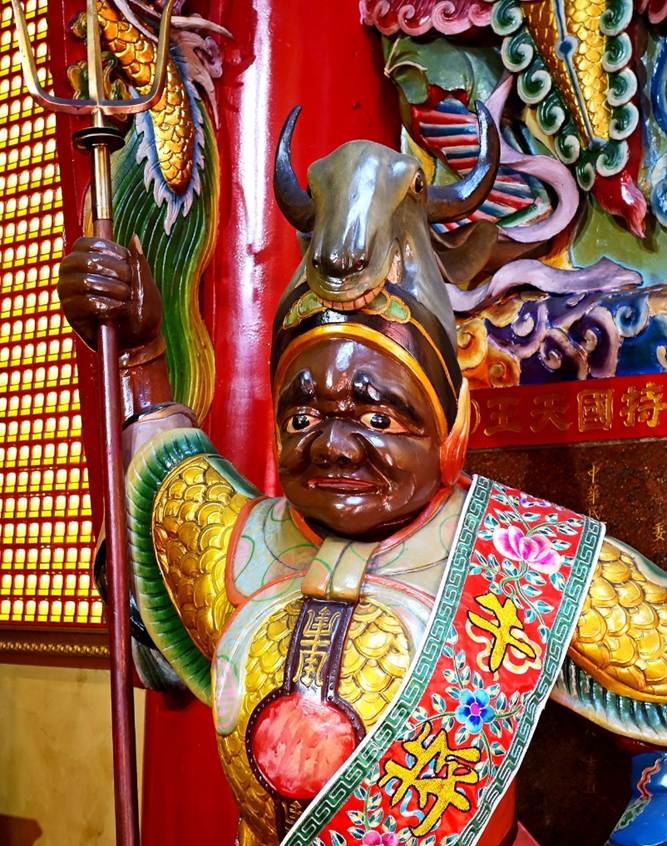
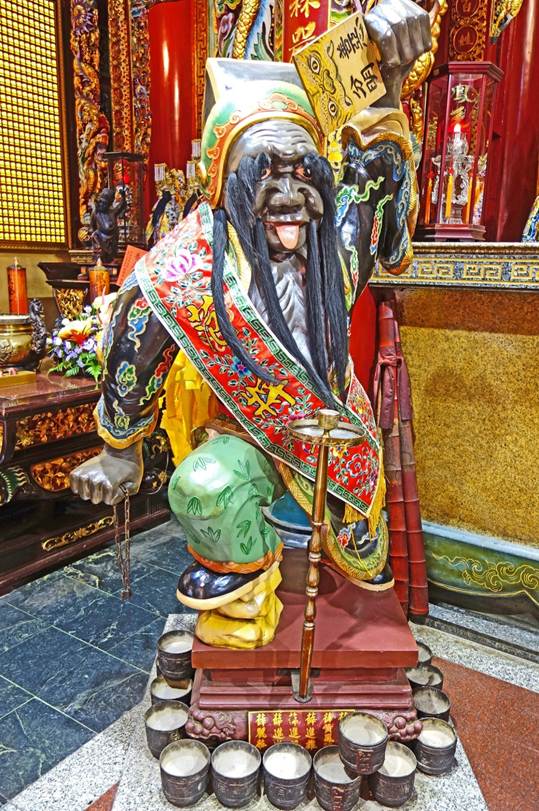
Statues of four
generals standing before the altar of the City God. From left to right, they
represent General Ma (馬將軍), General Fan (范將軍), General Xie (謝將軍), and General Niu (牛將軍), the Ox-Headed
General. They are all protectors and assistants of the City God. They are also
tasked with escorting the souls of the deceased to the afterlife
|
|
|
|
|
- Left: Another altar located in the main
hall, next to the altar of the City God. It is dedicated to
Dongyue Dadi (東嶽大帝), the Great Emperor of the Eastern
Peak. An important Taoist deity, he oversees human life, death, fate, and the
underworld. It is believed that, after death, a person is first sent to the
City God for review, and then to the Dongyue Dadifor a second review.
One of his roles is to rescue the souls of the ″unjustly dead″.
- Right: Altar of the Five Gods of
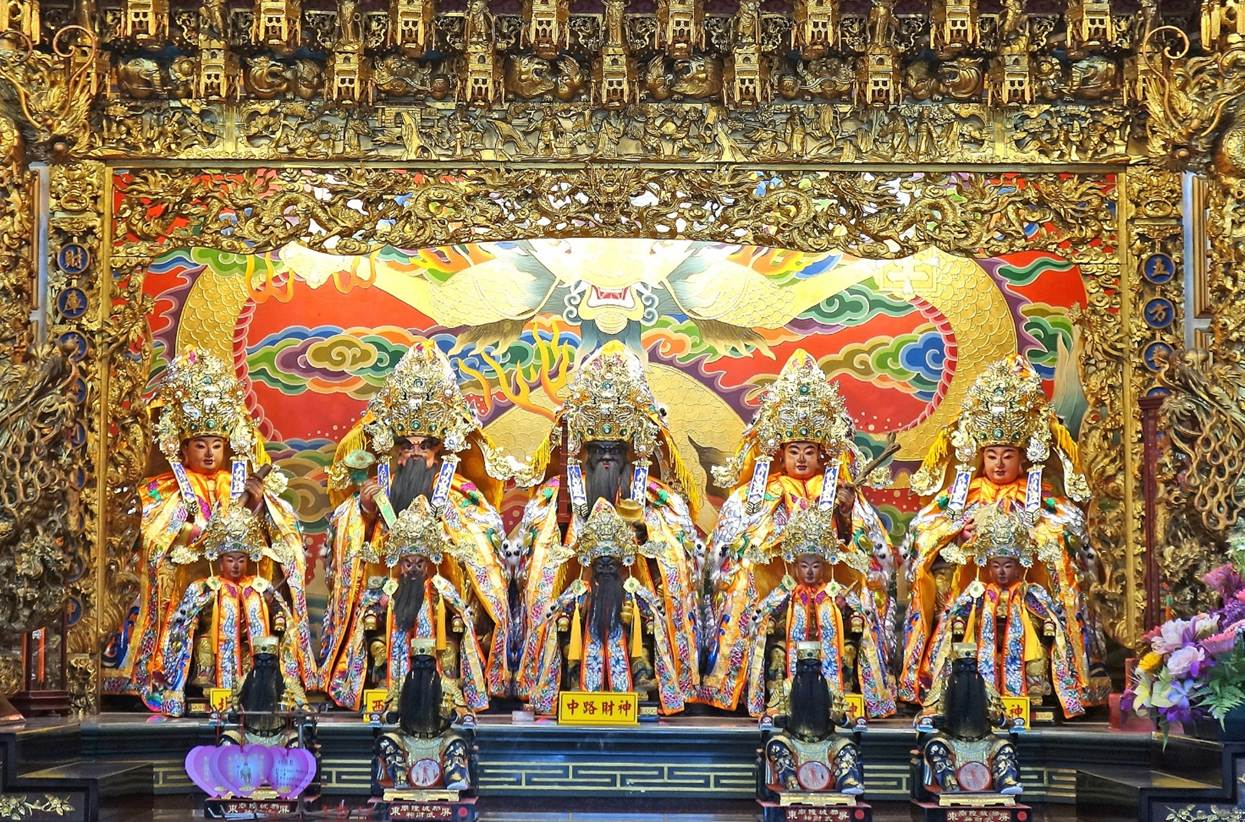
Wealth (五路財神), who symbolize wealth gathered from
all directions: East, South, West, North, and Center.
|
|
|
Jiadong (佳冬)
This rural township (pop. 18,000) in
Pingtung County boasts a relatively large number of well restored historical
Hakka building. The area was originally populated by the Makato people of the
Pingpu indigenous tribe. The first Chinese settlers, Hakkas from northern
Guangdong, established the town and over time assimilated the native Makato. On
the 11th of October 1895, Jiadong was the location a battle, the Battle of
Chiatung, between the short-lived Republic of Formosa (23 May to 21 October
1895) and the Japan Empire. The battle was won by the Japanese army.
Yang Clan Ancestral Temple (楊氏宗祠):
This ancestral temple was built to
honor the founders of the Yang family, who were officials during the Tang
Dynasty. During the reign of the Qianlong Emperor (乾隆帝) (1735-1796), some of their
descendants made their way to Taiwan. The construction of the ancestral temple
was funded by descendants of these descendants and completed in 1923. A recent
restoration was carried out in 2010.
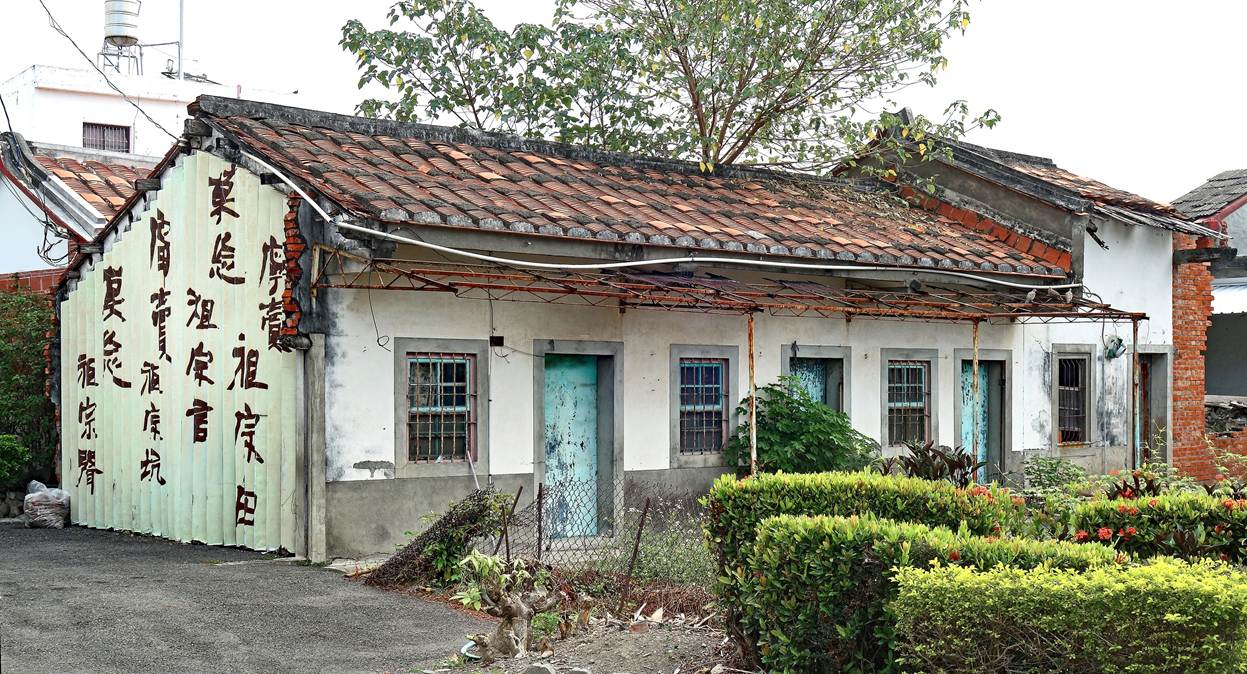
Old house seen on the way to the Yang
Clan Ancestral Hall.
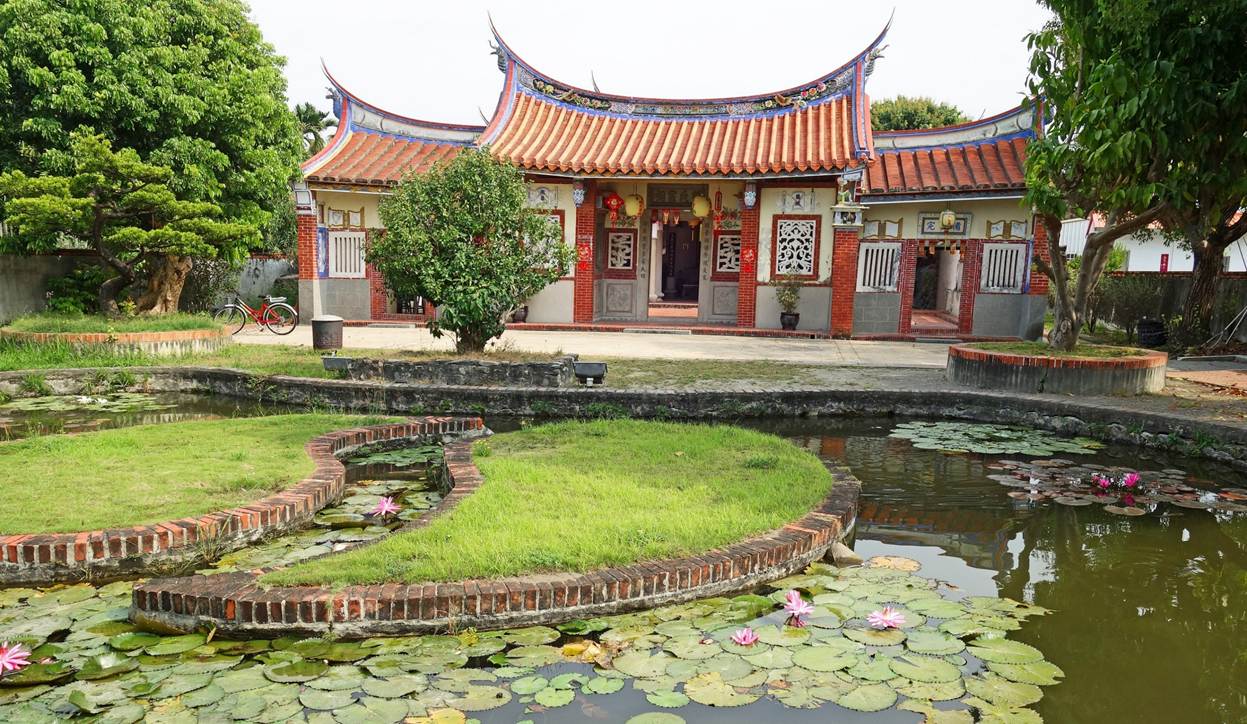
View of the ancestral temple, featuring
a classic roofline with pure swallowtail and horseback contours. Its front
garden boasts a beautiful and unusual pool, adorned with two islands that form
the yin-yang symbol.
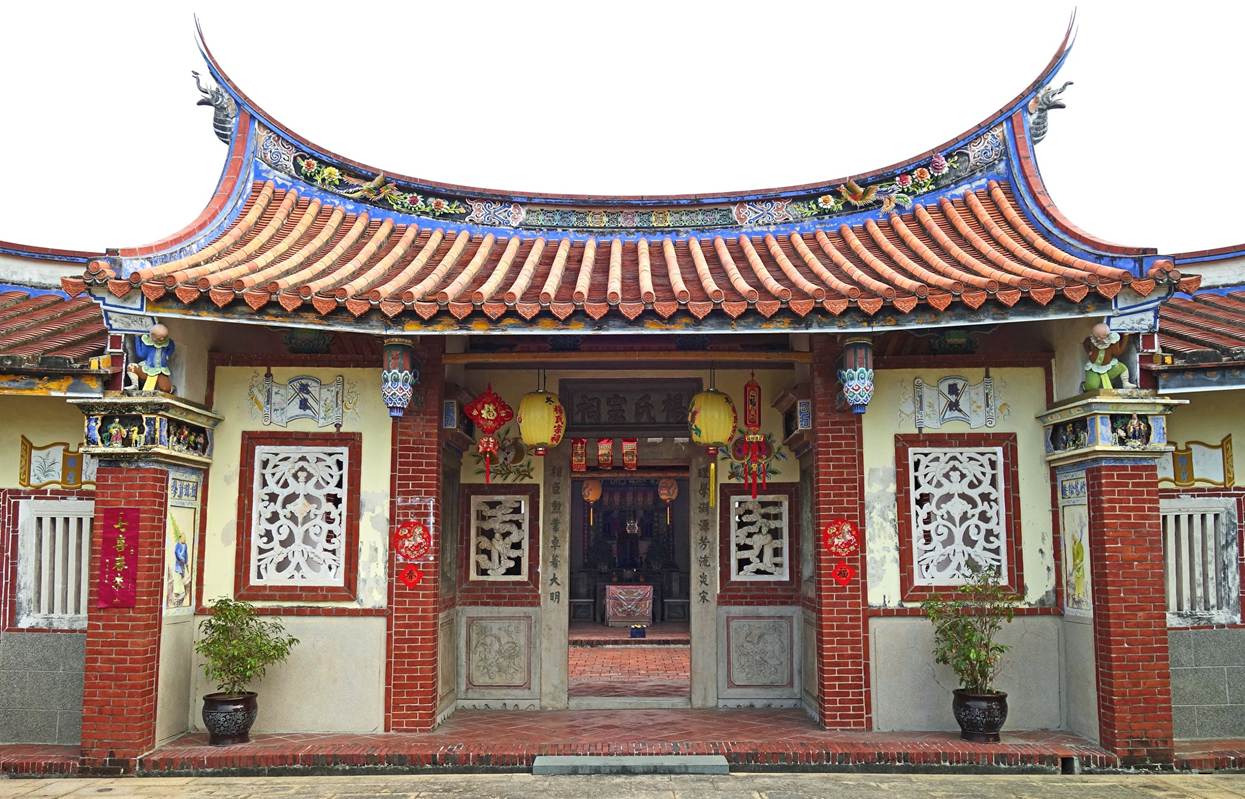
Close-up of the entrance of the temple.
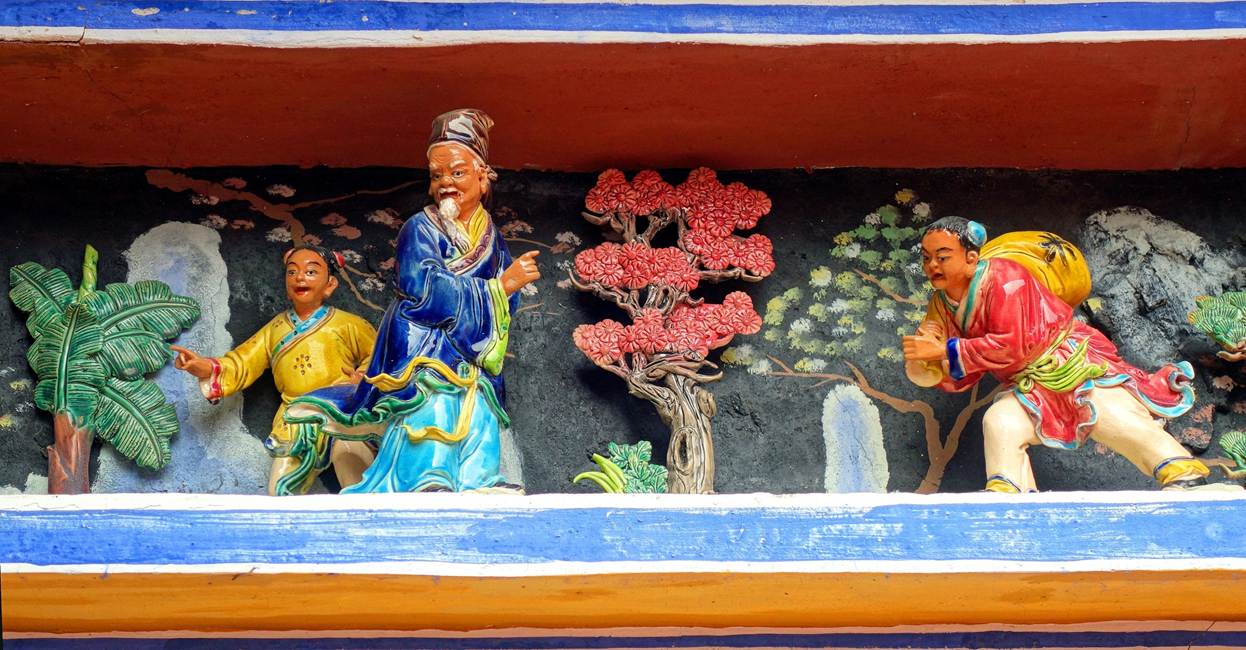
Close-ups of the statues located at the
top of the two side-walls of the temple's entrance (see above photo).
|
|
|
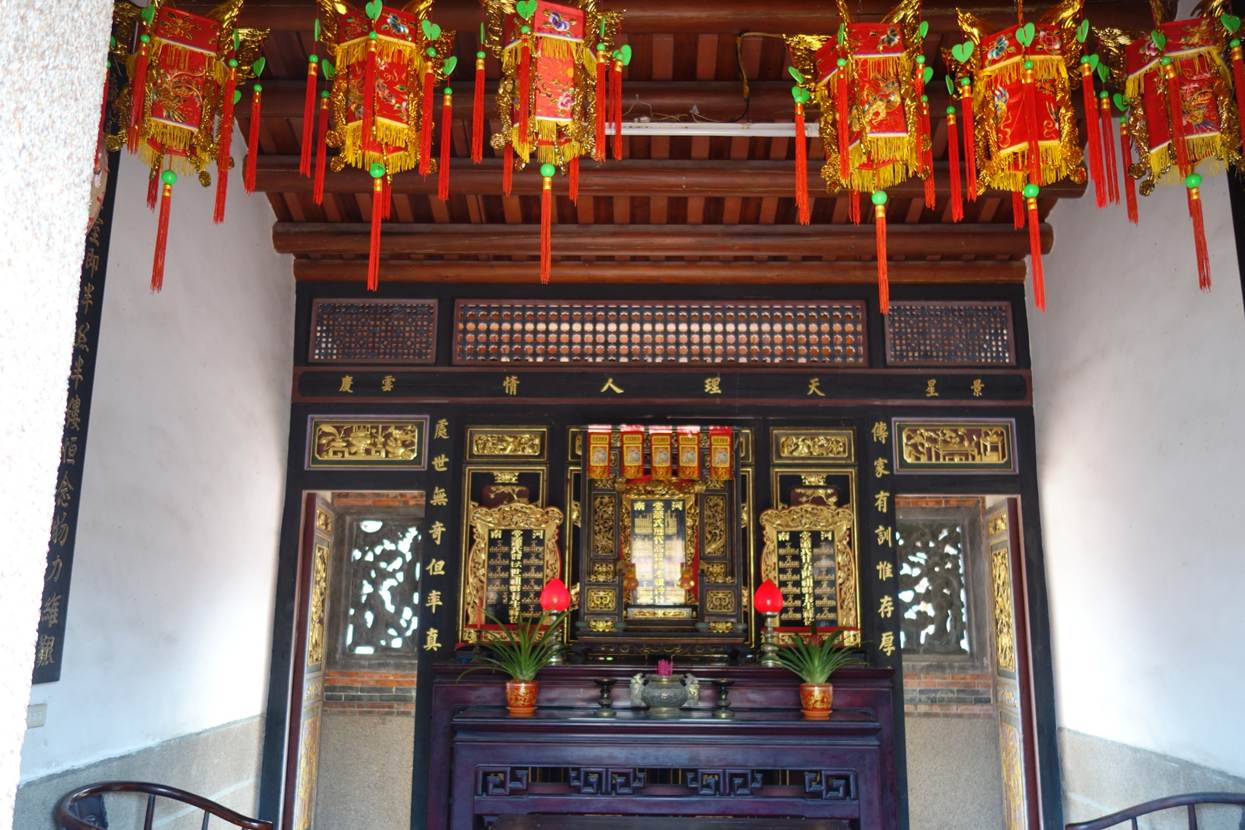
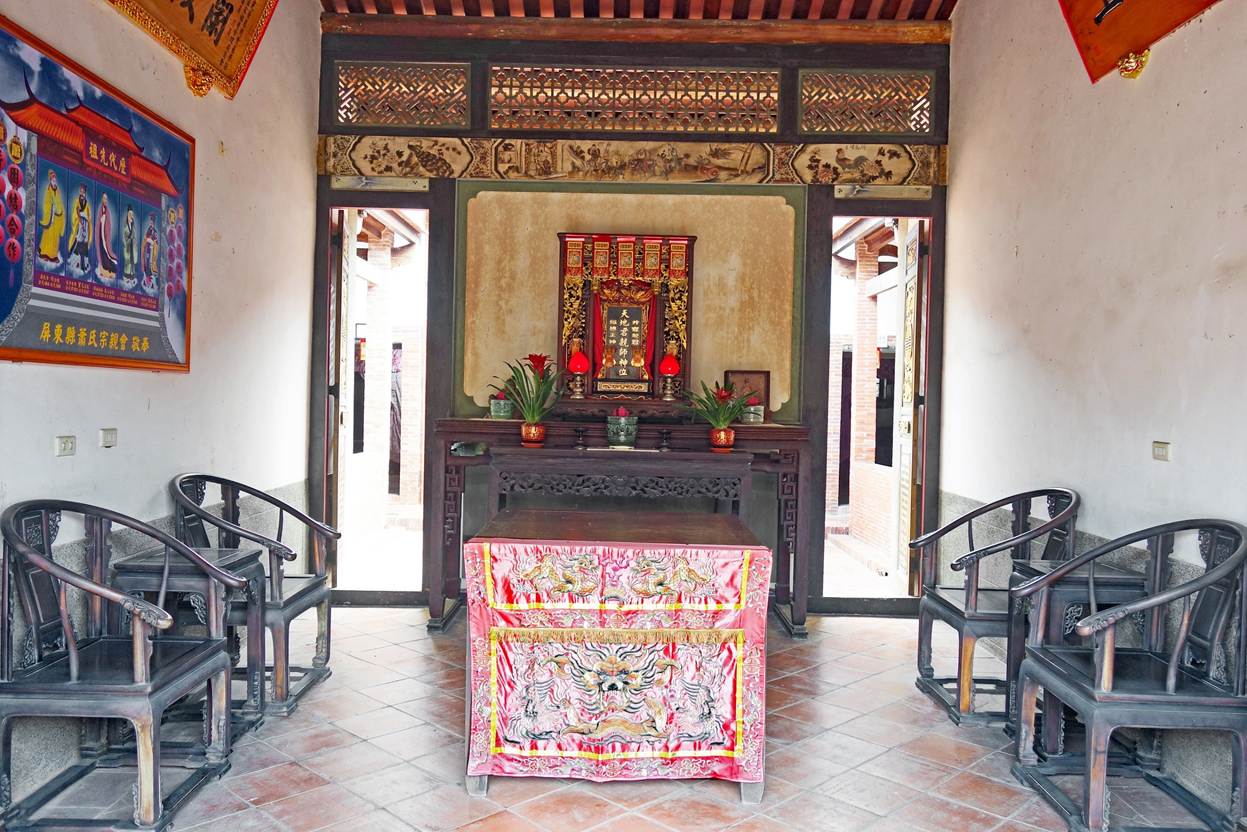
Altar housing the ancestors' spirit
tablets.
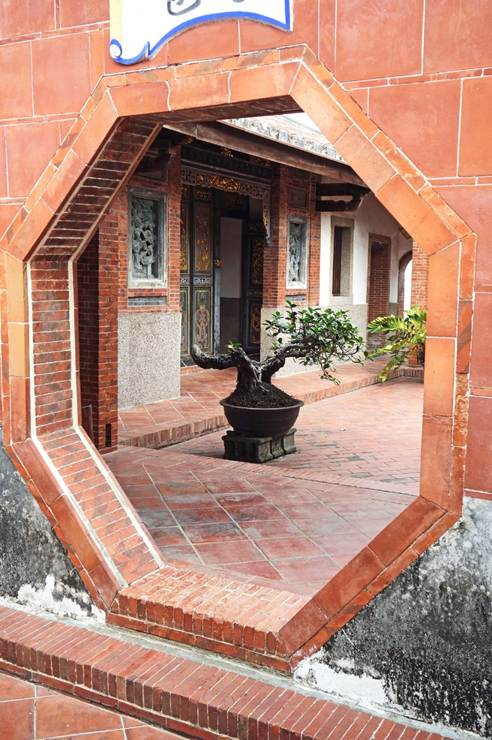
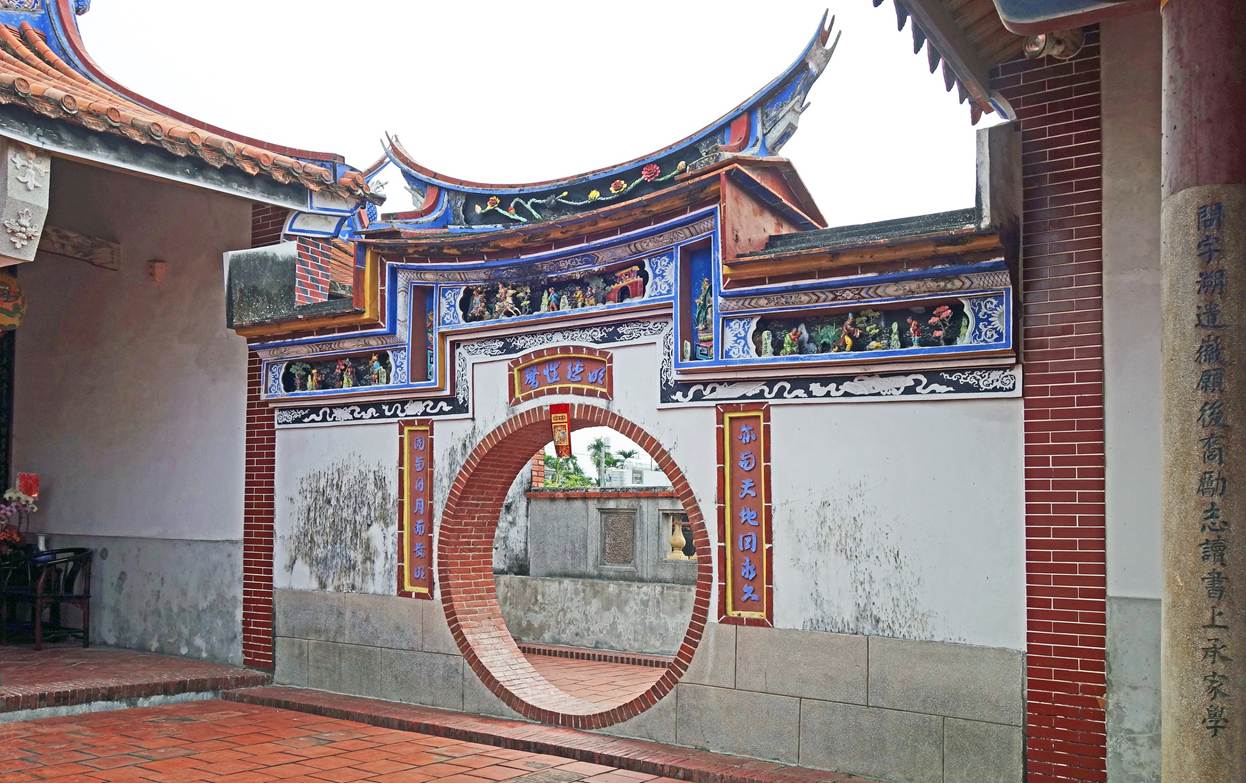
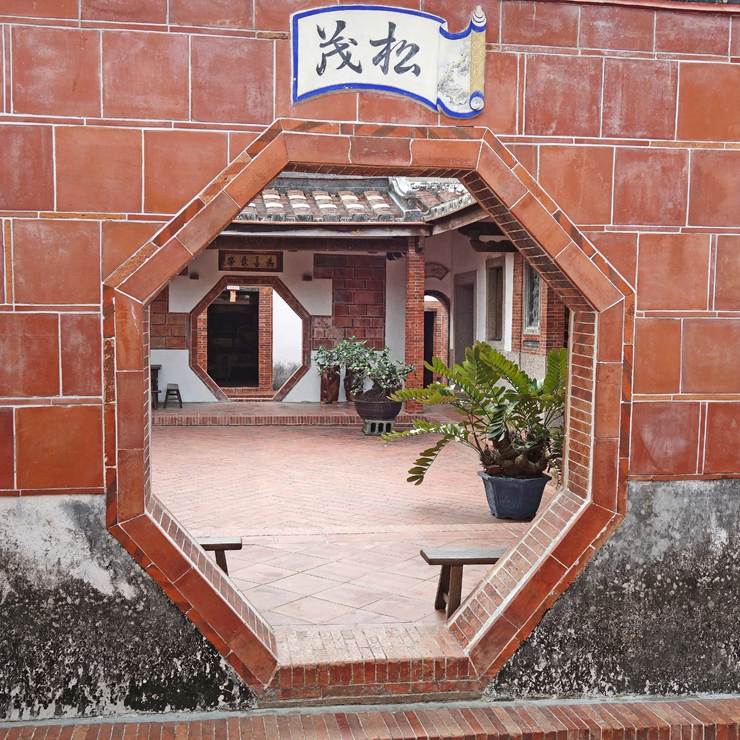
Moon gates, surmounted by bright
decorations, flank the inner courtyard.
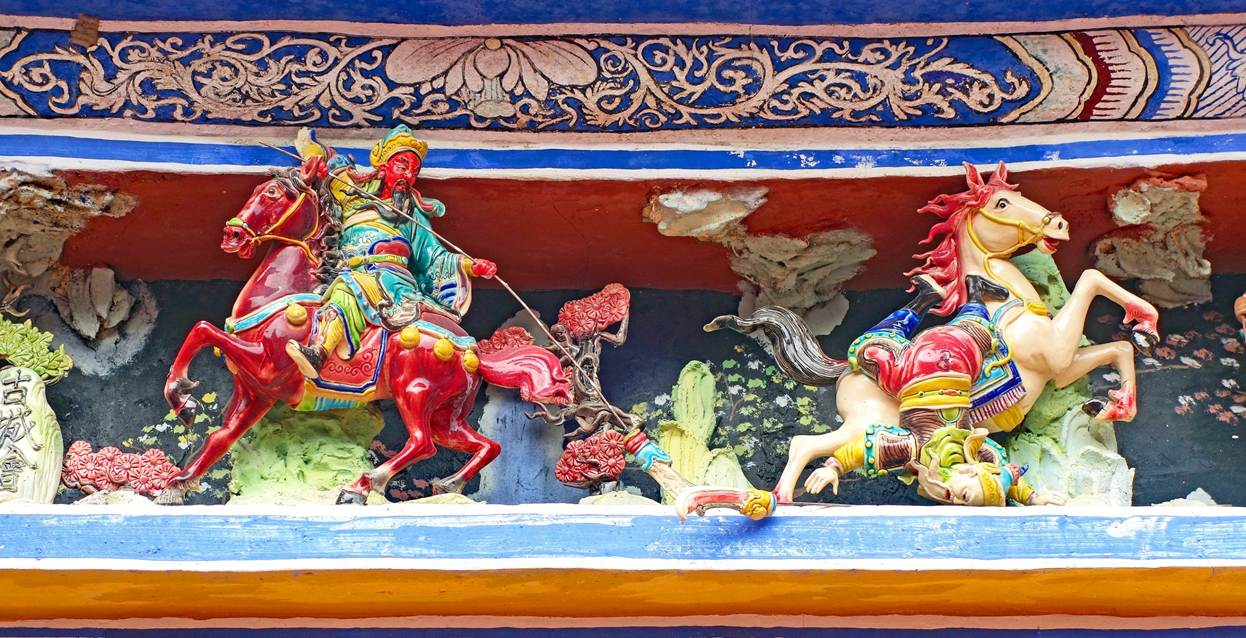
Close-ups of colorful pottery
decorations above moon gates.
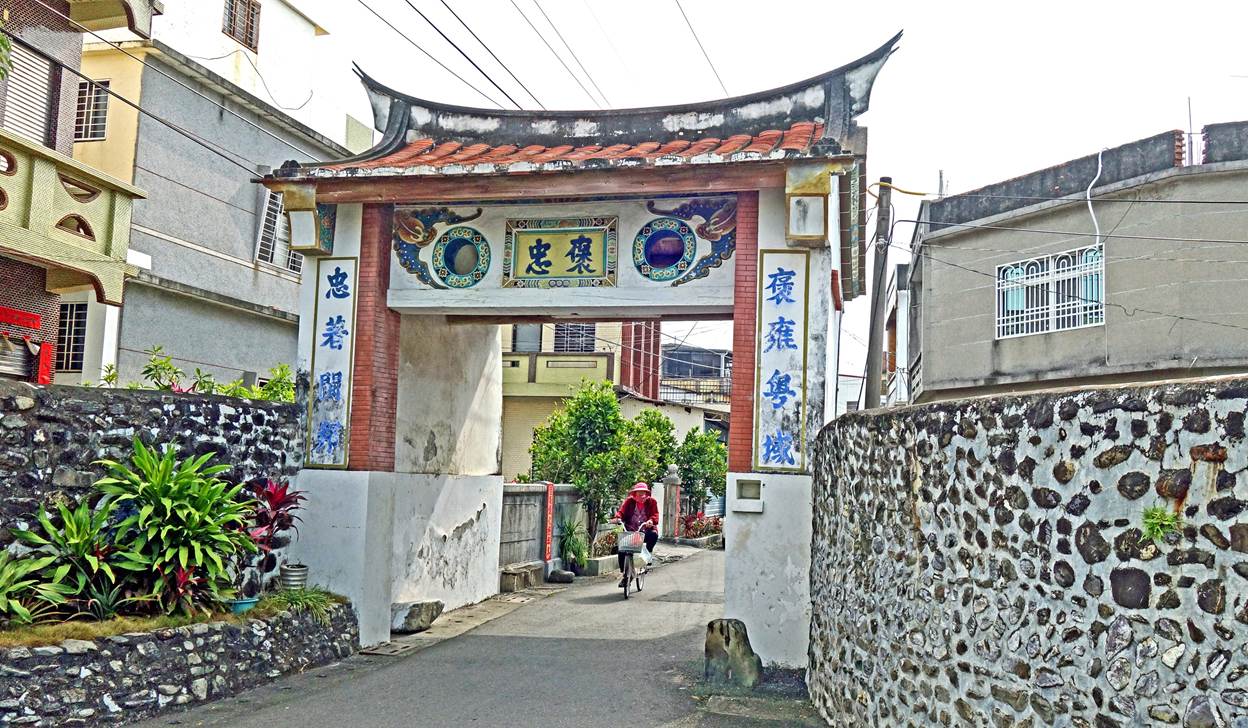
West gate (西隘門):
This gate is a largely
restored remnant of a fortification complex built in the 19th century by Hakka
people to protect themselves against other ethnic groups living nearby. The two
circular openings located beneath the roof, on either side of the yellow
plaque, are defensive gun holes.
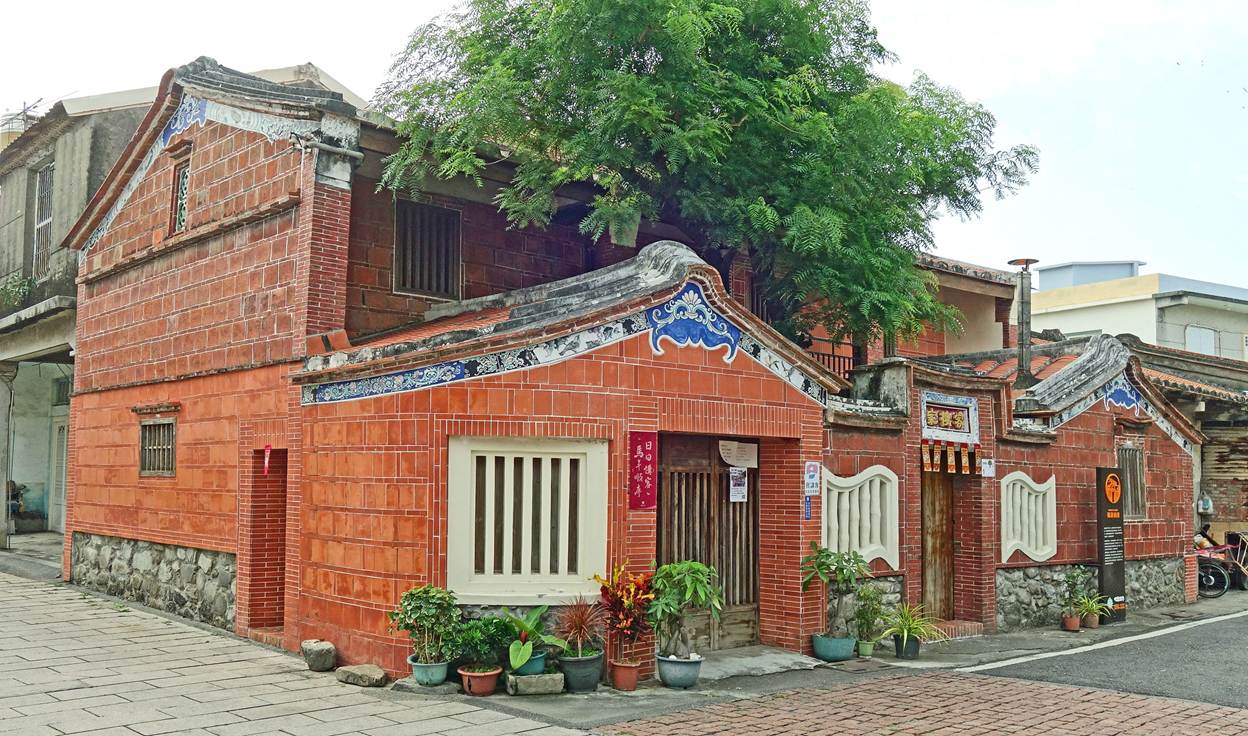
Zhang's Family Trading House (張家商樓):
Built around 1910 and
recently renovated, this house served simultaneously as a family residence, a
trading place, and a general store. Aquatic products, such as turtles, frogs,
eels, and catfish, were traded on the ground floor. Sugarcane, fruit, and sweet
potato were sold in the general store located in the corner wing of the house.
The upper floor, meanwhile, served as living quarters and storage space for
merchandise.
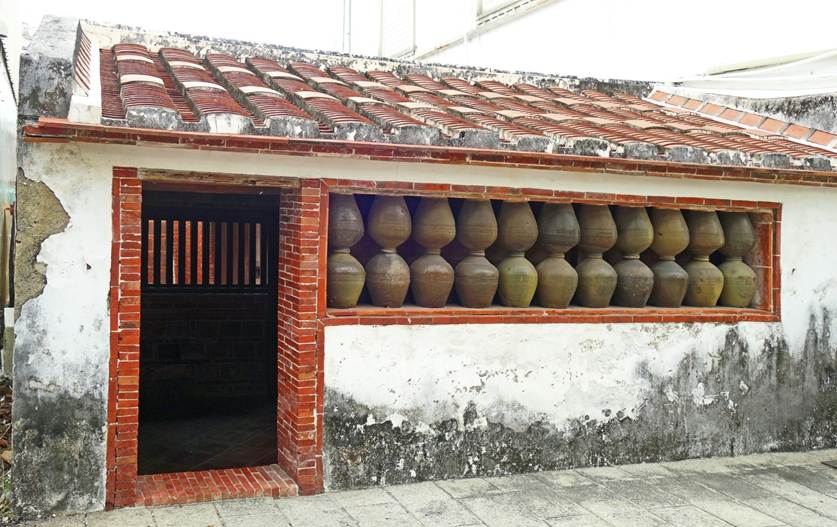
Xiao Family house (佳冬蕭屋伙房):
The Xiao (or Hsiao)
family is a prominent Hakka family of Jiadong. They trace their roots back to
an ancestor who immigrated to Taiwan over 200 years ago. After this ancestor's
grandson became a wealthy merchant, the family began construction of their new
home in 1860. This house became a vast residence comprising a linear sequence
of five halls, separated from one another by four inner courtyards. Two long
wings run on either side of this sequence, separated from the halls and
courtyards by two open-air corridors. The entire residence was completed in
1880, forming a rectangular complex entirely enclosed by walls. Still standing
today, it underwent renovation in 2022.
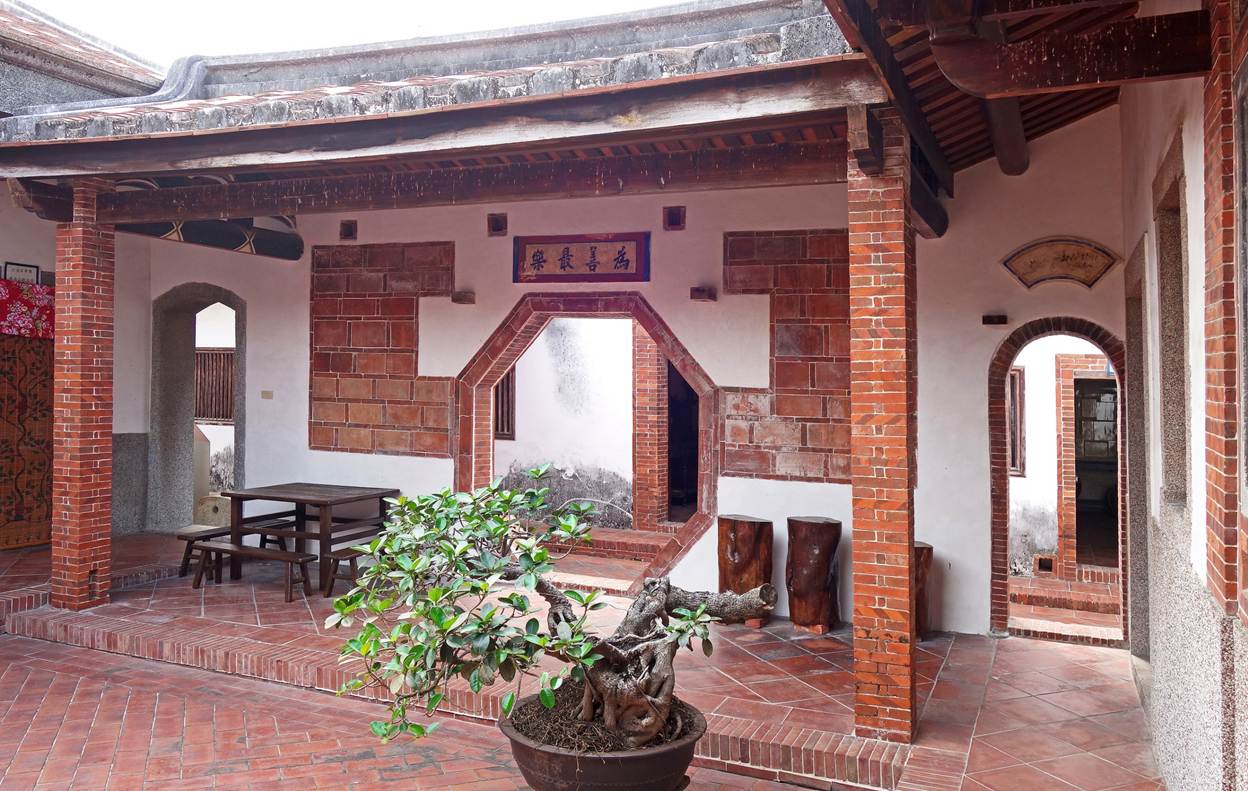
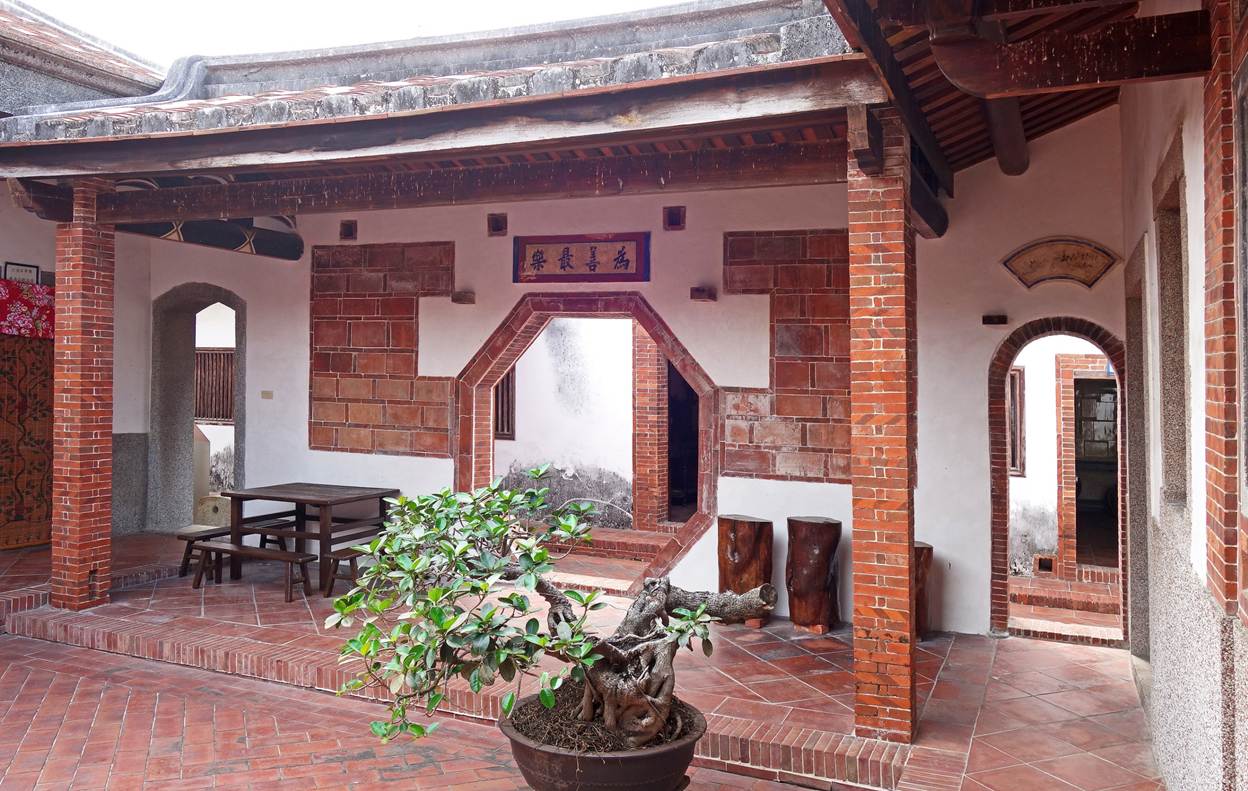
Bagua gates. They
provide passage between the courtyards, as wells as between the courtyards and
the side corridors.
|
|
|
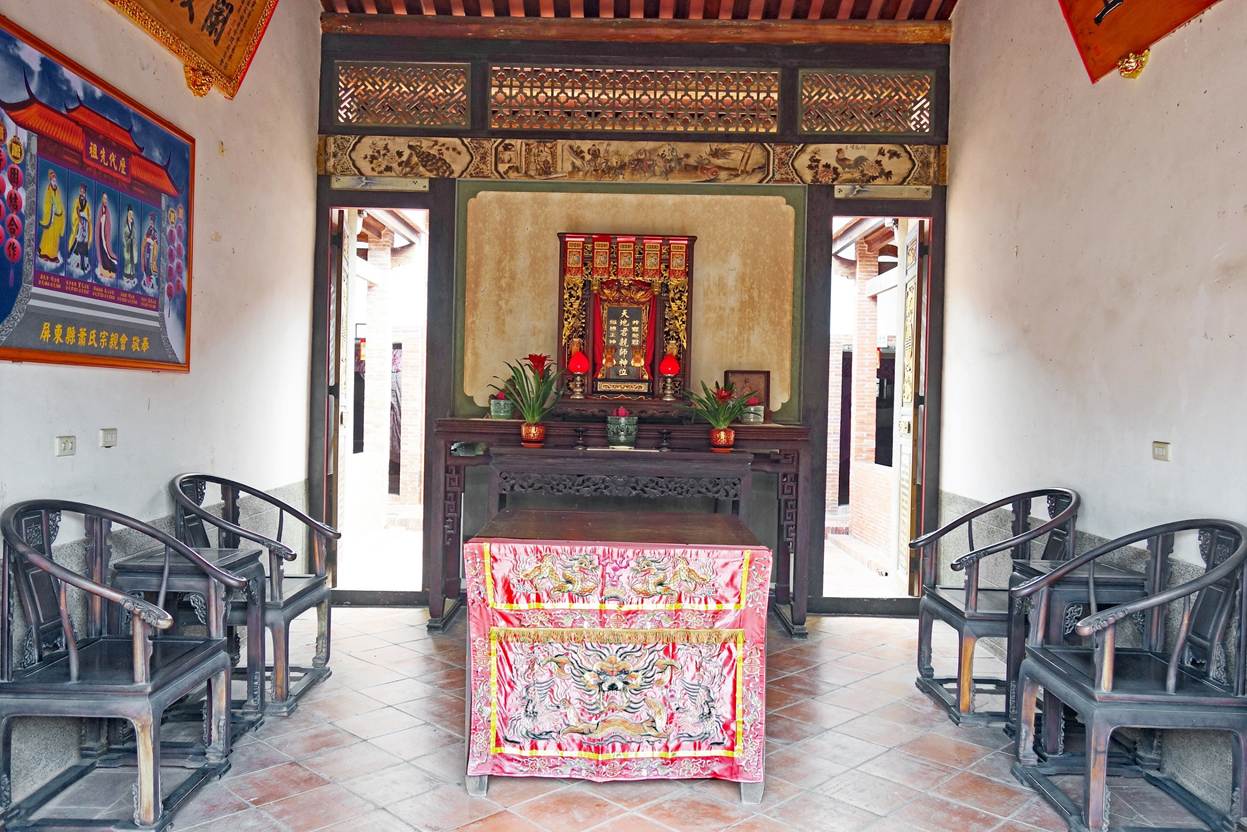
Family ancestor altar
in the second hall. It houses the spirit tablets of the deceased family
members.
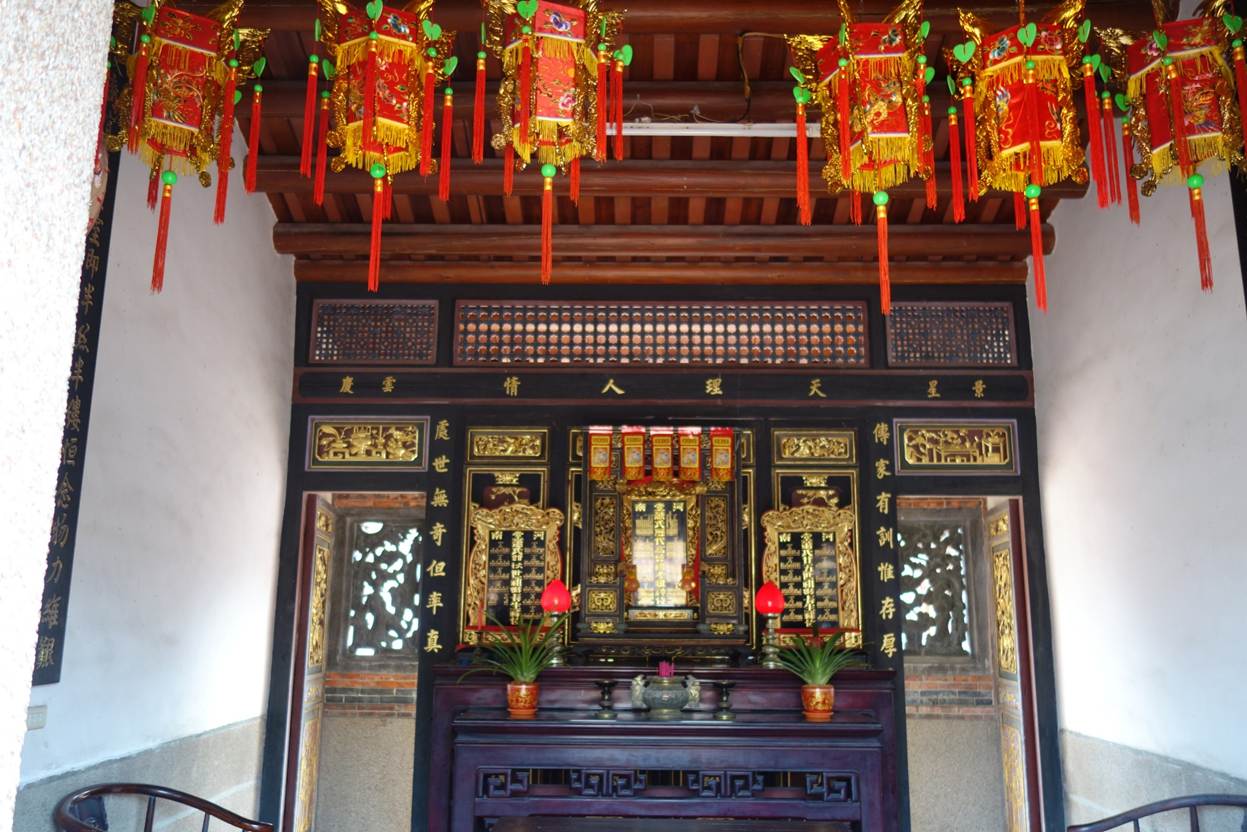
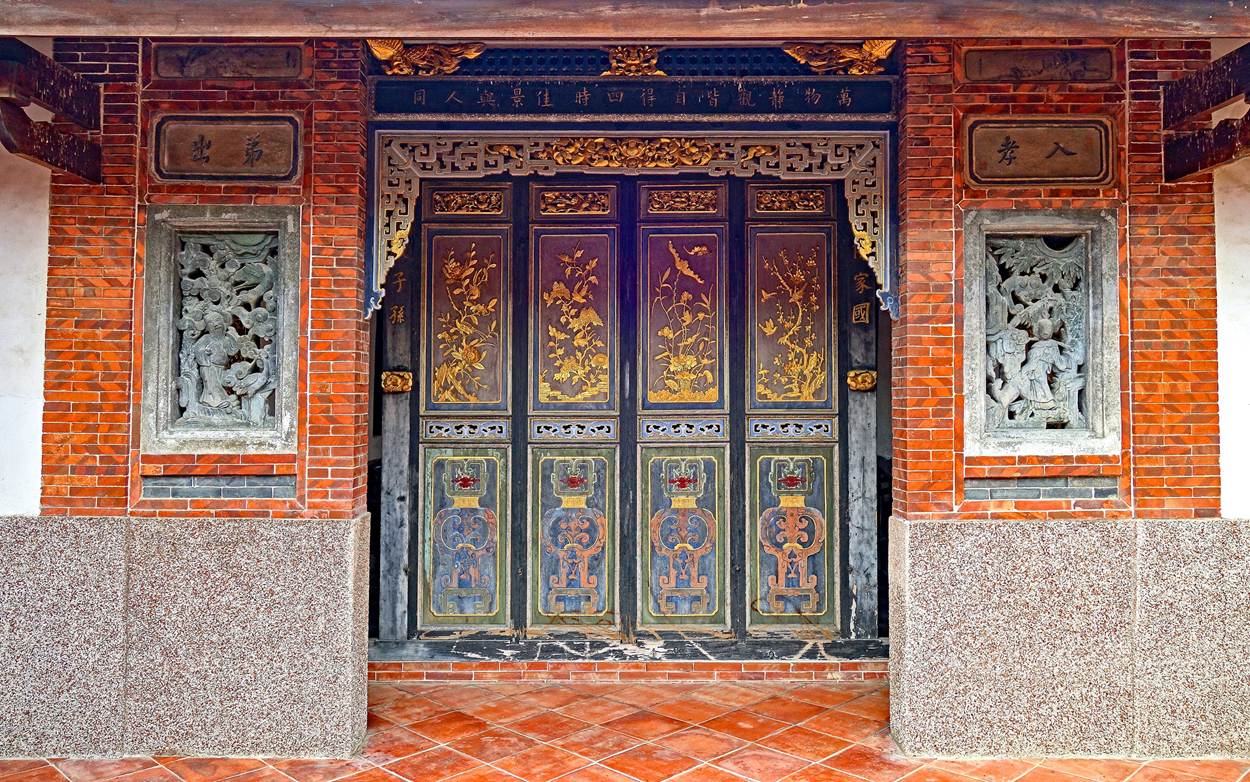
Exquisite rear door of
the second hall. Its two side windows, finely carved in stone, are visible in
the photo above behind the altar.
Another altar in the
third hall featuring other spirit tablets.
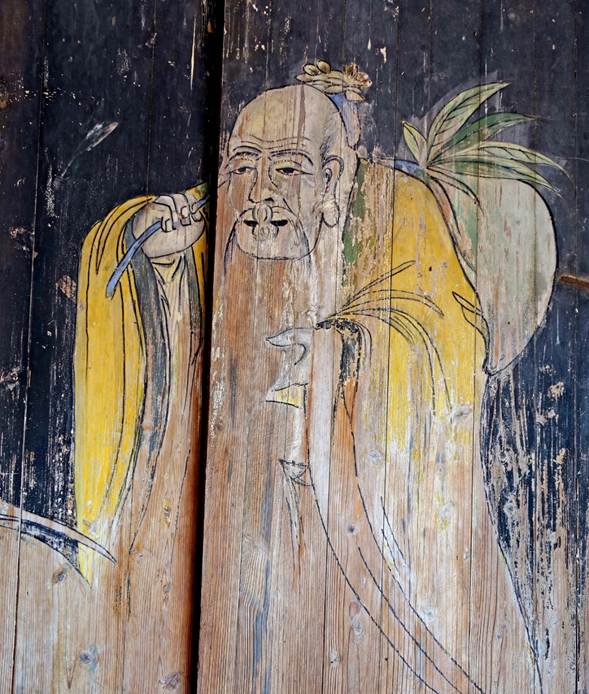
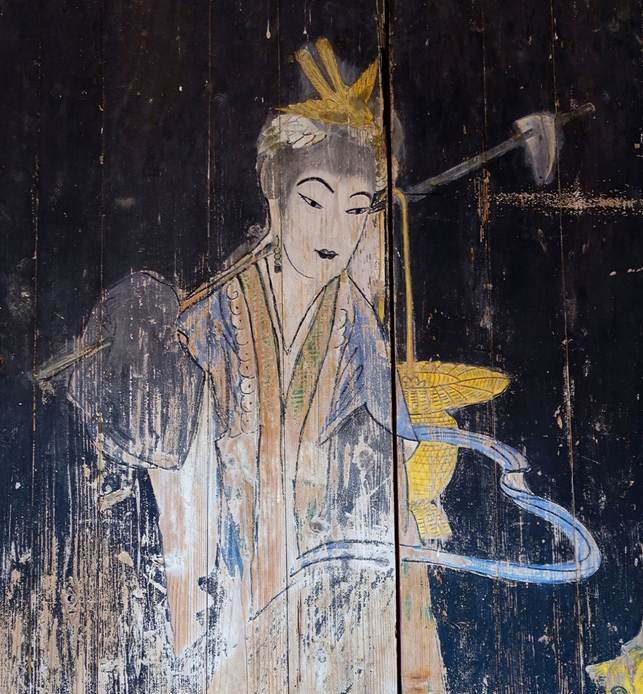
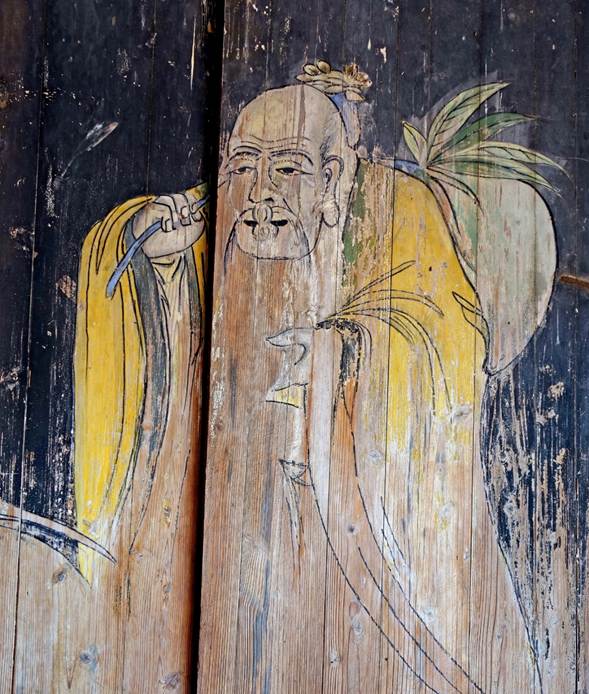
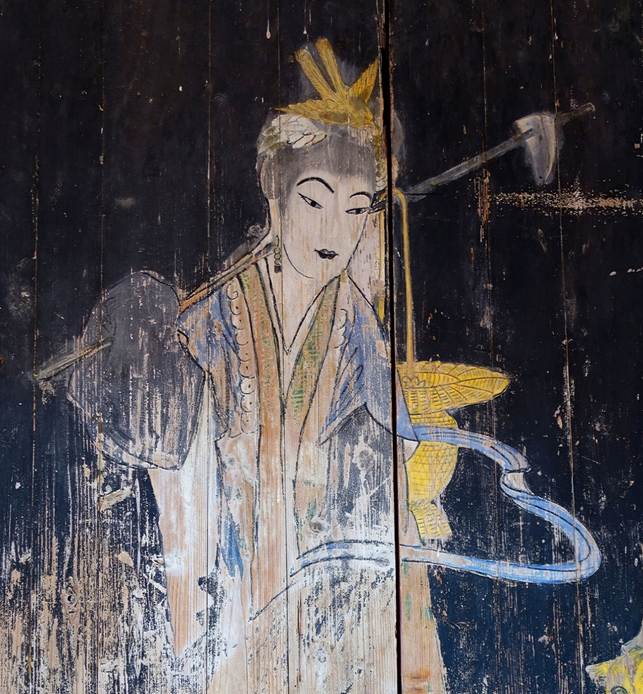
Old painted wooden door
panels (no longer in use) stored in a room of the residence.
|
|
|
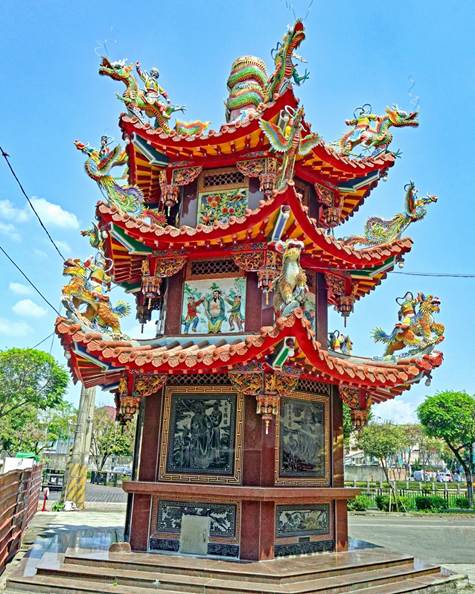
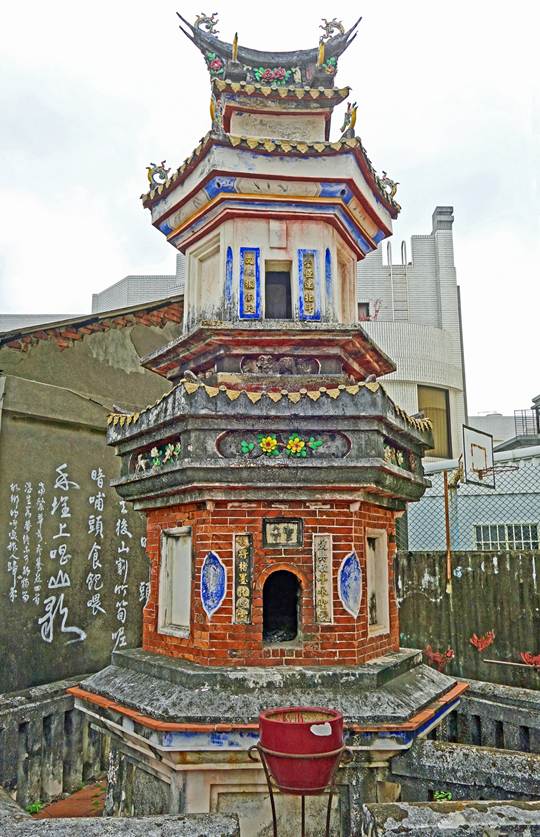
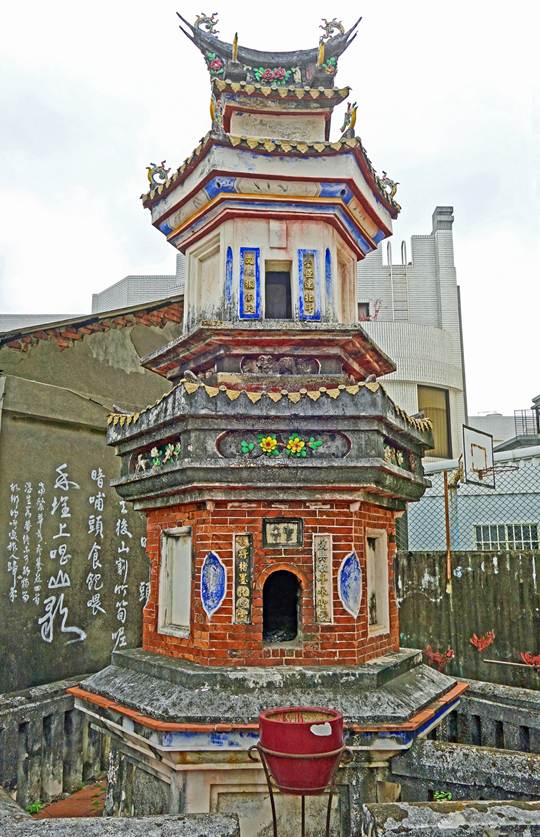
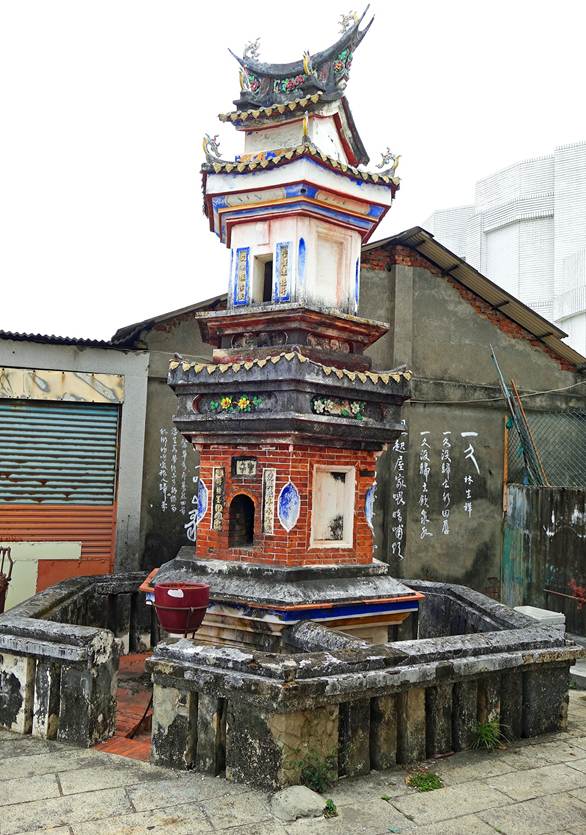
Jiadong
Jingziti (佳冬敬字亭):
The term ″jingziti″
(敬字亭) means ″reverence-for-script
pavilion″. It designates a specific type of paper-burning tower. In the
Confucian tradition, any paper bearing written characters is to be regarded as
sacred and must not be discarded disrespectfully. A Jingziti is a
kiln used to burn such paper in a solemn manner, thereby honoring the written
word, the culture it embodies, and the scholars who created it. The resulting
ashes are collected and scattered into a clean location. In Taiwan, this
ancient tradition was once deeply rooted within the Hakka community.
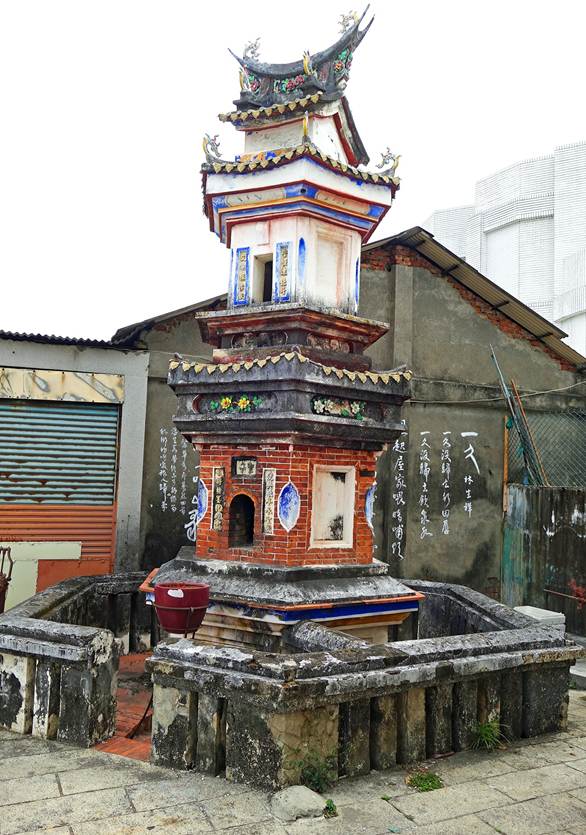
View of the Jiadong
Jingziti, located near the entrance to the Xiao Family House. Its lower level
is used for burning written characters, while its upper levels are dedicated to
deities such as Wenchang Dijun (文昌帝君), the Taoist god of
culture and literature
|
|
|
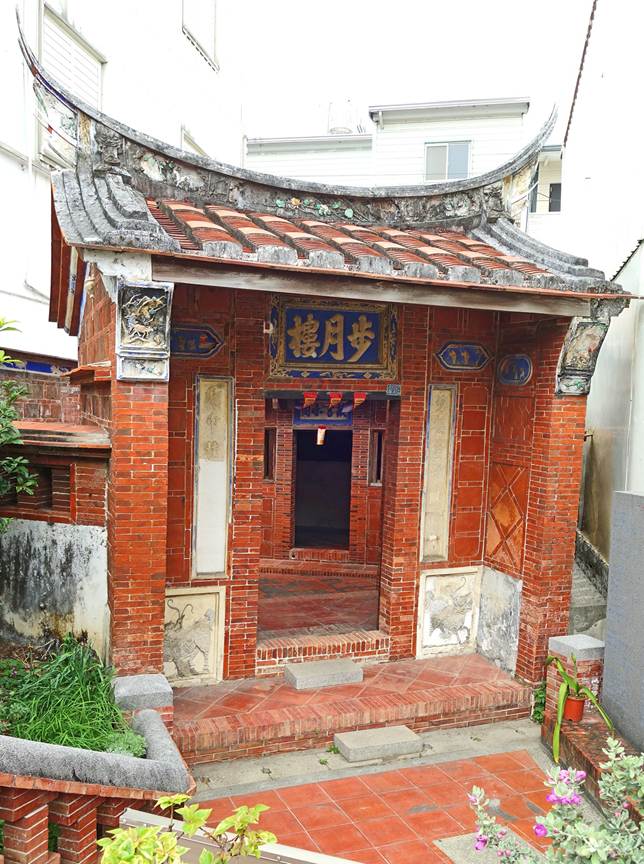
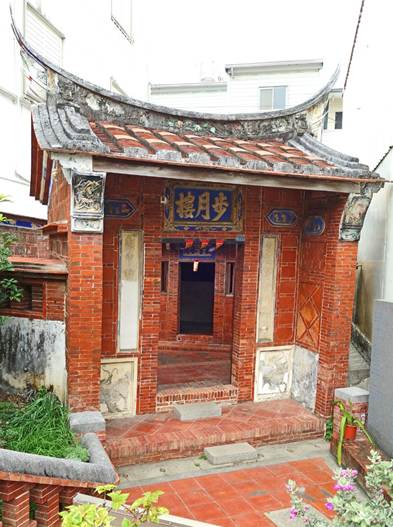
Moon-Walking
Gate (步月樓):
This gate, pictured below,
formerly provided access to service areas located at the rear of the Xiao
house. It is now remembered as the final Hakka stronghold against the Japanese
Imperial Army during the Battle of Chiatung (see above).