Taiwan: Taipei City (Part 1/2)
[March 2008,
June 2009, April 2017, November 2018, March 2025 & 2026]

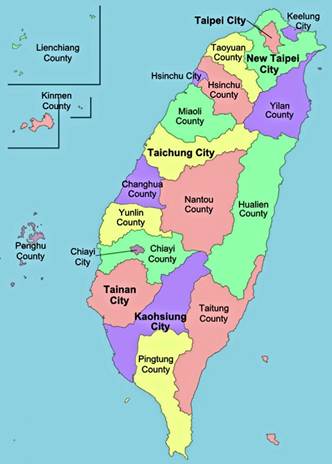
[Source: https://en.wikipedia.org/wiki/Taiwan_Area ]
Taipei
City, the capital of Taiwan, covers a territory that encompasses not only a
vast urban area, but also large mountainous zones, including a significant portion
of the Yangmingshan National Park, a volcanic region. This page and its
companion page (Part 2/2)
present photos of I took during several trips to Taipei City. These photos are
arranged according to the locations of the depicted sites, following
approximately a north-to-south axis. This page shows photos of sites situated
north of the MRT Minquan West Road Station (捷運民權西路站), while
the other page shows photos south of it.
Mount Cising in Yangmingshan
National Park (七星山主峰):
[June 2009]
Left: Hiking trail to Mt. Cising. Right: At the summit of Mt. Cising's
main peak (1120m), Yangmingshan National Park's tallest peak.
|
|
|
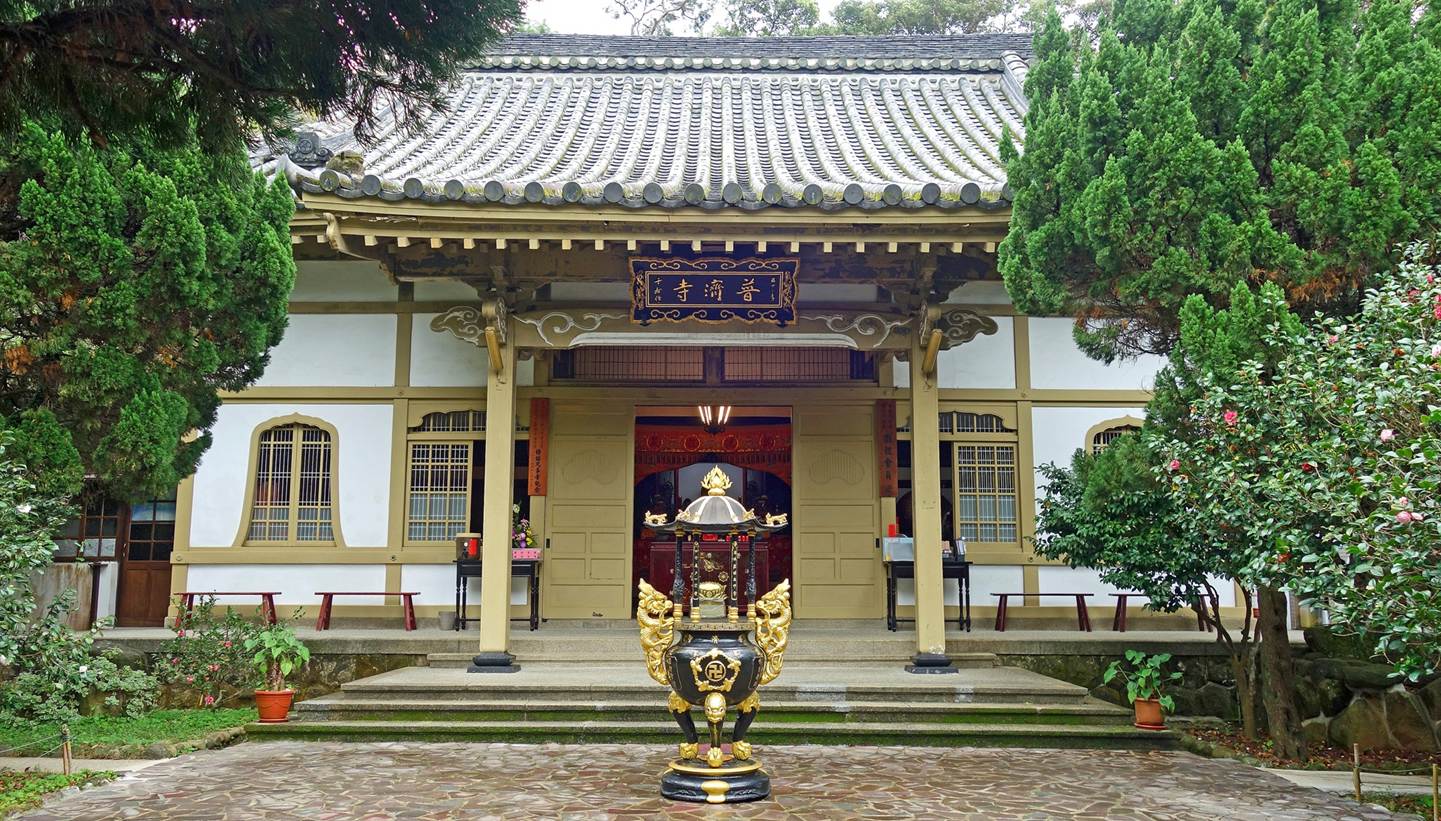
Puji temple (北投普濟寺):
[March 2025]
Built in 1905 on a hill
in the northern Beitou district of Taipei City, this temple is one of the few
remaining Japanese-era Buddhist temples in Taiwan. Its construction was
financed by Japanese railway workers. The traditional Japanese architecture of
its main prayer hall includes a simple swallowtail roof and bell-shaped
windows. The temple is dedicated to Guanyin (觀音), known as Kannon in Japan, the popular
Buddhist deity (bodhisattva) of mercy and compassion.
Main prayer hall.
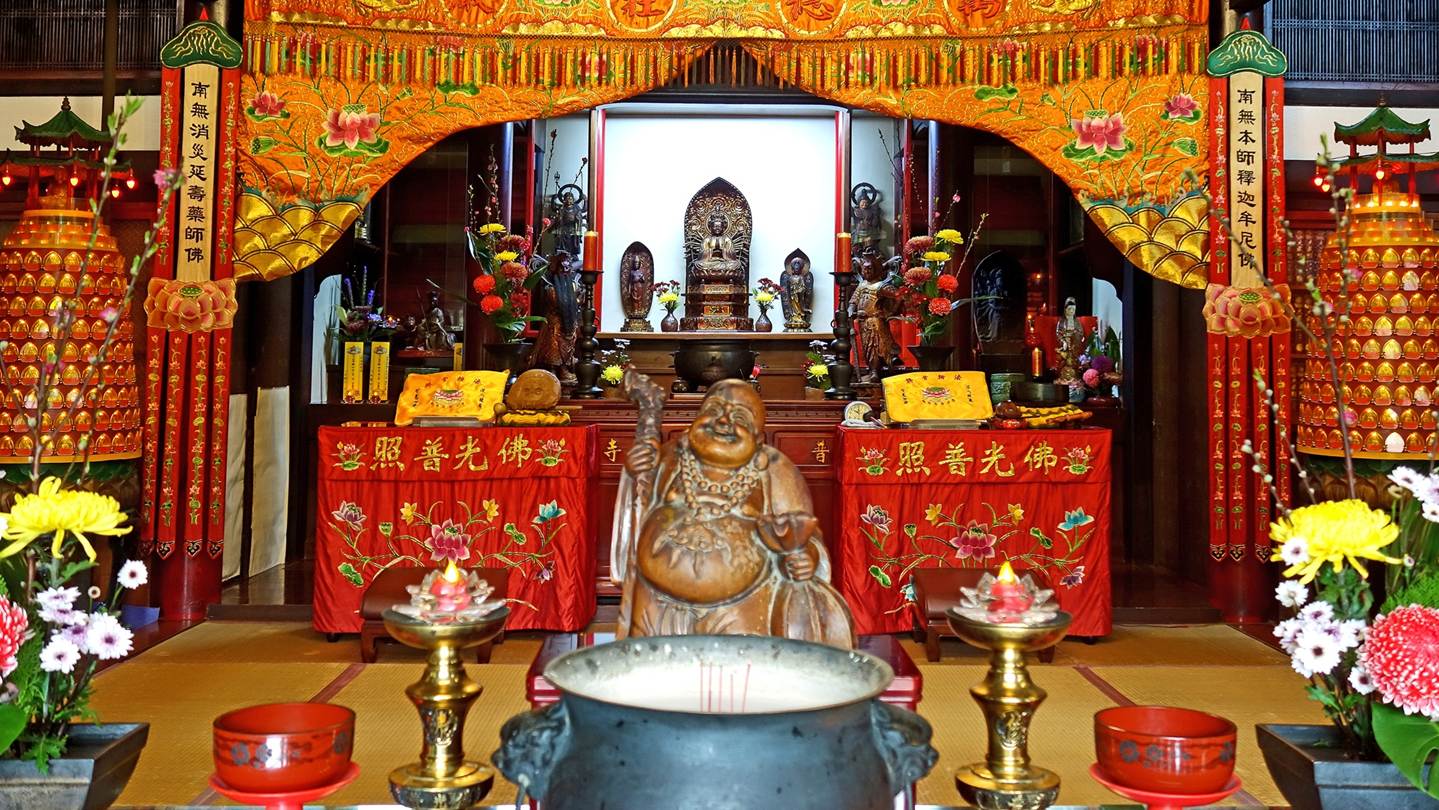
Interior of the main
prayer hall.
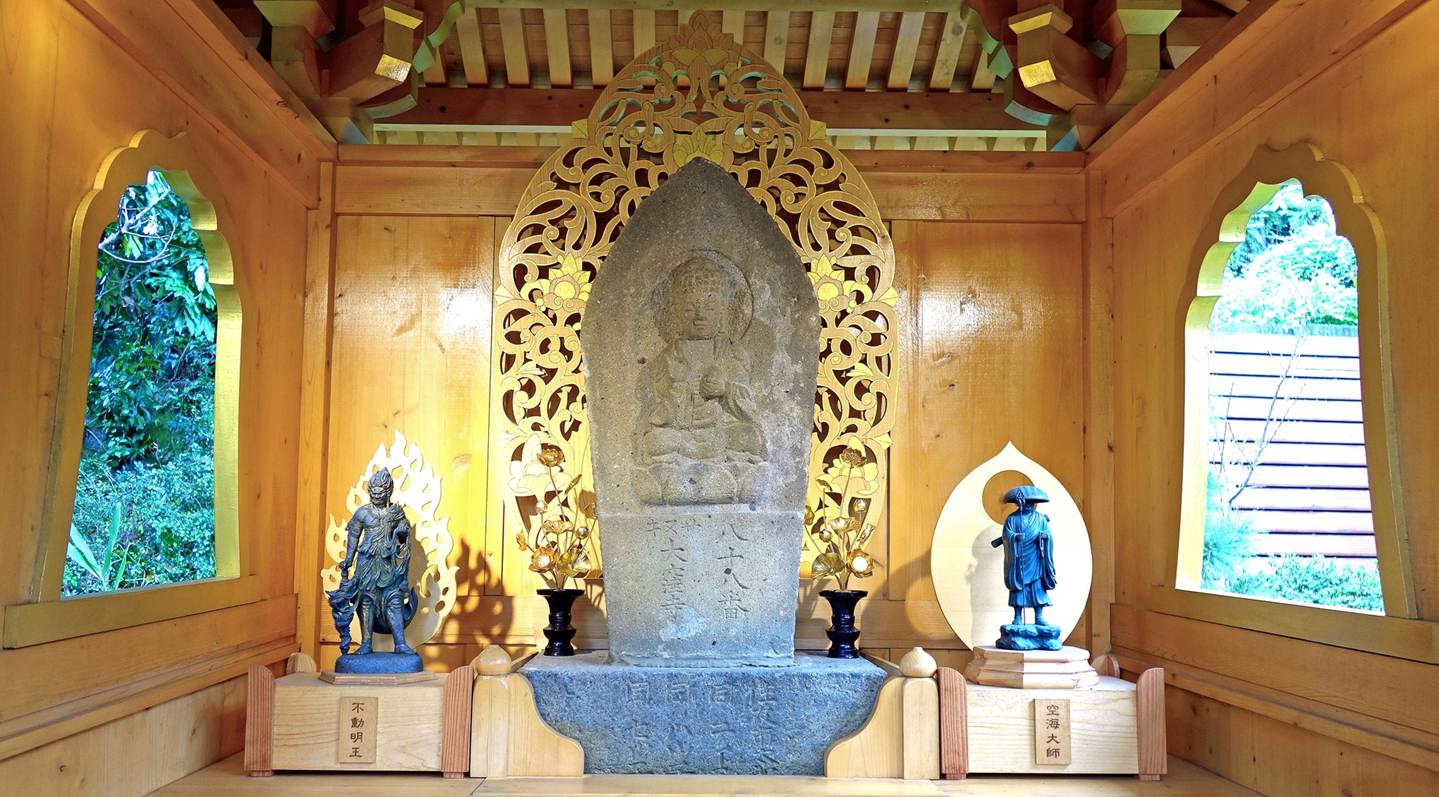
Small shrine in a
separate building.
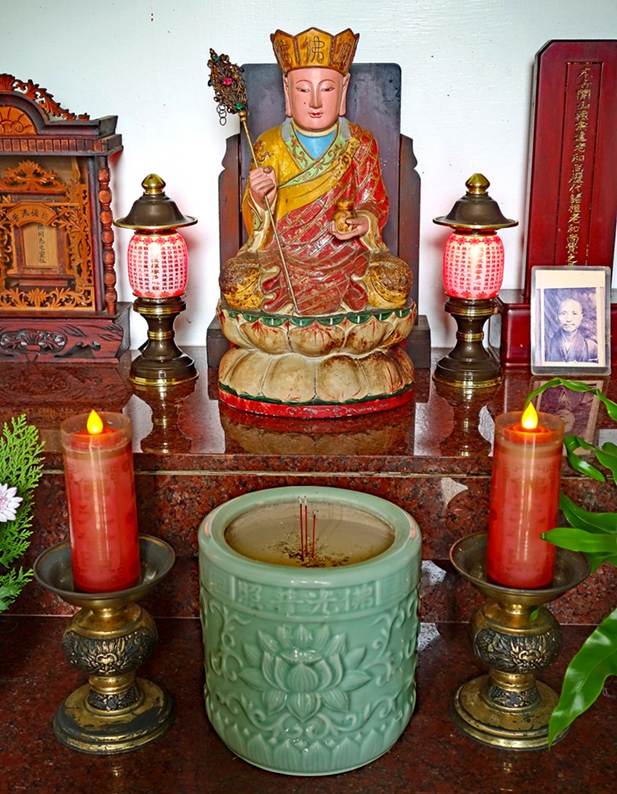
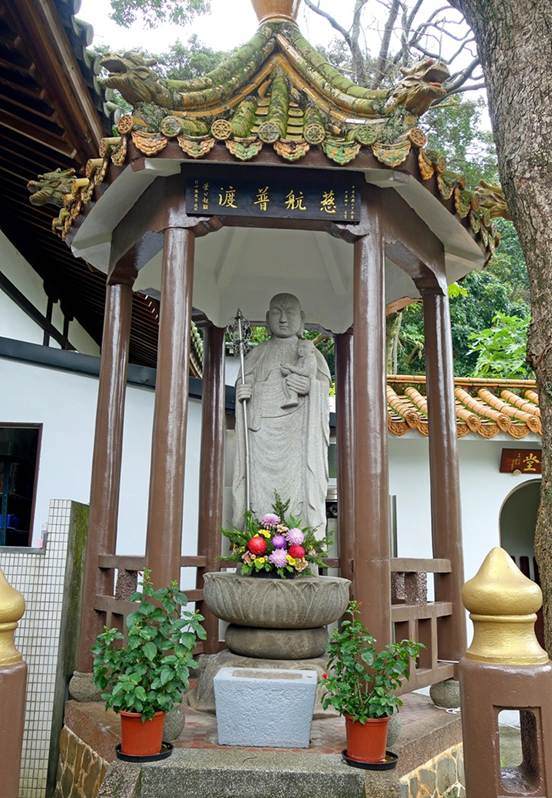
Two different
representations of the same Boddhisatva. Left: a typical Japanese representation
of Jizo holding a child. Right: a classic Chinese representation of Ksitigarbha
(地藏), known as Jizo in Japan.
|
|
|
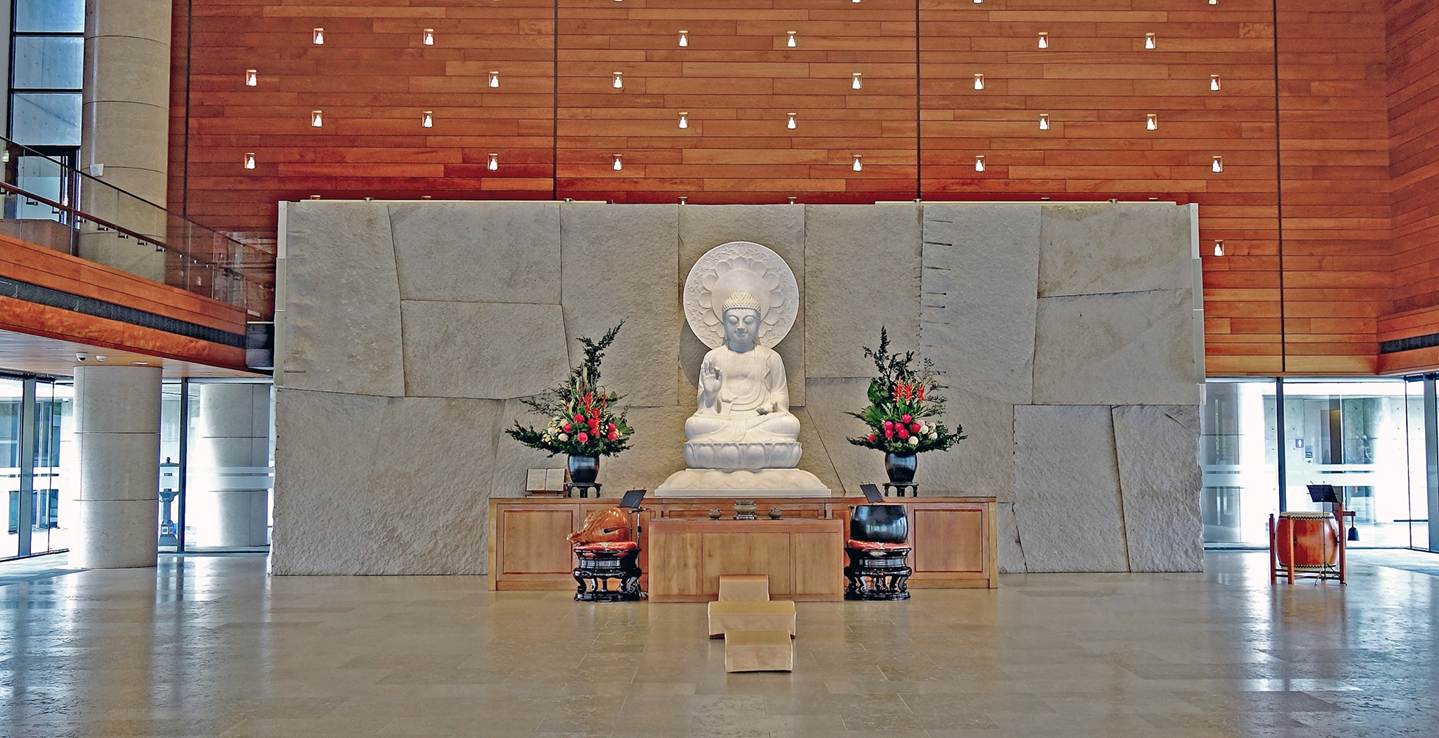
Dharma Drum Mountain Nung Chan Monastery (法鼓山 農禪寺):
[March 2025]
Built in 2012 with a modern minimalist
architecture, this Zen Buddhist temple is a major Buddhist center for Chan
meditation and Buddhist education.
Interior of the main Buddha hall.
Guandu temple (北市關渡宮):
[March 2025]
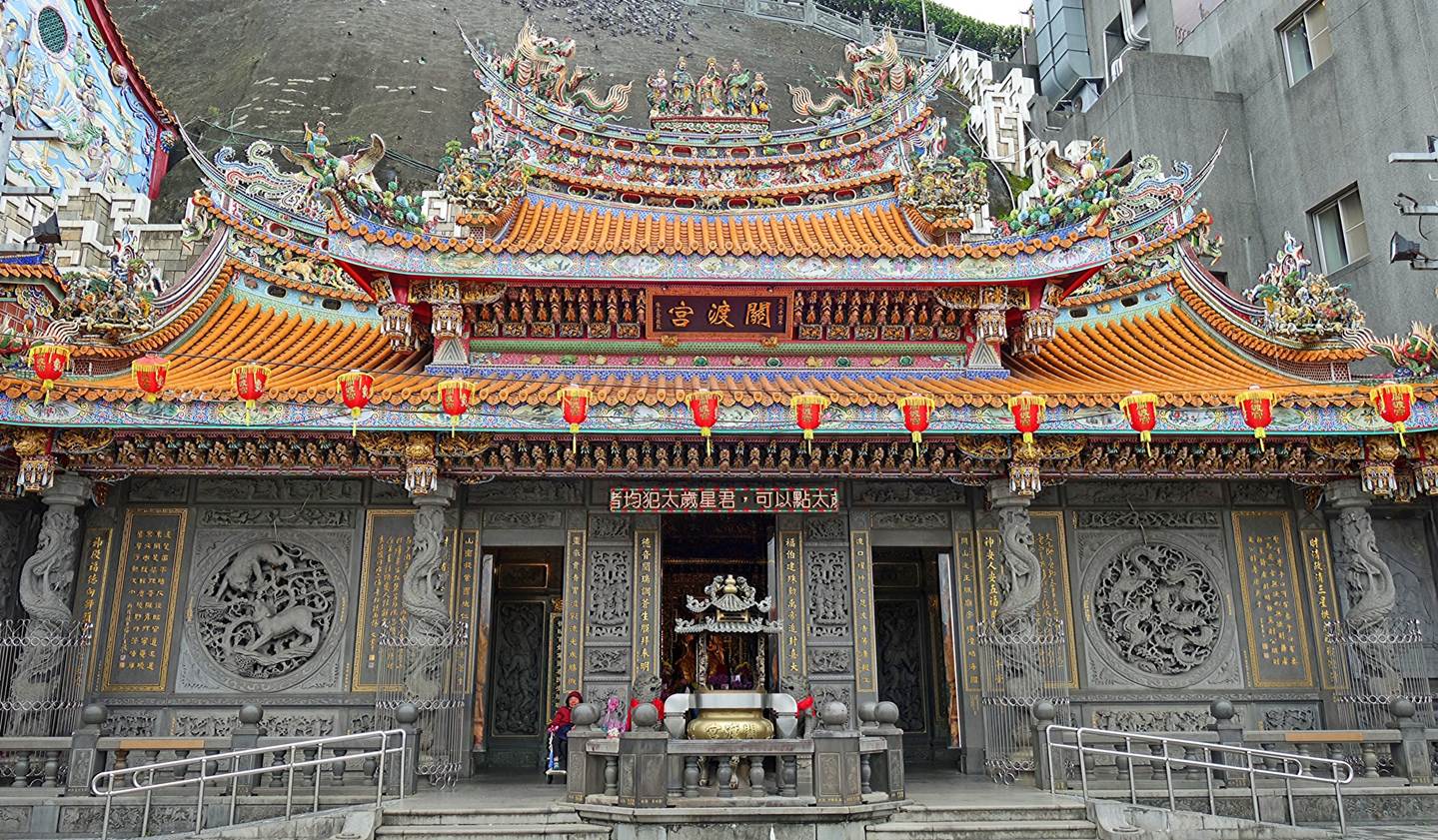
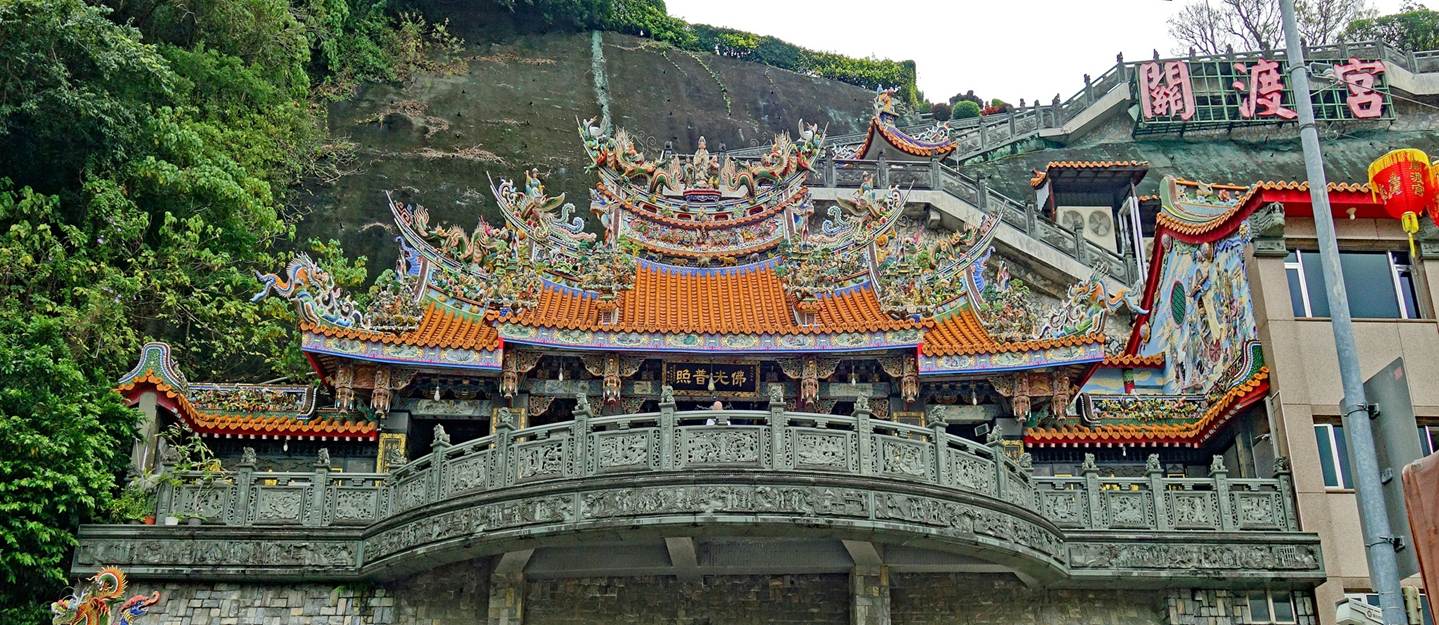
Originally built in 1712, this temple was subsequently
expanded many times. It is now an exuberant complex featuring richly decorated
worship halls topped by colorful roofs. These halls are distributed on two
natural slopes forming a shoulder that extend between the Tamsui river (淡水河) to the west and a small tributary to
the southeast. Man-made decorated tunnels connect the two sides of the
shoulder. Mazu (媽祖), the Taoist goddess of the sea, is the principal deity worshipped in
this temple. But the temple also enshrines many other deities.
Entrance of the temple on its western
side.
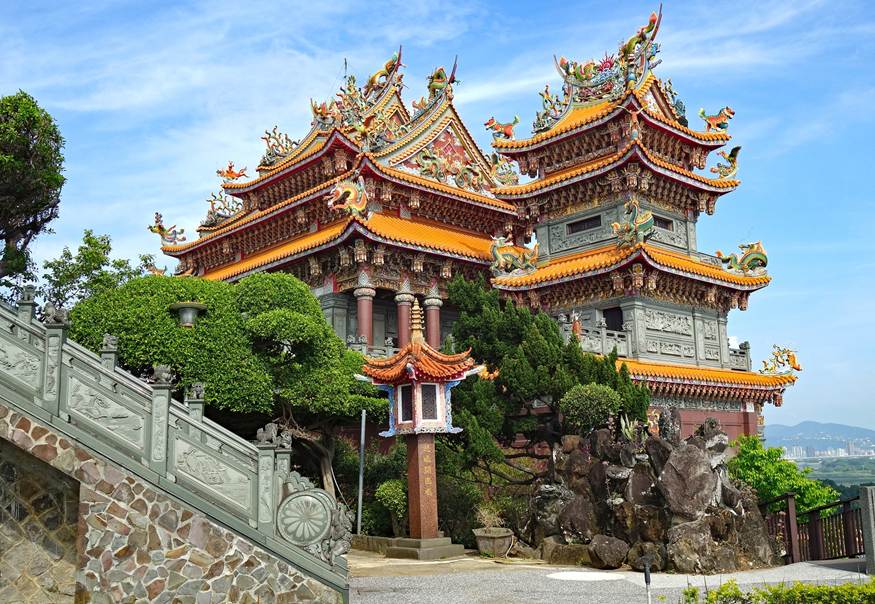
Part of the temple on the
western slope above the Tamsui river.
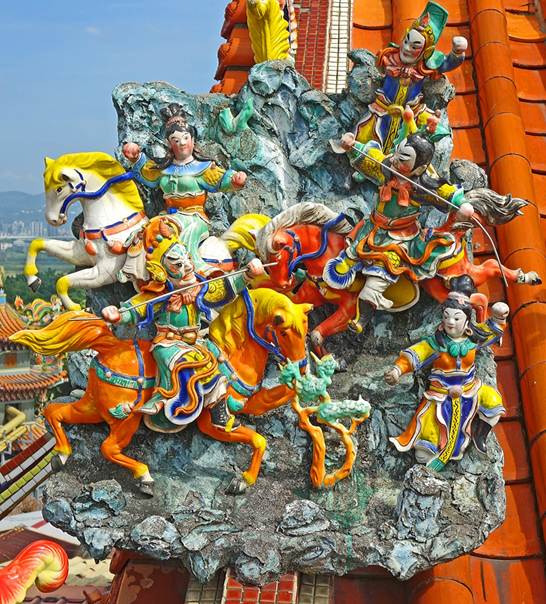
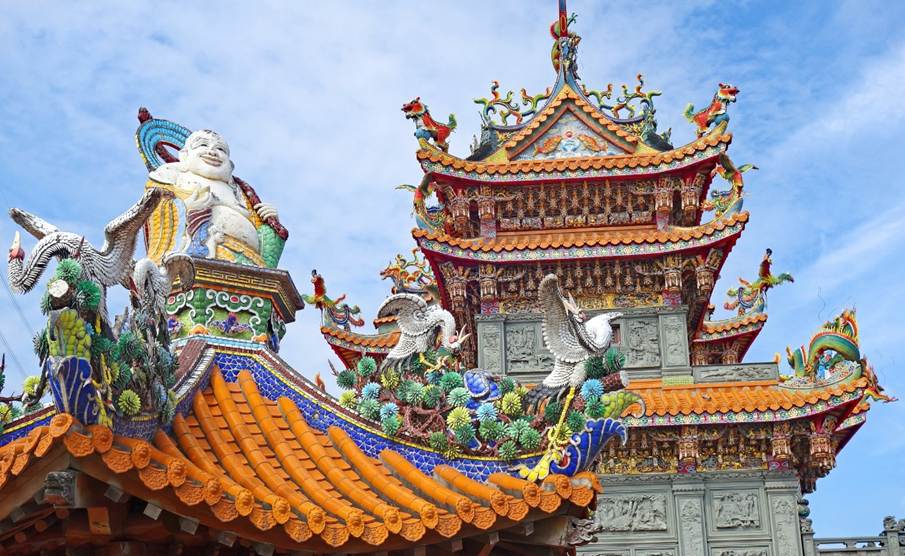
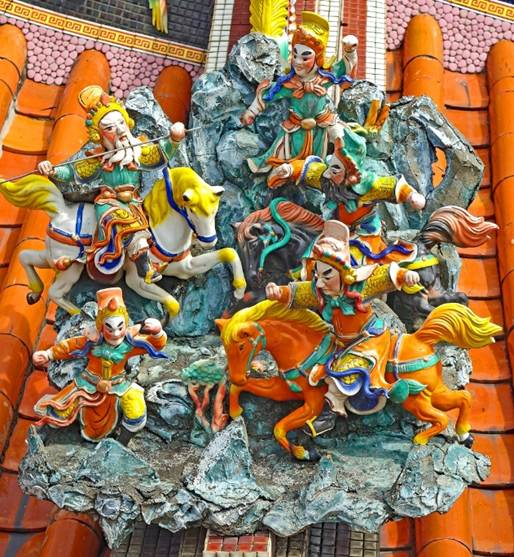
Temple buildings situated
on the ridge between the western and southeastern slopes (left photos), and
some of their roof decorations (right photos).
|
|
|
|
|
|
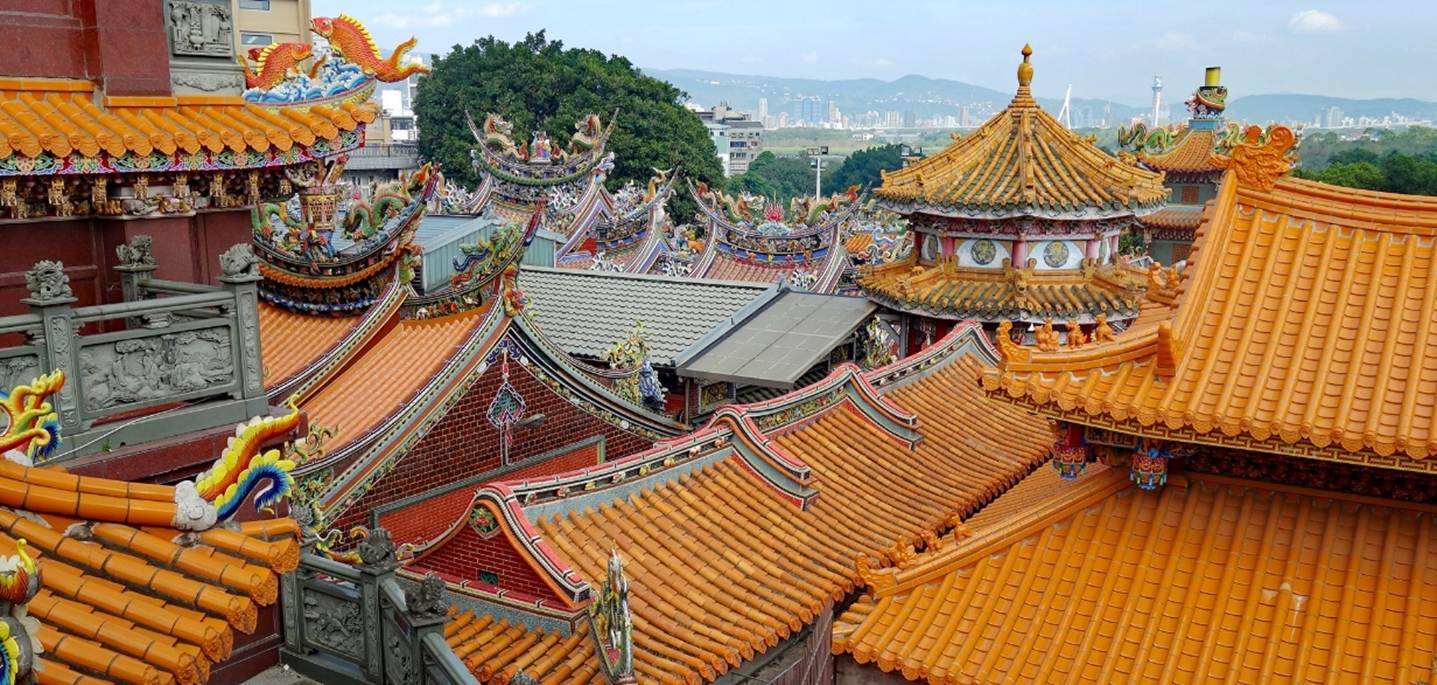
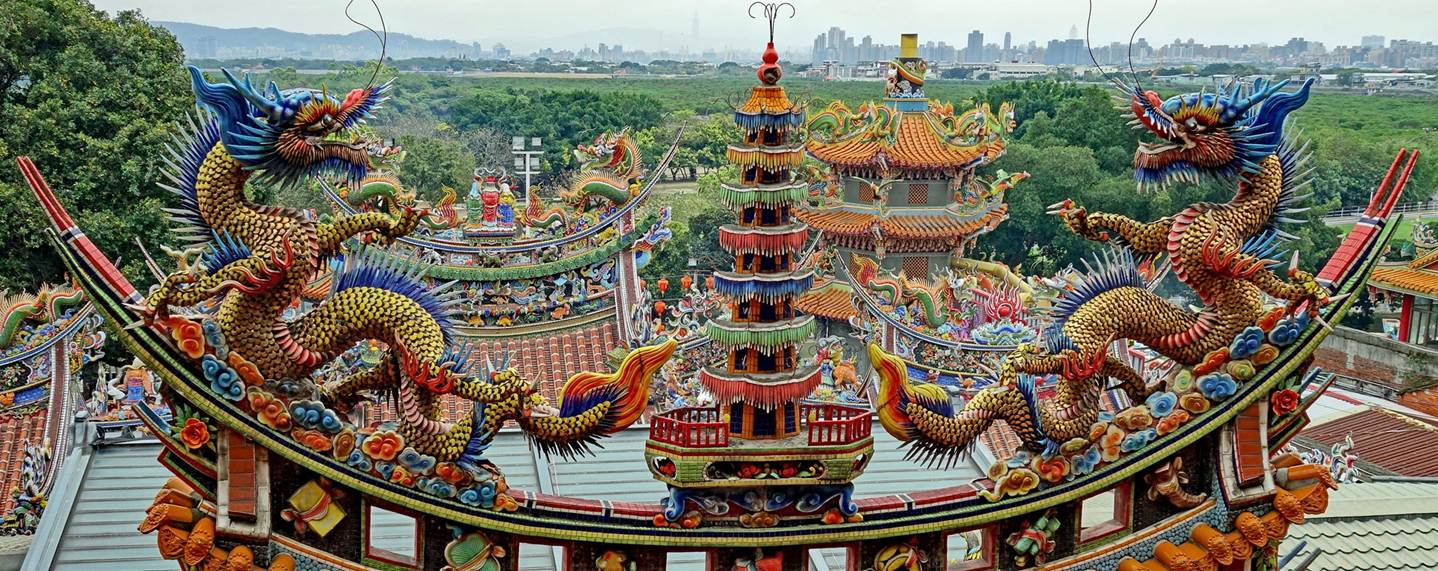
Views looking south over
the intricate arrangements formed by the roofs of the temple buildings located
on the southeastern slope.
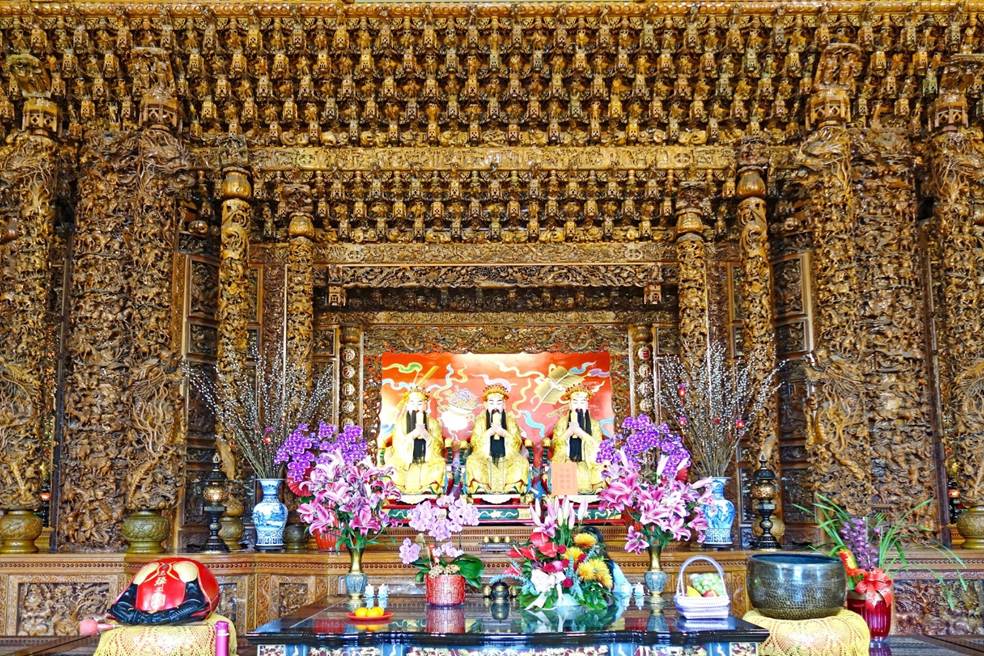
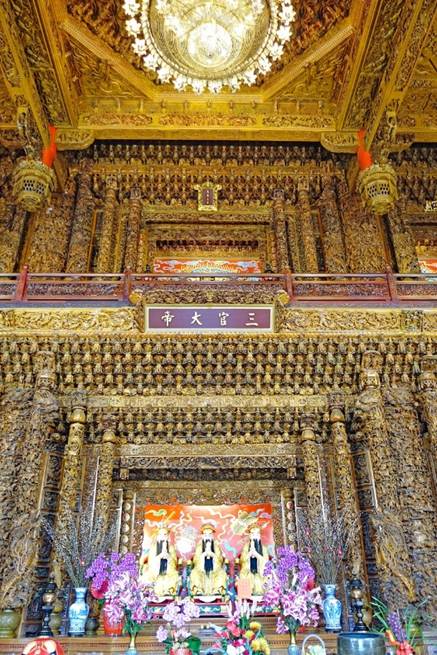
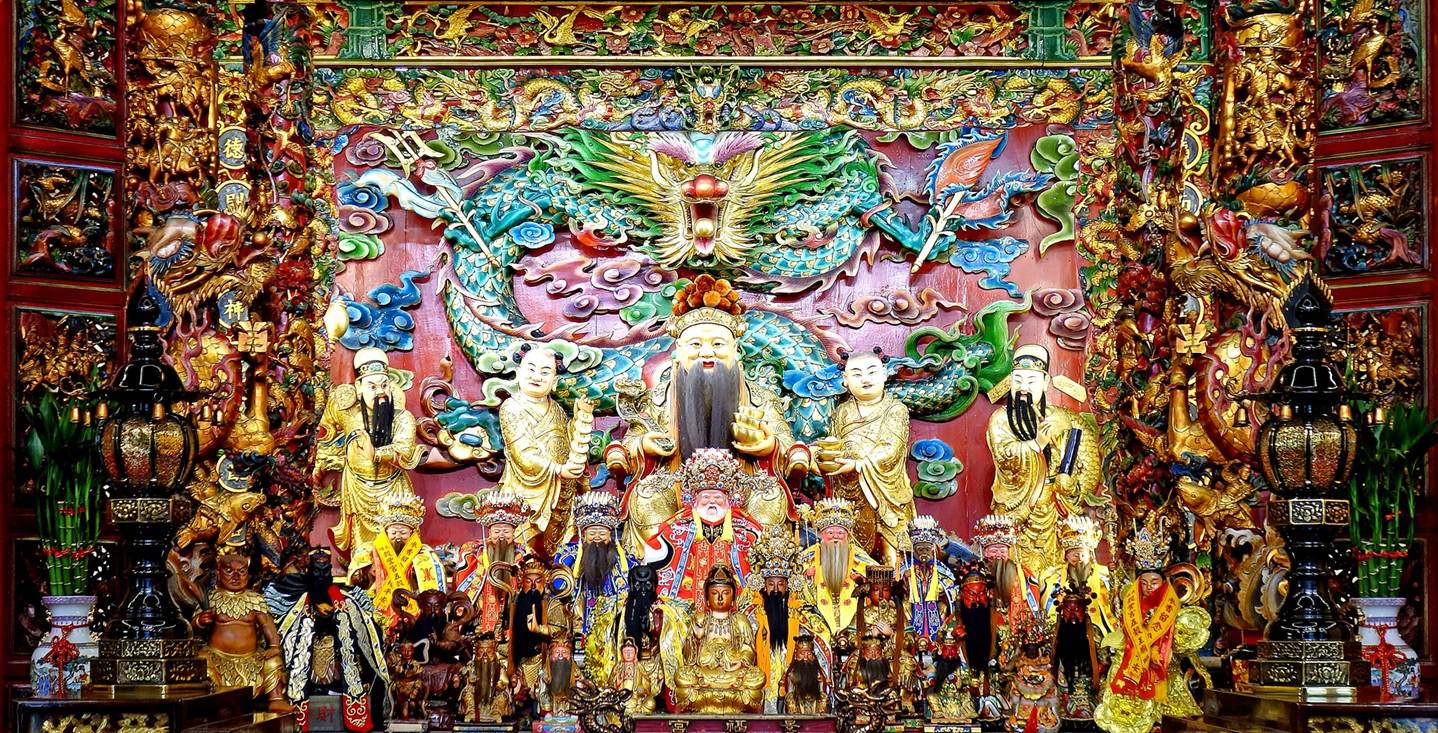
One of the highly decorated
prayer halls. This particular one is dedicated to the Sanguan Dadi (三官大帝). The statues in the altar represent
the three Emperor-Officials, who subordinate only to the Jade Emperor (玉帝), the supreme Taoist deity. They are
the Heavenly Official (天官, ″Tianguan″), the Earthly Official (地官, ″Diguan″) and the Water Official (水官, ″Shuiguan″).
|
|
|
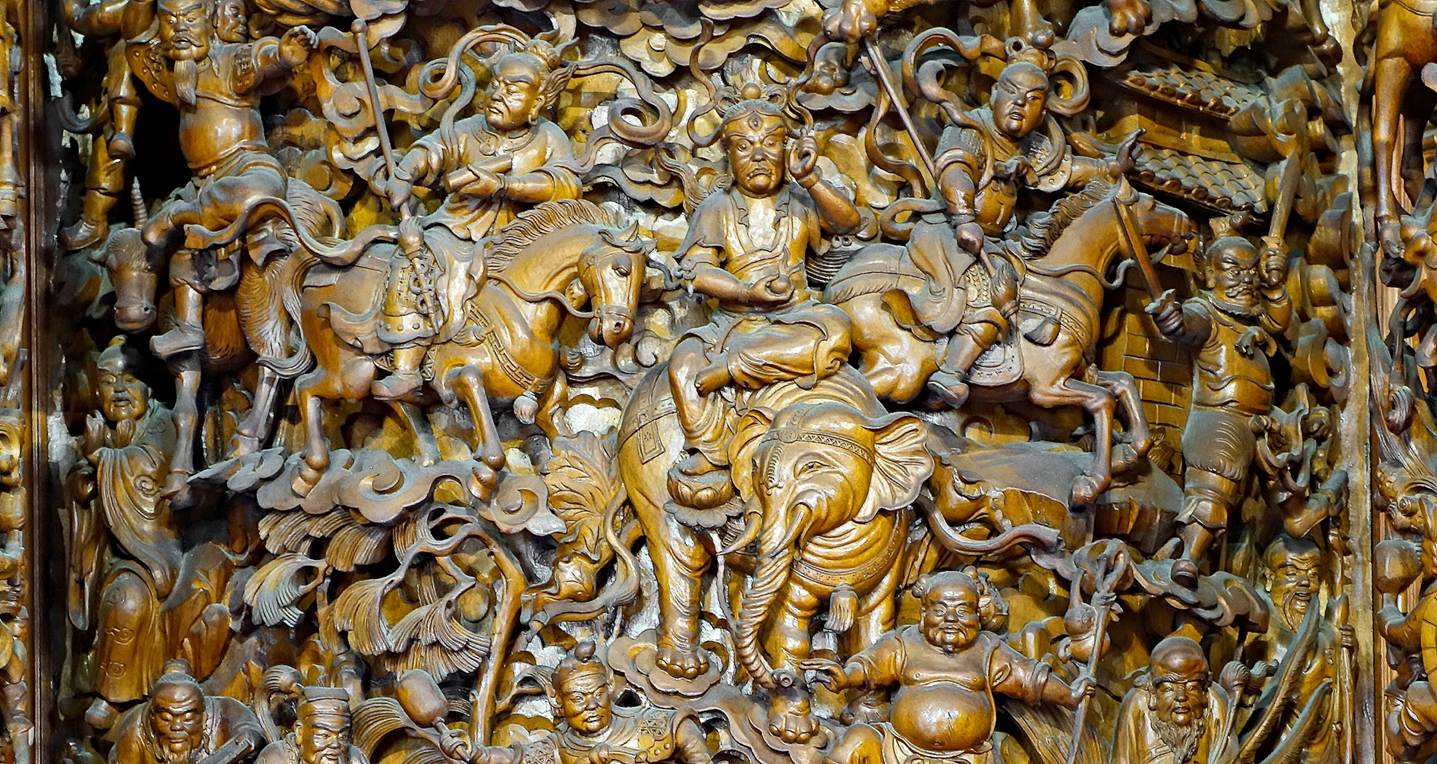
Closeup of the Sanguan
Dadi altar.
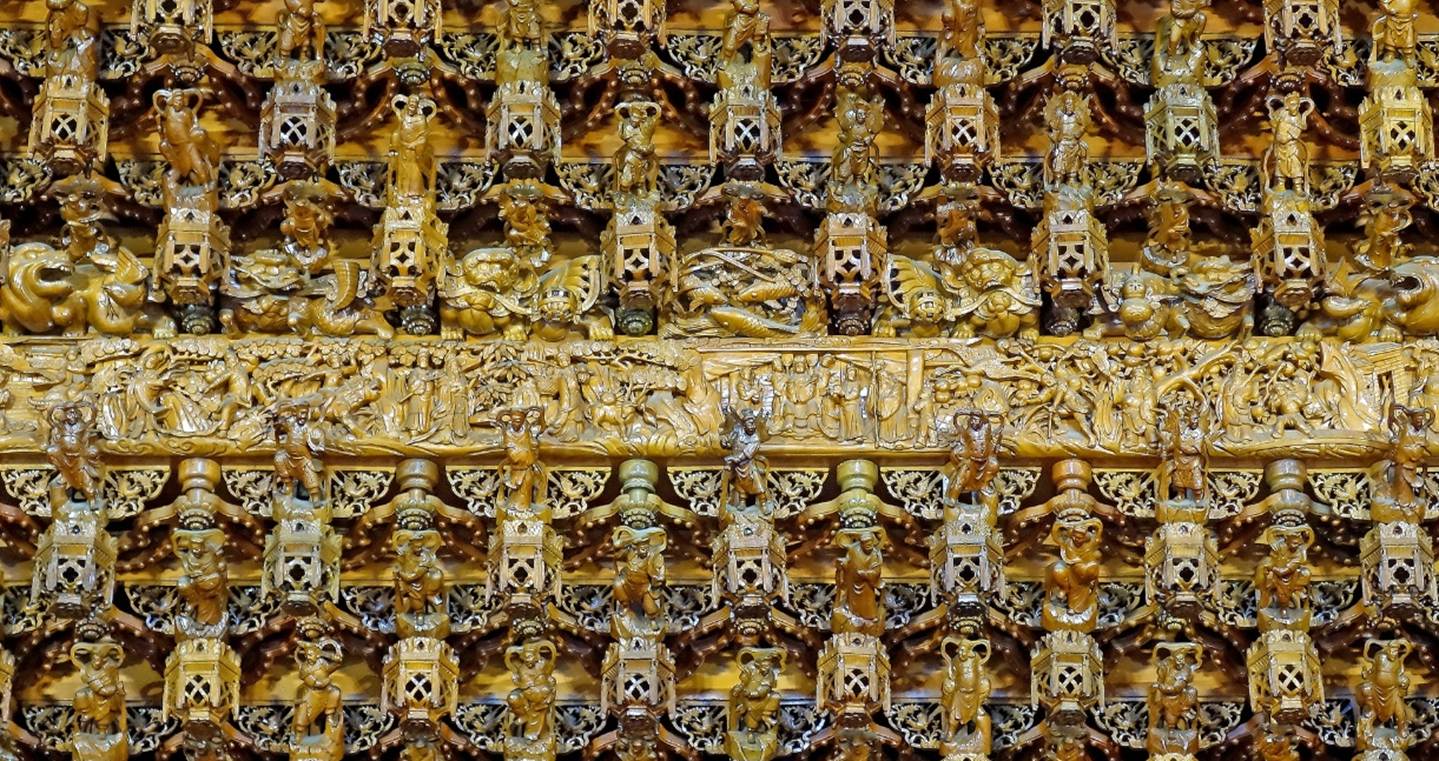
Closeups of a small part
of a carved column next to the altar (first photo below) and of a small section
of the carved lintel above the altar (second photo).
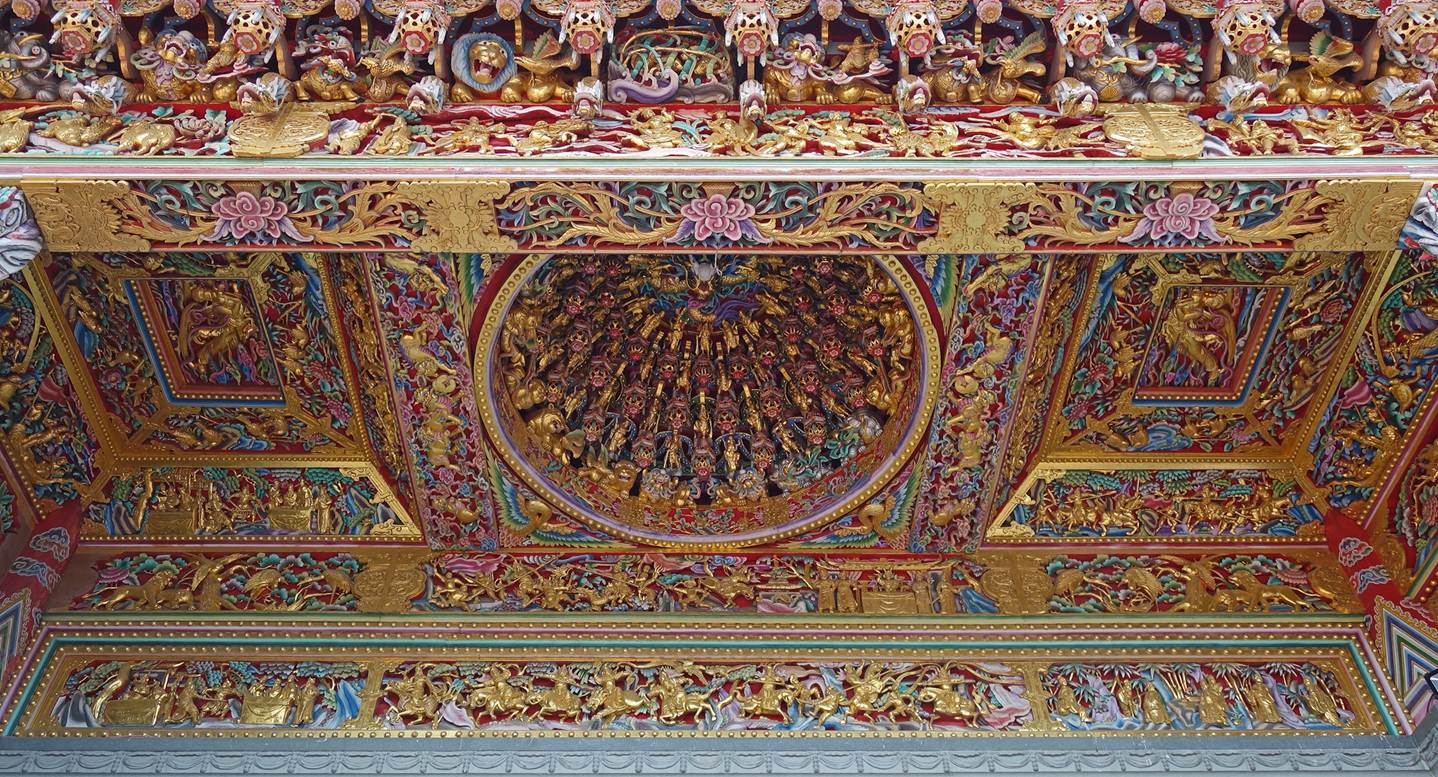
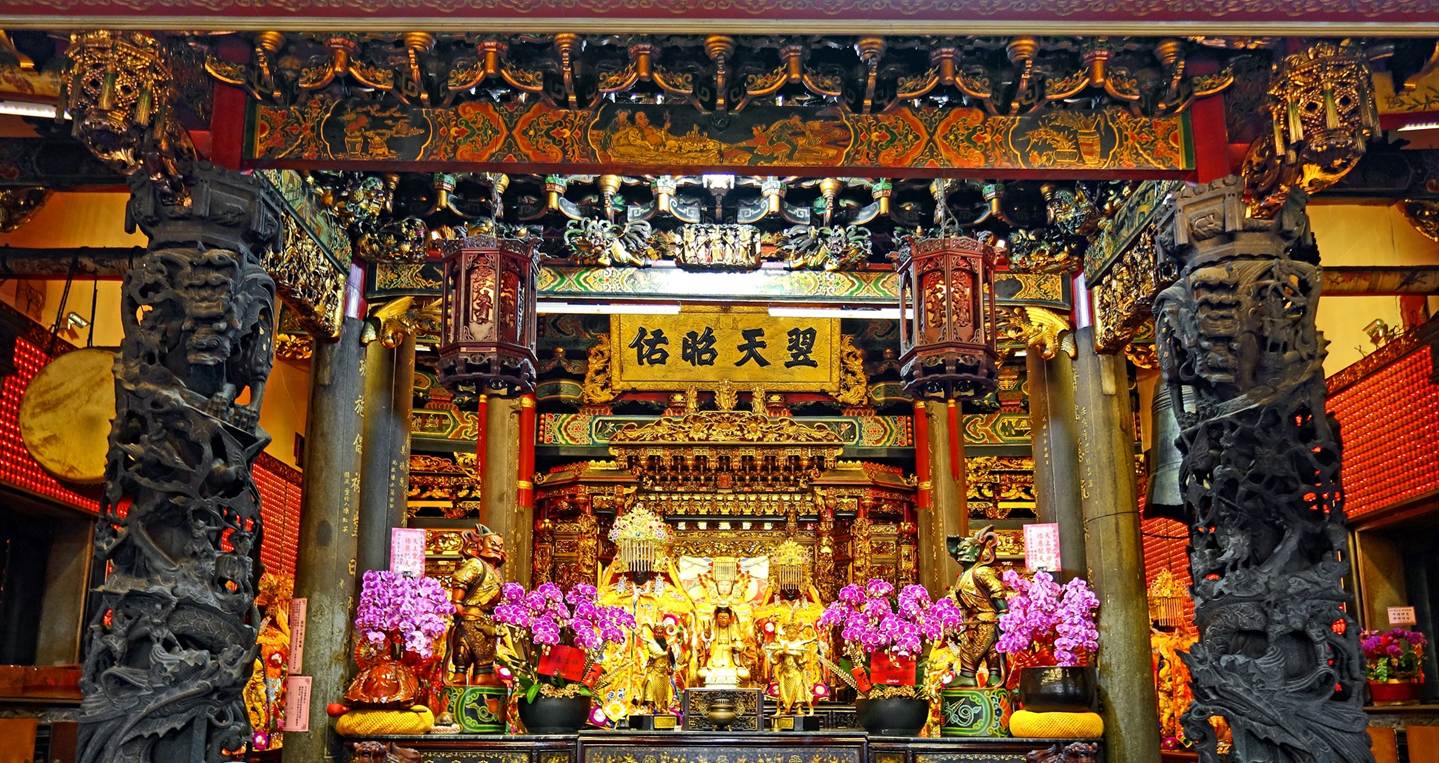
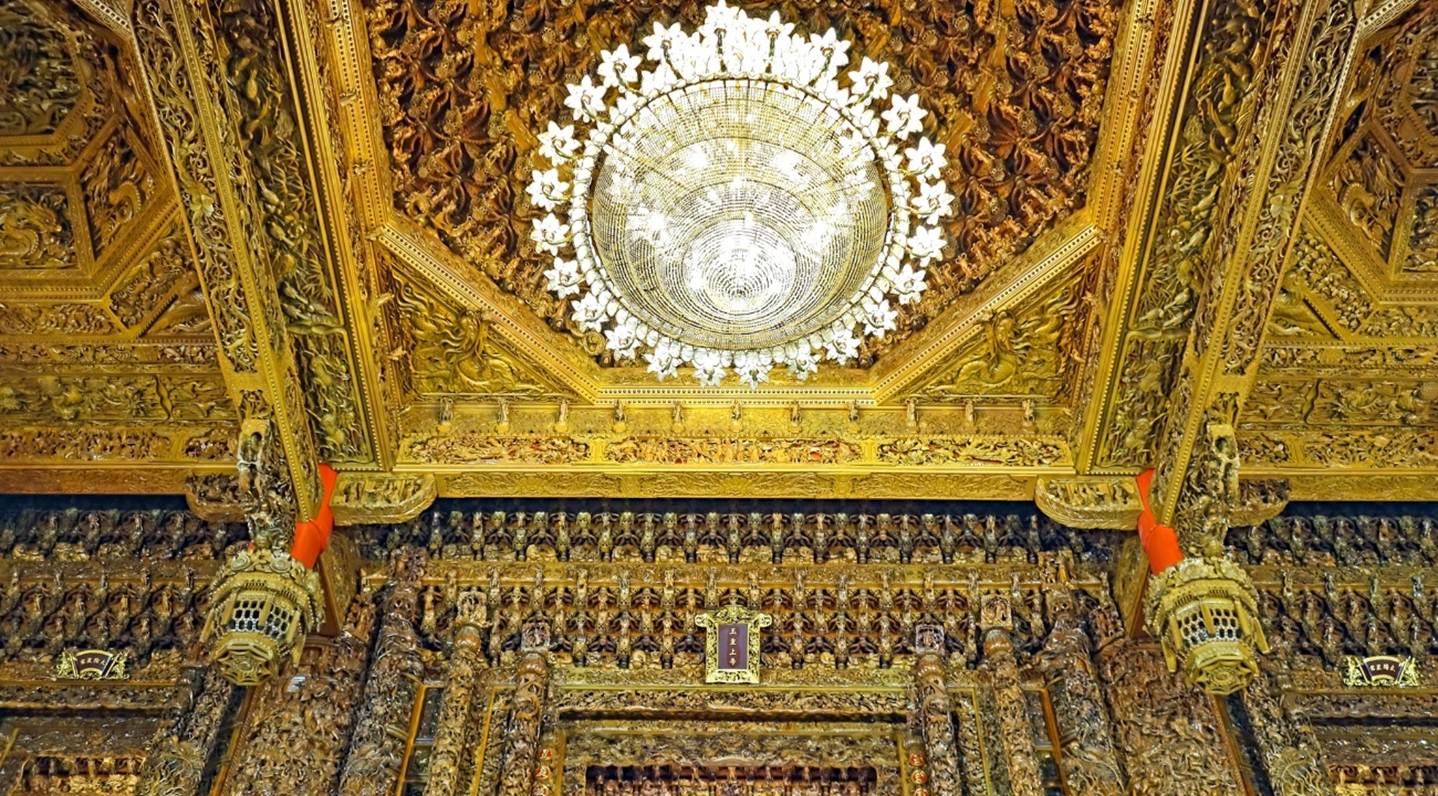
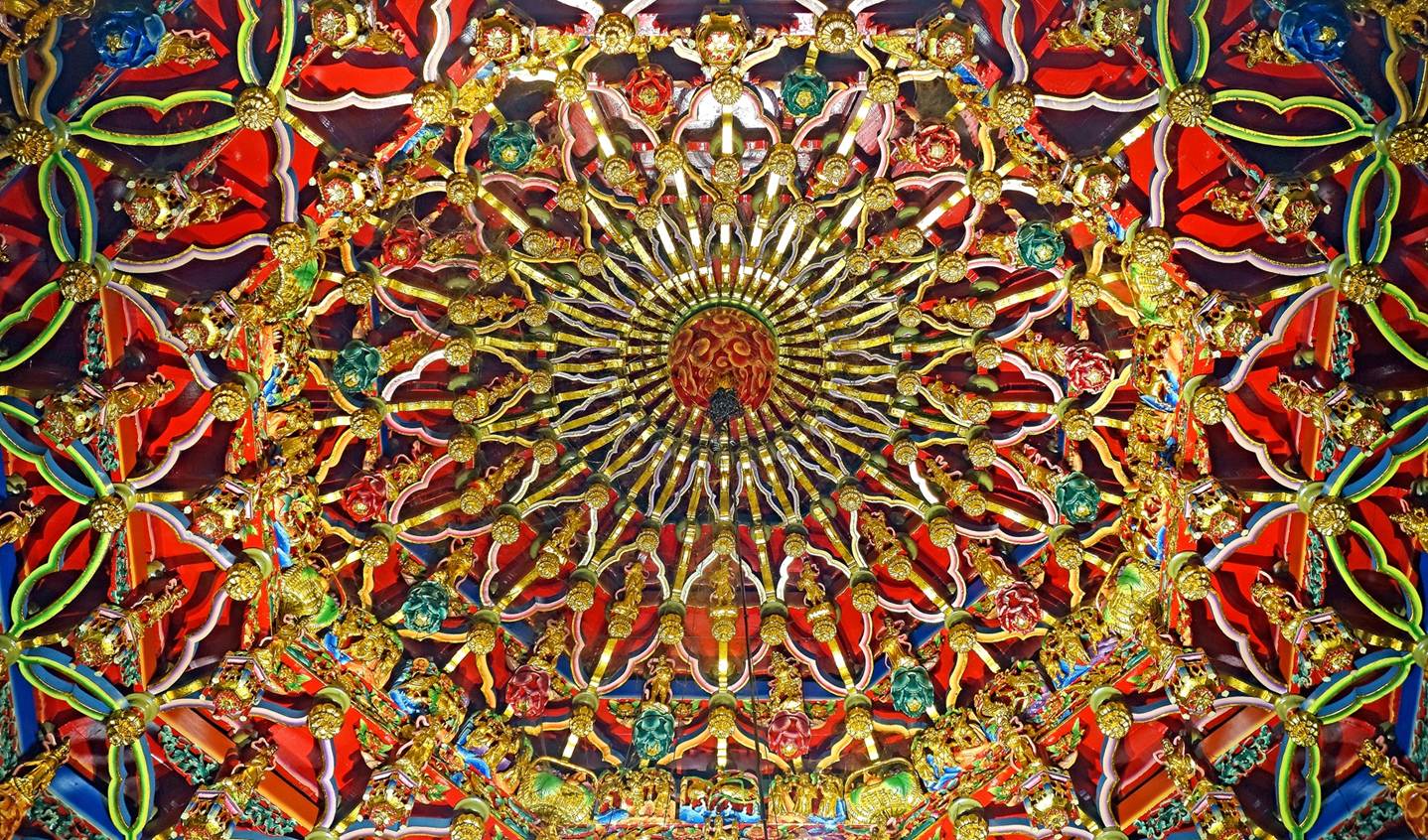
Gorgeous ceilings of
prayer halls.
- Middle photo: Altar
dedicated to Mazu. Standing on the two sides of the altar, are two statues (one
with a red face, the other with a green face) that represent Mazu's two
customary guardians. (The next photo below will show them in another altar.)
- Left and right photos:
Another representation of the same two guardians of Mazu. They stand further forward
of the altar, on either side of the prayer room.
|
|
|
|
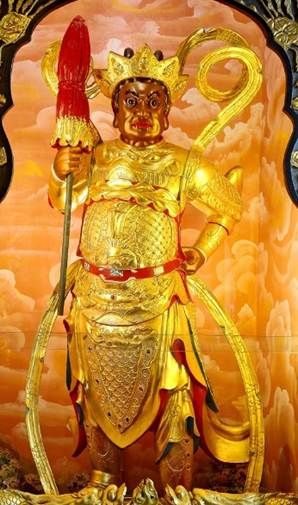
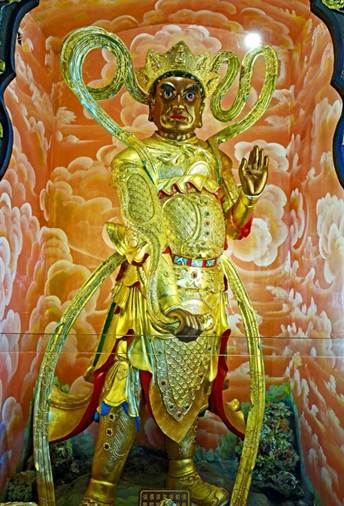
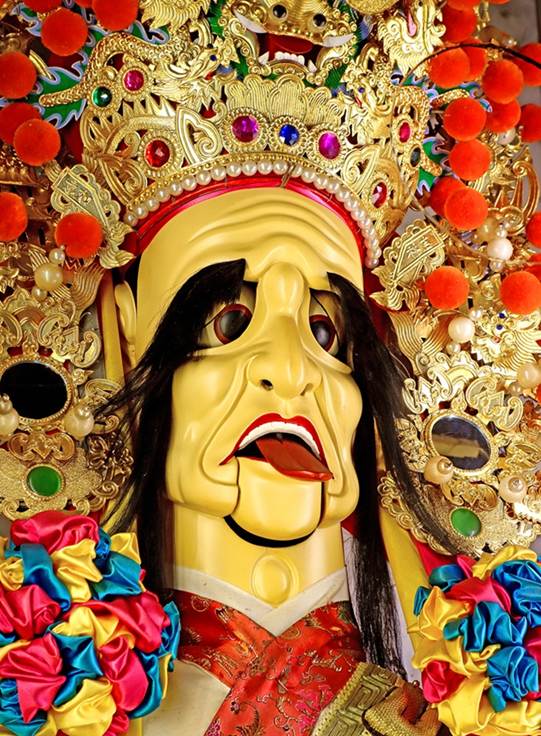
- Left: A more modest
altar dedicated to Mazu. Her two customary guardians are more clearly visible
here than in the photo above. The one with the red face, on the left,
is Shunfeng'er (順風耳), who can hear sounds from very far.
The one with the green face, on the right, is Qianliyan (千里眼), who can see very far.
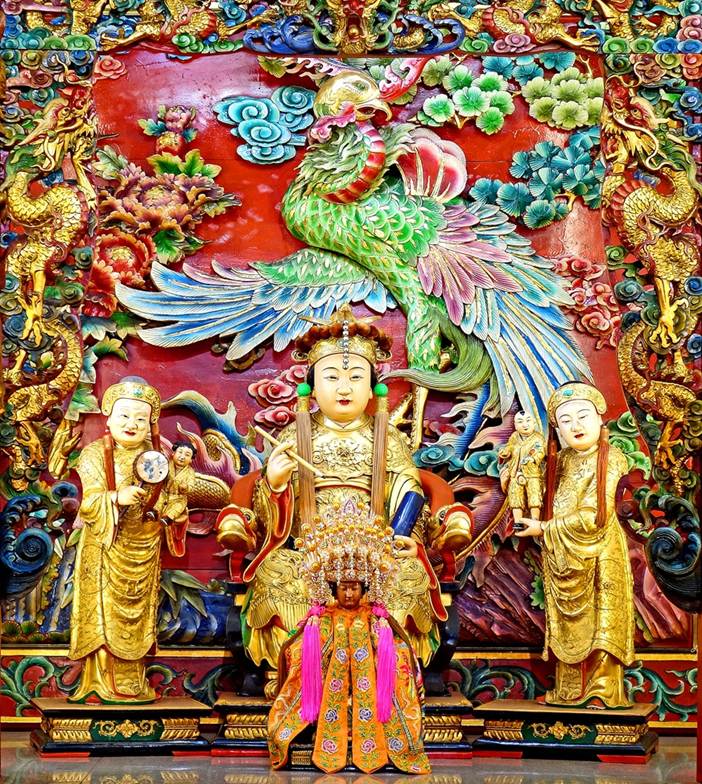
- Right: Altar dedicated
to Tudigong (土地公), also known as Fude Zhengshen (福德正神), the god of earth and merit.
|
|
|
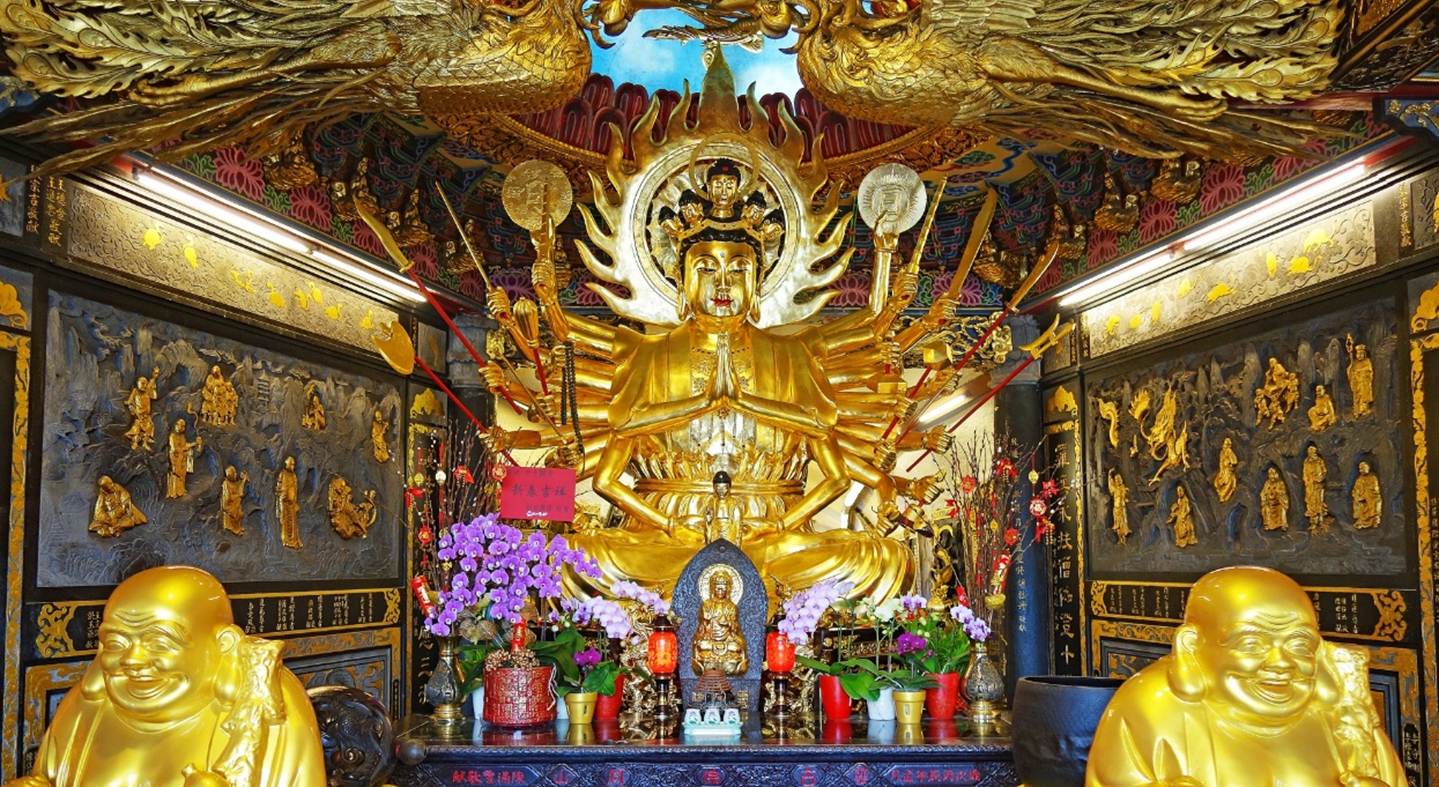
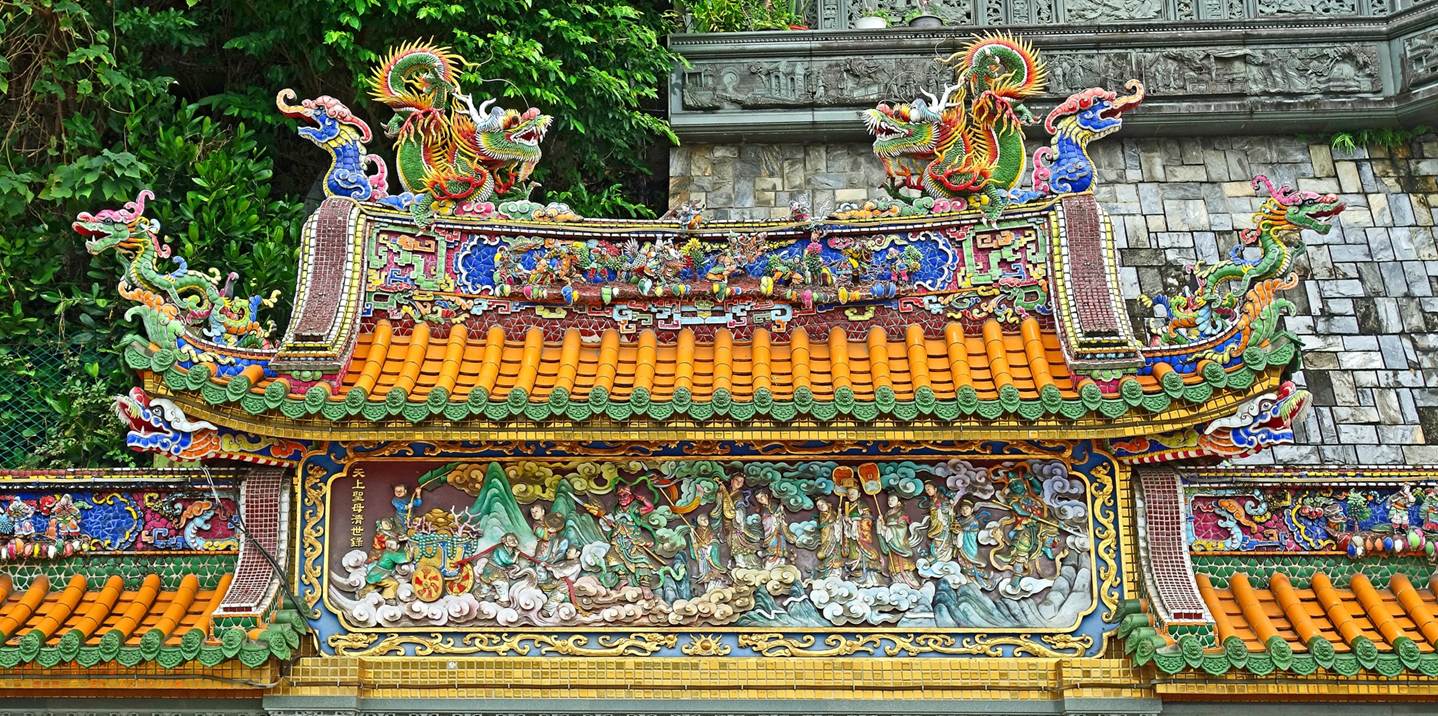
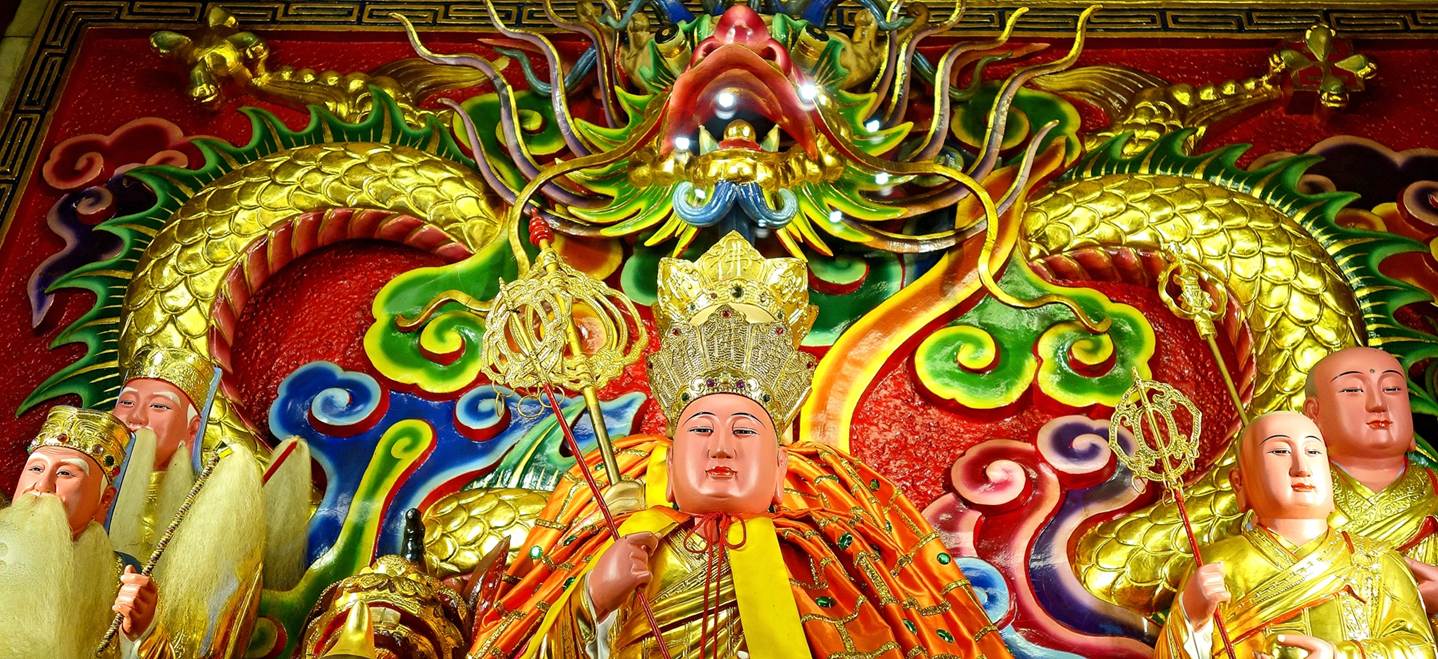
Altar dedicated to
Tianguan Dadi (天官大帝), the "Heavenly Official Who
Bestows Blessings″ (上元一品賜福天官).
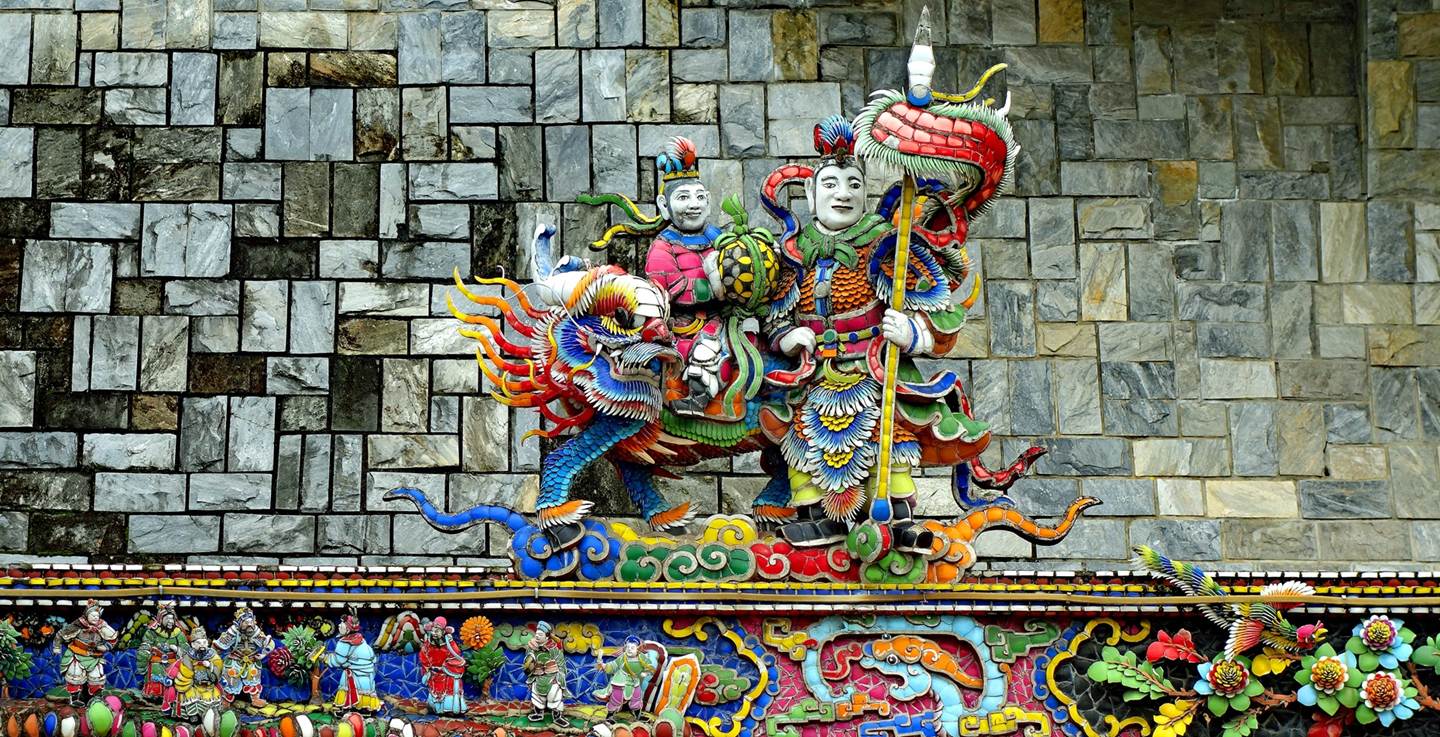
Left: Hall dedicated to
Guanyin (觀音). Right: Statue of the Buddha.
|
|
|
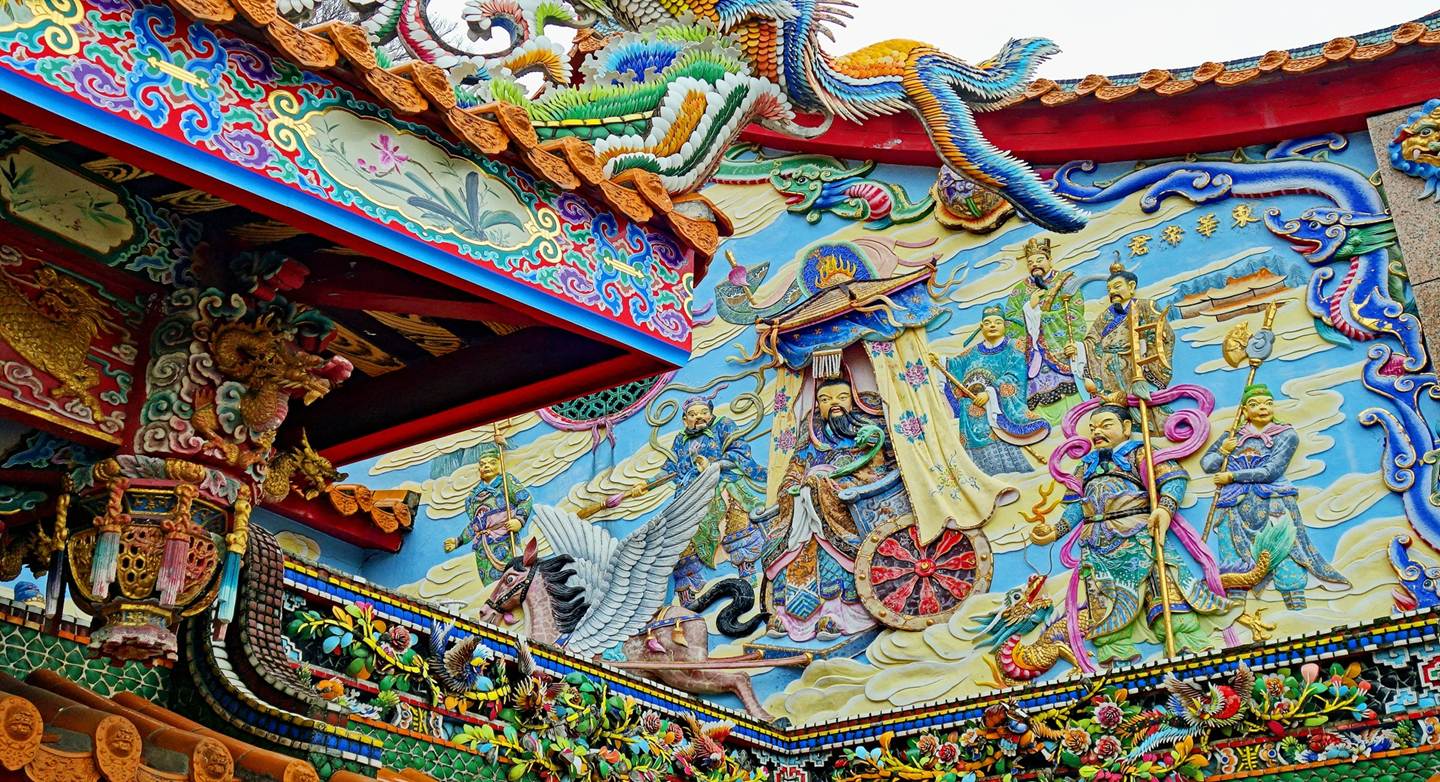
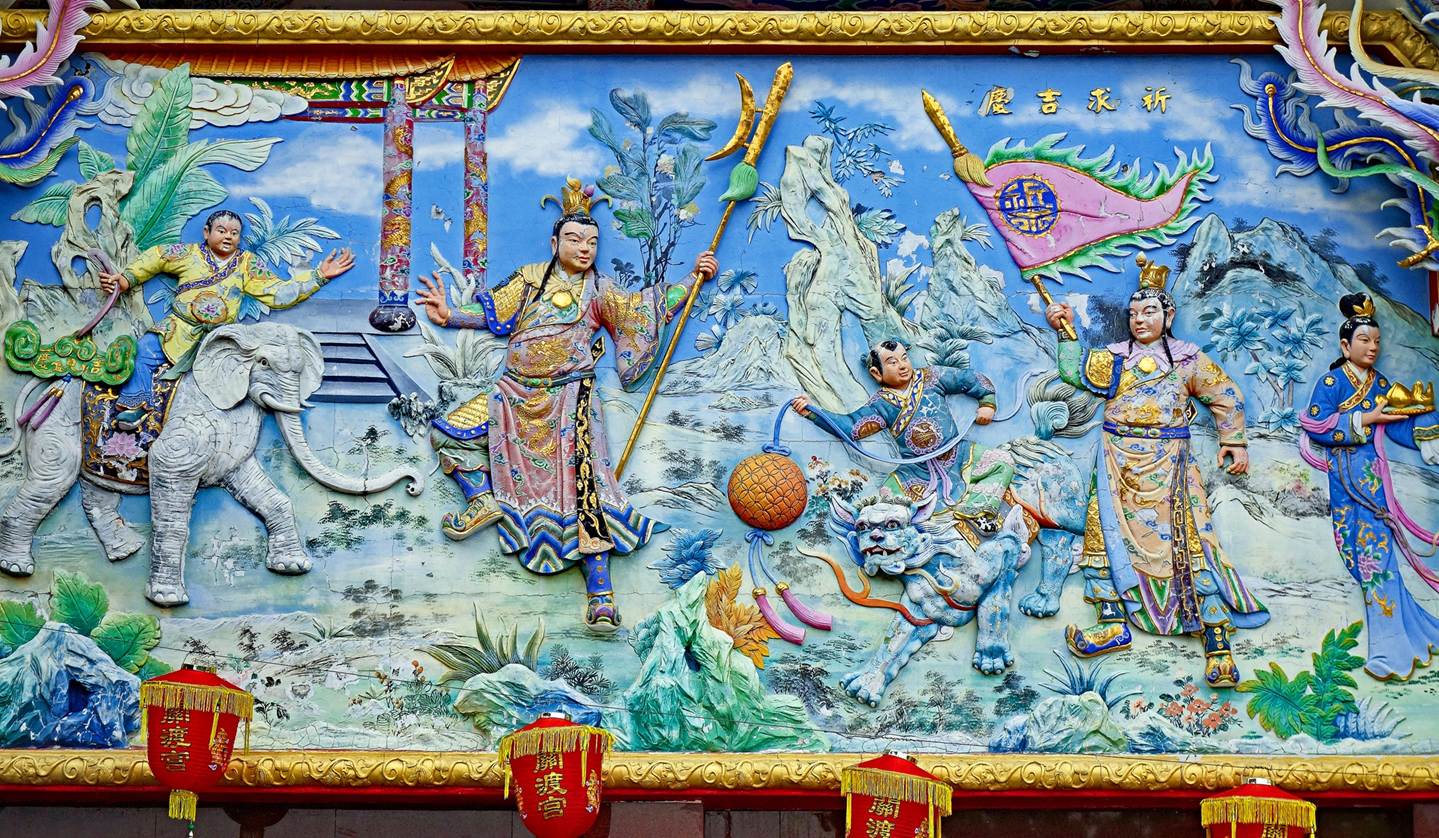
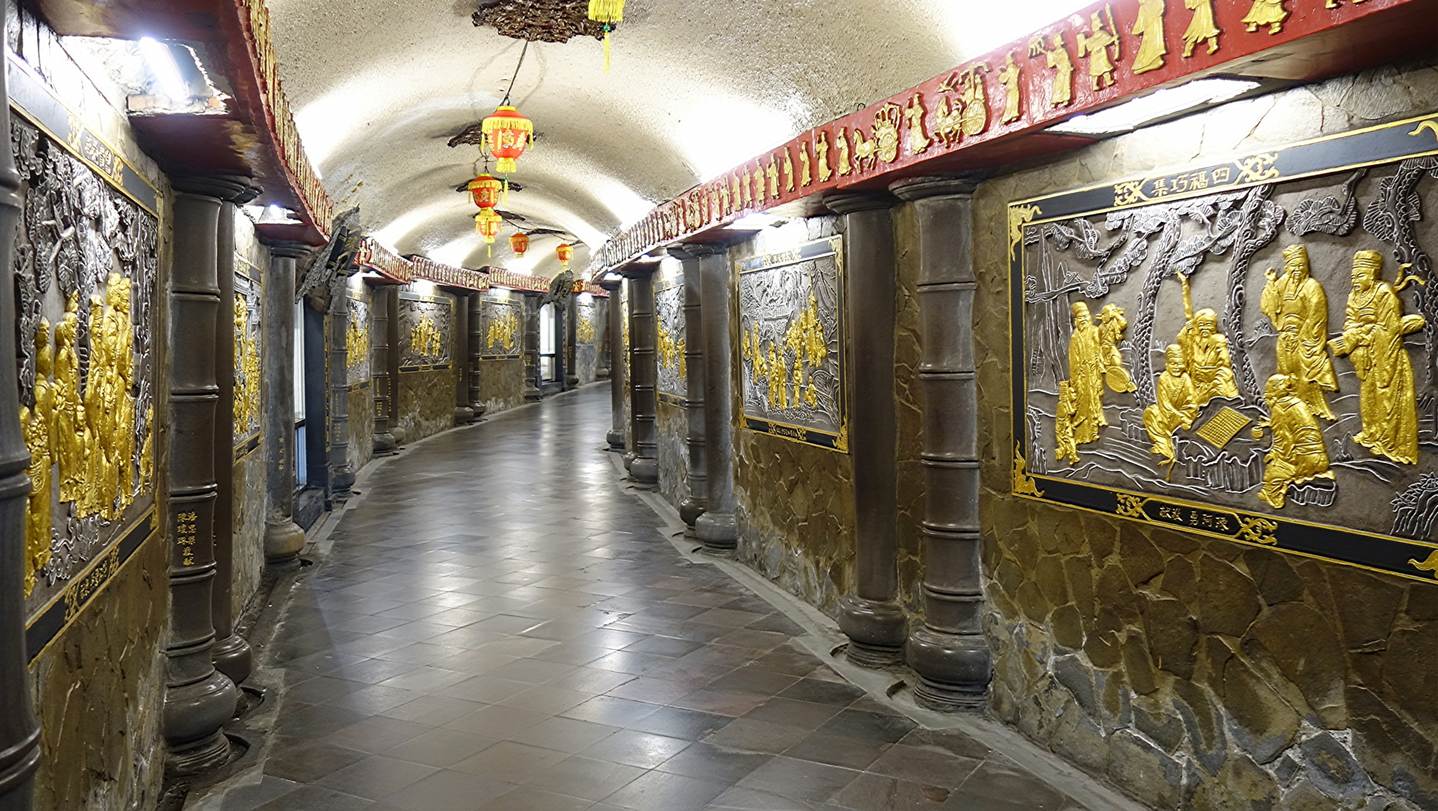
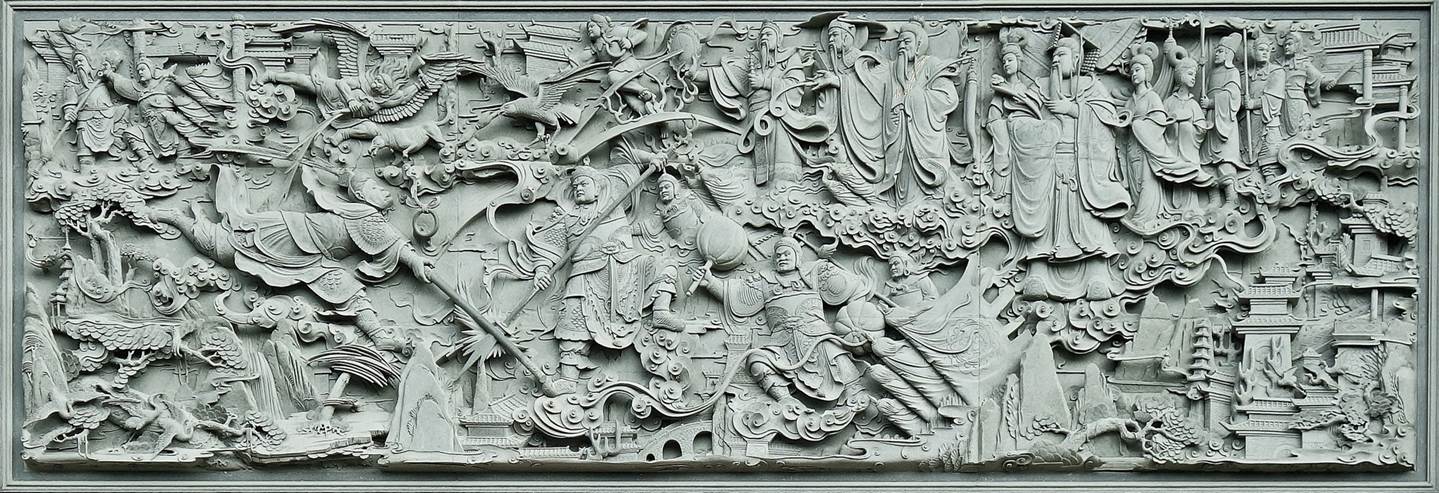
In the main tunnel, 70m
in length, which connects the two sides of the temple. Known as the Ancient
Buddha Cave (古佛洞), it is adorned with numerous relief
murals and statues of deities. At one of its ends, stand an altar surmounted by
a golden statue of Thousand-Armed Thousand-Eyed Guanyin, overlooking the Tamsui
river.
|
|
|
|
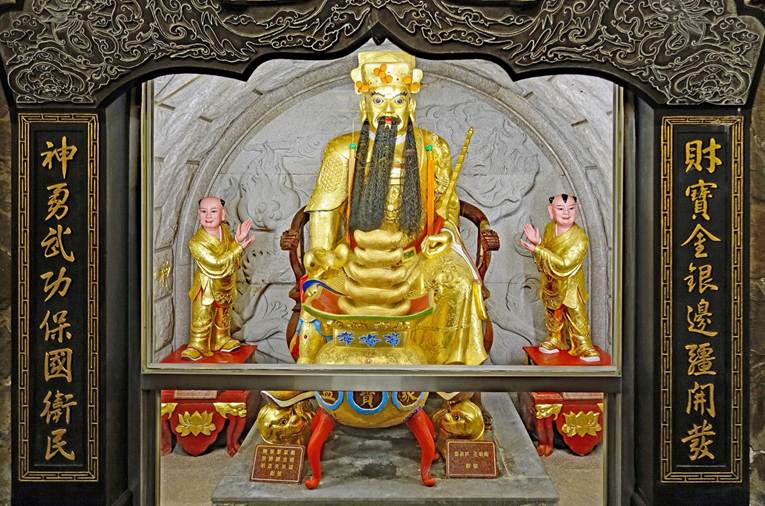
[Left: Zhao Gongming (趙公明), the main god of wealth.]
Statue of Thousand-Armed
Thousand-Eyed Guanyin (千手千眼观音), the bodhisattva of infinite
compassion, at the end of the tunnel overlooking the Tamsui river. The multiple
arms and multiple heads of the statue symbolize her power to reach out many
people in need and alleviate their pains.
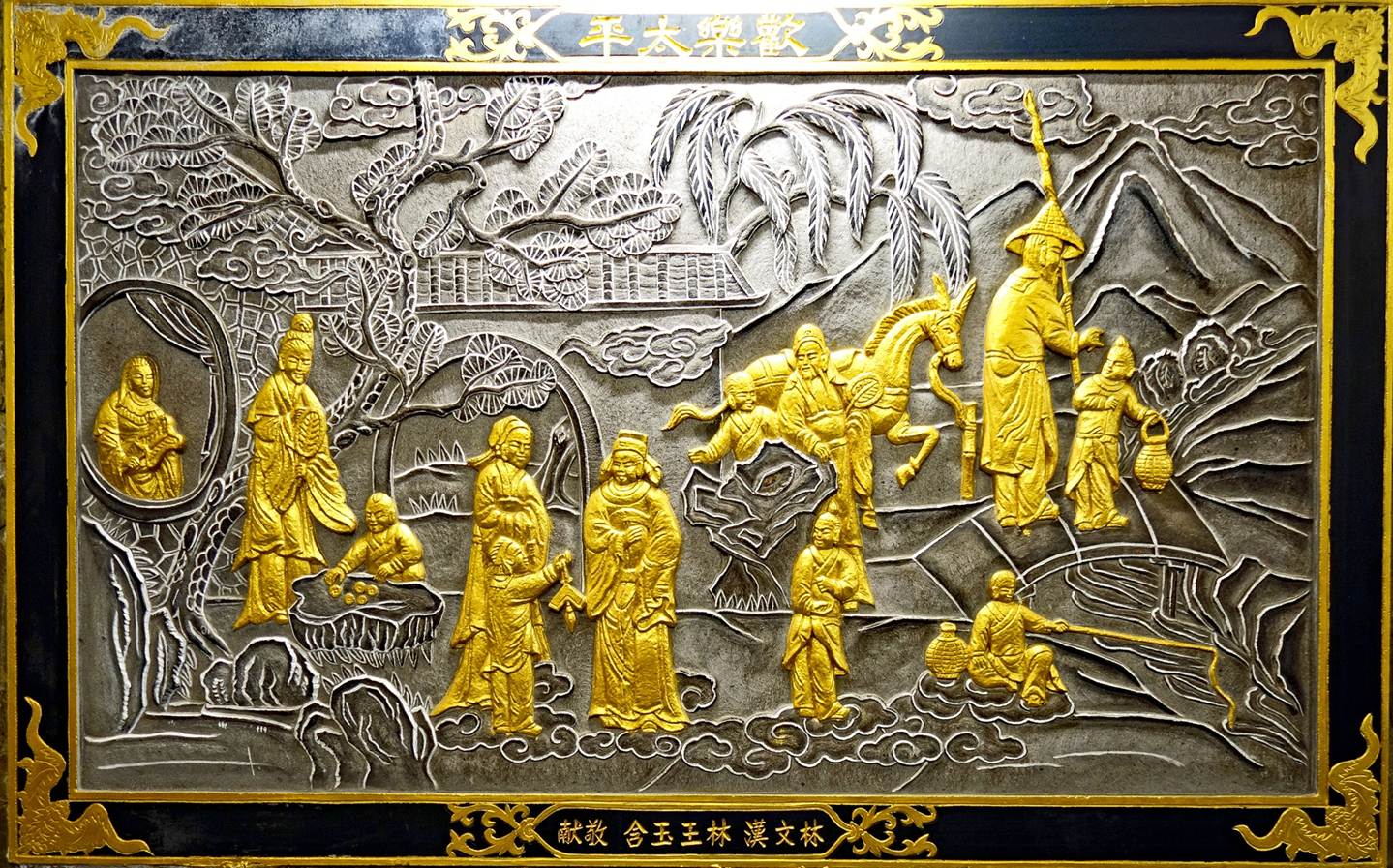
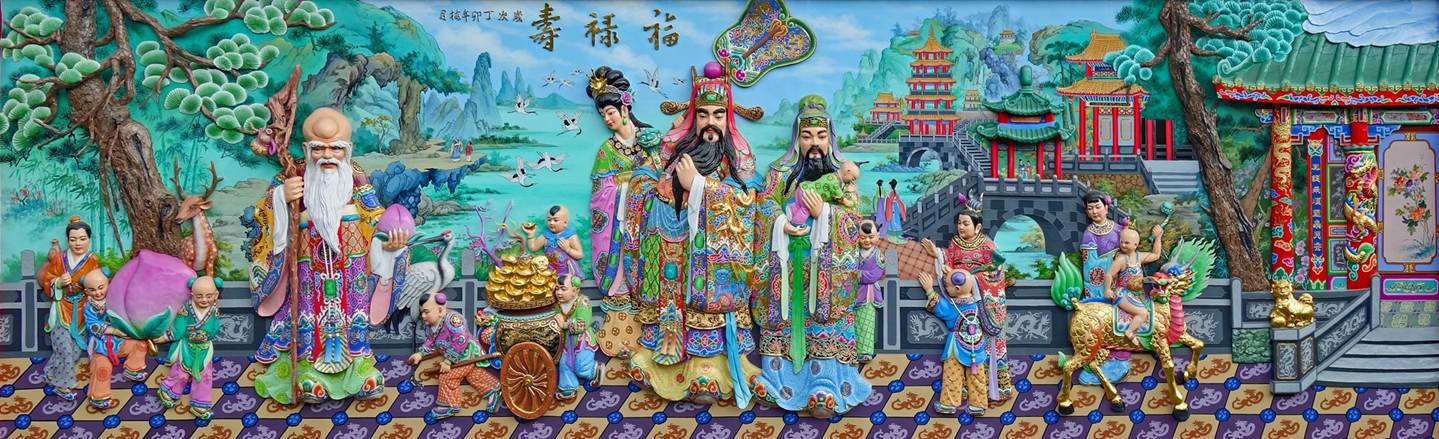
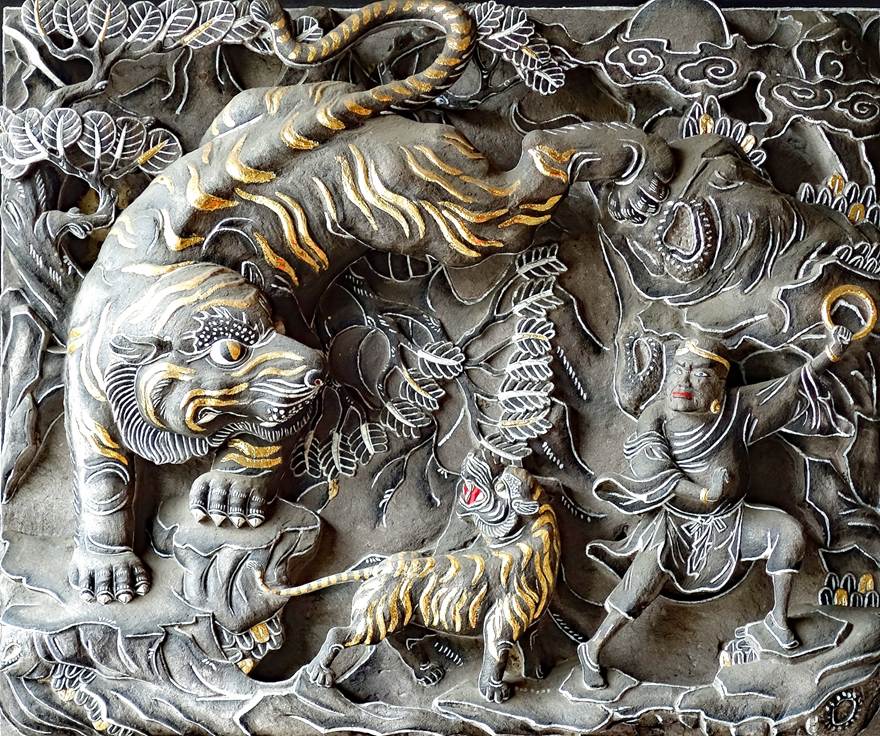
Various carved murals in
the temple.
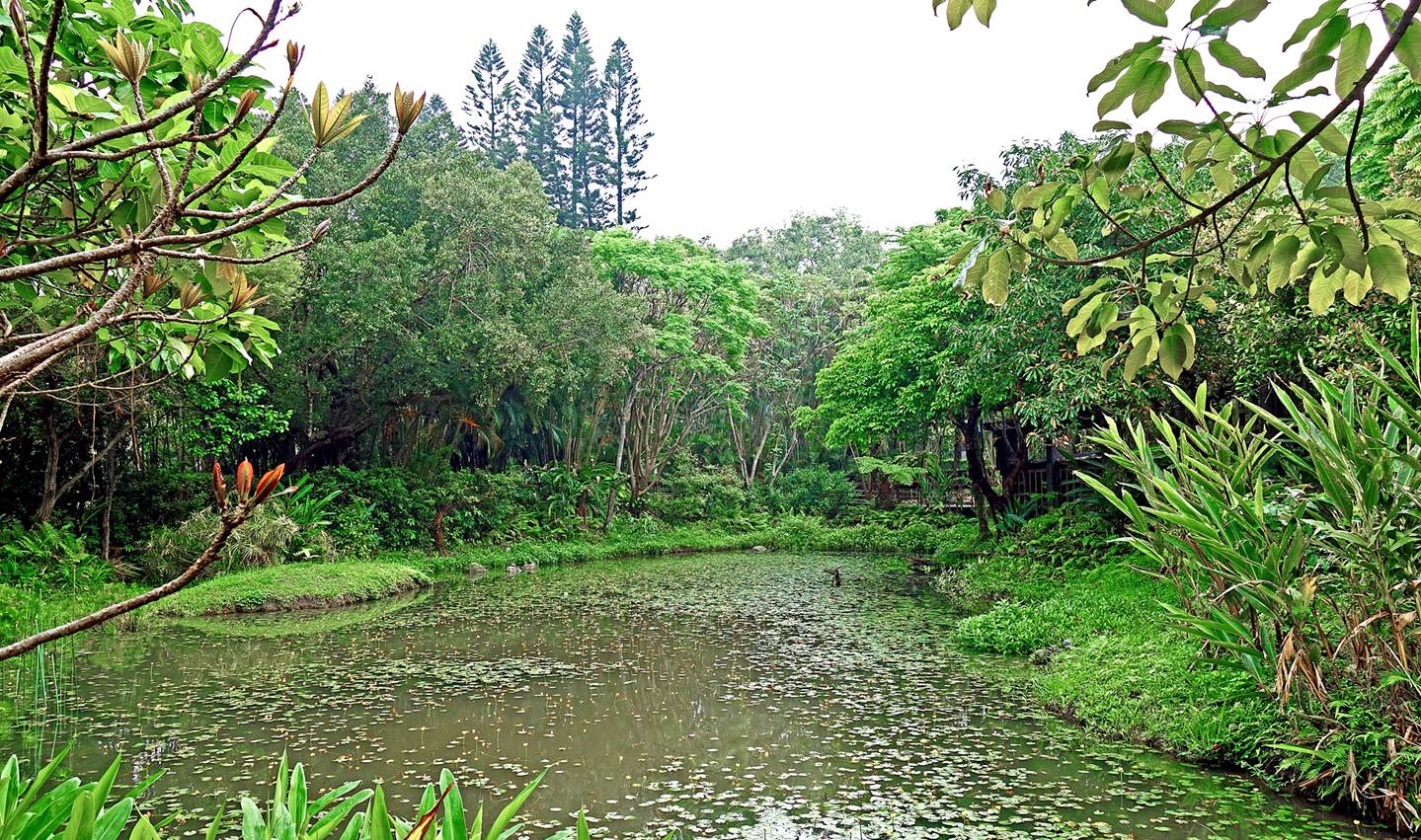
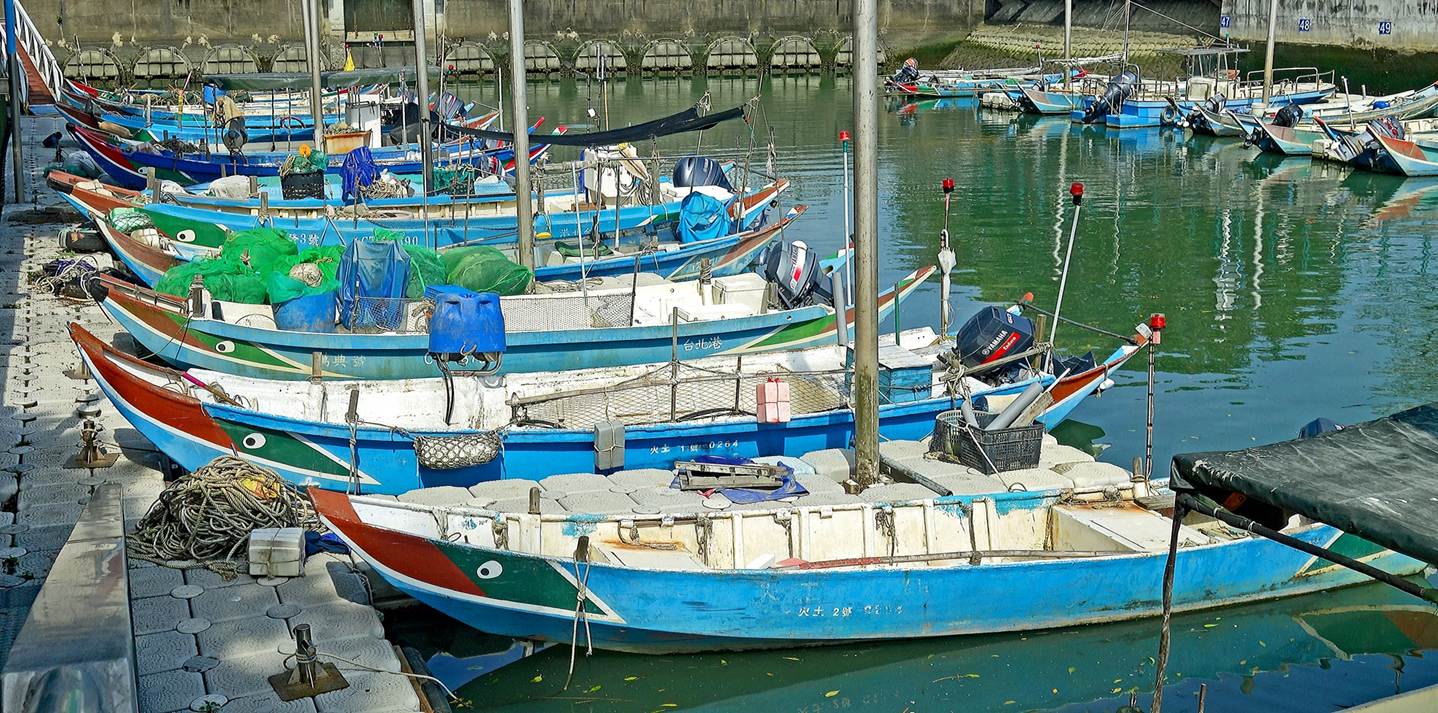
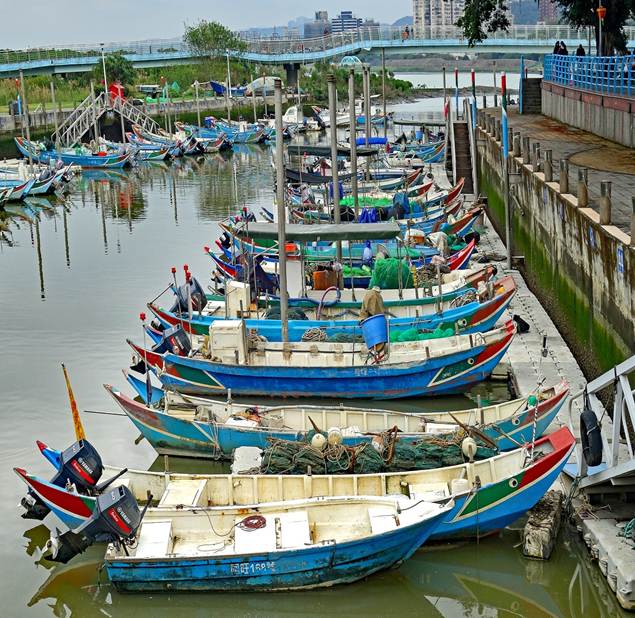
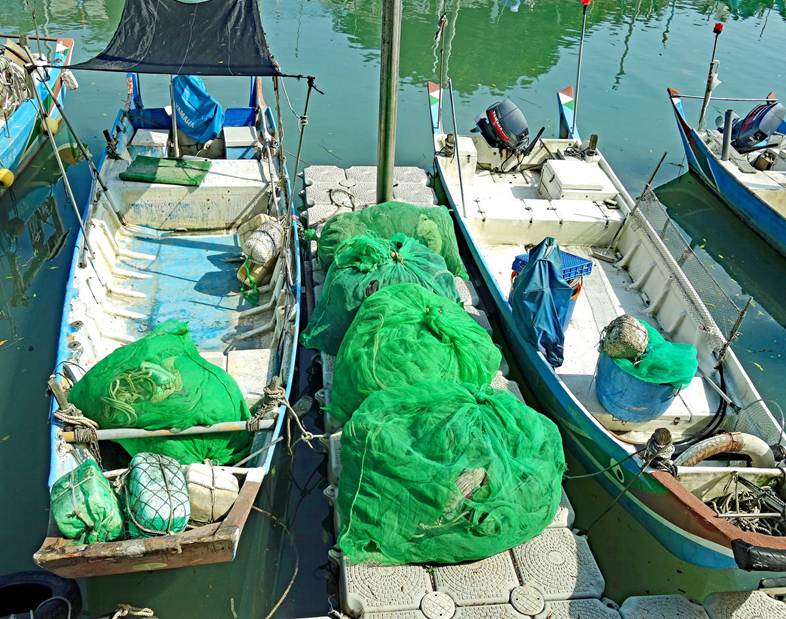
Fishing port connected to the Tamsui
river, located next to the Guandu temple:
[March 2025]
|
|
|
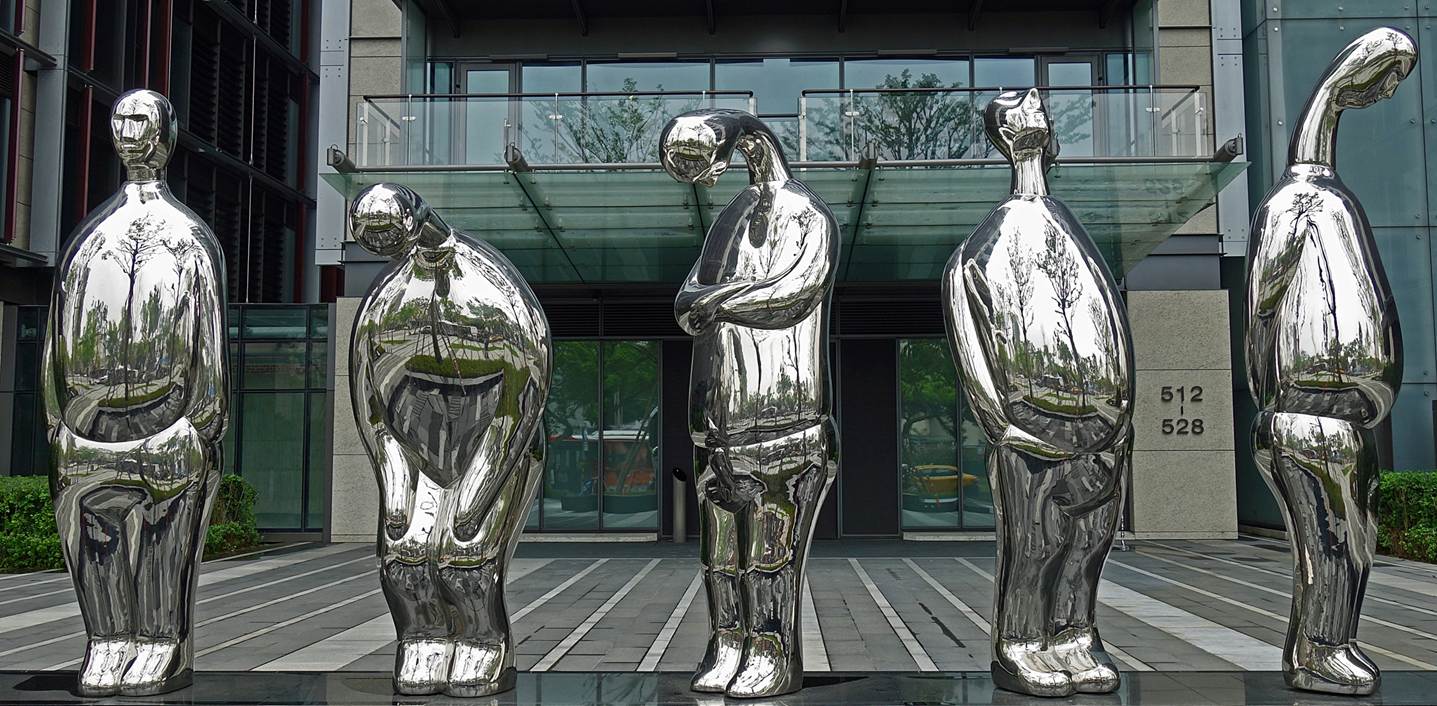
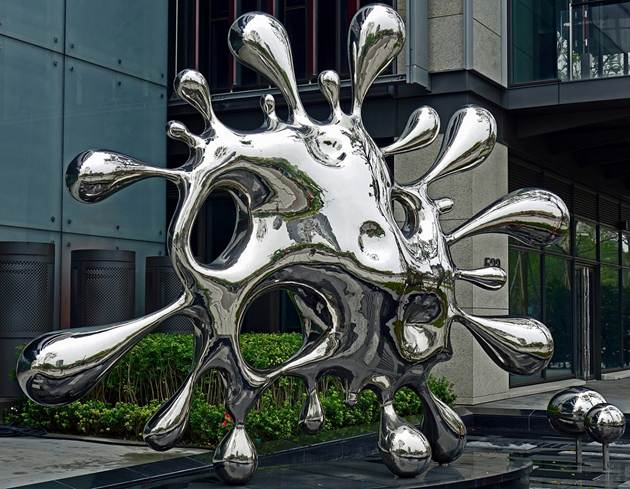
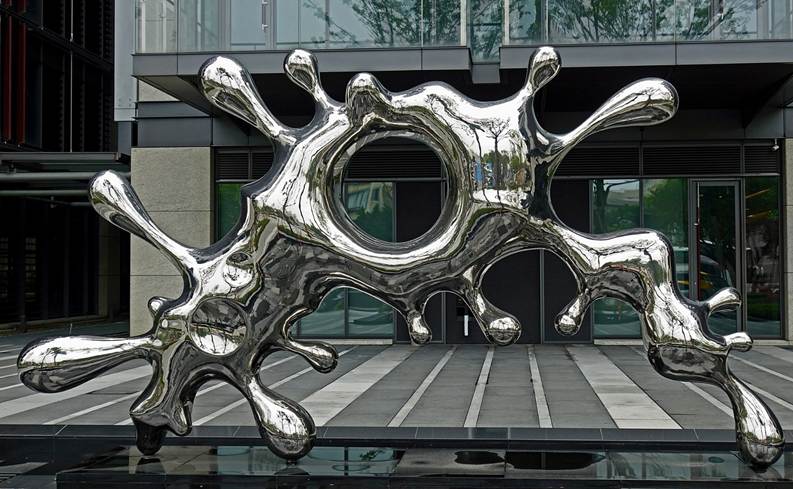
Bright modern statues near Shilin MRT Station:
[April 2017]
|
|
|
In the gardens of the Chiank
Kai-shek Shiling residence (士林官邸正館):
[April 2017]
Taipei Performing Arts Center:
[March 2025]
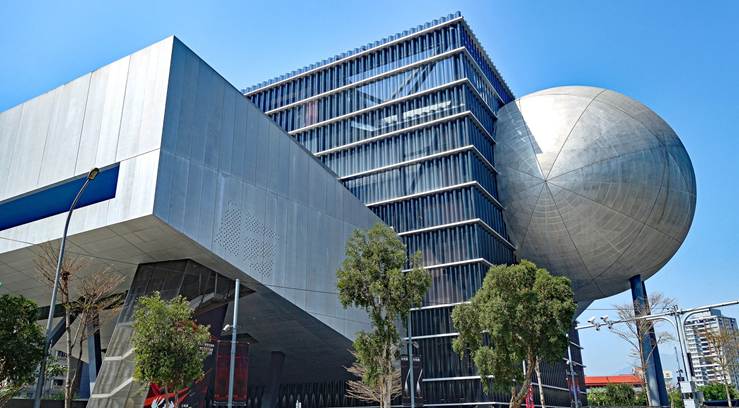
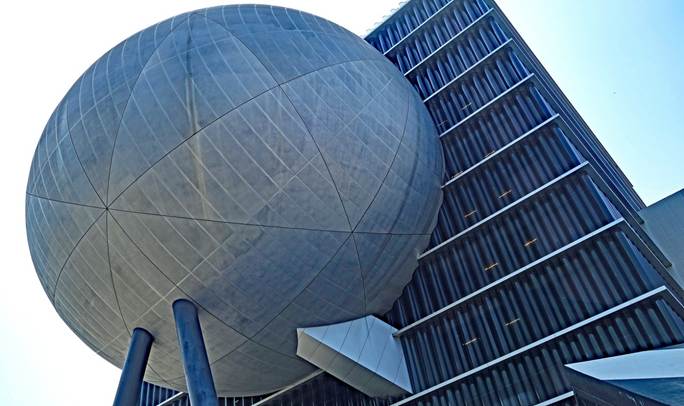
Opened in 2022, this
building (located next to the Jiantan MRT station) immediately catches the eye
with its large spherical appendage, which houses a performance hall with a
capacity of 800 seats.
|
|
|
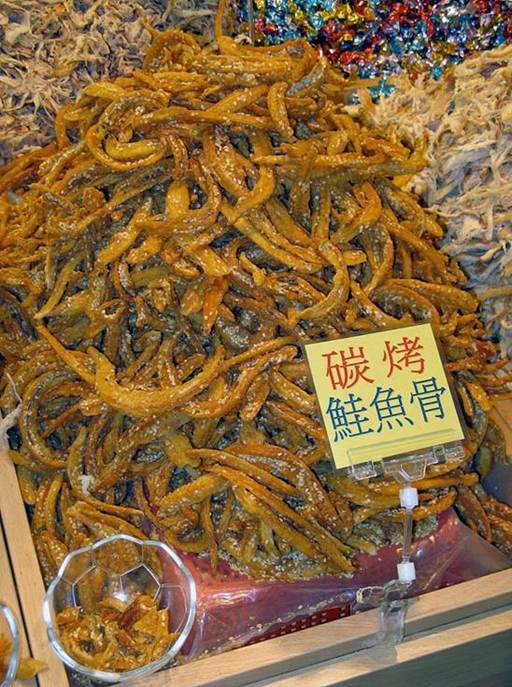
Street and night markets, and their delicacies:
[March 2008 and June 2009]
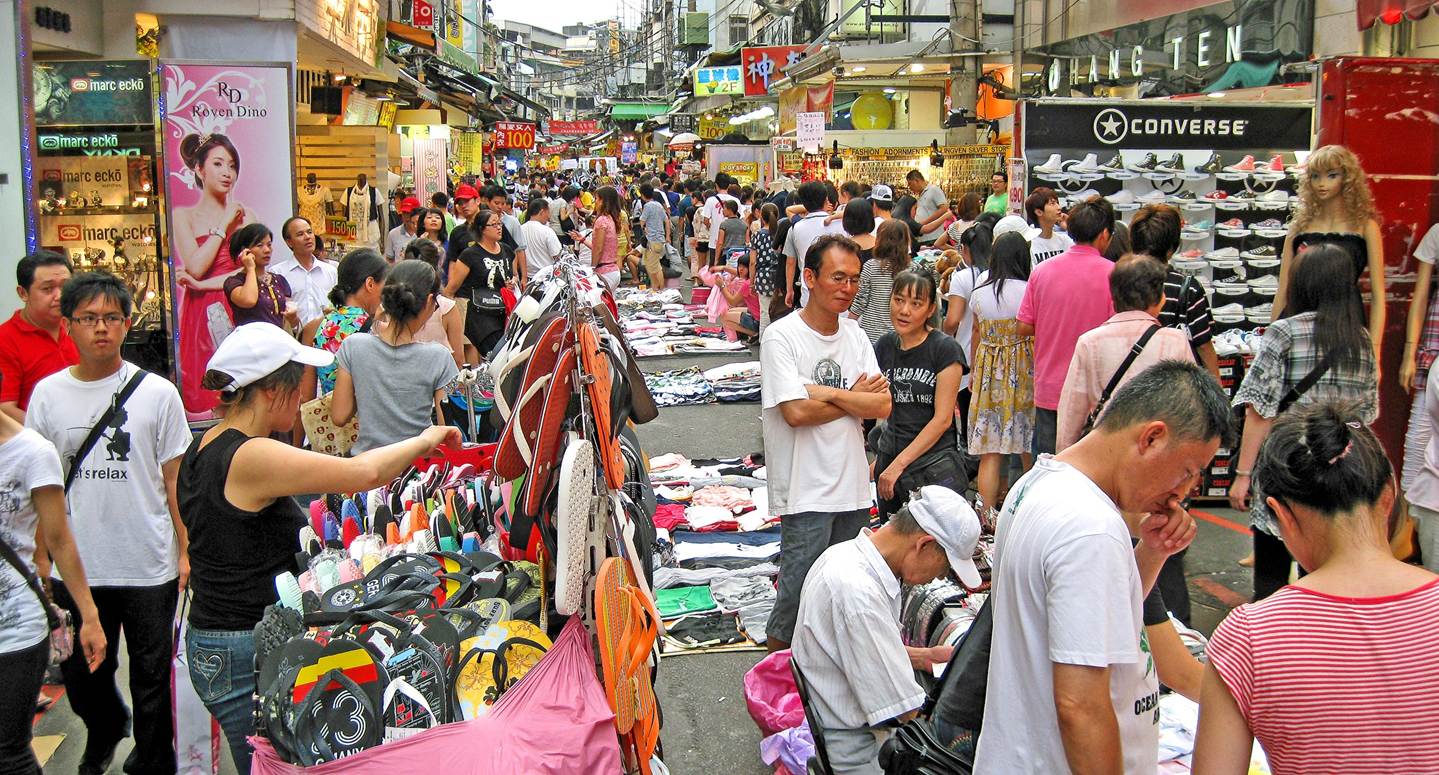
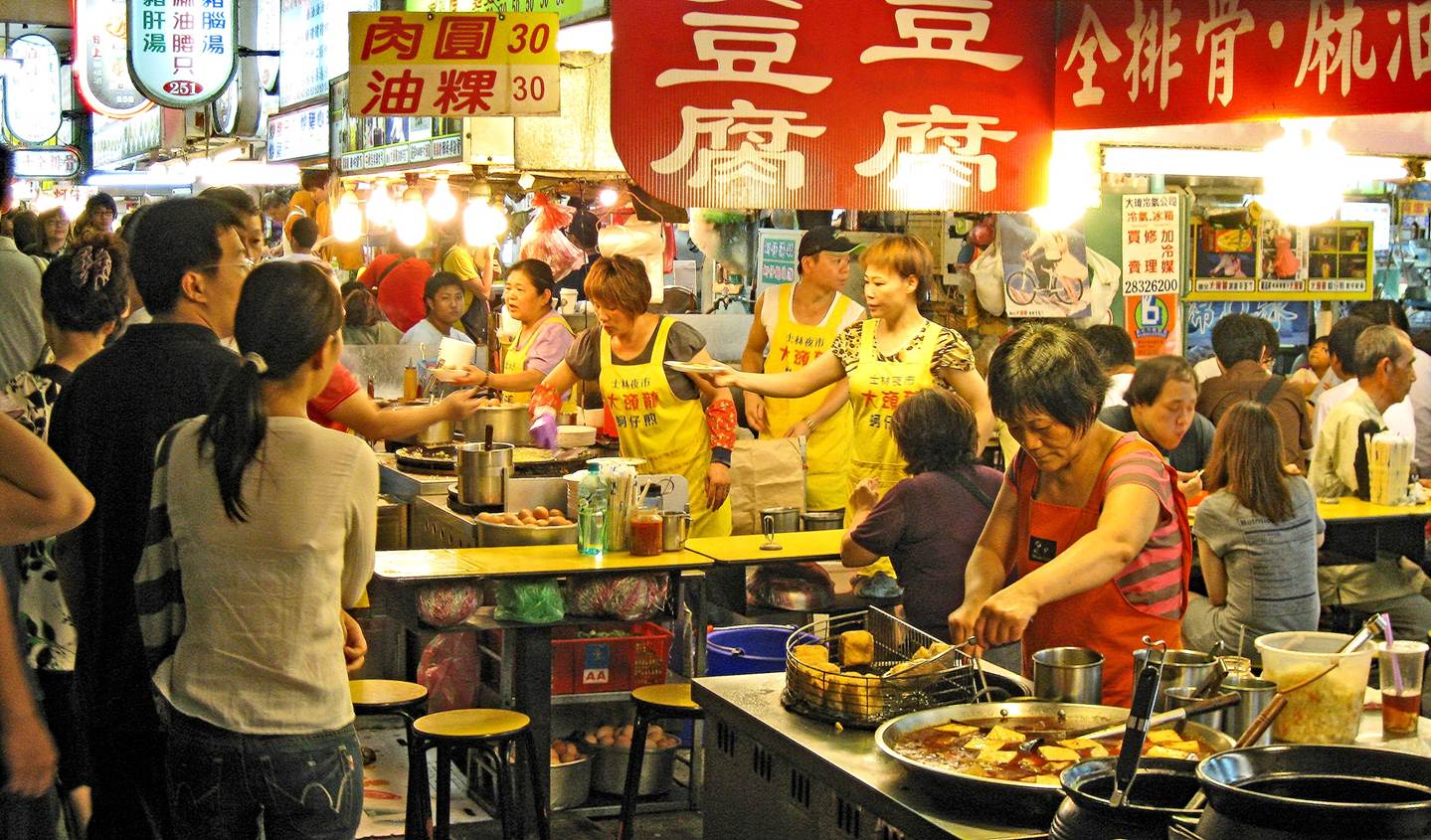
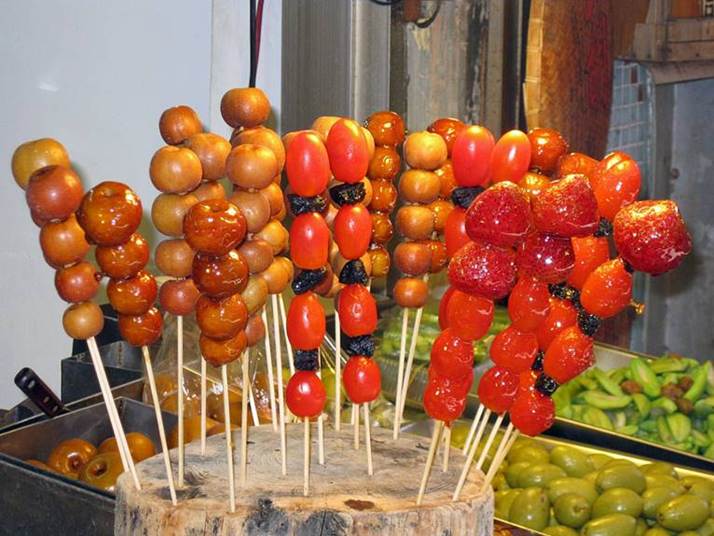
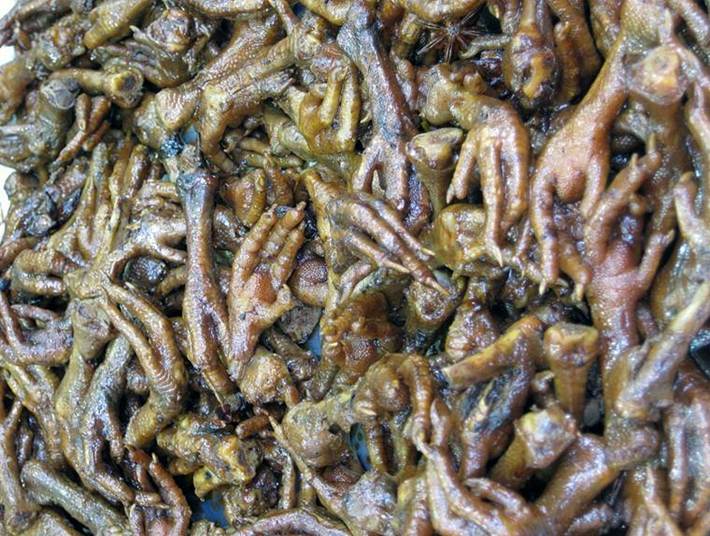
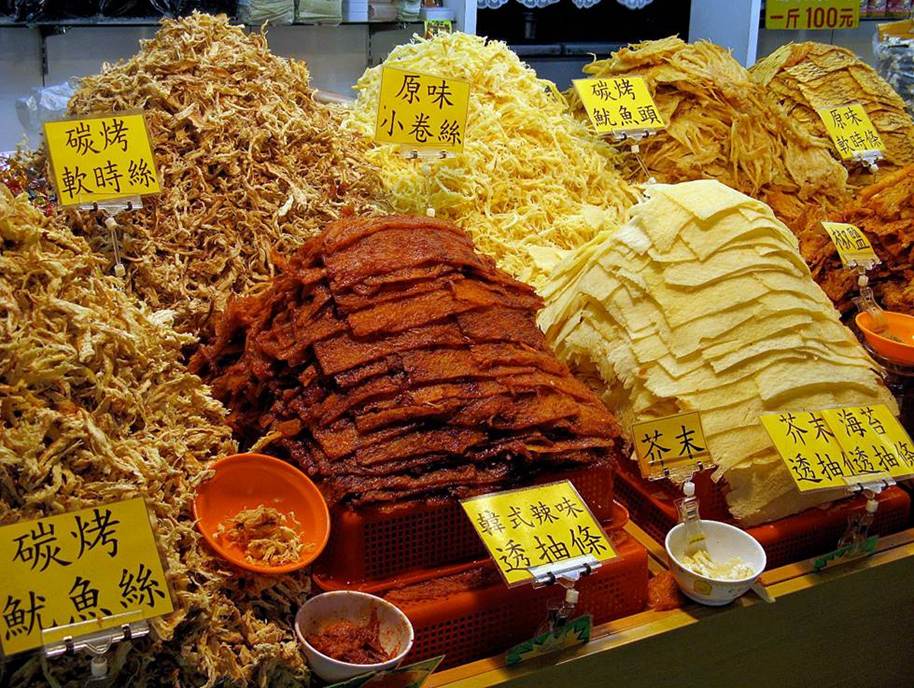
Street markets, especially night
markets, are extremely popular in Taiwan. There are several large ones in
Taipei. Food stands are their main attractions, often with long waiting lines.
|
|
|
|
|
|
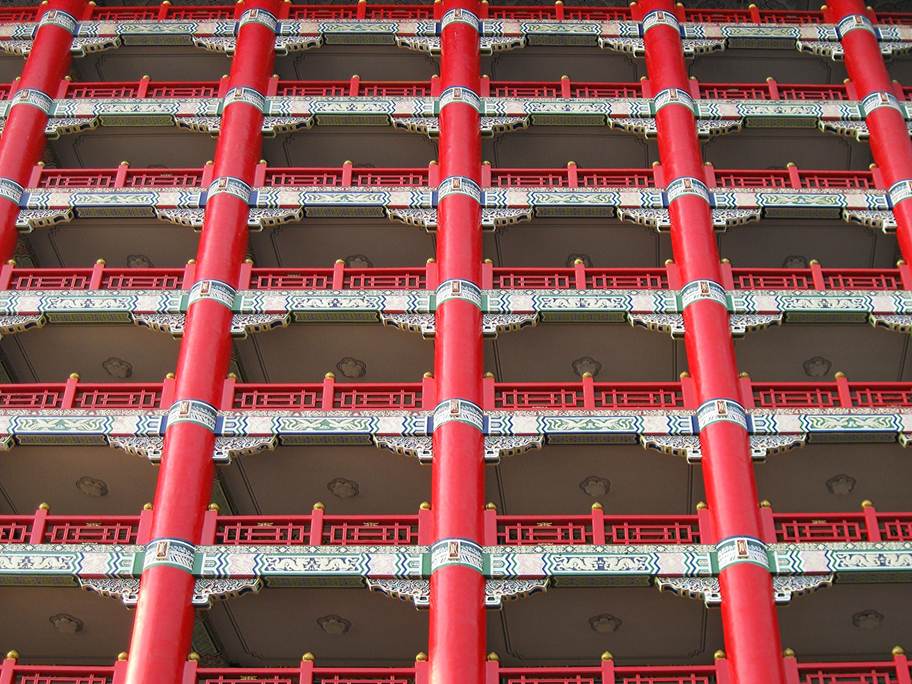
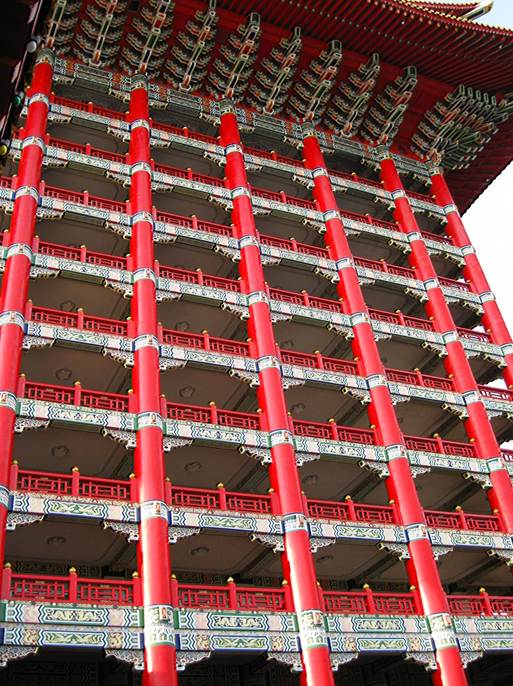
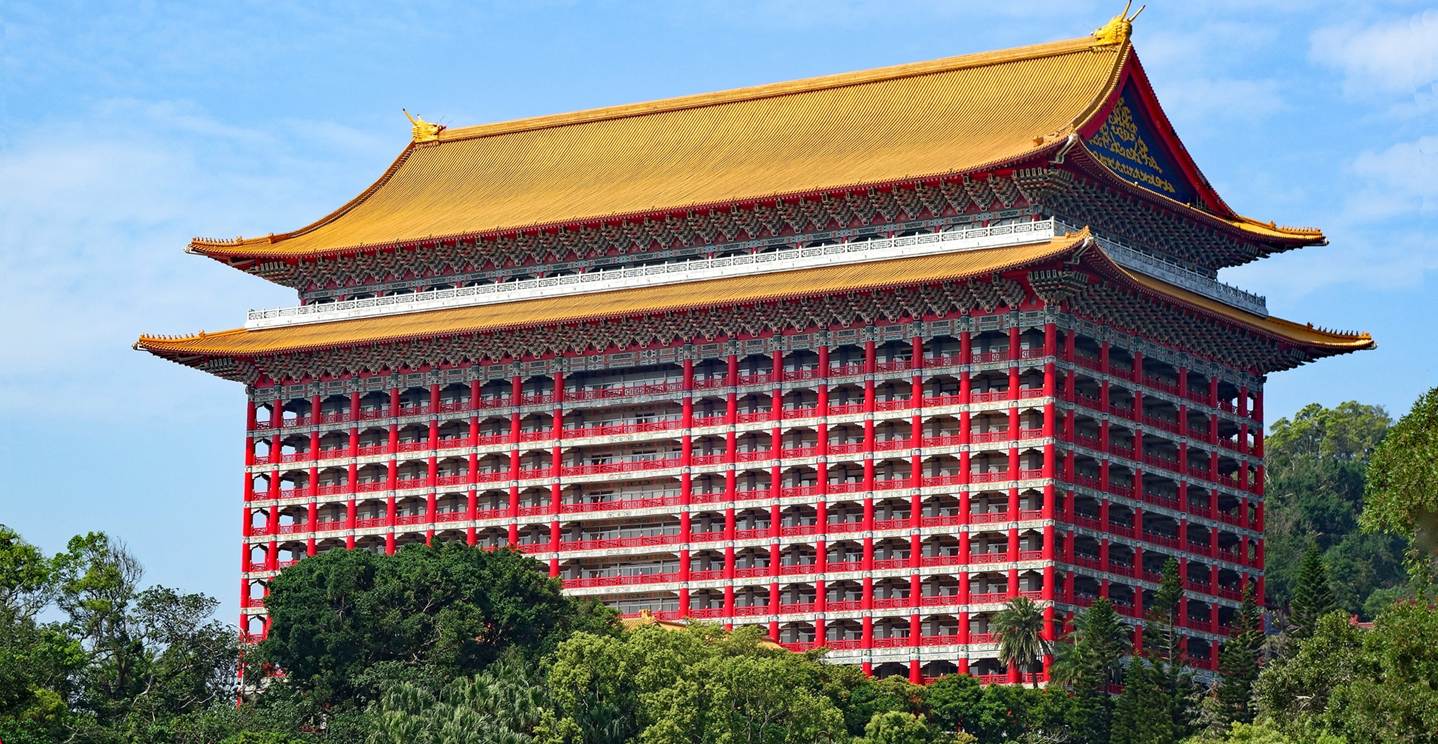
The Taipei Grand Hotel (圓山大飯店):
[June 2009 and March 2025]
After retreating to
Taiwan in 1949, Chiang Kai-shek decided to build a lavish hotel with a Chinese
palace-style architecture to accommodate distinguished visitors. This decision led
to the construction of the Taipei Grand Hotel. The iconic 14-story, 87m-high
building, pictured below, was completed in October 1973.
|
|
|
[June 2009]
[March 2025]
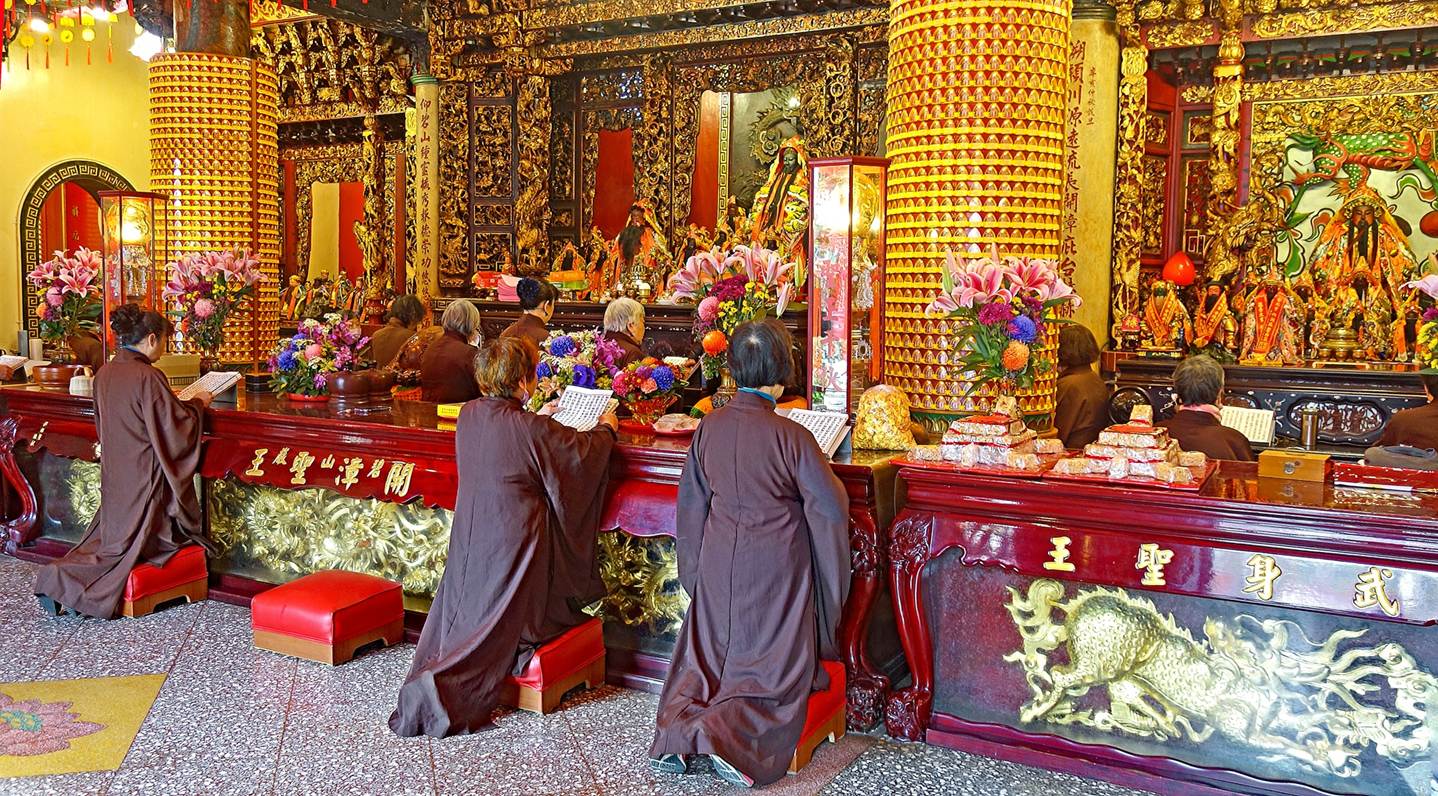
Bishanyan Kaizhang Sheng Wang temple
(碧山巖開漳聖王廟)
[March 2025]
Located on Mt. Bishan (碧山), this temple dates from 1751, but has
been later expanded several times to become a large multi-level temple. It is
dedicated to Kaizhang
Sheng Wang (開漳聖王), the deified version of
Chen Yuanguang (陳元光), a seventh-century Tang dynasty general
who brought stability to the Zhangzhou region in Fujian, China. Two of his commanders are also enshrined in the temple.
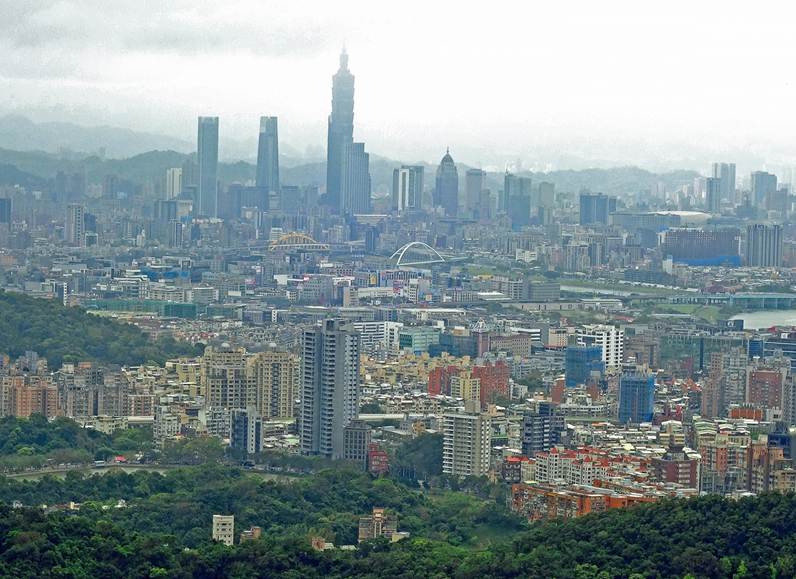
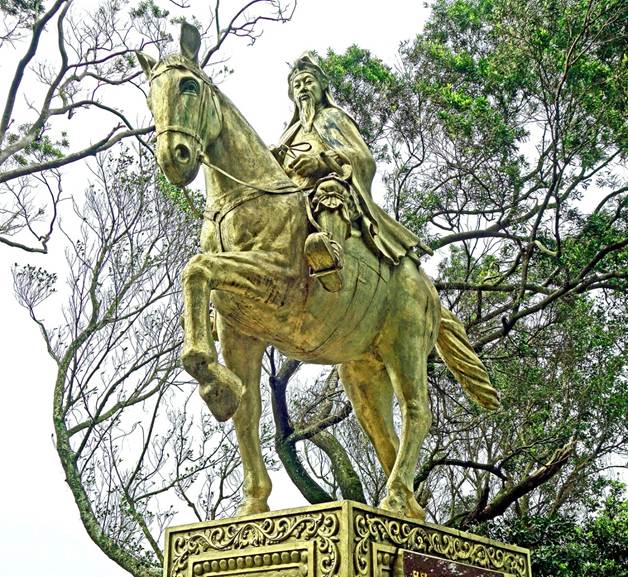
Left: View toward central Taipei from the temple
(with Taipei 101 rising in the center). Right: Statue of Chen Yuanguang at the entrance of the
temple.
|
|
|
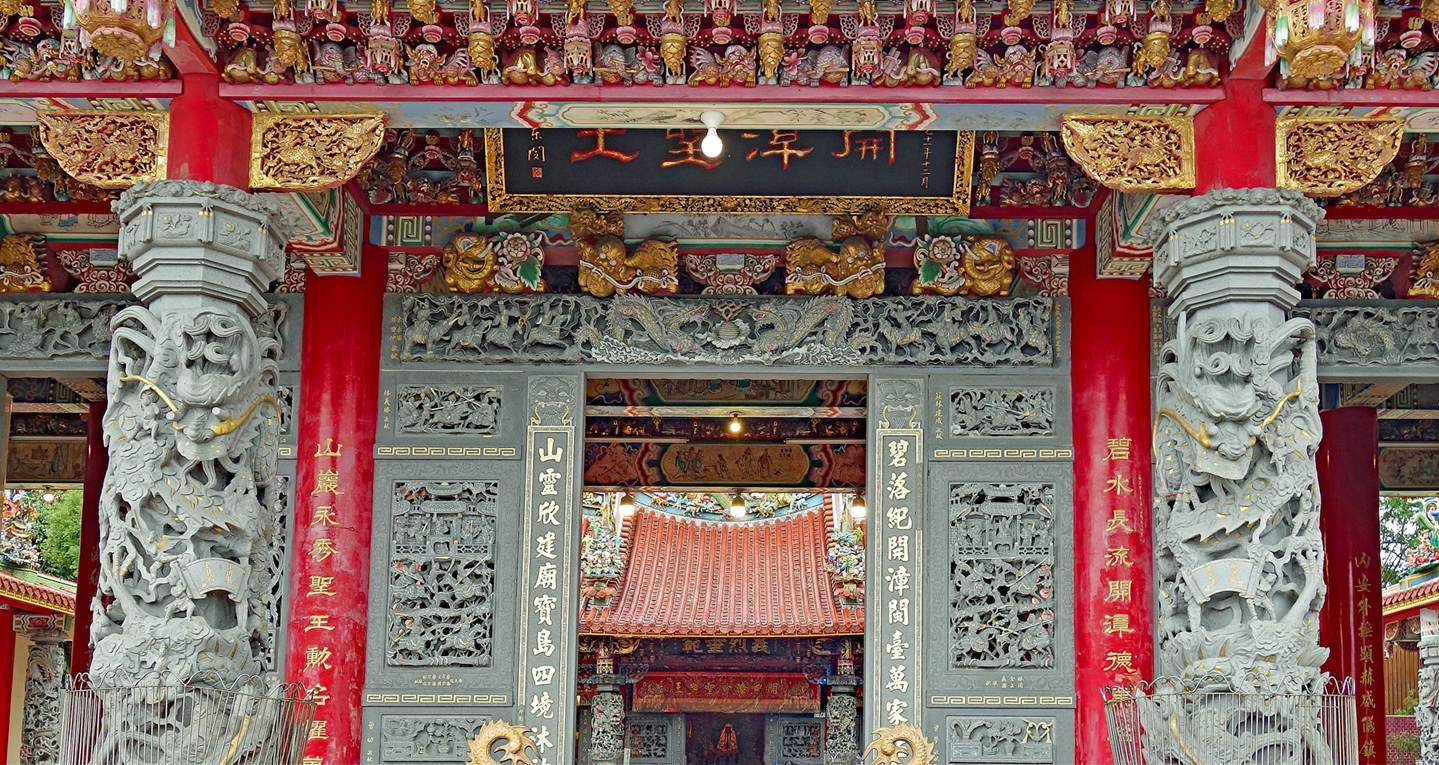
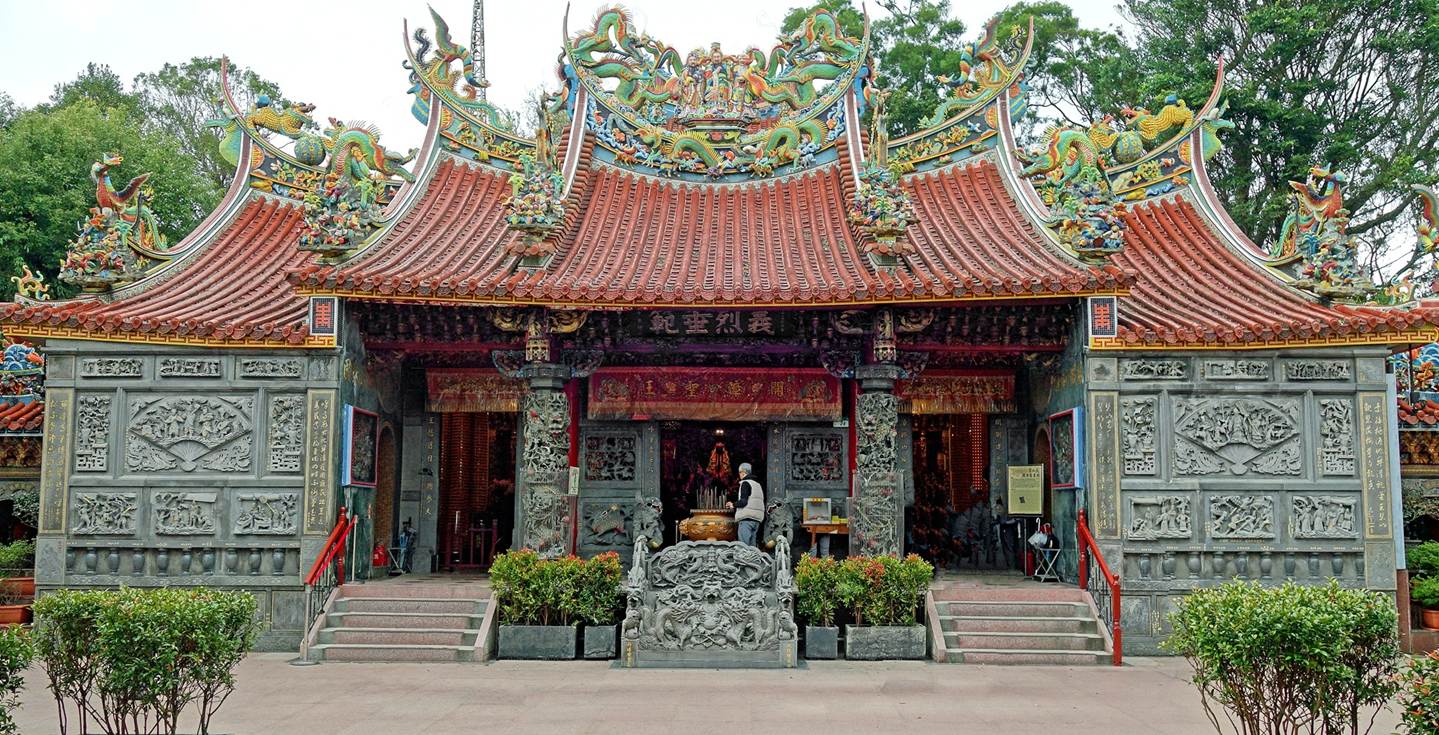
Facades of the temple
with finely carved stone walls and columns.
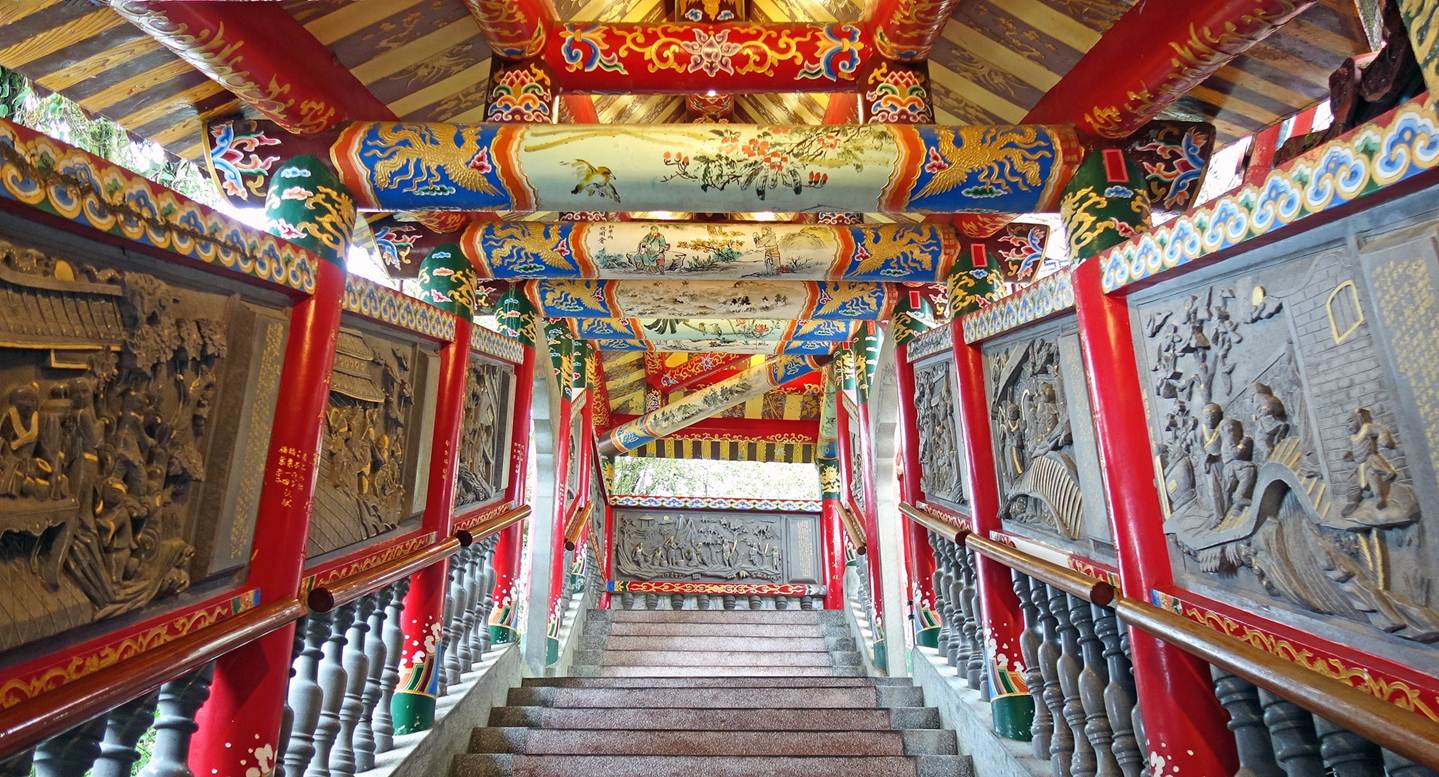
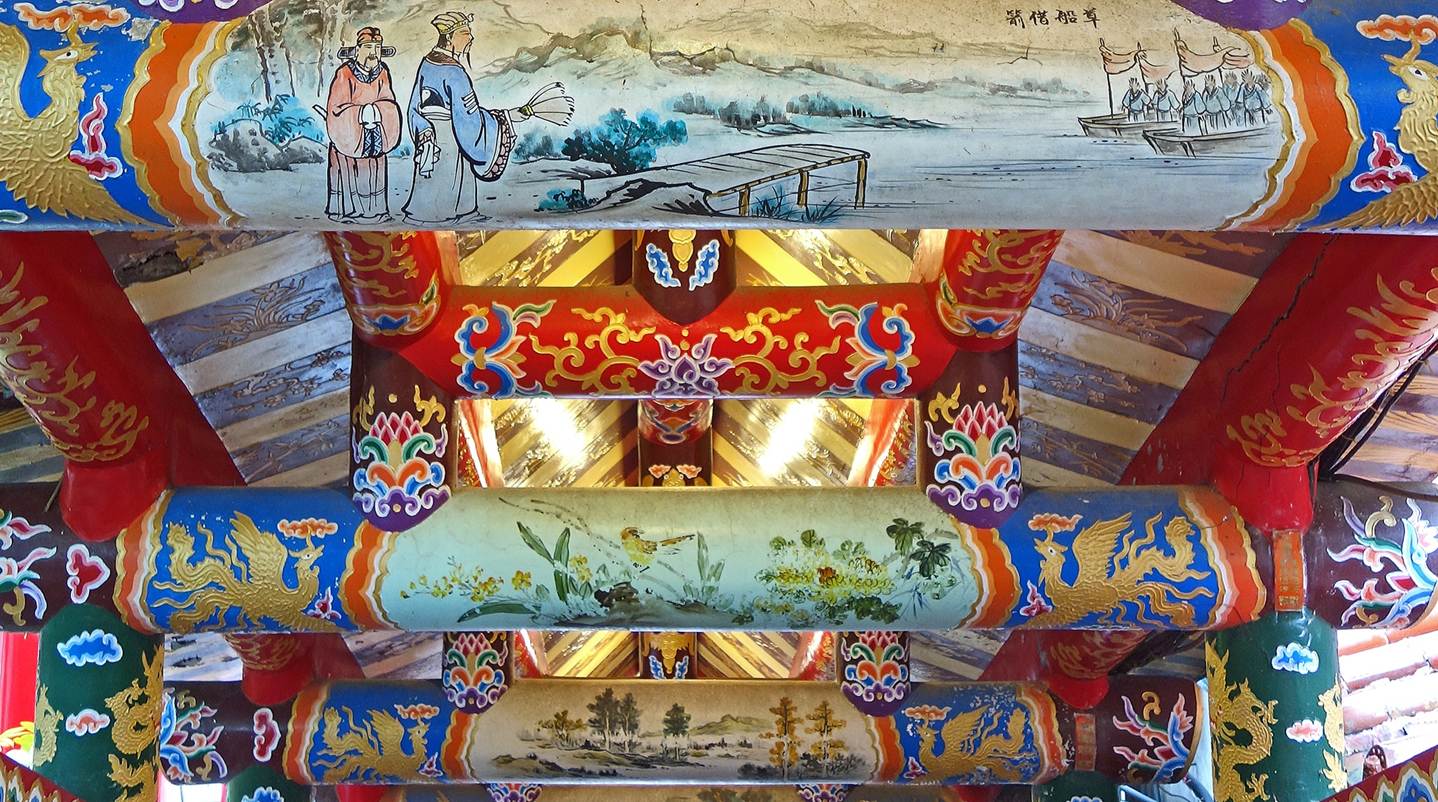
Beautifully decorated
stairway between two levels of the temple.

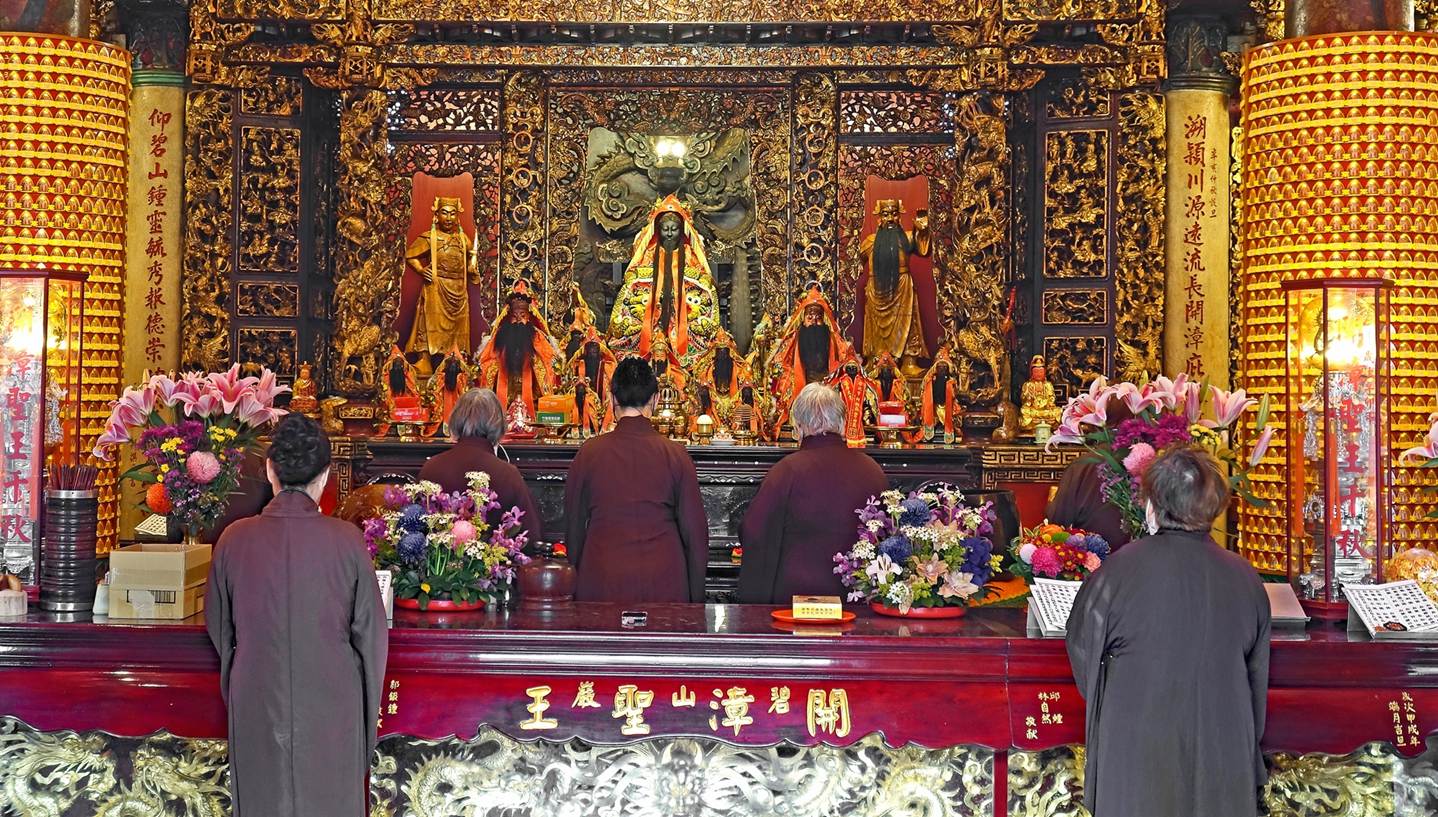
Altar in the main prayer hall.
The statue in the center depicts Kaizhang Sheng Wang. The two large statues on
either side of the altar are those of his commanders.
Another view of the main
prayer hall.
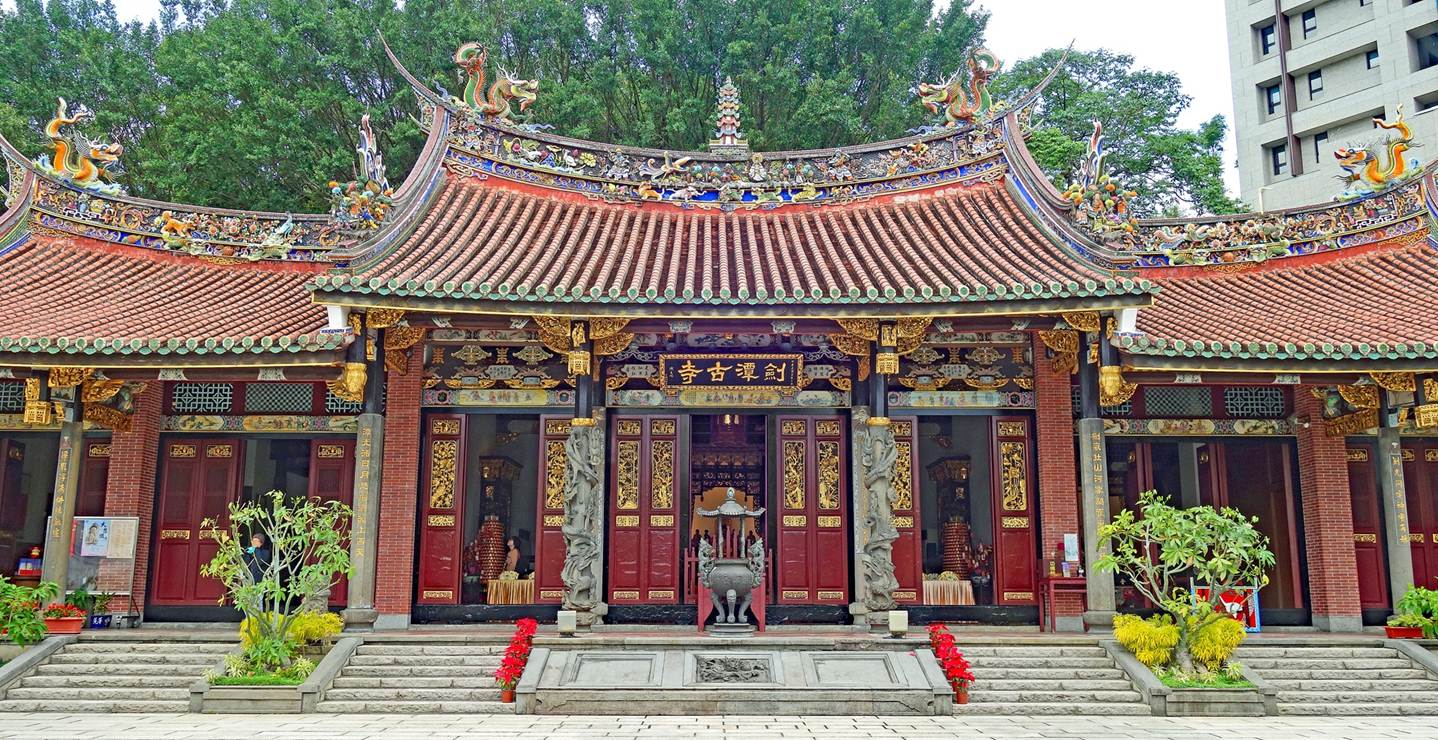
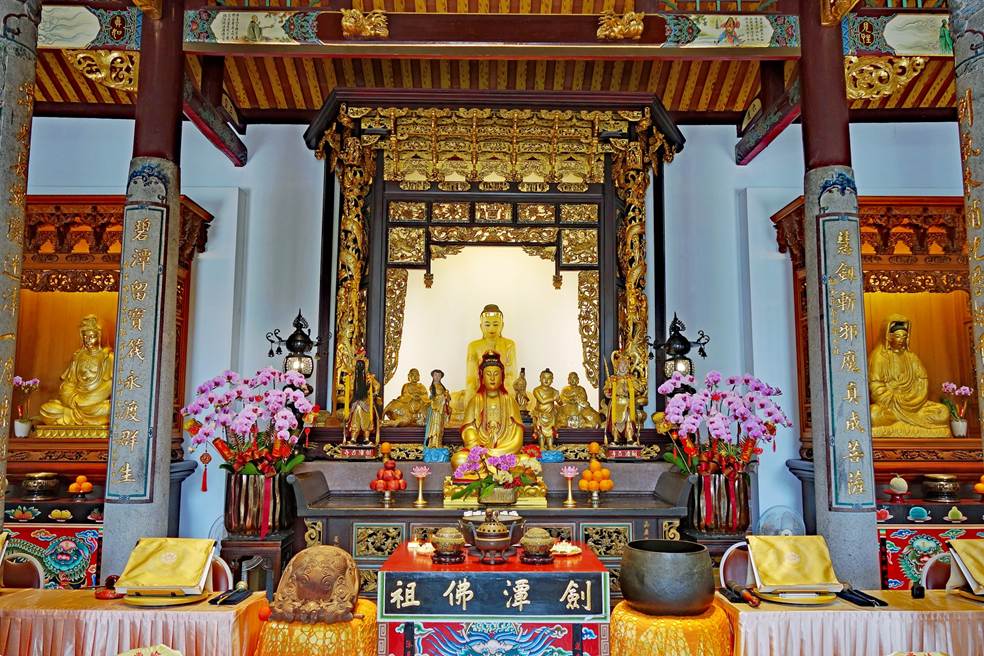
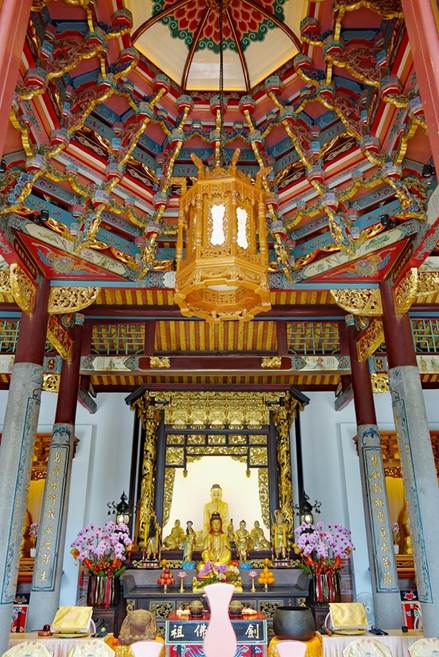
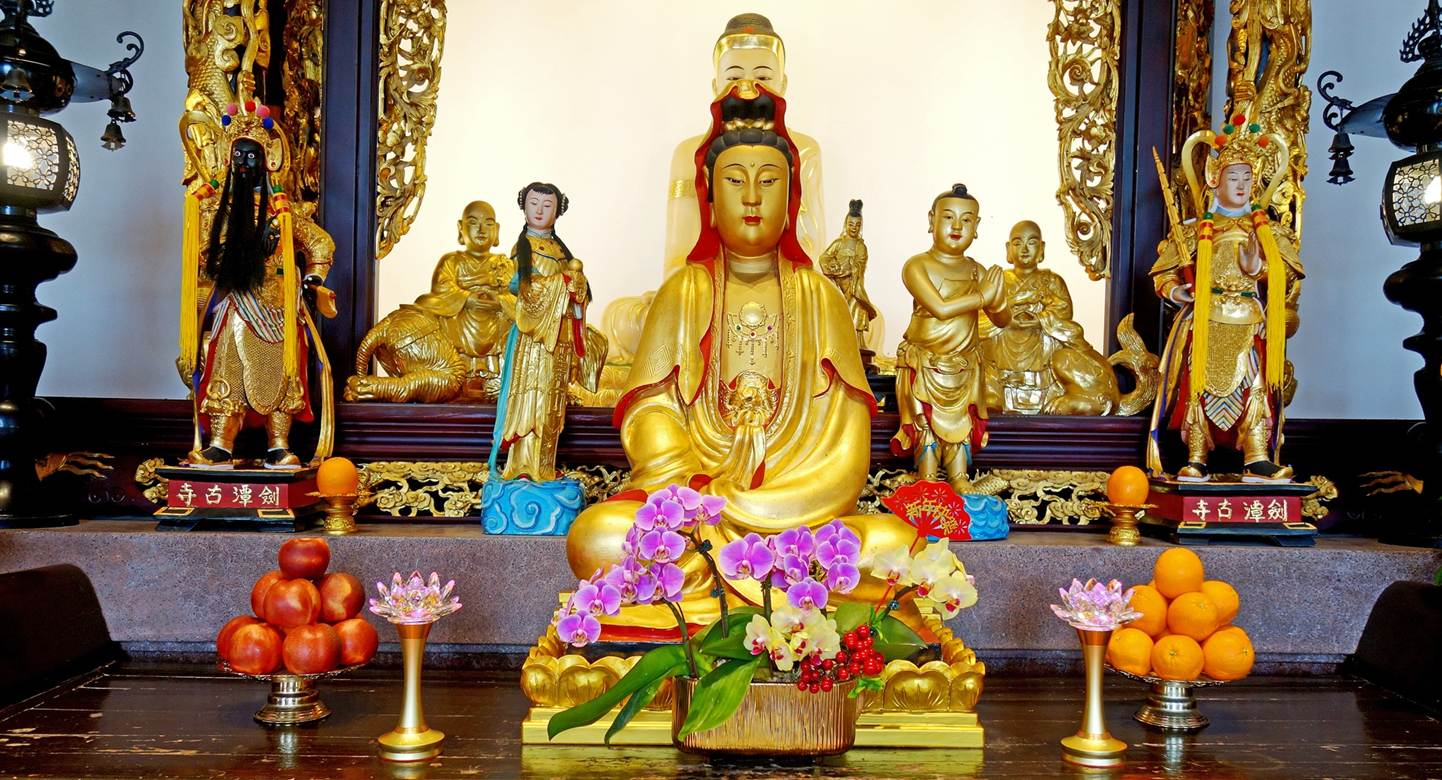
Jiantan Historical temple (劍潭古寺):
[March 2025]
First built in 1773 about
3km west of its current location, in the Jantian (劍潭) district, this Buddhist temple was
moved to its current location in the Zhongshan district at the end of the
Japanese occupation period. It is dedicated to Guanyin.
In the main prayer hall of
the temple.
|
|
|
The two statues on either
side of the altar depict two protective deities of Guanyin and the Dharma, clad
in heavy armors. They are the Bodhisattva Qielan (伽藍菩薩) on the left and the
Bodhisattva Weituo (韋馱菩薩) on the right.
(Bodhisattva Qielan is
the Buddhist title given to the deified historical Chinese general Guan Yu (关羽) (c. 160-220) renowned for his moral
virtues, particularly courage, loyalty and righteousness, and his martial
prowess. Guan Yu is also deified in Taoism under the name Guandi (關帝, ″Emperor Guan″), So,
Guandi and Bodhisattva Qielan are two distinct religious titles given to the
same spiritual entity viewed as a protector and a sage of war. They are often
depicted in the same way.)
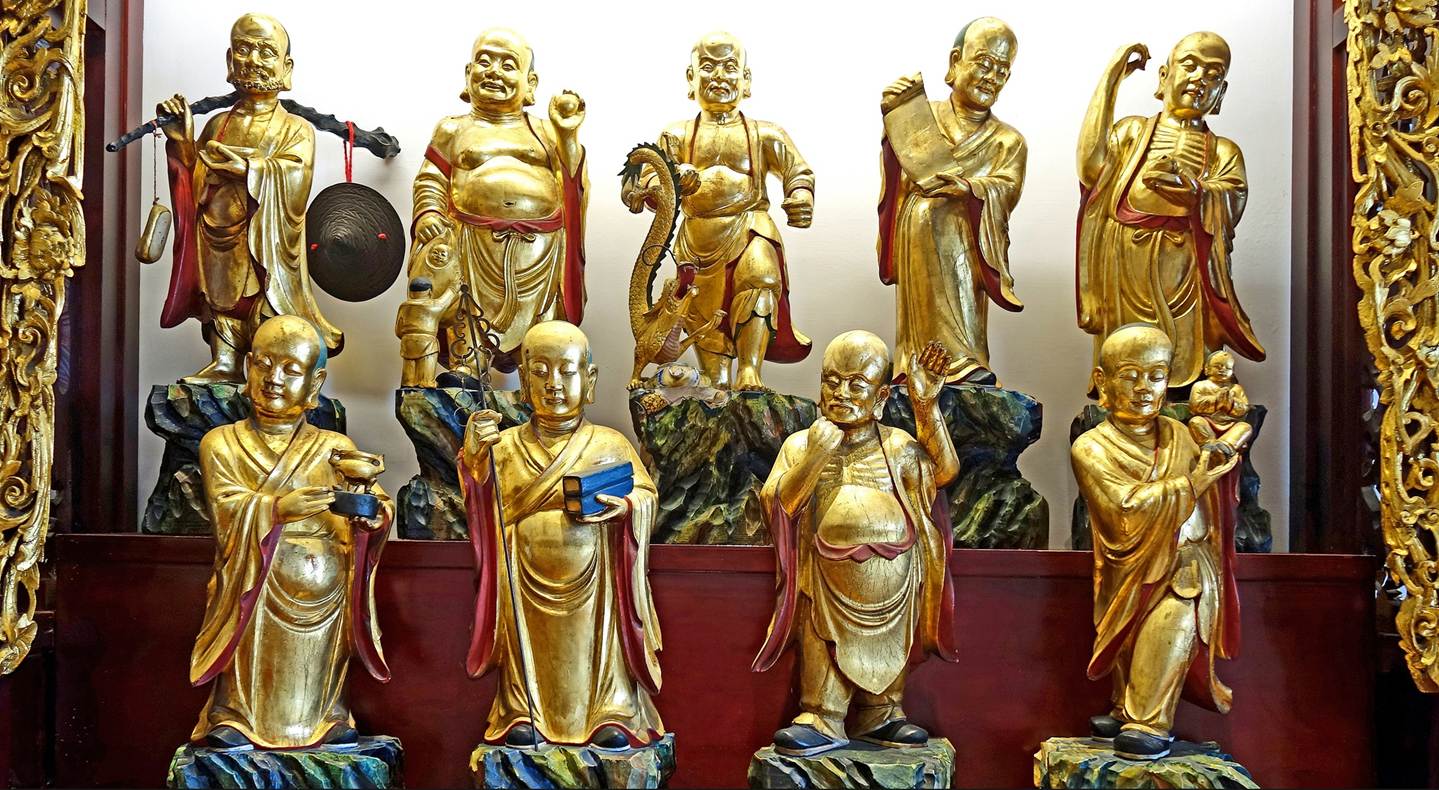
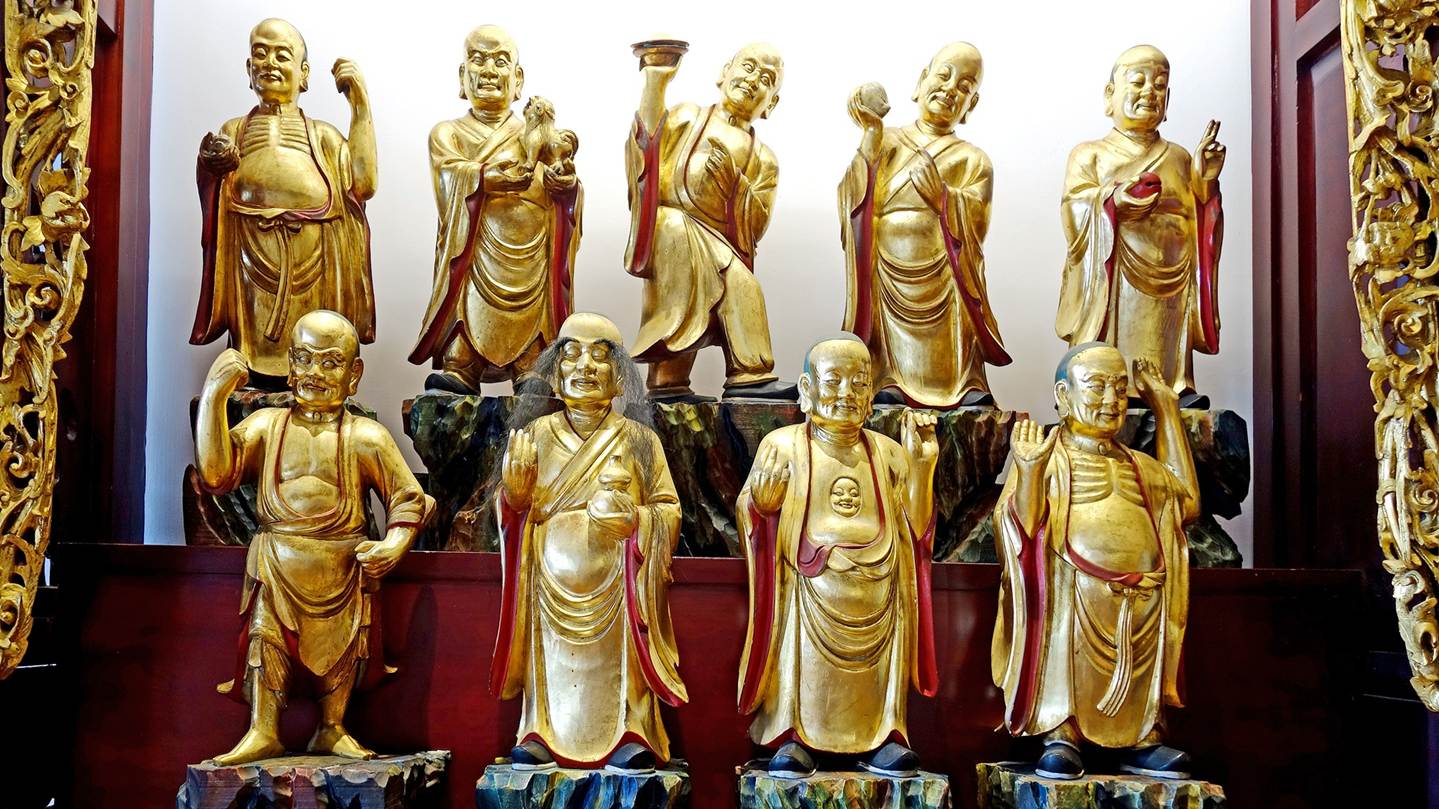
Gilded statues of the
Eighteen Arhats, considered the first disciples of the Buddha who have attained
the four stages of enlightenment. They are believed to wait on Earth, protecting
Buddhist teachings (the Dharma), until the coming of the future Buddha
(Maitreya).
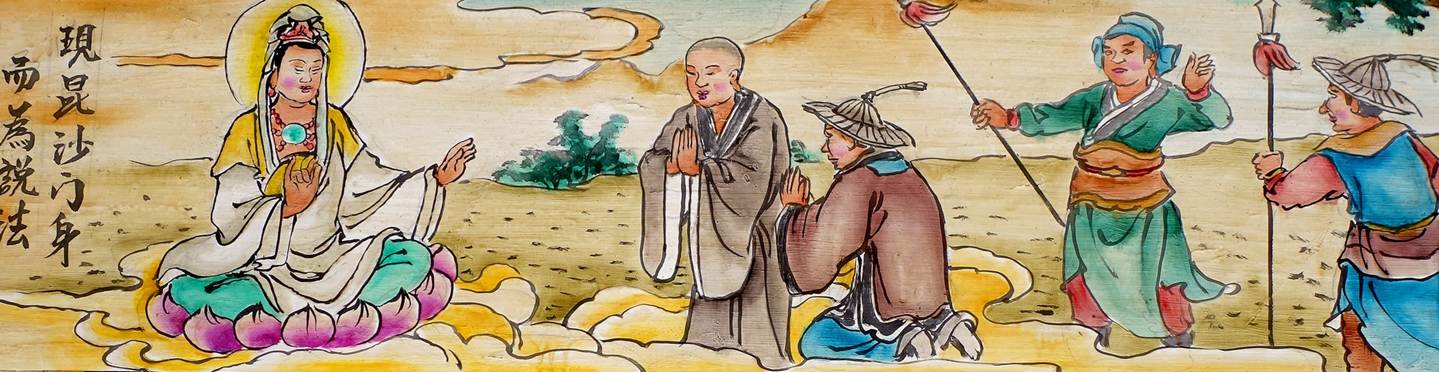
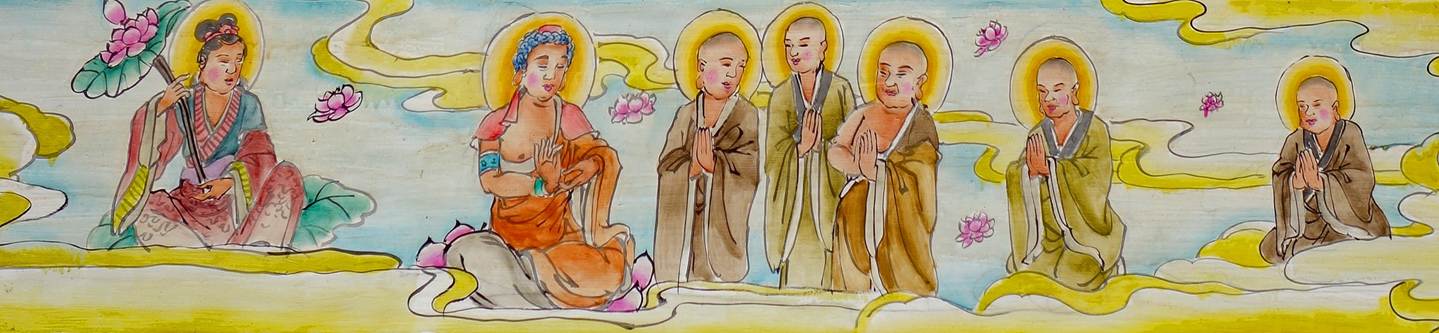
Wall paintings in the
temple.
National Revolutionary Martyrs'
Shrine:
[March 2025]
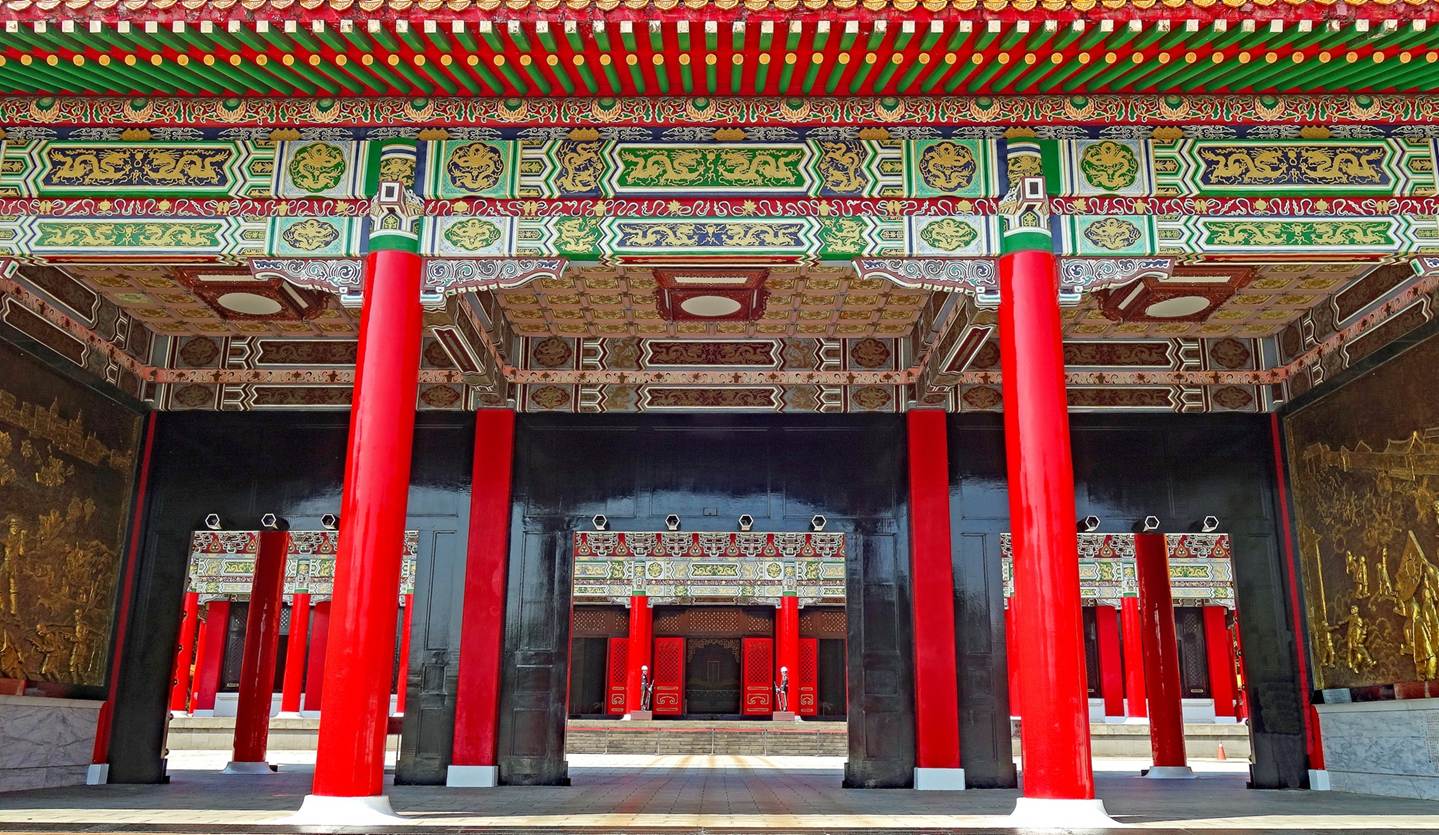
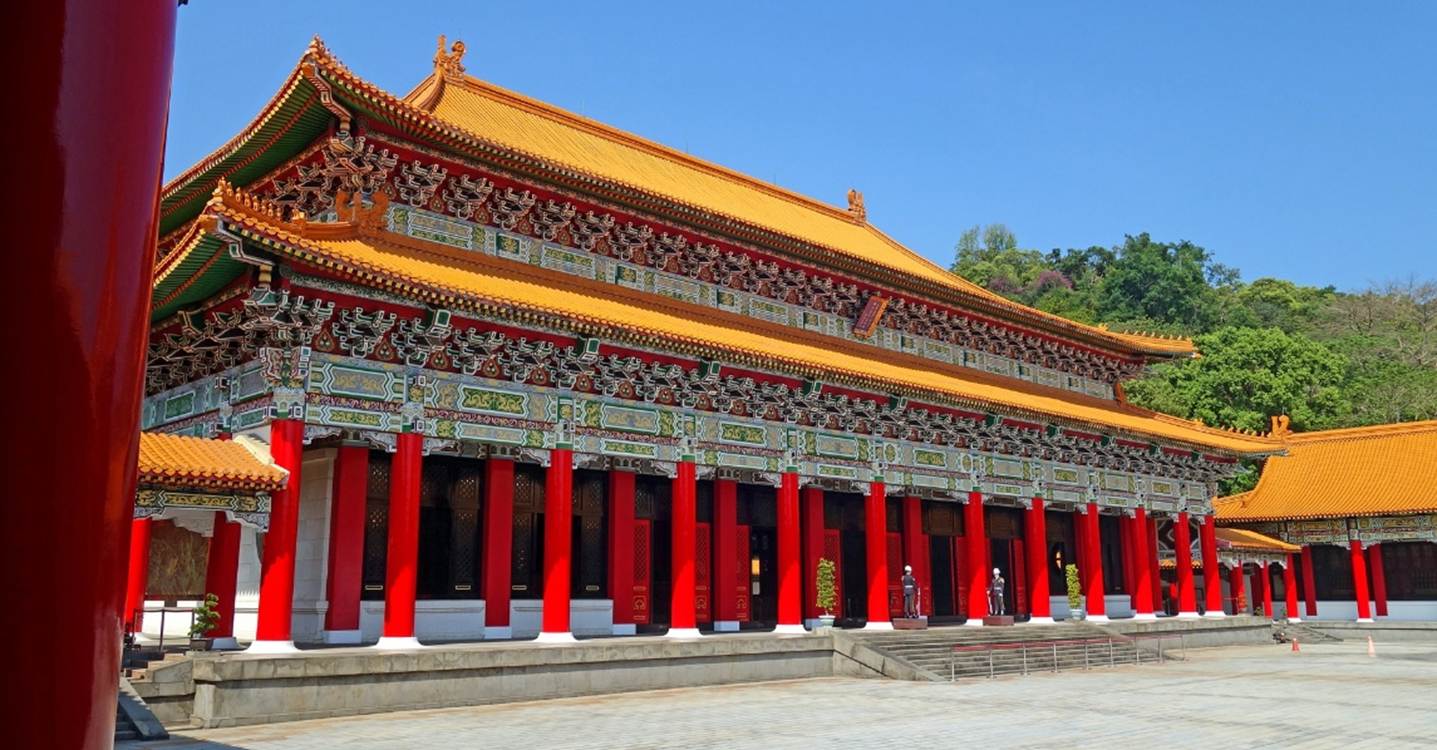
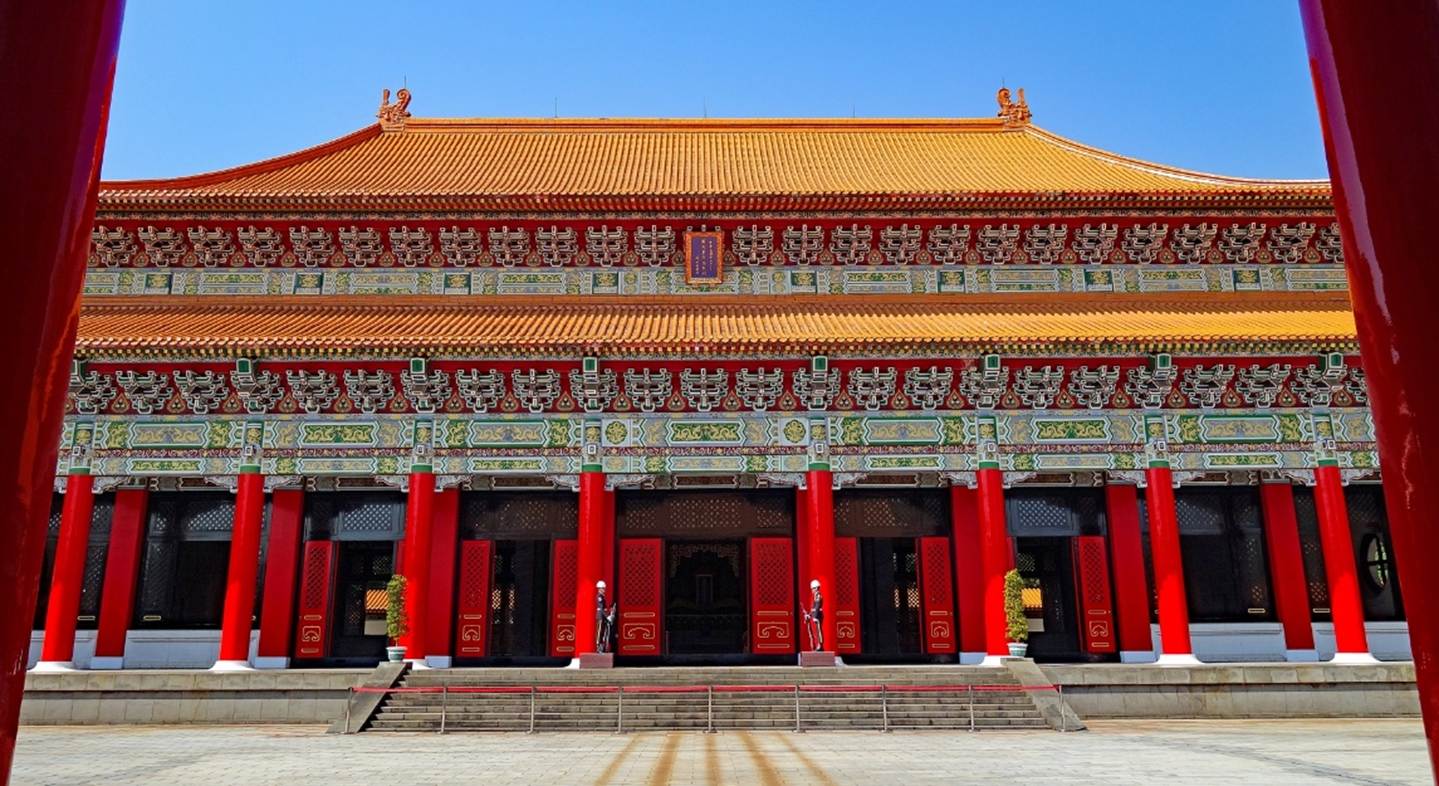
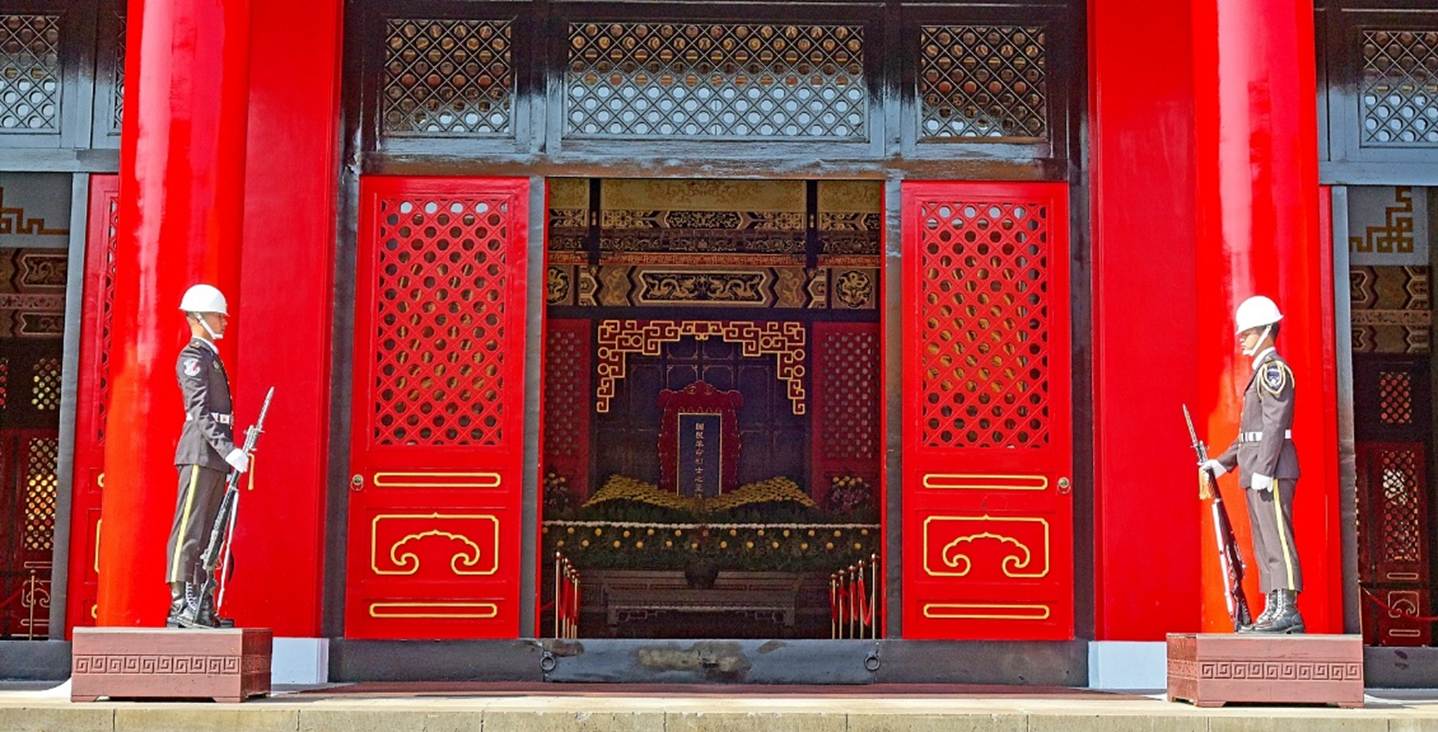
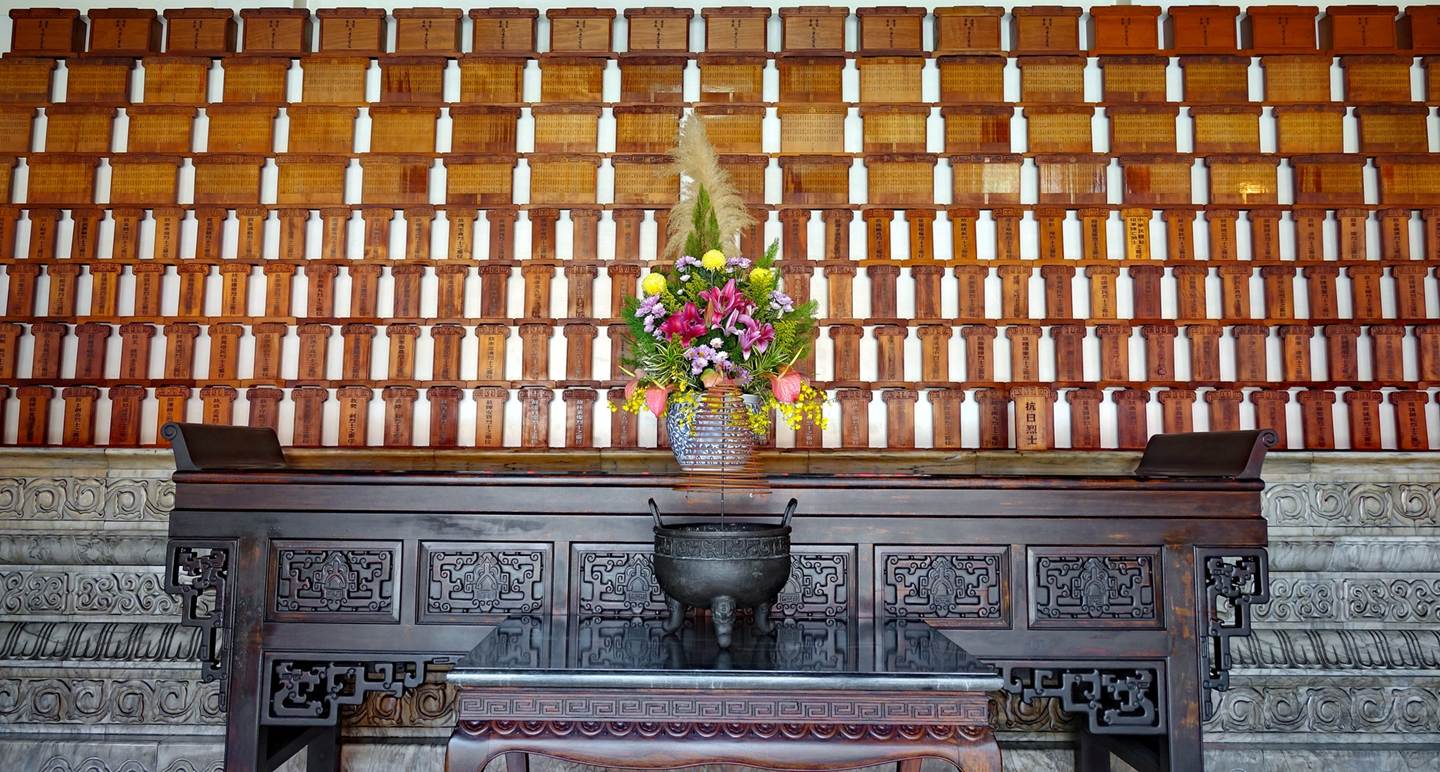
This grandiose shrine
houses the spirit tablets of nearly 400,000 people killed in various Chinese
struggles, revolutions, and wars. Its architecture is reminiscent of the Hall
of Supreme Harmony in the Forbidden City of Beijing.
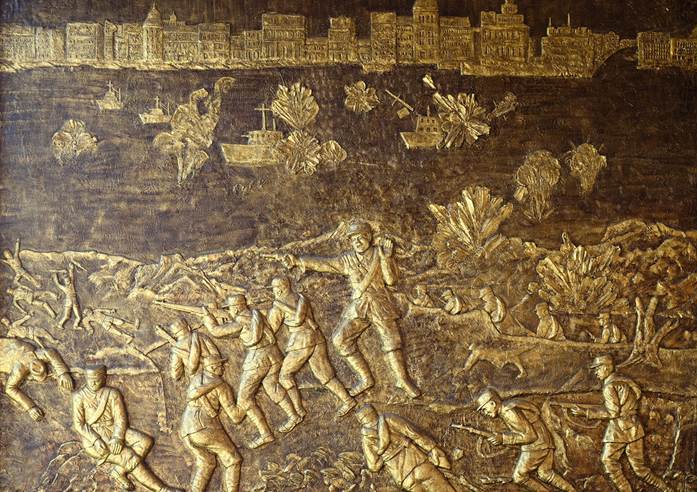
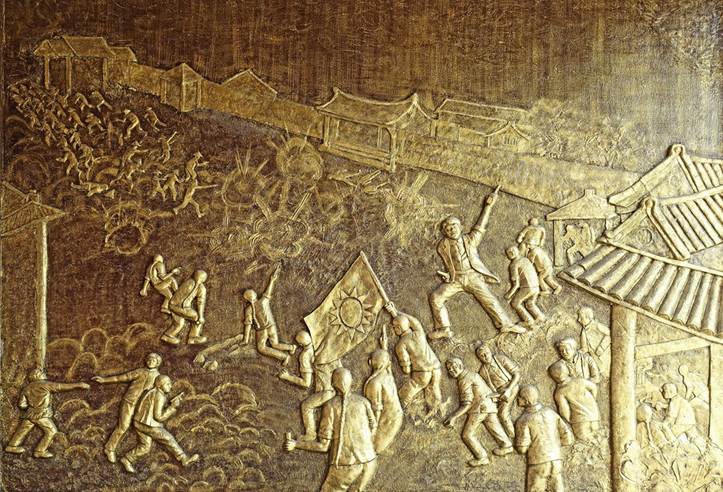
Murals depicting the Battle
of Shanghai (left) and the Guangzhou Uprising (right). The 1937 Battle of
Shanghai was a major battle between the Empire of Japan and the Republic of
China during the second Sino-Japanese War. The 1911 Guangzhou Uprising was a
revolutionary event aimed at overthrowing the Qing Dynasty. (These murals are
also partially visible on the left and on the right of the above photo.)
|
|
|
Main building of the
shrine.
Spirit tablets in one of
the shrine's building.
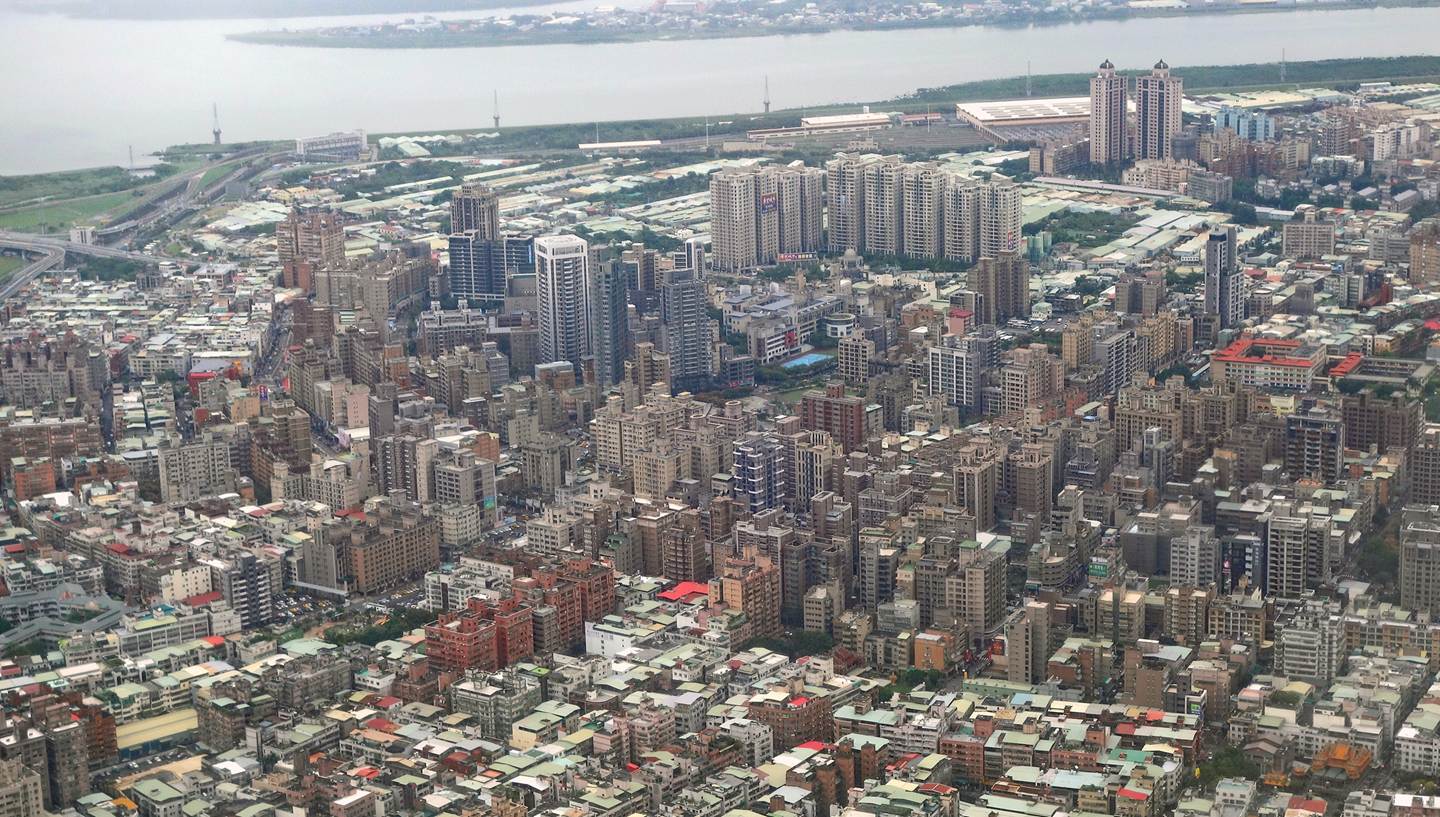
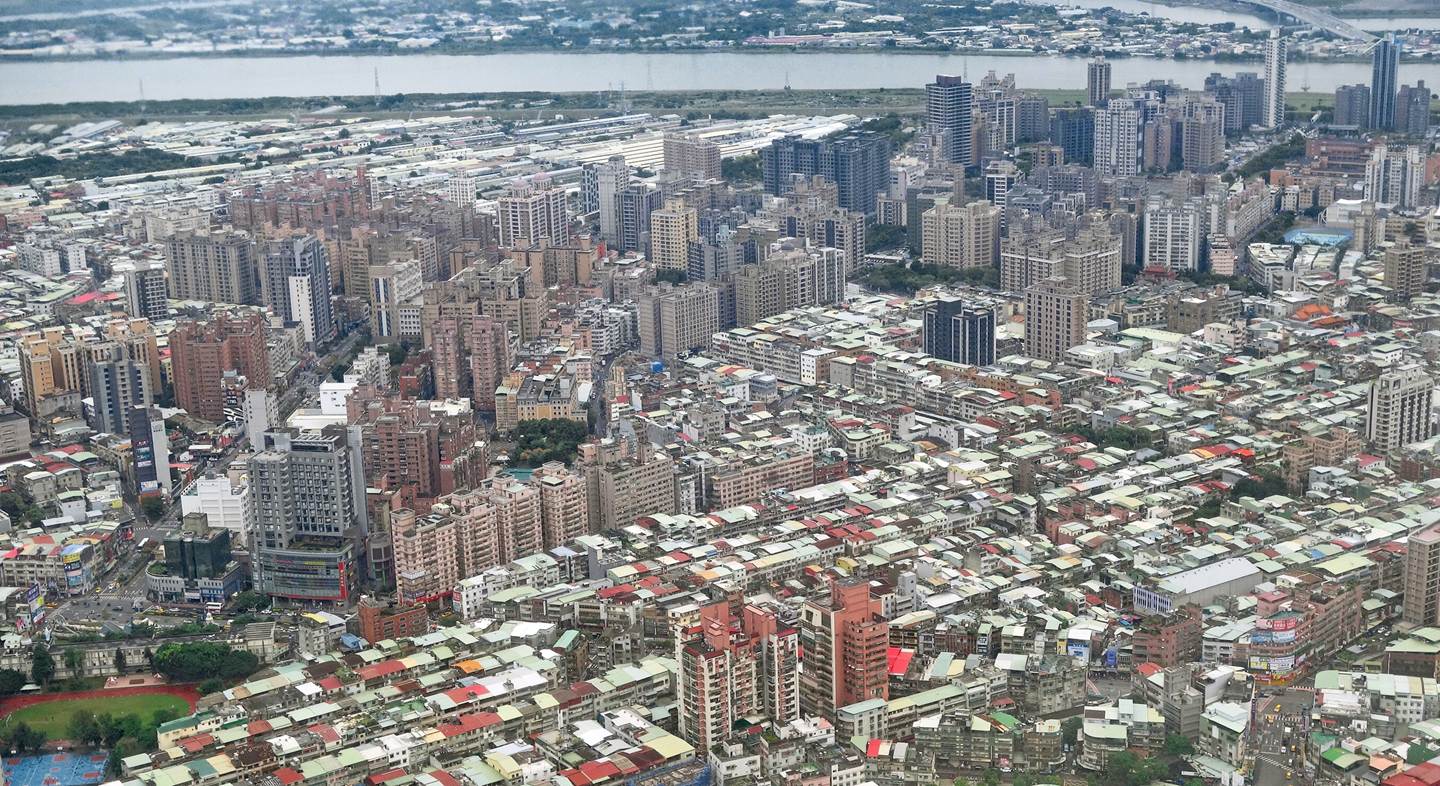
Views over parts of northern
Taipei before landing at Songshan airport:
[November 2018]
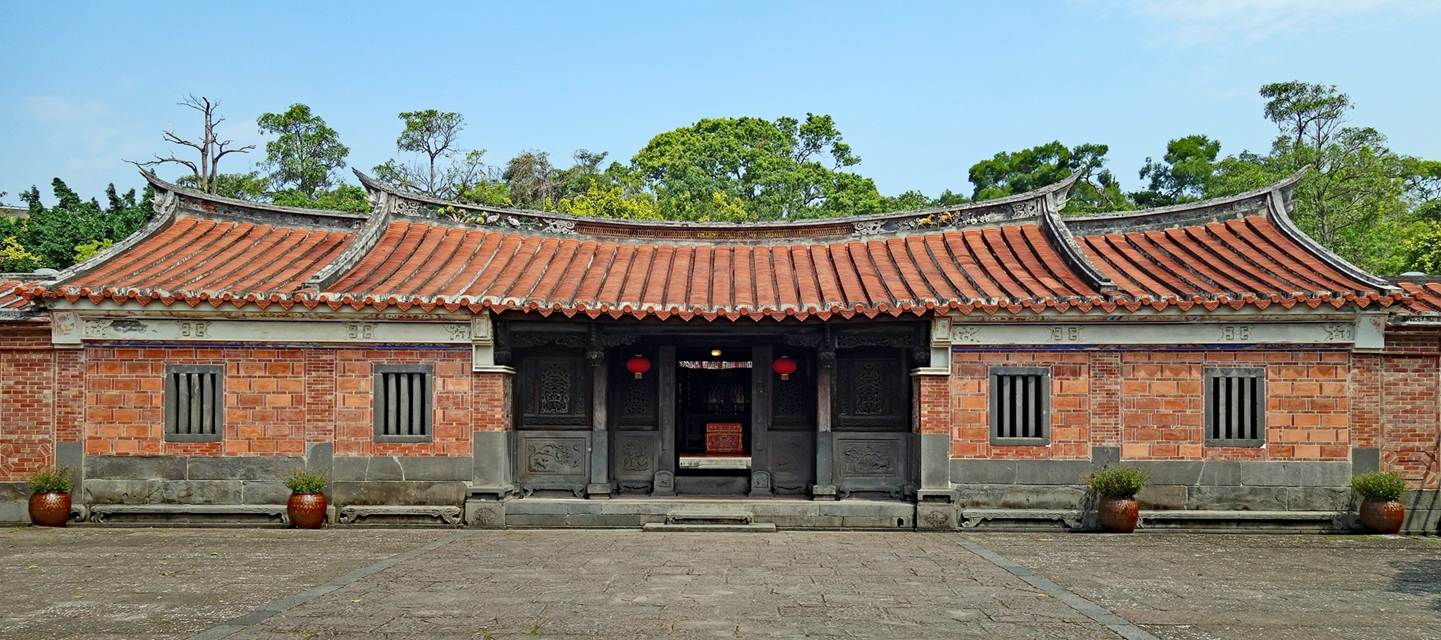
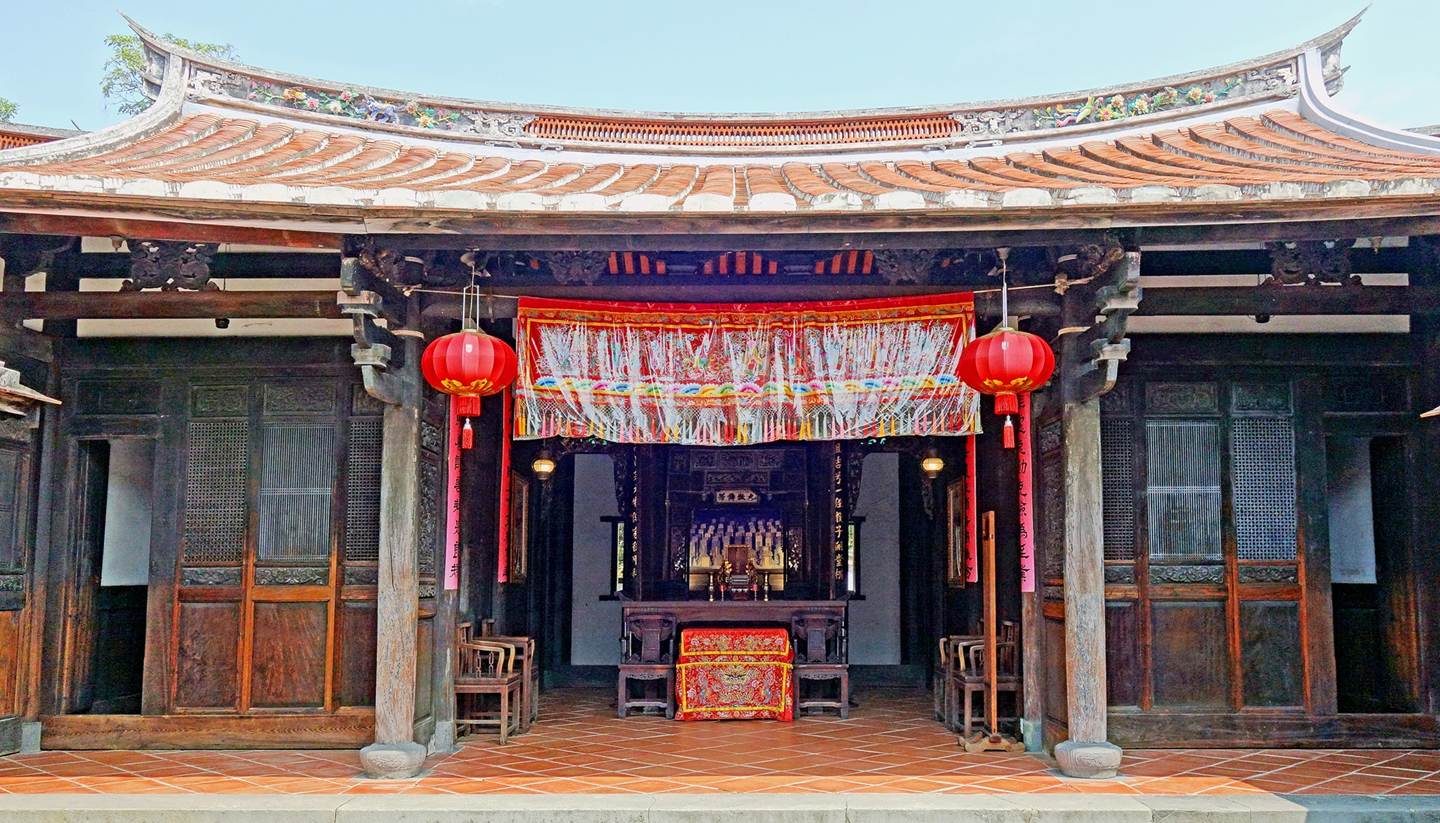
Lin Antai Historical House (林安泰古厝):
[March 2025]
Originally built in the
mid-18th century at another location by the Lin Family who migrated to Taiwan
from the Fujian province of China, these Fujian-style buildings were moved to
their current location at the end of the 20th century.
Facade of the main
entrance.
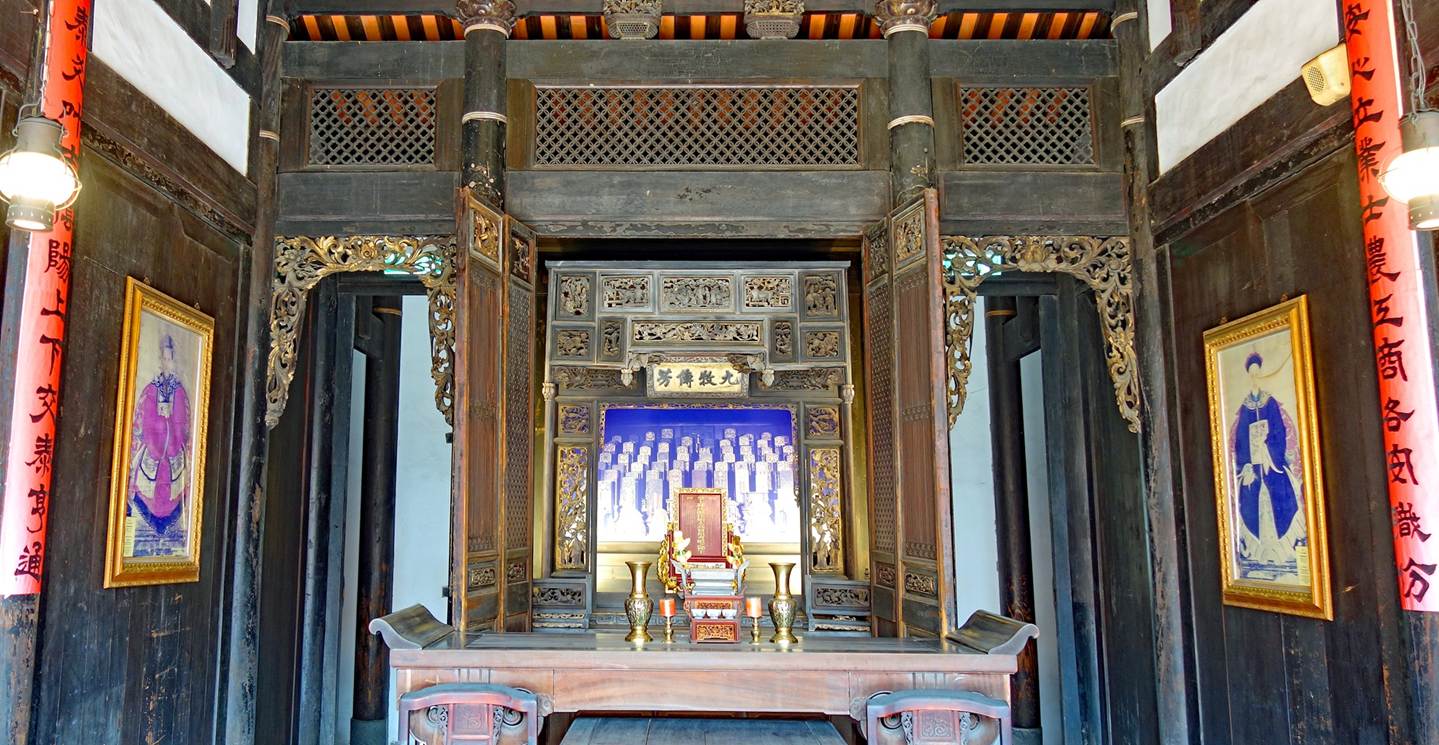
Ancestor shrine of the
Lin Antai family.
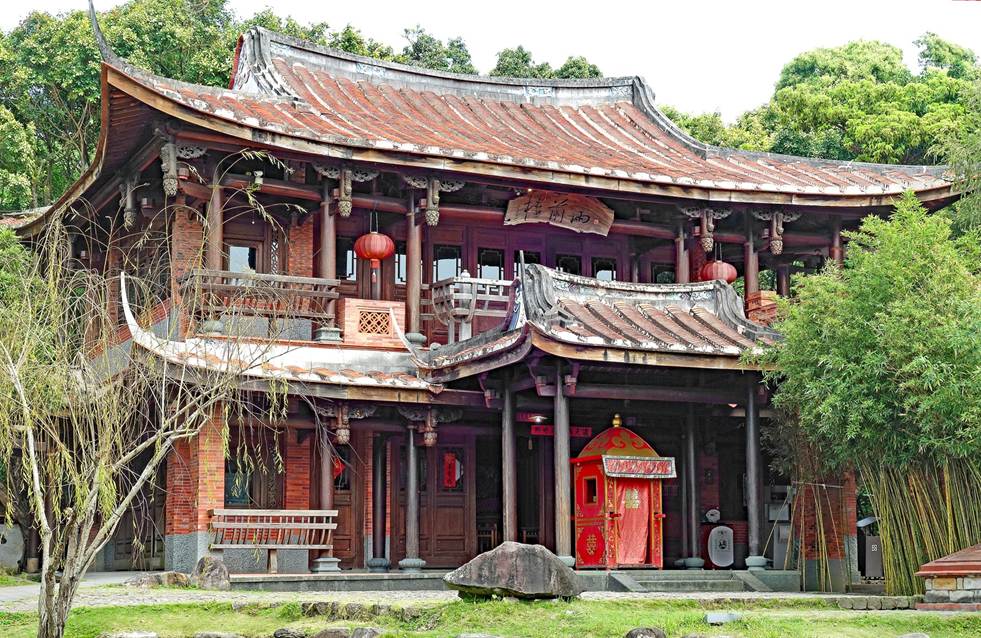
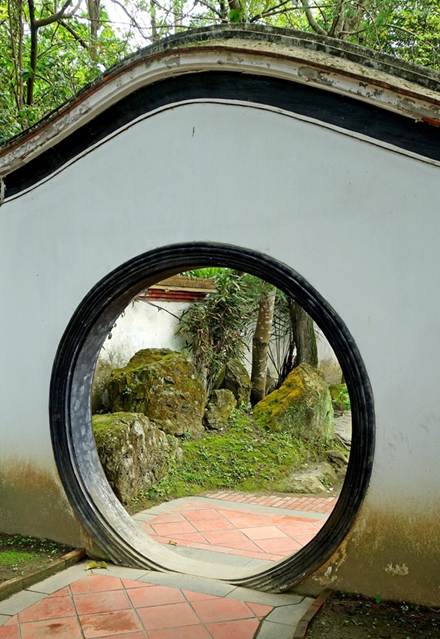
Left: Two-story mansion
in the Lin Antai complex. Right: Moon gate.
|
|
|
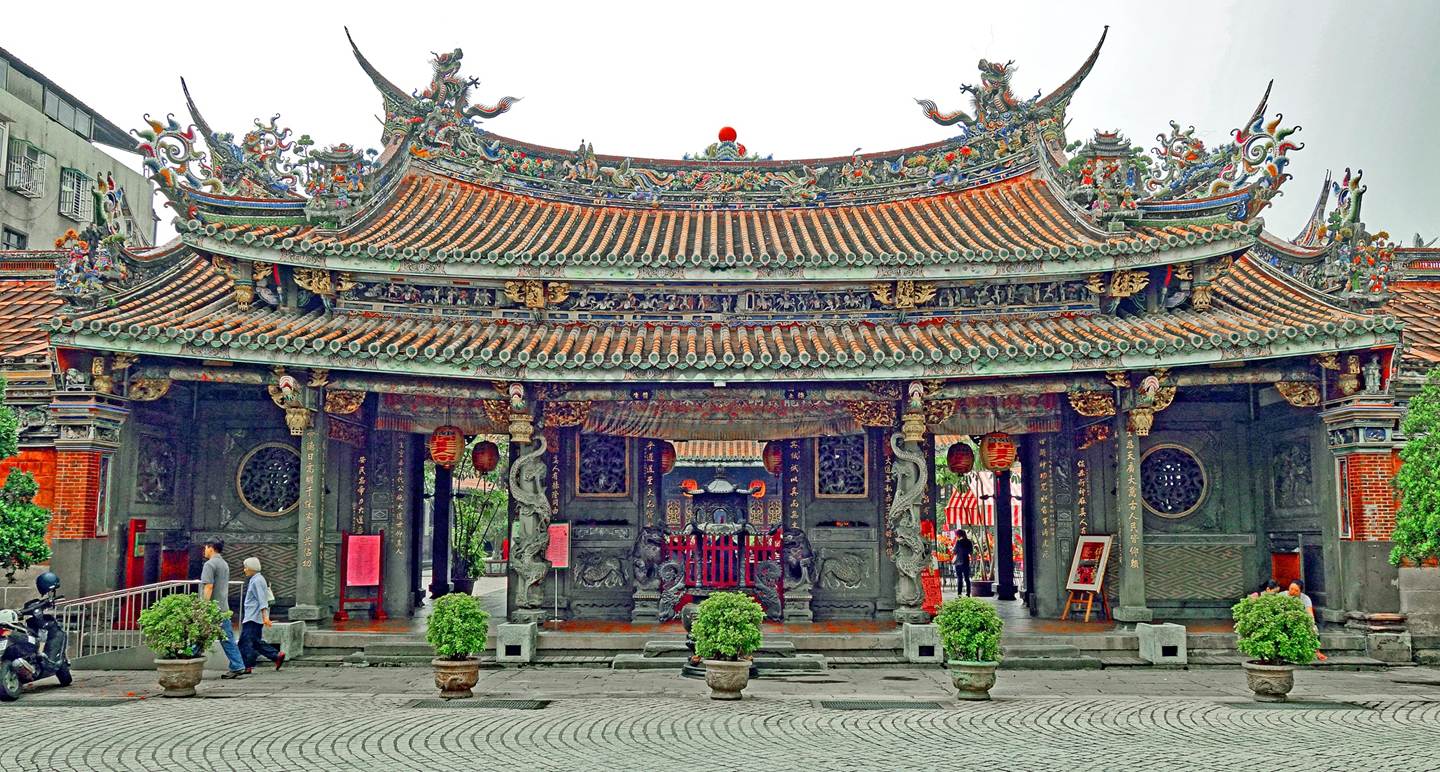
Dalongdong Baoan temple (大龍峒保安宮):
[April 2017]
Originally built in 1742
as a wooden structure, this temple was reconstructed as a more permanent
edifice between 1804 and 1830. During the Japanese colonial period, it
underwent years of neglect and was even put to other uses, in particular as a
commercial office and a language school. Its most recent restoration took place
between 1995 and 2002.
It is primarily dedicated
to Baosheng Dadi (保生大帝, meaning "Great Emperor Protector
of Life"), the God of Medicine and Healing in folk religion and Taoism. He
is the deified form of Wu Tao (吳夲), a highly skilled Song dynasty
physician renowned for his miraculous medical skills, who lived in Fujian
during the Northern Song Dynasty (979-1036).
Main entrance gate.
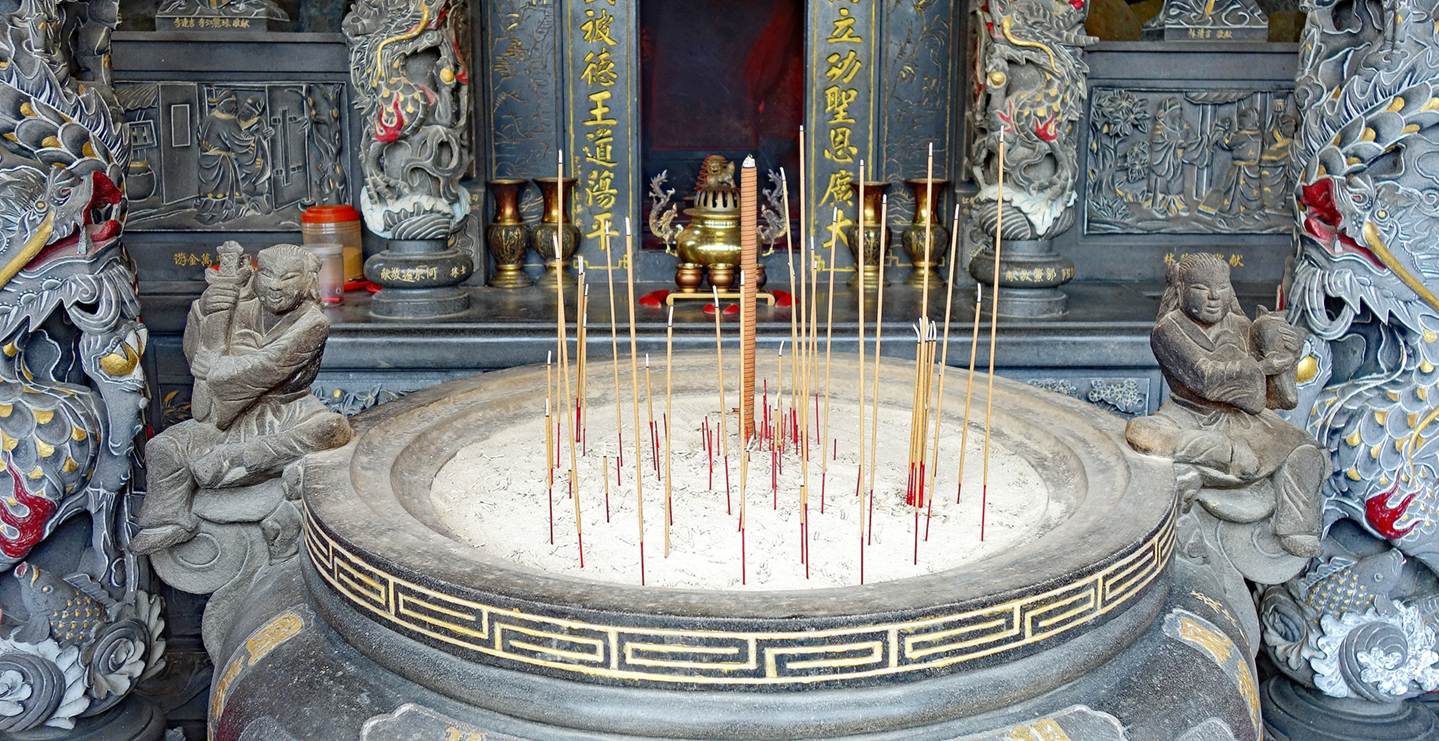
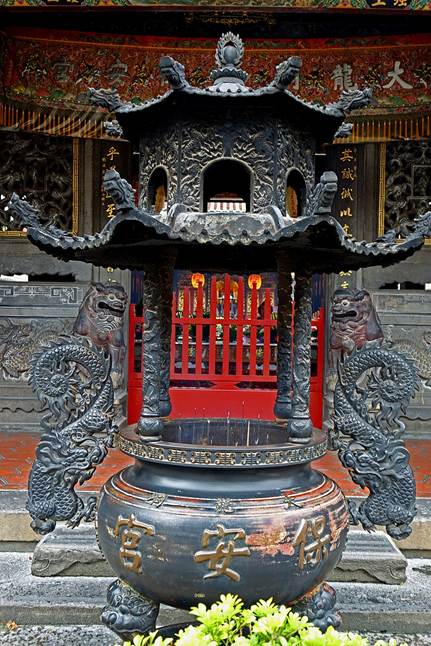
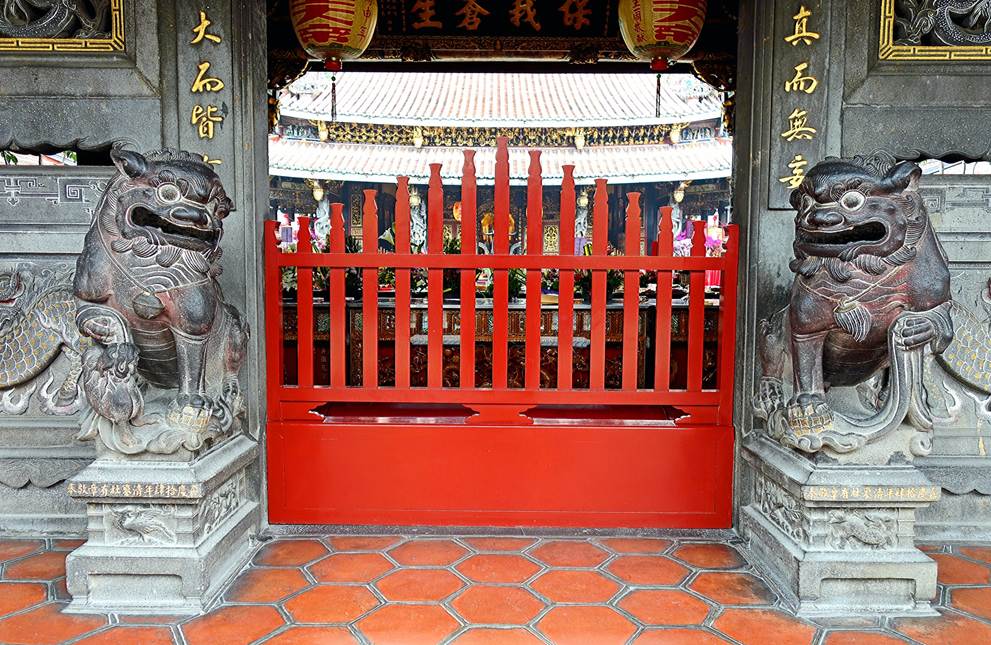
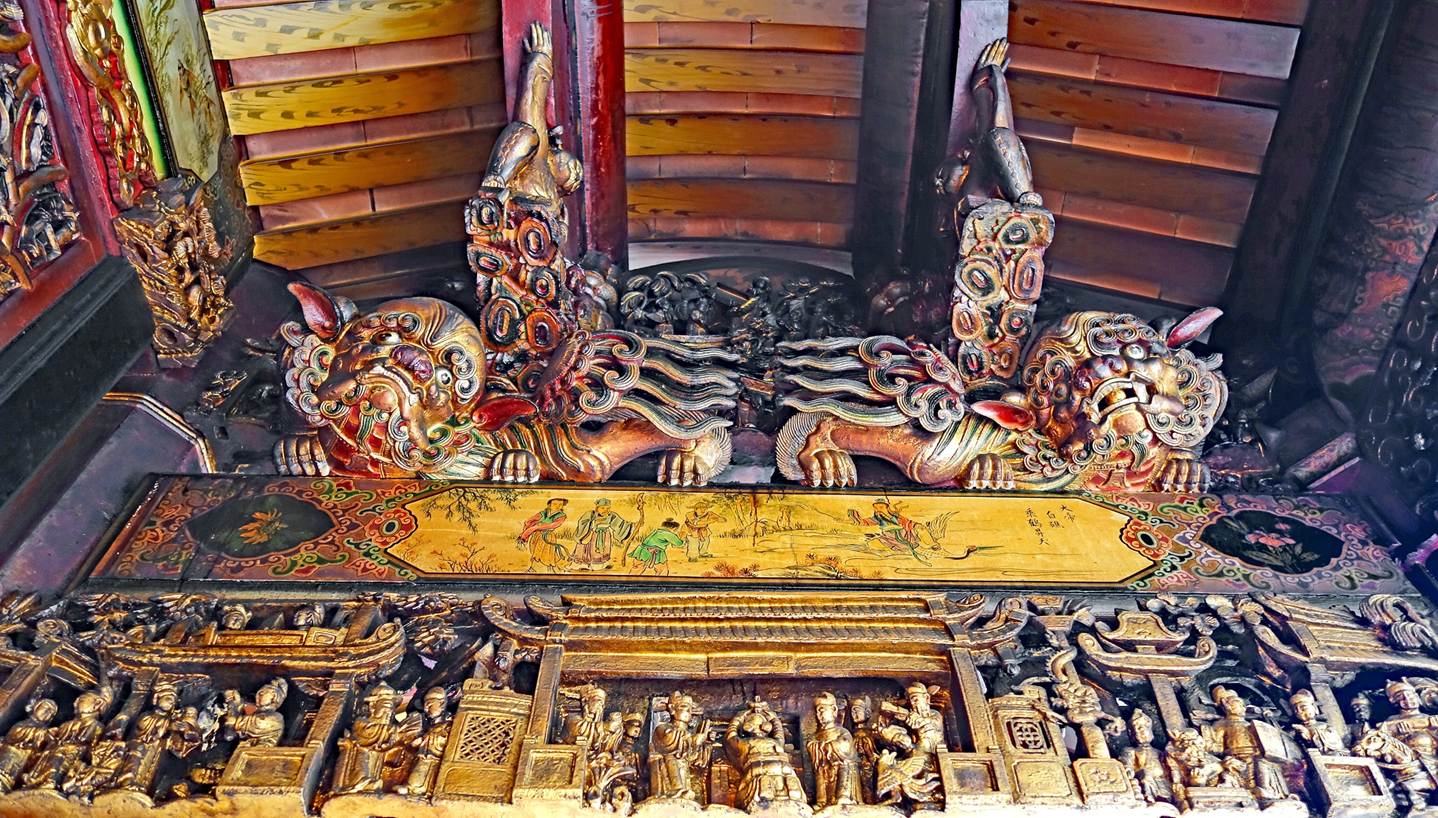
Incense burner and
statues of lion guards at the gate.
|
|
|
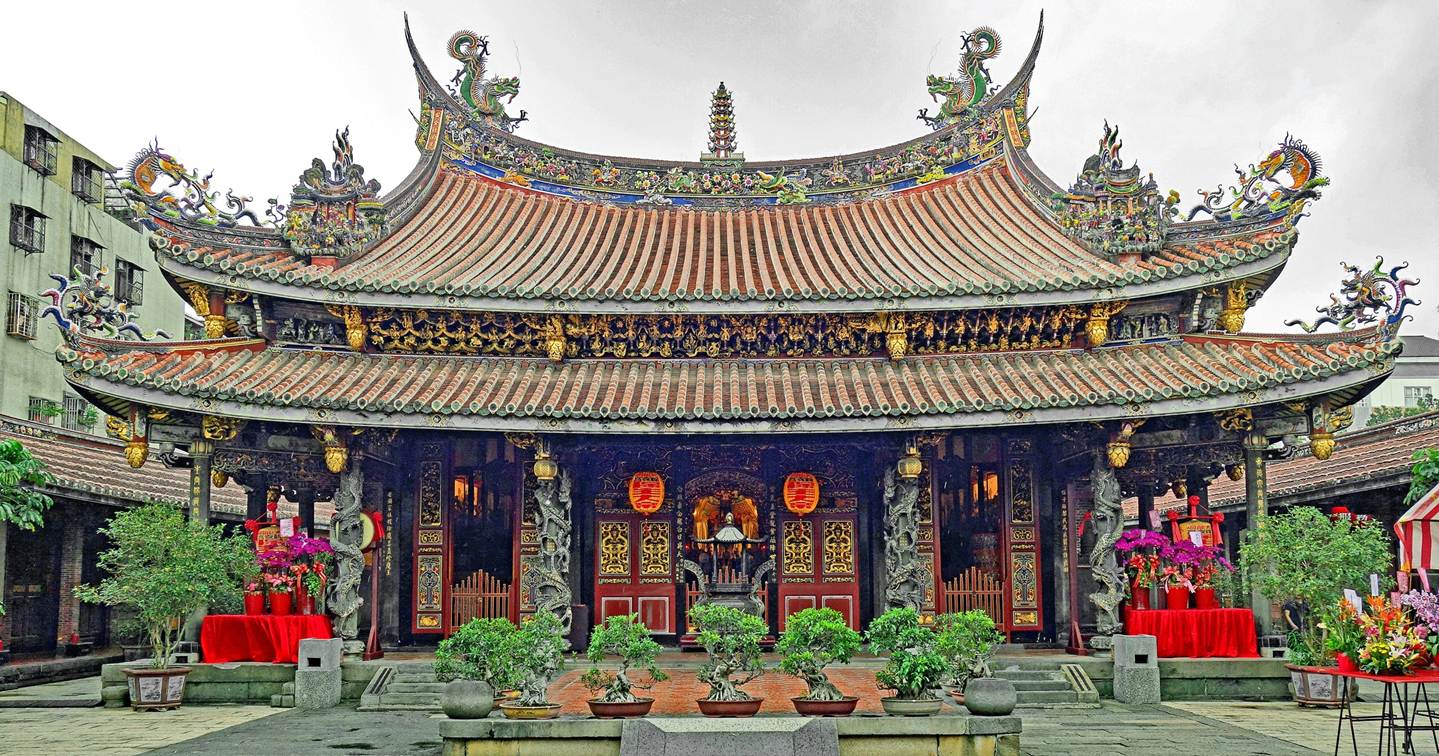
Prayer hall in the inner
courtyard.
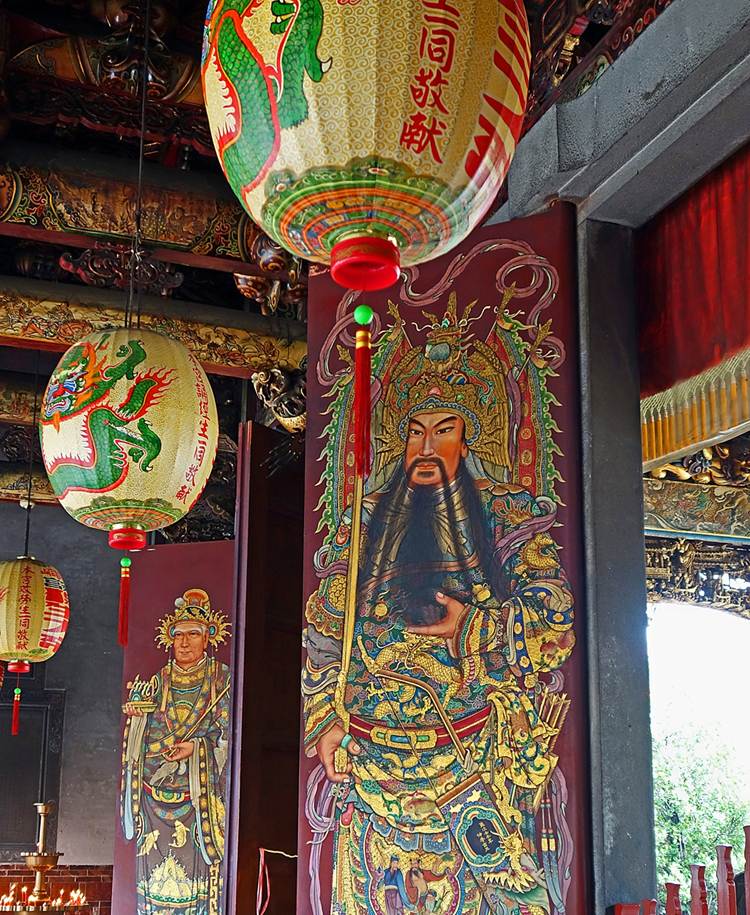
Inside the temple.
|
|
|
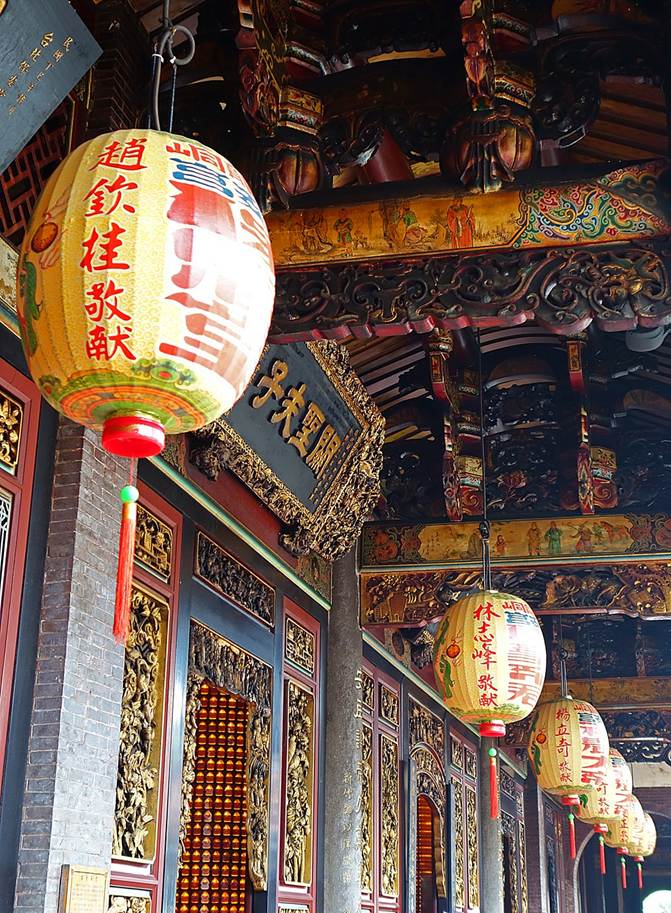
Altar dedicated to
Baosheng Dadi.
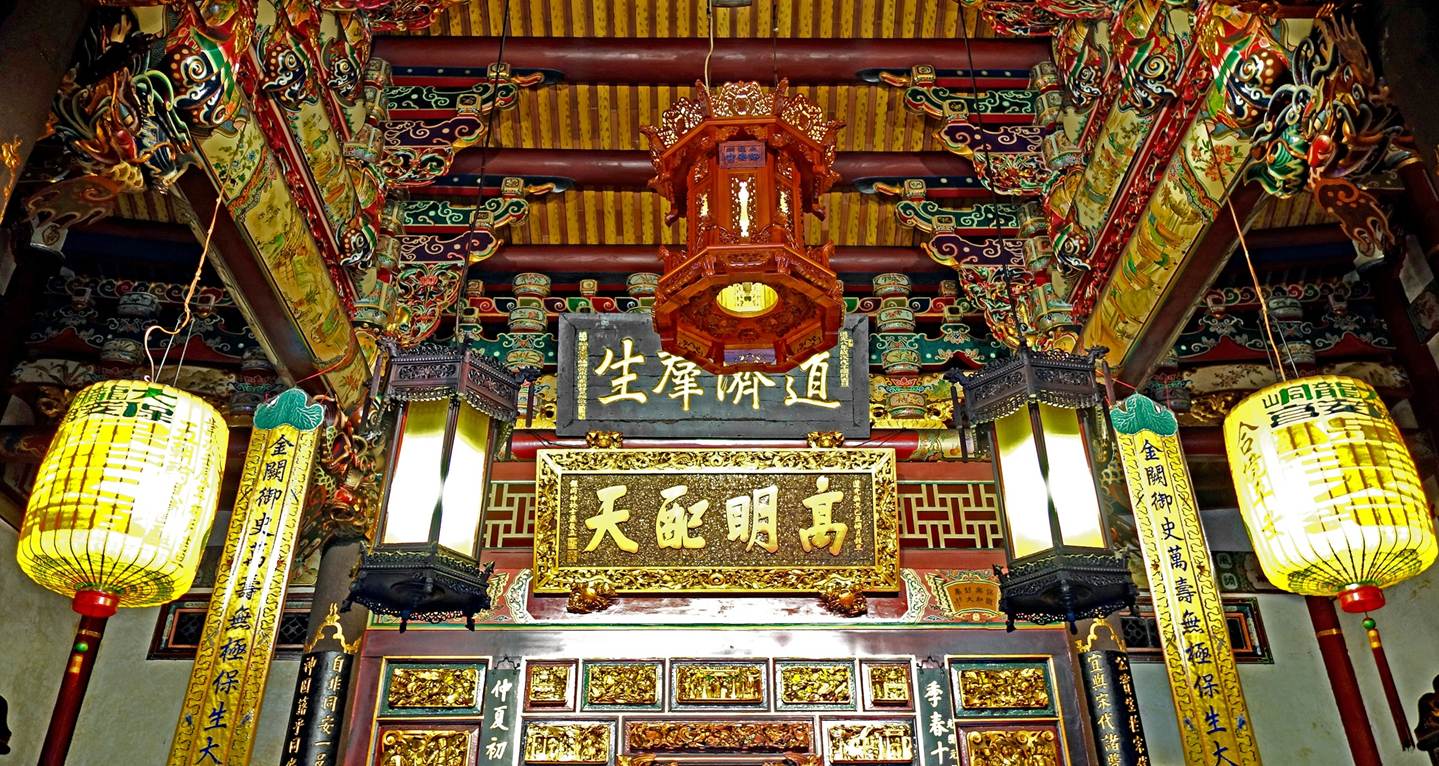
Lanterns and plaques
above the altar of Baosheng Dadi.
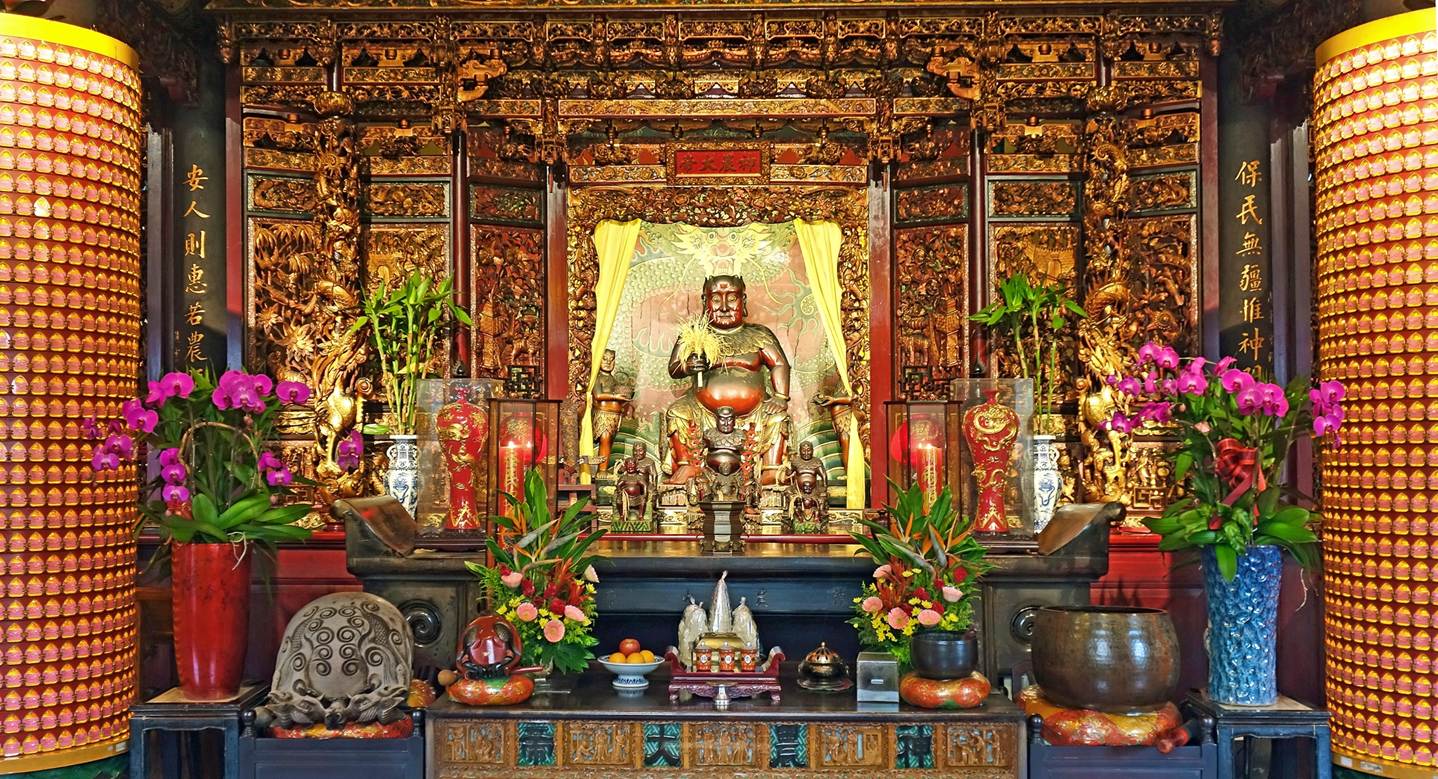
Altar dedicated to
Shennong Dadi (神農大帝), also known as the ″Divine
Farmer″ (神農), revered as the mythical inventor of agriculture and herbal medicine.
While both Baosheng Dadi and Shennong Dadi are deities associated with healing,
they have distinct origins and functions. Shennong Dadi is primarily associated
with farming and agriculture, and is the patron deity of farmers. He is
sometimes represented with prominent horns, but here he has only subtle bumps
on his head.
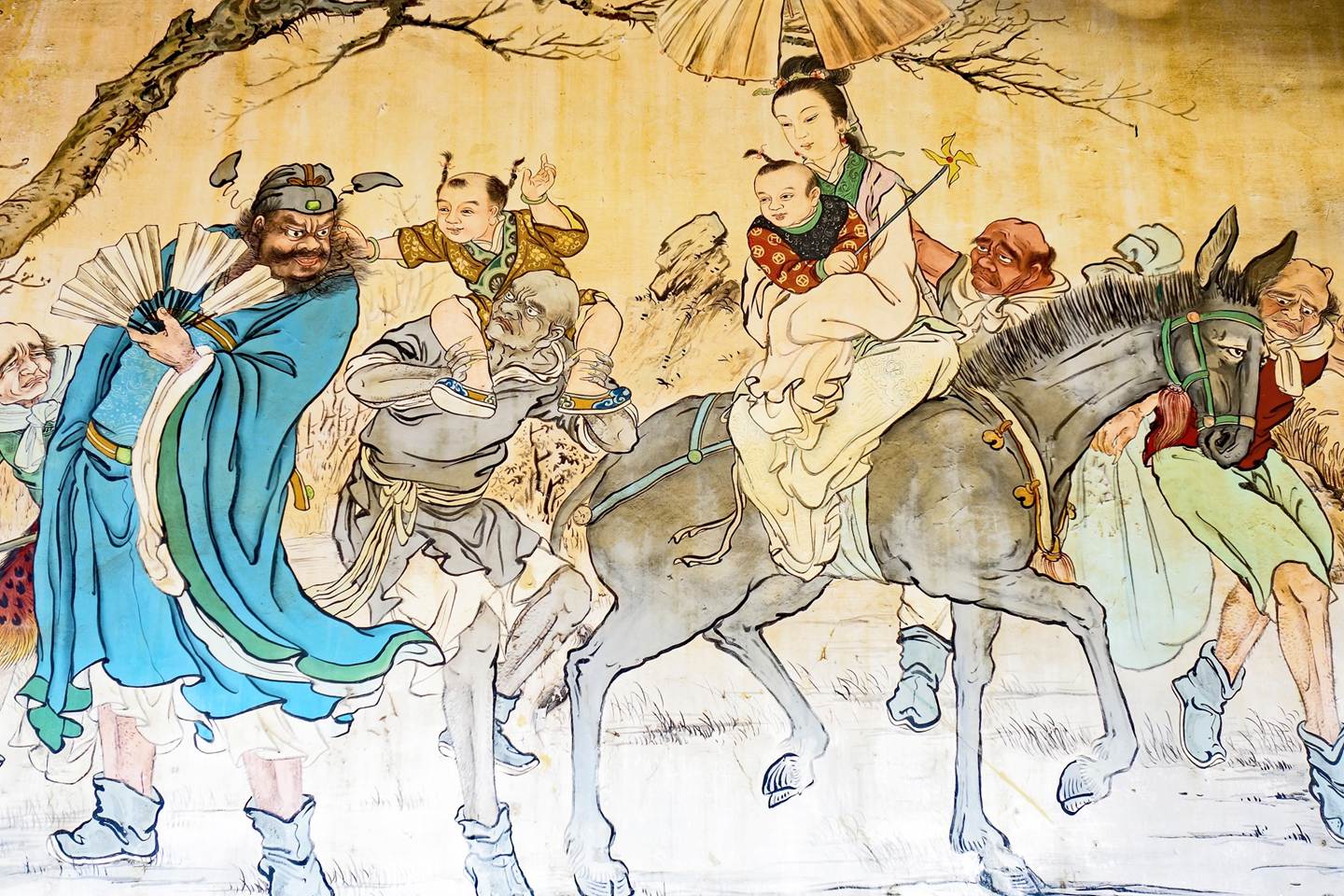
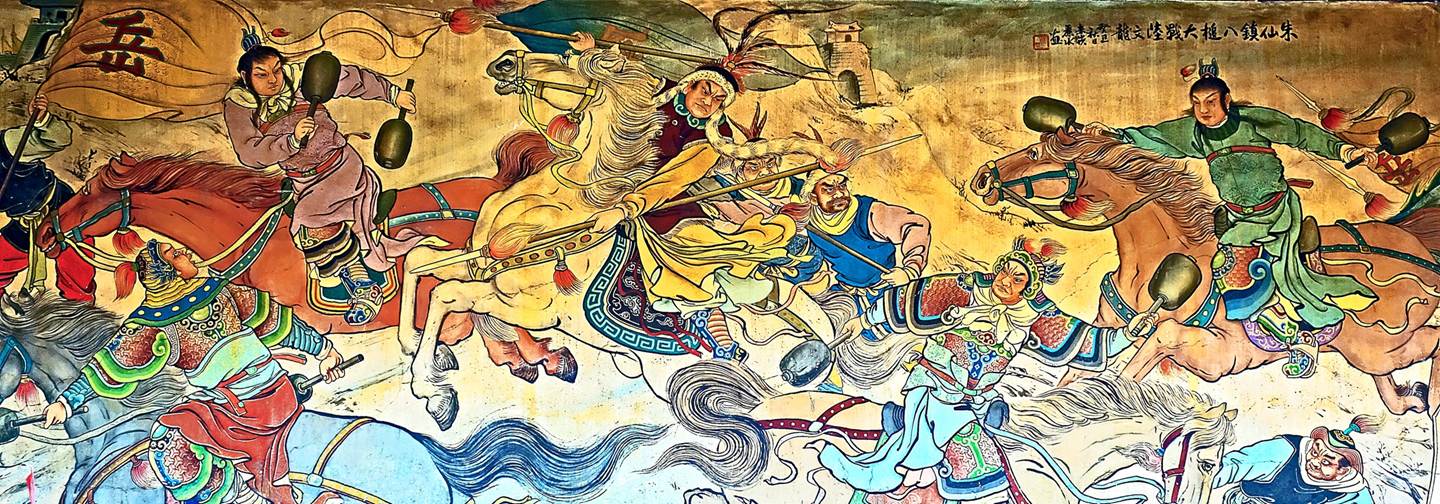
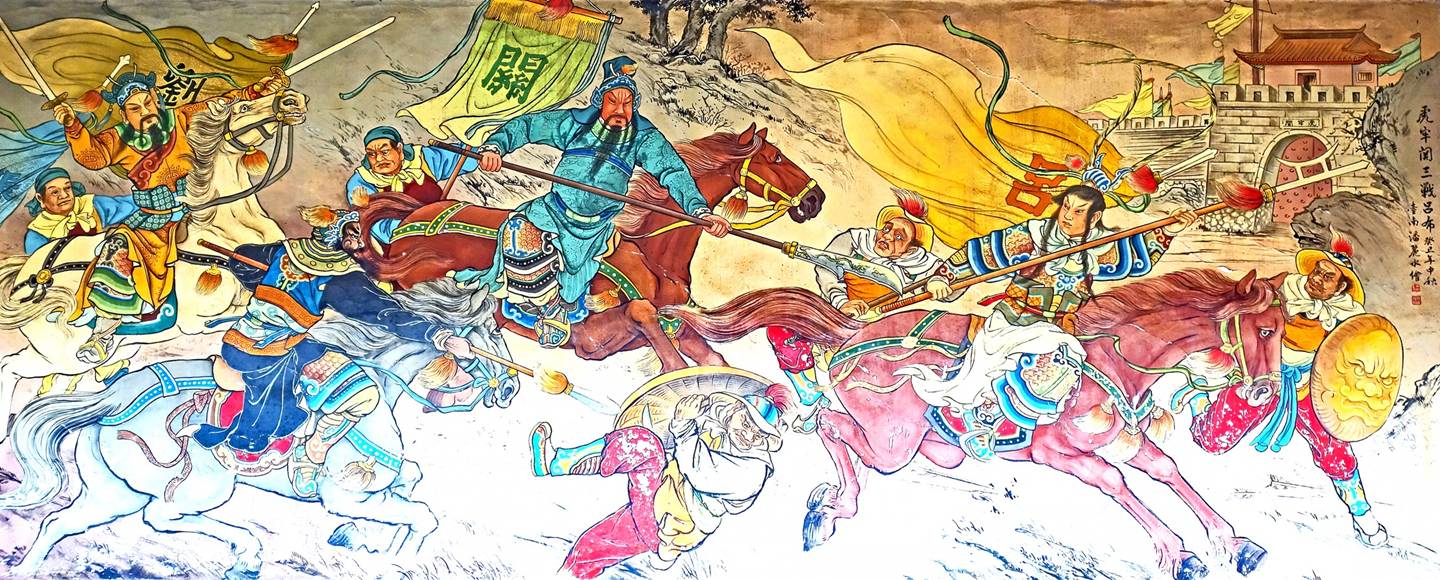
Murals depicting Chinese
legends and historical events. They were painted in 1973 by Pan Li-Shui
(1914-1995), a renown Taiwanese temple artist.
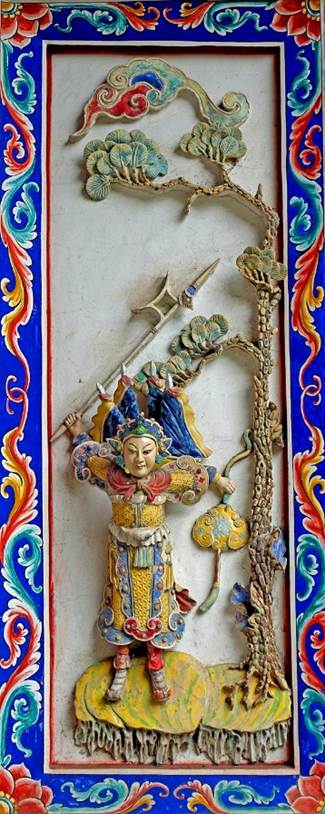
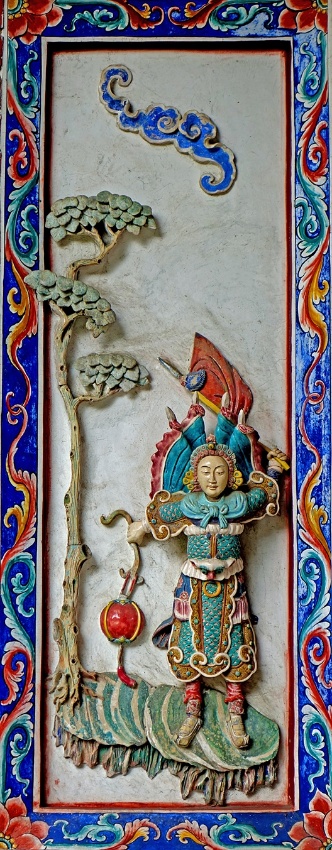
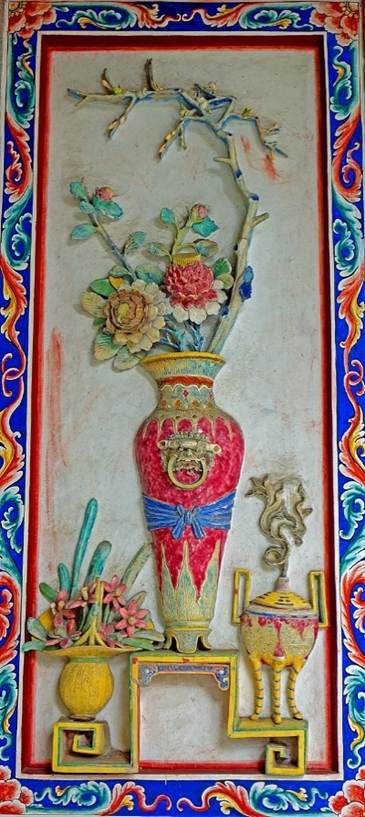
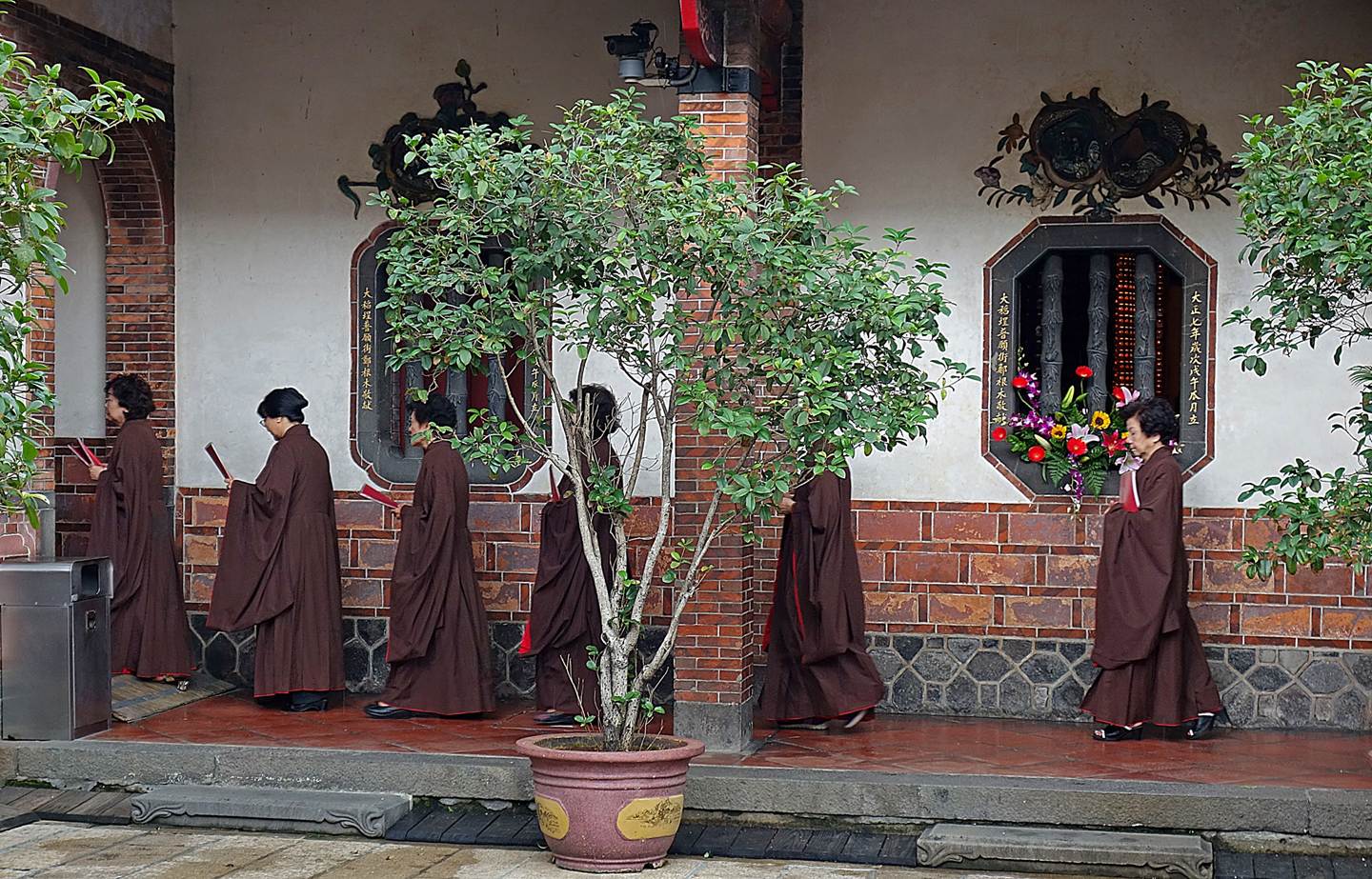
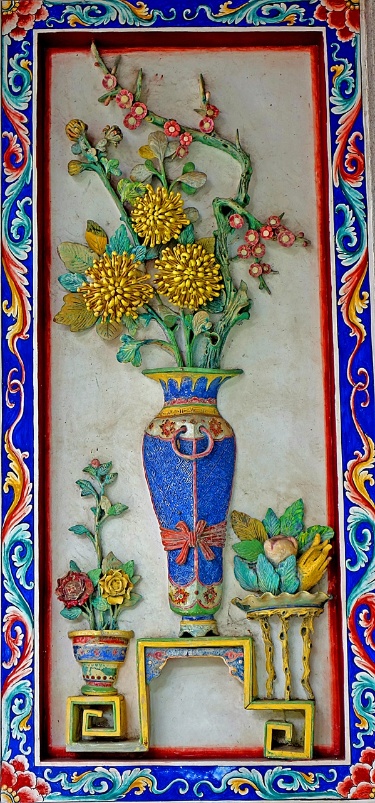
Nuns leaving a religious
ceremony.
Confucius temple (臺北孔子廟):
[April 2017]
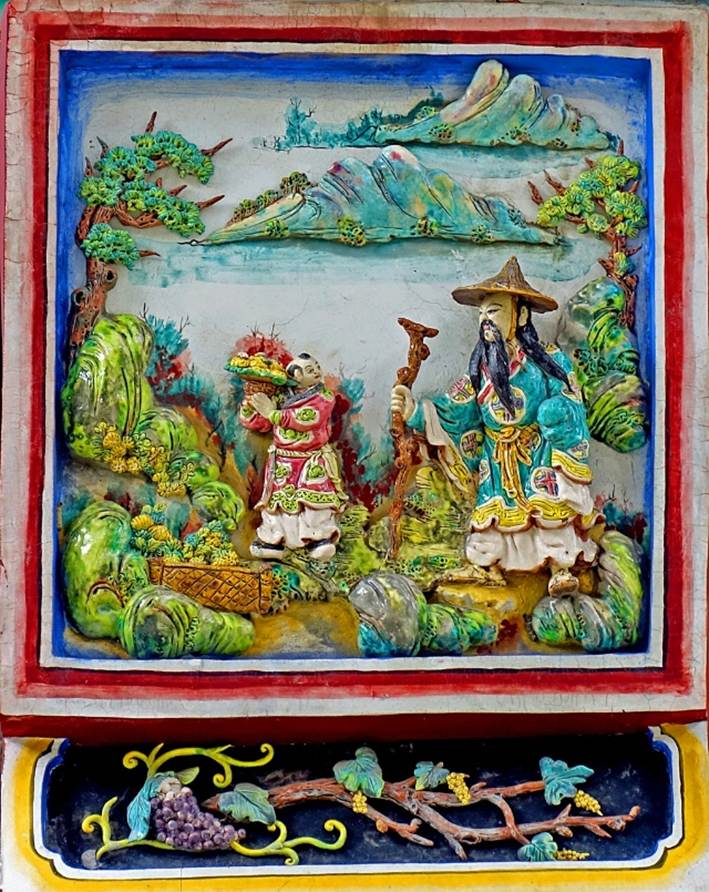
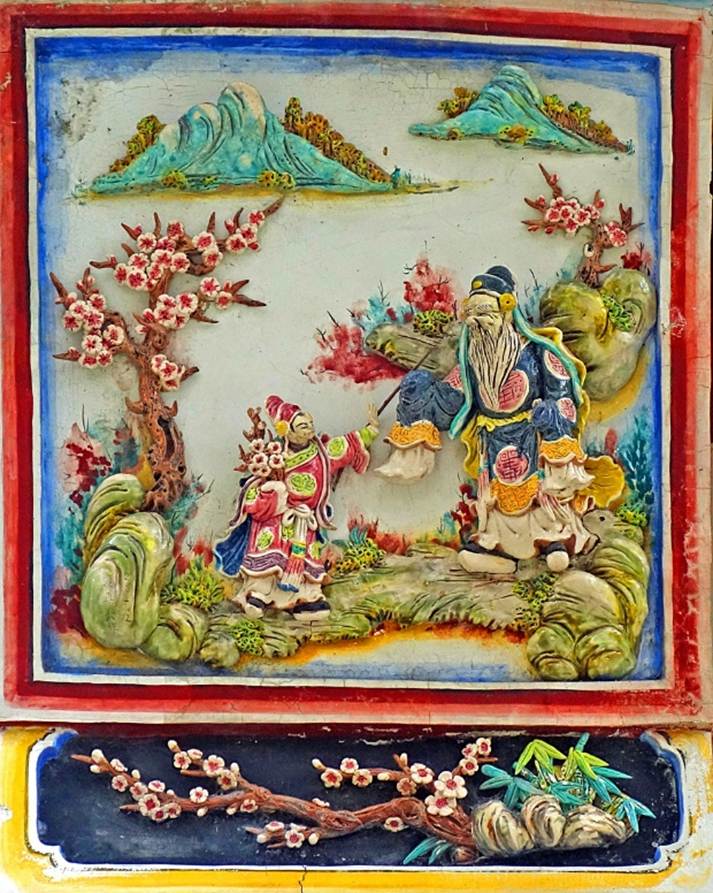
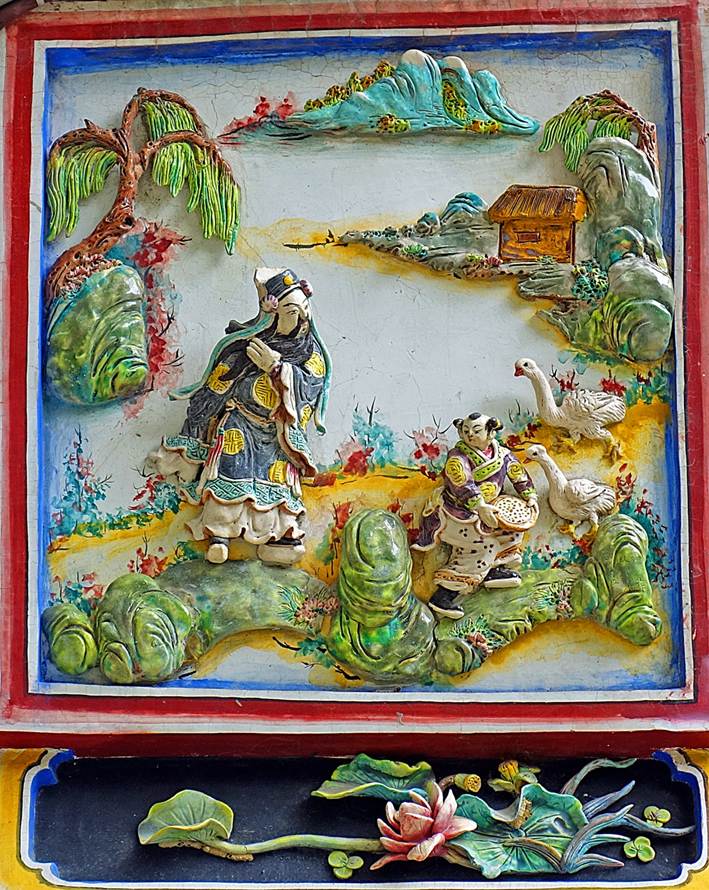
-This temple was constructed in the late
1920s under the direction of Wang Yi-Shun, a renowned builder of Fujianese
temples. The sober style of its architecture and decorations reflects the rather
austere spirit of Confucianism. However, due to his origins, Wang Yi-Shun added
several Fujian-style elements, such as the colorful Cochin ceramics shown
below, which are not found in other Confucius temples.
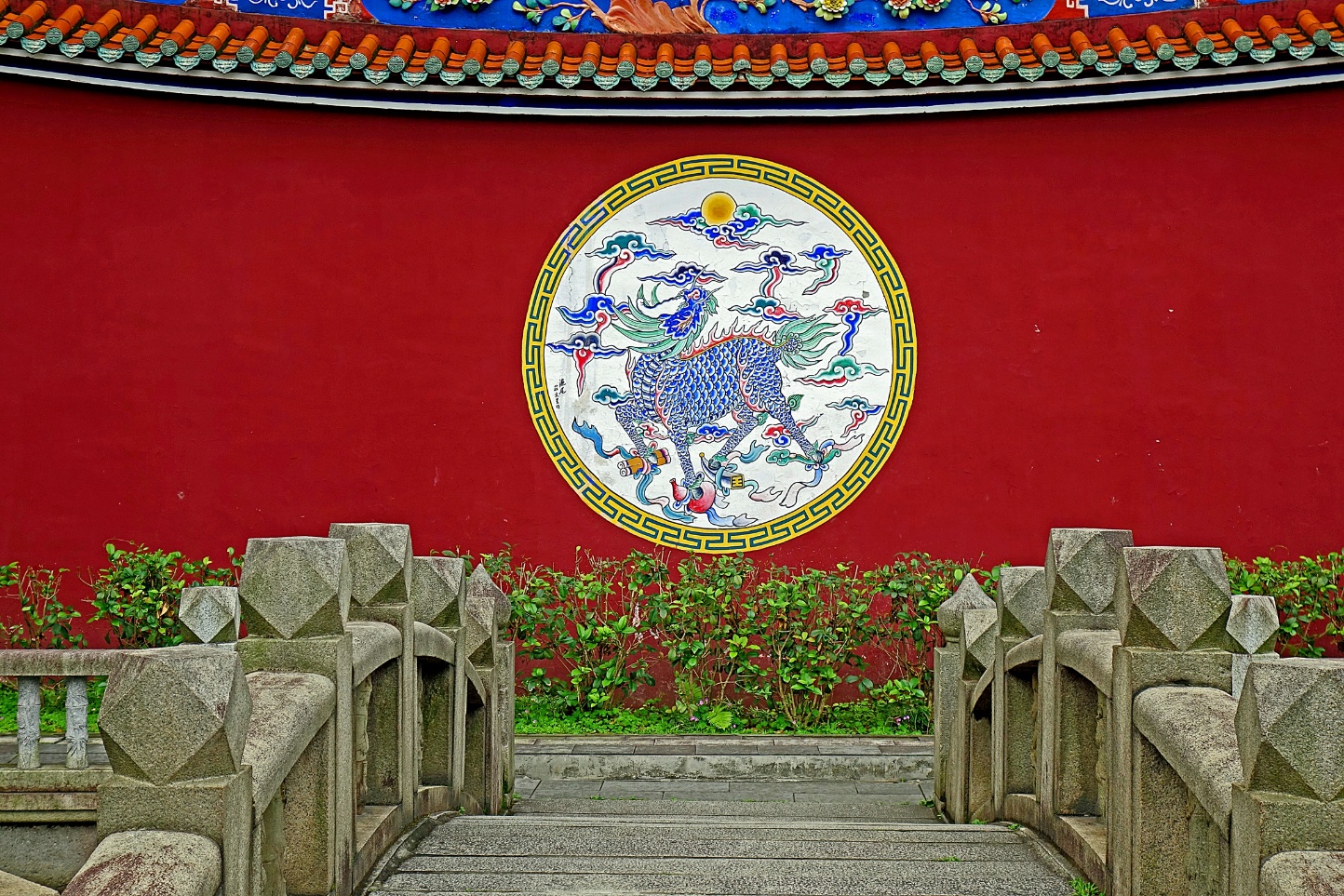
Wall of Supreme
Knowledge. It faces the Lingxing Gate, the first of the two large consecutive
gates leading to the temple's main hall, the Dacheng hall (see below). The
vermilion wall is emblazoned with a colorful Chinese Unicorn standing above
four scrolls. A stone bridge spanning a pond, the Pan Pond (泮池), leads to the wall.
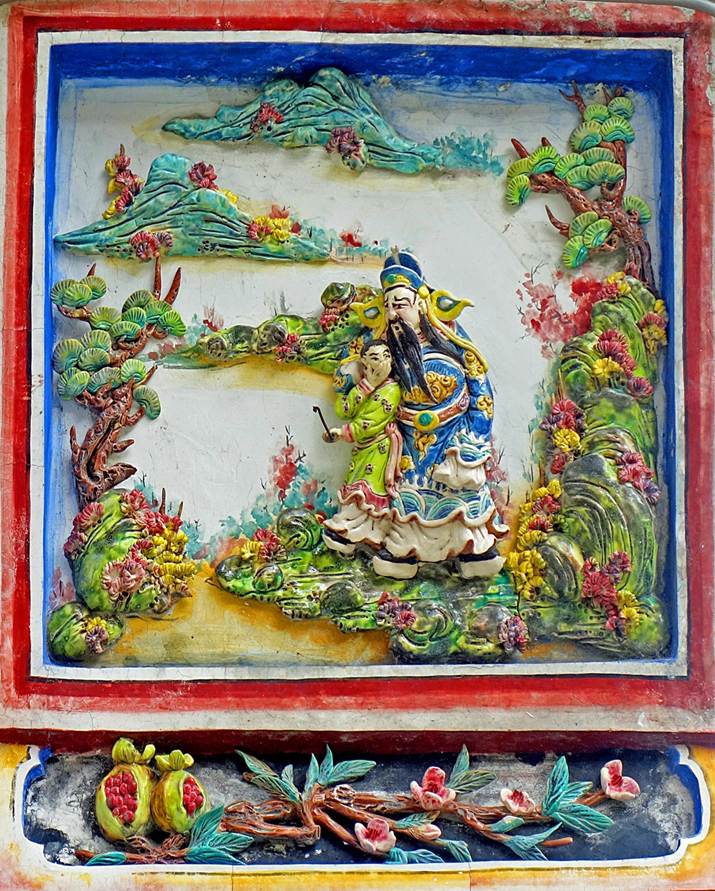
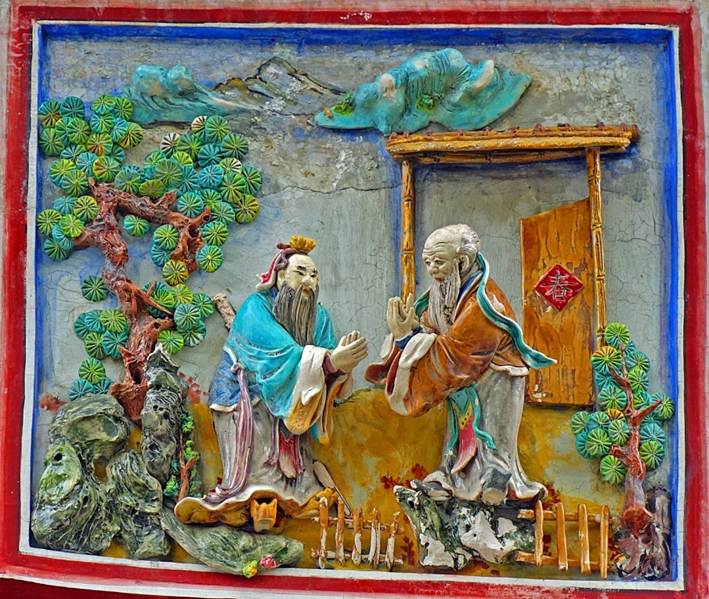
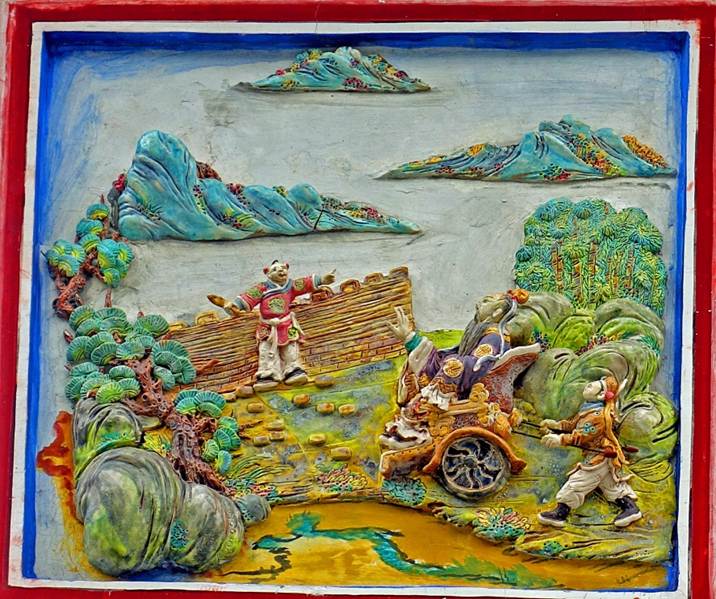
Scenes involving
Confucius made of Cochin ceramics. They adorn the walls of the Lingxing gate (欞星門).
|
|
|
|
|
|
|
|
|
The Yi gate (儀門), the second large gate leading to the
Dacheng hall.
Cochin ceramic bas-relief
decorating the walls on the sides of the three doors of the Yi gate. Left:
Figurines of military generals. Right: Flowers from two of the four seasons.
|
|
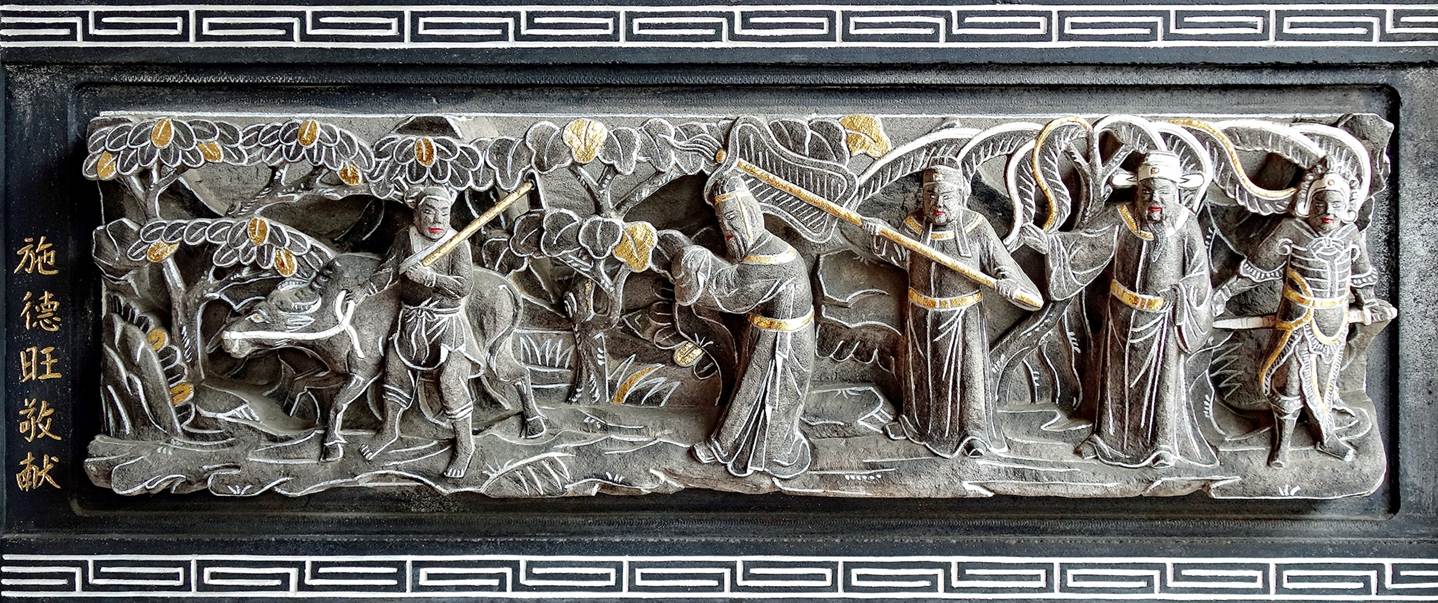
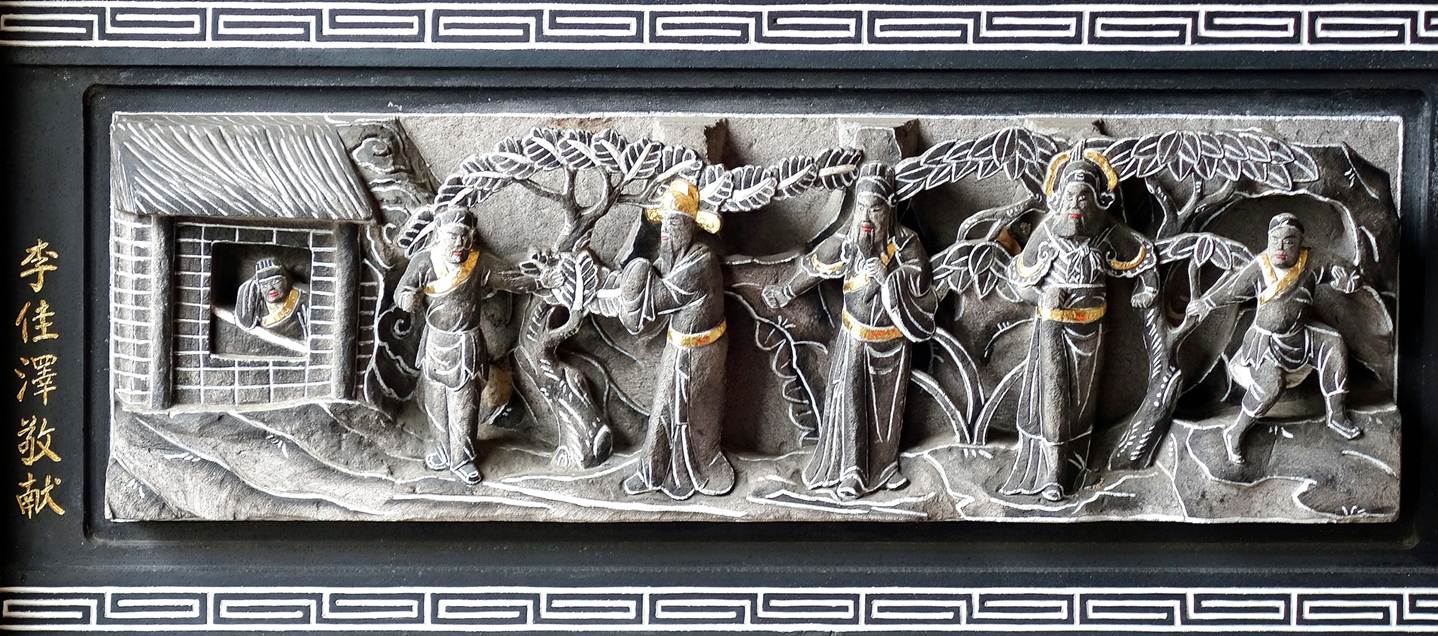
|
|
|
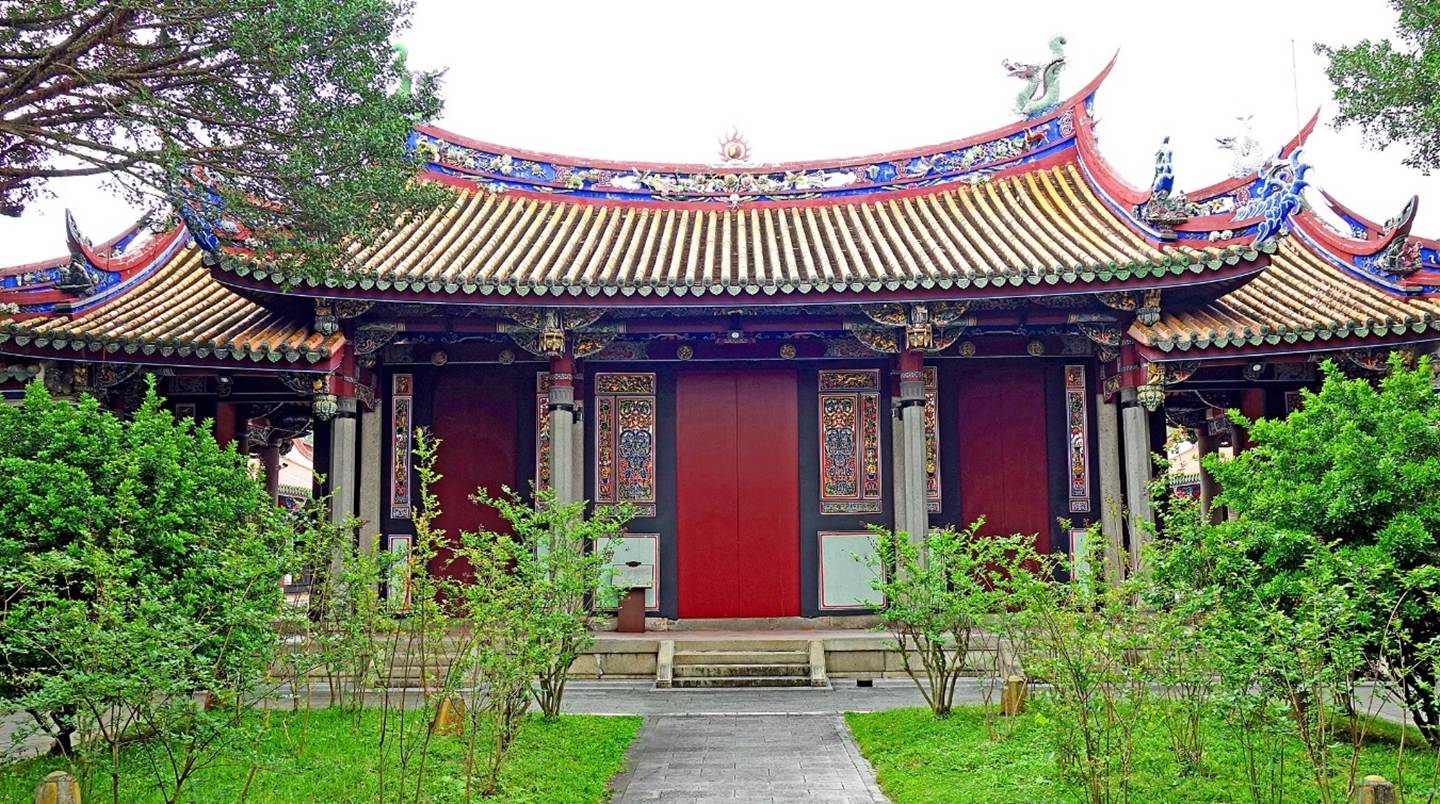
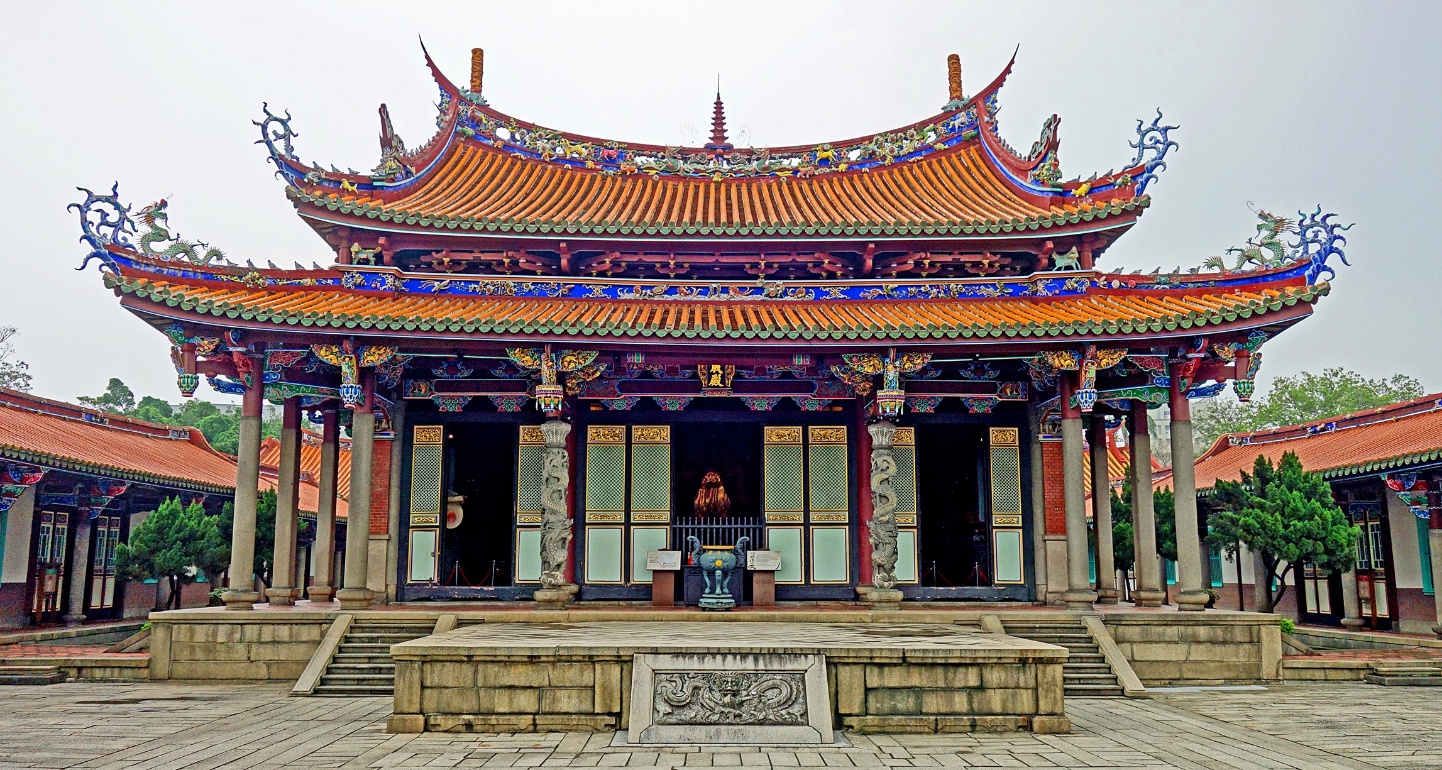
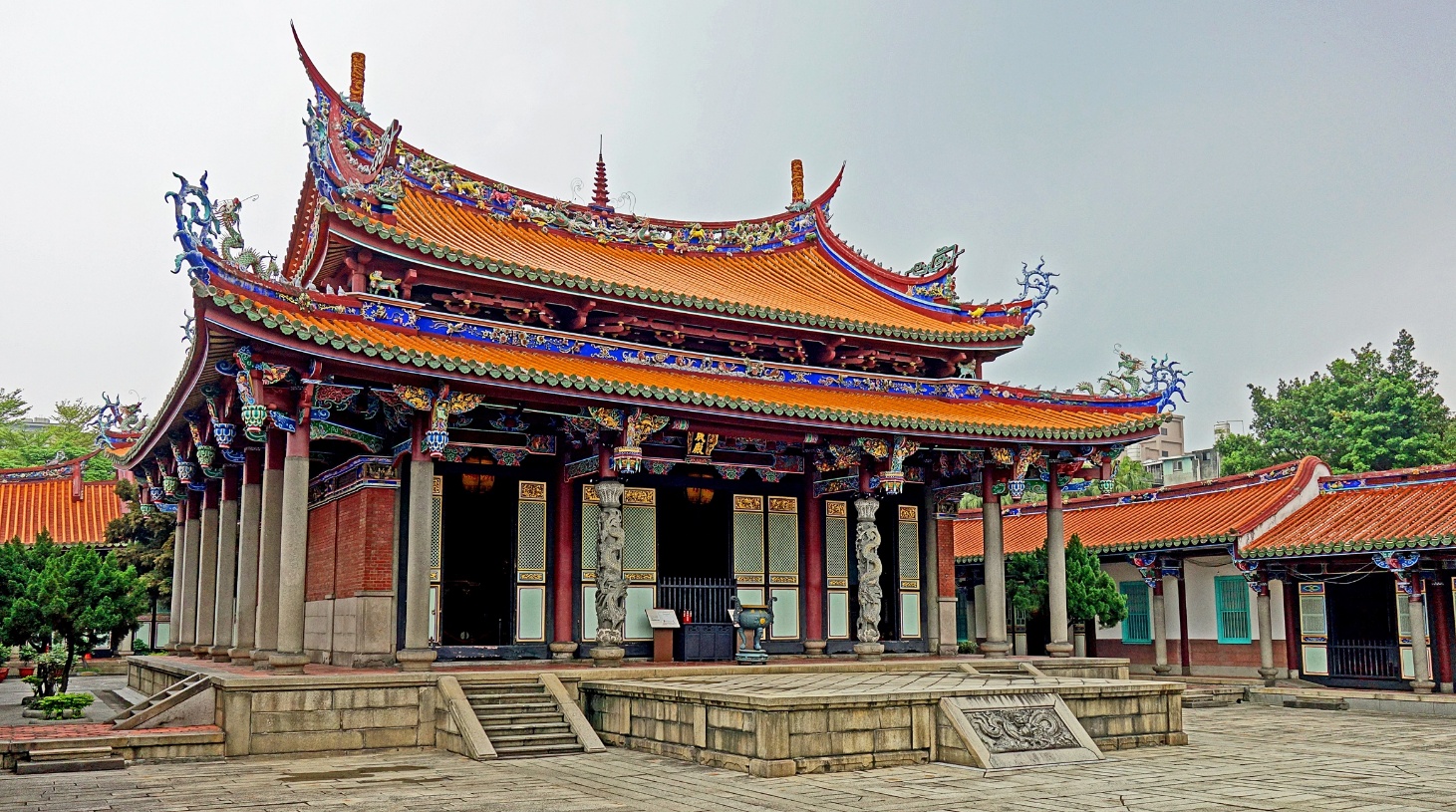
Dacheng hall (大成殿) in the central courtyard of the
temple.
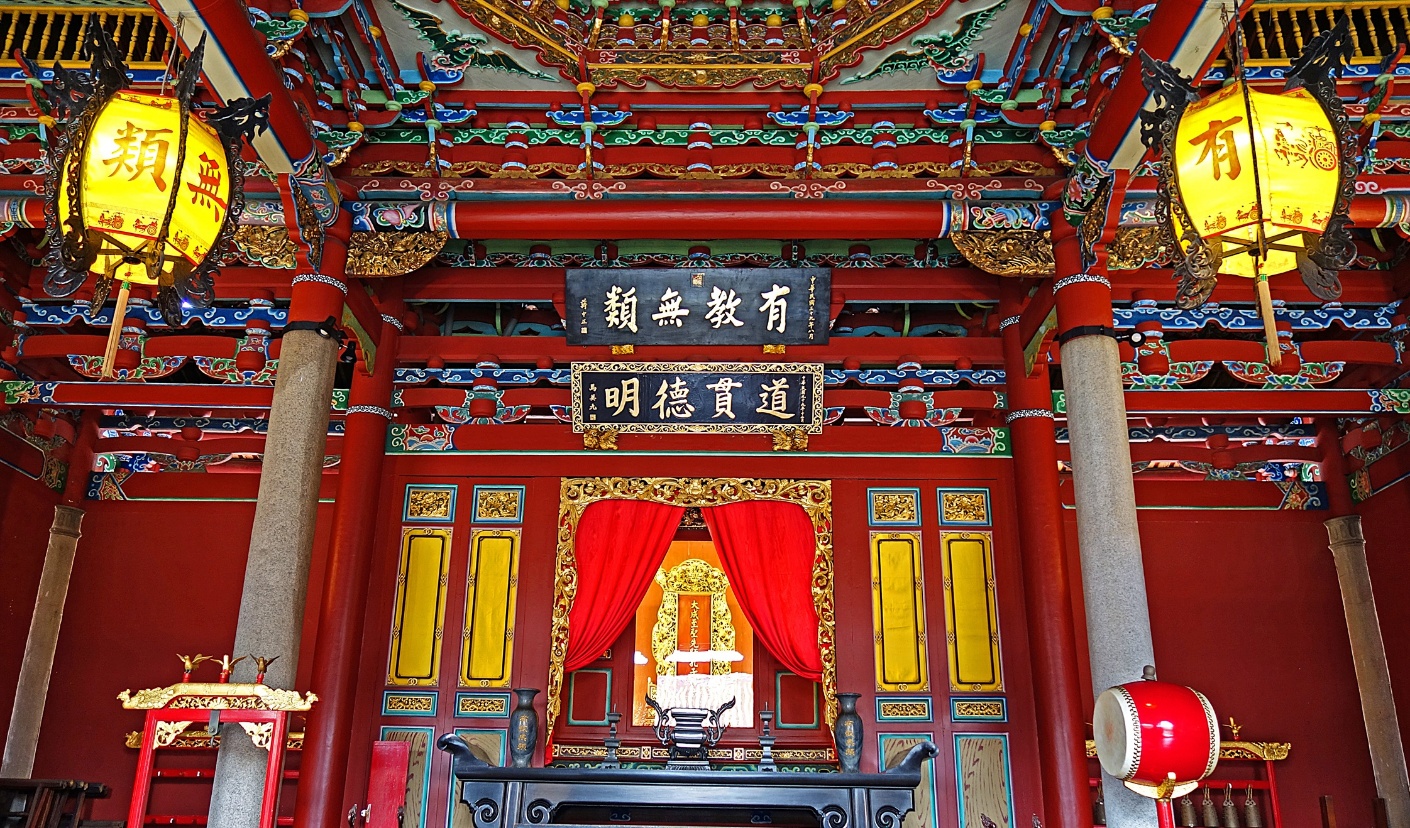
Shrine featuring the
Confucius spirit tablet in the Dacheng hall.
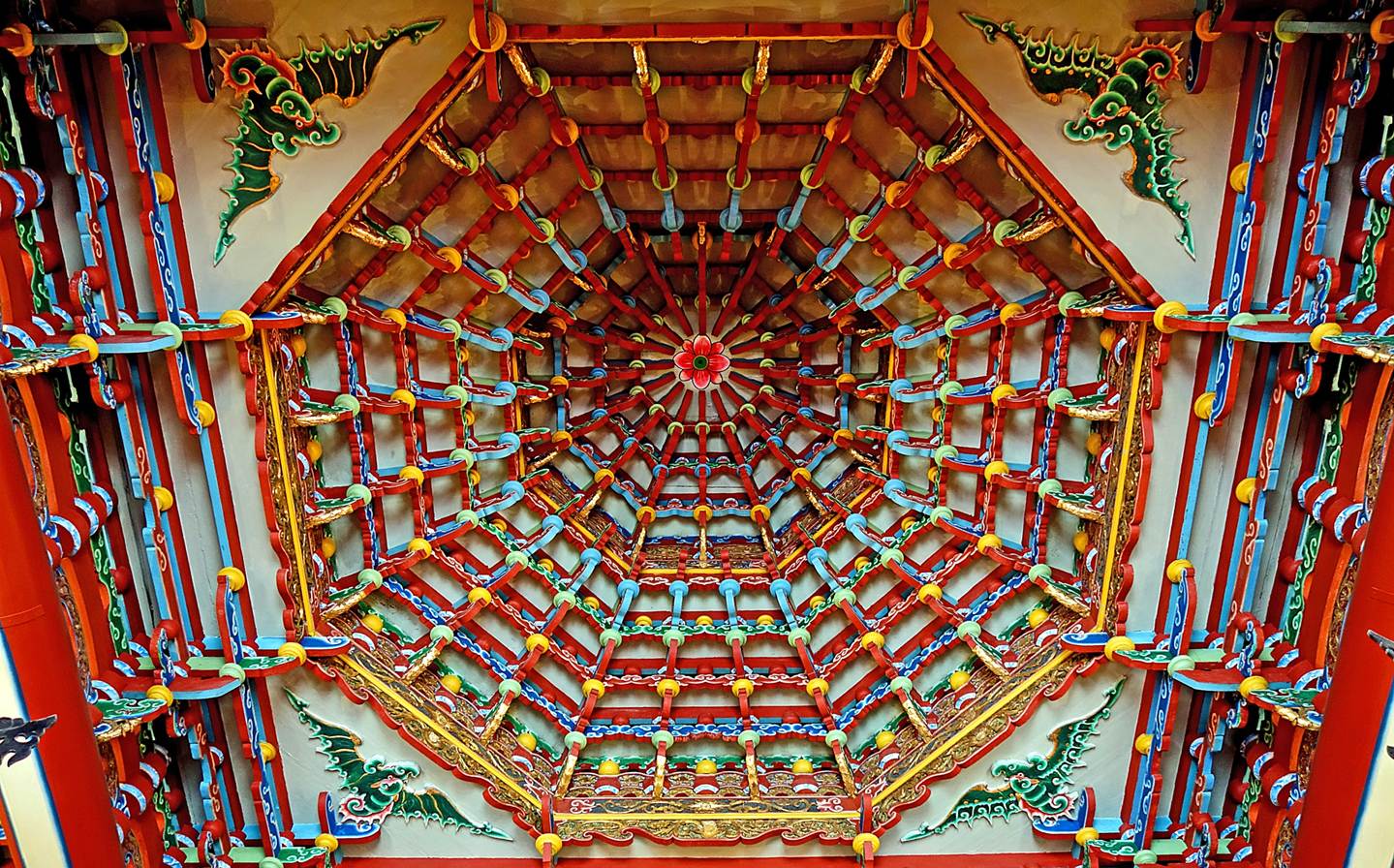
Ceiling in the Dacheng
hall.
Spirit tablets in the
Chongsheng shrine (崇聖祠), located behind the Dacheng hall. This shrine is
dedicated to honoring five generations of ancestors of Confucius, as well as a
small number of Confucian sages and philosophers.
Linji Huguo temple (臨濟護國禪寺):
[March 2026]
This Zen Buddhist temple was
established in the early 20th century (hence, during the Japanese occupation
period) on the lower slope of a hill named Yuanshan (圓山). Over time it has undergone many
extensions and now consists of multiple structures spanning a vast area. Its
oldest and most interesting structure is the Hall of the Great Strength (大雄寶殿), a building featuring a Japanese
Edo-period architecture, made of cypress wood and covered by tiled roofs.
Exterior
view of the Hall of Great Strength.
Interior of the hall. It enshrines
Shakyamuni Buddha, the historical founder of Buddhism, Siddhartha Gautama.
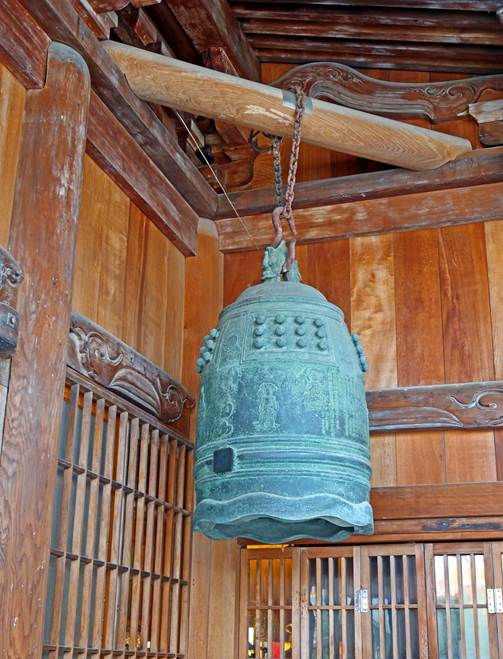
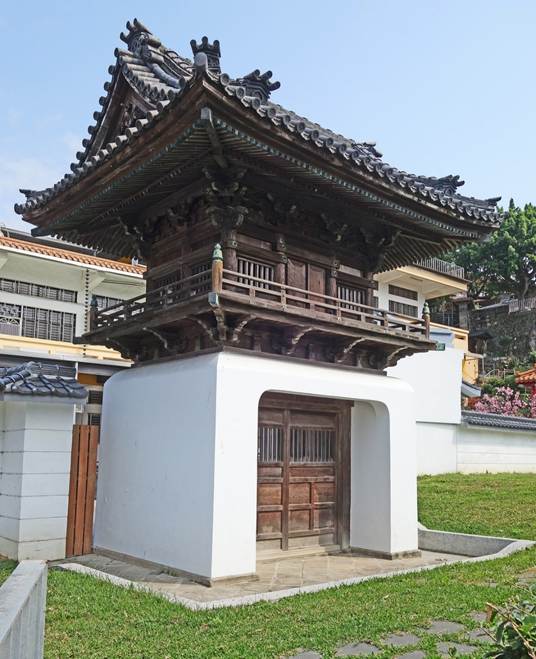
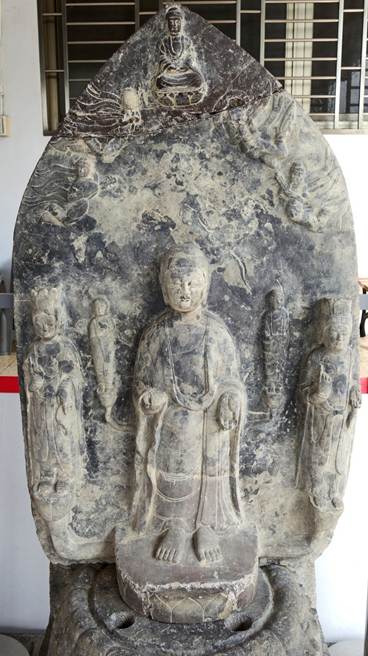
- Left: Bell hanging in
the right corner of the porch of the hall.
- Center: The freshly
renovated bell tower gate of the temple.
- Right: Ancient stele
depicting the Buddha flanked by two Bodhisattvas. At the time of my visit, it
oddly stood outdoors, beneath a roof, in what appeared to be a temporary
location.
|
|
|
|
Yuanshan Dizang Temple (圆山地藏庵):
[March 2025]
Located
at the foot of the Yuanshan hill, this small Buddhist temple is adjacent to the
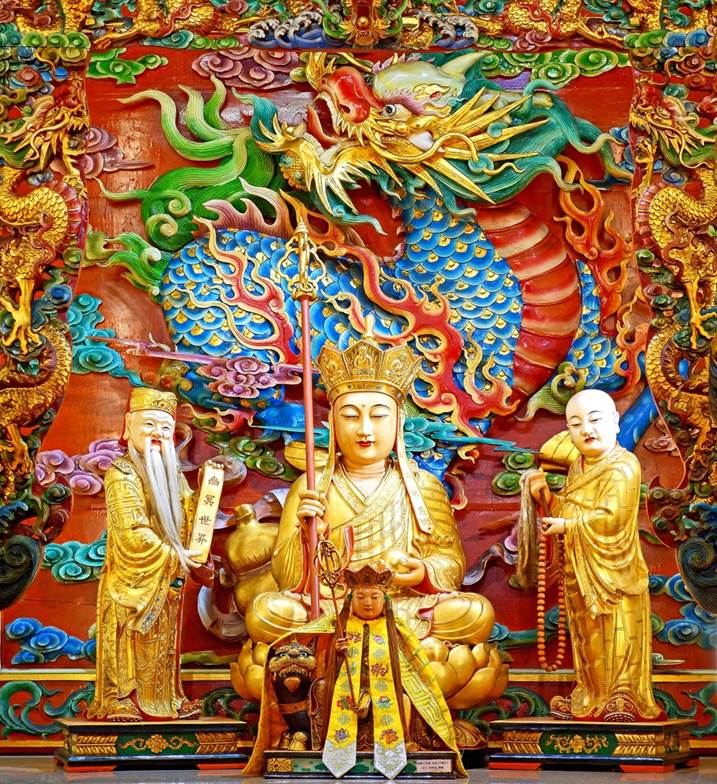
Linji Huguo temple. It is dedicated to Bodhisattva Ksitigarbha, whose Chinese
name 地藏菩薩 sounds like ″Dizang Pusa″. He is known as Jizo in Japan. He
is a compassionate savior of the souls of the dead.
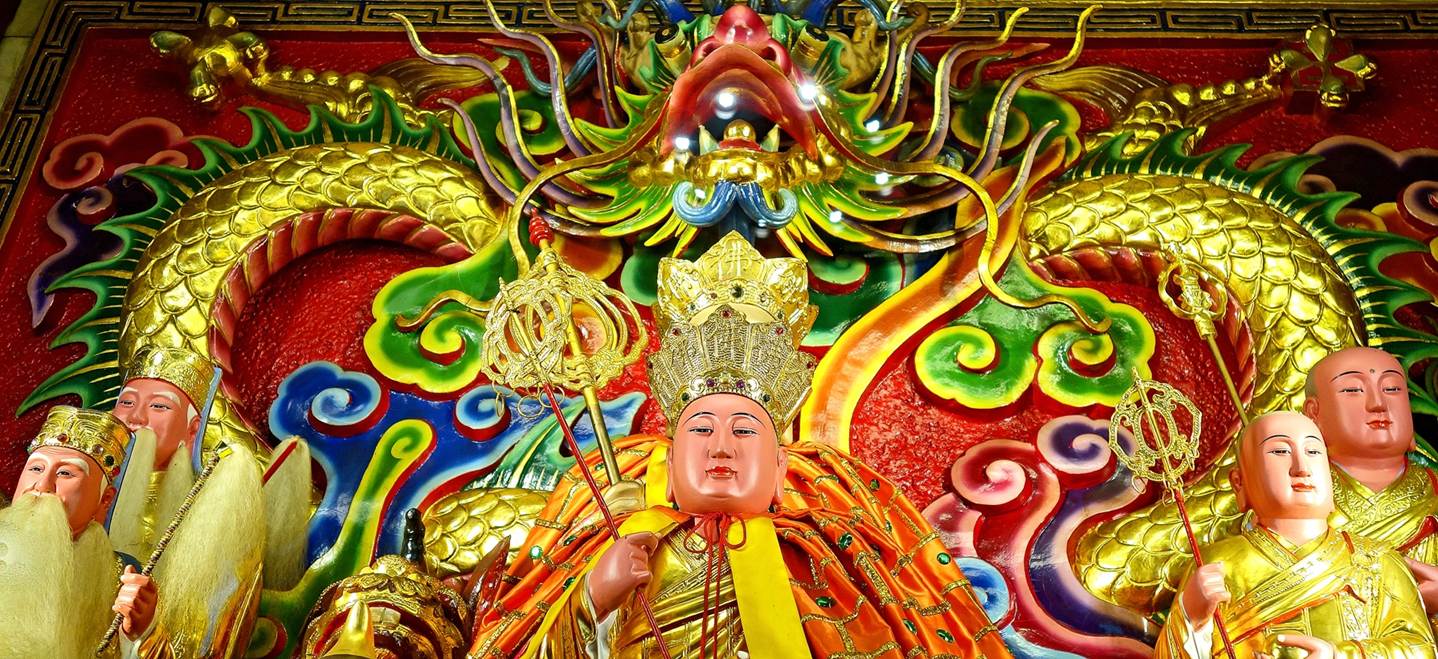
Statue
of Bodhisattva Ksitigarbha in the main prayer room.
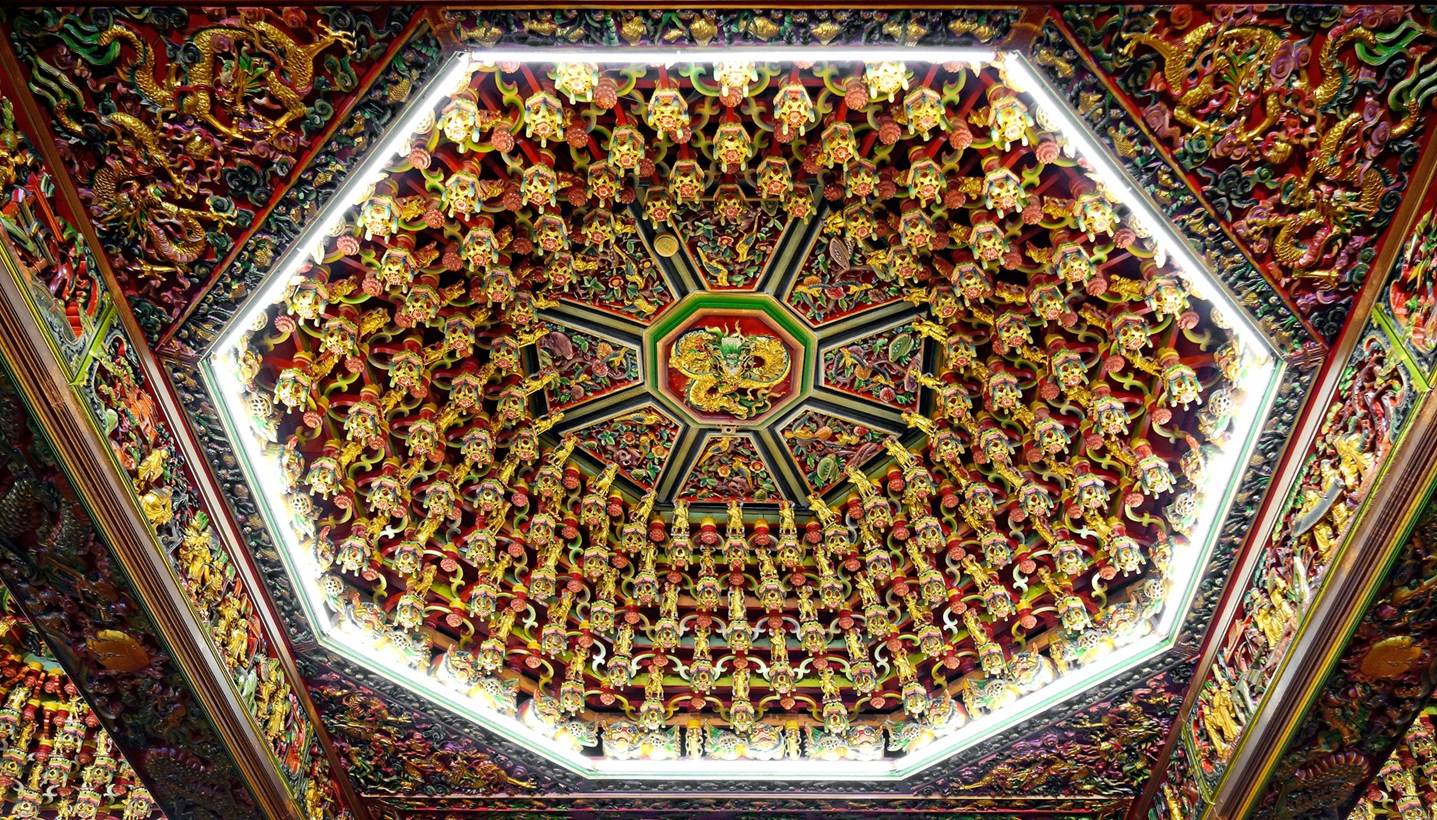
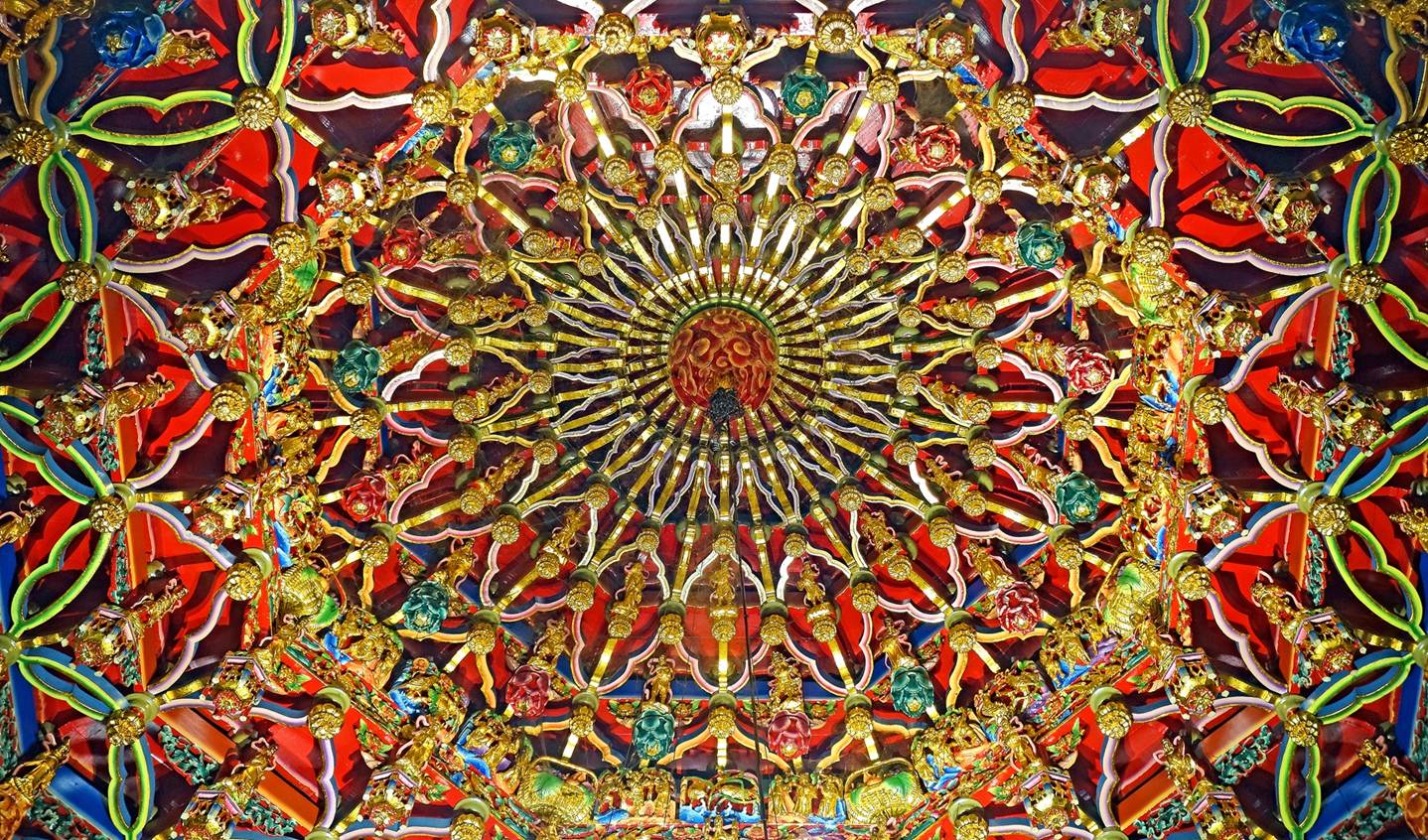
Ceiling in the main
prayer room.
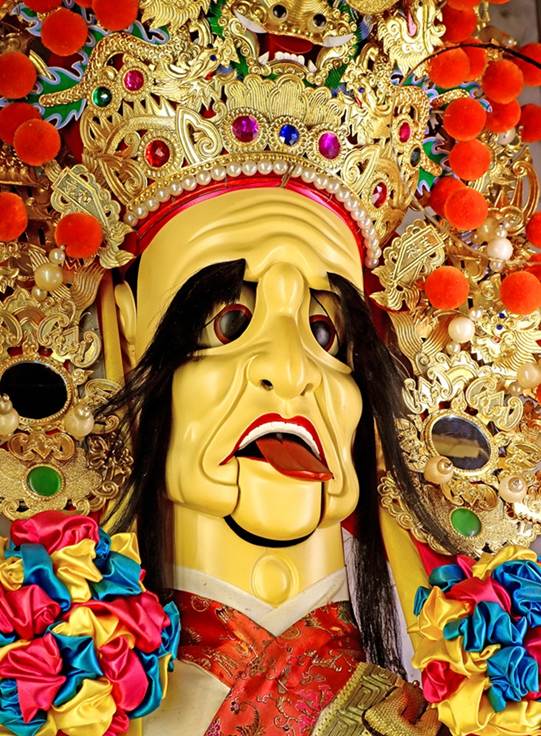
- Left: Head of the
statue of General Xie (謝將軍), a benevolent guard in the temple.
Statues of General Xie appear more commonly in City God temples where his role
is to patrol the boundary between the world of the living and that of the dead.
His presence in a Buddhist temple dedicated to Ksitigarbha is not unusual. It is explained by
their overlapping roles regarding this boundary and by the religious syncretism
common in Taiwanese temples.
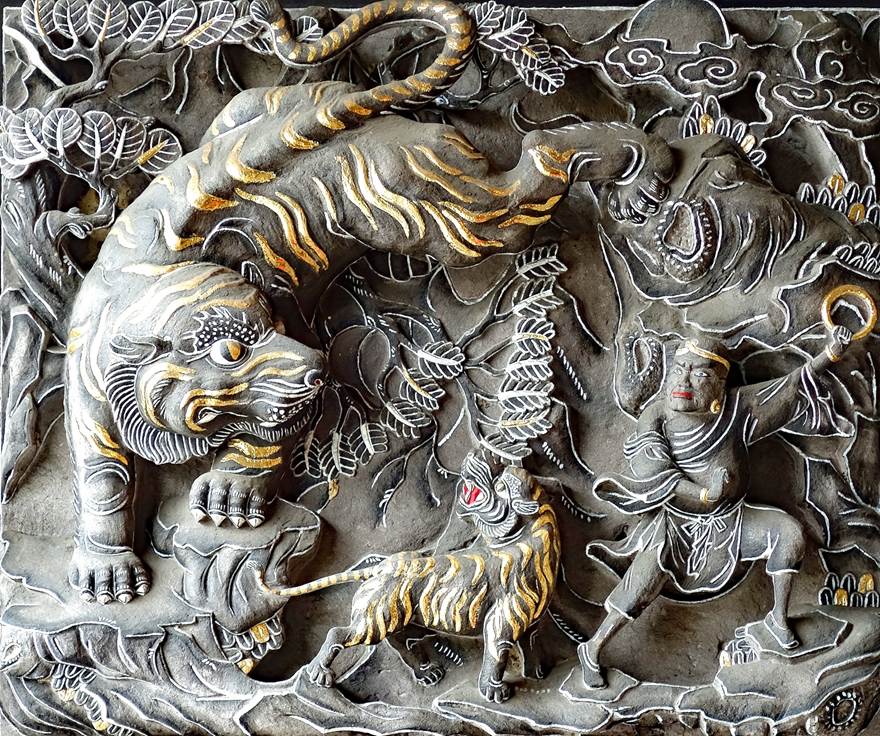
- Right: Relief stone
carving in the temple.
|
|
|
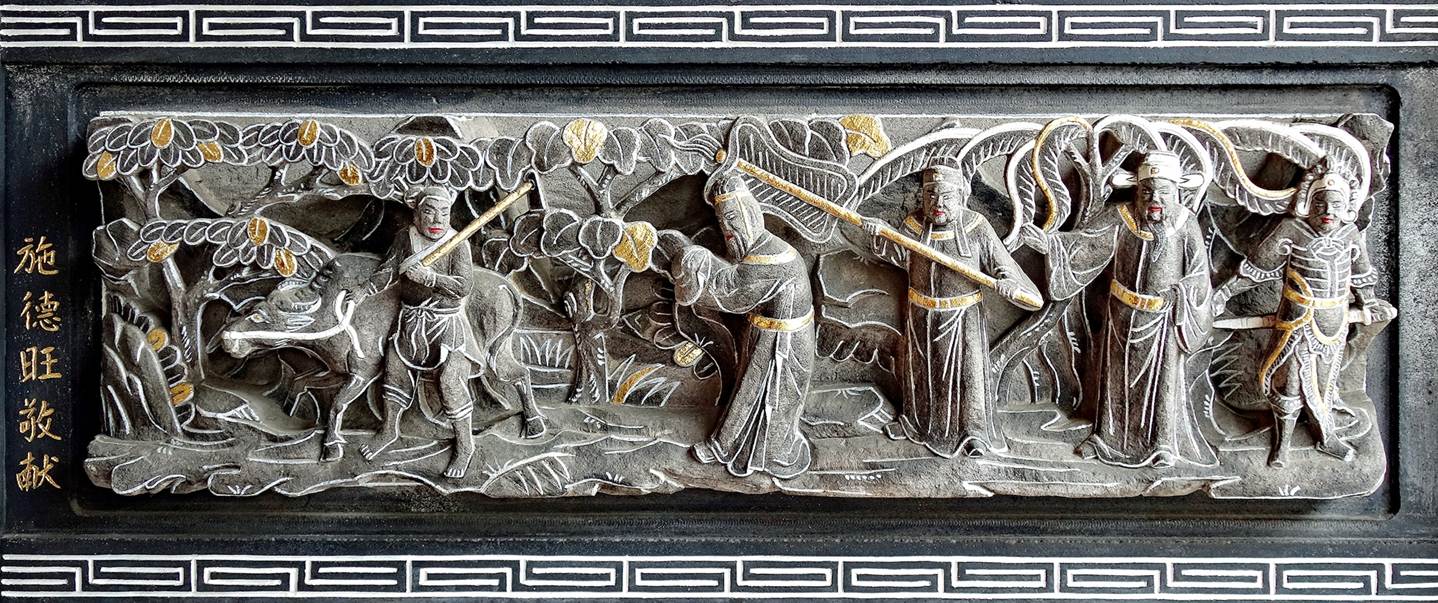
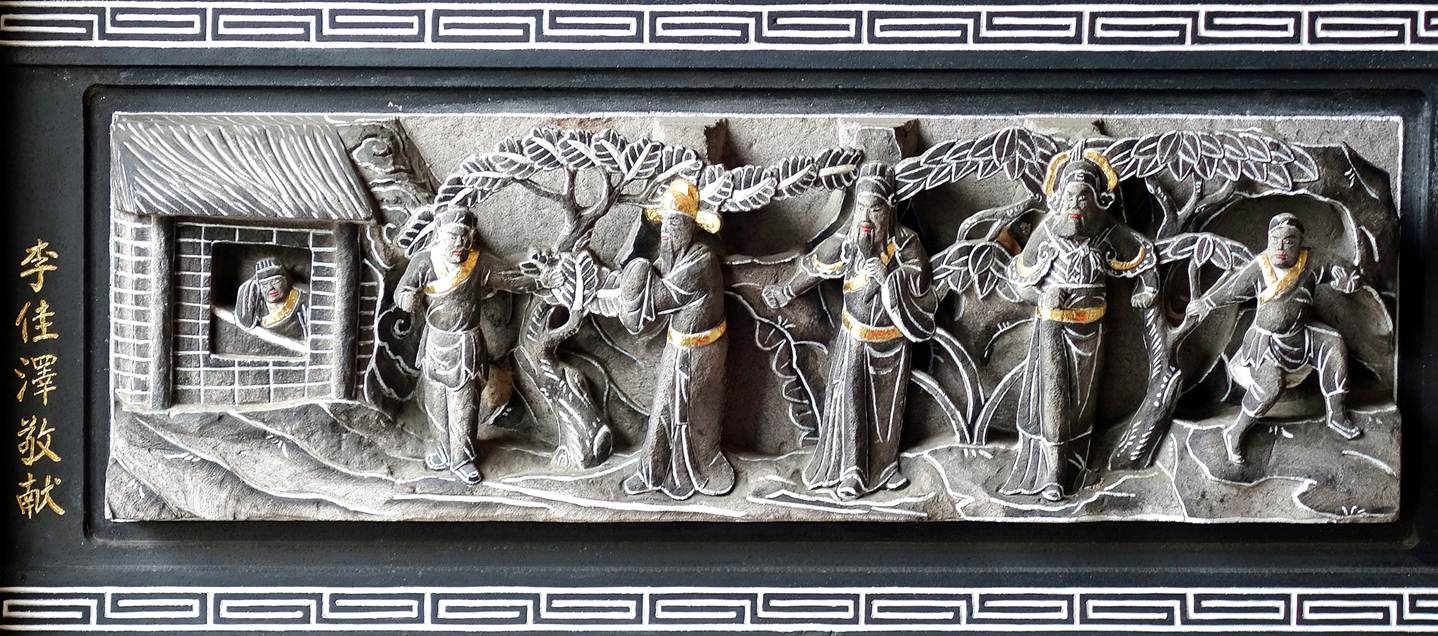
Other stone carvings in
the temple.
Jingfu temple (台北市景福宮):
[March 2025 & 2026]
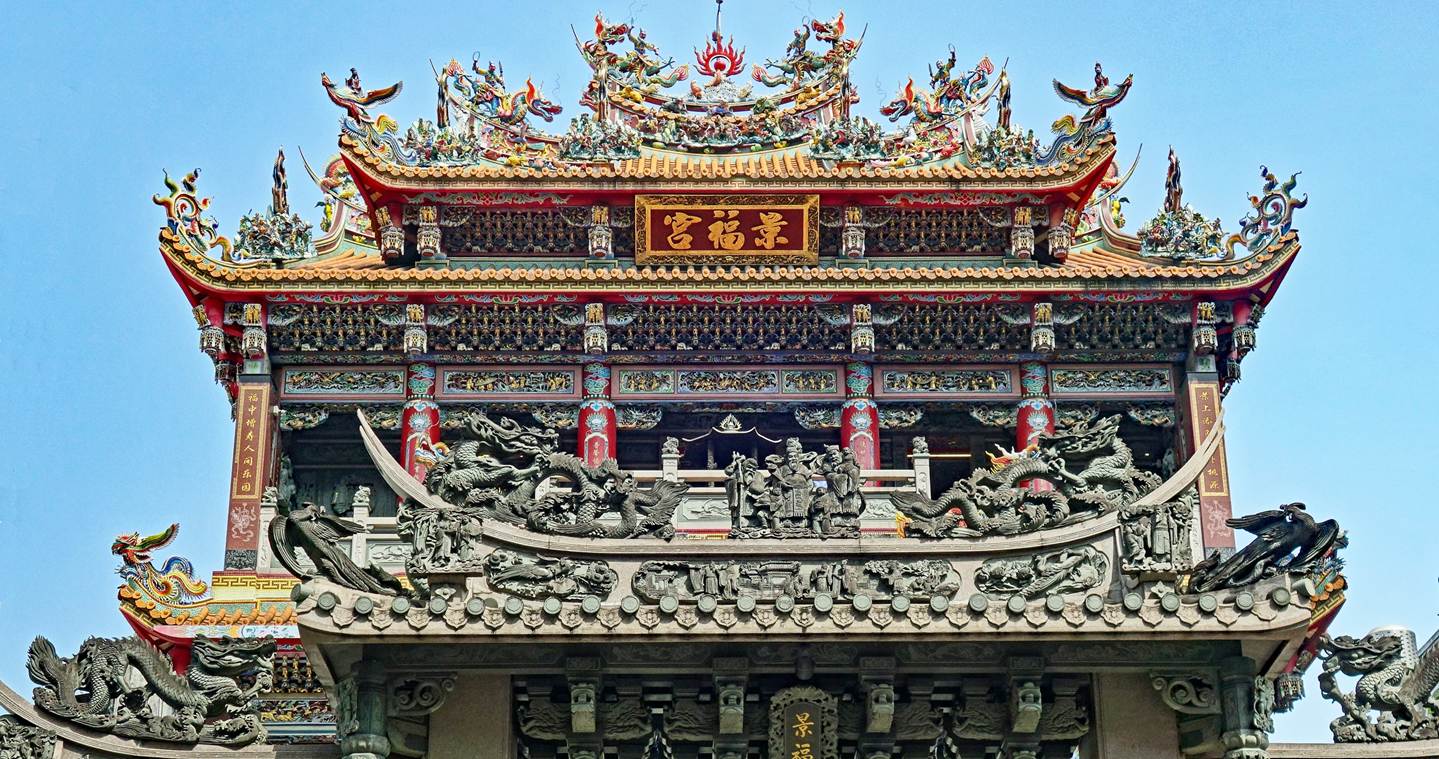
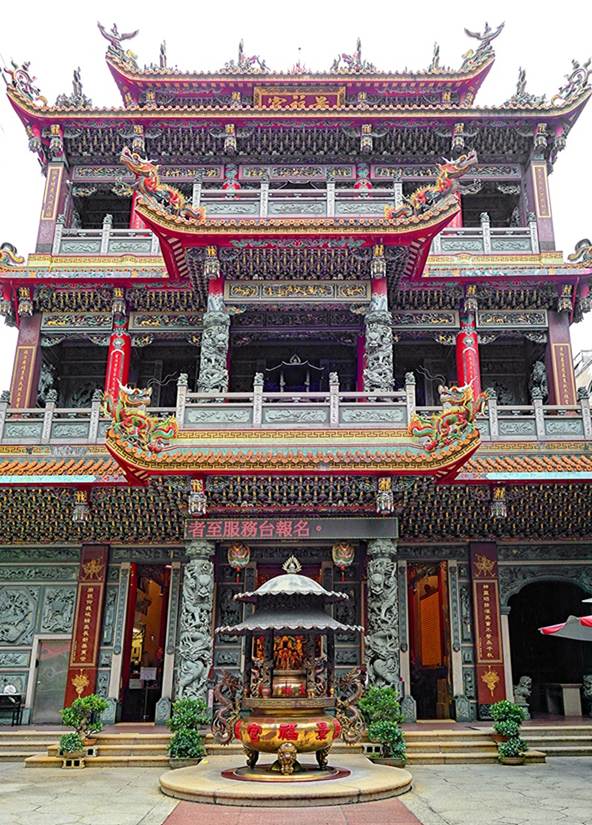
Originally built in 1875
as a tiny temple, this Taoist temple was reconstructed into a larger
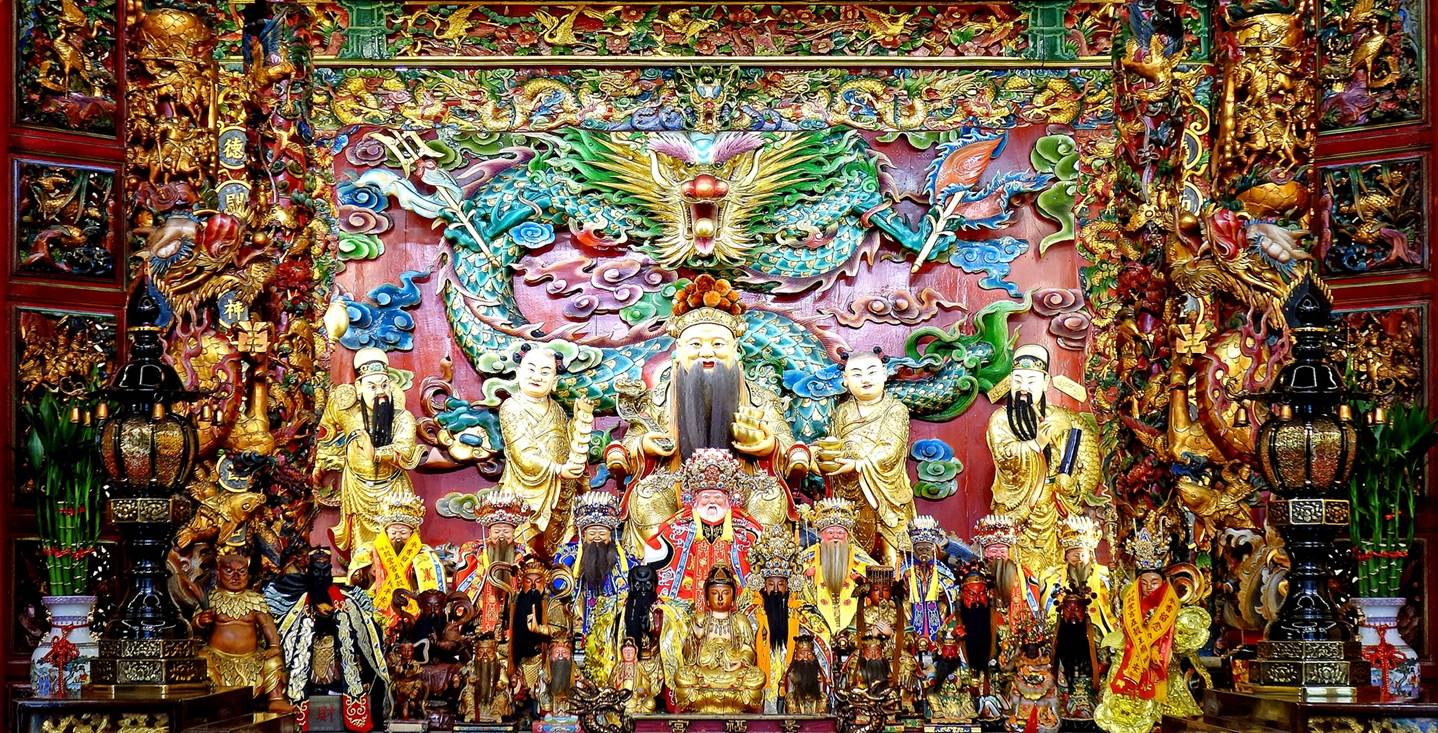
multi-story temple in 1961 and expanded again in 2000. Its main deity is
Tudigong (土地公), also known as Fude Zhengshen (福德正神), the god of Earth and merit, popular
among farmers and villagers. He ensures local peace, prosperity, and protection
of the community.
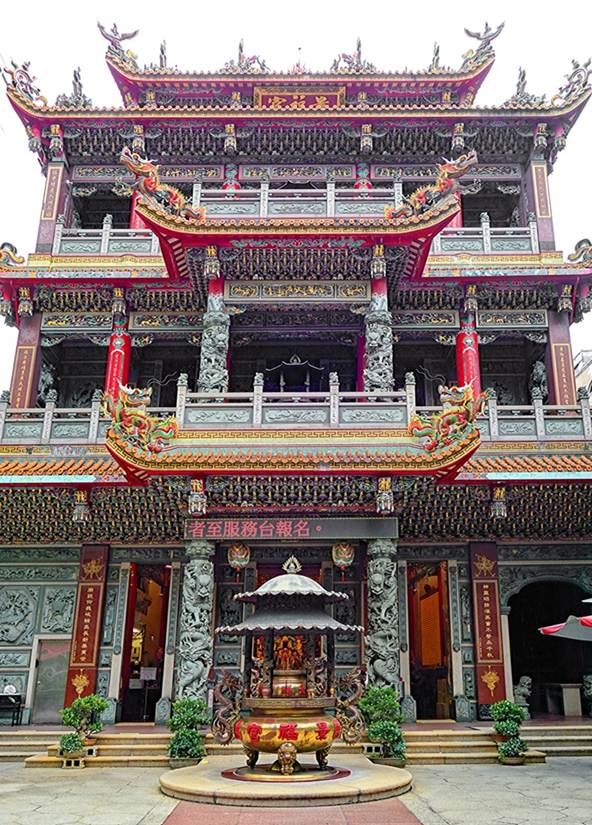
Upper floors of the
temple seen behind the top of an archway leading to the temple.
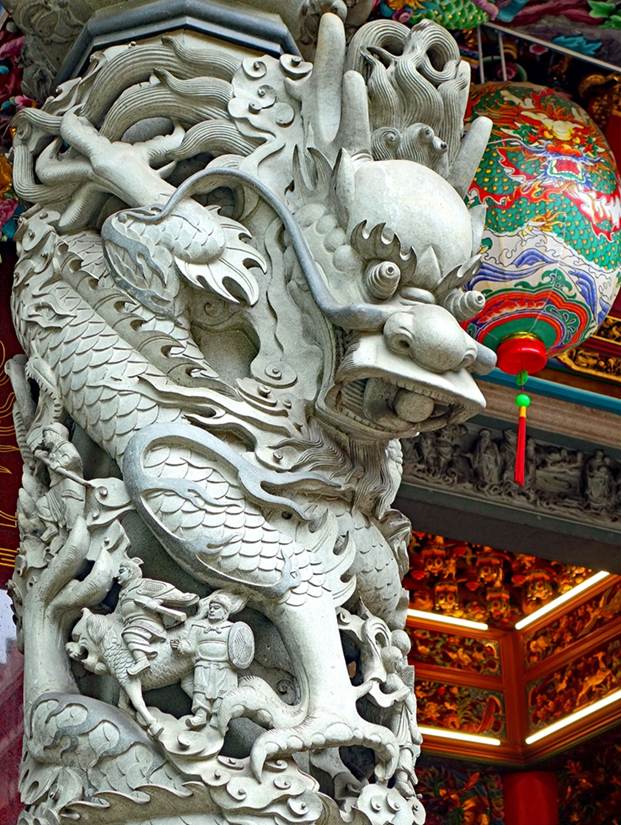
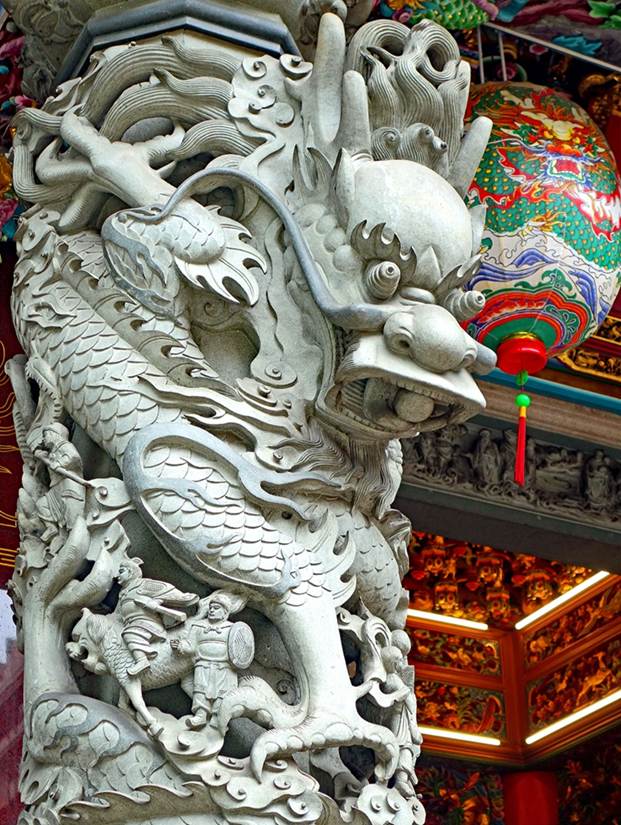
- Left: Facade of the
temple.
- Right: Detail of a dragon
pillar finely carved in diabase (a rock with the same mineral composition as
basalt).
|
|
|
Altar dedicated to
Tudigong in the main hall of the temple.
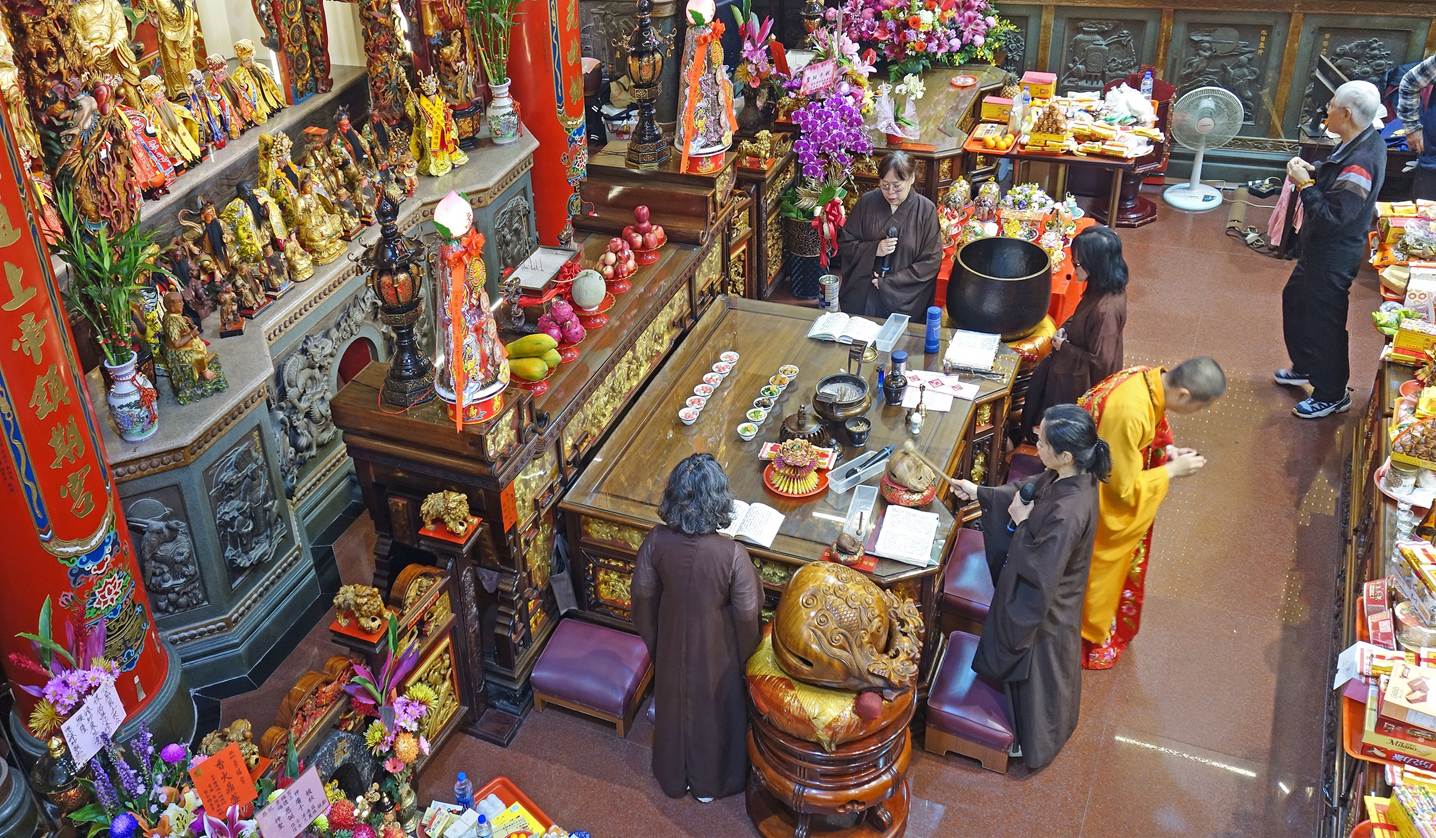
Prayer ceremony before
the altar of Tudigong.
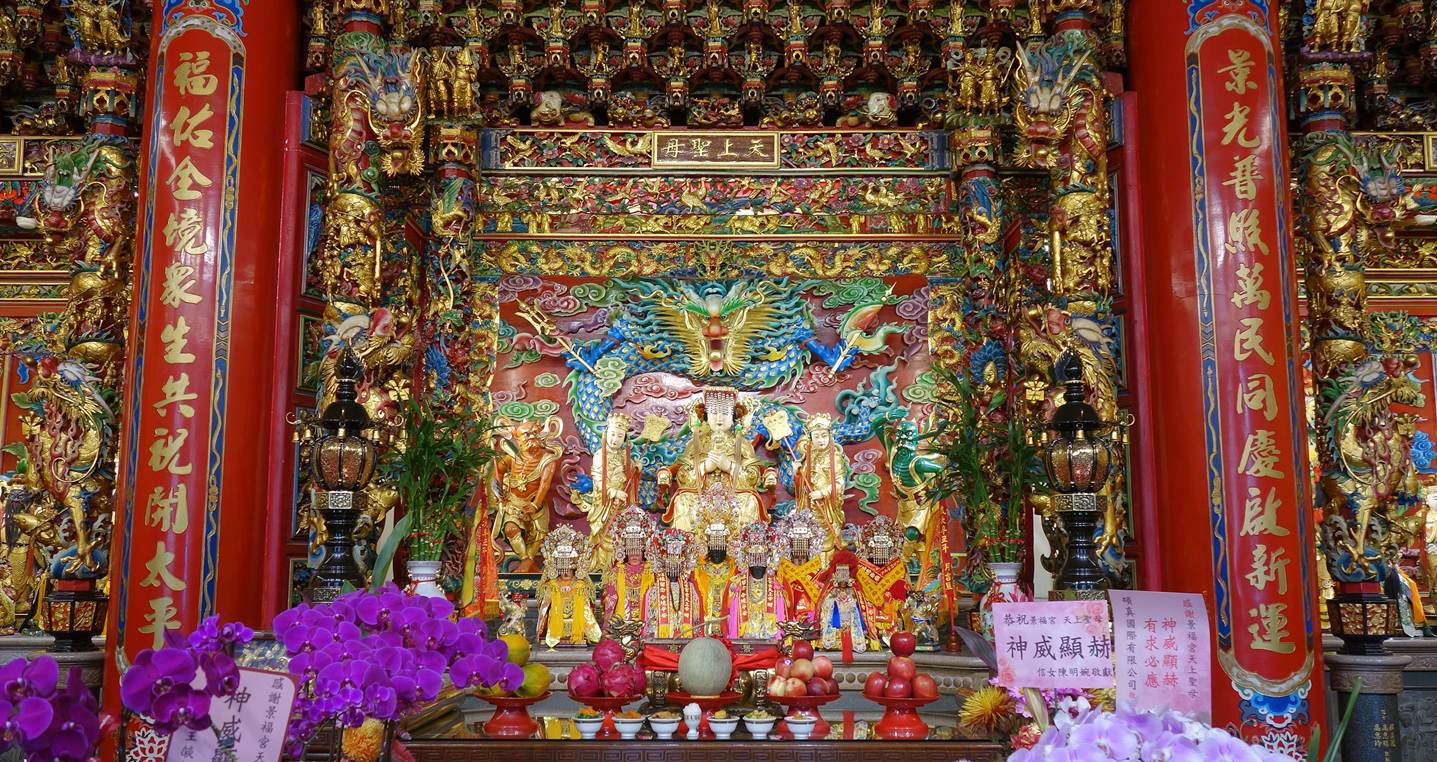
Altar dedicated to Mazu (媽祖).
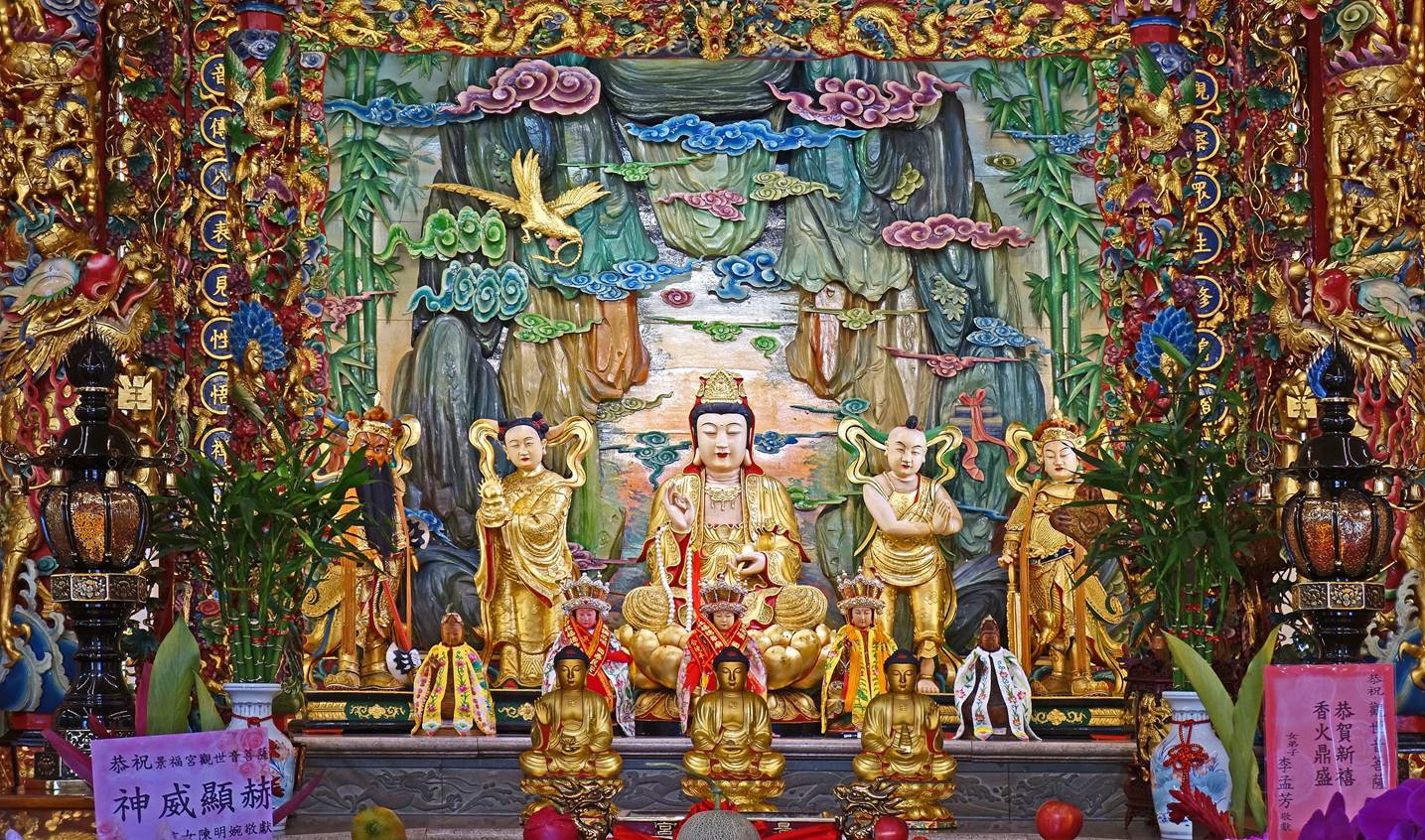
Altar dedicated to
Guanyin (觀音).
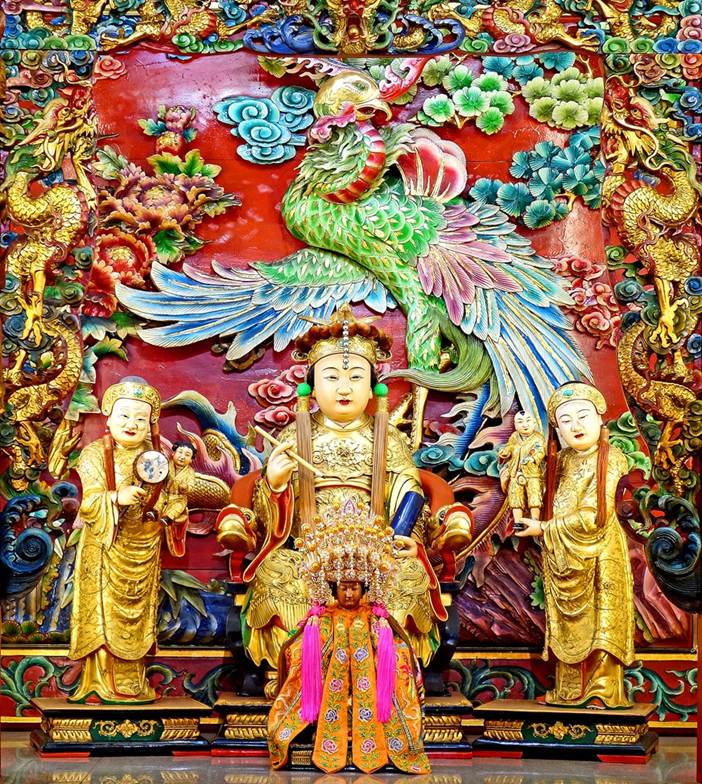
- Left: Altar of
Zhusheng Niangniang (注生娘娘), a deity responsible for fertility,
pregnancy, safe delivery, and the protection of young children.
- Altar of Kṣitigarbha Bodhisattva.
|
|
|
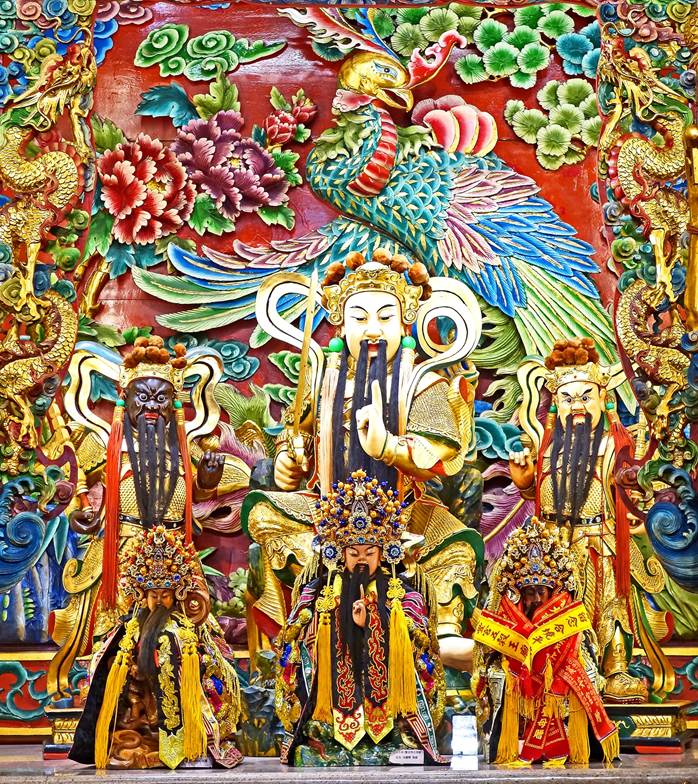
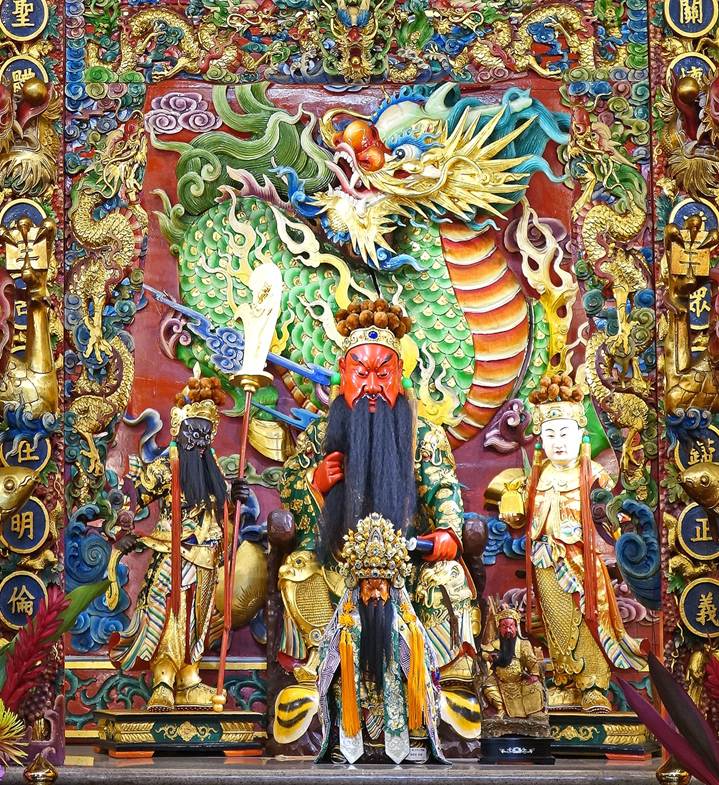
- Left: Altar of Xuantian Shangdi (玄天上帝), the Emperor of the Dark Heaven.
- Right: Altar of Guandi
(關帝, ″Emperor Guan″), the
Taoist god of war, flanked with his commander General Zho Cang (周倉) on his right and his son Guan Ping (关平) on his left. Guandi is the deified
title of Guan Yu (关羽), a Chinese general (c. 160-220) renowned for his moral virtues and his
martial prowess. He is viewed as a sage of war and a powerful
protector, in Taoism, Buddhism and Confucianism
[see Jiantan Historical temple, above].
|
|
|
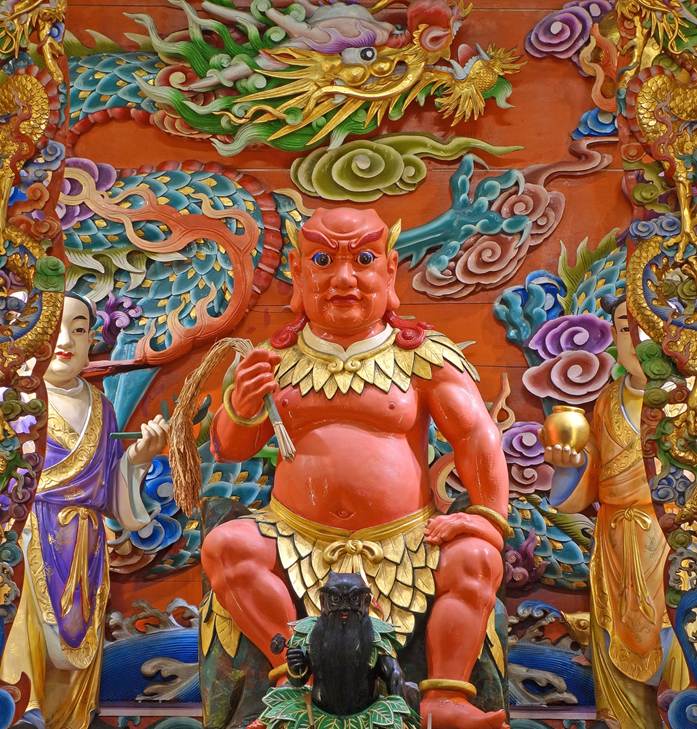
- Left: Altar of Shennong
Dadi (神農大帝), the legendary deity credited for
inventing and teaching agriculture, the use of farming tools, and herbal
medicine. As the patron of farmers, he is often represented with a rustic
appearance, with two small horns on his head, sometimes dressed in leaves,
holding stalks of grains symbolizing his role as the provider of food.
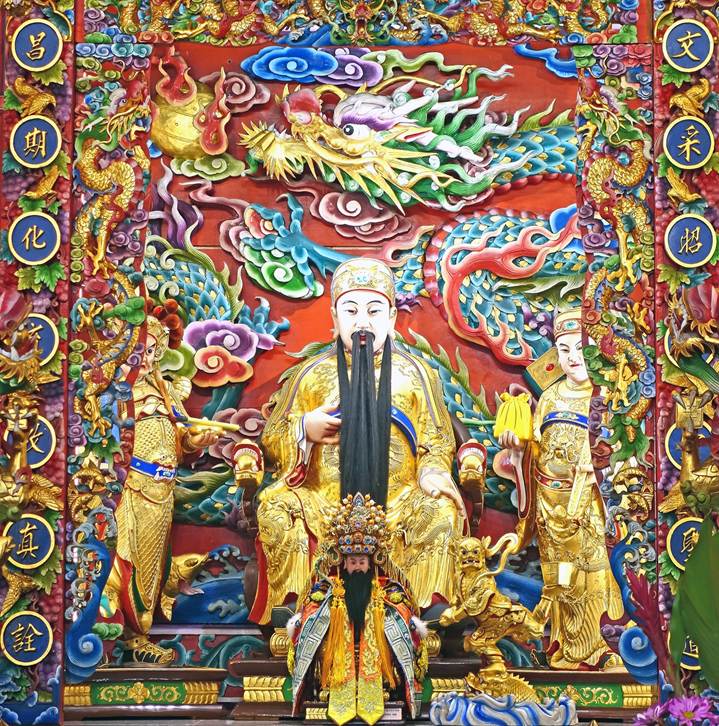
- Center: Altar of
Wenchang Dijun (文昌 帝君), the god of culture and literature.
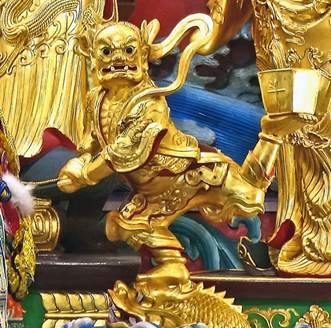
- Right: Close-up of the small
statue located next to the left foot of Wenchang Dijun in the middle photo. It
depicts Kui Xing (魁星), a deity in Chinese
mythology associated with examinations and academic success. Holding a writing
brush in one hand, he stands on the head of the Ao Fish (鳌鱼), a mythical sea creature that
symbolizes success in imperial exams. This combination represents the
aspiration for academic success.
|
|
|
|
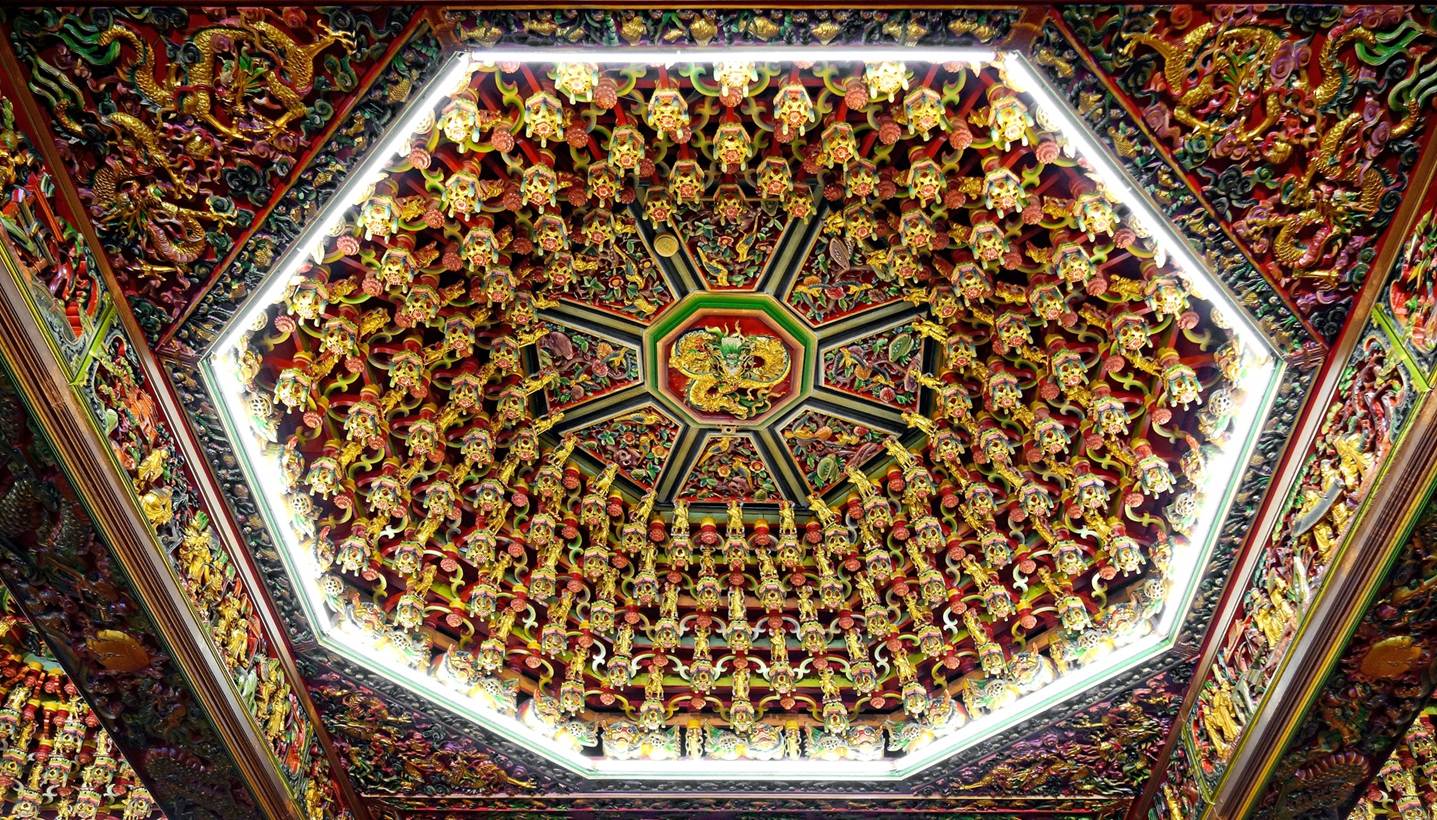
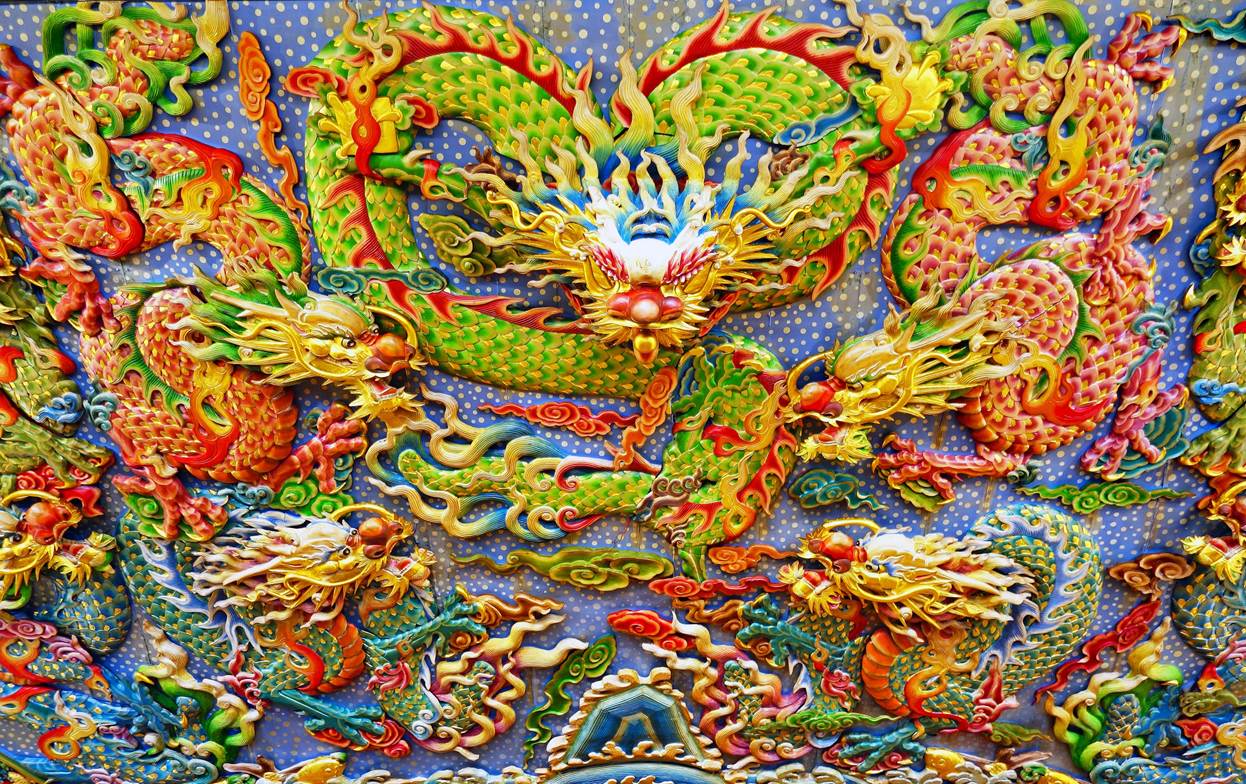
Roofs in the temple.
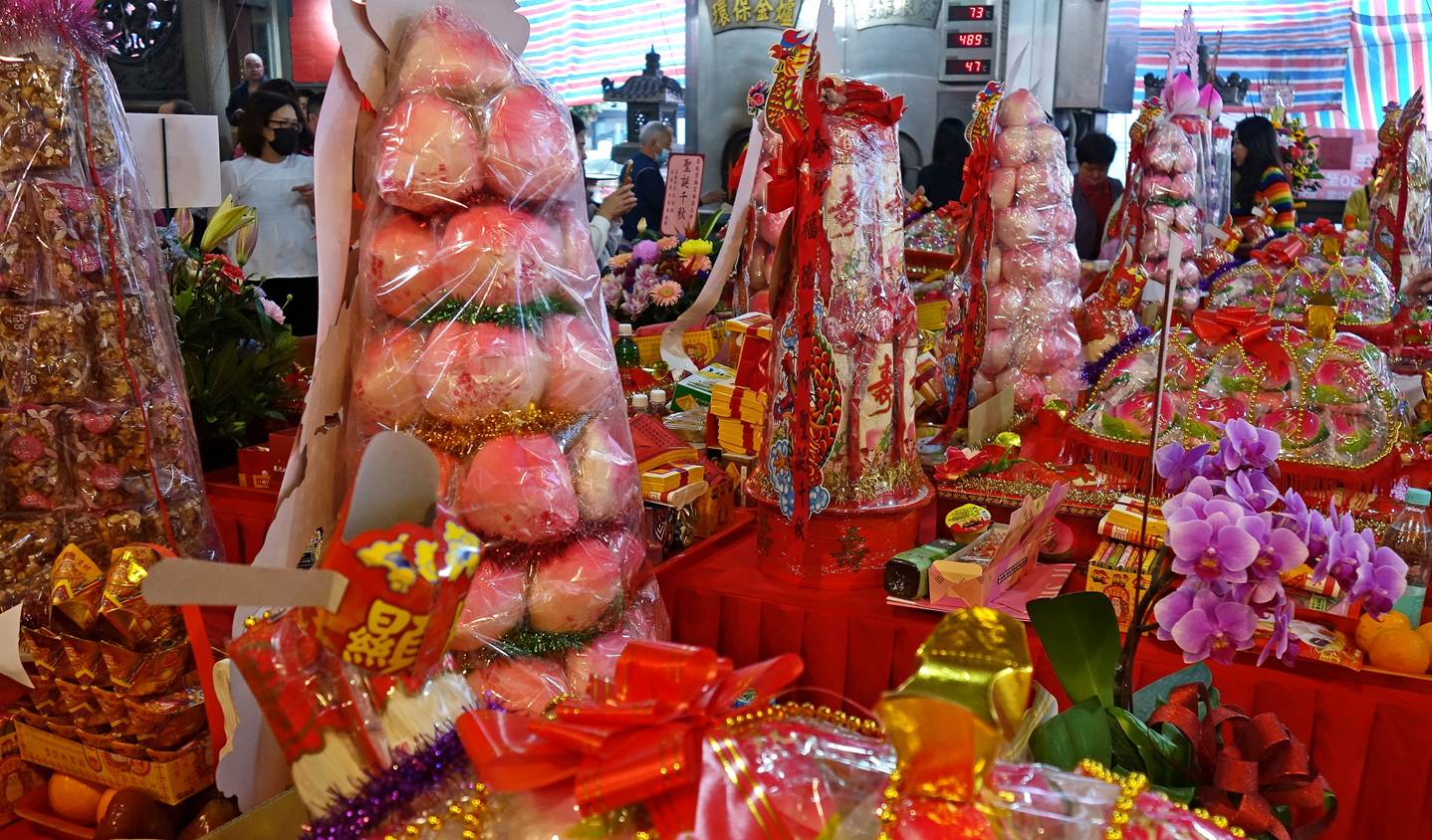
Offerings for the gods in
the front hall of the temple.
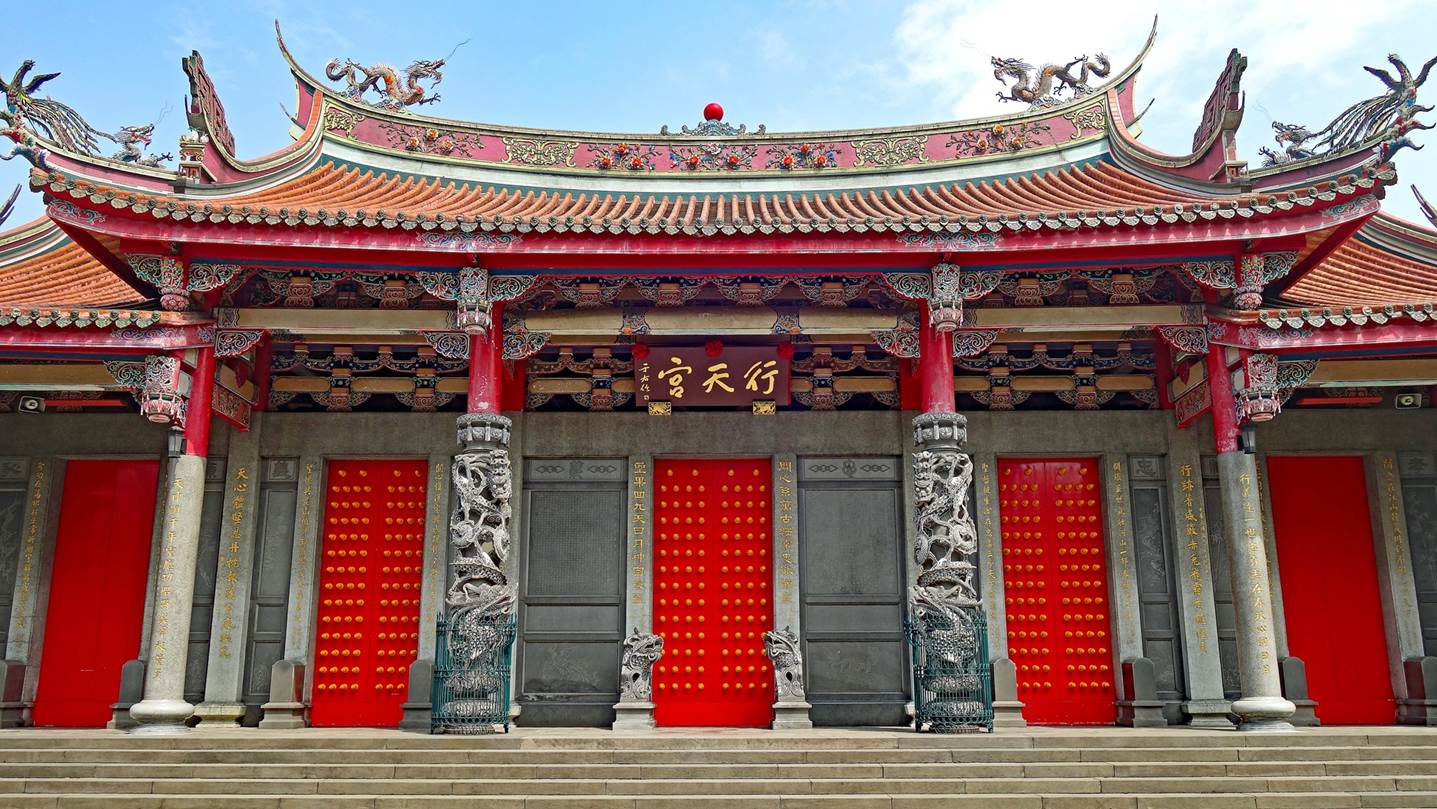
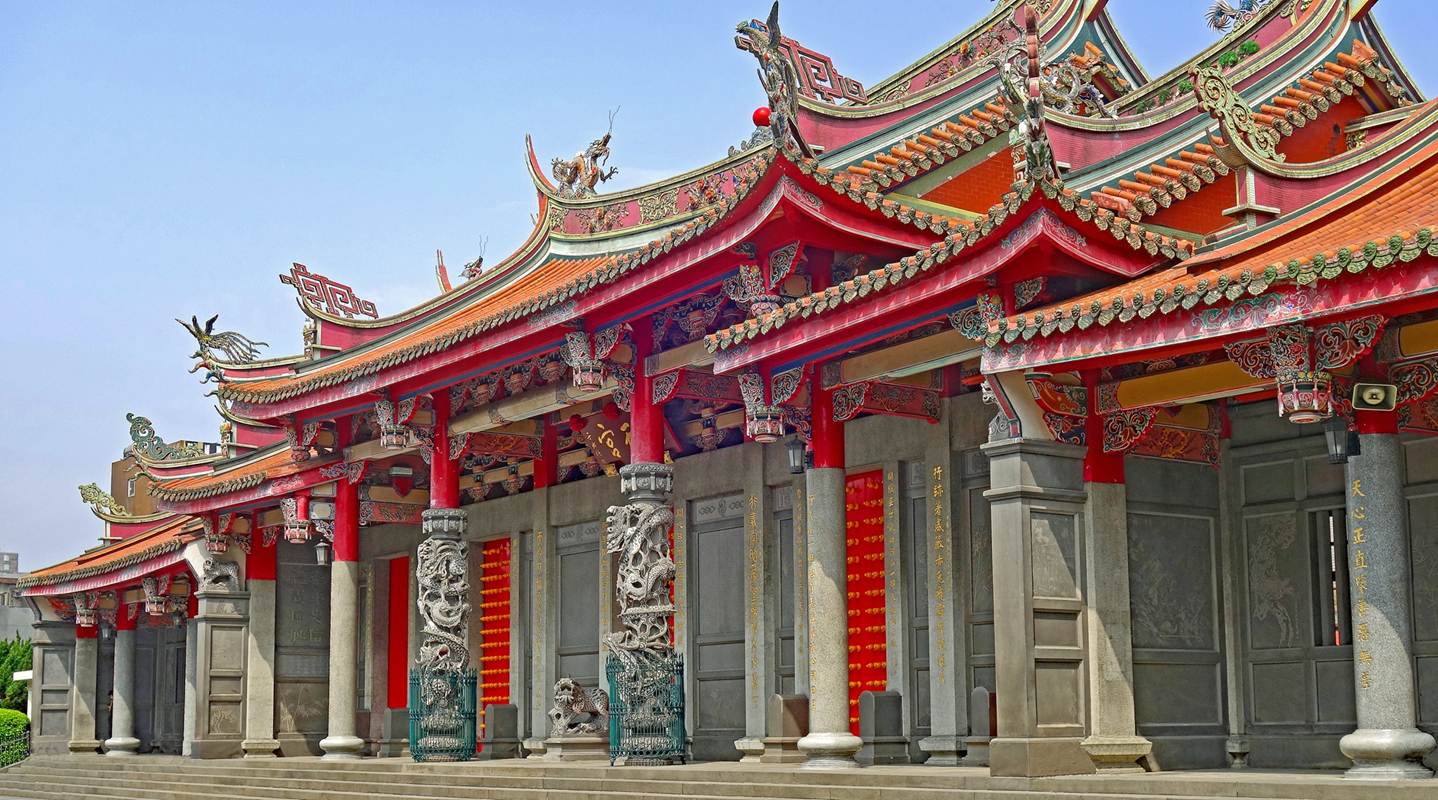
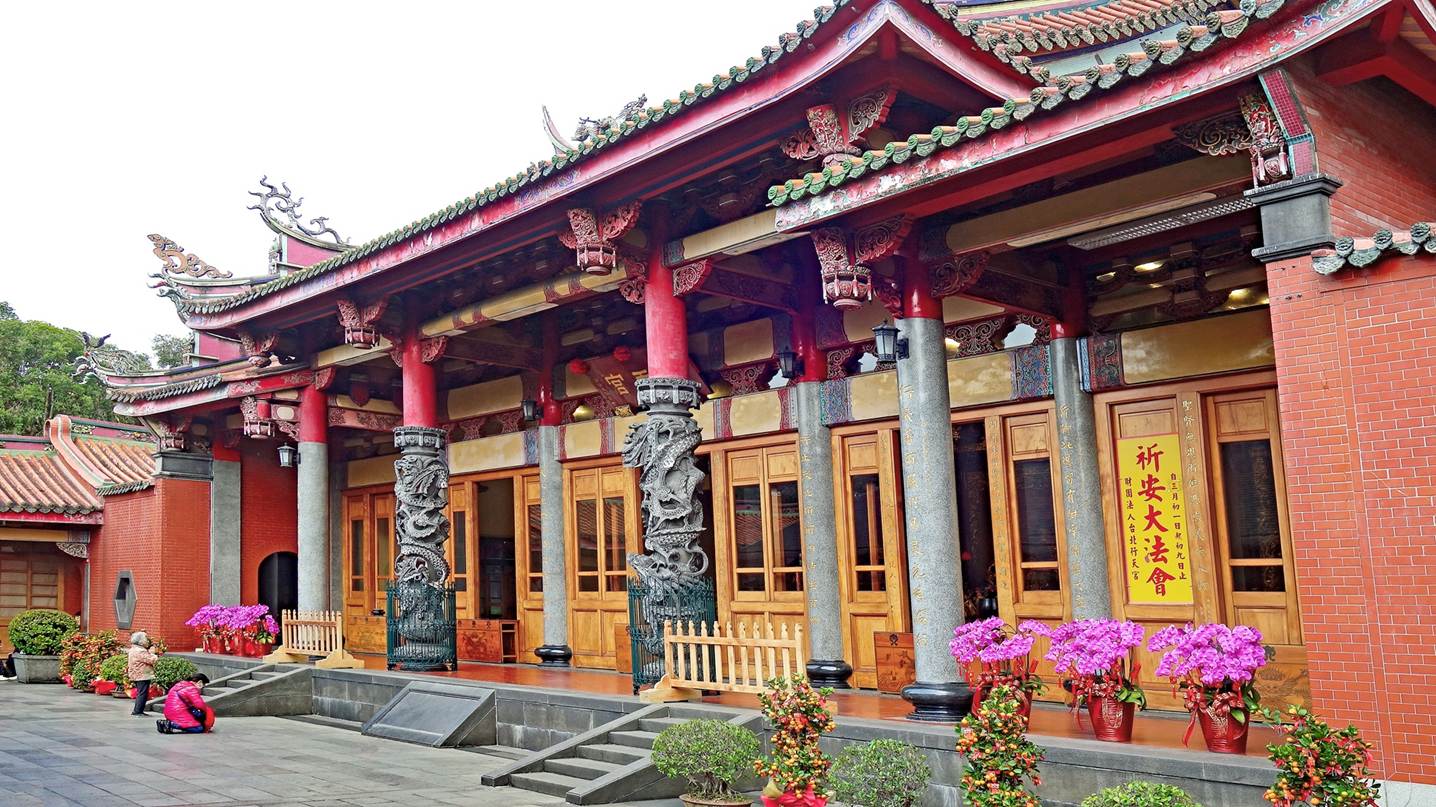
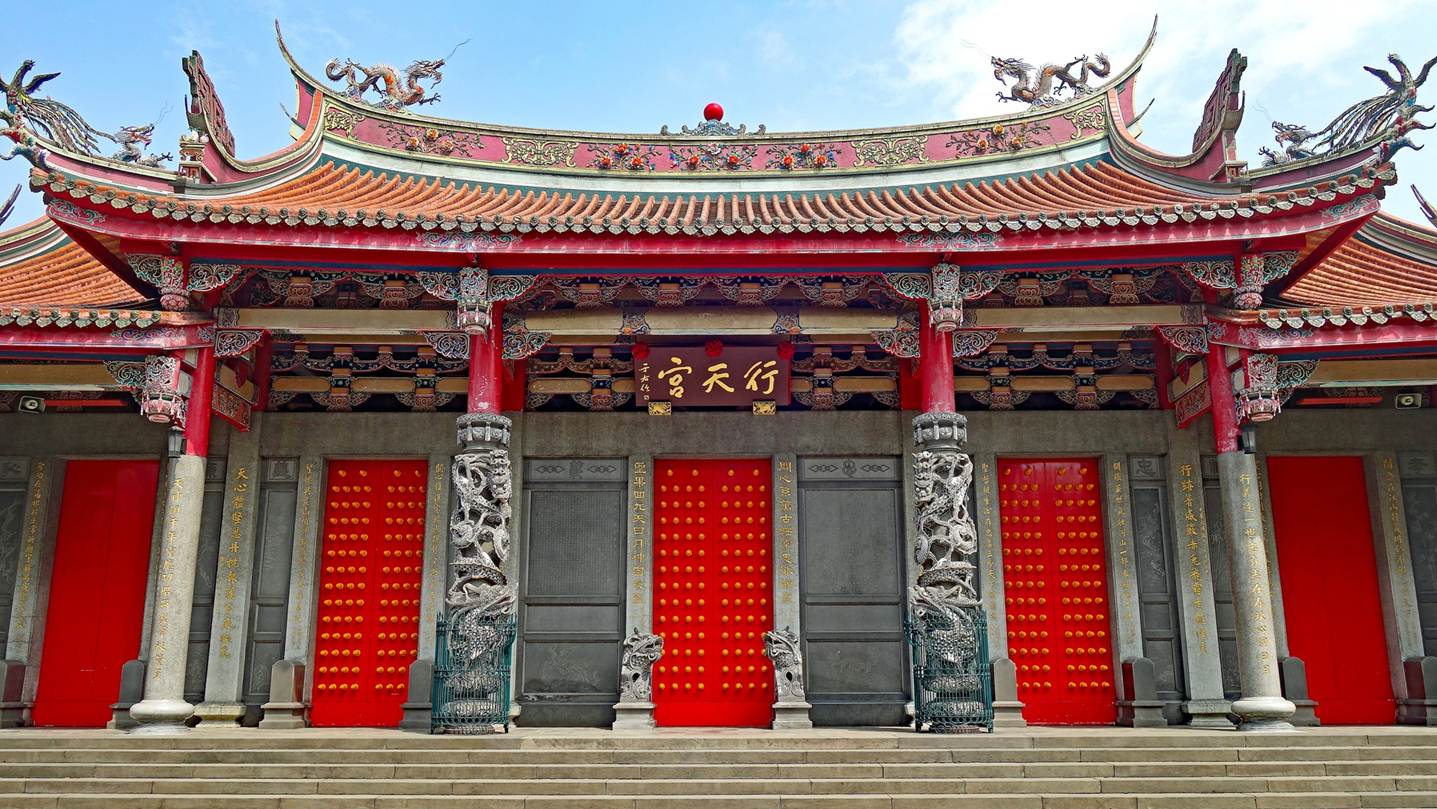
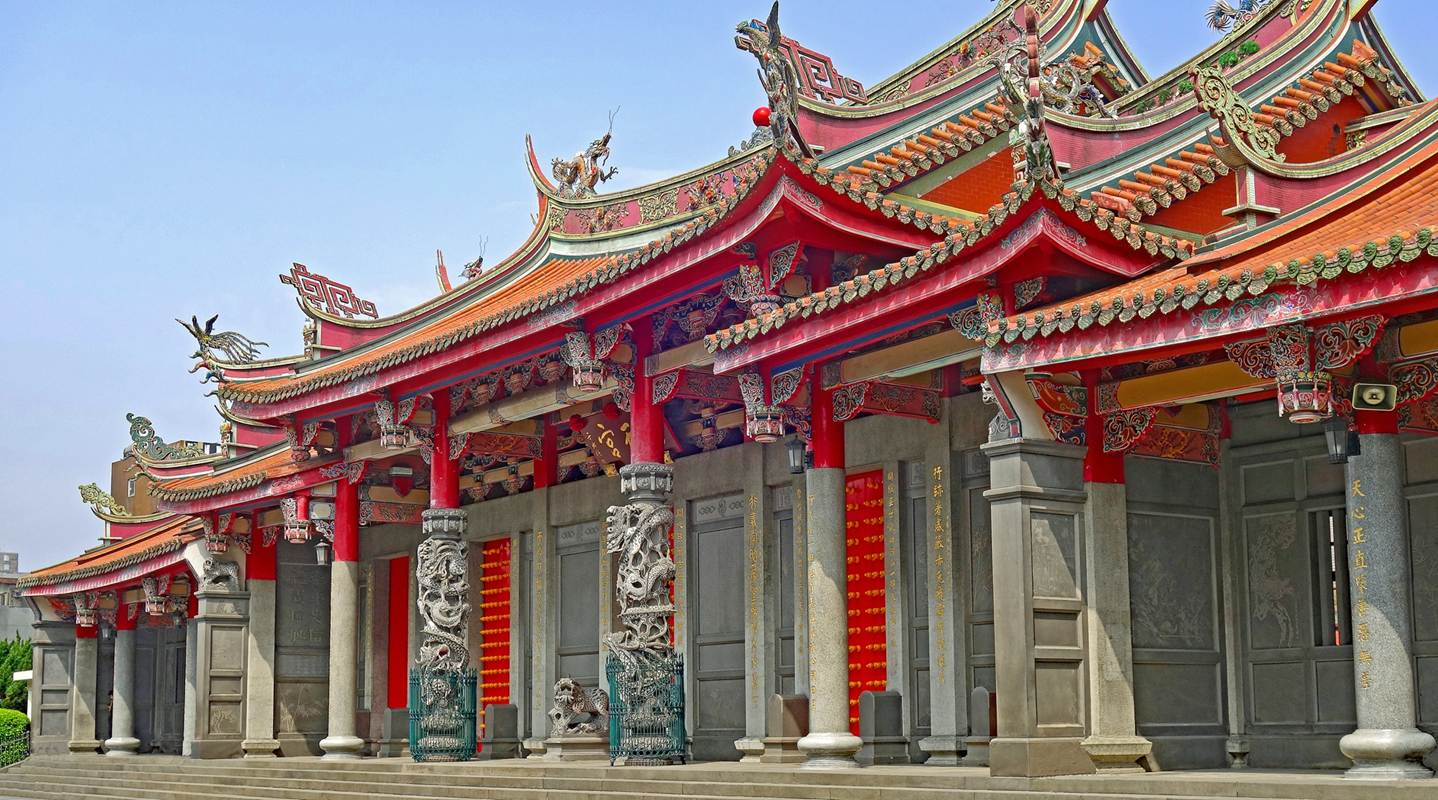
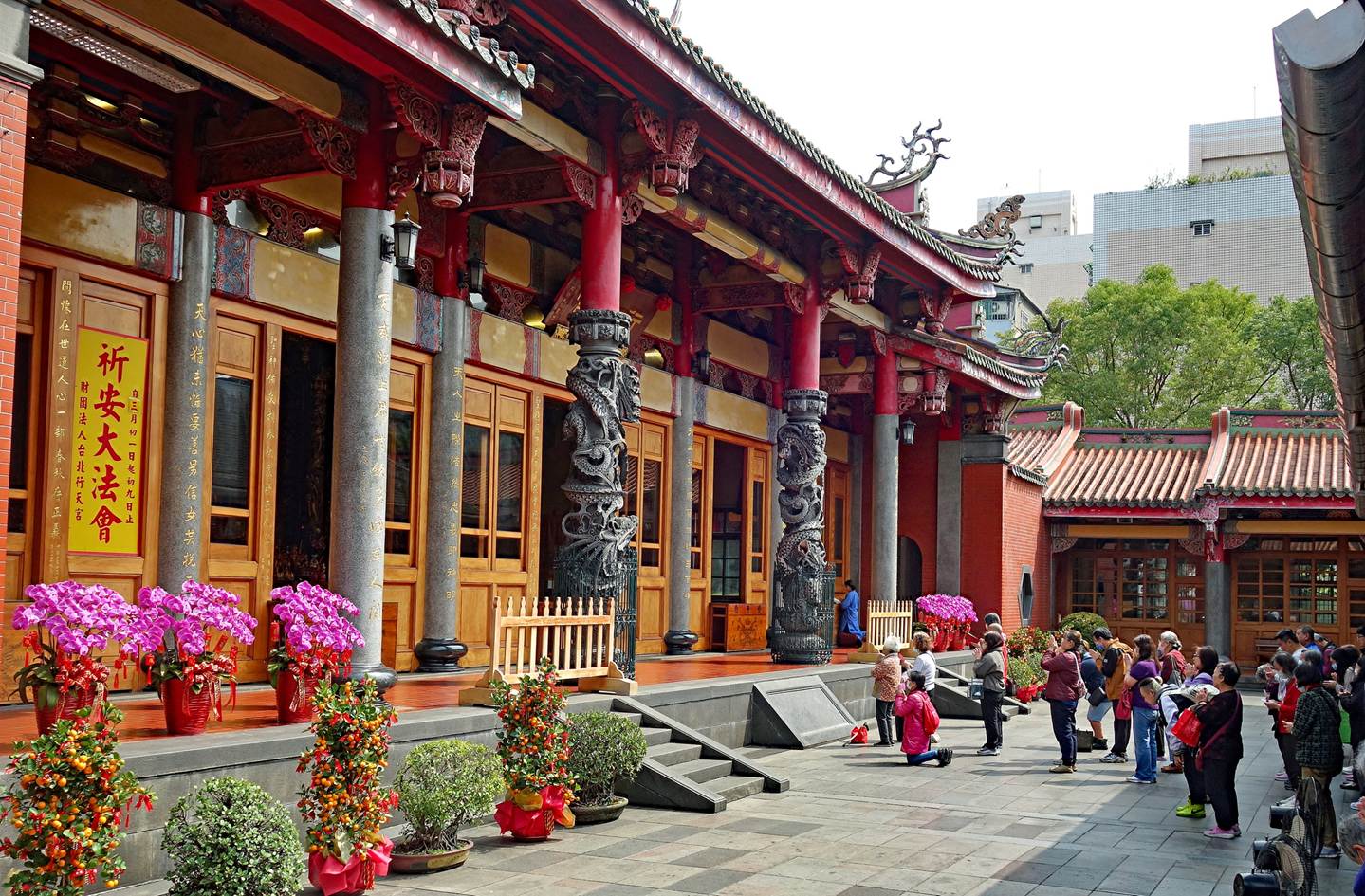
Xingtian temple (行天宮):
[March 2025]
Built in 1967, this
Taoist temple is dedicated to Guandi (關帝), the Taoist god of war [See Jingfu temple, above]. It was the first temple in Taiwan to ban the burning of incense in an
effort to reduce air pollution from fine particles. In addition, unlike many
other temples, it no longer has a ghost money furnace.
Views of the facade of
the entrance hall.
Facade of the main hall.
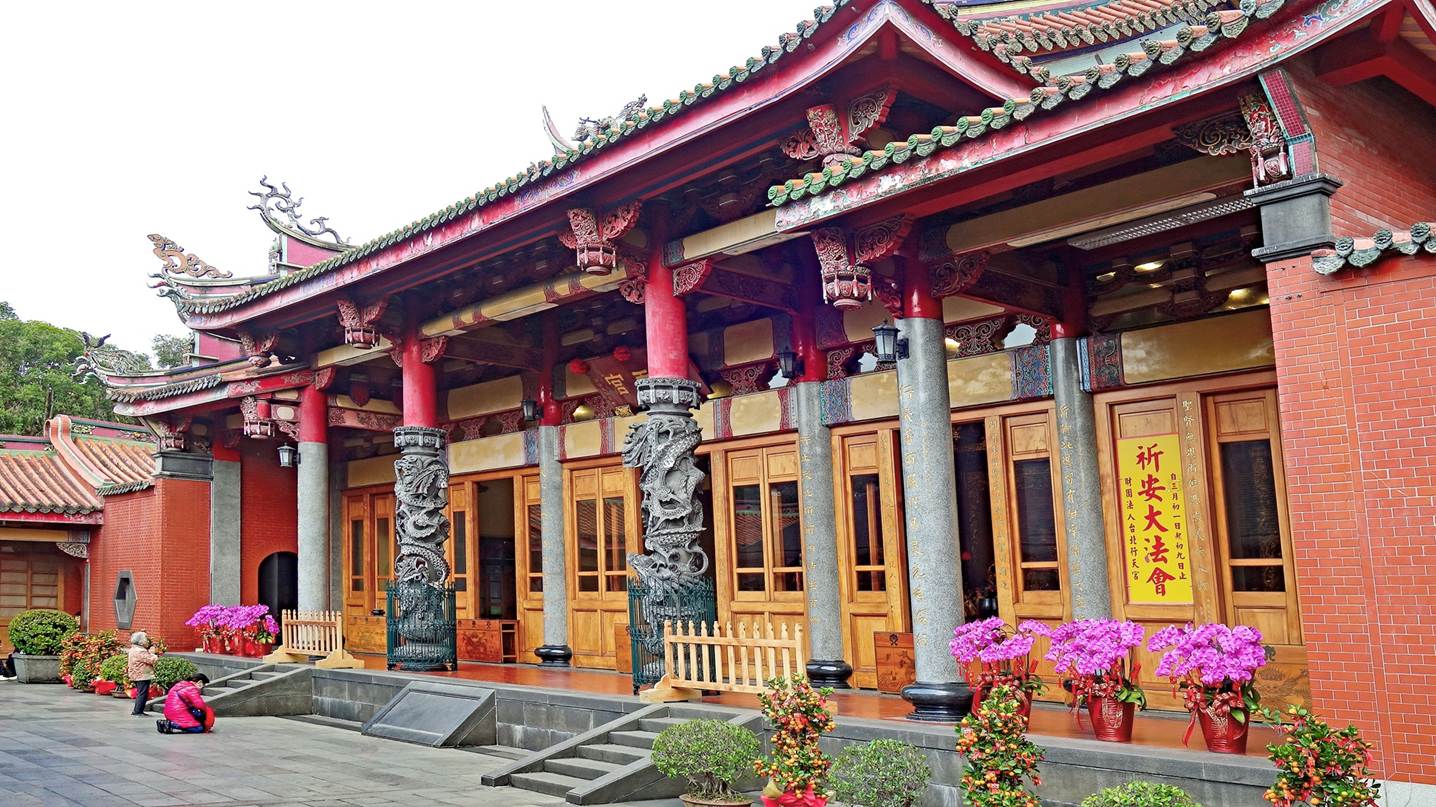
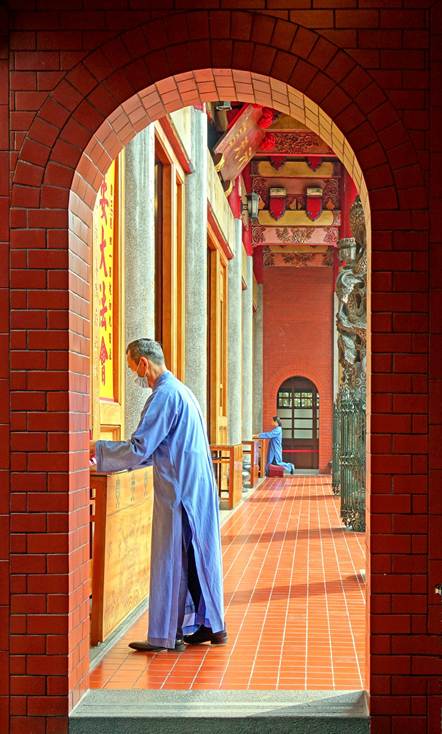
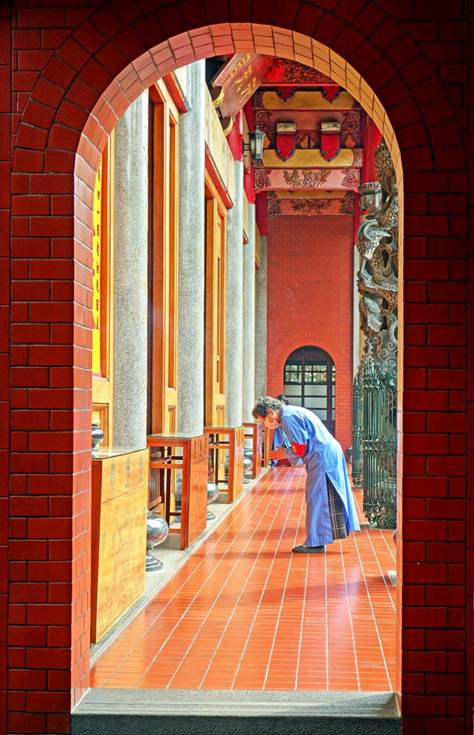
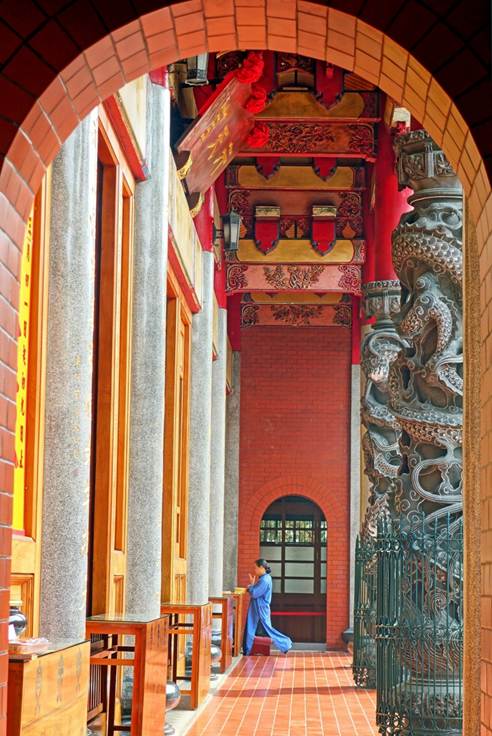
This temple is famous for
its ″soul-calming″ rituals (收驚) performed by trained laywomen, called
Xiaolaosheng (效勞生, meaning ″helpers″), who
wear distinctive blue Taoist robes. These women whisper and chant prayers aimed
at restoring mental peace.
|
|
|
|