Taiwan: Taipei City (Part 2/2)
[March 2008, June 2009, April 2017,
November 2014 & 2018, March 2025 & 2026]

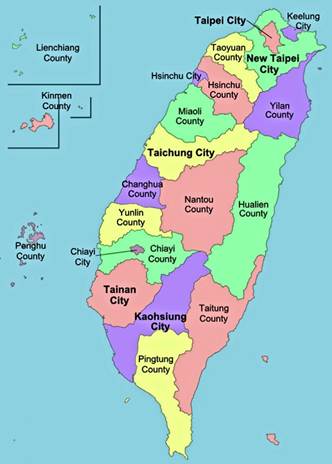
[Source: https://en.wikipedia.org/wiki/Taiwan_Area
]
This page complements the first page (Part
1/2) of photos
of I took during several trips to Taipei City. These photos are arranged
according to the locations of the depicted sites, following approximately a
north-to-south axis. This page shows photos of sites situated south of the MRT
Minquan West Road Station (捷運民權西路站).
Dadaocheng Cisheng temple (大稻埕慈聖宮天上聖母):
[March 2025]
Originally built in 1864
at another site, this Mazu (妈祖) temple was
relocated to another location in 1866, with some components made in Xiamen Port
in China. In 1910, new urban developments led the Japanese government to
demolish the temple. But local people raised money and rebuilt it in 1916 at
its current location, reusing elements (such as beams, pillars, and stones)
from the previous building. In 1994, part of the temple was renovated. Its
current appearance is very much the one dating from 1916.
Mazu (妈祖, ″Maternal Ancestor″), also
known as Tianhou (天后,
″Heavenly Empress″), the Taoist Goddess of the Sea, is the main deity of the temple. But several
secondary deities are also enshrined here.
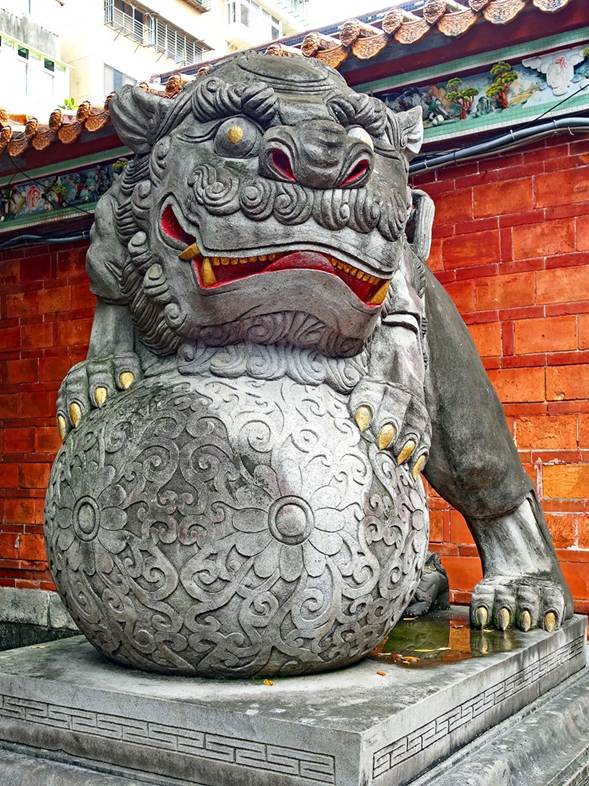
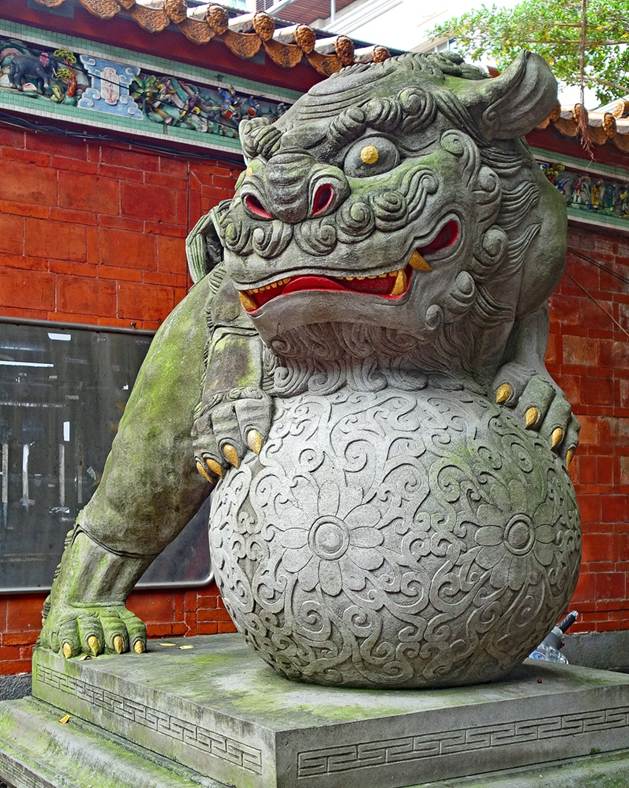
Pair of stone lion
guardians (石獅) at the entrance of the temple.
|
|
|
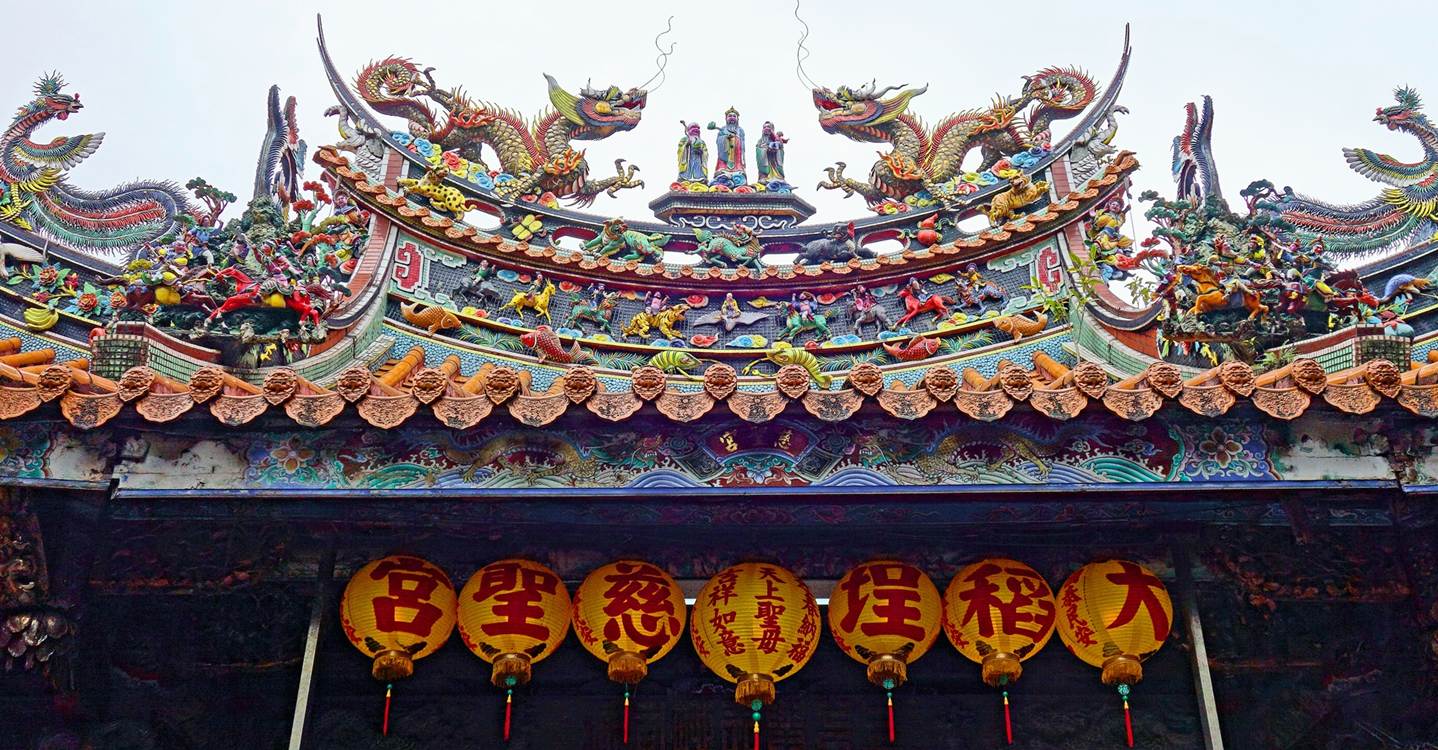
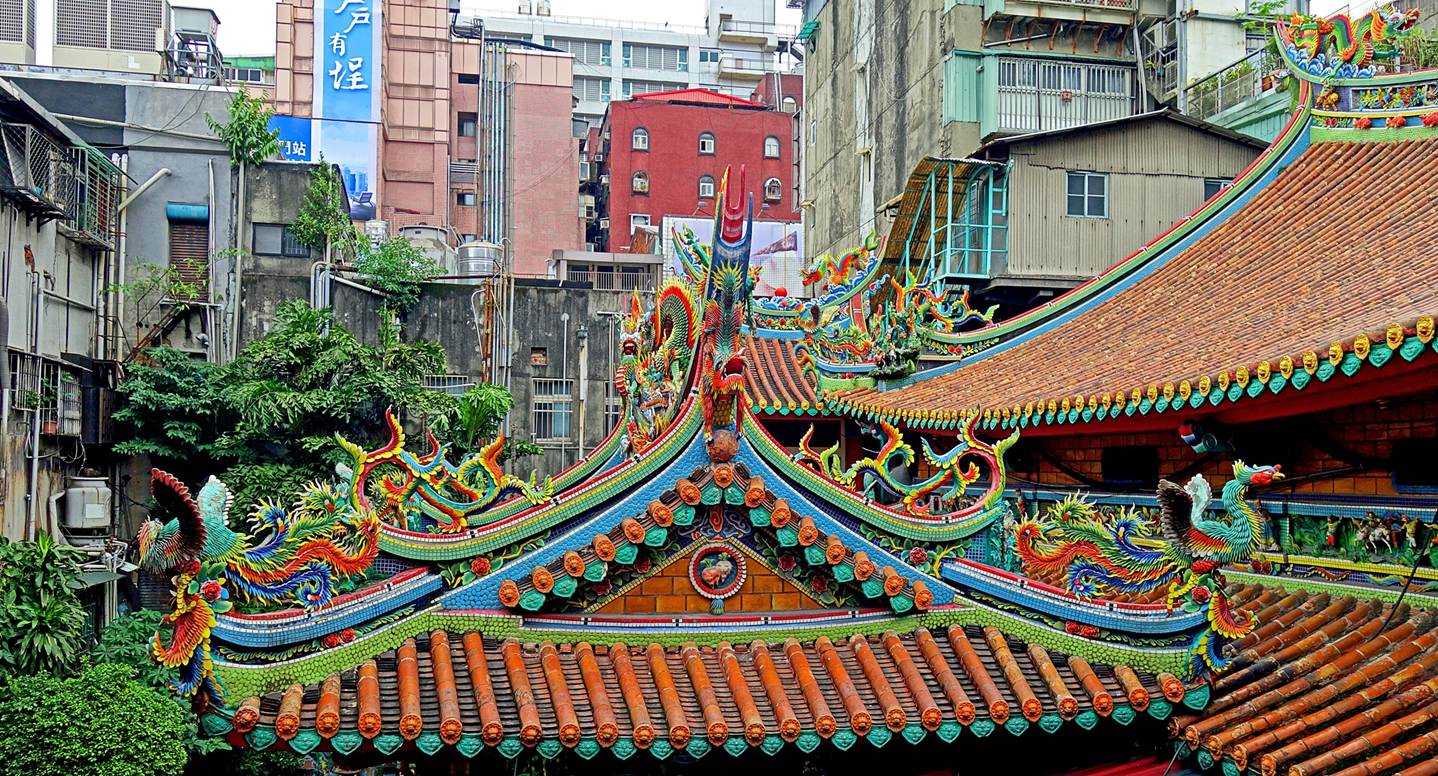
Closeup of the ridge of
the roof.
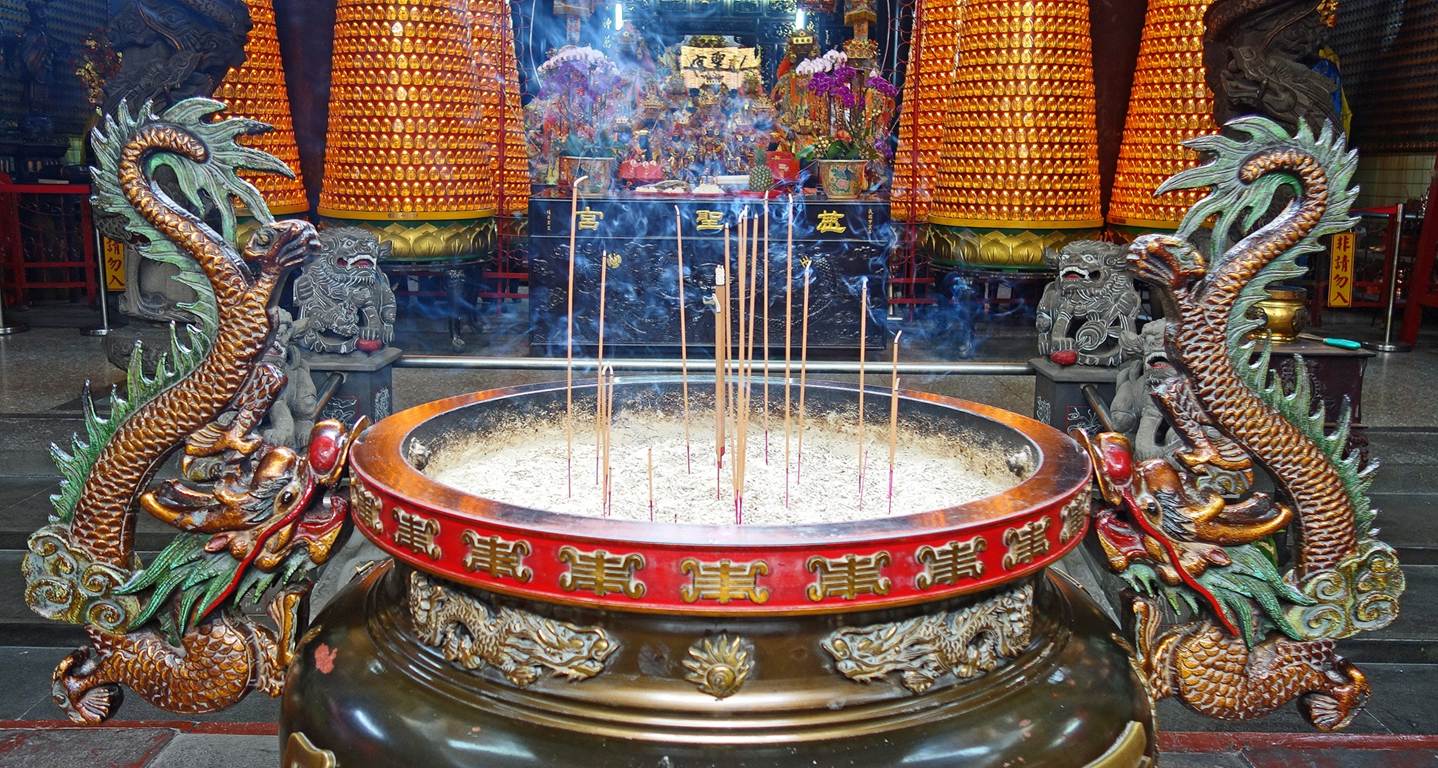
In the main courtyard of
the temple, with the hall dedicated to Mazu in the rear.
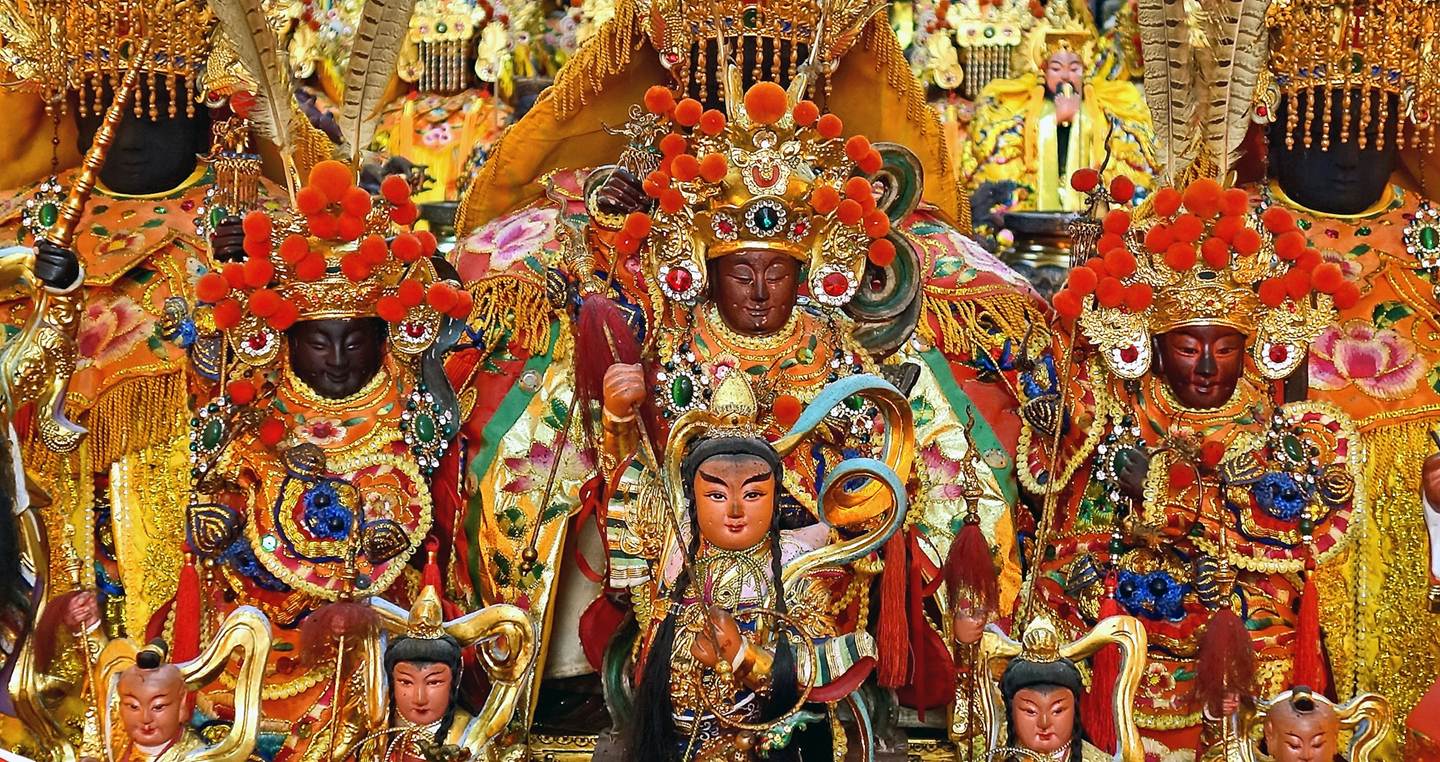
Rows of secondary deities
in front of Mazu (barely visible).
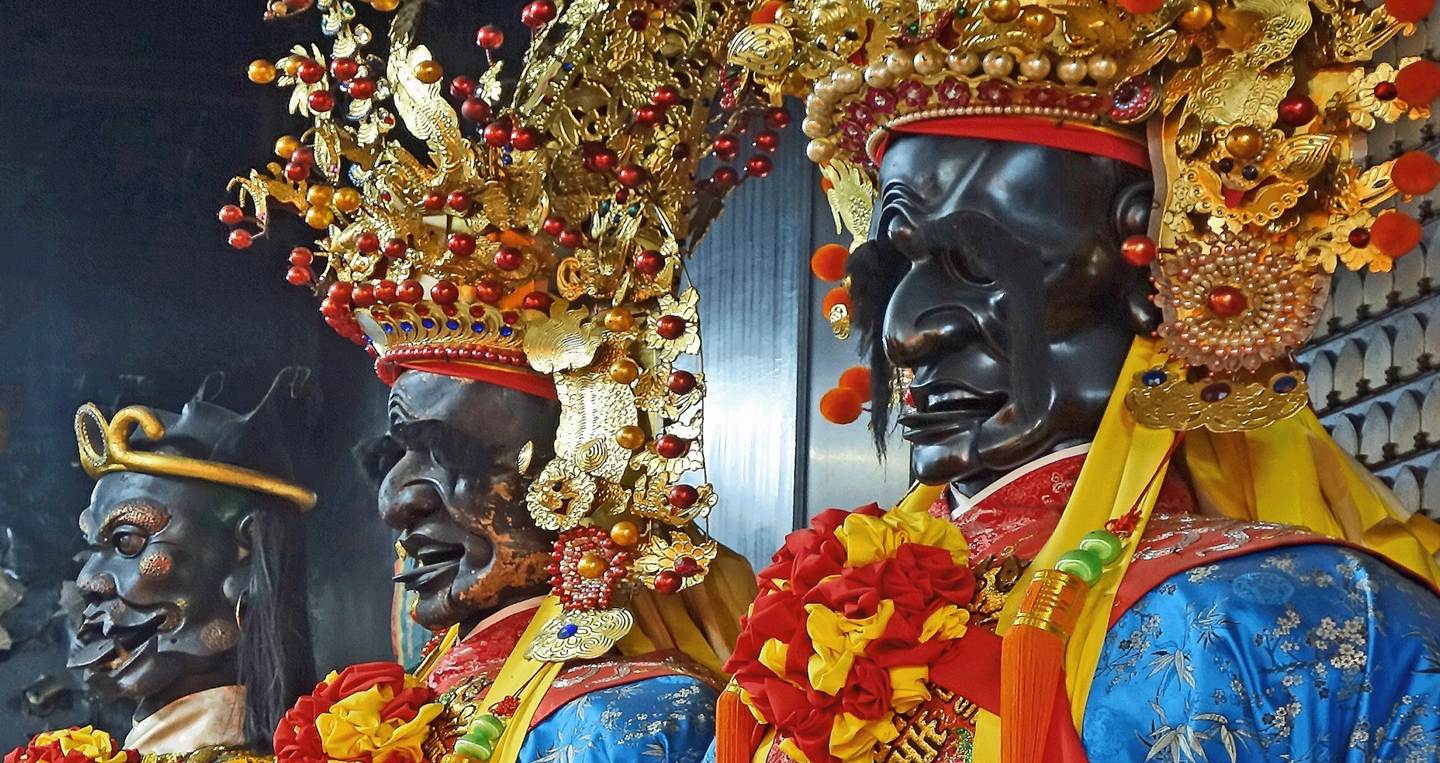
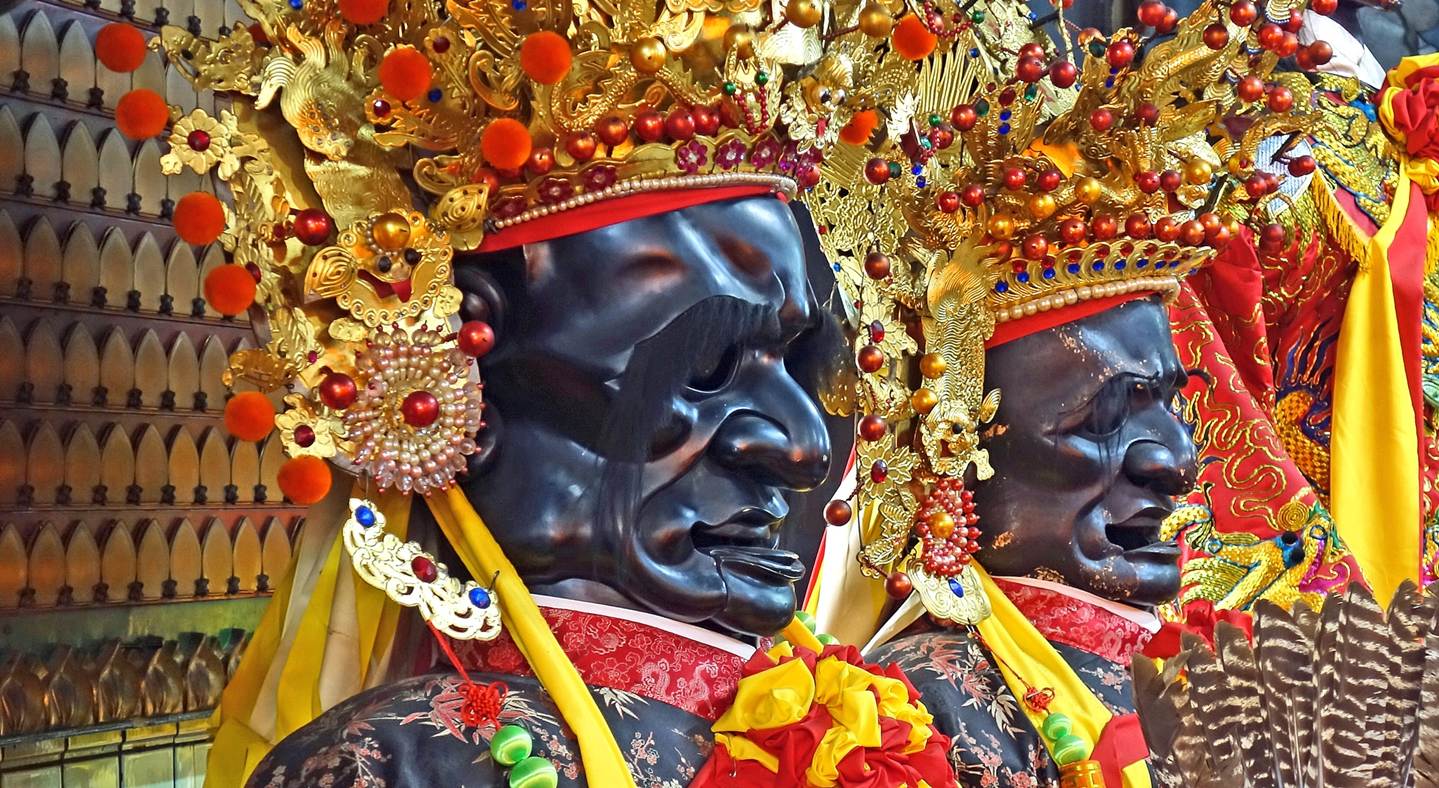
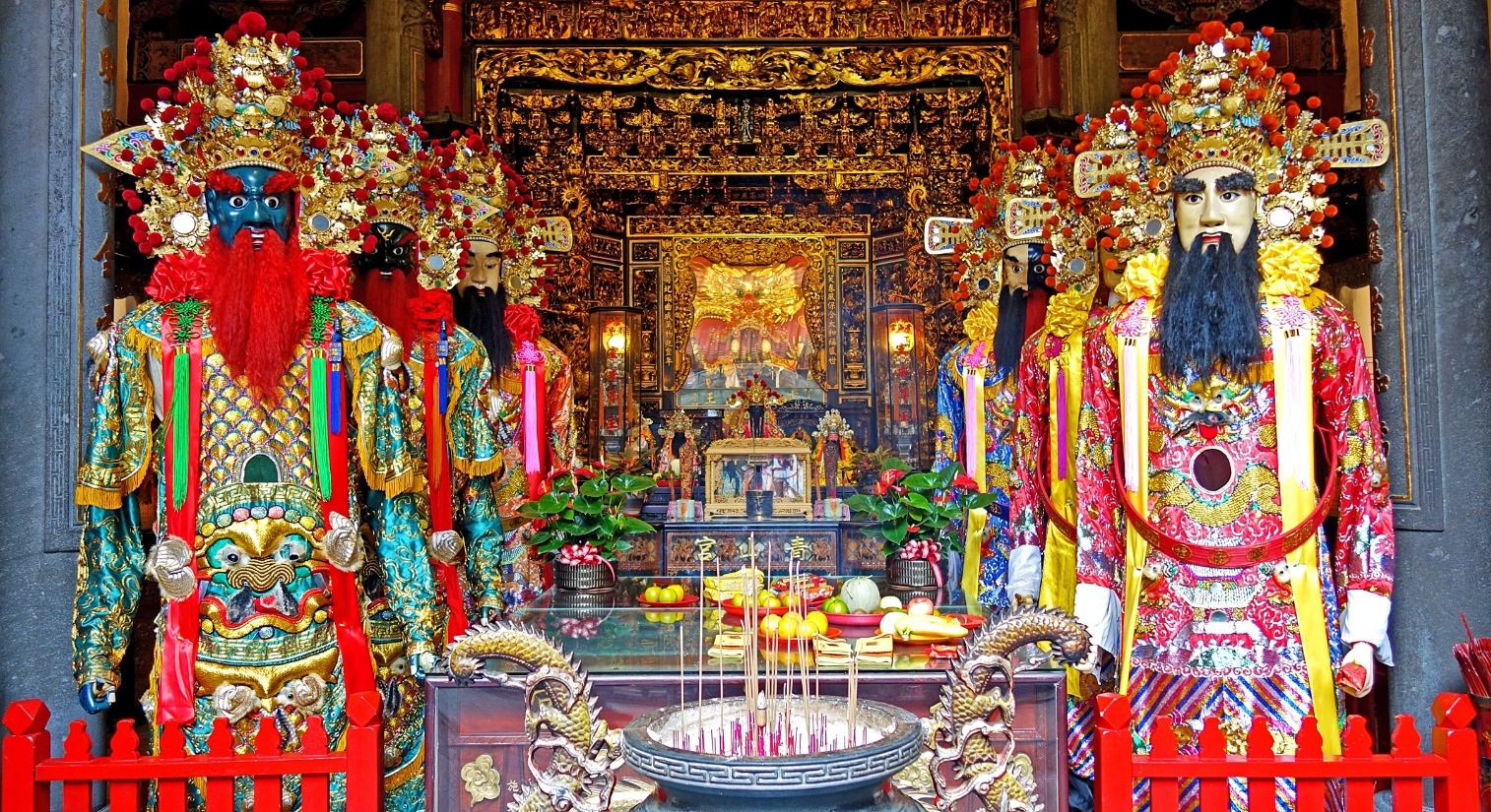
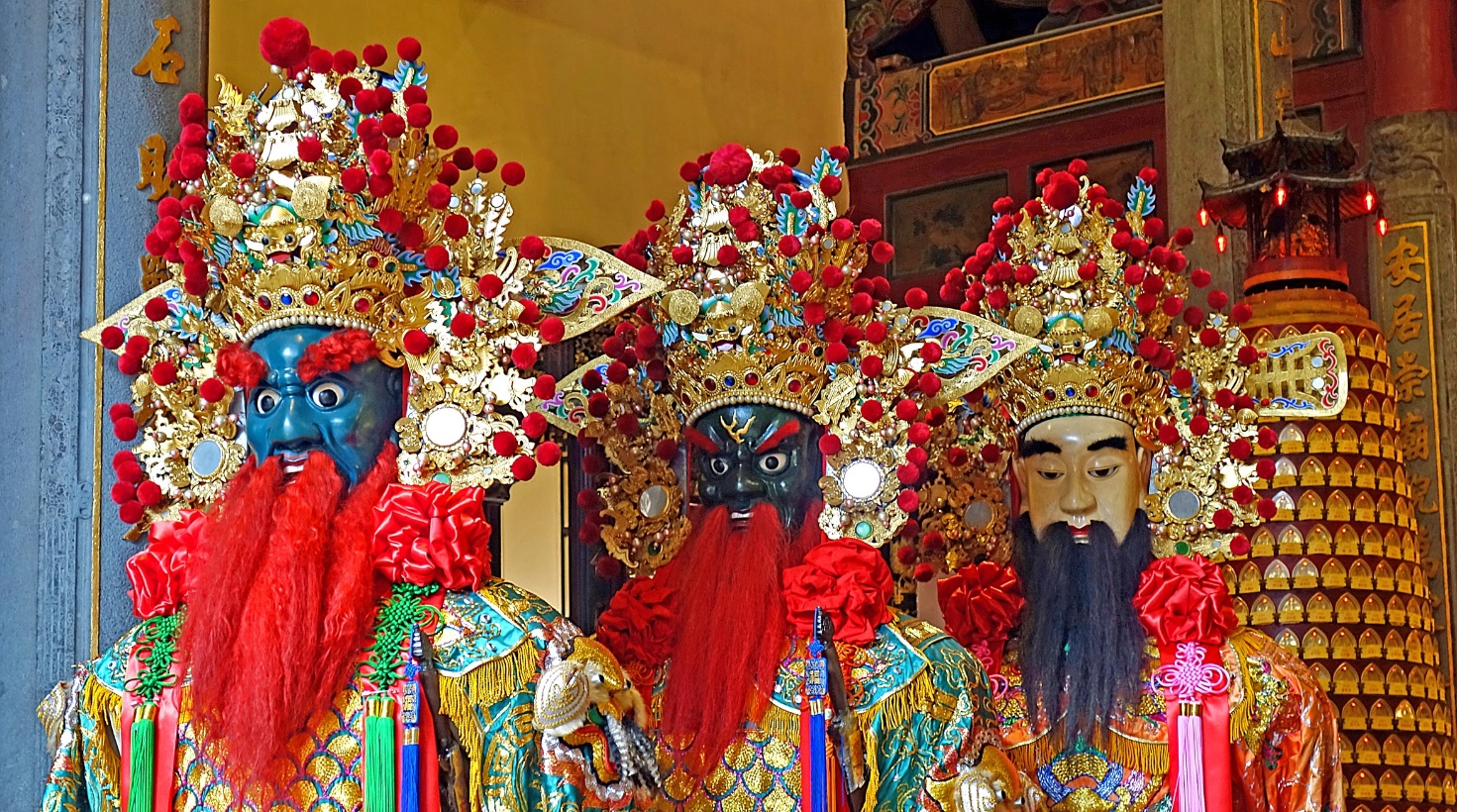
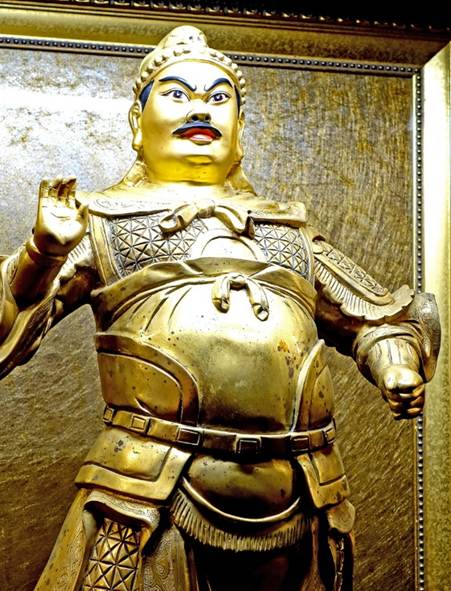
Deified generals who
serve as protectors of the temple and its deities.
|
|
|
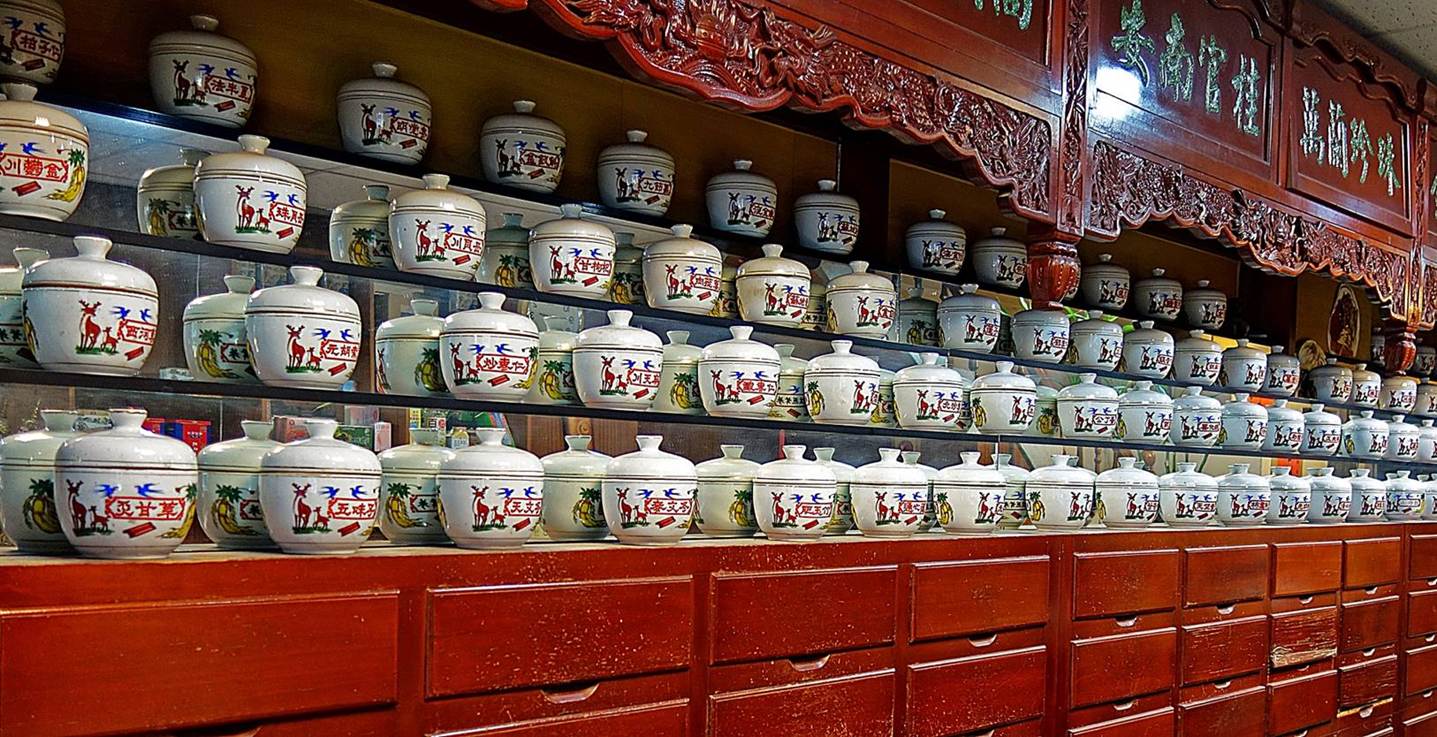
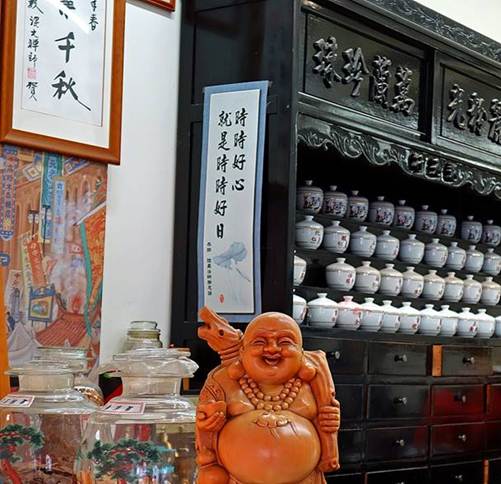
Dihua Old Street (迪化街):
[April 2017]
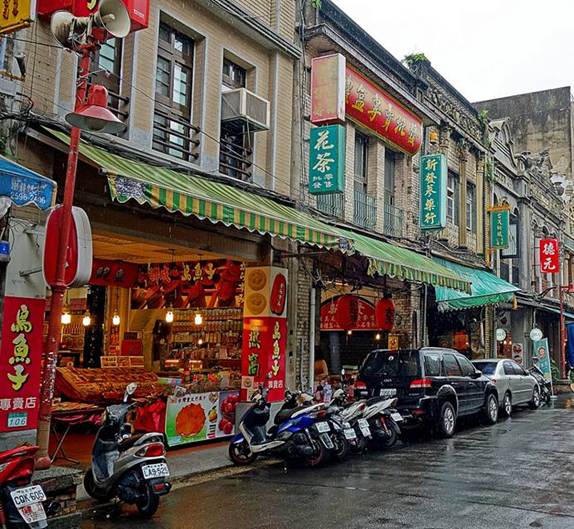
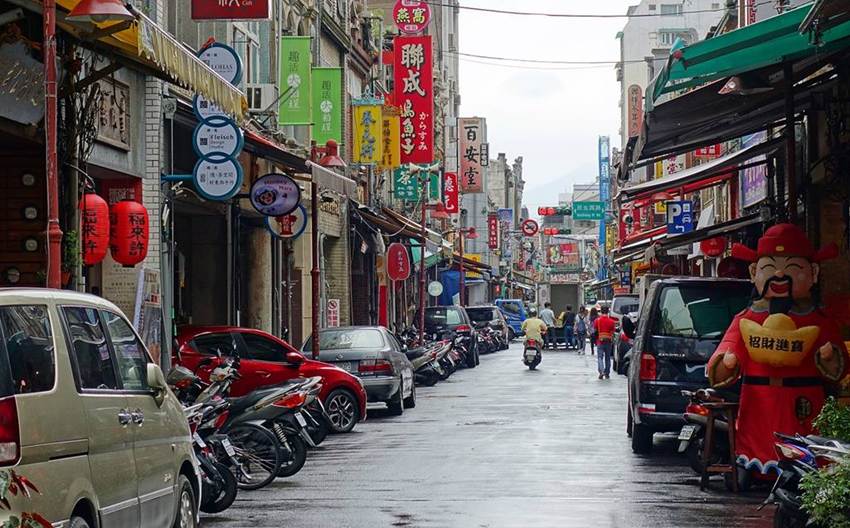
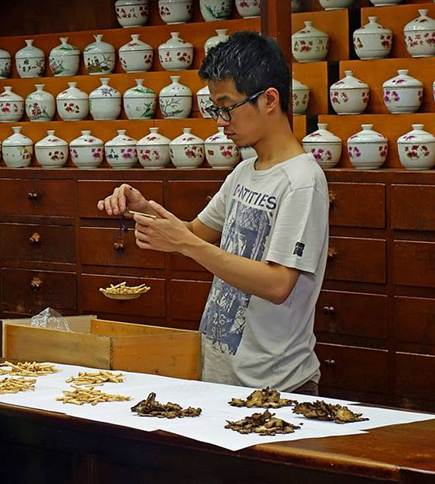
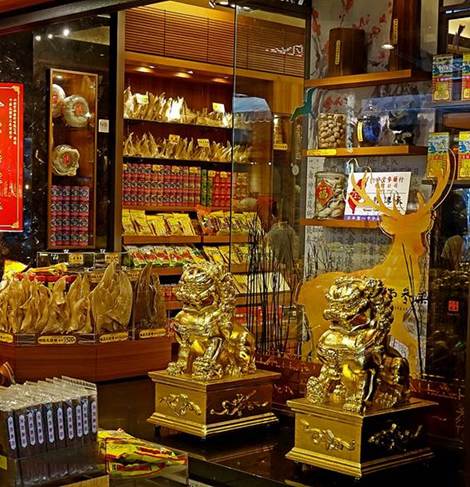
This historic street is lined with shophouses
selling Chinese medicine, herbs, and dried food products. The facades of many
of these buildings feature a Chinese Baroque style dating from the 1920s.
|
|
|
|
|
|
|
Taipei Xia Hai City God temple (臺北霞海城隍廟):
[March 2025]
This small temple was
built around 1859 and has never been rebuilt or significantly remodeled since
then. As its name suggests, it is primarily dedicated to the City God (城隍神). However, another deity venerated
here, Yue-Lao (月下老人, ″the old man under the moon″),
the god of love and matchmaking, attracts numerous singles looking for their
soul mates and couples hoping for a harmonious relationship. This rather
unusual temple is also renowned for housing the highest density of deity
statues in all of Taiwan, with about 600 deities over an area of 152 square
meters.
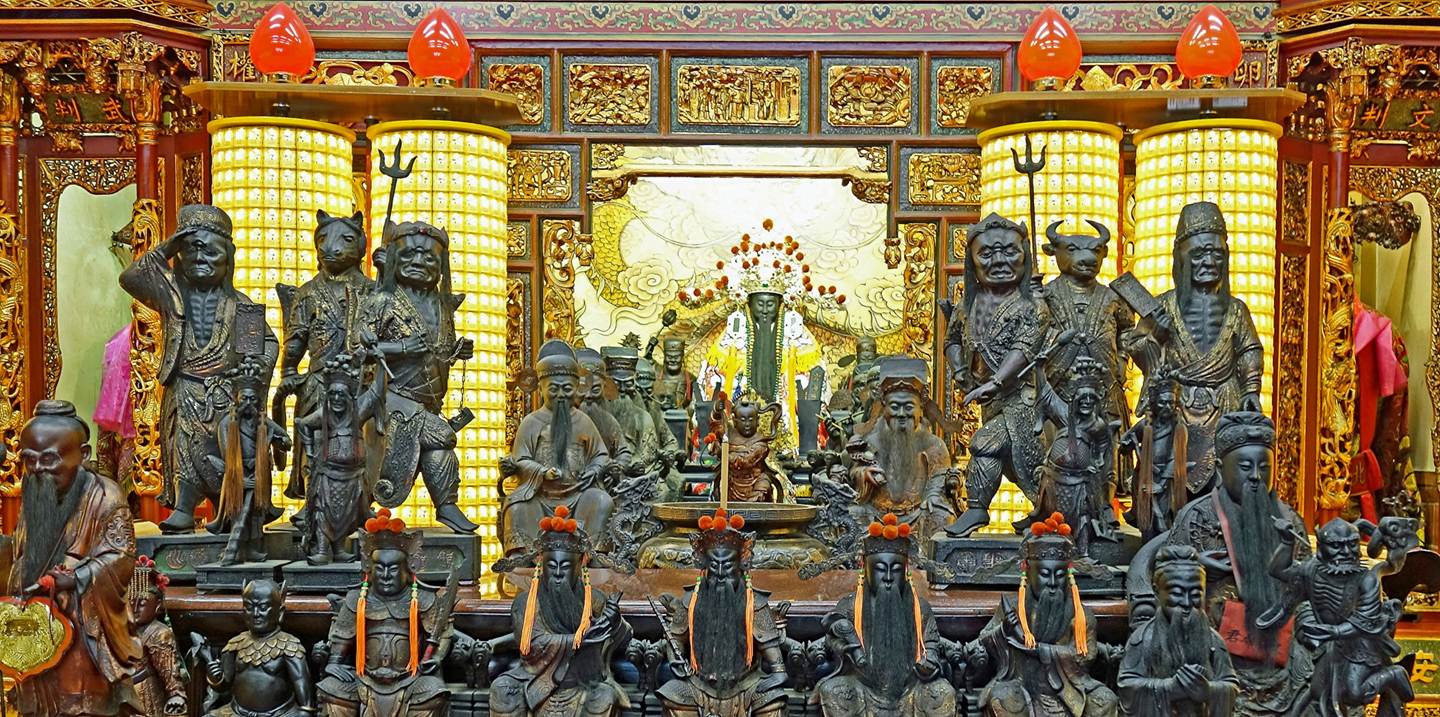
Altar featuring the City
God, surrounded by officials and judges who assist him in making decisions
concerning the city and its inhabitants. In front of the altar, there is a
large array of other deities (shown in the second photo below), among whom is
Yue-Lao, situated at the far left.
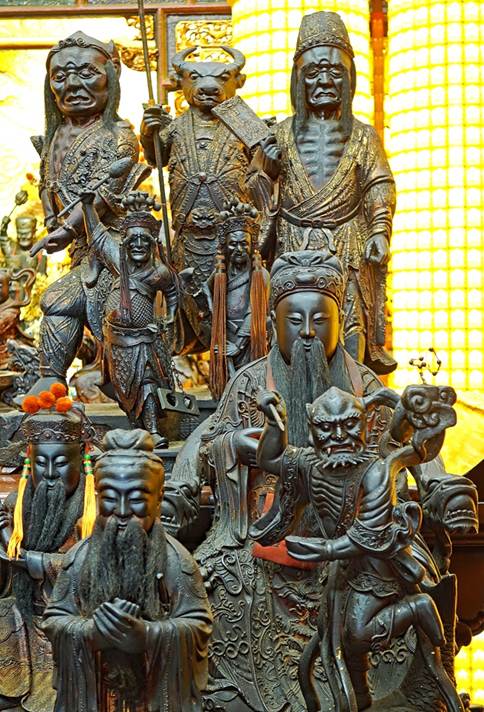
- Left: Closeup of the
statue of Yue Lao, the one located furthest to the left in the photo above.
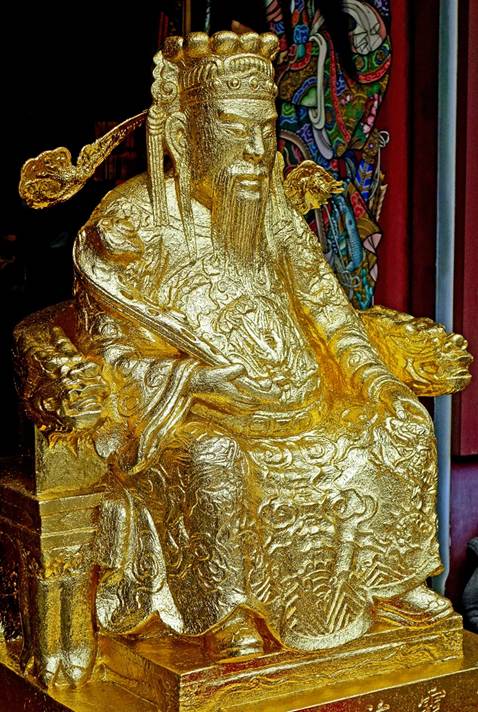
- Center: A golden statue
of Yue Lao, which is frequently displayed in front of the temple (as the temple
itself is often too small to accommodate the crowd of worshippers and
visitors).
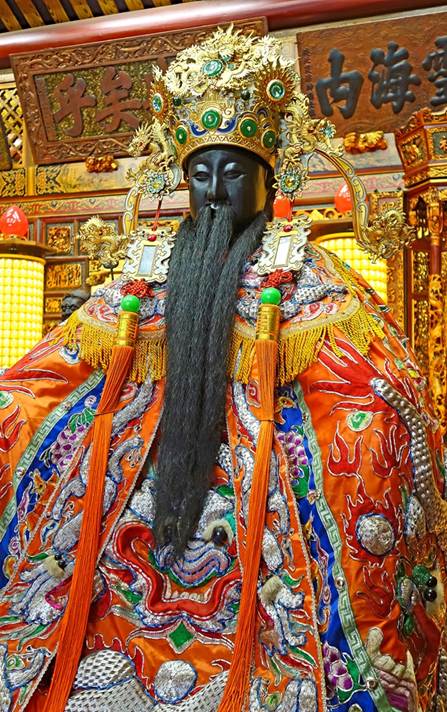
- Right: A portable
statue of the City God, used during street processions for the City God's
Birthday Festival.
|
|
|
|
Tianhou temple (臺北天后宮):
This temple is dedicated
to Tianhou (天后), perhaps better known as Mazu (妈祖), the Taoist goddess of the sea. While
Mazu is an affectionate name meaning ″Maternal Ancestor″,
Tianhou (天后) is a formal honorary title meaning ″Heavenly Empress″.
It was first built on
another site in 1746, during the Qing dynasty. But its history during the 20th
century was complex and unusual. It was demolished in 1943 during the Japanese occupation
to make way for the construction of an airstrip. Previously, in 1910, the
Japanese had built a Buddhist temple, known as the Hongfa temple, dedicated to
the famous Japanese monk Kobo-Daishi (whose name 弘法大師 is pronounced ″Hongfa-Dashi″ in
Chinese) on the
current site of the Tianhou temple. In 1948, after Taiwan's retrocession to the
Republic of China, it was decided to move the preserved remains of the original
Tianhou temple to this temple, which was then renamed the Tianhou temple.
In 1953 this temple was
destroyed by fire. A new structure (the current one) was rebuilt and completed
in 1959. Although Mazu/Tianhou is its principal deity, the current temple
continues to attract worshippers who come to pray to Japanese deities.
Entrance of the temple.
Roofs of the temple. The
temple is tightly hemmed among taller buildings
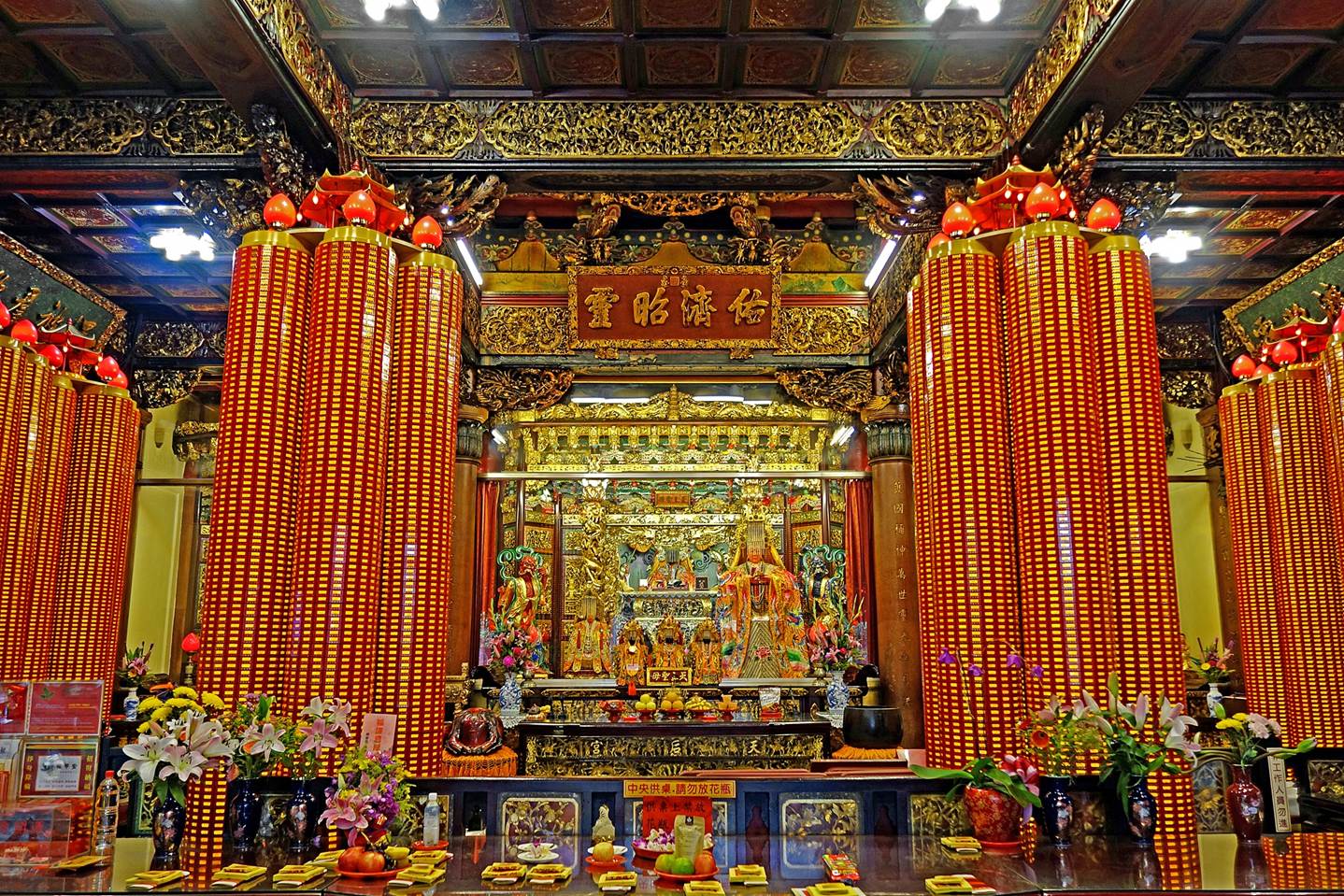
Altar dedicated to Mazu
in the main hall.
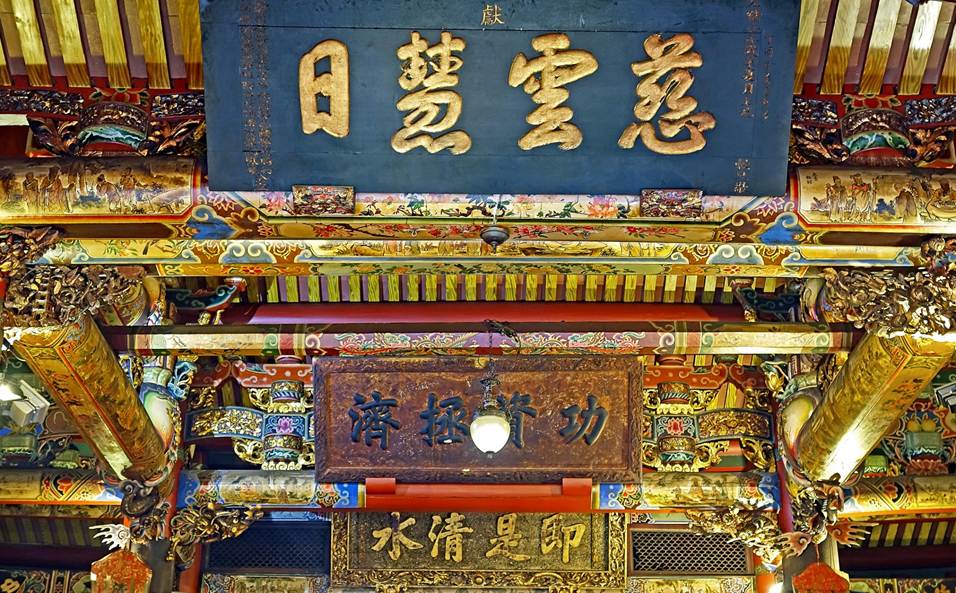
Closeup of the altar. The
two customary guardians of Mazu are clearly visible on either side of the altar.
They are Shunfeng'er (順風耳), capable of hearing sounds from very
far (red statue on the left), and Qianliyan (千里眼), capable of seeing very far (dark
green statue on the right).
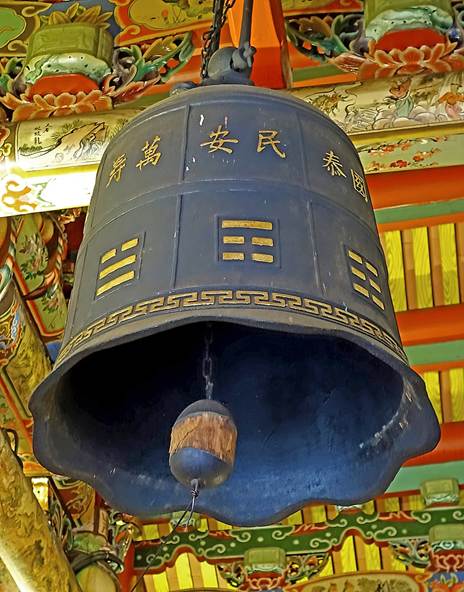
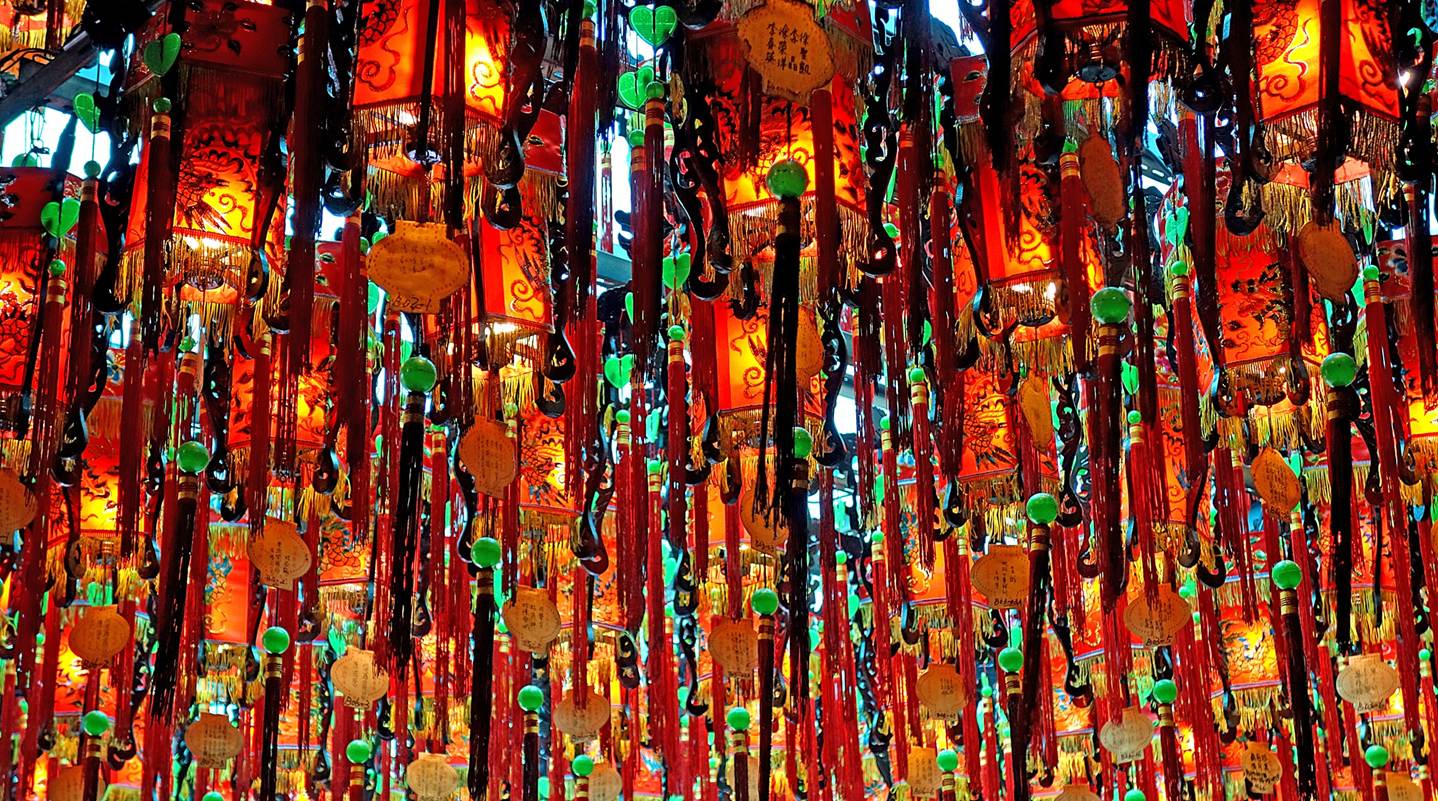
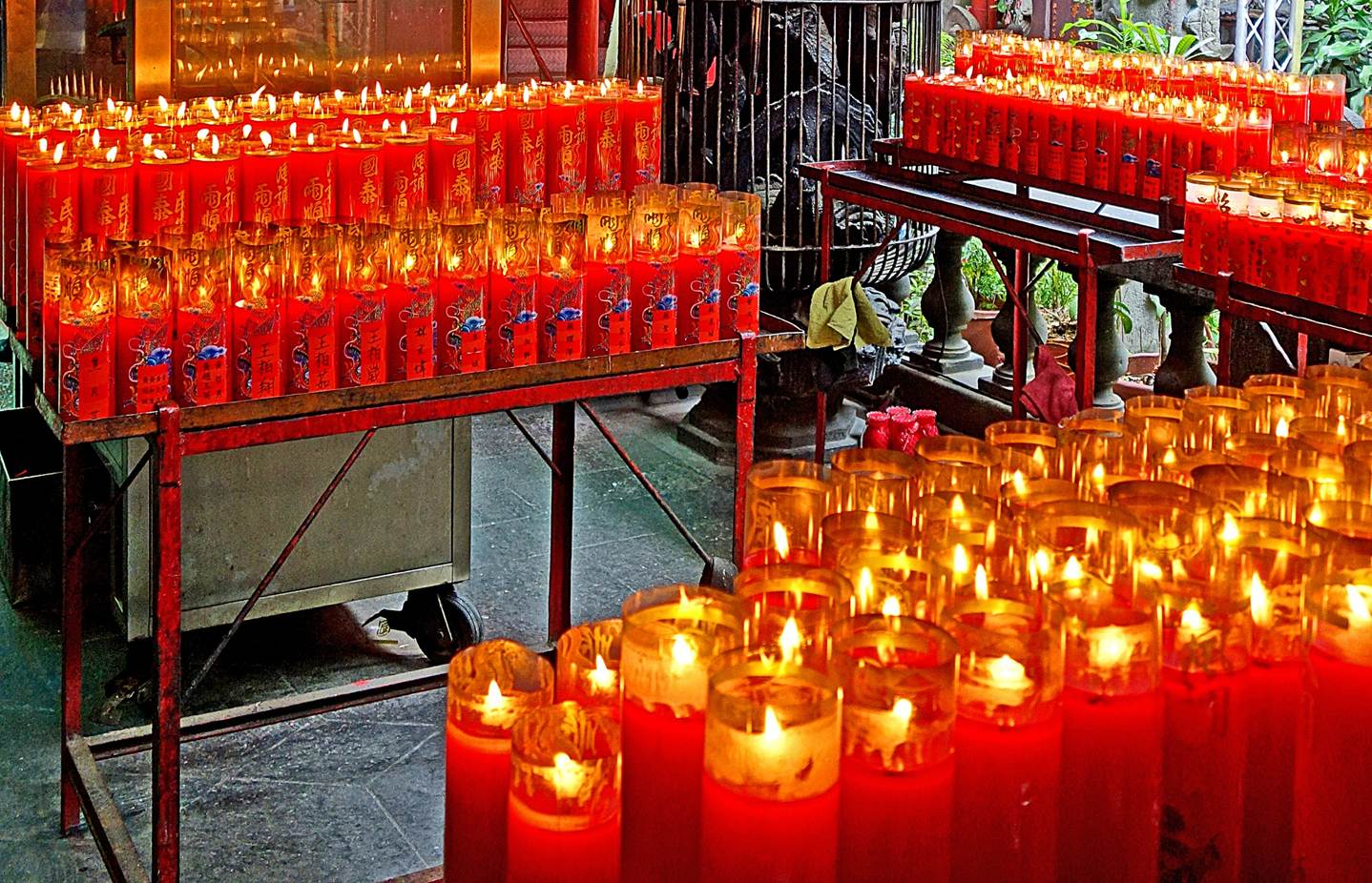
Lanterns and candles in
the temple.
|
|
|
Dragon in a pool, in the
small courtyard of the temple.
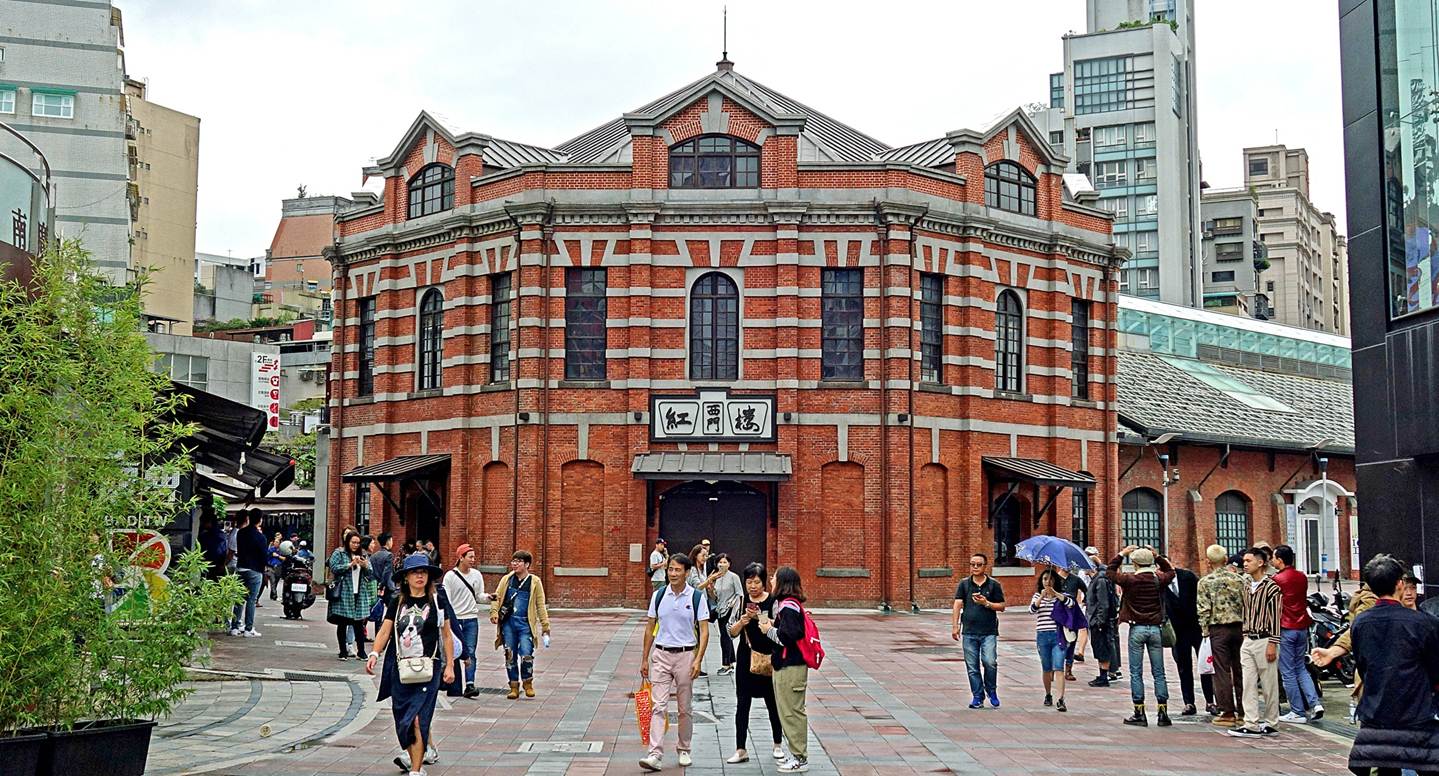
The Red House (西門紅樓):
[November 2018]
Built in 1908, this octagonal building
is one of the oldest in Taipei. Originally a market building, then a theater,
it is now a multi-usage building.
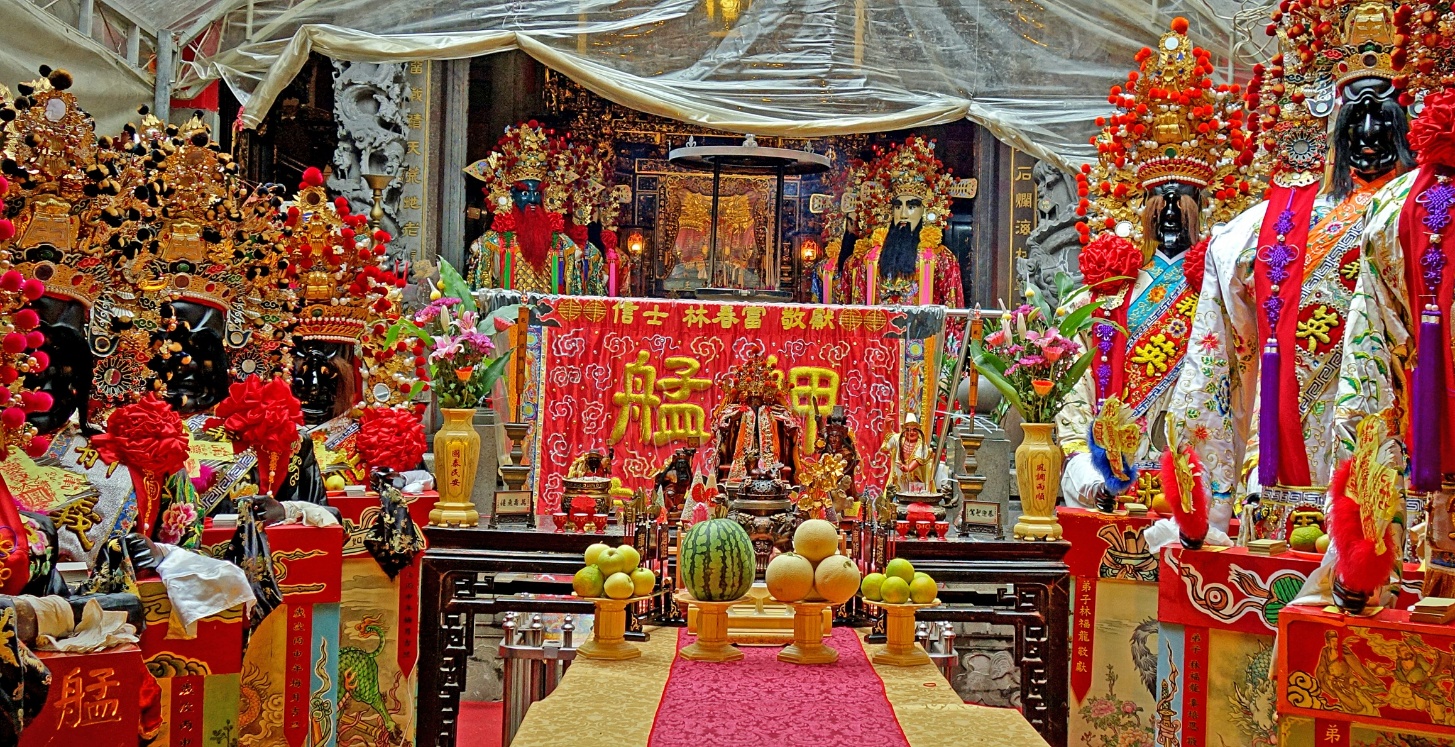
Bangka Qingshui temple (艋舺清水巖):
[November 2018]
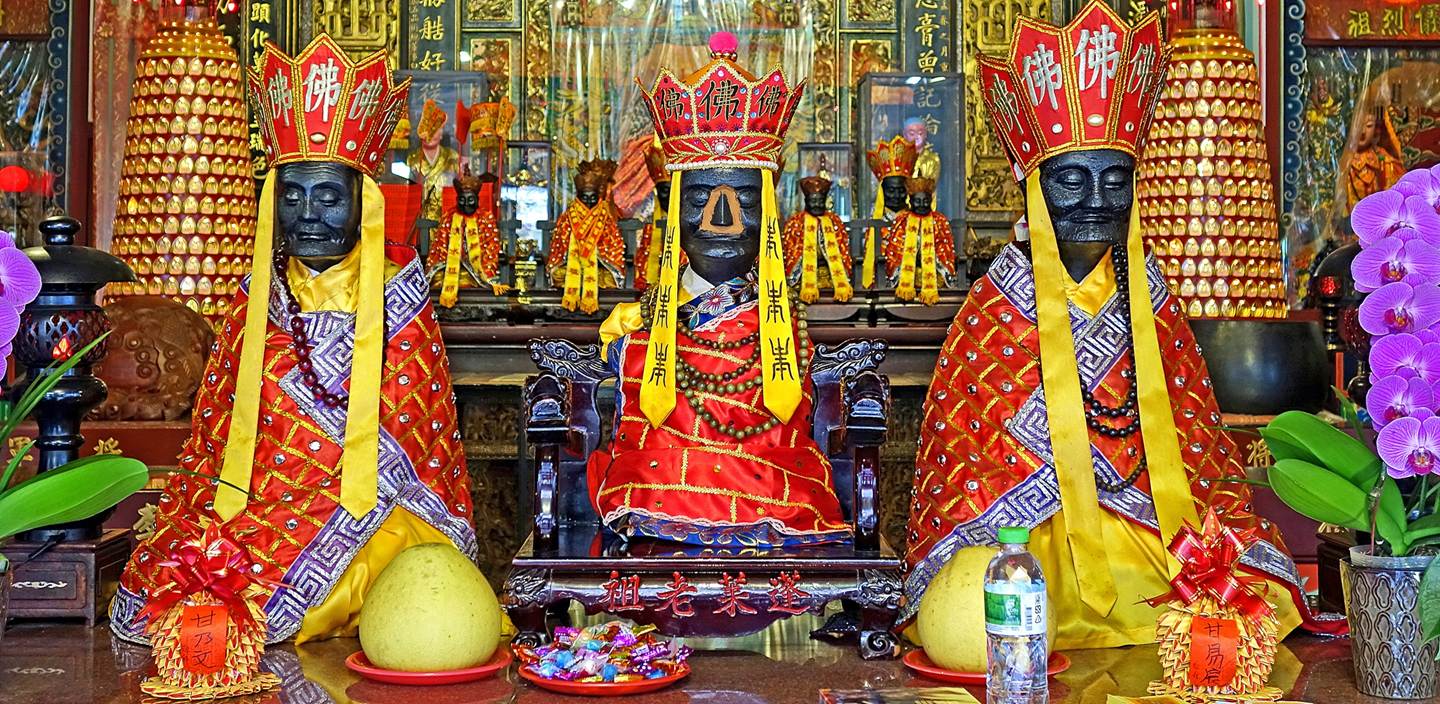
Built in 1787, this
folk-religion temple is dedicated to Master Qingshui (清水祖師). Born in the Anxi county of the Fujian
province of China, Master Qingshui (1047-1101) was a Buddhist monk who became a
local hero for saving the population from starvation during a drought. After
his death, he was deified in the local folk religion. His cult was later
brought to Taiwan by immigrants from the Anxi county. According to one legend,
his face was blackened by smoke while he meditated in a cave. Another legend
says that statues of Master Qingshui drop their noses (see photo below!) to
warn people of an imminent disaster.
Altar dedicated to Master
Qingshui.
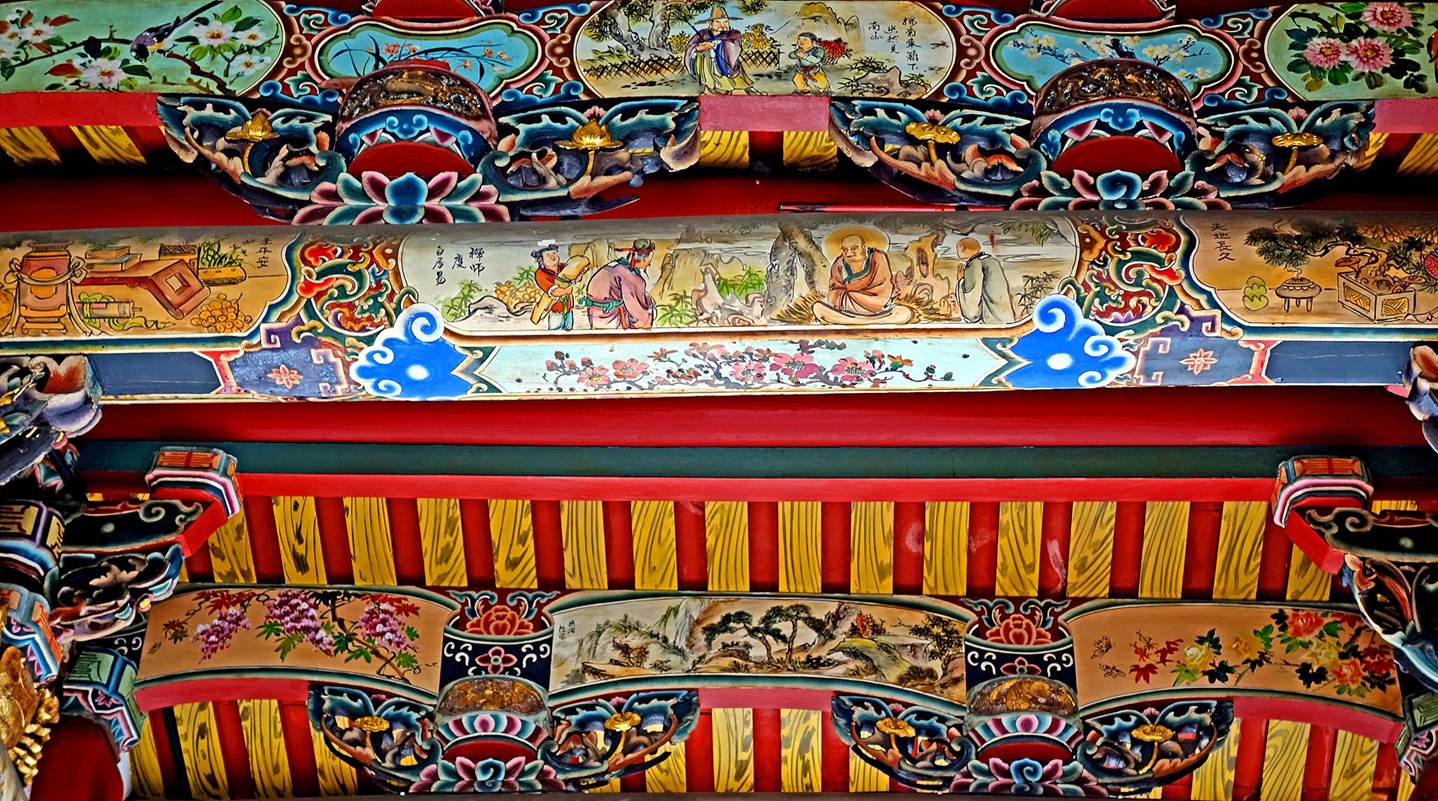
Decorations in the
temple.
|
|
|
|
|
|
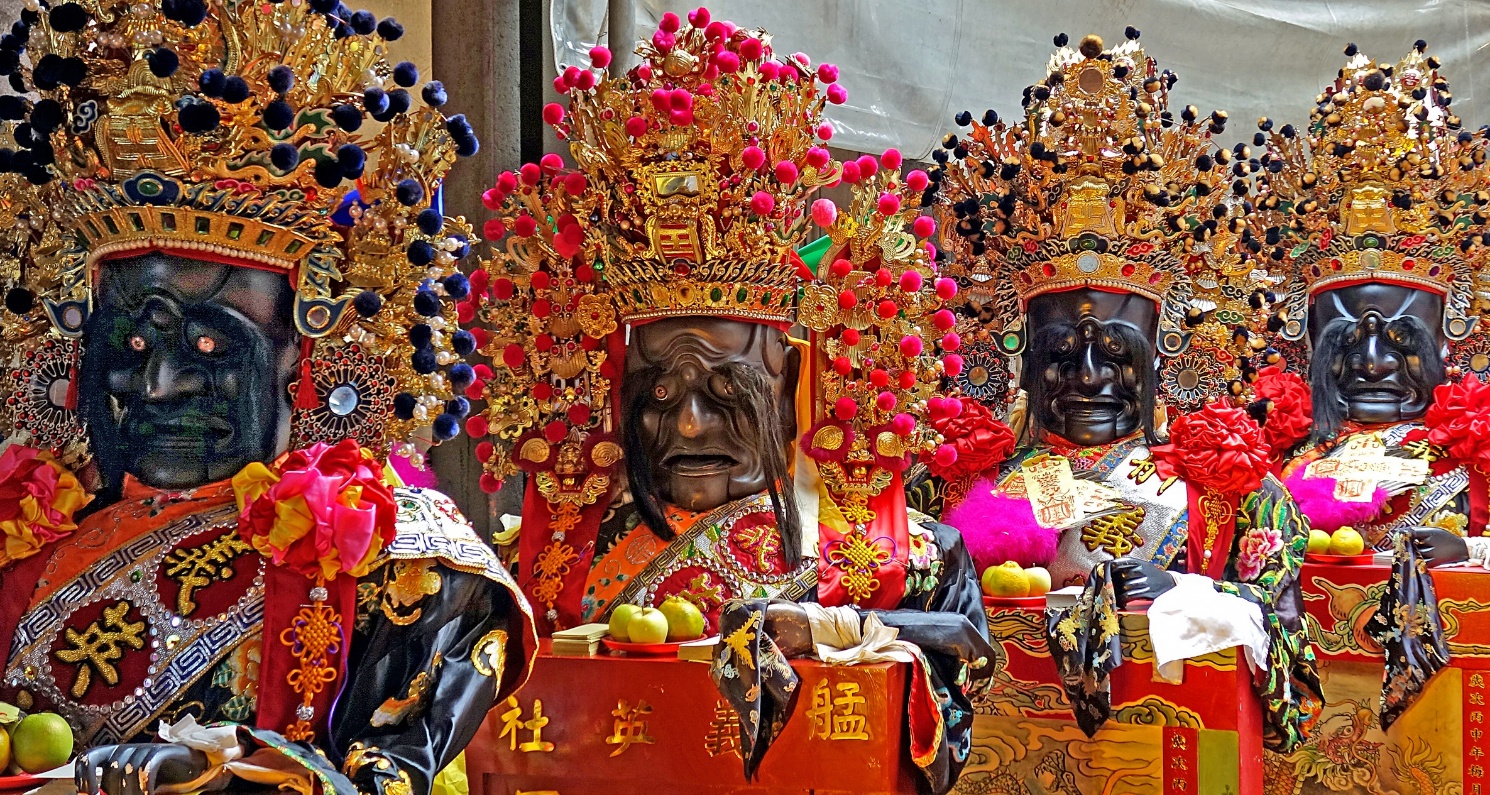
Bangka Qingshan temple (艋舺青山宮):
[November 2018]
Built in 1854, this
temple celebrates Zhang Gun (張滾), a famous Chinese general during the reign of the emperor Sun Quan in the
3rd century. This general was posthumously deified under the name Qingshan Wang
(青山王), meaning the Lord of the Green
Mountain, where ″Green Mountain″ is not a real mountain, but a
symbol of a just life. He is revered as a deity who protects his followers from
disease, rewards virtue, and punishes evil. The statues standing in the temple,
most of which have a penetrating gaze, are particularly stunning.
Mengjia Longshan temple (艋舺龍山寺):
[November 2015]
Built in 1738, this temple
is one of the five remaining Longshan temples in Taiwan dating back to the Qing
dynasty. All these five temples were founded by
early Hokkien immigrants from the Quanzhou region in the Fujian
province and named after their ancestral temple on the Dragon Mountain (龍山). They are Buddhist temples primarily
dedicated to Guanyin (觀音菩薩), the highly popular bodhisattva of
infinite compassion in Chinese Buddhism. But, over time, the worship of other
Buddhist and Taoist deities was added to these temples. Here, as many as 165
Buddhist and Taoist deities are venerated. The temple was damaged several
times, by earthquakes, typhoons, and bombing during World War II. Its most
recent major restoration dates from 1957.
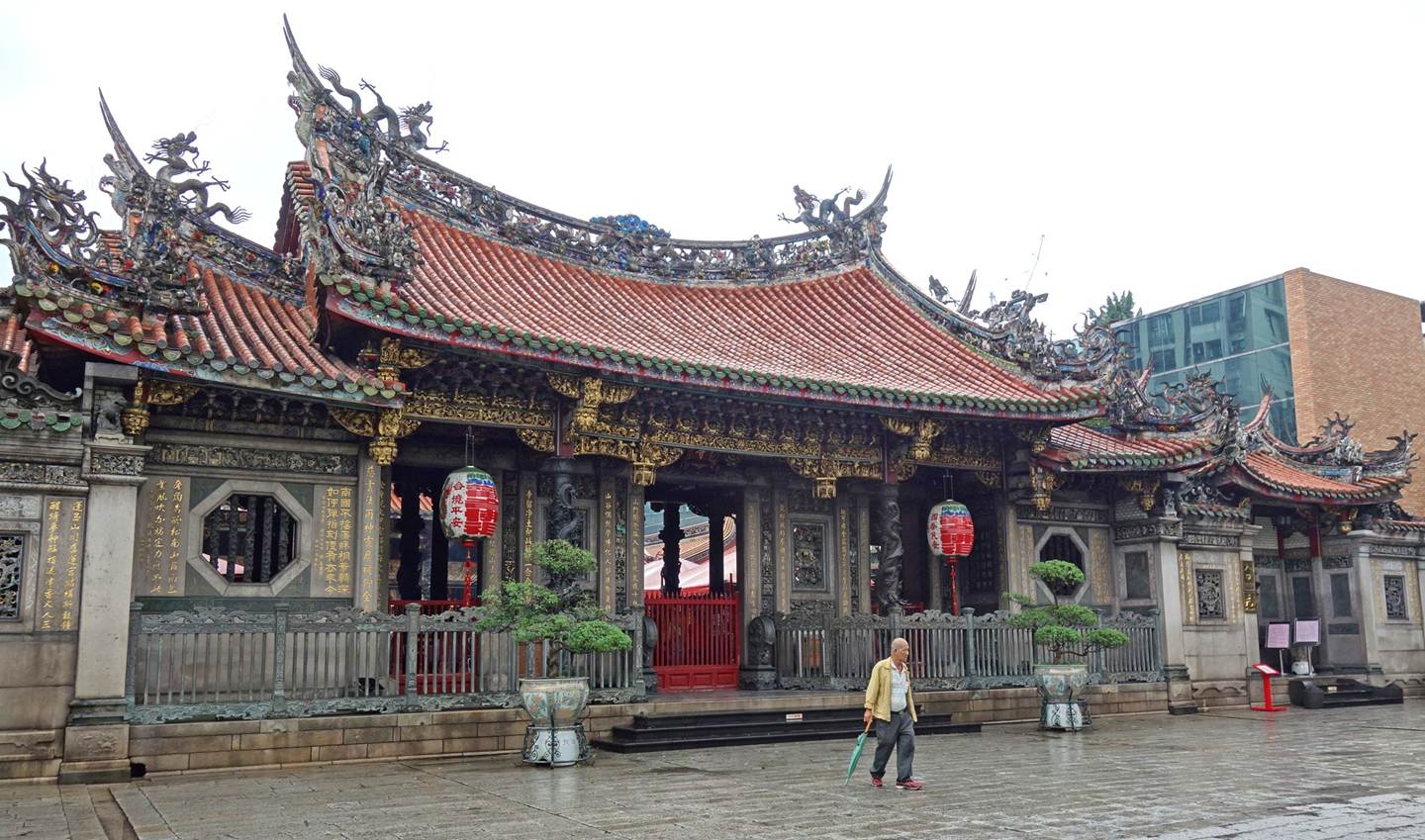
Main entrance gate.
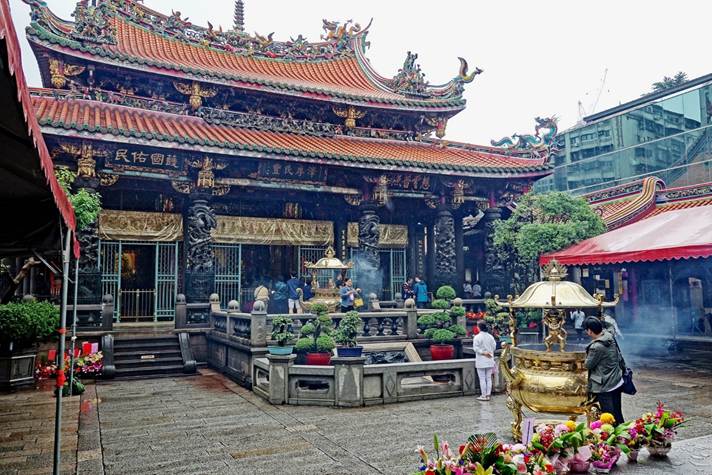
Views of the temple from
the courtyard.
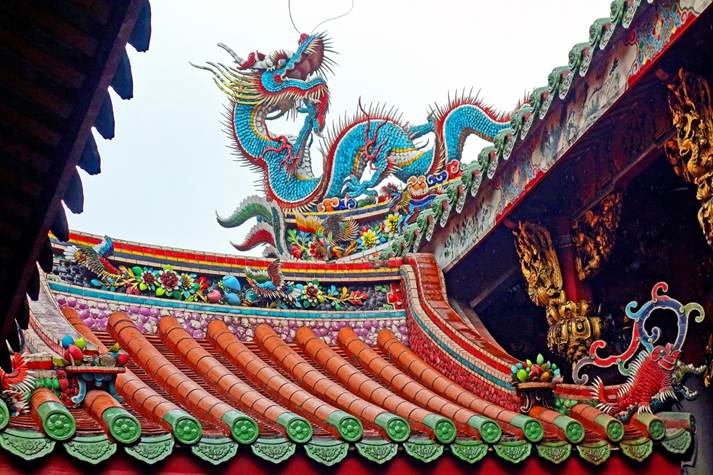
Roof detail with a dragon
sculpture.
Altar dedicated to
Guanyin.
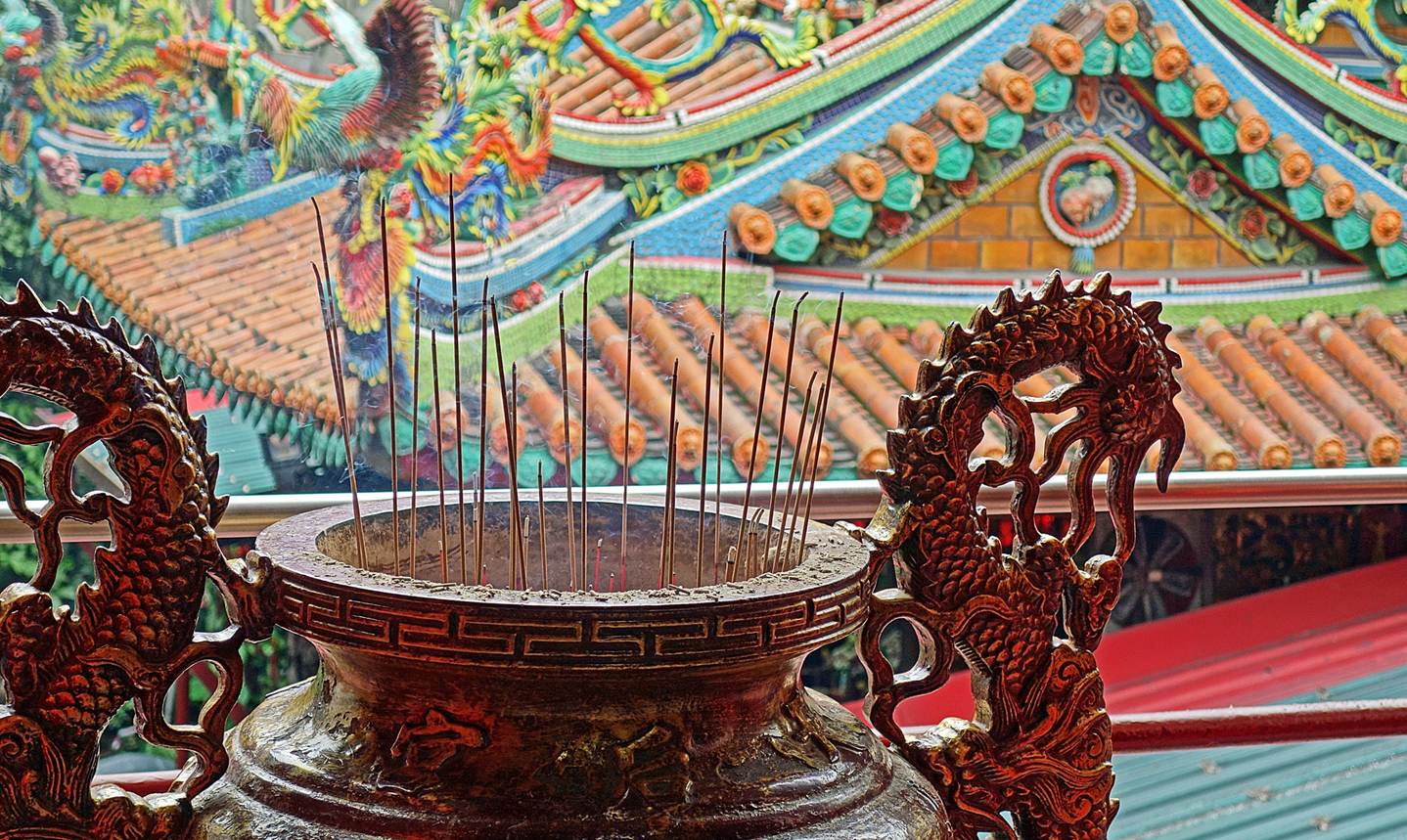
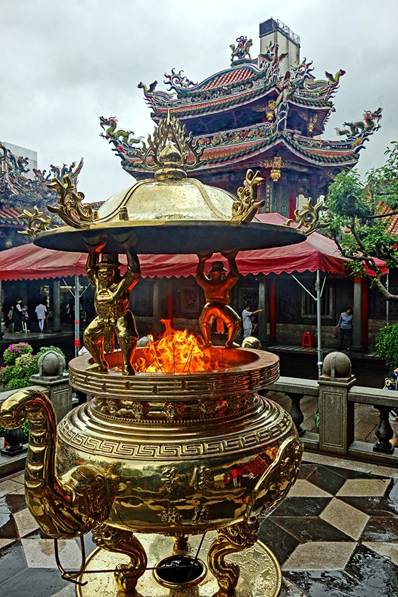
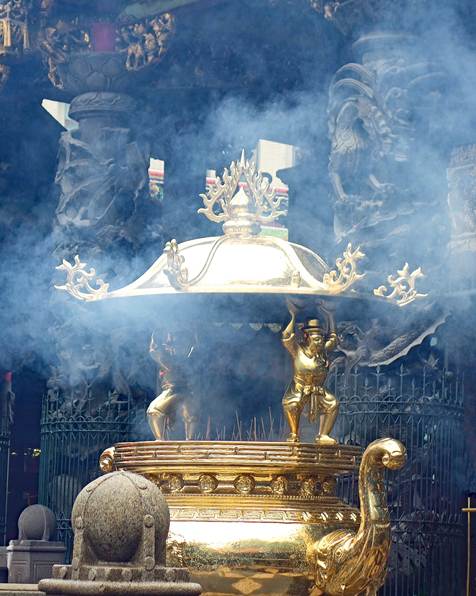
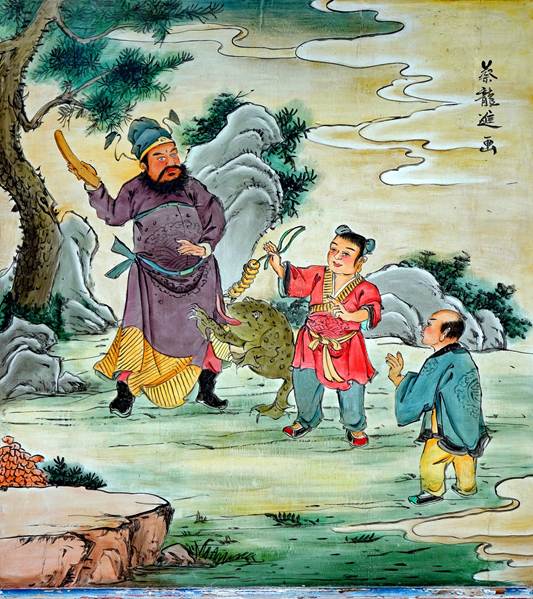
Golden incense burner
(left and center) and wall painting (right).
|
|
|
|
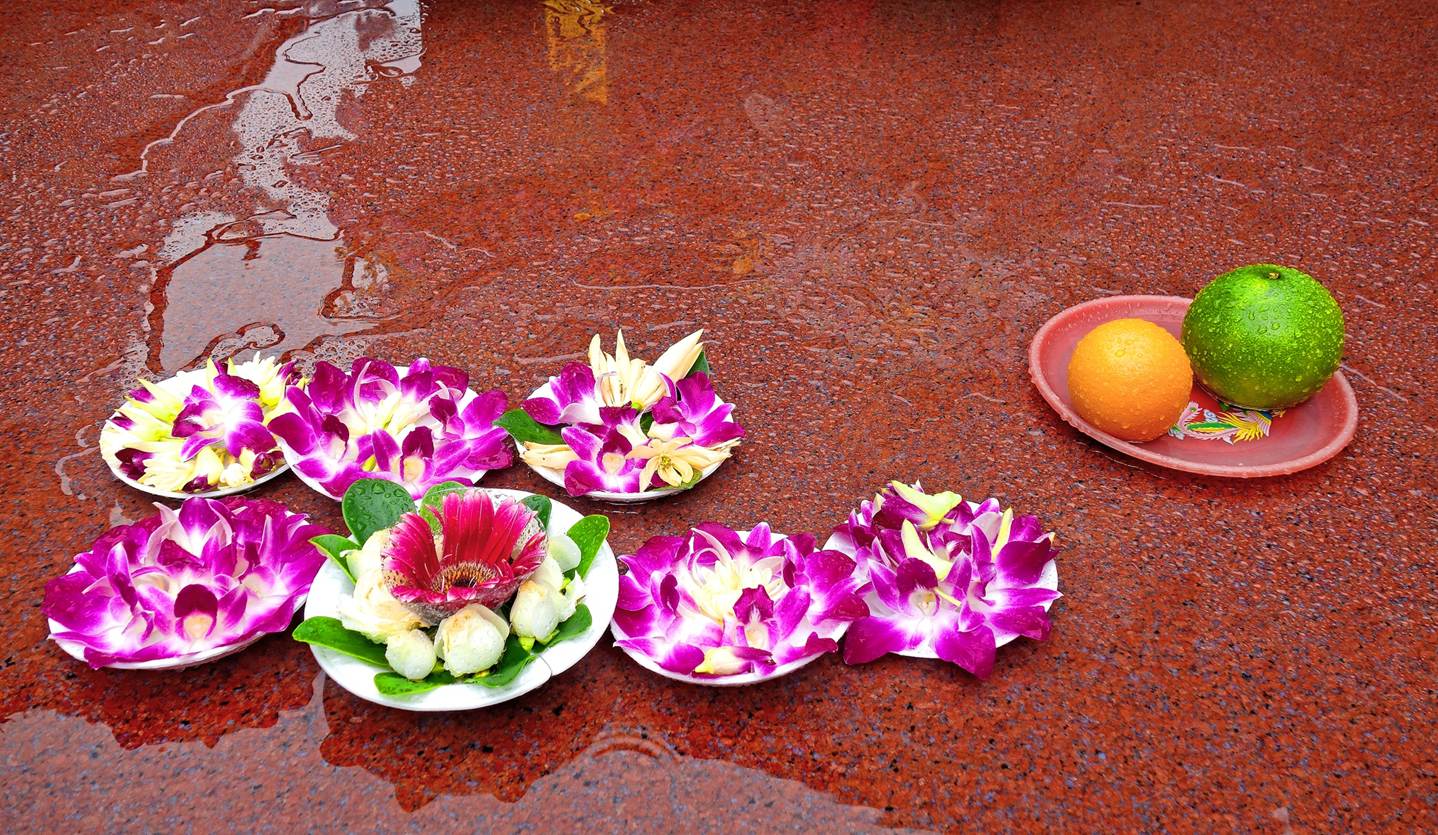
Offerings to the gods.
Chiang Kai-shek Memorial Hall (國立中正紀念堂):
[October 2015 and March 2025]
Chiang Kai-shek
(1887-1975) was a Chinese military and political leader who led the Kuomintang
(KMT) from 1928 until his death. After ruling mainland China and fighting both
Communists and Japanese invaders, he lost the Chinese Civil War to Mao Zedong
in 1949 and retreated to Taiwan, where he continued to lead the government of
the Republic of China as an authoritarian leader.
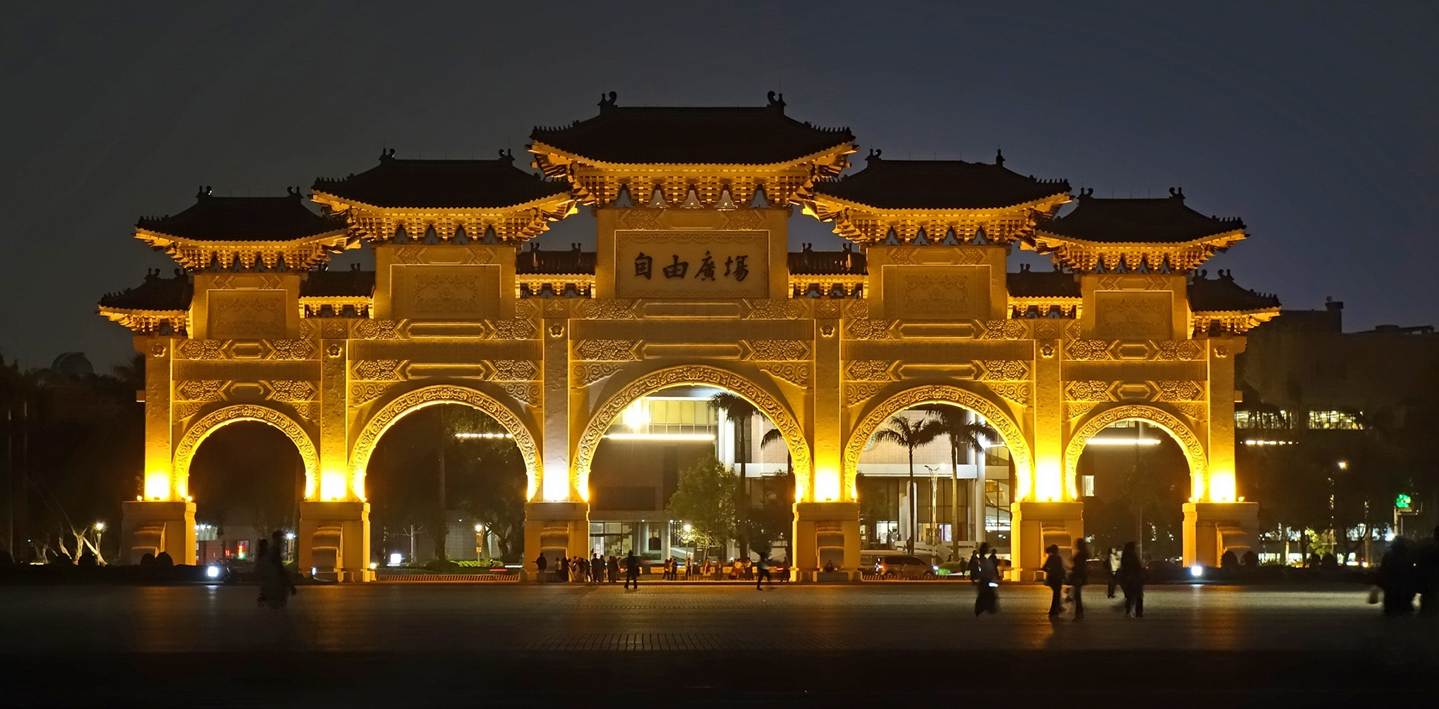
Multi-arched entrance to the
memorial complex seen at night.
[March 2025]
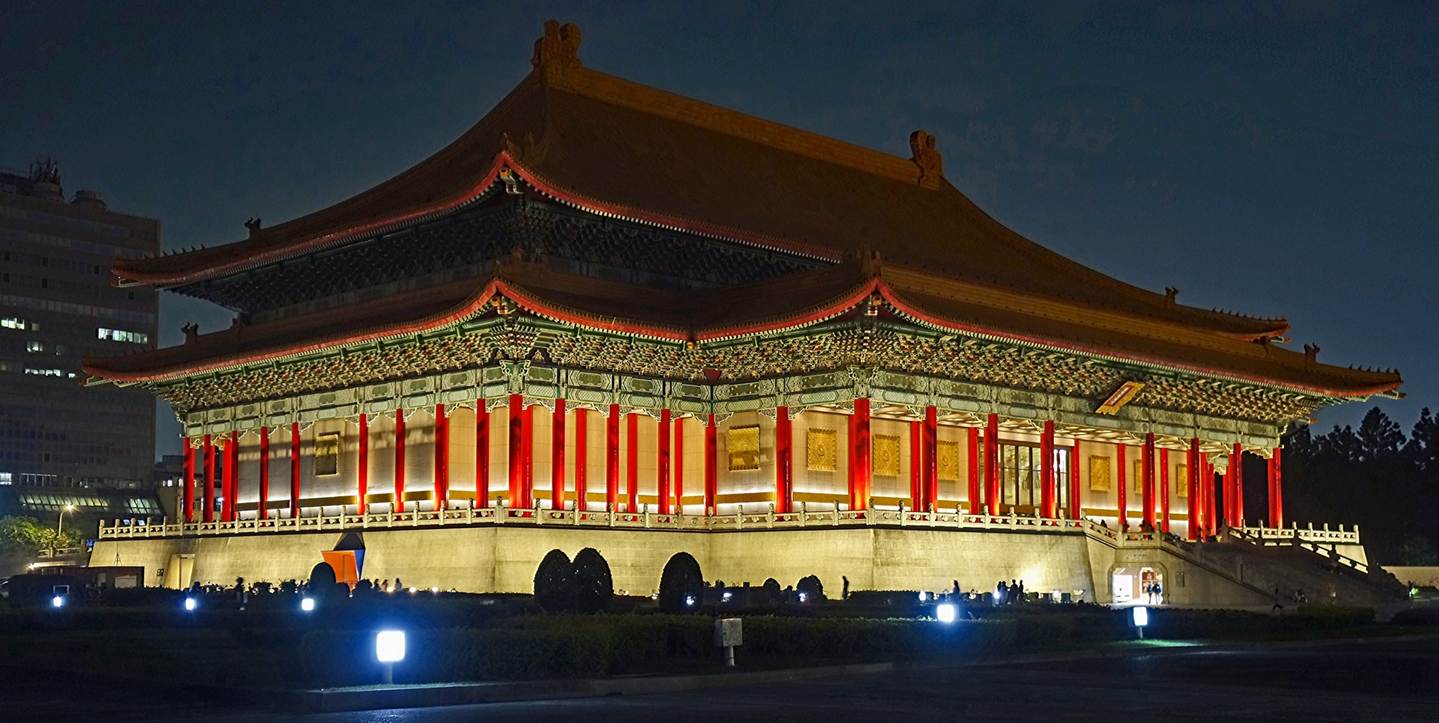
National Theater, located
to the right of the complex after passing the arched entrance.
[March 2025]
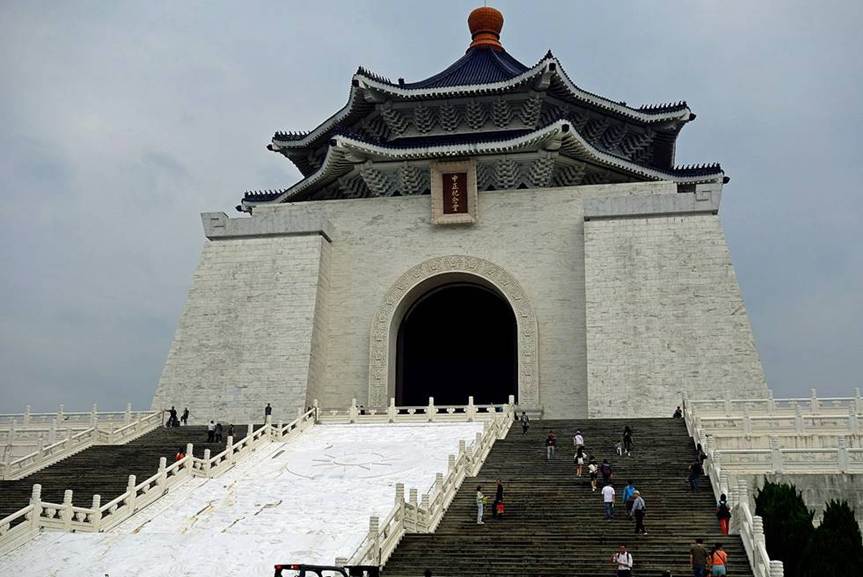
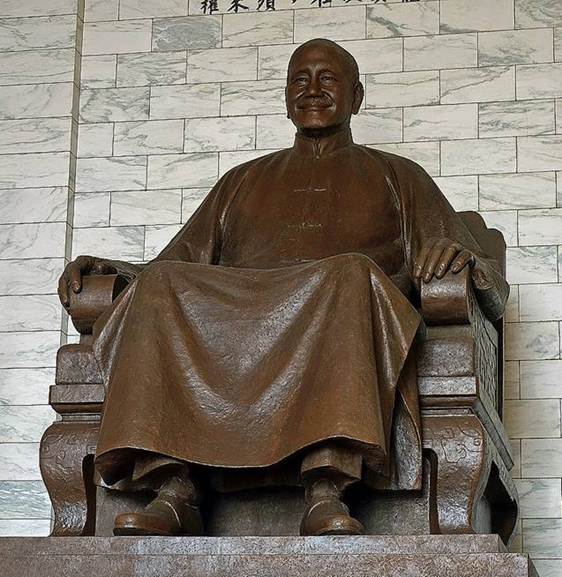
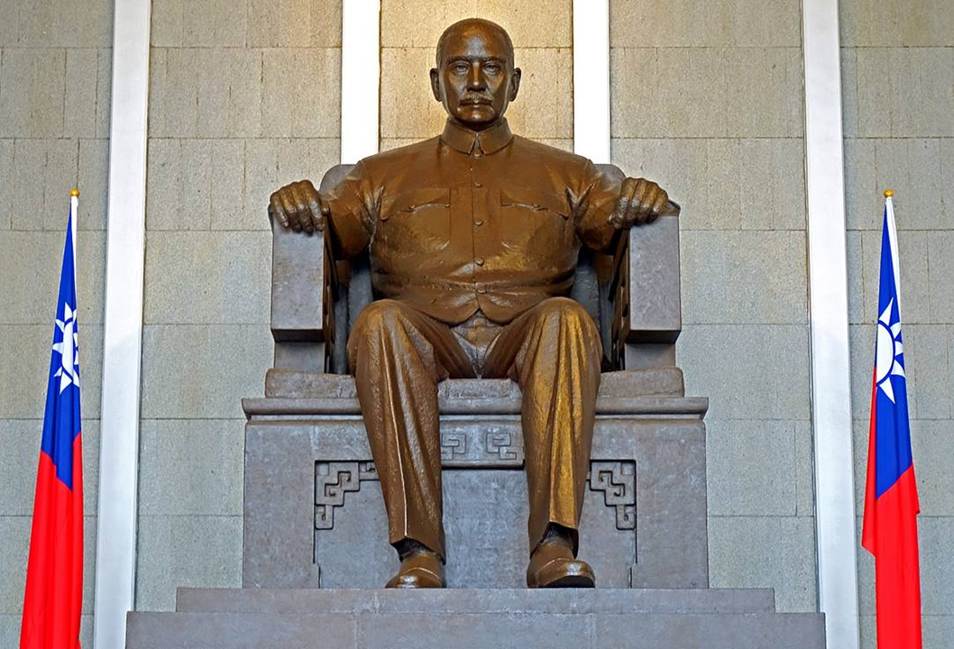
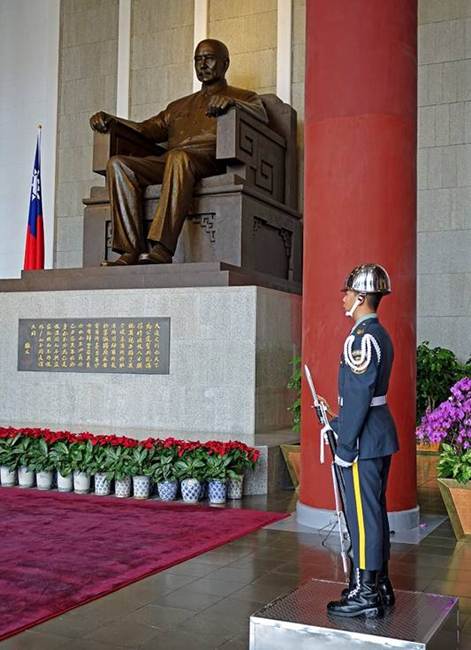
Main hall (left) and seated statue of
Chiang Kai-shek in the site complex.
|
|
|
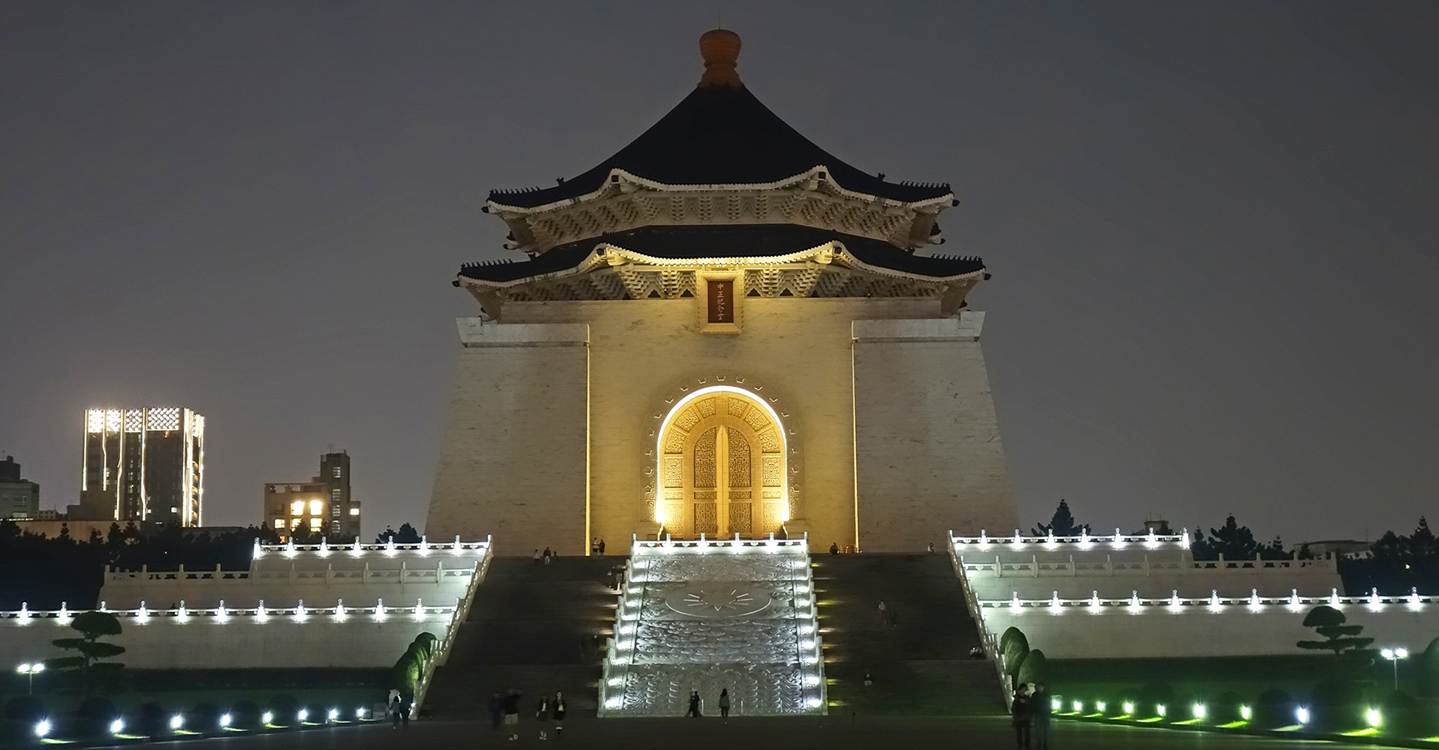
[October 2015]
Main hall seen at night.
[March 2025]
Sun Yat-Sen Memorial Hall (國父紀念館):
[November 2018]
Sun Yat-Sen (1866-1925) was a physician
who became a political philosopher. He led the 1911 Revolution that ended the Qing
dynasty rule over China and served as the first president of the Republic of
China. This memorial hall, built in 1972, houses exhibitions dedicated to his
life and the revolution he led.
|
|
|
Songshan Ciyou Temple (松山慈祐宮):
[March 2026]
This temple is the
northernmost of the three grandiose ″Songshan temples″ located in
the eastern part of Taipei between the Keelung River (基隆河) to the north and the Four Beasts
Mountain (四獸山) area to the south. Founded in 1753, it is primarily dedicated to Black-Faced
Mazu (黑面媽祖), the same Sea Goddess as Mazu (媽祖), but distinguished by a dark
complexion symbolizing the intense devotion of her worshippers. The main
building is a six-story structure whose exterior walls are adorned with large
frescoes.
The three statues
standing on the ridge of the top roof form the Sanxing (三星, ″three stars″). From right to left they represent the
god of fortune Fu (福星), the god of prosperity Lu (祿星), and the god of longevity Shou (壽星). Together, they symbolize three
attributes of a happy life.
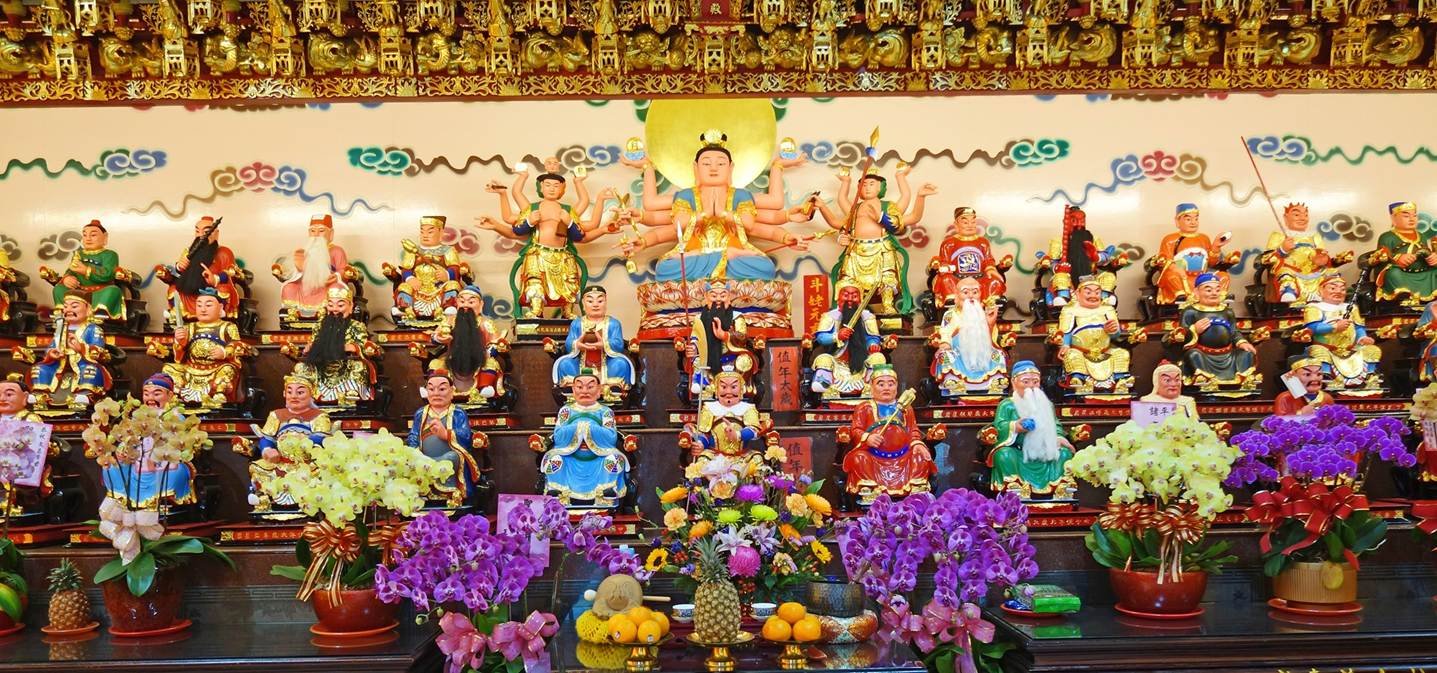
Multi-faced, multi-armed
statue of Doumu Yuanjun (斗姆元君), the Mother of the Big
Dipper, in the Tai Sui (太岁) hall.
Altar dedicated to
Guanyin (觀音), the bodhisattva of infinite compassion and mercy.
Altar dedicated to the
Leaders of the Three Teachings (三教教主), from left to right: Confucius, the
founder of Taoism Laozi (老子), and the historical founder of Buddhism (Siddhartha Gautama) Shakyamusi
Buddha.
- Left: Manjushri Bodhisattva
(文殊菩薩, ″Wenshu Pusa″), who
embodies the supreme insight needed to perceive the profound truth of the
Dharma. He is depicted sitting on a green lion, a posture that symbolizes the
courage of wisdom.
- Right: Portion of a
wall in a high hall of the temple.
|
|
|
Central part of a long
ceramic frieze featuring many characters.
Close-up of a shorter
central section of the frieze.
Another style of ceramic
decoration in the temple.
|
|
|
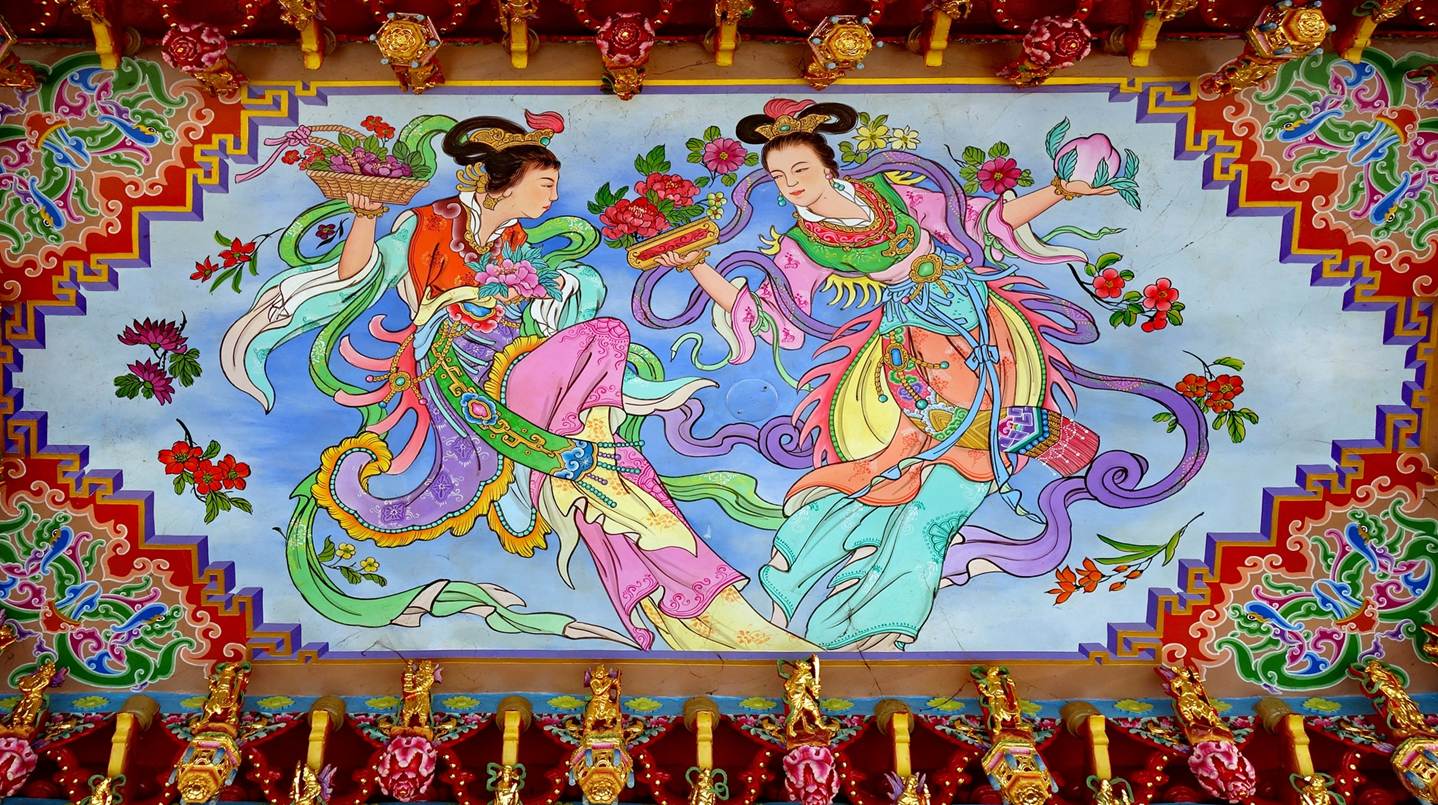
Large relief ceramic freco
on an exterior wall of the temple, featuring Mazu in the center-left.
Songshan Fengtian Temple (松山奉天宮(天公廟)):
[March 2026]
Built in 1954, this
temple is dedicated to the Jade Emperor (玉皇上帝), the supreme deity in Taoism, ruling
over heaven, earth and the underworld, overseeing all gods, mortals, and
demons.
Archway leading to the
temple.
Central part of the
temple's facade.
Stone sculpture depicting
the Laughing Buddha, a representation of Maitreya Buddha (the Future Buddha) that
symbolizes happiness, contentment, and abundance. The small children represent
fertility and good fortune.
Large statue of an
elephant standing on the eaves of a roof.
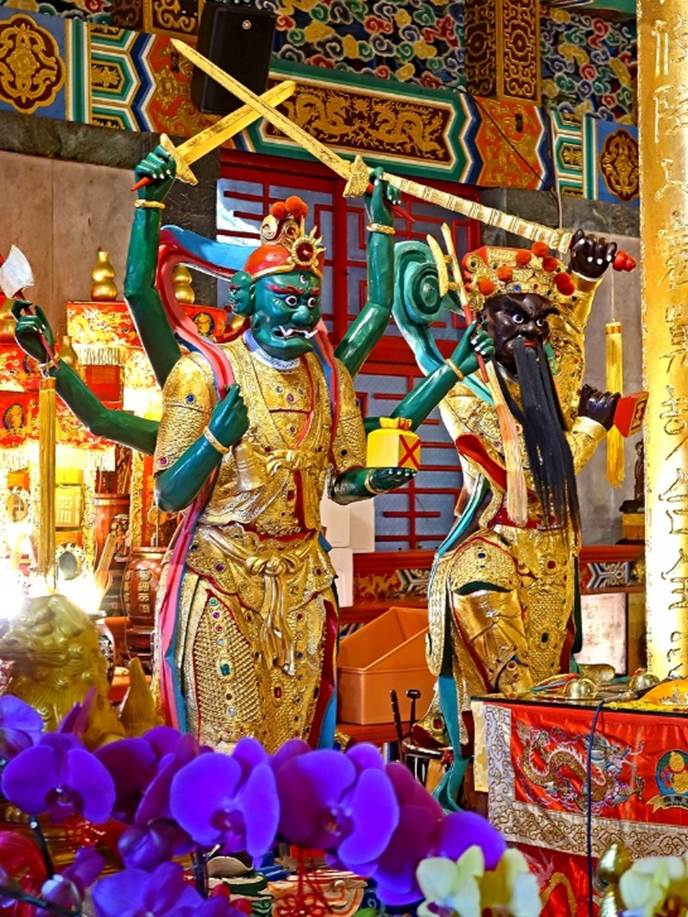
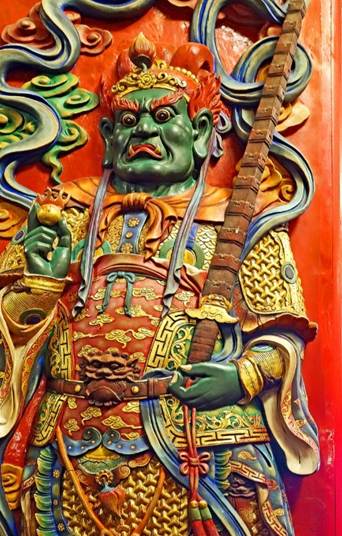
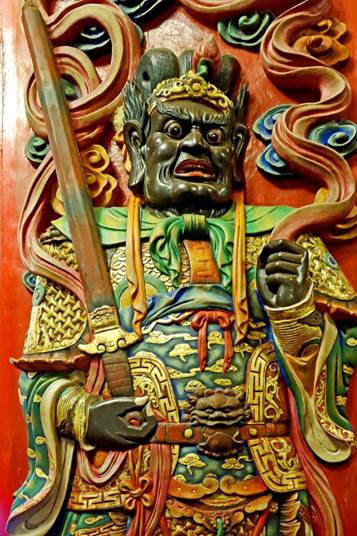
Wood carvings on doors of
the temple. They depict protective deified generals, who ward off evil from
entering the temple.
|
|
|
|
|
|
In the spectacular main
hall of the temple.
Closeups of delicate
carvings on the pillars of the main hall.
|
|
|
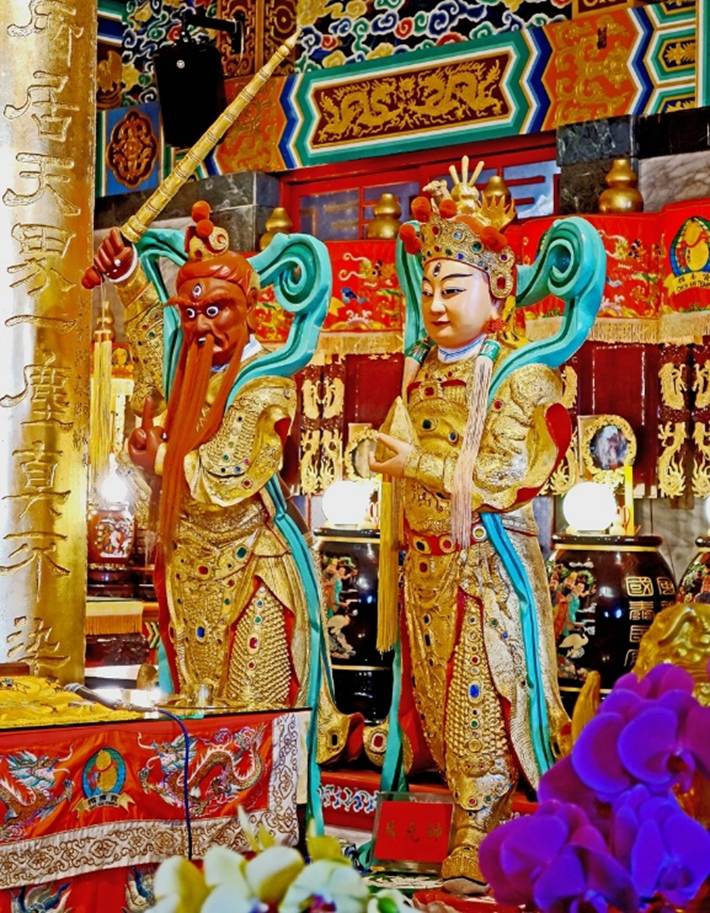
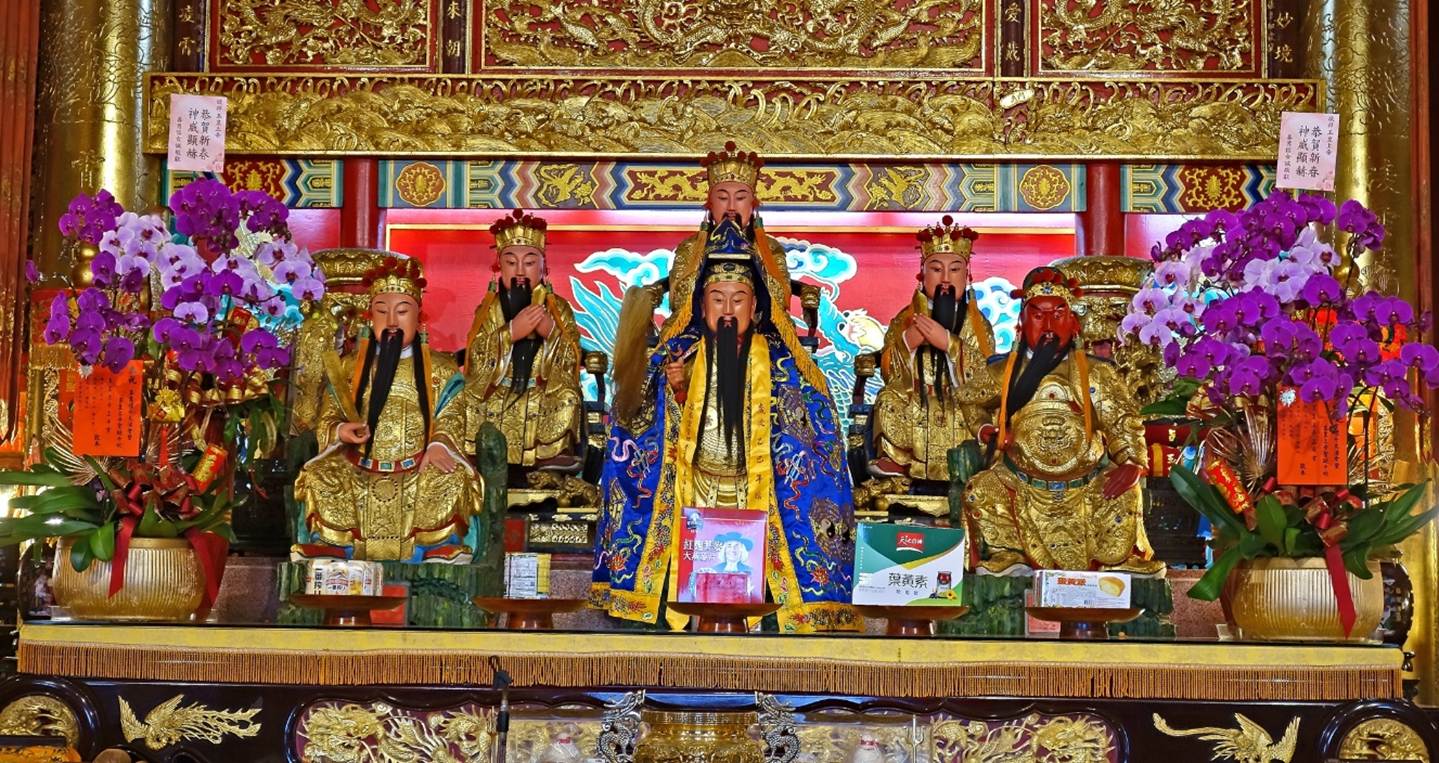
Wudou Xingjun (五斗星君), the collective name of the Lords of
the Five Dippers in Taoism. They govern the destinies, lifespans, and fortunes
of humans along the five cardinal directions. They are in the left-to-right
order of the photo:
- Beidou Xingjun (北斗星君), the Lord of the Northern Dipper,
- Xidou Xingjun (西斗星君), the Lord of the Western Dipper,
- Zhongdou Xingjun (中斗星君), the Lord of the Central Dipper,
- Nandou Xingjun (南斗星君), the Lord of the Southern Dipper,
- Dongdou Xingjun (東斗星君), the Lord of the Eastern Dipper.
Wenchang Dijun, the god of
culture and literature. The small golden character with a fierce look on his
right is Kui Xing (魁星), a deity in Chinese mythology associated with examinations and
academic success.
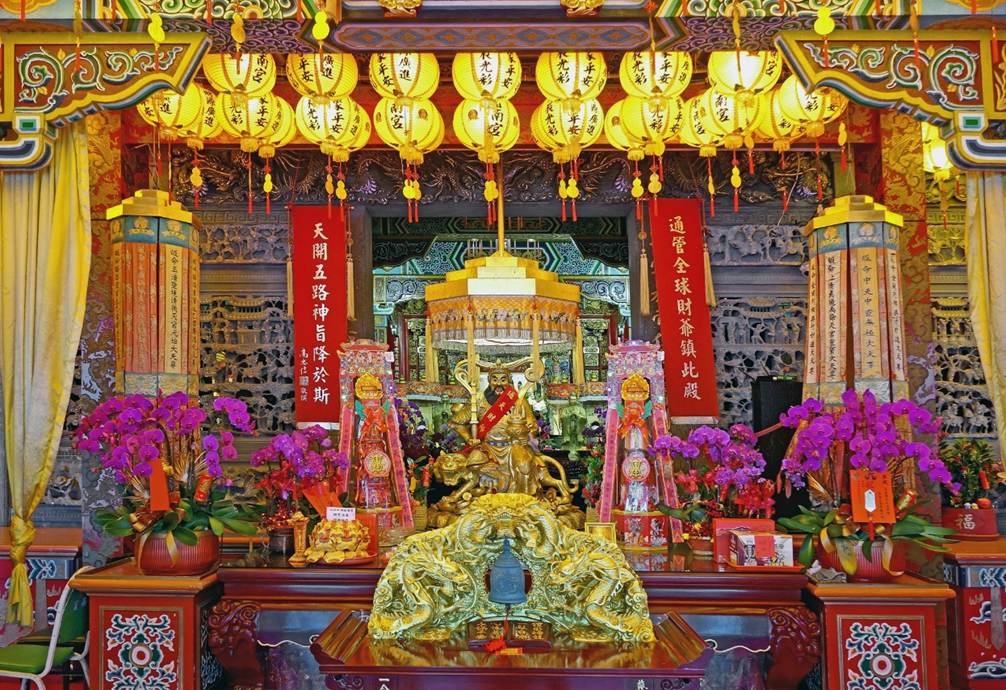
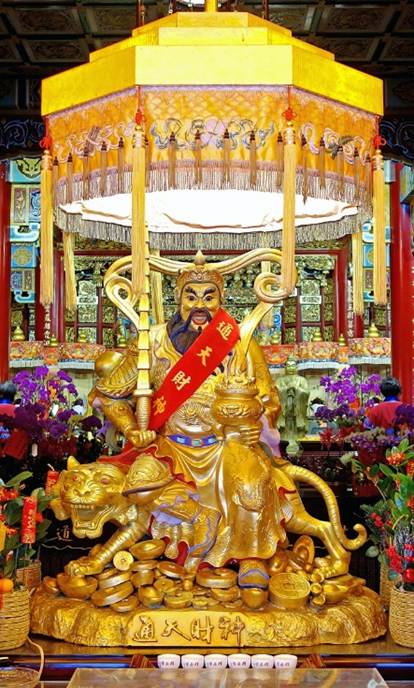
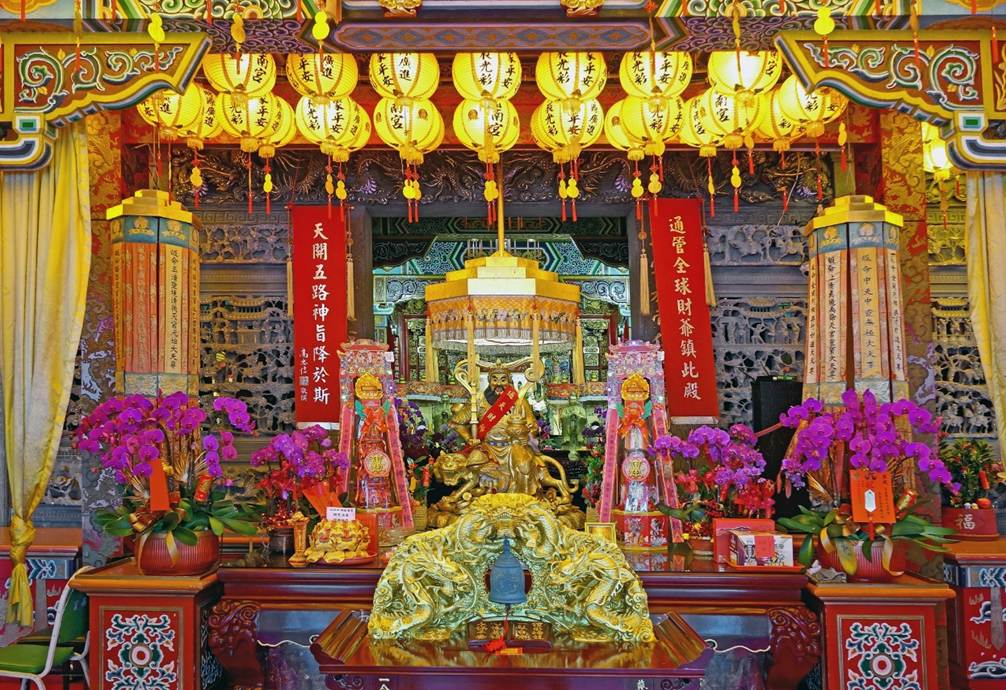
Zhao Gongming (趙公明), the main god of wealth. He is the
chief god of Wu Lu Caishen (五路財神), the collective name of five deities
who govern wealth from all directions (East, South, West, North, and Center).
He represents the Center. The four other gods are partially visible at the
bottom of the photo below. (The one situated furthest to left is largely
concealed behind decorative flowers.)
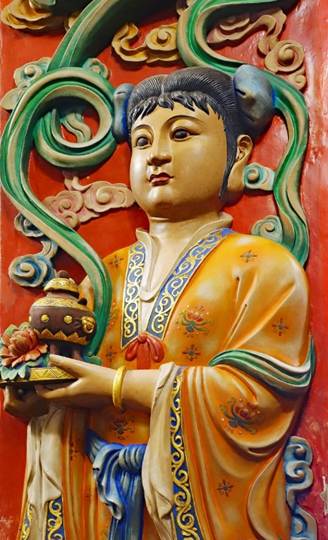
Altar dedicated, from
left to right, to Lords Xue (薛千歲), Lu (盧千歲), and Hou (侯千歲). They are among the twelve Five-Year
Lords (五年千歲, Wunian Qiansui), deities tasked by the
Jade Emperor with patrolling the human realm, warding off plagues, and
maintaining balance. Each of them is on duty for one year of the twelve-year
Chinese zodiacal sequence. Hence, over a sixty-year cycle that combines
zodiacal signs and Taoist elements, each of the twelve lords are on duty for
five years. Lords Hou, Xue, and Lu are specially tied together because their
respective years of duty (those of the Horse, the Dog, and the Tiger) form one
of the zodiac's four ″Grand Triad″ (三合, "san he"), within which the
animals are said to share similar personality traits. Their specific Grand
Triad is the Fire Triad.
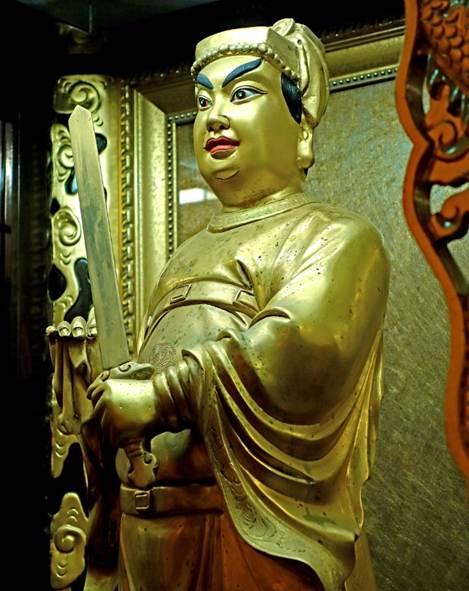
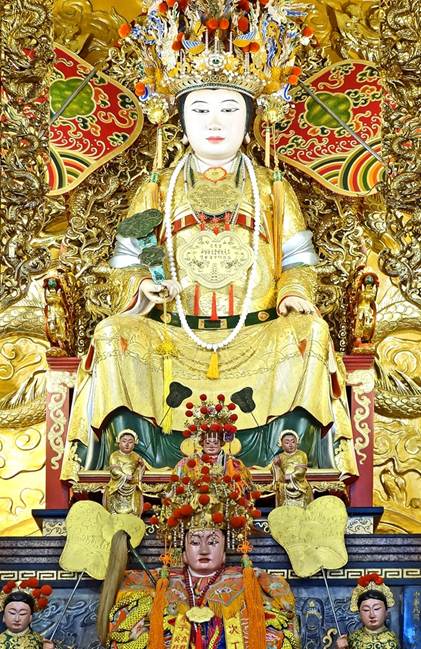
Songshan Ci Hui temple (松山慈惠堂):
[March 2025]
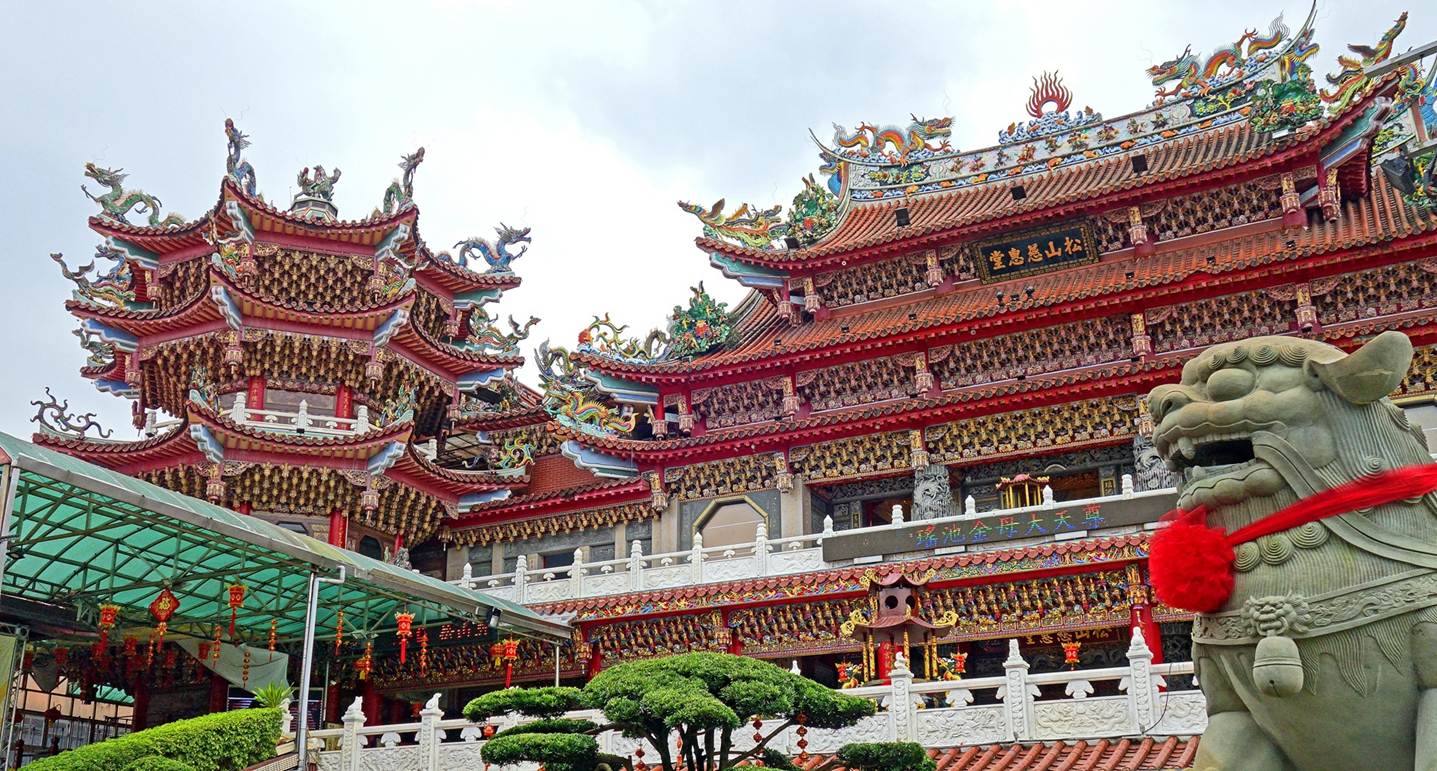
Built in 1970, this large
Taoist temple consists of a central five-story building flanked by two
pagoda-shaped towers. It is primarily dedicated to the Queen Mother of the West
(西王母, ″Xiwangmu″), also known as
the ″Great Mother″. She is considered the wife of the Jade Emperor in
popular belief. She is worshipped as a protector of families, a goddess of
prosperity, and a source of fertility.
View of the facade of the
temple and one of its pagoda-shaped towers.
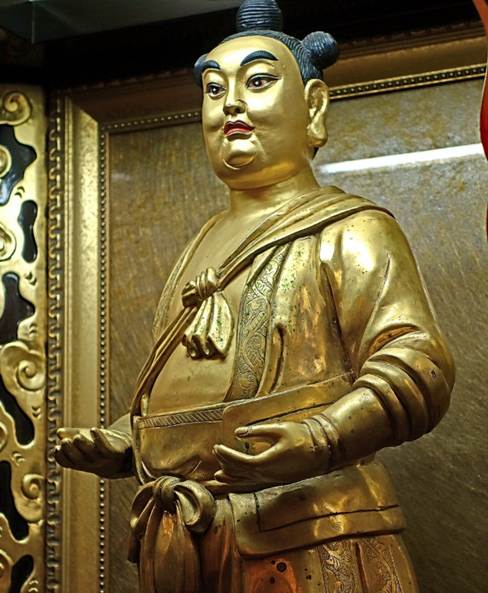
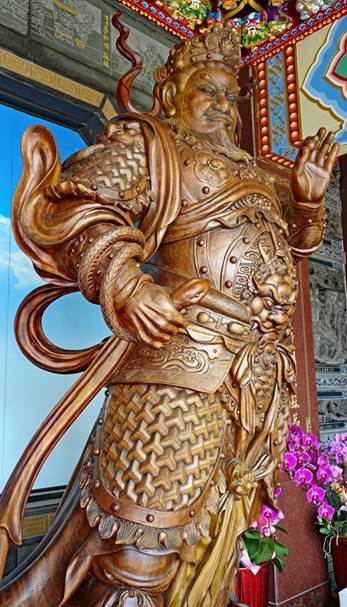
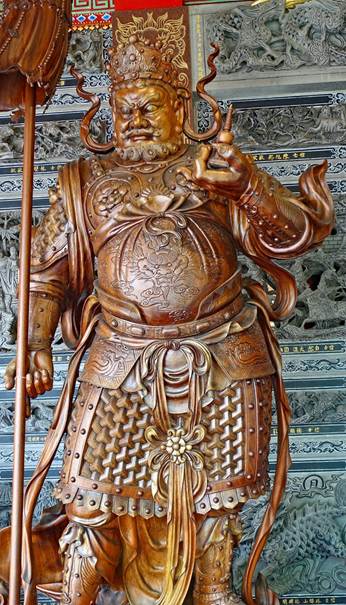
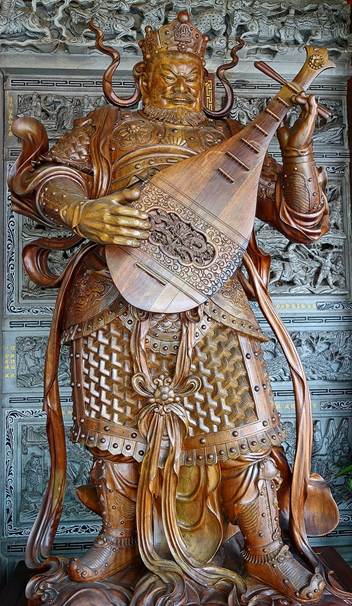
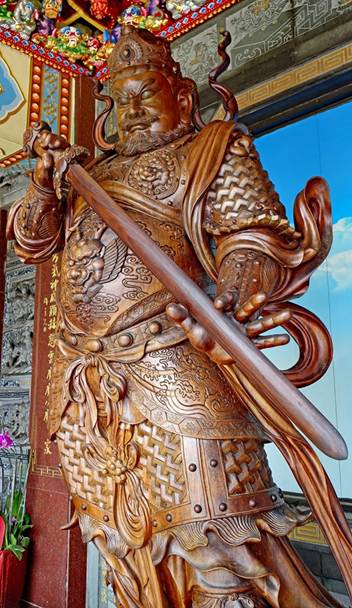
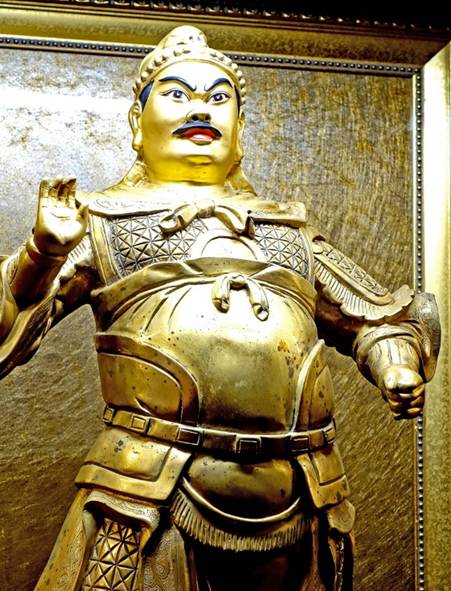
Statues of the Four
Heavenly Kings (四大天王), who protect the temple from the four
cardinal directions. They are commonly revered in both Taoism and Buddhism.
|
|
|
|
|
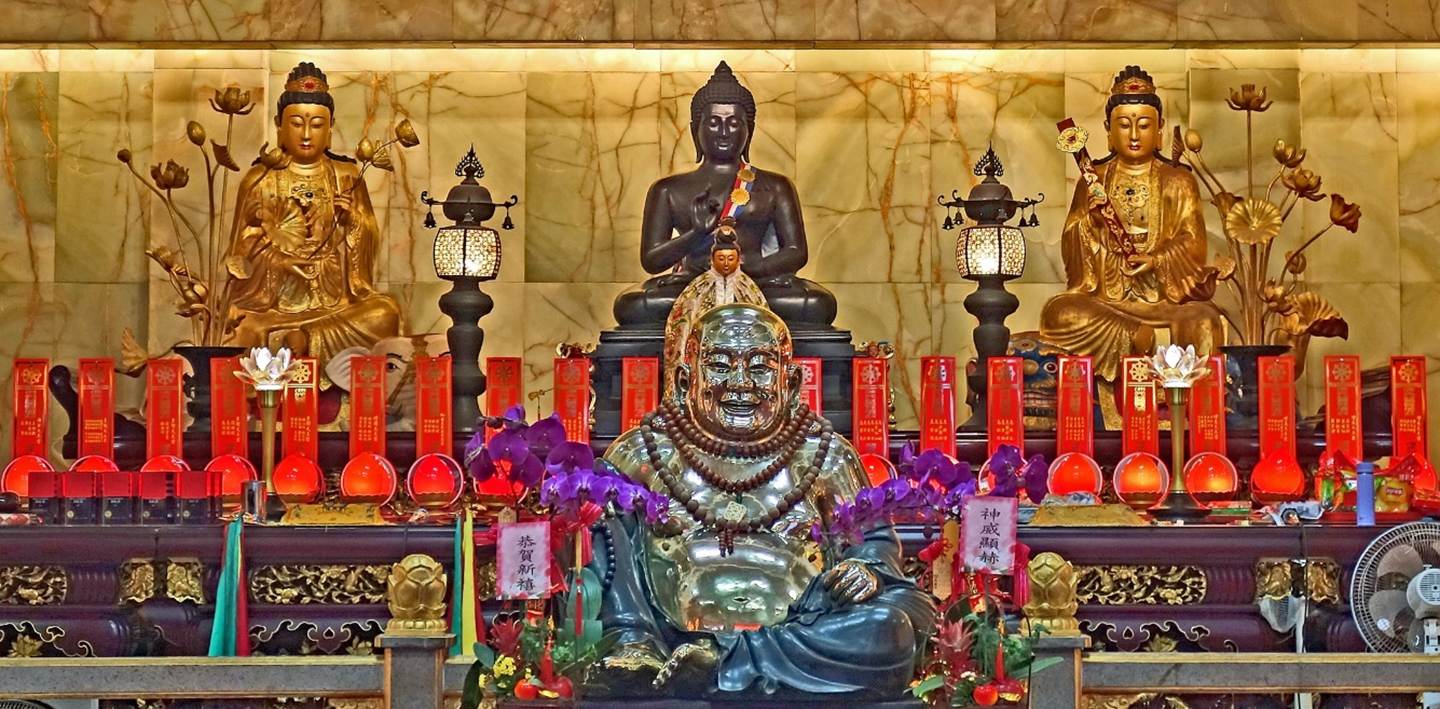
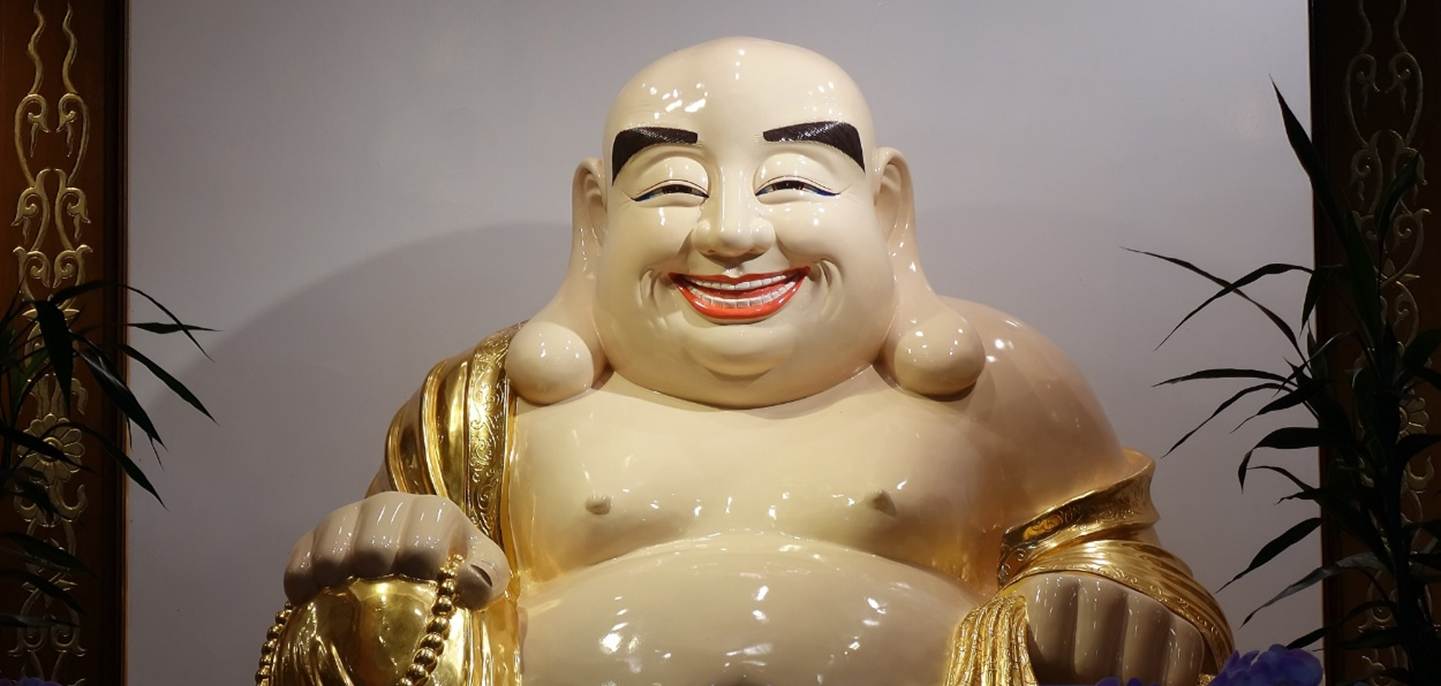
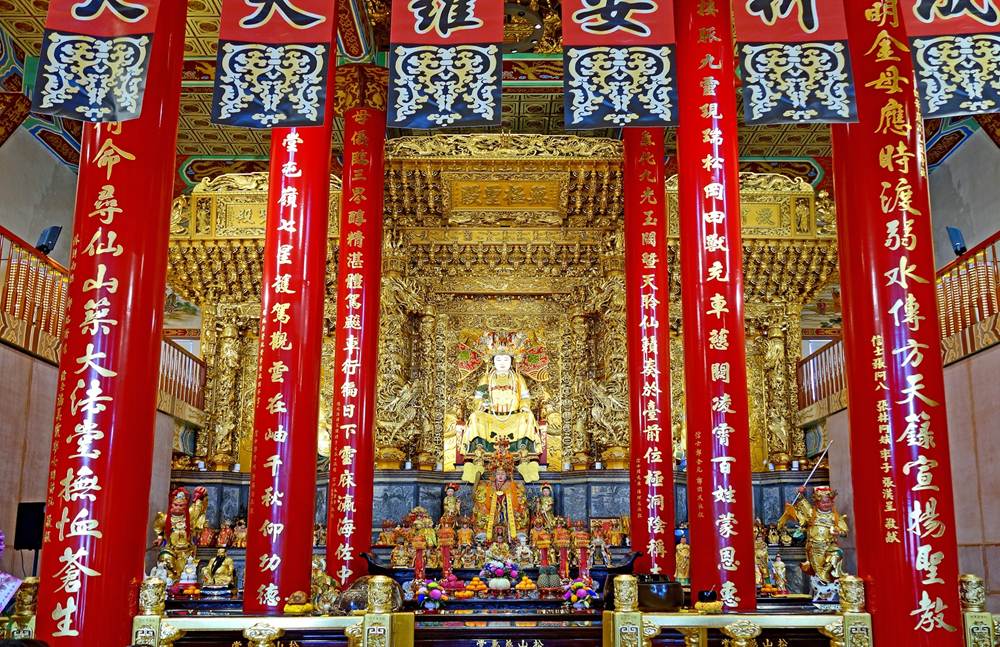
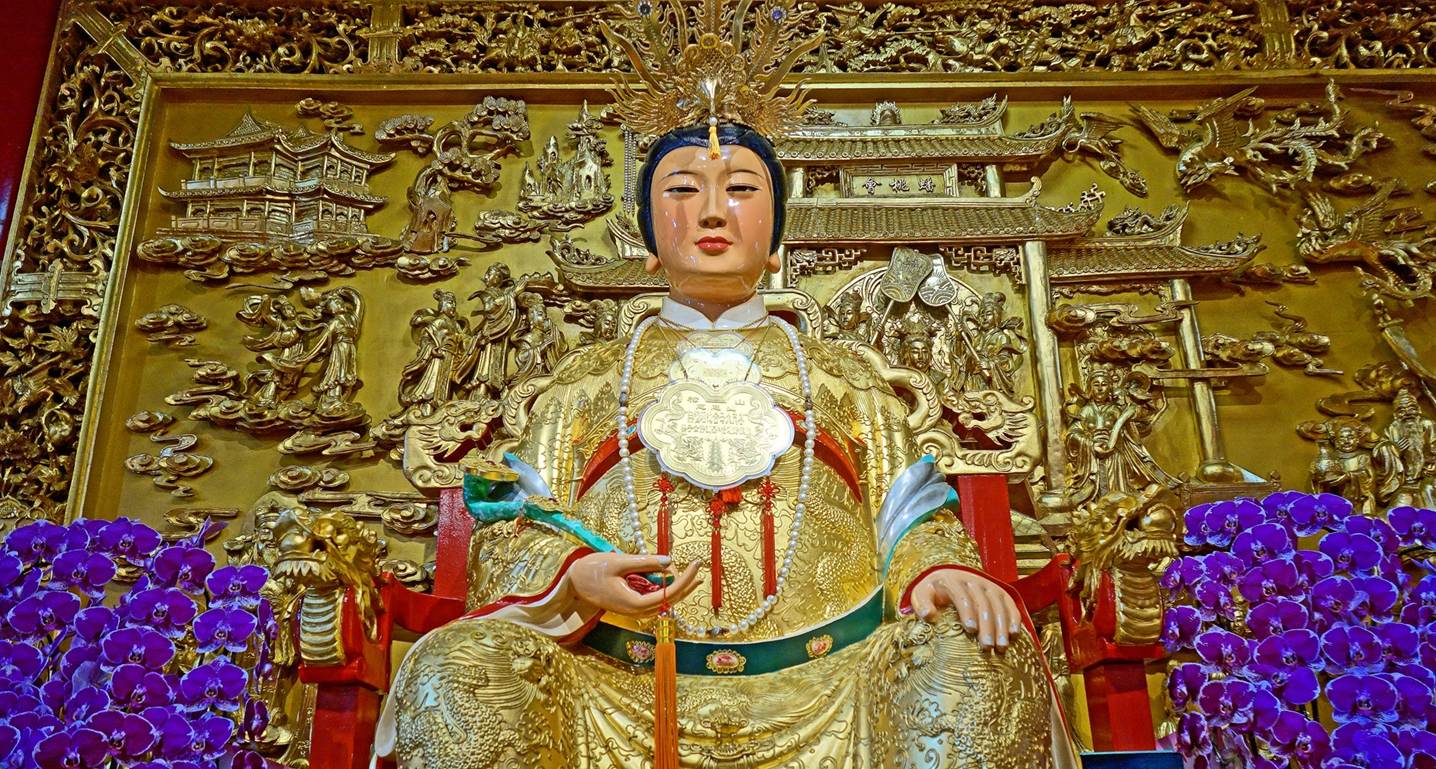
Main prayer hall housing
the altar of the Queen Mother.
|
|
|
Another statue of the
Queen Mother in another hall.
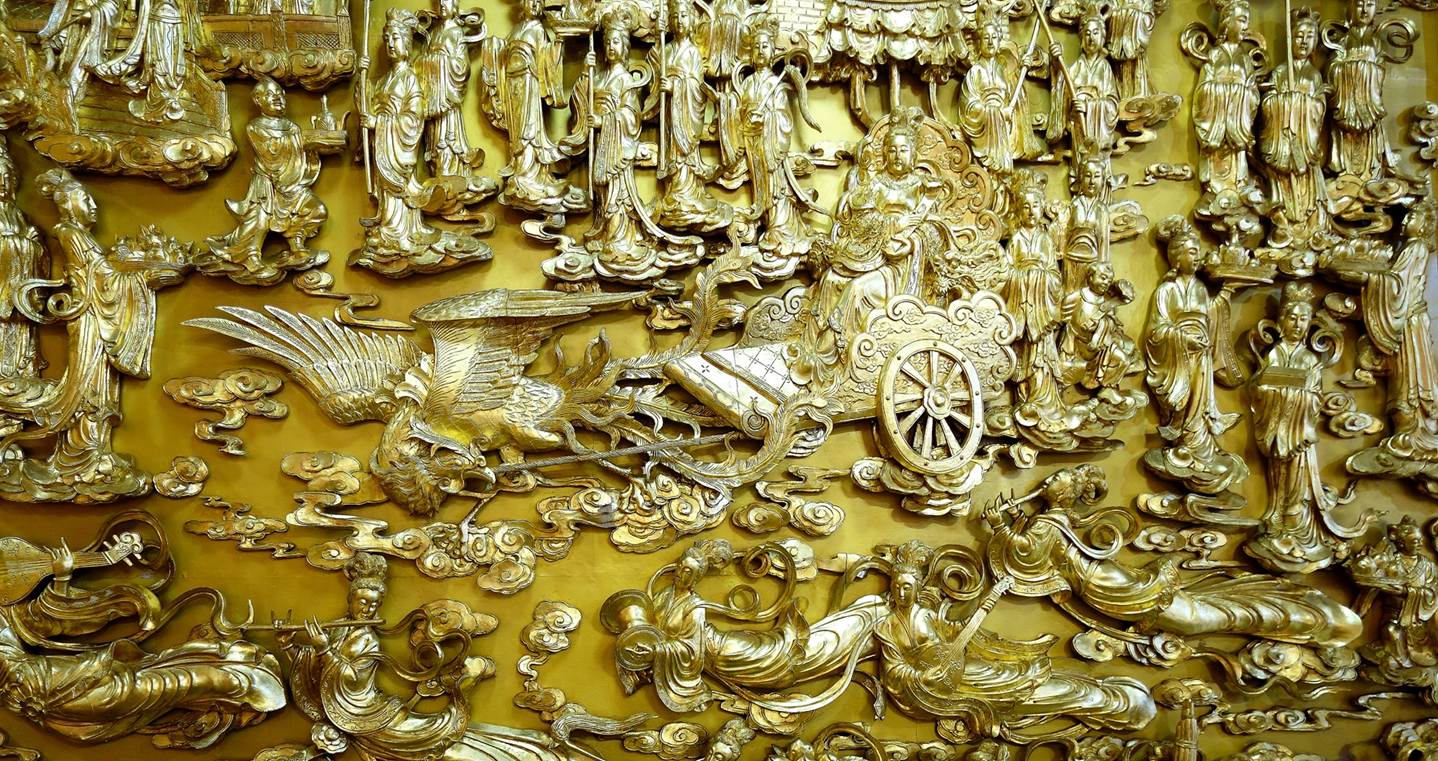
Portion of a gilded
carved mural.
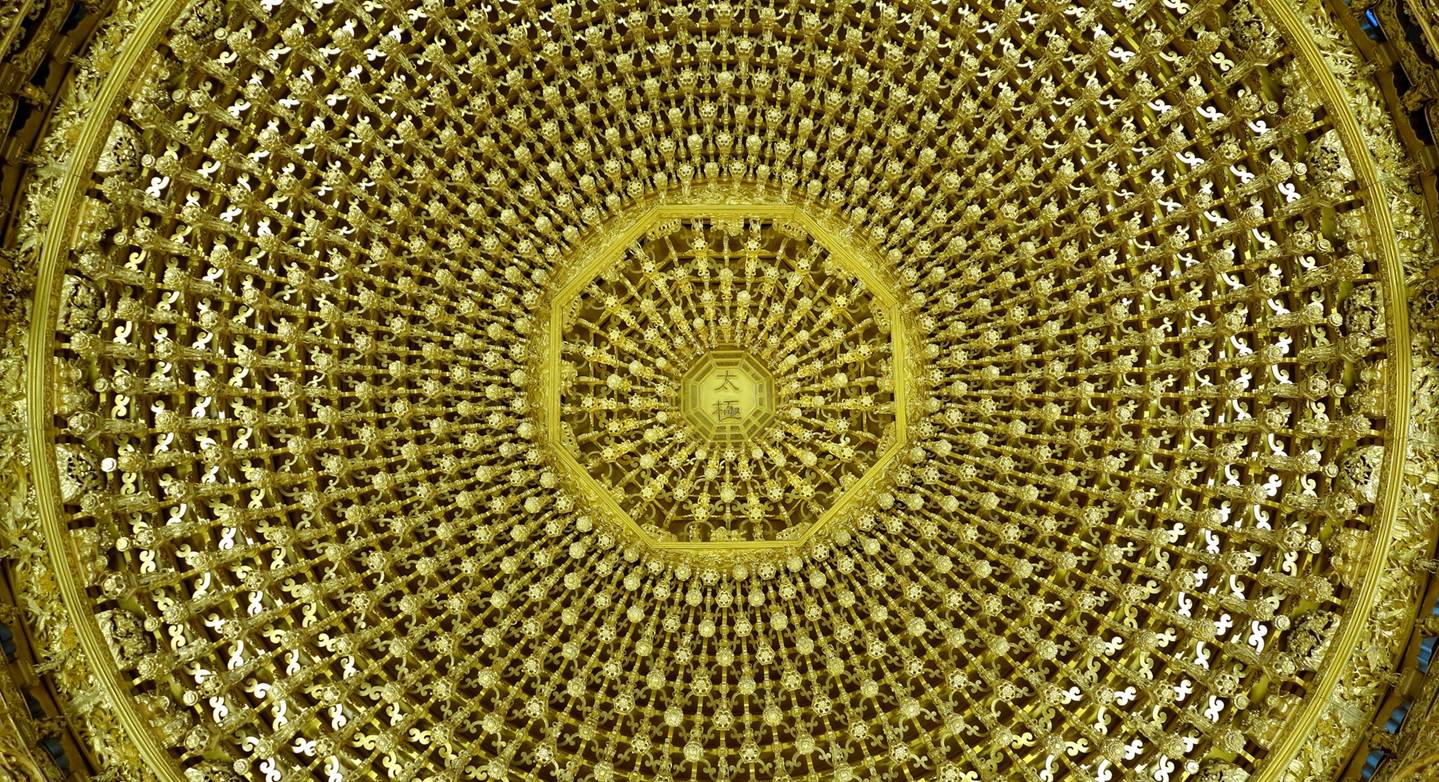
Ceiling in the main
prayer hall.
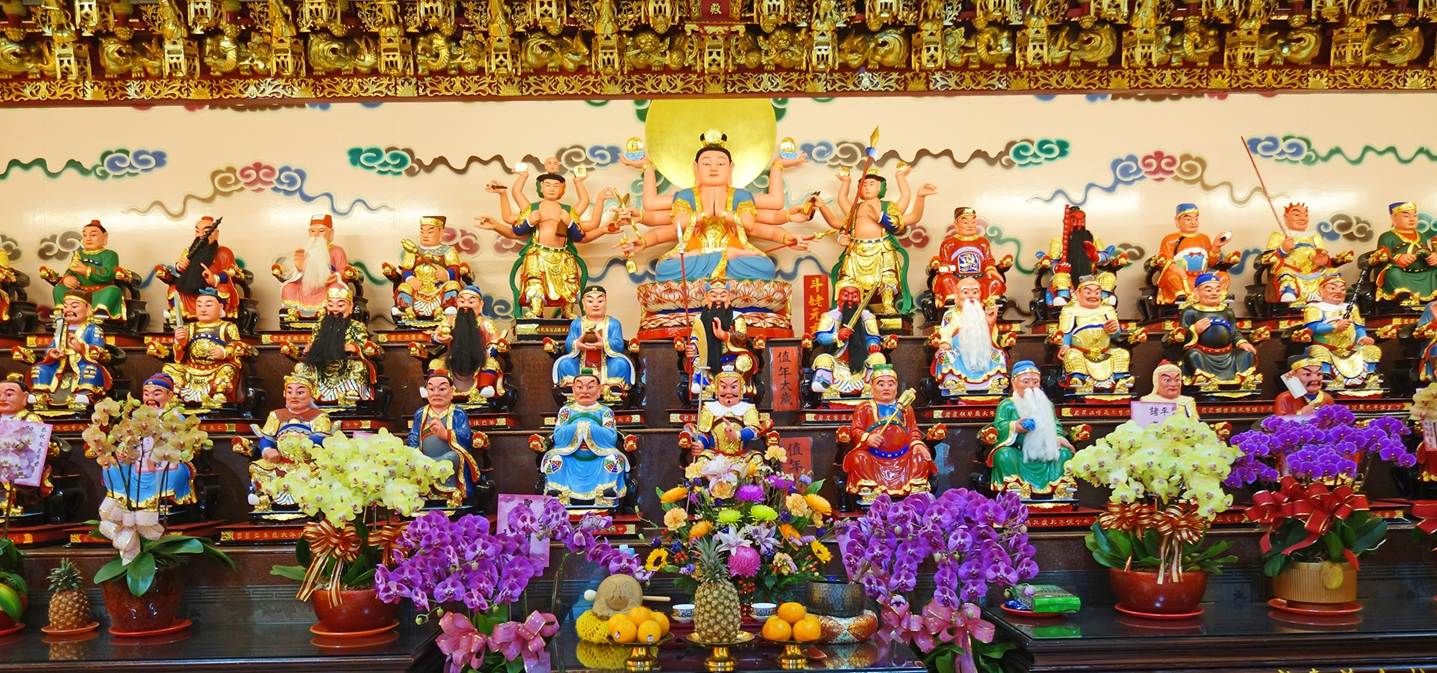
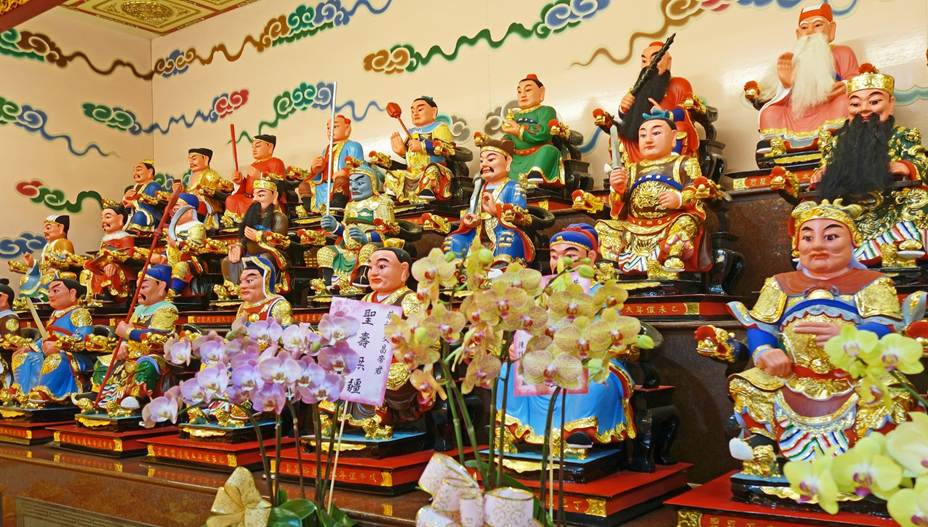
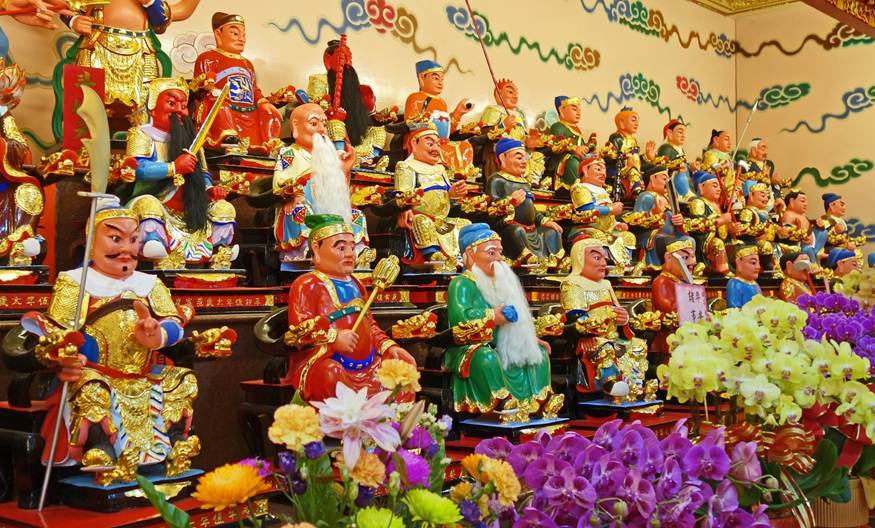
Tai Sui (太岁) hall in the temple. A multi-faced,
multi-armed statue of Doumu Yuanjun (斗姆元君), the Mother of the Big
Dipper, stands in the middle of the top row of statues. She is surrounded by
statues of 60 deified generals known as the Tai Sui generals. These
deified generals govern, in rotation, the fortunes and misfortunes of human
beings, during every successive period of 60 years. Doumu Yuanjun has
tutelary authority over them.
|
|
|
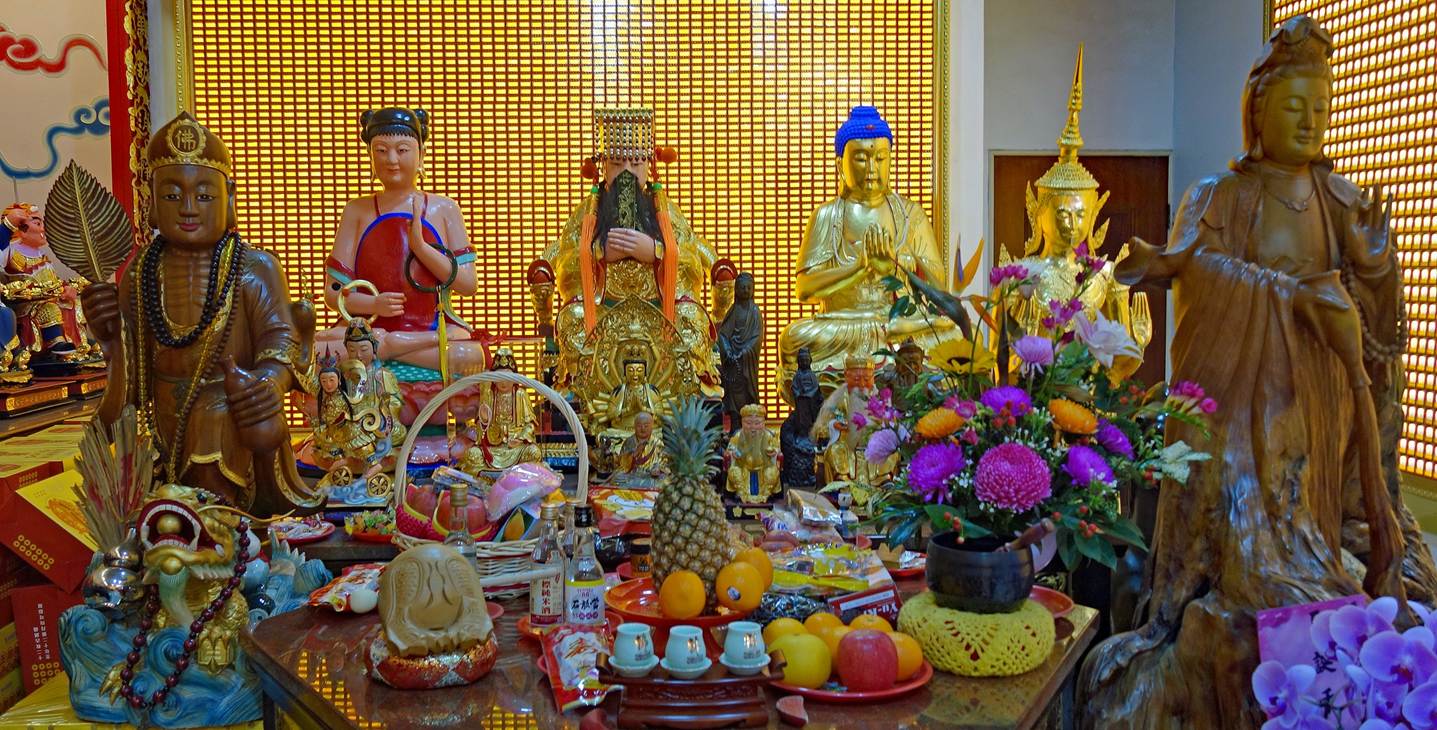
This other altar, also
located in the Tai Sui hall, brings together a unique grouping of Taoist and
Buddhist deities. The Jade Emperor (玉皇上帝), the supreme deity of Taoism, seats at
the center. He is flanked on his right by Li Nezha (李哪吒), a highly revered
guardian deity of the Tao (the source of all existence in Taoism), and on his left by the Buddha. The
leftmost statue in the photo, with a hat bearing the inscription 佛 (meaning ″Buddha″), is the
Chinese Buddhist monk Daoji (道濟). He holds a wine bottle in his left hand, symbolizing his
unconventional path to enlightenment, and a palm-leaf fan in his right hand
used to ward off evil spirits. On the right side of the photo stand a
Thai-style statue of the Buddha and a statue of Guanyin.
Sumptuous painted
ceilings.
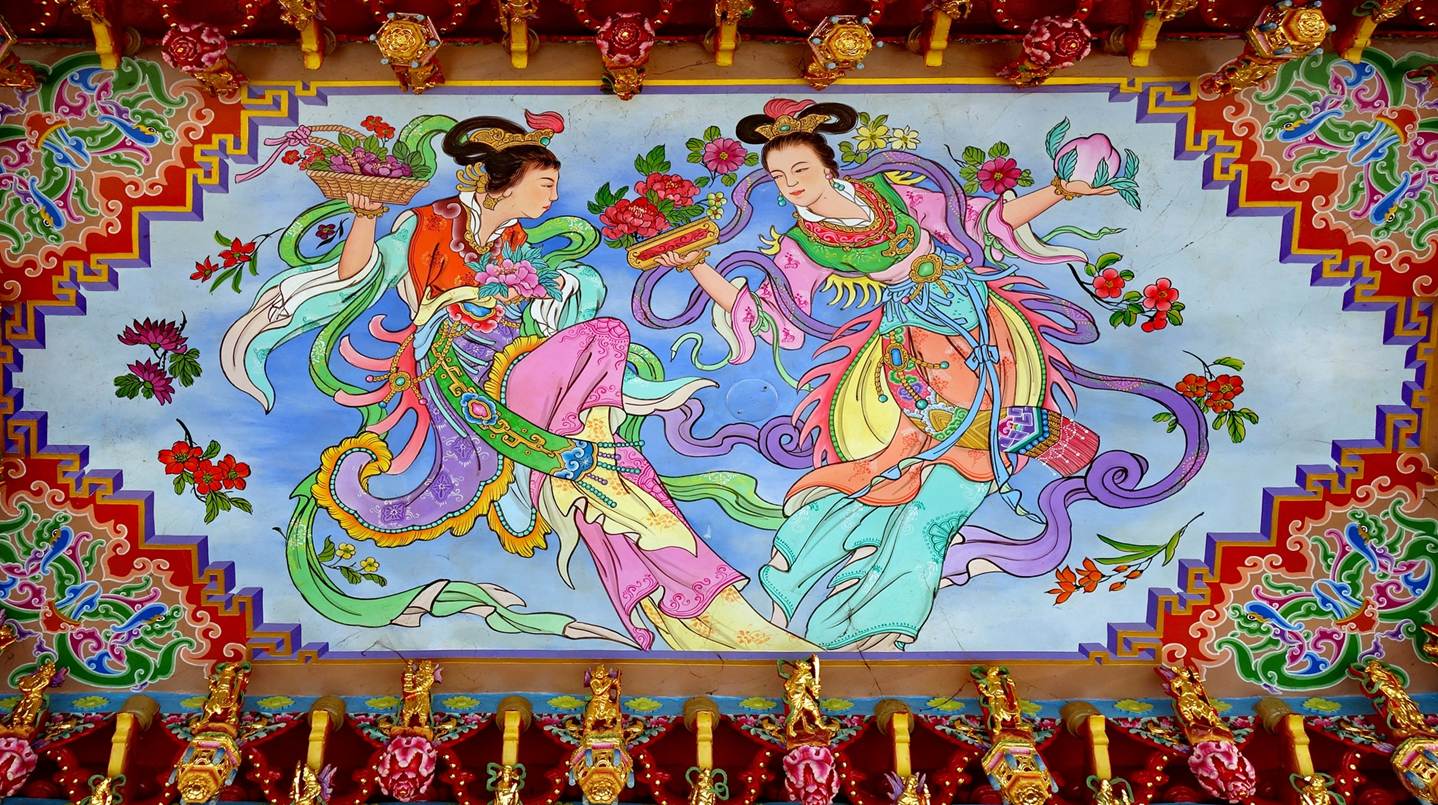
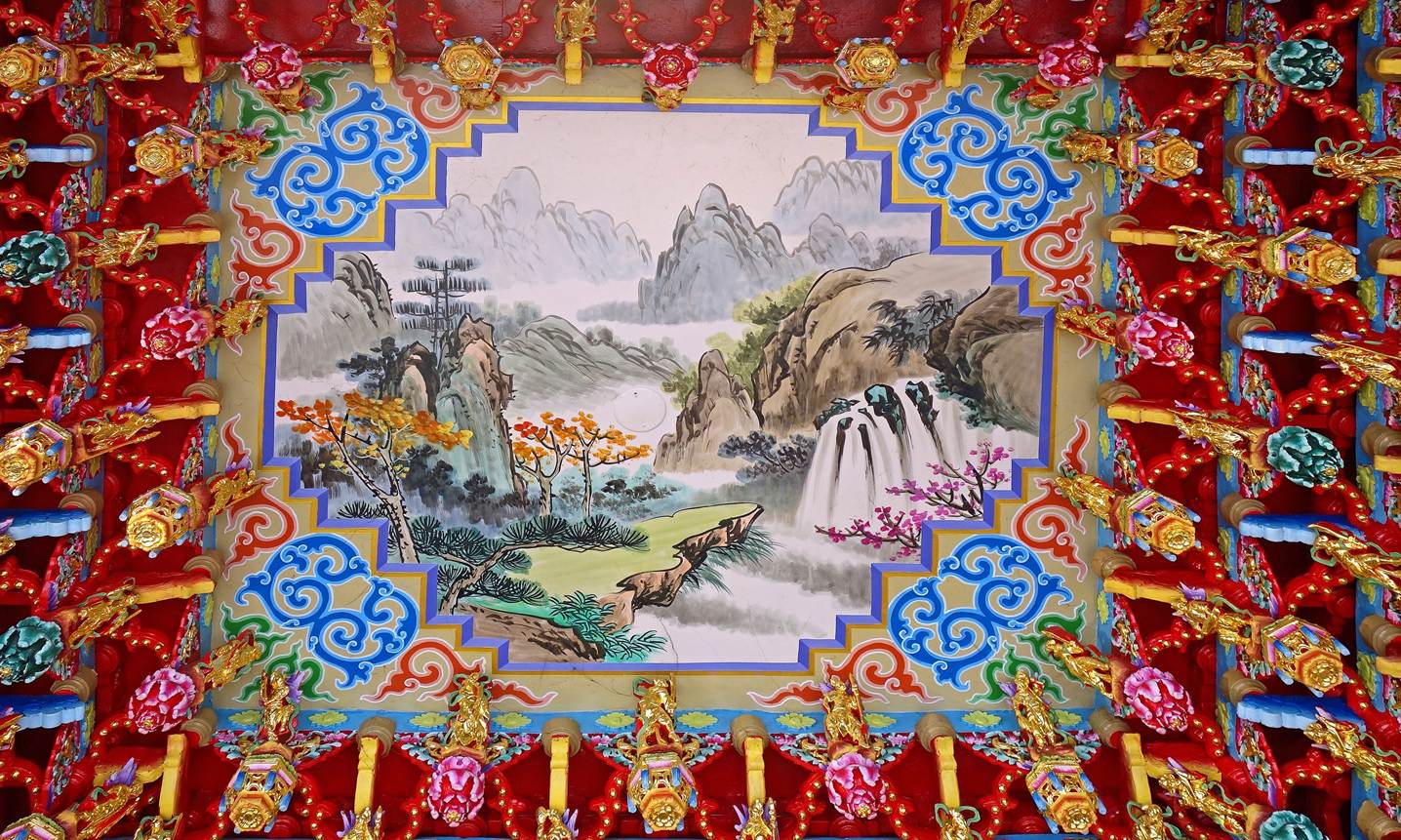
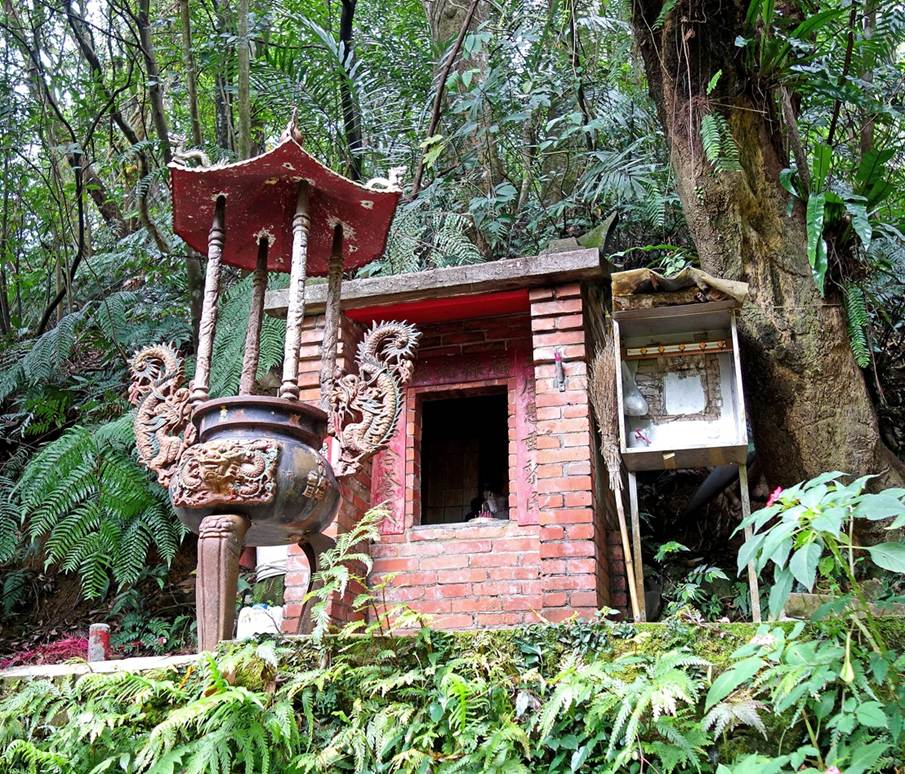
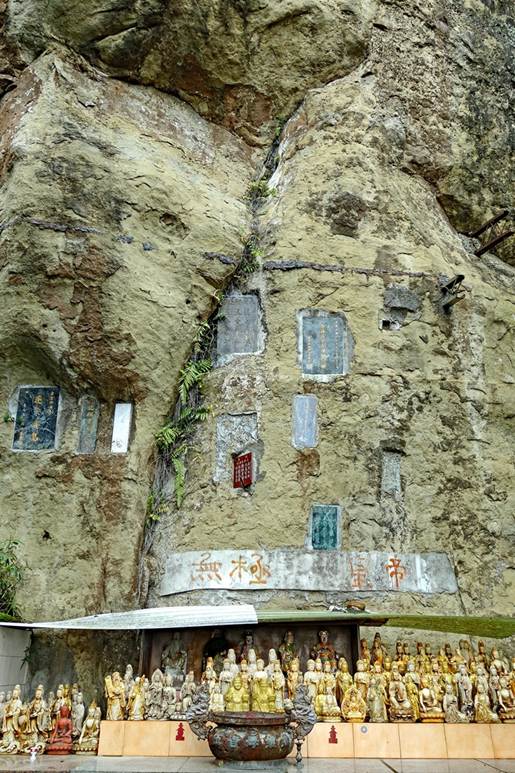
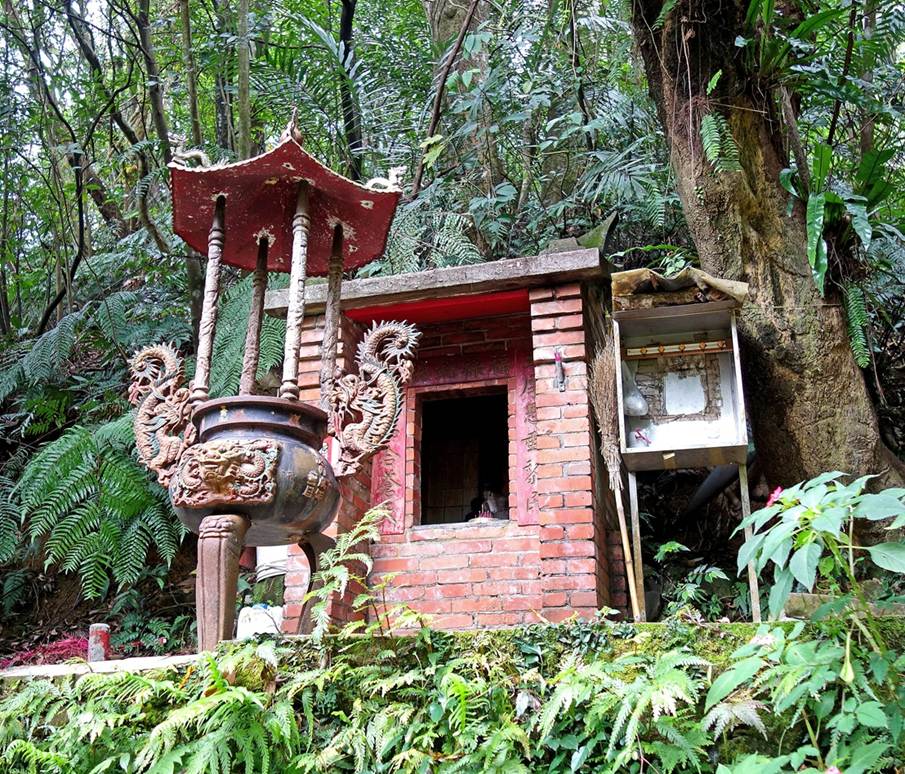
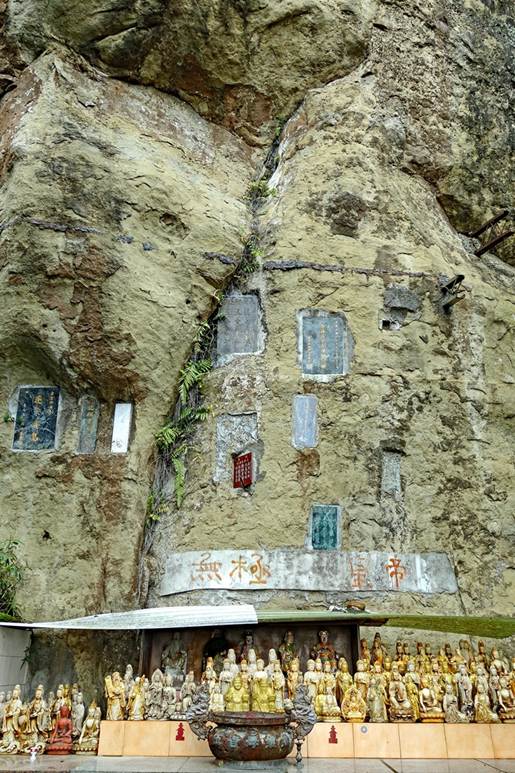
Shrines in the Four Beasts Mountain
Scenic Area (四獸山風景區) above the Songshan Ci Hui temple:
[March 2025]
|
|
|
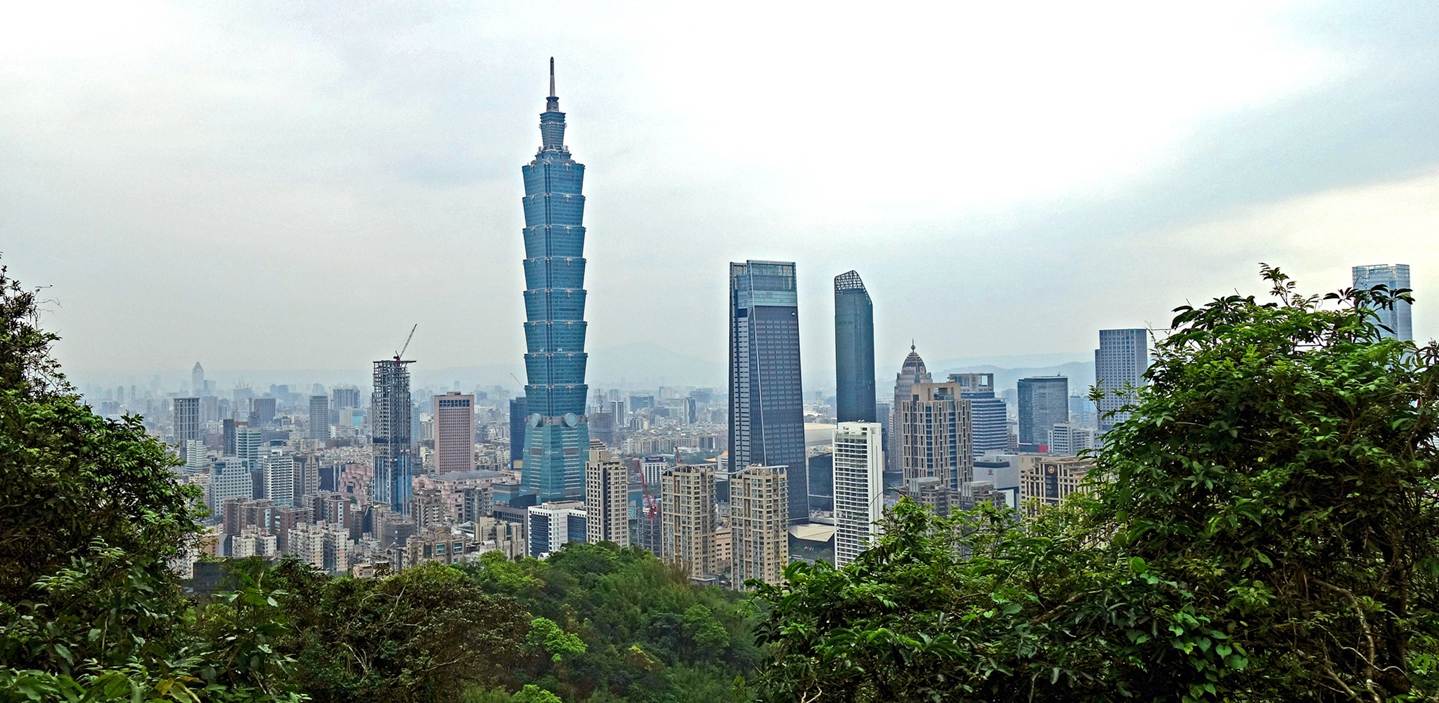
Taipei 101:
[March 2008, November 2018 and March 2025]
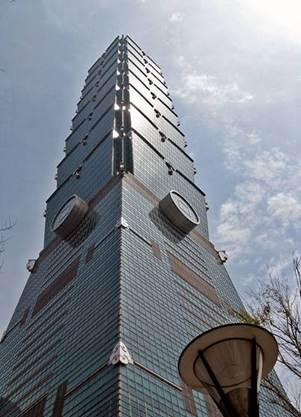
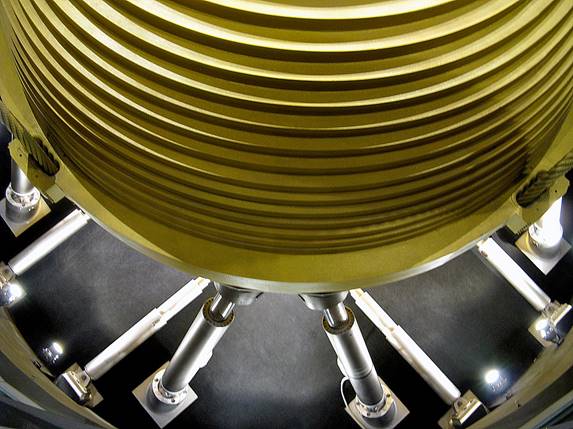
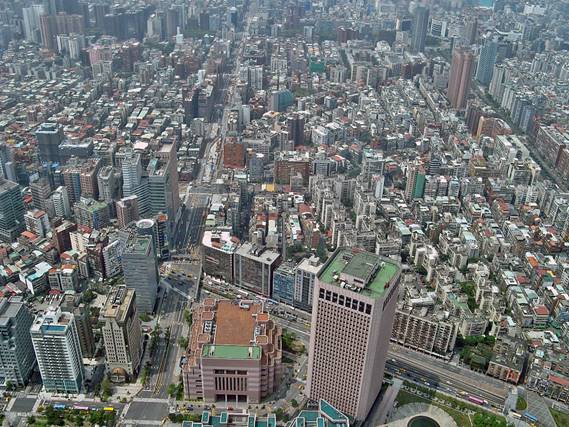
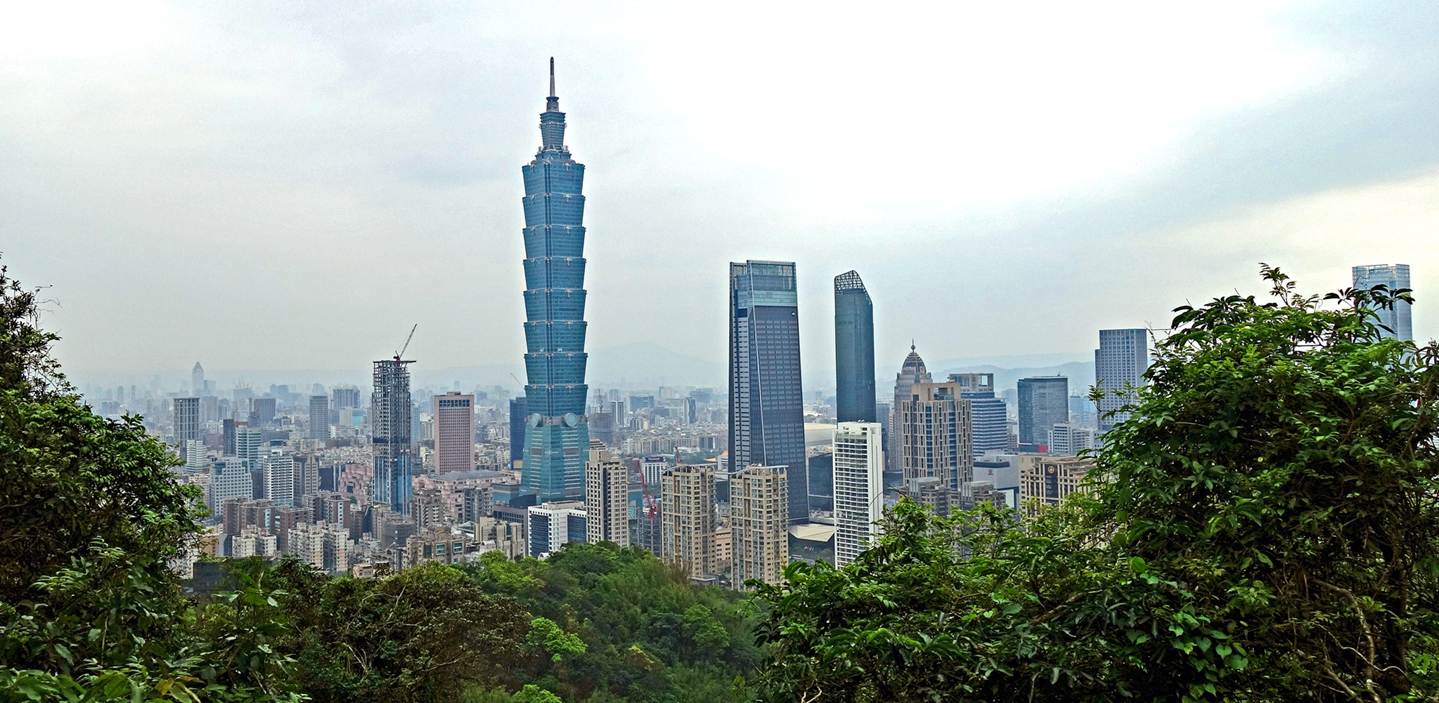
From left to right: 508m-high Taipei 101
seen from its base; 660-tonne steel pendulum at the top of Taipei 101
protecting the building against earthquake; view from the top.
|
|
|
|
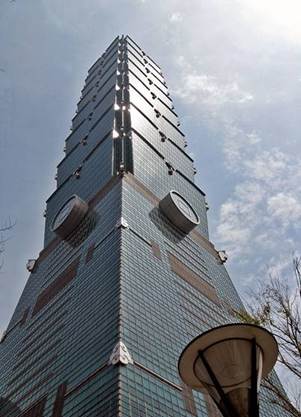
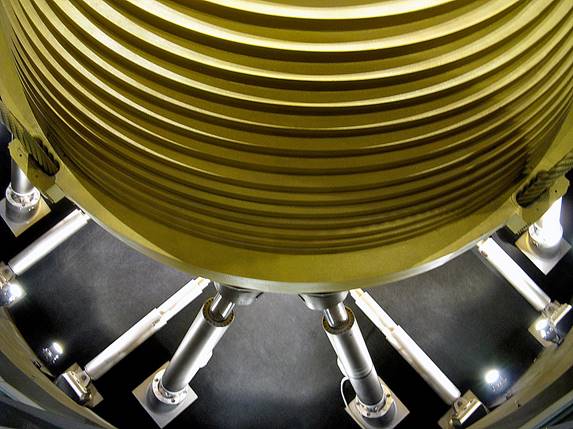
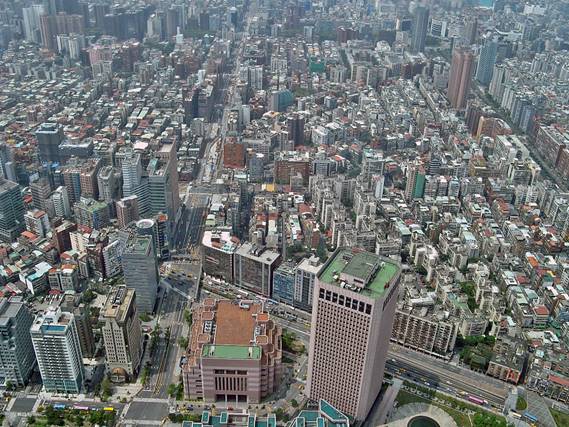
[March 2008]
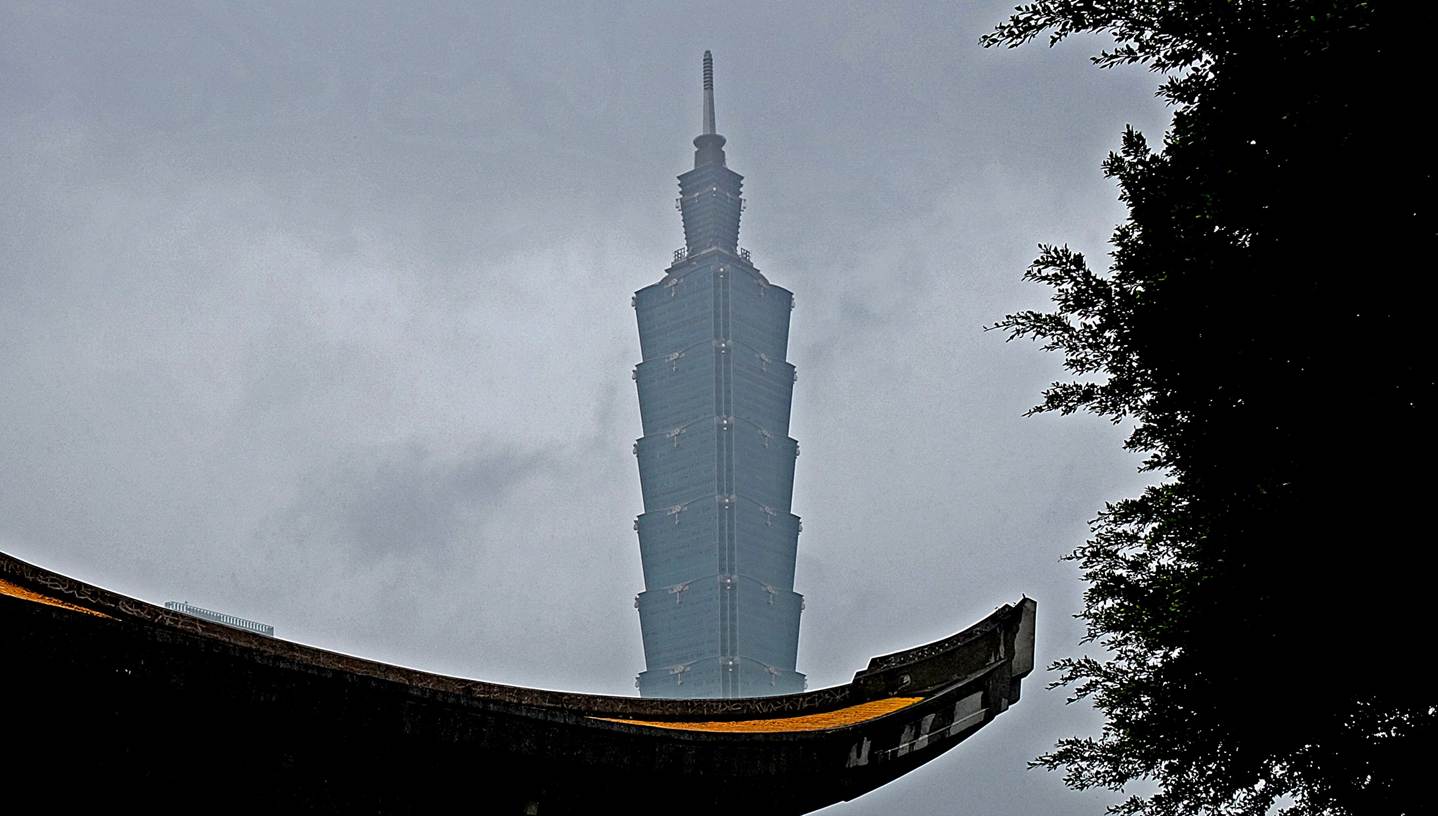
Taipei 101 seen from the Sun Yat-Sen
Memorial Hall, on a rainy day.
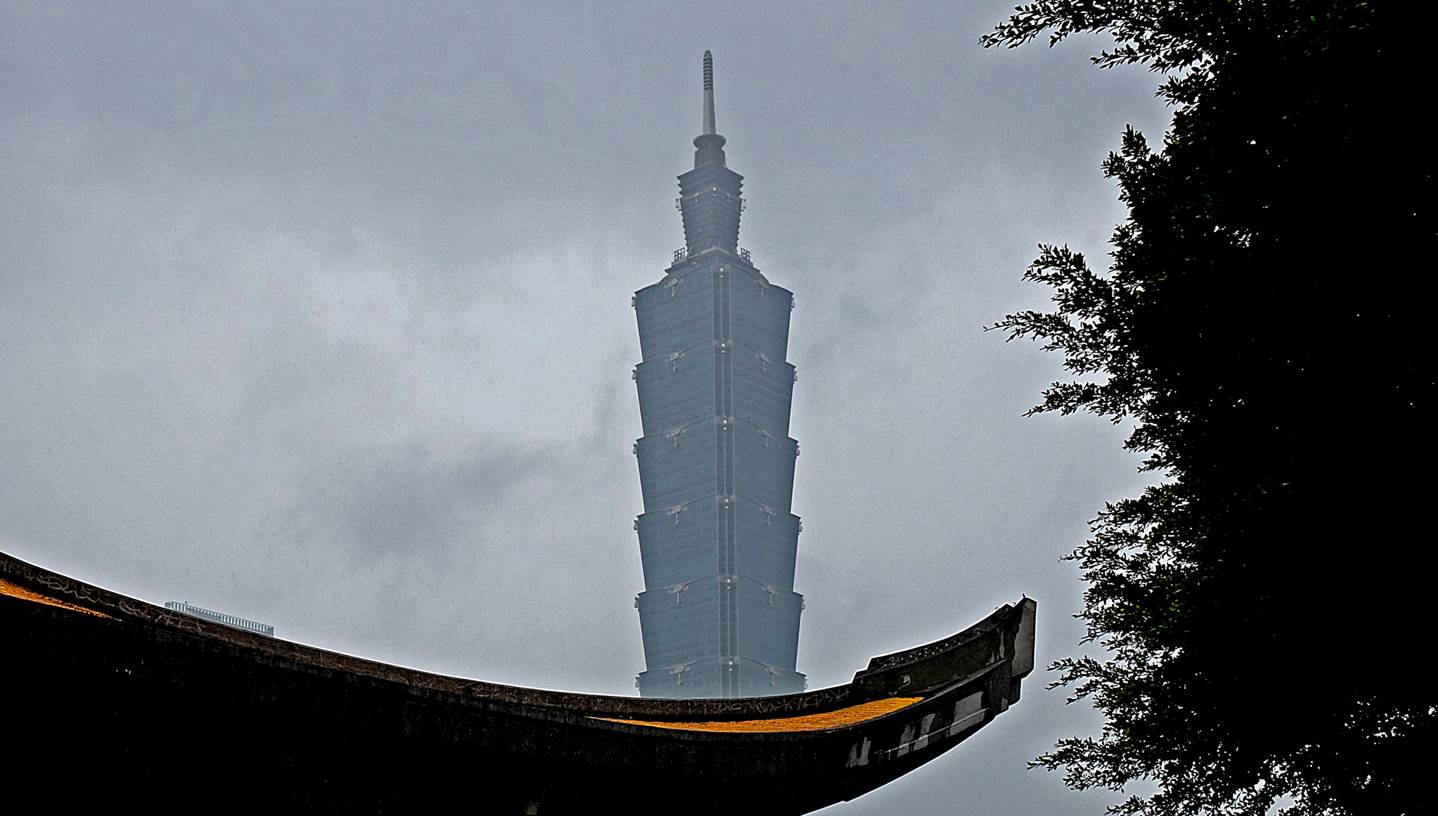
[November 2018]
Taipei 101 seen from the Four Beasts
hiking area.
[March 2025]
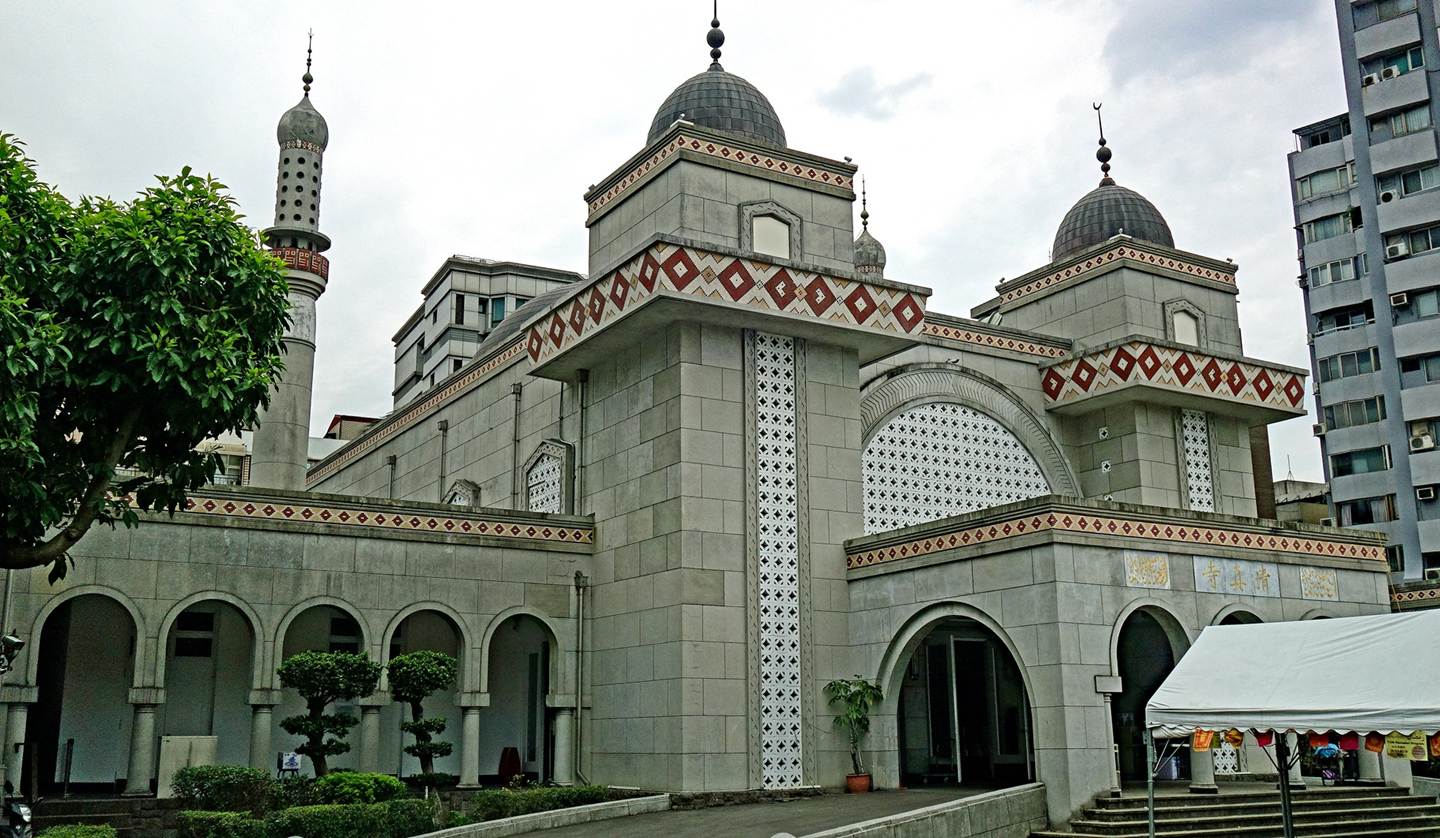
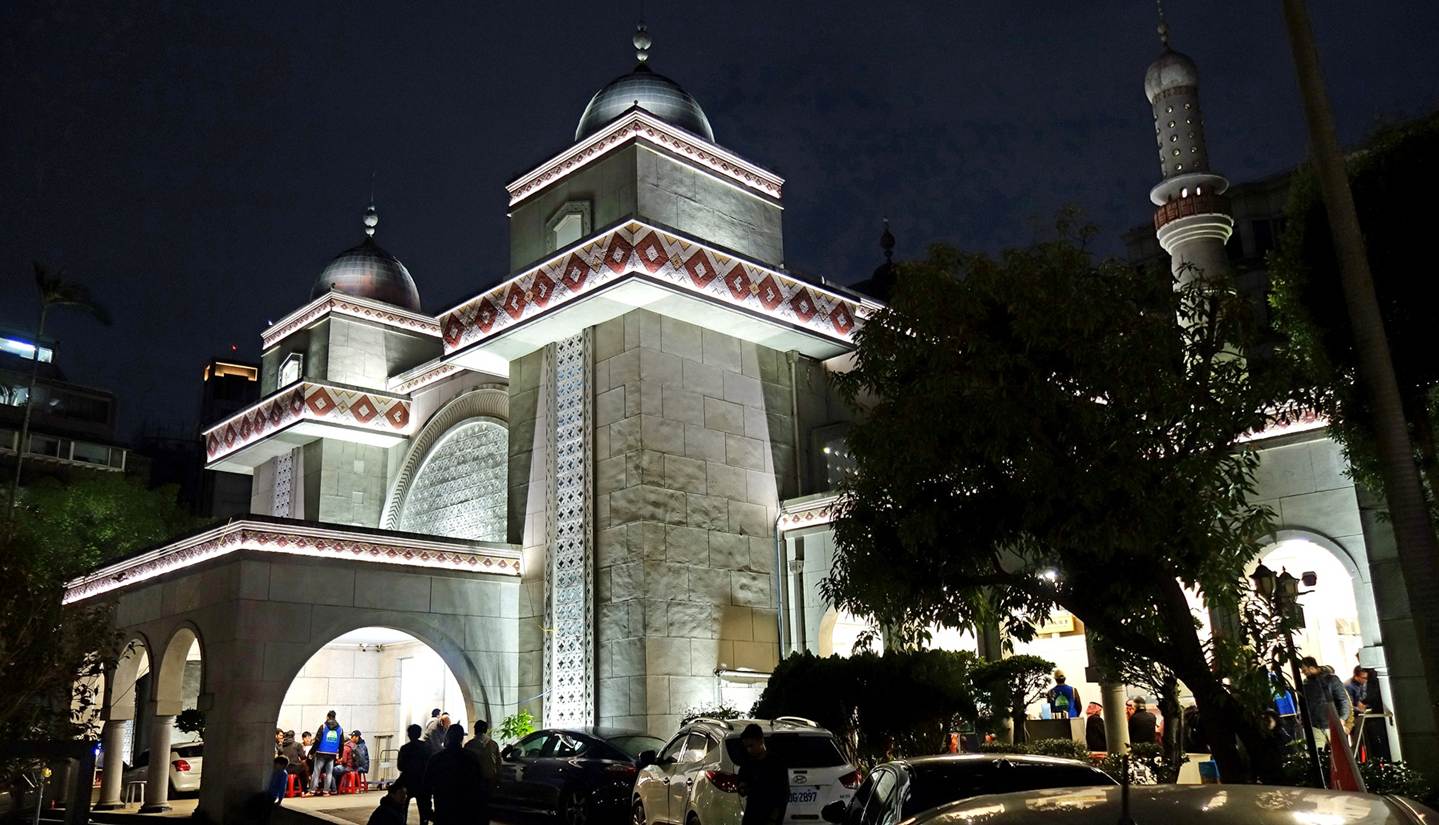
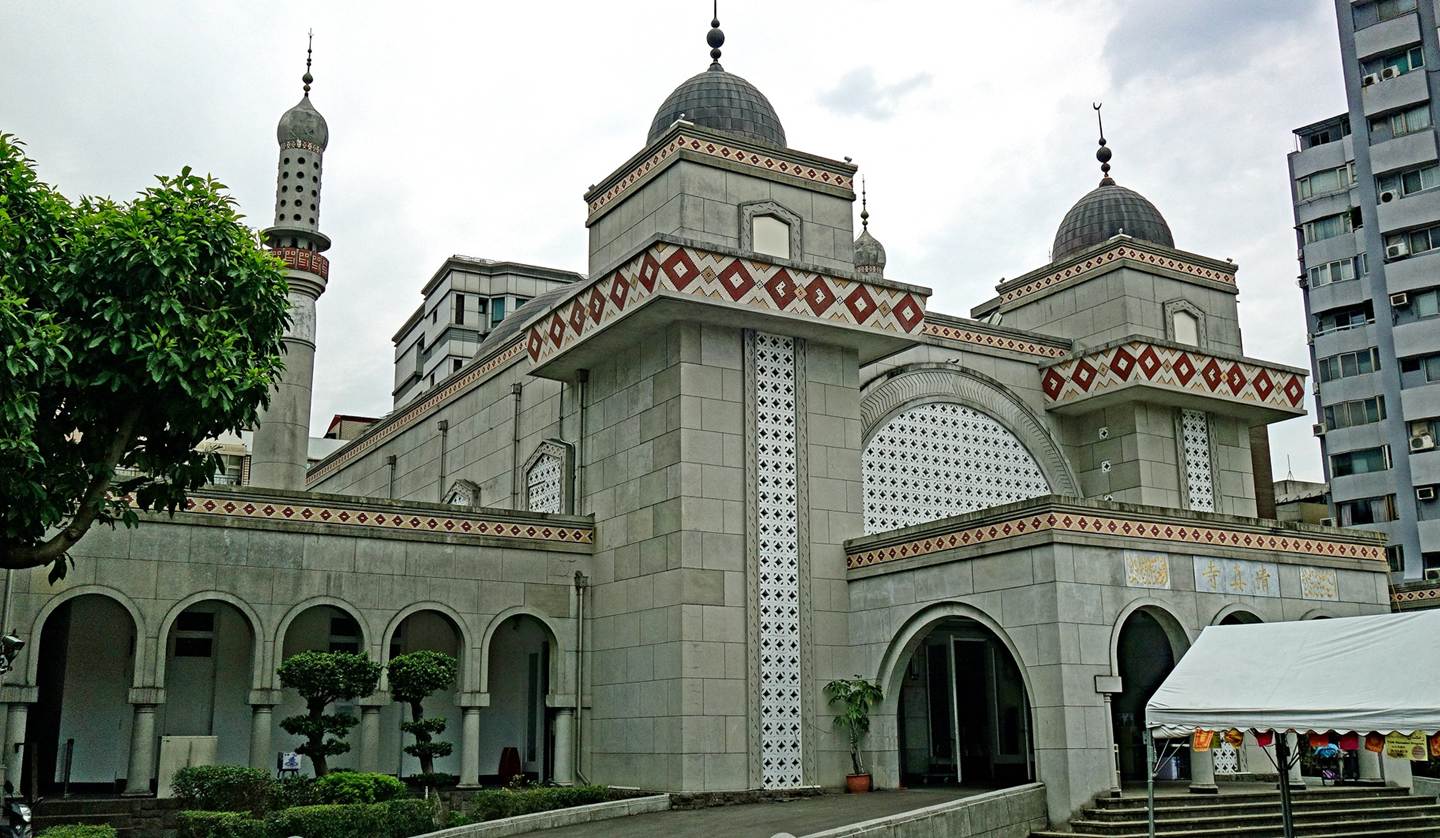
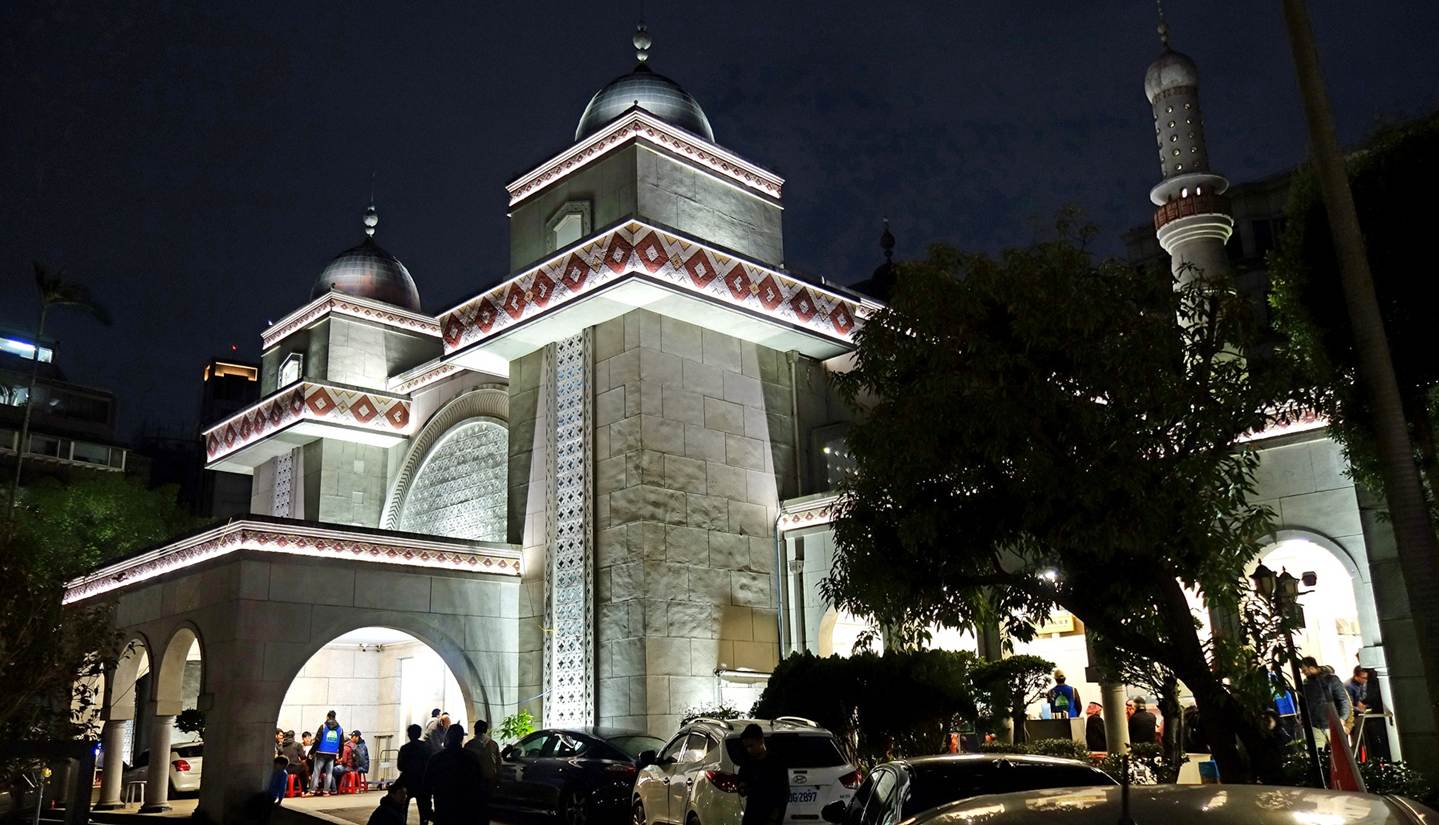
Taipei Grand Mosque:
[March 2025]
It was built in the late
1950s to serve Muslim immigrants from China and inaugurated in April 1960.
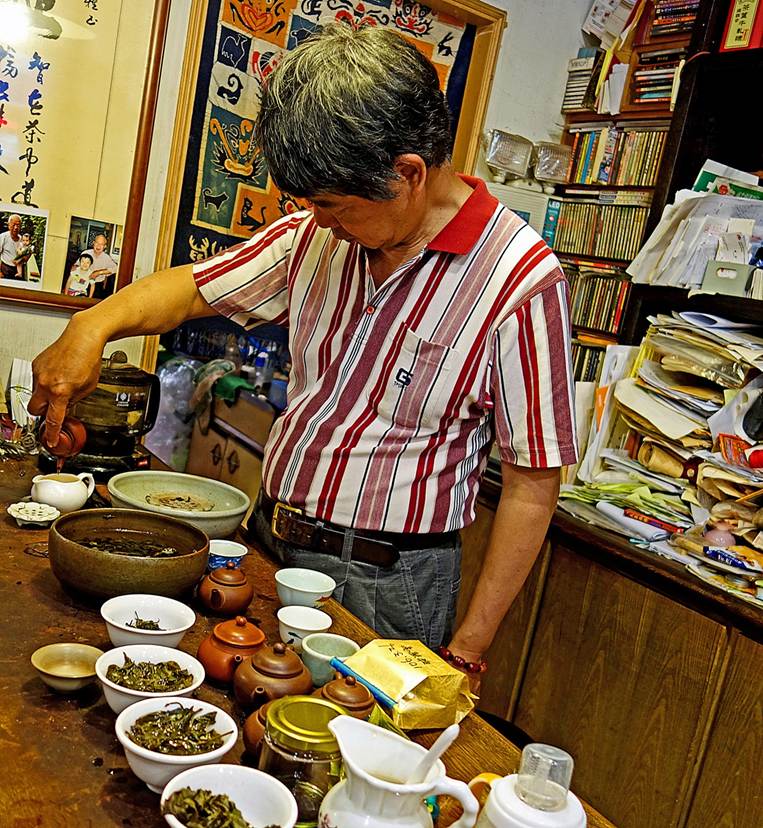
Tea tasting
in the Wenshan District (文山區):
[June
2009 and April 2017]
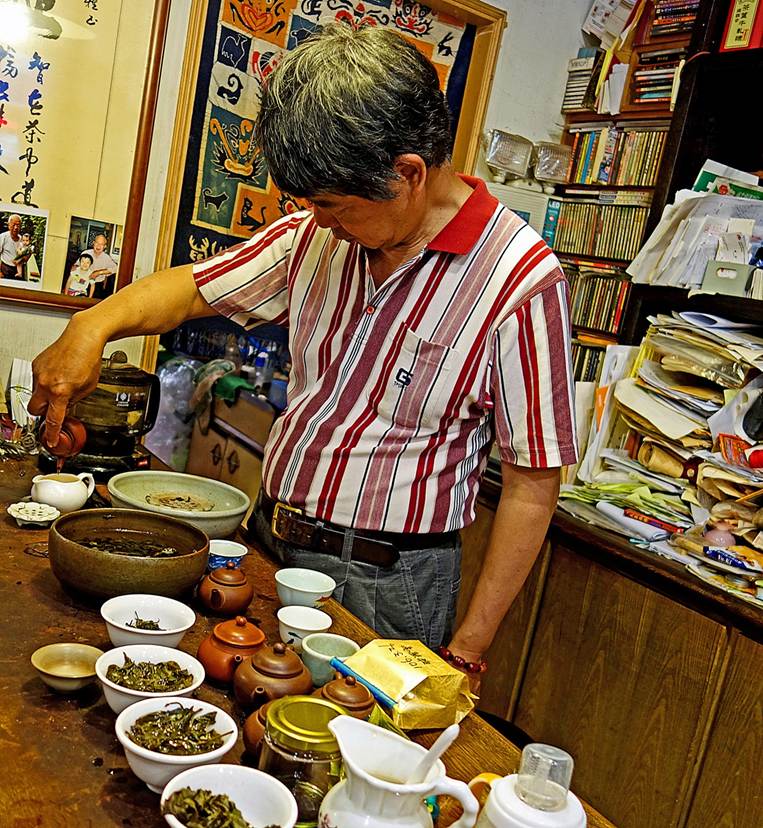
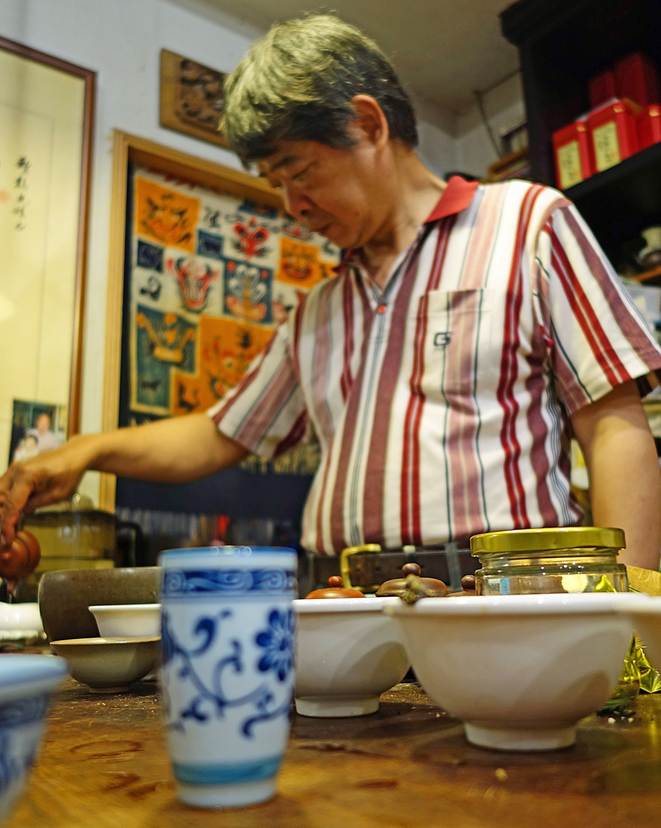
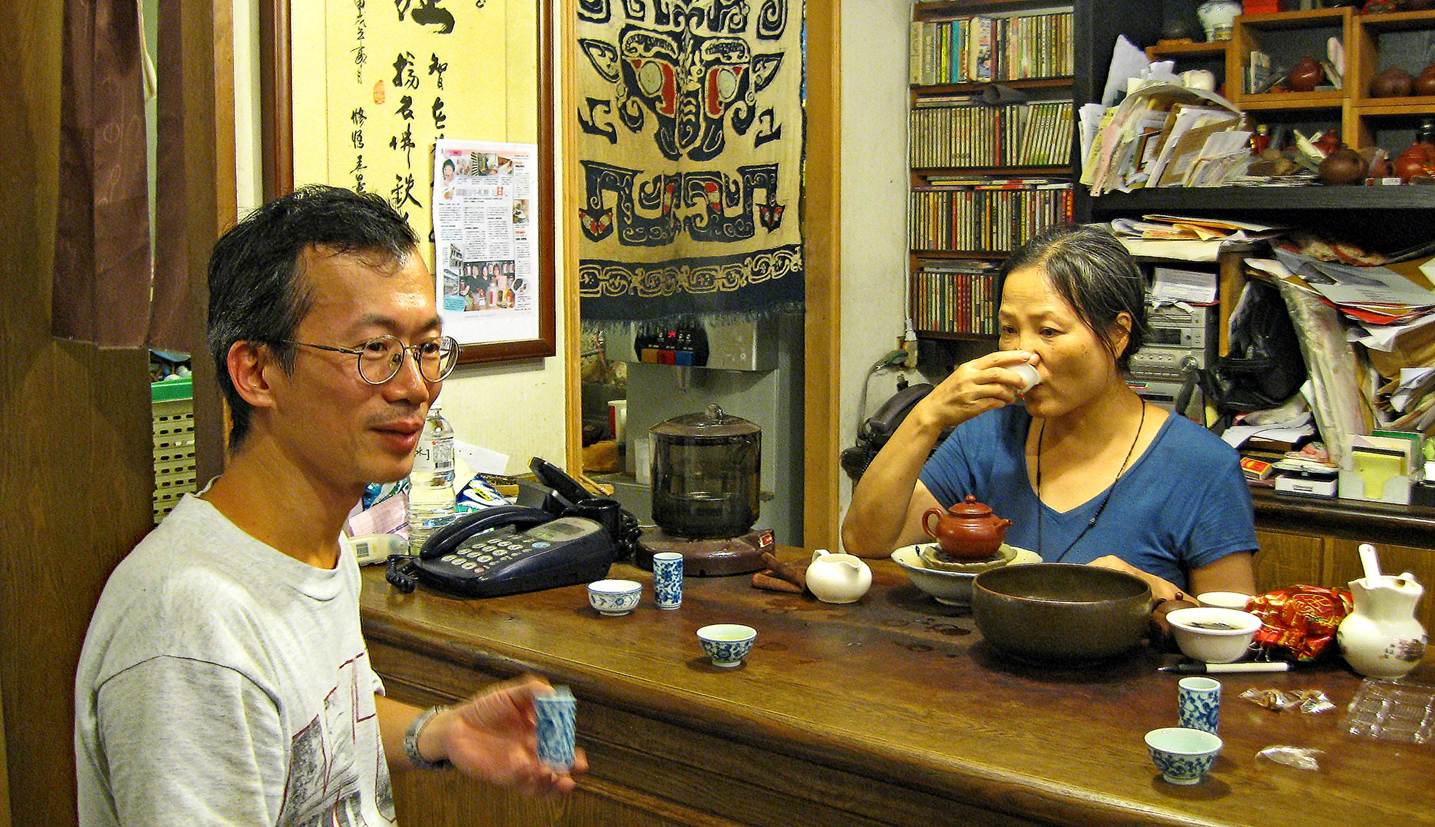
Tasting tea
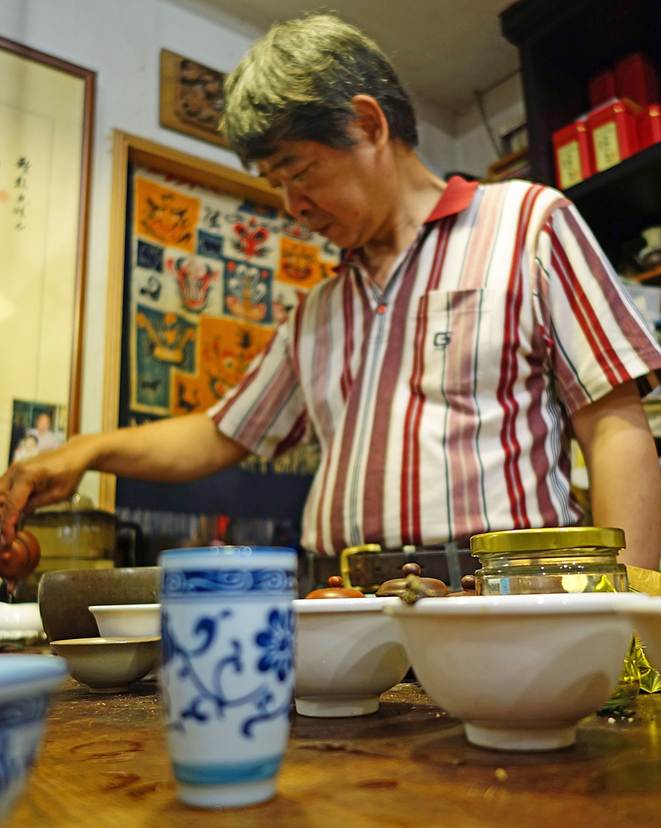
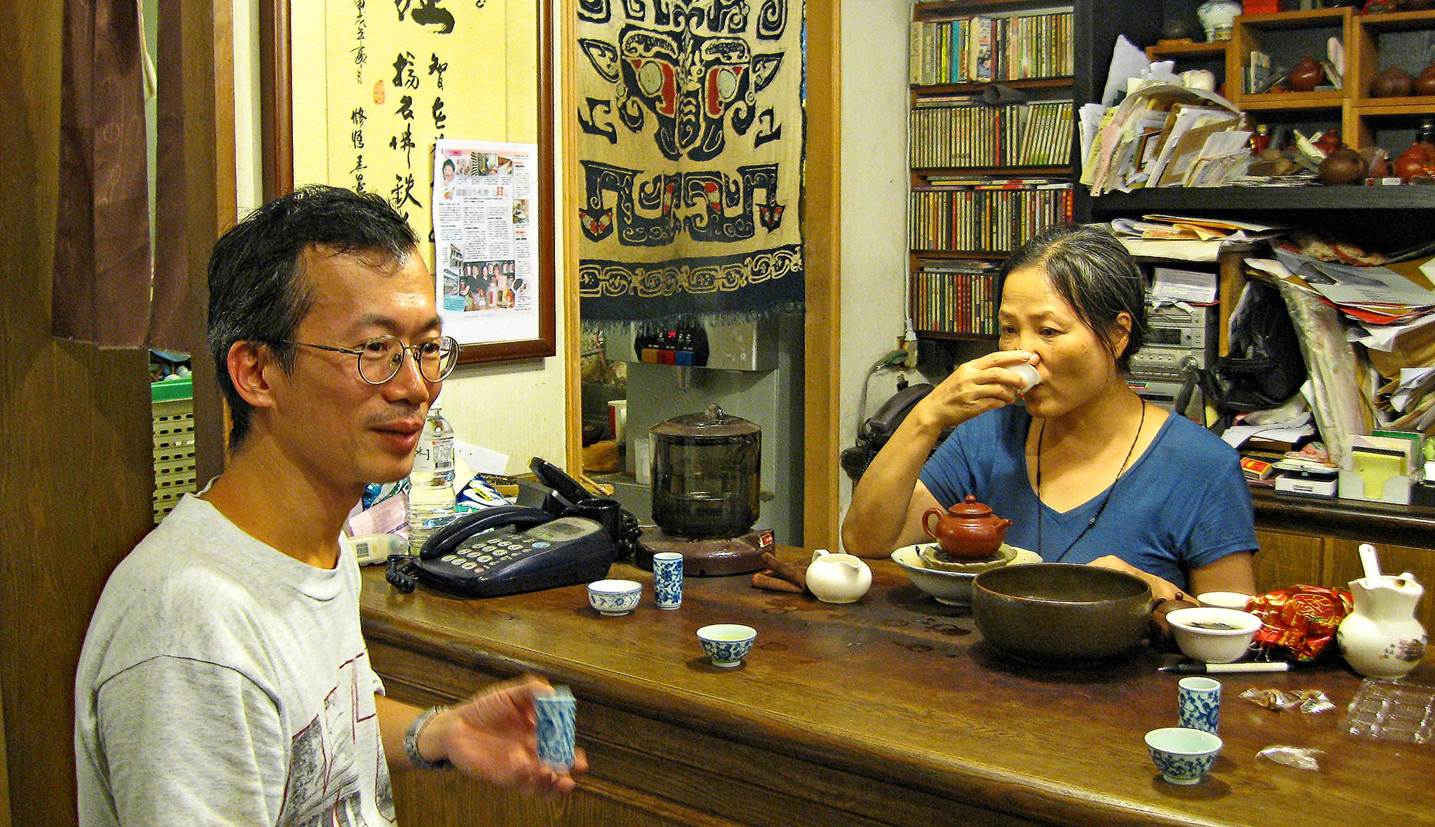
in a small tea shop of Wenshan District, next to National Chengchi University (國立政治大學).
|
|
|
[April
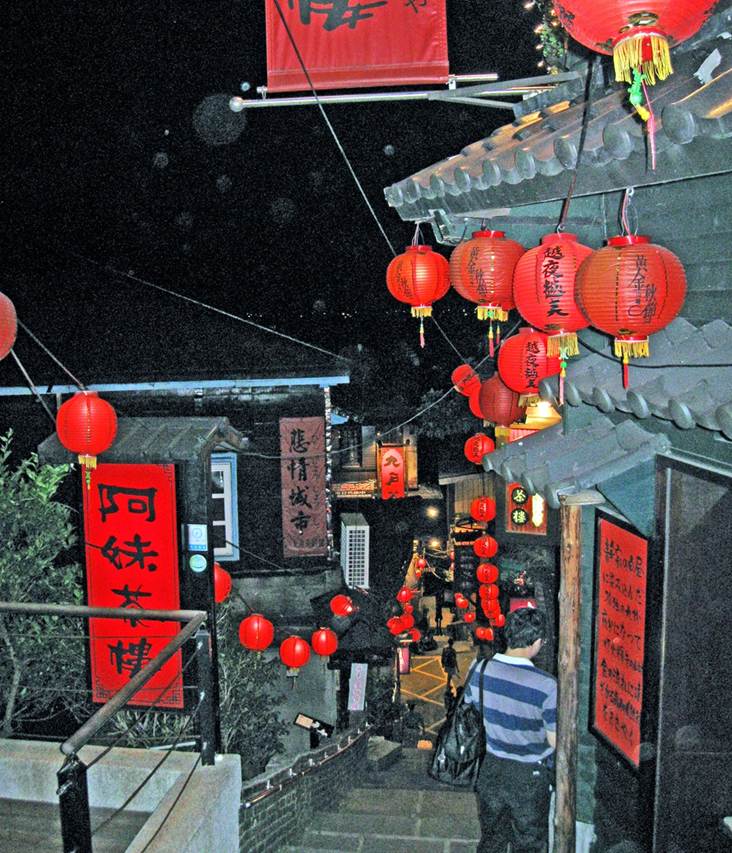
2017]
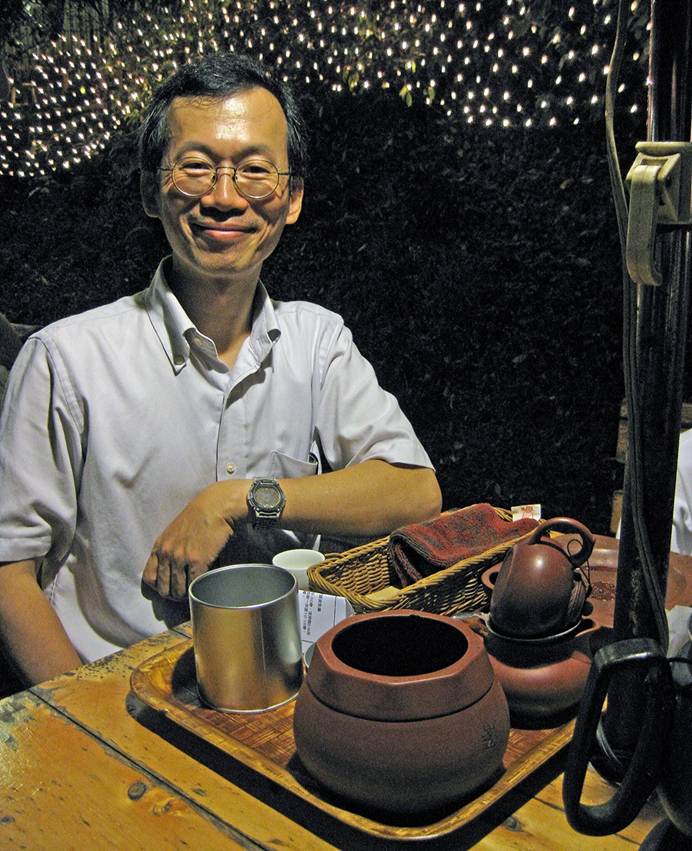
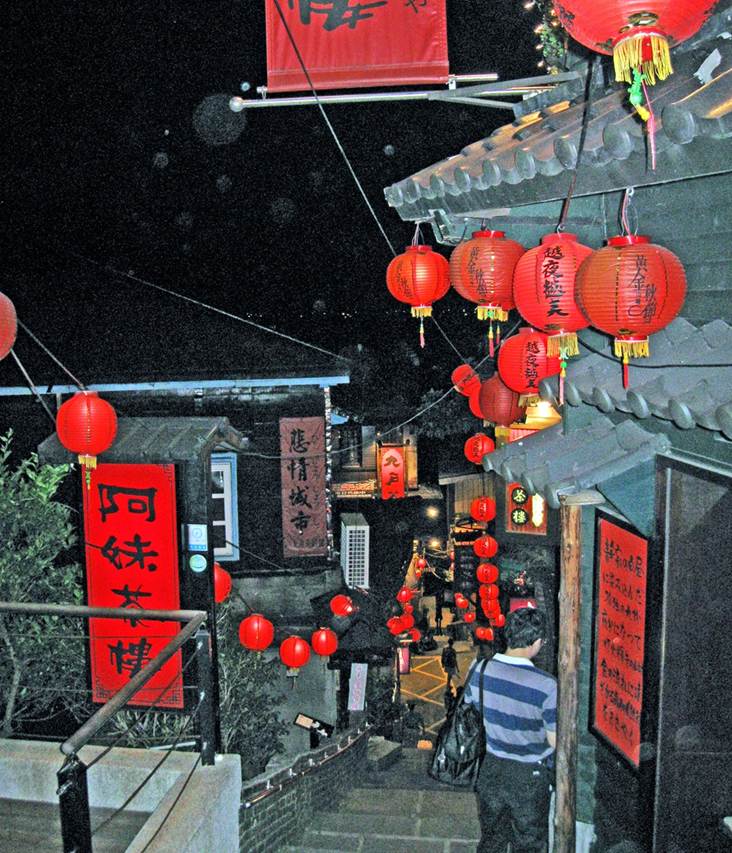
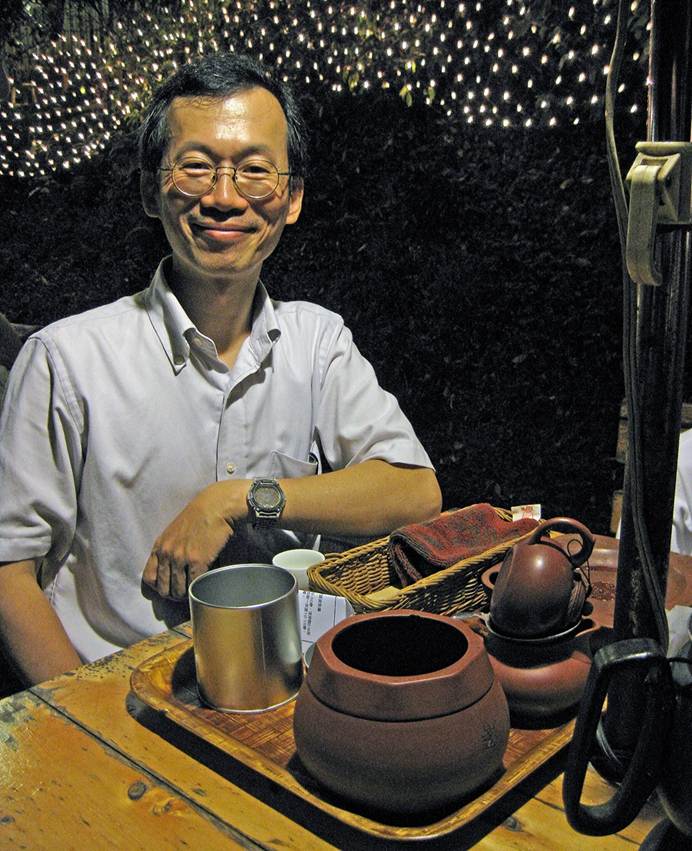
In a teahouse of the Maokong (貓空) hills above National Chengchi
University.
|
|
|
[June
2009]
Zhinan temple (指南宮):
[March 2025]
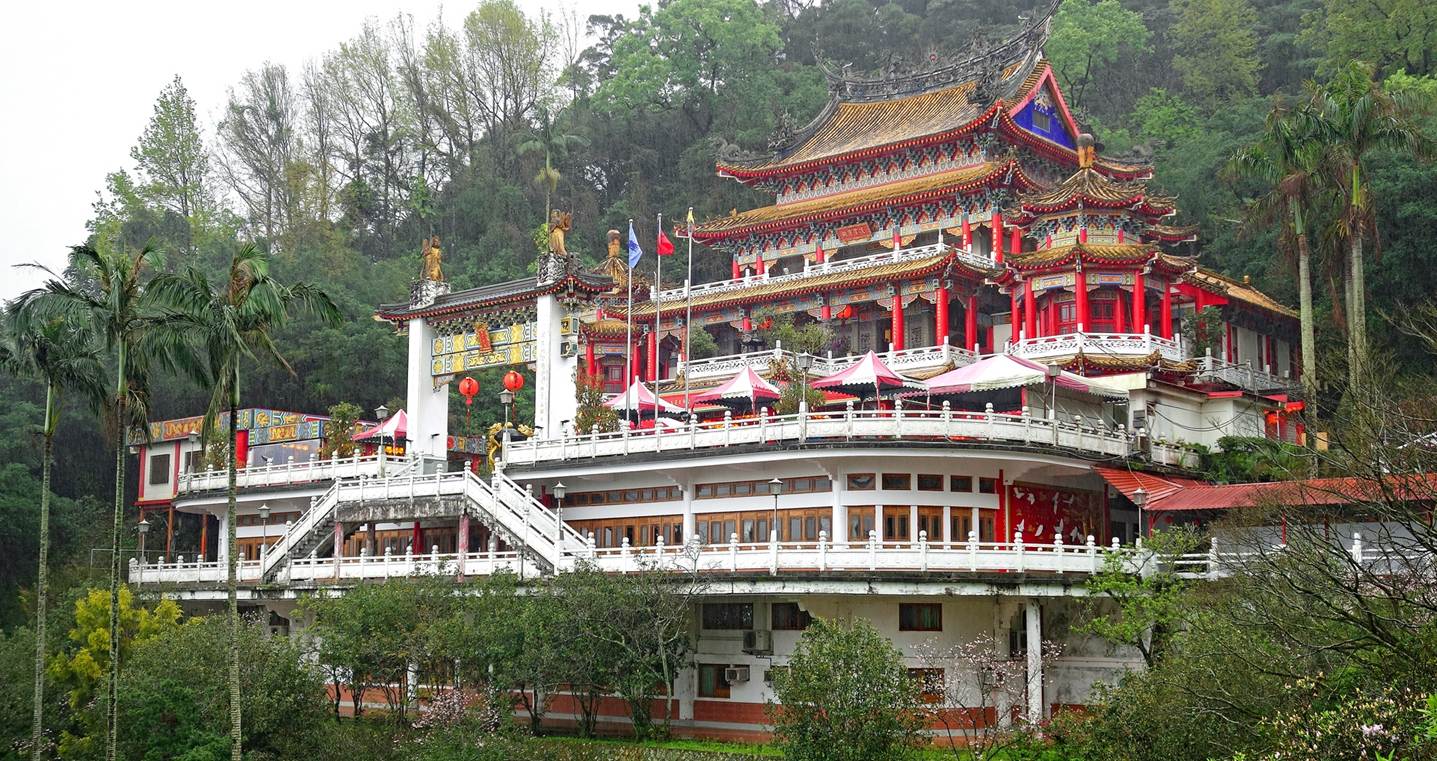
Located in the Maokong hills of the
Wenshan district, the Zhinan temple was first built in 1891. But, over time, it has been considerably expanded
and forms today a vast temple complex comprising several buildings dedicated to
distinct worships.
The temple complex is primarily
dedicated to Lu Dongbin (呂洞賓), one of the Eight Immortals (八仙) of Chinese mythology (he allegedly
lived 220 years). A scholar, a poet, and a county magistrate who lived during
the Tang Dynasty (618-907), Lu Dongbin was renowned for his kindness. He was deified posthumously.
The main building is the imposing
six-story Lingxiao Palace (凌霄寶殿, ″Hall of the High Heavens″), which was built between 1963 and
1966. Its primary deity is the Jade Emperor (玉皇上帝).
Two other important buildings in the
complex are the Dacheng Hall (大成寶殿)
dedicated to Confucius and the Mahavira Hall, also known as the Buddha Hall.
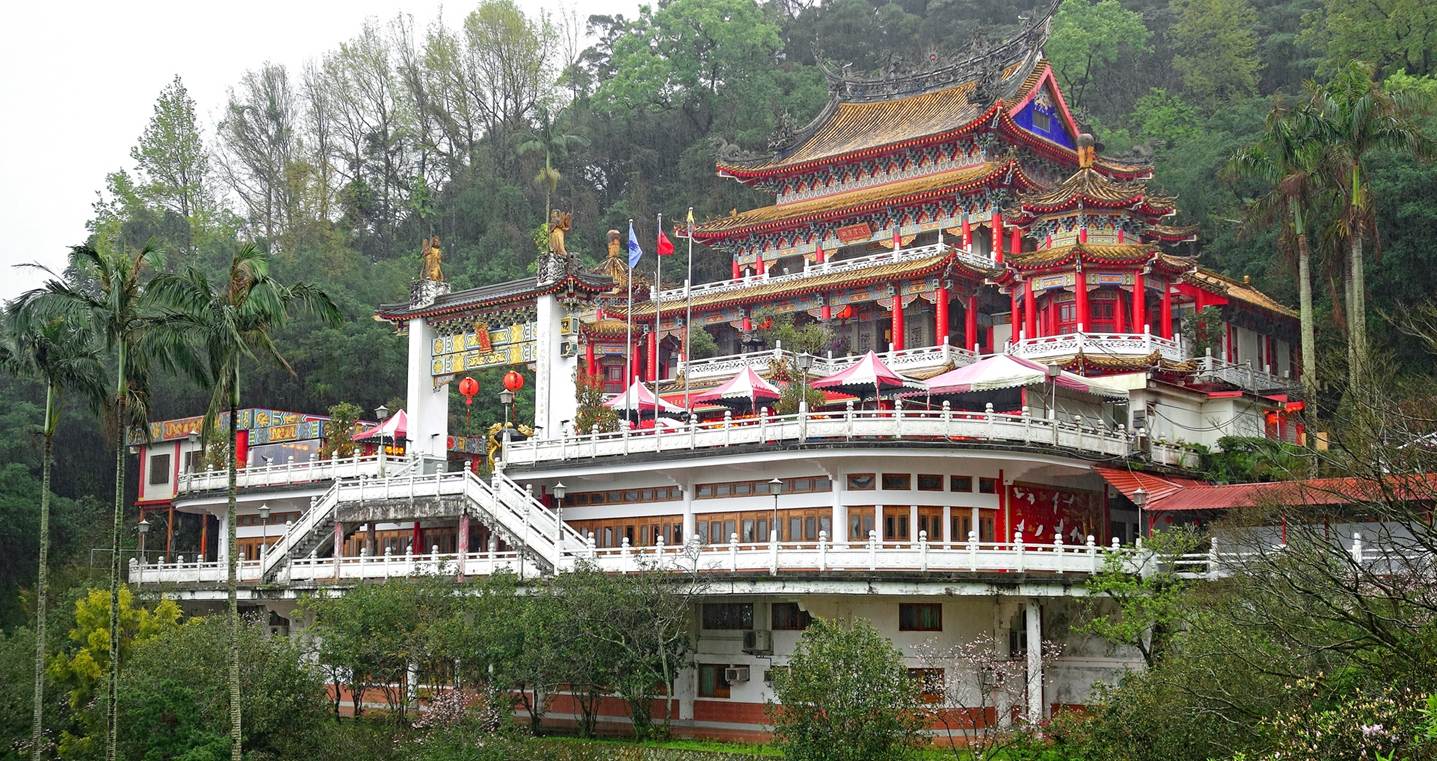
View of the Lingxiao
Palace.
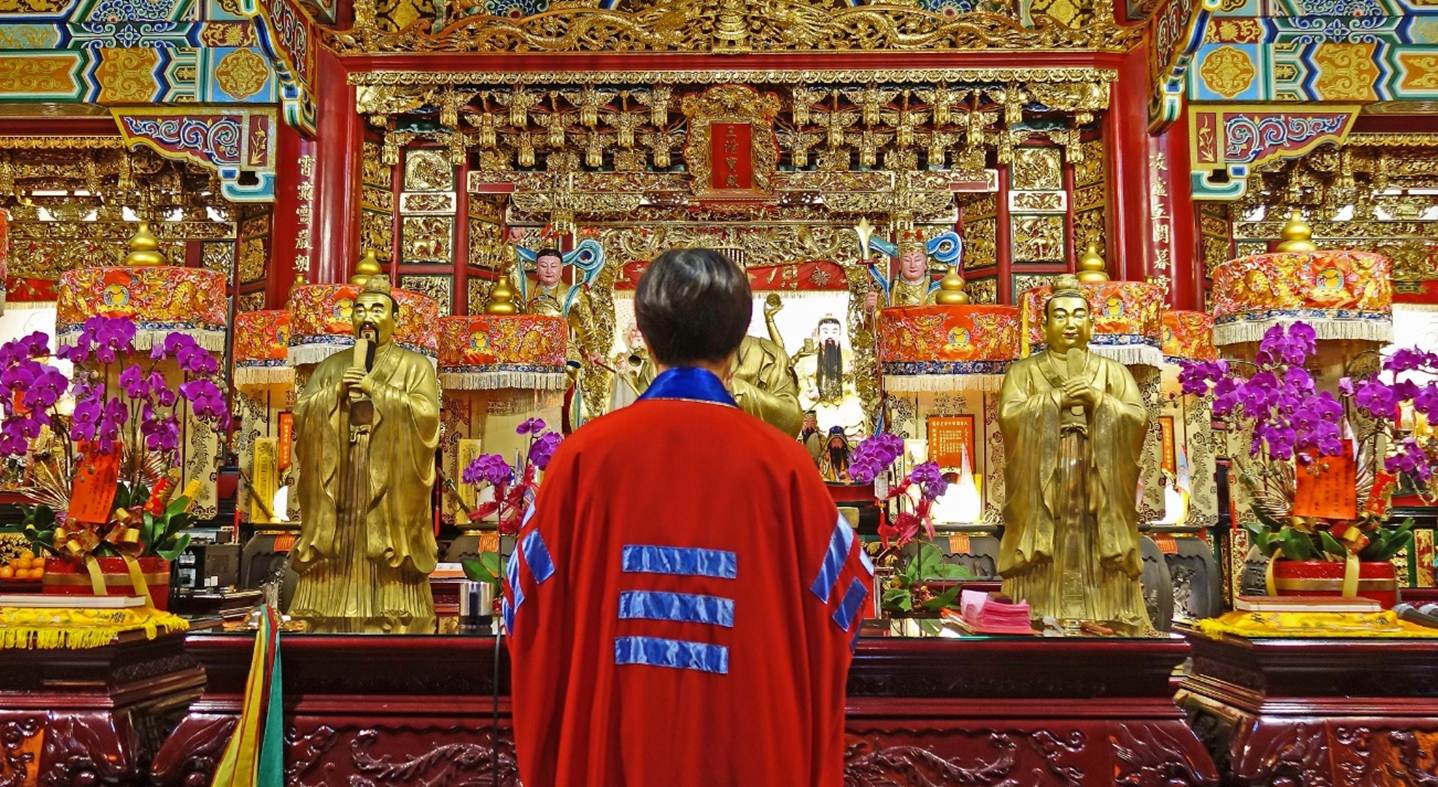
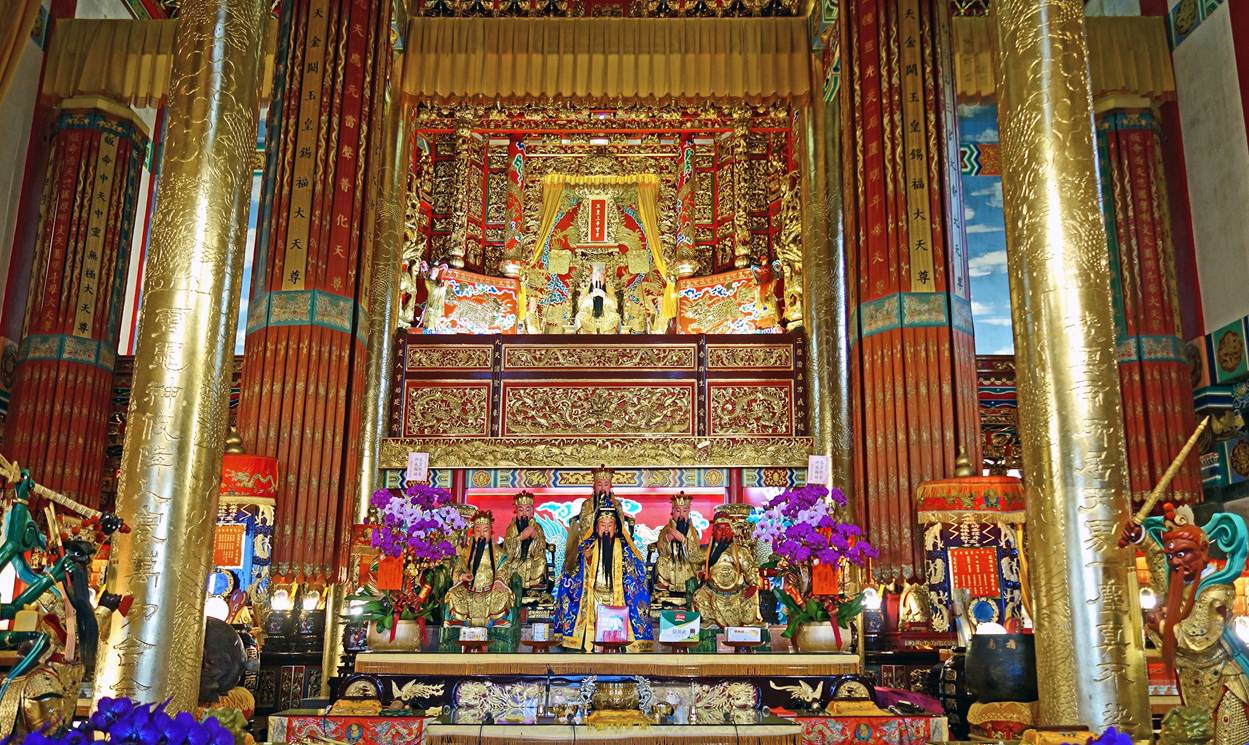
Hall featuring the Jade Emperor in the upper tier and two rows of three
deities in the lower tier.
The back row in the lower tier features the Three Great Officials, who subordinate only to the Jade Emperor. They are the Heavenly
Official (天官, ″Tianguan″), who bestows blessings; the Earthly
Official (地官, ″Diguan″), who pardons sins; and the Water
Official (水官, ″Shuiguan), who relieves calamities.
The front row features Zao Jun (灶君), the kitchen god; Lu
Dongbin; and Guandi (關帝), the god of war.
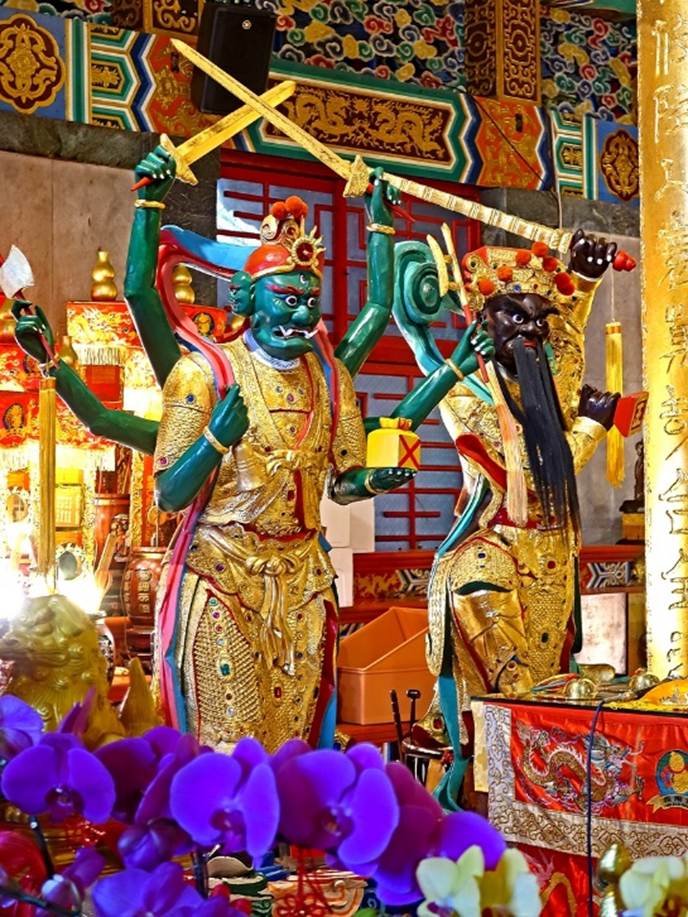
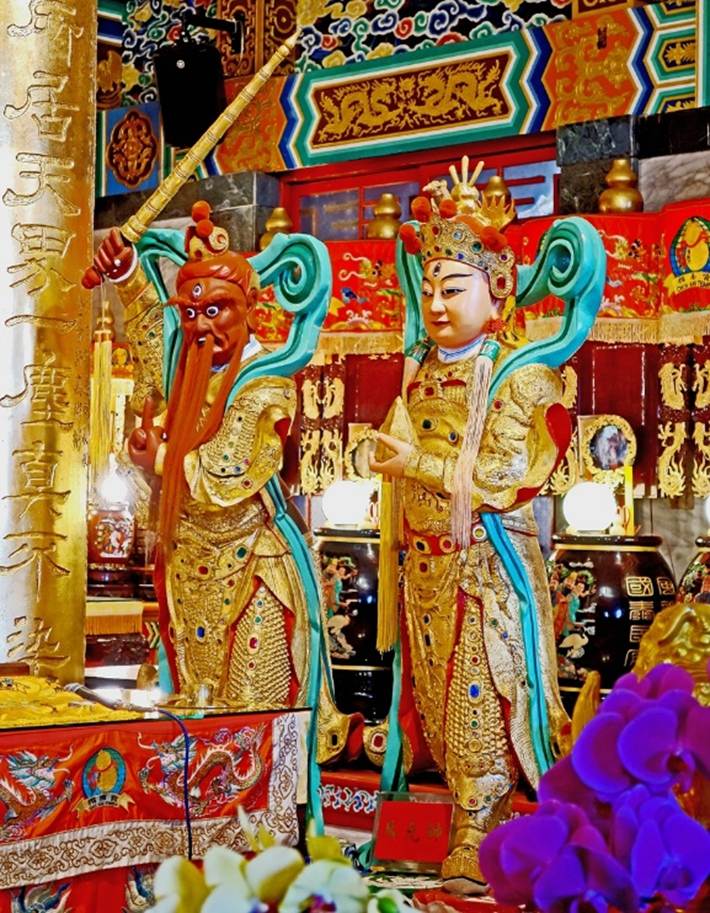
Guardian deities in the
same hall.
|
|
|
Nuns praying in a large
hall housing the Jade Emperor and many deities inside the Lingxiao Palace.
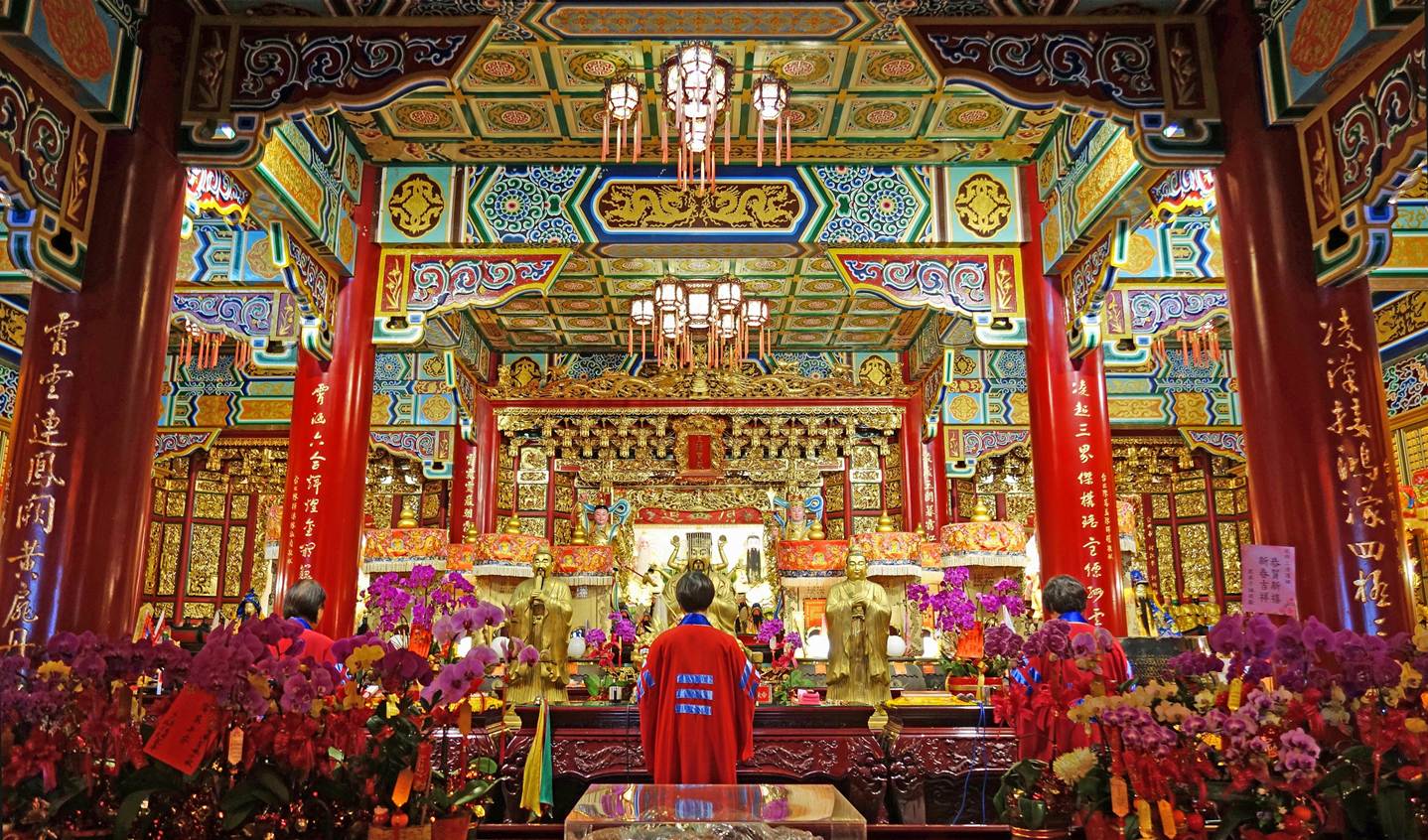
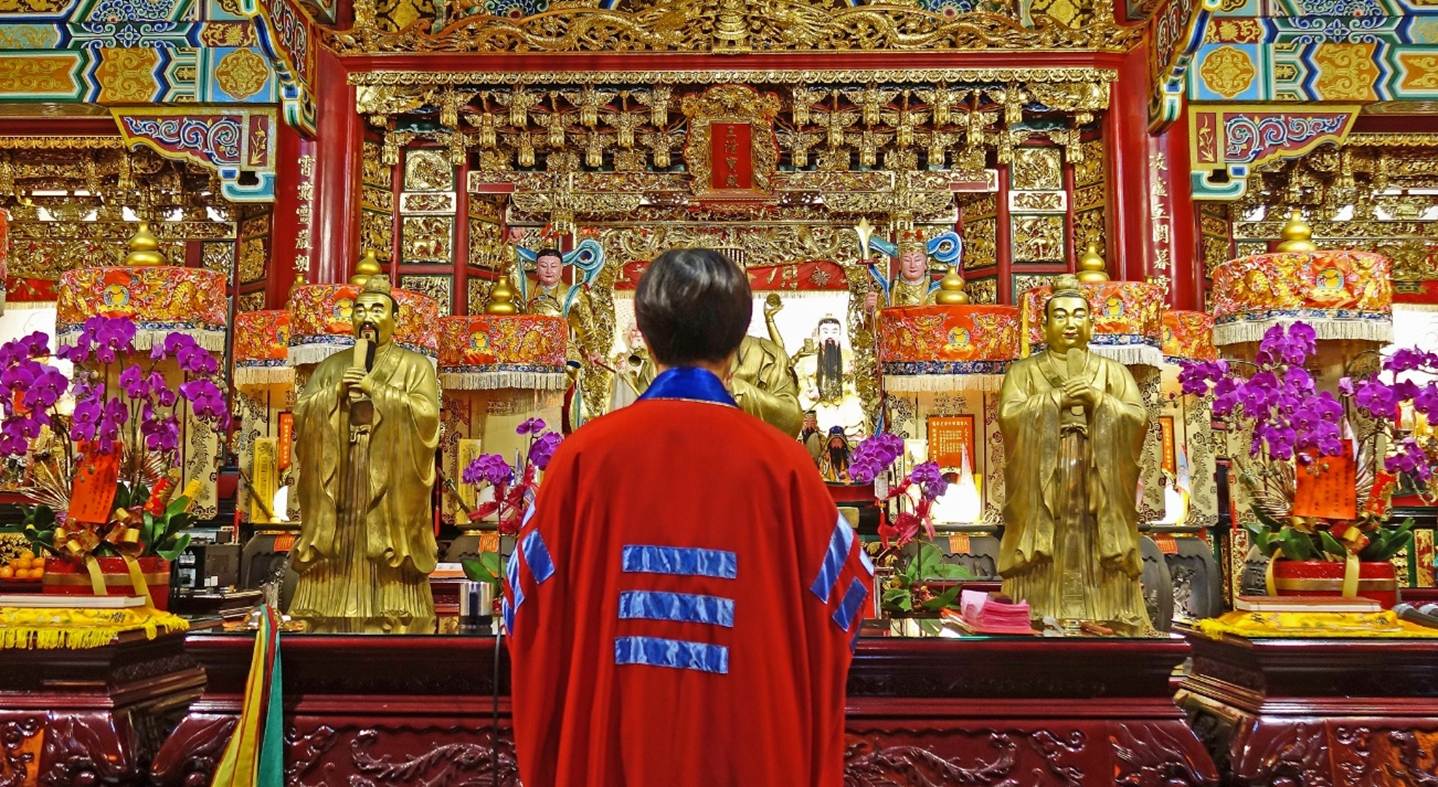
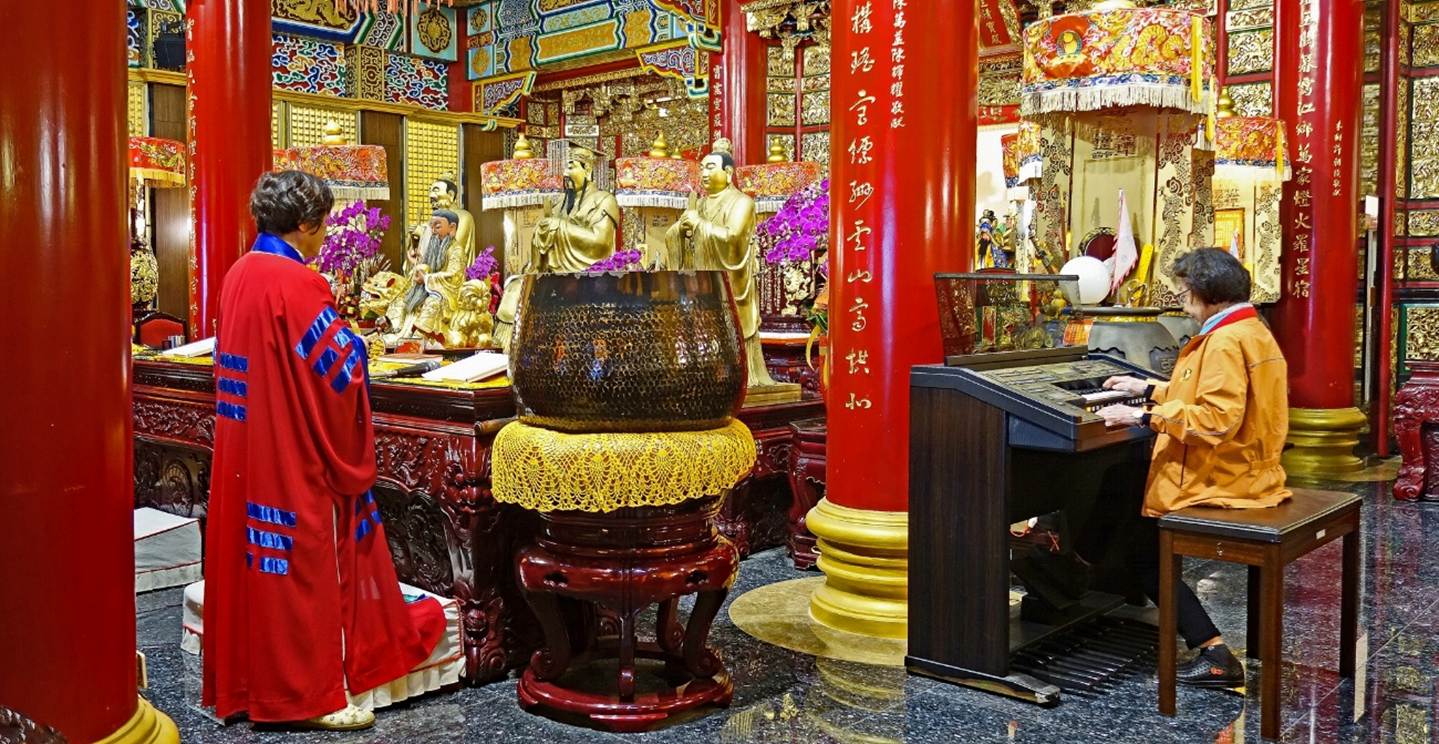
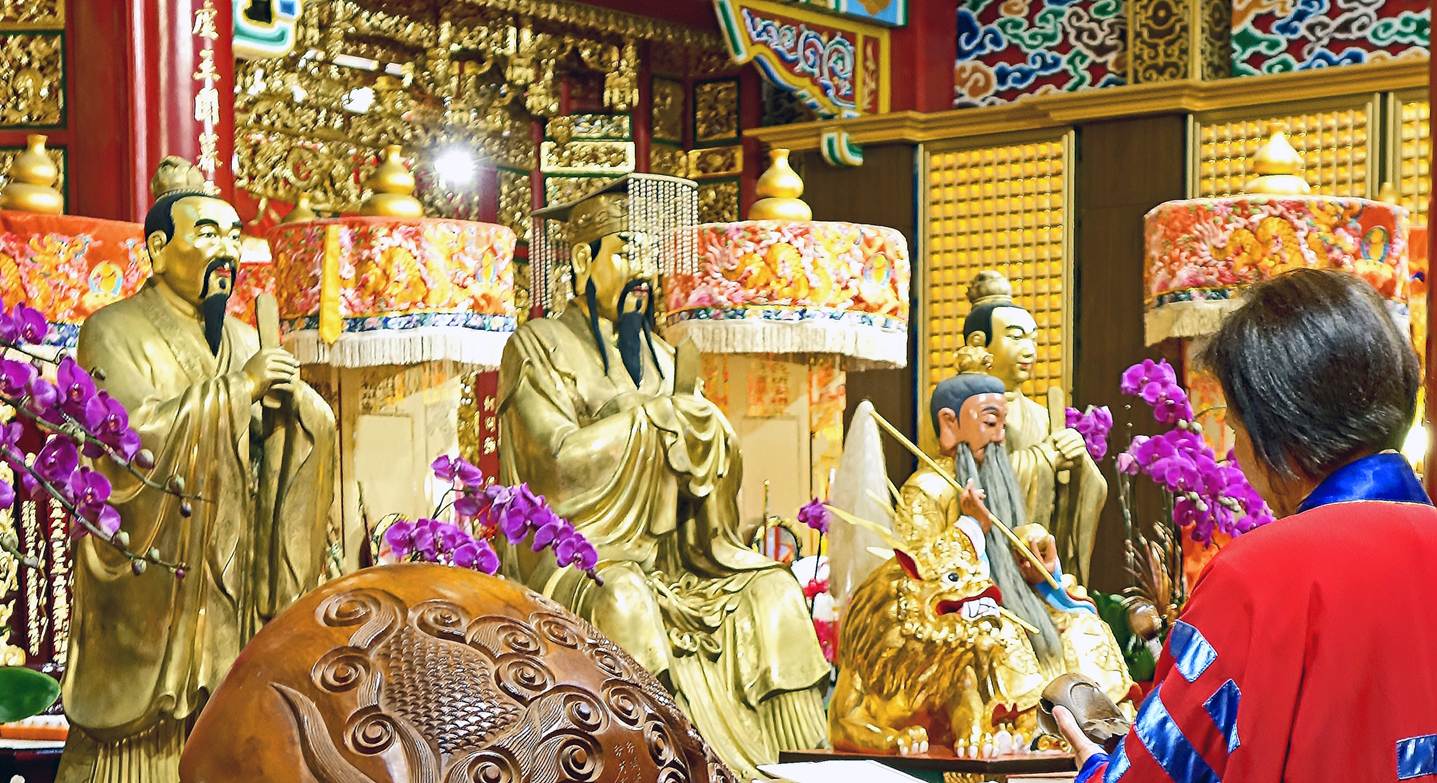
The deity riding a lion, in front of the Jade
Emperor, at the bottom center-right of this photo is Taiyi Jiuku Tianzun (太乙救苦天尊). He is one of the highest-ranking and most compassionate deities
in the Taoist pantheon, highly revered for his vow to rescue all sentient
beings from suffering. His riding
of a lion symbolizes his power to tame and control all fierce energies.
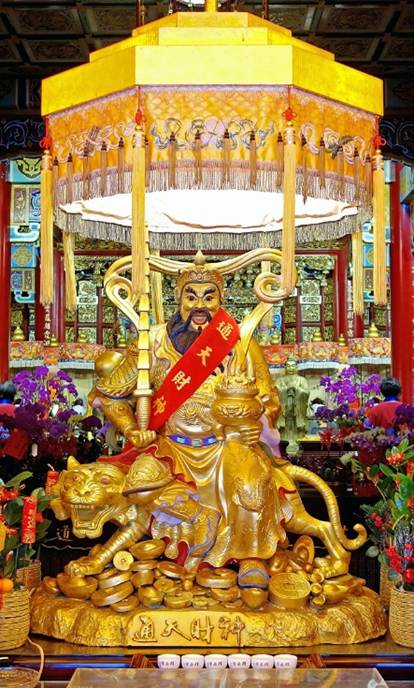
Statue of
Zhao Gongming (趙公明), the main god of wealth, riding a
tiger, in the same hall. His riding of a tiger symbolizes his ability to tame
chaotic forces to make them work for useful purposes.
|
|
|
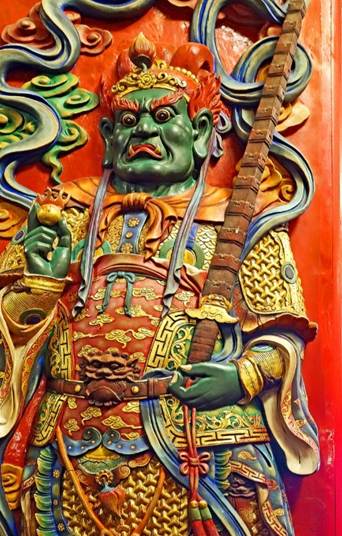
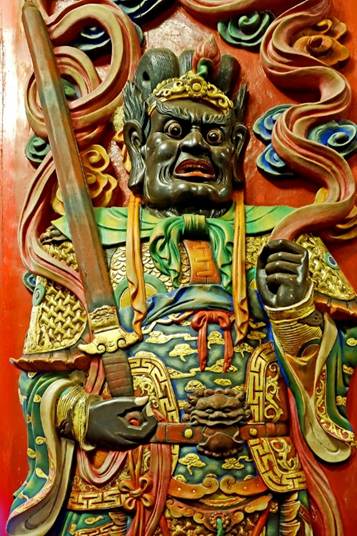
Carved figures on wooden
doors in the Lingxiao Palace.
|
|
|
|
|
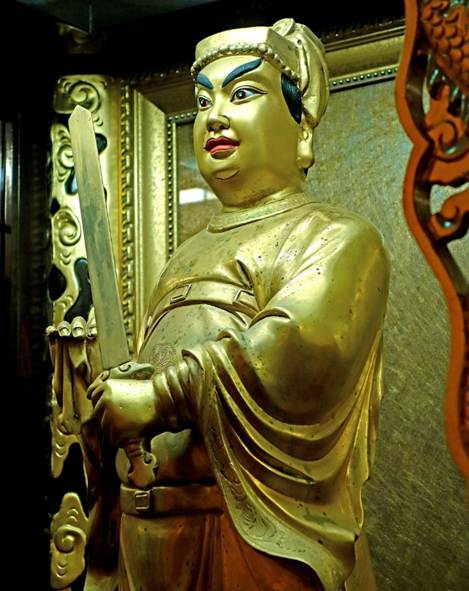
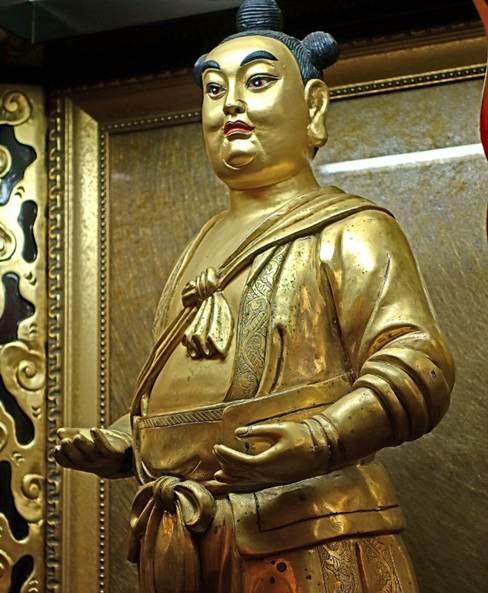
Three of the 60 statues
of the Tai Sui deified generals, in an unusually large Tai Sui hall, within in
the Lingxiao Palace [See Songshan
Ci Hui temple (above)]
|
|
|
|
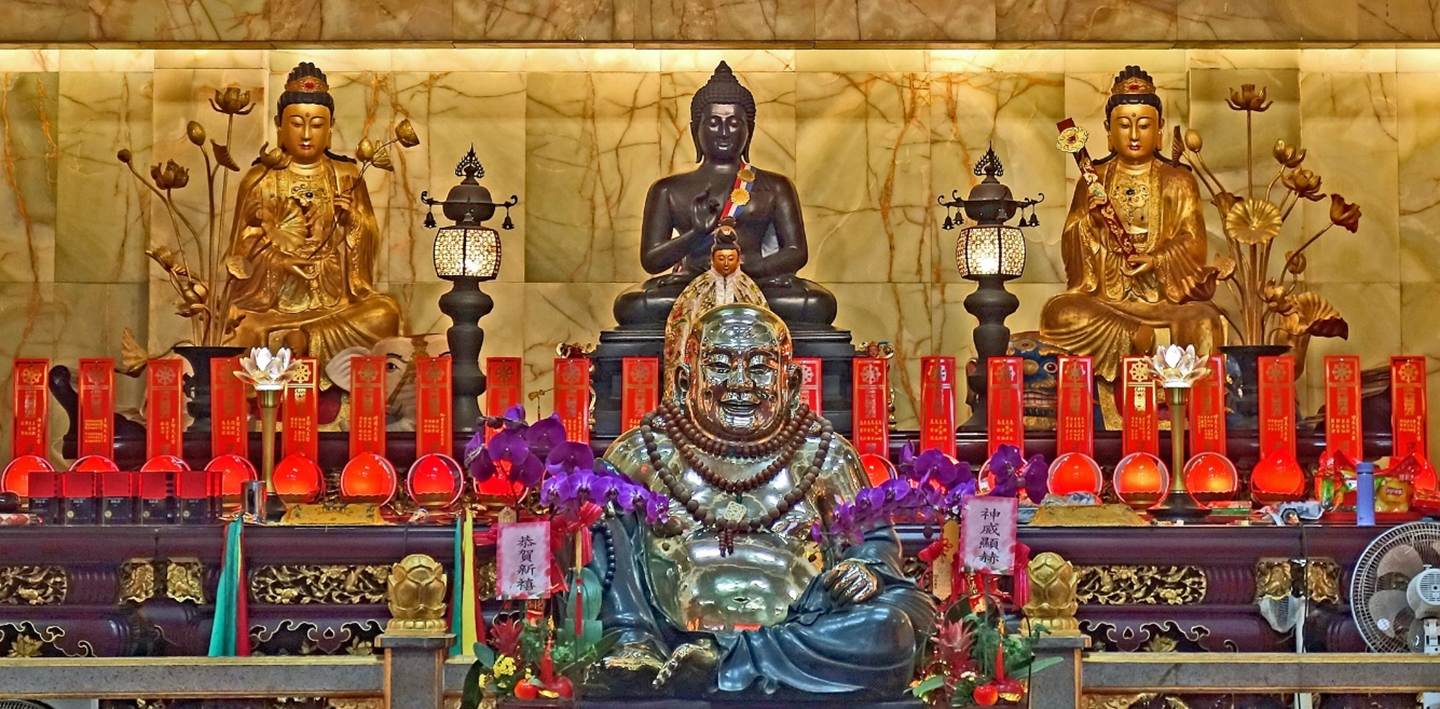
Buddhist statues in the
Buddha Hall of the temple.
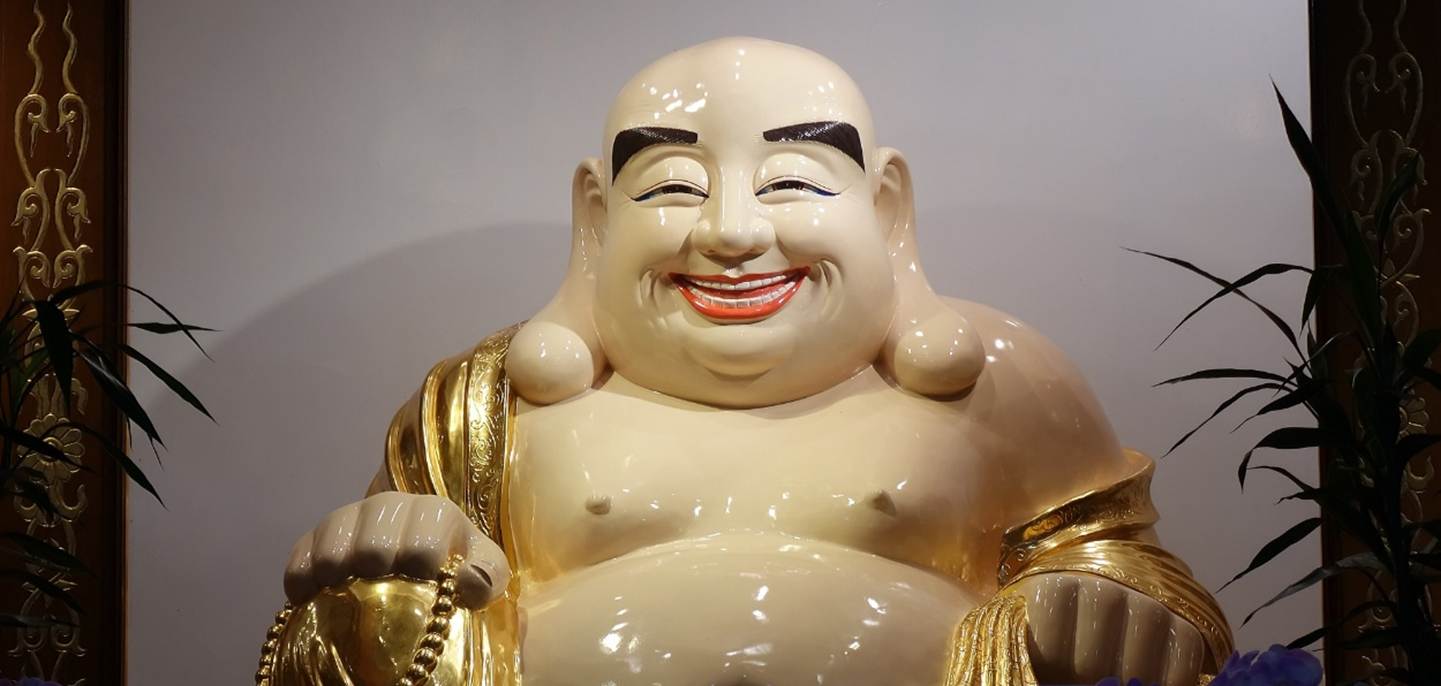
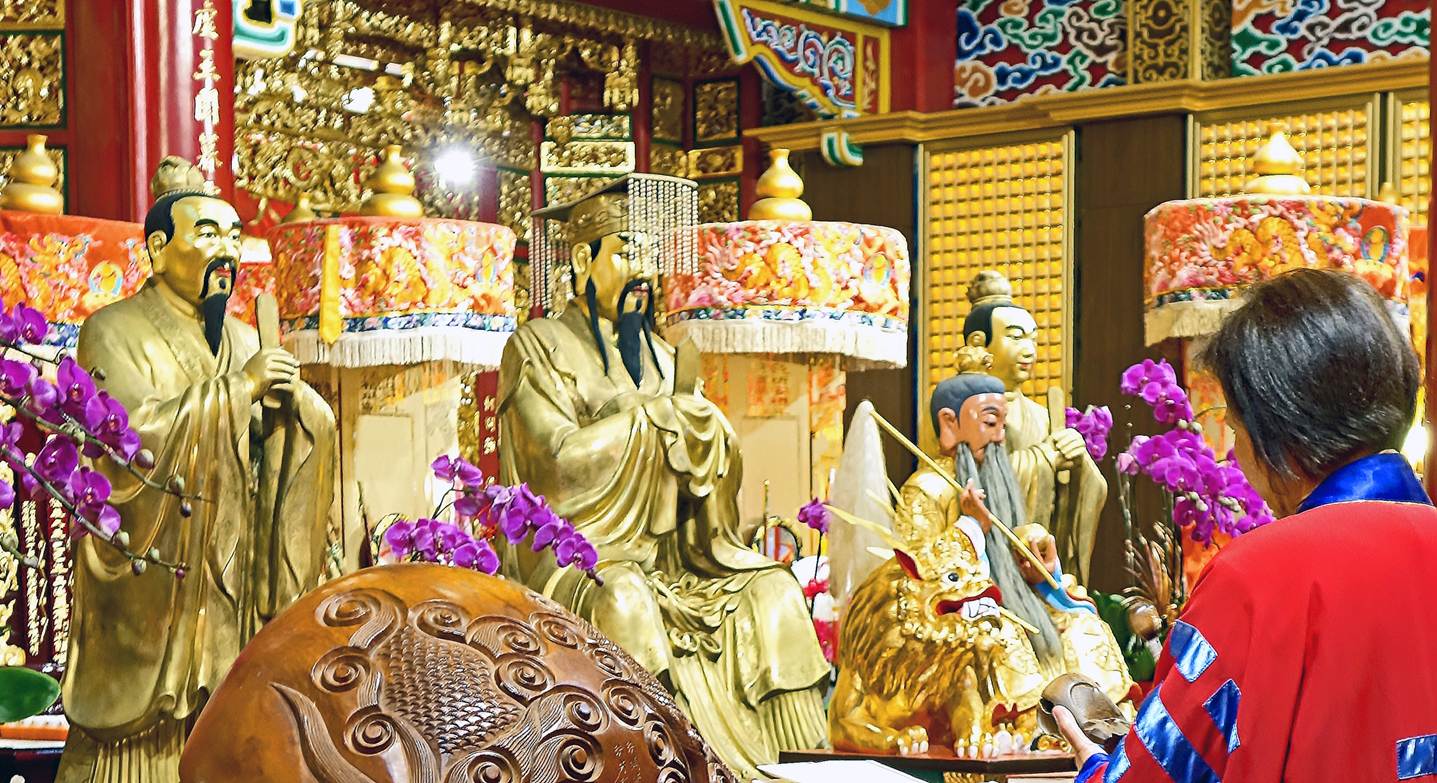
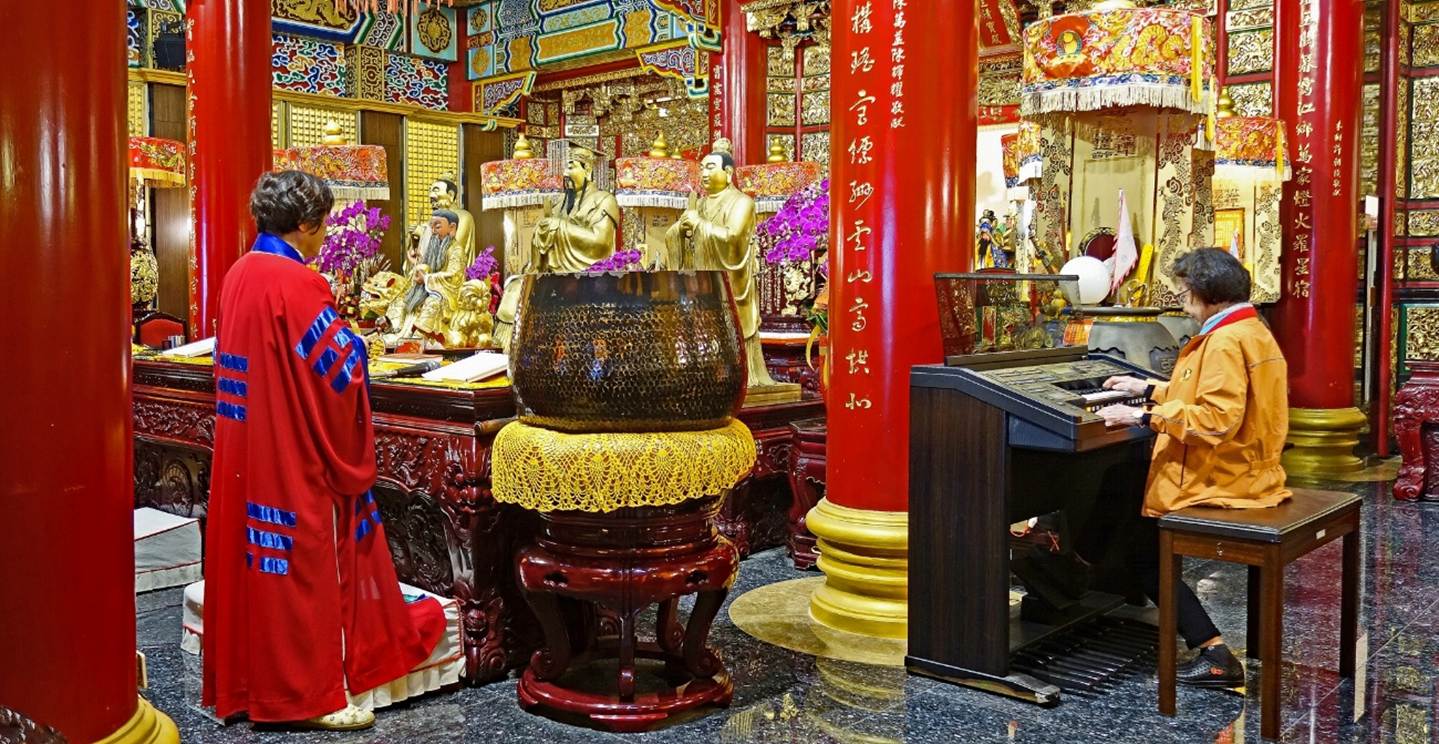
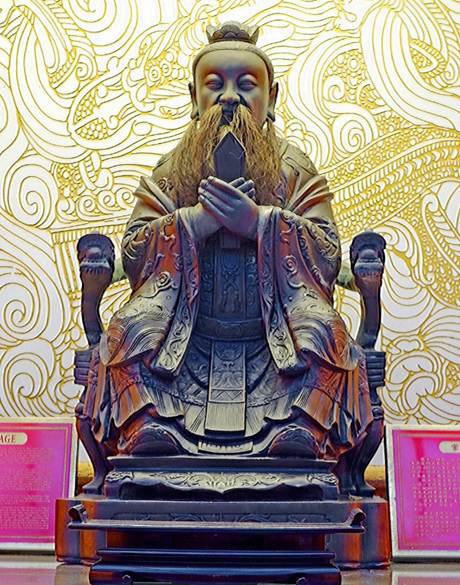
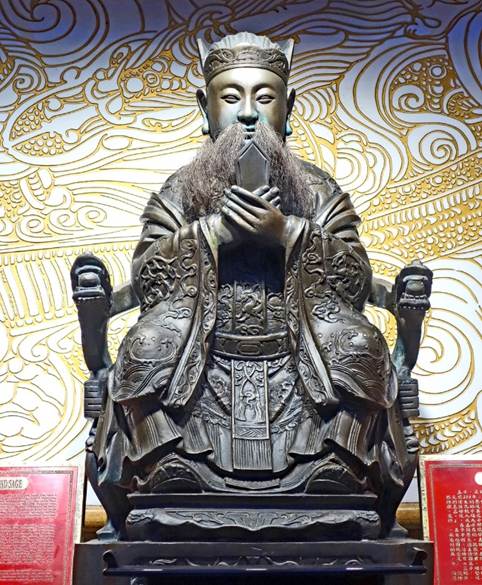
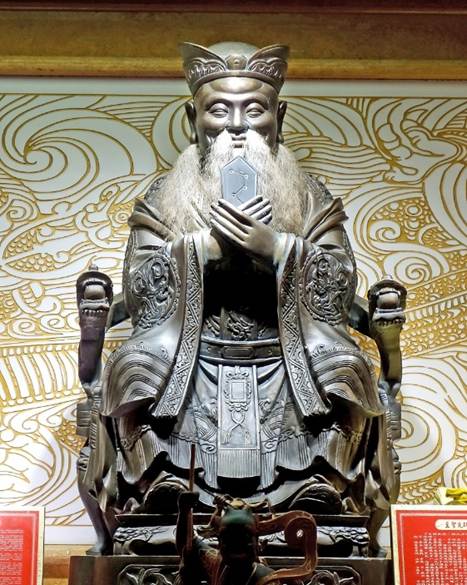
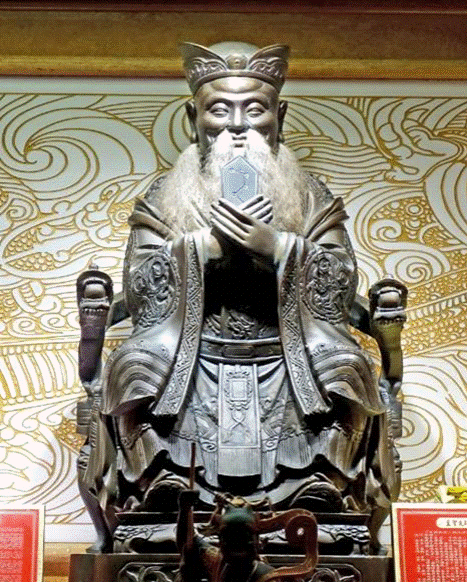
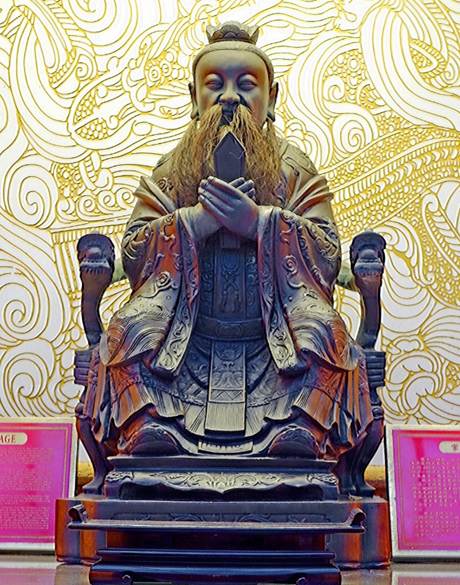
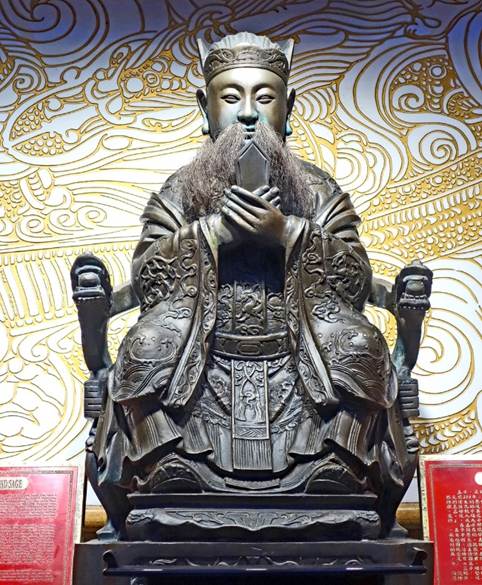
Statues in
the Dacheng Hall. They
represent from left to right:
- Confucius (孔子) (551-479BCE), the Supreme Sage and Teacher,
- Zengzi (曾子) (505-435BCE), a prominent disciple of Confucius.
He was sixteen when he started studying under Confucius. He was influential in
shaping Confucian philosophy and is closely associated with the compilation and
transmission of ″The Great Learning″. He taught Kong Ji
(481-402BCE), better known as Zisi, the grandson of Confucius.
- Mencius (孟子) (372-289BCE), while not a direct disciple of
Confucius (as he lived later), is revered as the ″Second Sage″ for
deeply systematizing and expanding upon Confucian thought. His teachings
heavily emphasize ethics and benevolent government. He is credited with
amplifying the theory of the inherent goodness of human nature.
|
|
|
|
Yinhe cave, temple and waterfall (銀河洞):
[November 2014]
(Note: This place is located in New
Taipei City. I include it here because it is very close to the border between
Taipei City and New Taipei City, and easily reached by a hiking trail from the
Wenshan district of southern Taipei.)
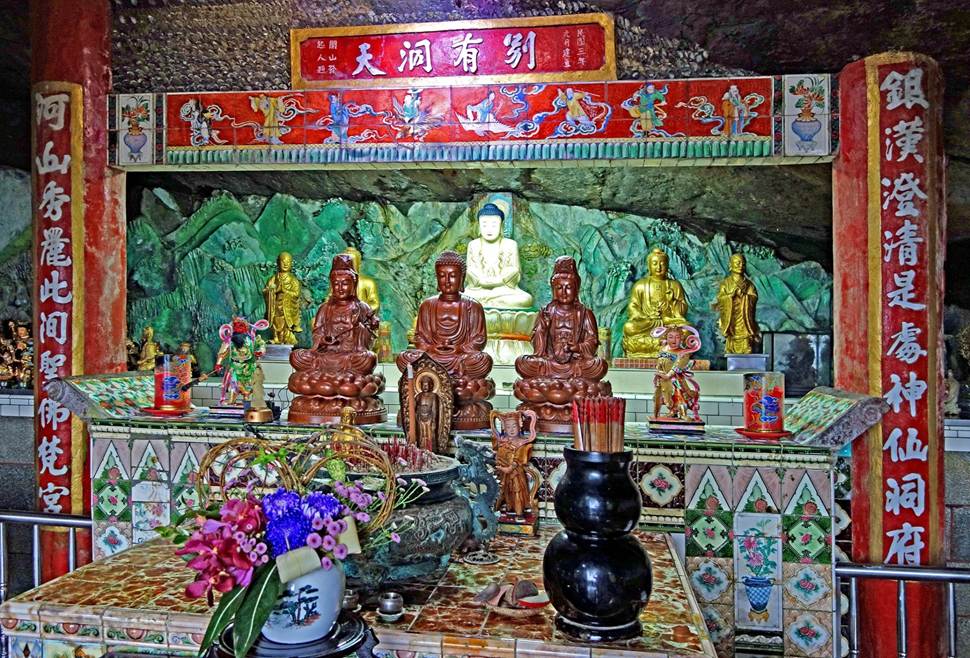
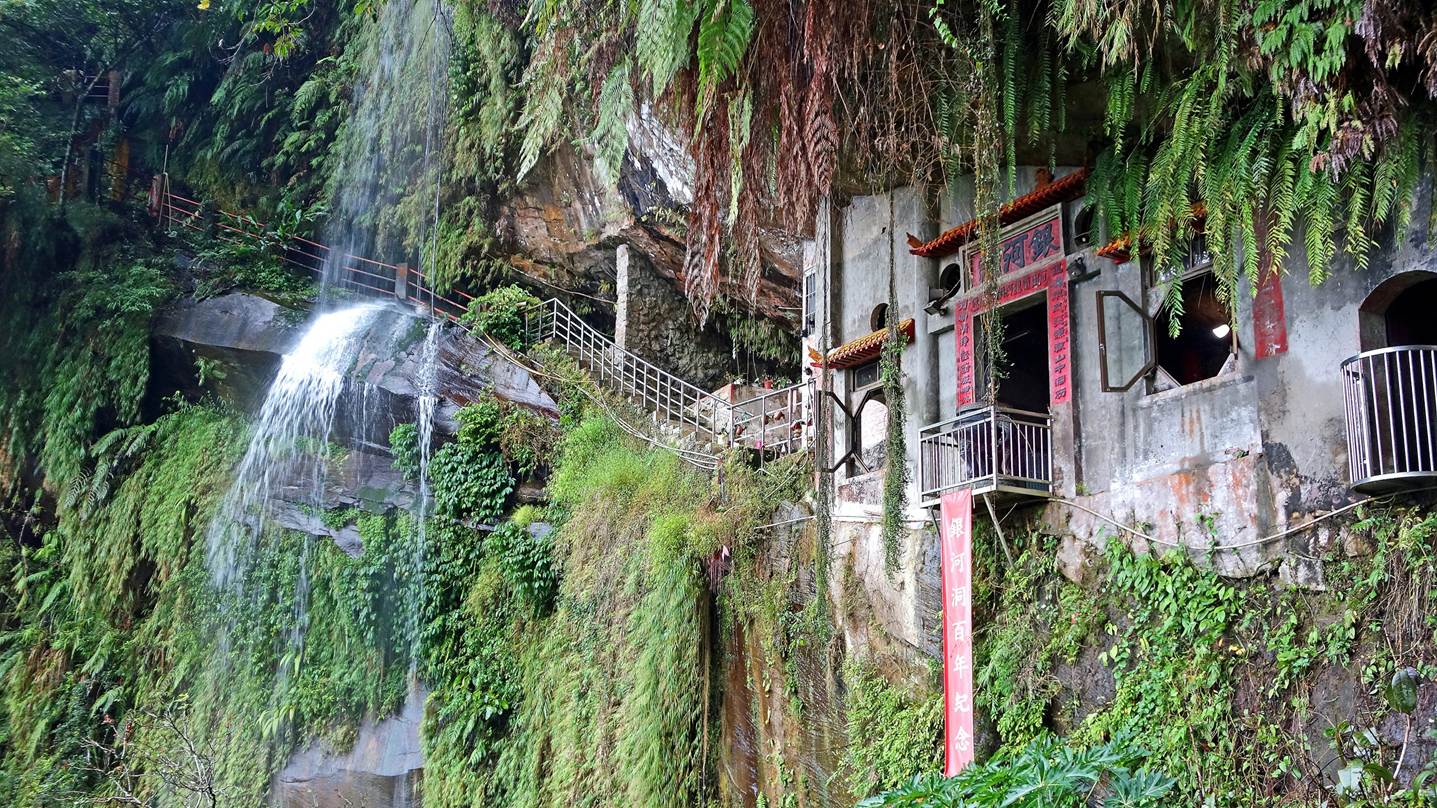
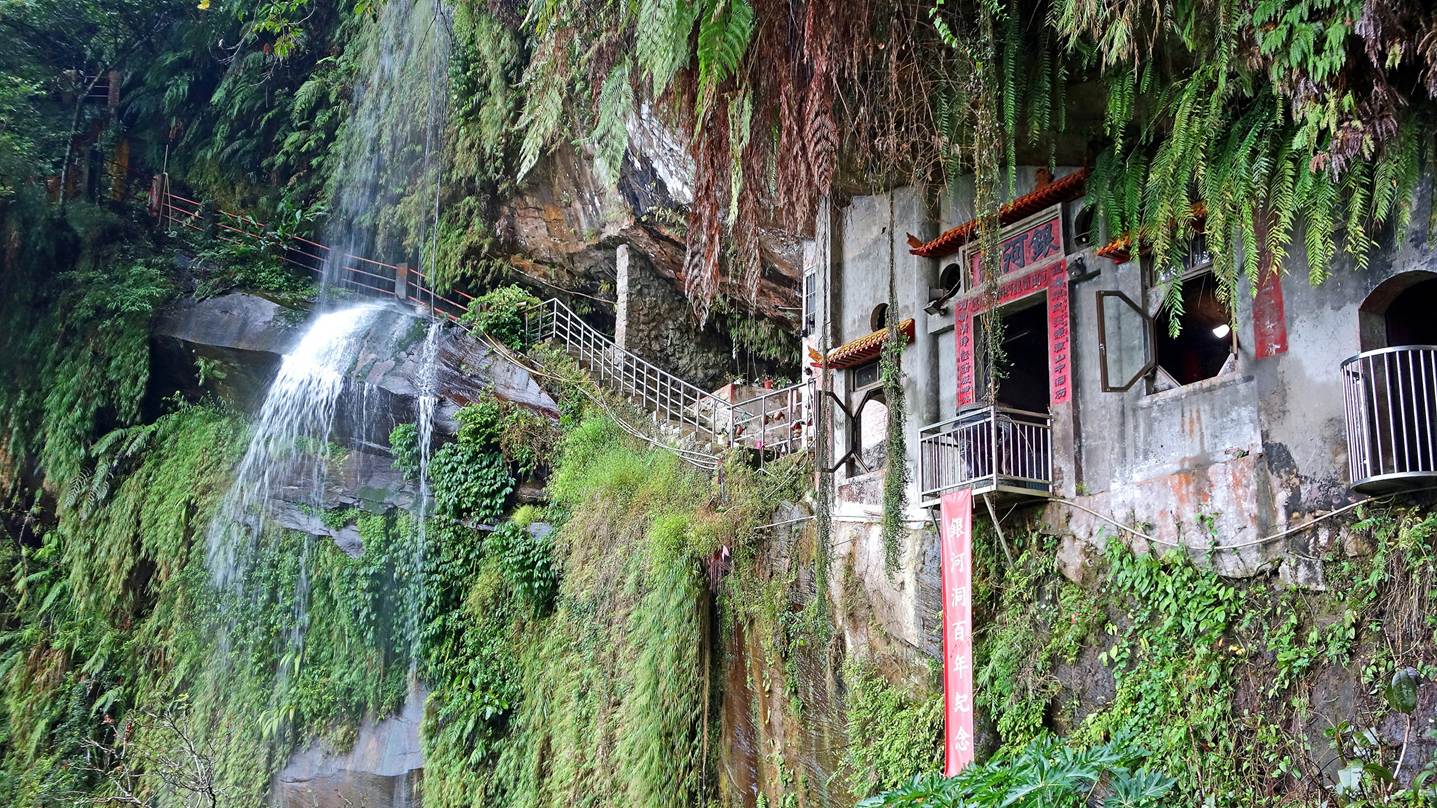
The small Yinhe temple (actually, more
of a shrine than a temple) is quite unusual: it is built into a cave and on the
side of a vertical cliff, next to a waterfall. It is accessed by a staircase
built into the cliff.
The temple and the cascade, surrounded
by lush vegetation.
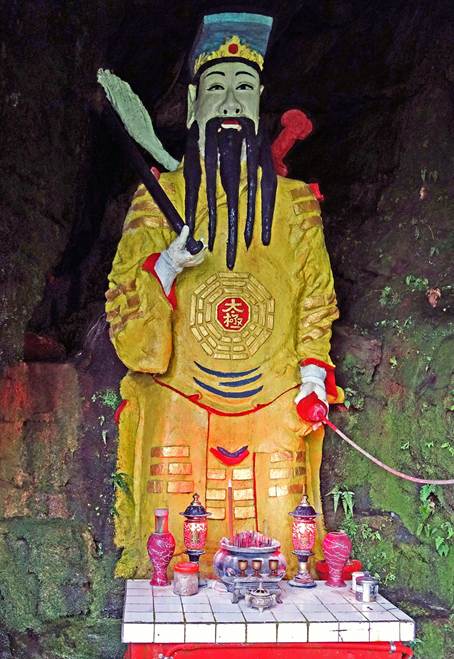
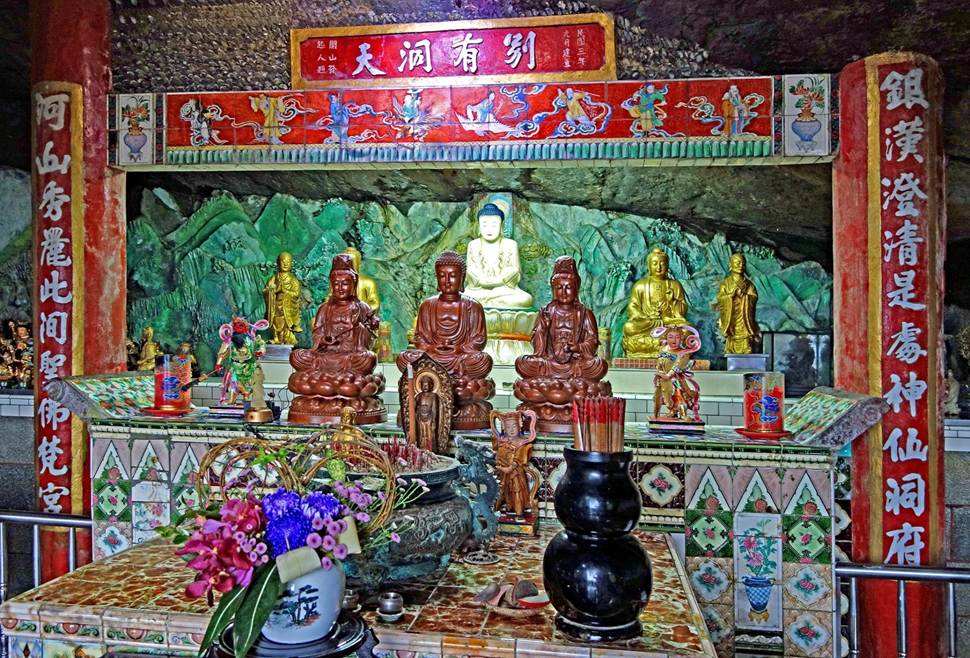
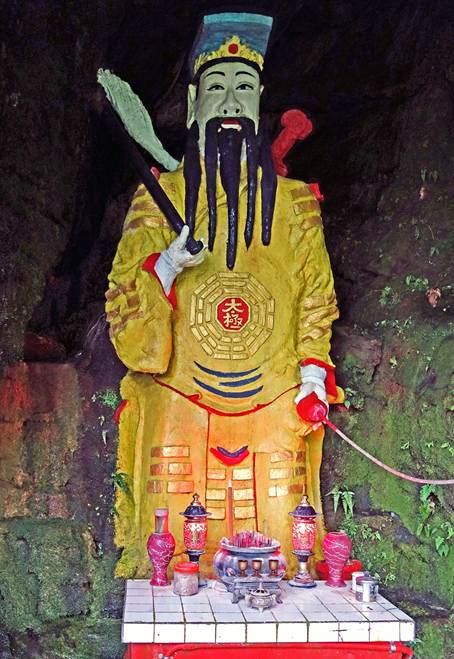
Altar dedicated to Guanyin and statue of
Lu Dongbin [see the Zhinan temple
(above)] in the
temple.
|
|
|