Tono and surroundings, and Morioka,
Iwate Prefecture, Northern Honshu,
Japan (May-June 2025)

Back
to main Japan May-June 2025 page
This page
shows photos from the town of Tono and its surroundings in central Iwate
Prefecture and from Morioka in western Iwate Prefecture.
To see the
locations of the places pictured below, click here. (A Google map with red markers will open in a new tab.)
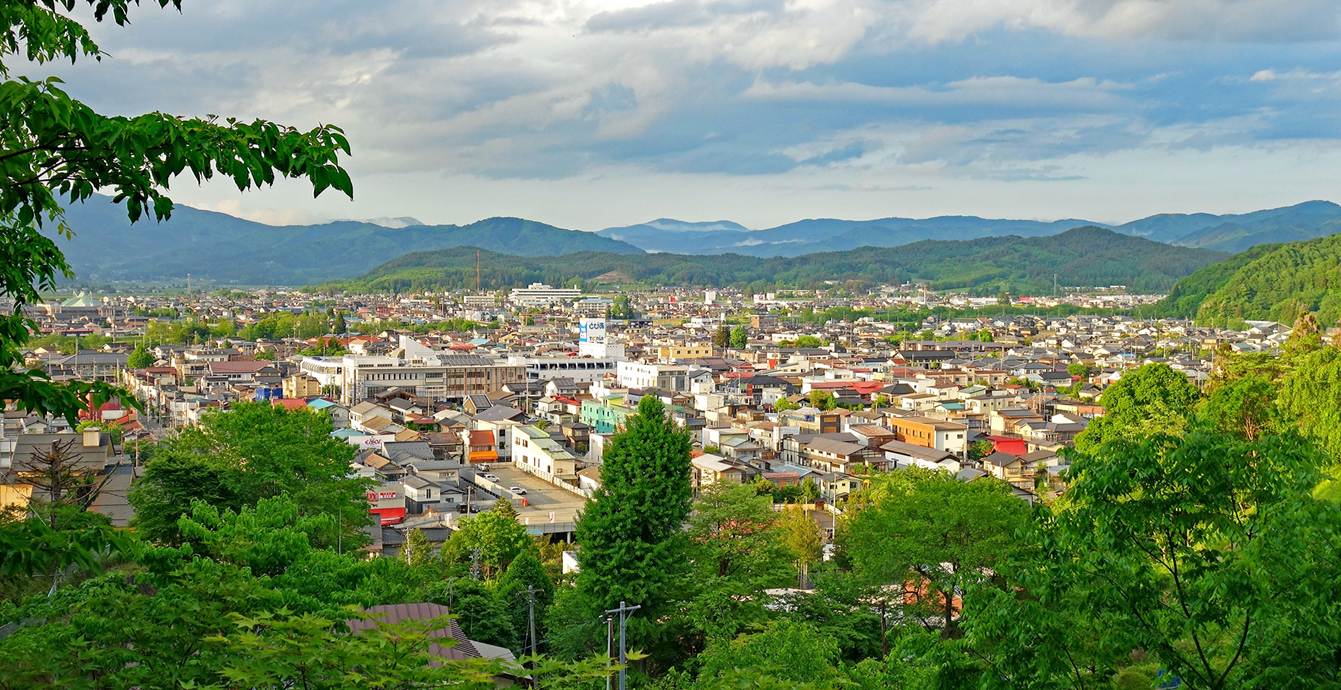
Town of Tono.
View over the northern part of the town
from a hill above the Nanbu shrine. The town lies in the floodplain of the Sanugaishi river, which is surrounded by hills and
mountains.
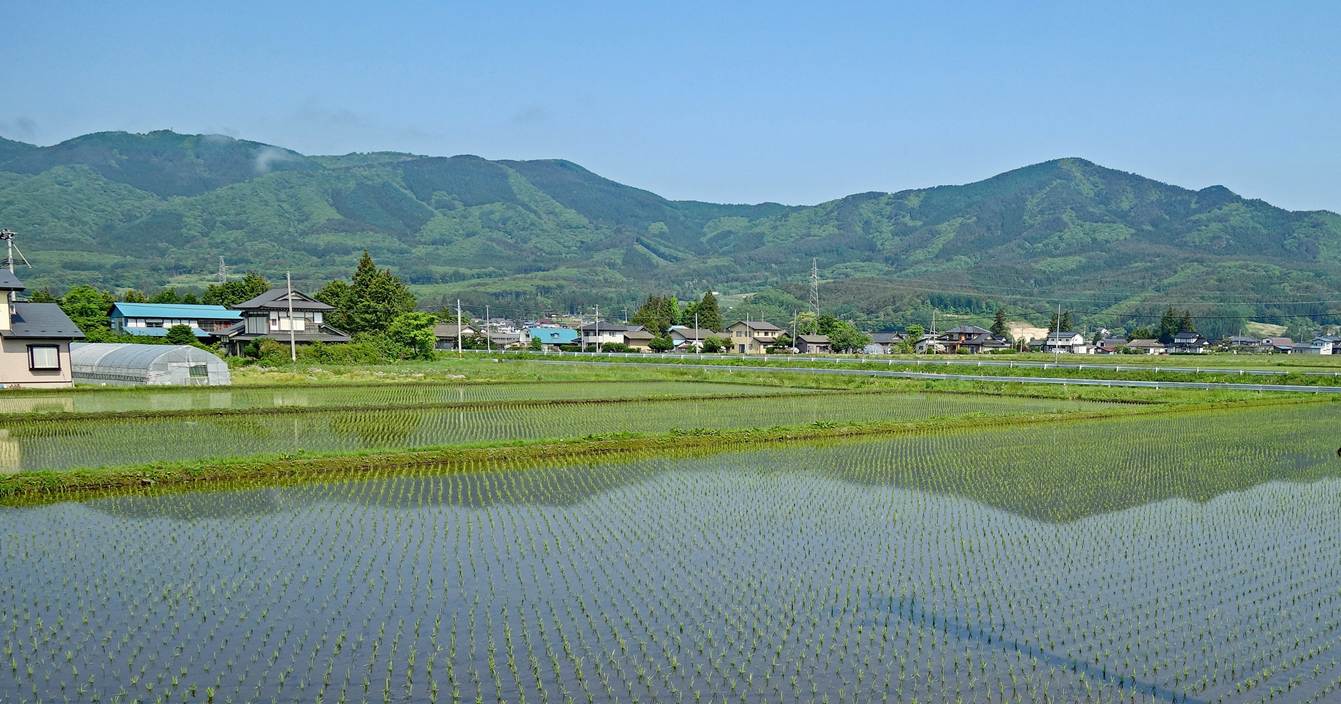
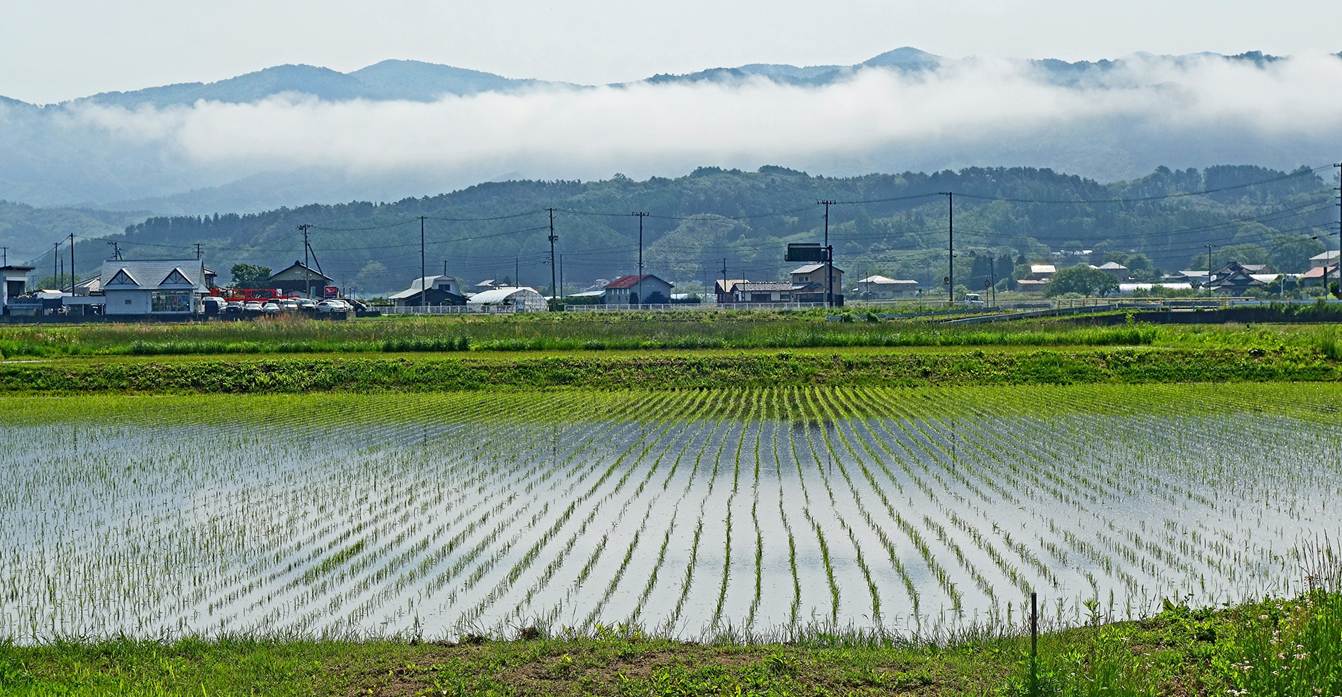
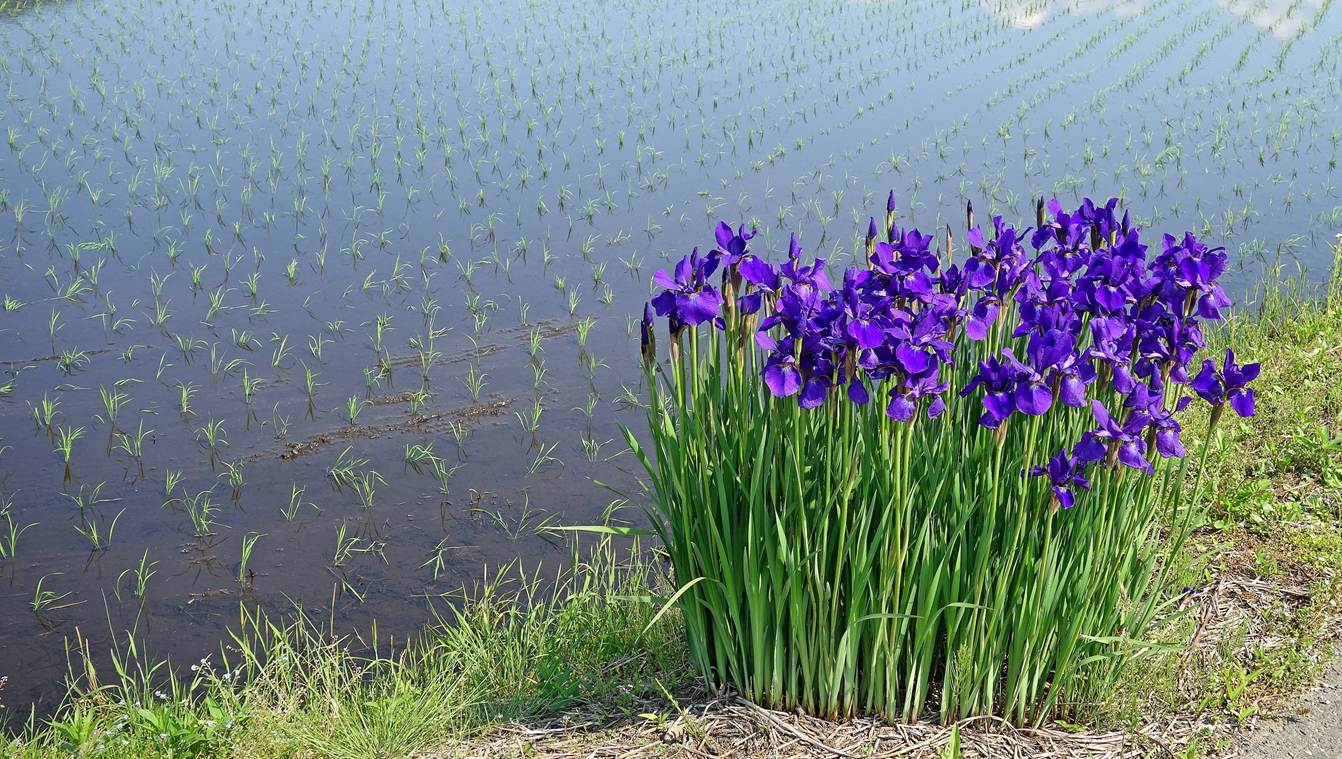
Rural landscape around Tono.
Tono (population about 26,000) is
surrounded by a rural area with rice paddies framed by a mountainous
background.
Denshoen.
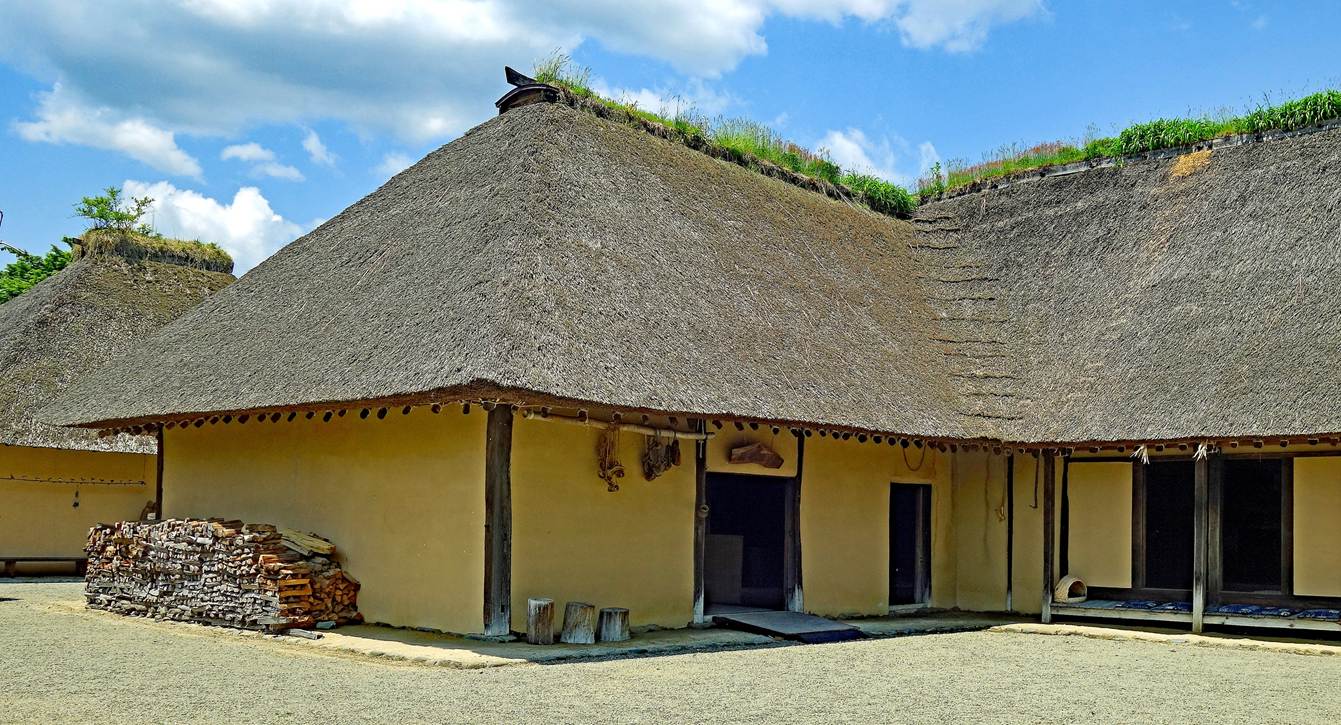
This is an open-air museum featuring
traditional farm buildings relocated from their original sites in the Tono
region. Rice growing and silkworm breeding were the farmers' two main
occupations.
The largest building in Denshoen is this ″magariya″
(曲り家, meaning ″curved
house″), an L-shaped structure that once housed a farming family and
their horses, providing them with warmth during the harsh winters.
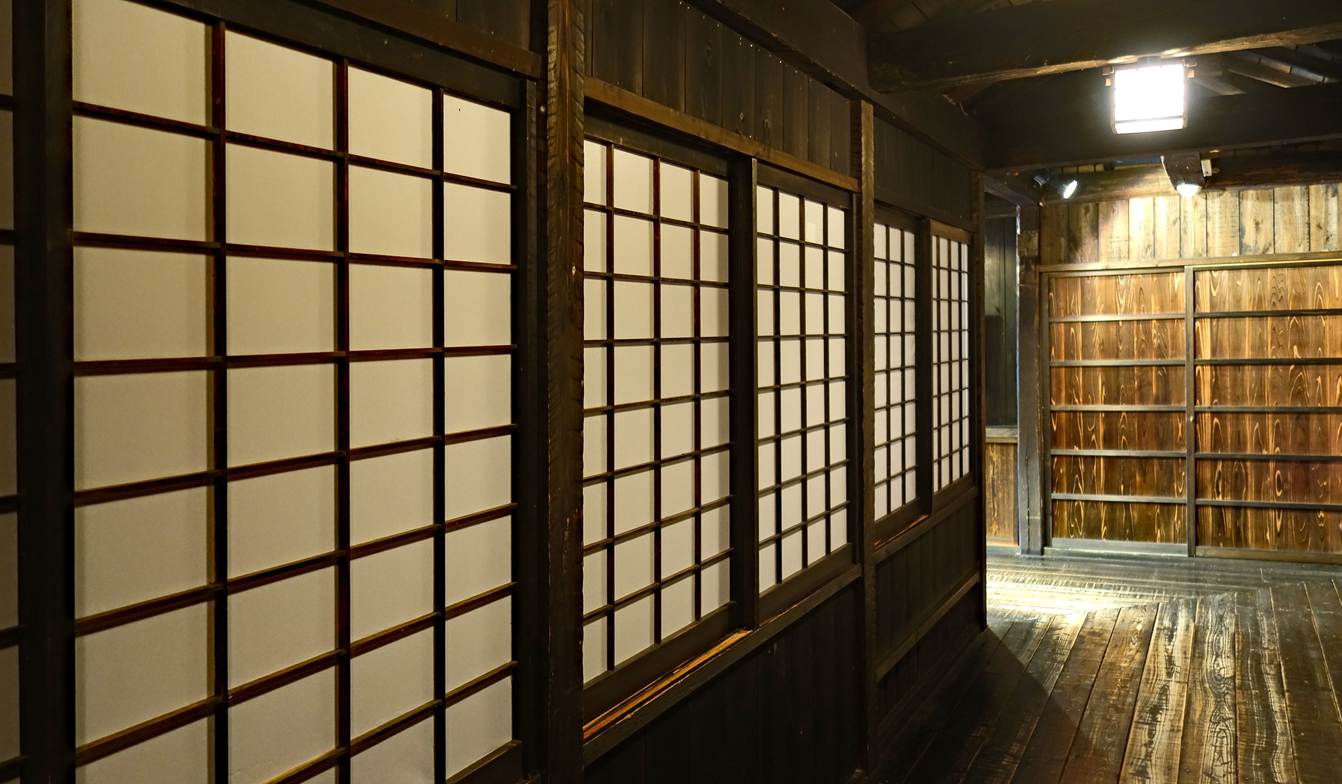
Corridor in the magariya.
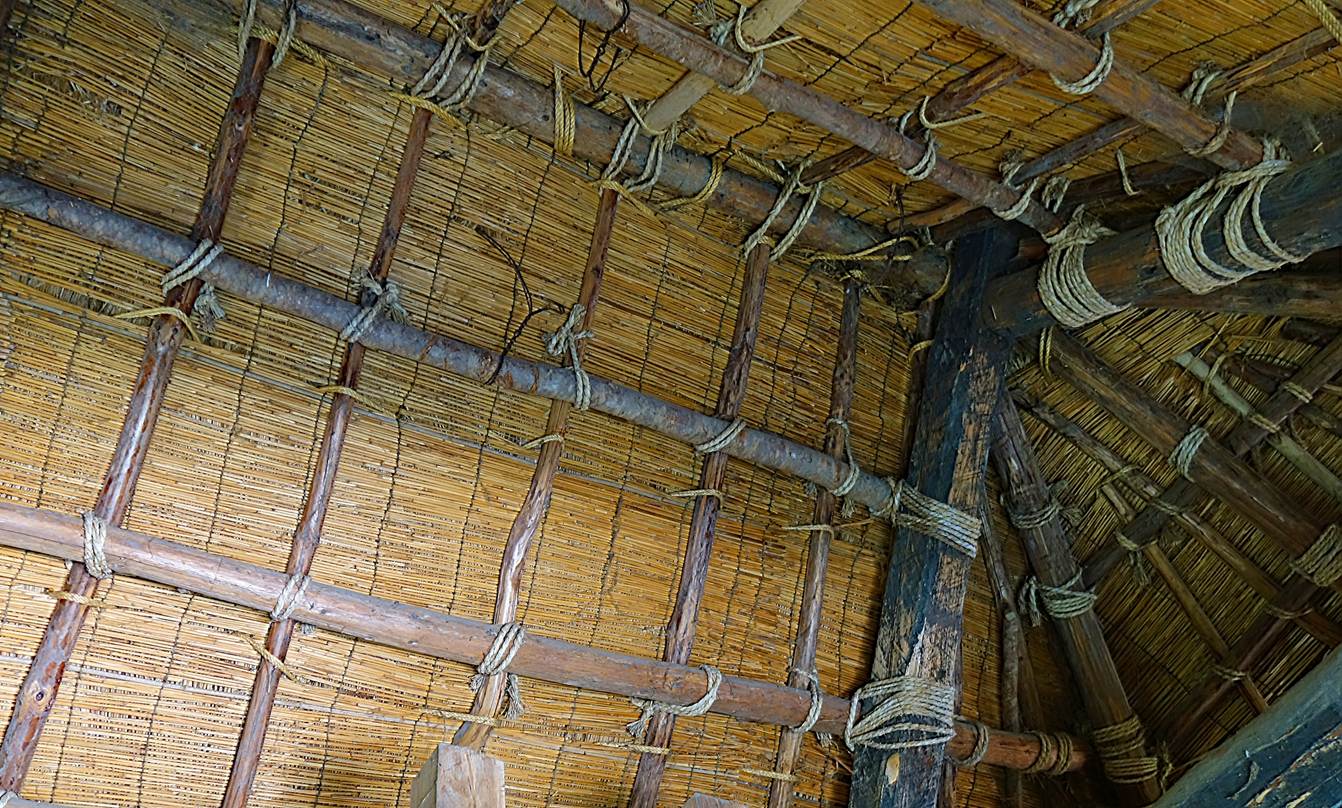
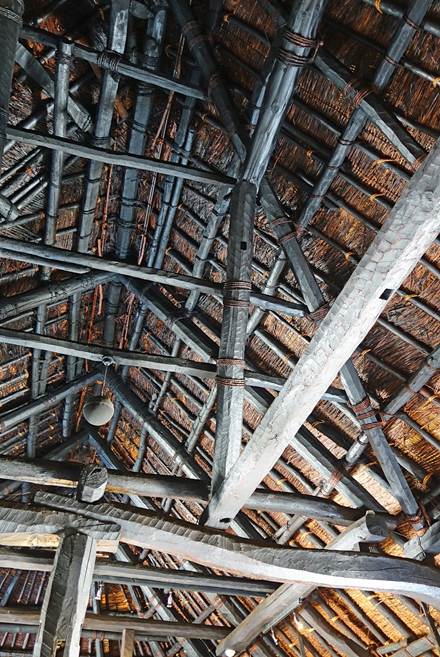
Ceiling in the magariya.
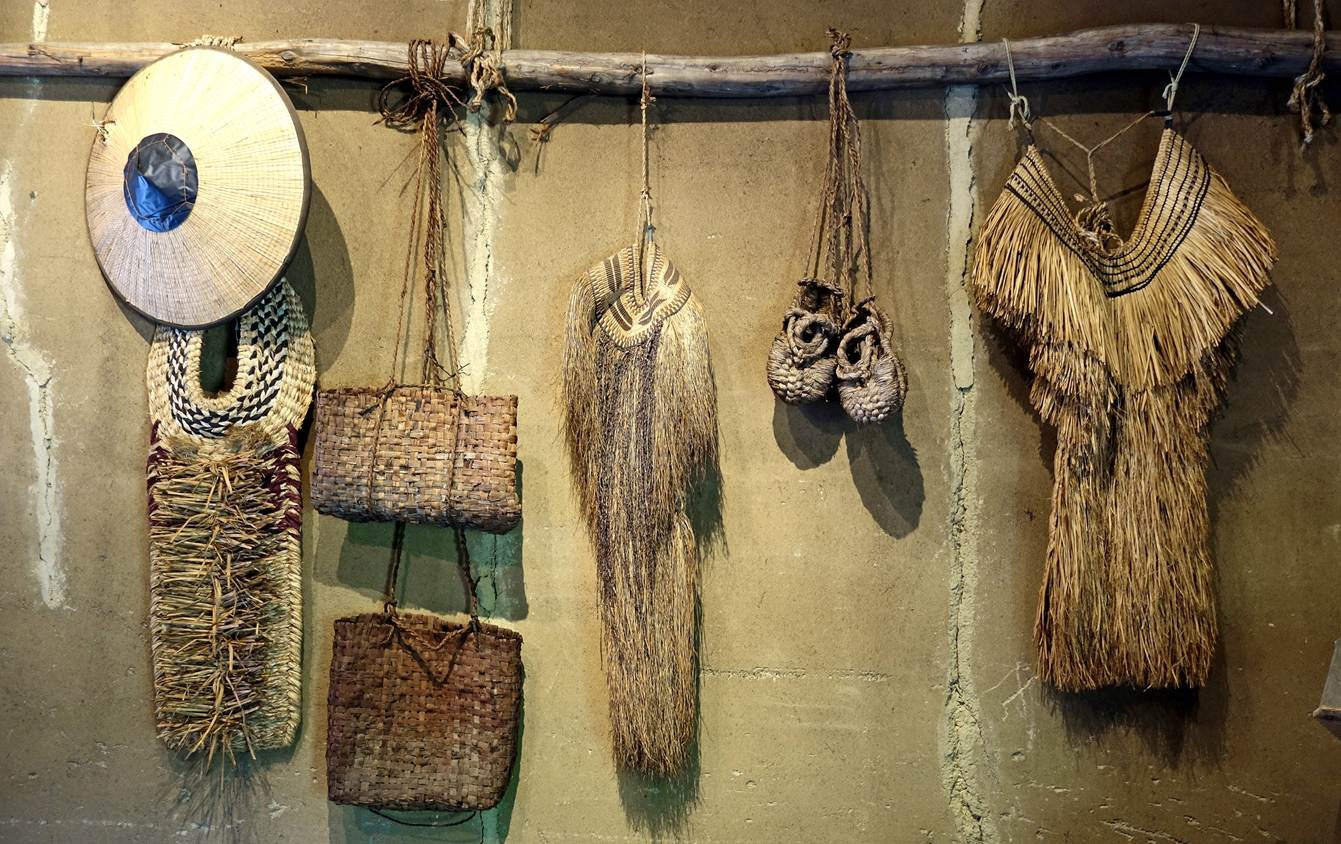
Farmers'
attire in the magariya.
Other views
inside the magariya. Left: irori room (sunken fire
place). Center: mask of a protective god hanging in the kitchen. Right: ceiling
of the kitchen blackened by smoke.
|
|
|
|
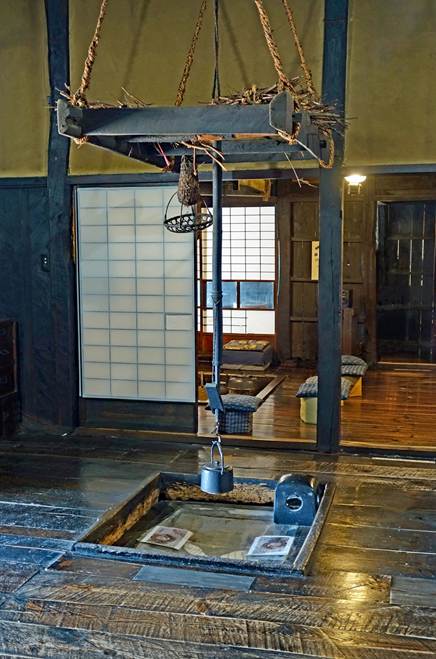
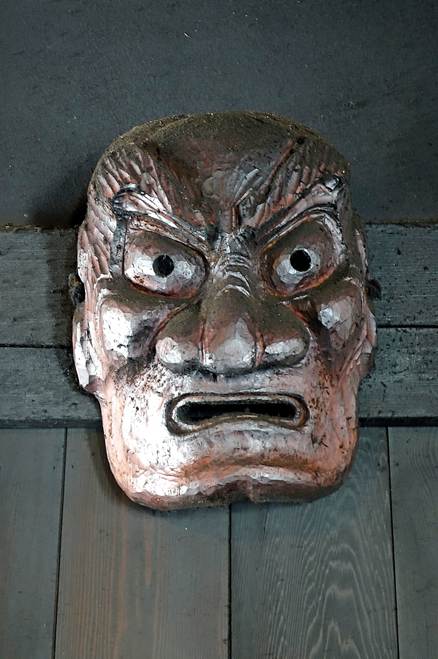
For centuries,
the Tono region was a relatively isolated and impoverished part of Japan. It
suffered from several devastating famines, notably in 1755 and 1905. Perhaps as
a result of these hardships, its inhabitants developed numerous folk tales
featuring supernatural creatures. In 1910, Tono native Sasaki Kizen compiled them in a book entitled ″Legends of
Tono″. The most well-known folk creatures from these legends are the
kappa, a mystical aquatic creature depicted as a humanoid with a turtle shell
on its back, a beak-like mouth, and a bowl-shaped cavity on its head.
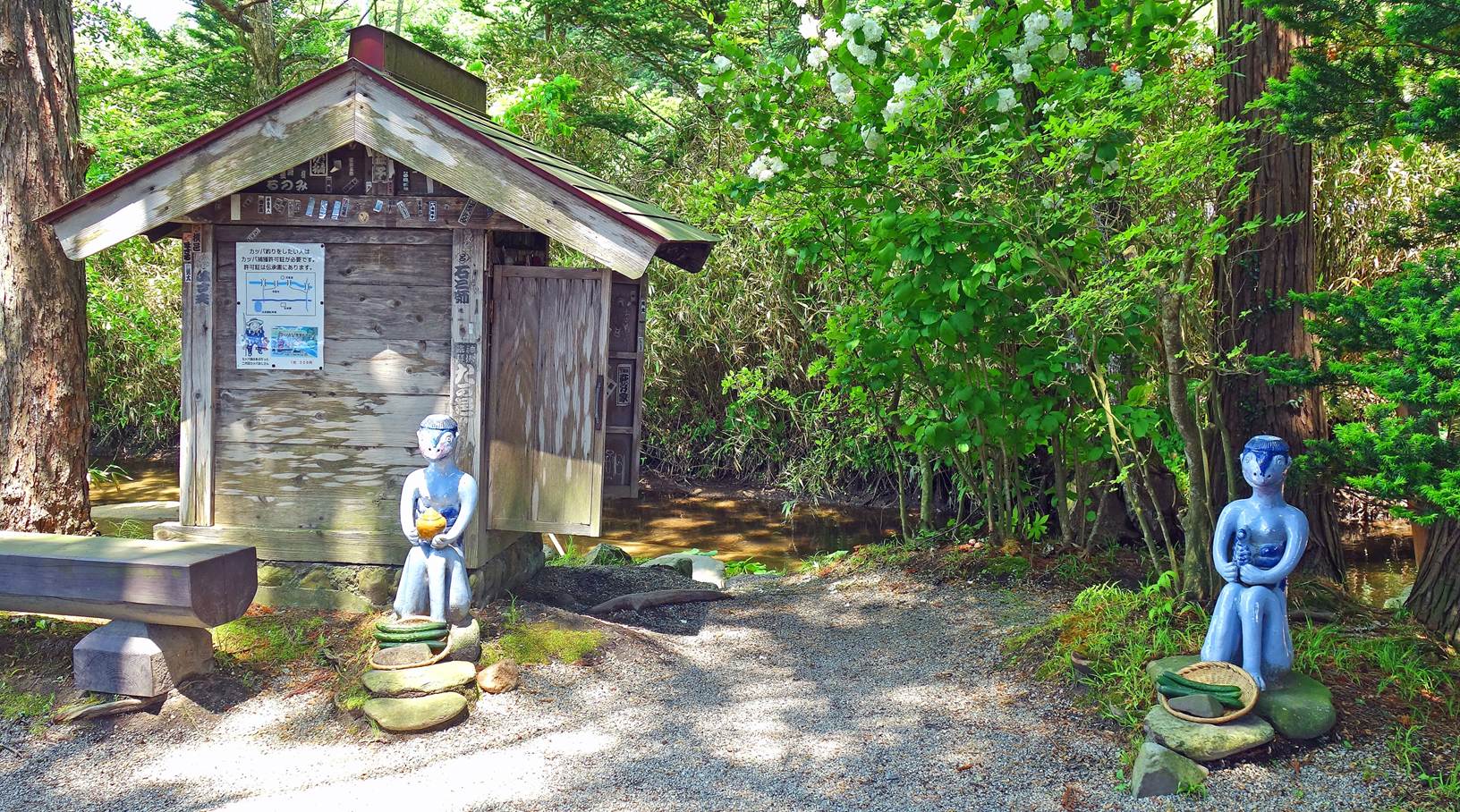
Kappa
statues at the Kappabuchi pond. According to legend, kappa
love cucumbers. So, locals placed baskets full of them at the feet of the
statues.
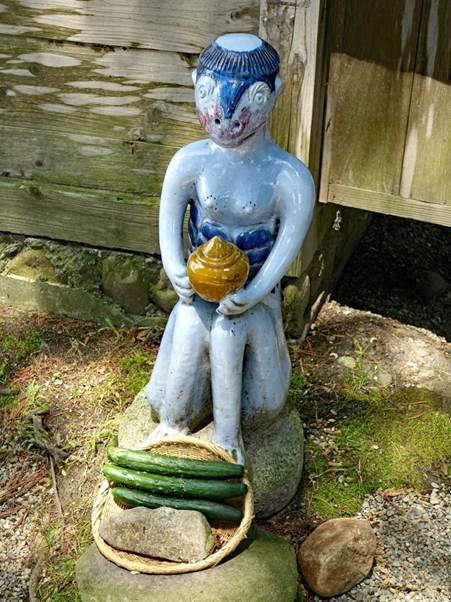
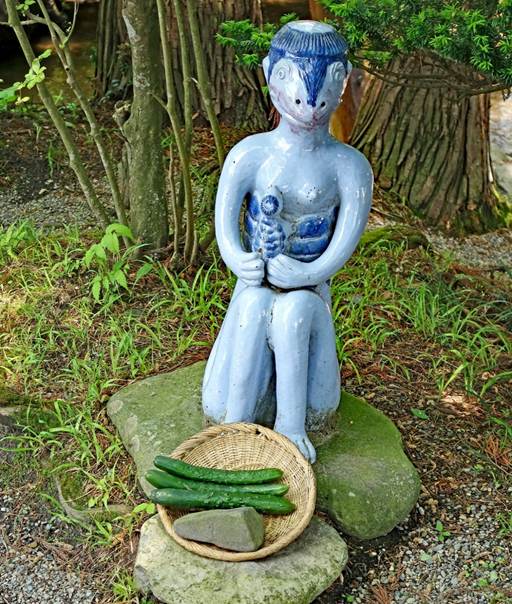
Left
and center: Closeups of the kappa statues at the Kappabuchi
pond. Right: Kappa statues in a pond at Fukusenji.
|
|
|
|
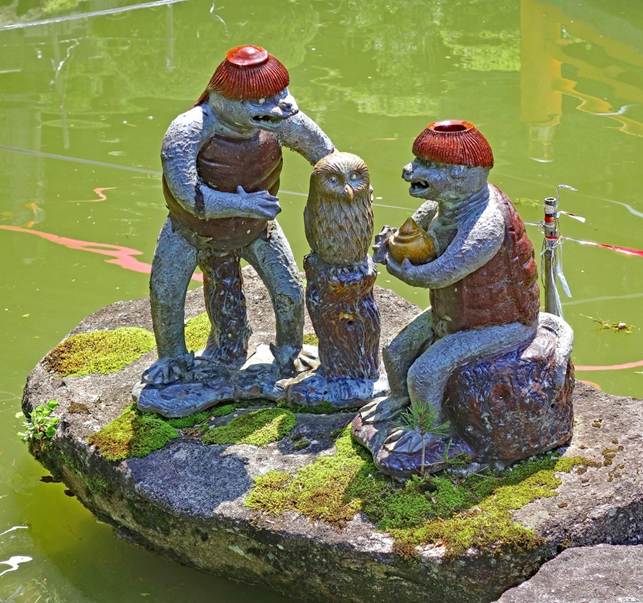
Kappa
statues in front of the Tono station.
|
|
|
|
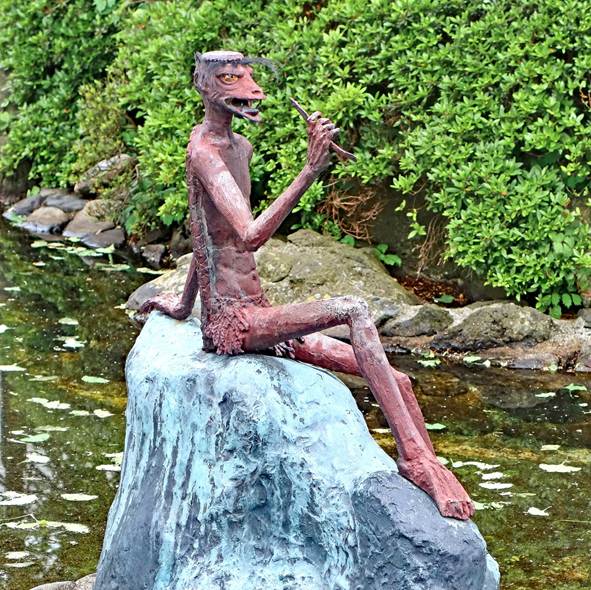
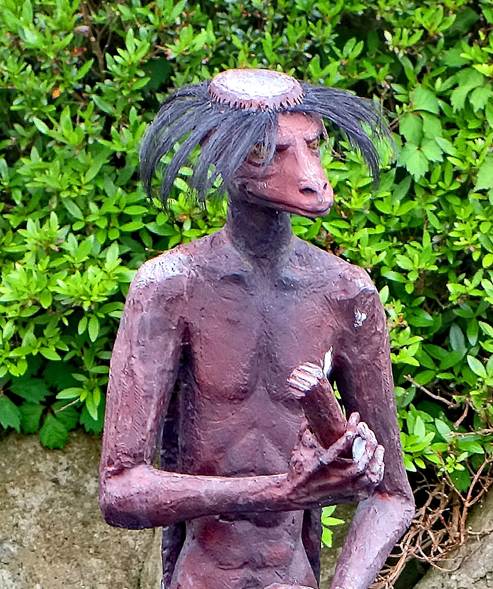
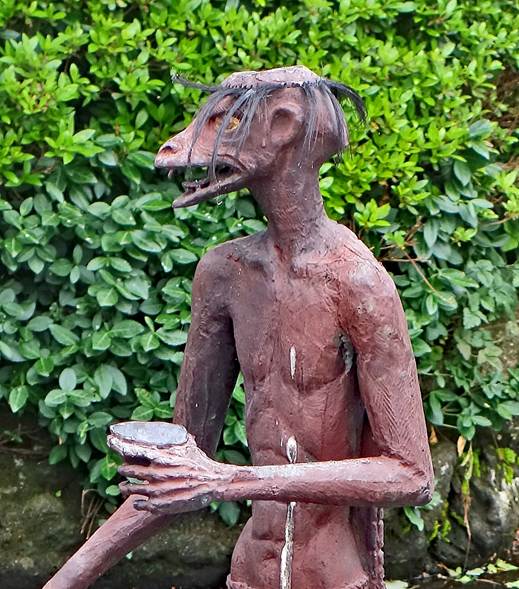
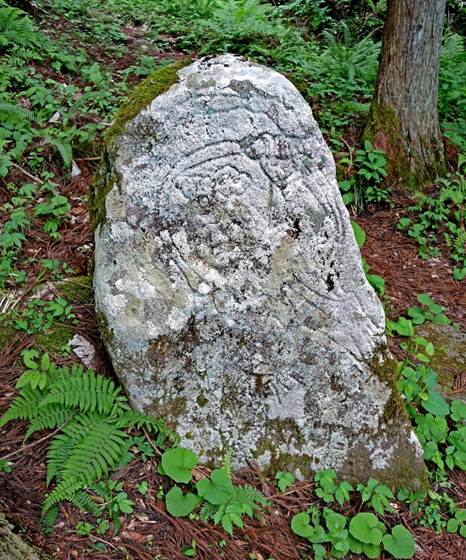
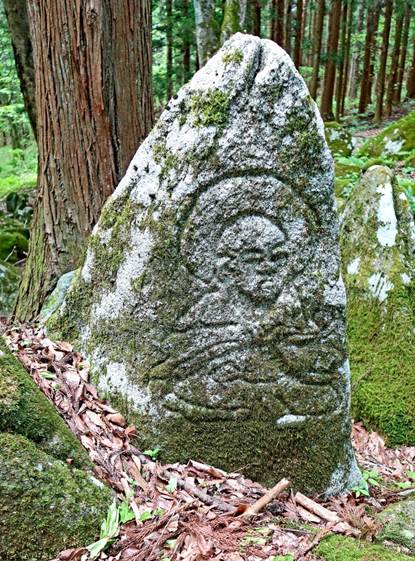
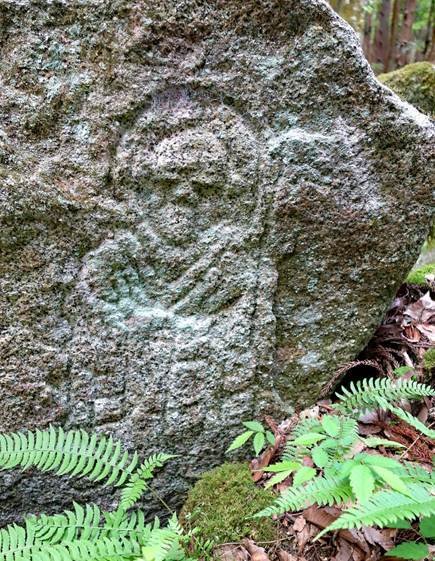
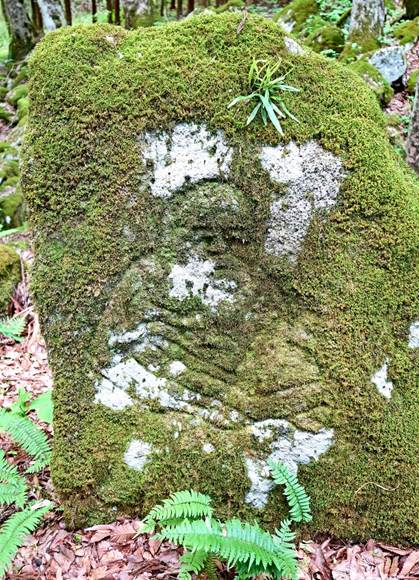
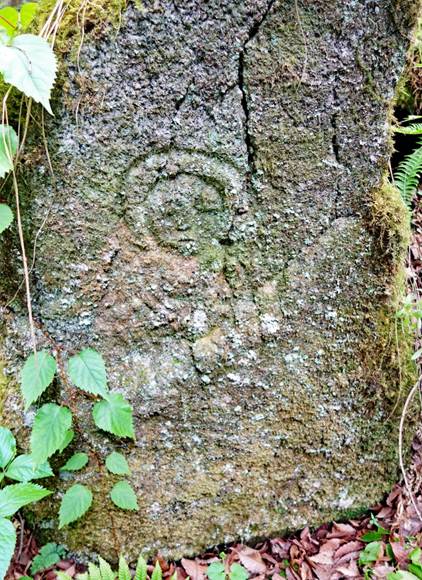
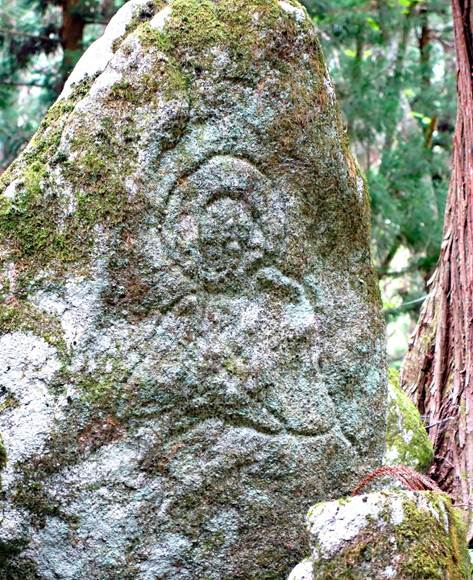
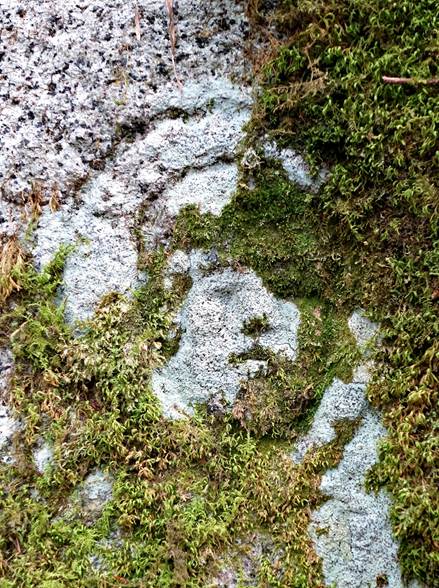
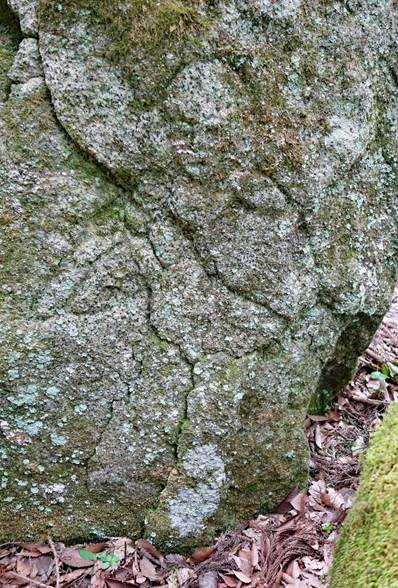
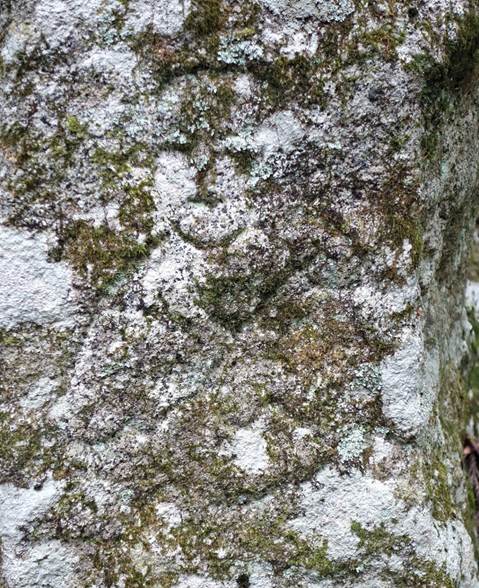
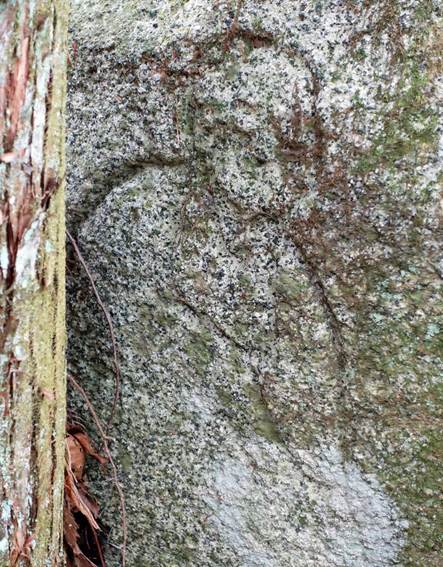
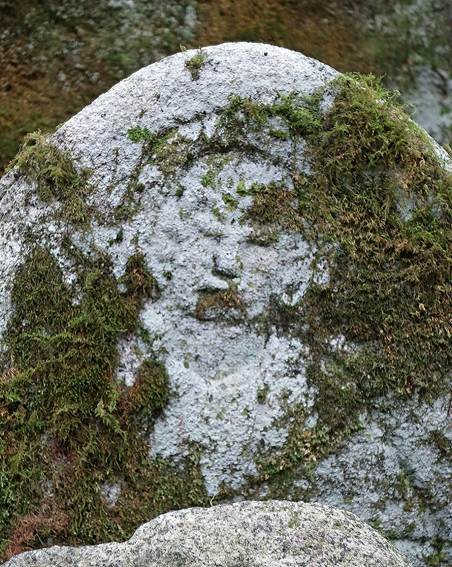
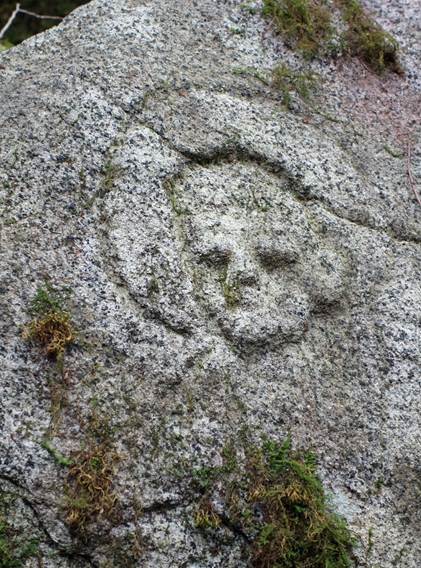
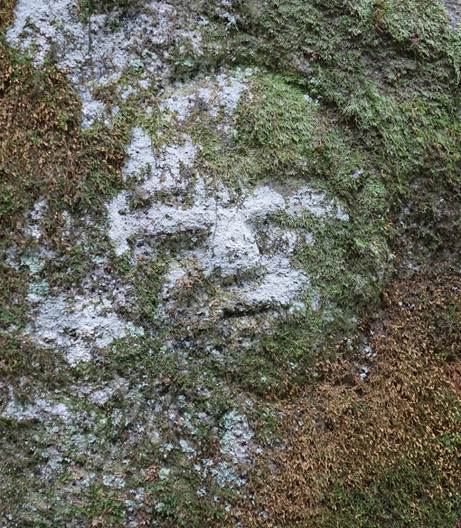
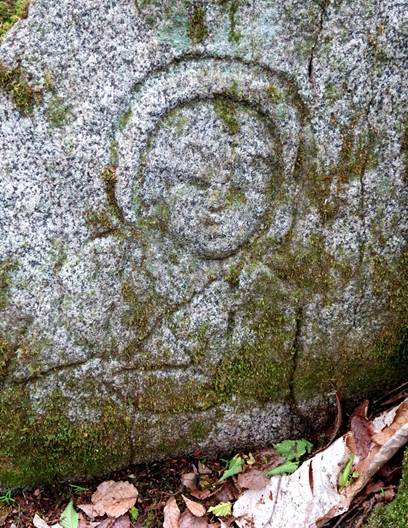
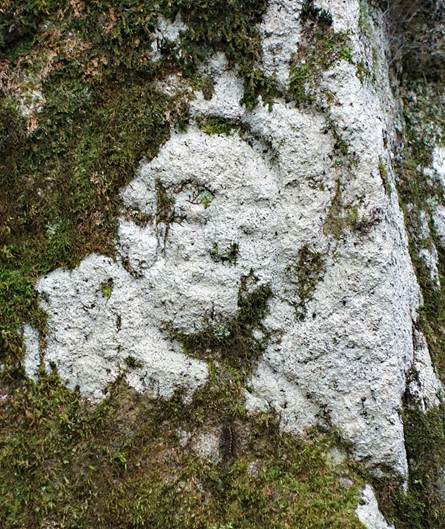
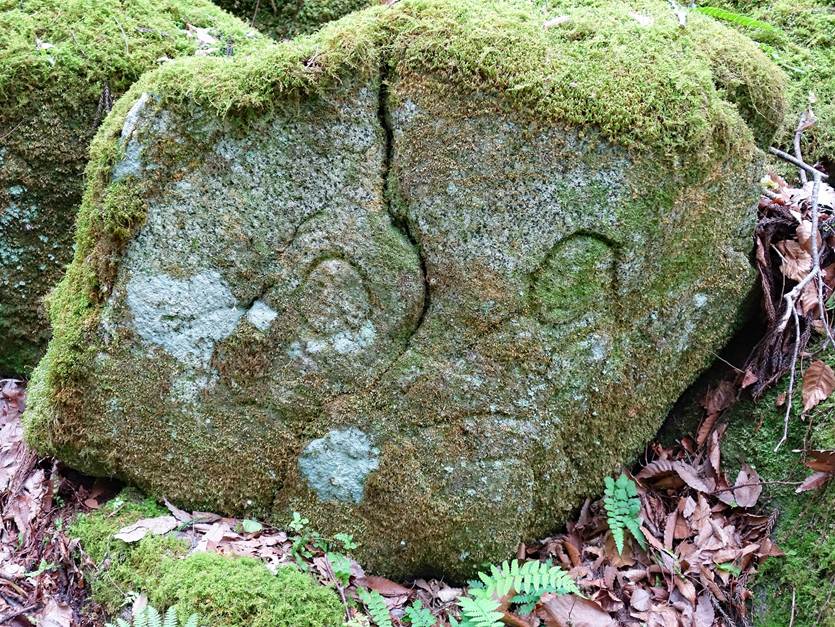
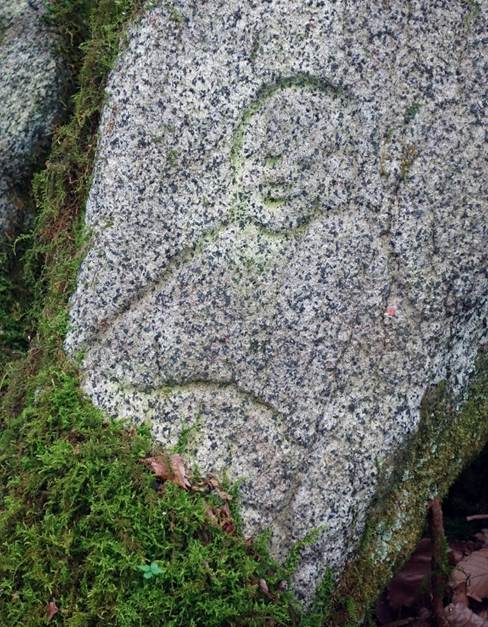
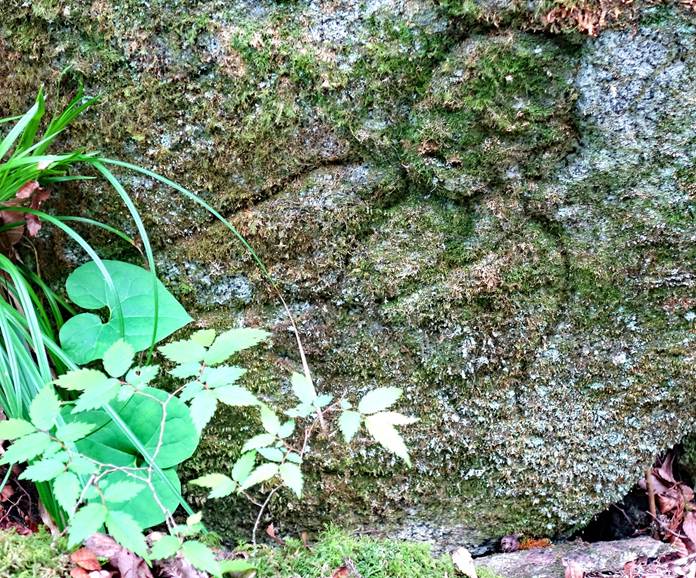
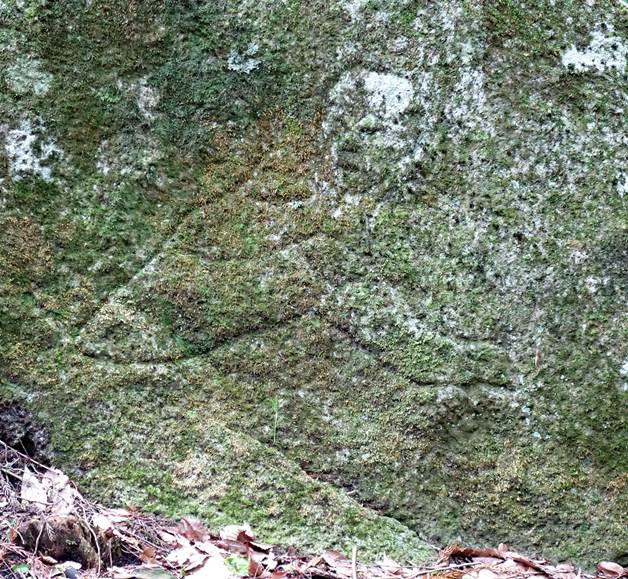
Gohyaku Rakan.
This
is arguably the most captivating site in the Tono region. It features several
hundred carved rocks spread across a remote forested hillside southwest of Tono. These relief sculptures
are believed to have been made over 200 years ago by Buddhist priests to
appease the spirits of those who died during the famine of 1755. Each sculpture
is said to represent a rakan, one of a group of 500
enlightened disciples of the Buddha. Most of the sculptures have blurred
outlines and are partially covered in moss. Visiting this eerie place is a
unique experience: initially you only see plain rocks (missing completely the
faint carvings), then you discover a few carvings, then more and more, until
you see carvings everywhere! Below are pictures of some of them.
|
|
|
|
|
|
|
|
|
|
|
|
|
|
|
|
|
|
|
|
|
|
|
|
|
|
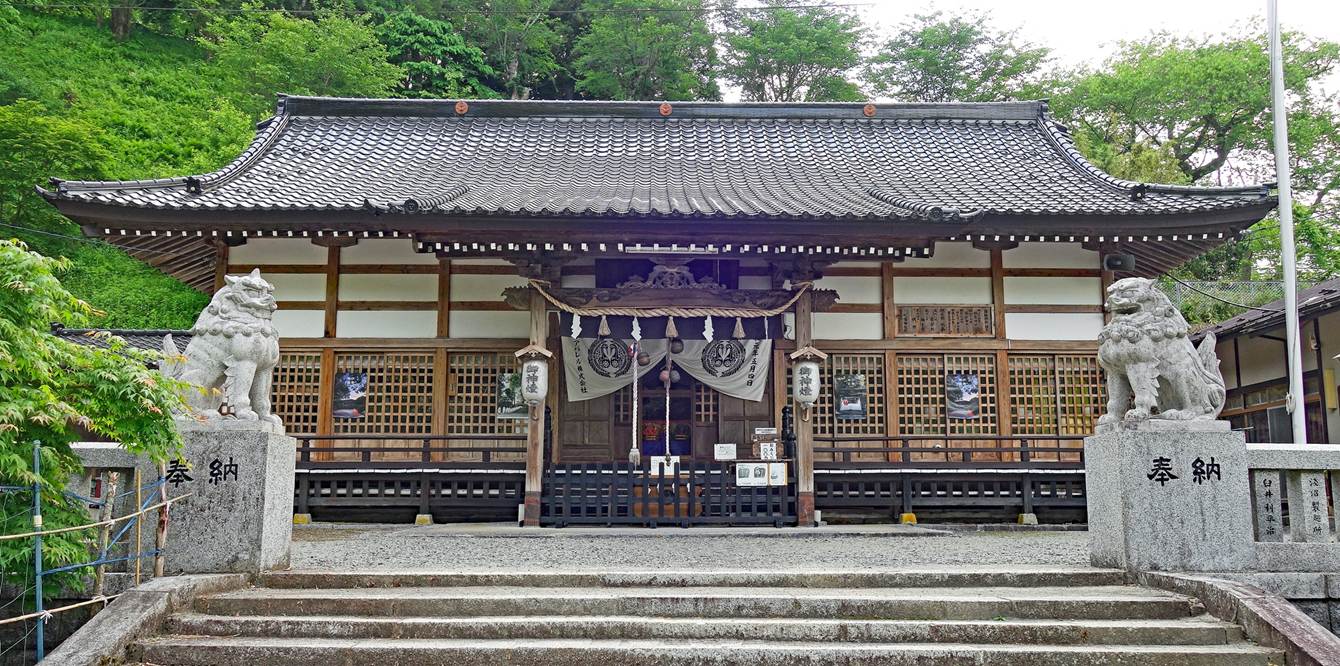
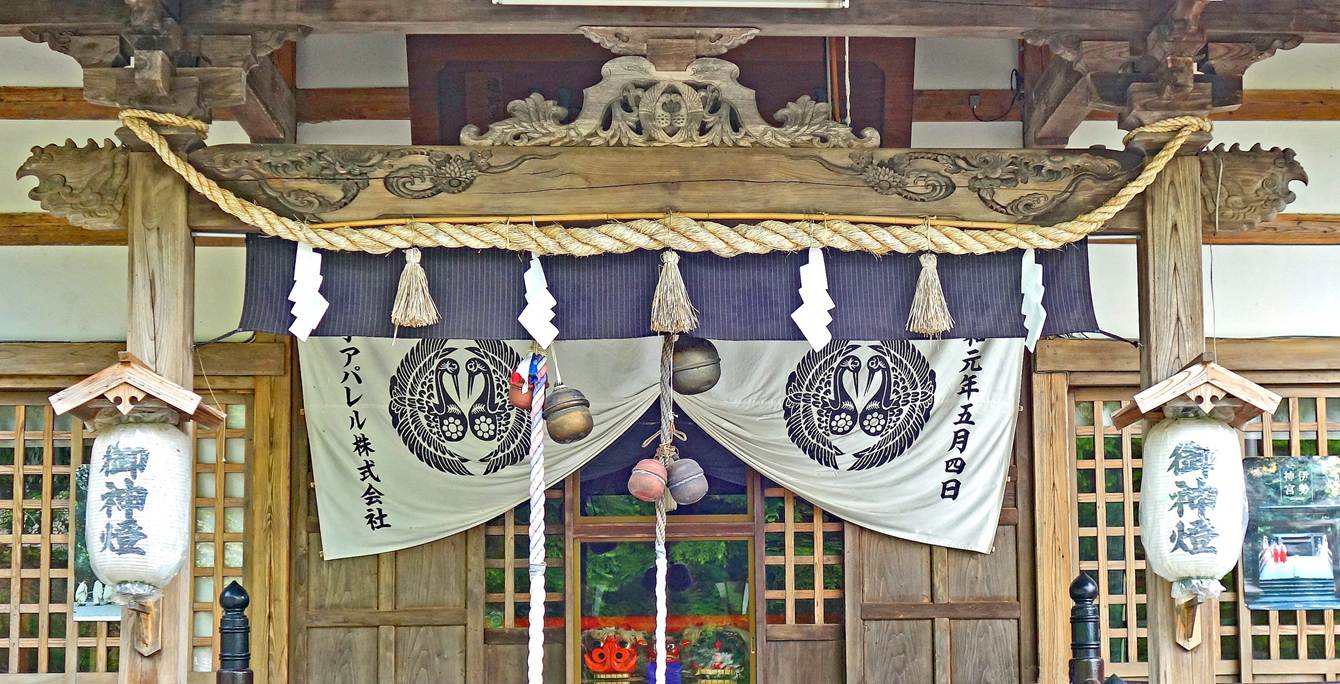
Nanbu jinja.
Located on the southern side of the
town of Tono, this Shinto shrine was founded in 1882. It enshrines the 4th to
8th generations of the Nanbu clan lords, who ruled most of northeastern Honshu
for over 700 years from the Kamakura period to the Meiji restoration. The
curtain below the shimenawa features the ″kamon″
(家紋, meaning ″family
crest″) of the Nanbu clan. It consists of a
pair of cranes in a circle, with nine stars on their chests.
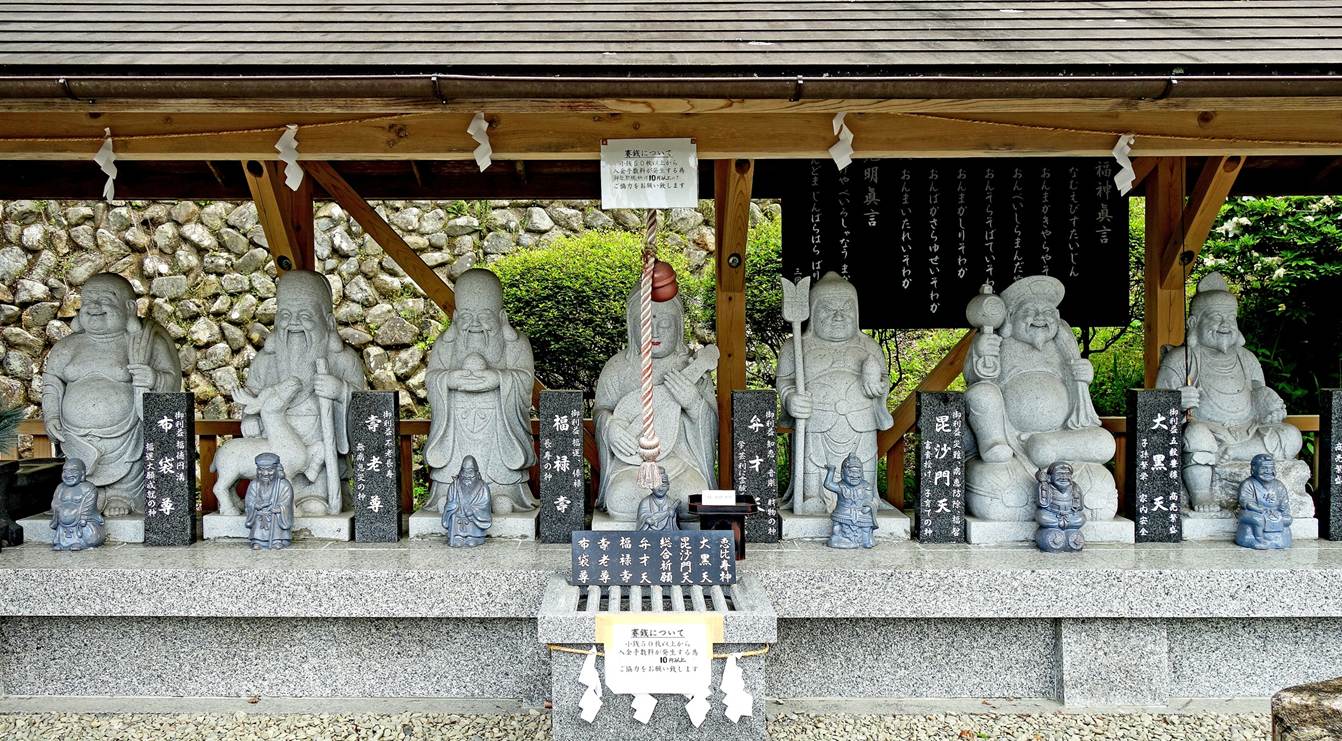
The Seven
Lucky Gods of Japan next to the Nanbu shrine. The only goddess in this group
(the red-lipped statue in the center) is Benzaiten. She is worshipped as a
protector of arts, inspiring creativity and eloquence.
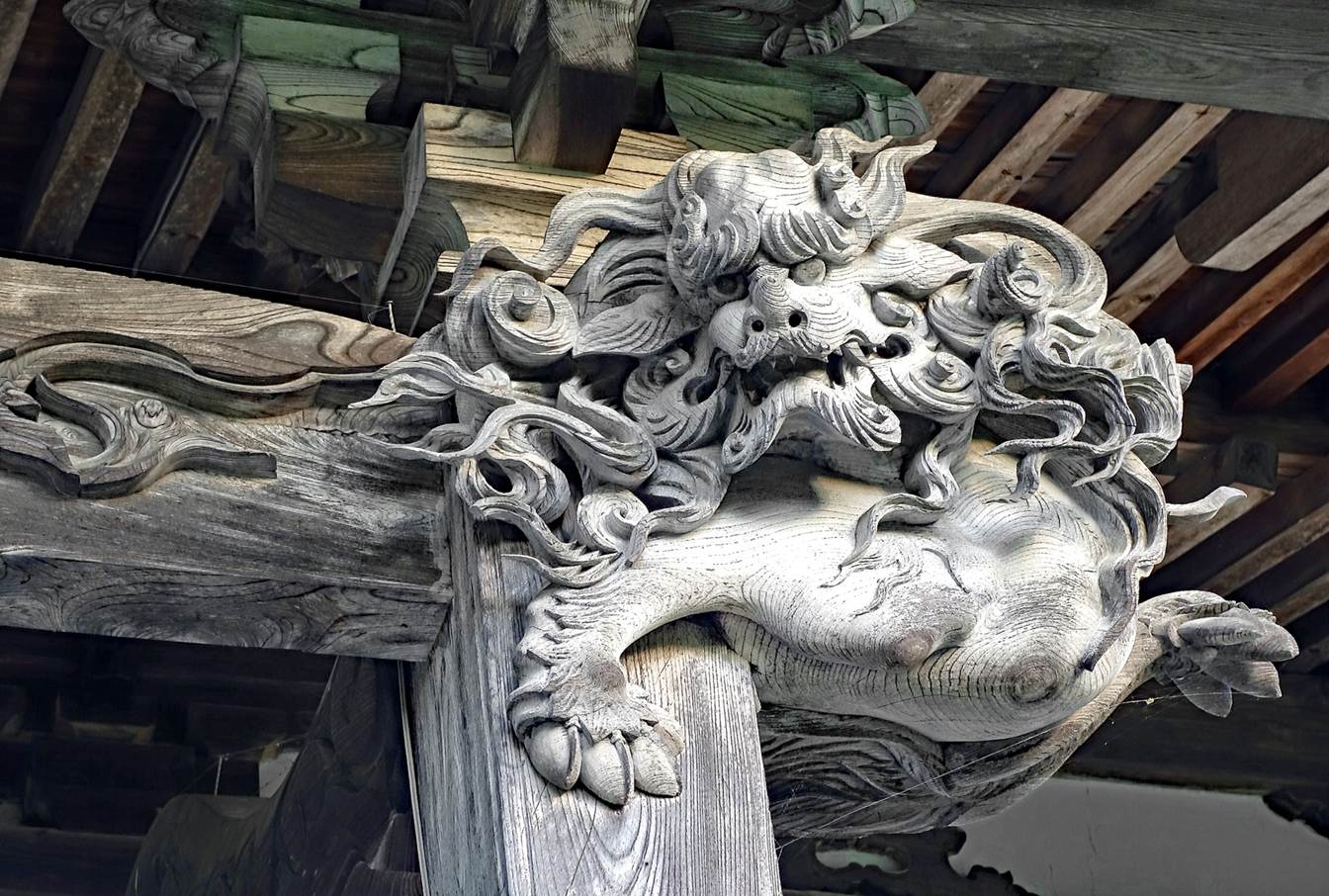
Chionji.
This Buddhist temple is located a short
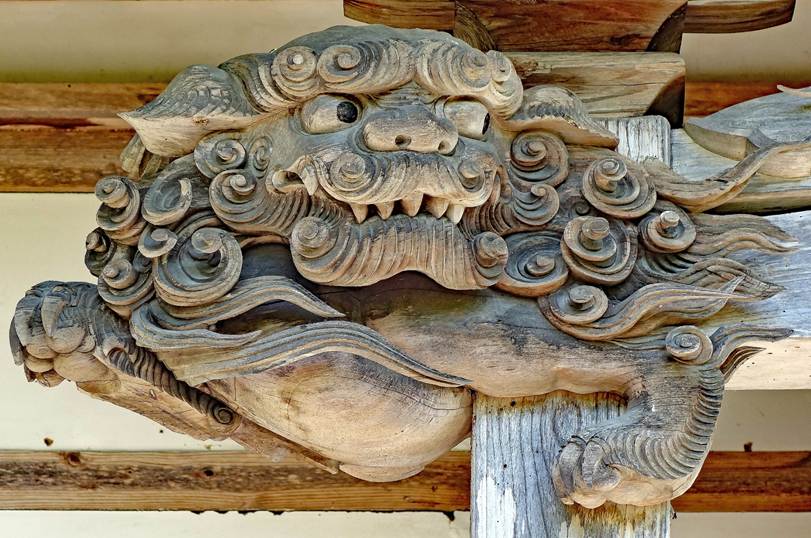
distance below the Nanbu shrine. It features two similar stunning carvings
(only one shown below) at the entrance of the main prayer hall.
Located about 5km northeast of the center
of Tono, this Buddhist temple of the Shingon sect
opened in 1912, at the very beginning of the Taisho period. It consists of
several halls and pagodas spread over a wooded hilly terrain. The main deity
enshrined here is Kannon, the Japanese Buddhist goddess of mercy.
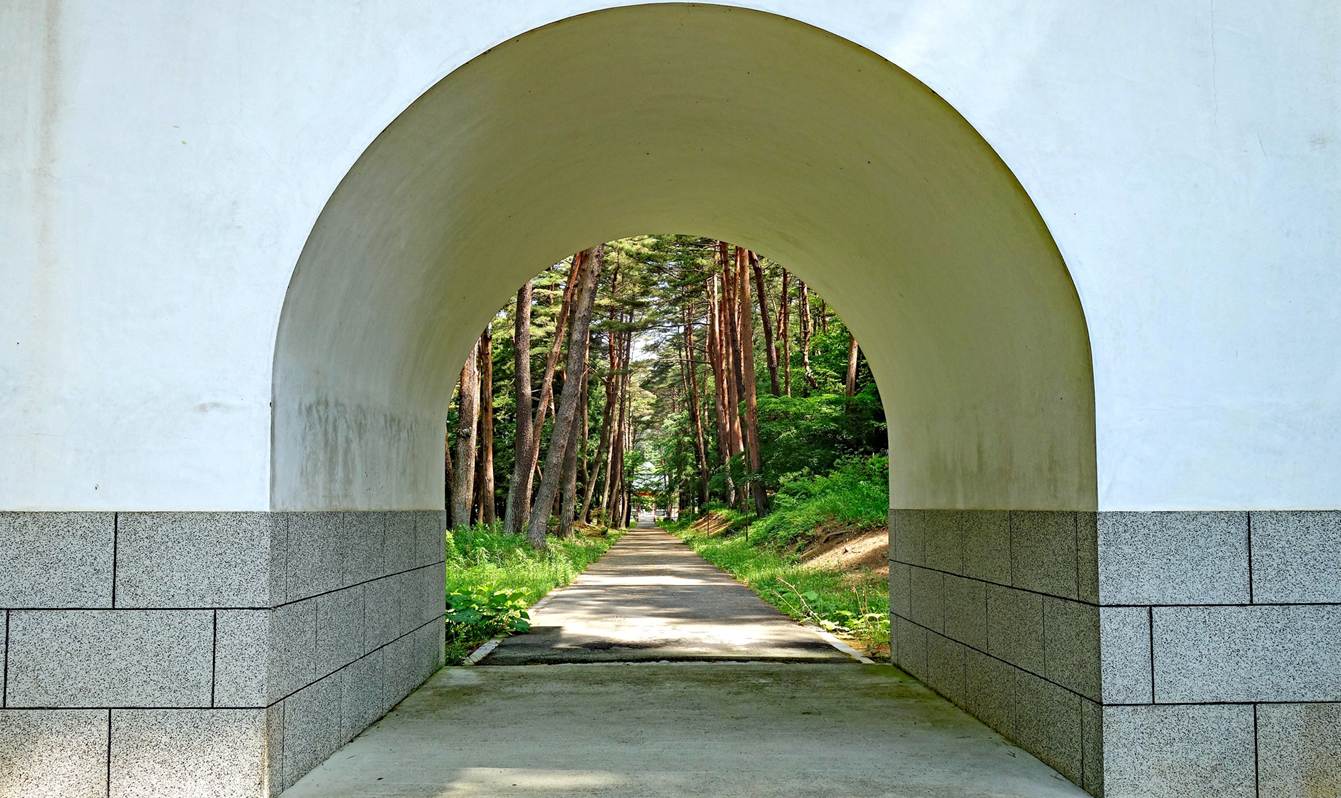
The Sanmon,
the first gate of the temple, at the entrance of a long alley.
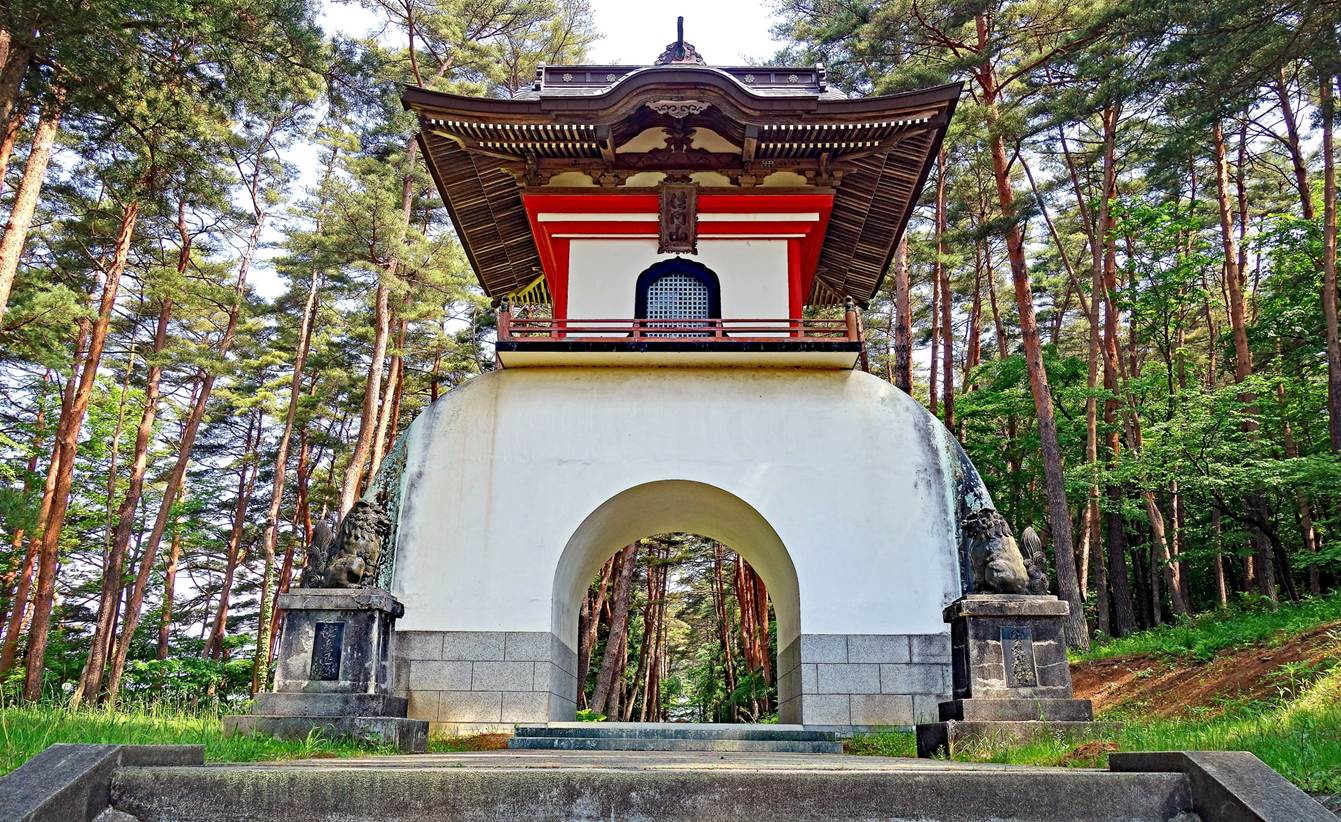
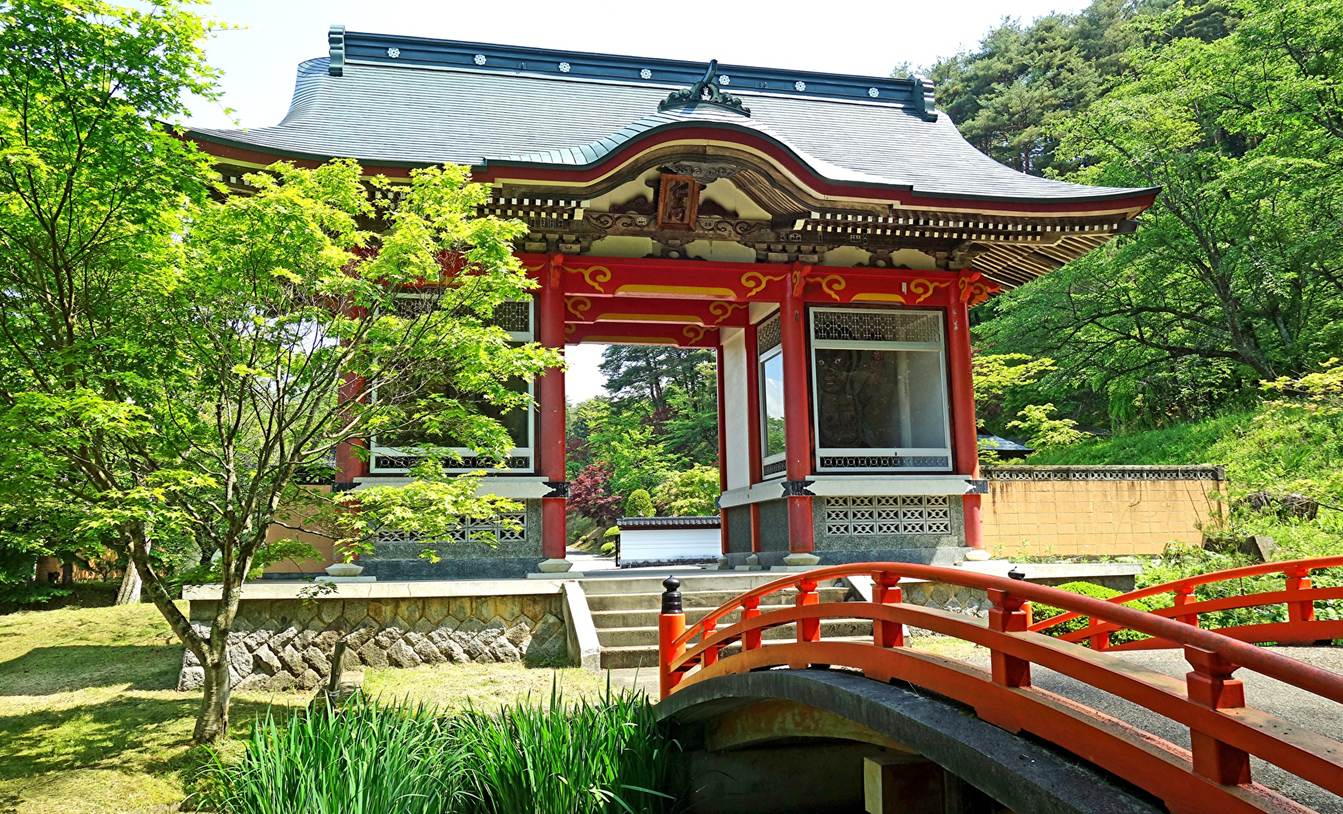
The Niomon, the second gate of the temple, at the end of the
long alley.
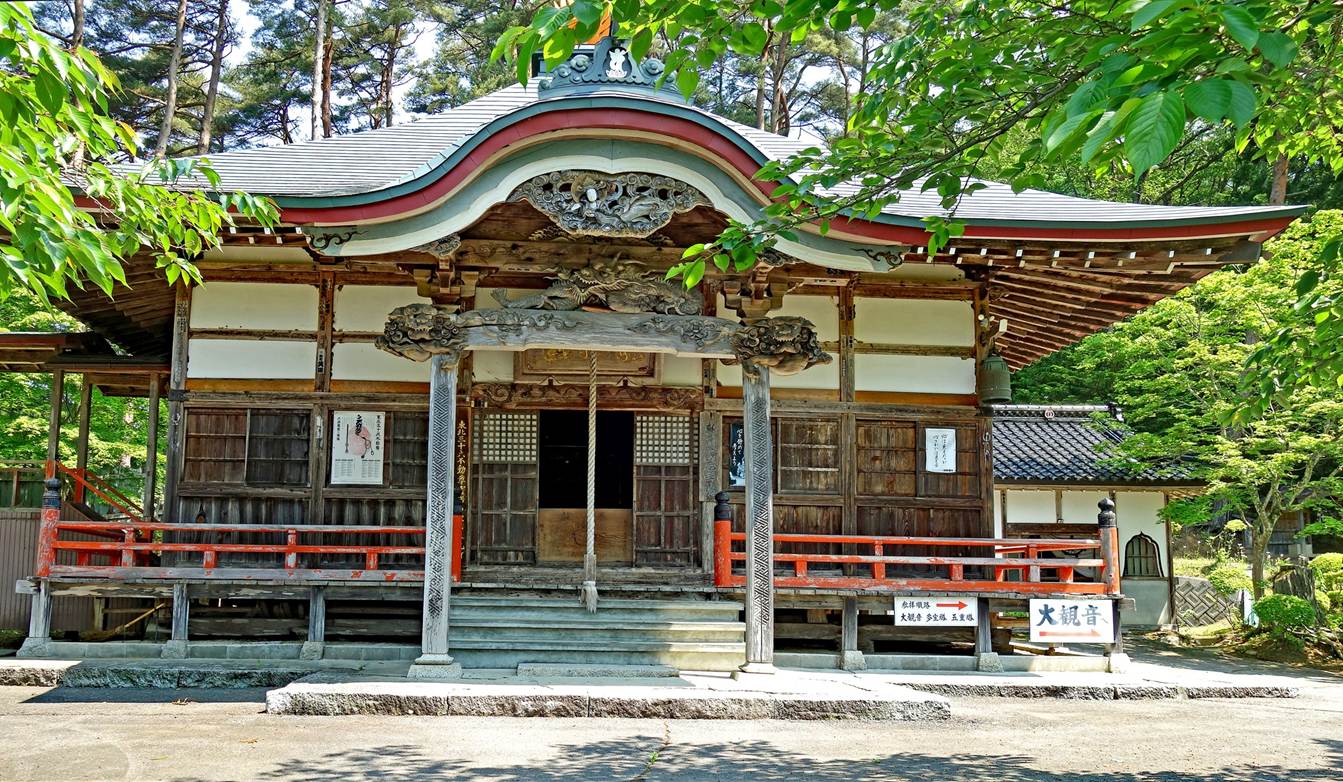
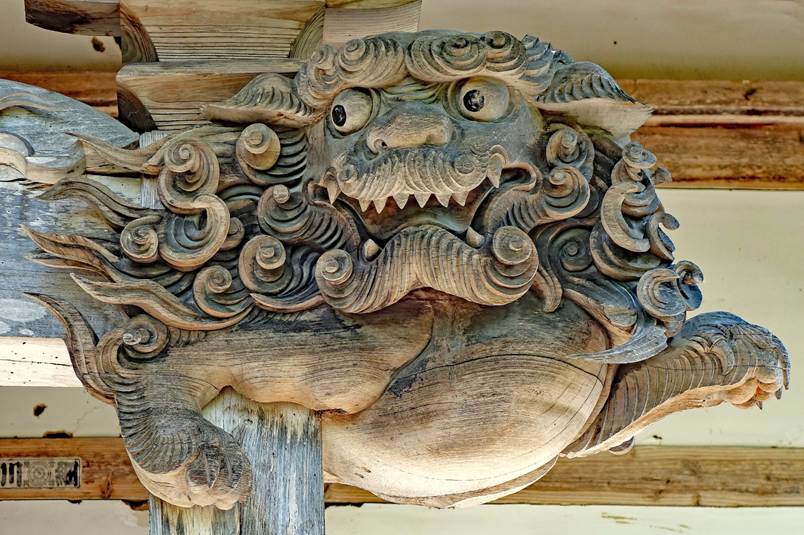
The Kondo (金堂), one of the two main prayer halls of the temple.
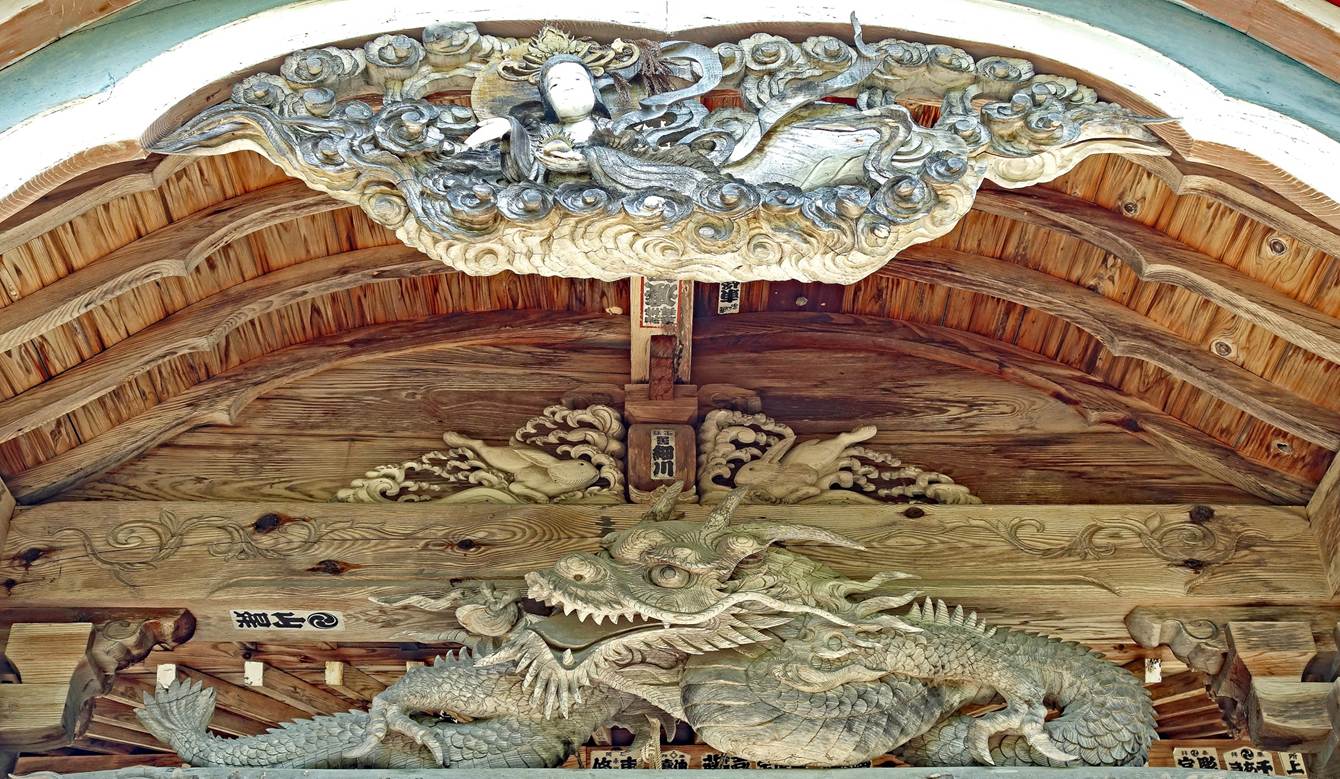
Close-ups of
wood carvings above the entrance of the Kondo.
|
|
|
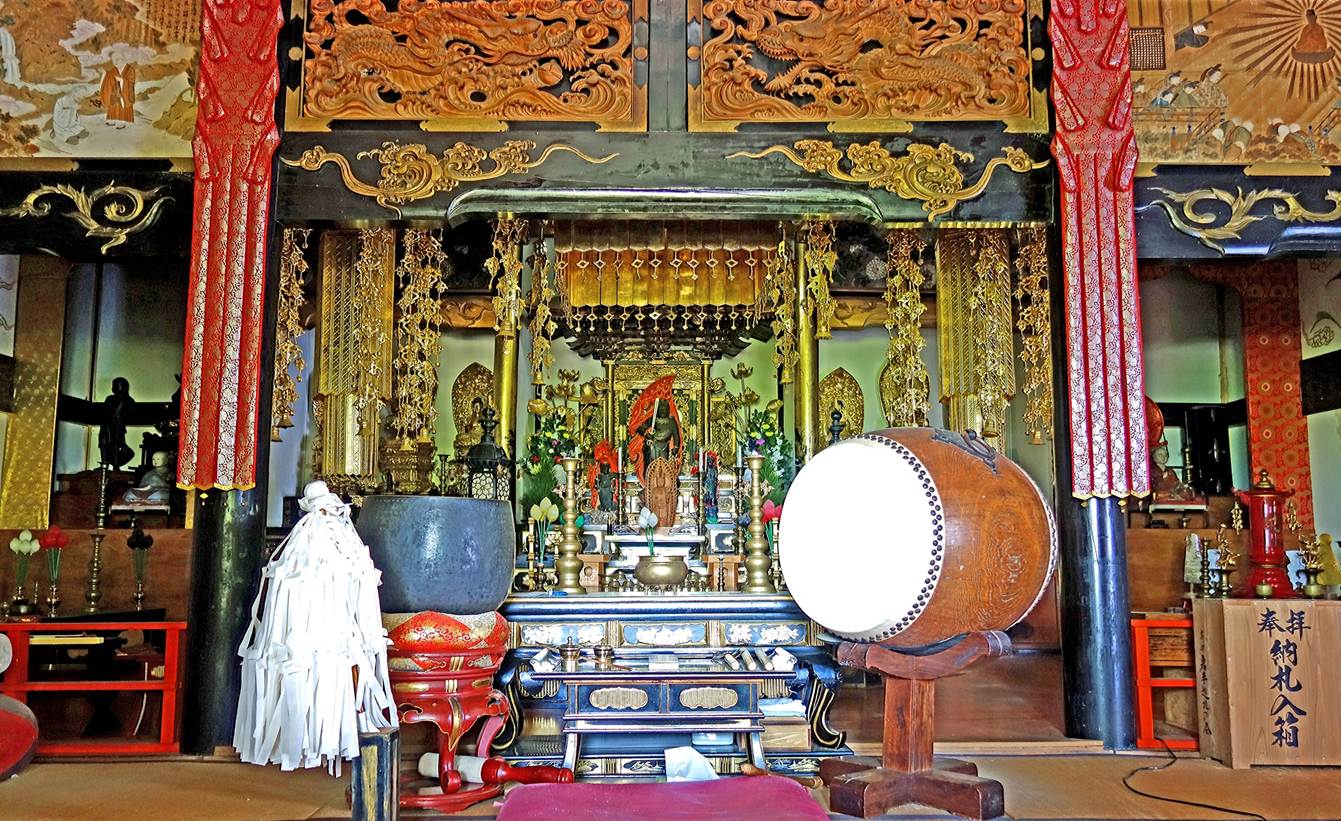
Main altar
inside the Kondo. The black statue at the center of the photo represents
Fudo-myo-o
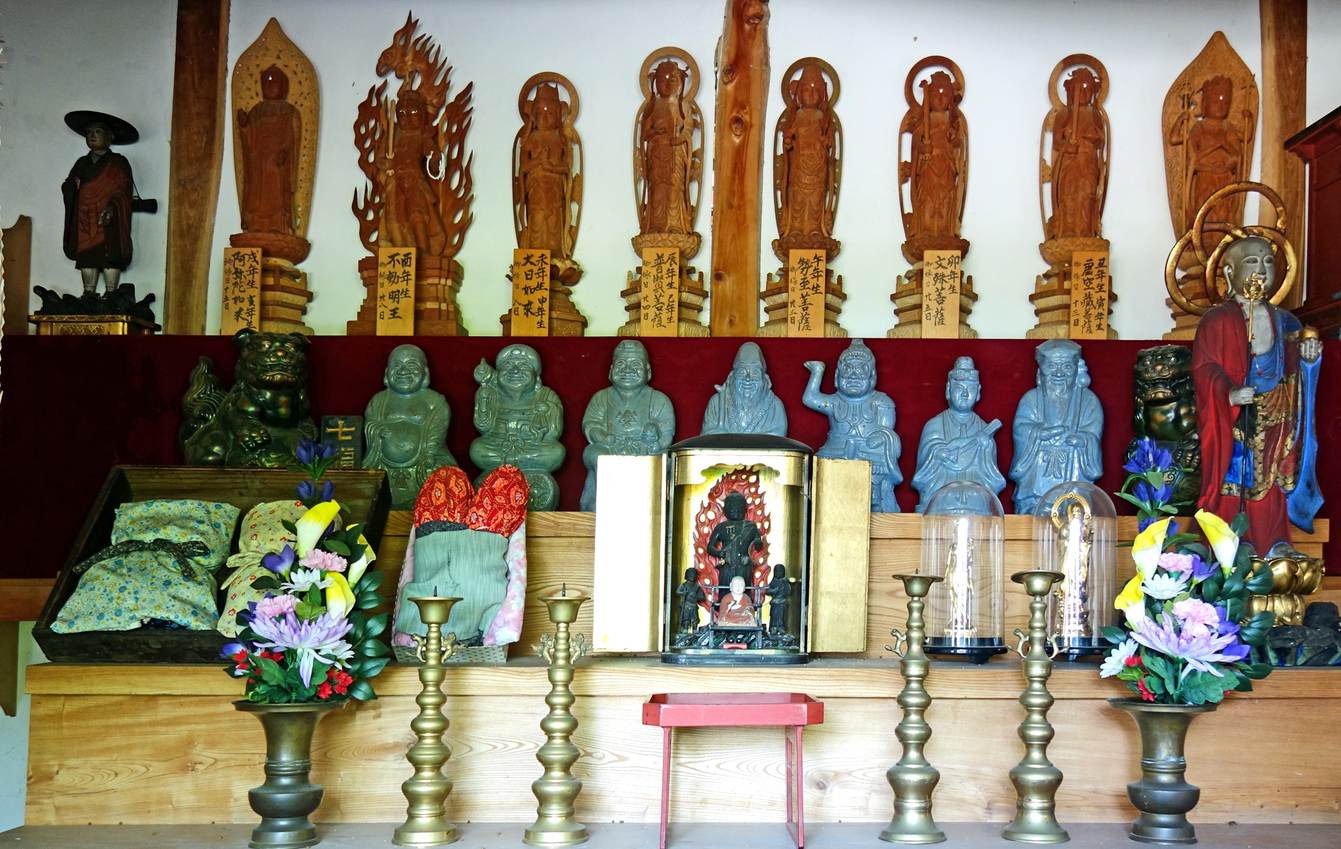
Alignment of
statues in the Kondo.
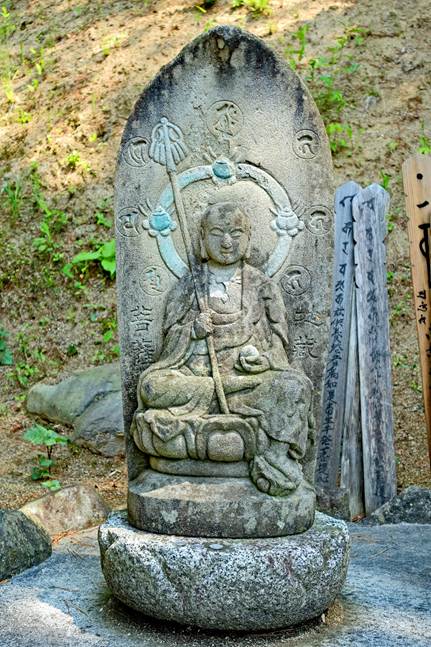
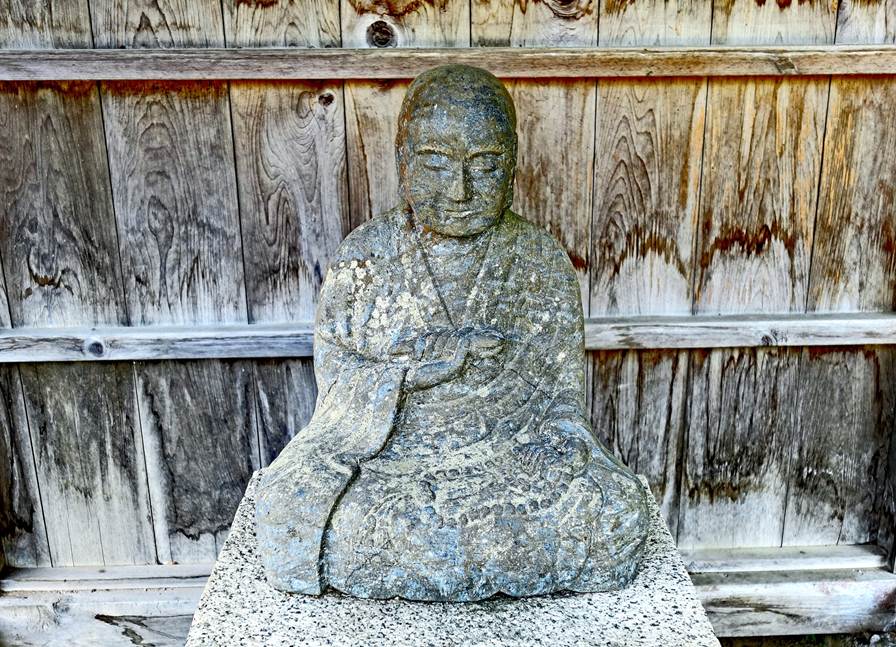
Stone statues
outside the Kondo.
|
|
|
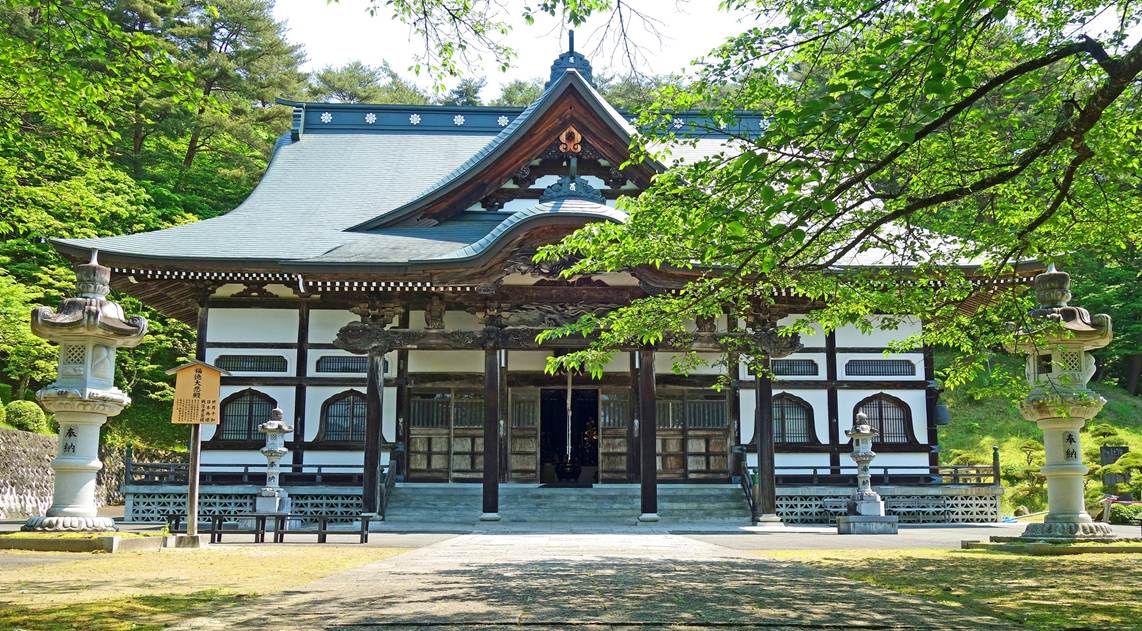
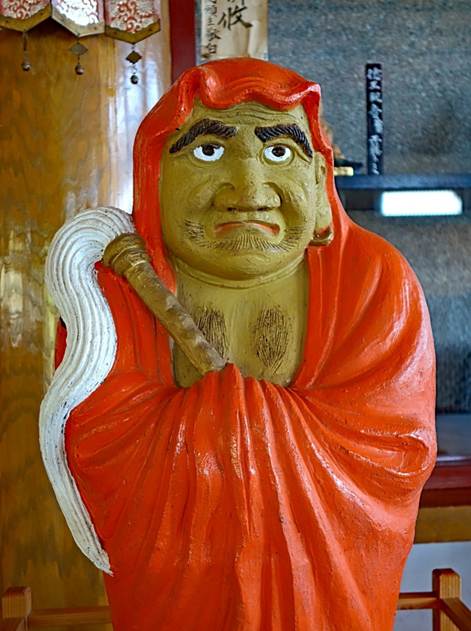
Left: The Daikannondo (大観音堂), the prayer hall dedicated to Kannon. It
contains a 17m-tall statue of Kannon, which is said to be the tallest wooden
statue of Kannon (no photo allowed). Right: A more modest statue in the Daikannondo representing Bodhidharma, known
as Daruma in Japan, an Indian sage who lived during the 5th or 6th
century and is considered the founder of Zen Buddhism.
|
|
|
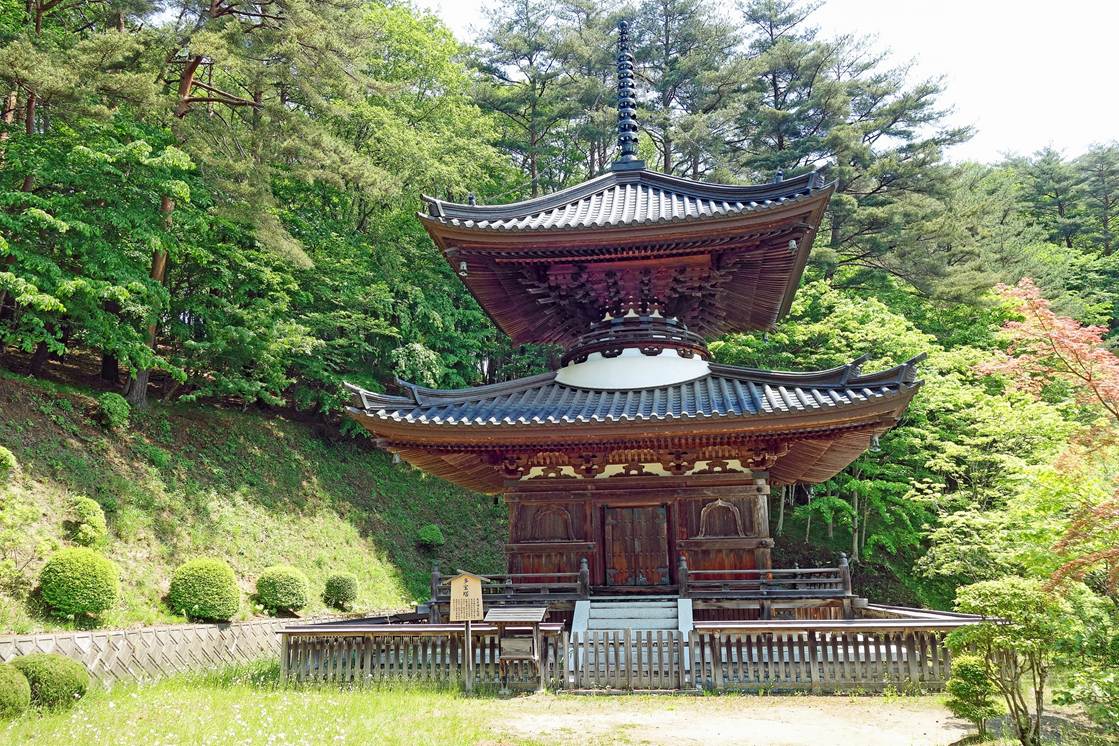
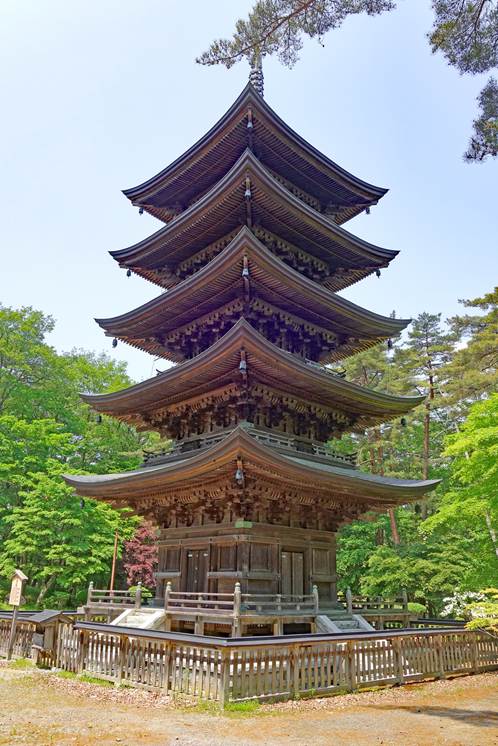
Left: The
two-story Tahoto pagoda located next to the Daikannondo. Right: The temple's five-story pagoda.
|
|
|
Hoonji.
Located in Morioka, the capital of
Iwate Prefecture, this Buddhist temple of the Soto Zen sect was founded in
1394. It was moved to its current location in 1601. The temple's highlight is
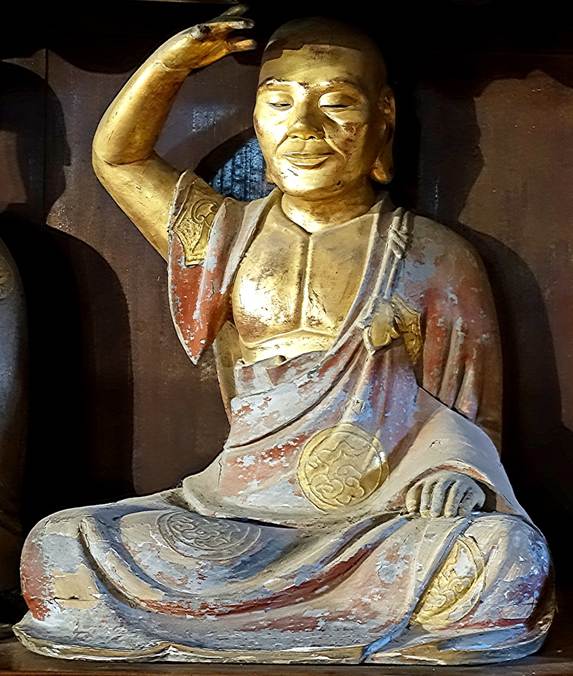
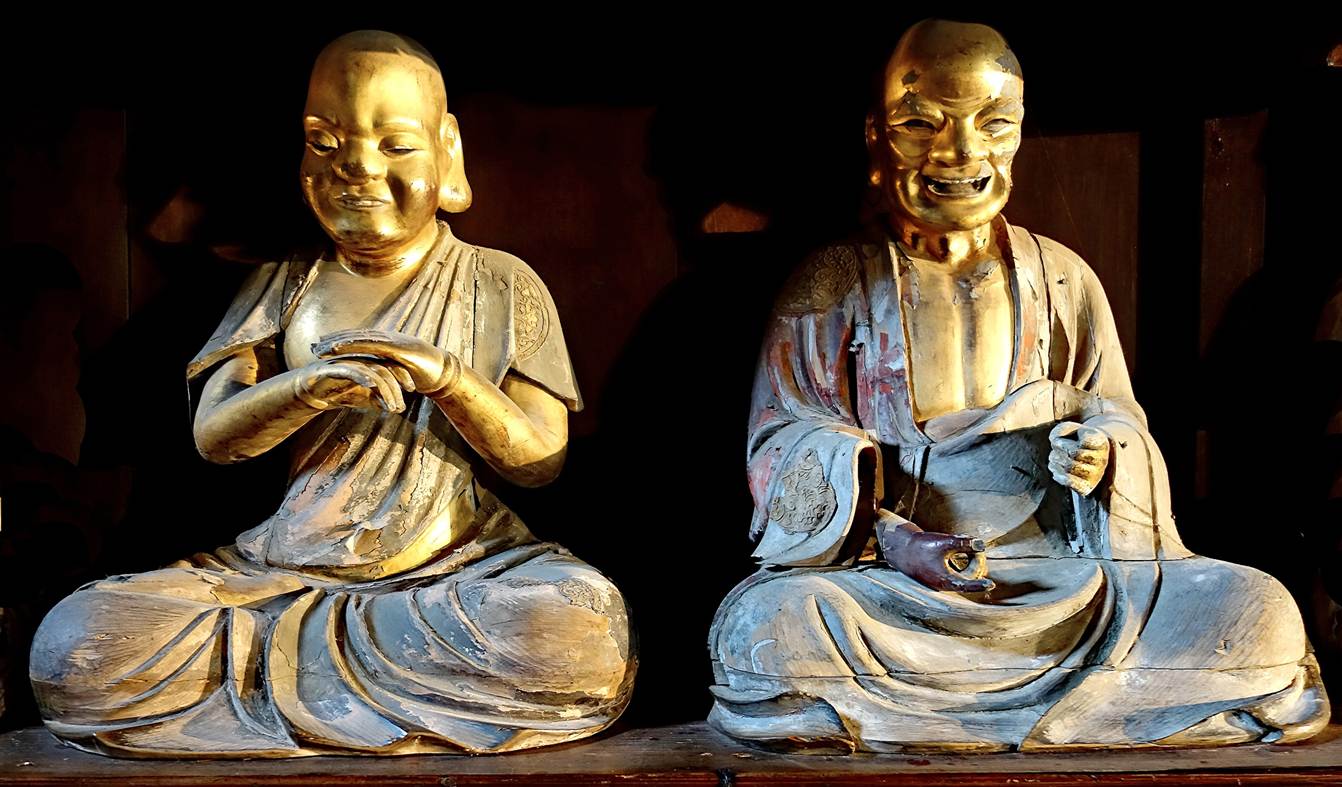
its collection of wooden statues of the rakan (a
group of 500 enlightened disciples of the Buddha).
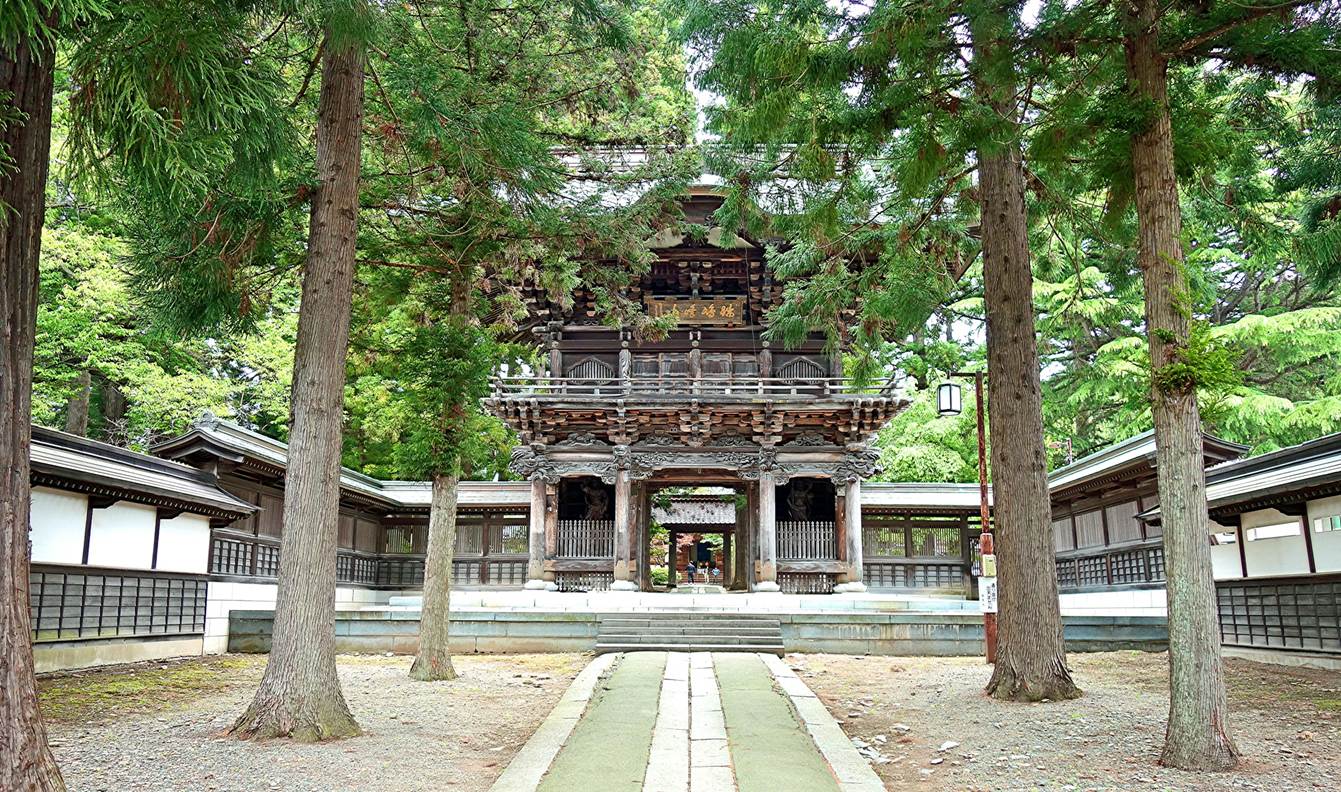
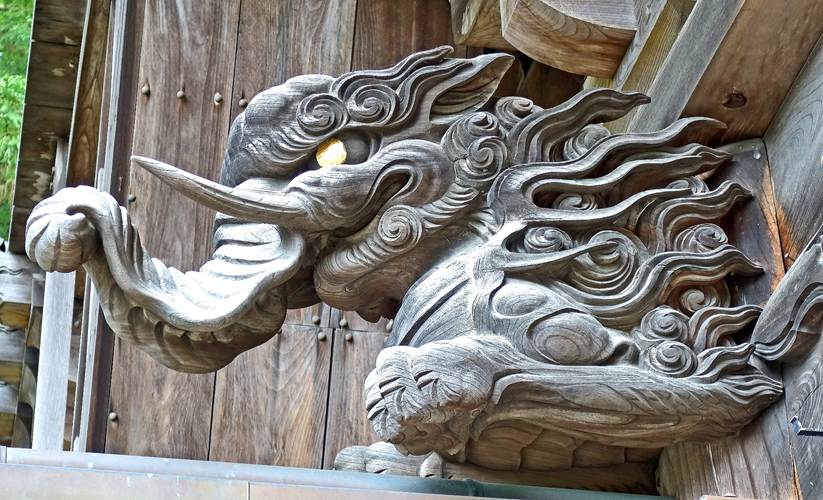
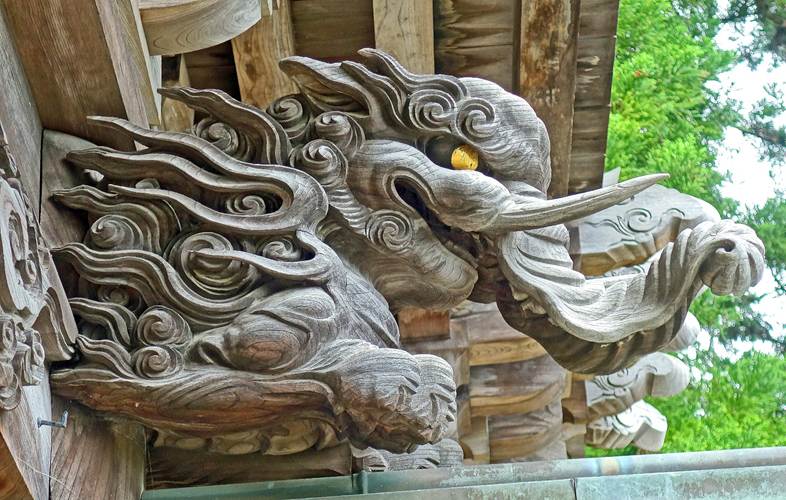
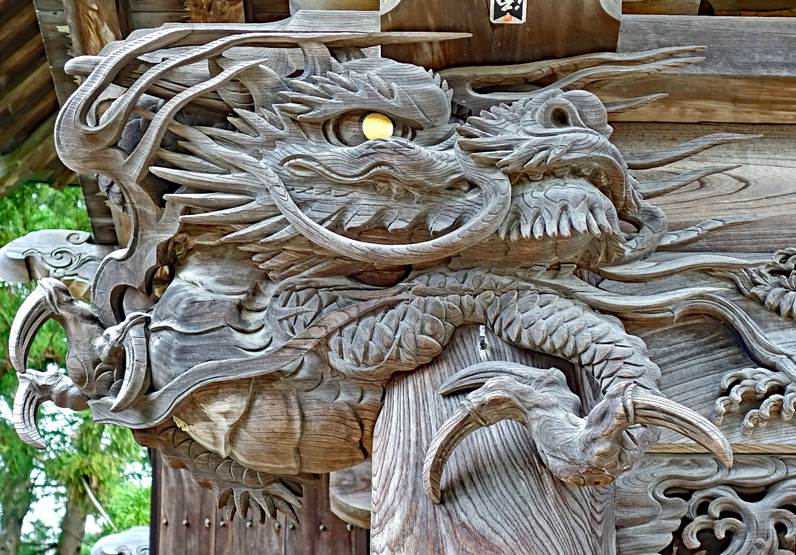
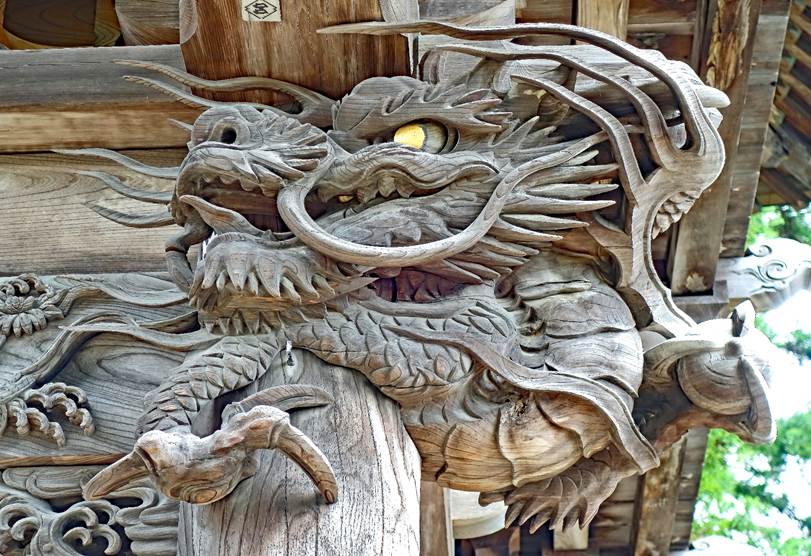
The massive wooden Sanmon,
the entrance gate of Hoonji.
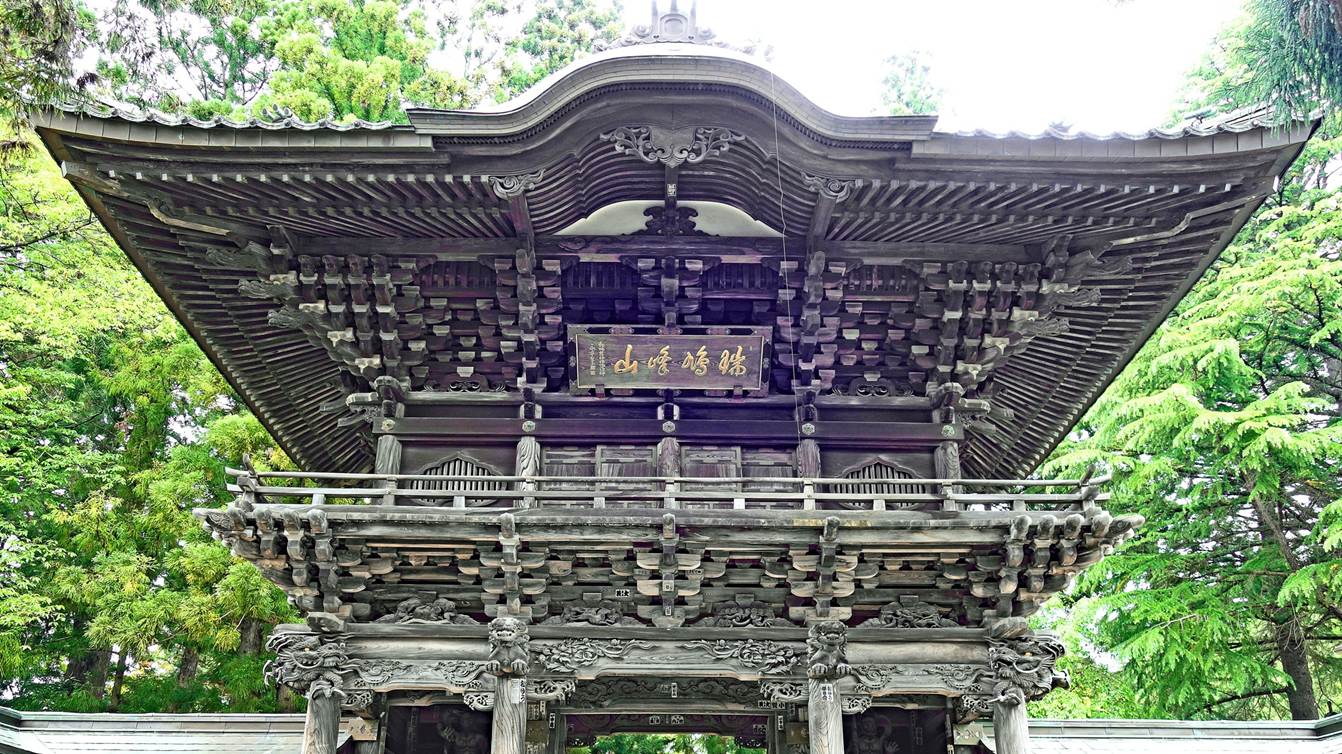
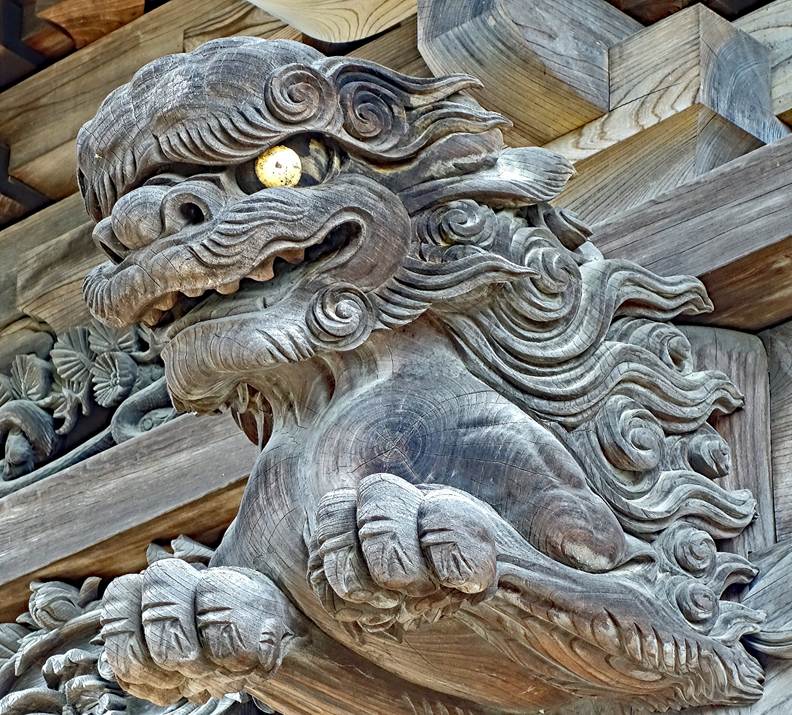
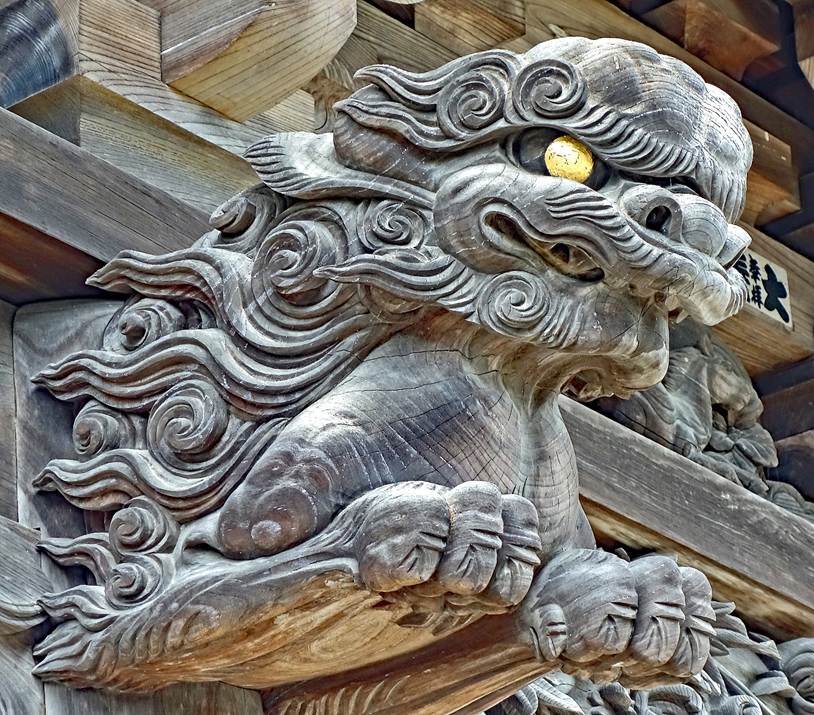
Wood carvings
adorning the Sanmon.
|
|
|
|
|
|
|
|
|
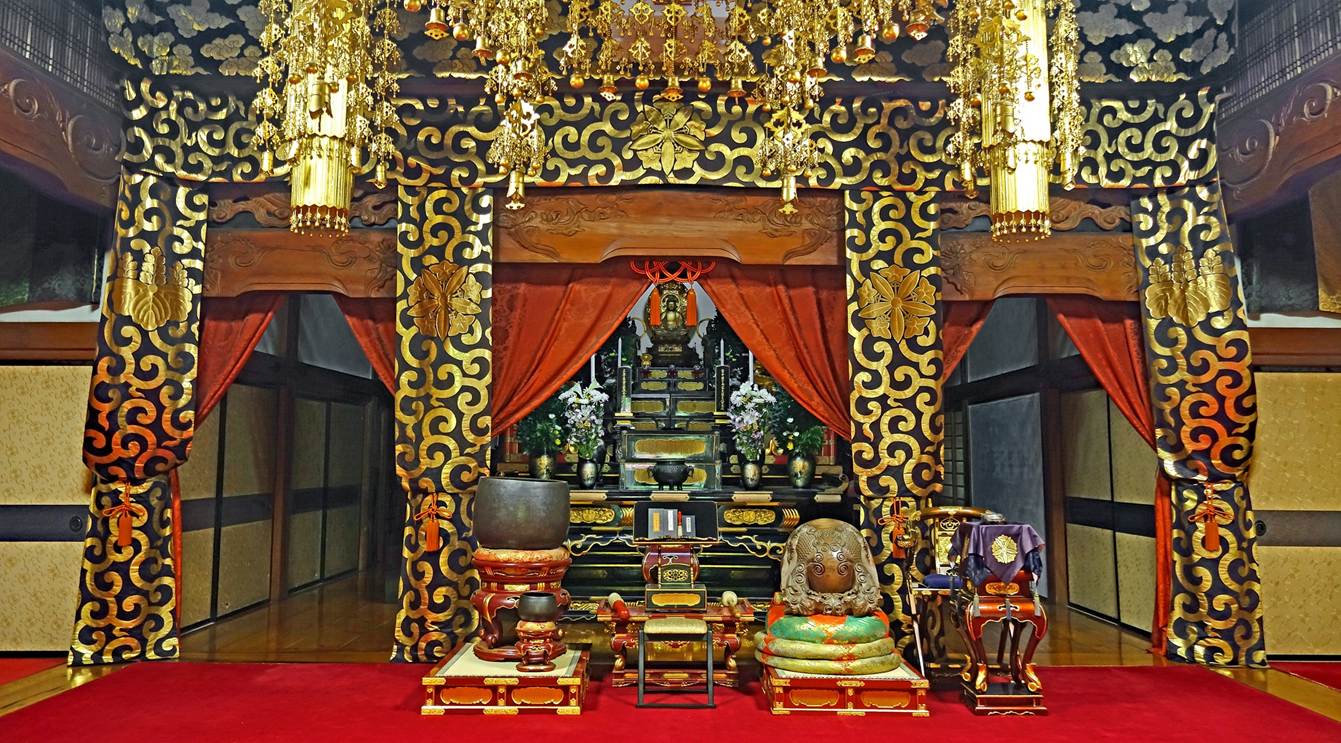
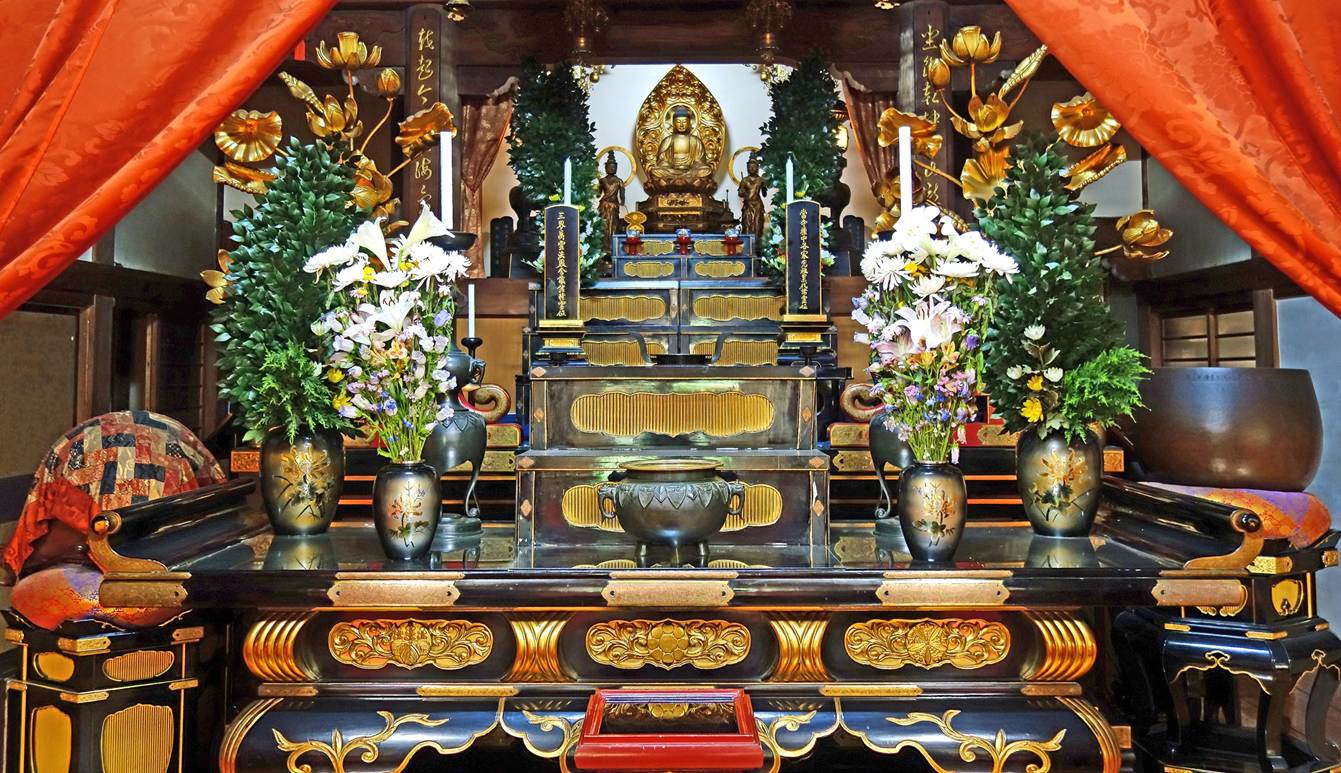
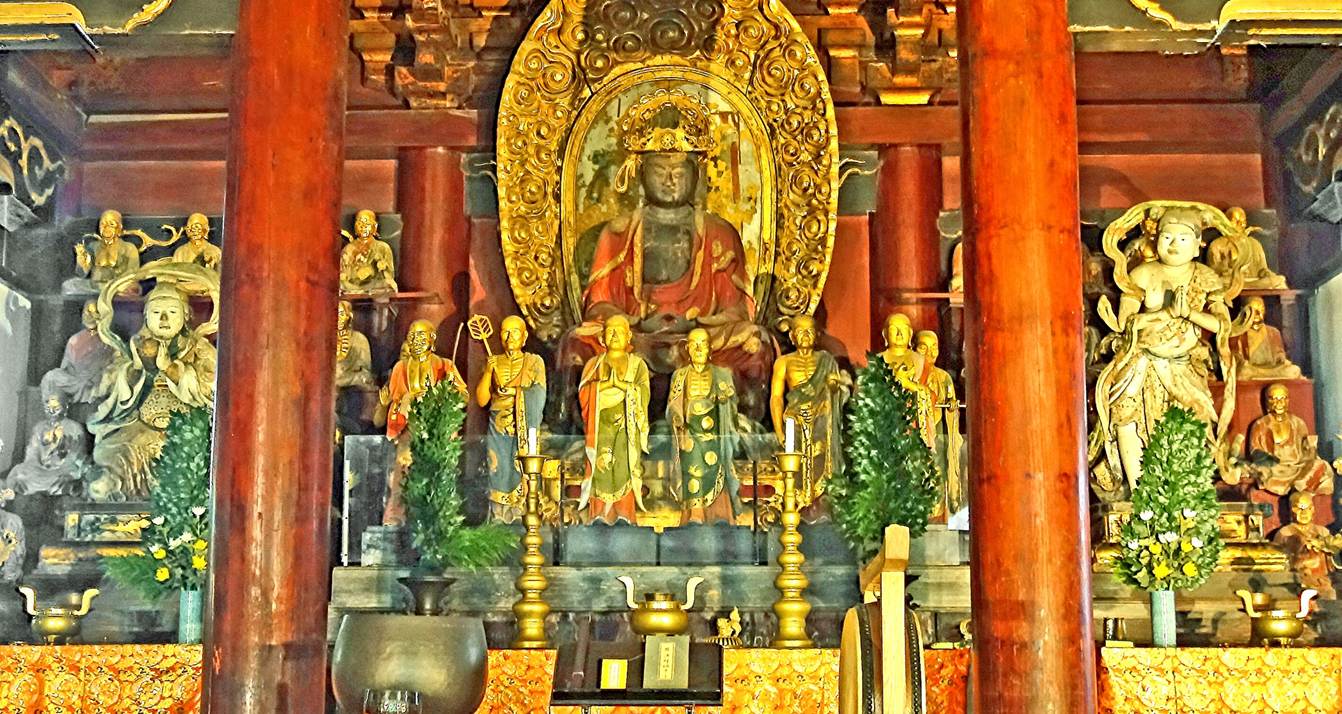
Altar inside the
Hondo (main prayer hall) of Hoonji with a statue of
Shaka Nyorai (the name given to the historical Buddha
in Japan) in the center.
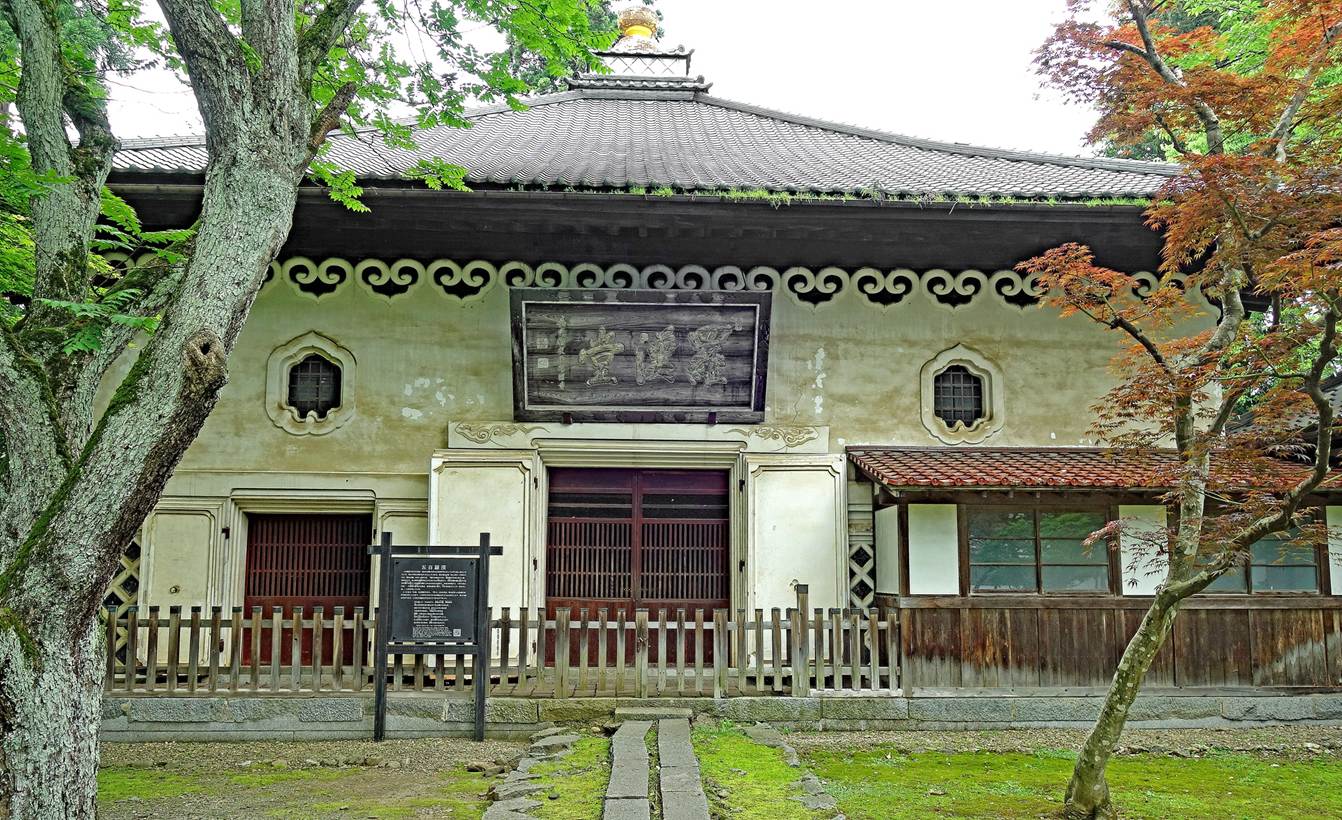
The Rakando, which houses the rakan
statues of Hoonji. It was built in 1735 and rebuilt
in 1858 like a ″kura″, a highly
fire-resistant building with thick earthen walls (see here).
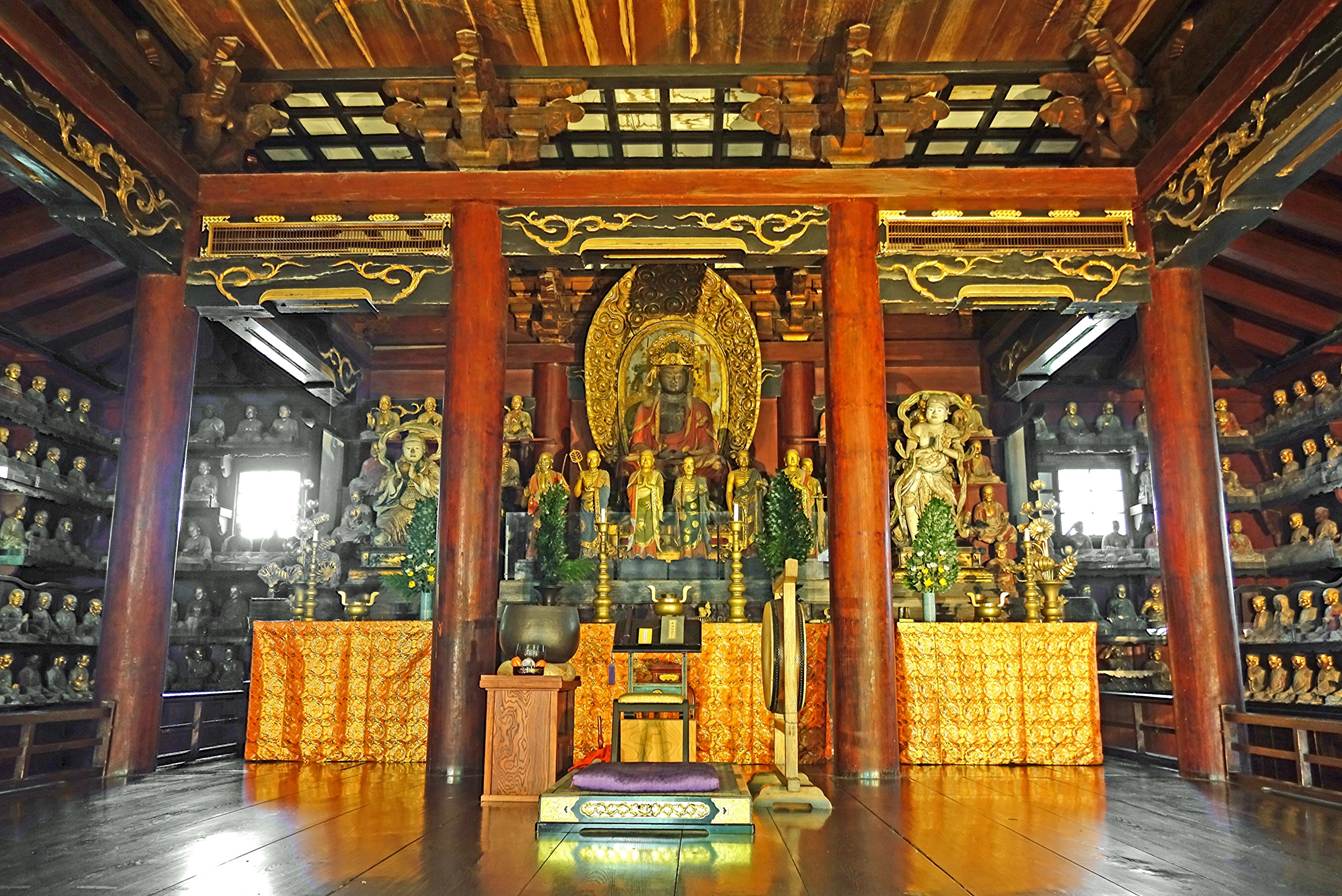
Inside the Rakando. In the center stands a seated statue of Dainichi Nyorai, the supreme Buddha, surrounded by his 10 great
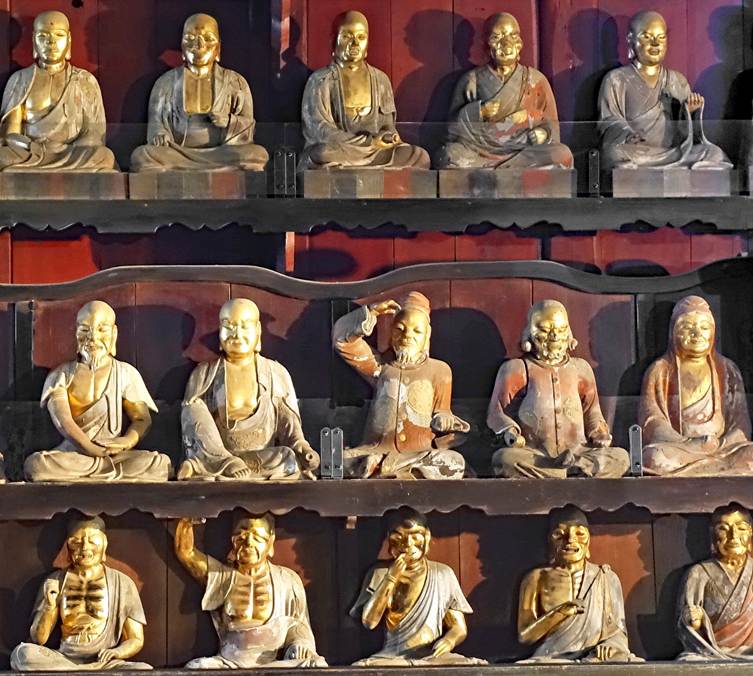
disciples. The rakan statues are lined on shelves
against the side and back walls. They were made of lacquered wood by Buddhist
masters in Kyoto over a period of four years (1731-1735). There are 500 rakan, but one statue has been lost. So, only 499 rakan statues remain in the Rakando.
Photos of some
the rakan statues.
|
|
|
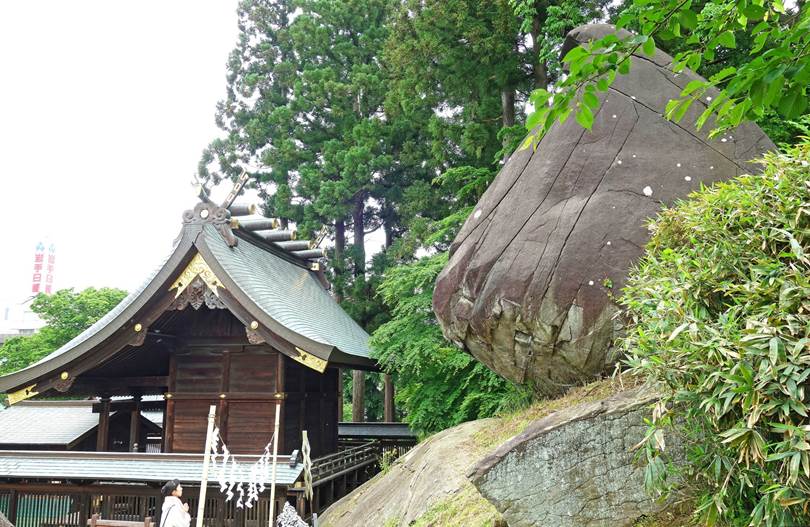
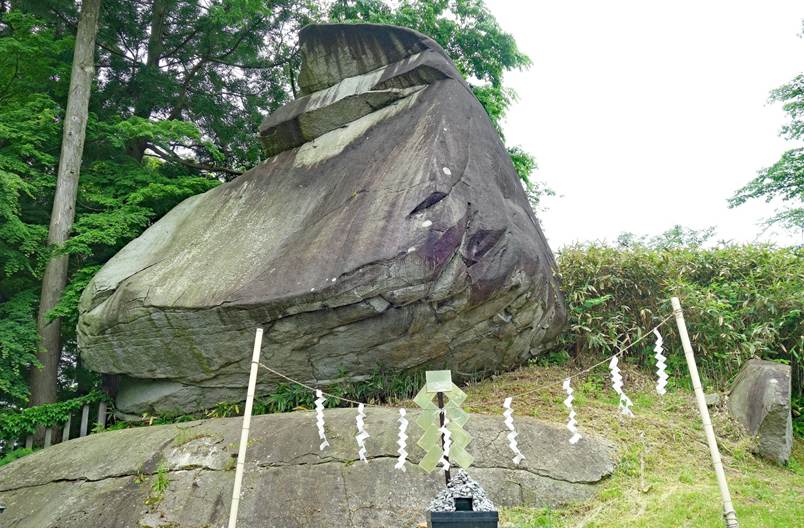
Eboshi-iwa (烏帽子岩).
This imposing, 6.6m-high triangular rock
sits behind the Sakurayama shrine, near the site of
the former castle of Morioka. It was excavated there in the late 16th century
during the castle's construction. As the local ruling Nanbu clan considered
this discovery an auspicious omen, the rock was enshrined as a protective deity.
People still come and pray to it. Its name was inspired by its resemblance to a
traditional Japanese hat, the eboshi (烏帽子).
|
|
|