Taiwan: Taichung (2/2)
[June 2009, April 2017, November & December 2018, March
2026]

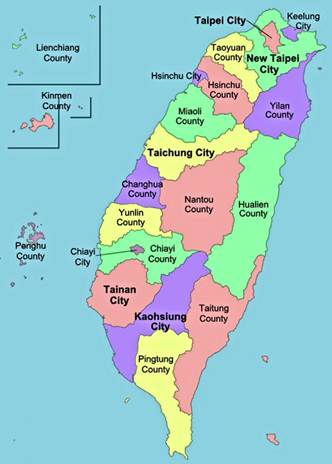
[Source: https://en.wikipedia.org/wiki/Taiwan_Area
]
This page
complements the first page (Part
1/2) of photos I took in Taichung. While the previous page focused on
places other than temples, the present page is entirely dedicated to Taichung's
temples. Each consecutive series of photos taken during the same trip is
labeled by the date of that trip, beneath the last photo of the series.
Lecheng Mazu
temple (臺中樂成宮 旱溪媽祖廟):
This temple
is located in the East district of Taichung, in a neighborhood called Hanxi (旱溪) also known for its popular night
market. Originally founded at this location in 1753, it was reconstructed in
1790 after damages caused by the Lin Shuangwen Incident (1786-1788), the
largest uprising in Taiwan against the Qing rule. Like many other old temples
in Taiwan, it went through several restorations, reconstructions, and
expansions during its history. The most recent major restorations were
undertaken following the 1999 earthquake and completed in 2003. The temple's
principal deity is Mazu (媽祖), the Taoist goddess of the sea, but a
host of other deities are also enshrined here, including the Jade Emperor, the
Five Gods of Wealth, Wenchang Dijun, Guanyin, and the god of love and match
making Yue Lao, so that the temple can fulfill the wishes of many worshippers.
In particular, it is a very popular temple for matchmaking and marriage.
Left:
Entrance of the temple behind a large incense burner. Right: Portion of the
roof of the temple.
|
|
|


Altar dedicated to the main deity, Mazu
(媽祖, meaning ″Maternal Ancestor″), also known as Tianhou (天后), meaning ″Heavenly
Empress″. The two
large red and green statues in the front are her two customary guardians. The
red one is Shunfeng'er (順風耳), who can hear sounds from very far.
The green one is Qianliyan (千里眼), who can see very far.

Altar dedicated to the Jade Emperor (玉皇上帝), the supreme deity in Taoism, ruling
over heaven, earth and the underworld, overseeing all gods, mortals, and
demons. He is holding a ″hu″ (笏), a tablet for audiences.

Altar of Wu Lu Caishen (五路財神, meaning ″the Five-Way Gods of
Wealth″). Together, these five deities govern wealth from all directions
(East, South, West, North, and Center). The god in the middle, Zhao Gongming (趙公明), represents the Center and commands
the other four.

- Left: Altar dedicated to Wenchang Dijun (文昌帝君), also called Wenchang Wang (文昌王), the Taoist deity of culture and
literature. He is widely worshipped by students praying for success in
examinations. As usual, he is flanked by his two attendants, Tianlong (天聾, meaning ″Heaven-Deaf″) and
Diya (地啞, meaning ″Earth-Mute″). The
seated statue is generally considered the main one. The one in the back may be
movable, in order to be used in ceremonies.
- Right: Statue of Guanyin (觀音), the bodhisattva of infinite
compassion and mercy.
|
|
|


- Left: Statue of Zhusheng Niangniang (注生娘娘), an important deity responsible for fertility,
pregnancy, safe delivery, and the protection of young children. She shares the
same functions as Lady Linshui (臨水夫人) [See Lady Linshui temple in the page
on Taiwan], but these two deities have evolved from different legends and are not the
same. In the picture below, Zhusheng Niangniang holds a brush in her right hand
and a ledger in her left, symbolizing that she keeps records of newborn
children in each family lineage.
- Right: Multi-faced and multi-armed
statue of Doumu Yuanjun (斗姆元君), the Mother of the Big
Dipper and the tutelary authority over a group of 60 deified generals known as
the Tai Sui (太岁) generals. These generals are shown in
the two photos that follow, at their usual locations in the temple. During
every successive period of 60 years, they are believed to govern, in rotation,
the fortunes and misfortunes of human beings. The statue of the general
currently in charge is temporarily removed from its usual spot and placed
before Doumu Yuanjun (as can be seen in the photo on the right below) to
symbolize her authority, thereby leaving an empty seat among the 60 generals.
|
|
|


[March
2026]
Two photos showing the sixty (minus 1!)
Tai Sui generals. The empty seat is in the middle of the last row in the first
photo below. But this photo was taken in November 2018. When the above photo
was taken in March 2026, the general in charge was no longer the same. Instead,
he was the one seated in the fourth position from the right in the middle row
of the first photo.


[November
2018]
- Left: Shrine dedicated to Hua Tuo (華陀), a renown Chinese physician and
surgeon (c. 140-208) during the late Eastern Han dynasty. He is regarded as a
divine healer in Chinese folk religion and worshipped by many for health and
longevity.
- Right: Shrine dedicated to Yue Lao (月下老人, ″The Old Man Under the Moon″).
He is the mythical Chinese deity responsible for matchmaking. Originally a folk
deity, he was incorporated into the Taoist pantheon as the god of love and
matchmaking. He is believed to reside on the moon, where he holds the
"Book of Marriages" (姻緣簿), a registry of predestined partners,
ensuring that unions happen regardless of obstacles. He makes this temple into
a popular one for worshipers in search of true love.
|
|
|


[March
2026]
Nantian
temple (台中南天宮 關聖帝君):
Like the
previous one, this temple is located in the East district of Taichung. It is
primarily dedicated to Guandi (关帝, ″Emperor
Guan″), the deified title of Guan Yu (关羽), a Chinese
general (c. 160-220) renowned for his moral virtues (particularly loyalty and
righteousness) and his martial prowess. Guandi is often worshipped as a god of
war and wealth, but also as a powerful protector, in both Buddhism and Taoism.
Regarded as a sage of war, he is sometimes associated with Confucius, as well
as with Wenchang Dijun (文昌帝君), the god of
culture and literature, due to his moral qualities. He is also known as
Guangong (关公), which has
a similar meaning.
Founded in
the early 1950s, this temple impresses with its size, in the number of deities
worshipped within it, and in the diversity of the statues and decorations it
houses. In a typically Taiwanese tradition, it blends Taoist, Buddhist, and
Confucian elements. It is a fascinating place to visit.
View of the
temple from the opposite street. A giant seated statue of Guandi rests on its
roof.


[November
2018]
View of the temple at night.

[March
2026]
Altar dedicated to Guandi in the main
hall of the temple.

Statue of a golden bull with a red head,
a symbol of wealth and prosperity, in the temple. The bowl filled with yuanbao
(元寶), boat-shaped gold ingots used as
currency in imperial China, in front of the bull makes this symbol even more
explicit.

Bronze statue of a mythical
dragon-turtle creature, which symbolizes longevity. It combines the head of a
Chinese dragon with the shell and body of a turtle.

[November
2018]
Large wooden abacus surmounted by a brush. In certain other
temples of Taiwan (such as the City God temples), such abacuses symbolize the
deities' tallying of the good and bad deeds performed by humans. In the context
of this temple, this abacus symbolizes the tallying of wealth.
 GENERAL
Small room featuring a seated statue of
Guan Yu (the general deified as Guandi) reading a book. The weapon in his back
is his legendary polearm, the ″Green Dragon Crescent Blade″ (青龍偃月刀). The mural situated behind him depicts
the transport of yuanbao (gold ingots). The entire scene seems to celebrate
Guan Yu as the protector of wealth.

[March
2026]
Other statues of Guandi in the temple.
|
|
|


Altar dedicated to the Jade Emperor (玉皇大帝).

[March
2026]
Altar dedicated to Confucius, the Most
Holy Sage and Teacher (至聖先師).

Altar dedicated to Zhao Gongming (趙公明), the chief god of the five deities
known Wu Lu Caishen (五路財神, ″the Five-Way Gods of Wealth″),
who govern wealth from all directions (East, South, West, North, and Center) [see Lecheng Mazu temple (above)]. The central statue
depicts him holding a yuanbo in his left hand. The smaller gilded statue on the
left is more interesting. It shows him riding a tiger, brandishing a cudgel
with one hand, and holding a yuanbo in the other. It symbolizes his ability to
tame chaotic forces to make them work for useful purposes.

Altar dedicated to Tudigong (土地公), also known as Fude Zhengshen (福德正神), the god of Earth and merit.

Altar dedicated to King Yue Wumu (岳武穆王), also known as Yue Fei (岳飛), a 12th-century Chinese general famous for his
loyalty, military skills, and ultimate wrongful execution.

[November
2018]
Mural painting in the temple, which depicts a famous legend in
Chinese history involving Yue Fei
(see above) and his mother. The scene shows Yue Fei's mother tattooing
characters on his back before he joined the army to fight invaders. The
characters, 報忠精 (Jing Zhong Bao Guo), mean "repay the country with pure
loyalty". This story symbolizes supreme patriotism and filial piety
in Chinese culture.

Altar dedicated to Wenchang Dijun (文昌帝君), the god of culture and literature.

Altar dedicated to Yue Lao
(月下老人), the ″Old Man Under the Moon″, the god of love and
matchmaking.

Altar dedicated to Tianguan
(天官), the Heavenly Official, known to grant happiness and good fortune.

- Left: Zhao Gongming (趙公明), the main god of the Five Gods of Wealth collectively known as Wu Lu Caishen (五路財神). This statue depicts
him holding a golden yuanbao in his
left hand.
- Right: The Lord of the North Dipper (北斗星君). He is credited with the power to govern longevity and fortune,
as well as to ward off calamities.
|
|
|


- Left: Fuyou Dijung (孚佑帝君), the formal Taoist title of Lu Dongbin (呂洞賓), a former scholar and poet, who became the leader of the Eight
Immortals (八仙). He is revered across Taoism, Buddhism, and Confucianism as a
deity of healing.
- Right: Xuantian
Shangdi (玄天上帝), the Emperor of the Dark Heaven. According
to legend, he cleansed himself of his sins by washing
his internal organs in a river. These then transformed into a demonic snake and
a turtle. After subduing them, he kept them under his feet to serve as his
attendants. The statue symbolizes the control over inner demons, specifically
desire and fear.
|
|
|


- Left: Statues of Mazu in the center, flanked by her two
guardians: Shunfeng'er (順風耳), who can hear sounds from very far, on the left, and Qianliyan (千里眼), who can see very far, on the right.
- Right: Statue of Guanyin, the bodhisattva of infinite compassion and mercy.
|
|
|


[March
2026]
Taichung Martyrs'
shrine (臺中市忠烈祠):
Located in
the North District of Taichung, this shrine is dedicated to honoring the
spirits of revolutionary martyrs and fallen heroes of the Republic of China,
including military personnel who died in various conflicts since the 1911
Xinhai Revolution that overthrew the Qing dynasty. These conflicts include
mainly the Second Sino-Japanese War and the Chinese Civil War. It also honors
civilians and public servants, such as firefighters and police officers who
died in the line of duty.
This shrine
was built on the site of a former Japanese Shinto temple and is adjacent to the
Taichung Confucius temple (see below). Completed in 1970, it features a
traditional Chinese palace-style architecture. Its main buildings are an
archway (not pictured below), a main gate, a front hall, and a main hall.
The main
gate, flanked by two large statues of golden lions.

Close-ups of
the lion statues.
|
|
|


Front hall, which serves as the gate to the courtyard surrounding
the main hall.

Main hall.

Interior of the main hall. It houses the spirit tablets of the
martyrs.


[March
2026]
Taichung
Confucius temple (臺中孔廟):
This temple
is adjacent to the Martyrs' shrine featured above. In fact, they were both
built around the same time on the same land that was previously occupied by a
Japanese Shinto shrine. This Confucius temple is quite similar in style and
layout to the Kaohsiung
City temple of Confucius (高雄左營孔子廟) and the Kaohsiung City Qishan
Confucius temple (高雄市旗山孔子廟), both located in the Kaohsiung
Municipality (see here). It also features a Chinese
Palace-style architecture.
The Dacheng gate (大成門), It opens into the vast courtyard where the main hall, the
Dacheng Hall is located.

The Dacheng Hall (大成殿, ″Hall of Great Accomplishment″).


Interior of the Dacheng hall. It houses the Confucius tablet in
the middle of the rear wall and the 16 tablets of four main disciples of
Confucius known as the Four Sages (四配) and
twelve eminent Confucian figures known as the Twelve Philosophers (十二哲), on the two side-walls.
|
|
|


Gate on the western side of the temple compound. The characters on
the plaque, 毓粹門, translate to ″Gate of Nurturing Excellence″.

[March
2026]
Paochueh temple (寶覺禪寺):
This temple
is a Zen Buddhist temple of the Linji school. It was founded in 1928, during
the Japanese Colonial period, by the Zen Master Donghai Yicheng. I visited this
temple for the first time in June 2009. However, when I returned in March 2026,
my only recollection was that it housed a colossal statue of the Buddha. Then,
my initial impression was that it was just another one of those opulent modern
Buddhist temples that are increasingly dotting the Taiwanese landscape. Yet, I
soon realized that it harbored some particularly interesting historical
components that I had overlooked in 2009 (perhaps due to ongoing construction
at the time).
One of these
interesting historical components is a small Japanese-style temple, constructed
from red brick and wood during the Japanese colonial era, a singular sight in
Taiwan. Today, this small temple is encased within an imposing modern building
that ensures its long-term preservation. A large open archway, cut into this
building, gives access to the small temple. The visual combination of the two
edifices is striking.


The historic
temple houses a worship hall where three gilded statues represent three classic
manifestations of the Buddha, known as the ″Three Jewels″ (三寶佛).

Another remarkable historical sight in
the temple's compound is a small ossuary that contains the remains of Japanese
soldiers who died in Taiwan during the colonial era. Two Japanese lanterns
frame the ossuary. Close by stands a small pagoda, known as the Peace Pavilion,
dedicated to honoring the memories of Japanese and Taiwanese soldiers who died
during World War II. It houses a standing statue of Guanyin, known as Kannon in
Japan, the bodhisattva of infinite compassion ans mercy.
|
|
|


[March
2026]
On the other side of the temple's compound
stands its most unmissable structure, a 27m-tall statue of the fat laughing
Buddha, one of the representations of Maitreya Buddha, the Future Buddha. It
symbolizes joy, abondance, and contentment. It was built in 1964. After
renovations in 1990, it was painted gold, but later it was restored to its
original light gray color.
In the following photos taken in June
2009, the color of the statue was yellowish, rather than gold....
|
|
|


[June 2009]
... and in 2026 it was very light gray, almost white.
|
|
|


[March
2026]
Taichung
Guangtian temple (台中廣天宮 財神開基祖廟):
Built between
1984 and 1986, this temple is primarily dedicated to Zhao Gongming (趙公明), the principal
deity among the Five Gods of Wealth, collectively known as Wu Lu Caishen (五路財神, ″the
Five-Way Gods of Wealth″) [See the Lecheng Mazu temple (above)]. Although recently built, this temple attracts many
worshippers because it houses a 1400-year-old statue of Zhao Gongming,
considered the oldest of its kind. This statue is referred to as ″The
Founding Patriarch of the God of Wealth″ (財神開基老祖).
Facade of the temple.

Main entrance of the temple.

Left: Intricate stone carving on an entrance wall. Center and
right: Barrel-shaped drum and percussion bell in the temple.
|
|
|
|


Statue revered as ″The
Founding Patriarch of the God of Wealth″. It depicts the God of Wealth holding a yuanbao (元寶), a boat-shaped ingot used as currency
in imperial China, in his right hand, and a gnarled cudgel, in his left hand.
He is riding a tiger, of which only a tiny portion is visible, the rest being
concealed by the incense burner. This tiger is known as the General Black Tiger
(黑虎將軍), a protective deity. The symbolism of
the God of Wealth holding a yuanbao and riding the tiger is the taming of
chaotic forces to make them work for useful purposes [See
Nantian temple (above)].

Altar
dedicated to Wu Lu Caishen (五路財神), the Five-Way
Gods of Wealth. Zhao Gongming is the one in the middle.

Statues of black tigers placed under the altar of the Five Gods of
Wealth for their protection against evil spirits. These statues represent
General Black Tiger (黑虎將軍), which is the same tiger deity as Hu
Ye (虎爺) depicted yellow or white in other
temples. The black representation is typically reserved for Zhao Gongming. The
trio of statues amplifies the symbol of protection.

Hall dedicated to Yue Lao
(月下老人), the ″Old Man Under the Moon″, the god of love and
matchmaking.

[March
2026]
Yuanbao
temple (臺中市元保宮):
Built in
1791, this temple is primarily dedicated to Baosheng Dadi (保生大帝), also known
as Dadaogong (大道公), a god of medicine
and healing brought by Chinese migrants from southern Fujian. At that time,
malaria was rampant in Taiwan, and the population welcomed this deity to
safeguard their health. The temple underwent extensive restorations in 1846 and
1924. More recently, a multi-story building was added to the rear of the
temple. Numerous other deities are also worshiped here, including: Guandi, the
god of war; Zhao Gongming, the principal god of wealth; Guanyin, the
Boddhisatva of Infinite Compassion and Mercy; and Yue Lao, the God of Love and
matchmaking.
View of the
temple from its frontyard.

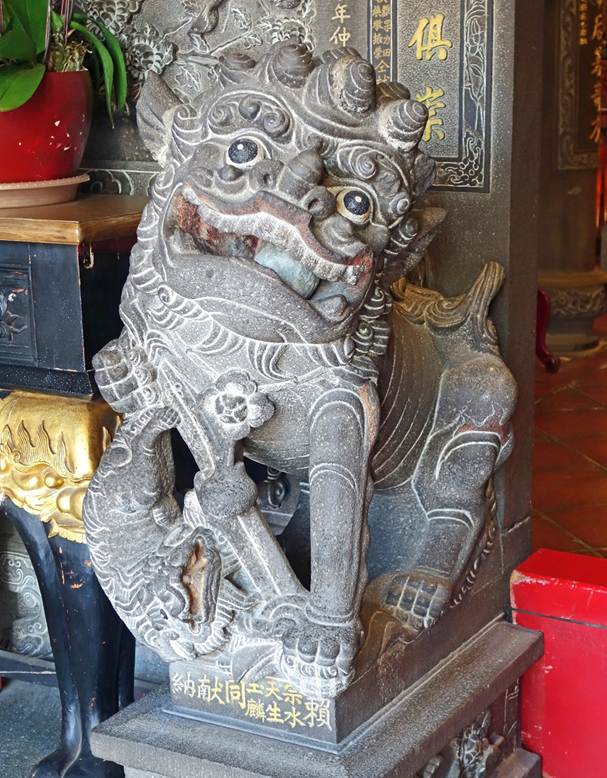
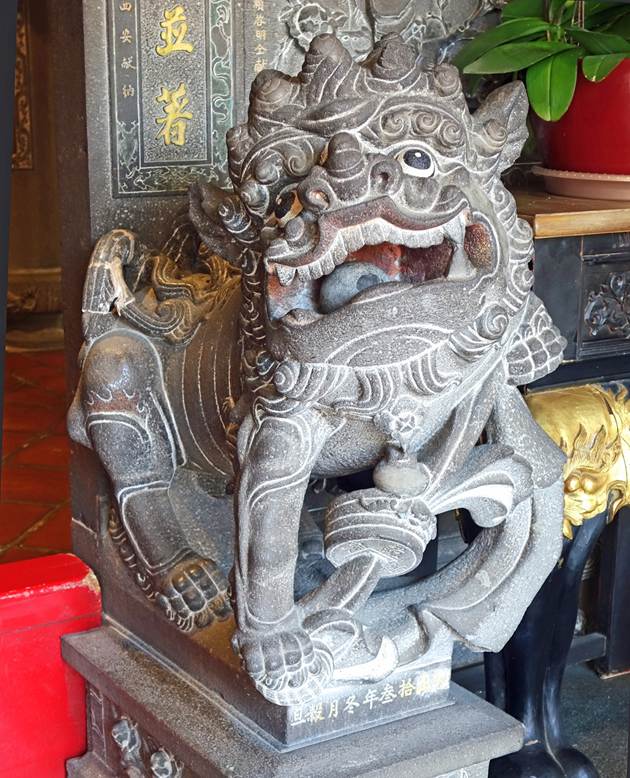
Guardian lion statues at the entrance of the temple.
|
|
|
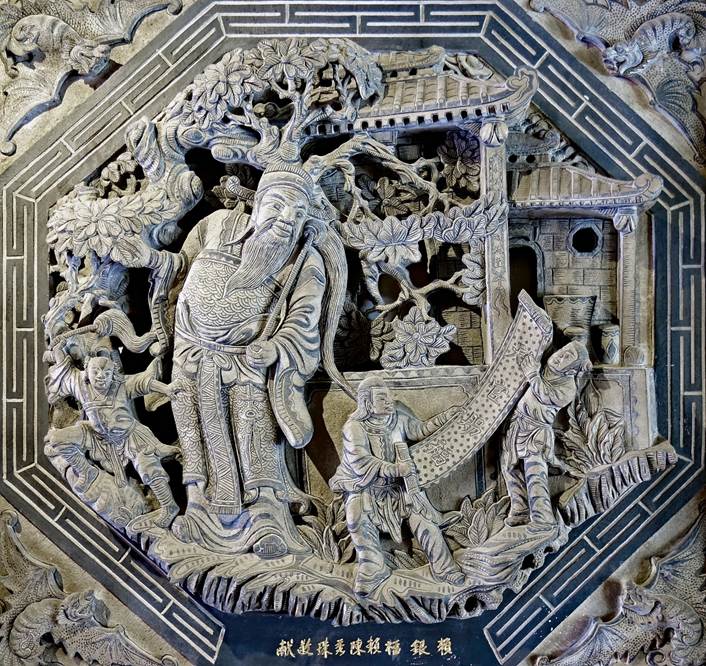
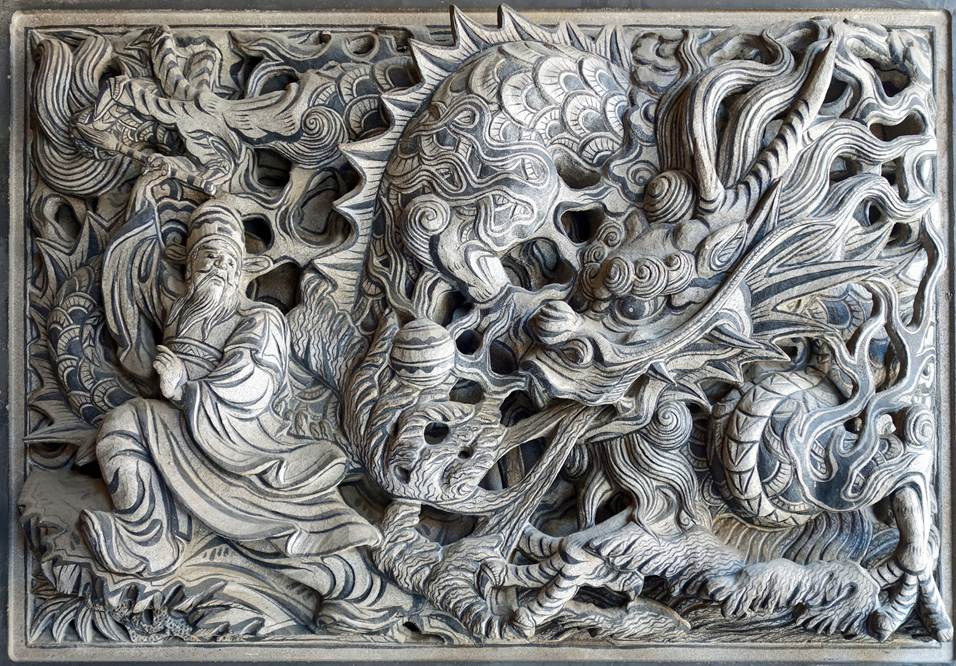
Intricate stone carvings on the walls of the entrance hall.
|
|
|
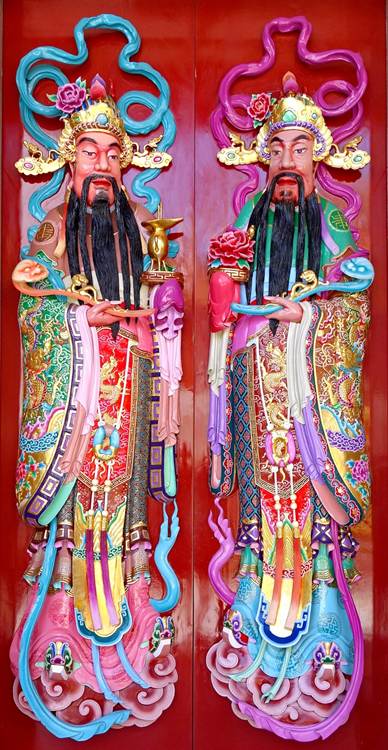
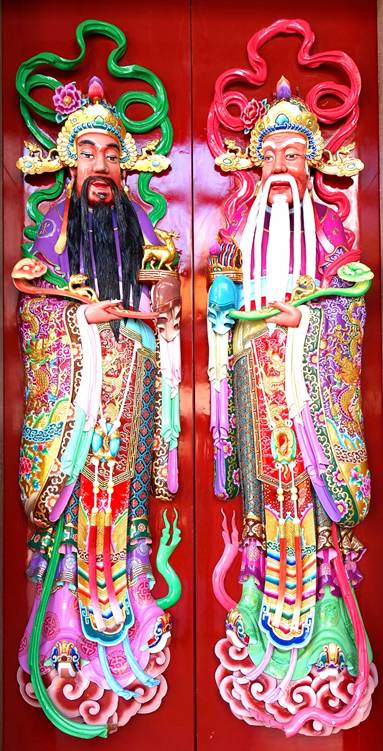
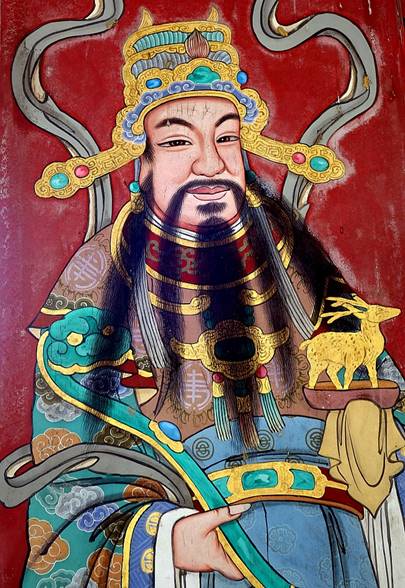
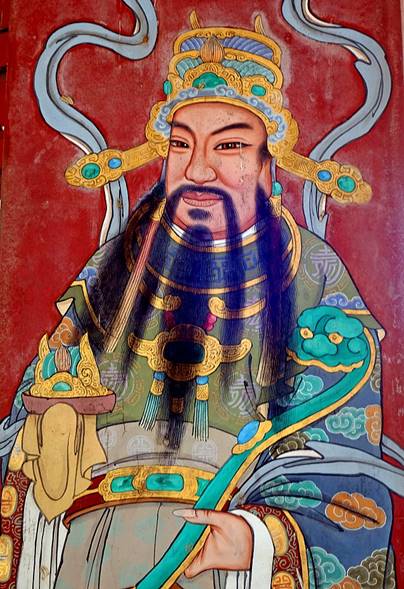
Menshen (門神, ″door gods″), the temple's entrance doors. They are
adorned with paintings of divine guardians protecting the temple and its gods
against the intrusion of evil spirits.
|
|
|
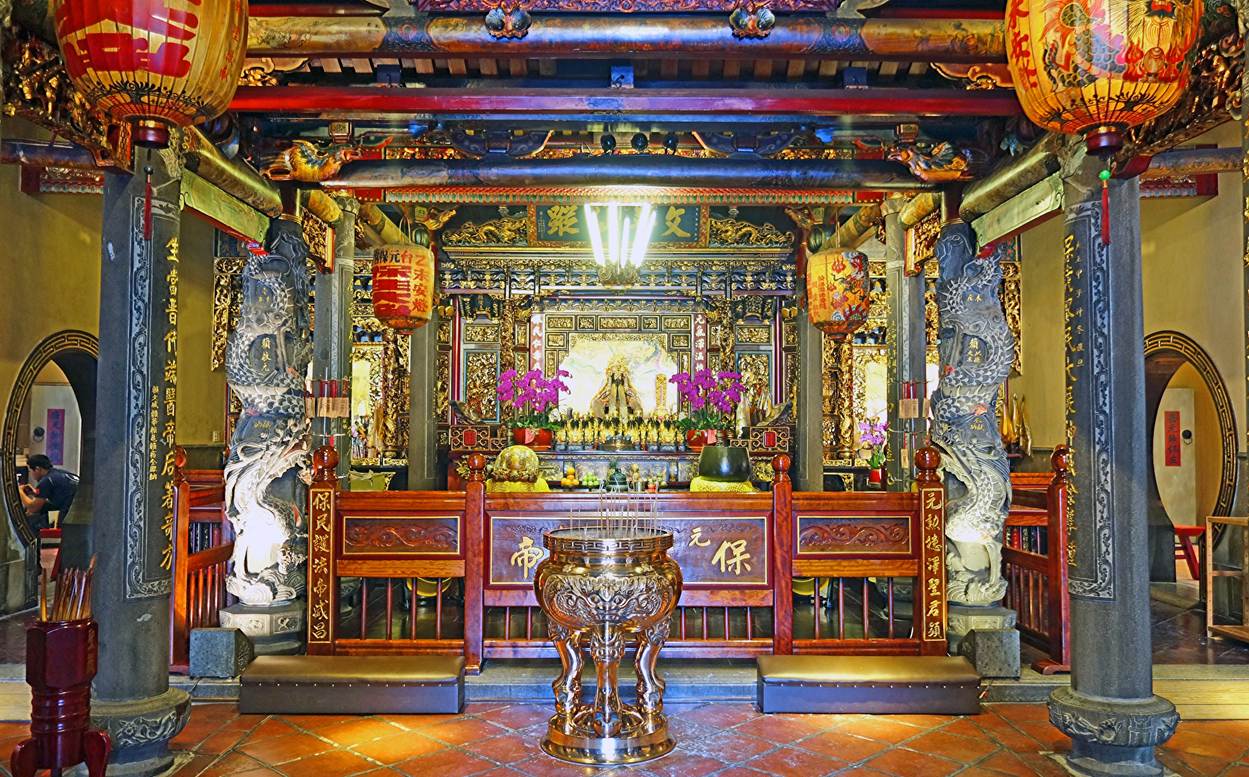
Main hall dedicated to Baosheng
Dadi.
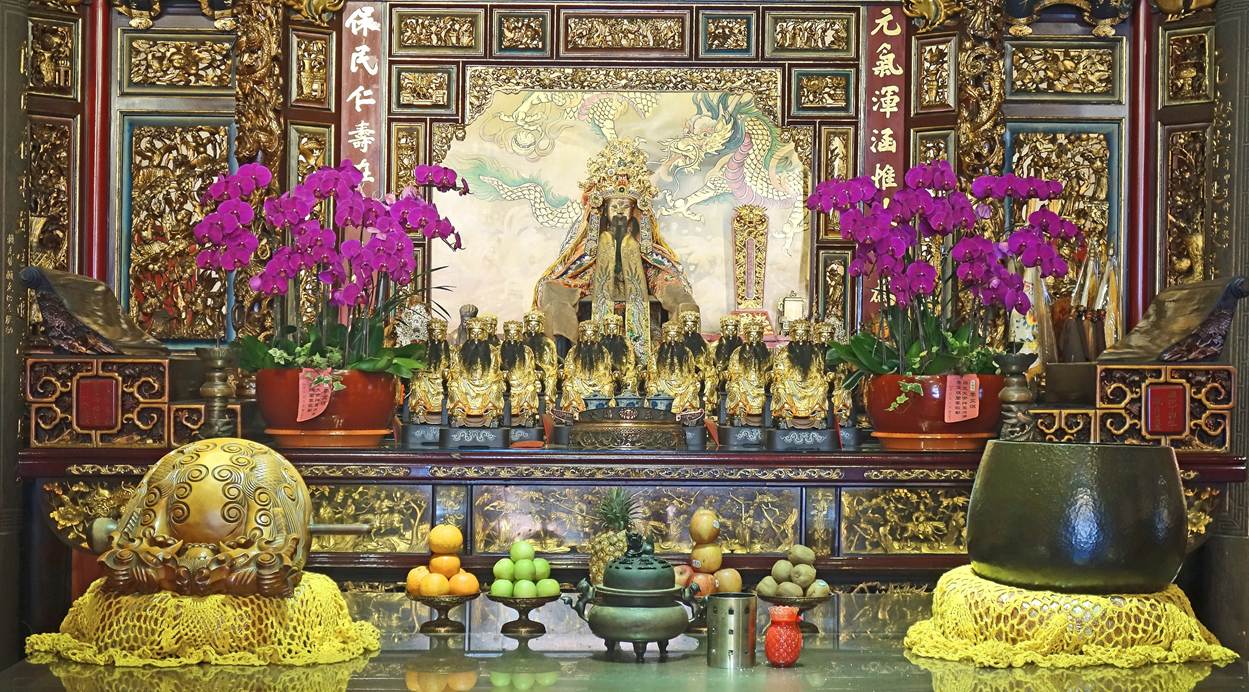
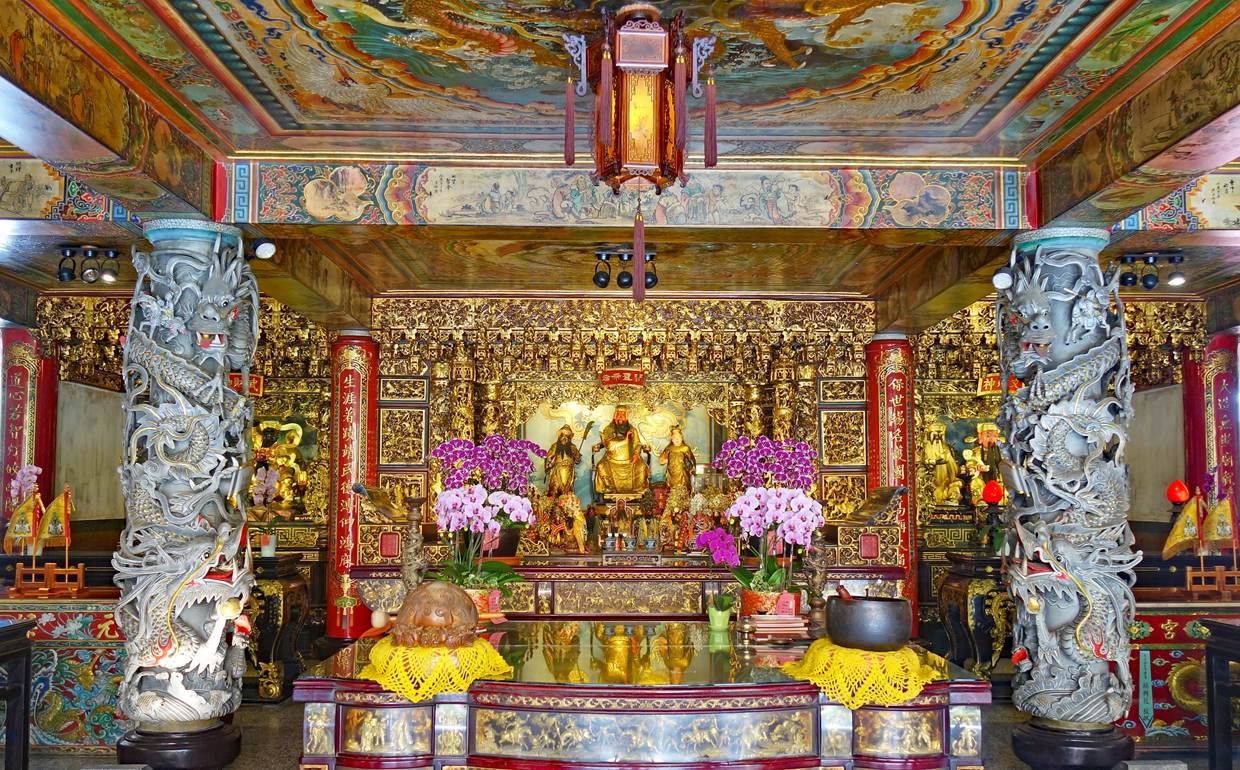
- Left: Hall dedicated to Guandi (关帝) [see
Nantian temple (above)]. Considered as the god of war, Guandi is also worshipped as a god
of wealth and a protector of merchants.
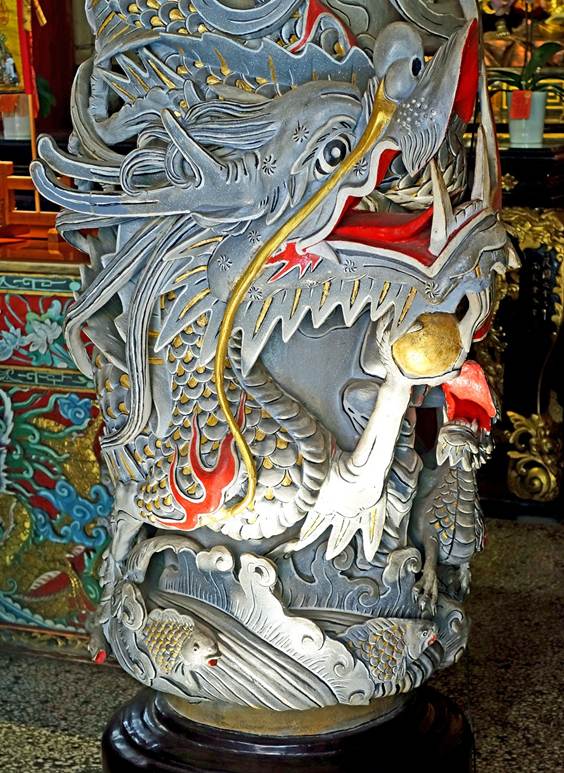
- Right: Base of a carved stone pillar in the hall.
|
|
|
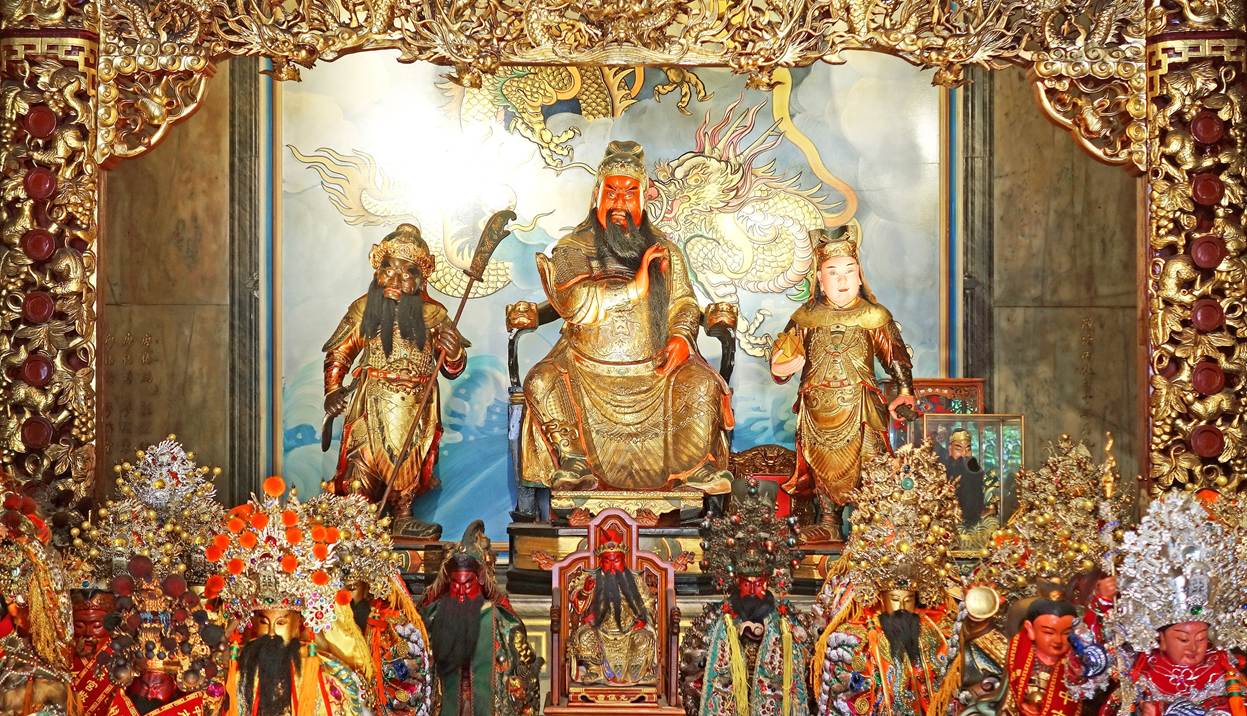
Closeup of the altar of Guandi. Here, he is flanked by his son
Guan Ping (关平), on his left, and his faithful commander Zhou Cang (周倉), on his right.
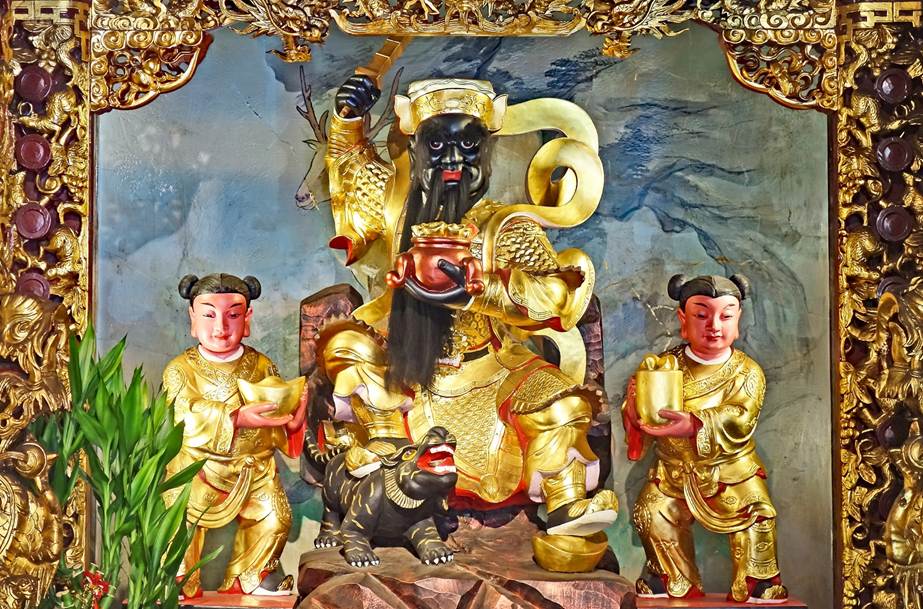
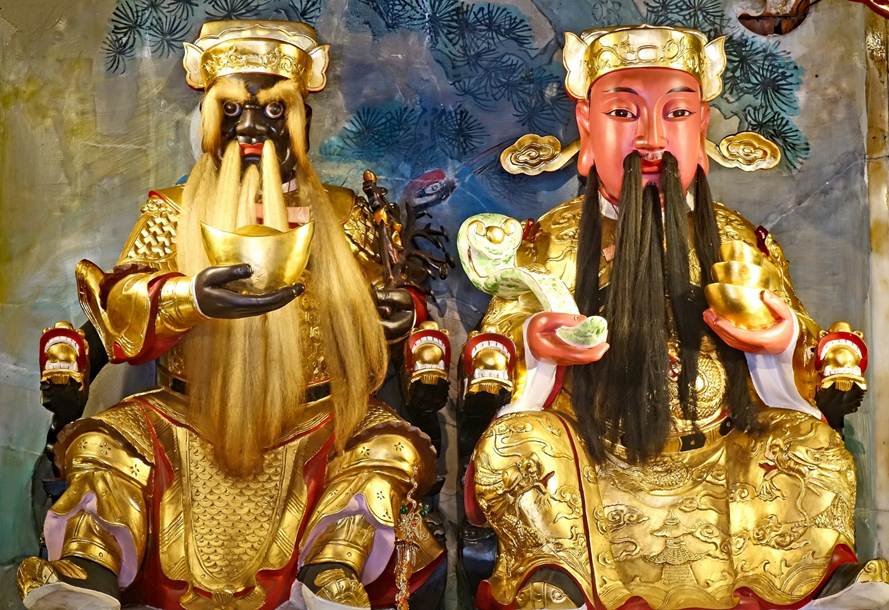
Statues of three of the Five Gods of
Wealth forming Wu Lu Caishen (五路財神) [See Lecheng Mazu temple (above)].
- Left: The photo depicts Zhao Gongming
(趙公明), the chief God
of Wealth. He is a shown with a black tiger under his right foot and a golden
yuanbo under his left. He brandishes a cudgel with his right arm and holds a
bowl filled with small yuanbo in his left hand. He is flanked by two attendants
carrying more gold. Together
these statues symbolize the taming of chaotic forces and the protection of
wealth.
- The photo on the right depicts two
other gods of wealth holding traditional symbols of wealth.
|
|
|
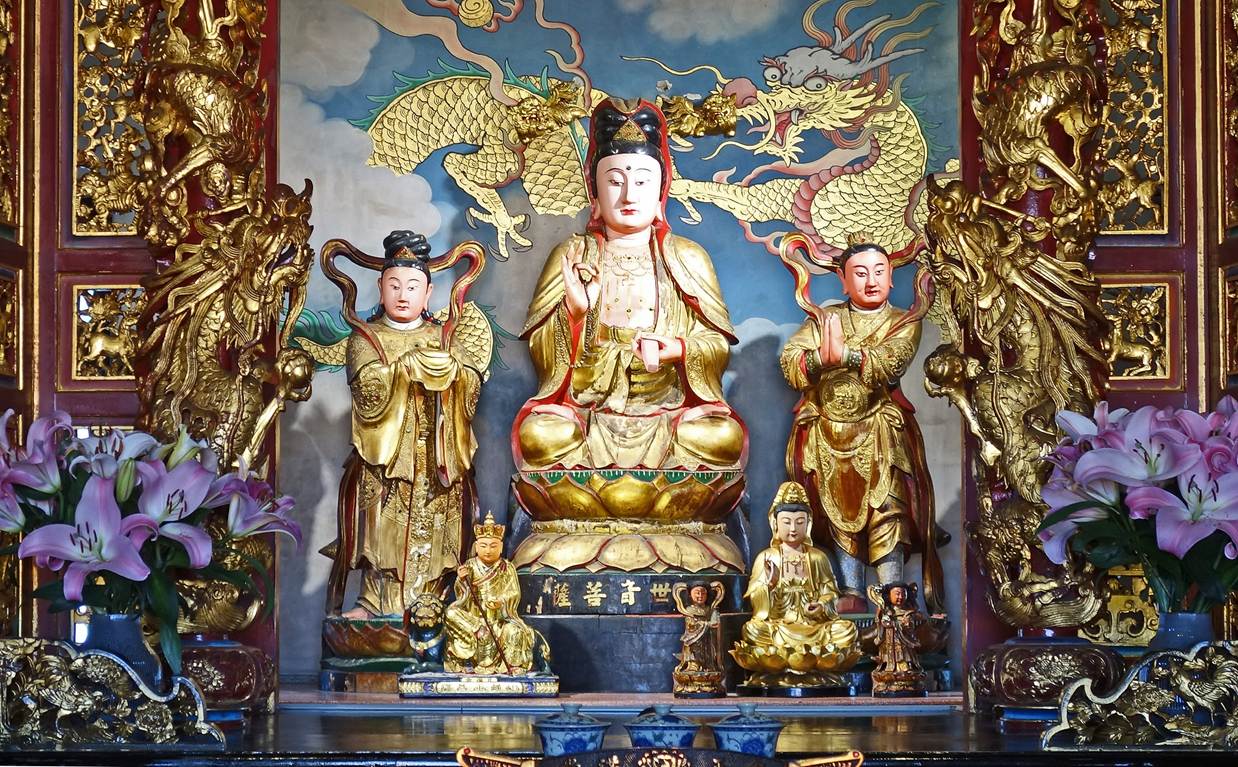
- Left: Guanyin with her two attendants, Longnu (龍女) on her right and Shancai (善財童子) on her left.
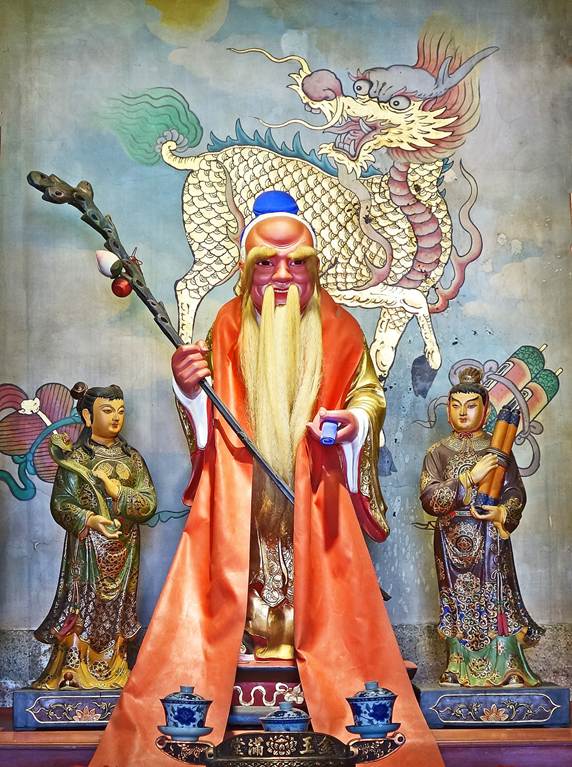
- Right: Yue Lao (月下老人), the god of love and matchmaking.
|
|
|
[March
2026]
Yingtian
temple (台中市應天宮蘇府王爺廟):
This temple,
located in the West district of Taichung, is relatively small and neither old,
nor of historical importance. Had it not been situated near my hotel during
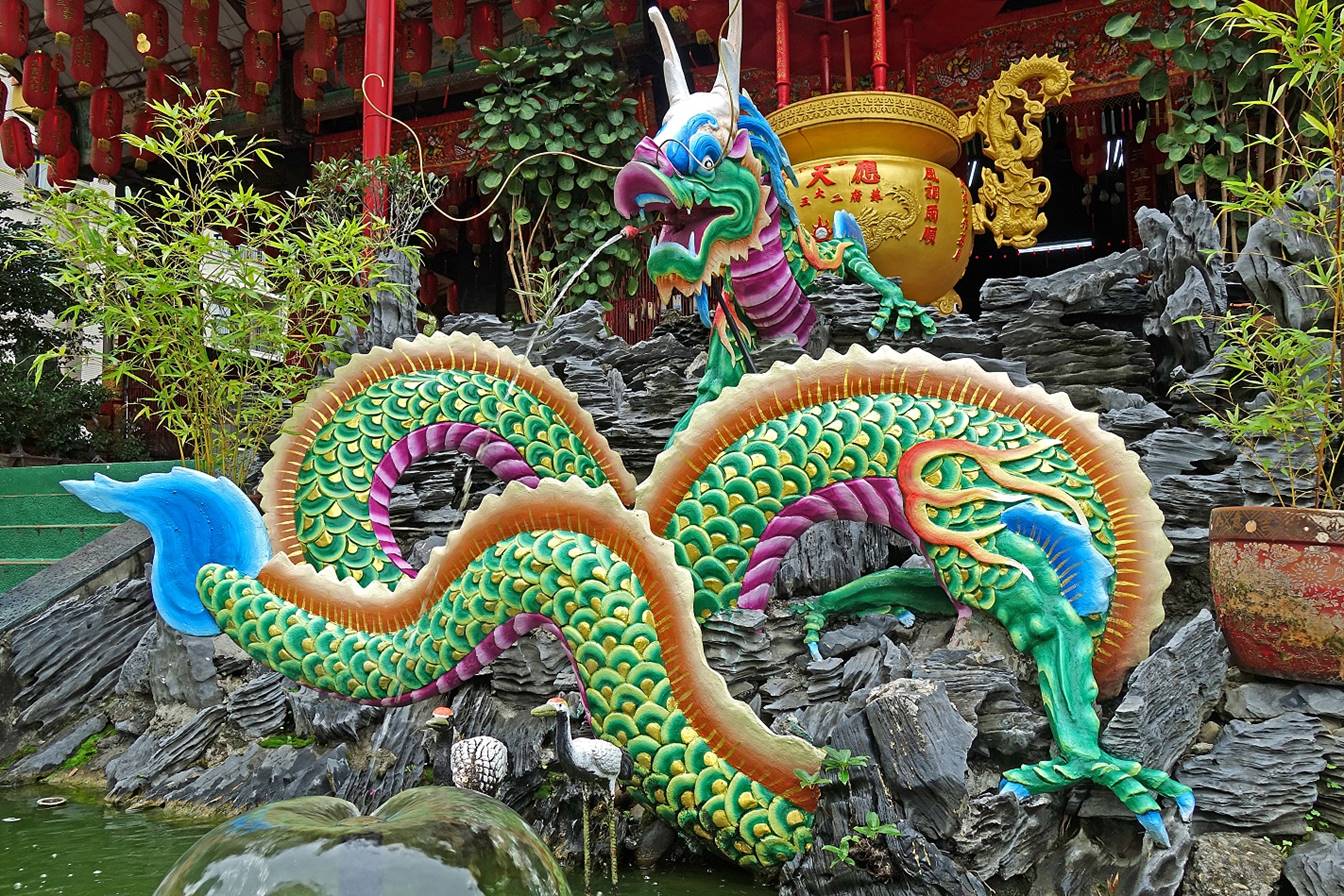
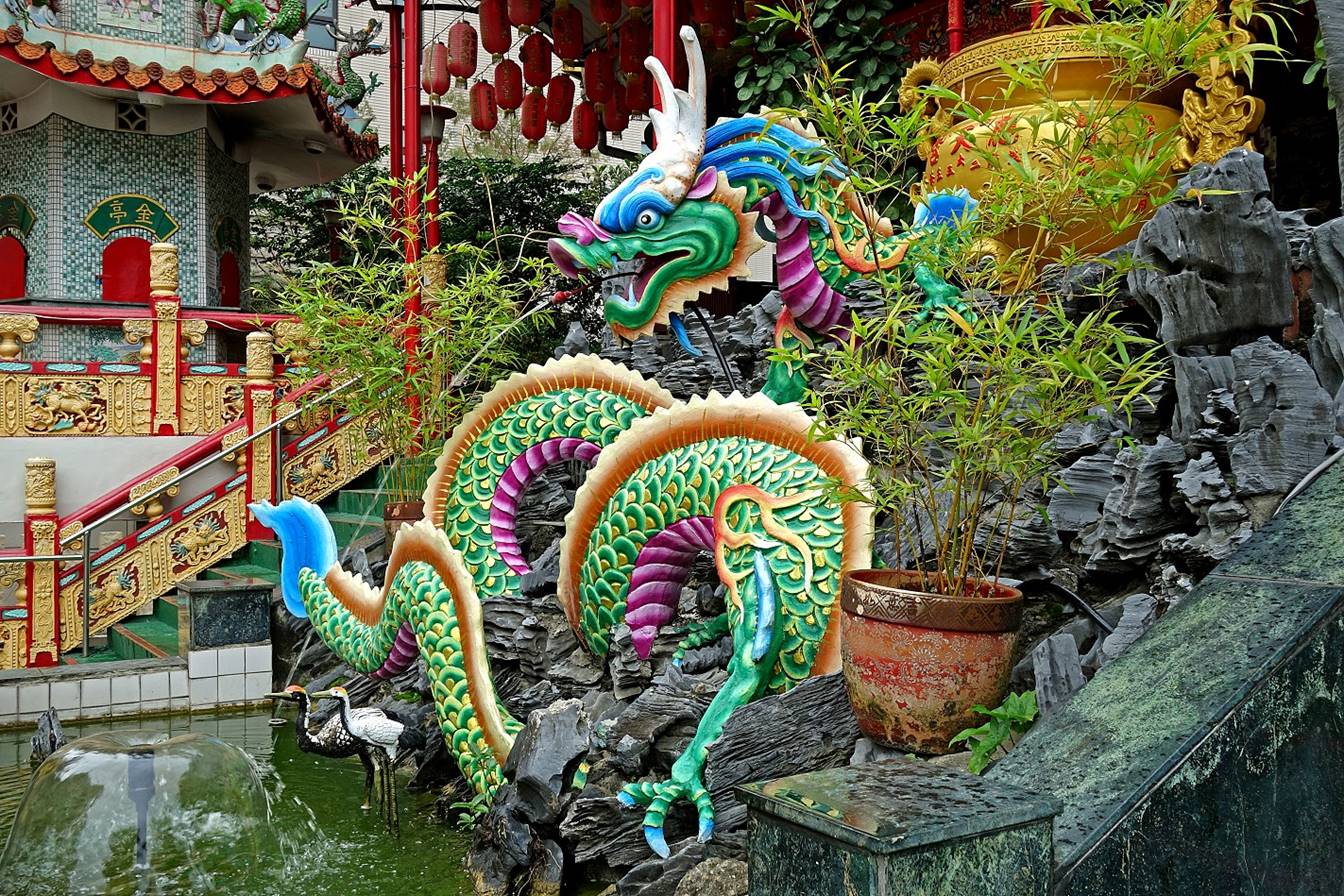
several stays in Taichung, and had it not been fronted by a sumptuous dragon, I
would probably never have visited it. Yet, it was worth a visit.
Built in 1969, it is primarily
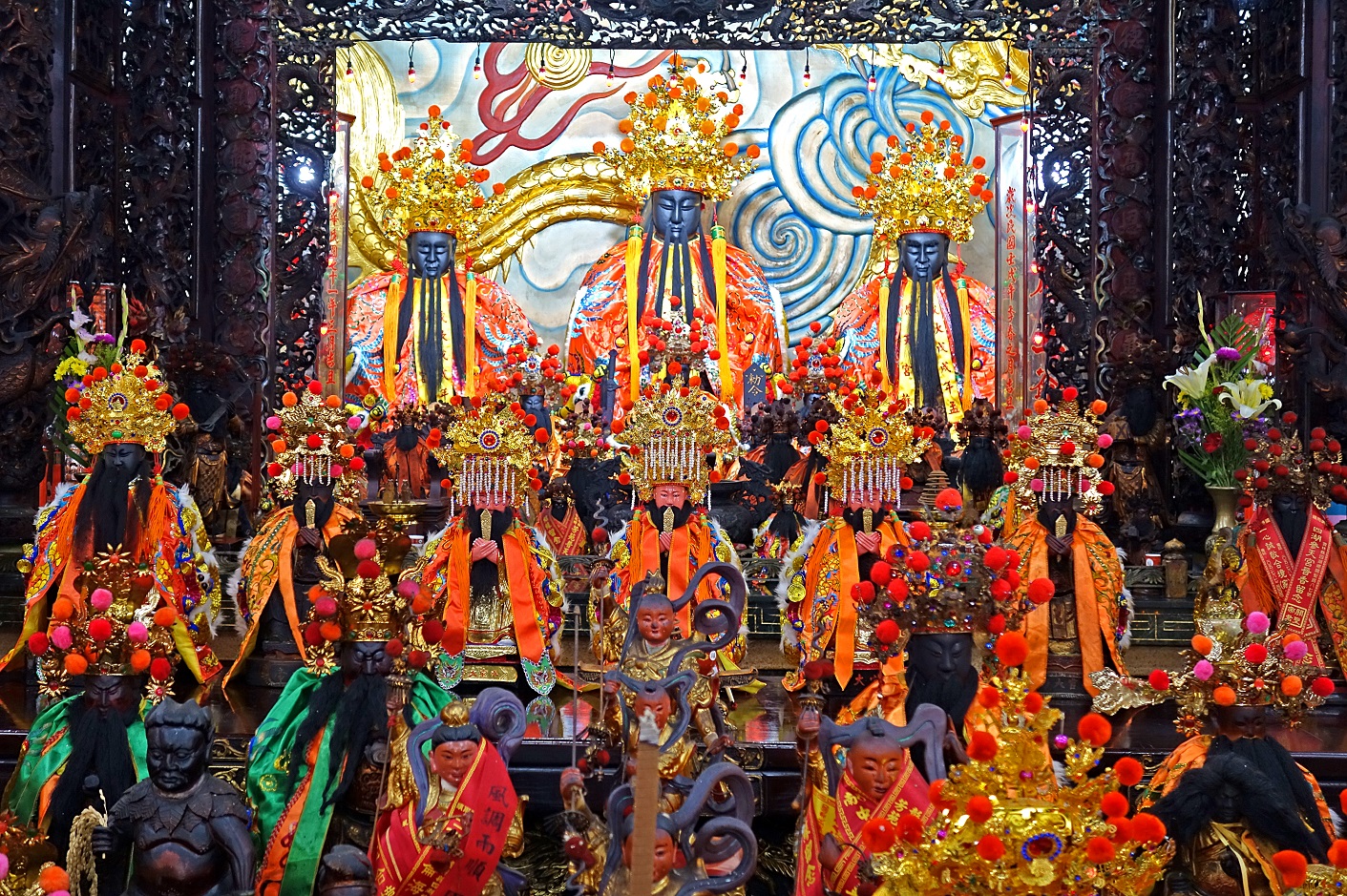
dedicated to the Three Su Royal Lords (蘇府大二三王爺): Lord Su the Elder (大王爺), Lord Su the Second (二王爺), and Lord Su the Third (三王爺). These are popular deities in Taiwanese folk religion, believed to act on
behalf of the Jade Emperor (玉皇上帝) to protect
communities against plagues and evil forces. Other deities enshrined in the
temple include Ksitigarbha Bodhisattva and Guanyin.
Sumptuous
dragon at the entrance of the temple.
Altar dedicated to the Three Su Royal
Lords (蘇府大二三王爺). Lord Su the Elder is at the center.
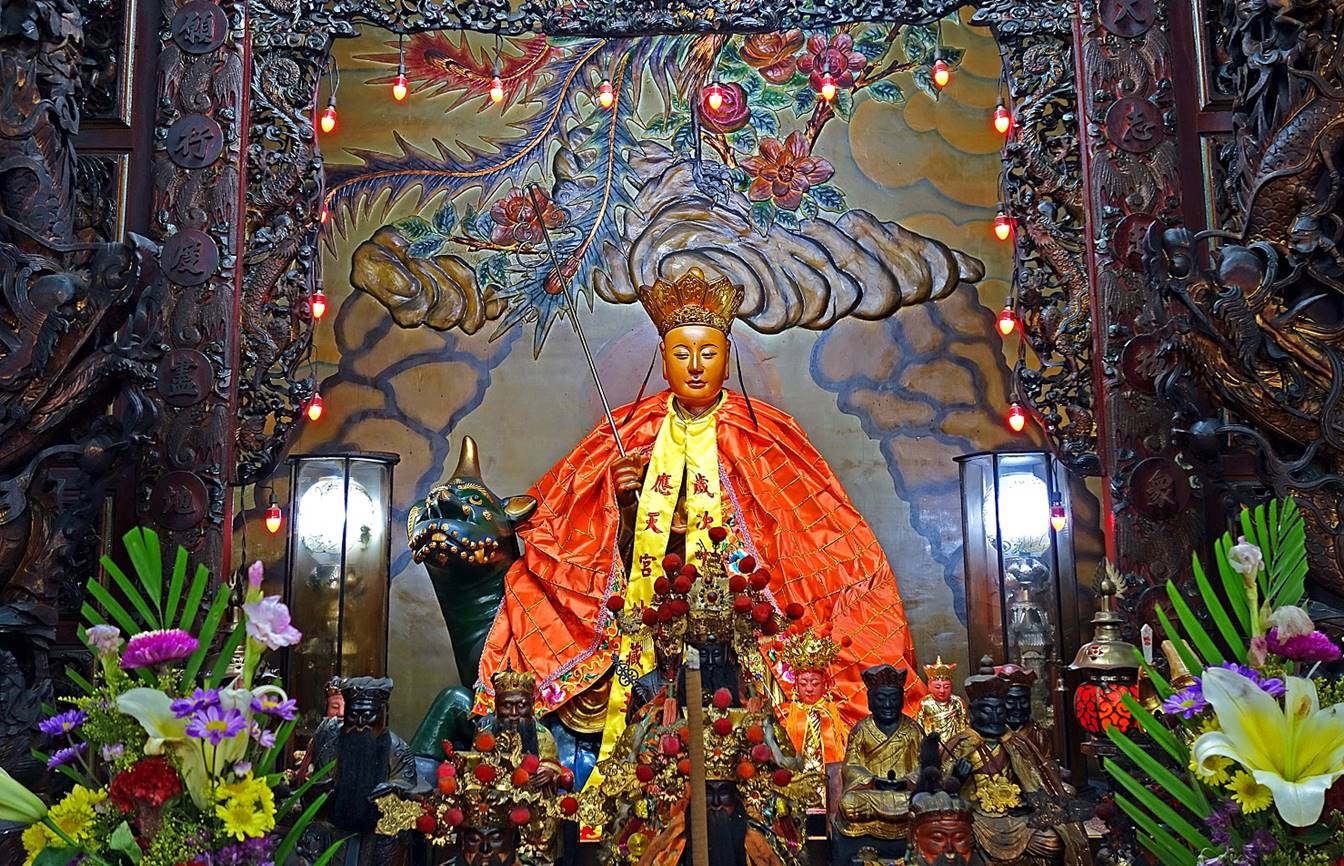
Altar dedicated to Ksitigarbha
Bodhisattva, the Lord of the Underworld. He is known for his vow not to
achieve Buddhahood until all hells are emptied. He is also
regarded as the guardian of children. He is known in Japan as Jizo.
Altar dedicated to Guanyin Bodhisattva,
with her usual attendants on her sides.
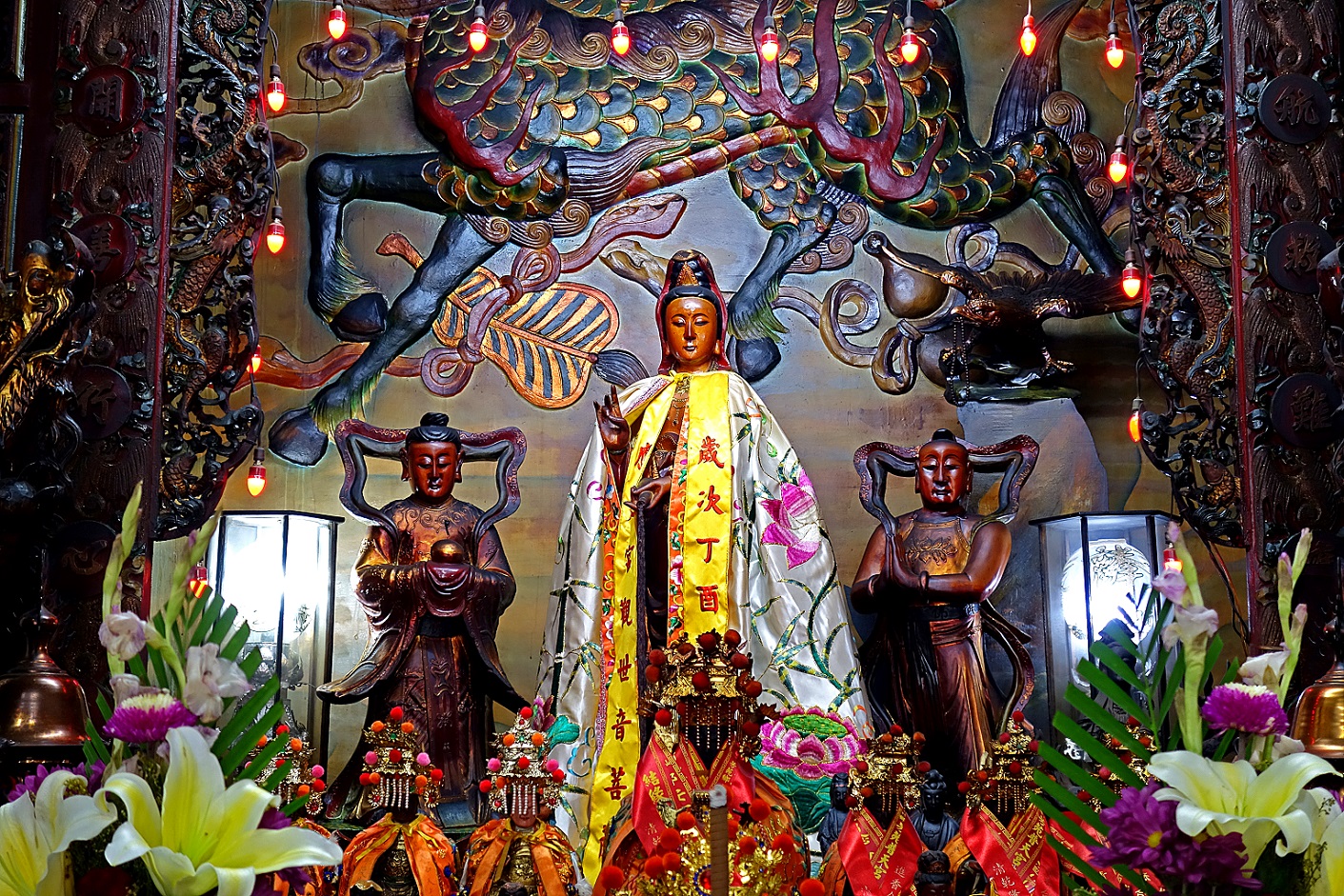
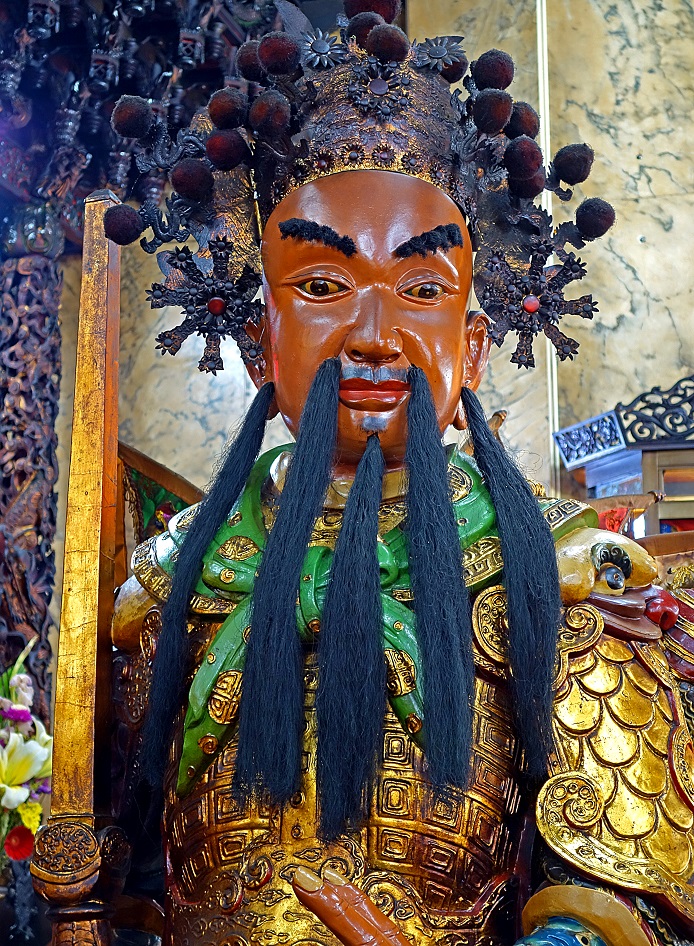
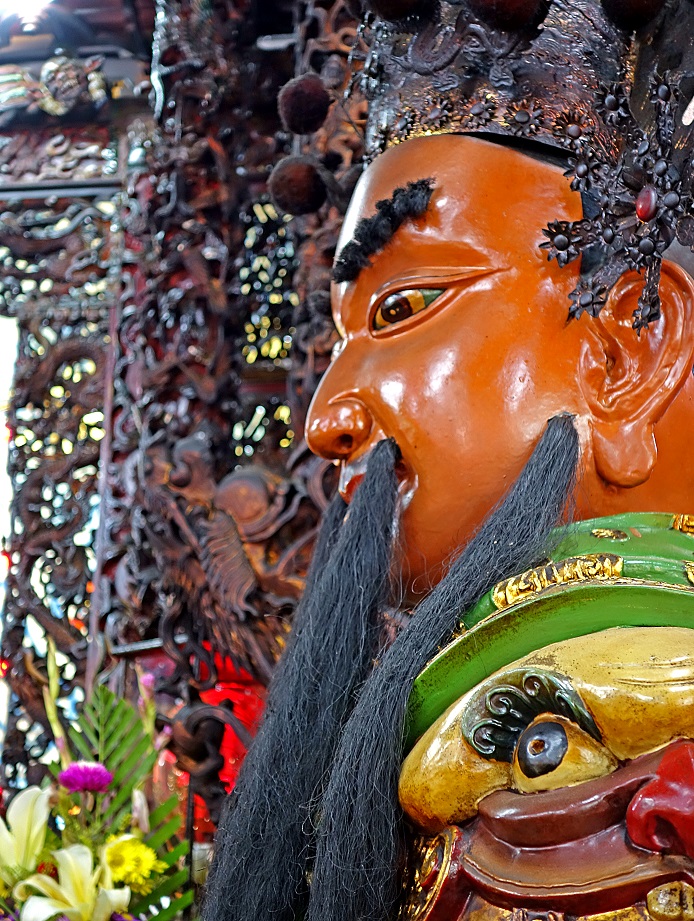
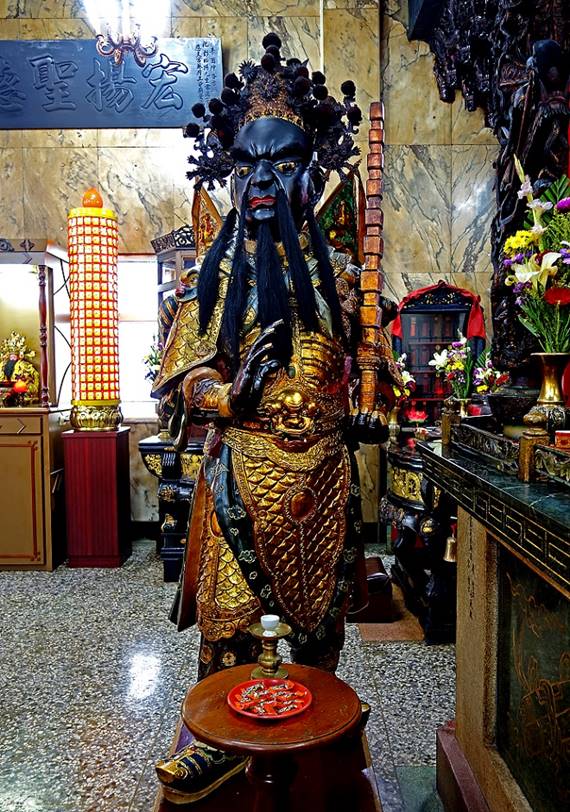
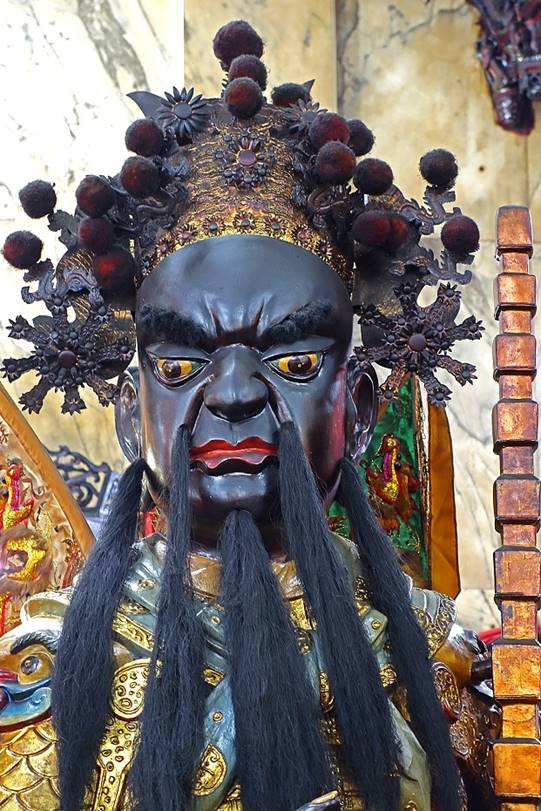
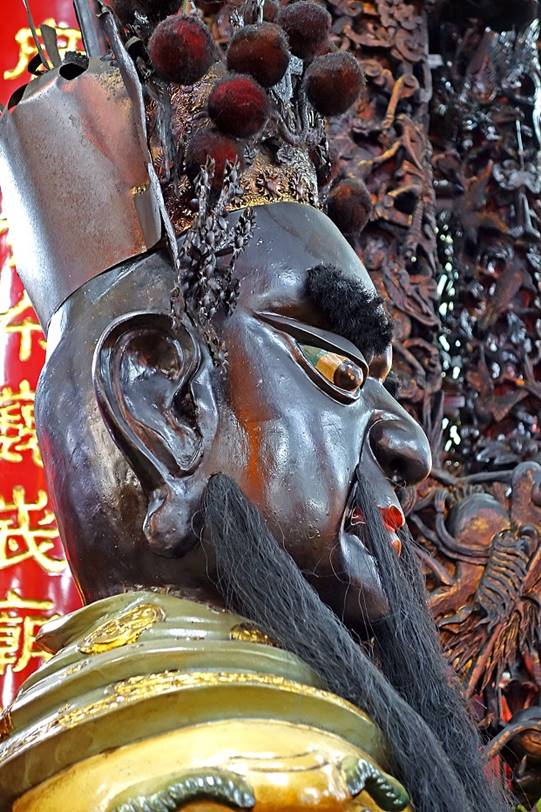
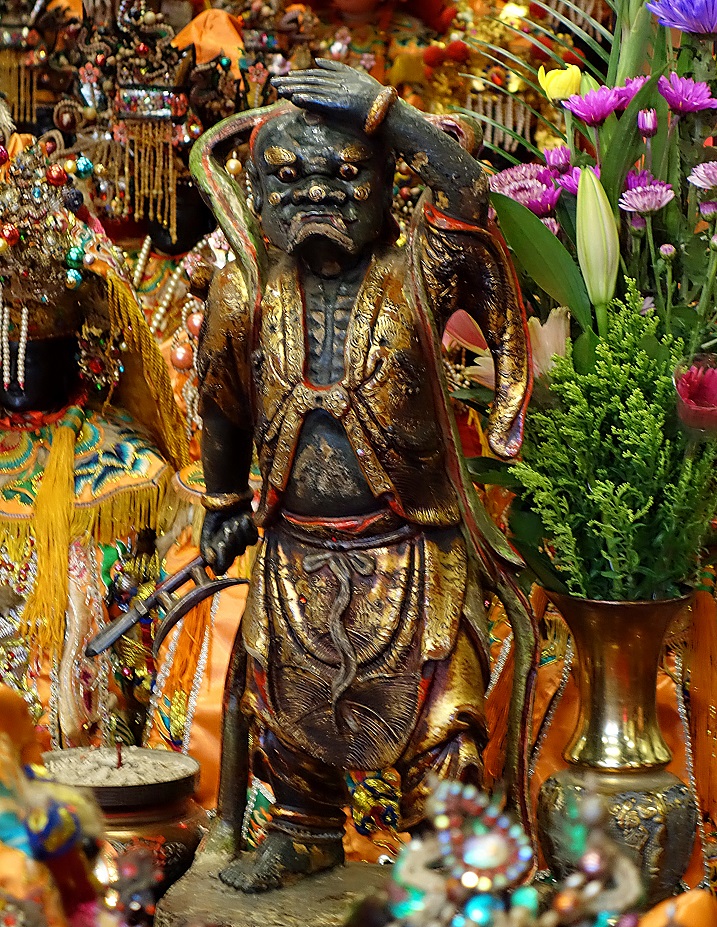
Protective deities in the temple.
|
|
|
|
|
|
|
[December
2018]
Wanhe temple
(萬和宮):
Located in
the Nantun district of Taichung, this Mazu temple was completed in 1727,
forty-two years after most of western Taiwan had been conquered by the forces
of the Qing dynasty. It underwent a major restoration in 2002 following damage
caused by the earthquake of September 21, 1999. One of the most important
places of worship in Taichung, it hosts numerous ceremonies. It is
distinguished by its beautiful classical architecture and its numerous
decorations. Its principal deity is Mazu (媽祖), also known
as the Empress of Heaven. She is the goddess of the sea and the patroness of
sailors and fishermen.
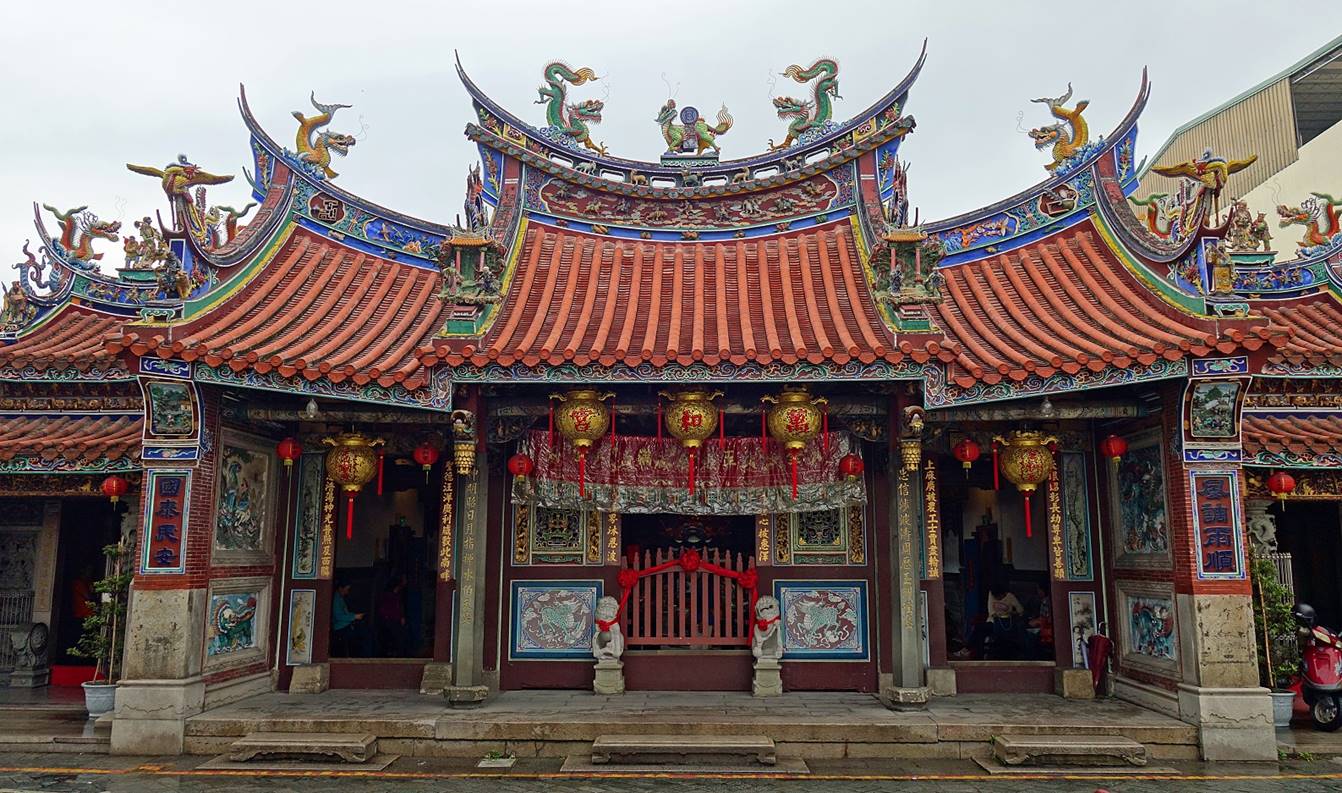
Five-bay
facade of the temple. The eaves of the central bay are supported by hexagonal
stone pillars, a relatively rare design.
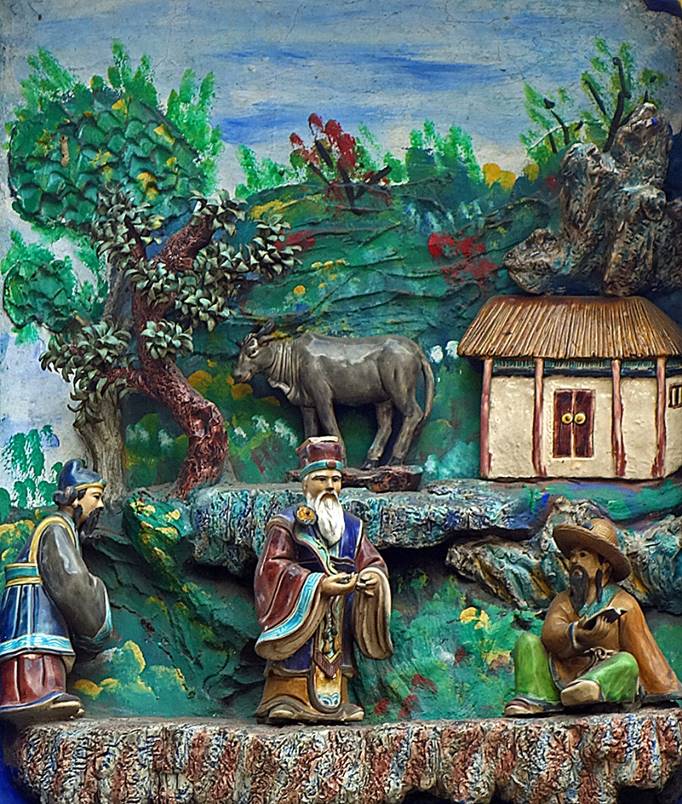
Closeups of
the two decorations (Cochin ceramics) located at the top of the two side walls framing
the three central bays. They are visible in the photo above.
|
|
|
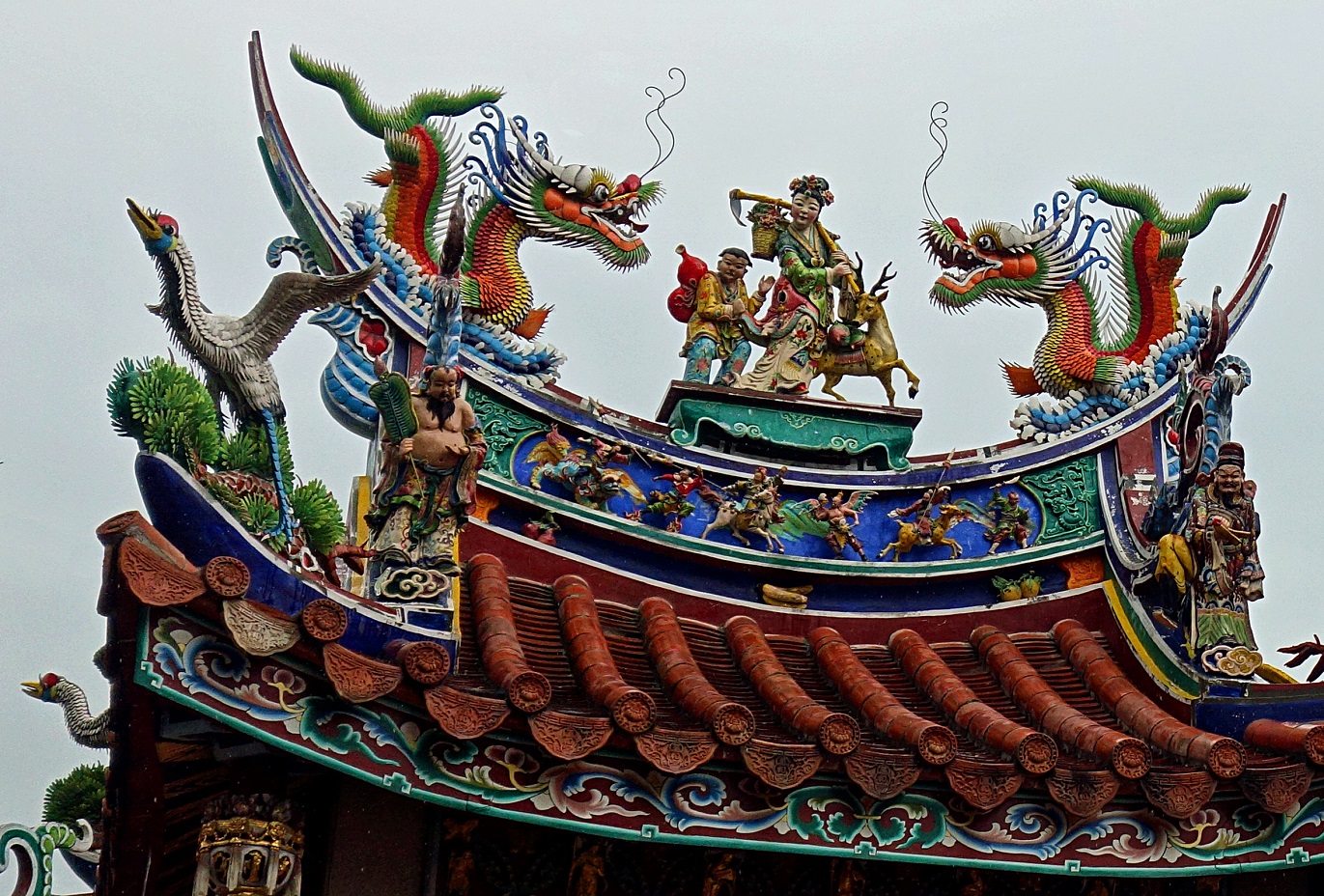
Closeup of the
leftmost tier of the roof.
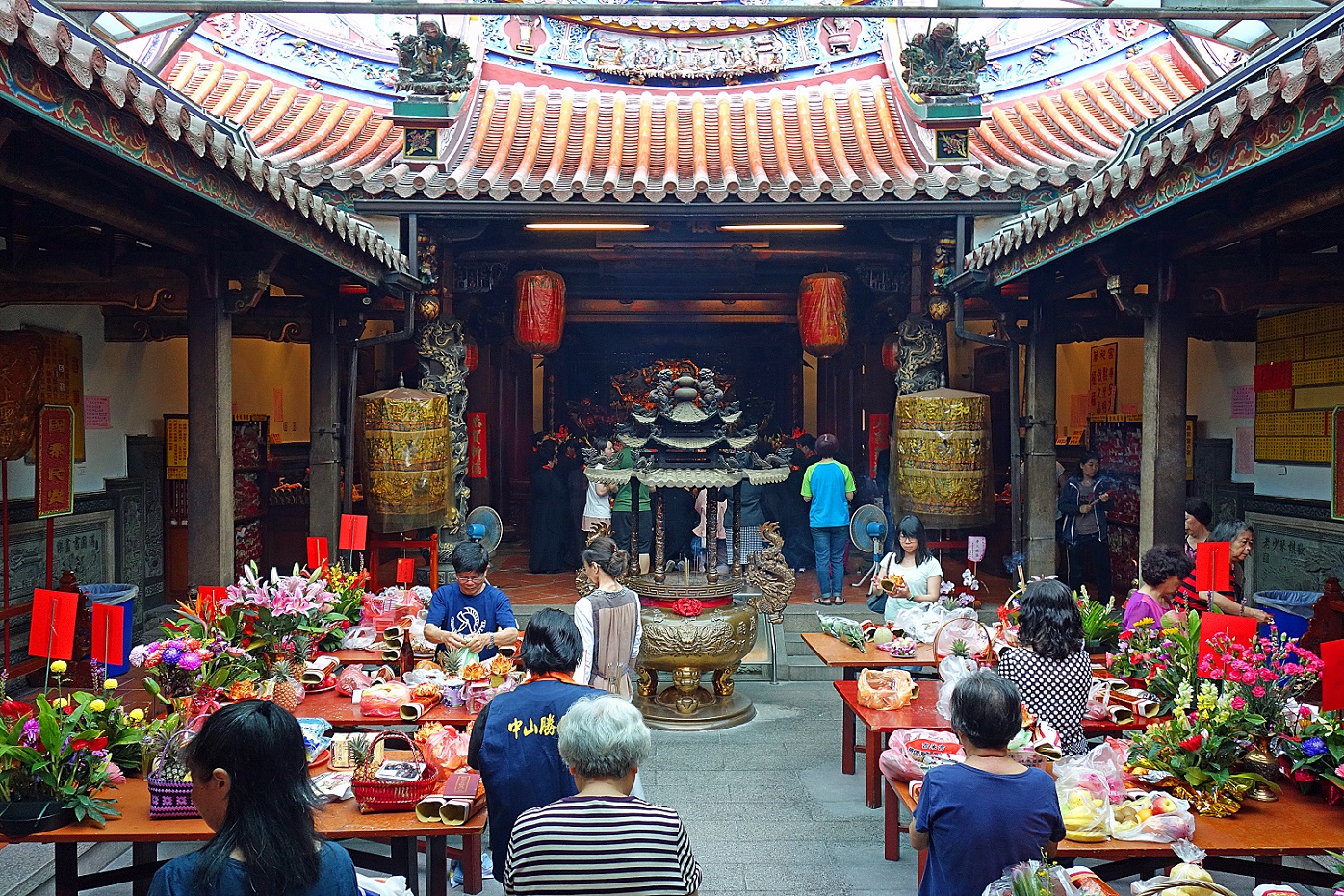
Inside the
temple's first courtyard, where offerings are being prepared for an upcoming
celebration. The main hall, which houses the altar dedicated to Mazu, is
situated behind the large incense burner visible in the midlle of this photo.
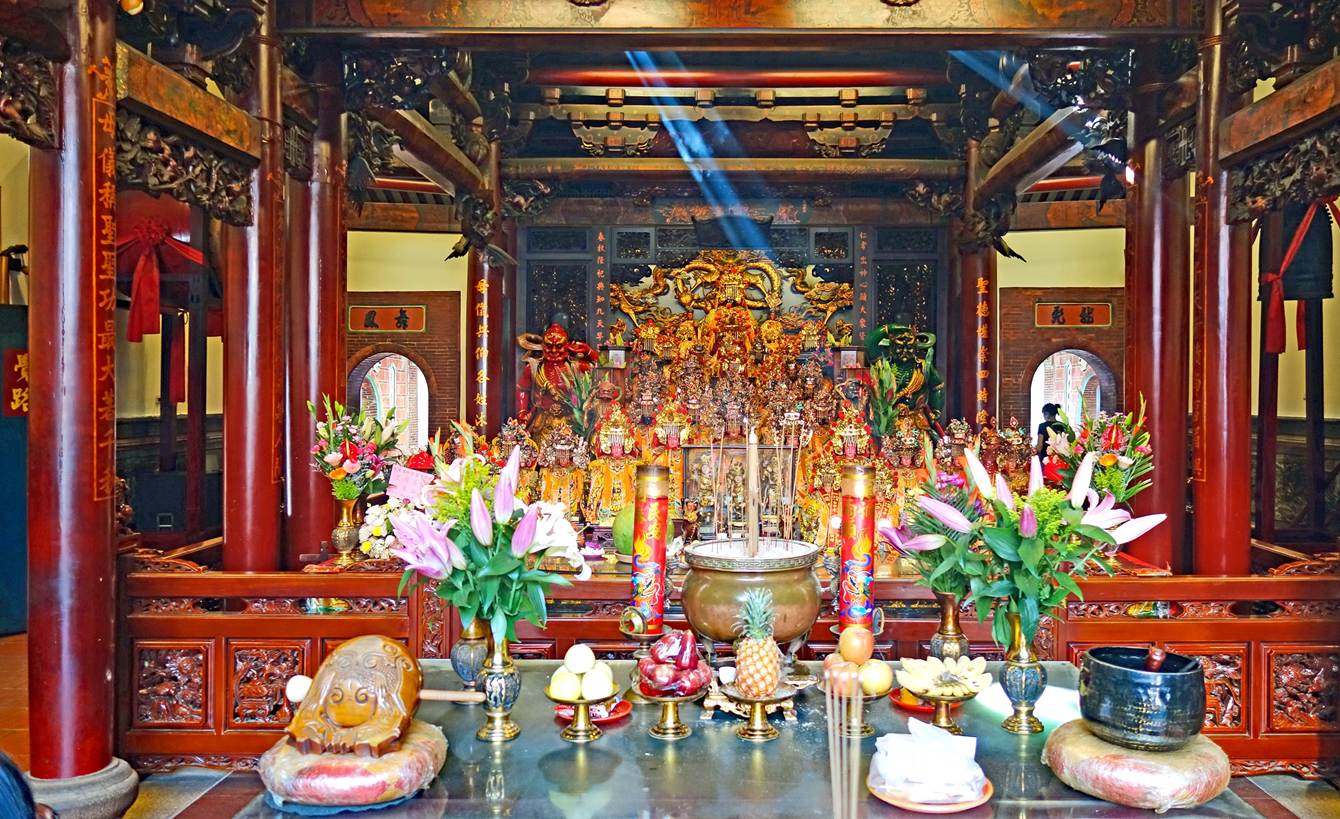
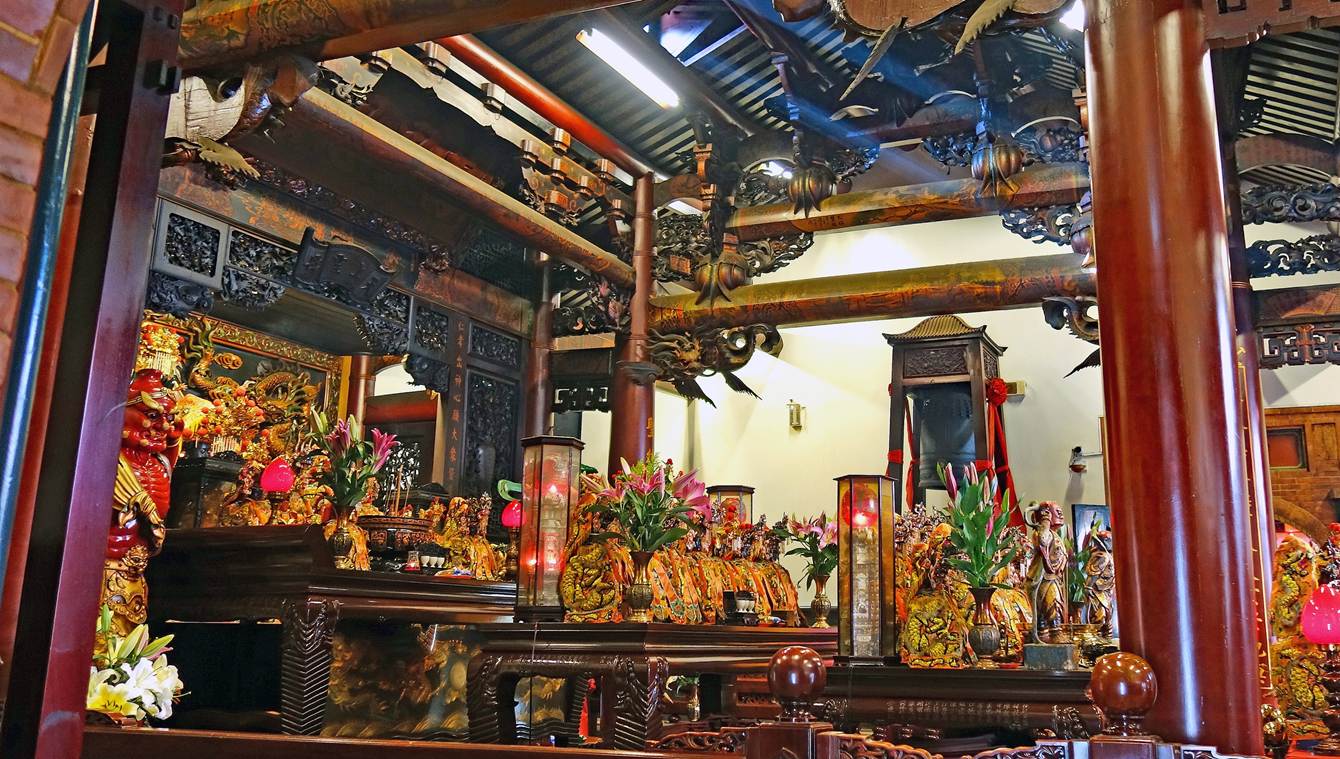
In the main
hall, featuring the altar dedicated to Mazu in the back.
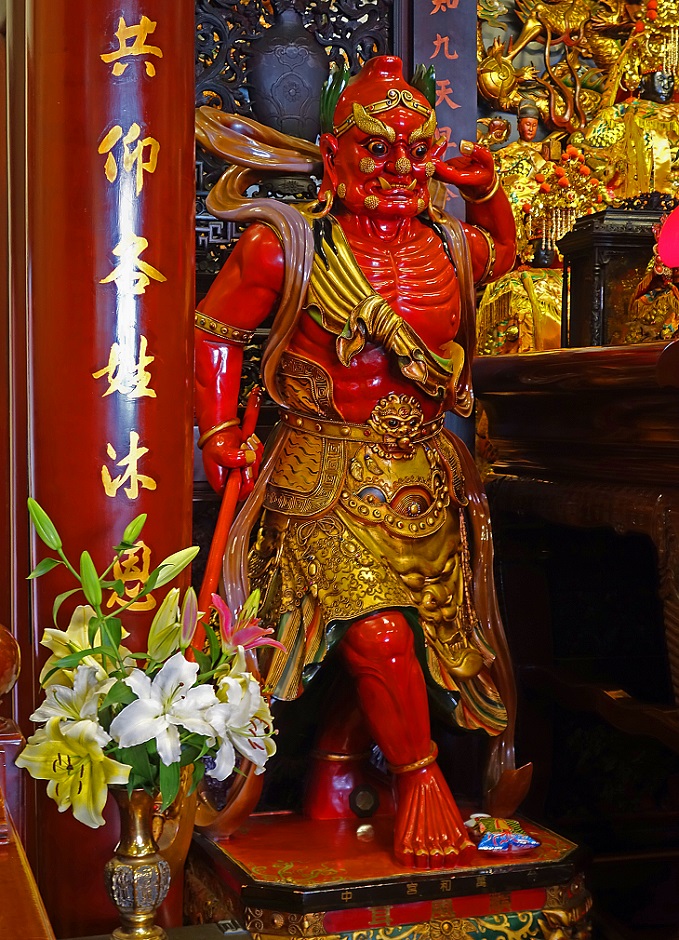
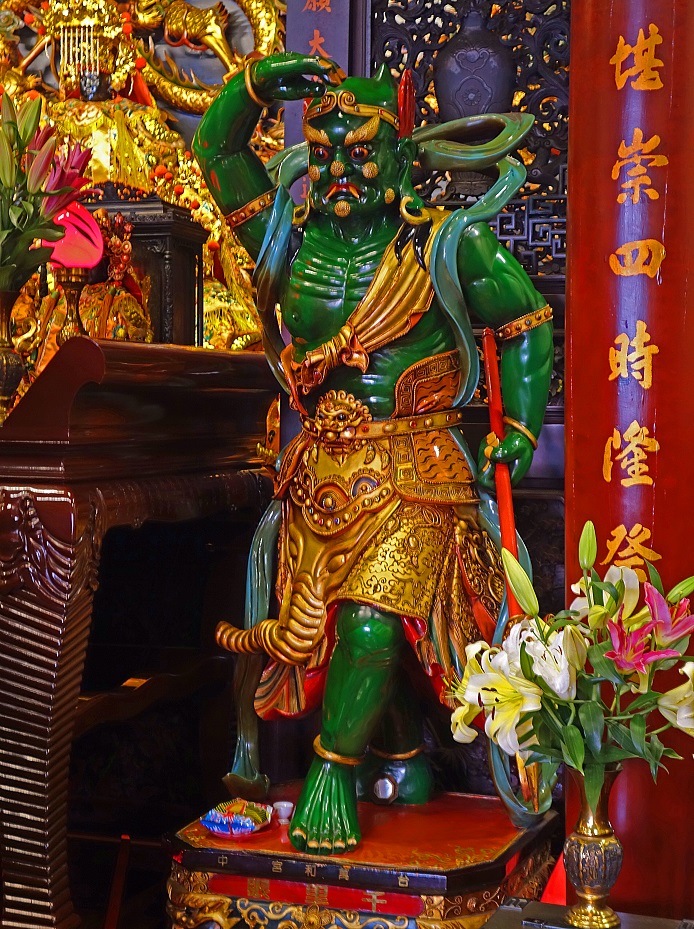
Statues of the two customary guardians of Mazu: Shunfeng'er (順風耳), capable of hearing sounds from very far (on the left), and
Qianliyan (千里眼), capable of seeing very far (on the right). They stand near the
main statue of Mazu.
|
|
|
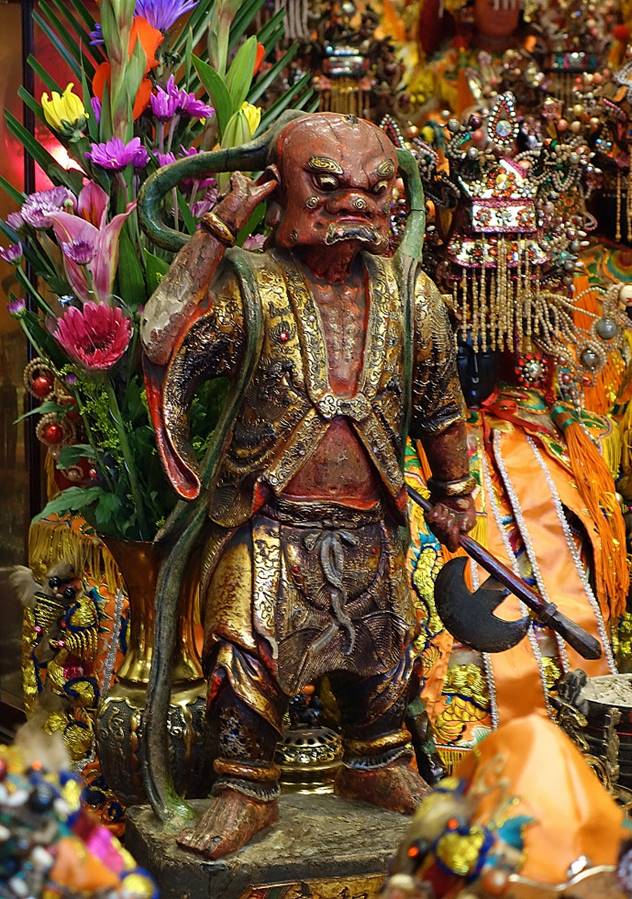
Two other statues representing the same guardians
as above. They are located closer to the front of the altar.
|
|
|
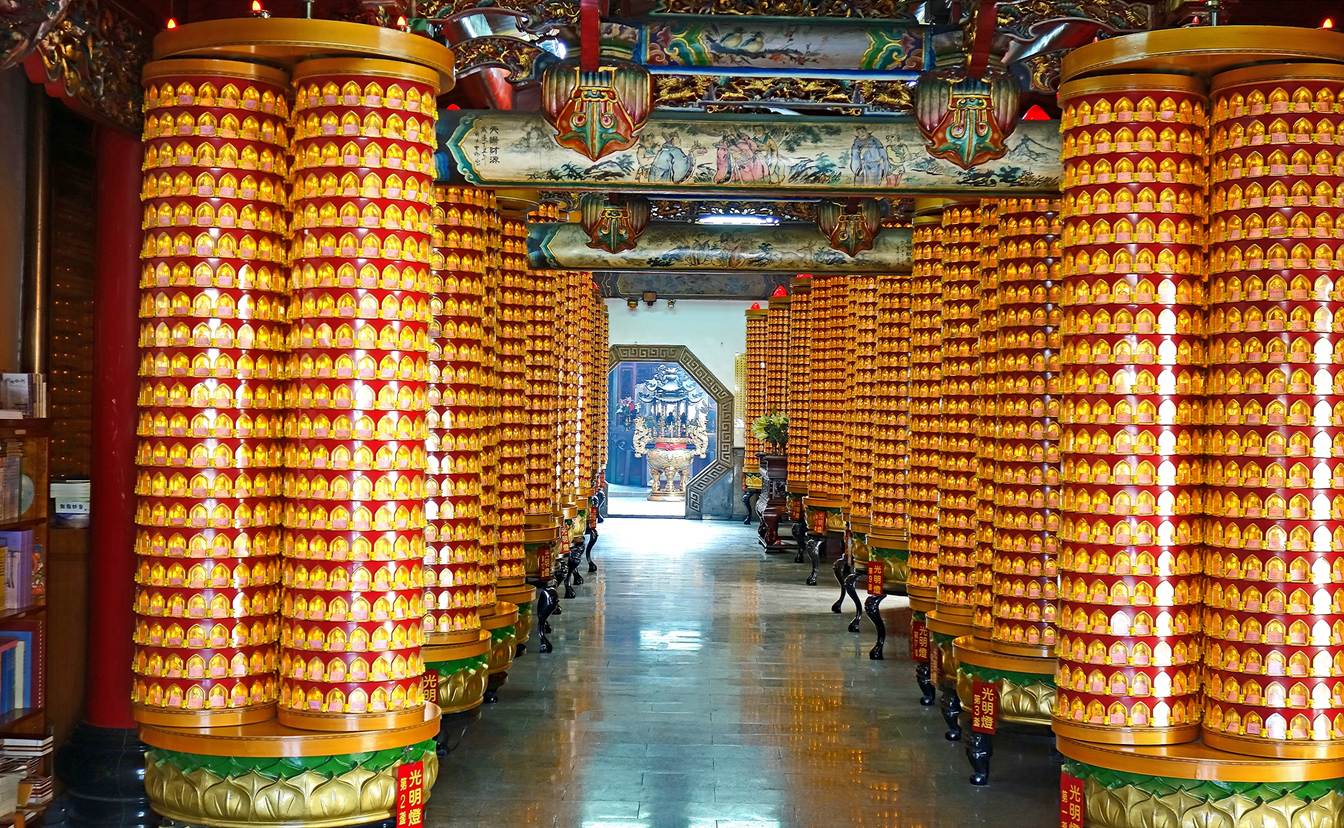
Corridor in the temple. It is lined with
large pillars, each adorned with hundreds of small lights known as Guang Ming Deng (光明燈).
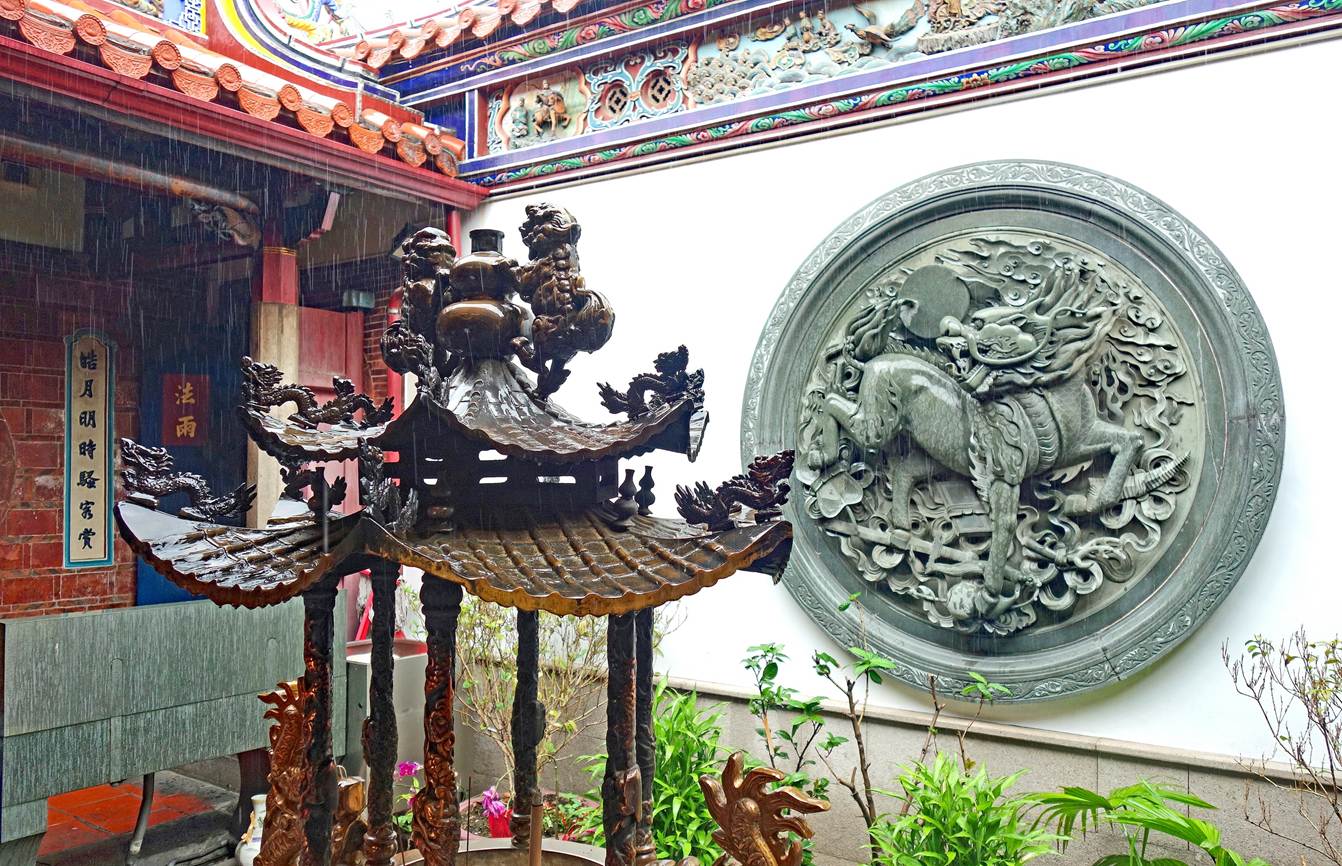
Small courtyard behind the main hall.
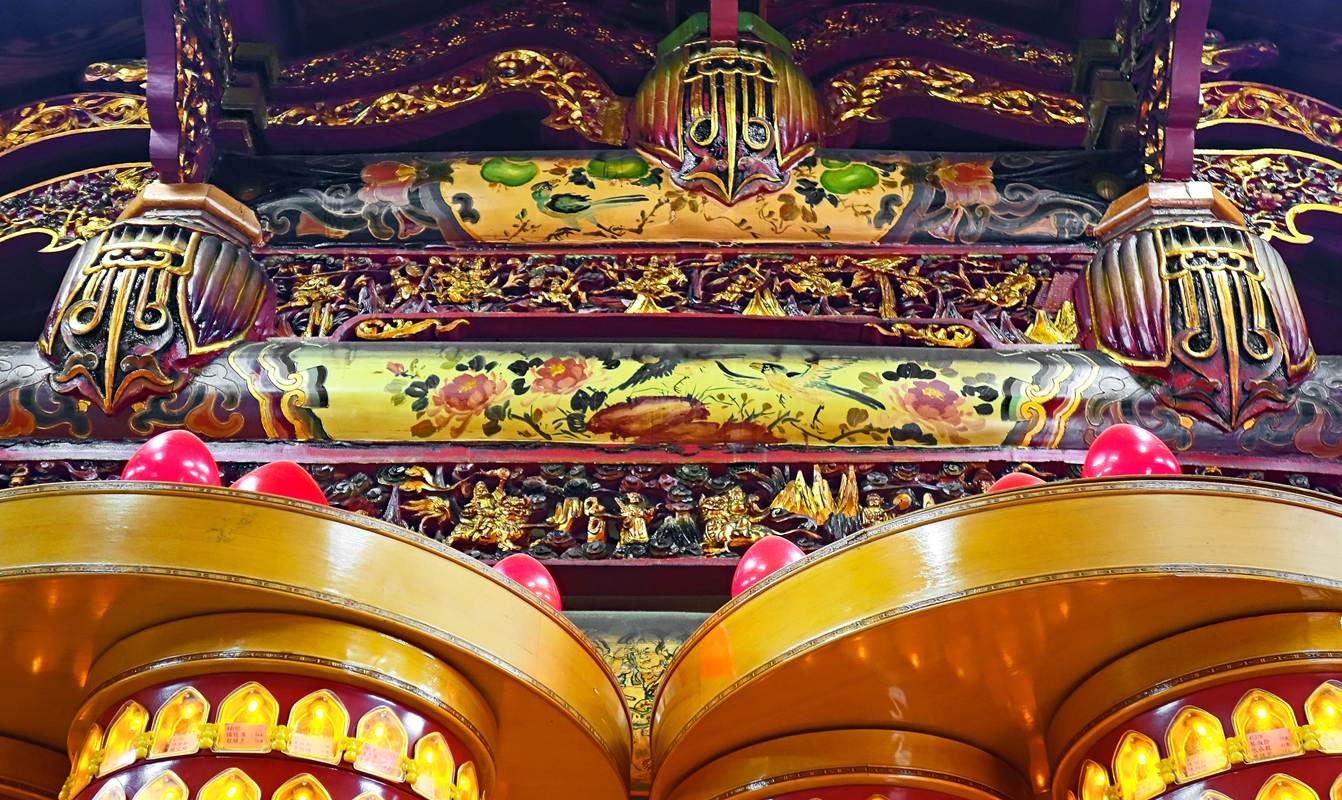
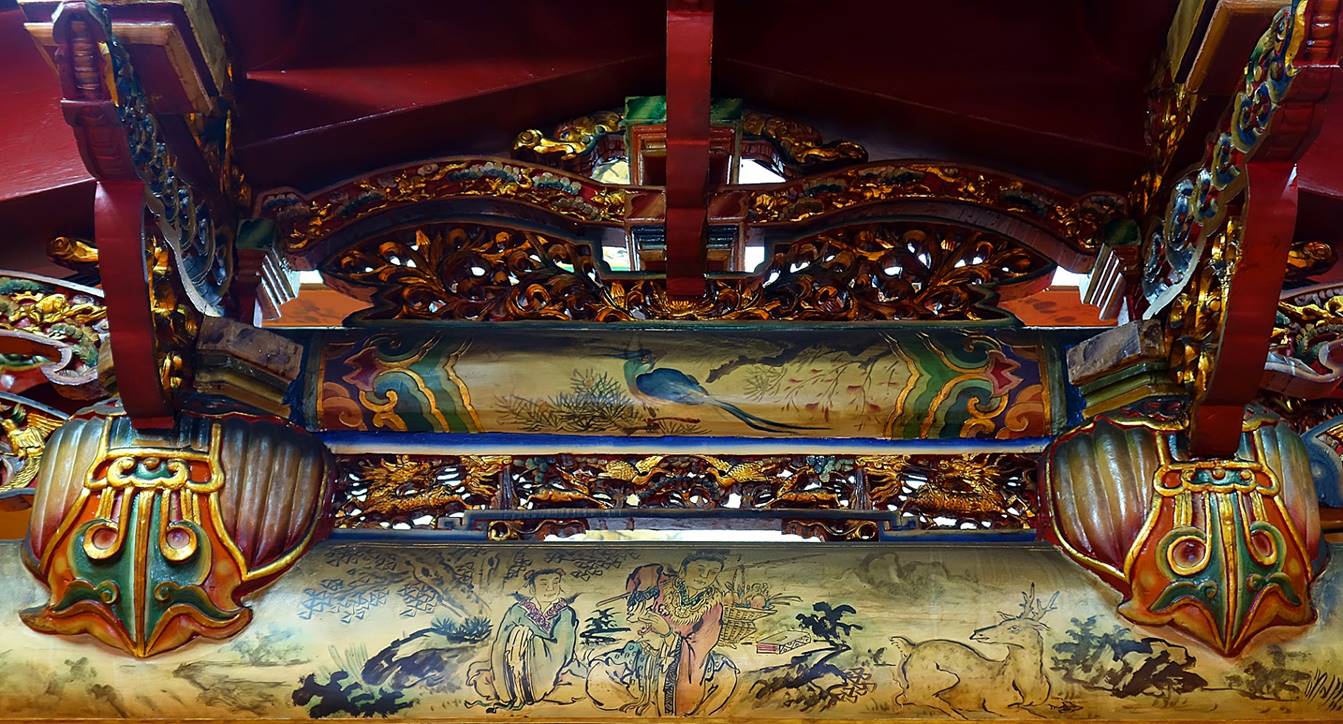
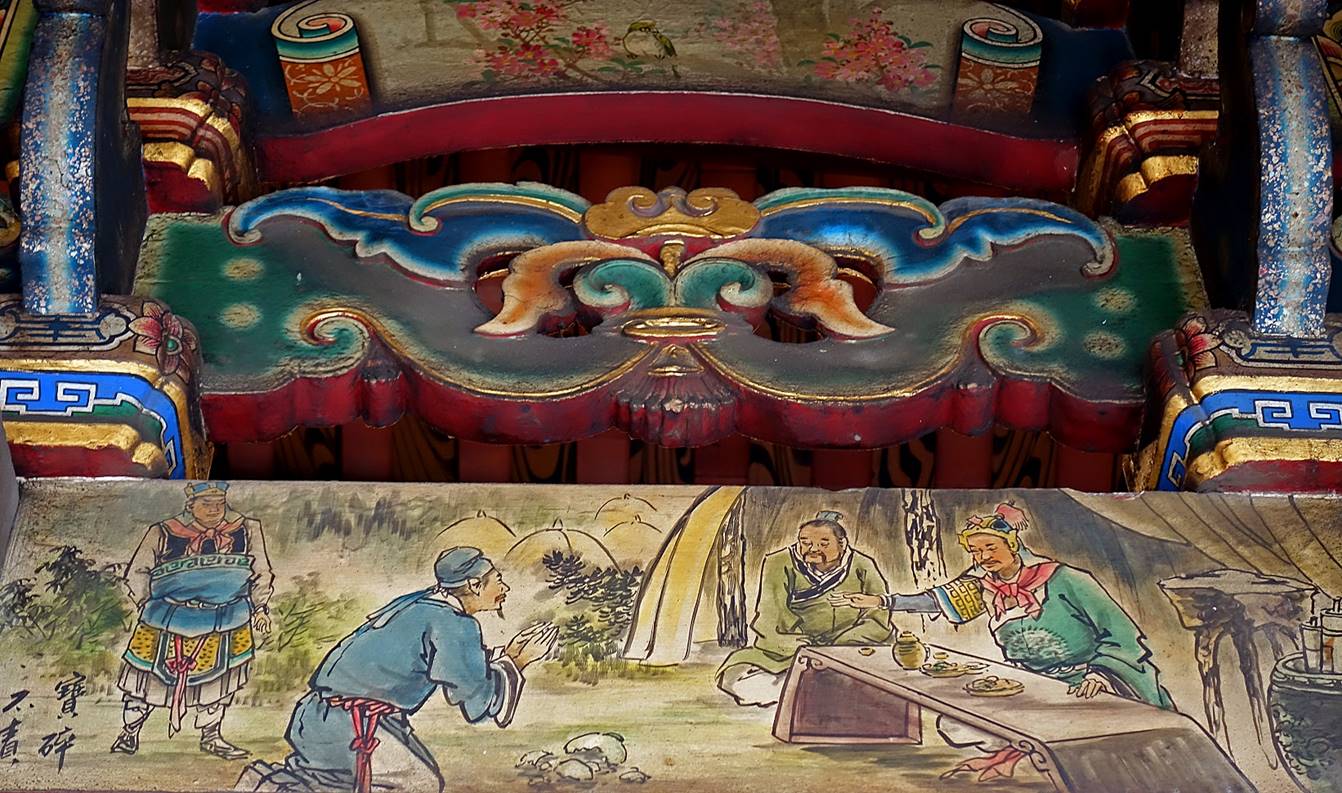
Some of the wood carvings and paintings
that adorn the interior of the temple.
[April
2017]
Xitun Zhang-Liao Family temple (西屯張廖家廟):
Located in the Xitun district, this
temple was built between 1886 and 1916 by the Zhang-Liao clan that originally
came from Zhangzhou, in the Fujian province of China, and became a prominent
family in Taichung. The temple enshrines Zhang-Liao Tianyu, the
sixth-generation ancestor of the Zhang-Liao family. (The compound name
Zhang-Liao, which is not a common Chinese last name, has an interesting origin.
In the early Ming dynasty, a school teacher named Zhang Yuanzi married into the
Liao family. He had only one son and made the agreement with his father-in-law
that his descendants will have the surnames Liao during their lifetime and
Zhang after their death.)
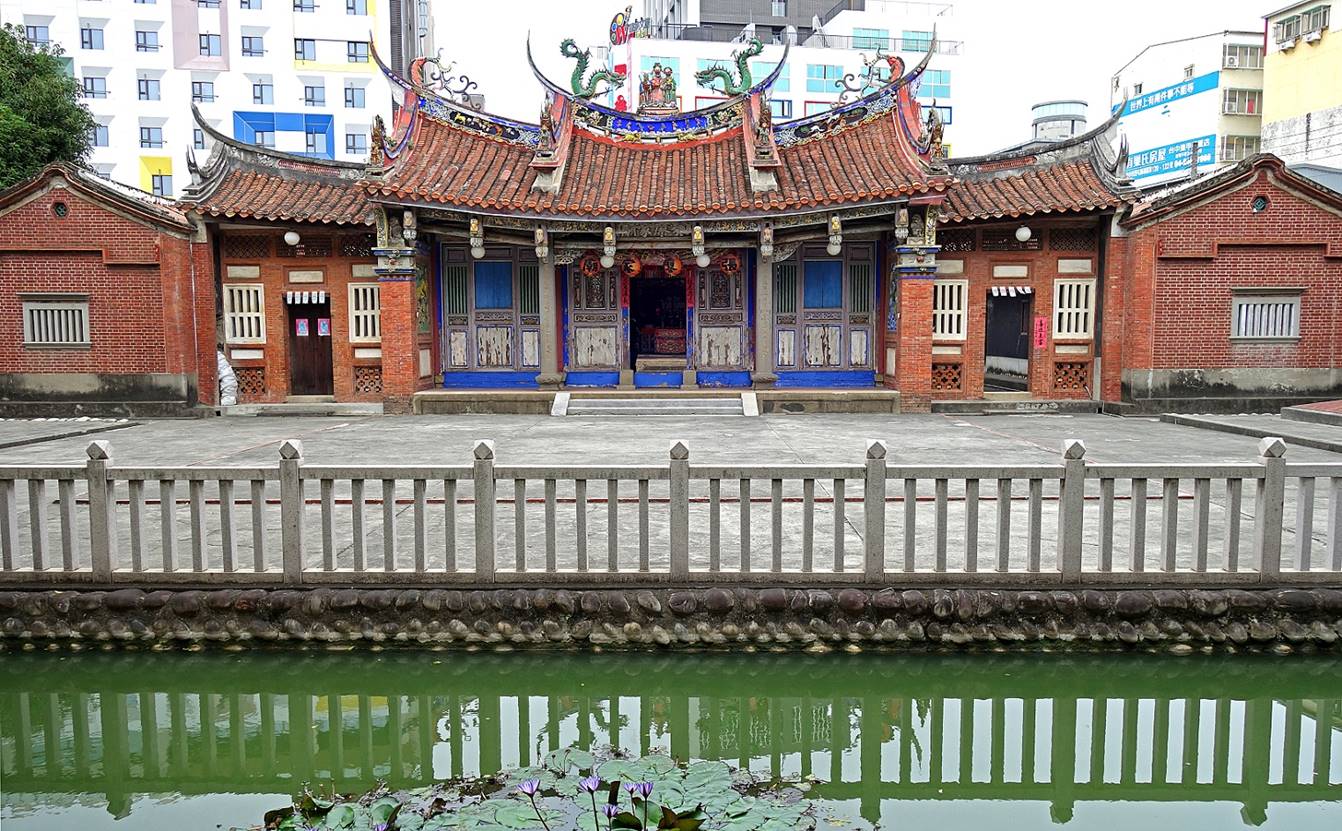
The facade of the temple, seen from
behind the half-moon pool (with some ugly buildings in the back, unfortunately).
The entire temple features numerous surfaces painted in bright blue, a symbol
of wisdom and purity in Buddhism.
Closer view of the facade of the temple.
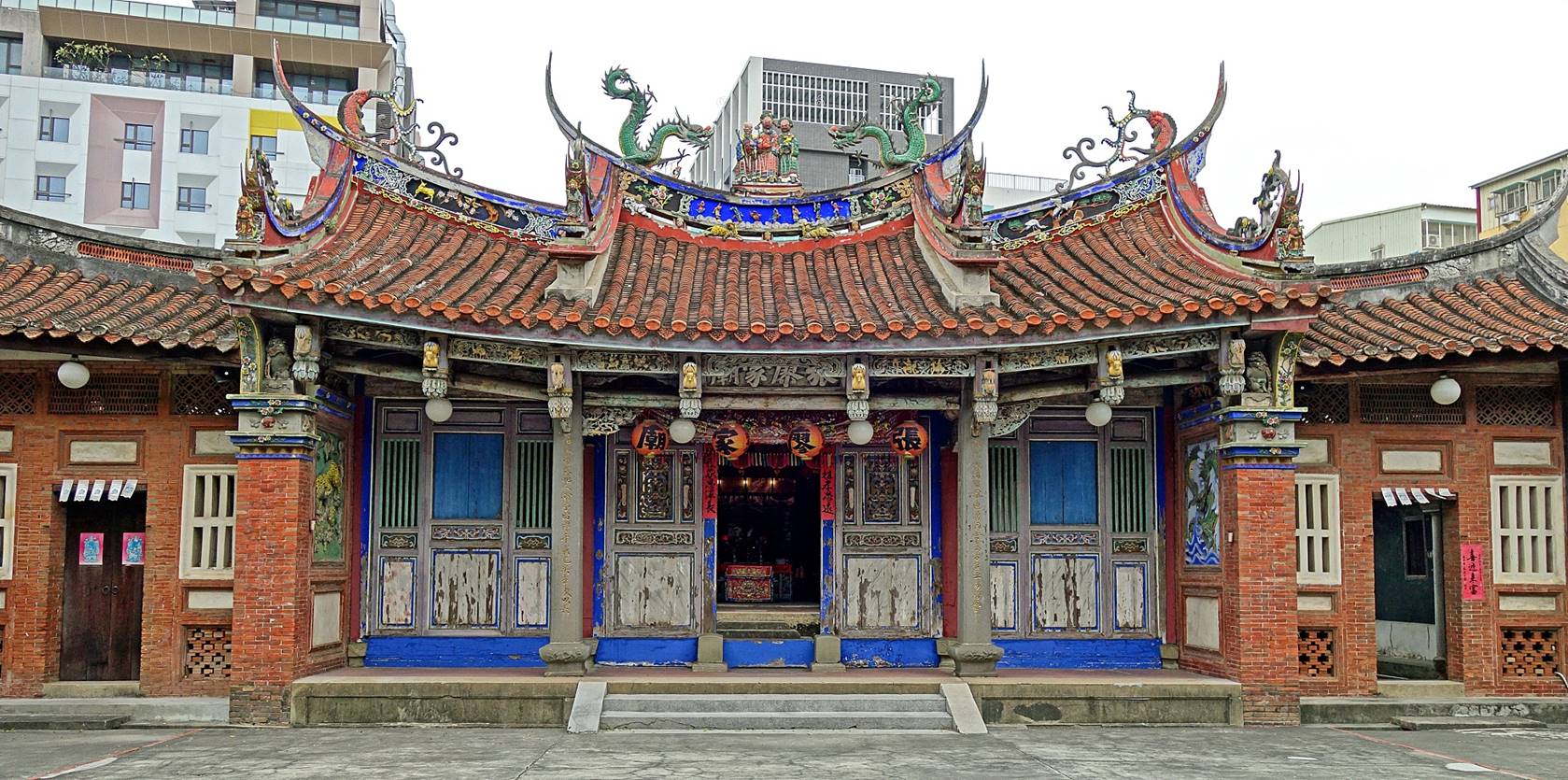
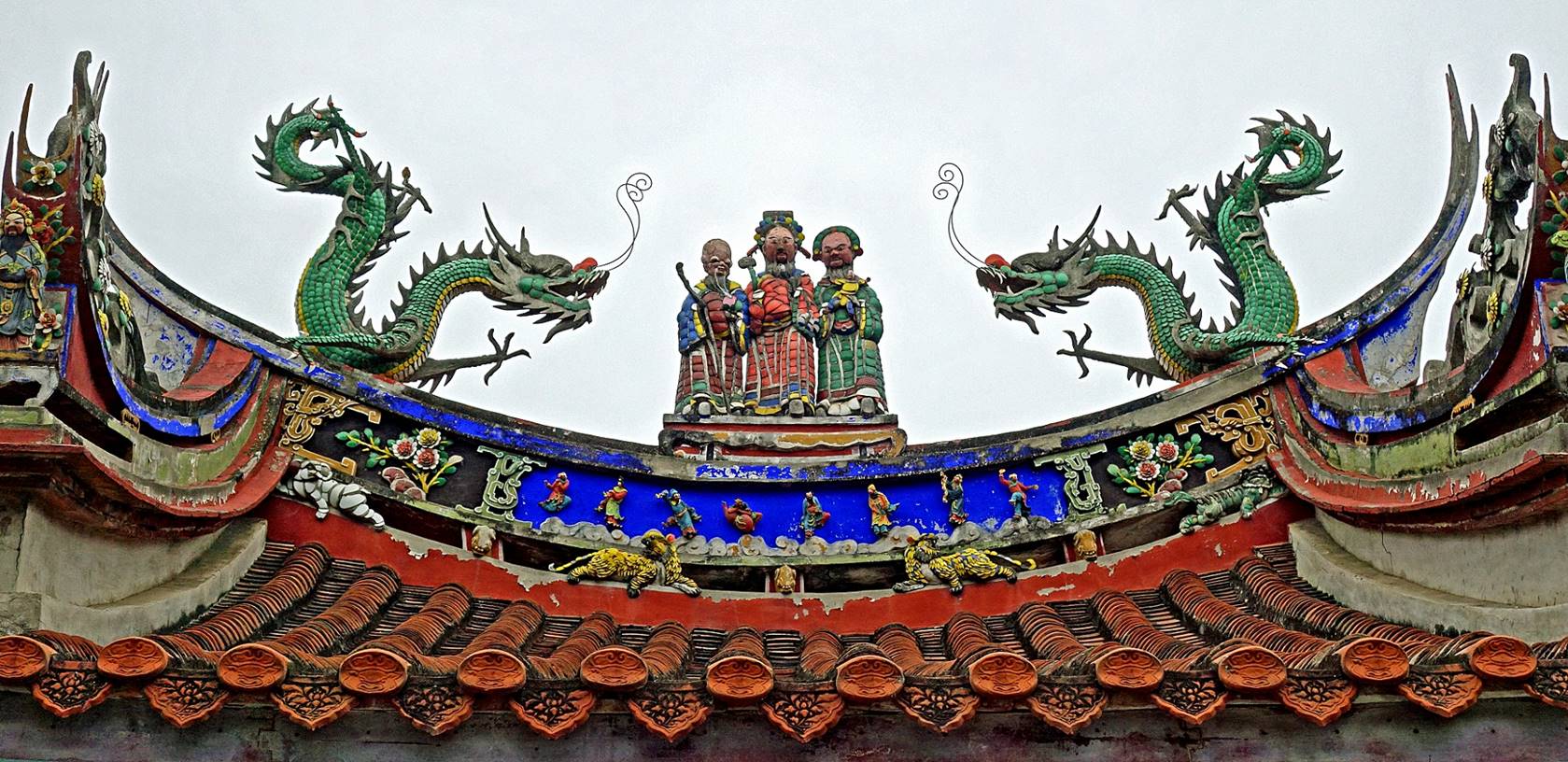
The middle of its roof is adorned with the Sanxing (三星). The Sanxing (meaning ″three stars″) represents three gods, from right to left: the God of Fortune Fu (福星), the God of Prosperity Lu (祿星), and the God of Longevity Shou (壽星). Together they symbolize three attributes of a good life.
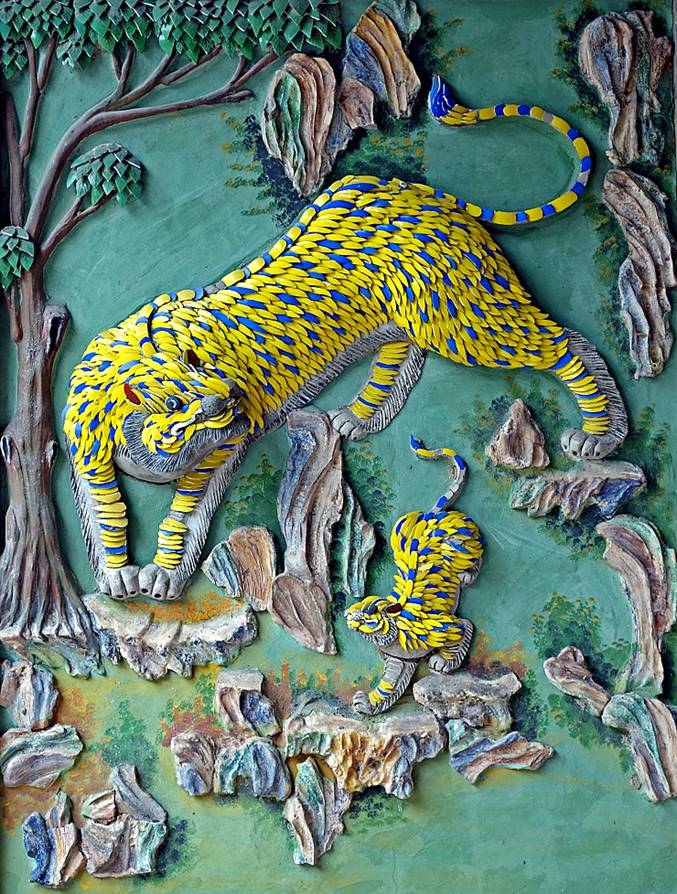
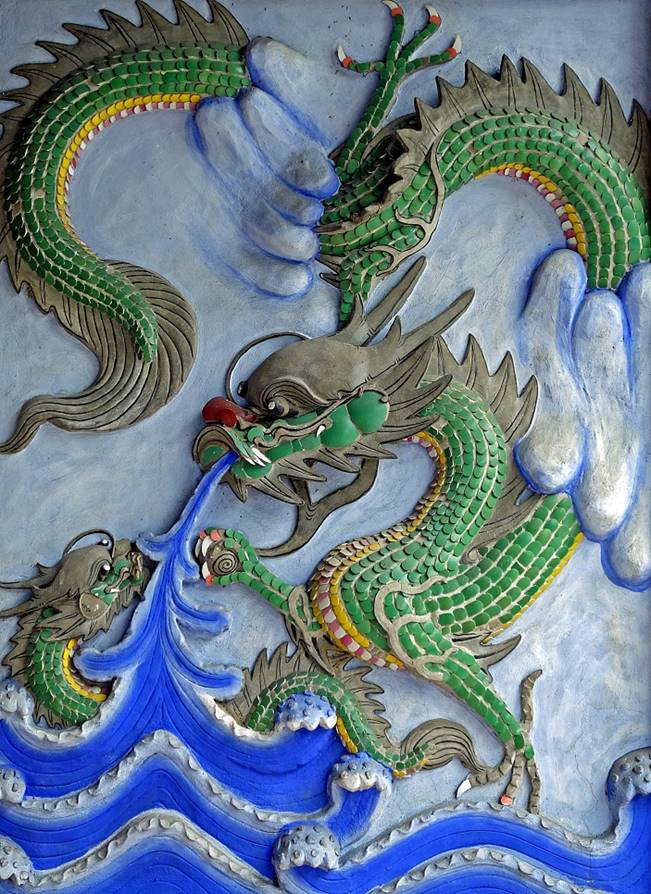
Decorative relief panels on the left and
right side walls of the entrance porch.
|
|
|
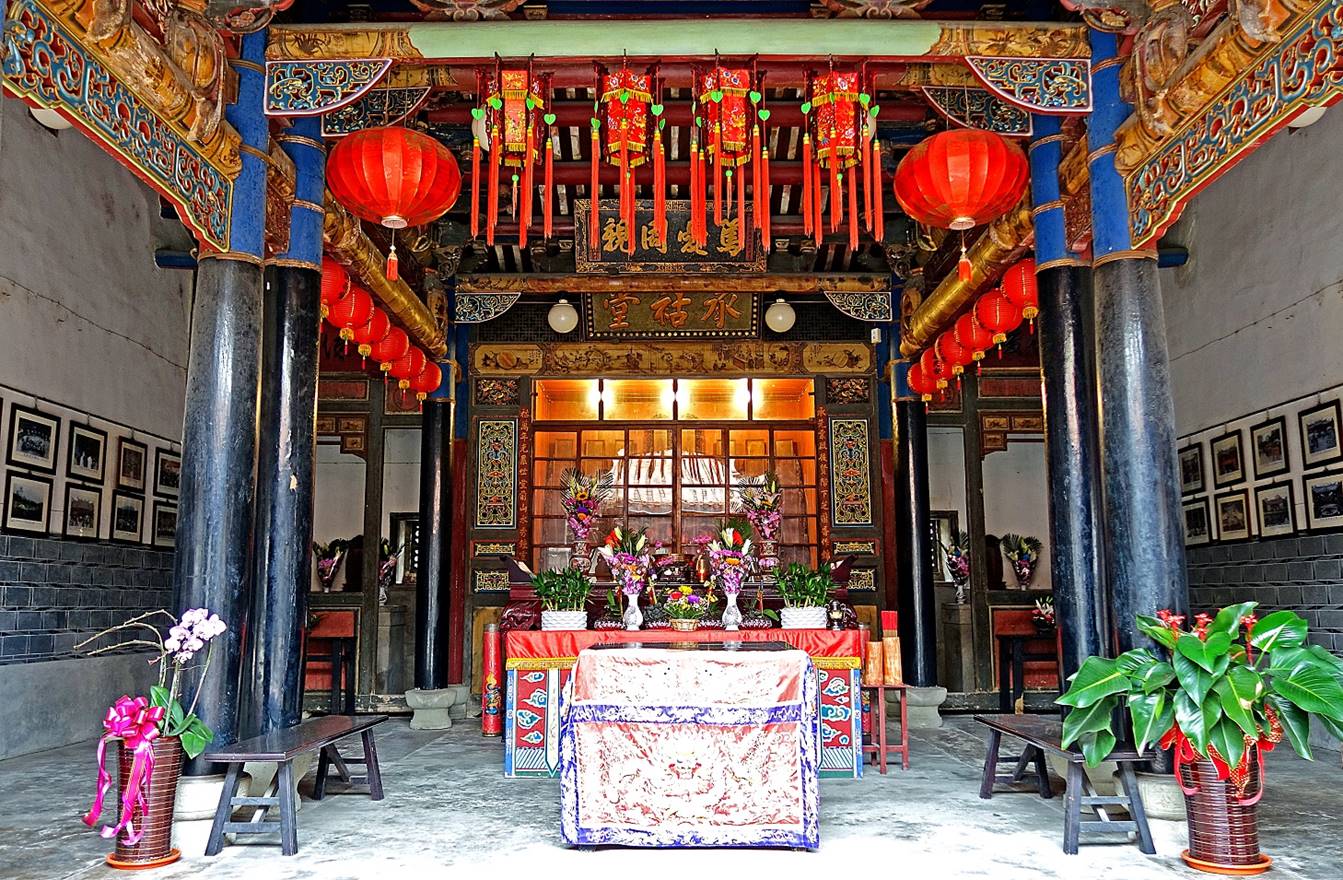
Inner courtyard, with the ancestor hall
in the rear. Note again the profusion of surfaces painted blue.
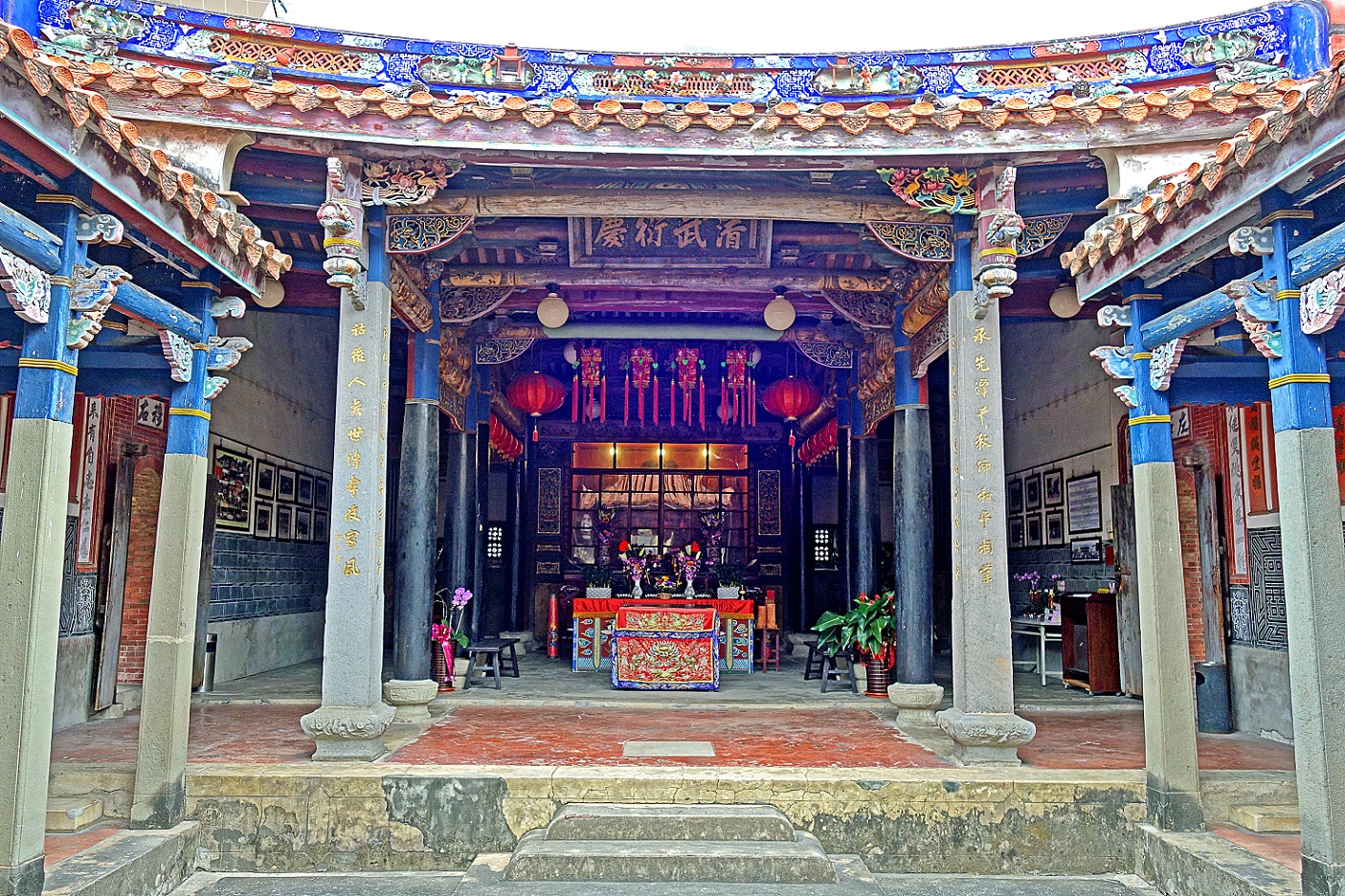
Ancestor hall.
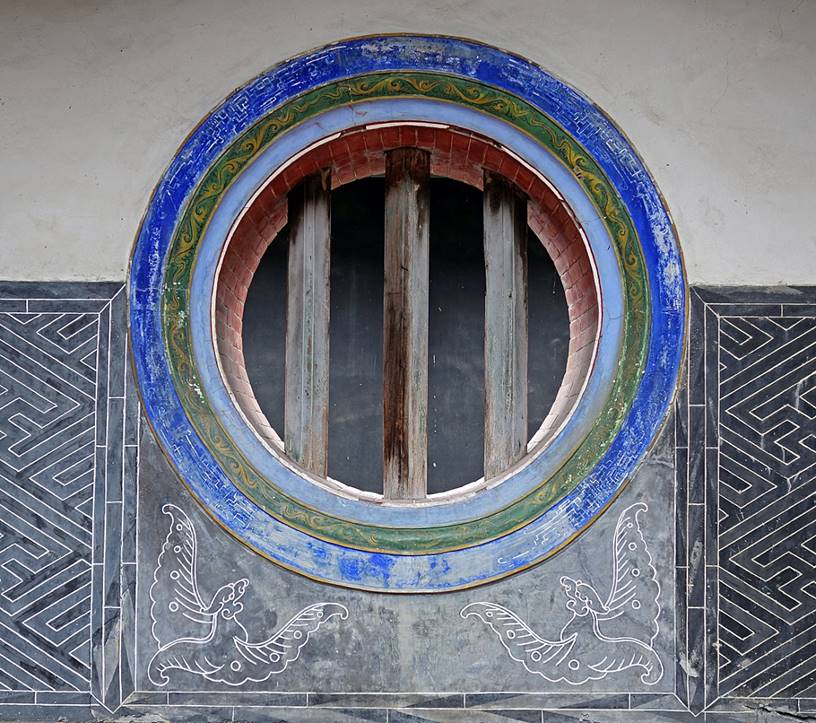
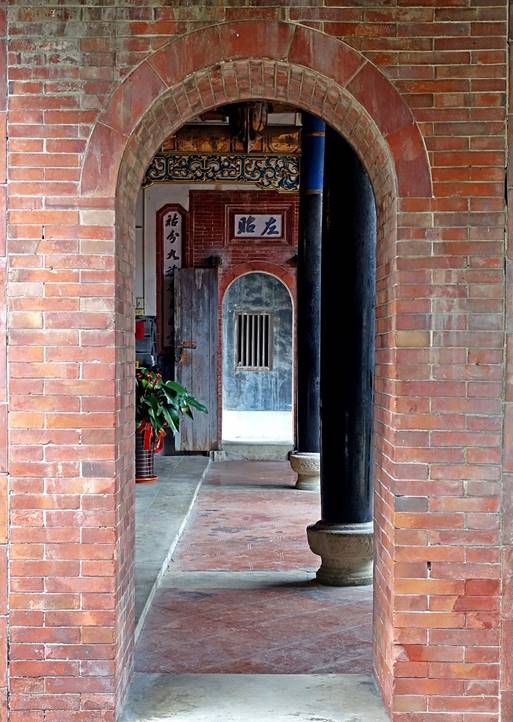
Left: Moon window in the courtyard.
Right: Corridor across the temple.
|
|
|
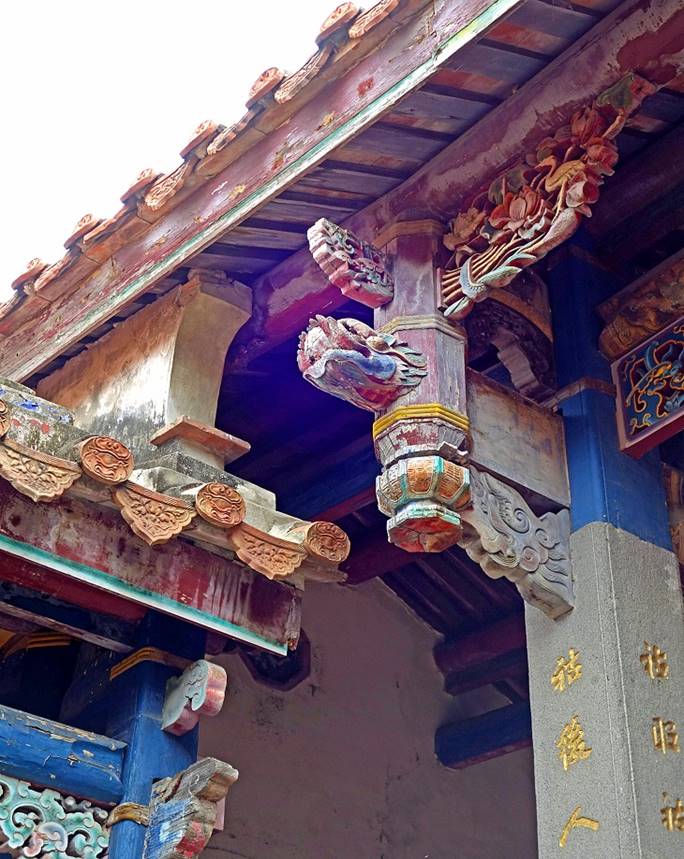
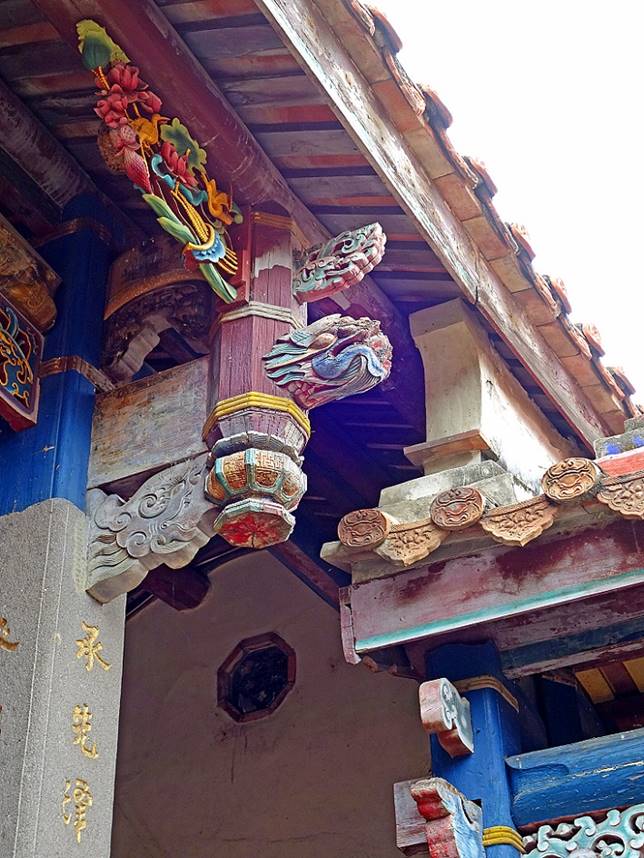
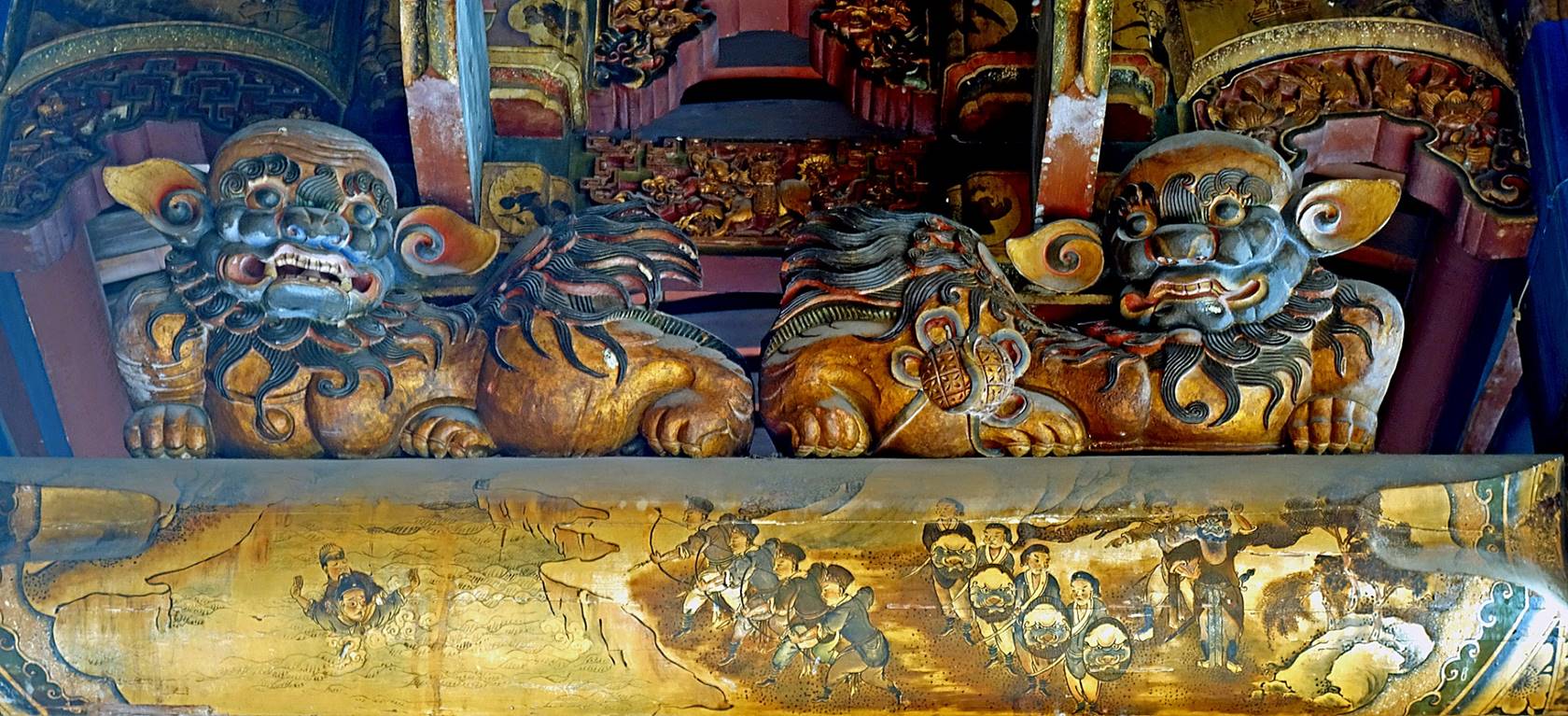
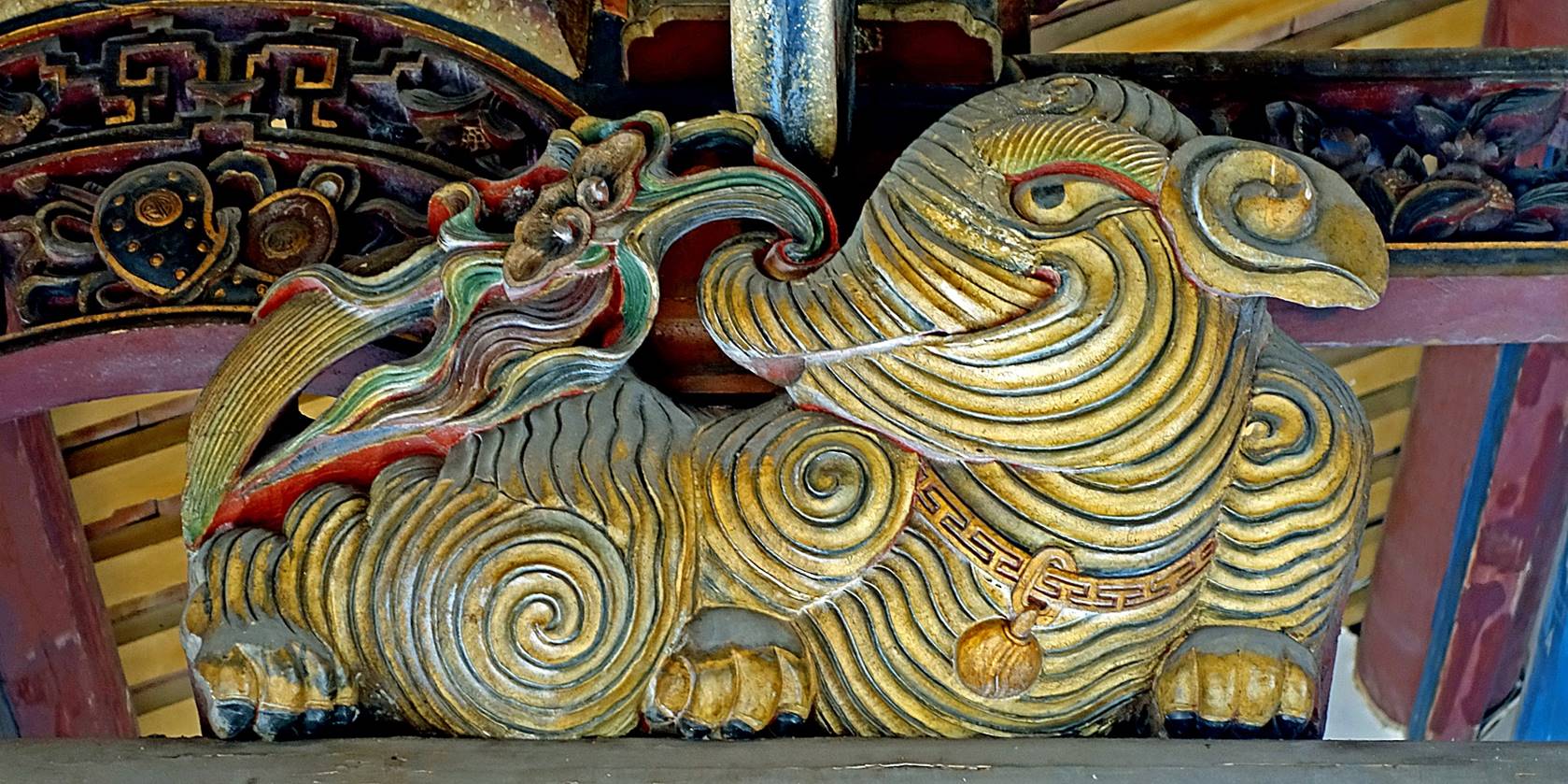
Painted wood carvings in the temple.
|
|
|
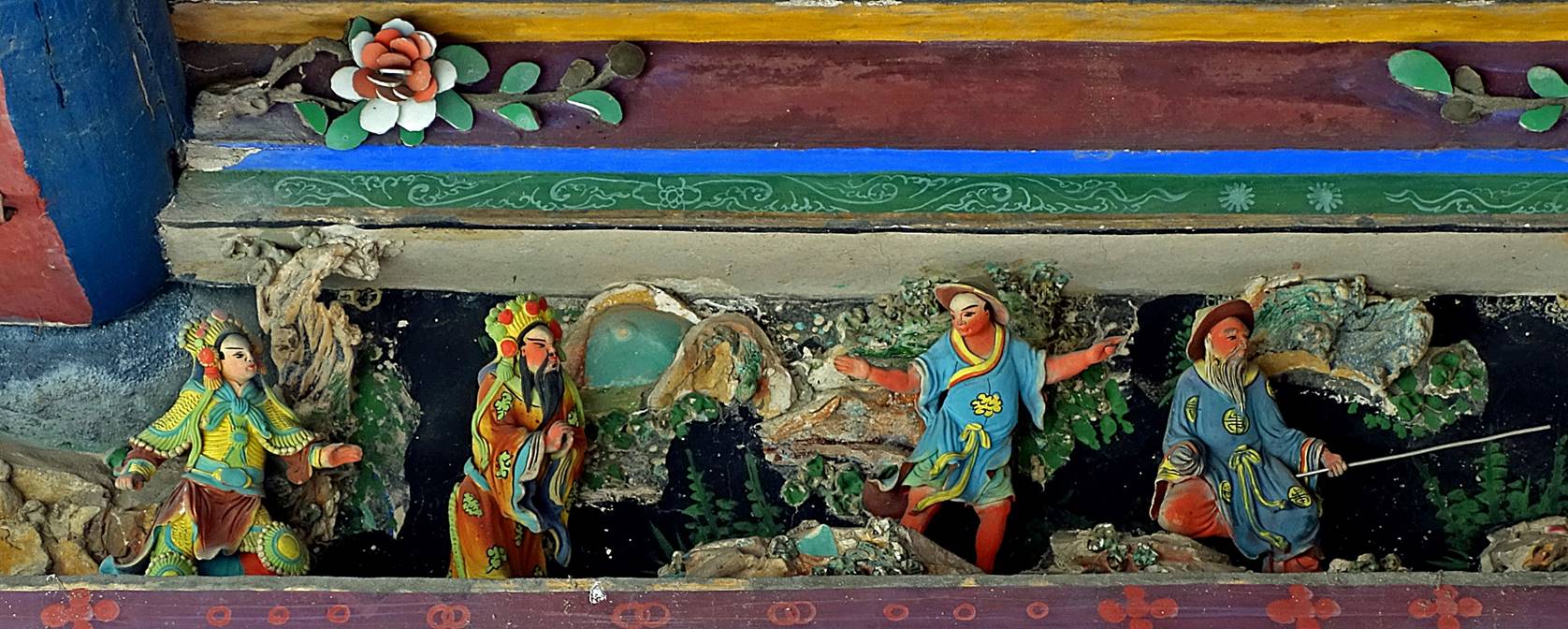
Clay sculptures in the temple.
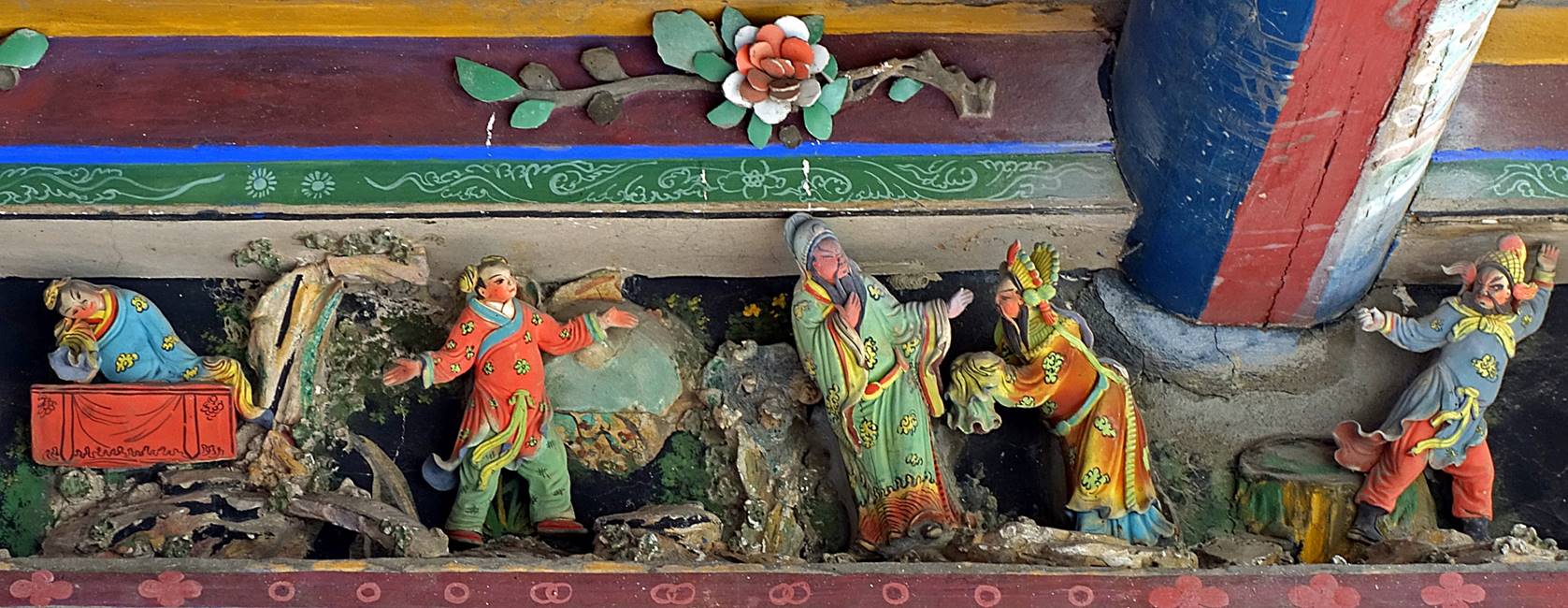
[December
2018]
Zhang Family ancestral temple (張家祖廟):
Also located in the Xitun district, this
temple was built in 1905 (hence, during the Japanese occupation of Taiwan) by
descendants of the Zhang family, whose home was located in a village of the
Fujian province in China. So, the architectural style of the temple is typical
Fujianese, with beautiful swallow-tail roofs, many small statues, and Cochin
ceramic decorations. Today, the temple is situated in a fast-growing area of
Taichung, but in 1905 it was surrounded by rice paddies.
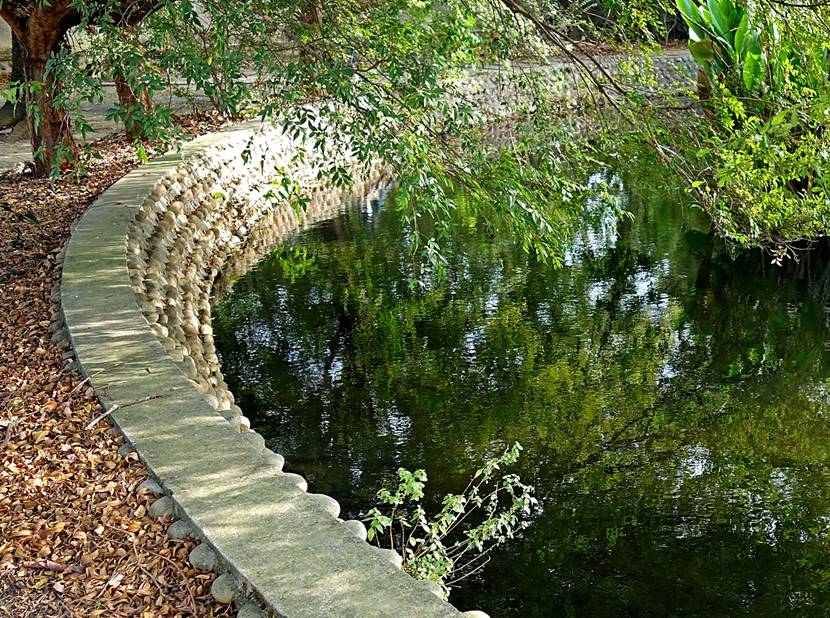
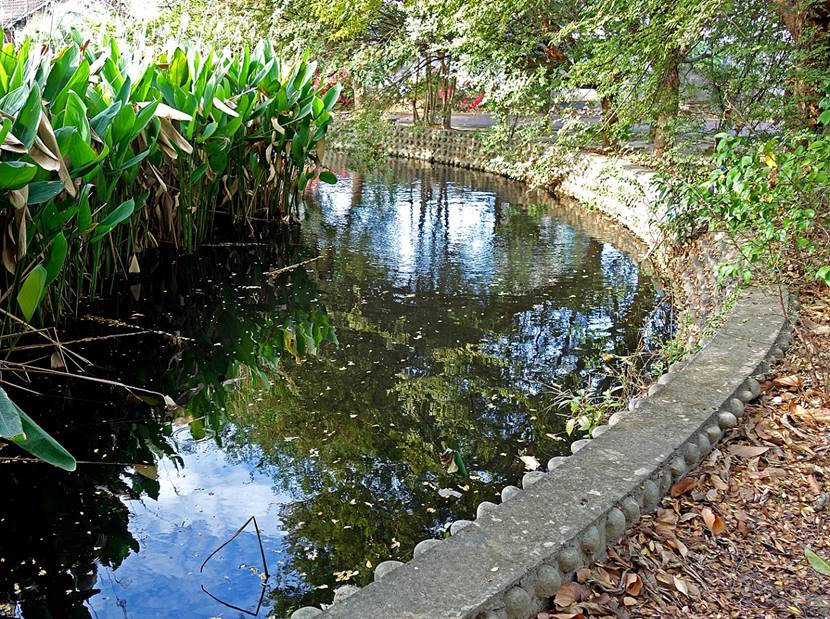
Views of the half-moon pool in the
garden preceding the entry into the temple.
|
|
|
Entrance porch and gate of the temple
building.
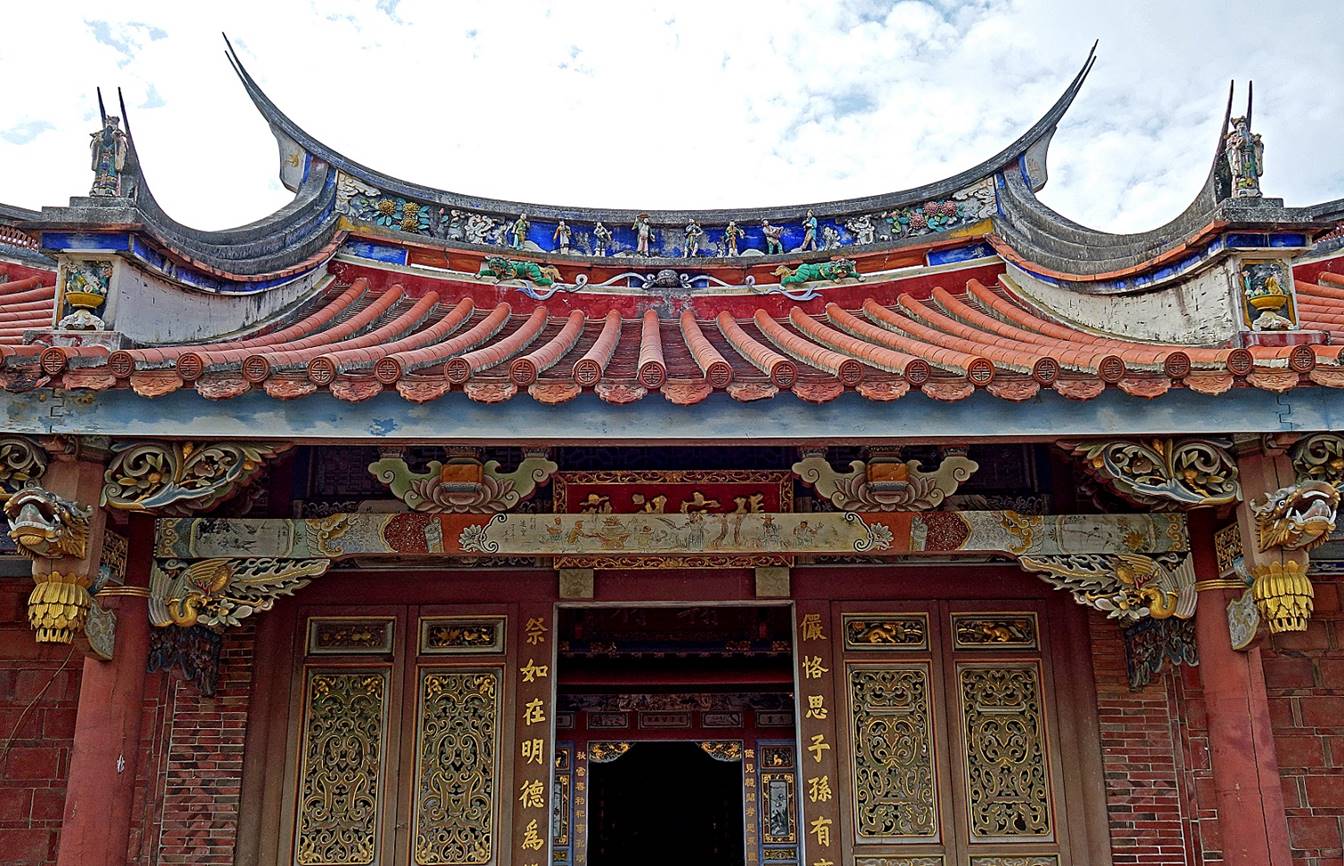
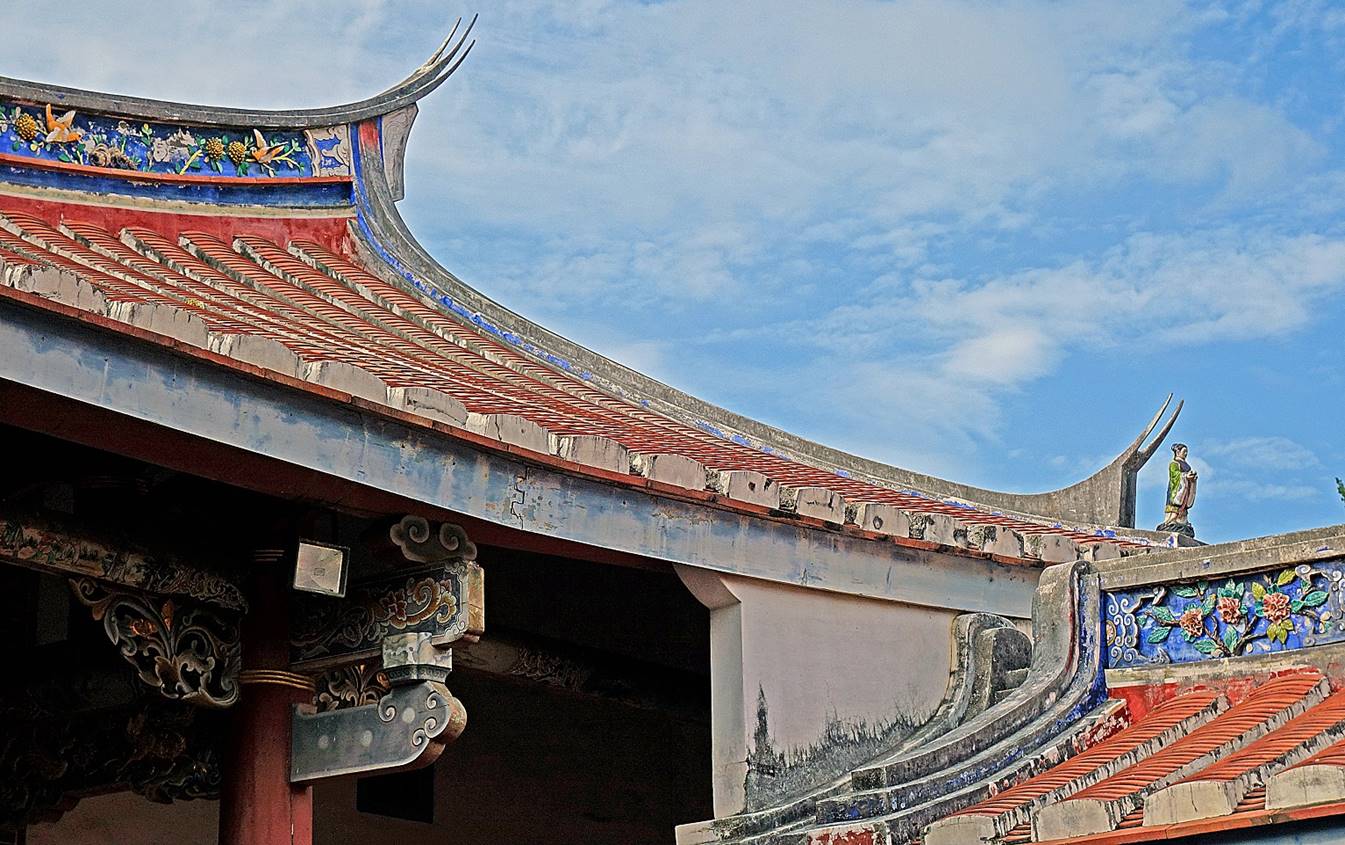
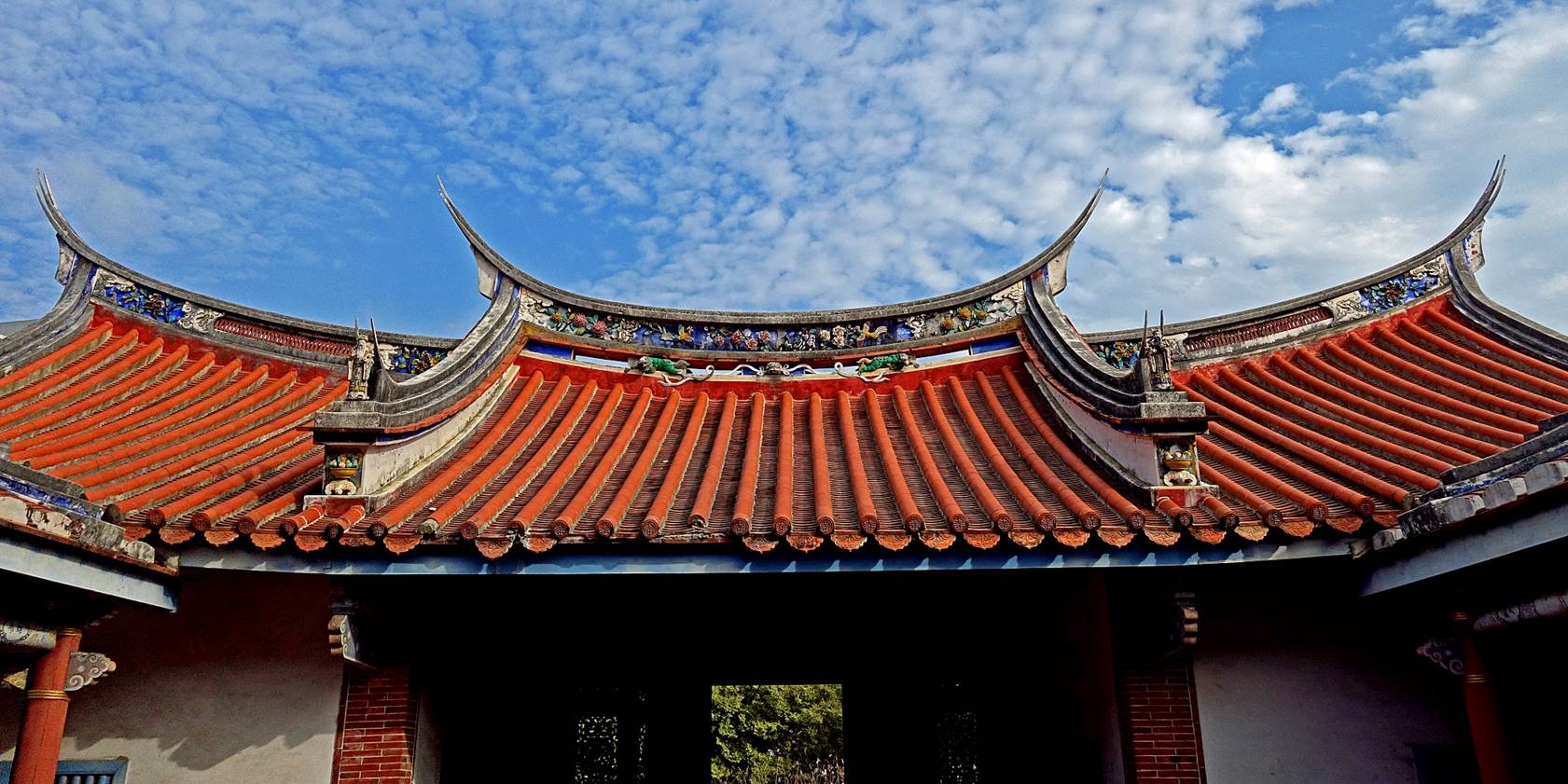
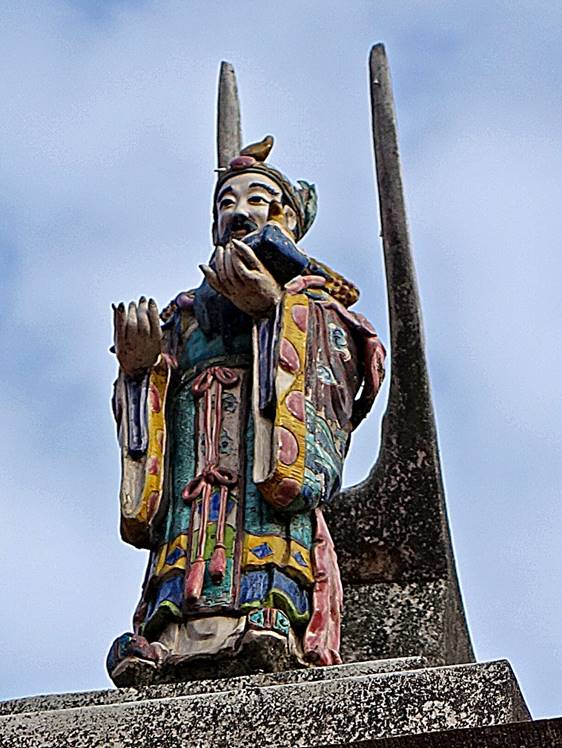
Various views
of the main building and its swallow-tail roofs, with ceramic decorations and
small statues all around.
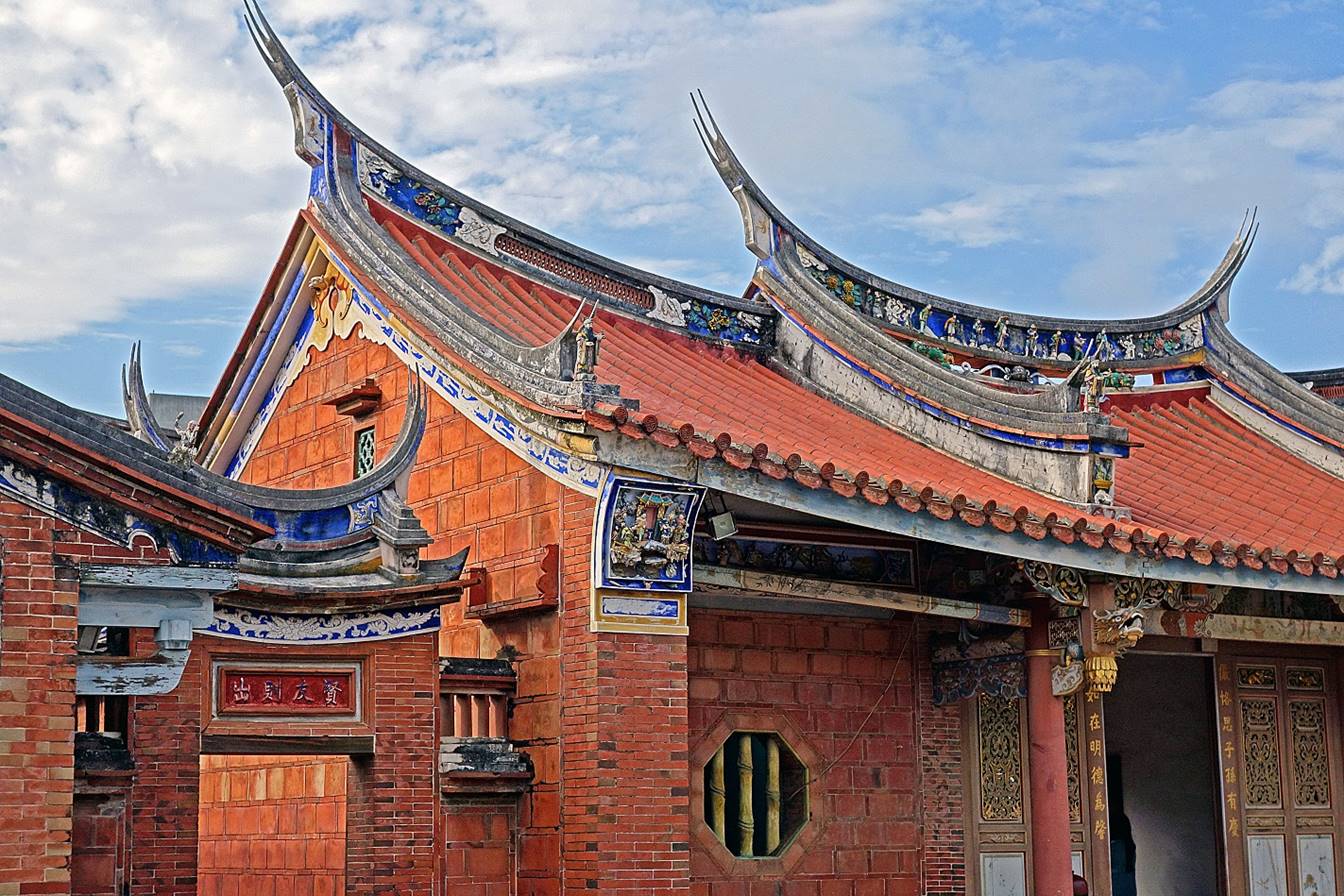
|
|
|
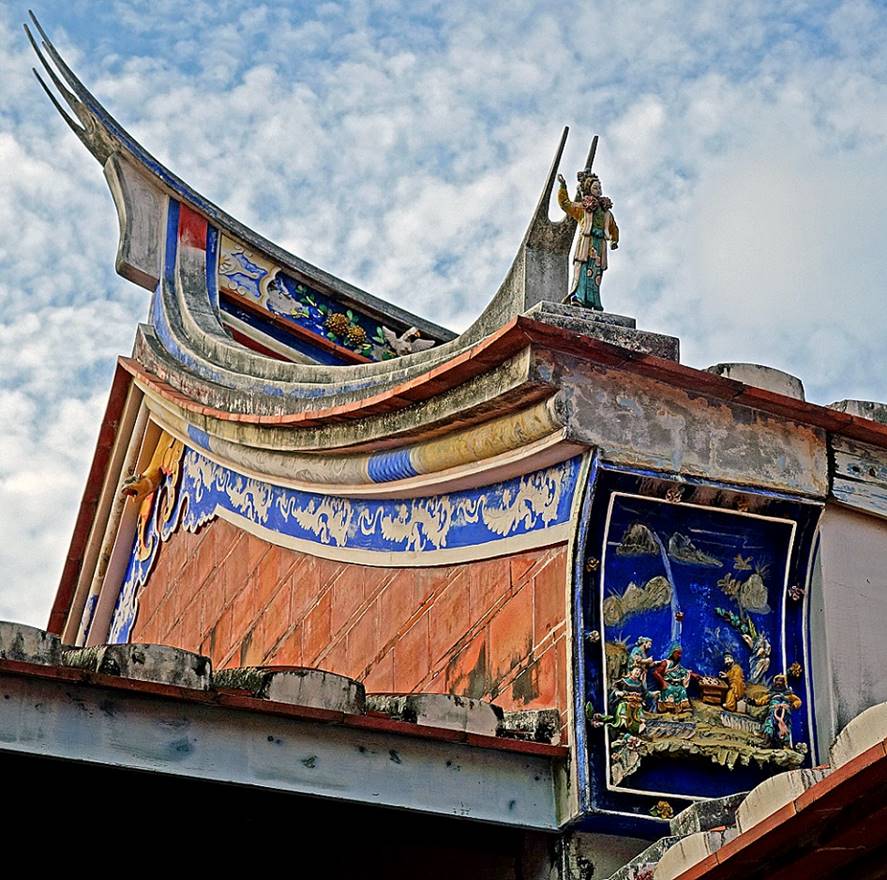
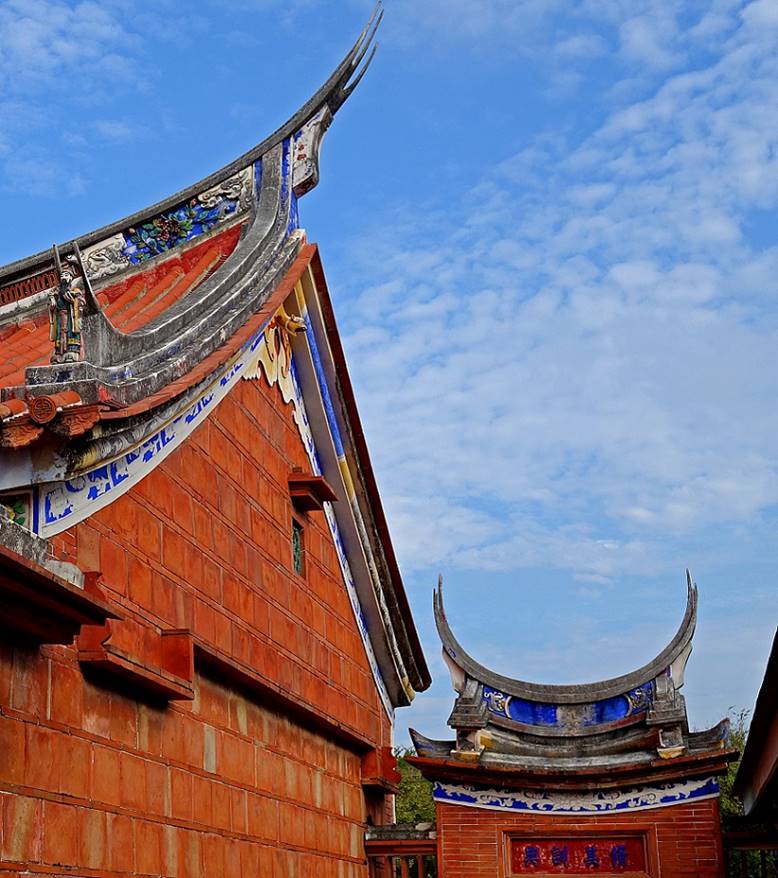
Roof covering
the entrance porch seen from the courtyard inside the temple.
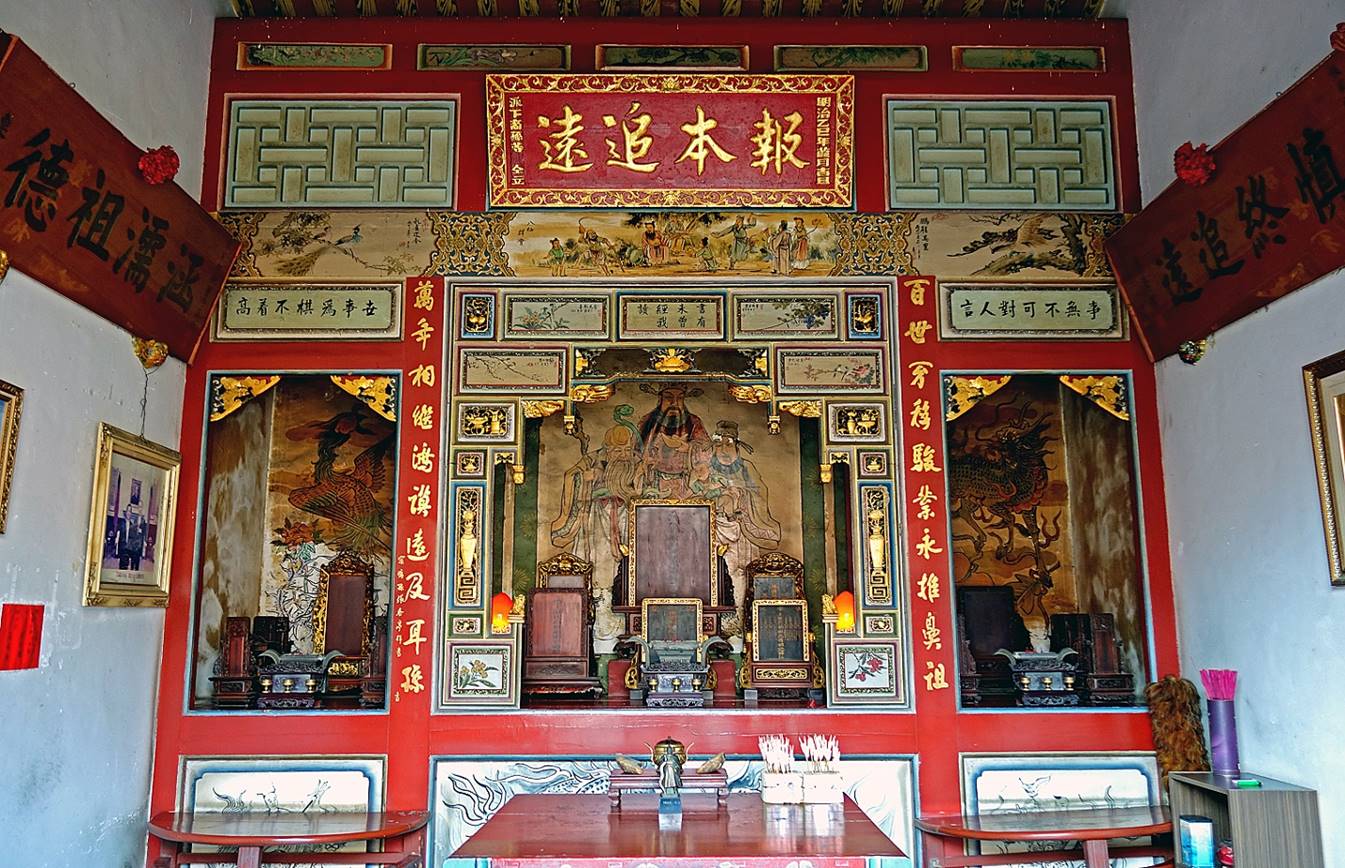
The ancestor
hall, located opposite the entrance door, on the other side of the courtyard.
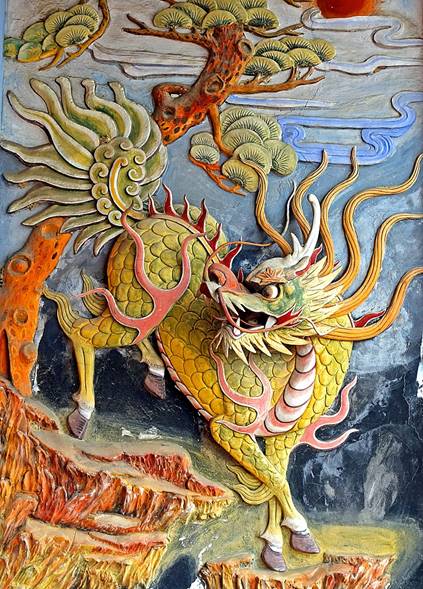
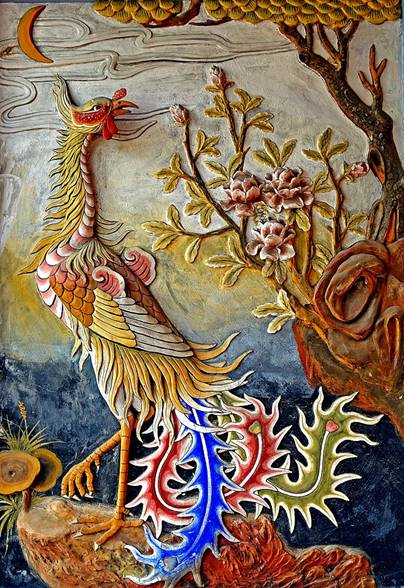
- Left and center-left: Decorative
panels on the two side walls of the entrance porch.
- Center-right and right: Guardians of
the temple painted on the interior sides of the double entrance door.
|
|
|
|
|
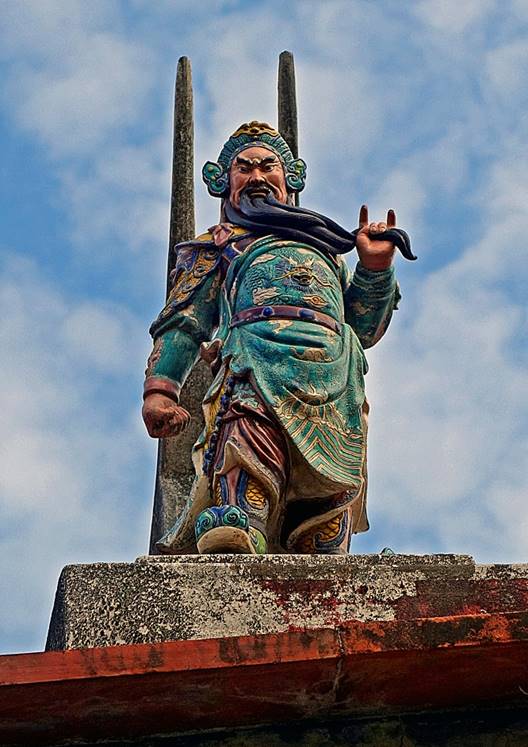
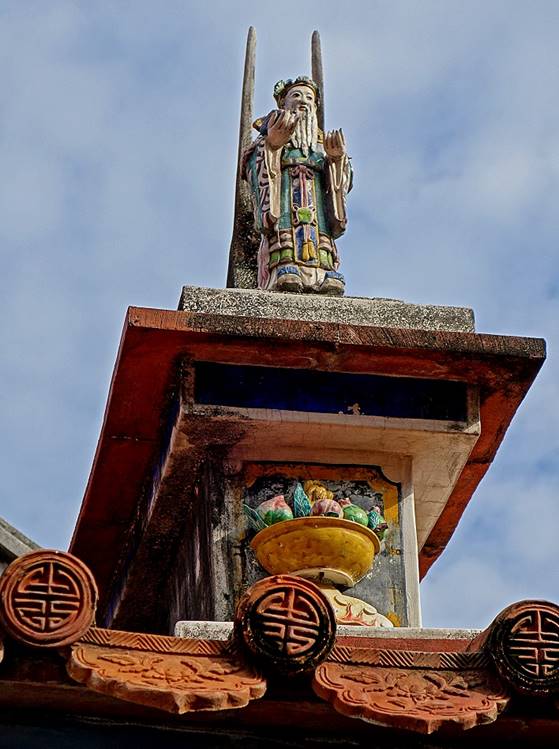
Closeups of
some of the roof statues.
|
|
|
|
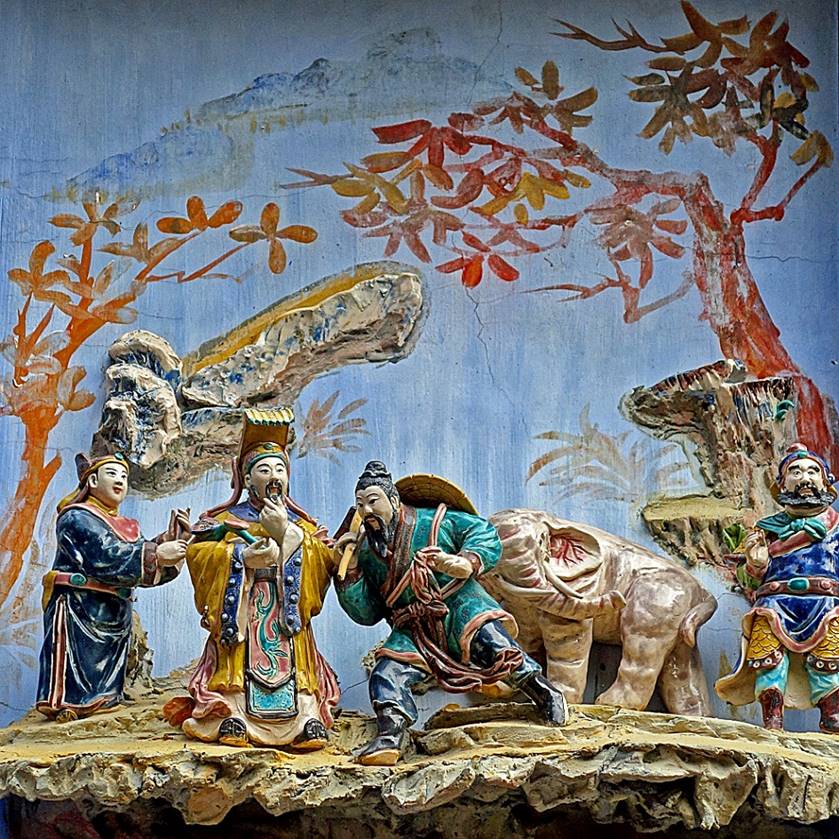
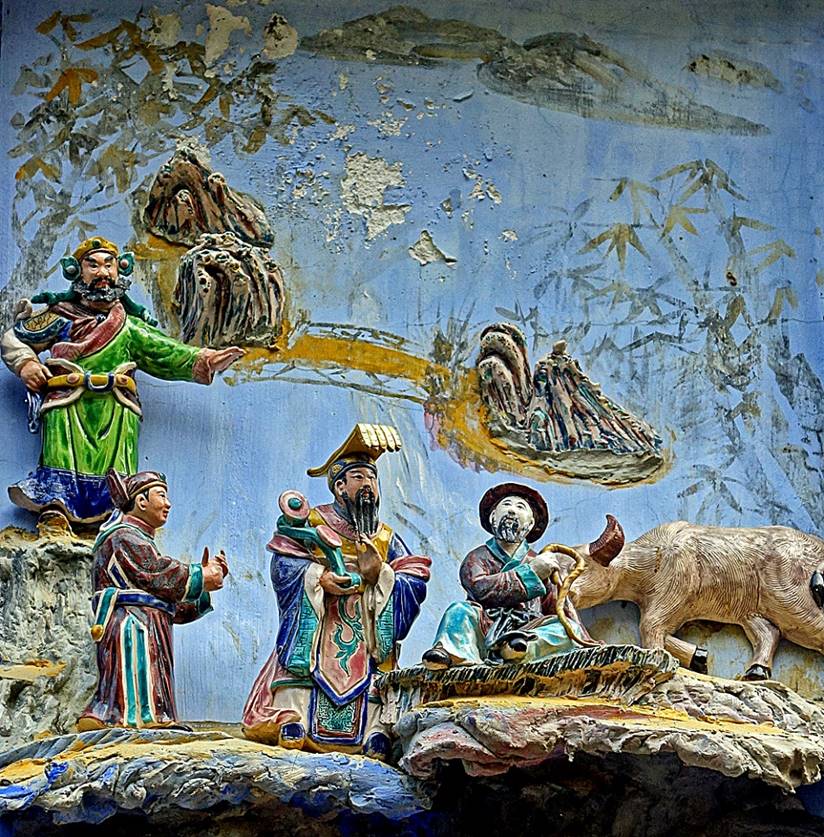
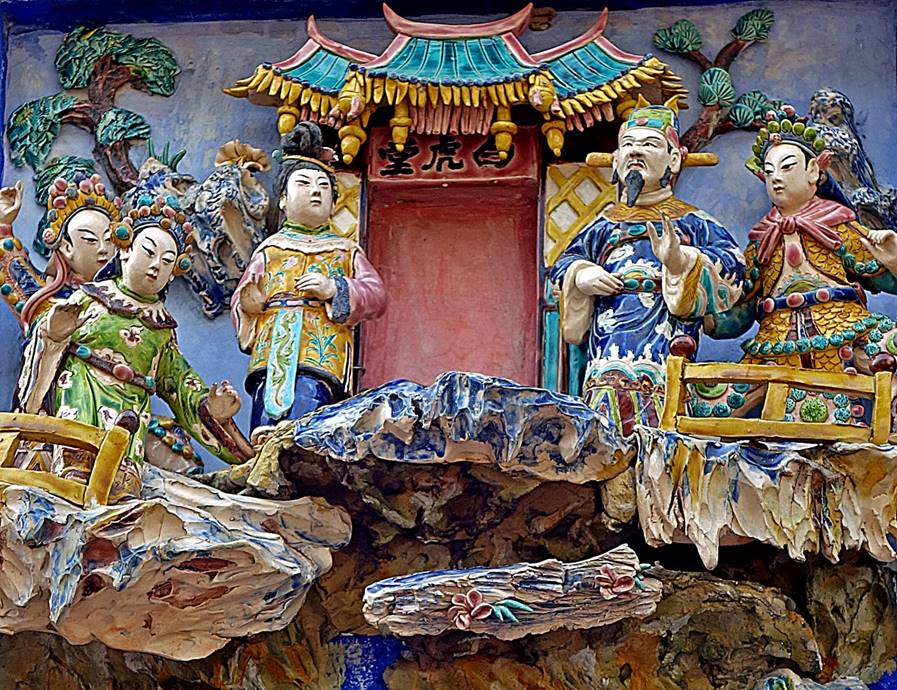
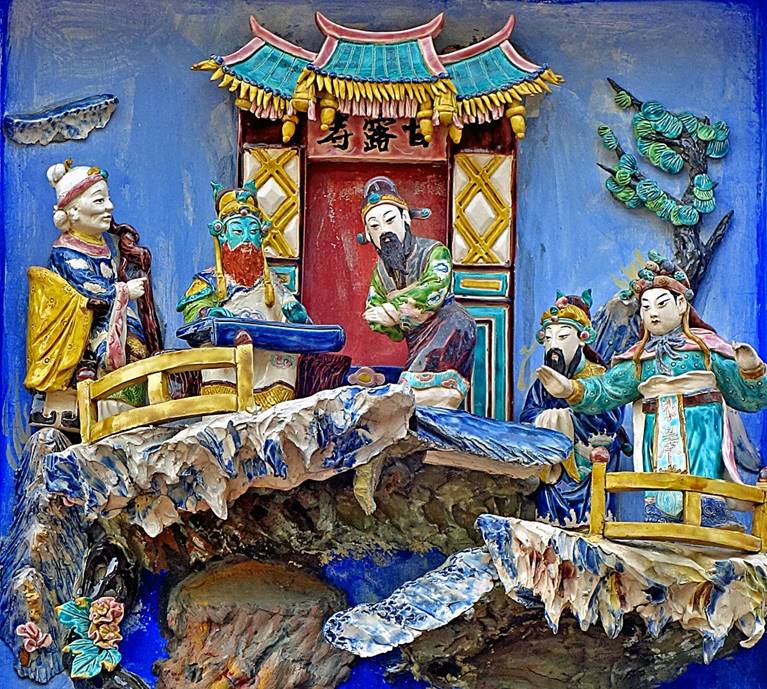
Ceramic
decorations, some of which may represent scenes from the Zhang family life.
|
|
|
|
|
|
[December
2018]
Dajia Jenn
Lann temple (大甲鎮瀾宮):
This temple is located in the Dajia
district of Taitung, quite far from downtown Taichung, 24km north of Taichung's
train station. It is dedicated to Mazu (媽祖), the Goddess of the Sea and is one of
the most famous Mazu temple in Taiwan. It was originally built in 1730 to house
a statue of Mazu brought from the Meizhou Mazu Ancestral Temple (天后祖祠) located on Meizhou Island (湄洲岛) in the Fujian province of China. It
was expanded and rebuilt in 1770 and again in 1787. Since then, it has
undergone numerous renovations. Every year, at the beginning of the third month
of the lunar calendar, it is the site of the famous ″Mazu Pilgrimage″,
said to attract over 500,000 participants.
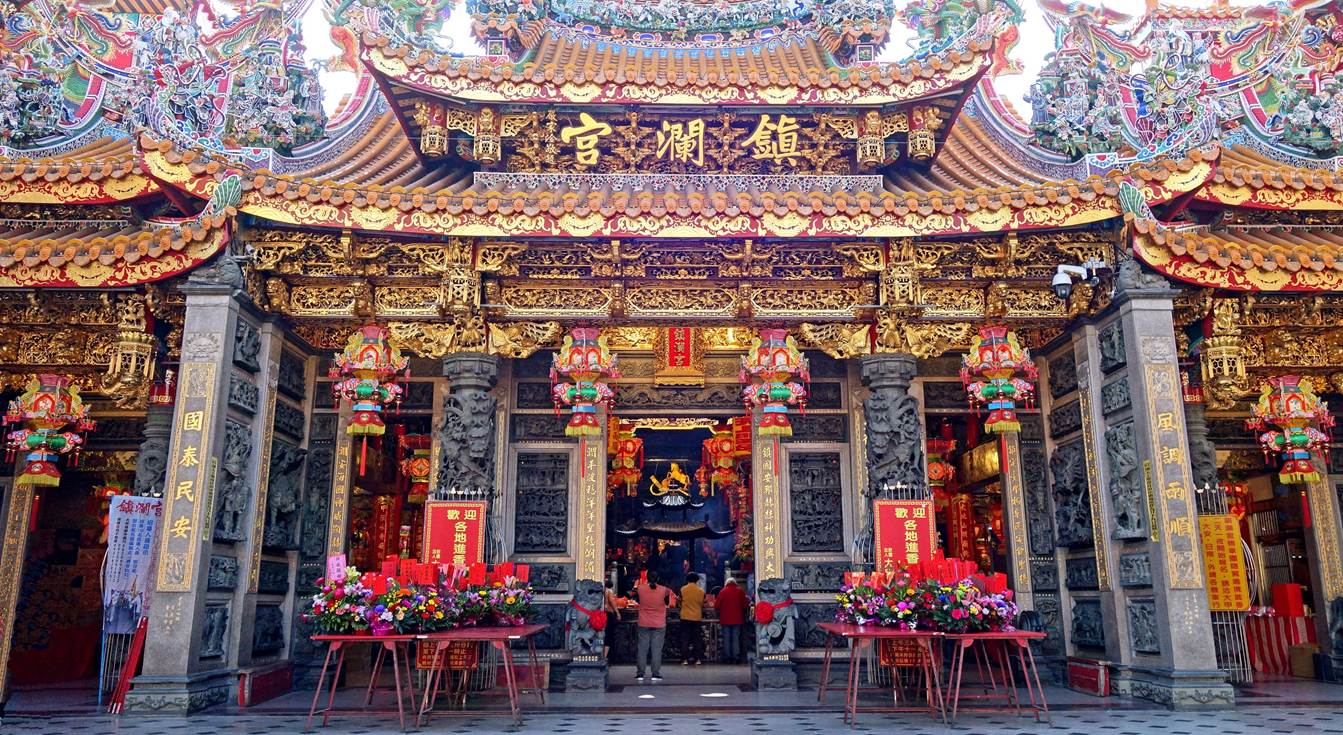
Entrance of the temple.
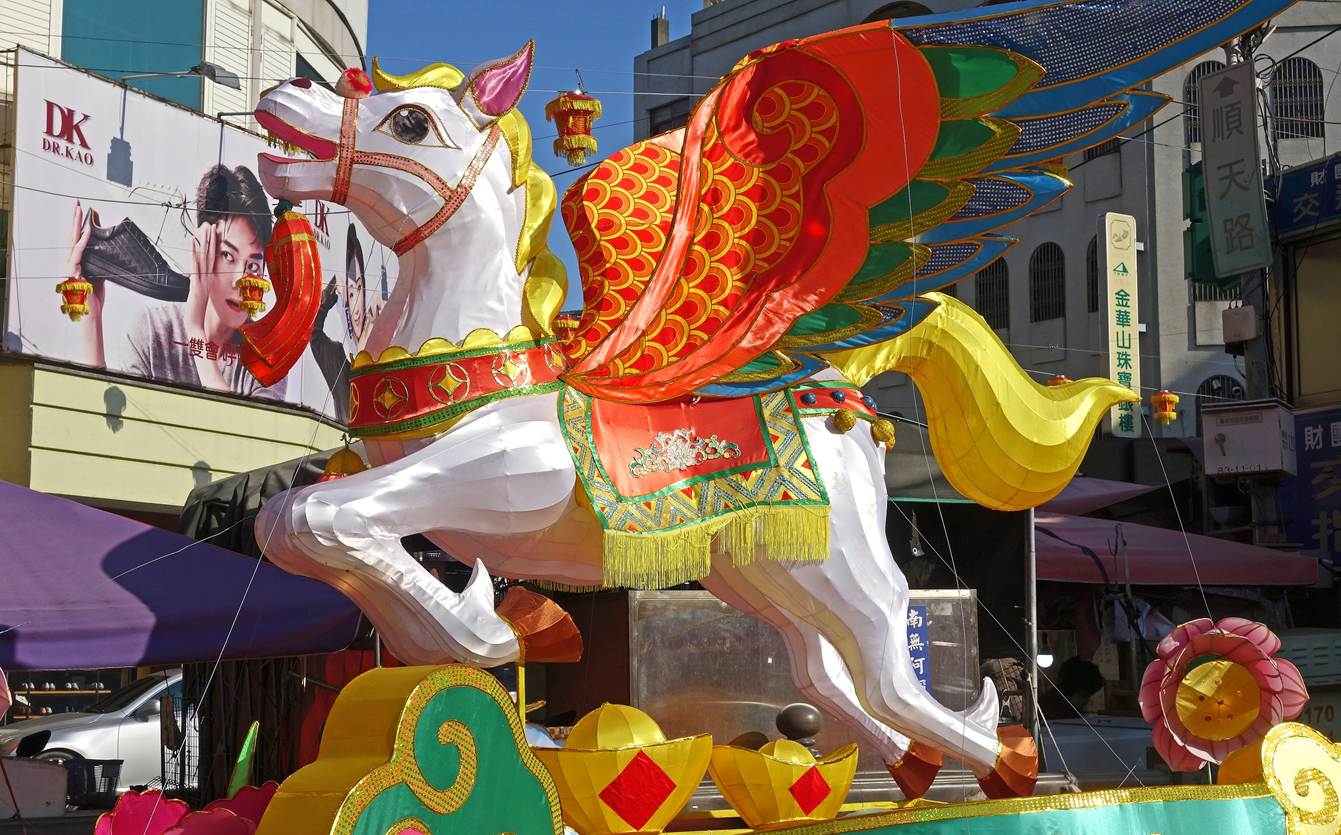
Float featuring a winged horse, intended for the upcoming Dajia
Mazu pilgrimage. It is displayed here on the temple's forecourt.
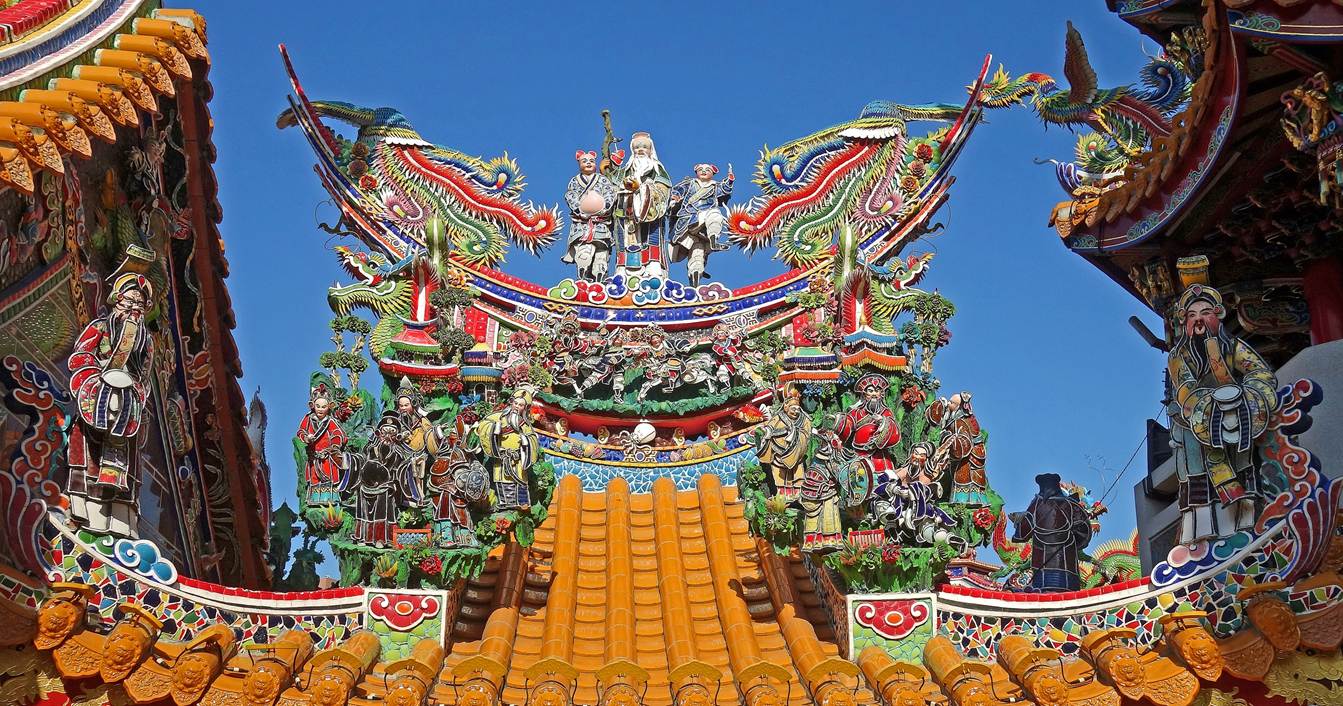
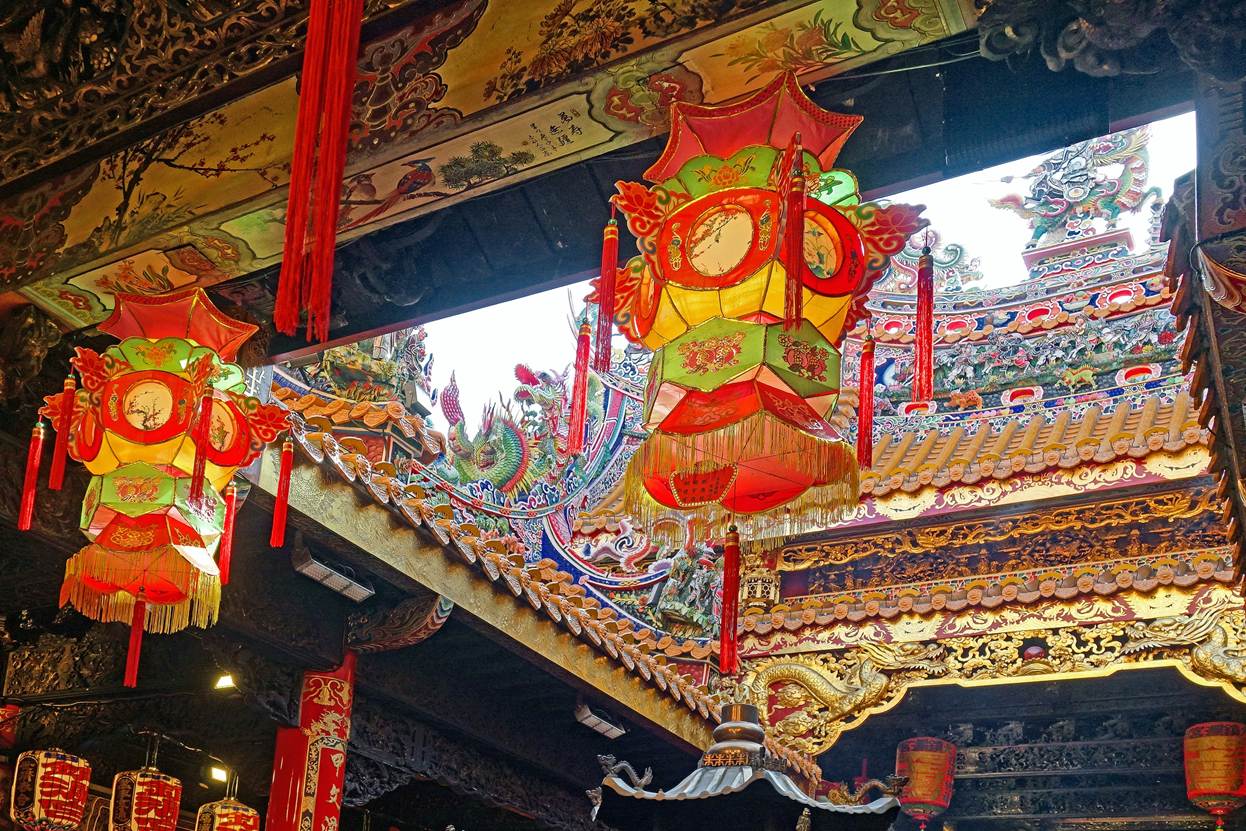
Portion of the temple's roof.
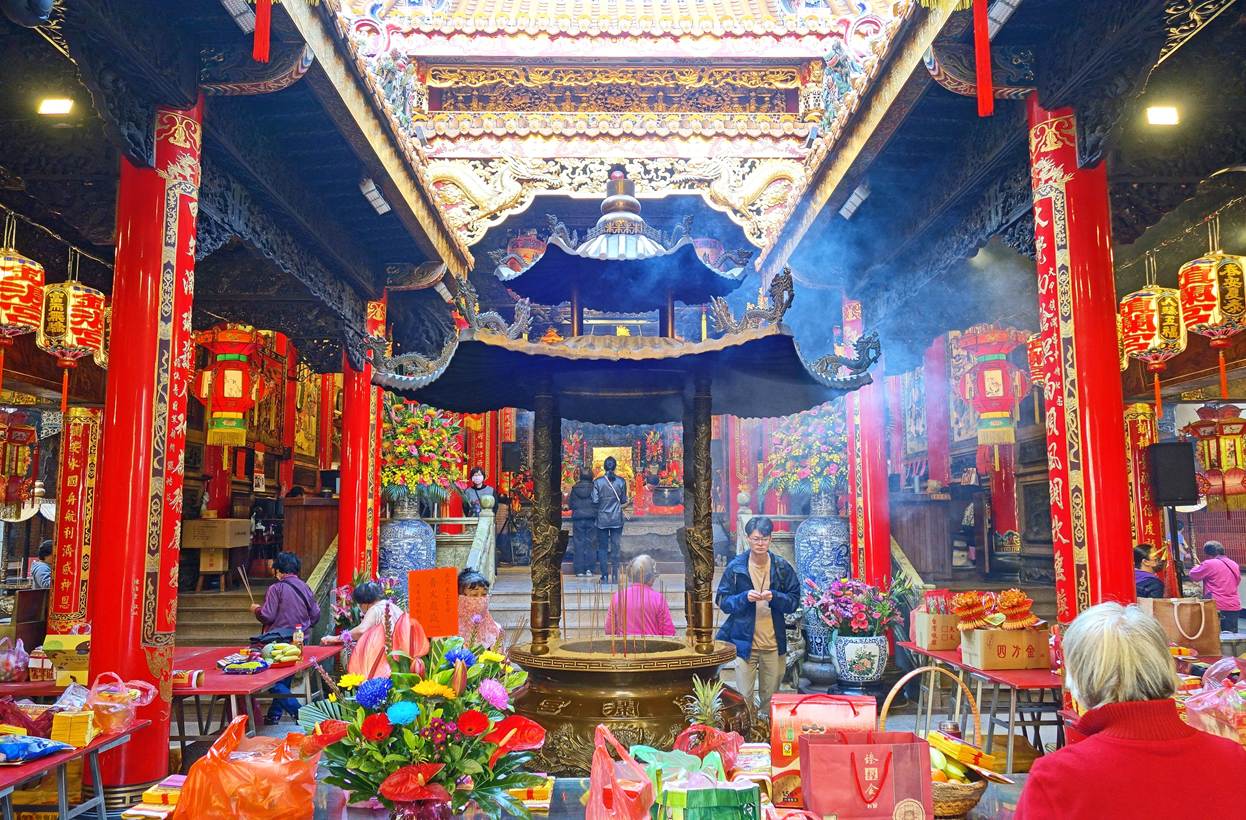
View from the first courtyard of the temple.
Inside the first courtyard. The smoke created by the incense
burner is said to carry prayers and wishes from the human realm to deities.
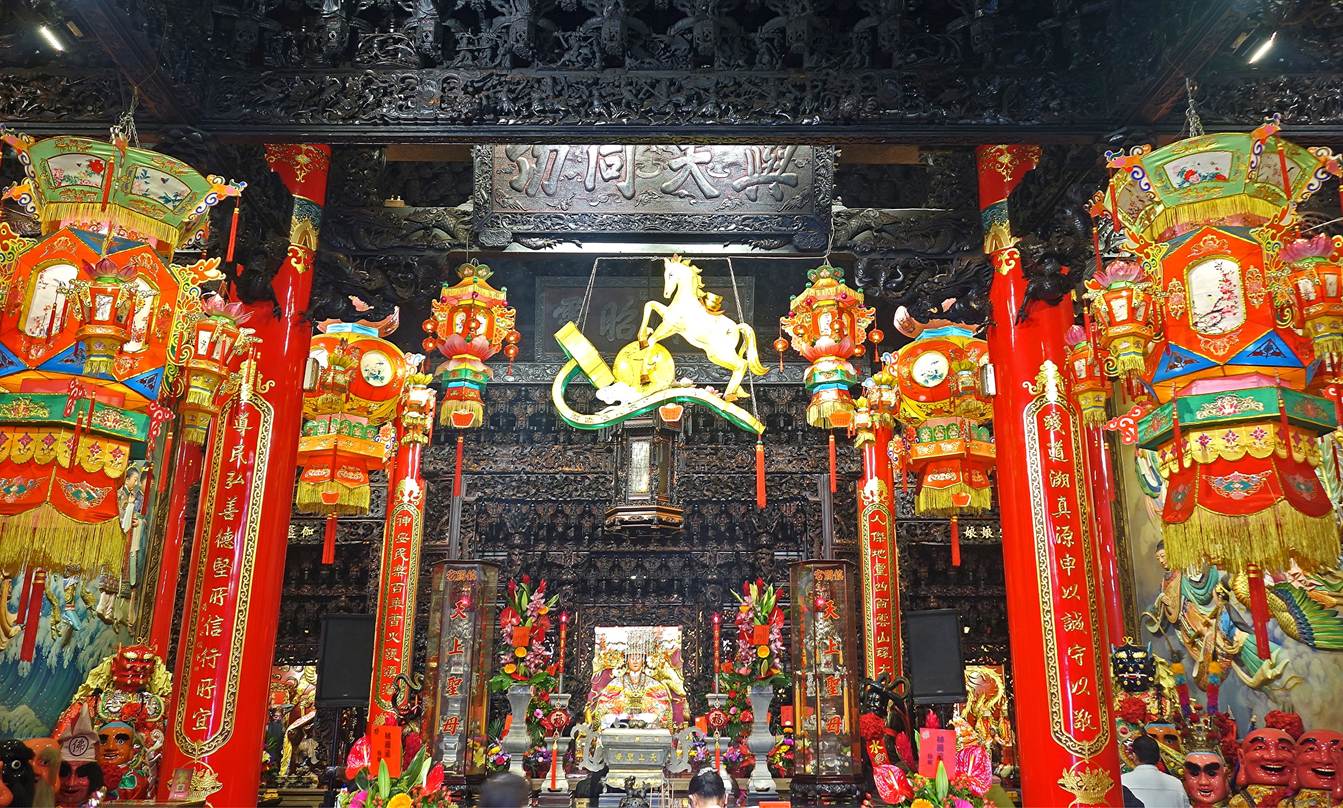
In the main hall. The altar dedicated to Mazu is visible in the
background, at the bottom center of the photo. The horse suspended from the
ceiling is there to celebrate the Year of the Fire Horse.
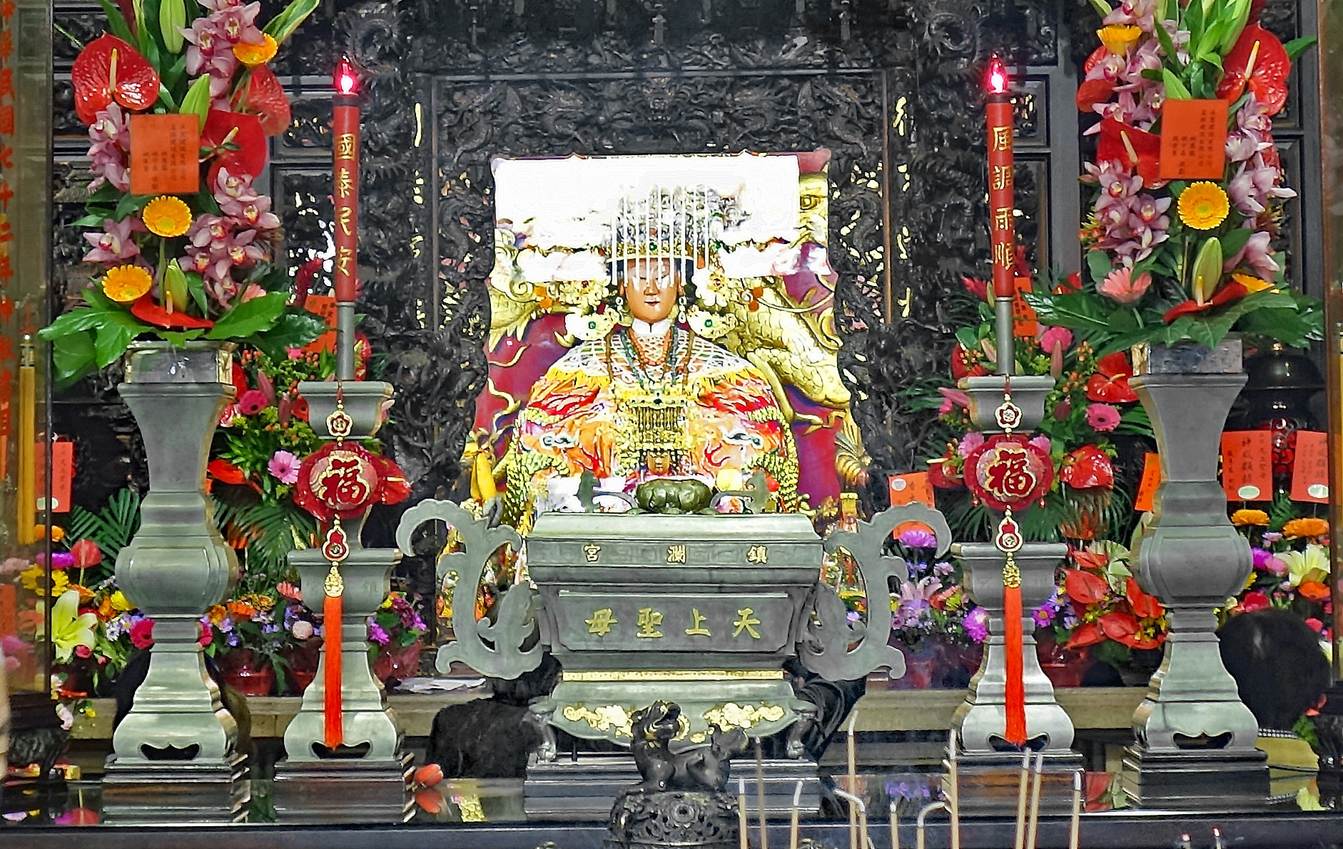
Close-up of the altar dedicated to Mazu.
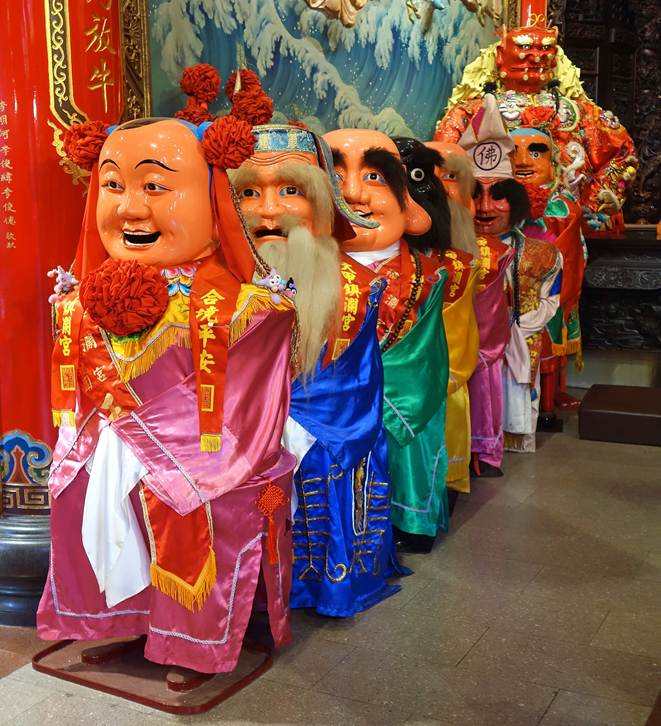
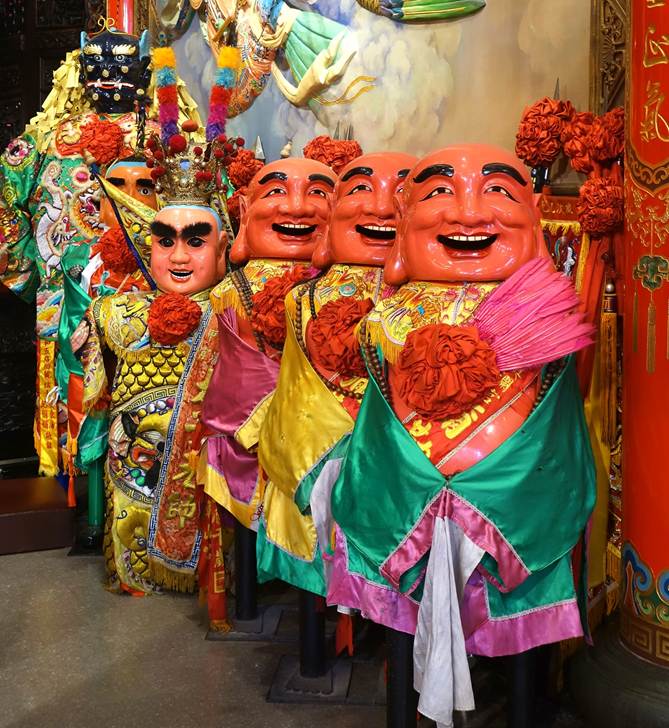
Lines of movable statues of Divine Generals (神將) on both sides of the main hall. They are
paraded during the pilgrimage ceremonies.
|
|
|
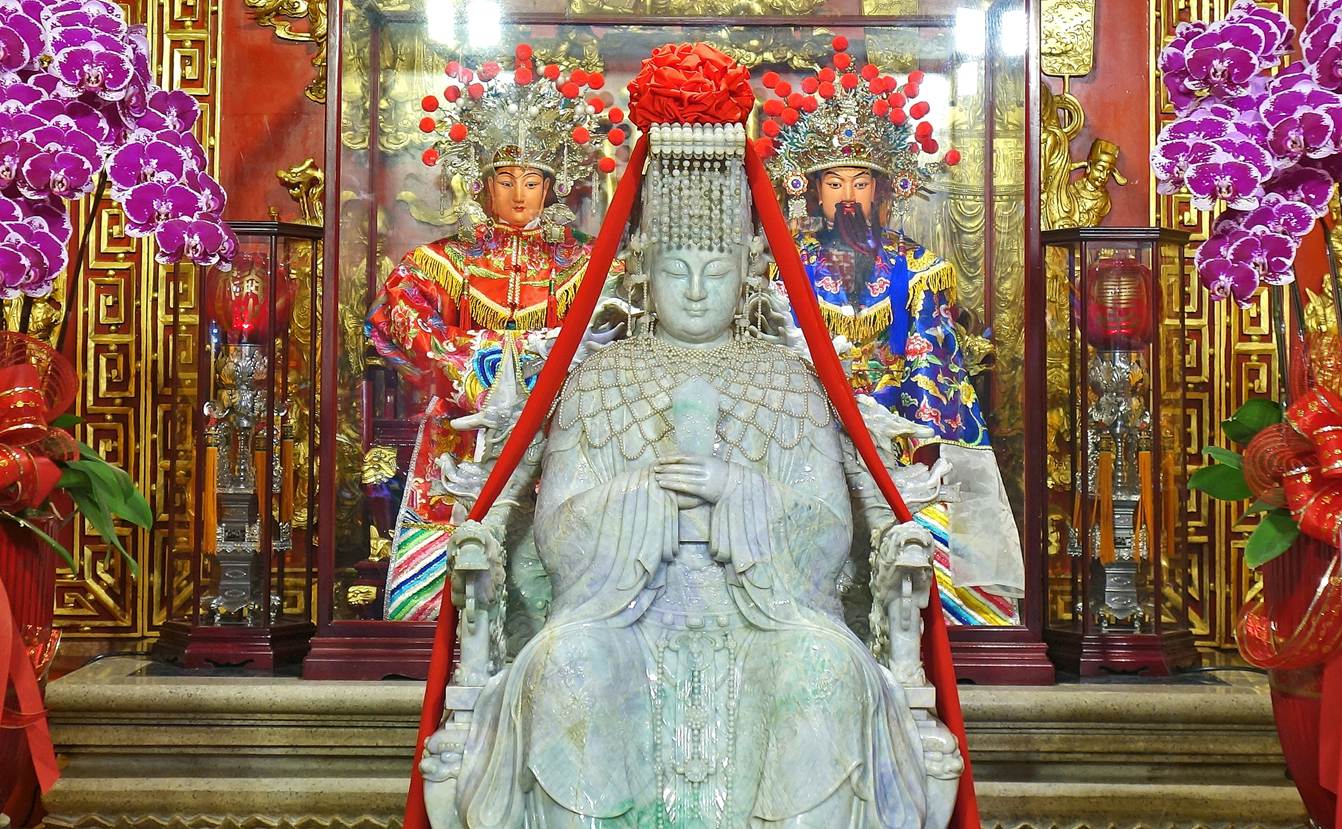
Violet Jade Mazu (紫玉媽祖), one of the main treasures housed in the temple. This intricate
statue is carved from a massive piece of rare lavender jade.
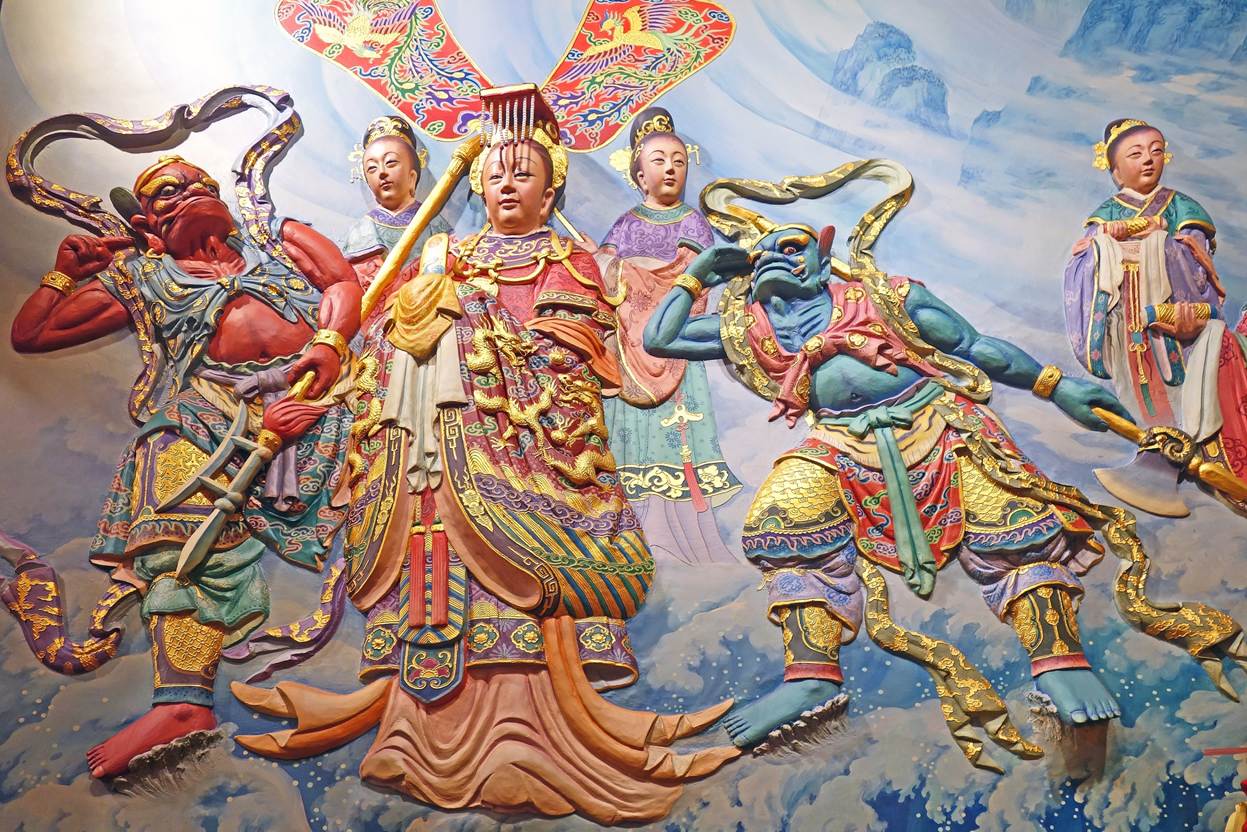
Mural showing Matsu in the center, flanked by her two guardians,
Shunfeng'er (順風耳) and Qianliyan (千里眼) [See Wanle temple (above)].
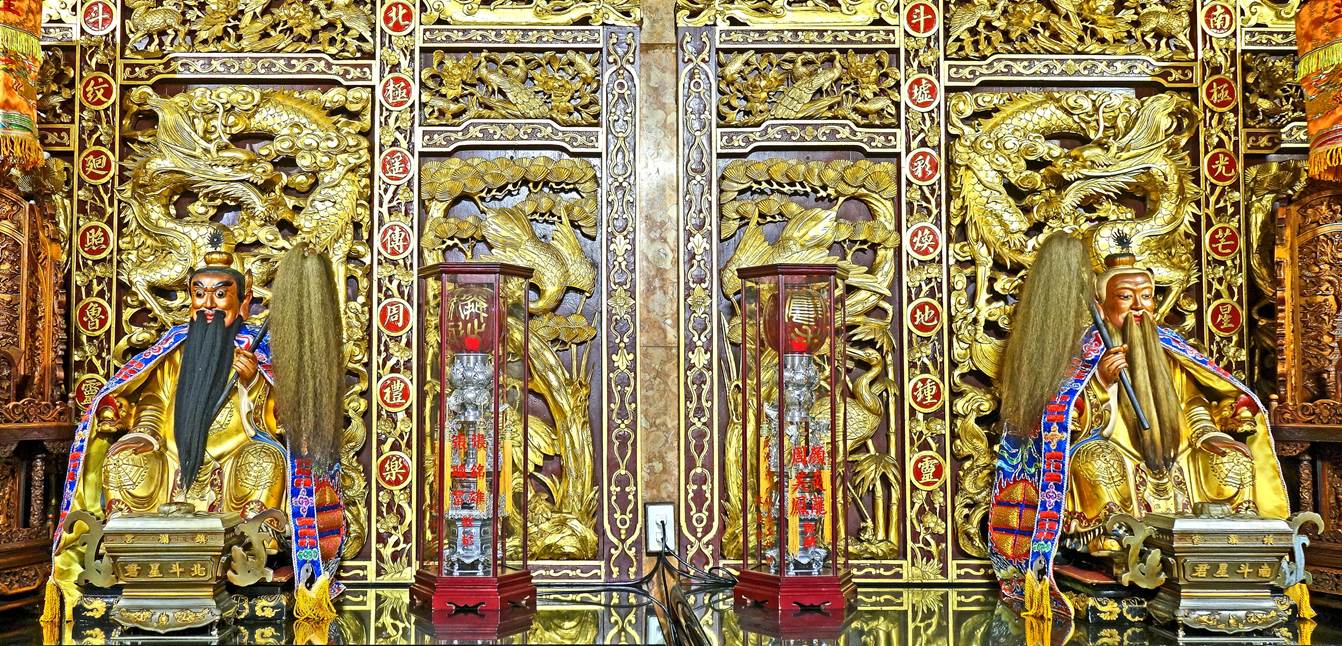
Statues of Beidou Xīngjun (北斗星君), the Lord of the Northern Dipper, on the left, and of Nandou
Xingjun (南斗星君), the Lord of the Southern Dipper, on the right.
- The Lord of the Southern Dipper rules the birth, life, and
earthly status of every human.
- The Lord of the Northern Dipper rules death, judgement, and
afterlife. He determines the exact moment a human's life ends.
A Chinese proverb summarizes their respective roles as follows:
The Southern Dipper bestows life and the Northern Dipper controls death.
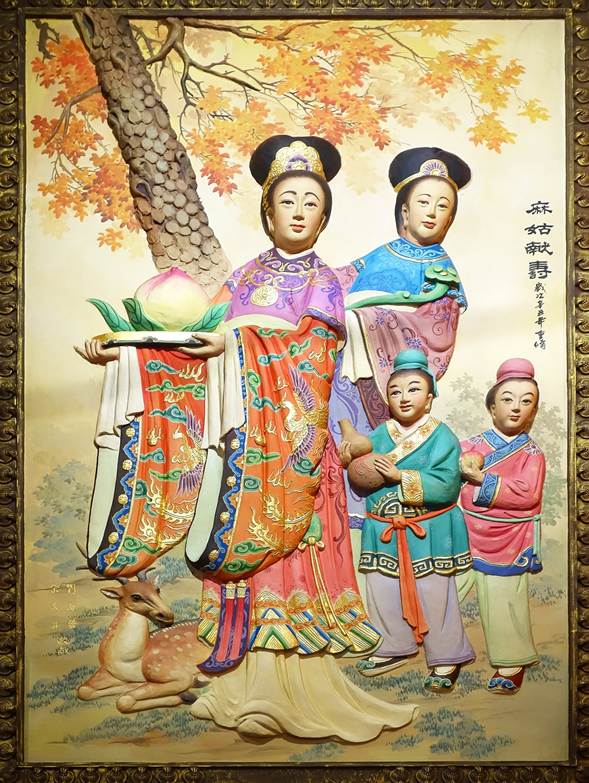
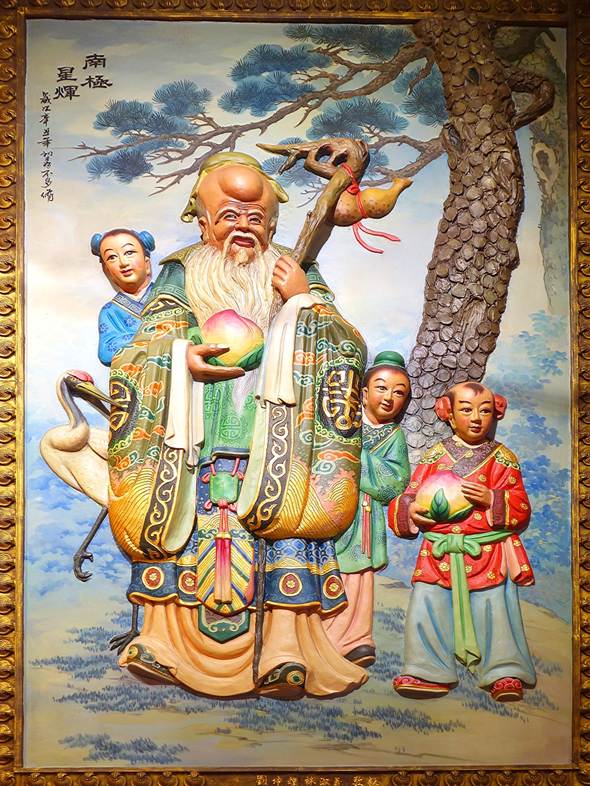
Mural decorations in the temple:
- The one on the left illustrates the Chinese tale of "Magu
Bestowing Longevity" (麻姑獻壽). Magu (麻姑) is a Taoist deity associated with longevity and the protection
of women. She is shown here offering a Peach of Immortality.
- The mural on the right depicts a scene involving Shouxing (寿星), another Taoist deity associated with long life. He is also
offering a Peach of Immortality.
|
|
|
[March
2026]
Dajia
Wenchang temple (大甲文昌祠):
This temple is dedicated to Wenchang Dijun (文昌帝君), the Taoist godof culture and literature. Originally built in 1887,
its two side wings initially served as a school. It was rebuilt in 1935
following an earthquake. After World War II, it was temporarily occupied by
military and police personnel.
Facade of the temple.
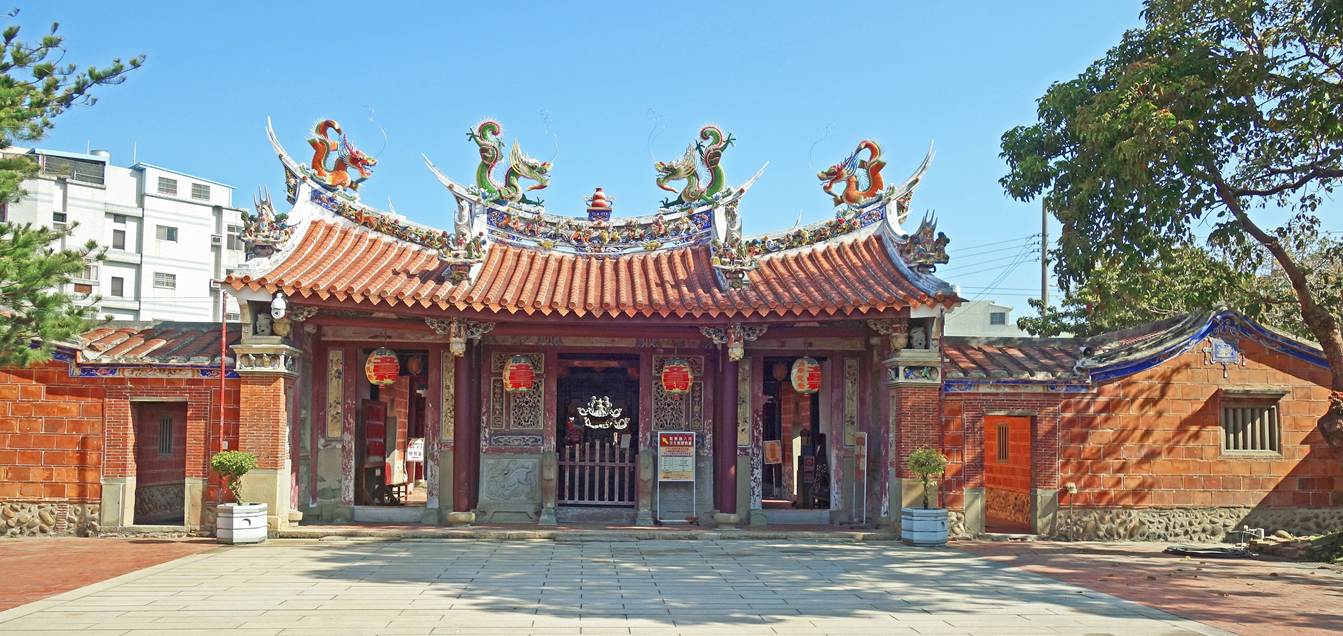
Main courtyard seen from the hall dedicated to Wenchang Dijun.
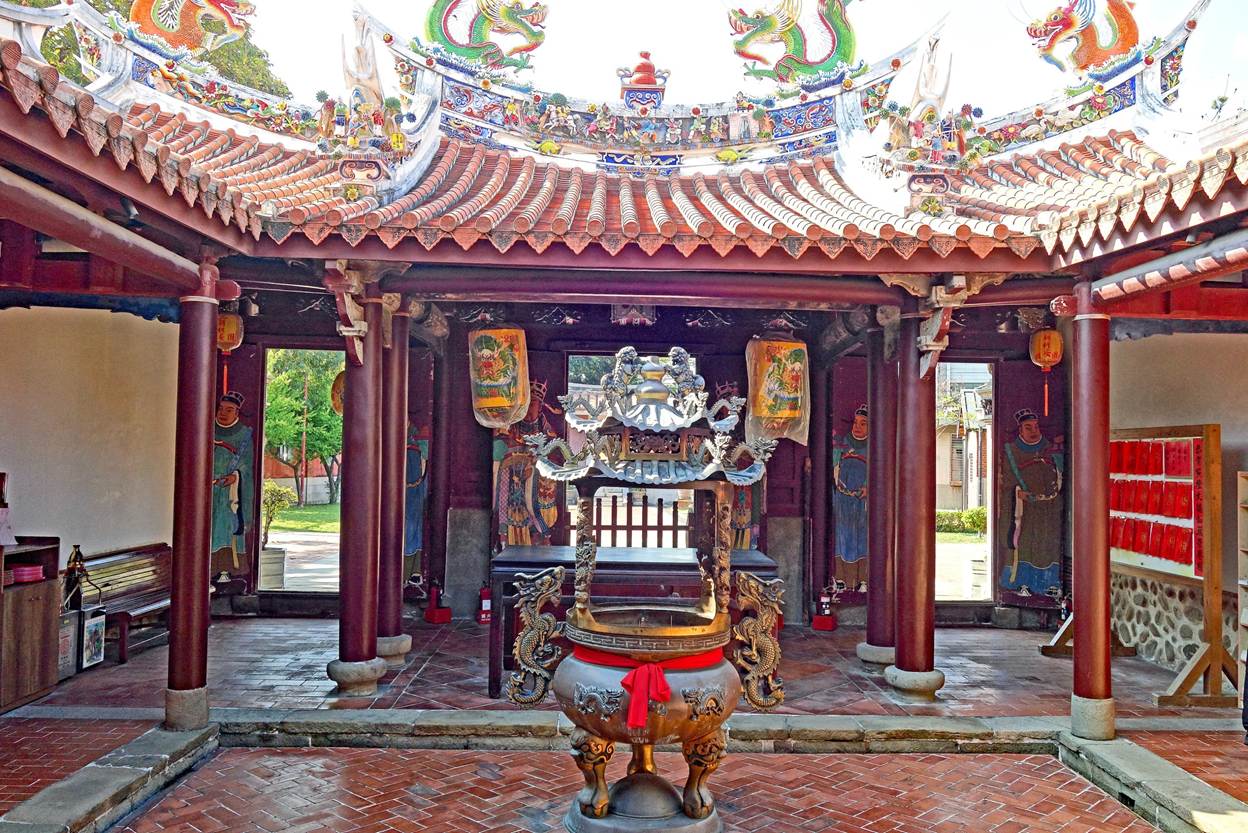
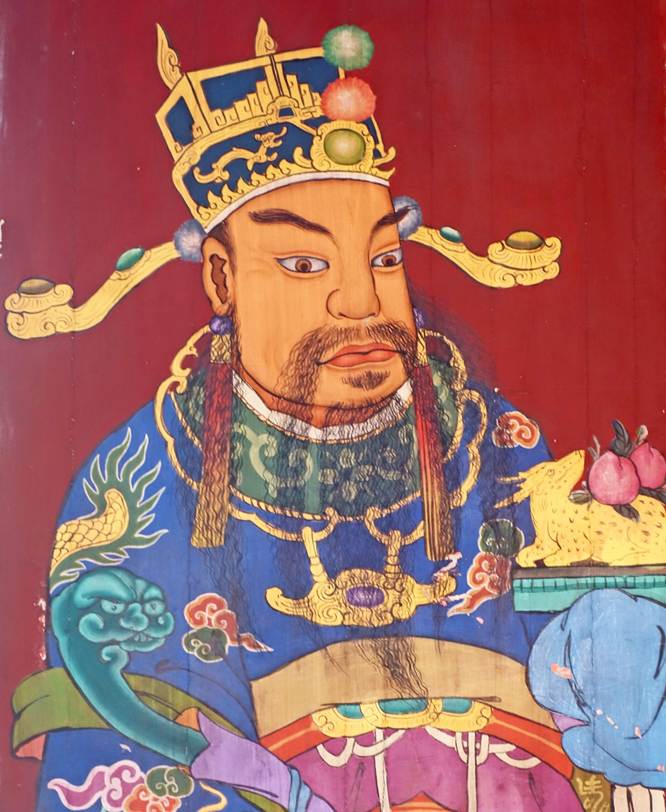
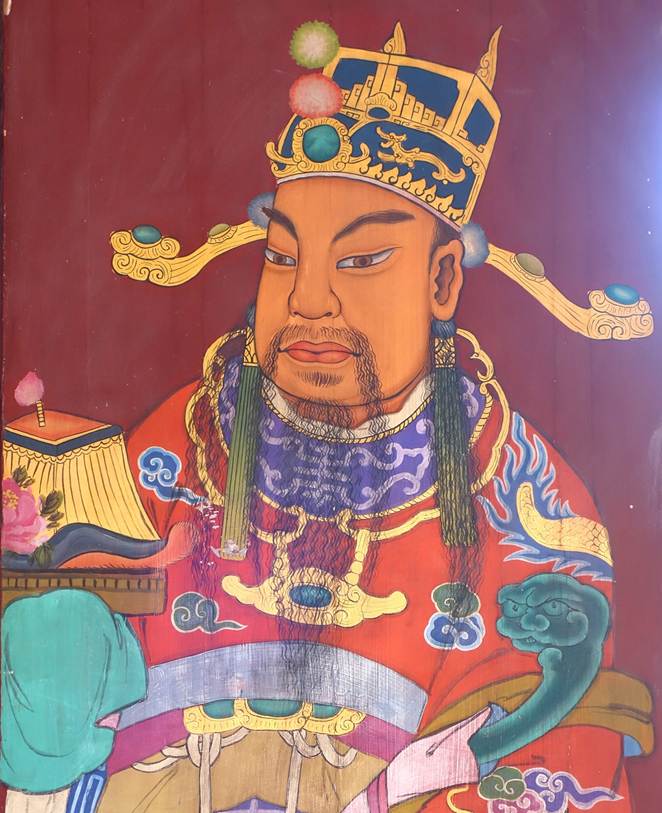
Paintings on the entrance doors of the temple. They represent
divine guardians protecting the temple against the intrusion of evil spirits.
|
|
|
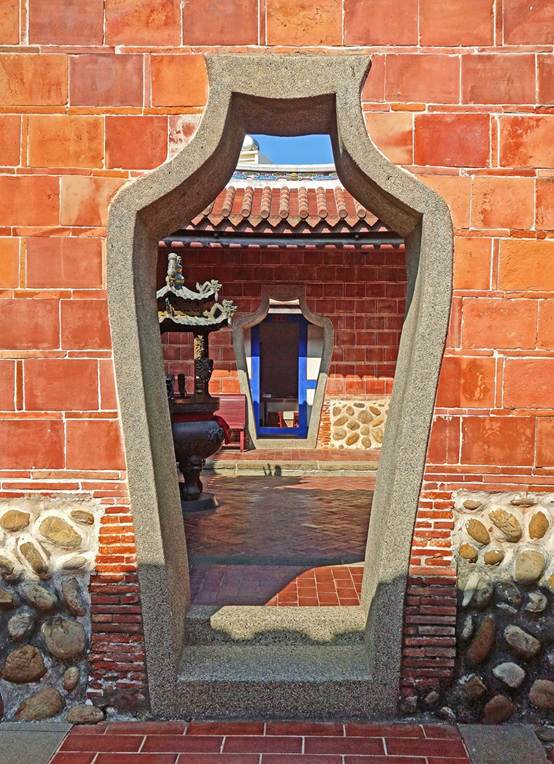
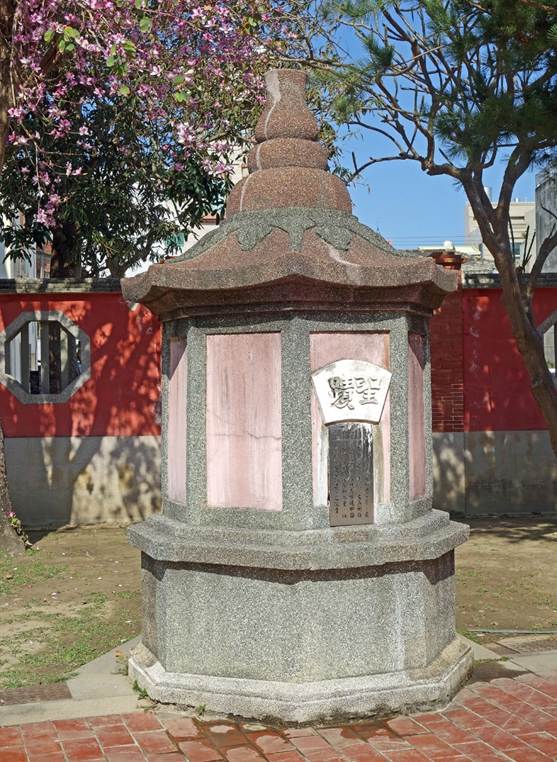
- Left: Alignment of vase-shaped gates (花瓶門) in the temple.
- Right: A ″jingziti″ (敬字亭), a ″reverence-for-script
pavilion″. It is a type of paper burner, specifically used for the
respectful incineration of paper bearing written words, thereby honoring these
words, the culture they embody, and the scholars who wrote them.
|
|
|
[March
2026]